Top Ten RootsTech 2022 DNA Sessions + All DNA Session Links

The official dates of RootsTech 2022 were March 3-5, but the sessions and content in the vendor booths are still available. I’ve compiled a list of the sessions focused on DNA, with web links on the RootsTech YouTube channel

YouTube reports the number of views, so I was able to compile that information as of March 8, 2022.

I do want to explain a couple of things to add context to the numbers.

Most speakers recorded their sessions, but a few offered live sessions which were recorded, then posted later for participants to view. However, there have been glitches in that process. While the sessions were anticipated to be available an hour or so later, that didn’t quite happen, and a couple still aren’t posted. I’m sure the presenters are distressed by this, so be sure to watch those when they are up and running.

The Zoom rooms where participants gathered for the live sessions were restricted to 500 attendees. The YouTube number of views does not include the number of live viewers, so you’ll need to add an additional number, up to 500.

When you see a number before the session name, whether recorded or live, that means that the session is part of a series. RootsTech required speakers to divide longer sessions into a series of shorter sessions no longer than 15-20 minutes each. The goal was for viewers to be able to watch the sessions one after the other, as one class, or separately, and still make sense of the content. Let’s just say this was the most challenging thing I’ve ever done as a presenter.

For recorded series sessions, these are posted as 1, 2 and 3, as you can see below with Diahan Southard’s sessions. However, with my live session series, that didn’t happen. It looks like my sessions are a series, but when you watch them, parts 1, 2 and 3 are recorded and presented as one session. Personally, I’m fine with this, because I think the information makes a lot more sense this way. However, it makes comparisons difficult.

This was only the second year for RootsTech to be virtual and the conference is absolutely HUGE, so live and learn. Next year will be smoother and hopefully, at least partially in-person too.

When I “arrived” to present my live session, “Associating Autosomal DNA Segments With Ancestors,” my lovely moderator, Rhett, told me that they were going to livestream my session to the RootsTech page on Facebook as well because they realized that the 500 Zoom seat limit had been a problem the day before with some popular sessions. I have about 9000 views for that session and more than 7,400 of them are on the RootsTech Facebook page – and that was WITHOUT any advance notice or advertising. I know that the Zoom room was full in addition. I felt kind of strange about including my results in the top ten because I had that advantage, but I didn’t know quite how to otherwise count my session. As it turns out, all sessions with more than 1000 views made it into the top ten so mine would have been there one way or another. A big thank you to everyone who watched!

I hope that the RootsTech team notices that the most viewed session is the one that was NOT constrained by the 500-seat limited AND was live-streamed on Facebook. Seems like this might be a great way to increase session views for everyone next year. Hint, hint!!!

I also want to say a huge thank you to all of the presenters for producing outstanding content. The sessions were challenging to find, plus RootsTech is always hectic, even virtually. So, I know a LOT of people will want to view these informative sessions, now that you know where to look and have more time. Please remember to “like” the session on YouTube as a way of thanking your presenter.

With 140 DNA-focused sessions available, you can watch a new session, and put it to use, every other day for the next year! How fun is that! You can use this article as your own playlist.

Please feel free to share this article with your friends and genealogy groups so everyone can learn more about using DNA for genealogy.

Ok, let’s look at the top 10. Drum roll please…

Top 10 Most Viewed RootsTech Sessions

Session Title Presenter YouTube Link Views
1 1. Associating Autosomal DNA Segments With Ancestors Roberta Estes (live) https://www.youtube.com/watch?v=_IHSCkNnX48


~9000: 1019 + 500 live viewers + 7,400+ Facebook
2 1. What to Do with Your DNA Test Results in 2022 (part 1 of 3) Diahan Southard https://www.youtube.com/watch?v=FENAKAYLXX4 7428
3 Who Is FamilyTreeDNA? FamilyTreeDNA – Bennett Greenspan https://www.youtube.com/watch?v=MHFtwoatJ-A 2946
4 2. What to Do with Your DNA Test Results in 2022 (part 2 of 3) Diahan Southard https://www.youtube.com/watch?v=mIllhtONhlI 2448
5 Latest DNA Painter Releases DNAPainter Jonny Perl (live) https://www.youtube.com/watch?v=iLBThU8l33o 2230 + live viewers
6 DNA Painter Introduction DNAPainter – Jonny Perl https://www.youtube.com/watch?v=Rpe5LMPNmf0 1983
7 3. What to Do with Your DNA Test Results in 2022 (part 3 of 3) Diahan Southard https://www.youtube.com/watch?v=hemY5TuLmGI 1780
8 The Tree of Mankind Age Estimates Paul Maier https://www.youtube.com/watch?v=jjkL8PWAEwk 1638
9 A Sneak Peek at FamilyTreeDNA Coming Attractions FamilyTreeDNA (live) https://www.youtube.com/watch?v=K9sKqNScvnE 1270 + live viewers


10 Extending Time Horizons with DNA Rob Spencer (live) https://www.youtube.com/watch?v=wppXD1Zz2sQ 1037 + live viewers


All DNA-Focused Sessions

I know you’ll find LOTS of goodies here. Which ones are your favorites?

  Session Presenter YouTube Link Views
1 Estimating Relationships by Combining DNA from Multiple Siblings Amy Williams https://www.youtube.com/watch?v=xs1U0ohpKSA 201
2 Overview of HAPI-DNA.org Amy Williams https://www.youtube.com/watch?v=FjNiJgWaBeQ 126
3 How do AncestryDNA® Communities help tell your story? | Ancestry® Ancestry https://www.youtube.com/watch?v=EQNpUxonQO4 183


4 AncestryDNA® 201 Ancestry – Crista Cowan https://www.youtube.com/watch?v=lbqpnXloM5s


494
5 Genealogy in a Minute: Increase Discoveries by Attaching AncestryDNA® Results to Family Tree Ancestry – Crista Cowan https://www.youtube.com/watch?v=iAqwSCO8Pvw 369
6 AncestryDNA® 101: Beginner’s Guide to AncestryDNA® | Ancestry® Ancestry – Lisa Elzey https://www.youtube.com/watch?v=-N2usCR86sY 909
7 Hidden in Plain Sight: Free People of Color in Your Family Tree Cheri Daniels https://www.youtube.com/watch?v=FUOcdhO3uDM 179
8 Finding Relatives to Prevent Hereditary Cancer ConnectMyVariant – Dr. Brian Shirts https://www.youtube.com/watch?v=LpwLGgEp2IE 63
9 Piling on the chromosomes Debbie Kennett https://www.youtube.com/watch?v=e14lMsS3rcY 465
10 Linking Families With Rare Genetic Condition Using Genealogy Deborah Neklason https://www.youtube.com/watch?v=b94lUfeAw9k 43
11 1. What to Do with Your DNA Test Results in 2022 Diahan Southard https://www.youtube.com/watch?v=FENAKAYLXX4 7428
12 1. What to Do with Your DNA Test Results in 2022 Diahan Southard https://www.youtube.com/watch?v=hemY5TuLmGI 1780
13 2. What to Do with Your DNA Test Results in 2022 Diahan Southard https://www.youtube.com/watch?v=mIllhtONhlI 2448
14 DNA Testing For Family History Diahan Southard https://www.youtube.com/watch?v=kCLuOCC924s 84


15 Understanding Your DNA Ethnicity Estimate at 23andMe Diana Elder


https://www.youtube.com/watch?v=xT1OtyvbVHE 66
16 Understanding Your Ethnicity Estimate at FamilyTreeDNA Diana Elder https://www.youtube.com/watch?v=XosjViloVE0 73
17 DNA Monkey Wrenches Katherine Borges https://www.youtube.com/watch?v=Thv79pmII5M 245
18 Advanced Features in your Ancestral Tree and Fan Chart DNAPainter – Jonny Perl https://www.youtube.com/watch?v=4u5Vf13ZoAc 425
19 DNA Painter Introduction DNAPainter – Jonny Perl https://www.youtube.com/watch?v=Rpe5LMPNmf0 1983
20 Getting Segment Data from 23andMe DNA Matches DNAPainter – Jonny Perl https://www.youtube.com/watch?v=8EBRI85P3KQ 134
21 Getting segment data from FamilyTreeDNA DNA matches DNAPainter – Jonny Perl https://www.youtube.com/watch?v=rWnxK86a12U 169
22 Getting segment data from Gedmatch DNA matches DNAPainter – Jonny Perl https://www.youtube.com/watch?v=WF11HEL8Apk 163
23 Getting segment data from Geneanet DNA Matches DNAPainter – Jonny Perl https://www.youtube.com/watch?v=eclj8Ap0uK4 38
24 Getting segment data from MyHeritage DNA matches DNAPainter – Jonny Perl https://www.youtube.com/watch?v=9rGwOtqbg5E 160
25 Inferred Chromosome Mapping: Maximize your DNA Matches DNAPainter – Jonny Perl https://www.youtube.com/watch?v=tzd5arHkv64 688
26 Keeping track of your genetic family tree in a fan chart DNAPainter – Jonny Perl https://www.youtube.com/watch?v=W3Hcno7en94 806


27 Mapping a DNA Match in a Chromosome Map DNAPainter – Jonny Perl https://www.youtube.com/watch?v=A61zQFBWaiY 423
28 Setting up an Ancestral Tree and Fan Chart and Exploring Tree Completeness DNAPainter – Jonny Perl https://www.youtube.com/watch?v=lkJp5Xk1thg 77
29 Using the Shared cM Project Tool to Evaluate DNA Matches DNAPainter – Jonny Perl https://www.youtube.com/watch?v=vxhn9l3Dxg4 763
30 Your First Chromosome Map: Using your DNA Matches to Link Segments to Ancestors DNAPainter – Jonny Perl https://www.youtube.com/watch?v=tzd5arHkv64 688
31 DNA Painter for absolute beginners DNAPainter (Jonny Perl) https://www.youtube.com/watch?v=JwUWW4WHwhk 1196
32 Latest DNA Painter Releases DNAPainter (live) https://www.youtube.com/watch?v=iLBThU8l33o 2230 + live viewers
33 Unraveling your genealogy with DNA segment networks using AutoSegment from Genetic Affairs Evert-Jan Blom https://www.youtube.com/watch?v=rVpsJSqOJZI


162
34 Unraveling your genealogy with genetic networks using AutoCluster Evert-Jan Blom https://www.youtube.com/watch?v=ZTKSz_X7_zs 201


35 Unraveling your genealogy with reconstructed trees using AutoTree & AutoKinship from Genetic Affairs Evert-Jan Blom https://www.youtube.com/watch?v=OmDQoAn9tVw 143
36 Research Like a Pro with DNA – A Genealogist’s Guide to Finding and Confirming Ancestors with DNA Family Locket Genealogists https://www.youtube.com/watch?v=NYpLscJJQyk 183
37 How to Interpret a DNA Network Graph Family Locket Genealogists – Diana Elder https://www.youtube.com/watch?v=i83WRl1uLWY 393
38 Find and Confirm Ancestors with DNA Evidence Family Locket Genealogists – Nicole Dyer https://www.youtube.com/watch?v=DGLpV3aNuZI 144
39 How To Make A DNA Network Graph Family Locket Genealogists – Nicole Dyer https://www.youtube.com/watch?v=MLm_dVK2kAA 201
40 Create A Family Tree With Your DNA Matches-Use Lucidchart To Create A Picture Worth A Thousand Words Family Locket Genealogists – Robin Wirthlin https://www.youtube.com/watch?v=RlRIzcW-JI4 270
41 Charting Companion 7 – DNA Edition Family Tree Maker https://www.youtube.com/watch?v=k2r9rkk22nU 316


42 Family Finder Chromosome Browser: How to Use FamilyTreeDNA https://www.youtube.com/watch?v=w0_tgopBn_o 750


43 FamilyTreeDNA: 22 Years of Breaking Down Brick Walls FamilyTreeDNA https://www.familysearch.org/rootstech/session/familytreedna-22-years-of-breaking-down-brick-walls Not available
44 Review of Autosomal DNA, Y-DNA, & mtDNA FamilyTreeDNA  – Janine Cloud https://www.youtube.com/watch?v=EJoQVKxgaVY 77
45 Who Is FamilyTreeDNA? FamilyTreeDNA – Bennett Greenspan https://www.youtube.com/watch?v=MHFtwoatJ-A 2946
46 Part 1: How to Interpret Y-DNA Results, A Walk Through the Big Y FamilyTreeDNA – Casimir Roman https://www.youtube.com/watch?v=ra1cjGgvhRw 684


47 Part 2: How to Interpret Y-DNA Results, A Walk Through the Big Y FamilyTreeDNA – Casimir Roman https://www.youtube.com/watch?v=CgqcjBD6N8Y


259
48 Big Y-700: A Brief Overview FamilyTreeDNA – Janine Cloud https://www.youtube.com/watch?v=IefUipZcLCQ 96
49 Mitochondrial DNA & The Million Mito Project FamilyTreeDNA – Janine Cloud https://www.youtube.com/watch?v=5Zppv2uAa6I 179
50 Mitochondrial DNA: What is a Heteroplasmy FamilyTreeDNA – Janine Cloud https://www.youtube.com/watch?v=ZeGTyUDKySk 57
51 Y-DNA Big Y: A Lifetime Analysis FamilyTreeDNA – Janine Cloud https://www.youtube.com/watch?v=E6NEU92rpiM 154
52 Y-DNA: How SNPs Are Added to the Y Haplotree FamilyTreeDNA – Janine Cloud https://www.youtube.com/watch?v=CGQaYcroRwY 220
53 Family Finder myOrigins: Beginner’s Guide FamilyTreeDNA – Katy Rowe https://www.youtube.com/watch?v=VrJNpSv8nlA 88
54 Mitochondrial DNA: Matches Map & Results for mtDNA FamilyTreeDNA – Katy Rowe https://www.youtube.com/watch?v=YtA1j01MOvs 190
55 Mitochondrial DNA: mtDNA Mutations Explained FamilyTreeDNA – Katy Rowe https://www.youtube.com/watch?v=awPs0cmZApE 340


56 Y-DNA: Haplotree and SNPs Page Overview FamilyTreeDNA – Katy Rowe https://www.youtube.com/watch?v=FOuVhoMD-hw 432
57 Y-DNA: Understanding the Y-STR Results Page FamilyTreeDNA – Katy Rowe https://www.youtube.com/watch?v=gCeZz1rQplI 148
58 Y-DNA: What Is Genetic Distance? FamilyTreeDNA – Katy Rowe https://www.youtube.com/watch?v=qJ6wY6ILhfg 149
59 DNA Tools: myOrigins 3.0 Explained, Part 1 FamilyTreeDNA – Paul Maier https://www.youtube.com/watch?v=ACgY3F4-w78 74


60 DNA Tools: myOrigins 3.0 Explained, Part 2 FamilyTreeDNA – Paul Maier https://www.youtube.com/watch?v=h7qU36bIFg0 50
61 DNA Tools: myOrigins 3.0 Explained, Part 3 FamilyTreeDNA – Paul Maier https://www.youtube.com/watch?v=SWlGPm8BGyU 36
62 African American Genealogy Research Tips FamilyTreeDNA – Sherman McRae https://www.youtube.com/watch?v=XdbkM58rXIQ 153


63 Connecting With My Ancestors Through Y-DNA FamilyTreeDNA – Sherman McRae https://www.youtube.com/watch?v=xbo1XnLkuQU 200
64 Join The Million Mito Project FamilyTreeDNA (Join link) https://www.familysearch.org/rootstech/session/join-the-million-mito-project link
65 View the World’s Largest mtDNA Haplotree FamilyTreeDNA (Link to mtDNA tree) https://www.familytreedna.com/public/mt-dna-haplotree/L n/a
66 View the World’s Largest Y Haplotree FamilyTreeDNA (Link to Y tree) https://www.familytreedna.com/public/y-dna-haplotree/A link
67 A Sneak Peek at FamilyTreeDNA Coming Attractions FamilyTreeDNA (live) https://www.youtube.com/watch?v=K9sKqNScvnE 1270 + live viewers


68 DNA Upload: How to Transfer Your Autosomal DNA Data FamilyTreeDNA -Katy Rowe https://www.youtube.com/watch?v=CS-rH_HrGlo 303
69 Family Finder myOrigins: How to Compare Origins With Your DNA Matches FamilyTreeDNA -Katy Rowe https://www.youtube.com/watch?v=7mBmWhM4j9Y 145
70 Join Group Projects at FamilyTreeDNA FamilyTreeDNA link to learning center article) https://www.familysearch.org/rootstech/session/join-group-projects-at-familytreedna link


71 Product Demo – Unraveling your genealogy with reconstructed trees using AutoKinship GEDmatch https://www.youtube.com/watch?v=R7_W0FM5U7c 803
72 Towards a Genetic Genealogy Driven Irish Reference Genome Gerard Corcoran https://www.youtube.com/watch?v=6Kx8qeNiVmo 155


73 Discovering Biological Origins in Chile With DNA: Simple Triangulation Gonzalo Alexis Luengo Orellana https://www.youtube.com/watch?v=WcVby54Uigc 40
74 Cousin Lynne: An Adoption Story International Association of Jewish Genealogical Societies https://www.youtube.com/watch?v=AptMcV4_B4o 111
75 Using DNA Testing to Uncover Native Ancestry Janine Cloud https://www.youtube.com/watch?v=edzebJXepMA 205
76 1. Forensic Genetic Genealogy Jarrett Ross https://www.youtube.com/watch?v=0euIDZTmx5g 58
77 Reunited and it Feels so Good Jennifer Mendelsohn https://www.youtube.com/watch?v=X-hxjm7grBE 57


78 Genealogical Research and DNA Testing: The Perfect Companions Kimberly Brown https://www.youtube.com/watch?v=X82jA3xUVXk 80
79 Finding a Jewish Sperm Donor Kitty Munson Cooper https://www.youtube.com/watch?v=iKRjFfNcpug 164
80 Using DNA in South African Genealogy Linda Farrell https://www.youtube.com/watch?v=HXkbBWmORM0 141
81 Using DNA Group Projects In Your Family History Research Mags Gaulden https://www.youtube.com/watch?v=0tX7QDib4Cw 165
82 2. The Expansion of Genealogy Into Forensics Marybeth Sciaretta https://www.youtube.com/watch?v=HcEO-rMe3Xo 35


83 DNA Interest Groups That Keep ’em Coming Back McKell Keeney (live) https://www.youtube.com/watch?v=HFwpmtA_QbE 180 plus live viewers
84 Searching for Close Relatives with Your DNA Results Mckell Keeney (live) https://www.familysearch.org/rootstech/session/searching-for-close-relatives-with-your-dna-results Not yet available
85 Top Ten Reasons To DNA Test For Family History Michelle Leonard https://www.youtube.com/watch?v=1B9hEeu_dic 181
86 Top Tips For Identifying DNA Matches Michelle Leonard https://www.youtube.com/watch?v=-3Oay_btNAI 306
87 Maximising Messages Michelle Patient https://www.youtube.com/watch?v=4TRmn0qzHik 442
88 How to Filter and Sort Your DNA Matches MyHeritage https://www.youtube.com/watch?v=fmIgamFDvc8 88
89 How to Get Started with Your DNA Matches MyHeritage https://www.youtube.com/watch?v=JPOzhTxhU0E 447


90 How to Track DNA Kits in MyHeritage` MyHeritage https://www.youtube.com/watch?v=2W0zBbkBJ5w 28


91 How to Upload Your DNA Data to MyHeritage MyHeritage https://www.youtube.com/watch?v=nJ4RoZOQafY 82
92 How to Use Genetic Groups MyHeritage https://www.youtube.com/watch?v=PtDAUHN-3-4 62
My Story: Hope MyHeritage https://www.youtube.com/watch?v=qjyggKZEXYA 133
93 MyHeritage Keynote, RootsTech 2022 MyHeritage https://www.familysearch.org/rootstech/session/myheritage-keynote-rootstech-2022 Not available
94 Using Labels to Name Your DNA Match List MyHeritage https://www.youtube.com/watch?v=enJjdw1xlsk 139


95 An Introduction to DNA on MyHeritage MyHeritage – Daniel Horowitz https://www.youtube.com/watch?v=1I6LHezMkgc 60
96 Using MyHeritage’s Advanced DNA Tools to Shed Light on Your DNA Matches MyHeritage – Daniel Horowitz https://www.youtube.com/watch?v=Pez46Xw20b4 110
97 You’ve Got DNA Matches! Now What? MyHeritage – Daniel Horowitz https://www.youtube.com/watch?v=gl3UVksA-2E 260
98 My Story: Lizzie and Ayla MyHeritage – Elizbeth Shaltz https://www.youtube.com/watch?v=NQv6C8G39Kw 147
99 My Story: Fernando and Iwen MyHeritage – Fernando Hermansson https://www.youtube.com/watch?v=98-AR0M7fFE 165


100 Using the Autocluster and the Chromosome Browser to Explore Your DNA Matches MyHeritage – Gal Zruhen https://www.youtube.com/watch?v=a7aQbfP7lWU 115


101 My Story : Kara Ashby Utah Wedding MyHeritage – Kara Ashby https://www.youtube.com/watch?v=Qbr_gg1sDRo 200
102 When Harry Met Dotty – using DNA to break down brick walls Nick David Barratt https://www.youtube.com/watch?v=8SdnLuwWpJs 679
103 How to Add a DNA Match to Airtable Nicole Dyer https://www.youtube.com/watch?v=oKxizWIOKC0 161
104 How to Download DNA Match Lists with DNAGedcom Client Nicole Dyer https://www.youtube.com/watch?v=t9zTWnwl98E 124
105 How to Know if a Matching DNA Segment is Maternal or Paternal Nicole Dyer https://www.youtube.com/watch?v=-zd5iat7pmg 161
106 DNA Basics Part I Centimorgans and Family Relationships Origins International, Inc. dba Origins Genealogy https://www.youtube.com/watch?v=SI1yUdnSpHA 372
107 DNA Basics Part II Clustering and Connecting Your DNA Matches Origins International, Inc. dba Origins Genealogy https://www.youtube.com/watch?v=ECs4a1hwGcs 333
108 DNA Basics Part III Charting Your DNA Matches to Get Answers Origins International, Inc. dba Origins Genealogy https://www.youtube.com/watch?v=qzybjN0JBGY 270
109 2. Using Cluster Auto Painter Patricia Coleman https://www.youtube.com/watch?v=-nfLixwxKN4 691
110 3. Using Online Irish Records Patricia Coleman https://www.youtube.com/watch?v=mZsB0l4z4os 802
111 Exploring Different Types of Clusters Patricia Coleman https://www.youtube.com/watch?v=eEZBFPC8aL4 972


112 The Million Mito Project: Growing the Family Tree of Womankind Paul Maier https://www.youtube.com/watch?v=cpctoeKb0Kw 541
113 The Tree of Mankind Age Estimates Paul Maier https://www.youtube.com/watch?v=jjkL8PWAEwk 1638
114 Y-DNA and Mitochondrial DNA Testing Plans Paul Woodbury https://www.youtube.com/watch?v=akymSm0QKaY 168
115 Finding Biological Family Price Genealogy https://www.youtube.com/watch?v=4xh-r3hZ6Hw 137
116 What Y-DNA Testing Can Do for You Richard Hill https://www.youtube.com/watch?v=a094YhIY4HU 191
117 Extending Time Horizons with DNA Rob Spencer (live) https://www.youtube.com/watch?v=wppXD1Zz2sQ 1037 + live viewers
118 DNA for Native American Ancestry by Roberta Estes Roberta Estes https://www.youtube.com/watch?v=EbNyXCFfp4M 212
119 1. Associating Autosomal DNA Segments With Ancestors Roberta Estes (live) https://www.youtube.com/watch?v=_IHSCkNnX48


~9000: 1019 + 500 live viewers + 7,400+ Facebook
120 1. What Can I Do With Ancestral DNA Segments? Roberta Estes (live) https://www.youtube.com/watch?v=Suv3l4iZYAQ 325 plus live viewers


121 Native American DNA – Ancient and Contemporary Maps Roberta Estes (live) https://www.youtube.com/watch?v=dFTl2vXUz_0 212 plus 483 live viewers


122 How Can DNA Enhance My Family History Research? Robin Wirthlin https://www.youtube.com/watch?v=f3KKW-U2P6w 102
123 How to Analyze a DNA Match Robin Wirthlin https://www.youtube.com/watch?v=LTL8NbpROwM 367
124 1. Jewish Ethnicity & DNA: History, Migration, Genetics Schelly Talalay Dardashti https://www.youtube.com/watch?v=AIJyphGEZTA 82


125 2. Jewish Ethnicity & DNA: History, Migration, Genetics Schelly Talalay Dardashti https://www.youtube.com/watch?v=VM3MCYM0hkI 72
126 Ask us about DNA Talking Family History (live) https://www.youtube.com/watch?v=kv_RfR6OPpU 96 plus live viewers
127 1. An Introduction to Visual Phasing Tanner Blair Tolman https://www.youtube.com/watch?v=WNhErW5UVKU


183
128 2. An Introduction to Visual Phasing Tanner Blair Tolman https://www.youtube.com/watch?v=CRpQ8EVOShI 110


129 Common Problems When Doing Visual Phasing Tanner Blair Tolman https://www.youtube.com/watch?v=hzFxtBS5a8Y 68
130 Cross Visual Phasing to Go Back Another Generation Tanner Blair Tolman https://www.youtube.com/watch?v=MrrMqhfiwbs 64
131 DNA Basics Tanner Blair Tolman https://www.youtube.com/watch?v=OCMUz-kXNZc 155
132 DNA Painter and Visual Phasing Tanner Blair Tolman https://www.youtube.com/watch?v=2-eh1L4wOmQ 155
133 DNA Painter Part 2: Chromosome Mapping Tanner Blair Tolman https://www.youtube.com/watch?v=zgOJDRG7hJc 172
134 DNA Painter Part 3: The Inferred Segment Generator Tanner Blair Tolman https://www.youtube.com/watch?v=96ai8nM4lzo


100
135 DNA Painter Part 4: The Distinct Segment Generator Tanner Blair Tolman https://www.youtube.com/watch?v=Pu-WIEQ_8vc 83
136 DNA Painter Part 5: Ancestral Trees Tanner Blair Tolman https://www.youtube.com/watch?v=dkYDeFLduKA 73
137 Understanding Your DNA Ethnicity Results Tanner Blair Tolman https://www.youtube.com/watch?v=4tAd8jK6Bgw 518
138 What’s New at GEDmatch Tim Janzen https://www.youtube.com/watch?v=AjA59BG_cF4


515
139 What Does it Mean to Have Neanderthal Ancestry? Ugo Perego https://www.youtube.com/watch?v=DshCKDW07so 190
140 Big Y-700 Your DNA Guide https://www.youtube.com/watch?v=rIFC69qswiA 143
141 Next Steps with Your DNA Your DNA Guide – Diahan Southard (live) https://www.familysearch.org/rootstech/session/next-steps-with-your-dna Not yet available

Additions:

142  Adventures of an Amateur Genetic Genealogist – Geoff Nelson https://www.familysearch.org/rootstech/session/adventures-of-an-amateur-genetic-genealogist     291 views

____________________________________________________________

Sign Up Now – It’s Free!

If you enjoyed this article, subscribe to DNAeXplain for free, to automatically receive new articles by email each week.

Here’s the link. Just look for the little grey “follow” button on the right-hand side on your computer screen below the black title bar, enter your e-mail address, and you’re good to go!

In case you were wondering, I never have nor ever will share or use your e-mail outside of the intended purpose.

_____________________________________________________________

Follow DNAexplain on Facebook, here or follow me on Twitter, here.

Share the Love!

You’re always welcome to forward articles or links to friends and share on social media.

If you haven’t already subscribed (it’s free,) you can receive an email whenever I publish by clicking the “follow” button on the main blog page, here.

You Can Help Keep This Blog Free

I receive a small contribution when you click on some of the links to vendors in my articles. This does NOT increase the price you pay but helps me to keep the lights on and this informational blog free for everyone. Please click on the links in the articles or to the vendors below if you are purchasing products or DNA testing.

Thank you so much.

DNA Purchases and Free Uploads

Genealogy Products and Services

My Book

Genealogy Books

Genealogy Research

How to Find RootsTech 2022 Sessions + Other Info You Need to Know

Tomorrow, Thursday, March 3rd is the beginning of RootsTech 2022 which is completely free and entirely virtual this year.

You’ll find a bouquet of speakers from around the world providing sessions in many languages. An auto-translate feature is available through YouTube as well.

I hope you’ve already signed up for RootsTech. If not, here are instructions.

The opening presentation by Steve Rockwood will take place on the “Main Stage, here,” at 10 AM EST.

The Expo Hall opens at the same time, and class sessions begin as well.

The navigation bar is at the top of your page.

New Options

Like last year, RootsTech is offering 15-20 minute sessions, with a few sessions being offered as a series which means there are either two, or three, 15-20 minute sessions that are intended to be viewed serially.

Additionally, some presentations, including several of mine, are live this year. Fingers crossed that Zoom doesn’t act up and technology gremlins don’t attend RootsTech too.

Session Availability

Classes, presentations or sessions, however you refer to them, will be offered for three full days and will be available for some time after as well.

How long they will be available depends on the source of the class/session/presentation. If the presentation is given by a vendor, the vendor’s booths and content won’t be available for as long as sessions presented by individuals.

I don’t know how long keynotes will be available either.

I do know that the RootsTech team told the speakers that their intention is for the sessions to remain online for three years unless they are no longer relevant for some reason.

I’ll explain how to find different classes and create a playlist in a minute. There are a few workarounds that will be very beneficial and several places you’ll want to look to be sure you find everything – including the Expo Hall.

Expo Hall

The Expo Hall, meaning vendor booths, organizations, and supporters will also open at 10 AM EST on Thursday, March 3rd and they will remain open through Saturday, March 5th, closing at 7 PM EST. This is the time that the booth is “staffed.” You can of course stop by anytime. The content in each booth may be available for longer and was last year.

Don’t overlook vendor booths thinking you can only find items for sale there. That’s not the case at all. Many if not most vendors and organizations will also have presentations and other resources available for you there too. What better source to find out about that organization’s tools and how to use them successfully than from the horse’s mouth, or booth, in this case.

Speaker’s Bookstore

There will be a Speaker’s Bookstore this year, and no, you cannot purchase a speaker in the store. You can, however, purchase things the speaker might have to sell, like books or services or whatever is relevant to their specialty. The Speaker’s Bookstore will be found in the Expo Hall.

This is a great way to support the speakers, plus, don’t forget to “like” sessions you enjoy.

Sessions

There are several ways to navigate the RootsTech website, and not all types of sessions are in the same place, so I want to be sure you know how to find everything and how to create a playlist for yourself. Furthermore, RootsTech is still trying to iron out some last-minute issues, so I’ve detailed ways I’ve found to deal with challenges.

Please also note that last year’s 2021 sessions are still available as well. Here’s a comprehensive list of 2021 DNA sessions that I created for your convenience, with links to the session recordings.

Live Sessions Calendar

To view all of the live sessions, including several roundtables, in one place, go to the Calendar, here.

You’ll notice that there are three days, and three groups of presentations, with 9 total sets of live sessions for you to choose from. Some sessions are scheduled “very late” in the US, but remember that late here is early someplace else and vice versa. RootsTech has a worldwide audience.

Be sure to review each group and make your selections.

In order to add a session to your playlist, click on the little “+” sign. It’s OK if you select multiple events for the same timeslot. You’ll just have to choose between them later, or watch some as recordings. All live sessions are being recorded. I don’t know how soon they will be available for viewing.

The PlayList can also serve as a “to do” list for after RootsTech as well. Just uncheck the ones you’ve already seen.

I like to watch live sessions because the speakers often provide time-sensitive information. You may also have the opportunity to ask chat questions of live presenters.

Session Search

Let’s say you’re interested in viewing presentations of a specific speaker.

Click to enlarge any image

Click on “Sessions,” and you’ll see the search box. Type the name of the speaker or any keyword into the search box. Be aware that the search/filter function is one of the aspects that the RootsTech team is still diligently working on. We’ll be discussing different ways to find things so you can be positive you’ve found what’s relevant for you.

Session Filters

On the left side, you see a list of filters. You can use these filters alone, in groups, or in conjunction with the search feature.

I suggest viewing each drop down and experimenting a bit, especially combinations.

I typed the word “dna” in the search box, selected the DNA category under Topic, plus selected only 2022 and I see a total of 151 DNA sessions. That’s a smorgasbord!!!!

Adding 2021 for both years shows a total of 278 sessions.

You could add language or other filters as well.

Series Filter

The “Series Episode” filter under “Content Type” isn’t showing all of the sessions that are a series of 2 or 3 contiguous sessions. My series sessions aren’t showing yet (as of this writing,) but some series sessions are. I hope this will be fixed soon.

Doggone Pesky Bugs

The searches and filters aren’t working consistently correctly right now. I only mention this because you may not see everything available for individual speakers, vendors or categories, so try various avenues, meaning search and filter in multiple ways to be sure you’re seeing everything relevant.

Creating a virtual event to serve over a million attendees is a daunting task, and the team really is working hard to resolve issues.

Add to the PlayList

When you add a session to your playlist, the “+” becomes an “X”.

I definitely want to hear what Paul Maier has to say about the Million Mito Project! You can read more about the Million Mito Project here and here.

Using Your PlayList

Your PlayList can be viewed at the top under the menu.

Your sessions will be listed in chronological order, generally with the day and time displayed, but not always. Hmmm…

I noticed that the first session showing, “The Million Mito Project” by Paul Maier doesn’t display a date or time, so I clicked to view the session. It is scheduled for 8 PM on March 2nd, before the conference actually opens, so be sure to check the session times. I’ll check back later today to be sure this is accurate.

I heartily recommend putting this session on your PlayList.

As a Million Mito team member, I might or might or might not be writing a short article soon on this very topic! 😊

Innovators Portal

Take a look at the Innovators Portal where you’ll find several “incognito sessions.”

I haven’t found all of these sessions listed elsewhere, and several are quite interesting.

This is a great place to see what vendors are doing.

Y DNA age estimates – OMG finally! I’m adding this one to my PlayList for sure!!!

You can also view your PlayList by clicking on the little “play” shortcut arrow.

My Sessions

I want to be sure you can find and view my sessions.

I have 4 sessions this year, two of which are actually a series of three sessions each. If you’re counting, yes, that means I’ve created a total of 8 sessions. If you’re thinking, “she’s nuts,” you’d be right. I’ll likely never do this again. It’s just so easy to get inspired, but then the weeks of work comes later.

If you’d like to view my autosomal DNA session from 2021, DNA Triangulation: What, Why and How, click here.

My 2021 session, Revealing Your Mother’s Ancestors and Where They Came From lives in the RootsTech DNA Learning Center, and you can watch it here.

I’m very pleased to offer four sessions in 2022 that I’ve listed in schedule order, below.

DNA for Native American Ancestryclick here to add to PlayList and view.

Thursday, March 3rd – 10 AM EST

I’ll be talking about the contents of DNA for Native American Genealogy, my new book. I wrote this book to help people identify their Native American ancestors, or put those rumors to rest.

There is a myriad of ways to approach this challenge, beginning with your family history, then using several genetic tools. The book covers methodology, geography, ethnicity results, Y DNA, mitochondrial DNA, autosomal DNA, your cousins as gold nuggets, third-party tools, identifying that elusive Native ancestor, and more.

This session is recorded, so you can watch it anytime after the conference opens.

Native American DNA – Ancient and Contemporary Mapsclick here to add to PlayList and view.

Thursday, March 3rd – 2 PM EST LIVE

One of my very favorite parts of writing the book was working with ancient DNA which informs our understanding of where specific groups of people lived, where they migrated – and where their descendants are found today.

Whether you’re interested in Native American heritage, history, anthropology or you’re a map junkie – join me because we are going to have a GREAT time.

Associating Autosomal DNA Segments With Ancestorsclick here to add to PlayList and view.

Friday, March 4th – 10 AM LIVE, Series

This session is a series of three 20-minute sessions that you can view by simply signing in to the first session. Each individual session will have a short Q&A following the session before moving on to the next one. This series will be recorded live so that the individual sessions can be viewed later, either together or separately.

I discuss why segments are important to genealogy, how to find ancestral segments at each major DNA testing vendor, plus GEDmatch, and identifying which ancestor(s) those segments descend from. You might be surprised to learn that I utilize Ancestry in this process too, even though they don’t have a chromosome browser.

After figuring out how to associate your DNA segments with specific ancestors, there’s so much more you can do! I hope you’ll join me for this next session too!

What Can I DO With Ancestral DNA Segments?click here to add to PlayList and view.

Friday March 4th – 2 PM LIVE, Series

This session is a series of three 20-minute sessions that you can view by simply signing in to the first session. Each session will have a short Q&A following the session before moving on to the next one. This live series will be recorded so that the individual sessions can be viewed later, either together or separately.

In this series, I review the more advanced tools at the DNA testing vendors, plus third-party tools like Genetic Affairs, DNAPainter and GEDmatch.

The great thing is that this painter’s pallet of tools has automated what we had been doing manually for several years – and every vendor and tool has something unique to offer genealogists.

Your Turn

Now it’s time to create your PlayList of sessions and make your RootsTech viewing plan. Hope to “see” you there!

Earlier RootsTech 2022 Articles

_____________________________________________________________

Follow DNAexplain on Facebook, here or follow me on Twitter, here.

Share the Love!

You’re always welcome to forward articles or links to friends and share on social media.

If you haven’t already subscribed (it’s free,) you can receive an email whenever I publish by clicking the “follow” button on the main blog page, here.

You Can Help Keep This Blog Free

I receive a small contribution when you click on some of the links to vendors in my articles. This does NOT increase the price you pay but helps me to keep the lights on and this informational blog free for everyone. Please click on the links in the articles or to the vendors below if you are purchasing products or DNA testing.

Thank you so much.

DNA Purchases and Free Uploads

Genealogy Products and Services

My Book

Genealogy Books

Genealogy Research

Preserving Items for Future DNA Testing – Teeth, Stamps, Envelopes, Hats, Hair and More

I often receive questions about testing items from deceased people. Is that type of testing available, and is it successful?

The answer is some shade of grey depending on several factors.

So, let’s start with no and work our way up!

NO

Today for the normal air-breathing human, testing items for DNA in a commercial lab for genealogical purposes is not yet feasible. In part, this is due to the labor-intensive extraction costs plus the fact that often, when DNA is able to be retrieved, it’s not of sufficient quality to pass the stringent guidelines of the testing companies.

Compounding that issue is one of consent. How does the testing company actually know the item is from someone deceased AND that you have the legal right to request the specified service?

There are other problems too.

How do you know the stamp was really licked by your ancestor or the intended person and not by the person at the post office, or a family member or neighbor? You don’t.

How do you know the DNA retrieved is actually that of your ancestor or intended person and not contaminant DNA from someone else? You don’t.

And yes, I know there are companies that enter our periphery from time to time that advertise the ability to provide this service. So far, I’ve not seen consistent success which is why these companies don’t stay around long. It’s very expensive, for them and for the consumer, just to try. Regardless of the outcome.

The Technology

The intricate extraction methodology and processing is the same technology used to process forensic samples from crime scenes or to identify unknown deceased people.

Clearly, in some cases, it’s technically possible. However, remember that this type of work requires a special lab, costs in the ballpark of $2000 per sample, or more, and the results often need to be compared in a database environment that accepts partial or degraded results.

My advice – don’t even attempt this now unless you have LOTS of whatever it is from the deceased person and don’t mind sacrificing some of it, along with some big $$, and be prepared to receive no result. I’ve now tried this twice without success.

However, this isn’t the situation with someone recently deceased.

YES

While processing DNA from the recently deceased is not a commercially available service today, it’s sometimes possible.

You need to collect a DNA sample immediately after death using a swab kit. If you’re like me, you always have a DNA kit at home, but you might not be like me or you might not be at home.

You can call FamilyTreeDNA and have them overnight a kit to you or the funeral home, or you can go to the closest pharmacy and purchase an Identigene DNA kit. This brand includes swabs. Ask the mortician to swab the inside of the cheeks of the deceased. (Do NOT send the swabs in the kit to Identigene – you’re only using their swabs in order to send it to FamilyTreeDNA.)

Hopefully, there is no denture adhesive present, as that interferes with DNA processing.

While swabbing is recommended prior to embalming, if embalming has already occurred, ask them to swab anyway. The worst thing that will happen is that it won’t work. It’s worth a try.

I wrote about the process, here.

Clearly, with a swab kit, you’ll need a DNA company that uses swabs to do the processing. That eliminates both Ancestry and 23andMe which use spit kits, leaving as candidates only FamilyTreeDNA and MyHeritage. Fortunately, you can upload DNA files from one to the other.

MAYBE

Some things fall in-between yes and no, meaning taking a swab of a recently deceased person to process at FamilyTreeDNA and attempting to process an artifact.

For example, blood cards or tissue samples fall into this category. In this case, the challenge will be finding a lab that will accept that item.

FamilyTreeDNA may, but you’ll need to contact them in advance as it’s on a case-by-case basis.

Candidate Items

Please keep in mind that all items can be contaminated by handling. To handle, wear sterile gloves and use sterile tweezers. Your goal is to avoid contamination by handling or storage.

We’ll discuss storage and preservation in the next section.

Here’s a list of common candidate items and my comments:

Item Comments
Hair Can be contaminated. May not include the follicle which is your best bet for autosomal DNA. While mitochondrial DNA is most typically extracted from hair, using forensic methods, in some cases, autosomal can be extracted as well.
Envelopes and stamps High probability of contamination. Special processing needs to be utilized due to the adhesive which in some cases is animal-based which means it contains animal DNA.
Teeth Should be in good shape and not have cavities, meaning baby teeth are better candidates than extracted teeth. Normally, adult teeth aren’t extracted without a reason. Don’t throw anything away though.
Hearing aids Hearing aids often contain ear wax and skin cells and make good candidates.
Glasses nose pads The nose pad or metal connecting the nose pad to the glasses frame sometimes harbors skin cells.
Dentures Possible candidates although adhesive interferes with DNA as does soaking denture in cleaning solutions.
Electric razors Excellent candidates since residue held in razors generally contains skin cells. However, be sure your relative is the only person who used the razor. Contact the lab for instructions before extracting the contents.
Blood cards and tissue samples Excellent source but the lab needs to be contacted about whether they accept this type of sample and how to send it safely. Blood and tissue samples may be held by a medical facility if the person was hospitalized, received treatment, or a post-mortem was performed.
Hats, sweaty items, etc. Possible candidates but it depends on the item, its age, and condition. Contact the lab with specifics. With hats, check for embedded hairs which may be a better source than the hat itself.
Used Kleenex type tissue If you’re positive that the tissue was used by the target person, this is a great source of DNA.
Toothbrush Sometimes, but bacteria can be an issue. Doesn’t hurt to save a toothbrush after allowing to dry completely
Fingernail and toenail clippings Clippings are a great source of DNA. Be sure to check clippers, as some have little “catchers” built-in. Also check the drawer where clippers are stored, assuming there is only one individual using those clippers.
Travel bag If your relative traveled from time to time, check the bag in their suitcase that held their personal items. You never know what you might find. Mine holds many DNA-rich items and yours probably does too.

If your relative passed away from something communicable, you need to take that into consideration.

Storage and Preservation Guidelines

While this type of DNA processing service isn’t commercially available as an off-the-shelf service yet today, as technology improves and prices reduce, I feel confident it will be a viable, readily-available service someday. I’ve been saying that for years now, and I just hope someday isn’t too far in the future.

Your challenge is to keep your sample of whatever it is in good condition, so it doesn’t degrade irrecoverably while you are waiting.

  • NEVER store items in plastic including ziplocks or baggies. Plastic prevents air circulation and encourages mold.
  • NEVER use any type of tape or adhesive.
  • DO store each item individually in paper, like an envelope, preferable acid-free paper.
  • If you store an item in fabric, DO wash the fabric first to remove dye, stabilizers and dirt as well as DNA residue from other people. Handle the fabric with sterile gloves after washing.
  • DON’T store the item against wood and not in a cedar chest. Wood contains tannins which are acids that stain and leach into other items.
  • DON’T store the item in the sun, a hot attic or humid basement.
  • DO store the item in a safe, dark location in a temperature-controlled area of your home.
  • DO label the container the item is stored in.

I have several items from my father and grandfather that I’m keeping with the hope of someday being able to utilize them. I have them stored individually in an acid-free envelope, in a small train case, buffered by acid free tissue paper, with nothing else touching the envelope, in my closet.

I’ve also enclosed a note for my daughter, just in case she finds those one day and wonders what they are and why they are packaged in that manner.

Don’t Throw It Away

Let’s say you’ve already done DNA testing on your parent, then they pass away.

As you go through their things, you see hairbrushes and razors and maybe even find a tissue in a nightgown pocket.

You think about how those items would be good for DNA testing and you’re glad you already did that. That means you don’t need to save those things, right? Wrong!

DON’T throw those items away. They’re treasure. There may be new vendors in the future, new companies that process and utilize DNA. There will assuredly be advances in science and new products, and you may wish you had those DNA sources.

I saved my Mom’s hairbrush and Kleenexes from her bathrobe pocket for this exact reason. She lived alone and no one else would have used those items.

Complicating Circumstances

Biological processes accelerate and degrade DNA.

For example, heat.

The heat of modern-day cremations destroys all DNA, even though residual bone fragments are left.

Cold, meaning freezing, would typically preserve DNA, unless a repeated freeze/thaw cycle is involved. In other words, don’t store those teeth in a frost-free refrigerator. I know someone who froze something in an ice cube tray and suffice it to say that a guest received a VERY unexpected surprise one hot summer day. In another instance, a power failure caused everything in a freezer to be thrown away. Freezing is generally not the best choice.

If your ancestor died in a fire, or the home burned but some items were preserved – maybe.

If flooding or water was involved, again, think mold and rapid degradation. Dry those items but without high heat and not in a dryer. If you’re dealing with sewer water, dispose of the items.

The bottom line is this – if there’s enough of an item left to see and identify, other than cremains, there’s enough to preserve, just in case.

Truly, you never know. The best you can do is to begin preservation now and work with what you have.

Staying on the Right Side of the Law

I’m not a lawyer, but I do know that there are required legal procedures to exhume remains for testing. Those laws and procedures vary by location.

Do not try this at home. Contact a lawyer in the jurisdiction where the person you hope to test is buried and be prepared to convince at least five people that your need is pressing and justifiable:

  • The lawyer (bring a large check)
  • Other family members, ALL of whom will likely be required to sign and notarize their agreement
  • A judge who will ultimately decide
  • The coroner or other individual to arrange exhumation and take the sample
  • A lab to process the sample and if it’s not your DNA testing lab, agreement from your DNA lab to allow your sample to be uploaded

You’ve probably figured out why you never see anyone discussing having exhumed their dearly departed for testing. The hoops are many and the process is exorbitantly complex and expensive. Just moving a grave a mile or so down the road when a cemetery was being permanently flooded, without getting a court order or taking a biological sample cost a friend in excess of $20,000 several years ago.

Alternate Strategies

If you’re seeking the Y DNA or mitochondrial DNA of that ancestor, another family member appropriately descended may be able to serve as a proxy. Work your way up the tree to find test candidates and create a DNA Pedigree Chart.

Males inherit their father’s Y chromosome along with their surname. Everyone received their mother’s mitochondrial DNA, but only females pass it on.

Autosomal DNA, at least in part can sometimes be inferred by matching with other people from the same side through family matching, or conversely, not sharing a match with someone that you know is from either your paternal or maternal side on the same segment.

You can read more about how different kinds of DNA is passed to descendants, here.

Summary

Today, testing most artifact items isn’t a viable strategy to retrieve DNA, but there are some notable exceptions. Alternate testing strategies may prove more fruitful

However, taking appropriate measures to preserve these items for future testing is a great strategy. The worst that can happen is that it doesn’t work. You’ll never know if you don’t take those preservation steps today.

The best outcome, of course, is that one day your ancestor’s DNA will be able to assist your genealogy. I can hardly wait!

______________________________________________________________

Sign Up For This Blog Now – It’s Free!

If you enjoyed this article, subscribe to DNAeXplain for free to automatically receive new articles by emailed each week.

Here’s the link. Just look for the little grey “follow” button on the right-hand side on your computer screen below the black title bar, enter your e-mail address, and you’re good to go!

In case you were wondering, I never have nor ever will share or use your e-mail outside of the intended purpose.

Share the Love

You can always forward these articles to friends or share by posting links on social media. Who do you know that might be interested?

_____________________________________________________________

Follow DNAexplain on Facebook, here or follow me on Twitter, here.

Share the Love!

You’re always welcome to forward articles or links to friends and share on social media.

If you haven’t already subscribed (it’s free,) you can receive an email whenever I publish by clicking the “follow” button on the main blog page, here.

You Can Help Keep This Blog Free

I receive a small contribution when you click on some of the links to vendors in my articles. This does NOT increase the price you pay but helps me to keep the lights on and this informational blog free for everyone. Please click on the links in the articles or to the vendors below if you are purchasing products or DNA testing.

Thank you so much.

DNA Purchases and Free Uploads

Genealogy Products and Services

My Book

Genealogy Books

Genealogy Research

Free Webinar: 10 Ways to Find Your Native American Ancestor Using Y, Mitochondrial and Autosomal DNA

I recorded 10 Ways to Find Your Native American Ancestor Using Y, Mitochondrial and Autosomal DNA for Legacy Family Tree Webinars.

Webinars are free for the first week. After that, you’ll need a subscription.

If you subscribe to Legacy Family Tree, here, you’ll also receive the downloadable 24-page syllabus and you can watch any of the 1500+ webinars available at Legacy Family Tree Webinars anytime.

In 10 Ways to Find Your Native American Ancestor Using Y, Mitochondrial and Autosomal DNA, I covered the following features and how to use them for your genealogy:

  • Ethnicity – why it works and why it sometimes doesn’t
  • Ethnicity – how it works
  • Your Chromosomes – Mom and Dad
  • Ethnicity at AncestryDNA, 23andMe, FamilyTreeDNA and MyHeritage DNA
  • Genetic Communities at AncestryDNA
  • Genetic Groups at MyHeritage DNA
  • Painted ethnicity segments at 23andMe and FamilyTreeDNA
  • Painting ethnicity segments at DNAPainter – and why you want to
  • Shared ethnicity segments with your matches at AncestryDNA, 23andMe, FamilyTreeDNA and MyHeritage DNA
  • Downloading matches and segment files
  • Techniques to pinpoint Native Ancestors in your tree
  • Y DNA, Native ancestors and haplogroups
  • Mitochondrial DNA, Native ancestors and haplogroups
  • Creating a plan to find your Native ancestor
  • Strategies for finding test candidates
  • Your Ancestor DNA Pedigree Chart
  • Success!!!

If you haven’t yet tested at or uploaded your DNA to both FamilyTreeDNA and MyHeritage, you can find upload/download instructions, here, so that you can take advantage of the unique tools at all vendors.

Hope you enjoy the webinar and find those elusive ancestors!

_____________________________________________________________

Disclosure

I receive a small contribution when you click on some of the links to vendors in my articles. This does NOT increase the price you pay but helps me to keep the lights on and this informational blog free for everyone. Please click on the links in the articles or to the vendors below if you are purchasing products or DNA testing.

Thank you so much.

DNA Purchases and Free Uploads

Genealogy Products and Services

Books

Genealogy Research

What is a Heteroplasmy and Why Do I Care?

Most people have never heard of a heteroplasmy – but you might have one.

You Might Have a Heteroplasmy If…

…You have no exact matches at the full sequence mitochondrial DNA level.

A heteroplasmy is one of the first things I think of when someone tells me they have no exact full sequence matches but several that are a genetic distance of 1, meaning one mutation difference.

That phenomenon usually means the tester has a rare mutation that no one else has, at least no one who has tested their mitochondrial DNA (yet) – and that mutation just might be a heteroplasmy.

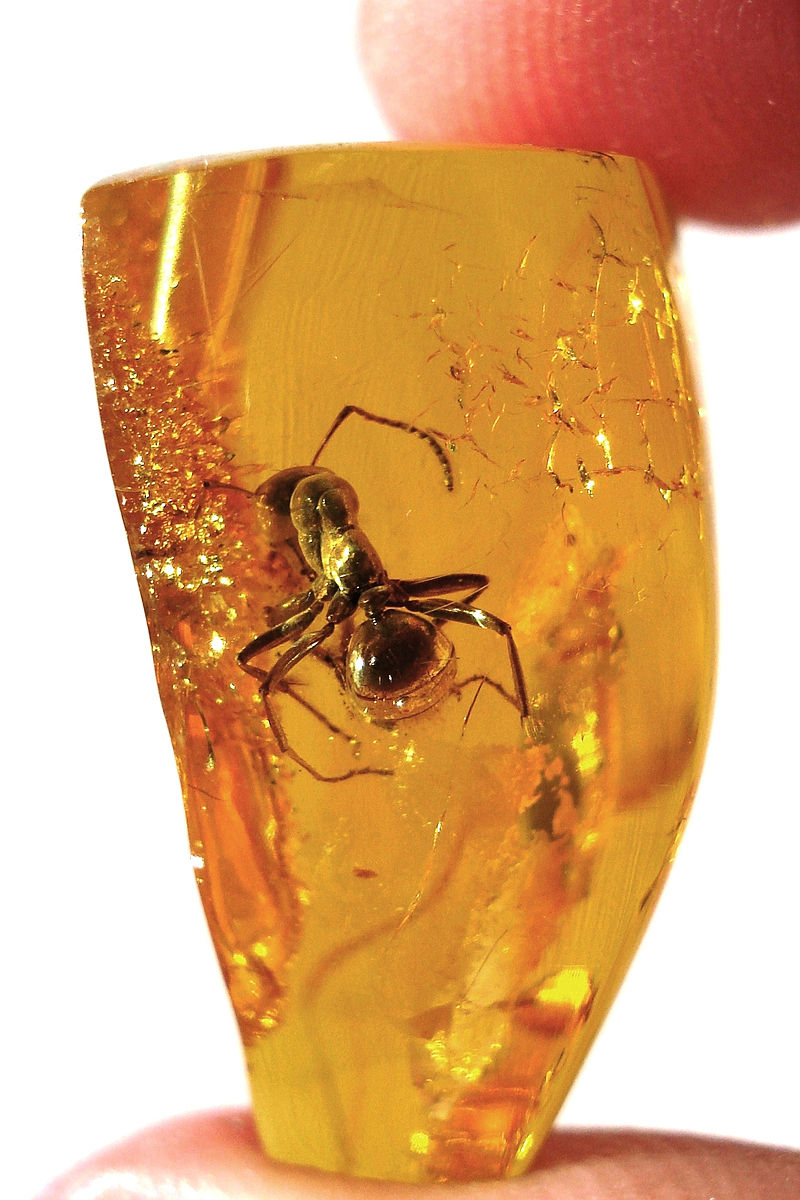
Heteroplasmies are generally (but not always) quite recent mutations. Actually, heteroplasmies are mutations caught in the act of mutating – kind of like an insect in genetic amber – frozen in time in your generation.

By Anders L. Damgaard – http://www.amber-inclusions.dk – Baltic-amber-beetle CC BY-SA 3.0, https://commons.wikimedia.org/w/index.php?curid=16792582

Let’s say you might have a heteroplasmy. Or maybe you want to see if you do. Even if YOU don’t have a heteroplasmy, other people’s heteroplasmies can and will affect matching.

Here’s everything you ever wanted to know about heteroplasmies but didn’t know to ask😊

Heteroplasmies are Fascinating

A heteroplasmy is actually quite interesting because it’s a genetic mutation in progress.

This means you have two versions of a DNA sequence showing in your mitochondrial DNA at a specific location.

Said another way, at a specific genetic location, you show both of two separate nucleotides. Amounts detected of a second nucleotide greater than 20% are considered a heteroplasmy. Amounts below 20% are ignored. Generally, within a few generations, the mutation will resolve in one direction or the other – although some heteroplasmies persist for several generations and can sometimes define family branches.

If you’d like to read more about mitochondrial DNA, I wrote a series of step-by-step articles and combined them into one resource page, here.

Show Me!

You can easily check to see if you have a heteroplasmy by signing on to your FamilyTreeDNA account. Hopefully, you’ve taken the full sequence test.

Today, new testers, thankfully, can only purchase full sequence tests, so HVR1 results don’t present quite the same challenges when combined with heteroplasmies as they used to. We’ll talk about that in a minute.

If you have only taken the HVR1 or HVR1+HVR2 “Plus” test, as opposed to the Full Sequence, you can upgrade by signing on here and clicking on the “Full” button on the Maternal Ancestry section of your personal page.

These buttons will be pink if you’ve taken that test already, and grey if you need to upgrade. If you have an account at FamilyTreeDNA, you can add a mitochondrial DNA test to that same account by clicking on “Add Ons and Upgrades” at the top of your personal page. You can order a test if you’re a new customer, here.

How Do I Know if I Have a Heteroplasmy?

Your mitochondrial DNA has a total of 16,569 locations that you can think of as addresses. If your DNA at those locations is normal, meaning no mutations, they won’t be listed in your results.

Mutations are shown in your mitochondrial DNA results by a different letter at the end of the location.

For example, here are my mutations for my HVR1 region. Each of these locations in the HVR1 region has a mutation.

For locations that are shown in your results, meaning those where you have a mutation, you’ll see, in order:

  • A letter, either T, A, C or G
  • The location number
  • A different letter, typically another one of T, A, C or G, but sometimes a small d

For the first mutation, C16069T, the location address is 16069, the normal value is C, the mutation that occurred is T.

Heteroplasmies are shown in your mitochondrial DNA results by letters other than T, A, C, G or d at the end of the location.

I don’t have any heteroplasmies, so I’m switching to the results of a cousin who has a heteroplasmic mutation at location T16362Y to use as an example. The trailing Y means they have a heteroplasmy at location 16362.

But first, what do those letters mean?

The Letters

The letters stand for the nucleotide bases that comprise DNA, as follows:

  • T – Thymine
  • A – Adenine
  • C – Cytosine
  • G – Guanine
  • d – a deletion has occurred. There is no nucleotide at this location.

For location T16362Y, the first letter, T, is the “normal” value found at this location. If a mutation has occurred, the second letter is the mutated value. Normally, this is one of the other nucleotides, A, C or G.

Any other letter after the location has a specific meaning; in this case, Y means that both a C and a T were found, per the chart below.

Note – if you have a small letter t, a, c or g, it’s not a heteroplasmy, and I wrote about small letters and what they mean in the article, Mitochondrial DNA Part 2: What Do Those Numbers Mean?

Check Your Results

On your FamilyTreeDNA personal page in the mtDNA section, click on the Mutations tab.

If you’ve taken the full sequence test, you’ll see Extra Mutations. You’re looking for any mutation that ends in any letter other than T, A, C, G or d.

If you haven’t taken the full sequence test, you don’t have “Extra” mutations listed, but you can still view your mutations for the HVR1 and HVR2 regions.

Look for any value that has any letter other than T, A, C, G or lower case d at the end of the location.

The Y tells us that this location is a heteroplasmy.

Heteroplasmy Matching

Ok, let’s look at a heteroplasmy mutation at location 16326. A heteroplasmy can occur at any mitochondrial location. I’ve selected this location because it occurs in the HVR1 region of the mitochondrial DNA, so even people who haven’t tested at the full sequence level will see results for this location. Plus, the location at which the heteroplasmy occurs affects matching in different ways.

Using the example of T16362Y, the Y tells us that both nucleotides C and T were found. This location should match against anyone carrying the following values in the same location:

  • Y (letter indicating a C/T heteroplasmy)
  • T (standard or normal value)
  • C (mutated value)

However, currently at Family Tree DNA, the heteroplasmy only counts as a match to anyone with a Y, the specific heteroplasmy indicator, and the “normal” value of T, but not the mutated value of C.

This table shows how heteroplasmies are counted at FamilyTreeDNA. For heteroplasmy T16362Y, based on the value your potential match has at this location, you either will or will not be considered a match at that location.

Scenario Other Person’s Value Your Result – T16362Y
1 T16362Y – heteroplasmy indicator Match to you at this location
2 T16362T – normal value, not a mutation Match to you at this location
3 T16362C – mutated value Not counted as match to you at this location
  • If your match has a value of Y, the heteroplasmic C/T value, they are counted as a match to you, so no problem.
  • If your match has a value of T, the normal value, this location won’t be shown on their mutation list at all. They WILL be counted as a match to you so there’s no issue.
  • If your match has a value of C, the mutated value, in my opinion they should also be counted as a match to you, but they aren’t today. The logic, I believe, was that the most likely value is the standard or normal value and that the mutated value is much less likely to be accurate. Regardless, I’ve requested this change and am hoping for a matching adjustment in a future release for heteroplasmies.

Heteroplasmies do affect matching at the different levels.

Viewing Your Matches

Mitochondrial DNA, for testing purposes, is broken into three regions, HVR1 (hyper-variable region 1), HVR2 and the Coding Region.

At FamilyTreeDNA, you can view your matches at each level. The matches are cumulative, meaning that the HVR2 level includes the HVR1 level information, and the Coding Region level includes the HVR1 and HVR2 regions. That highest level which includes all three regions shows information from your entire your entire full mitochondrial DNA sequence.

Heteroplasmy Effects on Matching

If you otherwise match someone exactly, but one of you has a heteroplasmy and the other person carries the mutated value, you will be counted as a mismatch of 1 at the full sequence level.

A mismatch has different effects when it occurs in the HVR1, HVR2 or Coding Regions, respectively.

GD is an abbreviation for Genetic Distance which is how mutations are counted. A GD of 1 means the two people have one mutation difference between them.

In the following chart, the effects of you having a nonmatch, heteroplasmic or otherwise, in each of the regions is shown at each level. The region in which the mismatch occurs is shown in the first column, at left, and the effect the mismatch has on matching in each region is shown in columns 2-4.

The red sections are not counted as matches.

Mismatch Occurs in this Region HVR1 Level Match to Someone Else HVR2 Level Match to Someone Else Coding Region Level Match to Someone Else
HVR1 region nonmatch GD of 1 means no match GD of 1 means no match GD of 1 is a match
HVR2 region nonmatch Does not affect HVR1 – so you are a match GD of 1 means no match GD of 1 is a match
Coding Region nonmatch Does not affect HVR1 – so you are a match Does not affect HVR2 – so you are a match GD of 1 is a match

For purposes of this discussion, we’re assuming our two people being compared in the chart above match exactly on every other location so matching is not otherwise affected.

  • If your heteroplasmic nonmatch occurs in the HVR1 region – in other words, scenario 3 – you’ll fall into the HVR1 nonmatch row. That means you won’t be shown as a match at the HVR1 or HVR1+HVR2 levels, but you WILL be shown as a full sequence match.
  • If your heteroplasmic nonmatch is in the HVR2 region of addresses, it won’t affect your HVR1 matches, but it will affect your HVR2 and Coding Region matches. This means you will be shown as HVR1 match, not an HVR2 match, but will be a full sequence match.
  • If your heteroplasmic nonmatch is in the Coding Region, it won’t affect your HVR1 or HVR2 matches, but it will affect your Coding Region matches. However, it won’t preclude matches and you’ll be shown as a match in all three regions.

To be very clear, I have no issue with these match thresholds. It’s important to understand how this works, and therefore why heteroplasmic (and other) mismatches in specific regions affect our matches in the way they do.

Why Aren’t Mismatches of 1 Counted as Matches in the HVR1 or HVR2 Regions?

The match threshold at FamilyTreeDNA for the HVR1 and the HVR1+HVR2 regions, both small regions of about 1000 locations each, is that only an exact match is considered a match. Therefore, a heteroplasmic nonmatch in this region can really be confusing and sometimes misleading, especially if either or BOTH people have NOT tested at the full sequence level.

These are the match thresholds in effect today.

HVR1 GD or # of Mutations Allowed for a Match HVR2 GD or # of Mutations Allowed for a Match Coding Region GD or # of Mutations Allowed for a Match
0 – no mutations allowed 0 – no mutations allowed 3 mutations allowed

If both people match on either the heteroplasmy identified (Y in our case) or one person has the normal value – all is fine. But if one person has a heteroplasmy and the other has the mutated value – then a mismatch occurs. This is really only problematic when:

  • The heteroplasmy mismatch is in the HVR1 region and both people have only tested at that level, causing the two people to not match at all.
  • The heteroplasmy mismatch occurs in combination with other mutations that, cumulatively, push the two people over the GD 3 full sequence matching threshold.

The second scenario happens rarely, but I have seen situations where people don’t match their mothers, aunts, siblings, or other close relatives because of multiple heteroplasmic mutations occurring in different people.

And yes, this is hen’s teeth rare – but it does occasionally happen.

So, what’s the bottom line about heteroplasmies?

Heteroplasmy Bottom Line

  1. You can suspect a heteroplasmy if you have full sequence matches, but no exact matches.
  2. If you have a heteroplasmy in the HVR1 region, understand that you may not have many or any matches in the HVR1 and HVR2 regions. The remedy is to test at the full sequence level and check matches there.
  3. If you have a heteroplasmy and don’t match someone you expect to match – reach out to them and ask about their value at that specific location. If that location isn’t listed for them in their results, then they have no mutation there and your heteroplasmy is NOT the cause of you not matching with them.
  4. If you don’t match someone you expect to match, reach out to them and ask if THEY have any heteroplasmies. The easiest way to ask is, “Do you have any mutations listed that end with anything other than T, A, C, G or d?” Feel free to link to this article so that they’ll know where to look, and why you’re asking.

Do you have any heteroplasmies?

_____________________________________________________________

Disclosure

I receive a small contribution when you click on some of the links to vendors in my articles. This does NOT increase the price you pay but helps me to keep the lights on and this informational blog free for everyone. Please click on the links in the articles or to the vendors below if you are purchasing products or DNA testing.

Thank you so much.

DNA Purchases and Free Transfers

Genealogy Products and Services

Books

Genealogy Research

Using Mitochondrial Haplogroups at 23andMe to Pick the Lock

I’ve been writing recently about using haplogroups for genealogy, and specifically, your mitochondrial DNA haplogroup. You can check out recent articles here and here.

While FamilyTreeDNA tests the entire mitochondria and provides you with the most detailed and granular haplogroup, plus matches to other testers, 23andMe provides mid-range level haplogroup information to all testers.

I’ve been asked how testers can:

  1. Locate that information on their account
  2. What it means
  3. How to use it for genealogy

Let’s take those questions one by one. It’s actually amazing what can be done – the information you can piece together, and how you can utilize one piece of information to leverage more.

Finding Your Haplogroup Information

At 23andMe, sign in, then click on Ancestry.

Then click on Ancestry Overview.

You’ll need to scroll down until you see the haplogroup section.

If you’re a female, you don’t have a paternal haplogroup. That’s misleading, at best and I wrote about that here. If you click to view your report, you’ll simply be encouraged to purchase a DNA test for your father.

Click on the maternal haplogroup panel to view the information about your mitochondrial haplogroup.

You’ll see basic information about the haplogroup level 23andMe provides. For me, that’s J1c2.

Next, you’ll view the migration path for haplogroup J out of Africa. Haplogroup J is the great-granddaughter haplogroup of L3, an African haplogroup. Mutations occurred in L3 that gave birth to haplogroup N. More mutations gave birth to R, which gave birth to J, and so forth.

You’ll notice that haplogroup J1c2 is fairly common among 23andMe customers. This means that in my list of 1793 matches in DNA Relatives, I could expect roughly 9 to carry this base haplogroup.

There’s more interesting information.

Yes, King Richard is my long-ago cousin, of sorts. Our common mitochondrial ancestor lived in Europe, but not long after haplogroup J1c migrated from the Middle East.

One of my favorite parts of the 23andMe information is a bit geeky, I must admit.

Scroll back to the top and select Scientific Details.

Scroll down, and you’ll be able to see the haplogroup tree formation of all your ancestral haplogroups since Mitochondrial Eve who is haplogroup L. You can see L3 who migrated out of Africa, and then N and R. You can also see their “sister clades,” in blue. In other words, L3 gave birth to L3a through M, which are all sisters to N. N gave birth to R, and so forth.

On the free Public Mitochondrial Tree, provided by FamilyTreeDNA, you can see the haplogroups displayed in a different configuration, along with the countries where the most distant known ancestors of FamilyTreeDNA testers who carry that haplogroup are found. Note that only people who have taken the full sequence test are shown on this tree. You can still check out your partial haplogroup from 23andMe, but it will be compared to people who don’t have a subgroup assigned today on this public tree.

If you were to take the full sequence test at FamilyTreeDNA, you might well have a more refined haplogroup, including a subgroup. Most people do, but not everyone.

Here’s the second half of the 23andMe haplogroup tree leading from haplogroup R to J1c2, my partial haplogroup at 23andMe.

Here’s the public tree showing the J1c2 haplogroup, and my most refined haplogroup, J1c2f from my full sequence test at FamilyTreeDNA.

If you’re interested in reading more in the scientific literature about your haplogroup, at the bottom of the 23andMe Scientific Details page, you’ll see a list of references. Guaranteed to cure insomnia.😊

You’re welcome!

Using Your Haplogroup at 23andMe for Genealogy

Enjoying this information is great, but how do you actually USE this information at 23andMe for genealogy? As you already know, 23andMe does not support trees, so many times genealogists need to message our matches to determine at least some portion of their genealogy. But not always. Let’s look at different options.

While a base haplogroup is certainly interesting and CAN be used for some things, it cannot be used, at 23andMe for matching directly because only a few haplogroup-defining locations are tested.

We can use basic haplogroup information in multiple ways for genealogy, even if your matches don’t reply to messages.

23andMe no longer allows testers to filter or sort their matches by haplogroup unless you test (or retest) on the V5 platform AND subscribe yearly for $29. You can read about what you receive with the subscription, here. You can purchase a V5 test, here.

To get around the haplogroup filtering restriction, you can download your matches, which includes your matches’ haplogroups, in one place. I provided instructions for how to download your matches, here.

While 23andMe doesn’t test to a level that facilitates matching on mitochondrial alone, even just a partial haplogroup can be useful for genealogy.

You can identify the haplogroup of specific ancestors.

You can identify people who might match on a specific line based on their haplogroup. and you can use that information as a key or lever to unlock additional information. You can also eliminate connections to your matches on your matrilineal line. 

Let’s start there.

Matrilineal Line Elimination

For every match, you can view their haplogroup by clicking on their name, then scrolling down to view haplogroup information.

As you can see, Stacy does not carry the same base haplogroup as me, so our connection is NOT on our direct matrilineal line. We can eliminate that possibility. Our match could still be on our mother’s side though, just not our mother’s mother’s mother’s direct line.

If Stacy’s haplogroup was J1c2, like mine, then our connection MIGHT be through the matrilineal line. In other words, we can’t rule it out, but it requires more information to confirm that link.

Identifying My Ancestor’s Haplogroups

I’ve made it a priority to identify the mitochondrial haplogroups of as many ancestors as possible. This becomes very useful, not only for what the haplogroup itself can tell me, but to identify other matches from that line too.

click to enlarge images

Here’s my pedigree chart of my 8 great-grandparents. The colored hearts indicate whose mitochondrial DNA each person inherited. Of course, the mothers of the men in the top row would be shown in the next generation.

As you can see, I have identified the mitochondrial DNA of 6 of my 8 great-grandparents. How did I do that?

  • Testing myself
  • Searching at FamilyTreeDNA for candidates to test or who have already tested
  • Searching at Ancestry for candidates to test, particularly using ThruLines which I wrote about, here.
  • Searching at MyHeritage for candidates to test, particularly using Theories of Family Relativity which I wrote about, here
  • Searching for people from a specific line at 23andMe, although that’s challenging because 23andMee does not support traditional trees
  • Searching for people who might be descended appropriately using the 23andMe estimated “genetic tree.” Of course, then I need to send a message and cross my fingers for a reply.
  • Searching for people at WikiTree by visiting the profile of my ancestors whose mitochondrial DNA I’m searching for in the hope of discovering either someone who has already taken the mitochondrial DNA test, or who descends appropriately and would be a candidate to test

In my pedigree chart, above, the mitochondrial DNA of John Ferverda and his mother, Eva Miller, T2b, is a partial haplogroup because I discovered the descendant through 23andMe.

I was fairly certain of that match’s identity, but I need two things:

  • Confirmation of their genealogical connection to Eva Miller Ferverda
  • Someone to take the full sequence test at FamilyTreeDNA that will provide additional information

I confirmed this haplogroup by identifying a second person descended from Eva through all females to the current generation who carries the same haplogroup

Now that I’ve confirmed one person at 23andMe who descends from Eva Miller Ferverda matrilineally, and I know their mitochondrial DNA haplogroup, I can use this information to help identify other matches – even if no one responds to my messages.

This is where downloading your spreadsheet becomes essential.

Download Your Matches

Next, we’re going to work with a combination of your downloaded matches on a spreadsheet along with your matches at 23andMe on the website.

I provided step-by-step instructions for downloading your matches, here.

On the spreadsheet, you’ll see your matches and various columns for information about each match, including (but not limited to):

  • Name
  • Segment information
  • Link to tester’s profile page (so you don’t need to search for them)
  • Maternal or paternal side, but only if your parents have tested
  • Maternal haplogroup (mitochondrial DNA for everyone)
  • Paternal haplogroup (Y DNA if you’re a male)
  • Family Surnames
  • Family Locations
  • Country locations of 4 grandparents
  • Notes (that you’ve entered)
  • Link to a family tree if tester has provided that information. I wrote about how to link your tree in this article. The tree-linking instructions are still valid although 23andMe no longer partners with FamilySearch. You can link an Ancestry or MyHeritage tree.

I want to look for other people who match me and who also have haplogroup T2b, meaning they might descend from Eva Miller Ferverda, her mother, Margaret Elizabeth Lentz, or her mother, Johanne Fredericka Ruhle in the US.

To be clear, the mitochondrial DNA reaches back further in time in Germany, but since 23andMe limits matches to either your highest 1500 or 2000 matches (it’s unclear which,) minus the people who don’t opt-in to Relative Sharing, I likely wouldn’t find anyone from the German lines in the 23andMe database as matches. If you subscribe to the V5+$29 per year version of the test, you are allowed “three times as many matches” before people roll off your match list.

On the download spreadsheet, sort on the maternal column.

I have several people who match me and are members of haplogroup T2b.

Upon closer evaluation, I discovered that at least one other person does descend from Eva Miller, which confirmed that Eva’s haplogroup is indeed T2b, plus probably an unknown subclade.

I also discovered two more people who I think are good candidates to be descended from Eva Miller using the following hints:

  • Same haplogroup, T2b
  • Shared matches with other known descendants of Eva Miller, Margaret Lentz or Frederica Ruhle.
  • Triangulation with some of those known descendants

Now, I can look at each one of those matches individually to see if they triangulate with anyone else I recognize.

Do be aware that just because these people have the mitochondrial haplogroup you are seeking doesn’t necessarily mean that you’re related through that line. However, as I worked through these matches WITH the same haplogroup, I did find several that are good candidates for a common ancestor on the matrilineal line based on matches we share in common.

Let’s hope they reply, or they have tested at a different vendor that supports trees and I can recognize their name in that database.

Assign a Side

At 23andMe, one of the first important steps is to attempt to assign a parental side to each match, if possible.

If I can assign a match to a “side” of my tree based on shared matches, then I can narrow the possible haplogroups that might be of interest. In this case, I can ignore any T2b matches assigned to my father’s side.

The way to assign matches to sides, assuming you don’t have parents to test, is to look for triangulation or a group of matches with known, hopefully somewhat close, relatives.

I wrote about Triangulation Action at 23andMe, here.

For example, my top 4 matches at 23andMe are 2 people from my father’s side, and 2 people from my mother’s side, first or second cousins, so I know how we are related.

Using these matches, our “Relatives in Common,” and triangulation, I can assign many of my matches to one side or the other. “Yes” in the DNA Overlap column means me, Stacy and that person triangulate on at least one segment.

Do be careful though, because it’s certainly possible to match someone, and triangulate on one segment, but match them from your other parent’s side on a different segment.

At the very bottom of every match page (just keep scrolling) is a Notes field. Enter something. I believe, unless this has changed, that if you have entered a note, the match will NOT roll off your list, even if you’ve reached your match limit. I include as much as I do know plus a date, even if it’s “don’t know which side.” At least I know I’ve evaluated the match.

However, equally as important, when you download your spreadsheet, you’ll be able to see your own notes, so it’s easy to refer to that spreadsheet when looking at other relatives in common on your screen.

I have two monitors which makes life immensely easier.

Working the Inverse

Above, we used the haplogroup to find other matches. You can work the inverse, of course, using matches to find haplogroups.

Now that you’ve downloaded your spreadsheet, you can search in ways you can’t easily at 23andMe.

On your spreadsheet, skim locations for hints and search for the surnames associated with the ancestral line you are seeking.

Don’t stop there. Many people at 23andMe either don’t enter any information, but some enter a generation or two. Sometimes 4 surnames, one for each grandparent. If you’ve brought your lines to current genealogically, search for the surnames of the people of the lines you seek. Eva’s grandchildren who would carry her mitochondrial haplogroup would include the surnames of Robison, Gordon, and several others. I found two by referencing my descendants chart in my computer genealogy program to quickly find surnames of people descended through all females.

The link to each match’s profile page is in the spreadsheet. Click on that link to see who you match in common, and who they and you triangulate with.

Because each of the people at 23andMe does have at least a partial mitochondrial DNA haplogroup, you may be able through surname searching, or perhaps even viewing matches in common, to reveal haplogroups of your ancestors.

If you’ve already identified someone from that ancestral line, and you’re seeking that ancestor’s mitochondrial DNA, highlight the people who triangulate with the known descendant on your spreadsheet. Generation by generation, search for the surnames of that ancestor’s female grandchildren. I found one line just one generation downstream which allowed me to identify the ancestor’s haplogroup. In other words, the birth surname of my ancestor was missing, and that of her husband, but the surname of one of her granddaughters was there.

That person did indeed match and triangulate with other known descendants.

Sorting by haplogroup, at that point, showed two additional people I was able to assign to Eva’s haplogroup line and confirm through what few tidbits of genealogy the testers did provide.

I started with not knowing Eva’s haplogroup, and now I not only know she is haplogroup T2b, I’ve identified and confirmed a total of 6 people in this lineage who also have haplogroup T2b – although several descend from her mother and grandmother. I’ve also confirmed several others through this process who don’t have haplogroup T2b, but who triangulated with me and those who do. How cool is this?

I’ll be checking at FamilyTreeDNA to see if any of Eva’s T2b descendants have tested or transferred there. If I’m lucky, they’ll have already taken the mitochondrial DNA test. If not, I’ll be offering a mitochondrial DNA full sequence testing scholarship to the first one of those matches to accept.

Is this process necessarily easy?

No, but the tools certainly exist to get it done.

Is it worth it?

Absolutely.

It’s one more way to put meat on the bones of those ancestors, one tiny piece of information at a time.

I’ll be reaching out to see if perhaps any of my newly identified cousins has genealogical information, or maybe photos or stories that I don’t.

Tips and Tools

For tips and tools to work with your mitochondrial DNA haplogroups, read the article Where Did My Mitochondrial DNA Haplogroup Come From?

Please visit the Mitochondrial DNA Resource page for more information.

You can also use Genetic Affairs AutoCluster tool to assist in forming groups of related people based on your shared matches at 23andMe and FamilyTreeDNA.

What Can You Find?

What can you find at 23andMe?

Your ancestor’s haplogroups, perhaps?

Or maybe you can use known ancestral haplogroups as the key to unlocking your common ancestor with other matches.

I found an adoptee while writing this article with common triangulated matches plus haplogroup T2b, and was able to provide information about our common ancestors, including names. Their joy was palpable.

Whoever thought something like a partial haplogroup could be the gateway to so much.

23andMe tests are on sale right now for Mother’s Day, here.

_____________________________________________________________

Disclosure

I receive a small contribution when you click on some of the links to vendors in my articles. This does NOT increase the price you pay but helps me to keep the lights on and this informational blog free for everyone. Please click on the links in the articles or to the vendors below if you are purchasing products or DNA testing.

Thank you so much.

DNA Purchases and Free Transfers

Genealogy Products and Services

Books

Genealogy Research

Want Ancestor-Specific Ethnicity? Test Mitochondrial DNA

Recently, someone’s mitochondrial DNA test revealed that their ancestor was from Africa, but that person had no African heritage showing in their autosomal results or revealed in their genealogy.

They wondered how this was possible and which test was “wrong.” The answer is that neither test is wrong.

Mitochondrial DNA is important EXACTLY for this reason. It does not divide with inheritance, while autosomal DNA does and eventually disappears entirely.

Mitochondrial DNA is inherited from our direct matrilineal line – our mother – her mother – on up the tree directly through all mothers.

If you need a refresher, the article, 4 Kinds of DNA for Genetic Genealogy shows how different types of DNA are inherited from our ancestors.

Mitochondrial DNA and Ethnicity

Let’s look specifically at mitochondrial DNA ethnicity as compared to autosomal ethnicity.

In the chart above, an African ancestor (or ancestor of any ethnicity) who was the only ancestor of that ethnicity in your heritage is shown at the top – your five times great-grandmother. Using a 25-year generation, their autosomal DNA would have been admixed with partners of a different ethnicity 7 times between them and you.

Of course, that means the autosomal DNA of that ancestor would have been divided in (roughly) half 7 times.

Percent of Inherited Autosomal DNA

In the Percent of Inherited Autosomal DNA column, we look at it from your perspective. In other words, of the 100% of your ethnicity, stepping back each generation we can see how much of that particular ancestor you would carry. You carry 50% of your mother, 25% of your grandmother, and so forth.

You inherited approximately 0.78% of your GGGGG-Grandmother’s autosomal DNA, less than 1%.

If she was 100% African, then that 0.78% would be the only African autosomal DNA of hers that you carry, on average. You could carry a little less or a little more. We know that you don’t actually inherit exactly half of each of your ancestors’ DNA from your parents, nor they from their parents, so we can only use averages in that calculation.

Ancestral Percent Autosomal Ethnicity

In the Ancestral Percent Autosomal Ethnicity column, we look at it from the ancestor’s perspective.

Of your GGGGG-Grandmother’s 100% African ethnicity, how much would each subsequent generation be expected to inherit of that ethnicity, on average?

You would inherit 0.78% of that ancestor’s DNA. Given that GGGGG-Grandma was 100% African in this example, you would carry 0.78% African ethnicity.

Percent Mitochondrial DNA Inherited

Now, look at the Percent of Mitochondrial DNA Inherited column. Your African GGGGG-Grandmother’s mitochondrial DNA was 100% African in her generation, 7 generations ago, and still is 100% African in you, today.

That’s the beauty of mitochondrial DNA. It’s a forever record – never divided and never washes away.

How else would you EVER figure out her African roots today without records? Even if you did inherit a small amount of autosomal African DNA, and the vendor reported less than 1%, how would you determine which ancestor that African DNA came from, or when?

Not to mention trying to figure out if less than 1% or any small amount of reported ethnicity is a legitimate finding or “noise.”

What about if you, like my friend, carried no African autosomal DNA from that ancestor? There would be nothing to report in your autosomal ethnicity results – but your mitochondrial DNA would still tell the story of your African ancestor. Even after that trace is long gone in autosomal DNA.

Mitochondrial DNA is MUCH more reliable for each specific line in determining the “ethnicity” or biogeographical ancestry of each ancestor. I wrote about how to use your mitochondrial DNA haplogroup, here.

Discovering Your Forever Record

Everyone can test for their own mitochondrial DNA, and you can test other family members for their matrilineal lines as well. For example, your father or his siblings carry the mitochondrial DNA of his mother. You get the idea.

I record the mitochondrial haplogroup of each of my lines in my genealogy records and on their WikiTree profile card so others can share – now and in the future.

Genealogy research of female ancestors is less difficult with at least “one” record that reaches back where surnames and autosomal DNA don’t and can’t.

What will your mitochondrial “forever history” reveal?

Mitochondrial DNA tests are on sale this week for Mother’s Day – click here to upgrade or purchase.

_____________________________________________________________

Disclosure

I receive a small contribution when you click on some of the links to vendors in my articles. This does NOT increase the price you pay but helps me to keep the lights on and this informational blog free for everyone. Please click on the links in the articles or to the vendors below if you are purchasing products or DNA testing.

Thank you so much.

DNA Purchases and Free Transfers

Genealogy Products and Services

Books

Genealogy Research

Where Did My Mitochondrial DNA Haplogroup Come From?

Mother’s Day is approaching, so I’m writing articles about mitochondrial DNA inspired by the most common questions in the Mitochondrial DNA for Genealogy Facebook group. I’ll be adding these articles to the Mitochondrial DNA Resource page, here.

FamilyTreeDNA has already started their Mother’s Day sale where both the mitochondrial DNA test and Family Finder are both on sale. Take a look.

I can’t believe how much the prices have dropped over the years – as the technology has improved. I took the full sequence mitochondrial DNA test when it was first offered and I think it was something like $800, as was the first autosomal test I ordered lo those many years ago.

Today, these tests are $139 and $59, respectively, and are critical tools for everyone’s genealogy.

Where Did My Mitochondrial DNA Haplogroup Come From?

This is one of the most common questions about mitochondrial DNA. Everyone wants to know something about their haplogroup.

The answer is multi-faceted and depends on the question you’re actually trying to answer.

There are really two flavors of this question:

  • Where did my ancestors come from in a genealogical timeframe?
  • Where did my ancestors come from before I can find them in genealogical records?

Clearly, the timeframes involved vary to some extent, because when records end varies for each ancestral line. Generally speaking, genealogy records don’t extend back beyond 500 years or so. Whenever your genealogy records end, that’s where your haplogroup and match information becomes critically important to your research.

Fortunately, we have tools to answer both types of questions which actually form a continuum.

Some answers rely on having taken a mitochondrial DNA test at FamilyTreeDNA and some don’t.

  • We’ll discuss finding haplogroup information for people who have taken a (preferably full sequence) mitochondrial DNA test at FamilyTreeDNA.
  • We’ll discuss how people who have obtained their haplogroups through autosomal testing at other vendors can find information.
  • We’ll talk about finding haplogroup information when other family members have tested who carry the mitochondrial DNA of ancestors that you do not.

Tools exist for each of these situations.

Genealogical Timeframe

If you’re trying to answer the question of where other people who carry your haplogroup are found in the world, that question can be further subdivided:

  • Where are the earliest known matrilineal ancestors of my mitochondrial DNA matches located?
  • Where are other mitochondrial DNA testers who carry my haplogroup, even if I don’t match them, found in the world?

Let’s start at FamilyTreeDNA and then move to public resources.

FamilyTreeDNA

Mitochondrial DNA Tests

FamilyTreeDNA provides a great deal of information for people who have taken a mitochondrial DNA test. We’ll step through each tab on a tester’s personal page that’s relevant to haplogroups.

To find the location of your matches’ most distant ancestors, you need to have taken the mitochondrial DNA test at FamilyTreeDNA in order to obtain results and matches. I know this might seem like an obvious statement, but you’d be surprised how many people don’t realize that there are separate tests for Y and mitochondrial DNA.

Your most detailed, and therefore most accurate and specific results will result from taking the Full Sequence test, called the mtFull test and sometimes abbreviated as FMS (full mitochondrial sequence.)

Taking a full sequence test means you’ve tested all three different regions of the mitochondria, HVR1, HVR2, and the Coding Region. Don’t worry about those details. Today, the Full Sequence test is the only test you can order, but people who tested earlier could order a partial test. Those people can easily upgrade today.

click on images to enlarge

You can see, in the upper right-hand corner of the mitochondrial section of my personal page, above, that I’ve taken both tests. The “Plus” test is the HVR1 and HVR2 portion of the test.

If you haven’t taken any mitochondrial DNA test, then the mitochondrial section doesn’t show on your personal page.

If your Plus and Full buttons are both greyed out, that means you took the HVR1 level test only, and you can click on either button to upgrade.

If your “Full” button is greyed out, that means you haven’t tested at that level and you can click on the Full button to upgrade.

Entering Ancestor Information is Important

Genealogy is a collaborative sport and entering information about our ancestors is important – both for our own genealogy and for other testers too.

Your matches may or may not enter their ancestor’s information in all three locations where it can be useful:

  • Earliest Known Ancestor (found under the dropdown beneath your name in the upper right-hand corner of your personal page, then “Account Settings,” then “Genealogy,” then “Earliest Known Ancestors”)
  • Matches Map (found on your Y or mtDNA personal page tab or “Update Location” on Earliest Known Ancestors tab)
  • Uploading or creating a tree (found under myTree at the very top of your personal page)

Please enter your information by following the notes above, or you can follow the step-by-step instructions, here. You’ll be glad you did.

Your Haplogroup

You’ll find your haplogroup name under the Badges section of your personal page as well as at the top of the mtDNA section.

click all images to enlarge

The mtDNA section at FamilyTreeDNA has five tabs that each provides different pieces of the puzzle of where your ancestors, and therefore your haplogroups, came from.

Checking all of these tabs in the mtDNA section of your results is critical to gather every piece of evidence provided by your matches and the scientists as well. Let’s take a look at each one and what they reveal about your haplogroup.

Let’s start with your matches.

Matches

On the matches page, you’ll only be matched with people who carry the same haplogroup – or at least the same base haplogroup.

The haplogroup level of your matches depends on the level of test they have taken. In other words, if your match has only taken the HVR1 level test, and they only have a base haplogroup of J, then you’ll only see them, and their haplogroup J, on your HVR1 match page. If they have tested at a higher level and you match them at the HVR1 level, you’ll see the most specific haplogroup possible as determined by the level they tested.

The (default) match page shows your matches at the highest-level test you have tested. In my case, that’s the “HVR1, HVR2, Coding Region” because I’ve taken the full sequence test which tests the entire mitochondria.

At the full sequence level match page, I’ll only see people who match me on the same extended haplogroup. In my case, that’s J1c2f.

Viewing your matches’ Earliest Known Ancestor shows where their ancestors were located, which provides clues as to where your common haplogroup was found in the world at that time. Based on those results, the geographic distribution, what you know about your own ancestors, and how far back in time, your matches’ information may be an important clue about your own ancestry.

Generally, the closer your matches, meaning the fewer mutations difference, the closer in time you share a common ancestor. I say “generally,” because mutations don’t happen on a time schedule and can happen in any generation.

The number of mutations is shown in the column “Genetic Distance.” Genetic Distance is the number of mutations difference between you and your match. So a 3 in the GD column means 3 mutations difference. A GD of 0 is an exact match. At the HVR1 and HVR2 levels, no genetic distance is provided because only exact matches are shown at those levels.

The little blue pedigree icons on the Matches page indicate people who have created or uploaded trees. You’ll definitely want to take a look at those. Sometimes you’ll discover that your matches have added more generations in their tree than is shown in the Earliest Known Ancestor field.

Is Taking the Full Sequence Test Important?

Why is taking the full sequence test important? Looking at my HVR1 matches, below, provides the perfect example.

This shows my first four HVR1-only matches. In other words, these people match me on a small subset of my mitochondrial DNA. About 1000 locations of the total 16,569 are tested in the HVR1 region. You can see that utilizing the HVR1 region, only, the people I match exactly in that region have different extended, or full haplogroups, assigned when taking the full sequence test.

Crystal and Katherine have both taken the full sequence test as indicated by FMS (full mitochondrial sequence,) and they are both haplogroup J1c2f, but Peter is haplogroup J1c2g – a different haplogroup.

Peter is shown as an exact match to me at the HVR1 level, but he has a different full haplogroup, so he won’t be shown as a match at the HVR1/HVR2/Coding Region (full sequence) level.

Crystal and Katherine will match me at the full sequence level if we have three or fewer mutations difference in total.

Susan has only tested to the HVR1 level, so she can only be assigned to haplogroup J from those 1000 locations. That tells us that (at least) one of mutations that defines haplogroup J resides in the HVR1 region.

At the HVR1 matching level, I’ll be matched with everyone I match exactly so long as they are in haplogroup J, the common denominator haplogroup of everyone at that level.

If Susan were to test at the full sequence level, she would obtain a full haplogroup and I might continue to match her at the full sequence level if she is haplogroup J1c2f and matches me with three or fewer mutations difference. At the full sequence level, I’ll only match people who match my haplogroup exactly and match at a genetic distance of 0, 1, 2 or 3.

Now, let’s look at the Ancestral Origins tab.

Ancestral Origins

The Ancestral Origins tab is organized by Country within match level. In the example above, I’ve shown exact matches or GD=0.

The match total on the Ancestral Origins tab shows the number of people whose ancestors were from various locations – as entered by the testers.

The most common places for my full sequence exact matches are in Norway and Sweden. That’s interesting because my ancestor was found in Germany in the 1600s.

There is also a comments column, to the right, not shown here, which may hold additional information of interest such as “Ashkenazi” or “Sicily” or “Canary Islands.”

The Country Total column is interesting too because it tells you how many people are in the database who have indicated that location as ancestral. The Match Percentage column is pretty much irrelevant unless your haplogroup is extremely rare.

Matches Map

The matches map falls into the “picture is worth 1000 words category.”

This is the map of the earliest known matrilineal ancestor locations of my full sequence matches.

My ancestor is the white pin in Germany. Red=exact match, orange=1 mutation difference, yellow=2 mutations difference. I have no GD=3 matches showing.

By clicking on any pin, you can see additional information about the ancestor of the tester.

You can also select an option on the map to view lower testing levels, such as my HVR1 matches shown below.

While some people are tempted to ignore the HVR1 or HVR2 Matches Maps, I don’t.

If the question you’re trying to answer is where your haplogroup came from, viewing the map of where people are located who may match you more distantly in time is useful. While we know for sure that some of these people have different full haplogroups, we also know that they are all members of haplogroup J plus some subclade. Therefore, these matches shared a common haplogroup J ancestor.

J subgroups are clearly European but some are found in Anatolia, the path out of Africa to Europe, although that could be a function of back-migration.

When looking at match maps, keep two things in mind:

  • The information is provided by testers. It’s possible for them to misunderstand what is meant by providing the information for their earliest known “direct maternal ancestor.” I can’t tell you how many male names I’ve seen here. Clearly, the tester misunderstood the purpose and what was being asked – because men don’t pass mitochondrial DNA to their offspring. Check the pins for surnames that seem to fit the pin location, and that pins have been accurately placed.
  • Testing bias. In other words, lots of people have tested in the US as compared to Europe, and probably more people in the UK than say, Turkey. Testing is still illegal in France.

Haplogroup Origins

While the Ancestral Origins tab is organized by the locations of your matches ancestors, the Haplogroup Origins tab is focused on your haplogroup by match level only.

In many cases, the numbers will match your Ancestral Origins exactly, but for other test levels, the numbers will be different.

For example, at the HVR1/HVR2 level, I can easily see at a glance the locations where my haplogroup is found, and the number of my matches in those various locations.

This page is reflective of where the haplogroup itself is found, according to your matches.

There may be other people with the same haplogroup that you don’t match and won’t be reflected on this page.  We’ll see them either in projects or on the Public Mitochondrial Tree in following sections.

Migration Map

The migration map tab shows the path between Mitochondrial Eve who lived in African about 145,000 years ago and your haplogroup today. For haplogroups J, Eve’s descendant left African and traveled through the Middle East and on into Southwest Asia before turning left and migrating throughout Europe.

Clearly, the vast majority of this migration occurred before genealogy, but not all, or you wouldn’t be here today.

Thousands of my ancestors brought my mitochondrial DNA from Africa through Anatolia, through Europe, to Scandinavia, and back to Germany – then on to the US where it continued being passed on for five more generations before reaching me.

Additional Features – Other Tools

On your personal page, scroll down below your Mitochondrial DNA results area and you’ll see Public Haplotrees under the Other Tools tab.

This tree is available to FamilyTreeDNA customers as well as the public.

Public Mitochondrial DNA Haplotree

The public mitochondrial haplotree provided by FamilyTreeDNA includes location information and is available to everyone, customer or not, for free. Please note that only full sequence results were used to construct this tree, so partial results, meaning haplogroups of people who tested at the HVR1/2 levels only, are not included because the haplogroup cannot be refined at that level.

If you’ve received a haplogroup from a different test at another vendor, you can use this public tool to obtain location information. FamilyTreeDNA has the single largest repository of mitochondrial tests in the world, having tested customers for 21 years, and they have made this tree with location information available for everyone.

If you are a customer, you can sign in and access this tree from your account, above.

If you access the haplotree in this manner, be sure to select the mtDNA tree, not the Y DNA tree which is the default.

Or you can simply access the mtDNA the same way as the public, below.

Go to the main FamilyTreeDNA page by clicking here.

On the main page, scroll to the very bottom – yes, just keep scrolling.

At the very bottom, in the footer, you’ll see “Community.” (Hint, if you don’t see Community at the very bottom of this page, you’re probably signed in to your account.)

Click on “mtDNA Haplotree.”

Next, you’ll see the beginning, or root, of the mitochondrial DNA tree, with the RSRS at the top of the page. The tree structure and haplogroups are defined at Phylotree Build 17, here. All of the main daughter haplogroups, such as “J,” are displayed beneath or you can select them across the top.

Enter the haplogroup name in the “Branch Name” field in the upper right. For me, that’s J1c2f.

I don’t match all of the J1c2f people in the database, because there more total country designations shown here (82) than I have full sequence matches with locations provided (50 from my Ancestral Origins page.)

If you click on the three dots at right, you’ll see a Country Report which provides details for this haplogroup and downstream haplogroups, if there are any. I wrote about that, in detail, here.

There are no “J1c2f plus a daughter” haplogroups defined today, so there is nothing listed downstream.

However, that’s not always the case. There may be a downstream clade that you’re not a member of, meaning you don’t carry that haplogroup-defining mutation.

Or, you may have tested someplace that provides you with a partial haplogroup, so you don’t know if you have a subclade or not. You can still glean useful information from partial haplogroups.

Partial Haplogroups From Autosomal Tests

There’s nothing “wrong” with partial haplogroups. It’s nice to know at least some history about your matrilineal ancestry. What you don’t receive, of course, aside from matching, is more recent, genealogical, information.

Both 23andMe and LivingDNA provide autosomal customers with partial mitochondrial haplogroups. Both of these vendors tend to be accurate as far as they go, as opposed to other vendors, who shall remain unnamed, that are often inaccurate.

Autosomal tests don’t specifically test the mitochondrial DNA directly like a full sequence mitochondrial DNA test does, but they do use “probes” that scan specific haplogroup defining locations. Of course, each of the autosomal chips has a finite number of locations and every location that is used for either mitochondrial or Y DNA haplogroups is a space the vendors can’t use for autosomal locations.

Therefore, customers receive partial haplogroups.

In my case, I’ve received J1c at LivingDNA and J1c2 at 23andMe.

Both vendors provide basic information about your haplogroup, along with migration maps. Wikipedia also provides basic haplogroup information. Google is your friend – “mitochondrial haplogroup J Wikipedia.”

DNA Projects

Most haplogroups have a DNA project at FamilyTreeDNA. Note that these projects are administered by volunteers, so your mileage will vary in terms of participant grouping, along with whether or not results or maps are displayed. You can just google for “mitochondrial haplogroup J DNA project at FamilyTreeDNA” and you’ll find the project or perhaps multiple projects to select from. Some haplogroups have a main “J” project and perhaps a subproject, like “J1c,” for example.

You can join the project, either from this page if you’ve tested at FamilyTreeDNA, or from your personal page via the “myProjects” tab at the top of your personal page.

If you’re looking for public haplogroup information, click on “DNA Results.”

If the Haplogroup J DNA testers have joined this project, authorized displaying their results in projects, and provided ancestor information, you will be able to see that on the “Results” page. Projects are often grouped by haplogroup subgroup. Please note that the default page display size is 25, so scroll to the bottom to see how many pages are in the project. Multiply that number times 25 (182 pages total X 25 = 4550) and change the page display size to that number (4550, in this case.)

One of the most useful tools for haplogroup discovery is the project map which offers the same subgroups as the project groupings.

You can select “All” on the dropdown to display the locations of the earliest known ancestors of everyone in this haplogroup project, or you can select a subclade. This map is displaying haplogroup J1c2 as an example of my partial haplogroup.

The Public Mitochondrial Tree and Partial Haplogroups

To find more comprehensive information for partial haplogroups, I can use the free mitochondrial tree at FamilyTreeDNA. While projects only reflect information for people who have joined those particular projects, the tree provides more comprehensive information.

Anyone with a partial haplogroup can still learn a great deal. Like with any haplogroup, you can view where tester’s ancestors lived in the world.

In this case, it doesn’t matter whether I’m looking at partial haplogroups J1c or J1c2, there are many subgroups that I could potentially belong to.

In fact, haplogroup J1c has subclades through J1c17, so there are pages and pages of haplogroup subclade candidates.

Does a Full Haplogroup Really Matter?

How much difference can there be? Is J1c or J1c2 good enough? Good questions.

It depends – on what you want to know.

  • For general interest, perhaps.
  • For genealogy, no.

Genealogists need the most granular results possible to obtain the most information possible. You don’t know what you don’t know. But how much might that be, aside from full sequence matches?

There’s a significant difference in the country details of haplogroup J1c, J1c2 and J1c2f. I created a chart of the top 10 locations, and how many people’s ancestors are found there for J1c, J1c2, and J1c2f.

Wow, that’s a big difference.

How accurately do J1c and J1c2 results reflect the locations in my full J1c2f haplogroup? I color-coded the results and removed the locations from J1c and J1c2 that are not reflected in J1c2f.

As it turns out, the 5 most frequent locations in J1c and the top 3 locations in J1c2 aren’t even in the top 10 of J1c2f. Obtaining a full haplogroup is important.

Current and Past Populations

It’s worth noting that where a current population is found is not always indicative of where an ancestral population was found.

Of course, with genealogy, we can look back a few generations by seeing where the ancestors of our close and distant matches were found.

My earliest known ancestor is found in a marriage record in 1647 in Wirbenz, Germany when she was 26 years old. However, the majority of my exact mitochondrial DNA matches are not found in Germany, or even in Europe, but in Scandinavia. I’m sure there’s a story there to be told, possibly related to the Thirty Years’ War which began in 1618 and devastated Germany. The early German records where she lived were destroyed.

Even in the abbreviated genealogical timeframe where records and surnames exist, as compared to the history of mankind and womankind, we can see examples of population migration and shift with weather, warfare, and opportunity.

We can’t peer further back in time, at least not without ancient DNA, except by a combination of general history, haplogroup inference, and noting where branching from our mother clade occurred.

We know that people move. Sometimes populations were small and the entire population moved to a new location.

Sometimes, the entire population didn’t move, the but descendants of the migrating group survived to take DNA tests, while the population remaining in the original location has no present-day descendants.

Sometimes descendants of both groups survived.

Of course, throughout history, mutations continued to occur in all lines, forming new genetic branches – haplogroups.

Thank goodness they did, because mutations, or lack thereof, are incredibly important clues to genealogy as well as being our breadcrumbs back into the mists of distant time. Those haplogroup-defining mutations are the umbilical cord that allows us to connect with those distant ancestors.

These tools, especially used together, are the best way to answer the question, “Where did my Mitochondrial DNA Haplogroup Come From?”

Where did your haplogroup come from?

_____________________________________________________________

Disclosure

I receive a small contribution when you click on some of the links to vendors in my articles. This does NOT increase the price you pay but helps me to keep the lights on and this informational blog free for everyone. Please click on the links in the articles or to the vendors below if you are purchasing products or DNA testing.

Thank you so much.

DNA Purchases and Free Transfers

Genealogy Products and Services

Books

Genealogy Research

RootsTech Connect 2021: Comprehensive DNA Session List

I wondered exactly how many DNA sessions were at RootsTech this year and which ones are the most popular.

Unfortunately, we couldn’t easily view a list of all the sessions, so I made my own. I wanted to be sure to include every session, including Tips and Tricks and vendor sessions that might only be available in their booths. I sifted through every menu and group and just kept finding more and more buried DNA treasures in different places.

I’m sharing this treasure chest with you below. And by the way, this took an entire day, because I’ve listed the YouTube direct link AND how many views each session had amassed today.

Two things first.

RootsTech Sessions

As you know, RootsTech was shooting for TED talk format this year. Roughly 20-minute sessions. When everything was said and done, there were five categories of sessions:

  • Curated sessions are approximately 20-minute style presentations curated by RootsTech meaning that speakers had to submit. People whose sessions were accepted were encouraged to break longer sessions into a series of two or three 20-minute sessions.
  • Vendor booth videos could be loaded to their virtual boots without being curated by RootsTech, but curated videos by their employees could also be loaded in the vendor booths.
  • DNA Learning Center sessions were by invitation and provided by volunteers. They last generally between 10-20 minutes.
  • Tips and Tricks are also produced by volunteers and last from 1 to 15 minutes. They can be sponsored by a company and in some cases, smaller vendors and service providers utilized these to draw attention to their products and services.
  • 1-hour sessions tend to be advanced and not topics could be easily broken apart into a series.

Look at this amazing list of 129 DNA or DNA-related sessions that you can watch for free for the next year. Be sure to bookmark this article so you can refer back easily.

Please note that I started compiling this list for myself and I’ve shortened some of the session names. Then I realized that if I needed this, so do you.

Top 10 Most-Viewed Sessions

I didn’t know whether I should list these sessions by speaker name, or by the most views, so I’m doing a bit of both.

Drum roll please…

The top 10 most viewed sessions as of today are:

Speaker/Vendor Session Title Type Link Views
Libby Copeland How Home DNA Testing Has Redefined Family History Curated Session https://youtu.be/LsOEuvEcI4A 13,554
Nicole Dyer Organize Your DNA Matches in a Diagram Tips and Tricks https://youtu.be/UugdM8ATTVo 6175
Roberta Estes DNA Triangulation: What, Why, and How 1 hour https://youtu.be/nIb1zpNQspY 6106
Tim Janzen Tracing Ancestral Lines in the 1700s Using DNA Part 1 Curated Session https://youtu.be/bB7VJeCR6Bs 5866
Amy Williams Ancestor Reconstruction: Why, How, Tools Curated Session https://youtu.be/0D6lAIyY_Nk 5637
Drew Smith Before You Test Basics Part 1 Curated Session https://youtu.be/wKhMRLpefDI 5079
Nicole Dyer How to Interpret a DNA Cluster Chart Tips and Tricks https://youtu.be/FI4DaWGX8bQ 4982
Nicole Dyer How to Evaluate a ThruLines Hypothesis Tips and Tricks https://youtu.be/ao2K6wBip7w 4823
Kimberly Brown Why Don’t I Match my Match’s Matches DNA Learning Center https://youtu.be/A8k31nRzKpc 4593
Rhett Dabling, Diahan Southard Understanding DNA Ethnicity Results Curated Session https://youtu.be/oEt7iQBPfyM 4287

Libby Copeland must be absolutely thrilled. I noticed that her session was featured over the weekend in a highly prominent location on the RootsTech website.

Sessions by Speaker

The list below includes the English language sessions by speaker. I apologize for not being able to discern which non-English sessions are about DNA.

Don’t let a smaller number of views discourage you. I’ve watched a few of these already and they are great. I suspect that sessions by more widely-known speakers or ones whose sessions were listed in the prime-real estate areas have more views, but what you need might be waiting just for you in another session. You don’t have to pick and choose and they are all here for you in one place.

Speaker/Vendor Session Title Type Link Views
Alison Wilde SCREEN Method: A DNA Match Note System that Really Helps DNA Learning Center https://youtu.be/WaNnh_v1rwE 791
Amber Brown Genealogist-on-Demand: The Help You Need on a Budget You Can Afford Curated Session https://youtu.be/9KjlD6GxiYs 256
Ammon Knaupp Pattern of Genetic Inheritance DNA Learning Center https://youtu.be/Opr7-uUad3o 824
Amy Williams Ancestor Reconstruction: Why, How, Tools Curated Session https://youtu.be/0D6lAIyY_Nk 5637
Amy Williams Reconstructing Parent DNA and Analyzing Relatives at HAPI-DNA, Part 1 Curated Session https://youtu.be/MZ9L6uPkKbo 1021
Amy Williams Reconstructing Parent DNA and Analyzing Relatives at HAPI-DNA, Part 2 Curated Session https://youtu.be/jZBVVvJmnaU 536
Ancestry DNA Matches Curated Session https://youtu.be/uk8EKXLQYzs 743
Ancestry ThruLines Curated Session https://youtu.be/RAwimOgNgUE 1240
Ancestry Ancestry DNA Communities: Bringing New Discoveries to Your Family History Research Curated Session https://youtu.be/depeGW7QUzU 422
Andre Kearns Helping African Americans Trace Slaveholding Ancestors Using DNA Curated Session https://youtu.be/mlnSU5UM-nQ 2211
Barb Groth I Found You: Methods for Finding Hidden Family Members Curated Session https://youtu.be/J93hxOe_KC8 1285
Beth Taylor DNA and Genealogy Basics DNA Learning Center https://youtu.be/-LKgkIqFhL4 967
Beth Taylor What Do I Do With Cousin Matches? DNA Learning Center https://youtu.be/LyGT9B6Mh00 1349
Beth Taylor Using DNA to Find Unknown Relatives DNA Learning Center https://youtu.be/WGJ8IfuTETY 2166
David Ouimette I Am Adopted – How Do I Use DNA to Find My Parents? Curated Session https://youtu.be/-jpKgKMLg_M 365
Debbie Kennett Secrets and Surprises: Uncovering Family History Mysteries through DNA Curated Session https://youtu.be/nDnrIWKmIuA 2899
Debbie Kennett Genetic Genealogy Meets CSI Curated Session https://youtu.be/sc-Y-RtpEAw 589
Diahan Southard What is a Centimorgan Tips and Tricks https://youtu.be/uQcfhPU5QhI 2923
Diahan Southard Using the Shared cM Project DNA Learning Center https://youtu.be/b66zfgnzL0U 3172
Diahan Southard Understanding Ethnicity Results DNA Learning Center https://youtu.be/8nCMrf-yJq0 1587
Diahan Southard Problems with Shared Centimorgans DNA Learning Center https://youtu.be/k7j-1yWwGcY 2494
Diahan Southard 4 Next Steps for Your DNA Curated Session https://youtu.be/poRyCaTXvNg 3378
Diahan Southard Your DNA Questions Answered Curated Session https://youtu.be/uUlZh_VYt7k 3454
Diahan Southard You Can Do the DNA – We Can Help Tips and Tricks https://youtu.be/V5VwNzcVGNM 763
Diahan Southard What is a DNA Match? Tips and Tricks https://youtu.be/Yt_GeffWhC0 314
Diahan Southard Diahan’s Tips for DNA Matches Tips and Tricks https://youtu.be/WokgGVRjwvk 3348
Diahan Southard Diahan’s Tips for Y DNA Tips and Tricks https://youtu.be/QyH69tk-Yiw 620
Diahan Southard Diahan’s Tips about mtDNA testing Tips and Tricks https://youtu.be/6d-FNY1gcmw 2142
Diahan Southard Diahan’s Tips about Ethnicity Results Tips and Tricks https://youtu.be/nZFj3zCucXA 1597
Diahan Southard Diahan’s Tips about Which DNA Test to Take Tips and Tricks https://youtu.be/t–4R8H8q0U 2043
Diahan Southard Diahan’s Tips about When Your Matches Don’s Respond Tips and Tricks https://youtu.be/LgHtM3nS60o 3009
Diahan Southard Three Next Steps: Using Known Matches Tips and Tricks https://youtu.be/z1SVq8ME42A 118
Diahan Southard Three Next Steps: MRCA/DNA and the Paper Trail Tips and Tricks https://youtu.be/JB0cVyk-Y4Q 80
Diahan Southard Three Next Steps: Start With Known Matches Tips and Tricks https://youtu.be/BSNhaQCNtAo 68
Diahan Southard Three Next Steps: Additional Tools Tips and Tricks https://youtu.be/PqNPBLQSBGY 140
Diahan Southard Three Next Steps: Ancestry ThruLines Tips and Tricks https://youtu.be/KWayyAO8p_c 335
Diahan Southard Three Next Steps: MyHeritage Theory of Relativity Tips and Tricks https://youtu.be/Et2TVholbAE 80
Diahan Southard Three Next Steps: Who to Test Tips and Tricks https://youtu.be/GyWOO1XDh6M 111
Diahan Southard Three Next Steps: Genetics vs Genealogy Tips and Tricks https://youtu.be/Vf0DC5eW_vA 294
Diahan Southard Three Next Steps: Centimorgan Definition Tips and Tricks https://youtu.be/nQF935V08AQ 201
Diahan Southard Three Next Steps: Shared Matches Tips and Tricks https://youtu.be/AYcR_pB6xgA 233
Diahan Southard Three Next Steps: Case Study – Finding an MRCA Tips and Tricks https://youtu.be/YnlA9goeF7w 256
Diahan Southard Three Next Steps: Why Use DNA Tips and Tricks https://youtu.be/v-o4nhPn8ww 266
Diahan Southard Three Next Steps: Finding Known Matches Tips and Tricks https://youtu.be/n3N9CnAPr18 688
Diana Elder Using DNA Ethnicity Estimates in Your Research Tips and Tricks https://youtu.be/aJgUK3TJqtA 1659
Diane Elder Using DNA in a Client Research Project to Solve a Family Mystery 1 hour https://youtu.be/ysGYV6SXxR8 1261
Donna Rutherford DNA and the Settlers of Taranaki, New Zealand Curated Session https://youtu.be/HQxFwie4774 214
Drew Smith Before You Test Basics Part 1 Curated Session https://youtu.be/wKhMRLpefDI 5079
Drew Smith Before You Test Basics Part 2 Curated Session https://youtu.be/Dopx04UHDpo 2769
Drew Smith Before You Test Basics Part 3 Curated Session https://youtu.be/XRd2IdtA-Ng 2360
Elena Fowler Whakawhanaungatanga Using DNA – It’s Complicated (Māori heritage) Curated Session https://youtu.be/6XTPMzVnUd8 470
Elena Fowler Whakawhanaungatanga Using DNA – FamilyTreeDNA (Māori heritage) Curated Session https://youtu.be/fM85tt5ad3A 269
Elena Fowler Whakawhanaungatanga Using DNA – Ancestry (Māori heritage) Curated Session https://youtu.be/-byO6FOfaH0 191
Esmee Mortimer-Taylor Living DNA: Anathea Ring – Her Story Tips and Tricks https://youtu.be/MTE4UFKyLRs 189
Esmee Mortimer-Taylor Living DNA: Coretta Scott King Academy – DNA Results Reveal Tips and Tricks https://youtu.be/CK1EYcuhqmc 82
Fonte Felipe Ethnic Filters and DNA Matches: The Way Forward to Finding Your Lineage Curated Session https://youtu.be/mt2Rv2lpj7o 553
FTDNA – Janine Cloud Big Y: What is it? Why Do I Need It? Curated Session https://youtu.be/jiDcjWk4cVI 2013
FTDNA – Sherman McRae Using DNA to Find Ancestors Lost in Slavery Curated Session https://youtu.be/i3VKwpmttBI 738
Jerome Spears Elusive Distant African Cousins: Using DNA, They Can Be Found Curated Session https://youtu.be/fAr-Z78f_SM 335
Karen Stanbary Ruling Out Instead of Ruling In: DNA and the GPS in Action 1 hour https://youtu.be/-WLhIHlSyLE 548
Katherine Borges DNA and Lineage Societies Tips and Tricks https://youtu.be/TBYGyLHHAOI 451
Kimberly Brown Why Don’t I Match my Match’s Matches DNA Learning Center https://youtu.be/A8k31nRzKpc 4593
Kitty Munson Cooper Basics of Unknown Parentage Research Using DNA Part 1 Curated Session https://youtu.be/2f3c7fJ74Ig 2931
Kitty Munson Cooper Basics of Unknown Parentage Research Using DNA Part 2 Curated Session https://youtu.be/G7h-LJPCywA 1222
Lauren Vasylyev Finding Cousins through DNA Curated Session https://youtu.be/UN7WocQzq78 1979
Lauren Vasylyev, Camille Andrus Finding Ancestors Through DNA Curated Session https://youtu.be/4rbYrRICzrQ 3919
Leah Larkin Untangling Endogamy Part 1 Curated Session https://youtu.be/0jtVghokdbg 2291
Leah Larkin Untangling Endogamy Part 2 Curated Session https://youtu.be/-rXLIZ0Ol-A 1441
Liba Casson-Budell Shining a Light on Jewish Genealogy Curated Session https://youtu.be/pHyVz94024Y 162
Libby Copeland How Home DNA Testing Has Redefined Family History Curated Session https://youtu.be/LsOEuvEcI4A 13,554
Linda Farrell Jumpstart your South African research Curated Session https://youtu.be/So7y9_PBRKc 339
Living DNA How to do a Living DNA Swab Tips and Tricks https://youtu.be/QkbxhqCw7Mo 50
Lynn Broderick Ethical Considerations Using DNA Results Curated Session https://youtu.be/WMcRiDxPy2k 249
Mags Gaulden Importance and Benefits of Y DNA Testing DNA Learning Center https://youtu.be/MVIiv0H7imI 1032
Maurice Gleeson Using Y -DNA to Research Your Surname Curated Session https://youtu.be/Ir4NeFH_aJs 1140
Melanie McComb Georgetown Memory Project: Preserving the Stories of the GU272 Curated Session https://youtu.be/Fv0gHzTHwPk 320
Michael Kennedy What Can You Do with Your DNA Test? DNA Learning Center https://youtu.be/rKOjvkqYBAM 616
Michelle Leonard Understanding X-Chromosome DNA Matching Curated Session https://youtu.be/n784kt-Xnqg 775
MyHeritage How to Analyze DNA Matches on MH Curated Session https://youtu.be/gHRvyQYrNds 1192
MyHeritage DNA – an Overview Curated Session https://youtu.be/AIRGjEOg_xo 389
MyHeritage Advanced DNA Tools Curated Session https://youtu.be/xfZUAjI5G_I 762
MyHeritage How to Get Started with Your DNA Matches Tips and Tricks https://youtu.be/rU_dq1vt6z4 1901
MyHeritage How to Filter and Sort Your DNA Matches Tips and Tricks https://youtu.be/aJ7dRwMTt90 1008
Nicole Dyer How to Interpret a DNA Cluster Chart Tips and Tricks https://youtu.be/FI4DaWGX8bQ 4982
Nicole Dyer How to Evaluate a ThruLines Hypothesis Tips and Tricks https://youtu.be/ao2K6wBip7w 4823
Nicole Dyer Organize Your DNA Matches in a Diagram Tips and Tricks https://youtu.be/UugdM8ATTVo 6175
Nicole Dyer Research in the Southern States Curated Session https://youtu.be/Pouw_yPrVSg 871
Olivia Fordiani Understanding Basic Genetic Genealogy DNA Learning Center https://youtu.be/-kbGOFiwH2s 810
Pamela Bailey Information Wanted: Reuniting an American Family Separated by Slavery Tips and Tricks https://youtu.be/DPCJ4K8_PZw 105
Patricia Coleman Getting Started with DNA Painter DNA Learning Center https://youtu.be/Yh_Bzj6Atck 1775
Patricia Coleman Adding MyHeritage Data to DNA Painter DNA Learning Center https://youtu.be/rP9yoCGjkLc 458
Patricia Coleman Adding 23andMe Data to DNA Painter DNA Learning Center https://youtu.be/pJBAwe6s0z0 365
Penny Walters Mixing DNA with Paper Trail DNA Learning Center https://youtu.be/PP4SjdKuiLQ 2693
Penny Walters Collaborating with DNA Matches When You’re Adopted DNA Learning Center https://youtu.be/9ioeCS22HlQ 1222
Penny Walters Differences in Ethnicity Between My 6 Children DNA Learning Center https://youtu.be/RsrXLcXRNfs 400
Penny Walters Differences in DNA Results Between My 6 Children DNA Learning Center https://youtu.be/drnzW3FXScI 815
Penny Walters Ethical Dilemmas in DNA Testing DNA Learning Center https://youtu.be/PRPoc0nB4Cs 437
Penny Walters Adoption – Background Context Curated Session https://youtu.be/qC1_Ln8WCNg 1054
Penny Walters Adoption – Utilizing DNA Testing to Construct a Bio Family Tree Curated Session https://youtu.be/zwJ5QofaGTE 941
Penny Walters Adoption – Ethical Dilemmas and Varied Consequences of Looking for Bio Family Curated Session https://youtu.be/ZLcHHTSfCIE 576
Penny Walters I Want My Mummy: Ancient and Modern Egypt Curated Session https://youtu.be/_HRO50RtzFk 311
Rebecca Whitman Koford BCG: Brief Step-by-Step Tour of the BCG Website Tips and Tricks https://youtu.be/YpV9bKG6sXk 317
Renate Yarborough Sanders DNA Understanding the Basics DNA Learning Center https://youtu.be/bX_flUQkBEA 2713
Renate Yarborough Sanders To Test or Not to Test DNA Learning Center https://youtu.be/58-qzvN4InU 1048
Rhett Dabling Finding Ancestral Homelands Through DNA Curated Session https://youtu.be/k9zixg4uL1I 505
Rhett Dabling, Diahan Southard Understanding DNA Ethnicity Results Curated Session https://youtu.be/oEt7iQBPfyM 4287
Richard Price Finding Biological Family Tips and Tricks https://youtu.be/L9C-SGVRZLM 101
Robert Kehrer Will They Share My DNA (Consent, policies, etc.) DNA Learning Center https://youtu.be/SUo-jpTaR1M 480
Robert Kehrer What is a Centimorgan? DNA Learning Center https://youtu.be/dopniLw8Fho 1194
Roberta Estes DNA Triangulation: What, Why and How 1 hour https://youtu.be/nIb1zpNQspY 6106
Roberta Estes Mother’s Ancestors DNA Learning Center https://youtu.be/uUh6WrVjUdQ 3074
Robin Olsen Wirthlin How Can DNA Help Me Find My Ancestors? Curated Session https://youtu.be/ZINiyKsw0io 1331
Robin Olsen Wirthlin DNA Tools Bell Curve Tips and Tricks https://youtu.be/SYorGgzY8VQ 1207
Robin Olsen Wirthlin DNA Process Trees Guide You in Using DNA in Family History Research Tips and Tricks https://youtu.be/vMOQA3dAm4k 1708
Shannon Combs-Bennett DNA Basics Made Easy DNA Learning Center https://youtu.be/4JcLJ66b0l4 1560
Shannon Combs-Bennett DNA Brick Walls DNA Learning Center https://youtu.be/vtFkT_PSHV0 450
Shannon Combs-Bennett Basics of Genetic Genealogy Part 1 Curated Session https://youtu.be/xEMbirtlBZo 2263
Shannon Combs-Bennett Basics of Genetic Genealogy Part 2 Curated Session https://youtu.be/zWMPja1haHg 1424
Steven Micheleti, Joanna Mountain Genetic Consequences of the Transatlantic Slave Trade Part 1 Curated Session https://youtu.be/xP90WuJpD9Q 2284
Steven Micheleti, Joanna Mountain Genetic Consequences of the Transatlantic Slave Trade Part 2 Curated Session https://youtu.be/McMNDs5sDaY 742
Thom Reed How Can Connecting with Ancestors Complete Us? Curated Session https://youtu.be/gCxr6W-tkoY 392
Tim Janzen Tracing Ancestral Lines in the 1700s Using DNA Part 1 Curated Session https://youtu.be/bB7VJeCR6Bs 5866
Tim Janzen Tracing Ancestral Lines in the 1700s Using DNA Part 2 Curated Session https://youtu.be/scOtMyFULGI 3008
Ugo Perego Strengths and Limitations of Genetic Testing for Family History DNA Learning Center https://youtu.be/XkBK1y-LVaE 480
Ugo Perego A Personal Genetic Journey DNA Learning Center https://youtu.be/Lv9CSU50xCc 844
Ugo Perego Discovering Native American Ancestry through DNA Curated Session https://youtu.be/L1cs748ctx0 884
Ugo Perego Mitochondrial DNA: Our Maternally-Inherited Family History Curated Session https://youtu.be/Z5bPTUzewKU 599
Vivs Laliberte Introduction to Y DNA DNA Learning Center https://youtu.be/rURyECV5j6U 752
Yetunde Moronke Abiola 6% Nigerian: Tracing my Missing Nigerian Ancestor Curated Session https://youtu.be/YNQt60xKgyg 494

_____________________________________________________________

Disclosure

I receive a small contribution when you click on some of the links to vendors in my articles. This does NOT increase the price you pay but helps me to keep the lights on and this informational blog free for everyone. Please click on the links in the articles or to the vendors below if you are purchasing products or DNA testing.

Thank you so much.

DNA Purchases and Free Transfers

Genealogy Products and Services

Genealogy Research

Books

Genetic Genealogy at 20 Years: Where Have We Been, Where Are We Going and What’s Important?

Not only have we put 2020 in the rear-view mirror, thankfully, we’re at the 20-year, two-decade milestone. The point at which genetics was first added to the toolbox of genealogists.

It seems both like yesterday and forever ago. And yes, I’ve been here the whole time,  as a spectator, researcher, and active participant.

Let’s put this in perspective. On New Year’s Eve, right at midnight, in 2005, I was able to score kit number 50,000 at Family Tree DNA. I remember this because it seemed like such a bizarre thing to be doing at midnight on New Year’s Eve. But hey, we genealogists are what we are.

I knew that momentous kit number which seemed just HUGE at the time was on the threshold of being sold, because I had inadvertently purchased kit 49,997 a few minutes earlier.

Somehow kit 50,000 seemed like such a huge milestone, a landmark – so I quickly bought kits, 49,998, 49,999, and then…would I get it…YES…kit 50,000. Score!

That meant that in the 5 years FamilyTreeDNA had been in business, they had sold on an average of 10,000 kits per year, or 27 kits a day. Today, that’s a rounding error. Then it was momentous!

In reality, the sales were ramping up quickly, because very few kits were sold in 2000, and roughly 20,000 kits had been sold in 2005 alone. I know this because I purchased kit 28,429 during the holiday sale a year earlier.

Of course, I had no idea who I’d test with that momentous New Year’s Eve Y DNA kit, but I assuredly would find someone. A few months later, I embarked on a road trip to visit an elderly family member with that kit in tow. Thank goodness I did, and they agreed and swabbed on the spot, because they are gone today and with them, the story of the Y line and autosomal DNA of their branch.

In the past two decades, almost an entire generation has slipped away, and with them, an entire genealogical library held in their DNA.

Today, more than 40 million people have tested with the four major DNA testing companies, although we don’t know exactly how many.

Lots of people have had more time to focus on genealogy in 2020, so let’s take a look at what’s important? What’s going on and what matters beyond this month or year?

How has this industry changed in the last two decades, and where it is going?

Reflection

This seems like a good point to reflect a bit.

Professor Dan Bradley reflecting on early genetic research techniques in his lab at the Smurfit Institute of Genetics at Trinity College in Dublin. Photo by Roberta Estes
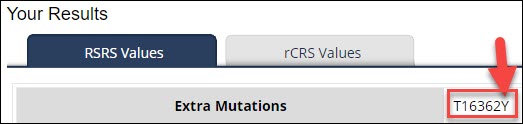
In the beginning – twenty years ago, there were two companies who stuck their toes in the consumer DNA testing water – Oxford Ancestors and Family Tree DNA. About the same time, Sorenson Genomics and GeneTree were also entering that space, although Sorenson was a nonprofit. Today, of those, only FamilyTreeDNA remains, having adapted with the changing times – adding more products, testing, and sophistication.

Bryan Sykes who founded Oxford Ancestors announced in 2018 that he was retiring to live abroad and subsequently passed away in 2020. The website still exists, but the company has announced that they have ceased sales and the database will remain open until Sept 30, 2021.

James Sorenson died in 2008 and the assets of Sorenson Molecular Genealogy Foundation, including the Sorenson database, were sold to Ancestry in 2012. Eventually, Ancestry removed the public database in 2015.

Ancestry dabbled in Y and mtDNA for a while, too, destroying that database in 2014.

Other companies, too many to remember or mention, have come and gone as well. Some of the various company names have been recycled or purchased, but aren’t the same companies today.

In the DNA space, it was keep up, change, die or be sold. Of course, there was the small matter of being able to sell enough DNA kits to make enough money to stay in business at all. DNA processing equipment and a lab are expensive. Not just the equipment, but also the expertise.

The Next Wave

As time moved forward, new players entered the landscape, comprising the “Big 4” testing companies that constitute the ponds where genealogists fish today.

23andMe was the first to introduce autosomal DNA testing and matching. Their goal and focus was always medical genetics, but they recognized the potential in genealogists before anyone else, and we flocked to purchase tests.

Ancestry settled on autosomal only and relies on the size of their database, a large body of genealogy subscribers, and a widespread “feel-good” marketing campaign to sell DNA kits as the gateway to “discover who you are.”

FamilyTreeDNA did and still does offer all 3 kinds of tests. Over the years, they have enhanced both the Y DNA and mitochondrial product offerings significantly and are still known as “the science company.” They are the only company to offer the full range of Y DNA tests, including their flagship Big Y-700, full sequence mitochondrial testing along with matching for both products. Their autosomal product is called Family Finder.

MyHeritage entered the DNA testing space a few years after the others as the dark horse that few expected to be successful – but they fooled everyone. They have acquired companies and partnered along the way which allowed them to add customers (Promethease) and tools (such as AutoCluster by Genetic Affairs), boosting their number of users. Of course, MyHeritage also offers users a records research subscription service that you can try for free.

In summary:

One of the wonderful things that happened was that some vendors began to accept compatible raw DNA autosomal data transfer files from other vendors. Today, FamilyTreeDNA, MyHeritage, and GEDmatch DO accept transfer files, while Ancestry and 23andMe do not.

The transfers and matching are free, but there are either minimal unlock or subscription plans for advanced features.

There are other testing companies, some with niche markets and others not so reputable. For this article, I’m focusing on the primary DNA testing companies that are useful for genealogy and mainstream companion third-party tools that complement and enhance those services.

The Single Biggest Change

As I look back, the single biggest change is that genetic genealogy evolved from the pariah of genealogy where DNA discussion was banned from the (now defunct) Rootsweb lists and summarily deleted for the first few years after introduction. I know, that’s hard to believe today.

Why, you ask?

Reasons varied from “just because” to “DNA is cheating” and then morphed into “because DNA might do terrible things like, maybe, suggest that a person really wasn’t related to an ancestor in a lineage society.”

Bottom line – fear and misunderstanding. Change is exceedingly difficult for humans, and DNA definitely moved the genealogy cheese.

From that awkward beginning, genetic genealogy organically became a “thing,” a specific application of genealogy. There was paper-trail traditional genealogy and then the genetic aspect. Today, for almost everyone, genealogy is “just another tool” in the genealogist’s toolbox, although it does require focused learning, just like any other tool.

DNA isn’t separate anymore, but is now an integral part of the genealogical whole. Having said that, DNA can’t solve all problems or answer all questions, but neither can traditional paper-trail genealogy. Together, each makes the other stronger and solves mysteries that neither can resolve alone.

Synergy.

I fully believe that we have still only scratched the surface of what’s possible.

Inheritance

As we talk about the various types of DNA testing and tools, here’s a quick graphic to remind you of how the different types of DNA are inherited.

  • Y DNA is inherited paternally for males only and informs us of the direct patrilineal (surname) line.
  • Mitochondrial DNA is inherited by everyone from their mothers and informs us of the mother’s matrilineal (mother’s mother’s mother’s) line.
  • Autosomal DNA can be inherited from potentially any ancestor in random but somewhat predictable amounts through both parents. The further back in time, the less identifiable DNA you’ll inherit from any specific ancestor. I wrote about that, here.

What’s Hot and What’s Not

Where should we be focused today and where is this industry going? What tools and articles popped up in 2020 to help further our genealogy addiction? I already published the most popular articles of 2020, here.

This industry started two decades ago with testing a few Y DNA and mitochondrial DNA markers, and we were utterly thrilled at the time. Both tests have advanced significantly and the prices have dropped like a stone. My first mitochondrial DNA test that tested only 400 locations cost more than $800 – back then.

Y DNA and mitochondrial DNA are still critically important to genetic genealogy. Both play unique roles and provide information that cannot be obtained through autosomal DNA testing. Today, relative to Y DNA and mitochondrial DNA, the biggest challenge, ironically, is educating newer genealogists about their potential who have never heard about anything other than autosomal, often ethnicity, testing.

We have to educate in order to overcome the cacophony of “don’t bother because you don’t get as many matches.”

That’s like saying “don’t use the right size wrench because the last one didn’t fit and it’s a bother to reach into the toolbox.” Not to mention that if everyone tested, there would be a lot more matches, but I digress.

If you don’t use the right tool, and all of the tools at your disposal, you’re not going to get the best result possible.

The genealogical proof standard, the gold standard for genealogy research, calls for “a reasonably exhaustive search,” and if you haven’t at least considered if or how Y
DNA
and mitochondrial DNA along with autosomal testing can or might help, then your search is not yet exhaustive.

I attempt to obtain the Y and mitochondrial DNA of every ancestral line. In the article, Search Techniques for Y and Mitochondrial DNA Test Candidates, I described several methodologies to find appropriate testing candidates.

Y DNA – 20 Years and Still Critically Important

Y DNA tracks the Y chromosome for males via the patrilineal (surname) line, providing matching and historical migration information.

We started 20 years ago testing 10 STR markers. Today, we begin at 37 markers, can upgrade to 67 or 111, but the preferred test is the Big Y which provides results for 700+ STR markers plus results from the entire gold standard region of the Y chromosome in order to provide the most refined results. This allows genealogists to use STR markers and SNP results together for various aspects of genealogy.

I created a Y DNA resource page, here, in order to provide a repository for Y DNA information and updates in one place. I would encourage anyone who can to order or upgrade to the Big Y-700 test which provides critical lineage information in addition to and beyond traditional STR testing. Additionally, the Big Y-700 test helps build the Y DNA haplotree which is growing by leaps and bounds.

More new SNPs are found and named EVERY SINGLE DAY today at FamilyTreeDNA than were named in the first several years combined. The 2006 SNP tree listed a grand total of 459 SNPs that defined the Y DNA tree at that time, according to the ISOGG Y DNA SNP tree. Goran Rundfeldt, head of R&D at FamilyTreeDNA posted this today:

2020 was an awful year in so many ways, but it was an unprecedented year for human paternal phylogenetic tree reconstruction. The FTDNA Haplotree or Great Tree of Mankind now includes:

37,534 branches with 12,696 added since 2019 – 51% growth!
defined by
349,097 SNPs with 131,820 added since 2019 – 61% growth!

In just one year, 207,536 SNPs were discovered and assigned FT SNP names. These SNPs will help define new branches and refine existing ones in the future.

The tree is constructed based on high coverage chromosome Y sequences from:
– More than 52,500 Big Y results
– Almost 4,000 NGS results from present-day anonymous men that participated in academic studies

Plus an additional 3,000 ancient DNA results from archaeological remains, of mixed quality and Y chromosome coverage at FamilyTreeDNA.

Wow, just wow.

These three new articles in 2020 will get you started on your Y DNA journey!

Mitochondrial DNA – Matrilineal Line of Humankind is Being Rewritten

The original Oxford Ancestor’s mitochondrial DNA test tested 400 locations. The original Family Tree DNA test tested around 1000 locations. Today, the full sequence mitochondrial DNA test is standard, testing the entire 16,569 locations of the mitochondria.

Mitochondrial DNA tracks your mother’s direct maternal, or matrilineal line. I’ve created a mitochondrial DNA resource page, here that includes easy step-by-step instructions for after you receive your results.

New articles in 2020 included the introduction of The Million Mito Project. 2021 should see the first results – including a paper currently in the works.

The Million Mito Project is rewriting the haplotree of womankind. The current haplotree has expanded substantially since the first handful of haplogroups thanks to thousands upon thousands of testers, but there is so much more information that can be extracted today.

Y and Mitochondrial Resources

If you don’t know of someone in your family to test for Y DNA or mitochondrial DNA for a specific ancestral line, you can always turn to the Y DNA projects at Family Tree DNA by searching here.

The search provides you with a list of projects available for a specific surname along with how many customers with that surname have tested. Looking at the individual Y DNA projects will show the earliest known ancestor of the surname line.

Another resource, WikiTree lists people who have tested for the Y DNA, mitochondrial DNA and autosomal DNA lines of specific ancestors.

Click on images to enlarge

On the left side, my maternal great-grandmother’s profile card, and on the right, my paternal great-great-grandfather. You can see that someone has tested for the mitochondrial DNA of Nora (OK, so it’s me) and the Y DNA of John Estes (definitely not me.)

MitoYDNA, a nonprofit volunteer organization created a comparison tool to replace Ysearch and Mitosearch when they bit the dust thanks to GDPR.

MitoYDNA accepts uploads from different sources and allows uploaders to not only match to each other, but to view the STR values for Y DNA and the mutation locations for the HVR1 and HVR2 regions of mitochondrial DNA. Mags Gaulden, one of the founders, explains in her article, What sets mitoYDNA apart from other DNA Databases?.

If you’ve tested at nonstandard companies, not realizing that they didn’t provide matching, or if you’ve tested at a company like Sorenson, Ancestry, and now Oxford Ancestors that is going out of business, uploading your results to mitoYDNA is a way to preserve your investment. PS – I still recommend testing at FamilyTreeDNA in order to receive detailed results and compare in their large database.

CentiMorgans – The Word of Two Decades

The world of autosomal DNA turns on the centimorgan (cM) measure. What is a centimorgan, exactly? I wrote about that unit of measure in the article Concepts – CentiMorgans, SNPs and Pickin’ Crab.

Fortunately, new tools and techniques make using cMs much easier. The Shared cM Project was updated this year, and the results incorporated into a wonderfully easy tool used to determine potential relationships at DNAPainter based on the number of shared centiMorgans.

Match quality and potential relationships are determined by the number of shared cMs, and the chromosome browser is the best tool to use for those comparisons.

Chromosome Browser – Genetics Tool to View Chromosome Matches

Chromosome browsers allow testers to view their matching cMs of DNA with other testers positioned on their own chromosomes.

My two cousins’ DNA where they match me on chromosomes 1-4, is shown above in blue and red at Family Tree DNA. It’s important to know where you match cousins, because if you match multiple cousins on the same segment, from the same side of your family (maternal or paternal), that’s suggestive of a common ancestor, with a few caveats.

Some people feel that a chromosome browser is an advanced tool, but I think it’s simply standard fare – kind of like driving a car. You need to learn how to drive initially, but after that, you don’t even think about it – you just get in and go. Here’s help learning how to drive that chromosome browser.

Triangulation – Science Plus Group DNA Matching Confirms Genealogy

The next logical step after learning to use a chromosome browser is triangulation. If fact, you’re seeing triangulation above, but don’t even realize it.

The purpose of genetic genealogy is to gather evidence to “prove” ancestral connections to either people or specific ancestors. In autosomal DNA, triangulation occurs when:

  • You match at least two other people (not close relatives)
  • On the same reasonably sized segment of DNA (generally 7 cM or greater)
  • And you can assign that segment to a common ancestor

The same two cousins are shown above, with triangulated segments bracketed at MyHeritage. I’ve identified the common ancestor with those cousins that those matching DNA segments descend from.

MyHeritage’s triangulation tool confirms by bracketing that these cousins also match each other on the same segment, which is the definition of triangulation.

I’ve written a lot about triangulation recently.

If you’d prefer a video, I recorded a “Top Tips” Facebook LIVE with MyHeritage.

Why is Ancestry missing from this list of triangulation articles? Ancestry does not offer a chromosome browser or segment information. Therefore, you can’t triangulate at Ancestry. You can, however, transfer your Ancestry DNA raw data file to either FamilyTreeDNA, MyHeritage, or GEDmatch, all three of which offer triangulation.

Step by step download/upload transfer instructions are found in this article:

Clustering Matches and Correlating Trees

Based on what we’ve seen over the past few years, we can no longer depend on the major vendors to provide all of the tools that genealogists want and need.

Of course, I would encourage you to stay with mainstream products being used by a significant number of community power users. As with anything, there is always someone out there that’s less than honorable.

2020 saw a lot of innovation and new tools introduced. Maybe that’s one good thing resulting from people being cooped up at home.

Third-party tools are making a huge difference in the world of genetic genealogy. My favorites are Genetic Affairs, their AutoCluster tool shown above, DNAPainter and DNAGedcom.

These articles should get you started with clustering.

If you like video resources, here’s a MyHeritage Facebook LIVE that I recorded about how to use AutoClusters:

I created a compiled resource article for your convenience, here:

I have not tried a newer tool, YourDNAFamily, that focuses only on 23andMe results although the creator has been a member of the genetic genealogy community for a long time.

Painting DNA Makes Chromosome Browsers and Triangulation Easy

DNAPainter takes the next step, providing a repository for all of your painted segments. In other words, DNAPainter is both a solution and a methodology for mass triangulation across all of your chromosomes.

Here’s a small group of people who match me on the same maternal segment of chromosome 1, including those two cousins in the chromosome browser and triangulation sections, above. We know that this segment descends from Philip Jacob Miller and his wife because we’ve been able to identify that couple as the most distant ancestor intersection in all of our trees.

It’s very helpful that DNAPainter has added the functionality of painting all of the maternal and paternal bucketed matches from Family Tree DNA.

All you need to do is to link your known matches to your tree in the proper place at FamilyTreeDNA, then they do the rest by using those DNA matches to indicate which of the rest of your matches are maternal and paternal. Instructions, here. You can then export the file and use it at DNAPainter to paint all of those matches on the correct maternal or paternal chromosomes.

Here’s an article providing all of the DNAPainter Instructions and Resources.

DNA Matches Plus Trees Enhance Genealogy

Of course, utilizing DNA matching plus finding common ancestors in trees is one of the primary purposes of genetic genealogy – right?

Vendors have linked the steps of matching DNA with matching ancestors in trees.

Genetic Affairs take this a step further. If you don’t have an ancestor in your tree, but your matches have common ancestors with each other, Genetic Affairs assembles those trees to provide you with those hints. Of course, that common ancestor might not be relevant to your genealogy, but it just might be too!

click to enlarge

This tree does not include me, but two of my matches descend from a common ancestor and that common ancestor between them might be a clue as to why I match both of them.

Ethnicity Continues to be Popular – But Is No Shortcut to Genealogy

Ethnicity is always popular. People want to “do their DNA” and find out where they come from. I understand. I really do. Who doesn’t just want an answer?

Of course, it’s not that simple, but that doesn’t mean it’s not disappointing to people who test for that purpose with high expectations. Hopefully, ethnicity will pique their curiosity and encourage engagement.

All four major vendors rolled out updated ethnicity results or related tools in 2020.

The future for ethnicity, I believe, will be held in integrated tools that allow us to use ethnicity results for genealogy, including being able to paint our ethnicity on our chromosomes as well as perform segment matching by ethnicity.

For example, if I carry an African segment on chromosome 1 from my father, and I match one person from my mother’s side and one from my father’s side on that same segment – one or the other of those people should also have that segment identified as African. That information would inform me as to which match is paternal and which is maternal

Not only that, this feature would help immensely tracking ancestors back in time and identifying their origins.

Will we ever get there? I don’t know. I’m not sure ethnicity is or can be accurate enough. We’ll see.

Transition to Digital and Online

Sometimes the future drags us kicking and screaming from the present.

With the imposed isolation of 2020, conferences quickly moved to an online presence. The genealogy community has all pulled together to make this work. The joke is that 2020’s most used phrase is “can you hear me?” I can vouch for that.

Of course while the year 2020 is over, the problem isn’t and is extending at least through the first half of 2021 and possibly longer. Conferences are planned months, up to a year, in advance and they can’t turn on a dime, so don’t even begin to expect in-person conferences until either late in 2021 or more likely, 2022 if all goes well this year.

I expect the future will eventually return to in-person conferences, but not entirely.

Finding ways to be more inclusive allows people who don’t want to or can’t travel or join in-person to participate.

I’ve recorded several sessions this year, mostly for 2021. Trust me, these could be a comedy, mostly of errors😊

I participated in four MyHeritage Facebook LIVE sessions in 2020 along with some other amazing speakers. This is what “live” events look like today!

Screenshot courtesy MyHeritage

A few days ago, I asked MyHeritage for a list of their LIVE sessions in 2020 and was shocked to learn that there were more than 90 in English, all free, and you can watch them anytime. Here’s the MyHeritage list.

By the way, every single one of the speakers is a volunteer, so say a big thank you to the speakers who make this possible, and to MyHeritage for the resources to make this free for everyone. If you’ve ever tried to coordinate anything like this, it’s anything but easy.

Additonally, I’ve created two Webinars this year for Legacy Family Tree Webinars.

Geoff Rasmussen put together the list of their top webinars for 2020, and I was pleased to see that I made the top 10! I’m sure there are MANY MORE you’d be interested in watching. Personally, I’m going to watch #6 yet today! Also, #9 and #22. You can always watch new webinars for free for a few days, and you can subscribe to watch all webinars, here.

The 2021 list of webinar speakers has been announced here, and while I’m not allowed to talk about something really fun that’s upcoming, let’s just say you definitely have something to look forward to in the springtime!

Also, don’t forget to register for RootsTech Connect which is entirely online and completely free, February 25-27, here.

Thank you to Penny Walters for creating this lovely graphic.

There are literally hundreds of speakers providing sessions in many languages for viewers around the world. I’ve heard the stats, but we can’t share them yet. Let me just say that you will be SHOCKED at the magnitude and reach of this conference. I’m talking dumbstruck!

During one of our zoom calls, one of the organizers says it feels like we’re constructing the plane as we’re flying, and I can confirm his observation – but we are getting it done – together! All hands on deck.

I’ll be presenting an advanced session about triangulation as well as a mini-session in the FamilySearch DNA Resource Center about finding your mother’s ancestors. I’ll share more information as it’s released and I can.

Companies and Owners Come & Go

You probably didn’t even notice some of these 2020 changes. Aside from the death of Bryan Sykes (RIP Bryan,) the big news and the even bigger unknown is the acquisition of Ancestry by Blackstone. Recently the CEO, Margo Georgiadis announced that she was stepping down. The Ancestry Board of Directors has announced an external search for a new CEO. All I can say is that very high on the priority list should be someone who IS a genealogist and who understands how DNA applies to genealogy.

Other changes included:

In the future, as genealogy and DNA testing becomes ever more popular and even more of a commodity, company sales and acquisitions will become more commonplace.

Some Companies Reduced Services and Cut Staff

I understand this too, but it’s painful. The layoffs occurred before Covid, so they didn’t result from Covid-related sales reductions. Let’s hope we see renewed investment after the Covid mess is over.

In a move that may or may not be related to an attempt to cut costs, Ancestry removed 6 and 7 cM matches from their users, freeing up processing resources, hardware, and storage requirements and thereby reducing costs.

I’m not going to beat this dead horse, because Ancestry is clearly not going to move on this issue, nor on that of the much-requested chromosome browser.

Later in the year, 23andMe also removed matches and other features, although, to their credit, they have restored at least part of this functionality and have provided ethnicity updates to V3 and V4 kits which wasn’t initially planned.

It’s also worth noting that early in 2020, 23andMe laid off 100 people as sales declined. Since that time, 23andMe has increasingly pushed consumers to pay to retest on their V5 chip.

About the same time, Ancestry also cut their workforce by about 6%, or about 100 people, also citing a slowdown in the consumer testing market. Ancestry also added a health product.

I’m not sure if we’ve reached market saturation or are simply seeing a leveling off. I wrote about that in DNA Testing Sales Decline: Reason and Reasons.

Of course, the pandemic economy where many people are either unemployed or insecure about their future isn’t helping.

The various companies need some product diversity to survive downturns. 23andMe is focused on medical research with partners who pay 23andMe for the DNA data of customers who opt-in, as does Ancestry.

Both Ancestry and MyHeritage provide subscription services for genealogy records.

FamilyTreeDNA is part of a larger company, GenebyGene whose genetics labs do processing for other companies and medical facilities.

A huge thank you to both MyHeritage and FamilyTreeDNA for NOT reducing services to customers in 2020.

Scientific Research Still Critical & Pushes Frontiers

Now that DNA testing has become a commodity, it’s easy to lose track of the fact that DNA testing is still a scientific endeavor that requires research to continue to move forward.

I’m still passionate about research after 20 years – maybe even more so now because there’s so much promise.

Research bleeds over into the consumer marketplace where products are improved and new features created allowing us to better track and understand our ancestors through their DNA that we and our family members inherit.

Here are a few of the research articles I published in 2020. You might notice a theme here – ancient DNA. What we can learn now due to new processing techniques is absolutely amazing. Labs can share files and information, providing the ability to “reprocess” the data, not the DNA itself, as more information and expertise becomes available.

Of course, in addition to this research, the Million Mito Project team is hard at work rewriting the tree of womankind.

If you’d like to participate, all you need to do is to either purchase a full sequence mitochondrial DNA kit at FamilyTreeDNA, or upgrade to the full sequence if you tested at a lower level previously.

Predictions

Predictions are risky business, but let me give it a shot.

Looking back a year, Covid wasn’t on the radar.

Looking back 5 years, neither Genetic Affairs nor DNAPainter were yet on the scene. DNAAdoption had just been formed in 2014 and DNAGedcom which was born out of DNAAdoption didn’t yet exist.

In other words, the most popular tools today didn’t exist yet.

GEDmatch, founded in 2010 by genealogists for genealogists was 5 years old, but was sold in December 2019 to Verogen.

We were begging Ancestry for a chromosome browser, and while we’ve pretty much given up beating them, because the horse is dead and they can sell DNA kits through ads focused elsewhere, that doesn’t mean genealogists still don’t need/want chromosome and segment based tools. Why, you’d think that Ancestry really doesn’t want us to break through those brick walls. That would be very bizarre, because every brick wall that falls reveals two more ancestors that need to be researched and spurs a frantic flurry of midnight searching. If you’re laughing right now, you know exactly what I mean!

Of course, if Ancestry provided a chromosome browser, it would cost development money for no additional revenue and their customer service reps would have to be able to support it. So from Ancestry’s perspective, there’s no good reason to provide us with that tool when they can sell kits without it. (Sigh.)

I’m not surprised by the management shift at Ancestry, and I wouldn’t be surprised to see several big players go public in the next decade, if not the next five years.

As companies increase in value, the number of private individuals who could afford to purchase the company decreases quickly, leaving private corporations as the only potential buyers, or becoming publicly held. Sometimes, that’s a good thing because investment dollars are infused into new product development.

What we desperately need, and I predict will happen one way or another is a marriage of individual tools and functions that exist separately today, with a dash of innovation. We need tools that will move beyond confirming existing ancestors – and will be able to identify ancestors through our DNA – out beyond each and every brick wall.

If a tester’s DNA matches to multiple people in a group descended from a particular previously unknown couple, and the timing and geography fits as well, that provides genealogical researchers with the hint they need to begin excavating the traditional records, looking for a connection.

In fact, this is exactly what happened with mitochondrial DNA – twice now. A match and a great deal of digging by one extremely persistent cousin resulting in identifying potential parents for a brick-wall ancestor. Autosomal DNA then confirmed that my DNA matched with 59 other individuals who descend from that couple through multiple children.

BUT, we couldn’t confirm those ancestors using autosomal DNA UNTIL WE HAD THE NAMES of the couple. DNA has the potential to reveal those names!

I wrote about that in Mitochondrial DNA Bulldozes Brick Wall and will be discussing it further in my RootsTech presentation.

The Challenge

We have most of the individual technology pieces today to get this done. Of course, the combined technological solution would require significant computing resources and processing power – just at the same time that vendors are desperately trying to pare costs to a minimum.

Some vendors simply aren’t interested, as I’ve already noted.

However, the winner, other than us genealogists, of course, will be the vendor who can either devise solutions or partner with others to create the right mix of tools that will combine matching, triangulation, and trees of your matches to each other, even if you don’t’ share a common ancestor.

We need to follow the DNA past the current end of the branch of our tree.

Each triangulated segment has an individual history that will lead not just to known ancestors, but to their unknown ancestors as well. We have reached critical mass in terms of how many people have tested – and more success would encourage more and more people to test.

There is a genetic path over every single brick wall in our genealogy.

Yes, I know that’s a bold statement. It’s not future Jetson’s flying-cars stuff. It’s doable – but it’s a matter of commitment, investment money, and finding a way to recoup that investment.

I don’t think it’s possible for the one-time purchase of a $39-$99 DNA test, especially when it’s not a loss-leader for something else like a records or data subscription (MyHeritage and Ancestry) or a medical research partnership (Ancestry and 23andMe.)

We’re performing these analysis processes manually and piecemeal today. It’s extremely inefficient and labor-intensive – which is why it often fails. People give up. And the process is painful, even when it does succeed.

This process has also been made increasingly difficult when some vendors block tools that help genealogists by downloading match and ancestral tree information. Before Ancestry closed access, I was creating theories based on common ancestors in my matches trees that weren’t in mine – then testing those theories both genetically (clusters, AutoTrees and ThruLines) and also by digging into traditional records to search for the genetic connection.

For example, I’m desperate to identify the parents of my James Lee Clarkson/Claxton, so I sorted my spreadsheet by surname and began evaluating everyone who had a Clarkson/Claxton in their tree in the 1700s in Virginia or North Carolina. But I can’t do that anymore now, either with a third-party tool or directly at Ancestry. Twenty million DNA kits sold for a minimum of $79 equals more than 1.5 billion dollars. Obviously, the issue here is not a lack of funds.

Including Y and mitochondrial DNA resources in our genetic toolbox not only confirms accuracy but also provides additional hints and clues.

Sometimes we start with Y DNA or mitochondrial DNA, and wind up using autosomal and sometimes the reverse. These are not competing products. It’s not either/or – it’s *and*.

Personally, I don’t expect the vendors to provide this game-changing complex functionality for free. I would be glad to pay for a subscription for top-of-the-line innovation and tools. In what other industry do consumers expect to pay for an item once and receive constant life-long innovations and upgrades? That doesn’t happen with software, phones nor with automobiles. I want vendors to be profitable so that they can invest in new tools that leverage the power of computing for genealogists to solve currently unsolvable problems.

Every single end-of-line ancestor in your tree represents a brick wall you need to overcome.

If you compare the cost of books, library visits, courthouse trips, and other research endeavors that often produce exactly nothing, these types of genetic tools would be both a godsend and an incredible value.

That’s it.

That’s the challenge, a gauntlet of sorts.

Who’s going to pick it up?

I can’t answer that question, but I can say that 23andMe can’t do this without supporting extensive trees, and Ancestry has shown absolutely no inclination to support segment data. You can’t achieve this goal without segment information or without trees.

Among the current players, that leaves two DNA testing companies and a few top-notch third parties as candidates – although – as the past has proven, the future is uncertain, fluid, and everchanging.

It will be interesting to see what I’m writing at the end of 2025, or maybe even at the end of 2021.

Stay tuned.

_____________________________________________________________

Disclosure

I receive a small contribution when you click on some of the links to vendors in my articles. This does NOT increase the price you pay but helps me to keep the lights on and this informational blog free for everyone. Please click on the links in the articles or to the vendors below if you are purchasing products or DNA testing.

Thank you so much.

DNA Purchases and Free Transfers

Genealogy Products and Services

Genealogy Research

Books