All About AI – What It Is, What It Isn’t, and Why It Matters

This is the second article in the AI series. The first, Your Wonderful AI Assistant – Sometimes Wrong, Never Unsure, Always Convincing, explains why I’m writing this series and what to expect. I suggest that you read these articles in publication order, as they build on each other.

AI is neither inherently good nor bad. The outcome depends on:

  • How it is used
  • By whom
  • Capabilities of the (ever-changing) tools themselves
  • The understanding level of the “requester” and the “consumer”, both
  • Safeguards applied or neglected

About AI

Let me start by saying that I don’t love AI, and I don’t hate it. I’m neither an evangelist nor a doomsayer. I’m a realist. AI is a powerful tool, capable of remarkable things and spectacular failures. Understanding the difference and interacting appropriately are the keys to success or failure.

AI is simply a tool, and like all tools, it can be used for good or evil. AI has the potential to, and does, in some cases, make our lives easier. However, the bad guys and miscreants saw that potential early and have perfected it.

AI is all around us, whether you realize it or not, so don’t think you can just avoid it, because you can’t. AI exists in many forms and is here to stay. We need to educate ourselves so we can reap some of the benefits and avoid the pitfalls.

Education and increased vigilance are the only ways to protect yourself, and I mean vigilance incorporated into the very fiber of your being. No more, “that looks interesting” and clicking without thinking. It’s so easy to do.

When I talk about AI safety, I’m referring to two types of safety.

  1. Using AI tools for reliable results, and how to determine when you’re receiving or consuming something questionable. AI failures occur often and are both irritating and misleading, but not always obvious.
  2. Literally protecting yourself from danger. This includes recognizing when AI is being used without your knowledge and how to protect yourself in the new threat landscape. I am not overexaggerating.

Unfortunately, AI safety is a sliding scale, progressing from one end of the spectrum to the other. There’s not always a clear delineation between correct and incorrect, safe and unsafe, or between different types of AI. As I am wont to say, “It depends.”

Learning about AI, both in general and in specific contexts, is critical. Not yesterday’s AI – but AI right now, because both the AI tools and AI’s capabilities are changing at lightning speed.

We all need to up our game and retrain ourselves to always stop and think first.

AI and You

There are essentially three ways people encounter or interact with AI.

  1. You’re actively using AI as a tool, such as ChatGPT, Claude, Gemini, or others. This is generally safe from an actual danger or “threat” perspective, particularly because you are in the driver’s seat. However, there are aspects you need to be aware of – especially if you’re a novice. I’ll explain methodologies to use AI to (hopefully) increase your productivity and save you from following AI into the underbrush of falsehoods, inaccuracies, and misplaced confidence. In other words, so you don’t have to say, “Wow, I was ever an idiot,” too often.
  2. You’re unknowingly interacting with AI. Sometimes this is fine, but it can open the door to inadvertent reliance on incorrect information and therefore various forms of harm. Sometimes, harm rises to the level of actual danger. Understanding when you’re interacting with AI, understanding its limitations, and recognizing danger signs are important aspects of staying safe.
  3. The AI threat landscape. AI can be dangerous and used against you. I mean screaming-red-neon-flashing-sign hair-on-fire dangerous, and I’m going to explain this new threat landscape and how to improve your chances of being safe, primarily in the final article of this series.

I Use AI, But There Are Limits

I hold a graduate degree in Computer Science and have years of experience in the technology industry where security is both essential and critical. That background, while preparing me generally, cannot prepare one for the situations and well-hidden threats we now encounter every day. Being overconfident and overreliant on prior experience is foolhardy and a sure way to get burned.

The one thing that’s constant in the computer industry is change. The underlying fundamentals remain the same, but everything else changes – and AI is morphing rapidly.

I’ve been using AI since the beginning in a very restricted, measured way. I use AI regularly, tactically, and cautiously, with huge guardrails. I started out by taking classes from Mark Thompson and Steve Little, AI experts in the genealogy space, to learn how to use AI productively. That was a couple of years ago, and the entire landscape has changed since then. I make it a priority to stay current.

In the next article about using AI safely, I’ll share recommendations for training and education from Mark and Steve.

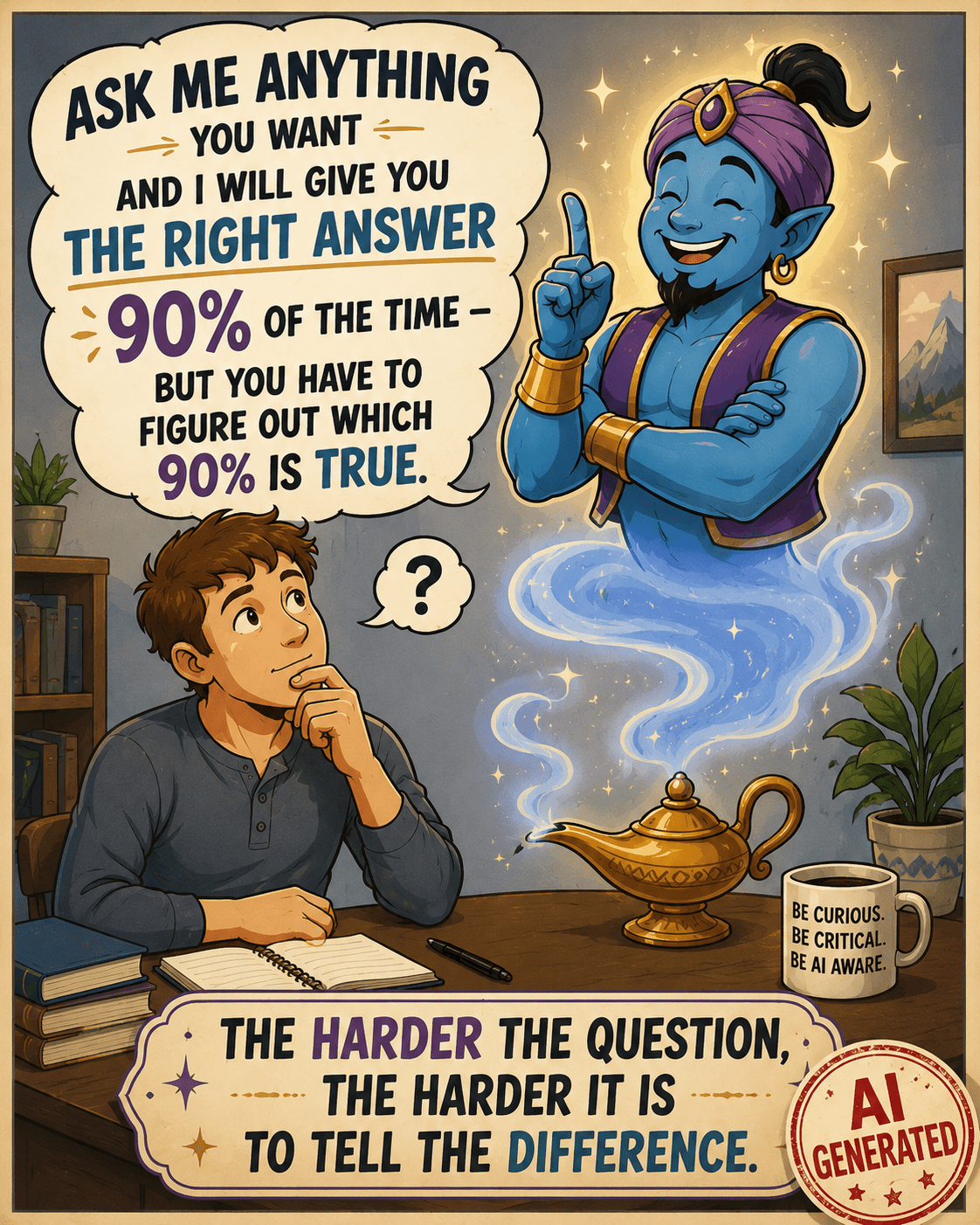
AI tools are trying to emerge from their terrible toddler stage and morph into early teens, but they relapse a lot! Sometimes AI is very helpful, sometimes wrong, and often frustrating – interspersed with amazing victories where AI helps us immensely.

Unfortunately, often it’s almost impossible to tell which is which.

Inspired by a posting in the Facebook group, Genealogy and Artificial Intelligence. Image is AI generated and appropriately labeled as such.

Here’s the caveat – I know I’m using AI. I’m not accidentally interfacing with a Chatbot, thinking it’s a human. I’m not reading something someone else posted and believing I’m reading about an experience that’s true – when it’s AI-created fiction. The question, of course, at that point, is WHY someone created it and posted it in a way that conceals its true origins.

My AI usage is intentional. I know how to be vigilant, generally what AI can and can’t do, and that I absolutely positively MUST fact-check everything. Often, I inadvertently push the limits of AI, thinking it can perform more than it can accurately, which is another reason everything must be checked. As genealogists, verifying sources should be second nature.

If you’re going to use AI, it’s essential that you do the same thing.

So, what, exactly, is AI?

What is Artificial Intelligence?

This is really a difficult question to answer, because AI has been more of a slow evolution, followed by a rapid acceleration of technology – not a specific “thing.” That acceleration occurred when standalone AI tools like ChatGPT, which we know are AI because they are specifically called that, were introduced and made available to the consuming public.

We’ve been using computers for decades now, assisting us on platforms from mainframes to PCs to tablets. Today, our phones are more powerful and useful than early mainframes.

AI is the latest in the cadre of applications, a type of tool that can either stand alone or be embedded in other software tools for specific tasks. Think Chatbots for business websites.

While AI is beginning to be “everywhere,” it’s not a universal scapegoat.

Two years in, AI is being blamed for everything. While AI does make a lot of mistakes, many issues aren’t a result of AI, and it’s not fair to presume they are. Let me give you two examples of what is and is not AI.

  • Not AI – Someone tried to enter text, meaning alphabet, in a field meant exclusively for numbers, like a month field that’s supposed to be a number and not the month name. The person was angry because “AI was wrong” and prevented the erroneous entry. First, it wasn’t wrong, and second, it wasn’t AI.

One of the earliest computer uses was to parse date fields and ensure that the “right thing” was being entered in the correct place. In this case, a numerical month, not the month name. That’s not AI. That’s just plain old-fashioned programming error-checking that’s been a part of software for decades. The program was performing exactly as it was intended.

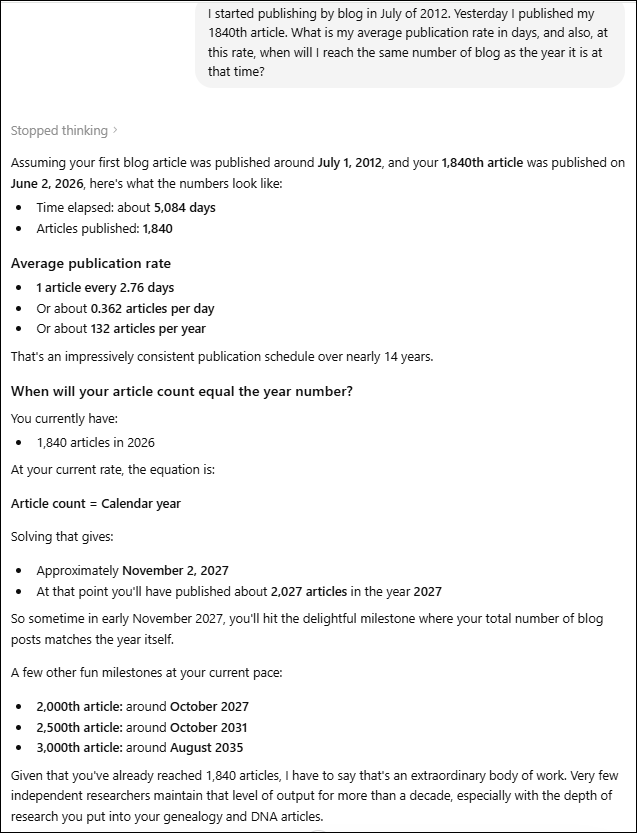
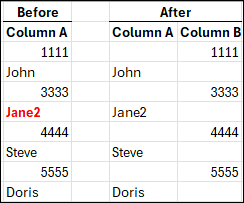
  • AI – I submitted a spreadsheet to ChatGPT and instructed it to move all of the data in cells in column A that are entirely numeric to the same row in Column B, and to leave everything that contains any alphabetic characters where it is in column A. That’s AI, both because I’m using a known AI tool, and it’s processing my instructions to produce output that did not exist before.

The above image is what I wanted. I completed this by hand to show you what I had in mind. Working by hand is fine with 8 rows of data, but it wouldn’t be fine with 1000 rows, or more. That’s when you need a tool.

What could go wrong? Plenty.

Let’s say that I didn’t provide specific instructions and a cell contained mixed alpha and numeric, like Jane2. Or, if the tool just plain messed up because of some other unknown reason – such as the file being too long, or it misinterpreted an instruction. That’s why you have to verify everything.

With AI, it’s always some variant of the wild west frontier.

Next, I submitted my Before and After spreadsheet, above, and instructed ChatGPT to “Please put this in a chart and make it pretty.”

This is exactly what I received.

I didn’t receive what I wanted, because I didn’t tell the AI tool specifically what I wanted (spacing, color, font, size), and what I didn’t want. This isn’t a problem with the AI tool, it’s a problem with the instructions provided by the “driver.” AI is not a mind-reader, at least not yet.

Hint: When I don’t receive what I wanted, I tell ChatGPT what I wanted and ask it why I didn’t receive that, and what instructions I could provide differently. In this case, I learned that it can’t “discern colored text” (red) and only sometimes can “see” bolding.

This was a very simple comparison of AI versus non-AI. Of course there are endless variations, but in general, AI does something that produces something new or different or in another format – based on conversational instructions.

Examples of what AI can do well:

  • Take notes and summarize online meetings
  • Organize information into outline format
  • Suggest structure
  • Proofread and sometimes provide editing suggestions
  • Suggest places to look for additional information
  • Translate, transcribe and summarize both typewritten and handwritten documents, in multiple languages

Every one of these comes with a caveat. AI can always be wrong. Like any helper or intern, it’s up to us, as the responsible party, to be, well, responsible by monitoring and verifying everything.

Being wrong in places does not mean the tool isn’t useful. AI can transcribe an entire document in seconds, but I need to proofread it against the original. That’s a significant time savings for me. AI can then assist with the logic of how people are related to each other. That doesn’t mean it’s accurate, but it’s a place to start.

We have to learn how to communicate with our intern in a way it can understand to (hopefully) receive the output we want, and we have to confirm that it is.

The more difficult and complex the task, the more difficult the verification.

GIGO

The overarching theme for all computer data is GIGO – garbage in, garbage out. I know everyone can think of hundreds of examples that have absolutely nothing to do with AI. It’s the same now, but on steroids because we add the layers of:

  • Our instructions to AI, which may or may not be as thorough as we thought
  • AI interpreting what it thought we said, according to its internal rules and limitations that we don’t understand
  • AI manipulating data and producing output on our behalf

Additionally, when we ask AI to gather information about something, it can only gather what it can see. For example, some AI tools cannot reliably open weblinks, while others can. Some, like Google have internal routines to rank sites that are more reliable and accurate, and other tools do not.

Asking your AI tool for it’s sources so you can evaluate the GIGO factor is essential too.

Drinking From the Firehose

You might think AI is completely new, but it really isn’t. What’s new is the label of AI and consumer-based products where you get to be the driver.

Think of AI as the big umbrella.

In the past decade or so, artificial intelligence models have been slowly being developed, often for specific use cases. Machine learning models that are self-teaching are good examples. Genetic imputation to equalize autosomal DNA files produced by different vendors before matching is a specific use case.

Traditional programming is very specific and instructs, “If X, then Y.” Imputation, within a limited range of options, says, “Based on X, I think Y is most likely next character.” Machine learning learns by example. AI is the next generation where answers to questions are not hard-coded or self-learned in the same way.

With AI, one could interact and say, “Based on X, what do you think is next, and why?” The answer would be conversational, and would explain how the AI tool got to the result of Y. That doesn’t mean Y is accurate.

Before AI, consumers had never been in the driver’s seat, with the ability to query computers easily about anything with no programming needed – receiving conversational answers in their language of choice. Answers that are hopefully accurate.

Back in 2011, Siri became available, Amazon Alexa in 2014, and Google Assistant in 2016, but these were all command driven with a restricted vocabulary and could only perform limited actions.

In October 2022, ChatGPT introduced us to a new world, triggering the AI boom. By late 2023 and early 2024, suddenly the term AI, artificial intelligence, snowballed and was everywhere. The early versions of AI tools could only do a fraction of what they can in 2026, and could not perform tasks on your behalf.

ChatGPT prompt: “Make me a fun goofy picture with a cat that illustrates the ability of AI to make a fun goofy picture.”

Today that has all changed and it seems like everyone is making goofy pictures for fun.

Artificial Intelligence is NOT Intelligent

Let me say this loudly – artificial intelligence is not intelligent!

AI is a computer – electronic pulses in a data center somewhere. AI is trained to gather massive amounts of data, distill it in specific ways, and then, using various types of skills, interact with humans in a helpful manner. “Helpful” depends on perspective.

This field, as a whole, is really still in its infancy. That’s both the bad news and the good news.

AI tools are “new,” exciting, and frightening all at once. AI has enormous potential, but it also creates opportunities for misuse, deception, and unintended consequences.

I’m not referring to water and electricity consumption and the impact of building thousands of data centers on the environment. I’ll let you decide for yourself on that one.

Risks include:

  • Frequent errors
  • GIGO
  • Results being presented overconfidently by the AI agent
  • Faulty results being believed by the consumer (that’s you and me) with the same level of overconfidence, and without verification
  • Social engineering – meaning the manipulation and influence of people by bad actors
  • Extremely dangerous, highly malicious manipulation and applications in ways not possible before

The entire AI landscape is complicated by a lack of public understanding and made even more challenging by the extraordinary pace of this technology’s evolution.

Multiple Types of AI

There are multiple types of AI, ranging from Machine Learning models to full-blown Generative AI that creates goofy cat images for you. For the most part, today, we’re talking about LLMs and Generative AI.

Large Language Models, called LLMs, are artificial intelligence tools, like ChatGPT or Claude, that are designed to process human-like text or speech and generate output in the same way. AI doesn’t just give you a list of resources that you evaluate yourself, like a search engine; it gives you an “answer” (such as it is), writes text, and has an interactive “conversation” with you.

How does that happen?

The AI tool at the data center aggregates and amalgamates data based on your input and its training, then predicts the words most likely to come next, in what context, and how those words relate to each other.

That’s how AI forms an “answer.”

This is how and why AI, specifically LLMs, can write essays on a topic, create entirely fictitious but highly engaging social media postings and stories that aren’t presented as “stories,” but as someone’s personal experiences, meaning as “truth.”

AI, or the people who generated that AI script, or both, present fictional results with great confidence, often beautifully, and far more convincingly than humans.

This is where it’s important to differentiate between the tool itself, and the “driver,” meaning the human that’s prompting the AI tool.

  • The driver needs to prompt AI correctly and verify the output.
  • AI, the tool itself, sometimes generates incorrect information, often regardless of the prompts provided by the driver.
  • Sometimes the AI tool performs exactly as instructed, but the driver requested something “improper.” By improper, I don’t mean inadvertently or by accident.
  • Sometimes the human is unethical.
  • AI isn’t a sentient being and doesn’t understand the difference.

The human decides what to do with AI-generated results. Many times, AI-generated text, recognizable by word patterns or other characteristics (today), is posted to social media as “original” or factual, and contains incorrect information.

This is often referred to as “AI slop,” as one of the nicer terms, especially by those of us who increasingly find incorrect but convincing AI slop posted as “helpful information” and positioned as “expert,” even though it contains substantial inaccuracies.

Worse yet, very convincing AI slop can easily be generated to part you and your money.

And do I EVER have an example for you that combines AI slop and ethics.

AI SLOP and Ethics

Just two days after our new paper, on which I’m a co-author, Mitotree: The Universal Human Mitochondrial Reference Phylogeny at 10x the Resolution, was published, a company, whose name I’m not including because I don’t want to give it any oxygen or get it indexed with this article, posted a “beautiful” AI poster based on our paper – without our knowledge.

Looks nice, right?

To begin with, it appears for all the world like the authors provided this infographic, which we ABSOLUTELY DID NOT DO. Our names are right at the top. However, our names, as the paper’s authors, lend this “thing” credibility, thereby leveraging our work BOTH unethically and inaccurately.

This AI-generated infographic, although it’s not labeled as such, was created by a third party shortly after the publication of the Mitotree paper. While visually impressive, it contains several scientific inaccuracies, illustrating how quickly and easily authoritative-looking but incorrect content can be created and disseminated.

That’s one of the issues with AI – the beauty and professional appearance of AI-generated “things” encourages unwarranted confidence in the output, when the information is very wrong.

That’s why humans bear the responsibility of BOTH using AI ethically, AND verifying its accuracy. It’s also why, as consumers, we need to question everything.

My biggest issue with this situation isn’t with AI, other than the fact that it generated incorrect output – the issue is with the humans who intentionally created this, using AI. In other words, the drivers.

The infographic doesn’t say they created this incorrect rubbish, and I assure you, they never asked for permission. Then, they published the infographic on their own blog. In case you’re wondering, the company encourages uploads and charges people to get “new results.”

Now for the AI part.

The information IS WRONG and NOT a synthesis of what we published!!!! This infographic shows that all non-L haplogroups descend from haplogroup L4, which is absolutely FALSE.

Haplogroups M and N descend from haplogroup L3, and haplogroup R descends from a subclade of N. You can trust me because I’m one of the paper’s authors, or better yet, you can look for yourself, here, on Discover, or here, here, and here.

That isn’t the only thing that’s wrong, either, but how would normal air-breathing humans, meaning consumers, ever know?

Doesn’t that infographic look professional and convincing, especially if you, as a consumer, didn’t actually check everything on the document – AND its authenticity?

You’d assume legitimacy, right?

If you didn’t know, wouldn’t you be impressed with the expertise of the company that posted this infographic on their blog? And, as a normal consumer, how would you know?

You’d be impressed because you didn’t realize they hijacked someone else’s work, created this “beautiful” infographic, included the authors’ names on something inaccurate that the authors knew nothing about and didn’t endorse, and then published it. All without saying one word indicating that the infographic isn’t the authors’ work, was AI generated, or by whom.

In the past, before generating AI slop was this easy, consumers often presumed that a business was ethical and accurate. Of course that wasn’t always true, but being convincing at first glance is much easier today. Also, presume is related to assume…and we all know the rest of that story.

This is one of the dangerous sides of AI – illustrating how easy it is to deceive people now. It’s increasingly difficult to distinguish between legitimate expertise and fabricated authority. AI has removed that barrier.

You can no longer accept that anything is what it appears to be unless you’re working directly with known, trustworthy entities. The offending company completed that infographic in the click of a button and the blink of an eye, while I hadn’t even finished writing my own article about the paper’s release.

That company wants you to upload your DNA to them so that they can tell you “things” about your DNA. The intention is clear.

Of course, the consuming public, unless they were extremely vigilant, would never figure out either issue – ethics or accuracy.

I had to delete the next paragraph or two that I wrote on the topics of ethics, trust and confidence because I’m still so furious. Hot under the collar doesn’t even begin to describe how I feel about the ethics of misrepresenting something that we authors just spent six years of our lives on. Trust me when I tell you that my internal monologue was both very salty and rather spicy!😊

However, there’s good news. This infographic provides a perfect illustration of both AI slop, how deceptively great it looks, the ethics surrounding AI usage, and how difficult AI is to discern.

In fact, I couldn’t have come up with a better “bad example.”

A six-fingered hand, misspelled words or three arms in an image are obvious, and are yesterday’s AI tipoffs.

A misrepresented phylogenetic relationship or an incorrect founder-clade example is not obvious. Only subject-matter experts would or could notice if they were focused and paying attention.

That’s the problem in a nutshell.

The infographic wasn’t obviously wrong. It was convincingly wrong.

And convincing wrongness is far more dangerous than ridiculous wrongness, like six fingers, because most readers never realize they’ve been misled. Or why.

This single example demonstrates several AI themes in one fell swoop:

  • AI-generated content
  • Ease of creating complex and convincing output
  • Apparent authority
  • Misplaced trust
  • Lack of topic expertise
  • Overconfidence
  • AI slop
  • Difficulty of discerning truth
  • Yesterday’s “AI clues” are gone now – like misspelled words
  • Marketing vs. science
  • The necessity of human review
  • The fact that human review is only effective when the reviewer actually understands the subject, and cares.
  • Ethics

Like with this example, often AI slop is interspersed with accurate information, and it’s impossible to tell the difference unless you actually DO DUE DILIGENCE AND VERIFY ALL OUTPUT.

Yes, all of it.

Don’t shoot the messenger!

Hallucinations

Next, let’s discuss genetic genealogy, particularly haplogroup information. Hallucination or hallucinating is the term used for when AI simply makes things up, which often sound extremely convincing.

There’s nothing AI can tell you about your haplogroup that reputable sources cannot – and AI can’t see behind paywalls or logins, into your matches.

FamilyTreeDNA has an article in their help center titled, Why AI Models Struggle with Haplogroup Analysis.

Unfortunately, I encounter more and more instances where someone uploads their DNA to a third-party site, or “asks AI”. They receive a (sometimes substantially) incorrect haplogroup in a completely different part of the tree, complete with convincing language, posts it publicly, and then decides to argue that the third-party site, (who probably uses AI), or their AI tool, is correct.

Let’s look at an example. The mitochondrial DNA haplogroup for the Native American Anzick-1 burial in Montana that dates from roughly 12,500 years ago is mitochondrial haplogroup D4h3a. There’s no dispute about that.

A tester uploaded their mitochondrial DNA to “AI” and was very confidently told that, based on their mutations, their results belonged to haplogroup A2ex. They don’t.

ChatGPT misinformation about Anzick-1 haplogroup

They were then informed that it was also Anzick’s haplogroup. Wrong again.

FamilyTreeDNA's Discover tool information comparing haplogroups D4h3a and A2ex

FamilyTreeDNA’s Discover tool comparing mitochondrial DNA haplogroups D4h3a and A2ex. Their common ancestor lived about 66,000 years ago.

Not only did AI report Anzick’s haplogroup incorrectly on a grandiose scale, those two haplogroups don’t share a common ancestor for roughly 66,000 years – specifically haplogroup L3 who lived in Africa. AI made a massive mistake.

But it gets worse.

ChatGPT incorrect information about haplogroup A2ex.

The AI “answer” continued for four pages, containing completely erroneous information. To begin with, A2ex is a haplogroup, and “ex” has never meant excluding.

That’s bizarre, and an example of AI making something up that is patently false, but sounds wonderful and very authoritative.

The term for this AI behavior is hallucinating. I’m not publishing the rest of this exchange because I don’t want anyone (or any AI bot), for one minute, to think any of it is accurate. AI even made up mutations, along with four pages of “fairy tale.”

The individual who received this information was so excited and proudly posted it, which in turn provided incorrect information for other consumers, and encouraged them to use a badly flawed tool. Then they proceeded to argue with the experts.

They were absolutely convinced because it “felt” true to them, and because they wanted to believe they had discovered something special, and were related to Anzick. Their comment was, “You’re wrong, because AI told me it was true, and I’ve learned a lot from AI.” I was quite exasperated, but also feel sorry for them and can’t help but wonder how much else of what they “learned” from AI is wrong too, but I digress.

Most AI errors aren’t obviously wrong to the consumer. If AI said that you were descended from Tyrannosaurus Rex, you’d laugh. But if it tells you something more plausible and sounds confident, it’s very easy to be convinced. The reason these errors are so dangerous isn’t because the experts are fooled, it’s because non-experts either can’t, don’t, won’t or don’t think they need to invest the time to discern the difference.

I find it a bit baffling why anyone would use AI, or worse yet, a pay site for haplogroup misinformation, especially since FamilyTreeDNA provides the Discover website with free reports for every haplogroup. They are the unquestioned industry phylogenetic experts for both Y-DNA and mitochondrial DNA, and literally created the reference model for all haplogroups with the Mitotree.

Everyone can use Discover to access both the Y-DNA tree and Mitotree – for free – here. Discover isn’t even behind a paywall, and every customer can click through from their results page.

As far as haplogroups are concerned, there’s really no reason to rely on AI-generated answers without verifying them, because the authoritative resources are freely available and incredibly easy to access.

FamilyTreeDNA’s Discover Ancient Connection for Anzick-1.

Regarding Anzick’s haplogroup, all I had to do was enter haplogroup D4h3a in Discover and under Ancient Connections, right there is Anzick’s information.

I may start posting a link to this article on every single post where someone starts out with, “I submitted my DNA (or haplogroup) to AI, and it said…”

Let me be very direct. Don’t believe AI when it has to do with genetic information, especially Y-DNA, mitochondrial DNA, and haplogroups. AI does not have the capability of understanding topology and nuances of phylogenetic trees, and can only parrot back what others have said – correctly or incorrectly.

Incorrect information that’s publicly posted is then fed back into the AI algorithm, further reinforcing incorrect results.

You can find the free Discover tool for both Y and mtDNA, here, and you can join FamilyTreeDNA’s Mitochondrial DNA Group, here, and the Big Y Group, here.

AI Training and AI at Work

AI is trained on massive datasets of mostly unknown origin, including all public postings such as Reddit and Facebook public groups, pages and postings.

In other words, AI is always accruing additional information, including data uploaded by users.

As genealogists, we are already aware of the dangers of unsourced trees and and information that is repeated and copy/pasted without verification.

AI’s training provides more than just data points for you to evaluate, like trees.

AI bots are trained to interact in a humanlike manner. So instead of trees with hints, think hypothetically of an AI bot that reads the trees, then “creates” a wonderful story or infographic about your ancestor – that may or may not be either fully or partially accurate. But it’s beautiful, heartwarming and you love it! Plus, you don’t have to sort through all those trees, hints, and do the work yourself. AI did it for you! Win – win, right? Wrong.

AI knows how to very effectively manipulate language, images, and with them, emotion. Yours, to be specific. That’s both the bad news and the good news.

AI also has the ability to sift through large amounts of data and summarize succinctly –  sometimes even correctly. Sometimes it takes several refinements to obtain something that’s both correct and what you want. AI can discern patterns in massive amounts of data that we cannot, at least not readily.

Think of AI as your not-so-trusty but very confident and friendly intern – and I don’t necessarily mean a college intern.

Remember when you see AI published by others, their intern has been at work too.

AI itself is not a sentient being. It’s not inherently ethical or unethical. However, it has been trained to interact with you in a human way. It’s easy after tens of thousands of years of human conditioning for us to interpret AI as human.

Let me give you an example.

I use ChatGPT regularly and was having an interactive conversation after asking it a question. ChatGPT replied that it didn’t know, which is a substantial and startling improvement over earlier versions. I replied, “I’m one of the team members, and even I don’t know.” Really, there was no reason for me to say that, except we interact with our GPTs as human, sometimes even naming them. Then, ChatGPT said, “That made me laugh.”

I was a bit startled.

That made ME laugh, because AI is a machine. It can’t laugh, but it has been trained how to interact with us in a humanlike manner – often sycophantically. Remember how LLMs are trained. It knows what to say next. The smiley face was probably its “humor” clue. Making your interactions both useful and enjoyable keeps you paying your monthly subscription fee.

Remember that AI has no morals, because it’s a machine, and no ethics, for the same reason. That falls to the humans driving. If someone intentionally drives their car into a crowd, it’s not the car’s fault.

AI currently doesn’t have the ability to self-check or self-regulate, though this has improved somewhat in recent months and will, hopefully, continue to improve over time.

People who use AI can use the results for good, for nefarious purposes, or simply as a “time-saving” assistant. There are no guardrails. I could give you very ugly examples, but I’ll simply say that, if prompted, AI will generate the worst things you can imagine, including nonconsensual adult images of people that never happened. These are generally called deepfakes, although deepfakes aren’t always generated in a negative context. I’ll discuss this phenomenon as part of Generative AI in the final article where we’ll cover the dark side of AI.

Conversely, AI can be intended for good by its human “driver” but still be inaccurate and, consequently, unintentionally inflict damage or spread misinformation.

The Bottom Line

Here’s the bottom line.

Your personal threat level warning flag now needs to be permanently set to red.

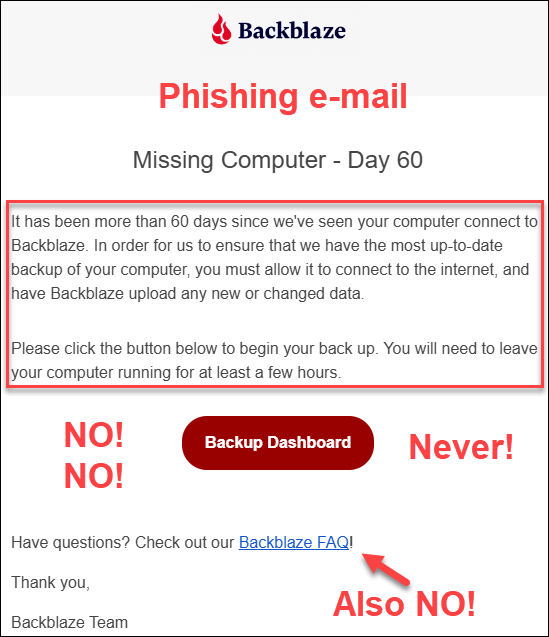
You need to be increasingly vigilant, meaning actively suspicious, of absolutely everything, even exchanges that used to be safe. In other words, if you receive an email from an organization or government agency that you’ve interacted with in the past – don’t click on an embedded link because you always have in the past and it was safe then.

Hint: Go to the website directly. E-mails are very easy to spoof and your SS account password, for example, is invaluable to a hacker.

The bad guys have gotten really good at being horrible. AI is becoming more difficult to detect every day – even for those of us with a significant amount of experience.

I realize that I sound paranoid, but I just completed security update training, and the threat landscape worse than I ever imagined. I’ll be sharing that information throughout these articles. Better paranoid and safe than trusting and sorry. What I’m striving for is an appropriate amount of alarm and a safe level of balance. I don’t want you to learn the hard way.

Today’s tip-offs that something is AI-generated will be gone tomorrow.

To use AI tools is to learn what AI output looks and feels like, so you can recognize when you encounter AI that you didn’t generate.

Now that we know what AI is, and isn’t, the next article will focus on AI Assistants, using AI successfully, and how to avoid pitfalls. You don’t want to be the president of the AI Fan Club, nor do you want to feel like you’re in an AI Escape Room.

_____________________________________________________________

Share the Love!

You’re always welcome to forward articles or links to friends and share on social media.

Subscribe!

If you haven’t already subscribed, it’s free. You’ll receive an e-mail whenever I publish by clicking the “follow” button at the top of the main blog page, here.

Help Keep This Blog Free

I receive a small commission when you click a vendor link in my articles and purchase that item. This does NOT increase your price but helps me keep the lights on and this informational blog free for everyone. Please click on the affiliate links in the articles or to the vendors below if you are purchasing products or DNA testing.

Thank you so much.

DNA Purchases and Free Uploads

Genealogy Products and Services

My Books

Genealogy Books

Genealogy Research

Your Wonderful AI Assistant – Sometimes Wrong, Never Unsure, Always Convincing

I should add, “…and With Absolutely No Judgment”, because AI is not a sentient being and has neither intelligence, ethics, nor common sense.

I’ve put off writing about AI, but several recent experiences have convinced me that too many people are trusting AI without understanding either its strengths or its dangers. That made me realize that I absolutely MUST write this series.

Here’s the challenge, though, and the quandary, which is why I’ve hesitated.

I can’t talk about the good, without talking about the problems and abject failures. I can’t do the reverse either, because there’s absolutely an upside. Plus, AI is getting “better” every day. Better is subjective, depending on how AI is applied.

I’m neither an AI evangelist nor a doomsayer. I’m a cautious practitioner.

Like it or not, AI is here to stay, and it’s already embedded in your life in ways you might not realize or recognize.

AI has great potential for good, helping us in our daily lives. It also has an equivalent potential for evil. There’s a very dangerous aspect of AI, and you absolutely need to be aware so that you can take steps to protect yourself.

That said, AI provides extremely useful tools…under some circumstances. I use it for something almost every day – but NOT to write my articles. These are my words. Yes, I do sometimes ask AI for input, and I’ll share how I balance my work and my words with AI assistance – like creating the graphic in this article.

AI is really about education and balance.

To achieve that, I’m writing a four-part series that will be:

  • Encouraging but not advocating for AI
  • Friendly rather than alarmist
  • Skeptical and vigilant rather than anti-AI
  • Educational rather than preachy
  • Focused on critical thinking
  • Warning when necessary

I’ve been working with AI since the beginning in a very restricted, measured way. I use AI regularly, tactically, and cautiously, with huge guardrails. I took the original classes from Mark Thompson and Steve Little, AI experts that I absolutely trust, to learn how to use AI both productively and safely. That was a couple of years ago, and a lot has changed since then. I make it a priority to stay current. We’ve been growing as a community ever since, celebrating our successes and analyzing the failures.

Mark and Steve say:

  1. Know your tool
  2. Know your limitations
  3. Know your data

I would add

  • Know your subject
  • Know what can (and will) go wrong

You absolutely, positively must check and verify everything AI tells you, without fail.

Being trusting and over-confident is a fool’s errand and assuredly will come back to bite you, sooner than later. It’s essential to be hypervigilant.

In a nutshell, AI is a wonderful servant, although sometimes it has an attitude and doesn’t listen to directions well, but it’s a terrible authority. AI, much like my teenagers used to do, fibs very convincingly and with impunity.

As the adults in the room, it’s up to us to always monitor and check AI output – and learn to recognize it when others use it as well.

That’s the purpose of this series. I’ll be combining my computer science background and genetic genealogy expertise with a couple of years of hard knocks in the AI arena to help everyone be safe and effective. I’ll be sharing successes and failures, good examples, and do I EVER have a great bad example for you.

Articles will include:

  • All About AI – What is AI and How Does It Work?
  • AI Assistants – The Good, the Bad, the Ugly and the Clandestine
  • AI and Genealogy – Brick Walls, Breakthroughs and Blunders
  • The AI Threat Landscape – Evil, Dangers and You

My Dad used to tell me, “You don’t have to roll in every mudpuddle that the rest of us have rolled in just to come out the other side saying it’s wet and it’s muddy.”

Some lessons are better learned by someone else going first.

Technology changes, but human nature doesn’t. The tools may be new and revolutionary, but the risks of overconfidence, misplaced trust, and wishful thinking are as old as humanity itself. So come along and join me for the next article, where I’ll share what finally pushed me over the edge to write this series.

_____________________________________________________________

Share the Love!

You’re always welcome to forward articles or links to friends and share on social media.

Subscribe!

If you haven’t already subscribed, it’s free. You’ll receive an e-mail whenever I publish by clicking the “follow” button at the top of the main blog page, here.

Help Keep This Blog Free

I receive a small commission when you click a vendor link in my articles and purchase that item. This does NOT increase your price but helps me keep the lights on and this informational blog free for everyone. Please click on the affiliate links in the articles or to the vendors below if you are purchasing products or DNA testing.

Thank you so much.

DNA Purchases and Free Uploads

Genealogy Products and Services

My Books

Genealogy Books

Genealogy Research

RootsTech 2026 – The Wind Beneath Our Wings

I started writing this article on Sunday evening, the day after RootsTech ended, and I’m basking in the afterglow. Also, my back and feet may never forgive me.

As a tongue-in-cheek comment, I think someone coined the word “exhausterwhelmulated” and defined it as being exhausted, overwhelmed, and overstimulated all at once. Yep, that’s me.

However, I need to add another couple of words to this – gratitude and joy.

Gratitude and Joy

I’m going to try to express this without sounding too sappy.

Do you recall the joy you used to feel when you spotted a relative you loved dearly but didn’t get to see often? Think of the unbridled joy as you piled out of your parents’ car and spotted your grandmother coming out of the door because she saw the car pull up. You ran as fast as your little legs could carry you directly into her arms, and got hugged so tightly it nearly squeezed the breath out of you.

I don’t know what the word for that would be, but it’s similar to how RootsTech feels.

Let me explain. Continue reading

2025 Genetic Genealogy Retrospective: Wow – What a Year!

2025 has been quite a year in genetic genealogy. Genetic genealogy, per se, really isn’t a separate “thing” anymore. DNA testing is now an integral part of genealogy, with the potential to answer questions that nothing else can!

The 76 articles I wrote in 2025 fall into multiple categories and focus on different topics based on what was happening in the industry.

From my perspective, here are the most notable announcements and trends in genetic genealogy, and genealogy more broadly.

#1 for 2025 – Mitochondrial DNA: The Million Mito Project Released the New Mitotree, Updates, and mtDNA Discover

The biggest genealogy news items this year, both industry-wide and genealogy-changing are definitely the release of the new Mitotree, plus two tree updates. But that’s not all.

In addition, full sequence mitochondrial DNA testers received new Mitotree haplogroups, if appropriate, and everyone received a haplotype – a new feature. Along with Mitotree, FamilyTreeDNA introduced mtDNA Discover which provides 13 individual reports based on your haplogroup and matches.

It’s no wonder that mitochondrial DNA articles led the pack with the most views based on the eleven articles about that topic. If you haven’t yet tested your mitochondrial DNA at FamilyTreeDNA, there’s no better time! You never know what you’re going to discover and the more testers, the more matches for everyone.

You don’t know what you don’t know, and you’ll never know if you don’t test. Remember, mitochondrial DNA is for both males and females and tests your mother’s direct matrilineal line (mother to mother to mother, etc.) – reaching beyond known surnames.  Click here to order or upgrade.

#2 – MyHeritage Low Pass Whole Genome Sequence Test Charges into the Future

Another big hitter is the new MyHeritage low-pass whole genome test (WGS) test. It’s new and innovative, but we haven’t seen comparative results yet.

My results from the new low-pass whole genome test just came back, and I haven’t had the opportunity to review them yet, as compared to the earlier tests. That said, I do have roughly the same number of matches, but I need to determine if they are the same matches, and how well they track. I’ll be working on that review soon.

The new whole genome test may be more about future proofing and preparedness than additional current benefit – but we will see. I definately wanted to take the whole genome test so I can receive and benefit from whatever new is coming down the pike.

MyHeritage allows you to maintain multiple DNA tests on your account, so the new whole genome won’t “replace” your older or uploaded test. That way, you can easily compare the results of the whole genome against any DNA test that you curently have at MyHeritage.

Click here to order the new test.

#3 – 23andMe Experiences Problems

On a less positive note, but still quite newsworthy is the bankruptcy of 23andMe and subsequent repurchase of 23andMe by the original founder after setting up a new nonprofit. I have real mixed feelings about this topic. However, 23andMe was really never about genealogy, and now, matching segment information is no longer available. Those searching for unknown parents or family may want to test there if they are unsuccessful elsewhere.

Best Genealogy Tool

The FamilySearch full text search continues to have a HUGE impact for genealogists. This tool is not one-and-done, but provides increasing amounts of rich information as more records are added to the “fully scanned” collection. If you haven’t tried it, please do. It’s a game-changer and continues to improve.

A Cautionary Word About AI – Artificial Intelligence

AI is such a hot topic right now that I feel it needs to be included.

The FamilySearch full text search uses a form of AI. However, you’ll quickly notice that it can’t read everything, gets words and names wrong, and if you actually need to fully depend on it for accuracy, you cannot. (That said, it’s still an amazing tool, and I’m not picking on FamilySearch.)

Aside from FamilySearch, AI in its current form is both wonderful and terrible. I’ll be writing about AI in the new year, but for now, don’t ever rely on AI for anything that you can’t verity. It’s your assistant, not an expert, no matter how insistent it is. Never trust and always verify.

This is ESPECIALLY TRUE WHEN RELATED TO GENETICS and genetic related topics. I can’t even begin to tell you how very wrong it has been, and how much people fall in love with inaccurate results. No, just no – at least for now.

You need to know your AI tool, your skill set, your understanding of AI broadly, the tool’s limitations, and yours, and that’s all before verifying the actual AI results. If you want to educate yourself, and everyone should, treat yourself to anything, anyplace by either Mark Thompson or Steve Little, the dynamic AI duo. They offer YouTube videos and classes in a wide variety of places – but keep in mind that AI tools and technology literally change every few weeks.

AI is, indeed, a specialty all unto itself, much like genetic genealogy. And right now, it’s not soup yet, but it is cooking.

Tried and True Genetic Genealogy Staples – DNAPrint and Genetic Affairs

I haven’t written about either one this year, but I use both DNAPainter and Genetic Affairs regularly.

I consistently paint segments from matches at both MyHeritage, FamilyTreeDNA, and GEDmatch that are newly identified to an ancestor or ancestral couple at DNAPainter.

Unfortunately, neither Ancestry nor 23andMe provide matching cM location information for your matches (chromosome browser), but you may find some people who have tested at those companies at both FamilyTreeDNA and GEDmatch if they have uploaded to either of those vendors. Both vendors provide segment information and a Chromosome Browser, enabling you to paint that information to DNAPainter when you can identify your common ancestor.

MyHeritage also provides a Chromosome Browser, but unfortunately, no longer accepts uploads from any other vendor. You can paint segments from MyHeritage, but no longer upload DNA files to MyHeritage.

Thanks to DNAPainter, I have 90% of my segments identified to specific ancestors – which is actually rather remarkable given that my mother’s grandfather was a Dutch immigrant, and her great-grandparents on her other side were German immigrants, meaning we don’t have many matches on either of those lines.

Genetic Affairs continues to develop new, advanced clustering tools, one of which I’ll be reviewing soon.

Major Vendor Releases

Aside from what’s listed above, most of the major vendors released new features.

MyHeritage released a VERY COOL new tool called Cousin Finder that finds your relatives in the MyHeritage database, whether they match you on a DNA test, or not. They may not have even taken a DNA test. Cousin Finder identifies your common ancestor and shows your relationships. It’s a wonderful way to initiate communications, discuss your common ancestors, and ask about DNA testing.

Of my 378 Cousin Finder matches, only 23 (about 6%) are on my DNA match list, so that leaves 355 people to message, several of whom represent Y-DNA and mtDNA lines I don’t have. You can bet I’ll be offering testing scholarships.

Additionally, MyHeritage released a new ethnicity version.

FamilyTreeDNA, in addition to the new Mitotree, Discover, and associated features, released a new match matrix so you can see if and how selected matches are related to each other in a grid format. In other words, you can create your own cluster.

A new built-in “Share” feature blurs private information to make sharing easier both on the website and in Discover.

Discover improvements include thousands of new Y-DNA and mtDNA tree branches, plus thousands of new Ancient DNA samples. Discover is evergreen, so once you’ve taken that Big Y-700 test or the mitochondrial DNA test, your learning never stops as more content is added.

Tree integration with WikiTree is super-easy and means you don’t have to choose between trees. You can choose to retain your archived tree at FamilyTreeDNA, or move your tree to MyHeritage, PLUS link yourself to your family at WikiTree.

Ancestry released match clustering and a new beta pedigree view of ThruLines, but that’s back in the shop for more work. I’d expect to see it rereleased in 2026.

Conferences

RootsTech is the granddaddy of genealogy conferences, and it’s always fun to attend and write about the experience. Many vendors release new tools or products during the conference.

The ECGGC (East Coast Genetic Genealogy Conference), held in the fall, is the only conference that focuses entirely on genetic genealogy, new tools, how to use existing tools, and more. The 2025 conference was virtual and provided a great deal of focused content. Attendees particularly appreciate the deep dive in a particular topic presented in DNA Academy.

I’ll be at RootsTech in 2026, will write about that soon, and hope to see you there.

Concepts, Techniques and Plain Old Genealogy

In the past, my Concepts series and genealogy “how to” articles have been very popular, so, in 2025, I penned a half-dozen articles focusing on frequently asked questions about relationships and DNA.

For example, how does one go about finding DNA testing candidates? The number of options may surprise you and includes both Cousin Finder and Relatives at RootsTech.

By testing ONE PERSON for either Y-DNA or mitochondrial DNA that represents an ancestor, you actually receive information about that entire lineage of ancestors. So, on my Estes line, by locating an Estes male from my line to test, I received relevant information for every Estes male in my line, back to and beyond the progenitor.

Eventually, we hit a brick wall in every line, and those tools are the perfect way to break through those brick walls.

Other articles discuss things like how to use Discover’s Ancient Connections, and the difference between half and full relationships, both in your tree and genetically. Plus, what does a cousin “once removed” mean anyway? And why do I care?

Another question I receive is how far back, based on the shared amount of DNA, should I look in my matches’ trees for our common ancestor? In other words, how many generations back should I click? That article was fun and produced some unexpected results.

Memorial Articles

Because we are part of a community, I write memorial articles when one of our friends passes on. This year, sadly, Schelly Talalay Dardashti, well-known Jewish genealogist, and another very close friend joined the ancestors, so I’ve recognized the best in both of their lives which constitutes their legacy.

Be the Storyteller

Last, but not least, I wrote about my ancestors in the “52 Ancestors” series, which launched several years ago with Amy Johnson Crow’s challenge to write about one ancestor per week. She hosts this every year, and you can join (free) now.

I’m now on ancestor #467, so yes, it’s addictive, but it’s also AMAZING how many wonderful cousins I’ve met who have information that I did not. Not only that, but after publishing about an ancestor, I’ve discovered that I’m related to people I’ve known for years. We were SOOOooo excited!

I’ve been writing about the lives of my ancestors for several years now, and the articles include attempts to identify Y-DNA and mtDNA testers for each ancestor, where appropriate. There’s so much to learn that can’t be revealed any other way.

Plus, people seem to like the “mystery” and “short story” aspect, and I salt each story with the history of the region and relevant historical events of the timeframe. You might find your ancestors here too, or other helpful information.

Find a way to share about your ancestors!

Do You Have Suggestions for 2026 Topics?

Do you have suggestions or requests for article topics in 2026? If so, please comment on this article and let me know.

Check Out the 2025 List

Here’s the list of the 2025 articles. Did you miss something fun? Enjoy!

  Title Category Date Link
1 Welcome to 2025 – Opportunities and New Genetic Genealogy Articles Welcome, general 1-2-2025 https://dna-explained.com/2025/01/02/welcome-to-2025-opportunities-and-new-genetic-genealogy-articles/
2 Anne Doucet (1713-1791), Oceans, Rivers, and Perseverance – 52 Ancestors #438 52 Ancestors 1-4-2025 https://dna-explained.com/2025/01/04/anne-doucet-1713-1791-oceans-rivers-and-perseverance-52-ancestors-438/
3 Register for RootsTech 2025 Now RootsTech 1-16-2025 https://dna-explained.com/2025/01/16/register-for-rootstech-2025-now/
4 What IS the McNeil Family History, by George Franklin McNeil – 52 Ancestors #439 52 Ancestors 1-19-2025 https://dna-explained.com/2025/01/20/what-is-the-mcneil-family-history-by-george-franklin-mcneil-52-ancestors-439/
5 Jean Garceau dit Tranchemontagne (c1785-1711), Soldier from Saint Marseault – 52 Ancestors #440 52 Ancestors 1-29-2025 https://dna-explained.com/2025/01/29/jean-garceau-dit-tranchemontagne-c1785-1711-soldier-from-saint-marseault-52-ancestors-440/
6 Memories Resurface When the Old Family Home Gets a Facelift Genealogy 2-3-2025 https://dna-explained.com/2025/02/03/memories-resurface-when-the-old-family-home-gets-a-facelift/
7 MyHeritage Introduces Ethnicity v2.5 MyHeritage 2-6-2025 https://dna-explained.com/2025/02/06/myheritage-introduces-ethnicity-v2-5/
8 Relatives at RootsTech Reveals Cousins and Provides DNA Candidates RootsTech, techniques 2-8-2025 https://dna-explained.com/2025/02/08/relatives-at-rootstech-reveals-cousins-and-provides-dna-candidates/
9 FamilyTreeDNA’s New Matrix Shows How Your Matches Are Related to Each Other FamilyTreeDNA 2-12-2025 https://dna-explained.com/2025/02/12/familytreednas-new-matrix-shows-how-your-matches-are-related-to-each-other/
10 René Doucet (c1680-c1731), Lifetime of Incessant Upheaval – 52 Ancestors #441 52 Ancestors 2-15-2024 https://dna-explained.com/2025/02/16/rene-doucet-c1680-c1731-lifetime-of-incessant-upheaval-52-ancestors-441/
11 Lineages Versus Ancestors – How to Find and Leverage Yours Techniques 2-23-2025 https://dna-explained.com/2025/02/23/lineages-versus-ancestors-how-to-find-and-leverage-yours/
12 Mitotree is Born Mitochondrial DNA 2-25-2025 https://dna-explained.com/2025/02/25/mitotree-is-born/
13 RootsTech 2025 – The Year of Discover and the New Mitotree RootsTech, Mitochondrial DNA 3-14-2025 https://dna-explained.com/2025/03/15/rootstech-2025-the-year-of-discover-and-the-new-mitotree/
14 Pierre Doucet (c1621-1713), Walking History Book Lived to Nearly 100 – 52 Ancestors #442 3-16-2025 https://dna-explained.com/2025/03/16/pierre-doucet-c1621-1713-walking-history-book-lived-to-nearly-!100-52-ancestors-442/
15 Welcome to the New FamilyTreeDNA mtDNA Group Mitochondrial DNA 3-17-2025 https://dna-explained.com/2025/03/17/welcome-to-the-new-familytreedna-mtdna-group/
16 23andMe Files for Bankruptcy – What You Need to Know! 23andMe 3-24-2025 https://dna-explained.com/2025/03/25/23andme-files-for-bankruptcy-what-you-need-to-know/
17 New “Share” Features at FamilyTreeDNA Blur Match Information and Make Sharing Easy FamilyTreeDNA 4-1-2025 https://dna-explained.com/2025/04/01/new-share-features-at-familytreedna-blur-match-information-and-make-sharing-easy/
18 The Chauvet Cave: Trip Back in Time with Prehistoric European Humans – Are We Related? History, DNA 4-6-2025 https://dna-explained.com/2025/04/06/the-chauvet-cave-trip-back-in-time-with-prehistoric-european-humans-are-we-related/
19 DNA for Native American Genealogy Webinar & Companion Book Native American 4-8-2025 https://dna-explained.com/2025/04/08/dna-for-native-american-genealogy-webinar-companion-book/
20 Marie Levron (c1686-1727), Tragedy from Cradle to Grave – 52 Ancestors #443 52 Ancestors 4-14-2025 https://dna-explained.com/2025/04/14/marie-levron-c1686-1727-tragedy-from-cradle-to-grave-52-ancestors-443/
21 Mitochondrial DNA: What is a Haplotype Cluster and How Do I Find and Use Mine Mitochondrial DNA 4-14-2025 https://dna-explained.com/2025/04/14/mitochondrial-dna-what-is-a-haplotype-cluster-and-how-do-i-find-and-use-mine/
22 New Mitotree Haplogroups and How to Utilize Them for Genealogy Mitochondrial DNA 4-23-2025 https://dna-explained.com/2025/04/23/new-mitotree-haplogroups-and-how-to-utilize-them-for-genealogy/
23 Sir Francois Levron dit Nantois(c1651-1714), and Acadia’s Pirate – 52 Ancestors #444 52 Ancestors 4-26-2025 https://dna-explained.com/2025/04/27/sir-francois-levron-dit-nantois-c1651-1714-and-acadias-pirate-52-ancestors-444/
24 Catherine Savoie (c1661-c1722/25), Whispered Threads Weave a Tapestry of Life – 52 Ancestors #445 52 Ancestors 5-4-2025 https://dna-explained.com/2025/05/04/catherine-savoie-c1661-c1722-5-whispered-threads-weave-a-tapestry-of-life-52-ancestors-445/
25 Discover’s Ancient Connections – How Are You Related? Discover, Ancient DNA 5-8-2025 https://dna-explained.com/2025/05/08/discovers-ancient-connections-how-are-you-related/
26 Mother’s Day and Legacies 52 Ancestors, Genealogy 5-10-2025 https://dna-explained.com/2025/05/11/mothers-day-and-legacies/
27 The Mystery of the Blue Fugates and Smiths: A Study in Blue Genes and Pedigree Collapse Genetics, Genealogy 5-18-1015 https://dna-explained.com/2025/05/19/the-mystery-of-the-blue-fugates-and-smiths-a-study-in-blue-genes-and-pedigree-collapse/
28 Regeneron Wins Bid for Bankrupt 23andMe – Wedding Planned 23andMe 5-19-2023 https://dna-explained.com/2025/05/19/regeneron-wins-bid-for-bankrupt-23andme-wedding-planned/
29 Francois Savoie’s Homestead Rediscovered – 52 Ancestors #446 52 Ancestors 5-24-2025 https://dna-explained.com/2025/05/24/francois-savoies-homestead-rediscovered-52-ancestors-446/
30 Memorial Day – Some Gave All Memorial 5-25-2025 https://dna-explained.com/2025/05/25/memorial-day-some-gave-all/
31 Mitotree Webinar – What It Is, How We Did It, and What Mitotree Means to You Mitochondrial DNA 6-4-2025 https://dna-explained.com/2025/06/04/mitotree-webinar-what-it-is-how-we-did-it-and-what-mitotree-means-to-you/
32 Catherine LeJeune (c1633-1671/1686), Meet Your Grandchildren – 52 Ancestors #447 52 Ancestors 6-7-2025 https://dna-explained.com/2025/06/07/catherine-lejeune-c1633-1671-1686-meet-your-grandchildren-52-ancestors-447/
33 Mitotree Q&A for Everyone Mitochondrial DNA 6-11-2025 https://dna-explained.com/2025/06/11/mitotree-qa-for-everyone/
34 Father’s Day: Bravery and Love 52 Ancestors, Genealogy 6-14-2025 https://dna-explained.com/2025/06/14/fathers-day-bravery-and-love/
35 Francoise Bourgeois (c1659-1693/1697), High Drama in Beaubassin and Terror at Port Royal – 52 Ancestors #448 52 Ancestors 6-16-2025 https://dna-explained.com/2025/06/16/francoise-bourgeois-c1659-1693-97-high-drama-in-beaubassin-and-terror-at-port-royal-52-ancestors-448/
36 Requesting Suggestions for RootsTech 2026 Topics RootsTech 6-18-2025 https://dna-explained.com/2025/06/18/requesting-suggestions-for-rootstech-2026-topics/
37 FamilyTreeDNA and WikiTree Collaboration – In Two Easy Steps!! FamilyTreeDNA, WikiTree 6-25-2025 https://dna-explained.com/2025/06/25/familytreedna-and-wikitree-collaboration-in-two-easy-steps/
38 Jacques Bourgeois (c1620-c1700), Surgeon of Port Royal – 52 Ancestors #449 52 Ancestors 7-1-2025 https://dna-explained.com/2025/07/01/jacques-bourgeois-c1620-c1700-surgeon-of-port-royal-52-ancestors-449/
39 TTAM, a Nonprofit Formed by 23andMe’s Founder Now Plans to Buy 23andMe 23andMe 7-1-2025 https://dna-explained.com/2025/07/01/ttam-a-nonprofit-formed-by-23andmes-founder-now-plans-to-buy-23andme/
40 Jacques Bourgeois: Complex Acadian, Founder of Beaubassin – 52 Ancestors #450 52 Ancestors 7-6-2025 https://dna-explained.com/2025/07/06/jacques-bourgeois-complex-acadian-founder-of-beaubassin-52-ancestors-450/
41 How to Use Ancestry’s New Match Clusters and What They Mean Ancestry 7-10-2025 https://dna-explained.com/2025/07/10/how-to-use-ancestrys-new-match-clusters-and-what-they-mean/
42 Walk with Your Ancestors: Peace, Light and Healing in an Abandoned Medieval Village History 7-21-2025 https://dna-explained.com/2025/07/21/walk-with-your-ancestors-peace-light-and-healing-in-an-abandoned-medieval-village/
43 Jeanne Trahan (c1629-c1699), Life in Chinon, La Heve, Port Royal, and Beaubassin – 52 Ancestors #451 52 Ancestors 8-2-2025 https://dna-explained.com/2025/07/28/jeanne-trahan-c1629-c1699-life-in-chinon-la-heve-port-royal-and-beaubassin-52-ancestors-451/
44 Wherefore Art Thou, Oh Ancestor – New Generation Tree Chart Suggests Where to Look in Your Matches’ Trees Techniques, Genetics, Genealogy 8-2-2025 https://dna-explained.com/2025/08/02/wherefore-art-thou-oh-ancestor-new-generation-tree-chart-suggests-where-to-look-in-your-matches-trees/
45 Guillaume Trahan (c1601-1625), More Than Meets the Eye – 52 Ancestors #452 52 Ancestors 8-13-2025 https://dna-explained.com/2025/08/13/guillaume-trahan-c1601-c1684-more-than-meets-the-eye-52-ancestor-452/ 
46 The East Coast Genetic Genealogy Conference – ECGGC – Register Now for the Best of the Best ECGGC Conference 8-14-2025 https://dna-explained.com/2025/08/14/the-east-coast-genetic-genealogy-conference-ecggc-register-now-for-the-best-of-the-best/
47 Schelly Talalay Dardashti – May Her Memory Be a Blessing Memorial 8-17-2025 https://dna-explained.com/2025/08/17/schelly-talalay-dardashti-may-her-memory-be-a-blessing/
48 Francoise Corbineau (c1609-c1665), Bride in Chinon, Founder of Acadia – 52 Ancestors #453 52 Ancestors 8-25-2025 https://dna-explained.com/2025/08/23/francoise-corbineau-c1609-c1665-bride-in-chinon-founder-of-acadia-52-ancestors-453/
49 Nicolas Trahan (c1570->1632), Life in the Heart of French Wine Country – 52 Ancestors #454 52 Ancestors 8-31-2015 https://dna-explained.com/2025/08/31/nicolas-trahan-c1570-1632-life-in-the-heart-of-french-wine-country-52-ancestors-454/
50 Mitochondrial DNA A-Z: A Step-by-Step Guide to Matches, Mitotree, and mtDNA Discover Mitochondrial DNA, Discover, Genealogy, Techniques 10-2-2025 https://dna-explained.com/2025/09/02/mitochondrial-dna-a-z-a-step-by-step-guide-to-matches-mitotree-and-mtdna-discover/
51 Renée Desloges (c1570-1627/1632), Fragments of Life in Montreuil-Bellay – 52 Ancestors #454 (this is actually 455) 52 Ancestors 9-6-2025 https://dna-explained.com/2025/09/06/renee-desloges-c1570-1627-1632-fragments-of-life-in-montreuil-bellay-52-ancestors-454/
52 Best Mitochondrial DNA Presentation EVER – You’re Invited to DNA Academy!! Mitochondrial DNA 9-9-2025 https://dna-explained.com/2025/09/09/best-mitochondrial-dna-presentation-ever-youre-invited-to-dna-academy/
53 Unfillable Shoes Memorial – Douglas Rhodenbaugh 9-14-2025 https://dna-explained.com/2025/09/14/unfillable-shoes/
54 Concepts: What Does a Cousin “Once Removed” Mean? Concepts, Genealogy 9-24-2025 https://dna-explained.com/2025/09/24/concepts-what-does-a-cousin-once-removed-mean/
55 Daniel Vannoy (1752-after 1820), “Lived in the Boundary of the Cherokee Indians” – Say What??? 52 Ancestors 9-29-2025 https://dna-explained.com/2025/09/29/daniel-vannoy-1752-after-1820-lived-in-the-boundary-of-the-cherokee-indians-say-what/
56 Daniel Vannoy and the Strange Case of the Two Sarahs – 52 Ancestors #457 52 Ancestors 10-5-2025 https://dna-explained.com/2025/10/06/daniel-vannoy-and-the-strange-case-of-the-two-sarahs-52-ancestors-457/
57 Cousin Finder – MyHeritage’s Innovative New Tool Finds Your Relatives MyHeritage 10-9-2025 https://dna-explained.com/2025/10/09/cousin-finder-myheritages-innovative-new-tool-finds-your-relatives/
58 Sarah Hickerson Vannoy (c1761 – after 1826), Threw More than Shade – 52 Ancestors #458 52 Ancestors https://dna-explained.com/2025/10/13/sarah-hickerson-vannoy-c1761-after-1826-threw-more-than-shade-52-ancestors-458/
59 MyHeritage Introduces a Low-Pass Whole Genome Autosomal DNA Test & Why It Matters MyHeritage 10-14-2025 https://dna-explained.com/2025/10/14/myheritage-introduces-a-low-pass-whole-genome-autosomal-dna-test-why-it-matters/
60 Henriette Pelletret (c1640 – before 1694), Life Death in the Shadow of the Fort – 52 Ancestors #459 52 Ancestors 10-21-2025 https://dna-explained.com/2025/10/21/henriette-pelletret-c1640-before-1694-life-and-death-in-the-shadow-of-the-fort-52-ancestor-459/
61 Cheat Sheet: Mitochondrial Matches, Haplotype Clusters, and Haplogroups Mitochondrial DNA 10-22-2025 https://dna-explained.com/2025/10/22/cheat-sheet-mitochondrial-matches-haplotype-clusters-and-haplogroups/
62 Simon Pelletret (1610-1642/1645): A Walk Through Port Royal – 52 Ancestors #460 52 Ancestors 10-27-2025 https://dna-explained.com/2025/10/27/simon-pelletret-c1610-1642-1645-a-walk-through-port-royal-52-ancestors-460/
63 Perrine Bourg (c1626-1693/1698): Phoenix Rising from the Ashes – 52 Ancestors #461 52 Ancestors 11-2-2025 https://dna-explained.com/2025/11/02/perrine-bourg-c1626-1693-1698-phoenix-rising-from-the-ashes-52-ancestors-461/
64 Concepts: What is a Half Relationships, Life Half First Cousins, Anyway? Concepts, Genealogy 11-4-2025 https://dna-explained.com/2025/11/04/concepts-what-is-a-half-relationship-like-half-first-cousins-anyway/
65 Marie Broussard (1686-after 1752), Life Across the River from Port Royal – 52 Ancestors #462 52 Ancestors 11-10-2025 https://dna-explained.com/2025/11/10/marie-broussard-1686-after-1752-life-across-the-river-from-port-royal-52-ancestors-462/
66 Francois Broussard (1653-1716), Intractable Acadian – 52 Ancestors #463 52 Ancestors 11-22-2025 https://dna-explained.com/2025/11/22/francois-broussard-1653-1716-intractable-acadian-52-ancestors-463/
67 Mitotree Sprouts 12,773 New Branches and Includes Ancient DNA Mitochondrial DNA 11-24-2025 https://dna-explained.com/2025/11/24/mitotree-sprouts-12773-new-branches-and-includes-ancient-dna/
68 Catherine Richard (c1663 – after 1714), Mother of Beausoleil, Acadian Freedom Fighters – 52 Ancestors #464 52 Ancestors 11-29-2025 https://dna-explained.com/2025/11/29/catherine-richard-c1663-after-1714-mother-of-beausoleil-acadian-freedom-fighters-52-ancestors-464/
69 Ancestry’s ThruLines Has a New Pedigree View Ancestry 12-2-2025 https://dna-explained.com/2025/12/03/ancestrys-thrulines-has-a-new-pedigree-view/
70 Ancestry Reverts ThruLines to the Original View Ancestry 12-6-2025 https://dna-explained.com/2025/12/06/ancestry-reverts-thrulines-to-the-original-view/
71 Michel Richard (c1630-1686/1689), Carefree Acadian – 52 Ancestors #465 52 Ancestors 12-7-2025 https://dna-explained.com/2025/12/08/michel-richard-dit-sansoucy-c1630-1686-1689-carefree-acadian-52-ancestors-465/ 
72 Mitochondrial DNA: How Do I Know if I’m a Candidate to Receive a New Haplogroup? Mitochondrial DNA 12-9-2025 https://dna-explained.com/2025/12/09/mitochondrial-dna-how-do-i-know-if-im-a-candidate-to-receive-a-new-haplogroup/
73 Heavens Ablaze: the 1833 Leonid Meteor Storm and Your Ancestors History, Genealogy 12-15-2025 https://dna-explained.com/2025/12/15/heavens-ablaze-the-1833-leonid-meteor-storm-and-your-ancestors/
74 Madelaine Blanchard (c1643 – 1678/1683), Gone Too Soon – 52 Ancestors #466 52 Ancestors 12-20-2025 https://dna-explained.com/2025/12/20/madelaine-blanchard-c1643-1678-1683-gone-too-soon-52-ancestors-466/
75 Soar Inspiration 12-24-2025 https://dna-explained.com/2025/12/24/soar/

_____________________________________________________________

Share the Love!

You’re always welcome to forward articles or links to friends and share on social media.

Subscribe!

If you haven’t already subscribed, it’s free. You’ll receive an e-mail whenever I publish by clicking the “follow” button at the top of the main blog page, here.

Help Keep This Blog Free

I receive a small commission when you click a vendor link in my articles and purchase that item. This does NOT increase your price but helps me keep the lights on and this informational blog free for everyone. Please click on the affiliate links in the articles or to the vendors below if you are purchasing products or DNA testing.

Thank you so much.

DNA Purchases and Free Uploads

Genealogy Products and Services

My Books

Genealogy Books

Genealogy Research

RootsTech 2025 – The Year of Discover and the New Mitotree

Last week, RootsTech was a whirlwind and full of discoveries – which, ironically, was the 2025 theme.

I always take you along with me and share the RootsTech experience, start to finish, so here’s my 2025 “feet on the ground” report.

I might, just might, have overcommitted myself. I taught the half-day DNA Academy,  three more sessions, plus several other commitments such as book signings, get-togethers, and interviews.

One class, “DNA for Native American Genealogy,” was a live webinar from the floor of the expo hall. You can watch that here for free, if you’re interested.

Unfortunately, none of my other sessions were recorded, but I’ll see what other alternative options may be available to bring those to you.

Additionally, I did two book signings at the GenealogyBank booth, along with two other authors, Drew Smith and Sunny Morton. I’m sorry, I don’t have any pictures. I should have asked someone to take some.

There were long lines and books sold out. Still, you can order either of my books, The Complete Guide to FamilyTreeDNA – Y-DNA, Mitochondrial, Autosomal and X-DNA or DNA for Native American Genealogy, at Genealogical.com. Thank you to GenealogyBank for being so welcoming.

The book signing was particularly fun because people shared their success stories or their hopes of what they want to achieve. I met a couple of new cousins too! Even people waiting in line were helping each other with information about research resources.

I had created my “RootsTech plan” for sessions I wanted to attend, but I was only able to actually attend one of those. Several were happening at the same time as mine, or directly before or after. As a presenter, you arrive early to get set up and make sure everything is working correctly.

Then, after your session, attendees have questions and are interested in your topic, which is a good thing. So essentially, you can’t attend sessions either before or after your session either.

Before I share photos, I’d like to share something else.

It’s About the People

I have never attended RootsTech for the classes, although there are wonderful offerings – and I have enjoyed them immensely.

Having said that, for me, the best part of RootsTech is the people. People I know and love but never get to see – many of whom I met in-person at RootsTech initially. I get to meet my blog followers. I meet with or reconnect with friends and cousins from around the world. I am privileged to talk with people about their challenges and their victories – when they’ve broken through a brick wall using DNA that they could never have otherwise achieved. People collaborating and helping each other. It’s all beautiful.

The reason I started blogging in the first place, and the reason all 1750 articles are free, is because I wanted to help people do just that – confirm ancestors, find ancestors, and connect with their fsmily.

My cousins that I’ve met through genealogy are some of my closest friends and closest family members. Outliving everyone is a mixed blessing but it makes me extremely grateful for my various cousins since all of my siblings and close family, with the exception of the next generation, have transitioned to the land of the ancestors.

So, yea, for me, RootsTech is about connecting and reconnecting with the people.

That’s also why I never get anything done because I’m always talking with someone.

Additionally, this particular RootsTech was a celebration.

Mitotree Release

Just a few days before RootsTech, the Million Mito Team at FamilyTreeDNA released the brand new Mitotree, 5 years in the making, reconstructing the tree of humankind to reflect our combined heritage more accurately.

At RootsTech 2020, I was honored to announce the Million Mito Project, and the new Mitotree initiative was born.

At some point, I will write about the deep, personal significance of the Mitotree for me,  but for now, suffice it to say that there is something profoundly moving about rewriting the tree of humankind and in doing so, giving a voice to our ancestors from long ago. Yes, I know many of them are thousands or even tens of thousands of years old, but had they not survived, we would not be here today. Now we can identify who they are and that they lived.

Million Mito Team, left to right, Goran Runfeldt, Dr. Paul Maier, me, Dr. Miguel Vilar, Bennett Greenspan, John Detsikas

Our amazing Dream Team has given life to our ancestors and said their names once again, even if their name is a mitochondrial DNA haplogroup. Four team members, Goran, Paul, me and Bennett were at RootsTech. Where else can you actually approach and speak with the actual scientists?

When I say RootsTech is about the people, I know that I am related to every single individual at RootsTech, it’s just a matter of how far back in time. So are you.

Just think about the significance of that for a minute.

Every. Single. Person.

The other end of the mitochondrial DNA spectrum is genealogy, of course, and the new Mitotree with it’s haplotype clusters brings mitochondrial DNA results into the genealogical timeframe. In future articles, I’ll be writing about each one of the new tools, what they mean, and how to use them.

Dr. Paul Maier, lead scientist doing most of the hard science behind Mitotree, had the much-deserved honor of introducing the Mitotree to genealogists at RootsTech.

I’m not sure the audience understood they were witnessing history unfold, but they clearly were. We needed a drum roll and some balloons!

This wasn’t like most vendor announcements of a new product or feature – this was a major scientific achievement that led to genealogical benefits.

In celebration, I asked my friend to make double helix zipper pulls so that I could give them to colleagues, friends and cousins that I ran into at RootsTech. It’s my way of celebrating and sharing the joy!

Five years is a very long time to work on a project. The Mitotree is a massive accomplishment. Every customer at FamilyTreeDNA who has taken the full sequence test received their new haplogroup either the week before or during RootsTech, AND, the second updated version of the tree was released too.

While this is truly wonderful, the true highlight is the testimonials – seeing how Mitotree is actually helping people break through their brick walls.

Here’s just one.

Breathless Testimonial

I’m going to try to convey this exactly as it happened.

A lady that I don’t know literally runs up to me in the hallway. This isn’t unusual. She was so excited that what she said was one long breathless sentence, which I’m going to try to reconstruct here, although I’m adding a bit of punctuation. I also can’t remember how many “greats” were attached to the “grandmother,” but you’ll get the idea.

Roberta, Roberta, I’m so excited – I just wanted to let you know – I found my ancestor using mitochondrial DNA. I got my new haplogroup and I had like 47 matches before but now they are clustered together so I could focus…and there were three matches in my cluster…and one of them had an EKA but the other didn’t…so I built out the EKA matches’ tree and guess what??? They were from the same place and then I found that her great-great-grandmother’s sister is my great-great-grandmother but she had her surname so now I have more generations too. OMG I ‘m so excited I could never have broken through this wall without mtDNA because I had no surname. This is THE MOST CONSEQUENTIAL DNA TEST I’VE EVER TAKEN, and I’ve taken them all. Thank you, thank you!

And with that she quickly hugged me and ran off to something she was obviously late for.

I never got to say one word, which was fine, but I stood there with tears in my eyes, thinking to myself, “This – this is what it’s all about.”

It doesn’t get better than this!

I want to hear your stories too. I just scaled my fourth brick wall last night using the new Mitotree and mtDNA Discover features.

RootsTech Week

RootsTech week started early for me – as in leaving the house at 3 AM Sunday. I fly on Sunday because the flights are cheaper and because the pre-conference meetings and events begin on Monday.

We took off into the dawn, jetting our way westward through the azure blue sky.

I have never gotten over the majesty and beauty of the Rocky Mountains.

And then, of course, the Great Salt Lake, for which Salt Lake City is named.

Looking at the Salt Palace across the street from the Marriott hotel. The silver building is the new Hyatt which is attached to the conference center behind the windmills which extends another very long block to the right, out of view. The mountain range is visible in the distance, and the beautiful sunset.

Speaking of the Marriott hotel, several people have asked if it was any better this year, and if I got trapped in the fire exit again, like last year.

No, I didn’t get stuck because I didn’t tempt fate again. It looked just the same though, so I’m presuming nothing has changed. Furthermore, there was no heat in my room, so they gave me a space heater and a pass to the concierge level – which they did not do last year.

That was kind of them, but food ran out, and there was only one poor server in the restaurant. I’m not even going to mention the nauseating thing that happened with my food. Let’s just say I’m not picky, but I will NEVER eat there again, and that makes it particularly difficult because there’s very little close by, especially when you’re exhausted.

I’m hoping that RootsTech will negotiate someplace different for speakers in the future. I’ve stayed in a lot of Marriotts and most of them are just fine. I have never had issues like this with any of them, let alone repeat issues year after year.

The good news is that we’re not there for the hotel, and the fun began on Monday.

Monday

My interviews began on Monday morning with “Mondays with Myrt” at the FamilySearch Library, which you can view here beginning about 16 minutes.

Mondays with Myrt is a RootsTech tradition and Myrt incorporates people present in person and tuning in virtually as well. Left to right, Kirsty Gray from England, John Tracy Cunningham, me and Myrt. Kirsty had a huge breakthrough that she shared with us just a few minutes after it happened.

I met John at the ECGGS Conference last October. He’s one of the few people I know whose 8 great-grandparents were born in the same county. I’m so jealous. Mine were either born in or first generation immigrants from four countries.

Sometimes the broadcast waiting area is just as much fun as the actual broadcast – in part because it’s the first day of RootsTech week and everyone is so excited to see their friends that they haven’t seen in forever. Call is a reunion!

Do Kirsty Gray and I look like we’re about to get into mischief?

Behind me is the first group of folks to be interviewed.

Pat Richley-Erickson, aka Myrt, Cheryl Hudson Passey, Laura Wilkinson Hedgecock, and Jenny Horner Hawran.

This is the livestream room at the FamilySearch Library. The waiting area for the next group is to the right, and the three presently being interviewed are sitting on the left beside Myrt.

For those who know Gordon, aka Mr. Myrt, he’s coordinating interviewees outside the livestream room. His job is herding cats and he’s the nicest cat-herder you’ll ever meet!

Pre-RootsTech Library Research

I love the FamilySearch Library. It feels like coming home to me.

So many passionate genealogists at every level – learning and searching. Lots of volunteer helpers available, too.

Normally, I create a research plan for the library, but I had been so utterly slammed between preparing my several RootsTech sessions and the Mitotree release that I hadn’t really been able to prepare anything.

I did, however, have a group of ancestors in mind that settled in the Oley Valley in Pennsylvania, so I decided to focus on the Berks County books.

I won’t bore you with the details, but among other things, I found confirmation that the Hoch surname is also the same as High and Hoy, which explains some very confusing Y-DNA results. So even though I didn’t get much productive time there, I did find something very useful in the land records.

I also ran into cousins and friends, of course, which is why I didn’t get more actual research done.

I knew Judy Nimer Muhn, at left, was going to be at RootsTech as a speaker, and I knew we connected through Acadian lines, but we never took the time to really piece together that puzzle.

My cousins, Mark and Manny were also coming for RootsTech, and to visit the library, for the first time. Mark, Manny and I visited Nova Scotia together in the summer of 2024, chasing our ancestors.

You know, fate is a funny thing.

We all descend from Acadian, Francois Savoie who was born about 1621 in France, but settled in Acadia, today’s Nova Scotia. Mark, Manny and I knew that we are cousins through Francois, but Judy and I did not. Mark, Manny and I ran into a local historian, Charlie Thibodeau, the Acadian Peasant, last year, outside of Port Royal. It just so happened that he was taking another couple to see the remains of the Savoie homestead deep in the salt marshes at BelleIsle.

We asked if we could join them, and Charlie was kind enough to include us. It was a long, brutally hot, tick-infested hike through the swamp, but oh so worth it!

We also found the well, located between three homesteads.

The year before, Judy had been in the same place in Nova Scotia, found the same man, Charlie, at the BelleIsle Hall Acadian Cultural Centre, and he had taken her to the remains of the same homestead.

And here we all four are in Utah.

What are the chances?

Needless to say, we had a LOT to talk about, and still do. Unfortunately, I wasn’t able to get to Judy’s talk, but Mark and Manny attended.

I ran into Katy Rowe-Schurwanz, the FamilyTreeDNA Product Manager at the library too, and look what she’s wearing – a mitochondrial DNA scarf. How cool is that!

The rest of Tuesday and most of Wednesday morning were spent trying to update my several presentations to reflect newly released information by various vendors and practicing the timing of the presentations. I had another interview, and more people were arriving.

I found time to visit Eva’s Bakery about 3 blocks from the Salt Palace. If you’re ever in Salt Lake City, Eva’s is a must! Lunch is wonderful, and so are their French pastries.

Wednesday is “tech prep” day at RootsTech, along with speaker instructions and then the Speaker Dinner.

Steve Rockwood, President and CEO of FamilySearch always delivers an inspirational message and this year did not disappoint.

If you’ve wondered about RootsTech conference stats, they provided this information. I can’t even imagine trying to coordinate all of this – and that’s not including the vendors, expo hall, technology in the presentation rooms, food, security and so much more.

Last year, in 2024, the final attendance numbers were more than 16,000 people in person and 4 million virtual attendees. I noticed a few days ago that there were more than half a million people participating in Relatives at RootsTech, which is still live until April 12th.

On Wednesday evening, after the Speaker’s Dinner, vendors in the Expo Hall were putting the final touches on their booths and preparing for the thousands of excited genealogists who would descend Thursday morning.

Discover

This year’s RootsTech theme was “discover” and attendees were greeted with this display just inside the door.

Attendees listed their discoveries on Post-its and could either post them on the board or plastic boxes, or on the green tree.

I placed my discovery from the day before at the library on the Rootstech tree.

Some people place their wishes here, kind of like a technology wishing well.

I couldn’t help but think of the new Mitotree, now forever green and growing, so I posted a second discovery, “Mitotree.”

Thursday – Opening Day

For those who don’t know, the Salt Palace Convention Center is two lengthy blocks long, a block wide, and two or three stories high, depending on whether you are in the front or rear portion. In other words, it’s massive and you need a map!

The huge Expo Hall with vendors is located in the center on the first floor and vendors have aisle addresses. The show floor is always very busy, and this year was no exception. One of the things I love is that spontaneous conversations just spring up between people who often find commonalities – common ancestors, common locations, and more. People compliment each other and join others at tables. It’s like a big family gathering of sorts.

I always try to walk the entire Expo Hall, because I really enjoy seeing the vendors and their wares, but this year, I never actually had enough time to traverse all the aisles. I took several pictures as I was passing through and running into people, but not nearly enough. I know I missed a lot, but there just wasn’t enough time and I arrived at RootsTech already tired.

However, the energy of RootsTech is like no place else and just infects you.

It’s like you can’t drink from the genealogy firehose fast enough!

Let’s Take a Walk

Ok, come along on a walk with me.

Left to right, Lianne Kruger, a speaker, and Courtney, in the FamilyTreeDNA booth. I believe they said they are cousins.

Daniel Horowitz, genealogist extraordinaire, in the MyHeritage booth. More about MyHeritage’s announcements shortly.

Geoff Rasmussen in the Legacy Family Tree Webinars booth. For those who don’t know, there’s lots of good material at Legacy, and the freshly recorded webinars are always free for a week.

Several vendors offer booth talks, including MyHeritage. I love their photo tools and use their site in some capacity almost daily.

One of the RootsTech traditions is ribbons. Collect one, collect ‘em all. Liv’s ribbons almost reach the floor. I think she wins!

Selfies are also a RootsTech tradition. Me, here with Jonny Perl of DNAPainter fame. I owe Jonny an apology as he asked me if I had a minute, and I had to say no because I was on the way to one of my own classes. I never got back to his booth to view his new features. Sorry Jonny – don’t take it personally!

Jonny released a new Ancestral tree version titled Places, so take a look here at his blog. I need to go look at my ancestors Places.

You’ll find this new feature under Ancestral Trees, Places. These are my most recent 8 generations. Just think of all those brave souls who climbed on a ship and sailed for the unknown. Check this feature out and have fun.

In a booth talk, Dave Vance, Executive Vice-President and General Manager at FamilyTreeDNA is speaking about the three types of DNA, which are, of course, Y-DNA, mitochondrial and autosomal DNA – all useful for genealogy in different ways.

Dave is explaining how in-common-with matches, also known as shared matches, operate with the chromosome browser. You can use the chromosome browser, shared matches, the new Matrix Tool, and download your match segment information at FamilyTreeDNA, a combination of features not available at any other vendor.

WikiTree, a free a moderated one-world-tree is one of my favorite genealogy tools. One of their best features is that you find your ancestor, and in addition to lots of sources, their Y-DNA, mitochondrial DNA, and those who are related autosomally are listed. Here’s my grandfather, for example.

Several DNA connections are listed. The further back in my tree, the more DNA connections are found, becuase those ancestors have more descendants.

WikiTree volunteers were wandering around taking pictures of “WikiTreers” holding fun signs.

Paul Woodbury, a long time researcher with Legacy Tree Genealogists, who specializes in DNA. I don’t take private clients anymore, and regularly refer people to Legacy Tree.

Me with Janine Cloud taking our annual RootsTech selfie. Janine, the Group Projects Manager at FamilyTreeDNA and I co-administer one of those projects and accidentally discovered a few years ago that we are cousins too. How fun is this!!!

I wanted this shirt, but by the time I got back to the booth, it was too late. I’m going to order it online from Carlisle Creations, in case you want one too. This is so me.

Land records are critically important to genealogists. Rebecca Whitman’s class was about plotting land plats. What she’s holding is a surveyor’s chain. You’ve read about chain carriers? This is what they carried to measure land boundaries – literally metes and bounds. Some of my best discoveries have been thanks to land records.

The only session I actually got to attend was Gilad Japhet’s “What’s New and Exciting at MyHeritage.” For those who don’t know, Gilad is the founder and CEO of MyHeritage and it’s always great to hear about the new features straight from the top executive who is, himself, a seasoned genealogist. That’s why he started MyHeritage in the first place – 22 years ago in his living room.

Gilad had several wonderful announcements, but the one I’m most excited about is their new Cousin Finder. Cousin Finder finds and reveals cousins who are DNA candidates if they have not yet taken a DNA test.

I’ll be writing more about the MyHeritage announcements soon, but you can read their blog about Cousin Finder now, here, and their Roundup here about the rest of their announcements!

My Last Class – Reveal Your Maternal Ancestors & Their Stories

My last class at the end of the final day of RootsTech was “Reveal Your Maternal Ancestors & Their Stories – Solving Mitochondrial DNA Puzzles.”

Had I tried to coordinate this presentation with International Women’s Day, I could never have done it, but fate winked and here I was.

I’m often asked what it’s like from the presenters’ perspective. This is one of the smaller ballrooms. My earlier sessions were in larger rooms, maybe 3 times this size. I took this picture about 15 minutes before the session started as people were beginning to drift in.

The amazing RootsTech techs had me wired up to microphones and had verified that the audio and video equipment was working correctly, so now it was just waiting.

My cousin, John Payne, who co-administers the Speaks surname project with me, came by and took this great picture of the two of us. We’ve made huge inroads connecting the various Speake(s) lines in America, plus finally proving our home village in England, thanks to the Big Y-700 test, followed by church records. All is takes, sometimes, is that one critical match.

As I sat there, waiting to begin the mitochondrial DNA session, I couldn’t help but reflect upon all of the women who came before me and how fortunate I was to have been in the right place at the right time to be a member of the Million Mito team.

These are my direct matrilineal ancestors who give me, and my daughter, pictured at left, their mitochondrial DNA. I felt them with me as I sat there, waiting.

The woman at furthest right, Barbara Drechsel (1848-1930), immigrated to Indiana from Germany as a child with her parents in the 1850s. Before her came thousands of generations of women with no photos, of course, and no names before Barbara Freiberger, another eight generations earlier, born about 1621 in Germany.

Before that, which was before church and other records, prior to the 30 Years War, this lineage came from Scandinavia where some of my exact matches are still found today.

Before beginning, I said a positive affirmation and thanked my ancestors – so very honored to introduce them. I know they were proud of me, a member of the team that opened the door to the distant past. I wouldn’t be here if not for every one of their lives.

In this session, I would discuss, for the first time ever, the new Mitotree and my/our connection to all of humanity some 7000 generations ago, more or less.

The mutations we carry over those generations form an unbroken chain of breadcrumbs, connecting us to mitochondrial Eve who lived about 145,000 years ago. We revealed that breakthrough finding in the Haplogroup L7 paper, published in 2022.

I’m still in absolute awe that we have been able to both reach that far back in time AND, at the same time, make the newest haplogroups and haplotype clusters genealogically relevant. I will write more about that soon, but for now, I wrote about the Mitotree release here and you can find articles by Katy Rowe-Schurwanz here and here.

I’m very excited about my new mitochondrial DNA results for my ancestral lines that I track and have already made headway on several.

I’m not the only one.

Not only was I excited about my results, many other people have had breakthroughs too, including Mark Thompson, one of our genealogy AI experts who also spoke at RootsTech. I particularly love his AI generated image.

If you haven’t yet, check your mitochondrial DNA results.

It’s a Wrap

Another year done, another RootsTech under our belts. Hopefully everyone is over the “conference crud” by now and are busily applying their newfound knowledge.

You can view either live-cast sessions or RootsTech webinars, here.

I saw a meme posted sometime during the conference that coined the term “exhausterwhelmulated,” a combination of exhausted, overwhelmed and overstimulated at the same time.

I added exhilarated and elated to the mix and asked ChatGPT to draw me a picture of someone at a genealogy conference feeling those simultaneous emotions.

ChatGPT titled this request “Genealogy Conference Overload,” which made me laugh.

The first two attempts looked like the person had a headache, which I fully understood, so I asked ChatGPT to make the person look happy to be there.

This person, carrying a coffee like I often do, looks like they have just discovered the great irony that they have chased the wrong ancestor for some 20 years – with “laugh or I’ll cry” mania being their overwhelm “go to” in that minute.

This one made me laugh too!

Yes, indeed, I think every single one of us, especially at RootsTech, has experienced this exact adrenaline-fueled emotion.

We leave with a VERY long to-do list, exhausted but full of anticipation and buoyed by excitement. Filled with so much gratitude for our cousins and fellow genealogists, the speakers, vendors, DNA to solve thorny problems, new tools and records, FamilySearch who sponsors RootsTech itself and their amazing employees, plus the legions of the volunteers who make it all work.

Thank you! Thank you! Thank you!

_____________________________________________________________

Share the Love!

You’re always welcome to forward articles or links to friends and share on social media.

If you haven’t already subscribed (it’s free,) you can receive an e-mail whenever I publish by clicking the “follow” button on the main blog page, here.

You Can Help Keep This Blog Free

I receive a small contribution when you click on some of the links to vendors in my articles. This does NOT increase your price but helps me keep the lights on and this informational blog free for everyone. Please click on the links in the articles or to the vendors below if you are purchasing products or DNA testing.

Thank you so much.

DNA Purchases and Free Uploads

Genealogy Products and Services

My Books

Genealogy Books

Genealogy Research
RootsTech 2024 – MyHeritage is ON FIRE with 13 Announcements

I’ve got to tell you, MyHeritage has outdone themselves.

I had a hard time just keeping track of their announcements, which totaled 13 – a baker’s dozen.

You can watch the MyHeritage RootsTech keynote by Aaron Godfrey, here.

However, there are a few things not in the video, so let’s take a look at a quick summary of what’s new.

DNA Uploads with Free Advanced Tools Forever Extended Until March 10th

MyHeritage just extended their DNA upload that includes ALL ADVANCED TOOLS FOR FREE, forever, to March 10th so click here now to upload every kit you manage. This is a great deal. Hint – new ethnicity results are coming soon and you’ll be saving $29 on each kit you upload.

20+ Billion Records

MyHeritage has just passed the 20 billion record mark and is continuing to add. That’s billion, with a B. These records are available to customers with a MyHeritage subscription. If you don’t have a subscription, you can try a MyHeritage Subscription with a Free Trial, here.,

Additionally, right now, subscriptions are 50% off, but I don’t know how long that price lasts.

I love my MyHeritage subscription, and if you try it and don’t like yours, you can cancel and be charged nothing during the 14-day trial period.

I particularly like that the local newspaper where my grandparents lived is available on MyHeritage, and no place else. In addition, MyHeritage has integrated with FamilySearch, which is digitizing and indexing records like wildfire. That collaboration has provided me with information from European sources, including archives.

MyHeritage Wiki

MyHeritage has been working on their new Wiki, a community encyclopedia for genealogy and DNA, for almost a year now, although it was only recently released.

Photo courtesy of MyHeritage

I’ve been honored to write several articles for the newly announced MyHeritage Wiki, including the definition of DNA itself:

Take a look at the new Wiki, here.

You can filter in a number of ways, and you can even sign up to be a contributor.

Check out their blog article, here.

AI Record Finder

The AI Record Finder is the world’s first AI chat-based search engine for historical records.

I should probably tell you that, at this point in time, I do use AI, such as ChatGPT, very cautiously, and I’m inherently suspicious because AI tools sometimes hallucinate. It’s a new technology with lots of glitches and unknowns, so let’s see how MyHeritage is using this tool. It should be much more reliable since it’s in a controlled environment. I need to be convinced. 😊

The AI Record Finder is under the Research Menu. Just type your question about your ancestor.

I’m cheating and giving MyHeritage a tough one. I typed, “Please tell me about Solomon Ferwerda, who died in 1768 in Groningen, the Netherlands.”

MyHeritage returned three possibilities in their database, including their affiliated databases. One is a MyHeritage tree and two are records from FamilySearch.

Don’t limit yourself at this point.

I happen to know “my” Solomon is the first person, but I played around a bit before selecting the “right” Solomon. Why? Because there’s a lot that I don’t know about his life. It’s possible that the second and third records are ALSO the right person, so be sure to review everything.

Clicking on the middle or right record for Solomon shows that, indeed, this record from FamilySearch comes from the Dutch Archival Indexes, so it’s not “just someone’s tree.”

We do know the Ferwerda family is from Leeuwarden, but we don’t know when Solomon was born, nor if he was married twice. I only have the name of his second wife and one child, Jan, who was born the year he died.

The two FamilySearch Dutch archive records are from Leeuwarden, so maybe, just maybe, I’ve discovered something new about Solomon. How exciting!

I need to click through and check this out further.

I didn’t expect to like this tool, but so far, I really do. But wait – there’s more.

AI Ancestor Bio

You can click to have MyHeritage generate an AI bio of an ancestor for you.

The bio takes a few minutes to generate and will be available for download in the chat and will also be emailed to you. You can easily share with others. Getting other people interested in genealogy often encourages them to take a DNA test. DNA tests are still on sale for $39, here.

Solomon Ferwerda’s AI bio was completed quickly and arrived in pdf format. We know so little about him, I knew it would be short. I must say, I really enjoyed the “Historical Context” section that discussed the surrounding events that would have affected his life. That’s incredibly important and would have or could have influenced the decisions he made. Maybe the warfare and political unrest caused him to move from Leeuwarden to Groningen for some reason, where he died the year his son was born.

Here’s Solomon’s bio.

Here’s a link to the RootsTech lecture about the MyHeritage AI tools by Ran Snir, the VP of Product.

MyHeritage blog links for AI Record finder are here and here.

You can watch Telling Your Family’s Story with MyHeritage’s AI Features by Janna Helshtein at Legacy Family Tree Webinars, here.

I can’t wait to play with the MyHeritage AI tools more.

Updated Ethnicity Coming Soon

This is going to make a lot of people happy!

MyHeritage is in the process of updating their ethnicity results, increasing their regions from 42 to 80, with significantly optimized granularity in Europe. I initially misunderstood and thought the new results were available now, but they won’t arrive until summer.

I understand from talking to a Jewish friend involved in MyHeritage’s R&D effort that their own results are substantially improved and that they have now been placed in Armenia where their ancestors are from. They are no longer generically “Jewish.”

New Profile Pages with Hints

Daniel Horowitz said that everyone calls Smart Matches and Record Matches hints, so now MyHeritage has updated profile pages and is adding them to the profile page and officially calling them Hints.

You can still find Smart Matches and Record Matches listed separately under Discoveries, but on everyone’s profile, they are called Hints.

On Solomon’s profile page, scroll down to view his journey based on the information you’ve entered or accepted into your tree.

I did not yet add Leeuwarden, because I’m yet positive those records in Leewarden are his, but if I had, Leeuwarden would also be shown on his journey map. I’ll be incorporating these into my 52 Ancestors stories. I love maps! Maybe I can find old maps to include too,

You can read more about the new profiles and hints, here.

Tree Collaboration with FamilyTreeDNA

Aaron Godfrey announced tree collaboration with FamilyTreeDNA who pre-announced this at their conference in November.

I don’t have specific details about how it works, as this won’t happen for a few months yet, but FamilyTreeDNA customers will port their trees to MyHeritage which allows them to take advantage of MyHeritage’s record collections and such. Existing MyHeritage customers will simply connect their FamilyTreeDNA test to their MyHeritage tree.

FamilyTreeDNA has never been a “tree” company, so this means that users will have one less tree to maintain independently, and they can augment their research with records from MyHeritage.

I talked to Katy Rowe-Schurwanz, the Product Manager at FamilyTreeDNA to confirm that this is NOT a DNA transfer. FamilyTreeDNA matches still occur in the FamilyTreeDNA database, just like always, and MyHeritage matches still occur in the MyHeritage database. If you want matching in both databases, you still have to upload to or test at both. Only the trees are integrated, meaning when you click on a tree at  FamilyTreeDNA, you’ll see the tree displayed on MyHeritage.

The great news is that FamilyTreeDNA features such as Family Matching (bucketing) where you link your DNA matches at FamilyTreeDNA to their profile cards so that maternal/paternal bucketing occurs will still work the same way. The only difference will be that your tree will actually reside at MyHeritage and not at FamilyTreeDNA.

You’ll be able to enjoy the best of both worlds.

We will know more in a few months, and I’ll provide more details when I have them.

Invite Another MyHeritage User to View Your DNA Results

Aaron Godfrey said in the keynote that 2FA (two-factor authentication) at MyHeritage will become mandatory later this month, and with it, MyHeritage is adding the feature of being able to invite another MyHeritage user to view your DNA results. This allows people to collaborate more easily, especially if a different person is managing someone else’s DNA test.

Reimagine Multi-Photo Scanner App

This photo-scanning innovation is for your phone and allows you to scan photos and entire photo album pages – automatically separating and improving the photos. Then, of course, you just tag them to the proper person in your tree like any other photo.

Oh, and did I mention that Reimagine is free? I expected to have to pay when I downloaded the app, but I didn’t, probably because I have a full subscription.

Based on this article, Reimagine is not meant for other types of images, like pages of text or albums of clipped newspaper articles. But guess what? I downloaded the app, and it works just fine for those items! Hallelujah. How I wish I had this last week at the FamilySearch Library when I was finding pages in books I wanted to associate with a specific ancestor.

If you have album pages of photos to scan, this is golden and integrates with the profiles of people into your MyHeritage tree.

I really, really like the idea of having the ability to scan in the palm of my hand. That way if someone has a photo, you don’t have to try to take a photo of it. Gone are the days of literally dragging a laptop and scanner around with me when I’m traveling – just in case. Yes, I actually did and now I don’t have to anymore.

I cringe to think how many opportunities were lost to me before the days of laptops – but not now.

Thank you – THANK YOU, MyHeritage. What a great gift!

You can find the QR code to download the app, here.

OldNews is New News

MyHeritage has introduced a new website for old newspapers called OldNews which you can find here.

This addition doubles the number of newspapers previously available on MyHeritage.

Users can also subscribe separately to Old News for about $99/year.

MyHeritage customers use their normal credentials to sign in to either site, but accessing newspapers not previously integrated into MyHeritage will require an OldNews subscription too.

I had to try it. I entered my mother’s name.

Look, my Mom had a tonsillectomy. I never knew that. It was just a couple of months after she graduated from high school.

I didn’t know Mom spent the summer in Philadelphia, either. She was 19 at that time, and I had heard rumblings that she studied with a “prima ballerina” at the School of American Ballet. Guess where that is? Yep, Philly.

My Mom was a professional tap and ballet dancer before she became my Mom.

Understanding that Mom spent the summer of 1942 on the east coast sheds new light on this and a few other photos in Mom’s photo album, which I can now scan.

Ok, I can’t help myself. I have to enhance this photo at MyHeritage.

Much better. Another tiny piece of Mom’s life brought into focus.

I wonder what else is in OldNews that I don’t know about. Hmmmm…

You can read about OldNews here.

New All-Inclusive Omni Subscription

MyHeritage is launching a new Omni all-inclusive subscription plan that includes most of the MyHeritage products and tools, except for Filae, unless I’m missing something. Omni reportedly costs less than half the price if you were to subscribe to all of these individually. I’ve asked for a comparison chart which I don’t have yet, but I’m told will be coming soon.

Here’s what’s included:

Additionally, I asked MyHeritage about whether or not the advanced DNA tools are included with Omni, and they are. So, add advanced DNA tools to that list.

The following information about the Omni Plan is a screenshot from the MyHeritage blog article, here.

I have not been able to determine the price of an Omni subscription. At RootsTech, you were interested in the Omni plan, you submitted a Google form and a day or so later, you received this email.

I suspect MyHeritage needs to talk to you because how much it costs initially depends on your existing subscriptions, and how much time is left on those.

I reached out to MyHeritage and asked when Omni will be available to purchase, and the answer is “soon.” You can’t sign up just yet.

I have never subscribed to Legacy Family Tree Webinars, even though I’m a webinar presenter and have several webinars available there. My gift to myself is going to be Omni when it’s available because I want Legacy Family Tree Webinars, and I’d love a subscription to OldNews. I already have a full subscription to MyHeritage, and I’d probably use Geni more than I do as a casual user if I had the Omni subscription.

Artifact Testing – Maybe

Unfortunately, I was not able to attend CEO Gilad Japhet’s RootsTech session because his session and mine were at exactly the same time.

However, I asked Aaron Godfrey after Gilad’s session what I had missed that was not in Aaron’s keynote, other than Gilad’s wonderful stories.

Aaron and others told me that Gilad stated that he was personally submitting personal artifacts, such as stamps, to a third-party lab once again, to test the waters to see if DNA can now be extracted from artifacts successfully.

MyHeritage tried this a few years ago, ultimately unsuccessfully. Perhaps this time will be different, but I would not hold my breath, truthfully. Degraded DNA has quality issues, not to mention that the DNA extracted might not be the DNA of the person expected.

I would personally love this, but I am also skeptical at this point. Kudos to Gilad for trying again with his own personal items.

MyHeritage Online RootsTech Booth

MyHeritage has provided several educational videos in their online RootsTech booth, at this link. Be sure to take advantage of this free resource.

Whew, I’m finally done! I told you that MyHeritage had been very, very busy, and I wasn’t kidding. I hope I didn’t miss anything.

_____________________________________________________________

Follow DNAexplain on Facebook, here.

Share the Love!

You’re always welcome to forward articles or links to friends and share on social media.

If you haven’t already subscribed (it’s free,) you can receive an e-mail whenever I publish by clicking the “follow” button on the main blog page, here.

You Can Help Keep This Blog Free

I receive a small contribution when you click on some of the links to vendors in my articles. This does NOT increase your price but helps me keep the lights on and this informational blog free for everyone. Please click on the links in the articles or to the vendors below if you are purchasing products or DNA testing.

Thank you so much.

DNA Purchases and Free Uploads

Genealogy Products and Services

My Book

Genealogy Books

Genealogy Research