Where Did My Mitochondrial DNA Haplogroup Come From?

Mother’s Day is approaching, so I’m writing articles about mitochondrial DNA inspired by the most common questions in the Mitochondrial DNA for Genealogy Facebook group. I’ll be adding these articles to the Mitochondrial DNA Resource page, here.

FamilyTreeDNA has already started their Mother’s Day sale where both the mitochondrial DNA test and Family Finder are both on sale. Take a look.

I can’t believe how much the prices have dropped over the years – as the technology has improved. I took the full sequence mitochondrial DNA test when it was first offered and I think it was something like $800, as was the first autosomal test I ordered lo those many years ago.

Today, these tests are $139 and $59, respectively, and are critical tools for everyone’s genealogy.

Where Did My Mitochondrial DNA Haplogroup Come From?

This is one of the most common questions about mitochondrial DNA. Everyone wants to know something about their haplogroup.

The answer is multi-faceted and depends on the question you’re actually trying to answer.

There are really two flavors of this question:

  • Where did my ancestors come from in a genealogical timeframe?
  • Where did my ancestors come from before I can find them in genealogical records?

Clearly, the timeframes involved vary to some extent, because when records end varies for each ancestral line. Generally speaking, genealogy records don’t extend back beyond 500 years or so. Whenever your genealogy records end, that’s where your haplogroup and match information becomes critically important to your research.

Fortunately, we have tools to answer both types of questions which actually form a continuum.

Some answers rely on having taken a mitochondrial DNA test at FamilyTreeDNA and some don’t.

  • We’ll discuss finding haplogroup information for people who have taken a (preferably full sequence) mitochondrial DNA test at FamilyTreeDNA.
  • We’ll discuss how people who have obtained their haplogroups through autosomal testing at other vendors can find information.
  • We’ll talk about finding haplogroup information when other family members have tested who carry the mitochondrial DNA of ancestors that you do not.

Tools exist for each of these situations.

Genealogical Timeframe

If you’re trying to answer the question of where other people who carry your haplogroup are found in the world, that question can be further subdivided:

  • Where are the earliest known matrilineal ancestors of my mitochondrial DNA matches located?
  • Where are other mitochondrial DNA testers who carry my haplogroup, even if I don’t match them, found in the world?

Let’s start at FamilyTreeDNA and then move to public resources.

FamilyTreeDNA

Mitochondrial DNA Tests

FamilyTreeDNA provides a great deal of information for people who have taken a mitochondrial DNA test. We’ll step through each tab on a tester’s personal page that’s relevant to haplogroups.

To find the location of your matches’ most distant ancestors, you need to have taken the mitochondrial DNA test at FamilyTreeDNA in order to obtain results and matches. I know this might seem like an obvious statement, but you’d be surprised how many people don’t realize that there are separate tests for Y and mitochondrial DNA.

Your most detailed, and therefore most accurate and specific results will result from taking the Full Sequence test, called the mtFull test and sometimes abbreviated as FMS (full mitochondrial sequence.)

Taking a full sequence test means you’ve tested all three different regions of the mitochondria, HVR1, HVR2, and the Coding Region. Don’t worry about those details. Today, the Full Sequence test is the only test you can order, but people who tested earlier could order a partial test. Those people can easily upgrade today.

click on images to enlarge

You can see, in the upper right-hand corner of the mitochondrial section of my personal page, above, that I’ve taken both tests. The “Plus” test is the HVR1 and HVR2 portion of the test.

If you haven’t taken any mitochondrial DNA test, then the mitochondrial section doesn’t show on your personal page.

If your Plus and Full buttons are both greyed out, that means you took the HVR1 level test only, and you can click on either button to upgrade.

If your “Full” button is greyed out, that means you haven’t tested at that level and you can click on the Full button to upgrade.

Entering Ancestor Information is Important

Genealogy is a collaborative sport and entering information about our ancestors is important – both for our own genealogy and for other testers too.

Your matches may or may not enter their ancestor’s information in all three locations where it can be useful:

  • Earliest Known Ancestor (found under the dropdown beneath your name in the upper right-hand corner of your personal page, then “Account Settings,” then “Genealogy,” then “Earliest Known Ancestors”)
  • Matches Map (found on your Y or mtDNA personal page tab or “Update Location” on Earliest Known Ancestors tab)
  • Uploading or creating a tree (found under myTree at the very top of your personal page)

Please enter your information by following the notes above, or you can follow the step-by-step instructions, here. You’ll be glad you did.

Your Haplogroup

You’ll find your haplogroup name under the Badges section of your personal page as well as at the top of the mtDNA section.

click all images to enlarge

The mtDNA section at FamilyTreeDNA has five tabs that each provides different pieces of the puzzle of where your ancestors, and therefore your haplogroups, came from.

Checking all of these tabs in the mtDNA section of your results is critical to gather every piece of evidence provided by your matches and the scientists as well. Let’s take a look at each one and what they reveal about your haplogroup.

Let’s start with your matches.

Matches

On the matches page, you’ll only be matched with people who carry the same haplogroup – or at least the same base haplogroup.

The haplogroup level of your matches depends on the level of test they have taken. In other words, if your match has only taken the HVR1 level test, and they only have a base haplogroup of J, then you’ll only see them, and their haplogroup J, on your HVR1 match page. If they have tested at a higher level and you match them at the HVR1 level, you’ll see the most specific haplogroup possible as determined by the level they tested.

The (default) match page shows your matches at the highest-level test you have tested. In my case, that’s the “HVR1, HVR2, Coding Region” because I’ve taken the full sequence test which tests the entire mitochondria.

At the full sequence level match page, I’ll only see people who match me on the same extended haplogroup. In my case, that’s J1c2f.

Viewing your matches’ Earliest Known Ancestor shows where their ancestors were located, which provides clues as to where your common haplogroup was found in the world at that time. Based on those results, the geographic distribution, what you know about your own ancestors, and how far back in time, your matches’ information may be an important clue about your own ancestry.

Generally, the closer your matches, meaning the fewer mutations difference, the closer in time you share a common ancestor. I say “generally,” because mutations don’t happen on a time schedule and can happen in any generation.

The number of mutations is shown in the column “Genetic Distance.” Genetic Distance is the number of mutations difference between you and your match. So a 3 in the GD column means 3 mutations difference. A GD of 0 is an exact match. At the HVR1 and HVR2 levels, no genetic distance is provided because only exact matches are shown at those levels.

The little blue pedigree icons on the Matches page indicate people who have created or uploaded trees. You’ll definitely want to take a look at those. Sometimes you’ll discover that your matches have added more generations in their tree than is shown in the Earliest Known Ancestor field.

Is Taking the Full Sequence Test Important?

Why is taking the full sequence test important? Looking at my HVR1 matches, below, provides the perfect example.

This shows my first four HVR1-only matches. In other words, these people match me on a small subset of my mitochondrial DNA. About 1000 locations of the total 16,569 are tested in the HVR1 region. You can see that utilizing the HVR1 region, only, the people I match exactly in that region have different extended, or full haplogroups, assigned when taking the full sequence test.

Crystal and Katherine have both taken the full sequence test as indicated by FMS (full mitochondrial sequence,) and they are both haplogroup J1c2f, but Peter is haplogroup J1c2g – a different haplogroup.

Peter is shown as an exact match to me at the HVR1 level, but he has a different full haplogroup, so he won’t be shown as a match at the HVR1/HVR2/Coding Region (full sequence) level.

Crystal and Katherine will match me at the full sequence level if we have three or fewer mutations difference in total.

Susan has only tested to the HVR1 level, so she can only be assigned to haplogroup J from those 1000 locations. That tells us that (at least) one of mutations that defines haplogroup J resides in the HVR1 region.

At the HVR1 matching level, I’ll be matched with everyone I match exactly so long as they are in haplogroup J, the common denominator haplogroup of everyone at that level.

If Susan were to test at the full sequence level, she would obtain a full haplogroup and I might continue to match her at the full sequence level if she is haplogroup J1c2f and matches me with three or fewer mutations difference. At the full sequence level, I’ll only match people who match my haplogroup exactly and match at a genetic distance of 0, 1, 2 or 3.

Now, let’s look at the Ancestral Origins tab.

Ancestral Origins

The Ancestral Origins tab is organized by Country within match level. In the example above, I’ve shown exact matches or GD=0.

The match total on the Ancestral Origins tab shows the number of people whose ancestors were from various locations – as entered by the testers.

The most common places for my full sequence exact matches are in Norway and Sweden. That’s interesting because my ancestor was found in Germany in the 1600s.

There is also a comments column, to the right, not shown here, which may hold additional information of interest such as “Ashkenazi” or “Sicily” or “Canary Islands.”

The Country Total column is interesting too because it tells you how many people are in the database who have indicated that location as ancestral. The Match Percentage column is pretty much irrelevant unless your haplogroup is extremely rare.

Matches Map

The matches map falls into the “picture is worth 1000 words category.”

This is the map of the earliest known matrilineal ancestor locations of my full sequence matches.

My ancestor is the white pin in Germany. Red=exact match, orange=1 mutation difference, yellow=2 mutations difference. I have no GD=3 matches showing.

By clicking on any pin, you can see additional information about the ancestor of the tester.

You can also select an option on the map to view lower testing levels, such as my HVR1 matches shown below.

While some people are tempted to ignore the HVR1 or HVR2 Matches Maps, I don’t.

If the question you’re trying to answer is where your haplogroup came from, viewing the map of where people are located who may match you more distantly in time is useful. While we know for sure that some of these people have different full haplogroups, we also know that they are all members of haplogroup J plus some subclade. Therefore, these matches shared a common haplogroup J ancestor.

J subgroups are clearly European but some are found in Anatolia, the path out of Africa to Europe, although that could be a function of back-migration.

When looking at match maps, keep two things in mind:

  • The information is provided by testers. It’s possible for them to misunderstand what is meant by providing the information for their earliest known “direct maternal ancestor.” I can’t tell you how many male names I’ve seen here. Clearly, the tester misunderstood the purpose and what was being asked – because men don’t pass mitochondrial DNA to their offspring. Check the pins for surnames that seem to fit the pin location, and that pins have been accurately placed.
  • Testing bias. In other words, lots of people have tested in the US as compared to Europe, and probably more people in the UK than say, Turkey. Testing is still illegal in France.

Haplogroup Origins

While the Ancestral Origins tab is organized by the locations of your matches ancestors, the Haplogroup Origins tab is focused on your haplogroup by match level only.

In many cases, the numbers will match your Ancestral Origins exactly, but for other test levels, the numbers will be different.

For example, at the HVR1/HVR2 level, I can easily see at a glance the locations where my haplogroup is found, and the number of my matches in those various locations.

This page is reflective of where the haplogroup itself is found, according to your matches.

There may be other people with the same haplogroup that you don’t match and won’t be reflected on this page.  We’ll see them either in projects or on the Public Mitochondrial Tree in following sections.

Migration Map

The migration map tab shows the path between Mitochondrial Eve who lived in African about 145,000 years ago and your haplogroup today. For haplogroups J, Eve’s descendant left African and traveled through the Middle East and on into Southwest Asia before turning left and migrating throughout Europe.

Clearly, the vast majority of this migration occurred before genealogy, but not all, or you wouldn’t be here today.

Thousands of my ancestors brought my mitochondrial DNA from Africa through Anatolia, through Europe, to Scandinavia, and back to Germany – then on to the US where it continued being passed on for five more generations before reaching me.

Additional Features – Other Tools

On your personal page, scroll down below your Mitochondrial DNA results area and you’ll see Public Haplotrees under the Other Tools tab.

This tree is available to FamilyTreeDNA customers as well as the public.

Public Mitochondrial DNA Haplotree

The public mitochondrial haplotree provided by FamilyTreeDNA includes location information and is available to everyone, customer or not, for free. Please note that only full sequence results were used to construct this tree, so partial results, meaning haplogroups of people who tested at the HVR1/2 levels only, are not included because the haplogroup cannot be refined at that level.

If you’ve received a haplogroup from a different test at another vendor, you can use this public tool to obtain location information. FamilyTreeDNA has the single largest repository of mitochondrial tests in the world, having tested customers for 21 years, and they have made this tree with location information available for everyone.

If you are a customer, you can sign in and access this tree from your account, above.

If you access the haplotree in this manner, be sure to select the mtDNA tree, not the Y DNA tree which is the default.

Or you can simply access the mtDNA the same way as the public, below.

Go to the main FamilyTreeDNA page by clicking here.

On the main page, scroll to the very bottom – yes, just keep scrolling.

At the very bottom, in the footer, you’ll see “Community.” (Hint, if you don’t see Community at the very bottom of this page, you’re probably signed in to your account.)

Click on “mtDNA Haplotree.”

Next, you’ll see the beginning, or root, of the mitochondrial DNA tree, with the RSRS at the top of the page. The tree structure and haplogroups are defined at Phylotree Build 17, here. All of the main daughter haplogroups, such as “J,” are displayed beneath or you can select them across the top.

Enter the haplogroup name in the “Branch Name” field in the upper right. For me, that’s J1c2f.

I don’t match all of the J1c2f people in the database, because there more total country designations shown here (82) than I have full sequence matches with locations provided (50 from my Ancestral Origins page.)

If you click on the three dots at right, you’ll see a Country Report which provides details for this haplogroup and downstream haplogroups, if there are any. I wrote about that, in detail, here.

There are no “J1c2f plus a daughter” haplogroups defined today, so there is nothing listed downstream.

However, that’s not always the case. There may be a downstream clade that you’re not a member of, meaning you don’t carry that haplogroup-defining mutation.

Or, you may have tested someplace that provides you with a partial haplogroup, so you don’t know if you have a subclade or not. You can still glean useful information from partial haplogroups.

Partial Haplogroups From Autosomal Tests

There’s nothing “wrong” with partial haplogroups. It’s nice to know at least some history about your matrilineal ancestry. What you don’t receive, of course, aside from matching, is more recent, genealogical, information.

Both 23andMe and LivingDNA provide autosomal customers with partial mitochondrial haplogroups. Both of these vendors tend to be accurate as far as they go, as opposed to other vendors, who shall remain unnamed, that are often inaccurate.

Autosomal tests don’t specifically test the mitochondrial DNA directly like a full sequence mitochondrial DNA test does, but they do use “probes” that scan specific haplogroup defining locations. Of course, each of the autosomal chips has a finite number of locations and every location that is used for either mitochondrial or Y DNA haplogroups is a space the vendors can’t use for autosomal locations.

Therefore, customers receive partial haplogroups.

In my case, I’ve received J1c at LivingDNA and J1c2 at 23andMe.

Both vendors provide basic information about your haplogroup, along with migration maps. Wikipedia also provides basic haplogroup information. Google is your friend – “mitochondrial haplogroup J Wikipedia.”

DNA Projects

Most haplogroups have a DNA project at FamilyTreeDNA. Note that these projects are administered by volunteers, so your mileage will vary in terms of participant grouping, along with whether or not results or maps are displayed. You can just google for “mitochondrial haplogroup J DNA project at FamilyTreeDNA” and you’ll find the project or perhaps multiple projects to select from. Some haplogroups have a main “J” project and perhaps a subproject, like “J1c,” for example.

You can join the project, either from this page if you’ve tested at FamilyTreeDNA, or from your personal page via the “myProjects” tab at the top of your personal page.

If you’re looking for public haplogroup information, click on “DNA Results.”

If the Haplogroup J DNA testers have joined this project, authorized displaying their results in projects, and provided ancestor information, you will be able to see that on the “Results” page. Projects are often grouped by haplogroup subgroup. Please note that the default page display size is 25, so scroll to the bottom to see how many pages are in the project. Multiply that number times 25 (182 pages total X 25 = 4550) and change the page display size to that number (4550, in this case.)

One of the most useful tools for haplogroup discovery is the project map which offers the same subgroups as the project groupings.

You can select “All” on the dropdown to display the locations of the earliest known ancestors of everyone in this haplogroup project, or you can select a subclade. This map is displaying haplogroup J1c2 as an example of my partial haplogroup.

The Public Mitochondrial Tree and Partial Haplogroups

To find more comprehensive information for partial haplogroups, I can use the free mitochondrial tree at FamilyTreeDNA. While projects only reflect information for people who have joined those particular projects, the tree provides more comprehensive information.

Anyone with a partial haplogroup can still learn a great deal. Like with any haplogroup, you can view where tester’s ancestors lived in the world.

In this case, it doesn’t matter whether I’m looking at partial haplogroups J1c or J1c2, there are many subgroups that I could potentially belong to.

In fact, haplogroup J1c has subclades through J1c17, so there are pages and pages of haplogroup subclade candidates.

Does a Full Haplogroup Really Matter?

How much difference can there be? Is J1c or J1c2 good enough? Good questions.

It depends – on what you want to know.

  • For general interest, perhaps.
  • For genealogy, no.

Genealogists need the most granular results possible to obtain the most information possible. You don’t know what you don’t know. But how much might that be, aside from full sequence matches?

There’s a significant difference in the country details of haplogroup J1c, J1c2 and J1c2f. I created a chart of the top 10 locations, and how many people’s ancestors are found there for J1c, J1c2, and J1c2f.

Wow, that’s a big difference.

How accurately do J1c and J1c2 results reflect the locations in my full J1c2f haplogroup? I color-coded the results and removed the locations from J1c and J1c2 that are not reflected in J1c2f.

As it turns out, the 5 most frequent locations in J1c and the top 3 locations in J1c2 aren’t even in the top 10 of J1c2f. Obtaining a full haplogroup is important.

Current and Past Populations

It’s worth noting that where a current population is found is not always indicative of where an ancestral population was found.

Of course, with genealogy, we can look back a few generations by seeing where the ancestors of our close and distant matches were found.

My earliest known ancestor is found in a marriage record in 1647 in Wirbenz, Germany when she was 26 years old. However, the majority of my exact mitochondrial DNA matches are not found in Germany, or even in Europe, but in Scandinavia. I’m sure there’s a story there to be told, possibly related to the Thirty Years’ War which began in 1618 and devastated Germany. The early German records where she lived were destroyed.

Even in the abbreviated genealogical timeframe where records and surnames exist, as compared to the history of mankind and womankind, we can see examples of population migration and shift with weather, warfare, and opportunity.

We can’t peer further back in time, at least not without ancient DNA, except by a combination of general history, haplogroup inference, and noting where branching from our mother clade occurred.

We know that people move. Sometimes populations were small and the entire population moved to a new location.

Sometimes, the entire population didn’t move, the but descendants of the migrating group survived to take DNA tests, while the population remaining in the original location has no present-day descendants.

Sometimes descendants of both groups survived.

Of course, throughout history, mutations continued to occur in all lines, forming new genetic branches – haplogroups.

Thank goodness they did, because mutations, or lack thereof, are incredibly important clues to genealogy as well as being our breadcrumbs back into the mists of distant time. Those haplogroup-defining mutations are the umbilical cord that allows us to connect with those distant ancestors.

These tools, especially used together, are the best way to answer the question, “Where did my Mitochondrial DNA Haplogroup Come From?”

Where did your haplogroup come from?

_____________________________________________________________

Disclosure

I receive a small contribution when you click on some of the links to vendors in my articles. This does NOT increase the price you pay but helps me to keep the lights on and this informational blog free for everyone. Please click on the links in the articles or to the vendors below if you are purchasing products or DNA testing.

Thank you so much.

DNA Purchases and Free Transfers

Genealogy Products and Services

Books

Genealogy Research

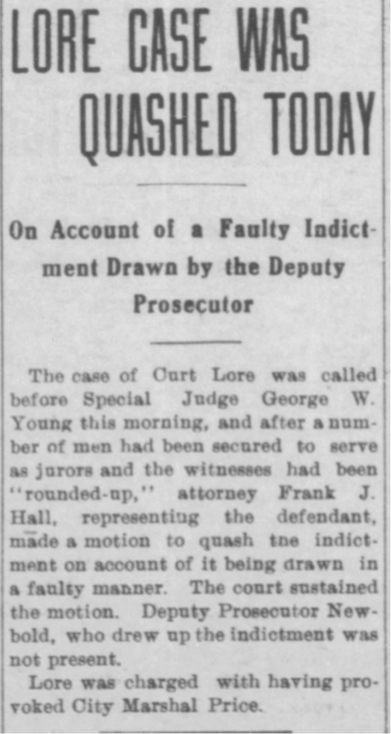
Curtis Lore: White Plague Times Two – 52 Ancestors #329

According to the Rushville, Indiana newspaper, Curt Lore, my great-grandfather, had been sick for at least a year before he died in November of 1909. According to his death certificate, he had been ill for three years.

Curt had escaped death so many times in the past.

But not this time. After previously surviving Typhoid combined with Tuberculosis, the White Plague, named for the signature pallor of those afflicted, Curt’s condition worsened, and the Grim Reaper spirited him away at 7:20 on Thanksgiving evening.

Oh, the horrible irony. Thanksgiving.

Maybe Curt was thankful to be out of his never-ending and increasing misery.

This painting, created in 1886, shows two people suffering from tuberculosis and their living conditions.

We don’t think much about TB today.

In the 1800s, TB, also known as consumption, killed about one-fourth of the population of Europe. Between 1880 and 1910 – it killed one-third of the people between 15 and 34, and half of those between 20 and 24. For some unknown reason, it seemed to be more lethal to younger people, but maybe younger people were more likely to be risk-takers and socialized more.

It’s believed that 70-90% of the urban population of Europe and the US were infected, and about 80% of those who developed active cases died. TB was surely something to fear and nothing to mess with.

Under the very best of circumstances – living in an English sanitarium that resembled a resort for the wealthy with lots of fresh air, food, and amenities – more than half of the people who contracted TB were dead within 5 years. And most people did not live in the best of conditions. They made do with whatever their family could provide to alleviate their symptoms and care for them. If they happened to be the breadwinner, the family as a whole suffered immensely.

Before treatments became available, one-third of infected people died within two years and another third within five. The hallmark of Tuberculosis is slow, miserable disease progression marked by fever, chills, weight loss, no appetite, night sweats, fatigue, headache, intensive coughing accompanied by bleeding in the lungs and difficulty breathing. In the end, the actual cause of death is often multiple organ failure.

Tuberculosis sanitariums opened in the US in the late 1800s with 115 offering more than 8000 beds by 1904. I’m actually surprised that Curt didn’t go to “recover” in one, although maybe the family couldn’t afford that approach. I didn’t know Curt in person, of course, but based on what I do know about him, he was an orphaned roughneck oil-field cowboy made good. I would think he would have resisted anything that even hinted of vulnerability or weakness, probably literally until his last breath.

It was believed that open-air shelters, regardless of the temperature, and rest in a horizontal position improved health, and that was likely the treatment Curt received at home.

He did actually improve time and time again, going back to work, until eventually his body was simply too overwhelmed and worn down.

Medical treatments, if you can call them that, were beginning about then and were akin to torture. Based on their descriptions, which I’ll spare you, I’d wager that the treatments themselves killed as many patients as the disease. Curt probably missed that by just a couple of years – which was a merciful blessing.

TB is contagious and caused by a bacterium. It’s transmitted in close living conditions and made worse by unsanitary practices such as spitting on the streets, a then-common practice, and sharing personal items such as drinking vessels.

Families, of course, were the most endangered, especially spouses who slept together. Coughing and sneezing spread the disease. People often became ill slowly and symptoms generally didn’t appear until months or years after exposure.

Only antibiotics could potentially have saved Curt, and they wouldn’t be available until the mid/late 1940s. Vaccines followed in the 1950s and 1960s, half a century too late.

Some people developed latent TB. They initially became infected, but their body fought it off and the disease became dormant, either forever or until their immune system became weakened because of some other reason or old age. Of course, back then, those people would have been thought to have been “cured” by whatever “tonic” they had been taking.

Snake Oil

Tonics, also known as patent medicines or more aptly as snake oil were everyplace, preying on the frightened, ill and unwary.

Know what’s in Dr. King’s New Discovery for Consumption? Morphine and chloroform. Didn’t cure you, but at least you stopped coughing and fell asleep.

Of course, these testimonials published as stories in the local papers made people subject to every snake oil salesman within sniffing distance.

Ingredients in Shiloh’s Consumption Care? Chloroform, heroin, and cynanide. Now there’s a curative solution.

Add in a Reverend and a druggist hyping the product, and why WOULDN’T you believe in these cures – one right after another.

What’s in Warner’s? You don’t need to know. Trust me. Just pay up and take it so Mr. Warner can become even wealthier.

These are just a few of many Consumption ads that ran in just one day’s newspaper in Aurora, Indiana in 1888. Small-town America was full of sitting ducks for patent medicine. People desperate to be cured would try anything.

Know what was in Piso’s Cure? Cannabis.

You might not be cured, but you were happy and got your appetite back.

I can’t help but wonder if the sicker people got, the more of these elixirs they took, possibly together. Maybe these toxic cocktails mercifully hastened the inevitable.

Treatments

Tuberculosis patients in the early 1900s when Curt was ill were often lined up in beds on porches, in all weather, to sleep.

Patients slept outside or in open-air tents. Tuberculosis, the leading cause of death in the 1880s, put Colorado on the map with its “huts” lining the mountainsides.

Some even slept along the walkway outside St. Thomas Hospital, along the River Thames in London, with the houses of parliament in the background.

If the disease itself didn’t do you in, or the morphine, heroin, cyanide and chloroform didn’t kill you, you would die of hypothermia.

Latent TB

I have to wonder if Curt actually had latent TB and his bout with Typhoid in early 1907 caused it to awaken. The timing was right and we know he was dreadfully ill and not expected to live.

During Curt’s final illness and after his death, Nora would have been terribly worried about her own health and that of her four daughters and son-in-law. Her sisters had come to visit as well.

Would other family members become ill? Would they unknowingly pass it on to others?

This sounds all too familiar today.

John Ferverda

John Ferverda, Nora and Curt’s son-in-law would develop Tuberculosis in the late 1950s. John had married Edith Lore in 1908, almost exactly a year before Curt died. John helped Nora care for Curt and remained close to his mother-in-law for the rest of her life.

All those years later when John was diagnosed, the family was told that his lungs were scarred – leading the doctors to believe he had actually had TB before at some time.

John was admitted to the Irene Byrum Tuberculosis Sanitarium in Fort Wayne for treatment. He lived there as an inpatient for a year or two – not only for his own health but to protect others.

I remember vising this HUGE facility as a small child. We walked across a seemingly endless parking lot into a cavernous reception area or hall, and my grandfather,  Pawpaw, was wheeled out in a wheelchair to see us. He was too weak to walk, and any movement at all made him cough and spit blood into a handkerchief.

I desperately wanted to climb on Pawpaw’s lap, but I wasn’t allowed to touch him or even see him up close. I was able to visit with him from a few feet away and I still remember the joy on his face as we played distant games like peek-a-boo and a modified version of hide-and-seek.

I couldn’t WAIT until Pawpaw came home – except I was never allowed to touch him again. Nor was I allowed at his funeral.

This is my only picture with my grandfather – obviously before he was diagnosed. He died about 4 years later. Tuberculosis stole so much.

Anyone who was exposed to TB when my grandfather was ill had to be x-rayed regularly and take tuberculosis tine tests. Those weren’t so much painful as they were frightening, waiting for results.

And heaven forbid that you coughed.

I still remember my grandfather coughing horribly and struggling to breathe. It sounded like he was gurgling and it was obvious he was in pain.

Mother and I had to get chest x-rays every six months for years after his passing.

Did my grandfather’s affliction begin in Rushville, all those years before, helping Nora care for Curt?

It’s certainly possible, but we’ll never know.

Let’s join the Lore family after Curt’s passing and see how they’re doing.

Late 1909

Nora was probably quite torn. I’m sure she had to be glad, on some level, that Curt’s terrible suffering was over. He died on November 25th, Thanksgiving evening, and she buried him a few days later on what was probably a cold grey fall day.

Nora had to figure out how to support three children. What was she to do?

She was probably completely exhausted after all of those months of caregiving, broke, and in shock.

Christmas would descend upon the family shortly. Did Nora decorate a Christmas tree in an attempt at normalcy for the girls?

In years past, Nora would have gone home to the Kirsch House in Aurora for the holidays, and I’m guessing she did that year too.

Nora’s sisters and parents were suffering too. The last couple of years had been absolutely brutal.

  • In addition to Nora’s years-long ordeal and Curt’s eventual death, Nora’s sister Carrie’s husband was institutionalized with syphilis. Worse yet, he had given it to Carrie. He would die in July of 1910.
  • Nora’s other sister, Lou’s husband had committed suicide on Halloween in 1908 at the Kirsch House.
  • A few months earlier, Nora’s grandfather had died.
  • Nora’s aunt’s daughter, Nettie Giegoldt, died in Aurora in September of 1908 at 26 years of age – of Phthisis Pulmonalis – yet another name for Tuberculosis. According to her death certificate, she succumbed after two years which means she would have become ill in late 1906.

Is there any possibility that there was a connection between Nettie and Curt who both developed symptoms at about the same time?

According to the newspaper, the family had gathered in Aurora for Christmas in 1906.

I don’t know if Nora went home to Aurora in 1909 to simply grieve among her already-suffering family, or if the sisters and family took strength from each other.

But any red-blooded widow with three dependent children whose mother was living would have gone home to mother – at least for a while.

Mother is always mother, and there is always comfort there. If for no other reason than you can cry, and she can take care of whatever needs to be taken care of, at least for a respite. You don’t have to be strong every minute of every day.

Christmas that year must have been brutal at the Kirsch House. I hope they had a lot of wine, that’s all I can say.

Nora was no longer “interesting” fodder for the newspaper’s socialite column, so we know much less about her life during this period. One thing is for sure, THAT life was over.

Nora probably didn’t stay in Aurora long after the holiday. As tempting as it would have been to simply remain in Aurora for an extended visit, or maybe forever, she had business to attend to in Rushville.

Nora needed to find a different place to live. She had to pack and move. She needed to find some kind of employment. At least two of her four children needed to attend school.

Daughter Curtis would have been 18 and I suspect, but don’t know, that she dropped out of school to help care for her father when he was so gravely ill.

I’m sure Nora’s parents made sure those girls had at least some semblance of Christmas in 1909, even if Nora couldn’t. After all, Eloise was only just 6 and Mildred 10. Santa would still have been visiting and leaving gifts for the girls. Hopefully, they were able to forget about everything else, at least for a little bit.

Good German food, eaten together at the family table would have been salve on everyone’s injured soul.

Nora and the girls probably came home on the train between Christmas and New Year to set about putting their life in some semblance of order. She probably set the girls to packing their things. Maybe she positioned moving as a great adventure!

I’d bet Nora welcomed a change of scenery and a new beginning.

What would that new, vastly different, normal look like?

Another Change

The Rushville newspapers continue to reveal threads in the tapestry of life of the Lore family.

  • January 3, 1910 – John Ferveda who was recently transferred to cashier at the local office has been given the agency at Silver Lake in the northern part of the state and will leave here in the next few weeks.

John received a promotion. That’s the good news and the bad news, both.

This move had to be extremely difficult for Nora and Edith both. To have her oldest child move away so soon after Curt’s death, although I’m sure it wasn’t’ entirely unexpected. If there’s one thing Nora learned, it was to roll with the punches.

It would be a terrible irony that John Ferverda would eventually die of tuberculosis too, half a century later. Bookends of their marriage.

  • January 10, 1910 – Mr. and Mrs. John Ferverda went to Silver Lake, today where they will reside permanently. Mr. Ferveda will be the Big Four agent there.

A week later, Edith had departed too, waving goodbye to her mother at the depot. I don’t know, but I’d bet Edith and John had been living with Nora since their wedding.

Silver Lake

John and Edith settled into the small farming community of Silver Lake in northern Indiana, complete with the train depot, a small Methodist church, one school, and an all-purpose hardware/drug store.

The depot in Silver Lake, where John spent the next several years as station agent was located beside Edith and John’s home. I remember this building as a child, visiting my grandparents. Today the depot, along with the train tracks are gone.

Silver Lake was a “one-horse” crossroads town, a block or two in each direction. They lived about where the buggy is in the distance on Main street, on the left-hand side.

The view today from the exact same location.

Edith and John purchased a home beside the depot and never moved.

“Driving” down Main Street, I still recognize a few homes, including theirs which looks much different today.

After the fast-moving social life followed by the difficulties in Rushville, perhaps Silver Lake was a quiet respite for Edith, and for Nora when she visited too.

Rushville and Silver Lake were about 110 miles apart. I don’t believe either family had a car yet, so they would have taken the train to visit from time to time. If I remember correctly, Mom said that the station agent’s family rode for free.

New Beginnings

Back in Rushville, Nora was coping and making the necessary changes as Edith settled into Silver Lake.

  • March 9, 1910 – For sale one street sprinkling outfit, consisting of wagon, tank, gas engine, pump, etc., formerly owned by Curtis Lore. T. Arbuckle, agent

This is heart-wrenching – clearly Curt’s estate. Perhaps the only thing he had left. I wonder what happened to his horses. I’d guess they were sold during his illness to pay bills. Horses were probably easier to sell than a sprinkling outfit.

The Rush County records are listed at Family Search, but none are online yet, so I requested Curt’s estate records by writing an old-fashioned letter. I checked with the Rush County clerk’s office and they indicated that there was no will, probate or estate for Curt when he died, although the sale of the sprinkling outfit by an agent suggests otherwise.

  • April 15, 1910 – Mrs. John Ferveda of Silver Lake is the guest of her mother Mrs. Curt Lore and family in west First Street.

Nora had moved to First Street by April.

The 1910 census taken a few days later shows Nora living at 324 W. First Street and working as an “agent” in the “dress goods” industry. I wonder what that means, exactly. Nora reported that she had not been out of work. Daughter Curtis, 19, is shown as a dressmaker in a store.

I’m relieved to know that Nora is employed and that Curtis is helping out as well. I never knew exactly what happened to Nora during this time.

  • May 17 – 25, 1910 – Lost a child’s red hat Sunday afternoon. Finder please return to Mrs. C. B. Lore 324 W. First Street.

I bet the red hat belonged to Eloise. Was this a special hat or were they just that poor?

  • July 3, 1910 – Joseph Wymond, husband of Nora’s sister, Carrie, died. There are two official reports, one being a death certificate from the sanitarium in Lafayette and one being a coroner’s report in Dearborn County. The coroner’s report says he died of a gunshot wound, supposedly self-inflicted, and his death certificate says he died in Lafayette at the Wabash Valley Sanitorium after a residency of 8 months, of Bright’s Disease. Bright’s Disease was a kidney disorder common among syphilis patients. Bright’s Disease was Carrie’s eventual official cause of death too, in 1926.

Both of those things cannot be true.

Nora told of how Joseph’s family managed to swindle Carrie out of Joseph’s rather substantial estate. Joseph Smithfield Wymond’s father owned the Wymond Cooperage Company that spanned two full blocks in Aurora.

Heartache on top of heartbreak. Clearly, when Carried married him in 1902, he either didn’t have the disease, or he didn’t know it. I don’t know if Wymond had been cheating on top of giving his wife the disease that would eventually kill her, but the family thought so.

This entire situation was spoken of in hushed tones in the family, even decades later. Having “marital relations,” even with your husband, was considered “dirty” in Victorian times. Carrie’s situation, when it was discussed, held tones of outrage, pity and grief. Suffice it to say the Lore family and their descendants despised the man.

Carrie certainly needed the money from his estate after his death. It’s not like she could work, at least not in Aurora. Who would hire her for anything knowing of the disease she carried – not to mention her own deteriorating health.

And yes, EVERYONE in Aurora knew that always-cheerful Carrie had contracted that dread disease from her husband who was a well-known son-of-a-rich-man riverboat gambler and man-about-town. Mom referred to him as “a slick Dandy,” an epithet spit between clenched teeth. I didn’t know what that meant, exactly, for the longest time, but I could tell by her tone alone that it was bad, very, very bad.

Just a few months after Curt’s death, we find him mentioned in the Rushville paper again.

  • August 10, 1910 – List of Old Settlers who have died in the past 90 years – Curtis Lore, 50.
  • Goshen Democrat, August 10, 1910 –  Mrs. W. R. Coverston will entertain at bridge tonight for her guest, Mrs. C. B. Lore of Rushville.

Nora’s best friend’s husband who also worked for the railroad had been transferred too. I’d wager that Nora visited her daughter and her best friend on the same trip given that they were only living about 50 miles apart in northern Indiana.

The first anniversary of Curt’s death came and went. Of course, the newspaper doesn’t’ report when people visit the cemetery. But they did, apparently, print letters to Santa.

  • December 21, 1910 – Dear Santa, I want a set of furs, an English doll cart, an Indian suit, a sled, big doll, a raincape, new dress, set of dishes, a Christmas tree, a picture book. I am seven years old. Your friend, Eloise Lore

At least she didn’t ask for her Daddy back.

Eloise had just turned 7.

1911

  • March 7, 1911 – Mrs. John Ferveda of Silver Lake is the guest of Mrs. Curt Lore.

Edith came home to visit her mother often.

  • March 31, 1911 – Mrs. C. B. Lore was a visitor in Indianapolis today.

I’m really glad to see that Nora is getting out and about.

Why might she be visiting Indianapolis? Nora’s uncle, John Kirsch, lived in Indianapolis and didn’t pass away until 1927, so she might have visited him. After the 1910 census and by 1915, Nora’s sisters Carrie and Lula, both widows, were living in Indianapolis. Indy gave them a chance to live without the stigma of “what happened.”

Or, maybe Nora had friends there or simply needed to get away.

  • April 4, 1911 – Mrs. Curt Lore will entertain a small company of friends at her home on West Second street this evening, honoring Mrs. Will Coverston of Goshen who formerly resided here.

The West Second address may be a goof from years of habit.

Curt has been gone for 17 months and it looks like Nora is finally doing something with friends.

  • April 18, 1908 – Easter Sunday in Rushville – Reading – “Daisies in the Meadow” by Mildred Lore at the First Presbyterian Church.
  • May 5, 1911 – Mrs. C. B. Lore entertained the Five Hundred club this afternoon at her home in West First Street.
  • May 8, 1911 – C. D. Torr of Indianapolis was the guest of Miss Curtis Lore yesterday.
  • May 10, 1911 – Miss Curtis Lore visited in Indianapolis today.
  • May 15, 1911 – Mrs. C. B. Lore entertained the 500 Club at her home this afternoon on West First Street.

Nora seems to be trying to get back to normal, visiting and playing cards, and the younger girls are doing normal things for children in Rushville. Curtis is, of course, the daughter named for Curt.

  • June 3, 1911 – The following Children’s Day Program will be given at the First Presbyterian church tomorrow night by the members of the Sunday School. Recitation by Eloise Lore – “Naughty May”
  • June 8, 1911 – Mrs. John Ferveda of Silver Lake is the guest of her mother, Mrs. Curt Lore. (This newspaper NEVER spells Ferverda correctly.)
  • July 13, 1911 – Mrs. Nora Lore has gone to Silver Lake, Indiana for an extended visit wither daughter, Mrs. John Ferverda.
  • August 16, 1911 – Miss Curtis Lore played Lohengrin’s wedding march as the bridal party came down the stairs.

I can’t help but harken back to Nora’s own descent down the steps at the Kirsch House, into the parlor when she married Curt in 1888. I wonder if Curtis realizes she is providing the music for the reenactment of that scene between her parents.

  • August 23, 1911 – Mrs. Nora Lore of West First Street is entertaining with a house party this week. Her house guests are Mrs. Perry Wymond, Mrs. May Fisk, Miss Ida Kirsch of Aurora and Mrs. Will. R. Coverston of Goshen.

I suspect Perry is actually Carrie because the other women are Nora’s sisters and Mrs. Will Coverston is Nora’s best friend. I believe May is actually Nora’s sister, Margaret Louise, “Lou.” This “house party” looks just wonderful and I hope that Nora enjoyed this gathering as much as I suspect she did. This warms my heart. These three sisters have been widowed and the fourth, Ida, won’t marry until 1921.

I think a “house party” aka an adult slumber party is exactly what the doctor ordered for these ladies. It seems they might have visited at this particular time in order to attend the local fair.

These 1911 articles indicate that Nora’s widowed sisters are still living in Aurora, likely working for their parents at the Kirsch House.

  • August 23, 1911 – (regarding the fair) Notable among the local exhibitors in the handiwork department were…Miss Curtis Lore.

Curtis is now 20. Among other activities, she embroidered and crazy quilted. Curtis embroidered her name in the block of a crazy quilt that Nora kept until her death in 1949.

This crazy quilt eventually went to Curtis’s sister, Eloise, then to Mom when Eloise passed away, and now, it’s mine.

  • August 23, 1911 – Mrs. Nora Lore is entertaining Mrs. Perry Wymond, Mrs. May Fisk and Miss Ida Kirsch of Aurora and Mrs. Will Coverston of Goshen. (In 1930, Will Coverston was 64, wife Ethel and lived in Elkhart. Ethel would have been 35 in 1911.)
  • August 26, 1911 – Regarding the fair and money winners – Premium award in the following departments… Women’s Department – Miss Curtis Lore, 21 first, 28 second place awards.

Curtis obviously had an amazing number of entries that took prizes. It looks like the payment was $1 for first. It’s ironic that the newspaper article is about how the fair was the best ever, but it’s going broke because there are so many high premiums to be paid. That’s the equivalent of about $28 for each first-place entry, for a total of $588 in today’s money.

I’m quite impressed at all those awards. I surely wish they had told us what Curtis entered in which categories. I wonder if those 49 items she entered were related to her dressmaking? What better advertisement?

I’m cheering for Curtis!!! I’m glad she had such a successful year at the fair.

This photo from the summer of 1911 at Winona Lake provides another clue as to what the Lore women did that summer, including Nora’s sisters from Aurora.

I don’t know who the child at left is, but Curtis Lore is the young woman standing at left, holding her skirt. By the way, these are swimsuits of the day. Maybe swim dresses would be a better description.

“Aunt Cad” is Nora’s sister, Carrie Kirsch Wymond.

The woman sitting in the water is unknown, although I wonder if she is John Ferverda;s sister.

The woman with the straw hat behind Aunt Lula is unknown too.

Aunt Lula is Nora’s sister, Margaret Louise “Lou” Kirsch Fiske.

Edith is standing in a black swimdress.

Mildred is playing in the water, but Eloise isn’t pictured.

I’m guessing Nora took the picture and Edith (later) wrote the names on the photo.

Everyone is laughing and smiling and joyful. This looks like a lovely retreat, and I’d wager there was picnicking together on the shore as well while the kids splashed in the water nearby.

  • September 22, 1911 – Miss Curtis Lore who has been ill for several days was much better today.

Uh oh.

I just hold my breath now every time there’s a newspaper report that someone is sick – especially a young person – and in September. It’s not flu season.

  • October 5, 1911 – Miss Curtis Lore who has been ill for some time is greatly improved.

Whew! What a relief. I was afraid this was the beginning of that same emotional roller-coaster ride, starting all over again. But why had Curtis been ill for some time? Is there something else wrong?

  • October 7, 1911 – The following program was rendered at the Havens school on Friday afternoon in honor of the birthday anniversary of James Whitcomb Riley. Recitation of “The Raggedy Man” by Eloise Lore.

The Visit

  • November 22, 1911 – Mrs. George Aultman and Mrs. Nora Lore went to Rockville today for a 2 days stay.

Ella Aultman was Nora’s neighbor, just a few doors away. While on the surface, this looks like a “fun jaunt,” it was anything but. The State Tuberculosis Sanitorium was located at Rockville

Curtis had contracted tuberculosis from her father and had been admitted. Now we know what was going on.

Curtis, who had improved briefly in October was clearly worse in November. We don’t know when Curtis was admitted to Rockville, but was sometime between October 5th when she was improved and November 22nd when her mother went to visit.

Nora must have been heartsick. And terrified! First her great-niece Nettie died after being ill for two years, then Curt, and now Curtis is ill with the same scourge.

Courtesy Indiana Historical Society

Of course, I knew about this already, but it’s heartbreaking to see this begin all over again as I read the old newspapers. I can’t help but wonder how Nora kept the fear from entirely consuming her.

This scenario was all too common. The newspapers and death records a hundred years ago are full of articles about families where several people became ill and often died from diseases that we have cures for today.

I wonder what, if anything, Nora told young Eloise and Mildred about what was happening to Curtis.

  • November 29, 1911 – Thanksgiving Program at Havens Building – The Recitation – The Bill of Fare by Eloise Lore

This Thanksgiving must have been particularly difficult for Nora. It was the second anniversary of Curt’s death and Curtis was in a sanitarium.

No mention of what they did at Christmas in the newspaper this year. There’s also no Santa Claus letter from Eloise who had just turned 8, either.

Would Nora have gone to Aurora, or perhaps to visit Curtis, or both?

1912

  • January 11, 1912 – Benefit exchange on behalf of Miss Curtis Lore to be held Saturday, January 13 by the young women of the First Presbyterian Church. We will have good things to sell if you want to buy. If you do not want to buy, give your money anyway as a free-will offering.

These articles are both heartwarming and heartbreaking. Not only is Curtis clearly gravely ill, but Nora is obviously struggling, perhaps even to put food on the table. The young people at church, Curtis’s friends, are stepping up and trying to help. Bless them.

Edith is married and living in Silver Lake. At least she’s safe there, but Curtis was her best friend.

Is Curtis still in the Sanitarium, or is she at home? Is she improving? I hope.

How Nora put one foot in front of the other every day, I have no idea.

The community very clearly gathered around this family.

  • January 22 & 26, 1912 – The Greensburg News ran this article.

The Rushville paper carried several similar articles.

Ironic that it’s in this article that we discover exactly when they moved from Greenburg to Rushville, which means that Curtis was actually born in Greensburg on March 8,  1891. In addition, the Aurora, Indiana newspaper on January 9, 1890, carried a notice that Miss Carrie Kirsch visited her sister, Mrs. Curt Lore in Greensburg the previous week. On January 23rd, Jacob Kirsch, Nora’s father had visited as well.

Attempting to find additional information, I tried a new resource and discovered Curtis Lore’s actual birth announcement in the Greensburg newspaper.

  • January 27, 1912 – The benefit for Miss. Curtis Lore last night at the Portola attracted large crowds at all the performances. The program was well received and was one of the best given here for some time. Tonight a change of pictures will be made with the exception of “The Awakening of John Bond.” By request this feature film dealing with a fight on tuberculosis will be shown again tonight. Charles VanCamp will repeat his feature song, “Buckwheat Cakes.”
  • January 30, 1912 – The second benefit for Miss. Curtis Lore will be given Friday night. The management announces that any of the tickets out for the show given last week will be accepted as this second benefit. It is planned to make the program as attractive as last Friday and special music and pictures will be included in the program. The Jackson school orchestra has consented to play and Charles VanCamp will put on another character song.
  • January 31, 1912 – Friday night the second of the benefit shows for Miss Curtis Lore will be given. The VanOsdol orchestra will render a program and other special music will be given, besides three reels of pictures.

You have to give these young people credit – they are doing their best. A fundraiser and two benefits. I’m impressed!

We still don’t know if Curtis is at home or at the Sanitarium.

  • February 1, 1912

  • February 2, 1912 – The second benefit to be given tonight at the Portola by the Emanon club for Miss Curtis Lore, promises to be attended by even larger crowds than last Friday.

Either these shows are great or people’s hearts are large – or maybe both!

  • February 5, 1912 – The benefit show by the Emanon club for Miss Curtis Lore netted $60. The young women are well pleased with the result.

At 10 cents each, 600 people contributed. In 1910, there were 355 households in Rushville, which means every household, on average, contributed 17 cents. And that’s just the second benefit. We don’t know how much the fundraiser raised, or the first benefit produced.

They tried, Lord knows, these young people tried. The funds from that second benefit, equivalent to about $1700 today, probably made a huge difference to Nora and made Carrie feel very cherished and loved.

  • February 7, 1912 – Curtis Lore, age 21 years daughter of Mrs. C. B. Lore of West First Street died late this afternoon after suffering with tuberculosis for several weeks. She took treatment at the State Sanitorium near Rockville for some time but did not improve. She is survived by her mother and 3 sisters.

Curtis’s decline and death was much more rapid than her father, Curt’s, had been.

  • February 8, 1912 – Last Sad Rites Will be Performed Tomorrow Afternoon – Funeral services of Miss Curtis Lore …First Presbyterian Church of which deceased was a member.

Curtis had died at home. At least she was with her mother.

But Nora. Oh Good God – poor Nora.

  • February 9, 1912 – The funeral services of Miss Curtis Lore were held this afternoon at the late residence in West First Street, conducted by the Rev. J. B. Meacham. Burial took place in East Hill cemetery.

Given that Curt’s funeral and Curtis’s both were held at home, that must have been the custom of the day. I’d wager the entire town came to pay their respects.

  • February 10, 1912 – Mrs. W. R. Coverston of Wabash attended the funeral of Miss Curtis Lore here yesterday.

Nora would have desperately needed her friend’s presence.

I’m sure Nora’s sisters and parents would have been present too, although, strangely, that’s not mentioned in the newspaper.

20 years, 10 months, and 29 short days.

Two years and not quite three months after Curt died. This means that Nora has been living for almost 5 years with a family member ill with TB, unless Curtis wasn’t ill the entire time.

This must have seemed like déjà vu – and I’m sure Nora was terrified for her other children.

Judging from Curtis’s death certificate and the date this doctor began treating her, Curtis probably came home from the sanitarium at Christmas time, after about 5 weeks of treatment, knowing she would not improve. Poor Nora. Poor Curtis. This family experienced so much grief and loss.

Until I saw her death certificate, I didn’t know that Curtis even had a middle name or initial. I bet the L stood for Louise, her aunt, who probably sponsored Curtis at her baptism, but I’m just guessing.

Curtis’s death certificate says she had been ill for 6 months and that would track back to August 1911, when she was winning all those awards at the fair and probably about the time she was at Winona Lake with family members too.

I’m so glad she won those ribbons and had that last wonderful summertime lake visit with her sisters and aunts. It would be her last.

Nora’s Great Regret

Eloise told Mom that Nora felt just awful and never forgave herself for the circumstances under which Curtis lived in her final weeks – and died.

When Curtis first became ill, she wanted to go out west with her boyfriend’s family, “for her health.” The western climate, “clean, cold mountain air,” was believed to be the best for TB patients. Nora did not allow Curtis to move. She wanted her child with her. Any mother would.

After Curtis died, Nora always wondered if she had allowed her to go, if she would have lived. Guilt is an evil, unrelenting lifelong companion.

But that’s not all.

Recall that it was believed that sleeping outside on a porch, in fresh air, no matter the temperature, would improve Tuberculosis symptoms and restore health. In fact, the colder, the better.

Curtis pretty much lived on the porch that winter and was understandably miserable. Nora brought her food, but she was too sick to eat. It was winter in Indiana. Horribly cold. Nora stayed with Curtis on the porch. Desperate to help her daughter, Nora would have done anything to save her, but Curtis died anyway.

Love was not enough.

Nora was fully aware of her child’s misery and never forgave herself, even though she was lovingly providing the standard accepted and medically recommended treatment. If she had not, and Curtis died, then Nora would have been considered negligent. There was no “winning” for either Nora or Curtis.

It was only many years later that Nora, along with everyone else, came to realize that living and sleeping in the cold did nothing curative for TB. So Curtis suffered for nothing. Nora came to wonder if the cold had hastened Curtis’s death and wondered if she might have lived had she NOT been exposed to the cold.

When Eloise told me about Curtis sleeping and living on the porch, in the winter, I was shocked. Eloise herself, still a child, had been traumatized by all of the surrounding events. I could tell that even telling me, decades later, bothered her immensely. Her eyes took on a very far-away, pained gaze as she talked.

Sleeping and living outside was the prescription of the day and Nora, at that time, believed it was Curtis’s only hope. I’m sure that Nora would have gladly traded her own life for Curtis’s if that were possible, but that’s not a choice we get to make.

It’s somehow ironic that it may have been that porch that saved the rest of the family from infection. Miraculously, neither Nora, Mildred, or Eloise contracted TB from either Curt or Curtis.

If Curtis had been sick fifty years later, she would have taken a long regimen of antibiotics and probably lived – or at least stood a fighting chance.

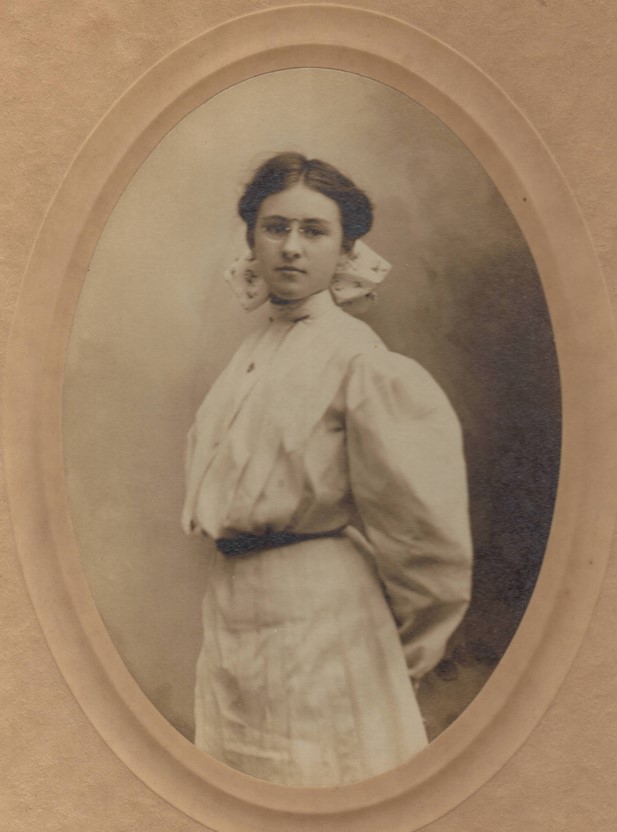
I’m not sure when this photo of Curtis was taken, but she doesn’t look quite adult here.  Fortunately, the family had this picture of better times where Curtis looks beautiful and happy.

And, of course, this adorable baby picture. There’s no doubt this is Curtis. Those ears!

Edith, my grandmother, told my mother that not only was Curtis named for her father, Curtis Benjamin Lore, but she absolutely adored him. That feeling was mutual. Ironic that he walked away from his first family, children included, but clung so tightly to his second.

East Hill Cemetery

For the second time in 27 months, Nora would pass beneath this archway at the entrance of East Hill Cemetery, accompanying the casket of a loved one.

The casket would have been loaded from their home onto a wagon pulled by a team of horses. The wheels would have creaked as the procession moved slowly through town, the horses’ hoofs echoing and carriages following.

I’m sure Nora had visited many times since Curt’s death. Perhaps she came to talk with Curt as she grew ever more concerned that Curtis would be joining him.

On a cold, bleak, winter day, Curtis was buried beside her father. Her suffering finally over.

Nora would be buried beside them both, 37 years later.

Three identical stones in a row.

The Next Chapter

Nora didn’t have much time to grieve. Grieving was a luxury she could no longer afford.

Nora had to pick herself up, dust herself off, again, as best she could, for the sake of her young daughters, and put together some semblance of a life.

A month later, Nora had a new job and opened the door to the next chapter of her life.

What lay on the other side of that door?

Something rather startling that absolutely no one expected.

Join me soon for “Nora’s Surprise.”

_____________________________________________________________

Disclosure

I receive a small contribution when you click on some of the links to vendors in my articles. This does NOT increase the price you pay but helps me to keep the lights on and this informational blog free for everyone. Please click on the links in the articles or to the vendors below if you are purchasing products or DNA testing.

Thank you so much.

DNA Purchases and Free Transfers

Genealogy Products and Services

Books

Genealogy Research

DNA Day: Forty Years On and We’re Still Shaking The Tree!

Genealogists are always excited when DNA Day in April arrives because it means two things:

  • Celebrating DNA
  • Sales

This year we have a 40th anniversary to celebrate along with some great sales.

Those of you who know me already understand how excited I am about the powerful combination of genetics and genealogy. Yes, I’m a science/genealogy nerd and I’m also one of the scientists working on the Million Mito Project – the next generation of mitochondrial DNA.

We’re pushing that envelope and you’ll be the beneficiary.

So please forgive me if my excitement spills over for a bit here. Let’s celebrate together!

The Beginning – Mitochondrial DNA

Mitochondrial graphic courtesy Dr. Paul Maier Copyright 2021 all rights reserved

Mitochondrial DNA, the DNA all humans inherit from their mother in a direct matrilineal line was first sequenced in 1981 at Cambridge University using the DNA of an anonymous volunteer. We know today that the volunteer whose DNA was used for that reference sample carried mutation values that eventually placed them in haplogroup H2a2a1. Of course, haplogroup H2a2a1 didn’t exist back then and has slowly evolved over the years as we learn more and updates to the tree occur.

That volunteer’s sequence of mutations was organized to form basic haplogroups, a genetic breadcrumb history that provides links both backward in time to our distant ancestors and forwards in time to us today. Comparing our mitochondrial DNA to other testers is genealogically relevant and can help break through brick walls. But that next chapter, genealogy, wouldn’t begin until the year 2000 when both Oxford Ancestors and FamilyTreeDNA introduced direct-to-consumer testing.

For 31 years after that initial discovery, everyone would be compared to the Cambridge Reference Sequence, the CRS.

Scientists didn’t know at the time, of course, but using the DNA of a person whose haplogroup was formed about 3500 years ago would make it challenging to correctly place people whose haplogroup was formed sometime between Mitochondrial Eve, our founding mother, and the haplogroup H reference sequence.

Think of it as trying to measure someone’s height when measuring from their shoulders up. You can do it, but you need to compensate for not measuring from the floor to the top of their head in one step.

Mitochondrial Eve lived about 150,000 years ago in Africa and was the founder of haplogroup L who eventually gave birth to all of the rest of the haplogroups in the world through haplogroups M and N who migrated out of Africa.

Courtesy FamilyTreeDNA

In 2012, a second comparison methodology, the Reconstructed Sapiens Reference Sequence (RSRS) was published in the landmark paper, A “Copernican” Reassessment of the Human Mitochondrial DNA Tree from its Root, written by Behar et al.

The RSRS version of the tree defined branches beginning at the base with Mitochondrial Eve, the first woman who lived in African and has survivors today, and provided estimated dates of when individual haplogroups were formed in a supplement to the paper. In other words, the RSRS measured height, or the genetic distance from Eve to us, from the floor up.

Today, there is still no universally accepted standardization in reporting, in part because the earlier papers are still relevant and utilize the older CRS methodology. Different academic papers reference the CRS or the RSRS, and FamilyTreeDNA, the only company that tests the full sequence and provides matching for genealogy, reports both versions for customers.

click to enlarge graphics

I find the RSRS more relevant for genealogy, because it’s much easier to see and identify our extra and missing mutations which are the seeds of future haplogroups.

While the original scientific mitochondrial DNA paper from 1981 is behind a paywall, here, I found another article, Mitochondrial DNA published in the magazine, The Science Teacher, that’s free, here.

With Build 17 of the mitochondrial tree, published in 2016, more than 5,400 haplogroups were defined using 24,275 samples. You can view the defining mutations by haplogroup, here, or on Phylotree, here.

Many more samples are available now, and the tree is in desperate need of an update, but that update needs to be a scientific reevaluation, not just adding to the tips of the branches.

In February of 2020, the Million Mito Project was launched which will use more than a quarter-million samples, with a goal of a million, to rewrite the Tree of Womankind. Samples are included from:

  • FamilyTreeDNA
  • Genographic Project participants who opted in to scientific research
  • Academic samples

You can watch a short video about the Million Mito Project produced by yours truly, here. I’ll have more information on this topic, soon.

I put together a Mitochondrial DNA resource page, here, with everything you’ve ever wanted to know and then some😊

Individuals can particulate in the Million Mito Project (MMP) by taking the mitochondrial DNA test at FamilyTreeDNA. Academic institutions can participate by uploading research samples to GenBank and contacting a member of the research team.

1981 Was Just the First Baby Step

Of course, the sequencing of mitochondrial DNA 40 years ago was just the beginning of our genetic journey. The first 20 years was spent building the foundation for consumer testing. This second 20 years has been the express-train ride of a lifetime.

Today, we’re shaking that tree harder than ever! Man alive, has it ever produced too – ancestors, surprises, confirmation of paper trails, new cousins and so much more. We’ve learned, and are continuing to learn about the genetic journey of our ancestors that was entirely unavailable to us before genealogists embraced DNA testing.

Every year we celebrate DNA Day by testing our DNA and by reviewing our matches to see what they reveal about our own personal journey and those of our ancestors. New matches arrive all the time. The key is to:

  • Take each kind of DNA test.
  • Test relatives. Their matches are critical to our shared ancestral genealogy.
  • Find relatives to represent Y and mitochondrial DNA of ancestors whose Y and mitochondrial DNA we don’t’ carry.
  • Check back often to see what new matches have appeared, and what hints and secrets they might hold. If the key to that brick wall has arrived, and you don’t check, you’ll never know!

Take that test! Upgrade if that’s an option for either Y or mitochondrial DNA for yourself, and test your autosomal DNA or transfer to all of the four major companies. Fish in all the ponds. You don’t know where that fish you need is living.

Step-by-step upload-download instructions are here for every vendor.

Don’t forget about testing your relatives that share all of the same ancestors that you do – aunts, uncles, grandparents. They will have matches that you don’t.

DNA Day Sales

Not all vendors are offering DNA Day sales, at least not yet, but FamilyTreeDNA and MyHeritage have great sale prices, shown below.

FamilyTreeDNA

Of course, FamilyTreeDNA sells three types of DNA tests for genealogy, Y DNA (direct paternal surname line for males only, mitochondrial DNA (direct matrilineal line for both sexes), and the Family Finder autosomal test (all lines for everyone), so they have more products to discount.

Please note that the autosomal transfer advanced tool unlock is only $9 right now. The unlock provides access to your myOrigins results (ethnicity) and AncientOrigins along with the chromosome browser if you uploaded your DNA from another vendor. The unlock seldom goes on sale and $9 is a great price. How many tests have you transferred and not yet unlocked?

If you’ve taken an earlier Y or mitochondrial DNA test at a lower level, you can upgrade – and upgrades are on sale too.

Have you been waiting to order that Big Y upgrade? Now’s the time!

You can click right here to order, upgrade or unlock a transfer.

MyHeritage

MyHeritage’s autosomal DNA test is on sale until the 25th for $59 with free shipping if you purchase 2 or more tests.

MyHeritage recently added another new feature for their DNA customers – Shared Ethnicities and Genetic Groups.

When you click to compare your information with a match, you can scroll down to see common ethnicities and Genetic Groups that you share with that person.

You can see that I share a small amount of indigenous American DNA with this person.

Is this important? I don’t know. It might be and it’s up to me as a genealogist to run with this ball and see what I can uncover.

Shared Genetic Groups may make finding common origins with your DNA matches even easier. The person with whom I share that indigenous ancestry also has ancestors from Appalachia. Hmmm, now I need to see who else I match in common with this person. I’m pretty sure, just based on this, that they match on my father’s side.

You can click here to check out your common ethnicities or genetic groups at My Heritage, or to order tests for family members whose results will help you unravel your matches.

Don’t forget, if you’ve already tested elsewhere, you can click here to easily upload to MyHeritage for free matching and just pay the $29 unlock for their advanced tools including the chromosome browser, ethnicities, Genetic Groups, clustering and triangulation.

_____________________________________________________________

Disclosure

I receive a small contribution when you click on some of the links to vendors in my articles. This does NOT increase the price you pay but helps me to keep the lights on and this informational blog free for everyone. Please click on the links in the articles or to the vendors below if you are purchasing products or DNA testing.

Thank you so much.

DNA Purchases and Free Transfers

Genealogy Products and Services

Books

Genealogy Research

A Triangulation Checklist Born From the Question; “Why NOT Use Close Relatives for Triangulation?”

One of my readers asked why we don’t use close relatives for triangulation.

This is a great question because not using close relatives for triangulation seems counter-intuitive.

I used to ask my kids and eventually my students and customers if they wanted the quick short answer or the longer educational answer.

The short answer is “because close relatives are too close to reliably form the third leg of the triangle.” Since you share so much DNA with close relatives, someone matching you who is identical by chance can also match them for exactly the same reason.

If you trust me and you’re good with that answer, wonderful. But I hope you’ll keep reading because there’s so much to consider, not to mention a few gotchas. I’ll share my methodology, techniques, and workarounds.

We’ll also discuss absolutely wonderful ways to utilize close relatives in the genetic genealogical process – just not for triangulation.

At the end of this article, I’ve provided a working triangulation checklist for you to use when evaluating your matches.

Let’s go!

The Step-by-Step Educational Answer😊

Some people see “evidence” they believe conflicts with the concept that you should not use close relatives for triangulation. I understand that, because I’ve gone down that rathole too, so I’m providing the “educational answer” that explains exactly WHY you should not use close relatives for triangulation – and what you should do.

Of course, we need to answer the question, “Who actually are close relatives?”

I’ll explain the best ways to best utilize close relatives in genetic genealogy, and why some matches are deceptive.

You’ll need to understand the underpinnings of DNA inheritance and also of how the different vendors handle DNA matching behind the scenes.

The purpose of autosomal DNA triangulation is to confirm that a segment is passed down from a particular ancestor to you and a specific set of your matches.

Triangulation, of course, implies 3, so at least three people must all match each other on a reasonably sized portion of the same DNA segment for triangulation to occur.

Matching just one person only provides you with one path to that common ancestor. It’s possible that you match that person due to a different ancestor that you aren’t aware of, or due to chance recombination of DNA.

It’s possible that your or your match inherited part of that DNA from your maternal side and part from your paternal side, meaning that you are matching that other person’s DNA by chance.

I wrote about identical by descent (IBD), which is an accurate genealogically meaningful match, and identical by chance (IBC) which is a false match, in the article Concepts – Identical by…Descent, State, Population and Chance.

I really want you to understand why close relatives really shouldn’t be used for triangulation, and HOW close relative matches should be used, so we’re going to discuss all of the factors that affect and influence this topic – both the obvious and little-understood.

  • Legitimate Matches
  • Inheritance and Triangulation
  • Parental Cross-Matching
  • Parental Phasing
  • Automatic Phasing at FamilyTreeDNA
  • Parental Phasing Caveats
  • Pedigree Collapse
  • Endogamy
  • How Many Identical-by-Chance Matches Will I Have?
  • DNA Doesn’t Skip Generations (Seriously, It Doesn’t)
  • Your Parents Have DNA That You Don’t (And How to Use It)
  • No DNA Match Doesn’t Mean You’re Not Related
  • Imputation
  • Ancestry Issues and Workarounds
  • Testing Close Relatives is VERY Useful – Just Not for Triangulation
  • Triangulated Matches
  • Building Triangulation Evidence – Ingredients and a Recipe
  • Aunts/Uncles
  • Siblings
  • How False Positives Work and How to Avoid Them
  • Distant Cousins Are Best for Triangulation & Here’s Why
  • Where Are We? A Triangulation Checklist for You!
  • The Bottom Line

Don’t worry, these sections are logical and concise. I considered making this into multiple articles, but I really want it in one place for you. I’ve created lots of graphics with examples to help out.

Let’s start by dispelling a myth.

DNA Doesn’t Skip Generations!

Recently, someone emailed to let me know that they had “stopped listening to me” in a presentation when I said that if a match did not also match one of your parents, it was a false match. That person informed me that they had worked on their tree for three years at Ancestry and they have “proof” of DNA skipping generations.

Nope, sorry. That really doesn’t happen, but there are circumstances when a person who doesn’t understand either how DNA works, or how the vendor they are using presents DNA results could misunderstand or misinterpret the results.

You can watch my presentation, RootsTech session, DNA Triangulation: What, Why and How, for free here. I’m thrilled that this session is now being used in courses at two different universities.

DNA really doesn’t skip generations. You CANNOT inherit DNA that your parents didn’t have.

Full stop.

Your children cannot inherit DNA from you that you don’t carry. If you don’t have that DNA, your children and their descendants can’t have it either, at least not from you. They of course do inherit DNA from their other parent.

I think historically, the “skipping generations” commentary was connected to traits. For example, Susie has dimples (or whatever) and so did her maternal grandmother, but her mother did not, so Susie’s dimples were said to have “skipped a generation.” Of course, we don’t know anything about Susie’s other grandparents, if Susie’s parents share ancestors, recessive/dominant genes or even how many genetic locations are involved with the inheritance of “dimples,” but I digress.

DNA skipping generations is a fallacy.

You cannot legitimately match someone that your parent does not, at least not through that parent’s side of the tree.

But here’s the caveat. You can’t match someone one of your parents doesn’t with the rare exception of:

  • Relatively recent pedigree collapse that occurs when you have the same ancestors on both sides of your tree, meaning your parents are related, AND
  • The process of recombination just happened to split and recombine a segment of DNA in segments too small for your match to match your parents individually, but large enough when recombined to match you.

We’ll talk about that more in a minute.

However, the person working with Ancestry trees can’t make this determination because Ancestry doesn’t provide segment information. Ancestry also handles DNA differently than other vendors, which we’ll also discuss shortly.

We’ll review all of this, but let’s start at the beginning and explain how to determine if our matches are legitimate, or not.

Legitimate Matches

Legitimate matches occur when the DNA of your ancestor is passed from that ancestor to their descendants, and eventually to you and a match in an unbroken pathway.

Unbroken means that every ancestor between you and that ancestor carried and then passed on the segment of the ancestor’s DNA that you carry today. The same is true for your match who carries the same segment of DNA from your common ancestor.

False positive matches occur when the DNA of a male and female combine randomly to look like a legitimate match to someone else.

Thankfully, there are ways to tell the difference.

Inheritance and Triangulation

Remember, you inherit two copies of each of your chromosomes 1-22, one copy from your mother and one from your father. You inherit half of the DNA that each parent carries, but it’s mixed together in you so the labs can’t readily tell which nucleotide, A, C, T, or G you received from which parent. I’m showing your maternal and paternal DNA in the graphic below, stacked neatly together in a column – but in reality, it could be AC in one position and CA in the next.

For matching all that matters is the nucleotide that matches your match is present in one of those two locations. In this case, A for your mother’s side and C for your father’s side. If you’re interested, you can read more about that in the article, Hit a Genealogy Home Run Using Your Double-Sided Two-Faced Chromosomes While Avoiding Imposters.

You can see in this example that you inherited all As from your Mom and all Cs from your Dad.

  • A legitimate maternal match would match you on all As on this particular example segment.
  • A legitimate paternal match would match you on all Cs on this particular segment.
  • A false positive match will match you on some random combination of As and Cs that make it look like they match you legitimately, but they don’t.
  • A false positive match will NOT match either your mother or your father.

To be very clear, technically a false positive match DOES match your DNA – but they don’t match your DNA because you share a common ancestor with your match. They match you because random recombination on their side causes you to match each other by chance.

In other words, if part of your DNA came from your Mom’s side and part from your Dad’s but it randomly fell in the correct positional order, you’d still match someone whose DNA was from only their mother or father’s side. That’s exactly the situation shown above and below.

Looking at our example again, it’s evident that your identical by chance (IBC) match’s A locations (1, 3, 5, 7 & 9) will match your Mom. C locations (2, 4, 6 8, & 10) will match your Dad, but the nonmatching segments interleaved in-between that match alternating parents will prevent your match from matching either of your parents. In other words, out of 10 contiguous locations in our example, your IBC match has 5 As alternated with 5 Cs, so they won’t match either of your parents who have 10 As or 10 Cs in a row.

This recombination effect can work in either direction. Either or both matching people’s DNA could be randomly mixed causing them to match each other, but not their parents.

Regardless of whose DNA is zigzagging back and forth between maternal and paternal, the match is not genealogical and does not confirm a common ancestor.

This is exactly why triangulation works and is crucial.

If you legitimately match a third person, shown below, on your maternal side, they will match you, your first legitimate maternal match, and your Mom because they carry all As. But they WON’T match the person who is matching you because they are identical by chance, shown in grey below.

The only person your identical by chance match matches in this group is you because they match you because of the chance recombination of parental DNA.

That third person WILL also match all other legitimate maternal matches on this segment.

In the graphic above, we see that while the grey identical by chance person matches you because of the random combination of As from your mother and Cs from your father, your legitimate maternal matches won’t match your identical by chance match.

This is the first step in identifying false matches.

Parental Cross-Matching

Removing the identical by chance match, and adding in the parents of your legitimate maternal match, we see that your maternal match, above, matches you because you both have all As inherited from one parent, not from a combination of both parents.

We know that because we can see the DNA of both parents of both matches in this example.

The ideal situation occurs when two people match and they have both had their parents tested. We need to see if each person matches the other person’s parents.

We can see that you do NOT match your match’s father and your match does NOT match your father.

You do match your match’s mother and your match does match your mother. I refer to this as Parental Cross-matching.

Your legitimate maternal matches will also match each other and your mother if she is available for testing.

All the people in yellow match each other, while the two parents in gray do not match any of your matches. An entire group of legitimate maternal matches on this segment, no matter how many, will all match each other.

If another person matches you and the other yellow people, you’ll still need to see if you match their parents, because if not, that means they are matching you on all As because their two parents DNA combined just happened, by chance, to contribute an A in all of those positions.

In this last example, your new match, in green, matches you, your legitimate match and both of your mothers, BUT, none of the four yellow people match either of the new match’s parents. You can see that the new green match inherited their As from the DNA of their mother and father both, randomly zigzagging back and forth.

The four yellow matches phase parentally as we just proved with cross matching to parents. The new match at first glance appears to be a legitimate match because they match all of the yellow people – but they aren’t because the yellow people don’t match the green person’s parents.

To tell the difference between legitimate matches and identical by chance matches, you need two things, in order.

  • Parental matching known as parental phasing along with parental cross-matching, if possible, AND
  • Legitimate identical by descent (IBD) triangulated matches

If you have the ability to perform parental matching, called phasing, that’s the easiest first step in eliminating identical by chance matches. However, few match pairs will have parents for everyone. You can use triangulation without parental phasing if parents aren’t available.

Let’s talk about both, including when and how close relatives can and cannot be used.

Parental Phasing

The technique of confirming your match to be legitimate by your match also matching one of your parents is called parental phasing.

If we have the parents of both people in a match pair available for matching, we can easily tell if the match does NOT match either parent. That’s Parental Cross Matching. If either match does NOT match one of the other person’s parents, the match is identical by chance, also known as a false positive.

See how easy that was!

If you, for example, is the only person in your match pair to have parents available, then you can parentally phase the match on your side if your match matches your parents. However, because your match’s parents are unavailable, your match to them cannon tbe verified as legitimate on their side. So you are not phased to their parents.

If you only have one of your parents available for matching, and your match does not match that parent, you CANNOT presume that because your match does NOT match that parent, the match is a legitimate match for the other, missing, parent.

There are four possible match conditions:

  • Maternal match
  • Paternal match
  • Matches neither parent which means the match is identical by chance meaning a false positive
  • Matches both parents in the case of pedigree collapse or endogamy

If two matching people do match one parent of both matches (parental cross-matching), then the match is legitimate. In other words, if we match, I need to match one of your parents and you need to match one of mine.

It’s important to compare your matches’ DNA to generationally older direct family members such as parents or grandparents, if that’s possible. If your grandparents are available, it’s possible to phase your matches back another generation.

Automatic Phasing at FamilyTreeDNA

FamilyTreeDNA automatically phases your matches to your parents if you test that parent, create or upload a GEDCOM file, and link your test and theirs to your tree in the proper places.

FamilyTreeDNA‘s Family Matching assigns or “buckets” your matches maternally and paternally. Matches are assigned as maternal or paternal matches if one or both parents have tested.

Additionally, FamilyTreeDNA uses triangulated matches from other linked relatives within your tree even if your parents have not tested. If you don’t have your parents, the more people you identify and link to your tree in the proper place, the more people will be assigned to maternal and paternal buckets. FamilyTreeDNA is the only vendor that does this. I wrote about this process in the article, Triangulation in Action at Family Tree DNA.

Parental Phasing Caveats

There are very rare instances where parental phasing may be technically accurate, but not genealogically relevant. By this, I mean that a parent may actually match one of your matches due to endogamy or a population level match, even if it’s considered a false positive because it’s not relevant in a genealogical timeframe.

Conversely, a parent may not match when the segment is actually legitimate, but it’s quite rare and only when pedigree collapse has occurred in a very specific set of circumstances where both parents share a common ancestor.

Let’s take a look at that.

Pedigree Collapse

It’s not terribly uncommon in the not-too-distant past to find first cousins marrying each other, especially in rather closely-knit religious communities. I encounter this in Brethren, Mennonite and Amish families often where the community was small and out-marrying was frowned upon and highly discouraged. These families and sometimes entire church congregations migrated cross-country together for generations.

When pedigree collapse is present, meaning the mother and father share a common ancestor not far in the past, it is possible to inherit half of one segment from Mom and the other half from Dad where those halves originated with the same ancestral couple.

For example, let’s say the matching segment between you and your match is 12 cM in length, shown below. You inherited the blue segment from your Dad and the neighboring peach segment from Mom – shown just below the segment numbers. You received 6 cM from both parents.

Another person’s DNA does match you, shown in the bottom row, but they are not shown on the DNA match list of either of your parents. That’s because the DNA segments of the parents just happened to recombine in 6 cM pieces, respectively, which is below the 7 cM matching threshold of the vendor in this example.

If the person matched you at 12 cM where you inherited 8 cM from one parent and 4 from the other, that person would show on one parent’s match list, but not the other. They would not be on the parent’s match list who contributed only 4 cM simply because the DNA divided and recombined in that manner. They would match you on a longer segment than they match your parent at 8 cM which you might notice as “odd.”

Let’s look at another example.

click to enlarge image

If the matching segment is 20 cM, the person will match you and both of your parents on different pieces of the same segment, given that both segments are above 7 cM. In this case, your match who matches you at 20 cM will match each of your parents at 10 cM.

You would be able to tell that the end location of Dad’s segment is the same as the start location of Mom’s segment.

This is NOT common and is NOT the “go to” answer when you think someone “should” match your parent and does not. It may be worth considering in known pedigree collapse situations.

You can see why someone observing this phenomenon could “presume” that DNA skipped a generation because the person matches you on segments where they don’t match your parent. But DNA didn’t skip anything at all. This circumstance was caused by a combination of pedigree collapse, random division of DNA, then random recombination in the same location where that same DNA segment was divided earlier. Clearly, this sequence of events is not something that happens often.

If you’ve uploaded your DNA to GEDmatch, you can select the “Are your parents related?” function which scans your DNA file for runs of homozygosity (ROH) where your DNA is exactly the same in both parental locations for a significant distance. This suggests that because you inherited the exact same sequence from both parents, that your parents share an ancestor.

If your parents didn’t inherit the same segment of DNA from both parents, or the segment is too short, then they won’t show as “being related,” even if they do share a common ancestor.

Now, let’s look at the opposite situation. Parental phasing and ROH sometimes do occur when common ancestors are far back in time and the match is not genealogically relevant.

Endogamy

I often see non-genealogical matching occur when dealing with endogamy. Endogamy occurs when an entire population has been isolated genetically for a long time. In this circumstance, a substantial part of the population shares common DNA segments because there were few original population founders. Much of the present-day population carries that same DNA. Many people within that population would match on that segment. Think about the Jewish community and indigenous Americans.

Consider our original example, but this time where much of the endogamous population carries all As in these positions because one of the original founders carried that nucleotide sequence. Many people would match lots of other people regardless of whether they are a close relative or share a distant ancestor.

People with endogamous lines do share relatives, but that matching DNA segment originated in ancestors much further back in time. When dealing with endogamy, I use parental phasing as a first step, if possible, then focus on larger matches, generally 20 cM or greater. Smaller matches either aren’t relevant or you often can’t tell if/how they are.

At FamilyTreeDNA, people with endogamy will find many people bucketed on the “Both” tab meaning they triangulate with people linked on both sides of the tester’s tree.

An example of a Jewish person’s bucketed matches based on triangulation with relatives linked in their tree is shown above.

Your siblings, their children, and your children will be related on both your mother’s and father’s sides, but other people typically won’t be unless you have experienced either pedigree collapse where you are related both maternally and paternally through the same ancestors or you descend from an endogamous population.

How Many Identical-by-Chance Matches Will I Have?

If you have both parents available to test, and you’re not dealing with either pedigree collapse or endogamy, you’ll likely find that about 15-20% of your matches don’t match your parents on the same segment and are identical by chance.

With endogamy, you’ll have MANY more matches on your endogamous lines and you’ll have some irrelevant matches, often referred to as “false positive” matches even though they technically aren’t, even using parental phasing.

Your Parents Have DNA That You Don’t

Sometimes people are confused when reviewing their matches and their parent’s match to the same person, especially when they match someone and their parent matches them on a different or an additional segment.

If you match someone on a specific segment and your parents do not, that’s a false positive FOR THAT SEGMENT. Every segment has its own individual history and should be evaluated individually. You can match someone on two segments, one from each parent. Or three segments, one from each parent and one that’s identical by chance. Don’t assume.

Often, your match will match both you and your parent on the same segment – which is a legitimate parentally phased match.

But what if your match matches your parent on a different segment where they don’t match you? That’s a false positive match for you.

Keep in mind that it is possible for one of your matches to match your parent on a separate or an additional segment that IS legitimate. You simply didn’t inherit that particular segment from your parent.

That’s NOT the same situation as someone matching you that does NOT match one of your parents on the same segment – which is an identical by chance or false match.

Your parent having a match that does not match you is the reverse situation.

I have several situations where I match someone on one segment, and they match my parent on the same segment. Additionally, that person matches my parent on another segment that I did NOT inherit from that parent. That’s perfectly normal.

Remember, you only inherit half of your parent’s DNA, so you literally did NOT inherit the other half of their DNA. Your mother, for example, should have twice as many matches as you on her side because roughly half of her matches won’t match you.

That’s exactly why testing your parents and close family members is so critical. Their matches are as valid and relevant to your genealogy as your own. The same is true for other relatives, such as aunts and uncles with whom you share ALL of the same ancestors.

You need to work with your family member’s matches that you don’t share.

No DNA Match Doesn’t Mean You’re Not Related

Some people think that not matching someone on a DNA test is equivalent to saying they aren’t related. Not sharing DNA doesn’t mean you’re not related.

People are often disappointed when they don’t match someone they think they should and interpret that to mean that the testing company is telling them they “aren’t related.” They are upset and take issue with this characterization. But that’s not what it means.

Let’s analyze this a bit further.

First, not sharing DNA with a second cousin once removed (2C1R) or more distant does NOT mean you’re NOT related to that person. It simply means you don’t share any measurable DNA ABOVE THE VENDOR THRESHOLD.

All known second cousins match, but about 10% of third cousins don’t match, and so forth on up the line with each generation further back in time having fewer cousins that match each other.

If you have tested close relatives, check to see if that cousin matches your relatives.

Second, it’s possible to match through the “other” or unexpected parent. I certainly didn’t think this would be the case in my family, because my father is from Appalachia and my mother’s family is primarily from the Netherlands, Germany, Canada, and New England. But I was wrong.

All it took was one German son that settled in Appalachia, and voila, a match through my mother that I surely thought should have been through my father’s side. I have my mother’s DNA and sure enough, my match that I thought should be on my father’s side matches Mom on the same segment where they match me, along with several triangulated matches. Further research confirmed why.

I’ve also encountered situations where I legitimately match someone on both my mother’s and father’s side, on different segments.

Third, imputation can be important for people who don’t match and think they should. Imputation can also cause matching segment length to be overreported.

Ok, so what’s imputation and why do I care?

Imputation

Every DNA vendor today has to use some type of imputation.

Let me explain, in general, what imputation is and why vendors use it.

Over the years, DNA processing vendors who sell DNA chips to testing companies have changed their DNA chips pretty substantially. While genealogical autosomal tests test about 700,000 DNA locations, plus or minus, those locations have changed over time. Today, some of these chips only have 100,000 or so chip locations in common with chips either currently or previously utilized by other vendors.

The vendors who do NOT accept uploads, such as 23andMe or Ancestry, have to develop methods to make their newest customers on their DNA processing vendor’s latest chip compatible with their first customer who was tested on their oldest chip – and all iterations in-between.

Vendors who do accept transfers/uploads from other vendors have to equalize any number of vendors’ chips when their customers upload those files.

Imputation is the scientific way to achieve this cross-platform functionality and has been widely used in the industry since 2017.

Imputation, in essence, fills in the blanks between tested locations with the “most likely” DNA found in the human population based on what’s surrounding the blank location.

Think of the word C_T. There are a limited number of letters and words that are candidates for C_T. If you use the word in a sentence, your odds of accuracy increase dramatically. Think of a genetic string of nucleotides as a sentence.

Imputation can be incorrect and can cause both false positive and false negative matches.

For the most part, imputation does not affect close family matches as much as more distant matches. In other words, imputation is NOT going to cause close family members not to match.

Imputation may cause more distant family members not to match, or to have a false positive match when imputation is incorrect.

Imputation is actually MUCH less problematic than I initially expected.

The most likely effect of imputation is to cause a match to be just above or below the vendor threshold.

How can we minimize the effects of imputation?

  • Generally, the best result will be achieved if both people test at the same vendor where their DNA is processed on the same chip and less imputation is required.
  • Upload the results of both people to both MyHeritage and FamilyTreeDNA. If your match results are generally consistent at those vendors, imputation is not a factor.
  • GEDmatch does not use imputation but attempts to overcome files with low overlapping regions by allowing larger mismatch areas. I find their matches to be less accurate than at the various vendors.

Additionally, Ancestry has a few complicating factors.

Ancestry Issues

AncestryDNA is different in three ways.

  • Ancestry doesn’t provide segment information so it’s impossible to triangulate or identify the segment or chromosome where people match. There is no chromosome browser or triangulation tool.
  • Ancestry down-weights and removes some segments in areas where they feel that people are “too matchy.” You can read Ancestry’s white papers here and here.

These “personal pileup regions,” as they are known, can be important genealogically. In my case, these are my mother’s Acadian ancestors. Yes, this is an endogamous population and also suffers from pedigree collapse, but since this is only one of my mother’s great-grandparents, this match information is useful and should not be removed.

  • Ancestry doesn’t show matches in common if the shared segments are less than 20cM. Therefore, you may not see someone on a shared match list with a relative when they actually are a shared match.

If two people both match a third person on less than a 20 cM segment at Ancestry, the third person won’t appear on the other person’s shared match list. So, if I match John Doe on 19 cM of DNA, and I looked at the shared matches with my Dad, John Doe does NOT appear on the shared match list of me and my Dad – even though he is a match to both of us at 19 cM.

The only way to determine if John Doe is a shared match is to check my Dad’s and my match list individually, which means Dad and I will need to individually search for John Doe.

Caveat here – Ancestry’s search sometimes does not work correctly.

Might someone who doesn’t understand that the shared match list doesn’t show everyone who shares DNA with both people presume that the ancestral DNA of that ancestor “skipped a generation” because John Doe matches me with a known ancestor, and not Dad on our shared match list? I mean, wouldn’t you think that a shared match would be shown on a tab labeled “Shared Matches,” especially since there is no disclaimer?

Yes, people can be forgiven for believing that somehow DNA “skipped” a generation in this circumstance, especially if they are relatively inexperienced and they don’t understand Ancestry’s anomalies or know that they need to or how to search for matches individually.

Even if John Doe does match me and Dad both, we still need to confirm that it’s on the same segment AND it’s a legitimate match, not IBC. You can’t perform either of these functions at Ancestry, but you can elsewhere.

Ancestry WorkArounds

To obtain this functionality, people can upload their DNA files for free to both FamilyTreeDNA and MyHeritage, companies that do provide full shared DNA reporting (in common with) lists of ALL matches and do provide segment information with chromosome browsers. Furthermore, both provide triangulation in different ways.

Matching is free, but an inexpensive unlock is required at both vendors to access advanced tools such as Family Matching (bucketing) and triangulation at Family Tree DNA and phasing/triangulation at MyHeritage.

I wrote about Triangulation in Action at FamilyTreeDNA, here.

MyHeritage actually brackets triangulated segments for customers on their chromosome browser, including parents, so you get triangulation and parental phasing at the same time if you and your parent have both tested or uploaded your DNA file to MyHeritage. You can upload, for free, here.

In this example, my mother is matching to me in red on the entire length of chromosome 18, of course, and three other maternal cousins triangulate with me and mother inside the bracketed portion of chromosome 18. Please note that if any one of the people included in the chromosome browser comparison do not triangulate, no bracket is drawn around any others who do triangulate. It’s all or nothing. I remove people one by one to see if people triangulate – or build one by one with my mother included.

I wrote about Triangulation in Action at MyHeritage, here.

People can also upload to GEDmatch, a third-party site. While GEDmatch is less reliable for matching, you can adjust your search thresholds which you cannot do at other vendors. I don’t recommend routinely working below 7 cM. I occasionally use GEDmatch to see if a pedigree collapse segment has recombined below another vendor’s segment matching threshold.

Do NOT check the box to prevent hard breaks when selecting the One-to-One comparison. Checking that box allows GEDmatch to combine smaller matching segments into mega-segments for matching.

I wrote about Triangulation in Action at GEDmatch, here.

Transferring/Uploading Your DNA 

If you want to transfer your DNA to one of these vendors, you must download the DNA file from one vendor and upload it to another. That process does NOT remove your DNA file from the vendor where you tested, unless you select that option entirely separately.

I wrote full step-by-step transfer/upload instructions for each vendor, here.

Testing Close Relatives Is VERY Useful – Just Not for Triangulation

Of course, your best bet if you don’t have your parents available to test is to test as many of your grandparents, great-aunts/uncles, aunts, and uncles as possible. Test your siblings as well, because they will have inherited some of the same and some different segments of DNA from your parents – which means they carry different pieces of your ancestors’ DNA.

Just because close relatives don’t make good triangulation candidates doesn’t mean they aren’t valuable. Close relatives are golden because when they DO share a match with you, you know where to start looking for a common ancestor, even if your relative matches that person on a different segment than you do.

Close relatives are also important because they will share pieces of your common ancestor’s DNA that you don’t. Their matches can unlock the answers to your genealogy questions.

Ok, back to triangulation.

Triangulated Matches

A triangulated match is, of course, when three people all descended from a common ancestor and match each other on the same segment of DNA.

That means all three people’s DNA matches each other on that same segment, confirming that the match is not by chance, and that segment did descend from a common ancestor or ancestral couple.

But, is this always true? You’re going to hate this answer…

“It depends.”

You knew that was coming, didn’t you! 😊

It depends on the circumstances and relationships of the three people involved.

  • One of those three people can match the other two by chance, not by descent, especially if two of those people are close relatives to each other.
  • Identical by chance means that one of you didn’t inherit that DNA from one single parent. That zigzag phenomenon.
  • Furthermore, triangulated DNA is only valid as far back as the closest common ancestor of any two of the three people.

Let’s explore some examples.

Building Triangulation Evidence – Ingredients and a Recipe

The strongest case of triangulation is when:

  • You and at least two additional cousins match on the same segment AND
  • Descend through different children of the common ancestral couple

Let’s look at a valid triangulated match.

In this first example, the magenta segment of DNA is at least partially shared by four of the six cousins and triangulates to their common great-grandfather. Let’s say that these cousins then match with two other people descended from different children of their great-great-great-grandparents on this same segment. Then the entire triangulation group will have confirmed that segment’s origin and push the descent of that segment back another two generations.

These people all coalesce into one line with their common great-grandparents.

I’m only showing 3 generations in this triangulated match, but the concept is the same no matter how many generations you reach back in time. Although, over time, segments inherited from any specific ancestor become smaller and smaller until they are no longer passed to the next generation.

In this pedigree chart, we’re only tracking the magenta DNA which is passed generation to generation in descendants.

Eventually, of course, those segments become smaller and indistinguishable as they either aren’t passed on at all or drop below vendor matching thresholds.

This chart shows the average amount of DNA you would carry from each generational ancestor. You inherit half of each parent’s DNA, but back further than that, you don’t receive exactly half of any ancestor’s DNA in any generation. Larger segments are generally cut in two and passed on partially, but smaller segments are often either passed on whole or not at all.

On average, you’ll carry 7 cM of your eight-times-great-grandparents. In reality, you may carry more or you may not carry any – and you are unlikely to carry the same segment as any random other descendants but we know it happens and you’ll find them if enough (or the right) descendants test.

Putting this another way, if you divide all of your approximate 7000 cM of DNA into 7 cM segments of equal length – you’ll have 1000 7 cM segments. So will every other descendant of your eight-times-great-grandparent. You can see how small the chances are of you both inheriting that same exact 7 cM segment through ten inheritance/transmission events, each. Yet it does happen.

I have several triangulated matches with descendants of Charles Dodson and his wife, Anne through multiple of their 9 (or so) children, ten generations back in my tree. Those triangulated matches range from 7-38 cM. It’s possible that those three largest matches at 38 cM could be related through multiple ancestors because we all have holes in our trees – including Anne’s surname.

Click to enlarge image

It helps immensely that Charles Dodson had several children who were quite prolific as well.

Of course, the further back in time, the more “proof” is necessary to eliminate other unknown common ancestors. This is exactly why matching through different children is important for triangulation and ancestor confirmation.

The method we use to confirm the common ancestor is that all of the descendants who match the tester on the same segment all also match each other. This greatly reduces the chances that these people are matching by chance. The more people in the triangulation group, the stronger the evidence. Of course, parental phasing or cross-matching, where available is an added confirmation bonus.

In our magenta inheritance example, we saw that three of the males and one of the females from three different descendants of the great-grandparents all carry at least a portion of that magenta segment of great-grandpa’s DNA.

Now, let’s take a look at a different scenario.

Why can’t siblings or close relatives be used as two of the three people needed for triangulation?

Aunts and Uncles

We know that the best way to determine if a match is valid is by parental phasing – your match also matching to one of your parents.

If both parents aren’t available, looking for close family matches in common with your match is the next hint that genealogists seek.

Let’s say that you and your match both match your aunt or uncle in common or their children.

You and your aunts or uncles matching DNA only pushes your common ancestor back to your grandparents.

At that point, your match is in essence matching to a segment that belongs to your grandparents. Your matches’ DNA, or your grandparents’ DNA could have randomly recombined and you and your aunt/cousins could be matching that third person by chance.

Ok, then, what about siblings?

Siblings

The most recent common ancestor (MRCA) of you and someone who also matches your sibling is your parents. Therefore, you and your sibling actually only count as one “person” in this scenario. In essence, it’s the DNA of your parent(s) that is matching that third person, so it’s not true triangulation. It’s the same situation as above with aunts/uncles, except the common ancestor is closer than your grandparents.

The DNA of your parents could have recombined in both siblings to look like a match to your match’s family. Or vice versa. Remember Parental Cross-Matching.

If you and a sibling inherited EXACTLY the same segment of your Mom’s and Dad’s DNA, and you match someone by chance – that person will match your sibling by chance as well.

In this example, you can see that both siblings 1 and 2 inherited the exact same segments of DNA at the same locations from both of their parents.

Of course, they also inherited segments at different locations that we’re not looking at that won’t match exactly between siblings, unless they are identical twins. But in this case, the inherited segments of both siblings will match someone whose DNA randomly combined with green or magenta dots in these positions to match a cross-section of both parents.

How False Positives Work and How to Avoid Them

We saw in our first example, displayed again above, what a valid triangulated match looks like. Now let’s expand this view and take a look more specifically at how false positive matches occur.
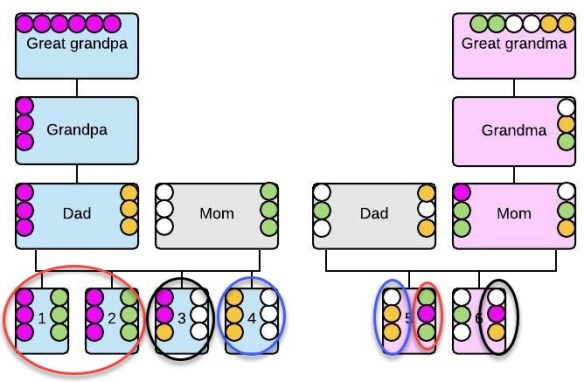
On the left-hand (blue) side of this graphic, we see four siblings that descend through their father from Great-grandpa who contributed that large magenta segment of DNA. That segment becomes reduced in descendants in subsequent generations.

In downstream generations, we can see gold, white and green segments being added to the DNA inherited by the four children from their ancestor’s spouses. Dad’s DNA is shown on the left side of each child, and Mom’s on the right.

  • Blue Children 1 and 2 inherited the same segments of DNA from Mom and Dad. Magenta from Dad and green from Mom.
  • Blue Child 3 inherited two magenta segments from Dad in positions 1 and 2 and one gold segment from Dad in position 3. They inherited all white segments from Mom.
  • Blue Child 4 inherited all gold segments from Dad and all white segments from Mom.

The family on the blue left-hand side is NOT related to the pink family shown at right. That’s important to remember.

I’ve intentionally constructed this graphic so that you can see several identical by chance (IBC) matches.

Child 5, the first pink sibling carries a white segment in position 1 from Dad and gold segments in positions 2 and 3 from Dad. From Mom, they inherited a green segment in position 1, magenta in position 2 and green in position 3.

IBC Match 1 – Looking at the blue siblings, we see that based on the DNA inherited from Pink Child 5’s parents, Pink Child 5 matches Blue Child 4 with white, gold and gold in positions 1-3, even though they weren’t inherited from the same parent in Blue Child 4. I circled this match in blue.

IBC Match 2 – Pink Child 5 also matches Blue Children 1 and 2 (red circles) because Pink Child 5 has green, magenta, and green in positions 1-3 and so do Blue Children 1 and 2. However, Blue Children 1 and 2 inherited the green and magenta segments from Mom and Dad respectively, not just from one parent.

Pink Child 5 matches Blue Children 1, 2 and 4, but not because they match by descent, but because their DNA zigzags back and forth between the blue children’s DNA contributed by both parents.

Therefore, while Pink Child 5 matches three of the Blue Children, they do not match either parent of the Blue Children.

IBC Match 3 – Pink Child 6 matches Blue Child 3 with white, magenta and gold in positions 1-3 based on the same colors of dots in those same positions found in Blue Child 3 – but inherited both paternally and maternally.

You can see that if we had the four parents available to test, that none of the Pink Children would match either the Blue Children’s mother or father and none of the Blue Children would match either of the Pink Children’s mother or father.

This is why we can’t use either siblings or close family relatives for triangulation.

Distant Cousins Are Best for Triangulation & Here’s Why

When triangulating with 3 people, the most recent common ancestor (MRCA) intersection of the closest two people is the place at which triangulation turns into only two lines being compared and ceases being triangulation. Triangle means 3.

If siblings are 2 of the 3 matching people, then their parents are essentially being compared to the third person.

If you, your aunt/uncle, and a third person match, your grandparents are the place in your tree where three lines converge into two.

The same holds true if you’re matching against a sibling pair on your match’s side, or a match and their aunt/uncle, etc.

The further back in your tree you can push that MRCA intersection, the more your triangulated match provides confirming evidence of a common ancestor and that the match is valid and not caused by random recombination.

That’s exactly what the descendants of Charles Dodson have been able to do through triangulation with multiple descendants from several of his children.

It’s also worth mentioning at this point that the reason autosomal DNA testing uses hundreds/thousands of base pairs in a comparison window and not 3 or 6 dots like in my example is that the probability of longer segments of DNA simply randomly matching by chance is reduced with length and SNP density which is the number of SNP locations tested within that cM range.

Hence a 7 cM/500 SNP minimum is the combined rule of thumb. At that level, roughly half of your matches will be valid and half will be identical by chance unless you’re dealing with endogamy. Then, raise your threshold accordingly.

Ok, So Where are We? A Triangulation Checklist for You!

I know this has been a relatively long educational article, but it’s important to really understand that testing close relatives is VERY important, but also why we can’t effectively use them for triangulation.

Here’s a handy-dandy summary matching/triangulation checklist for you to use as you work through your matches.

  • You inherit half of each of your parents’ DNA. There is no other place for you to obtain or inherit your DNA. There is no DNA fairy sprinkling you with DNA from another source:)
  • DNA does NOT skip generations, although in occasional rare circumstances, it may appear that this happened. In this situation, it’s incumbent upon you, the genealogist, to PROVE that an exception has occurred if you really believe it has. Those circumstances might be pedigree collapse or perhaps imputation. You’ll need to compare matches at vendors who provide a chromosome browser, triangulation, and full shared match list information. Never assume that you are the exception without hard and fast proof. We all know about assume, right?
  • Your siblings inherit half of your parents’ DNA too, but not the same exact half of your parent’s DNA that you other siblings did (unless they are identical twins.) You may inherit the exact same DNA from either or both of your parents on certain segments.
  • Your matches may match your parents on different or an additional segment that you did not inherit.
  • Every segment has an individual history. Evaluate every matching segment separately. One matching segment with someone could be maternal, one paternal, and one identical by chance.
  • You can confirm matches as valid if your match matches one of your parents, and you match one of your match’s parents. Parental Phasing is when your match matches your parent. Parental Cross-Matching is when you both match one of each other’s parents. To be complete, both people who match each other need to match one of the parents of the other person. This rule still holds even if you have a known common ancestor. I can’t even begin to tell you how many times I’ve been fooled.
  • 15-20% (or more with endogamy) of your matches will be identical by chance because either your DNA or your match’s DNA aligns in such a way that while they match you, they don’t match either of your parents.
  • Your siblings, aunts, and uncles will often inherit the same DNA as you – which means that identical by chance matches will also match them. That’s why we don’t use close family members for triangulation. We do utilize close family members to generate common match hints. (Remember the 20 cM shared match caveat at Ancestry)
  • While your siblings, aunts, and uncles are too close to use for triangulation, they are wonderful to identify ancestral matches. Some of their matches will match you as well, and some will not because your close family members inherited segments of your ancestor’s DNA that you did not. Everyone should test their oldest family members.
  • Triangulate your close family member’s matches separately from your own to shed more light on your ancestors.
  • Endogamy may interfere with parental phasing, meaning you may match because you and/or your match may have inherited some of the same DNA segment(s) from both sides of your tree and/or more DNA than might otherwise be expected.
  • Pedigree collapse needs to be considered when using parental phasing, especially when the same ancestor appears on both sides of your family tree. You may share more DNA with a match than expected.
  • Conversely, with pedigree collapse, your match may not match your parents, or vice versa, if a segment happens to have recombined in you in a way that drops the matching segments of your parents beneath the vendor’s match threshold.
  • While you will match all of your second cousins, you will only match approximately 90% of your third cousins and proportionally fewer as your relationship reaches further back in time.
  • Not being a DNA match with someone does NOT mean you’re NOT related to them, unless of course, you’re a second cousin (2C) or closer. It simply means you don’t carry any common ancestral segments above vendor thresholds.
  • At 2C or closer, if you’re not a DNA match, other alternative situations need to be considered – including the transfer/upload of the wrong person’s DNA file.
  • Imputation, a scientific process required of vendors may interfere with matching, especially in more distant relatives who have tested on different platforms.
  • Imputation artifacts will be less obvious when people are more closely related, meaning closer relatives can be expected to match on more and larger segments and imputation errors make less difference.
  • Imputation will not cause close relatives, meaning 2C or closer, to not match each other.
  • In addition to not supporting segment matching information, Ancestry down-weights some segments, removes some matching DNA, and does not show shared matches below 20cM, causing some people to misinterpret their lack of common matches in various ways.
  • To resolve questions about matching issues at Ancestry, testers can transfer/upload their DNA files to MyHeritage, FamilyTreeDNA, and GEDmatch and look for consistent matches on the same segment. Start and end locations may vary to some extent between vendors, but the segment size should be basically in the same location and roughly the same size.
  • GEDmatch does not use imputation but allows larger non-matching segments to combine as a single segment which sometimes causes extremely “generous” matches. GEDmatch matching is less reliable than FamilyTreeDNA or MyHeritage, but you can adjust the matching thresholds.
  • The best situation for matching is for both people to test at the same vendor who supports and provides segment data and a chromosome browser such as 23andMe, FamilyTreeDNA, or MyHeritage.
  • Siblings cannot be used for triangulation because the most recent common ancestor (MRCA) between you and your siblings is your parents. Therefore, the “three” people in the triangulation group is reduced to two lines immediately.
  • Uncles and aunts should not be used for triangulation because the most recent common ancestors between you and your aunts and uncles are your grandparents.
  • Conversely, you should not consider triangulating with siblings and close family members of your matches as proof of an ancestral relationship.
  • A triangulation group of 3 people is only confirmation as far back as when two of those people’s lines converge and reach a common ancestor.
  • Identical by chance (IBC) matching occurs when DNA from the maternal and paternal sides are mixed positionally in the child to resemble a maternal/paternal side match with someone else.
  • Identical by chance DNA admixture (when compared to a match) could have occurred in your parents or grandparent’s generation, or earlier, so the further back in time that people in a triangulation group reach, the more reliable the triangulation group is likely to be.
  • The larger the segments and/or the triangulation group, the stronger the evidence for a specific confirmed common ancestor.
  • Early families with a very large number of descendants may have many matching and triangulated members, even 9 or 10 generations later.
  • While exactly 50% of each ancestor’s DNA is not passed in each generation, on average, you will carry 7 cM of your ancestors 10 generations back in your tree. However, you may carry more, or none.
  • The percentage of matching descendants decreases with each generation beyond great-grandparents.
  • The ideal situation for triangulation is a significant number of people, greater than three, who match on the same reasonably sized segment (7 cM/500 SNP or larger) and descend from the same ancestor (or ancestral couple) through different children whose spouses in descendant generations are not also related.
  • This means that tree completion is an important factor in match/triangulation reliability.
  • Triangulating through different children of the ancestral couple makes it significantly less likely that a different unknown common ancestor is contributing that segment of DNA – like an unknown wife in a descendant generation.

Whew!!!

The Bottom Line

Here’s the bottom line.

  1. Don’t use close relatives to triangulate.
  2. Use parents for Parental Phasing.
  3. Use Parental Cross-Matching when possible.
  4. Use close relatives to look for shared common matches that may lead to triangulation possibilities.
  5. Triangulate your close relatives’ DNA in addition to your own for bonus genealogical information. They will match people that you don’t.
  6. For the most reliable triangulation results, use the most distant relatives possible, descended through different children of the common ancestral couple.
  7. Keep this checklist of best practices, cautions, and caveats handy and check the list as necessary when evaluating the strength of any match or triangulation group. It serves as a good reminder for what to check if something seems “off” or unusual.

Feel free to share and pass this article (and checklist) on to your genealogy buddies and matches as you explain triangulation and collaborate on your genealogy.

Have fun!!!

_____________________________________________________________

Disclosure

I receive a small contribution when you click on some of the links to vendors in my articles. This does NOT increase the price you pay but helps me to keep the lights on and this informational blog free for everyone. Please click on the links in the articles or to the vendors below if you are purchasing products or DNA testing.

Thank you so much.

DNA Purchases and Free Transfers

Genealogy Products and Services

Books

Genealogy Research

Curt Lore: Knock, Knock, Knocking at the Door – 52 Ancestors #328

1908 ended in Rushville, Indiana with Edith Lore marrying John Ferverda in November, “quietly,” the same day as they obtained their license, in the home of the Presbyterian minister.

For socialites, Nora Kirsch Lore and Curt Lore, this turn of events for their daughter was quite out of character. Why on earth did Edith and John marry in this manner? And no, in case you’re wondering, there wasn’t a baby on the way.

Perhaps it was because Curt was out of commission for several weeks in 1908 when he had typhoid and nearly died.

Perhaps an unfortunate suicide within the family had made the couple decide that sooner was better than later.

Or, maybe there was more to the story.

What was happening in Rushville in the Lore family?

Rushville in 1909

Postcard courtesy Indiana Historical Society.

Never doubt for one minute that Rushville was a fast-living high-stakes horse-racing town.

This birds-eye view from 1909 clearly shows the racetrack beside the creek, in the flood-prone area. Rushville was built around racing.

Courtesy Indiana Historical Society

That horse racing track was quite large in comparison to the village itself, perhaps reflective of its outsized influence on the citizens. Much of Rushville’s early development was thanks to “horse money.”

Curt and Nora lived in town, raising their four daughters, but Curt’s racehorses were boarded someplace nearby. This postcard, courtesy of the Indiana Historical Society, shows a typical horse farm. Indeed, for all we know, one, or some of these could have been Curt’s.

Even today, the area that was originally the horse-racing track is still quite large when compared to the rest of the city and dominates the landscape.

The courthouse is marked with a red star, then the First Presbyterian Church where Nora and the girls attended services, and finally, on West Second Street, the location where the Lore family lived.

Panning out a bit, further to the left, we see the East Hill Cemetery. Curt Lore built a mausoleum there for the Reed family in 1907. It was the last stop for Rushville citizens.

Curt himself had cheated the grim reaper in 1907. In January, he came down with typhoid. For weeks on end, the newspaper reported that he was very ill and not expected to survive. Imagine reading that if you were his wife or daughters.

John Ferverda was a pallbearer in January for a typhoid victim, probably a friend of his future wife, Edith.

The river had flooded, contaminating wells with sewage. Nora sent the girls to their grandmother’s in Aurora, preparing for the worst.

One daughter, Curtis, remained at home to help care for her father.

Did the other daughters, especially the two youngest children, realize they were being sent away to spare them the agony of witnessing their father’s death?

On March 18th, Curt was still reported to be the same, but then, on the 21st, the newspaper reported him to be out riding. Not on a horse, I’m sure, but in a buggy. Then again, a week later.

Glory be! Curt had triumphed in his battle against the Grim Reaper.

On June 10th, Curt seemed to be functioning again. He applied for a position as the superintendent of light and water that he did not get. He still, however, retained the city’s street sprinkler contract, but on the 11th his horse died.

Curt still retained his spunk, mixing it up with the local Marshall and got himself arrested in June. This is the only record of Curt actually getting into legal trouble, although I suspect he stepped quite close to that line regularly.

Life continued for his daughters and Nora like normal. Social outings, card games, meetings at the social club, church – all reported in the local newspaper. Thankfully, for me.

In October 1907, Curt bid on and was awarded bridge repair contracts. That apparently worked well, because he was awarded additional contracts in May of 1908. In June, he purchased a “large cement mixer,” so he was apparently planning on doing more construction and bridge repair.

At that point, we were beginning to see less of Curt in the newspaper, but in September he was visiting Knightstown on business and in October 1908, was involved with a political parade.

We also find fewer mentions of Nora in the social columns. Of course, one might surmise that because her grandparents were ill and passed away and because her sister’s husband met with an untimely and tragic death on Halloween that perhaps Nora was otherwise occupied.

Everything seemed pretty much normal, if somewhat quiet…right up until the extremely subdued November wedding of Edith and John.

Normally, the Rushville newspaper social column tells us who is visiting whom on the train, especially during the holidays. Not one peep about any of the Lore family. Nada. Nothing.

What was going on?

1909

  • January 27, 1909 – John Ferveda got several encores with his singing act.
  • February 1 and February 10, 1909 – C. B. Lore is in very poor health at his home on West Second Street.

Uh oh, now we know. Curt’s sick again.

  • April 15, 1909 – Nora Lore to Curtis B. Lore, part lot 5 in the original plat of Rushville, $1, etc.

Based on a later entry where Nora sells this lot, I suspect that this transaction is reversed and Curt deeded the lot to Nora. Curt is transferring assets to Nora.

  • May 14, 1909 – Newspaper states that John Ferveda (sic) is the operator at the Big 4 Station in Rushville and had at one time an assistant in the office in Carthage. Carthage is about 15 miles northwest of Rushville.
  • June 1, 1909 – Misses Curtis and Mildred Lore went to Aurora yesterday to be the guests of their grandmother for several weeks.
  • June 17, 1909 – Children’s Day will be observed at the Presbyterian church next Sunday. The Sunday School will render interesting exercises in the evening: “That Little Word of Don’t” – Eloise Lore
  • June 21, 1909 – Misses Curtis and Mildred Lore returned Saturday from Aurora where they have been the guests of their grandparents. Their sister, Eloise, who has been visiting there several months accompanied them home.

The girls are growing up. Curtis is 18, Mildred is 10 and Eloise is just under 6. Caring for a family in addition to Curt’s apparent illness must have been extremely difficult for Nora. Edith was married, but she and John helped Nora.

  • June 23, 1909 – Carrie Wieman of Aurora is the guest of Mr. and Mrs. Curt Lore and family on Second Street.

Carrie Kirsch Wymond was Nora’s sister. The daughters of the Kirsch family had been on the receiving end of grief for months. Margaret’s husband, Todd Fiske killed himself on Halloween the fall before.

Carrie’s husband was increasingly ill with syphilis which was probably quite the closely guarded family secret. Sadly, he had given it to her too.

  • June 26, 1909 – Curt Lore who is also in the business, is oiling in Main Street between First and Second. He heats the oil before applying it and says that it will last longer. The summer will probably come and go and all the streets in the downtown district will never be oiled, if the weatherman continues to oppose the movement. The rain is not injurious to the oil, but stops the work and it cannot be put on while the streets are wet. An almost continuous rain fell for 48 hours shortly after the improvement was tried in front of the Daily Republican office and did no harm.
  • June 29, 1909 – Tim Hiner and Curt Lore were busily engaged today oiling Main Street between 2nd and 3rd.

Curt is back at work! He recovered AGAIN. This is amazing!

  • July 13, 1909 – Rushville Daily Republican – Edgar Lore of Shelbyville is the guest of his uncle, C. B. Lore and family on West Second Street.

This is a fascinating record because it gives a name to one of Curt’s nephews. I wonder if this is Lon’s son. Census and Ancestry research don’t show this Edgar in Shelbyville or nearby. There is an Edgar in Butler Co., PA who may be related. The mystery remains about Curt Lore’s brothers and their families, but this is one more puzzle piece. Maybe someday a DNA match will help answer the questions about Curt’s family.

  • July 14, 1909 – Mrs. J. S. Wymond is the guest of C. B. Lore and family on West Second for several days.

I suspect that Carrie was no longer living with her husband, all things considered.

  • July 18, 1909 – Edger Kirsch returned to Shelbyville today after spending a few days with C. B. Lore and family.
  • July 28, 1909 – Mr. and Mrs. Russell Payne, Mr. and Mrs. John Ferveda, Miss Curtis Lore and George Kelly have established a camp a short distance north of this city.

I wonder what camping in 1909 was like? I never even considered that my grandmother even MIGHT HAVE camped.

FamilySearch offered this photo of camping and cooking, and I found a book written in 1909 about the same subject.

  • Martin Kirsch and son Edgar of Shelbyville spent Sunday with Mr. and Mrs. C.B. Lore and family in West Second Street. They made the trip on motorcycles.
  • August 17, 1909 – C. R. Morgan of Alexandria is relieving J. W. Ferveda, Big Four operator. Mr. and Mrs. Ferveda while on their vacation will visit relatives in Aurora and Leesburg.

Edith and John spent their vacation visiting both sets of parents.

  • August 27, 1909 – Of course the I. & C. officials did not know that George Kelly and Miss Curtis Lore had spent the afternoon together on the fairground. But the car was crowded and the officials thought that the very last one had got on that could ride. Miss Lore was the last. George stood and watched the car pull out and wished there had been room for one more. And now their friends are having a lot of fun out of it.

We know that Curtis Lore had a boyfriend from my grandmother’s stories, but we’ve never known who he was. The boyfriend’s family apparently moved “west” as in to someplace like Arizona. Curtis wanted to go along, at that time, to improve her health. Nora said no, and always blamed herself for what happened to Carrie after he and his family left. Nora regretted that decision for the rest of her life.

Was that boyfriend George Kelly? I suspect so. I do not find any George Kelly in Rush County in the 1910 census, so he could have been “the one.”

  • September 1909 – Joseph Wymond, Carrie Kirsch Wymond’s husband is committed to the Wabash Valley Sanitorium near Lafayette, Indiana where he would eventually die of his “affliction.”.
  • October 20, 1909 – Mr. and Mrs. Will Coverston of Goshen arrived last night to be the guests of Mr. and Mrs. Curt Lore in West Second Street.
  • October 21, 1909 – Mr. and Mrs. Ed. L. Beer entertained at 6 o’clock dinner last evening Mr. and Mrs. Will Coverston of Goshen and Mrs. Curt Lore.
  • October 22, 1909 – Mrs. Will Coverston has been the guest of Mrs. Curt Lore on West second street and went to Anderson before returning home to Goshen.

It seems that the Coverstons continued to be close friends of Curt and Nora. They had likely came to say goodbye to Curt and help Nora.

White Plague

You see, Curt had tuberculosis.

I’m amazed given the contagious nature of this disease which was untreatable before antibiotics that so many people came and went.

  • November 17, 1909 – C. B. Lore who has been ill for several months is very low at his home on West Second Street.
  • November 26, 1909

Curt died. He had cheated the Grim Reaper so many times before. In 1907 and 1908 and even earlier in 1909. But not this time.

The Grim Reaper came calling, knocking on the door, intending to collect. Sadly, there was no escaping, not even for seemingly invincible Curt Lore.

Curt was only 48 years old, or so this and his obituary both say.

Ironically, even with this death certificate, there is still uncertainty about when he was born, based on the 1860 census in Pennsylvania which tells us he was born in 1856.

It’s pretty hard to be in the 1860 census if you weren’t born until a year later.

Perhaps Curt had not been entirely forthcoming with Nora. Maybe once he had subtracted 5 years off of his age, it was just easier to remain “younger” than face the music of an angry wife.

Yep, born in 1861 it was. No one would ever know – at least not until genealogists started digging. Pesky great-granddaughter, anyway:)

Family

It’s worth noting that the obituary mentions several things and omits others. Curt’s father is noted, for example, but not his mother who outlived his father. It mentions that Curt had four brothers. That’s true, but he had at least one more and possibly two that lived to adulthood.

He also had one sister who positively outlived him.

This family is incredibly difficult to unravel due to the combination of a lack of records and becoming so fractured and scattered after both parents’ deaths.

Curt was making his way in life on his own from about the age of 12 or so.

But perhaps most interesting is that there is no mention of children other than his daughters with Nora.

Three Years

My grandfather and my great-aunt used to talk about Curt’s illness. His death certificate tells us that he had tuberculosis for about 3 years. This article mentions that he has been quite ill for the past year, which equates almost exactly to the time when Edith and John married. Perhaps now we’ve solved the mystery of why they married “quietly.” Curt was becoming increasingly ill. Perhaps the young couple realized he wasn’t going to get better, so there was no pointing waiting to marry. He wasn’t going to be able to walk Edith down the aisle, nor pay for a wedding – ever.

Three years tracks back to about November of 1906, give or take. That was the fall that Edith was in business college, assuming she actually did attend in Indianapolis.

In early January of 1907, the newspaper reports that “Curt Lore who has been employed with the Indianapolis, Columbus and Southern Interurban line at Scottsburg has returned to this city.” Sounds like he was no longer working at that job. Maybe now we know why.

This also tracks back to almost exactly the time that Curt contracted typhoid, in January of 1907.

Curt managed to beat typhoid, but unbeknownst to us, it appears that he beat BOTH typhoid AND tuberculosis at the same time. I can’t even begin to imagine the fortitude required to beat not one, but both diseases.

He worked through the next two years – sprinkling the streets, repairing bridges, and otherwise earning a living. I’m sure Curt simply tried to work through his misery until he was simply too sick to get out of bed.

Having recovered from simultaneous diseases earlier, I have immense respect for this man’s stamina. Sadly, he simply wasn’t able to do it again. His body was ravaged.

According to family members, when Nora realized how ill Curt really was, and the eventual prognosis – she quietly approached the city fathers and ask them not to award Curt more contracts. She was concerned about the legal ramifications if he were to die with a half-fulfilled contract. It’s not like she could repair bridges herself.

Nora once told my Mom that she thought Curt contracted TB when he went to Kentucky on horse business.

Curt lived fast and died relatively young.

Following Curth’s death, Nora’s life would become immensely more difficult. Their daughters at home were Curtis, 18, Mildred 10, and Eloise 6.

Curtis, named for her father, adored Curt and helped Nora care for him.

Daughter Edith, Curtis’s sister, and best friend was married of course, but lived locally and could help her parents.

The two youngest girls were sent to their grandparents in Aurora during Curt’s illness. Probably both to protect them and because Nora simply could not do any more. Caregiving is incredibly difficult and all-consuming, especially when taking into consideration that Curt was carrying a lethal disease and quite contagious.

Now we know why any mention of the couple ceased in the newspaper. Their social life ceased too – not just because of the illness itself and care requirements. Everyone in Rushville would have known to keep a safe distance.

Their Address

The 1900 census does not give a street address for Nora and Curt, so it was only through his death certificate that I was able to discover where they actually lived.

The map shows the location, given that “West” begins at Main Street. I can’t read the last digit of the street address, but it’s clearly 421, 427, or 429. Based on the other numbers on the same certificate, I believe it’s 421.

The property has to be the one outlined in red above. The houses to the right are 417-419 and the house to the left is 431, so too far west.

This earlier 1879 map shows the same property along with the depot and nearby warehouses. This makes sense, especially considering their good friends were station-masters and Edith, their daughter, married John Ferverda, the railroad station agent.

Regardless of which address was theirs, the house stood on this piece of land, and it looks like they had an extra-large backyard, extending onto what is now the lot 424 First Street, behind 423 Second Street.

It’s here that Curt and Nora lived for at least a decade, probably closer to two decades, and most of their married life.

While those properties hold contemporary buildings today, the neighbor house, at left, looks like it was probably standing when Nora and Curt lived next door.

  • November 27, 1909 – C. B. Lore who died Thursday evening held a $1000 policy in the State Life of Springfield, Mass. The funeral of Curtis B. Lore who died of tuberculosis on Thursday evening will be held at the home in West Second street Sunday afternoon at 2:30, conducted by the Rev. J. F. Cowling. Burial will be in East Hill Cemetery.

Curt would be buried in East Hill, like the rest of the Rushville folks, near the mausoleum that he had built just two years earlier.

I am very glad that Nora had this life insurance policy, but it would not last long. Ever darker times were ahead. However, first, she had to bury Curt and probably pay some large number of overdue bills.

There’s no record of Curt working beyond summer, and he likely could only work less and less as he became increasingly ill.

It’s interesting that Curt’s funeral was not in the Presbyterian Church, although his obituary said that he was a member. Perhaps he was a member in name only to placate Nora.

Curt’s father’s family had a traumatic emotional journey due to differences between Catholicism and the Protestant faith, literally severing the family, cleaving them clean in half like a religious saber. Curt’s father left the family and left Canada after his mother died. I doubt he ever looked back.

Curt’s avoidance of all churches may have been a result of those family experiences and a deeply ingrained suspicion of everything church-related held by the Lore family for generations.

Driving Up and Down Second Street

Wanting to see as much of Rushville as I could, I “drove” up and down Second street on Google, looking at homes. Second Street isn’t very long, extending left to right (west to east) on the north side of the courthouse, below.

Their home is the red star at left, and the courthouse at far right.

Would Curt and his family even recognize Rushville today? I think so. There’s a lot new, but the courthouse was build in 1896 and hasn’t changed much. Curt was certainly in this building a lot.

Driving down Second Street towards their house, then turning around and looking back at the courthouse gives is a peek, if you ignore the vehicles, at what the town might have looked like back in the day.

Many of these buildings in the downtown area likely stood when Curt watered these streets before they were paved. The courthouse is at right two blocks in the distance.

Turning around and looking westward on second, we pass by the Knights of Pythias Hall where Curt attended meetings.

The first actual homes today begin in the 200 block of West Second.

Most homes are gone and have been replaced by more contemporary buildings, but a few remain.

Looking west from Second and Harrison into the area that today remains residential with vintage homes. Curt and Nora lived about 2 blocks further west.

I love this house. This wasn’t where they lived, but they certainly would have passed by. Their home had to be spacious because they had 2 servants living with them in 1900, plus 4 children, and Curt was a successful businessman.

That old 1879 Rushville map shows that the area where the 400 block of West Second is today was at that time a warehouse and the train tracks were laid right down the side of what is today Second Street. The depot is shown too, near the stockyards. I’m sure that there was some sort of industrial or animal noise at all times. If I close my eyes, I can hear it.

In 1900, Nora and Curt’s neighbor was the railroad agent, so this location makes sense. Edith married John Ferverda, the station agent, so I should be extremely grateful that they lived where they did.

A lot changed in Rushville between 1879 and 1900 as well. At some point, those tracks down the street were removed and the warehouse replaced with homes.

It’s also possible that the houses have been renumbered sometime between 1909 and today. I’ve seen that happen more than once, and it plays havoc with dealing with early original records and trying to find current locations.

Google Maps shows that the entire 420 section of West Second appears to be gone now, replaced with a contemporary home and garage. The brick house on the left is probably where their house stood.

The house on either side looks to be original.

Standing in the street where they lived, looking downtown at the courthouse, I realize just how small this town was. Curt probably walked many places, or took the buggy, of course. Curt’s daughters are shown in the buggy with one of their horses, below

Two of the Lore daughters with horse and buggy near Rushville.

Standing in this very place on Second Street back in their day, horses would have been clip-clopping, carriages creaking perhaps, and the train whistle in the distance. You would have been able to hear people talking, especially in the hot summertime with windows open. Maybe smell dinner cooking too.

Now, Nora and the girls would have to navigate without Curt.

Burial

  • December 14, 1909 – East Hill Cemetery Company to Mrs. Nora Lore, lot in cemetery, $35

This lot was Curt’s burial plot and where Nora would eventually be brought home to rest by his side as well.

My very sad mother beside Nora’s grave, not yet covered with grass, at left, beside C. B. Lore’s stone

Mom is standing by Curt’s stone in the cemetery, probably not long after Nora was buried in 1939.

Moving

Before the spring of 1910, according to the newspaper, Nora and her three girls would move from where she lived with Curt on West Second Street to 324 West First Street.

The house was smaller, cute as a button, and certainly less expensive to rent.

Plus, Nora may have needed a change of scenery. While moving was difficult, the fact that they didn’t own the West Second Street property probably made the move easier.

At least Edith still lived in Rushville, and John would have helped his mother-in-law.

In fact, it was here, in this house, that Nora received a visitor.

The Visitor

John Ferverda was sitting in the kitchen, drinking coffee and visiting with Nora, when someone knocked on the door, asking for Curt.

Nora told the young man standing there, hat in hand, that Curt had, unfortunately, passed away.

Curt was well-liked with a charismatic personality and had hundreds of acquaintances, given his broad spectrum of business dealings. Nora assumed, of course, that this caller was another business associate dropping by to say hello or see what kind of horse-trading might be in order.

This young man was different. He shuffled, hesitated a bit, and a wave of disappointment visibly washed across his face. He was crestfallen.

This man, you see, had come to find his father.

I’d wager that was one incredibly awkward moment. A tongue-tied young man standing on this porch at the door, probably wishing he was absolutely anyplace else – face to face with the grieving wife – neither one of them knowing exactly what to do or say.

Nora invited him in, and they sat at the kitchen table and talked, but she took that conversation to her grave.

It wasn’t Nora who revealed this incident – nor was it ever spoken of while she lived.

It was John who told Edith and her sister, Eloise. One of them told my mother years later.

Mom and Eloise were under the impression that this son was previously unknown to Nora and might have been from Kentucky. Somehow the dots were connected and it was presumed this son has been fathered when Curt was involved with racehorses in Kentucky sometime after Nora and Curt were married.

So Nora discovered that Curt caught more than tuberculosis in Kentucky. Or, at least, that’s what everyone thought. Apparently, judging from this information, Curt had visited Kentucky regularly for decades.

Well, Did He or Didn’t He?

Before I discovered Curt’s marriage in Pennsylvania, Mom was certainly unaware Curt had been previously married, let alone still married when he married Nora in 1888. Imagine her shock!

Was this man knocking on the door Curt’s son from his first marriage, Herbert Judson Lore, who would have been age 30? Kurt Lore and Mary Billings are given as Herbert’s parents on his death certificate in 1968.

Herbert looks incredibly like Curt. I can see my mother in his face too. No DNA test needed here.

Neither my grandmother, Edith, nor her sisters, Eloise or Mildred had ANY IDEA they had a living half-brother who only lived about 140 miles from Eloise.

Was the man at the door Curt’s son that I’ve never been able to locate, John Curtis Lore, born January 20, 1881?

Was he Curt’s son Seldon B. Lore, known as “Sid,” born in June of 1886 and found in 1904, as a laborer in Oil City, PA?

Or, was this yet another young man?

If the young man had been born after Curt and Nora were married, he would have been 22 or younger that day he stood nervously on Nora’s porch, looking for answers.

Digging Deeper

One John Curtis Lore who lived in Kentucky registered for the 1918 draft giving Mary Galliland as his next of kin. Mary Bills, Curt’s first wife married Allen Galliland after their divorce in 1888. In 1900, Herbert J., John C., and Seldon B Lore were living in Warren County, PA with Mary and Allen and their half-sister, Alta Gilliland. In 1910, Mary and Allen were living in Cowlitz, Washington with Alta, but the boys were on their own. In 1918, Mary was living in Crewe, Virginia.

John Curtis Lore certainly seems to be Curt’s son, but this record is from 9 years after Curt died. Who knows where John was living in 1909 or 1910 when that young man appeared on Nora’s porch.

What happened to John Lore?

The May 1, 1924, Franklin County, Pennsylvania newspaper tells the story.

Tragedy seems to follow the Lore family like an ominous ever-present dark shadow. An 11-day old baby? His poor wife.

Is this the same John Lore? The name is slightly different.

There’s a lot of incorrect information in this article, but I found this man’s death certificate based only on his death month and year. His nickname was apparently Jack or was misrecorded on the delayed death certificate.

John died of tuberculosis too. How heartbreaking. Even more tragic, his young wife, Annie Jewell Cox Lore died in May 1927 of tuberculosis as well. The children were raised by their Cox grandfather.

Hmm, given the circumstances, I’m doubting if John Curtis Lore or his wife have a tombstone, but let’s take a look.

I didn’t find them, but I did find that child buried in that same cemetery 42 years later.

That baby, born just days before his father’s demise was James Harold Lore, according to FindAGrave.

John’s son also died at age 42 in a motorcycle accident, striking a truck.

Tragedy seems to have run generations deep.

Forgiveness

Nora forgave a lot while married to Curt, like the fact that he was still married to another woman when they were married in 1888, assuming she discovered that fact.

Nora certainly stuck by him through thick and thin. Multiple business ventures, that embarrassing horseracing scandal, a lawsuit or a few, then multiple illnesses.

Regardless of all that, I do believe Curt was Nora’s true love with his infectious impish smile, curled locks, and piercing blue eyes that melted her soul.

My grandmother, Edith, spoke of Nora’s intense grief surrounding Curt’s death. Nora wanted to be buried beside him and with the Lore surname on her stone, even though she eventually remarried.

She would join Curt in the East Hill Cemetery almost exactly 30 years later.

It would prove to be a very long 30 years.

So, what happened to Nora?

_____________________________________________________________

Disclosure

I receive a small contribution when you click on some of the links to vendors in my articles. This does NOT increase the price you pay but helps me to keep the lights on and this informational blog free for everyone. Please click on the links in the articles or to the vendors below if you are purchasing products or DNA testing.

Thank you so much.

DNA Purchases and Free Transfers

Genealogy Products and Services

Books

Genealogy Research

Descendants of WWII 92nd Infantry Buffalo Soldiers Sought to Identify Remains

Soldiers of the 92nd Infantry Division marching in Italy after freeing the region from German troops on April 8, 1945. Public Domain, https://commons.wikimedia.org/w/index.php?curid=2181029

Recently, Fold3 published an article about the 92nd Infantry Division known as the Buffalo Soldiers – a black infantry division that fought in Italy during WWII and suffered severe casualties.

Fifty soldiers of the 700 lost have never been identified and remain unaccounted for.

The Defense POW/MIA Accounting Agency (DPAA) is seeking family members of these deceased soldiers to submit DNA for comparison. Details are provided, here.

This is NOT Commercial Testing

Note that testing with any commercial company (such as Ancestry, FamilyTreeDNA, 23andMe, MyHeritage, etc.) does nothing to identify these remains. If you have already tested there, it doesn’t count for this purpose.

The DNA of the soldiers’ remains is processed in the government forensic lab and is NOT entered in any public database. Family members must contact the Defense POW/MIA Agency and submit DNA specifically for identification of remains. DNA submitted for the identification of remains will not be used for any other purpose.

While this specific ask is for the Buffalo Soldiers of the 92nd Infantry Division, DNA of family members of all soldiers whose remains have not been recovered and repatriated should be submitted.

Historically, mitochondrial DNA is the easiest to recover from degraded remains, but sometimes they can recover enough autosomal DNA. If you’re a family member, offer regardless. Amazing results are being garnered with forensic samples that wasn’t possible even just months ago.

Trust me, I’m inquiring about submitting my DNA in the hope of identifying my first cousin, Robert Vernon Estes who died as a POW in North Korea.

If your family member’s remains have never been identified, please contact the authorities and volunteer to DNA test. Even if you don’t qualify for whatever reason, you may know or be able to locate someone who does.

Servicemen’s Families Sought

The entire list of unidentified 92nd Infantry soldiers who gave their life for their country can be found in this article.

The men listed below cannot be identified because there is no DNA sample available from a family member. When attempting to identify the parents and families of these men for this article, I found hints about why the families of these men may not have been located. It appears that some were not living with their birth families or had no siblings.

This makes it even more important for anyone who recognizes these men or these families to contact the Army Casualty office with information. Every soldier deserves to be identified.

  • Benjamin Davis Jr., 29, Webster, Florida, died February 9, 1945, so born about 1916. Jr. implies that his father’s name was the same, but I was not able to locate his family through census or other readily available genealogical search methods.
  • Melton Futch, 20, Perry, Florida, born January 28, 1923. Died Dec. 31, 1944. Parents Robert Futch born 1881 in Georgia and Laura Littingham born 1885 in Georgia, married in Taylor Florida on October 15, 1916.
  • James Thomas Mathis, 22, Fayetteville, Georgia, born there August 9, 1922, died December 27, 1945
  • Anderson Slaughter Jr., 23, Fulton, Georgia, born August 14, 1921, in Atlanta, Georgia. Died February 11, 1946. Essie Mae Slaughter is given as next of kin in 1942 draft registration. Her name is given as Elsie Slaughter on 1930 census as his mother, age 36 (born 1894), living with her mother Victoria Travelis or Travis or Trarelis (SP) age 59, (born about 1871). Eliga Travis died on October 10, 1920, with his wife listed as Victoria Travis. Jr. suggests Anderson’s name is the same as his father.
  • Wesley Melton, 20, Chicago, Illinois, born September 26, 1924. Died February 10, 1945. Edna Melton listed as next of kin on his draft registration in 1942. In the 1940 census, Edna, his mother, is listed as a widow, age 39, born about 1901 in Illinois. A woman by that name died July 12, 1972.
  • Staff Sgt. Henry W. Wilson, 24, Independence, Kansas. Draft registration says he was born December 11, 1919, in Kansas. Next of kin is Carrie Wilson. 1920 census shows Altee (spelled Henry in 1930 and 1940) Wilson (35) born in Oklahoma, father born in Tennessee, and mother in Oklahoma. Wife Caroline (34) born in Missouri, father born in Tennessee, and mother in Missouri. 1930 and 1940 census show two other children, a male, Leroy age 17, and a female, Louise age 13.
  • James Luther Strong, 34, Covington, Louisiana, born September 23, 1910, in LeCompte, Louisiana, died November 10, 1945. He was married when he enlisted in 1943. He listed his residence as St. Tammany, Louisiana but enlisted in Houston, TX. His draft registration card in 1940 gives his next of kin as Mrs. Kattie Bogany, his aunt. Who lived in Beaumont, Jefferson Co., TX.
  • Herbert Taylor, 23, Salisbury, Maryland, died February 12, 1946, so would have been born in 1923. 1930 census shows a person by his name, age 11, so born 1919, with Charles and Hattie Handy, listed as an adopted son. He was born in Virginia but both parents born in Maryland. There is a draft registration for Herbert Taylor, born May 8, 1915, in Newport News, VA who lists Nanie Duncan as his mother. He works for the Seaman Elridge Orchestra in Baltimore. Another registration for Herbert Lee Taylor who lists his wife as Adeline Taylor. None of these align well.
  • James Edward Warren, 19, Pelahatchie, Mississippi, born June 17, 1925, same location. Lists Lennie Macelroy, his mother, as next of kin who lives in the same place. Died February 6, 1945.
  • Maceo Aquinolda Walker, 20, New Rochelle, New York, born December 11, 1924, in Baltimore. Next of kin is Louis Walker of New Rochelle, same address. Died February 10, 1945. In the 1940 census he is listed with parents Louis Walker, 40 (born 1900) in Maryland and Patricia, 38, (born 1902) in Virginia. In 1930, Richard Shelton, brother-in-law is living with the family in NYC, age 22. No other children.
  • Cleo Penny, 23, New York. Died February 11, 1946. The 1930 census shows a Cleo Penny born in 1924 in NC. If this is the right family, there are 3 sisters and a brother.
  • William Thomas McFadden, 24, Olanta, South Carolina/Baltimore, MD. Died February 10, 1945. The 1930 census shows a person by this name in Motts, Florence Co., SC with parents Thomas L. McFadden (3) and wife Annie (28). If this is the correct person, there are 2 sisters and a brother. Also living in the residence is the sister-in-law, Elizabeth Nelson, age 13. His draft registration card in Baltimore, MD in 1942 shows that he was born in Olanta, SC on July 18, 1920, and that Catherine Dickey is his next of kin, with no relationship given.
  • Robert Williams, 26, Richmond, Virginia. Died February 8, 1945, so born about 1919. Several men by this name are found in the Richmond area.
  • 1st Lt. John M. Madison, 32, Washington D.C. Died April 5, 1945. The 1940 census shows him, age 27, a math teacher. The census says he is living with some family but his father is clearly not age 30. Something is amiss with the census. The house number suggests he is living alone.
  • Jose A. Lopez, 29, Washington D.C./Palmira, Cuba. Died February 8, 1945. Born 1915, not a citizen when enlisted in 1942.

For all we know, the bones of these men have already been tested in the Army forensic lab in Hawaii and are just waiting for a family member to match their DNA. If you are related to these men, please contact the Army Casualty Office at (800) 892-2490 to arrange to submit a DNA sample.

Please share this article.

Edith Lore Blossoms: Floods, Typhoid, The “Beauty Bunch,” a Scholarship…Plus a Plot Twist – 52 Ancestors #327

The newspapers of the early 1900s often reported on the social lives of their local residents. Thank goodness, for researchers today, that they did.

There’s so much to glean about these family members – sometimes by what IS said, and sometimes by what isn’t. I’ve learned so much about my grandmother, Edith Lore, and her parents, Nora Kirsch and Curtis Benjamin Lore, a self-made man and jack-of-all-trades.

A great deal has been revealed in these old black and white pages. I wrote about unexpected discoveries in Outside the Pale: The Lore Family’s “Remarkable” Life Revealed Through the Newspaper and Curt Lore “Shoots Wells” With Nitroglycerine and Dynamite.

We left the Lore family in 1906, when their eldest daughter, Edith Lore, was graduating from high school and turned 18. 1906 was a year of polar opposites with a few curve-balls thrown in. Let’s join the family and see what was going on.

Unidentified Connection

The social scene in Rushville was sometimes reported as far away as Indianapolis, Indiana, about 40 miles distant as the train runs.

  • April 1, 1906 (Indianapolis, Indiana newspaper) – Miss Bertha Helm entertained a number of friends Saturday evening in honor of Mrs. J. F. Wymond of Peoria, Illinois who is the guest of Mrs. C. B. Lore.

Of course, I have to wonder who Mrs. J. F. Wymond was, and how she is connected to Nora. Randall J. Wymond, it turns out, was the vice-president of the Peoria Cooperage Company and his business address was Aurora, Indiana, where Nora was born. He married Mabel Criswell in 1884. Nora’s sister, Carrie, married Joseph Smithfield Wymond, the brother of Randall. Perhaps the society column got the initials wrong or another one of Nora’s friends married a Wymond.

Sometimes these articles raise more questions than they answer and I run down every imaginable rabbit hole.

Commencement

Edith Lore, oldest child of Curt Lore and Nora Kirsch graduated from high school in the spring of 1906.The Indianapolis paper tells us that Gladstone Barrett is class President, Anna Meges Vice-president and Mertha Monjar Secretary-Treasurer. The class colors are royal purple and gold. A few weeks later, the Indianapolis paper carried this article about the commencement.

For most young ladies of that time, graduation would be the end of the line for education, but, surprisingly, not for Edith.

A few days later, Edith was already employed.

  • May 31, 1906 – J. B. Workman, the tax ferret, recently employed by the city of Rushville, has a force of young ladies at work in the Recorder’s office at the court house, copying mortgage records. Those who are at work are. <names omitted>, Edith Lore.

As a genealogist, I could go to Rushville and if the old mortgage book still exists, at least some of those records recopied into that book, I’m guessing, would be in my grandmother’s handwriting.

But Edith, born a hundred years too early, had larger ambitions.

Scholarship

The local newspaper carried a fascinating article:

  • June 15, 1906

Edith, my grandmother, won a 6-month scholarship to Business College in Indianapolis.

What?

Seriously?

I never heard A PEEP about this!

For any female to aspire to attend college in 1906 was amazing in and of itself – let alone with a scholarship.

Did she attend? I would presume that she did. I certainly hope so.

I can’t imagine Edith wasting this opportunity, especially not after specifically seeking the scholarship.

The Central Business College

The Central Business College became the Indiana Business College in the 1940s, located at 802 North Meridian. Established in 1902, it was represented as, “A modern business-training organization. This beautiful college home, located in the heart of cultural downtown Indianapolis – with its spacious commodious classrooms, its numerous and convenient transportation facilities and its various other accommodations presents an attractive appeal to young people who are ambitious to prepare for business careers.”

Amazingly, this building, now apartments, still stands. It’s really not the leaning either – Google maps.

When I saw the large building at right, above, down the street on Google Maps, I thought it looked familiar. Sure enough, it’s the library, and I’ve been there. Of course, I had absolutely NO idea that my grandmother went to college just a block away, and probably lived in that building or nearby while she was attending.

The Business College is the building in the lower left corner that resembles a church.

If walls could only talk.

Edith, who would turn 18 in August, was apparently used to traveling by herself by train – but living in a big city is something else entirely.

The question remains – did Edith actually attend the Business College in Indianapolis?

We know because of what we find out later that there was a backstory going on at home.

If Edith attended, beginning immediately in mid-June, then she would have been finished mid/late December, perhaps just in time for the holidays.

If she did attend, she must have returned home with her eyes open and full of lively discussion about Indianapolis, the big city.

Living away, alone, changes you and opens your eyes to possibilities you would never see otherwise.

There is enough time for Edith to attend college in Indy, but barely.

1907

  • January 4, 1907 – Miss Edith Lore has returned from a visit with relatives at Aurora. Her mother will return later.
  • January 5, 1907 – Greensburg Review: Mrs. C. B. Lore and daughter of Rushville after a visit here, the guests of Miss Stella Wise, have returned home.
  • January 9, 1907 – Curt Lore who has been employed with the Indianapolis, Columbus and Southern Interurban line at Scottsburg has returned to this city.

Apparently Curt found a job after his earlier challenges and illness. Those words “has been” are troubling. Is this a nice way of saying he lost that new job? What is going on? This is very unusual for Curt.

Typhoid!

  • January 22, 1907 – Curt Lore is quite ill at his home on west Second street, being threatened with typhoid fever.

Curt must have become sick after his return on the 9th and before the 22nd. Typhoid is a disease associated with consuming drinking water contaminated with human fecal matter and it’s often fatal. Ironic that Curt is the man drilling the wells for the city of Rushville to have clean water – although he could clearly have been exposed elsewhere.

Symptoms include severe headache, cough, extreme fatigue, abdominal cramping and distension, plus a range of other, more severe, symptoms. Typhoid can last from weeks to months. Generally, if the person is going to live, the fever begins to subside in the 4th week. That’s weeks, not days. Four long weeks. Holy cow!

Typhoid is highly contagious and risk of death without treatment with antibiotics is about 20%, generally in the third week of infection. Of course, they didn’t have antibiotics in 1907, so either the disease ran its course and you lived, or you didn’t. It sounds like a horribly long and dreadful ordeal.

Curt must have been miserably ill. He actually hadn’t been well since the fall, so typhoid was on top of whatever else was wrong. Later, we will learn what that “something else” is.

  • January 25, 1907 – John Ferveda pall bearer for Miss Maude Foust who died of typhoid followed by pneumonia.

Apparently, Rushville was having a typhoid epidemic.

This is the first mention of John Ferverda, Edith’s future husband, in Rushville. We don’t know when John was assigned to the depot there, although we know that he didn’t begin working for the railroad until 1904 and he was in Carthage for some amount of time.

Indeed, Rushville homes were still using outhouses and associated cesspools which was contaminating the drinking supply.

This graphic illustrates the contamination cycle.

This situation in Rushville was probably exacerbated by flooding.

An article on January 17th from Evansville regarding the severe floods stated that the conditions haven’t been worse relative to flooding since the great flood of 1884. “The present high stage [of the water] is backing the water up into the downtown sewers, and an epidemic of typhoid fever has resulted in some sections.”

Another report on January 18th says that the Ohio River is between 10 and 35 miles wide, resembling an ocean. Holy moley.

Of course, this means that Nora’s parents and sisters living in Aurora, at the Kirsch House, just a few blocks from the Ohio River were dramatically affected – as were her grandparents.

The local Aurora paper reported:

The city was entirely cut off from railroad or traction connection with the outside world, although the telephone and telegraph wires were still working. People can only get in or out of the city by boat. The last train to arrive had to feel its way along tracks covered in several places by water. The telegraph office is surrounded by water and has to be reached by boat.

That telegraph office was the depot beside the Kirsch House.

The city gas plant shut down because of the shoot and there is serious danger of a shortage of oil. Danger has been further enhanced by the toppling over of the big Standard Oil Tanks undermined by the flood.

Meanwhile, the waters continue to advance and the whole business section of the town has been invaded. About 1800 in all were rendered homeless by the flood, but those whose homes are still high and dry are generously throwing them open to the refugees. Great suffering is threatened in case of a sudden cold snap.

This picture of the 1937 flood in Aurora shows the magnitude of flooding in river towns and cities.

The Kirsch House where Nora grew up was about half a block behind the photographer.

This photo was taken from the intersection of Second and Bridgeway. You can see the same buildings.

Main Street in Aurora during the 1884 flood. Flooding occurred regularly.

Lawrenceburg, neighbor town to Aurora, that unlike Aurora had a levee, expected during the 1907 flood that if the levee was breached, the entire town would be under 6-9 feet of water. Rain was falling in torrents with gale force winds as the men attempted to reinforce the levee and keep it from breaching during the night.

Rushville too was directly on the Flatrock River, and if the rivers were flooding throughout the region, they were flooding in Rushville too. A Rushville article dated January 3 states that the “entire lowlands is flooded” with the water covering many roads and that the water is within 2 or 3 feet of houses in several places.”

These 1913 photos of flooding in Rushville, courtesy of the Indiana Historical Society, gives an idea of the what flooding in Rushville looked like when the Lore family lived there.

Rushville resembled a lake. Even the railroad undergirding became mucky and unstable, causing the timbers and rails to twist.

You can see the current and waves in the water. Imagine how cold this must have been in the middle of winter. Looks like meat and grocery delivery was a service as well – just not during the floods.

The rains continued for weeks, explaining how and why typhoid was introduced in the winter of 1907 in Rushville.

  • February 22, 1907 – Miss Edith Lore is suffering from the grip at her home on west Second Street. Her father, Curt Lore still continues ill.

We learn that both Edith and her father are ill, and I’d assume that they both have the grip, another word for flu. But that’s not the case.

  • February 25, 1907 – Miss Leah O’Neil entertained at six o-clock dinner Sunday the Misses Lucile Wilson, Fanny Gregg, Zelma Cox, Harriet Vredenburg, Curtis Lore and Lenore Wooden.
  • March 4, 1907 – Curt Lore of West Second continues quite ill.
  • March 6, 1907 – Misses Edith, Eloise and Mildred Lore left yesterday for a trip to Aurora. Miss Edith will enter a business college in Cincinnati.

Wow – so much to unpack in these articles. Business College, again, but this time in Cincinnati. And Curt is quite ill and has been now for weeks, since before January 22nd.

I suspect that the reason that these 3 daughters went to Aurora was so that they would not contract typhoid, or perhaps because Nora didn’t want the girls to see their father die, or both. Nora very clearly had her hands full.

But where was the fourth daughter, Curtis? Why didn’t she go to Aurora too? Curtis, by all reports, was extremely close to her father. Our family history says that Curtis helped care for Curt, her namesake parent. She remained in Rushville while Edith left to go to school and took the two youngest children with her. Curtis would have been 16 on March 8th. Some 16th birthday.

I find it interesting that Edith went to business college in Cincinnati, not in Indianapolis. Did she decline the Indy scholarship? Did she attend in Indy and then also in Cincy? Mom said that her aunt Carrie paid for Edith’s college in Cincy. Does this imply that Curt and Nora were having financial difficulties? That’s certainly possible, given that Curt has been very ill and unable to work.

This photo of Eloise taken at the depot in Aurora is labeled 1907, so I strongly suspect it was taken during this visit.

Eloise and Mildred in 1907.

Edith lived with her grandparents at the Kirsch House, located beside the depot, and took the train to Cincinnati each day where she attended business school.

  • Mrs. Wymond, of Aurora is visiting her sister Mrs. Curt Lore on west Second Street. Mr. Lore who has been ill some time continues about the same.
  • March 7, 1907 – Mrs. Joseph Wymond of Aurora who has been the guest of her sister, Mrs. Curt Lore on west Second street returned to her home yesterday afternoon.

If Curt was desperately ill, why was Nora’s sister visiting? Perhaps she came to take the girls to Aurora, although Edith was old enough to supervise her younger sisters.

Perhaps Carrie was helping to care for Curt. If he was bedfast, with intestinal symptoms, Nora probably needed all the help she could get.

Or perhaps she came to support her sister.

  • March 8, 1907 – Curt Lore of west Second Street is in a precarious condition, with little hope for recovery.

Given this, Nora probably asked her sister to come and take the girls so that they didn’t see their father pass away. Curtis, however, remained by his side.

Oh no!

  • March 16 and 18, the same notice – Curt Lore of west Second street remains about the same.

Curt is hanging on by a thread. It seems that typhoid is doing what oil wells, nitroglycerine and dynamite couldn’t do – lay Curt low.

Curt had been ill for over two months now and it appears obvious that the consensus is that he won’t survive.

But Wait…

  • March 21, 1907 – Curt Lore of west Second street was able to be out riding this morning.

That man is amazing. Three days ago, he was still given up for dead. This man, I swear, has nine lives.

  • March 22, 1907 – Clyde Clumber of Silver Lake has succeeded John Ferveda at the Big Four station. Mr. Ferveda is located at Rushville.

Does this mean that John was being transferred elsewhere? With Edith gone, studying in Cincinnati?

  • March 30, 1907 – Curt Lore was able to be uptown again today.

I didn’t expect to see this. Curt has obviously escaped the grim reaper and is on the mend. Close call!

Edith Receives Honors in Cincinnati

  • May 8, 1907 – Miss Edith Lore of this city who is attending school in Cincinnati has been highly complimented by the faculty of the institution.

Edith has been in school 2 months. I wish this article had provided the name of the institution.

Some creative googling with city directories shows that there are three candidates for business schools that Edith might have attended.

The Bartlett Commercial College was located near the Union Depot at 641 W. 4th, which would have been the closest distance to walk from the depot. The Mueller School of Business at 6th and Vine and Nelson’s Business College at 7th and Elm.

Edith learned office skills, specifically shorthand and administrative skills, along with bookkeeping.

I wish those academic records were available today.

  • May 10, 1907 – Daily Republican, Rushville, Indiana – Jacob Kirsch of Aurora, who has been here this week at the home of his daughter, Mrs. C. B. Lore and family, of West Second Street, returned home yesterday.

This is the only visit by Jacob that I found. He would have had a difficult time getting away from the Kirsch House even though he was clearly retirement age – 66. I wonder if there was an occasion or if he just decided to visit. Perhaps because Curt nearly died and he wanted to support his daughter.

Curt Goes Back to Work

Just a month later, Curt appears to be ready to go back to work.

  • June 10, 1907 – There are two applicants for the position of superintendent of the city water and light plant made vacant by Oliver M. Ong’s resignation. Curt Lore and T. Melville Greenlee are both aspirants for the position.

Interesting that after his recovery, Curt is now hunting for a job. I wonder what he was doing before and how the family managed financially while he was so desperately ill.  Maybe Jacob Kirsch delivered money.

Curt did not get the job, but that didn’t keep him from working. Although, life’s deck of cards seemed to be stacked against him.

  • June 11, 1907 – Quite a loss sustained by Curtis Lore yesterday when one of his horses which he drives to his street sprinkler died from some unknown cause.

This is the second horse that dropped dead on Curt, 18 months apart. The first one was on a farm though, so Curt wasn’t personally involved.

About this time, Curt must have felt like if it weren’t for bad luck, he would have had no luck at all. He must have been crushed and felt defeated.

  • June 24, 1907 – Mildred Lore of West Second street has returned home from several months visit with relatives in Aurora, Indiana. She was accompanied home by her sister, Miss Edith.

This was 3 months after Edith left to attend business school. Mother said that Edith’s Aunt, Carrie, paid for Edith’s schooling. Was this the extent of Edith’s college education?  Was there more schooling yet to come?

Mildred was born in 1899, so she would have been 8 years old. How was she able to visit Aurora for months on end? What about school?

Arrested!!!

  • June 25, 1907 – City Marshal Price arrested Curt Lore this afternoon on West Second street on a charge of provoking an officer.

Oh my! This man is full of surprises!

  • June 26, 1907 – Lore Trial Will Come Up Monday – City Marshal Declares that Lore insisted on Making Provoking Declarations – Curt Lore was before Mayor Cowing this morning, charged with provoking an officer and his trial was set for next Monday morning. F. J. Hall appeared for him. The case is the outcome of an altercation between Lore and City Marshal Price. The controversy arose over a statement Lore is said to have made to Price declaring that the city officials only made arrests to secure the fees. This incensed the officer and after repeated demands of Lore to refrain from making such a statement, he was placed under arrest.
  • July 2, 1907 – Special Judge Will Hear the Curt Lore Case – The trial of Curt Lore who is charged with provoke on City Marshal Price was again postponed yesterday in Mayor Cowing’s court, and the case will be heard Friday morning by Special Judge George Young. A constable will be sworn in to fulfill the city marshal’s duties in making up a jury.

Was a special judge required because Curt or the Marshall was friends with the judge?

  • July 3, 1907 – Miss Curtis Lore of West Second street will go to Aurora Saturday for a visit with her grandparents.

I need a scorecard to keep track of where the girls are. Even though this extended family lived in separate towns, they remained very close, despite distance. This was probably facilitated by the fact that both families lived very close to the depots in Rushville and Aurora. The granddaughters spent a great deal of time with their grandparents and aunts at the Kirsch House. Their great-grandparents, Barbara Drechsel Kirsch’s parents were living as well, with Barbara Mehlheimer Drechsel passing away in January of 1906 and George Drechsel in February of 1908 at age 85.

Maybe they went to visit their grandparents because Nora didn’t want them at home during the trial. Curt Lore seemed to be a bit hotheaded and I’d wager, he was swearing a bit. Nora certainly would NOT have wanted her girls hearing that.

  • July 5, 1907

The court sustaining the motion means that the judge agrees with the motion. Quashing an indictment means that it is made void or invalid.

This is over. I guess hiring attorney Hall was worth the money for Curt. Nora was probably furious with him.

This episode leaves me with two thoughts. First, that perhaps Curt wasn’t entirely “right” after his severe illness, or maybe there is more to this story that we’ll never know.

Never Mind – Nothing to See Here

My second thought is the remarkable contrast between this drama involving Curt and the next entry about his wife who, the same day, is apparently playing cards and trying to act as if nothing has happened. “Nothing to see here. Just men being men. Carry on.”

  • July 6, 1907 – A delightful time was spent Wednesday afternoon at the Social club when Mrs. Oliver Dale entertained the 3 card clubs. A three course luncheon was served. Mrs. Curtis Lore won the honors for the Five Hundred.

Five Hundred must have become a family tradition. Mom played with her mother, Edith, and I played with my Mom.

  • July 9, 1907 – Curt Lore was in Greensburg this morning on business.
  • August 3, 1907 – Mrs. J. R. Whyman (is this Wymond?) of Aurora, Indiana is the guest of Mrs. C. B. Lore on West Second Street.

I suspect this is Nora’s sister, with the initials mistyped and the last name misspelled.

  • August 3, 1907 – Miss Eloise Lore, daughter and Mr. and Mrs. C. B. Lore returned today from 6 months stay in Aurora.

Wow – 6 months. That’s a VERY long time to be away from home, especially for a young child. This is odd.

  • August 9, 1907 – Misses Curtis Lore and Lucile Meredith are the guests of Miss Pauline Coverston at Goshen.
  • August 19, 1907 – Miss Curtis Lore will play piano at the Star beginning tonight.

The Star appears to be a movie theater where films are shown. This entry appeared under “Amusements.”

  • September 5, 1907 – Festival Queen Voting Lively: First Day Marks Many Nominations and Many Votes are Cast

At first, I thought of this as trivial, but then noticed the prize – a piano. Clearly NOT trivial, but Curtis isn’t in the lead.

Edith had returned home in June. The youngest daughter, Eloise was sent to Aurora as well in February, about the time that the Typhoid epidemic hit and returned home in August. Both Curtis and Mildred, the middle daughters, seem to have remained at home.

Building Bridges

By October, Curt was bidding on bridge repair contracts and traveling again.

  • October 7, 1907 – There were two bridge contracts awarded. The building of the Hinchman Bridge was let to Curtis Lore at $828.
  • October 9, 1907 – Curt Lore made a business trip to Indianapolis and Columbus yesterday.
  • October 11, 1907 – Curt Lore has received the steel for the construction of the HInchman bridge and work will begin immediately.

How did Curt know how to build bridges? Bridges and oil wells don’t seem connected. Apparently Curt became a contractor, either intentionally or accidentally during this time.

If money could be made, Curt, the consummate entrepreneur, figured out how and executed on that plan.

Courting

By November 1907, we know that Edith was at least flirting with John Ferverda. She sent him a postcard with her photo on the front. This at least suggests that she is living back at home, and her schooling only lasted for three months.

  • November 20, 1907 – Curt Lore, the contractor, has just completed the excavation for a vault being built for Theo. Reed at East Hill cemetery. It will be constructed of concrete and have nine receptacles for caskets in it. The vault will be located on the side of a hill in the new part of the cemetery.

Ok, add mausoleum builder to Curt’s lengthy resume. This substantial building still stands today.

  • December 18, 1907 – Miss Estelle Brehm, of Spokane, Washington comes this week to spend the holidays with her cousin, Mrs. C. B. Lore in West Second Street.

Estelle Brehm, born in 1884 in Chicago, is the daughter of Nora’s mother’s sister.

  • December 19, 1907 – Dear Santa Claus: Please bring me a doll, a go-cart, a sled, some candy and oranges. Your friend, Mildred Lore

1908

This oh-so-cute photo is labeled “Mildred and Eloise, Rushville, 1908.” Given the winter scene, I’d suspect it was January or February. I surely wish I recognized one of those houses today.

Of course, I have to laugh. Is Mildred sitting on a sled? Maybe she had been good and Santa delivered!

  • January 24, 1908 – Mrs. J. S. Wymond of Aurora is here the guest of her sister, Mrs. C. B. Lore in West Second Street.
  • February 26, 1908 – George Drechsel, Nora’s grandfather, died in Aurora and was buried on the 28th. There is nothing in the paper to indicate that either Nora or her sister went home to Aurora and attended his funeral, but I bet they did.

The Watson Beauty Bunch

Based on various newspaper articles, it appears that there were two groups of women called the “Watson Beauty Bunch.” The first group was disbanded on February 8, 1908 where it was reported that “they got their last pay envelope and an honorable discharge this evening.” However, that certainly wasn’t the end of the line.

The “Beauty Bunch” appears to have been reconstituted shortly thereafter with new women. Edith Lore was a member of the second group which was formed in an effort to garner publicity and get candidate Jim Watson elected.

  • March 12, 1908

  • March 20, 1908 – In a local minstrel talent show that packed the theater, we find “the Misses Curtis Lore and Mabel Condon played piano for the various acts and songs.”
  • April 2, 1908 – Watson Beauty Bunch:

Edith’s schooling paid off in that she secured a high-profile position with Jim Watson’s political campaign. Today, we might look askance at this characterization, but in the time and place where she lived, being part of the “Beauty Bunch” would have been far more exciting that what the other young women in Rushville were doing.

These young ladies were able to travel and meet exciting people.

Watson had a crew of young women, stenographers, who wrote his flyers, probably his speeches, and worked as his staff to get him elected.

By reading this newspaper account of Watson’s nomination, we can share in some of the heady atmosphere of that day as Edith pinned badges on supporters at Watson’s headquarters. How she must have loved the energy generated by doing something she believed in.

She must have been so excited. This next article conveys some of that electricity, even 113 years, almost to the day, later.

The Watson Beauty Bunch group photo was published many times.

The Watson Beauty Bunch would have been considered very sexist today, in essence exploiting women, and not for their benefit. I don’t know how Edith felt about this, then or later – although she often told stories about this time to her family. For Edith, these seemed to be “the good old days.” My mother mentioned this, and never in a negative context, simply as something interesting involving her mother’s involvement with politics before women even had the right to vote.

Edith and the other “Beauty Bunch” ladies experienced some amount of notoriety and their involvement was exciting and unique for that time.

This experience shaped Edith. In 1920 and 1921, she focused on obtaining Indiana’s ratification of the 19th amendment allowing women the right to vote, then registering women the following year and working the polls. She provided a welcoming, friendly face at the polling location, explaining the voting process to women uncertain about how to vote that first time.

Edith clearly believed in what she was doing and she made a difference. Maybe a bit of Curt’s tenacity and “can do” attitude rubbed off on her.

I smile and think of her every single time I vote. I’m grateful to her and the other women who advocated for that right.

Based on this next short article, perhaps these ladies felt that they were involved in something larger than themselves – that they were able to be recognized contributors instead of remaining invisible and anonymous.

  • March 17, 1908, Indianapolis Star

Mother said that James Watson wanted Edith to accompany him to Washington DC to work for him permanently, but she declined – a decision she always regretted. Watson, a Republican, was defeated in his 1908 bid for Indiana governor after resigning his seat in the House of Representatives to run for governor, but continued to be very influential in politics, eventually returning to Washington in the Senate.

Edith married John Ferverda just 10 days after James Watson’s defeat. I wonder if those two items are in any way connected.

It’s sad that in 1908 the extent of these women’s acknowledged contributions were as stenographers and eye candy.

Another perspective would be that while Watson certainly couldn’t help how women were socially perceived and the institutional discrimination that existed at that time, he was giving credit where credit was due, allowing those typically marginalized to the shadows to experience some limelight. I can’t speak to his motivation, but I’m certainly delighted to have this information about an extremely interesting and inspirational chapter in Edith’s life.

Her skills opened doors and her example paved the way for others.

A stenographer was “one who transcribes,” according to Wikipedia, “such as a secretary who takes dictation,” often in shorthand.

Edith’s stint in business school wasn’t really about business at all, but focused more on secretarial skills that were supportive to those in business. Few jobs or career opportunities were available to women at that time, and stenography was one that was.  The barrier to entry was apparently “business school.” Even secretarial jobs required skills and training beyond what most women were likely to possess. Today, people who fill these types of positions are more aptly called administrative assistants. They were often the glue that held everything together.

Despite the restrictive nature of these positions, it was this skill set that saw Edith’s family through the Great Depression. Aunt Carrie would have been very pleased that her investment reaped life-saving benefits for her niece, years after Carrie had passed on. Perhaps that early scholarship had, indeed, been life-changing.

  • April 2, 1908 – Story covering the convention: Miss Mae Bebout and Miss Edith Lore of this city…officiated at headquarters, pinning Watson badges on all who entered.
  • April 9, 1908 – The Watson Beauty Bunch will have a “Dissolution Dinner” at Whitehead’s Saturday evening.

Building Bridges

Then as now, road maintenance begins in the spring, just about Easter time, and continues through late fall when the ground freezes.

  • April 18, 1908 – Easter Sunday reading at the First Presbyterian Church by Mildred Lore: “Daisies in the Meadow”
  • May 7, 1908 – Curt Lore was in Connersville yesterday evening on business.
  • May 25, 1908 – Mrs. C. B. Lore and daughter Mildred left Saturday for a visit with relatives at Aurora.
  • May 28, 1908 – A number of contracts were awarded…C. B. Lore was successful on the Rudy Arch, $214, Booth bridge $514, Kennedy bridge repair, $410 and Kiplinger, $750.

The Library of Congress shows this drawing of the Kennedy Bridge, built in 1881. Curt repaired it in 1908.

Of course, today, drivers don’t even realize they are crossing a body of water.

  • June 5, 1908 – Miss Ethel Walker of Shelbyville is visiting Miss Curtis Lore this week.
  • June 6, 1908 – Curt Lore who was recently awarded a number of bridge building contracts went to Cincinnati today where he purchased a large cement mixer.
  • June 7, 1908 – Curt Lore was in Connersville yesterday evening on business.

I can’t help but wonder what Curt was doing in these various locations where he traveled regularly throughout his residence in Rushville.

  • June 10, 1908 – C. B. Lore has returned from a trip to Columbus and Indianapolis
  • June 10, 1908 – C. B. Lore who purchased a large concrete mixer at Cincinnati this week began work today on the Booth bridges, south of this city.

Frog Hunting

  • June 12, 1908 – Took Wagon Along to Haul Greenback – Party Went Frogging But Horse Did Not Suffer Hauling Bagged Game. – In a frog hunting party that started in a spring wagon but only captured six of the green backs last night along Flatrock were <names omitted>, John Ferveda and Edith Lore. The usual catch for a small boy is 50 frogs in one night, but this throws no discredit on the party as it was not a good night for greenbacks.

So John Ferverda took Edith on a frog-hunting date??? In those long skirts?  And she married him anyway! Must have been true love!

Maybe they weren’t really concentrating on those frogs…hmmm.

Summer in Rushville

  • June 13, 1908 – Recitation at Presbyterian Church by Eloise Lore – “The Party”
  • July 2, 1908 – Miss Edith Lore will go to Lake Tippecanoe tomorrow to spend a two week vacation with relatives and friends.

If Edith spent two weeks at Lake Tippecanoe, she clearly wasn’t employed someplace.

  • July 3, 1908 – Miss Edith Lore went to Lake Tippecanoe today for a visit with relatives.

I’m unclear as to who, but I think someone in the family owned a cottage on the lake.

  • July 9, 1908 – Ed Kirsch has returned to his home in Burnsides, Kentucky after a visit with his sister, Mrs. C. B. Lore in West Second Street.

This is Ed’s only visit that I’ve found. Nora’s other brother, Martin, apparently never visited or if he did, it didn’t get reported in the paper.

  • July 27, 1908 – Miss Chloe Ferveda has returned to her home near Lake Tippecanoe after a visit here with Miss Edith Lore.

Aha – perhaps Edith’s visit to the lake was to spend time with John Ferverda’s family.

  • July 18, 1908 – Miss Edith Lore has returned from a visit with friends at Lake Tippecanoe.

Chloe Ferverda is John Ferverda’s sister. Was the family checking Edith out as possible in-law material? Is that why Edith visited Lake Tippecanoe?

  • August 5, 1908 – Miss Curtis Lore will go to Aurora next week for a visit with relatives.

Curtis would have been 17 years old and probably traveled on the train by herself. When she stepped off the train at the depot in Aurora, she was literally on her grandmother’s doorstep.

Amusement Park Summertime Fun

We don’t think of our ancestors a century ago visiting amusement parks, but they did. In fact, that was the beginning of that summer tradition.

  • August 10, 1908 – Misses Curtis Lore and <names omitted>, of this city were in Indianapolis yesterday. They visited Wonderland and Riverside Park.

These two amusement parks were new at that time. Riverside opened in 1903 and didn’t close until 1970. Wonderland, a trolley and water themed park, shown below, opened in 1906, was raided for selling illegal liquor in 1911, and subsequently burned.

I can’t imagine visiting an amusement park wearing those long multi-layered dresses.

  • August 29, 1908 – Misses Mildred and Eloise Lore returned Friday afternoon after a visit with W. R. Coverston and family at Goshen.
  • September 23, 1908 – C. B. Lore is at Knightstown on business today.
  • September 24, 1908 – The new Republican headquarters on the ground floor of the K of P building are the most adequate ever secured. County Chairman Charles A. Frazee is in charge and Miss Edith Lore is officiating as stenographer. Drop in and do a little dictating, is the slogan; talk it over and pass your hand around. Everybody made welcome.
  • September 25, 1908 – Mrs. Theodore Bosse of Aurora is the guest of Mrs. C. B. Lore.

Mrs. Theodore Bosse was “Aunt Lou,” Nora’s aunt, her mother’s sister who was widowed and had remarried on May 3, 1908 to Theodore Busse/Bosse in Aurora. I’m sure Nora was thrilled to see her aunt who arrived with Nora’s mom, Aunt Lou’s sister.

  • September 25, 1908 – Mrs. Jacob Kirsch visiting her daughter Mrs. C. B. Lore.

Tragedy

Nora’s mother, Barbara Drechsel Kirsch was having a tough year. Her father died. Barbara’s daughter, Lou, and husband, Charles “Todd” Fiske, had come home to live. Todd had lost his job as a civil engineer, a situation he found devastating, forcing the couple to return to the Kirsch House to live. A few weeks later, on October 31st, Halloween, tragedy struck. It’s a good thing Barbara visited Nora when she did.

  • October 15, 1908 – Circuit court allowances – Edith B. Lore – court stenographer $8.00

I had no idea my grandmother was a court stenographer, recording trials by taking shorthand, a specialized skill.

  • October 28, 1908 – Night Parade for Saturday Republican Rally – Fireworks Committee – Curt Lore.

On Halloween evening, October 31, 1908, Todd Fiske, husband of Nora’s sister, Lou Kirsch Fiske, committed suicide by shooting himself in the courtyard at the Kirsch House in Aurora, Indiana.

November 5, 1908 – Seymour Indiana Tribute

Three days later, on November 3rd, the Indiana election was held in which James Watson was defeated. While the Watson Beauty Bunch had apparently been officially disbanded, meaning they were no longer paid – they continued to appear in at public events and are mentioned often in the newspaper. They participated in parades, riding floats, performed readings, and were generally front, center and visible.

Edith must have been extremely disappointed with the outcome of the election. Not to mention heartbroken for the grief her family was experiencing as a result of two deaths.

A double whammy, especially since the girls spent so much time in Aurora with their grandparents and aunts.

  • November 9, 1908 – Miss Edith Lore left this morning for a visit at Aurora.
  • November 10, 1908 – Miss Edith Lore went to Aurora yesterday for an extended visit with relatives.
  • November 14, 1908 – Miss Edith Lore returned today from a visit with her grandparents in Aurora.

Did Edith have news to share with her grandmother or was she simply going to participate in the funeral? Where was Nora and the other Lore daughters? Why didn’t they travel to Aurora?

Is something else going on?

  • November 15, 1908 – Fine musical program rendered at the First Presbyterian church Sunday might was a quartette…John Ferveda, tenor.

I never knew my grandfather sang, outside the general choir, or that he was a tenor.

The paper has consistently misspelled his name in every entry. Goes to show the value of searching for variants of names.

Surprise Wedding!

Three days later, we find at least some answers.

  • November 17, 1908 – A marriage license was issued yesterday evening to Miss Edith Barbara Lore and John Whitney Ferveda.
  • November 18, 1908 – Miss. Edith Barbara Lore and Mr. John Whitney Ferveda were quietly married at the Presbyterian church parsonage in North Harrison Street last night by Rev. J. L. Cowling.

No one in the family ever knew that this wedding was “quiet.” Edith was assuredly not pregnant, so that wasn’t the reason. Their first child wasn’t born for more than 7 years.

If this wedding had been being planned previously, there would have been invitations and the entire event would have been a social happening in Rushville. The Lore family was well known.

Why was did the marriage occur at this time, in the parsonage and not the church, and “quietly?” Why subdued with no celebration? The same day as the license was issued? A Tuesday. Did they decide to get married on the spur of the moment? Did they tell ANYONE in advance?

Did her parents and sisters attend? Clearly, her aunts and grandparents did not.

This is so out-of-character for this family. Why?

And what about John Ferverda’s family?

  • November 21, 1908

Why is this article titled, “Left a Deep Impression?”

I suspect that quietly married meant that it was a private, not public, service, with just the bride and groom and perhaps her parents.

I wonder if, given Edith’s father’s illness that they simply couldn’t afford a wedding. That may well have been true, but perhaps there were other factors involved too.

The suicide three weeks earlier surely affected everyone in the family. Jim Watson lost the election. Edith married just 10 days later. Did Edith have other plans had Watson won? Did Todd’s suicide make Edith realize that life was short and perhaps she should marry her love?

Maybe some combination?

We’ll never know.

Or perhaps it was quiet for another reason.

John Ferverda’s family was Brethren, so they would not have been pleased about this marriage. Was the “quiet” wedding an effort to spare his family, or for his family’s disapproval not to be made public by their conspicuous absence at a wedding?

John wasn’t the only Ferverda brother to marry outside the faith and inform his parents later. The Ferverda family had met Edith during her summer visit. Edith’s stenography, attending college and Beauty Bunch membership would have rubbed against the grain of expected female behavior within the Brethren faith.

John and Edith could have married at the Kirsch House, but then again, given Todd’s untimely death, that wasn’t such a good idea either.

The other tidbit in this article is that Curt drilled the first gas well in Greensburg. I wonder when? We know he resided in Findlay, Ohio but had been drilling in Greensburg for several months when he married Nora in January of 1888.

Research in newspapers and historical books indicates that 1889 and 1890 were years of intensive gas drilling in adjacent communities. I would guess that the gas well is what prompted the family’s move to Greensburg between 1888 and 1890.

Reception

Four days after her wedding, Mrs. Edith Lore Ferverda hosted her friends. That “Mrs.” is a coveted status symbol, so important to note.

  • November 23, 1908 – The Watson Beauty Bunch were entertained by Mrs. Edith Lore Ferveda at her home in West Second street last Saturday evening.

This was probably Edith’s wedding reception, of sorts. The newlyweds didn’t even have time for a honeymoon – even a short trip. Nothing was mentioned in the paper.

By now, with the newspaper announcement, everyone would have known that Edith and John had married. They were living with her parents, at least temporarily. Even though today, we don’t know what was happening behind the scenes – trust me – everyone in Rushville did.

For now, we fade to black for the next few months.

There was more going on than met the eye.

In the frozen depths of the 1909 winter, we’ll find out exactly what…

_____________________________________________________________

Disclosure

I receive a small contribution when you click on some of the links to vendors in my articles. This does NOT increase the price you pay but helps me to keep the lights on and this informational blog free for everyone. Please click on the links in the articles or to the vendors below if you are purchasing products or DNA testing.

Thank you so much.

DNA Purchases and Free Transfers

Genealogy Products and Services

Books

Genealogy Research

Ancestry’s “Your DNA Sample Has Been Destroyed” Email

Many AncestryDNA customers received an email from Ancestry stating that their DNA sample has been destroyed, as requested – but they did not make any request.

This email is generating a significant amount of confusion and angst.

  • These customers did NOT request that their DNA sample be destroyed.
  • Many people weren’t even aware that their sample had been retained. It’s not clear that their samples have/had been retained at this point.
  • Furthermore, many of these customers either have not signed up for the Human Diversity Project, or weren’t aware that they had.

Please note that destroying your DNA sample is NOT the same thing as removing or deleting your DNA RESULTS. The DNA sample is what is left over in the spit vial after processing. Your results would be unaffected. Deleting your results is an entirely separate and disconnected process not being discussed here.

Not an April Fools Joke

Yes, I know this is April 1st, but this is not an April Fool’s Joke, nor is it spam or a phishing attempt. The return email address seems quite legitimate, the same as other Ancestry communications, and Ancestry is aware that it was sent.

This appears to be an erroneous email issue. We have no idea what subgroup of customers received this email. Don’t you just hate it when your email system goes rogue like that:)

Several people have contacted Ancestry support and have been told a number of things:

  • It’s an erroneous email and Ancestry is having problems with their email system.
  • Their sample has NOT been destroyed.
  • Ancestry cannot tell them which sample is being referenced, for people who manage multiple samples.
  • Ancestry will get back with them.

I should also mention that this is not the first time this exact same thing has happened. Someone forwarded me this same email last fall.

It’s unclear whether any samples were actually destroyed, although I suspect this truly is simply an email issue.

However, as a consumer, it really doesn’t matter because there is nothing you can do with your stored sample at Ancestry anyway. No upgrades are or ever were available. Ancestry already destroyed their Y and mitochondrial DNA database in 2014, so that kind of testing clearly isn’t going to happen.

Sample Storage

Currently, during the kit activation process, you consent or do not consent to DNA sample storage.

You, the customer, cannot access this archived DNA for any reason, and there are no product upgrades. Ancestry’s short-lived health product required a new sample for processing.

There is no reason that benefits the customer to allow Ancestry to archive their DNA. If you opt-in to Ancestry’s Human Diversity Project, Ancestry will retain your DNA sample for additional processing.

You must explicitly choose to archive or not during kit activation.

It wasn’t always this way. For a long time, there was a question about whether or not the customer’s DNA sample was actually retained after processing. I’m still not sure about mine, because I was one of the earliest testers before the current options had been put in place. Here’s my 2012 consent process. In 2015, when Ancestry began monetizing our DNA, Judy Russell wrote about that here and I wrote about it here.

I should request the destruction of my DNA samples after this settles down and see what happens.

Hmmm…this could be confusing. For people who DID request the destruction of their DNA sample, and received this email, how do they know if their sample has actually been destroyed or if the email is erroneous? But I digress…

Opting-In or Out of the Human Diversity Project

Unless you opted-in to the “Human Diversity Project” which is Ancestry’s research project where they sell either your DNA or access to your DNA to collaborators or partners for unspecified research, there is no reason for Ancestry to retain your actual DNA sample.

Their email confirmed that their Human Diversity Project research partners perform additional processing on your DNA sample.

You can check or change your research consent settings under the “Settings” gear on the far right of your DNA page.

You can opt-in or out at any time, but if your DNA is already being used in a project when you change your mind, revocation of consent is not retroactive. Your DNA just won’t be used for any future research initiatives.

Here’s Ancestry’s Informed Consent document discussing the Human Diversity Project that everyone considering that option should read, thoroughly. Understand that you will not be notified if or when your sample is being used, nor what the research is for. I would be a lot more comfortable if customers could opt-in for specific research subjects/projects and it wasn’t just a “black box” of consent. Personally, I want to know where my DNA is and what it’s being used for.

If you have questions about any of this, please contact Ancestry support for clarification.

_____________________________________________________________

Disclosure

I receive a small contribution when you click on some of the links to vendors in my articles. This does NOT increase the price you pay but helps me to keep the lights on and this informational blog free for everyone. Please click on the links in the articles or to the vendors below if you are purchasing products or DNA testing.

Thank you so much.

DNA Purchases and Free Transfers

Genealogy Products and Services

Books

Genealogy Research

How to Download Your DNA Matching Segment Data and Why You Should

There are two or three types of data that testers may be able to download from DNA testing sites. Genealogy customers need to periodically download as much as possible.

  1. Raw data files needed for transferring DNA files from the company where you tested to other testing or analysis/comparison sites such as FamilyTreeDNA, MyHeritage, and GEDmatch for matching and other tools.
  2. Matching segment files which detail your matches, segment by segment with people whom you match.
  3. Match information files that provide you with additional information about your matches. What’s included varies by vendor.

This type of information is not uniformly available from all vendors, but is available as follows:

Vendor Raw Data File Matching Segment File Match Information File
FamilyTreeDNA Yes Yes Yes
MyHeritage Yes Yes Yes
23andMe Yes Yes Yes
Ancestry Yes No No
GedMatch Not a testing company, so no Yes Yes

I have provided step-by-step information about how to download your raw DNA data files and upload them to other vendors in a series of articles that you can find here.

Some of the answers in the table above need caveats because each vendor is different. Let’s take a look.

Matching Segment Files

In this article, I’ll provide information about how to download your matching segment and match information file(s).

Unfortunately, Ancestry does not provide any segment data at all, nor do they provide a way to download your match information. Third-party tools that did this for you have been banned by Ancestry, under threat of legal action, so this information is no longer available to Ancestry customers.

You can’t obtain this information from Ancestry, but you can transfer your DNA file to other vendors such as FamilyTreeDNA, MyHeritage and the third-party site, GEDmatch where you’ll receive additional matches. Some Ancestry matches will have transferred elsewhere as well, and you can take advantage of your matching segment information.

Why Do I Want a Matching Segment File?

The matching segment file provides you with information about exactly how and where you match each person.

Here’s an example that includes the match name, chromosome, start and end location of the match along with the total number of CentiMorgans (cM) and total SNPs in the matching segment. Your matching segment file consists of hundreds/thousands of rows of this information.

Determining who matches you on the same segment is important because it facilitates the identification of common ancestors. Segment matching is also the first step in triangulation which allows you to confirm descent from common ancestors with your matches.

I wrote about triangulation at each vendor in the following articles:

Matching and Triangulation help you sort out legitimate matches, and which ancestors that DNA segment comes from.

Sorting For Legitimate Matches

On each segment location of your DNA, you will match:

  • People from your Mom’s side
  • People from your Dad’s side
  • People that are identical by chance (IBC) where they match you because part of the DNA from your Mom’s side and part from your Dad’s side just happens to look like their DNA (or vice versa.)

You can see how matching works in this example of 10 DNA locations. You inherited half of your Mom’s DNA and half of your Dad’s.

  • Legitimate maternal matches to you on this segment will have all As in this location.
  • Legitimate paternal matches to you will have all Cs in this location.
  • Identical by chance matches will match you, because they have the same DNA as both of your parents that you carry – interspersed. They will not match either of your parents individually.

IBC matches DO technically match you, but accidentally. In other words, they are identical by chance (IBC) because they just happen to match the DNA of both of your parents intermixed. Conversely, you can match the DNA of their parents intermixed as well. Regardless of why, they are not a legitimate maternal or paternal match to you.

For example, you can see that the identical by chance (IBC) match to you, above, won’t match the legitimate maternal or legitimate paternal matches.

When comparing your matches on any segment, you’ll wind up with a group of people who match you and each other on your maternal side, a group on your paternal side, and “everyone else” who is IBC.

I wrote about IBD, identical by descent DNA and IBC, identical by chance DNA and how that works, here.

A downloadable segment match file allows you to sort all of your matches by chromosome and segment. That’s the first step in determining if your matches match each other – which is how to determine if people are legitimate matches or IBC.

Additionally, these files allow you to utilize features at DNAPainter along with the tools at DNAGedcom and Genetic Affairs.

Match Information File

There’s a second file you’ll want to download as well except at 23andMe who includes all of the information in one file. You’ll want to download these files from each vendor at the same time so they are coordinated and include the same matches from the same time.

Downloading the second file, your match information, provides additional information which will be helpful for your genealogy. The information in this file varies by vendor, but includes items such as, but not limited to:

  • Tree link
  • Haplogroup
  • Match date
  • Predicted Relationship Range
  • Actual Relationship
  • Total shared cM
  • Longest segment cM
  • Maternal or paternal bucket (FamilyTreeDNA)
  • Notes
  • Email
  • Family Surnames
  • Location
  • Percent of shared DNA

You never know when vendors are going to change something that will affect your matches, like 23andMe did last fall, so it’s a good idea to download periodically.

Downloading your segment match and match information files are free, so let’s do this.

Downloading Your Segment Match & Information Files

FamilyTreeDNA

Sign on to your account.

click images to enlarge

Under your Family Finder Autosomal DNA test results, click on Chromosome Browser.

On the chromosome browser page, at the top right, click on Download All Segments.

Caveat – if you access the chromosome browser through the Family Finder match page, shown below, you will receive the segment matches ONLY for the people you have selected.

After selecting specific matches, as shown above, the option on the chromosome browser page will only say “Download Segments.” It does NOT say “Download All Segments.”

Clicking on this link only downloads the segments that you match with those people, so always be sure to access “Download ALL Segments” directly through the chromosome browser selection on your Autosomal DNA Family Finder menu without going to your match page and selecting specific matches.

The segment download file includes only the segments, but not additional information, such as which side, maternal or paternal, those matches are bucketed to, surnames and so forth. You need to download a second file.

To download additional information about your matches, scroll to the very bottom of your Family Finder match page and click on either Download Matches or Download Filtered matches. If you’ve used a filter such as maternal or paternal, you’ll receive only those matches, so be sure no filters are in use to download all of your matches’ information.

Your reports will be downloaded to your computer, so save them someplace where you can find them.

MyHeritage

Sign in to your account and click on the DNA tab, then DNA Matches.

At the far right-hand side, you’ll see three little dots. Click on the dots and you’ll see the options to export both the entire DNA Matches list and the shared DNA segment info for all DNA Matches.

You’ll want to download both. The first file Is the DNA matches list.

To download your segment matches, select the second option, “Export shared DNA segment info…”

Your files will be emailed to you.

23andMe

At 23andMe, sign on to your account and click on “DNA Relatives” under the Ancestry tab.

You’ll see your list of matches. Scroll to the very bottom where you’ll see the link to “Download aggregate data.”

23andMe combines your segment and match information in one file.

Remember that at 23andMe, your matches are limited to 2000 (unless you’re a V5 subscriber), minus the number of people who have not opted in to Relative Sharing. Additionally, there will be a number of people in the download file whose names appear, but who don’t have any segment data. Those people opted-in to Relative Sharing, but not to share segment information.

For example, my download file has 2827 rows. Of those, 1769 are unique individuals, meaning that I have matches with multiple segments for 1058 people. This means that of my 2000 allowed matches, 231 (or more) did not opt-in for Relative Sharing. The “or more” means that 23andMe does not roll matches off the list if you have communicated with the person, so some people may actually have more than 2000 matches. It’s impossible to know how 23andMe approaches calculations in this case.

Of those 1769 unique individuals on my match list, 257, or 15% did not share segment information. I’d sure like for those to be automatically rolled off and replaced with the next 257 who do share. 1512 or roughly three-quarters, 75%, of my 2000 allowed matches are useful for genealogy.

Initially, when 23andMe made their changes last fall, they were reportedly limiting the download file number to 1000, but they have reversed that policy on the V3 and V4 chips. I downloaded files from both chip versions to confirm that’s true.

I don’t have the V5 chip subscription level, nor am I going to retest to do that, so I don’t know if V5 subscribers receive all 5000 of the allowed matches in their download file.

This is the perfect example of why it’s a good idea to download your match files periodically. 23andMe is the only testing vendor that restricts your matches and when they roll off your list, they are irretrievable.

Aside from that, safe is better than sorry. You never know when something will change at a vendor and you’ll wish you had downloaded your match files earlier.

GedMatch

GedMatch, a third-party vendor, provides lots of tools but isn’t intuitive and provides almost no tutorial or information about how to navigate or use their site. There are some YouTube videos and Kitty Cooper has written several how-to articles. GEDmatch has promised a facelift soon.

GEDmatch provides many tools for free, along with a Tier1 level which provides advanced features by subscription.

At GEDmatch, you can see up to 2000 matches for free, but you must be a Tier 1 subscription member to download your matches – and the download is restricted to your top 1000 matches.

There are two Tier 1 one-to-many comparison options that are very similar. For either, you’ll enter your kit number and make your selection. Given that you’re restricted to 1000 in the download, there is no reason to search for more than 1000 kits.

click to enlarge

Then, click on Visualization options

You will then see the list of visualization options which includes “List/CSV.”

Clicking on “List/CSV” provides you with options.

click to enlarge

You’ll want to select the Matched Segment List, and you can either select “Prevent Hard Breaks,” or not. Allowing hard breaks means that small non-matching regions between two matching segments is not ignored, and the two segments are reported as two separate segments – if they are large enough to be reported.

If you prevent hard breaks, non-matching regions of less than 500,000 thousand base positions are ignored, creating one larger blended segment. It’s my preference to allow hard breaks because I’ve seen too many instances of erroneously “blended” segments.

When your matching segment file is complete, you will be prompted to download to your computer.

Thanks to Genetic Affairs, I discovered an alternate way to obtain more than 1000 downloaded matches from GEDmatch.

GEDmatch Alternative Methodology

Genetic Affairs suggests using the DNA Segment Search with a minimum of 5000 kits, and to enable the option to “Prevent Hard Breaks.”

Do not close the session while GedMatch is processing or you’ll need to restart your query.

When finished click “Here” to download the file to your system.

Now you’re ready for part 2.

Next, you’ll want to select the Triangulation feature.

These functions take time, so you’ll be watching as the counter increases. Or maybe go eat dinner or research some genealogy.

I can hear the “Jeopardy countdown music

When finished, click on “Here” to download this second file.

Whew! Now you should have your segment and match information files from each company that supports this information and provides downloads.

Saving Files

I generally save my files by vendor and date. However, if you’re going to use the files for a special project – you may want to make a copy elsewhere. For example, I’m going to use these files for Genetic Affairs’ AutoSegment feature, so I’ve downloaded fresh files from each vendor on the same date and made a separate copy, stored in my Genetic Affairs folder. I’ll let you know how that goes😊

Bottom Line

  • Test at vendors that don’t accept transfers. Ancestry and 23andMe
  • Test at or transfer to the rest. FamilyTreeDNA, MyHeritage and GEDmatch
  • Unlock or subscribe to the advanced tools that include chromosome browsers, ethnicity, and more, depending on the vendor. FamilyTreeDNA, MyHeritage, GEDmatch
  • Upload or create trees at each vendor (except 23andMe who doesn’t support trees.)
  • Download as much information as you can from each vendor.
  • Work your matches through shared (in common with) matches, trees, segments, and clusters!

Have fun!!!

_____________________________________________________________

Disclosure

I receive a small contribution when you click on some of the links to vendors in my articles. This does NOT increase the price you pay but helps me to keep the lights on and this informational blog free for everyone. Please click on the links in the articles or to the vendors below if you are purchasing products or DNA testing.

Thank you so much.

DNA Purchases and Free Transfers

Genealogy Products and Services

Books

Genealogy Research

Misleading 23andMe Paternal Haplogroup Emails For Females

I received an email for a 23andMe kit that I manage stating “Your Paternal Haplogroup Report is waiting for you.” Really? Cool!!!

Only problem is that the tester is a female – and females don’t have a paternal haplogroup available because females don’t have Y DNA.

Clearly, this is just not possible.

Three things crossed my mind:

  1. Erroneous email, as in “oops.” Some marketing person is going to be in a heap of trouble.
  2. Incompetence following the sale of the company. There have been other recent changes that caused me to wonder, although some were reversed.
  3. Bait and switch. Surely not. 23andMe has never been like that, so this is a distant third.

I knew for an absolute fact, beyond any doubt that this close family member is female.

I also realize that any female who receives this email would excitedly check their Paternal Haplogroup report – thinking that maybe, just maybe, some new scientific discovery had been made so they CAN actually see a paternal haplogroup from their own DNA test.

Time to see what’s going on.

I Signed In

I signed in and saw an unopened Paternal Haplogroup report under “Next Reports” at the top of the main page.

click to enlarge

I checked another female kit that I manage, plus my own. The same thing appeared on both of those accounts too.

This e-mail was clearly not an “oops” email inadvertently sent to a female group of testers. It has to be something else.

Sure enough, on the Ancestry tab, if I scroll down, I see these two placards.

click to enlarge image

Maternal Haplogroup, which everyone has, and Paternal Haplogroup, which only males have. Did 23andMe make some kind of mistake? I clicked on the “View Your Report” button for Paternal Haplogroup. It took me to the same page the Paternal Haplogroup link on my main page did.

click to enlarge image

My heart just sank.

Sure enough, it’s a pitch to test another family member, a father or brother. 23andMe explains that no, the female tester really doesn’t have a paternal haplogroup.

So, it IS bait and switch, the least likely scenario I expected. I’m really disappointed. I never thought I’d see the day 23andMe would adopt this type of disingenuous marketing technique.

Why Does This Bother Me So Much?

In general, acquisitions make people uneasy, and 23andMe was acquired in February.

We don’t know what to expect of the new owners, or the direction they will take a company. In this case, the company involved, 23andMe, not only has my DNA, they provide information about my health as part of my test.

Consumers need to be able to have confidence that the information 23andMe provides is accurate. We need to be able to trust them, to believe what they tell us about our DNA results without having to wonder if there is something more, or less, in this case, to the story. In other words, that there’s no ulterior motive in their message.

I grew up on a farm and my old farmer Dad used to tell me that “if someone will lie to you about one thing, they will lie to you about anything.”

I would have NO PROBLEM whatsoever with 23andMe sending an email telling females how to obtain a paternal haplogroup for their paternal line.

There’s a significant difference, though, between that and telling female testers that their “Paternal Haplogroup report is waiting for you,” when it’s very clearly not. The email says the report “includes insights about your DNA,” which it clearly does not, because there is no report. 23andMe knows this. That email says “View Report” twice, with links. It’s not a mistake. It’s a hook, using my own DNA as bait, and I’m the fish.

This tactic is misleading, at best. In my opinion, it’s an unethical and dishonest attempt to manipulate unwary or naïve customers. And truthfully, I’m shocked. I never expected behavior like this from 23andMe. It seems so out-of-character about what I thought I understood about Ann Wojcicki. In this 2015 interview in PLOS Genetics, she said, “I think that for our mission, it’s really important that people trust the company.” What happened?

If I WAS inclined to test another family member, given this deceptive bait and switch sales tactic, I assuredly wouldn’t. Telling me I “have” something only to discover I don’t in an attempt to sell me that same “something” is just not a technique I would have expected 23andMe to embrace.

Come on 23andMe, you are, or were, better than this. ☹

_____________________________________________________________

Disclosure

I receive a small contribution when you click on some of the links to vendors in my articles. This does NOT increase the price you pay but helps me to keep the lights on and this informational blog free for everyone. Please click on the links in the articles or to the vendors below if you are purchasing products or DNA testing.

Thank you so much.

DNA Purchases and Free Transfers

Genealogy Products and Services

Books

Genealogy Research