Concepts: Chromosome Browser – What Is It, How Do I Use It, and Why Do I Care?

The goal of genetic genealogy is to utilize DNA matches to verify known ancestors and identify unknown ancestors.

A chromosome browser is a tool that allows testers to visualize and compare their DNA on each chromosome with that of their genetic matches. How to utilize and interpret that information becomes a little more tricky.

I’ve had requests for one article with all the information in one place about chromosome browsers:

  • What they are
  • How and when to use them
  • Why you’d want to

I’ve included a feature comparison chart and educational resource list at the end.

I would suggest just reading through this article the first time, then following along with your own DNA results after you understand the basic landscape. Using your own results is the best way to learn anything.

What Does a Chromosome Browser Look Like?

Here’s an example of a match to my DNA at FamilyTreeDNA viewed on their chromosome browser.

browser example.png

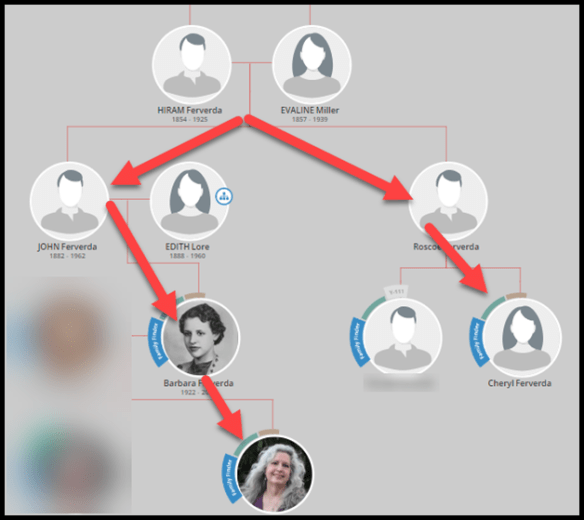
On my first 16 chromosomes, shown above, my 1C1R (first cousin once removed,) Cheryl, matches me where the chromosomes are painted blue. My chromosome is represented by the grey background, and her matching portion by the blue overlay.

Cheryl matches me on some portion of all chromosomes except 2, 6, and 13, where we don’t match at all.

You can select any one person, like Cheryl, from your match list to view on a chromosome browser to see where they match you on your chromosomes, or you can choose multiple matches, as shown below.

browser multiple example.png

I selected my 7 closest matches that are not my immediate family, meaning not my parents or children. I’m the background grey chromosome, and each person’s match is painted on top of “my chromosome” in the location where they match me. You see 7 images of my grey chromosome 1, for example, because each of the 7 people being compared to me are shown stacked below one another.

Everyplace that Cheryl matches me is shown on the top image of each chromosome, and our matching segment is shown in blue. The same for the second red copy of the chromosome, representing Don’s match to me. Each person I’ve selected to match against is shown by their own respective color.

You’ll note that in some cases, two people match me in the same location. Those are the essential hints we are looking for. We’ll be discussing how to unravel, interpret, and use matches in the rest of this article.

browser MyHeritage example.png

The chromosome browser at MyHeritage looks quite similar. However, I have a different “top 7” matches because each vendor has people who test on their platform who don’t test or transfer elsewhere.

Each vendor that supports chromosome browsers (FamilyTreeDNA, MyHeritage, 23andMe, and GedMatch) provides their own implementation, of course, but the fundamentals of chromosome browsers, how they work and what they are telling us is universal.

Why Do I Need a Chromosome Browser?

“But,” you might say, “I don’t need to compare my DNA with my matches because the vendors already tell me that I match someone, which confirms that we are related and share a common ancestor.”

Well, not exactly. It’s not quite that straightforward.

Let’s take a look at:

  • How and why people match
  • What matches do and don’t tell you
  • Both with and without a chromosome browser

In part, whether you utilize a chromosome browser or not depends on which of the following you seek:

  • A broad-brush general answer; yes or no, I match someone, but either I don’t know how are related, or have to assume why. There’s that assume word again.
  • To actually confirm and prove your ancestry, getting every ounce of value out of your DNA test.

Not everyone’s goals are the same. Fortunately, we have an entire toolbox with a wide range of tools. Different tools are better suited for different tasks.

People seeking unknown parents should read the article, Identifying Unknown Parents and Individuals Using DNA Matching because the methodology for identifying unknown parents is somewhat different than working with genealogy. This article focuses on genealogy, although the foundation genetic principles are the same.

If you’re just opening your DNA results for the first time, the article, First Steps When Your DNA Results are Ready – Sticking Your Toe in the Genealogy Water would be a great place to start.

Before we discuss chromosome browsers further, we need to talk about DNA inheritance.

Your Parents

Every person has 2 copies of each of their 22 chromosomes – one copy contributed by their mother and one copy contributed by their father. A child receives exactly half of the autosomal DNA of each parent. The DNA of each parent combines somewhat randomly so that you receive one chromosome’s worth of DNA from each of your parents, which is half of each parent’s total.

On each chromosome, you receive some portion of the DNA that each parent received from their ancestors, but not exactly half of the DNA from each individual ancestor. In other words, it’s not sliced precisely in half, but served up in chunks called segments.

Sometimes you receive an entire segment of an ancestor’s DNA, sometimes none, and sometimes a portion that isn’t equal to half of your parent’s segment.

browser inheritance.png

This means that you don’t receive exactly half of the DNA of each of your grandparents, which would be 25% each. You might receive more like 22% from one maternal grandparent and 28% from the other maternal grandparent for a total of 50% of the DNA you inherit from your parents. The other 50% of your DNA comes from the other parent, of course. I wrote about that here.

There’s one tiny confounding detail. The DNA of your Mom and Dad is scrambled in you, meaning that the lab can’t discern scientifically which side is which and can’t tell which pieces of DNA came from Mom and which from Dad. Think of a genetic blender.

Our job, using genetic genealogy, is to figure out which side of our family people who match us descend from – which leads us to our common ancestor(s).

Parallel Roads

For the purposes of this discussion, you’ll need to understand that the two copies you receive of each chromosome, one from each parent, have the exact same “addresses.” Think of these as parallel streets or roads with identical addresses on each road.

browser street.png

In the example above, you can see Dad’s blue chromosome and Mom’s red chromosome as compared to me. Of course, children and parents match on the full length of each chromosome.

I’ve divided this chromosome into 6 blocks, for purposes of illustration, plus the centromere where we generally find no addresses used for genetic genealogy.

In the 500 block, we see that the address of 510 Main (red bar) could occur on either Dad’s chromosome, or Mom’s. With only an address and nothing more, you have no way to know whether your match with someone at 510 Main is on Mom’s or Dad’s side, because both streets have exactly the same addresses.

Therefore, if two people match you, at the same address on that chromosome, like 510 Main Street, they could be:

  • Both maternal matches, meaning both descended from your mother’s ancestors, and those two people will also match each other
  • Both paternal matches, meaning both descended from your father’s ancestors, and those two people will also match each other
  • One maternal and one paternal match, and those two people will not match each other

Well then, how do we know which side of the family a match descends from, and how do we know if we share a common ancestor?

Good question!

Identical by Descent

If you and another person match on a reasonably sized DNA segment, generally about 7 cM or above, your match is probably “identical by descent,” meaning not “identical by chance.” In this case, then yes, a match does confirm that you share a common ancestor.

Identical by descent (IBD) means you inherited the piece of DNA from a common ancestor, inherited through the relevant parent.

Identical by chance (IBC) means that your mom’s and dad’s DNA just happens to have been inherited by you randomly in a way that creates a sequence of DNA that matches that other person. I wrote about both IBD and IBC here.

MMB stats by cM 2

This chart, courtesy of statistician Philip Gammon, from the article Introducing the Match-Maker-Breaker Tool for Parental Phasing shows the percentage of time we expect matches of specific segment sizes to be valid, or identical by descent.

Identical by Chance

How does this work?

How is a match NOT identical by descent, meaning that it is identical by chance and therefore not a “real” or valid match, a situation also known as a false positive?

browser inheritance grid.png

The answer involves how DNA is inherited.

You receive a chromosome with a piece of DNA at every address from both parents. Of course, this means you have two pieces of DNA at each address. Therefore people will match you on either piece of DNA. People from your Dad’s side will match you on the pieces you inherited from him, and people from your Mom’s side will match you on the pieces you inherited from her.

However, both of those matches have the same address on their parallel streets as shown in the illustration, above. Your matches from your mom’s side will have all As, and those from your dad’s side will have all Ts.

The problem is that you have no way to know which pieces you inherited from Mom and from Dad – at least not without additional information.

You can see that for 10 contiguous locations (addresses), which create an example “segment” of your DNA, you inherited all As from your Mom and all Ts from your Dad. In order to match you, someone would either need to have an A or a T in one of their two inherited locations, because you have an A and a T, both. If the other person has a C or a G, there’s no match.

Your match inherited a specific sequence from their mother and father, just like you did. As you can see, even though they do match you because they have either an A or a T in all 10 locations – the As and Ts did not all descend from either their mother or father. Their random inheritance of Ts and As just happens to match you.

If your match’s parents have tested, you won’t match either of their parents nor will they match either of your parents, which tells you immediately that this match is by chance (IBC) and not by descent (IBD), meaning this segment did not come from a common ancestor. It’s identical by chance and, therefore, a false positive.

If We Match Someone Else In Common, Doesn’t That Prove Identical by Descent?

Nope, but I sure wish it did!

The vendors show you who else you and your match both match in common, which provides a SUGGESTION as to your common ancestor – assuming you know which common ancestor any of these people share with you.

browser icw.png

However, shared matches are absolutely NOT a guarantee that you, your match, and your common matches all share the same ancestor, unless you’re close family. Your shared match could match you or your match through different ancestors – or could be identical by chance.

How can we be more confident of what matching is actually telling us?

How can we sort this out?

Uncertainties and Remedies

Here’s are 9 things you DON’T know, based on matching alone, along with tips and techniques to learn more.

  1. If your match to Person A is below about 20cM, you’ll need to verify that it’s a legitimate IBD match (not IBC). You can achieve this by determining if Person A also matches one of your parents and if you match one of Person A’s parents, if parents have tested.

Not enough parents have tested? An alternative method is by determining if you and Person A both match known descendants of the candidate ancestors ON THE SAME SEGMENT. This is where the chromosome browser enters the picture.

In other words, at least three people who are confirmed to descend from your presumptive common ancestor, preferably through at least two different children, must match on a significant portion of the same segment.

Why is that? Because every segment has its own unique genealogical history. Each segment can and often does lead to different ancestors as you move further back in time.

In this example, I’m viewing Buster, David, and E., three cousins descended from the same ancestral couple, compared to me on my chromosome browser. I’m the background grey, and they show in color. You can see that all three of them match me on at least some significant portion of the same segment of chromosome 15.

browser 3 cousins.png

If those people also match each other, that’s called triangulation. Triangulation confirms descent from a common ancestral source.

In this case, I already know that these people are related on my paternal side. The fact that they all match my father’s DNA and are therefore all automatically assigned to my paternal matching tab at Family Tree DNA confirms my paper-trail genealogy.

I wrote detailed steps for triangulation at Family Tree DNA, here. In a nutshell, matching on the same segment to people who are bucketed to the same parent is an automated method of triangulation.

Of course, not everyone has the luxury of having their parents tested, so testing other family members, finding common segments, and assigning people to their proper location in your tree facilitates confirmation of your genealogy (and automating triangulation.)

The ONLY way you can determine if people match you on the same segment, and match each other, is having segment information available to you and utilizing a chromosome browser.

browser MyHeritage triangulation.png

In the example above, the MyHeritage triangulation tool brackets matches that match you (the background grey) and who are all triangulated, meaning they all also match each other. In this case, the portion where all three people match me AND each other is bracketed. I wrote about triangulation at MyHeritage here.

  1. If you match several people who descend from the same ancestor, John Doe, for example, on paper, you CANNOT presume that your match to all of those people is due to a segment of DNA descended from John Doe or his wife. You may not match any of those people BECAUSE OF or through segments inherited from John Doe or his wife. You need segment information and a chromosome browser to view the location of those matches.

Assuming these are legitimate IBD matches, you may share another common line, known or unknown, with some or all of those matches.

It’s easy to assume that because you match and share matches in common with other people who believe they are descended from that same ancestor:

  • That you’re all matching because of that ancestor.
  • Even on the same segments.

Neither of those presumptions can be made without additional information.

Trust me, you’ll get yourself in a heap o’ trouble if you assume. Been there, done that. T-shirt was ugly.

Let’s look at how this works.

browser venn.png

Here’s a Venn diagram showing me, in the middle, surrounded by three of my matches:

  • Match 1 – Periwinkle, descends from Lazarus Estes and Elizabeth Vannoy
  • Match 2 – Teal, descends from Joseph Bolton and Margaret Claxton
  • Match 3 – Mustard, descends from John Y. Estes and Rutha Dodson

Utilizing a chromosome browser, autocluster software, and other tools, we can determine if those matches also match each other on a common segment, which means they triangulate and confirm common ancestral descent.

Of course, those people could match each other due to a different ancestor, not necessarily the one I share with them nor the ancestors I think we match through.

If they/we do all match because they descend from a common ancestor, they can still match each other on different segments that don’t match me.

I’m in the center. All three people match me, and they also match each other, shown in the overlap intersections.

Note that the intersection between the periwinkle (Match 1) and teal (Match 2) people, who match each other, is due to the wives of the children of two of my ancestors. In other words, their match to each other has absolutely nothing to do with their match to me. This was an “aha’ moment for me when I first realized this was a possibility and happens far more than I ever suspected.

The intersection of the periwinkle (Match 1) and mustard (Match 3) matches is due to the Dodson line, but on a different segment than they both share with me. If they had matched each other and me on the same segment, we would be all triangulated, but we aren’t.

The source of the teal (Match 2) to mustard (Match 3) is unknown, but then again, Match 3’s tree is relatively incomplete.

Let’s take a look at autocluster software which assists greatly with automating the process of determining who matches each other, in addition to who matches you.

  1. Clustering technology, meaning the Leeds method as automated by Genetic Affairs and DNAGedcom help, but don’t, by themselves, resolve the quandary of HOW people match you and each other.

People in a colored cluster all match you and each other – but not necessarily on the same segment, AND, they can match each other because they are related through different ancestors not related to your ancestor. The benefit of autocluster software is that this process is automated. However, not all of your matches will qualify to be placed in clusters.

browser autocluster.png

My mustard cluster above includes the three people shown in the chromosome browser examples – and 12 more matches that can be now be researched because we know that they are all part of a group of people who all match me, and several of whom match each other too.

My matches may not match each other for a variety of reasons, including:

  • They are too far removed in time/generations and didn’t inherit any common ancestral DNA.
  • This cluster is comprised of some people matching me on different (perhaps intermarried) lines.
  • Some may be IBC matches.

Darker grey boxes indicate that those people should be in both clusters, meaning the red and mustard clusters, because they match people in two clusters. That’s another hint. Because of the grid nature of clusters, one person cannot be associated with more than 2 clusters, maximum. Therefore, people like first cousins who are closely related to the tester and could potentially be in many clusters are not as useful in clusters as they are when utilizing other tools.

  1. Clusters and chromosome browsers are much less complex than pedigree charts, especially when dealing with many people. I charted out the relationships of the three example matches from the Venn diagram. You can see that this gets messy quickly, and it’s much more challenging to visualize and understand than either the chromosome browser or autoclusters.

Having said that, the ultimate GOAL is to identify how each person is related to you and place them in their proper place in your tree. This, cumulatively with your matches, is what identifies and confirms ancestors – the overarching purpose of genealogy and genetic genealogy.

Let’s take a look at this particular colorized pedigree chart.

Browser pedigree.png

click to enlarge

The pedigree chart above shows the genetic relationship between me and the three matches shown in the Venn diagram.

Four descendants of 2 ancestral couples are shown, above; Joseph Bolton and Margaret Claxton, and John Y. Estes and Rutha Dodson. DNA tells me that all 3 people match me and also match each other.

The color of the square (above) is the color of DNA that represents the DNA segment that I received and match with these particular testers. This chart is NOT illustrating how much DNA is passed in each generation – we already know that every child inherits half of the DNA of each parent. This chart shows match/inheritance coloring for ONE MATCHING SEGMENT with each match, ONLY.

Let’s look at Joseph Bolton (blue) and Margaret Claxton (pink). I descend through their daughter, Ollie Bolton, who married William George Estes, my grandfather. The DNA segment that I share with blue Match 2 (bottom left) is a segment that I inherited from Joseph Bolton (blue). I also carry inherited DNA from Margaret Claxton too, but that’s not the segment that I share with Match 2, which is why the path from Joseph Bolton to me, in this case, is blue – and why Match 2 is blue. (Just so you are aware, I know this segment descends from Joseph Bolton, because I also match descendants of Joseph’s father on this segment – but that generation/mtach is not shown on this pedigree chart.)

If I were comparing to someone else who I match through Margaret Claxton, I would color the DNA from Margaret Claxton to me pink in that illustration. You don’t have to DO this with your pedigree chart, so don’t worry. I created this example to help you understand.

The colored dots shown on the squares indicate that various ancestors and living people do indeed carry DNA from specific ancestors, even though that’s not the segment that matches a particular person. In other words, the daughter, Ollie, of Joseph Bolton and Margaret Claxton carries 50% pink DNA, represented by the pink dot on blue Ollie Bolton, married to purple William George Estes.

Ollie Bolton and William George Estes had my father, who I’ve shown as half purple (Estes) and half blue (Bolton) because I share Bolton DNA with Match 2, and Estes DNA with Match 1. Obviously, everyone receives half of each parent’s DNA, but in this case, I’m showing the path DNA descended for a specific segment shared with a particular match.

I’ve represented myself with the 5 colors of DNA that I carry from these particular ancestors shown on the pedigree chart. I assuredly will match other people with DNA that we’ve both inherited from these ancestors. I may match these same matches shown with DNA that we both inherited from other ancestors – for example, I might match Match 2 on a different segment that we both inherited from Margaret Claxton. Match 2 is my second cousin, so it’s quite likely that we do indeed share multiple segments of DNA.

Looking at Match 3, who knows very little about their genealogy, I can tell, based on other matches, that we share Dodson DNA inherited through Rutha Dodson.

I need to check every person in my cluster, and that I share DNA with on these same segment addresses to see if they match on my paternal side and if they match each other.

  1. At Family Tree DNA, I will be able to garner more information about whether or not my matches match each other by using the Matrix tool as well as by utilizing Phased Family Matching.

At Family Tree DNA, I determined that these people all match in common with me and Match 1 by using the “In Common With” tool. You can read more about how to use “In Common With” matching, here.

browser paternal.png

Family Matching phases the matches, assigning or bucketed them maternally or paternally (blue and red icons above), indicating, when possible, if these matches occur on the same side of your family. I wrote about the concept of phasing, here, and Phased Family Matching here and here.

Please note that there is no longer a limit on how distantly related a match can be in order to be utilized in Phased Family Matching, so long as it’s over the phase-matching threshold and connected correctly in your tree.

browser family tree dna link tree.png

Bottom line, if you can figure out how you’re related to someone, just add them into your tree by creating a profile card and link their DNA match to them by simply dragging and dropping, as illustrated above.

Linking your matches allows Family Matching to maternally or paternally assign other matches that match both you and your tree-linked matches.

If your matches match you on the same segment on the same parental side, that’s segment triangulation, assuming the matches are IBD. Phased Family Matching does this automatically for you, where possible, based on who you have linked in your tree.

For matches that aren’t automatically bucketed, there’s another tool, the Matrix.

browser matrix.png

In situations where your matches aren’t “bucketed” either maternally or paternally, the Matrix tool allows you to select matches to determine whether your matches also match each other. It’s another way of clustering where you can select specific people to compare. Note that because they also match each other (blue square) does NOT mean it’s on the same segment(s) where they match you. Remember our Venn diagram.

browser matrix grid.png

  1. Just because you and your matches all match each other doesn’t mean that they are matching each other because of the same ancestor. In other words, your matches may match each other due to another or unknown ancestor. In our pedigree example, you can see that the three matches match each other in various ways.
browser pedigree match.png

click to enlarge

  • Match 1 and Match 2 match each other because they are related through the green Jones family, who is not related to me.
  • Match 2 and Match 3 don’t know why they match. They both match me, but not on the same segment they share with each other.
  • Match 1 and Match 3 match through the mustard Dodson line, but not on the same segment that matches me. If we all did match on the same segment, we would be triangulated, but we wouldn’t know why Match 3 was in this triangulation group.
  1. Looking at a downloaded segment file of your matches, available at all testing vendors who support segment information and a chromosome browser, you can’t determine without additional information whether your matches also match each other.

browser chr 15.png

Here’s a group of people, above, that we’ve been working with on chromosome 15.

My entire match-list shows many more matches on that segment of chromosome 15. Below are just a few.

browser chr 15 all

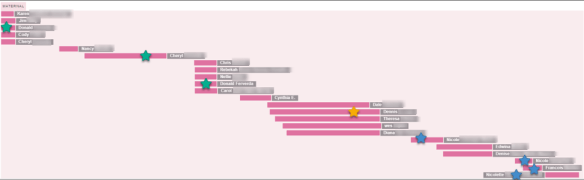
Looking at seven of these people in the chromosome browser, we can see visually that they all overlap on part of a segment on chromosome 15. It’s a lot easier to see the amount of overlap using a browser as opposed to the list. But you can only view 7 at a time in the browser, so the combination of both tools is quite useful. The downloaded spreadsheet shows you who to select to view for any particular segment.

browser chr 15 compare.png

The critical thing to remember is that some matches will be from tyour mother’s side and some from your father’s side.

Without additional information and advanced tools, there’s no way to tell the difference – unless they are bucketed using Phased Family Matching at Family Tree DNA or bracketed with a triangulation bracket at MyHeritage.

At MyHeritage, this assumes you know the shared ancestor of at least one person in the triangulation group which effectively assigns the match to the maternal or paternal side.

Looking at known relatives on either side, and seeing who they also match, is how to determine whether these people match paternally or maternally. In this example below, the blue people are bucketed paternally through Phased Family Matching, the pink maternally, and the white rows aren’t bucketed and therefore require additional evaluation.

browser chr 15 maternal paternal.png

Additional research shows that Jonathan is a maternal match, but Robert and Adam are identical by chance because they don’t match either of my parents on this segment. They might be valid matches on other segments, but not this one.

browser chr 15 compare maternal paternal.png

  1. Utilizing relatives who have tested is a huge benefit, and why we suggest that everyone test their closest upstream relatives (meaning not children or grandchildren.) Testing all siblings is recommended if both parents aren’t available to test, because every child received different parts of their parents’ DNA, so they will match different relatives.

After deleting segments under 7 cM, I combine the segment match download files of multiple family members (who agree to allow me to aggregate their matches into one file for analysis) so that I can create a master match file for a particular family group. Sorting by match name, I can identify people that several of my cousins’ match.

browser 4 groups.png

This example is from a spreadsheet where I’ve combined the results of about 10 collaborating cousins to determine if we can break through a collective brick wall. Sorted by match name, this table shows the first 4 common matches that appear on multiple cousin’s match lists. Remember that how these people match may have nothing to do with our brick wall – or it might.

Note that while the 4 matches, AB, AG, ag, and A. Wayne, appear in different cousins’ match lists, only one shares a common segment of DNA: AB triangulates with Buster and Iona. This is precisely WHY you need segment information, and a chromosome browser, to visualize these matches, and to confirm that they do share a common DNA segment descended from a specific ancestor.

These same people will probably appear in autocluster groups together as well. It’s worth noting, as illustrated in the download example, that it’s much more typical for “in common with” matches to match on different segments than on the same segment. 

  1. Keep in mind that you will match both your mother and father on every single chromosome for the entire length of each chromosome.

browser parent matching.png

Here’s my kit matching with my father, in blue, and mother, in red on chromosomes 1 and 2.

Given that I match both of my parents on the full chromosome, inheriting one copy of my chromosome from each parent, it’s impossible to tell by adding any person at random to the chromosome browser whether they match me maternally or paternally. Furthermore, many people aren’t fortunate enough to have parents available for testing.

To overcome that obstacle, you can compare to known or close relatives. In fact, your close relatives are genetic genealogy gold and serve as your match anchor. A match that matches you and your close relatives can be assigned either maternally or paternally. I wrote about that here.

browser parent plus buster.png

You can see that my cousin Buster matches me on chromosome 15, as do both of my parents, of course. At this point, I can’t tell from this information alone whether Buster matches on my mother’s or father’s side.

I can tell you that indeed, Buster does match my father on this same segment, but what if I don’t have the benefit of my father’s DNA test?

Genealogy tells me that Buster matches me on my paternal side, through Lazarus Estes and Elizabeth Vannoy. Given that Buster is a relatively close family member, I already know how Buster and I are related and that our DNA matches. That knowledge will help me identify and place other relatives in my tree who match us both on the same segment of DNA.

To trigger Phased Family Matching, I placed Buster in the proper place in my tree at Family Tree DNA and linked his DNA. His Y DNA also matches the Estes males, so no adoptions or misattributed parental events have occurred in the direct Estes patrilineal line.

browser family tree dna tree.png

I can confirm this relationship by checking to see if Buster matches known relatives on my father’s side of the family, including my father using the “in common with” tool.

Buster matches my father as well as several other known family members on that side of the family on the same segments of DNA.

browser paternal bucket.png

Note that I have a total of 397 matches in common with Buster, 140 of which have been paternally bucketed, 4 of which are both (my children and grandchildren), and 7 of which are maternal.

Those maternal matches represent an issue. It’s possible that those people are either identical by chance or that we share both a maternal and paternal ancestor. All 7 are relatively low matches, with longest blocks from 9 to 14 cM.

Clearly, with a total of 397 shared matches with Buster, not everyone that I match in common with Buster is assigned to a bucket. In fact, 246 are not. I will need to take a look at this group of people and evaluate them individually, their genealogy, clusters, the matrix, and through the chromosome browser to confirm individual matching segments.

There is no single perfect tool.

Every Segment Tells a Unique History

I need to check each of the 14 segments that I match with Buster because each segment has its own inheritance path and may well track back to different ancestors.

browser buster segments.png

It’s also possible that we have unknown common ancestors due to either adoptions, NPEs, or incorrect genealogy, not in the direct Estes patrilineal line, but someplace in our trees.

browser buster paint.png

The best way to investigate the history and genesis of each segment is by painting matching segments at DNAPainter. My matching segments with Buster are shown painted at DNAPainter, above. I wrote about DNAPainter, here.

browser overlap.png

By expanding each segment to show overlapping segments with other matches that I’ve painted and viewing who we match, we can visually see which ancestors that segment descends from and through.

browser dnapainter walk back.png

These roughly 30 individuals all descend from either Lazarus Estes and Elizabeth Vannoy (grey), Elizabeth’s parents (dark blue), or her grandparents (burgundy) on chromosome 15.

As more people match me (and Buster) on this segment, on my father’s side, perhaps we’ll push this segment back further in time to more distant ancestors. Eventually, we may well be able to break through our end-of-line brick wall using these same segments by looking for common upstream ancestors in our matches’ trees.

Arsenal of Tools

This combined arsenal of tools is incredibly exciting, but they all depend on having segment information available and understanding how to use and interpret segment and chromosome browser match information.

One of mine and Buster’s common segments tracks back to end-of-line James Moore, born about 1720, probably in Virginia, and another to Charles Hickerson born about 1724. It’s rewarding and exciting to be able to confirm these DNA segments to specific ancestors. These discoveries may lead to breaking through those brick walls eventually as more people match who share common ancestors with each other that aren’t in my tree.

This is exactly why we need and utilize segment information in a chromosome browser.

We can infer common ancestors from matches, but we can’t confirm segment descent without specific segment information and a chromosome browser. The best we can do, otherwise, is to presume that a preponderance of evidence and numerous matches equates to confirmation. True or not, we can’t push further back in time without knowing who else matches us on those same segments, and the identity of their common ancestors.

The more evidence we can amass for each ancestor and ancestral couple, the better, including:

  • Matches
  • Shared “In Common With” Matches, available at all vendors.
  • Phased Family Matching at Family Tree DNA assigns matches to maternal or paternal sides based on shared, linked DNA from known relatives.
  • The Matrix, a Family Tree DNA tool to determine if matches also match each other. Tester can select who to compare.
  • ThruLines from Ancestry is based on a DNA match and shared ancestors in trees, but no specific segment information or chromosome browser. I wrote about ThruLines here and here.
  • Theories of Family Relativity, aka TOFR, at MyHeritage, based on shared DNA matches, shared ancestors in trees and trees constructed between matches from various genealogical records and sources. MyHeritage includes a chromosome browser and triangulation tool. I wrote about TOFR here and here.
  • Triangulation available through Phased Family Matching at Family Tree DNA and the integrated triangulation tool at MyHeritage. Triangulation between only 3 people at a time is available at 23andMe, although 23andMe does not support trees. See triangulation article links in the Resource Articles section below.
  • AutoClusters at MyHeritage (cluster functionality included), at Genetic Affairs (autoclusters plus tree reconstruction) and at DNAGedcom (including triangulation).
  • Genealogical information. Please upload your trees to every vendor site.
  • Y DNA and mitochondrial DNA confirmation, when available, through Family Tree DNA. I wrote about the 4 Kinds of DNA for Genetic Genealogy, here and the importance of Y DNA confirmation here, and how not having that information can trip you up.
  • Compiled segment information at DNAPainter allows you to combine segment information from various vendors, paint your maternal and paternal chromosomes, and visually walk segments back in time. Article with DNAPainter instructions is found here.

Autosomal Tool Summary Table

In order to help you determine which tool you need to use, and when, I’ve compiled a summary table of the types of tools and when they are most advantageous. Of course, you’ll need to read and understand about each tool in the sections above. This table serves as a reminder checklist to be sure you’ve actually utilized each relevant tool where and how it’s appropriate.

Family Tree DNA MyHeritage Ancestry 23andMe GedMatch
DNA Matches Yes Yes Yes Yes, but only highest 2000 minus whoever does not opt -in Yes, limited matches for free, more with subscription (Tier 1)
Download DNA Segment Match Spreadsheet Yes Yes No, must use DNAGedcom for any download, and no chromosome segment information Yes Tier 1 required, can only download 1000 through visualization options
Segment Spreadsheet Benefits View all matches and sort by segment, target all people who match on specific segments for chromosome browser View all matches and sort by segment, target all people who match on specific segments for chromosome browser No segment information but matches might transfer elsewhere where segment information is available View up to 2000 matches if matches have opted in. If you have initiated contact with a match, they will not drop off match list. Can download highest 1000 matches, target people who match on specific segments
Spreadsheet Challenges Includes small segments, I delete less than 7cM segments before using No X chromosome included No spreadsheet and no segment information Maximum of 2000 matches, minus those not opted in Download limited to 1000 with Tier 1, download not available without subscription
Chromosome Segment Information Yes Yes No, only total and longest segment, no segment address Yes Yes
Chromosome Browser Yes, requires $19 unlock if transfer Yes, requires $29 unlock or subscription if transfer No Yes Yes, some features require Tier 1 subscription
X Chromosome Included Yes No No Yes Yes, separate
Chromosome Browser Benefit Visual view of 7 or fewer matches Visual view of 7 or fewer matches, triangulation included if ALL people match on same portion of common segment No browser Visual view of 5 or fewer matches Unlimited view of matches, multiple options through comparison tools
Chromosome Browser Challenges Can’t tell whether maternal or paternal matches without additional info if don’t select bucketed matches Can’t tell whether maternal or paternal without additional info if don’t triangulate or you don’t know your common ancestor with at least one person in triangulation group No browser Can’t tell whether maternal or paternal without other information Can’t tell whether maternal or paternal without other information
Shared “In Common With” Matches Yes Yes Yes Yes, if everyone opts in Yes
Triangulation Yes, Phased Family Matching, plus chromosome browser Yes, included in chromosome browser if all people being compared match on that segment No, and no browser Yes, but only for 3 people if “Shared DNA” = Yes on Relatives in Common Yes, through multiple comparison tools
Ability to Know if Matches Match Each Other (also see autoclusters) Yes, through Matrix tool or if match on common bucketed segment through Family Matching Yes, through triangulation tool if all match on common segment No Yes, can compare any person to any other person on your match list Yes, through comparison tool selections
Autoclusters Can select up to 10 people for Matrix grid, also available for entire match list through Genetic Affairs and DNAGedcom which work well Genetic Affairs clustering included free, DNAGedcom has difficulty due to timeouts No, but Genetic Affairs and DNAGedcom work well No, but Genetic Affairs and DNAGedcom work well Yes, Genetic Affairs included in Tier 1 for selected kits, DNAGedcom is in beta
Trees Can upload or create tree. Linking you and relatives who match to tree triggers Phased Family Matching Can upload or create tree. Link yourself and kits you manage assists Theories of Family Relativity Can upload or create tree. Link your DNA to your tree to generate ThruLines. Recent new feature allows linking of DNA matches to tree. No tree support but can provide a link to a tree elsewhere Upload your tree so your matches can view
Matching and Automated Tree Construction of DNA Matches who Share Common Ancestors with You Genetic Affairs for matches with common ancestors with you Not available Genetic Affairs for matches with common ancestors with you No tree support Not available
Matching and Automated Tree Construction for DNA Matches with Common Ancestors with Each Other, But Not With You Genetic Affairs for matches with common ancestors with each other, but not with you Not available Genetic Affairs for matches with common ancestors with each other, but not with you No tree support Not available
DNAPainter Segment Compilation and Painting Yes, bucketed Family Match file can be uploaded which benefits tester immensely. Will be able to paint ethnicity segments soon. Yes No segment info available, encourage your matches to upload elsewhere Yes, and can paint ethnicity segments from 23andMe, Yes, but only for individually copied matches or highest 1000.
Y DNA and Mitochondrial Matching Yes, both, includes multiple tools, deep testing and detailed matching No No No, base haplogroup only, no matching No, haplogroup only if field manually completed by tester when uploading autosomal DNA file

Transfer Your DNA

Transferring your DNA results to each vendor who supports segment information and accepts transfers is not only important, it’s also a great way to extend your testing collar. Every vendor has strengths along with people who are found there and in no other database.

Ancestry does not provide segment information nor a chromosome browser, nor accept uploads, but you have several options to transfer your DNA file for free to other vendors who offer tools.

23andMe does provide a chromosome browser but does not accept uploads. You can download your DNA file and transfer free to other vendors.

I wrote detailed upload/download and transfer instructions for each vendor, here.

Two vendors and one third party support transfers into their systems. The transfers include matching. Basic tools are free, but all vendors charge a minimal fee for unlocking advanced tools, which is significantly less expensive than retesting:

Third-party tools that work with your DNA results include:

All vendors provide different tools and have unique strengths. Be sure that your DNA is working as hard as possible for you by fishing in every pond and utilizing third party tools to their highest potential.

Resource Articles

Explanations and step by step explanations of what you will see and what to do, when you open your DNA results for the first time.

Original article about chromosomes having 2 sides and how they affect genetic genealogy.

This article explains what triangulation is for autosomal DNA.

Why some matches may not be valid, and how to tell the difference.

This article explains the difference between a match group, meaning a group of people who match you, and triangulation, where that group also matches each other. The concepts are sound, but this article relies heavily on spreadsheets, before autocluster tools were available.

Parental phasing means assigning segment matches to either your paternal or maternal side.

Updated, introductory article about triangulation, providing the foundation for a series of articles about how to utilize triangulation at each vendor (FamilyTreeDNA, MyHeritage, 23andMe, GEDmatch, DNAPainter) that supports triangulation.

These articles step you through triangulation at each vendor.

DNAPainter facilitates painting maternally and paternally phased, bucketed matches from FamilyTreeDNA, a method of triangulation.

Compiled articles with instructions and ideas for using DNAPainter.

Autoclustering tool instructions.

How and why The Leeds Method works.

Step by step instructions for when and how to use FamilyTreeDNA’s chromosome browser.

Close family members are the key to verifying matches and identifying common ancestors.

This article details how much DNA specific relationships between people can expect to share.

Overview of transfer information and links to instruction articles for each vendor, below.

_____________________________________________________________

Disclosure

I receive a small contribution when you click on some of the links to vendors in my articles. This does NOT increase the price you pay but helps me to keep the lights on and this informational blog free for everyone. Please click on the links in the articles or to the vendors below if you are purchasing products or DNA testing.

Thank you so much.

DNA Purchases and Free Transfers

Genealogy Products and Services

Genealogy Research

Fun DNA Stuff

  • Celebrate DNA – customized DNA themed t-shirts, bags, and other items

Fun Genealogy Activities for Trying Times

My mother used to say that patience is a virtue.

patience stones.jpg

I’m afraid I’m not naturally a very virtuous person, at least not where patience is concerned. I don’t seem to take after my ancestor, Patience Brewster (1600-1634.) Perhaps those “patience” genes didn’t make it to my generation. Or maybe Patience wasn’t very patient herself.

Not only does patience not come naturally to me, it’s more difficult for everyone during stressful times. People are anxious, nerves are frazzled and tempers are short. Have you noticed that recently?

I guess you could say that what we’ve been enduring, in terms of both health issues and/or preparation for the Covid-19 virus along with the economic rollercoaster – not to mention the associated politics, is stress-inducing.

patience stress.png

Let’s see:

  • Worry about a slow-motion epidemic steamrollering the population as it wraps around the world – check.
  • Worry about family members – check.
  • Worry about TP, hand sanitizer, food, medication and other supplies – check.
  • Worry about jobs and income – check.
  • Worry about retirement accounts and medical bills – check.
  • Worry about long-term ramifications – check.

Nope, no stress here. What about you?

And yes, I’m intentionally understated, hoping to at least garner a smile.

Once you’ve stocked up on what you need and decided to stay home out of harm’s way – or more to the point, out of germ’s way – how can you feel more patient and less stressed?

I have some suggestions!

patience stress relief.png

The Feel Better Recipe

First, just accept that once you’ve done what you can do to help yourself, which includes minimizing exposure – there’s little else that you can do. I wrote about symptoms and precautions, here. The best thing you can do is wash, stay home and remain vigilant.

If someone you know or love doesn’t understand why we need to limit or eliminate social interaction at this point, here’s an article that explains how NOT to be stupid, as well as an article here about what flattening the curve means and why social distancing is our only prayer at this point to potentially avoid disaster. We are all in this together and we all have a powerful role to play – just by staying at home.

Educating and encouraging others to take precautionary steps might help, but worrying isn’t going to help anything because you can’t affect much beyond your own sphere of influence. As much as we wish we could affect the virus itself, or increase the testing supply, or influence good decision-making by others, we generally can’t.

What can we do, aside from sharing precautionary information and hoping that we are “heard?”

We can try to release the worry.

patience zen.png

If you sit there thinking about releasing the worry, which means you’re focused on worrying – that’s probably not going to be very productive.

Neither is drinking your entire supply of Jack Daniels in one sitting – not the least of which is because you may need that as hand sanitizer down the road a bit. Oh, wait, hand sanitizer is supposed to be more than 60% alcohol, which would be 120 proof. Never mind, go ahead and drink the Jack Daniels😊

What you really need is a distraction. Preferably a beneficial distraction that won’t give you a hangover. Not like my distraction this past month when the washing machine flooded through the floor into the basement including my office below. No, not that kind of distraction.

Some folks can “escape the world,” in a sense, by watching TV, but I’m not one of those people. I need to engage my mind with some sort of structure and I want to feel like I’m accomplishing something. If you’re a “TV” person, you’re probably watching TV now and not reading this anyway – so I’m guessing that’s not my readership audience, by and large.

Beneficial Distractions

Here are 20 wonderful ideas for fun and useful things to do – and guess what – they aren’t all genealogy related. Let’s start with something that will make you feel wonderful.

labyrinth

  1. Take a walk – outside, but not around other people. Your body and mind will thank you. Your body likes to move and exercise generates beneficial feel-good endorphins, reducing anxiety. Remember to take hand sanitizer with you and open doors by pushing with your arm or hip, if possible. Also, if you need to get fuel for your vehicle, take disposable gloves to handle the pump. Disinfectant, soap and water is your friend – maybe your best friend right now.

patience books.png

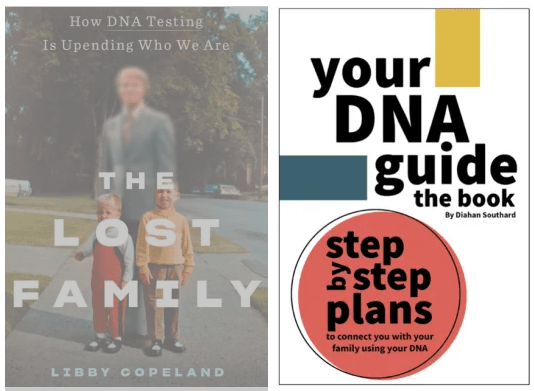
  1. Read a book. Escapism, pure and simple. I have a stack of books just waiting. If you don’t, you can download e-books to your Kindle or iPad or phone directly from Amazon without going anyplace or have books delivered directly to your door. Try Libby Copeland’s The Lost Family, which you can order here. It’s dynamite. (My brother and my story are featured, which I wrote about here.) If you’d like DNA education, you can order Diahan Southard’s brand new book, Your DNA Guide: Step by Step Plans, here. I haven’t read Diahan’s book, but I’m familiar with the quality of her work and don’t have any hesitation about recommending it. (Let me know what you think.) And hey, you don’t even need hand sanitizer for this!

patience check box.png

  1. Check your DNA matches at all the vendors where you’ve tested. If you don’t check daily, now would be a good time to catch up. Not just autosomal matches, but also Y and mitochondrial at Family Tree DNA. Those tests often get overlooked. Maybe some of your matches have updated their trees or earliest known ancestor information.

patience tree.png

  1. Speaking of trees, update your trees on the three DNA/genealogy sites that support trees: FamilyTreeDNA, MyHeritage and Ancestry. Keeping your tree up to date through at least the 8th generation (including their children) enables the companies to more easily connect the dots for their helpful tools like Phased Family Matching aka bucketing at FamilyTreeDNA, Theories of Family Relativity aka TOFR at MyHeritage and ThruLines at Ancestry.

patience connect.png

  1. Connect your known matches to their appropriate place on your tree at Family Tree DNA, as illustrated above. This provides fuel for Family Tree DNA to be able to designate your matches as maternal or paternal, even if your mother and father haven’t tested. In this case, I’ve connected my first cousin once removed who matches me in her proper location in my tree. People who match my cousin and I both are assigned to my maternal bucket.

patience y dna.pngpatience mtdna.png

  1. Order or upgrade a Y DNA or mitochondrial DNA test or a Family Finder autosomal test for you or a family member at Family Tree DNA. Upgrades, shown above, are easy if the tester has already taken at least one test, because DNA is banked at the lab for future orders. You don’t have to go anyplace to do this and DNA testing results and benefits last forever. Your DNA works for you 24x7x365.

patience join project.png

patience projects.png

  1. Join a free project at FamilyTreeDNA. Those can be surname projects, haplogroup projects, regional projects such as Acadian AmeriIndian and other interest topics like American Indian. You can search or browse for projects of interest and collaborate with others. Projects are managed by volunteer administrators who obviously have an interest in the project’s topic.

patience match.png

  1. At each of the vendors, find your highest autosomal match whom you cannot place as a relative. Work on their line via tree construction and then utilizing clustering using Genetic Affairs. I wrote about Genetic Affairs, an amazing tool, here, which you can try for free.

patience familysearch wiki.png

patience claiborne.png

  1. Check the FamilySearch WIKI for your genealogy locations by googling “Claiborne County, Tennessee FamilySearch wiki” where you substitute the location of where you are searching for “Claiborne County, Tennessee.” FamilySearch is free and the WIKI includes resources outside of FamilySearch itself, including paid and other free sites.

patience familysearch records.png

  1. While you’re at it, if you haven’t already, create a FamilySearch account and create or upload a tree to FamilySearch. It will be connected to branches of existing trees to create one large worldwide tree. Yes, you’ll be frustrated in some cases because there are incorrect ancestors sometimes listed in the “big tree” – BUT – there are procedures in place to remediate that situation. The important aspect is that FamilySearch, which is free, provides hints and resources not available any other place for some ancestors. Not long ago, I found a detailed estate packet that I had no idea existed – for a female ancestor no less. You can search at FamilySearch for ancestors, genealogies, records and in other ways. New records become available often.  This will keep you occupied for days, I promise!

Patience Journal.png

  1. Begin a Novel Coronavirus Covid-19 Pandemic journal. Think of your descendants 100 years in the future. Wouldn’t you like to know what your great-grandparents were doing during the 1918 Spanish Flu Pandemic? Or even their siblings or neighbors, because that was likely similar to what your ancestors were doing as well. You don’t have to write much daily – just write. Not just facts, but how you feel as well. Are you afraid, concerned specifically about someone? What’s going on with you – in your mind? That’s the part of you that your descendants will long to know a century from now.

Quilt rose

  1. Create something with your hands. I made a quilt this week for an ailing friend, unrelated to this epidemic. No, I didn’t “have time” to do that, but I made time because this quilt is important, and I know they need the “get well’’” wishes and love that quilt will wrap them in. It always feels good to do something for someone else.

patience gardening.jpg

  1. Garden, or in my case, that equates to pulling weeds. Not only is weeding productive, you can work off frustration by thinking about someone or something that upsets you as you yank those weeds out by their roots. Of course, that means you’ll have to first decide what is, and is not, a weed😊. That could be the toughest part.

patience smart matches.png

  1. At MyHeritage, you can use Irish records for free this month, plus try a free subscription, here in order to access all the rest of the millions of records available at MyHeritage. Check for Smart Matches for ancestors, shown above, and confirm that they are accurate, meaning that the ancestor the other person has in their tree is the same person as you have in your tree – even if they aren’t exactly identical. You don’t need to import any of their information, and I would suggest that you don’t without reviewing every piece of information individually. Confirming Smart Matches helps MyHeritage build Theories of Family Relativity – not to mention you may discover additional information about your ancestors. While you’re checking Smart Matches, who ARE those other people with your grandmother in their tree. Are they relatives who might have information that you don’t? This is a good opportunity to reach out. And what are those 12 pending record matches? Inquiring minds want to know. Let’s check.
patience newspapers

Click to enlarge.

  1. Check either NewsPapers.com or the Newspaper collection at MyHeritage, or both, systematically, for each ancestor. You never know what juicy tidbits you might discover about your ancestors. Often, things “forgotten” by families are the informative morsels you’ll want to know and are hidden in those local news articles. These newsy community newspapers bring the life and times of our ancestors to light in ways nothing else can. Wait, what? My Brethren ancestor, Hiram Ferverda, pleaded guilty to something??? I’d better read this article!

patience interview.png

  1. Interview your relatives. Make a list of questions you’d like for them to answer about themselves and the most distant common ancestors that they knew, or knew about. You can conduct interviews without being physically together via the phone or Skype or Facetime. Document what was said for the future, in writing, and possibly by recording as well. After someone has passed, hearing their voice again is priceless.

Upload download

  1. Transfer your DNA file to vendors that accept transfers, getting more bang for your testing dollars by finding more matches. 23andMe and Ancestry don’t accept transfers.  At MyHeritage and FamilyTreeDNA, transfers are free and so is matching, but advanced tools require a small unlock fee. I wrote a step-by-step series about how to transfer, here. Each article includes instructions for transferring from or to Ancestry, MyHeritage, 23andMe and FamilyTreeDNA. Don’t forget to upload to GedMatch for additional tools.

patience brick wall.jpg

  1. Focus on your most irritating brick wall and review what records you do, and don’t have that could be relevant. That would include local, county, state and federal records, tax lists, census, church records and minutes and local histories if they exist. Have you called the local library and asked about vertical files or other researchers? What about state archive resources? Don’t forget activities like google searches. Have you utilized all possible DNA clues, including Y DNA and mitochondrial DNA, if applicable? How about third-party tools like Genetic Affairs and DNAgedcom?

patience DNApainter.png

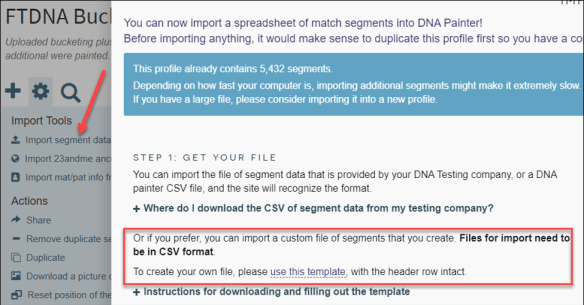
  1. Try DNAPainter, for free. Painting your chromosomes and walking those segments back in time to your ancestors from whom they descended is so much fun. Not to mention you can integrate ethnicity and now traits, too. I’ve written instructions for using using DNAPainter in a variety of ways, here.

patience webinars.png

  1. Expand your education by watching webinars at Legacy Family Tree Webinars. Many are free and a yearly subscription is very reasonable. Take a look, here.

patience bucket.png

  1. Spring cleaning your house or desk. Ewww – cleaning – the activity that is never done and begins undoing itself immediately after you’ve finished? Makes any of the above 20 activities sound wonderful by comparison, right? I agree, so pick one and let’s get started!

Let me know what you find. Write about your search activities and discoveries in your Pandemic journal too.

_____________________________________________________________

Disclosure

I receive a small contribution when you click on some of the links to vendors in my articles. This does NOT increase the price you pay but helps me to keep the lights on and this informational blog free for everyone. Please click on the links in the articles or to the vendors below if you are purchasing products or DNA testing.

Thank you so much.

DNA Purchases and Free Transfers

Genealogy Products and Services

Genealogy Research

Fun DNA Stuff

  • Celebrate DNA – customized DNA themed t-shirts, bags and other items

RootsTech 2020: It’s a Wrap

Before sharing photos and details about the last three days at RootsTech, I want to provide some general observations.

I expected the attendance to be down this year because of the concern about the Novel Corona Virus. There was a lot of hand-washing and sanitizer, but no hand-wringing.

I don’t think attendance was lagging at all. In fact, this show was larger, based on how my feet feel and general crowd observation than ever before. People appeared to be more engaged too.

According to RootsTech personnel, 4 major vendors pulled out the week before the show opened; 23andMe, LivingDNA, FindMyPast and a book vendor.

I doubt there’s much of a refund policy, so surely something happened in these cases. If you recall, LivingDNA and FindMyPast have a business relationship. 23andMe just laid off a number of people, but then again, so did Ancestry but you’d never know it based on the size of their booth and staffing here.

Family Search has really stepped up their game to modernize, capture stories, scan books and otherwise make genealogy interesting and attractive to everyone.

We got spoiled last year with the big DNA announcements at RootsTech, but nothing of that magnitude was announced this year. That’s not to say there weren’t vendor announcements, there were.

FamilyTreeDNA announced:

  • Their myOrigins Version 3.0 which is significantly updated by adding several worldwide populations, increasing the number from 24 to 90. I wrote about these features here.
  • Adding a myOrigins chromosome browser painted view. I am SOOO excited about this because it makes ethnicity actually useful for genealogy because we can compare specific ethnicity segments with genealogical matches. I can hardly wait.

RootsTech 2020 Sunny Paul

Sunny Morton with Family Tree Magazine interviewing Dr. Paul Maier, FamilyTreeDNA’s population geneticist. You can see the painted chromosome view on the screen behind Dr. Maier.

  • Providing, after initial release, a downloadable ethnicity estimate segment file.
  • Sponsorship of The Million Mito Project, a joint collaborative citizen science project to rewrite the mitochondrial tree of womankind includes team members Dr. Miguel Vilar, Lead Scientist of the National Geographic Genographic Project, Dr. Paul Maier, Population Geneticist at FamilyTreeDNA, Goran Runfeldt, Head of Research and Development at FamilyTreeDNA, and me, DNAeXplain, scientist, genetic genealogist, National Geographic Genographic Affiliate Researcher.

RootsTech 2020 Million Mito

I was honored to make The Million Mito Project announcement Saturday morning, but it was hard for me to contain my enthusiasm until Saturday. This initiative is super-exciting and I’ll be writing about the project, and how you can participate, as soon as I get home and recover just a bit.

  • Michael Sager, aka Mr. Big Y, announced additions to the Y Tree of Mankind in the Demo Theater, including a particularly impressive haplogroup D split.

Rootstech 2020 Sager

RootsTech 2020 Sager 2

RootsTech 2020 Sager hap d

In case anyone is counting, as of last week, the Y tree has 26,600+ named branches and over half a million detected (private variant) SNPs at FamilyTreeDNA waiting for additional testers to be placed on the tree. All I can say is WOW!!! In 2010, a decade ago, there were only 441 Y DNA branches on the entire Y tree. The Y tree has shot up from a twig to an evergreen. I think it’s actually a Sequoia and we just don’t know how large it’s going to grow to be.

RootsTech 2020 FTDNA booth

FamilyTreeDNA stepped up their game with a way-cool new booth that incorporated a lovely presentation area, greatly improved, which featured several guest presenters throughout the conference, including Judy Russell, below.

RootsTech 2020 Judy Russell

Yes, in case anyone is wondering, I DID ask permission to take Judy’s picture, AND to publish it in my article. Just sayin’😊

MyHeritage announced their new photo colorization, MyHeritage in Color, just before RootsTech. I wrote about it, here. At RootsTech MyHeritage had more announcements, including:

  • Enhancements coming soon to the photo colorization program. It was interesting to learn that the colorization project went live in less than 2 months from inception and resulted from an internal “hack-a-thon,” which in the technology industry is a fun think-tank sort of marathon endeavor where ideas flow freely in a competitive environment. Today, over a million photos have been colorized. People LOVE this feature.

RootsTech 2020 MyHeritage booth

One of their booth giveaways was a magnet – of your colorized ancestor’s photo. Conference attendees emailed the photo to a special email address and came by the booth a few minutes later to retrieve their photo magnet.

The photos on the board in front, above, are the colorized photos waiting for their family to pick them up. How fun!!!

  • Fan View for family trees which isn’t just a chart, but dynamic in that you can click on any person and they become the “center.” You can also add to your tree from this view.

RootsTech 2020 MyHeritage fan tree

One of the views is a colorful fan. If you sign on to your MyHeritage account, you’ll be asked if you’d like to see the new fan view. You can read about the new tree features on their blog, here.

  • The release of a MASSIVE 100-year US city directory digitization project that’s more than just imaging and indexing. If you’ve every used city directories, the unique abbreviations in each one will drive you batty. MyHeritage has solved that problem by providing the images, plus the “translation.” They’ve also used artificial intelligence to understand how to search further, incorporating things like spouse, address and more to provide you with not just one year or directory, but linear information that might allow you to infer the death of a spouse, for example. You can read their blog article, here.

RootsTech 2020 MyHeritage city directories

The MyHeritage booth incorporated a very cool feature this year about the Mayflower. Truthfully, I was quite surprised, because the Mayflower is a US thing. MyHeritage is working with folks in Leiden, Netherlands, where some Mayflower family members remained while others continued to what would become Plymouth Colony to prove the connection.

Rootstech 2020 MyHeritage Mayflower virtual

MyHeritage constructed a 3D area where you can sail with the Pilgrims.

I didn’t realize at first, but the chair swivels and as you move, your view in the 3D “goggles” changes to the direction on board the ship where you are looking.

RootsTech 2020 MyHeritage Mayflower virtual 2

The voyage in 1620 was utterly miserable – very rough with a great deal of illness. They did a good job of portraying that, but not “too much” if you get my drift. What you do feel is the utter smallness of the ship in the immense angry ocean.

I wonder how many descendants “sailed with their ancestors” on the virtual Mayflower. Do you have Mayflower ancestors? Mine are William Brewster, his wife, Mary and daughter, Patience along with Stephen Hopkins and his son, Gyles.

Ancestry’s only announcements were:

  • That they are “making things better” by listening and implementing improvements in the DNA area. I’ll forego any commentary because it would be based on their failure to listen and act (for years) about the absence of segment information and a chromosome browser. You’ve guessed it, that’s not mentioned.
  • That the WWII young man Draft Registration cards are now complete and online. Truthfully, I had no idea that the collection I was using online wasn’t complete, which I actually find very upsetting. Ancestry, assuming you actually are listening, how about warning people when they are using a partially complete collection, meaning what portion is and is not complete.
  • Listing content record additions planned for 2020 including the NYC birth index and other state and international records, some of which promise to be very useful. I wonder which states the statewide digitization projects pertain to and what that means, exactly.

OK, now we’re done with vendor announcements, so let’s just take a walk around the expo hall and see who and what we find. We might run into some people you know!

Walking Around

I sandwiched my walking around in-between my sessions. Not only did I present two RootsTech classes, but hosted the ToolMaker Meetup, attended two dinners, two lunches, announced The Million Mito Project, did two booth talks, one for FamilyTreeDNA and one for WikiTree, and I think something else I’ve forgotten about. Plus, all the planned and chance meetings which were absolutely wonderful.

Oh yes, and I attended a couple of sessions myself as an attendee and a few in the vendors booths too.

The great thing, or at least I think its great, is that most of the major vendors also have booth educational learning opportunities with presentation areas at their booths. Unfortunately, there is no centralized area where you can find out which booths have sessions, on what topics, when. Ditto for the Demo Theater.

Of course, that means booth presentations are also competing for your time with the regular sessions – so sometimes it’s really difficult to decide. It’s sort of like you’re awash in education for 4 days and you just can’t absorb enough. By Saturday, you’re physically and emotionally exhausted and you can’t absorb another iota, nor can you walk another step. But then you see someone you know and the pain in your feet is momentarily forgotten.

Please note that there were lots of other people that I saw and we literally passed, hugged and waved, or we were so engrossed in conversation that I didn’t realize until later that I had failed to take the photo. So apologies to all of those people.

RootsTech 2020 Amy Mags

I gave a presentation in the WikiTree booth about how to incorporate WikiTree into your 52 Ancestor stories, both as a research tool and as a way to bait the hook for cousins. Not to mention seeing if someone has already tested for Y or mtDNA, or candidates to do so.

That’s Amy Johnson Crow who started the 52 Ancestors challenge years ago, on the left and Mags Gaulden who writes at Grandma’s Genes and is a WikiTree volunteer (not to mention MitoY DNA.) Amy couldn’t stay for the presentation, so of course, I picked on her in her absence! I suspect her ears were burning. All in a good way of course.

RootsTech 2020 Kevin Borland

Kevin Borland of Borland Genetics, swabbing at the Family Tree DNA  booth, I hope for The Million Mito Project.

RootsTech 2020 Daniel Horowitz

Daniel Horowitz with MyHeritage at the blogger dinner. How about that advertising on his laptop lid. I need to do that with DNAexplain. Wonder where I can get one of those decals custom made.

RootsTech 2020 Hasani

Hasani Carter who I know from Facebook and who I discovered volunteering in a booth at RootsTech. I love to see younger people getting involved and to meet people in person. Love your dreads, Hasani.

RootsTech 2020 Randy Seaver

Cousin Randy Seaver who writes at Genea-Musings, daily, and has for YEARS. Believe it or not, he has published more than 13,000 articles, according to the Lifetime Achievement Award presented by Dear Myrtle at RootsTech. What an incredible legacy.

If you don’t already subscribe (it’s free), you’re missing out. By the way, I discovered Randy was my cousin when I read one of his 52 Ancestors articles, recognizing that his ancestor and my ancestor had the same surname in the same place. He knew the connection. Those articles really work. Thanks Randy – it was so good to see you again.

RootsTech 2020 univ dundee

The University of Dundee booth, with Sylvia Valentine and Pat Whatley, was really fun.  As part of their history and genealogy curriculum (you an earn certificates, bachelors and masters degrees,) they teach paleography, which, in case you are unaware is the official word for deciphering “ancient handwriting.” You didn’t know that’s what you’d been doing did you?

RootsTech 2020 paleography

They provided ink and quills for people to try their own hand.

RootsTech 2020 Paleography 2

The end of the feather quill pen is uneven and scratchy. Pieces separate and splatter ink. You can’t “write,” you draw the letters very, very carefully and slowly. I must say, my “signature” is more legible than normal.

Rootstech 2020 scribe

I now have a lot more empathy for those scribes. It’s probably a good thing that early records are no worse than they are.

RootsTech 2020 Gilad Japhet

Gilad Japhet at the MyHeritage luncheon. I have attended other vendor sponsored (but paid by the attendee) lunches at RootsTech in the past and found them disappointing, especially for the cost. Now MyHeritage is the only sponsored lunch that I attend and I always enjoy it immensely. Yes, I arrived early and sat dead center in front.

I also have a confession to make – I was so very excited about being contacted by Mary Tan Hai’s son that I was finishing colorizing the photos part of the time while Gilad was talking. (I did warn him so he didn’t think I was being rude.) But it’s HIS fault because he made these doggone photos so wonderful – and let’s just say time was short to get the photos to Mary’s family. You can read this amazing story, here.

Gilad always shares part of his own personal family story, and this time was no different. He shared that his mother is turning 85 soon and that the family, meaning her children and grandchildren all teamed up to make her a lovely video. Trust me, it was and made us all smile.

I’m so grateful for a genealogy company run by a genealogist. Speaking of that, Gilad’s mother was a MyHeritage board member in the beginning. That beginning also included a story about how the MyHeritage name came to be, and how Gilad managed to purchase the domain for an unwilling seller. Once again, by proxy, his mother entered into the picture. If you have the opportunity to hear Gilad speak – do – you won’t be disappointed. You’ll hear him speak for sure if you attend MyHeritage LIVE in Tel Aviv this October.

RootsTech 2020 Paul Woodbury

Paul Woodbury who works for Legacy Tree Genealogists, has a degree in both family history and genetics from BYU. He’s standing with Scott Fisher (left). Paul’s an excellent researcher and the only way you can put him to work on your brick wall is through Legacy Tree Genealogists. If you contact them for a quote, tell them I referred you for a $50 discount.

Rootstech 2020 Toolmaker meetup

From The ToolMaker’s Meetup, at far left, Jonny Pearl of DNAPainter, behind me, Dana Leeds who created The Leeds Method, and at right, Rob Warthen, the man behind DNAGedcom. Thanks to Michelle Patient for the photo.

RootsTech 2020 Toolmaker meetup 2

The meetup was well received and afforded people an opportunity to meet and greet, ask questions and provide input.

RootsTech 2020 Campbell baby

In fact, we’re working on recruiting the next generation. I have to say, my “grandma” kicked in and I desperately wanted to hold this beautiful baby girl. What a lovely family. Of course, when I noticed the family name is Campbell, we had a discussion of a different nature, especially since my cousin, Kevin Campbell and I were getting ready to have lunch. We will soon find out if Heidi’s husband is our relative, which makes her and her daughter our relative too!

Rootstech 2020 Kevin Campbell

It was so much fun to sit and develop a research plan with Kevin Campbell. We’re related, somehow on the Campbell line – we just have to sort out when and where.

Bless Your Heart

The photo I cherish most from RootsTech 2020 is the one that’s not pictured here.

A very special gentleman told me, when I asked if we could take a picture together, after he paid me the lovely compliment of saying that my session was the best one he had ever attended, that he doesn’t “do pictures.” Not in years, literally. I thought he was kidding at first, but he was deadly seriously.

The next day, I saw him again a couple of times and we shares stories. Our lives are very different, yet they still intersected in amazing ways. I feel like I’ve known him forever.

Then on the last day, he attended my Million Mito presentation and afterwards came up and told me a new story. How he had changed his mind, and what prompted the change of heart. Now we have a wonderful, lovely photo together which I will cherish all the more because I know how special it is – and how wonderful that makes me feel.

To my friend – you know who you are – thank you! You have blessed my heart. Bless yours😊

The Show Floor

I think I actually got all the way through the show floor, but I’m not positive. In some cases, the “rows” weren’t straight or had dead ends due to large booths, and it was possible to miss an area. I didn’t get to every booth I wanted to. Some were busy, some I simply forgot to take photos.

RootsTech 2020 everything

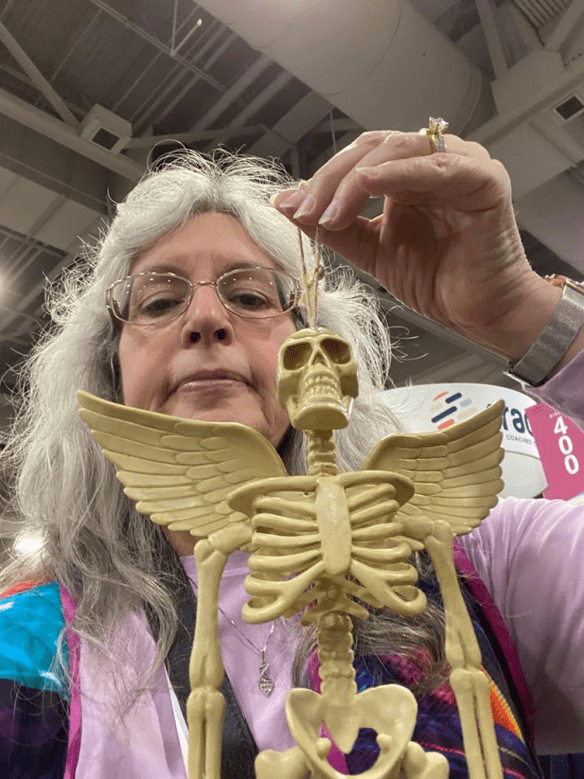
You can literally find almost anything.

I focused on booths related to genetic genealogy, but not exclusively.

RootsTech 2020 DNAPainter

Jonny Perl and the DNAPainter booth. I’ve written lots of articles, here, about using DNAPainter, one of my very favorite tools.

RootsTech 2020 Rootstech store

The RootsTech store was doing a brisk business.

RootsTech 2020 DNA basics

The RootsTech show area itself had a DNA Basics area which I thought was brilliant in its simplicity.

Inheritance is show by jellybeans.

Rootstech 2020 dNA beans

Put a cup under the outlet and pull the lever.

Rootstech 2020 beans in cup

How many of which color you receive in your cup is random, although you get exactly the same number from the maternal and paternal side.

Now you know I wanted to count these, don’t you?

Rootstech 2020 JellyGenes

And they are of course, called, “JellyGenes.” Those must be deletions still laying in the bin.

RootsTech 2020 Wikitree

WikiTree booth and volunteers. I love WikiTree – it’s “one great tree” is not perfect but these are the people, along with countless others that inject the “quality” into the process.

RootsTech 2020 MitoYDNA

MitoYDNA with Kevin Borland standing in front of the sign.

RootsTech 2020 Crossley

This amazing artist whose name I didn’t get. I was just so struck by her work, painting her ancestor from the picture on her phone.

RootsTech 2020 painter

I wish I was this talented. I would love to have some of my ancestor’s painted. Hmm….

Rootstech 2020 GeneaCreations

Jeanette at GeneaCreations makes double helix zipper pulls, along with lots of other DNA bling, and things not so blingy for men. These are just SOOO cool.

RootsTech 2020 zipper pull

I particularly love my “What’s Your Haplogroup” t-shirt and my own haplogroup t-shirt. Yes, she does custom work. What’s your haplogroup? You can see those goodies here.

Around the corner, I found CelebrateDNA.

RootsTech 2020 Celebrate DNA

Is that a Viking wearing a DNA t-shirt?

Rootstech 2020 day of the dead

CelebrateDNA has some very cool “Day of the Dead” bags, t-shirts and mouse pads, in addition to their other DNA t-shirts. I bought an “Every day is Day of the Dead for Genealogists” mouse pad which will live permanently in my technology travel bag. You can see their other goodies, here.

RootsTech 2020 skeleton

Hey, I think I found a relative. Can we DNA test to see?

Rootstech 2020 Mayflower replica

The Mayflower Society had a fun booth with a replica model ship.

RootsTech 2020 Mayflower passengers

Along with the list of passengers perched on a barrel of the type that likely held food or water for the Pilgrims.

RootsTech 2020 Webinar Marathon

Legacy Family Tree Webinars is going to have a 24-hour Genealogy Webinar Marathon March 12-13. So, who is going to stay up for this?Iit’s free and just take a look at the speakers, and topics, here. I’m guessing lots of people will take advantage of this opportunity. You can also subscribe for more webinars, here.

On March 4th, I’m presenting a FREE webinar, “3 Genealogy DNA Case Studies and How I Solved Them,” so sign up and join in!

Rootstech 2020 street art

Food at RootsTech falls into two categories. Anything purchased in the convention center meaning something to stave off starvation, and some restaurant with friends – the emphasis being on friends.

A small group went for pizza one evening when we were too exhausted to do anything else. Outside I found this interesting street art – and inside Settebello Pizzeria Napoletana I had the best Margarita Pizza I think I’ve ever had.

Then, as if I wasn’t already stuffed to the gills, attached through a doorway in the wall is Capo Gelateria Italiana, creators of artisan gelato. I’ve died and gone to heaven. Seriously, it’s a good thing I don’t live here.

Rootstech 2020 gelatto

Who says you can’t eat ice cold gelato in the dead of winter, outside waiting for the Uber, even if your insides are literally shivering and shaking!! It was that good.

This absolutely MUST BE a RootsTech tradition.

Rootstech 2020 ribbons

That’s it for RootsTech 2020. Hope you’ve enjoyed coming along on this virtual journey and that you’ve found something interesting, perhaps a new hint or tool to utilize.

______________________________________________________________

Disclosure

I receive a small contribution when you click on some of the links to vendors in my articles. This does NOT increase the price you pay but helps me to keep the lights on and this informational blog free for everyone. Please click on the links in the articles or to the vendors below if you are purchasing products or DNA testing.

Thank you so much.

DNA Purchases and Free Transfers

Genealogy Products and Services

Genealogy Research

Fun DNA Stuff

  • Celebrate DNA – customized DNA themed t-shirts, bags and other items

DNAPainter: Painting “Bucketed” Family Tree DNA Maternal and Paternal Family Finder Matches in One Fell Swoop

DNAPainter has done it again, providing genealogists with a wonderful tool that facilitates separating your matches into maternal and paternal categories so that they can be painted on the proper chromosome – in one fell swoop no less.

Of course, the entire purpose of painting your chromosomes is to identify segments that descend from specific ancestors in order to push those lines back further in time genealogically. Identifying segments, confirming and breaking down brick walls is the name of the game.

DNA Painter New Import Tool

The new DNAPainter tool relies on Family Tree DNA’s Phased Family Matching which assigns your matches to maternal and paternal buckets. On your match list, at the top, you’ll see the following which indicates how many matches you have in total and how many people are assigned to each bucket.

DNAPainter FF import.png

Note that these are individual matches, not total matching segments – that number would be higher.

In order for Family Tree DNA to create bucketed matches for you, you’ll need to:

  • Either create a tree or upload a GEDCOM file
  • Attach your DNA kit to “you” in your tree
  • Attach all 4th cousins and closer with whom you match to their proper location on your tree

Yes, it appears that Family Tree DNA is now using 4th cousins, not just third cousins and closer, which provides for additional bucketed matches.

How reliable is bucketing?

Quite. Occasionally one of two issues arise which becomes evident if you actually compare the matches’ segments to the parent with whom they are bucketed:

  • One or more of your matches’ segments do match you and your parent, but additionally, one or more segments match you, but not your parent
  • The X chromosome is particularly susceptible to this issue, especially with lower cM matches
  • Occasionally, a match that is large enough to be bucketed isn’t, likely because no known, linked cousin shares that segment

Getting Started

Get started by creating or uploading your tree at Family Tree DNA.

DNAPainter mytree.png

After uploading your GEDCOM file or creating your tree at Family Tree DNA, click on the “matches” icon at the top of the tree to link yourself and your relatives to their proper places on your tree. Your matches will show in the box below the helix icon.

DNAPainter FF matches.png

I created an example “twin” for myself to use for teaching purposes by uploading a file from Ancestry, so I’m going to attach that person to my tree as my “Evil Twin.” (Under normal circumstances, I do not recommend uploading duplicate files of anyone.)

DNAPainter FF matches link.png

Just drag and drop the person on your match list on top of their place on the tree.

DNAPainter Ff sister.png

Here I am as my sister, Example Adoptee.

I’ve wished for a very, very long time that there was a way to obtain a list of segment matches sorted by maternal and paternal bucket without having to perform spreadsheet gymnastics, and now there is, at DNAPainter.

DNAPainter does the heavy-lifting so you don’t have to.

What Does DNAPainter Do with Bucketed Matches?

When you are finished uploading two files at DNAPainter, you’ll have:

  • Maternal groups of triangulated matches
  • Paternal groups of triangulated matches
  • Matches that could not be assigned based on the bucketing. Some (but not all) of these matches will be identical by chance – typically roughly 15-20% of your match list. You can read about identical by chance, here.

I’ll walk you through the painting process step by step.

First, you need to be sure your relatives are connected to your tree at Family Tree DNA so that you have matches assigned to your maternal and paternal buckets. The more relatives you connect, per the instructions in the previous section, the more matching people will be able to be placed into maternal or paternal buckets.

Painting Bucketed Matches at DNAPainter

I wrote basic articles about how to use DNAPainter here. If you’re unfamiliar with how to use DNAPainter or it’s new to you, now would be a good time to read those articles. This next section assumes that you’re using DNAPainter. If not, go ahead, register, and set up a profile. One profile is free for everyone, but multiple profiles require a subscription.

First, make a duplicate of the profile that you’re working with. This DNAPainter upload tool is in beta.

DNAPainter duplicate profile.png

Since I’m teaching and experimenting, I am using a fresh, new profile for this experiment. If it works successfully, I’ll duplicate my working profile, just in case something goes wrong or doesn’t generate the results I expect, and repeat these steps there.

Second, at Family Tree DNA, Download a fresh copy of your complete matching segment file. This “Download Segments” link is found at the top right of the chromosome browser page.

DNAPainter ff download segments.png

Third, download your matches at the bottom left of the actual matches page. This file hold information about your matches, such as which ones are bucketed, but no segment information. That’s in the other file.

DNAPainter csv.png

Name both of these files something you can easily identify and that tells them apart. I called the first one “Segments” in front of the file name and the second one “Matches” in front of the file name.

Fourth, at DNAPainter, you’ll need to import your entire downloaded segment file that you just downloaded from Family Tree DNA. I exclude segments under 7cM because they are about 50% identical by chance.

DNAPainter import instructions

click to enlarge

Select the segment file you just named and click on import.

DNAPainter both.png

At this point, your chromosomes at DNAPainter will look like this, assuming you’re using a new profile with nothing else painted.

Let’s expand chromosome 1 and see what it looks like.

DNAPainter chr 1 both.png

Note that all segments are painted over both chromosomes, meaning both the maternal and paternal copies of chromosome 1, partially shown above, because at this point, DNAPainter can’t tell which people match on the maternal and which people match on the paternal sides. The second “matches” file from Family Tree DNA has not yet been imported into DNAPainter, which tells DNAPainter which matches are on the maternal and which are on the paternal chromosomes.

If you’re not working with a new profile, then you’ll also see the segments you’ve already painted. DNAPainter attempts to NOT paint segments that appear to have previously been painted.

Fifth, at DNAPainter, click on the “Import mat/pat info from ftDNA” link on the left which will provide you with a page to import the matches file information. This is the file that has maternal and paternal sides specified for bucketed matches. DNAPainter needs both the segment file, which you already imported, and the matches file.

DNAPainter import bucket

click to enlarge

After the second import, the “matches” file, my matches are magically redistributed onto their appropriate chromosomes based on the maternal and paternal bucketing information.

I love this tool!

At this point, you will have three groups of matches, assuming you have people assigned to your maternal and paternal buckets.

  • A “Shared” group for people who are related to both of your parents, or who aren’t designated as a bucketed match to either parent
  • Maternal group (pink chromosome)
  • Paternal group (blue chromosome)

It’s Soup!!!

I’m so excited. Now my matches are divided into maternal and paternal chromosome groups.

DNAPainter import complete.png

Just so you know, I changed the colors of my legend at DNAPainter using “edit group,” because all three groups were shades of pink after the import and I wanted to be able to see the difference clearly.

DNAPainter legend.png

Your Painted Chromosomes

Let’s take a look at what we have.

DNAPainter both, mat, pat.png

There’s still pink showing, meaning undetermined, which gets painted over both the maternal and paternal chromosomes, but there’s also a lot of magenta (maternal) and blue (paternal) showing now too as a result of bucketing.

Let’s look at chromosome 1.

DNAPainter chr 1 all.png

This detail, which is actually a summary, shows that the bucketed maternal (magenta) and paternal (blue) matches have actually covered most of the chromosome. There are still a few areas without coverage, but not many.

For a genealogist, this is beautiful!!!

How many matches were painted?

DNAPainter paternal total.png

DNAPainter maternal total.png

Expanding chromosome 1, and scrolling to the maternal portion, I can now see that I have several painted maternal segments, and almost the entire chromosome is covered.

Here’s the exciting part!

DNAPainter ch1 1 mat expanded.png

I starred the relatives I know, on the painting, above and on the pedigree chart, below. The green group descends through Hiram Ferverda and Eva Miller, the yellow group through Antoine Lore and Rachel Hill. The blue group is Acadian, upstream of Antoine Lore.

DNAPainter maternal pedigree.png

Those ancestors are shown by star color on my pedigree chart.

I can now focus on the genealogies of the other unstarred people to see if their genealogy can push those segments back further in time to older ancestors.

On my Dad’s side, the first part of chromosome 1 is equally as exciting.

DNAPainter chr 1 pat expanded.png

The yellow star only pushed this triangulated group back only to my grandparents, but the green star is from a cousin descended from my great-grandparents. The red star matches are even more exciting, because my common ancestor with Lawson is my brick wall – Marcus Younger and his wife, Susanna, surname unknown, parents of Mary Younger.

DNAPainter paternal pedigree.png

I need to really focus hard on this cluster of 12 people because THEIR common ancestors in their trees may well provide the key I need to push back another generation – through the brick wall. That is, after all, the goal of genetic genealogy.

Woohoooo!

Manual Spreadsheet Compare

Because I decided to torture myself one mid-winter day, and night, I wanted to see how much difference there is between the bucketed matches that I just painted and actual matches that I’ve identified by downloading my parents’ segment match files and mine and comparing them manually against each other. I removed any matches in my file that were not matches to my parent, in addition to me, then painted the rest.

I’ll import the resulting manual spreadsheet into the same experimental DNAPainter profile so we can view matches that were NOT painted previously. DNAPainter does not paint matches previously painted, if it can tell the difference. Since both of these files are from downloads, without the name of the matches being in any way modified, DNAPainter should be able to recognize everyone and only paint new segment matches.

Please note here that the PERSON unquestionably belongs bucketed to the parental side in question, but not all SEGMENTS necessarily match you and your parent. Some will not, and those are the segments that I removed from my spreadsheet.

DNAPainter manual spreadsheet example.png

Here’s a made-up example where I’ve combined my matches and my mother’s matches in one spreadsheet in order to facilitate this comparison. I colored my Mom’s matches green so they are easy to see when comparing to my own, then sorting by the match name.

Person 1 matches me and Mom both, at 10 cM on chromosome 1. Person 1 is assigned to my maternal side due to the matches above 9 cM, the lowest threshold at Family Tree DNA for bucketing.

In this example, we can see that Person 1 matches me and Mom (colored green), both, on the segment on chromosome 1. That match, bracketed by red, is a valid, phased, match and should be painted.

However, Person 1 also matches me, but NOT Mom on chromosome 2. Because Person 1 is bucketed to mother, this segment on chromosome 2 will also be painted to my maternal chromosome 2 using the DNAPainter import. The only way to sort this out is to do the comparison manually.

The same holds true for the X match shown. The two segments shown in red should NOT be painted, but they will be unless you are willing to compare you and your parents’ matches manually, you will just have to evaluate segments individually when you see that you’re working in a cluster where matches have been assigned through the mass import tool.

If you choose to compare the spreadsheets manually to assure that you’re not painting segments like the red ones above, DNAPainter provides instructions for you to create your own mass upload template, which is what I did after removing any segment matches of people that were not “in common” between me and mother on the same chromosomal segment, like the red ones, above.

Please note that if you delete the erroneous segments and later reimport your bucketed matches, they will appear again. I’m more inclined to leave them, making a note.

I did not do a manual comparison of my father’s side of the tree after discovering just how little difference was found on my mother’s side, and how much effort was involved in the manual comparison.

Creating a Mass Upload Template and File

DNAPainter custom mass upload.png

The instructions for creating your own mass upload file are provided by DNAPainter – please follow them exactly.

In my case, after doing the manual spreadsheet compare with my mother, only a total of 18 new segments were imported that were not previously identified by bucketing.

Three of those segments were over 15cM, but the rest were smaller. I expected there would be more. Family Tree DNA is clearly doing a great job with maternal and paternal bucketing assignments, but they can’t do it without known relatives that have also tested and are linked to your tree. The very small discrepancy is likely due to matches with cousins that I have not been able to link on my tree.

The great news is that because DNAPainter recognizes already-painted segments, I can repeat this anytime and just paint the new segments, without worrying about duplicates.

  • The information above pertains to segments that should have been painted, but weren’t.
  • The information below pertains to segments that were painted, but should not have been.

I did not keep track of how many segments I deleted that would have erroneously been painted. There were certainly more than 18, but not an overwhelming number. Enough though to let me know to be careful and confirm the segment match individually before using any of the mass uploaded matches for hypothesis or conclusions.

Given that this experiment went well, I created a copy of my “real” profile in order to do the same import and see what discoveries are waiting!

Before and After

Before I did the imports into my “real” file (after making a copy, of course,) I had painted 82% of my DNA using 1700 segments. Of course, each one of those segments in my original profile is identified with an ancestor, even if they aren’t very far back in time.

Although I didn’t paint matches in common with my mother before this mass import, each of my matches in common with my mother are in common with one or the other of my maternal grandparents – and by using other known matches I can likely push the identity of those segments further back in time.

Status Percent Segments Painted
Before mass Phased Family Match bucketed import 82 1700
After mass Phased Family Match bucketed import 88 7123
After additional manual matches with my mother added 88 7141

While I did receive 18 additional matching segments by utilizing the manually intensive spreadsheet matching and removal process, I did not receive enough more matches to justify the hours and hours of work. I won’t be doing that anymore with Family Tree DNA files since they have so graciously provided bucketing and DNAPainter can leverage that functionality.

Those hours will be much better spent focusing on unraveling the ancestors whose stories are told in clusters of triangulated matches.

I Love The Import Tool, But It’s Not Perfect

Keep in mind that the X chromosome needs a match of approximately twice the size of a regular chromosome to be as reliable. In other words, a 14 cM threshold for the X chromosome is roughly equivalent to a 7 cM match for any other chromosome. Said another way, a 7 cM match on the X is about equal to a 3.5 cM match on any other chromosome.

X matches are not created equal.

The SNP density on the X chromosome is about half that of the other chromosomes, making it virtually impossible to use the same matching criteria. I don’t encourage using matches of less than 500 SNPs unless you know you’re in a triangulated group and WITH at least a few larger, proven matches on that segment of the X chromosome.

Having said that, X matches, due to their unique inheritance path can persist for many generations and be extremely useful. You can read about working with the X chromosome here and here.

I noticed when I was comparing segments in the manual spreadsheet that I had to remove many X matches with people who had identical matches on other chromosomes with me and my mother. In other words, just because they matched my mother and me exactly on one chromosome, that phasing did not, by default, extend to matching on other segments.

I checked my manually curated file and discovered that I had a total of seven X matches that should have been, and were, painted because they matched me and Mom both.

DNAPainter X spreadsheet example.png

However, there were many that didn’t match me and Mom both, matching only me, that were painted because that person was bucketed (assigned) to my maternal side because a different segment phased to mother correctly.

On the X chromosome, here’s what happened.

DNAPainter maternal X.png

You can see that a lot more than 7 bright red matches were painted – 26 more to be exact. That’s because if an individual is bucketed on your maternal or paternal side, it’s presumed that all of the matching segments come from the same ancestor and are legitimate, meaning identical by descent and not by chance. They aren’t. Every single segment has an inheritance path and story of its own – and just because one segment triangulates does NOT mean that other segments that match that person will triangulate as well.

The X chromosome is the worst case scenario of course, because these 7 cM segments are actually as reliable as roughly 3.5 cM segments on any other chromosome, which is to say that more than 50% of them will be incorrect. However, some will be accurate and those will match me and mother both. 21% of the X matches to people who phased and triangulated on other chromosomes were accurate – 79% were not. Thankfully, we have phasing, bucketing and tools like this to be able to tell the difference so we can utilize the 21% that are accurate. No one wants to throw the baby out with the bath water, nor do we want to chase after phantoms.

Keep in mind that Phased Family Matching, like any other tool, is just that, a tool and needs some level of critical analysis.

Every Segment Has Its Own Story

We know that every single DNA segment has an independent inheritance path and story of its own. (Yes, I’ve said that several time now because it’s critically important so that you don’t wind up barking up the wrong tree, literally, pardon the pun.)

In the graphic above of my painted X chromosome matches, only the six matches with green stars are on the hand-curated match list. One had already been painted previously. The balance of the bright red matches were a part of the mass import and need to be deleted. Additionally, one of the accurate matches did not upload for some reason, so I’ll add that one manually.

I suggest that you go ahead and paint your bucketed segments, but understand that you may have a red herring or two in your crop of painted segment matches.

As you begin to work with these clusters of matches, check your matching segments with your parents (or other family members who were used in bucketing) and make sure that all the segments that have been painted by bulk upload actually match on all of the same segments.

If you have a parent that tested, there is no need to see if you and your match match other relatives on that same side. If your match does not match you and your parent on some significant overlapping portion of that same segment, the match is invalid. DNA does not “skip generations.”

If you don’t have a parent that has tested, your known relatives are your salvation, and the key to bucketed matches.

The great news is that you can easily see that a bulk match was painted from the coloring of the batch import. As you discover the relevant genealogy and confirm that all segments actually match your parent (or another family member, if you don’t have parents to test,) move the matching person to the appropriately colored ancestral group.

I further recommend that you hand curate the X chromosome using a spreadsheet. The nature of the X makes depending on phased matching too risky, especially with a tool like DNAPainter that can’t differentiate between a legitimate and non-legitimate match. The X chromosome matches are extraordinarily valuable because they can be useful in ways that other chromosomes can’t be due to the X’s unique inheritance path.

What About You?

If you don’t have your DNA at Family Tree DNA and you have tested elsewhere, you can transfer your DNA file for free, allowing you to see your matches and use many of the Family Tree DNA tools. However, to access the chromosome browser, which you’ll need for DNA painting, you’ll need to purchase the unlock for $19, but that’s still a lot less than retesting.

Here are transfer instructions for transferring your DNA file from 23andMe, Ancestry or MyHeritage.

If you have not purchased a Family Finder test at Family Tree DNA and don’t have a DNA file to transfer, you can order a test here.

_____________________________________________________________

Disclosure

I receive a small contribution when you click on some of the links to vendors in my articles. This does NOT increase the price you pay but helps me to keep the lights on and this informational blog free for everyone. Please click on the links in the articles or to the vendors below if you are purchasing products or DNA testing.

Thank you so much.

DNA Purchases and Free Transfers

Genealogy Products and Services

Genealogy Research

Fun DNA Stuff

  • Celebrate DNA – customized DNA themed t-shirts, bags and other items

Top 10 All-Time Favorite DNA Articles

Top 10

I’ve been writing about DNA is every shape and form for approaching 8 years now, offering more than 1200 free (key word seachable) articles.

First, thank you for being loyal subscribers or finding my articles and using them to boost your genealogy research with the power of DNA.

You may not know this, but many of my articles stem from questions that blog readers ask, plus my own genealogical research stumbling-blocks, of course.

DNAeXplain articles have accumulated literally millions and millions of page views, generating more than 38,000 approved comments. Yes, I read and approve (or not) every single comment. No, I do not have “staff” to assist. Staff consists of some very helpful felines who would approve any comment with the word catnip😊

More than twice that number of comments were relegated to spam. That’s exactly why I approve each one personally.

Old Faithful

Looking at your favorites, I’ve discovered that some of these articles have incredible staying power, meaning that people access them again and again. Given their popularity and usefulness, please feel free to share by linking or forwarding to your friends and genealogy groups.

Subscribe for FREE

Don’t forget, you can subscribe for free by clicking on the little grey “follow” box on the upper right hand side of the blog margin.

Top 10 subscribe

Just enter your e-mail address and click on follow. I don’t sell or share your e-mail, ever. I’ve never done a mass e-mailing either – so I’ll not be spamming you😊

You will receive each and every article, about 2 per week, in a nice handy e-mail, or RSS feed if you prefer.

Your Favorites

You didn’t realize it, but every time you click, you’re voting.

So, which articles are reader favorites? Remember that older articles have had more time to accumulate views.

I’ve noted the all-time ranking along with the 2019 ranking.

Starting with number 10, you chose:

  • Number 10 all-time, did not place in top 10 in 2019: Ethnicity Testing – A Conundrum – Published in 2016 – How ethnicity testing works – and why sometimes it doesn’t work like people expect it will.

Ethnicity results from DNA testing. Fascinating. Intriguing. Frustrating. Exciting. Fun. Challenging. Mysterious. Enlightening. And sometimes wrong. These descriptions all fit. Welcome to your personal conundrum! The riddle of you! If you’d like to understand why your ethnicity results might not have … Continue reading →

  • Number 9 all time and number 4 in 2019: How Much Indian Do I Have in Me? – Published in 2015 – This article explains how to convert that family story into an expected percentage.

I can’t believe how often I receive this question. Here’s today’s version from Patrick. “My mother had 1/8 Indian and my grandmother on my father’s side was 3/4, and my grandfather on my father’s side had 2/3. How much would … Continue reading →

  • Number 8 all-time, did not place in top 10 in 2019: 4 Kinds of DNA for Genetic Genealogy – Published in 2012 – Short, basic and THE article I refer people to most often to understand DNA for genealogy.

Let’s talk about the different “kinds” of DNA and how they can be used for genetic genealogy. It used to be simple. When this “industry” first started, in the year 2000, you could test two kinds of DNA and it was … Continue reading →

Yep, there’s a gene for these traits, and more. The same gene, named EDAR (short for Ectodysplasin receptor EDARV370A), it turns out, also confers more sweat glands and distinctive teeth and is found in the majority of East Asian people. This is one … Continue reading →

  • Number 6 all-time, did not place in top 10 in 2019: What is a Haplogroup? – Published in 2013 – One of the first questions people ask about Y and mitochondrial DNA is about haplogroups.

Sometimes we’ve been doing genetic genealogy for so long we forget what it’s like to be new. I’m reminded, sometimes humorously, by some of the questions I receive. When I do DNA Reports for clients, each person receives a form to … Continue reading

  • Number 5 all-time and number 10 in 2019: X Marks the Spot – Published in 2012 – This article explains how to use the X chromosome for genealogy and its unique inheritance path.

When using autosomal DNA, the X chromosome is a powerful tool with special inheritance properties. Many people think that mitochondrial DNA is the same as the X chromosome. It’s not. Mitochondrial DNA is inherited maternally, only. This means that mothers … Continue reading →

  • Number 4 all-time, did not place in top 10 in 2019: Ethnicity Results – True or Not? – Published in 2013 – Are your ethnicity results accurate? How can you know, and why might your percentages reflect something different than you expect?

I can’t even begin to tell you how many questions I receive that go something like this: “I received my ethnicity results from XYZ. I’m confused. The results don’t seem to align with my research and I don’t know what … Continue reading →

  • Number 3 all-time and number 1 in 2019: Concepts – Calculating Ethnicity Percentages – Published in 2017 – With the huge number of ethnicity testers, it’s no surprise that the most popular article discussed how those percentages are calculated.

There has been a lot of discussion about ethnicity percentages within the genetic genealogy community recently, probably because of the number of people who have recently purchased DNA tests to discover “who they are.” Testers want to know specifically if ethnicity percentages are right … Continue reading →

  • Number 2 all-time, did not place in top 10 in 2019: Which DNA Test is Best? – Published in 2017 – A comprehensive review of the tests and major vendors in the genetic genealogy testing space. The answer is that your testing goals determine which test is best. This article aligns goals with tests.

If you’re reading this article, congratulations. You’re a savvy shopper and you’re doing some research before purchasing a DNA test. You’ve come to the right place. The most common question I receive is asking which test is best to purchase. There is … Continue reading →

Every day, I receive e-mails very similar to this one. “My family has always said that we were part Native American.  I want to prove this so that I can receive help with money for college.” The reasons vary, and … Continue reading →

2019 Only

Five articles ranked in the top 10 in 2019 that aren’t in the top all-time 10 articles. Two were just published in 2019.

  • Number 8 for 2019: Migration Pedigree Chart – Published in 2016 – This fun article illustrates how to create a pedigree charting focused on the locations of your ancestors.

Paul Hawthorne started a bit of a phenomenon, whether he meant to or not, earlier this week on Facebook, when he created a migration map of his own ancestors using Excel to reflect his pedigree chart. You can view … Continue reading →

Just as they promised, and right on schedule, Family Tree DNA today announced X chromosome matching. They have fully integrated X matching into their autosomal Family Finder product matching. This will be rolling live today. Happy New Year from Family … Continue reading →

  • Number 6 for 2019: Full or Half Siblings – Published in April 2019 – Want to know how to determine the difference between full and half siblings? This is it.

Many people are receiving unexpected sibling matches. Every day on social media, “surprises” are being reported so often that they are no longer surprising – unless of course you’re the people directly involved and then it’s very personal, life-altering and you’re … Continue reading →

Ancestry’s new tool, ThruLines has some good features and a lot of potential, but right now, there are a crop of ‘gators in the swimmin’ hole – just waiting for the unwary. Here’s help to safely navigate the waters and … Continue reading →

One of the most common questions I receive, especially in light of the interest in ethnicity testing, is how much of an ancestor’s DNA someone “should” share. The chart above shows how much of a particular generation of ancestors’ DNA … Continue reading →

In Summary

Taking a look at a summary chart is interesting. From my perspective, I never expected the “Thick Hair, Small Boobs” article to be so popular.

“Which DNA Test is Best?” ranked #2 all time, but not in the 2019 top 10. I wonder if that is a function of the market softening a bit, or of fewer people researching before purchasing.

I was surprised that 5 of the top 10 all-time were not in the top 10 of 2019.

Conversely, I’m equally as surprised that 3 of the older 2019 articles not in the all-time top 10.

I’m very glad these older articles continue to be useful, and I do update them periodically, especially if I notice they are accessed often.

Article All-time Top 10 2019 Top 10
Ethnicity Testing – A Conundrum 10 0
How Much Indian Do I Have in Me? 9 4
4 Kinds of DNA for Genetic Genealogy 8 0
Thick Hair, Small Boobs, Shovel Shaped Teeth, and More 7 9
What is a Haplogroup? 6 0
X Marks the Spot 5 10
Ethnicity Results – True or Not? 4 0
Concepts – Calculating Ethnicity Percentages 3 1
Which DNA Test is Best? 2 0
Proving Native American Ancestry Using DNA 1 2
Migration Pedigree Chart 0 8
X Chromosome Matching at Family Tree DNA 0 7
Full or Half Siblings Published in 2019 6
Ancestry’s ThruLines Dissected: How to Use and Not get Bit by the ‘Gators Published in 2019 5
Ancestral DNA Percentages – How Much of Them is in You? 0 3

What Would You Like to See in 2020?

Given that your questions are often my inspiration, what articles would you like to see in 2020?

Are there topics you’d like to see covered? (Sorry, I don’t know the name of your great-great-grandfather’s goat.)

Burning questions you’d like to have answered? (No, I don’t know why there is air.)

Something you’ve been wishing for? (Except maybe for the 1890 census.)

Leave a comment and let me know. (Seriously😊)

I’m looking forward to a wonderful 2020 and hope you’ll come along!

_____________________________________________________________

Disclosure

I receive a small contribution when you click on some (but not all) of the links to vendors in my articles. This does NOT increase the price you pay but helps me to keep the lights on and this informational blog free for everyone. Please click on the links in the articles or to the vendors below if you are purchasing products or DNA testing.

Thank you so much.

DNA Purchases and Free Transfers

Genealogy Services

Genealogy Research

GeneaCreations – Unique Genealogy & DNA Products: Shirts, Fabric, Jewelry & More

These beautiful, unique genealogy gift ideas by GeneaCreations will be a big hit with the creative crowd.

GeneaCreations logo.png

I met Jeanette, founder of GeneaCreations, two years ago at Rootstech. Jeanette loves to design, create and sell wonderful genealogy themed items and suffice it to say, I cannot get out of her booth without purchasing several things. I’m serious.

Meet Jeanette, holding my “What’s Your Haplogroup?” t-shirt. Her love for her creations just shines through, doesn’t it!

Geneacreations shirt

I also bought a DNA ribbon bow for my hair.

Geneacreations ribbon

DNA ribbon, along with other ribbon is available by the yard.

GeneaCreations ribbon.jpg

I can think of all kinds of ideas for using this ribbon, including making Christmas ornaments or for hanging ornaments on the tree. What a great way to help kids learn about ancestors. I try to slip that in wherever I can (wink.)

Geneacreations jewelry

I bought a DNA necklace at Rootstech too. How could I not? Love that subtle double helix tree.

I’m really REALLY excited about the double helix charm zipper pulls that Jeanette is making for me for my purse, backpack and luggage. (Oops, did I let that slip???) She would probably make some for you too.

GeneaCreatiosn jewelry.png

Jeanette has added lots of new styles to the GeneaCreations line over the past couple of years,  including double helix stud earrings, not pictured, if you prefer that style.

GeneaCreations state.png

Another great idea would be to purchase a charm for every state where your ancestors were from, or states you’ve visited hunting for ancestors. It would make a wonderful gift for a daughter, sister, aunt or granddaughter too.

Jeannette also does custom work, like her “Genealogy Bling” shirts. I just adore these.

GeneaCreations haplogroup shirt.png

You’ll be seeing me sporting one of these lovelies one day at Rootstech 2020 in Salt Lake City, but of course customized for my mitochondrial haplogroup, J1c2f. Merry Christmas to me.

If you’re not comfortable buying a gift for yourself, just think of it as being from your matrilineal ancestors, because that’s the mitochondrial DNA inheritance path. Or paternal ancestors for Y DNA. Repeat after me, “My ancestors want me to have this.”😊

You can obtain your full mitochondrial or Y DNA haplogroup (Y chromosome for males only) at Family Tree DNA.  Those tests are also on sale now, here.

Jeanette will customize this Mayflower shirt with your Mayflower ancestor’s name.

GeneaCreations Mayflower.png

Shirts are available in a wide variety of styles and colors.

GeneaCreations offers printed shirt styles if bling isn’t your thing. These are wonderful for family reunions.

GeneaCreations pedigree fabric.png

For quilters and crafty genealogists, you can purchase pedigree chart fabric which can be made into quilts, vests and wearable art.

GeneaCreations tote.png

Don’t want to make something? How about a ready-made tote – just use a quilter’s fabric pen to fill in your ancestors’ names. (I’d use a pencil first, lightly, and retrace with the pen.) What a great gift idea for a genealogy buddy. Genealogists never have enough canvas bags. Trust me.

GeneaCreations denim shirt.png

This year at Rootstech, I bought a denim shirt from GeneaCreations. I love these for when you need something lighter than a sweater or want something that washes up easily. They’re durable and travel wonderfully. I wear these on planes all the time.

GeneaCreations designs.png

There are lots of genealogy embroidery designs to choose from – more than are shown here.

Here’s just a sampling of the design categories that Jeanette offers:

  • Animals
  • Birds
  • Cartoon
  • Civil War
  • Genealogy
  • Organizations
  • Religious
  • Vehicles
  • Winter

There is literally something for everyone.

DNA Fabric

I saved the best for last, because Jeanette JUST ADDED her brand-new DNA electrophoresis fabric through Spoonflower, here. This geeky-cool fabric is what your DNA looks like as it’s processing in the lab.

GeneaCreations fabric.png

You can order this lovely cotton fabric for quilting or sewing, or you can purchase it in different kinds of fabric or as wallpaper, wrapping paper or ready-made home décor items.

GeneaCreations DNA fabric home.png

This DNA fabric must be purchased directly through Spoonflower, but I received an unlock code discount for signing up at Spoonflower in addition to free shipping because it’s December.

I’m not going to spill any beans, but you might, just might see this fabric again😊

Free Shipping

GeneaCreations is a small business and her website shopping cart doesn’t have the ability to process coupons or discount codes, but, if you e-mail your order to Jeanette directly and tell her that you ordered because of this article, she will either not charge shipping, or refund shipping if you order through the website.

You can reach Jeannette at customheirlooms@yahoo.com

Enjoy!

______________________________________________________________

Disclosure

I receive a small contribution when you click on some of the links to vendors in my articles. This does NOT increase the price you pay but helps me to keep the lights on and this informational blog free for everyone. Please click on the links in the articles or to the vendors below if you are purchasing products or DNA testing.

Thank you so much.

DNA Purchases and Free Transfers

Genealogy Products and Services

Genealogy Research

Fun DNA Stuff

  • Celebrate DNA – customized DNA themed t-shirts, bags and other items

Are You DNA Testing the Right People?

We often want to purchase DNA kits for relatives, especially during the holidays when there are so many sales. (There are links for free shipping on tests in addition to sale prices at the end of this article. If you already know who to test, pop on down to the Sales section, now.)

Everyone is on a budget, so who should we test to obtain results that are relevant to our genealogy?

We tell people to test as many family members as possible – but what does that really mean?

Testing everyone may not be financially viable, nor necessary for genealogy, so let’s take a look at how to decide where to spend YOUR testing dollars to derive the most benefit.

It’s All Relative😊

When your ancestors had children, those children inherited different pieces of your ancestors’ DNA.

Therefore, it’s in your best interest to test all of the direct descendants generationally closest to the ancestor that you can find.

It’s especially useful to test descendants of your own close ancestors – great-great-grandparents or closer – where there is a significant possibility that you will match your cousins.

All second cousins match, and roughly 90% (or more) of third cousins match.

Percent of cousins match.png

This nifty chart compiled by ISOGG shows the probability statistics produced by the major testing companies regarding cousin matching relationships.

My policy is to test 4th cousins or closer. The more, the merrier.

Identifying Cousins

  • First cousins share grandparents.
  • Second cousins share great-grandparents.
  • Third cousins share great-great-grandparents.

The easiest way for me to see who these cousins might be is to open my genealogy software on my computer, select my great-great-grandparent, and click on descendants. Pretty much all software has a similar function.

The resulting list shows all of the descendants of that ancestor that I’ve entered in my software. Most genealogists already have or could construct this information with relative ease. These are the cousins you need to be talking to anyway, because they will have photos and stories that you don’t. If you don’t know them, there’s never been a better time to reach out and introduce yourself.

Who to test descendants software

Click to enlarge

People You Already Know

Sometimes it’s easier to start with the family you already know and may see from time to time. Those are the people who will likely be the most beneficial to your genealogy.

Who to test 1C.png

Checking my tree at FamilyTreeDNA, Hiram Ferverda and Evaline MIller are my great-grandparents. All of their children are deceased, but I have a relationship with the children born to their son, Roscoe. Both Cheryl and her brother carry parts of Hiram and Eva’s DNA their son John Ferverda (my grandfather) didn’t inherit, and therefore that I can’t carry.

Therefore, it’s in my best interest to gift my cousin, Cheryl and her brother, both, with DNA kits. Turns out that I already have and my common matches with both Cheryl and her brother are invaluable because I know that people who match me plus either one of them descend from the Ferverda or Miller lines. This relationship and linking them on my tree, shown above, allows Family Tree DNA to perform phased Family Matching which is their form of triangulation.

It’s important to test both siblings, because some people will match me plus one but not the other sibling.

Who’s Relevant?

Trying to convey the concept of who to test and not to test, and why, is sometimes confusing.

Many family members may want to test, but you may only be willing to pay for those tests that can help your own genealogy. We need to know who can best benefit our genealogy in order to make informed decisions.

Let’s look at example scenarios – two focused on grandparents and two on parents.

In our example family, a now-deceased grandmother and grandfather have 3 children and multiple grandchildren. Let’s look at when we test which people, and why.

Example 1: Grandparents – 2 children deceased, 1 living

In our first example, Jane and Barbara, my mother, are deceased, but their sibling Harold is living. Jane has a living daughter and my mother had 3 children, 2 of which are living. Who should we test to discover the most about my maternal grandparents?

Please note that before making this type of a decision, it’s important to state the goal, because the answer will be different depending on your goal at hand. If I wanted to learn about my father’s family, for example, instead of my maternal grandparents, this would be an entirely different question, answer, and tree.

Descendant test

Click to enlarge

The people who are “married in” but irrelevant to the analysis are greyed out. In this case, all of the spouses of Jane, Barbara and Harold are irrelevant to the grandmother and grandfather shown. We are not seeking information about those spouses or their families.

The people I’ve designated with the red stars should be tested. This is the “oldest” generation available. Harold can be tested, so his son, my first cousin, does not need to test because the only part of the grandparent’s DNA that Harold’s son can inherit is a portion of what his father, Harold, carries and gave to him.

Unfortunately, Jane is deceased but her daughter, Liz, is available to test, so Liz’s son does not need to.

I need to test, as does my living brother and the children of my deceased brother in order to recover as much as possible of my mother’s DNA. They will all carry pieces of her DNA that I don’t.

The children of anyone who has a red star do NOT need to test for our stated genealogical purpose because they only carry a portion of thier parent’s DNA, and that parent is already testing.

Those children may want to test for their own genealogy given that they also have a parent who is not relevant to the grandfather and grandmother shown. In my case, I’m perfectly happy to facilitate those tests, but not willing to pay for the children’s tests if the relevant parent is living. I’m only willing to pay for tests that are relevant to my genealogical goals – in this case, my grandparents’ heritage.

In this scenario, I’m providing 5 tests.

Of course, you may have other family factors in play that influence your decision about how many tests to purchase for whom. Family dynamics might include things like hurt feelings and living people who are unwilling or unable to test. I’ve been known to purchase kits for non-biologically related family members so that people could learn how DNA works.

Example 2: Grandparents – 2 children living, one deceased

For our second example, let’s change this scenario slightly.

Descendant test 2

Click to enlarge

From the perspective of only my grandparents’ genealogy, if my mother is alive, there’s no reason to test her children.

Barbara and Harold can test. Since Jane is deceased, and she had only one child, Liz is the closest generationally and can test to represent Jane’s line. Liz’s son does not need to test since his mother, the closest relative generationally to the grandparents is available to test.

In this scenario, I’m providing 3 tests.

Example 3: My Immediate Family – both parents living

In this third example, I’m looking from strictly MY perspective viewing my maternal grandparents (as shown above) AND my immediate family meaning the genealogical lines of both of my parents. In other words, I’ve combined two goals. This makes sense, especially if I’m going to be seeing a group of people at a family gathering. We can have a swab party!

Descendants - parents alive

Click to enlarge

In the situation where my parents are both living, I’m going to test them in addition to Harold and Liz.

I’m testing myself because I want to work using my own DNA, but that’s not really necessary. My parents will both have twice as many matches to other people as I do – because I only inherited half of each parent’s DNA.

In this scenario, I’m providing 5 tests.

Example 4: My Immediate Family – one parent living, one deceased

Descendants - father deceased

Click to enlarge

In our last example, my mother is living but my father is deceased. In addition to Harold and Liz who reflect the DNA of my maternal grandparents, I will test myself, my mother my living brother and my deceased brother’s child.

Because my father is deceased, testing as many of my father’s descendants as possible, in addition to myself, is the only way for me to obtain some portion of his DNA. My siblings will have pieces of my parent’s DNA that I don’t.

I’m not showing my father’s tree in this view, but looking at his tree and who is available to test to provide information about his side of the family would be the next logical step. He may have siblings and cousins that are every bit as valuable as the people on my mother’s side.

Applying this methodology to your own family, who is available to test?

Multiple Databases

Now that you know WHO to test, the next step is to make sure your close family members test at each of the major providers where your DNA is as well.

I test everyone at Family Tree DNA because I have been testing family members there for 19 years and many of the original testers are deceased now. The only way new people can compare to those people is to be in the FamilyTreeDNA data base.

Then, with permission of course, I transfer all kits, for free, to MyHeritage. Matching is free, but if you don’t have a subscription, there’s an unlock fee of $29 to access advanced tools. I have a full subscription, so all tools are entirely free for the kits I transfer and manage in my account.

Transferring to Family Tree DNA and matching there is free too. There’s an unlock fee of $19 for advanced tools, but that’s a good deal because it’s substantially less than a new test.

Neither 23andMe nor Ancestry accept transfers, so you have to test at each of those companies.

The great news is that both Ancestry and 23andMe tests can be transferred to  MyHeritage and FamilyTreeDNA.

Before purchasing tests, check first by asking your relatives or testing there yourself to be sure they aren’t already in those databases. If they took a “spit in a vial” test, they are either at 23andMe or Ancestry. If they took a swab test, it’s MyHeritage or FamilyTreeDNA.

I wrote about creating a testing and transfer strategy in the article, DNA Testing and Transfers – What’s Your Strategy? That article includes a handy dandy chart about who accepts which versions of whose files.

Sales

Of course, everything is on sale since it’s the holidays.

Who are you planning to test?

______________________________________________________________

Disclosure

I receive a small contribution when you click on some of the links to vendors in my articles. This does NOT increase the price you pay but helps me to keep the lights on and this informational blog free for everyone. Please click on the links in the articles or to the vendors below if you are purchasing products or DNA testing.

Thank you so much.

DNA Purchases and Free Transfers

Genealogy Products and Services

Genealogy Research

Fun DNA Stuff

  • Celebrate DNA – customized DNA themed t-shirts, bags and other items

Genetic Affairs Reconstructs Trees from Genetic Clusters – Even Without Your Tree or Common Ancestors

Since Genetic Affairs launched in 2018, they’ve added a LOT of new functionality. I initially wrote about their clustering functionality here.

Genetic Affairs AutoClustering, SuperClusters and brand-new AutoTree tree reconstruction are to-die-for features for traditional genealogists. For adoptees or people seeking unknown parentage, they are the best thing since sliced bread, automating tasks previously peformed manually over labor-filled hours, days and months.

Why Genetic Affairs?

Genetic Affairs works with matches from three vendors; Ancestry, FamilyTreeDNA’s Family Finder test and 23andMe.

MyHeritage has integrated a version of Genetic Affairs directly into their product offering on the MyHeritage website so every MyHeritage DNA customer receives clustering functionality, free, through MyHeritage, but not tree reconstruction.

GedMatch has also implemented an autocluster version for Tier 1 users, but GedMatch’s version only works at GedMatch, of course, and does not include the new tree reconstruction feature.

This article pertains to the functionality of the features available directly through Genetic Affairs, including:

  • Clustering your matches visually to identify ancestral lines of people that match you and each other
  • Reports by cluster including common surnames and locations
  • Analysis of trees within each cluster to identify common ancestors
  • Partially reconstructs trees with your known ancestors for each cluster
  • Partially reconstructs trees between your matches even if you don’t have a tree or don’t share the common ancestor

Genetic Affairs provides visualization for linked DNA matches along with critically important clues to help you figure out just how you are related to these people, and these clusters of interrelated people. The Genetic Affairs user manual can be found here.

Analysis

Each time you run Genetic Affairs is called an analysis. Each analysis scans your kit at the selected vendor(s) for all current matches. A few minutes later, you receive a zip file via e-mail with two or three files depending on your selections at Genetic Affairs and the tree availabilty of the vendor:

  • Autocluster file including the visual clusters plus additional information
  • Excel spreadsheet of cluster members and relevant information such as common ancestors and common locations
  • Tree file containing reconstructed trees (23andMe does not support trees, so no trees are available for 23andMe clusters)

Let’s look at each feature. Grab a cup of coffee and head for the computer.

Selecting Analysis Options

I encourage you to experiment. Selecting a wider range of cM (centimorgans) results in a larger file, but may also mean that the analysis times out.

For this report, I’m utilizing my matches at FamilyTreeDNA and selected a cM range of 50 minimum and 250 maximum. I wanted a minimum cluster size of 2 people, meaning 2 in addition to me. This resulted in 249 total matches that met that criteria and 20 people who met the cM criteria but did not have another person with whom to cluster.

I tried a second analysis using 20 cM – 300 cM resulting in a much larger file with 499 people in the cluster group. Currently, 499 is the maximum that will be processed.

Genetic Affairs profiles.png

On the Genetic Affairs Profiles page, I can view all of the profiles I manage. Users can schedule updates where Genetic Affairs automatically scans for matches and produces reports.

Genetic Affairs my profiles

Click to enlarge

By clicking on the Autoscan button, you can schedule automated recurring scans with e-mail notification.

Genetic Affairs autoscan

Click to enlarge

You can scan daily, weekly, monthly or never – whatever interval you select.

You can select both the minimum level of DNA match and the minimum cM. The lowest you can select is 9cM.

You can view any e-mails that have been sent to you by Genetic Affairs. The green envelope means that there’s something in your e-mail box. This answers the question about whether the report was completed and sent. If the report has been sent, but is not in your e-mail, check your spam filter.

Starting the Scan

Back on the Genetic Affairs profiles page, you can initiate an autocluster by clicking on the AutoCluster button where you’ll see the options based on which vendor you’ve selected.

Genetic Affairs autocluster.png

For example, at Ancestry, you can include only people in a particular group or only starred matches.

Genetic Affairs Ancestry autocluster

Click to enlarge

23andMe includes surname enrichment and triangulated groups options.

Genetic Affairs 23andme autocluster.png

FamilyTreeDNA and Ancestry both include the “AutoTree – identify common ancestors from trees” option. It’s very important that you click this box if you select the “Default AutoCluster” option – or you won’t get the reconstructed trees.

Genetic Affairs default autocluster.png

Of course, you can always run the analysis again.

Genetic Affairs autotree.png

If you click on the “AutoTree AutoCluster” function, the AutoTree box is already checked for you.

Genetic Affairs autotree autocluster.png

Rule Based AutoCluster

The “Rule based AutoCluster” is a dream-come-true for people seeking unknown parents or ancestors in a relatively recent timeframe.

Genetic Affairs Rule Based Autocluster.png

The “Rule based AutoCluster” provides you with options that allow you to do three things:

  • NOT – Exclude your matches with someone else. For example, your mother has tested. You can use the NOT rule to exclude anyone you might match through your mother’s side, providing you with clusters from your father’s side.
  • AND – Combine your results with someone else’s. If you have identified a half-sibling, you can view only clusters of only people who match you AND your half sibling.
  • OR – Combined rules. You can request a cluster of everyone in clusters with person A but not in a cluster with person B. In this case, if you match a number of half siblings, you can include all of their matches, except people who match them through their “other” parent, if that parent has tested.

Genetic Affairs has provided some graphics and examples here, but you may have to be a member of the site to access this page because the options are customized for you. So I’ll include the non-customized information, below. You can click these to open in a separate window and enlarge.

Genetic Affairs rule based 1.pngGenetic Affairs rule based 2.png

The “Rule based AutoCluster” explanations provided by Genetic Affairs.

Genetic Affairs rule based 3.png

Read the details of how these tools work. They are powerful, so don’t assume you understand without reading carefully.

Now let’s cluster!

Clustering Your Matches

Genetic Affairs autocluster order.png

At Genetic Affairs, if you initiate clustering by clicking on the AutoCluster button, you’ll need to put a checkmark in the AutoTree function box. If you began by clicking the AutoTree button, the box is automatically checked for you.

A few minutes later, you’ll receive an email with a zipped file. Save this file to someplace on your computer where you can find it, and open the zipped file by clicking.

Genetic Affairs zip file.png

You’ll see the files, above.

Click on the chrome AutoCluster HTML file which will display in your browser.

The first thing you will see is your visual autocluster. It’s so much fun to watch your matches “fly” into place!

Each of the people in this cluster are somehow related to the other people in the custer who have cells of the same color. The people with grey cells are included in two clusters – meaning the one to the right and the one above, both.

Genetic Affairs cluster.png

The names of the matches are listed to the left and above the display.

The legend is to the right.

Genetic Affairs cluster legend.png

I have a total of 41 clusters.

Scrolling down the page, each cluster has additional information, and each column is searchable or selectable, including comments I’ve entered at the vendor.

Genetic Affairs autocluster info

Click to enlarge

Just by looking at these first 3 matches, I know immediately which side of the family and which ancestors are involved with this cluster. I can look at my notes, to the right, which indicate whether I’ve identified our common ancestor. I paint identified matches at DNAPainter which I’ve entered into the notes field at the vendor.

If I’m signed in to my account at the vendor, I can click on my match’s tree link, above, and take a look. Keep in mind that these people can be related to you, and each other, through multiple ancestors.

Genetic Affairs autocluster members.png

You can hover over any person in the grid, above, to view additional information. For each person whose square is grey, indicating membership in (at least) two clusters, you can hover over the grey square and view the members of both clusters. In this case, I’m hovered over the grey square of Brooke and E.H and the black box shows me who is in both people’s clusters.

Note that while a match could be related to you through several ancestors, and hence be in more than 2 clusters, because of the grid nature of clustering, a match can only be displayed in a maximum of 2 different clusters.

Looking at the auto-generated table below, I see the common surnames in cluster 1. Keep in mind that many of these people maybe related to each other through a spouse that you aren’t. Your ancestor’s brother’s children, for example, are also related to each other through your ancestor’s brother’s wife.

Genetic Affairs surnames.png

I know that Vannoy is the common line, but Upton isn’t my ancestor – at least not that I know of. However, a surname with 20 people in a cluster needs to be investigated and evaluated. Do I have any missing wives in this line? Here’s a really great place to start digging.

In this case, it turns out that one of my ancestor’s children married an Upton, and several of his descendants have tested.

Let’s see what other tools we have.

The Ancestor Spreadsheet

Opening the spreadsheet file, I see several rows and columns.

Genetic Affairs common ancestor

Click to enlarge

The common ancestor between the people in the rows is listed at left. The green cells are from my tree.

Two example ancestors are shown above, Mary McDowell and William Harrell, who just happen to have been married to each other.

Scrolling on down, I see rows without green cells.

Genetic Affairs ancestors

Click to enlarge

These people share a common ancestor in their trees, an ancestor that isn’t in my tree. Presumably this is an ancestor I don’t share with them – or one I haven’t identified.

For example, “Bev” and “van” share William Grubb. “Vicki” and “Mark” share Martha Helen Smith. I don’t share either of these ancestors, but Martha Smith married Alvis Winster Bolton, the son of my ancestor – so I know why Martha Helen Smith appears as a common person in the trees of my matches, but not me.

Further down in the same cluster, I notice that one match shares multiple lines in our trees. Therefore, our DNA match could be on either line, or some segments from one line and some from the other.

Scrolling to the bottom of each cluster’s sheet, common locations are provided.

Genetic Affairs locations

Click to enlarge

While the designation of “Tennessee” isn’t terribly exciting, scrolling further down provides a list by county, and that IS exciting, especially if you’re chasing a brick wall. Sometimes a group of ancestors in a location where you’re seeking a female’s family is very suggestive especially when combined with ancestral names and surnames.

Let’s move on to the third group of files, Trees.

The Tree File

Click on the tree file and you’ll see the following.

Genetic Affairs tree file.png

Reconstructed Trees

For each cluster where trees can be reconstructed, you’ll see two files for cluster 1:

  • Ancestors 1
  • Tree 1

Opening the file labeled Ancestors 1, I see the following information for the first ancestor, meaning a common ancestor between the two people listed below that ancestor. You can click to enlarge these images.

Genetic Affairs ancestors by cluster.png

Opening the corresponding Tree 1 file, I see that Genetic Affairs has reconstructed the tree between me and the other testers as best it can based on the provided trees.

Genetic Affairs reconstructed trees.png

Looking at the tree for cluster 3, below, I see this line in cluster 1, above, has been extended because Sarah, the pink match and me all share a common ancestor, Elizabeth Shepherd.

Genetic Affairs reconstructed tree 2.png

Looking at another cluster, below, while I don’t share an ancestor in a tree, three people that I match at a relatively high level do.

Genetic Affairs reconstructed tree no common ancestor.png

As you can see, their common ancestor is Anne Adelaide Chiasson. This is my Acadian line, so our common ancestor or ancestors must be someplace on up that tree, or the result of an undocumented adoption, or a missing ancestor in our trees.

Constructing the trees of your matches to each other, even when you don’t have a common ancestor in your tree, is the best feature of all.

Clustering plus tree reconstruction, especially in combination with the other clues, is the key to breaking through those unyielding  brick walls.

Super AutoClusters

Just as I was getting ready to publish this article, Genetic Affairs released a new feature called Super AutoCluster.

I absolutely love this, because it combines your clusters from multiple vendors – today Ancestry, who does not provide segment information, along with Family Tree DNA, who  provides invaluable segment information.

This combination can be extremely powerful.

To begin a Super AutoCluster, click on that option under an AncestryDNA kit that also has a kit at Family Tree DNA. Both kits need to have a profile at Genetic Affairs.

Genetic Affairs supercluster.png

Next, you’ll see the screen confirming the kits to use. The combined autocluster tool is limited to a total of 500 matches, or 250 at each account. However, that’s more than enough to make some great progress.

Press “Perform Analysis.”

Drum roll please…

Voila, your combined cluster.

Genetic Affairs supercluster cluster

Click to enlarge

In this example, you can see the large peach and purple Ancestry clusters. The green red, brown and pink smaller clusters are Family Tree DNA clusters. The Family Tree DNA clusters have tiny little Fs in their cells. If you click the above graphic to enlarge, you can see the Fs.

However, the grey cells that intersect the two clusters, meaning an Ancestry and a Family Tree DNA cluster, are found in both of those clusters, connecting the clusters for you logically.

If you look closely at the cells labeled here with “common names,” you’ll see “N” in the cells indicating a common names for you to check out within that cluster.

The “Common Ancestors” box shows the people who connect to both clusters.

There are also a number of people that span the green and red Family Tree DNA clusters too.

Genetic Affairs then proceeds to combine the clustered DNA matches and trees for you from both vendors.

Genetic Affairs supercluster tree

Click to enlarge

In addition to the cluster graph and spreadsheet information that now includes combined information, you’ll see a much larger clustered tree.

And again, the best part is that even if you don’t know how you connect to people through trees, their tree and ancestors will be connected, even if you’re absent. You’ll be present in the genetic cluster itself, so you can work the combined tree cluster to see where you might fit in that branch of the family. Because trust me, you do fit – somehow, someplace.

Cost

Genetic Affairs uses a “credit” payment system. Your first 200 credits are free so you can learn. These may last you for weeks or months, depending on how often you run the clusters. If you manage multiple kits, you’ll use credits more quickly, but it’s worth every last dollar. Genetic Affairs is very inexpensive. I manage multiple accounts and I spend around $5 per month. You can read about Genetic Affairs’ payment plans and see sample calculations here.

My recommendation is simply to dive in and use your free credits. By the way, I’m gifting myself with a “credit purchase” for Christmas😊

Genetic Affairs is a wonderful genealogy gift idea for serious genealogists, adoptees or people seeking unknown parents or ancestors in recent generations.

Have You Tested or Transferred With All 4 Vendors?

If you haven’t yet tested at or transferred to each of the main 4 vendors, clustering, reconstructed trees and SuperClusters is yet another reason to do so. Additionally, every close relative’s DNA holds hints that yours doesn’t, so be sure to test them too.

You can purchase kits, below, or read about how to transfer your DNA to vendors who accept uploads – FamilyTreeDNA, MyHeritage and GedMatch, all for free, here.

Enjoy!

______________________________________________________________

Disclosure

I receive a small contribution when you click on some of the links to vendors in my articles. This does NOT increase the price you pay but helps me to keep the lights on and this informational blog free for everyone. Please click on the links in the articles or to the vendors below if you are purchasing products or DNA testing.

Thank you so much.

DNA Purchases and Free Transfers

Genealogy Services

Genealogy Research

Thankful

Perhaps this article will reach you early on Thanksgiving morning while the day is still calm and quiet, before anyone arrives. Maybe you’re enjoying a cup of coffee or tea while you’re pondering, perhaps a little nervously, what the day will bring.

Thanksgiving only comes around once a year to remind us, but I try to think thankfully as a habit, not just when reminded.

I know, I know. It’s difficult – especially right now if you live in the US with all of the hatefulness and divisiveness nationally, and within the genetic genealogy community this past year.

It’s been rough. There is lingering sadness for more civil times.

Sadness is a fact of life, but you can’t grieve without having loved – and that’s the gratitude part of the equation.

Sometimes we just have to be thankful for lemonade and look beyond recent difficulties – focusing on the larger landscape and big picture.

I’d like to share what I’m thankful for.

Expressing what we are thankful for when people visit has the unintended (or intended) consequence of educating the younger generation about our family history while the adults reminisce. Maybe they’ll ask questions about topics that provide an opportunity to discuss ancestors and genealogy – without them realizing that’s what’s going on.

For example, my grandkids like old family photographs, so I’m using those in this article, plus a few leading questions:)

What Am I Thankful For?

What am I thankful for this Thanksgiving Day?

Mom Dean wedding

Mom and Dad’s wedding in September 1972

I’m thankful that I got to spend so many wonderful years with my mom and stepdad, even though they are gone now. They blessed me with memories that make me smile and cry at the same time. How is that even possible?

Thanksgiving Dad

Dad and first grandchild at Thanksgiivng

I’m thankful for those “first Thanksgivings” when we got to welcome a new family member. These memories are priceless today. That little tiny yellow sleeper is in my “special box” in the basement. Wanna guess what else is in there?

I’m thankful that I can look around the room in those old pictures and see my home as it used to be. Not only is this “home” gone today, so is the house and most of the items on the shelves have been scattered to the winds.

I do have a few. Here, let me show you…:)

Last Thanksgiving William George Estes

Last Thanksgiving with William George Estes in 1970 or 1971

I’m thankful for the “last Thanksgivings” because it means there were so many before.

Did you know my grandfather lived to be a really old man? How old to you think he is in this picture?

Dave Estes 2010

Dave, Thanksgiving 2010

I’m oh so thankful that I found my brother, Dave, in 2004, was able to spend time with him before losing him in January 2012. I learned so much about love from this rough, tough guy – even though he turned out not to be my biological brother.

Did you know that Dio, his dog, rode in his semi with him? Did I ever tell you about how Dave got Dio?

Helen and me - Two sisters

Me meeting Dave’s sister

I’m thankful that I was able to find Dave’s biological family. Knowing they had a brother was such a gift for them – and me. I now have a sister-of-heart. Helen brought me a symbolic white rose the day I met her almost exactly 6 years to the day after Dave passed away.

cousin-nancy-farm

Uncle Lore and Nancy at Mom’s in the 1970s

I’m thankful for family traditions, both old and new, and cameras to record those traditions for future generations. This was Thanksgiving on the farm in the 1970s, with lots of people crunched into the kitchen, sitting at card tables. All that mattered was that we were together. Uncle Lore and Nancy are both gone now.

Do you know how Uncle Lore got his name?

Mom only got the Fostoria dishes out for holidays. I had forgotten about that until I saw this photo. Who has those plates anyway?

Thanksgiving Tim

Tim at the Thanksgiving buffet

I’m grateful for the new family members that have joined us, bringing their talent, traditions and blessings with them. I hope we enrich their lives as much as they enrich ours. We have a new holiday tradition.

Thanksgiving new family

Shawn’s family

I’m grateful for wonderful memories of life-altering moments when families are indelibly joined forever. Is there a name for how you are related to your daughter-in-law’s family? We’re all blood relatives to the same grandchildren.

Wedding lobster bride and groom

Now this picture just begs to tell a story…

If you’re thinking there’s a story just waiting to be told here – you’re right and I think Thanksgiving would be a good time to share it with others. What do you think?

Thanksgiving Grandpa and girls

Grandpa and the girls making rolls at Thanksgiving

I’m grateful that my granddaughters like to help grandpa make crescent rolls for Thanksgiving dinner and that they get to spend time with us.

What are your favorite memories of your grandparents?

Girls cookie making

Making cookies is FUN!

The granddaughters are coming in a few days to bake Christmas cookies. Passing those traditions, and recipes, on.

What is your favorite cookie recipe?

Red Umbrella

Having fun on a rainy day along the Rhine.

I’m thankful that grandpa thinks that sitting under a red umbrella with grandma in the rain and carrying the bag of fabric because I hurt my knee is fun. Or at least tolerable. We had so much fun that day! Did you know I broke my leg on that trip?

Thanksgiving fortune cookie.jpg

I’m grateful that Family Tree DNA began testing in the year 2000 because it allowed me to test long-time researchers, then in their 80s and 90s, whose DNA has proven so critical to unraveling our genealogy, sometimes in very surprising ways.

How’s that?

For awhile, I thought that my father might not be descended from the Abraham Estes line, but Uncle Buster’s DNA matches proved that he was. Thank goodness!

Thanksgiving Uncle Buster

Uncle Buster

I’m grateful for the more than 80 family members who have tested over the years in order to further our family genealogy. Many have passed on, including Uncle Buster, above, who is really my first cousin once removed. Is it any wonder families are confusing?

Why do we call him Uncle if he isn’t? It’s a southern thing – save yourself, don’t ask.

Thanksgiving swab

Swabbing as a family during the holidays – but before eating

I am grateful for my family members who have tested their DNA in more recent years, became interested, picked up the research mantle and will continue after the current generation is gone. (You know who you are!)

Oh, you haven’t tested? Hold on – I have a kit right here in my purse…

Thanksgiving Speak trip Whalley church

Speak family tour in Whalley – all the cousins – what FUN!!!

I’m thankful for all of the new cousins I’ve met and known cousins I’ve confirmed thanks to DNA testing.

I love the collaborative research, the discoveries they’ve made and shared with me, and the joyful adventures we’ve embarked on together. My Speak cousins above, in the church in Whalley, Lancashire that our ancestors attended. Y DNA proved our family connection to the Speak family of Lancashire. This was the trip of a lifetime. Well, except for that fire alarm in the middle of the night…

FTDNA triang browser select

Phased Family Matching at Family Tree DNA

I am grateful for the ongoing development by the DNA testing companies to bring us tools like triangulation, Phased Family Matching, Theories of Family Relativity and Thrulines.

Chromosomes are cool! Who do you think you got your hair color and dimples from in the family?

DNAPainter garden

My painted chromosomes at DNAPainter based on segment data of identified common ancestors

I am grateful for the third party tools like DNAPainter, Genetic Affairs, Genetic Families (dnagedcom.com) and GedMatch who provide additional tools. Between them all, I might, just might, be able to break through some of these brick walls yet in my lifetime.

Want to see which pieces of DNA you got from grandma? I made you a painting of your own.

Me as Dutch

“Me” in traditional Dutch clothes

I’m grateful for my ancestors who were:

  • European
  • African
  • Native American
  • Jewish
  • Middle Eastern
  • Asian
  • Muslim
  • Christian
  • Bigamists
  • Catholic
  • Baptist
  • Quaker
  • Sultan
  • Puritan
  • Brethren
  • Dancer
  • Mennonite
  • Acadian
  • Bootlegger
  • Alcoholic
  • Preachers
  • Mentally Unstable
  • Immigrants
  • Refugees
  • Murdered
  • King
  • Queen
  • Pauper
  • Pilgrim
  • Crusader
  • Shipwrecked

Just look at all of those stories waiting to be told. Without every one of those ancestors, I would not be me and you would not be you!

I’m incredibly thankful that I have been graced with the privilege of being the storyteller, of chronicling my ancestors’ lives. They did the best they could with the resources at their disposal in the time they lived.

Did you know that for a long time, women weren’t allowed to own things separately from their husbands? Or vote?

The ancestors I admire most are the ones who stood up for what they knew was right, spoke truth to power, even when it was inconvenient, dangerous, or both.

Just ask Dorothy Durham who had the audacity to show up in open court “on behalf of her husband,” who was notably absent, and place bond for Anne Kelly, a servant impregnated by Dorothy’s son so that Anne would not be whipped and imprisoned for “having a bastard child.”

There is no assurance of a happy ending. Sometimes the price of integrity and resistance is death.

Ask Elizabeth Day, who was murdered. Ask the Native Americans or the Jews in the Holocaust and the Jewish ancestors that my husband can’t find in his family. Genocide wipes entire peoples from the face of the earth and their records along with them.

May their brave, heroic souls rest in peace.

Wedding quilt sisters

Quilt sisters

I’m extraordinarily thankful for my family and my family-of-heart, in particular, my quilt-sisters.

Wedding bride out the door

After literally sewing the bride into her dress

Family-of-heart is your family-of-choice. The people who will literally come over to your house and do whatever is needed to get your house, you and your daughter ready for her wedding.

Lentz Mon Ami wedding

Such a beautiful day

Or get you ready for your own outdoor wedding.

Thanksgiving quilt sisters.jpg

These are the people who have a key to your house, and your heart. Your dog thinks they are family, and vice versa.

These are the people who may literally save your sanity or your life, and we have.

Thanksgiving Connie Quilt

Memory quilt for quilt sister moving away

These are the people who go to the doctor with you, make care-quilts or lovingly offer to take you in when disaster strikes. Like losing your job or that fire at Mary’s house.

They bring over chicken soup when you’re sick – then show up anyway when you tell them to stay home.

You share happy or sad tears, and either is better together.

me mary quilt

They are the ones who will help you hem a quilt for an ill family member at their son’s house. Their family is your family and vice versa.

You develop your own shared traditions, together, over time. Like Christmas Eve…

kathy mary quilt

They are the people whose family you know well enough to collect their handprints to make a surprise anniversary quilt, without the recipient being any the wiser until the great unveiling.

mud buddies

Mary’s gonna kill me for this one:)

Or they’ll play in the mud with you, er, I mean garden. Yep, that’s the garden out back. It looks a lot different today.

mary puddle

Bet you can’t guess who is who

Or splash in mud-puddles, er, I mean, clean your shoes off. You’re never too old to play in puddles.

These are the people who make life worth living, and for whom I’m very, very thankful.

What about you?

What are your thankfulness memories that you could share with your family around the table today?

Have a wonderful Thanksgiving.

______________________________________________________________

Disclosure

I receive a small contribution when you click on some of the links to vendors in my articles. This does NOT increase the price you pay but helps me to keep the lights on and this informational blog free for everyone. Please click on the links in the articles or to the vendors below if you are purchasing products or DNA testing.

Thank you so much.

DNA Purchases and Free Transfers

Genealogy Products and Services

Genealogy Research

Fun DNA Stuff

  • Celebrate DNA – customized DNA themed t-shirts, bags and other items

Big Y News and Stats + Sale

I must admit – this past January when FamilyTreeDNA announced the Big Y-700, an upgrade from the Big Y-500 product, I was skeptical. I wondered how much benefit testers would really see – but I was game to purchase a couple upgrades – and I did. Then, when the results came back, I purchased more!

I’m very pleased to announce that I’m no longer skeptical. I’m a believer.

The Big Y-700 has produced amazing results – and now FamilyTreeDNA has decoupled the price of the BAM file in addition to announcing substantial sale prices for their Thanksgiving Sale.

I’m going to discuss sale pricing for products other than the Big Y in a separate article because I’d like to focus on the progress that has been made on the phylogenetic tree (and in my own family history) as a result of the Big Y-700 this year.

Big Y Pricing Structure Change

FamilyTreeDNA recently anounced some product structure changes.

The Big Y-700 price has been permanently dropped by $100 by decoupling the BAM file download from the price of the test itself. This accomplishes multiple things:

  • The majority of testers don’t want or need the BAM file, so the price of the test has been dropped by $100 permanently in order to be able to price the Big Y-700 more attractively to encourage more testers. That’s good for all of us!!!
  • For people who ordered the Big Y-700 since November 1, 2019 (when the sale prices began) who do want the BAM file, they can purchase the BAM file separately through the “Add Ons and Upgrades” page, via the “Upgrades” tab for $100 after their test results are returned. There will also be a link on the Big Y-700 results page. The total net price for those testers is exactly the same, but it represents a $100 permanent price drop for everyone else.
  • This BAM file decoupling reduces the initial cost of the Big Y-700 test itself, and everyone still has the option of purchasing the BAM file later, which will make the Big Y-700 test more affordable. Additionally, it allows the tester who wants the BAM file to divide the purchase into two pieces, which will help as well.
  • The current sale price for the Big Y-700 for the tester who has taken NO PREVIOUS Y DNA testing is now just $399, formerly $649. That’s an amazing price drop, about 40%, in the 9 months since the Big Y-700 was introduced!
  • Upgrade pricing is available too, further down in this article.
  • If you order an upgrade from any earlier Big Y to the Big Y-700, you receive an upgraded BAM file because you already paid for the BAM file when you ordered your initial Big Y test.
  • The VCF file is still available for download at no additional cost with any Big Y test.
  • There is no change in the BAM file availability for current customers. Everyone who ordered before November 1, 2019 will be able to download their BAM file as always.

The above changes are permanent, except for the sale price.

2019 has been a Banner Year

I know how successful the Big Y-700 has been for kits and projects that I manage, but how successful has it been overall, in a scientific sense?

I asked FamilyTreeDNA for some stats about the number of SNPs discovered and the number of branches added to the Y phylotree.

Drum roll please…

Branches Added This Year Total Tree Branches Variants Added to Tree This Year Total Variants Added to Tree
2018 6,259 17,958 60,468 132.634
2019 4,394 22.352 32,193 164,827

The tests completed in 2019 are only representative for 10 months, through October, and not the entire year.

Haplotree Branches

Not every SNP discovered results in a new branch being added to the haplotree, but many do. This chart shows the number of actual branches added in 2018 and 2019 to date.

Big Y 700 haplotree branches.png

These stats, provided by FamilyTreeDNA, show the totals in the bottom row, which is a cumulative branch number total, not a monthly total. At the end of October 2019, the total number of individual branches were 22,352.

Big Y 700 haplotree branches small.png

This chart, above, shows some of the smaller haplogroups.

Big Y 700 haplotree branches large.png

This chart shows the larger haplogroups, including massive haplogroup R.

Haplotree Variants

The number of variants listed below is the number of SNPs that have been discovered, named and placed on the tree. You’ll notice that these numbers are a lot larger than the number of branches, above. That’s because roughly 168,000 of these are equivalent SNPs, meaning they don’t further branch the tree – at least not yet. These 168K variants are the candidates to be new branches as more people test and the tree can be further split.

Big Y 700 variants.png

These numbers also don’t include Private Variants, meaning SNPs that have not yet been named.

If you see Private Variants listed in your Big Y results, when enough people have tested positive for the same variant, and it makes sense, the variants will be given a SNP name and placed on the tree.

Big Y 700 variants small.png

The smaller haplogroups variants again, above, followed by the larger, below.

Big Y 700 variants large.png

Upgrades from the Big Y, or Big Y-500 to Big Y-700

Based on what I see in projects, roughly one third of the Big Y and Big Y-500 tests have upgraded to the Big Y-700.

For my Estes line, I wondered how much value the Big Y-700 upgrade would convey, if any, but I’m extremely glad I upgraded several kits. As a result of the Big Y-700, we’ve further divided the sons of Abraham, born in 1747. This granularity wasn’t accomplished by STR testing and wasn’t accomplished by the Big Y or Big Y-500 testing alone – although all of these together are building blocks. I’m ECSTATIC since it’s my own ancestral line that has the new lineage defining SNP.

Big Y 700 Estes.png

Every Estes man descended from Robert born in 1555 has R-BY482.

The sons of the immigrant, Abraham, through his father, Silvester, all have BY490, but the descendants of Silvester’s brother, Robert, do not.

Moses, son of Abraham has ZS3700, but the rest of Abraham’s sons don’t.

Then, someplace in the line of kit 831469, between Moses born in 1711 and the present-day tester, we find a new SNP, BY154784.

Big Y 700 Estes block tree.png

Looking at the block tree, we see the various SNPs that are entirely Estes, except for one gentleman who does not carry the Estes surname. I wrote about the Block Tree, here.

Without Big Y testing, none of these SNPs would have been found, meaning we could never have split these lines genealogically.

Every kit I’ve reviewed carries SNPs that the Big Y-700 has been able to discern that weren’t discovered previously.

Every. Single. One.

Now, even someone who hasn’t tested Y DNA before can get the whole enchilada – meaning 700+ STRs, testing for all previously discovered SNPs, and new branch defining SNPs, like my Estes men – for $399.

If a new Estes tester takes this test, without knowing anything about his genealogy, I can tell him a great deal about where to look for his lineage in the Estes tree.

Reduced Prices

FamilyTreeDNA has made purchasing the Big Y-700 outright, or upgrading, EXTREMELY attractive.

Test Price
Big Y-700 purchase with no previous Y DNA test


$399
Y-12 upgrade to Big Y-700 $359
Y-25 upgrade to Big Y-700 $349
Y-37 upgrade to Big Y-700 $319
Y-67 upgrade to Big Y-700 $259
Y-111 upgrade to Big Y-700 $229
Big Y or Big Y-500 upgrade to Big Y-700 $189

Note that the upgrades include all of the STR markers as yet untested. For example, the 12-marker to Big Y-700 includes all of the STRs between 25 and 111, in addition to the Big Y-700 itself. The Big Y-700 includes:

  • All of the already discovered SNPs, called Named Variants, extending your haplogroup all the way to the leaf at the end of your branch
  • Personal and previously undiscovered SNPs called Private Variants
  • All of the untested STR markers inclusive through 111 markers
  • A minimum of a total of 700 STR markers, including markers above 111 that are only available through Big Y-700 testing

With the refinements in the Big Y test over the past few years, and months, the Big Y is increasingly important to genealogy – equally or more so than traditional STR testing. In part, because SNPs are not prone to back mutations, and are therefore more stable than STR markers. Taken together, STRs and SNPs are extremely informative, helping to break down ancestral brick walls for people whose genealogy may not reach far back in time – and even those who do.

If you are a male and have not Y DNA tested, there’s never been a better opportunity. If you are a female, find a male on a brick wall line and sponsor a scholarship.

Click here to order or upgrade!

______________________________________________________________

Disclosure

I receive a small contribution when you click on some of the links to vendors in my articles. This does NOT increase the price you pay but helps me to keep the lights on and this informational blog free for everyone. Please click on the links in the articles or to the vendors below if you are purchasing products or DNA testing.

Thank you so much.

DNA Purchases and Free Transfers

Genealogy Services

Genealogy Research