DNA Testing Strategy for Adoptees and People with Uncertain Parentage

Adoptees aren’t the only people who don’t know who their parents are.  There are many people who don’t know the identity of one of their two parents…and it’s not always the father.  Just this week, I had someone who needed to determine which of two sisters was her mother.  Still, the “who’s your Daddy” crowd, aside from adoptees, is by far the largest.

The DNA testing strategy for both of these groups of people is the same, with slight modifications for male or female. Let’s take a look.

Males have three kinds of DNA that can be tested and then compared to other participants’ results.  The tests for these three kinds of DNA provide different kinds of information which is useful in different ways.  For example, Y DNA testing may give you a surname, if you’re a male, but the other two types of tests can’t do that, at least not directly.

Females only have two of those kinds of DNA that can be tested.  Females don’t have a Y chromosome, which is what makes males male genetically.

adopted pedigree

If you look at this pedigree chart, you can see that the Y chromosome, in blue, is passed from the father to the son, but not to daughters.  It’s passed intact, meaning there is no admixture from the mother, who doesn’t have a Y chromosome, because she is female.  The Y chromosome is what makes males male.

The second type of DNA testing is mitochondrial, represented by the red circles.  It is passed from the mother to all of her children, of both genders, intact – meaning her mitochondrial DNA is not admixed with the mtDNA of the father.  Woman pass their mtDNA on to their children, men don’t.

Therefore when you test either the Y or the mtDNA, you get a direct line view right down that branch of the family tree – and only that direct line on that branch of the tree.  Since there is no admixture from spouses in any generation, you will match someone exactly or closely (allowing for an occasional mutation or two) from generations ago.  Now, that’s the good and the bad news – and where genealogical sleuthing comes into play.

On the chart above, the third kind of DNA testing, autosomal DNA, tests your DNA from all of your ancestors, meaning all of those boxes with no color, not just the blue and red ones, but it does include the blue and red ancestors too.  However, autosomal DNA (unlike Y and mtDNA) is diluted by half in each generation, because you get half of your autosomal DNA from each parent, so only half of the parents DNA gets passed on to each child.

Let’s look at how these three kinds of DNA can help you identify your family members.

Y DNA

Since the Y DNA typically follows the paternal surname, it can be extremely helpful for males who are searching for their genetic surname.  For example, if your biological father’s surname is Estes, assuming he is not himself adopted or the product of a nonpaternal event (NPE) which I like to refer to as undocumented adoptions, his DNA will match that of the Estes ancestral line.  So, if you’re a male, an extremely important test will be the Y DNA test from Family Tree DNA, the only testing company to offer this test.

Let’s say that you have no idea who your bio-father is, but when your results come back you see a preponderance of Estes men whom you match, as well as your highest and closest matches being Estes.

By highest, I mean on the highest panel you tested – in this case 111 markers.  And by closest, I mean with the smallest genetic distance, or number of mutations difference.  On the chart below, this person matches only Estes males at 111 markers, and one with only 1 mutation difference (Genetic Distance.)  Please noted that I’ve redacted first names.

Hint for Mr. Hilbert, below – there is a really good chance that you’re genetically Estes on the direct paternal side – that blue line.

Estes match ex

The next step will be to see which Estes line you match the most closely and begin to work from there genealogically.  In this case, that would be the first match with only one difference.  Does your match have a tree online?  In this case, they do – as noted by the pedigree chart icon.  Contact this person.  Where did their ancestors live?  Where did their descendants move to?  Where were you born?  How do the dots connect?

The good news is, looking at their DNA results, you can see that your closest match has also tested autosomally, indicated by the FF icon, so you can check to see if you also match them on the Family Finder test utilizing the Advanced Matching Tool.  That will help determine how close or distantly related you are to the tester themselves.  This gives you an idea how far back in their tree you would have to look for a common ancestor.

Another benefit is that your haplogroup identifies your deep ancestral clan, for lack of a better word.  In other words, you’ll know if your paternal ancestor was European, Asian, Native American or African – and that can be a hugely important piece of information.  Contrary to what seems intuitive, the ethnicity of your paternal (or any) ancestor is not always what seems evident by looking in the mirror today.

Y DNA – What to order:  From Family Tree DNA, the 111 marker Y DNA test.  This is for males only.  Family Tree DNA is the only testing company to provide this testing.  Can you order fewer markers, like 37 or 67?  Yes, but it won’t provide you with as much information or resolution as ordering 111 markers.  You can upgrade later, but you’ll curse yourself for that second wait.

FTDNA Y

Mitochondrial DNA

Males and females both can test for mitochondrial DNA.  Matches point to a common ancestor directly up the matrilineal side of your family – your mother, her mother, her mother – those red circles on the chart.  These matches are more difficult to work with genealogically, because the surnames change in every generation.  Occasionally, you’ll see a common “most distant ancestor” between mitochondrial DNA matches.

Your mitochondrial DNA is compared at three levels, but the most accurate and detailed is the full sequence level which tests all 16,569 locations on your mitochondria.  The series of mutations that you have forms a genetic signature, which is then compared to others.  The people you match the most closely at the full sequence level are the people with whom you are most likely to be genealogically related to a relevant timeframe.

You also receive your haplogroup designation with mitochondrial DNA testing which will place you within an ethnic group, and may also provide more assistance in terms of where your ancestors may have come from.  For example, if your haplogroup is European and you match only people from Norway….that’s a really big hint.

Using the Advanced Matching Tool, you can also compare your results to mitochondrial matches who have taken the autosomal Family Finder test to see if you happen to match on both tests.  Again, that’s not a guarantee you’re a close relative on the mitochondrial side, but it’s a darned good hint and a place to begin your research.

Mitochondrial DNA – What to Order:  From Family Tree DNA, the mitochondrial full sequence test.  This is for males and females both.  Family Tree DNA is the only company that provides this testing.

FTDNA mtDNA

Autosomal DNA

Y and mitochondrial DNA tests one line, and only one line – and shoots like a laser beam right down that line, telling you about the recent and deep history of that particular lineage.  In other words, those tests are deep and not wide.  They can tell you nothing about any of your other ancestors – the ones with no color on the pedigree chart diagram – because you don’t inherit either Y or mtDNA from those ancestors.

Autosomal DNA, on the other hand tends to be wide but not deep.  By this I mean that autosomal DNA shows you matches to ancestors on all of your lines – but only detects relationships back a few generations.  Since each child in each generation received half of their DNA from each parent – in essence, the DNA of each ancestor is cut in half (roughly) in each generation.  Therefore, you carry 50% of the DNA of your parents, approximately 25% of each grandparent, 12.5% of the DNA of each great-grandparent, and so forth.  By the time you’re back to the 4th great-grandparents, you carry only about 1% of the DNA or each of your 64 direct ancestors in that generation.

What this means is that the DNA testing can locate common segments between you and your genetic cousins that are the same, and if you share the same ancestors,  you can prove that this DNA in fact comes from a specific ancestor.  The more closely you are related, the more DNA you will share.

Another benefit that autosomal testing provides is an ethnicity prediction.  Are these predictions 100% accurate?  Absolutely not!  Are they generally good in terms of identifying the four major ethnic groups; African, European, Asian and Native American?  Yes, so long at the DNA amounts you carry of those groups aren’t tiny.  So you’ll learn your major ethnicity groups.  You never know, there may be a surprise waiting for you.

FTDNA myOrigins

The three vendors who provide autosomal DNA testing and matching all provide ethnicity estimates as well, and they aren’t going to agree 100%.  That’s the good news and often makes things even more interesting.  The screen shot below is the same person at Ancestry as the person above at Family Tree DNA.

Ancestry ethnicity

If you’re very lucky, you’ll test and find an immediate close match – maybe even a parent, sibling or half-sibling.  It does happen, but don’t count on it.  I don’t want you to be disappointed when it doesn’t happen.  Just remember, after you test, your DNA is fishing for you 24X7, every single hour of every single day.

If you’re lucky, you may find a close relative, like an uncle or first cousin.  You share a common grandparent with a first cousin, and that’s pretty easy to narrow down.  Here’s an example of matching from Family Tree DNA.

FTDNA close match

If you’re less lucky, you’ll match distantly with many people, but by using their trees, you’ll be able to find common ancestors and then work your way forward, based on how closely you match these individuals, to the current.

Is that a sometimes long process?  Yes.  Can it be done?  Absolutely.

If you are one of the “lottery winner” lucky ones, you’ll have a close match and you won’t need to do the in-depth genealogy sleuthing.  If you are aren’t quite as lucky, there are people and resources to help you, along with educational resources.  www.dnaadoption.com provides tools and education to teach you how to utilize autosomal DNA tools and results.

Of course, you won’t know how lucky or unlucky you are unless you test.  Your answer, or pieces of your answer, may be waiting for you.

Unlike Y and mtDNA testing, Family Tree DNA is not the only company to provide autosomal of testing, although they do provide autosomal DNA testing through their Family Finder test.

There are two additional companies that provide this type of testing as well, 23andMe and Ancestry.com.  You should absolutely test with all three companies, or make sure your results are in all three data bases.  That way you are fishing in all of the available ponds directly.

If you have to choose between testing companies and only utilize one, it would be a very difficult choice.  All three have pros and cons.  I wrote about that here.  The only thing I would add to what I had to say in the comparison article is that Family Tree DNA is the only one of the three that is not trying to obtain your consent to sell your DNA out the back door to other entities.  They don’t sell your DNA, period.  You don’t have to grant that consent to either Ancestry or 23andMe, but be careful not to click on anything you don’t fully understand.

Family Tree DNA accepts transfers of autosomal data into their data base from Ancestry.  They also accept transfers from 23andMe if you tested before December of 2013 when 23andMe reduced the number of locations they test on their V4 chip

Autosomal DNA:  What to Order

Ancestry.com’s DNA product at http://www.ancestry.com – they only have one and it’s an autosomal DNA test

23andMe’s DNA product at http://www.23andMe.com – they only have one and it’s an autosomal DNA test

Family Tree DNA – either transfer your data from Ancestry or 23andMe (if you tested before December 2013), or order the Family Finder test. My personal preference is to simply test at Family Tree DNA to eliminate any possibility of a file transfer issue.

FTDNA FF

Third Party Autosomal Tools

The last part of your testing strategy will be to utilize various third party tools to help you find matches, evaluate and analyze results.

GedMatch

At GedMatch, the first thing you’ll need to do is to download your raw autosomal data file from either Ancestry or Family Tree DNA and upload the file to www.gedmatch.com.  You can also download your results from 23andMe, but I prefer to utilize the files from either of the other two vendors, given a choice, because they cover about 200,000 additional DNA locations that 23andMe does not.

Ancestry.com provides you with no tools to do comparisons between your DNA and your matches.  In other words, no chromosome browser or even information like how much DNA you share.  I wrote about that extensively in this article, and I don’t want to belabor the point here, other than to say that GedMatch levels the playing field and allows you to eliminate any of the artificial barriers put in place by the vendors.  Jim Bartlett just wrote a great article about the various reasons why you’d want to upload your data to Gedmatch.

GedMatch provides you with many tools to show to whom you are related, and how.  Used in conjunction with pedigree charts, it is an invaluable tool.  Now, if we could just convince everyone to upload their files.  Obviously, not everyone does, so you’ll still need to work with your matches individually at each of the vendors and at GedMatch.

GedMatch is funded by donations or an inexpensive monthly subscription for the more advanced tools.

DNAGEDCOM.com

Another donation based site is http://www.dnagedcom.com which offers you a wide range of analytical tools to assist with making sense of your matches and their trees.  DNAGEDCOM works closely with the adoption community and focuses on the types of solutions they need to solve their unique types of genealogy puzzles.  While everyone else is starting in the present and working their way back, adoptees are starting with the older generations and piecing them together to come forward to present.  Their tools aren’t just for adoptees though.  Tools such as the Autosomal DNA Segment Analyzer are great for anyone.  Visit the site and take a look.

Third Party Y and Mitochondrial Tools – YSearch and MitoSearch

Both www.ysearch.org and www.mitosearch.org are free data bases maintained separately from Family Tree DNA, but as a courtesy by Family Tree DNA.  Ysearch shows only a maximum of 100 markers for Y DNA and Mitosearch doesn’t show the coding region of the mitochondrial DNA, but they do allow users to provide their actual marker values for direct comparison, in addition to other tools.

Furthermore, some people who tested at other firms, when other companies were doing Y and mtDNA testing, have entered their results here, so you may match with people who aren’t matches at Family Tree DNA.  Those other data bases no longer exist, so Ysearch or Mitosearch is the only place you have a prayer of matching anyone who tested elsewhere.

You can also adjust the match threshold so that you can see more distant matches than at Family Tree DNA.  You can download your results to Ysearch and Mitosearch from the bottom of your Family Tree DNA matches page.

Mitosearch upload

Answer the questions at Mito or Ysearch, and then click “Save Information.”  When you receive the “500” message that an error has occurred at the end of the process, simply close the window.  Your data has been added to the data base and you can obtain your ID number by simply going back to your match page at Family Tree DNA and clicking on the “Upload to Ysearch” or Mitosearch link again on the bottom of your matches page.  At that point, your Y or mitosearch ID will be displayed.  Just click on “Search for Genetic Matches” to continue matching.

Get Going!

Now that you have a plan, place your orders and in another 6 to 8 weeks, you’ll either solve the quandry or at least begin to answer your questions.  Twenty years ago you couldn’t have begun to unravel your parentage using DNA.  Now, it’s commonplace.  Your adventure starts today.

Oh, and congratulations, you’ve just become a DNA detective!

I wish you success on your journey – answers, cousins, siblings and most importantly, your genetic family.  Hopefully, one day it will be you writing to me telling me how wonderful it was to meet your genetic family for the first time, and what an amazing experience it was to look across the dinner table and see someone who looks like you.

______________________________________________________________

Disclosure

I receive a small contribution when you click on some of the links to vendors in my articles. This does NOT increase the price you pay but helps me to keep the lights on and this informational blog free for everyone. Please click on the links in the articles or to the vendors below if you are purchasing products or DNA testing.

Thank you so much.

DNA Purchases and Free Transfers

Genealogy Services

Genealogy Research

Anzick (12,707-12,556), Ancient One, 52 Ancestors #42

anzick burial location

His name is Anzick, named for the family land, above, where his remains were found, and he is 12,500 years old, or more precisely, born between 12,707 and 12,556 years before the present.  Unfortunately, my genealogy software is not prepared for a birth year with that many digits.  That’s because, until just recently, we had no way to know that we were related to anyone of that age….but now….everything has changed ….thanks to DNA.

Actually, Anzick himself is not my direct ancestor.  We know that definitively, because Anzick was a child when he died, in present day Montana.

anzick on us map

Anzick was loved and cherished, because he was smeared with red ochre before he was buried in a cave, where he would be found more than 12,000 years later, in 1968, just beneath a layer of approximately 100 Clovis stone tools, shown below.  I’m sure his parents then, just as parents today, stood and cried as the laid their son to rest….never suspecting just how important their son would be some 12,500 years later.

anzick clovis tools

From 1968 until 2013, the Anzick family looked after Anzick’s bones, and in 2013, Anzick’s DNA was analyzed.

DNA analysis of Anzick provided us with his mitochondrial haplogroup,  D4h3a, a known Native American grouping, and his Y haplogroup was Q-L54, another known Native American haplogroup.  Haplogroup Q-L54 itself is estimated to be about 16,900 years old, so this finding is certainly within the expected range.  I’m not related to Anzick through Y or mitochondrial DNA.

Utilizing the admixture tools at GedMatch, we can see that Anzick shows most closely with Native American and Arctic with a bit of east Siberian.  This all makes sense.

Anzick MDLP K23b

Full genome sequencing was performed on Anzick, and from that data, it was discovered that Anzick was related to Native Americans, closely related to Mexican, Central and South Americans, and not closely related to Europeans or Africans.  This was an important discovery, because it in essence disproves the Solutrean hypothesis that Clovis predecessors emigrated from Southwest Europe during the last glacial maximum, about 20,000 years ago.

anzick matches

The distribution of these matches was a bit surprising, in that I would have expected the closest matches to be from North America, in particular, near to where Anzick was found, but his closest matches are south of the US border.  Although, in all fairness, few people in Native tribes in the US have DNA tested and many are admixed.

This match distribution tells us a lot about population migration and distribution of the Native people after they left Asia, crossed Beringia on the land bridge, now submerged, into present day Alaska.

This map of Beriginia, from the 2008 paper by Tamm et all, shows the migration of Native people into (and back from) the new world.

beringia map

Anzick’s ancestors crossed Beringia during this time, and over the next several thousand years, found their way to Montana.  Some of Anzick’s relatives found their way to Mexico, Central and South America.  The two groups may have split when Anzick’s family group headed east instead of south, possibly following the edges of glaciers, while the south-moving group followed the coastline.

Recently, from Anzick’s full genome data, another citizen scientist extracted the DNA locations that the testing companies use for autosomal DNA results, created an Anzick file, and uploaded the file to the public autosomal matching site, GedMatch.  This allowed everyone to see if they matched Anzick.  We expected no, or few, matches, because after all, Anzick was more than 12,000 years old and all of his DNA would have washed out long ago due to the 50% replacement in every generation….right?  Wrong!!!

What a surprise to discover fairly large segments of DNA matching Anzick in living people, and we’ve spent the past couple of weeks analyzing and discussing just how this has happened and why.  In spite of some technical glitches in terms of just how much individual people carry of the same DNA Anzick carried, one thing is for sure, the GedMatch matches confirm, in spades, the findings of the scientists who wrote the recent paper that describes the Anzick burial and excavation, the subsequent DNA processing and results.

For people who carry known Native heritage, matches, especially relatively large matches to Anzick, confirm not only their Native heritage, but his too.

For people who suspect Native heritage, but can’t yet prove it, an Anzick match provides what amounts to a clue – and it may be a very important clue.

In my case, I have proven Native heritage through the Micmac who intermarried with the Acadians in the 1600s in Nova Scotia.  Given that Anzick’s people were clearly on a west to east movement, from Beringia to wherever they eventually wound up, one might wonder if the Micmac were descended from or otherwise related to Anzick’s people.  Clearly, based on the genetic affinity map, the answer is yes, but not as closely related to Anzick as Mexican, Central and South Americans.

After several attempts utilizing various files, thresholds and factors that produced varying levels of matching to Anzick, one thing is clear – there is a match on several chromosomes.  Someplace, sometime in the past, Anzick and I shared a common ancestor – and it was likely on this continent, or Beringia, since the current school of thought is that all Native people entered the New World through this avenue.  The school of thought is not united in an opinion about whether there was a single migration event, or multiple migrations to the new word.  Regardless, the people came from the same base population in far northeast Asia and intermingled after arriving here if they were in the same location with other immigrants.

In other words, there probably wasn’t much DNA to pass around.  In addition, it’s unlikely that the founding population was a large group – probably just a few people – so in very short order their DNA would be all the same, being passed around and around until they met a new population, which wouldn’t happen until the Europeans arrived on the east side of the continent in the 1400s.  The tribes least admixed today are found south of the US border, not in the US.  So it makes sense that today the least admixed people would match Anzick the most closely – because they carry the most common DNA, which is still the same DNA that was being passed around and around back then.

Many of us with Native ancestors do carry bits and pieces of the same DNA as Anzick.  Anzick can’t be our ancestor, but he is certainly our cousin, about 500 generations ago, using a 25 year generation, so roughly our 500th cousin.  I had to laugh at someone this week, an adoptee who said, “Great, I can’t find my parents but now I have a 12,500 year old cousin.”  Yep, you do!  The ironies of life, and of genealogy, never fail to amaze me.

Utilizing the most conservative matching routine possible, on a phased kit, meaning one that combines the DNA shared by my mother and myself, and only that DNA, we show the following segment matches with Anzick.

Chr Start Location End Location Centimorgans (cM) SNPs
2 218855489 220351363 2.4 253
4 1957991 3571907 2.5 209
17 53111755 56643678 3.4 293
19 46226843 48568731 2.2 250
21 35367409 36761280 3.7 215

Being less conservative produces many more matches, some of which are questionable as to whether they are simply convergence, so I haven’t utilized the less restrictive match thresholds.

Of those matches above, the one on chromosomes 17 matches to a known Micmac segment from my Acadian lines and the match on chromosome 2 also matches an Acadian line, but I share so many common ancestors with this person that I can’t tell which family line the DNA comes from.

There are also Anzick autosomal matches on my father’s side.  My Native ancestry on his side reaches back to colonial America, in either Virginia or North Carolina, or both, and is unproven as to the precise ancestor and/or tribe, so I can’t correlate the Anzick DNA with proven Native DNA on that side.  Neither can I associate it with a particular family, as most of the Anzick matches aren’t to areas on my chromosome that I’ve mapped positively to a specific ancestor.

Running a special utility at GedMatch that compared Anzick’s X chromosome to mine, I find that we share a startlingly large X segment.  Sometimes, the X chromosome is passed for generations intact.

Interestingly enough, the segment 100,479,869-103,154,989 matches a segment from my mother exactly, but the large 6cM segment does not match my mother, so I’ve inherited that piece of my X from my father’s line.

Chr Start Location End Location Centimorgans (cM) SNPs
X 100479869 103154989 1.4 114
X 109322285 113215103 6.0 123

This tells me immediately that this segment comes from one of the pink or blue lines on the fan chart below that my father inherited from his mother, Ollie Bolton, since men don’t inherit an X chromosome from their father.  Utilizing the X pedigree chart reduces the possible lines of inheritance quite a bit, and is very suggestive of some of those unknown wives.

olliex

It’s rather amazing, if you think about it, that anyone today matches Anzick, or that we can map any of our ancestral DNA that both we and Anzick carry to a specific ancestor.

Indeed, we do live in exciting times.

Honoring Anzick

On a rainy Saturday in June, 2014, on a sagebrush hillside in Montana, in Native parlance, our “grandfather,” Anzick was reburied, bringing his journey full circle.  Sarah Anzick, a molecular biologist, the daughter of the family that owns the land where the bones were found, and who did part of the genetic discovery work on Anzick, returns the box with his bones for reburial.

anzick bones

More than 50 people, including scientists, members of the Anzick family and representatives of six Native American tribes, gathered for the nearly two-hour reburial ceremony. Tribe members said prayers, sang songs, played drums and rang bells to honor the ancient child. The bones were placed in the grave and sprinkled with red ocher, just like when his parents buried him some 12,500 years before.

Participants at the reburial ceremony filled in the grave with handfuls, then shovelfuls of dirt and covered it with stones. A stick tied with feathers marks Anzick’s final resting place.

Sarah Anzick tells us that, “At that point, it stopped raining. The clouds opened up and the sun came out. It was an amazing day.”

I wish I could have been there.  I would have, had I known.  After all, he is part of me, and I of him.

anzick grave'

Welcome to the family, Anzick, and thank you, thank you oh so much, for your priceless, unparalleled gift!!!

tobacco

If you want to read about the Anzick matching journey of DNA discovery, here are the articles I’ve written in the past two weeks.  It has been quite a roller coaster ride, but I’m honored and privileged to be doing this research.  And it’s all thanks to an ancient child named Anzick.

______________________________________________________________

Disclosure

I receive a small contribution when you click on some of the links to vendors in my articles. This does NOT increase the price you pay but helps me to keep the lights on and this informational blog free for everyone. Please click on the links in the articles or to the vendors below if you are purchasing products or DNA testing.

Thank you so much.

DNA Purchases and Free Transfers

Genealogy Services

Genealogy Research

Tenth Annual Family Tree DNA Conference Wrapup

baber summary

This slide, by Robert Baber, pretty well sums up our group obsession and what we focus on every year at the Family Tree DNA administrator’s conference in Houston, Texas.

Getting to Houston, this year, was a whole lot easier than getting out of Houston. They had storms yesterday and many of us spent the entire day becoming intimately familiar with the airport.  Jennifer Zinck, of Ancestor Central, is still there today and doesn’t have a flight until late.

And this is how my day ended, after I finally got out of Houston and into my home airport. This isn’t at the airport, by the way.  Everything was fine there, but I made the apparent error of stopping at a Starbucks on the way home.  This is the parking lot outside an hour or so later.  What can I say?  At least I had my coffee, and AAA rocks, as did the tow truck driver and my daughter for getting out of bed to come and rescue me!!!  Hmmm, I think maybe things have gone full circle.  I remember when I used to go and rescue her:)

jeep tow

So far, today hasn’t improved any, so let’s talk about something much more pleasant…the conference itself.

Resources

One of the reasons I mentioned Jennifer Zinck, aside from the fact that she’s still stuck in the airport, is because she did a great job actually covering the conference as it happened. Since I had some time yesterday to visit with her since our gates weren’t terribly far apart, I asked her how she got that done.  I took notes too, and photos, but she turned out a prodigious amount of work in a very short time.  While I took a lightweight MacBook Air, she took her regular PC that she is used to typing on, and she literally transcribed as the sessions were occurring.  She just added her photos later, and since she was working on a platform that she was familiar with, she could crop and make the other adjustments you never see but we perform behind the scenes before publishing a photo.

On the other hand, I struggled with a keyboard that works differently and is a different size than I’m used to as well as not being familiar with the photo tools to reduce the size of pictures, so I just took rough notes and wrote the balance later.  Having familiar tools make such a difference.  I think I’ll carry my laptop from now on, even though it is much heavier.  Kudos to Jennifer!

I was initially going to summarize each session, but since Jen did such a good job, I’m posting her links. No need to recreate a wheel that doesn’t need to be recreated.

http://www.ancestorcentral.com/decennial-conference-on-genetic-genealogy/

ISOGG, the International Society of Genetic Genealogy is not affiliated with Family Tree DNA or any testing company, but Family Tree DNA is generous enough to allow an ISOGG meeting on Sunday before the first conference session.

http://www.ancestorcentral.com/decennial-conference-on-genetic-genealogy-isogg-meeting/

http://www.ancestorcentral.com/decennial-conference-on-genetic-genealogy-sunday/

You can find my conference postings here:

http://dna-explained.com/2014/10/11/tenth-annual-family-tree-dna-conference-opening-reception/

http://dna-explained.com/2014/10/12/tenth-annual-family-tree-dna-conference-day-2/

http://dna-explained.com/2014/10/13/tenth-annual-family-tree-dna-conference-day-3/

Several people were also posting on a twitter feed as well.

https://twitter.com/search?q=%23FTDNA2014&src=tyah

Those of you where are members of the ISOGG Yahoo group for project administrators can view photos posted by Katherine Borges in that group and there are also some postings on the Facebook ISOGG group as well.

Now that you have the links for the summaries, what I’d like to do is to discuss some of the aspects I found the most interesting.

The Mix

When I attended my first conference 10 years ago, I somehow thought that for the most part, the same group of people would be at the conferences every year. Some were, and in fact, a handful of the 160+ people attending this conference have attended all 10 conferences.  I know of two others for certain, but there were maybe another 3 or so who stood up when Bennett asked for everyone who had been present at all 10 conferences to stand.

Doug Mumma, the very first project administrator was with us this weekend, and still going strong. Now, if Doug and I could just figure out how we’re related…

Some of the original conference group has passed on to the other side where I’m firmly convinced that one of your rewards is that you get to see all of those dead ends of your tree. If we’re lucky, we get to meet them as well and ask all of those questions we have on this side.  We remember our friends fondly, and their departure sadly, but they enriched us while they were here and their memories make us smile.  I’m thinking specifically of Kenny Hedgepath and Leon Little as I write this, but there have been others as well.

The definition of a community is that people come and go, births, deaths and moves.

This year, about half of the attendees had never attended a conference before. I was very pleased to see this turn of events – because in order to survive, we do need new people who are as crazy as we are…er….I mean as dedicated as we are.

isogg reception

ISOGG traditionally hosts a potluck reception on Saturday evening. Lots of putting names with faces going on here.

Collaboration

I asked people about their favorite part of the conference or their favorite session. I was surprised at the number of people who said lunches and dinners.  Trust me, the food wasn’t that wonderful, so I asked them to elaborate.  In essence, the most valuable aspect of the conference was working with and talking to other administrators.

bar talk

It’s not like we don’t talk online, but there is somehow a difference between online communications and having a group discussion, or a one-on-one discussion. Laptops were out and in use everyplace, along with iPads and other tools.  It was so much fun to walk by tables and hear snippets of conversations like “the mutation at location 309.1….” and “null marker at 425” and “I ordered a kit for my great uncle…..”

I agree, as well. I had pre-arranged two dinners before arriving in order to talk with people with whom I share specific interests.  At lunches, I either tried to sit with someone I specifically needed to talk to, or I tried to meet someone new.

I also asked people about their specific goals for the next year. Some people had a particular goal in mind, such as a specific brick wall that needs focus.  Some, given that we are administrators, had wider-ranging project based goals, like Big Y testing certain family groups, and a surprising number had the goal of better utilizing the autosomal results.

Perhaps that’s why there were two autosomal sessions, an introduction by Jim Bartlett and then Tim Janzen’s more advanced session.

Autosomal DNA Results

jim bartlett

Note the cool double helix light fixture behind the speakers.

tim janzen

Tim specifically mentioned two misconceptions which I run across constantly.

Misconception 1 – A common surname means that’s how you match.  Just because you find a common surname doesn’t mean that’s your DNA match.  This belief is particularly prevalent in the group of people who test at Ancestry.com.

Misconception 2 – Your common ancestor has to be within the past 6 generations.  Not true, many matches can be 6-10th cousins because there are so many descendants of those early ancestors, even as many as 15 generations back.

Tim also mentioned that endogamous relationships are a tough problem with no easy answer. Polynesians, Ashkenazi Jews, Low German Mennonites, Acadians, Amish, and island populations.  Do I ever agree with him!  I have Brethren, Mennonite and Acadian in the same parent’s line.

Tim has been working with the Mennonite DNA project now for many years.

Tim included a great resource slide.

tim slide1

Tim has graciously made his entire presentation available for download.

tim slide2

There are probably a dozen or so of us that are actively mapping our ancestors, and a huge backlog of people who would like to. As Tim pointed out with one of his slides, this is not an easy task nor is it for the people who simply want to receive “an answer.”

tim slide3

I will also add that we “mappers” are working with and actively encouraging Family Tree DNA to develop tools so that the mapping is less spreadsheet manual work and more automated, because it certainly can be.

Upload GEDCOM Files

If you haven’t already, upload your GEDCOM to Family Tree DNA.  This is becoming an essential part of autosomal matching.  Furthermore, Family Tree DNA will utilize this file to construct your surname list and that will help immensely determining common surnames and your common ancestor with your Family Finder matches.  If you have sponsored tests for cousins, then upload a GEDCOM file for them or at least construct a basic tree on their Family Tree DNA page.

Ethics

Family Tree DNA always tries to provide a speaker about ethics, and the only speakers I’ve ever felt understood anything about what we want to do are Judy Russell and Blaine Bettinger.  I was glad to see Blaine presenting this year.

blaine bettinger

The essence of Blaine’s speech is that ethics isn’t about law. Law is cut and dried.  Ethics isn’t, and there are no ethics police.

Sometimes our decisions are colored necessarily by right and wrong.  Sometimes those decisions are more about the difference between a better and a worse way.

As a community, we want to reduce negative press coverage and increase positive coverage. We want to be proactive, not reactive.

Blaine stresses that while informed consent is crucial, that DNA doesn’t reveal secrets that aren’t also revealed by other genealogical forms of research. DNA often reveals more recent secrets, such as adoptions and NPEs, so it’s possibly more sensitive.

Two things need to govern our behavior. First, we need to do only things that we would be comfortable seeing above the fold in the New York Times.  Second, understand that we can’t make promises about topics like anonymity or about the absence of medical information, because we don’t know what we don’t know.

The SNP Tsunami

One of my concerns has been and remains the huge number of new SNPs that have been discovered over the past year or so with the Big Y by Family Tree DNA and  corresponding tests from other vendors.

When I say concern, I’m thrilled about this new technology and the advances it is allowing us to make as a community to discover and define the evolution of haplogroups. My concern is that the amount of data is overwhelming.  However, we are working through that, thanks to the hours and hours of volunteer work by haplogroup administrators and others.

Alice Fairhurst, who volunteers to maintain the ISOGG haplotree, mentioned that she has added over 10,000 SNPs to the Y tree this year alone, bringing the total to over 14,000. Those SNPs are fully vetted and placed.  There are many more in process and yet more still being discovered.  On the first page of the Y SNP tree, the list of SNP sources and other critical information, such as the criteria for a SNP to be listed, is provided.

isogg tree3

isogg snps

isogg snps 2014

So, if you’re waiting for that next haplotree poster, give it up because there isn’t a printing press that big, unless you want wallpaper.

isogg new development 2014

These slides are from Alice’s presentation. The ISOGG tree provides an invaluable resource for not only the genetic genealogy community, but also researchers world-wide.

As one example of how the SNP tsunami has affected the Y tree, Alice provided the following summary of R-U106, one of the two major branches of haplogroup R.

From the ISOGG 2006 Y tree, this was the entire haplogroup R Y tree. You can see U106 near the bottom with 3 sub-branches.  While this probably makes you chuckle today, remember that 2006 was only 8 years ago and that this tree didn’t change much for several years.

2006 entire tree

2007 was the same.

2008 u106 tree

2008 shows 5 subclades and one of the subclades had 2 subclades.

2009 u106 tree

2009 showed a total of 12 sub-branches and 2010 added one more.

2011 however, showed a large change. U106 in 2011 had 44 subgroups total and became too large to show on one screen shot.  2012 shows 99 subclades, if I counted accurately.  The 2014 U106 tree is shown below.

before big y

after big y

u106 now

u106 now2

There’s another slide too, but I didn’t manage to get the picture.  You get the idea though…

As you can imagine, for Family Tree DNA, trying to keep up with all of the haplogroups, not just one subgroup like U106 is a gargantuan task that is constantly changing, like hourly. Their Y tree is currently the National Geographic tree, and while they would like to update it, I’m sure, the definition of “current tree” is in a constant state of flux.  Literally, Mike Walsh, one of the admins in the R-L21 group uploads a new tree spreadsheet several times every day.

In order to deal attempt to deal with this, and to encourage people who don’t want to do a Big Y discovery type test, but do want to ferret out their location on their assigned portion of the tree, Family Tree DNA is reintroducing the Backbone tests.

They are starting with M222, also known as the Niall of the 9 Hostages haplogroup which is their beta for the new product and new process. You can see the provisional tree and results in the two slides they provided, below.  I apologize for the quality, but it was the best I could do.

M222

m222 pie

Haplogroup administrators are going to be heavily involved in this process. Family Tree DNA is putting SNP panels together that will help further define the tree and where various SNPs that have been recently discovered, and continue to be discovered, will fall on the tree.

As Big Y tests arrive, haplogroup project administrators typically assemble a spreadsheet of the SNPS and provisionally where they fall on the tree, based on the Big Y results.

What Bennett asked is for the admins to work with Family Tree DNA to assemble a testing panel based on those results. The goal is for the cost to be between $1.50 and $2 (US) for each SNP in the panel, which will reduce the one-off SNP testing and provide a much more complete and productive result at a far reduced price as compared to the current $29 or $39 per individual SNP.

If you are a haplogroup administrator, get in touch with Family Tree DNA to discuss your desired backbone panels. New panels, when it’s your turn, will take about 2 weeks to develop.

Keep in mind that the following SNPs, according to Bennett, are not optimal for panels:

  • Palindromic regions
  • Often mutating regions designated as .1, .2, etc.
  • SNPs in STRs

Nir Leibovich, the Chief Business Officer, also addressed the future and the Big Y to some extent in his presentation.

nir leibovich

ftdna future 2014

Utilizing the Big Y for Genealogy

In my case, during the last sale, I ordered several Big Y tests for my Estes family line because I have several genealogically documented lines from the original Estes family in Kent, England through our common ancestor, Robert Estes born in 1555 and his wife Anne Woodward. The participants also agreed to extend their markers to 111 markers as well.  When the results are back, we’ll be able to compare them on a full STR marker set, and also their SNPs.  Hopefully, they will match on their known SNPs and there will be some new novel variants that will be able to suffice as line marker mutations.

We need more BIG Y tests of these types of genealogically confirmed trees that have different sons’ lines from a distant common ancestor to test descendant lines. This will help immensely to determine the actual, not imputed, SNP mutation rate and allow us to extrapolate the ages of haplogroups more accurately.  Of course, it also goes without saying that it helps to flesh out the trees.

I personally expect the next couple of years will be major years of discovery. Yes, the SNP tsumani has hit land, but it’s far from over.

Research and Development

David Mittleman, Chief Scientific Officer, mentioned that Family Tree DNA now has their own R&D division where they are focused on how to best analyze data. They have been collaborating with other scientists.  A haplogroup G1 paper will be published shortly which states that SNP mutation rates equate to Sanger data.

FTDNA wants to get Big Y data into the public domain. They have set up consent for this to be done by uploading into NCBI.  Initially they sent a survey to a few people that  sampled the interest level.  Those who were interested received a release document.  If you are interested in allowing FTDNA to utilize your DNA for research, be it mitochondrial, Y or autosomal, please send them an e-mail stating such.

Don’t Forget About Y Genealogy Research

It’s very easy for us to get excited about the research and discovery aspect of DNA – and the new SNPs and extending haplotrees back in time as far as possible, but sometimes I get concerned that we are forgetting about the reason we began doing genetic genealogy in the first place.

Robert Baber’s presentation discussed the process of how to reconstruct a tree utilizing both genealogy and DNA results. It’s important to remember that the reason most of our participants test is to find their ancestors, not, primarily, to participate in the scientific process.

Robert baber

edward baber

Robert has succeeded in reconstructing 110 or 111 markers of the oldest known Baber ancestor, shown above. I wrote about how to do this in my article titled, Triangulation for Y DNA.

Not only does this allow us to compare everyone with the ancestor’s DNA, it also provides us with a tool to fit individuals who don’t know specific genealogical line into the tree relatively accurately. When I say relatively, the accuracy is based on line marker mutations that have, or haven’t, happened within that particular family.

Jim illustrated how to do this as well, and his methodology is available at the link on his slide, below.

baber method

I had to laugh. I’ve often wondered what our ancestors would think of us today.  Robert said that that 11 generations after Edward Baber died, he flew over church where Edward was buried and wondered what Edward would have thought about what we know and do today – cars, airplanes, DNA, radio, TV etc..  If someone looked in a crystal ball and told Edward what the future held 11 generations later, he would have thought that they were stark raving mad.

Eleven generations from my birth is roughly the year 2280. I’m betting we won’t be trying to figure out who our ancestors were through this type of DNA analysis then.  This is only a tiny stepping stone to an unknown world, as different to us as our world is to Edward Baber and all of our ancestors who lived in a time where we know their names but their lives and culture are entirely foreign to ours.

Publications

When the Journal of Genetic Genealogy was active, I, along with other citizen scientists published regularly.  The benefit of the journal was that it was peer reviewed and that assured some level of accuracy and because of that, credibility, and it was viewed by the scientific community as such.  My co-authored works published in JOGG as well as others have been cited by experts in the academic community.  It other words, it was a very valuable journal.  Sadly, it has fallen by the wayside and nothing has been published since 2011.  A new editor was recruited, but given their academic load, they have not stepped up to the plate.  For the record, I am still hopeful for a resurrection, but in the mean time, another opportunity has become available for genetic genealogists.

Brad Larkin has founded the Surname DNA Journal, which, like JOGG, is free to both authors and subscribers. In case you weren’t aware, most academic journal’s aren’t.  While this isn’t a large burden for a university, fees ranging from just over $1000 to $5000 are beyond the budget of genetic genealogists.  Just think of how many DNA tests one could purchase with that money.

brad larkin

surname dna journal

Brad has issued a call for papers. These papers will be peer reviewed, similarly to how they were reviewed for JOGG.

call for papers

Take a look at the articles published in this past year, since the founding of Surname DNA Journal.

The citizen science community needs an avenue to publish and share. Peer reviewed journals provide us with another level of credibility for our work. Sharing is clearly the lynchpin of genetic genealogy, as it is with traditional genealogy. Give some thought about what you might be able to contribute.

Brad Larkin solicited nominations prior to the conference and awarded a Genetic Genealogist of the Year award. This year’s award was dually presented to Ian Kennedy in Australia, who, unfortunately, was not present, and to CeCe Moore, who just happened to follow Brad’s presentation with her own.

Don’t Forget about Mitochondrial DNA Either

I believe that mitochondrial DNA the most underutilized DNA tool that we have, often because how to use mitochondrial DNA, and what it can tell you, is poorly understood. I wrote about this in an article titled, Mitochondrial, The Maligned DNA.

Given that I work with mitochondrial DNA daily when I’m preparing client’s Personalized DNA Reports (orderable from your personal page at Family Tree DNA or directly from my website), I know just how useful mitochondrial can be and see those examples regularly. Unfortunately, because these are client reports, I can’t write about them publicly.

CeCe Moore, however, isn’t constrained by this problem, because one of the ways she contributes to genetic genealogy is by working with the television community, in particular Genealogy Roadshow and the PBS series, Finding Your Roots. Now, I must admit, I was very surprised to see CeCe scheduled to speak about mitochondrial DNA, because the area of expertise where she is best known is autosomal DNA, especially in conjunction with adoptee research.

cece moore

cece mtdna

During the research for the production of these shows, CeCe has utilized mitochondrial DNA with multiple celebrities to provide information such as the ethnic identification of the ancestor who provided the mitochondrial DNA as Native American.

Autosomal DNA testing has a broad but shallow reach, across all of your lines, but just back a few generations.  Both Y and mitochondrial DNA have a very deep reach, but only on one specific line, which makes them excellent for identifying a common ancestor on that line, as well as the ethnicity of that individual.

I have seen other cases, where researchers connected the dots between people where no paper trail existed, but a relationship between women was suspected.

CeCe mentioned that currently there are only 44,000 full sequence results in the Family Tree DNA data base and and 185K total HVR1, HVR2 and full sequence tests. Y has half a million.  We need to increase the data base, which, of course increases matches and makes everyone happier.  If you haven’t tested your mitochondrial DNA to the full sequence level, this would be a great time!

There are several lessons on how to utilize mitochondrial DNA at this ISOGG link.

I’m very hopeful that CeCe’s presentation will be made available as I think her examples are quite powerful and will serve to inspire people.  Actually, since CeCe is in the “movie business,” perhaps a short video clip could be made available on the FTDNA website for anyone who hasn’t tested their mitochondrial DNA so they can see an example of why they should!

myOrigins

I would be fibbing to you if I told you I am happy with myOrigins. I don’t feel that it is as sensitive as other methods for picking up minority admixture, in particular, Native American, especially in small amounts.  Unfortunately, those small amounts are exactly what many people are looking for.

If someone has a great-great-great-great grandparent that is Native, they carry about 1%, more or less, of the Native ancestor’s DNA today. A 4X great grandparent puts their birth year in the range of 1800-1825 – or just before the Trail of Tears.  People whose colonial American families intermarried with Native families did so, generally, before the Trail of Tears.  By that time, many tribes were already culturally extinct and those east of the Mississippi that weren’t extinct were fighting for their lives, both literally and figuratively.

We really need the ability to develop the most sensitive testing to report even the smallest amounts of Native DNA and map those segments to our chromosomes so that we can determine who, and what line in our family, was Native.

I know that Family Tree DNA is looking to improve their products, and I provided this feedback to them. Many people test autosomally only for their ethnicity results and I surely would love to have those people’s results available as matches in the FTDNA data base.

Razib Khan has been working with Family Tree DNA on their myOrigins product and spoke about how the myOrigins data is obtained.

razib kahn

my origins pieces

Given that all humans are related, one way or another, far enough back in time, myOrigins has to be able to differentiate between groups that may not be terribly different. Furthermore, even groups that appear different today may not have been historically.  His own family, from India, has no oral history of coming from the East, but the genetic data clearly indicates that they did, along with a larger group, about 1000 years ago.  This may well be a result of the adage that history is written by the victors, or maybe whatever happened was simply too long ago or unremarkable to be recorded.

Razib mentioned that depending on the cluster and the reference samples, that these clusters and groups that we see on our myOrigins maps can range from 1000-10,000 years in age.

relatedness of clusters

The good news is that genetics is blind to any preconceived notions. The bad news is that the software has to fit your results to the best population, even though it may not be directly a fit.  Hopefully, as we have more and better reference populations, the results will improve as well.

my origin components

pca chart

Razib showed a PCA (principal components analysis) graph, above. These graphs chart reference populations in different quadrants.  Where the different populations overlap is where they share common historic ancestors.  As you can see, on this graph with these reference populations, there is a lot of overlap in some cases, and none in others.

Your personal results would then be plotted on top of the reference populations. The graph below shows me, as the white “target” on a PCA graph created by Doug McDonald.

my pca chart

The Changing Landscape

A topic discussed privately among the group, and primarily among the bloggers, is the changing landscape of genetic genealogy over the past year or so.  In many ways I think the bloggers are the canaries in the mine.

One thing that clearly happened is that the proverbial tipping point occurred, and we’re past it. DNA someplace along the line became mainstream.  Today, DNA is a household word.  At gatherings, at least someone has tested, and most people have heard about DNA testing for genealogy or at least consumer based DNA testing.

The good news in all of this is that more and more people are testing. The bad news is that they are typically less informed and are often impulse purchasers.  This gives us the opportunity for many more matches and to work with new people.  It also means there is a steep learning curve and those new testers often know little about their genealogy.  Those of us in the “public eye,” so to speak, have seen an exponential spike in questions and communications in the past several months.  Unfortunately, many of the new people don’t even attempt to help themselves before asking questions.

Sometimes opportunity comes with work clothes – for them and us both.

I was talking with Spencer about this at the reception and he told me I was stealing his presentation.  He didn’t seem too upset by this:)

spencer and me

I had to laugh, because this falls clearly into the “be careful what you wish for, you may get it” category. The Genographic project through National Geographic is clearly, very clearly, a critical component of the tipping point, and this was reflected in Spencer’s presentation.  Although I covered quite a bit of Spencer’s presentation in my day 2 summary, I want to close with Spencer here.  I also want to say that if you ever have the opportunity to hear Spencer speak, please do yourself the favor and be sure to take that opportunity.  Not only is he brilliant, he’s interesting, likeable and very approachable.  Of course, it probably doesn’t hurt that I’ve know him now for 9 years!  I’ve never thought to have my picture taken with Spencer before, but this time, one of my friends did me the favor.

I have to admit, I love talking to Spencer, and listening to him. He is the adventurer through whom we all live vicariously.  In the photo below, Spencer along with his crew, drove from London to Mongolia.  Not sure why he is standing on the top of the Land Rover, but I’m sure he will tell us in his upcoming book about that journey,

spencer on roof

I’m warning you all now, if I win the lottery, I’m going on the world tour that he hosts with National Geographic, and of course, you’ll all be coming with me via the blog!

Spencer talked about the consumer genomics market and where we are today.

spencer genomics

Spencer mentioned that genetic genealogy was a cottage industry originally. It was, and it was even smaller than that, if possible.  It actually was started by Bennett and his cell phone.  I managed to snap a picture of Bennett this weekend on the stage looking at his cell, and I thought to myself, “this is how it all started 14 years ago.”  Just look where we are today.  Thank you Michael Hammer for telling Bennett that you received “lots of phone calls from crazy genealogists like you.”

bennett first office

So, where exactly are we today?  In 2013, the industry crossed the millionth kit line.  The second millionth kit was sold in early summer 2014 and the third million will be sold in 2015.  No wonder we feel like a tidal wave has hit.  It has.

Why now?

DNA has become part of national consciousness.  Businesses advertise that “it’s in our DNA.”  People are now comfortable sharing via social media like facebook and twitter.  What DNA can do and show you, the secrets it can unlock is spreading by word of mouth.  Spencer termed this the “viral spread threshold” and we’ve crossed that invisible line in the sand.  He terms 2013 as the year of infection and based on my blog postings, subscriptions, hits, reach and the number of e-mails I receive, I would completely agree.  Hold on tight for the ride!

Spencer talked about predictions for near term future and said a 5 year plan is impossible and that an 18 month plan is more realistic. He predicts that we will continue to see exponential growth over the next several years.  He feels that genetic genealogy testing will be primary driver of growth because medical or health testing is subject to the clinical utility trap being experienced currently by 23andMe.  The Big 4 testing companies control 99% of consumer market in US (Ancestry, 23andMe, Family Tree DNA and National Geographic.)

Spencer sees a huge international market potential that is not currently being tapped. I do agree with him, but many in European countries are hesitant, and in some places, like France, DNA testing that might expose paternity is illegal.  When Europeans see DNA testing as a genealogical tool, he feels they will become more interested.  Most Europeans know where their ancestral village is, or they think they do, so it doesn’t have the draw for them that it does for some of us.

Ancestry testing (aka genetic genealogy as opposed to health testing) is now a mature industry with 100% growth rate.

Spencer also mentioned that while the Genographic data base is not open access, that affiliate researchers can send Nat Geo a proposal and thereby gain research access to the data base if their proposal is approved. This extends to citizen scientists as well.

spencer near term

Michael Hammer

You’ll notice that Michael Hammer’s presentation, “Ancient and Modern DNA Update, How Many Ancestral Populations for Europe,” is missing from this wrapup. It was absolutely outstanding, and fascinating, which is why I’m writing a separate article about his presentation in conjunction with some additional information.  So, stay tuned.

Testing, More Testing

It’s becoming quite obvious that the people who are doing the best with genetic genealogy are the ones who are testing the most family members, both close and distant. That provides them with a solid foundation for comparison and better ways to “drop matches” into the right ancestor box.  For example, if someone matches you and your mother’s sister, Aunt Margaret, especially if your mother is not available to test, that’s a very important hint that your match is likely from your mother’s line.

So, in essence, while initially we would advise people to test the oldest person in a generational line, now we’ve moved to the “test everyone” mentality.  Instead of a survey, now we need a census.  The exception might be that the “child” does not necessarily need to be tested because both parents have tested.  However, having said that, I would perhaps not make that child’s test a priority, but I would eventually test that child anyway.  Why?  Because that’s how we learn.  Let me give you an example.

I was sitting at lunch with David Pike. were discussing autosomal DNA generational transmission and inheritance.  He pulled out his iPad, passed it to me, and showed me a chromosome (not the X) that has been passed entirely intact from one generation to the next.  Had the child not been tested, we would never have known that.  Now, of course, if you’ll remember the 50% rule, by statistical prediction, the child should get half of the mother’s chromosome and half of the father’s, but that’s not how it worked.  So, because we don’t know what we don’t know, I’m now testing everyone I can find and convince in my family.  Unfortunately, my family is small.

Full genome testing is in the future, but we’re not ready yet. Several presenters mentioned full genome testing in some context.  Here’s the bottom line.  It’s not truly full genome testing today, only 95-96%.  The technology isn’t there yet, and we’re still learning.  In a couple of years, we will have the entire genome available for testing, and over time, the prices will fall.  Keep in mind that most of our genome is identical to that of all humans, and the autosomal tests today have been developed in order to measure what is different and therefore useful genealogially.  I don’t expect big breakthroughs due to full genome testing for genetic genealogy, although I could be wrong.  You can, however, count me in, because I’m a DNA junkie.  When the full genome test is below $1000, when we have comparison tools and when the coverage won’t necessitate doing a second or upgrade test a few years later, I’ll be there.

Thank you

I want to offer a heartfelt thank you to Max Blankfeld and Bennett Grenspan, founders of Family Tree DNA, shown with me in the photo below, for hosting and subsidizing the administrator’s conference – now for a decade. I look forward to seeing them, and all of the other attendees, next year.

I anticipate that this next decade will see many new discoveries resulting in tools that make our genealogy walls fall.  I can’t help but wonder what the article I’ll be writing on the 20th anniversary looking back at nearly a quarter century of genetic genealogy will say!
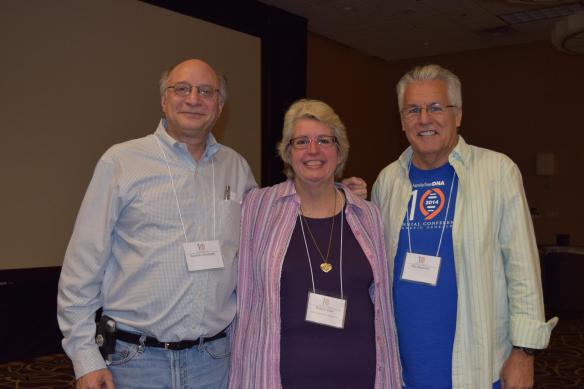
roberta, max and bennett

______________________________________________________________

Disclosure

I receive a small contribution when you click on some of the links to vendors in my articles. This does NOT increase the price you pay but helps me to keep the lights on and this informational blog free for everyone. Please click on the links in the articles or to the vendors below if you are purchasing products or DNA testing.

Thank you so much.

DNA Purchases and Free Transfers

Genealogy Services

Genealogy Research

deCODEme Consumer Tests Discontinued

decodeme

I hate to see players, especially ones with good products, exit the marketplace, but sadly, that’s what deCODEme genetics is doing.  Initially, they had an excellent, albeit expensive, ethnicity product.  The company filed bankruptcy in 2008/2009 and has been twice sold since that time.  This upheaval occurred about the time that prices came down in the industry, and deCODEme never dropped their prices nor invested in the marketspace by implementing features like genealogy matching to other kits.  I’m not surprised that they have made this decision, but I wish they had been able to take a different fork in the road.  Today, as one of their customers, I received this notice.

Dear deCODEme customer,

This is to notify that the deCODEme service from deCODE genetics is being discontinued.

For this reason, all deCODEme customer accounts will be permanently closed on January 01 2015. However, user accounts will be accessible through December 31, 2014.

For logging in you will need to enter your username and password on the deCODEme login page; http://www.decodeme.com .  In case of a forgotten password, you can select the “Forgot my password” option on the login page, but for a forgotten username you will need to send an email to:

support@decodeme.com.

We encourage customers to save and/or print their results as needed.

deCODEme Customer Service

______________________________________________________________

Disclosure

I receive a small contribution when you click on some of the links to vendors in my articles. This does NOT increase the price you pay but helps me to keep the lights on and this informational blog free for everyone. Please click on the links in the articles or to the vendors below if you are purchasing products or DNA testing.

Thank you so much.

DNA Purchases and Free Transfers

Genealogy Services

Genealogy Research

Finding Native American Ethnic Results in Germanic People

I’m often asked about the significance of small percentages of autosomal DNA in results.  Specifically, the small percentages are often of Native American or results that would suggest Native admixture.  One of the first questions I always ask is whether or not the individual has Germanic or eastern European admixture.

Why?

Take a look at this map of the Invasion of the Roman Empire.  See the Huns and their path?

Hun map

It’s no wonder we’re so admixed.

Here’s a map of the Hunnic empire at its peak under Attila between the years 420-469.

Hun emplire

But that wasn’t the end of the Asian invasions.  The Magyars, who settled in Hungary arrived from Asia as well, in the 800s and 900s, as shown on this map from LaSalle University.

magyar map

Since both the Hungarians and some Germanic people descend from Asian populations, as do Native Americans, albeit thousands of years apart, it’s not unrealistic to expect that, as populations, they share a genetic connection.

Therefore, when people who carry heritage from this region of the world show small amounts of Native or Asian origin, I’m not surprised.  However, for Americans, trying to sort out their Native ethnic heritage, this is most unhelpful.

Let’s take a look at the perfect example candidate.  This man is exactly half Hungarian and half German.  Let’s see what his DNA results say, relative to any Asian or Native heritage, utilizing the testing companies and the free admixture tools at www.gedmatch.com.

He has not tested at Ancestry, but at Family Tree DNA, his myOrigins report 96% European, 4% Middle Eastern.  At 23andMe in speculative view, he shows 99.7 European and .2 sub-saharan African.

Moving to the admixture tools at GedMatch, MDLP is not recommended for Asian or Native ancestry, so I have excluded that tool.

Eurogenes K13 is the most recently updated admixture tool, so let’s take a look at that one first.

Eurogenes K13

 JK Eurogenes K13 v2

Eurogenes K13 showed 7% West Asian, which makes perfect sense considering his heritage, but it might be counted as “Native” in other circumstances, although I would certainly be very skeptical about counting it as such.

However, East Asian, Siberian and Amerindian would all be amalgamated into the Native American category, for a combined percentage of 1.31.

jk eurogenes k13 chart

However, selecting the “admixture proportions by chromosome” view shows something a bit different.  The cumulative percentages, by chromosome equate to 10.10%.  Some researchers mistakenly add this amount and use that as their percentage of Native ancestry.  This is not the case, because those are the portions of 100% of each individual chromosome, and the total would need to be divided by 22 to obtain the average value across all chromosomes.  The total is irrelevant, and the average may not reflect how the developer determines the amount of admixture because chromosomes are not the same size nor carry the same number of SNPs.  Questions relative to the functional underpinnings of each tool should be addressed to the developers.

Dodecad

I understand that there is a newer version of Dodecad, but that it has not been submitted to GedMatch for inclusion, per a discussion with GedMatch.  I can’t tell which of the Dodecad versions on GedMatch is the most current, so I ran the results utilizing both v3 and 12b.

jk dodecad v3

jk dodecad v3 chart

I hope v3 is not the most current, because it does not include any Native American category or pseudocategory – although there is a smattering of Northeast Asian at .27% and Southwest Asian at 1%.

Dodecad 12b below

jk dodecad 12b

The 12b version does show .52% Siberian and 2.6% Southwest Asian, although I’m not at all sure the Southwest Asian should be included.

HarappaWorld

jk harappaworld

jk harappaworld chart

Harappaworld shows .09 Siberian, .27% American (Native American), .23% Beringian and 1.8% Southwest Asian, although I would not include Southwest Asian in the Native calculation.

In Summary

Neither Family Tree DNA nor 23andMe find Native ancestry in our German/Hungarian tester, but all 3 of the admixture tools at Gedmatch find either small amounts of Native or Asian ancestry that could certainly be interpreted as Native, such as Siberian or Beringian.

Does this mean this German/Hungarian man has Native American ancestry?  Of course not, but it does probably mean that the Native population and his ancestral populations did share some genes from the same gene pool thousands of years ago.

While you might think this is improbable, or impossible, consider for a minute that every person outside of Africa today carries some percentage of Neanderthal DNA, and all Europeans also carry Denisovan DNA.  Our DNA does indeed have staying power over the millennia, especially once an entire population or group of people is involved.  We’ve recently seen this same type of scenarios in the full genome sequencing of a 24,000 year old Siberian male skeleton.

Our German/Hungarian man carries 2.4% Neanderthal DNA according to 23andMe and 2.7% according to the Genographic Project, which also reports that he carries 3.9% Denisovan.  The European average is about 2% for Neanderthal.

The net-net of this is that minority admixture is not always what it seems to be, especially when utilizing autosomal DNA to detect small amounts of Native American admixture.  The big picture needs to be taken into consideration.  Caution is advised.

When searching for Native admixture, when possible, both Y DNA and mitochondrial DNA give specific answers for specific pedigree lines relative to ancestry.  Of course, to utilize Y or mtDNA, the tester must descend from the Native ancestor either directly paternally to test the male Y chromosome, or directly matrilineally to test the mitochondrial line.  You can read about this type of testing, and how it works, in my article, Proving Native American Ancestry Using DNA.  You can also read about other ways to prove Native ancestry using autosomal DNA, including how to unravel which pedigree line the Native ancestry descends from, utilizing admixture tools, in the article, “The Autosomal Me.”

______________________________________________________________

Disclosure

I receive a small contribution when you click on some of the links to vendors in my articles. This does NOT increase the price you pay but helps me to keep the lights on and this informational blog free for everyone. Please click on the links in the articles or to the vendors below if you are purchasing products or DNA testing.

Thank you so much.

DNA Purchases and Free Transfers

Genealogy Services

Genealogy Research

Ethnicity Percentages – Second Generation Report Card

Recently, Family Tree DNA introduced their new ethnicity tool, myOrigins as part of their autosomal Family Finder product.  This means that all of the major players in this arena using chip based technology (except for the Genographic project) have now updated their tools.  Both 23andMe and Ancestry introduced updated versions of their tools in the fall of 2013.  In essence, this is the second generation of these biogeographical or ethnicity products.  So lets take a look and see how the vendors are doing.

In a recent article, I discussed the process for determining ethnicity percentages using biogeographical ancestry, or BGA, tools.  The process is pretty much the same, regardless of which vendor’s results you are looking at.  The variant is, of course, the underlying population data base, it’s quality and quantity, and the way the vendors choose to construct and name their regions.

I’ve been comparing my own known and proven genealogy pedigree breakdown to the vendors results for some time now.  Let’s see how the new versions stack up to a known pedigree.

The paper, Revealing American Indian and Minority Heritage Using Y-line, Mitochondrial, Autosomal and X Chromosomal Testing Data Combined with Pedigree Analysis was published in the Fall 2010 issue of JoGG, Vol. 6 issue 1.

The pedigree analysis portion of this document begins about page 8.  My ancestral breakdown is as follows:

Geography Pedigree Percent
Germany 23.8041
British Isles 22.6104
Holland 14.5511
European by DNA 6.8362
France 6.6113
Switzerland 0.7813
Native American 0.2933
Turkish 0.0031

This leaves about 25% unknown.

Let’s look at each vendor’s results one by one.

23andMe

23andme v2

My results using the speculative comparison mode at 23andMe are shown in a chart, below.

23andMe Category 23andMe Percentage
British and Irish 39.2
French/German 15.6
Scandinavian 7.9
Nonspecific North European 27.9
Italian 0.5
Nonspecific South European 1.6
Eastern European 1.8
Nonspecific European 4.9
Native American 0.3
Nonspecific East Asian/Native American 0.1
Middle East/North Africa 0.1

At 23andMe, if you have questions about what exact population makes up each category, just click on the arrow beside the category when you hover over it.

For example, I wasn’t sure exactly what comprises Eastern European, so I clicked.

23andme eastern europe

The first thing I see is sample size and where the samples come from, public data bases or the 23andMe data base.  Their samples, across all categories, are most prevalently from their own data base.  A rough add shows about 14,000 samples in total.

Clicking on “show details” provides me with the following information about the specific locations of included populations.

23andme pop

Using this information, and reorganizing my results a bit, the chart below shows the comparison between my pedigree chart and the 23andMe results.  In cases where the vendor’s categories spanned several of mine, I have added mine together to match the vendor category.  A perfect example is shown in row 1, below, where I added France, Holland, Germany and Switzerland together to equal the 23andMe French and German category.  Checking their reference populations shows that all 4 of these countries are included in their French and German group.

Geography Pedigree Percent 23andMe %
Germany, Holland, Switzerland & France 45.7451 15.6
France 6.6113 (above) Combined
Germany 23.8014 (above) Combined
Holland 14.5511 (above) Combined
Switzerland 0.7813 (above) Combined
British Isles 22.6104 39.2
Native American 0.2933 0.4 (Native/East Asian)
Turkish 0.0031 0.1 (Middle East/North Africa)
Scandinavian 7.9
Italian 0.5
South European 1.6
East European 1.8
European by DNA 6.8362 4.9 (nonspecific European)
Unknown 25 27.9 (North European)

I can also change to the Chromosome view to see the results mapped onto my chromosomes.

23andme chromosome view

The 23andMe Reference Population

According to the 23andMe customer care pages, “Ancestry Composition uses 31 reference populations, based on public reference datasets as well as a significant number of 23andMe members with known ancestry. The public reference datasets we’ve drawn from include the Human Genome Diversity ProjectHapMap, and the 1000 Genomes project. For these datasets as well as the data from 23andMe, we perform filtering to ensure accuracy.

Populations are selected for Ancestry Composition by studying the cluster plots of the reference individuals, choosing candidate populations that appear to cluster together, and then evaluating whether we can distinguish the groups in practice. The population labels refer to genetically similar groups, rather than nationalities.”

Additional detailed information about Ancestry Composition is available here.

Ancestry.com

ancestry v2

Ancestry is a bit more difficult to categorize, because their map regions are vastly overlapping.  For example, the west Europe category is shown above, and the Scandinavian is shown below.

ancestry scandinavia

Both categories cover the Netherlands, Germany and part of the UK.

My Ancestry percentages are:

Ancestry Category Ancestry Percentage
North Africa 1
America <1
East Asia <1
West Europe 79
Scandinavia 10
Great Britain 4
Ireland 2
Italy/Greece 2

Below, my pedigree percentages as compared to Ancestry’s categories, with category adjustments.

Geography Pedigree Percent Ancestry %
West European 52.584 (combined from below) 79
Germany 23.8041 Combined
Holland 14.5511 Combined
European by DNA 6.8362 Combined
France 6.6113 Combined
Switzerland 0.7813 Combined
British Isles 22.6104 6
Native American 0.2933 ~1 incl East Asian
Turkish 0.0031 1 (North Africa)
Unknown 25
Italy/Greece 2
Scandinavian 10

Ancestry’s European populations and regions are so broadly overlapping that almost any interpretation is possible.  For example, the Netherlands could be included in several categories – and based up on the history of the country, that’s probably legitimate.

At Ancestry, clicking on a region, then scrolling down will provide additional information about that region of the world, both their population and history.

The Ancestry Reference Population

Just below your ethnicity map is a section titled “Get the Most Out of Your Ethnicity Estimate.”  It’s worth clicking, reading and watching the video.  Ancestry states that they utilized about 3000 reference samples, pared from 4245 samples taken from people whose ethnicity seems to be entirely from that specific location in the world.

ancestry populations

You can read more in their white paper about ethnicity prediction.

Family Tree DNA’s myOrigins

I wrote about the release of my Origins recently, so I won’t repeat the information about reference populations and such found in that article.

myorigins v2

Family Tree DNA shows matches by region.  Clicking on the major regions, European and Middle Eastern, shown above, display the clusters within regions.  In addition, your Family Finder matches that match your ethnicity are shown in highest match order in the bottom left corner of your match page.

Clicking on a particular cluster, such as Trans-Ural Peneplain, highlights that cluster on the map and then shows a description in the lower left hand corner of the page.

myorigins trans-ural

Family Tree DNA shows my ethnicity results as follows.

Family Tree DNA Category Family Tree DNA Percentage
European Coastal Plain 68
European Northlands 12
Trans-Ural Peneplain 11
European Coastal Islands 7
Anatolia and Caucus 3

Below, my pedigree results reorganized a bit and compared to Family Tree DNA’s categories.

Geography Pedigree Percent Family Tree DNA %
European Coastal Plain 45.7478 68
Germany 23.8041 Combined above
Holland 14.5511 Combined above
France 6.6113 Combined above
Switzerland 0.7813 Combined above
British Isles 22.6104 7 (Coastal Islands)
Turkish 0.0031 3 (Anatolia and Caucus)
European by DNA 6.8362
Native American 0.2933
Unknown 25
Trans-Ural Peneplain 11
European Northlands 12

Third Party Admixture Tools

www.GedMatch.com is kind enough to include 4 different admixture utilities, contributed by different developers, in their toolbox.  Remember, GedMatch is a free, meaning a contribution site – so if you utilize and enjoy their tools – please contribute.

On their main page, after signing in and transferring your raw data files from either 23andMe, Family Tree DNA or Ancestry, you will see your list of options.  Among them is “admixture.”  Click there.

gedmatch admixture

Of the 4 tools shown, MDLP is not recommended for populations outside of Europe, such as Asian, African or Native American, so I’ve skipped that one entirely.

gedmatch admix utilities

I selected Admixture Proportions for the part of this exercise that includes the pie chart.

The next option is Eurogenes K13 Admixture Proportions.  My results are shown below.

Eurogenes K13

Eurogenes K13

Of course, there is no guide in terms of label definition, so we’re guessing a bit.

Geography Pedigree Percent Eurogenes K13%
North Atlantic 75.19 44.16
Germany 23.8041 Combined above
British Isles 22.6104 Combined above
Holland 14.5511 Combined above
European by DNA 6.8362 Combined above
France 6.6113 Combined above
Switzerland 0.7813 Combined above
Native American 0.2933 2.74 combined East Asian, Siberian, Amerindian and South Asian
Turkish 0.0031 1.78 Red Sea
Unknown 25
Baltic 24.36
West Med 14.78
West Asian 6.85
Oceanian 0.86

Dodecad K12b

Next is Dodecad K12b

According to John at GedMatch, there is a more current version of Dodecad, but the developer has opted not to contribute the current or future versions.

Dodecad K12b

By the way, in case you’re wondering, Gedrosia is an area along the Indian Ocean – I had to look it up!

Geography Pedigree Percent Dodecad K12b
North European 75.19 43.50
Germany 23.8041 Combined above
British Isles 22.6104 Combined above
Holland 14.5511 Combined above
European by DNA 6.8362 Combined above
France 6.6113 Combined above
Switzerland 0.7813 Combined above
Native American 0.2933 3.02 Siberian, South Asia, SW Asia, East Asia
Turkish 0.0031 10.93 Caucus
Gedrosia 7.75
Northwest African 1.22
Atlantic Med 33.56
Unknown 25

Third is Harappaworld.

Harappaworld

harappaworld

Baloch is an area in the Iranian plateau.

Geography Pedigree Percent Harappaworld %
Northeast Euro 75.19 46.58
Germany 23.8041 Combined above
British Isles 22.6104 Combined above
Holland 14.5511 Combined above
European by DNA 6.8362 Combined above
France 6.6113 Combined above
Switzerland 0.7813 Combined above
Native American 0.2933 2.81 SE Asia, Siberia, NE Asian, American, Beringian
Turkish 0.0031 10.27
Unknown 25
S Indian 0.21
Baloch 9.05
Papuan 0.38
Mediterranean 28.71

The wide variety found in these results makes me curious about how my European results would be categorized using the MDLP tool, understanding that it will not pick up Native, Asian or African.

MDLP K12

mdlp k12

The Celto-Germanic category is very close to my mainland European total – but of course, many Germanic people settled in the British Isles.

Second Generation Report Card

Many of these tools picked up my Native American heritage, along with the African.  Yes, these are very small amounts, but I do have several proven lines.  By proven, I mean both by paper trail (Acadian church and other records) and genetics, meaning Yline and mtDNA.  There is no arguing with that combination.  I also have other Native lines that are less well proven.  So I’m very glad to see the improvements in that area.

Recent developments in historical research and my mitochondrial DNA matches show that my most distant maternal ancestral line in Germany have some type of a Scandinavian connection.  How did this happen, and when?  I just don’t know yet – but looking at the map below, which are my mtDNA full sequence matches, the pattern is clear.

mitomatches

Could the gene flow have potentially gone the other direction – from Germany to Scandinavia?  Yes, it’s possible.  But my relatively consistent Scandinavian ethnicity at around 10% seems unlikely if that were the case.

Actually, there is a second possibility for additional Scandinavian heritage and that’s my heavy Frisian heritage.  In fact, most of my Dutch ancestors in Frisia were either on or very near the coast on the northernmost part of Holland and many were merchants.

I also have additional autosomal matches with people from Scandinavia – not huge matches – but matches just the same – all unexplained.  The most notable of which, and the first I might add, is with my friend, Marja.

It’s extremely difficult to determine how distant the ancestry is that these tests are picking up.  It could be anyplace from a generation ago to hundreds of generations ago.  It all depends on how the DNA was passed, how isolated the population was, who tested today and which data bases are being utilized for comparison purposes along with their size and accuracy.  In most cases, even though the vendors are being quite transparent, we still don’t know exactly who the population is that we match, or how representative it is of the entire population of that region.  In some cases, when contributed data is being used, like testers at 23andMe, we don’t know if they understood or answered the questions about their ancestry correctly – and 23andMe is basing ethnicity results on their cumulative answers.  In other words, we can’t see beneath the blanket – and even if we could – I don’t know that we’d understand how to interpret the components.

So Where Am I With This?

I knew already, through confirmed paper sources that most of my ancestry is in the European heartland – Germany, Holland, France as well as in the British Isles.  Most of the companies and tools confirm this one way or another.  That’s not a surprise.  My 35 years of genealogical research has given me an extremely strong pedigree baseline that is invaluable for comparing vendor ethnicity results.

The Scandinavian results were somewhat of a surprise – especially at the level in which they are found.  If this is accurate, and I tend to believe it is present at some level, then it must be a combined effect of many ancestors, because I have no missing or unknown ancestors in the first 5 generations and only 11 of 64 missing or without a surname in generation 6.  Those missing ancestors in generation 6 only contribute about 1.5% of my DNA each, assuming they contribute an average of 50% of their DNA to offspring in each subsequent generation.

Clearly, to reach 10%, nearly all of my missing ancestors, in the US and Germany, England and the Netherlands would have to be 100% Scandinavian – or, alternately, I have quite a bit scattered around in many ancestors, which is a more likely scenario.  Still, I’m having a difficult time with that 10% number in any scenario, but I will accept that there is some Scandinavian heritage one way or another.  Finding it, however, genealogically is quite another matter.

However, I’m at a total loss as to the genesis of the South European and Mediterranean.  This must be quite ancient.  There are only two known possible ancestors from these regions and they are many generations back in time – and both are only inferred with clearly enough room to be disproven.  One is a possible Jewish family who went to France from Spain in 1492 and the other is possibly a Roman soldier whose descendants are found within a few miles of a Roman fort site today in Lancashire.  Neither of these ancestors could have contributed enough DNA to influence the outcome to the levels shown, so the South European/Mediterranean is either incorrect, or very deep ancestry.

The Eastern European makes more sense, given my amount of German heritage.  The Germans are well known to be admixed with the Magyars and Huns, so while I can’t track it or prove it, it also doesn’t surprise me one bit given the history of the people and regions where my ancestors are found.

What’s the Net-Net of This?

This is interesting, very interesting.  There are tips and clues buried here, especially when all of the various tools, including autosomal matching, Y and mtDNA, are utilized together for a larger picture.  Alone, none of these tools are as powerful as they are combined.

I look forward to the day when the reference populations are in the tens of thousands, not hundreds.  All of the tools will be far more accurate as the data base is built, refined and utilized.

Until then, I’ll continue to follow each release and watch for more tips and clues – and will compare the various tools.  For example, I’m very pleased to see Family Tree DNA’s new ethnicity matching tool incorporated into myOrigins.

I’ve taken the basic approach that my proven pedigree chart is the most accurate, by far, followed by the general consensus of the combined results of all of the vendors.  It’s particularly relevant when vendors who don’t use the same reference populations arrive at the same or similar results.  For example, 23andMe uses primarily their own clients and Nat Geo of course, although I did not include them above because they haven’t released a new tool recently, uses their own population sample results.

National Geographic’s Geno2

Nat Geo took a bit of a different approach and it’s more difficult to compare to the others.  They showed my ethnicity as 43% North European, 36% Mediterranean and 18% Southwest Asian.

nat geo results

While this initially looks very skewed, they then compared me to my two closest populations, genetically, which were the British and the Germans, which is absolutely correct, according to my pedigree chart.  Both of these populations are within a few percent of my exact same ethnicity profile, shown below.

Nat geo british 2

The description makes a lot of sense too.  “The dominant 49% European component likely reflects the earliest settlers in Europe, hunter-gatherers who arrived there more than 35,000 years ago.  The 44% Mediterranean and the 17% Southwest Asian percentages arrived later, with the spread of agriculture from the Fertile Crescent in the middle East, over the past 10,000 years.  As these early farmers moved into Europe, they spread their genetic patterns as well.”

nat geo german

So while individually, and compared to my pedigree chart, these results appear questionable, especially the Mediterranean and Southwest Asian portions, in the context of the populations I know I descend from and most resemble, the results make perfect sense when compared to my closest matching populations.  Those populations themselves include a significant amount of both Mediterranean and Southwest Asian.  Looking at this, I feel a lot better about the accuracy of my results.  Sometimes, perspective makes a world of difference.

It’s A Wrap

Just because we can’t exactly map the ethnicity results to our pedigree charts today doesn’t mean the results are entirely incorrect.  It doesn’t mean they are entirely correct, either.  The results may, in some cases, be showing where population groups descend from, not where our specific ancestors are found more recently.  The more ancestors we have from a particular region, the more that region’s profile will show up in our own personal results.  This explains why Mediterranean shows up, for example, from long ago but our one Native ancestor from 7 or 8 generations ago doesn’t.  In my case, it would be because I have many British/German/Dutch lines that combine to show the ancient Mediterranean ancestry of these groups – where I have many fewer Native ancestors.

Vendors may be picking up deep ancestry that we can’t possible know about today – population migration.  It’s not like our ancestors left a guidebook of their travels for us – at least – not outside of our DNA – and we, as a community, are still learning exactly how to read that!  We are, after all, participants on the pioneering, leading edge of science.

Having said that, I’ll personally feel a lot better about these kinds of results when the underlying technology, data bases and different vendors’ tools mature to the point where there the differences between their results are minor.

For today, these are extremely interesting tools, just don’t try to overanalyze the results, especially if you’re looking for minority admixture.  And if you don’t like your results, try a different vendor or tool, you’ll get an entirely new set to ponder!

______________________________________________________________

Disclosure

I receive a small contribution when you click on some of the links to vendors in my articles. This does NOT increase the price you pay but helps me to keep the lights on and this informational blog free for everyone. Please click on the links in the articles or to the vendors below if you are purchasing products or DNA testing.

Thank you so much.

DNA Purchases and Free Transfers

Genealogy Services

Genealogy Research

Family Tree DNA Releases myOrigins

my origins

On May 6th, Family Tree DNA released myOrigins as a free feature of their Family Finder autosomal DNA test.  This autosomal biogeographic feature was previously called Population Finder.  It has not just been renamed, but entirely reworked.

Currently, 22 population clusters in 7 major geographic groups are utilized to evaluate your biogeographic ethnicity or ancestry as compared to these groups, many of which are quite ancient.

my origins regions

Primary Population Clusters

  • Anatolia & Caucasus
  • Asian Northeast
  • Bering Expansion
  • East Africa Pastoralist
  • East Asian Coastal Islands
  • Eastern Afroasiatic
  • Eurasian Heartland
  • European Coastal Islands
  • European Coastal Plain
  • European Northlands
  • Indian Tectonic
  • Jewish Diaspora
  • Kalahari Basin
  • Niger-Congo Genesis
  • North African Coastlands
  • North Circumpolar
  • North Mediterranean
  • Trans-Ural Peneplain

Blended Population Clusters

  • Coastal Islands & Central Plain
  • Northlands & Coastal Plain
  • North Mediterranean & Coastal Plain
  • Trans-Euro Peneplain & Coastal Plain

Each of these groups has an explanation which can be found here.

Matching

Prior to release, Family Tree DNA sent out a notification about new matching options.  One of the new features is that you will be able to see the matching regions of the people you match – meaning your populations in common.  This powerful feature lets you see matches who are similar which can be extremely useful when searching for minority admixture, for example.  However, some participants don’t want their matches to be able to see their ethnicity, so everyone was given an ‘opt out’ option.  Fortunately, few people have opted out, less than 1%.

Be aware that only your primary matches are shown.  This means that your 4-5th cousins or more distant are not shown as ethnicity matches.

Here’s what the FTDNA notification said:

With myOrigins, you’ll be able compare your ethnicity with your Family Finder matches. If you want to share your ethnic origins with your matches, you don’t need to take any action.  You’ll automatically be able to compare your ethnicity with your matches when myOrigins becomes available.  This is the recommended option. However, we do understand that sharing your ethnicity with your matches is your choice so we’re sending you this reminder in case you want to not take part (opt-out). To opt-out, please follow the instructions below. *

  1. Click this link.
  2. If you are not logged in, do so.
  3. Select the “Do not share my ethnic breakdown with my matches. This will not let me compare my ethnicity with my matches.” radio button.
  4. Click the Save button.

You can get more details about what will be shared here.  You may also join our forums for discussion* You can change your privacy settings at any time. Thus, you may opt-out of or opt back into ethnic sharing at a later date if you change your mind.

What’s New?

Let’s take a look at the My Origins results.  You can see your results by clicking on “My Origins” on the Family Finder tab on your personal page at Family Tree DNA.

Ethnicity and Matches

Your population ethnicity is shown on the main page, as well as up to three shared regions that you share with your matches.  This means that if you share more than 3 regions with these people, the 4th one (or 5th or 6th, etc.) won’t show.  This also means that if your match has an ethnicity you don’t have, that won’t show either.

my origins ethnicity

Above, you see my main results page.  Please note that this map is what is known as a heat map.  This means that the darkest, or hottest, areas are where my highest percentages are found.

Each region has a breakdown that can be seen by clicking on the region bar.  My European region bar population cluster breakdown is shown below along with my ethnicity match to my mother.

my origins euro breakdown

And my Middle Eastern breakdown is shown below.

my origins middle east breakdown

Ethnicity Mapping

A great new feature is the mapping of the maternal and paternal ethnicity of your Family Finder matches, when known.  How does Family Tree DNA know?  The location data entered in the “Matches Map” location field.  Can’t remember if you completed these fields?  It’s easy to take a look and see.  On either the Y DNA or the mtDNA tabs, click on Matches Map and you’ll see your white balloon.  If the white balloon is in the location of your most distant ancestor in your paternal line (for Y) or your matrilineal line for mtDNA (your mother’s mother’s mother’s line on up the tree until you run out of mothers), then you’ve entered the location data and you’re good to go.  If your white balloon is on the equator, click on the tab at the bottom of the map that says “update ancestor’s location” and step through the questions.

ancestor location

If you haven’t completed this information, please do.  It makes the experience much more robust for everyone.

How Does This Tool Work?

my origins paternal matches

The buttons to the far right of the page show the mapped locations of the oldest paternal lines and the oldest matrilineal (mtDNA) lines of your matches.  Direct paternal matches would of course be surname matches, but only to their direct paternal lines. This does not take into account all of their “most distant ancestors,” just the direct paternal ones.  This is the yellow button.

The green button provides the direct maternal matches.

my origins maternal matches

Do not confuse this with your Matches Map for your own paternal (if you’re a male) or mitochondrial matches.  Just to illustrate the difference, here is my own direct maternal full sequence matches map, available on my mtDNA tab.  As you can see, they are very different and convey very different information for you.

my mito match map

Comparisons

By way of comparison, here are my mother’s myOrigins results.

my origins mother

Let’s say I want to see who else matches her from Germany where our most distant mitochondrial DNA ancestor is located.

I can expand the map by scrolling or using the + and – keys, and click on any of the balloons.

my origins individual match

Indeed, here is my balloon, right where it should be, and the 97% European match to my mother pops up right beside my balloon.  The matches are not broken down beyond region.

This is full screen, so just hit the back button or the link in the upper right hand corner that says “back to FTDNA” to return to your personal page.

Walk Through

Family Tree DNA has provided a walk-through of the new features.

Methodology

How did Family Tree DNA come up with these new regional and population cluster matches?

As we know, all of humanity came originally from Africa, and all of humanity that settled outside of Africa came through the Middle East.  People left the Middle East in groups, it would appear, and lived as isolated populations for some time in different parts of the world.  As they did, they developed mutations that are found only in that region, or are found much more frequently in that region as opposed to elsewhere.  Patterns of mutations like this are established, and when one of us matches those patterns, it’s determined that we have ancestry, either recent or perhaps ancient, from that region of the world.

The key to this puzzle is to find enough differentiation to be able to isolate or identify one group from another.  Of course, the groups eventually interbred, at least most of them did, which makes this even more challenging.

Family Tree DNA says in their paper describing the population clusters:

MyOrigins attempts to reduce the wild complexity of your genealogy to the major historical-genetic themes which arc through the life of our species since its emergence 100,000 years ago on the plains of Africa. Each of our 22 clusters describe a vivid and critical color on the palette from which history has drawn the brushstrokes which form the complexity that is your own genome. Though we are all different and distinct, we are also drawn from the same fundamental elements.

The explanatory narratives in myOrigins attempt to shed some detailed light upon each of the threads which we have highlighted in your genetic code. Though the discrete elements are common to all humans, the weight you give to each element is unique to you. Each individual therefore receives a narrative fabric tailored to their own personal history, a story stitched together from bits of DNA.

They have also provided a white paper about their methodology that provides more information.

After reading both of these documents, I much prefer the explanations provided for each cluster in the white paper over the shorter population cluster paper.  The longer version breaks the history down into relevant pieces and describes the earliest history and migrations of the various groups.

I was pleased to see the methodology that they used and that four different reference data bases were utilized.

  • GeneByGene DNA customer database
  • Human Genome Diversity Project
  • International HapMap Project
  • Estonian Biocentre

Given this wealth of resources, I was very surprised to see how few members of some references populations were utilized.

Population N Population N
Armenian 46 Lithuanian 6
Ashkenazi 60 Masai 140
British 39 Mbuti 15
Burmese 8 Moroccan 7
Cambodian 26 Mozabite 24
Danish 13 Norwegian 17
Filipino 20 Pashtun 33
Finnish 49 Polish 35
French 17 Portuguese 25
German 17 Russian 41
Gujarati 31 Saudi 19
Iraqi 12 Scottish 43
Irish 45 Slovakian 12
Italian 30 Spanish 124
Japanese 147 Surui 21
Karitiana 23 Swedish 33
Korean 15 Ukrainian 10
Kuwaiti 14 Yoruba 136

In particular, the areas of France, Germany, Norway, Slovakia, Denmark and the Ukraine appear to be very under-represented, especially given Family Tree DNA’s very heavy European-origin customer base .  I would hope that one of the priorities would be to expand this reference data base substantially.  Furthermore, I don’t see any New World references included here which calls into question Native American ancestry.

Webinar

Family Tree DNA typically provides a webinar for new products as well as general education.  The myOrigins webinar can be found in the archives at this link.  It can be viewed any time.  https://www.familytreedna.com/learn/ftdna/webinars/

Accuracy

How did they do?  Certainly, Family Tree DNA has a great new interface with wonderful new maps and comparison features.  Let’s take a look at accuracy and see if everything makes sense.

I am fortunate to have the DNA of one of my parents, my mother.  In the chart below, I’m comparing that result and inferring my father’s results by subtracting mine from my mother’s.  This may not be entirely accurate, because this presumes I received the full amount of that ethnicity from my mother, and that is probably not accurate – but – it’s the best I can do under the circumstances.  It’s safe to say that my father has a minimum of this amount of that particular population category and may have more.

Region Me Mom Dad Inferred Minimum
European Coastal Plain 68 17 51
European Northlands 12 7 5
Trans Ural Peneplain 11 10 1
European Coastal Islands 7 34 0
Anatolia and Caucus 3 0 3
North Mediterranean 0 34 0
Circumpolar 0 1 0
Undetermined* 0 0 40

*The Undetermined category is not from Family Tree DNA, but is the percentage of my father not accounted for by inference.  This 40% is DNA that I did not inherit if it falls into a different category.

Based on these results alone, I have the following observations.

    1. I find it odd that my mother has 34% North Mediterranean and I have none. We have no known ancestry from this region.
    2. My mother does have one distant line of Turkish DNA via France. I have presumed that my Middle Eastern (now Anatolia and Caucus) was through that line, but these results suggest otherwise.
    3. My mother’s Circumpolar may be Native American. She does have proven Native lines (Micmac) through the Acadian families.
    4. These results have missed both my Native lines (through both parents) and my African admixture although both are small percentages.
    5. The European Coastal Plain is one of the groups that covers nearly all of Europe. Given that my mother is 3/4th Dutch/German, with the balance being Acadian, Native and English, one would expect her to have significantly more, especially given my high percentage.
    6. The European Coastal Island percentages are very different for me and my mother, with me carrying much less than my mother.  This is curious, because she is 3/4th German/Dutch with between 1/8th and 3/16th English while my father’s lines are heavily UK.  My father’s ancestry may well be reflected in European Coastal Plain which covers a great deal of territory.

What We Need to Remember

All of the biogeographic tools, from Family Tree DNA, 23andMe and Ancestry, are “estimates” and each of the tools from the three major vendors rend different results.  Each one is using different combinations of reference populations, so this really isn’t surprising.  Hopefully, as the various companies increase their population references and the size of their reference data bases, the results will increasingly mesh from company to company.  These results are only as good as the back end tools and the DNA that you randomly inherited from your ancestors.

Furthermore, we all carry far more similar DNA than different DNA, so it’s extremely difficult to make judgment calls based on ranges.  Europe, for example, is extremely admixed and the US is moreso.  The British Isles were a destination location for many groups over thousands of years.  Some of the DNA being picked up by these tests may indeed be very ancient and may cause us to wonder where it came from.  In future test versions, this may be more perfectly refined.

There is no way to gauge “ancient” DNA, like from the Middle East Diaspora, from more contemporary DNA, only a thousand years or so old, once it’s in very small segments.  In other words, it’s all very individual and personal and pretty much cast in warm jello.  We’ve come a long way, but we aren’t “there” yet.  However, without these tools and the vendors working to make them better, we’ll never get “there,” so keep that in mind.

While this makes great conversation today, and there is no question about accuracy in terms of majority ancestry/ethnicity, no one should make any sweeping conclusions based on this information.  This is not “cast in concrete” in the same way as Y DNA and mitochondrial haplogroups and STR markers.  Those are irrefutable – while biogeographical ethnicity remains a bit ethereal.

In summary, I would simply say that this tool can provide great hints and tips, especially the matching, which is unique, but it can’t disprove anything.  The absence of minority admixture, which is what so many people are hunting for, may be the result of the various data bases and the infancy of the science itself, and not the absence of admixture.

My recommendation would be to utilize all three biogeographic admixture products as well as the free tools in the Admixture category at GedMatch.  Look for consistency in results between the tools.  I discussed this methodology in “The Autosomal Me” series.

What Next?

I asked Dr. David Mittelman, Chief Scientific Officer, at Family Tree DNA about the reference populations.  He indicated that he agreed that some of their reference populations are small and they are actively working to increase them.  He also stated that it is important to note that Family Tree DNA prioritized accuracy over false positives so they definitely took a conservative approach.

______________________________________________________________

Disclosure

I receive a small contribution when you click on some of the links to vendors in my articles. This does NOT increase the price you pay but helps me to keep the lights on and this informational blog free for everyone. Please click on the links in the articles or to the vendors below if you are purchasing products or DNA testing.

Thank you so much.

DNA Purchases and Free Transfers

Genealogy Services

Genealogy Research

Clannishness, Clans and Locating Ancestral Origins?

UN Flags

JayMan in Jayman’s Blog which focuses on Human BioDiversity (HBD) has recently been writing a series about clans, clannishness and where the people in these groups came from.  His focus has really been on differences between groups of people, but it occurs to me that this information can also be used in reverse.  For example, if your ancestors are found in a particular location, you can use these tools to perhaps gain some insight into their origins, or at least where you might want to first look, and why.

Let me also say that exceptions are always possibilities.  For example, my line of Estes family came from Deal in Kent and settled in Virginia.  But one of my Abraham Estes’s cousins did settle in New England.  So take a look and enjoy.

Ranking of the Clannishness of the Founding Fathers

Maps of the American Nations

There’s a Facebook Group for Surname Distribution Mapping as well you might want to follow.

______________________________________________________________

Disclosure

I receive a small contribution when you click on some of the links to vendors in my articles. This does NOT increase the price you pay but helps me to keep the lights on and this informational blog free for everyone. Please click on the links in the articles or to the vendors below if you are purchasing products or DNA testing.

Thank you so much.

DNA Purchases and Free Transfers

Genealogy Services

Genealogy Research

The African Diaspora Conference Videos Available

HeywoodIn September,  2013, The African Diaspora: Integrating Culture, Genomics and History was held at the Smithsonian Natural History Museum in Washington DC.  Sadly, I had commitments elsewhere and could not attend.

The National Human Genome Research Institute, the National Museum of African American History and Culture, and the National Museum of Natural History held a full-day symposium that brought together scholars, scientists and practitioners from various disciplines who are exploring the African Diaspora throughout historical, cultural and genomic lenses with the purpose of understanding a person’s ancestry and how that impacts individual health and collective identity.

The symposium’s objectives were to foster interdisciplinary dialog on what we can learn about:

  • Ancestral history from genomic information and historical records.
  • Ethnic identity and cultural diversity from historical and genomic information.
  • The arts and culture from ancestral information.

I was not able to attend, but reports from those who did were very positive.  Fortunately, the videos are now available to view, for free.

http://www.genome.gov/27555386

Furthermore, I’d like to mention that one of the papers I co-authored with Jack Goins, Janet Crain and Penny Ferguson, Melungeons, A Multi-Ethnic Population was cited  by Dr. Linda Heywood.

Dr. Linda Heywood is a Professor of African American Studies and History at Boston University.  I was impressed with her throughout this panel discussion.  At about 6:48 she discussed identity, and her comment, “History, it’s personal, it’s communal, it’s national, it’s identity.”

She mentions our paper at about 57:46.  At 22:54 she comments about various Africans being incorporated into the Portuguese settlements in Africa before being shipped out as slaves, something we also mentioned in our paper.  And finally at 1:15:00 she referred to the paper again as a resource.

I was also very impressed with Dr. Sarah Tiskoff and was disappointed to see that there were not any individual sessions by her.

I hope you’ll take an opportunity to watch a few of these videos, and a big thank you to the Smithsonian for making them available.

______________________________________________________________

Disclosure

I receive a small contribution when you click on some of the links to vendors in my articles. This does NOT increase the price you pay but helps me to keep the lights on and this informational blog free for everyone. Please click on the links in the articles or to the vendors below if you are purchasing products or DNA testing.

Thank you so much.

DNA Purchases and Free Transfers

Genealogy Services

Genealogy Research

2013’s Dynamic Dozen – Top Genetic Genealogy Happenings

dna 8 ball

Last year I wrote a column at the end of the year titled  “2012 Top 10 Genetic Genealogy Happenings.”  It’s amazing the changes in this industry in just one year.  It certainly makes me wonder what the landscape a year from now will look like.

I’ve done the same thing this year, except we have a dozen.  I couldn’t whittle it down to 10, partly because there has been so much more going on and so much change – or in the case of Ancestry, who is noteworthy because they had so little positive movement.

If I were to characterize this year of genetic genealogy, I would call it The Year of the SNP, because that applies to both Y DNA and autosomal.  Maybe I’d call it The Legal SNP, because it is also the year of law, court decisions, lawsuits and FDA intervention.  To say it has been interesting is like calling the Eiffel Tower an oversized coat hanger.

I’ll say one thing…it has kept those of us who work and play in this industry hopping busy!  I guarantee you, the words “I’m bored” have come out of the mouth of no one in this industry this past year.

I’ve put these events in what I consider to be relatively accurate order.  We could debate all day about whether the SNP Tsunami or the 23andMe mess is more important or relevant – and there would be lots of arguing points and counterpoints…see…I told you lawyers were involved….but in reality, we don’t know yet, and in the end….it doesn’t matter what order they are in on the list:)

Y Chromosome SNP Tsunami Begins

The SNP tsumani began as a ripple a few years ago with the introduction at Family Tree DNA of the Walk the Y program in 2007.  This was an intensively manual process of SNP discovery, but it was effective.

By the time that the Geno 2.0 chip was introduced in 2012, 12,000+ SNPs would be included on that chip, including many that were always presumed to be equivalent and not regularly tested.  However, the Nat Geo chip tested them and indeed, the Y tree became massively shuffled.  The resolution to this tree shuffling hasn’t yet come out in the wash.  Family Tree DNA can’t really update their Y tree until a publication comes out with the new tree defined.  That publication has been discussed and anticipated for some time now, but it has yet to materialize.  In the mean time, the volunteers who maintain the ISOGG tree are swamped, to say the least.

Another similar test is the Chromo2 introduced this year by Britain’s DNA which scans 15,000 SNPs, many of them S SNPs not on the tree nor academically published, adding to the difficulty of figuring out where they fit on the Y tree.  While there are some very happy campers with their Chromo2 results, there is also a great deal of sloppy science, reporting and interpretation of “facts” through this company.  Kind of like Jekyll and Hyde.  See the Sloppy Science section.

But Walk the Y, Chromo2 and Geno 2.0, are only the tip of the iceburg.  The new “full Y” sequencing tests brought into the marketspace quietly in early 2013 by Full Genomes and then with a bang by Family Tree DNA with the their Big Y in November promise to revolutionize what we know about the Y chromosome by discovering thousands of previously unknown SNPs.  This will in effect swamp the Y tree whose branches we thought were already pretty robust, with thousands and thousands of leaves.

In essence, the promise of the “fully” sequenced Y is that what we might term personal or family SNPs will make SNP testing as useful as STR testing and give us yet another genealogy tool with which to separate various lines of one genetic family and to ratchet down on the time that the most common recent ancestor lived.

http://dna-explained.com/2013/03/31/new-y-dna-haplogroup-naming-convention/

http://dna-explained.com/2013/11/10/family-tree-dna-announces-the-big-y/

http://dna-explained.com/2013/11/16/what-about-the-big-y/

http://www.yourgeneticgenealogist.com/2013/11/first-look-at-full-genomes-y-sequencing.html

http://cruwys.blogspot.com/2013/12/a-first-look-at-britainsdna-chromo-2-y.html

http://cruwys.blogspot.com/2013/11/yseqnet-new-company-offering-single-snp.html

http://cruwys.blogspot.com/2013/11/the-y-chromosome-sequence.html

http://cruwys.blogspot.com/2013/11/a-confusion-of-snps.html

http://cruwys.blogspot.com/2013/11/a-simplified-y-tree-and-common-standard.html

23andMe Comes Unraveled

The story of 23andMe began as the consummate American dotcom fairy tale, but sadly, has deteriorated into a saga with all of the components of a soap opera.  A wealthy wife starts what could be viewed as an upscale hobby business, followed by a messy divorce and a mystery run-in with the powerful overlording evil-step-mother FDA.  One of the founders of 23andMe is/was married to the founder of Google, so funding, at least initially wasn’t an issue, giving 23andMe the opportunity to make an unprecedented contribution in the genetic, health care and genetic genealogy world.

Another way of looking at this is that 23andMe is the epitome of the American Dream business, a startup, with altruism and good health, both thrown in for good measure, well intentioned, but poorly managed.  And as customers, be it for health or genealogy or both, we all bought into the altruistic “feel good” culture of helping find cures for dread diseases, like Parkinson’s, Alzheimer’s and cancer by contributing our DNA and responding to surveys.

The genetic genealogy community’s love affair with 23andMe began in 2009 when 23andMe started focusing on genealogy reporting for their tests, meaning cousin matches.  We, as a community, suddenly woke up and started ordering these tests in droves.  A few months later, Family Tree DNA also began offering this type of testing as well.  The defining difference being that 23andMe’s primary focus has always been on health and medical information with Family Tree DNA focused on genetic genealogy.  To 23andMe, the genetic genealogy community was an afterthought and genetic genealogy was just another marketing avenue to obtain more people for their health research data base.  For us, that wasn’t necessarily a bad thing.

For awhile, this love affair went along swimmingly, but then, in 2012, 23andMe obtained a patent for Parkinson’s Disease.  That act caused a lot of people to begin to question the corporate focus of 23andMe in the larger quagmire of the ethics of patenting genes as a whole.  Judy Russell, the Legal Genealogist, discussed this here.  It’s difficult to defend 23andMe’s Parkinson’s patent while flaying alive Myriad for their BRCA patent.  Was 23andMe really as altruistic as they would have us believe?

Personally, this event made me very nervous, but I withheld judgment.  But clearly, that was not the purpose for which I thought my DNA, and others, was being used.

But then came the Designer Baby patent in 2013.  This made me decidedly uncomfortable.  Yes, I know, some people said this really can’t be done, today, while others said that it’s being done anyway in some aspects…but the fact that this has been the corporate focus of 23andMe with their research, using our data, bothered me a great deal.  I have absolutely no issue with using this information to assure or select for healthy offspring – but I have a personal issue with technology to enable parents who would select a “beauty child,” one with blonde hair and blue eyes and who has the correct muscles to be a star athlete, or cheerleader, or whatever their vision of their as-yet-unconceived “perfect” child would be.  And clearly, based on 23andMe’s own patent submission, that is the focus of their patent.

Upon the issuance of the patent, 23andMe then said they have no intention of using it.  They did not say they won’t sell it.  This also makes absolutely no business sense, to focus valuable corporate resources on something you have no intention of using?  So either they weren’t being truthful, they lack effective management or they’ve changed their mind, but didn’t state such.

What came next, in late 2013 certainly points towards a lack of responsible management.

23andMe had been working with the FDA for approval the health and medical aspect of their product (which they were already providing to consumers prior to the November 22nd cease and desist order) for several years.  The FDA wants assurances that what 23andMe is telling consumers is accurate.  Based on the letter issued to 23andMe on November 22nd, and subsequent commentary, it appears that both entities were jointly working towards that common goal…until earlier this year when 23andMe mysteriously “somehow forgot” about the FDA, the information they owed them, their submissions, etc.  They also forgot their phone number and their e-mail addresses apparently as well, because the FDA said they had heard nothing from them in 6 months, which backdates to May of 2013.

It may be relevant that 23andMe added the executive position of President and filled it in June of 2013, and there was a lot of corporate housecleaning that went on at that time.  However, regardless of who got housecleaned, the responsibility for working with the FDA falls squarely on the shoulders of the founders, owners and executives of the company.  Period.  No excuses.  Something that critically important should be on the agenda of every executive management meeting.   Why?  In terms of corporate risk, this was obviously a very high risk item, perhaps the highest risk item, because the FDA can literally shut their doors and destroy them.  There is little they can do to control or affect the FDA situation, except to work with the FDA, meet deadlines and engender goodwill and a spirit of cooperation.  The risk of not doing that is exactly what happened.

It’s unknown at this time if 23andMe is really that corporately arrogant to think they could simply ignore the FDA, or blatantly corporately negligent or maybe simply corporately stupid, but they surely betrayed the trust and confidence of their customers by failing to meet their commitments with and to the FDA, or even communicate with them.  I mean, really, what were they thinking?

There has been an outpouring of sympathy for 23andme and negative backlash towards the FDA for their letter forcing 23andMe to stop selling their offending medical product, meaning the health portion of their testing.  However, in reality, the FDA was only meting out the consequences that 23andMe asked for.  My teenage kids knew this would happen.  If you do what you’re not supposed to….X, Y and Z will, or won’t, happen.  It’s called accountability.  Just ask my son about his prom….he remembers vividly.  Now why my kids, or 23andMe, would push an authority figure to that point, knowing full well the consequences, utterly mystifies me.  It did when my son was a teenager and it does with 23andMe as well.

Some people think that the FDA is trying to stand between consumers and their health information.  I don’t think so, at least not in this case.  Why I think that is because the FDA left the raw data files alone and they left the genetic genealogy aspect alone.  The FDA knows full well you can download your raw data and for $5 process it at a third party site, obtaining health related genetic information.  The difference is that Promethease is not interpreting any data for you, only providing information.

There is some good news in this and that is that from a genetic genealogy perspective, we seem to be safe, at least for now, from government interference with the testing that has been so productive for genetic genealogy.  The FDA had the perfect opportunity to squish us like a bug (thanks to the opening provided by 23andMe,) and they didn’t.

The really frustrating aspect of this is that 23andMe was a company who, with their deep pockets in Silicon Valley and other investors, could actually afford to wage a fight with the FDA, if need be.  The other companies who received the original 2010 FDA letter all went elsewhere and focused on something else.  But 23andMe didn’t, they decided to fight the fight, and we all supported their decision.  But they let us all down.  The fight they are fighting now is not the battle we anticipated, but one brought upon themselves by their own negligence.  This battle didn’t have to happen, and it may impair them financially to such a degree that if they need to fight the big fight, they won’t be able to.

Right now, 23andMe is selling their kits, but only as an ancestry product as they work through whatever process they are working through with the FDA.  Unfortunately, 23andMe is currently having some difficulties where the majority of matches are disappearing from some testers records.  In other cases, segments that previously matched are disappearing.  One would think, with their only revenue stream for now being the genetic genealogy marketspace that they would be wearing kid gloves and being extremely careful, but apparently not.  They might even consider making some of the changes and enhancements we’ve requested for so long that have fallen on deaf ears.

One thing is for sure, it will be extremely interesting to see where 23andMe is this time next year.  The soap opera continues.

I hope for the sake of all of the health consumers, both current and (potentially) future, that this dotcom fairy tale has a happy ending.

Also, see the Autosomal DNA Comes of Age section.

http://dna-explained.com/2013/10/05/23andme-patents-technology-for-designer-babies/

http://www.thegeneticgenealogist.com/2013/10/07/a-new-patent-for-23andme-creates-controversy/

http://dna-explained.com/2013/11/13/genomics-law-review-discusses-designing-children/

http://www.thegeneticgenealogist.com/2013/06/11/andy-page-fills-new-president-position-at-23andme/

http://dna-explained.com/2013/11/25/fda-orders-23andme-to-discontinue-testing/

http://dna-explained.com/2013/11/26/now-what-23andme-and-the-fda/

http://dna-explained.com/2013/12/06/23andme-suspends-health-related-genetic-tests/

http://www.legalgenealogist.com/blog/2013/11/26/fooling-with-fda/

Supreme Court Decision – Genes Can’t Be Patented – Followed by Lawsuits

In a landmark decision, the Supreme Court determined that genes cannot be patented.  Myriad Genetics held patents on two BRCA genes that predisposed people to cancer.  The cost for the tests through Myriad was about $3000.  Six hours after the Supreme Court decision, Gene By Gene announced that same test for $995.  Other firms followed suit, and all were subsequently sued by Myriad for patent infringement.  I was shocked by this, but as one of my lawyer friends clearly pointed out, you can sue anyone for anything.  Making it stick is yet another matter.  Many firms settle to avoid long and very expensive legal battles.  Clearly, this issue is not yet resolved, although one would think a Supreme Court decision would be pretty definitive.  It potentially won’t be settled for a long time.

http://dna-explained.com/2013/06/13/supreme-court-decision-genes-cant-be-patented/

http://www.legalgenealogist.com/blog/2013/06/14/our-dna-cant-be-patented/

http://dna-explained.com/2013/09/07/message-from-bennett-greenspan-free-my-genes/

http://www.thegeneticgenealogist.com/2013/06/13/new-press-release-from-dnatraits-regarding-the-supreme-courts-holding-in-myriad/

http://www.legalgenealogist.com/blog/2013/08/18/testing-firms-land-counterpunch/

http://www.legalgenealogist.com/blog/2013/07/11/myriad-sues-genetic-testing-firms/

Gene By Gene Steps Up, Ramps Up and Produces

As 23andMe comes unraveled and Ancestry languishes in its mediocrity, Gene by Gene, the parent company of Family Tree DNA has stepped up to the plate, committed to do “whatever it takes,” ramped up the staff both through hiring and acquisitions, and is producing results.  This is, indeed, a breath of fresh air for genetic genealogists, as well as a welcome relief.

http://dna-explained.com/2013/08/07/gene-by-gene-acquires-arpeggi/

http://dna-explained.com/2013/12/05/family-tree-dna-listens-and-acts/

http://dna-explained.com/2013/12/10/family-tree-dnas-family-finder-match-matrix-released/

http://www.haplogroup.org/ftdna-family-finder-matches-get-new-look/

http://www.haplogroup.org/ftdna-family-finder-new-look-2/

http://www.haplogroup.org/ftdna-family-finder-matches-new-look-3/

Autosomal DNA Comes of Age

Autosomal DNA testing and analysis has simply exploded this past year.  More and more people are testing, in part, because Ancestry.com has a captive audience in their subscription data base and more than a quarter million of those subscribers have purchased autosomal DNA tests.  That’s a good thing, in general, but there are some negative aspects relative to Ancestry, which are in the Ancestry section.

Another boon to autosomal testing was the 23andMe push to obtain a million records.  Of course, the operative word here is “was” but that may revive when the FDA issue is resolved.  One of the down sides to the 23andMe data base, aside from the fact that it’s not genealogist friendly, is that so many people, about 90%, don’t communicate.  They aren’t interested in genealogy.

A third factor is that Family Tree DNA has provided transfer ability for files from both 23andMe and Ancestry into their data base.

Fourth is the site, GedMatch, at www.gedmatch.com which provides additional matching and admixture tools and the ability to match below thresholds set by the testing companies.  This is sometimes critically important, especially when comparing to known cousins who just don’t happen to match at the higher thresholds, for example.  Unfortunately, not enough people know about GedMatch, or are willing to download their files.  Also unfortunate is that GedMatch has struggled for the past few months to keep up with the demand placed on their site and resources.

A great deal of time this year has been spent by those of us in the education aspect of genetic genealogy, in whatever our capacity, teaching about how to utilize autosomal results. It’s not necessarily straightforward.  For example, I wrote a 9 part series titled “The Autosomal Me” which detailed how to utilize chromosome mapping for finding minority ethnic admixture, which was, in my case, both Native and African American.

As the year ends, we have Family Tree DNA, 23andMe and Ancestry who offer the autosomal test which includes the relative-matching aspect.  Fortunately, we also have third party tools like www.GedMatch.com and www.DNAGedcom.com, without which we would be significantly hamstrung.  In the case of DNAGedcom, we would be unable to perform chromosome segment matching and triangulation with 23andMe data without Rob Warthen’s invaluable tool.

http://dna-explained.com/2013/06/21/triangulation-for-autosomal-dna/

http://dna-explained.com/2013/07/13/combining-tools-autosomal-plus-y-dna-mtdna-and-the-x-chromosome/

http://dna-explained.com/2013/07/26/family-tree-dna-levels-the-playing-field-sort-of/

http://dna-explained.com/2013/08/03/kitty-coopers-chromsome-mapping-tool-released/

http://dna-explained.com/2013/09/29/why-dont-i-match-my-cousin/

http://dna-explained.com/2013/10/03/family-tree-dna-updates-family-finder-and-adds-triangulation/

http://dna-explained.com/2013/10/21/why-are-my-predicted-cousin-relationships-wrong/

http://dna-explained.com/2013/12/05/family-tree-dna-listens-and-acts/

http://dna-explained.com/2013/12/09/chromosome-mapping-aka-ancestor-mapping/

http://dna-explained.com/2013/12/10/family-tree-dnas-family-finder-match-matrix-released/

http://dna-explained.com/2013/12/15/one-chromosome-two-sides-no-zipper-icw-and-the-matrix/

http://dna-explained.com/2013/06/02/the-autosomal-me-summary-and-pdf-file/

DNAGedcom – Indispensable Third Party Tool

While this tool, www.dnagedcom.com, falls into the Autosomal grouping, I have separated it out for individual mention because without this tool, the progress made this year in autosomal DNA ancestor and chromosomal mapping would have been impossible.  Family Tree DNA has always provided segment matching boundaries through their chromosome browser tool, but until recently, you could only download 5 matches at a time.  This is no longer the case, but for most of the year, Rob’s tool saved us massive amounts of time.

23andMe does not provide those chromosome boundaries, but utilizing Rob’s tool, you can obtain each of your matches in one download, and then you can obtain the list of who your matches match that is also on your match list by requesting each of those files separately.  Multiple steps?  Yes, but it’s the only way to obtain this information, and chromosome mapping without the segment data is impossible

A special hats off to Rob.  Please remember that Rob’s site is free, meaning it’s donation based.  So, please donate if you use the tool.

http://www.yourgeneticgenealogist.com/2013/01/brought-to-you-by-adoptiondna.html

I covered www.Gedmatch.com in the “Best of 2012” list, but they have struggled this year, beginning when Ancestry announced that raw data file downloads were available.  GedMatch consists of two individuals, volunteers, who are still struggling to keep up with the required processing and the tools.  They too are donation based, so don’t forget about them if you utilize their tools.

Ancestry – How Great Thou Aren’t

Ancestry is only on this list because of what they haven’t done.  When they initially introduced their autosomal product, they didn’t have any search capability, they didn’t have a chromosome browser and they didn’t have raw data file download capability, all of which their competitors had upon first release.  All they did have was a list of your matches, with their trees listed, with shakey leaves if you shared a common ancestor on your tree.  The implication, was, and is, of course, that if you have a DNA match and a shakey leaf, that IS your link, your genetic link, to each other.  Unfortunately, that is NOT the case, as CeCe Moore documented in her blog from Rootstech (starting just below the pictures) as an illustration of WHY we so desperately need a chromosome browser tool.

In a nutshell, Ancestry showed the wrong shakey leaf as the DNA connection – as proven by the fact that both of CeCe’s parents have tested at Ancestry and the shakey leaf person doesn’t match the requisite parent.  And there wasn’t just one, not two, but three instances of this.  What this means is, of course, that the DNA match and the shakey leaf match are entirely independent of each other.  In fact, you could have several common ancestors, but the DNA at any particular location comes only from one on either Mom or Dad’s side – any maybe not even the shakey leaf person.

So what Ancestry customers are receiving is a list of people they match and possible links, but most of them have no idea that this is the case, and blissfully believe they have found their genetic connection.  They have found a genealogical cousin, and it MIGHT be the genetic connection.  But then again, they could have found that cousin simply by searching for the same ancestor in Ancestry’s data base.  No DNA needed.

Ancestry has added a search feature, allowed raw data file downloads (thank you) and they have updated their ethnicity predictions.  The ethnicity predictions are certainly different, dramatically different, but equally as unrealistic.  See the Ethnicity Makeovers section for more on this.  The search function helps, but what we really need is the chromosome browser, which they have steadfastly avoided promising.  Instead, they have said that they will give us “something better,” but nothing has materialized.

I want to take this opportunity, to say, as loudly as possible, that TRUST ME IS NOT ACCEPTABLE in any way, shape or form when it comes to genetic matching.  I’m not sure what Ancestry has in mind by the way of “better,” but it if it’s anything like the mediocrity with which their existing DNA products have been rolled out, neither I nor any other serious genetic genealogist will be interested, satisfied or placated.

Regardless, it’s been nearly 2 years now.  Ancestry has the funds to do development.  They are not a small company.  This is obviously not a priority because they don’t need to develop this feature.  Why is this?  Because they can continue to sell tests and to give shakey leaves to customers, most of whom don’t understand the subtle “untruth” inherent in that leaf match – so are quite blissfully happy.

In years past, I worked in the computer industry when IBM was the Big Dog against whom everyone else competed.  I’m reminded of an old joke.  The IBM sales rep got married, and on his wedding night, he sat on the edge of the bed all night long regaling his bride in glorious detail with stories about just how good it was going to be….

You can sign a petition asking Ancestry to provide a chromosome browser here, and you can submit your request directly to Ancestry as well, although to date, this has not been effective.

The most frustrating aspect of this situation is that Ancestry, with their plethora of trees, savvy marketing and captive audience testers really was positioned to “do it right,” and hasn’t, at least not yet.  They seem to be more interested in selling kits and providing shakey leaves that are misleading in terms of what they mean than providing true tools.  One wonders if they are afraid that their customers will be “less happy” when they discover the truth and not developing a chromosome browser is a way to keep their customers blissfully in the dark.

http://dna-explained.com/2013/03/21/downloading-ancestrys-autosomal-dna-raw-data-file/

http://dna-explained.com/2013/03/24/ancestry-needs-another-push-chromosome-browser/

http://dna-explained.com/2013/10/17/ancestrys-updated-v2-ethnicity-summary/

http://www.thegeneticgenealogist.com/2013/06/21/new-search-features-at-ancestrydna-and-a-sneak-peek-at-new-ethnicity-estimates/

http://www.yourgeneticgenealogist.com/2013/03/ancestrydna-raw-data-and-rootstech.html

http://www.legalgenealogist.com/blog/2013/09/15/dna-disappointment/

http://www.legalgenealogist.com/blog/2013/09/13/ancestrydna-begins-rollout-of-update/

Ancient DNA

This has been a huge year for advances in sequencing ancient DNA, something once thought unachievable.  We have learned a great deal, and there are many more skeletal remains just begging to be sequenced.  One absolutely fascinating find is that all people not African (and some who are African through backmigration) carry Neanderthal and Denisovan DNA.  Just this week, evidence of yet another archaic hominid line has been found in Neanderthal DNA and on Christmas Day, yet another article stating that type 2 Diabetes found in Native Americans has roots in their Neanderthal ancestors. Wow!

Closer to home, by several thousand years is the suggestion that haplogroup R did not exist in Europe after the ice age, and only later, replaced most of the population which, for males, appears to have been primarily haplogroup G.  It will be very interesting as the data bases of fully sequenced skeletons are built and compared.  The history of our ancestors is held in those precious bones.

http://dna-explained.com/2013/01/10/decoding-and-rethinking-neanderthals/

http://dna-explained.com/2013/07/04/ancient-dna-analysis-from-canada/

http://dna-explained.com/2013/07/10/5500-year-old-grandmother-found-using-dna/

http://dna-explained.com/2013/10/25/ancestor-of-native-americans-in-asia-was-30-western-eurasian/

http://dna-explained.com/2013/11/12/2013-family-tree-dna-conference-day-2/

http://dna-explained.com/2013/11/22/native-american-gene-flow-europe-asia-and-the-americas/

http://dna-explained.com/2013/12/05/400000-year-old-dna-from-spain-sequenced/

http://www.thegeneticgenealogist.com/2013/10/16/identifying-otzi-the-icemans-relatives/

http://cruwys.blogspot.com/2013/12/recordings-of-royal-societys-ancient.html

http://cruwys.blogspot.com/2013/02/richard-iii-king-is-found.html

http://dna-explained.com/2013/12/22/sequencing-of-neanderthal-toe-bone-reveals-unknown-hominin-line/

http://dna-explained.com/2013/12/26/native-americans-neanderthal-and-denisova-admixture/

http://dienekes.blogspot.com/2013/12/ancient-dna-what-2013-has-brought.html

Sloppy Science and Sensationalist Reporting

Unfortunately, as DNA becomes more mainstream, it becomes a target for both sloppy science or intentional misinterpretation, and possibly both.  Unfortunately, without academic publication, we can’t see results or have the sense of security that comes from the peer review process, so we don’t know if the science and conclusions stand up to muster.

The race to the buck in some instances is the catalyst for this. In other cases, and not in the links below, some people intentionally skew interpretations and results in order to either fulfill their own belief agenda or to sell “products and services” that invariably report specific findings.

It’s equally as unfortunate that much of these misconstrued and sensationalized results are coming from a testing company that goes by the names of BritainsDNA, ScotlandsDNA, IrelandsDNA and YorkshiresDNA. It certainly does nothing for their credibility in the eyes of people who are familiar with the topics at hand, but it does garner a lot of press and probably sells a lot of kits to the unwary.

I hope they publish their findings so we can remove the “sloppy science” aspect of this.  Sensationalist reporting, while irritating, can be dealt with if the science is sound.  However, until the results are published in a peer-reviewed academic journal, we have no way of knowing.

Thankfully, Debbie Kennett has been keeping her thumb on this situation, occurring primarily in the British Isles.

http://dna-explained.com/2013/08/24/you-might-be-a-pict-if/

http://cruwys.blogspot.com/2013/12/the-british-genetic-muddle-by-alistair.html

http://cruwys.blogspot.com/2013/12/setting-record-straight-about-sara.html

http://cruwys.blogspot.com/2013/09/private-eye-on-britainsdna.html

http://cruwys.blogspot.com/2013/07/private-eye-on-prince-williams-indian.html

http://cruwys.blogspot.com/2013/06/britainsdna-times-and-prince-william.html

http://cruwys.blogspot.com/2013/03/sense-about-genealogical-dna-testing.html

http://cruwys.blogspot.com/2013/03/sense-about-genetic-ancestry-testing.html

Citizen Science is Coming of Age

Citizen science has been slowing coming of age over the past few years.  By this, I mean when citizen scientists work as part of a team on a significant discovery or paper.  Bill Hurst comes to mind with his work with Dr. Doron Behar on his paper, A Copernican Reassessment of the Human Mitochondrial DNA from its Root or what know as the RSRS model.  As the years have progressed, more and more discoveries have been made or assisted by citizen scientists, sometimes through our projects and other times through individual research.  JOGG, the Journal of Genetic Genealogy, which is currently on hiatus waiting for Dr. Turi King, the new editor, to become available, was a great avenue for peer reviewed publication.  Recently, research projects have been set up by citizen scientists, sometimes crowd-funded, for specific areas of research.  This is a very new aspect to scientific research, and one not before utilized.

The first paper below includes the Family Tree DNA Lab, Thomas and Astrid Krahn, then with Family Tree DNA and Bonnie Schrack, genetic genealogist and citizen scientist, along with Dr. Michael Hammer from the University of Arizona and others.

http://dna-explained.com/2013/03/26/family-tree-dna-research-center-facilitates-discovery-of-ancient-root-to-y-tree/

http://dna-explained.com/2013/04/10/diy-dna-analysis-genomeweb-and-citizen-scientist-2-0/

http://dna-explained.com/2013/06/27/big-news-probable-native-american-haplogroup-breakthrough/

http://dna-explained.com/2013/07/22/citizen-science-strikes-again-this-time-in-cameroon/

http://dna-explained.com/2013/11/30/native-american-haplogroups-q-c-and-the-big-y-test/

http://www.yourgeneticgenealogist.com/2013/03/citizen-science-helps-to-rewrite-y.html

Ethnicity Makeovers – Still Not Soup

Unfortunately, ethnicity percentages, as provided by the major testing companies still disappoint more than thrill, at least for those who have either tested at more than one lab or who pretty well know their ethnicity via an extensive pedigree chart.

Ancestry.com is by far the worse example, swinging like a pendulum from one extreme to the other.  But I have to hand it to them, their marketing is amazing.  When I signed in, about to discover that my results had literally almost reversed, I was greeted with the banner “a new you.”  Yea, a new me, based on Ancestry’s erroneous interpretation.  And by reversed, I’m serious.  I went from 80% British Isles to 6% and then from 0% Western Europe to 79%. So now, I have an old wrong one and a new wrong one – and indeed they are very different.  Of course, neither one is correct…..but those are just pesky details…

23andMe updated their ethnicity product this year as well, and fine tuned it yet another time.  My results at 23andMe are relatively accurate.  I saw very little change, but others saw more.  Some were pleased, some not.

The bottom line is that ethnicity tools are not well understood by consumers in terms of the timeframe that is being revealed, and it’s not consistent between vendors, nor are the results.  In some cases, they are flat out wrong, as with Ancestry, and can be proven.  This does not engender a great deal of confidence.  I only view these results as “interesting” or utilize them in very specific situations and then only using the individual admixture tools at www.Gedmatch.com on individual chromosome segments.

As Judy Russell says, “it’s not soup yet.”  That doesn’t mean it’s not interesting though, so long as you understand the difference between interesting and gospel.

http://dna-explained.com/2013/08/05/autosomal-dna-ancient-ancestors-ethnicity-and-the-dandelion/

http://dna-explained.com/2013/10/04/ethnicity-results-true-or-not/

http://www.legalgenealogist.com/blog/2013/09/15/dna-disappointment/

http://cruwys.blogspot.com/2013/09/my-updated-ethnicity-results-from.html?utm_source=feedburner&utm_medium=email&utm_campaign=Feed%3A+Cruwysnews+%28Cruwys+news%29

http://dna-explained.com/2013/10/17/ancestrys-updated-v2-ethnicity-summary/

http://dna-explained.com/2013/10/19/determining-ethnicity-percentages/

http://www.thegeneticgenealogist.com/2013/09/12/ancestrydna-launches-new-ethnicity-estimate/

http://cruwys.blogspot.com/2013/12/a-first-look-at-chromo-2-all-my.html

Genetic Genealogy Education Goes Mainstream

With the explosion of genetic genealogy testing, as one might expect, the demand for education, and in particular, basic education has exploded as well.

I’ve written a 101 series, Kelly Wheaton wrote a series of lessons and CeCe Moore did as well.  Recently Family Tree DNA has also sponsored a series of free Webinars.  I know that at least one book is in process and very near publication, hopefully right after the first of the year.  We saw several conferences this year that provided a focus on Genetic Genealogy and I know several are planned for 2014.  Genetic genealogy is going mainstream!!!  Let’s hope that 2014 is equally as successful and that all these folks asking for training and education become avid genetic genealogists.

http://dna-explained.com/2013/08/10/ngs-series-on-dna-basics-all-4-parts/

https://sites.google.com/site/wheatonsurname/home

http://www.yourgeneticgenealogist.com/2012/08/getting-started-in-dna-testing-for.html

http://dna-explained.com/2013/12/17/free-webinars-from-family-tree-dna/

http://www.thegeneticgenealogist.com/2013/06/09/the-first-dna-day-at-the-southern-california-genealogy-society-jamboree/

http://www.yourgeneticgenealogist.com/2013/06/the-first-ever-independent-genetic.html

http://cruwys.blogspot.com/2013/10/genetic-genealogy-comes-to-ireland.html

http://cruwys.blogspot.com/2013/03/wdytya-live-day-3-part-2-new-ancient.html

http://cruwys.blogspot.com/2013/03/who-do-you-think-you-are-live-day-3.html

http://cruwys.blogspot.com/2013/03/who-do-you-think-you-are-live-2013-days.html

http://genealem-geneticgenealogy.blogspot.com/2013/03/the-surnames-handbook-guide-to-family.html

http://www.isogg.org/wiki/Beginners%27_guides_to_genetic_genealogy

A Thank You in Closing

I want to close by taking a minute to thank the thousands of volunteers who make such a difference.  All of the project administrators at Family Tree DNA are volunteers, and according to their website, there are 7829 projects, all of which have at least one administrator, and many have multiple administrators.  In addition, everyone who answers questions on a list or board or on Facebook is a volunteer.  Many donate their time to coordinate events, groups, or moderate online facilities.  Many speak at events or for groups.  Many more write articles for publications from blogs to family newsletters.  Additionally, there are countless websites today that include DNA results…all created and run by volunteers, not the least of which is the ISOGG site with the invaluable ISOGG wiki.  Without our volunteer army, there would be no genetic genealogy community.  Thank you, one and all.

2013 has been a banner year, and 2014 holds a great deal of promise, even without any surprises.  And if there is one thing this industry is well known for….it’s surprises.  I can’t wait to see what 2014 has in store for us!!!  All I can say is hold on tight….

______________________________________________________________

Disclosure

I receive a small contribution when you click on some of the links to vendors in my articles. This does NOT increase the price you pay but helps me to keep the lights on and this informational blog free for everyone. Please click on the links in the articles or to the vendors below if you are purchasing products or DNA testing.

Thank you so much.

DNA Purchases and Free Transfers

Genealogy Services

Genealogy Research