Cherokee Mother of John Red Bank Payne

John Red Bank Payne

There is nothing I love more than a happy ending.  Second to that perhaps is to know that my blog or work helped someone, and in particularly, helped someone document their Native heritage.  In doing so, this confirms and unveils one more of our elusive Native people in early records.

I recently received a lovely thank you note from Shawn Potter.  We had exchanged notes earlier, after I wrote “The Autosomal Me” series, about how to utilize small segments of Native American (and Asian) DNA to identify Native American lines and/or ancestors.  This technique is called Minority Admixture Mapping (MAP) and was set forth in detail in various articles in the series.

Shawn’s note said:  “I’ve been doing more work on this segment and others following your method since we exchanged notes.  I’m pretty sure I’ve found the source of this Native American DNA — an ancestor named John Red Bank Payne who lived in North Georgia in the late 18th and 19th centuries.  Many of his descendants believe on the basis of circumstantial evidence that his mother was Cherokee.  I’ve found 10 descendants from four separate lines that inherited matching Native American DNA, pointing to one of his parents as the source.”

Along with this note, Shawn attached a beautiful 65 page book he had written for his family members which did document the Native DNA, but in the context of his family history.  He included their family story, the tales, the genealogical research, the DNA evidence and finally, a chapter of relevant Cherokee history complete with maps of the area where his ancestors lived. It’s a beautiful example of how to present something like this for non-DNA people to understand.  In addition, it’s also a wonderful roadmap, a “how to” book for how to approach this subject from a DNA/historical/genealogical perspective.  As hard as it is for me to sometimes remember, DNA is just a tool to utilize in the bigger genealogy picture.

Shawn has been gracious enough to allow me to reprint some of his work here, so from this point on, I’ll be extracting from his document.  Furthermore, Elizabeth Shown Mills would be ecstatic, because Shawn has fully documented and sourced his document.  I am not including that information here, but I’m sure he would gladly share the document itself with any interested parties.  You can contact Shawn at shpxlcp@comcast.net.

From the book, “Cherokee Mother of John Red Bank Payne” by Shawn Potter and Lois Carol Potter:

Descendants of John Red Bank Payne describe his mother as Cherokee. Yet, until now, some have questioned the truth of this claim because genealogists have been unable to identify John’s mother in contemporary records. A recent discovery, however, reveals both John Red Bank Payne and his sister Nancy Payne inherited Native American DNA.

Considering information from contemporary records, clues from local tradition, John’s name itself, and now the revelation that John and his sister inherited Native American DNA, there seems to be sufficient evidence to say John Red Bank Payne’s mother truly was Cherokee. The following summary describes what we know about John, his family, and his Native American DNA.

John Red Bank Payne was born perhaps near present-day Canton, Cherokee County, Georgia, on January 24, 1754, married Ann Henslee in Caswell County, North Carolina, on March 5, 1779, and died in Carnesville, Franklin County, Georgia, on December 14, 1831.

John’s father, Thomas Payne, was born in Westmorland County, Virginia, about 1725, and owned property in Halifax and Pittsylvania counties, Virginia, as well as Wilkes County, North Carolina, and Franklin County, Georgia.  Several factors suggest Thomas travelled with his older brother, William, to North Georgia and beyond, engaging in the deerskin trade with the Cherokee Nation during the mid 1700s. Thomas Payne died probably in Franklin County, Georgia, after February 23, 1811.

Contemporary records reveal Thomas had four children (William, John, Nancy, and Abigail) by his first wife, and nine children (Thomas, Nathaniel, Moses, Champness, Shrewsbury, Zebediah, Poindexter, Ruth, and Cleveland) by his second wife Yanaka Ayers.  Thomas married Yanaka probably in Halifax County, Virginia, before September 20, 1760.

Local North Georgia tradition identifies the first wife of Thomas Payne as a Cherokee woman. Anna Belle Little Tabor, in History of Franklin County, Georgia, wrote that “Trader Payne” managed a trading post on Payne’s Creek, and “one of his descendants, an offspring of his Cherokee marriage, later married Moses Ayers whose descendants still live in the county.”

Descendants of John Red Bank Payne also cite his name Red Bank, recorded in his son’s family Bible, as evidence of his Cherokee heritage.  Before the American Revolution, British Americans rarely defied English legal prohibitions against giving a child more than one Christian name.  So, the very existence of John’s name Red Bank suggests non-English ethnicity. On the other hand, many people of mixed English-Cherokee heritage were known by their Cherokee name as well as their English first and last names during this period.

Furthermore, while the form of John’s middle name is unlike normal English names, Red Bank conforms perfectly to standard Cherokee names.  It also is interesting to note, Red Bank was the name of a Cherokee village located on the south side of Etowah River to the southwest of present-day Canton, Cherokee County, Georgia.

While some believe the above information from contemporary records and clues from local tradition, as well as John’s name Red Bank, constitute sufficient proof of John’s Cherokee heritage, recently discovered DNA evidence confirms at least one of John’s parents had Native American ancestry. Ten descendants of John Red Bank Payne and his sister Nancy Payne, representing four separate lineages, inherited six segments of Native American DNA on chromosomes 2, 3, 5, 8, 13, and 18 (see Figure 1 for the relationship between these descendants; Figures 2-7 for images of their shared Native American DNA; and http://dna-explained.com/2013/06/02/the-autosomal-me-summary-and-pdf-file/ for an explanation of this method of identifying Native American chromosomal segments).

Upon careful reflection, there seems sufficient reason to believe John Red Bank Payne’s mother truly was Cherokee.

Roberta’s note:  I have redacted the surnames of current testers.

Payne chart

Chromosome 2, Segment 154-161

In this segment, Bert P, Rosa P, Nataan S, Cynthia S, and Kendall S inherited matching Native American DNA described as Amerindian, Siberian, Southeast Asian, and Oceanian by the Eurogenes V2 K15 admixture tool, and as North Amerind, Mesoamerican, South America Amerind, Arctic Amerind, East Siberian, Paleo Siberian, Samoedic, and East South Asian by the Magnus Ducatus Lituaniae Project World22 admixture tool. Since their common ancestors were Thomas Payne and his wife, the source of this Native American DNA must be either Thomas Payne or his wife. See Figures 2a-2g.

Note: Since Native Americans and East Asians share common ancestors in the pre-historic past, their DNA is similar to each other in many respects. This similarity often causes admixture tools to interpret Native American DNA as various types of East Asian DNA. Therefore, the presence of multiple types of East Asian DNA together with Native American DNA tends to validate the presence of Native American DNA.

Payne graph 1

Payne graph 2

Payne graph 3

Payne graph 4

Payne graph 5

Roberta’s Summary:  Shawn continues to document the other chromosome matches in the same manner.  In total, he has 10 descendants of Thomas Payne and his wife, who it turns out, indeed was Cherokee, as proven by this exercise in combination with historical records.  These people descend through 2 different children.  Cynthia and Kendall descend through daughter Nancy Payne, and the rest of the descendants descend through different children of John Red Bank Payne.  All of the DNA segments that Shawn utilized in his report share Native/Asian segments in both of these family groups, the descendants of both Nancy and John Red Bank Payne.

Shawn’s success in this project hinged on two things.  First, being able to test multiple (in this case, two) descendants of the original couple.  Second, he tested several people and had the tenacity to pursue the existence of Native DNA segments utilizing the Minority Admixture Mapping (MAP) technique set forth in “The Autosomal Me” series.  It certainly paid off.  Shawn confirmed that the wife of Thomas Payne was, indeed Native, most likely Cherokee since he was a Cherokee trader, and that today’s descendants do indeed carry her heritage in their DNA.

Great job Shawn!!  Wouldn’t you love to be his family member and one of the recipients of these lovely books about your ancestor! Someone’s going to have a wonderful Christmas!

______________________________________________________________

Disclosure

I receive a small contribution when you click on some of the links to vendors in my articles. This does NOT increase the price you pay but helps me to keep the lights on and this informational blog free for everyone. Please click on the links in the articles or to the vendors below if you are purchasing products or DNA testing.

Thank you so much.

DNA Purchases and Free Transfers

Genealogy Services

Genealogy Research

Thanksgiving Conundrum

First ThanksgivingFirst Thanksgiving at Plymouth Bay (1621) by Jennie A. Brownscombe (1914)

Justin Petrone, like me, is a mixed race person with Native American ancestry, although unlike me, initially, he never thought of himself in those terms.  I’ve always known and since I was a child, self-identified myself in that way.  Like me, Justin has spent years searching for his elusive ancestors, more often than not, hidden in the mists of time with only suggestions of who their ancestors are by words on tax lists and census records like “free person of color.”

Most of the time, Native people were transparent, until they became at least “civilized” enough to be counted on the census, or taxed or they did something else to bring them into the white man’s realm.  More recently, Justin and others like us have been able to confirm, or deny, that heritage via DNA testing.  So even if we don’t know exactly who our ancestor is, we are positive THAT our Native heritage is real.  In some cases, through DNA testing we can learn which of our ancestral lines is Native.

Most of us who grew up knowing we were mixed blood Native learned years ago that if our ancestors’ tribe survived at all, meaning it was not annihilated by warfare or disease, they don’t accept us.  We are not one of “them” and there is no welcome home party.  We don’t have the blood quantum necessary to be a tribal member, and therefore, to them, we don’t exist either.  Not at all, we’re persona non grata.  Yep, you’re “Indian” right up until your admixture level crosses over that magic political line, whatever that is in whichever tribe, and then you’re not Indian at all – don’t exist.  All of your Indianness just evaporates that day I guess.  Apparently, it’s only in our blood, in our genes and in our hearts that we remain Native after that, because the European culture originally tried to kill off the Native people and the “official” Native people today don’t want any more “members” than they already have clamoring to divide a limited size pie.  So we don’t exist.

For many, being denied and relegated to “wannabe” status by “our own people” is devastating, especially for those who really don’t want any part of the financial pie.  Many simply want to belong, to understand the culture and their heritage – to have an educational avenue to recover in some small way that which was stripped and taken from their ancestors so violently.  To have this cultural travesty being perpetrated a second time by the very people who mixed blood descendants feel are their cousins, “their own people,” by being rejected, mocked, and turned away as “not good enough, not Indian enough” is an unexpected emotional blow, a very cold slap in the face and the faces of our Native ancestors.

After all, the tribal members today are the ones who survived comparatively intact, while the descendants of non-tribal member Indians were the ones often most tragically victimized….the ones where the systematic de-Indianization worked.  Logic would suggest that those who survived “as Indians” would welcome the descendants of those who did not and in vindication for what was done to their Indian brethren, would want to share the lost culture with their descendants, to resurrect the Indian in the descendant, and to insure that the cultural heritage continues into posterity.  But that’s not how it works, in the real political world.

I think of this as we approach Thanksgiving every year.  I think of what was taken from our people, my ancestors, and ultimately from me and my children.  I think of the sanitized, feel-good stories we were told as we cut and pasted Indians and Pilgrims in grade school as children.  I think of the heritage we don’t have, what we don’t know, what is lost forever.

I think of how the culture of denial today has played into exactly what those original Europeans wanted – to strip the Indians of their life, often in order to obtain their land, and if they couldn’t kill all of them, then to strip them of their religion, their language and their culture.  There is more than one way to kill an Indian.  The government had an official plan for how to do just that….and now the official Tribes are helping them complete the act by denying that heritage to their descendants.  Soon, in another generation or two, there will be fewer and fewer, and then no official Indians, as they continue to marry outside of the tribes and the blood quantum drops.  Ultimately, the government will have won….by the very hands and rules of the Tribes themselves based on their own blood quantum level required for tribal membership, unless, of course, the tribes change their rules.  In that lies the ultimate irony.

It’s terribly unfortunate that a middle ground can’t be found, where descendants can be “affiliated” with ancestral tribes, not full benefit-receiving members.  In that way, they could be educated in the traditional way, regain and celebrate their culture and heritage.  I would think it would be politically beneficial to the tribes too, because in sheer terms of numbers, there are a whole lot more of “us” non-tribal member descendants than official tribal members.  I would think the tribes would see the benefit in having the large contingent of “us” firmly on their “side” of any political argument, not having been flatly rejected and turned away.  There is tremendous power in numbers.  Just saying….

I try not to feel righteously indignant, but as Thanksgiving approaches and I see the storybook pictures of the Pilgrims and the Indians, and knowing what happened, and continues to happen, I can’t help but feel some level of sadness, anger and sometimes, outrage, at the way the systematic annihilation of the Indian people has been whitewashed and the way their descendants are treated today.  This was what motivated me to begin the Native Heritage Project and the Native Names Project to document the names of the Indian people buried in reams and reams of records.  This is in addition to various DNA projects to find and document those elusive Native ancestors.

And then, there’s Justin.  Poor Justin.  Justin has known for some time that he was a Native descendant.  He has been searching for that connection, exactly which one of his ancestors was the Native person – not easy to discern in colonial America.  So often, Indian heritage was very well hidden due to the various insidious forms of discrimination that were inflicted upon these people and their families well into the 1900s.  Justin and I have exchanged e-mails, back and forth, as he has shared finds and I’ve shared information from the Native Names Project.

But then, Justin found it…and “it” wasn’t at all what he expected.  In addition to being descended from Native people, Justin is also descended from one of the most notorious Indian killers in American history.

“In 1637, in the service of the Massachusetts Bay Colony, Captain John Underhill led an attack, together with Mohegan Indians, on the Pequot fortified village near modern Mystic, Connecticut. They set fire to the village, killing any who attempted to flee. About 400 Pequots died in what came to be called the Mystic Massacre. But Captain Underhill’s soldier of fortune Indian killing was only just beginning. In the service of New Netherland, he slaughtered between 500 and 700 individuals thought to be of the Siwanoy and Wechquaesgeek groups of the Wappinger Confederacy. And in 1644, he cleared Fort Massapequa right here on Long Island, killing about 120 Indians. According to historical accounts, after the Natives were dead and stacked up, Underhill and his men sat down and ate their breakfast.”

So what does Justin do with this horrible event that occurred just 16 years after that first celebration of Thanksgiving?  I mean, most of us have developed this life-long love affair with our Native ancestors, even if we don’t know who they were, exactly.  They were victims, betrayed by European promises, and we have spent untold hundreds, probably thousands or tens of thousands of hours and dollars trying to resurrect them in some small way from the nameless oblivion of history.  Part of who we are is defined by who they were.  We love our ancestors, all of them.  Many of us feel an obligation to do what we can to right the wrongs done to our ancestors in any way possible, even if the only thing we can do is identify them, maybe recover their name or something about them to give them a voice, a definition, a tangible memory to record for posterity.  It’s something, better than nothing, and it defines them as more than an almost anonymous disappearing footnote in history where the European’s put them and the Native tribes of today condemn them to stay.

But never, never do we expect to find an Indian killer, and not only that, a no-excuses, non-penitent repeat offender….so desensitized to human death that he and his cronies sat by the bodies of those families, including women and children, systematically, genocidally murdered and ate breakfast, probably covered in their blood.

In my family story, I know who the good guys are, and the bad guys.  I know who to love and who to hate, who to root for and who were the oppressors. And I’m not descended from really “bad guys,” at least not Indian Killer type bad guys.  I’ve got a few other colorful people, some slave owners, a couple bigamists, a wife-murderer and a moonshiner…but not people who systematically, unemotionally, slaughtered entire tribes of people.  And in those tribes of people were Justin’s ancestors too.  So now, what does Justin do with this?  Who does he love and who does he hate?  How does he come to terms with this, that he carries the genes and ancestry of both?  Do they fight within him from time to time?  Who is Justin?

Happy Thanksgiving.

______________________________________________________________

Disclosure

I receive a small contribution when you click on some of the links to vendors in my articles. This does NOT increase the price you pay but helps me to keep the lights on and this informational blog free for everyone. Please click on the links in the articles or to the vendors below if you are purchasing products or DNA testing.

Thank you so much.

DNA Purchases and Free Transfers

Genealogy Services

Genealogy Research

2013 Family Tree DNA Conference Day 2

ISOGG Meeting

The International Society of Genetic Genealogy always meets at 8 AM on Sunday morning.  I personally think that 8AM meeting should be illegal, but then I generally work till 2 or 3 AM (it’s 1:51 AM now), so 8 is the middle of my night.

Katherine Borges, the Director speaks about current and future activities, and Alice Fairhurst spoke about the many updates to the Y tree that have happened and those coming as well.  It has been a huge challenge to her group to keep things even remotely current and they deserve a huge round of virtual applause from all of us for the Y tree and their efforts.

Bennett opened the second day after the ISOGG meeting.

“The fact that you are here is a testament to citizen science” and that we are pushing or sometimes pulling academia along to where we are.

Bennett told the story of the beginning of Family Tree DNA.  “Fourteen years ago when the hair that I have wasn’t grey,” he began, “I was unemployed and tried to reorganize my wife’s kitchen and she sent me away to do genealogy.”  Smart woman, and thankfully for us, he went.  But he had a roadblock.  He felt there was a possibility that he could use the Y chromosome to solve the roadblock.  Bennett called the author of one of the two papers published at that time, Michael Hammer.  He called Michael Hammer on Sunday morning at his home, but Michael was running out the door to the airport.  He declined Bennett’s request, told him that’s not what universities do, and that he didn’t know of anyplace a Y test could be commercially be done.  Bennett, having run out of persuasive arguments, started mumbling about “us little people providing money for universities.”  Michael said to him, “Someone should start a company to do that because I get phone calls from crazy genealogists like you all the time.”  Let’s just say Bennett was no longer unemployed and the rest, as they say, is history.  With that, Bennett introduced one of our favorite speakers, Dr. Michael Hammer from the Hammer Lab at the University of Arizona.

Bennett day 2 intro

Session 1 – Michael Hammer – Origins of R-M269 Diversity in Europe

Michael has been at all of the conferences.  He says he doesn’t think we’re crazy.  I personally think we’ve confirmed it for him, several times over, so he KNOWS we’re crazy.  But it obviously has rubbed off on him, because today, he had a real shocker for us.

I want to preface this by saying that I was frantically taking notes and photos, and I may have missed something.  He will have his slides posted and they will be available through a link on the GAP page at FTDNA by the end of the week, according to Elliott.

Michael started by saying that he is really exciting opportunity to begin breaking family groups up with SNPs which are coming faster than we can type them.

Michael rolled out the Y tree for R and the new tree looks like a vellum scroll.

Hammer scroll

Today, he is going to focus on the basic branches of the Y tree because the history of R is held there.

The first anatomically modern humans migrated from Africa about 45,000 years ago.

After last glacial maximum 17,000 years ago, there was a significant expansion into Europe.

Neolithic farmers arrived from the near east beginning 10,000 years ago.

Farmers had an advantage over hunter gatherers in terms of population density.  People moved into Northwestern Europe about 5,000 years ago.

What did the various expansions contribute to the population today?

Previous studies indicate that haplogroup R has a Paleolithic origin, but 2 recent studies agree that this haplogroup has a more recent origin in Europe – the Neolithic but disagree about the timing of the expansion.

The first study, Joblin’s study in 2010, argued that geographic diversity is explained by single Near East source via Anaotolia.

It conclude that the Y of Mesololithic hunger-gatherers were nearly replaced by those of incoming farmers.

In the most recent study by Busby in 2012 is the largest study and concludes that there is no diversity in the mapping of R SNP markers so they could not date lineage and expansion.  They did find that most basic structure of R tree did come from the near east.  They looked at P311 as marker for expansion into Europe, wherever it was.  Here is a summary page of Neolithic Europe that includes these studies.

Hammer says that in his opinion, he thought that if P311 is so frequent and widespread in Europe it must have been there a long time.  However, it appears that he and most everyone else, was wrong.

The hypothesis to be tested is if P311 originated prior to the Neolithic wave, it would predict higher diversity it the near east, closer to the origins of agriculture.  If P311 originated after the expansion, would be able to see it migrate across Europe and it would have had to replace an existing population.

Because we now have sequences the DNA of about 40 ancient DNA specimens, Michael turned to the ancient DNA literature.  There were 4 primary locations with skeletal remains.  There were caves in France, Spain, Germany and then there’s Otzi, found in the Alps.

hammer ancient y

All of these remains are between 6000-7000 years old, so prior to the agricultural expansion into Europe.

In France, the study of 22 remains produced, 20 that were G2a and 2 that were I2a.

In Spain, 5 G2a and 1 E1b.

In Germany, 1I G2a and 2 F*.

Otzi is haplogroup G2a2b.

There was absolutely 0, no, haplogroup R of any flavor.

In modern samples, of 172 samples, 94 are R1b.

To evaluate this, he is dropping back to the backbone of haplogroup R.

hammer backbone

This evidence supports a recent spread of haplogroup R lineages in western Europe about 5K years ago.  This also supports evidence that P311 moved into Europe after the Neolithic agricultural transition and nearly displaced the previously existing western European Neolithic Y, which appears to be G2a.

This same pattern does not extrapolate to mitochondrial DNA where there is continuity.

What conferred advantage to these post Neolithic men?  What was that advantage?

Dr. Hammer then grouped the major subgroups of haplogroup R-P3111 and found the following clusters.

  • U106 is clustered in Germany
  • L21 clustered in the British Isles
  • U152 has an Alps epicenter

hammer post neolithic epicenters

This suggests multiple centers of re-expansion for subgroups of haplogroup R, a stepwise process leading to different pockets of subhaplogroup density.

Archaeological studies produce patterns similar to the hap epicenters.

What kind of model is going on for this expansion?

Ancestral origin of haplogroup R is in the near east, with U106, P312 and L21 which are then found in 3 European locations.

This research also suggests thatG2a is the Neolithic version of R1b – it was the most commonly found haplogroup before the R invasion.

To make things even more interesting, the base tree that includes R has also been shifted, dramatically.

Haplogroup K has been significantly revised and is the parent of haplogroups P, R and Q.

It has been broken into 4 major branches from several individual lineages – widely shifted clades.

hammer hap k

Haps R and Q are the only groups that are not restricted to Oceana and Southeast Asia.

Rapid splitting of lineages in Southeast Asia to P, R and Q, the last two of which then appear in western Europe.

hammer r and q in europe

R then, populated Europe in the last 4000 years.

How did these Asians get to Europe and why?

Asian R1b overtook Neolithic G2a about 4000 years ago in Europe which means that R1b, after migrating from Africa, went to Asia as haplogroup K and then divided into P, Q and R before R and Q returned westward and entered Europe.  If you are shaking your head right about now and saying “huh?”…so were we.

Hammer hap r dist

Here is Dr. Hammer’s revised map of haplogroup dispersion.

hammer haplogroup dispersion map

Moving away from the base tree and looking at more recent SNPs, Dr. Hammer started talking about some of the findings from the advanced SNP testing done through the Nat Geo project and some of what it looks like and what it is telling us.

For example, the R1bs of the British Isles.

There are many clades under L 21.  For example, there is something going on in Scotland with one particular SNP (CTS11722?) as it comprises one third of the population in Scotland, but very rare in Ireland, England and Wales.

New Geno 2.0 SNP data is being utilized to learn more about these downstream SNPs and what they had to say about the populations in certain geographies.

For example, there are 32 new SNPs under M222 which will help at a genealogical level.

These SNPs must have arisen in the past couple thousand years.

Michael wants to work with people who have significant numbers of individuals who can’t be broken out with STRs any further and would like to test the group to break down further with SNPs.  The Big Y is one option but so is Nat Geo and traditional SNP testing, depending on the circumstance.

G2a is currently 4-5% of the population in Europe today and R is more than 40%.

Therefore, P312 split in western Eurasia and very rapidly came to dominate Europe

Session 2 – Dr. Marja Pirttivaara – Bridging Social Media and DNA

Dr. Pirttivaara has her PhD in Physics and is passionate about genetic genealogy, history and maps.  She is an administrator for DNA projects related to Finland and haplogroup N1c1, found in Finland, of course.

marja

Finland has the population of Minnesota and is the size of New Mexico.

There are 3750 Finland project members and of them 614 are haplogroup N1c1.

Combining the N1c1 and the Uralic map, we find a correlation between the distribution of the two.

Turku, the old capital, was full or foreigners, in Medieval times which is today reflected in the far reaching DNA matches to Finnish people.

Some of the interest in Finland’s DNA comes from migration which occurred to the United States.

Facebook and other social media has changed the rules of communication and allows the people from wide geographies to collaborate.  The administrator’s role has also changed on social media as opposed to just a FTDNA project admin.  Now, the administrator becomes a negotiator and a moderator as well as the DNA “expert.”

Marja has done an excellent job of motivating her project members.  They are very active within the project but also on Facebook, comparing notes, posting historical information and more.

Session 3 – Jason Wang – Engineering Roadmap and IT Update

Jason is the Chief Technology Officer at Family Tree DNA and recently joined with the Arpeggi merger and has a MS in Computer Engineering.

Regarding the Gene by Gene/FTDNA partnership, “The sum of the parts is greater than the whole.”  He notes that they have added people since last year in addition to the Arpeggi acquisition.

Jason introduced Elliott Greenspan, who, to most of us, needed no introduction at all.

Elliott began manually scoring mitochondrial DNA tests at age 15.  He joined FTDNA in 2006 officially.

Year in review and What’s Coming

4 times the data processed in the past year.

Uploads run 10 times faster.  With 23andMe and Ancestry autosomal uploads, processing will start in about 5 minutes, and matches will start then.

FTDNA reinvented Family Finder with the goal of making the user experience easier and more modern.   They added photos, profiles and the new comparison bars along with an advanced section and added push to chromosome browser.

Focus on users uploading the family tree.  Tools don’t matter if the data isn’t there.  In order to utilize the genealogy aspect, the genealogy info needs to be there.   Will be enhancing the GEDCOM viewer.  New GEDCOMs replace old GEDCOMs so as you update yours, upload it again.

They are now adding a SNP request form so that you can request a SNP not currently available.  This is not to be confused with ordering an existing SNP.

They currently utilize build 14 for mitochondrial DNA.  They are skipping build 15 entirely and moving forward with 16.

They added steps to the full sequence matches so that you can see your step-wise mutations and decide whether and if you are related in a genealogical timeframe.

New Y tree will be released shortly as a result of the Geno 2.0 testing.  Some of the SNPs have mutated as much as 7 times, and what does that mean in terms of the tree and in terms of genealogical usefulness.  This tree has taken much longer to produce than they expected due to these types of issues which had to be revised individually.

New 2014 tree has 6200 SNPS and 1000 branches.

  • Commitment to take genetic genealogy to the next level
  • Y draft tree
  • Constant updates to official tree
  • Commitment to accurate science

If a single sample comes back as positive for a SNP, they will put it on the tree and will constantly update this.

If 3 or 4 people have the same SNP that are not related it will go directly to the tree.  This is the reason for the new SNP request form.

Part of the reason that the tree has taken so long is that not every SNP is public and it has been a huge problem.

When they find a new SNP, where does it go on the tree?  When one SNP is found or a SNP fails, they have run over 6000 individual SNPs on Nat Geo samples to vet to verify the accuracy of the placement.  For example, if a new SNP is found in a particular location, or one is found not to be equivalent that was believe to be so previously, they will then test other samples to see where the SNP actually belongs.

X Matching

Matching differential is huge in early testing.  One child may inherit as little as 20% of the X and another 90%.  Some first cousins carry none.

X matching will be an advanced feature and will have their own chromosome browser.

End of the year – January 1.  Happy New Year!!!

Population Finder

It’s definitely in need of an upgrade and have assigned one person full time to this product.

There are a few contention points that can be explained through standard history.

It’s going to get a new look as well and will be easily upgradeable in the future.

They cannot utilize the National Geographic data because it’s private to Nat Geo.

Bennett – “Committed to an engineering team of any size it takes to get it done.  New things will be rolling out in first and second quarter of next year.”  Then Bennett kind of sighed and said “I can’t believe I just said that.”

Session 4 – Dr. Connie Bormans – Laboratory Update

The Gene by Gene lab, which of course processes all of the FTDNA samples is now a regulated lab which allows them to offer certain regulated medical tests.

  • CLIA
  • CAP
  • AABB
  • NYSDOH

Between these various accreditations, they are inspected and accredited once yearly.

Working to decrease turn-around time.

SNP request pipeline is an online form and is in place to request a new SNP be added to their testing menu.

Raised the bar for all of their tests even though genetic genealogy isn’t medical testing because it’s good for customers and increases quality and throughput.

New customer support software and new procedures to triage customer requests.

Implement new scoring software that can score twice as many tests in half the time.  This decreases turn-around time to the customer as well.

New projects include improved method of mtDNA analysis, new lab techniques and equipment and there are also new products in development.

Ancient DNA (meaning DNA from deceased people) is being considered as an offering if there is enough demand.

Session 5 – Maurice Gleeson – Back to Our Past, Ireland

Maurice Gleeson coordinated a world class genealogy event in Dublin, Ireland Oct. 18-20, 2013.  Family Tree DNA and ISOGG volunteers attended to educate attendees about genetic genealogy and DNA. It was a great success and the DNA kits from the conference were checked in last week and are in process now.  Hopefully this will help people with Irish ancestry.

12% of the Americans have Irish ancestry, but a show of hands here was nearly 100% – so maybe Irish descendants carry the crazy genealogist gene!

They developed a website titled Genetic Genealogy Ireland 2013.  Their target audience was twofold, genetic genealogy in general and also the Irish people.  They posted things periodically to keep people interested.  They also created a Facebook page.  They announced free (sponsored) DNA tests and the traffic increased a great deal.  Today ISOGG has a free DNA wiki page too.  They also had a prize draw sponsored by the Ireland DNA and mtdna projects. Maurice said that the sessions and the booth proximity were quite symbiotic because when y ou came out of the DNA session, the booth was right there.

2000-5000 people passed by the booth

500 people in the booth

Sold 99 kits – 119 tests

45 took Y 37 marker tests

56 FF, 20 male, 36 female

18 mito tests

They passed out a lot of educational material the first two days.  It appeared that the attendees were thinking about things and they came back the last day which is when half of the kits were sold, literally up until they threatened to turn the lights out on them.

They have uploaded all of the lectures to a YouTube channel and they have had over 2000 views.  Of all of the presentation, which looked to be a list of maybe 10-15, the autosomal DNA lecture has received 25% of the total hits for all of the videos.

This is a wonderful resource, so be sure to watch these videos and publicize them in your projects.

Session 6 – Brad Larkin – Introducing Surname DNA Journal

Brad Larkin is the FTDNA video link to the “how to appropriately” scrape for a DNA test.  That’s his minute or two of fame!  I knew he looked familiar.

Brad began a peer reviewed genetic genealogy journal in order to help people get their project stories published.  It’s free, open access, web based and the author retains the copyright..  www.surnamedna.com

Conceived in 2012, the first article was published in January 2013.  Three papers published to date.

Encourage administrators to write and publish their research.  This helps the publication withstand the test of time.

Most other journals are not free, except for JOGG which is now inactive.  Author fees typically are $1320 (PLOS) to $5000 (Nature) and some also have subscription or reader fees.

Peer review is important.  It is a critical review, a keen eye and an encouraging tone.  This insures that the information is evidence based, correct and replicable.

Session 7 – mtdna Roundtable – Roberta Estes and Marie Rundquist

This roundtable was a much smaller group than yesterday’s Y DNA and SNP session, but much more productive for the attendees since we could give individual attention to each person.  We discussed how to effectively use mtdna results and what they really mean.  And you just never know what you’re going to discover.  Marie was using one of her ancestors whose mtDNA was not the haplogroup expected and when she mentioned the name, I realized that Marie and I share yet another ancestral line.  WooHoo!!

Q&A

FTDNA kits can now be tested for the Nat Geo test without having to submit a new sample.

After the new Y tree is defined, FTDNA will offer another version of the Deep Clade test.

Illumina chip, most of the time, does not cover STRs because it measures DNA in very small fragments.  As they work with the Big Y chip, if the STRs are there, then they will be reported.

80% of FTDNA orders are from the US.

Microalleles from the Houston lab are being added to results as produced, but they do not have the data from the older tests at the University of Arizona.

Holiday sale starts now, runs through December 31 and includes a restaurant.com $100 gift card for anyone who purchases any test or combination of tests that includes Family Finder.

That’s it folks.  We took a few more photos with our friends and left looking forward to next year’s conference.  Below, left to right in rear, Marja Pirttivaara, Marie Rundquist and David Pike.  Front row, left to right, me and Bennett Greenspan.

Goodbyes

See y’all next year!!!

______________________________________________________________

Disclosure

I receive a small contribution when you click on some of the links to vendors in my articles. This does NOT increase the price you pay but helps me to keep the lights on and this informational blog free for everyone. Please click on the links in the articles or to the vendors below if you are purchasing products or DNA testing.

Thank you so much.

DNA Purchases and Free Transfers

Genealogy Services

Genealogy Research

Determining Ethnicity Percentages

Recently, as a comment to one of my blog postings, someone asked how the testing companies can reach so far back in time and tell you about your ancestors.  Great question.

The tests that reliably reach the furthest back, of course, are the direct line Y-Line and mitochondrial DNA tests, but the commenter was really asking about the ethnicity predictions.  Those tests are known as BGA, or biogeographical ancestry tests, but most people just think of them or refer to them as the ethnicity tests.

Currently, Family Tree DNA, 23andMe and Ancestry.com all provide this function as a part of their autosomal product along with the Genographic 2.0 test.  In addition, third party tools available at www.gedmatch.com don’t provide testing, but allow you to expand what you can learn with their admixture tools if you upload your raw data files to their site.  I wrote about how to use these ethnicity tools in “The Autosomal Me” series.  I’ve also written about how accurate ethnicity predictions from testing companies are, or aren’t, here, here and here.

But today, I’d like to just briefly review the 3 steps in ethnicity prediction, and how those steps are accomplished.  It’s simple, really, in concept, but like everything else, the devil is in the details.devil

There are three fundamental steps.

  • Creation of the underlying population data base.
  • Individual DNA extraction.
  • Comparison to the underlying population data base.

Step 1:  Creation of the underlying population data base.

Don’t we wish this was as simple as it sounds.  It isn’t.  In fact, this step is the underpinnings of the accuracy of the ethnicity predictions.  The old GIGO (garbage in, garbage out) concept applies here.

How do researchers today obtain samples of what ancestral populations looked like, genetically?  Of course, the evident answer is through burials, but burials are not only few and far between, the DNA often does not amplify, or isn’t obtainable at all, and when it is, we really don’t have any way to know if we have a representative sample of the indigenous population (at that point in time) or a group of travelers passing through.  So, by and large, with few exceptions, ancient DNA isn’t a readily available option.

The second way to obtain this type of information is to sample current populations, preferably ones in isolated regions, not prone to in-movement, like small villages in mountain valleys, for example, that have been stable “forever.”  This is the approach the National Geographic Society takes and a good part of what the Genograpic Geno 2.0 project funding does.  Indigenous populations are in most cases our most reliable link to the past.  These resources, combined with what we know about population movement and history are very telling.  In fact, National Geographic included over 75,000 AIMs (Ancestrally Informative Markers) on the Geno 2.0 chip when it was released.

The third way to obtain this type of information is by inference.  Both Ancestry.com and 23andMe do some of this.  Ancestry released its V2 ethnicity updates this week, and as a part of that update, they included a white paper available to DNA participants.  In that paper, Ancestry discusses their process for utilizing contributed pedigree charts and states that, aside from immigrant locations, such as the United States and Canada, a common location for 4 grandparents is sufficient information to include that individuals DNA as “native” to that location.  Ancestry used 3000 samples in their new ethnicity predictions to cover 26 geographic locations.  That’s only 115 samples, on average, per location to represent all of that population.  That’s pretty slim pickins.  Their most highly represented area is Eastern Europe with 432 samples and the least represented is Mali with 16.  The regions they cover are shown below.

ancestry v2 8

Survey Monkey, a widely utilized web survey company, in their FAQ about Survey Size For Accuracy provides guidelines for obtaining a representative sample.  Take a look.  No matter which calculations you use relative to acceptable Margin of Error and Confidence Level, Ancestry’s sample size is extremely light.

23andMe states in their FAQ that their ethnicity prediction, called Ancestry Composition covers 22 reference populations and that they utilize public reference datasets in addition to their clients’ with known ancestry.

23andMe asks geographic ancestry questions of their customers in the “where are you from” survey, then incorporates the results of individuals with all 4 grandparents from a particular country.  One of the ways they utilize this data is to show you where on your chromosomes you match people whose 4 grandparents are from the same country.  In their tutorial, they do caution that just because a grandparent was born in a particular location doesn’t necessarily mean that they were originally from that location.  This is particularly true in the past few generations, since the industrial revolution.  However, it may still be a useful tool, when taken with the requisite grain of salt.

23andme 4 grandparents

The third way of creating the underlying population data base is to utilize academically published information or information otherwise available.  For example, the Human Genome Diversity Project (HGDP) information which represents 1050 individuals from 52 world populations is available for scrutiny.  Ancestry, in their paper, states that they utilized the HGDP data in addition to their own customer database as well as the Sorenson data, which they recently purchased.

Academically published articles are available as well.  Family Tree DNA utilizes 52 different populations in their reference data base.  They utilize published academic papers and the specific list is provided in their FAQ.

As you can see, there are different approaches and tools.  Depending on which of these tools are utilized, the underlying data base may look dramatically different, and the information held in the underlying data base will assuredly affect the results.

Step 2:  Your Individual DNA Extraction

This is actually the easy part – where you send your swab or spit off to the lab and have it processed.  All three of the main players utilize chip technology today.  For example, 23andMe focuses on and therefore utilizes medical SNPs, where Family Tree DNA actively avoids anything that reports medical information, and does not utilize those SNPs.

In Ancestry’s white paper, they provide an excellent graphic of how, at the molecular level, your DNA begins to provide information about the geographic location of your ancestors.  At each DNA location, or address, you have two alleles, one from each parent.  These alleles can have one of 4 values, or nucleotides, at each location, represented by the abbreviations T, A, C and G, short for Thymine, Adenine, Cytosine and Guanine.  Based on their values, and how frequently those values are found in comparison populations, we begin to fine correlations in geography, which takes us to the next step.

ancestry allele snps

Step 3:  Comparison to Underlying Population Data Base

Now that we have the two individual components in our recipe for ethnicity, a population reference set and your DNA results, we need to combine them.

After DNA extraction, your individual results are compared to the underlying data base.  Of course, the accuracy will depend on the quality, diversity, coverage and quantity of the underlying data base, and it will also depend on how many markers are being utilized or compared.

For example, Family Tree DNA utilizes about 295,000 out of 710,000 autosomal SNPs tested for ethnicity prediction.  Ancestry’s V1 product utilized about 30,000, but that has increased now to about 300,000 in the 2.0 version.

When comparing your alleles to the underlying data set one by one, patterns emerge, and it’s the patterns that are important.  To begin with, T, A, C and G are not absent entirely in any population, so looking at the results, it then becomes a statistics game.  This means that, as Ancestry’s graphic, above, shows, it becomes a matter of relativity (pardon the pun), and a matter of percentages.

For example, if the A allele above is shown is high frequencies in Eastern Europe, but in lower frequencies elsewhere, that’s good data, but may not by itself be relevant.  However if an entire segment of locations, like a street of DNA addresses, are found in high percentages in Eastern Europe, then that begins to be a pattern.  If you have several streets in the city of You that are from Eastern Europe, then that suggests strongly that some of your ancestors were from that region.

To show this in more detailed format, I’m shifting to the third party tool, GedMatch and one of their admixture tools.  I utilized this when writing the series, “The Autosomal Me” and in Part 2, “The Ancestor’s Speak,” I showed this example segment of DNA.

On the graph below, which is my chromosome painting of one a small part of one of my chromosomes on the top, and my mother’s showing the exact same segment on the bottom, the various types of ethnicity are colored, or painted.

The grid shows location, or address, 120 on the chromosome and each tick mark is another number, so 121, 122, etc.   It’s numbered so we can keep track of where we are on the chromosome.

You can readily see that both of us have a primary ethnicity of North European, shown by the teal.  This means that for this entire segment, the results are that our alleles are found in the highest frequencies in that region.

Gedmatch me mom

However, notice the South Asian, East Asian, Caucus, and North Amerindian. The important part to notice here, other than I didn’t inherit much of that segment at 123-127 from her, except for a small part of East Asian, is that these minority ethnicities tend to nest together.  Of course, this makes sense if you think about it.  Native Americans would carry Asian DNA, because that is where their ancestors lived.  By the same token, so would Germans and Polish people, given the history of invasion by the Mongols. Well, now, that’s kind of a monkey-wrench isn’t it???

This illustrates why the results may sometimes be confusing as well as how difficult it is to “identify” an ethnicity.  Furthermore, small segments such as this are often “not reported” by the testing companies because they fall under the “noise” threshold of between about 5 and 7cM, depending on the company, unless there are a lot of them and together they add up to be substantial.

In Summary

In an ideal world, we would have one resource that combines all of these tools.  Of course, these companies are “for profit,” except for National Geographic, and they are not going to be sharing their resources anytime soon.

I think it’s clear that the underlying data bases need to be expanded substantially.  The reliability of utilizing contributed pedigrees as representative of a population indigenous to an area is also questionable, especially pedigrees that only reach back two generations.

All of these tools are still in their infancy.  Both Ancestry and Family Tree DNA’s ethnicity tools are labeled as Beta.  There is useful information to be gleaned, but don’t take the results too seriously.  Look at them more as establishing a pattern.  If you want to take a deeper dive by utilizing your raw data and downloading it to GedMatch, you can certainly do so. The Autosomal Me series shows you how.

Just keep in mind that with ethnicity predictions, with all of the vendors, as is particularly evident when comparing results from multiple vendors, “your mileage may vary.”  Now you know why!

______________________________________________________________

Disclosure

I receive a small contribution when you click on some of the links to vendors in my articles. This does NOT increase the price you pay but helps me to keep the lights on and this informational blog free for everyone. Please click on the links in the articles or to the vendors below if you are purchasing products or DNA testing.

Thank you so much.

DNA Purchases and Free Transfers

Genealogy Services

Genealogy Research

Correlating Historical Facts to DNA Test Results

Sometimes DNA tests hold surprising results, results that the individual didn’t expect.  That’s what happened to Jack Goins, Hawkins County, Tn. Archivist and founder of the Melungeon Core DNA project.  Jack, a Melungeon descendant through several ancestors, expected that his Y paternal haplogroup would be either European or Native American, based on oral family history, but it wasn’t, it was E1b1a, African.

Jack’s family and ancestors were key members of the Melungeon families found in Hawkins and Hancock Counties in Tennessee beginning in the early 1800s.  In order to discover more about this group of people, which included but was not limited to his own ancestors, Jack founded the Melungeon DNA projects.

Over time, descendants of most of the family lines had representatives test within both a Y-line and mitochondrial DNA project.  The results were a paper, Melungeons, A Multi-Ethnic Population, published in JOGG, the Journal of Genetic Genealogy, in April 2012.

Many people expected to discover that the Melungeons were primarily Native American, but this was not the outcome of the DNA project.  In fact, many of the direct paternal male lines were African and all of the direct maternal female lines tested were European.  While there are paper records, in one case, that state that one of the ancestors of the Melungeons was Native American (Riddle), and there is DNA testing of another line that married into the Melungeon families that proves that indirect line is Native American (Sizemore), there is no direct line testing that indicates Native ancestry.

Aside from the uproar the results caused among researchers who were hopeful of a different outcome, it also begs the question of whether the documents we do have of those families support the DNA results.  What did the contemporary people who knew them during their lifetime think about their race?  Census takers, tax men and county clerks?  Are there patterns that emerge?  Sometimes, when we receive new information, be it genetic or otherwise, we need to revisit our documentation and look with a new set of eyes.

It’s common practice in genetic genealogy circles when “undocumented adoptions” are discovered, for example, to revisit the census and look for things like a child’s birthdate being before the parents’ marriage.  Something that went unnoticed during initial data gathering or was assumed to be in error suddenly becomes extremely important, perhaps the key to unraveling what happened to those long-ago ancestors.  Like in all projects, some descendant lines we expected to match, didn’t.

Recently Jack Goins undertook such an analysis of the documentary records collected over the years in the various counties where the Melungeon families or their direct ancestors lived.  We know that today, and in the 1900s, most of these families appear physically primarily European, an observation supported by autosomal DNA testing.  So we’re looking for records that indicate minority admixture.

Do the records indicate that these people were black, Native, European, mixed or something else, like Portuguese?  Was the African admixture recent, so recent that their descendants were viewed as mixed-race, or were the African haplogroups introduced long ago, hundreds or thousands of years ago perhaps, maybe in Mediterranean Europe?  If that was the case, then the Melungeon ancestors in America would have been considered “European,” meaning they looked white.  What do the records say about these families?  Were they uniformly considered white, black, mixed or Native in all of the locations where family members moved as they dispersed out of colonial Virginia?

If these men were Native Americans, would they have likely fought against the Indians in the French and Indian War in 1754?  Melungeon ancestors did just that and they are specifically noted as fighting “against the Shawnee.”  Their families were found in census records as “free people of color” and “mulatto” countless times which indicates they were not slaves and were not white.  On one later census record, below, in 1880, Portugee was overstricken and W for white entered.

1880 census
1880 census 2

Melungeon families and their ancestors were listed on tax records and other records as mulattoes, never as mustee and only once as Indian.  Mulattoes are typically mixed black and white, although it can be Native and white, while mustee generally means mixed Indian with something else.  On one 1767 tax list, Moses Riddle, a maternal ancestor of a Melungeon family is listed as Indian, but this is the only instance found in the hundreds of records searched.  The Riddle family paternal haplogroup reflects European ancestry so apparently the Indian ancestor originated in a maternal line.

Court records identify Melungeon families as “colored” and “black” and “African” and “free negroes and mulattoes” as well as white.  In the 1840s, a group of Melungeon men, descendants of these individuals classified as mulattoes and free people of color were prosecuted for voting, a civil liberty forbidden to those “not white,” and probably as a political move to make examples of them.  Some of these men were found not guilty, one simply paid the fine, probably to avoid prosecution due to his advanced age, and the cases were dismissed against the rest.  Some were also prosecuted for bi-racial marriage when it was illegal for anyone of mixed heritage to marry a white person.  In earlier cases, in the 1700s in Virginia, these families were prosecuted for “concealing tithables” specifically for not listing their wives, “being mulattoes.”  In another case, the records indicate an individual being referred to as ‘yellow complected,’ a term often used for a light skinned mulatto.  And yet another case states that while the men were “mulattos,” their fathers were free and their wives were white.

There are many records, more than 1600 in total that we indexed and cataloged when writing the paper, and more have surfaced since.  In all of those records, only one contemporaneous record, the 1767 Riddle tax list, states the person was an Indian.  None, other than the 1880 census record, state that they were Portuguese.  There are many that indicate African or mixed heritage, of some description, and there are also many that don’t indicate any admixture.  Especially in later census, as the families outmarried to some extent, they were nearly uniformly listed as white.  Still, this group of people looked “different” enough from their neighbors to be labeled with the derisive name of Melungeon.

While this group, based on mitochondrial DNA testing, did initially marry European women, generations of intermarriage would have caused the entire group to be darker than the nonadmixed European population in the 1700s and 1800s.  By this time, neither they nor their neighbors were sure what they were, so they claimed Portuguese and Indian.  No one claimed to have black ancestors, in fact, most denied it vehemently.  By this time, so many generations had passed that they may not have known the whole truth, and there is indeed evidence of two Indian lines within the Melungeon community.

In light of these records, the DNA results should not have been as surprising as they were.  However, this body of research had never been analyzed as a whole before.

Since the original paper was published, four additional paternal lines documented as Melungeon but without DNA representation/confirmation in the original paper have tested, and all four of them, Nichols, Perkins, Shoemake/Shumach and Bolin/Bolton carry haplogroup E1b1a.  They are not matches to each other or other Melungeon paternal lines, so it’s not a matter of undocumented adoptions within a community.

The DNA project administrators certainly welcome additional participants who descend from the Melungeon families.  Y-line DNA requires a male who descends from a patriarch via all males, given that males pass their Y chromosome to only sons.

There may indeed be Native American lines yet undiscovered within the female or ancestral lines, and we are actively seeking people descended from the wives of these Melungeon families through all women. Mitochondrial DNA, which tests the maternal line, is passed to both genders of children, but only females pass it on.  So to represent your Melungeon maternal ancestor, you must descend from her through all females, but you yourself can be either male or female.

While the primary focus is still to document the various direct family lines utilizing Y-line and mitochondrial DNA, the advent of autosomal testing has opened the door for other Melungeon descendants to test as well.  In fact, the project administrators have organized a separate project for all descendants who have taken the autosomal Family Finder test at Family Tree DNA called the Melungeon Families project.

The list of eligible Melungeon surnames is Bell, Bolton, Bowling, Bolin, Bowlin, Breedlove, Bunch, Collins, Denham, Gibson, Gipson, Goins, Goodman, Minor, Moore, Menley, Morning, Mullins, Nichols, Perkins, Riddle, Sizemore, Shumake, Sullivan, Trent and Williams.  For specifics about the paternal lines, patriarchs and where these families are historically located, please refer to the paper.

Furthermore, anyone with documented proof of additional Melungeon families or surnames is encouraged to provide that as well.  Surnames are only added to the list with proof that the family was referenced as Melungeon from a documented historical record or is ancestral to a documented Melungeon family.  For example, the Sizemore family was never directly referred to as Melungeon in documented sources, but Aggy Sizemore (haplogroup H/European), daughter of George Sizemore (haplogroup Q/Native) married Zachariah Minor (haplogroup E1b1a/African).  The Minor family is one of the Melungeon family names.  So while Sizemore itself is not Melungeon, it is certainly an ancestral name to the Melungeon group.

For more information, read Jack Goins’ article, Written Records Agree with Melungeon DNA Results.

______________________________________________________________

Disclosure

I receive a small contribution when you click on some of the links to vendors in my articles. This does NOT increase the price you pay but helps me to keep the lights on and this informational blog free for everyone. Please click on the links in the articles or to the vendors below if you are purchasing products or DNA testing.

Thank you so much.

DNA Purchases and Free Transfers

Genealogy Services

Genealogy Research

DNA Testing for Genealogy 101

When I first began as a surname administrator for the Estes project, more than a decade ago, I wrote an “intro” basics document for anyone who might be interested in testing.  This saved me from having to repeat myself again and again.  I believe this is the 8th version of that document.  Genetic genealogy keeps changing, for the better, with more tests and tools available, so more to explain.

DNA testing for genealogy didn’t exist a few years ago.  In 1999, the first tests were performed for genetic genealogy and this wonderful tool which would revolutionize genealogy forever was born into the consumer marketplace from the halls of academia, thanks to one very persistent genealogist, Bennett Greenspan, now President of Family Tree DNA.

Initially we had more questions than answers.  If it’s true that we have some amount of DNA from all of our ancestors, how can we tell which pieces are from which ancestor?  How much can we learn from our DNA?  Where did we come from both individually and as population subgroups?  How can DNA help me knock down those genealogy brick walls?

In just a few short years, we have answers for most of these questions.  However, in this still infant science we continue to learn every day.  But before we discuss the answers, let’s talk for just a minute about how DNA works.

DNA – The Basics

Every human has 23 pairs of chromosomes (think of them as recipe books), which contain most of your DNA, functional units of which are known as genes (think of them as chapters).  One chromosome of each pair comes from a person’s mother and the other from their father.  Due to the mixing, called recombination, of DNA that occurs during meiosis prior to sperm and egg development, each chromosome in 22 of the 23 pairs, which are known as autosomes, has DNA (think of it as ingredients) from both the corresponding parent’s parents (and their ancestors before them).

chromosomes

Two portions of our DNA are not combined with that of the other parent.  The 23rd chromosome, in the box above, determines the sex of the individual.  Two X chromosomes produce a female and an X and a Y chromosome produce a male.  Women do not have a Y chromosome (otherwise they would be males) so they cannot contribute a Y chromosome to male offspring.  Given this scenario, males inherit their father’s Y chromosome unmixed with the mother’s DNA, and an X chromosome from their mother, unmixed with their father’s DNA.

This inheritance pattern is what makes it possible for us to use the Y chromosome to compare against other men of the same surname to see if they share a common ancestor, because if they do, their Y chromosome DNA will match, either exactly or nearly so, because it has been passed intact directly from those paternal ancestors.

Autosomal DNA, X chromosomal DNA and, in males, Y chromosomal DNA are all found in the nucleus of a cell.  A fourth type of DNA call mitochondrial DNA, or mtDNA for short, resides within cells but outside the cell’s nucleus.  Mitochondrial DNA packets are the cell’s powerhouse as they provide the entire body with energy.

For both genders, mitochondria DNA is inherited only from the mother.  Men inherit their mother’s mtDNA, but do not pass it on to their offspring.  Women have their mother’s mtDNA and pass it to both their female and male offspring.  Given this scenario, women inherit their mother’s mtDNA unmixed with the father’s and pass it on generation to generation from female to female.  This inheritance pattern is what makes it possible for us to compare our mitochondrial DNA with that of others to determine whether we share a common maternal ancestor.

cell

Autosomal DNA, the rest of your DNA, those other 22 chromosomes that are not the X/Y chromosome and not the mitochondrial DNA, tends to be transferred in groupings, which ultimately give us traits like Mother’s blue eyes, Grandpa’s chin or Dad’s stocky build.  Sometimes these inherited traits can be less positive, like deformities, diseases or tendencies like alcoholism.  How this occurs and what genes or combinations of genes are responsible for transferring particular traits is still being deciphered.

Sometimes we inherit conflicting genes from our parents and the resolution of which trait is exhibited is called gene expression.  For example, if you inherit a gene for blue eyes and brown eyes, you can’t have both, so the complex process of gene expression determines which color of eyes you will have.  However, this type of genetics along with medical genetics does not concern us when we are using genetics for genealogy.  Let’s focus initially on the unrecombined Y chromosomal DNA, called Y DNA for short, and mtDNA as genealogical tools.

How Can Unrecombined DNA Help Us With Genealogy?

I’m so glad you asked.

During normal cell combination, called meiosis, each ancestor’s autosomal DNA gets watered down or divided by roughly half with each generation, meaning each child gets half of the DNA carried by each parent.

However, that isn’t true of the Y DNA or mtDNA.  In the following example of just 4 generations, we see that the Y DNA, the blue box on the left, is passed down the paternal line intact and the son has the exact same Y DNA as his paternal great-grandfather.

Similarly, the round red doughnut shaped O represents the mitochondrial DNA (mtDNA) and it is passed down the maternal side, so both the daughter and the son will have the exact same mtDNA as the maternal great-grandmother (but only the female child will pass it on).

yline mtdna

The good news is that you may well have noticed that the surname is passed down the same blue paternal path, so if this is a Jones family, the Y DNA travels right along with the surname.  How it can help us with genealogy now becomes obvious, because if we can test different male descendents who also bear the Jones surname, if they share a common ancestor somewhere in recent time (the last several hundred years), their DNA will match, or nearly so.  Surname projects have been created by volunteer administrators at Family Tree DNA to facilitate coordination and comparison of individuals carrying the same or similar surnames.

Mitochondrial DNA (mtDNA) is useful as well, but not as easily for genealogical purposes since the maternal surname traditionally changes with each generation.

There have been several remarkable success stories using mitochondrial DNA, but they are typically more difficult to coordinate because of the challenges presented by the last name changes.  Sometimes joining regional projects is more useful for finding mtDNA matches than joining surname projects.  A case in point is the Cumberland Gap projects, both Y DNA and mtDNA, which have helped many people whose families lived in close proximity of the Cumberland Gap (at the intersection of Va., Tn. and Ky.) connect with their genetic cousins.  What mtDNA as well as Y DNA testing can easily do for us is to confirm, or put to bed forever, rumors of Native American, European, African or Asian ancestry in that direct line.

What About Mutations?

Another really good question.

Y DNA testing actually tests either 12, 25, 37, 67 or 111 locations on the Y chromosome, depending on which test you select.  What is actually reported at these locations is the number of exact repeats of that segment of DNA.  Occasionally, either a segment is dropped or one is added.  This is a normal process and typically affects nothing.  However, for genealogy, these changes or mutations are wonderful, as the number of segments in a particular location will typically be the same from generation to generation.  These mutations differentiate us and our families over time.  Without mutations, all of our DNA would look exactly alike and there would be no genetic genealogy.

For mitochondrial DNA, you can test at the entry level, the intermediate “plus” level and at the full sequence level.  If you think of the full sequence level, which tests the entire mitochondria, as a clock face, the entry level test tests from 5 till the hour to “noon” so from 11AM to 12 on the clock face.  The second intermediate level tests from “noon” to 5 after, or 1PM.  The full sequence level tests the entire clock face.  Ultimately, if it’s matches you’re looking for, you’ll want the full sequence test to provide you with the best matches and the ones closest to you in time, plus it provides you with your full haplogroup, or clan, designation.

When a change, called a mutation, does occur at a particular location, it is then passed from father to son (or mother to daughter) and on down that line.  That mutation, called a “line marker mutation” is then forever associated with that line of the family.  If you test different males with the same surname, and they match except for only a couple of minor differences, you can be assured that they do in fact share a common ancestor in a genealogically relevant timeframe.

A father can potentially sire several sons, some with no mutations, and others with different mutations, as shown by the red mutation bar in the following illustration.

accumulated genetic difference

In the above example, John Patrick Kenney had two sons, one with no mutation and Paul Edward Kenney who had one mutation.  All of the male descendents of Paul Edward Kenney have his mutation and a second mutation is added to this line at a new location in the generation above Stan Kenny.

John Patrick Kenney’s son who had no mutations sired a son Joseph Kenney, who had a mutation in yet a different location than either of the mutations in the Paul Edward Kenney line.

In the span of time between 1478 and 2004, this grouping of Kenney/Kenny families has accumulated 4 distinct lines as you can see across the bottom of the diagram, line 3 with no mutations, line 1 with 2 mutations, and two other lines with only one mutation each, but those mutations are not in the same location so they are easily differentiated in descendants testing today.  These are called “line marker” mutations and allow testers to quickly and easily see which line of the Kenny family they descend from.

What Do the Results Look Like?

Y DNA results are reported in the following format at Family Tree DNA where locus means the location number, the DYS# means the name of that marker location, and the number of alleles means the number of repeats of DNA found in that location.  This is a partial screen shot from the Family Tree DNA results page for a participant.

y results

This is interesting, but the power of DNA testing isn’t in what your numbers alone look like, but in how they compare with others of similar surnames.  So, you’re provided with a list of people that you match, along with access to their Gedcom file if they have uploaded one, most distant ancestor information, and most importantly, their e-mail address by clicking on the little envelope right after their name.

y matches

As a DNA Surname Project Administrator of several projects, I combine the groupings of participants into logical groupings based on their DNA patterns and their genealogy. Haplogroup projects are grouped by subgroup and mutations, and surname projects are grouped by matching family group.

The following table is an example from my Estes surname project which has very successfully identified the various sons of the immigrant ancestor, Abraham Estes born in 1647.  Based on his descendent lines’ DNA, we have even successfully reconstructed what Abraham’s DNA looked like, shown in green, through a process called triangulation, so we have a firm basis for comparison, and everyone is compared to Abraham.  Mutations are highlighted in yellow.

I have shown only an example of the full chart below.  Moses through John R’s line does have line marker mutations on markers that are not shown here.  Elisha’s line matches Abraham’s exactly.  We have had 4 descendents test from various sons of Elisha and so far we have found no mutations.

estes gridTo form a baseline within a family, we generally test two individuals from two separate lines of the common ancestor, just in case an undocumented adoption has occurred.  If these two individuals match, except for minor mutations, then we know basically what the DNA of your ancestor looks like and others can then test and compare results against that established line.

If you’re a female and can’t test for Y DNA markers, you’re not left out.  You’ll need to use traditional genealogy to find male lineal descendants of your ancestor that carry the family name.  Consider offering a scholarship for a descendent of that line to be tested and then advertise on Rootsweb lists and boards, on Yahoo groups, on Facebook and anyplace else that you think would be effective.

Mitochondrial results look slightly different from Y DNA, but the match information is in essence the same.

What Else Can We Tell?

The results of your tests not only tell you about your genealogy, they can also tell you about your deep ancestry and identify your deep ancestral clan.

Have you ever wondered where your ancestors came from before contemporary times?  We know that for the most part surnames did not exist before 1066, and in some places did not exist until much later.  The likelihood of us ever knowing where our ancestors were prior to 1066, unless we are extremely lucky, is very remote using conventional genealogical research methods.

However, now with the results of our DNA, we can peer through that keyhole and unlock that door.  Based on the results of our tests, and the relative rarity of the combined numbers, humans are grouped together in clans called haplogroups.  We know who was a member of which clan by both the tests shown above and a different kind of test, called a SNP (pronounced snip) test.

Population geneticists use this type of information to determine how groups of people migrated, and when.  We may well be able to tell if our clan is Celtic, or Viking, African, Native American or related to Genghis Khan, for example.  Based on our clan type, we may be able to tell where our group resided during the last ice age, and then trace their path from there to England or America over hundreds or thousands of years.  While this sounds farfetched, it certainly isn’t and many people are discovering their deep ancestry.  For example, we know that the Estes clan wintered the last ice age in Anatolia, and we know this because that is where other people who have this very rare combination of marker values are found in greater numbers than anyplace else on earth.

How Can I Test My Family?

It’s easy to get started.  For Y DNA testing, you only need one male volunteer that carries your surname who is descended from your oldest progenitor by the same surname.  To order a test kit, be sure to join a surname project for the best pricing.  You can check on various surname projects by going to www.familytreedna.com and entering the surname in the search box on the right hand side of the page where it says “Search Your Last Name.”

ftdna header

I searched for Estes and the information returned tells me how many people, both male and female, have tested with that surname, if an Estes project exists, and the link, and any other projects where the administrator has specifically entered the Estes surname.  So join the surname project and be sure to check out any others shown.

projects page

Anyone, males or females can test their mitochondrial DNA.  To test your own mitochondrial DNA, just order a test kit, and then follow the branch on your pedigree chart directly up your maternal line of the tree (your mother, her mother, her mother, etc.) to see whose mitochondrial DNA you carry.

Autosomal, the Third Kind of DNA Testing

In the past two or three years, autosomal DNA testing has really come into its own.  This type of testing does not focus on one line, like the Y-line DNA focuses only on the direct paternal surname line and the mitochondrial focuses only on the direct maternal line.  The Y DNA and mtDNA are wonderful tests and provide you with huge amounts of information, but they can’t tell you anything about your other lines…not unless you can find a cousin from that other surname line and beg to have his or her DNA tested.  This process (the testing, not the begging) is called building your DNA pedigree chart.

You can see an example of my DNA pedigree chart below.  Being a female, I obviously can’t test for any Y DNA lines, so I had to find cousins to test for those lines.  I can test for the direct mitochondrial line, but that still leaves most of the 14 great-great-grandparents with no information at all.  By mining surname projects and begging cousins to test, I have filled in a number of these slots, but certainly not all.

DNA Pedigree

But the time comes that you can’t complete the chart, or you have other genealogy questions to answer, and you’ll need to move to the third type of DNA testing, autosomal.

Autosomal testing provides you with two primary features.

First, autosomal testing provides you with percentages of ethnicity.  This may or may not excite you.  Understand that when you’re looking for that elusive Native American great-great-great-grandmother, that you may or may not carry enough or a large enough piece of her DNA to be identified.  But you’ll never know if you don’t test.

ethnicity

Second, you receive a list of cousin matches.  These are people who match you on your autosomal results.  This means that they are related to you on one line or another.  It’s up to you to figure out which line, but there are tools and techniques to utilize.  You probably won’t recognize the names of most of your matches, and you may or may not recognize a common ancestor.  In some cases, the genealogy isn’t far enough back or there are other challenges in identifying a common ancestor.  However, some huge brick walls have fallen for people and continue to fall daily by using autosomal tools to identify common ancestral families.

ff matches

I wrote a series on “The Autosomal Me” which describes in detail how to utilize your Autosomal results.

Ok, now you’re convinced.  You want to see who you match and meet those new cousins just waiting.

Summary – Who Can Test For What???

Just to be sure we all understand, here’s a handy chart that summarizes who can test for what at Family Tree DNA and what you discover!

who can test

What About The Test…

You may wonder why I recommend Family Tree DNA for testing.  It’s simple.  They are the only DNA testing company that offers the full range of tests and tools needed by genetic genealogists.  They are the oldest company and have the largest data base, in addition to tools that facilitate using multiple types of test results togetherFamily Tree DNA has been wonderful to work with, sponsors free surname, haplogroup, geographic and special interest projects and are infinitely patient and extremely helpful.  They are also a partner to the National Geographic Society and participants from the Genographic project can transfer results into the Family Tree DNA database for free.

Testing is done at Family Tree DNA using a cheek swab that looks like a Q-tip.

swab kit

A test kit is shown above.  Just swab the inside of your cheek, put the swab back in the vial and mail back to the lab.  It’s that easy.

To see someone collecting a sample from receiving the envelope in the mail to mailing it off again, click here http://www.davedorsey.com/dna.html.

Receiving your Results

After you receive your Y DNA or mitochondrial results at Family Tree DNA on your personal page, please consider our Y-Line or Mitochondrial DNA Personal DNA ReportsFamily Tree DNA customers who have minimally tested at 37 markers for the Y DNA or the mtDNA full sequence for mitochondrial can also order their reports directly through Family Tree DNA on their personal page.

What you discover from your own DNA will be priceless – and there is no other way to make these discoveries other than DNA testing.  Your DNA results are notes in bottles that have sailed over time from your ancestor to you.  Begin your adventure today, open that bottle and see what secrets your ancestors sent!

Be sure to sign up for the this blog to keep current with genetic genealogy.  There is great introductory and educational material there as well, and it’s free. You can sign up by clicking on the little grey “follow” button in the upper right hand corner of the main blog page.

Happy ancestor hunting!!!

Ethnicity Results – True or Not?

I can’t even begin to tell you how many questions I receive that go something like this:

“I received my ethnicity results from XYZ.  I’m confused.  The results don’t seem to align with my research and I don’t know what to make of them?”

In the above question, the vendors who are currently offering these types of results among their autosomal tests are Family Tree DNA, 23andMe and Ancestry along with National Geographic who is a nonprofit.  Of those four, by far, Ancestry is the worst at results matching reality and who I receive the most complaints and comments about.  I wrote an article about Ancestry’s results and Judy Russell recently wrote an article about their new updated results as did Debbie Kennett.  My Ancestry results have not been updated yet, so I can’t comment personally.

Let’s take a look at the results from the four players and my own analysis.

Some years back, I did a pedigree analysis of my genealogy in an attempt to make sense of autosomal results from other companies.

This paper, Revealing American Indian and Minority Heritage Using Y-line, Mitochondrial, Autosomal and X Chromosomal Testing Data Combined with Pedigree Analysis was published in the Fall 2010 issue of JoGG, Vol. 6 issue 1.

The pedigree analysis portion of this document begins about page 8.  My ancestral breakdown is as follows:

Geography Percent
Germany 23.8041
British Isles 22.6104
Holland 14.5511
European by DNA 6.8362
France 6.6113
Switzerland .7813
Native American .2933
Turkish .0031

This leaves about 25% unknown.  However, this looks nothing like the 80% British Isles and the 12% Scandinavian at Ancestry.

Here are my current ethnicity results from the three major testing companies plus Genographic.

Ancestry

80% British Isles

12% Scandinavian

8% Uncertain

Family Tree DNA

75% Western Europe

25% Europe – Romanian, Russian, Tuscan, Finnish

23andMe (Standard Estimate)

99.2% European

0.5% East Asian and Native American

0.3% Unassigned

Genographic 2.0

Northern European – 43%

Mediterranean – 36%

Southwest Asian – 18%

Why Don’t The Results Match?

Why don’t the results match either my work or each other?

1. The first answer I always think of when asked this question is that perhaps some of the genealogy is incorrect.  That is certainly a possibility via either poor genealogy research or undocumented adoptions.  However, as time has marched forward, I’ve proven that I’m descended from most of these lines through either Y-line, mitochondrial DNA or autosomal matches.  This confirms my genealogy research.  For example, Acadians were originally French and I definitely descend from Acadian lines.

2. The second answer is time.  The vendors may well be using different measures of time, meaning more recent versus deep ancestry.  Geno 2.0 looks back the furthest.  Their information says that “your percentages reflect both recent influences and ancient genetic patterns in your DNA due to migrations as groups from different regions mixed over thousands of years.  Your ancestors also mixed with ancient, now extinct hominid cousins like Neanderthals in Europe and the Middle East of the Denisovans in Asia.”

It’s difficult to determine which of the matching populations are more recent and which are less recent.  By way of example, many Germans and others in eastern Europe are descendants of Genghis Khan’s Mongols who invaded portions of Europe in the 13th century.  So, do we recognize and count their DNA when found as “German,” “Polish,” “Russian,” or “Asian?”  The map below shows the invasions of Genghis Khan.  Based on this, Germans who descend from Genghis’s Mongols could match Koreans on those segments of DNA. Both of those people would probably find that confusing.

genghis khan map

3. The third answer is the reference populations.  Here is what National Geographic has to say: “Modern day indigenous populations around the world carry particular blends of these regions. We compared your DNA results to the reference populations we currently have in our database and estimated which of these were most similar to you in terms of the genetic markers you carry. This doesn’t necessarily mean that you belong to these groups or are directly from these regions, but that these groups were a similar genetic match and can be used as a guide to help determine why you have a certain result. Remember, this is a mixture of both recent (past six generations) and ancient patterns established over thousands of years, so you may see surprising regional percentages.”

Each of the vendors has compiled their own list of reference populations from published material, and in the case of National Geographic, as yet unpublished material as well.

If you read the fine print, some of these results that at first glance appear to not match actually do, or could.  For example, Southwest Asia (Geno 2.0) could be Russia (Family Tree DNA) or at least pointing to the same genetic base.

This video map of Europe through the ages from 1000AD to present will show the ever changing country boundaries and will quickly explain why coming up with labels for ethnicity is so difficult.  I mean, what exactly does “France” or “Germany” mean, and when?

4. The fourth answer is focus.  Each of these organizations comes to us as a consumer with a particular focus.  Of them, one and only one must make their way on their own merits alone.  That one is Family Tree DNA.  Unlike the Genographic Project, Family Tree DNA doesn’t have a large nonprofit behind them.  Unlike 23andMe, they are not subsidized by the medical community and venture capital.  And unlike Ancestry.com, Family Tree DNA is not interested in selling you a subscription.  In fact, the DNA market could dry up and go away for any of those three, meaning 23andMe, National Geographic and Ancestry, and their business would simply continue with their other products.  To them, DNA testing is only a blip on a spreadsheet.  Not true for Family Tree DNA.  Their business IS genetic genealogy and DNA testing.  So of all these vendors, they can least afford to have upset clients and are therefore the most likely to be the most vigilant about the accuracy of their testing, the quality of the tools and results provided to customers.

My Opinion

So what is my personal opinion on all of this?

I think these ethnicity results are very interesting.  I think in some way all of them are probably correct, excluding Ancestry.  I have absolutely no confidence in Ancestry’s results based on their track record and historylack of tools, lack of transparency and frustratingly poor quality.

I think that as more academic papers are published and we learn more about these reference populations and where their genes are found in various populations, all of these organizations will have an opportunity to “tighten up” their results.  If you’ll notice, both Ancestry and Family Tree DNA still include the words “beta.”  The vendors know that these results are not the end all and be all in the ethnicity world.

Am I upset with these vendors?  Aside from Ancestry who has to know they have a significant problem and has yet to admit to or fix it, no, I’m not.  Frustrated, as a consumer, yes, because like all genealogists, I want it NOW please and thank you!!!

Without these kinds of baby steps, we will never as a community crawl, walk, or run.  I dream of the day when we will be able to be tested, obtain our results, and along with that, maybe a list of ancestors we descend from and where their ancestors originated as well.  So, in essence, current genealogy (today Y-line and mtdna), older genealogy (autosomal lines) and population genetics (ethnicity of each line).

So what should we as consumers do today?  Personally, I think we should file this information away in the “that’s interesting” folder and use it when and where it benefits us.  I think we should look at it as a display of possibilities.  We should not over-interpret these results.

There is perhaps one area of exception, and that is when dealing with majority ethnic groups.  By this, I mean African, Asian, Native American and European.  For those groups, this type of ethnicity breakdown, the presence or absence of a particular group is more correct than incorrect, generally.  Very small amounts of any admixture are difficult to discern for any vendor.  For an example of that, look at my Native percentages and some of those are proven lines.  For the individual who wants more information, and more detail into the possibilities, I wrote about how to use the raw autosomal data outside of the vendors tools, at GedMatch, to sort out minority admixture in The Autosomal Me series.

Perhaps the Genographic Project page sums it up best with their statement that, “If you have a very mixed background, the pattern can get complicated quickly!”  Not only is that true, it can be complicated by any and probably all of the factors above.  When you think about it, it’s rather amazing that we can tell as much as we can.

______________________________________________________________

Disclosure

I receive a small contribution when you click on some of the links to vendors in my articles. This does NOT increase the price you pay but helps me to keep the lights on and this informational blog free for everyone. Please click on the links in the articles or to the vendors below if you are purchasing products or DNA testing.

Thank you so much.

DNA Purchases and Free Transfers

Genealogy Services

Genealogy Research

Why DNA Test?

puzzle pieces

Sometimes I receive a question that just stops me in my tracks.  This past week, when a very experienced genealogist ask me “Why do you guys DNA test anyway?,” I was so dumbstruck as to be almost speechless.  Well, almost, but not quite, and I recovered quickly.

I did manage to stifle the urge to say “because we can,” but there would have been some truth in that statement.

For me, DNA testing is just a fact of life, ingrained into every molecule of my being, so I had to think a bit before answering.

Why do we do this anyway???

  1. Because we can!  Ok, I just had to say it, to get it out of my system.  But in reality, it’s true, because you don’t know what you don’t know.  And it’s low hanging fruit.  For between $49 and $99, at Family Tree DNA you can take a multitude of tests, but primarily  Y DNA, mitochondrial DNA and autosomal.  And with that, you can find out what it is that you don’t know.  The story of “Finding Anne Marie” is the perfect example. In fact, it has been turned into a book.
  2. We test to discover if we are related paternally (Y-DNA) to others of the same or similar surnames.  This also means that we can eliminate researching any lines that you don’t match.  So we do it so we can stop barking up the wrong tree, and hopefully, bark up the right one.  This article about Triangulation for Y DNA talks about surname matching.  This paternal Y test was one of the first and is still probably the primary DNA genealogy test done today.
  3. We can test relationship theories.  For example, let’s say that we don’t know who the father of our ancestor is, but there are 4 male candidates, all brothers, in the county at the time our ancestor was born.  Certainly, being rabid genealogists, we’ve already done the genealogy work, like check tax records, census schedules, church records and anything local, but now we need big guns because those resources didn’t reveal parentage.   This story about the Perez family in Guam and in Hawaii illustrates this beautifully and uses both Y DNA in combination with autosomal.  In the case of the 4 brothers above, we can search for their wives surnames in our matches and see if we can identify which couple by using the wive’s lines’ DNA.
  4. We test to find out about our ancient ancestry.  What “clan” or haplogroup did we come from?  There are a number of tests we can take to discover if we are Native American, for example, or African.  Some tests, like the autosomal tests, look back only a few generations, so they are broad, not deep, and some, like the Y and mitochondrial tests are very deep, going back hundreds of generations, but not broad at all, focusing like a laser beam on only that one specific direct line.  This article about “Proving Native American Ancestry Using DNA” tells about the various kinds of tests and how they can help with genealogy.
  5. We test to create a DNA pedigree chart that parallels and integrates with our genealogy pedigree chart.  Every ancestor and their DNA has an ancient story to tell that would be silenced without DNA.  In essence, we recover ancestry otherwise lost to us. How else would you ever find out that you descend from Vikings or Niall of the 9 Hostages?
  6. We test to better understand our genesis.  For example, we want to map our chromosomes to know which one came from which ancestor.  Ok, maybe number 6 only applies to geeky genealogists – but there appear to be a lot of us out there.  Kitty Cooper’s new mapping tool is quite popular.
  7. We test to find our family.  Just today, I “met” a cousin I match autosomally  and we discovered that we have some of the same “coureur du bois” stories in our Acadian families.  The difference is that she knew what they were, and I didn’t.  Click – that’s the sound of a puzzle piece falling into place.
  8. Some people test to prove paternity, or find biological parents or siblings.  Over the past couple of years, several great adoption tools and groups have been formed as we’ve learned to work more effectively with autosomal DNA.
  9. We test because it’s fun.  It adds another dimension and several more tools to the addiction we love, genealogy.
  10. Some test to discover more about their health traits.  For some, this health information is just a side benefit, but you never know when that health information will have a profound influence on your life.
  11. Some people want to participate in scientific research.  This is probably not a primary reason to test, but it does motivate a lot of people and this is one field where an individual can still actively participate and make a difference, sometimes a huge difference.
  12. Some people, like Lenny Trujillo, want to leave a legacy and what a legacy he has left.  This is one of the most common reasons people order the Personalized DNA Reports.  In some cases, their DNA line ends with them, but in others, it’s a way of leaving information for future generations.  Many people have these reports bound and give them as family-wide gifts.
  13. We test because we want to find the location in Europe, or wherever “the old country” is for our family, that our immigrant ancestors came from.  The Speaks family is a great example.  The American group had tested and confirmed the DNA of the original immigrant, but we didn’t know where the Speaks family came from, although we believed they immigrated from England.  Another Speaks family member, from Australia, tested, and matched the American group.  The difference was that our Australian cousin knew exactly where his English ancestor was from.  Through DNA testing, we found the home of our Speaks family in Gisburn, Lancashire, England.  You can read about it in “The Speak Family – 3 Continents and a Dash of Luck.”
  14. We want to prove or disprove our oral history.  In many cases, that history includes some type of minority admixture.  By minority, I mean not our primary ethnicity.  In the series, “The Autosomal Me,” I described in agonizing detail how to use tiny bits of DNA to do just that, and to identify which family lines contributed that minority admixture.  In my case, both Native and African.  Native had always been a part of our family’s oral history, but the African was initially a surprise.
  15. We test because we’re curious about where we came from, who we are related to, what they know about our ancestors that we might not.  As I’ve said before, “It’s About the Journey.”  Inquiring minds want to know…..

And it all starts with a DNA test!

______________________________________________________________

Disclosure

I receive a small contribution when you click on some of the links to vendors in my articles. This does NOT increase the price you pay but helps me to keep the lights on and this informational blog free for everyone. Please click on the links in the articles or to the vendors below if you are purchasing products or DNA testing.

Thank you so much.

DNA Purchases and Free Transfers

Genealogy Services

Genealogy Research

Autosomal DNA, Ancient Ancestors, Ethnicity and the Dandelion

 dandelion 1

Understanding our own ancient DNA is a little different than contemporary DNA that we use for genealogy, but it’s a continuum between the two with a very long umbilical cord between them, then, and now.  And just when you think you’re about to understand autosomal DNA transmission and how it works, the subject of ancient DNA comes up.  This is particularly perplexing when all you wanted in the first place was a simple answer to the question, “who am I and who were my ancestors?”  Well, as you’re probably figured out by now, there is no simple answer.

Inheritance

In a nutshell – we know that every generation gets divided by 50% when we’re talking about autosomal DNA transmission.

So you inherit 50% of the DNA of each of your parents.  They inherited 50% of the DNA of each of their parents, so you inherit ABOUT 25% of the DNA of each of your grandparents.

Did you see that word, about?  It’s important, because while you do inherit exactly 50% of the DNA of each parent, you don’t inherit exactly 25% of the DNA of each grandparent.  You can inherit a little less or a little more from either grandparent as your parents 50% that you’re going to receive is in the mixer.

This is also true for the 12.5% of each of your great-grandparents, and the 6.25% of each of your great-great-grandparents, and so forth, on up the line.

The chart below shows the percentages that you share from each generation.

Relationship to You Approximate % Of Their DNA You Share
Parents Exactly 50%
Grandparents 25
Great-grandparents 12.5
Great-great-grandparents 6.25
Great-great-great-grandparents 3.125
Great-great-great-great-grandparents 1.5625

Ethnicity

So, here’s the question posed by people trying to understand their ethnicity.

If I have 3% Melanesian (or Middle Eastern, Indo-Tibetan or fill-in-the-blank ethnicity), doesn’t that mean that one of my great-great-great-grandparents was Melanesian?

There are really two answers to this question.  (I can hear you groaning!!!)

If the amount is 25% (for example) and not very small amounts, then the answer would be yes, that is very likely what this is telling you.  Or maybe it’s telling you that you have two different great-grandparents who have 12.5 each – but those relatives are fairly close in time due to the amount of DNA that came from that region.  See, that was easy.

However, the answer changes when we’re down in the very small percentages, below 5%, often in the 1 and 2% range.  This answer isn’t nearly as straightforward.

The Dandelion – Your Ancestor

The answer is the dandelion.

dandelion 2

The dandelion is one of your ancestors who lived in the Middle East, let’s say, 20,000 years ago, maybe 30,000 years ago.  In case you’re counting generations, that is 800 to 1200 generations ago.  The percentage of DNA you would carry from a single ancestor who lived 20,000 years ago, assuming you only descended from that ancestor 1 time, is infinitesimally small.  There are more zeroes following that decimal point than I have patience to type.  Let’s call that ancestor Xenia and let’s say she is a female.

However, you did inherit DNA from many of your ancestors who lived 20,000 years ago, thousands of them, because all of them, through their descendants, make up the DNA you carry today.  So infinitesimally small or not, you do carry some of the DNA of some of those ancestors.  It’s just broken into extremely small pieces today and their individual contributions to you may be extremely small.  You don’t carry any DNA from some of them, actually, probably most of them, due to the recombination event, dividing their DNA in half, happening 800 times, give or take.

Now, given that your ancestors’ DNA is divided in every generation by approximately half, and we know there are about 3 billion base pairs on all of your chromosomes combined, this means that by generation 32 or 33, on average, you carry 1 segment from this ancestor.  By generation 45, you carry, on average, .00017 segments of this ancestor’s DNA.  And for those math aficionados among us, this is the mathematical notation for how much of our ancestor’s DNA we carry after 800 generations: 4.4991E-232.

But, we also know that this dividing in half, on the average, doesn’t always work exactly that way in reality, because some of those ancestors from 20,000 years ago did in fact pass their DNA to you, despite the infinitesimal odds against that happening.  Some of their DNA was passed intact generation after generation, to you, and you carry it today.  The DNA contributed by any one ancestor from 800 generations ago is probably limited to one or two locations, or bases, but still, it’s there, and it’s the combined DNA of those ancient ancestors that make us who we are today.

The autosomal DNA of any specific ancestor from long ago is probably too small and fragmented to recognize as “theirs” and attribute to them.  Of course, the beauty of Y DNA and mitochondrial is that it is passed in tact for all of those generations.  But for autosomal DNA and genealogy, we need hundreds of thousands of DNA pieces in a row from a particular ancestor to be recognizable as “theirs.”  When we measure DNA for genealogy, what we are measuring is both centiMorgans, a measure of distance between chromosome positions (length) and the number of contiguous SNP (Single Nucleotide Polymorphism) base locations that match (quantity).  The values from these calculations tells us how closely we are related to people, because remember, DNA is divided in each generation so there is a mathematically predictable amount we will share with specific relatives.

Here is an example from a Family Finder comparison table showing both centiMorgans and matching SNPs with a second cousin.

family finder table

The matching threshold for genealogical significance is either 5 or 7 cM depending on which of the major companies you are using.  At Family Tree DNA, if you match above the threshold, then you can view down to 1cM, which is the case above.  Another match criteria is the number of SNPs, or locations, matching contiguously.  Anything below about 500-800 is considered to be a population match, not a genealogical match, unless you also have a significant number of genealogical matches at higher cMs and segments with this person.

OK, where is all of this going?

Dispersion

Think of your ancestor 20,000 years ago as the dandelion.  Now, blow.

dandelion 3

Xenia lived in the Middle East.  Where might her descendants land, over time, with every new generation?  In Europe?  In Asia?  In India?  In America via the Native Americans through Asia?  In North Africa?  Where?

So let’s say that groups of descendants settle across the globe.  Let’s say that her mitochondrial haplogroup is X.  Yes, haplogroup X is found both in Europe and in Asia and in the Native Americans, so this is actually a good example.  So Xenia carried mitochondrial haplogroup X and we know for sure via mitochondrial DNA testing that indeed, Xenia’s seeds were scattered to all of the winds.  The only place we haven’t found Xenia’s children is in Subsaharan Africa and the Australian archipelago, at least not yet.

Ok, so now that we know where her children and their children went, let’s go back to ancient DNA.

Predictive DNA

The way ethnicity is determined is by studying the frequency with which a specific allele or group of alleles is found in any particular population.  Two “pure” examples come to mind.

The first example is the Duffy Null allele that is only found in the Subsaharan African populations.  Currently this marker is found in about 68% of American blacks and in 88-100% of African blacks.  If you have the Duffy Null allele, you have African heritage.  Of course, you don’t know which line or which ancestor it came from, or how far back in time, but it assures you that you do in fact have African heritage.  It could have been from an ancestor long ago.  It could have been very recent.  This is one of the factors considered when determining percentage of ethnicity.

A second example is the STR marker known as D9S919 which is present in about 30% of the Native American people.  The value of 9 at this marker is not known to be present in any other ethnic group, so this mutation occurred after the Native people migrated across Beringia into the Americas, but long enough ago to be present in many descendants.  There is also no other known marker that is only found only among Native Americans, although I expect as we move into full genome sequencing we will discover more.  You can test this marker individually at Family Tree DNA, which is the only lab that offers this test.  If you have the value of 9 at this marker, it confirms Native heritage, but if you don’t carry 9, it does NOT disprove Native heritage.  After all, many Native people don’t carry it.  Again, you don’t know how long ago this marker was introduced into your ancestry.

These two examples are very unique because the markers are found only in certain groups.  Generally, with the rest of the DNA values, they are found in different amounts, or frequencies, in different parts of the world and ethnic groups.

So, if you’re trying to determine the ethnicity of an individual, you’re going to compile a huge data base of percentages of DNA values found of Ancestrally Informative Markers (AIMs) in different parts of the world.

So, you would compare the participant’s values against your data base and you will come up with those regions or ethnicities that are present most often in your comparison.  This is exactly what the products and services that provide you with your ethnicity percentages do – and how accurate the results are depend highly on the data base itself, the amount of data, and the quality of data.  Dare I mention Ancestry’s issue that they’ve had since they first began offering their autosomal product over a year ago where everyone seems to have Scandinavian ancestry?  Ancestry doesn’t share with us their sources, so as a community we have no idea how they have come up with these numbers.

You can easily compare your autosomal results in nauseating detail at both 23andMe and Family Tree DNA by testing with both companies, or by testing with either 23andMe or Ancestry and transferring your autosomal results to Family Tree DNA.  All 3 of these companies will give you a somewhat different result, but they should be in the same ballpark.  You can also then download your raw data file from any of those vendors and upload it to www.gedmatch.com where you can then do ethnicity comparisons using a variety of tools.  These tools, an example shown below, will have much more variance and detail than the vendor’s tools or results.  And because of that, they tend to be more confusing as well.

gedmatch example

Many people with small amounts of minority admixture are disappointed with the results through the vendors, especially if their Native American admixture doesn’t show.  I wrote extensively about this in my series, The Autosomal Me, so I won’t rehash it here, but using the GedMatch tools is very enlightening, as you can see above with my results.  And do I really have Indo-Tibetan and Indo-Iranian ancestors?

Where’s Xenia?

Back to Xenia and her descendants.  Let’s say that Xenia’s descendants settled in four primary locations.  One is in the Middle East – they never left home.  One is in Asia and from there, to the Americans to become the Native Americans and lastly, to Europe.  Now let’s say there is a pocket of them in the Altai region of Asia and a pocket in France.  The Altai is the ancestral home of the Native Americans and could explain the Indo-Tibet result, above.  We’ll call that Central Asia.  And France is where my Acadian ancestors were from.  Hmmm….this is getting confusing.  To make matters even more confusing, I might well descend from both groups, who originally descended from Xenia.

Let’s say that I do in fact carry small segments of Xenia’s DNA.  Now let’s say that this same DNA is found in a group of people in Central Asia, maybe in Tibet, it’s published in an obscure journal someplace, and it finds its way into a data base.  Voila – there you go – I now have a match in Central Asia in a place called Indo-Tibet.  But do I really?

Does this mean that my ancestor was from Central Asia?  Not necessarily.  And if so, maybe not recently, but the people from that location for some reason share some of the DNA that I carry.  The question of course is why, how and when?

What this really means to you is a matter of degrees.  If you have a few matches from obscure regions, along with very small percentages, it is likely a result of the dandelion’s dispersion.  If you have a lot of matches, meaning a high percentage hit rate, from a particular region, pay attention, it probably has some genealogical significance.

It’s no wonder people are confused by this!  Now, just think how many dandelions you have.  In 15 generations, you have 32,768 ancestors.  In fact, this is how we know for sure that we all descend from the same ancestor multiple times.  Our number of ancestors quickly exceeds the world population.  In 30 (25 years) generations, in about the year 1263, we reach about 1 billion ancestors.  In 1750, there were 791 million people on Earth, in 1600, 580 million, in 1500, 458 million and in 1000, 310 million.

Ancestors - Years

We know that we very likely descend several times from a much smaller group of ancestors from isolated local populations.  However, just looking at the 32,000+ ancestors in 15 generations, it’s still an entire dandelion field!!!

???????????????????????????????????????????????????????????????????????

______________________________________________________________

Disclosure

I receive a small contribution when you click on some of the links to vendors in my articles. This does NOT increase the price you pay but helps me to keep the lights on and this informational blog free for everyone. Please click on the links in the articles or to the vendors below if you are purchasing products or DNA testing.

Thank you so much.

DNA Purchases and Free Transfers

Genealogy Services

Genealogy Research

Jasmine’s Journey of Discovery

I am Jasmine’s daughter, well, I guess that would be granddaughter with many greats preceding – but she is my ancient clan mother, nonetheless.

DSC_0027

Looking back now over the past 12 or 13 years since I had my mitochondrial DNA first tested and discovered I was a member of haplogroup J, I’ve realized what a journey of discovery I’ve been on.  Literally.  I was immediately interested in the ancestral journey of J, Jasmine, my ancestor, and as the tests became more refined, I learned more about Jasmine through her subgroups.

I’m now classified as J1c2f which is 4 subgroups downstream of haplogroup J, the original Jasmine, each one more refined and more geographically specific that the previous haplogroup.  Looking at the maps for J, J1, J1c, J1c2 and J1c2f side by side shows the migration path of my ancestor rather clearly.

We know that haplogroup J was born in the Middle East some 30,000-50,000 years ago.  Many subclades of J were also born there, but eventually, some began the slow migration to Europe.  They probably had no destination in mind at that time, but were simply searching for something – fresh water, unsettled land, better hunting…something.   My ancestor was among one of those groups, that long ago day.  I can’t help but wonder what she saw, or thought, or if she even realized she was embarking on any kind of a journey.  Did she have an inkling or was she simply moving next door?

Hap j map

Above, the haplogroup J map from the haplogroup J project at Family Tree DNA.

hap j1c map

The subgroup J1c map is shown above.  You can see it is somewhat smaller and the geography is not quite as widely dispersed.

my matches J1c2f

The haplogroup J project doesn’t group in more refined haplogroup subgroups than J1c, but on the map above you can see the most distant ancestor locations of my full sequence matches, all haplogroup J1c2f.  I’m surprised as how widely spread the ancestors of these participants are, given that by the time you’re 4 or 5 haplogroup generations downstream of a founding mother, J in this case, you’re often looking at distinctive regional clusters.  I find the marker in the Caucasus, north of Turkey, quite interesting.

There are only a limited number of ways to get to Europe if you are coming from the Middle East: over the Caucasus through Russia, the sea route via the Mediterranean or the combined land and sea route, through Turkey, crossing between Europe and Asia at present day Istanbul, or old Constantinople, shown on the map below.

istanbul map

Learning about my haplogroup pushed the genealogical clock back further than I had ever imagined possible – from about 200 years to tens of thousands.  That information fueled within me a vagabond I didn’t know existed, and at a depth I never imagined.

So, a few years later, I went on the “Journey of Jasmine,” at least part of it.  I retraced some of her footsteps and cruised the Mediterranean coastline where many haplogroup J descendants are found today.  I journaled about Jasmine daily and titled the trip, “The Journey of Jasmine.”  I spent a day in Istanbul, Turkey and another day in the majestic ruins of Ephesus near the coast, shown below, and I knew that either my direct descendant or her relatives had stood where I stood, thousands of years ago.

ephesus

When I crossed the Bosphorus River, or rather, sailed up and down the Bosphorus, which forms the border within the city of Istanbul between Europe and Asia, I knew that my ancestor, if she traveled from the Middle East to Europe using that route, had indeed crossed at or near that point.  Constantinople is a very old trade route, established where it was because of its location.  It moved me deeply to know I was likely standing in her footsteps, some thousands of years later.

Of course, it would have looked very different then.  I imagined it without contemporary buildings.

istanbul europe and asia

Above, both the European and Asian sides of Istanbul, with Asia across the River.  Below, the top photograph shows the European side of the bridge that connects the two halves of the city, and the lower photo shows the Asian side.

istanbul europe

istanbul asia

I have not been to Jasmine’s birthplace, the Middle East, but I’d surely love to visit, nor have I been to where my oldest ancestor whose name I know, Elizabetha Mehlheimer, was found in Goppmannsbuhl, Bayern, Germany around 1800, but I’m working on that too.

I have walked in the footsteps of other ancestors that I’ve found through DNA testing and I’m planning two trips within the next two years to do just that again.

This fall I will be visiting the location in Lancashire, England, discovered through a DNA match, where my Speake family originated, and as a bonus, down the road another 25 miles, where my Bowling line, who married into the Speak line, originated as well.  I’ll be sharing that with you as I connect with the past.

I’m also visiting Kent where my Estes line originated, also proven through DNA testing, and then next year, visiting the Frisian roots of my Estes line that was only discovered through DNA testing.

Of course, if I’m visiting Frisian roots, I’ll also be visiting my Dutch roots as well, another powerful connection through DNA, assisted dramatically by a wonderful Dutch genealogist.

I’m Not the Only One

Recently, I saw a couple of other people comment about how their genetic discoveries have inspired them to connect with their distant, or maybe not so distant, past.

One person posted this video of the Tuvan throat singers who have genetic connections to Native American people.

http://www.youtube.com/watch?v=DY1pcEtHI_w

Someone else who tested Native and never knew about that history before is attending a Homecoming Powwow this weekend.  Someone else attended an African Festival in Boston this week.

Another client who also tested Native visited Lake Baikal, the “home” of the Native people in Asia and sent me a photo of him standing on the shores of Lake Baikal to use in his DNA Report.  Below, Shaman Rock in Lake Baikal.

lake baikal

Someone else mentioned that they are attending a Hungarian heritage festival near where they live after discovering their Hungarian heritage.

http://www.festival.si.edu/2013/Hungarian_Heritage/

Opportunities to connect with our ancestors and their culture, our heritage, are all around us.

What About You?

So, I’d like to know – how have your DNA results inspired you?  Have they changed or influenced the journey of your life?  What kind of experiences have you had that you would never have had without DNA testing?  DNA has influenced my life dramatically and provided me with amazing opportunities and adventures – like the Lost Colony archaeology digs, for example.

As my good friend, Anne Poole, who I met through DNA testing, co-founder of the Lost Colony Research Group, pictured at left beside me below, reminds me every time we are on a hot, sweaty, poison ivy and tick-infested archaeology dig together, “it’s all about the journey.”  Indeed it is.  Tell me about yours.
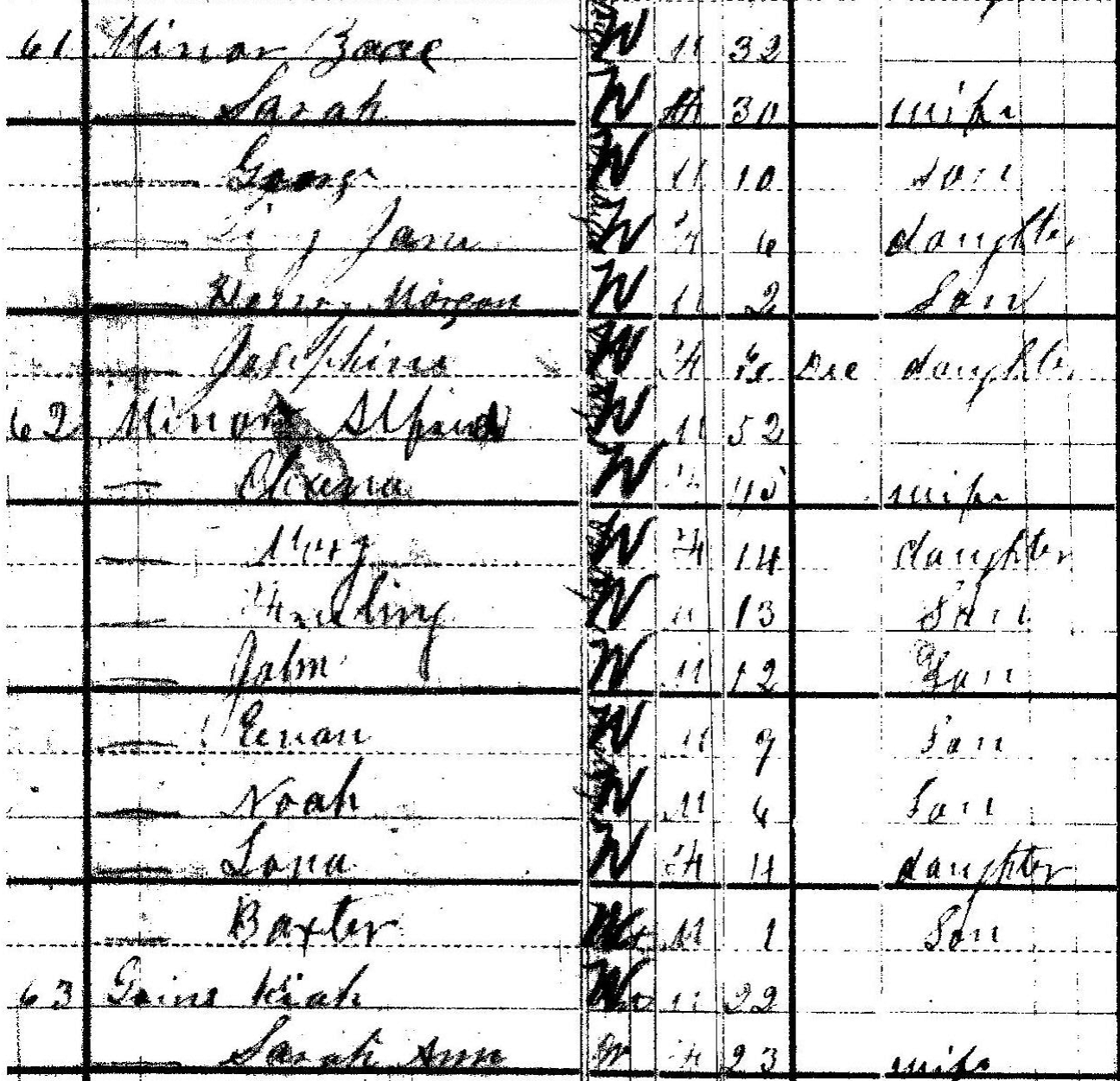
anne and me on dig

______________________________________________________________

Disclosure

I receive a small contribution when you click on some of the links to vendors in my articles. This does NOT increase the price you pay but helps me to keep the lights on and this informational blog free for everyone. Please click on the links in the articles or to the vendors below if you are purchasing products or DNA testing.

Thank you so much.

DNA Purchases and Free Transfers

Genealogy Services

Genealogy Research