Daniel Vannoy (1752 – after 1794) Embattled, then Disappeared – 52 Ancestors #261

Daniel Vannoy Blue Ridge Parkway.png

Daniel Vannoy is the father of Elijah Vannoy who was born about 1784. This seems like such a simple statement, but believe me, identifying Elijah’s father was anything BUT simple. In fact, without DNA testing, we would never have been able to know which of the 4 sons of John Vannoy was the father of Elijah.

Fortunately, we know the identity of the wives of the 4 Vannoy sons. It was through matching the descendants of the ancestors of Daniel’s wife, Sarah Hickerson, that we identified Daniel.

I wrote about that here and here.

In a nutshell, Y DNA proved that Elijah was indeed a Vannoy male, and autosomal matches to Sarah’s siblings’ descendants proved that Daniel Vannoy and Sarah Hickerson were Elijah’s parents.

Birth and Baptism

Daniel Vannoy was born on February 22, 1752 in Rowan County, North Carolina, according to family Bible records.

The location of Daniel’s birth in Rowan County has been widely reported as Potts Creek, but Potts Creek, today, is about 90 miles southwest of the Jersey Church where we know positively that Daniel’s father was living. There may have been a different Potts Creek at that time, but it’s unlikely that Daniel’s father, John Vannoy moved away from the Jersey Settlement, and back again, especially given that settlers were even less safe further west. I’d love to know the source of the Potts Creek information.

Daniel Vannoy may have been named after Daniel Gano, one of the men who lived in Hopewell New Jersey and whose son, John, migrated not long after the Vannoy family settled in the North Carolina Jersey Settlement. The Reverend John Gano was the eventual minister of the Jersey Settlement church, at least until he high-tailed it back to New Jersey because of the unsafe conditions in North Carolina.

It’s worth noting that Gano recorded that the trip from New Jersey to the Jersey Settlement in North Carolina was 800 miles and took him 5 weeks – and he was riding a horse, not pulling a wagon which would have taken much longer – about 10 miles per day on average. That means that John Vannoy’s trip to North Carolina took about 80 days – if nothing broke and everything went well.

Gano returned to New Jersey in 1760 due to Indian trouble in North Carolina, but clearly John Vannoy and his sons remained. In February 1760, the Cherokee attacked Fort Dobbs and the white settlements along the Yadkin and Dan Rivers. War with the Cherokee lasted until August 1761 when a peace treaty was reached.

Daniel Vannoy was baptized into the Dutchman’s Creek Church on August 17, 1774 at 22 years of age.

August the Seventh 1774, there was added to the Church by baptism:
Daniel Vannoy

Dutchman’s Creek Church became Eaton’s Ford on the Yadkin in 1790. The Mulberry Fields Baptist Church, where Daniel was baptized was a more distant branch of Dutchman’s Creek.

Daniel was baptized as an adult and the family had clearly moved to the area known as Mulberry Fields, today known as Wilkesboro, by 1774.

On October 28, 1776, Daniel is found in the Surry County court records where he purchased a sythe from the estate of James Burks. Parts of Surry County became Wilkes in 1778.

Moving West

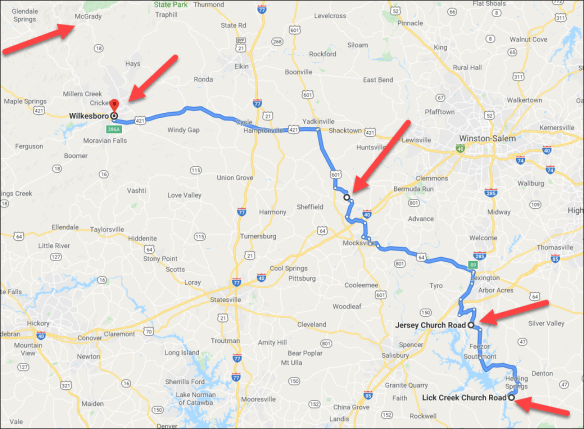
Daniel’s father, John Vannoy, owned land near Lick Creek Road Church when Daniel was born. The Jersey Church where Daniel would have first attended is a few miles up the road. Eaton’s Baptist Church is at the middle red arrow on the map below. The Mulberry Fields church was located at what is now Wilkesboro, about 75 miles northwest of the Jersey Settlement.

Nathaniel Vannoy lived at Mulberry Fields, but Andrew Vannoy eventually lived near McGrady, up on the mountain, another 17 miles further north. Daniel’s other brother, Francis, lived on Reddies River, in between Andrew and Nathaniel.

Daniel Vannoy Jersey to Wilkesboro.png

It’s interesting that Daniel Boone’s parents lived on Mulberry Fields on the Yadkin as well, and that Daniel Boone’s brother, Edward Boone was baptized the same day as Daniel Vannoy. In fact, the Boone family seems to be a presence in Daniel Vannoy’s life, with Squire Boon also found in the court notes with Daniel Vannoy.

Daniel Vannoy lost his father when he was about 25 years old, in approximately 1788, and shortly thereafter, Daniel married.

Wedding Bells

Like many young men, we don’t hear much about Daniel until he marries, but we do find Daniel on the Surry County tax list in 1774 and 1775 with 1 poll. That portion of Surry County would become Wilkes county a few years later.

Wilkes County was formed in 1777, and in Wilkes County, Daniel Vannoy and Sarah Hickerson were married on October 2, 1779.

Daniel Vannoy marriage.jpg

On his marriage document, we have Daniel’s only known signature. This tells us that he could read and write.

After Daniel’s marriage, he began farming and we find him in a variety of typical records for the next few years.

Court Minutes 1777-1788 – September 6, 1778 – page 3 – Court ordered that George Wheatley, Edmund (blurred), Jeffrey Johnson, Francis Vannoys, Jonathan Stamper Jr., William Johnson, Thomas Stubblefield, Francis Reynolds, James Reynolds, Moses Toliver, David Hickerson, Daniel Vannoys, Charles Burns, Andrew Vannoye, Joseph Pourter, Joseph Fannel (?), view road from end of road at Roaring River to court house.

Francis and Andrew Vannoy are Daniel’s brothers, and David Hickerson is Daniel’s brother-in-law.

Daniel Vannoy Wilkesboro Roaring River.png

Assuming the courthouse then was in present-day Wilkesboro, and the “end of road at Roaring River” is about at Elkin Highway today, this was about a 10 mile stretch of road. This length explains the next entry that divides the length into more manageable segments for maintenance. Daniel’s brother, Nathaniel, was responsible for opening and overseeing a section of the road.

The next day, Francis Reynolds was appointed as the overseer of the new marked road from the court house to Francis Reynolds Ridge Road, Francis Vannoy overseer of the road from Francis Reynolds Ridge Road to Roaring River, George Wheatley overseer of the road from Roaring River to Little Bugabo Creek, and William Warrel over seer of the road from Little Bugabo to the County Line.

Land

March 27, 1778 – James Fletcher entered 400 acres on the South side of the Yadkin River including an island at Moravian Lower line to John Prophets claim including improvement said Fletcher lives on (Caveated by Daniel Vannoy) – entry 47.

A property caveat is a legal document lodged to provide notice of a legal claim to a property. Lodging a caveat allows time for both parties to claim their interest in court. No other transactions can be registered against the title until the caveat is resolved.

Moravian Creek is south of the Yadkin River, while at least some of the rest of the Vannoy family settled several miles North of the Yadkin, although Nathaniel lived in the Mulberry Fields area.

We don’t know for sure if Daniel received this grant, but based on the next entry, it appears that he might well have.

October 7, 1779 – Charles Gordon entered 100 acres east corner east and west line Mulberry Fields tract joining Daniel Vannoy’s tract, entry 1236.

Let’s see if we can find this land.

Daniel Vannoy Moravian River.png

This land would be in Wilkes County near present-day Wilkesboro. The mouth of Moravian River is shown intersecting with the Yadkin at the upper red arrow, with what was then Mulberry Fields to the right.

Of course, in the intervening 221 years since Daniel tried to claim those 400 acres, roads were constructed, as well as many floods having occurred. I don’t see an island today, but that doesn’t mean much if the island was small.

The great irony is that when I visited Wilkes County in 2004, my favorite coffee shop, the Coffee Tavern, was located on the Yadkin River, quite near this location.

Daniel Vannoy coffee tavern.jpg

Now a dental office, this was about a mile and a half as the crow flies from the mouth of Moravian Creek on the Yadkin. Daniel’s land would have been more than half a mile wide by a mile long – but of course it might not have been rectangular. The Coffee Tavern is likely further east, but not by far.

I struggled to find this property today, but finally succeeded.

Daniel Vannoy Moravian to coffee tavern.png

I knew I was close, but the Coffee Tavern was actually further east at 1409 Willow Lane. Still, I stood on the back deck with my coffee and looked out over the Yadkin not far from where Daniel and his brother, Nathaniel lived. I had no idea then how close I was, but I clearly remember feeling moved.

The Yadkin was smaller than I expected, but it was clearly the lifeblood of, and responsible for, the settlement of this part of North Carolina.

Finally, I found the actual survey itself, and the island mentioned. There’s an important clue, “just below the mouth of Cub Creek.”

And North is down, not up.

Daniel Vannoy Cub Creek.jpg

I wasn’t far from this location at the Coffee Tavern – although it appears that Daniel only attempted to own this land but didn’t succeed. His brother Nathaniel lived close by.

Daniel Vannoy Mulberry Fields.png

This area in Mulberry Fields was clearly the early stomping ground of the Vannoy men.

Beaver Creek

Daniel then entered land further west. The descendants in Wilkes County have always said that “Elijah’s people” were from “over in Ashe County” – and it was true.

October 18, 1779 – Daniel Vannoy entered 100 acres on a branch of the New River called South Beaver – entry 1248.

Daniel Vannoy 1780 survey.jpg

Next in the file was the survey drawing which helped immensely in locating Daniel’s actual land.

Daniel Vannoy Beaver Creek survey.jpg

Daniel’s brother, Nathaniel would be his chain carrier for the survey.

This land would be in future Ashe County when it was formed in 1799.

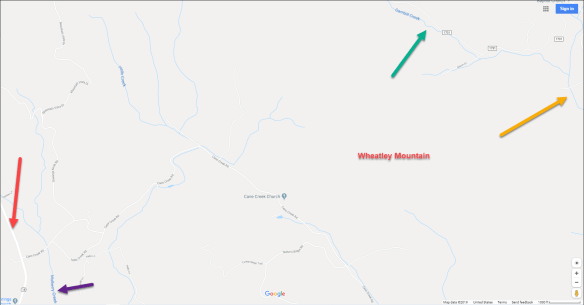
Daniel Vannoy South Beaver.png

New River in Ashe county shown by the green arrows, and the South Beaver is shown by the red arrows. It’s about 5 miles long.

Daniel Vannoy South Beaver to Wilkesboro.png

The closest portion of South Beaver was not close to Wilkesboro – about 24 miles distant.

Andrew Vannoy was claiming land on Mulberry Creek by 1780, and Francis was living on the Reddies River by Lewis Fork by 1783. Nathaniel claimed land in Mulberry Fields.

Daniel Vannoy Beaver to McGrady.png

The closest points between Vannoy Road in Wilkes County and South Beaver Creek. Daniel’s brother Andrew lived close to McGrady near the Old North Carolina 16 location, known as the “Old Wilkesboro Road” which snaked its way through the mountains.

On December 6, 1779, Daniel was again serving as a juror in Wilkes County.

While things appear calm in the courtroom up until now, keep in mind that the country is in the middle of the Revolutionary War and many men from Wilkes County served. Nathaniel Vannoy was a Sergeant Major and Daniel’s brother Andrew was a Captain, but there is no suggestion that Daniel served.

The Feud Begins

September 4, 1781 – Court entry for Samuel Steward vs Daniel Vannoy.

A jury was called – no trial outcome is listed. This looks to be the official beginning of a feud between the Hickerson family and Daniel Vannoy – not even 2 years after his marriage to Sarah. By this time, their first child had probably been born.

This suit is likely a foreshadowing of things to come a decade later.

It’s worth noting that on the 1782 tax list, there are no Stewarts or Stewards and in the 1790 census, there is only one Steward family in Wilkes County, James Steward.

Three pages later in the court transcriptions, another suit involves a near neighbor.

Nathaniel Jud vs Daniel Vannoy.

Another jury is called, with no outcome listed.

I would like to have been a fly on that wall.

Court would have been quite interesting on April 26, 1786. Daniel was a juror in court that particular day, although not for this specific trial. The trial where Daniel served immediately followed this case.

State vs Bradock Harris – indicted assault, jury called, jury find guilty. Ordered defendant fined 5 pounds and be CARTED up and down the court yard from Humphries to Smothers with this inscription wrote in large letters on paper and fixed to his forehead and read loudly by the sheriff at each place. THIS IS THE EFFECTS OF AN INTENDED RAPE and the last part of the punishment be inflicted between hours of four and five o’clock this evening.

Court was adjourned for one hour and following were present: Charles Gordon, Russell Jones and William Nall, Esquires.

The caps are in the record and are not mine.

I’d wager that the court adjourned so everyone could go outside and watch the procession. Interesting that in the 1790 census, Bradock is married with 2 children.

The next entry for that day in the Wilkes County court is a case where Daniel Vannoy is a juror, so he would have witnessed the case above, including the punishment. Court in the 1700s was the soap opera entertainment of the day.

The fact that Daniel is serving in Wilkes County tells us unquestionably that he was living in Wilkes County and was a property owner at this time.

The 1782 Wilkes County tax list shows that Daniel had 100 acres of land, 1 negro, 1 mule or horse and 4 cattle. This implies that he did not obtain the 400 acres in Wilkesboro and was probably living on the South Beaver Creek land.

A few months later, we find Daniel in the records again. It appeared that he applied for another grant on Beaver Creek.

October 23, 1782 – NC grant no 274 – Daniel Vannoy 100 acres on Beaver Creek branch South fork New River page 229.

I thought this was a second piece of land, but it wasn’t. The first document is the entry for the grant, and this document, below, is the actual granting of the same land.

Daniel Vannoy 1782 grant.jpg

In 1787, Daniel is found on the tax list with a wife, 2 sons and a daughter.

We know now that one of those sons is Elijah Vannoy, but we don’t know the identity of the other son, nor of the daughter, assuming they survived, of course.

November 11, 1788 – Petition of the back inhabitants of this state humbly sheweth that there are many small pieces of land in the upper or back parts of this state now lieing vacant and the price of entering of land being high and the inhabitants in general low circumstances causes many families to live on rented lands whereas if the price of entering was reduced they might be in a capacity of getting land on their own. We pray that you would reduce the price of entering land so as to put poor men in a capacity of getting land to maintain their families on.

These petitioners look to be men from Wilkes County, NC. I recognize many of the names such as Vannoy, Shepard, Cleveland, Hickerson and McNiel.

We find Daniel Vannoy listed among the petitioners.

In 1790, Daniel is found on the census with his wife, 2 sons, a daughter, and a slave.

Daniel Vannoy 1790 census.jpg

Viewing the neighbors on the census list is often useful. Unfortunately, Daniel is the last person in the second district, but the people listed above him are likely recorded in some form of neighbor order.

In this case, Leonard Miller is married to Daniel’s wife’s sister, Jane. Does this mean that Daniel and Leonard are living not terribly far from Charles Hickerson, Sarah’s father, in Wilkes County?

July 28, 1790 – Daniel is a court juror.

November 12, 1792 – Daniel Vannoy witnessed a deed for William Curry Sr. and Jr, on the Middle Fork Fisher’s Creek.

November 7, 1793 – Court ordered Isham Harvell, William Chambers, William Mitchell, Charles Johnson, William Curry, Daniel Vannoy, Charles Foster Jr. James Harvil, William Hendren, John Hendren, John Howard view road from road leads from Old Store to Samuel Nicholsons to the Meeting House at road between Fisher’s Creek and Cub Creek.

Cub Creek intersects with the Yadkin in Wilkesboro, but Fisher’s Creek, now Fisher’s River, is about 35 miles East.

Daniel Vannoy Cub Creek to Fishers Creek.png

November 8, 1793 – Bastardy bond 50 pounds Reuben Carter charged with begetting bastard child on Mary Brewer, Daniel Vannoy and John Johnson bondsmen, page 383.

This bastardy bond for Reuben Carter makes me wonder if Daniel is related to either Reuben Carter or Mary Brewer, the mother of Reuben’s child. Note that on the census, Henry Carter is listed three houses above Daniel Vannoy.

April 6, 1794 – Between Daniel Vannoy and Nathaniel Vannoy 160 pounds for negro women named Winnie formerly property of Col. Charles Gordon and her child, Reubin. Wit Rowland Judd and Isaac Parlier. Signed Daniel Vannoy page 190

This hurts my heart to know that Daniel owned slaves. There’s no clue as to how or when he obtained those slaves.

This transaction was confirmed in court on May 4, 1805, “Bill of sale from Daniel Vanoy to Nathaniel Vannoy for a negro woman named Winny was duly proven in court by the oath or Rowland Judd.”

Daniel’s In-Laws

Before the end of 1793, Daniel’s father-in-law, Charles Hickerson had died and is reported by his grandchildren to have been buried at Mulberry Fields.

We know Charles Hickerson had died because Daniel’s mother-in-law, Mary Hickerson died on or about December 5, 1793. Mary “published” a nuncupative will that was probated in Wilkes County at the February court term 1794 and recorded in Will Book A, page 386.

As they say, that’s when the fight began.

In the name of God Amen, I Mary Hickerson of the County of Wilkes and State of North Carolina, being of Sound mind and memory, blessed be God, do this the fifth day of December in the year of our lord one thousand seven hundred and ninety three make and publish this my last Will and Testament in the manner following, that is to say– First, I give my son Joseph Hickerson one purple rugg. I also give my daughter Jane Miller my chest and tea ware. I also give my daughter Mary Stewart and her son Samuel Hickerson one feather bed and also my daughter, Mary Stewart, all the goods in the above mentioned chest. And all the balance of my property to be equally divided amongst my daughters. I also leave my son David Hickerson three yards of white linnin. Also this is my last Will and Testament and Desire. Delivered in the presence of us Amy Hickerson Jane Miller.

No signature and no executors.

I suspect that Amy Hickerson is actually Ann, Mary’s daughter-in-law.

The problematic words in this will are likely “the balance of my property to be equally divided among my daughters.” Mary doesn’t name the daughters, nor does she say if that includes any deceased daughters who might have children. Or, maybe there wasn’t any other property left, based on how this will read, so any daughters not specifically remembered would have received nothing at all.

Mary Steward who had a Hickerson son, Samuel, is the probable the source of the alias of Samuel Steward in the 1794 slander case with Daniel Vannoy as well as the 1781 court suit.

It’s also of note that Mary did not leave anything to her daughter, Sarah, Daniel Vannoy’s wife, and that too may have been a source of conflict.

Was Sarah Hickerson Vannoy deceased before her mother? If so, Sarah clearly had children and Daniel would obviously have felt they should have inherited something from their grandmother.

If Sarah wasn’t deceased, why was she not specifically remembered. Did her only inheritance fall into the “balance of my property to be equally divided among my daughters,” but there was no property left to divide?

Slander and Assault!

Obviously, someone was very unhappy. That someone was apparently Daniel Vannoy and by inference, his wife, Sarah, assuming she was living. I do presume she was alive, because Daniel Vannoy never remarried, at least not that we know of. The Wilkes County marriage records exist prior to and after this date.

On May 7, 1794 we find this in the court notes:

Samuel Stewart alias Little D. Hickerson vs Daniel Vannoy – slander – jury called.

This tells us that Samuel Steward is of age, so born before 1773. In fact, he was probably of age by 1781 when the first suit was filed, meaning he was born before 1760, pushing his mother’s birth back to about 1740 or so.

This entry suggests that the man is now called Samuel Steward but his legal name is Little D. Hickerson – suggesting that he was illegitimately born to his mother, Mary HIckerson, before she married a Stewart/Steward man.

David Hickerson vs Daniel Vannoy – same jury, Leonard Miller forfeit his appearance as witness in case.

It sounds like Leonard Miller, Daniel’s brother-in-law, didn’t show up for court. He probably didn’t want to be in the middle, but if he was a witness, it’s likely he was there when whatever happened, happened.

Court ordered attorney McDowal to show tomorrow why a new trial shall not be granted in Samuel Hickerson vs Daniel Vannoy.

Here, he’s actually listed as Samuel Hickerson.

Leonard Miller is Daniel’s wife’s sister Jane’s husband.

David Hickerson is Daniel’s wife’s sibling.

Court ordered R. Wood to show cause why David Hickerson should not pay witness in suit.

I’m guessing that R. Wood is an attorney for David Hickerson.

In today’s parlance, everyone is lawyered up.

On November 2, 1794 – On motion of attorney McDowell on behalf of Daniel Vannoy, complainant, a sci fa issued to Samuel Hickerson alias Steward Hickerson Litle.

This is the fourth name for Samuel, aka whatever.

Scire facias is a writ requiring a person to show why a judgment regarding a record or patent should not be enforced or annulled.

In this case, the scire facias filing suggests that Daniel argues that Mary’s will should be set aside as pertains to Samuel, the son of Mary Steward to whom Mary Hickerson left all of her furniture and everything in that trunk. In essence, this probably included all of Mary’s worldly goods except the purple rug, chest, tea ware and 3 yards of white linen.

Or maybe there was an allegation that additional items were added to the chest that hadn’t been there before.

Of course, Mary Hickerson was Daniel’s mother-in-law.

As the leaves and seasons were turning and the anniversary of Mary’s death was approaching, things deteriorated further.

November 6, 1794 – State vs Daniel Vannoy, indicted assault and battery, fined 1 penny.

This is one of those verdicts where it appears that the court (no jurors were mentioned) had to find Daniel guilty, but they fined him as little as possible. This is what I refer to as a wink and a nod. Yep, you did it Daniel, as they patted him on the back and said, “yea, I would have too.”

November 7, 1794 – State vs Samuel Hickerson indicted assault and battery.

Unfortunately, no outcome is listed for this trial. It sounds like Daniel and Samuel had an old-fashioned brawl.

State vs William Curry, indicted assault and battery, jury called.

William Curry is the man for whom Daniel witnessed the deeds. I wonder if he’s somehow related too.

I’m not sure how William Curry is mixed up in this, but he clearly is based on the distribution of the costs.

Court ordered a fine of 5 pounds be remitted in State vs David Hickerson.

If a fine was ordered, David was found guilty. It’s worth noting that the fine is more than a penny.

Ordered William Curry pay Joshua Souther, John Love and the prosecutor in suit State vs William Curry, and Daniel Vannoy pay other witnesses – defendant found not guilty.

William isn’t guilty, but for some reason Daniel has to pay the witnesses. This is a mess.

Daniel was on a tear. Today, this is referred to as “going full southern.” I can’t help but think of Julia Sugarbaker.

Daniel was obviously furious about something and feeling very wronged. Was he actually?

November 8, 1794 – Bill of sale from Daniel Vannoy to Nathaniel Vannoy for negro woman named Wille, oath Isaac Parlier.

The next day, Daniel sold his slave, probably to pay the costs and witnesses. I don’t know if this case was a matter of money or of principle, or both, but clearly Daniel was “all in.”

This was the third slave Daniel sold in 1794, all to his brother Nathaniel.

Was Daniel preparing to leave?

January 16, 1795 – Between Daniel Vannoy and Patrick Lenin Cavender, 50 pounds, 100 acres on South Beaver Creek branch South fork of New River below his spring branch…gap between Frenches and Querrys Knobs. Wit David X Fouts and David Burket. Signed Daniel Vannoy pages 390 and 391.

Two months after those suits and after selling his slaves, Daniel sold his land.

This land sale was not proven in court until on November 6, 1802, after Daniel seems to be gone. “Deed from Daniel Vannoy to John L. Cavender for 100 acres of land proven in court by the oat hof David Fouts.” The transcriber notes that Absher abstracted a deeed (C 1:390) on January 16, 1795 from Daniel to Patrick Lenin Cavender for the same amount of land, with the same witness, and this might be the same land.”

This land sale document held the clue to actually locating Daniel’s land.

Daniel Vannoy Beaver Creek land.png

Frenches Knobs is the red balloon, above, and the area being pointed to with the red arrow looks very much like Daniel’s survey. Noticing the road to the right of the Beaver Creek Primitive Baptist Church holds another potential clue. It’s named Bob McNiell Road.

Daniel Vannoy land.png

This is roughly the area of Daniel’s land.

The Cemetery is named the Peter McNeill Family Cemetery according to FindAGrave. The Beaver Creek Primitive Baptist Church was founded in 1785, which clearly suggests that both Daniel Vannoy and the McNiell family were involved. This church was on Daniel’s land, which makes me wonder if he was actually one of the founders himself. He owned this land from 1780 when he staked the claim until 1795 when he sold it.

The oldest McNiell family burial is Peter Gaither McNeill born in 1827.

Daniel Vannoy Blue Ridge.png

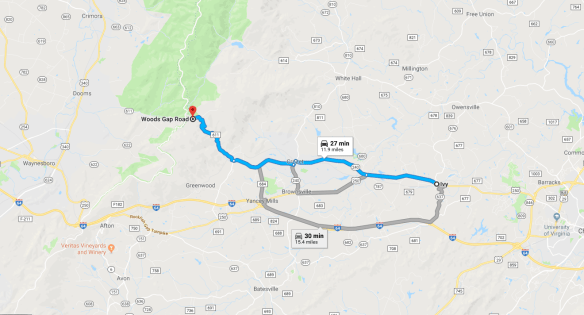
Note that Daniel actually moved across the top of the Appalachian Range. Frenches Knob is shown with the red pin. The two arrows beneath show the Blue Ridge Parkway which runs in dog-leg fashion along the top of the ridge. I’ve also noted McGrady and Wilkesboro.

Visiting Daniel’s Land at Frenches Knobs

Let’s take a drive and visit Daniel’s land!

Daniel Vannoy Frenches Knobs.png

The beautiful valley between the knobs where Daniel lived. I can’t help but drink this in. This is heading Northwest on 163 right about at the east boundary of Daniel’s land.

Daniel Vannoy Frenches Knob view.png

The infamous Frenches Knobs, above, and an old barn in a field.

Daniel Vannoy Beaver Creek Church Road.png

The intersection of Beaver Creek Church Road and Bob McNiell Road with North Carolina 163.

Daniel Vannoy Beaver Creek Church cemetery.png

There’s a cemetery back behind Beaver Creek Church, shown at right above, but we know that William McNiel sold out and moved on, with Elijah Vannoy, to Claiborne County, Tennessee about 1811. This appears to be a related McNiell family, as William McNiel’s children left with him when he packed up his wagon.

I do wonder if Sarah Hickerson Vannoy might be buried here.

Daniel Vannoy land 163.png

This was Daniel’s land. I’ve now “turned around,” because Daniel’s land seems to end about here, and am driving back southeast.

Daniel Vannoy land knob and barn.png

I wonder if this was the location of the original homesite. Note the ancient tree in the front yard, and the old barn out back. Not to mention, it’s relatively flat and has a source of fresh water nearby.

What Happened to Daniel?

And then, after Daniel sold his land in 1795, in the next 4 years before Ashe County was formed…silence. Nothing in any Wilkes County Records.

Daniel is not found in the 1800 Wilkes or Ashe County census, but in Ashe County, only the census for the Morgan district still exists. He’s not found anyplace else for that matter either.

Daniel Cavender who purchased Daniel’s land in 1795 is not listed in the census either, but he could have died or sold the land in the intervening years.

Given that Elijah Vannoy married William McNiell’s daughter in 1809, let’s see if he’s listed in the 1800 census.

William McNiel is listed in the Morgan District of Ashe County with:

  • 4 males under 10 (Niel McNiell born about 1792, other 3 males unknown)
  • 1 male 10-15 (George McNiell born about 1788)
  • 0 males 16-25
  • 1 male 26-44 (William McNiell born c 1760)
  • 2 females under 10 (Mary McNiell born about 1792, Nancy McNiell born 1794)
  • 1 female 10-15 (Lois McNiel born about 1786)
  • 1 female 16-25 (Sarah McNiell b 1784)
  • 1 female 26-44 (Elizabeth Shepherd born 1766)
  • 1 female over 45 (unknown)

It’s possible that we found Sarah Hickerson Vannoy. Although this doesn’t fit exactly either. Sarah could be the woman over 45, as she would have been about 48. The extra male under 10 could be Joel Vannoy born in 1792, but Elijah, born about 1784 is missing.

In 1810, William McNiell is again living in Wilkes County, 5 houses from Andrew Vannoy. I find William still in the Ashe County court notes in 1809, but not in the Ashe County 1810 census, so it would appear that these families are moving together back to Wilkes County.

In 1810, Daniel Vannoy is still missing in the census, but there is a Sarah Vannoy who might be the widow of Daniel living in the Wilkesboro District, in Wilkes County, with no males, 2 white females 10-15, 1 white female 16-25 and 1 white female 26-44. Sarah would have been about 58 at this time, so whether this Sarah is the widow of Daniel is unclear. The ages don’t match, but the census is notorious for those types of issues.

There doesn’t seem to be another candidate for this Sarah Vannoy.

If this woman is Daniel’s wife, Sarah, then Daniel and Sarah had two more daughters between 1794-1800, but son Joel born about 1792 is missing. If this woman is Sarah, then the woman with William McNiell in 1800 might not be Sarah, as she has 2 additional small children not accounted for in 1800.

In 1810, when Elijah, Daniel’s son, then about 26, emerges on the census, it’s not in Ashe county which was formed in 1799, but in Wilkesboro District in Wilkes County which extends north of Wilkesboro, not far from McNiels and David Hickerson.

No Vannoy or McNiel (by any spelling) is on the Ashe County 1815 tax list either.

Daniel is most likely dead by 1817, because his son, Joel Vannoy who was born in 1792 married Elizabeth Saint Clary (Claire?) on March 18, 1817, and his marriage license was signed by Little Hickerson as bondsman. Surely, if Daniel was alive, he would have signed himself.

This may also suggest that Sarah was not estranged from her family – at least not in 1817, although her brother, David, Little’s father, had been in Tennessee by that point for several years – and so had Sarah’s son, Elijah Vannoy.

If Sarah was alive, it’s apparent based on where her 2 sons emerged that she moved back to Wilkes County.

Many Wilkes County families moved on to Tennessee around the 1810 timeframe, and maybe if Sarah was living, she was finding her family shrinking.

The only children of Daniel Vannoy that we know of, for sure, are my Elijah born about 1784, proven through DNA, an unnamed son and daughter born before 1788 according to the tax list, probable son Joel born about 1792 and a rumored daughter Susan, courtesy of long-time Wilkes County researcher, now deceased, Joyce McNiel. Susan was reported to have been born about 1804 and married George McNiel, born about 1802. Joyce proved that two other sons weren’t the father of Susan, but she was never able to prove who her parents actually were. DNA could probably do that today.

Of course, if the Sarah in Wilkes County in 1810 is Daniel’s wife, then Daniel had 2 additional daughters.

Possibilities

Daniel was quite active for years in Wilkes County, serving in court as a juror, which means he was a citizen in good standing.

This all seemed to come unraveled in 1793 and 1794 with the death of his wife’s parents and resulting conflict when he would have been in his early 40s. From that point on, Daniel simply disappears.

By 1799, when Ashe was formed, Daniel would have been living there, based on his land grants, that is, if he still owned land. However, Daniel had sold his land in 1795.

There are no further land transactions for Daniel Vannoy in either Wilkes or Ashe County.

Daniel’s son Elijah was born about 1784. Son Joel is reported to have been born in 1792 according to the book, “George Michael Eller and Descendants of his in America”, so he could not have been one of the males in the 1790 census. This also means that it’s unlikely that Sarah in 1810 in Wilkes County is Joel’s mother, because Joel would have been 18 and still living at home – or working on a farm someplace.

Furthermore, the fact that Elijah married Lois McNiel in 1809 or earlier, fully 14 years after Daniel Vannoy sold his land and disappeared suggests that Elijah was living someplace in Ashe County. How else would he have been courting Lois McNiell? Their first child was born 11 months after a court entry in Ashe County with William McNiell appearing as a court justice. You have to be in physical proximity to court.

Knowing that William McNiel was Daniel Vannoy’s neighbor in Ashe County, I can’t help but wonder if William McNiell raised brothers, Elijah and Joel Vannoy.

When Daniel was last in the records, Elijah was about 11 and Joel about 3.

Did Daniel die, intestate, in either Wilkes or Ashe County before 1800? If so, he would not have owned property at that time, because the Wilkes records are complete and there is no mention of Daniel after 1795. If he didn’t own property, he may have had no estate to probate.

If that’s the case, he went from being a slave-owning land-owner to not owing slaves or land without enough assets to probate. That would be unusual but certainly not impossible.

Did Daniel die in Ashe County sometime between 1799 when the county was formed and 1806 when the court records began? That’s certainly possible. A significant number of records were destroyed in the Ashe County courthouse fire in 1865.

If Daniel died sometime after 1806 in Ashe County, some of the court records exist. I’m reading them page by page, in the hope of catching a glimpse of Daniel. Currently I’m working on 1810, and no Daniel Vannoy. I don’t think he’s there. That’s 15 years after he sold his land and disappeared.

It is interesting that William McNiel, the father of Lois McNiel whom Elijah Vannoy would marry in 1809 lived in Ashe County, also owning land on the north side of the South Fork of New River.

William McNiel still owned land in Wilkes County that he sold to his new son-in-law, Elijah Vannoy, in 1810.

Daniel Vannoy and Sarah Hickerson were married in 1779. If Sarah was age 20 at the time, she would have been born about 1759. In that case, she could have borne children until about 1802. If she was slightly older, Daniel’s age, born in about 1752, then Sarah would have been giving birth until about 1795.

It’s certainly possible that the Sarah that appears in 1810 in Wilkes County is indeed Daniel’s wife, but there’s no record of her other than the census in Wilkes County.

The 1810 census exists for both Wilkes and Ashe Counties, and it’s apparent that Daniel is living in neither county at this time.

It’s possible that Daniel and family moved on when Daniel sold his land in 1795, except that Daniel and Sarah would not have left their son Joel, born in 1792, only 3 years of age, behind.

It’s also possible that Sarah and Daniel both died and the Vannoy boys were raised by one of their uncles, or someone else, in Ashe or Wilkes County.

On the census records, we do find that Andrew Vannoy has an unexplained male in both 1800 and 1810, but not two unexplained males. In 1787, both Joseph and Benjamin Darnell, born about 1780, were bound to Andrew Vannoy until they were 21 because their father had died. This extra male in 1800 could have been one of the Darnel boys.

Marital Strife?

The situation between Daniel and the Hickerson family had to take a toll. It obviously unraveled Daniel, because he is being sued for slander and assault by a number of people.

I can’t help but wonder if this situation caused his relationship with Sarah to deteriorate as well. At that time, extremely few people got divorced. In fact, divorces were only granted at the state level – and yes, I checked.

What was more common was for the man to simply “leave,” to move on to another place and perhaps remarry.

I have no evidence that this is what happened to Daniel, but I also have no evidence, not one shred, that Daniel remained in either Ashe or Wilkes County – even though his minor sons did.

The fact that Daniel sold his land as well as his slaves suggests he left. I can’t find any additional land transactions. I can’t find his wife. I can’t find a probate record, or his children being assigned guardians or bound out like the Darnel boys.

Yet, Daniel’s 2 sons emerge in Wilkes County in 1809 and 1817, respectively.

Did Daniel literally just disappear in life too?

I find his two known sons, both in Wilkes County, with Elijah’s marriage occurring in 1809 or before and purchasing land from his father-in-law, William McNiel, in 1810.

Perhaps the reason Elijah was willing to leave with the McNiel family for Claiborne County within the next couple of years is because both of his parents were gone, and his parent’s two families were estranged from each other.

Daniel’s son, Joel Vannoy, is found in Wilkes marrying in 1817 with Little Hickerson signing as his bondsman. Daniel probably rolled over in his grave – assuming he was in a grave someplace and not blissfully married in another state.

This certainly suggests that Joel Vannoy was close to the Hickerson family.

There’s are also other possibilities – more nefarious.

It’s not unheard of for vigilante justice to occur.

Maybe Daniel disappeared up in those mountains.

It’s rough, really rough, terrain. A body would never be found.

But given that Daniel sold both a slave and land, that looks like the less likely option – unless, of course, it was known that he had cash.

It’s apparent that Daniel was preparing to not live there anymore. What isn’t apparent is why his sons, ages 11 and 3, were left behind.

Daniel could also have committed suicide. I don’t ever recall people discussing things like that – but surely, they happened. Perhaps they were couched as accidents – suicides and murders both.

We know that Daniel’s grandson, Joel Vannoy, was mentally unstable and confined to an institution for some time. Was Daniel mentally ill too? Is that perhaps what happened to him in 1794 when he was in his early 40s? Are we witnessing a psychotic break from the distance of two+ centuries?

One thing is for sure, Daniel was one unhappy man in the last records we have of his life.

Then, he was simply…gone.

Daniel Vannoy's land from Blue Ridge Parkway

Overlooking Daniel’s land from the Blue Ridge Parkway.

______________________________________________________________

Disclosure

I receive a small contribution when you click on some of the links to vendors in my articles. This does NOT increase the price you pay but helps me to keep the lights on and this informational blog free for everyone. Please click on the links in the articles or to the vendors below if you are purchasing products or DNA testing.

Thank you so much.

DNA Purchases and Free Transfers

Genealogy Services

Genealogy Research

Triangulation in Action at Family Tree DNA

Recently, I published the article, Hitting a Genealogy Home Run Using Your Double-Sided Two-Faced Chromosomes While Avoiding Imposters. The “Home Run” article explains why you want to use a chromosome browser, what you’re seeing and what it means to you.

This article, and the rest in the “Triangulation in Action” series introduces triangulation at Family Tree DNA, MyHeritage, 23andMe, GedMatch and DNAPainter, explaining how to use triangulation to confirm descent from a common ancestor. You may want to read the introductory article first.

What is Triangulation?

Think of triangulation as a three-legged stool – a triangle. Triangulation requires three things:

  1. At least three (not closely related) people must match
  2. On the same reasonably sized segment of DNA and
  3. Descend from a common ancestor

Triangulation is the foundation of confirming descent from a common ancestor, and thereby assigning a specific segment to that ancestor. Without triangulation, you might just have a match to someone else by chance. You can confirm mathematical triangulation, numbers 1 and 2, above, without knowing the identity of the common ancestor.

Boundaries

Triangulation means that all three, or more, people much match on a common segment. However, what you’re likely to see is that some people don’t match on the entire segment, meaning more or less than others as demonstrated in the following examples.

FTDNA Triangulation boundaries.png

You can see that I match 5 different cousins who I know descend from my father’s side on chromosome 15 above. As always, I’m the background grey and these matches are all being compared against me.

I triangulate with them in different ways, forming multiple triangulation groups that I’ve discussed individually, below.

Triangulation Group 1

FTDNA triangulation 1.png

Group 1 – On the left group of matches, above, I triangulate with the blue, red and orange person on the amount of DNA that is common between all of them, shown in the black box. This is triangulation group 1.

I’ve overlayed additional triangulation groups below, so you can compare the groups.

Triangulation Group 2

FTDNA triangulation 2.png

Group 2 – However, if you look just at the blue and orange triangulated matches bracketed in green, I triangulate on slightly more, extending to the left. This group excludes the red person because their beginning point is not the same, or even close. This is triangulation group 2.

Triangulation Group 3 and 4

FTDNA triang 3.png

Group 3 – At right, we see two large triangulation groups. Triangulation group 3 includes the common portions of blue, red, teal and orange matches.

Group 4 – Triangulation group 4 is the skinny group at far right and includes the common portion of the blue, teal and dark blue matches.

Triangulation Groups 5 and 6

FTDNA triang 5.png

Group 5 – There are also two more triangulation groups. The larger green bracketed group includes only the blue and teal people because their end locations are to the right of the end locations of the red and orange matches. The start location varies as well. This is triangulation group 5.

Group 6 – The smaller green bracketed group includes only the blue and teal person because their start locations are before the dark blue person. This is triangulation group 6.

There’s actually one more triangulation group. Can you spot it?

Triangulation Group 7

FTDNA triang 7.png

Group 7 – The tan group includes the red, teal and orange matches but only the areas where they all overlap. This excludes the top blue match because their start location is different. Triangulation group 7 only extends to the end of the red and orange matches, because those are the same locations, while the teal match extends further to the right. That extension is excluded in this group, of course.

Slight Variations

Matches with only slight start and end differences are probably descended from the same ancestor, but we can’t say that for sure (at this point) so we only include actual mathematically matching segments in a triangulation group.

You can see that triangulation groups often overlap because group members share more or less DNA with each other. Normally we don’t bother to number the groups – we just look at the alignment. I numbered them for illustration purposes.

Shared or In-Common-With Matching

Triangulation is not the same thing as a 3-way shared “in-common-with” match. You may share DNA with those two people, but on entirely different segments from entirely different ancestors. If those other two people match each other, it can be on a segment where you don’t match either of them, and thanks to an ancestor that they share who isn’t in your line at all. Shared matches are a great hint, especially in addition to other information such as Phased Family Matching which we’ll talk about in a minute, but shared matches don’t necessarily mean triangulation has occurred, although it’s a great place to start looking.

I have shared matches where I match one person on my maternal side, one on my paternal side, and they match each other through a completely different ancestor on an entirely different segment. However, we don’t triangulate because we don’t all match each other on the SAME segment of DNA. Yes, it can be confusing.

Just remember, each of your segments, and matches, has its own individual history.

Imputation Can Affect Matching

Over the years the chips on which our DNA is processed at the vendors have changed. Each new generation of chips tests a different number of markers, and sometimes different markers – with the overlaps between the entire suite of chips being less than optimal.

I can verify that most vendors use imputation to level the playing field, and even though two vendors have never verified that fact, I’m relatively certain that they all do. That’s the only way they could match to their own prior “only somewhat compatible” chip versions.

The net-net of this is that you may see some differences in matching segments at different vendors, even when you’re comparing the same people. Imputation generally “fills in the blanks,” but doesn’t create large swatches of non-existent DNA. I wrote about the concept of imputation here.

What I’d like for you to take away from this discussion is to be focused on the big picture – if and how people triangulate which is the function important to genealogy. Not if the start and end segments are exactly the same.

Triangulation Solutions

Each of the major vendors, except Ancestry who does not have a chromosome browser, offers some type of triangulation solution, so let’s look at what each vendor offers. If your Ancestry matches have uploaded to GedMatch, Family Tree DNA or MyHeritage, you can triangulate with them there. Otherwise, you can’t triangulate Ancestry results, so encourage your Ancestry matches to transfer.

You can find step-by-step transfer instructions to and from each vendor, here.

I wrote more specifically about triangulation here and here.

Let’s start by looking at triangulation at Family Tree DNA.

Triangulation at Family Tree DNA

Family Tree DNA has two different tools that can be used separately in different circumstances to determine whether or not your segments triangulate.

Phased Family Matching can be used for triangulation.

The Matrix tool can be utilized for people who aren’t designated through Phased Family Matching as maternal or paternal matches to suggest or eliminate triangulation.

First, go to the Family Finder section of your personal page.

We’ll be working with Matches, the Chromosome Browser, and the Matrix.

FTDNA triangulation page.png

Phased Family Matching

At Family Tree DNA, I’ve tested my cousins:

  • Cheryl, my mother’s first cousin (1C)
  • Charlene, my first cousin once removed (1C1R) on my father’s side
  • David, my second cousin (2C) on my father’s side.

I’ve linked the test results of those cousins to my tree in their proper location, which allows Family Tree DNA to do something called Phased Family Matching.

If you don’t have a tree and don’t link your DNA results and those of your family members, Family Tree DNA can’t perform Phased Family Matching.

I explained phasing in the introductory article.

Testing your parents is wonderful if that’s possible, but parents aren’t always available to test. At Family Tree DNA, you don’t need to have tested your parents in order to have phased matches.

In essence, Family Tree DNA uses the DNA of known cousins, third cousins or closer, to assign matches to maternal or paternal tabs, or sides, also sometimes referred to as buckets. I wrote about Phased Family Matching here and here.

FTDNA triang buckets.png

You can see that of my 4806 matches, 1101 are assigned to my paternal side, 884 to my maternal side and 4 are assigned to both.

FTDNA triang header.pngFTDNA triang Charlene.png

My cousin Charlene is assigned to my paternal side, as shown by the blue icon, because I linked her to the correct position in my tree, as is my cousin, David, below.

FTDNA triang David.png

Conversely, my cousin Cheryl is assigned maternally because I linked her as well.

FTDNA triang Cheryl.png

These specific people are assigned maternally and paternally because I linked them to their proper place in my tree. These matches will allows Family Tree DNA to link other testers to the proper side of my tree too, because they match me and my cousin on the same segments – in essence phasing a large number of my matches for me which facilitates triangulation.

Linking Matches on Your Tree

In order to cause Phased Family Matching, aka, “bucketing” to occur, I linked my own test and that of my known 3rd cousins or closer to their proper places in my tree at Family Tree DNA.

If you don’t create a tree or upload a GEDCOM file and link yourself and your known matches, your matches can’t be assigned to maternal and paternal sides.

FTDNA triang tree.png

By utilizing the matching DNA between you and known close relatives on your maternal and paternal sides, Family Tree DNA assigns other people who match both of you on those same segments to the same side of your tree.

If you select matches from the same side of your tree and they match on the same segments, they triangulate.

Of course, that’s assuming the person doesn’t match you on both sides of your tree.

You can also download your matching segments in a file and sort to see who matches on the same locations, but the parental side designation (bucketing) is not reflected in the segment download file. Bucketing is reflected in the match download file which is a different file.

There are two separate download files, but they can be merged.

Two Download Files

The first file, your match download file, provides information about your matches such as their haplogroups, surnames and contact information, including bucketing assignment, but not the actual matching segment data.

The match file tells you a great deal and is both sortable and searchable. You can search for any surname, for example, or you can sort for everyone in the Paternal or Maternal matching bucket. You can creatively combine parts of this file with the matching segments file in order to quickly flag the people on your paternal side. Knowledge about how to work with spreadsheets is a plus.

FTDNA triang match file

Click to enlarge

This download is available at the bottom of the Family Finder match page.

FTDNA triang match.png

You can download all of your matches, or just those in a filtered view, such as in-common-with or as the result of a surname search.

FTDNA triang download.png

The second file, your matching segments file, is available on the chromosome browser page.

The matching segments file includes the match name along with the matching chromosome segments and number of matching SNPs.

FTDNA triang segment file.png

If you click through to the chromosome browser from your main page, as shown below, with NO MATCHES SELECTED, you will be able to download ALL matching segments.

FTDNA triang browser.png

You’ll see “Download All Segments” in the upper right-hand corner.

FTDNA triang download all seg.png

From that Chromosome Browser page, you will also have the ability to select matches to show on the browser.

FTDNA triang browser select

If you select people on the match page before clicking on the chromosome browser or select matches on the chromosome browser page, then clicking on “Download Segments,” will only download the matching segments of the people that you have currently selected to match against in the browser.

FTDNA triang download seg.png

Combinations of Tools and Filters

  • The chromosome browser tells you if people match you on the same segment.
  • The in-common-with filter on the match page tells you who you match in common with a specific person, but not if those two people match each other.

Of course, if both people are assigned to your same parental side bucket, and they both only match you on one large segment – and it’s the same segment, then you must triangulate.

If they aren’t both assigned to a parental bucket, then you can’t make that determination using parental side designations.

Is there a tool that allows you to compare people against each other at the same time to see if your matches also match each other?

Glad you asked.

Yes, there is.

The Matrix

Let’s say that you want to see if a group of people who you match also match each other.

FTDNA triang matrix.png

Family Tree DNA provides a Matrix tool that allows you to select 10 (or fewer) matches in order to determine if your matches also match each other.

FTDNA triang matrix match.png

I’ve entered Cheryl, Charlene and David. You can see that David and Charlene match each other, and Cheryl doesn’t match either Charlene or David.

Of course, we know that’s accurate because:

  • I already know these people and their relationship to me and each other
  • These three people are already assigned to maternal and paternal sides or buckets, so the matrix is verifying what we already know
  • I know where they match on the same segment on the chromosome browser

FTDNA triang 3 browser.png

Even though they match on the same segment on the chromosome browser, the fact that they are bucketed to different parental sides, and that the matrix shows that Cheryl doesn’t match either Charlene and David, confirms that David and Charlene triangulate with me, while Cheryl is not a member of that triangulation group.

This is exactly why triangulation is important. Looking at the image above, the only thing you know is that they all 3 match you – but with the additional information about bucketing and the matrix, we know that only the two bottom people, Charlene and David triangulate with me. Note that I’ve added the maternal and paternal icons for clarity.

FTDNA triang match group browser.png

However, if I didn’t have this knowledge, or not everyone was bucketed, the Matrix tool would be extremely useful. The matrix tool uses the matching threshold of approximately 7.69 cM.

The matrix doesn’t tell you if these people match each other on the same segment where they match you,

However, there’s a good probability that they do, especially if only one matching segment is involved.

You can check the chromosome browser to see if they both match you on the same segment. It’s possible if they don’t match you on the same segment that they match each other on different segments, and possibly through a different ancestor. You may need to reach out to them to ask if they match each other, and if they have known genealogy if they aren’t bucketed.

By utilizing the Matrix tool, you can isolate people to maternal and paternal sides of your tree.

Other Resources to Identify Common Ancestors

Be sure to check other clues at Family Tree DNA such as:

Shared surnames, shown on your matches page, with common surnames that you share bolded

FTDNA triang surnames.png

Trees, indicated by the blue pedigree icon on the match page.

FTDNA triang pedigree.png

Y and mitochondrial DNA haplogroups and matching. You can view your matches haplogroup and other information by clicking on their profile picture on your matches page.

FTDNA triang profile.png

Advanced Matching can be utilized to see if you match on combined tests, or in common projects.

FTDNA triang advanced match.png

This article discusses the 9 different autosomal tools available at Family Tree DNA.

What About You?

Do you have a tree at Family Tree DNA?

Have you connected your test and any family members to your tree?

Can you test a family member, third cousins or closer, or have them transfer a kit from another vendor?

Here’s how to transfer:

How many people do you have on your paternal and maternal tabs on your Family Finder matches page?

You can paint every single one of the people who are designated as maternal or paternal at DNAPainter to your grandparents on the respective maternal or paternal side. DNAPainter Instructions and Resources will explain how, and why.

Join me soon for similar articles about how to work with triangulation at MyHeritage, 23andMe, GedMatch and DNAPainter.

Most of all – have fun!

______________________________________________________________

Disclosure

I receive a small contribution when you click on some of the links to vendors in my articles. This does NOT increase the price you pay but helps me to keep the lights on and this informational blog free for everyone. Please click on the links in the articles or to the vendors below if you are purchasing products or DNA testing.

Thank you so much.

DNA Purchases and Free Transfers

Genealogy Services

Genealogy Research

DNA File Upload-Download and Transfer Instructions to and from DNA Testing Companies

Upload download.pngSome of my most popular articles are the instructions for how to download your DNA files from the various vendors in order to upload and transfer your DNA files to other vendors to obtain more matches.

Now, I’ve put the instructions for all the vendors together in one place. Feel free to share with your friends, family and groups by posting the link to this article.

Why Upload?

People test at multiple vendors or transfer their files in order to:

  • Take advantage of unique features at each vendor
  • Match against people in each database that haven’t tested elsewhere
  • Benefit from the lower cost of transfers as compared to testing at each vendor

Transfers, also known as uploads, themselves along with matching is free, but more advanced features require either a full subscription (MyHeritage,) a monthly subscription (GedMatch) or a one-time unlock fee (Family Tree DNA or MyHeritage without a subscription.)

Vendors who welcome uploads and have a full suite of products are:

GedMatch is not a testing vendor. Customers only transfer files from other vendors TO GedMatch to use their tools, not from GedMatch.

Vendors who don’t allow uploads, meaning you must test there, are:

Download and Upload Instructions

Transferring your DNA consists of downloading your raw DNA data file from one vendor and uploading the file to another vendor’s system.

This process does NOT delete your DNA file or results from the original system. That’s an entirely different process, not related to a file download.

Here’s how to transfer – with individual steps for downloading from and uploading to each vendor:

How many new matches will you receive by transferring to each vendor?

Upload a Tree 

Every vendor, except 23andMe, makes use of your family tree, although 23andMe does allow you to link to your tree elsewhere. I link to my MyHeritage, because you don’t have to be a member to view my tree.

Trees from your own desktop software or other vendors can be exported or saved as a GEDCOM file, and uploaded to each vendor. If you already have a tree at the vendors, you’re all set.

If not, this article will help:

Also, don’t forget to link yourself and the tests you manage to your tree. Instructions for linking to a tree at 23andMe are included in this article too.

______________________________________________________________

Disclosure

I receive a small contribution when you click on some of the links to vendors in my articles. This does NOT increase the price you pay but helps me to keep the lights on and this informational blog free for everyone. Please click on the links in the articles or to the vendors below if you are purchasing products or DNA testing.

Thank you so much.

DNA Purchases and Free Transfers

Genealogy Services

Genealogy Research

Michael McDowell Jr. (c 1747 – c 1840): Slanting Misery – 52 Ancestors #260

In the first article about Michael McDowell, Michael McDowell Jr., (c1747-c1840), Revolutionary War Veteran, Spy, Miller and Apparently, Rabble Rouser – 52 Ancestors #258, I told the story of Michael’s early years.

When Michael McDowell was about 63 years old, when most people are looking forward to sitting around a cozy fireplace on chilly mornings, Michael set out on yet another great adventure, lumbering along in a wagon pulled by his three horses and slowly making his way across mountains to the next frontier.

Michael McDowell Wilkes to Slanting.png

On average, wagons traveled approximately 10 miles a day. This journey, crossing the Appalachian Mountains through a pass someplace would have taken about 3 weeks, presuming that no wagon axles broke or anything else unforeseen happened to slow their progress during their bumpy trek.

Sometime in late 1809 or early 1810. Michael McDowell and most of his family left Wilkes County, North Carolina and settled on the border between Lee County, Virginia and Claiborne County, Tennessee, along the Powell River. They probably made the journey in the fall, after harvest, but before snow, or in the spring before planting – although mud would have been worse during that time.

We know that Michael had arrived in Lee County by mid-May of 1810.

Michael McDowell Powell River map.png

The 1810 tax list of Lee County, Virginia, located just across the county and state line from where Michael McDowell eventually settled in Claiborne County, Tennessee shows the following men on a tax list taken on May 12th:

  • Michael McDowell 1 poll, 3 horses
  • John McDowell 1 poll, 1 horse
  • Edward McDowell 1 poll, 2 horses
  • Luke McDowell 1 poll, no horses

A “poll” means this man is paying for 1 male over the age of either 16 or 21, depending on the time and place. They are listed separately, which indicates that they live in separate households. None of these men owned slaves over age 12 on this list, nor is there any indication they ever owned slaves at all.

Another indication that Michael lived initially in Lee County is that in 1812 when his son-in-law, William Herrell (Harrell, Harold, Herald) purchased land, Herrell was identified as “of Lee County, Virginia” in the deed. It’s also possible that the state line was indeterminate at that time. A Supreme Court case filed in 1893 sought to clarify the Virginia/Tennessee state line, as there had been disputes since the original surveys of the border between these two states. The Herrell/McDowell lands were only about half a mile, or less, from that eventual border.

Pushing Further Into Kentucky

A hundred miles further northwest, Pulaski County Kentucky Marriage Records transcribed by the Pulaski County Historical Society document the following marriages:

  • April 18, 1811 – Edmon McDowell married Lucy Haynes, Thomas Haines bondsman, Thomas Hansford present
  • November 7, 1811 – William McDowell married Anna Herrin, Wesley Short present
  • December 8, 1811 – Luke McDowell married Francis Fields, Wesley Short present

I find no documentation in these marriage records that these were Michael’s sons, but the 1810 tax list in Lee county is at least suggestive that Edmon (Edward) and Luke are connected with Michael McDowell Jr. Wesley Short stands with both William and Luke, connecting them. A William McDowell is later found with Michael where he lived in Claiborne County. However, for the William in Claiborne to have been the William who married in Pulaski County in 1811, he would have had to have moved back to Claiborne County sometime after his marriage.

What was the draw in Pulaski County, Kentucky? They aren’t the only men from this region to settle there.

Thompson Settlement Baptist Church

Michael McDowell’s Revolutionary War pension application in 1832 tells us that that he has a good relationship with the Baptist preacher, James Gullut (Gilbert), who he had known for 15 or 20 years which means they met roughly between 1812 and 1817. Now, we just need to find out which Baptist church James Gullut (Gilbert) was associated with.

At the Thompson Settlement Baptist Church, founded in 1800 and located across the Tennessee/Virginia border on Powell River in Lee County, Virginia we find records of James Gilbert being received by experience and baptized on April 23rd, 1815 by Reverend Andrew Baker.

“Received by experience” means that Gilbert was “saved” and subsequently baptized in this church, not transferred from another church. If he had transferred from another church, he would have been “received by letter.”

Michael McDowell Thompson Settlement.png

The Thompson Settlement church was located on Powell River, in Lee County, some 15 miles from where Michael McDowell lived on land aptly named “Slanting Misery.” And trust me, it is – I’ve been there.

Michael appears to have initially settled, at least temporarily, in Lee County, Virginia but that didn’t last for long, settling by 1812 in Claiborne County, Tennessee, just over the Lee/Claiborne line. He may not have moved very far, half a mile or so, or he may not have moved at all – believing that the area where he lived was actually in Lee County. The boundary was disputed and other settlers in Carter Valley in Hawkins County discovered they weren’t living in Virginia, after all. Maybe Michael did too.

Getting to the Thompson Settlement Church in Lee County from Michael McDowell’s land was no small feat, given that the wide Powell River probably had to be forded, at least once, if not twice, and there were mountains in the way. I’m not at all sure it wouldn’t have taken a day to get to church in a wagon – and you had to take the wagon in order to transport a family. In fact, probably the entire extended family. A day coming and a day going would make church a 3-day event – and that just wasn’t feasible every week for a farming family. Not to mention that trip in the winter would have been both miserable and perilous.

MIchael McDowell Thompson Settlement to Slant Misery.png

It’s no surprise that the Rob Camp Church was eventually formed about 3 miles away, just past the Clarkson’s, in the part of Claiborne County that became Hancock County, but not officially until 1844, after Michael McDowell’s presumed death.

McDowell Rob Camp Church

It’s likely that a group of church members had been meeting locally for a long time. In 1842, the church minutes stated that the members met at the home of Rob Parkey. Parkey Gap is in the ridge of mountains just south of Slanting Misery, so “church” might have been simply at a neighbors house.

If Michael hadn’t already died, his membership was never transferred to Rob Camp. He would have been 97 at that time.

Thompson Settlement Church

The Thompson Settlement Church records provide a few nuggets of information.

Events recorded reflect members being tried within the church and censured for activities like playing marbles, dancing and drinking, letting us peep into the rules and daily church life. We also gain insight into the lives of the membership, and the clergy.

On July 1, 1822, “Brother James Gilbert is licensed to use a public gift when he may think proper.” In essence, this means they are giving him the official nod to preach, whenever he is ready.

Then, on May 1st, 1823, “Brother James Gilbert is set apart for ordination, and Brother William Wells and Brother William Jones to be called as a Presbytery to ordain Brother Gilbert to the ministry.” Gilbert was ordained the following week.

In 1835 and 1836, James Gilbert is still with the church, so we know that in 1832 when he gave a deposition for Michael McDowell, he was indeed the minister. Based on the information provided in Gilbert’s autobiography, it sounds unlikely that he would have endorsed Michael if he were not a church member, because in that place and time, not being a church member equated to being an unrepentant sinner.

This tells us that Michael McDowell was a member of the Thompson Settlement Church – the first indication of any kind that he was a church member. James Gilbert was probably also Michael McDowell’s neighbor, because in 1845 when James Gilbert and others established the Rob Camp Church in what was then Hancock County, Michael McDowell’s neighboring families were among the first listed church members with James Gilbert among the parishioners. Rob Camp was an offshoot or sister church to Thompson Settlement and a lot closer.

A list of members who belong to the Thompson Settlement Church in Lee County, VA detailed members in the year 1835 and Mikel McDowell is noted, with no indication as to what happened to him. Nancy McDowell is listed as well, with “dismissed.” John McDowell’s wife, Nancy, died in 1841, per her gravestone. I guess death is one method of dismissal.

Another membership list dated Saturday, September 1, 1838, includes the name of Michael Macdowell, with a note beside the name, “dismissed.”  Is this someone other than the elderly Michael McDowell, or is dismissed recorded instead of deceased, perhaps? I don’t see deceased on the list for anyone, so I’d suggest that dismissed means “no longer a member.” Clearly, the disposition of these members was added later, not when the list was created. The fact that he was listed on this 1838 list means he was alive then.

We know that Michael was not in the census in 1840 under his own name, but he may have been living with family members.

Claiborne County, Tennessee

In Michael McDowell’s pension application in 1832, the good Reverend Gilbert states that he has known Michael for 15 or 20 years. This places Michael’s arrival in the area no later than 1812-1817, and perhaps earlier – but we knew that from the tax list.

Michael’s son, John, said in a deposition that a group of families migrated about 1810. That year is of course confirmed by the Lee County, Virginia, 1810 tax records.

Michael McDowell Wilkes to Claiborne.png

Three of Michael’s sons married in Pulaski Co., KY in 1811, although initially I wasn’t entirely convinced that these men were all Michael’s sons. We do find Edward signing that 1799 deed in Wilkes County as a witness for Michael McDowell Jr. and William is found later with Michael in Claiborne County. Y DNA adds evidence that indeed Edward and Luke were sons of Michael McDowell. To date, the only McDowell men matching this group above 12 markers are men who descend from those two sons of Michael.

Where was Michael McDowell in the 1810 census? The Claiborne County 1810 census is lost, as is the Lee County, VA Census. There is no McDowell in Pulaski County in the 1810 census.

In 1845, John McDowell, son of Michael McDowell, when giving a deposition on behalf of his sister, Mary McDowell, who married William Herrell, testifies that about 1810 a group of families moved to Claiborne County, and that both he and Mary McDowell Harrell were among those families. I’d wager that Michael McDowell was driving a wagon in that train, the back full of the family and a few of their belongings. They couldn’t have brought many things in a wagon that also had to transport the family. There were probably multiple wagons given that Michael and his sons had a total of 7 horses after arrival. Or maybe the sons rode horseback instead of in the wagons.

At least 4 of Michael’s younger children would have been riding. We know that Michael’s oldest son, Michael III, stayed in North Carolina, but the rest of his known children moved north with Michael. His daughter, Mary, was pregnant at the time with her first child.

I surely wonder what prompted Michael to uproot and leave, given that he was well-established in Wilkes County and had been for about a quarter century. Maybe with his children at marriage age, he knew if he didn’t relocate “now” he never would, because his children would be establishing their own homes and would be reticent to leave.

If Michael left Wilkes for Claiborne in 1810, he would have been 63 years old. Not a young man – older than I am today and I certainly would not want to undertake that journey, especially not under the conditions of that time and place in a wagon with no shocks or springs, over badly rutted roads, up and down mountains. Makes me ache to even think about that. Not to mention shudder when thinking about those cliffs and precipices. No thank you.

Michael would have had his youngest children riding behind the seat, in the wagon or walking alongside, perhaps encouraging a cow to keep up. In 1800, Michael had 4 children age 0-10, so they would be between 10 and 20 in 1810.

William Harrell’s first land purchase in Claiborne County was on October 10, 1812 and was witnessed by none other than his father-in-law, Michael McDowell.

May term 1813 – Oct. 10 1812 John Claypool and Eliza his wife of Claiborne and William Harrold of Lee Co Va. for the sum of $200 a tract of land lying in Claiborne on the N side of Powell River including a stripe of land on the opposite side of said river included in a tract of land conveyed to William Bails by James Allen bounded as follows: Beginning on the back line in a deep hollow at two hickories and at a dogwood, thence to a white oak marked AB (with the right side of the A the same as the back of the B) thence to the south line of said tract containing 100 acres more or less it being part of a tract of 440 acres conveyed to said William Bails by James Allen as above said conveyance bearing the date Jan. 20, 1809. Witnesses William Briance, Michael McDowel (his X mark), William Hardy. Registered Dec. 3, 1813.

Notice that Michael signed with an X, like he did every previous document. It appears that Michael was not able to read or write. That didn’t keep him from transacting business.

Land

In January of 1814, Michael was granted 15 acres plus 200 acres previously assigned to John Braham. Perhaps Michael had been living on John’s land ever since his arrival. Or maybe he settled on the land he eventually purchased, given that William Herrell’s land was right next door.

Michael McDowell 1814 land grant.png

The great thing about Michael’s land grant is that it tells us exactly where this land is located.

District 6, Powell River by 4 Mile Creek and it’s bluff adjoining Herrell’s line beginning on the north bank of Powell’s River above the mouth of 4 Mile Creek then up the rivers…to the east bank of 4 Mile Creek…

Michael also received another 25 acres in the same location.

Slanting misery panorama

During one on my visits, I took these photos which I’ve assembled as a panorama, taken from the top of “Slanting Misery,” Michael’s land, looking left to right from the Harrell land to the Clarkson grant. In the next 3 generations, these families would intermarry and become my ancestors.

On February 1, 1817, Michael McDowell witnessed a deed for the purchase of land by his son, John McDowell. Another witness was William McDowell. This is the first instance of William McDowell in any record, unless you count the 1811 marriage in Pulaski County, Kentucky.

Although the land that’s being surveyed below isn’t Michael’s, it’s the best overview of the area and property owners that I’ve ever found because the drawing includes all of the families along Powell River. Notice the survery is for a Parkey, the same family as where church was being held. The Parkey’s owned significant land along the Powell River, including south of the river.

parkey survey 2 crop

A current map shows the following locations. Before GPS and Google Maps, this is how we found land and locations. It worked!

MIchael McDowell topo map.jpg

Additional information is recorded in the Claiborne County Court Notes from the Court of Pleas and Quarter Sessions 1819-1821:

Thursday Nov. 11, 1819, Page 31 – John McDowell appointed as a juror to the next session.

Wed. August 16 1820, Page 162 – Ordered by the court that Alexander Ritchie be appointed overseer of the new road leading from the 9 mile post at Doherty’s to the Powell Valley Road at John Hurt that is from the said 9 mile post to Powels River and have for hands the following bounds that is all Capt. Thoms McCarty’s company south of Wallen’s Ridge and the following named hands on the N side of said ridge – William Herrold, John McDowell, Joseph Baker, William Baker, William Medlock, William McDowell and Robert G. (or C.) Parks.

I suspect Parks was really Parkey.

In 1824 Michael McDowell granted a deed to John P. McDowell in Claiborne County, for “love”. A second transaction was the reverse. Did these men trade land?

In these records, we need to differentiate between John McDowell and John P. McDowell, who were different men.

John McDowell’s 1825 survey was located on the far northern end of “Slanting Misery.”

Michael McDowell John 1825 survey.jpg

William McDowell’s 1829 survey is shown below, adjacent William Herrell in the area that would be called Herrell’s bend of Powell River.

william herrell 2 survey

The 1830 census for Claiborne County shows:

Michael McDowell:

  • 1 male 80-90 (Michael 83)
  • 1 male 30-40 (unknown, born 1790-1800)
  • 1 female 70-80 (wife about 77)
  • 1 female 20-30 (unknown, possibly wife of male 30-40)

The unknown male could possibly be son William. Although William had land surveyed in 1829, he isn’t listed on the census.

Michael was living beside his son, John McDowell, age 40-50, so born between 1780-1790, with John’s 5 children.

They live less than a dozen houses from William Herald who married Michael’s daughter, Mary McDowell, in 1809 in Wilkes County.

Michael McDowell 1830 census Claiborne.png

Nathan McDowell is living in Claiborne County as well, but not close to Michael. He is age 30-40, so born between 1790-1800, as is John P. McDowell, age 30-40.

In 1832, we find another 50 acre survey for John and William McDowell, jointly.

The John and William McDowell 1832 4 Mile Creek survey mentions Michael McDowell as a chain carrier. In 1832, Michael McDowell was 85 years old. He must have been a quite spry 85, or maybe this Michael was a grandson?

John and William’s land was the north end of Slanting Misery, adjacent Michael McDowell’s land.

The map below shows the exact area as the survey above, including the location where the river is forded at McDowell Shoal with the red arrows. You can see the 2 tracks on the other side of the river, on Slanting Misery.

Michael McDowell ford of river.jpg.png

The land at the mouth of 4 Mile Creek is the land Michael sold to his granddaughter, Margaret Herrell and her first husband, Anson Martin. After Anson’s death, Margaret married Joseph Bolton and they became my great-grandparents. They probably lived right here.

Michael McDowell 4 Mile Creek mouth.png

River Road runs alongside Slanting Misery, across Powell River from Slanting Misery. Michael owned land on both sides of the river. The yellow arrow is the mouth of 4 Mile Creek, and the green arrows mark the two fords of the river today.

Michael McDowell 4 Mile Creek ford and barn.png

This view shows 4 Mile Creek, the fords and the barns on Michael’s land. Michael’s house stood near the barns and cemetery. McDowell Shoals is to the far right on River Road, above.

Michael McDowell McDowell Shoals.png

This high area along River Road, looking across the Powell River to Michael’s land is called McDowell Shoals. You can see the island in the middle of the river that used to support a swinging rope bridge.

On May 16, 1832, the surveyor surveyed 50 acres of land on both sides of 4 Mile Creek for Michael and the chainer was John McDowell.

Today, driving along River Road, we cross 4 Mile Creek just before it dumps into the Powell River. Michael owned this land.

Michael McDowell River Road 4 Mile Creek.png

By this time, Michael was 85 years old, and he’s still amassing land!

We know his age due to his application in court on May 17, 1832 for his Revolutionary War pension. It was no small endeavor to travel to the courthouse in Tazewell, either. That journey began with fording the Powell River, as map shows, which runs high in the spring, sometimes VERY high.

Michael McDowell to court.png

That trip to town probably required a couple days and equally as long to return. Michael and whoever went with him probably stayed in town during the week to attend court. The entire adventure to appear before court probably took a week or more. Not to mention that “court,“ which occurred quarterly, was the entertainment of the day. If you went to all of the trouble and effort of attending court, you were surely going to stay for the entire spectacle. Who wants to leave the movie at intermission? Court was the soap opera of 1800s Appalachia, with adult beverages flowing freely. Not to mention that Michael would have gotten to mingle with the other Revolutionary War veterans who were also applying for pensions. I can just see those old men telling stories and “swapping lies,” as my Dad would have said. Maybe over some whiskey at the tavern.

In 1833, a deed was granted from Michael McDowell to S. and W. (Nathan S. and William) McDowell “for love,” confirming a close relationship. I wish he had told us the exact nature of those relationships.

The Claiborne County 1833 tax lists shows Michael living beside William McDowell and William Herreld who lived 5 doors from John McDowell.

Michael McDowell 1833 tax list.png

John McDowell obtained a grant in 1834 on the Powell River, just below the mouth of 4 Mile Creek.

And another grant in 1836. This family was a land baron! It’s just that the land was rough and not very productive.
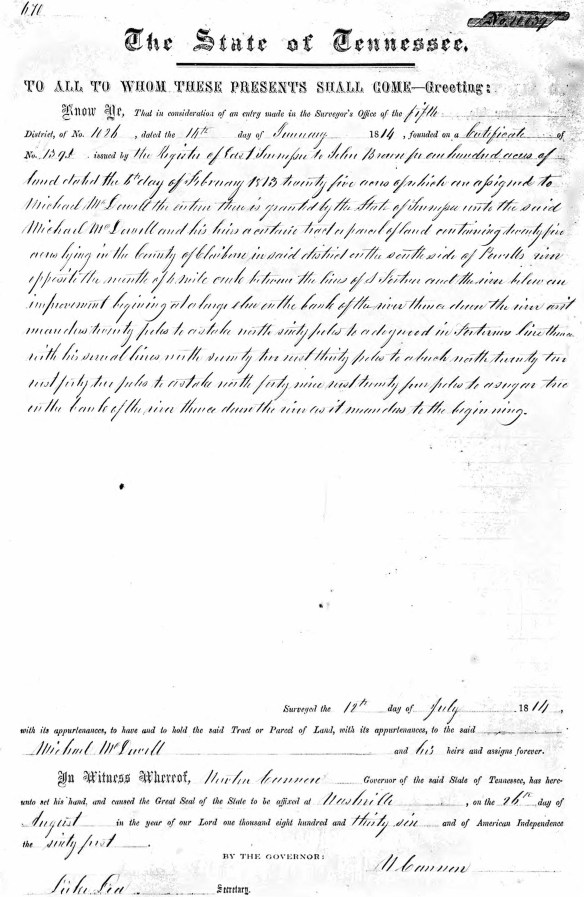
1836 land grant.jpg

I thought surely that Michael was finished obtaining land, but not according to the Tennessee land grant books found in the Middlesboro, KY library. In 1836, when Michael would have been 89, he was granted another 40 acres. I have to wonder if a lot of this land was “scrub” by this time, or others would have already patented the land had it been productive farmland.

Last First Year Acres District Book Page Grant County
McDowell Michael 1836 15 E dist 8 669 70038 Claiborne
McDowell Michael 1836 25 E dist 8 669 70039 Claiborne

The 1839 Claiborne County Tax list is in alphabetical order, not house order, and it tells us that Michael had 40 acres valued at $100, taxed at $5. There is another 60 acres listed as school and valued at $50 and taxes at 2.5. He has no poll, due to his advanced age, and under the tax column, it shows .05, which does not add up to the total of the previous columns, but then neither do the rest so I’m apparently misunderstanding something.

It appears that at least part of Michael’s land is missing, although that simply might mean that others were farming the land and paying the taxes. Some deeds could have been conveyed by hand and not recorded as well.

In his lifetime, Michael was granted a total of 330 acres. He conveyed land to John P. McDowell in 1824 for “love” and to Nathan and William McDowell in 1833, although the acreage is not stated.

Given that Michael obtained yet another two land grants in 1836 for 25 and 15 acres, and was taxed in 1839 for 40 acres, this appears to be the amount of land that Michael has left.

Anson Martin and Margaret Herrell

On June 20th, 1840 Michael McDowell along with William McDowell sold 2 acres of land to Anson Martin at the mouth of 4 Mile Creek for $50. Anson had married Margaret Herrell, Michael’s granddaughter, about 1828. I have to wonder why they only purchased 2 acres. That certainly wasn’t enough to farm. Would they have established a mill at the mouth of a creek?

At this time, Michael would have been 93 years old and it is presumed he died shortly thereafter since he is not listed individually on the 1840 census, and not listed on the Rob Camp Church membership in 1844. He is probably buried on his own land on Slanting Misery, close to the confluence of Four Mile Creek and the Powell River in what is now Hancock County, but like most of the early pioneers in this area, there is no marked gravestone to identify the exact location in the cemetery.

The Claiborne County 1840 census shows us that there are a John and William McDowell, both living near William Herral, with William McDowell having a female aged 80-90, possibly his mother.

Additionally, the Reverend Nathan McDowell who had moved further east in Claiborne County has a male living with him, age 80-90. Are these two elderly people Michael McDowell and his wife?  Perhaps they both needed help, and two children each took one parent.

Or, maybe, just maybe, there was something else going on.

A Scandal

Michael McDowell’s son-in-law, William Herrell served in the War of 1812 not long after the family settled in Claiborne County. William came home, while many of their neighbors, including James Claxton, their neighbor who lived in the next river bend to the west, did not.

After the war, William Herrell and Mary McDowell Herrell continued to live on the land adjacent Michael, as they would until Michael’s death. From the distance of almost 200 years, life seems routine based on what few records exist. Deeds and court records, mostly, with a few tax records sprinkled in for good measure.

It’s in those tax records that we find the first hint of the scandal that must surely have enveloped the family, if not the entire community and possibly further.

William Herrell is taxed in 1836 and 1839 on land and a slave worth more than half the value of his land.

In the 1900s, the whispered story that William Herrell had two wives lived on, even into the late 1900s. Told in hushed voices so that children wouldn’t overhear. Of course, that made the savvy children strain to listen harder – thankfully – because it was one of those nearly 90-year-old children that heard her grandmother tell that story – and told me around the year 2000. Her grandmother KNEW the family involved, but wouldn’t say who, other than “William Harrell had two wives,” and then just clucked her tongue.

Of course, there were two unrelated Herrell families in the region during that time, our William Herrell who lived in the far north part of the county, and another Herrell family who lived in the far southern part of Claiborne County, bordering on Grainger County, about 30 miles distant. There was also a William Herrell in the Claiborne/Grainger group, my friend’s ancestors, but this rumor didn’t seem to pertain to him as he never owned slaves, which confused my 90+ year old friend. According to my friend, those two families didn’t realize they weren’t related back in time and (at least she) presumed they were because their names were the same.

It wasn’t until I discovered that “my” William had two wives that this persistently repeated story made sense. It was quite by accident that I discovered which Herrell family was involved.

I don’t mean that William had one wife who died and he then married a second wife, but that he had two wives at the same time. Technically, if not legally, bigamy. Not only that, but one wife was white and one was black. In that time and place, THAT might have been the bigger cluckable offense. Which also explains, of course, why this it wasn’t legally bigamy. Not only was it illegal for a white person to marry a black person, there was more to this story.

And no, William Herrell was not Mormon, so his actions were not religiously directed. In fact, not surprisingly, we don’t find any evidence of William in any church records.

Apparently, the white Herrell family and black Herrell family in northern Claiborne, the part that eventually became Hancock County, “always knew” they were somehow related, even though exactly how had been long forgotten, at least according to oral history from some of the family. Others, however, knew more. In fact, their oral history included the fact that Cannon, the son of Harriett, William’s slave, wound up owning some of William’s land via inheritance.

One thing is for sure – Cannon Herrell and the rest of the Harrell family all lived together, apparently harmoniously, along the Powell River for generations – including today.

Harriett Herrell was William Herrell’s slave, but at some point, as the story goes, she became his second wife according to my friend. Eventually, my elderly friend told me that when she was young, in the early 1900s, her grandmother, great-aunts and others still discussed the scandal of the William Harrell with the white wife and the black wife. She said that topic never got old, and all “those old women did was gossip about people.” Obviously a very interesting and unusual story to hold thier attention for so long.

William reportedly built Harriett a house on one side of his property, his wife Mary McDowell Herrell’s house on the other side, and he would live with one until she got mad at him and kicked him out. Then he’d live with the other until she got mad and kicked him out, when he’s go back and live with the other wife again as the circular scenario continued to repeat.

There is one part of the original story that doesn’t add up. That tidbit is that Harriett “had a whole passel of kids,” which she did not according to available records, or her descendants. There are no stories of Cannon having siblings other than Mary’s children. Of course, we don’t know how many children Harriet bore that might have died, or, God forbid, might have been sold.

A second problematic part from the Cannon family oral history is that William Herrell left Cannon land, which it appears that William did not. We know this in part because at the time William Herrell died, in 1859, intestate, Cannon was still legally a slave and William could not have bequeathed him land. That does not mean that in 1872, Mary McDowell Herrell couldn’t have left or given Cannon land. The deeds burned, so we’ll never know for sure.

However, Cannon did eventually own some of William’s land, living adjacent Alexander Herrell, his half-brother, although Cannon purchased the land outright. That deed occurred after the first courthouse fire.

Mary McDowell Herrell, William’s wife and Cannon’s step-mother, raised Cannon with her children after Harriett’s death and could certainly have left Cannon money when she passed, sometime after 1872. William did claim Cannon as his child, according to all parties, and Cannon carried the Herrell surname. Cannon is listed on the census with the family in 1870. In 1850 and 1860, he is listed as mulatto – one of only two people in that broad region. Cannon’s parentage was clearly no secret to anyone.

Cannon lived with Mary and her adult daughters until after Mary died. According to the census, Cannon seemed to be doing financially fine on his own – better than his stepmother and sisters combined. Mary owned the property, but Cannon owned more personal property than the women. It probably took the efforts of everyone, working in tandem, to farm and earn enough to survive, given the location of their farm.

How did I find Cannon?

In the 1830 census, William Herrell (spelled (Harold) did not own a slave.

In the 1840 census, William Herrell owned one female slave, with a male slave under the age of 10. That child was Cannon Herrell who was born between 1827 and 1838, depending on the record you reference. Keep in mind that slaves were taxed according to thier age, and younger males were taxed as a lower rate than older males.

On the 1850 slave census, Cannon is shown as age 12 and Harriett is gone.

On the 1860 slave census, Cannon is owned my “Mary Herrel and 5 others,” clearly her children as a result of William’s death in 1859, where Cannon is listed as age 33. That would put his birth in 1827, the earliest date we find.

In 1870, Cannon is living with Mary and his age is given as 35, putting his birth in 1835. In 1880, he has married and gives his age as 45.

Cannon Herrell death 1916.jpg

Cannon’s death certificate in 1916 says he was illegitimate and doesn’t name a father which is not unusual under the circumstances, meaning a white man fathering a child with a black woman. It does list Cannon’s mother’s name as Harriett Herrell.

I considered that there was one other possibility, which is that William Herrell’s eldest son, Alexander, fathered Cannon with Harriett. Alexander, born on Christmas Day, 1820, would have been 16 or 17 when the child, Cannon, was conceived IF he was born in 1838. At this point, I think it’s more likely that Cannon was actually born earlier, possibly in 1830, given that the family actually had a full birth date which is recorded on Cannon’s death certificate. Other records indicate 1834, 1835 and 1837. Any date before 1838 would likely exclude Alexander.

In 1829, William Herrell’s white wife, Mary, bore her last child, Malinda. I would suggest that many tears were shed by both Harriett and Mary during those years. Both would have been trapped in a situation neither one wanted and neither could control. I suspect they spent a lot of time together.

Furthermore, if William empregnated Harriett once, it’s nearly certain that behavior didn’t cease. The behavior clearly wasn’t “common and accepted” because in 1850, Cannon was only one of two mulattoes listed in that region.

It was 1838 when Margaret Herrell Martin, William’s oldest child, and her husband, Anson Martin, requested to be dismissed from the Thompson Settlement Church. There was no “other church” to join at that time, in this region, which suggests they left the church for other reasons. I’d can’t help but wonder if it had something to do with the scandal which may have just been occurring and assuredly was hotly debated for a variety of reasons.

Slavery in Claiborne County was unusual, and slavery in this part of the county was almost unheard of, although in 1830, the Bales family who is listed adjacent William Herrell had one slave, and John Parrott, another two properties away owns a few slaves including a female slave of the age that could have been Harriett. By1850, Peter Parkey owned slaves too.

Just a few years later, these families would fight for the north during the Civil War.

In this part of Claiborne County, there was no flat land to be cultivated. Plantations were impossible. Slaves were few and far between, and when a landowner was found with slaves, it was generally one, or at most, two. Poverty was a common thread. No one had enough money for anything, let alone slaves – so William’s purchase of a slave between 1830-1836 is mystifying – especially having been to see his land and his family’s hardscrabble existence clinging to the river banks.

The portion of this article titled “Roberta and Mary’s Great Adventure” shows the Herrell property.

Given these circumstances, it’s not surprising that what occurred between William and Harriett was so scandalous, not to mention the strong primitive Baptist regional leaning. And poor Harriett, caught up in all of this. I can’t help but wonder if she died in childbirth, but there is absolutely no evidence of that.

Two years later, in 1840, Margaret and Anson bought the two acres from Michael McDowell. Were they trying to live someplace away from Margaret’s father’s land and the family drama? Granted, the land at the mouth of 4 Mile Creek wasn’t very far from her parents – but maybe far enough.

Did Margaret ask her grandfather to sell her two acres? Margaret’s parents were William Harrell and Mary McDowell, Michael McDowell’s daughter. Margaret’s brother was Alexander Herrell. Everyone lived in close proximity to one another.

Regardless of whether William Herrell or Alexander Herrell fathered a child with Harriett, Y DNA confirms that one of them did – and it was most likely William. I’d say almost certainly.

Regardless of which male fathered Cannon, William’s wife, Mary and her family may have been ostracized, especially at church, as a result. Harrell Bend and surrounding area was already quite remote and remains so today – it’s own microcosm.

Michael McDowell, Mary’s father, was certainly alive in the 1830s when Harriett gave birth to Cannon. I’m guessing, given that Michael never owned a slave and neither did any of his sons in Claiborne County, that Michael was not one bit pleased when William Herrell who was both his son-in-law and neighbor purchased a slave between 1830 and 1836, then (presumably) proceeded to cheat on Michael’s daughter with that slave.

This is the same Michael McDowell who beat Betty Wooton in Wilkes County in 1790 and was prosecuted more than once for trespass. Michael apparently had something of a temper, so I’m guessing it had abated somewhat by the 1830s – or he was just too old to do anything about the situation.

The slave, Harriett, probably had absolutely no say in any of this and was also a victim, in more ways than one. Slaves controlled absolutely nothing, including their own bodies. In 1838, William would have been about 50 years old and she was probably young.

To make matters even worse, the fact that Harriett was possibly purchased as a second wife compounded an already difficult situation. When Cannon was born, if William’s fidelity was ever previously in question, all doubt was removed. If Alexander was the father instead of William, which is not what the original oral history on either side of the family indicates, scandal would still have spun around the family, especially in the church.

Making matters even more sticky, Nathan S. McDowell, Michael McDowell’s son and Mary McDowell Herrell’s brother, was a Baptist preacher, described as having a “very crabbed disposition.” He had already purchased land in Claiborne County, but in 1837 he began serving as moderator of the Big Springs Baptist Church south of Tazewell, 18 miles distant.

This family was probably torn from stem to stern, although Nathan was reported to have refused to swear an oath of fidelity during the Civil War. Still, adultery is adultery and sin is sin, regardless. Not to mention the human emotions of Mary, Harriett and all the family members other than William who caused this mess.

Mary McDowell Herrell, about 50 in 1838, was probably EXTREMELY unhappy with her husband, to put it mildly. Betrayal is incredibly painful – especially if Mary suspected that William bought Harriett with that plan in mind and she could do absolutely nothing. Regardless of the circumstanced under which this occurred, William bore sole responsibility for being intimate with another woman – and “how” could have been even worse if the act was not consensual. For that matter, can a woman held in bondage to a man actually give free consent? I don’t think so.

Michael McDowell was elderly and probably also very angry with his son-in-law, William Herrell. He had obviously been close to William since at least 1810 and had spent the time since as neighbors on the Powell River.

Mary lost her husband’s fidelity in the 1830s (if not before) when William fathered Cannon, lost her father about 1840, her son-in-law (Anson) in about 1845, gained an orphan half-sibling of her children between 1840 and 1850 when Harriett died, as well as losing her husband, William, in 1859. Mary may not have grieved William’s death on a personal level, we don’t know. They had children and shared a lifetime together. They were economically tied and more work would have fallen on Mary and her children’s shoulders after his death. That 20 years or so of Mary’s life must have been living hell – and Michael couldn’t have helped but notice his daughter’s pain.

In the 1870 census, after William’s death and Cannon was freed, Cannon is still living with Mary McDowell Herrell and her adult daughters. That smaller family unit was reported to be very close. I hope so. They deserve that.

Nope, no family drama going on at Slanting Misery. Nada. Nothing to see here folks! Move right along. This has all the makings of a good soap opera. Downton Abbey’s got nothing on the McDowell/Herrell clan living on the Powell River.

It’s nothing short of a miracle that Michael McDowell who roughed up Betsy Wooten in 1790 didn’t personally put William Herrell into a grave for cheating on his daughter. Maybe Michael was simply too old (90 in 1837), or maybe that’s why Michael may have been living with Nathan in 1840. Maybe he tried. It appears that Isabel, Michael’s wife was living with William McDowell in 1840, unless that female is William’s mother-in-law.

Perhaps Michael got sent to live with the preacher son 18 miles away because the entire family felt everyone was safer with some distance between Michael and William Herrell. Or maybe the family simply hid Michael’s gun(s), much like we hid my mother’s car from her for her own (and others’) safety during her last few months.

I understand that William Herrell is buried in the Herrell Cemetery although there is no marker. I’m sure he would not have been welcome in the McDowell Cemetery if in fact Cannon was fathered by William Herrell. Mary’s brother, John, owned the McDowell Cemetery land when William Herrell died. I don’t know whether Mary is buried with William in the Herrell cemetery, or maybe she was buried in the McDowell cemetery, with the rest of her family. That decision rested with her children, and the decision may have been predicated upon whether Cannon was fathered by William (probably) or Alexander Herrell (probably not), along with whether or not William “repented” and if Mary forgave him.

Cannon’s family certainly believed he was fathered by William, and Cannon lived beside Alexander on the land he purchased, for the duration of both men’s lives.

It’s possible that this stress contributed to Michael McDowell’s demise – although he was clearly elderly.

Let’s visit the McDowell Cemetery on Michael’s land where he most assuredly rests.

Where is the McDowell Cemetery?

Michael McDowell’s descendants helped me find the old McDowell Cemetery on Slanting Misery, which was no easy task, I assure you. By looking at this tranquil land today, you’d never guess it’s storied history.

Let me begin with a letter from Mary Kay, married to (now deceased) Les McDowell, Michael’s descendant through son Luke.

This is Mary Kay. Michael McDowell is my husband Les’s ancestor.

Twice we have waded the Powell River to the Old McDowell Farm, in 1997 and 1999. The first time I photographed the gravestones there. The second time we took a large crowbar over there to turn over a big stone in hopes of seeing scratchings indicating that it was for Michael. Unfortunately, it was just a plain stone; no evidence of it ever having had anything on it. However, in “witching” the graves, there are definitely at least three other bodies there – two men and one woman. We think that Michael has to be one of the men, but I guess we’ll never know.

Grave “witching,” also called dowsing, a technique using a rod or stick often made of hickory is a very old technique used traditionally to avoid digging up existing graves when new burials were being dug, and more recently to locate old graves. It sounds ominous, but it wasn’t and isn’t. I grew up with this tradition which is also used to find underground water when wells are being dug.

Back to Mary Kay:

Mary Parkey, the historian for the Claiborne County Historical Society at that time, had the original deed to that land, in Michael McDowell’s name. I wanted to purchase the deed from her, but Mary wouldn’t sell it, but did provide a photocopy. The original was in the house fire that took Mary’s life a few years later, along with many other irreplaceable documents.

Mary Parkey, now deceased, was descended from both Margaret Herrell and Anson Martin, and Alexander Herrell.

Mary Kay sent a list of the names of the people buried in this cemetery surveyed in 1994. The name of the cemetery is Speer-McDowell and the location is given as the Bill Brooks Farm, formerly Edd Breeding. Locally, it was just called “The Old McDowell Farm” and as late as the 1990s, Joe Herrell still owned the adjacent farm at that time.

For nearly 200 years this land had remained in the same family.

  • Hettie Greer (w/o R. L. Greer) b. 06-25-1892; d. 12-26-1918 (her mother was Mollie Thompson and her father was James Speer)
  • E. Speer b. 11-29-1845, d. 01-13-1923 (James Edward Speer, son of John Roe Speer and Rachel Denton)
  • Mary E. (Mollie) Speer (wife of J. E. Speer) b. 03-11-1873, d. 06-27-1914
  • Hettie Edds, (w/o J. E. Speer) b. 11-19-1829, d. 02-05-1888
  • R. Speer b. 1820, d. 18–?
  • Caroline McDowell b. 01-16-1830, d. 10-04-1899 (daughter of John McDowell, no record of marriage)
  • Surena McDowell b. 3-11-1826, d. 11-07-1893 (daughter of John McDowell, no record of her ever marrying)
  • John McDowell, aged 94, d. 10-17-1817 (This year is incorrect, he died in 1877. Clearly the 7 was misinterpreted.)
  • Nancy McDowell, aged 47, d. 12-03-1841 (means she was born in 1794 and is probably John’s wife)

Reconstructing the Family from a Letter

A letter from Mary Opal Herrell in 1997, when she was 80, said that her grandpa Jim Speers first wife was a McDowell and that he is buried in the McDowell cemetery between his first wife and second wife.

The 1880 census shows James Speer, age 33, living with Matilda, age 41, with daughter Elnora, age 7. Caroline age 47 is married to R.M. Tipton who works on the farm, and Bird Campbell, a male age 15 is a servant, along with Surena McDowell age 51, listed as a sister-in-law.

In the 1900 census, James Speers states that he is born in November 1846, age 52, and is married to Mary, born in March 1873, age 27. They have been married for 9 years, have 2 living children, Hettie born in 1892 and Leonidas born in 1893.

The second wife appears to be Mary Opal’s grandmother. Mary Opal’s mother died when she was just a year old in the flu epidemic. She said that John McDowell sold the land to Jim Speers. Mary Opal said that her Aunt Nora, Jim’s daughter from his first wife never accepted Jim’s second wife. Nora was “raised by the McDowell women.” Mary Opal Herrell appears to be the daughter of Hettie Greer who died in 1918.

In the 1870 census, James Spear, age 22, is living with John McDowell, who is age 89 (so born in 1781) and James apparently married John’s daughter, Matilda, by 1872. The Hancock County courthouse burned, twice, so the deed between John McDowell and James Speer which would have been conveyed probably between 1872 and 1877 when John died went up in flames.

Fortunately, between the cemetery records, the census and Mary Opal’s old letters, we reassembled the family, at least somewhat.

Visiting the Cemetery

Let’s visit the cemetery!

The first group of photos were provided by Mary Kay and show Mary Kay’s husband with a local gentleman crossing the Powell River and their discovery of the cemetery on Slanting Misery.

First, let’s look at an aerial view. The red arrow below marks the actual location where people drive or walk across the river when the water is low enough. It’s the only location accessible on both banks of the river.

MIchael McDowell ford and island.png

After Michael lived here, a swinging bridge was hung across the river someplace in the area of the green arrow. I believe the tiny white dot in the center of the river just above the green arrow is the old foundation of the bridge on an island. The bridge was washed away decades ago in one of the legendary floods.

The photo below shows the men wading the river, marked by the red arrow above, and the gate on the Slanting Misery side. When I waded the river, the water was higher.

Michael McDowell powell river.png

This next photo shows the group walking along Slanting Misery, roughly parallel with the river.

Michael McDowell shed.png

I had to visit the location twice. It couldn’t find the cemetery the first time, so Mary Kay sent instructions, which I’ve included below, although all of the buildings except the barn were gone when I visited.

The buildings are landmarks — if you didn’t see these you were not at the right place. You come to the shed first, and it will be on your left. Quite a ways further, the barn will be on your right. The cemetery isn’t far from the barn and will be on a hill on your left.

Michael McDowell barn.png

I never saw the barn the first time, and asked Mary Kay if she could provide additional instructions.

I’m wondering if you missed seeing it because you thought it was a more “structured” graveyard than just an area with stones. It is too bad that there wasn’t a fence around it, before the cows damaged the stones. The person who owns it has no connection with McDowells.

Mary Kay sent one photo of another landmark that I could use – assuming I could find the landmark.

The cistern and what looks like stones from a house foundation are “after” the shed, and I think, on the left on the way to the cemetery.

Michael McDowell well.png

I strongly suspect that the foundation is that of the original house which was probably nothing more than a log cabin. It looks very small, but that was common then.

Michael McDowell cemetery.png

Finally, the cemetery. It was overgrown in 1997 when she visited and in 2004 when I visited as well.

Michael McDowell cemetery 2.png

The current Google map shows Slanting Misery.

Michael McDowell Slanting Misery.png

The entire peninsula is between 2000 and 3000 feet long, and the Virginia/Tennessee border is about that far north of the northern tip of the Slanting Misery.

The next photo shows a closeup of the river ford and the barn.

Michael McDowell river ford.png

Last, I believe the area with the red arrow is the cemetery. It’s difficult to correlate from the air, and several years later.

MIchael McDowell cemetery location.png

Michael Gets the Last Laugh

Never in my life have I ever managed to go on a “normal” genealogy adventure. There is always some unexpected twist or turn of some sort, and this time was no different. Ancestors truly do have a sense of humor – I’m totally convinced.

My first visit attempting to locate the McDowell cemetery was extremely disappointing. It was the dregs of summer and the thermometer hit at least 100 degrees. We were miserable. Had I any idea of the difficulty involved, I would never have attempted this, so it’s probably a good thing I didn’t know.

After crossing the river, I walked up the two track for a short distance, then made the mistake of climbing UP Slanting Misery. I thought from that vantage point, I would surely see the cemetery – because I couldn’t see it, or a barn, or anything from where I was.

You can’t tell from the aerial, but the center of Slanting Misery is really quite high in comparison to the perimeter. The reason the river carved out a peninsula is because Slanting Misery is a granite mountain with a little topsoil – but very little.

After climbing UP Slanting Misery, I knew immediately why Michael had named it that. The question remains WHY he purchased this land.

We had been cautioned about the cows when we obtained permission to visit, which is why there is a fence on the 2-track road into Slanting Misery, after crossing the river. At least, I think that’s why the fence is there. Maybe the cows ford the river too.

Regardless, we closed the gate carefully so there would be no bovine escapees.

McDowell Powell river.jpg

My first glance of Slanting Misery gives no hint as to either slanting or misery. But across the Powell River lies both.

You can see the “driveway” on the other side of the river just beyond the tree branch, above. I was concerned about sinking in the mud and a rapid undertow. I can walk, and swim, so I didn’t want to risk driving and sinking.

This is literally the “front door” or “driveway” to this property. It’s the mountainous South – these kinds of things happen. The best or only way “in” is across the river. I was told there is an alternative, but it’s literally a half hour drive up and around and back down again – and it’s very difficult going. Better to ford the river.

Powell River McDowell shoals.jpg

Half-way across this river, looking upstream at McDowell Shoals, you can see what is left of an old island. The local people tell me that this was the location of an old swinging footbridge at one time. Apparently not everyone wanted to ford the river.

The words “swinging footbridge,” as in rope bridge, causes me to hyperventilate and sweat. I find that concept terrifying. The bridge washed out in a flood back in the 1970s, as I understand, but it had been there for years, as in decades, prior.

No one lives on this rather inaccessible land today – it’s used simply for grazing cattle.

The hill is high and the river over millennia has carved its way around the “bluff” made of granite. That’s the slanting part of Slanting Misery.

The misery part relates to the humans.

slanting misery hill

After climbing to the top of Slanting Misery, I naïvely thought I would be able to easily spot the cemetery. I mean, how difficult could this be?

The answer is – incredibly.

The photos below show a panorama of sorts, looking towards the Herrell lands to the left and then panning to the Clarkson land at the right.

Slanting misery pano 1

Slanting Misery pano 2

slanting misery pano 3

During the first visit, I didn’t know to look towards the barn for the cemetery, nor did I realize that the cemetery was entirely grown up in vegetation.

I left empty handed, knowing I was so close, yet so far away.

I can’t believe I actually did this twice, on two separate trips. In fact, I intentionally went back to try this a second time.

Second Time is “Charmed”

My second experience a year later was somewhat different. Not only did I have photos and more detailed instructions from Mary Kay, I also enlisted the assistance of a local gentleman with the historical society who is also my cousin, Boyd.

Boyd grew up in this area and knew it well. I was so grateful that he agreed to accompany me.

Once again, we crossed the river, except, this time I decided to simply drive my Jeep. The water was lower than before, about knee high and I didn’t see any reason NOT to drive the Jeep. After all, that’s what Jeeps are made for, right?

After arriving on the other side, I turned the Jeep around, pointing it back in the direction from which we had come. I parked in the river, because there wasn’t anyplace else. We got out of the Jeep, quite pleased with ourselves, waded a few feet to the shore, opened and closed the gate, and proceeded to walk towards the barn, up the 2 track, which I had been assured, was within easy sight of the cemetery. I knew I could find it this time, and I wasn’t leaving until I did!

Boyd had never been there before, but he was certainly game, and off we went, determined to succeed – chatting about history and ancestors.

This land is so breathtakingly beautiful.

Slanting Misery looking to Clarkson land

This is Slanting Misery, looking towards the Clarkson land.

On the way to the barn, I noticed what looked to be a historic trash pile and found a piece of metal, maybe from a tractor or piece of Oliver farm equipment.

Michael McDowell metal.jpg

I doubt this was Michael’s, but Michael lived here, near the well, near the cistern and near the barn. This was his domain for three decades.

The house had to be someplace very near this location. I think the stones beside the cistern from Mary’s photos were the house, but they were gone when I was there.

The green cedar tree on the far left, if you are approaching the barn, marks the cemetery.

McDowell Cemetery at left by barn.jpg

The cemetery is really not a on hill, it’s more of a knoll.

McDowell Cemetery tree.jpg

 You’d never know this is a cemetery if you didn’t know what you were looking for.

The condition was appalling, but it was sold outside of the family, AND, it’s very inaccessible. This photo was taken roughly 15 years ago, so the cemetery is probably in even worse condition today if it could even be located. The photos of the headstones below are a combination of Mary Kay’s photos and mine.

McDowell Cem Mary Speers.jpg

Mary Speers, wife of James.

McDowell Cem Mary Footstone.jpg

The footstone for Mary Speers.

McDowell Hettie Greer.jpg

The stone for Hettie Greer.

McDowell Cem John McDowell.jpg

John McDowell’s stone – barely legible.

Did you know that cows are really curious beasts?

Especially if they have come to associate humans with feeding time.

McDowell Cem Knoll.JPG

They noticed us in the cemetery and came to see what we were up to. Besides, in the cow’s world, it was THEIR cemetery and we were trespassing.

I grew up with cows and wasn’t the least bit worried.

Boyd, on the other hand, was getting increasingly nervous and said he thought we should begin walking back towards the Jeep.

I thought this was a bit odd because he was a farmer, but after all, he was the local person with experience. I was extremely reluctant to leave, because I wasn’t finished in the graveyard. Or at least I thought I wasn’t. I wanted to take a few more photos and I wanted to poke around and see if I could find a stone that might have been overgrown. Surely Michael was here someplace!

As it turned out, I really was finished.

Another cow approached Boyd, and Boyd started talking and backing. He shouted to me, “Come on, HURRY UP,” and he began to move quite quickly, then turned and ran. Then I began to run, because a cow had begun to chase us in a rather threatening way.

This cow had horns!!!

I realized that that was no cow, but was the bull, and he was protecting his harem from us.

At home, where I grew up – we borrowed a neighbor’s very happy bull. No one kept their own bull – and the neighbor’s bull was very happy because of that.

Worse yet, the bull was between Boyd and me, with Boyd in the lead and the bull following on his heels, which meant that when Boyd escaped, the bull would turn around, facing me and would be square between me and the fence.

Hopefully, Mr. Angry Bull just wanted to chase us off and meant us no harm. Hopefully! I really didn’t want to find out, AND you have to assume that any bull that is chasing you isn’t just wanting to say hello.

I had never been chased by a bull before…or since either for that matter. Not something I need to experience again in this lifetime – which I was just sure was destined to be ended momentarily.

It didn’t seem far from the river to the barn when we were walking IN and chatting, maybe a quarter to half a mile, but running back, being chased by a very large bovine, the distance to the gate seemed interminable. Worse yet, we had closed and latched the gate with a lock and chain.

I had absolutely no idea I could run that fast, or that far. Think of it as an impromptu stress test.

In 2005, I was looking at the half century mark and pole vaulting the gate wasn’t something I had in mind, but taking stock of my options, that suddenly seemed quite reasonable.

About 150-200 feet from the gate, Mr. Angry Bull veered off to the left into the brush – along what I now know is a second path. Boyd, somewhat older than me, but probably in much better shape, slowed down to a trot and I was extremely relieved. I had NO desire to turn around and go back. I did, however, desperately wish we had driven the Jeep inside the field instead of leaving it on the other side of the gate.

Boyd and I continued to trot and reached the gate. I, thankfully, was still holding my camera. The adrenaline still pumping, we sprinted over that gate and heaved a huge sigh of relief on the other side, seeing the Jeep waiting for us in the river near the edge, a few feet in front of the gate. We took a minute to catch our breath…until we realized Mr. Angry Bull was waiting for us, having taken a shortcut.

We were now trapped against the gate by the bull, with the bull between us and the Jeep, stamping his foot in the river, splashing the water.

I’m not sure if I actually audibly screamed, or if it was simply a silent scream of terror in my mind that happened.

I do know that the bull was MASSIVE and stomped angrily at us, having planted himself directly between us and the Jeep, expressing his disdain. I think he was drooling. His eyes might have been red and shooting flames too. Boyd and I began to play an insane game of ring-around-the-rosie with Mr. Angry Bull.

Swear to God on Michael McDowell’s grave – which I never found but am still sure is there.

Me, Boyd, my Jeep, the river and Mr. Angry Bull. Sounds like a country song. The only thing missing was a dog and a shotgun and we could have used the assistance of either or both at that moment.

The other problem is that once we reached the Jeep, we had to open the doors towards us, which means we had to step backward, with a bull in hot pursuit. Stepping backwards would have taken a second, or two, or three – but when you’re running away from a bull – seconds suddenly seem monumental.

In retrospect, I suspect that the bull was simply playing with us by this time. Irritated at the stupid humans. He clearly had chased people out of his field before, because he knew EXACTLY where the shortcut was located and how to gain the advantage at the gate.

The bull moved aside slightly, heading back for his shortcut. We dashed for the Jeep.

As we watched behind us for the bull to follow, charging again out of the overgrowth. The bull however, was already waiting for us, probably watching us watch for him – but he was watching us from BEHIND the gate already. If bulls can laugh, he unquestionably did. We surely looked as idiotic as I felt.

Make no mistake, that gate had absolutely NO EFFECT on that bull – he made that perfectly clear.

By the time Boyd and I finally got into the Jeep, I quickly turned on the ignition.

Thankfully, I had left the keys in the car, something I NEVER do. Thank Heavens, because there is no way on God’s green earth I was getting out and going back in that field to look for missing keys.

The adrenaline was rushing and I quickly threw the Jeep into drive and gunned the engine, heading across the river.

Too fast.

Yep, that river water sprayed right up into the engine compartment and drown out my engine. The Jeep lurched to a stop in a spray of water.

Dead!

Now, we’re sitting ducks in the middle of the river, and Mr. Angry Bull is going to have his way with us after all!!!!

McDowell stranded in the river.jpg

Not that I want to tell tales on my cousin Boyd, but let’s just say that we looked at each other and both said the same thing at the same time – something that is not repeatable in church and would assuredly have gotten us censured in the Thompson Settlement Church of our ancestors.

Lord have Mercy.

We braced for what we knew was coming.

I wondered if the glass in the Jeep would hold?

Would Mr. Angry Bull use those horns to break through the windows in the doors or bust out the windshield?

Would he come through?

How much of him?

His whole body or just his head and those terrible horns the size of a house?

Would it help to get in the back seat? Could we even climb over? I wasn’t getting out, that’s for sure.

For God’s sake, how can you defend yourself from a bull?

There is no training for this.

I’ve seen those ugly photos of matadors gored by bulls – although they certainly deserved that they got.

Us, on the other hand, we were only guilty in “bull court” of getting too close to the harem.

Does that infraction receive the death penalty?

We braced!

Then….

nothing

Absolutely nothing.

Silence.

Dare we look?

Boyd and I kind of sat in embarrassed, awkward silence for a minute. Realizing how ridiculous we surely looked – and grateful that the only witnesses to our folly were each other.

The bull, quite pleased with his prowess, I’m sure, turned his back on us and headed back into the pasture to brag to the girls how successfully he had protected them.

They were probably already telling him how wonderful he was, fanning him and feeding him the bull equivalent of grapes.

Mr. Now Very Pleased With Himself Bull wasn’t the least bit interested in us anymore. He’d had his fun.

Thankfully.

Pondering what to do next, given that cell phones certainly didn’t work there, I asked Boyd if we should get out and begin walking to his house.

The answer was an emphatic “No!,” followed by a much calmer, “you might want to try the engine again.”

It’s hard to think clearly when you’ve just come within inches of having your life ended by a bull.

Vroom!

I slowly, VERY SLOWLY, drove back across the Powell River, onto River Road along McDowell Shoals, pretending nothing embarrassing had happened at all, and away from Michael McDowell’s Slanting Misery forever.

Michael’s Children

Michael’s children remain a real conundrum. Let’s take a look at what we know and what we don’t.

A few we know with varying degrees of certainty, one is iffy, and then there are two that are unknown.

In order to compile as much as possible about his children and probable children, I utilized the various tax, census and other records available when creating this chart.

First appears Birth Year 1787 Wilkes 1790 Wilkes 1800 Wilkes 1810* 1820* 1830 1840
Michael Jr. himself Rev War 1777 1747 21-60 (40) >16 >45

Born before 1755

Lee Co tax 80-90 80-90

1750-1760 With Nathan

Isbel – wife Son born 1782, pos son 1778 1750-1755 female female >45

Born before 1755

70-80

1750-1760

80-90 1750-1760 with William Herrell
Michael III 1799 deed witness 1765-1778 <21 <16

Born after 1774

Gone? Wilkes Co. to 45, 4 kids
John (wife Nancy d 1841) 1810 in deposition 1782 <21 (age 5) <16

after 1774

Gone? Lee Co tax 40-50

1780-1790

50-59

1780-1790

Edward m Pulaski 1811 1799 deed witness, 1811 marriage 1774-1775 ? missing <16 after 1774 Gone? Lee Co tax Pulaski

>45 (<1775)

50-60

1770-1780

50-60 1780-1790
James* 1801 deed witness <1780 ? missing <16

Born after 1774

?
Mary 1809 Wilkes marriage to William Herrell 1785-1789 (m 1809) B After 1787 female 10-16 1784-1790 Clai-borne Clai-borne
Luke* m Pulaski 1811 1810 tax list 1792-1797 B after 1787   0-10 1790-1800 Lee Co tax
William* 1817 doc, or 1811 marriage 1795* B After 1787 Missing ? 30-40

1790-1800

40-50

1790-1800

Nathan S. 1833 deed from Michael to Nathan 1797* B after 1787 0-10

1790-1800

30-40

1790-1800

40-50

1790-1800

Female 1800 census 1790-1800 0-10 1790-1800
Female 1800 census 1790-1800 0-10

1790-1800

20-30

1800-1810

*Nathan is born in 1785 if oral history of him being 80 and refusing to take oath at Cumberland Gap is accurate. 1790-1800 if census is correct. Based on other records, I suspect the census is correct.

*William witnessed deeds in Claiborne from 1817 on. Born circa 1795 from census records. If this is the same William, he was married in 1811 in Pulaski County, KY.

*1810 Claiborne County, TN and Lee County, VA census lost

*1820 Claiborne County census lost

*Nathan McDowell, ‘precher” is found in Owsley Co., KY in the 1850 census, age 53, born in Tennessee and Easter McDowell, age 52 born in NC. This puts his birth in 1797.

*William born in 1795 is age 55 in 1850, born in NC wife Sally, age 50, is gone in 1860. Sally is not the wife of William McDowell married in 1811 in Pulaski Co., KY.

*Luke is found in DeKalb County, TN in both 1860 and 1870, placing his birth date in 1797.

*1833 Michael deeds land to Nathan and William, for “love”

*James witnessed a deed in 1801, but never appears in a record again.

The problem when trying to reconstruct Michael’s family is that two males appear to be missing from the 1787 census, along with conflicts in the 1800 census as well.

Were the records wrong? Were his sons living elsewhere? Or were these men not all Michael’s sons?

Let’s see what evidence we have for each child or potential child.

Michael McDowell III

Michael’s oldest son was probably his namesake, Michael.

Michael McDowell III, likely son of Michael McDowell Jr. is first found in Wilkes County signing as a witness for Michael McDowell, his father in 1799. In 1802, Michael McDowell III is noted as Michael McDowell Jr. when appointed as a constable with Michael McDowell Sr. providing his security. As late as the 1810 census, Michael III is present in the county with 4 children, but disappears from the records before the 1820 census.

James McDowell

If James is Michael McDowell’s child, he only appears in one 1801 record. I classify this as very weak evidence, but it remains a possibility. He may have died. James is not a name that repeats in Michael’s family.

Edward McDowell

There is genetic confirmation that Edward McDowell who was born probably after 1774 and before 1778 was the son of Michael McDowell Jr. Edward signed the 1799 deed for Michael Jr. along with Michael III. Edward serves as a juror in May of 1804 in Wilkes County,

Edward was noted on the 1810 Lee County Tax list beside Michael McDowell Jr. and Michael’s son, John. The next year, Edward married Lucy Harris in Pulaski County, KY where he is listed through the 1840 census. According to these documents, Edward was apparently born sometime between 1774 and 1781.

Edward’s children are:

  • Martin McDowell
  • Mariah McDowell b c 1812 Married Stephen Hail and then Moses Roberts
  • Sarah McDowell b c 1814 married Archibald Haynes
  • Michael McDowell b c 1816
  • Eliza McDowell b c 1818
  • Montgomery McDowell b c 1820
  • Son b c 1822
  • Thomas McDowell b c 1824 married Seleta McDowell (said to be his first cousin, the daughter of Luke McDowell,) then 2nd Vernettie Fisher
  • Franklin McDowell b c 1826
  • Son b c 1828
  • Son b c 1831
  • Son b c 1833

Edward is reported to be the brother of Luke McDowell and Edward’s son reportedly married his first cousin, Luke’s daughter.

Edward died in January 1858 in Pulaski County, KY.

Luke is confirmed to be Michael McDowell’s son via Y and autosomal DNA testing.

Edward’s descendant matches Luke’s on Y DNA and other known descendants on autosomal.

John McDowell

April 30, 1783 – October 7, 1877, according to his tombstone.

In the 1850 census, John’s birth state is shown as Tennessee, which we know cannot be correct. Tennessee wasn’t a state until 1796, to begin with, and we know that Michael McDowell Jr. was living in Virginia in 1783. John’s 1860 census shows his birth location as Virginia, 1870 shows that he was born in North Carolina.

Roll the dice, take your pick!

John McDowell filed an affidavit in 1872 stating that he was 90 years old and had been acquainted with both William Herrell and Mary McDowell before their marriage, stating that he was at their wedding in 1809 in Wilkes County.

John McDowell further states in his affidavit that he left Wilkes about 1810 and that Mary and William were married about a year before that. We have every reason to believe that William Herrell and Mary relocated about that same time (probably in the same wagon train) to Lee County or the Powell River area of what was then Claiborne County.

This puts John’s birth in approximately 1782. The census later shows his birth as 1781. His gravestone when it was still legible reportedly said he died October 7, 1877, age 94 years, 5 months, 7 days, which means his birth calculates to April 30, 1783.

John’s wife is reported to be Nancy, surname unknown, which is confirmed by the headstone in the McDowell cemetery.

In 1830, John is shown on the census beside a Henry McDowell. I wonder if this is another son of John.

In the 1850 census, John is shown with the following family members:

  • Hill McDowell (probably Hillary, male, age 25)
  • Surrena McDowell – 22
  • Matilda McDowell– 21
  • Caroline McDowell – 20
  • John McDowell– 18

John, age 18 in 1850 was born February 12, 1833 and died on February 17, 1895 in Lee County, Virginia. He married Susannah Jones and they had 7 children, including three males, below:

  • T. Clinton “Clint” McDowell who married Gertrude Smith in Kentucky in 1900.
  • James Hillary McDowell born 1861, married Nelly Flanary and died in 1959.
  • John Ervin McDowell born 1871, married Alpha Jesse and died in 1951.

James Hillary McDowell had 4 sons, Willie born 1892, Hubert born 1987, Walter born 1904 and Paul born 1911.

John Ervin McDowell had 8 sons, Fred born 1905, Rylie Columbus born 1906, James Elmer born 1908, Robert Lee born 1909, Marvin Richard born 1911, George Ervin born 1914, Albert Jesse born 1918 and Lawrence William born 1924.

The 1994 Hancock County family book includes an article by Lyle McDowell and reports that John McDowell’s daughters, Surena and Caroline never married and are buried on the farm with John and his wife, Nancy.

From Lyle McDowell, John McDowell’s children other than Hill, Serena, Matilda, Caroline and John include:

  • William Franklin McDowell who moved to Owsley County, KY about 1840, along with his brother Irvin. Lyle indicates that William Franklin is his great-grandfather.
  • Irvin McDowell (July 7, 1825-Octoer 9, 1882) Hamilton Cemetery, Hamilton County, TN

Lyle also reports that John’s son, John, born 1833 moved to Lee County, VA, which is accurate.

John P. McDowell

John McDowell born in 1783 is not the same man as John P. McDowell who sells land in 1838 on Strait Creek in Claiborne County. That land in the deed is noted as where John P. McDowell lives. That deed is witnesses by a Capps male, suggesting a relationship with Nathan McDowell and his wife, Esther Capps.

In 1824, Michael McDowell deeds land to John P. McDowell “for love.” It appears that John P. is not Michael’s son, because Michael already has a son John, so this is probably Michael’s grandson. Furthermore, on the 1836 and 1839 Claiborne County tax lists, both John and John P. McDowell are listed, and they do not live close to each other. John lived adjacent Michael, but John P. does not.

John P. McDowell was born about 1799 in TN (according to the census) and died in Buchanan Co., MO, after the 1870 census but before 1880. He married Rebecca Capps in 1821 in Grainger County, TN, the neighboring county south of Claiborne. He had sons:

  • William McDowell born in 1825
  • John Pryor McDowell born in 1831
  • Jacob Y. McDowell born in 1836
  • David McDowell born in 1844

Given that the older John McDowell was the son of Michael McDowell Jr., this John P. McDowell was probably being raised by the McDowell family because he was closely related, probably Michael’s grandson.

John P. McDowell was clearly associated with Nathan S. McDowell but could not have been Nathan’s child given that they were only about 5 years different in age. My guess would be that John P. McDowell is the son of Michael’s son, Michael McDowell III who disappears from the records in North Carolina after 1810 but before 1820. Or, John P. could be the son of James McDowell who disappears in Wilkes County after 1801 – meaning that Nathan was John P. McDowell’s uncle. Given that Nathan had no children, he would be a good candidate to raise an orphan nephew. This is purely speculation but they had to be connected somehow.

What is certain is that Michael McDowell would not have deeded John P. McDowell land “for love” if he weren’t somehow closely related.

A Y DNA test on a male McDowell descendant of John P. McDowell would be quite interesting in that it would (hopefully) match one of the McDowell lines. I would love to compare the Y DNA of a John P. McDowell descendant to a male McDowell descended from John McDowell who died in 1877 in Hancock County or other McDowell males that have tested.

John’s Photo – But Which John?

Lyle McDowell provided the following photo, but as you can see, the 2 John McDowell’s are likely conflated, meaning John born in 1783 and John P. McDowell born in 1799. Many of the genealogy trees on Ancestry have done this as well.

1994 book John P. McDowell photo.jpg

I don’t know if this is the John P. McDowell who died in Missouri before 1880, or the John McDowell in Claiborne/Hancock County born in 1783 and who died in 1877. Given that this man’s hair is black, and the camera wasn’t even in use until after the Civil War, I question the providence of the photo. I’m suspecting that it came from the Hancock County McDowell line, given that’s the focus of Lyle’s research and that Lyle simply added the middle P. in error, not realizing that there were actually two separate men.

I wonder if this might be the older John’s son, meaning John McDowell born in 1833. If that John born in 1833’s photo was taken when he was ago 50 or 60, in 1883 or 1893, the black hair would be more readily acceptable than a photo taken of John McDowell born in 1783 who would have been about 87 in 1870, the first practical time for this photo to have been taken, and this John in the photo has entirely black hair. That’s hard to believe at about age 87. It’s also possible that the photo had been “restored” but his eyebrows don’t appear to have been modified.

Regardless, it’s probably the closest we will ever get to seeing Michael McDowell Jr. through the face of another McDowell male. If this is John born in 1833, he is Michael McDowell’s grandson.

Did Michael McDowell Jr. resemble this John? I’d wager that he did, at least somewhat.

Mary McDowell

Mary McDowell was born about 1787 and married William Herrel in 1809 in Wilkes County. You can read her story here.

William McDowell

William is presumed to be a son of Michael because William is found consistently with Michael in the Claiborne County records beginning in 1817. Of course, there is also a William marrying in 1811 in Pulaski County. If William was actually born in 1795, per the 1850 census, then the 1811 William marrying in Kentucky can’t be this William because he would have only been 14 at the time. However, if William was actually born in 1790 instead of 1795, then he could have been the male in Pulaski County in 1811.

Some William McDowell is married in 1811 in Pulaski County, KY to Anna Herrin. (Luke and Edmon are also married in Pulaski that same year.) We find nothing more about William in Pulaski County, but a William McDowell does appear back in Claiborne County TN about 1817. Of course, the William born in 1795 also comes of age that year, so what happened to the William who married in Pulaski County in 1811 is uncertain, as is his identity.

In 1828, William McDowell deeds his land grant in Herrell bend to William Herrell.

Michael McDowell deeds land to William and Nathan in 1833 “for love,” so there is little question that William is his son or at least very close kin.

One of the last documents signed by Michael McDowell is jointly signed with William conveying land to Anson Martin on June 20, 1840. We don’t know who William’s wife is, but in the 1840 census, he has a female of age 80-90 living with him. Chances are good that that female is either his mother-in-law or Isabel, Michael McDowell’s wife.

In 1850, William McDowell is noted as age 55, being born in NC and had no children living in the household. His wife is Sally, age 50, so not Anna, the name of the wife in 1811 in Pulaski County, TN. It does not appear that William had any children.

Luke McDowell

Luke was born about 1792 in North Carolina and died in 1879 in DeKalb County, TN. He is listed on the 1810 tax list of Lee County Virginia with Edward, Michael and John McDowell.

In 1811 in Pulaski County, Luke married Francis Field.

In 1850 in Dekalb County, Luke is noted as a blacksmith and age 58, placing his birth date as 1792 in North Carolina. In 1860, he is age 68 and also shows his place of birth as North Carolina.

Luke’s children are:

  • Curtis McDowell born February 1810 died 1882, married Margaret Jadwin
  • William Field McDowell born September 1811 died 1861 in Illinois, married Mary Gott and then Deborah Test
  • Cynthia McDowell born 1812 died 1890, married Joseph Cantrell
  • Kitty McDowell born circa 1814 died 1840-1850, married Thomas Rigsby
  • Son born circa 1816
  • Son born circa 1818 married Margaret
  • Seleta McDowell born circa 1825, married Thomas McDowell (son of Edward) circa 1848

Luke’s descendant through son William Field McDowell, son John Benjamin McDowell, son Luke Bradley McDowell, son John William McDowell and 2 more generations has confirmed Luke as the son of Michael using both Y and autosomal DNA.

Luke’s Y DNA matches that of Edward.

Luke and Edward’s descendants autosomal DNA matches that of Michael’s descendants in Claiborne County through John McDowell and Mary McDowell Herrell.

Nathan McDowell

Michael’s presumed son Nathan S. McDowell was born about 1797, according to the 1860 census.

Nathan married Esther Capps (born 01-19-1798 died 03-02-1892) of Grainger County, TN. She was the sister of John Capps. They are not known to have any children.

In 1833, Michael McDowell deeds Nathan land, along with William McDowell, “for love.”

Nathan was a school teacher and minister of the Baptist denomination. A sketch of his life appears in the book “Old Time Tazewell” by Mary E. Hansard.

In Mary Hansard’s book, she states that Nathan was reported to have refused to take an oath of allegiance to the North, at Cumberland Gap, during the Civil War. He was taken to a northern prison where he died shortly, about the age of 80. His wife was apparently very proud of his bravery and how he died. However, that doesn’t exactly correlate with the census research, given that he was already living in Kentucky prior to the Civil War and wouldn’t have been 80 until 1879, long after the Civil War was over. I don’t find him in the 1860 census.

Minutes of Davis Creek Church in Speedwell in Powell Valley 1797-1907

  • Nathan S. McDowell made application for letter of dismissal for Sister Hannah (no date)
  • 1840 received elder Nathan S. McDowell by letter

Prior to that, beginning in 1837, Nathan was the moderator at the Big Springs Baptist Church, south of Tazewell, shown today below at the intersection of Lone Mountain Road and Riddle Lane.

Big Springs Primitive Baptist Church

In the 1850 census, Nathan is living in Owsley County, KY, noted as a “precher” born in Tennessee, age 53, and his wife is Esther, born in NC.

It’s possible that Nathan was not Michael McDowell’s son, but his grandson. Nathan is closely associated with John P. McDowell who we know is not Michael’s son. These two men are about 5 years different in age. If Michael’s oldest son was Michael III, born in 1778 or earlier, Nathan born in 1797 could have been his son along with John P. McDowell.

Michael III disappears from Wilkes County after the 1810 census where he has 4 children, including 2 males under 10. The under 10 designation doesn’t fit exactly, but is a possibility.

Nathan S. McDowell and John P. McDowell are the only two McDowell men who are clearly connected with Michael who live in Claiborne County, but distantly. Both married Capps women. It’s possible that Nathan, who was childless, raised his nephew.

Children Summary

In summary, Michael’s confirmed or most probable children are:

  • Michael McDowell born between 1774-1778, either dead or gone from Wilkes County by 1820 (confident, but not confirmed)
  • Edward McDowell born circa 1774-1780 (confirmed)
  • John McDowell born 1782 or 1783 (confirmed)
  • Mary McDowell born 1787 (confirmed)
  • Luke McDowell born circa 1792 (confirmed)
  • William born circa 1795 (confident, but not genetically confirmed)
  • Nathan S. McDowell b 1797 (probably son, related in some way)
  • Daughter born between 1790-1800 (no further information)
  • Daughter born between 1790-1800 (no further information)

Possible children are:

  • James born before 1780 (unlikely)

The Unidentified Children

There are of course, two unknown daughters in the 1800 census. It’s possible that neither reached adulthood.

What Does DNA Say?

In 2004, Lewis McDowell, a now-deceased descendant of Edward McDowell who settled in Pulaski County, KY tested his Y DNA. Lewis was a long-time genealogist, then 93 years old, pictured here with his lovely wife the day he contributed his DNA, and welcomed the opportunity to participate.

Michael McDowell - Lewis.jpg

Lewis’s genealogy reflects that he descends from Edward, the son of Michael McDowell Jr. Amazingly, there were only two generations between Lewis and Edward McDowell who married Lucy Haines in 1811 in Pulaski County, Kentucky.

I wanted to compare Lewis’s Y DNA results with other McDowell male descendants of Michael through other sons.

Since Lewis McDowell’s death, he has since accrued Y DNA matches with three other McDowell males, all confirmed descendants of Luke McDowell.

Autosomally, many descendants of Michael McDowell Jr. who died circa 1840 in Claiborne County match each other, including Lewis, descendants of Luke, John and Mary McDowell Herrell, confirming their genetic connection.

Perhaps the best thing we can do for MIchael now is to find and confirm his children. I’m still looking for the children of his eldest son, Michael III, son William and potential son James, if in fact, James had children and was Michael’s son. We know that son Nathan didn’t have children, so we can’t confirm him genetically. There are no known children for William, but that doesn’t mean they don’t exist.

If you descend from any McDowell that is or might be connected, please check your autosomal matches, especially at Family Tree DNA where several known family members have tested. If you are a McDowell male, please take the Y DNA test at Family Tree DNA.

I’d love to hear from you!

______________________________________________________________

Disclosure

I receive a small contribution when you click on some of the links to vendors in my articles. This does NOT increase the price you pay but helps me to keep the lights on and this informational blog free for everyone. Please click on the links in the articles or to the vendors below if you are purchasing products or DNA testing.

Thank you so much.

DNA Purchases and Free Transfers

Genealogy Services

Genealogy Research

Duplicate Copies of Parental Chromosomes – Uniparental Disomy

Recently, three articles were been published that discuss a phenomenon where unsuspecting individuals have two copies one parent’s chromosome, and no copy of the other parent’s chromosome. This is called Uniparental Disomy.

Since then, online I’ve seen this phenomenon being offered as a reason for all kinds of things – which just isn’t the case.

I’m sure in part it’s because people either haven’t actually read the articles, or they don’t understand what’s being said.

I’m going to explain this briefly and then tell you how you can find out if this situation actually DOES apply to you.

Uniparental Disomy in Brief

Here are a few summary bullet points about uniparental disomy:

  • Uniparental disomy is found on ONLY ONE CHROMOSOME in roughly 1 in 2000 people in the reference samples utilized at 23andMe.
  • This is not a new discovery, per se. It was known and previously believed to occur in 1 of 3,500 births, but that frequency has been updated to 1 in 2,000 in the paper.
  • Uniparental disomy was found in 1 of 50,000 people on TWO CHROMOSOMES.
  • This is NOT the reason you have more maternal or paternal matches, in general. Legitimate reasons for more matches on one parent’s line include the fact that one family or another historically has more or fewer descendants, more or fewer dead ends, recent immigrants, ancestors from regions where DNA testing is not popular and/or endogamous populations.
  • The people included in the research were trios where the tester and their parents have all 3 tested.
  • Many/most people with uniparental disomy have no known health issues.
  • The testers have in some cases been associated with some conditions, as described in the paper and supplemental information.
  • Of the people who carry this condition, more people carry a double maternal chromosome than a double paternal chromosome.
  • Uniparental disomy occurs more on chromosome 16 than any other chromosome, twice as often as the second highest, chromosome 7, with 40 and 20 occurrences each, respectively. Chromosome 18 had none. No, no one knows why.
  • It’s not necessary for the entire chromosome to be duplicated. In some cases, only part of the chromosome is improperly combined.

Articles

This Atlantic article provides an overview:

This academic paper in Cell is referenced in The Atlantic article and is where the meat of the information is found. Be sure to look at the supplemental files too.

Much of the data for the article was from 23andMe who discussed this study in their blog here.

What About You?

Do you have a chromosome that has experienced uniparental disomy? Probably not, but there’s a very easy way for you to find out.

If you have a duplicate chromosome, or portion of a chromosome from one parent, the genetic genealogy “indicator” that you’ll see is called ROH, or Run of Homozygosity. This condition occurs in situations where you have a duplicate chromosome, or where your parents are related to each other

  1. The first question to ask yourself is whether or not your parents are related to each other. If so, you will have some ROH segments.
  2. The second question is whether you have an entire duplicated chromosome when your parents aren’t related.

In order to answer both questions, we use the tool at GedMatch called “Are your parents related?”

Are Your Parents Related to Each Other?

You’ll need to establish an account at GedMatch and upload your DNA results from one of the testing vendors.

Here are instructions for how to download from the various vendors:

Using the “Are your parents related” Tool

To use this tool at GedMatch, after your uploaded kit is finished processing, click on “Are your parents related?” and enter the kit number of the person you want to evaluate. I’m assuming for this discussion that person is you.

Parents related.png

Normally, we use this tool to determine if someone’s parents are related to each other. We find this occurring in endogamous populations or where cousins married in the past few generations, as happened rather routinely in history.

In those situations, across all of a person’s chromosomes (not just one), we find relatively small segments of common DNA inherited by the person on both their maternal and paternal copies of each chromosome.

Parents are related.png

These matching areas are called ROH or “runs of homozygosity” meaning that the DNA is identical on both chromosomes for short segments, as shown above in the regions where the top bars are solid green and the bottom bar is solid blue.

The legend for reading the graphic is shown below.

Parents related legend.png

The chromosomes of a person whose parents are not related is shown below. Notice that there are no significant green bars on top, and no blue bars on the bottom.

Parents not related.png

Simple chance alone is responsible for tiny segments that are identical, like those tiny green slivers, but not larger segments over 7cM as shown in the first example and marked by blue on the bottom.

For someone that has a fully duplicated chromosome, meaning uniparental disomy, we see something different.

A Duplicate Chromosome

For someone that has a duplicate parental chromosome, all of their chromosomes look normal except that one entire chromosome, or a very large segment, is entirely identical.

Below is an example of a person whose chromosome 7 is duplicated. The rest of this person’s chromosomes looked like the image above with only tiny green slivers.

Parents uniparental disomy.png

If you have a duplicate chromosome, you’re rare, one in every 2,000 people in the populations studied.

If you have two identical chromosomes, you’re hen’s teeth rare – 1 in 50,000.

If you have uniparental disomy, you probably have no idea. You can also experience uniparental disomy when most of, but not all of a single chromosome is duplicated.

If you have duplicate parental chromosomes, you’ll match people on both sides of your family normally on all of your OTHER non-duplicate chromosomes. On your duplicate chromosome, you’ll only match people from the parent whose chromosome is duplicated.

In other words, this is NOT why you seem to be missing matches from one side of your family generally. You’ll need to look at other reasons to explain that.

If you have a duplicate chromosome, or large segment of a duplicate chromosome, leave a comment.

______________________________________________________________

Disclosure

I receive a small contribution when you click on some of the links to vendors in my articles. This does NOT increase the price you pay but helps me to keep the lights on and this informational blog free for everyone. Please click on the links in the articles or to the vendors below if you are purchasing products or DNA testing.

Thank you so much.

DNA Purchases and Free Transfers

Genealogy Services

Genealogy Research


Recreating Historic Photos Today – 52 Ancestors #259

As genealogists, we are always looking for new ways to have fun as well as share pieces of our family history with others. Especially others who might, just might, appreciate either the people involved, the history or the genealogy. Like, you know, the younger generation.

You just never know what might plant that seed.

Recently, my granddaughter, Phoebe, had a class assignment to obtain photos of a grandparent as a child and then take pictures of them today that shows the same spirit.

I was the fortunate grandparent selected, which meant that I also had the opportunity to look through old photos to find ones from my childhood, and to share with Phoebe stories of that time and place.

Until I began sorting through the photos, I never thought about why there weren’t any photos, other than school class photos, for about a 10-year period. Reflecting further, I realized that it was because we didn’t own a camera. We were “economically challenged” and a camera was a luxury. I never thought about it at the time.

My grandmother had a camera, but she died in 1960. My father apparently had a camera, because there were a few photos of me and Mom together that he had taken prior to his death in 1963.

I had never really talked to Phoebe about poverty and how we coped. I never knew anything different and our life, such as it was, just seemed normal to me. I didn’t think about discussing that time or those things.

I never told Phoebe that there weren’t places like Salvation Army and Goodwill at that time for low cost clothing. I had never explained about the kind-hearted woman, Gladys Caylor (1904-1997) who refurbished donated clothes, cleaned and repaired them, then invited people in need to “shop” in her living room and porch – never charging anyone one penny for anything.

We always took as little as we could, leaving as much as possible for people who needed more than we did. There were people much worse off than we were – people without food or shelter. We struggled and rationed our food, but never starved. I remember giving most of what little food we had left to a starving homeless beggar. I asked mother why, and she told me that he needed the food far more than we did – and “there but for the Grace of God…”

I learned about compassion at a very young age. Demonstrated lessons of heart stay with us for a lifetime.

I don’t know what we would have done without that generous lady. Mother was always embarrassed and tried to pay Mrs. Caylor, but she would never accept anything. She always insisted that it was nothing, that she enjoyed visiting with and helping people. She invited us to come and visit with her often, always feeding us while we were there too – whether we agreed to eat or not:)

May her soul rest in peace. She made such a difference in our lives.

Me suspenders.jpg

I had never explained that we always, always, selected clothes “too big,” even if they were free, so I had room to “grow into them.” I don’t think I ever had clothes that actually fit. I don’t remember wearing suspenders, but I assuredly did, as evidenced by this picture, to hold my pants up!

I hadn’t failed to explain because this was a secret, but simply because I didn’t think about it. It’s just how life was and it seemed unremarkable. This was my normal – and I’m none the worse for any of it today. In fact, I’m probably a better person because of those challenges – and examples.

Me Feb 1960.jpg

These pictures are cute now and at the time, I was unaware that not everyone’s life was the same. Sometimes ignorance really is bliss. Other than losing important people in my life, I was mostly a happy child.

In preparation for our photo shoot, I sent Phoebe several pictures that she could select from. When she arrived, I didn’t know what to expect, other than we would have fun!

Foreshadowing

The first photo that Phoebe selected is one with me holding an iron and looking a bit pensive. I remember helping Mom making those curtains hanging in the window – I think from what was left of an old sheet.

Me iron.jpg

Phoebe commented that the thing behind me didn’t look like an ironing board. I explained that we didn’t have an ironing board. When we needed to iron, which seemed like all the time, we put layers of blankets on that table, with a sheet over them, and that was our ironing board.

In this case, apparently the table wasn’t yet cleared to be transformed into an ironing board.

Phoebe thought there were flowers on the table, but looking closely, there were dyed Easter eggs and two chocolate bunnies, so this photo was taken near Easter.

Now for today’s recreated photo.

Me iron today.jpg

We found a flowered top in my closet, also now too large, that appropriately had been gifted to me second hand. It’s actually one of my favorites.

I’m a quilter, so the photo of the 5-year-old me holding an iron truly was prophetic as were the salvaged curtains.

Today, I have a large ironing board that my friend made for me using a sheet of plywood. It’s larger than most ironing boards, made specifically for ironing quilt tops, so we used a quilt as a cover and put a bouquet of flowers in the middle. My scissors are in evidence too, along with a plate collection from Mom and her mother.

I showed Phoebe her great-grandmother’s wedge irons for doll clothes that were heated in the fireplace.

Child's Iron 2

We discussed when electricity was wired into homes. My mother didn’t have electricity as a child.

Laughter and Smiles

Phoebe said that when she thinks of me, she thinks of me smiling and laughing because I smile “all the time.” If her father had been along today, he would have rolled his eyes and said, “that’s not the mother I knew.” 😊

Thinking about that made me laugh!

Me Playskool.jpg

Looking at the photos I sent Phoebe, apparently I did smile a lot, even then.

Me Timmy.jpg

Me with Timmy. I loved that little doggie. He let me dress him in doll clothes.

Me 1957.jpg

I loved Rex and my grandmother too. Apparently, something was VERY funny.

Me 1981.jpg

There’s about a quarter century between these photos. Not much changed!

Me wedding with Mom.jpg

And another quarter century later. I came by this trait honestly. That’s my mother beside me at my wedding reception.

Me laughing today.jpg

Phoebe snuck this one in on me.

If I’m going to be remembered for something, I want it to be for laughing and smiling a lot!

The Prom

I only went to one prom in my life – and this was it. My hair had already been straightened with an iron and curled in just the places I wanted it to curl. I spent years fighting with my hair. Now I just embrace it. So much easier.

Me prom prep.jpg

Mom had worn stage makeup while performing for years, so she knew exactly how to apply makeup while not getting it all over oneself. Not me, I struggled and still do.

Here, I’m sitting at Mom’s vanity in her bedroom before the prom working on my makeup. Mom sat at this vanity every single day to arrange her hair and apply makeup. Her parents gave the vanity, along with the rest of the bedroom set, to her as a birthday gift when she turned 16.

After mother passed away, in 2006, I inherited the vanity along with her other bedroom furniture. Today, this graces the guest bedroom where Phoebe and her family stay when they visit.

Me vanity today.jpg

We found Mom’s hand mirror that was laying on the vanity in the prom photo from 1971. Had I thought, I actually have the table runner, the gold powder box, the white porcelain tray and the pincushion too.

Phoebe and I looked through the drawers and I showed her the pea and marble-sized “pretty rocks” that her father had collected and given to his grandmother as a small boy.

Moms pebbles

Phoebe holds them in her hand today, but Mom held these smooth pebbles close to her heart her entire life.

Second Grade

I remember being so proud of myself in this picture of my second grade class. I’m the girl in the back row, second from right in the blue dress, just to the right of Mrs. Malone, my teacher.

I was quite proud because the smallest children were in the front row with the smallest desks. The medium height kids were in the middle two rows with medium desks.

Only the tallest kids were in the rear row and we had the “big kid” desks.

Me second grade.jpg

We were told to sit up straight and look busy. Notice our reading books on our desks. Reading was my favorite activity.

I explained to Phoebe that the classroom had two magazine subscriptions. One was to National Geographic magazine and the other was to Highlights for Children.

The day each month when those arrived was the best day EVER. I liked both magazines, but I devoured National Geographic, cover to cover. I read them over and over.

Me National Geographic today.jpg

In June 2018, I was featured in a story in National Geographic magazine about the Lost Colony of Roanoke. It just so happens that I still have my own desk that I used at home as a child. My kids both used this desk too.

You can see how small and low to the ground the chair and desk are. The top of the desk is below my knee, with the chair seat maybe 6 or 8 inches off the floor. I’m amazed I could sit down that far today, or get up😊

It’s braced with iron and miraculously still solid after all these years. I think it has a couple more good generations left – so maybe this will be Phoebe’s one day too.

Phoebe told me to hold up the National Geographic magazine with the Lost Colony article and look proud of myself – just like second grade. Mrs. Malone would be proud. So would Mom.

Phoebe loved the symbolic bookshelf behind me. At first, I was unhappy about the packing boxes in the photo, but they too are symbolic. Now I’m packing and sorting, preparing for life’s next exciting chapter, wherever it leads.

I’ve come so very far from that desk in Mrs. Malone’s classroom.

Roberta Estes Computer Scientist

In the Gene by Gene lab, Courtesy of the History Channel, “In Search of The Lost Colony of Roanoke” documentary which can be viewed here: https://www.history.com/shows/in-search-of/season-2/episode-3

I’m firmly convinced that the enchanted, mesmerizing world revealed in the National Geographic magazine was part of what piqued my curiosity about all things scientific. The first influential steps in a lifelong journey. Today, I’m honored to be an affiliate National Geographic, Genographic Project researcher.

Happy Birthday

Me 5th birthday.jpg

This picture was taken on my 5th birthday. You can count the number of candles on the cake. I don’t remember what was in the gifts, but since my birthday was right after school started, many times I received books and school supplies.

While that might sound disappointing to some people, I didn’t mind at all. I loved books!

Oh, and I still love chocolate cake too!

Me at table today.jpg

Today, I often sit at the kitchen table and write my blog stories, like this one. Of course, I have my handy dandy phone by my side now too.

Phoebe took the photos in both black and white and color, adjusting the various camera settings. After all, this was a class assignment that we turned into a really fun afternoon.

We couldn’t decide which version we liked better. The black and white is more authentic to the original photo, but the colorized one reflects life today.

Me at table today color.jpg

As luck would have it, these photos were taken right after my birthday, so half a century (plus) after the original birthday photo. The new phone and red case was my gift from Jim. How times have changed. We didn’t even have a phone at all when the original photo was taken, and computers that weren’t the size of a building were something waiting in the distant future to be invented.

While overseas recently, my friend gifted me with books. Some things never change.

The only thing missing from this picture was chocolate and that’s because I cleared it off the table without thinking!

Throughout our photo shoot, we talked about things like trait similarities between generations. Who has whose smile? Who loves chocolate? How are we and family members alike and different? Phoebe didn’t have an opportunity to know my mother in person, but maybe she knows her a little better today than she did yesterday.

If we don’t take the opportunity to share our memories, even the ones we don’t think are important or relevant, they die with us.

Your Turn

It’s your turn now.

What kinds of old photos do you have that might be recreated? Maybe during the upcoming holiday season?

What seeds might be planted?

Is there an opportunity to utilize old photos to share the history of your family and family members individually, and have fun at the same time?

What things did you take for granted about your life that the are foreign to a younger generation?

What started you on the path to where you are today?

Whose kindness made a difference in your life?

What pebbles do you hold close to your heart, and why?

______________________________________________________________

Disclosure

I receive a small contribution when you click on some of the links to vendors in my articles. This does NOT increase the price you pay but helps me to keep the lights on and this informational blog free for everyone. Please click on the links in the articles or to the vendors below if you are purchasing products or DNA testing.

Thank you so much.

DNA Purchases and Free Transfers

Genealogy Services

Genealogy Research

Hit a Genetic Genealogy Home Run Using Your Double-Sided Two-Faced Chromosomes While Avoiding Imposters

Do you want to hit a home run with your DNA test, but find yourself a mite bewildered?

Yep, those matches can be somewhat confusing – especially if you don’t understand what’s going on. Do you have a nagging feeling that you might be missing something?

I’m going to explain chromosome matching, and its big sister, triangulation, step by step to remove any confusion, to help you sort through your matches and avoid imposters.

This article is one of the most challenging I’ve ever written – in part because it’s a concept that I’m so familiar with but can be, and is, misinterpreted so easily. I see mistakes and confusion daily, which means that resulting conclusions stand a good chance of being wrong.

I’ve tried to simplify these concepts by giving you easy-to-use memory tools.

There are three key phrases to remember, as memory-joggers when you work through your matches using a chromosome browser: double-sided, two faces and imposter. While these are “cute,” they are also quite useful.

When you’re having a confusing moment, think back to these memory-jogging key words and walk yourself through your matches using these steps.

These three concepts are the foundation of understanding your matches, accurately, as they pertain to your genealogy. Please feel free to share, link or forward this article to your friends and especially your family members (including distant cousins) who work with genetic genealogy. 

Now, it’s time to enjoy your double-sided, two-faced chromosomes and avoid those imposters:)

Are you ready? Grab a nice cup of coffee or tea and learn how to hit home runs!

Double-Sided – Yes, Really

Your chromosomes really are double sided, and two-faced too – and that’s a good thing!

However, it’s initially confusing because when we view our matches in a chromosome browser, it looks like we only have one “bar” or chromosome and our matches from both our maternal and paternal sides are both shown on our one single bar.

How can this be? We all have two copies of chromosome 1, one from each parent.

Chromosome 1 match.png

This is my chromosome 1, with my match showing in blue when compared to my chromosome, in gray, as the background.

However, I don’t know if this blue person matches me on my mother’s or father’s chromosome 1, both of which I inherited. It could be either. Or neither – meaning the dreaded imposter – especially that small blue piece at left.

What you’re seeing above is in essence both “sides” of my chromosome number 1, blended together, in one bar. That’s what I mean by double-sided.

There’s no way to tell which side or match is maternal and which is paternal without additional information – and misunderstanding leads to misinterpreting results.

Let’s straighten this out and talk about what matches do and don’t mean – and why they can be perplexing. Oh, and how to discover those imposters!

Your Three Matches

Let’s say you have three matches.
At Family Tree DNA, the example chromosome browser I’m using, or at any vendor with a chromosome browser, you select your matches which are viewed against your chromosomes. Your chromosomes are always the background, meaning in this case, the grey background.

Chromosome 1-4.png

  • This is NOT three copies each of your chromosomes 1, 2, 3 and 4.
  • This is NOT displaying your maternal and paternal copies of each chromosome pictured.
  • We CANNOT tell anything from this image alone relative to maternal and paternal side matches.
  • This IS showing three individual people matching you on your chromosome 1 and the same three people matching you in the same order on every chromosome in the picture.

Let’s look at what this means and why we want to utilize a chromosome browser.

I selected three matches that I know are not all related through the same parent so I can demonstrate how confusing matches can be sorted out. Throughout this article, I’ve tried to explain each concept in at least two ways.

Please note that I’m using only chromsomes 1-4 as examples, not because they are any more, or less, important than the other chromosomes, but because showing all 22 would not add any benefit to the discussion. The X chromosome has a separate inheritance path and I wrote about that here.

Let’s start with a basic question.

Why Would I Want to Use a Chromosome Browser?

Genealogists view matches on chromosome browsers because:

  • We want to see where our matches match us on our chromosomes
  • We’d like to identify our common ancestor with our match
  • We want to assign a matching segment to a specific ancestor or ancestral line, which confirmed those ancestors as ours
  • When multiple people match us on the same location on the chromosome browser, that’s a hint telling us that we need to scrutinize those matches more closely to determine if those people match us on our maternal or paternal side which is the first step in assigning that segment to an ancestor

Once we accurately assign a segment to an ancestor, when anyone else matches us (and those other people) on that same segment, we know which ancestral line they match through – which is a great head start in terms of identifying our common ancestor with our new match.

That’s a genetic genealogy home run!

Home Runs 

There are four bases in a genetic genealogy home run.

  1. Determine whether you actually match someone on the same segment
  2. Which is the first step in determining that you match a group of people on the same segment
  3. And that you descend from a common ancestor
  4. The fourth step, or the home run, is to determine which ancestor you have in common, assigning that segment to that ancestor

If you can’t see segment information, you can’t use a chromosome browser and you can’t confirm the match on that segment, nor can you assign that segment to a particular ancestor, or ancestral couple.

The entire purpose of genealogy is to identify and confirm ancestors. Genetic genealogy confirms the paper trail and breaks down even more brick walls.

But before you can do that, you have to understand what matches mean and how to use them.

The first step is to understand that our chromosomes are double-sided and you can’ t see both of your chromosomes at once!

Double Sided – You Can’t See Both of Your Chromosomes at Once

The confusing part of the chromosome browser is that it can only “see” your two chromosomes blended as one. They are both there, but you just can’t see them separately.

Here’s the important concept:

You have 2 copies of chromosomes 1 through 22 – one copy that you received from your mother and one from your father, but you can’t “see” them separately.

When your DNA is sequenced, your DNA from your parents’ chromosomes emerges as if it has been through a blender. Your mother’s chromosome 1 and your father’s chromosome 1 are blended together. That means that without additional information, the vendor can’t tell which matches are from your father’s side and which are from your mother’s side – and neither can you.

All the vendor can tell is that someone matches you on the blended version of your parents. This isn’t a negative reflection on the vendors, it’s just how the science works.

Chromosome 1.png

Applying this to chromosome 1, above, means that each segment from each person, the blue person, the red person and the teal person might match you on either one of your chromosomes – the paternal chromosome or the maternal chromosome – but because the DNA of your mother and father are blended – there’s no way without additional information to sort your chromosome 1 into a maternal and paternal “side.”

Hence, you’re viewing “one” copy of your combined chromosomes above, but it’s actually “two-sided” with both maternal and paternal matches displayed in the chromosome browser.

Parent-Child Matches

Let’s explain this another way.

Chromosome parent.png

The example above shows one of my parents matching me. Don’t be deceived by the color blue which is selected randomly. It could be either parent. We don’t know.

You can see that I match my parent on the entire length of chromosome 1, but there is no way for me to tell if I’m looking at my mother’s match or my father’s match, because both of my parents (and my children) will match me on exactly the same locations (all of them) on my chromosome 1.

Chromosome parent child.png

In fact, here is a combination of my children and my parents matching me on my chromosome 1.

To sort out who is matching on paternal and maternal chromosomes, or the double sides, I need more information. Let’s look at how inheritance works.

Stay with me!

Inheritance Example

Let’s take a look at how inheritance works visually, using an example segment on chromosome 1.

Chromosome inheritance.png

In the example above:

  • The first column shows addresses 1-10 on chromosome 1. In this illustration, we are only looking at positions, chromosome locations or addresses 1-10, but real chromosomes have tens of thousands of addresses. Think of your chromosome as a street with the same house numbers on both sides. One side is Mom’s and one side is Dad’s, but you can’t tell which is which by looking at the house numbers because the house numbers are identical on both sides of the street.
  • The DNA pieces, or nucleotides (T, A, C or G,) that you received from your Mom are shown in the column labeled Mom #1, meaning we’re looking at your mother’s pink chromosome #1 at addresses 1-10. In our example she has all As that live on her side of the street at addresses 1-10.
  • The DNA pieces that you received from your Dad are shown in the blue column and are all Cs living on his side of the street in locations 1-10.

In other words, the values that live in the Mom and Dad locations on your chromosome streets are different. Two different faces.

However, all that the laboratory equipment can see is that there are two values at address 1, A and C, in no particular order. The lab can’t tell which nucleotide came from which parent or which side of the street they live on.

The DNA sequencer knows that it found two values at each address, meaning that there are two DNA strands, but the output is jumbled, as shown in the First and Second read columns. The machine knows that you have an A and C at the first address, and a C and A at the second address, but it can’t put the sequence of all As together and the sequence of all Cs together. What the sequencer sees is entirely unordered.

This happens because your maternal and paternal DNA is mixed together during the extraction process.

Chromosome actual

Click to enlarge image.

Looking at the portion of chromosome 1 where the blue and teal people both match you – your actual blended values are shown overlayed on that segment, above. We don’t know why the blue and the teal people are matching you. They could be matching because they have all As (maternal), all Cs (paternal) or some combination of As and Cs (a false positive match that is identical by chance.)

There are only two ways to reassemble your nucleotides (T, A, C, and G) in order and then to identify the sides as maternal and paternal – phasing and matching.

As you read this next section, it does NOT mean that you must have a parent for a chromosome browser to be useful – but it does mean you need to understand these concepts.

There are two types of phasing.

Parental Phasing

  • Parental Phasing is when your DNA is compared against that of one or both parents and sorted based on that comparison.

Chromosome inheritance actual.png

Parental phasing requires that at least one parent’s DNA is available, has been sequenced and is available for matching.

In our example, Dad’s first 10 locations (that you inherited) on chromosome 1 are shown, at left, with your two values shown as the first and second reads. One of your read values came from your father and the other one came from your mother. In this case, the Cs came from your father. (I’m using A and C as examples, but the values could just as easily be T or G or any combination.)

When parental phasing occurs, the DNA of one of your parents is compared to yours. In this case, your Dad gave you a C in locations 1-10.

Now, the vendor can look at your DNA and assign your DNA to one parent or the other. There can be some complicating factors, like if both your parents have the same nucleotides, but let’s keep our example simple.

In our example above, you can see that I’ve colored portions of the first and second strands blue to represent that the C value at that address can be assigned through parental phasing to your father.

Conversely, because your mother’s DNA is NOT available in our example, we can’t compare your DNA to hers, but all is not lost. Because we know which nucleotides came from your father, the remaining nucleotides had to come from your mother. Hence, the As remain after the Cs are assigned to your father and belong to your mother. These remaining nucleotides can logically be recombined into your mother’s DNA – because we’ve subtracted Dad’s DNA.

I’ve reassembled Mom, in pink, at right.

Statistical/Academic Phasing

  • A second type of phasing uses something referred to as statistical or academic phasing.

Statistical phasing is less successful because it uses statistical calculations based on reference populations. In other words, it uses a “most likely” scenario.

By studying reference populations, we know scientifically that, generally, for our example addresses 1-10, we either see all As or all Cs grouped together.

Based on this knowledge, the Cs can then logically be grouped together on one “side” and As grouped together on the other “side,” but we still have no way to know which side is maternal or paternal for you. We only know that normally, in a specific population, we see all As or all Cs. After assigning strings or groups of nucleotides together, the algorithm then attempts to see which groups are found together, thereby assigning genetic “sides.” Assigning the wrong groups to the wrong side sometimes happens using statistical phasing and is called strand swap.

Once the DNA is assigned to physical “sides” without a parent or matching, we still can’t identify which side is paternal and which is maternal for you.

Statistical or academic phasing isn’t always accurate, in part because of the differences found in various reference populations and resulting admixture. Sometimes segments don’t match well with any population. As more people test and more reference populations become available, statistical/academic phasing improves. 23andMe uses academic phasing for ethnicity, resulting in a strand swap error for me. Ancestry uses academic phasing before matching.

By comparison to statistical or academic phasing, parental phasing with either or both parents is highly accurate which is why we test our parents and grandparents whenever possible. Even if the vendor doesn’t use our parents’ results, we certainly can!

If someone matches you and your parent too, you know that match is from that parent’s side of your tree.

Matching

The second methodology to sort your DNA into maternal and paternal sides is matching, either with or without your parents.

Matching to multiple known relatives on specific segments assigns those segments of your DNA to the common ancestor of those individuals.

In other words, when I match my first cousin, and our genealogy indicates that we share grandparents – assuming we match on the appropriate amount of DNA for the expected relationship – that match goes a long way to confirming our common ancestor(s).

The closer the relationship, the more comfortable we can be with the confirmation. For example, if you match someone at a parental level, they must be either your biological mother, father or child.

While parent, sibling and close relationships are relatively obvious, more distant relationships are not and can occur though unknown or multiple ancestors. In those cases, we need multiple matches through different children of that ancestor to reasonably confirm ancestral descent.

Ok, but how do we do that? Let’s start with some basics that can be confusing.

What are we really seeing when we look at a chromosome browser?

The Grey/Opaque Background is Your Chromosome

It’s important to realize that you will see as many images of your chromosome(s) as people you have selected to match against.

This means that if you’ve selected 3 people to match against your chromosomes, then you’ll see three images of your chromosome 1, three images of your chromosome 2, three images of your chromosome 3, three images of your chromosome 4, and so forth.

Remember, chromosomes are double-sided, so you don’t know whether these are maternal or paternal matches (or imposters.)

In the illustration below, I’ve selected three people to match against my chromosomes in the chromosome browser. One person is shown as a blue match, one as a red match, and one as a teal match. Where these three people match me on each chromosome is shown by the colored segments on the three separate images.

Chromosome 1.png

My chromosome 1 is shown above. These images are simply three people matching to my chromosome 1, stacked on top of each other, like cordwood.

The first image is for the blue person. The second image is for the red person. The third image is for the teal person.

If I selected another person, they would be assigned a different color (by the system) and a fourth stacked image would occur.

These stacked images of your chromosomes are NOT inherently maternal or paternal.

In other words, the blue person could match me maternally and the red person paternally, or any combination of maternal and paternal. Colors are not relevant – in other words colors are system assigned randomly.

Notice that portions of the blue and teal matches overlap at some of the same locations/addresses, which is immediately visible when using a chromosome browser. These areas of common matching are of particular interest.

Let’s look closer at how chromosome browser matching works.

What about those colorful bars?

Chromosome Browser Matching

When you look at your chromosome browser matches, you may see colored bars on several chromosomes. In the display for each chromosome, the same color will always be shown in the same order. Most people, unless very close relatives, won’t match you on every chromosome.

Below, we’re looking at three individuals matching on my chromosomes 1, 2, 3 and 4.

Chromosome browser.png

The blue person will be shown in location A on every chromosome at the top. You can see that the blue person does not match me on chromosome 2 but does match me on chromosomes 1, 3 and 4.

The red person will always be shown in the second position, B, on each chromosome. The red person does not match me on chromosomes 2 or 4.

The aqua person will always be shown in position C on each chromosome. The aqua person matches me on at least a small segment of chromosomes 1-4.

When you close the browser and select different people to match, the colors will change and the stacking order perhaps, but each person selected will always be consistently displayed in the same position on all of your chromosomes each time you view.

The Same Address – Stacked Matches

In the example above, we can see that several locations show stacked segments in the same location on the browser.

Chromosome browser locations.png

This means that on chromosome 1, the blue and green person both match me on at least part of the same addresses – the areas that overlap fully. Remember, we don’t know if that means the maternal side or the paternal side of the street. Each match could match on the same or different sides.

Said another way, blue could be maternal and teal could be paternal (or vice versa,) or both could be maternal or paternal. One or the other or both could be imposters, although with large segments that’s very unlikely.

On chromosome 4, blue and teal both match me on two common locations, but the teal person extends beyond the length of the matching blue segments.

Chromosome 3 is different because all three people match me at the same address. Even though the red and teal matching segments are longer, the shared portion of the segment between all three people, the length of the blue segment, is significant.

The fact that the stacked matches are in the same places on the chromosomes, directly above/below each other, DOES NOT mean the matches also match each other.

The only way to know whether these matches are both on one side of my tree is whether or not they match each other. Do they look the same or different? One face or two? We can’t tell from this view alone.

We need to evaluate!

Two Faces – Matching Can be Deceptive!

What do these matches mean? Let’s ask and answer a few questions.

  • Does a stacked match mean that one of these people match on my mother’s side and one on my father’s side?

They might, but stacked matches don’t MEAN that.

If one match is maternal, and one is paternal, they still appear at the same location on your chromosome browser because Mom and Dad each have a side of the street, meaning a chromosome that you inherited.

Remember in our example that even though they have the same street address, Dad has blue Cs and Mom has pink As living at that location. In other words, their faces look different. So unless Mom and Dad have the same DNA on that entire segment of addresses, 1-10, Mom and Dad won’t match each other.

Therefore, my maternal and paternal matches won’t match each other either on that segment either, unless:

  1. They are related to me through both of my parents and on that specific location.
  2. My mother and father are related to each other and their DNA is the same on that segment.
  3. There is significant endogamy that causes my parents to share DNA segments from their more distant ancestors, even though they are not related in the past few generations.
  4. The segments are small (segments less than 7cM are false matches roughly 50% of the time) and therefore the match is simply identical by chance. I wrote about that here. The chart showing valid cM match percentages is shown here, but to summarize, 7-8 cMs are valid roughly 46% of the time, 8-9 cM roughly 66%, 9-10 cM roughly 91%, 10-11 cM roughly 95, but 100 is not reached until about 20 cM and I have seen a few exceptions above that, especially when imputation is involved.

Chromosome inheritance match.png

In this inheritance example, we see that pink Match #1 is from Mom’s side and matches the DNA I inherited from pink Mom. Blue Match #2 is from Dad’s side and matches the DNA I inherited from blue Dad. But as you can see, Match #1 and Match #2 do not match each other.

Therefore, the address is only half the story (double-sided.)

What lives at the address is the other half. Mom and Dad have two separate faces!

Chromosome actual overlay

Click to enlarge image

Looking at our example of what our DNA in parental order really looks like on chromosome 1, we see that the blue person actually matches on my maternal side with all As, and the teal person on the paternal side with all Cs.

  • Does a stacked match on the chromosome browser mean that two people match each other?

Sometimes it happens, but not necessarily, as shown in our example above. The blue and teal person would not match each other. Remember, addresses (the street is double-sided) but the nucleotides that live at that address tell the real story. Think two different looking faces, Mom’s and Dad’s, peering out those windows.

If stacked matches match each other too – then they match me on the same parental side. If they don’t match each other, don’t be deceived just because they live at the same address. Remember – Mom’s and Dad’s two faces look different.

For example, if both the blue and teal person match me maternally, with all As, they would also match each other. The addresses match and the values that live at the address match too. They look exactly the same – so they both match me on either my maternal or paternal side – but it’s up to me to figure out which is which using genealogy.

Chromosome actual maternal.png

Click to enlarge image

When my matches do match each other on this segment, plus match me of course, it’s called triangulation.

Triangulation – Think of 3

If my two matches match each other on this segment, in addition to me, it’s called triangulation which is genealogically significant, assuming:

  1. That the triangulated people are not closely related. Triangulation with two siblings, for example, isn’t terribly significant because the common ancestor is only their parents. Same situation with a child and a parent.
  2. The triangulated segments are not small. Triangulation, like matching, on small segments can happen by chance.
  3. Enough people triangulate on the same segment that descends from a common ancestor to confirm the validity of the common ancestor’s identity, also confirming that the match is identical by descent, not identical by chance.

Chromosome inheritance triangulation.png

The key to determining whether my two matches both match me on my maternal side (above) or paternal side is whether they also match each other.

If so, assuming all three of the conditions above are true, we triangulate.

Next, let’s look at a three-person match on the same segment and how to determine if they triangulate.

Three Way Matching and Identifying Imposters

Chromosome 3 in our example is slightly different, because all three people match me on at least a portion of that segment, meaning at the same address. The red and teal segments line up directly under the blue segment – so the portion that I can potentially match identically to all 3 people is the length of the blue segment. It’s easy to get excited, but don’t get excited quite yet.

Chromosome 3 way match.png

Given that three people match me on the same street address/location, one of the following three situations must be true:

  • Situation 1- All three people match each other in addition to me, on that same segment, which means that all three of them match me on either the maternal or paternal side. This confirms that we are related on the same side, but not how or which side.

Chromosome paternal.png

In order to determine which side, maternal or paternal, I need to look at their and my genealogy. The blue arrows in these examples mean that I’ve determined these matches to all be on my father’s side utilizing a combination of genealogy plus DNA matching. If your parent is alive, this part is easy. If not, you’ll need to utilize common matching and/or triangulation with known relatives.

  • Situation 2 – Of these three people, Cheryl, the blue bar on top, matches me but does not match the other two. Charlene and David, the red and teal, match each other, plus me, but not Cheryl.

Chromosome maternal paternal.png

This means that at least either my maternal or paternal side is represented, given that Charlene and David also match each other. Until I can look at the identity of who matches, or their genealogy, I can’t tell which person or people descend from which side.

In this case, I’ve determined that Cheryl, my first cousin, with the pink arrow matches me on Mom’s side and Charlene and David, with the blue arrows, match me on Dad’s side. So both my maternal and paternal sides are represented – my maternal side with the pink arrow as well as my father’s side with the blue arrows.

If Cheryl was a more distant match, I would need additional triangulated matches to family members to confirm her match as legitimate and not a false positive or identical by chance.

  • Situation 3 – Of the three people, all three match me at the same addresses, but none of the three people match each other. How is this even possible?

Chromosome identical by chance.png

This situation seems very counter-intuitive since I have only 2 chromosomes, one from Mom and one from Dad – 2 sidesof the street. It is confusing until you realize that one match (Cheryl and me, pink arrow) would be maternal, one would be paternal (Charlene and me, blue arrow) and the third (David and me, red arrows) would have DNA that bounces back and forth between my maternal and paternal sides, meaning the match with David is identical by chance (IBC.)

This means the third person, David, would match me, but not the people that are actually maternal and paternal matches. Let’s take a look at how this works

Chromosome maternal paternal IBC.png

The addresses are the same, but the values that live at the addresses are not in this third scenario.

Maternal pink Match #1 is Cheryl, paternal blue Match #2 is Charlene.

In this example, Match #3, David, matches me because he has pink and blue at the same addresses that Mom and Dad have pink and blue, but he doesn’t have all pink (Mom) nor all blue (Dad), so he does NOT match either Cheryl or Charlene. This means that he is not a valid genealogical match – but is instead what is known as a false positive – identical by chance, not by descent. In essence, a wily genetic imposter waiting to fool unwary genealogists!

In his case, David is literally “two-faced” with parts of both values that live in the maternal house and the paternal house at those addresses. He is a “two-faced imposter” because he has elements of both but isn’t either maternal or paternal.

This is the perfect example of why matching and triangulating to known and confirmed family members is critical.

All three people, Cheryl, Charlene and David match me (double sided chromosomes), but none of them match each other (two legitimate faces – one from each parent’s side plus one imposter that doesn’t match either the legitimate maternal or paternal relatives on that segment.)

Remember Three Things

  1. Double-Sided – Mom and Dad both have the same addresses on both sides of each chromosome street.
  2. Two Legitimate Faces – The DNA values, nucleotides, will have a unique pattern for both your Mom and Dad (unless they are endogamous or related) and therefore, there are two legitimate matching patterns on each chromsome – one for Mom and one for Dad. Two legitimate and different faces peering out of the houses on Mom’s side and Dad’s side of the street.
  3. Two-Faced Imposters – those identical by chance matches which zig-zag back and forth between Mom and Dad’s DNA at any given address (segment), don’t match confirmed maternal and paternal relatives on the same segment, and are confusing imposters.

Are you ready to hit your home run?

What’s Next?

Now that we understand how matching and triangulation works and why, let’s put this to work at the vendors. Join me for my article in a few days, Triangulation in Action at Family Tree DNA, MyHeritage, 23andMe and GedMatch.

We will step through how triangulation works at each vendor. You’ll have matches at each vendor that you don’ t have elsewhere. If you haven’t transferred your DNA file yet, you still have time with the step by step instructions below:

______________________________________________________________

Disclosure

I receive a small contribution when you click on some of the links to vendors in my articles. This does NOT increase the price you pay but helps me to keep the lights on and this informational blog free for everyone. Please click on the links in the articles or to the vendors below if you are purchasing products or DNA testing.

Thank you so much.

DNA Purchases and Free Transfers

Genealogy Services

Genealogy Research

In Search of the Lost Colony of Roanoke – History Channel Documentary

I hope you’ll join me this Friday, October 18, 2019 at 10 PM for “In Search of the Lost Colony,” a documentary on the History Channel. Here’s the schedule.

Lost Colony History Channel

If you can’t see the episode on Friday, past “In Search Of” episodes are available for viewing and The Lost Colony episode will be available here too after airing. You can watch it on your computer after it airs if you don’t have access to The History Channel.

If you’d like more background, you can read my article, The Lost Colony of Roanoke: Did They Survive? – National Geographic, Archaeology, Historical Records and DNA.

A Little History

In 2007, I became involved in the search for the Lost Colony of Roanoke, a group of settlers who sailed to what is now Roanoke Island, NC in 1587 with the intention of establishing an English Colony.

Luck was not in their favor. Many elements were against them. The supply ship with their food was wrecked on the shoals during one of the notorious hurricanes that plague the North Carolina Outer Banks.
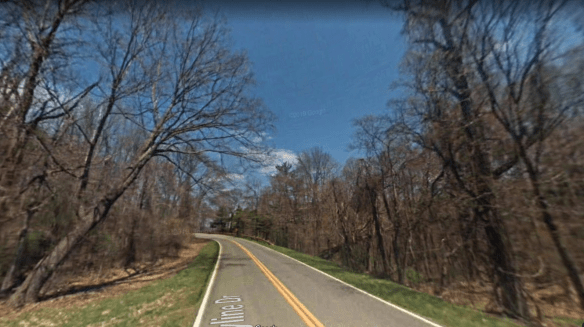
Adding even more drama, the captain of the lead ship in the voyage was supposed to transport the colonists on to the Chesapeake, but refused to do so, in essence, stranding them. Did I mention that the notorious captain just happened to be a pirate, rescued from the gallows by a man who was scheming for the colony to fail?

You might be guessing by now that there are layers upon layers of drama – and you’d be right.

The transport ships themselves were headed back to England after depositing the colonists and agreed to carry only one person from the colony with them. The colonists elected their “governor,” John White as their representative to return to England and request resupply. Somehow, somehow, the colonists, White’s daughter among them, would try to survive half a year, until about Easter 1588, when crossing the Atlantic would once again be safe. At that time in history, winter crossings were not undertaken.

However, the Spanish Armada and the war between England and Spain interfered with the resupply plan. It wasn’t until 1590 that John White was able to return, on yet another pirate ship, to attempt to resupply or rescue the colonists.

A Big Mystery

He found…nothing.

The colonists were gone – disappeared – but they left White a one-word message – Croatoan – carved into a post at their fort and “Cro” carved into a tree.

Croatoan tree

Dawn Taylor (left) and Anne Poole beside a reproduction of the carving White discovered upon his 1590 return to Roanoke Island.

Croatoan was the name of the friendly Indians who lived on Hatteras Island, just south of Roanoke Island.

Another hurricane arose, preventing White from visiting Hatteras, but their ships had sailed within sight of Hatteras on their way to Roanoke.

Were the colonists gone?

Had they survived?

Did they perish?

Or move on?

Inland perhaps?

What do we know?

What is yet to be discovered?

The Documentary

Along with others involved in the search, I filmed a segment for the History Channel in June. My portion was recorded at the Family Tree DNA lab in Houston, Texas. As you might guess, my portion involves DNA testing.

Lost Colony, Dr Connie Bormans and Roberta Estes

Here’s a sneak peek, Dr. Connie Bormans, Lab Director, at left, with me in the dark lab coat, at right, during the filming. You’ll enjoy a lovely tour of the genetics lab while walking a test through the process, assuming that portion is included in the documentary.

This is the first production of this type that I’ve been involved with. I’ve declined several other invitations because of concerns about sensationalism.

I’ve enjoyed programs on the History Channel before and hoped that they would be less inclined to fall into that trap.

The DNA Projects

Regardless, the DNA part of this story is mine to tell, and I wasn’t about to forego that opportunity.

I founded the Lost Colony DNA projects in 2007.

The Lost Colony Y DNA Project for males who carry the Lost Colony surnames AND whose families are found in early eastern North Carolina OR among the Native people is here, and the Lost Colony Family Project for those interested but aren’t male who carry the colonist surnames is here.

How Does Filming Work?

I’ve always wondered how this works, so I’m sharing with you.

It’s interesting to note that people in the episodes don’t know what the other people said or who else is involved.

In my case, I did happen to know about two other people, Anne Poole, Director of the Lost Colony Research Group and Andy Gabriel-Powell. The three of us along with Dawn Taylor and others have worked on solving the mystery together for a dozen years now, focused on archaeological excavations in various locations on the Outer Banks along with historical records in the US, England, Spain and Portugal.

Lost colony dna

Anne and I sifting during one of the digs.

Andy, the former mayor of historic Bideford, England, home of Richard Grenville, authored the book Richard Grenville and the Lost Colony of Roanoke which you can view, here.

I know the production crew interviewed other people as well, but I’ll find out who they are and what everyone says right along with you.

It might not surprise you to learn that numerous people have been involved in the search for the Lost Colony over the ensuing 432 years – and not all of them ethical. Like anything else high-profile, the Lost Colony has attracted its share of bad actors along with some fantastic researchers.

Sometimes it’s hard to know what or whom to believe, so Anne, Andy and I, along with our colleagues working alongside us, committed to document and source all information independently. Our goal was and is to excavate the truth, regardless of where that truth leads.

In 2007, Anne and I founded the loosely organized, all-volunteer, Lost Colony Research Group to facilitate various types of research and coordinate archaeological excavations.

The LCRG sponsored half a dozen digs and committed to making our finds public, allowing future researchers access to our research, artifacts and DNA results when technology has improved and perhaps more is known or can be discovered. It’s the only responsible approach.

People interviewed during the filming are not actors and are not paid, nor are they afforded the opportunity to review and approve any footage or anything in the segment before it’s aired.

Other than clarifying a couple of questions after the filming and being informed of the date and time when the episode will air, we had no communications with the production crew or staff after filming.

None of us knows what the segment contains or how it will be portrayed. We don’t actually even know if we are IN the segment, just that we were filmed. The segment at the lab with Dr. Bormans took about a day and a half of filming, plus several days of preparation, as did Andy’s and Anne’s portions, respectively. Most of what is filmed winds up on the cutting room floor. That’s the nature of the beast.

I have my fingers crossed that the resulting program is scientifically sound as well as entertaining. The Lost Colony is, after all, one of America’s oldest mysteries.

One thing is for sure – I’ll be watching. I hope you do too.

If you have ancestors in the US or in the British Isles – you or your family might just have that critical piece of information needed to solve the mystery!

______________________________________________________________

Disclosure

I receive a small contribution when you click on some of the links to vendors in my articles. This does NOT increase the price you pay but helps me to keep the lights on and this informational blog free for everyone. Please click on the links in the articles or to the vendors below if you are purchasing products or DNA testing.

Thank you so much.

DNA Purchases and Free Transfers

Genealogy Services

Genealogy Research

DNAPainter Instructions and Resources

DNAPainter garden

DNAPainter is one of my favorite tools because DNAPainter, just as its name implies, facilitates users painting their matches’ segments on their various chromosomes. It’s genetic art and your ancestors provide the paint!

People use DNAPainter in different ways for various purposes. I utilize DNAPainter to paint matches with whom I’ve identified a common ancestor and therefore know the historical “identity” of the ancestors who contributed that segment.

Those colors in the graphic above are segments identified to different ancestors through DNA matching.

DNAPainter includes:

  • The ability to paint or map your chromosomes with your matching segments as well as your ethnicity segments
  • The ability to upload or create trees and mark individuals you’ve confirmed as your genetic ancestors
  • A number of tools including the Shared cM Tool to show ranges of relationships based on your match level and WATO (what are the odds) tool to statistically predict or estimate various positions in a family based on relationships to other known family members

A Repository

I’ve created this article as a quick-reference instructional repository for the articles I’ve written about DNAPainter. As I write more articles, I’ll add them here as well.

  • The Chromosome Sudoku article introduced DNAPainter and how to use the tool. This is a step-by-step guide for beginners.

DNA Painter – Chromosome Sudoku for Genetic Genealogy Addicts

  • Where do you find those matches to paint? At the vendors such as Family Tree DNA, MyHeritage, 23andMe and GedMatch, of course. The Mining Vendor Matches article explains how.

DNAPainter – Mining Vendor Matches to Paint Your Chromosomes

  • Touring the Chromosome Garden explains how to interpret the results of DNAPainter, and how automatic triangulation just “happens” as you paint. I also discuss ethnicity painting and how to handle questionable ancestors.

DNA Painter – Touring the Chromosome Garden

  • You can prove or disprove a half-sibling relationship using DNAPainter – for you and also for other people in your tree.

Proving or Disproving a Half Sibling Relationship Using DNAPainter

  • Not long after Dana Leeds introduced The Leeds Method of clustering matches into 4 groups representing your 4 grandparents, I adapted her method to DNAPainter.

DNAPainter: Painting the Leeds Method Matches

  • Ethnicity painting is a wonderful tool to help identify Native American or minority ancestry segments by utilizing your estimated ethnicity segments. Minority in this context means minority to you.

Native American and Minority Ancestors Identified Using DNAPainter Plus Ethnicity Segments

  • Creating a tree or uploading a GEDCOM file provides you with Ancestral Trees where you can indicate which people in your tree are genetically confirmed as your ancestors.

DNAPainter: Ancestral Trees

  • Of course, the key to DNA painting is to have as many matches and segments as possible identified to specific ancestors. In order to do that, you need to have your DNA working for you at as many vendors as possible that provide you with matching and a chromosome browser. Ancestry does not have a browser or provide specific paintable segment information, but the other major vendors do, and you can transfer Ancestry results elsewhere.

DNAPainter: Painting “Bucketed” Family Tree DNA Maternal and Paternal Family Finder Matches in One Fell Swoop

  • Family Tree DNA offers the wonderful feature of assigning your matches to either a maternal or paternal bucket if you connect 4th cousins or closer on your tree. Until now, there was no way to paint that information at DNAPainter en masse, only manually one at a time. DNAPainter’s new tool facilitates a mass painting of phased, parentally bucketed matches to the appropriate chromosome – meaning that triangulation groups are automatically formed!

Triangulation in Action at DNAPainter

  • DNAPainter provides the ability to triangulate “automatically” when you paint your segments as long as you know which side, maternal or paternal, the match originates. Looking at the common ancestors of your matches on a specific segments tracks that segment back in time to its origins. Painting matches from all vendors who provide segment information facilitates once single repository for walking your DNA information back in time.

Paint Your Way Up Your Tree with MyHeritage, AutoClusters and DNAPainter – Free Webtember Webinar

  • This webinar is available through Legacy Family Tree Webinars, which you can join, here, and discusses literally how to paint your way back in time using DNAPainter with information from MyHeritage’s tools including SmartMatches, Theories of Family Relativity, and AutoClusters. Discover which ancestors your DNA came from.

Paint LivingDNA Chromosome Segments to DNAPainter

  • LivingDNA added family matching and a chromosome browser which enables your match information to be copied and pasted into DNAPainter.

DNA Transfers

Some vendors don’t require you to test at their company and allow transfers into their systems from other vendors. Those vendors do charge a small fee to unlock their advanced features, but not as much as testing there.

Ancestry and 23andMe DO NOT allow transfers of DNA from other vendors INTO their systems, but they do allow you to download your raw DNA file to transfer TO other vendors.

Family Tree DNA, MyHeritage and GedMatch all 3 accept files uploaded FROM other vendors. Family Tree DNA and MyHeritage also allow you to download your raw data file to transfer TO other vendors.

These articles provide step-by-step instructions how to download your results from the various vendors and how to upload to that vendor, when possible.

Here are some suggestions about DNA testing and a transfer strategy:

Paint and have fun!!!

______________________________________________________________

Disclosure

I receive a small contribution when you click on some of the links to vendors in my articles. This does NOT increase the price you pay but helps me to keep the lights on and this informational blog free for everyone. Please click on the links in the articles or to the vendors below if you are purchasing products or DNA testing.

Thank you so much.

DNA Purchases and Free Transfers

Genealogy Services

Genealogy Research

Michael McDowell Jr. (c1747 – c1840), Revolutionary War Veteran, Spy, Miller and Apparently, Rabble Rouser, 52 Ancestors #258

I’m struck by how much Michael McDowell’s life reads like a book with distinct chapters. One closes and as the wagon pulls away from the old homestead and another opens.

Michael did that at least twice in his adult life.

I first found Michael McDowell in present day Hancock County, Tennessee and worked my way backward in time, which was anything but easy.

For starters, Hancock County records burned, twice. At the time Michael lived, it was Claiborne County, whose records are incomplete. The place where he lived also bordered Lee County, Virginia and the border between Virginia and Tennessee was disputed for the entirety of Michael’s lifetime. And not to mention various census years that I need that are missing.

For decades, I’ve felt like the great genealogy gods have a perverse and somewhat perverted sense of humor. “Oh, you’ve overcome that road block, well, try this one! Hahahahah.”

In reassembling Michael’s life and that of his parents and children, I’ve had to connect many dots. Some snapped right in, like puzzle pieces nestling together like Russian tea dolls, but a few…not so much. The further back in time we go, the more scarce and difficult the pieces. It’s doesn’t help any that his father’s name was Michael McDowell too, as was his son.

Our Michael McDowell Jr. was born about 1747, possibly in Lunenburg or Albemarle County. His father’s trail goes cold in 1755 in Bedford County where Michael Jr. entered the Revolutionary War in 1777.

The name of Michael’s mother is unknown. She could have been from anyplace between Maryland and Lunenburg County, Virginia. If she was the same age as Michael’s father, she would have been born about 1720, or about 27 when MIchael Jr. was born. It’s likely that someplace, Michael Jr. has siblings.

Revolutionary War Pension Application

One of our most valuable pieces of information about Michael McDowell is his application for a Revolutionary War pension found in Claiborne County, Tennessee. Two versions exist, one somewhat more detailed than the other.

Michael McDowell, Page 31 section 28, Michael McDowell S 1690 Virginia Service:

This day personally appeared before Samuel Powell, Judge of the Circuit Court of Law and this equity in Claiborne Co., TN. Michael McDowell, age 85, in order to obtain benefit of an act of Congress, passed June 7, 1832. He made this application 1832. States he entered the service in Bedford Co., VA 1777 or 1778. He was drafted to perform 3 months tour of duty and he belonged to Company of Capt. Arthur which was attached to the regiment of Col. James Calloway. He then marched to the lead mines in the western part of Virginia and built a fort, and also under Capt. Wm. Leftridge at the same Fort. And after his term expired, returned home to his residence in Bedford Co., VA, and again volunteered under Capt. Arther, and marched against the Indians, and again after returning home joined with some neighbors and friends with the citizens of the country calling themselves spies, to protect women and children from the skelping knife of the savage. He went to see his Capt. Arther who now lives in Kentucky and he is so parallized and so polsed? so that he can not speak, so as to be understood.

John Hunt a citizen of Claiborne County, Tennessee, certify that I am well acquainted with Michael McDowell, and it is reputed and believed in the neighbourhood where he lives that he was a Revolutionary War Soldier.

Affidavit of James Gilbert, one of the clergyman of the Baptist Church, state I am well acquainted with Michael McDowell.

John Hunt, High Sheriff of said county, makes the same statement.

This affidavit gives us a lot of information about Michael, including that he and his friends called themselves spies.

His age is given, which puts his birth about 1747.

We know that in 1777, Michael was 30 years old and living in Bedford County, Virginia. He was married by that time, with his son Edward born in 1773 and his son Michael (the third) being born before 1774.

Information from “TN Pension Roll of 1835” copied by William Navey:

Michael McDowell – Claiborne Co., TN – Private VA Line, $30 annual allowance – $90 amount received, Sept. 20, 1833 pension started – age 87 in 1835

State of Tennessee, Claiborne County This day personally appeared before Samuel Powell, Judge of the Circuit Court of law and equity in the state of Tennessee the same being a Court of Record, Michael McDowell age 85 years who being first duly sworn according to law doth on his oath make the following declaration in order to obtain the benefit of an Act of Congress passed June 7, 1832. States that he entered the services of the United States under the following named officers and served as herein states that he resided in the County of Bedford in the State of Virginia and some time in the year of 1777 or in the year of 1778 he was drafted to perform a three month tour of duty in the services his county and that he belonged to company commanded by Capt. Arthur which said company was attached to the regiment commanded by Col. James Calaway then marched to the lead mines in the western part of Virginia and we then built a fort and we were there stationed until my time of service has expired and then it was that Col. Calaway called upon us to volunteer our services in the cause of our country for the time of three months which this applicant did do in good faith and he states most positively that he did serve his country under the command of Capt. William Selfridge at the same fort and after his time of service had again expired this applicant returned home to his residence in the State of Virginia in Bedford County and some time after this applicant returned home he again volunteered himself under Capt. Arthur and he then marched against the Indians who were committing many defamations on the inhabitants of Virginia and the applicant states that he served in the campaign as long as his services was required by the commanding officer, but the precise time he does not recollect and then being discharged from service he returned to his residence in the County of Bedford. And this applicant begs leave further to represent to the department that some time after he had returned home from the last above mentioned campaign that he united himself with some of his neighbors and friends together with a vow to protect the women and children from the scalping knife of the savage and often performing a great deal of hard labour in the service of our country and after the spring of the year had set in and the savages had left the frontier we again returned home the applicant states that he believes taking the whole of his service together that he served in the cause of his country for the term of nine months although it may be more or it may be less. Said applicant also states that he has no documentary evidence of his services nor does he know of any living testimony by whom he can prove his services. He a few days ago went to see his Capt. (to wit) Capt. Arthur who now lives in the State of Kentucky and that he found that the said Arthur is paralyzed and so palsied that he cannot speak so as to be understood which now fully appears no reference to a document, herewith presented and signed by one of the Justices of the Peace in said state. Hereby relinquish his every claim to a pension or annuity except the present and declares that his name is not on the pensions roll of any agency of any state whatsoever. Sworn to in open court Dec. 1832

If this was sworn in December 1832, chances are very likely that Michael had already had his birthday for the year. His year of birth subtracts to 1748 in this document.

In a publication listing Tennessee veterans of the Revolutionary War, Michael is listed as having been born in 1745. The source of this information is not given.

I obtained Michael McDowell’s Revolutionary War Pension file from the National Archives.

Michael McDowell Rev War1.jpg

The actual pension act was found in Michael’s pension papework.

Michael McDowell Rev War 2.jpg

Michael McDowell Rev War 3.jpg

I originally though that Michael signed this document himself, but after looking more closely, he didn’t.

Michael McDowell Rev War 4.jpg

The “X, his mark” is present. Of course, we don’t know from this document alone whether Michael was simply too elderly and too feeble to write, or if he never could. Other documents will tell that story.

Michael McDowell Rev War 5.jpg

Michael McDowell Rev War 6.jpg

MIchael McDowell Rev War 7.jpg

Michael McDowell Rev War 8.jpg

$90 was a lot of money in 1832 – enough to purchase a farm or at least land to clear for a farm.

Michael McDowell Rev War 9.jpg

Michael McDowell Rev War 10.jpg

From these documents, we can put together roughly the following timeline:

When What Where
1777 or 1778 3 month tour Lead mines with Arthur and Callaway
Additional 3 months at lead mines Callaway requested, served under Leftridge
Home after the second three month tour Bedford County
Some time later Volunteered again to march against Indians With Arthur
Returned home Bedford County
Some time later Spied on Indians – returned home after spring when Indians departed

Michael states that he served 90 days in total, more or less. Given the dates above, his time spying on the Indians would have had to have been in either late 1777 or late 1778. If he was drafted in 1777, most of that year would have been consumed with the 6 months contiguous duty at the lead mines.

Michael McDowell Rev War 11.png

This final document is interesting in that it lists Michael as an invalid. It’s possible, at 85 years of age, that his invalid status is simply a result of his age, meaning he can no longer farm, and had nothing to do with his service or an injury. He did not apply in 1818 at which time destitute soldiers could apply.

These documents reveal more too. Michael left Bedford County and marched to the western part of Virginia. At this time, Tennessee and Kentucky didn’t exist, so Virginia just trailed off into nothing – with no western border as shown in the Fry and Jefferson map from 1775, below.

Michael McDowell 1775 Fry map.jpg

Revolutionary War Service

In the book, Virginia militia in the Revolutionary War: McAllister’s data we find several references to lead mines as well as the officer’s surnames noted in Michael McDowell’s pension application.

This book reveals: Capt. Benjamin Arthur R. Sept. 29, 1781 from Bedford County. James Callaway Co. Lt, S, Dec. 8, 1778. We then find Lt. Col. William Leftwich, S. Feb. 28, 1780. I’m not quite sure what that means, but it does confirm that they served.

Bedford County: 1776. Capt. Wm. Leftridge against Tories and Indians at Lead Mines, 47, 157.

This suggests that there might have been an encounter.

1780 – Capt. Robt. Adams’ Company guarding Lead Mines, 153.

Greenbrier County 1780: Capt. Thomas Wright raises a Company to go against the Indians at Detroit. But it was marched to Lead Mines on Holston, and then to Logan’s Station in Kentucky.

Jarvis Fields, in his pension application tells us that he served from Bedford County as well and he was called to duty in 1779 by Col. Calloway for guard duty at New London, in Bedford County, “the British prisoners taken at the Cowpens being confined there and at Lynchburg.”

Henry Cartmill who served from Botetourt tells us this about the possible location of the lead mines:

At another time he ranged the mountains between Fincastle and Sweet Springs in search of Indians. Himself and many others assembled at the lead mines in Wythe to meet Col. Fergerson who was said to be advancing from the Carolinas with a large force of Tories. After going as far as Stone House in Botetourt, they were stopped by Col. Skillern, commanding the Botetourt militia, until more men could be collected. News reaching them that the Tories were dispersed, they returned home.

Colonel Ferguson was killed at the Battle of King’s Mountain in October 1780.

William King states that he was enlisted in Bedford County in 1778 and for two months, he guarded the lead mines in Wythe County. Other men refer to the lead mines in Wythe County, as well.

William Murphy is very detailed in his pension application:

About Aug. 1, 1776, from Bedford under Capt. William Leftridge, Lt. Calloway, Ensign Joseph Bond. Guarded Chiswold lead mines till relieved by other troops. In April, 1777, was substitute three months for Lewis Dusee (?), who was drafted from Thomas Jones’ Company in Henry. Served under Capt. Peter Herston, Lt. William Ferguson, Ensign Edward Tatum in Col. Christie’s regiment. Marched 200 miles to Long Island in the Holston to stand guard during a treaty with the Cherokees.

Volunteered in April 1780, to serve three months against the Cherokees. Went as sergeant under Capt. Jno. Clark and Lt. John Bond, Gen. John Sevier being in general command. Marched to the headwaters of the Tennessee and killed a number of Indians, with the loss of Capt. Davis and Lt. Bond killed, and Jasper Terry wounded.

In February 1782, volunteered three months under Capt. John Clark, and Lt. John Murphy, of Washington County, N. C. (now Tenn.), Col. J. Brown commanding the regiment, and marched across Nolachucky and French Broad in pursuit of the Indians who had attacked Sherrill’s Station on the frontier, losing one of their number in the attack. We overtook a band, supposed to number 60 to 100, and killed, as was said, thirteen of them. In August 1782, drafted against the Indians again and hired George Doggett as substitute, but Gen. Sevier insisted that I go. Served under him in company of Capt. Thomas Wood and Lt. Vathan Breed, all the officers being of Greene Co. (Tenn.) We destroyed several Cherokee towns, killed a number of Indians, and took some prisoners. John Watts, a half-breed gave up a white woman named Jennie Ivey, who was taken from Roane’s Creek a year before.

The reference to Chiswold’s lead mines gives is a critical clue.

Michael McDowell lead mines.jpg

This waymark exists today at the intersection of interstate 77 and Route 52, but the actual mines were about 10 miles further south in the Austinville Community on a bluff on the south bank of New River. Known variously as the mines on Cripple Creek, the Austinville mines, or the Wytheville mines, they were discovered in 1756 by Colonel John Chiswell.

The original Fort Chiswell was built during the French and Indian War where the current village of Fort Chiswell stands, but was paved over when the intersection of I77 and I81 was constructed in the 1970s.

Given that Michael McDowell said that they built a fort, it’s probable that they built a fort at the actual mines to protect the lead, an extremely valuable commodity to both the militiamen and the Tories who were attempting to capture the mines.

The website, Diggings, below, shows the mine with the green balloon and the deposits in red. The information on the site states that production at the Austinville East Lead Zinc Mines began in 1753 and concluded in 1981.

Michael McDowell Austinville.png

This would be where Michael McDowell camped and built the fort.

MIchael McDowell mine.png

Today, the two routes from Bedford County to the lead mines, both through gaps in the mountains, would be either 110 miles or 125 miles.

Michael McDowell mine map.png

A Google satellite view of the vicinity shows extensive mining efforts at Chiswell Hole.

Michael McDowell Chiswell Hole.png

If the location of the original lead mines is accurately positioned by the green locator of the Diggings map, the original mine location would be where the white roofed building, below, is located today.

Michael McDowell mine location.png

Unfortunately, none of these roads are “drivable” today utilizing Google street view. Maybe in a few years.

Indians, Spies and Scalpings

In both application versions, Michael mentions being an Indian spy, banding together to protect people and that the Indians subsequently left the frontier. What can we discover about when and where this might have occurred?

Michael says he “marched against the Indians, and again after returning home joined with some neighbors and friends with the citizens of the country calling themselves spies, to protect women and children from the skelping knife of the savage.” He also mentions that he and his fellow spy citizens returned home in the spring, meaning they tracked Indians in the cold of winter.

We know that this was after Michael marched to the lead mines, which was probably about April 1777, based on the information unearthed about the mines and other men who served there, and after Michael served with Col. Leftridge and then marched with Captain Arthur against the Indians. After all that is when he “joined with some neighbors and friends.”

In Michael was at the lead mines in April of 1777, then he went home in about October of 1777.

We know that this was probably related to the peace treaty signed with the Cherokee Indians in July 1777 ceding the Watauga lands or in July of 1781 when they ceded more land, both events taking place at the Long Island of the Holston. Another treaty during this time was the Treaty of Fort Pitt signed in November of 1778 with the Delaware. It’s difficult to know which event might have resulted in the Indians leaving the frontier as he mentioned, an event that allowed him to finally return home for the last time – although it’s most likely prior to 1781.

Two articles shed light on this time period and events that clearly impacted Michael McDowell.

The first is found in The Virginia Magazine of History and Biography, Vol. 23, No. 2 (Apr., 1915), pp. 113-123, article by David I. Bushnell, Jr.

In the first of a series of articles titled, “The Virginia Frontier in History – 1778”, David Bushnell tells us that in 1774, Cornstalk, Chief of the Shawnee entered into a peaceful agreement with Lord Dunmore and subsequently became friendly with the English.

However, in November 1777, at Fort Randolph which was located at Point Pleasant (now West Virginia,) Cornstalk along with his son were brutally murdered. Ironically, Cornstalk had come to warn the settlers and his killing was in revenge for the murder of a settler by an Indian.

During the winter months that followed, the settlers realized what grave danger they had brought upon themselves by killing Chief Cornstalk and prepared for the now-expected attack by the Indians. In January 1778, Col. William Preston sent a letter from Montgomery County, Virginia, begging then-governor Patrick Henry of Virginia for assistance, expecting the Shawnee to descend upon the settlers at any time.

A widespread attack was expected, “upon all Frontier Inhabitants from Pittsburg to the lower Settlements of Clinch and the Kentucky.”

Col. Preston writes:

“I acknowledge, Sir, that this detestable murder was committed by backwoods men who ought to have behaved in a manner very different; and I am sorry to inform your Excellency that upwards of 100 persons in the County alone have yet refused to take the Oath of Allegiance to the State, many of whom are disarmed and the remainder soon will, who cannot claim, nor are they entitled to Protection while they continue Obstinate.”

“The inhabitants in this and the neighboring counties, especially those most exposed to danger are in the greatest consternation. Several thousand good subjects ought not to suffer for the indiscretion and obstinacy of a few. Being generally in low circumstances, they are not able to remove and support their families in the interior parts of the state, and by continuing at their homes, without the assistance of government, or the immediate interposition of Providence, they and their helpless families must fall a sacrifice to savage fury and revenge.”

“Should this (assistance) be omitted or delayed, I am fully convinced from long experience that this county or a great part of it will be depopulated before May next and the enemy, like blood-hounds, will pursue until they overtake their prey, even to the south side of the Blue Ridge, as they did not many years ago.”

Preston goes on to ask for provisions, stating that the lack of salt prevented people from laying up the quantity of pork that they would have otherwise done. He says they will be out of provisions in two months. Normally pigs butchered in the fall would last until at least the following summer when crops could be harvested.

Preston also asks for Indian corn to be purchased and says there is none in his or neighboring counties. Furthermore, “the want of lead is a most discouraging circumstance. They offer any price but they cannot purchase it.”

Guns don’t work without bullets and lack of lead for their muskets made the settlers little more than sitting ducks.

According to the response recorded in the “Journal for Council for 1778” in the Virginia State Archives, Greenbrier County also submitted a request and on February 19th, the Council agreed to the following:

  • One pound of lead for each militia man
  • To direct trusty scouts to range towards the enemy’s country
  • To advise proper stockades for receiving the helpless inhabitants, wherever the savages have in in their power to penetrate
  • To direct the County Lieutenants of Botetourt and Montgomery to consult together on the expediency of establishing a post near the mouth of Elk River for keeping up the correspondence between GreenBrier and Fort Randolph
  • To do so in the matter they judge best to reinforce the garrison at Fort Randolph with 50 men from the militia of Botetourt
  • That earnest and close pursuit of the foremost scalping parties be made in order to discourage others
  • To apprehend and deliver up the people concerned in that murder

On March 27, 1778 they recommended ordering 50 men from Rockbridge County, Virginia to Fort Randolph and 50 men each from Botetourt and Greenbrier County to “post at” Kelley and authorized 1000 pounds for “commissary.”

The order to “direct trusty scouts to range towards the enemy” stems from the following document passed by the General Assembly on May 5, 1777 as found in Henning (Vol IX, p294-295):

“The lieutenant or next commanding officer of the several counties on the western frontier, with the like permission, shall appoint any number of proper persons, not exceeding 10, in any one county to act as scouts for discovering the approach of the Indians…who on such discovery shall immediately give notice thereof to such militia officer.”

The scouts were instructed not to fire on the Indians, except in self-defense, but only to report locations to the militia officers. Their job was to find the Indians and spy upon them. Their instructions were to not lose time, to stay constantly “on foot” and after they “have fully ranged the part of the country which it was supposed would take 2 or 3 weeks,” they should report back. They were to take their own provisions, but they would be paid for them. I wonder if that ever happened.

However, now we know where the term that Michael used, “spies,” originated in this context.

Interestingly enough, on the back of a paper were listed locations, probably made by a scout, showing the locations visited. The author believes the numbers represent the number of miles:

  • From Culbersons bottom to the big Crab Orchard – 60 (Crab Orchard is in Kentucky)
  • From there to Maiden Spring – 15
  • From thence to Elk Garden – 17
  • To the Glade Hollow – 13

Underneath that is a total line and then 105.

  • To Cowins fort – 10
  • Moores fort – 5
  • BlackMores – 2
  • To Mockinson Gap – 18
  • To ye Great Eatons (?) – 8
  • To Capt Donelsons line – 8

Another total line and 174.

Fort Blackmore was located in what is now Scott County, VA, as is Moccasin Gap.

According to Familypedia.wikia, this 1774 copy of the Smith map with red circles indicates the locations of forts as shown on Daniel Smith’s original map, now in the Draper collection, item 4NN62. The red line became the Kentucky Trace.

1774 Smith map.png

This area includes part of the present Virginia counties of Tazewell, Russell and Scott from the Clinch River to the Holston.

Col. Preston apparently became more fearful and requested additional protection in May of 1778, the following being noted:

“The Board being informed of Col. Preston’s expored situation on the frontier and that is was apprehended (should be obliged to remove) most of the back inhabitants would quit their settlements, they do advise the governor to empower Col. Preston to keep a sergeant and 12 men stationed at his house as Draper’s Meadow to enable him to continue at his habitation and to encourage others to do so.”

In a second article in The Virginia Magazine of History and Biography Vol. 23, No. 4 (Oct., 1915), pp. 337-351 by David I. Bushnell, Jr. we find additional information.

A report detailed the importance of maintaining 4 forts, one of which is Fort Henry in Ohio County and one at Fort Randolph, which is on the Ohio at the mouth of the Kanawha river, the scene of the treacherous murder of Chief Cornstalk in November 1777. That act was the touchstone of the rebellion that caused the Indians to attack the settlers on the frontier. Fort Randolph was stated to be “200 miles distant from the settlements” and 150 men were requested for that location.

Michael McDowell Fort Randolph.png

Indeed, Fort Randolph is about 266 miles from Bedford County, VA.

Michael McDowell Bedford to Fort Randolph.png

Also requested for the various forts was 1500 gallons of whiskey. That’s a LOT of whiskey!

The two documents presented…enable us to picture the frontier posts as they were during the summer of 1778. Small groups of militia, at widely separated spots in the vast primeval forests. Nearby were the clearings and log cabins of the settlers. Supplies were scarce and consequently difficult to obtain and of a high price: a condition which resulted in more than one expedition being either postponed or abandoned. Scouts were ever on the alert for the approach of the warriors from beyond the Ohio; the accepted boundary between the white settlements and the Indian Country later to become the Territory Northwest of the Ohio.

That same year a census of the tribes was prepared by William Wilson at the request of the War Office as reported in the Virginia Historical Magazine:

1778 tribal census.png

1778 tribal census 2.png

The tribes were widely separated and the number of hostile warriors was given as 330, certainly a very conservative figure; but nevertheless, they were sufficiently numerous to spread terror over many hundreds of miles of the frontier.

In the endeavor to gain peace for the Virginia frontier, and the friendship of the Indians beyond the Ohio, Congress planned a treaty to be held at Fort Pitt, July 23, 1778, to be attended by commissioners of the government and representative of the different tribes. This was destined to be the first treaty between the United States and an Indian Nation, and was signed September 17th.

Michael’s Revolutionary War papers take us back to Bedford County, Virginia where he lived after being dismissed the final time from his Revolutionary War service – and presumably once the region became relatively safe again after November of 1778.

What we don’t know is which spring Michael was referring to, 1778, which is unlikely, given the above information, or perhaps the spring of 1779.

Bedford County, Virginia

Michael McDowell Bedford County

Bedford County is mountainous and rough. I visited Bedford County, years ago, and Bedford isn’t much different from surrounding counties. In essence, Bedford is part of the Appalachian range which extends for thousands of miles as an expansive sea of craggy rocks interspersed with tiny patches of green that farmers have been trying to cultivate since before the Revolutionary War. It’s also breathtakingly beautiful with incredible vistas.

Bedford County hosts a section of the Blue Ridge Parkway, a beautiful WWII era road that runs along the summits of the mountains offering stunning vistas, in particular the Peaks of Otter in Bedford County, shown below – visible for a hundred miles in any direction on a good day.

Michael McDowell Peaks of Otter.jpg

This might have been particularly relevant for Michael McDowell’s father, Michael Sr., who we know lived in Halifax County, Virginia in 1752. This means that if Michael Jr. was born in 1747, he might have been born in present day Halifax County which was Lunenburg County at that time. Interestingly, you can see the Peaks of Otter from Halifax County, below, at a location called “Top of the World.”

Perhaps Michael saw these mountains and felt irresistibly drawn towards them – an area that was then the risky, unsettled frontier.

Peaks of Otter

The photo above was taken from Halifax County, looking 50 miles distant to the Peaks. Did Michael live here, or see this on his way back and forth to the tobacco warehouses in Danville, in Pittsylvania County? As a young boy, did he dream of adventure there? One day that dream would come true.

Michael McDowell Peaks of Otter valley.png

Looking across the roof of the Peaks of Otter Lodge today, from the Blue Ridge Parkway.

Many of the men who settled in Bedford County were Scots-Irish, and before that, they were Scottish families, so trying to farm fields filled with rocks was nothing new to them. Perhaps it even reminded them somewhat of home, or the homeland of their fathers and grandfathers anyway.

After finding Michael McDowell’s Revolutionary War record, of course I began digging in Bedford County for more information.

Ironically, some of the information I found in Bedford County in June of 2005 referred me back to Claiborne County, Tennessee.

At the Bedford Co. Historical Society, I found a McDowell family file and it held a contact from California from 1989 and 1990 who descends from our Michael McDowell

The researcher mentioned that in Mary Hansard’s book, Old Time Tazewell, Michael’s son Nathan S. McDowell is mentioned as being of Irish descent, which the researcher interpreted to mean that Michael was born in Ireland. As it turns out, Michael Jr. wasn’t, but his grandfather, Murtough McDowell, was.

Blackwater River

On September 24, 1783, Michael purchased 75 acres on the North side of Blackwater River in Bedford County from James Stevens. and on March 22, 1784 the purchase was confirmed in court. Witnesses to the sale were Richard Richards, Skinner Devaul(?) and Ambrose Rains.

Michael McDowell Blackwater River Bedford.jpg

It’s important to note that this does not say Michael McDowell Sr. or Jr., which it surely would have stated if there were two Michael McDowell’s living in the same county at the same time.

On the 1782 Bedford County tax list, we find only one Michael McDowell, listed with 1 free male above 21 years, no slaves, 4 horses, 11 cattle with 1 white tithable, himself.

Unfortunately, the tax list is semi-alpha, which means it’s not in household order, so we can’t look at the list to identify his neighbors. There are no other McDowell residents listed.

In 1783, we find Michael with 1 poll tax, 1 male over 21, 2 horses and 4 cows. Most people had both more horses and more cows that Michael.

By 1784, Michael is gone from the tax list but he doesn’t sell that land until 1793 as a resident of Wilkes County, NC.

It appears that the area of Bedford County where Blackwater River was located became Franklin County.

The Blackwater River runs for about 20 miles as the crow flies, west of the area called Callaway, to the left of the pin below, and the county line at far right where it opens into what is now Smith Mountain Lake, formed by the Roanoke River.

Michael McDowell Callaway.png

Given that Michael served under Colonel James Calloway, which means that Michael probably served with his local muster group, my strong suspicion is that Michael lived near James Calloway. Given that Callaway is located on Blackwater River, Michael probably lived in this region too.

Indeed, this is probably where he grew up because his father apparently applied for a land grant in 1754 on the Black Water River – although beyond the initial application we never find any additional informatoin about Michael Sr.’s 400 acres. He could well have forfeited the grant for any number of reasons.

The north and south branches of Blackwater are born near Calloway and flow eastward to the Roanoke.

Michael McDowell Blackwater River 2.png

Today, this area is a mosaic of farmland, but at that time, it was probably still forested, and men like Michael would fell trees to make room for fields.

Michael McDowell Blackwater satellite.png

Someplace, Michael’s land was probably here in this crazy-quilt mosaic of farmland and forest.

Michael McDowell Blackwater River Callaway Road

Today, Callaway Road where it crosses the Blackwater River. This would have been a ford when Michael lived here.

The Arthur family lived nearby too, with several deeds showing land near Goose Creek, in Bedford County, 4 or 5 miles east of the Roanoke River where Blackwater River empties.

This was Michael’s stomping ground growing up. It’s probably where he married his wife.

We know that Michael McDowell Sr. was on the Bedford County tax list in 1755, and given that our Michael was born in 1747 or 1748, the 1755 Michael had to have been Michael Sr., not Junior.

Or stated another way, it couldn’t have been Michael Jr. and there is a small possibility that the 1755 Michael was not Michael Jr’s father. Given that he was the only McDowell living in Bedford County by the same name, there’s a good chance that the 1755 Michael is indeed Michael Sr., the father of Michael Jr.

I checked all Bedford County deeds 1761-1771, wills 1759-1810 and court orders 1754-1761 – no Michael McDowells. He certainly kept a low profile.

There are also records in Bedford County for one Ephriam McDowell, no known relationship and these two male lines carry completely different Y DNA.

Michael McDowell bought land in Bedford County in 1783, but in 1784 he is not listed on the Bedford County tax list and a Michael McDowell is listed with 1 white poll in adjacent Botetourt County. Is this the same man? If so, was he trying out different locations? Why did he leave just after purchasing land?

If this isn’t the same Michael McDowell, what happened to that second Michael McDowell in Botetourt County? Where did he come from and where did he go? The only other McDowell in Botetourt in 1784 was George. However, there was a Michael in Botetourt, earlier, in 1774 who was found to be delinquent on his taxes.

If this was our Michael in Botetourt, he clearly didn’t stay and it was a very short chapter in a very long book. Our Michael is also not the Michael McDowell who served out of Pennsylvania in 1776-1777 in the Revolutionary War.

Where is our Michael?

Pat Bezet and Mary Kay McDowell

A few years after visiting Bedford County, I found Pat Bezet on an old Rootsweb board along with Mary Kay McDowell, the wife of Les who Kay believed to be a Michael McDowell Jr. descendant through Michael’s son, Luke. These women had done a massive amount of research on Michael and family, and I would spend the next several years following in their footsteps, trying to add additional tidbits. They were both very generous about sharing their work. However, it was interesting that even though we were all plowing the same fields, so to speak, that we all found things that had either been overlooked by the other parties or found different records altogether. Six eyes are obviously better than any two. By reviewing available records again, I’ve recently found things that all three of us missed previously.

Mary Kay McDowell systematically sifted through nearly all of the published Virginia sources available in the 1970s, 80s and 90s.

The results of our research and trips are intermingled in this article, with many thanks to both ladies.

Albemarle County, Virginia

It’s likely that Michael McDowell Jr. was born in 1747 or 1748 in Lunenburg County, Virginia or possibly in Albemarle County. Michael’s father, Michael Sr. was found in both locations.

Keep in mind that Halifax County where we positively identify Michael McDowell Sr. in 1752 was Lunenburg before that.

We find a similar name in Albemarle County, VA in the 1745 road records, dated June 27th in which Andrew Wallace was appointed surveyor of the highway from D.S. to Mitchams River and both Merlock (also transcribed as Mirlock) McDowell and Micha McDowell were ordered, along with other men to clear the road. Albemarle county as was formed from Goochland in 1744, although deed, court and will records did not begin in Albemarle until 1748. Albemarle road records are lost beginning in 1748. Research into Albemarle records from 1748-1753 produced nothing, nor did research into Goochland deed and will records from 1731-1749.

The name Merlock sounds very close to Murtough, Michael’s father’s name, raising the question of whether Michael was Merlock’s brother. It’s also worth noting that in Maryland, Murtough’s name was also spelled Murto, with the surname as Mackdowell and Mackdaniel. Names were spelled as the person hearing them understood them and spelling wasn’t standardized at the time.

If Michael was in Albemarle County, he was familiar with the Three Notch’d Road which is the road the crew where he was assigned was instructed to clear and open in 1745. Men were assigned to crews along the road where they lived.

The Virginia Department of Transportation document titled, “The Route of the Three Notch’d Road: A Preliminary Report” written in 1976 shows the “1740 House,” an old tavern near the site of the D.S. Tree, near present day Ivy Virginia. Today the building, also known as the “D. S. Tavern” is on the National Register of Historic Places.

The original 3 Notched Road was begun about 1742 and the route was marked the entire length between Richmond, VA and the Appalachian Mountains in Augusta County, VA – including running directly through Albemarle County and is currrently US 250. US 250 was rerouted in some places, but is basicaly the same road in Albemarle County.

If indeed this is our Michael’s father in the 1745 road record, this 1740 House which stood and functioned as an ordinary at the time was probably intimately familiar to him, both inside and out.

Michael McDowell Three Notched Road.png

The D. S. Tree is reported to be in the final segment of a the “Three Notched Road” between Secretary’s Ford on the Rivanna River, (near the old woolen mill adjacent to I-64 on the east side of Charlottesville) to the D. S. Tree in Michael Wood’s road, the road east from Wood’s Gap to Ivy.

MIchael McDowell 1740 tavern.png

Today, this private home is at the intersection of Dick Woods Road and 250.

Early deeds refer to Stockton’s branch of Mitchum River, and also Stockton’s ford.

Michael McDowell Woods Gap.png

An aerial view shows the mountainous area between Ivy and the top of the mountain range.

Michael McDowell Woods Gap aerial.png

According to Edgar Wood’s History of Albemarle county, Virginia, the D. S. Tree had the initials of David Stockdon, an early patentee of land nearby, carved into it. That tree no longer exists.

Here’s a section of what was called the “Three Notch’d Road” also known as the Mountain or Mountain Ridge Road, now US 250, which today intersects with the Ridge Parkway.

Below, Mountain Ridge Road, another name for the Three Notch’d Road.

Michael McDowell Mountain Ridge Road.png

Today, on the Blue Ridge Parkway at Jarman Gap.

MIchael McDowell Jarman Gap

The Appalachian Trail runs alongside Skyline Drive, which is the Blue Ridge Parkway.  I’ve hiked much of this area. You can see Wood’s Gap Road in this aerial.

Michael McDowell Appalachian Trail.png

Below, the road descending to Lickinghole Creek.

Michael-McDowell-Lickinghole-Creek.png

Here’s the view on Three Notched Road crossing Lickinghole Creek today.

Michael McDowell Lickinghole

Three notched road ascending the Blue Ridge below.

Michael McDowell Three Notch ascending Blue Ridge.png

Jarman(s) Gap Road today just before it begins ascending the mountains. Wood’s Gap is now Jarman or Jarmans Gap.

Michael McDowell Jarman Gap Road.png

Google Street View does not drive on roads with no center line. The trip from Jarman’s Gap Road alongside Lickinghole Creek, above, to Jarman Gap which is one of two gaps crossing the mountain range is maybe 5 twisty-turny miles on road 611 – complete with switchbacks.

Michael McDowell road ascending mountain.png

And of course, a 3 notched tree. The original D.S. tree stood east from Wood’s (now Jarman’s) Gap to Ivy, probably on the same property where the 1740 D.S. Tavern stood.

Michael McDowell three Notched tree.png

Ivy to Jarman Gap. Today you must use the Park Entrance, but not so then when they took the more direct route up the side of the mountain, marked with red arrows.

Michael McDowell Ivy to Jarman Gap.png

Michael Sr. worked here, opening the roads still in use today, but looking very different. The area where he was assigned was from the D.S. Tree to Mitchums River, which is Mechums River today – a distance of about 3 miles.

Michael McDowell Ivy to Mechums River

That means he would have lived someplace along this route probably on a spring branch of a creek where fresh water was available. This is likely where Michael McDowell Jr. was born.

I’m not convinced that the blue 250 portion is the original road, but Google didn’t drive down 738 which looks like it might have been the original road.

However, there is a portion where 738 and 250 join, and that was likely the original portion, as is the portion where Dick Wood’s Road and 250 intersect.

Michael McDowell Ivy to Michums River aerial

In fact, when I enlarged the photo, I could clearly see 3 Notch’d Trace, the portion that exists today, and the portion which no longer exists. You can see Mechums River at left and where it is crossed by 250. At right, with the arrows is the old section of 3 Notch’d Road.

MIchael McDowell 3 Notched Trace

Michael McDowell Sr. labored to maintain the road so that horses and wagons could ford Mechums River, below, today where 250 crosses. This could have been Stockton’s ford referenced in the various early Albemarle deeds.

Michael McDowell Ivy Road at Meachums River

At the intersection of Ivy Road and 3 Notch’d Trace, a remaining segment of the original road, we can see the Appalachian Mountains in the distance.

MIchael McDowell Ivy Road at 3 Notchd Trace.png

Those mountains would beckon to Michael Sr., whispering, “Come,” and he did, but first he took a detour.

Lunenburg County, Virginia

Lunenburg County, where we find Michael next, was formed in 1745 from Brunswick County. The 1748 tax map for Lunenburg is the first tax list available, so we don’t have any way of knowing whether or not Michael Jr., born about 1747 was born in Lunenburg or perhaps Albemarle. It’s also possible, although unlikely that the Michael in Albemarle wasn’t Michael Jr.’s father, and that he was still in Maryland before arriving in Halifax County.

Pat included the Lunenburg County 1748 tax list where Michal McDanel was shown with 1 tithe in the district taken in June by Mathew Talbot from Bleu Store to Little Roanoke. The Roanoke is now called the Staunton which forms the northern and much of the eastern border of Halifax County.

Michael McDowell Lunenburg 1746 tax map

Sunlight on the Southside by Landon Bell provides the Lunenburg tax lists, where extant. We find the McDowell family mentioned in the intro portion as being from Lunenburg Co., VA before they went to NC.

In 1749, we find Michael McDowell in William Caldwell’s district, which bordered Halifax on the north on the Staunton River. In 1752 Halifax was formed from Lunenburg, where Michael McDowell. had 1 white tithe, meaning white male over 16, and no negroes.

In 1749, the Lunenburg road orders included a Michael McDaniel, who may have actually been Michael McDowell.

In 1750 we find Michael McDowell in Nicholas Hale’s district with one tithe and neighbors that included Jacob and John Pybon.

In 1751, Michael is missing from the list and in 1752, Halifax County was formed from Lunenburg. We already know that Michael McDowell Sr. is in Halifax in 1752 where he signed a power of attorney to sell his father’s land in Maryland.

The Lunenburg Order books 1746-1755 reflect the following:

June 1753, Michael McDuel vs Jacob Pyborn – Pyborn not inhabitant of county – suit abates.

Trouble with the neighbors, it seems.

May Court 1754, John Thompson vs Michael McDuel – defendant not inhabitant of county – suit abates.

This tells us that Michael McDowell Sr. left between June of 1753 and May of 1754, and it might give us some idea of why. Trouble was brewing perhaps.

Given that Michael lived in Halifax in 1752 and is found in neighboring Lunenburg in 1753 – it appears that he might have moved often, perhaps back and forth across the county border, or maybe he lived near the Staunton River.

Michael Jr. would have been 5 or 6 years old in 1752 or 1753, so likely remembers moving frequently and probably remembered Halifax County.

Bedford County was created in 1753 from Lunenburg County, but as it turns out, Michael didn’t live initially in what would become Bedford County. He was in Halifax, at least for a short time before moving on to Bedford.

Halifax and Bedford 

Halifax County was formed from Lunenburg in 1752, and that’s where we find Michael McDowell in that same year, selling his father’s land in Maryland. Thank goodness for this link, because without it, we would never have been able to connect Murtough McDowell in Baltimore County, Maryland with Michael McDowell in Virginia.

Details are provided in the article about Michael McDowell Sr., but suffice it to say that Michael Jr. would have been about 5 years old when his father was selling his grandfather’s land. Michael Jr. probably never got to meet his grandparents. Maybe he heard stories about his grandparents’ lives back in Ireland. His father may have been born there. Michael Sr. was born around 1720 and his father was in Maryland by 1722.

An important aspect of the documentation of Michael Jr.’s life is that Michael McDowell Sr.’s signature was never recorded as being signed with an X. Michael Jr., on the other hand, never signed his name without using the X.

In 1754, we find a mysterious entry in Marion Dodson Chiarito’s book, “Entry Record Book 1737-1770” which covers land in the present counties of Halifax, Pittsylvania, henry, Franklin and Patrick, she says the following:

This book contains land entries in the western portion of the original Brunswick County, namely Halifax, Pittsylvania, Henry, Franklin and Patrick. The area concerned was south of the Roanoke-Staunton River, west of Tewahomony Creek, now Aaron’s Creek which divides Mecklenburg and Halifax cuonties, and extending to the Blue Ridge Mountains. These counties were formed from Lumemburg which was separated from Brunswick in 1746.

Marion continues:

It must be pointed out that an entry for land was but a statement of intention. Ownership of land resulted from satisfying the requirements for settlement the land and improving it. For this reason, many entries were voided.

On page 161 of Marion’s book, on page 203 of the original entry taker book residing in current day Pittsylvania County, we find an entry for a man who might be Michael McDowell:

Michael McDuell 400 on a Branch of Black Water River beginning at a white oak with 4 chops in it in the fork of said branch then up both forks and down the branch.

If this was Michael McDowell Sr., I’ve failed to find a deed of sale at any time, and he is next found in Bedford County, formed in 1754, which indeed did have a Blackwater Creek that extended from today’s man-made Smith Mountain Lake southwest to beyond Callaway, where Michael McDowell Jr. appears to have lived.

By 1755, Michael Sr. was found on the Bedford county tax list indicating that Michael Jr. lived in Bedford County from about the time he was 8 years old.

The next piece of Michael Jr.’s life is his Revolutionary War pension application where he states that he served from Bedford County in 1777 or 1778 and returned there to his home when discharged. Michael McDowell Jr. would have been 30 years old in 1777 and based on the ages of his oldest children, had been married about 5 years by then.  If still living, his father, Michael Sr., would have been at least 57 years old.

We have no idea when Michael Sr. passed away, but Michael Jr. bought land in Bedford County in 1783 with no indication that there were two Michael McDowell’s living there in either 1782 or 1783, nor were there any other McDowell taxpayers.

Was Michael alone? There aren’t any other McDowell males, but his mother could well have been living. He could have had sisters who married and lived nearby. His wife, Isabel, surely had family in Bedford County.

Those details will probably never be revealed, but if Michael had no family there, that might have been part of what encouraged him to move again – although it’s quite strange that he left just a few months after purchasing property – and without selling it.

There are missing pieces of his story.

On to Wilkes County, North Carolina

What? Another move?

Wilkes County, NC?  This man did not let any moss grow under his feet. Just saying.

So far, we have Michael McDowell Sr. in Baltimore County as a son of Murtough. Probably in Albemarle in 1745, in Lunenburg County between 1748-1750, selling land in Baltimore in 1752 from Halifax County and then on the Bedford County tax list in 1755.

MIchael McDowell Sr life.png

This is the migration journey of Michael McDowell Sr.

Michael Jr. was born someplace (probably in Virginia) in 1747 and served in the Revolutionary War in 1777 and 1778 from Bedford County. It wasn’t until 1783 that there is a record of Michael purchasing land, then leaving by the next year without selling his land. He was possibly living in Botetourt County, adjacent to Bedford – at least some Michael McDowell was found on the tax list there.

Michael McDowell Bedford Botetourt.jpg

Sometime after that, Michael Jr. moved to Wilkes County, North Carolina, although we do have a 2 or 3-year gap in Michael’s life. Where was he?

Michael McDowell Ivy to Halls Mills.png

Michael would add the area near Halls Mills on Sparta Road in Wilkes County, today, to his lifelong journey.

On February 4, 1786 there is a Wilkes County deed from John Hall Sr. to Michael McDowell for 161 acres including “the plantation where Michael McDowell now lives. Witnessed by William Abshire, James Gambill and Andrew Vannoy.”

This tells us that Michael was already living in Wilkes County.

The connection with the Vannoy family would continue for generations – into Tennessee  where their descendants 5 generations later, my grandparents, would marry.

Another 1786 reference to Michael McDowell was found in a November 24th deed between Owen and Robert Hall for “156 acres on Andrew Vannoy’s line, Mickel McDowell’s corner and the line between Hall and Mikel McDowell.”  Jacob McGrady witnessed this deed. Given that Michael was Andrew’s neighbor, that also explains why Andrew witnessed his purchase.

Michael McDowell first appears in Wilkes Co in 1786 on the tax lists (he is absent earlier) with 1 poll and 160 acres and in 1787 with 162 acres and 1 poll. Therefore, we know that 1786 is probably when Michael moved to Wilkes County.

The 1787 “census” of North Carolina shows us that Michael had in his household:

  • 1 white male age 21-60
  • 2 white males under 21 or above 60
  • 1 white female
  • no blacks

Michael Jr.’s sons, Edward, born in 1773 and Michael (the third) born before 1774 account for these two “under 21” males. Michael III and Edward first appeared in court records witnessing a deed in 1799.

James McDowell, not a confirmed child of Michael, was born about 1779 based on his age when he signed as a witness to a deed in 1801.

Michael Jr.’s son John was born in 1782 or 1783 based on a deposition as well as his gravestone, so we know for sure he was under 21 in 1787. He’s missing from this record.

This discrepancy for a long time caused me to question whether all of Michael’s sons were in fact his sons. DNA has partly answered that question, but not entirely.

Early Court Records

In 1787, in Volume 2 of the Wilkes County Court Minutes (January 25, 1785 – November. 1, 1788) Michael is mentioned on July 25th in the State vs Michael McDowell – indictment for trespass.

Trespass at that time often meant something different than the current meaning, although since the state is bringing charges and not a neighbor in a civil suit, perhaps not. In some cases, trespass means that one man charged another with farming part of his land, encroaching over the property line. In this case, since the state brought the charges, it sounds more like the trespass infraction we are more familiar with today.

Michael is found not guilty by a jury.

On the very next page in the minute book, and the very next day at court, Michael is listed on a jury.

Also on the same day; Michael McDowell versus George Lewis on appeal. A jury is sworn and this case is found for Michael, with his damanges assessed to 3 pounds, 7 pence and costs.

However, on he is again charged with trespass and the same jury is ordered to hear Michael’s case as is hearing the case of Owen Hall and John Hall Senior and wife, “case for words,” which is found for the plaintiff.

The State then moved Michael’s case to the civil docket and finds him guilty of trespass, as charged.  Apparently, Michael’s case has something to do with the Hall family dispute. Recall that the Halls were his neighbors. This also makes me wonder if Michael’s wife, Isbael, was a Hall. If so, and if she was the mother of Michael Jr., that means that the Hall family would have been in Bedford County in 1773 when Michael’s first son, Edward, was born. There are Hall families in Bedford in this timeframe, but of course, that doesn’t mean that they are the same Hall families, or connected in any way.

A year later, in July of 1788, Michael is again listed on a jury and on the tax list in both 1788 and 1789 with 160 acres and 1 poll, meaning only one male over the age of 16. Being listed as a juror indicates that he was a citizen in good standing, but that would change in 1790.

Michael’s record up until now contains multiple services as a juror, and also an involved trespass charge.

However, sometime much more serious happened in 1790.

Criminal Charges

Criminal Action Papers Wilkes County, NC – July Court session – 1790:

State vs Michael McDowell, William Abshers and Owan Hall, labourers, who on July 20, 1790 did beat, wound and ill treat Betty Wooten.

Three men – beating a woman. That’s unconscionable by any standard of measure. Once again, this involves the Hall family.

The Abshire family lived on the south side of Mulberry Creek.

In 1787, Michael would have been 40 and 43 in 1790. No hothead kid, that’s for sure. This charge is much more serious than trespass.

Ok, who was Betty Wooten?

Betty Wooten

In the 1790 census, the only Wooten in Wilkes County was one Elizabeth, probably called Betty for short, who had no adult men in her household, 1 male under 16, and 5 females. According to the July 29, 1788 administration bond, she was the widow of Lewis Wooten. If her children were all born at 2 year intervals before her husband’s death, and she was his age and married at age 20, Betty would have been about 35 in 1790 when she was beaten.

Betty Wooten lived near the Sebastians, three houses from Jacob McGrady, who lived three houses from Owen Hall, who lived beside Michael McDowell who lived two houses from Andrew Vannoy.

Owen Hall was Michael McDowell’s neighbor and in the 1790 census, he was married with 2 males over 16, 3 under 16 and 4 females. If he had children every 2 years and married at age 25, he would have been about 40 years old.

William Absher was born about 1769 and died in 1842 in Wilkes County, so he would have been 21. The 1790 census reflects that he is married with a child, living beside Frank Vannoy, Andrew Vannoy’s brother.

Honestly, what possessed those men? There is certainly far more to the story. How I would have loved to have been a mouse in that house. All of those houses. What happened in that lawsuit? This had to be perceived as very serious for the state to bring a criminal action. And what exactly does “ill treat” mean? Is it code for something else?

Michael McDowell didn’t serve on a jury for the next 3 years.

Michael Jr.’s son, Michael III

Michael McDowell Jr. had a son, Michael, who we’ll call Michael III (the third). It’s possible that Michael III was the person in trouble in 1790, but not terribly likely – he would probably have been under 20. In 1789, Michael Sr. only pays for 1 poll tax, meaning that his sons were not yet 16. That suggests that Michael III was not born before 1783 although it’s possible that Michael was born as early as 1778. Michael III doesn’t otherwise appear in the records until 1799, signing a document as a witness for his father which would suggest he’s 21 at this time, or born 1778 or earlier. Still, in 1790, Michael III would have been 12 if he were born in 1778, so he’s not likely the preson who beat Betty.

Note here that the Michael who signed the deed signed with an X, but Michael the witness, presumably Michael III, signed his name.

This is an important generational differentiation, because Michael Sr. in Virginia apparently could write, Michael Jr. could not, but Michael III could.

The 1790s in Wilkes County

In the 1790 census, we find Michael McDowell living in Wilkes County among and near people who would also move to Claiborne County, Tennessee just a few years later, specifically the Baker, Herrell and Vannoy families.

Michael McDowell 1790 census Wilkes.png

In 1790, Michael had the following members in his family:

  • Males under 16: 4 (John 1782/3, Michael c1778, Edward 1774 and possibly James c1780)
  • Males over 16: 1 – Michael himself
  • Females: 2, one of which would be his wife and the second would be daughter, Mary born c1787

This tells us that Michael had 3 additional children between 1787 and 1790, 2 sons and a daughter or the 1787 tax list was incomplete – the more likely scenario.

If Michael was born in 1747/1748, he would probably have married at about 25, so roughly 1770-1775. He would have been having children from about 1771 or 1772 to roughly 1793 or perhaps somewhat later, depending on the age of his wife of course.

Therefore, the 1790 census should show all of his children, with the exception of any child born after 1790. It’s very unlikely that any of his children had already left home.

In 1790, Michael had 5 children, assuming that one of the females was his wife.

In 1790, Michael is shown on the tax list with 156.5 acres and 1 poll. Why does he have 156.5 acres this year and from 160-162 acres previously?

In 1791, the Wilkes County tax records are not complete and he is not shown through 1794, so they may be only partial as well.

On July 31, 1792, page 35, the court notes record an order for Michael McDowell to “have leave to rebuild and continue the mill formerly the property of said McDowell.”  Now indeed, this is a curious order. Did the mill wash away? Did it burn by some chance? What happened that he needed to rebuild the mill? So tantalizing and frustrating at the same time! This is the only indication we have of Michael’s occupation other than the lawsuit of 1790 lists the three man as laborers.

Maybe the 1790 Michael was Michael’s son, but I would have expected the suit to say that if it were. The fact that no Sr. or Jr. designation exists suggests that the younger Michael was not of age, so no designation was yet needed.

This court entry also tells us of a major catastrophe in Michael’s life. Given his run-ins with the law, I have to wonder if there wasn’t some form of “neighborhood justice” going on here. Of course, that could also be my overactive imagination, but beating a woman is a pretty severe offense and would garner long-standing animosity from her family.

Mix that with a little alcohol and that’s the perfect recipe for retribution.

From a 1793 deed, we discover Michael’s wife’s name when Michael sold his land in Bedford County. Did Michael sell his property in 1793 to pay the bills while the mill was being rebuilt, to pay for the rebuilding of the mill or to help replace income he would have lost while the mill was out of order? There was no insurance in those days.

It was Pat Bezet that discovered Michael’s wife’s name, Isbell.

I found a sale of property or deed for Michael and Isbell McDowell. Isbell is listed as his wife in Wilkes Co., N.C. The property they are selling is in Franklin County, VA. The timeframe for the sale was 1793. If you look at the forming of the counties, Franklin was formed from Bedford and Henry County in 1785.

On February 16, 1793, Michael McDowell and his wife, Isbell, from Wilkes County, NC sold their 75 acres of land on Blackwater River, which was at that time located in Franklin County, VA after it had been divided from Bedford.

Michael McDowell Blackwater 1793 sale.jpg

Michael and Isbell both signed three times, all three times via a mark. Witnesses included John Abshire, Robert Hall, Jacob McGrady, Edward Abshire and another John Abshire who appears to be different from the first one, differentiated by his ability to sign his name. Jacob McGrady was the local minister.

There’s clearly a connection of some sort with the Abshire family, given that the 1790 record of the assault on Betty Wooten included Owen Hall along with William Abshear as defendants.

This deed confirms that the Michael McDowell from Bedford County is one and the same as the Michael McDowell in Wilkes County. What we don’t know is the reason this land wasn’t sold before Michael moved to Wilkes County. Obviously Michael didn’t need money from the Virginia land to purchase his land in Wilkes.

For some time, I thought that maybe the Michael McDowell in Bedford County was Michael McDowell Sr. If that was the case, then Michael Jr. would only have sold this land after Michael Sr. died. The problem is that the purchase deed in 1783 doesn’t say anything about Michael Sr. or Jr., indicating that there weren’t 2 men in the county by the same name. The 1782 and 1783 tax lists only show one Michael McDowell and we know our Michael was married and having children before this time, having served in the Revolutionary War in 1777 and 1778. He was a married adult and certainly wasn’t living with his father.

While we can’t prove definitively, I suspect that Michael Sr. died in Bedford/Franklin County, VA years before, sometime after 1755 and before 1782, and we can safely say that the land on Blackwater River always belonged to Michael Jr. If Michael Jr. had sold this land as part of an estate, he would have had to share with heirs, and he clearly sold this entire tract himself.

Unfortunately, Michael Sr. simply disappeared after 1755 in Bedford County, apprently never owning land before or after he sold his father’s Maryland land in 1752 out of Halifax County.

In November 1793 in Wilkes County, once again Michael served on a Jury, as he did in May of 1794 and 1795.

In 1793 and 1794, an attorney, Joseph McDowell is recorded in Wilkes County, but he dies in 1802 with no connection to Michael.

In 1795 and 1796, Michael McDowell in Capt. McGrady’s district is shown with 1 poll tax and 160 acres on the tax list adjacent John Abshire and near the preacher Jacob McGrady. Other neighbors include the Vannoys, members of the Shepherd family and others who would intermarry and move to Claiborne County, Tennessee at the same time as Michael McDowell.

At some point, Claiborne County, the next frontier, probably became the topic of local chatter – at the mill, at church, wherever people gathered.

In November of 1796, Michael served again as a jury member.

The 1797 tax list shows Michel with 1 poll and no acres. What happened to his land?

There is no tax list for 1798.

In 1799, Michael McDowell sold land to the preacher, Jacob McGrady. The deed is in very poor shape, but you can make out the words “Mulberry Creek” and Robert Hall’s line. I could not find the acreage listed, so we don’t know if this is all of Michael’s land, or just part.

Michael McDowell 1799 deed to McGrady (2).jpg

The deed is signed by Michael using his mark and then witnessed by a Michael McDowel who can sign, an Edward McDowel who cannot sign and a Robert Hall who cannot.

My guess would be that the reason that Michael had no property tax in 1797 and 1798 is that he had rented the land to Jacob McGrady, who eventually bought the land, but was paying the taxes on the land as part of their rent or lease agreement.

We are left with the question of how, without land, Michael made a living? In 1797, Michael would have been 50 years old.

The same year as his land sale, in 1799, Michael McDowell, in Capt. Gradie’s district (6) is shown with 200 acres and 1 poll. Where did this land come from? Michael’s original land purchase was 161 acres.

On May 3, 1799, the State versus Michael McDowell for tresspass, again. The jury found Michael not guilty, as charged, and order that George Lewis pay the costs. He also served on a jury the same day in lieu of another juror. I’m wondering if it’s because Michael is present in the courtroom and can serve when another juror didn’t show up.

The same day, Michael also files Michael McDowell vs George Lewis: Appeal. The jury is sworn and finds for Michael, his damages 3 pounds 7 pence and costs.

In August of 1799, Michael again serves as a juror.

The 1800 tax list for district 6 is missing but we do have the census that provides us with at least some information.

1800-1810

The 1800 census holds some surprises. For example, it looks like Michael has daughters we don’t know about.

Michael McDowell 1800 census Wilkes.png

1800 Wilkes County NC census, Morgan District – Michael McDowell

  • 1 male over 45 (Michael 53)
  • 2 males 0-10 (Nathan, Luke, William?)
  • 1 female over 45 (wife)
  • 1 female 10-16 (Mary)
  • 2 females 0-10 (unknown daughters)

Based on the 1800 census, Michael’s older sons have already left the nest, but where are they? Perhaps they are workers on someone else’s farm, or they are living someplace with in-laws if they have newly married.

Dec. 12, 1801 – a Wilkes County deed conveyance between Humphrey Cockerham and Abel Sparks on the east fork of Swan Creek is witnessed by a James McDowell, possibly son of Michael McDowell. Who was James McDowell? We don’t see this name again, nor is there “room” on Michael McDowell’s 1787 tax list for another male who would have been of age in 1801, but there is on the 1790 census. James could have been just passing through.

On May 8, 1802, Milley Carter, administrator of the estate of Henry Carter who on May 3, 1799 had a land entry for 40 acres, sued Michael McDowell and David Hickerson. Found for the plaintiff regarding “a piece of land supposed to be the property of Michael McDowel joining Benjamin Sebastian’s land.” Ordered by the court for the sheriff to sell the land. For some reason, Jeffery Johnson, Constable, was mentioned.

On August 4, 1804, suit was filed by Elisha Reynolds versus Allen Robinett and Michael McDowell for debt. Jury finds no payments nor setoffs and awards fir the plaintiff with damages. Of course, we don’t know if this is Michael or his son. Michael does serve on a jury the same day, so I suspect this is the elder Michael.

I get the distinct impression that we may be missing some land transactions.

In Book F-1, a November 12, 1805 deed for that same 156 acres conveyed in 1786 refers to the line of Andrew Vannoy and Michael McDowell again.

A hint about the area where Michael McDowell lived in Wilkes Comes from his neighbor’s land grant. John Herrold’s son, William Herrold/Herrell, would marry Michael’s daughter Mary in 1809.

Land grant entry number 1246 and grant number 2421 for 200 acres for John Herrold states that the land is on the Chinquepon Branch of the Hay Meadow Creek on the waters of Mulberry beginning near the head of the said branch and that it is against Michael McDowell’s line. The survey was entered November 16, 1801 and was actually recorded in Feb 1802. Chainers were John Roads and Michael McDowall.

There is a drawing of the survey but it simply looks like a square and there are no watercourses noted. The name is spelled variously Herrild, Herrald, Herrold. John paid “4 pounds” for this survey in 1804. I find it interesting that they are still using the old English money measures and not dollars.

Finding Michael’s Land

During a visit in 2004, 200 years later, now-deceased cousin George McNiel helped me located John Harrold’s land on Harrold Mountain.

Harrold mountain

Having found John’s land, of course, we’ve also in essence found Michael’s land, or at least the neighborhood, because their land abutted.

Michael McDowell Waddell Drive.png

Harrold Mountain is where Waddell Drive is located today, with the Harrold cemetery on the land originally owned by John Harrold.

harrold-mountain-across-from-zion.jpg

John Harrold’s land abutted Michael McDowell’s, and his son married Michael’s daughter.

Haymeadow Creek, mentioned in John Harrold’s grant, is to the far left, with Harrold Mountain Road crossing it. John’s land was probably larger than the area shown.

Michael McDowell Harrold land.png

The Zion Baptist Church is a very old “primitive Baptist church” where many Harrold family members are buried. It’s likely the church where Michael attended as well, and where Jacob McGrady preached. The remnants of the original log cabin church were located in the woods behind the current church, years ago, according to old-timers in the neighborhood.

Zion Baptist Church

We know beyond a doubt that Michael’s land was on a watercourse, probably Mulberry Creek. His neighbors the Sebastians, as well as John Harrold had land on Mulberry Creek. Andrew Vannoy owned land adjacent Michael, and he lived north of Mulberry Creek.

The court records tell us that Michael had a mill. On the map below, John Herrald’s land and Haymeadow Creek is to the right. Sebastian Road in in yellow. Mulberry Creek is at left with the red arrows. Note the Mulberry Primitive Baptist Church.

Michael McDowell Mulberry and Haywater.png

The Mulberry Primitive Baptist Church is shown with the red arrow, below, so this area is likely Michael McDowell’s, with John Herrald’s land to the right, probably out of view. Michael’s land was probably larger than this view.

Michael McDowell Mulberry Primitive.png

The Mulberry Church wasn’t formed until 1848, but it serves as a good landmark for Mulberry Creek.

Sparta Road runs through a valley that is pretty heavily treed on the right side, so it’s difficult to find a view of the area where Michael would have lived. This would have been the road Michael traveled to access his land, of course, not paved and likely only wide enough for a wagon.

Michael McDowell Mulberry Creek.png

Here we can see Mulberry Creek running alongside the road.

Michael McDowell mountains.png

The Mulberry Primitive Baptist Church would be hidden behind the clump of trees at left, with the mountains in the distance, in the center, probably belonging to Michael.

It would have been difficult to eek a living out of this land. No wonder Michael had a mill someplace on Mulberry Creek. Halls Mills could be the location. On the map below, we can see the locations where the various families lived. Halls Mills is on Mulberry between John Herrald’s land, Vannoy Road and McGrady where Jacob McGrady lived, so it’s a good candidate and we know Michael lived adjacent the Hall family.

Michael McDowell neighbor lands.png

Vannoy Road actually arched further to the north shown by the red arrows.

This is really rough terrain. I was warned NOT to drive Vannoy Road around the mountain between Buckwheat Road and Sparta Road, near McGrady, even in a Jeep.

Michael McDowell Vannoy Road.png

It’s a dirt 2 track with no room for 2 cars and no place to turn around. I was told by the locals that it’s in essence a game of chicken and someone gets to back up. They even avoid this road.

The 1805 tax list shows Mich. McDowell with 1 poll and 233 acres in Capt. Rouseau’s district adjacent a John Findley and beside James Patten *Store. The asterisk is unexplained on the list. Based on later information, this entry appears to be Michael McDowell III.

The same year, another Michael McDowell with 200 acres and no poll is shown in Captain Kilby’s district, listed beside Jacob McGrady and Andrew Vannoy. Edward Dancy is next door, then we find John McDowell with 1 poll and no acres. This second Michael McDowell in Capt. Kilby’s district would be the elder man, Michael Jr., now age 58 and probably with either an old age or an invalid exemption which is why he had no poll tax. There has to be some benefit to all of those aches and pains of old age.

John McDowell is Michael’s son. We know this because on November 5, 1800 in the court notes, we find that Michael McDowell Junior is appointed constable, with William Abshare and Michael McDowell Senior for his securities.

Given that we know there were two Michael McDowells in Wilkes County, an older and a younger, and given that both signed a deed in different capacities in 1799, the Michael involved in these transactions might be either man. However additional information shows us that an 1813 transaction could not have been the elder Michael McDowell Jr., because he was in Claiborne County, TN by that time. Anything involving Michael McDowell from 1810 or later in Wilkes County was not Michael McDowell Jr., because he was gone by then.

Michael McDowell III appears to have lived only in Wilkesboro, not on the mountain where he was raised.

1810 and Beyond in Wilkes County

The Wilkes Co. census in 1810 shows the younger Michael McDowell on page 848 and Jacob McGrady (the preacher who married William Herrell and Mary McDowell in 1809) on 868. In other words, Michael McDowell III does not live near where his father lived.

No older Michael McDowell is present. In 1800 Jacob McGrady is on page 55, Michael is on page 54 and John Herrell Sr. and Jr. are on page 46. They are the only Herrell’s in Wilkes Co. It is spelled Harral. William Herrell/Harrold/Herrald who married Mary McDowell is also missing.

In 1810, Michael McDowell (III) is listed in Wilkesboro itself, not the area on Harrold Mountain where Michael Jr. lived. Michael III is age “to 45” with 4 young children and owning 10 slaves. This is not Michael Jr., but his son who would have been age 30-35, estimating that he had been married 9 or 10 years to have 4 children.

Where is our Michael McDowell? There is no other census listing in the entire US for a Michael McDowell. Keep in mind that the Tennessee and Virginia 1810 census schedules were destroyed.

In the book “The Land of Wilkes” by Johnson Hayes, written in 1962, Hayes mentions in Chapter 10, page 91, under “County officers from the beginning to 1960, among others, Michael McDowell in 1810. This surely must be Michael III, because Michael Jr. has probably already departed for Claiborne County and Michael III has established himself in Wilkesboro.

March 27, 1810 Deed Book G-H – Robert Keeton to Michael McDowell, negro woman named Betty and her child named Sandy

August 27, 1811 – Between James N. Fenely and Michal McDowell…negro man named Charles, age 35. Witness John Finley. Signed James N. Fonely, page 211

These slave transactions hurt my heart. I wonder if a difference in conviction caused Michael McDowell Jr. to leave Wilkes County, apparently with the rest of his sons, daughter and son-in-law, while Michael McDowell III remained behind, purchasing slaves. Their lives clearly followed divergent paths.

Dec. 15, 1811 – Deed Book G-H, NC Grant 1817 John Herrald 200 acres Chinquepin Branch of Haymeadow Creek, the waters of Mulberry, Michael McDowell’s line

December 14, 1811 – NC Grant 2847 William Sebastian, 200 acres waters of Mulberry Creek the south side of Wheatley’s Mountain, near the head of Miny Branch…McDowel’s line

This land would have been surveyed prior to this time, so the references to McDowell’s line would have been historical in nature.

Wheatley family deeds indicate that they owned land near the Reddies River, between the river and the top of the range to the north.

Michael McDowell Wheatley Mountain.png

On this map, we see Sparta road with the red arrow, Mulberry Creek with the purple arrow, Gambill Creek with green and the Reddies River with tan. Sebastian Road is just to the south as is Harrold Mountain.

Based on the various deeds and descriptions, Wheatley Mountain appears to be this piece of heavily forested land.

Michael McDowell Wilkes neighborhood.png

This aerial map of the entire neighborhood takes into consideration everything we know from the various deeds. Vannoy Road is in yellow at left. Michael’s neighbor was Andrew Vannoy.

Vannoy Road intersects with Sparta Road near McGrady and Jacob McGrady bought Michael’s land when he sold.

The Wheatley family owned land between Roaring River and the top of the mountain.  The mustard arrows at right track the West Fork of the Roaring River, with Gambill Creek shown in Green. The Gambills were Michael’s neighbors.

Harrold Mountain, towards the bottom, owned by John Harrold, adjoined Michael’s land on the waters of Mulberry Creek. Mulberry Creek, purple, tracks Sparta Road, red, all the way through the valley.

The grey arrow points to Sebastian Road near Harrold Mountain.

In 1810, we begin to see activity by the younger Michael McDowell, the next generation.

Feb 12, 1812 – Between Michael McDowell and Joseph Baker..$400…negro boy named Seaser, age 9. Witness James Waugh and R. Carson. Signed Michael McDowell, page 377

In both 1810 and 1813 a Michael McDowell purchases more land in Wilkes, including a one-acre lot in the town of Wilkesboro in 1813 (which was established in 1799). We don’t have records of the disposition of this land, but we know it can’t be Michael McDowell Jr., because he is in Lee County, Virginia in 1810.

Moving On to the Next Frontier

Yes, Michael McDowell Jr. moved once again, this time to the next outpost in the westward migration journey – Claiborne County, Tennessee on the Virginia border with Lee County.

MIchael McDowell Ivy to Slanting Misery map.png

Michael’s no spring chicken, and he’s starting over at age 63 in a place that can only be termed inhospitable.

Another chapter closes, and a new one opens. What lies ahead?

A place aptly named Slanting Misery.

______________________________________________________________

Disclosure

I receive a small contribution when you click on some of the links to vendors in my articles. This does NOT increase the price you pay but helps me to keep the lights on and this informational blog free for everyone. Please click on the links in the articles or to the vendors below if you are purchasing products or DNA testing.

Thank you so much.

DNA Purchases and Free Transfers

Genealogy Services

Genealogy Research