About Roberta Estes

Scientist, author, genetic genealogist. Documenting Native Heritage through contemporaneous records and DNA.

MyHeritage: Brand New Theories of Family Relativity

MyHeritage has run their Theories of Family Relativity (abbreviated sometimes as TOFR) software again, refreshing their database, which means more Theories of Family Relativity for DNA testers.

According to the MyHeritage blog:

The number of DNA Matches that include a theory increased by 42.5% from 9,964,321 to 14,201,731.

Sometimes we arrive at a theory through multiple paths, indicating a strong theory and providing additional supporting evidence. After the previous update, there were a total of 115,106,944 paths. This update increased the number of paths by 40.5% to 161,762,761.

The number of MyHeritage users who now have at least one Theory of Family Relativity™ for their DNA Matches has increased by 33.6%.

I’m SOOO glad I added all of those branches to my tree, including all children and grandchildren of my ancestors. Every piece of information is utilized in developing Theories.

I sure hope I have new Theories. Let’s see.

My New Theories

Yay, under DNA Matches, I have the purple banner that indicates there are new Theories waiting for me.

Theories new.png

I can just click on View Theories to see all of the TOFR, including new ones.

Theories 65.png

You can see that clicking on the “View theories” button filters my matches to only those matches who have Theories. I have 65 matches, many of whom will have multiple Theories for me to evaluate. That’s an increase from 52 Theories previously, or a 20% increase.

New Theories result from people who have tested or transferred since TOFR was last run in July 2019. Some will be people who can now connect because someone’s tree or research documents now provide enough information to suggest a common ancestor – which of course is the foundation of Theories for DNA matches.

You can sort by new matches, but there isn’t a way to see only your new Theories of Family Relativity. That’s OK, because I make notes on each person with whom I have a Theory, plus I keep a separate spreadsheet.

Theories notes.png

Matches with notes show up with a purple note box. “No notes” have no color, so it’s easy to click through my TOFR matches pages, looking for TOFR matches with no color. Those are new TOFR matches.

Are the New Theories Accurate?

Theories with DNA matches are formed based on a combination of your tree, your matches tree, other people’s trees, community resource trees like FamilySearch, plus various documents like census records that tie people together.

The reason multiple Theories exist for the same match is because there are different possibilities in terms of how you and your match might be related or how different trees might tie you together. In some cases, Theories will be for different lines that you share with the same person.

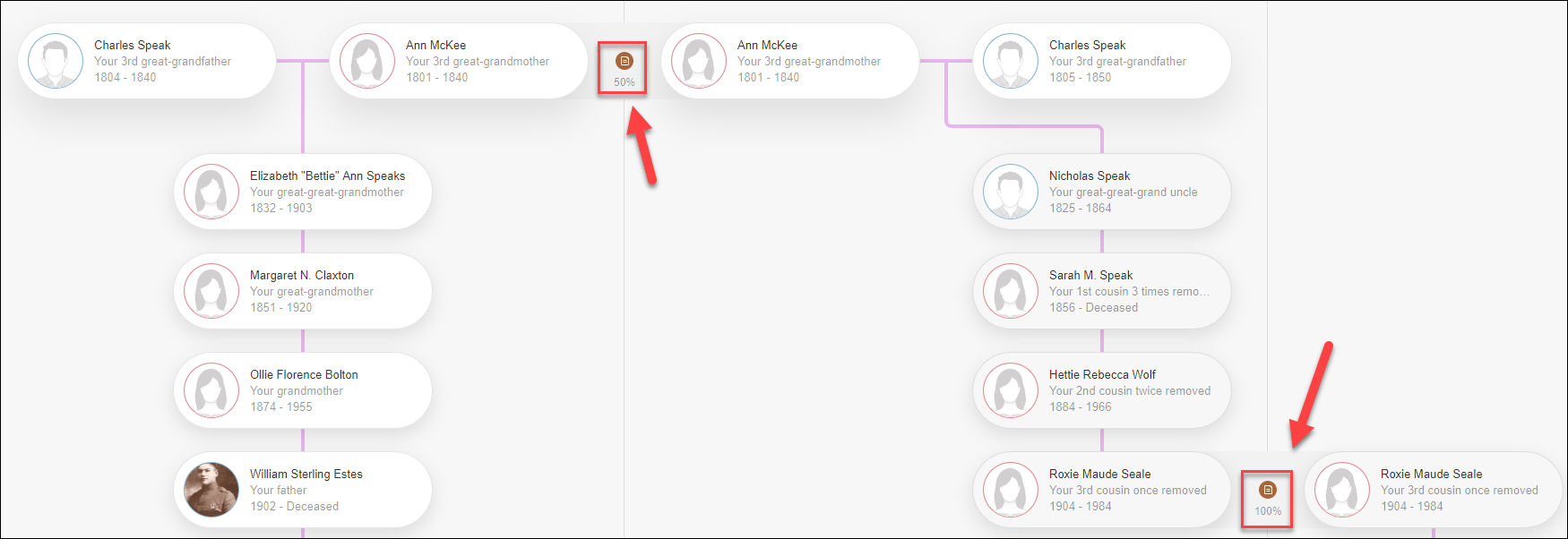
Each Theory has a confidence calculation that weighs the reliability of each theory connecting segment based on internal parameters. As you can see below, this connection is given a 50% probability weight of being accurate. You can click on that percentage to review the match and comparative data.

Theories weight.png

click to enlarge

Path 1 of my first new Theory is accurate, even though birth and death dates of Ann McKee’s husband are different at FamilySearch.

Theoreis multiple trees.png

click to enlarge

Looking further down this tree, you can see that my match had only extended their tree through Roxie, but a FamilySearch tree spanned the generations between Roxie and our common couple, Charles Speak and Ann McKee.

My tree didn’t extend down far enough to include Roxie.

Of the other 4 paths/Theories, 3 simply connect at different levels in the same basic trees, meaning that I connect at Margaret Claxton instead of Ann McKee.

The 5th path, however, is ambiguous and I can’t tell if it’s accurate or not. It doesn’t matter though, because I have 4 different solid paths connecting me and my new match.

Theories can connect people with almost no tree. One man had a total of 7 people in his tree, yet through multiple connections, we were connected accurately as 5th cousins.

One accurate Theory combined a total of 6 trees to piece together the Theory.

Working the Theories

I stepped through each match, making notes about each Theory, confirming the genealogy, checking for additional surnames that might indicate a second (or third or fourth) line, as well as SmartMatches.

SmartMatches only occur if the same people are found in both trees. I had no SmartMatches this time, because each of these Theories was more complex and required multiple tree hops to make the connection.

One match was a duplicate upload. After eliminating that from the totals, I have the following results for my newly generated Theories of Family Relativity.

Scorecard

Match Total Theories/Paths Accuracy Comments
1 5 4 yes, 1 ambiguous
2 3 Not exactly, but close Close enough that I could easily discern the common ancestor
3 2 Yes
4 5 Yes
5 1 Not exactly, but close Within 1 generation
6 1 No Acadian, needs additional research
7 5 Yes, but 2 with issues 2 were accurate, 2 with ancestor’s first wife erroneously as mother, and one with private mother
8 2 Not exactly, but close Within 1 generation, also, 2 separate lines
9 2 Yes
10 4 Not exactly, but close Within 1 generation
11 5 Yes One wife shown as unknown
12 3 Not exactly, but close Within 1 generation, also 4 separate common lines in total
Total 38 23 yes, 1 ambiguous, 13 close, 1 no

All of the close matches were extremely easy to figure out, except one in a heavily endogamous population with many “same name” people. That one needs additional research.

I’m not at all unhappy with the Theories that weren’t spot on because Theories are meant to be research hints, and they got me to the end goal of identifying our common ancestor.

I wrote about how to use Theories, in detail, here.

Observations and Commentary

Theories of Family Relativity has been run by MyHeritage for the third time now. It doesn’t run all the time, so new testers and uploaders will need to wait until the next run to see their Theories.

You can expect some Theories to come and go, especially if someone has deleted a tree or changed a piece of data that a Theory utilized.

I did not go back and recheck my earlier Theories because I had already ascertained the common ancestor.

I have a total of 65 matches with whom I have TOFR, one of which is a duplicate.

I have a total of 99 paths, or Theories, for those 64 matches.

Of my 64 non-duplicate matches, only 5 don’t have at least one correct Theory. Of those 5, all incorrect Theories are a result of an incorrect tree or name confusion that I was able to easily resolve. Only one needs more research.

Reviewing the match for additional surnames often reveals multiple lines of descent beyond the Theories presented.

Previously, I only had 11 matches with multiple Theories, but of my 12 new matches, only 2 don’t have multiple paths. Multiple Theories are a function of more matches, more trees, and more resources. I’m grateful for all the hints I can get.

Remember, Theories are just that – theories that point you in a research direction. They require confirmation. Good thing we’re genealogists!

Next, DNAPainter

Of course, the good news is that I could paint my new matches at DNAPainter, having assigned them to our common ancestor, thanks to Theories. DNAPainter is a great sanity check. If you have the same reasonably sized segment attributed to multiple ancestors, something is wrong, someplace.

That something could be:

  • That the segment is identical by chance in some matches
  • Someone’s genealogy is inaccurate
  • Imputation added invalid data
  • You’re related in more ways, on more lines, that you know
  • There’s an unknown parentage event in a line someplace
  • That your ancestors were related

What About You?

Do you have new Theories of Family Relativity waiting for you?

Sign on and take a look.

If you haven’t tested at or transferred your DNA to MyHeritage, you can order a test, here. Tests are currently on sale for $39.

MyHeritage offers free transfers from the DNA testing companies whose step-by-step upload instruction articles are listed below.

Instructions for uploading TO MyHeritage are found here:

If you test at MyHeritage, all DNA features, functions, and tools are free.

If you transfer your DNA file to My Heritage, DNA matching is free, but Theories of Family Relativity requires either a site data subscription to access genealogical records, which you can try for free, here, or a one time $29 unlock fee for the advanced DNA tools which include:

  • Theories of Relativity
  • Chromosome browser
  • Triangulation
  • Ethnicity estimates

Have fun!

__________________________________________________________

Disclosure

I receive a small contribution when you click on some of the links to vendors in my articles. This does NOT increase the price you pay but helps me to keep the lights on, and this informational blog free for everyone. Please click on the links in the articles or to the vendors below if you are purchasing products or DNA testing.

Thank you so much.

DNA Purchases and Free Transfers

Genealogy Products and Services

Genealogy Research

Blanche of Castile, Queen of France (1188-1252), An Astute Matriarch – 52 Ancestors #283

You know, I think I like homeschooling.

Earlier this week, my daughter-in-law asked me if we descend from Blanche of Castile, because my 11-year-old granddaughter, Miss Sylvia, was working on a Medieval history assignment.

Yes, Sylvia, as a matter of fact, we are!

Of course, knowing she is descended from Blanche made the assignment much more personal and interesting.

Blanche relationship calculator.png

Blanche, also known as Blanca, is Sylvia’s 25th great-grandmother. Sylvia is also related to Blanche in multiple ways as well.

Of course, a 25th great grandmother means that Blanche is 27 generations back in Sylvia’s tree. That’s hard to imagine, but the good news is that once you connect with your “gateway ancestor,” royal pedigrees branching upstream of those gateway ancestors are well researched and publicly available for the compiling. Wikitree has a gateway ancestor list here, an Ancestry search here, and Geni, here.

Estes chart final Louis VIII

I had this beautiful pedigree chart created years ago. While this abbreviated pedigree doesn’t actually show Blanche herself, you can see the tiny black box around King Louis VIII, Blanche’s husband. As it turns out, Blanche ruled longer and had a more enduring effect on history that King Louis.

I’m not sure how Miss Sylvia selected Blanche for her report, but I can see Blanche’s likeness in Princess Sylvia.

sylvia princess

Meet Blanche

Blanche pedigree.png

Blanche was born on March 4th, 1188 in variously named castles located in Palencia and Valencia, Castile, to Alfonso VIII, King of Castile, and Eleanor Plantagenet of England. Truth be told, I don’t think anyone knows exactly where she was born, other than Castile.

Blanche Sagunto Castle.jpg

This fortified Sagunto Castle complex in Valencia, drawn in 1563, would be a good candidate for where a queen might bear a child, safe from invaders and protected.

Just like Sylvia, Blanche was born a princess.

Blanche San Francisco.jpg

The San Francisco Church in Palencia was built in the 1200s, possible in Blanche’s lifetime, and certainly reflecting the architectural styles that she would have found familiar.

Blanche manuscrpt.jpg

Blanche’s likeness is recorded in a stunningly beautiful illuminated manuscript created in Paris between 1227 and 1234.

The woman depicted in the manuscript may actually have been created to resemble Blanche, at least somewhat. Blanche’s husband, King Louis, died in 1226 and this manuscript, begun in 1227, may have been created to honor Blanche. Note that she appears beside a much younger monarch, likely her son, only a boy of age 13 in 1227, but the King nonetheless.

These illuminated pages, in residence at the Morgan Library and Museum, are bound in a brown, stamped leather case from about 1500, lettered: The Apocalypse: Illuminated Manuscript – 13th Century.

The provenance of these illuminated pages is listed as:

Executed in France, ca. 1227-1234 for Blanche of Castille and her son St. Louis, possibly as a gift to the Cathedral of Toledo, where the main portion of the manuscript now is; M.240 was removed from the Toledo portion by ca. 1400; binding dates from ca. 1500.

Blanche ruled the kingdom beginning in 1226, as regent, a noble who rules on behalf of the rightful monarch who cannot due to their age, absence, or other incapacity. In 1226, Blanche ruled on behalf of her son who was crowned as king at age 12 upon the death of his father.

This image, probably of Blanche, is part of a larger painting on the upper half of a manuscript page.

Blanche and Louis IX.png

Crowned queen, possibly Blanche of Castile, veiled in white, wearing vair-lined mantle, seated on throne of foliate type, raises hands toward crowned king, possibly Louis IX of France, beardless, holding bird surmounting fleur-de-lis scepter in right hand and round object, possibly seal matrix, in left hand, seated on throne.

Blanche’s husband, King Louis VIII, of France, died in 1226 when their son, Louis IX, the heir apparent, was but 12 years old. Blanche had him crowned as king within a month of Louis’s death, forced reluctant barons to swear allegiance, served as regent of the kingdom, ruling during her son’s minority, and exerting significant influence throughout her life. At the age of 38, Blanche was ruling the kingdom and would continue to do so for the next decade.

Blanche was no hands-off monarch. She raised an army, orchestrated surprise attacks, riding into battle herself shortly after her husband’s death, leading the army, literally. Blanche gathered wood to help keep her soldiers warm, building immense loyalty among the men. She was no ordinary woman, made of unflinching mettle, pardon the pun.

She simply figured out how to do what needed to be done, and did it.

The Life of an Astute Matriarch

Miss Sylvia’s titled her report about Blanche for Mrs. Peterson’s class, The Life of an Astute Matriarch.

Let’s let Sylvia tell Blanche’s story, with minor edits, hotlinks, and a couple of strategically placed comments by grandma.

“The question is not who’s going to let me, it’s who’s going to stop me,” – Marie Curie.

Yep, indeed, there’s certainly a lot of Blanche’s character in Sylvia!

Queen Blanche of Castile was honorably descended from a knowledgeable and regal European family. Blanche was headstrong, and religious. Blanche had an impenetrable bond with her husband, Louis VIII, and her son, Louis IX. One example is when Blanche died, her son was devastated. This Queen of Castile, continued controlling, capably till the day that she died.

Queen Blanche of Castile, who was born March 3, 1188, was born into Spanish, French, and English royalty. Bearing great responsibility, Blanche was the pious daughter of King Alphonso VIII of Castile and Princess Eleanor Plantagenet of England. Incredibly, her grandfather was (King) Henry II of England and her grandmother was the lovely Eleanor of Aquitaine. Also, her great-uncle was King John I of England. Because she was smart and strong willed, her grandmother favored Blanche over her older sister to be the future Queen of France. Around 11-12 years-old, Blanche was betrothed to Louis VIII of France, when he was 12-13 years-old. That was extremely young!

Don’t get any ideas, Sylvia!!!

After Blanche was unexpectantly affianced, her grandmother, Eleanor of Aquitaine, visited Spain and swept her away to France to meet her future husband. Remarkably, after a short betrothal, Blanche married Louis. This marriage was arranged by King John I of England, although Blanche would cherish her husband. Their marriage set in place a truce between England and France over land.

Blanche of Castile endured heart ailments after many years of ruling as regent. Because she was committed, she continued presiding over the court, while her son the King was imprisoned in the Holy Land.

In November of 1252, while her son was still in the Holy Land, on her way to the Abbey of the Lys, she suffered a heart attack. Tragically, when she returned to the Palace of the Louvre, she died, leaving her dutiful son to rule. Mourning the loss of his mother, King Louis IX did not speak for two days. While Blanche was buried at Maubuisson Abbey, which she intelligently helped create, her heart was taken to the Abbey of the Lys. She never saw her son.

Queen Blanche of Castile, who was married very young, was a wise and respected queen. Blanche and her husband, King Louis VIII, adored one another and had an immensely happy life together. Together, they maintained a truce between England and France, and they had thirteen children, five of who survived.

Blanche co-ruled with one of these children, Louis IX, future king of France. When Queen Blanche died her son was heartbroken. He was despondent. He was bitter. He was left to rule alone. He reacted this way because they ruled collaboratively together for most of Blanche’s reign.

Queen Blanche was a proud and dedicated matriarch of her family and kingdom.

Indeed, Sylvia, she was, and is an ancestor we can be mighty proud of.

What do you think, Sylvia? Would you be ready to rule a kingdom at age 12? King Louis IX learned how to rule from his strong mother, Queen Blanche who, herself, had married at the same age he became king.

Arranged Marriages

Arranged marriages in the Middle Ages were the norm, especially in Royal families. Children were married to spouses where political arrangements conferred benefits to the various royal families and kingdoms involved. For example, King John of England signed a treaty ceding the fiefs of Issoudun and Gracay along with other lands in exchange for his niece becoming the Queen of France.

Louis VIII and Blanche were married when she was 12 and he was 13 years old, On May 23, 1200. Their first child was born a few years later, in 1205, but died shortly thereafter.

While their marriage may have been happier than most arranged marriages of the time, Blanche suffered the grief of losing 7 of her 13 children, and not all as babies.

Coronation

Louis and Blanche wouldn’t become king and queen until they were 36 and 35, respectively.

Blanche Cathedral Reims

Cathedrale Notre-Dame de Reims, By Johan Bakker, CC BY-SA 3.0, https://commons.wikimedia.org/w/index.php?curid=38255047

King Louis VIII and Queen Blanche’s coronation was held on August 6, 1223, in the cathedral in Reims, above, as depicted in the painting below.

Blanche coronation Reims

Coronation of Louis VIII and Blanche of Castile at Reims in 1223, a miniature illuminated manuscript from the Grandes Chroniques de France, painted in the 1450s (Bibliothèque nationale)

Children

Blanche’s five surviving children read like a who’s who of Catholic Sainthood and European nobility.

Blanche Louis IX.jpg

  • Louis IX, King of France, 1214-1270, an extremely devout Catholic. Canonized in 1297 as Saint Louis, his feast day is celebrated on August 25th. Above, shown in the same illuminated manuscript as his mother. Louis IX sponsored France in both the disastrous 7th and 8th Crusades.  Louis had 13 children, 4 of whom died as infants or children, before Blanche’s death.

Blanche son Robert of Artois.jpg

  • Robert I “The Good”, Count of Artois, 1216-1250, one of the Knights Templar who died in the 7th Crusade in Al Mansurah, Egypt is also our ancestor. He had two children, both of whom lived to adulthood.

Blanche son Alphonse of Poiters.jpg

  • Alphonse, Count of Poitiers, 1220-1271, shown above, far left, taking an oath as Count of Toulouse. He served as regent of France after his mother’s death until his brother returned from the 7th Crusade. He took part in the 7th Crusade and died in the 8th. He had no heirs.
Blanche daughter Isabella

By © Marie-Lan Nguyen / Wikimedia Commons, CC BY 3.0, https://commons.wikimedia.org/w/index.php?curid=3609986

  • Saint Isabelle, 1225-1270, whose statue is shown above, was two when her father died. She eventually founded a nunnery and although never actually becoming a nun, devoted her entire life to God, refusing to marry even after being betrothed. She was beatified in 1521 and canonized in 1696, her feast day celebrated February 26th.

Given that Isabelle never married nor had children, the mitochondrial DNA of Blanche of Castile did not descend to present-day through Blanche or any of her sisters.

Blanche son Charles of Naples.jpg

  • Charles of Naples, King of Sicily, also known as Charles of Anjou, 1226/27-1285. Charles may have been born after his father’s death in November of 1226 and was the first Capet to be named for Charlemagne, his 13th great-grandfather. Given that his mother was busy ruling the kingdom, as regent, he was primarily raised in the houses of his brothers. An unusual mixture, Charles was a politician, a strategist, a warrior, a King as well as an accomplished poet. Charles had 6 children, all of whom lived beyond Blanche’s death.

In total, Blanche had 21 grandchildren, 17 of whom outlived her.

1226

Think, for just a minute, about Blanch in November of 1226 when Louis VIII died a miserable death of dysentery.

Blanche turned 38 years old that March. She and Louis had celebrated their 26th wedding anniversary in May.

She had born 12 children and was pregnant for her 13th.

  • Blanche’s first child, Blanche, her namesake, was born in 1205 and died soon after. Blanche herself was only 17.
  • Philip was born on September 9, 1209, betrothed in 1215, as was the custom, and died before July 1218, not even 9 years old.
  • Alphonse and John were twins who were born and died on January 26, 1213.
  • Louis IX was born on April 25, 1214, and was the first of Blanche’s children to live past childhood. The eldest, he would succeed his father as king and was 12 when his father died.
  • Robert was born on September 25, 1216, and he too lived to adulthood.
  • Philip was born on February 20, 1218, and died in 1220, a toddler.
  • John was born on July 21, 1219, was betrothed in 1227 but died in 1232 at age 13, before his marriage. John would have been 7 years old when his father died in 1226.
  • Alphonse was born on November 11, 1220, and died in 1271. He married but had no children.
  • Philip Dagobert was born on February 20, 1222, and died in 1232. He would have been 4 years old when his father died.
  • Isabelle born in March 1224 would have been two and a half when her father died. She lived to adulthood but never married.
  • Etienne was born near the end of 1225 and died in early 1227, not long after Louis VIII died. I wonder if she died of dysentery too.
  • Charles was born in 1226 or 1227. Based on Etienne’s birth at the end of 1225, it’s likely that Charles was born about 18 months later, so perhaps in the first few months of 1227.

In November 1226, Blanche had buried 5 children, had a 12-year-old, a 10-year-old, a 7-year-old, a 6-year-old, a 4-year-old, a two and a half-year-old, a 1-year-old and was pregnant. Her husband was deathly ill with highly infectious dysentery, and others in the court probably were too. Etienne, the baby, may have died of the same disease not long after Louis.

Within a month of Louis’s death and funeral, Blanche made immediate arrangements to have her oldest child crowned king in order to avoid a dangerous lapse of power into which others with aspirations of control would attempt to insert themselves. Very shortly thereafter, Blanche buried baby Etienne and gave birth to Charles.

That would have broken any normal woman. Blanche, however, persevered.

Regent

Blanche twice ruled France as a regent. The first time, beginning in 1226 when King Louis VIII died and her son, Louis IX, was too young to rule the kingdom. Blanche ruled a second time in 1248 when King Louis IX set out on the 7th Crusade, against his mother’s wishes. Perhaps more accurately stated, Blanche was dead set against that endeavor. Was she politically savvy, or did she possess a mother’s intuition that things would go disastrously wrong?

Blanche ruled until her death in 1252, with Louis IX not hearing of his mother’s death until in the spring of 1253 after his release from captivity, along with his brothers.

Suffice it to say that Blanche did not die in peace.

One letter from Blanche still exists, penned in 1240 to her subjects, as follows.

Blanche, by the grace of God queen of France, to her beloved citizens and the whole community of Béziers, greetings and love.

That you bear sincere faith towards our [beloved] son the king and have done so in the past and will do so in the future, as we understand from the tenor of your letters and because our beloved, G. des Ormes, seneschal of Carcassonne much extols you, we thank you for your fidelity, in whose constancy we have hope and faith. We ask and request that you so persevere in the constancy of said fidelity and act so faithfully and virilely and give counsel and help to the people of that king our [beloved] son that you deserve to have our help and favor and his.

Enacted at Chateauneuf, A.D.1240, in the month of October.

Burial

In 1236 Blanche funded and founded the Abbaye de Maubuisson, which is where she was buried 16 years later.

Blanche tomb.jpg

This drawing of Blanche’s tomb is found in the Louvre, in Paris.

Blanche’s marble sarcophagus is held, today, in the St. Denis Cathedral in Paris.

The Maubuisson Abbey was decommissioned in 1786 by Louis XVI after the French Revolution, claiming that it had lost its religious function, consigning the abbey commissioned by his 16 times great-grandmother, along with her resting place, to ruin.

Blanche abbey de maubuisson.jpg

Soon, the abbey was used as a military hospital, then a stone quarry and part of a textile mill in the 1800s before being abandoned altogether. I wonder if those people during those years had any idea that a queen rested among them, or if they would have cared if they did. Perhaps by then, her tomb had been destroyed and her bones returned to dust.

Excavations in 1907 unearthed many precious objects that disappeared without a trace, leading to speculation that Blanche’s royally appointed grave had been discovered, and looted.

In 1947, the abbey was classified as a historical monument and in the 1980s, additional archaeological excavations were undertaken. Today, the abbey houses a Centre of Contemporary Arts and a project incubator lab devoted to architectural heritage, contemporary works, and natural history.

As was the custom of the time, Blanche’s heart was removed and sent to the royal abbey Notre-Dame du Lys, founded in 1244 by Louis IX and Blanche, and also now lying in a state of ruin, having been looted and destroyed during the French Revolution. Still, these ruins are somberly beautiful, and I can envision Blanche walking peacefully here.

Blanche and Sylvia

As Sylvia said, Blanche was indeed an astute matriarch, excelling on her own merits, despite being born to wealth and privilege. Blanche’s life was anything but easy and her immense responsibility weighed heavily on her heart.

I’m so pleased that Sylvia is interested in history and that our family has royal ancestors for her to research. I would have been a lot more interested in history in school had I realized that it was actually relevant to me.

Not only are our royal ancestors’ lives interesting, but they were also recorded and have been extensively researched, making the details of their lives available to us today. We gain a peek into their lives behind the veil of time and perspective into the history of the time in which they lived, a history which they helped shape.

Who were they?

Are we anything like them today?

We probably carry little or no “royal blood” in our veins descended from Blanche today, but then again, you never know. Royalty intermarried a great deal, perhaps providing us with multiple “doses.” Even if we didn’t inherit their DNA, and that’s not necessarily an assumption I’m entirely willing to make – because let’s face it – we had to obtain our DNA from SOME ancient ancestors, we might inherit some characteristics passed down culturally, generation to generation, through the ages.

I see several of Blanche’s best characteristics in Sylvia. Not only that, but I think they even look a bit alike.

I’ve been saving the absolute best for last. In addition to researching a medieval individual, Sylvia was also to dress like that person would have dressed.

Blanche Princess Sylvia.jpg

Behold, our very own Princess Sylvia, 25th great-granddaughter of Blanche of Castile, Queen of France.

_____________________________________________________________

Disclosure

I receive a small contribution when you click on some of the links to vendors in my articles. This does NOT increase the price you pay but helps me to keep the lights on and this informational blog free for everyone. Please click on the links in the articles or to the vendors below if you are purchasing products or DNA testing.

Thank you so much.

DNA Purchases and Free Transfers

Genealogy Products and Services

Genealogy Research

Fun DNA Stuff

  • Celebrate DNA – customized DNA themed t-shirts, bags and other items

Four Quick Tips to Make Your Mitochondrial DNA Results More Useful

Mitochondrial DNA is a special type of DNA passed from mothers to all of their children, but only females pass it on – unmixed with any DNA from the fathers. This means that mitochondrial DNA provides a laser line focus straight back in time on your mother’s matrilineal line. You can also test your father or his siblings, or grandma herself, to obtain your paternal grandmother’s lineage.

Focus

It’s a misperception that mitochondrial DNA is more difficult to use than autosomal DNA. Surnames do change with every generation in your mitochondrial lineage, but they change in autosomal for women too.

Mitochondrial DNA is the ONLY way to focus on just the tester’s matrilineal line and can be used in conjunction with autosomal DNA. Mitochondrial DNA also reaches further back in time, beyond that 5-6 generation approximate threshold for autosomal.

Because the surnames change, females lines are inherently more difficult to research, so it’s fortuitous that we have an extra genetic tool that we can utilize.

There are easy steps we can take to increase the productivity of mitochondrial research, beginning with making sure you have taken the full sequence test at Family Tree DNA. (Which just happens to be on sale right now for Mother’s Day – click here.)

The HVR1 and HVR2 “mtPlus” level is introductory. You’ll need the all 16,569 mitochondria locations tested with the mtFull full sequence test for high-resolution matching.

How can you make your mitochodrial DNA results more useful genealogically? Good question. Here are 4 quick tips to do exactly that!

Tip 1: Trees

The backbone of genealogy is trees.

Million Mito tree.png

  • Please be sure you have a tree uploaded and extended as far as possible on your matrilineal line by clicking on myTree at the top of your personal page and either uploading a GEDCOM file or creating your tree. Because surnames do change, a complete matrilineal tree is important for other people to find descendant surnames of your ancestor – and vice versa. That’s exactly how I connected my ancestor to her family.

Tip 2: Earliest Known Ancestor

Million Mito account settings.png

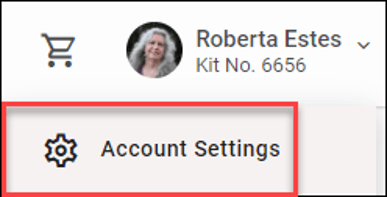
  • Complete your Earliest Known Direct Maternal (matrilineal) Ancestor field by clicking on the drop-down by your name, then on “Account Settings” at upper right, then on “Genealogy” and “Earliest Known Ancestors,” shown below with the red stars. Complete your information.

Million Mito ancestor.png

Note that “earliest known” means on your direct matrilineal line only – your mother’s mother’s mother’s line. It does NOT mean your “oldest” ancestor on your mother’s side of the tree. That’s a common misconception. They aren’t asking for that guy who lived to be 104.

Enter the name for the last known person in your mother’s mother’s mother’s direct line – which of course is a female.

When finished, be sure to click on Save, near the bottom.

Million MIto eka

Click to enlarge

Your Earliest Known Ancestor is the critically important information shown on the matches page, above. You want to see other people’s genealogy information, and they want to see yours.

Please feel free to contact people who don’t have any Earliest Known Ancestor showing and suggest that they complete this field. I’ve actually had very good luck emailing my matches who don’t provide that information and include “how-to” instructions. Feel free to send them a link to this article!

Tip 3: Matches Map

When surnames or an obvious connection are lacking, geography can be critically important. If all testers completed the location of their Earliest Known Ancestor on the Matches Map, everyone would benefit.

Million Mito matches maps.png

  • Select Matches Map, above, to update the geographic location of your earliest known ancestor.

Million Mito map.png

Matches Map information allows matches to see if their ancestors are located near to yours (and vice versa) and may unveil previously unknown information, such as a mysterious Scandinavian history for the person whose earliest known ancestor is the white pin found in Germany. Why are the majority of her full sequence matches found in Scandinavia?

Maybe a cluster of matches in a common geography will lead you to discover a new ancestor – or a previously veiled history. You don’t know what you don’t know, which is why we test.

Tip 4: Check Back

  • Check your matches from time to time to see if someone has updated their information or you’ve missed a critical new match.

I discovered a brick-wall-breaking match that I had been inadvertently ignoring for almost 6 years. (My bad!!!)

Check your own information occasionally to be sure you didn’t forget to update your contact information, ancestors or tree with new discoveries.

Get Results!

Concerned that you won’t understand your results? Here’s a step-by-step series about how to navigate and interpret the various tools and options on your personal mtDNA page.

If you haven’t yet tested your mitochondrial DNA, now is the perfect time. Many people are taking advantage of recent “enforced leisure” to focus on genealogy research. Click here to check your account, order or upgrade.

_____________________________________________________________

Disclosure

I receive a small contribution when you click on some of the links to vendors in my articles. This does NOT increase the price you pay but helps me to keep the lights on and this informational blog free for everyone. Please click on the links in the articles or to the vendors below if you are purchasing products or DNA testing.

Thank you so much.

DNA Purchases and Free Transfers

Genealogy Products and Services

Genealogy Research

Fun DNA Stuff

  • Celebrate DNA – customized DNA themed t-shirts, bags and other items

Anna Hofschneider 1680-1764, Married on Candlemas – 52 Ancestors #282

Anna Hofschneider (sometimes spelled Hoffschneider) was born December 6, 1680, in Heiningen, Germany, the daughter of Michael Hofschneider and his wife, Margareta Widmann.

Hofschneider Anna 1680 birth.png

Anna’s Godparents are listed as Hanss Christoph Goltz & Anna Maria with an unreadable surname.

Anna didn’t marry until she was 25 years old. Anna Hoffschneider married Hanss Jerg (Johann Georg) Haag, a baker by trade, on the Feast of the Purification, February 2, 1706, in Heiningen.

Haag Hoffschneider 1706 marriage 2

I wonder why Anna and Hanss Jerg selected that particular date. Of course, they could have married any day, on either side of this religious feast day, so that particular date or feast celebration must have had special significance.

Candlemas

The Feast of the Purification is also known as Candlemas, the Feast of the Presentation of Jesus Christ, and the Feast of the Purification of the Blessed Virgin Mary. Catholics, Eastern Orthodox, and Anglicans have different names for this Feast Day, but it is universally celebrated joyfully, “just as Easter.”

This Christian Holy Day is based upon Luke 2:22-40, which states that Jesus was circumcised eight days after his birth, historically viewed as January 1. Jewish law holds that males must be circumcised 8 days after birth in a special Brit Milah ceremony, at which time they are also given their name.

Hofschneider illuminated manuscript 980.jpg

This illuminated manuscript circa 980 depicts the circumcision of Jesus.

Women, who, according to Christian literature, conceived children in sin must be purified 40 days after the birth of a male child and 80 after the birth of a female. The purification ritual occurred when the mother brought a burned lamb and a young pigeon to the temple to request the priest to pray for her purification. You can read more about this interesting historical custom here and here.

It appears that the circumcision of Jesus and the purification of Mary, one of which was to occur 8 days after Jesus’s birth, and one to occur 40 days after Jesus’s birth have been conflated into one religious holiday. Regardless, both involved celebration and purification and are widely celebrated in the Christian faiths.

Hofschneider candles window.jpg

In addition to celebrating the circumcision of Jesus and the purification of Mary, candles made of beeswax are blessed before the service, then carried during the service and throughout the year. Hence, the name Candlemass, or the mass that blesses the candles.

According to The Church Year. the candles, after being blessed, are carried “with the intention of obtaining from God by their pious use and the prayers of those who devoutly carry them, health of body and soul; that our hearts, through the doctrine of Jesus and the grace of the Holy Ghost, may be interiorly enlightened; and that the fire of the love of God may be kindled in our hearts, purify them from all remains of sin, and make us partakers in the joyous light of heaven, which will never be extinguished,”

Maybe Anna and Hanss Jerg hoped that marrying on Candlemass, amid the joyous celebration, would extend the blessing of the “joyous light of Heaven, which will never be extinguished” to their marriage.

The Wedding

Hofschneider candles.jpg

The church would have been beautiful, candles freshly blessed, lit and burning brightly, hearts joyful as the young couple pledged their lives to each other. It’s likely that the entire congregation was present, and that this wedding was part of the religious festivities of the day. Something extra special for everyone to look forward to and celebrate.

Hofschneider wedding.jpg

Johann Pachelbel died in 1706, having composed Pachelbel’s Canon in D, beloved today as the “wedding march.” Perhaps Anna’s processional music was every bit as beautiful as she slowly approached her groom in the candlelit church. Close your eyes and listen, here.

A Market Town

We don’t know where Anna and Hanss Jerg lived, but Heiningen was a market town, and Hanss was the baker. The church was the center of both the village and the lives of the villagers. The market, the church, and the village shopkeepers would have all been located near or in the central square. At that time, houses and buildings, except for the church, abutted each other as part of a defensive strategy.

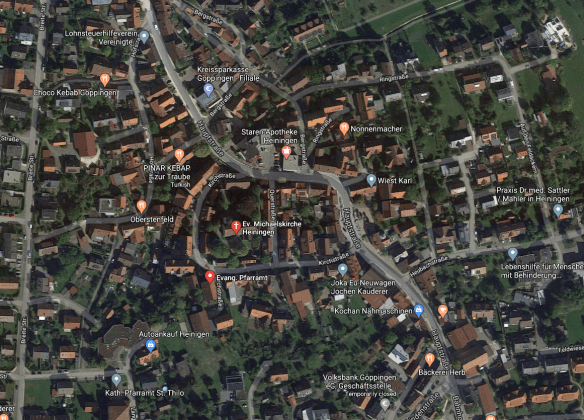
Hofschneider Heiningen map.png

Anna and Hanss Jerg likely lived within a block or two of the original fortified wall surrounding the church, perhaps inside the “circle” to the right of the church itself on the map shown above.

They would have heard the church bells every day as they rang, marking time in their lives. It was a short walk to the quiet sanctity of the church – the first and last place visited in their lives and their respite in times of pain and confusion.

Family

Anna and Hanss Jerg began their family with the birth of their first child in July of 1707. Having a total of 8 children, their 4th and 7th children perished with violent coughs as babies. Of course, today, I can’t help but think of the Covid-19 pandemic we’re dead center in the midst of as I write this article. Death in various forms threatened at all times. Anna was actually fortunate – more than half of her children survived.

It’s interesting to note that the only child who was given a middle name was the child named after Anna’s husband. The Heiningen Heritage Book is online, here.

Children:

  1. Margaretha Haag, born July 1, 1707 in Heiningen married Johannes Leyrer on May 30, 1732 in Heiningen.

Hofschneider margaretha haag birth 1707.png

Margaretha had 8 children, 3 boys, and 5 girls. Of the girls, 3 died young. All three boys died as children. It appears that Margaretha probably had no surviving children. This had to be devastating for both Margaretha and her mother, Anna, who undoubtedly welcomed each pregnancy as a new beginning, hoped and prayed with Margaretha, wept with her, and comforted her daughter as best she could as each child was buried. One child lived to at least 15.

Margaretha’s children died of odd things. The first died of “Schmerz in der brust“ which translates as chest pain,” one of “Stickfluss” which would be something akin to whooping cough or a paralyzing of the lungs, two of emaciation, one of “Durchschlechten” which I could not translate exactly but occurred when she was 17 days old and could be something akin to “slipped away,” and the last two of a combination of the words, “Durchschlechten, Gichter” which translates as “slaughter, gout.” Gout, of course, is the buildup of uremic acid due to kidney dysfunction. I would strongly suggest that these children had a genetic issue.

Perhaps Anna was relieved when her daughter no longer became pregnant because it meant there would be no more babies to bury. Margaretha’s last known living child was confirmed in the church in 1749, but then, silence.

  1. Dorothea Haag, born April 24, 1709, in Heiningen, married Johann Georg Hardtle on August 14, 1736, in Heiningen and died August 17, 1789, also in Heiningen. Cause of Death: Nachlass der Natur (survivor of nature; old age). Dorothea had 4 children, 3 boys, 1 who died young of dysentery, 1 who married in Crailsheim and one who married in Madgeburg, and 1 girl who died at age 7 of gout.
  2. Anna Haag, born September 29, 1711, in Heiningen; married Johann Michael Spingler on March 9, 1734, in Heiningen and died November 29, 1740, in the same location. Cause of death: childbed fever. She had 3 children, 1 girl who married in Rothenberg, one boy who died a few months after his mother, and one who survived.
  3. Catharina Haag, born May 12, 1714, in Heiningen; died March 31, 1715. Cause of death: violent cough. Whooping cough perhaps?
  4. Catharina Haag, born April 24, 1716, in Heiningen, married Johann Jakob Lenz (1712-1793) on November 12, 1734, in Heiningen (see ancestor article here,) and moved to Beutelsbach. They had 4 children, 1 girl, and 3 boys, all of whom lived to adulthood and married.
  5. Johann Georg Haag, born September 13, 1718, in Heiningen; married Anna Catharina Frasch on September 15, 1744, in Heiningen. She died on July 28, 1772, in Heiningen. They had one child who died at 3 months of age of emaciation. Johann Georg married second to Margaretha Schurr on June 29, 1773, in Heiningen. She was born December 11, 1740, and died March 22,1806 in Heiningen. They had 4 children, 2 boys, one of whom died young and one we know nothing more about, and 2 daughters, one who died young and one who died in 1856. Both of their deceased children died in August 1826, a few days apart, of bloody dysentery. Johann Georg continued in the Haag family tradition of being a baker by profession.
  6. Michael Haag, born March 11, 1721, in Heiningen; died February 28, 1722, in Heiningen of tuberculosis or pestilence. I can’t help but wonder if this child had whooping cough too.
  7. Elisabetha Haag, born November 7, 1722, in Heiningen; married Johann Georg Kümmel on August 13, 1748, in Heiningen; and died 16 November 16, 1768, in Heiningen. They were married for 20 years, but no children are listed. Based on the experience of Margaretha, I wonder if Elisabetha had the same issue as her sister, except in Elisabetha’s case, she either never became pregnant or never carried the pregnancy to term. I don’t believe stillbirths were recorded in the church records.

Rough Years

1713, 1714, and the beginning of 1715 were particularly difficult for Anna. In February 1713, her mother died. In May of 1714, her child, Catharina, was born but became ill at some point. In October of 1714, Anna’s father died, followed in March of 1715 by Catharina, then 10 months old.

In addition to her children, Anna buried 13 grandchildren whose deaths were recorded, and possibly another 2 whose records we don’t find in the church books after their baptism or confirmation. Only 9 lived to adulthood – at least where records were found.

Life in German villages, under the best of circumstances, was not for the fainthearted. However, high infant death rates made difficult situations even more heartbreaking.

Families had lived in this village for generations. Since at least the 1300s and probably earlier.

It’s possible that a specific mutation or combination of mutations was found in higher frequencies in this population due to a founder effect, meaning that several families descended from a particular ancestor passed this mutation on to their offspring. If people who both have the same mutation or mutations happened to marry each other and have children – those children could inherit a copy of the mutation from both parents. In this case, the result would have been these deadly diseases that manifested with symptoms of gout and emaciation. The result, of course, was death for the child.

Clearly, no one had an understanding of genetics, per se, in the 1700s, but I can’t help but wonder if there was at least a rudimentary understanding of trait inheritance, especially if a specific situation plagued many members of the same family or lineage? If that was not the case, then I wonder why the Catholic priests had to grant special dispensation for marriage to certain levels of cousins.

Anna’s Mitochondrial DNA

All of Anna’s children inherited her mitochondrial DNA that she inherited matrilineally directly from her mother’s line. However, only women pass mitochondrial DNA on to descendants. If anyone, male or female, descends today from Anna through all females, I have a mitochondrial DNA testing scholarship for you! With Anna’s mitochondrial DNA, we can track her ancestors back beyond the information genealogical records can provide.

Anna’s daughters who are candidates to have female children include:

  • Margareta Haag – If any of Margareta’s daughters survived, which is extremely unlikely, it would have been Catharina Leyrer who was born in 1734 and confirmed in 1749 or Margareta Leyrer who was born in 1743.
  • Anna Haag – Anna’s daughter Ursula Spingler was born in 1735 and married Johann Daniel Bubeck in 1768 in Rothenberg. She may have had daughters.
  • Catharina Haag – Married Johann Jakob Lenz and had one daughter, Anna, born in 1744 who married Johann Jakob Birkenmayer and had 4 daughters.

Our only known possible mitochondrial DNA candidates descend through Catharina or possibly Margareta or Anna.

Anna’s Death

Anna lived a long life, outliving her husband by 19 months – both of whom died as octogenarians.

Hofschneider anna death 1764.png

Death: January 20, 1764, died Anna, surviving widow of the late Hanss Jerg Haag, baker, buried at a later time; aged 83y1m2w.

It’s interesting to note that Anna was buried “at a later time.” I’m guessing that this had to do with the fact that the ground was frozen in January.

In weather records, the winter of 1946/47 was referred to as the coldest and harshest experienced since 1764 in Europe, which of course suggests that 1764 was worse. I wonder where her body was stored, and how long the family had to wait to bury Anna beside Hanss, the two small graves of her babies, her daughter who had died of childbed fever thirty years earlier and at least 13 grandchildren.

HOfschneider Heiningen Michaelskirche.png

The churchyard today seems to have no gravestones, although I haven’t seen a closeup photo that shows the yard on every side. European cities and villages reuse burial locations and have for a very long time. The old stones are removed. Even if the churchyard is no longer in use today for burials, it assuredly was at the time that Anna was buried.

The defensive wall rings the medieval church and nearby buildings. Church members, which would have meant everyone living in the village at that time, would have been buried beside the church in the churchyard after their funeral service. All their neighbors, who were also their relatives, gathered round. All heads bowed.

_____________________________________________________________

Disclosure

I receive a small contribution when you click on some of the links to vendors in my articles. This does NOT increase the price you pay but helps me to keep the lights on and this informational blog free for everyone. Please click on the links in the articles or to the vendors below if you are purchasing products or DNA testing.

Thank you so much.

DNA Purchases and Free Transfers

Genealogy Products and Services

Genealogy Research

Pandemic Journal: Dear Mom – A Ray of Hope

Coronavirus, Symbol, Corona, Virus, Pandemic, Epidemic

Well, Mom, it’s been 14 long-years-ago today, and I don’t even know where to begin. It’s not that I haven’t written, because I have, faithfully, every year. It’s just that the most unbelievable things have happened in this past year. You’re not going to believe this.

Actually, it’s like the earth is trying to shake us humans off, like a big, wet, shaggy dog.

First, Australia was being consumed by wildfires – before, during and after I visited. I’m sure you don’t know which thing is the more shocking – the fires or me in Australia, at all, but especially DURING the fires. Yea, I didn’t tell you about that!

While cruising around Australia and New Zealand, we heard about what we thought was a new strain of flu taking hold in China. We didn’t think much about it. It was winter, flu happens.

Then, 2020 arrived. Hold my beer. Or, in your case, some reheated black coffee. I still don’t know how you drank that stuff.

These past couple months have been incredibly bizarre. Surreal. I keep having to pinch myself – but this is real, very real. As far as I’m concerned, 2020 has already worn out its welcome and just needs to STOP! Like now. We can write this one off in the history books and move on, except, we can’t.

And by “you won’t believe this,” I mean, really, seriously, you won’t.

Umm, Things Have Changed

You’ll think I’m writing a script for a bad novel, but I’m not. Actually, there is something novel going on, but it’s a novel virus and trust me, that’s the villain.

In less than two short months that seem like an eternity, our lives have been dumped upside down and disconnected from life before. I don’t mean like when Dad died, or even when you passed over – I’m speaking of a phenomenon much larger. We are being strangled by a global pandemic. I mean “we” in a much larger sense. In fact, the largest “we” possible – the entire world. This novel virus named Covid-19 is running ripshod across every continent on earth, like a murderous sniper raging out of control.

Pretty much all we can do is wash our hands, stay apart and/or wear face masks. We feel like vulnerable sitting ducks. Because we are.

Covid-19, Coronavirus, Pandemic, Infection, Disease

Up until these past few weeks, we though that research and medicine had conquered scourges like this. That we were safe, and that nothing like this could happen here and now in the modern era. We have science and immunizations on our side, making us invincible to something on this scale. We were sorely mistaken, living under a dangerous illusion.

Not only have we never seen anything like this, neither did you. You were born after the 1918 flu pandemic which was caused by a virus related to the one sweeping the world now. Beginning in early 1918 and over the next three full years, the H1N1 virus, the source of what was known as the Spanish Flu, killed an estimated 50 million people worldwide and 675,000 Americans.

In two months, WITH at least some preventative measures in place, so far this virus has killed 218,000 worldwide with 60,000 deaths confirmed in the US alone, more than anyplace else in the world – although that number is likely vastly under-reported for a variety of reasons. The reality is probably at least double that number, if not more.

Nurse, Healthcare, Mask, Pandemic, Covid-19

Now the worst part. There is no vaccine, nor cure. All we can do is treat the horrific symptoms. People, including medical staff and care givers are dropping like flies as most of us shelter-in-place at home, trying to avoid infection.

Shelter-in-place is a term often used when ordering a lockdown as a result of an active shooter, terms you, thankfully, weren’t familiar with. This is a new kind of threat and we can’t see it, making some people think and act like it isn’t real. But it is.

I never thought about the economic effects of the Spanish flu pandemic that lasted three years, or how it might have been connected to the 1929 Great Depression. Perhaps the flu wasn’t causative, but the world had emerged from three years of pandemic-hell, following on the heels of WWI, less than a decade before the Depression began.

empty restaurant

Today, we’re experiencing a combination of the two. We’ve shut down large swaths of the economy in something resembling an economic medically-induced coma in order that people can shelter at home, work from home when possible, protecting themselves from being infected so they don’t infect others.

One of the first things to be cancelled were sporting events. No March Madness in Indiana this year. Yes, I know, you’ve rotated in your grave few times. Sports figures were some of the first to be infected and tested. There were no early tests, and even yet, tests are very restricted. Many people have or had Covid and are never diagnosed, so their illnesses and deaths are not included in the Covid statistics.

This stealthy disease is worse, far worse, than earlier virus strains because it’s highly contagious and very lethal to many. It’s particularly dangerous though, because some people, super-spreaders, become infected, don’t show any or only mild symptoms but still infect others for many days, up to two full weeks. Those who do become ill can spread the virus unknowingly, even before they are symptomatic. This equates to a lose-lose situation. We’ve been hoping a vaccine would be developed quickly, as that seems to be our only way “out.” Quickly in vaccine terms means months, perhaps more than a year, not weeks.

Now we’re receiving reports that people may be able to become reinfected, meaning that immunity is not conferred. Vaccines are based upon immunity. This isn’t good news at all.

We’re still learning about this invisible terrorist. There’s no roadmap and it seems that every day there a new piece of devastating news. Some days, I just feel like I’ve been pecked to death by a herd of angry chickens.

I’m working on a quilt that I’m naming “Black and Blue,” because between this virus and the associated politics, which is a potato far too hot to touch, I feel battered and bruised. Quilting is my sanity right now.

We’re doing our best at “social distancing,” staying home, remaining apart and wearing masks when we do need to go out in public. It’s particularly difficult not to see family. A few days ago, the grandkids came over and we practiced responsible social distancing by walking around the yard, together, apart, separated by at least 6 feet. It’s easier when you make it fun and it’s important to set a good example.

No school, no church, no dinners out, no haircuts, no quilting, nothing social with other humans – not even visiting other people’s houses. After a couple of months, most people are going a bit stir crazy.

Thankfully it’s getting warmer so we can go outside. The snow has melted and the early spring flowers are finally blooming. This is the worst case of cabin fever, ever – but it beats the alternative. Unfortunately, not everyone is complying.

I know you probably don’t understand why this is so difficult, because when you were growing up, your family only owned one car, when you had a car at all. Everyone stayed home most of the time.

You didn’t have a phone, TV didn’t yet exist and there wasn’t even a restaurant in town. Only a few people had electricity. Even as an adult, you never owned a computer, or had email, and you wouldn’t use your cell phone. Now, because we can’t see each other, we’re entirely dependent on those forms of communications.

You probably wonder what our problem is and why we don’t just read a book. Of course, your family was a lot more self-sufficient than we are today. For starters, we don’t grow our own food, have cows to milk or chickens to lay eggs.

Our grocery stores, something you never had either as a child, now sport tape on the floors to keep shoppers 6 feet apart as they wait to enter. Only a certain number of people are allowed inside at a time to minimize contact.

Some groceries can be delivered and we can literally order anything online, even cars.

Doctor visits happen over our computer now using a two-way movie camera built into the system. We carry on all kinds of business, banking and have meetings and conferences where groups of people can see each other on their computer screens which also function as two-way televisions. Now that’s actually kind of funny, because all sorts of unexpected challenges have cropped up.

Jammies are now “office attire.” Yes, I know, you’re gasping. Sometimes we have to put on “business casual” tops, but some people forget that they are not wearing proper attire below the waist.

reporter no pants

Just yesterday, this poor reporter in a suit coat above the waist was sporting the “no pants” look. Based on the background, you know he had strategically placed his chair where he looked the best in his home. He’s now famous, infamous and unforgettable. On his next job interview, they will chuckle and say, “Oh yea, you’re the guy without pants.”

Not only is he VERY relatable to the rest of us, because we share that very fear, he’ll also never live this down. Hopefully it will just be a fond memory soon, shared over a beer in the pub with his buddies.

I’ve transitioned to the “office live” realm too by creating a Facebook LIVE presentation for MyHeritage, a genealogy company. Yes, genealogy combined with genetics is still my consuming passion. You didn’t think that would ever change, did you?

I know you don’t know what Facebook is – but think of it like an online journal where many people say too much and some people don’t say enough.

Imagine writing letters and posting the letter on the fence outside your house for all to see. The viewers are all of your worldwide Facebook friends, or at least the ones that Facebook decides should see your “posting.” Yea, it was weird for me at first too, but in these pandemic times, Facebook is a source of connection to people outside of our general geographic realm, and those within it too. I can see what the grandkids are doing. We can share whenever we feel like it, and almost always, someone is listening. I talk about plants, quilts, cats and genealogy – none of which would surprise you. You’d be talking about Avon, crocheting and posting cat pictures.

Here’s a shocker. I’ve even been cleaning. My least favorite thing on earth to do, but you already knew that. Hey, look what I found.

I’m sure you remember when I used to hang this on the bedroom doorknob of whichever child needed a nudge to clean up their room. I’ll be gifting it to one of those children for their kids’ doorknobs. Karma!

The thing that took the longest for the Facebook LIVE presentation was the technology prep (computers, don’t ask) and cleaning my office. Spring cleaning has taken on an entirely new aspect. Houses have never been cleaner because many people are bored out of their minds. I’m creating boxes and bags of donations for places like Salvation Army as soon as they are open again. The need will be great.

For my presentation, I dressed up – well pandemic dress-up – meaning not PJs or a tshirt. I selected a nice top, donned my favorite funky socks for confidence and wore jeans instead of sweatpants. Nothing has to match now.

I want you to notice that my desk is clean, as in entirely clear. That will never happen again in my lifetime, I’m sure. Might be one of the 7 signs of the Apocolypse.

Jim cameo

However, I forgot to shut my office door behind me, and Jim made a cameo appearance, twice. Thankfully, he WAS fully attired, being a veteran of working at home. Ahhh, the challenges of home office and a rapidly changing environment. Most people have carved out a “studio” someplace to work, even if it’s the kitchen table. Seeing other people doing the same things we are makes us all feel better and more connected to our friends and colleagues.

One of my friends kindly brought her husband a snack while he was on a video conference, forgetting that she was sporting a very comfy t-shirt and pink “granny panties.” Utterly mortified and terribly embarrassed, she claims she’s never going to a Christmas party again. We told her that the other video-meeting attendees were probably envious, on two counts. I’m guessing they’ll be gifting her with day-of-the-week panties for Christmas, because right now, none of us can keep track of which day is which because they all run together. Except that day. She’ll never forget that day.

A New Way of Life

Schools and universities are closed and education is taking place online too – not just for some, but pretty much for everyone. Parents have suddenly become teachers on top of trying to work at home. That’s interesting, to say the least. Forgive me for saying that I’m so grateful my children are the lovely adults that they’ve become.

online learning

We’re learning a whole new way of living – not because we want to – but because we have to.

Case in point, funerals. Funeral homes and morgues can only store so many bodies, so something has to happen – especially not knowing how soon “normal” funerals will be able to resume.

A few days ago, because of the restrictions on gatherings and crowds, we attended a “zoom funeral.” Zoom is video conferencing software that allows groups of people to see each other on their computer or phone. Since you left us, cell phones have become mini-computers that we carry around at all times. We have separation anxiety if they aren’t on our bodies or near us. There are even cell-phone watches now. Queue Max Smart and Agent 99.

A virtual funeral, attended remotely, is not quite the same as being there, but it’s certainly better than nothing at all. It’s just, so, well, different.

Very few people in the immediate family were in the church due to social distancing requirements – less than 10 – sitting in individual pews far apart. The Priest spoke from the pulpit, standing above the casket, delivering the eulogy. The sermon was “zoomed,” live to whoever wanted to “attend.” Churches and genealogy societies are meeting this way too.

Families are using Zoom to gather remotely for meals. We zoomed as we ate your version of creamed eggs on toast on Easter Sunday – our family tradition. You remember that, I’m sure.

Fear

While zoom and other enabling technologies are a good thing and allow some connection to each other and normalcy, people are very frightened. Our health is in danger, the food supply is in danger and the economy is in danger. Jobs have been lost and families wait hours in line in their cars for food banks to open. At the same time, items at groceries are often sold out, yet farmers who can’t get their products to market are dumping milk and plowing under their crops. The connection is broken.

One piece of good news is that gasoline has now dropped below $1 a gallon, a price not seen in decades or if ever, adjusted for inflation, but we really can’t go anyplace so it matters little. Of course, the flip side is that the oil industry is not doing well.

We have all tried our best to remain optimistic, repeating that we are all in this together, we’ll make it, and it will be over soon.

Stay Home, Stay, Coronavirus, Corona, Covid-19

Truthfully, none of those things may be entirely true, yet we try to remain upbeat, supporting each other and encouraging others to do the same. Many people will make it to the other side, survivors, although not undamaged, but with lives and a world to rebuild.

Pause

Here’s the thing Mom. We thought this was a pause. That’s how it’s been perceived, a pause in our collective lives to save lives. Altruistic. Feels good, helping others by helping ourselves. Unemployment exists for people who lost jobs. They’ll be called back to work in a month or so – right?

A pause in our economy to “flatten the curve” of infection so that hospitals and medical personnel have a fighting chance of treating the tsunami of gravely ill people who are becoming ill so quickly that the hospitals have run out of beds, medical equipment and supplies. It’s so bad that no visitors are allowed. Not only is there no space, it’s not safe. Entire hospitals are full of Covid patients, many of whom die alone, without their families. Heartbreaking is an understatement. This is a war.

Quilters and sewers have been making face masks for weeks because there is an extreme shortage. I’ve made hundreds, for nurses and doctors, transit workers, first responders, police and fire, delivery people, neighbors, the elderly, nursing homes, essential workers, friends and family. I’ve lost track, and mine are not even a drop in the bucket. I never want to see another mask again as long as I live, but they may be a critical part of our lives for a long time to come.

For the first time ever, you can wear a mask into a gas station without the attendant thinking they are being robbed. We live in strange times.

If you were here, you’d be making masks, sitting right beside me, companions, just like we used to work on projects. You’d be old enough by now that you’d likely be living with me, so that would be comforting, all by itself. I surely do miss you Mom. I wish I could talk to you, in person. I ache to hear your voice again. I wish I had a recording.

No photo description available.

You’ll never guess what I found digging for fabrics for masks. The oldest fabric I own is what’s left from when you and I re-covered that comforter back when I was a teenager. That’s the same comforter that you re-covered with your Mom when you were a teenager. I remember purchasing this fabric together at the fabric store, from the sale bolts. Everything we ever bought was from the sale bolts or the remnant bin:)

I’m going to use this fabric now, Mom, to make a scrap quilt I’ll enjoy. No point in saving it any longer. The future is uncertain. So is the present. I’ve never felt this way before. Use the fabric. Wear your dress cowboy boots and funky socks around the house. Just do it. No regrets.

Reset

This wily virus isn’t finished. Far from it. This interlude wasn’t just a pause.

Portions of the country are “opening up” again, and many are frightened that this is happening too soon – much too soon. We’re all connected together in this – the whole world metaphorically holding hands. Of course, no one is supposed to be literally touching right now. Still, we can’t avoid human contact entirely and the virus depends on that.

World, Globe, Worldwide, Www, Global, Planet, Sphere

Covid-19 is the great equalizer. Rich, poor, every nation, opposing political parties, old, young, all races, already sick or healthy – the virus attacks everyone randomly and indiscriminately. Many have died and are yet to die.

By now, everyone knows someone who has or has had the disease, and almost everyone knows someone who has died. I know several.

Every day, the virus’s tentacles reach closer and closer to home. It’s 4 houses away from one of our closest family members as I type this, and two of our family members think they’ve been infected and recovered already, but went undiagnosed.

If “those other” people get infected, they infect others, who infect others, who eventually infect everyone. This is why we need to stay home and only emerge very cautiously, under controlled circumstances. Until we have a vaccine, which is months away, best case, or perhaps years away, there is no “resume life” button.

We thought that when the restrictions were lifted, our life would return to something approaching normal. Everyone would have had a month or 6 weeks timeout, an enforced stay-cation, but the danger would have abated. Shops and restaurants would open and everyone would resume doing what they were doing before. We’d get much-needed haircuts and meet for coffee.

We’d have a big after-Covid party celebration with margaritas and Mexican food – in a restaurant!

Maybe not so fast.

We thought this was a sprint, but we’re beginning to realize it’s a long-distance marathon, an endurance race.

Over the past couple of weeks, especially this last week as we all anxiously watch the process of early states relaxing the restrictions, we’ve listened to infectious disease specialists and scientists who tell us that indeed, the virus is still coming for us.

Perhaps it will nab us now, especially if some states open too soon and reinfect everyone. We won’t know for 2 or 3 weeks how rapidly the infection rate will increase. With Covid-19, delay is deadly, because we can only measure the results of what we do now by what happens 2-3 weeks in the future.

Perhaps the virus will re-emerge from “hot spots” in states that never did and still haven’t ordered social distancing. Perhaps it will rear its ugly head this fall when the weather cools, schools reopen and people spend more time inside. Probably all of the above.

We aren’t going to be safe for months, if ever. This transformation from temporary pause to chronically fearful isn’t what we expected a month or 6 weeks ago. Now it’s beginning to seem inevitable. I’m still trying to find the right balance of optimism, confidence, paranoia and panic.

It’s not so much that I’m concerned about contracting the virus myself. I actually think I’ve already been exposed at least once, although I’d surely like to know. It’s the havoc the virus is wreaking on everyone and everything, everyplace – family members, friends, neighbors, economy – literally life as we know it is under seige.

We control very little in this equation, because our safety and future is at least partially dependant on people we don’t even know in places we don’t live, and who may or may not comply with safety measures.

This isn’t a pause, it’s a reset, a full control-alt-delete hard reboot with no warning. The screen’s gone dark as we sit staring blankly at where our former lives used to be. The old normal is gone. When it arrives, we don’t know what the new normal will look like, how our lives will be different in the future, and we’re not at all sure what’s going to be left.

This slowly creeping realization of our new reality is sinking into our bones like a cold, damp, fog, little by little, chilling us to our core.

Pandemic Journal

When I started the Pandemic Journal series, I thought that in a few short weeks, after some memorable adventures and perhaps a few laughable mis-adventures, I would scribe, “The End,” close the book with a smile and retire my pandemic pen after documenting this unique hiccup of history for the future.

We would have been inconvenienced a bit, but the relatively happy ending would occur sooner than later with the world having escaped the worst of the scourge of the virus by staying at home. The virus and associated inconveniences would depart as rapidly as they had descended upon our lives. This epic pause would be just another interesting chapter in a our collective human life journey. The Covid chapter would be done, finished – on to the next, none the worse for wear.

Now, I’m not so sure about any of those things.

Not sure at all.

Hope

And then, last night it came.

Finally.

A ray of hope. A tiny pinpoint of light in this darkness.

The antiviral drug, Remdesivir, in a very limited blind study was shown to shorten the length of hospital stay for Covid patients from 15 to 11 days.

Those are clearly the sickest people, and Remdesivir does nothing to prevent infection. We also don’t know if fewer people actually died. The drug must be administered via IV, over a period of days, but it reduced the recovery time by 31% in this small sample. The good news is that it’s not a new drug, so it doesn’t have to go through the approval process for the drug itself. Remdesivir is expected to be authorized for emergency use on Covid patients in a few days.

Having said that, there’s so much we don’t know, and Remdesivir might not be any part of the answer when we learn more. This discovery might be the chink in the virus’s armour though, the first step in the path to finding life-saving treatments to defeat this horrid enemy. We now know it’s possible to fight this virus, and how.

Remdisivir is clearly not a panacea, but here’s what it is.

It’s a spark of hope, that seedling in our time of despair. Perhaps the bloom of springtime after the bleakest of winters.

Hope springs eternal.

Flowers for you, Mom.


Free MyHeritage Video – Top Tips for Triangulating your DNA Matches With Roberta Estes

Yesterday’s Facebook LIVE presentation for MyHeritage was lots of fun for everyone, and now it’s available for anyone who might have missed it, here.

I must say, I was stunned that so many people tuned in. We had just under 5000 watching live, with just under 500 comments. There were literally people from all over the world – with perhaps the exception of the locations where it was the dead of night. A day later, there are already more than 9000 views. I hope everyone is enjoying the session.

It felt good to be connected, even if it was electronically. It was still “live.”

I saw people I knew saying “hey,” DNA matches, known cousins, longtime friends, and at least one person with a fairly rare surname from a location that I suspect shares one of my ancestors.

How cool is that?!

For people who are curious about how this works, I was too, so here’s a short explanation.

The Back Story

One day last week, MyHeritage invited me to create this seminar. I thought it would be nice – given that our lives are all disrupted right now.

They suggested half an hour to an hour, including Q&A time, but being just a tad over-zealous, mine went a little long. The entire session, plus Q&A was an hour and a quarter. It’s impossible to do triangulation justice in a short time because the presenter must first explain how and why triangulation works, and why it’s important. You can’t just dive into the middle of that pool.

Also, just to be very clear, I created this video as a volunteer – I wasn’t paid, and I’m not compensated for this or any other article either. I don’t write articles for money or in exchange for anything. If I do receive something, like a book to review that I did not purchase, I say so. My opinions are my own and not for sale.

Working as a member of a worldwide team is interesting, in part because of the time factor. Israel is 7 hours different from my time in the US, so our practice session on Sunday was quite late for their team members, Esther who you met online and Talya, working behind the scenes.

The underlying platform is a product called BeLive which records the session, provides the chat capability and interfaces with Facebook. This means that the computers, cameras and audio (headsets) of all of the people involved must all be compatible with BeLive, given that Esther and Talya are moderating and handling things like which screen is showing and moderating the chat questions. The speaker really can’t do any more than focus on their topic.

I had planned to use my laptop to present against the backdrop of my fireplace in the living room. If you’re going to have a few thousand people “over,” you might as well hostess in the nicest part of your home, right?

BeLive was challenging on my end, to put it mildly. My husband and I both spent several hours, as did Talya and Esther, trying to make things work. The camera and audio on my laptop worked just fine using other platforms, like Skype and Google Hangouts – but absolutely refused to work with BeLive. Even BeLive technical support was baffled. Nothing worked – although my husband, not to be bested by a computer, installed the desktop version of BeLive (which wasn’t supposed to be necessary), then uninstalled the plugins and reinstalled them, toggled the camera, and it magically began to work. But by that time, I had already changed courses.

Compounding the challenge, my laptop, in the midst of those efforts, just died – as in spontaneously went entirely black. No, the battery wasn’t dead, and no, I didn’t have confidence after that. I was afraid that “sudden death” would happen in the middle of the presentation. I always have to be vigilant, because Murphy lives with me and is ever-present, always lurking about.

I made the decision to shift to my desktop. It’s a newer system, but so new that it’s not entirely configured yet, I hadn’t yet used it for webinars, and I’m not completely familiar with how things work in that new environment either.

Thankfully, BeLive worked well on the desktop system and we were able to complete our practice run. It was past time for Talya and Esther to hit the hay, but I needed to clean my office, at least the part behind and beside me, where viewers could see.

So, if you’re wondering if my desk is always entirely clear, the answer would be a resounding “no.” I wasn’t about to have a messy office with company coming over😊

Actually, one of the things I liked when I watched the other MyHeritage Facebook LIVE sessions with Daniel Horowitz and Ran Snir was the homey nature. You know the presenters are recording from someplace in their house and I felt grateful to them for making that extra effort.

DNA Kits Aren’t Quarantined

You might not be able to visit grandma or your relatives, but you can still order DNA tests and have them delivered through the mail. Mother’s Day is May 10th. Order those DNA tests, here. Your gift to them and their DNA gift to you will continue solving family mysteries forever.

The Video

Now that you’ve learned more about the video production aspect than you ever wanted to know, you can watch the presentation online by clicking on the video, below. This part is super easy!

Note that it has been reported that this embedded link is not viewable in Firefox, so please use Chrome. If you do not see the video displayed below and can’t click to view, just click here.

Enjoy!!!

_____________________________________________________________

Disclosure

I receive a small contribution when you click on some of the links to vendors in my articles. This does NOT increase the price you pay but helps me to keep the lights on and this informational blog free for everyone. Please click on the links in the articles or to the vendors below if you are purchasing products or DNA testing.

Thank you so much.

DNA Purchases and Free Transfers

Genealogy Products and Services

Genealogy Research

Top Tips for Triangulating Your DNA Matches with Roberta Estes – FREE – MyHeritage Facebook LIVE, April 27th

MyHeritage Facebook LIVE.png

Yes, I know this is last minute, but consider this seminar a surprise gift, jointly, from me and MyHeritage😊

Top Tips for Triangulating Your DNA Matches is free for everyone!

I’ll readily admit that presenting via Facebook LIVE is new to me, but we will make this work, I promise.

Tomorrow, Monday, April 27th, 2020 at 2 PM EST, on the MyHeritage Facebook page, I’ll be giving a free presentation, with Q&A, about triangulating your DNA matches at MyHeritage.

About Triangulation

Triangulation is both a tool and a process.

Have you wondered any of the following:

  • What is triangulation?
  • Why do I need to triangulate?
  • Why does triangulation work?
  • How do I triangulate?
  • How do I find matches to triangulate?
  • How does triangulation confirm ancestors?
  • How can I use triangulation in my genealogy?
  • Am I using all the tools to find triangulated matches?

If you’d like to learn more about any of those questions, or you’d like to join in for the fun and camaraderie, I’ll see you tomorrow at 2 PM EDT on the MyHeritage Facebook page.

Test or Transfer

If you haven’t yet tested your DNA with MyHeritage, or transferred your DNA to MyHeritage from elsewhere, now is the perfect time! You’ll find step-by-step transfer instructions, here.

Click here to purchase a DNA test, or here to upload a file from another vendor. You’ll have matches to triangulate before you know it!

See You Monday!!

Click here for the MyHeritage Facebook page where the Facebook LIVE event will take place Monday, April 27th, at 2 PM EST!

Followup

Here’s the link if you’d like to watch the recording.

_____________________________________________________________

Disclosure

I receive a small contribution when you click on some of the links to vendors in my articles. This does NOT increase the price you pay but helps me to keep the lights on and this informational blog free for everyone. Please click on the links in the articles or to the vendors below if you are purchasing products or DNA testing.

Thank you so much.

DNA Purchases and Free Transfers

Genealogy Products and Services

Genealogy Research

Johann Georg Haag (1682-1762), Baker – 52 Ancestors #281

As we move back in time in the records, I find more and more than people are listed in the church records by their diminutive names, not their official baptismal names. For example, Johannes Georg Haag is listed as Hanss Jerg, and even Haag is spelled in different ways. Haga and Hag being the most common.

My two friends, Tom and Chris have helped me immensely with my German families, Tom going so far as to write draft articles. Bless that man is all I can say. I could not do this without them.

Tom begins by explaining why he likes a particular German website.

Before going any further, I just have to say what a remarkable website genealogienetz.de is!  You can search for your surname of interest and hopefully find information that is perhaps not easily found in other websites. It is truly a go-to website for finding your German ancestors! Thanks to all who contribute to this website for the mutual benefit of others!  See below the beginning search page: http://meta.genealogy.net/

Tom and Chris both prefer Archion.de for obtaining German church records. Often they find the original records there. Of course, being German-language-challenged, I can’t use Archion. After locating the record, they search Ancestry so I can utilize the records. After they kindly translate for me, I can attach the records appropriately to my tree.

Below, you’ll find a family register for Hans Jerg Haag.

Haag register 1.pngHaag register 2.pngHaag register 3.png

Born in Heiningen

Our Hanss Jerg Haag, or more properly, Johann Georg Haag, was born in Heiningen (O.A. Göppingen), Württemberg, Germany on April 22, 1682 to Michael Hag and Margarethe Bechtold.

Haag 1682 baptism.jpg

Baptism: 22 April 1682

Child: Johann Georg

Parents: Michael Hag, occupation ? & Margaretha Bechtold(in).

Godparents: Joh(ann) Christoph Wolf? & Jacobina Traub(in)

Of course, I always wonder if the godparents are related, and how.

Tom cautions:

As you will note, the pages have degraded with time but for the most part the data can be culled, thankfully.

Because of this degradation with time, oftentimes the transcriptions are mis-transcribed.

Therefore, use the indices with caution and strive to manually search for your person of interest. He/she may easily be overlooked otherwise.

And that’s from Tom, who knows what he’s doing.

Haag Hoffschneider 1706 marriage.jpg

I also want to illustrate the difference that two copies of the same document can make. The above document is Hans George Haag’s marriage document from Ancestry and is the same as the one below, from Archion.de.

Haag Hoffschneider 1706 marriage 2.png

You can easily see why Tom and Chris both prefer Archion. The bad news is that Archion appears to be very restrictive about sharing documents since they charge by downloaded document.

Hanss Jerg Haag married Anna Hoffschneider on the Feast of the Purification, February 2, 1706, in Heiningen.

Hanss Jerg, son of Michael Haag(en), juror and baker here and Anna, daughter of Michael Hoffschneider, Sr., citizen from here.

I love the fact that through Hanss’s marriage record, we discover the occupation of his father – a baker. Hanss would become a baker too. What better way to apprentice organically while growing up than to spend time with your father.

Hanss and Anna were married on the Feast of the Purification, also known as Candlemas, a Christian Holy Day commemorating the presentation of Jesus at the Temple. In keeping with tradition, the young couple would have presented their candles at church to be blessed, then used them for the rest of the year.

Haag Candlemas.jpg

Children and a DNA Candidate

Hanss and Anna had a total of 8 children, but two died as infants. Six survived to marry.

Only two children were sons, and only one son lived to have children himself.

  • Johann Georg Haag, born September 13, 1718 in Heiningen; married Anna Catharina Frasch on 15 September 1744 in Heiningen. She died July 28, 1772 in Heiningen. Johann Georg married (2) Margaretha Schurr on June 29, 1773 in Heiningen. She was born December 11, 1740; and died March 22, 1806 in Heiningen. Johann Georg continued in the Haag family tradition of being a baker by profession. Johann George had 4 children, with two surviving to adulthood. His one surviving son was:
    • Johann Gottlieb Haag born May 2, 1774 and married in 1812 to Regina Barbara Linderich in Goppingen. They had 3 children, including one male who died in 1782 at 18 months of age from bloody dysentery.

Unfortunately, Hanss Y DNA line died out in this generation with no surviving males. However, if a Haag male descends from any of Johann Georg Haag’s brothers or other Haag male relatives to the current generation through all Haag male ancestors, they too would carry the Haag Y DNA signature.

I have a Y DNA testing scholarship for any male who descends through all males from a Haag male from this line. Just leave a comment or contact me. I’d love to hear from you. We can learn more about the Haag line’s past from Y DNA which provides us with a periscope view of the direct male line since the Y DNA is never mixed with any DNA from the wives.

Passing Over

Hanss lived to be an elderly man. I wonder how long he continued baking. Did he ever slow down or retire? Did his son gradually take over the business?

Haag 1762 death.png

Death: 4 June 1762 in the evening at 7 p.m. died Hanss Jerg Haag, Sr., baker, buried on the Feast of Trinity Sunday at the age of 80 years and 6 weeks.

Hanss died on Friday evening and was buried less than 2 days later. I’m guessing that his burial was immediately following the church services on Sunday while everyone was still at church. In June, one wouldn’t want to have waited very long.

I’m actually surprised that he wasn’t buried on Saturday. Maybe they waited for his family to arrive from neighbor hamlets, or perhaps everyone was coming to church anyway. Who doesn’t love the local baker in a village of a few hundred people? Everyone knew Hanss and was likely related in one way or another, so his funeral would have involved the entire populace anyway.

Hanss official cause of death is listed as “old age.” Eighty years was an amazing life span at that time. His wife, Anna outlived him by a year and a half. She was 83 at her death.

I have this vision of a wrinkled but smiling elderly German couple sitting around the hearth, with the smell of baking bread wafting through the air, of course, discussing whatever. Simply enjoying each other’s company.

A few months earlier, they celebrated their 56th wedding anniversary. I wonder if they were the oldest couple in the village.

St. Michael’s Church

Haag St. Michael's gate.jpg

The entrance to Michael’s Church is now as it was then, through a gate in the defensive wall surrounding the church and churchyard, which assuredly protected the graves of her parishoners.

It is through this gate that Hans’s casket would have been carried into the church before the service, then carried into the churchyard for burial. This time, the trip through the gate, inside the wall, was one way.

The original cross was hung inside this church in 1398. The carved crucifix and the octagonal baptismal font are original too – likely the exact same baptismal basin used to baptize Hanss George in front of the altar 80 years and 6 weeks earlier.

Haag St. Michael's church Heiningen.jpg

Hans probably joined his parents, grandparents and relatives, reaching back into time immemorial in the churchyard, barely visible today beside the church building.

Trinity Sunday

Given that everyone in the village would have attended Hanss’ funeral, I’m guessing the funeral was either held in conjunction with the Sunday services, or immediately after.

What was happening on the Feast of Trinity Sunday?

Trinity Sunday is the first Sunday after Pentecost and celebrates the Christian doctrine of the Trinity, meaning God the Father, God the Son and God the Holy Ghost.

Haag Trinity fresco.jpg

This fresco by Luca Rosetti da Orta, painted in 1738-1739 in the St. Gaudenzio Church at Ivrea (Torino) illustrates the concept, as does this later painting in the late 1800s, below, by Max Furst.

Haag Trinity painting.jpg

Bach composed several cantatas for Trinity Sunday in the early 1700s, of which four still exist. You can hear them here, here, here and here.

Just close your eyes and listen. Allow the music to transport you back to the day of Hans Jerg Haag’s funeral and the beautiful music that would have filled the church to celebrate a long life well-lived.

Perhaps after Hans’s funeral, the village gathered for a meal to celebrate his life, complete of course with fresh baked German breads.

German bread

By 3268zauber – Own work, CC BY-SA 3.0, https://commons.wikimedia.org/w/index.php?curid=4298187

_____________________________________________________________

Disclosure

I receive a small contribution when you click on some of the links to vendors in my articles. This does NOT increase the price you pay but helps me to keep the lights on and this informational blog free for everyone. Please click on the links in the articles or to the vendors below if you are purchasing products or DNA testing.

Thank you so much.

DNA Purchases and Free Transfers

Genealogy Products and Services

Genealogy Research

Fun DNA Stuff

  • Celebrate DNA – customized DNA themed t-shirts, bags and other items

DNA Day 2020: 9 Great Ways to Celebrate an Amazing 20-Year Journey

DNA Day 2020.jpg

DNA Day 2020, celebrated officially on April 25th, is a “big deal” anniversary for genetic genealogy.

In the Beginning – Family Tree DNA 

It was 20 years ago that Family Tree DNA was born and began doing business – in collaboration with Dr. Michael Hammer whose lab ran the DNA samples at the University of Arizona.

Bennett Greenspan, a genealogist and entrepreneur teamed up with his business partner, Max Blankfeld, and launched Family Tree DNA, never no idea, of course, what their startup would one day become. That would have required a crystal ball.

Bennett just wanted to solve his own genealogy brick wall and knew that Y DNA had been used to prove, or disprove, a patrilineal genetic relationship between 2 men with the same or similar surnames.

Dr. Hammer, who was weary of calls from genealogists asking for exactly that, said to Bennett, “You know, someone should start a company doing DNA testing for genealogy.” What fateful words those turned out to be.

Family Tree DNA went from being a business run from a cellphone out of the spare bedroom to a multi-national company, now one of four subsidiary businesses under the Gene by Gene umbrella. Gene by Gene owns a 10-story building that includes a world-class genetics lab, the Genomics Research Center, in Houston, Texas.

FTDNA sign crop

Never doubt the ability of passion and persistence.

And never, ever, doubt a genealogist.

That First 12-Marker Test

In March 2000, Family Tree DNA began offering the then-revolutionary 12-marker Y DNA test, the genesis of what would progress to 25, then 37, 67, 111 and now the Big Y-700 test. The Big Y-700 offers more 700+ STR markers along with a research-grade SNP test providing testers with the very latest haplogroup information. This level of sophistication and testing wasn’t even dreamed-of 20 years ago. The human genome hadn’t even been fully sequenced, and wouldn’t be until April 2003. DNA Day is celebrated in April to commemorate that event.

That 12-marker Y DNA test was revolutionary, even though it was a but a baby-step by today’s standards. Consumer Y DNA testing had never been done before, and was the first step in a journey I could never have imagined. The butterfly effect in action.

I didn’t know I had embarked when I pushed off from that shore.😊

That journey of 10,000 miles and 20 years had to start someplace.

The Journey Begins

Twenty years ago, I heard a rumor about a company testing the Y chromosome of men for genealogy. Suspecting that it was a scam, I called Family Tree DNA and spoke with Bennett, expecting something quite different than what transpired.

I discovered a genealogist who understood my problem, explained how the technology had solved the same quandary for him, and how Y DNA testing worked for genealogy. Y DNA could help me solve my problem too, even though I didn’t have a Y chromosome. Bennett even offered to help me if I needed assistance.

An hour later, I had ordered five tests for Estes men who I knew would jump at this opportunity to prove they all descended from a common progenitor.

Along with Bennett, and other genealogists with similar quests, I now had permission to dream – and to push the limits.

I Had a Dream

I dreamed that one day I could prove even more.

Where did my Estes ancestors come from?

Did all of the Estes men in the US descend from one line? Were they from the Eastes line in Kent, England? We would discover that both of the Estes immigrant lines, indeed, did hail from the same ancestor in Deal, England.

Were those much-loved and oft-repeated rumors true?

Before arriving as fishermen on coastal England, did the Estes family actually descend from an illegitimate son of the wealthy House of Este, hailing from Padua, Italy?

The family had spent decades chasing rumors and speculating, even visiting Italy. Finally, science would answer those questions – or at least that potential existed. At long last, we had an amazing opportunity!

Bennett explained that surname projects existed in order to group men who shared a common surname, and hopefully a common ancestor too, together. I formed the Estes DNA Project and mailed those fateful DNA kits to 5 of my male Estes cousins who were genealogists and chomping at the bit to answer those questions.

I began educating myself, adding genetics to my genealogical arsenal.

In future years, I would push, or perhaps “encourage” Bennett to expand testing, harder and faster than he sometimes wanted to be pushed.

I had fallen in love with discovery.

Dr. Luigi Luca Cavalli-Sforza

While we were able to confirm that the Estes men descended from a common ancestor in England, we could not find anyone to test from the d’Este line out of Italy.

I knew that Dr. Luigi Luca Cavalli-Sforza, hailed as the father of population genetics, had done a significant amount of testing in Italy where he had begun his career, before retiring from Stanford in 1992. I had read his books – all of them.

Frustrated, I was hopeful that if I contacted Dr. Cavalli-Sforza, he might be able to compare the Estes DNA to Y DNA samples in his lab that he might have from earlier genetics studies.

If Bennett Greenspan could ask Dr. Michael Hammer at the University of Arizona, I could ask Dr. Luigi Cavalli-Sforza. Made perfect sense to me. The worst that could happen was that he might ignore me or say no. But he didn’t.

Dr. Cavalli-Sforza was very kind and engaged in discussion, explaining that no, he did not know of any males descended from the d’Este line, and no, he did not have a representative sample of Y DNA from that region of Italy. He indicated that I needed far more than he had.

We discussed what level of sampling would be required to create a survey of the Y DNA from the region to see if the Estes Y DNA was even of the type that might be found in Italy. If we were incredibly lucky, he opined, we might, just might, find a match.

In his early 80s at the time, Dr. Cavalli-Sforza was interested, engaging and sharp as a tack.

After several back-and-forth emails, we determined that I didn’t have the resources to recruit and fund the research which would have been significantly more expensive than consumer testing at Family Tree DNA. I had hoped for academic funding.

We both wondered aloud how long it would take, if ever, for there to be enough testing to reasonably compare the Estes Y DNA to other males from Italy in a meaningful way. Neither of us anticipated the DNA testing explosion that would follow.

I didn’t appreciate at the time how fortunate I was to be having these discussions with Dr. Cavalli-Sforza – an iconic giant in this field. We all stand upon his shoulders. Luigi was willing to speculate and be proven wrong, a great academic risk, because he understood that push-and-pull process was the only way to refine our knowledge and discover the truth. He will never know how much our conversations inspired and encouraged me to forge ahead into uncharted waters as well.

Dr. Cavalli-Sforza passed away in 2018 at the age of 96. He altered the trajectory of my life, and if you’re reading this, he changed yours too.

Estes Answers

The answers didn’t arrive all at once. In fact they dribbled in little by little – but they did arrive – which would never have happened if the necessary people hadn’t tested.

The Italy DNA Project didn’t exist twenty years ago. Looking at the results today, it’s evident that the majority of the results are haplogroups J and E, with a smattering of R.

My Estes cousins’ Y DNA doesn’t match anyone remotely connected with Italy, either utilizing STR markers for genealogical matches nor the Big Y-700 matches for deeper haplogroup matching.

That, combined with the fact that the wealthy illegitimate d’Este son in question “disappeared” into Europe, leaving a gap in time before our poor mariner Estes family emerged in the records in England made it extremely unlikely that there is any shred of truth in that rumor.

However, the d’Este male line does still exist in the European Royal House of Hanover, in the person of Ernst August, Prince of Hanover, Duke of Brunswick-Luneburg, husband of Princess Caroline of Monaco. Ernst is a direct descendant of Albert Azzo I d’Este, born about 970, so there’s actually hope that eventually, we will actually know what the real d’Este Y DNA looks like, assuming no biological break in the line. As of 2017, the Hanover line has not been tested.

While Ernst is in poor health today, he does have two sons to carry on the Y DNA genetic line.

9 Great Ways to Celebrate DNA Day

We have so very much to celebrate today. DNA testing for genealogy has become a juggernaut. Twenty years ago, we had to recruit people of the same surname to test or realize our wait might be forever – that’s not the case today.

Today, upwards of 30 million people have tested – and probably significantly more.

The Big Y test, born two decades ago of that 12 marker test, now scans millions of DNA locations and provides testing and matching in both the genealogical and historical timeframes, as does the mitochondrial full sequence test. In February, The Million Mito Project was launched, a science initiative to rewrite the tree of womankind.

We’ve made incredible, undreamed-of strides. We haven’t just “moved the ball,” we kicked it out of the ballpark and around the world.

Here are some fun and beneficial ways you can celebrate DNA Day!

  • If you’ve already tested, or you manage kits for others who have – check your results. You never know what might be waiting for you. Be sure to click on trees, look at locations and do the genealogy work yourself to extend trees back in time if necessary.
  • Upload your tree to DNA testing sites to help others connect to your genealogy. If we all upload trees, everyone has a better and more productive experience. If a match doesn’t have a tree, contact them, ask and explain why it’s beneficial.
  • Join relevant projects at Family Tree DNA (click myProjects on top of your dashboard page), such as surname projects, haplogroup projects, geographic projects (like Italy), and special interest projects (like American Indian.)
  • Purchase a mitochondrial DNA upgrade to the full sequence level for only $79 if you’re already tested at the HVR1 or HVR2 level. Not only does the full sequence test provide you with your full haplogroup and more refined matching, it helps advance science too through The Million Mito Project. Click here to sign in and upgrade by clicking on the shopping cart or the mtFull icon.

dna day 2020 mtdna.png

  • Test your mitochondrial DNA, your mother’s mother’s mother’s direct line for only $139 for the full sequence test. Should I tell you that this test cost $900 when I first ordered mine? $139 is an absolutely amazing price. I wrote step-by-step instructions for how to use your mitochondrial results, here. Click here to order your test.

dna day 70 off.png

Today, we have the opportunity to document history in ways never before possible.

Celebrate DNA Day by finding your ancestors!

_____________________________________________________________

Disclosure

I receive a small contribution when you click on some of the links to vendors in my articles. This does NOT increase the price you pay but helps me to keep the lights on and this informational blog free for everyone. Please click on the links in the articles or to the vendors below if you are purchasing products or DNA testing.

Thank you so much.

DNA Purchases and Free Transfers

Genealogy Products and Services

Genealogy Research

Fun DNA Stuff

  • Celebrate DNA – customized DNA themed t-shirts, bags and other items

Concepts: Chromosome Browser – What Is It, How Do I Use It, and Why Do I Care?

The goal of genetic genealogy is to utilize DNA matches to verify known ancestors and identify unknown ancestors.

A chromosome browser is a tool that allows testers to visualize and compare their DNA on each chromosome with that of their genetic matches. How to utilize and interpret that information becomes a little more tricky.

I’ve had requests for one article with all the information in one place about chromosome browsers:

  • What they are
  • How and when to use them
  • Why you’d want to

I’ve included a feature comparison chart and educational resource list at the end.

I would suggest just reading through this article the first time, then following along with your own DNA results after you understand the basic landscape. Using your own results is the best way to learn anything.

What Does a Chromosome Browser Look Like?

Here’s an example of a match to my DNA at FamilyTreeDNA viewed on their chromosome browser.

browser example.png

On my first 16 chromosomes, shown above, my 1C1R (first cousin once removed,) Cheryl, matches me where the chromosomes are painted blue. My chromosome is represented by the grey background, and her matching portion by the blue overlay.

Cheryl matches me on some portion of all chromosomes except 2, 6, and 13, where we don’t match at all.

You can select any one person, like Cheryl, from your match list to view on a chromosome browser to see where they match you on your chromosomes, or you can choose multiple matches, as shown below.

browser multiple example.png

I selected my 7 closest matches that are not my immediate family, meaning not my parents or children. I’m the background grey chromosome, and each person’s match is painted on top of “my chromosome” in the location where they match me. You see 7 images of my grey chromosome 1, for example, because each of the 7 people being compared to me are shown stacked below one another.

Everyplace that Cheryl matches me is shown on the top image of each chromosome, and our matching segment is shown in blue. The same for the second red copy of the chromosome, representing Don’s match to me. Each person I’ve selected to match against is shown by their own respective color.

You’ll note that in some cases, two people match me in the same location. Those are the essential hints we are looking for. We’ll be discussing how to unravel, interpret, and use matches in the rest of this article.

browser MyHeritage example.png

The chromosome browser at MyHeritage looks quite similar. However, I have a different “top 7” matches because each vendor has people who test on their platform who don’t test or transfer elsewhere.

Each vendor that supports chromosome browsers (FamilyTreeDNA, MyHeritage, 23andMe, and GedMatch) provides their own implementation, of course, but the fundamentals of chromosome browsers, how they work and what they are telling us is universal.

Why Do I Need a Chromosome Browser?

“But,” you might say, “I don’t need to compare my DNA with my matches because the vendors already tell me that I match someone, which confirms that we are related and share a common ancestor.”

Well, not exactly. It’s not quite that straightforward.

Let’s take a look at:

  • How and why people match
  • What matches do and don’t tell you
  • Both with and without a chromosome browser

In part, whether you utilize a chromosome browser or not depends on which of the following you seek:

  • A broad-brush general answer; yes or no, I match someone, but either I don’t know how are related, or have to assume why. There’s that assume word again.
  • To actually confirm and prove your ancestry, getting every ounce of value out of your DNA test.

Not everyone’s goals are the same. Fortunately, we have an entire toolbox with a wide range of tools. Different tools are better suited for different tasks.

People seeking unknown parents should read the article, Identifying Unknown Parents and Individuals Using DNA Matching because the methodology for identifying unknown parents is somewhat different than working with genealogy. This article focuses on genealogy, although the foundation genetic principles are the same.

If you’re just opening your DNA results for the first time, the article, First Steps When Your DNA Results are Ready – Sticking Your Toe in the Genealogy Water would be a great place to start.

Before we discuss chromosome browsers further, we need to talk about DNA inheritance.

Your Parents

Every person has 2 copies of each of their 22 chromosomes – one copy contributed by their mother and one copy contributed by their father. A child receives exactly half of the autosomal DNA of each parent. The DNA of each parent combines somewhat randomly so that you receive one chromosome’s worth of DNA from each of your parents, which is half of each parent’s total.

On each chromosome, you receive some portion of the DNA that each parent received from their ancestors, but not exactly half of the DNA from each individual ancestor. In other words, it’s not sliced precisely in half, but served up in chunks called segments.

Sometimes you receive an entire segment of an ancestor’s DNA, sometimes none, and sometimes a portion that isn’t equal to half of your parent’s segment.

browser inheritance.png

This means that you don’t receive exactly half of the DNA of each of your grandparents, which would be 25% each. You might receive more like 22% from one maternal grandparent and 28% from the other maternal grandparent for a total of 50% of the DNA you inherit from your parents. The other 50% of your DNA comes from the other parent, of course. I wrote about that here.

There’s one tiny confounding detail. The DNA of your Mom and Dad is scrambled in you, meaning that the lab can’t discern scientifically which side is which and can’t tell which pieces of DNA came from Mom and which from Dad. Think of a genetic blender.

Our job, using genetic genealogy, is to figure out which side of our family people who match us descend from – which leads us to our common ancestor(s).

Parallel Roads

For the purposes of this discussion, you’ll need to understand that the two copies you receive of each chromosome, one from each parent, have the exact same “addresses.” Think of these as parallel streets or roads with identical addresses on each road.

browser street.png

In the example above, you can see Dad’s blue chromosome and Mom’s red chromosome as compared to me. Of course, children and parents match on the full length of each chromosome.

I’ve divided this chromosome into 6 blocks, for purposes of illustration, plus the centromere where we generally find no addresses used for genetic genealogy.

In the 500 block, we see that the address of 510 Main (red bar) could occur on either Dad’s chromosome, or Mom’s. With only an address and nothing more, you have no way to know whether your match with someone at 510 Main is on Mom’s or Dad’s side, because both streets have exactly the same addresses.

Therefore, if two people match you, at the same address on that chromosome, like 510 Main Street, they could be:

  • Both maternal matches, meaning both descended from your mother’s ancestors, and those two people will also match each other
  • Both paternal matches, meaning both descended from your father’s ancestors, and those two people will also match each other
  • One maternal and one paternal match, and those two people will not match each other

Well then, how do we know which side of the family a match descends from, and how do we know if we share a common ancestor?

Good question!

Identical by Descent

If you and another person match on a reasonably sized DNA segment, generally about 7 cM or above, your match is probably “identical by descent,” meaning not “identical by chance.” In this case, then yes, a match does confirm that you share a common ancestor.

Identical by descent (IBD) means you inherited the piece of DNA from a common ancestor, inherited through the relevant parent.

Identical by chance (IBC) means that your mom’s and dad’s DNA just happens to have been inherited by you randomly in a way that creates a sequence of DNA that matches that other person. I wrote about both IBD and IBC here.

MMB stats by cM 2

This chart, courtesy of statistician Philip Gammon, from the article Introducing the Match-Maker-Breaker Tool for Parental Phasing shows the percentage of time we expect matches of specific segment sizes to be valid, or identical by descent.

Identical by Chance

How does this work?

How is a match NOT identical by descent, meaning that it is identical by chance and therefore not a “real” or valid match, a situation also known as a false positive?

browser inheritance grid.png

The answer involves how DNA is inherited.

You receive a chromosome with a piece of DNA at every address from both parents. Of course, this means you have two pieces of DNA at each address. Therefore people will match you on either piece of DNA. People from your Dad’s side will match you on the pieces you inherited from him, and people from your Mom’s side will match you on the pieces you inherited from her.

However, both of those matches have the same address on their parallel streets as shown in the illustration, above. Your matches from your mom’s side will have all As, and those from your dad’s side will have all Ts.

The problem is that you have no way to know which pieces you inherited from Mom and from Dad – at least not without additional information.

You can see that for 10 contiguous locations (addresses), which create an example “segment” of your DNA, you inherited all As from your Mom and all Ts from your Dad. In order to match you, someone would either need to have an A or a T in one of their two inherited locations, because you have an A and a T, both. If the other person has a C or a G, there’s no match.

Your match inherited a specific sequence from their mother and father, just like you did. As you can see, even though they do match you because they have either an A or a T in all 10 locations – the As and Ts did not all descend from either their mother or father. Their random inheritance of Ts and As just happens to match you.

If your match’s parents have tested, you won’t match either of their parents nor will they match either of your parents, which tells you immediately that this match is by chance (IBC) and not by descent (IBD), meaning this segment did not come from a common ancestor. It’s identical by chance and, therefore, a false positive.

If We Match Someone Else In Common, Doesn’t That Prove Identical by Descent?

Nope, but I sure wish it did!

The vendors show you who else you and your match both match in common, which provides a SUGGESTION as to your common ancestor – assuming you know which common ancestor any of these people share with you.

browser icw.png

However, shared matches are absolutely NOT a guarantee that you, your match, and your common matches all share the same ancestor, unless you’re close family. Your shared match could match you or your match through different ancestors – or could be identical by chance.

How can we be more confident of what matching is actually telling us?

How can we sort this out?

Uncertainties and Remedies

Here’s are 9 things you DON’T know, based on matching alone, along with tips and techniques to learn more.

  1. If your match to Person A is below about 20cM, you’ll need to verify that it’s a legitimate IBD match (not IBC). You can achieve this by determining if Person A also matches one of your parents and if you match one of Person A’s parents, if parents have tested.

Not enough parents have tested? An alternative method is by determining if you and Person A both match known descendants of the candidate ancestors ON THE SAME SEGMENT. This is where the chromosome browser enters the picture.

In other words, at least three people who are confirmed to descend from your presumptive common ancestor, preferably through at least two different children, must match on a significant portion of the same segment.

Why is that? Because every segment has its own unique genealogical history. Each segment can and often does lead to different ancestors as you move further back in time.

In this example, I’m viewing Buster, David, and E., three cousins descended from the same ancestral couple, compared to me on my chromosome browser. I’m the background grey, and they show in color. You can see that all three of them match me on at least some significant portion of the same segment of chromosome 15.

browser 3 cousins.png

If those people also match each other, that’s called triangulation. Triangulation confirms descent from a common ancestral source.

In this case, I already know that these people are related on my paternal side. The fact that they all match my father’s DNA and are therefore all automatically assigned to my paternal matching tab at Family Tree DNA confirms my paper-trail genealogy.

I wrote detailed steps for triangulation at Family Tree DNA, here. In a nutshell, matching on the same segment to people who are bucketed to the same parent is an automated method of triangulation.

Of course, not everyone has the luxury of having their parents tested, so testing other family members, finding common segments, and assigning people to their proper location in your tree facilitates confirmation of your genealogy (and automating triangulation.)

The ONLY way you can determine if people match you on the same segment, and match each other, is having segment information available to you and utilizing a chromosome browser.

browser MyHeritage triangulation.png

In the example above, the MyHeritage triangulation tool brackets matches that match you (the background grey) and who are all triangulated, meaning they all also match each other. In this case, the portion where all three people match me AND each other is bracketed. I wrote about triangulation at MyHeritage here.

  1. If you match several people who descend from the same ancestor, John Doe, for example, on paper, you CANNOT presume that your match to all of those people is due to a segment of DNA descended from John Doe or his wife. You may not match any of those people BECAUSE OF or through segments inherited from John Doe or his wife. You need segment information and a chromosome browser to view the location of those matches.

Assuming these are legitimate IBD matches, you may share another common line, known or unknown, with some or all of those matches.

It’s easy to assume that because you match and share matches in common with other people who believe they are descended from that same ancestor:

  • That you’re all matching because of that ancestor.
  • Even on the same segments.

Neither of those presumptions can be made without additional information.

Trust me, you’ll get yourself in a heap o’ trouble if you assume. Been there, done that. T-shirt was ugly.

Let’s look at how this works.

browser venn.png

Here’s a Venn diagram showing me, in the middle, surrounded by three of my matches:

  • Match 1 – Periwinkle, descends from Lazarus Estes and Elizabeth Vannoy
  • Match 2 – Teal, descends from Joseph Bolton and Margaret Claxton
  • Match 3 – Mustard, descends from John Y. Estes and Rutha Dodson

Utilizing a chromosome browser, autocluster software, and other tools, we can determine if those matches also match each other on a common segment, which means they triangulate and confirm common ancestral descent.

Of course, those people could match each other due to a different ancestor, not necessarily the one I share with them nor the ancestors I think we match through.

If they/we do all match because they descend from a common ancestor, they can still match each other on different segments that don’t match me.

I’m in the center. All three people match me, and they also match each other, shown in the overlap intersections.

Note that the intersection between the periwinkle (Match 1) and teal (Match 2) people, who match each other, is due to the wives of the children of two of my ancestors. In other words, their match to each other has absolutely nothing to do with their match to me. This was an “aha’ moment for me when I first realized this was a possibility and happens far more than I ever suspected.

The intersection of the periwinkle (Match 1) and mustard (Match 3) matches is due to the Dodson line, but on a different segment than they both share with me. If they had matched each other and me on the same segment, we would be all triangulated, but we aren’t.

The source of the teal (Match 2) to mustard (Match 3) is unknown, but then again, Match 3’s tree is relatively incomplete.

Let’s take a look at autocluster software which assists greatly with automating the process of determining who matches each other, in addition to who matches you.

  1. Clustering technology, meaning the Leeds method as automated by Genetic Affairs and DNAGedcom help, but don’t, by themselves, resolve the quandary of HOW people match you and each other.

People in a colored cluster all match you and each other – but not necessarily on the same segment, AND, they can match each other because they are related through different ancestors not related to your ancestor. The benefit of autocluster software is that this process is automated. However, not all of your matches will qualify to be placed in clusters.

browser autocluster.png

My mustard cluster above includes the three people shown in the chromosome browser examples – and 12 more matches that can be now be researched because we know that they are all part of a group of people who all match me, and several of whom match each other too.

My matches may not match each other for a variety of reasons, including:

  • They are too far removed in time/generations and didn’t inherit any common ancestral DNA.
  • This cluster is comprised of some people matching me on different (perhaps intermarried) lines.
  • Some may be IBC matches.

Darker grey boxes indicate that those people should be in both clusters, meaning the red and mustard clusters, because they match people in two clusters. That’s another hint. Because of the grid nature of clusters, one person cannot be associated with more than 2 clusters, maximum. Therefore, people like first cousins who are closely related to the tester and could potentially be in many clusters are not as useful in clusters as they are when utilizing other tools.

  1. Clusters and chromosome browsers are much less complex than pedigree charts, especially when dealing with many people. I charted out the relationships of the three example matches from the Venn diagram. You can see that this gets messy quickly, and it’s much more challenging to visualize and understand than either the chromosome browser or autoclusters.

Having said that, the ultimate GOAL is to identify how each person is related to you and place them in their proper place in your tree. This, cumulatively with your matches, is what identifies and confirms ancestors – the overarching purpose of genealogy and genetic genealogy.

Let’s take a look at this particular colorized pedigree chart.

Browser pedigree.png

click to enlarge

The pedigree chart above shows the genetic relationship between me and the three matches shown in the Venn diagram.

Four descendants of 2 ancestral couples are shown, above; Joseph Bolton and Margaret Claxton, and John Y. Estes and Rutha Dodson. DNA tells me that all 3 people match me and also match each other.

The color of the square (above) is the color of DNA that represents the DNA segment that I received and match with these particular testers. This chart is NOT illustrating how much DNA is passed in each generation – we already know that every child inherits half of the DNA of each parent. This chart shows match/inheritance coloring for ONE MATCHING SEGMENT with each match, ONLY.

Let’s look at Joseph Bolton (blue) and Margaret Claxton (pink). I descend through their daughter, Ollie Bolton, who married William George Estes, my grandfather. The DNA segment that I share with blue Match 2 (bottom left) is a segment that I inherited from Joseph Bolton (blue). I also carry inherited DNA from Margaret Claxton too, but that’s not the segment that I share with Match 2, which is why the path from Joseph Bolton to me, in this case, is blue – and why Match 2 is blue. (Just so you are aware, I know this segment descends from Joseph Bolton, because I also match descendants of Joseph’s father on this segment – but that generation/mtach is not shown on this pedigree chart.)

If I were comparing to someone else who I match through Margaret Claxton, I would color the DNA from Margaret Claxton to me pink in that illustration. You don’t have to DO this with your pedigree chart, so don’t worry. I created this example to help you understand.

The colored dots shown on the squares indicate that various ancestors and living people do indeed carry DNA from specific ancestors, even though that’s not the segment that matches a particular person. In other words, the daughter, Ollie, of Joseph Bolton and Margaret Claxton carries 50% pink DNA, represented by the pink dot on blue Ollie Bolton, married to purple William George Estes.

Ollie Bolton and William George Estes had my father, who I’ve shown as half purple (Estes) and half blue (Bolton) because I share Bolton DNA with Match 2, and Estes DNA with Match 1. Obviously, everyone receives half of each parent’s DNA, but in this case, I’m showing the path DNA descended for a specific segment shared with a particular match.

I’ve represented myself with the 5 colors of DNA that I carry from these particular ancestors shown on the pedigree chart. I assuredly will match other people with DNA that we’ve both inherited from these ancestors. I may match these same matches shown with DNA that we both inherited from other ancestors – for example, I might match Match 2 on a different segment that we both inherited from Margaret Claxton. Match 2 is my second cousin, so it’s quite likely that we do indeed share multiple segments of DNA.

Looking at Match 3, who knows very little about their genealogy, I can tell, based on other matches, that we share Dodson DNA inherited through Rutha Dodson.

I need to check every person in my cluster, and that I share DNA with on these same segment addresses to see if they match on my paternal side and if they match each other.

  1. At Family Tree DNA, I will be able to garner more information about whether or not my matches match each other by using the Matrix tool as well as by utilizing Phased Family Matching.

At Family Tree DNA, I determined that these people all match in common with me and Match 1 by using the “In Common With” tool. You can read more about how to use “In Common With” matching, here.

browser paternal.png

Family Matching phases the matches, assigning or bucketed them maternally or paternally (blue and red icons above), indicating, when possible, if these matches occur on the same side of your family. I wrote about the concept of phasing, here, and Phased Family Matching here and here.

Please note that there is no longer a limit on how distantly related a match can be in order to be utilized in Phased Family Matching, so long as it’s over the phase-matching threshold and connected correctly in your tree.

browser family tree dna link tree.png

Bottom line, if you can figure out how you’re related to someone, just add them into your tree by creating a profile card and link their DNA match to them by simply dragging and dropping, as illustrated above.

Linking your matches allows Family Matching to maternally or paternally assign other matches that match both you and your tree-linked matches.

If your matches match you on the same segment on the same parental side, that’s segment triangulation, assuming the matches are IBD. Phased Family Matching does this automatically for you, where possible, based on who you have linked in your tree.

For matches that aren’t automatically bucketed, there’s another tool, the Matrix.

browser matrix.png

In situations where your matches aren’t “bucketed” either maternally or paternally, the Matrix tool allows you to select matches to determine whether your matches also match each other. It’s another way of clustering where you can select specific people to compare. Note that because they also match each other (blue square) does NOT mean it’s on the same segment(s) where they match you. Remember our Venn diagram.

browser matrix grid.png

  1. Just because you and your matches all match each other doesn’t mean that they are matching each other because of the same ancestor. In other words, your matches may match each other due to another or unknown ancestor. In our pedigree example, you can see that the three matches match each other in various ways.
browser pedigree match.png

click to enlarge

  • Match 1 and Match 2 match each other because they are related through the green Jones family, who is not related to me.
  • Match 2 and Match 3 don’t know why they match. They both match me, but not on the same segment they share with each other.
  • Match 1 and Match 3 match through the mustard Dodson line, but not on the same segment that matches me. If we all did match on the same segment, we would be triangulated, but we wouldn’t know why Match 3 was in this triangulation group.
  1. Looking at a downloaded segment file of your matches, available at all testing vendors who support segment information and a chromosome browser, you can’t determine without additional information whether your matches also match each other.

browser chr 15.png

Here’s a group of people, above, that we’ve been working with on chromosome 15.

My entire match-list shows many more matches on that segment of chromosome 15. Below are just a few.

browser chr 15 all

Looking at seven of these people in the chromosome browser, we can see visually that they all overlap on part of a segment on chromosome 15. It’s a lot easier to see the amount of overlap using a browser as opposed to the list. But you can only view 7 at a time in the browser, so the combination of both tools is quite useful. The downloaded spreadsheet shows you who to select to view for any particular segment.

browser chr 15 compare.png

The critical thing to remember is that some matches will be from tyour mother’s side and some from your father’s side.

Without additional information and advanced tools, there’s no way to tell the difference – unless they are bucketed using Phased Family Matching at Family Tree DNA or bracketed with a triangulation bracket at MyHeritage.

At MyHeritage, this assumes you know the shared ancestor of at least one person in the triangulation group which effectively assigns the match to the maternal or paternal side.

Looking at known relatives on either side, and seeing who they also match, is how to determine whether these people match paternally or maternally. In this example below, the blue people are bucketed paternally through Phased Family Matching, the pink maternally, and the white rows aren’t bucketed and therefore require additional evaluation.

browser chr 15 maternal paternal.png

Additional research shows that Jonathan is a maternal match, but Robert and Adam are identical by chance because they don’t match either of my parents on this segment. They might be valid matches on other segments, but not this one.

browser chr 15 compare maternal paternal.png

  1. Utilizing relatives who have tested is a huge benefit, and why we suggest that everyone test their closest upstream relatives (meaning not children or grandchildren.) Testing all siblings is recommended if both parents aren’t available to test, because every child received different parts of their parents’ DNA, so they will match different relatives.

After deleting segments under 7 cM, I combine the segment match download files of multiple family members (who agree to allow me to aggregate their matches into one file for analysis) so that I can create a master match file for a particular family group. Sorting by match name, I can identify people that several of my cousins’ match.

browser 4 groups.png

This example is from a spreadsheet where I’ve combined the results of about 10 collaborating cousins to determine if we can break through a collective brick wall. Sorted by match name, this table shows the first 4 common matches that appear on multiple cousin’s match lists. Remember that how these people match may have nothing to do with our brick wall – or it might.

Note that while the 4 matches, AB, AG, ag, and A. Wayne, appear in different cousins’ match lists, only one shares a common segment of DNA: AB triangulates with Buster and Iona. This is precisely WHY you need segment information, and a chromosome browser, to visualize these matches, and to confirm that they do share a common DNA segment descended from a specific ancestor.

These same people will probably appear in autocluster groups together as well. It’s worth noting, as illustrated in the download example, that it’s much more typical for “in common with” matches to match on different segments than on the same segment. 

  1. Keep in mind that you will match both your mother and father on every single chromosome for the entire length of each chromosome.

browser parent matching.png

Here’s my kit matching with my father, in blue, and mother, in red on chromosomes 1 and 2.

Given that I match both of my parents on the full chromosome, inheriting one copy of my chromosome from each parent, it’s impossible to tell by adding any person at random to the chromosome browser whether they match me maternally or paternally. Furthermore, many people aren’t fortunate enough to have parents available for testing.

To overcome that obstacle, you can compare to known or close relatives. In fact, your close relatives are genetic genealogy gold and serve as your match anchor. A match that matches you and your close relatives can be assigned either maternally or paternally. I wrote about that here.

browser parent plus buster.png

You can see that my cousin Buster matches me on chromosome 15, as do both of my parents, of course. At this point, I can’t tell from this information alone whether Buster matches on my mother’s or father’s side.

I can tell you that indeed, Buster does match my father on this same segment, but what if I don’t have the benefit of my father’s DNA test?

Genealogy tells me that Buster matches me on my paternal side, through Lazarus Estes and Elizabeth Vannoy. Given that Buster is a relatively close family member, I already know how Buster and I are related and that our DNA matches. That knowledge will help me identify and place other relatives in my tree who match us both on the same segment of DNA.

To trigger Phased Family Matching, I placed Buster in the proper place in my tree at Family Tree DNA and linked his DNA. His Y DNA also matches the Estes males, so no adoptions or misattributed parental events have occurred in the direct Estes patrilineal line.

browser family tree dna tree.png

I can confirm this relationship by checking to see if Buster matches known relatives on my father’s side of the family, including my father using the “in common with” tool.

Buster matches my father as well as several other known family members on that side of the family on the same segments of DNA.

browser paternal bucket.png

Note that I have a total of 397 matches in common with Buster, 140 of which have been paternally bucketed, 4 of which are both (my children and grandchildren), and 7 of which are maternal.

Those maternal matches represent an issue. It’s possible that those people are either identical by chance or that we share both a maternal and paternal ancestor. All 7 are relatively low matches, with longest blocks from 9 to 14 cM.

Clearly, with a total of 397 shared matches with Buster, not everyone that I match in common with Buster is assigned to a bucket. In fact, 246 are not. I will need to take a look at this group of people and evaluate them individually, their genealogy, clusters, the matrix, and through the chromosome browser to confirm individual matching segments.

There is no single perfect tool.

Every Segment Tells a Unique History

I need to check each of the 14 segments that I match with Buster because each segment has its own inheritance path and may well track back to different ancestors.

browser buster segments.png

It’s also possible that we have unknown common ancestors due to either adoptions, NPEs, or incorrect genealogy, not in the direct Estes patrilineal line, but someplace in our trees.

browser buster paint.png

The best way to investigate the history and genesis of each segment is by painting matching segments at DNAPainter. My matching segments with Buster are shown painted at DNAPainter, above. I wrote about DNAPainter, here.

browser overlap.png

By expanding each segment to show overlapping segments with other matches that I’ve painted and viewing who we match, we can visually see which ancestors that segment descends from and through.

browser dnapainter walk back.png

These roughly 30 individuals all descend from either Lazarus Estes and Elizabeth Vannoy (grey), Elizabeth’s parents (dark blue), or her grandparents (burgundy) on chromosome 15.

As more people match me (and Buster) on this segment, on my father’s side, perhaps we’ll push this segment back further in time to more distant ancestors. Eventually, we may well be able to break through our end-of-line brick wall using these same segments by looking for common upstream ancestors in our matches’ trees.

Arsenal of Tools

This combined arsenal of tools is incredibly exciting, but they all depend on having segment information available and understanding how to use and interpret segment and chromosome browser match information.

One of mine and Buster’s common segments tracks back to end-of-line James Moore, born about 1720, probably in Virginia, and another to Charles Hickerson born about 1724. It’s rewarding and exciting to be able to confirm these DNA segments to specific ancestors. These discoveries may lead to breaking through those brick walls eventually as more people match who share common ancestors with each other that aren’t in my tree.

This is exactly why we need and utilize segment information in a chromosome browser.

We can infer common ancestors from matches, but we can’t confirm segment descent without specific segment information and a chromosome browser. The best we can do, otherwise, is to presume that a preponderance of evidence and numerous matches equates to confirmation. True or not, we can’t push further back in time without knowing who else matches us on those same segments, and the identity of their common ancestors.

The more evidence we can amass for each ancestor and ancestral couple, the better, including:

  • Matches
  • Shared “In Common With” Matches, available at all vendors.
  • Phased Family Matching at Family Tree DNA assigns matches to maternal or paternal sides based on shared, linked DNA from known relatives.
  • The Matrix, a Family Tree DNA tool to determine if matches also match each other. Tester can select who to compare.
  • ThruLines from Ancestry is based on a DNA match and shared ancestors in trees, but no specific segment information or chromosome browser. I wrote about ThruLines here and here.
  • Theories of Family Relativity, aka TOFR, at MyHeritage, based on shared DNA matches, shared ancestors in trees and trees constructed between matches from various genealogical records and sources. MyHeritage includes a chromosome browser and triangulation tool. I wrote about TOFR here and here.
  • Triangulation available through Phased Family Matching at Family Tree DNA and the integrated triangulation tool at MyHeritage. Triangulation between only 3 people at a time is available at 23andMe, although 23andMe does not support trees. See triangulation article links in the Resource Articles section below.
  • AutoClusters at MyHeritage (cluster functionality included), at Genetic Affairs (autoclusters plus tree reconstruction) and at DNAGedcom (including triangulation).
  • Genealogical information. Please upload your trees to every vendor site.
  • Y DNA and mitochondrial DNA confirmation, when available, through Family Tree DNA. I wrote about the 4 Kinds of DNA for Genetic Genealogy, here and the importance of Y DNA confirmation here, and how not having that information can trip you up.
  • Compiled segment information at DNAPainter allows you to combine segment information from various vendors, paint your maternal and paternal chromosomes, and visually walk segments back in time. Article with DNAPainter instructions is found here.

Autosomal Tool Summary Table

In order to help you determine which tool you need to use, and when, I’ve compiled a summary table of the types of tools and when they are most advantageous. Of course, you’ll need to read and understand about each tool in the sections above. This table serves as a reminder checklist to be sure you’ve actually utilized each relevant tool where and how it’s appropriate.

Family Tree DNA MyHeritage Ancestry 23andMe GedMatch
DNA Matches Yes Yes Yes Yes, but only highest 2000 minus whoever does not opt -in Yes, limited matches for free, more with subscription (Tier 1)
Download DNA Segment Match Spreadsheet Yes Yes No, must use DNAGedcom for any download, and no chromosome segment information Yes Tier 1 required, can only download 1000 through visualization options
Segment Spreadsheet Benefits View all matches and sort by segment, target all people who match on specific segments for chromosome browser View all matches and sort by segment, target all people who match on specific segments for chromosome browser No segment information but matches might transfer elsewhere where segment information is available View up to 2000 matches if matches have opted in. If you have initiated contact with a match, they will not drop off match list. Can download highest 1000 matches, target people who match on specific segments
Spreadsheet Challenges Includes small segments, I delete less than 7cM segments before using No X chromosome included No spreadsheet and no segment information Maximum of 2000 matches, minus those not opted in Download limited to 1000 with Tier 1, download not available without subscription
Chromosome Segment Information Yes Yes No, only total and longest segment, no segment address Yes Yes
Chromosome Browser Yes, requires $19 unlock if transfer Yes, requires $29 unlock or subscription if transfer No Yes Yes, some features require Tier 1 subscription
X Chromosome Included Yes No No Yes Yes, separate
Chromosome Browser Benefit Visual view of 7 or fewer matches Visual view of 7 or fewer matches, triangulation included if ALL people match on same portion of common segment No browser Visual view of 5 or fewer matches Unlimited view of matches, multiple options through comparison tools
Chromosome Browser Challenges Can’t tell whether maternal or paternal matches without additional info if don’t select bucketed matches Can’t tell whether maternal or paternal without additional info if don’t triangulate or you don’t know your common ancestor with at least one person in triangulation group No browser Can’t tell whether maternal or paternal without other information Can’t tell whether maternal or paternal without other information
Shared “In Common With” Matches Yes Yes Yes Yes, if everyone opts in Yes
Triangulation Yes, Phased Family Matching, plus chromosome browser Yes, included in chromosome browser if all people being compared match on that segment No, and no browser Yes, but only for 3 people if “Shared DNA” = Yes on Relatives in Common Yes, through multiple comparison tools
Ability to Know if Matches Match Each Other (also see autoclusters) Yes, through Matrix tool or if match on common bucketed segment through Family Matching Yes, through triangulation tool if all match on common segment No Yes, can compare any person to any other person on your match list Yes, through comparison tool selections
Autoclusters Can select up to 10 people for Matrix grid, also available for entire match list through Genetic Affairs and DNAGedcom which work well Genetic Affairs clustering included free, DNAGedcom has difficulty due to timeouts No, but Genetic Affairs and DNAGedcom work well No, but Genetic Affairs and DNAGedcom work well Yes, Genetic Affairs included in Tier 1 for selected kits, DNAGedcom is in beta
Trees Can upload or create tree. Linking you and relatives who match to tree triggers Phased Family Matching Can upload or create tree. Link yourself and kits you manage assists Theories of Family Relativity Can upload or create tree. Link your DNA to your tree to generate ThruLines. Recent new feature allows linking of DNA matches to tree. No tree support but can provide a link to a tree elsewhere Upload your tree so your matches can view
Matching and Automated Tree Construction of DNA Matches who Share Common Ancestors with You Genetic Affairs for matches with common ancestors with you Not available Genetic Affairs for matches with common ancestors with you No tree support Not available
Matching and Automated Tree Construction for DNA Matches with Common Ancestors with Each Other, But Not With You Genetic Affairs for matches with common ancestors with each other, but not with you Not available Genetic Affairs for matches with common ancestors with each other, but not with you No tree support Not available
DNAPainter Segment Compilation and Painting Yes, bucketed Family Match file can be uploaded which benefits tester immensely. Will be able to paint ethnicity segments soon. Yes No segment info available, encourage your matches to upload elsewhere Yes, and can paint ethnicity segments from 23andMe, Yes, but only for individually copied matches or highest 1000.
Y DNA and Mitochondrial Matching Yes, both, includes multiple tools, deep testing and detailed matching No No No, base haplogroup only, no matching No, haplogroup only if field manually completed by tester when uploading autosomal DNA file

Transfer Your DNA

Transferring your DNA results to each vendor who supports segment information and accepts transfers is not only important, it’s also a great way to extend your testing collar. Every vendor has strengths along with people who are found there and in no other database.

Ancestry does not provide segment information nor a chromosome browser, nor accept uploads, but you have several options to transfer your DNA file for free to other vendors who offer tools.

23andMe does provide a chromosome browser but does not accept uploads. You can download your DNA file and transfer free to other vendors.

I wrote detailed upload/download and transfer instructions for each vendor, here.

Two vendors and one third party support transfers into their systems. The transfers include matching. Basic tools are free, but all vendors charge a minimal fee for unlocking advanced tools, which is significantly less expensive than retesting:

Third-party tools that work with your DNA results include:

All vendors provide different tools and have unique strengths. Be sure that your DNA is working as hard as possible for you by fishing in every pond and utilizing third party tools to their highest potential.

Resource Articles

Explanations and step by step explanations of what you will see and what to do, when you open your DNA results for the first time.

Original article about chromosomes having 2 sides and how they affect genetic genealogy.

This article explains what triangulation is for autosomal DNA.

Why some matches may not be valid, and how to tell the difference.

This article explains the difference between a match group, meaning a group of people who match you, and triangulation, where that group also matches each other. The concepts are sound, but this article relies heavily on spreadsheets, before autocluster tools were available.

Parental phasing means assigning segment matches to either your paternal or maternal side.

Updated, introductory article about triangulation, providing the foundation for a series of articles about how to utilize triangulation at each vendor (FamilyTreeDNA, MyHeritage, 23andMe, GEDmatch, DNAPainter) that supports triangulation.

These articles step you through triangulation at each vendor.

DNAPainter facilitates painting maternally and paternally phased, bucketed matches from FamilyTreeDNA, a method of triangulation.

Compiled articles with instructions and ideas for using DNAPainter.

Autoclustering tool instructions.

How and why The Leeds Method works.

Step by step instructions for when and how to use FamilyTreeDNA’s chromosome browser.

Close family members are the key to verifying matches and identifying common ancestors.

This article details how much DNA specific relationships between people can expect to share.

Overview of transfer information and links to instruction articles for each vendor, below.

_____________________________________________________________

Disclosure

I receive a small contribution when you click on some of the links to vendors in my articles. This does NOT increase the price you pay but helps me to keep the lights on and this informational blog free for everyone. Please click on the links in the articles or to the vendors below if you are purchasing products or DNA testing.

Thank you so much.

DNA Purchases and Free Transfers

Genealogy Products and Services

Genealogy Research

Fun DNA Stuff

  • Celebrate DNA – customized DNA themed t-shirts, bags, and other items