Autosomal DNA Testing 101 – What Now?

When I first started this blog, my goal was to provide explanations and examples of genetic genealogy topics so that there would be fewer questions and easier answers.

That sounded like a great idea, but the reality of the situation is that the consumer market for autosomal DNA testing has exploded – meaning more and more consumers with more and more questions.  Compounding that situation, the consumers who purchase these tests today, especially on impulse, and mostly I’m referring to Ancestry.com here, often have absolutely no idea what to expect or even what they want except that Ancestry will find their ancestors for them.  That’s because that’s what Ancestry tells them in their advertising.

So, in the big picture, the questions and inquiries that experienced people are currently receiving are becoming less specific and more general and often exhibit a lack of understanding of what DNA testing can do.  It’s frustrating to parties on both sides of the fence, but I’m glad people are asking because it means they are interested and willing to learn.

Rather than approach this topic from a technical perspective of how to work with autosomal DNA, I’d like to talk about what can be done with autosomal DNA testing from a newbie perspective.  The person who just got their results back and are saying to themselves, “OK, now what can I do with this?”

However, there is lots “how to” information in this article for everyone if you click on the links.  If nothing else, this gives you a tool to send to those overly excited newbies who are starry eyed but have no clue how to proceed.  Remember, you were once new too!

This is part 1 of a two part series.  The second part will focus on how to make contact with your matches successfully.  But now, let’s pretend it’s day 1 and you just got your autosomal test results back.

Why Did You Test?

The first question to ask yourself is why did you test in the first place?  If your answer is “because Ancestry had a sale,” that’s fine, but then you’ll need to read all four options to know what you can do with autosomal DNA.

1.  I want to meet other people I’m related to.

Ok, but the first thing here you’re going to have to define is the word “related.”  You are likely related to everyone on your match list.  I said likely, because there may be some people there whose DNA simply matches yours by chance.  For the most part, and especially for those people who are your closest matches, you’re related somehow. The challenge, of course, is to figure out how – meaning through which ancestor.  This is the genealogy jigsaw puzzle of you!

All three of the major vendors, Family Tree DNA, Ancestry and 23andMe show you your closest matches first on your match list.

autosomal 101 FTDNA

Do you want to meet your DNA cousins only if you can identify a common ancestor?  Do you want to work with them on genealogy? The answers to these questions will help sort through the rest of what to do and how.

If your goal is to contact your matches, then Family Tree DNA is the easiest, as they provide you with the e-mail addresses of your matches by clicking on the little envelope for each match on your match page, shown above.

Ancestry is second easiest, but forces you to use their internal message system which often doesn’t deliver the messages.  (Do not send more than 30 in one day or Ancestry will blacklist your messages and block your communications, thinking you are a spammer.)

23andMe is the most difficult as you have to request permission to communicate with each match and also to share DNA and if your match authorizes communication, then you can communicate through 23andMe’s message system.  Sound cumbersome?  It is and the response rate is low.

Confirming Genealogy

Let’s look at another reason for testing.

2.  I want to confirm my genealogy is correct – meaning that my great-grandfather really is my great-grandfather and so forth on up the line.

Well, you’re in luck, especially if some of your cousins, known or otherwise, have tested.  Confirming your genealogy is easier done in closer generations than more distant ones and the more cousins from various lines that have tested, the better.  That’s because you will share more of your DNA with relatives when you have a close common ancestor.

Autosomal DNA is divided approximately in half in each generation, when the child receives half of their DNA from each parent – so the closer your cousin, the more likely you are to share more DNA with them.  The more DNA you share, the more likely you are to be able to identify which ancestor it comes from.  And if a match matches you and your proven cousin both on the same segment, that identifies positively which line that match comes from.  That three way matching is called triangulation.

Let’s talk about the word “confirm.”  Herein lies a challenge, because DNA does have the absolute ability to confirm ancestors, as noted above.  DNA also has the ability to give you hints that go towards a “preponderance of evidence.”  DNA, can also lead you astray if you draw erroneous conclusions – and one vendor provides a tool (or tools) that encourages overstepping conclusions.  Let’s look at each circumstance.

Proof Positive through Triangulation

Just what it says – absolutely unquestionable proof that a particular ancestor is your ancestor.  If you match two other people who also descend from your common ancestors, Joe and Jane Doe, on the same segment of DNA, that is confirmation that you share that ancestor and that segment of your DNA is considered proven to that ancestral line.  This requires two things.  First, that your DNA matches on the same segment AND that you have identified the same ancestors, Joe and Jane Doe, genealogically in your trees.

Now, you probably can’t tell which side of the couple, Jane or Joe, the DNA is from unless you also match two people on just Jane’s side of the family or just Joe’s on that same segment.

One caveat here – counting you and your parent as two of the three people doesn’t work because you and your parents are too close in the tree.  By three people, that would preferably be three people who descend from that couple through three different children.

Here’s an example.

JohnDoe

It would also ideally be more than three people, but three is the minimum to form a triangulation group.  In the real world, these matches might not start and end of the same segments as in the example above, but the overlapping portion should be significant

The example above is proof positive, because the three people descend from the same ancestor, through different children, and match on the same chromosome in the same locations.

This technique is called triangulation.

Now for the bad news – you can’t do this at Ancestry.com, because they don’t provide you with any of the segment information in the last 5 columns.  Ancestry has no chromosome browser, which is the tool that shows you where on your DNA you match your cousins.

Family Tree DNA’s chromosome display tool that is part of their chromosome browser is shown below.

Two cousins browser

On the example above, you can see that Barbara Jean Long, the black background person on the chromosome graphic, is being compared to her two first cousins, the blue and orange on the chromosome graphic.

You can download the information from Family Tree DNA or 23andMe in spreadsheet format, or you can display the information graphically, like in the example above.  You can see the “stacked” locations where both the cousins match the black background person they are being compared to.  You can also see that there are some locations where only one of the cousins matches the background person, like on chromosome 20.  And of course, some locations where neither cousin matches the background person, like on chromosome 21.

If you download that data, the information gives you the locations where the people being compared match the person they are being compared against.

Two cousins combined

The chart above is the download of part of chromosome 1 for Barbara, Cheryl and Donald, siblings who are Barbara’s first cousins.

The areas where the 3 people overlap, or triangulate, are colored in green on the spreadsheet, while the rows entirely in pink or blue do not triangulate – meaning Barbara matches either one cousin or the other, but not both.  Keep in mind that this example only proves their common ancestral couple, which in this case are common grandparents – but the technique is the same no matter which common ancestor you are trying to prove.

This bring us to our next topic, that of close relatives.

Close Relative Matches

I previously said that you can’t use you and a close relative to prove a distant ancestor.  But that’s not necessarily true when the relationship you are trying to prove is closer in time.  The chart below shows the relationships of the example above.

Miller Ferverda chart

In the case shown above, two first cousins who are siblings, Cheryl and Don, are being compared to their common first cousin, Barbara.  Their fathers were siblings and their common ancestors were their grandparents.  This is not 6 generations up a tree where matching is iffy.  You can be expected to match closely with your first cousins where you may not match with more distant cousins, because you simply didn’t inherit any of the same DNA from your distant common ancestor.  You should be sharing about 12.5% of your DNA with first cousins, and if you have first cousins that you’re not matching, that might signal that an undocumented adoption has occurred in one line or the other.

In a case like this, if you and a first cousin match, that suffices to prove a close connection.  If you don’t match, it suffices to raise questions.  A lot of questions.  Big ugly questions.  The next thing to do is to see if any other known cousins have tested and who they match – or don’t match.

For example, if Barbara Ferverda was not the child of John Ferverda, she would not match either Cheryl nor Don, and we’d know there was a problem.  If Cheryl and Don match other Ferverda or Miller relatives and Barbara didn’t, then we’d know the genetic break in the line was on Barbara’s side and not on Cheryl/Don’s side.

This same technique is also how we know which “side” matches are on.  If an unknown match matches both Barbara and Cheryl, for example, it’s a good bet that their common ancestor is someplace in the Miller/Ferverda line.  If they also match another Miller on the same segment, then the common ancestor has been narrowed to the Miller side of the Miller/Ferverda couple.

Unfortunately, not all DNA results are as definitive or easy to prove as these.  Let’s look at some of the more “squishy” results.

Preponderance of Evidence through Aggregated Data

In regular genealogy, there are a range of proofs.  There is direct evidence that someone is the child of an ancestor.  That would be a will, for example, that names a daughter and her husband and maybe even tells where they moved to.  This would be your lucky day!

Think of that will as equivalent to triangulated proof of a common ancestor.  There is just no arguing with the evidence.

If you’re not that lucky, you have to piece the shreds of indirect evidence together to make a story.  In the genealogy world, this is called preponderance of evidence, and I am always, always much less comfortable with this type of evidence than I am with solid proof.

There are various flavors of pieces of evidence in the DNA world. Sometimes we have hints of relationships without proof.

The most common is when you have matches with a group of people who share the same surname, but you can’t get back far enough to find a common ancestor.  Is this a probable match?  Yes?  Guaranteed?  No.  Have I seen them fall apart and the actual match be on another entirely unrelated line?  Yes.  See why I call these squishy?

Ancestry takes this one step further with their DNA Circles.  For a DNA Circle to be created, you must match DNA with someone in the Circle AND everyone in the Circle must match DNA with someone else in the Circle AND everyone in the Circle must have a common ancestor in their tree.  Circles begin with a minimum of three people.  Generally, the more people who match AND have the same ancestor, the stronger the likelihood that you would be able to confirmation the common ancestor of the group as your ancestor too – if you had a chromosome browser type of tool.  Still, Circles alone are not and never will be, proof.  Circles are great hints and along with other research, can confirm genealogical research.  For example, my paper genealogy says I descend from Henry Bolton, and I find myself in Henry Bolton’s tree, matching several other Bolton descendants through Henry’s other children.  Those multiple connections pretty well confirms the paper trail is accurate and no undocumented adoptions have occurred in my line.

Now, the bad news….Circles is predicated upon matching of trees.  If there is a common misconception out there that is replicated in these trees, then people who match will be shown in a Circle predicated on bad information.  And, there is no way to know.  However, people interpret the existence of a DNA Circle as proof positive and that it confirms the tree.  Membership in a DNA Circle is absolutely NOT proof of any kind, let alone proof positive – except that your DNA matches the people who you are connected to by lines and their DNA matches the people they are connected to by lines.  You can see my connections in orange below, and the background connections in light grey.

circle henry bolton matches2

This is an example of my Henry Bolton Circle.  I match 5 different people’s DNA (the orange lines) who also show Henry Bolton as their ancestor.  This does NOT mean the match is on the same segment, so it is NOT triangulated.  This is a grouping of data where multiple people match each other, not a genetic triangulation group where everyone matches on the same segment.  In fact there are cases that I have found where the person I match in a circle is through a different line entirely, so in that case, the presumption of which common ancestor our common DNA is from is incorrect.

I want to be very clear, there is nothing wrong with DNA Circles, so far as they go.  The consumer needs to understand what Circles are really saying – and what they can’t and don’t say.  DNA Circles are another important tool in our arsenal.  We just have to be careful not to assume, or presume, more than is there.  Presuming that we match someone in the Circle because we share Henry Bolton’s DNA may in fact be inaccurate.  We may match on a completely unrelated line – but because we do match and share a common ancestor in our tree – we both find ourselves in the Henry Bolton Circle.

Are you reading those squishy words?  Presume – it’s related to the word assume…right???  And keep in mind that Circles are created based in part on those wonderfully accurate Ancestry trees.  Are you feeling good about this preponderance of evidence yet?

However, in my case, I’ve done due diligence with the genealogy and I have all of my proof ducks in a row.  The fact that I do match so many Bolton descendants confirms my work, along with the fact that at the other vendors and at GedMatch, I  have triangulated my matches and proven the Bolton DNA.  So, this circle is valid but the only proof I have is not found at Ancestry or because I’m a Circle member, but by triangulation and aggregated data using other vendor’s tools.

This next screen shot is of an exact triangulated match using GedMatch’s triangulation tool.  Each line shows me matching two cousins, along with the start and stop segments.  This just happens to be the Ferverda example.  So, I match six people, all on the same segment, all with a known common ancestor.  This is proof positive.  Not all “matching” is nearly so definitive.

Gedmatch triangulation

Sometimes the matches aren’t so neat and tidy. That’s when we move to using aggregated data.

Aggregated Data – What’s That?

Aggregated data is a term I’ve come up with because there isn’t any term to fit in today’s genetic genealogy vocabulary.  In essence, aggregated data is when a group of people (who may or may not know who their common ancestor is) match on common segments of data, but not necessarily on the same segments, or not all of the same segments.  When you have an entire group of these people, they form a stair step “right shift” kind of graph.

The interesting part of this is that by utilizing aggregated data and looking not only at who we match, but who our matches match that share a common ancestor, we can gain insight and hints.  Finding a common ancestor is of course a huge benefit in this type of situation because then you’ve identified at least a DNA “line” for the entire group.

If we were to utilize the triangulation tools at Gedmatch and look at my closest triangulated matches, they would look something like this, where the segments that I match with each person (or in this case, two people) shift some to the right.  What you are seeing is the start and stop match locations, with graphing.  Therefore, I match all of these people that have a common ancestor.

Each match overlaps the one above and below to come extent – and often by a lot.  These are known as triangulation groups (TG).

However, the top match and the bottom match do not overlap, so they don’t triangulate with each other.  They are still valid triangulated matches to me and you can expect to see this kind of matching when using aggregated data.

Understand that when you see your triangulation groups at GedMatch, your mother’s side and your father’s side will be intermixed. In this case, I know the common ancestor and I know many of these testers, so I’m positive that this is a valid grouping (plus, they all match my Mom too – the best test of all.)

gedmatch triang group

Here’s another example only showing three matches.  All three are triangulated to me through the same ancestor, but the locations of the top and bottom matches don’t overlap with each other.  Both overlap the one in the middle in part.

gedmatch overlap

New Ancestor Discoveries – Not Evidence at All

Let’s look at the third reason for DNA testing.

3.  I want to find new ancestors.

Discovering brand new ancestors is a bit tougher.

There are two ways to discover new ancestors.  The first is through triangulation combined with traditional genealogy.  I have done this, but in these cases, I did have a clue as to what I was looking for.  In other words, the new ancestor I discovered was actually confirming a wife’s surname or identifying the parents of an ancestor from several potential candidate couples.

The second way to potentially discover a new ancestor is Ancestry’s New Ancestor Discoveries, NADs, which is really a somewhat misleading name.  What Ancestry has determined is that you match a group of people who share a common ancestor – and Ancestry’s leap of faith is that you share that ancestor do too.  While that may not be correct, what IS very relevant is that you do match this group of people who DO share a common lineage and there is an important hint there for you someplace!  But don’t just accept Ancestry’s discovery as your new ancestor – because there is a good chance it isn’t.  Let’s take a look.

Ancestral Lines Through Triangulation

Let’s go back to the John Doe example.

JohnDoe

Let’s take the worst case scenario.  You’re an adopted and have no information.  But you match an entire group of people in a triangulated group who DO know the identity of their common ancestor.

Does this mean that John Doe is your ancestor?  No.  John Doe could be your ancestor, or he could be the brother of your ancestor, or the uncle of your ancestor.  What this does tell you is that either John Doe is your ancestor, some of John Doe’s ancestors are your ancestors, or you are extremely unlucky and you are matching this entire group by chance.  The larger the segment, the less likely your match will be by chance.  Over 10 cM you’re pretty safe on an individual match and I think you’re safe with triangulated groups well below 10 cM.

Ancestry’s New Ancestor Discoveries

You can make this same type of discovery at Ancestry, but it’s not nearly as easy as Ancestry implies in their ads and you have no segment data to work with, just their match, shown below.

Larimer NAD

“Just take the test and we’ll find your ancestors,” the ad says.  Well, yes and no and “it depends.”

Ancestry went out on a limb a few months ago, right about April Fools Day, and frankly, they fell off the end of the branch by claiming that New Ancestor Discoveries are your missing ancestors found.  While that is clearly an overly optimistic marketing statement, the concept of matching you with people you match who all share a common ancestor is sound – it was the implementation and hyper-marketing that was flawed.

The premise here is that if you match people in a Circle that have a common ancestor, that you too might, please note the word might, share that ancestor – even if that person is not in your tree.  In other words, even if you don’t know who they are.  Just like the John Doe triangulation example above.

Here is my connection to the Larimer DNA Circle, even though I don’t know of a Larimer ancestor.

Larimer NAD circle

Now, the problem is that you might be related to an ancestor on one side upstream several generations, but it’s manifesting itself as a match to that particular couple because several people of that couple’s descendants have tested.  I’ve shown an example of how this might work below.

common unknown ancestor

In this example, you can see that your true common ancestor is unknown to both groups of people, but it’s not Mary Johnson and John Jones, or in my case, not John and Jane Larimer.

However, three descendants of Mary Johnson and John Jones tested, and you match all three.  If you also showed Mary Johnson and John Jones in your tree, then you’d be in a Circle with them at Ancestry.  However, since Mary Johnson and John Jones are NOT your ancestors, they are not in your tree.  Since you match three of their descendants, Ancestry concludes that indeed, Mary Johnson and John Jones must also be your ancestors.

While NADs are inaccurate about half the time, the fact that you do share DNA with the people in this group is important, because someplace, upstream, it’s likely that you share a common ancestor.  It’s also possible that you match these three people through unconnected ancestors upstream and it’s a fluke that they all three also descend from this couple.  And yes, that does happen, especially when all of the people involved have ancestors from the same region.

The first day that Ancestry rolled the New Ancestor Discoveries, I was assigned a couple that could not possibly be my ancestors.  I called them Bad NADs.

In my experience, there are more erroneous NADs out there than good ones.  I knew my original one was bad, as I had proof positive because I have triangulated my other lines.  Then, one day, my bad NAD was gone and now, a few weeks later, I have another assigned NAD couple that I have not been able to prove or disprove – the Larimers.  Truthfully, after the bad NAD fiasco, I haven’t spent a lot of time or effort because without tools, there is no place to go with this unless the people I match will download their results to GedMatch.  I’m hoping that a new tool to be released soon will help.

Here’s how NADs could be useful.  Let’s say that my Larimer matches download to GedMatch and I discover that they also match a triangulated group from my McDowell line.  Well, guess what – my Michael’s McDowell’s wife is unknown.  Might she be a Larimer?  Michael’s mother is also unknown.  Might she be a Larimer?  It gives me a line and a place to begin to work, especially if they share any common geography with my ancestors.

Even if the NADs aren’t my direct ancestors, this is still useful information, because somehow, I probably do connect to these people, even though my hands are somewhat tied.  However, labeling them New Ancestor Discoveries encourages people to jump to highly incorrect conclusions.  This isn’t even in the preponderance of evidence category, let alone proof.  It’s information that you can potentially use with other DNA tools (at GedMatch) and old fashioned genealogy to work on proving a connection to this line.  Nothing more.

So what is the net-net of this? Circles can count in the preponderance of evidence, especially in conjunction with other evidence, but NADs don’t.  Neither are proof.  If we were able to work with the segment data and compare it, we might very well be able to determine more, but Ancestry does not provide a chromosome browser, so we can’t.

Ancestor Chromosome Mapping

4.  I want to map my chromosomes to my ancestors so that I know which of my DNA I inherited from each ancestor.

If this is your DNA testing goal, you certainly did not start by testing with Ancestry.com, because they don’t have any tools to help you do this.  This tends to be a goal that people develop after they really understand what autosomal DNA testing can do for them.  In order to map your genome, you have to have access to segment information and you have to triangulate, or prove, the segments to each ancestor.  So count Ancestry out unless you can talk your matches into downloading their raw data files to either GedMatch or Family Tree DNA.  You’ll be testing with both Family Tree DNA and 23andMe and downloading your match information to a spreadsheet and utilizing the tools at www.gedmatch.com and www.dnagedcom.com.

Just so you get an idea of how much fun this can be, here’s my genome mapped to ancestors a few months ago.  I have more mapped now, but haven’t redone my map utilizing Kitty Cooper’s Tools.

Roberta's ancestor map2

Tips and Tricks for Contact Success

Regardless of which of these goals you had when you tested, or have since developed, now that you know what you can do – most of the options are going to require you to do something – often contacting your matches.

One thing that doesn’t happen is that your new genealogy is not delivered to you gift wrapped and all you have to do is open the box, untie the bow around the scroll, and roll it down the hallway.  That only happens on the genealogy TV shows:)

So join me in a few days for part two of Autosomal DNA Testing 101 – Tips and Tricks for Contact Success.

______________________________________________________________

Disclosure

I receive a small contribution when you click on some of the links to vendors in my articles. This does NOT increase the price you pay but helps me to keep the lights on and this informational blog free for everyone. Please click on the links in the articles or to the vendors below if you are purchasing products or DNA testing.

Thank you so much.

DNA Purchases and Free Transfers

Genealogy Services

Genealogy Research

What is a Population Bottleneck?

water being emptied from a blue glass bottleGenetic genealogists often hear the term population bottleneck referenced in various academic papers – but just what is that?  And why do we care?

A population bottleneck occurs when there is a dramatic reduction in the population of a particular group of people.  Think about the eruption of a volcano – Mt. Toba for example.

Human history is full of population reducing examples, some we know about, like the plague, but most we don’t.  And obviously, if the bottleneck was so severe that no one survived – then there are no descendants of those people today – and that’s an extinction event, not a bottleneck.  The only way we would ever know those people existed is if we found their remains and sequenced them today – like the Neanderthal and Denisovan skeletons.

As a point of clarity – the Neanderthal and Denisovan did survive – not as pure Neanderthals or Denisovans – but admixed into the homo sapiens population – and they are indeed, us.  If you have either European or Asian ancestry, then you have Neanderthal and Denisovan ancestry too.

How could that be – all of Europe and Asia descended from these Archaic people?  Probably the after-effects of a population bottleneck where a small group of people went on to become a large group of people.

Let’s look at an example.

The best example I can think of is the migration of the Asian people into the Americas.  These first people would populate all of North and South America and would become the indigenous people of these continents – by whatever name is applied today.  First People, Native Americans, American Indians – they are all of the same stock and the result of at least one population bottleneck.

That first bottleneck occurred when some people crossed over the land bridge, Beringia, between Asia and what is now Alaska.

beringia map

Erika Tamm et al – Tamm E, Kivisild T, Reidla M, Metspalu M, Smith DG, et al. (2007) Beringian Standstill and Spread of Native American Founders. PLoS ONE 2(9): e829. doi:10.1371/journal.pone.0000829. Also available from PubMed Central.

The bottleneck event that occurred there was that there weren’t very many people. It was probably a small group.  Possibly very small.  What do we know about them?

There were obviously males and females.

Assuming for purposes of discussion that all of the people who founded the Native American population came at once, or in what is referred to as one wave, we know that there were at least two men and 5 women.

How do we know that?  Because today we have Y haplogroups Q and C in the Native population and mitochondrial haplogroups A, B, C, D and X in that population as well.  Since the Y chromosome is passed from father to son unadmixed with any DNA from the mother, the haplogroups we see today are directly descended from those original founders.  Mitochondrial DNA is passed from the mother to all of her children, but only the females pass it on, so we get a direct pipeline view back to the founding mothers.

There may have been more individuals and haplogroups that arrived.  Some may have died out in Beringia or afterwards in subsequent bottleneck events.

Let’s say the group stayed together for a while.  Then, it got too big to support itself comfortably on the resources available.  In other words, the population began depleting the available resources.  So, the group separated by a few miles so that they could draw off of a different landscape where food was more abundant.

One group went 20 miles east and one group went 20 miles south.  It wasn’t meant to be permanent, but eventually, the split became permanent as that scenario repeated itself over time.

Eventually, one of the groups moved further south and small groups broke off from time to time and moved east across what would be the US and Canada.  Part of the group continued south along the Pacific and would populate Mexico, Central and South America.

Let’s say that one of those small bands of people that headed east wound up living in Montana, 12,500 years ago.  A child died, and they buried that child.

The group they separated from continued south and their descendants are found throughout Mexico, Central and South American today.

That child’s name is Anzick.  His skeleton was found in 1968 and his full genome was sequenced before he was reburied in 2013.  When his DNA was sequenced, we discovered, much to our amazement, that Anzick indeed matched people, primarily people from south of the US, at a level that could be interpreted to be contemporary.  How could that possibly be?

Think about a bottleneck in this fashion.

There are 4 people, 2 couples.  Each person’s DNA is represented by a color.  The two males are blue and green and the 2 females are pink and yellow, like on the left side of the pedigree chart shown below.

perez autosomal

In the first generation, they pass their DNA to their children and the children are blue/yellow and green/pink.  In the second generation, the children intermarry with the other couple’s children – because there are no choices.  All of the grandchildren of the original couple have DNA that is blue, yellow, green and pink.  The children and grandchildren don’t all carry the same segments of blue, yellow, green and pink – but all of them carry some part of the original 4 founders.  There is no orange or turquoise or red DNA to be found, so forever, until new people enter the landscape, they will pass the same segments of blue, green, yellow and pink DNA to their descendants.  In an isolated environment, they might not meet new humans for thousands of years – lets’ say 10,000 years.

So, if the Anzick child had blue, yellow, green and pink DNA and the contemporary Native people living in South America have blue, yellow, green and pink Native DNA from those same four founding ancestors, it stands to reason that they are going to match – because it’s the exact same DNA that has been passed around and around for thousands of years.

This matching is the effect of a population bottleneck.

We can think of other bottleneck events too.  For example, the Acadians were a bottleneck event.  A few shiploads of French Catholic people on an Island in the early 1600s – they didn’t have a lot of choice in terms of spouses. The genealogy saying is that if you’re related to one Acadian, you’re related to all Acadians, and it’s pretty much true.  Same with the Pilgrims and the individuals who came over on the Mayflower.

Some bottlenecks are religiously induced – Amish, Mennonite and Jewish, for example.  These people marry only within their religion.  Today, that’s called endogamy – but it’s a form of a bottleneck event.

We see the results of bottleneck events today in three ways in our DNA.  In both Y and mitochondrial DNA, we often see specific haplogroups or subgroups associated with specific populations – like Q and C in Native American Y DNA and subsets of A, B, C, D, X and possibly M in Native American mitochondrial DNA.

We also see the effects of bottleneck events in autosomal DNA.  We talk about segments that are IBD, identical by descent, and IBS, identical by state.  Identical by descent typically means we can attribute the DNA segment to a specific ancestor via triangulation.  Often, everything we can’t identify gets tossed into the IBS box, but it really shouldn’t.

When you hear people talk about IBS, or autosomal DNA segments that are identical by state, there are really two possibilities.  One is that the DNA is identical by chance.

The other option is that the DNA is identical by population.  This means that the DNA does indeed match because it came from a common ancestor – but that ancestor is beyond the genealogical timeframe.  That doesn’t mean the information isn’t useful.  Indeed, I think it’s very useful.  I want to know if a segment of my DNA is Native, even if I share that segment with lots of other Native people.  In fact, that’s exactly HOW we determine a specific autosomal segment is affiliated with Native or any other population group of people.  Certain segments are found in a higher percentage across the entire population group.  So, to throw these out in personal genetic genealogy by phasing which removes population based matches is a case of throwing the baby out with the bathwater.  I have several matches on my spreadsheet where I have the notation “Mennonite” or “Acadian” for example, because while I can’t sort out which specific ancestor the DNA came from, it assuredly came from the Acadian population based on the matches – and that’s very useful information.

Population bottlenecks may seem like a scientific term referencing something that happened long ago, but the effects of bottlenecks can be found in every one of us, beginning with Neanderthal and Denisovan DNA and probably including ancestors who survived, or willingly embraced beliefs which in essence created historical bottlenecks.

______________________________________________________________

Disclosure

I receive a small contribution when you click on some of the links to vendors in my articles. This does NOT increase the price you pay but helps me to keep the lights on and this informational blog free for everyone. Please click on the links in the articles or to the vendors below if you are purchasing products or DNA testing.

Thank you so much.

DNA Purchases and Free Transfers

Genealogy Services

Genealogy Research

Zeroes aka Deletions – Null DNA Markers

Someone recently asked me about why one of their Y DNA STR marker values was zero, what that means, and how it got to be that way.

Probably the marker most prone to develop this trait is marker 425, the 48th marker that is in the 67 marker panel.  If you haven’t tested beyond 37 markers, then you won’t see a result for marker 425, because it’s in the 67 marker panel which tests markers 38-67.

A null marker result looks like this for Y DNA:

null result

You can see that location DYS425, highlighted in blue, has a zero and a red asterisk.

This means that there is no DNA present at that location, and a deletion has occurred.

Mitochondrial DNA

Deletions also occur in mitochondrial DNA.

If you view your results as CRS values, deletions show as little dash marks.

Mito deletion CRS

In the RSRS results view, below, they are shown with a little d indicating a deletion has replaced the normal value shown before the location number.

Mito deletion RSRS

In the case above in the coding region, an entire contiguous segment has been deleted.  In mitochondrial DNA, these are sometimes haplogroup defining.

While deletions also occur routinely in mitochondrial DNA, we’re going to use Y DNA for our discussion and examples.

What Does This Mean?

A zero in Y DNA as a marker result means that no DNA was detected at this location.  In essence, barring a lab processing error, it means that the DNA that used to be in this location got deleted in the process of replication at some point in time.

Once DNA on the Y chromosome or mitochondrial DNA is gone, it’s gone forever.  This is called a deletion.

Why Did This Happen?

We don’t know exactly why deletions happen, but they do.  If the deletion is in an area that isn’t troublesome to the organism, life goes on normally and the deletion is passed on to the next generation.  If the deletion would interfere with a critical function, typically the organism is never born.

So, if you have a deletion, it’s really nothing to worry about, because, chances are your ancestors, for generations, had this same deletion and you are obviously here. 

When Did This Happen?

Sometimes we can deduce an answer to this question, at least somewhat.

If your DNA value at location 425 is 0 (zero), there are three possibilities.

1.  This mutation happened long ago in your family line – maybe even before the adoption of surnames.  This is usually relatively easy to tell, especially if other men from your direct line have tested.  If they have, you’ll need to determine if their value at location 425 is zero.  If you and they are in a common project, often the easiest way to determine their value is to look within the project page. If you see others with the same surname that match most of your other marker results, and have a value of 0 at 425, then you know that this mutation happened long ago in your family line and has been being passed from father to son ever since – and will be as long as any male who carries that paternal line lives.

You can also check your haplogroup project to see if the people you are grouped, which will have different surnames, with also have a deletion at that location.

In some cases, almost everyone in a particular group has a zero at that location.  In the case of marker 425, the value of 0 is almost universally found in haplogroup E-L117, downstream of E-M35, as you can see in the Jewish haplogroup E project.

Sometimes, if the null marker at that location is not prevalent in the haplogroup itself, or in the larger family group, then the null value may be considered a line marker mutation in your specific family line.

2.  The null value may have happened more recently.  In fact, it’s possible that it happened between you and your father.  It happened between some father and son, someplace in your line.  If you find that you have a null marker value, and no one else if your family surname project has a null value at that marker, I would suggest proceeding in two ways.  First, I would test a second person, slightly upstream.  For example, test another paternal descendant of your grandfather or great-grandfather.  If they too have the null value, then you know that deletion occurred in some generation before your common ancestor.

null family example

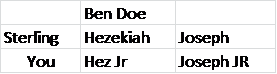
If your father is Sterling and his father is Ben, then you’ll want to test one of Ben’s other sons, Hezekiah or Joseph, or one of their sons.

Let’s say that you test Hezekiah Jr. and he too carries a null value at location 425.  This confirms that your common ancestor, Ben Doe, indeed also had a null value because he passed it to both of his sons.  So, the mutation to a null value happened someplace upstream of Ben.

In this next example, let’s say, based on the surname project results, we know that neither John Doe nor James Doe carry the null value mutation, because at least some of their descendants through various sons don’t carry that mutation.  Therefore, it had to happen someplace downstream of Joe and James and between them and you.  The question is where.

Null ancestors inferred

In the original test, you discovered your null value.  In the second test, we discovered Hezekiah Jr.’s null value and by doing so, also discovered the value of that DNA in Sterling, Hezekiah Sr. and Ben, shown in the second test column above.

From previous testing in the family surname project, we know that the progenitor, John Doe and his son James don’t carry that mutation, so that only leaves two generations with an unknown status as to that marker value.  If you can find someone descended through another son born to William or Thomas, you can determine which man had the mutation.

But what if Hezekiah Jr. does not have the null value?

Then, either the mutation happened between you and your father or between your father and his father, which can be confirmed by testing either your father or one of your male siblings, or there was a lab processing error.

3.  In rare cases, the DNA simply does not read in a particular area.  It’s rare, but it does happen.  If you find no other family individuals with a null value, I’d ask the Family Tree DNA lab to take a second look to verify accuracy and to see if they can get a good reading if that is the issue.  They already routinely do multiple reads on null values, so this is rarely an issue.

Does This Really Matter?

It might matter, because in this line, the null value will serve as a line marker mutation for the family lines BELOW the man who had the mutation.  So, in this case, either William or Thomas Doe.  So if you find someone who matches this line, and DOES have a null value, it tells you which line he falls under and where to look.  If he does NOT have the null value, it tells you not to bother looking in the null value line.

Do Other Markers and Haplogroups Have Null Markers Too?

They do indeed.  I’ve written the Personalized DNA Reports for a decade now and I’ve seen null marker values in just about every haplogroup and on many markers, although some instances are very rare and seem to be a one-time occurrence.

In other situations, especially in haplogroup E-M35 (old E1b1b1) and branches, null values are quite common, especially on marker 425.  Marker 425 seems to be more prone to zero or null values in every haplogroup than other markers…and no, we don’t know why.

This has been the explanation of null values for normal air breathing humans.  If you would like the eyes-glazed-over techie version, this presentation was given at the 2009 Family Tree DNA Conference.

______________________________________________________________

Disclosure

I receive a small contribution when you click on some of the links to vendors in my articles. This does NOT increase the price you pay but helps me to keep the lights on and this informational blog free for everyone. Please click on the links in the articles or to the vendors below if you are purchasing products or DNA testing.

Thank you so much.

DNA Purchases and Free Transfers

Genealogy Services

Genealogy Research

How Much Indian Do I Have in Me???

I can’t believe how often I receive this question.

Here’s today’s version from Patrick.

“My mother had 1/8 Indian and my grandmother on my father’s side was 3/4, and my grandfather on my father’s side had 2/3. How much would that make me?”

First, this question was about Native American ancestry, but it could just have easily have been about African, European, Asian, Jewish….fill in the blank.

Secondly, Patrick’s initial question is a math question, but the real question is how much of a particular ethnicity do you have on paper versus how much you have genetically.

How could they be different?

Lots of ways.

Oral history in families tends to get diluted and condensed over time.  For example, maybe grandmother wasn’t really 3/4th – because her ancestors were admixed and she (or her descendants) didn’t know it.  And how does one have 2/3, exactly, with 4 grandparents.  So, the story may not be the whole story.

For our example, we’re going to eliminate the 2/3 number, because it can’t be correct.  A grandparent would be 1/4th, a great grandparent, 1/8th.  In other words, ancestors fractions come in divisions of 4, or 2, but not 3 – because it takes 2 people in each generation.

So, you could have 3 of 4 ancestors who are native, which would make the person 3/4th, 2 of 4 which would make the person half, or 1 of 4 which would make the person one quarter, but you cannot have 1 of 3, 2 of 3 or 3 of 3, because you have 4 grandparents, not 3.

Math

First, let’s answer the math question.

Math is your friend.

There are three easy steps.

1. Divide Each Generation By Half to Current

Each ancestral generation is reduced by one half, because the DNA is diluted by half in each generation.

So, if Patrick’s mother is 1/8, Patrick is 1/16 on their mother’s side, because Patrick received half of her DNA.  With fractions, you can’t reduce the top number of 1 by one half so you double the bottom number.

If grandfather was 3/4, then father was 3/8 on that side and Patrick is 3/16th.

So, now, add the numbers for Patrick together.

2. Find the Common Denominator

The two numbers you need to add together from the above exmaple are 1/16 and 3/16.  This is easy because the denominator is already the same – 16.  But let’s say you also have a third number, just for purposes of example.  Let’s say that third number is 3/32.

How do you add 1/16, 3/16 and 3/32?

The denominator has to be the same.  If you look at the denominators, you’ll see that if you double the fractions with 16, they become fractions with 32 as their denominator.

So, for this example, 1/16 becomes 2/32, 3/16 becomes 6/32 and 3/32 remains the same.

3. Add the Top Numbers Together

Now just add the numerators, or the top numbers together.

2/32 + 6/32 + 3/32 = 11/32

That’s the answer.  In this example, our person, per their family history, is 11/32 Native or 34.38%.

Patrick, who originally asked the question is 1/16 + 3/16 which equals 4/16, which reduces to 1/4 (by dividing the same number, 4, into the top and bottom of the fraction), plus whatever amount that “2/3” really is.  So, Patrick is more than one quarter, at least on paper.

Genetics

The next question is often, “how do I prove that?”  In terms of Native ancestry, the answer varies on the purpose – general interest, tribal identification or tribal membership, etc.  I’ve written about that in two articles, here and here.

You can take a DNA test from Family Tree DNA called Family Finder that provides you with percentages of ethnicity, including Native American, as well as a list of cousin matches. They also offer additional testing that may be relevant if you descend from the native person paternally (if you are a male) or matrilineally (for both sexes.)

On the diagram below, you can see the Y DNA in blue, inherited by males from their father and the mitochondrial or matrilineal DNA in red, always inherited from the mother.  While the Y and mitochondrial tests give you very specific information on two lines, the Family Finder test provides you with ethnicity information from all of your lines.  It just can’t tell you which line or lines the Native heritage came from.

adopted pedigree

Often, due to admixture in the Native population over the past several hundred years, since the Europeans “discovered” America, the amount of Native DNA is less than expected and sometimes is so far back and such a small amount that it doesn’t show at all.

An individual could well be considered a full tribal member, yet have less than half Native heritage.  Examples that come to mind are Mary Jemison, an adopted captive who was European, but considered a full tribal member, and Sequoyah, who invented the Cherokee alphabet.   Even the Cherokee Chief, Benge was at least half European, sporting red hair.  His mother was a member of the Cherokee tribe, so Benge was as well.  Cherokee Chief John Ross, born in 1790, was only one eighth Native.

So, the bottom line.  Enjoy your family history and heritage.  Document your family stories.  Understand that tribal membership was historically not a matter of percentages, at least not until the late 1800s and early 1900s.  Your ancestor either was or was not “Indian,” generally based on the tribal membership status of their mother.  There was no halfway and mixed didn’t matter.

DNA testing can confirm Native heritage.  It can also prove Native heritage in a variety of ways depending on how one descends from the Native ancestor(s), using Y and mitochondrial DNA.  Depending on whether Patrick is male or female, and how Patrick descends from his or her Native ancestors, the Y or mitochondrial DNA test can add a wealth of information to Patrick’s family history.

For some people, DNA testing is how one discovers that they have a Native ancestor.

So, how much Indian do you have in you, on paper and through DNA testing?

______________________________________________________________

Disclosure

I receive a small contribution when you click on some of the links to vendors in my articles. This does NOT increase the price you pay but helps me to keep the lights on and this informational blog free for everyone. Please click on the links in the articles or to the vendors below if you are purchasing products or DNA testing.

Thank you so much.

DNA Purchases and Free Transfers

Genealogy Services

Genealogy Research

And now….Ancestry Health

Yep, Ancestry Health is here – in beta.  We knew it was coming.

I was startled to see Ancestry enter the health arena, given the problems that 23andMe has had with federal regulation, but after I took a look at Ancestry Health, I realized it’s nothing at all like the 23andMe health information.  23andMe provided you with health information based on your DNA test.  Ancestry Health does not.  In fact, Ancestry Health only does two things.

  1. Ancestry Health gathers your health information to tie to your tree and DNA information. This process requests your “informed consent” to provide that information to others. Ancestry didn’t say this, but for example, sold to Big Pharm. This is what Ancestry Health does for Ancestry.
  2. Ancestry Health provides, in picture (tree) and summary format, the health information you input for you and your family. That’s what Ancestry Health does for you.

What benefit is that, to you, you ask?  I was asking the same thing.  Let’s take a look.

Here are the intro screens.

ancestry healthancestry health 1 cropancestry health 2

If you click “get started,” the next thing you see is a consent form.

ancestry health 3

You are required to click the “I have read and accept the Terms and Conditions” box, but the “Informed Consent” box, which is optional, is strategically located above the Terms and Conditions box.

The “informed consent” is the portion that gives Ancestry permission to pretty much do anything with your information.  At least, as a consumer, that’s my interpretation.

Now, I’m not a lawyer, and hopefully Judy Russell, The Legal Genealogist, will take a look at this and have some commentary.

If you’re even considering participating in Ancestry Health, please, PLEASE read both the Terms and Conditions and the Privacy Policy, in whole.

Why, because this is what the Ancestry Health site says:

“By using the Service you consent to the collection, use, storage, and disclosure of personal information by AncestryHealth in accordance with this Privacy Statement.”

And from the Ancestry Health Privacy Statement (emphasis is mine):

“Subject to the restrictions described in this Privacy Statement and applicable law, we may use personal information for any reasonable purpose related to AncestryHealth’s business, including without limitation to provide the Service to you, to communicate with you, to provide you information about products and services offered by AncestryHealth and/or any of AncestryHealth’s affiliates, subsidiaries, and other related companies (the “Ancestry Group”), to respond to your requests, to update our product offerings, to improve the content and user experience on the Health Website, to let you know about offers of interest from AncestryHealth, the Ancestry Group, or other parties we think may be of interest to you, and to prepare and perform demographic, benchmarking, advertising, marketing, and promotional studies.”

You need to know what you are consenting to.  Read all of the documents in their entirety, BEFORE you do this.

The link to the terms and conditions and their privacy statement is at the bottom of each page.

ancestry health 4

As far as I’m concerned, these paragraphs from Terms and Conditions are fairly telling.

ancestry health 5

I decided to proceed, WITHOUT, I repeat, WITHOUT signing the informed consent to see what happened next.  The only reason I proceeded is because I can’t very well write this article without proceeding.  Please do not interpret the fact that I participated in the Ancestry Health beta as an endorsement.  It isn’t.

I signed on with my Ancestry account name and ID and Ancestry asked me which of my trees I would like to import?

ancestry health 6

I imported my mini-tree.  The next question was about my height, weight, smoking history and exercise.  They’ve blown it right there….asking people about their weight and expecting an honest response.

ancestry health 7

Next, you select from conditions to associate with your health.

ancestry health 8

The next step asks about your ethnicity….and of course plugs their DNA test.

ancestry health 9

Clicking next takes you to the health condition screen where you associate conditions with the family members in your tree.

I selected Vascular Disease since my mother died of a stroke and then selected Cancer since my grandfather died of cancer.

ancestry health 10

Then I selected Heart Conditions since my father had angina and both of my grandmother’s had heart issues.  Actually everyone in this tree, except for me, had heart issues because they are all dead now…but I’m thinking that’s not what Ancestry meant.

ancestry health 12

This is what you receive at the end.  In your Family Health Tree, your family members are colored with their health conditions.  I already knew this.  In fact, I just input that information.

ancestry health 13 crop

Ancestry also shows you a summary of what you’ve input, which is downloadable.

You can then click on the condition to see what they call the “Family History Effect.”

ancestry health 14

That’s what you get.  Really, nothing that you didn’t already know.  After all, you just entered that information.

What did Ancestry get?  Health, ethnicity and lifestyle information for you and your family to sell along with your DNA information, if you signed the informed consent.  If you don’t sign the informed consent, your information can still be utilized,  just without your identity attached, per the verbiage in their terms and conditions, privacy statement and informed consent documents.

A few minutes after entering my information, I received this e-mail from Ancestry.

ancestry health final

Whoever thought a few years ago when genetic genealogy began that Ancestry would develop such a personal interest in our health and well-being.

______________________________________________________________

Disclosure

I receive a small contribution when you click on some of the links to vendors in my articles. This does NOT increase the price you pay but helps me to keep the lights on and this informational blog free for everyone. Please click on the links in the articles or to the vendors below if you are purchasing products or DNA testing.

Thank you so much.

DNA Purchases and Free Transfers

Genealogy Services

Genealogy Research

Ancestry Reinvents my Ancestors, Again

Remember, right after April Fool’s Day, when Ancestry gave me two ancestors who weren’t?  I check my account every day, and every day for the past two months, they have been there, looking back at me, making me wonder if somehow I’ve missed something – but with no tools to figure out what, where or how.

Diedamia Lyon and John David Curnutte.

Yes, I was getting fond of John and Diedamia who I was beginning to refer to as my adopted NADs.

new ancestor discoveries

But today, today is different.  Yep, I have the same number of matches, the same number of hints, the same Circles….but my bad NADs are gone.  Bye bye John and Diedamia!

So my New Ancestor Discoveries (NADs) have apparently been undiscovered and have disappeared, or maybe got reburied, just like they never existed.  Poof.  Gone.  Never happened!

Of course, these ancestors didn’t exist in reality, but according to Ancestry they did.  But not anymore.  No explanation.  Just got up one morning and they were gone…slunk off in the night.  Not even a goodbye note.  After two months together.  I’m crushed.

disappeared nad

And look what else I found today.  Why, Ancestry reinvented my family story it seems.  The timing of this announcement is extremely ironic.  But maybe it’s the explanation I was looking for.  Reinvented.  That must be it.

Is this a joke?

reinvented story

So, Ancestry….which time were you wrong?  Two months ago or now?  Were John and Diedamia ancestors, or not?  Just how, exactly, is one supposed to know?

Which “story” is the true one?  Were you “just kidding” when you gave me those ancestors, or now that you’ve taken them away?  Not funny.

You said DNA would confuse people…and by golly…you’re right.  Only it’s not the DNA itself that’s confusing, it’s your conferring and then unconferring of ancestors – with no documentation or tools.  Without tools, we’re forced to believe you…but which version do we believe?

How are we supposed to have any confidence in these hide-and-seek, peek-a-boo, now-you-see-them-now-you-don’t ancestor discoveries?  Did I somehow miraculously stop matching all 5 of the people who descended from John and Diedamia?  Did you, ahem, make a mistake?  Crystal ball broken maybe?  If so, an explanation and maybe an apology would be nice.  You can’t just rip my purported ancestors away from me like that with no explanation.  What if I had really believed you in the first place…that John and Diedamia were my ancestors?

Thankfully, I didn’t believe you because based on 30+ years of genealogy research and chromosome browsers and similar tools provided by other vendors, I’ve confirmed my tree.  But a lot of people will believe you….what about them?

And that lovely story that came along with John and Diedamia.  You mean that story you told me about my ancestors wasn’t true?  But it was MY story…you said so.  It has all those names and dates and places and pictures. How could it be wrong?  It seemed so real.  What happened?  Oh yea, I forgot, you reinvented it.

You know, I’d check on the solidity of those matches myself, but I can’t because, well, you don’t give me any tools…you know….like a chromosome browser…because you’ve implemented a superior methodology for matching.  Instead, you’d much prefer, in fact, you require that I simply trust you based upon the excellent track record and credibility you’ve established.  You’ve suggested that I might not understand how a chromosome browser works and I might make mistakes, and that, of course, would be just awful.  Why, I might even give myself incorrect ancestors.  Thank you so much for protecting me from those grievous errors.

But hey, maybe I’ll get a new NAD soon and we can do this all over again.  Won’t that be fun!  Or maybe John and Diedemia will be back to visit.  One never knows!

Say what Ancestry….how about you don’t give me any more bad NADs or any more NADs at all, because there appears to be no way to tell the difference between authentic ancestor discoveries and bogus ones.  For that matter, don’t gift me with any more re-reinvented stories either based on cumulative bad trees.  I’ll just settle for a chromosome browser instead.  What do you think?  I don’t much care for this new  methodology of incorrect ancestor gifting, retracting and reinventing.  I’d prefer to make my own mistakes…thank you.

rabbit in hat

______________________________________________________________

Disclosure

I receive a small contribution when you click on some of the links to vendors in my articles. This does NOT increase the price you pay but helps me to keep the lights on and this informational blog free for everyone. Please click on the links in the articles or to the vendors below if you are purchasing products or DNA testing.

Thank you so much.

DNA Purchases and Free Transfers

Genealogy Services

Genealogy Research

Allen County Public Library OnLine Resources

I originally wrote this article for the Native Heritage Project blog, but there are a lot of resources here that apply to all genealogists – and as we all know, the genealogy aspect of genetic genealogy is extremely important.  While DNA is a wonderful tool, it works best in conjunction with traditional research – which has become much easier in the past few years due to increasing numbers of online resources.

The Allen County Public Library in Fort Wayne Indiana is far more than a local, county, state or even regional resource. It’s one of the premiere genealogy libraries in the country and draws researchers from all states and Canada with its very large collection and dedication to genealogists.  One of its best features is that many of their resources are available online.  However, if you ever get the chance to visit, absolutely, do – it’s a wonderful place!

The ACPL publishes a free periodic newsletter, Genealogy Gems, published by Curt Witcher,  that you can subscribe to by going to the website: www.GenealogyCenter.org. Scroll to the bottom, click on E-zine, and fill out the form. You will be notified with a confirmation email.

This month’s issue included several research tips and hints about African and Native American research which I’d like to share with you.  I’m quoting part of an article written by Curt, and I’m inserting instructions that weren’t part of the original.

Working The GenealogyCenter.org Website–Part Two by Curt B. Witcher

Last month, we took some time to explore a number of marque features on http://www.GenealogyCenter.org. We started with the main page, and that is where I would like to start again this month. On the right-hand side, immediately beneath the search boxes for our free databases and our online catalog, one will find a section called “Family History Archives.” This is one “springboard section” I alluded to at the end of my column last month.

This archive section provides one with direct links to copyright-clear materials that have been digitized from the collections of The Genealogy Center. We have digitizing partnerships with both FamilySearch and the Internet Archive. More than 170,000 local and family history publications are available for free use on FamilySearch.org as a result of this multi-organization cooperative. Thousands of Genealogy Center books are available online through this site. More than 80,000 Genealogy Center books and microfilm are available through the Internet Archive web site, archive.org. As with FamilySearch, these materials are available for free. One can view the items online, save as PDF documents, and even download to a Kindle.

genealogy center home page crop

Be sure to take advantage of this resource by clicking on “Internet Archive” under “Family History Archives.”  It’s amazing.

internet archive

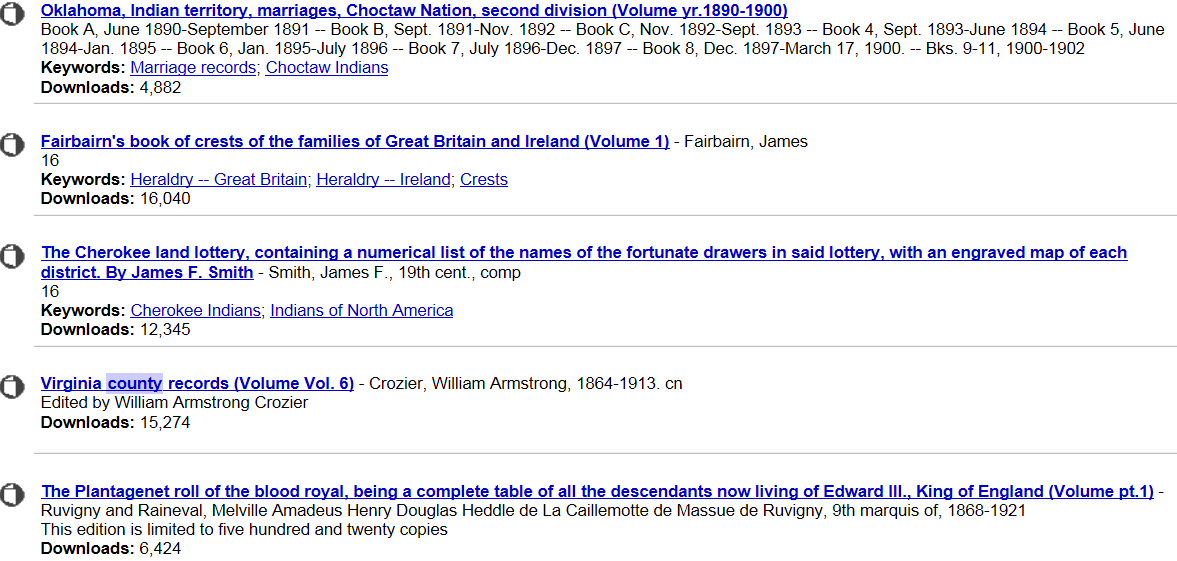
Just take a look at the most downloaded items last week.

internet archives most downloaded

The internet archives are searchable by key word.

Appreciating the challenges of African American and First Nations/Native American research, The Genealogy Center offers two gateways for those interested in these areas of research. The African American Gateway is organized by states, regions, countries outside the United States, and subjects. Within each area, one will find a significant collection of relevant websites along with a comprehensive list of Genealogy Center resources for the specific state, region, country, or subject in which one is interested. There are nearly 10,000 Internet sites categorized in this gateway. Using this gateway is a good way to quickly access pertinent materials to advance one’s research.

To find the Native American and African American gateways, click on “Databases” at the top of the page on the blue bar.

genealogy center

You will then see the options for both the African and Native Gateways under the “Databases and Files” section.

genealogy center2

The Native American Gateway is organized a bit differently. The first link in this gateway is to short guide on how to begin doing Native American research. Whether just starting or continuing this type of research, taking a quick look at this outline may be quite beneficial.

genealogy center 3

The rest of the links on the left-hand side of main gateway webpage are quick access points to The Genealogy Center collection. The “Microtext Catalog” link takes one to a table that lists all Native American materials in this format. The table begins with a listing of general or multi-tribe materials followed by an alphabetical list of tribe-specific materials. The “Genealogy Center Catalog” link takes one directly to a search screen where one can enter a tribe name, surname, or geographic location to get results specific to The Genealogy Center collection. Under the “Collection Bibliography” link, one will find the additional links of “Tribes,” “Locations,” and “General.” The “Tribes” and “Locations” links are likely the most useful as one can find Genealogy Center-specific materials on more than 150 tribes as well as U.S. states and regions as well as Canada and Mexico. Like the many other snapshots continually updated by Center staff, the Native American snapshot contains major indices and research works to assist one in conducting this challenging research. Further, there are specific materials listed for eight major tribes.

On the right-hand side of the Native American Gateway main page, researchers will find links to “Websites,” “First Nations of Indiana,” “Indian Census Records,” “Cherokee Records,” and “National Archives Guides.” The “Websites” list and “First Nations of Indiana” are not intended to be comprehensive but rather to provide one with some major sites that can offer both solid info and links to other web resources. The “Indian Census Records” section provides several dozen links to important information about First Nations’ enumerations–where they can be found, how to get access them, and how to use that data they contain. The “Cherokee Records” link takes one to the National Archives’ website, “The Dawes Rolls (Final Rolls of the Citizens and Freedmen of the Five Civilized Tribes in Indian Territory).” More links will be added to this site in the future. This gateway is rounded-out with links to three significant guides to National Archives and Records Administration guides.

Have a great time utilizing these new resources and the best part is that you don’t have to leave at closing time!!!

______________________________________________________________

Disclosure

I receive a small contribution when you click on some of the links to vendors in my articles. This does NOT increase the price you pay but helps me to keep the lights on and this informational blog free for everyone. Please click on the links in the articles or to the vendors below if you are purchasing products or DNA testing.

Thank you so much.

DNA Purchases and Free Transfers

Genealogy Services

Genealogy Research

Memorial Day – Grieving the Losses

floppy discs

It’s Memorial Day weekend.  Time for picnics and barbeque grills.  And for thinking about, and honoring those that have departed.

Originally, Memorial Day was to honor the war dead following the Civil War – although it then morphed into a holiday to honor all Americans who died in the military service.  Also called Decoration Day, it has become a time to honor all of our ancestors, visit the cemetery, pull some weeds, add some flowers, relive the good memories and say a solemn prayer.  Some folks are too far from home, or from our ancestors’ homes, to do those things, so we have to honor our ancestors in other ways.

I’ve chosen to spend this weekend sorting through a particularly thorny genealogical problem involving 4 generations of Crumley men, two of which were veterans, all with the same first name, some with unknown wives, confusing signatures and more.  This is part of my 52 Ancestors series, so you’ll get to meet them soon.

I’ve been working on these lines now for almost 20 years.  I was lucky, because when I started, there were a few who had come before me, and one who had published a book, for which I am EXTREMELY thankful.

Starting about 15 years ago, my correspondence slowly morphed from letters in the mailbox to e-mails which I diligently filed and still have today.  Yes, truly I do.

But that’s part of what I’m grieving today.  No, I didn’t lose my e-mails. I’m a backup fiend.

What I’ve lost…what we’ve lost…is a legacy of research – and with it part of our ancestors.  How big a part?  I guess we’ll never know.

Fifteen years ago, there were two primary researchers who were very actively researching…as in visiting courthouses…retaining professional genealogists…and who clearly did not wish to share until they were done.  I can understand part of that, at least to a degree.  No one wants to put half-baked ideas into the wild, so to speak.

But, and this is a really BIG BUT, there is a limit – and they clearly went past that limit.  They died.  Their books are unpublished.  Their research and maps they had assembled using neighbors’ deeds, all gone.  The family Bibles they said they had found among descendants – that information too all gone.  Letters – gone.

Gone.

Poof.

Forever.

They never shared with any of the rest of us.

I contributed information. Many did.

I volunteered five years ago to proofread the two books that one woman wrote that were “nearly ready” but she didn’t need any help.  But she never published, and then she died.  Her husband is in his mid-90s, if he’s still living, and his e-mail no longer works.  At least this researcher did write some articles about these ancestors, which is not the same as two books with promised discoveries that correct earlier research…but it was something.

The second person refused to share at all, not wanting anyone to scoop his book.  That would be the book, by the way, that has never been written.  He is now in his late 80s (if he is still alive) and his e-mail is also now defunct.  When do you think we can expect that book???

A third long-time researcher came to a Crumley meeting years ago with 3 ring binders of his work.  He did share, generously, but sharing bit by bit on lists is not the same as a body of work that he clearly had.  Where are his years of hard work today???

But that’s not all of it….not nearly all.

In many of the hundreds of e-mails that I’ve saved there were links to works and websites of both primary and collateral lines.  I probably tried 40 or 50 links altogether over the past two days.  Know how many worked?  None.  Not one.  The most current ones were only about 4 years old.  Dead as doornails…all of them.  I was so surprised that they were ALL dead that I checked my system to be sure the problem wasn’t on my end – but it wasn’t and they are all dead.  RIP

web page not found

This is disconcerting.  Some were free rootsweb pages, some were on private sites and some were other types of pages, like ones sponsored or connected to genealogy programs.  But the point is that all of those researchers that had something to share no longer do.  It’s gone.  For all I know, they may be gone too.

Once your website and your e-mail is inoperable – you’re electronically dead to people with whom you communicate in that fashion.  There is no electronic phone book for e-mails.  It’s not like it used to be – you can’t just drive across town to check on your cousin.  Nor are their children going to know who their online cousins are.  You are likely not going to be notified of their death – let alone be considered as the steward of their work.

Yes, you can sometimes find defunct website information, at least pieces of it, using Internet Archive’s Waybackmachine – but it’s seldom complete.  If it’s there, it’s better than nothing.

That information too, all of those links I saved because I would need them one day, is now gone.  Some are entire websites devoted to family research of a particular family, like Brown and Johnson.  Fortunately, some of the articles have been reproduced on the Greene County, TN GenWeb site.  And yes, thankfully that is still working just fine. Google is your friend if the information is out there anyplace.

But think again about what you expect to be “forever” or at least be available to you at a later date.  With the shuffling in the genealogy marketspace recently, a lot has changed.  GenForum, bought by Ancestry, is no longer functional – meaning you can read but not post.  Rootsweb list and board usage is significantly down – in favor of non-archiving social media like Facebook.  Rootsweb trees still include text notes uploadable from a GEDCOM file, but Ancestry trees do not.  Yes, you can copy all of your text into files and add them as documents to your Ancestry tree – but it’s a huge pain in the you-know-what and virtually no one is going to do that.  Ancestry actively discourages that, because they would rather have you attach their records – which is fine – but I’ve yet to see Ancestry have the records I have for my ancestors.  All I can say is I wish they did.  But be aware that if you attach Ancestry’s records to your tree, and you choose to download that GEDCOM file, it’s without any of those attached records.

And with the demise of MyFamily, also discontinued by Ancestry, which upsets people so badly we’re not even going to discuss it, not only did years worth of compiled family history get shuffled to the electronic trash can…people became terribly discouraged about sharing and trusting any “forever source.”

And I haven’t even mentioned the fallacy that your tree is “forever” or safe on a third party site.  I would suggest you keep your main tree right on your computer and use a third party site as a backup if you wish.  But I don’t want to confuse the point.  Sharing a tree is NOT the same as sharing research.  A tree is the skeleton of your family.  Research is the story of your ancestors’ lives – the meat on the bones.

So, now it’s up to you.  It’s not up to Rootsweb, Ancestry, Facebook or anyone else.  It’s up to you, just you.  You need to write.  You need to publish.  There are many sources for you to be able to do this today.  No need to know how to write html code anymore.  Publishing is easy and there is no technology excuse.

I’ve chosen the WordPress platform and blogging.  There are other free sites like www.weebly.com (disclosure – I have not used this site personally) and other free and paid websites.  I pay for mine so that I get to choose my domain name and I have more storage space.  However, when I no longer pay for it, it too will be gone.  WordPress claims their free sites will be available forever, whatever forever means today.

But what about when I die, when I join my ancestors and when someone, hopefully, comes to pull the weeds and decorate my grave on Memorial Day?  What about my work?  Well, hopefully because I HAVE made it public because I HAVE shared, because I have NOT held back waiting on forever or someday or perfection – it will be out there – circulating around in cyber space.  Is it perfect?  No – but it’s there and it’s far better than nothing – better than the unpublished book that will never see the light of day.  Because it’s online and not committed to ink and paper, it’s easy to update an ancestor’s article with new information.

I wish there was a cyberbank where I could sign up to be sure certain things are available forever, however long forever is.  I’d bank these stories and a raft of DNA results as well.

I’m going to put each of the lines I’ve been researching on a free “forever” website when I’m finished with my 52 ancestors series.  For me, it will be WordPress because I know and love the platform already.  And yes, I really will do that just like I really do write my weekly ancestor article.  And if I die tomorrow, at least those articles are in print, someplace, even if my website and blog will one day be defunct.

And as for the DNA, it’s a part of every ancestor’s story.  DNA results and how we utilize them are an integral part of every family story now and relevant in one way or another to every ancestor.  DNA is in every one of my 52 Ancestors stories one way or another.

I’ve also arranged with the Estes archivist to place the Estes family articles on the Estes family archive website as well.  Not via a link, but posting the actual articles.  Links only work as long as the original site is functional.  Same goes for the Estes newsletter which is distributed to subscribers and libraries.  Plus, I’ve shared with just about every cousin I can think of.  Just sharing the love, and the ancestors!!!

I’m going to print these ancestor articles in book format and donate them to several significant libraries including the Allen County Public Library and the Church of Jesus Christ of Latter Day Saints – yes – the Mormons.  I want my work in that vault.  And by the way, I’m not Mormon, but given that their driving force is a religious conviction that genealogy is important – and not profit like a corporation – I feel that my research stands a better chance of preservation there than in the hands of any corporation.  If you’re looking for an ugly corporate example – just take a look at what Ancestry.com did with their Y and mitochondrial DNA database and then a few months later with the Sorenson data base as well.

I’m going to print my work for my descendants, in book form, with archival ink on archival paper, because electronic formats will change significantly over the years.  If you don’t believe me, just try to find something to read an 8 inch or 5.25 inch “floppy disc” now.  So, yes I’ll give them a CD or DVD or thumb drive too – but in 50 years, they’ll still be able to read the book (it’s not in cursive.)

So, here’s my take on this situation.  No one owns the ancestors.  I hope people do not hold the information about their ancestors’ lives hostage…for good reasons or bad…because none of us know which day our proverbial number is going to be up.

Memorialize your ancestors.  Share their lives and their history.  Write about them.  State what you know and what you don’t.  List sources so others in the future can verify your work, update it, add to it, or look where you haven’t.

Make sure that when you die, people celebrate what you DID with your life and grieve the fact that such a wonderful, sharing person departed this earth, and that they aren’t grieving what you didn’t do, or worse yet, what you did do, but never shared or published or is no longer available in any format.  That’s certainly not how I want to be remembered, nor the legacy of my ancestors I want to leave.  They may be gone, but I want to celebrate their lives, preserving them forever for all the generations to come!

Do you have ideas or suggestions for how to permanently memorialize your ancestors?  What steps have you taken?

______________________________________________________________

Disclosure

I receive a small contribution when you click on some of the links to vendors in my articles. This does NOT increase the price you pay but helps me to keep the lights on and this informational blog free for everyone. Please click on the links in the articles or to the vendors below if you are purchasing products or DNA testing.

Thank you so much.

DNA Purchases and Free Transfers

Genealogy Services

Genealogy Research

A Match List Does Not an Ancestor Make

wish list

I can’t tell you how many people write to me and tell me that we must be related because they share a match with several people at the testing companies that have the surname Estes, either today or in their family history.  And, they’d like to know what I think about that list.

What they are really hoping, or wishing for, is that I’d wave my magic Estes wand and say, “well, yes, of course, I know exactly who all of those people are and how they are related.”  If I could do that, I would not have any dead ends on my own tree, believe me.  My magic wand is broken!

A name, alone, does not a match make.  And a list of names doesn’t make an ancestral connection either.

That list of Estes people is interesting, but it really doesn’t mean much of anything, at least, not alone.  These people could be related to the tester through different ancestral lines – although many people find that hard to believe.  But it’s true, and it’s most often the answer.  Let’s take a look at why.

In 10 generations, every person has 1024 direct ancestors.  For someone born in the year 1950, and assuming 4 generations a century, 10 generations take them back to about 1700.

Given that 2 people do have a DNA match – the odds that the match is from any specific one of those 1024 people is 1 in 1024, or if from a couple, 1 in 512.

Given that there are 42,000+ people in the US who carry the Estes surname today, there are many more who don’t, but have an Estes in their tree someplace.  It’s not unlikely that someone would match people who have Estes ancestors – just by chance.  We’ve been here since the mid-1600s – and our early Estes ancestors were prolific.

I ran a little experiment,  just for fun.  I selected a group of people who do NOT have Estes ancestors, and I checked their matches at Family Tree DNA to see how many Estes matches they show.

I am quite familiar with the trees of each of these individuals.  Except for me, none of these people have Estes ancestors.  The Estes surname column is who carries that surname today that they match.  The Estes Ancestor column is the Estes ancestral surname, minus the people who appeared in the Estes surname column if they are duplicated.

I have divided these into two groups – people who came from areas where Estes family members are found, and those who did not.  For comparison, I’m the last entry at the end.

Name Geography Total Matches Estes Surname Estes Ancestor
GB Hatteras Island, NC – not where Estes lived 880 0 1
JC Tennessee – not where Estes lived 1500 3 5
PB Not where Estes lived 340 0 1
CF European ancestry, not where Estes lived 400 1 4
JK Hungarian, German 250 0 1
DL Acadian – not where Estes lived 590 1 2
RG Germanic, not where Estes lived 620 2 1
DB Tennessee – where Estes lived 1440 2 6
JG Tennessee – where Estes lived 1570 4 14
DM Where Estes lived 1090 1 4
GM Where Estes lived 1530 1 5
JZ Where Estes lived 1370 4 6
TM Where Estes lived 1430 1 16
JC Where Estes lived 1380 1 7
KH Where Estes lived 530 1 1
WH Where Estes lived 1910 2 12
WH2 Where Estes lived 1640 2 10
Me An Estes 960 4 4

As you can see, I have a very low number of matches as compared to other people who don’t have any Estes ancestry.  Clearly, those who both descend from areas where Estes families lived for long periods of time stand a better chance of matching people who have Estes in their trees.  They don’t share an Estes ancestor, but they share a common ancestor someplace.

So, while I feel for these people who write me these notes, and wish I had the answer they want – I don’t.  Their list of Estes matches means nothing without finding a common ancestor and matching on a common segment between at least 3 known Estes descendants.  If the person matching those people also matches them on that same common Estes segment, then, we’re beginning to cook.

That evaluation process is called triangulation, of course.  Family Tree DNA and 23andMe both provide tools for triangulation and segment matching, but Ancestry does not.  You can download your Ancestry results to both Family Tree DNA and to GedMatch, fish in multiple ancestor pools, and triangulate from there.

So, get busy triangulating.  No one is going to do the work for you, no matter how hard you wish!

Happy Ancestor Hunting!!!

______________________________________________________________

Disclosure

I receive a small contribution when you click on some of the links to vendors in my articles. This does NOT increase the price you pay but helps me to keep the lights on and this informational blog free for everyone. Please click on the links in the articles or to the vendors below if you are purchasing products or DNA testing.

Thank you so much.

DNA Purchases and Free Transfers

Genealogy Services

Genealogy Research

Parent-Child Non-Matching Autosomal DNA Segments

Recently, I had the opportunity to compare 2 children’s autosomal DNA against both of their parents.  Since children obtain 50% of their DNA from each parent (except for the X chromosome in males), it stands to reason that all valid autosomal matches to these children not only will, but must match one parent or the other.  If not, then the match is not valid – in other words – it’s an identical match by chance.
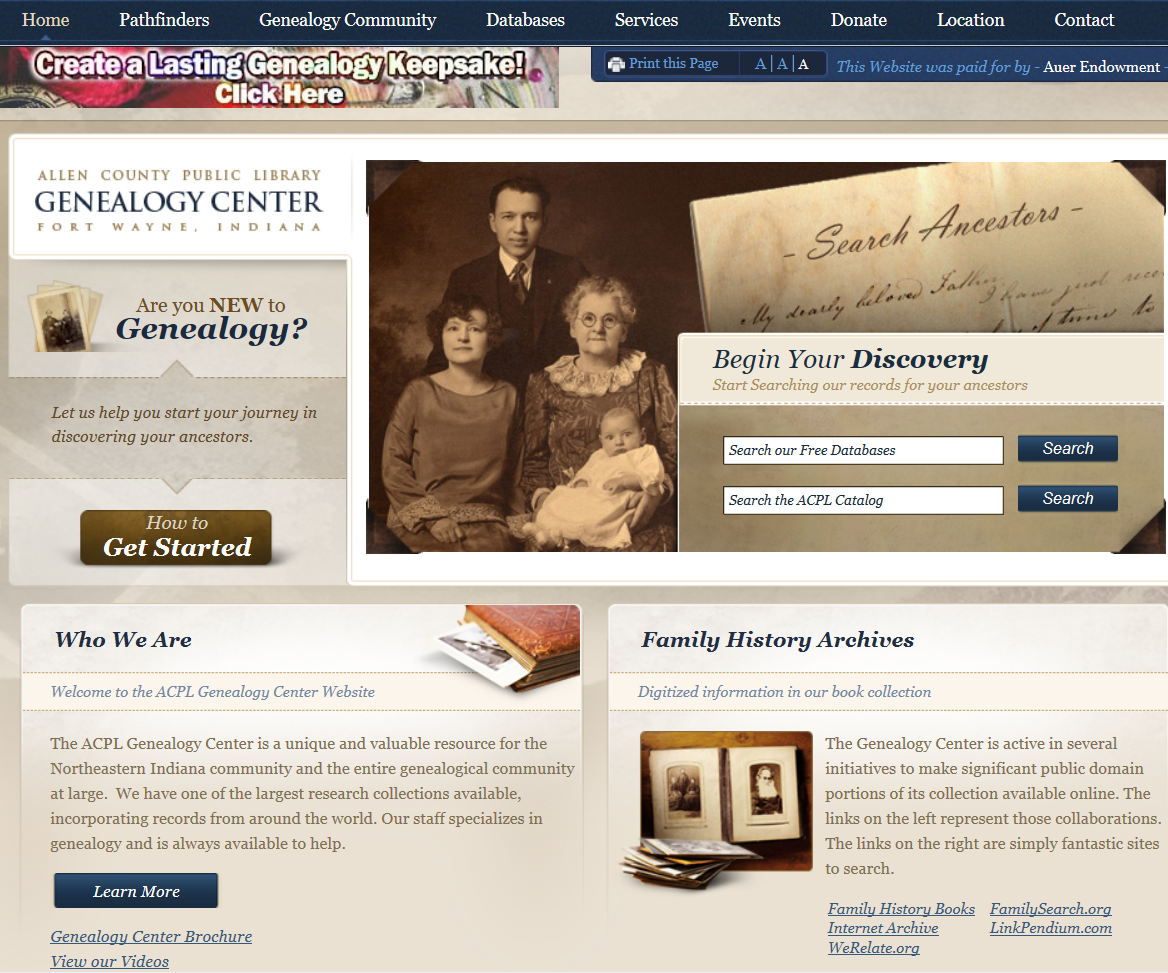
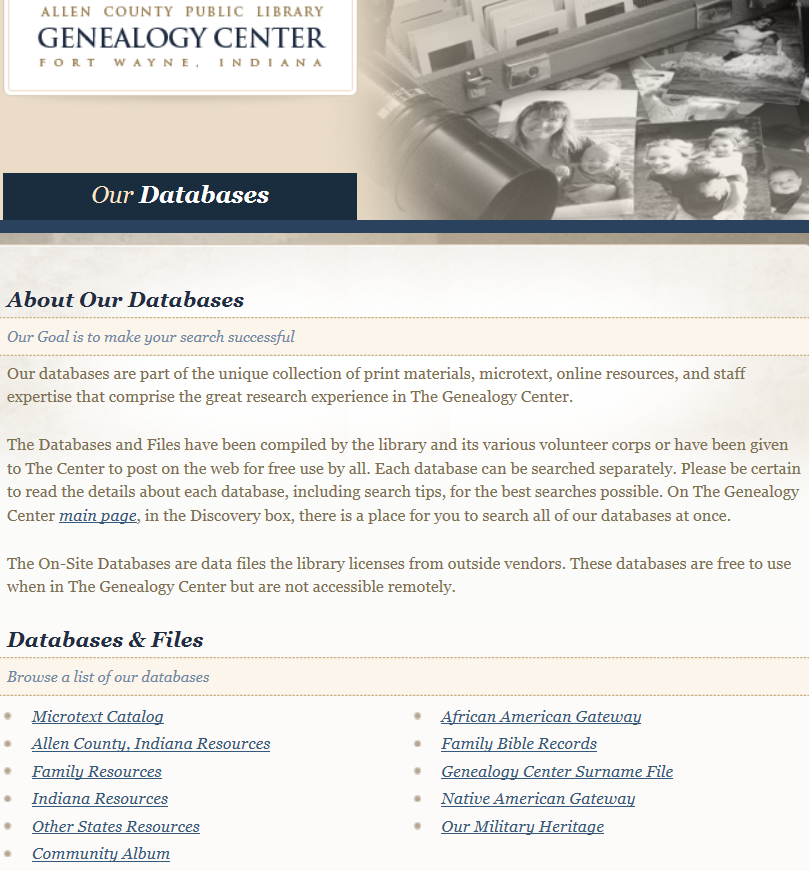
If you remember, the definition of a match by chance, or IBC (identical by chance) is when someone matches a child but doesn’t match either parent.

This means that the DNA segments, or alleles, just happen to line up so that it reads as a match for the child, by zigzagging back and forth between the DNA of both parents, but it really isn’t a valid genealogical match.

You can read about how this works in my article, How Phasing Works and Determining IBD Versus IBS Matches and also in the article, One Chromosome, Two Sides, No Zipper.

The absolute best way to determine if a match is a valid match or not, valid meaning that the DNA was handed down by ancestors, not a match by chance, is to compare a child’s matches against both parents.  By doing that, we can quickly identify and isolate matches that aren’t real.

IBC

In the example above, you can see that Mom contributed all As to me and Dad contributed all Cs to me.  Joe has alternating As and Cs, so he is a match to me on every location.  However, he only matches my parents on half of their locations, so he is not a match to them, because it’s only chance that caused him to match me on those allele values in that order.

DNA matching programs have to take into consideration both allele values in their match routines, since you carry a value from your mother (A above) and a value from your father (C above), and they are not labeled as to which parent they come from.

Valid matches will also match one parent or the other.  After all, the child received all of their DNA from one parent or the other, so for someone to be a valid genealogical match a child, they must match a parent.

Some time back, when I was matching to my own mother’s DNA, I noticed that I matched her on about 40% of my matches, which left 60% to either be matches to my father or identical by chance.

Notice, I’m not talking about IBS, or identical by state, because that phrase is used to mean both identical by chance and identical by population.  Identical by population means that you did in fact inherit the DNA from an ancestor, but it’s either too far back in time to determine which ancestor, or that segment was present in a specific, probably endogamous population, and you could have inherited it from any number of ancestors.

So, identical by population is identical by descent, but we just can’t tell who we got received that DNA from.

  • IBC – identical by chance – not a valid match – you happen to match someone else on a particular segment, but it’s because the match software is jumping back and forth from your mother’s side to your father’s side.
  • IBD – Identical by descent – you share a common segment of DNA because you and another person(s) inherited that DNA segment from a common ancestor who you can identify
  • IBS – Identical by state – currently used to be both IBC and IBS, where IBS means that you did inherit this DNA from a common ancestor, but it’s so far back you can’t determine who, or that segment is so common within a particular population you could have inherited it from a number of people.

Now a 60-40 parental split is certainly possible, especially if one parent was from an endogamous population, which would mean more matches, or one parent was more recently immigrated from the old country, which would mean fewer matches.

However, without my father’s DNA, which is not available, we’ll never know.

Since that time, I have obtained access to 2 sets of child plus both parents DNA results, so I wanted to take a look at how IBD versus IBC stacked up.  These comparisons were done at Family Tree DNA.

Total Matches Non-Matching Either Parent Percent Non-Matching
Child 1 959 133 13.9
Child 2 1037 133 12.8

Based on other evidence I’ve seen, this percentage seems about right, but the amount of shared DNA and the largest segment size surprised me.  Keep in mind that the smallest possible segment size is 7cM which is Family Tree DNA’s lowest single segment threshold to be counted as a match (assuming you meet the 20cM total threshold first.)  If you match, they show you your matching DNA down to 1cM, but these tables are measurements by the 7cM matching criteria only.

In plain English, this means that in this case, 12% and 13% of these matches were identical by chance, or false matches.  These matches included people who shared up to 57cM of data and the largest block was 15cM.

Largest Shared cM Largest Longest Block
Child 1 46.87 14.38
Child 2 57.06 15.18

Could something else be causing this?  Certainly.  Some of these non-matches could be read errors in the files.  I’d certainly want to take a look at that if any of these became critical.  Another possibility could be that valid match segments are “stitched together” by IBC segments creating longer segments in the child.

An alternative to check validity would be to download the files to GedMatch and see if the pattern continues using the same match criteria.  Of course, testing at multiple labs and downloading the results to compare at GedMatch likely removes the issue of read errors in the first set of files.  And if you really, REALLY, want to know, you can look at the raw data files themselves.

Just so you know, this wasn’t an anomaly with just one high read.  Here are the highest 25 entries from Child 2, or about one fifth of her total mismatches.  Only a few were in the 3-5th cousin range.  None were closer.  Most were 4th or 5th to remote.

non-parent matching relationship range

If you want to do these comparisons yourself, they are easy to do if you have a child and both parents who have tested at Family Tree DNA.

On your Family Finder matches page, at the bottom, in the right corner, there is a button to download matches.

download button

I download the matches into separate spreadsheets for the child, mother and father.  I then color all of the rows pink in the mother’s results, and blue in the father’s results, then copy all three to a common spreadsheet.  You can then sort on the match name and this is what you’ll see.

non-match example

What you’re looking for is white (child) rows that don’t match either a blue row (father) or a pink row (mother.)  Don’t worry about pink or blue rows that don’t have matches. It’s normal for the DNA not to be passed to the child part of the time, so these are expected.

In this example, all white rows matched one parent or the other, except for Winnie Whines.  I colored this row red and added the Comment column where I entered the number of this non-matching entry.  When I’m finished comparing and coloring, then all I have to do is sort that column, bringing all of the nonmatching rows together.  I copied those nonmatching entries into a separate sheet so I could sort those alone and obtained the largest shared and longest segments.  To determine the percent, just divide the total number of nonmatches, in this case, 133, by the child’s total number of matches, in this case, 959, giving a non-parent-match percentage of 13.9%.

So, the take-home message is that not all small segment matches are genealogically irrelevant and not all larger segment matches are genealogically relevant.  Thank goodness we have tools and processes to begin to tell the difference.

So, if you don’t have both parents to compare to, and you’re wondering why you just can’t find a common ancestor with someone you match, the answer might be that they fall into your 12 or 13% that are IBC matches.

If you perform this little exercise, comparing a child to both parents, please feel free to post your results in the comments section along with any commentary about endogamous populations or special circumstances.  It really doesn’t take long, probably about an hour total, and the results are really interesting.  Plus, you’ll have eliminated all those irrelevant matches.

I’ll be writing more about this interesting experiment in coming days.

______________________________________________________________

Disclosure

I receive a small contribution when you click on some of the links to vendors in my articles. This does NOT increase the price you pay but helps me to keep the lights on and this informational blog free for everyone. Please click on the links in the articles or to the vendors below if you are purchasing products or DNA testing.

Thank you so much.

DNA Purchases and Free Transfers

Genealogy Services

Genealogy Research