It’s a good week for genetic genealogy. Y DNA is on sale at Family Tree DNA, autosomal almost everyplace and I’m beginning a new Y DNA series of articles!
Father’s Day is approaching, and of course DNA tests are a hot item.
Y DNA – Makes Dad Dad
At FamilyTreeDNA – both Y and autosomal DNA tests are on sale. Every male has a Y chromosome to test, and Y DNA testing in conjunction with autosomal is a very powerful combination.
What better gift that to give your Dad the gift of history and matching to other relatives, both.
This week, Family Tree DNA notified project administrators of their Father’s Day sale pricing, and I’m sharing with you.
Before we look at specific tests, let’s talk about why Dad might want to test his Y DNA. Y DNA is passed from father to son, typically along with the surname, and men tend to be very interested in their paternal line.
Y DNA provides information that autosomal DNA can never provide, because they are two completely different kinds of tests. To view a short article about the various kinds of DNA tests, click here.
8 Benefits of Y DNA Testing
What can Y DNA testing tell Dad about himself and about his genealogy?
Surname line matches – does he match other men with the same surname? Can they identify a common ancestor? The Y37, 67 and 111 tests will provide that information, with the Y111 test providing the most specific, granular information.
Ethnicity for the direct paternal line – the haplogroup will provide a direct line ethnicity test that will reveal continental level ethnicity plus generally regional information for the paternal line only. How much is revealed depends on whether you order the Y37/67/111 test or the Big Y test, which is the most specific!
SNP Maps – for people who have taken SNP tests (Big Y-700) that allow you to “step back in time” by viewing the locations of haplogroups on your personal haplotree.
Ancestral Origins and Maps – locations where the earliest known ancestors of your matches are found.
Haplogroup Origins – where your matches haplogroups are found in the world.
Migration Maps and Percentages – how the haplogroup migrated to where it is primarily found today and how frequently it is found in that region of the world.
Projects – over 10,000 projects to join for collaboration based on haplogroup, surname, ethnicity, region and many other options. Goldmines!
Science – the Big Y-700 test provides the highest level information both for individual markers (700 instead of just 111) and the most refined haplogroup possible. Many people discover that they carry new never-before-discovered mutations that define new haplogroups, allowing Dad to be a part of scientific discovery.
Results are provided on your own personal page along with more tools and features.
Here are the tests available along with their sale prices.
What to Order?
I’m often asked which Y DNA test should be ordered.
Generally, I say to order what the budget will allow, because you can always upgrade later.
HOWEVER, I will also say that you can only upgrade a limited number of times. Upgrade success is dependent on the following:
Age of sample
Quality of sample
Amount of sample remaining
While we always think Dad can swab again later if needed, I GREATLY regret not testing family members at the highest level possible when I could – because I can’t now for any number of reasons.
Many of my early testers have passed over – so order as much as you can afford out the gate.
The higher resolution the test, the better the results without an upgrade and the more information for you to use.
If you’d like to order a Y and autosomal test, for example, you can save another $10.
Family Tree DNA does offer an advanced match feature which allows you to see who you match on multiple tests, such as Y and Family Finder. Combined information can provide valuable hints and information.
What About Upgrades?
If you’ve already purchased a Y DNA test, you can upgrade to the above levels for the prices indicated. To upgrade to Big Y-700, it’s best to have a sample from within the past 2 years, but the lab will contact you if they have concerns.
Debut of New Y DNA Series!
How many of you have been following along with my Mitochondrial DNA Series where I’ve been explaining all about mitochondrial DNA in bite size pieces beginning with an overview? You can take a look here, here and here.
Would you like to see a similar Y DNA Series as well?
You’re in luck, because that’s exactly what I’ll be writing, beginning about the middle of July when everyone’s results begin to come back from the Father’s Day tests.
Don’t forget, you can also test other men to represent your paternal line if your father is not available for testing. If you are a male, you can test yourself for your father’s Y DNA. What a wonderful way to honor your Dad!
I recommend having Y DNA results available so you can follow along with each article!
If you’re interested in Autosomal testing that includes both ethnicity and matching, most of the major genetic genealogy vendors are having sales right now.
I receive a small contribution when you click on some (but not all) of the links to vendors in my articles. This does NOT increase the price you pay but helps me to keep the lights on and this informational blog free for everyone. Please click on the links in the articles or to the vendors below if you are purchasing products or DNA testing.
In the past few days, I’ve had the honor of working with the family of Navajo Code Talker William Tully Brown to assure that he had the funeral he deserved which meant that funds needed to be raised quickly, using both GoFundMe and a Facebook Fundraiser.
This is not a solicitation, as those are both closed now, but something much different that will warm your heart.
A’hee’he, Thank You
Today, I want to say a huge thank you, from me and from Vee Browne-Yellowhair, the daughter of Navajo Code Talker, William Brown. In Navajo, A’hee’he means thank you.
Vee’s comment about “the scientists” is referring to many Family Tree DNA employees who contributed personally when they became aware of the circumstances, as well as the broader community. I explained to Vee that “the scientists” as well as others were rallying around her after her father’s passing, and indeed, so many people did.
As you know from my article a few days ago, William Brown passed away. Unfortunately, the family was unexpectedly short funds for the funeral. My family knows never to tell me you have a problem if you don’t want me solve it, so that’s what I set about to do.
In this case, the amazing genetic genealogy community came together to raise the needed funds in just over 24 hours.
I learned a lot about both GoFundMe and Facebook Fundraisers, neither of which I had ever set up before – but better yet, I learned a lot about the hearts of people – including perhaps you. Many contributors are my friends, family and followers and I was overwhelmed by their generosity, especially given what I know about some of their own circumstances. I shed many a tear as I saw the list of contributors. People from different countries, religions and walks of life.
I intentionally did not publish an article, nor did I invite any of my friends individually because I didn’t want anyone to feel uncomfortable or like they were being pressured. I posted the fundraisers on my own timeline, and thankfully, people began sharing. Not just sharing the link but contributing very generously.
The Facebook Fundraiser garnered 53 shares and 64 donations totaling $2319.
Both fundraisers have been discontinued. After the funeral yesterday, the family requested to turn the fundraisers off as they had at that time received the support they needed.
The family will receive all the funds less whatever small processing fees are withheld by GoFundMe and Facebook’s processing agents.
The Funeral Brochure
Today, Vee so kindly shared the brochure from the funeral and asked me to share with others, thinking those who contributed might appreciate a copy.
William’s Military Funeral
If you’d like to participate in William’s funeral virtually, Judge Sam Crowfoot videoed the military funeral and shared on his Facebook page, which I’ve shared publicly on mine. Thank you, Judge Crowfoot, for preserving this historic event for posterity and allowing us to participate. You can watch at the links below.
I must say, the service was perfect and beautiful in the lovely Arizona sunshine, the land that William loved with mountains in the distance.
I was incredibly impressed with William’s great-grandson and great-granddaughter, in uniform, both proudly following in his footsteps by serving in the military. William’s great-granddaughter read the poem in the funeral brochure written by her grandmother, William’s daughter, Vee, graveside. I’m sure William was smiling down, beaming with pride and showering love on all of his family.
Rest in Peace, William Tully Brown.
“You’ve reached your Rainbow.”
Veterans Benefits
Prior to this week, I didn’t have a reason to understand veterans’ burial benefits. I was surprised to learn that many people believe that the military or the government pays everything for a veteran’s funeral. The only way that happens is if the individual experiences a service-related death.
If you’re interested in the burial benefits for any veteran who does not die as a direct result of their service, you can read the government document here regarding burial compensation.
The burial benefit is much lower than I expected. For someone like Mr. Brown, it would be $300 in addition to a tombstone. He was buried in a military cemetery.
A friend recently received the $300 veteran’s burial benefit for her husband who was a military retiree after 22 years of service, but then was not able to collect his $250 Social Security benefit because she had received the $300 veteran’s benefit. Hardly fair, but it’s the sad reality.
A Pickle
No one ever wants to find themselves or their family in a pickle like this – and I’m extremely grateful to the genetic genealogy community for coming together and solving this problem.
The last few weeks in the genetic genealogy community have been difficult due to a chasmic divide that has generated lots of hurt feelings, but I was relieved to see many people sharing and giving without regard to those issues.
Perhaps this has been the beginning of healing.
It feels good to reach out and help others.
I realized by the end of the day, as I saw donations rolling in, that I felt better than I had in weeks. Perhaps William Brown’s legacy includes yet one more thing. 😊
Thank you everyone for all love, contributions and the respect shown to Veteran Brown and his family. Every bit helped!
I receive a small contribution when you click on some (but not all) of the links to vendors in my articles. This does NOT increase the price you pay but helps me to keep the lights on and this informational blog free for everyone. Please click on the links in the articles or to the vendors below if you are purchasing products or DNA testing.
This third article focuses on haplogroups. They look so simple – a few letters and numbers – but haplogroups are a lot more sophisticated than they appear and are infinitely interesting!
What can you figure out about yours and what secrets will it reveal? Let’s find out!
What is a Haplogroup?
A haplogroup is a designation that you can think of as your genetic clan reaching far back in time.
My mitochondrial haplogroup is J1c2f, and I’ll be using this as an example throughout these articles.
The description of a haplogroup is the same for both Y and mitochondrial DNA, but the designations and processes of assigning haplogroups are different, so the balance of this article only refers to mitochondrial DNA haplogroups.
Where Did I Come From?
Every haplogroup has its own specific history.
Looking at my DNA Migration Map at Family Tree DNA, I can see the path that haplogroup J took out of Africa.
This map is interactive on your personal page, so you can view your or any other haplogroup highlighted on the map.
On the frequency tab of the Migration Map, you can view the frequency of your haplogroup in any specific location.
On my Mutations tab, I’m provided with this information:
The mitochondrial haplogroup J contains several sub-lineages. The original haplogroup J originated in the Near East approximately 50,000 years ago. Within Europe, sub-lineages of haplogroup J have distinct and interesting distributions. Haplogroup J1 is found distributed throughout Europe, from Britain to Iberia and along the Mediterranean coast. This widespread distribution strongly suggests that haplogroup J1 was part of the Neolithic spread of agriculture into Europe from the Near East beginning approximately 10,000 years ago.
Stepping-Stones back in Time
The haplogroup designation itself is a stepping-stone back in time.
Looking at my full haplogroup, J1c2f, we see 5 letters or numbers.
The first letter, J, is my base haplogroup, and each letter or digit after that will be another step forward in time from the “mother” haplogroup J.
Therefore, 1 is a major branch of haplogroup J, c is a smaller branch sprouting off of J1, 2 is a branch off of J1c, and f is the last leaf, at least for now.
Time estimate means how long ago this haplogroup was “born,” meaning when that haplogroup’s defining mutation(s) occurred.
SD, standard deviation, can be read as the range on either side of the time estimate, with the time estimate being the “most likely.” Based on this, the effective range for the birth of haplogroup J is 29,372.1 – 39,144.5. In some of the most current haplogroups, like J1c2f, the lowest age range is a negative number, which obviously can’t happen. This sometimes occurs with statistical estimates.
The first question you’re going to ask is how can these age estimates be so precise? The answer is that these are statistical calculations – because we can’t travel back in time.
What Came Before J?
Clearly J is not Mitochondrial Eve, so what came before J?
Haplogroups were named in the order they were discovered, using the alphabet, A-Z (except O). Branches are indicated by subsequent numbers and letters. Build 17 of the phylogenetic tree includes 5437 branches, increasing from 4809 in build 16.
Occasionally branches are sawed off and reconnected elsewhere, which sometimes plays havoc with the logical naming structure because they are renamed completely on the new branch. This happened when haplogroup A4 was retired in Build 17 and is now repositioned on the tree as haplogroup A1. I wrote about this in the article, Family Tree DNA’s Mitochondrial Haplotree.
It’s easier to see the branching tree structure if you look at the public mitochondrial haplotree on the Family Tree DNA website. Scroll to the very bottom of the main Family Tree DNA page, here, and click on mtDNA haplotree.
You can search for your haplogroup name and track your ancestral haplogroups back in time.
J1c2f is shown below on the tree, with haplogroup J at the top.
Click to enlarge
Where in the World?
Whether you’ve tested at Family Tree DNA or not, you can view this tree and you can see the location of the earliest known ancestor of people who have tested, agreed to sharing and have been assigned to your haplogroup.
You can mouse over the little flag icons or click on the 3 dots to the right for a country report.
The country report details the distribution of the earliest known ancestors where people on that branch, and those with further subbranches are found.
You can click to enlarge the image.
J1c2f is the lowest leaf on this branch of the tree, for now, so there is no difference in the columns.
However, if we look at the country report for haplogroup J1c2, the immediate upstream haplogroup above J1c2f, you can see the differences in the columns showing people who are members of haplogroup J1c2 and also downstream branches.
Click to enlarge the image.
I wrote more about how to use the new public tree here.
Haplogroup Assignment Process
There’s a LOT of confusion about haplogroup assignments, and how they are generated.
First, the official mitochondrial tree is the Phylotree, here. Assigning new haplogroups isn’t cut and dried, nor is it automated today. The Phylotree has been the defacto location for multiple entities to combine their information, uploading academic samples to GenBank, a repository utilized by Phylotree for all researchers to use in the classification efforts. You can read more about GenBank here. Prior to Phylotree, each interested entity was creating their own names and the result was chaotic confusion.
Individuals who test at Family Tree DNA can contribute their results, a process I’ll cover in a future article.
Three non-familial sequences that match exactly. Family mutations are considered “private mutations” at this time.
Avoidance of regions that are likely to be unstable (such as 309, 315 and others,) preferably using coding region locations which are less likely to mutate.
Evaluating whether transitions, transversions and reversions are irrelevant events to haplogroup assignment, or whether they are actually a new branch. I covered transitions, transversions and reversions here.
Periodically, the Phylotree is updated. The current version is Build 17, which I wrote about here.
The Good, the Bad and the Ugly
While change and scientific progress is a good thing, it also creates havoc for the vendors.
For each vendor to update your haplogroup, they have to redo their classification algorithm behind the scenes, of course, then rerun their entire customer database against the new criteria. That’s a huge undertaking.
In IT terms, haplogroups are calculated and stored one time for each person, not calculated every time you access your information. Therefore, to change that data, a recalculation program has to be run against millions of accounts, the information stored again and updating any other fields or graphics that require updating as a result. This is no trivial feat and is one reason why some vendors skip Phylotree builds.
When you’re looking at haplogroups at different vendors, it’s important to find the information on your pages there that identify which build they are using.
Vendors who only test a few locations in order to assign a base or partial haplogroup may find themselves in a pickle. For example, if a new Phylotree build is released that now specifies a mutation at a location that the vendor hasn’t tested, how can they upgrade to the new build version? They can’t, or at least not completely accurately.
This is why full sequence testing is critically important.
Haplogroup Defining Mutations
Using the Build 17 table published by Family Tree DNA that identifies the mutations required to assign an individual to a specific haplogroup or subhaplogroup, you can determine why you were assigned to a specific haplogroup and subgroups.
Mutations in Different Haplogroups are Not Equal
What you can’t do is to take mutations out of haplogroup context for matching.
Let’s say that someone in haplogroup H and haplogroup J both have a mutation at location G228A.
That does NOT mean these two people match each other genealogically. It means that the two different branches of the mitochondrial tree, haplogroup J and haplogroup H individually developed the same mutation, by chance, over time. In other words, parallel, disconnected mutations.
It may mean that both individuals simply happen to have the same personal mutations, or, it could mean that eventually these values could become haplogroup defining for a new branch in one or the other haplogroup.
How Common Are Parallel Mutations?
From the Build 17 paper again, this table shows us the top recurrent mutations after excluding insertions, deletions and location 16519. We see that 197 different branches of the tree have mutation T152C. My branch is one of those 197.
I think you can see, with location T152C being found in 197 different branches of the Pylotree why the only meaningful match between two people is within specific haplogroup subclades.
Within a haplogroup, this means that two people match on T152C PLUS all of the upstream haplogroup defining markers. Outside of a haplogroup, it’s just a chance parallel mutation in both lines.
Therefore, if another person in haplogroup J1c2f and I match a mutated value at the same location, that could be a very informative piece of genealogical information.
Partial and Full Haplogroups
Some vendors, such as 23andMe and LivingDNA provide customers with partial haplogroups as a part of their autosomal offering.
23andMe and LivingDNA provide partial haplogroups because they are not testing all of the 16,569 locations of the mitochondrial DNA. They are using scan technology on a chip that also processes autosomal DNA, so the haplogroup assignment is basically an “extra” for the consumer. Each chip location they use for mitochondrial (or Y) DNA testing for haplogroups is one less location that can be used for autosomal testing.
Therefore, these companies utilize what is known as target testing. In essence, they test for the main mutations that allow them to classify people into major haplogroups. For example, you can see that LivingDNA tests the mutations through the J1c level, but not to J1c2, and 23andMe tests to J1c2 but not J1c2f. If they tested further, my haplogroup designation would be J1c2f, not J1c or J1c2.
For full sequence testing, complete haplogroup designation and matching, I need to test at Family Tree DNA. They are the only vendor that provides the complete package.
Matching
Family Tree DNA provides matching of customer results. Consumers can purchase the mtPlus product, which tests only the HVR1/HVR2 portion of the mitochondria, or the mtFull product which tests the entire mitochondria. I recommend the mtFull.
In addition to haplogroup information, customers receive a list of people who match them on their mitochondrial sequence.
Click to enlarge
Matches with genealogical information allow customers to make discoveries such as this location information, provided by Lucille, above:
Lucille’s earliest known ancestor, according to her tree, is found just 12.6 km, or 7.8 miles from the tiny German village where my ancestor was found in the late 1600s.
Of course, matching isn’t provided in the 23andMe and LivingDNA databases, so we can’t tell who we do and don’t match genealogically, but haplogroups alone are not entirely useless and can provide great clues.
Haplogroups Alone
Haplogroups alone can be utilized to include or eliminate people for further scrutiny to identify descendancy on a particular line.
For example, at Family Tree DNA, I can utilize the advanced matching tool to determine whether I match anyone on both the Family Finder autosomal test AND on any of the mitochondrial DNA tests.
Click to enlarge
My match on both tests, Ms. Martha, above, has not tested at the full sequence level, so she won’t be shown as a match there. It’s possible that were she to upgrade that we would also match at the full sequence level. It’s also possible that we wouldn’t. Even an exact mitochondrial match doesn’t indicate THAT’s the line you’re related on autosomally, but it does not eliminate that line and may provide useful clues.
If my German match, Lucille and I had matched autosomally AND on the full sequence mitochondrial test, plus our ancestors lived 7 miles apart – those pieces of evidence would be huge clues about the autosomal match in addition to our mitochondrial match.
Alas, Lucille and I don’t match autosomally, but keep in mind that there are many generations between Lucille and me. If we had matched autosomally, it would have been a wonderful surprise, but we’d be expected not to match given that our common ancestor probably lived sometime in the 1600s or 1700s.
If I’m utilizing 23andMe and notice that someone’s haplogroup is not J1c2, the same as mine, then that precludes our common ancestral line from being our direct matrilineal line.
At GedMatch, people enter their haplogroup (or not) by hand, so they enter their haplogroup at the time they upload to GedMatch. It’s possible that their haplogroup assignment may have changed since that time, either because of a refined test or because of a Build number update. Be aware of the history of your haplogroup. In other words, if your haplogroup name changed (like A4 to A1), it’s possible that someone at GedMatch is utilizing the older name and might be a match to you on that line even though the haplogroup looks different. Know the history of your haplogroup.
Perhaps the best use of haplogroups alone is in conjunction with autosomal testing to eliminate candidates.
For example, looking at my match with Stacy at 23andMe, I see that her haplogroup is H1c, so I know that I can eliminate that specific line as our possible connection.
At Family Tree DNA, I can click on any Family Finder match’s profile to view their haplogroup or use the Advanced matching tool to see my combined Family Finder+mtDNA matches at once.
Haplogroups and Ethnicity
My favorite use of haplogroups is for their identification of the history of the ancestral line. Yes, in essence a line by line ethnicity test.
Using either your own personal results at Family Tree DNA, or their public haplotree, you can trace the history of your haplogroup. In essence, this is an ethnicity test for each specific line – and you don’t have to try to figure out which line your specific ancestry came from. It’s recorded in the mitochondrial DNA of each person. I’ve created a DNA pedigree chart to record all my ancestors Y and mitochondrial DNA haplogroups.
Ancestor DNA Pedigree Chart
Using Powerpoint, I created this DNA pedigree chart of my ancestors and their Y and mitochondrial DNA.
You can see my own mitochondrial DNA path to the right, in red circles, and my father’s Y DNA path at left, in blue boxes. In addition to Y DNA, all men have mitochondrial DNA inherited from their mother. So you can see my grandfather, William George Estes inherited his mitochondrial DNA from his mother Elizabeth Vannoy, who inherited it from Phoebe Crumley whose haplogroup is J1c2c.
This exercise disproved the rumor that Elizabeth Vannoy was Native American, at least on that line, based on her haplogroup. You can view known Native American haplogroups here.
So Elizabeth Vannoy and her mother, Phoebe Crumley, and I share a common ancestor back in J1c2 times, before the split of J1c2c and J1c2f from J1c2, so roughly 2,000 years ago, give or take a millennia.
Haplogroup Origins
My own haplogroup J is European. That’s where my earliest ancestor is found, and it’s also where the migration map shows that haplogroup J lived.
The information provided on my Haplogroup Origins page shows the location of my matches by haplogroup by location. I’m only showing my full sequence matches below.
Generally, the fewer locations tested, at the HVR1 or HVR1+HVR2 levels, the matches tend to be less specific, meaning that they may reach thousands of years back in time. On the other hand, some of those HVR1/HVR2 matches may be very relevant, but it’s unlikely that you’ll know unless you have a rare value in the HVR1/HVR2 region meaning few matches, or both people upgrade to the full sequence test.
Click to enlarge image
You can see by the information above that most of my exact matches are distributed between Sweden and Norway, which is a very specific indicator of Scandinavian heritage ON THIS LINE alone.
By contacting and working with my matches of a genetic distance of 1, 2 and 3, I determined, based on the mutations, that the “root” of this group originated in Scandinavia and my branch traveled to Germany.
This is more specific than any ethnicity test would ever hope to be and reaches back to the mid-1600s. Better yet, I can make this same discovery for every line where I can find an individual to test – effectively rolling back the curtain of time.
Ancestral Origins
Haplogroup Origins can be augmented by the Ancestral Origins tab which provides you with the ancestral location of your matches’ most distant known ancestor.
Click to enlarge
Again, exact matches are going to be much more relevant to you, barring exceptions like heteroplasmies (covered here), than more distant matches.
New Haplogroup Discoveries
You might wonder, when looking at your results if there are opportunities for new haplogroup subgroups. In my case, there are a group of 33 individuals who match exactly and that include many common mutations in addition to the 11 locations in my results that are currently indicated as haplogroup identifying, indicated in red below.
Click to enlarge image
My haplogroup defining mutation at A10398G! is a reversion, meaning that it has mutated back to the ancestral value, so we don’t see it above, because now it’s “normal” again. We just have to trust the ancestral branching tree to understand that upstream, this mutation occurred, then occurred a second time back to the normal or ancestral value.
The two extra mutations that everyone in this group has may be enough to qualify for a new haplogroup, call it “1” for purposes of discussion – so it could be named J1c2f1, hypothetically. However, there may be other sub-haplogroups between f and 1, so it’s not just a matter of tacking on a new leaf. It’s a matter of evaluating the entire tree structure with enough testers to find as many sub-branches as possible.
Attempting to assign or reassign branches based on a few tests and without a full examination of many tests in that particular branching haplotree structure would only guarantee a great deal of confusion as the new branch names would have to be constantly changed to accommodate new branching tree structures upstream.
This is exactly why I encourage people to upload their results to GenBank. I’ll step through that process in our last article.
I receive a small contribution when you click on some (but not all) of the links to vendors in my articles. This does NOT increase the price you pay but helps me to keep the lights on and this informational blog free for everyone. Please click on the links in the articles or to the vendors below if you are purchasing products or DNA testing.
USMC Veteran, William Tully Brown, Navajo Code Talker, wearing his uniform for the last time when he swabbed to provide his DNA for posterity. What a legacy this man leaves, literally from the beginning of his life to the very end.
William Passes Over
This isn’t the article I was supposed to be writing.
My flight was booked for Wednesday, June 5th. On the afternoon of the 5th and the 6th, I was supposed to be meeting William Brown. Explaining his DNA results to him in a way that a 96-year-old man can understand and thanking him for his service. I was preparing a little booklet for William so he could show visitors.
I was looking forward to hearing the stories of this incredible man who made history.
William reminds me of my father and was born exactly 2 months before my mother. I referred to him as “Cheii,” or “Grandfather” in Navajo. In the Native culture where I was raised, Grandfather is an honorary way of addressing someone older and for whom you have great respect.
William was incredibly proud of his Navajo heritage as well as his service to his country as a Code Talker.
William passed over early this morning, “walking on” to the next world. You can read more about his passing, here. I honored William on Memorial Day with a special article, here.
My condolences to William’s family and especially his daughter, Vee, who has become my sister-of-heart.
The Code Talker Quilt
As we were arranging the trip to Arizona, I knew I needed to make William a quilt, and quickly. It had to be a very special quilt – fitting for a true American hero, one of very few who had received the Congressional medal of honor.
I was incredibly honored to be able to provide this gift of love and comfort to one so richly deserving. The person in the star part of the quilt is a Native American wearing a Congressional Medal of Honor. Could there be a more fitting image?
Thankfully, everything worked perfectly, and the quilt went together seamlessly (pardon the pun), albeit mostly in the middle of the night. My special friend, Pam, quilted it the next night, and the following day, the quilt was photographed, boxed and on its way. Record time!
As William’s quilt was winging its way to Arizona, his DNA was winging its way to the Family Tree DNA lab in Houston for advanced Y and mitochondrial DNA testing thanks to Vee.
My husband overnighted the quilt on Friday before Memorial Day when we realized that William might not live until my visit on the 5th. Plus, I wanted William to be able to enjoy the quilt for as long as possible, given that his time on earth was limited. But, ironically, the Memorial Day holiday interfered.
I was looking forward to taking a picture with William and the quilt this week. Sadly, that wasn’t to be.
The quilt will now be used by William’s family to honor him Thursday at his funeral.
Unfortunately, I cancelled my travel plans when William was so gravely ill, not wanting to be intrusive at a difficult and private time, so I won’t physically be there with them – only in spirit. His family was very generous with their invitation.
William’s Legacy
William left an incredible legacy, stretching over three quarters of a century. First, saving our Nation in our time of desperate need followed by his final act 74 years later being that of a humanitarian. Contributing his DNA to unknown generations in the future – connecting them through the threads of time. Vee said that he loved everyone, and it showed.
I receive a small contribution when you click on some (but not all) of the links to vendors in my articles. This does NOT increase the price you pay but helps me to keep the lights on and this informational blog free for everyone. Please click on the links in the articles or to the vendors below if you are purchasing products or DNA testing.
Today, on the National Geographic Society’s Genographic Project page, we find this announcement:
This is a sad day indeed.
Effective May 31, 2019, you can no longer purchase Genographic kits.
If you currently have an unsubmitted kit, you may still be able to submit it for processing. See this link for more information about your specific kit.
The Genographic website will be taken down December. 31, 2020. Your results will be available for viewing until then, but not after that date.
Data will be maintained internally by the Genographic project for scientific analysis, but will not be otherwise available to consumers. Miguel Vilar with the Genographic Project assures me that the underlying scientific research will continue.
Please Transfer Your DNA Results
The original Genographic project had two primary goals. The first being to obtain your own results, and the second being to participate in research.
If you are one of the 997,222 people in 140 countries around the world who tested, you may be able to transfer your results.
Depending on which version of the Genographic test you’ve taken, you can still preserve at least some of the benefit, for yourself and to scientific research.
If you tested before November 2016, Family Tree DNA processed your kit for the Genographic Project, and you can transfer your results to Family Tree DNAfor free by clicking here.
If you tested internationally either beforeorafter November 2016, your kit was processed by Family Tree DNA and you can transfer your results for free to Family Tree DNA by clicking here.
Note that only Y and mitochondrial DNA results can be transferred, because that’s all that was tested. How much information can be transferred is a function of which level test you initially took, meaning the version 1 or version 2 test.
If you tested within the US in November 2016 or after, you tested on the Helix platform and your results cannot be transferred to Family Tree DNA.
If you have already tested your Y (males only) and mitochondrial DNA at Family Tree DNA, there is no need to transfer Genographic data. Family Tree DNA information will be more complete.
Salvage as Much as Possible
As a National Geographic Society Genographic Project Affiliate Researcher and long-time supporter, I’m utterly heartsick to see this day.
I receive a small contribution when you click on some (but not all) of the links to vendors in my articles. This does NOT increase the price you pay but helps me to keep the lights on and this informational blog free for everyone. Please click on the links in the articles or to the vendors below if you are purchasing products or DNA testing.
My introduction to the Ferverda genealogy came in the form of a small blue booklet that my mother obtained at a family reunion. How I desperately wish I had attended that reunion, but I was preoccupied in the summer of 1978 with 2 small children – one that was a newborn.
With a beastly hot summer, a new baby and no air conditioning – my greatest wish was for sleep – not meeting new people and certainly not this thing called genealogy😊
The Blue Ferverda Booklet
In 1978, one of the Ferverda family members authored a small blue-covered book after visiting the Netherlands in 1977. I’m extremely grateful, because most of the photos and a lot of the original information about the Ferverda family came from their booklet. However, no place are the authors identified, so I don’t know who to thank.
From the Ferverda book:
Hiram and Eva were married March 10, 1876 by Rev. Bigler of Goshen Indiana. Their early married life was spent on farms near New Paris and Milford where all of their children were born except George, Donald and Margaret. They were born in Kosciusko County, Plain Twp.
In 1894 they bought a 160 acre farm 3 miles east of Leesburg, Indiana and lived there until the spring of 1908 when they moved into town. Hiram supervised the laying the brick streets in Leesburg. He became a director of People’s State Bank in 1908 and later became Vice President. Donald Ferverda was a director and cashier. In later years, Ray Ferverda became a director and Vice President of Peoples State Bank.
Ira was a rancher and later had a chicken hatchery. They lived in Wyoming for a time, then moved to Leesburg. He served in the Spanish American War.
Edith’s husband Tom (Dye) farmed and later worked with this son-in-law who was an undertaker and had a furniture store. They made their home in the Leesburg area.
Irvin was a farmer with a love for horses. He farmed in the Oswego community and moved to the home place after his parents moved into town.
John was in the hardware business and later became an auto salesman. He lived in Silver Lake all his married life.
Gertrude’s husband Lewis (Hartman) was a farmer and an experienced butcher. They lived on a rented farm until they bought 80 acres south of Oswego. Their last years were spent in Leesburg.
Chloe’s husband Rollie (Roland Robinson) was in the hardware and plumbing and heating business which he took over from his father. They lived in Leesburg.
Ray was a farmer who entered politics. He was a township trustee and then a county commissioner. They owned a farm in Van Buren Twp. near the New Salem Church.
Roscoe was a railroad man, station agent at Silver Lake where he lived. He had a love for baseball. He served in WWI.
Donald was cashier at the Leesburg bank. His future looked bright, but death took him when he was a young man. They owned a home in Leesburg. He was the third member of the family to serve in WWI.
Margaret’s husband Chet (Glant) was a railroad man for 37 years and they made their home in Warsaw, Indiana.
Hiram and Eva were faithful members of the New Salem Church of the Brethren, Milford, Indiana.
The blue Ferverda booklet was written by people who probably knew Hiram, and assuredly knew his children. The photos in the book refer to Hiram and Eva as their grandparents. Thankfully they recorded what they knew.
We left Hiram Bauke Ferverda, as he was called in the US, setting sail as Harmen Bauke Ferwerda in 1868 at the age of 14. He had been apprenticed to a baker, his mother’s sister’s husband, Johannes Jousma in the tiny village of “Fiifhus” translated at 5 Houses.
Yes, there were literally 5 houses in this little picturesque village on a canal.
Hiram returned from his apprenticeship in time to sail for America in August of 1868 with his father, Bauke Hendrick Ferverda, step-mother Minke, younger brother Hendrick Ferwerda, known as Henry Ferverda in the US, age 10, half-sisters Lysbeth age 4 and Geertje, apparently named after Hiram’s deceased mother, age 15 months. What a lovely gesture by Bauke’s second wife.
From the “History of Kosciusko County”
The second piece of published information that I found about Hiram came from the History of Kosciusko County, published in 1919.
Hiram B. Ferverda has been a resident of Kosciusko County a quarter of a century, grew up in Indiana from early boyhood and had many hardships and difficulties to contend with in his earlier days. Industry and a determined ambition have brought him an enviable station in life and among other interests he is now vice-president of the People’s Bank at Leesburg and owns some fine farming land in the county.
Mr. Ferverda was born in Holland, Sept. 21, 1854, son of Banks and Gertrude D. Young Ferverda. His parents were also natives of Holland, married there, and the mother died in Holland leaving two sons, Henry and Hiram B. The father was a man of excellent education and very talented as a musician and in other pursuits. He taught music. After the death of his first wife he again married and had two daughters by the second wife. He brought his family to the US and located in Union Township of Elkhart County, Indiana where he spent the rest of his life. He was a member of the Lutheran Church in Holland.
Hiram B. Ferverda was 13 years old when his father came to Elkhart County. He had begun his education in his native country and finished in the public schools of Elkhart County. The family were poor and he lived at home and gave most of his wages earned by farm work to the support of the family until he was nearly 21 years old.
Mr. Ferverda married Evaline Miller who was born in Elkhart Co., Indiana, March 29, 1857, daughter of John D. and Margaret Lentz Miller. Her parents were both natives of America and her maternal grandparents were born in Germany.
After their marriage, Mr. and Mrs. Ferverda moved to a farm 4 miles west of New Paris, Indiana and 2 years later, in 1893, came to Kosciusko County and established their home on a farm near Oswego. Mr. Ferverda bought 160 acres and developed a splendid farm. He yet owns the farm, but since March 1909 has lived in Leesburg.
Mr. and Mrs. Ferverda have 11 children. Ira O. is a graduate of the common schools and was a student in the North Manchester College and beginning with the Spanish-American war saw 3 years of active service in the American army as a quartermaster sergeant. He now lives at Oswego. Edith E. is a graduate of the common schools and is the wife of Thomas Dye of Plain Township. Irvin G. is a farmer in Plain Township. John W. is a high school graduate and is engaged in the hardware business at Silver Lake, Indiana. Gertrude E. is a graduate of high school and the wife of Rollin V. Robinson. Ray E. a graduate of high school is a farmer in Van Buren Township. Roscoe H. is a graduate of high school and is now serving as a train dispatcher with the Southern Pacific Railroad. George likewise completed his education in high school and is in the army. Donald who attended school 12 years and in all that time never missed a day nor was tardy now is in the US service at Jefferson Barracks, Missouri. Margaret is a high school student. The family are members of the Church of the Brethren and Mr. Ferverda is a republican. He was at one time captain of the local Horse Thief Detective Association, and in now an inspector of the streets of Leesburg.
What can we learn from this information?
First, not everything is accurate, including the spelling of Hiram’s father’s name. His mother’s name was “semi-translated” from Dutch to English. His parents names were Bauke Hendrick Ferwerda, known as Baker in the US, and Geertje Harmens de Jong. De Jong in Dutch means “younger” or “the younger.”
His brother, William, by his father’s second marriage was omitted which caused me to not search for him, for several years.
The years are “off” for Hiram’s early married life in Elkhart County.
I wish they had been more specific about the many hardships and difficulties Hiram had to contend with. It’s very interesting that he contributed his wages to the family from the time they arrived until he married.
I had no idea that Ira had attended Manchester College, an institution associated with the Brethren religion. Ironic that he attended that college and also served in the war. Brethren are opposed to warfare.
My grandfather John also attended the Normal School in Angola, Indiana, a college for teachers, and obtained his teaching certificate, but never taught.
The Horse Thief Detective Association was a local detective and law enforcement group of vigilantes formed about 1840. Many had an element of Masonic influence within the organization. During that time in Indiana, near Wingate, Indiana, horse stealing had become so rampant that folks had to completely give up the idea of farming. Arrests were nigh on nonexistant, so the men banded together to not only discover who was stealing the horses, but to apprehend them and put an end to it. They did, becoming relatively well respected, and also becoming investigators, police officers, judge, jury and executioner all in one – sometimes all in the same night or raid. Later in the early 1900s, they became heavily associated with the KKK. Some say they were infiltrated by the KKK, hastening their decline. In the early 1920s, this group met its demise with the downfall of one of their leaders who was convicted of the murder of a woman. They primarily operated throughout Indiana, but also to some extent in surrounding states.
In essence the Horse Thief Detective Association was a volunteer police force with state laws giving the group arrest powers. The HDTA could chase thieves across county and state lines where the local Sheriff and Marshall could not. The HDTA was organized into groups of about 50 men each and there were typically several groups in each county.
The mention of the KKK chills me to the bone. Hopefully that’s when Hiram left that organization. Written in 1919, this article says he had “at one time” been the local Captain, not that he currently was.
Note that the description of 4 miles west of New Paris doesn’t fit the location of either Eva’s nor Hiram’s parents land. Four miles would locate the couple about 1 mile into Union Township, directly west of New Paris.
The best we can say is that it was in this general location, probably someplace between their parents.
This had to be where they lived before they purchased land in 1890, because we know where the farm they bought was located.
Let’s walk Hiram through his life, with the assistance of newspapers. I found a huge treasure trove through my subscription at MyHeritage.
Bauke Purchases Land
There’s nothing between 1868 and 1870 aside from the fact that Bauke, Hiram’s father, bought land on December 7, 1868, in Union Township, Elkhart County, from the de Boer family, almost immediately upon arrival.
That farm would stay in the family until the present day. You can read about the farm here.
1870
The first census was taken about 18 months after Hiram’s arrival. Neither of the 2 boys, Hiram nor Henry, were living with their father and step-mother. Hiram was living a nearby, working on the farm, but brother Henry was missing from the census.
I checked several spellings of both first and last names of Harmen, Hiram, Ferwerda, Ferverda and Fervida, and the only one I found in 1870 was for our Hiram who was living a couple houses away from his father and step-mother, with the Simeon Smith family.
Click to view a larger image.
In 1870, the Ferverda family was living in Union Township, not far from New Paris, Indiana by the Postma’s and the Krulls, other families from the Netherlands. They were also neighbors with Ephriam Miller, and the Miller family was Brethren.
The Ferverda family was Brethren here in the states, with Hiram eventually marrying Eva Miller who was also Brethren. Eva would have been 13 in 1870 and might have thought Hiram was mighty cute! They probably saw each other at church and farm functions.
Where was Hiram’s brother, Henry? Why was neither boy living with Bauke and the rest of the family?
Henry was 3 years younger than Hiram, so 11 when they arrived. And neither boy spoke English, at least not upon arrival.
Hiram (Harmen Bauke) Ferverda (Ferwerda) at left, Henry (Hendrik) Ferverda at right, assuming the Ferverda booklet is labeled correctly.
From the Ferverda book, this is the only known photo of Hiram and his brother Henry (Hendrick). I can’t believe how much alike they look.
This 1874 plat map shows the land of Bauke Ferwerda in Union Township, Elkhart County.
Note the Miller influence across the road. Hiram’s eventual wife, Eva Miller, lived about three and a half miles up the road, current County Road 15.
Naturalization
By 1876, Hiram, now of age, applied to become a citizen.
According to Hiram’s Naturalization application found in Elkhart County, the family sailed for America on August 1, 1868 and arrived in September. Hiram applied for citizenship on October 4, 1876, age 21. His father applied on the 7th of the same month.
Ironically, Hiram never completed his citizenship process until during WWI, as reported by the local newspaper.
A Confusing Record
Of course, this information begs the question of this next record. How many Harmen Ferwerdas can there be immigrating from the Netherlands in 1868 or 1869? Did the family arrive by train in Chicago and connect to Indiana from there? It seems that the train would have traveled right through northern Indiana on the way to Chicago, so that doesn’t exactly make sense either.
This record’s arrival location could simply be incorrect. We would need to see the original to know and it seems a rather moot point because we know where Hiram settled. This record did beg the question of whether he actually immigrated separately from the rest of his family, but the ship’s records, discovered by Yvette Hoitink in the Netherlands tell us otherwise.
Marriage
On March 7th, 1876 Hiram Ferverda obtained a license to marry Evaline Miller in Elkhart, Indiana. Two days later, on March 9, they were married by Andrew Bigler, a minister of the gospel. The couple must have been busy happily preparing!
Based on the caption of the photo from the Ferverda booklet, it’s obvious that the author was the Hiram’s grandchild.
The early married life of Hiram Ferverda and Eva Miller Ferverda was spent on farms near New Paris and Milford where all of their children were born except George, Donald and Margaret who were born in Plain Township in Kosciusko County, according to the Ferverda booklet.
At least part of this is confirmed by the locations given in their various children’s marriage applications where Ray, born in 1891 and Chloe born in 1886 were listed as having been born in Milford, and Roscoe is listed as having been born in Leesburg in 1893.
Try as I might, I cannot find this family in the 1880 census. By this time, Hiram and Eva would have had two children, Ira Otto born on November 2, 1877 and Edith born on August 27, 1879.
The next hints we find are in the local newspaper.
In the News
I found several articles that shed light on Hiram’s life in the states. I love old newspaper articles. They flesh out so much about our ancestor’s lives and the times in which they lived.
I searched for Hiram’s name, then Fervida, Ferwerda and Ferverda beginning in 1860 at MyHeritage.
My ancestor, Hiram’s son, John, was born in 1884 but where, exactly? I suspect, based on the fact that his siblings born in 1886 and 1891 were born near Milford in Elkhart County, John was too. However, the family did move in 1885, so John could have been born “4 miles west of” New Paris, the first location given for Hiram’s home in Elkhart County. New Paris was very close to Eva Miller’s father – and all of the locations didn’t mean the actual village, but in that vicinity.
On March 5, 1885, the Indianian Republican reported that “Wash Miller is moving west of Goshen. He intends to take his family Thursday. Hiram Fervida gets the farm Mr. Miller is leaving.”
What does the verb “gets” mean in this context?
Wash Miller was George Washington Miller, Eva’s brother, Hiram’s brother-in-law.
A friend, Ann, did me a wonderful favor a few weeks ago and checked the deeds for Elkhart County. There was no Ferverda (or similar spelling) deed at that time, and none from a Miller at any time.
There is an old plat map of Elkhart County in 1874, but I wasn’t able to find a property owned by either George Miller, Wash Miller or G. W. Miller in 1874. I’m assuming that Hiram and Eva probably lived not far from Eva’s parents, John David Miller and Elizabeth Lentz, or may had even lived with them.
Wash Miller could have been renting or “share farming” and Hiram Ferverda was probably doing the same.
Their Own Farm
In 1890, Hiram Ferverda did purchase a farm in Elkhart County, recorded on page 317 of the deed book.
Based on the deed description, I was able to find this land, first on the old plat map, then today using Google maps.
Jackson Twp – Elkhart Co. – Elkhart Co 1874 Jackson Twp section 22 w half of SE qtr 80 ac
In 1890, John would have been 7 years old. He would have played the games that boys played on this farm.
The field to the north is probably much the same. The house on the plat map is gone today of course. This area south of the road looks to be mined, possibly for sand.
The house looks like it might have been about where the red star is in the closeup above.
John certainly wouldn’t recognize the property today. I wonder if a few hearty Daffodils still bloom in the springtime where the old homestead used to be. Daffodils and other perennials are a surefire hint for locating former houses. Women have always loved flowers it seems.
Three years later, in February 1893, Hiram sold this 80-acre farm and moved to Kosciusko County, the next county over.
Click to view a larger image.
Kosciusko County, Indiana
In March 1893, just a few days after selling their farm in Elkhart County, Hiram and Eva bought a 160-acre farm near Oswego, Indiana, doubling the size of their land.
March 9, 1893 – Indianian-Republican and Warsaw Times – Real estate transfers: William D. Wood to Hiram B. Ferverda 160 acres Section 11 Plain Twp, $8,000
John would turn 11 the day after Christmas that year.
This 1914 map of Plain Township shows the location of Hiram’s farm. Hiram’s son, Irvin was living there in 1914, but Hiram still owned the property.
You can see Hiram’s land in the upper right hand quadrant of section 11.
Google maps lets us look at the area today.
This explains why John Ferverda went to Oswego Schools.
Their farm included the area, above in red, shown in a closeup below.
The upper right hand corner is wet and swampy, and the lower right hand corner may have actually touched or included the edge of Lake Tippecanoe. The bottom third of the property is still wooded.
The Surveyor’s office in Kosciusko County was exceedingly helpful, providing me with this image of the 1938 flyover from their GIS system which shows the house at that time to be west of a newer house today.
The flyover image shows us where the original house stood, allowing me to find it on Google Maps today.
This looks to be the same house as in the flyover.
When I visited Kosciusko County in May of 2019, I thought perhaps this was a possibility, and took a photo, just in case. I’m so glad now that I did.
I love to find and walk my ancestor’s land.
The white barn to the rear is probably not original. I don’t see it in the aerial, but this is the view that Hiram would have seen, minus the irrigation equipment, of course.
This would have been Hiram’s view of his fields from the house.
This is Hiram’s land at the southwest corner of the intersection of 700N and 300E. Looking across his property, toward the houses today. Hiram’s house is the one furthest to the left.
The images above are from Google Maps Street View, but the ones below I took when I visited.
Standing on 300, looking west across Hiram’s land.
The rains had been torrential and the land everyplace was simply saturated. This view above is looking south across Hiram’s fields.
While this entrance provided access for the farmer to the field, it was a sure and certain mud quagmire for me, so I pulled to the side of the road, off as far as possible, and turned on my flashers.
You can see the back of Hiram’s old house in the distance, with the white barn to the rear.
There’s a pipeline of some sort on this land today. You can see part of it in front of the woods, and another part stood directly beside me as I took this picture, at the beginning of the planks.
A plank walkway had been constructed that headed towards the wetlands on the corner.
Is it safe to walk here? Am I trespassing, or is the walkway in the right-of-way or on an easement? I’m in the open, with my car and flashers, so I’ve decided to “ask forgiveness” if I need to. I grew up on a farm and most farmers are quite reasonable, especially if you explain why you are there.
At the end of the plank walkway, several old trees had been bulldozed into a pile. I wonder if any of these trees lived when Hiram owned this land. From the aerial, it looks more wooded today than then.
Hiram’s rocks. How I would have loved to take those home, but they are MUCH too big. I did find a couple smaller hand-sized rocks near the road to take and leave at his son John’s gravestone, as well as my mother’s the following day.
A tiny creek runs beneath the foliage and muck.
This corner land is very boggy.
But it surely is beautiful. I think that’s Skunk Cabbage which earned its name.
Rounding the corner onto 700, you can see the wet area from the other side.
You can hear the creek gurgling through the underbrush.
It was hard to tear myself away from the peacefulness here, especially knowing it has changed little since Hiram walked these lands himself.
However, the sky was darkening again, even though it was the middle of the afternoon, and that’s AFTER lightening this photo, taken from the wetlands looking east on 700. The new house sits on the hill on the left, and Hiram’s home would be beyond this maybe a quarter mile. This was one of the gravel roads when Hiram maintained it.
Uh oh, I’m sinking. Time to leave. The rains are beginning again.
Hiram’s land looking southwest. I had to take one last look. Goodbyes are difficult.
Hiram’s land appeared to continue south into the trees, about 30% of the depth of his property, into this forest. I wonder if it wasn’t cleared because it was simply too wet.
Looking back across the land, I see Hiram’s old house in the center that rang with the laughter of children for 15 years. I wonder if Hiram built this house or if it existed before he purchased the farm.
As I drive on south on 300, passing the corner of Hiram’s property closest to the lake, the streams feeding Lake Tippecanoe from Hiram’s and other properties are flooded.
Was this old tree here when Hiram lived, and when John assuredly played in these waters on his way to school perhaps? What stories it could tell!
The Lawsuit
Not long after Hiram purchased his farm, he was involved in a lawsuit, apparently having to do with the property he purchased. The print is difficult to read.
Sept. 28, 1893 – Indianian-Republican
Life on the Farm
By the time that Hiram and Eva bought the farm in Plain Township near Oswego, they had 7 children with number 8 arriving on March 30, 1893, just days after they purchased the new farm. In fact, Roscoe may not have been born on the new farm, depending on when they actually took possession and if a house was already built. According to the blue Ferverda book, Roscoe was born in Elkhart County, but according to his own documents, he was born in Leesburg. It’s certainly possible that Eva, 9 months pregnant had no desire to move to the new farm 3 weeks before delivering her 8th child.
On April 1, 1893, Hiram’s sister, Melvinda would marry James Gibson. However, this might have been a bit of a scandal, since their first child would be born on November 7th, the same year.
Given that Eva had just given birth, it’s not likely that the family attended Melvinda’s wedding. Brethren weddings tended to occur in the home by the minister, with no celebration. Simplicity was a way of life.
The Oswego School
Hiram and Eva’s children attended the old school in Oswego. In April 2019, I visited the Kosciusko County, Indiana courthouse where the surveyor graciously provided me with a photo of the old schoolhouse.
The schoolhouse is shown standing near the top of the photo – the tallest building in town at that time – and it would be now as well.
My grandfather, John Ferverda, pictured in this photo, graduated from the Oswego school. In 1900, a class photo was taken that included 4 Ferverda children and later published in a yearbook. He probably graduated that year or a year later.
The building is long gone, replaced by a church today.
However, the surveyor was kind enough to show me on a contemporary map where the old building stood so I could visit.
I pulled into the parking lot of the church, located on the corner. The school probably sat partly where the church does today.
The yard behind the church sported a few flowers, suggesting that at one time, this yard hosted a building of some sort, now only a memory.
These grape hyacinth hardy perennials are probably left over from the old building. Today, they bloom alone in the middle of a yard, beside the church.
Looking at the field behind and beside the church. John played here or saw this very field as it was plowed and grew.
One way or the other, John and his siblings spend many years on this exact spot, walking the mile and a half to and from school, in all types of weather – past that aged tree beside the flooded creek.
The school wasn’t terribly far from the Ferverda farm, but in the winter, it had to be a miserable walk.
Hiram’s farm in red, above, and the location of the school at the red dot, right lower area.
1895
Around 1895, Hiram’s epileptic brother, Henry, who was also an alcoholic, would wind up in the poor house in Marion, Indiana. We know very little about Henry, other than he was never found living with the family after they immigrated to America – and we have no idea how he got to Marion, or the poor house. While I told as much of Henry’s story as I could, there is clearly a great deal that we’ll never know.
In 1895, Eva would deliver child number 9 and a year later, in 1896, Hiram and Eva’s older children would begin marrying.
1896
According to the information from the Ferverda book, this would be the farm near Leesburg. Hiram is holding the baby, and Eva is in the dark dress. My grandfather, John, was on the horse at far right.
On May 30, 1896, Hiram’s baby brother, William Fervida, married Fannie Whitehead who would die in 1910. Fannie Whitehead was collaterally related to Hiram’s wife, Eva Miller, through her mother’s first husband’s family.
Just a few months later, Hiram’s first child would marry as well.
Aug. 6, 1896 – Northern Indianian – Marriage licenses – Thomas W. Dye and Edith Ferverda. Thomas Dye and Edith Ferverda were married Sunday. Our best wishes go with them.
Hiram’s daughter, Edith would have two children, Ruth Dye born in 1897 and Dewey Dye born in 1898.
Hiram and Eva weren’t finished having children themselves and would have two more children, Donald (1899) and Margaret (1902), after Edith’s children were born, so Donald and Margaret’s niece and nephew were older than they were.
1897
On April 29th, Hiram’s sister, Melvinda’s son, Levi Gibson died at 10 months and 3 days of age. A day or so later, Hiram and family would have stood at the graveside in Union Center Cemetery, near Bauke Ferwerda’s home as the baby boy was buried.
Melvinda was also known as Malinda, Lijsbert, Elizabeth and Bettie by various spellings. It’s only through her birth, census and death information that we were able to verify that this was one and the same person.
We know that Hiram subscribed to the newspaper.
June 29, 1897 – Northern Indianian
Does this mean Hiram’s subscription was in arrears?
In October 1897, Hiram’s sister, Clara would marry Cletus Miller, Eva’s half first cousin. Clara and Cletus would set up housekeeping next door to Hiram’s father, Bauke and have 5 children; Minnie Miller, Noah Miller, Lucy Miller, Esther Miller and Clara Miller.
They’ve only been here less than one generation and the family is already intermarried!
1898
On April 11, 1898, Hiram’s brother, Henry would pass away in Marion, Indiana of epilepsy. Hiram and his father, Bauke, were both notified, but the family elected to have Henry buried in Marion.
Something else was going on in the family at this time as well, but it’s difficult to tell exactly what. Eight days after Henry died, on April 19th, Hiram’s father, Bauke, sold his farm to Hiram’s half-brother, William. There was no mortgage or loans.
Fifteen months later, William sold the farm back to his mother, Minnie, Hiram’s step-mother. This arrangement allowed Minnie to own the farm without Bauke deeding it directly to her.
This also effectively shut Hiram, Bauke’s only living child from his first marriage, out of an inheritance since Minnie was not his mother. Minnie’s will in 1906 left everything except Bauke’s widower’s share to her biological children who then sold their portions to their brother William. For all we know, this may have been worked out in advance, but the unusual sequence of events does leave me wondering. It would have been a lot easier for Hiram to simply quitclaim his share if that was the agreement.
1899
In July of 1899, 4 years and 1 day after their last child was born, Eva blessed Hiram with child number 10, Donald.
I did wonder if they lost a baby in 1897, based on the birth order. However, looking at the 1900 census, Eva reports that she birthed 10 children and 10 are living.
Aside from the new baby, it seems that the Ferverda family had a bit of excitement in 1899.
Assault and Battery
October 8, 1899 – Warsaw Daily Times – A large amount of business was conducted at Squire Young’s court Saturday. Ira Ferverda was before Squire Young last Saturday charged with assault and battery on the person of Vern Miller. The young man was found guilty and was fined $1 and costs, amounting to $13.15 which he paid.
This was also reported in the Warsaw Times – except the reverse:
A young man by the name of Verne Miller was before Squire Eiler last Saturday charged with assault and battery on the person of Ira Ferverda. The affidavit against young Miller was filed by Joel Wilkinson, marshal of Leesburg. The young man was found guilty and was fined $1 and costs, which amounted to $15 in all. Both parties reside northeast of this city.
It looks like both boys were fined and probably told to go home and straighten up.
On October 12th, Hiram’s sister, Melvinda, died leaving a husband, James Gibson and 3 children who would be raised by foster families and then other family members. Unfortunately, there is no record of Melvinda’s cause of death. Melvinda was buried in the Union Center Cemetery with the name of Malinda E. on her tombstone. Hiram’s father would eventually be buried at Union Center too.
According to the newspaper, Hiram was maintaining the roads in Plain Township, or at least the ones that bordered his property.
Nov. 16, 1899 – Northern Indianian – Allowances made by Kosciusko board of commissioners (includes) Hiram Ferverda, gravel roads work in Plain Twp., $7.50.
This would be the first of many such notices.
I think Hiram would be pleased that most of the roads are paved today.
1900
Click to view a larger image.
The 1900 census provides confirmation of Hiram’s children that attended the Oswego School.
March 1, 1900 – Warsaw Daily Times – Chloe Ferverda has sore throat at this writing.
It must have been a slow news day as Chloe’s sore throat was also reported in The Daily Indianian. I wonder if these types of notices is how the newspapers maintained the interest of their readership – and subscribers.
When duplicate newspaper entries occur I have eliminated all but one. The local newspapers seemed to have a bit of rivalry. Often, the same event was reported in both – sometimes in the exact same words.
April 26, 1900 – Northern Indianian
I bet this made for an interesting story around the dinner table!
May 17, 1900 – Northern Indianian – Jurors April term paid: Hiram Ferverda
The Love Note
This note was found in Hiram’s Bible, given to him by Eva for his 46th birthday. Based on this, it appears that Eva and Hiram had their own Bibles, and I’d wager that the large “family” Bible, now in the possession of descendants, was just for home, meaning it was not portable and was not taken to church.
Indeed, Hiram and Eva are together now, beyond the Golden Gate, along with all of their children and many of their grandchildren.
It appears that 1900 was the year that Hiram began dabbling in politics.
1901
On March 26, 1901, Hiram’s son, Ira enlisted in the military to serve in the Spanish American War.
This from the Army Register of Enlistments.
Ira was age 23 and a farmer, with blue eyes, light brown hair and a fair complexion. 5’10” tall, he was assigned to the 15th Cavalry, company F.
Ira was discharged at the end of his service as a Sergeant with excellent service.
I believe Ira was the first Ferverda to serve in the military, bucking the norms of the Brethren religion.
There’s more to this story that we’ll discover in 1916!
Nov. 4, 1901 – Northern Indianian – George Curry and Miss Mary Leedy spent Wednesday evening with Hiram Ferverda and family.
Nov. 21, 1901 – Northern Indianian – Allowances of Kosciusko County board of commissioners (includes) Hiram Ferverda, $5.25 labor for maintaining gravel road.
Another entry, same date shows Hiram 5.25, Hiram .90, Irvin Ferverda 3.00 and 3.15.
I wonder how much time Hiram spent per dollar at that time. Maintaining gravel roads is hard physical labor.
1902
Hiram and Eva’s final child, Margaret, was born January 12, 1902. Eva would be 45 years old 2 months later.
January 15, 1902 – Warsaw Daily Times – Hiram Ferverda and wife – girl.
Less than a month later, Eva’s father died.
February 11, 1902 – Warsaw Daily Times – Mrs. Hiram Ferverda was called to Nappanee Friday on account of the death of her father.
May 27, 1902 – Warsaw Daily Times – Delegate to Kosciusko County Republican convention – H. B. Ferverda from First Precinct, Plain Township
June 19, 1902 – Northern Indianian – Wind Accompanying Storm of Thursday Night Causes Damage North and East of Warsaw.
The article lists quite a bit of damage including a house blown off if its foundation and a tree split by lightening. Then, “windpumps on the Ferverda and White farms were blown down.”
Windpumps are another name for windmills that are used to pump water out of the ground.
October 23, 1902 – Northern Indianian – William Jones spent Sunday with Hiram Ferverda and family.
Nov. 13, 1902 – Warsaw Daily Times – George Curry and Mrs. Mary Leedy spent Wednesday evening with Hiram Ferverda and family.
It seem that Hiram and Eva were entertaining quite a bit.
1903
January 7, 1903 – John Ferverda and Roy Huffman left for Angola Monday where they will attend school.
I wonder if John had tried farming to no avail. John would receive his teaching certificate but never teach, instead opting to become a station agent for the railroad.
Two years later, John was reported in school in Goshen, but by 1906 he was living in Carthage in Rush County where he would meet his future wife.
July 8, 1903 – Warsaw Daily Times – Mrs. Miller, an aged lady, died at the home of her daughter, Mrs. Ferverda.
Just a year after Eva’s father died, her mother passed away as well and had been living with Hiram and Eva. Elizabeth Lentz Miller was 81 years old. Three generations had been living under the same roof, and 4 were probably often gathered when Hiram and Eva’s grandchildren were present.
July 29, 1903 – Warsaw Daily Times – Ben Hartman’s young people and William Parker and family were the guests of Hiram Ferverda and family on Sunday.
In September, Hiram’s daughter, Elizabeth Gertrude as written in her mother’s Bible, or Gertrude Elizabeth Ferverda as written by others, known as “Gertie,” married one of those Hartman young people.
Sept. 2, 1903 – Warsaw Daily Times – Marriage License for Lewis E. Hartman and G. Ferverda.
Lewis and Gertie would have Louisa Hartman, Earl Hartman, Merritt Hartman, Roberta Hartman and Raymond Hartman, and would then raise two of Louisa’s children as well.
Sept. 9, 1903 – Warsaw Daily Times – On petition of Charles B. Thompson for a road in Turkey Creek Township, Charles D. Beatty, Hiram B. Ferverda and Charles O. Gawthrop were appointed viewers to meet at Oswego Sept. 23.
Sept. 23, 1903 – Warsaw Daily Times – Thomas Dye and wife, Lewis Hartman, wife and two sisters spent Sunday with Hiram Ferverda and family.
October 7, 1903 – Warsaw Daily Times – Hiram Ferverda and wife and William Parker and family took dinner with Henry Lentz and family.
Henry Lentz was Eva’s first cousin, born in 1853. Henry’s wife was Mary Rebecca Parker.
Nov. 18, 1903 – Warsaw Daily Times – Ed Whitehead and wife, of (New) Paris, Anna Beagle, Tom Dye and family and Roy Huffman were the guests of Hiram Ferverda and family on Sunday.
1904
January 27, 1904 – Warsaw Daily Times – Mrs. Hiram Ferverda was the guest of Mrs. Myer Hartman Saturday.
Feb. 17, 1904 – Warsaw Daily Times
Another child married!
Irve would have three children; Mira Ferverda, Rolland Ferverda and Hiram B. Ferverda.
Based on his draft description, Irve had brown hair and brown eyes.
March 9, 1904 – Warsaw Daily Times – Mrs. Edith Dye visited her parents, Hiram Ferverda and wife last Friday.
March 14, 1904 – Warsaw Daily Times – Hiram Ferverda was elected an alternate designate for the State Republican Senatorial convention committee from Plain Twp.
On March 31st, Hiram’s family was mentioned 3 times in the paper.
March 31, 1904 – Warsaw Daily Times – Mrs. Tom Dye and son Eldon spent Monday with her parents, Hiram Ferverda and wife.
Hiram Ferverda and wife were the guests of Thomas Dye and family one day last week.
Ira Ferverda who has for the past 3 years been serving in the army is again at home shaking hands with his many friends.
Ira had served in the Spanish American War, gaining no small amount of notoriety by saving the life of General Pershing. Ira broke his leg in the war, subsequently being declared disabled in June of 1918 due to a medical issue.
April 5, 1904 – Warsaw Daily Times – Lewis Hartman, wife and daughter, Ira Miller and family, of New Paris, Ben Hartman and family, Tom Dye and family, Irve Ferverda and wife, Roy Huffman, Parmelia Gawthrop, Mae Dye and Ira Ferverda spent Sunday with Hiram Ferverda and family.
Hiram and Eva had a houseful!
April 13, 1904 – Warsaw Daily Times – Hiram Ferverda, Ben Hartman, Will Parker, Augustus Neibert and Mrs. Mary Lentz are quite sick.
Sounds like something was “going around.”
April 20, 1904 – Warsaw Daily Times – Hiram Ferverda who has been very sick is improving.
May 5, 1904 – Warsaw Daily Times – Mrs. Tom Dye and children spent Monday with Hiram Ferverda and family.
June 2, 1904 – Warsaw Daily Times – Mrs. Dora Method and 2 children, of Milford, Lewis Hartman and wife, of New Paris, Hiram Ferverda and family, Mrs. Myra Hartman and family, spent Monday with Irve Ferverda and wife.
June 7, 1904 – Warsaw Daily Times – Delegate to the county Republican convention at Winona endorses Roosevelt administration. Hiram Ferverda was a delegate from the first precinct of Plain Township.
On June 29th, Ira Ferverda married Ada Pearl Frederickson. Ira and Ada had either 2 or 3 children, with only Dean living to adulthood. Mary Evelyn died in 1920 the same day she was born, and another child, Frederick is reported to have died as an infant.
July 6, 1904 – Warsaw Daily Times – Hiram Ferverda and wife are entertaining relatives from New Paris and Goshen.
The New Paris address tells us that the guests are Eva’s family.
July 7, 1904 – Warsaw Daily Times – Marriage license granted to Ira Ferverda and Pearl Fredrickson.
The paper was running a few days behind.
July 27, 1904 – Warsaw Daily Times – Under Oswego heading – Mrs. Hiram Ferverda was the guest of Mrs. Myer Hartman Saturday.
August 31, 1904 – Warsaw Daily Times – Mrs. Hiram Ferverda is visiting friends in Goshen.
September 7, 1904 – Warsaw Daily Times – Mrs. Hiram Ferverda has returned from a visit in New Paris and Goshen.
Mrs. Tom Dye and children spent Monday with Hiram Ferverda and family.
November 9, 1904 – Warsaw Daily Times – Mrs. Hiram Ferverda and two children and Ira Ferverda and wife visited Mrs. Tom Dye on Monday.
Tom Dye was married to their oldest daughter, Edith. Daughters are often referred to by Mrs. plus their husband’s names. At that time, it was a badge of honor of being married and called by your husband’s name.
1905
Jan. 12, 1905 – Northern Indianian – Kosciusko commissioners allowed H. B. Ferverda $6 labor for gravel road.
January 26, 1905 – Northern Indianian – H. B. Ferverda allowed $18 for labor and grading the road
Feb. 2, 1905 – Northern Indianian – Marshal Dye and family of North Webster, J. W. Dye and wife of Ligonier, Hiram Ferverda and family, Thomas Dye and family, Effie Dorsey and Georgia Traster took dinner with Charles Dye and family on Sunday.
March 9, 1905 – Northern Indianian – Ditch notice see below
March 16, 1905 – Northern Indianian – In the matter of the Ditch Petition of Stephen V. Rosbrugh et al in Plain, Wayne and Harrison Townships, to dredge the Tippecanoe River. No 304. Notice is hereby given that the viewers appointed by the Kosciusko have filed their report and will report on April 4, 1905. The ditch affects the lands owned by (long list, including) Hiram B. Ferverda
July 27, 1905 – Northern Indianian – Hiram Ferverda and family; Charles Dye and family; Tom Dye and family; Irve Ferverda, wife and daughter, Myra, Lewis Hartman, wife and daughter, Louise, Winnie Dye and wife; Mr. Shadt and Miss McLaughen held a picnic west of Kalorama Sunday.
Kalorama seems to be on the back side of Lake Tippecanoe, so maybe a mile from where Hiram lived.
In the same paper:
I love old newspapers! I wonder when Hiram purchased his first car. Now THAT would have been newsworthy! Oldsmobiles were mass produced beginning in 1901, but Model T’s not until 1908. Hiram probably didn’t have a “horseless carriage” until after that.
August 24, 1905 – Northern Indianian – Mrs. Hiram Ferverda spent Wednesday last with her son, Irve and wife.
Dec. 7, 1905 – Northern Indianian – Mrs. Tom Dye spent one day last week with her parents, Hiram Ferverda and wife.
October 12, 1905 – Northern Indianian – Irve Ferverda and wife took dinner with Hiram Ferverda and family on last Sunday.
October 19, 1905 – Northern Indianian – Hiram Ferverda and wife spent Sunday with Henry Lentz and wife.
Dec. 7, 1905 – Northern Indianian – Mrs. Tom Dye spent one day last week with her parents, Hiram Ferverda and wife.
1906
Jan. 4, 1906 – The Northern Indianian – Tom Dye and family took Sunday dinner with Charles Dye and family. Irve Ferverda and wife were guests of their parents, Hiram Ferverda and wife.
June 5, 1906 – Warsaw Daily Times – Delegate to the county Republican Convention in Winona Lake – Largest Delegate Body in History of Party Assembled to Select County Ticket – Immense Auditorium is Filled to OverFlowing – Resolutions passed endorsing the administration of President Roosevelt, Governor Hanly, Senators Beveridge and Hemenway and the Work of the Indiana Delegation in Congress – Strong Expression in Favor of Modification of Present Drainage and Fish Laws is Also Embodied – (list of delegates include) Hiram Ferverda.
The verbiage reads that they “condemn the present fish law in its severity and ask the passage of such a law that will so benefit the common people that they will support and obey.”
This fish law, which can be read here, may be strangely relevant!
In essence, this unpopular law prohibits the use of seine, dip nets, gill nets or other kinds of nets, spear, gig or trap and the fine is not less than $5 nor more than $200 for each offense, to which jail time can be added. This does not apply to minnows or private ponds.
June 7, 1906 – Northern Indianian – Republican County Convention ticket is nominated – Plain Township, first precinct, Hiram Ferverda
Hiram’s son John was also a life-long Republican. Of course, the Republican and Democratic parties were both quite different in 1906 than they are now.
September 6, 1906 – Warsaw Daily Times – Mrs. Jane Pollick of Goshen is the guest of Hiram Ferverda and family.
In Elkhart County, Eva’s parents’ estate was finally being closed with their property being sold.
December 22, 1906 – Eva Ferveda (sic) and Hiram Ferveda (sic) her husband of Kosciusko County, Ira J. Miller and Rebecca his wife, Edward E Whitehead and Hattie E. his wife of Elkhart Co. to Calvin Cripe, sect 5 tw 35 – r 6 80 acres Book 114-375 for $3500
1907
Feb. 7, 1907 – Hiram B. Ferverda allowed $7 for hauling tiles working on road.
The tiles would have been for ditching.
March 25, 1907 – Warsaw Daily Union – Hiram B. Fervida, Petit jury for the Circuit Court.
March 28, 1907 – Northern Indianian – Paper reports that a grand jury must be called at least once yearly and the following people’s names were drawn: Hiram Ferverda, petit jury, Plain Twp.
May 2, 1907 – Warsaw Union – Hiram Ferverda and family took Sunday dinner with Ira Ferverda and family.
Accusations and Drama!
June 5, 1907 – Northern Indianian
June 7, 1907 – Warsaw Daily Union
June 12, 1907 – Warsaw Daily Union (paper cost 2 cents).
How closely related was Eva Miller to William Miller? According to family history, William Crowell Miller (1857-1934) was married to Lydia Yoder and lived very close to Hiram Ferverda. William’s father was John J. Miller who married Elizabeth Crowell and John’s father was John B. Miller who married his cousin, Esther L. Miller. John B. was the son of Daniel Miller and Elizabeth Ulrich. Esther Miller was the daughter of Daniel’s brother, David.
Eva’s grandfather was first cousins to both John B. Miller and Esther Miller, so Eva was double third cousins to William Crowell Miller. While they did share a family connection the fact that their fathers were both staunch members of the Brethren church might have done more to unite them than their shared ancestors. But then, everyone in that part of the county was related at about this same level.
Was Hiram prejudiced, or did he have an opinion based on his duties as an appraiser? Or were the allegations simply false? We will never know.
German Brethren Annual Meeting
For Hiram, the trip to California to the German Baptist Annual Meeting in Los Angeles must have been the trip of a lifetime – second only to his immigration journey. We don’t typically think of our ancestors in this time period taking long trips, but Hiram did.
Based on these newspaper dates, below and above, it’s hard to know exactly when this trip occurred, or how long Hiram was gone.
June 13, 1907
Lordsburg, which is today more of a neighborhood, is located about 25 miles east of Lost Angeles, up against the mountains along the Foothills Freeway.
I visited Los Angeles, taking my mother and my son, in 1981 or 1982. Never in our wildest dreams did we ever suspect that Mother’s grandfather had made the trip as well, assuredly via train. By 1876, with the introduction of a train called the Transcontinental Express, a trip from NYC to San Francisco took only three and a half days. Mom and I flew, something Hiram very probably never did.
After returning from his trip, Hiram settled back into daily life.
July 18, 1907 – Warsaw Union – H. B. Ferverda allowed $2 for being a juror
Oct. 31, 1907 – Warsaw Daily Times – The following persons licensed to hunt by the County Clerk: H. B. Ferverda
I wonder why the fact that Hiram was licensed to hunt was worthy of mention in 1907, but never before. Did he not hunt before? Hunting licenses were required in Indiana beginning in 1901.
A Big Change
1908 would bring big changes for Hiram and his family, in more ways than one.
My Brethren ancestor would move to Leesburg and become a Marshall. Yes, Marshall, with a capital M and a badge.
And that’s not all!
Join me for Hiram Ferverda: Part 3 in a few weeks.
I receive a small contribution when you click on some (but not all) of the links to vendors in my articles. This does NOT increase the price you pay but helps me to keep the lights on and this informational blog free for everyone. Please click on the links in the articles or to the vendors below if you are purchasing products or DNA testing.
Recently, I received news that MyHeritage is now offering a DNA test for genealogy that can also be utilized to obtain health information. I had some questions about the service and reached out to MyHeritage, so after I share their announcement, I’ll provide the information I received from MyHeritage.
The text of the MyHeritage announcement e-mail follows below:
The new test provides comprehensive health reports that can empower future health and lifestyle choices. It is a superset of the current MyHeritage DNA test and includes its pillar features: a percentage breakdown of ethnic origins and matching to relatives through shared DNA. MyHeritage is now the only global consumer DNA company to offer an extensive health and ancestry product in dozens of languages. The two tests will be offered on our website side by side.
The new test provides health reports that show users their risk of developing or carrying genetic conditions. Reports include conditions where single genes contribute to the risk, such as hereditary breast cancer, late-onset Alzheimer’s disease, and late-onset Parkinson’s disease; conditions associated with multiple genes, such as heart disease, and type 2 diabetes; and carrier status reports on conditions that can be passed down from a couple to their children, such as Tay-Sachs disease and cystic fibrosis.
Learn more about the MyHeritage DNA Health + Ancestry test by reading the press release and the blog post.
The MyHeritage DNA Health + Ancestry kit is available at the price of $199 + shipping on the MyHeritage DNA website. Users who have already purchased the genealogical (ancestry-only) MyHeritage DNA test can upgrade to receive health reports for $120. The new health kit is available globally except in a few countries that do not allow health-related consumer genetic testing.
Privacy is our top priority. All health data is protected by state-of-the-art encryption. Health report data is secured using additional password protection and is so secure that even MyHeritage employees cannot access it. MyHeritage has never licensed or sold user data, and has committed to never do so without explicit user consent. MyHeritage is the only consumer DNA company that has pledged to never sell data to insurance companies. It also applies a strict policy to prohibit the use of its DNA services by law enforcement agencies.
In total, MyHeritage’s Health+Ancestry test covers one of the most extensive ranges of conditions offered by an at-home DNA test: 11 Genetic Risk Reports, including a hereditary breast cancer (BRCA) report that tests 10 pathogenic variants; 3 Polygenic Risk Reports; and 15 Carrier Status Reports.
The World Health Organization identifies cardiovascular disease as the number one cause of death globally. This makes MyHeritage’s unique report for heart disease risk particularly beneficial. This report is based on a cutting-edge method called Polygenic Risk Score that examines hundreds, and in some cases thousands of variants across the entire genome.
In addition to heart disease, the Health+Ancestry product also includes a Polygenic Risk Score for type 2 diabetes, a condition that has significantly increased in prevalence in recent decades and now affects hundreds of millions of people worldwide and 40% of Americans within their lifetime. MyHeritage is also unique in providing a third Polygenic Risk Score for breast cancer, which delivers a risk assessment for breast cancer when none of the BRCA variants that MyHeritage tests for are found. MyHeritage is currently the only major home DNA testing company to offer Polygenic Risk Reports for multiple conditions, and more Polygenic Risk Reports will be added shortly after the product’s initial release. The three initial Polygenic Risk Reports support only populations with European ancestry, but the company has begun conducting research to allow the polygenic reports to cover a broader spectrum of populations in the future.
The list of conditions and genes reported can be found here.
The unique aspect of the MyHeritage Health test is that they include diseases or conditions that are polygenic, meaning that multiple locations on multiple genes are taken into consideration in combination to create the report.
In the United States, we work with an independent network of physicians called PWNHealth, which supervises this new service and provides clinical oversight.
As with our current genealogical DNA kit, activation is required to associate the kit with the individual who is taking the test. With the MyHeritage DNA Health + Ancestry kit, activation must be done by the user who took the DNA test and it includes an additional step: completing a personal and family health history questionnaire. This ensures that users receive the reports that are appropriate for them. In the United States, an independent physician will review each health history questionnaire, approve the processing of the test, and evaluate all health reports before they are released. When a report indicates an increased risk for a specific condition, the physician will further determine whether genetic counseling is advised. If genetic counseling is recommended, a phone or video consultation with a genetic counselor from PWNHealth is included at no additional cost.
In the United States, the physician oversight and genetic counseling is an important benefit of the MyHeritage DNA Ancestry + Health test. This ensures that users will not be on their own when interpreting the results, in cases where the results indicate increased risk and the physician considers genetic counseling to be essential. In other words, our test provides access to experts who can help people understand their results, which our major competitor does not provide.
I personally feel that the physician oversight and access to a counselor is extremely important. I greatly appreciate that the counselor is included free in cases that merit that level of attention.
Of course, having taken the 23andMe test and utilized Promethease, I’m curious what the MyHeritage information might reveal that wasn’t covered in either of those others. In particular, my father had heart disease and my sister died of a heart attack, so I’m particularly concerned about heart health.
Questions, Answers and Things to Note
If you transferred your DNA to MyHeritage from any vendor, you’ll need to test on the MyHeritage chip in order to receive the health reports.
The health part of the test is not available to residents of NY, NH and RI due to their state laws. Sorry folks.
If you tested your DNA at MyHeritage, you are eligible for an upgrade to the Health product for the price of $120 by signing on to your account here and clicking on the Health tab. If you do not see the $120 upgrade option, that means that you are not eligible for the upgrade because you either haven’t tested yet, or you transferred your DNA file from another vendor.
To order a new DNA+Health test or upgrade, click here. Current subscribers after signing on will see the new Health tab beside the DNA tab.
If you order a DNA kit without ordering through the Health tab, you’ll receive an Ancestry only test, but you can still upgrade for the $120 later, so don’t worry.
Occasionally, you can save a few $$ by ordering the initial genealogy-only MyHeritage DNA kit on sale, like for the current price of $59, then wait until your results are back and order the upgrade for $120, for a total of $179 – representing a $20 savings over the $199 price for the Ancestry+Health kit. Now is a great time to order!
The upgrade or purchase of the Health test provides initial health information for the first year, but after year 1, if you want updated health information as it becomes available, a health subscription costs $99 per year.
I was confused about exactly what the $99 Health Subscription covers, so I asked MyHeritage if I already have a full subscription (which I do, love, and you can try for free), would I still need to purchase the $99 Health Subscription?
I received the following reply:
Yes, you would still need the $99 Health Subscription, if you wish to gain access to all new Genetic Risk and Carrier Status Reports as they are released, beyond those you will get in your initial health results. None of the current subscriptions negates the need for the additional Health subscription for receiving health updates.
So, a non-genealogist who buys the new MyHeritage DNA Health+Ancestry kit and adds the health subscription will not need to buy another type of subscription to unlock the advanced MyHeritage DNA genealogical features.
What’s Next?
I literally have my new MyHeritage DNA kit in my hands (because I transferred by DNA from another vendor initially) and I’m getting ready to swab.
I receive a small contribution when you click on some (but not all) of the links to vendors in my articles. This does NOT increase the price you pay but helps me to keep the lights on and this informational blog free for everyone. Please click on the links in the articles or to the vendors below if you are purchasing products or DNA testing.
Veteran USMC William Tully Brown, 97-year-old Navajo Code Talker of North Cottonwood, Arizona, holding his DNA kit from Family Tree DNA after swabbing, photo courtesy Vee F. Browne-Yellowhair.
I can’t even begin to describe the honor I feel to be able to write a Memorial Day article honoring WWII USMC veteran, William Tully Brown, one of the few living Navajo Code Talkers.
I first became aware of William because he matches the Anzick Child in one of the DNA projects at Family Tree DNA that I administer. I reached out to his daughter Vee F. Browne-Yellowhair who has graciously facilitated communications with her father.
William is 100% Native American, Navajo, as confirmed by his autosomal DNA, family genealogy and tribal history.
If you’re wondering about how a Navajo man born on the Navajo reservation in Arizona might match the DNA of a child buried approximately 12,500 years ago in Montana, the answer is because they share a common ancestor very long ago from a highly endogamous population.
Neither Anzick Child nor William have any ancestors that weren’t Native American, so any DNA that they share must come from Native American ancestors. In other words, their DNA is identical by population.
The original group of individuals migrating across Beringia who would settle in the Americas, the ancestors of all of the Native people extending across North, Central and South America, is thought to have been very small. Of course, there were no humans living in the American continents at that time, so that founding population had no new DNA sources to introduce into the expanding population. All aboriginal people descended from the original group.
By Erika Tamm et al – Tamm E, Kivisild T, Reidla M, Metspalu M, Smith DG, et al. (2007) Beringian Standstill and Spread of Native American Founders. PLoS ONE 2(9): e829. doi:10.1371/journal.pone.0000829. Also available from PubMed Central., CC BY 2.5, https://commons.wikimedia.org/w/index.php?curid=16975303
It’s believed by some scientists that over time, additional migrations arrived from far Northeast Asia, in what is now Siberia, but that founding population in Asia is the same population that the original group left.
Today, we see fully Native people, including William, with ethnicity results that include North and Central America, Siberia and often, a small amount of East Asian, totaling 100%.
William’s DNA contributions are amazing, and we’ll cover them in a future article, but what I’d really like to do today is to honor his military service and incredible legacies. Yes, legacies, plural. When I think I couldn’t love and respect this man any more, he contributes selflessly again as he approaches the century mark. God Bless this man!
Let’s begin by talking about William’s incredible service with the Navajo Code Talkers.
The Navajo Code Talkers
William Tully Brown in a younger photo, courtesy Vee F. Browne-Yellowhair.
The Navajo Code Talkers, highly intelligent and incredibly brave men, were the heroes of WWII. The original group of Navajo Marines recruited specifically for their language skills to serve in the Pacific theater numbered 29 but had been expanded to more than 400 by the end of the war.
Only 7 Code Talkers are still alive today. William Tully Brown is 97 years old and is pictured at the beginning of this article in his Marine uniform, which he still loves, and above in a younger photo.
The great irony is that the Navajo had been forbidden as children to speak their Native language, practice their religion, arts or culture, raised often in boarding schools intended to assimilate them and rid them of their Native “ways.” It’s those same children, as men, who saved the very country that tried to “beat the Indian” out of them, teaching them to suffer in silence, according to now deceased Code Talker, Chester Nez.
We should all be incredibly grateful that the Navajo were so forgiving.
Navajo is a very complex language with many dialects, making it unintelligible to other language speakers. It was estimated that only about 30 non-Navajo individuals spoke or understood Navajo in 1942 – making it a wonderful choice for a secret code.
The Navajo language proved to be undecipherable, even by the best cryptographers, and remained so for decades. Meanwhile, the Code Talkers translated communications and tactical information to and from the Navajo language, utilizing radio, telephone and other communications on the front lines of the war. The work of the Code Talkers was essential to the Allied Victory of WWII, with Code Talkers being present at many important battles including Utah Beach and Iwo Jima.
At the Battle of Iwo Jima, Major Howard Connor, 5th Marine Division signal officer, had six Navajo code talkers working around the clock during the first two days of the battle. These six sent and received over 800 messages, all without error. Connor later stated, “Were it not for the Navajos, the Marines would never have taken Iwo Jima.”
For many years, the humble Navajo men weren’t recognized, keeping their military secrets, even from their families. It wasn’t until 1968, a quarter century later, that the documents were declassified, resulting in recognition for the brave Code Talkers.
August 14th was designated as National Navajo Code Talkers Day in 1982 by President Ronald Reagan. In 2000, Bill Clinton signed a law which awarded gold medals of honor to the 29 men who developed the special Navajo military code, and silver congressional medals to all Code Talkers. You can view William Tully Brown’s name in the Congressional Record, here.
Veteran Code Talker, Kee Etsicitty said, ” We, the Navajo people, were very fortunate to contribute our language as a code for our country’s victory. For this, I strongly recommend we teach our children the language our ancestors were blessed with at the beginning of time. It is very sacred and represents the power of life.”
The Navajo language isn’t the only language and legacy that William Tully Brown will be remembered for. His DNA, yet another language, is a second selfless legacy that he leaves.
William Brown tested his DNA at Family Tree DNA which matches not only with the Anzick child, but with many other individuals who are Navajo or carry Native American DNA.
The Navajo history tells us that they migrated from the far north. Remnants of that journey remain in their oral legends. Archaeologists suggest that the migration from the northwest occurred around the year 1500.
The Navajo language roots confirms that connection.
Navajo is a Na Dene language, a derivative of Athabaskan which is also spoken in Alaska, in northwestern Canada, and along the North American Pacific rim.
This map shows the areas where the Na-Dene languages are spoken today.
The languages spoken in areas of the southwestern part of the US are referred to as Southern Athabaskan languages.
Therefore, it doesn’t come as a surprise that we find DNA matches to William Brown by several individuals whose ancestry is Native from and who still live in areas within the northern orange regions.
DNA is Forever
William Tully Brown’s legacy isn’t only in the Navajo code words he spoke in WWII, or his bravery, but also the code carried in his DNA that he has so generously contributed. William’s DNA has now been documented and will endure forever.
William’s genetic legacy reaches out to future generations, extending the connection to the ancestors through the threads of time, back to the Anzick child and forward for generations to come – drawing us all together.
Thank you Marine veteran William Tully Brown for your immense generosity, sacrifices and altruistic contribution of both life-saving and live-giving codes. How fitting that your heroism began 80 years ago with a war-winning language that would rescue both our country and democracy, as well as our Allies – and now, near your century mark, you are leaving a remarkable legacy by contributing your own genetic words, your DNA, for posterity.
Preserving our country then and our Native heritage now, uniting past, present and future. Gathering the generations together, lighting their way home.
_______________________
Attribution:
Thank you to Vee F. Browne-Yellowhair, the daughter of USMC veteran William Tully Brown, Code Talker, for permission to write this article, her generosity, and for his photos.
I receive a small contribution when you click on some (but not all) of the links to vendors in my articles. This does NOT increase the price you pay but helps me to keep the lights on and this informational blog free for everyone. Please click on the links in the articles or to the vendors below if you are purchasing products or DNA testing.
When people receive their results, generally the first thing they look at is matches, and the second thing is the actual results, found under the Mutations tab.
We’re going to leave working with matches until after we discuss what the numbers on the Mutations page actually mean.
Fair warning – if you’re not interested in the “science stuff,” then this article probably isn’t for you. We’re going to talk about the different kinds of mutations and how they affect your results and matching. I promise to make the science fun and understandable.
However, it’s only fair to tell you that you don’t need to understand the nitty-gritty to make use of your results in some capacity. We will be covering how to use every tab on your mitochondrial DNA page, above, in future articles – but you may want to arm yourself with this information so you understand why tools, and matching, work the way they do. All matches and mismatches are not created equal!
The next article in the series will be “Mitochondrial DNA: Part 3 – Haplogroups Unraveled” in which we’ll discuss how haplogroups are assigned, the differences between vendors, and how haplogroup results can be utilized for genealogy.
If you have your full sequence mitochondrial results from Family Tree DNA, it would be a good idea to sign on now, or to print out your results page so you can refer to your results while reading this article.
Results
I’m using my own results in these examples.
When you click on the “Results” icon on your personal page, above, this is what you’ll see.
You can click to enlarge this image.
After you read the information about your haplogroup origin, your eyes will drift down to the numbers below, where they will stop, panic spreading throughout your body.
Never fear – your decoder ring is right here.
Where Did Those Numbers Come From?
The numbers you are seeing are the locations in your mitochondrial DNA where a mutation has occurred. Mutations, in this sense, are not bad things, so don’t let that word frighten you. In fact, mutations are what enables genetic genealogy to work.
Most of the 16,569 locations never change. Only the locations that have experienced a mutation are shown. Locations not listed have not experienced a mutation.
The number shown is the location, or address, in the mitochondrial DNA where a mutation has occurred.
However, there is more than one way to view your results.
Two Tabs – rCRS and RSRS
Click to enlarge this image.
You’ll notice that there are two tabs at the top of the page. RSRS values are showing initially.
rCRS and RSRS are abbreviations for “revised Cambridge Reference Sequence” and “Reconstructed Sapiens Reference Sequence.”
The CRS, Cambridge Reference Sequence was the reference model invented in 1981, at Cambridge University, when the first full sequencing of mitochondrial DNA was completed. Everyone has been compared to that anonymous individual ever since.
The problem is that the reference individual was a member of haplogroup H, not a haplogroup further back in time, closer to Mitochondrial Eve. Mitochondrial Eve was not the first woman to live, but the first woman to have a line of continuous descendants to present. You can read more about the concept of Mitochondrial Eve, here and about rCRS/RSRS here.
Using a haplogroup H person for a reference is kind of like comparing everyone to the middle of a book – the part that came later is no problem, but how do you correctly classify the changes that preceded the mutations that produced haplogroup H?
Think of mitochondrial DNA as a kind of biological timeline.
In this concept example, you can see that Mitochondrial Eve lived long ago and mutations, Xs, that formed haplogroups accrued until haplogroup H was born, and additional mutations continued to accrue over thousands of years.
Haplogroup J, a different haplogroup, was born from one of mitochondrial Eve’s descendants with a string of their own mutations.
The exact same process occurred with every other haplogroup.
You can see a bare-bones tree in the image below, with H and J under different branches of R, at the bottom.
Using the rCRS model, the descendants of haplogroup J born today are being compared to the rCRS reference person who is a descendant of haplogroup H.
In reality, everyone should be being compared directly to Mitochondrial Eve, or at least someone much closer to the root of the mitochondrial phylotree than haplogroup H. However, when the CRS and then the revised CRS (rCRS) was created, scientists didn’t know as much as they do today.
Then, the scientists redrew the tree and compared everyone to Mitochondrial Eve at the base of the tree. The RSRS view shows those mutations, which is why I have more mutations in the RSRS model than in the rCRS model where I’m compared with the haplogroup H person who is closer in time than Mitochondrial Eve. In other words, mutations that were considered “normal” for haplogroup J because haplogroup H carried them, are not considered mutations by both haplogroup J and H because they are both being compared to Mitochondrial Eve.
Today, some papers and individuals utilize the CRS version, and others utilize the RSRS version. People don’t adapt very well or quickly to change. Complicating this further, the older papers, published before 2012, would continue to reference rCRS values, so maintaining the rCRS in addition to the RSRS seemed prudent.
Let’s look at the differences in the displays and why each is useful.
The Cambridge Reference Sequence
My rCRS results look a little different than the RSRS results.
Click to enlarge this image.
I have more mutations showing on the RSRS page, above, than in the rCRS page below, including only the information above the second row of black headers.
Click to enlarge.
That’s because my RSRS results are being compared to Mitochondrial Eve, much further back in time. Compared to Mitochondrial Eve, I have a lot more mutations than I have being compared to a haplogroup H individual.
Let’s look at the most common example. Do you see my mutation at location 16519C?
In essence, the rCRS person carried this mutation, which meant that it became “normal” and anyone who didn’t have the mutation shows with a mutation at this location.
Therefore, today, you’re very likely to have a mutation at location 16519C in the rCRS model.
In the RSRS results below, you can see that 16519C is missing from the HVR1 differences.
You can see that the other two mutations at locations 16069 and 16126 are still present, but so are several others not present in the rCRS model. This means that the mutations at locations 16129, 16187, 16189, 16223, 16230, 16278 and 16311 are all present in the rCRS model as “normal” so they weren’t reported in my results as mutations.
However, when compared to Mitochondrial Eve, the CRS individual AND me would both be reported with these mutations, because we are both being compared to Mitochondrial Eve.
Another difference is that at the bottom of the rCRS page you can see a list of mutations and their normal CRS value, along with your result.
For location 16069, the normal CRS value is C and your value is T.
Why don’t we have this handy chart for the RSRS?
We don’t need it, because the value of 16069C in the RSRS model is written with the normal letter preceding the location, and the mutated value after.
You might have noticed that you see 4 different letters scattered through your results. Why is that?
Letters
The letters stand for the nucleotide bases that comprise DNA, as follows:
T – Thymine
A – Adenine
C – Cytosine
G – Guanine
Looking at location 16069, above, we see that C is the normal value and T is the mutated value.
Let’s look at different kinds of mutations.
Transitions, Transversions and Reversions
DNA is normally paired in a particular way, Ts with As and Cs with Gs. You can read more about how that works here.
Sometimes the T-As and C-Gs flip positions, so T-C, for example. These are known as transitions. A mutation with a capital letter at the end of the location is a transition.
For example, C14352T indicates that the normal value in this location is C, but it has mutated to T. This is a transition and T will be capitalized. The first letter is always capitalized.
If you notice that one of your trailing letters in your RSRS results is a small letter instead of a capital, that means the mutation is a transversion instead of a transition. For example, C14352a.
You can read more about transitions and transversions here and here.
When looking at your RSRS results, your letter before the allele number is the normal state and the trailing noncapital letter is the transversion. With C14352a, C is the normal state, but the mutation caused the change to a, which is a small letter to indicate that it is a transversion.
An exclamation mark (!) at the end of a labeled position denotes a reversion to the ancestral or original state. This means that the location used to have a mutation, but it has reverted back to the “normal” state. Why does this matter? Because DNA is a timeline and you need to know the mutation history to fully understand the timeline.
The number of exclamation marks stands for the number of sequential reversions in the given position from the RSRS (e.g., C152T, T152C!, and C152T!!).
This means that the original nucleotide at that location was C, it changed to T, then back to C, then back to T again, indicated by the double reversion-!!. Yes, a double reversion is very, very rare.
Insertions
Many people have mutations that appear with a decimal point. I have an insertion at location 315. The decimal point indicates that an insertion has occurred, and in this case, an extra nucleotide, a C, was inserted. Think of this as DNA cutting in line between two people with assigned parking spaces – locations 315 and 316. There’s no room for the cutter, so it’s labeled 315.1 plus the letter for the nucleotide that was inserted.
Sometimes you will see another insertion at the same location which would be noted at 315.2C or 315.2A if a different nucleotide was inserted.
Complex insertions are shown as 315.XC which means that there was an insertion of multiple nucleotides, C, in this case, of unknown length. So the number of Cs would be more than 1, but the number was not measurable so the unknown “X” was used.
Some locations, such as 309 and 315 are so unstable, mutating so often, that they are not included in matching.
Deletions
Deletions occur when a piece of DNA is forever removed. Once deleted, DNA cannot regenerate at that position.
A deletion is indicated by either a “d” or a “-“ such as 522d or 522-.
Deletions at locations 522 and 523 are so common that they aren’t utilized in matching either.
Extra and Missing Mutations
On the RSRS tab, you’ll notice extra and missing mutations. These are mutations that vary from those normally found in people who carry your haplogroup. Missing and extra mutations are your own personal DNA filter that allow you to have genealogically meaningful matches.
Extra mutations are mutations that you have, but most people in your haplogroup don’t.
Missing mutations are mutations that most people have, and you don’t.
Heteroplasmies
A heteroplasmy is quite interesting because it’s really a mutation in progress.
What this means is that you have two versions of the DNA sequence showing in your mitochondrial DNA at that location. At a specific location, you show both of two separate nucleotides. Amounts detected of a second nucleotide over 20% are considered a heteroplasmy. Amounts below 20% are ignored. Generally, within a few generations, the mutation will resolve in one direction or the other – although I have seen some heteroplasmies that seem to be persistent for several generations.
Heteroplasmies are indicated in your results by a different letter at the end of the location, so for example, C16069Y where the Y would indicate that a heteroplasmy had been detected.
The letter after the location has a specific meaning; in this case, Y means that both a C and a T were found, per the chart below.
Heteroplasmy Matching
Technically, using the example of C16069Y, where Y tells us that both C and T was found, this location should match against anyone carrying the following values:
C (original value)
T (mutated value)
Y (letter indicating a heteroplasmy)
However, currently at Family Tree DNA, the heteroplasmy only counts as a match to the Y (specific heteroplasmy indicator) and the CRS value or C, but not the mutated value of T.
Genetic Distance
The difference in matching locations is called the genetic distance. I wrote about genetic distance in the article, Concepts – Genetic Distance which has lots of examples.
When you have unusual results, they can produce unexpected consequences. For example, if a heteroplasmy is found in the HVR 1 or 2 region, and a woman’s child doesn’t have a heteroplasmy, but does have the mutated value – the two individuals, mother and child, won’t be shown as a match at the HVR1/2 level because only exact matches are shown as matches at that level.
That can be pretty disconcerting.
If you notice something unusual in your results, and you match someone exactly, you know that they have the same anomaly. If you don’t match the person exactly, you might want to ask them if they have the same unusual result.
If you expect to match someone, and don’t, it doesn’t hurt to begin discussions by asking about their haplogroup. While they might be hesitant to share their exact results values with you, sharing their haplogroup shouldn’t be problematic. If you don’t share at least the same base haplogroup, you don’t need to talk further. You’re not related in a genealogically relevant timeframe on your matrilineal line.
If you do share the same haplogroup, then additional discussion is probably warranted about your differences in results. I generally ask about the unusual “extra and missing” mutations, beginning with “how many do you have?” and discussing from there.
Summary
I know there’s a lot to grasp here. Many people don’t really want to learn the details any more than I want to change my car’s oil.
For more information, you can call, e-mail or e-chat with the support department at Family Tree DNA which is free.
Next Article – Haplogroups
Your haplogroup, which we’ll discuss in the next article, can eliminate people as being related to you in the past hundreds to thousands of years, but you need the information held in all of your 16,569 locations to perform granular genealogical matching and to obtain all of the available information. In order to obtain all 16,569 locations, you need to order the mtFull Sequence test at Family Tree DNA.
I receive a small contribution when you click on some (but not all) of the links to vendors in my articles. This does NOT increase the price you pay but helps me to keep the lights on and this informational blog free for everyone. Please click on the links in the articles or to the vendors below if you are purchasing products or DNA testing.
GedMatch has provided an autosomal suite of tools for genealogists that isn’t offered elsewhere for several years now. Their basic service is free but their advanced tools, known at Tier 1, are subscription. GedMatch is comprised of two individuals, Curtis Rogers and his partner. I know them both and have for years.
Every serious genealogist uses or has used GedMatch because it’s the only place that provides the unique blend of tools they offer. In addition to testing at or transferring to multiple vendors, GedMatch is an integral part of fishing in every pond.
However, GedMatch has been under fire for a year.
Law Enforcement Kit Matching
In April 2018, GedMatch made news, and eventually the New York Times, when the database was utilized to catch the Golden State Killer (GSK). I wrote about that here.
GedMatch felt that they were unable to stop the uploading of forensic kits, meaning kits created from evidence left at crime scenes, so they chose to embrace working with law enforcement to catch violent criminals and identify victims whose DNA is obtained from their remains.
“Here, we leveraged genomic data of 600,000 individuals tested with consumer genomics to investigate the power of such long-range familial searches. We project that half of the searches with European-descent individuals will result with a third cousin or closer match and will provide a search space small enough to permit re-identification using common demographic identifiers. Moreover, in the near future, virtually any European-descent US person could be implicated by this technique.”
This certainly gives law enforcement reason to believe that if they could upload evidence kits from violent crime scenes and victims, that they could be identified. The cases solved since that time have proven the paper’s statement to be accurate.
Legally, this is known as “probable cause” and would provide law enforcement with a valid reason to petition the court for a search warrant to order that forensic kits be allowed to be uploaded to identify murderers and rapists. It’s likely that they can be identified, which would justify the issuance of a search warrant.
A few months later, in January 2019, Family Tree DNA began allowing law enforcement to upload kits of murderers, rapists and cases of abduction in addition to deceased unidentified victims after screening and approval on a case by case basis. The Family Tree DNA Law Enforcement Guide is here and their Law Enforcement FAQ is here.
I don’t think a comprehensive list exists of the cases solved since GSK, but I know it’s in excess of 30. Not all solved cases have been revealed at this point.
The Kerfuffle
Within the genetic genealogy community, allowing law enforcement to upload DNA kits in order to identify the perpetrators of crimes and unidentified victims has caused an uproar, to put it mildly. Said another way, it has divided the community in half in an ugly way with both sides feeling they are on morally sound and superior ground.
Although surveys published in this academic article show that more than 90% of people are in favor, some of the genetic genealogy community influencers feel otherwise and specifically, that without every person in the data base giving individual consent for this type of matching, that law enforcement matching is unethical. Some are reasonable and will discuss the situation civilly, and others, not so much.
I disagree, in part, because other types of searches such as for biological parents that can have devastating consequences are viewed in another light entirely with many of these same people employed in the search for unknown parents. These searches using the exact same techniques and databases have resulted in destroyed families and murders.
In one case, Michael Lacopo’s mother murdered her father after Michael identified the father using DNA. You can read Michael’s story, here. There are also other very ugly incidents that I’m not at liberty to discuss.
Law enforcement searches for matches to identify criminals, on the other hand, lead to the apprehension of violent offenders.
Every time a new case is solved and hits the news, the outrage begins anew, culminating this past week when Curtis Rogers allowed law enforcement to utilize GedMatch for the identification of a person who broke into a church in Utah and assaulted the elderly 71 year old organist who was practicing in the church alone, strangling her from behind and leaving her for dead. You can read about the assault here.
Had the organist died, it would have been within the GedMatch guidelines, but because she did not, this was technically a breach of the GedMatch terms of service – although in one place their guidelines said “violent crimes” and from my perspective, there is no question that this event qualifies. Thank goodness the 17 year old perpetrator has been identified and is being dealt with before he actually does kill someone.
Regardless, this episode in addition to other recently solved cases culminated with a number of community “influencers” removing both GedMatch and Family Tree DNA from presentations and openly discouraging the use of both companies on Facebook, in blog articles and in other venues. In other words, a boycott and censure, effectively.
Some of the “influencers” have been repeatedly working with BuzzFeed, as in this Buzzfeed story about the Utah case, yet others called for a more balanced approach that would not destroy the resources, companies and community built over the last two decades. Shannon Christmas wrote a balanced article here as did Maurice Gleeson here.
What Happened?
Yesterday, GedMatch sent e-mails to law enforcement providers and a few others, stating that they were changing their terms of service. The contents of the e-mail have been posted on social media, but I’m not comfortable publishing the exact verbiage, other than to say that GedMatch has proceeded, both initially and now, with the best interests of everyone at heart.
Curtis Rogers is concerned that the extreme paralytic division and resulting polarization is in essence threatening genetic genealogy as a whole.
Extrapolating from that, if the “influencers” manage to kill GedMatch and Family Tree DNA, not only will the community have lost incredibly important resources that are not and cannot be duplicated elsewhere, law enforcement will have lost extremely valuable resources for identifying both criminals and victims. In other words, everyone loses.
Therefore, GedMatch has implemented a new opt-in policy for law enforcement matching.
GedMatch’s New Opt-In Policy
Effective immediately, GedMatch has set all kits, of everyone in their database, to opt-out, meaning that now no kits at all can be used for matching by law enforcement unless users specifically opt-in. Here’s the GedMatch announcement on their webpage after you sign in.
This means that if you are at GedMatch, no kits in your account can now be utilized for law enforcement matching. This is clearly a devastating blow to law enforcement, in part because every database is biased towards whatever the default value is. People either don’t read or don’t bother to make changes. Many have abandoned their accounts or died.
GedMatch has already added an opt-in capability meaning that everyone will have to select “opt-in” to make their kit available for law enforcement matching.
We are much better as a society with the likes of John Miller, identified through GedMatch, who raped and murdered 7 year old April Tinsley put behind bars where he can’t damage anyone else. DNA identification has also provided closure to many families whose relatives have been missing for years, such as Audrey Lee Cook and Donna Prudhomme who were killed in the 1980s and whose remains were identified using the Family Tree DNA database.
I hope everyone will opt-in, and quickly, so we can rebuild the data base available to law enforcement for matching.
Viewing the list of kits that I manage on GedMatch, you can see that my kit is listed with a red X through police BY DEFAULT, even though I never made that selection. Your default is “NO” as well.
Clicking on the pencil enables viewing and changing my profile.
Enable Law Enforcement Matching
Here are the steps necessary to enable law enforcement matching.
Update – note that I’m told that the options above, with LE and no LE have been positionally swapped – so please read, not just follow my pattern.
Notice my default status is “Public, no LE access.” LE means law enforcement.
In order to change my status, I must BOTH click the radio button that says “Public, with LE access” AND click Change.
This is a 2-step process and if you forget to click change, you’ll think you enabled LE matching, but you didn’t.
Other options include:
“No public access” at all, which means that you cannot utilize the kit for matching
“Research” which means you can use the kit for matching, but no one else can see your results in their match list.
After the change, your kit should show the status as “Yes, opt-in LE access,” shown at left, below.
Please take the time to change your kits to “Public, with LE access” at GedMatch to enable matching to law enforcement kits to get the criminals off our streets and identify victims, providing closure to families.
Family Tree DNA
Please also upload your kits to Family Tree DNA for the same reason. At Family Tree DNA, currently if you are in the US you are opted in automatically, and if you are in an EU country you were opted-out automatically due to GDPR regulations. EU users since March 12th when the initial opt-out occurred should check their status. You can change either option after signing in by clicking on “Manage Personal Information,” then “Privacy and Sharing.”
I receive a small contribution when you click on some (but not all) of the links to vendors in my articles. This does NOT increase the price you pay but helps me to keep the lights on and this informational blog free for everyone. Please click on the links in the articles or to the vendors below if you are purchasing products or DNA testing.


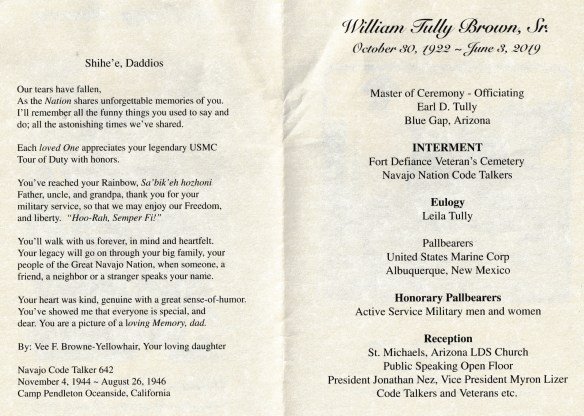


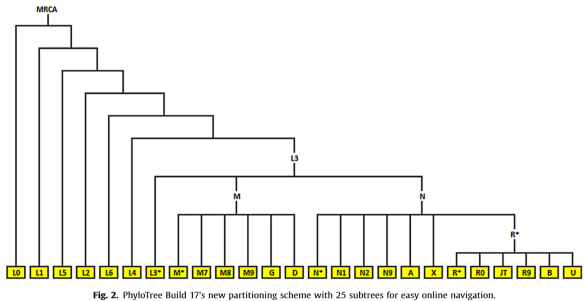


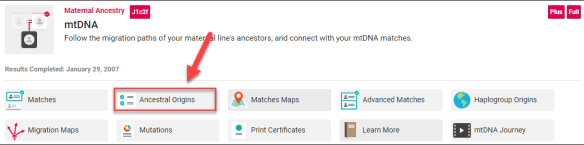


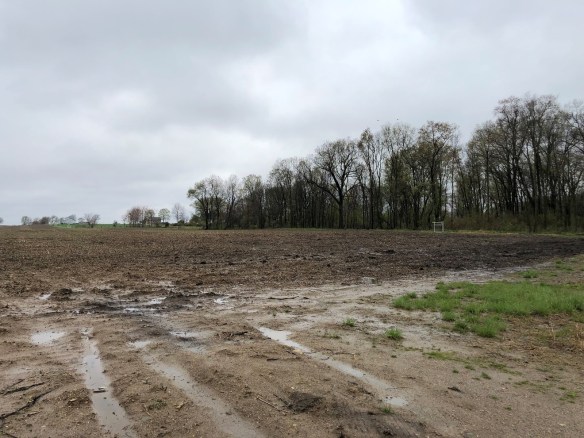


 According to the information from the Ferverda book, this would be the farm near Leesburg. Hiram is holding the baby, and Eva is in the dark dress. My grandfather, John, was on the horse at far right.


