News: Nebula Genomics Whole Genome, MyHeritage Photos Go Viral & Upcoming Publication Schedule

“It never rains but it pours.”

Let’s just say I’m a tad bit overwhelmed right now for numerous reasons. Never, ever even whisper to yourself, “what else could go wrong?” Because you know what happens next, right!

Right now, I need to focus on what needs to be done for RootsTech and on some unexpected matters.

Translated, this means that my blog article publication schedule is slipping, and here’s what to expect.

There won’t be any 52 Ancestors articles for at least two weeks, and perhaps a tad longer. There’s a lot of research and prep that goes into each one, and I just don’t have the cycles right now.

I will *try* to get my regular technical article out this week. I did have a couple queued before RootsTech, but they aren’t finalized. Fingers crossed.

I will try to get at least a short RootsTech article out next week while I’m there. If I manage to do that, the photos will be uncropped and it will be “rough” and brief compared to my normal articles. Think of it as embedded reporting – I’m your correspondent on the ground:)

I do have a couple very interesting newsy items to share with you today.

Nebula Genomics Introduces 30X Whole Genome Sequence, Partners with Family Tree DNA

Nebula.png

I just received an e-mail from Nebula Genomics announcing that they are offering a whole genome 30X (30 scan coverage) sequence (WGS) for $299, plus a subscription to maintain access to updates in their research library. The idea is to sequence once and update your data forever, meaning that medical and other information will be at your fingertips as it becomes available. You can read their FAQ, here and the announcement here.

For this price, the DNA is sequenced in Hong Kong, not mainland China (a situation you can read about here,) but by BGI, renamed from Bejing Genomics Institute, a Chinese government-owned firm. This gives me significant pause due to the Chinese political regime and oppression of the Uighur population using genetic data. Nebula states that they are looking to move their processing onshore in the near future. I will be much more comfortable as soon as that happens.

However, there’s more news. Nebula has partnered with Family Tree DNA.

Hey, Family Tree DNA has a world-class lab, GenebyGene. Perhaps Nebula can move their processing there. I would even pay more to *NOT* send my DNA to a Chinese firm.

Nebula FTDNA.png

Beginning in Q2, you’ll be able to transfer at least some of your information from Nebula Genomics to Family Tree DNA’s Y and mitochondrial databases. This appears to be a direct company to company transfer, much easier than a download/upload, assures accuracy and provides enhanced security.

I don’t see details, and it’s not Q2 yet of course, but I would expect this transfer to function similar to others where the transfer and perhaps some basic tools are free, but for advanced tools, an unlock fee at Family Tree DNA would probably be required. I also don’t know if all data would be transferred, or what happens if you’ve already taken a lower level test, or if coverage isn’t sufficient. Lots to work out moving forward.

Unlike the other WGS products that I’ve considered, Nebula provides a genomic browser and available files for download. In other words, you don’t just receive your sequenced file on a disc and wonder what to do next, and how.

I do have questions about this new offering, but for the $299 price, anyone thinking about whole genome sequencing and is OK with BGI should consider Nebula, especially with the possibility of transferring Y and mitochondrial DNA directly.

As far as I’m concerned, whole genome sequencing become a viable option when:

  • It’s reasonably priced
  • The coverage is adequate, at least 30X
  • My data is secure (meaning not BGI or China)
  • I can easily transfer portions elsewhere (without having to use third party tools to extract the data) and utilize the Y, mitochondrial and autosomal files as uploads in other locations
  • The vendor provides tools or a subscription so I can reap continuing value

When Nebula processing moves onshore, or at least to a western-world lab, I’ll be all in!

My Heritage Colorized Photos Go Viral

I’m pleased to tell you that MyHeritage reports that people have colorized more than a million photos in the first 5 days since they first announced their new photo colorization tool. That means sharing with family and other people getting excited about genealogy.

I’m observing family members on social media realizing they have “long lost” pictures and sharing them when they see the new colorized photos posted. As genealogists, this is EXACTLY what we want to see.

Look at some of these amazing photos in the MyHeritage blog article, here.

Remember, if you’re not a MyHeritage subscriber, you can colorize 10 photos for free and then you can set up a free trial subscription account. When you colorize the photos, MyHeritage saves them beside the original in your MyHeritage account for you. I love this service.

If you’re having problems with older photos, try rescanning the original at the highest scan resolution possible.

I’ve also discovered that this tool doesn’t just colorize photos of people – but of buildings, landscapes and pets too. I’ve found the best results are with something that has a natural green, like leaves, because the software seems to calibrate itself by finding something it can identify.

Fluffy.png

Fluffy color.png

You’ll forgive me if I go and have a good cry now.

_____________________________________________________________

Disclosure

I receive a small contribution when you click on some of the links to vendors in my articles. This does NOT increase the price you pay but helps me to keep the lights on and this informational blog free for everyone. Please click on the links in the articles or to the vendors below if you are purchasing products or DNA testing.

Thank you so much.

DNA Purchases and Free Transfers

Genealogy Products and Services

Genealogy Research

Fun DNA Stuff

  • Celebrate DNA – customized DNA themed t-shirts, bags and other items

RootsTech 2020 – Sessions, Meetups and a Surprise!

RootsTech 2020 speaker

Rootstech is going to be here before you know it! I’m excited about speaking and all of the surrounding activities. There’s so much going on.

I want to share some of my tips about how to plan and manage your schedule plus RootsTech survival tips. If you can’t attend in person, there’s still something for you too.

I’d like to invite you to attend my presentations and other appearances. Many speakers make cameo appearances in places other than their official RootsTech classes – and I’m no exception. I hope that you’ll attend my sessions and other activities where I can meet you. I’ll be bringing my ribbons along too, so be sure to get one to add to your “ribbon chain” collection.

2019 DNAexplain ribbon

My Scheduled Appearances

I’m presenting two official RootsTech sessions that I think you’re going to love, plus an open Q&A, attending a “Meet the DNA ToolMakers” meetup, giving two 15-minute booth sessions and….drum roll…an announcement of a new collaborative science initiative.

RootsTech 2020 summary schedule.png

Here’s my quick schedule summary with details and a map below:

  1. Kicking DNA Up a Notch to UnMask Unknown Ancestors – Wednesday at 11, Emerald Room – Are you just confirming known ancestors – or are you using available tools to unmask previously unknown ancestors? This intermediate to advanced session covers one-of-a-kind tools available from FamilyTreeDNA, MyHeritage, Ancestry, 23andMe, GedMatch, Genetic Affairs, DNAGedcom and DNAPainter. By the time you leave, you will be able to understand the unique aspects of each tool and how to combine them with genealogical resources such as Geni and WikiTree to obtain clues about breaking down those elusive brick walls.
  2. Native American DNA: Confirming those Stories – Wednesday at 1:30, Room 255D – In this intermediate level class, I’ll introduce you to some lesser-known resources available to researchers searching for Native American ancestors. Understanding history helps researchers understand why we need different approaches for Native research. Verification of Native American heritage can come from a variety of DNA tools provided by different vendors. Ethnicity can provide a hint, or not, but what next? Learn how to utilize Native American segment identification from 23andMe, segment painting from DNAPainter and other tools such as Y DNA and mitochondrial DNA from FamilyTreeDNA to find and confirm your Native ancestor(s).
  3. Ask Me Anything (AMA, about DNA anyway) – Wednesday 5:45, Family Tree DNA booth #1117 – I’ll be in the Family Tree DNA booth after the RootsTech opening session on Wednesday beginning at 5:45. I’ll be available to answer questions related to Y DNA, mitochondrial or autosomal DNA. Of course, we can’t find your ancestors in 45 minutes (don’t I wish), but if you have a DNA related question that you’ve been wondering about, come on over. Besides that, I’d love to meet you! I’ll be there at least until 6:30 or as long as there are people with questions or the hall closes, whichever comes first. Stop in and say “hey.”
  4. Meet the DNA ToolMakers – Thursday at 11 AM, Speaker Meetup area in the Expo Hall – The DNA testing vendors are wonderful, but the independent add-on tools take our results to the next level. Have you ever wanted to meet the DNA toolmakers – the people behind those tools – maybe to take selfies, share ideas or ask a question? Now’s your chance! Along with Rob Warthen of DNAGedcom and Jonny Perl of DNAPainter, I’ll be in the speaker meetup area in the Expo Hall from 11:00-11:30 on Thursday. Come on by and noodle with some of the greatest minds in our business. Everyone is welcome!
  5. Incorporating 52 Ancestors into WikiTree – Friday 3:45, WikiTree booth #1311 – Join me for this 15-minute session where I’ll share research strategies using WikiTree to both write and then leverage my 52 Ancestors article series. Make WikiTree work for you both before and after. Those 52 Ancestor’s stories make the BEST cousin bait.
  6. The Million Mito Project: Tracing the Family Tree of Womankind – Saturday 10:20, Demo Center in the Expo Hall – You’ll definately want to be present for this 15 minute session in the Demo Theater (with couches as seats) to learn about this history-making initiative that will change the matrilineal genetic landscape as we know it. I can’t tell you any more just yet. Yes, it’s a secret – but trust me, you don’t want to miss out. Come be a part of history unfolding. (PS – There’s a drawing at the end and some lucky person is going to win a full mitochondrial sequence test.)
  7. The Million Mito Project: Tracing the Family Tree of Womankind – Saturday 12:10, FamilyTreeDNA booth #1117 – Can’t make the Million Mito Project announcement Saturday morning in the Demo Theater? No problem. I’m presenting again in the FamilyTreeDNA booth.

The Lay of the Land

I’ve marked the locations where I’ll be on the Expo Hall map below with the red star numbers corresponding to the appearances, above.

Rootstech 2020 show floor

click to enlarge

The Emerald Room is located THROUGH the Expo Hall, through the doors at the rear. Room 255D is located on the second-floor mezzanine, in front of the Expo Hall. You can’t see those rooms here, but you will when you’re standing there.

Can’t Attend RootsTech in Person?

Did you know that 21 sessions, including the keynotes, will be livestreamed and available to watch for free? The livestream schedule is here.

In addition, another 30 classes will be recorded and available to watch online 2 or 3 weeks after the close of Rootstech for Virtual Pass holders. Here’s the list of included classes and yes, my session, “Kicking DNA up a Notch to Unmask Unknown Ancestors” is included in that group. All recorded sessions will be available for 12 months and the cost is $129 if you aren’t attending RootsTech.

RootsTech Survival and Planning Strategies

Someone recently asked how to plan for RootsTech since there are so many wonderful sessions to choose from, and many are running concurrently. The first survival hint involves the Virtual Pass.

  • If you are attending RootsTech 2020, but you want to see sessions whose times conflict with each other, you can purchase an add-on virtual pass for $79 which allows you to watch those sessions later. You don’t have to decide now, as you can still purchase after the conference until September 1st, but if you know you’re going to purchase the Virtual Pass, then you may plan your time at the show differently.
  • It’s important to use the downloadable RootsTech conference phone app that includes the ability to search and view classes by day and by speaker. However, the most important part for me is the “My Schedule” portion which allows me to easily click on the class I want and put it on my conference schedule in the app. I can also add personal things to the calendar like appointments.
  • Another aspect of Rootstech to consider is when the show floor, called the Expo Hall, is open, and when it isn’t. On Wednesday during the day, the Expo Hall is not open until after the main session. Then, the Expo Hall with exhibitors is open for the evening and there are no competing sessions.
  • Many of the vendors have demo areas in their booths and do short classes – generally 15 minutes or so – a few longer. That’s free education, especially if you like their product and would like to learn more – or you want to see a demonstration. To be honest with you, the Expo Hall is one of my favorite aspects of the show. It’s wonderful to see “all things genealogy” in one place and to get to meet the vendors in person.
  • When you arrive, you’ll see vendor brochures in your goodie bag. Look through the bag for booth event schedules and add things you want to attend in the conference app on your schedule. (Not all booth events are listed on the pre-printed schedule, so check out the booth of any vendor that interests you.) Many conference speakers make appearances as guest speakers in vendor booths to share the love. I’ll be in the Family Tree DNA booth and the WikiTree booth making presentations, as noted on my schedule above.
  • Look at a map of the facility and figure out where you are going before you need to get there. There’s a facility map in the RootsTech phone app under “RootsTech documents.”
  • The Demo Theater isn’t mentioned much in advance, but it’s an area in the Exhibit Hall where vendors can sign up for 15-minute slots to give mini-sessions about products or live demonstrations. Check out that schedule after arriving.

Rootstech demo theater

Demo Theater sessions are free, seat about 100 people ON COUCHES (your feet and back will thank RootsTech), first come, first serve and generally there’s a drawing for something from that vendor at the end of each session. Often, the vendors make announcements or you’ll hear about their latest and greatest feature. Please note that I’m appearing in the Demo Theater on Saturday morning at 10:20 to tell you all about The Million Mito Project.

  • Speaking of the Expo Hall, Saturday is the busiest day of the show for two reasons. Local people who work during the week attend on Saturday, plus the Family Day Discovery pass for Saturday is free for members of the Church of Jesus Christ of Latter-Day Saints. You can compare the various Rootstech passes here, including the one day passes.
  • Stuff gets heavy – the convention center is HUGE, and anything you’re carrying will become VERY heavy over the course of the day. Minimize. Consider a cross-body small purse that will hold your cell and credit cards and leave everything else in your hotel room. You’ll receive a lightweight conference bag to put treasures in, so utilize that. I bring a laminated nametag made into a luggage tag to put on my conference bag since they all look alike. There is no place, other than the coat check, to leave anything, and you don’t want to leave anything other than your coat there, if that.
  • Plan for food and water. Many food vendors are available in the conference center, but you may want to eat off-hours. At 12 noon, the lines are quite long. Plan accordingly and be prepared to stand and wait. I’ve been known to purchase my meal in the morning, assuming it’s something like a wrap, put it in my bag and have a picnic later someplace.
  • Wear your most comfortable, supportive shoes. Yes, seriously. This is not the time to worry about fashion. Be prepared for snow and cold – it’s winter – although they generally do a great job of snow-removal.
  • I Uber or Lyft using the apps on my phone. I gave up renting cars, navigating and worrying about parking in strange cities years ago. Note that there is construction at the convention center this year. There is also bus service from the airport, but I’ve never used it.
  • Don’t forget that the Family History Library is down the street just a couple blocks. There are few evening activities at RootsTech, but the Expo Hall is open. The FHL often has extended show hours. Plan what you’re going to do before you go by using the FamilySearch search application and focus on the catalog.

Rootstech FamilySearch catalog.png

  • In addition, I constantly use the FamilySearch wiki to figure out what is available from the location I need to research. If you show up at the FHL without a plan, it’s kind of like being in the library of Alexandria without a roadmap. The volunteers at the FHL are very kind and extremely helpful – and don’t worry about unsolicited religious pressure – there is absolutely none. (I’ve been visiting Family History Centers for more than 30 years, do not attend that church, and there has never been any pressure or even discussion unless I asked a question.)
  • RootsTech has published their own survival guide here.

I have so much to do to get ready yet. Hope to see you there!!!

_____________________________________________________________

Disclosure

I receive a small contribution when you click on some of the links to vendors in my articles. This does NOT increase the price you pay but helps me to keep the lights on and this informational blog free for everyone. Please click on the links in the articles or to the vendors below if you are purchasing products or DNA testing.

Thank you so much.

DNA Purchases and Free Transfers

Genealogy Products and Services

Genealogy Research

Fun DNA Stuff

  • Celebrate DNA – customized DNA themed t-shirts, bags and other items

Down Under: Tasmania – 52 Ancestors #273

This is part 2 of a multi-part series about my trip down under to Australia and New Zealand. You can read part one about my adventures in Sydney, outside Melbourne and in the Blue Mountains of Australia, here.

This trip was very different from past journeys, in part because we traveled over the holidays. We discussed this with family members first, but the kids are grown and the cruise line, Viking, included free airfare, but on just this one departure date. Clearly, lots of people hesitate to be gone for the holidays and Viking wanted to fill the cabins. For us, the free airfare made the trip affordable and our adult children were incredibly flexible. It also meant that we would spend New Year’s Eve someplace very unique😊

In this article, I’ll be sharing an unexpected New Year’s Eve treat, the absolutely amazing UnZoo, the penal colony at Port Arthur and a stunning drive along the Tasmanian coastline.

And of course, because it’s me, we had a crisis.

Come on along…

Tasmania

Tasmania is an island state of Australia. Separated from the mainland during the last ice age about 10,000 years ago. Tasmania is mostly volcanic – and beautiful.

Tasmania map.png

We departed from Melbourne and would be putting into the port of Hobart, the capital of Tasmania after a day at sea.

Tasmania aerial.png

From Hobart, we traveled by bus to the Tasmanian Devil UnZoo and on to Port Arthur, the site of one of the original Penal Colonies.

But before reaching Tasmania, we celebrated New Year’s Eve!!!

New Year’s Eve

This was a New Year’s Eve like no other, in more ways than one.

Jim and I had been anticipating New Year’s Eve shipboard. We’re not big celebrators at home, and we knew, just knew, that Viking would host a bang-up party.

What we didn’t know, of course, is how rough the seas would be.

I don’t do well with motion, and the remedy for that is to take Dramamine and go to bed.

The remedy does not involve either food or alcohol. And NEVER alcohol in combination with Dramamine. Not only that, but alcohol makes normally stable people unstable, and with the ship rocking to and fro, I needed every shred of stability I could muster.

Additionally, I was still affected by jet lag. It gets better gradually over a few days, but for me, jet lag means I’m sleepy just about all the time that I’m supposed to be awake, and wide awake when I’m supposed to be asleep. My body just screams, “I’m confused.”

Indeed, Viking scheduled a New Year’s Eve party from 9 – 12:15. Yes, you read that right. It ended at 12:15. Fifteen minutes after midnight.

I had to laugh, because Viking does attract many retired people, but really, we’re not THAT old. Why I remember New Year’s Eve’s that I was only getting started at 12:15, but I digress.

While Jim and I were trying to decide if we were going to sleep or going to party, the Cruise Director invited passengers to the atrium to a Chocolate Tasting.

OK, there’s no question. I’m going to that – rolling seas and Dramamine or not! Chocolate is going to be the death of me yet. I already tripped and fell once in the pursuit of chocolate and ancestors, but I was NOT going to miss this event.

Tasmania Chocolate Tasting.png

Believe me, the title “Chocolate Tasting” was significantly understated.

The chefs had outdone themselves and created an entire edible chocolate art display, plus buffet.

This event was so popular that they had to rope off the area and a line formed quite some time before the grand opening, or in this case, grand un-roping.

It seems that everyone loves chocolate.

Chocolate

Tasmania chocolate table.png

I slipped in while they were setting up to grab a few shots. This was before the serving trays arrived that held the beautifully decorated and arranged goodies for the guests.

Tasmania musicians.png

Musicians were scattered throughout the public areas of the ship. Music may calm wild beasts but I’m not so sure about people being restrained from chocolate.

When they *finally* opened the Chocolate Tasting buffet, it was immediately swamped with eager guests.

Tasmania chocolate served.png

It seems that everyone wanted a photo before the trays were empty. I’m sure you’ve heard the saying that you eat twice, first with your eyes. Truth! And this was a smorgasbord.

Tasmania chocolate variety.png

There an amazing variety of delectable goodies. I learned that those pastel cookies are French macaroons. Who knew?

Tasmania barrier reef.png

Isn’t this just beautiful?

Tasmania chocolate fountain.png

There were two very popular chocolate dipping fountains, off to the side, one white chocolate (yes, I know that’s not really a thing) and one “regular” chocolate. As you can see, the tray was empty but held fruit and marshmallows. Nothing remained empty very long.

Tasmania edible decorations.png

The decorations like the “plants” and that loopy ribbon-looking artistic expression on the left are edible.

Tasmania chocolate theme.png

The theme was Australia, of course. Just look at those native flowers and pots with “bark.”

Tasmania chocolate fish.png

The “barrier reef” with the chocolate fish. Everything was edible, but no one could bring themselves to eat the display itself.

Tasmania chocolate fires.png

The bushfires were present on everyone’s mind.

Tasmania chocolate tree.png

This chocolate Christmas tree looks like laser-cut scrollwork. I wonder how they did that.

Tasmania chocolate buffet.png

Very pastel for chocolate. Look at those beautiful lacy butterflies. I bet they worked all day on this. I wonder if the chefs were disappointed that people didn’t eat the decorations themselves, of if they would have been hurt if they had. Maybe that was the crews treat later.

Tasmania New Year's Eve sunset.png

After falling into a chocolate food coma, we went to our cabin and watched the sun set.

Tomorrow would be an early morning, waking up in Hobart, capitol city of Tasmania.

I probably don’t need to tell you that we never made it to the party.

Never make the mistake of laying down on a cruise ship. The motion will rock you right to sleep.

Tasmania

New Year’s Day dawned bright and beautiful. Happy 2020! I had never welcomed a new year in another country, let alone another hemisphere on a landmass half way around the world.

Tasmania Harbour

click to enlarge

After docking, we climbed aboard the bus to head for the UnZoo, and then on to the Penal Colony, first driving through the city of Hobart.

Tasmania is known for its wool production and exports, both historically and today.

Tasmania woolstore.png

One of my favorite things about cruising is that you’re always by the sea.

Tasmania coast

click to enlarge

The entire journey today would be along the beautiful Tasmanian coastline in the golden rays of sunshine.

Tasmania coast bay 2.png

Before long, we arrived at the UnZoo.

The UnZoo

That the heck is an Unzoo? Well, it’s the reverse of a zoo.

The animals aren’t caged for human entertainment. The animals live in their natural habitat, without fences, and the humans are guided through that habitat and (minimally) restricted for everyone’s protection, when necessary. Kind of an immersion experience in a native botanical garden that the animals enjoy too.

I have always been very concerned about the ethical aspects of zoos – and I absolutely love not only the concept of an UnZoo, but the UnZoo itself.

We visited the Tasmanian Devil UnZoo whose mission is to save the Tasmania Devils. The Tasmanian Devil, a carnivorous marsupial, was named by the original colonists due to its ferocious voice and aggressive nature. They may be small, but they don’t know it, or sound small. Extinct on the Australian mainland today, they are found only on Tasmania, and may become extinct there soon.

You can hear and see the Devils in a YouTube video here. That voice!

Additionally, the UnZoo serves as a wildlife sanctuary, hospital and preserve for other native Tasmanian species as well.

Tasmania UnZoo save Devil.png

You may have heard that the Tasmanian Devils are urgently threatened with a rare form of facial cancer, DFTD or Devil Facial Tumour Disease, a fatal, transmittable cancer.

The bad news is that DFTD is one of only three forms of contagious cancers in the world and more than 80% of the Devils are infected today. The good news is that the location of the UnZoo has allowed a fence to be built across the neck of the peninsula to protect the Devils on the peninsula, none of whom are infected. In other words, the cancer has not spread there – yet.

Tasmania UnZoo map.png

To give you an idea of the lay of the land, Hobart is on the left, above, the UnZoo is the red pin, and the fence spans the small neck of land at Dunalley pointed to by the red arrow. If this fence and alarm system fails, the Tasmanian Devil will likely become extinct.

The UnZoo admissions provide funding for building and alarming the fence along with caring for the animals. You can contribute, here.

The guides at the UnZoo are extremely committed to the animals under their stewardship.

Tasmania UnZoo guide.png

The animals come to know the guides quite well. As a retired wildlife rehabilitator, I can assure you that even though we attempt not to form bonds with the critters, we do – and they do with us as well.

Tasmania UnZoo parrot.png

While the birds in the aviary at Healesville, outside Melbourne, had been reclusive, that’s not the case here for these unconfined birds.

Tasmania UnZoo parrots in trees.png

Look up! Birds are everyplace.

Tasmania UnZoo parrot me.png

A little birdseed helped encourage this friendly parrot.

Tasmania UnZoo parrot Jim head.png

Jim was quite taken by surprise. There was no birdseed on his head, so the attraction must have been something else. You can see both Jim and the bird are quite pleased.

Tasmania UnZoo Tasmanian Devil Education.png

Educational signs are posted in many places, helping visitors get to know the animals, along with discussing the history, challenges and surrounding habitat.

Tasmania UnZoo Tasmanian Devil habitat.png

People walk along the paths. This border is not to keep the Tasmanian Devil in, but to keep the people out of the Devil’s habitat and to keep everyone safe.

Tasmania UnZoo Tasmanian Devil.png

I had a difficult time getting a good picture of that Devil.

Tasmania UnZoo Tasmanian Devil closeup.png

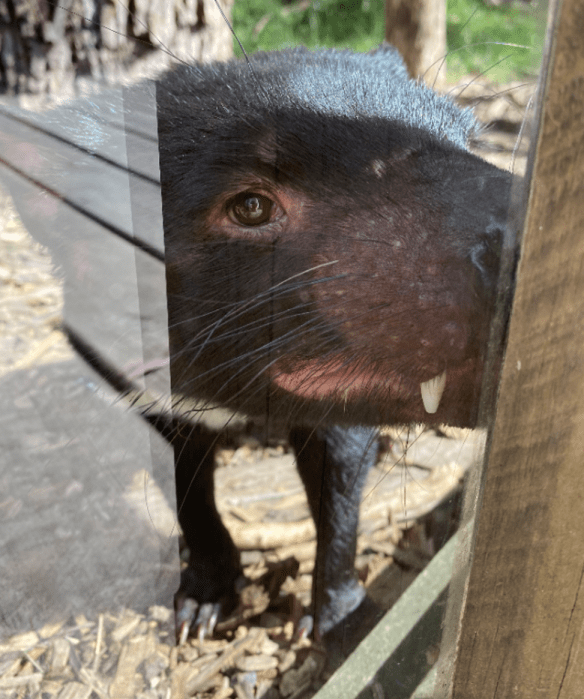
In another area, the boardwalk is separated from the animal’s area by plexiglass. This little Devil came right up and took a look at us.

Tasmania UnZoo Tasmanian Devil top.png

As it turned out, he was a bottle raised orphan after his mother was killed on the road.

Tasmanis UnZoo Tasmanian Devil eating.png

After reaching adulthood, he failed in the breeding program. Let’s just say he got too excited and accidentally hurt the females, so he is experiencing an early retirement, at least from planned breeding anyway. What goes on in the bush stays in the bush though – and he’s not telling.

Lots of human imprinting means he’s quite docile, at least for a Tazmanian Devil, and although he isn’t confined in any way, it’s unlikely he’ll ever leave the general area. As a rehabilitator, I had wild, released, animals that hung around nearby for years, without being fed or encouraged. One swan even came and pecked on the sliding glass door with his beak to get help once when his mate was injured.

One of the UnZoo initiatives, aside from preventing the spread of disease is to care for orphaned animals, help the injured recover and sustain a wild breeding Devil population.

Sadly, sometimes they pass on.

Tasmania UnZoo Devil Cemetery.png

Devils that have died at the UnZoo are buried here.

Tasmania UnZoo Devil Cemetery 2.png

If you look at their “tombstones,” you’ll notice that some of them appear to have lived quite long lives. Freddie, for example, 1991-2007. These may be fictitious dates, because Devils typically don’t live more than 7 years in the wild, although it’s well-known that captive animals with care often live longer than wild animals.

Tasmania UnZoo Erpol.png

I have to wonder what is special about Erpol’s genetics. I’m suspecting that it might have something to do with the facial tumors. I sent the UnZoo a query about this but haven’t heard back from the right person.

Interestingly, there is little genetic diversity in the remaining Devils due to various past population bottlenecks where few Devils were left alive. Unfortunately, the immune system of the Devils today can’t recognize the tumor cells as foreign due to a mutation shared by all known Devils.

Devils aren’t the only animals at the UnZoo.

Tasmania UnZoo Wallaby.png

This Wallaby hopped across the path in front of us.

Tasmania UnZoo Pedemelon.png

These particular Wallabies are called Pademelons. Numbering in the millions, they live in the scrub and eat grass. There are no fences, so these critters are free to come and go.

Tasmania UnZoo birds.png

Umm, excuse me….

The person had no idea these hopeful birds were creeping up behind him.

Next, it was my turn to be surprised. The guide told us that if we walked into this field, stood very quietly, and did not approach any of the animals, that the kangaroos might, just might, come out to see us.

Tasmania UnZoo Kangaroos.png

A group of kangaroos is called a mob, and they tend to be quite skittish. A gust of wind that startles one of them precipitates a mass high speed exit of the entire mob.

Tasmania UnZoo kangaroo mob.png

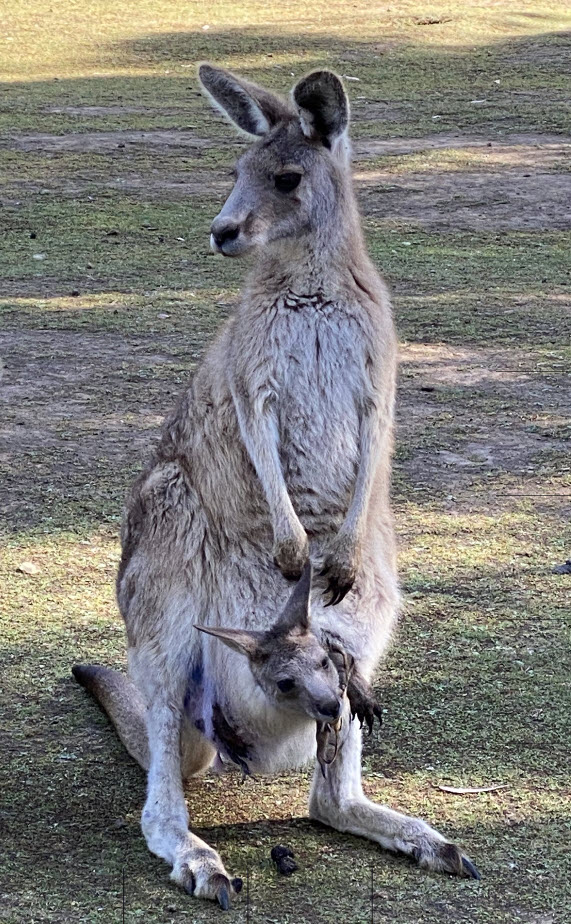
You have no idea how thrilled I was. Note the joey in the pouch of the Mom in the middle.

Tasmania UnZoo single kangaroo.png

Kangaroos are extremely powerful creatures. When fighting during breeding season, males kick to kill each other and can disembowel with their back legs and claws. Notice the length of their claws in the following pictures.

Tasmania UnZoo curious kangaroos.png

“Hey, hi, who are you?”

Tasmania kangaroo

This doesn’t look very comfortable for either mom or baby, but it clearly works and keeps the baby safe. The guide mentioned that for the mother, especially when it’s desperately hot, like the days when it rose to 122 degrees, the Joey is like a hot water bottle up against her abdomen. The Joey probably feels the same way too.

Joey’s stay in the pouch entirely for about 9 months and continue to nurse for about 18 months, much like human children, well except for the pouch. The mother can have 3 dependent Joeys at once. One as an embryo developing, one in the pouch like this guy, and one still suckling outside the pouch. You can read more, here.

Tasmania kangaroo up close.png

Our guide explained we were not to approach any animals, but that IF a kangaroo approached you, that you could slowly reach out and scratch its head. If the kangaroo liked that, and approved of you, it might expose its chest to you as well, which they enjoy having scratched. Kind of like dogs.

They also enjoy kangaroo kibble.

Tasmania UnZoo Jim kangaroo.png

Jim said this was literally the highlight of his trip.

Tasmania UnZoo Jim kangaroo feed me.png

“Wait, wait, I wasn’t finished…”

The kangaroo literally reached out and gently pulled Jim’s hand back towards her – like our cats do at home.

Tasmania UnZoo stealth kangaroo.png

“Hey, no one’s looking are they??? Shhhh, don’t tell”

This kangaroo stealthily snuck up behind the guide and oh so quietly slipped its head into the bucket pilfering a snack.

Tasmania UnZoo mom and joey.png

I was standing off to the side when the Mama kangaroo with the Joey hopped up to me. I was very surprised since mothers are typically very reserved when their young are involved. I didn’t have any food in my hand either, at least not yet.

I offered to pet and scratch her, although I fully expected her to retreat. She didn’t and scratching seemed to be exactly what she wanted. She seemed a bit shy around more than one person at a time.

Tasmania UnZoo petting mom and Joey.png

Look at the length of those toenails. Just sayin’!!!

We had quite the scratch-fest. Not only did Mama let me scratch her head, then her chest, she twisted around so I could scratch her back, AND THEN SHE RAISED UP AND LET ME PET HER JOEY!!!

Tasmania UnZoo me petting Joey.png

The Joey seems to love his little Joey-sized scratches too.

This might well have been the highlight of my trip – although there were so many amazing experiences.

Just call me the kangaroo whisperer.

Tasmania UnZoo mom kangaroo.png

Surprisingly, Mama wasn’t interested in food though. Nursing an older Joey requires lots of calories.

Tasmania UnZoo me feeding kangaroos.png

As soon as they realized I had treats, the other kangaroos wanted snacks.

Tasmania UnZoo mom eating.png

Then Mama changed her mind. I could have stayed right here all day.

Sadly, it was time to head for the gift shop and to say goodbye to the animals at the UnZoo.

Tasmania UnZoo Tasmanian Devil farewell.png

This shy Devil watched from a distance as we arrived, and he watched us leave too. I think he’s the unofficial guard.

Tasmanian UnZoo Tasmanian Devil art.png

Tasmanian Devils at the UnZoo even create art. I would have purchased this if it had been for sale in the gift shop, but it was hanging in the gardens. It looks like batik fabric and where else could you find something this unique?

Tasmania UnZoo devil tile

Even the floor in the gift shop is devilishly cute.

Next, we headed for the penal colony at Port Arthur.

Port Arthur

Port Arthur was the harshest of the penal colonies in Australia. I have to tell you that this was difficult for me. The buildings are beautiful, but the history is dark, horribly dark. I give the Tasmanians a lot of credit for not sweeping it under the proverbial carpet and instead, using this location and history as a learning experience.

While whalers had been using the Tasmania’s islands since 1798, it wasn’t until 1803 that a military outpost of 49 people was established here. Of those 49, many were convicts; 21 males and 3 females.

Eventually, 75,000 convicts would arrive in Tasmania, one fourth of the total sent to Australia from the British Isles. Many of their crimes were menial.

A database of 132,000 of the known 160,000 convicts transported to Australia can be found here. Tasmanian convict records are online in several locations. Check your surnames, even if you don’t have Australian ancestors. You never know who you might find, or from where. The key to solving a long family mystery might be waiting in the convict records.

A New Zealand cousin was responsible for breaking down our Speaks family brick wall, allowing us to find the location in England. Don’t make assumptions that Australian and New Zealand records or DNA matches are irrelevant to you. They may be exactly what you need!

Non-convict settlers began arriving near Port Arthur in about 1820, lured by land and free convict labor.

Tasmania Port Arthur convict labor.png

Using convict labor meant that convicted men, not animals, pulled plows. Generally convict women were servants.

Established in 1830, from 1833 to 1853, the Port Arthur penal colony was the destination for the hardest of convicted British criminals – secondary offenders, rebellious people from other penal colonies and sadly, those with mental health issues.

Tasmania Port Arthur pano

Click to enlarge, photo By JJ Harrison (https://www.jjharrison.com.au/) – Own work, CC BY-SA 3.0, https://commons.wikimedia.org/w/index.php?curid=5185333

Surrounded almost entirely by (supposedly) shark-infested waters, escape was not possible. One man tried, disguising himself in a kangaroo skin, up until the hungry guards attempted to shoot the kangaroo for extra rations. Luckily for him, they were poor shots. He threw off the kangaroo skin and surrendered.

The isthmus of Eaglehawk, the only possible escape route was fenced, guarded by soldiers, man-traps and literally, intentionally half-starved dogs chained every few feet as sentinels.

Let us just say that not only was the most severe physical punishment and torture used on the convicts, but the concept of psychological punishment and torture was developed and perfected here.

Some men murdered others simply to be put out of their eternal misery; confinement under horrific circumstances with no hope of reprieve or release – ever.

I found the cruelty terribly disturbing, with inmates being whipped long past becoming unconscious, repeatedly, then hooded and confined in total darkness and silence for days and weeks on end. It’s no wonder that beside the prison, a building known simply as “the asylum” was built because the minds of many did not survive the incessant torture. They were literally “driven mad.”

You’ll forgive me if I simply could not take a picture of that building.

The 1646 or more convicts who died here were interred on the Isle of the Dead, right off shore in the bay, but only 180 graves of prison staff or military personnel are marked. The prisoners are interred in anonymous burials, graves dug by other convicts that would, soon enough, sleep there themselves – probably much more peacefully than they lived. For most of them, death was probably a welcome release.

Port Arthur was closed in 1877, the buildings abandoned.

All of these buildings were built with the labor of the men who were confined in them, including, ironically, the church.

I’ll not say more.

I will let these photos speak for themselves in silence – beginning with our arrival.

Tasmania Port Arthur arrival.png

Tasmania Port Arthur ruins.png

Tasmania Port Arthur building.png

Tanzania Port Arthur window.png

Tasmania Port Arthur separate prison inside.png

Tasmania Port Arthur side.png

Tasmania Port Arthur church

By D. Gordon E. Robertson – Own work, CC BY-SA 3.0, https://commons.wikimedia.org/w/index.php?curid=9752214

Tasmania Port Arthur fence.png

Tasmania Port Arthur Isle of the Dead.png

Tasmania Port Arthur cemetery

By Star reborn – Own work, CC BY-SA 3.0, https://commons.wikimedia.org/w/index.php?curid=9653430

Lunch in The Asylum

Tasmania beer.png

Lunch that day was served in “The Asylum,” of all places, and included a Tasmanian beer if you were interested. I drink very little, but this is very good beer and was quite welcome, as I was more than a little uncomfortable in The Asylum. I could literally feel the agony of those long-forgotten people. Not surprisingly, Port Arthur and The Asylum are reported to be heavily haunted with ghost tours reporting screams still emanating from cells, and more.

Thank goodness, I found a beautiful flower to focus on, and not the brutality that had occurred in the recesses of this building for many decades. How many lives lost? How many minds lost? What kind of human could inflict that level of torture on another sentient being? Death would have been far more humane.

Why is it that humans feel that torture of other humans, or animals for that matter, is ever justified or acceptable? As the guide said, all of this was meant to grind you down into submission and subservience, and to deter others, but sometimes the cogs ground too far.

Tasmania flower.png

Color and beauty, for me, is always a welcome salve.

The Coastline

I was grateful to leave, something many of the convicts were never able to do.

Tasmania bay.png

Heading back towards Hobart, the coastline was beautiful and relaxing.

Tasmania overlook.png

We stopped for a short walk and to take pictures of this stunning vista.

I know these are weeds of some sort, but I prefer to think of them as wildflowers. A weed is a flower growing in a place where you didn’t plant it and don’t want it to grow.

Tasmania farm.png

Our trip back towards Hobart took us through a farm that I believe incorporated a golf course with a “country” lodge.

Tasmania farm 2.png

These ranches are massive, mostly free-range farms encompassing thousands to tens of thousands of acres supporting sheep, goats and cattle, and in this case, a golf course too. The mountains, seen in the distance, are never far.

Tasmania tractor.png

This tractor looks familiar and reminds me of growing up.

I can’t tell you how many times I walked to the house because the tractor got mired down someplace in the mud or ran out of fuel. My Dad would just look at me as I walked from the field to the barn, shake his head and chuckle, surveying the scene over my shoulder to determine just how much trouble it was going to be to retrieve the tractor this time😊

Some things seem to be the same world over.

Tasmania ship

click to enlarge

Look, I do believe that’s our ship, waiting for us.

Tasmania IXL jams.png

On the waterfront in the dock area, near the passenger terminal today, the IXL Jams building stands as testament to a company of that name formed in 1891, specializing in jams, of course. The local legend says that someone told the founder to name the building, so he decided on IXL, as in “I excel.” Is that true? I couldn’t confirm, but it’s a cute story.

Inside the terminal, we found a maker’s market, although they were getting ready to close for the day.

Tasmania maker market.png

We were just in time and I thoroughly enjoyed perusing these goods. No fabric though, or t-shirts.

Tasmania Kami Joey.png

I bought beautiful zippered change purses with helixes. What, you don’t think that those decorations are really helixes?

Kami and Joey approve!

Rough Seas

Now might be a good time to mention that the seas around Tasmania and New Zealand’s South Island are considered to be some of the roughest in the world. We had two sea days between Tasmania and our next port, Dunedin, in New Zealand.

Had I known those seas had that reputation, I would not have booked this cruise. Maybe it’s a good thing I didn’t know, because I survived, and the cruise was amazing. But it was not without challenges.

It’s also a good thing I had unlimited amounts of Dramamine and Viking has room service for food.

So, what do you do on a ship at sea for 2 days?

Tasmania lobster.png

At our age, you eat.

Tasmania fish.png

You find food that looks like state shapes. Think of this as adult I-spy. This is the lower peninsula of Michigan.

Tasmania latte.png

You drink. In my case, coffee and tea. Adult beverages flowed freely.

Tasmania lobster art.png

You find more food art on the ship.

Tasmania art sandwiches.png

This looks good enough to eat.

Tasmania art pasta.png

OK, now I’m hungry. That’s no problem, because there’s food everyplace.

Tasmania Manfredi's.png

The cafeteria is open for all meals, but theme restaurants, like Manfredi’s Italian restaurant require reservations but there is no extra cost. This is the BEST tiramisu I’ve EVER eaten, and their steak is legendary.

Jim went to a cooking class with the chef where he learned how to make the Tiramusu and received the recipe. I’d share with you, except that would be copyright violation, I’m sure.

Can’t make up your mind about dessert? No problem. Have 3😊

You can also swim or immerse yourself in the hot tub, go to the spa, sit poolside for high tea, watch movies in your room or in the outside theater, attend a wide variety of cultural talks – or all of the above.

As a special treat, you can go to the Viking Orion’s 3D planetarium, don 3D glasses and enjoy specially filmed movies about sea life, space or the aurora borealis. We enjoyed all three, but then we’re space and science geeks.

You cannot be bored.

You can, however, have a crisis.

The Crisis

By this time, we were about a week into the trip of a lifetime. We departed on Christmas Day and this was New Year’s, a week later.

When I pack, I make lists.

The most important things on that list are my meds, phone, credit cards, and my technology if I’m presenting. If I’m going overseas, add passport and visa to that. Everything else can be replaced if need be.

You know what’s coming next don’t you.

I obviously have my passport and Visa, or I wouldn’t have been IN Australia. I had my phone or you would have already heard about that, and I’ve already mentioned my computer. I would gladly use Jim’s credit cards if mine were missing😊

That only leaves one thing.

Yep, meds.

I use a 7-day reminder pill box. When I went to refill for the 2nd week, I had every med in the Rx vials, except one.

OMG HOW DID THIS HAPPEN?

Not that how mattered at that point, because the issue was the same regardless.

I only take 2 meds that I can’t do without – and the one missing was, of course, one of those.

I had a full-fledged crisis on my hands.

I asked my daughter back home to check, and sure enough, the vial was sitting right on the counter, so it wasn’t buried in the luggage or lost someplace – although by that time I had already frantically torn everything apart.

Maybe, just maybe, the ship’s medical department had something that would work.

Nope – but they contacted “someone” on shore. We were dealing with a US prescription, that I couldn’t prove was prescribed for me, a Norwegian ship, New Zealand laws and a ship’s medical staff from ??? licensed in ???.

What are the chances this is going to work out well?

The nurse told me that at the next port, Dunedin, I might have to go to the doctor to get a prescription written by a physician IN New Zealand. They didn’t know for sure, but they were contacting the proper people onshore and would let me know soon.

The hours dragged by.

No news.

I worried. I worked on my computer and wrote a blog post. Thank goodness for wonderful wifi.

Fortunately, I had a couple spare doses in my purse, so I wasn’t out entirely, but would be in another 2 days.

The Viking shore agent was working with pharmacies to try to get my meds.

Finally, news came that the agent “thought” they would have my meds the morning we got into port at Dunedin. If not, then I’d get to visit the doctor instead of going on a shore excursion, which is not the adventure I intended to have. Regardless, I was grateful for any resolution to this problem.

I was so MAD AT MYSELF, not to mention my husband who assured me he put the vials in the bag, multiple times. I could kick myself for not checking.

However, at least there was a solution and the rest of the trip would be just fine.

I took Dramamine and went to bed. The seas were rougher than ever. I just wanted to go to sleep. Something, probably the deck furniture, crashed into the railing on the neighbor cabin’s balcony, jarring me awake. It was going to be a long night.

By the time we woke up in the morning, we should be docked in Dunedin.

NOT Dunedin

I went to bed feeling much better about the situation. One way or another, everything would work out.

I woke up, anxious for docking so I could stop worrying about the medication. We should already have been in port, but sometimes schedules are beyond the control of the captain. Mother Nature has a mind of her own and interferes, as do port schedules and berth availability. I could feel the ship rocking, being tossed around roughly. We weren’t in port.

I slid the door open and stepped outside on the small balcony.

The ship was still sailing and port was nowhere in sight. I turned on the TV to see how much further we had to go on the map. It appeared that we were beyond the port – but those maps aren’t exact by any means. We interpreted this to mean that we would be in port shortly.

We got dressed and headed to the cafeteria for breakfast, ready to leave for shore excursions, or the doctor, whichever our aadventure for the day turned out to be, as soon as we docked.

During breakfast, the Captain began speaking over the intercom and informed us that, indeed, we were NOT going to Dunedin after all, because the seas were too rough and the ship couldn’t dock safely.

Rats!

Wait!

OH NOOOOooooo – my meds are supposed to be waiting in Dunedin!!!!

Now what?

Back to medical, but the door of the medical department was closed and locked. Uh-oh.

Bless those customer service agents on the ship, because they are amazing.

After several phone calls, the word was that Viking would “try” to have the med shipped from Dunedin to Christchurch – but the problem was that we were only to be in Christchurch for a day. The meds would likely arrive after we left. This wasn’t going to work, and unless we got meds in Christchurch, I would be out entirely.

To make matters worse, we were now relaying messages between me, the customer service agent(s) including a supervisor, the medical department personnel and two port agents in two different locations. Not to mention a pharmacy and who knows who else was involved.

Lord have Mercy – this is never going to work. Disaster is written all over this scenario.

The customer service agent told me that “someone” would call me in my room as soon as they knew something. There were a lot of anonymous someones and somethings in this equation.

Passengers were informed that the ship would be docking that evening in Lyttleton, the more distant of two ports where cruise ships dock whose passengers are headed for Christchurch – not in Christchurch itself, further complicating an already complex Rubik’s Cube.

So off I went to deal with another rough day at sea, worrying and waiting for a phone call.

Minutes stretched to hours.

No news.

Maybe I have new MyHeritage triangulated segments or SmartMatches.

No news.

Maybe I have new bucketed matches at Family Tree DNA.

Still no news.

Maybe I have new shakey leaf hints. Nope.

Is that phone EVER going to ring???

I spent the day writing and reviewing a business plan with a jeweler I had met with in Melbourne, Australia to discuss a DNA jewelry line. (No, I didn’t mention that little detail😊)

Tasmania sea.png

The seas were still rough and the sky was grey. I was feeling blue.

Would we even be able to dock? Lyttleton was said to be as difficult as Dunedin, snugged into a U-shaped bowl of mountains.

New Zealand Lyttleton aerial.png

Yay!!! Docked at Lyttleton

I have never been so glad to see land!

New Zealand Lyttleton port.png

We’re here! What a relief!

New Zealand Lyttleton Harbour.png

Lyttleton is beautifully tucked into a lovely harbor, but at that moment, I was pretty much oblivious to the beauty and awash in relief.

New Zealand Lyttleton Viking Orion.png

What I really cared about is that we had indeed managed to thread that needle and were moored to the dock.

New Zealand Lyttleton clock tower.png

I did manage to notice this very unusual tower as we sailed into the harbor. That ball would drop at a specific time, allowing navigators on ships docked in the harbour to set their clocks appropriately. Hence, the saying, “you’re on the ball.”

It’s now called Timeball Station, originally constructed in 1876 but rebuilt in 2018.

You can see the tower on the hill just above the point of the bow of the ship in the photo above.

Where Are the Meds?

Not wanting to be a pest, I had *only* called customer service 3 times that day at sea. They were supposed to let me know something about the plan, but I never heard back.

I was trying my best not to be “that person” any more than I already was. After all, they were trying to help me.

It might be possible to see a physician that evening, if I had to, so that I didn’t miss the following day at Christchurch. Fingers crossed!

The very minute we docked, I was standing at the customer service desk. The customer service agent took one look at me, knew what I wanted and called the nurse’s cell phone, who said that she was literally in line to be the first off the boat to retrieve the med from the port agent who was waiting at the end of the gangplank.

GLORY BE!!!!!

Five minutes later, I had my meds in my hot little hands.

I need to say this right here and now.

Viking and the staff was amazing!!!

The nurse and the customer service agents went WAY, WAY above and beyond to help me. Never, not once did they make me feel as stupid as I was already feeling.

And yes, it did cost something – but only $45 for the port agent’s efforts which included the cost of the med, which is far, far less than a medical emergency or ruined vacation. I was completely at their mercy.

I am eternally grateful. I LOVE VIKING! They did not have to make my problem their problem, but they did and solved it.

Viking Love.png

I learned a valuable lesson.

Never, ever again will I leave without physically checking my meds one last time myself. That’s probably a good precaution anyway – four eyes are better than two. We were actually very fortunate, all things considered. All it takes is one misstep to cause an awful mess.

After 3 rough days at sea, a missed port and a crisis averted, we were finally connected to solid land and looking forward to touring wonderful New Zealand. Trust me, we wouldn’t be disappointed.

New Zealand Lyttleton sunset.png

Tomorrow promises to be a GREAT day!

_____________________________________________________________

Disclosure

I receive a small contribution when you click on some of the links to vendors in my articles. This does NOT increase the price you pay but helps me to keep the lights on and this informational blog free for everyone. Please click on the links in the articles or to the vendors below if you are purchasing products or DNA testing.

Thank you so much.

DNA Purchases and Free Transfers

Genealogy Products and Services

Genealogy Research

Fun DNA Stuff

  • Celebrate DNA – customized DNA themed t-shirts, bags and other items

MyHeritage In Color – Just in Time for Valentine’s Day Gifting

Be still my heart.

MyHeritage just introduced a new tool to colorize black and white photos. You can colorize several photos for free, but you’ll be promoted to either sign in to your account or sign up for a free account.

Their blog article explaining the details is here.

If you are a MyHeritage subscriber with photos attached to your tree already, you can sign in, click on Family Tree, then on Photos. Your photos will display. You can then click on any photo, or enter the “colorize photos” function directly.

color toolbar

As a subscriber any photos you colorize will automatically be stored here for you.

I just clicked on a photo to select it, then on the colorize button.

Color account.png

When you click to colorize the displayed black and white photo, your original will remain unchanged.

Color half and half.png

This is my mother and the colorized version looks very much like her in life. Just kind of took my breath away. What a difference.

Color Mom.png

If you’re not a MyHeritage subscriber and want to try for free, or want to jump right in, the direct link to colorize a photo is here.

This is SOOOO easy.

color target

Just upload or drag and drop the photo onto the target area of the page, and that’s IT.

CAUTION – DO NOT OVERWRITE THE ORIGINAL PICTURE ON YOUR SYSTEM WHEN DOWNLOADING AND SAVING THE COLORIZED VERSION.

Color graduation black and white.png

Then…..it’s just a few second as you wait for your photo to come to life.

Either move the line with the slider arrows or click on the color icon in the top right of the photo.

Color graduation half.png

Are you ready? Pull back the curtain!

color graduation.png

You can click right beside the photo to share.

Color share.png

Of course, I posted this to Facebook and tagged my family members. They knew my Mom and will enjoy this immensely, I’m sure.

Valentine’s Day

It’s two days before Valentine’s Day. Just think what you can do!

How about colorizing a “first baby photo” of a family member with their mother?

Color baby black and white.png

Home from the hospital. This photo was taken to send to Dad in service.

color baby.png

How sweet is this? A first time Mom and her baby boy.

color wedding black and white.png

Now fast forward in time 18 years.

color wedding half.png

color wedding.png

That’s baby boy’s wedding. Perfect for Valentine’s Day. Even black and white that’s supposed to be “black and white” looks much improved with skin tones.

But there could be more.

Color grandpa black and white.png

Color grandpa.png

How about that baby boy’s grandfather.

color mom dancing black and white.png

Color mom dancing.png

And his Mom’s dancing photos!

color christmas black and white.png

color christmas.png

Here he is at Christmas, on the far right. I’m the baby😊 Who knew my dress was that pretty? My brother is giving me the side eye, but nothing like my cousin on the left who seems thoroughly disgusted with the entire picture taking thing.

color Lazarus black and white.png

color lazarus.png

Or how about ancestors who were born in 1847 and 1848! His hair is kind of wild and no, I have no idea what that is on or by his nose. Maybe a flaw in the photo?

color laz black and white older.png

color laz older.png

Here’s the same couple, a couple decades older. They died more than a hundred years ago, yet we can see them in loving, er, I mean living color, today.

Their son was a photographer, traveling to family reunions to take pictures, so I’m guessing that these photos were taken between 1895, or so, when the son would have become an adult, and 1918 when both ancestors passed away, just a few months apart. Wouldn’t he be amazed today!

color laz on chair

Lazarus Estes (1848-1918) and Elizabeth Vannoy (1847-1918)

Look, you can even see the dirt on his work pants. It looks like you could just reach out and touch these people.

The opportunities are endless and the results are AMAZING.

I may never get anything else done.

What series of photos can you bring to life and create a colored collage through time? What a great gift, if not for someone else, for yourself.

Try it out!

Thank you, thank you, MyHeritage!!!!!!

_____________________________________________________________

Disclosure

I receive a small contribution when you click on some of the links to vendors in my articles. This does NOT increase the price you pay but helps me to keep the lights on and this informational blog free for everyone. Please click on the links in the articles or to the vendors below if you are purchasing products or DNA testing.

Thank you so much.

DNA Purchases and Free Transfers

Genealogy Products and Services

Genealogy Research

Fun DNA Stuff

  • Celebrate DNA – customized DNA themed t-shirts, bags and other items

DNA Testing Sales Decline: Reason and Reasons

If you’re involved in genetic genealogy, you’ve probably noticed the recent announcements by both 23andMe and Ancestry relative to workforce layoffs as a result of declining sales.

Layoffs

In January, 23andMe announced that it was laying off 100 people which equated to 14% of its staff.

Following suit, Ancestry this week announced that they are laying off 100 people, 6% of their work force. They discuss their way forward, here.

One shift of this type can be a blip, but two tends to attract attention because it *could* indicate a trend. Accordingly, several articles have been written about possible reasons why this might be occurring. You can read what TechCrunch says here, Business Insider here, and The Verge, here.

Depending on who you talk to and that person’s perspective, the downturn is being attributed to:

  • Market Saturation
  • No Repeat Sales
  • Privacy Concerns
  • FAD Over

Ok, So What’s Happening?

Between Ancestry and 23andMe alone, more than 26 million DNA tests have been sold, without counting the original DNA testing company, FamilyTreeDNA along with MyHeritage who probably have another 4 or 5 million between them.

Let’s say that’s a total of 30 million people in DNA databases that offer matching. The total population of the US is estimated to be about 329 million, including children, which means that one person in 10 or 11 people in the US has now tested. Of course, DNA testing reaches worldwide, but it’s an interesting comparison indicating how widespread DNA testing has become overall.

This slowing of new sales shouldn’t really surprise anyone. In July 2019, Illumina, the chip maker who supplies equipment and supplies to the majority of the consumer DNA testing industry said that the market was softening after a drop in their 2019 second quarter revenue.

Also last year, Ancestry and MyHeritage both announced health products, a move which would potentially generate a repeat sale from someone who has already tested their DNA for genealogy purposes. I suspected at the time this might be either a pre-emptive strike, or in response to slowed sales.

In November 2019, Family Tree DNA announced an extensive high-end health test through Tovana which tests the entire Exome, the portion of our DNA useful for medical and health analysis. (Note that as of 2021, the Ancestry and Tovana tests have been discontinued,)

In a sense, this health focus too is trendy, but moves away from genealogy into an untapped area.

23andMe who, according to their website, has obtained $791 million in venture capital or equity funding has always been focused on medical research. In July of 2018 GlaxoSmithKline infused $300 million into 23andMe in exchange for access to DNA results of their 5 million customers who have opted-in to medical research, according to Genengnews. If you divide the 300 million investment by 5 million opted-in customers, 23andMe received $60 per DNA kit.

That 5 million number is low though, based on other statements by 23andMe which suggests they have 10 million total customers, 80% of which opt-in for medical research. That would be a total of 8 million DNA results available to investors.

Divide $791 million by 8 million kits and 23andMe, over the years, has received roughly $99 for each customer who has opted in to research.

We know who Ancestry has partnered with for research, but not how much Ancestry has received.

There’s very big money, huge money, in collaborating with Big Pharma and others. Given the revenue potential, it’s amazing that the other two vendors, Family Tree DNA and MyHeritage, haven’t followed suit, but they haven’t.

Additionally, in January, 23andMe sold the rights to a new drug it developed in-house as a potential treatment for inflammatory diseases for a reported (but unconfirmed by 23andMe) $5 million.

It’s ironic that two companies who just announced layoffs are the two who have partnered to sell access to their opted-in customers’ DNA results.

My Thoughts

I’ve been asked several times about my thoughts on this shift within the industry. I have refrained from saying much, because I think there has been way too much “hair on fire” clickbait reporting that is fanning the flames of fear, not only in the customer base, but in general.

I am sharing my thoughts, and while they are not entirely positive, in that there is clearly room for improvement, I want to emphasize that I am very upbeat about this industry as a whole, and this article ends very positively with suggestions for exactly that – so please read through.

Regardless of why, fewer new people are testing which of course results in fewer sales, and fewer new matches for us.

My suspicion is that each of the 4 reasons given above is accurate to some extent, and the cumulative effect plus a couple of other factors is the reason we’re seeing the downturn.

Let’s take a look at each one.

Market Saturation

Indeed, we’ve come a very long way from the time when DNA was a verboten topic on the old RootsWeb mailing lists and boards.

Early DNA adopters back then were accused of “cheating,” and worse. Our posts were deleted immediately. How times have changed!

As the technology matured, 23andMe began offering autosomal testing accompanied by cousin matching.

Ancestry initially stepped into the market with Y and mitochondrial DNA testing, but ultimately destroyed that database which included Y and mitochondrial DNA results from Relative Genetics, a company they had previously acquired. People in those databases, as well as who had irreplaceable samples in Sorenson, which Ancestry also purchased and subsequently took offline permanently have never forgotten.

Those genealogists have probably since tested at Ancestry, but they may be more inclined to test the rest of their family at places like Family Tree DNA and MyHeritage who have chromosome browsers and tools that support more serious researchers.

I think a contributing factor is that fewer “serious genealogists” are coming up in the ranks. The perception that all you need to do is enter a couple of generations and click on a few leaves, and you’re “done” misleads people as to the complexity and work involved in genealogical research. Not to mention how many of those hints are inaccurate and require analysis.

Having said that, I view each one of these people who are encouraged for the first time by an ad, even if it is misleading in its simplicity, as a potential candidate. We were all baby genealogists once, and some of us stayed for reasons known only to us. Maybe we have the genealogy gene😊

But yes, I would agree that the majority, by far, of serious genealogists have already tested someplace. What they have not done universally is transferred from 23andMe and Ancestry to the other companies that can help them, such as MyHeritage, FamilyTreeDNA and GEDmatch. If they had, the customer numbers at those companies would be higher. We all need to fish in every pond.

Advertising and Ethnicity

The DNA ads over the last few years have focused almost exclusively on ethnicity – the least reliable aspect of genetic genealogy – but also the “easiest” to understand if a customer takes their ethnicity percentages at face value. And of course, every consumer that purchases a test as a result of one of these ads does exactly that – spits or swabs, mails and opens their results to see what they “are” – full of excited anticipation.

Many people have absolutely no idea there’s more, like cousin matching – and many probably wouldn’t care.

The buying public who purchases due to these ads are clearly not early adopters, and most likely are not genealogists. One can hope that at least a few of them get hooked as a result, or at least enter a minimal tree.

Unfortunately, of the two companies experiencing layoffs, only Ancestry supports trees. Genealogy revolves around trees, pure and simple.

23andMe has literally had years to do so and has refused to natively support trees. Their FamilySearch link is not the same as supporting trees and tree matching. Their attempt at creating a genetic tree is laudable and has potential, but it’s not something that can be translated into a genealogical benefit for most people. I’m guessing that there aren’t any genealogists working for 23andMe, or they aren’t “heard” amid the vervre surrounding medical research.

All told, I’m not surprised that the two companies who are experiencing the layoffs are the two companies whose ads we saw most often focused on ethnicity, especially Ancestry. Who can forget the infamous kilt/leiderhosen ad that Ancestry ran? I still cringe.

Many people who test for ethnicity never sign on again – especially if they are unhappy with the results.

Ancestry and 23andMe spent a lot on ad campaigns, ramped up for the resulting sales, but now the ads are less effective, so not being run as much or at all. Sales are down. Who’s to say which came first, the chicken (fewer ads) or the egg (lower sales.)

This leads us to the next topic, add on sales.

No Repeat Sales

DNA testing, unless you have something else to offer customers is being positioned as a “one and done” sale, meaning that it’s a single purchase with no potential for additional revenue. While that’s offered as a reason for the downturn, it’s not exactly true for DNA test sales.

Ancestry clearly encourages customers to subscribe to their records database by withholding access to some DNA features without a subscription. For Ancestry, DNA is the bait for a yearly repeat sale of a subscription. Genealogists subscribe, of course, but people who aren’t genealogists don’t see the benefit.

Ancestry does not allow transfers into their database, which would provide for additional revenue opportunity. I suspect the reason is twofold. First, they want the direct testing revenue, but perhaps more importantly, in order to sell their customer’s DNA who have agreed to participate in research, or partner with research firms, those customers need to have tested on Ancestry’s custom chip. This holds true for 23andMe as well.

Through the 23andMe financial information in the earlier section, it’s clear that while the consumer only pays a one time fee to test, multiple research companies will pay over and over for access to that compiled consumer information.

Ancestry and 23andMe have the product, your opted-in DNA test that you paid for, and they can sell it over and over again. Hopefully, this revenue stream helps to fund development of genetic genealogical tools.

MyHeritage also provides access to advanced DNA tools by selling a subscription to their records database after a free trial. MyHeritage has integrated their DNA testing with genealogical records to provide their advanced Theories of Family Relativity tool, a huge boon to genealogists.

While Family Tree DNA doesn’t have a genealogical records database like Ancestry and MyHeritage, they provide Y DNA and mitochondrial DNA testing, in addition to the autosomal Family Finder test. If more people tested Y DNA and mitochondrial DNA, more genealogical walls would fall due to the unique inheritance path and the fact that neither Y nor mitochondrial DNA is admixed with DNA from the other parent.

Generally, only genealogists know about and are going to order Y DNA and mtDNA tests, or sponsor others to take them to learn more about their ancestral lines. These tests don’t provide yearly revenue like an ongoing subscription, but at least the fact that Family Tree DNA offers three different tests does provide the potential for at least some additional sales.

Both MyHeritage and FamilyTreeDNA encourage uploads, and neither sell, lease or share your DNA for medical testing. You can find upload instructions, here.

In summary of this section, all of the DNA testing companies do have some sort of additional (potential) revenue stream from DNA testing, so it’s not exactly “one and done.”

Health Testing Products

As for health testing, 23andMe has always offered some level of health information for their customers. Health and research has always been their primary focus. Health and genealogy was originally bundled into one test. Today, DNA ancestry tests with the health option at 23andMe cost more than a genealogy-only test and are two separate products.

MyHeritage also offers a genealogy only DNA test and a genealogy plus health DNA test.

In 2019, both Ancestry and MyHeritage added health testing to their menu as upgrades for existing customers.

In November 2019, FamilyTreeDNA announced an alliance with Tovana for their customers to order a full exome grade medical test and accompanying report. I recently received mine and am still reviewing the results – they are extensive.

It’s clear that all four companies see at least some level of consumer interest in health and traits as a lucrative next step.

Medical Research and DNA Sales

Both Ancestry and 23andMe are pursuing and have invested in relationships with research institutions or Big Pharma. I have concerns with how this is handled. You may not.

I’m supportive of medical research, but I’m concerned that most people have no idea of the magnitude and scope of the contracts between Ancestry and 23andMe with Big Pharma and others, in part, because the details are not public. Customers may also not be aware of exactly what they are opting in to, what it means or where their DNA/DNA results are going.

As a consumer, I want to know where my DNA is, who is using it, and for what purpose. I don’t want my DNA to wind up being used for a nefarious purpose or something I don’t approve of. Think Uighurs in China by way of example. BGI Genetics, headquartered in China but with an Americas division and facilities in Silicon Valley has been a major research institute for years. I want to know what my DNA is being used for, and by whom. The fact that the companies won’t provide their customers with that information makes me makes me immediately wonder why not.

I would like to be able to opt-in for specific studies, not blindly for every use that is profitable to the company involved, all without my knowledge. No blank checks. For example, I opted out of 23andMe research when they patented the technology for designer babies.

Furthermore, I feel that if someone is going to profit from my DNA, it should be me since I paid for the sequencing. At minimum, a person whose DNA is used in these studies should receive some guarantee that they will be provided with any drug in which their DNA is used for development, in particular if their insurance doesn’t pay and they cannot afford the drug.

Drug prices have risen exponentially in the US recently, with many people no longer able to afford their medications. For example, the price of insulin has tripled over the last decade, causing people to ration or cut back on their insulin, if not go without altogether. It would be the greatest of ironies if the very people whose DNA was sold and used to create a drug had no access to it.

Of course, Ancestry and 23andMe are not required to inform consumers of which studies their DNA or DNA results are used for, so we don’t know. Always read all of the terms and conditions, and all links when authorizing anything.

Both companies indicate that your DNA results are anonymized before being shared, but we now know that’s not really possible anymore, because it’s relatively easy to re-identify someone. This is exactly how adoptees identify their biological parents through genetic matches. Dr. Yaniv Erlich reported in the journal Science November 2018 that more than 60% of Europeans could be reidentified through a genealogy database of only 1.28 million individuals.

I think greater transparency and a change in policy favoring the consumer would go a long way to instilling more confidence in the outside research relationships that both Ancestry and 23andMe pursue and maintain. It would probably increase their participation level as well if people could select the research initiatives to which they want to contribute their DNA.

Privacy Concerns

The news has been full of articles about genetic privacy, especially in the months since the Golden State Killer case was solved. That was only April 2018, but it seems like eons ago.

Unfortunately, much of what has been widely reported is inaccurate. For example, no company has ever thrown the data base open for the FBI or anyone to rummage through like a closet full of clothes. However, headlines and commentary like that attract outrage and hundreds of thousands of clicks. In the news and media industry, “it’s all about eyeballs.”

In one case, an article I interviewed for extensively in an educational capacity was written accurately, but the headline was awful. The journalist in question replied that the editors write the headlines, not the reporters.

One instance of this type of issue would be pretty insignificant, but the news in this vein hasn’t abated, always simmering just below the surface waiting for something to fan the flames. Outrage sells.

For the most part, those within the genealogy community at least attempt to sort out what is accurate reporting and what is not, but those people are the ones who have already tested.

People outside the genealogy community just know that they’ve now seen repeated headlines reporting that their genetic privacy either has been, could be or might be breached, and they are suspicious and leery. I would be too. They have no idea what that actually means, what is actually occurring, where, or that they are probably far more at risk on social media sites.

These people are not genealogists, and now they look at ads and think to themselves, “yes, I’d like to do that, but…”

And they never go any further.

People are frightened and simply disconnect from the topic – without testing.

If, as a consumer, you see several articles or posts saying that <fill in car model> is really bad, when you consider a purchase, even if you initially like that model, you’ll remember all of those negative messages. You may never realize that the source was the competition which would cause you to interpret those negative comments in a completely different light.

I think that some of the well-intentioned statements made by companies to reassure their existing and potential customers have actually done more harm than good by reinforcing that there’s a widespread issue. “You’re safe with us” can easily be interpreted as, “there’s something to be afraid of.”

Added to that is the sensitive topic of adoptee and unknown parent searches.

Reunion stories are wonderfully touching, and we all love them, but you seldom see the other side of the coin. Not every story has a happy ending, and many don’t. Not every parent wants to be found for a variety of reasons. If you’re the child and don’t want to find your parents, don’t test, but it doesn’t work the other way around. A parent can often be identified by their relatives’ DNA matches to their child.

While most news coverage reflects positive adoptee reunion outcomes, that’s not universal, and almost every family has a few lurking skeletons. People know that. Some people are fearful of what they might discover about themselves or family members and are correspondingly resistant to DNA testing. Realizing you might discover that your father isn’t your biological father if you DNA test gives people pause. It’s a devastating discovery and some folks decide they’d rather not take that chance, even though they believe it’s not possible.

The genealogical search techniques for identifying unknown parents or close relatives and the technique used by law enforcement to identify unknown people, either bodies or perpetrators is exactly the same. If you are in one of the databases, who you match can provide a very big hint to someone hunting for the identify of an unknown person.

People who are not genealogists, adoptees or parents seeking to find children placed for adoption may be becoming less comfortable with this idea in general.

Of course, the ability for law enforcement to upload kits to GedMatch/Verogen and Family Tree DNA, under specific controlled conditions, has itself been an explosive and divisive topic within and outside of the genealogy community since April 2018.

These law enforcement kits are either cold case remains of victims, known as “Does,” or body fluids from the scenes of violent crimes, such as rape, murder and potentially child abduction and aggravated assault. To date, since the Golden State Killer identification, numerous cases have produced a “solve.” ISOGG, a volunteer organization, maintains a page of known cases solved, here.

GEDmatch encourages people to opt-in for law-enforcement matching, meaning that their kit can be seen as a match to kits uploaded by law enforcement agencies or companies working on behalf of law enforcement agencies. If a customer doesn’t opt-in, their kit can’t be seen as a match to a law enforcement kit.

Family Tree DNA initially opted-out all EU kits from law enforcement matching, due to GDPR, and provides the option for their customers to opt-out of law-enforcement matching.

Neither MyHeritage, Ancestry nor 23andMe cooperate with law enforcment under any circumstances and have stated that they will actively resist all subpoenaes in court.

ISOGG provides a FAQ on Investigative Genetic Genealogy, here.

The two sides of the argument have rather publicly waged war on each other in an ongoing battle to convince people of the merits of their side of the equation, including working with news organizations.

Unfortunately, this topic is akin to arguing over politics. No one changes their mind, and everyone winds up mad.

Notice I’m not linking any articles here, not even my own. I do not want to fan these flames, but I would be remiss if I didn’t mention that the topic of law enforcement usage itself, the on-going public genetic genealogy community war and resulting media coverage together have very probably contributed to the lagging sales. I’d also be remiss if I didn’t mention that while a great division of opinion exists, and many people are opposed, there are also many people who are extremely supportive.

All of this, combined, intentionally or not, has introduced FUD, fear, uncertainty and doubt – a very old disinformation “sales technique.”

In a sense, for consumers, this has been like watching pigs mud-wrestle.

As my dad used to say, “Never mud-wrestle with a pig. The pig enjoys it, you get muddy and the spectators can’t tell the difference.” The spectators in this case vote with their lack of spending and no one is a winner.

DNA Testing Was A FAD

Another theory is that genealogy DNA testing was just a FAD whose time has come and gone. I think the FAD was ethnicity testing, and that chicken has come home to roost.

Both 23andMe and Ancestry clearly geared up for testers attracted by their very successful ads. I was just recently on a cruise, and multiple times I heard people at another table discussing their ethnicity results from some unnamed company. They introduced the topic by saying, “I did my DNA.”

The discussion was almost always the same. Someone said that they thought their ethnicity was pretty accurate, someone else said theirs was awful, and the discussion went from there. Not one time did anyone ever mention a company name, DNA matching or any other functionality. I’m not even sure they understood there are different DNA testing companies.

If I was a novice listening-in, based on that discussion, I would have learned to doubt the accuracy of “doing my DNA.”

If most of the people who purchased ethnicity tests understood in advance that ethnicity testing truly is “just an estimate,” they probably wouldn’t have purchased in the first place. If they understood the limitations and had properly set expectations, perhaps they would not have been as unhappy and disenchanted with their results. I realize that’s not very good marketing, but I think that chicken coming home to roost is a very big part of what we’re seeing now.

The media has played this up too, with stories about how the ethnicity of identical twins doesn’t match. If people bother to read more than the headline, and IF it’s a reasonably accurate article, they’ll come to understand why and how that might occur. If not, what they’ll take away is that DNA testing is wrong and unreliable. So don’t bother.

Furthermore, most people don’t understand that ethnicity testing and cousin matching are two entirely different aspects of a DNA test. The “accuracy” of ethnicity is not related to the accuracy of cousin matching, but once someone questions the credibility of DNA testing – their lack of confidence is universal.

I would agree, the FAD is over – meaning lots of people testing primarily for ethnicity. I think the marketing challenge going forward is to show people that DNA testing can be useful for other things – and to make that easy.

Ethnicity was the low hanging fruit and it’s been picked.

Slowed Growth – Not Dead in the Water

The rate of growth has slowed. This does not by any stretch of the imagination mean that genetic genealogy or DNA testing is dead in the water. DNA fishes for us 365x24x7.

For example, just today, I received a message from 23andMe that 75 new relatives have joined 23andMe. I also received match notifications from Family Tree DNA and MyHeritage.  Hey – calorie-free treats!!!

These new matches are nothing to sneeze at. I remember when I was thrilled over ONE new match.

I have well over 100,000 matches if you combine my matches at the four vendors.

Without advanced tools like triangulation, Phased Family Matching, Theories of Family Relativity, ThruLines, DNAPainter, DNAgedcom and Genetic Affairs, I’d have absolutely no prayer of grouping and processing this number of matches for genealogy.

Even if I received no new matches for the next year, I’d still not be finished analyzing the autosomal matches I already have.

This Too Shall Pass

At least I hope it will.

I think people will still test, but the market has corrected. This level of testing is probably the “new normal.”

Neither Ancestry or 23andMe are spending the big ad dollars – or at least not as big.

In order for DNA testing companies to entice customers into purchasing subscriptions or add-on products, tools need to be developed or enhanced that encourage customers to return to the site over and over. This could come in the form of additional results or functionality calculated on their behalf.

That “on their behalf” point is important. Vendors need to focus on making DNA fun, and productive, not work. New tools, especially in the last year or two, have taken a big step in that direction. Make the customer wonder every day what gift is waiting for him or her that wasn’t there yesterday. Make DNA useful and fun!

I would call this “DNA crack.” 😊

Cooking Up DNA Crack!

In order to assist the vendors, I’ve compiled one general suggestion plus what I would consider to be the “Big 3 Wish List” for each of their DNA products in term of features or improvements that would encourage customers to either use or return to their sites. (You’re welcome.)

I don’t want this to appear negative, so I’ve also included the things I like most about each vendor.

If you have something to add, please feel free to comment in a positive fashion.

Family Tree DNA

I Love: Y and Mitochondrial DNA, Phased Family Matching, and DNA projects

General Suggestion – Fix chronic site loading issues which discourage customers

  • Tree Matching – fix the current issues with trees and implement tree matching for DNA matches
  • Triangulation – including by match group and segment
  • Clustering – some form of genetic networks

MyHeritage

I Love: Theories of Family Relativity, triangulation, wide variety of filters, SmartMatches and Record Matches

General – Clarify confusing subscription options in comparative grid format

  • Triangulation by group and segment
  • View DNA matches by ancestor
  • Improved Ethnicity

Ancestry

I Love: Database size, ThruLines, record and DNA hints (green leaves)

General – Focus on the customers’ needs and repeated requests

  • Accept uploads
  • Chromosome Browser (yes, I know this is a dead horse, but that doesn’t change the need)
  • Triangulation (dead horse’s brother)

23andMe

I Love: Triangulation, Ethnicity quality, ethnicity segments identified, painted and available for download

General – Focus on genealogy tools if you’re going to sell a genealogy test

  • Implement individual customer trees – not Family Search
  • Remove 2000 match limit (which is functionally less after 23andMe hides the people not opted into matching)
  • DNA + Tree Matching

Summary

In summary, we, as consumers need to maintain our composure, assuring others that no one’s hair is on fire and the sky really is not falling. We need to calmly educate as opposed to frighten.

Just the facts.

Other approaches don’t serve us in the end. Frightening people away may “win” the argumentative battle of the day, but we all lose the war if people are no longer willing to test.

This is much like a lifeboat – we all succeed together, or we all lose.

Everybody row!

As genealogists, we need to:

  • Focus on verifying ancestors and solving genealogy challenges
  • Sharing those victories with others, including family members
  • Encourage our relatives to test, and transfer so that their testing investment provides as much benefit as possible
  • Offer to help relatives with the various options on each vendor’s platform
  • Share the joy

People share exciting good news with others, especially on Facebook and social media platforms, and feel personally invested when you share new results with them. Collaboration bonds people.

A positive attitude, balanced perspective and excitement about common ancestors goes a very, very long was in terms of encouraging others.

We have more matches now than ever before, along with more and better tools. Matches are still rolling in, every single day.

New announcements are expected at Rootstech in a couple short weeks.

There’s so much opportunity and work to do.

The sky is not falling. It rained a bit.

The seas may have been stormy, but as a genealogist, the sun is out and a rising tide lifts us all.

Rising tide

_____________________________________________________________

Disclosure

I receive a small contribution when you click on some of the links to vendors in my articles. This does NOT increase the price you pay but helps me to keep the lights on and this informational blog free for everyone. Please click on the links in the articles or to the vendors below if you are purchasing products or DNA testing.

Thank you so much.

DNA Purchases and Free Transfers

Genealogy Products and Services

Genealogy Research

Fun DNA Stuff

  • Celebrate DNA – customized DNA themed t-shirts, bags and other items

Down Under: Australia- 52 Ancestors #272

What, you might be thinking – this doesn’t LOOK like a 52 Ancestors article. That’s because this one is somewhat different. I’m writing it for you, and for my descendants. Plus, Mom does make a cameo appearance is a rather unorthodox way.

Tasmania kangaroo.jpg

Recently, I visited both Australia and New Zealand.

Both locations are important to the genealogy of people in the Americas. How’s that possible, you ask? I’ll be telling you shortly in another article, but for purposes of this article, let’s just say that Australia and New Zealand were both settled by Europeans, in part, by convicts shipped overseas to sparsely populated Australia by the British Government beginning in the early 1800s.

These outbacks were a great place to get rid of people, given that Europe was overpopulated at the time.

My recent adventure served multiple purposes, but for now, I just want to share the lovely experience with you. I’ll be writing 3 articles, one about Australia, one for Tasmania and another for New Zealand.

Australia has recently been ravaged by fires. I arrived in the midst of the worst of the wildfires. Roads were closed surrounding Sydney. We took 4 boxes of masks with us, as just a couple days before our departure, we saw photos of intense smoke in Sydney Harbor.

I reached out to my genealogy colleagues in Australia for an update, debating whether we should cancel or not. We didn’t. One way or another, we knew it would be an adventure of a lifetime.

I wasn’t wrong!

We were embarking on a cruise, so if the going got rough, so to speak, passengers could just get on the ship and sail out to sea. The residents and the animals, so horrifically devastated, could not escape in the same manner. Especially not the animals. Those who did survive face the challenge of finding food in a destroyed habitat. My heart breaks for them.

In spite of those issues, the trip was wonderful and educational.

Grab a cup of coffee or tea, sit back and come along. Yes, there’s DNA interwoven because there’s DNA interwoven everyplace, literally, and in every aspect of my life.

Food

I realize that food is not a normal place to start, but this is absolutely critical information for anyone planning to travel “down under” who is either hypoglycemic or diabetic and may need to eat something specific in-between meals. By “need,” I’m referring to a medical need. Knowing how to regulate your blood sugar with food, but then suddenly being without the food you need is terrifying.

Australia and New Zealand have very strict biosecurity laws that regulate the importation of food and biological items. This means ANY KIND OF FOOD. From anyplace outside of Australia or New Zealand, depending on which place you are visiting – including planes and cruise ships.

They are concerned about the introduction of invasive species, including seeds and insects, a phenomenon they have already experienced with rats and other non-native species that have devastated the ground-nesting bird population, nearly to extinction.

You cannot take that apple or snack off of the plane. You cannot bring anything from home. I had pre-packaged tea bags and protein bars in my suitcase, which I did declare, and they decided were fine but “plant products” are included on the banned list. If you have something to declare, you need to go through a separate entry line.

We did see entire suitcases confiscated. They are not kidding about this.

Once on the ship, we could NOT take any food off the ship for tours with the exception of processed foods. Thankfully, my protein bars that I had brought for the purpose of maintaining my blood sugar were allowed, as was prepackaged chocolate, but not nuts.

Typically, I make a cheese sandwich on crackers or a croissant and put it in my purse for a snack later, but neither bread products nor cheese were allowed to be removed the ship, so my typical “go-to” was gone.

They are dead serious about this. There are agents at the exits to inspect bags, including backpacks – and they do. There are lovely beagles trained to sniff out food items.
And there is an immediate $400 fine – plus you don’t get to keep the food.

When you are on a tour, you don’t necessarily have the opportunity to purchase anything before you need it. Be aware so you can be prepared.

Speaking of Food

I’m somewhat of a foodie, but I promise not to inundate you with photos of food. However, I found this food art just lovely. Look closely.

Australia food art.png

These are all hand-made. Art is everyplace, including framed art pieces on the ship.

Australia food art 2.png

Tapas anyone?

Australia food art 3.png

Seafood? This looks like so much fun!

Australia melon.png

Not to be outdone, the chefs carved watermelon art.

Australia melon 2.png

A honeydew mandala.

Australia melon 3.png

If you think this is something, just wait until you see the New Year’s Eve stunning chocolate buffet.

Australia

Australia map.png

Before undertaking this trip, I really gave no thought to how large Australia actually is. In essence, it’s roughly the size of the US, with most of the population living along the coasts, with the interior being fairly inhospitable desert.

Australia aerial.png

The recent fires burned the ring of the coastline where mountains sport forests that sustain both life and fuel for fire. Global warming has contributed to increasingly devastating fire seasons, with 2019/2020 being the worst on record. Australia had gone months with no rain. That combined with temperatures as high as 122 degrees and violent winds fanning the flames wrought havoc.

Australia fires.png

To put things in perspective for you, this map shows where the fires were burning about the time we left, with Sydney being right in the midst of the worst part on the southeast coast.

Sydney

It seemed odd to arrive at the holidays in a location that was sunny and warm. Does not compute!

Australia landing.png

Welcome to Australia.

The sunrises and sunsets were utterly stunning, caused by particulate matter in the air, of course. Our plane, after a 20+ hour journey, landed at dawn. Yes, I slept in my clothes. I was surely glad to get to the ship and take a shower and change clothes – but that wasn’t going to happen for another several hours.

Australia Christmas tree.png

We were greeted at the airport by an Aussie Christmas tree. This all seemed surreal to me – both because I actually WAS in the southern hemisphere, on the land mass just north of Antartica – and because I was so sleep deprived that my mind was pretty foggy.

Australia sand carving Santa.png

And a sand-carved Santa.

We found our bus and headed into Sydney. What a beautiful city.

Australia Sydney St. Mary's.png

Reminders of Australia’s English roots are everyplace. All cities have a St. Mary’s Cathedral, right?

Australia Sydney Highlander.png

Our cruise ship would not be ready until later in the day, so we made our way down to the harbor where we enjoyed the warm weather, historic buildings mixed with art deco and Christmas decorations.

Australia Sydney mural.png

Plus art – art is everyplace.

Croissants, pastries, coffee and tea were waiting for us at the lovely Sir Stamford Hotel at Circular Quay. Bless Viking!

Australia Sydney Stamford.png

We strolled along enjoying the warmth after leaving the frigid winter and darkness of the winter solstice behind.

Australia Sydney Opera House and bridge.png

At the bottom of a historic street, a vista opened up to our weary eyes that included a panoramic view of the harbor including the legendary Sydney Opera House and bridge.

IMG_1832 (2).jpg

Meet Kami the Koala and Joey the Kangaroo who accompanied us on our adventures. Yes, I rescued them from a convenience store where they were being held for ransom😊

At this godforsaken hour of the morning, a convenience store was the ONLY thing that was open – trust me.

Australia Sydney Gadigal Land.png

I was pleased to note in both Australia and New Zealand that the Aboriginal people, the  Gadigal people here, were honored as the original inhabitants of the land.

Australia Sydney bridge.png

Standing outside the Opera House, we could see tiny people on the TOP of that bridge. Yes, you can pay to participate in the “Bridge Climb,” or you can stay on the ground for free. Guess which one I did!

Australia Sydney harbour.png

Rounding the end of the Opera House peninsula, the bay is beautiful. I’d bet that property on the point cost a pretty penny.

Australia Sydney islands.png

Continuing around the Opera House, in the distance, you can see the islands that once held penal colonies. Today, having a penal colony ancestor gives Aussies bragging rights and is a source of pride. Those convicts were tough-as-nails survivors.

Australia Sydney opera house.png

The Opera House was amazing of course, but we were actually too close to see it very well. This area is packed with walkers and tourists later in the day, but it was still VERY early when we were here.

Australia Sydney Botanic Gardens.png

The Royal Botanic Gardens cover several acres behind the Opera House.

Australia Sydney garden walk.png

Let’s take a walk!

Australia Sydney Ibis.png

You know I’m a sucker for flowers and plants, and I was anxious to see the native flora and fauna. Plus, the temperature was rising. Shade was becoming alluring.

Australia Sydney devil.png

Is now a good time to mention that indeed, it was hotter than Hades in Australia, with the temperature reaching 110 one of the days we visited? 100 on this day was just the warmup act. Yes, that’s the Devil, which I found extremely ironic.

Australia Sydney tree.png

Some of these trees were hundreds of years old, stately, massive and stunning. I see why Lord of the Rings was filmed down under.

Australia Sydney tree bench.png

Inviting benches were scattered liberally. Yes, we walked pulling our hand luggage. The hotel offered to hold it for us, but we saw the line of suitcases in the hallway being “held” for folks, and we realized how easy it would be for something that looked like a laptop bag to walk away. Whoever invented wheels for suitcases was a genius.

Australia Sydney purple flower.png

Color for the weary soul was everyplace. These Agapanthus are considered weeds because they grow everyplace in Australia and New Zealand, unbidden. They were music for me.

Australia Sydney ducks.png

Even the ducks wanted a cold drink of water. It was HOT and getting hotter by the minute!

Australia Sydney yellow flower.png

Splashes of color are to be found everyplace.

Australia Sydney garden.png

Some garden areas are quite formal, and others not so much. You can see the haze from the smoke in many of the pictures.

Our eyes and sometimes our throats burned much of the time were in Australia, but it wasn’t terrible unless the wind shifted. People who live there just went about their business because there was little else they could do. Life goes on.

Australia Sydney Kookaburra (2).png

The Kookaburra bird wanted a drink in this fountain. This guy was such a ham and put on a show for us, taking a bath to cool off. If you’ve never heard a Kookaburra bird, here’s a YouTube video.

Australia Sydney rose.png

Of course, there was a rose garden. I had a terrible time selecting just one picture to share with you.

Australia Sydney red rose.png

Ok, two, maybe two. 😊

Australia Sydney tree bridge.png

I can see the bridge in the distance. We walked for maybe 5 or 6 hours, tired and hot, pulling luggage and backpacks, but thoroughly enjoying ourselves. After leaving the cold northern hemisphere, this was heaven.

I loved our impromptu tour of the Opera House area and gardens, but I was glad when it was time to board the bus again for our ship.

Australia Sydney panoramic.png

Boarding our ship at the terminal and finding our room, we were afforded a lovely panoramic view of the city.

Sydney Harbour Dinner Cruise

Australia Sydney opera house in front of bridge.png

We didn’t remain on board for long though, because we had scheduled a harbor dinner cruise.

Australia Sydney harbour tour.png

At this point, we weren’t at all sure we’d be able to see much if any of Australia due to the encroaching fires, so we wanted to take full advantage of every opportunity possible – despite being incredibly jet lagged.

It looked dusky almost all of the time. Sunset was still a few hours away.

Australia Sydney dusk.png

When sunset did arrive, it was indeed spectacular.

Australia Sydney harbour sunset.png

The Sydney skyline is truly beautiful at night.

Australia Sydney harbour night.png

Unfortunately, my pictures just don’t do this justice. The smoke, the light, the water was rough and I don’t have a wonderful camera or the requisite skill. If you want to see some stunning scenes, just google “Sydney skyline at night.” There’s even a quilt panel.

Australia Sydney night opera house.png

The Opera House.

Australia Sydney night bridge.png

The bridge actually goes uphill a bit.

Australia Sydney night opera house and bridge.png

You can’t see the boardwalk amusement park from this perspective, but there is one near the base of the bridge.

Australia Sydney amusement park.png

We docked near the amusement park beneath the bridge and walked along the boardwalk.

Australia Sydney ferris wheel.png

No, I didn’t ride the ferris wheel. By this time, I just wanted to go to bed.

Australia Sydney opera house under bridge.png

The Opera House beneath the bridge.

Australia Sydney night panorama.png

The next morning, we would wake up to discover whether or not the roads out of Sydney were open towards the Blue Mountains, if it was safe, and if there was anything left to see.

We hoped so, not for us, but for the residents, firefighters and animals.

The Blue Mountains

While Sydney was founded on the harbor, the Blue Mountains ring Sydney and are stunningly beautiful. It’s surprising to me the unique character of mountain ranges.

The day was smokey most of the time. Our driver and guide used their discretion in modifying the planned agenda somewhat to keep us safe and out of as much smoke as possible.

Australia Blue Mountain Merry Christmas.png

I love driving through the countryside – any countryside.

Australia Blue Mountain abandoned building.png

I always wonder what abandoned buildings would say if they could talk. What stories would they tell?

The city quickly gave way to roads rising uphill towards the mountains.

Australia Blue Mountain cliff.png

And then to the mountains themselves.

Australia Blue Mountain rainforest.png

We couldn’t see the valley floor through the smoke. However, this is the first we saw of the lovely rainforest forest.

Australia Blue Mountain fern.png

The ferns grown to gargantuan size here, and absolutely every plant is somehow drought and heat resistant, or it doesn’t survive.

Australia Blue Mountain overlook.png

The bench at this overlook is an acknowledgement of the Aboriginal culture.

Australia Blue Mountain Three Sisters.png

The beautiful Blue Mountains themselves. That’s not mist or fog, it’s smoke from the fires. I must admin, the smoke add an etherial, unworldly feeling and is incredibly beautiful.

A few hours later, you couldn’t see these rock formations at all. We were very fortunate to visit when we did.

Australia Blue Mountain Three Sisters sign.png

Yes, there was really a valley out there, someplace.

Australia Blue Mountain overlook 2.png

Turning around.

Australia Blue Mountain overlook 3.png

This must be what “forever” looks like.

Australia Blue Mountain overlook pano.png

I did my best to get a panorama. This scene was literally about 270 degrees. We were standing on a point of land.

Australia Blue Mountain letter.png

In case you wanted to sent a postcard saying “Wish you were here.”

Have I mentioned that I’m afraid of heights, and cable cars. Well, guess what, I just got over myself and DID this at Scenic World, near the overlook.

Australia Blue Mountain cable car.png

This cable car had a glass floor. I told myself I didn’t have to look, and I didn’t have to climb aboard if I changed mymind. I recall my mother hyperventilating as she was about to board a similar cable car that crossed the Niagara River Gorge above the angry swirling muddy whirlpools. She couldn’t do it, and neither did I.

Would this time be different?

Australia Blue Mountain cable car 2.png

Hey, when you’re this far up, you’ll die immediately if you fall, so no sweat! I climbed aboard and forced myself to keep my eyes open. Eyes open or closed didn’t matter at all to my safety, but mattered a great deal to the experience.

Australia Blue Mountain cable car view.png

The view was superb, making me forget about any perceived danger.

I still can’t believe I did what’s coming next.

Australia Blue Mountain glass floor.png

This is the glass bottom of the cable car. Not only did I stand on that glass – that’s my white shoes – I looked straight down at the rainforest canopy, hundreds of feet below. You can see the creek winding through the bottom of the valley.

And if that wasn’t enough daredevil for one day, next I rode on the incline train that went STRAIGHT DOWN, and, I was in the front seat. Go big or stay home.

Australia Blue Mountain rails.png

And yes, I did keep my eyes open. I also filmed this for posterity. I’ll spare you. But in case you were wondering, I was NOT screaming.

Australia Blue Mountain railway.png

This railway was original constructed for miners as transportation to the mines.

Australia Blue Mountain coal.png

The old coal mines aren’t safe now and weren’t safe then. Now coal mining is done by strip mining so no one is underground.

Australia Blue Mountain mine.png

We hiked through the verdant green forest. This is the land of huge trees and massive vines.

Australia Blue Mountain vine.png

Some vines grow so large as to be the size of trees.

Australia Blue Mountain vine in tree.png

As odd as this sounds, this is a rainforest, even though they haven’t had rain in weeks.

Australia Blue Mountain forest.png

I can only imagine clearing this land. The Aboriginal people lived in harmony with the environment. They understood fire and how to deal with it.

Australia Blue Mountain smoke.png

The smoke was moving in, so we needed to move on.

Leura and Lunch

Next, we spent time in the lovely village of Leura.

Australia Blue Mountain Leura.png

The Australians have incorporated art into just about everything, everyplace.

Australia Blue Mountain Leura mural.png

Greeting us was the Wisteria Place Café, covered in, you guessed it, Wisteria.

Australia Blue Mountain Wisteria Place.png

Is this inviting, or what? Tea and scones are staples here.

Australia Blue Mountain Wisteria Place Cafe.png

As luck would have it, just a block from where the bus dropped us off, I spied a quilt shop!!! I can literally smell these!

Australia Blue Mountain Picklemouse.png

Trust me, I’ll be making an Aussie quilt with this lovely Australian fabric plus some that I’ve been saving for something special.

Australia Blue Mountain quilt.png

The shop owner told me that the fires and resulting smoke had negatively affected her business and she was literally in tears over the sale.

Australia Blue Mountain fabric.png

Kami and Joey approve! Theyjust might get little quilts too.

Australia Blue Mountain main street.png

In many ways, the Australian towns remind me of time-worn out-of-the-way western towns in the US.

Australia Blue Mountain antique.png

Quaint shops, including an antique shop and bookstore line the main street in town.

Australia Blue Mountain book.png

Our guide has rearranged our schedule because the fires, wind and smoke were predicted to be worse by afternoon, so lunch was quite late, but well worth waiting for.

Lunch and tea were served at the lovely restored Carrington Hotel in neighboring Katoomba. In Australia, a 100-year old building is old and colonial. Here, a 250 year old building is colonial. In Europe, 350 is just approaching old.

Australia Blue Mountain Carrington Hotel.png

The interior was lovely.

Australia Blue Mountain inside.png

I’m not sure exactly what this was originally. Today, they’ve used it for Christmas decorations and as part of a seating arrangement, but the original wooden object reminds me of something you’d find in a church.

Australia Blue Mountain inside back.png

Here’s a view of the back. It also looks German to me. Whatever it is, it’s large and stunning.

After lunch, we returned through the smokey haze to our ship in the Sydney Harbour.

Australia Sydney harbour haze.png

A few hours later, we set sail for the day long journey to Melbourne.

Australia harbour goodbye.png

How does one form an affection for a place in two days? I can’t answer that question, but I did and I wasn’t ready to leave.

As we sailed along the coastline, we passed by several islands.

Australia islands.png

The beauty of the islands was remarkable, enhanced of course by the stunning painterly sunsets.

Australia islands distance.png

Melbourne

Australia Melbourne harbour.png

Good morning Melbourne. The land where everything even remotely old is a designated historical site, like these buoys in the harbor. No, I don’t know why.

This day dawned sunny and beautiful.

Australia Melbourne waterfront.png

Beaches line the waterfront, with the Spirit of Tasmania ferry docked, ready for the crossing to the island of Tasmania, an Australia State.

Australia Melbourne bakery.png

Never let it be said that Australians don’t have a sense of humor. All of Santa’s reindeer want to stay here and go to the bakery. Can we please stop????

Australia Melbourne tea house.png

This iconic old building was “Tea Central” when teas were rare and imported.

I’m sure you realize that I’ve taken many of these photos through a bus window. I managed to avoid people most of the time, but blurred the guides face in this photo.

Photos from a moving vehicle window are very hit or miss – so no judgement please:)

Australia Melbourne art.png

The old and very new, mixed into one eclectic city that sports both history and high tech. Many shiny high rise buildings grace the city with technology names you’d recognize. However, the historic or unusual structures were much more interesting to me.

Australia Melbourne clocktower.png

The clocktower on Melbourne’s old city hall building.

The hills surrounding Melbourne were engulfed in flames in several directions. Fortunately, Melbourne itself was not threatened.

Australia Melbourne leaving town.png

The smoke in the distance looked like mist or fog, but it was much more deadly.

Healesville Wildlife Sanctuary

Australia Melbourne Healesville road.png

Unfortunately, in Melbourne, we were unable to do what had originally been planned which involved mountains and a winery, so instead we chose to go to the Healesville Wildlife Sanctuary to support the wildfire relief efforts.

Australia Melbourne vineyard.png

Melbourne is surrounded by vineyards. Australian wines are quite dry.

The Healesville Wildlife Sanctuary provides care for injured and orphaned wildlife, which as you might imagine, was arriving in droves. If you would like to contribute to the emergency fund, you can do so directly, here. They are still in need and will be for months to come.

Rest assured that I’m not going to be showing you any injured animals in these photos, so you don’t need to be concerned about that. I am going to share with you the wonders of nature and critters from down under – nothing like we have here.

Australia Melbourne Healesville log.png

The Sanctuary strives to provide a supportive recovery environment similar to the animal’s natural habitat, and an area where they can be released but still receive nourishment and assistance if they can’t quite make it on their own.

Australia Melbourne Healesville purple flower.png

To that end, the visitor’s entry fees support the animals. The center of this flower is just lovely and looks to be waving a tiny star.

Australia Melbourne Healesville Ibis.png

Some opportunists decide to hang around forever – like this guy. In fact, he’s famous, or infamous.

Australia Melbourne Healesville Cheeky Ibis.png

Judging from the sign, this Ibis’s reputation and tricks are well known!

I couldn’t wait – we headed straight for the Koala area.

Australia Melbourne Healesville Koala habitat.png

This Koala enclosure recreates their natural habitat, plus a sun shelter and a water mister. Ok, so there’s no water mister in the forest.

Australia Melbourne Healesville Koala.png

This sleepy Koala may never leave!

Australia Melbourne Healesville raptor.png

Pathways within the Sanctuary were marked by beautiful carvings.

Australia Melbourne Healesville kangaroo.png

The animals sought shelter from the oppressive heat. Some were difficult to see.

Australia Melbourne Healesville red flower.png

I’m not sure what this is, but it’s native and beautiful.

Australia Melbourne Healesville fire tree.png

A sad testimony to the brushfires which have always occurred in Australia, just never to the degree and with the intensity that they do today. Development in areas without firebreaks, in addition to global warming, contribute to the devastation being experienced today.

Australia Melbourne Healesville art sprinkler.png

These sprinklers offer an artistic touch.

Australia Melbourne Healesville Wallaby.png

This Wallaby is looking for something good to eat.

Australia Melbourne Healesville swan carving.png

Entrance to the Platypus exhibit.

Australia Melbourne Healesville Platypus.png

Unfortunately, my platypus pictures failed miserably. Fast-moving water creature in low light.

Australia Platypus

By Klaus – Flickr: Wild Platypus 4, CC BY-SA 2.0, https://commons.wikimedia.org/w/index.php?curid=32551315

This photo from wiki is much better. Someone once said that the Platypus is proof positive that God has a sense of humor.

Australia Melbourne Healesville Emu.png

This Emu was as curious about us as we were about it.

Australia Melbourne Healesville Pelicans.png

The pelicans were some of my favorites.

Australia Melbourne Healesville Pelican.png

Not only are they amazing, they’re incredibly photogenic. I think this guy was hoping for flying fish.

Australia Melbourne Healesville Wombat.png

This sleeping wombat was hot and burrowed into the coolest place possible, the dirt in the shade.

The Wombat wasn’t the only creature that was hot and miserable.  This tarp sheltered a playground. I love how they worked the raptor into the canopy.

Australia Melbourne Healesville raptor tarp

There were lots of educational exhibits scattered throughout, along with some colorful play areas for kids. I wonder what kind of a toad or frog this is!

Australia Melbourne Healesville toads.png

Education, kindness and conservation is the central theme everyplace.

Australia Melbourne Healesville skull.png

Hey, do you think we could get DNA out of this tooth?

Australia Melbourne Healesville reptile carving.png

That huge reptile carving illustrates extinct animals! I don’t want to run into him in the dark, that’s for sure.

Australia Melbourne Healesvile purple berry.png

I don’t know what these are and no one we asked knew either – but they grow wild everyplace in Australia. They are so uniquitous that I don’t think people even notice them anymore.

Australia Melbourne Healesville parrot carving.png

The Sanctuary sports a large aviary.

Australia Melbourne Healesville bird carving.png

Tropical birds abound, but they were mostly quiet and hidden in the mid-day heat.

Australia Melbourne Healesville flight carving.png

The carvings were just so incredible.

Unfortunately, I didn’t see a Dingo carving, but there is definately a Dingo area.

Settlers and farmers have been attempting to exterminate the Dingo since the 1800s. The Dingo Fence, began in 1880 and completed 5 years later, was an attempt to prevent Dingoes from entering an area where they had largely been eradicated.

The fence stretched nearly from sea to sea.

Australia Melbourne Healesville Dingo fence.png

Dingos, both revered and maligned were known as the “Sly Yella Dog.”

Australia Melbourne Healesville Dingo controversy.png

In 1980, a two month-old child, Azaria Chamberlain, disappeared at Uluru, then known as Ayers Rock. Her parents reported that the child had been stolen from their tent by a Dingo, which began a firestorm of accusations, litigation and 5 separate coroners’ inquests into the child’s disappearance and presumed death.

Her mother was initially convicted, until a chance discovery six years later of a piece of the child’s clothing in an area inhabited by Dingoes triggered the release of her mother.
Was the Dingo a victim, a villain, or simply acting like a canine? Or maybe all of the above.

Australia Melbourne Healesville Dingo genes.png

Dingoes are distinct from dogs, unless they have interbred.

Australia Melbourne Healesville Dingo mother.png

Dingoes were adopted as pets by the Aboriginal people, although others believed they conferred bad luck.

Australia Melbourne Healesville Dingoes.png

Dingoes just look like dogs, don’t they. But there are differences.

Dogs bark and dingoes howl. You can hear two dingoes howling here, or an entire eerie dingo chorus here, where each Dingo has an identifiable voice.

You can learn more about the Dingo, here.

Time for lunch and something cool to drink!

Australia Melbourne Healesville flight carving large.png

Lunch was purchased in the cafeteria that helps to fund the center. You can’t miss it, just find this huge carved bird!

After lunch, we visited the gift shop hoping to find a t-shirt or other merchandise to leave some additional money in Healesville.

Australia Melbourne Healesville Didgeridoo.png

This gentlemen in the gift shop was playing a sacred Aboriginal instrument known as a didgeridoo, made from termite hollowed tree trunks, dating back some 40,000 years. You can hear one here.

Australia Melbourne Healesville pink flower.png

I hope to find some fabric incorporating Australian flowers.

The Spiritual Heartland

Another area at Healesville, The Spiritual Heartland, spoke to me, heart to heart.

Being descended from Native American ancestors, raised attending Native cultural events and hearing our ancestral stories, I connect through the heartline with other aboriginal cultures, especially those displaced and attempting to retain their heritage.

Traditionally, the Australian Aboriginal people moved from place to place across the land, driven by the seasons.

Australia Melbourne Healesville Gunyah.png

The Gunyah is a traditional Aboriginal shelter. As the Europeans settled on the Aboriginal land, beginning in the 1830s, these structures were eventually replaced by more traditional colonial structures, as was the traditional clothing of possum-skin cloaks.

The Aboriginal nomadic lifestyle changed with the arrival of Europeans who perceived that their failure to put down roots in one place meant that the land was unclaimed and available for the taking.

By 1859, less than 2,000 of the original 60,000 Aboriginal people remained. The toll had been heavy with 58,000 people succumbing in only three decades.

Wonga, their leader, petitioned the government for land they could call home, permanently. Finally, after being ignored for years, in 1863, Coranderrk Station was established as a refuge for Aboriginal people who believed that the land had been given to them in perpetuity.

Coranderrk Station was a successful, independent aboriginal village, but created in the image of the colonial settler, not the Aboriginal people. Their traditional lifestyle was replaced by farming.

Many times the Aboriginal women would gather in the “new-fangled” clapboard houses, pull the curtains and pretend to say prayers, all the while quietly speaking their own language.

In 1923, all “half-cast” men were ordered off the land, freeing the land for colonists who viewed this land as too valuable to remain in the hands of Aboriginal people. This eviction fractured Aboriginal families, exactly as it was intended to do.

Today, the Healesville Wildlife Sanctuary is the steward of a small portion of that original Aboriginal land.

Australia Melbourne Healesville Coranderrk Station.png

These circles mark the last remnant of Coranderrk Station, 80 hectares of land purchased in 1998 and returned to the Wurundjeri people, along with an additional 142 hectares from another source, remnants of Yarra Bushland.

Today, Coranderrk is the spiritual heart and homeland of many.

Australia Melbourne Healesville footprints.png

I stand here in unity with all Native people around the world. We walk together.

Not only does Healesville heal animals, they heal hearts too.

You can donate to support the work of the Healesville Sanctuary, here.

Headed Home

It was time to head back to Melbourne, to our temporary floating home.

For several days, I had noticed signs for “Pokies” everyplace. And I mean literally everyplace. This one is outside a gas station. I saw signs outside restaurants, groceries, and more.

Care to guess?

Australia Pokies.png

Pokies are slot machines.

Australia Maccas.png

And you know what this is, I’m sure. I had no idea they traded under any other name than the immediately recognizable McDonald’s.

Australia Melbourne hotel drive-in.png

I’m not sure what to think of this balcony drive-in hotel though!

Australia small town.png

Passing through an Australian small town. I can hear John Mellencamp’s “Small Town” in my mind.

Entering the outskirts of Melbourne again, I noticed a lot of graffiti art.

Australia Melbourne grafitti.png

I know this might sound strange, but I find this quite interesting. I realize that some people find graffiti art a bit of an oxymoron.

Australia Melbourne grafitti 2.png

Is graffiti vandalism, or is it art? And when?

Australia Melbourne grafitti 3.png

You have to admit, some of these grafitti artists are quite talented. Some cities invite graffiti artists to have contests.

Australia Melbourne grafitti 4.png

Much of art versus vandalism is in the eye of the beholder. Or the eye of the property owner. And frankly, in the quality of the grafitti art itself.

Some of these buildings seem to be an ongoing art competition canvas.

A few of the original colonial buildings remain in Melbourne, closer to the waterfront.

Australia Melbourne grafitti 5.png

Colonial buildings can be recognized by their original iron railings, mostly gone today.

Australia Melbourne colonial building.png

The guide explained that many iron railings were melted down years ago, but a few have escaped.

Australia Melbourne colonial building 2.png

These fortunate few remain.

Australia Melbourne colonial building 3.png

I love the old colonial sections of towns. This brickwork is remarkable. Notice that the neighbor’s house has decorative brickwork of some type too. I’d bet this was the signature style of a particular brickmason.

Australia Melbourne colonial building 4.png

To me, this looks very Spanish and Caribbean.

It feels odd moving from the colonial era to the Olympics within a block or two, but that’s exactly the cultural shift one makes. I suspect that many early buildings were removed to make room for the stadium.

Australia Melbourne Olympic Rings.png

These Olympic rings are found in front of Melbourne Stadium known as the MCG, or Melbourne Cricket Ground. The cricket games played during the 2000 Summer Olympics were held in Melbourne at the ANZ Stadium, and are Aussies ever PROUD of that. Cricket is an Aussie obsession – one which they don’t even attempt to explain to outsiders. If you want to know more about cricket, here you go, and good luck.

It was time to board the ship again.

Australia Melbourne harbour goodbye.png

The harbor was beautiful sailing away. But things can change rapidly. And did.

Australia smoke

An hour or so later, the smoke drifted over the water, causing a very red sun that was not setting.

A few hours later, the sun actually did begin to set, looking like a painter’s palette.

Australia sunsset sea.png

The sunset over the Bass Strait sailing into the Tasman Sea.

Australia Aboriginal ship art.png

Viking Cruise Lines always attempts to reflect the art of the locations where their voyages journey. As I pondered these footsteps, I can’t help but think of the footprints of man, of mankind, trekking out of Africa, forging paths across the globe – to you and me today. Songlines of a different type, perhaps.

We are indeed, all related.

I think I feel a quilt coming on.

Mom’s Birthday – January 30th

The next day was bittersweet.

It saddens me every year when Mom’s birthday rolls around, in part because what used to be a joyful celebratory occasion marks the anniversary of the birth of someone I can never see again.

Never hear her voice.

Never tell her stories about my adventures.

How she loved to hear those.

Well, at least the ones I selectively shared with her😊

On this particular birthday, what would have been her 98th, we sailed through some EXTREMELY rough waters in the Tasman Sea, between Australia and Tasmania. The captain would have turned on the fasten seat belt signs if he could have. Everyone was staggering around like drunken sailors, except they were stone cold sober.

Thank goodness for great wifi. Starting on Mom’s birthday and for the duration of our two day sea crossing to reach our next port, I pretty much stayed in my cabin and worked on Mom’s genealogy while popping out onto the balcony from time to time to soak up some sunshine and take a picture.

Australia Tasman Sea.png

Or two.

Australia Tasman outcrop.png

I probably wouldn’t have told Mom about how rough these seas were, although they did calm down towards evening.

But given that she’s on the other side, I’m guessing she already knows. I can hear her now, “Can’t you just behave?”

In a word, Mom, “no.” I can’t and never could.

Wanting to do something to honor her birthday, I found Mom’s graduation picture in one of my blog articles, decorated it with a Christmas wreath, and posted it as my profile picture on Facebook.

And then, I cried when I saw the result on my phone.

Australia Mom birthday.png

After it posted, I realized that her beautiful photo is juxtaposed against me, in a lab jacket, at the GenebyGene lab this past June when filming the Lost Colony episode.

Oh, the irony.

Mom’s parents wouldn’t allow her to further her education, because they had already spent money on dance lessons because of her heart condition, and they had already put her brother through college.

Not exactly comparable expenditures, but what was Mom to do?

How different Mom’s life would have been had she been allowed to attend college. There weren’t student loans then, and 17-year-old females in 1940 could do little without their parent’s consent, and in this case, assistance.

While they were willing to scrimp and sacrifice to send her brother to college –  sacrifices she endured too – they were not willing to make that same investment in Mom. Instead, the brother got a master’s degree and she got married. That’s what “good girls” did back then.

As I looked at those two photos together, taken 79 years apart, I realized just how much things have changed. I went to college and received advanced degrees three decades after Mom’s pleas were cast aside. Yes, I earned my way, but I COULD earn my way – an opportunity she was never afforded.

The lab I was visiting is directed by a female PhD, Dr. Connie Bormans.

I, along with other women have been so blessed with hope and opportunities never possible or even imagined by my mother’s generation.

I know, retrospectively, that mother would be popping-buttons proud of me, even through she was not cracked up about some of the decisions I made along the way to arrive at this place in my life. Like moving away, for example. She wished, fervently sometimes, that I would just “stay home and behave myself,” for what she perceived as my own good.

Well Mom, that just wasn’t in the cards, or my DNA.

Of course, she knows that, because she contributed half of my genetic material and selected my father for his devilishly handsome bad-boy rebel tendencies. He contributed the other half of my DNA. She, of ALL people, shouldn’t be surprised about where life’s path has taken me, with a few pushes, shoves and mid-course corrections along the way.

So, here I am on her birthday😊!!!

Staggering around on an artificial floating island half-way around the world in the very rough Tasman Sea, seeking to solve life’s mysteries using DNA. Something only discovered 2 years before my birth and that Mom had probably never heard of at that time. Yet she herself would take DNA tests that I still utilize today. Genetics would profoundly mold and transform the life of her daughter half a century later.

Happy Birthday Mom, from your gleefully misbehaving daughter sailing the Tasman Sea.

I’ll see you overhome.

Australia Mom birthday sunset

_____________________________________________________________

Disclosure

I receive a small contribution when you click on some of the links to vendors in my articles. This does NOT increase the price you pay but helps me to keep the lights on and this informational blog free for everyone. Please click on the links in the articles or to the vendors below if you are purchasing products or DNA testing.

Thank you so much.

DNA Purchases and Free Transfers

Genealogy Products and Services

Genealogy Research

Fun DNA Stuff

  • Celebrate DNA – customized DNA themed t-shirts, bags and other items

DNAPainter: Painting “Bucketed” Family Tree DNA Maternal and Paternal Family Finder Matches in One Fell Swoop

DNAPainter has done it again, providing genealogists with a wonderful tool that facilitates separating your matches into maternal and paternal categories so that they can be painted on the proper chromosome – in one fell swoop no less.

Of course, the entire purpose of painting your chromosomes is to identify segments that descend from specific ancestors in order to push those lines back further in time genealogically. Identifying segments, confirming and breaking down brick walls is the name of the game.

DNA Painter New Import Tool

The new DNAPainter tool relies on Family Tree DNA’s Phased Family Matching which assigns your matches to maternal and paternal buckets. On your match list, at the top, you’ll see the following which indicates how many matches you have in total and how many people are assigned to each bucket.

DNAPainter FF import.png

Note that these are individual matches, not total matching segments – that number would be higher.

In order for Family Tree DNA to create bucketed matches for you, you’ll need to:

  • Either create a tree or upload a GEDCOM file
  • Attach your DNA kit to “you” in your tree
  • Attach all 4th cousins and closer with whom you match to their proper location on your tree

Yes, it appears that Family Tree DNA is now using 4th cousins, not just third cousins and closer, which provides for additional bucketed matches.

How reliable is bucketing?

Quite. Occasionally one of two issues arise which becomes evident if you actually compare the matches’ segments to the parent with whom they are bucketed:

  • One or more of your matches’ segments do match you and your parent, but additionally, one or more segments match you, but not your parent
  • The X chromosome is particularly susceptible to this issue, especially with lower cM matches
  • Occasionally, a match that is large enough to be bucketed isn’t, likely because no known, linked cousin shares that segment

Getting Started

Get started by creating or uploading your tree at Family Tree DNA.

DNAPainter mytree.png

After uploading your GEDCOM file or creating your tree at Family Tree DNA, click on the “matches” icon at the top of the tree to link yourself and your relatives to their proper places on your tree. Your matches will show in the box below the helix icon.

DNAPainter FF matches.png

I created an example “twin” for myself to use for teaching purposes by uploading a file from Ancestry, so I’m going to attach that person to my tree as my “Evil Twin.” (Under normal circumstances, I do not recommend uploading duplicate files of anyone.)

DNAPainter FF matches link.png

Just drag and drop the person on your match list on top of their place on the tree.

DNAPainter Ff sister.png

Here I am as my sister, Example Adoptee.

I’ve wished for a very, very long time that there was a way to obtain a list of segment matches sorted by maternal and paternal bucket without having to perform spreadsheet gymnastics, and now there is, at DNAPainter.

DNAPainter does the heavy-lifting so you don’t have to.

What Does DNAPainter Do with Bucketed Matches?

When you are finished uploading two files at DNAPainter, you’ll have:

  • Maternal groups of triangulated matches
  • Paternal groups of triangulated matches
  • Matches that could not be assigned based on the bucketing. Some (but not all) of these matches will be identical by chance – typically roughly 15-20% of your match list. You can read about identical by chance, here.

I’ll walk you through the painting process step by step.

First, you need to be sure your relatives are connected to your tree at Family Tree DNA so that you have matches assigned to your maternal and paternal buckets. The more relatives you connect, per the instructions in the previous section, the more matching people will be able to be placed into maternal or paternal buckets.

Painting Bucketed Matches at DNAPainter

I wrote basic articles about how to use DNAPainter here. If you’re unfamiliar with how to use DNAPainter or it’s new to you, now would be a good time to read those articles. This next section assumes that you’re using DNAPainter. If not, go ahead, register, and set up a profile. One profile is free for everyone, but multiple profiles require a subscription.

First, make a duplicate of the profile that you’re working with. This DNAPainter upload tool is in beta.

DNAPainter duplicate profile.png

Since I’m teaching and experimenting, I am using a fresh, new profile for this experiment. If it works successfully, I’ll duplicate my working profile, just in case something goes wrong or doesn’t generate the results I expect, and repeat these steps there.

Second, at Family Tree DNA, Download a fresh copy of your complete matching segment file. This “Download Segments” link is found at the top right of the chromosome browser page.

DNAPainter ff download segments.png

Third, download your matches at the bottom left of the actual matches page. This file hold information about your matches, such as which ones are bucketed, but no segment information. That’s in the other file.

DNAPainter csv.png

Name both of these files something you can easily identify and that tells them apart. I called the first one “Segments” in front of the file name and the second one “Matches” in front of the file name.

Fourth, at DNAPainter, you’ll need to import your entire downloaded segment file that you just downloaded from Family Tree DNA. I exclude segments under 7cM because they are about 50% identical by chance.

DNAPainter import instructions

click to enlarge

Select the segment file you just named and click on import.

DNAPainter both.png

At this point, your chromosomes at DNAPainter will look like this, assuming you’re using a new profile with nothing else painted.

Let’s expand chromosome 1 and see what it looks like.

DNAPainter chr 1 both.png

Note that all segments are painted over both chromosomes, meaning both the maternal and paternal copies of chromosome 1, partially shown above, because at this point, DNAPainter can’t tell which people match on the maternal and which people match on the paternal sides. The second “matches” file from Family Tree DNA has not yet been imported into DNAPainter, which tells DNAPainter which matches are on the maternal and which are on the paternal chromosomes.

If you’re not working with a new profile, then you’ll also see the segments you’ve already painted. DNAPainter attempts to NOT paint segments that appear to have previously been painted.

Fifth, at DNAPainter, click on the “Import mat/pat info from ftDNA” link on the left which will provide you with a page to import the matches file information. This is the file that has maternal and paternal sides specified for bucketed matches. DNAPainter needs both the segment file, which you already imported, and the matches file.

DNAPainter import bucket

click to enlarge

After the second import, the “matches” file, my matches are magically redistributed onto their appropriate chromosomes based on the maternal and paternal bucketing information.

I love this tool!

At this point, you will have three groups of matches, assuming you have people assigned to your maternal and paternal buckets.

  • A “Shared” group for people who are related to both of your parents, or who aren’t designated as a bucketed match to either parent
  • Maternal group (pink chromosome)
  • Paternal group (blue chromosome)

It’s Soup!!!

I’m so excited. Now my matches are divided into maternal and paternal chromosome groups.

DNAPainter import complete.png

Just so you know, I changed the colors of my legend at DNAPainter using “edit group,” because all three groups were shades of pink after the import and I wanted to be able to see the difference clearly.

DNAPainter legend.png

Your Painted Chromosomes

Let’s take a look at what we have.

DNAPainter both, mat, pat.png

There’s still pink showing, meaning undetermined, which gets painted over both the maternal and paternal chromosomes, but there’s also a lot of magenta (maternal) and blue (paternal) showing now too as a result of bucketing.

Let’s look at chromosome 1.

DNAPainter chr 1 all.png

This detail, which is actually a summary, shows that the bucketed maternal (magenta) and paternal (blue) matches have actually covered most of the chromosome. There are still a few areas without coverage, but not many.

For a genealogist, this is beautiful!!!

How many matches were painted?

DNAPainter paternal total.png

DNAPainter maternal total.png

Expanding chromosome 1, and scrolling to the maternal portion, I can now see that I have several painted maternal segments, and almost the entire chromosome is covered.

Here’s the exciting part!

DNAPainter ch1 1 mat expanded.png

I starred the relatives I know, on the painting, above and on the pedigree chart, below. The green group descends through Hiram Ferverda and Eva Miller, the yellow group through Antoine Lore and Rachel Hill. The blue group is Acadian, upstream of Antoine Lore.

DNAPainter maternal pedigree.png

Those ancestors are shown by star color on my pedigree chart.

I can now focus on the genealogies of the other unstarred people to see if their genealogy can push those segments back further in time to older ancestors.

On my Dad’s side, the first part of chromosome 1 is equally as exciting.

DNAPainter chr 1 pat expanded.png

The yellow star only pushed this triangulated group back only to my grandparents, but the green star is from a cousin descended from my great-grandparents. The red star matches are even more exciting, because my common ancestor with Lawson is my brick wall – Marcus Younger and his wife, Susanna, surname unknown, parents of Mary Younger.

DNAPainter paternal pedigree.png

I need to really focus hard on this cluster of 12 people because THEIR common ancestors in their trees may well provide the key I need to push back another generation – through the brick wall. That is, after all, the goal of genetic genealogy.

Woohoooo!

Manual Spreadsheet Compare

Because I decided to torture myself one mid-winter day, and night, I wanted to see how much difference there is between the bucketed matches that I just painted and actual matches that I’ve identified by downloading my parents’ segment match files and mine and comparing them manually against each other. I removed any matches in my file that were not matches to my parent, in addition to me, then painted the rest.

I’ll import the resulting manual spreadsheet into the same experimental DNAPainter profile so we can view matches that were NOT painted previously. DNAPainter does not paint matches previously painted, if it can tell the difference. Since both of these files are from downloads, without the name of the matches being in any way modified, DNAPainter should be able to recognize everyone and only paint new segment matches.

Please note here that the PERSON unquestionably belongs bucketed to the parental side in question, but not all SEGMENTS necessarily match you and your parent. Some will not, and those are the segments that I removed from my spreadsheet.

DNAPainter manual spreadsheet example.png

Here’s a made-up example where I’ve combined my matches and my mother’s matches in one spreadsheet in order to facilitate this comparison. I colored my Mom’s matches green so they are easy to see when comparing to my own, then sorting by the match name.

Person 1 matches me and Mom both, at 10 cM on chromosome 1. Person 1 is assigned to my maternal side due to the matches above 9 cM, the lowest threshold at Family Tree DNA for bucketing.

In this example, we can see that Person 1 matches me and Mom (colored green), both, on the segment on chromosome 1. That match, bracketed by red, is a valid, phased, match and should be painted.

However, Person 1 also matches me, but NOT Mom on chromosome 2. Because Person 1 is bucketed to mother, this segment on chromosome 2 will also be painted to my maternal chromosome 2 using the DNAPainter import. The only way to sort this out is to do the comparison manually.

The same holds true for the X match shown. The two segments shown in red should NOT be painted, but they will be unless you are willing to compare you and your parents’ matches manually, you will just have to evaluate segments individually when you see that you’re working in a cluster where matches have been assigned through the mass import tool.

If you choose to compare the spreadsheets manually to assure that you’re not painting segments like the red ones above, DNAPainter provides instructions for you to create your own mass upload template, which is what I did after removing any segment matches of people that were not “in common” between me and mother on the same chromosomal segment, like the red ones, above.

Please note that if you delete the erroneous segments and later reimport your bucketed matches, they will appear again. I’m more inclined to leave them, making a note.

I did not do a manual comparison of my father’s side of the tree after discovering just how little difference was found on my mother’s side, and how much effort was involved in the manual comparison.

Creating a Mass Upload Template and File

DNAPainter custom mass upload.png

The instructions for creating your own mass upload file are provided by DNAPainter – please follow them exactly.

In my case, after doing the manual spreadsheet compare with my mother, only a total of 18 new segments were imported that were not previously identified by bucketing.

Three of those segments were over 15cM, but the rest were smaller. I expected there would be more. Family Tree DNA is clearly doing a great job with maternal and paternal bucketing assignments, but they can’t do it without known relatives that have also tested and are linked to your tree. The very small discrepancy is likely due to matches with cousins that I have not been able to link on my tree.

The great news is that because DNAPainter recognizes already-painted segments, I can repeat this anytime and just paint the new segments, without worrying about duplicates.

  • The information above pertains to segments that should have been painted, but weren’t.
  • The information below pertains to segments that were painted, but should not have been.

I did not keep track of how many segments I deleted that would have erroneously been painted. There were certainly more than 18, but not an overwhelming number. Enough though to let me know to be careful and confirm the segment match individually before using any of the mass uploaded matches for hypothesis or conclusions.

Given that this experiment went well, I created a copy of my “real” profile in order to do the same import and see what discoveries are waiting!

Before and After

Before I did the imports into my “real” file (after making a copy, of course,) I had painted 82% of my DNA using 1700 segments. Of course, each one of those segments in my original profile is identified with an ancestor, even if they aren’t very far back in time.

Although I didn’t paint matches in common with my mother before this mass import, each of my matches in common with my mother are in common with one or the other of my maternal grandparents – and by using other known matches I can likely push the identity of those segments further back in time.

Status Percent Segments Painted
Before mass Phased Family Match bucketed import 82 1700
After mass Phased Family Match bucketed import 88 7123
After additional manual matches with my mother added 88 7141

While I did receive 18 additional matching segments by utilizing the manually intensive spreadsheet matching and removal process, I did not receive enough more matches to justify the hours and hours of work. I won’t be doing that anymore with Family Tree DNA files since they have so graciously provided bucketing and DNAPainter can leverage that functionality.

Those hours will be much better spent focusing on unraveling the ancestors whose stories are told in clusters of triangulated matches.

I Love The Import Tool, But It’s Not Perfect

Keep in mind that the X chromosome needs a match of approximately twice the size of a regular chromosome to be as reliable. In other words, a 14 cM threshold for the X chromosome is roughly equivalent to a 7 cM match for any other chromosome. Said another way, a 7 cM match on the X is about equal to a 3.5 cM match on any other chromosome.

X matches are not created equal.

The SNP density on the X chromosome is about half that of the other chromosomes, making it virtually impossible to use the same matching criteria. I don’t encourage using matches of less than 500 SNPs unless you know you’re in a triangulated group and WITH at least a few larger, proven matches on that segment of the X chromosome.

Having said that, X matches, due to their unique inheritance path can persist for many generations and be extremely useful. You can read about working with the X chromosome here and here.

I noticed when I was comparing segments in the manual spreadsheet that I had to remove many X matches with people who had identical matches on other chromosomes with me and my mother. In other words, just because they matched my mother and me exactly on one chromosome, that phasing did not, by default, extend to matching on other segments.

I checked my manually curated file and discovered that I had a total of seven X matches that should have been, and were, painted because they matched me and Mom both.

DNAPainter X spreadsheet example.png

However, there were many that didn’t match me and Mom both, matching only me, that were painted because that person was bucketed (assigned) to my maternal side because a different segment phased to mother correctly.

On the X chromosome, here’s what happened.

DNAPainter maternal X.png

You can see that a lot more than 7 bright red matches were painted – 26 more to be exact. That’s because if an individual is bucketed on your maternal or paternal side, it’s presumed that all of the matching segments come from the same ancestor and are legitimate, meaning identical by descent and not by chance. They aren’t. Every single segment has an inheritance path and story of its own – and just because one segment triangulates does NOT mean that other segments that match that person will triangulate as well.

The X chromosome is the worst case scenario of course, because these 7 cM segments are actually as reliable as roughly 3.5 cM segments on any other chromosome, which is to say that more than 50% of them will be incorrect. However, some will be accurate and those will match me and mother both. 21% of the X matches to people who phased and triangulated on other chromosomes were accurate – 79% were not. Thankfully, we have phasing, bucketing and tools like this to be able to tell the difference so we can utilize the 21% that are accurate. No one wants to throw the baby out with the bath water, nor do we want to chase after phantoms.

Keep in mind that Phased Family Matching, like any other tool, is just that, a tool and needs some level of critical analysis.

Every Segment Has Its Own Story

We know that every single DNA segment has an independent inheritance path and story of its own. (Yes, I’ve said that several time now because it’s critically important so that you don’t wind up barking up the wrong tree, literally, pardon the pun.)

In the graphic above of my painted X chromosome matches, only the six matches with green stars are on the hand-curated match list. One had already been painted previously. The balance of the bright red matches were a part of the mass import and need to be deleted. Additionally, one of the accurate matches did not upload for some reason, so I’ll add that one manually.

I suggest that you go ahead and paint your bucketed segments, but understand that you may have a red herring or two in your crop of painted segment matches.

As you begin to work with these clusters of matches, check your matching segments with your parents (or other family members who were used in bucketing) and make sure that all the segments that have been painted by bulk upload actually match on all of the same segments.

If you have a parent that tested, there is no need to see if you and your match match other relatives on that same side. If your match does not match you and your parent on some significant overlapping portion of that same segment, the match is invalid. DNA does not “skip generations.”

If you don’t have a parent that has tested, your known relatives are your salvation, and the key to bucketed matches.

The great news is that you can easily see that a bulk match was painted from the coloring of the batch import. As you discover the relevant genealogy and confirm that all segments actually match your parent (or another family member, if you don’t have parents to test,) move the matching person to the appropriately colored ancestral group.

I further recommend that you hand curate the X chromosome using a spreadsheet. The nature of the X makes depending on phased matching too risky, especially with a tool like DNAPainter that can’t differentiate between a legitimate and non-legitimate match. The X chromosome matches are extraordinarily valuable because they can be useful in ways that other chromosomes can’t be due to the X’s unique inheritance path.

What About You?

If you don’t have your DNA at Family Tree DNA and you have tested elsewhere, you can transfer your DNA file for free, allowing you to see your matches and use many of the Family Tree DNA tools. However, to access the chromosome browser, which you’ll need for DNA painting, you’ll need to purchase the unlock for $19, but that’s still a lot less than retesting.

Here are transfer instructions for transferring your DNA file from 23andMe, Ancestry or MyHeritage.

If you have not purchased a Family Finder test at Family Tree DNA and don’t have a DNA file to transfer, you can order a test here.

_____________________________________________________________

Disclosure

I receive a small contribution when you click on some of the links to vendors in my articles. This does NOT increase the price you pay but helps me to keep the lights on and this informational blog free for everyone. Please click on the links in the articles or to the vendors below if you are purchasing products or DNA testing.

Thank you so much.

DNA Purchases and Free Transfers

Genealogy Products and Services

Genealogy Research

Fun DNA Stuff

  • Celebrate DNA – customized DNA themed t-shirts, bags and other items

Robert Shepherd (1739-1817), Died of the Stone and Gravel – 52 Ancestors #271

I’m incredibly indebted to a cousin, David Stielow, with whom I corresponded in 1991 about the Shepherd family. David proudly signed his correspondence with “6 great-grandson of Robert and Sarah (Rash) Shepherd.” Unfortunately, I lost touch with David decades ago. David, wherever you are – thank you!

David sent me a copy of the long-rumored but never-produced Bible record of Robert Shepherd including information that at that time, Mildred Judd Hodkins (1922-2015) who descended through Robert’s daughter, Sarah Shepherd, wife of William Judd was the then-current owner of the Bible.

The Shepherd Bible

It’s a beauty, that’s for sure!

Shepherd Bible0004.jpg

The marriage or Robert Shepherd and Sarah Rash in Spotsylvania County, and their removal to Wilkes County 12 years later.

Shepherd Bible0003.jpg

Births, including Robert and Sarah themselves. A spouse’s name and a death date sprinkined in for good measure.

Shepherd Bible0002.jpg

The last child was born when Sarah was 43, then Robert’s death is recorded 30 years later.

The handwriting is ornate, rendered artistically in stunningly beautiful script. Was it Robert or Sarah who lovingly penned these entries by the light of candles in front of a fireplace? I would love to see the original Bible.

I’ve come to doubt that the handwriting is either Robert’s or Sarah’s. To begin with, the handwriting recording Robert’s death entry looks just like the first entry recording his birth. That’s pretty difficult to accomplish. Sarah’s entry refers to her as “now the espoused wife,” which suggests that Sarah and Robert are living, and that it’s after 1765 when they married.

Robert’s wife, Sarah Rash’s death is not recorded for some reason, so perhaps the handwriting is actually hers – except that in 1819 records regarding Robert’s estate, Sarah signed her name with an X. So the entries couldn’t have been written by Sarah unless something dramatic happened to her ability to write between 1817 and 1819.

This might be the “church Bible” that was sold at Robert’s estate sale, or perhaps a later Bible altogether.

It’s probable that this entire Bible record was recopied from an earlier Bible belonging to Robert and Sarah, because the entries all appear to be in exactly the same penmanship except for a couple obvious additions later. This wouldn’t be unusual if the old Bible wore out, burned or was sold at the estate sale, and a new Bible was purchased. It could also be expected if the original Bible descended to one child and another child copied the original records into their own Bible. Seeing the Bible printing information in the front might help narrow these possibilities.

My guess, and that’s all it will ever be, is that this Bible belonged to daughter Sally who married William Judd because it’s her descendant who had the Bible in 1991. Furthermore, William Judd’s name is written above Sally, along with her proper name, “Sarah” and a death month and year of November 1858.

I suspect that the original Bible was probably distributed to another family member after Robert’s death in 1817 – hence the last entry in the “original” handwriting is about Robert’s death.

There is a confusing date conflict which might be explained by recopying and adding a bit of information. Daughter Rhoda is reported to have been born in Wilkes County on March 23, 1777, which clearly could not have happened if the family didn’t leave Spotsylvania County until December of 1777. One of those two years or Rhoda’s birth location has to be wrong.

This amazing Bible doesn’t just tell us that Robert and his wife Sarah Rash were born, but when and where they were born, their parents’ names, marriage date and who married them, their children’s names, birth dates and locations, along with a couple death dates.

But it doesn’t end there either. The last page records Robert’s death:

“Robert Shepherd father of the aforementioned family deceased June fifth one thousand eight hundred and seventeen 1817 – at his own house, on Reddies River, Wilkes County, North Carolina State where to he removed and settled his family from Spottsylvania County, Virginia, December 7, 1777.

After 17 days illness with his old disorder the Stone and Gravel, after residing about 40 years in the aforesaid spot.

Aged according to this record exactly seventy seven years eleven months and seven days subtracting elven days for his old stile birth.”

I initially thought that Stone and Gravel meant gall stones, but according to medical references, I suspect it was kidney stones. Gall stones appear to have been referred to as colic at that time. Regardless of which kind of stones – they had to be absolutely agonizing and probably became lodged where they shouldn’t, killing the man.

“His old disorder” tells us that Robert had suffered from this previously, probably repeatedly over a very long time. I’d guess he either died of uremic poisoning, if the stone lodged in the ureter between the kidney and the bladder, or sepsis if he developed an infection. Either would have been horrifically painful.

How much more could we ask of a Bible record? This is hands-down the most informative Bible record I have ever found in my family.

Joyce Dancy McNiel (1937-2003), another now-deceased cousin, transcribed the Bible record and sent me the following information from her files. I’m so indebted to these researchers from the generation that preceded mine. They were immeasurably kind when I was beginning.

Shepherd Stielow letter.png

Robert’s Birth

Robert was born on June 17, 1739 in St. George’s Parish, Spotsylvania County, Virginia to George Shepherd and Elizabeth Mary Angelique (or Angelicke) Day Shepherd.

St. George’s Parish was formed in 1714, initially in Essex County until Spotsylvania County was formed in 1720.

In 1730, the parish was split with the new St. Marks Parish incorporating in the upper portion which was made into Orange County, and eventually Orange, Madison, Culpepper and Rappahannock counties, according to the book, Old Churches, Ministers and Families of Virginia published by Bishop Meade in two volumes in 1861.

Shepherd Spotsylvania County.png

Spotsylvania County, where Robert was born, is located about 50 miles north of Richmond, near the Potomac and Rappahannock Rivers.

In 1732, Colonial William Byrd visited, saying of the place, “Besides Colonel Willis, who is the top man of the place, there are only one merchant, a tailor, a smith, an ordinary-keeper and a lady who acts both as a doctress and coffee-woman.” What the heck else do you need?

I have to ask, what exactly is a coffee-woman? Susanna Livingston, a widow was indeed that person and you can read about her colonial Virginia coffee house here.

Keep in mind that this description was just 7 years before Robert’s birth.

The first church in Spotsylvania County was built in 1732. There was an earlier church near Fredericksburg built in 1728 and one near Mattapony as well called the Mother-Church.

In the 1720s and 1730s, Spotsylvania County was literally the unsettled frontier.

Marriage

Robert Shepherd was married to Sarah Rash on October 1st, 1765 in Spotsylvania County by church parson, James Mcrae. Bishop Meade’s books don’t show a James Mcrae, but do include a Christopher Mcrae and someone by the initial of A.

Mcrae is a decidedly Scottish name, which might provide a hint as to the origins of the Shepherd or Rash families, either or both.

Spotsylvania County Deeds

Deeds tell more of the story of the Shepherd family in Spotsylvania County. The first record of George Shepherd is found in 1749, although he was clearly married prior to that time, given that son George was born about 1728, supposedly in Spotsylvania County as well. This suggests that the elder George, Robert’s father, was probably born about 1700.

On November 6, 1749, George Shepperd of St. George’s Parish of Spotsylvania County and Elizabeth Mary Angelicke Day, his wife, sold land to Benjamin Holiday of same parish and county, 25 pounds current money, 60 acres, part of the land whereon the said Shepperd lives, etc. Witnesses were Joseph Holloday, William Miller and Margaret Randolph. Everyone signs with an X except for Joseph Holloday.

In Deed books D and E, on August 31, 1751, we find a deed from Benjamin Holloday husband of Robert’s sister, Susanna, for her father George Shepherd’s land conveyed to Robert Shepherd and his brother George Shepherd.

Shepherd Spotsylvania Holloday land purchase.png

On November 5, 1775, John Shepherd, Robert’s older brother by 5 years, sold his 500 acres of land to William Arnold, a transaction witnessed by George McNiel who also moved to Reddies River, settling land adjacent Robert and John Shepherd.

On November 20, 1776, Robert Shepherd (who signed with an X) and his wife Sarah, George Shepherd and his wife Mary, of Spotsylvania County sold to Benjamin Holloday of the same county for 54 pounds current money, 108 acres in Spotsylvania County. Witnesses: Charles Yates, Edward Herndon, John Chew, Jr, Anthony Gholston, Clayton Coleman, John Herndon and John Holloday. Recorded January 16, 1777.

It appears that Robert was laying the groundwork for their move to Wilkes County, along with his brother, John Shepherd and the George McNiel family.

Robert’s family, probably along with the others, made the journey from Spotsylvania County to Wilkes County, according to the Bible, on December 7, 1777 – clearly a turning point in the lives of these families. I’d wager there was a wagon train that “removed from” Spotsylvania County, pulling out on December 7th and hoping to reach Wilkes by Christmas. They were probably bumping along those rough roads until at least the second week of January. The average distance for a wagon was 10 miles a day, and that’s without problems.

The family had to decide which path to take.

Shepherd Spotsylvania to Wilkes.png

A more westerly path, down the old wagon road through the Shenandoah Valley would have been slightly shorter, but much more treacherous through high mountains, especially in the slippery winter.

I believe they chose the route shown above that took them through South Boston in Halifax County. Not only is this route flatter, James Shepherd, brother of Robert Shepherd settled in Halifax County for several years before moving on to Wilkes County to join the rest of the family.

For all we know, the entire group could have stopped there for some time, either to rest or to evaluate Halifax County as a place of settlement. It’s ironic that a few generations later in Claiborne County, Tennessee, the McNiel/Shepherd/Rash descendants of Wilkes County, NC would intermarry with the Estes/Moore/Dodson/Younger lines of Halifax County, VA.

Halifax County, like Wilkes County, was on the generational migration path westward for many families.

Robert Shepherd and George McNiel were more or less contemporaries. George was somewhat older, born about 1720 as compared to Robert born 19 years later.

About 1784, George McNiel’s son, William McNiel would marry Robert Shepherd’s daughter, Elizabeth Shepherd, born in 1766. Clearly, they knew each other from Spotsylvania County and undertook the overland journey to Wilkes together, but she was a bit young to have been flirting on that journey. The Rash, Shepherd and McNiel families have been hopelessly intertangled since they arrived in Wilkes County and began intermarrying. For all we know, they could have already been somehow related in colonial Virginia and before.

The Revolutionary War

The War wasn’t far behind these families. In fact, that could be part of what encouraged the Shepherd family to pull up stakes and move. Robert’s future son-in-law, William McNiel, served in Virginia from June through November 1777, fighting in the Battle of Brandywine. By this time, the Revolutionary War was in full swing.

The Revolutionary War began in April of 1775 when shots were exchanged at Lexington and Concord in Massachusetts. Shortly, both Virginia and North Carolina had joined the war. For the next 8 years, the residents of both Virginia and North Carolina would suffer from warfare, deaths and injuries, shortages of food and clothing, destruction, loss of property and constant fear.

But Virginia and North Carolina, as states, would also lead the way. In May of 1775, the King’s Governor in North Carolina fled the palace and the seat of government in New Bern was taken over by Abner Nash, the eventual governor, leading the Whigs.

North Carolina proceeded to create a Bill of Rights, placing the power with the people instead of a king, providing for independent branches of government. In other words, they voted for a form of democracy that would be mirrored on a national level a few years later.

Similar events occurred in Virginia, with independence from England declared in May of 1776 following the Battle of Great Bridge on December 9, 1775, about 150 miles south of Spotsylvania Courthouse, near Norfolk.

Of course, Robert Shepherd couldn’t know how things would eventually work out in November of 1776 when he sold his land, nor in December of 1777 when he left for North Carolina, probably via Halifax County, Virginia. He may have anticipated a great deal more warfare with accompanying devastation to land and crops. Or, the move may have had absolutely nothing to do with the war. Regardless, these families moved during the war, while a literal revolution was occurring. I have to wonder what types of precautions they put in place to attempt to stay safe, and why they chose that time to migrate westward into an area plagued by Tories and Cherokee uprisings.

There’s no record of Robert Shepherd actually serving as a soldier, but he did provide supplies according to North Carolina Army accounts, in the form of a horse and 13.5 bushels of corn, or about enough corn to feed a horse for 54 days at 8 quarts of corn per day.

Life on the Reddies River

Cousin Joyce’s handwritten letters provide both general and specific information about the Shepherd family.

They lived in what is known as the Reddies River and Parlier section, west of North Wilkesboro some 12 to 14 miles. John Shepherds’s entry no. 64 called for 405 acres of land at the Deep Ford on Reddies River. Robert’s entry was next, #65-B-1-M188 for 200 acres and Rowland Judd’s entry #145-A-!-M276 was for 514 acres. John Shepherd also owned A-1-#233 calling for 333 acres on the north side of the Yadkin. George McNiel was a neighbor too, his line joined Rowland Judd’s line.

The name Deep Ford was derived from the fact that the original road leading from New River in what is now Ashe Co to the Yadkin Valley crossed the Reddies River at the foot of this hill, and that the ford at this crossing was unusually deep – thus the name that remains today; Deep Ford Hill.

Paul Gregory in his book, The Early Settlers of Reddies River tells us that:

When John arrived on Reddies River, only a few scattered families were living there. It must have been a highly satisfying experience for them to find that the fertile bottom land on both sides of the stream beginning ‘at the bend in the river’ and extending North­ward to the forks of the river was still uninhabited and unclaimed. The place where the wagons crossed the river was just north of the bend in the river. The water was unusually deep at this crossing, hence the name deep ford. The crossing was also located at the base of a hill, giving the name Deep Ford Hill. It is here that John settled.

Reddies River was flanked on either side not only with wide, fertile bottom land but also with mountain land covered with heavy timber, abounding in an assortment of wildlife. The waters of Reddies River were clear, clean, swift, and cold. This is the place that John sank his roots never to move again.

When John arrived on Reddies River, most land of this area belonged to Earl Granville, Lord Proprietor for the British Government. Furthermore, no land was available for sale or lease, as the British land office had been closed several years prior to this date. Only a very few settlers actually owned the property on which they lived. Thus, more early settlers took possession (squatted on) land of their choice, with the idea of later buying or leasing the property when the land office was reopened. This is what John did.

On July 4th, 1776 all land was confiscated and all land transactions with the British Government were invalidated. The confiscation act provided a way for the early settlers to own the land they had improved and to which they laid claim. The settlers were required to register their land with the local government as a basis for subsequent land grants. On April 24th, 1778, John entered his land, claiming 405 acres, beginning at the bend in the river near Deep Ford and extending northward to the forks of the river, including property on both sides of the river. Although John later bought many additional acres of land, it was here that he reared his family, and it is here that John and his wife, Sarah, lived for the rest of their lives.

John’s land provides an important clue about Robert. Cousin Broderick Shepherd has been compiling information about the older generations of the Shepherd family for years at http://www.reddiesrivershepherds.com/ and more recently on Facebook at https://www.facebook.com/Reddies-River-Shepherds-363723261156/

Broderick’s research about Robert can be found here, brother John, here, James here who fought at King’s Mountain. Brother George never left Spotsylvania County.

According to land grants, Robert Shepherd lived adjacent his brother, John Shepherd, on the Reddies River.

Shepherd grant 847.png

In 1775 Robert applied for 200 acres and in 1788 obtained 199 acres of land on the Reddies River.

Shepherd 199 acres.png

This document says that Robert is already living on this land, “for comfort.” There is no record that he ever lived elsewhere in Wilkes County.

Shepherd 199 acres 2.png

Shepherd grant 65.png

Robert applied for 200 acres but was actually granted 199. This made me wonder if an acre was set aside for either a church or a cemetery or if that’s just how the survey fell. Robert’s land is very irregularly shaped.

Shepherd grant survey.png

Looking at this survey, grant and map, John Sheppard’s line is shown below. A pole is 16.5 feet, so their joint line is 2145 feet, or about half a mile.

Shepherd survey.png

The land grant process took several steps and each step had an associated fee.

According to A. B. Pruitt, in 1777, North Carolina passed a law allowing people to take over the title to all “vacant” land in the state, meaning the land formerly the property of the King or his representative, the Earl of Granville, in addition setting forth the process, grants, for land to be sold to anyone who could pay the fees.

Land was located by prospective owners and claims were entered into books, with associated fees paid. After a waiting period, in case someone else claimed the same land, a warrant was issued which meant the county surveyor would survey the claimed land. Of course, the surveyor needed to be paid. After the survey, shown above, the survey and associated information was returned to the Secretary of State. Beginning in 1783, the state charged 10 pounds per hundred acres, or less if the land was somehow substandard and included swampland or was mountainous. In other words, if the land couldn’t all be farmed. Prior to 1783, only 50 shillings was charged per hundred acres. With Robert’s 199 acre grant, he would have paid 1990 pounds if every acre was deemed farmable.

Next, the governor would sign a land grant, attaching one of the two copies of the survey which was sent to the grantee in one way or another – sometimes being delivered to the local courthouse where ads were placed stating that the grant could be picked up.

Shepherd grant book.png

At the same time the governor wrote the grant, it would be recorded in a grant book, shown above. That wasn’t the end of the process though, because the grantee only had a year in which to register their new grant with the Register of Deeds in the county where the land was located. That filing also cost a small fee, but no one checked to assure that registering of  grants in the deed book was ever actually done.

I’ve seen cases where patents and grants were sold at these various steps, possibly because the man couldn’t pay the upcoming fees and wanted to recover his initial investment. Often, he had staked the land out and already made improvements by clearing land, planting crops, adding fences and building a cabin and outbuildings.

Robert’s actual grant in the land patent book occurred three years after the original application. I’m sure the offices and surveyors were absolutely swamped initially. Robert probably didn’t care, because he had been living there and farming the land all along. The grant was just making things official.

Shepherd 199 acre certificate.png

In 1796, Robert obtained another 50 acres abutting his original 199 acres.

Shepherd 1201.png

Shepherd 50 acres.png

Shepherd 50 acre warrant.png

Notice on the survey that north is not at the top.

Shepherd 50 acre survey.png

Shepherd 50 acre certificate.png

Robert’s brother, John’s land grant is shown below, a total of 405 acres, 180 by 360 poles, or 2970 feet by 5940 – a little over half a mile east to west by a little over a mile north to south.

Shepherd John survey.png

Note that west is at the top, so north is to the right on the survey.

Aligning the two surveys, along with the marker for the location of the old Deep Ford Cemetery with the red pin, we see the following.

Shepherd both surveys.png

George McNiel’s survey was adjacent the land of both brothers.

By comparison, here’s the first official NC map by Strother in 1808.

Shepherd Strother 1808 map.png

Church and Cemetery

Fortunately, there are contemporary roads that we can “drive” down using Google Street view.

At the top of Deep Ford Hill, the cemetery was located where these mobile homes are today, according to George McNiel during a 2004 visit when he took me to visit these sacred ancestral locations.

George and his wife, cousin Joyce Dancy McNeil, spent their lives documenting both history and cemeteries in Wilkes County. George and Joyce are both descendants of the McNiel, Vannoy, Shepherd and Rash lines. Our collective roots and blood run deep in this land.

Shepherd Deep Ford HIll Cemetery.png

In the early 1900s, the Deep Ford cemetery was abandoned by the families. The landowner used the gravestones to build the foundation of a chicken house, then the chicken house was bulldozed sometime later, reportedly in the 1960s or 1970s. George McNiel was just sick about this.

George stated that, “there was a cemetery just over from the church where Vance Lovett in the 1930s took the stones to build a chicken house, then years later bulldozed them into a ravine.” He took me to that location and showed me the 2 or 3 trailers there in 2004. I can’t help but wonder if they are haunted.

According to Brodrick Shepherd, family members believed to be buried in this lost cemetery include:

  • John Shepherd Sr. born August 10, 1734 and died June 11, 1810, married to Sarah Jennings 1738 – >1810
  • Robert Shepherd born June 17, 1739, died June 5, 1817, married to Sarah Rash born April 23, 1749. Her death in unknown.
  • John Shepherd Jr., c1760 – May 7, 1812, son of John Sr.
  • Phoebe Shepherd c1770 – >1812

I’d wager that there are more, including Sarah Rash and one if not both of their sons, James and John.

The cemetery isn’t the only thing that’s missing today.

According to historian George McNeil, one of the very early churches was established before 1800 on the top of the hill at Deep Ford. It would make sense that the church and cemetery were very close or adjacent.

Shepherd deep ford intersection.png

If the church was located at the top of Deep Ford Hill, the area across from the cemetery is flat, where a gas station is located today.

Shepherd deep ford hill store.png

The only other location would be the northwest quadrant of the intersection, below.

Shepherd deep ford nw.png

An aerial shows the location of the old destroyed cemetery along with the possible church site at the top of the hill.

Shepherd deep ford aerial.png

However, a map drawn by George shows the possible old church site at the base of Deep Ford Hill, marked with the red star below. I notice the road today crossing the river is called “Old Campground” and “camps” were held at revivals, which could have been held at the location of the old church. People came tp “camp meetings” from miles in any direction, staying from days to a few weeks as preachers cycled through, stood on stumps, and whipped up religious fervor in the audience, hoping to save souls. Baptisms took place immediately in the adjacent streams.

Shepherd deep ford hill base.png

The old cemetery location is marked with the gold star.

Regardless of where the original church was located, George McNiel who accompanied the Shepherd family from Spotsylvania County was the preacher and the Shepherds and McNiels made up most of the congregation along with their immediate neighbors, the Rowlands, Judd family and others.

According to Brodrick, Robert Shepherd, along with his brother John, and George McNeil, established the first church in Reddies River which was located on the crest of Deep Ford Hill, just above lands owned by John Shepherd, Sr. The Deep Ford Hill Church was established as early as 1783 and was in existence as late as 1796.

The location of the original church has been lost to time.

Following the church at Deep Ford Hill was the Reddies River Baptist Church that was constituted on April 7, 1798. Robert and Sarah Shepherd were founding members of this new church.

Shepherd Reddies River Church.png

Robert assuredly attended and probably helped built this church. It’s possible that he’s buried in the yard here as well given that he had been attending this church for 19 years when he died.

When the Reddies River Baptist Church was created, its members gathered for services alternately at the Deep Ford Meeting House and Brother Robert Shepherd’s house. This probably answers the question about whether the missing acre in Robert’s land was for a church – it clearly wasn’t if churchgoers were meeting at his house.

Shepherd Deep Ford to Reddies River churches.png

The Reddies River Church is shown with the red pin at the top, above, the location of the now-destroyed cemetery with the gold star, and the general location of the Deep Ford Meeting House at the base of the hill with a red star, according to George’s map. Robert Shepherd’s land was at the branching of the North Fork and South Fork of the Reddies River, almost exactly at the half-way point beneath the white mileage text box.

Shepherd Reddies River church distance.png

The church is shown from the road, above, although there’s a bend in the road that leads directly to the church. A cemetery was established at the new church, of course, with the list of burials here and here. Unfortunately, few are documented on FindaGrave.

Paul Gregory provided the Reddies River membership list, here, in which he says that the original Deep Ford Meeting House was established as early as 1784 and that all members of the newly constituted Reddies River Church were members of the Deep Ford Hill Church when it closed its doors in 1797. Reddies River opened in 1798 with the following 24 charter members.

Shepherd Reddies River 1798 charter membership.png

It’s worth noting that there are no McNiel’s on the list.

Deeds and Property

While Robert Shepherd’s land claims were first filed in 1785, according to files found at the North Carolina archives, he apparently entered land as early as 1778 according to the land entry books.

I’ve compiled related land information in date order. Eventually, Robert owned a great deal of land.

  • March 12, 1778 – George McKniel entered 120 acres on the South Fork of Reddies River, side mountain, along Roland Jud’s line. Robert Shephard’s line.

Clearly, Robert was already living in this location by 1778 and George McNiel from Spotsylvania County was living adjacent Robert. Two of Robert’s daughters, Elizabeth and Mary, would marry George’s sons, William and James, respectively.

  • April 24, 1778 – Robert Shepherd entered 200 acres near the ford of Readys River on John Shepherds line, including improvement where said Shepherd now lives. Entry 65

At that time, Reddies was spelled a wide variety of ways.

  • December 26, 1778 – Barnard (Barnet) Owens entered 200 acres both sides Reddies River in Robert Shepherds line including improvement whereon said Owens now lives. Entry 614
  • April 15, 1780 – George McNiel entered 100 acres on the south side of the south fork Reddeys River at his and Robert Shepherd’s corner. Entry 1769

In 1782, the tax list is quite interesting, both in terms of Robert and also of the men he is associated with in land transactions and on road crews, which reflect the men living along the road in question assigned as road hands and road jurors in the court records.

Name Acres of land All negroes Mules/horses Cattle
Capt Cleveland’s District
Nathaniel Vannoy 150 1 5 7
Capt. Nathaniel Gordan’s Dist
Daniel Vannoy 100 1 1 4
Capt Rowland Judd Dist
James Shepherd (single man) 0 0 6 0
Andrew Vannoy 650 0 7 11
John Sheppard 505 0 7 20
William Owens Sr. 250 0 3 5
Charles Hickerson 320 0 3 4
Leonard Miller 50 0 2 4
David Hickerson 50 0 6 4
Mordica Fuller 200 0 3 7
John Owen 200 0 3 4
William Owens Jr 530 0 5 6
James Sheppard 110 2 4 11
Robert Shepard 200 0 3 8
Francis Vannoy 1070 0 8 10
Thomas Owen 150 0 1 6
David Owen 50 0 1 3
Barnet Owin 350 0 5 7
George McNeal 160 0 3 6

This tax record tells us that Robert was paying tax on 200 acres, which is likely the 200 that he does not yet own, but for which he has entered a claim. He has no slaves, thankfully, 3 mules or horses and a total of 8 cattle.

  • October 23, 1782 – Grant to George McNiel 132 acres both sides south fork Reddis River…Robert Shepherd line, page 358
  • November 9, 1784 – Grant to Barnet Owen 200 acres Reddis River…Robert Shepherds line, page 463
  • Date obscured on my copy – Barnet Owen ? ac Reddies River…Robert Shepherd line, witness Rowland Judd and Elijah Denney, signed Barnet Owen page 127 in deed book
  • February 21, 1787 – Deed between Josiah Sartain and Robert Shepherd, 40 pounds, 50 acres north side of south fork of Reddies River. Wit Alexander Buchanan, Andrew Baker and James Sartain. Signed Josiah X Sartain Page 114
Date Robert’s Land Acres Location Running Total
1782 Entry (granted 199 acres in 1788) +200 Near ford of Reddy’s River, joining John Sheppard 200
1787 Purchase from Josiah Sartain +50 North side south fork Reddies River 250
1788 Grant +100 Reddies River line between Shepherd and Barnet Owen 350
1790 Purchase from James Sartain +70 Line between Sartan and Shepherd, both sides south fork Reddies River 420
1795 Purchase from Josiah Sarten (Sartain) +50 470
1795 Purchase from James Sartin +70 540
1796 Grant +50 Reddies River 590
1799 Purchase from George McNiel +120 710
1800 Sale from Robert Sheppard and Nathaniel to John Judd -130 South fork Reddies River 580
1800 Sale from Robert Sheppard and Nathaniel to John Judd -50 530
1800 Purchase from George McNeil +100 Reddy’s River 630
1802 Sale to James McNeil -50 North fork Reddies River, old wagon ford, south fork Reddies River 580
1802 Sale to James McNeil -50 North fork Reddies 530
1804 Sale to William Judd -100 South fork Reddies River, south side river upon the mountain Ridge formerly called Joes Hill 430
1814 Sale to William and Nathaniel Judd -100 North side south fork Reddies River crossfence between Larkin Pumphrey and Shepherd, crossfence conditional line between John Judd and Shepherd, conditional line between Reuben and Humphrey Kilby and Shepherd. Road runs from head Sport Branch to the Mill, across top of ridge” Carrells old field, top main ridge between William and John Judds field 330

Given that George McNiel sold his land in 1799 and moved to the Parsonville area, and the church building at the base of Deep Ford Hill was abandoned in 1797, with the new church opening in 1798, I have to wonder if George’s land sale and church closing were somehow related.

  • July 10, 1788 – Grant to Robert Shepherd, 100 ac, Reddies River, line between said Shepherd and Barnet Owen, Page 188
  • February 16, 1790 – Between James Sartain and Robert Shepherd, 75 pounds, 70 acres, Nathaniel Judds corner line, conditional line between Josiah Sartain and Robert Shepherd, both sides south fork of Reddies River. Wit William McNiel, Nathaniel Judd and William McQueary, Signed James Sartain page 115
  • December 9, 1794 – Samuel Carter, Miller and William Kilby, yeoman, 300 pounds, 299 acres, two plantations or tracts of land with grist mill on the north fork Reddis River as appears by deeds from David Owen to Samuel Carter April 21 1791, Robert Shepherd’s line, William Owens line. Wit Nathaniel X Judd, Reuben Kilby and David James, Signed Samuel Carter page 412
  • February 2, 1795 – Deed from Josiah Sarten to Robert Sheppard 50 acres, oath of Andrew Baker, ordered registered
  • Deed from Joseph Sartin to James Sartin 70 acres, oath Robert Sheppard
  • Deed from James Sartin to Robert Sheppard 70 acres, oath William Mcqeary
  • February 3, 1800 – Between Robert Shepherd and Nathaniel Judd and John Judd, 50 pounds, 130 acres south fork of Reddies River…Shepherd’s line. Wit James Bunyard, Rowland Judd and Rowland Judd Jr. Signed Robert X Shepherd and Nathaniel X Judd page 109

Robert signed with an X, indicating he cannot write.

  • March 1, 1800 – Between George McNiel and Robert Shepherd, 25 pounds, 100 acres waters Reddys River…Robert Shepherds line. Wit Robert X Bingham, Joseph McNiel and Benjamin McNiel. Signed George McNiel page 836
  • June 10, 1800 – Grant to William Kilby 50 acres on waters of Reddies River, his own line…Robert Shepherd’s corner, pages 285 and 286
  • February 27, 1802 – Between William McQuerry and James McNiel, 25 pounds, 42 acres, branch Reddies River, Cane Creek branch, John Shepherd Sr.’s line, Robert Shepherds line. Wit George McNiel and Jonathan X Darnal, signed William McQuerry page 367
  • March 13, 1802 – Between Robert Shepherd and James McNiel, 25 pounds, 50 acres, Reddies River said Shepherds line. Wit Squire Lowry and John Shepherd. Signed Robert X Shepherd page 368
  • April 9, 1802 – Between Robert Shepherd and James McNiel, 100 pounds, 50 acres, north fork of Reddies River, John Shepherds corner, old wagon ford, south fork Reddies River, wit Squire Lowry and John Shepherd. Signed Robert X Shepherd page 368
  • September 5, 1804 – Between Robert Shepherd and William Judd, Ashe County NC, $100, 100 acres south fork Reddies River, Robert Shepherds old line south side river upon the mountain Ridge formerly called Joes Hill, John Judd’s line. Wit Thomas Farmer. Signed Robert Shepherd, page 188
  • February 4, 1805 – Between John Judd, Ashe Co, NC and William Judd, $250, 130 acres south fork Reddies River, Robert Shepherds line, Nathaniel Judds corner, Rowland Judd, Sr. line. Wit Robert Shepherd, Nathaniel X Judd, Rebecca X Shepherd page 187
  • April 10, 1807 – Between John Shepherd Jr. and Amos Harmon, $200, 82 acres Middle fork of Reddies River both sides upper line of Esquire Judds old survey, side old road, conditional line made by Judd and White, wagon road. Wit Robert X Shepherd, Nathaniel X Judd, William X Felphs. Signed John Shepherd page 530
  • April 10, 1807 – Between John Shepherd Jr. and Amos Harmon, $400, 5 2/3 acres middle fork Reddies River, Wit Robert X Shepherd, Nathaniel X Judd, William X Phelps, signed John Shepherd page 543
  • April 10, 1807 – Between John Shepherd and Amos Harmon, $200, 37 acres middle fork Reddies River, Spencer White’s line, John Tirey’s line, David Owens line, Johnsons line. Wit Robert X Shepherd, Nathaniel X Judd, William X Phelps, signed John Shepherd Page 552
  • May 9, 1809 – Between Henry Miller and James Welborn and Robert Shepherd, $545, negro woman named Rachel and negro boy named Jerry. Wit Nathaniel Vannoy signed Henry Miller and James Welborn page 3

My heart just sank.

Shepherd 1800 census.png

While Robert had no slaves in the 1800 census, above, it pains me greatly to see that in the 1810 census, Robert Shepherd owned not just Rachel, but also Jerry. He still owned both of these humans at his death in 1817. In 1809, Rachel would have been about 42 and Jerry, about 11.

  • May 1, 1810 – Between William Kilby Sr. and Humphrey and Reubin Kilby, 40 pounds, 340 acres, three tracts of land including 2 plantations where Humphrey and Reubin now live, north fork waters of Reddies River – first 200 acres in Robert Shepherds line, William Owens line…2nd 90 acres waters Reddies River, Owens line, head Top Hill Branch, Elijah Dennys line, 3rd 50 acres joining 1st above tract William Kilby’s own line and Robert Shepherds corner. Wits John Judd and Fanny X Kilby. Signed William X Kilby page 157
  • October 28, 1814 – Between Robert Shepherd and William Judd and Nathaniel Judd Jr., $300, 100 acres north side of south fork of Reddies River, crossfence between Larkin Pumphrey and Shepherd, crossfence conditional line between John Judd and Shepherd, conditional line between Reuben and Humphrey Kilby and Shepherd. Road runs from head Sport Branch to the Mill, across top of ridge” Carrells old field, top main ridge between William and John Judds field “2 plum trees planted by John Judd and Larkin Pumphrey.” Wits Rowland Judd and Nancy Judd. Signed Robert X Shepherd and William X Judd page 542

Surveying the Land

This intersection of Shingle Gap Road with NC 16, where the cemetery and church used to be located, is the top of Deep Ford Hill. We know that John Shepherd lived someplace at the bottom of this hill, and his brother, Robert, did as well. Let’s take a drive.

Shepherd Deep Ford Hill.png

Descending the hill, below.

Shepherd Deep Ford descent.png

It’s a long way down. You can’t see the bottom from the top, or even close due to multiple curves and lots of trees. This area is still heavily forested in many places.

Shepherd Deep Ford curve.png

The road curves around the mountain with vegetation on both sides for most of the distance.

Shepherd Deep Ford bottom.png

At the bottom of the hill, we find beautiful, cleared flat land that belonged to John Shephard. The Deep Ford Meeting House may have been located in this area.

The old State Road turns to the right near where the Deep Ford itself was probably located. The exact crossing location isn’t known today.

Shepherd Deep Ford split.png

At this point, perhaps we can see the Reddies River from the bridge on the right close to where Deep Ford would have been. We arrived from the right in the photo below.

Shepherd Deep Ford bridge.png

Indeed, we can see the river. The original “deep ford” would have been someplace in this vicinity.

Shepherd Reddies River from bridge north.png

From the bridge, looking over John Shepherd’s land to the north.

Shepherd Reddies River from bridge south.png

Looking back south at Deep Ford Hill, above.

Shepherd west.png

This view from the bridge is looking back towards the west at the mountain range. The Blue Ridge Parkway snakes its way along the top.

We are going to drive east, the other way, across the bridge, then north along the east side of the Reddies river.

Shepherd deep ford aerial land.png

On the map above, the original cemetery is marked with a red star, the bottom red arrow points to the bridge in the photos above. We will be driving along the road where the red arrows point to John Shepperd’s land. The gold arrows point to the road along Robert’s land.

The road continues for almost a mile shadowing the river, following the general curving river shape, but sometimes with fields between the road and river as shown below.

Shepherd John's land.png

John Shepperd owned this land between the mountains, crossing the Reddies River located behind the bushes, through the field and across the road.

Shepherd small stream.png

At the point at where the river curves left, marked by that first gold arrow, we find a house on a stream on the right and the Reddies River is evident on the left side (through the trees, above) as the small stream running beside the house empties into the river.

Pioneer cabins would have been located on smaller, clean streams, so I can’t help but wonder if this was Johns’ home. It’s also possible that the mouth of this stream was actually on the land that Robert patented. It’s very near the border of the boundary line between the brother’s lands.

The house on the stream is visible, below, at far right above the words “Old North.”

This begins the area where Robert’s 199 acre land grant can be seen from the road. In fact, according to the court notes, the road is likely driving across Robert and John’s land.

We know Robert owned a lot more land, a total of at least 789 acres at one point by adding other grants as well as purchasing additional acreage. Robert’s additional land abutted his original land. A square mile is 640 acres, so Robert owned more than a mile by roughly a mile and a quarter. His total land holdings were about twice the size of his brother John’s initial land grant.

In essence, it appears that Robert and John at one owned pretty much everthing along this part of the River from mountain to mountain. A few other men owned adjacent lands which were bought and sold over the years.

Shepherd Robert aerial.png

In this area, near the small stream in the upper right of the photo, above, you can’t see the river from the road. Trees line the riverbanks as you can see both above and below, probably providing stability during floods. This would have been part of Robert’s original land. I wonder if the part not cleared isn’t suitable for farming, or if it’s being harvested for trees and logs today.

Shepherd road to river.png

Driving north, farmland lines the road on the west, and mountains form the east boundary.

The map below shows the junction of the north branch of Reddies River where it separates from the south branch.

Shepherd north and south Reddies split.png

We don’t know exactly where the roads today named old and new NC 16 ran at the time, but there weren’t a lot of options based on the lay of the land. The main road, according to the 1808 NC map may have run up the left side, but we know absolutely that there was a road on the right or east side too, because the hill and the ford to get there was named “Deep Ford” very early.

Today we can also see Robert’s land from NC Highway 16 on the west side of Reddies River as the highway cuts across the south branch of the river. George McNiel’s land would have intersected Robert’s in this area, and eventually Robert would purchase 100 acres of George’s land.

Shepherd Robert South Reddies.png

NC 16 is quite hilly until we cross the river at the bottom with the mountains in view ahead.

Shepherd Robert flat.png

Robert’s land is the flat land to the right with several homes today.

Shepherd Robert view.png

This vista is incredibly beautiful. I see why Robert came, put down roots and never left.

Shepherd Robert Deep Ford.png

As we drive away from Robert’s land, I couldn’t help but turn around and take one last look back across his land. Deep Ford Hill rises from the valley floor, a silent sentry marking the location where the earliest pioneers are buried in a long-lost cemetery. Robert traversed this hill innumerable times, on foot. on horseback and in wagons.

I have literally driven in his footsteps.

Court Records

I love court records. They reflect both the ordinary life of being summoned and serving jury duty combined with the excitement of trials. Court was the entertainment of the day, aside from church of course. Men gathered in Wilkesboro in pubs and houses surrounding the courthouse for the week that court was in session. Only local men went home at night, and those men probably arrived very late and often intoxicated. Everyone else stayed someplace in the vicinity of the courthouse for the duration of the court session.

In the early days, not much of a town surrounded the courthouse, and there wasn’t even a proper courthouse. A lot of “make do” went on.

It wasn’t until 1800 that there WAS a town of Wilkesboro when the town was actually platted after land was deeded for that purpose. An actual town began to emerge around the old courthouse that was probably not much more than a log cabin.

In August 1801, court was held for the first time in the new courthouse. Three years later, there appeared to be some concern about the clerk, because the court appointed commissioners to assure that the “County clerk’s office was sufficient or suitable” for the court’s official records.

Three months later, in November the court ordered the former county officials to account for tax collection from 1778 through 1800, 22 years, which they completed satisfactorily in 1802. Most of us today would have trouble reconstructing 22 years worth of records.

The early Wilkes County records are not complete. Some omissions could be due to whatever caused the justices their concern in November 1801, but not entirely. When I first visited Wilkes County, in the 1990s, the courthouse employees quietly told me of old records being used for bonfires in the distant past, but not so long ago as to be purged from memory. From what they said, and George confirmed, back in the depression era no one thought that “old records about dead people” would be of interest to anyone, for any reason.

I. Was. Horrified!

During later visits, after Wilkes County transferred records to the North Carolina State Archives, there was still confusion in the modern-day offices about which records still existed and where they might be located.

Robert Shepherd in the Records

Shepherd was spelled a variety of ways in these early records. Shepherd, Sheperd, Sheppard and just about any way you could think to spell it and a few you probably can’t. There is no “right” way of spelling the name. It appears, based on “signatures” of both Robert and Sarah that neither could write, so the spelling was decided by whomever was recoding the record at the time. Spelling was not standardized at that point in history.

Wilkes County was formed from Surry County and Washington District (now Washington County, TN) North Carolina on April 20, 1778. If the Shepherd family left Spotsylvania County, Virginia on December 7, 1777, they would not have arrived in Wilkes County before January 1778, best case. I did not check Surry County records given that Robert would have only lived in that county for 3 or 4 months, max. My luck, the juciest record EVER is probably hiding there, mocking me.

Robert was first found in Wilkes County court records in December 1778, and thereafter regularly. One had to be male, white, 21 and a property owner to be a juror. According to deed records, Robert filed for land on April 24, 1778. His traveling comparison, George McNiel filed in March, so they arrived sometime between January and March 12th.

At that time, men would be “summoned” for jury duty at the end of one session, then serve at the next, 3 months later. Robert’s entries in the court records regarding jury duty begin in December of 1778.

  • December 10, 1778 – juror
  • March 5, 1779 – juror
  • June 8, 1779 – juror
  • December 8, 1780 – juror
  • September 7, 1781 – juror
  • July 31, 1781 – juror
  • July 29, 1784 – juror
  • April 11, 1784 – juror
  • October 28, 1784 – juror
  • January 28, 1785 – juror
  • July 24, 1785 – juror
  • July 25, 1785 – juror

Another type of court record, road orders, are just wonderful, because they tell us who the neighbors are and often included landmarks, some of which can be found today.

  • January 24, 1786 – Ordered John Sheppard overseer of the road instead of Nathaniel Judd. Ordered William Nall, Morris Baker, James Baker, Martin Adams, John Read, Jesse Ray, John Robins, William Vias, James Sheppard, Barnet Owen, David Owen, Francis Vannoy, Martin Gambill, John Tyre, Nathaniel Vannoy and Robert Sheppard as a road jury from John Sheppards to the foot of the mountain at the head of Reddies River.

This is a very interesting entry. I found the head of Reddies River. Vannoy Road snakes it’s way along the entire branch of the north fork of the Reddies River, all the way to the top.

Shepherd Vannoy Road.png

This is my Jeep a few years ago at the intersection with Vannoy Road where it crosses Reddies River at the gold arrow on the map below. It’s very rough terrain and the locals didn’t recommend trying this section of Vannoy Road, even with a Jeep. They said there are some places with switchbacks that only accommodate one car and they are dangerous in the best of circumstances, but treacherous if it rains or snows.

Shepherd Deep Ford to beginning of Reddies River.png

On this map, Thomas Shepherd’s land is the green arrow where the north and south forks of the Reddies River split. The red arrow is where Vannoy Road begins to climb the mountain, near the Reddies River Church.

I know beyond a doubt that the Owens and Vannoy families lived along the north fork of the Reddies River.

  • April 27, 1786 – Ordered William Nall, Esq Thomas Dickson, Morris Baker, Martin Adams, John Reed, Jesse Ray, John Robins, William Owen, James Sheppard, Barnet Owen, Francis Vannoy, David Smith, John Tyre, Nathaniel Vannoy and Robert Sheppard as a road jury from Deep Ford at John Sheppards to foot of mountains at head of Reddies River.

This suggests that John Sheppard lived at or very near Deep Ford. I suspect that this road order was for this entire stretch of road.

  • January 25, 1787 – Ordered John Owens, Thomas Owens, William Owens, David Owens, James Sheppard, Henry Woody, Francis Vannoy, John Robins, Nathaniel Judd, Rowland Judd, Josiah Sartin, Robert Sheppard, John Tirey, Peter Baker, James Sheppard appointed as a road jury road near Francis Kerby’s up north fork of Reddies River to Thomas Owens.
  • April 28, 1790 – Whereas Jervis Smith hath in consequence of an Act of Assembly passed in 1788 to encourage building of Iron Works in the state, entered 2000 acres on both sides of Reddies River adjoining William Kilby, likewise 500 acres on north side Reddies River at line of said Smith adjoining lands of William Kilby and Justice Bowland, incl part of Bull Head Mtn, likewise 500 acres on both sides of Mulberry Creek adjoining land of John Robins and John Hawkins running down creek including vacant land between land of Isaac Perlier and Walter Brown, whereupon, court orders Adam Kilby, Jonathan Wall, Walter Brown, William Kilby, Samuel Carter, Michael Kilby, Justice Rowland, George Owen, John Sheppard, Robert Sheppard, John Hawkins, James Yates, Henry Adams, James Hays and Aaron Cannady to view whether lands above mentioned are fit for cultivation.
  • July 26 1790 – Whereas Jervis Smith hath in consequence of Act of Assembly passed 1788 to encourage building of iron works in state, entered 2000 acres both sides of Reddies River adjoining William Kilby, likewise 500 acres north side Reddies River at line said Smith adjoining lands of William Kilby and Justice Bowland including part of Bull Head Mountain, likewise, 500 acres both sides of Mulberry creek adjoining land John Robins and John Hawkins running down creek including vacant land between land Isaac Parlier and Walter Brown.

Whereupon, ordered Adam Kilby, Jonathan Wall, Walter Brown, William Kilby, Samuel Carter, Michael Kilby, Justice Rowland, George Owen, John Sheppard, Robert Sheppard, John Hawkins, James Yates, Henry Adams, James Hays and Aaron Cannady to view whether lands above mentioned are fit for cultivation.

This huge grant was more than two miles by two miles and, I suspect, further north and east where Mulberry Creek and Bull’s Mountain are found.

  • January 25, 1791 – Jury appointed at last court to view lands of Jarvis Smith as fit for cultivation report found they are not fit for cultivation. (Robert Sheppard included on jury list above.)
  • Ordered John Robins Jr., Robert Sheppard, William McNiel, John Sheppard Sr., Rowland Judd, Esq, Rowland Judd, Nathaniel Judd, Asel Cross, Stephen Sheppard, John McQuary Sr., John McQuary, James McNiel, David Owen Sr., John Judd, John Tyre appointed as a jury to view a road from Deep Ford on Reddies River to Elijah Denneys over said River.
  • October 31, 1792 – Ordered William Copeland, William Kilbee, James Kilbee, Michael Kilbee, Owen Williams, Thomas Owens, William Cash, Thomas Erwin, Benjamin Church, Francis Vannoy, William McNiel, James McNeil, Robert Sheppard, Joel Copeland, Jarvis Smith, Humphrey Smith, Horam Boon, a jury to view a road round Samuel Carter’s Mill pond where water overflows on Reddies River.
  • Wilkes County Will Abstracts Book 1, 1778-1799 by Absher – Page 448 (orig book) page 41 extracted book – February 4, 1792 proved at May term 1795, Power of attorney from James Brown of State of Georgia to Robert Sheppard to convey unto John Forester 200 acres of land and 100 acres whereon Fielding Forister and Benjamin Bruce now live. Wit Rowland Judd, William McNiel, John Sheppard Jr., Stephen Shepherd, signed James X Brown

Did Robert Shepherd have a relationship with James Brown? If so, what?

  • 8, 1793 – juror
  • April 29, 1793 – grand jury
  • November 7, 1793 – juror
  • May 7, 1795 – Power of attorney from James Brown to Robert Sheppard, oath John Sheppard Jr
  • Also, juror at same session.
  • May 8, 1795 – Ordered William Cash, Nathaniel Judd, Thomas Owen, William Owen, Thomas Erwin, Robert Sheppard, William Colvart, James Sheppard, John Owen, Benjamin Pennell, Elijah Denney, Zachariah Denney, Johnson Owen, William Tyre to view a road from William Colvarts to top of Ridge above said Colvarts.
  • February 4, 1796 – Ordered William McNiel, Philip Church, William Owen, Joseph Keslar, Rowland Judd, John Tyre, James Calloway, James McNiel, William Cash, William Colvard, Robert Sheppard, Francis Vannoy, Reuben Stringer, John Yates, John Sheppard to view and lay out a road from oldfields on New River to the Punchion Camp on the ridge.

I believe this is present day Ashe County.

  • May 1, 1797 – Ordered William Colvard, William Cash, Robert Judd, John Judd, Benjamin Viers, Lewis Sheppard, Humphry Kilbee, Reuben Kilbee, David Owens, James Sheppard, Stephen Sheppard view road from Deep Ford of Reddies River to top of hill above John Sheppards.

This tells us that John lived at the bottom of the hill, not at the top. I wonder if this is the road that became Tumbling Shoals Road. I don’t see a lot of other candidates.

  • April term 1799 – Robert Shepherd appraised estate of Michael Kilby
  • November 1, 1803 – William Adkins and John Adkins bound to Robert Shepherd to learn the occupation of farmer until 21 years old. Signed Robert X Sheppard

This confirms that Robert was a farmer. The Adkins boys were probably orphans and Robert, now age 64 with his own children grown could use some extra help.

  • February term 1805 – Deed from Robert Shepherd to William Judd for 100 acres land duly prove in court by oath of John Judd
  • April 30, 1799 – Appraisement of Michael Kilby’s estate returned by William Trible and Robert Sheppard, appraisers.
  • August 2, 1799 – Robert Sheppard summoned as juror to next session
  • November 4, 1799 – Robert Sheppard sworn on grand jury
  • November 8, 1799 – Deed from George McNiel to Robert Sheppard for 120 acres acknowledged in court by George McNiel
  • February 7, 1800 – Ordered that John Forester, Jacob Robards, James Kilby, John Querry, William Querry, John Sheppard, Robert Sheppard, Lewis Sheppard, Nathaniel Judd, John Judd, William Vias, Henry Pumphry, William Trible and Jarvis Smith or any 12 of them be a jury to view a road from where the road crosses the branch at Ambrose Hammon’s house running through the field along a ridge into the old road near the Deep Ford and report the same to the next court.
  • May Term 1800 – Deed from George McNiel to Robert Sheppard for 100 acres ack in court by George McNiel
  • May Term 1800 – Deed from Robert Sheppard and Nathaniel Judd to John Judd for 100 acres proven by oath of Rowland Judd
  • May Term 1802 – Two deeds from Robert Sheppard to James McNiel for 50 acres of land each proven in court by Squire Lowrey.
  • August 4, 1803 – Ordered that Francis Vannoy, Esq., William McQuerry, John Sheppard Sr., Robert Sheppard, Nathaniel Judd Jr., John Judd, William Colvard, Jesse Busy, William Cash, James Hays, Leonard Whittenton, George Owen, Edward Dancy, Thomas Irvin and Zaceriah Denny or any 12 of them to be a jury to review and mark the road the best way from the ford of the river above Robert Sheppards to the mouth of the branch above where Thomas Farmer lived and report the same to the next court.
  • October 31, 1803 – Apprentices rebound – ordered that the indenture binding William Adkins to John Jinnings dated April 30, 1799 and the indenture binding John Adkins aged 15 years the 31st of January last to Elisha Jinnings dated May 3, 1799 be rescinded and that they be bound unto Robert Shepard until they are 21 years old.
  • May 1, 1804 – Jury on Reddies River – Ordered that Thomas Johnson, Nathaniel Judd, Robert Sheppard, John Owen, William Kilby, Nathaniel Judd Jr., William Cash, John Church, John Judd, William McNiel, James McNiel, John Vannoy, Joel Vannoy, James Kilby, Reuben Kilby, Humphrey Kilby, William McQuerry, Henry Pumphrey, John Sheppard Jr., Francis Vannoy, Edward Dancy, George Owen, John Dancy, William Jinkins, William Colvard, John Harmon and Robert Cleveland, or any 12 of them be a jury to view a road from the new meeting house on Reddies River by John Shepherd’s Jr. into the road that leads to New River and if they think it necessary to lay it out and report the same to next court.

We know the location of the new meeting house. I searched for the closest way to reach the New River.

Shepherd to New River.png

This is really rough terrain, crossing the mountains and the Blue Ridge Parkway.

Shepherd to New River aerial.png

The view near the top of the ridge shows the stunningly beautiful country.

Shepherd ridge top.png

Robert cut this road or one similar and nearby. These men were made of steel, I swear.

  • February 8, 1806 – Road jury to view the road from John Sheppards Sr. on Reddies River to Robert Sheppards on said River and report to next court. Jury James Hays, John McQuerry, Henry Pumphrey, Leonard Whittenton, William Judd, Nathaniel Judd Sr., Nathaniel Judd Jr., William Colvard, Jesse Berry, Thomas Johnson, William Cash, William McQuerry, John Sheppard Jr., Edward Dancy, James Woody, George Owen, Leonard Wingler, Johnson Owen, Francis Vannoy, Abraham Kilbey.

Obviously the brothers already had some type of road or path between their homes. Perhaps just a horse trail, and they wanted a wagon road.

  • May 6, 1808 – Road jury to view and lay off a road from the ford of the (Yadkin? – the extractor called it possibly Yadkin, but it would be Reddies) River at John Shepherd’s Sr. to a branch at James McNeil’s and report the same to next court. Jury James McNiel, Reuben Kilbey, Henry Kilbey, William McQuerry, John Shepherd Jr, Thomas Johnson, William Covard, Nathaniel Judd Sr., Amos Harmon, Nathaniel Judd, Jr., William Judd, Robert Sheppard, John McQuerry, William Viars, Lewis Shepherd, Leonard Whittington
  • May 10, 1806 – Report the jury appointed in February 1806 to view the road from John Sheppards to Robert Sheppards reported and say they find the say sufficient for a road on the foot of the hill round the bottom.

If only they had included maps with these reports.

  • March 1809 – Robert Sheppard juror
  • February Term 1809 – Road Jury to view and lay off a road from the ford of the creek where Stephen Viars lived last summer down to the schoolhouse and make report. Jury William Viars, Henry Pumphrey, John McQuerry, John Shepherd Sr., Robert Shepherd, William Judd, James McNiel, William McQuerry, George Owens, Johnson Owens, Nathaniel Judd, John Shepherd Jr., Andrew Shepherd, William Cash, Jesse Berry, Abraham Kilbey, Esq.

This is the first mention of a schoolhouse. This means that Robert’s grandchildren were probably being educated, at least to some level. It also tells us that the schoolhouse is not the same as the church.

  • May 1, 1809 – Bill of sale from Henry Miller and James Wellborn to Robert Sheppard ack in open court by oath of Miller and Wellborn.
  • January 29, 1810 – Jury to lay off road from the ford of Reddies River below John Sheppards Sr. to the road leading up Mulberry Creek by Ezekiel Browns. Jury Reuben Hays, William Adams, Charles Adams, James McNiel, Jarvis Smith, Joshua Smith, James Kilbey, Thomas Tinsley, James Hays, Reuben Kilbey, William McQuery, Robert Sheppard, Henry Adams, John Roades, Joseph Roberds, Larkin Cash.
  • May 2, 1811 – Road jury to view and lay off road from the sign post at Sheppard’s Hill on Reddies River up the north fork of said river to Johnson Owens. Jury George Owens, James McNeil, Reuben Kilbey, Humphrey Kilbey, James Kilbey, John McQuerry, John Sheppard, Larkins Sheppard, William Viars, Abraham Kilbey, Francis Vannoy, Johnson Owens, James Woody, Benjamin Darnall, Edward Dancy, Aaron Wiatt, Nathaniel Juddy, John Judd, William Judd, Robert Sheppard.
  • August 2, 1811 – Road jury to view and lay off a road from the Deep Ford on Reddies River to the fork of the road above Thomas Johnsons. Jury James Hays, William Viars, John McQuerry, John Sheppard, James McNiel, Humphrey Kilbey, Reuben, Kilbey, Larkin Pumphrey, James Kilbey, Leonard Whittington, Henry Pumphrey, Robert Sheppard, John Judd, William Judd, Nathaniel Judd Sr., Nathaniel Judd Jr., Francis Vannoy, Esq, William Colvard.
  • November 6, 1811 – We the jury met and viewed and found a wagon road from the Deep Ford on Reddies River to the Fork Road above Thomas Johnsons and se we say. (entire jury list repeated, including Robert Sheppard).
  • August 6, 1812 – Jury summoned to November term 1812 – Robert Sheppard
  • November 3, 1812 – Ordered that jurors Robert Sheppard, Willis Alexander and William Mooney be fined the sum of 1-/- each. Sci Fa to issue.

Robert could have been having a bout of kidney stones. He seemed quite dependable, for years and years.

  • February 1, 1813 – Fine remitted against Robert Sheppard at last term for nonattendance as a juror be remitted without costs.
  • May 6, 1813 – Road jury to lay off the road from the Deep Ford of Reddies River by Mrs. Sheppards to James McNiels house or against his house. Jury James Hays, Robert Viars, Leo Whittington, Henry Pumphrey, John Judd, John McQuerry, James McNiel, Robert Sheppard, William Judd, Nathaniel Judd, Reuben Kilbey, Humphrey Kilbey, Johnson Owens, Benjamin Darnall, Stephen Viars.
  • August 5, 1813 – Road jury to view and lay off a road from the ford of Reddies River by Mrs. Sheppards to James McNeil house, or against his house. Jury James Hays, Leo Whittington, Henry Pumphrey, John Judd, Robert Viars, Robert Sheppard, William Judd, Larkin Pumphrey, Reuben Kilbey, Humphrey ilbey, Francis Vannoy, Martin Maker, James Woody, Stephen Viars, Edward Dancy, Thomas Griffin, Aaron Wyatt, Vickory Wyatt.
  • November 4, 1813 – Road jury report – we the jury met according to summons Aug. 5, 1813 and viewed and marked out a way for a road from the first ford of Reddies River above the sign post at the foot of a hill to or against James McNiels house and found no damage. (list of jurors repeated),
  • November 4, 1813 – The following jury viewed and lay off a road near the old road from the foot of the hill by Sarah Sheppards at the sign post to the ford below Thomas Johnsons on Reddies River (list of jurors repeated).
  • October term 1814 – Deed from Robert Sheppard and William Judd to Nathaniel Judd for 100 acres of land proven by oath of Rolin Judd.
  • August 3, 1815 – The following be a jury to view and lay out a road from John Sheppard’s Sr. decd to the ford of Reddies River above William Colvards. Jury James McNeil, Robert Sheppard, James Woody, George Taylor, Thomas Johnson, Solomon Bolin, James Hays, James Fletcher, Larkin McNeil, Johnson Owens, Henry Miller, William Colvard, William Judd, Edward Dancy, Aaron Wiatt, Thomas Tinsley, Reuben Kilbey, Humphrey Kilbey, James Kilbey, John McQuerry, Thomas Griffin.
  • July 31, 1816 – Jury to view and lay off a road from the sign post at John Judds on Lewis Fork road to the Deep Ford on Reddies River. Jury Presley Cleveland, Andrew Vannoy, Jesse Vannoy John Eller, John Harmon, Amos Harmon, Larkin McNeil, John Judd, Thomas Erwin, Henry Miller, Thomas Tninsley, Henry Kilbey, Joseph Baldwin, Henry Hambey, William Judd, Robert Sheppard, James McNeil, Humphrey Kilbey, John Viars, Robert Viars, Leonard Whittington, John Kilbey, Thomas Rash, Hugh Hays.
  • November 7, 1816 – Road jury to view and lay off a road from Robert Sheppards to William Colvards Mill so as not to run into the (Reddies?) River more than crossing the same from Robert Sheppards to said Colvards Mill the best way. Jury Edward Dancy, Vickory Wiatt, James Woody, Johnson Owens, Humphrey Kilbey, Henry Miller, Thomas Johnson, Aaron Wiatt, Reuben Kilbey, Thomas Rash, John Kilbey, Thomas Griffin, William Colvard, John Adams, Solomon Boling.

This is an interesting entry in that Colvard Road still exists today as a two-track between the South Fork and Middle Fork of the Reddies River, near Robert Shepherd’s land, marked with the red star.

Shepherd Colvard Road.png

  • February 6, 1817 – Jury report from Robert Sheppards to William Colvards Mill as follows, begun at a stake near Fletchers house at the hill, then down to a stake, then keeping the road to a wash’d place to a stake, then down the river bank to a persimmon tree, then into the old road, then 20 foot to Robert Sheppards, the damage assessed at $$.75 (jury names repeated here.

Note – a November 23, 1812 deed, Deed book G-H, NC grant number 2860 Jesse Berry 100 acres the waters of the south fork Reddies River, William Colvard’s line, John Adams line.

This February 1817 entry is the last court note – at 77 years of age he was still riding a horse and laying out roads. He died 4 months later, and he was ill for at least 2 weeks before his death.

The next court entries regard Robert’s death and estate in August 1817.

  • August 5, 1817 – Ordered James McNiel administer on the estate of Robert Sheppard decd who gave bond in the sum of $4000 with William Colvard and James Wellborn as security and qualified as the law directs.
  • An inventory of the estate of Robert Sheppard decd was returned on oath by James McNiel, administrator.
  • Commissioners ordered that Humphrey Kilbey, Leonard Whittington, Presley Cleveland and Joshua Smith, Esq be commissioners to lay off one years provision to Salley Sheppard, widow or Robert Sheppard, decd,
  • Ordered that James McNiel, administrator, sell such part of the estate of Robert Sheppard decd as he thinks proper and make return to the next court.
  • November 5, 1817 – Commissioners appointed to layoff one years provision to Robert Sheppards widow, returned their report which was received by the court.
  • February 5, 1818 – Account of the sale of the estate of Robert Sheppard decd was returned on oath by the administrator, James McNiel (August 5, 1817 entry).
  • February term 1818 – Bill of sale James McNiel, administrator of Robert Sheppard, to John Judd was duly proven in open court by the oath or Francis Barnard.
  • August 3, 1819 – Commissioners ordered that Gen. Montfort Stokes, Hamilton Brown and Jesse Vannoy be a committee to settle with James McNiel, administrator of the estate of Robert Sheppard decd and report to next court.
  • May 3, 1820 – Committee appointed to settle with the administrator of Robert Sheppard decd, James McNiel, returned a report which was received.

Unfortunately, the list of the estate inventory items wasn’t included in the court notes, but cousin Carol came to our rescue.

Robert’s Death

Thanks to the Bible, we know exact when Robert Shepperd died, June 5, 1817, and why – “the old stone and gravel” – known today as kidney stones.

Robert was not a young man. He was just 12 days short of his 78th birthday. One would think that he would have had a will, just based on his age alone, but he didn’t. Perhaps Robert was an optimist.

He didn’t die suddenly either. Robert was ill for 17 days, and clearly getting sicker day by day. I’m surprised that at some point, he didn’t construct a will, even a noncupative or spoken will. We know that he did not, not only because a will wasn’t wasn’t recorded or submitted to the court, but because Sarah approached the court and waived her right as administrator.

Entries in Robert’s probate file include Sarah’s petition on August 2nd waiving her administrative right in lieu of her son-in-law, James McNiel.

Shepherd Sally admin.png

Note that Sarah signed with an X. The balance of the documents in his packet include James McNiel’s bond and a receipt for a payment of debt.

Robert’s Estate

I absolutely love estates and estate inventories. They allow us a glimpse into the lives of our ancestors, much like walking through our houses today would tell someone a great deal about us. People wandering through my house would discover that I’m a quilter and a genealogist. Now there’s a surprise!

Robert Sheppard was not a poor man. He had done quite well for himself, amassing, and then selling most of his land except for 122 acres where he lived at his death.

I’m apparently missing a few real estate transactions, because I show Robert’s running total at his death as 330 acres.

What I didn’t have was any detail about the contents of his estate. Cousin Carol did me a HUGE favor, looked up Robert’s estate inventory on microfilm and sent those pages along to be transcribed. Thank you IMMENSELY, Carol!!!

What isn’t included in Wilkes County estate information is a list of purchasers at the estate sales, but we do have the complete inventory thanks to Carol.

In Robert’s estate inventory, his assets were apparently listed in the perceived order of their value. His land came first, and then, sadly, two slaves; Rachel who was about 50 years old and Jerry, between 17 and 18. One has to wonder if Rachel is Jerry’s mother. There is no list of purchasers at the estate sale, so we don’t know who purchased what, or whom, or what became of Rachel and Jerry. Jerry would have been born about 1800, or maybe 1801 and could have still been living in 1865 when the slaves were freed during the Civil War.

In Wilkes County Will Book 3, Robert’s estate inventory items are listed together in one long list, but I’ll transcribe, divide the list at intervals and interject some commentary from time to time.

Robert Shepherd inventory page 1.jpg

Robert Shepherd inventory page 2.jpg

Robert Shepherd inventory page 3.jpg

Robert Shepherd inventory page 4.jpg

Will Book 3, Page 154/155 – August term 1817

An inventory of the estate of Robert Sheppard decd:

  • One tract of land containing 122 acres
  • 1 negro woman named Rachel about 50 years of age
  • 1 negro boy named Jerry between 17 and 18 years of age

I checked the 1850 and 1860 slave census in the hope of finding Jerry, but slaves first names were not recorded in Wilkes County. By 1870, there is no Jerry born about that time that is either black or mulatto in Wilkes County, so either Jerry had died, moved or was recorded under a different name. I can only hope that this information can somehow help Jerry’s descendants connect with their family.

  • 1 black horse rising 5 years old
  • 1 sorrel mare rising 4 years old
  • 1 dark bay horse rising 3 years old

The horses would have been used for transportation and pulling the plows and wagons. Interesting that there were no mules. I’ve not seen the term “rising” in this context before, but would presume it means just under or just over.

  • 14 head of cattle
  • 19 head of sheep
  • Between 20-30 head of hogs

Robert had enough livestock to feed his family and sell some to the neighbors too – for a long time.

  • 1 curry comb

Shepherd curry comb.png

A curry comb is used in horse grooming.

  • 1 waggon and hind gears
  • 1 bar shear plow
  • 1 half shear plow
  • 1 double tree
  • 2 shovel plows
  • 1 swingle tree

A swingletree is a wooden bar used to balance the pull of a draft horse when pulling a vehicle of some sort. This would be used with a horse collar to attach harnesses to both sides of the horse and to the swingletree behind the animal.

  • 1 pair of chins and hames? (chains perhaps?)
  • 1 bark band
  • 2 clwius?
  • 3 axes
  • 4 hacs
  • 1 mattock (a combination of an ax and an adze)
  • 1 cross cut saw
  • 1 hand saw
  • 1 frow
  • 1 log chain
  • 1 augers
  • 2 chisels
  • 1 foot adds (adze)
  • 1 gouge
  • 1 pair pinchers
  • 1 jointer
  • 1 jack plain (type of woodworking bench plane)
  • 1 box of iron lumber

Robert had obviously been clearing land – probably constantly. That makes sense, of course, after he purchased land grants, meaning no settler had lived there before. The different types of plows tell us that he was a farmer, but the joiner and chisels suggest that he was also a carpenter.

Like many colonial settlers, Robert probably had to be a jack-of-all-trades.

  • 1 grindstone

Shepherd grindstone

A grindstone, usually made from sandstone, is a round sharpening stone used for grinding or sharpening metallic tools or knives.

  • 1 pair sheep shears
  • 1 cutting knife and box
  • 6 hogsheads
  • 2 tight casks
  • 4 tubs

Hogsheads were a type of barrel, so either Robert was also a cooper, or he purchased or traded for casks, barrels and tubs.

  • 3 gums

Shepherd bee gum.png

A bee gum is a naturally occurring hive, often cut from trees with the hive portion of the tree intact by early settlers and brought home so that the bees could be cultivated, and the honey harvested.

  • 1 fat tub
  • 1 soap tub
  • 1 washing tub

This looks like a production area for rendering lard and soap-making, assuredly outside.

  • 1 canteen
  • 2 pail and 2 piggins

A piggin is a pail with one stave extended upwards for a handle.

We’ve obviously moved into the kitchen area now.

  • 1 churn
  • 1 cubbard
  • 2 tables
  • 1 chest
  • 1 small trunk
  • 1 knife box
  • Some knives and forks
  • 4 dishes
  • 6 plates
  • 4 basons
  • 6 tin cups
  • 5 crocks
  • 2 earthen pans
  • 2 earthen dishes
  • 2 mugs
  • 1 jug
  • 1 coffee pot
  • 1 sadle
  • 1 skimmer
  • 6 spoons
  • 2 wooden ladles
  • 2 pots
  • 1 gridiron
  • 1 shovel
  • 1 pair tongs
  • 1 flat iron
  • 2 pair of pot hooks
  • 2 ovens
  • 1 skillet
  • 2 iron trammels

Except for the sadle, which could have been in the kitchen for some reason, everything here is kitchen-related. While Robert was not poor, the small number of plates and dishes tell a tale of austerity. 6 plates and 4 dishes wouldn’t even have been enough for each family member – Robert and Sarah had 10 children for a family of 12, assuming no one’s spouse, children or neighbors were visiting. Wooden trenchers were probably in use, although they aren’t listed. There also only 6 cups and 6 spoons.

  • 1 looking glass

The looking glass is the only suggestion of luxury or any item that was not absolutely essential. I initially thought this would have been Sarah’s mirror, but then I realized it might have been Robert’s for shaving. If that’s the case, then it wouldn’t be a luxury at all. I wish we knew if this looking glass was hand-held or wall-mounted.

  • 3 bedsteads with their cords
  • 3 feather beds with their furniture

I wonder if Sarah and Robert had their bed, plus a “boys’ bed” and a “girls’ bed” where the kids slept until they married.

  • 2 under beds and his wearing apparel

This seems to suggest that there was some unit for storing things under the bed – and that Robert’s clothes were stored there. Or perhaps I’m misreading this and an under-bed was a trundle bed. Regardless, I wish Robert’s “wearing apparel” had been detailed.

  • 1 church Bible
  • 1 testament
  • 2 hymn books

I wonder about the definition of a “church Bible.” Compared to what other type of Bible? Does this mean that a “church Bible” is smaller than many of the big Bibles of the time, so transportable to church? Or maybe the opposite, a church Bible is large and therefore stays at church.

I’m also quite curious about the hymn books. I would expect even someone who couldn’t read might own a Bible – but why own a hymn book if you can’t read to sing along? On multiple documents, Robert signs with an X, never signing a signature, suggesting that he cannot write. Here’s an example of what might have been in a Baptist hymnal around 1800.

  • 2 flax wheels
  • 1 cotton wheel
  • 1 counting reel
  • 1 pair wool cards
  • 2 pair cotton cards
  • 1 pair cloth shears

mary-dodson-spinning-wheel

“Woman’s work is never done.” Indeed, Sarah was clearly spinning flax, cotton and wool, probably weaving and assuredly sewing.” Yet, legally, Robert owned everything, so her spinning wheels and literally everything except her clothes were included in Robert’s estate sale.

  • 1 half bushel
  • 4 sides of leather
  • 3 bells
  • 2 collars
  • Mans saddle
  • 8 shears
  • 1 woman’s saddle
  • 2 bridles
  • 1 head stall and bits

These items seem to be associated with equine or animal care.

Rachel Rice cowbell

The bells are probably cattle bells.

  • Some wool
  • Some cotton
  • 1 crop flax
  • 1 flax buck
  • Some spun truck

Obviously wool, cotton and flax are to be spun, but I don’t know what “spun truck” or a “flax buck” is and google isn’t helpful. Any spinners out there?

  • 1 pair of stilyards

Shepherd stilyards.png

A stillyard is a device for weighing things. They came in all sizes to weight a variety of items from small things like coins to large shipping containers using a crane. Scales with a counterbalance on which you’re asked to step at the doctor’s office, before groaning and removing your shoes, are a form of stillyard.

  • Some wheat
  • Some rye
  • Some oats
  • A crop of corn now growing

Crops, obviously. The corn would not be valued or sold until after harvest.

  • Some salt
  • Some bacon
  • Some old corn

Salt was a valuable commodity, available only by mining or near the ocean from evaporation. Based on 1863 court minutes, it appears that salt in Wilkes County came from Saltville, Virginia, some 80 rough miles away, over the mountains. Salt was used for seasoning, but sometimes, more importantly, for the preservation of meats. Meats were also smoked in a smokehouse for preservation. Old corn would have been left from last year’s harvest.

  • 1 bread tray
  • 1 sifter
  • 1 riddle

Obviously, we’ve moved to the oven area, either outside or beside the fireplace. A riddle is a type of sifter.

  • 1 hackle

A hackle or hatchel is a type of carder or brush generally for wool or flax. You can see one here. Notice the bottom side where the square-headed nails are driven through.

  • 1 rasor
  • 1 rasor case

Rachel Rice shaving

The straight edge razor would have been Robert’s. This 1846 illustrates the art of shaving, and presumably, not getting cut.

  • 1 pair horse fetters

Horse fetters are in essence horse handcuffs, chaining the horses legs together to restrict their movement. ☹

  • 1 pair of saddle bags

Robert Shepherd had several debtors. However, a closer looks shows that many of these debts were owed by Robert’s sons-in-law (bolded below) and may have been a method to facilitate early inheritance. The $100 amounts often match the amount of a land sale exactly.

Accounts due by note, to wit:

  • 1 note of William McQuerry for $100
  • 1 note on James McNiel for $25
  • 2 notes on Thomas Erwin for $110
  • 1 note of John Judd for $100
  • Note of William Judd for $100
  • Note of Larkin Pumphrey for $10
  • Note on Amos Harmon for $40
  • Note on Lewis Cash for $22.50
  • Note on John Adams for $15
  • Note on James Persons for $8

Accounts due by book, to wit:

  • Larkin Pumphrey – one tract of land $100
  • William McNiel – $59.50
  • Edmond Woods – $1.25
  • William Wilson – $2
  • John Viars – $24
  • George Taylor – $1.75
  • Alexander Brown – $1
  • William Powell – $1
  • William Nash or Mash – $7 desperate
  • John Wauson – $24.90 desperate
  • Thomas Erwin – $10
  • James McNiel – 6 bushels of rye
  • John Judd – $10.93 ¾
  • William Judd – 15 gallons of brandy, 4 pounds of iron, one bushel of wheat

The William Judd entry is interesting, because no place in Robert’s estate inventory do we find brandy, iron or wheat. Brandy is one way of preserving fruits and alcohol was used medicinally, in addition to the obvious.

  • Amos Harmon – $11
  • Christian Miller – $1.50
  • James Fletcher – $2
  • Joseph D. Baldwin – 1 bushel of wheat
  • Rowland Judd – $1
  • Nancy Irwin – $4

James McNiel admin – Wilkes County, NC August Term 1817 – the above inventory returned on oath of the administrator

Next, we find Sarah’s widow’s allotment of food that was intended to maintain the widow and family during the time that the estate was in probate.

Robert Sheperd estate widow allotment.jpg

Page 167 – November term 1817 – An Allowance to Robert Sheppards Widow and family:

We the commissioners appointed by the county court of Wilkes on August term 1817 for the purpose of saying off one years provisions for the widow of Robert Sheppard decd have met on the 13th of September 1817 at the dwelling house of the said decd and after being duly sworn according to law do allow as followeth, to wit:

  • One cow and calf
  • One small beef
  • Two choice hogs
  • Two choice sheep
  • 5 bushels of wheat
  • 11 barrels of corn
  • One small side of leather
  • One bushel of salt
  • 10 pounds of sugar
  • 4 pounds of coffee
  • And roughness sufficient to winter her cattle and sheep
  • 6 gallons of spirits and all the cloth and spun truck she has in hand
  • 2 pounds of wool
  • Seven pounds of cotton
  • What old corn and bacon that was mentioned on the inventory returned by James McNiel admin

Commissioners:
Leonard Whittington
Humphrey Kilby
Presley Cleveland

The widow was granted enough to “keep her” for a year from her husband’s estate. In Sarah’s case, all of her children were grown and married, and the two remaining slaves would be sold in another month or two. I’d wager the commissioners were generous, granting perhaps more than they deemed necessary. No body wanted tales of a hungry widow and children reaching the court.

Looking at Robert’s estate inventory, Robert had more than 10 times this much livestock, so his family likely never went hungry. Coffee, sugar and spirits were not noted in the inventory taken the month before. All items were supposed to be included, so I wonder why these were omitted.

Robert Shepherd estate.jpg

Page 167 – An account of the sale of the estate of Robert Sheppard, decd

  • On the 19th and 20th of September 1718 was…..$1749.23 ¾
  • On the 20th November 1817 was…..$272.83 ¼
  • Total February term 1818 – $2022.07

Above amount of sale returned on oath by James McNiel, admin.

Thus ends the physical life of Robert Shepard on Earth, but pieces of him live on in me and others today, some 7 generations later.

DNA

Using DNAPainter, I can attribute 4 segments of my autosomal DNA to Robert Shepherd and Sarah Rash specifically. These segments match people who descend from Robert and Sarah through children other than daughter Elizabeth, my ancestor. Because we share these segments, and no other (known) ancestors, our common segments are then attributed to Robert or Sarah.

Of course, until someone matches me on these segments who descends through another child of Robert or Sarah’s parents, I won’t be able to determine whether these segments descend from Robert or Sarah.

Shepherd DNA.png

It’s interesting to observe that the largest segment, slightly under 30cM, is a 5th cousin once removed.

Unfortunately, I have another 109 DNA matches to descendants of Robert and Sarah at Ancestry on ThruLines, but since Ancestry doesn’t provide segment location information, I can’t paint those☹

What I do have though, is ammunition. While today, I can only attribute these four teal segments DIRECTLY to Robert or Sarah, I have many McNiel, Vannoy, Shepherd and other downstream identified matches on these same segments.

Shepherd pedigree.png

Robert and Sarah’s DNA descended to me through the red-starred ancestors, above.

The ammunition is that I also have unidentified matches. It’s in those matches and their trees that the gold nugget I need to break through ancestral brick walls may be buried. What do these trees of unidentified matches have in common? Where do they lead? Their ancestors are clearly my ancestors too, somehow.

Take a look.

Shepherd chr 3 large.png

Every single one of these triangulated people in the red box match me on all or a portion of this same teal Shepherd/Rash segment on chromosome 3. Some matches descend through the Vannoy line, some through the McNiel and Shepherd lines – but some, the ones in dark blue are a bulk import of my paternal bucketed matches list at Family Tree DNA. These people may share an ancestor in their trees with each other that I don’t – who would be a huge hint for me.

But that’s not the only segment that holds hints for me.

Shepherd chr 3 small.png

Here’s another chromosome 3 segment match.

Shepherd chr 8.png

Chromosome 8 has 5 matches plus the teal Robert Shepherd/Sarah Rash match.

Shepherd chr 15.png

This segment on chromosome 15 has more matches than the others, but they are smaller and several only have a small overlaps. Still, the larger matches may yield valueable clues.

Indeed, I need to get busy. While I’ve found all the documentary records that I can for Robert Shepherd, my DNA matches hold the key for deeper discoveries. DNA isn’t limited. As more people test, new matches quietly arrive, waiting for me to notice, and I continue to have additional opportunities for new discoveries.

It’s like Robert is leading me back home by scattering a trail of genetic breadcrumbs.

_____________________________________________________________

Disclosure

I receive a small contribution when you click on some of the links to vendors in my articles. This does NOT increase the price you pay but helps me to keep the lights on and this informational blog free for everyone. Please click on the links in the articles or to the vendors below if you are purchasing products or DNA testing.

Thank you so much.

DNA Purchases and Free Transfers

Genealogy Products and Services

Genealogy Research

Y DNA: Part 2 – The Dictionary of DNA

After my introductory article, Y DNA: Part 1 – Overview, I received several questions about terminology, so this second article will be a dictionary or maybe more like a wiki. Many terms about Y DNA apply to mitochondrial and autosomal as well.

Haplogroup – think of your Y or mitochondrial DNA haplogroup as your genetic clan. Haplogroups are assigned based on SNPs, specific nucleotide mutations that change very occasionally. We don’t know exactly how often, but the general schools of thought are that a new SNP mutation on the Y chromosome occurs someplace between every 80 and 145 years. Of course, those would only be averages. I’ve as many as two mutations in a father son pair, and no mutations for many generations.

Dictionary haplogroup.png

Y DNA haplogroups are quite reliably predicted by STR results at Family Tree DNA, meaning the results of a 12, 25, 37, 67 or 111 marker tests. Haplogroups are only confirmed or expanded from the estimate by SNP testing of the Y chromosome. Predictions are almost always accurate, but only apply to the upper level base haplogroups. I wrote about that in the article, Haplogroups and the Three Brothers.

Haplogroups are also estimated by some companies, specifically 23andMe and LivingDNA who provide autosomal testing. These companies estimate Y and mitochondrial haplogroups by targeting certain haplogroup defining locations in your DNA, both Y and mitochondrial. That doesn’t mean they are actually obtaining Y and mtDNA information from autosomal DNA, just that the chip they are using for DNA processing targets a few Y and mitochondrial locations to be read.

Again, the only way to confirm or expand that haplogroup is to test either your Y or mitochondrial DNA directly. I wrote about that in the article Haplogroup Comparisons Between Family Tree DNA and 23andMe and Why Different Haplogroup Results?.

Nucleotide – DNA is comprised of 4 base nucleotides, abbreviated as T (Thymine), A (Adenine), C (Cytosine) and G (Guanine.) Every DNA address holds one nucleotide.

In the DNA double helix, generally, A pairs with T and C pairs with G.

Dictionary helix structure.png

Looking at this double helix twist, green and purple “ladder rungs” represent the 4 nucleotides. Purple and green and have been assigned to one bonding pair, either A/T or C/G, and red and blue have been assigned to the other pair.

When mutations occur, most often A or T are replaced with their paired nucleotide, as are C and G. In this example, A would be replaced with T and vice versa. C with G and vice versa.

Sometimes that’s not the case and a mutation occurs that pairs A with C or G, for example.

For Y DNA SNPs, we care THAT the mutation occurred, and the identity of the replacing nucleotide so we know if two men match on that SNP. These mutations are what make DNA in general, and Y DNA in particular useful for genealogy.

The rest of this nucleotide information is not something you really need to know, unless of course you’re playing in the jeopardy championship. (Yes, seriously.) The testing lab worries about these things, as well as matching/not matching, so you don’t need to.

SNP – Single nucleotide polymorphism, pronounced “snip.” A mutation that occurs when the nucleotide typically found at a particular location (the ancestral value) is replaced with one of the other three nucleotides (the derived value.) SNPs that mutate are called variants.

In Y DNA, after discovery and confirmation that the SNP mutation is valid and carried by more than one man, the mutation is given a name something like R-M269 where R is the base haplogroup and M269 reflects the lab that discovered and named the SNP (M = Peter Underhill at Stanford) and an additional number, generally the next incremental number named by that lab (269).

Some SNPs were discovered simultaneously by different labs. When that happens, the same mutation in the identical location is given different names by different organizations, resulting in multiple names for the name mutation in the same DNA location. These are considered equivalent SNPs because they are identical.

In some cases, SNPs in different locations seem to define the same tree branching structure. These are functionally equivalent until enough tests are taken to determine a new branching structure, but they are not equivalent in the sense that the exact same DNA location was named by two different labs.

Some confusion exists about Y DNA SNP equivalence.

Equivalence Confusion How This Happens Are They the Same?
Same exact DNA location named by two labs Different SNP names for the same DNA location, named by two different labs at about the same time Exactly equivalent because SNPs are named for the the exact same DNA locations, define only one tree branch ever
Different DNA locations and SNP names, one current tree branch Different SNPs temporarily located on same branch of  the tree because branches or branching structure have not yet been defined When enough men test, different branches will likely be sorted out for the non-equivalent SNPs pointing to newly defined branch locations that divide the tree or branch

Let’s look at an example where 4 example SNPs have been named. Two at the same location, and two more for two additional locations. However, initially, we don’t know how this tree actually looks, meaning what is the base/trunk and what are branches, so we need more tests to identify the actual structure.

Dictionary SNPs before branching.png

The example structure of a haplogroup R branch, above, shows that there are three actual SNP locations that have been named. Location 1 has been given two different SNP names, but they are the same exact location. Duplicate names are not intentionally given, but result from multiple labs making simultaneous discoveries.

However, because we don’t have enough information yet, meaning not enough men have tested that carry at least some of the mutations (variants,), we can’t yet define trunks and branches. Until we do, all 4 SNPs will be grouped together. Examples 1 and 2 will always be equivalent because they are simply different names for the exact same DNA location. Eventually, a branching structure will emerge for Examples 1/2, Example 3 and Example 4..
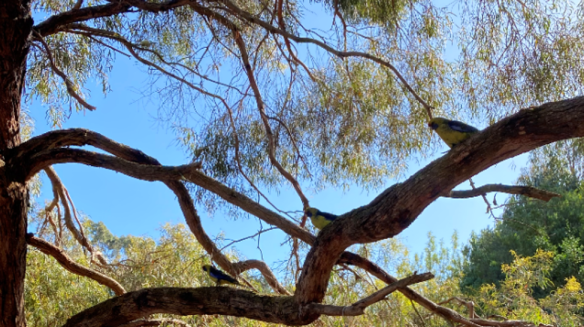
Dictionary SNP branches.png

Eventually, the downstream branches will be defined and split off. It’s also possible that Example 4 would be the trunk with Examples 1 and 2 forming a branch and Example 3 forming a branch. Branching tree structure can’t be built without sufficient testers who take the NGS tests, specifically the Big Y-700 which doesn’t just confirm a subset of existing named SNPs, but confirms all named SNPs, unnamed variants and discovers new previously-undiscovered variants which define the branching tree structure.

SNP testing occurs in multiple ways, including:

  • NGS, next generation sequencing, tests such as the Big Y-700 which scans the gold standard region of the Y chromosome in order to find known SNPs at specific locations, mutations (variants) not yet named as SNPs, previously undiscovered variants and minimally 700 STR mutations.
  • WGS, whole genome sequencing although there currently exist no bundled commercial tools to separate Y DNA information from the rest of the genome, nor any comparison methodology that allows whole genome information to be transferred to Family Tree DNA, the only commercial lab that does both testing and matching of NGS Y DNA tests and where most of the Y DNA tests reside. There can also be quality issues with whole genome sequencing if the genome is not scanned a similar number of times as the NGS Y tests. The criteria for what constitues a “positive call” for a mutation at a specific location varies as well, with little standardization within the industry.
  • Targeted SNP testing of a specific SNP location. Available at Family Tree DNA  and other labs for some SNP locations, this test would only be done if you are looking for something very specific and know what you are doing. In some cases, a tester will purchase one SNP to verify that they are in a particular lineage, but there is no benefit such as matching. Furthermore, matching on one SNP alone does not confirm a specific lineage. Not all SNPs are individually available for purchase. In fact, as more SNPs are discovered at an astronomical rate, most aren’t available to purchase separately.
  • SNP panels which test a series of SNPs within a certain haplogroup in order to determine if a tester belongs to a specific subclade. These tests only test known SNPs and aren’t tests of discovery, scanning the useable portion of the Y chromosome. In other words, you will discern whether you are or are not a member of the specific subclades being tested for, but you will not learn anything more such as matching to a different subclade, or new, undiscovered variants (mutations) or subclades.

Subclade – A branch of a specific upstream branch of the haplotree.

Dictionary R.png

For example, in haplogroup R, R1 and R2 are subclades of haplogroup R. The graphic above conveys the concept of a subclade. Haplogroups beneath R1 and R2, respectively, are also subclades of haplogroup R as well as subclades of all clades above them on the haplotree.

Older naming conventions used letter number conventions such as R1 and R2 which expanded to R1b1c and so forth, alternating letters and numbers.

Today, we see most haplogroups designated by the haplogroup letter and SNP name. Using that notation methodology, R would be R-M207, R1 would be R-M173 and R2 would be R-M479.

Dictionary R branches.png

ISOGG documents Y haplogroup naming conventions and their history, maintaining both an alphanumeric and SNP tree for backwards compatibility. The reason that the alphanumeric tree was obsoleted was because there was no way to split a haplogroup like R1b1c when a new branch appeared between R1b and R1b1 without renaming everything downstream of R1b, causing constant reshuffling and renaming of tree branches. Haplogroup names were becoming in excess of 20 characters long. Today, the terminal SNP is used as a person’s haplogroup designation. The SNP name never changes and the individual’s Y haplogroup only changes if:

  • Further testing is performed and the tester is discovered to have an additional mutation further downstream from their current terminal SNP
  • A SNP previously discovered using the Big Y NGS test has since been named because enough men were subsequently discovered to carry that mutation, and the newly named SNP is the tester’s terminal SNP

Terminal SNP – It’s really not fatal. Used in this context, “terminal” means end of line, meaning furthest down and closest to present in the haplotree.

Depending on what level of testing you’ve undergone, you may have different haplogroups, or SNPs, assigned as your official “end of line” haplogroup or “terminal SNP” at various times.

If you took any of the various STR panel tests (12, 25, 37, 67 or 111) at Family Tree DNA your SNP was predicted based on STR matches to other men. Let’s say that prediction is R-M198. At that time, R-M198 was your terminal SNP. If you took the Big Y-700 test, your terminal SNP would almost assuredly change to something much further downstream in the haplotree.

If you took an autosomal test, your haplogroup was predicted based on a panel of SNPs selected to be informative about Y or mitochondrial DNA haplogroups. As with predicted haplogroups from STR test panels, the only way to discover a more definitive haplogroup is with further testing.

If you took a Y DNA STR test, you can see by looking at your match list that other testers may have a variety of “terminal SNPs.”

Dictionary Y matches.png

In the above example, the tester was originally predicted as R-M198 but subsequently took a Big Y test. His haplogroup now is R-YP729, a subclade of R-M198 several branches downstream.

Looking at his Y DNA STR matches to view the haplogroups of his matches, we see that the Y DNA predicted or confirmed haplogroup is displayed in the Y-DNA Haplogroup column – and several other men are M198 as well.

Anyone who has taken any type of confirming SNP test, whether it’s an individual SNP test, a panel test or the Big Y has their confirmed haplogroup at that level of testing listed in the Terminal SNP column. What we don’t know and can’t tell is whether the men whose Terminal SNP is listed as R-M198 just tested that SNP or have undergone additional SNP testing downstream and tested negative for other downstream SNPs. We can tell if they have taken the Big Y test by looking at their tests taken, shown by the red arrows above.

If the haplogroup has been confirmed by any form of SNP testing, then the confirmed haplogroup is displayed under the column, “Terminal SNP.” Unfortunately, none of this testers’ matches at this STR marker level have taken the Big Y test. As expected, no one matches him on his Terminal SNP, meaning his SNP farthest down on the tree. To obtain that level of resolution, one would have to take the Big Y test and his matches have not.

Dictionary Y block tree.png

Looking at this tester’s Big Y Block Tree results, we can see that there are indeed 3 people that match him on his terminal SNP, but none of them match him on the STR tests which generally produce genealogical matches closer in time. This suggests that these haplogroup level matches are a result of an ancestor further back in time. Note that these men also have an average of 5 variants each that are currently unnamed. These may eventually be named and become baby branches.

SNP matches can be useful genealogically, depending on when they occurred, or can originate further back in time, perhaps before the advent of surnames.

Our tester’s paternal ancestors migrated from Germany to Hungary in the late 1700s or 1800s, settling in a region now in Croatia, but he’s brick-walled on his paternal line due to record loss during the various wars.

The block tree reveals that the tester’s Big Y SNP match is indeed from Germany, born in 1718, with other men carrying this same terminal SNP originating in both Hungary and Germany even though they aren’t shown as a STR marker match to our tester.

You can read more about the block tree in the article, Family Tree DNA’s New Big Y Block Tree.

Haplotype – your individual values for results of gene sequencing, such as SNPs or STR values tested in the 12, 25, 37, 67 and 111 marker panels at Family Tree DNA. The haplotype for the individual shown below would be 13 for location DYS393, 26 for location DYS390, 16 for location DYS19, and so forth.

Dictionary panel 1.png

The values in a haplotype tend to be inherited together, so they are “unique” to you and your family. In this case, the Y DNA STR values of 13, 26, 16 and 10 are generally inherited together (unless a new mutation occurs,) passed from father to son on the Y chromosome. Therefore, this person’s haplotype is 13, 26, 16 and 10 for these 4 markers.

If this haplotype is rare, it may be very unique to the family. If the haplotype is common, it may only be unique to a much larger haplogroup reaching back hundreds or thousands of years. The larger the haplotype, the more unique it tends to be.

STR – Short tandem repeat. I think of a short tandem repeat as a copy machine or a stutter error. On the Y chromosome, the value of 13 at the location DYS393 above indicates that a series of DNA nucleotides is repeated a total of 13 times.

Indel example 1

Starting with the above example, let’s see how STR values accrue mutations.

STR example

In the example above, the value of CT was repeated 4 times in this DNA sequence, for a total of 5, so 5 would be the marker value.

Indel example 3

DNA can have deletions where the DNA at one or more locations is deleted and no DNA is found at that location, like the missing A above.

DNA can also have insertions where a particular value is inserted one or more times.

Dictionary insertion example.png

For example, if we know to expect the above values at DNA locations 1-10, and an insertion occurs between location 3 and 4, we know that insertion occurred because the alignment of the pattern of values expected in locations 4-10 is off by 1, and an unexpected T is found between 3 and 4, which I’ve labeled 3.1.

Dictionary insertion example 1.png

STR, or copy mutations are different from insertions, deletions or SNP mutations, shown below, where one SNP value is actually changed to another nucleotide.

Indel example 2

Haplotree – the SNP trees of humanity. Just a few years ago, we thought that there were only a few branches on the Y and mitochondrial trees of humanity, but the Big Y test has been a game changer for Y DNA.

At the end of 2019, the tree originating in Africa with Y chromosome Adam whose descendants populated the earth is comprised of more than 217,277 variants divided into 24,838 individual Y haplotree branches

A tree this size is very difficult to visualize, but you can take a look at Family Tree DNA’s public Y DNA tree here, beginning with haplogroup A. Today, there 25,880 branches, increased by more than 1000 branches in less than 3 weeks since year end. This tree is growing at breakneck speed as more men take the Big Y-700 test and new SNPs are discovered.

On the Public Y Tree below, as you expand each haplogroup into subgroups, you’ll see the flags representing the locations of where the testers’ most distant paternal ancestor lived.

Dictionary public tree.png

I wrote about how to use the Y tree in the article Family Tree DNA’s PUBLIC Y DNA Haplotree.

The mitochondrial tree can be viewed here. I wrote about to use the mitochondrial tree in the article Family Tree DNA’s Mitochondrial Haplotree.

Need Something Else?

I’ll be introducing more concepts and terms in future articles on the various Y DNA features. In the mean time, be sure to use the search box located in the upper right-hand corner of the blog to search for any term.

DNAexplain search box.png

For example, want to know what Genetic Distance means for either Y or mitochondrial DNA? Just type “genetic distance” into the search box, minus the quote marks, and press enter.

Enjoy and stay tuned for Part 3 in the Y DNA series, coming soon.

______________________________________________________________

Sign Up Now – It’s Free!

If you enjoyed this article, subscribe to DNAeXplain for free, to automatically receive new articles by emailed each week.

Here’s the link. Just look for the little grey “follow” button on the right-hand side on your computer screen below the black title bar, enter your e-mail address, and you’re good to go!

In case you were wondering, I never have nor ever will share or use your e-mail outside of the intended purpose.

Share the Love

You can always forward these articles to friends or share by posting links on social media. Who do you know that might be interested?

_____________________________________________________________

Disclosure

I receive a small contribution when you click on some of the links to vendors in my articles. This does NOT increase the price you pay but helps me to keep the lights on and this informational blog free for everyone. Please click on the links in the articles or to the vendors below if you are purchasing products or DNA testing.

Thank you so much.

DNA Purchases and Free Transfers

Genealogy Products and Services

Genealogy Research

Fun DNA Stuff

  • Celebrate DNA – customized DNA themed t-shirts, bags and other items

The Shocking Divorce of Jane Campbell Freeman: Did She Do It and Was the Devil Involved? – 52 Ancestors #270

Jane Campbell Freeman wasn’t my ancestor, but she was my ancestor’s sister. I might not have paid much attention to Jane were it not for the legislative case and associated scandal that like a whirlpool engulfed her life.

Jane was, ahem, divorced!!!

To say that Jane’s divorce was scandalous is an understatement. To begin with, divorce simply did not happen at that time. It’s shocking not only in that it did happen, but because of the public detail provided and the fact that Jane was apparently never provided an opportunity to rebut what was stated. In fact, Jane herself never appears at all – only the allegations against her, orchestrated by none other than her soon-to-be x-husband. But I’m getting ahead of myself.

Are the mind-boggling accusations levied against Jane true? I surely don’t know. You’ll just have to read along and decide for yourself.

The Tennessee State Library and Archives (TSLA)

The Tennessee State Library and Archives has a huge number of resources – many that you wouldn’t necessarily think of consulting under normal circumstances. But then again, my family has never been “normal.”

Among unusual items found in the State Archives are cases bumped to either the Tennessee Supreme Court, the legislature or other courts outside of the county in which the case originated.

Supreme Court cases are found here, and legislative petitions are here.

Legislative petitions include any petition that at least some residents signed and sent to the legislature which includes regions that were split into different counties. Residents in the part of the county affected signed petitions that were either pro or con. There may have been multiple petitions, so look closely.

Legislative petitions also included divorces and generally affidavits that involve other family members, neighbors, friends as well as those not-so-friendly sometimes.

If you have ancestors in Tennessee, or even family members in Tennessee, you owe it to yourself to take a look. I didn’t think I’d find anything. I mean, what are the chances that anything in my poor farmer families would make it to the Supreme Court? Well, thankfully, one case did – that of the juicy drama-filled contested estate of Samuel Clarkson/Claxton, from burned Hancock County no less. Talk about a goldmine!

A second case involves my Campbell family.

Years ago, when visiting the TSLA in person, I found the divorce case of Jane Freeman, but even AT the library, when requesting the case file, all of the information available today was not in the file at that time. I’m very glad that I ordered this file.

Who was Jane Freeman?

Jane Freeman was born Jane Campbell about 1807 in Claiborne County to John Campbell and his wife Jane “Jenny” Dobkins, my ancestors. Jane’s sister, Elizabeth Campbell married Lazarus Dodson. The divorce record in question is for Elizabeth’s sister, Jane. Elizabeth, older than Jane, had already died when this scandal erupted, but both of Jane’s parents were living, and this must have literally put them through hell – regardless of whether the accusations were true or not.

A divorce in any family in 1830 was quite the scandal, but the circumstances of this particular divorce, which obviously became quite public, was probably devastating to both families along with being the talk of the county for literally decades. It was juicy, to put it conservatively.

A Little Background

Let’s start with Jacob Dobkins and his wife, Dorcas Johnson whose two daughters were both involved in this drama; Jane “Jenny” Dobkins who married John Campbell and Elizabeth Dobkins who married George Campbell.

To make things even more complex George Campbell is long believed to be the brother of John Campbell. Both Y and autosomal DNA strongly suggest that’s accurate. In other words, Dobkins sisters married Campbell brothers.

Brothers Married Sisters

Charles Campbell of Hawkins County had two sons, John and George Campbell to whom he jointly sold land. Some years later, John and George sold the land and disappeared from Hawkins County records about the same time that John and George Campbell appeared in neighboring Claiborne County.

Jacob Dobkins, the father of both Jane Dobkins (mother of Jane Campbell) and Elizabeth Dobkins lived just up the road a few miles in Hawkins County from Charles Campbell. He also arrived in Claiborne County at about the same time as the Campbell brothers. Eventually, the Campbell family would come to own Jacob Dobkins’ land long after his death.

The fact that sisters married brothers means that the children of Jenny Dobkins with John Campbell and Elizabeth Dobkins with George Campbell would be double first cousins. These family relationships are relevant because of the accusations in the divorce petition.

This is already complicated and we’re not even to John Campbell and Jane “Jenny” Dobkins daughter, Jane Campbell Freeman!

Jane Campbell Freeman’s Divorce

Many Claiborne County records are missing, so we don’t have the actual marriage record of Jane Campbell to Johnson Freeman. Jane was born about 1807.

What we do have is the divorce petition and proceedings as obtained from the TSLA. Divorces at this time were not heard or granted in the county courts, but bumped to the state level and required legislative approval.

1831 Claiborne county Freeman vs Freeman Divorce Legislation

Claiborne County (Tennessee)

Personally appeared before me Joseph Lanham acting justice of the peace for the said county. Melinda Chumly who being sworn as the law directs deposeth and sayeth as follows:

Note that at this time, it was customary for the people involved in the case to ask the questions of the people being deposed. These questions were obviously asked by Jane’s husband, Johnson Freeman. I have left the verbiage exactly intact. You can just hear the southern drawl.

Question: While you was a living at my house the house of Johnson Freeman from September 1829 till in February 1830 did or did you not know my wife Jane Freeman to be guilty of the act of fornication.

Answer: I did know it to be a fact.

Question: How did you know it to be a fact?

Answer: I seen the conduct myself.

Question: Who did you see with her?

Answer: Isaac A. Farris

Question: What did she say to your about it?

Answer: She charged me not to tell on her that if you found it out you would leave her.

Question: Did you know of any other person being with her?

Answer: After I found her out with Izaac A. Farris she told me of others that she was guilty of the same act with.

Question: Who did she say they was?

Answer: Benjamin Matlock and her own cozen John Campbell.

Question: Did you see any imprudent conduct with her and these men?

Answer: I did see vary ugly conduct by her and both the men.

Question: Did she not tell you that her father’s black man named Charles ketched her and said Farris together?

(Her father refers to Jane’s father, John Campbell.)

Answer: Yes, she did tell me so and that Farris hired him not to tell an them by giving him a quart of brandy.

Question: Did she not tell you that after that they had said black Charles to make arrangements for there convenience?

Answer: She did tell me so.

Question: Did she not tell you that she laid out in the woods about half the day with her cozen John Campbell on the day that I helped her brother Jacob kill hogs?

(Jacob Campbell was born about 1801.)

Answer: She did tell me so and that his horse got loose in the time and ran home.

Question: What did she say was the cause of her doing so?

Answer: I talked to her and shamed her about her conduct and asked what was the reason of her doing so and she told me she did not know any cause for you had always treated her well and just – the Devil had overcome her and she believed that it was the works of the Devil.

Given under my hand and seal this 6th day of October 1831

Signed Melinda Chumly by her mark

Sworn to and subscribed to before me Joseph Lanham acting Justice of the Peace for Claiborne County this 6th day of October 1831.

<end of record>

This document provides us with a great deal of genealogical information. As it turns out, I already had most of this, BUT, the commentary about “her own cuzin” is surprising in this context, because it was generally accepted for first cousins to marry. Given that, I’m not sure why the commentary about John being her cousin was included. Jane’s first cousin, George Campbell’s son, John Campbell, was born about 1810.

Freeman pedigree.png

Having said that, my first reaction was that I was thrilled, because momentarily I thought this record would indeed be the confirmation that John Campbell (Jane’s father) and George Campbell (the father of John whom Jane reportedly fornicated with) were absolutely proven brothers because Jane and John were kissing cousins. However, then I remembered that their mothers were sisters, so this verbiage does not confirm that the Campbell men were brothers. ☹ If only the record had said “double cousin.”

I must admit, I chuckled at the thought of the horse breaking loose and running home.

One Melinda Chumbley, daughter of Robert Chumley, was born in 1821, but why was Melinda living with Johnson Freeman? Robert was not deceased. Robert Chumley’s brother, Lewis testifies in the next document.

—–

Personally appeared before me Joseph Lanham…Lewis Chumbly who being sworn deposeth as follows:

Question: Did or did not Jane Freeman my wife, the wife of Johnson Freeman, confess to you after I had left her that she was guilty of the act of fornication previous to my leaving of her?

Answer: She did openly confess the fact of her being guilty of fornication with two different men.

Question: Who did she say they were?

Answer: Isaac A. Farris and Benjamin Matlock.

Question: How long did she say she has been guilty of this conduct before I left her?

Answer: All the previous fall and winter before you left her in April 1830.

Question: How come she to make this confession?

Answer: I was a talkin to her about your distress and asked her why she done so and she said she could not tell the cause for you had always treated her well.

Given under my hand and seal the 4th day of October 1831.

Lewis Chumbly

<end of record>

This documents their marriage date at least in or prior to the summer of 1829.

Lewis Chumbley (not Crumley which is a different family) was born in 1808 in Virginia and died in 1885 in Arthur, Claiborne County, Tennessee. The Chumbley family is known to have lived in that area and intermarried with the Dodson family (not to be confused with the Dobkins family) as well.

Another relationship worth noting is that in 1839, Lazarus Dodson, Jane Campbell Freeman’s brother-in-law who became a widower when her sister Elizabeth Campbell died, married Rebecca Freeman whose parents are unknown. Somehow these families are intertwined.

—–

Personally appeared before me…Mary Chumly being sworn…:

Question: Did or did not Jane Freeman my wife the wife of Johnson Freeman confess to you after I had left her that she was guilty of the act of formication?

Answer: She did openly con that she had been guilty of two different men.

Question: Did she say who they was?

Answer: She said she had been guilty of Isaac A. Farris and Benjamin Matlock for some time before you left her.

Given under my hand this 6th day of October 1831.

Mary Chumly sign with an X

<end of document>

Mary Chumley is probably Lewis’s wife.

Ok, now I’m beginning to wonder why all three depositions are from Chumley family members.

The next deposition:

Personally appeared before me…Hannah Huffaker being sworn…:

Question: Did or did not Jane Freeman my wife the wife of Johnson Freeman confess to you after I had left her that she was guilty of the act of fornication while I was a living with her and for which cause I left her.

Answer: She did openly confess that she actly(?) been guilty of fornication with different men before you left her.

Question: Did she say she had any cause for doing it?

Answer: No she said you had always treated her well and she had done the wrong without any cause.

Given under my hand this 6th day of October 1831.

Hannah Huffaker signs

<end of record>

So, we, and the court, are to believe that Jane just went around confessing to multiple people that she had slept with two or three different men while married?

Not only that, but Jane repeatedly stated that her husband had always treated her well?

Petition

The bolding in the document below is mine. I could not read the entire document.

Roll – 12

Petition – 1831-147

To the honorable General Assembly of the State of Tennessee, now in session.

Your petitioner begs leave to represent that his wife Jane Freeman in ?icotation of the most solemn obligation of matrimony by the most illicit acts of fornication has disowned his bed, prostituting herself to illicit cauc?ious not only with one person, but with several that showing not only a (“perfect” struck through) total disregard to those solemn obligations by which she was bound as a wife but also the great degree of depravity rendering herself a common prostitute.

Your petitioner begs leave further to represent that he has the deepest sense of those sacred ties by which husband and wife are united feeling deeply sensible that no travail or slight cause ought to induce a ?peratice, but that the greatest degree of forbearance ought to guide the husband towards the woman whom he has taken to his bosom as a companion for life. But when a wife so far transcends the bounds of duty as to trample under foot the most sacred obligation of the holy institution of matrimony stating the honour of her husband prostituting herself and rendering that husband liable to raise foster children who are the offspring of her ?scife and wholly fornication with others – then your petitioner humbly begs leave to represent that the good of society ? in charity and ? to such injured husband a separation ought to take place when the mere name of wife with all the duties notated appertains to a woman the matrimonial obligations notated the husband disowned the wife debased and prostituted then your petitioner humble begs leave to represent that your honorable body is the only tribunal before which he can appear to fully disenthrall him from the dishonorable companion to which he is bound.

Your petitioner humbly begs leave to represent to your honorable body that he and said wife have no children which will make a separate less disagreeable. Your petitioner humbly begs leave to represent to your honorable body that the conduct of said wife was unprovoked on his part having always treated her with ? and humanity for the evidence of which fact together for the fact of conduct your petitioner has represented his wife guilty of your petitioner begs leave to refer your honourable body to the submitted affidavits of Malinda Chumley, Lewis Chumley, Mary Chumley, Hannah Huffaker and Phoebe Hicks.

Your petitioner humbly hopes and prays that your honorouble body will grant his petition and grand him a divorce from his said wife Jane Freeman by passing an act to the effect and as unduty bound he will ever pray.

Johnson Freeman signs

October 7, 1831

Note that the affidavit of Phoebe Hicks was not in the packet.

Marked on the front of the packet:

Johnson Freeman to be divorced from his wife Jane Freeman (underneath) reasonable

<end of record>

Ouch

Wow, that’s incredibly harsh. Three times Jane was referred to as a prostitute or having prostituted herself. A prostitute is defined in the dictionary as a “person, in particular a woman, who engages in sexual activity for payment.”

There is no testimony about money changing hands. If Jane was literally prostituting herself, I would think there would be a lot more than 2 or 3 men involved. In this case, the term prostitute appears to be used only to further shame and demean Jane and portray her actions even more negatively than simply (allegedly) cheating on her husband with three different men.

Notice that there is no deposition from Jane herself, nor did she depose any of the witnesses. Jane apparently didn’t attend court. It doesn’t appear that the court requested her presence, although one would think that the court would wish to hear from Jane herself in one form or another given the gravity of the charged, basically bankrupting a female, and the lifelong ripple effects it would have on Jane.

Neither of the three men accused were deposed either.

Clearly Johnson Freeman was living with Jane during 1829 and up until April of 1830. We don’t know when they were married but given that most women were pregnant with their first child within weeks of their wedding, I wonder why Jane and Johnson had no children. That in and of itself seems rather unusual.

It seems there is far more to this story that we’ll never know.

And we wonder why divorced women carried such a stigma, even into the late 1900s. Divorced women were considered “fallen” whether they were or not.

I’m left wondering if those allegations of infidelity against Jane are true, and true or not, how this affected the rest of Jane’s life. How could Jane even continue to live in Claiborne County and who did she live with? Who supported her? Single women generally weren’t able to support themselves.

The 1830 census doesn’t show a Johnson Freeman, or anything similar, and Jane’s father, John Campbell doesn’t show anyone of the proper age in his household to be Jane. Mary Freeman, who lives near to Lewis Chumbley doesn’t have any males in her household. I can’t find either Johnson Freeman or Jane.

Who Were the Men?

Isaac A. Farris was probably Isaac Armstrong Farris born in 1809 to one Gideon Farris. Isaac’s grandparents, Gideon Faires and Sarah McSpadden were also my ancestors.

Apparently, unlike Jane, Isaac’s reputation wasn’t terribly damaged, because just a few months later, he is found on a jury in Claiborne County and married Charity Ruth Snuffer in 1868 in Collin County, Texas, the same location where the Campbell family migrated. Isaac was married previously, as he had a child by 1840.

Benjamin Matlock apparently does not stay in the county, as he isn’t readily found.

John Campbell, the double-first-cousin that Jane Campbell Freeman was accused of having carnal relations with married Sarah Willis about 1830. Apparently his reputation wasn’t terribly damaged either. According to the census, John and Sarah had a child in 1832. At some point, John Campbell and family moved to Missouri.

All I can say is that family reunions must have been quite interesting. These families lived close, interacted regularly and attended the same churches. They couldn’t exactly ignore each other. Did the Campbells unite behind Jane, or did this fracture the Campbell family internally too?

What do we know about Jane Campbell and Johnson Freeman?

What About Johnson Freeman?

I wanted to know as much as possible about Johnson Freeman? What kind of person was he? Was he a stable, respected member of the community or was he a scoundrel?

Fortunately, or unfortunately, depending on your perspective, the Claiborne County court notes for this timeframe are imaged at Family Search. Unfortunately, there is no index, but they are online and you can read them.

Page. By. Bloody. Page.

Thirteen years worth of court notes. Thousands of pages.

I just couldn’t help myself.

I didn’t discover a lot about Johnson Freeman, but I did find something.

During the Monday, March 15, 1830 court session, jurors appointed to next term of court include Johnson Freeman.

This indicates that he owned land given that the requirements to be a juror included being 21 or over, free, white and a land-owner in good standing.

In his divorce petition, Johnson says he left his wife in April of 1830.

On June 22, 1830 Johnson Freeman serves as a juror.

On March 21, 1831, before his divorce was granted, on page 199 of the original Claiborne County court notes and page 103 of the electronic version:

“Delinquent, insolvent and removed out of my county taxes include William Farris, Johnson Freeman,” and others.

Generally, these delinquent/insolvent tax documents aren’t filed for this exact date, meaning March 1831, but reflect the tax due and unable to be collected for some prior time, usually the tax due from the year before.

We know that Johnson’s life was in upheaval in 1830 and that he was still living someplace in Tennessee in 1831, because on October 7, 1831, Freeman signed a final divorce petition document wherein he described, 3 different times, how Jane had “prostituted herself” and how upstanding, moral and chaste he had been, giving Jane absolutely NO reason to cleave unto someone else.

Apparently at least 6 months before Johnson Freeman wrote that October letter to the court extoling his virtues, he skipped town, leaving his taxes unpaid. Was this because he was distraught over his wife embarrassing him? Or was this simply the kind of person he was? We’ll never know, because I have been unable to locate Johnson Freeman anyplace else. Ever. Maybe he changed his name so as not to be caught and held liable for his taxes.

In 1839 Jane is noted as a widow in her father’s estate settlement. It’s possible that this is because Johnson died and being a widow was so much more socially acceptable than “divorced.” In any case, listing her status as widow allows Jane some shred of dignity.

Still, every single soul in the county would have known about the allegations and depositions against Jane. Something like this was not a secret. News traveled fast on the mountain grapevine and communal memories lasted forever.

“You know who that is don’t you? Jane Freeman, the trollop who cheated on her husband, with THREE different men.”

“Gasp!!!”

“Yes, and one of them was her cousin too. They got caught by her father’s slave when the horse broke loose and ran home.”

“Said the Devil made her do it.”

“That’s been more than a decade now and no one will be caught dead with her.”

Perhaps the allegations and the resulting gossip damaged Jane more than the divorce itself.

Tracking Jane

I’m really curious what happened to Jane Campbell Freeman.

In 1845, one Jane Freeman married Ransom Hose, Hare, Hase or House in Claiborne County. Note that a Hayes descendant suggests that his name may have been Ransom Hayes.

The Jane Freeman who married was originally believed to have been the daughter of Jane Freeman. However, the 1831 divorce record that says that Jane and Johnson Freeman had no children casts doubt on this scenario.

Freeman Hare marriage

click to enlarge

Could this marriage to Ransom Hare, Hose or House have been Jane Campbell Freeman herself? It’s possible that this was an unrelated Jane Freeman, or possibly Jane’s daughter. It seems very unlikely that Jane marrying in 1845 is the daughter of Jane Campbell Freeman who had no children with Johnson Freeman in 1831. For Jane (the younger) to have been born in 1832 and marry in 1845, she would have been marrying at the age of 13 – which did happen, but very rarely. I cannot find Ransom in the 1850 census.

In Jane’s father’s 1839 estate settlement, Jane is noted as Jane Freeman, indicating that her surname is still Freeman and stating that she is a widow in 1839. She wasn’t exactly a widow, but that was probably a face-saving definition. I know of other “divorced” women, whether legally or functionally divorced who “became” widows on the census. Wishful thinking perhaps and much less embarrassing.

Rumored Records

Jane later married a Cloud in Claiborne County according to researcher, Richard Cowling, but he didn’t say which Cloud, when or provide a source. The Claiborne County marriage records don’t reflect this marriage, but they are not entirely complete. Richard had access to older generations for years, so his source could have been family stories.

From now-deceased researcher Mary Price:

Jane Campbell – first married a Freeman. He died and she then married a Cloud. If this is true, Jane was widowed again soon after. In 1842 she reportedly made a contract with John D. Hall for support. She had one known child. Jane and her son reportedly moved to Texas with her Campbell relatives soon before 1870.

I cannot find Jane in one census anyplace. I do find a John Hall in 1850, but no Jane is evident, either with John or a Jane by any last name that looks promising.

Mary Price stated, quite indignantly, that Jane indeed was with her family in Texas in the census, and that she died in Texas. She was reproachful when I asked nicely for documentation or which Campbell family to research in which Texas county. I searched extensively finding no Jane of that rough age, by the surname Campbell, Freeman, Hare or Cloud, born in Tennessee or with any Campbell family.

I read the Claiborne County court notes page by page from 1829 through 1842, finding no mention of John Hall nor Jane Freeman. Either Mary found something I missed, there are court notes beyond the ones I found, or someone misinformed Mary.

Unfortunately, neither the first nor last name of Jane’s son is given. If Jane was born in 1807, she would have been capable of having children until about 1852 which means that there’s a good possibility that her son lived into the 1900s. Death records began being kept in various Texas counties between 1890 and 1910 – but no record of Jane that I can find.

Effectively, Jane disappeared from the records.

Reflection

As I reflect back on Jane Campbell Freeman, I can’t help but think that she was treated very unfairly.

It’s possible that indeed Jane did do exactly what she was accused of, meaning being unfaithful to her husband. Even if that accusation is true and warranted a divorce, there’s a world of difference between infidelity and prostitution.

Infidelity does not imply prostitution, not by any stretch of the imagination.

I would further state that if Johnson Freeman for some reason decided he wanted to get divorced, finding a few people among his friends to testify that indeed, Jane admitted to having sex with multiple other men would have sealed her fate – and with it, assuring that a divorce would be granted. Not only that, but everyone would understand WHY he requested a divorce and his reputation would not be tarnished. Far from it, in fact, he would be perceived with sympathy as the long-suffering victim.

I also question why Jane and Johnson had no children themselves. If Jane had a child later, it doesn’t appear that she was infertile. What was going on with that marriage? If she was cheating as regularly as implied, why didn’t she get pregnant by one of her lovers?

Furthermore, why did Johnson Freeman skip town and neglect to pay his taxes? That has nothing to do with divorce, but everything to do with his character. We KNOW he did that – we don’t know what Jane did or didn’t do.

Why was Jane never afforded the opportunity and minimal courtesy to either be deposed which would not have required a long expensive trip to the capital in Nashville or to appear in front of the legislature? Why did she not get to question the witnesses when they were giving depositions about her, as was the tradition at that time. Was she intimidated into foregoing that opportunity?

Was it a foregone conclusion that any woman accused of habitual infidelity when her husband was good to her and deserved her loyalty, coupled with an affidavit stating that she admitted being under the influence of the devil would be enough evidence to assure a divorce decree? Was it presumed that NOTHING Jane could have said at that point would have made any difference in the outcome? Is that why Jane didn’t participate, or was she not afforded the opportunity?

Why did Jane stay in Claiborne County after her very public divorce? Was it because she literally had no place else to go?

Was Jane trapped for life by an ugly story, true or otherwise?

Did Jane in fact marry not once, but twice more?

What kind of arrangement did Jane make in 1842 with John Hall, if any, and why can’t I find anything reflected in the court notes as reported by Mary? Are there entire Claiborne County books not microfilmed?

It’s sad that accusations of infidelity and prostitution were used to crucifying someone with words – destroying their life publicly based on who believed uncontested affidavits. There is nothing presented to defend Jane – nothing even noting that she was notified of the proceedings. That’s not punishment or simple evidence, that’s destruction by libel and slander.

And if indeed Jane had a child, assuredly he suffered as well because of the stain, deserved or otherwise, on his mother’s reputation.

Hopefully Texas, the tough land of cattle drives, roughshod gunslingers, sagebrush and new beginnings was wild-west enough that Jane got to leave much of the stigma behind.

Texas.png

_____________________________________________________________

Disclosure

I receive a small contribution when you click on some of the links to vendors in my articles. This does NOT increase the price you pay but helps me to keep the lights on and this informational blog free for everyone. Please click on the links in the articles or to the vendors below if you are purchasing products or DNA testing.

Thank you so much.

DNA Purchases and Free Transfers

Genealogy Products and Services

Genealogy Research

Fun DNA Stuff

  • Celebrate DNA – customized DNA themed t-shirts, bags and other items