Jessica Biel – A Follow-up: DNA, Native Heritage and Lies

Jessica Biel’s episode aired on Who Do You Think You Are on Sunday, April 2nd. I wanted to write a follow-up article since I couldn’t reveal Jessica’s Native results before the show aired.

The first family story about Jessica’s Biel line being German proved to be erroneous. In total, Jessica had three family stories she wanted to follow, so the second family legend Jessica set out to research was her Native American heritage.

I was very pleased to see a DNA test involved, but I was dismayed that the impression was left with the viewing audience that the ethnicity results disproved Jessica’s Native heritage. They didn’t.

Jessica’s Ethnicity Reveal

Jessica was excited about her DNA test and opened her results during the episode to view her ethnicity percentages.

Courtesy TLC

The locations shown below and the percentages, above, show no Native ethnicity.

Courtesy TLC

Jessica was understandably disappointed to discover that her DNA did not reflect any Native heritage – conflicting with her family story. I feel for you Jessica.  Been there, done that.

Courtesy TLC

Jessica had the same reaction of many of us. “Lies, lies,” she said, in frustration.

Well Jessica, maybe not.

Let’s talk about Jessica’s DNA results.

Native or Lies?

I’ve written about the challenges with ethnicity testing repeatedly. At the end of this article, I’ll provide a reading resource list.

Right now, I want to talk about the misperception that because Jessica’s DNA ethnicity results showed no Native, that her family story about Native heritage is false. Even worse, Jessica perceived those stories to be lies. Ouch, that’s painful.

In my world view, a lie is an intentional misrepresentation of the truth. Let’s say that Jessica really didn’t have Native heritage. That doesn’t mean someone intentionally lied. People might have been confused. Maybe they made assumptions. Sometimes facts are misremembered or misquoted. I always give my ancestors the benefit of the doubt unless there is direct evidence of an intentional lie. And if then, I would like to try to understand what prompted that behavior. For example, discrimination encouraged many people of mixed ethnicity to “pass” for white as soon as possible.

That’s certainly a forgivable “lie.”

Ok, Back to DNA

Autosomal DNA testing can only reliably pick up to about the 1% level of minority DNA admixture successfully – minority meaning a small amount relative to your overall ancestry.

Everyone inherits DNA from ancestors differently, in different amounts, in each generation. Remember, you receive half of your DNA from each parent, but which half of their DNA you receive is random. That holds true for every generation between the ancestor in question and Jessica today.  Ultimately, more or less than 50% of any ancestor’s DNA can be passed in any generation.

However, if Jessica inherited the average amount of DNA from each generation, being 50% of the DNA from the ancestor that the parent had, the following chart would represent the amount of DNA Jessica carried from each ancestor in each generation.

This chart shows the amount of DNA of each ancestor, by generation, that an individual testing today can expect to inherit, if they inherit exactly 50% of that ancestor’s DNA from the previous generation. That’s not exactly how it works, as we’ll see in a minute, because sometimes you inherit more or less than 50% of a particular ancestor’s DNA.

Utilizing this chart, in the 4th generation, Jessica has 16 ancestors, all great-great-grandparents. On average, she can expect to inherit 6.25% of the DNA of each of those ancestors.

In the rightmost column, I’ve shown Jessica’s relationship to her Jewish great-great-grandparents, shown in the episode, Morris and Ottilia Biel.

Jessica has two great-great-grandparents who are both Jewish, so the amount of Jewish DNA that Jessica would be expected to carry would be 6.25% times two, or 12.50%. But that’s not how much Jewish DNA Jessica received, according to Ancestry’s ethnicity estimates. Jessica received only 8% Jewish ethnicity, 36% less than average for having two Jewish great-great-grandparents.

Courtesy TLC

Now we know that Jessica carries less Jewish DNA that we would expect based on her proven genealogy.  That’s the nature of random recombination and how autosomal DNA works.

Now let’s look at the oral history of Jessica’s Native heritage.

Native Heritage

The intro didn’t tell us much about Jessica’s Native heritage, except that it was on her mother’s mother’s side. We also know that the fully Native ancestor wasn’t her mother or grandmother, because those are the two women who were discussing which potential tribe the ancestor was affiliated with.

We can also safely say that it also wasn’t Jessica’s great-grandmother, because if her great-grandmother had been a member of any tribe, her grandmother would have known that. I’d also wager that it wasn’t Jessica’s great-great-grandmother either, because most people would know if their grandmother was a tribal member, and Jessica’s grandmother didn’t know that. Barring a young death, most people know their grandmother. Utilizing this logic, we can probably safely say that Jessica’s Native ancestor was not found in the preceding 4 generations, as shown on the chart below.

On this expanded chart, I’ve included the estimated birth year of the ancestor in that particular generation, using 25 years as the average generation length.

If we use the logic that the fully Native ancestor was not between Jessica and her great-great-grandmother, that takes us back through an ancestor born in about 1882.

The next 2 generations back in time would have been born in 1857 and 1832, respectively, and both of those generations would have been reflected as Indian on the 1850 and/or 1860 census. Apparently, they weren’t or the genealogists working on the program would have picked up on that easy tip.

If Jessica’s Native ancestor was born in the 7th generation, in about 1807, and lived to the 1850 census, they would have been recorded in that census as Native at about 43 years of age. Now, it’s certainly possible that Jessica had a Native ancestor that might have been born about 1807 and didn’t live until the 1850 census, and whose half-Native children were not enumerated as Indian.

So, let’s go with that scenario for a minute.

If that was the case, the 7th generation born in 1807 contributed approximately 0.78% DNA to Jessica, IF Jessica inherited 50% in each generation. At 0.78%, that’s below the 1% level. Small amounts of trace DNA are reported as <1%, but at some point the amount is too miniscule to pick up or may have washed out entirely.

Let’s add to that scenario. Let’s say that Jessica’s ancestor in the 7th generation was already admixed with some European. Traders were well known to marry into tribes. If Jessica’s “Native” ancestor in the 7th generation was already admixed, that means Jessica today would carry even less than 0.78%.

You can easily see why this heritage, if it exists, might not show up in Jessica’s DNA results.

No Native DNA Does NOT Equal No Native Heritage

However, the fact that Jessica’s DNA ethnicity results don’t indicate Native American DNA doesn’t necessarily mean that Jessica doesn’t have a Native ancestor.

It might mean that Jessica doesn’t have a Native ancestor. But it might also mean that Jessica’s DNA can’t reliably disclose or identify Native ancestry that far back in time – both because of the genetic distance and also because Jessica may not have inherited exactly half of her ancestor’s Native DNA. Jessica’s 8% Jewish DNA is the perfect example of the variance in how DNA is actually passed versus the 50% average per generation that we have to utilize when calculating expected estimates.

Furthermore, keep in mind that all ethnicity tools are imprecise.  It’s a new field and the reference panels, especially for Native heritage, are not as robust as other groups.

Does Jessica Have Native Heritage?

I don’t know the answer to that question, but here’s what I do know.

  • You can’t conclude that because the ethnicity portion of a DNA test doesn’t show Native ancestry that there isn’t any.
  • You can probably say that any fully Native ancestor is not with in the past 6 generations, give or take a generation or so.
  • You can probably say that any Native ancestor is probably prior to 1825 or so.
  • You can look at the census records to confirm or eliminate Native ancestors in many or most lines within the past 6 or 7 generations.
  • You can utilize geographic location to potentially eliminate some ancestors from being Native, especially if you have a potential tribal affiliation. Let’s face it, Cherokees are not found in Maine, for example.
  • You can potentially utilize Y and mitochondrial DNA to reach further back in time, beyond what autosomal DNA can tell you.
  • If autosomal DNA does indicate Native heritage, you can utilize traditional genealogy research in combination with both Y and mitochondrial DNA to prove which line or lines the Native heritage came from.

Mitochondrial and Y DNA Testing

While autosomal DNA is constrained to 5 or 6 generations reasonably, Y and mitochondrial DNA is not.

Of course, Ancestry, who sponsors the Who Do You Think You Are series, doesn’t sell Y or mitochondrial DNA tests, so they certainly aren’t going to introduce that topic.

Y and mitochondrial DNA tests reach back time without the constraint of generations, because neither Y nor mitochondrial DNA are admixed with the other parent.

The Y DNA follows the direct paternal line for males, and mitochondrial DNA follows the direct matrilineal line for both males and females.

In the Concepts – Who To Test article, I discussed all three types of testing and who one can test to discover their heritage, through haplogroups, of each family line.  Every single one of your ancestors carried and had the opportunity to pass on either Y or mitochondrial DNA to their descendants.  Males pass the Y chromosome to male children, only, and females pass mitochondrial DNA to both genders of their children, but only females pass it on.

I don’t want to repeat myself about who carries which kind of DNA, but I do want to say that in Jessica’s case, based on what is known about her family, she could probably narrow the source of the potential Native ancestor significantly.

In the above example, if Jessica is the daughter – let’s say that we think the Native ancestor was the mother of the maternal great-grandmother. She is the furthest right on the chart, above. The pink coloring indicates that the pink maternal great grandmother carries the mitochondrial DNA and passed it on to the maternal grandmother who passed it to the mother who passed it to both Jessica and her siblings.

Therefore, Jessica or her mother, either one, could take a mitochondrial DNA test to see if there is deeper Native ancestry than an autosomal test can reveal.

When Y and mitochondrial DNA is tested, a haplogroup is assigned, and Native American haplogroups fall into subgroups of Y haplogroups C and Q, and subgroups of mitochondrial haplogroups A, B, C, D, X and probably M.

With a bit of genealogy work and then DNA testing the appropriate descendants of Jessica’s ancestors, she might still be able to discern whether or not she has Native heritage. All is not lost and Jessica’s Native ancestry has NOT been disproven – even though that’s certainly the impression left with viewers.

Y and Mitochondrial DNA Tests

If you’d like to order a Y or mitochondrial DNA test, I’d recommend the Full Mitochondrial Sequence test or the 37 marker Y DNA test, to begin with. You will receive a full haplogroup designation from the mitochondrial test, plus matching and other tools, and a haplogroup estimate with the Y DNA test, plus matching and other tools.

You can click here to order the mitochondrial DNA, the Y DNA or the Family Finder test which includes ethnicity estimates from Family Tree DNA. Family Tree DNA is the only DNA testing company that performs the Y and mitochondrial DNA tests.

Further Reading:

If you’d like to read more about ethnicity estimates, I’d specifically recommend “DNA Ethnicity Testing – A Conundrum.

If you’d like more information on how to figure out what your ethnicity estimates should be, I’d recommend Concepts – Calculating Ethnicity Percentages.

You can also search on the word “ethnicity” in the search box in the upper right hand corner of the main page of this blog.

If you’d like to read more about Native American heritage and DNA testing, I’d  recommend the following articles. You can also search for “Native” in the search box as well.

How Much Indian Do I Have In Me?

Proving Native American Ancestry Using DNA

Finding Your American Indian Tribe Using DNA

Native American Mitochondrial Haplogroups

______________________________________________________________

Disclosure

I receive a small contribution when you click on some of the links to vendors in my articles. This does NOT increase the price you pay but helps me to keep the lights on and this informational blog free for everyone. Please click on the links in the articles or to the vendors below if you are purchasing products or DNA testing.

Thank you so much.

DNA Purchases and Free Transfers

Genealogy Services

Genealogy Research

Mitochondrial DNA Build 17 Update at Family Tree DNA

I knew the mitochondrial DNA update at Family Tree DNA was coming, I just didn’t know when. The “when” was earlier this week.

Take a look at your mitochondrial DNA haplogroup – it maybe different!

Today, this announcement arrived from Family Tree DNA.

We’re excited to announce the release of mtDNA Build 17, the most up-to-date scientific understanding of the human genome, haplogroups and branches of the mitochondrial DNA haplotree.

As a result of these updates and enhancements—the most advanced available for tracing your direct maternal lineage—some customers may see a change to their existing mtDNA haplogroup. This simply means that in applying the latest research, we are able to further refine your mtDNA haplogroup designation, giving you even more anthropological insight into your maternal genetic ancestry.

With the world’s largest mtDNA database, your mitochondrial DNA is of great value in expanding the overall knowledge of each maternal branch’s history and origins. So take your maternal genetic ancestry a step further—sign in to your account now and discover what’s new in your mtDNA!

This is great news. It means that your haplogroup designation is the most up to date according to Phylotree.

I’d like to take this opportunity to answer a few questions that you might have.

What is Phylotree?

Phylotree is, in essence, the mitochondrial tree of humanity. It tracks the mutations that formed the various mutations from “Mitochondrial Eve,” the original ancestor of all females living today, forward in time…to you.

You can view the Phylotree here.

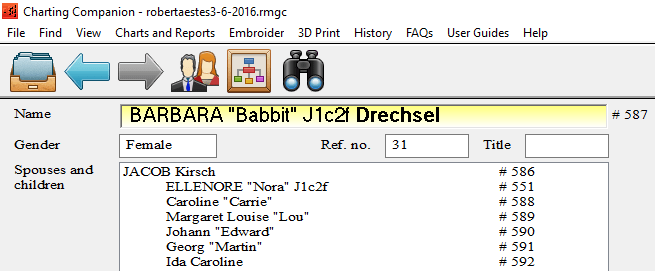
For example, if your haplogroup is J1c2f, for example, on Phylotree, you would click on haplogroup JT, which includes J. You would then scroll down through all the subgroups to find J1c2f. But that’s after your haplgroup is already determined. Phylotree is the reference source that testing companies use to identify the mutations that define haplogroups in order to assign your haplogroup to you.

It’s All About Mutations

For example, J1c2f has the following mutations at each level, meaning that each mutation(s) further defines a subgroup of haplogroup J.

As you can see, each mutation(s) further refines the haplogroup from J through J1c2f. In other words, if the person didn’t have the mutation G9055A, they would not be J1c2f, but would only be J1c2. If new clusters are discovered in future versions of Phylotree, then someday this person might be J1c2f3z.

Family Tree DNA provides an easy reference mutations chart here.

What is Build 17?

Research in mitochondrial DNA is ongoing. As additional people test, it becomes clear that new subgroups need to be identified, and in some cases, entire groups are moved to different branches of the tree. For example, if you were previously haplogroup A4a, you are now A1, and if you were previously A4a1 you are now A1a.

Build 17 was released in February of 2016. The previous version, Build 16, was released in February 2014 and Build 15 in September of 2012. Prior to that, there were often multiple releases per year, beginning in 2008.

Vendors and Haplogroups

Unfortunately, because some haplogroups are split, meaning they were previously a single haplogroup that now has multiple branches, a haplogroup update is not simply changing the name of the haplogroup. Some people that were previously all one haplogroup are now members of three different descendant haplogroups. I’m using haplogroup Z6 as an example, because it doesn’t exist, and I don’t want to confuse anyone.

Obviously, the vendors can’t just change Z6 to Z6a, because people that were previously Z6 might still be Z6 or might be Z6a, Z6b or Z6c.

Each vendor that provides haplogroups to clients has to rerun their entire data base, so a mitochondrial DNA haplogroup update is not a trivial undertaking and requires a lot of planning.

For those of you who also work with Y DNA, this is exactly why the Y haplotree went from haplogroup names like R1b1c to R-M269, where the terminal SNP, or mutation furthest down the tree (that the participant has tested for) is what defines the haplogroup.

If that same approach were applied to mitochondrial DNA, then J1c2f would be known as J-G9055A or maybe J-9055.

Why Version Matters

When comparing haplogroups between people who tested at various vendors, it’s important to understand that they may not be the same. For example, 23andMe, who reports a haplogroup prediction based not on full sequence testing, but on a group of probes, is still using Phylotree Build 12 from 2011.

Probe based vendors can update their client’s haplogroup to some extent, based on the probes they use which test only specific locations, but they cannot fully refine a haplogroup based on new locations, because their probes never tested those locations. They weren’t known to be haplogroup defining at the time their probes were designed. Even if they redefine their probes, they would have to rerun the actual tests of all of their clients on the new test platform with the new probes.

Full sequence testing at Family Tree DNA eliminates that problem, because they test the entire mitochondria at every location.

Therefore, it’s important to be familiar with your haplogroup, because you might match someone it doesn’t appear that you match. For example, our haplogroup A4a=A1 example. At 23andMe the person would still be A4a but at Family Tree DNA they would be A1.

If you utilize MitoSearch or if you are looking at mtDNA haplogroups recorded in GedMatch, for example, be aware of the source of the information. If you are utilizing other vendors who provide haplogroup estimates, ask which Phylotree build they are using so you know what to expect and how to compare.

Knowing the history of your haplogroup’s naming will allow you to better evaluate haplogroups found outside of Family Tree DNA matchs.

Build History

You can view the Phylotree Update History at this link, but Built 17 information is not yet available. However, since Family Tree DNA went from Built 14 to Build 17, and other vendors are further behind, the information here is still quite relevant.

Growth

If you’re wondering how much the tree grew, Build 14 defined 3550 haplogroups and Built 17 identified 5437. Build 14 utilized and analyzed 8,216 modern mitochondrial sequences, reflected in the 2012 Copernicus paper by Behar et al. Build 17 utilized 24,275 mitochondrial sequences. I certainly hope that the authors will update the Copernicus paper to reflect Build 17. Individuals utilizing the Copernicus paper for haplogroup aging today will have to be cognizant of the difference in haplogroup names.

Matching

If your haplogroup changed, or the haplogroup of any of your matches, your matches may change. Family Tree DNA utilizes something called SmartMatching which means that they will not show you as a match to someone who has taken the full sequence test and is not a member of your exact haplogroup. In other words, they will not show a haplogroup J1c2 as a match to a J1c2f, because their common ancestors are separated by thousands of years.

However, if someone has only tested at the HVR1 or HVR1+HVR2 (current mtDNA Plus test) levels and is predicted to be haplogroup J or J1, and they match you exactly on the locations in the regions where you both tested, then you will be shown as a match. If they upgrade and are discovered to be a different haplogroup, then you will no longer be shown as a match at any level.

Genographic Project

If you tested with the Genographic Project prior to November of 2016, your haplogroup may be different than the Family Tree DNA haplogroup. Family Tree DNA provided the following information:

The differences can be caused by the level of testing done, which phase of the Genographic project that you tested, and when.

  • Geno 1 tested all of HVR1.
  • Geno 2 tested a selection of SNPs across the mitochondrial genome to give a more refined haplogroup using Build 14.
  • Geno 2+ used an updated selection of SNPs across the mitochondrial genome using Build 16.

If you have HVR1 either transferred from the Genographic Project or from the FTDNA product mtDNA, you will have a basic, upper-level haplogroup.

If you tested mtDNA Plus with FTDNA, which is HVR1 + HVR2, you will have a basic, upper-level haplogroup.

If you tested the Full Mitochondrial Sequence with Family Tree DNA, your haplogroup will reflect the full Build 17 haplogroup, which may be different from either the Geno 2 or Geno 2+ haplogroup because of the number and selection of SNPs tested in the Genographic Project, or because of the build difference between Geno 2+ and FTDNA.

Thank You

I want to say a special thank you to Family Tree DNA.

I know that there is a lot of chatter about the cost of mitochondrial DNA testing as compared to autosomal, which is probe testing. It’s difficult for a vendor to maintain a higher quality, more refined product when competing against a lower cost competitor that appears, at first glance, to give the same thing for less money. The key of course is that it’s not really the same thing.

The higher cost is reflective of the fact that the full sequence mitochondrial test uses different technology to test all of the 16,569 mitochondrial DNA locations individually to determine whether the expected reference value is found, a mutation, a deletion or an insertion of other DNA.

Because Family Tree DNA tests every location individually, when new haplogroups are defined, your mitochondrial DNA haplogroup can be updated to reflect any new haplogroup definition, based on any of those 16,569 locations, or combinations of locations. Probe testing in conjunction with autosomal DNA testing can’t do this because the nature of probe testing is to test only specific locations for a value, meaning that probe tests test only known haplogroup defining locations at the time the probe test was designed.

So, thank you, Family Tree DNA, for continuing to test the full mitochondrial sequence, thank you for the updated Build 17 for refined haplogroups, and thank you for answering additional questions about the update.

Testing

If you haven’t yet tested your mitochondrial DNA at the full sequence level, now’s a great time!

If you have tested at the HVR1 or the HVR1+HVR2 levels, you can upgrade to the full sequence test directly from your account. For the next week, upgrades are only $99.

There are two mtDNA tests available today, the mtPlus which only tests through the HVR1+HVR2 level, or about 7% of your mitochondrial DNA locations, or the mtFull Sequence that tests your entire mitochondria, all 16,569 locations.

Click here to order or upgrade.

______________________________________________________________

Disclosure

I receive a small contribution when you click on some of the links to vendors in my articles. This does NOT increase the price you pay but helps me to keep the lights on and this informational blog free for everyone. Please click on the links in the articles or to the vendors below if you are purchasing products or DNA testing.

Thank you so much.

DNA Purchases and Free Transfers

Genealogy Services

Genealogy Research

Mary Durham (1686 – c 1746), Scandals and Scoundrels, 52 Ancestors #152

Mary Durham, daughter of Thomas Durham and Dorothy Smoot was born June 5, 1686 in North Farnham Parish in what was then Old Rappahannock County, Virginia.

Most of what we know about Mary Durham is related to her husbands, mostly her first husband by whom her children were born, Thomas Dodson.

Mary grew up along Totuskey Creek, red pin below, on the peninsula of land in Virginia known as the Northern Neck, surrounded on three sides by water; the Rappahannock River, the Potomac River and the Chesapeake Bay. It was then and remains rather insular. At that time, the economy was driven by tobacco.

Neighbors Married Neighbors

Based on deeds of her father as well as her brother, husband and husband’s father, it appears that Mary’s parents were neighbors with her husband’s parents, and she married the boy from across the fence. Mary and Thomas probably saw each other during their daily life, and on Sunday’s dressed up for church at North Farnham Parish, although the current church wasn’t built until 1737. Mary and her family would have attended the original church, located a few miles north of the present-day church, in a now forgotten location.

We don’t really know how Mary dressed or much about her lifestyle, but in general, the colonial Virginians attempted to keep up with the styles in England. The Durham family was not poor, but they also weren’t aristocratic. The lady above is fashionably dressed in 1700 in England. All I can say is that I hope it was winter with all of that fabric. She would have sweat to death in the summer, and washing machines were still an invention of the future.

Mary was quite young when she married Thomas Dodson. Their marriage was recorded on August 1, 1701 in the North Farnham Parish parish register. Mary was all of 15 years old, specifically 15 years and almost 3 months. That’s awfully young to marry, even in colonial Virginia. Thomas Dodson was all of 20 years old, young for a colonial male to marry too.

Of course, that raises the question of why they married so young. The first thought would be pregnancy. We can’t really rule that in or out, but here’s what we do know.

The first child recorded in the Farnham Parish Church registry for Mary and Thomas was George, born on October 31, 1702, a year and almost 3 months after their marriage. That means Mary did not get pregnant until they had been married 6 months. That too is unusual, as effective birth control did not exist at that time and there was no reason in that time and place not to begin a family immediately.

However, there’s son Thomas Dodson Jr. whose birth is not recorded in the Farnham Church register, which is known to be incomplete. Typically, the first male child is named after the father. If Thomas Jr. was the first child born to Mary and Thomas, then Mary would have to have been VERY pregnant when she married Thomas, in order for there to be enough time to have Thomas Jr., conceive George and give birth to him in October of 1702.

Mary’s son, Thomas Dodson Jr.’s birth is unrecorded, but he was married before 1725 to Elizabeth Rose, suggesting he was born before 1705.

If Thomas was the second born, who was the first born, George, named after, and why?

Land

In February 1702/03, Thomas Dodson’s father, Charles Dodson, deeded land to Thomas. A month earlier, Charles had written his will and included that same land for Thomas. He apparently decided to go ahead and deed the land before his death. On the same day, he also deeded land to son Charles Dodson and indicated that Charles was already living on his land – so it’s likely that Thomas was too.

The land deeded to Thomas was half of Charles Dodson’s 300 acre tract and the half that brother Charles lived on was called Rich Neck. The other half is the land Thomas received, separated from Rich Neck by a branch of the creek.

In the article about Thomas Dodson, we identified where Rich Neck was located.

At age sixteen and a half, with a four month old baby, if not two children, Mary was now the mistress of a plantation.

Scandal

In 1708 and 1709, and probably somewhat before and after, the Durham family was embroiled in a whopper of a scandal. In 1699, Thomas Durham, Mary’s father, had “purchased” an indentured servant named Anne Kelly. She was almost exactly Mary Durham’s age, 14 at that time, as judged by the court. I don’t know if the girls would have been allowed just to be girls, at least part of the time, or if their class difference would have kept them apart, even though they lived under the same roof.

However, Anne Kelly and Mary’s brother, Thomas Durham Jr. had no problem with class differences, it appears, at least not initially. In 1708, Anne was brought before the court, presented by her “master, Thomas Durham Sr.,” charged with fornication and bringing a bastard child into the world. Keep in mind that indentured servants were prohibited from marrying before their indenture was complete, so if they engaged in any intimate activity and a child resulted, the child was legally prevented from being legitimate because of their mother’s indentured status.

Anne refused to reveal the name of the father, and was fined and sentenced to jail. We’ll never know of course, if Anne was protecting someone, or if she was fearful. One way or another, she was certainly vulnerable.

Dorothy Smoot Durham, Thomas Durham Sr.’s wife came into court that same day and paid Anne’s fine, preventing Anne from having to spend time in jail. Why Dorothy performed this brave feat is unknown. It could have been out of the goodness of her heart. It could have been because she knew the identity of the father, or it could have been because she did not want to have to deal with an infant whose mother was in jail, and a servant who couldn’t serve. Regardless, Dorothy did what she needed to do – and reading between the lines, what her husband would not..

Just 10 months later, Anne Kelly was back in court again with another “bastard child,” but this time she told the court that both children were begotten by Thomas Durham Jr., Mary’s brother – although he would only have been 17 or so when the first child was conceived, if not younger. Given that there was only 10 months between Anne’s first court appearance the her second, for the second child, it’s feasible that the first child was born perhaps a year before she was actually brought into court initially. If so, then Thomas Durham Jr. would have been 16.

The second time Anne was fined, it wasn’t Dorothy that intervened, but Thomas Dodson, Mary’s husband. He paid Anne’s fine, and it appears from the court record that Anne was already serving at Thomas Dodson’s house. In any event, after her original indenture, Anne was obligated to serve additional time working for Thomas Dodson because he paid her fine. The added time to an indenture for each child was 5 years, typically, and the indenture for the fine might have been 5 years as well.

So, in addition to her own family, Mary had Anne living with them with her two children that were Mary’s nieces or nephews. In 1710, this means that Mary had at least 4 children under the age of 10 in the household and possibly as many as 8.

What is that Chinese blessing/curse? “May you live in interesting times.” Certainly these days were, especially in light of the fact that Thomas Durham Jr. married the neighbor girl, Mary Smoot about 1710 while Anne Kelly was still indentured to the family, serving extra time and raising HIS two children to boot. I’d wager Anne was none too happy for various reasons which would have added more drama to Thomas Durham’s wedding when he married Mary Smoot, related to his mother.

So 1708, 1709 and 1710 would have been very interesting years in the Durham family as well as at the Dodson’s plantation next door.

Mary’s Father Dies

In 1711, Mary’s father apparently became ill and wrote his will on August 4th, 3 days after Mary would have celebrated her 10 year wedding anniversary. In Thomas Durham’s will, among others, he mentions daughter Mary Dodson and her son, Thomas Dodson. We now know unquestionably that Thomas was born before August of 1711 and probably named after Thomas Durham, his grandfather.

We can guess, based on the average of one child every other year that Mary had born 5 children by this time. However, given what we know about the rest of her children, and who was living in 1739 when Thomas Dodson made his will, the children born between the first two sons and 1710 or 1711 died. There would have been three children whose names are unknown today that Mary gave birth to and buried, if not as children, then within her lifetime, before Thomas Dodson wrote his will in 1739. Many children died in an age with no inoculation’s and no antibiotics.

Daughter Alice Dodson’s birth is unrecorded, but about 1729, she married William Creel who was born in 1712, so we’ll count her as being born about 1712 as well.

Thomas Durham, Mary’s father, did not die until 1715, with his will being probated in June of that year. This suggests that he was ill from 1711, 4 years. Thomas would have been about 55 when he died, certainly not old by today’s standards.

Mary would have been 5 months pregnant for daughter Mary when she buried her father. She would have stood at her father’s grave beside her mother with at least three living children, if not more. It would have been a sad day in later winter or spring.

I wonder if Anne Kelly joined the family, bringing Thomas Durham Sr.’s two illegitimate grandchildren, if they were still living, to his funeral.  If so, I’d bet you could cut the tension with a knife between Anne Kelly, Thomas Durham Jr. and his wife who probably had at least one child herself by this time.

Births and Remarriage

Daughter Mary Dodson was born a few months later on October, 5 1715. We know she lived because her father’s will in 1739 mentions her as Mary Oldham.

In February 1716, just 8 months after Mary’s father’s will was probated, her mother, Dorothy remarried to Jeremiah Greenham. This marriage was apparently not a negative turn of events, because the Dodsons and Durhams and Greenhams appear in many documents together. Even more telling is that Mary Durham and Thomas Dodson named a son Greenham, so obviously Jeremiah Greenham was much loved. Greenham Dodson was born sometime between the 1716 marriage and 1720, so let’s assign him to the 1717 slot, given that he was married by 1740.

That means that son David, who wrote a will with a possibly pregnant wife in 1740 would have likely been born about 1719.

A child who would have been born about 1721 is missing, so was probably born and died at some point before Thomas Dodson wrote his will in 1739.

Son Abraham Dodson was born April 4, 1723 in North Farnham Parish. He married Barbara, surname unknown and moved to Faquier County where he died in 1768.

The Next Generation

Mary’s son, Thomas Dodson Jr. was apparently married in 1724, because on February 21, 1725, Mary’s first grandchild, a grandson, Joseph was born to Thomas and his wife, Elizabeth Rose. Mary was pregnant herself at that time, so her grandson Joseph would be older than her own two youngest children.

Son Joshua Dodson was born May 25, 1725 in North Farnham Parish, three months after her first grandchild was born.  Joshua was living in Faquier County in 1762 with wife Ruth when the Broad Run Church was constituted.

On April 30, 1726, George Dodson left the fold and married Margaret Dagod. That December, a daughter, Mary, named after her grandmother of course, was born to George and Margaret. I wonder if Mary felt particularly close to her namesake granddaughter.

Mary’s last child, Elisha, was born in 1727 when she was 41 years old. Mary had been bearing children for 25 years, a quarter century, risking death with each birth, for herself and the child as well.

Elisha Dodson was born February 22, 1727 in North Farnham Parish. He married Sarah Averitt (Everett) whose parents were William and Margaret Everett.

Four days apart in October of 1728, Mary’s second and third grandchildren arrived, son Lazarus to George Dodson and Margaret Dagod and son Thomas to Thomas Dodson and Elizabeth Rose. What a week that must have been!!! Babies and toddlers everyplace in the Dodson family, as the next generation had begun in earnest.

The Westward Movement Begins

In December 1733, Thomas Dodson Sr, wife Mary, Thomas Dodson Jr. and his wife Elizabeth sold land on the main swamp of Totuskey to Johnathan Lyell. That land sale is actually very helpful, because just below Rich Neck, today, there is a Lyell Church and about 3 or 4 miles northwest of Rich Neck is a Lyells crossroads. This deed which was originally the Thomas Durham Sr. land helps us to locate where this family group lived. You can click to enlarge the map below.

Mary signs this deed with her mark, an M, indicating that she cannot write her name. Education for women in terms of reading and writing was deemed unimportant and unnecessary for women in colonial America.

After this land sale, Thomas Dodson Jr. moved to Prince William County, the part that became Faquier County in 1759 and was a founding member of the Broad Run Baptist Church in 1762.

The Broad Run Church was about 105 miles from Rich Neck, but 100 miles in a wagon was about a 10 day journey, or a couple days if you were just riding a horse. By stage, at least two days, if not 3. Mary may not have seen Thomas’s family again. Perhaps he returned for an occasional visit by horseback. I hope so, for Mary’s sake, but it was very unlikely that his family came along.

Daughter Alice married William Creel about 1729 and by 1746, they too were buying land in Prince William County.

Blindness

About this time, Mary’s son Elisha experienced a devastating eye injury that blinded him for life. We don’t know exactly what happened, but we do know from the Reverend Elias Dodson who wrote about the Dodson family about 1860 that Elisha was blind from an accident or event dating from Elisha’s childhood. I have to wonder what could have been so devastating as to blind him entirely, not just in one eye. Measles, uevitis and trachoma are all 3 diseases known to cause blindness. Some type of accident could have as well, but I suspect an accident would have been more likely to only blind one eye.

Death, Death and More Death

Daughter Mary would probably have married about 1735 and son David, about 1737 or 1738, given that he had one child in 1739 when Thomas Dodson wrote his will.

On February 7, 1739/40, Thomas Dodson penned his will saying he was sick and weak of body. He left Mary the plantation along with all of the negroes and moveable estate during her natural life. He does not say anything about reducing her inheritance to one third or a child’s portion that if she remarries. Clearly, he loved Mary dearly and provided for her as best he could.

Thomas leaves land and other items to their children. Thomas’s will is the only way we know about son David, because David’s birth is not found in the North Farnham Parish register, nor is his marriage, and he lives in another county.

Thomas does not pass away immediately after writing his will. His death is shown in the North Farnham Parish register as occurring on November 21, 1740. Thomas was apparently ill between February and the end of November when he died. Mary would have cared for him for these nine months. Ironic, nine months to bring a child into the world and nine months to usher Thomas to the other side.

Mary’s heart must have been sick with worry and grief. Her son, David, living in Prince William County, wrote his will on April 27, 1740, just 2 months and 20 days after his father wrote his will. David’s will was probated three months later on July 28th, so before Thomas’s death. In February, when Thomas Dodson wrote his will, he left 20 shillings to his granddaughter, the daughter of David Dodson, but two months later, when David wrote his will, the daughter was apparently deceased, because David leaves his slaves to his wife during her lifetime and then to his child, “if my wife should prove to be with child.” I wonder what caused the deaths of David’s child, and David himself, and if they died of the same thing. I wonder if wife Amey was with child, and if so, what happened to Amey and the child.

Of course, communication at that time was by letter, and if the people involved did not read and write, they would have had to have someone write the letters for them, as well as read them when received. News traveled slowly, so the granddaughter may have already died when Thomas Dodson wrote his will. Regardless, that child was dead by the time David Dodson wrote his will, and we don’t know if David’s wife was with child, nor what happened to her. Clearly, Mary couldn’t go to help, had she known, because she had her hands full at home. Mary’s youngest child would have been 12. At least the children were old enough to be of assistance. I would wager that during this time Mary spent many tearful nights alone by the fireplace after everyone else went to bed.

As the months and years rolled on, after Thomas’s death, more grandchildren were born in the rhythmic two year cycle of pregnancy and birth. I hope Mary enjoyed those children in the bright sunshine of the Northern Neck summertime.

Was Robert Galbreath A Scoundrel?

Mary’s life seems to have taken a downturn after Thomas’s death. Thomas’s will was probated on March 2, 1740/41 with Mary and son, Greenham, as executors.

Mary received the plantation with son Elisha inheriting it after her death. We don’t have any record of what happened to that plantation, unfortunately.

Thomas Dodson’s estate inventory should be interesting, if it is detailed, because all items were deemed to have been owned by the man when he died. Therefore all kitchen items, bedding, cloth, spinning wheels, and anything owned by the “couple” or the “woman,” except her clothes and unless it was specifically deeded to her, without him, was legally the mans and inventoried as part of his estate. Even though this practice of exclusive male spousal property ownership, by today’s standards, is barbaric, it does serve to give us a peephole into their lives.  Looking at a man’s estate inventory tells us how the entire household lived.

Eighteen months after Thomas’s death, on September 29, 1743, Mary Durham Dodson married Robert Galbreath and sure enough, lawsuits followed – just 10 months later. Robert Galbreath or Galbraith is not a known name in the neighborhood. One wonders where he came from and how Mary met him and became familiar enough to marry.

On July 3, 1744, in chancery court, Greenham Dodson files on behalf of himself as executor of the estate of Thomas Dodson, and others, against Robert Galbreath. (Court Record Book 11-406)

On May 7, 1745, the suit was resolved and the court decided that the petitioner, Greenham Dodson, should “take possession of the coverture, according to the intention of the testators will” and that he should use it for the benefit of Mary Galbreath during her coverture. Robert Galbreath refused to give security and was ordered to pay costs. (Court Record Book 11-458)

I checked the Virginia Chancery Suit index site for Richmond County, and either those records never made it to the State Library, or they aren’t online yet. I would love to see the entire case file for this suit. More specifically, I want the juicy tidbits. What was the problem? Was Mary in danger, and if so, why? The court’s position is rather extreme, as these judgements go in early Virginia – especially given that women in essence lost rights and property to their husbands when they married. The only saving grace was that at least the land owned by Thomas Dodson wasn’t owned by Mary in fee simple, so Galbreath couldn’t dispose of it, as it was a life estate to go to Elisha at Mary’s death. The balance of the moveable estate that Thomas left, not so. Galbreath would have had the legal right to do anything he wanted with everything not left to someone other than Mary. For the court to remove that right from a colonial male would have been a decision not reached lightly and only due to a serious problem.

That suit doesn’t sound friendly at all, and it wasn’t resolved between July of 1744 and May of 1745 by the parties involved, as is often the case. The term coverture means the legal status of a married woman, considered to be under her husband’s protection and authority. Perhaps the Dodson children felt that Robert Galbreath was utilizing the estate of Thomas Dodson for himself, not for Mary. Mary would have been 57 years old.

This entry is the last record of Mary. After that, the screen goes dark. I worry, posthumously of course, that Mary was in danger or ill and not taken care of in the last months of her life.

I feel good about the fact that Greenham took a stand and was sticking up for his mother, whether it was for the benefit of his mother or whether it was to preserve his father’s estate. Regardless, someone was looking out for Mary’s interests, which were the same as the Thomas Dodson estate’s interests, and was willing to go to court to do so.

We don’t know what happened next. Divorce was unheard of, but Greenham could have “had a man to man talk” with Robert, as it appears that Robert might have hightailed it back to Lancaster County. Mary could simply have continued to live on the land in Richmond County, until she died and the land fell to Elisha, as Thomas’s will indicated. Son Elisha would have been 13 when his father died, so a young man that within just a few years would have been able to run the plantation quite effectively.  By 1744 Elisha would have been 17 and in 1745, 18 years old.  He didn’t need Galbreath to run Thomas Dodson’s plantation.

Following the Trail to Prince William County

In 1746, both Greenham Dodson and William Creel, husband of Alice Dodson Creel are buying land in Prince William County. I feel that Mary likely died about this time, being the impetus for several of Mary’s children to pull up stakes and move west, with nothing holding them in Richmond County any longer.

Elisha would have turned 20 in 1747. Apparently moving west was more attractive than living on the family plantation, because he too moved to Prince William County, although we don’t know when, other than it was before 1762.

Galbreath’s Death

Robert Galbreath died 4 years after Greenham filed and won the suit, but with no mention of a wife. Does that indicate that Mary had died by this time? Did Mary move with Robert to Lancaster County? Or maybe after the suit, she moved with her children to Prince William County? Or did she live with George Dodson in Richmond County, or remain on her own plantation? We’ll never know.

Abstracts of Lancaster County, Virginia Wills 1653-1800 by Ida J. Lee

Galbreath, Robert. Will. 10 Oct. 1749. Rec. 9 March 1749. Cousin, Richard Weir; Ezekiel Morris; Margaret Carter. Extr. Cousin Richard Weir. Wits; Isaac White, Michael Dillon. W.B. 14, p. 274.

Inventory of above, returned by Isaac White, admr 11 May 1750. W.B. 14, p. 285.

Suit: Isaac White, Pltf. vs Katherine Jones, Defd. Robert Galbreath had made a gift to his daughter-in-law Katherine Carter, since intermarried with Humphrey Jones. Dated 29 Sept. 1752. Rec. 18 June 1753. W.B. 15, p. 139.

The end of Mary’s life may have been difficult, at best. I hope her children sheltered her from whatever storms she encountered.

Mary Durham and Thomas Dodson’s Children

Thomas Dodson and Mary Durham were married on August 1, 1701. Some of their children are well documented, and others are virtually unknown.

George Dodson had a son, Rawleigh born in 1731. The name Rawleigh was shared in Richmond County by Rawleigh Travers, a family member of the Travers family that Charles Dodson, father of Thomas, bought land from, Rawleigh Downman, neighbors of the Dodsons, and Rawleigh Chinn, the son of Alice Smoot born in 1642 who married a Chinn. Alice Smoot was Mary Durham’s aunt. Sir Walter Raleigh may have popularized this name in the early 1600s. I’ve always wondered where the name Rawleigh came from in the Dodson family. Perhaps this is a clue.

  • Thomas Dodson Jr.’s birth is unrecorded, but he was married before 1725 to Elizabeth Rose, suggesting he was born before 1705. About 1733, Thomas moved to Prince William County, the part that became Faquier in 1759 and was a founding member of the Broad Run Baptist Church in 1762. In 1766, Thomas moved to Halifax County, wrote his will in 1779 and died in 1783. In later years, in Halifax and Pittsylvania Counties, the records of various Thomas Dodsons are intermingled and confused.
  • Alice Dodson’s birth is unrecorded, but about 1729 she married William Creel, born in 1712. They had children, one being John Creel born in 1732. Daughter Alice Creel was mentioned in Thomas Dodson’s 1739 will. By 1746, William Creel was buying land in Prince William County and in 1757, William died with Thomas Dodson (Jr.) being one of the men to appraise his estate. His wife was listed at that time as Anne, with Alice apparently having died sometime between 1739 and 1757.
  • Mary Dodson born October 5, 1715 had married an Oldham by the time her father wrote his will in 1739. Nothing more is known about this line.
  • David Dodson’s birth is unrecorded. His wife’s name is Amey, surname unknown. David died in Prince William County in 1740, his will dated April 27th that year and probated in July. He left his wife the use of his slaves and then to his child if his wife should prove to be with child. Thomas Dodson left 30 shillings to his granddaughter, the daughter of David Dodson, but nothing more is known of this child. She probably died between the time that Thomas Dodson wrote his will in 1739 and David Dodson’s will in 1740. Either that or David omitted his daughter from his will, or the David who died in 1740 is not the son of Mary Durham and Thomas Dodson.
  • Greenham Dodson’s birth is unrecorded, but he was married to Eleanor Hightower by 1740, meaning he was probably born 1715-1720. In 1746, Greenham sold his land in Richmond County and moved to Amelia County. He had moved to Halifax County by 1772 and in 1777, a Greenham Dodson signed a loyalty oath.

I have always wondered about the genesis of the name, Greenham. Jeremiah Greenham married the widow Dorothy Durham in 1716, probably not long before Greenham Dodson’s birth to Thomas and Mary Durham Dodson. Jeremiah would have been Greenham Dodson’s step-grandfather and possibly also his godfather.

  • Abraham Dodson was born April 4, 1723 in North Farnham Parish. He married Barbara, surname unknown and moved to Faquier County by 1762 where he died in 1768.
  • Joshua Dodson was born May 25, 1725 in North Farnham Parish and was living in Faquier County with wife Ruth in 1762 when the Broad Run Church was constituted. Joshua may have lived in Halifax County on his way to Surry County, NC where he settled and may have died there before 1790. It’s also possible that he moved on to South Carolina.
  • Elisha Dodson was born February 22, 1727 in North Farnham Parish. He married Sarah Averitt (Everett) whose parents were William and Margaret Everett. He was left land after his mother’s death, by his father’s will, but there is no record of the disposition of the land. By 1762, he was in Faquier County when his brother, Thomas, released his claim on his father’s estate. In 1774, Elisha moved on to Halifax County where he died in 1796 or 1797. According to the manuscript of the Reverend Elias Dodson, Elisha was blind due to an eye injury as a child.

All of Mary’s sons eventually moved from Richmond County. Thomas Jr. first in 1733 when he sold his land and move to Prince William County, the part that became Faquier in 1759. His siblings would follow over the years.

David left before 1740. Greenham left in 1745, after he filed and won the suit against Robert Galbreath on behalf of his mother and his father’s estate. Did Mary perhaps die at this time or shortly thereafter? Was her ill health what caused Greenham to file suit? Was Robert not caring for her properly? Did Mary’s death free Greenham to move to Prince William County in 1746 along with Mary’s daughter Alice Creel as well? Did Mary’s three youngest sons move with their siblings at this time, or did they stay in Richmond County until later? There is no record of land ownership to help unravel that question.

Given the 1745 lawsuit and the fact that both Greenham, who was obviously looking after his mother’s interests, and daughter Mary left for Prince William County in 1746, I suspect Mary died between 1745 and 1746.

Mary’s son George sold his land in 1756 in Richmond County and appears to have been the last to leave, although we don’t know what happened to George and Margaret after that sale, because they are never recorded elsewhere.  Their children, by virtue of who they married, had to have been living nearby their Dodson cousins. Two of George’s children married other Dodson family members..

In 1762, Thomas Dodson of Faquier County, released his right to his claim on the estate of his father, Thomas, to his brothers; Greenham Dodson of Amelia County, Abraham, Joshua and Elisha of Faquier County. Brother George is notably absent and is not found again after selling his Richmond County land in 1756. One could presume that Mary has died by 1756 – otherwise it’s unlikely that George would have sold and left his mother. By 1762, when Thomas relinquished his right to his share of his father’s estate, and with all of her sons gone from Richmond County, Mary was assuredly buried in the churchyard beside Thomas Dodson.

In 1745, Mary would have been 59 years old, in 1756, age 70 and in 1762, 76 years old.

Where is Mary Buried?

Both Mary and Thomas Dodson died after the new Farnham Parish Church was built in 1737, although their children died before the new church was constructed.

They could have been buried where earlier family members rested but the most likely location for their burial is the cemetery behind the church.  There are no marked graves from this early date. The other possibility of course is that there was a family cemetery, now lost to time, although family cemeteries did not seem to be prevalent in this part of Virginia at this time.

It looks like there is room for lots of unmarked burials in this location.

Mary’s Grandchildren

Eventually, Mary’s 9 children that lived to adulthood would give her a total of 47 known grandchildren, and probably many more. We don’t know how many children Alice Dodson Creel or Mary Dodson Oldham bore. Furthermore, we know that more than 47 had to have been born. Using the known children’s births and a reproductive span of 24/25 years for each woman, giving them the opportunity to have approximately 12 children, spaced 2 years apart, assuming all children lived long enough to nurse for the first year (in many cases, effectively preventing conception of another child,) we calculate that at least 37 additional grandchildren were born and died.

If you add the 47 grandchildren we know about, the 37 that had to have been born and died, and 20 additional births through Alice and Mary, if they survived beyond 1739 when they were recorded in their father’s will, that’s 104 grandchildren.

Of the 34 grandchildren for whom we have documentation, 21 were born in Mary’s lifetime. Two of Mary’s children didn’t begin having children until about the time she died, or after. Mary’s son, George remained in Richmond County and had several children that Mary would have been close to, as he lived on land adjacent to Mary.

Son Thomas left in 1733, taking his grandchildren, aged 8 and under, along with him. That must have been difficult for Mary, seeing her grandchildren leave and knowing she might well not see them again. Mary’s daughters Alice and Mary would have been marrying about that time though, so perhaps those grandchildren that we don’t know about helped to sooth the ache in Mary’s heart. We also don’t know if Alice and Mary remained local or left as well with their husband’s while Mary was still living.

What we do know is that son George stayed, with his children who were probably very close to Mary. Son Greenham stayed until between 1745 and 1746. Mary would have known his children as well. Abraham, Joshua and Elisha were only just beginning their families in the mid-1740s when Mary was aging and probably died.

Mary’s grandchildren’s births spanned roughly half a century, from 1725 to about 1772.

Mary probably had at least one great-grandchild when she died, although she wouldn’t have known the child. Grandson Joseph who was born in 1725 had son Thomas in about 1746, beginning the next generation. Unfortunately, Thomas Jr. had moved to Farquier County in 1733, so unless Mary went along as her sons moved westward, she would never have gotten to hold her great-grandchild.

At least 8 grandchildren died within Mary’s lifetime, meaning that except for David who lived distantly, she would have stood at the funerals and gravesides of 7 grandchildren, and probably 5 of her own children as well. Plus her parents, in-laws, husband and probably at least some of her siblings and their children as well.

Not an easy life, by any means.

Life and Death in Colonial America

I created the chart below to visualize what the “typical” family looked like, in terms of birth, survival and death of children. Mary Durham and Thomas Dodson’s children are listed across the top. The ones in red died or are slots in which we know children would have been born. Mary’s grandchildren are listed in the columns under each child, the red ones known to have died or are unfilled slots – silent sentinels to children who were born and died with no record that they existed except for the blank spot on the chart.

Mary’s two daughters married, but their descendants have never been traced. If the daughters lived after their father’s 1739 will, they would have had additional children as well, not shown below. You can click to enlarge the image.

  • ? Before the name means I’m uncertain if this child is in this family. If not, another child would have filled that slot.
  • ? After the nickname means I’m uncertain if that is this person. For example, there are multiple candidates for “Second Fork” Thomas and the various George nicknames are confused.
  • ? After a first name means that the person’s surname is unknown.
  • Reverend Silas Lucas was unable to differentiate between the later generations of George Dodsons – there is a significant amount of confusion regarding who married whom.
  • Green = my lineage
  • Red = young deaths or children unaccounted for in the birth order, probably born and died
  • No birth years are known for Greenham’s children – placed at 2 year intervals based on estimated marriage and birth dates of their childen, and continued for 25 years.
  • Thomas Dodson wrote his will in 1739 and died in 1740.
  • Mary Durham Dodson was living in 1745, but in 1749 when her second husband Robert Galbreath wrote his will, she is notably absent, although they may have been living separately.
  • Grey = children who married cousins

Just looking at the amount of known red – that’s a lot of death. At that time, it was considered normal to lose roughly half your children before they reached adulthood.

Looking at this another way, the death of 6 of the children of Mary Durham Dodson reduced the number of descendants a few generations downstream by half, which is literally thousands. Just in the first generation, had those children lived to fully reproduce, that would have been another 72 grandchildren for Mary.

Taking a look at this phenomenon in a chart, you can see the potential in the reduction of descendants with just one missing child, or conversely, the potential addition of descendants in a few generation with just one added child. I stopped around 1900, because that’s the timeframe that birth control became popular and family sizes began to shrink.

Five surviving children per generation is certainly reasonable. Ten is likely too optimistic.

It’s no wonder, though, with that number of descendants in just one generation why people with heavy colonial ancestry have high numbers of autosomal DNA matches.

Mitochondrial DNA

Mitochondrial DNA, which could tell us a great deal about Mary’s heritage on her direct matrilineal line is MIA. Why is it MIA? Women pass their mitochondrial DNA to each of their children, but only female children pass it on. In order to find Mary’s mitochondrial DNA, we would need to test a descendant of Mary through all females to the current generation, when males are eligible as well.

And of course, it’s the two daughters that we don’t know anything about.

If anyone has done research on the daughters, Alice Dodson married to William Creel, or Mary Dodson who married an Oldham, please speak up. Not only can we update their information, but we may be able to find an appropriate person to test for Mary’s mitochondrial DNA. I have a DNA testing scholarship for the first eligible person.

Summary

Mary’s was probably a typically colonial wife, albeit marrying very young. Depending on the family social standing, Mary’s life could have ranged from helping in the fields to overseeing the household and the “domestics” inside. We do know that at least by the time Thomas Dodson died, he did own slaves in addition to at least one indentured servant during his lifetime. Most of the labor would have been for the growth and harvesting of tobacco, and not for household labor. Their “plantation” was probably modest. The Northern Neck was not Tara and they did not own one of the mansion houses.

Mary’s life was probably defined by church and children. While church attendance was mandatory, and men were fined for non-attendance, religion seemed to sooth the heart of those who endured devastating losses. And pretty much everyone who had children experienced devastating losses. In Mary’s case, probably 5 or 6 children died in her lifetime, possibly more, not to mention several grandchildren, parents, siblings, nieces, nephews and her husband. Death is a part of the cycle of life, but that’s an awful lot of death to endure, at least by today’s standards.

Yet, Mary continued to function. She had more children. She went to church and when necessary, she went to the cemetery which was certainly a place far too familiar.

The early cemeteries, whether on plantations or in churchyards are lost to time. Few stones exist on the Northern Neck for people who were born before the mid-1800s. The location of the early Farnham Parish Church is lost to us today, too, and that may have been where family members were buried before the present church was built in 1737. Plantations, and all farms then were considered plantations, may have had their own cemeteries, now reclaimed by Mother Nature or development.

In many ways, the fact that the Northern Neck is a peninsula and not easily accessible has protected it from development, so the unmarked and unknown graves of the colonial planters may still remain unmolested as they rest in peace on one of the first American frontiers.

______________________________________________________________

Disclosure

I receive a small contribution when you click on some of the links to vendors in my articles. This does NOT increase the price you pay but helps me to keep the lights on and this informational blog free for everyone. Please click on the links in the articles or to the vendors below if you are purchasing products or DNA testing.

Thank you so much.

DNA Purchases and Free Transfers

Genealogy Services

Genealogy Research

Concepts – “Who To Test?” Series

I often receive questions about who to test to obtain (discover) the Y or mitochondrial DNA of a particular ancestor in one’s tree. The question often arises when people are attempting to find either Y or mitochondrial DNA to confirm that an ancestor descends from or belongs to a particular population.

For example, “My great-great-grandmother was supposed to be Cherokee.  How can I tell if she was?”

The answer would be that if she was Cherokee on her mother’s direct maternal side, testing the mitochondrial DNA of specific descendants would yield the answer.

Regardless of origins, the concept and techniques apply to everyone. People of Native American, African, Jewish, European and Asian heritage carry specific haplogroups and match people who have similar roots.

You may want to read this short article, 4 Kinds of DNA for Genetic Genealogy to understand the difference between Y, mitochondrial and autosomal DNA, what testing can tell you, and how they can help your genetic genealogy.

At a very basic level:

  • Y DNA testing tests the direct paternal (typically surname) line only, for males only. The Y chromosome is only passed from fathers to sons, so it is not divided nor mixed with the mother’s DNA. Females don’t have a Y chromosome, which is why they can’t test.
  • Mitochondrial DNA testing tests the direct matrilineal line only, for everyone, males and females both. The mitochondria is passed from mothers to all of her children, but is only passed on by females. It is not mixed with the father’s DNA, so it is not divided during the inheritance process.
  • Autosomal DNA testing tests all of your DNA, providing cousin matches and ethnicity estimates – but does not provide you with specifics about any individual line. You inherit half the autosomal DNA of each of your parents, so ancestral DNA diminishes by half in each generation. Autosomal testing is a great overview of all of your DNA lineages, but can’t tell you where any particular line comes from.

Testing the appropriate descendants of each ancestor allows us to build a DNA pedigree chart in order to determine the proven, specific heritage and origins of each individual line.

Here’s what my DNA Pedigree Chart looks like through my 8 great-grandparents where I’ve successfully obtained the Y and mitochondrial DNA of their descendants. Y and mitochondrial DNA, of course, has special properties and reaches back hundreds and thousands of years in time, because the Y and mitochondrial DNA is not diluted by the DNA of the other parent during inheritance.

I’ve converted the relationships in my pedigree chart above to an Ancestor Pedigree Chart, below, because we will be working with each individual and adding lines for other family members as we determine who we can test. You can click to enlarge the image.

In the Ancestor Pedigree Chart, shown above, there are 16 different people who all carry mitochondrial DNA, representing 8 different mitochondrial lines. Mitochondrial contributors, all women, shown in pink both carry and contribute mitochondrial DNA. Mothers contribute their mitochondrial DNA to the males, shown by pink hearts, but the men don’t pass it on. The daughters pass their mitochondrial DNA to all of their children.

There are 8 people, shown in blue, who carry and contribute Y DNA, representing 4 different Y lines.

Each mitochondrial and Y line of DNA has a story to tell that can’t be told any other way. Autosomal DNA does not provide specific information about the genesis or ethnicity of any particular line, but Y and mtDNA does. If you want to know specifically where, what part of the world, or what clan that particular ancestor descended from, Y and mitochondrial DNA may tell you.

The question becomes, who can be tested that is living today to obtain that specific information about each particular ancestor.

Of course, the answer of who to test to find the ancestral Y and mitochondrial DNA varies depending on the gender of the person, and where they are located in your tree.

If the person in the tree is no longer living, the answer about who to test may hinge on their siblings, and the descendants of their siblings or maybe cousins. Or perhaps you’ll need to go back up the tree a generation or two to find appropriately descended relatives to test.

For each of the individuals in this tree, I’m going to answer the question of whom to test to obtain their Y and mitochondrial DNA – and how to find a suitable candidate. Talking them into testing, however, is all up to you:)

If you haven’t tested your Y or mitochondrial DNA, and you want to, you can order those tests at Family Tree DNA.  I suggest a minimum of 37 markers for Y DNA. You can always upgrade later to 67 or 111 markers.  Regardless of your testing level, you’ll receive haplogroup estimates, matches and other information.  For mitochondrial DNA, order the full sequence test so you’ll receive your full haplogroup designation. Several Y and mitochondrial haplogroups originated in Asia, with some lines settling in Europe, some in Asia and some in the Americas – so you need as much information as you can extract from your DNA.

Please join me for the “Concepts – Who To Test?” Series – coming soon to a this blog, so stay tuned!!!

______________________________________________________________

Disclosure

I receive a small contribution when you click on some of the links to vendors in my articles. This does NOT increase the price you pay but helps me to keep the lights on and this informational blog free for everyone. Please click on the links in the articles or to the vendors below if you are purchasing products or DNA testing.

Thank you so much.

DNA Purchases and Free Transfers

Genealogy Services

Genealogy Research

Concepts – The Faces of Endogamy

Recently, while checking Facebook, I saw this posting from my friend who researches in the same Native admixed group of families in North Carolina and Virginia that I do. Researchers have been trying for years to sort through these interrelated families. As I read Justin’s post, I realized, this is a great example of endogamy and often how it presents itself to genealogists.

I match a lot of people from the Indian Woods [Bertie County, NC] area via DNA, with names like Bunch, Butler, Mitchell, Bazemore, Castellow, and, of course, Collins. While it’s hard to narrow in on which family these matching segments come from, I can find ‘neighborhoods’ that fit the bill genetically. This [census entry] is from near Quitsna in 1860. You see Bunch, Collins, Castellow, Carter, and Mitchell in neighboring households.

Which begs the question, what is endogamy, do you have it and how can you tell?

Definition

Endogamy is the practice or custom or marrying within a specific group, population, geography or tribe.

Examples that come to mind are Ashkenazi Jews, Native Americans (before European and African admixture), Amish, Acadians and Mennonite communities.

Some groups marry within their own ranks due to religious practices. Jewish, Amish and Mennonite would fall under this umbrella. Some intermarry due to cultural practices, such as Acadians, although their endogamy could also partly be attributed to their staunch Catholic beliefs in a primarily non-Catholic region. Some people practice endogamy due to lack of other eligible partners such as Native Americans before contact with Europeans and Africans.  People who live on  islands or in villages whose populations were restricted geographically are prime candidates for endogamy.

In the case of Justin’s group of families who were probably admixed with Native, European and African ancestors, they intermarried because there were socially no other reasonable local options. In Virginia during that timeframe, mixed race marriages were illegal. Not only that, but you married who lived close by and who you knew – in essence the neighbors who were also your relatives.

Endogamy and Genetic Genealogy

In some cases, endogamy is good news for the genealogist. For example, if you’re working with Acadian records and know which Catholic church your ancestors attended. Assuming those church records still exist, you’re practically guaranteed that you’ll find the entire family because Acadians nearly always married within the Acadian community, and the entire Acadian community was Catholic. Catholics kept wonderful records. Even when the Acadians married a Native person, the Native spouse is almost always baptized and recorded with a non-Native name in the Catholic church records, which paved the way for a Catholic marriage.

In other cases, such as Justin’s admixed group, the Brethren who notoriously kept no church records or the Jewish people whose records were largely destroyed during the Holocaust, endogamy has the opposite effect – meaning that actual records are often beyond the reach of genealogists – but the DNA is not.

It’s in cases like this that people reach for DNA to help them find their families and connections.

What Does Endogamy Look Like?

If you know nothing about your heritage, how would you know whether you are endogamous or not? What does it look like? How do you recognize it?

The answer is…it depends. Unfortunately, there’s no endogamy button that lights up on your DNA results, but there are a range of substantial clues.  Let’s divide up the question into pieces that make sense and look at a variety of useful tools.

Full or Part?

First of all, fully and partly endogamous ancestry, and endogamy from different sources, has different signs and symptoms, so to speak.

A fully endogamous person, depending on their endogamy group, may have either strikingly more than average autosomal DNA matches, or very few.

Another factor will be geography, where you live, which serves to rule out some groups entirely. If you live in Australia, your ancestors may be European but they aren’t going to be Native American.

How many people in your endogamous group that have DNA tested is another factor that weighs very heavily in terms of what endogamy looks like, as is the age of the group. The older the group, generally the more descendants available to test although that’s not always the case. For example warfare, cultural genocide and disease wiped out many or most of the Native population in the United States, especially east of the Mississippi and particularly in the easternmost seaboard regions.

Because of the genocide perpetrated upon the Jewish people, followed by the scattering of survivors, Jewish descendants are inclined to test to find family connections. Jewish surnames may have been changed or not adopted in some cases until late, in the 1800s, and finding family after displacement was impossible in the 1940s for those who survived.

Let’s look at autosomal DNA matches for fully and partly endogamous individuals.

Jewish people, in particular Ashkenazi, generally have roughly three times as many matches as non-endogamous individuals.

Conversely, because very few Native people have tested, Native testers, especially non-admixed Native individuals, may have very few matches.

It’s ironic that my mother, the last person listed, with two endogamous lines, still has fewer matches than I do, the first person listed.  This is because my father has deep colonial roots with lots of descendants to test, and my mother has recent immigration in her family line – even though a quarter of her ancestry is endogamous.

To determine whether we are looking at endogamy, sometimes we need to look for other clues.

There are lots of ways to discover additional clues.

Surnames

Is there a trend among the surnames of your matches?

At the top of your Family Finder match page your three most common surnames are displayed.

A fully endogamous Jewish individual’s most common surnames are shown above. If you see Cohen among your most common surnames, you are probably Jewish, given that the Kohanim have special religious responsibilities within the Jewish faith.

Of course, especially with autosomal DNA, the person’s current surname may not be indicative, but there tends to be a discernable pattern with someone who is highly endogamous. When someone who is fully endogamous, such as the Jewish population, intermarries with other Jewish people, the surnames will likely still be recognizably Jewish.

Our Jewish individual’s first matching page, meaning his closest matches, includes the following surnames:

  • Cohen
  • Levi
  • Bernstein
  • Kohn
  • Goldstein

The Sioux individual only has 137 matches, but his first page of matches includes the following surnames:

  • Sunbear
  • Deer With Horns
  • Eagleman
  • Yelloweyes
  • Long Turkey
  • Fire
  • Bad Wound
  • Growing Thunder

These surnames are very suggestive of Native American ancestry in a tribe that did not adopt European surnames early in their history. In other words, not east of the Mississippi.

At Family Tree DNA, every person has the opportunity to list their family surnames and locations, so don’t just look at the tester’s surname, but at their family surnames and locations too. The Ancestral Surname column is located to the far right on the Family Finder matches page. If you can’t see all of the surnames, click on the person’s profile picture to see their entire profile and all of the surnames they have listed.

Please note that you can click to enlarge all graphics.

If you haven’t listed your family surnames, now would be a good time. You can do this by clicking on the orange “Manage Personal Information” link near your profile picture on the left of your personal page.

The orange link takes you to the account settings page. Click on the Genealogy tab, then on surnames. Be sure to click the orange “save” when you are finished.

Partial Endogamy

Let’s take a look at a case study of someone who is partially endogamous, meaning that they have endogamous lines, but aren’t fully endogamous. My mother, who is the partially endogamous individual with 1231 matches is a good example.

Mother is a conglomeration of immigrants. Her 8 great-grandparents break down as follows:

In mother’s case, a few different forces are working against each other. Let’s take a look.

The case of recent immigration from the Netherlands, in the 1850s, would serve to reduce mother’s matches because there has been little time in the US for descendants to accrue and test. Because people in the Netherlands tend to be very reluctant about DNA testing, very few have tested, also having the effect of reducing her number of matches.

Mother’s Dutch ancestors were Mennonites, an endogamous group within the Netherlands, which would further reduce her possibilities of having matches on these lines since she would be less likely to match the general population and more likely to match individuals within the endogamous group. If people from the Mennonite group tested, she would likely match many within that group. In other words, for her to find Dutch matches, people descended from the endogamous Dutch Mennonite population would need to test. At Family Tree DNA, there is a Low Mennonite Y DNA and Anabaptist autosomal DNA project both, but these groups tend to attract the Mennonites that migrated to Russia and Poland, not the group that stayed in the Netherlands. Another issue, at least in mother’s case, is that her Mennonite relatives “seem” to have been later converts, not part of the original Mennonite group – although it’s difficult to tell for sure in the records that exist.

Mother’s Kirsch and Drechsel ancestors were also recent immigrants in the 1850s, from Germany, with very few descendants in the US today. The villages from where her Kirsch ancestors immigrated, based on the church records, did tend to be rather endogamous.  However, that endogamy would only have reached back about 200 years, as far as the 30 Years’ War when that region was almost entirely, if not entirely, depopulated. So while there was recent endogamy, there (probably) wasn’t deep endogamy. Of course, it would require someone from those villages to test so mother could have matches before endogamy can relevant. DNA testing is not popular in Germany either.

Because of recent immigration, altogether one half of mother’s heritage would reduce her number of matches significantly. Recent immigrants simply have fewer descendants to test.

On the other hand, mother’s English line has been in the US for a long time, some since the Mayflower, so she could expect many matches from that line, although they are not endogamous. If you’re thinking to yourself that deep colonial ancestry can sometime mimic endogamy in terms of lots of matches, you’re right – but still not nearly to the level of a fully endogamous Jewish person.

Mother’s Acadian line has been settled in North America in Nova Scotia since the early 1600s, marrying within their own community, mixing with the Native people and then scattering in different directions after 1755 when they were forcibly removed. Acadians, however, tended to remain in their cultural groups, even after relocation. Many Acadian descendants DNA test and all Acadians descend from a limited and relatively well documented original population. That level of documentation is very unusual for endogamous groups. Acadian surnames are well known and are French. The best Acadian genealogical resource in is Karen Theriot’s comprehensive tree on Rootsweb in combination with the Mothers of Acadia DNA project at Family Tree DNA. I wish there was a similar Fathers of Acadia project.

Mother’s Brethren line is much less well documented due to a lack of church records. The Brethren community immigrated in the early 1700s from primarily Switzerland and Germany, was initially relatively small, lived in clusters in specific areas, traveled together and did not marry outside the Brethren faith. Therefore, Brethren heritage and names also tend to be rather specific, but not as recognizable as Acadian names. After all, the Brethren were German/Swiss and in mother’s case, she also has another 1/4th of her heritage that are recently immigrated Germans – so differentiating one German group from the other can be tricky. The only way to tell Brethren matches from other German matches is that the Brethren also tend to match each other.

In Common With

If you notice a group of similar appearing surnames, use the ICW (in common with) tool at Family Tree DNA to see who you match in common with those individuals. If you find that you match a whole group of people with similar surnames or geography, contact your matches and ask if they know any of the other matches and how they might be related. I always recommend beginning with your closest matches because your common ancestor is likely to be closer in time than people who match you more distantly.

In the ICW match example below, all of the matches who do show ancestral surnames include Acadian surnames and/or locations.

Acadians, of course, became Cajuns in Louisiana where one group settled after their displacement in Nova Scotia. The bolded surnames match surnames on the tester’s surname list.

The ICW tools work particular well if you know of or can identify one person who matches you within a group, or simply on one side of your family.

Don Worth’s Autosomal DNA Segment Analyzer is an excellent tool to genetically group your matches by chromosome. It’s then easy to use the chromosome browser at Family Tree DNA to see which of these people match you on the same segments. These tools work wonderfully together.

The group above is an Acadian match group. By hovering over the match names, you can see their ancestral surnames which make the Acadian connection immediately evident.

The Matrix

In addition to seeing the people you match in common with your matches by utilizing the ICW tool at Family Tree DNA, you can also utilize the Matrix tool to see if your matches also match each other. While this isn’t the same as triangulation, because it doesn’t tell you if they match each other on the same exact segment, it’s a wonderful tool, because in the absence of cooperation or communication from your matches to determine triangulation between multiple people, the Matrix is a very good secondary approach and often predicts triangulation accurately.

In the Matrix, above, the blue boxes indicates that these individuals (from your match list) also match each other.

For additional information on various autosomal tools available for your use, click here to read the article, Nine Autosomal Tools at Family Tree DNA.

MyOrigins

Everyone who takes the Family Finder test also receives their ethnicity estimates on the MyOrigins tab.

In the case of our Jewish friend, above, his MyOrigins map clearly shows his endogamous heritage. He does have some Middle Eastern region admixture, but I’ve seen Ashkenazi Jewish results that are 100% Ashkenazi Jewish.

The same situation exists with our Sioux individual, above. Heavily Native, removing any doubt about his ancestry.

However, mother’s European admixture blends her MyOrigins results into a colorful but unhelpful European map, at least in terms of determining whether she is endogamous or has endogamous lines.

European endogamous admixture, except for Jewish heritage, tends to not be remarkable enough to stand out as anything except European heritage utilizing ethnicity tools. In addition, keep in mind that DNA testing in France for genealogy is illegal, so often there is a distinct absence in that region that is a function of the lack of testing candidates. Acadians may not show up as French.

Ethnicity testing tends to be excellent at determining majority ethnicity, and determining differences between continental level ethnicity, but less helpful otherwise. In terms of endogamy, Jewish and Native American tend to be the two largest endogamous groups that are revealed by ethnicity testing – and for that purpose, ethnicity testing is wonderful.

Y and Mitochondrial DNA and Endogamy

Autosomal tools aren’t the only tools available to the genetic genealogist. In fact, if someone is 100% endogamous, or even half endogamous, chances are very good that either the Y DNA for males on the direct paternal line, or the mitochondrial DNA for males and females on the direct matrilineal line will be very informative.

On the pedigree chart above, the blue squares represent the Y DNA that the father contributes to only his sons and the red circles represent the mitochondrial DNA (mtDNA) that mothers contribute to both genders of their children, but is only passed on by the females.

By utilizing Y and mtDNA testing, you can obtain a direct periscope view back in time many generations, because the Y and mitochondrial DNA is preserved intact, except for an occasional mutation. Unlike autosomal DNA, the DNA of the other parent is not admixed with the Y or mitochondrial DNA. Therefore, the DNA that you’re looking at is the DNA of your ancestors, generations back in time, as opposed to autosomal DNA which can only reliably reach back 5 or 6 generations in terms of ethnicity because it gets halved in every generation and mixed with the DNA of the other parent.

With autosomal DNA, we can see THAT it exists, but not who it came from.  With Y and mtDNA DNA, we know exactly who in your tree that specific DNA came from

We do depend on occasional Y and mtDNA mutations to allow our lines to accrue enough mutations to differentiate us from others who aren’t related, but those mutations accrue very slowly over hundreds to thousands of years.

Our “clans,” over time, are defined by haplogroups and both our individual matches and our haplogroup or clan designation can be very useful. Your haplogroup will indicate whether you are European, Jewish, Asian, Native American or African on the Y and/or mtDNA line.

In cases of endogamous groups where the members are known to marry only within the group, Y and mtDNA can be especially helpful in identifying potential families of origin.  This is evident in the Mothers of Acadia DNA project as well a particular brick wall I’m working on in mother’s Brethren line. Success, of course, hinges on members of that population testing their Y or mtDNA and being available for comparison.

Always test your Y (males only) and mitochondrial DNA (males and females.) You don’t know what you don’t know, and sometimes those lines may just hold the key you’re looking for. It would be a shame to neglect the test with the answer, or at least a reasonably good hint! Stories of people discovering their ethnic heritage, at least for that line, by taking a Y or mtDNA test are legendary.

Jewish Y and Mitochondrial DNA

Fortunately, for genetic genealogists, Jewish people carry specific sub-haplogroups that are readily identified as Jewish, although carrying these subgroups don’t always mean you’re Jewish. “Jewish” is a religion as well as a culture that has been in existence as an endogamous group long enough in isolation in the diaspora areas to develop specific mutations that identify group members. Furthermore, the Jewish people originated in the Near East and are therefore relatively easy, relative to Y and mtDNA, to differentiate from the people native to the regions outside of the Near East where groups of Jewish people settled.

The first place to look for hints of your heritage is your main page at Family Tree DNA. First, note your haplogroups and any badges you may have in the upper right hand corner of your results page.

In this man’s case, the Cohen badge is this man’s first clue that he matches or closely matches the known DNA signature for Jewish Cohen men.

Both Y DNA and mitochondrial DNA results have multiple tabs that hold important information.

Two tabs, Haplogroup Origins and Ancestral Origins are especially important for participants to review.

The Haplogroup Origins tab shows a combination of academic research results identifying your haplogroup with locations, as well as some Ancestral Origins mixed in.

A Jewish Y DNA Haplogroup Origins page is shown above.

The Ancestral Origins page, below, reflects the location where your matches SAY their most distant direct matrilineal (for mtDNA) or patrilineal (for Y DNA) ancestors were found. Clearly, this information can be open to incorrect interpretation, and sometimes is. For example, people often don’t understand that “most distant maternal ancestor” means the direct line female on your mother’s mother’s mother’s side.  However, you’re not looking at any one entry. You are looking instead for trends.

The Ancestral Origins page for a Jewish man’s Y DNA is shown above.

The Haplogroup Origins page for Jewish mitochondrial DNA, below, looks much the same, with lots of Ashkenazi entries.

The mitochindrial Ancestral Origins results, below, generally become more granular and specific with the higher test levels. That’s because the more general results get weeded out a higher levels. Your closest matches at the highest level of testing are the most relevant to you, although sometimes people who tested at lower levels would be relevant, if they upgraded their tests.

Native American Y and Mitochondrial DNA

Native Americans, like Jewish people, are very fortunate in that they carry very specific sub-haplogroups for Y and mitochondrial DNA. The Native people had a very limited number of founders in the Americas when they originally arrived, between roughly 10,000 and 25,000 years ago, depending on which model you prefer to use. Descendants had no choice but to intermarry with each other for thousands of years before European and African contact brought new genes to the Native people.

Fortunately, because Y and mtDNA don’t mix with the other parents’ DNA, no matter how admixed the individual today, testers’ Y and mtDNA still shows exactly the origins of that lineage.

Native American Y DNA shows up as such on the Haplogroup Origins and Ancestral Origins tabs, as illustrated below.

The haplogroup assigned is shown along with a designation as Native on the Haplogroup Origins and Ancestral Origins pages. The haplogroup is assigned through DNA testing, but the Native designation and location is entered by the tester. Do be aware that some people record the fact that their “mother’s side” or “father’s side” is reported to have a Native ancestor, which is not (necessarily) the same as the matrilineal or patrilineal line. Their “mother’s side” and “father’s side” can have any number of both male and female ancestors.

If the tester’s haplogroup comes back as non-Native, the erroneous Native designation shows up in their matches Ancestral Origins page as “Native,” because that is what the tester initially entered.  I wrote about this situation here, but there isn’t much that can be done about this unless the tester either realizes their error or thinks to go back and change their designation from Native American when they realize the DNA does not support the family story, at least not on this particular line line. Erroneous labeling applies to both Y and mtDNA.

Native Y DNA falls within a subset of haplogroups C and Q. However, most subgroups of C and Q are NOT Native, but are European or Asian or in one case, a subgroup of haplogroup Q is Jewish. This does NOT means that the Jewish people and the Native people are related within many thousands of years. It means they had a common ancestor in Asia thousands of years ago that gave birth to both groups. In essence, one group of the original Q moved east and eventually into the Americas, and one moved west, winding up in Europe. Today, mutations (SNPs) have accrued to each group that very successfully differentiate them from one another. In order to determine whether your branch of C or Q is Native, you must take additional SNP tests which further identify your haplogroup – meaning which branch of haplogroup C or Q that you belong to.

Native Americans Y-DNA, to date, must fall into a subset of haplogroup C-P39, a subgroup of C-M217 or Q-M3, Q-M971/Z780 or possibly Q-B143 (ancient Saqquq in Greenland), according to The study of human Y chromosome variation through ancient DNA. Each of these branches also has sub-branches except for Q-B143 which may be extinct. This isn’t to say additional haplogroups or sub-haplogroups won’t be discovered in the future. In fact, haplogroup O is a very good candidate, but enough evidence doesn’t yet exist today to definitively state that haplogroup O is also Native.

STR marker testing, meaning panels of markers from 12-111, provides all participants with a major haplogroup estimate, such as C or Q. However, to confirm the Y DNA haplogroup subgroup further down the tree, one must take additional SNP testing. I wrote an article about the differences between STR markers and SNPs, if you’d like to read it, here and why you might want to SNP test, here.

Testers can purchase individual SNPs, such as the proven Native SNPs, which will prove or disprove Native ancestry, a panel of SNPs which have been combined to be cost efficient (for most haplogroups), or the Big Y test which scans the entire Y chromosome and provides additional matching.

When financially possible, the Big Y is always recommended. The Big Y results for the Sioux man showed 61 previously unknown SNPs. The Big Y test is a test of discovery, and is how we learn about new branches of the Y haplotree. You can see the most current version of the haplogroup C and Q trees on your Family Tree DNA results page or on the ISOGG tree.

Native mitochondrial DNA can be determined by full sequence testing the mitochondrial DNA. The mtPlus test only tests a smaller subset of the mtDNA and assigns a base haplogroup such as A. To confirm Native ancestry, one needs to take the full sequence mitochondrial test to obtain their full haplogroup designation which can only be determined by testing the full mitochondrial sequence.

Native mitochondrial haplogroups fall into base haplogroups A, B, C, D, X and M, with F as a possibility. The most recent paper on Native Mitochondrial DNA Discoveries can be found here and a site containing all known Native American mitochondrial DNA haplogroups is here.

Not Native or Jewish

Unfortunately, other endogamous groups aren’t as fortunate as Jewish and Native people, because they don’t have haplogroups or subgroups associated with their endogamy group. However, that doesn’t mean there aren’t a few other tools that can be useful.

Don’t forget about your Matches Maps. While your haplogroup may not be specific enough to identify your heritage, your matches may hold clues. Each individual tester is encouraged to enter the identity of their most distant ancestor in both their Y (if male) and mtDNA lines. Additionally, on the bottom of the Matches Map, testers can enter the location where that most distant ancestor is found. If you haven’t done that yet, this is a good time to do that too!

When looking at your Matches Map, clusters and distribution of your matches most distant ancestor locations are important.

This person’s matches, above, suggest that they might look at the history of Nova Scotia and French immigrants – and the history of Nova Scotia is synonymous with the Acadians but the waterway distribution can also signal French, but not Acadian. Native people are also associated with Nova Scotia and river travel. The person’s haplogroup would add to this story and focus on or eliminate some options.

This second example above, suggests the person look to the history of Norway and Sweden, although their ancestor, indicated by the white balloon, is from Germany. If the tester’s genealogy is stuck in the US, this grouping could be a significant clue relative to either recent or deeper history. Do they live in a region where Scandinavian people settled? What history connects the region where the ancestor is found with Scandinavia?

This third example, above, strongly suggests Acadian, given the matches restricted to Nova Scotia, and, as it turns out, this individual does have strong Acadian heritage. Again, their haplogroup is additionally informative and points directly to the European or Native side of the Acadian heritage for this particular line.

In Summary

Sometimes endogamy is up front and in your face, evident from the minute your DNA results are returned. Other times, endogamous lines in ethnically mixed individuals reveal themselves more subtly, like with my friend Justin. Fortunately, the different types of DNA tests and the different tools at our disposal each contain the potential for a different puzzle piece to be revealed. Many times, our DNA results need to be interpreted with some amount of historical context to reveal the story of our ancestors.

When I first discovered that my mother’s line was Acadian, my newly found cousin said to me, “If you’re related to one Acadian, you’re related to all Acadians.” He wasn’t kidding. For that very reason, endogamous genetic genealogy is tricky at best and frustrating at worst.

When possible, Y and mtDNA is the most definitive answer, because the centuries or millennia or intermarriage don’t affect Y and mtDNA. If you are Jewish or Native on the appropriate lines for testing, Y and mtDNA is very definitive. If you’re not Jewish or Native on your Y or mtDNA lines, check your matches for clues, including surnames, Haplogroup and Ancestral Origins, and your Matches Map.

Consider building a DNA pedigree chart that documents each of your ancestors’ Y and mtDNA for lines that aren’t revealed in your own test. The story of Y and mtDNA is not confused or watered down by admixture and is one of the most powerful, and overlooked, tools in the genealogist’s toolbox.

Autosomal DNA when dealing with endogamy can be quite challenging, even when working with well-documented Acadian genealogy – because you truly are related to everyone.  Trying to figure out which DNA segments go with, or descend from, which ancestors reaching back several generations is the ultimate jigsaw puzzle. Often, I work with a specific segment and see how far back I can track that segment in the ancestral line of me and my matches. On good days, we arrive at one common ancestor. On other days, we arrive at dead ends that are not a common ancestor – which means of course that we keep searching genealogically – or pick a different segment to work with.

When working with autosomal DNA of endogamous individuals (or endogamous lines of partially endogamous individuals,) I generally use a larger matching threshold than with non-endogamous, because we already know that these people will have segments that match because they descend from the same populations. In general, I ignore anything below 10cM and often below 15cM if I’m looking for a genealogical connection in the past few generations. If I’m simply mapping DNA to ancestors, then I use the smaller segments, down to either 7 or 5cM. If you want to read more about segments that are identical by chance (also known as false matches,) identical by population and identical by descent (genealogically relevant matches,) click here.

The good news about endogamy is that its evidence persists in the DNA of the population, literally almost forever, as long as that “population” exists in descendants – meaning you can find it!  In my case, my Acadian brick wall would have fallen much sooner had I know what endogamy looked like and what I was seeing actually meant.

A perfect example of persistent endogamy is that our Sioux male today, along with other nearly fully Native people, including people from South America, matches the ancient DNA of the Anzick child who died and was buried in Montana 12,500 years ago.

These people don’t just match on small segments, but at contemporary matching levels at Family Tree DNA and GedMatch, both.  One individual shows a match of 109 total cM and a single largest segment of DNA at 20.7 cM, a match that would indicate a contemporary relationship of between 3.5 and 4 generations distant – meaning 2nd to 3rd cousins. Clearly, that isn’t possible, but the DNA shared by Anzick Child and that individual today has been intact in the Native population for more than 12,500 years.

The DNA that Anzick Child carried is the same DNA that the Sioux people carry today – because there was no DNA from outside the founder population, no DNA to wash out the DNA carried by Anzick Child’s ancestors – the same exact ancestors of the Sioux and other Native or Native admixed people today.

While endogamy can sometimes be frustrating, the great news is that you will have found an entire population of relatives, a new “clan,” so to speak.  You’ll understand a lot more about your family history and you’ll have lots of new cousins!

Endogamy is both the blessing and the curse of genetic genealogy!

______________________________________________________________

Disclosure

I receive a small contribution when you click on some of the links to vendors in my articles. This does NOT increase the price you pay but helps me to keep the lights on and this informational blog free for everyone. Please click on the links in the articles or to the vendors below if you are purchasing products or DNA testing.

Thank you so much.

DNA Purchases and Free Transfers

Genealogy Services

Genealogy Research

New Native American Mitochondrial DNA Haplogroups

At the November 2016 Family Tree DNA International Conference on Genetic Genealogy, I was invited to give a presentation about my Native American research findings utilizing the Genographic Project data base in addition to other resources. I was very pleased to be offered the opportunity, especially given that the 2016 conference marked the one year anniversary of the Genographic Project Affiliate Researcher program.

The results of this collaborative research effort have produced an amazing number of newly identified Native American mitochondrial haplogroups. Previously, 145 Native American mitochondrial haplogroups had been identified. This research project increased that number by 79% added another 114 haplogroups, raising the total to 259 Native American haplogroups.

Guilt by Genetic Association

Bennett Greenspan, President of Family Tree DNA, gave a presentation several years ago wherein he described genetic genealogy as “guilt by genetic association.” This description of genetic genealogy is one of the best I have ever heard, especially as it pertains to the identification of ancestral populations by Y and mitochondrial DNA.

As DNA testing has become more mainstream, many people want to see if they have Native ancestry. While autosomal DNA can only measure back in time relative to ethnicity reliably about 5 or 6 generations, Y and mitochondrial DNA due to their unique inheritance paths and the fact that they do not mix with the other parent’s DNA can peer directly back in time thousands of years.

Native American Mitochondrial DNA

Native American mitochondrial DNA consists of five base haplogroups, A, B, C, D and X. Within those five major haplogroups are found many Native as well as non-Native sub-haplogroups. Over the last 15 years, researchers have been documenting haplogroups found within the Native community although progress has been slow for various reasons, including but not limited to the lack of participants with proven Native heritage on the relevant matrilineal genealogical line.

In the paper, “Large scale mitochondrial sequencing in Mexican Americans suggests a reappraisal of Native American origins,” published in 2011, Kumar et al state the following:

For mtDNA variation, some studies have measured Native American, European and African contributions to Mexican and Mexican American populations, revealing 85 to 90% of mtDNA lineages are of Native American origin, with the remainder having European (5-7%) or African ancestry (3-5%). Thus the observed frequency of Native American mtDNA in Mexican/Mexican Americans is higher than was expected on the basis of autosomal estimates of Native American admixture for these populations i.e. ~ 30-46%. The difference is indicative of directional mating involving preferentially immigrant men and Native American women.

The actual Native mtDNA rate in their study of 384 completely sequenced Mexican genomes was 83.3% with 3.1% being African and 13.6% European.

This means that Mexican Americans and those south of the US in Mesoamerica provide a virtually untapped resource for Native American mitochondrial DNA.

The Genographic Project Affiliate Researcher Program

At the Family Tree DNA International Conference in November 2015, Dr. Miguel Vilar announced that the Genographic Project data base would be made available for qualified affiliate researchers outside of academia. There is, of course, an application process and aspiring affiliate researchers are required to submit a research project plan for consideration.

I don’t know if I was the first applicant, but if not, I was certainly one of the first because I wasted absolutely no time in submitting my application. In fact, my proposal likely arrived in Washington DC before Dr. Vilar did!

One of my original personal goals for genetic genealogy was to identify my Native American ancestors. It didn’t take long before I realized that one of the aspects of genetic genealogy where we desperately needed additional research was relative to Native people, specifically within Native language groups or tribes and from individuals who unquestionably know their ancestry and can document that their direct Y or mtDNA ancestors were Native.

Additionally, we needed DNA from pre-European-contact burials to ascertain whether haplogroups found in Europe and Africa were introduced into the Native population post-contact or existed within the Native population as a result of a previously unknown/undocumented contact. Some of both of these types of research has occurred, but not enough.

Slowly, over the years, additional sub-haplogroups have been added for both the Y and mitochondrial Native DNA. In 2007, Tamm et al published the first comprehensive paper providing an overview of the migration pathways and haplogroups in their landmark paper, “Beringian Standstill and the Spread of Native American Founders.” Other research papers have added to that baseline over the years.

beringia map

“Beringian Standstill and the Spread of Native American Founders” by Tamm et al

In essence, whether you are an advocate of one migration or multiple migration waves, the dates of 10,000 to 25,000 years ago are a safe range for migration from Asia, across the then-present land-mass, Beringia, into the Americas. Recently another alternative suggesting that the migration may have occurred by water, in multiple waves, following coastlines, has been proposed as well – but following the same basic pathway. It makes little difference whether the transportation method was foot or kayak, or both, or one or more migration events. Our interest lies in identifying which haplogroups arrived with the Asians who became the indigenous people of the Americas.

Haplogroups

To date, proven base Native haplogroups are:

Y DNA:

  • Q
  • C

Mitochondrial DNA

  • A
  • B
  • C
  • D
  • X

Given that the Native, First Nations or aboriginal people, by whatever name you call them, descended from Asia, across the Beringian land bridge sometime between roughly 10,000 and 25,000 years ago, depending on which academic model you choose to embrace, none of the base haplogroups shown above are entirely Native. Only portions, meaning specific subgroups, are known to be Native, while other subgroups are Asian and often European as well. The descendants of the base haplogroups, all born in Asia, expanded North, South, East and West across the globe. Therefore, today, it’s imperative to test mitochondrial DNA to the full sequence level and undergo SNP testing for Y DNA to determine subgroups in order to be able to determine with certainty if your Y or mtDNA ancestor was Native.

And herein lies the rub.

Certainty is relative, pardon the pun.

We know unquestionably that some haplogroups, as defined by Y SNPs and mtDNA full sequence testing, ARE Native, and we know that some haplogroups have never (to date) been found in a Native population, but there are other haplogroup subgroups that are ambiguous and are either found in both Asia/Europe and the Americas, or their origin is uncertain. One by one, as more people test and we obtain additional data, we solve these mysteries.

Let’s look at a recent example.

Haplogroup X2b4

Haplogroup X2b4 was found in the descendants of Radegonde Lambert, an Acadian woman born sometime in the 1620s and found in Acadia (present day Nova Scotia) married to Jean Blanchard as an adult. It was widely believed that she was the daughter of Jean Lambert and his Native wife. However, some years later, a conflicting record arose in which the husband of Radegonde’s great-granddaughter gave a deposition in which he stated that Radegonde came from France with her husband.

Which scenario was true? For years, no one else tested with haplogroup X2b4 that had any information as to the genesis of their ancestors, although several participants tested who descended from Radegonde.

Finally, in 2016, we were able to solve this mystery once and for all. I had formed the X2b4 project with Marie Rundquist and Tom Glad, hoping to attract people with haplogroup X2b4. Two pivotal events happened.

  • Additional people tested at Family Tree DNA and joined the X2b4 project.
  • Genographic Project records became available to me as an affiliate researcher.

At Family Tree DNA, we found other occurrences of X2b4 in:

  • The Czech Republic
  • Devon in the UK
  • Birmingham in the UK

Was it possible that X2b4 could be both European and Native, meaning that some descendants had migrated east and crossed the Beringia land bridge, and some has migrated westward into Europe?

Dr. Doron Behar in the supplement to his publication, “A Copernican” Reassessment of the Human Mitochondrial DNA Tree from its Root” provides the creation dates for haplogroup X through X2b4 as follows:

native-mt-x2b4

These dates would read 31,718 years ago plus or minus 11,709 (eliminating the numbers after the decimal point) which would give us a range for the birth of haplogroup X from 43,427 years ago to 20,009 years ago, with 31,718 being the most likely date.

Given that X2b4 was “born” between 2,992 and 8,186 years ago, the answer has to be no, X2b4 cannot be found both in the Native population and European population since at the oldest date, 8,100 years ago, the Native people had already been in the Americas between 2,000 and 18,000 years.

Of course, all kinds of speculation could be (and has been) offered, about Native people being taken to Europe, although that speculation is a tad bit difficult to rationalize in the Czech Republic.

The next logical question is if there are documented instances of X2b4 in the Native population in the Americas?

I turned to the Genographic Project where I found no instances of X2b4 in the Native population and the following instances of X2b4 in Europe.

  • Ireland
  • Czech
  • Serbia
  • Germany (6)
  • France (2)
  • Denmark
  • Switzerland
  • Russia
  • Warsaw, Poland
  • Norway
  • Romania
  • England (2)
  • Slovakia
  • Scotland (2)

The conclusion relative to X2b4 is clearly that X2b4 is European, and not aboriginally Native.

The Genographic Project Data Base

As a researcher, I was absolutely thrilled to have access to another 700,000+ results, over 475,000 of which are mitochondrial.

The Genographic Project tests people whose identity remains anonymous. One of the benefits to researchers is that individuals in the public participation portion of the project can contribute their own information anonymously for research by answering a series of questions.

I was very pleased to see that one of the questions asked is the location of the birth of the participant’s most distant matrilineal ancestor.

Tabulation and analysis should be a piece of cake, right? Just look at that “most distant ancestor” response, or better yet, utilize the Genographic data base search features, sort, count, and there you go…

Well, guess again, because one trait that is universal, apparently, between people is that they don’t follow instructions well, if at all.

The Genographic Project, whether by design or happy accident, has safeguards built in, to some extent, because they ask respondents for the same or similar information in a number of ways. In any case, this technique provides researchers multiple opportunities to either obtain the answer directly or to put 2+2 together in order to obtain the answer indirectly.

Individuals are identified in the data base by an assigned numeric ID. Fields that provide information that could be relevant to ascertaining mitochondrial ethnicity and ancestral location are:

native-mt-geno-categories

I utilized these fields in reverse order, giving preference to the earliest maternal ancestor (green) fields first, then maternal grandmother (teal), then mother (yellow), then the tester’s place of birth (grey) supplemented by their location, language and ethnicity if applicable.

Since I was looking for very specific information, such as information that would tell me directly or suggest that the participant was or could be Native, versus someone who very clearly wasn’t, this approach was quite useful.

It also allowed me to compare answers to make sure they made sense. In some cases, people obviously confused answers or didn’t understand the questions, because the three earliest ancestor answers cannot contain information that directly contradict each other. For example, the earliest ancestor place of birth cannot be Ireland and the language be German and the ethnicity be Cherokee. In situations like this, I omitted the entire record from the results because there was no reliable way to resolve the conflicting information.

In other cases, it was obvious that if the maternal grandmother and mother and tester were all born in China, that their earliest maternal ancestor was not very likely to be Native American, so I counted that answer as “China” even though the respondent did not directly answer the earliest maternal ancestor questions.

Unfortunately, that means that every response had to be individually evaluated and tabulated. There was no sort and go! The analysis took several weeks in the fall of 2016.

By Haplogroup – Master and Summary Tables

For each sub-haplogroup, I compiled, minimally, the following information shown as an example for haplogroup A with no subgroup:

native-mt-master-chart

The “Previously Proven Native” link is to my article titled Native American Mitochondrial Haplogroups where I maintain an updated list of haplogroups proven or suspected Native, along with the source(s), generally academic papers, for that information.

In some cases, to resolve ambiguity if any remained, I also referenced Phylotree, mtDNA Community and/or GenBank.

For each haplogroup or subgroup within haplogroup, I evaluated and listed the locations for the Genographic “earliest maternal ancestor place of birth” locations, but in the case of the haplogroup A example above, with 4198 responses, the results did not fit into the field so I added the information as supplemental.

By analyzing this information after completing a master tablet for each major haplogroup and subgroups, meaning A, B, C, D and X, I created summary tables provided in the haplogroup sections in this paper.

Family Tree DNA Projects

Another source of haplogroup information is the various mitochondrial DNA projects at Family Tree DNA.

Each project is managed differently, by volunteers, and displays or includes different information publicly. While different information displayed and lack of standardization does present challenges, there is still valuable information available from the public webpages for each mitochondrial haplogroup referenced.

Challenges

The first challenge is haplogroup naming. For those “old enough” to remember when Y DNA haplogroups used to be called by names such as R1b1c and then R1b1a2, as opposed to the current R-M269 – mitochondrial DNA is having the same issue. In other words, when a new branch needs to be added to the tree, or an entire branch needs to be moved someplace else, the haplogroup names can and do change.

In October and November 2016 when I extracted Genographic project data, Family Tree DNA was on Phylotree version 14 and the Genographic Project was on version 16. The information provided in various academic papers often references earlier versions of the phylotree, and the papers seldom indicate which phylotree version they are using. Phylotree is the official name for the mitochondrial DNA haplogroup tree.

Generally, between Phylotree versions, the haplogroup versions, meaning names, such as A1a, remain fairly consistent and the majority of the changes are refinements in haplogroup names where subgroups are added and all or part of A1a becomes A1a1 or A1a2, for example. However, that’s not always true. When new versions are released, some haplogroup names remain entirely unchanged (A1a), some people fall into updated haplogroups as in the example above, and some find themselves in entirely different haplogroups, generally within the same main haplogroup. For example, in Phylotree version 17, all of haplogroup A4 is obsoleted, renamed and shifted elsewhere in the haplogroup A tree.

The good news is that both Family Tree DNA and the Genographic project plan to update to Phylotree V17 in 2017. After that occurs, I plan to “equalize” the results, hopefully “upgrading” the information from academic papers to current haplogroup terminology as well if the authors provided us with the information as to the haplogroup defining mutations that they utilized at publication along with the entire list of sample mutations.

A second challenge is that not all haplogroup projects are created equal. In fact, some are entirely closed to the public, although I have no idea why a haplogroup project would be closed. Other projects show only the map. Some show surnames but not the oldest ancestor or location. There was no consistency between projects, so the project information is clearly incomplete, although I utilized both the public project pages and maps together to compile as much information as possible.

A third challenge is that not every participant enters their most distant ancestor (correctly) nor their ancestral location, which reduces the relevance of results, whether inside of projects, meaning matches to individual testers, or outside of projects.

A fourth challenge is that not every participant enables public project sharing nor do they allow the project administrators to view their coding region results, which makes participant classification within projects difficult and often impossible.

A fifth challenge is that in Family Tree DNA mitochondrial projects, not everyone has tested to the full sequence level, so some people who are noted as base haplogroup “A,” for example, would have a more fully defined haplogroup is they tested further. On the other hand, for some people, haplogroup A is their complete haplogroup designation, so not all designations of haplogroup A are created equal.

A sixth challenge is that in the Genographic Project, everyone has been tested via probes, meaning that haplogroup defining mutation locations are tested to determine full haplogroups, but not all mitochondrial locations are not tested. This removes the possibility of defining additional haplogroups by grouping participants by common mutations outside of haplogroup defining mutations.

A seventh challenge is that some resources for mitochondrial DNA list haplogroup mutations utilizing the CRS (Cambridge Reference Sequence) model and some utilize the RSRS (Reconstructed Sapiens Reference Sequence) model, meaning that the information needs to be converted to be useful.

Resources

Let’s look at the resources available for each resource type utilized to gather information.

native-mt-resources

The table above summarizes the differences between the various sources of information regarding mitochondrial haplogroups.

Before we look at each Native American haplogroup, let’s look at common myths, family stories and what constitutes proof of Native ancestry.

Family Stories

In the US, especially in families with roots in Appalachia, many families have the “Cherokee” or “Indian Princess” story. The oral history is often that “grandma” was an “Indian princess” and most often, Cherokee as well. That was universally the story in my family, and although it wasn’t grandma, it was great-grandma and every single line of the family carried this same story. The trouble was, it proved to be untrue.

Not only did the mitochondrial DNA disprove this story, the genealogy also disproved it, once I stopped looking frantically for any hint of this family line on the Cherokee rolls and started following where the genealogy research indicated. Now, of course this isn’t to say there is no Native IN that line, but it is to say that great-grandma’s direct matrilineal (mitochondrial) line is NOT Native as the family story suggests. Of course family stories can be misconstrued, mis-repeated and embellished, intentionally or otherwise with retelling.

Family stories and myths are often cherished, having been handed down for generations, and die hard.

In fact, today, some unscrupulous individuals attempt to utilize the family myths of those who “self-identify” their ancestor as “Cherokee” and present the myths and resulting non-Native DNA haplogrouip results as evidence that European and African haplogroups are Native American. Utilizing this methodology, they confirm, of course, that everyone with a myth and a European/African haplogroup is really Native after all!

As the project administrator of several projects including the American Indian and Cherokee projects, I can tell you that I have yet to find anyone who has a documented, as in proven lineage, to a Native tribe on a matrilineal line that does not have a Native American haplogroup. However, it’s going to happen one day, because adoptions of females into tribes did occur, and those adopted females were considered to be full tribal members. In this circumstance, your ancestor would be considered a tribal member, even if their DNA was not Native.

Given the Native tribal adoption culture, tribal membership of an individual who has a non-Native haplogroup would not be proof that the haplogroup itself was aboriginally Native – meaning came from Asia with the other Native people and not from Europe or Africa with post-Columbus contact. However, documenting tribal membership and generational connectivity via proven documentation for every generation between that tribally enrolled ancestor and the tester would be a first step in consideration of other haplogroups as potentially Native.

In Canada, the typical story is French-Canadian or metis, although that’s often not a myth and can often be proven true. We rely on the mtDNA in conjunction with other records to indicate whether or not the direct matrilineal ancestor was French/European or aboriginal Canadian.

In Mexico, the Caribbean and points south, “Spain” in the prevalent family story, probably because the surnames are predominantly Spanish, even when the mtDNA very clearly says “Native.” Many family legends also include the Canary Islands, a stopping point in the journey from Europe to the Caribbean.

Cultural Pressures

It’s worth noting that culturally there were benefits in the US to being Native (as opposed to mixed blood African) and sometimes as opposed to entirely white. Specifically, the Native people received head-right land payments in the 1890s and early 1900s if they could prove tribal descent by blood. Tribal lands, specifically those in Oklahoma owned by the 5 Civilized Tribes (Cherokee, Choctaw, Chickasaw, Creek and Seminole) which had been previously held by the tribe were to be divided and allotted to individual tribal members and could then be sold. Suddenly, many families “remembered” that they were of Native descent, whether they were or not.

Culturally and socially, there may have been benefits to being Spanish over Native in some areas as well.

It’s also easy to see how one could assume that Spain was the genesis of the family if Spanish was the spoken language – so care had to be exercised when interpreting some Genographic answers. Chinese can be interpreted to mean “China” or at least Asia, meaning, in this case, “not Native,” but Spanish in Mexico or south of the US cannot be interpreted to mean Spain without other correlating information.

Language does not (always) equal origins. Speaking English does not mean your ancestors came from England, speaking Spanish does not mean your ancestors came from Spain and speaking French does not mean your ancestors came from France.

However, if your ancestors lived in a country where the predominant language was English, Spanish or French, and your ancestor lived in a location with other Native people and spoke a Native language or dialect, that’s a very compelling piece of evidence – especially in conjunction with a Native DNA haplogroup.

What Constitutes Proof?

What academic papers use as “proof” of Native ancestry varies widely. In many cases, the researchers don’t make a case for what they use as proof, they simply state that they had one instance of A2x from Mexico, for example. In other cases, they include tribal information, if known. When stated in the papers, I’ve included that information on the Native American Mitochondrial Haplogroups page.

Methodology

I have adopted a similar methodology, tempered by the “guilt by genetic association” guideline, keeping in mind that both FTDNA projects and Genographic project public participants all provide their own genealogy and self-identify. In other words, no researcher traveled to Guatemala and took a cheek swab or blood sample. The academic samples and samples taken by the Genographic Project in the field are not included in the Genographic public data base available to researchers.

However, if the participant and their ancestors noted were all born in Guatemala, there is no reason to doubt that their ancestors were also found in the Guatemala region.

Unfortunately, not everything was that straightforward.

Examples:

  • If there were multiple data base results as subsets of base haplogroups previously known to be Native from Mexico and none from anyplace else in the world, I’m comfortable calling the results “Native.”
  • If there are 3 results from Mexico, and 10 from Europe, especially if the European results are NOT from Spain or Portugal, I’m NOT comfortable identifying that haplogroup as Native. I would identify it as European so long as the oldest date in the date ranges identifying when the haplogroup was born is AFTER the youngest migration date. For example, if the haplogroup was born 5,000 years ago and the last known Beringia migration date is 10,000 years ago, people with the same haplogroup cannot be found both in Europe and the Americas indigenously. If the haplogroup birth date is 20,000 years ago and the migration date is 10,000 years ago, clearly the haplogroup CAN potentially be found on both continents as indigenous.
  • In some cases, we have the reverse situation where the majority of results are from south of the US border, but one or two claim Spanish or Portuguese ancestry, which I suspect is incorrect. In this case, I will call the results Native so long as there are a significant number of results that do NOT claim Spanish or Portuguese ancestry AND none of the actual testers were born in Spain or Portugal.
  • In a few cases, the FTDNA project and/or Genographic data refute or at least challenge previous data from academic papers. Future information may do the same with this information today, especially where the data sample is small.

Because of ambiguity, in the master data table (not provided in this paper) for each base haplogroup, I have listed every one of the sub-haplogroups and all the locations for the oldest ancestors, plus any other information provided when relevant in the actual extracted data.

When in doubt, I have NOT counted a result as Native. When the data itself is questionable or unreliable, I removed the result from the data and count entirely.

I intentionally included all of the information, Native and non-Native, in my master extracted data tables so that others can judge for themselves, although I am only providing summary tables here. Detailed information will be provided in a series of articles or in an academic paper after both the Family Tree DNA data base and the Genographic data base are upgraded to Phylotree V17.

The Haplogroup Summary Table

The summary table format used for each haplogroup includes the following columns and labels:

  • Hap = Haplogroup as listed at Family Tree DNA, in academic papers and in the Genographic project.
  • Previous Academic Proven = Previously proven or cited as Native American, generally in Academic papers. A list of these haplogroups and papers is provided in the article, Native American Mitochondrial Haplogroups.
  • Academic Confirmed = Academic paper haplogroup assignments confirmed by the Genographic Project and/or Family Tree DNA Projects.
  • Previous Suspected = Not academically proven or cited at Native, but suspected through any number of sources. The reasons each haplogroup is suspected is also noted in the article, Native American Mitochondrial DNA Haplogroups.
  • Suspected Confirmed = Suspected Native haplogroups confirmed as Native.
  • FTDNA Project Proven = Mitochondrial haplogroup proven or confirmed through FTDNA project(s).
  • Geno Confirmed = Mitochondrial haplogroup proven or confirmed through the Genographic Project data base.

Color Legend:

native-mt-color-legend

Additional Information:

  • Possibly, probably or uncertain indicates that the data is not clear on whether the haplogroup is Native and additional results are needed before a definitive assignment is made.
  • No data means that there was no data for this haplogroup through this source.
  • Hap not listed means that the original haplogroup is not listed in the Genographic data base indicating the original haplogroup has been obsoleted and the haplogroup has been renamed.

The following table shows only the A haplogroups that have now been proven Native, omitting haplogroups proven not to be Native through this process, although the original master data table (not included here) includes all information extracted including for haplogroups that are not Native. Summary tables show only Native or potentially Native results.

Let’s look at the summary results grouped by major haplogroup.

Haplogroup A

Haplogroup A is the largest Native American haplogroup.

native-mt-hap-a-pie

More than 43% of the individuals who carry Native American mitochondrial DNA fall into a subgroup of A.

Like the other Native American haplogroups, the base haplogroup was formed in Asia.

Family Tree DNA individual participant pages provide participants with both a Haplogroup Frequency Map, shown above, and a Haplogroup Migration Map, shown below.

native-mt-migration

The Genographic project provides heat maps showing the distribution of major haplogroups on a continental level. You can see that, according to this heat map from when the Genographic Project was created, the majority of haplogroup A is found in the northern portion of the Americas.

native-mt-hap-a-heat

Additionally, the Genographic Project data base also provides a nice tree structure for each haplogroup, beginning with Mitochondrial Eve, in Africa, noted as the root, and progressing to the current day haplogroups.

native-mt-hap-a-tree-root

native-mt-hap-a-tree

Haplogroup A Projects

I enjoy the added benefit of being one of the administrators, along with Marie Rundquist, of the haplogroup A project at Family Tree DNA, as well as the A10, A2 and A4 projects. However, in this paper, I only included information available on the projects’ public pages and not information participants sent to the administrators privately.

The Haplogroup A Project at Family Tree DNA is a public project, meaning available for anyone with haplogroup A to join, and fully publicly viewable with the exception of the participant’s surname, since that is meaningless when the surname traditionally changes with every generation. However, both the results, complete with the Maternal Ancestor Name, and the map, are visible. HVR1 and HVR2 results are displayed, but coding region results are never available to be shown in projects, by design.

native-mt-hap-a-project

The map below shows all participants for the entire project who have entered a geographic location. The three markers in the Middle East appear to be mis-located, a result of erroneous user geographic location input. The geographic locations are selected by participants indicating the location of their most distant mitochondrial ancestor. All 3 are Spanish surnames and one is supposed to be in Mexico. Please disregard those 3 Middle Eastern pins on the map below.

native-mt-hap-a-project-map

Haplogroup A Summary Table

The subgroups of haplogroup A and the resulting summary data are shown in the table below.

native-mt-hap-a-chart-1

native-mt-hap-a-chart-2

native-mt-hap-a-chart-3

  • Total haplogroups Native – 75
  • Total haplogroups uncertain – 1
  • Total haplogroups probable – 1
  • Total new Native haplogroups – 38, 1 probable.
  • Total new Native haplogroups proven by FTDNA Projects – 9, 1 possibly
  • Total new Native haplogroups proven by Genographic Project – 35, 1 probable

Haplogroup B

Haplogroup B is the second largest Native American haplogroup, with 23.53% of Native participants falling into this haplogroup.

native-mt-hap-b-pie

The Genographic project provides the following heat map for haplogroup B4, which includes B2, the primary Native subgroup.

native-mt-hap-b-heat

The haplogroup B tree looks like this:

native-mt-hap-b-tree-root

native-mt-hap-b-tree

native-mt-hap-b-tree-2

B4 and B5 are main branches.

You will note below that B2 falls underneath B4b.

native-mt-hap-b-tree-3

Haplogroup B Projects

At Family Tree DNA, there is no haplogroup B project, but there is a haplogroup B2 project, which is where the majority of the Native results fall. Haplogroup B Project administrators have included a full project display, along with a map. All of the project participants are shown on the map below.

native-mt-hap-b-project-map

Please note that the pins colored other than violet (haplogroup B) should not be shown in this project. Only haplogroup B pins are violet.

Haplogroup B Summary Table

native-mt-hap-b-chart-1

native-mt-hap-b-chart-2

  • Total haplogroups Native – 63
  • Total haplogroups refuted – 1
  • Total new Native haplogroups – 43
  • Total new Native haplogroups proven by Family Tree DNA projects – 12
  • Total new Native haplogroups proven by Genographic Project – 41

Haplogroup C

Haplogroup C is the third largest Native haplogroup with 22.99% of the Native population falling into this haplogroup.

native-mt-hap-c-pie

Haplogroup C is primarily found in Asia per the Genographic heat map.

native-mt-hap-c-heat

The haplogroup C tree is as follows:

native-mt-hap-c-root

native-mt-hap-c-tree-1

native-mt-hap-c-tree-2

Haplogroup C Project

Unfortunately, at Family Tree DNA, the haplogroup C project has not enabled their project pages, even for project members.

When I first began compiling this data, the Haplogroup C project map was viewable.

native-mt-hap-c-project-map-world

Haplogroup C Summary Table

native-mt-hap-c-chart-1

native-mt-hap-c-chart-2

  • Total haplogroups Native – 61
  • Total haplogroups refuted – 2
  • Total haplogroups possible – 1
  • Total haplogroups probable – 1
  • Total new Native haplogroups – 8
  • Total new Native haplogroups proven by Family Tree DNA projects – 6
  • Total new Native haplogroups proven by Genographic Project – 5, 1 possible, 1 probable

Haplogroup D

Haplogroup D is the 4th largest, or 2nd smallest Native haplogroup, depending on your point of view, with 6.38% of Native participants falling into this haplogroup.

native-mt-hap-d-pie

Haplogroup D is found throughout Asia, into Europe and throughout the Americas.

native-mt-hap-d-heat

Haplogroups D1 and D2 are the two subgroups primarily found in the New World.

native-mt-hap-d-heat-d1

The haplogroup D1 heat map is shown above and D2 is shown below.

native-mt-hap-d-heat-d2

The Tree for haplogroup D is a subset of M.

native-mt-hap-d-tree-root

Haplogroup D begins as a subhaplogroup of M80..

native-mt-hap-d-tree-2

Haplogroup D Projects

D is publicly viewable, but shows testers last name, no ancestor information and no location, so I utilized maps once again.

native-mt-hap-d-project-map

Haplogroup D Summary Table

native-hap-d-chart-1

native-hap-d-chart-2

  • Total haplogroups Native – 50
  • Total haplogroups possibly both – 3
  • Total haplogroups uncertain – 2
  • Total haplogroups probable – 1
  • Total haplogroups refuted – 3
  • Total new Native Haplogroups – 25
  • Total new Native haplogroups proven by Family Tree DNA projects – 2
  • Total new Native haplogroups proven by Genographic Project – 22, 1 probably

Haplogroup X

Haplogroup X is the smallest of the known Native base haplogroups.

native-mt-hap-x-pie

Just over 3% of the Native population falls into haplogroup X.

The heat map for haplogroup X looks very different than haplogroups A-D.

native-mt-hap-x-heat

The tree for haplogroup X shows that it too is also a subgroup of M and N.

native-mt-hap-x-root

native-mt-hap-x-tree

Haplogroup X Project

At Family Tree DNA, the Haplogroup X project is visible, but with no ancestral locations displayed. I utilized the map, which was visible.

native-mt-hap-x-project-map

This map of the entire haplogroup X project tells you immediately that the migration route for Native X was not primarily southward, but east. Haplogroup X is found primarily in the US and in the eastern half of Canada.

Haplogroup X Summary Table

native-mt-hap-x-chart

  • Total haplogroups Native – 10
  • Total haplogroups uncertain, possible or possible both Native and other – 8
  • Total New Native haplogroups – 0

Haplogroup M

Haplogroup M, a very large, old haplogroup with many subgroups, is not typically considered a Native haplogroup.

The Genographic project shows the following heat map for haplogroup M.

native-mt-hap-m-heat

The heat map for haplogroup M includes both North and South America, but according to Dr. Miguel Vilar, Science Manager for the Genographic Project, this is because both haplogroups C and D are subsets of M.

native-mt-hap-m-migration

The haplogroup M migration map from the Genographic Project shows haplogroup M expanding across southern Asia.

native-mt-hap-m-root

The tree for haplogroup M, above, is abbreviated, without the various subgroups being expanded.

native-mt-hap-m1-tree

The M1 and M1a1e haplogroups shown above are discussed in the following section, as is M18b, below.

native-mt-hap-m18b-tree

The Haplogroup M Project

The haplogroup M project at Family Tree DNA shows the worldwide presence of haplogroup M and subgroups.

native-mt-hap-m-project-map

Native Presence

Haplogroup M was originally reported in two Native burials in the Americas. Dr. Ripan Malhi reported haplogroup M (excluding M7, M8 and M9) from two separate skeletons from the same burial in China Lake, British Columbia, Canada, about 150 miles north of the Washington State border, dating from about 5000 years ago. Both skeletons were sequenced separately in 2007, with identical results and are believed to be related.

While some researchers are suspicious of these findings as being incomplete, a subsequent paper in 2013, Ancient DNA-Analysis of Mid-Holocene Individuals from the Northwest Coast of North America Reveals Different Evolutionary Paths for Mitogenomes, which included Mahli as a co-author states the following:

Two individuals from China Lake, British Columbia, found in the same burial with a radiocarbon date of 4950+/−170 years BP were determined to belong to a form of macrohaplogroup M that has yet to be identified in any extant Native American population [24], [26]. The China Lake study suggests that individuals in the early to mid-Holocene may exhibit mitogenomes that have since gone extinct in a specific geographic region or in all of the Americas.

Haplogroup M Summary Table

native-mt-hap-m-chart

One additional source for haplogroup M was found in GenBank noted as M1a1e “USA”, but there were also several Eurasian submissions for M1a1e as well. However, Doron Behar’s dates for M1a1e indicate that the haplogroup was born about 9,813 years ago, plus or minus 4,022 years, giving it a range of 5,971 to 13,835 years ago, meaning that M1a1e could reasonably be found in both Asia and the Americas. There were no Genographic results for M1a1e. At this point, M1a1e cannot be classified as Native, but remains on the radar.

Hapologroup M1 was founded 23,679 years ago +-4377 years. It is found in the Genographic Project in Cuba, Venezuela and is noted as Native in the Midwest US. M1 is also found in Colorado and Missouri in the haplogroup M project at Family Tree DNA, but the individuals did not have full sequence tests nor was additional family information available in the public project.

The following information is from the master data table for haplogroup M potentially Native haplogroups.

Haplogroup M Master Data Table for Potentially Native Haplogroups

The complete master data tables includes all subhaplogroups of M, the partial table below show only the Native haplogroups.

native-mt-hap-m-chart-1

native-mt-hap-m-master-data-chart-2

Haplogroup M18b is somewhat different in that two individuals with this haplogroup at Family Tree DNA have no other matches.  They both have a proven connection to Native families from interrelated regions in North Carolina.

I initiated communications with both individuals who tested at Family Tree DNA who subsequently provided their genealogical information. Both family histories reach back into the late 1700s, one in the location where the Waccamaw were shown on maps in in the early 1700s, and one near the border of Virginia and NC. One participant is a member of the Waccamaw tribe today. A family migration pattern exists between the NC/VA border region and families to the Waccamaw region as well. An affidavit exists wherein the family of the individual from the NC/VA border region is sworn to be “mixed” but with no negro blood.

In summary:

  • Haplogroups M and M1 could easily be both Native as well as Asian/European, given the birth age of the haplogroup.
  • Haplogroup M1a1e needs additional results.
  • Haplogroup M18b appears to be Native, but could also be found elsewhere given the range of the haplogroup birth age. Additional proven Native results could bolster this evidence.
  • In addition to the two individuals with ancestors from North Carolina, M18b is also reported in a Sioux individuals with mixed race ethnicity

The Dark Horse Late Arrival – Haplogroup F

I debated whether I should include this information, because it’s tenuous at best.

The American Indian project at Family Tree DNA includes a sample of F1a1 full sequence result whose most distant matrilineal ancestor is found in Mexico.

Haplogroup F is an Asian haplogroup, not found in Europe or in the Americas.

native-mt-hap-f-heat

native-mt-hap-f-migration

Haplogroup F, according to the Genographic Project, expands across central and southern Asia.

native-mt-hap-f-root

native-mt-hap-f1a1-tree

According to Doron Behar, F1a1 was born about 10,863 years ago +- 2990 years, giving it a range of 7,873 – 13,853.

Is this Mexican F1a1 family Native? If not, how did F1a1 arrive in Mexico, and when? F1a1 is not found in either Europe or Africa.

In August, 2015, an article published in Science, Genomic evidence for the Pleistocene and recent population history of Native Americans by Raghaven et al suggested that a secondary migration occurred from further south in Asia, specifically the Australo-Melanesians, as shown in the diagram below from the paper. If accurate, this East Asian migration originating further south could explain both the haplogroup M and F results.

native-mt-nature-map

A second paper, published in Nature in September 2015 titled Genetic evidence for two founding populations of the Americas by Skoglund et al says that South Americans share ancestry with Australasian populations that is not seen in Mesoamericans or North Americans.

The Genographic project has no results for F1a1 outside of Asia.

I have not yet extracted the balance of haplogroup F in the Genographic project to look for other indications of haplogroups that could potentially be Native.

Haplogroup F Project

The haplogroup F project at Family Tree DNA shows no participants in the Americas, but several in Asia, as far south as Indonesia and also into southern Europe and Russia.

native-mt-hap-f-project-map

Haplogroup F Summary Table

native-mt-hap-f-chart

Haplogroup F1a1 deserves additional attention as more people test and additional samples become available.

Native Mitochondrial Haplogroup Summary

Research in partnership with the Genographic Project as well as the publicly available portions of the projects at Family Tree DNA has been very productive. In total, we now have 259 proven Native haplogroups. This research project has identified 114 new Native haplogroups, or 44% of the total known haplogroups being newly discovered within the Genographic Project and the Family Tree DNA projects.

native-mt-hap-summary

Acknowledgements

______________________________________________________________

Disclosure

I receive a small contribution when you click on some of the links to vendors in my articles. This does NOT increase the price you pay but helps me to keep the lights on and this informational blog free for everyone. Please click on the links in the articles or to the vendors below if you are purchasing products or DNA testing.

Thank you so much.

DNA Purchases and Free Transfers

Genealogy Services

Genealogy Research

Margaret Dagord (1708-?) of North Farnham Parish, 52 Ancestors #147

Margaret Dagord (Dagod, Doggett, Doged, Doget, Dogged, Dogett, Dogget and probably a few more) was born in North Farnham Parish, Richmond County, VA on April 30, 1708 to Henry Doggett (Dagod) and an unknown wife. She was married on April 30, 1726, her 18th birthday, in the same location to George Dodson, son of Thomas Dodson.

I can’t help but wonder if there is any significance to the fact that she married on her 18th birthday. Was that the age in Virginia in 1726 that a female could marry without her father’s permission? The records I could find say that the age of majority and also to marry without approval for males and females was 21, although I’m sure I’ve seen otherwise. Margaret’s father or a male in the family would have had to approve and post bond. Did Margaret’s father not approve of the marriage? Were there extenuating circumstances? On the other hand, maybe the fact that Margaret married on her 18th birthday is purely circumstantial or celebratory with no other inferences at all. We’ll never know. So many questions with no answers.

dagord-marriage

I’m not really sure how Margaret came to be called Margaret Dagord instead of Margaret Doggett or Dagod, given the marriage transcription above.  Nonetheless – that is how she is known within the Dodson family, so that is how I’m referring to her, even though it looks for all the world to me that she should be called Margaret Doggett.

Cheryl Sendtko, on her website reports that Margaret’s surname and that of her father are recorded numerous ways in the North Farnham Parish Registers, and that the surname is probably a variant of Doggett. She also states that Henry came from Scotland before 1649. I have not found this information elsewhere nor have I been able to verify, but I’m researching with the hope of doing so. I’m aware that the website contains unsourced and some incorrect information, but all information can serve as a clue for additional research.

Clearly, Margaret Dagord grew up near where she was born and married a local boy in the same location. George Dodson was about 6 years older than Margaret Dagord, so when she was in grade school, he would have been a bit older. They were not likely playmates as children, but had probably always known each other.

As George matured into a young man in his early or mid-20s, Margaret was probably a vivacious teen and the attraction blossomed. This was the typical age and time for young people to marry at that time in Virginia, and marry they did.

Clearly, Henry, Margaret’s father, assuming he did not pass away, also lived in the same region.

To discover more about Margaret Dagord’s family, Lancaster, York, Old Rappahannock and Richmond County land and court records need to be checked closely for any of the variant spellings of Dagord.

Richmond County was formed in 1692 from Old Rappahannok County which was formed in 1656 from Lancaster County. These early county records may hold clues before Richmond County.

The Early Church

North Farnham Parish was originally constituted as Farnham Parish in about 1656 in Old Rappahannock County. North Farnham Parish was created about 1683 when South Farnham was also created, splitting the parish in half.

The current North Farnham Parish Church was built about 1737, so clearly, there was an earlier church someplace, if not in the same location. What little we do know about the earlier church comes from the book, “Old Churches, Ministers and Families of Virginia: In Two Volumes” written by William Meade in 1861 which discusses that there was indeed an earlier church and as a bonus, describes the typical burial vaults used by the Northern Neck families.

dagord-meade-article

dagord-meade-article-2

Margaret would have been baptized in that original church whose foundation was only left in 1861 when Meade was gathering historical information and writing.

I sure wish we knew where that original church was located today, and I can’t help but wonder if there was a cemetery adjacent or if all burials were in vaults on family land. What few references I could find, and none with pictures, indicated the vaults were in private family cemeteries or were the cemetery. I wonder if the water level was too high to bury people in the ground.  The old burial vaults all seem to have deteriorated and collapsed today.  Of course, they would have been more than 300 years old and their shape was an arch.

dagord-map

If the original church was half way between the present-day church, at the red balloon, and Warsaw, the county seat, the church would probably have been someplace near Emmerton and where the highway crosses Totuskey Creek, northwest of Emmerton.

Margaret and George in Richmond County

Margaret Dagord and George Dodson lived in Richmond County, much as their parents did, for the first 30 years of their married life. They settled down on land owned by George’s father, Thomas Dodson. They likely cleared this land, built a cabin and farmed the land until Thomas’s death in 1739 when he leaves them “150 acres of land whereon the said George Dodson is now living.”

If Thomas Dodson’s funeral was held in a church, it would have been held in the new North Farnham Parish Church, built two years earlier in 1737. Margaret and George would have stood in this very building for Thomas’s funeral services.

george-dodson-north-farnham-parish-church

The North Farnham Parish Church building, having been refurbished a few times, and used as a stable during and several decades prior to the Civil War, still stands today.

The births of the children of George and Margaret are also recorded in the North Farnham Parish Register, as follows:

  • Mary Dodson born December 21, 1726
  • Lazarus Dodson born October 7, 1728
  • Rawleigh Dodson born February 16, 1730
  • Thomas Dodson born May, 25, 1735
  • George Dodson born October 31, 1737

It was about the time of George’s birth that the new North Farnham Parish Church was built.

  • Fortunatus Dodson born March 31, 1740
  • Hannah Dodson born May 2, 1747

Children were born to colonial couples about every two years, and sure enough, true to form, Margaret had a baby every other year or so, until the gap between 1740 and 1747.

We don’t really know for sure if the birth date given in the North Farnham Parish Registers is actually a birth date, or if it is a baptism date. If a child was born and died, that birth is likely not registered. It’s very unlikely that Margaret had no children between 1740 and 1747 when at least 2 children would have been expected to have been born.

The Reverend Elias Dodson, writing in 1859 indicates that a David Dodson, later found in Pittsylvania County, VA, alongside many of Margaret’s children, was born to Margaret Dagord and George Dodson as well. If that’s accurate, David was certainly born after 1740, because there were no available birth spaces before 1740.

Margaret would have been age 32 in 1740, and age 39 in 1747. We could expect her to have additional children in approximately 1749 and possibly 1751 and 1753. Most women stopped having children sometime in their early/mid 40s.

In other words, there are two children missing in 1743 and 1745 and at least 2 missing between 1749-1753, and possibly more.

I don’t know if the North Farnham Parish Register records are missing or incomplete during this timeframe. If so, then those births may have been recorded and subsequently went missing.

If the records are complete, but these births are missing, then the children probably died before the births were recorded, or before they were baptized.

The Chicken or the Egg

Margaret was born into the Anglican Church and her family as well as the Dodson’s were clearly active. However, that doesn’t mean by choice, necessarily.

Citizens at that time in Virginia were required to be church members and to attend church regularly, upon penalty of a fine for every missed Sunday service. Holding any public office required one to be a church member in good standing. Church vestries handled many government functions including moral breaches, such as adultery, and took care of the poor. The churches owned “glebe land” purchased with tax money for the support of the minister and the poor in the care of the church.

By the 1760s, dissenting religions of both Methodists and Baptists were taking hold as itinerant preachers rode and preached wherever they could. One could join a dissenting church, but one still had to pay taxes to the Anglican church until the 1780s. Dissenters were also barred from public office, and in many ways, treated as second class citizens. Often the dissenters formed an enclave unto themselves.

By 1786, after the revolution, Virginia passed a Religious Freedom Act crafted by Thomas Jefferson and the disadvantages inherent in attending a dissenting church disappeared.

We know that in Richmond County, the Dodson family was involved with the North Farnham Parish Church where their births and marriages are recorded. We don’t know if George and Margaret left that church before selling their land in 1756. Could they have sold their land with the intention of moving west where their children could find land too, and joining the dissenting Baptists? That’s certainly possible. It’s also possible that they moved west, but did not join the Baptists, even though their children did.

Was the move a reaction to the dissenting religion, or was founding the Broad Run Baptist Church in 1762 a result of missionaries on the frontier after the Dodson family sold their land and moved west?

It’s most likely that the Dodsons had already moved when the Baptist circuit riding preachers came through a few years later in the early 1760s and inspired the entire family, and many of their neighbors.  1756 was probably on the early side for the move to be inspired by religion, but we can’t say for sure.

Selling Land

In 1756, George and Margaret sell their land in Richmond County, with Margaret signing the deed, and go…someplace…but we don’t know where. At that time, their oldest children were probably already married and having children – or ready to marry. Land on the Northern Neck of Virginia was limited, and there was likely little room for expansion. Many people were moving further west where land was both plentiful and cheap.

George Sightings

After George and Margaret sold their land, most of their children moved to Faquier County, VA, but we lose George, Margaret and their son, Rawleigh, in the process. Our only hint is that there is one George Dodson on the Faquier County rent roll in 1770, but none before and none after. That George could be any one of the other three known Georges as well as the George married to Margaret Dagord. There are no Georges in Faquier County before or after in any records.

The next George sighting is in Pittsylvania County with a land transaction in 1771, although again, we don’t know which George. Rawleigh, George and Margaret’s son, appeared with his siblings in Halifax County in 1766. Rawleigh’s siblings, but not Rawleigh, were dismissed from the Broad Run Church in Fauquier County.

Margaret’s daughters, Mary and Hannah Dodson either died or married as we lose them entirely.

Margaret and George’s son, George Dodson born in 1737 could be the George in 1771, but who knows with a name like George Dodson. The good news is that George Dodson was obviously well thought of which is why there were several George Dodsons in the next generation. The bad news is that there were several George Dodsons and it’s impossible to tell them apart, or even exactly how many different George’s there actually were.

The Migration

There has been a lot of speculation and no conclusive facts about what happened to George and Margaret. In 1756, George was about 54 and Margaret was 48. They could have sold their land and one or both of them died during or after a move.

They could have moved elsewhere – meaning away from Richmond County but not to Faquier County with at least some of their children.

They could have moved to Faquier County, but not joined the Broad Run Baptist Church, a dissenting church at that time.

One hint may be the fact that in 1762, Thomas Dodson of Faquier County, George’s brother, released his right to his claim on his father’s estate to George’s brothers; Greenham Dodson of Amelia County, as well as Abraham, Joshua and Elisha of Farguier County. George Dodson isn’t mentioned.

George’s omission could have been due to any one of four things:

  • An oversight
  • A feud
  • George’s siblings together bought Thomas’s share, but George did not
  • George is dead and Thomas chose to relinquish his share only to his living male siblings and not to George’s heirs

Even if Thomas had relinquished part of his share to George’s heirs, that still wouldn’t tell us if Margaret was living, because at that time, a widow was due one third of her husband’s estate, but if George was already deceased when Thomas relinquished his share, George’s share of Thomas’s portion would not have fallen into George’s estate, which would have been assessed immediately after his death. Instead, the funds would have gone directly to George’s children. Colonial wives got left out…a lot.

George and Margaret Confusion

To make matters worse, there is a great deal of confusion surrounding multiple George Dodsons in Pittsylvania and Halifax County, Virginia where many of the Dodson families wound up in the 1760s and after. At least one George MAY have been married to a Margaret in 1777, but we’re really not sure. One George was for sure married to a Margaret in 1825 when he died, but that George and Margaret lived way too long to be the couple we are looking for. Margaret Dagord Dodson was born in 1708. However, the George and Margaret of 1825 may have been the George and Margaret of the 1777 land transaction who could have been the same George as the 1771 land transaction.

I just love the woulda, coulda, shouldas in the form of “may have been” and “could have been.”  Not.

I discussed the various George and Margaret possibilities ad nauseum in George Dodson’s article, so if you have a bad case of insomnia, read that article. Guaranteed, all those George’s will put you to sleep!

After 1756, the best we can do is to tell the story of Margaret through her children.

Margaret and George’s Children

Mary Dodson – born on December 21, 1726, just 8 months after Margaret married George on April 20th. While I’m not passing any judgement on George and Margaret in terms of pre-marital behavior, I am interested in Mary’s birth because it may have been premature. Based on a conception calculator, for Mary to have been born a full term 40-week baby, she would have been conceived between March 26 and April 3. Today, a baby that is a month early stands a wonderful chance of survival, that wasn’t necessarily true in 1726.

We don’t hear any more about Mary, so it’s certainly possible that she died.

However, since the next child isn’t born for 22 months, it’s unlikely that she died immediately, or the next child would have been born 9 or 10 months later, not 22. So, if Mary died, it probably wasn’t due to a premature birth. It would certainly have been tragic if Mary survived a premature birth but then died of something else anyway.

Death was a regular visitor to colonial couples who lost many children, often half of the children born to them.

Lazarus Dodson – born October 7, 1728, Lazarus Dodson was a Baptist minister at the Sandy Creek Church in Pittsylvania County, VA. He married Alice Dodson, his first cousin, the daughter of Thomas Dodson and Elizabeth Rose. In 1763, Lazarus was a member of the Broad Run Baptist Church in Faquier County and was dismissed to Halifax County, the part that later became Pittsylvania County. He may also have been a minister in Faquier County. Lazarus died in 1799, leaving a will written on May 2, 1795 and proven on Sept. 16, 1799. His heirs were his widow Alice, 5 daughters, Elizabeth, Rachel, Rhoda, Margaret and Tabitha, and 2 sons George and Elisha. Another son, Rolly, is attributed to this couple by the Rev. Elias Dodson, but not mentioned in the will.

Rawleigh Dodson – born Feb. 16, 1730, Rawleigh Dodson married a wife named Mary whose surname is unknown. Raleigh was in Halifax County by 1766. Rawleigh purchased land in Caswell County, NC, across the border from Pittsylvania County, VA, which they subsequently sold in 1778 to move to the Holston River settlement that was then in western North Carolina, but would eventually become Hawkins County, TN. Raleigh, a Revolutionary War Veteran, died about 1794, leaving a will dated July 20, 1793. Raleigh and Mary had 4 sons, Rawleigh (Jr.), Lazarus, Tolliver and James, and 3 daughters Margaret, Eleanor (Nellie) and a daughter who was deceased by 1793 but who had married a Shelton and had 2 daughters.

George Dodson – born Oct. 31, 1737 in Richmond County, VA and recorded in the North Farnham Church Parish Register. Unfortunately, there are so many George Dodsons in Pittsylvania and Halifax County, Virginia, that it’s virtually impossible to tell them apart. I created a chart detailing what we do know in George Dodson’s article. There is a George Dodson who died and whose will is recorded in Pittsylvania County in 1825 who could possibly be the son of George Dodson and Margaret Dagord. Until we have some proof that the George who died in 1825 is George and Margaret’s son, I’m very hesitate to attribute any additional information to him, because I feel it will just make a confusing situation even moreso.

Fortunatis (Fortune) Dodson – born March 31, 1740 in Richmond County, married Margaret Dodson, his first cousin, the daughter of Elisha and Sarah Averitt Dodson. After his death, Margaret, his widow married one of the Raleigh Dodsons. Fortune is first recorded in Pittsylvania County with the other Dodson families. His will was dated Oct. 2, 1776 and was probated May 22, 1777, leaving his widow, one son, David and three daughters, Lydia, Sarah and Deborah.

David Dodson (possibly) – born after 1740, in Richmond County (if he is Margaret and George’s child) and is reported by the Rev. Elias Dodson to have married Betty, the daughter of Second Fork Thomas Dodson – although based on the ages and generations of the individuals involved, that is somewhat doubtful if Second Fork Thomas is who we think he is. David is in Pittsylvania County by 1773 and eventually migrated to Pulaski County, KY by about 1800, then on to Maury County, TN where he apparently died sometime before 1816. His wife may have been Elizabeth, enumerated on the 1820 census with children. He had at least 6 sons, Fortunatus, Asa, Abner, David, Joseph and Absalom and two daughters, Ann and Elizabeth.

Hannah Dodson – born May 2, 1747 in Richmond County, VA and recorded in the North Farnham County Parish Register. We have no further information about Hannah, so she may have died.

For two of Margaret and George’s sons, Lazarus and Fortunatis, to have married their first cousins, they would have to have been living nearby, close enough to court.  Lazarus married the daughter of Thomas Dodson and Elizabeth Rose and Fortunatis married the daughter of Elisha Dodson and Sarah Averett.  The 1762 deed from Thomas to his siblings tells us that both of these men were living in Fauquier County at that time, which also means that Fortunatis and Lazarus were probably living in Fauquier County at that time as well, before they married, which implies that would have been while they were living with their parents.  Single men generally didn’t live alone before marriage.  The only way Lazarus and Fortunatis would NOT have been living with their parents is if their parents were deceased and they were living with other family members instead. So, the logical conclusion is that either Margaret and George were deceased or they were living in Fauquier County or very close by.

Was Judith Kenner a Daughter of Margaret Dagord?

Virginia is full of mysteries – in part because so many records are missing that it leaves us with something that looks like historical swiss cheese.

We know that many of the early colonial Virginia families migrated across the country together, county by county and then state by state as the ever-moving frontier line inched further westward. Most often, if you find one family member, you’ll find more.

Raleigh Dodson, Margaret Dagord’s son moved to Hawkins County in 1778. Another Dodson, Elisha was there very early as well and owned land amid Raleigh and his sons. The identity of this Elisha still escapes Dodson researchers.

Across the Holston river from Raleigh lived one Thomas Dodson who had purchased land by 1792. This Thomas could well have been Raleigh’s brother, but we just don’t know.

Another player on the Hawkins County frontier was Rodham Kenner. Rodham is clearly involved with Raleigh Dodson, witnessing his will. Raleigh made Rodham co-executor with his son, Lazarus, a position of trust likely given only to a family member or exceptionally close friend.

It’s certainly reasonable that one could and would make their brother-in-law their executor. The brother-in-law would have nothing to gain personally, so there would be no conflict of interest, and being of the same generation, they probably had a long history together – especially if the families had bonded journeying and establishing homes on the frontier.

Family on the frontier often made the difference between life and death.

In addition to Rodham witnessing Raleigh’s will, he also witnessed the sale of Raleigh’s land in November 1808, by Raleigh Jr.

There is some evidence to suggest that Judith Kenner, wife of Rodham Kenner is the daughter of Margaret Duguard. Is Duguard yet another spelling for Dagord? It certainly could be. The deeper I dug, the more seemingly conflicting information I found.

Margaret Dugourd, by whatever spelling, is a very unusual name. How many of these women could there be in Virginia? And what are the chances of two children of two different Margaret Dagord/Duguard’s winding up being near neighbors on the Holston River in Hawkins County in the late 1700s?

Let’s take a look at what we have.

The Quandry About Judith Kenner

Judith Kenner wrote her will November 16, 1819 and died March 3, 1833 in Hawkins County, TN, stating that she is the daughter of Margaret Duguard.

Her husband was Rodham Kenner, although there were multiple Rodham Kenners.

Rodham Kenner witnessed the will of Raleigh Dodson in Hawkins County in 1793. Raleigh Dodson appointed “my son Lazarus and my neighbor Rodham Kenner my executors.”

The Rodham Kenner Ford is located just above the Dodson Ford, where Raleigh Dodson had a ferry business, on the Holston River.

According to FindAGrave:

The Rodham Kenner Cemetery is located on the north bank of the Holston River near a site formerly known as the “Rodham Kenner Ford”. The location is on the site of the original Rodham Kenner Plantation, which was established before Tennessee Statehood [1796]. Publications of the DAR verify that this is the last resting place of Rodham Kenner, and possibly many other family members. Unfortunately, extended usage for pasture has caused most of the headstones to be overturned by cattle.

Unfortunately, the location is not marked on a map on FindAGrave and instead it says:

Plot: Private Cemetery in disrepair; North side of Holston River, on bluff not far from power plant. Cattle have overturned some headstones, but a few remain upright.

The FindAGrave memorial shows Rodham Kenner married to Malinda Payne.

Judith Kenner’s will was written on November 16, 1819, with the following extracted section:

Gave to my mother Margaret Duguard the use or profits of all my estate real & personal during her life, provided nevertheless that the same shall be under the care and management of my executor from the time of my death and during the lifetime of my mother. Gave to daughter Lucy Beverly Winston the use of my negro girl Mary during her life, and after the death of my daughter Lucy, I give my said negro Mary and Mary’s increase to my granddaughter Margaret Winston. Gave to son Lawrence Sterns Kenner one horse, one bed and furniture, and one Beaufat. Gave to daughter Judith Cardin one bed and furniture. Gave to daughters Lucy Beverly Winston and Judith Cardin all my wearing apparel to be equally divided. Gave to grandson William Winston Kenner the tract of land whereon I now live containing 110 acres by estimation. Gave to grandson Roaham Beverly Kenner my negro girl Eliza and her increase. Gave the residue of estate real and personal to grand children, equally divided. Names “my worthey friend” William Simpson of Rogersville executor. Signed Judith Kenner. Wits. Hezekiah Hamblen, George McCollough

Summary:

  • Margaret Duguard – mother
  • Lucy Beverly Winston – daughter
  • Margaret Winston – daughter of Lucy above
  • Lawrence Sterns Kenner – son
  • Judity Cardin – daughter
  • William Winston Kenner – grandson
  • Roaham Beverly Kenner – grandson

Clearly, if our Margaret Dagord Dodson is Judith Kenner’s mother, she is not still living in 1819 at age 111, or at least it’s very doubtful – but was this will transcribed into the will book from the original, and then from the will book correctly?

Think you’re confused? Wait till you read this next item.

1821, 12 Oct: Judith Kenner of the state of TN of the 1st part, and Mackenzie Beverly of Caroline Co., VA of the 2nd part, and Wm. Gray of the town of Port Royal of the 3rd part. M. Beverley instituted a suit against the representatives of Rodham Kenner in the county court of Westmoreland for the purpose of recovering damages for a fraud supposed to have been practiced upon the said Beverley by said Rodham Kenner in his lifetime. That suit is pending and undetermined and the said Judith Kenner is entitled to the estate and effects of the said Rodham by virtue of his will, duly recorded in Westmoreland, and is about to remove part of the same out of the state. Said Beverly obtained a ne exent against Judith KENNER & who has a balance in the hands of one Leroy Boulware of 200 pounds VA currency, which she devised from the will of her brother, Rodham KENNER. Judith Kenner wishes that, in case the said M. Beverley shall recover damages against her said brother’s representative, that the same shall be secured to the said Beverley, she does grant to Gray, in consideration of $1 paid by William Gray, her right in the claim and tenement which she has in her hands of Peter Boulware, that is to say 100 pounds VA currency due 1 Jan next, and the 100 pounds due 1 Jan 1823, and does also sell her interest in the hands of one Thomas Dillard for the years 1822 and 1823, which annolment amounts to 42 pounds VA currency, which said sums she is entitled to by her brother Rodham’s will. The said Wm. Gray is to collect the rents as soon as they are due & to lend them out to some responsible person will pay the interest. The aforesaid conveyance is upon the express condition that in case McKenzie Beverly shall recover against the said Rodham Kenner’s representatives, that William Gray shall pay over and satisfy the said judgments and all costs thereon out of the monies to be recovered of the said Leroy Boulware and Thomas Dillard. But in case Beverly loses the suit, that then these presents shall cease and be void. And it is expressly understood by Judith Kenner and McKenzie Beverley that this conveyance is not to affect the merits of the suit. Signed by Judith Kenner, McKenzie Beverly, Wm. Gray. Wits. James Gray, Richard C. Corbin, Corn’s Tuomey, Daniel Turner. Should there be a balance left in the hands of the trustee after satisfying the said McKenzie Beverly, should he recover the suit, the balance is to be paid over in full to us Judith Kenner on her order, and if the said Beverly should lose, the full amount is to be paid over to Judith Kenner on her order. Signed William Gray. Wits. James Gray, Corns. Twomey, Dn’l Turner.

It looks for all the world like Judith Kenner was a Kenner by birth, given that her brother was Rodham Kenner, and she married a Kenner. However, if she was born a Kenner, then how is her mother Margaret Duguard? Or did her mother remarry perhaps after Judith’s father died? In which case, Judith Kenner is NOT the daughter of Margaret Dagord who married George Dodson. I’m still scratching my head. I feel like I need a roadmap and a score card.

And then:

1829, 13 Feb: Judith Kenner of Hawkins Co., TN made her wilI. Gave to two grandsons Rodham Kenner and William W. Kenner all my land containing about 300 acres, their heirs and assigns in fee simple, to be equally divided when William W. Kenner comes of age. Gave to said grandsons William W. Kenner and Rodham Kenner one negro woman called Eliza together with her offspring, equally divided, when William W. Kenner cones of age. Gave to said grandson Rodham Kenner my walking cane, marked on the head with Rodham Kenner, also my silver table spoons. Gave to said grandson William W. Kenner my silver watch, also I give and bequeath unto the said William W. Kenner my silver teaspoons. It is my desire that my negro man called Martin shall be sold and one half of the money to be put in the hands of my grandson William 0. Winston for the special benefit of his mother, my daughter Lucy, and the other half to be equally divided between my two grandsons Columbus Carden and Joseph Carden, children of my daughter Judith Carden, to be put out on interest till Joseph comes of age. In case one of them should die, the whole of said half to go to the survivor. Gave to all my grand children all my claims and interests in the State of Virginia, to be equally divided between them, share and share alike whenever settled. Gave to granddaughter Beverly J. Carden the bed and bed furniture on which I lay. It is my desire that my negroes called John, Nann & Caroline shall remain on the place whereon I now live, that all my stock and household furniture and farming utensils shall be kept together and nothing sold till the time herein after mentioned, and it is my desire that Lucy Winston my daughter shall take possession & live on the place & the house whereon & wherein I now reside till William W. Kenner comes of age or so long as my said daughter Lucy sees fit to reside on said place till the coming of age of said William W. Kenner, it is also my desire that my negro woman Eliza with her children shall remain on the said place, together with John, Nann & Caroline and assist in making provisions for my two grandsons Rodham Kenner and William W. Kenner and my daughter Lucy Winston till William W. Kenner comes of age, and it is my desire that all things be kept together on said place by my daughter Lucy just in the situation as I leave them till William W. Kenner comes of age, and then my old negroes John, Nann & Caroline are to always find a home on the place whereon I now live or live with whomsoever of my daughters or grand children they see fit, that when said William comes of age it is my desire that all my stock and household furniture be sold and out of the proceeds of said sale, I give and bequeath unto my grand daughter Margaret Findley $60.00, unto my grandson John G. Winston $60.00 & unto my grandson Columbus Carden $60.00, and after paying over the said sums, I give and bequeath unto my daughters Lucy Winston & Judith Carden the residue of said proceeds. Appoints William Simpson executor, revoking all former wills. Signed Judith Kenner. (1a) Will proved by oaths of witnesses 0. Rice, G. W. Huntsman

Summary:

  • Rodham Kenner – grandson
  • William W. Kenner – grandson underage
  • William O. Winston – grandson
  • Lucy Winston – daughter
  • Columbus Carden – grandson
  • Joseph Carden – grandson underage
  • Judith Carden – daughter
  • Beverly J. Carden – granddaughter
  • Margaret Findley – granddaughter
  • John G. Winston – grandson

The Judith Kenner with the 1829 will is clearly the same woman who wrote the 1819 will. Obviously, she thought she was going to die, and didn’t.

The will book in Hawkins County burned during the Civil War, and the wills were recopied from originals into a will book sometime later. Of course, the probate dates and estate information were burned, but at least the individual wills were preserved.

I have compiled information about the Kenner family from the Hawkins County Tennessee wills, from FindAGrave and from WikiTree, one of the few genealogy websites that allows and encourages the copying of free form text like wills, and citing sources.

If this is accurate, the following tree shows the interrelationships of Judith Kenner. Judith is married to the Rodham Kenner noted in green. Just like George Dodsons, there seem to be a plethora of Rodham Kenners too.

kenner-tree

This does indeed show Judith’s mother as Margaret who was apparently living in 1819, but not in 1829 and had apparently remarried to a Duguard by 1819, because if Judith’s father was living and her mother had not remarried, she would have been called Mrs. Rodham Kenner or Margaret Kenner if a widow – never by her maiden name.

If George Kenner (see tree) was born about the time of Rodham Kenner’s death, then his eventual wife, Margaret, would have been born about the same time, meaning about 1733. This means that she would not have had daughter Judith Kenner before 1750 or 51, at the earliest.   Therefore, Judith Kenner’s mother, Margaret, referenced as Margaret Duguard, born about 1733 is not our Margaret Dagord born in 1708. These two Margarets are an entire generation offset. I’d actually much rather for this relationship to be impossible than ambiguous.

Whew, what a time unraveling that knotted up ball of twine.

Margaret’s Mitochondrial DNA

Now for the bad news. Because Judith Kenner is NOT the daughter of our Margaret Dagord, the mitochondrial DNA of our Margaret Dagord appears to be deader than a doornail.

Mothers contribute their mitochondrial DNA to each child, but only the females pass it on. So to find Margaret’s mitochondrial DNA today, we would need to track it through all females from Margaret to the current generation, where the DNA recipients can be male.

We know that Margaret had daughters Mary and Hannah, but either they both died or married and are lost to us in time.

Now that we know that Judith Kenner wasn’t Margaret’s daughter, either, that pretty much ends our possibilities.

I mentioned in the beginning of this article that Cheryl Sendtko indicated that Dagord was spelled numerous ways in the North Farnham Parish Registers, but in searching those records at both Ancestry and MyHeritage, I didn’t find any surnames that began with Dag or Dog, so I’m not sure quite what Cheryl was seeing or perhaps she was referencing what others had said previously.

I do know that the North Farnham Parish Church registers have been indexed, but there are comments that the quality of the original records was poor, and that they were apparently transcribed from a copy of a copy.  Sometimes you just have to be happy that anything survived!

I was searching for any other births to Henry Dagord, by any surname variant. I even looked up all Henry’s by first name with nothing resembling Dagord beginning with either Dag or Dog. I was hopeful of discovering that Margaret Dagord had a sister, but I was unable to find any record of another Dagord birth. One thing is for sure, if Henry Dagord’s daughter, Margaret, was born in North Farnham Parish in 1708 and married there in 1726, there is little question that they lived there between 1708 and 1726. Someplace, Margaret likely had siblings.

Focused research needs to be done in Virginia.

Acknowledgements

Much of the information about the early Dodson lines, specifically prior to Raleigh, comes from the wonderful two volume set written by the Reverend Silas Lucas, published originally in 1988, titled The Dodson (Dotson) Family of North Farnham Parish, Richmond County, Virginia – A History and Genealogy of Their Descendants.

I am extremely grateful to Reverend Lucas for the thousands of hours and years he spent compiling not just genealogical information, but searching through county records in Virginia, North Carolina, Tennessee, and more. His work from his first publication in 1958 to his two-volume set 30 years later in 1988 stands as a model of what can and should be done for each colonial family – especially given that they were known to move from state to state without leaving any type of “forwarding address” for genealogists seeking them a few hundred years later. Without his books, Dodson researchers would be greatly hindered, if not entirely lost, today.

Using X and Mitochondrial DNA Charts by Charting Companion

Charting Companion by Progeny Genealogy interfaces with many genealogy software programs to produce lovely charts and graphs not available within the genealogy software applications themselves. I first installed Charting Companion when I used PAF and was very glad to see that it interfaces with RootsMagic too, the software I switched to when PAF was no longer supported. RIP PAF🙁

Over the past couple years, Charting Companion has implemented DNA focused reports. I covered their first report, the X Ancestor Chart when it was first introduced, but they have since added mtDNA charts, and most recently X Descendant Charts. I love these reports and how useful they are to the genealogist.

It’s important to understand that both your mitochondrial DNA and the X chromosome have special inheritance paths and therefore, special uses for genetic genealogy research. I wrote about the X chromosome here and here.

The article 4 Kinds of DNA for Genetic Genealogy is a brief description of the various kinds of DNA testing available to genetic genealogists, and who can test for which kind.

X Chromosome Inheritance Path

In males, the X chromosome is only inherited from the mother, because the father gives the male a Y chromosome, which is what makes the male, male. In females, the father contributes his X chromosome to his daughter, as does her mother. However, the father only received an X from his mother – so you can see that the inheritance pattern for the X chromosome is not the same as other chromosomes where all children receive 50% of their inherited DNA from each parent.

Because of this unusual inheritance pattern, you can easily tell whether an autosomal match that shares an X chromosome could descend from the ancestor you think they might. If you’re a male and you think an X match comes through your father or one of his ancestors – think again, because it can’t.

Here’s my hand-drawn chart of the ancestors that portions of my X chromosome could have descended from.

X Chart0001

Now that I have Charting Companion, I no longer have to hand draw this chart. Charting Companion does it quickly and easily for me. And it’s much, MUCH neater!

x fan

The X chromosome is tested as part of an autosomal DNA test, but not all vendors report X matches. Ancestry does not provide information about the chromosomes where you match anyone, so at Ancestry, there is no way to know if you match someone on the X chromosome. Family Tree DNA’s Family Finder test does test for and report X chromosome matching and so does GedMatch if you upload your raw data files from any vendor.

Mitochondrial DNA Inheritance Path

Mitochondrial DNA is not passed to the children from males. Females pass their mitochondrial DNA to both genders of their children, but only females pass it on.

This pedigree chart below shows the Y and mitochondrial DNA inheritance path for a brother and sister. Both siblings received their mother’s mtDNA, which reaches back in time directly up the matrilineal line ONLY.

Y and mito

The great news is that since the mitochondrial DNA is never admixed with the father’s DNA, it’s a direct pipeline that informs us about the matrilineal line for hundreds and thousands of years back in time.

The bad news is that in order to find out about the mitochondrial DNA of another ancestor in your tree – meaning all of your ancestors that don’t have red circles in the chart above, you must find someone descended from a female through all females to the current generation, which can be a male. Testing for mitochondrial DNA is available through Family Tree DNA.

Let’s say you want to find out about the mitochondrial DNA of your father’s mother to fill in one of the haplogroups in your DNA pedigree chart. You would need to locate an individual to test who carries your father’s mother’s mitochondrial DNA. Your father can test, if he’s living and willing. If your father is deceased, and he had no siblings, and his mother is deceased with no siblings, you’re going to have to go on back up that tree until you find someone with living descendants who descend through only females to the current generation, which can include males.

Charting Companion makes finding those descendants easy.

Getting Started

You can purchase Charting Companion at this link.

After installing Charting Companion, which is painless (I had to install the latest upgrade for this article), Charting Companion opens the file you indicate, which is typically your production file for your genealogy software. You’ll select the person you want to be reflected as the source or center of your charts or reports in the yellow Name field, shown below. In my case, I selected Barbara Dreschel to be the person around whom the reports will center.

In case you’re wondering, “Babbit” was her nickname and J1c2f is her mitochondrial DNA haplogroup.  The only effective way I’ve discovered to maintain haplogroup information is as a middle name, so that’s what you’re seeing.

chart-drechsel

Next, you’ll select the type of report that you want to create.

You’ll want to click on the “Charts and Reports” tab and for the X chromosome charts, you’ll want to select either the Ancestor Charts, or the Descendant Charts.

chart companion

Net, you’ll select the X version, which is located under “color” because the proper people are colorized in pink and blue.

Ancestor chart options

Ancestor X Charts

Ancestor charts generally start with you and work their way back in time.   My X version shows which ancestors I inherited my X chromosome from. This can be very helpful when evaluating matches. In some cases, you cannot have a match to a particular person on the X chromosome from the particular line in question.

Ancestor charts come in two flavors, one is a traditional ancestor chart, the fan version shown earlier in this article, and the second version is a pedigree chart.

x pedigree 1

x pedigree 2

These charts make it easy to see who you could have received your X chromosome from – so X matches must be from the pink and blue colored ancestors and cannot be from ancestors whose boxes are not colored.

For example, if I match a descendant of John Y. Estes, located at the top of the pedigree chart, above, on the X chromosome, I know the common ancestor that I received the X DNA from is NOT John Y. Estes, because I couldn’t have inherited any X DNA from him. That’s easy to discern, because there is no coloration in John Y.’s box. So an X match to a descendant of John Y. Estes is not FROM John Y. Estes. It’s either a false match or the matching X chromosome is from another common ancestor. Of course, that doesn’t mean we both aren’t descended from John Y. Estes – it only means that our X match is not from John Y.  I wrote about false matches here.

When I receive an X match to someone and we’re trying to find a common ancestor, I suggest that my match print this same chart for themselves and that will help them determine which ancestors or ancestral lines we might potentially have in common.

Descendant X Charts

Recently Charting Companion announced a new tool, Descendant X Charts. On these charts, the ancestor is the focus and the descendants who inherited their X chromosome are colored either pink or blue. Part of the Descendant X Chart for Barbara Drechsel is shown below. You can click on any graphic to enlarge.

chart-descendant-drechsel

Descendant Charts look a little different than Ancestor Charts. Don’t be confused by the white box between Elnora Kirsch and her daughters. That’s just her husband, Curtis Benjamin Lore. While he contributes an X chromosome (with daughters) or doesn’t (with sons,) it’s not HIS X chromosome we’re tracking in this chart, it’s the X chromosome of Barbara Drechsel. Curtis would be shown either on his own ancestor chart, or you can create a Descendant X Chart for Curtis.

You might notice in this diagram that this family is particularly prone to not having children. Trying to find ANY DNA participants has been very challenging. However, when I do find them (fingers crossed) I’ll know immediately if they (and I) could possibly carry the X chromosome of Barbara Drechsel by looking at these charts. I’m someplace to the left on this chart, but off the edge of the graphic above.

My favorite Charting Companion charts are still the fan charts though, shown below, because they are compact and succinct and you can see everything on one chart on one page.

chart-descendant-fan

Mitochondrial DNA Charts

To find descendants who carry the mitochondrial DNA of any female, select the person whose mtDNA-carrying descendants you want to find. Then click on the Charts and Reports tab and select the Descendant Chart. You’ll then see various options at the top, where you’ll want to click on the Contents tab.

chart-mtdna-menu

Select Mitochondrial DNA. Note that you can also select the Y chromosome DNA, but that’s much more evident if you’re looking for a male, because the surname stays the same, so DNA testing candidates are generally rather obvious.

chart-mtdna-descendants

On the mtDNA Descendants Chart above, the people in pink and blue carry the mtDNA of Barbara Drechsel. The blue people, males, won’t pass it on to their offspring, but the pink people, females, will if they have offspring. You can see that many females in this family did not have children, so there are several dead ends for Barbara’s mtDNA, including one more daughter who is off of the right hand side of the page. On your computer, you can scroll and the printed reports allow you to overlap.

The Mitochondrial DNA Chart is a great tool to find out who carries the mitochondrial DNA of any ancestor.

Summary

I love tools that help people understand their DNA and how it’s useful to their genealogy. The X charts make seeing the X inheritance path so much easier than trying to explain in verbiage (or drawing by hand) – and provides an easy visual to quickly identify whether a particular ancestor could potentially be responsible for an X DNA match.

For mitochondrial DNA, the charting tool makes the task of finding appropriate descendants to test much easier. It can also work in reverse. If you want to know if a particular person is a candidate for testing for a specific ancestor’s mtDNA, it’s easy to see immediately if their box is colored pink or blue.

I especially love tools that are ubiquitous and run with almost any software package and that don’t require special plugins. Furthermore, I’m particularly enamored with vendors who listen to and take suggestions to heart from their customer base. No, this suggestion wasn’t mine, but the X Descendant Chart was implemented within a week of when it was suggested by a customer. Two weeks later, it was in production – and now all Charting Companion customers benefit. A big thank you to Pierre Clouthier at Progeny Genealogy.

_____________________________________________________________

Disclosure

I receive a small contribution when you click on some of the links to vendors in my articles. This does NOT increase the price you pay but helps me to keep the lights on and this informational blog free for everyone. Please click on the links in the articles or to the vendors below if you are purchasing products or DNA testing.

Thank you so much.

DNA Purchases and Free Transfers

Genealogy Products and Services

Genealogy Research

Fun DNA Stuff

  • Celebrate DNA – customized DNA themed t-shirts, bags and other items

Native American and First Nations DNA Testing – Buyer Beware

Native DNA in Feathers

This week, a woman in North Carolina revealed that she descends from the extinct Beothuk tribe in Canada as a result of a DNA test from a Canadian DNA testing company. This has caused quite an uproar, in both genetic genealogy and Native American research communities, and has been resoundingly discredited by geneticists.

People’s motivation for wanting to know if they have Native heritage generally falls into the following categories:

  • Curiosity and a desire to confirm a family story
  • Desire to recover lost heritage
  • Desire to identify or join a tribe
  • Desire to obtain services provided to eligible tribal members, such as educational benefits
  • Desire to obtain benefits provided to eligible tribal members, such as a share of casino profits

Questions about DNA testing to reveal Native ancestry are the most common questions I receive and my Native DNA articles are the most visited on my website and blog.

Legitimate DNA Tests for Native Heritage

There are completely legitimate tests for Native ancestry, including the Y DNA and mitochondrial DNA tests for direct paternal (blue box genealogy line, below) and direct matrilineal lines (red circle genealogy line, below). Both Y and mitochondrial DNA have scientifically identified and confirmed haplogroups found only in Native Americans, as discussed in this article. Both Y and mitochondrial DNA at appropriate testing levels can identify a Native ancestor back in time thousands of years.

Y and mito

However, if the Native ancestor does not descend from the direct paternal or direct matrilineal lines, the only DNA test left is an autosomal test which tests all of your ancestral lines, but which can only reliably identify ancestral heritage for the past 5 or 6 generations in any of those lines due to recombination of DNA with the other parent in each generation. Autosomal tests provide you with percentage estimates of your ethnicity although they can vary widely between companies for various reasons. All three of these tests are available from Family Tree DNA as part of their normal product offering.

If you’d like to see an example of genealogy research combined with all three types of DNA testing for a Native Sioux man, please read about John Iron Moccasin.

Less Than Ethical DNA Tests for Native Heritage

Because of the desire within the consuming public to know more about their Native heritage, several specialty testing services have emerged to offer “Native American” tests. Recently, one, Accu-Metrics out of Canada has been highly criticized in the media for informing a woman that she was related to or descended from the extinct Beothuk tribe based on a match to a partial, damaged, mitochondrial sample from skeletal remains, now in housed in Scotland.

When you look at some of these sites, they spend a lot of time convincing you about the qualifications of the lab they use, but the real problem is not with the laboratory, but their interpretation of what those results mean to their clients – e.g. Beothuk.

Those of us who focus on Native American ancestry know unequivocally that “matching” someone with Native ancestry does NOT equate to being from that same tribe. In fact, we have people in the American Indian Project and various Native haplogroup projects who match each other with either Native Y or mitochondrial results who are tribally enrolled or descended from tribes from very different parts of the Americas, as far distant as Canada and South America.

Based on this 2007 paper, A Preliminary Analysis of the DNA and Diet of the Extinct Beothuk: A Systematic Approach to Ancient Human DNA, describing the analysis of the Beothuk remains, it appears that only the HVR1 region of the Beothuk skeletal remains were able to be partially sequenced. An HVR1 level only match between two people could be from thousands to tens of thousands of years ago.

According to Dr. Doron Behar’s paper, A ‘‘Copernican’’ Reassessment of the Human Mitochondrial DNA Tree from its Root, dating haplogroup formation, haplogroup C was formed about 24,000 years ago, give or take 5,000 years in either direction, and haplogroup X was formed about 32,000 years ago, give or take 12,000 years in either direction. There are individuals living in Europe and Asia, as well as the Americans who fall into various subgroups of haplogroup C and X, which are impossible to differentiate without testing beyond the HVR1 region. A match at the HVR1 level which only indicates C or X, without subgroups, could be from a very ancient common ancestor, back in Asia and does not necessarily indicate Native American heritage without additional testing. What this means is that someone whose ancestors have never lived outside of China, for example, would at the basic haplogroup level, C, match to the Beothuk remains because they shared a common ancestor 24,000 years ago.

Furthermore, many people are tribally enrolled whose mitochondrial or Y DNA would not be historically Native, because their tribal membership is not based on that ancestral line. Therefore, tribal membership alone is not predictive of a Native American Y or mitochondrial haplogroup. Matching someone who is tribally enrolled does not mean that your DNA is from that tribe, because their DNA from that line may not be historically Native either.

Tribes historically adopted non-Native people into the tribe, so finding a non-Native, meaning a European or African haplogroup in a tribal member is not unusual, even if the tribal member’s enrollment is based on that particular genealogical line. European or African DNA does not delegitimize their Native heritage or status, but finding a European or African haplogroup in a tribal member also does NOT mean that those haplogroups were historically Native, meaning pre-Columbian contact.

Worse yet, one company is taking this scenario a step further and is informing their clients that carry non-Native haplogroups that they have Native heritage because a group of their clients who “self-identified” as “Native,” meaning they believe their ancestor is Native, carry that haplogroup. The American myth of the “Indian Princess” is legendary and seldom do those stories pan out as accurate with DNA testing and traditional genealogical research. Basing one client’s identification as Native on another client’s family myth without corroboration is a mind-boggling stretch of logic. Most consumers who receive these reports never go any further, because they have achieved what they sought; “confirmation” of their Native heritage through DNA.

A match, even in the best of circumstances where the match does fall into the proven Native haplogroups does not automatically equal to tribal affiliation, and any company who suggests or says it does is substantially misleading their customers.

From the Accu-Metric site, the company that identified the woman as Beothuk:

Native American linkage is based on a sample comparison to a proven member of the group, which identifies specific tribal linkage.

New for 2016: We can also determine if you belong to the 56 Native tribes from Mexico.

The DNA results can be used in enrollment, disenrollment, claiming social benefits, or simply for a peace of mind. We understand the impact that this testing service has on the First Nation and Native American community and we try to use our expertise for the community’s overall interests.

From Dr. Steven Carr, a geneticist at Memorial University in St. John’s (Canada) who has studied the Beothuk:

We do not have enough of a database to identify somebody as being Beothuk, so if somebody is told [that] by a company, I think we call that being lied to.

I would certainly agree with Dr. Carr’s statement.

According to the 2007 Beothuk paper, the Beothuk mitochondrial DNA fell into two of the 5 typical haplogroups for Native American mitochondrial DNA, C and X. However, only portions or subgroups of those 5 haplogroups are Native, and all Native people fall someplace in those 5 haplogroup subgroups, as documented here.

The Beothuk remains would match, at the basic haplogroup level, every other Native person in haplogroup C or X across all of North and South America. In fact, the Beothuk remains match every other person world-wide at the basic haplogroup level that fall into haplogroups C or X.  It would take testing of the Beothuk remains at the full sequence level, which was not possible due to degradation of the remains, to be more specific.  So telling a woman that she matches the Beothuk was irresponsible at best, because those Beothuk remains match every other person in haplogroup C or X, Native or not.  Certainly, a DNA testing company knows this.

Accu-Metrics isn’t the only company stretching or twisting the truth for their own benefit, exploiting their clients. Dr Jennifer Raff, a geneticist who studies Native American DNA, discusses debunking what she terms pseudogenetics, when genetic information is twisted or otherwise misused to delude the unsuspecting. You can view her video here. About minute 48 or 49, she references another unethical company in the Native American DNA testing space.

Unfortunately, unethical companies are trying to exploit and take advantage of the Native people, of our ancestors, and ultimate of us, the consumers in our quest to find those ancestors.

Reputable DNA Testing

If you want to test for your Native heritage, be sure you understand what various tests can and cannot legitimately tell you, which tests are right for you based on your gender and known genealogy, and stay with a reputable testing company. I recommend Family Tree DNA for several reasons.

  • Family Tree DNA is the founding company in genetic genealogy
  • They have been in business since 1999
  • They are reputable
  • They are the only company to offer all three types of DNA tests
  • They offer matching between their clients whose DNA matches each other, giving you the opportunity to work together to identify your common link
  • They sponsor various free projects for customers to join to collaborate with other researchers with common interests

When evaluating tests from any other companies, if it sounds too good to be true, and no other company can seem to provide that same level of specificity, it probably is too good to be true. No company can identify your tribe through DNA testing. Don’t be a victim.

These three articles explain about DNA testing, and specifically Native DNA testing, and what can and cannot be accomplished.

For other articles about Native American DNA testing, this blog is fully key-word searchable by utilizing the search box in the upper right hand corner.

______________________________________________________________

Disclosure

I receive a small contribution when you click on some of the links to vendors in my articles. This does NOT increase the price you pay but helps me to keep the lights on and this informational blog free for everyone. Please click on the links in the articles or to the vendors below if you are purchasing products or DNA testing.

Thank you so much.

DNA Purchases and Free Transfers

Genealogy Services

Genealogy Research

Mary Dodson (c1730-1807/1808), A Touch of Luxury on Dodson Creek, 52 Ancestors #144

Mary Dodson, the wife of Raleigh Dodson is only mentioned two times by name.  I’m just grateful that both times, the name was the same.  Now, this doesn’t assure us that Raleigh wasn’t married twice, to two Mary’s, but we don’t have any evidence to suggest that.

Assuming that Mary was about Raleigh’s age, she would have been born about 1730.  Calculating the births of Mary’s children from known events in their lives, Mary’s oldest child’s birth would have been about 1751 or 1752.  Mary would have been roughly 21 or 22 at the time, so a marriage in 1750 or so would be suggested.

Raleigh’s parents were still living near Farnham Parish Church in Richmond County until 1756, so it’s reasonable that Raleigh married a young lady from the neighborhood. They probably courted in the neighborhood and flirted in church when they were supposed to be listening to the sermon. Maybe Raleigh stole a kiss out by the barn before he asked Mary’s father for her hand in marriage.

The North Farnham Parish Church Register of Births were extracted and published in the William and Mary College Quarterly, Volume 13, pages 139 and 180.  They have also been reproduced online here.

Various daughters named Mary born in the timeframe to possibly be Raleigh’s wife include:

  • Mary, daughter of James and Ann Thornton, born March 14, 1722-23
  • Mary Tarpley, daughter of William and Mary Tarpley, born Dec. 7, 1723
  • Mary, daughter of Moore and Margaret Fauntleroy, born February 28, 1725
  • Mary Beckwith, daughter of Marmaduke and Eliza Beckwith, born June 12, 1727.
  • Mary, daughter of James and Mary Tarpley born October 30, 1740 (implying that the child born in 1723 died)

The Mary born in 1740 is too late if Mary married Raleigh in roughly 1750.  There aren’t any people in Mary’s offspring or grandchildren named Moore, Fauntleroy, Tarpley, Marmaduke, Beckwith, Elizabeth, Eliza or Thornton.  Mary has a daughter named Margaret, grandson named William, but no son, William.  It sure would make attempting to identify a family easier if some of these unusual names were found among her children.

Of course, even if Raleigh and Mary were married in the North Farnham Parish Church, that doesn’t mean Mary was born there.  It goes without saying that the relevant records are missing.

If Raleigh and Mary were married in 1750 or 1751, their first child, a daughter, whose first name is unknown but married a Shelton was probably born about 1752.

In 1756, their first known son, Raleigh was born, probably someplace near North Farnham Parish Church.

Daughter Margaret, known as Peggy, would have been born about 1758 or 1759, either in Richmond County or perhaps Prince William.

Mary and Raleigh may have been living in Prince William County between 1759 and 1761 when Raleigh is mentioned in a lawsuit, but only once.

Mary’s sons, Oliver and Lazarus were both born around 1760, and they seemed to be close for their entire lives.  Lazarus conveyed land to Oliver’s children after Oliver’s death in 1819.  These men could both have been born in Prince William County.

By about 1763, Mary and Raleigh may have moved on to live near the Broad Run Baptist Church in Fauquier County, Virginia, founded as a dissenting church in 1762.  Several of the Dodson families, including Raleigh’s brothers who went on to settle in Halifax and Pittsylvania Counties in Virginia, border counties to Caswell County, North Carolina were dismissed from Broad Run, many together, in 1766.

The move to the Virginia/North Carolina border region in 1766 wasn’t trivial, with at least 5 children ranging in age from toddler to about 14.  It was about 300 miles and probably took about 30 days in a wagon. It’s very likely that a group of family members traveled together. The children probably thought it was a great adventure!

Raleigh is found witnessing documents in 1766 in Halifax County, Virginia, so they apparently settled there for at least some time.

On February 19, 1768, John Roberson and wife Margaret of Orange County, NC sold to Rolley Dodson of said county for 16# Virginia money 50 acres on the east side of the Country Line Creek.  Witnesses were Hugh Kelly, Henry Hicks and Henry Willis.

Why Mary and Raleigh bought land on Country Line Creek instead of in Halifax or Pittsylvania County, VA, with the rest of the Dodson clan, escapes me.  The land along Country Line was particularly difficult.  Even 100 years later, the 1860 census taker commented that the land along Country Line Creek was extremely rough.

raleigh-halifax-to-country-line

The map above shows Mary and Raleigh’s journey from North Farnham Parish, to Broad Run Baptist Church, to Halifax County, Virginia, and on to Country Line Creek.

Caswell County, NC was created from Orange County in 1777 and Raleigh’s land fell into Caswell. Orange County, North Carolina records need to be checked for Raleigh between 1768 and 1777.

country line creek

Daughter Nelly was probably born sometime in 1768, or perhaps a bit earlier.  She could have been born on Country Line Creek or perhaps someplace in either Halifax or Pittsylvania County in Virginia.

The Caswell County tax list for 1777 shows Raleigh assessed for property worth #172 in the Richmond District.

By about 1772, son James had arrived to join the family and would have been born in Caswell County.

Beginning in 1776, the beginning of the Revolutionary War was bearing down on Caswell County.  Local militia units were in place.  All able-bodied men were required to participate.  Raleigh would have been 46 years old, and we know that he did eventually serve in the war after moving to the western frontier, the part of North Carolina that eventually became Hawkins County, Tennessee.

On April 22, 1776, the Orange County militia unit that would become the Caswell County unit was formed and in late 1776, was headed out on the Cherokee Expedition.  For some reason, the unit was recalled – some say due to lack of wagons and pack horses.  It could have been during this time that Raleigh first saw the Holston River, if they got that far, and the land where he would eventually settle.  Or perhaps he simply heard about the opportunities for plentiful cheap land in this wild western part of North Carolina.

On July 5, 1778, Raleigh and his wife Mary sold their 50 acres of land on the south side of Country Line Creek to Clement Gann (the land being purchased of John Robinson) and evidently packed up a wagon and moved to what would eventually become Hawkins County, TN.  Fifty acres wasn’t much to farm and land grants for significantly more were available on the western frontier.  Raleigh proved to be an astute businessman.

The move to the Holston River from the Piedmont in 1778 was different from the move in 1766.  Mary was 12 years older, to begin with.  The 7 known children were now ages 6 to about 26. The oldest daughter had probably already married a Shelton, had children and already passed away.

What we do know about the married daughter is that she had 2 daughters by Mr. Shelton, Mary and Nancy, and Mary was old enough to witness Raleigh’s will in 1793.  That suggests that Mary was of age in 1793, so born in 1772, or earlier, which indicates that probably both Mary and Nancy were along with their grandparents in 1778 when they moved to the western frontier.

Mary’s unnamed daughter had likely already passed away back someplace on Country Line Creek, given that she only had two children.  Mary would have stood at her daughter’s grave, her arms around those two granddaughters, who probably reminded Mary every time she looked at them of the daughter she lost.

It must have been very hard for Mary to leave the graves of her children behind, and she surely did that, at least once.

mary-dodson-caswell-to-rogersville

The trip west would have taken more than a month and crossed mountain ranges.  This was a much different trip that through the winding gently sloping foothills of the Piedmont.  Wagons didn’t have brakes in those days, the inclines were steep and the trip itself was risky, and that’s without the threat of Indians. Once the mountains begin, around Martinsville, just west of Caswell County, they never end.

mary-dodson-lovers-leap

This particular area, called Lover’s Leap, for obvious reasons, is the “best” way to get from Caswell County to the west.  I have driven this many times in a Jeep, and I always PRAY that there is no logging truck behind me with brake trouble, no one coming the other way with a death wish, because there is no place to go except “over” and no logging truck in front of me that loses its load.  It’s a beautiful vista but a frightening journey. Every time. And that’s in a modern vehicle WITH brakes.

By 1778, we know that Mary and Raleigh were settled on the Holston River on Dodson Creek, where they would live for the rest of their lives.

holston river at dodson ford

They did not purchase land that was already cleared, but applied for land grants.  That meant of course, that Mary, Raleigh and all of the children helped fell trees, build a cabin and prepare the ground for at least a garden that first year. In the photo above, I’m standing on Raleigh and Mary’s land, peering out through the overgrowth at the Holston. It probably looked a lot the same then, except perhaps denser.

In the photo below, taken from across the Holston River on the north side, looking south, Raleigh’s land where he lived is located to the immediate right of the TVA plant smokestacks. Raleigh also owned the land where the TVA plant is located, but gave that land to his daughter Nellie and son-in-law, John Saunders.

mary-dodson-land-across-holston

The next photo is standing on the north side of the Holston, looking across onto Dodson land.

mary-dodson-holston

Raleigh patented land in Sullivan and then Hawkins County, at least 300 acres and purchased even more along beautiful Dodson Creek where it intersected with the Holston River.  While the county names varied on Raleigh’s land grants, it was the county lines that moved, not the people.  Raleigh and Mary settled on beautiful Dodson Creek, below, which still carries their name today.

mary-dodson-dodson-creek

Raleigh and Mary would have built a cabin when they arrived, much like the cabins of other pioneers in the area and set up housekeeping. Raleigh began his ferry business back and forth across the Holston, and farmed.

mary-dodson-michael-roark

Michael Roark was Raleigh’s neighbor on Dodson Creek.  This old photo of Michael’s cabin, built sometime after 1792, may have looked something like where Raleigh and Mary lived. Mary, I’m sure was quite familiar with Michael’s family and was probably close to Michael’s wife, Letitia Grigsby whose family also lived further up on Dodson Creek. They may have delivered each other’s children and assisted when ill.  Near neighbor women had to depend upon themselves because they had no one else on the frontier.

Raleigh Sr. was a successful surveyor, a ferryman operating ferrys across Dodson Ford on the Holston River, and worked as a stone turner in the local mill.  It goes without saying that Raleigh farmed, fished and hunted.  Everyone did, and Raleigh traded his corn, rye and wheat on account at the mill.  Two items he traded for were a hank of silk and calamanco, a glossy woolen cloth.

Mary’s life may have been much more robust on the frontier than it was back in Caswell County, at least after the Revolutionary War was over.  It appears that there was more money available and more opportunity.  However, all was not rosey, because as the war clouds loomed, so did the soldiers.

In October, 1780, the forces under Col. Arthur Campbell gathered at Dodson’s Ford before going downriver to the attack on the Overhill Cherokee towns of Chota, Talequah, Tallassee, and others.

This field lay between Dodson Ford on the Holston and the Dodson home. It’s likely where the soldiers camped, as it was flat and had access to water from Dodson Creek, behind the tree row. It would have been the perfect gathering point and muster ground.
dodson ford

Would the soldiers be successful?  What would the Cherokee do?  Dodson’s Ford was located on the old Warrior Path.  Would the Cherokee traverse the path, if they lost, killing every white person they could find?  And what about the Shawnee who were known to attack?  Would they take advantage of the situation, knowing the men in the settlement were absent?

Was Raleigh at home, or did he accompany Col. Campbell?  How about Mary’s son, Lazarus? Was Toliver old enough to go too, or did he stay home perhaps?  Mary had to be concerned when Lazarus was camped with the Indians in the winter of 1781/1782.  And why was Lazarus camped with the Cherokee before going “down to the Nation?”  The Revolutionary War was a time of great turmoil and anxiety on the frontier.

Raleigh and Lazarus both served from North Carolina in the Revolutionary War.  This part of Tennessee was still part of North Carolina at that time.  We know Raleigh was discharged in 1783, so he served from the Holston River, not from Caswell County.  Raleigh’s son, Lazarus served in the unit with him.  Both of their pay rosters were found in the North Carolina State archives.

Was Mary a patriot or a loyalist?  Patriots supported battling with the Indians and separating from England.  Obviously, the Patriots eventually won.  Loyalists supported remaining with England and supported the Indians, albeit mostly because the Indians were willing to fight the onslaught of settlers invading their lands.  Clearly Raleigh and Lazarus were Patriots, fighting for the cause. May be Mary just wanted the fighting and killing to stop, or maybe she felt strongly one way or the other.  Did Mary have a mind of her own or did she simply adopt Raleigh’s viewpoint as women of that time were expected to do?

Not long after that, in 1784, some of the residents in the part of North Carolina where Mary and Raleigh lived decided to form the rogue State of Franklin.

mary-dodson-state-of-franklin

By Iamvered – I, Iamvered, drew this map myself., CC BY-SA 3.0, https://commons.wikimedia.org/w/index.php?curid=3868073

However, not everyone who lived there participated in the secession, nor agreed in practice or concept, so people living in that area in essence had two competing governments at the same time and no one really knew quite what to do. Emotions ran very high and assuredly, everyone had an opinion. Was there never to be peace?

In 1786, Raleigh, Lazarus and Toliver all three signed a petition for the formation of a new county to be taken from Sullivan. This new county was initially named Spencer County in the State of Franklin but would eventually become Hawkins County.  The verbiage in the petition provides a bit of perspective on the political climate, trials and tribulations faced by these hearty pioneers on the frontier.

        To the Honorable the General Assembly of N. Carolina —-

        We your petitioners, the inhabitants of Sullivan County, humbly sheweth that we have ever been disposed to have true allegiance to the Sate of N. Carolina being well attached to her government and revere her constitution, therefore we pray you to extend to us the benefits of civil law and continue us under your protection and relieve us from those intestine broiles that are aggitated among us by wicked and designing men, who are perverting your law and seducing your good citizens to withdraw their allegaiance from your government. As we view ourselves unequal to the task of supporting a separate government and are freely desirious of being continued under yours until such times that we may be separated with ease of convenience with your assistance and approbation. Should you at any time hereafter think it expedient to make a cession of any part of your vacant western territory for the payment of the National debt or other imports, agreeable to the requisitions of Congress, we pray you to continue your sovereignty and jurisdiction over us until such times that we may by our virtur, wisdom, experience, numbers and wealth inabled to conduct the affairs of government with credit and convenience to ourselves, to the honour of the parent state who gave their assent to our seperation, added strength to the union and gave ease to her people. We also pray you to take into consideration that indigeanes of our present circumstances and render to us every ease and indulgence that you in your wisdom and goodness may think consistent with the welfare and interest of your good citizens in general — and as sensitive measures have been used with those who have abused your powers and usurped your authority, we hope you will with the same spirit of uniminity consider the grievances of those who ever strove to support them — as our inclinations lead us to consult the welfare of our country and will enjoin us to defind our rights by a cheerful and stedy obedience to government and as the citizen depends on the wisdom and goodness of government.  We cannot doubt your prudence and leade to promote them. We also humbly conceive that when the precepts and powers of government are abused her Sovereignty and jurisdiction discarded, her public credit must sink and the private interest of the citizen can share no other fate, therefore that peace and tranquility may be restored, public credit and private interest revive.  We pray you to inforce your laws and exert the powers of government with a feeling sense of our sufferings. We supplicate you to whom the powers of government are given and beg your paternal interposition — and Whereas numbers among us look upon themselves to be considerabley injured by the precipitation and injurious proceedings of the Nominal Courts of the supposed State of Franklin. Many suits of law have commenced and judgment awarded against ___  _____. Seased and unlawfully sold to the greate prejudice of many your good citizens, we therefore pray you extricate us from every species of injustice there by devised against us as we have _____ of Society bound ourselves to the obedience of your laws. By them we expect to be protected in our rights. We also beg leniency, recommend to your mature consideration the vast extend of the County of Sullivan, which must undoubtedly render many inconveniences to the inhabitants thereof and for our eased convenience divide sd counties into two separate and distince counties as follows: (To Witt) Beginning where the boundery line between the Commonwealth of Virginia and the State of No Carolina crosses the North Fork of Holestons River, thence down Sd fork to its junction with Main Holeston, thence cross said River due South to the topp of dividing Ridge that divides the waters of French Broad River and Holeston River to French Broad River thence down Sd French Broad to its junction  with Holeston, thence down Holeston to its junction with the River Tinisee and thence down the same to the Such Whare Sd River runs through Cumberland Mountain, thence along the topp of the mountain to the afforesaid boundary line and thence along the same to the begn and

    We your petitioners as in duty bound shall ever pray —- <followed by list of signatures>

However, the war and political turmoil wasn’t the only challenge facing Mary.

It also appears from the Amis Store account books that Raleigh bought a lot, LOT of whiskey between 1782 and 1790.  Mary might have had a husband with a drinking problem.  If he had a drinking problem from 1782 to 1790, he likely had the same love of whiskey his entire adult life.  Perhaps this explains why we find no church records.

It’s also possible that Raleigh bought whiskey to resell to his ferry clients.

Raleigh seems to have still been actively engaged in his ferry business in September of 1792 and expected to remain so.  Published in the Knoxville Gazette, which was published in Rogersville in its early years, I found an ad for R. Dodson, dated Sept. 8, 1792 stating:

The public are hereby informed that there is a FLAT kept at Dodson’s Ford on Holston where constant attendance will be given to convey passengers across the river.  R. Dodson, Sept. 6, 1792

mary-dodson-dodson-ford

These two pilings from the old bridge crossed the Holston River either at or near the same location as Dodson Ford.

mary-dodson-dodson-ford-road

This is the closest location to the River of Dodson Ford Road on the south side of the Holston.  You can see the piling part way across the river and the landing on the north side.  The wires follow the same right of way.

Sometime between September of 1792 and July of 1793, it became clear to Raleigh that his days were numbered, and it would have been clear to Mary too.  Raleigh at 63 wasn’t old by today’s standards, but well beyond the average life expectancy of 37 at that time. Mary would have sensed that her life was about to change in unknown ways, and probably not for the better.  Widowed women often became dependent on their family for everything since they generally did not have the ability to farm for themselves and often owned nothing of their own.

Source: Hawkins County Wills:_ Page 145

In the Name of God, Amen. I, Rawleigh Dodson Sr. being in an infirm state of health but of sound mind and considering that I may shortly leave this life, I have thought it necessary to make this my last Will & Testament, revoking all former wills by me made, and in the first place I resign myself to the disposal of my Creator hoping for mercy & forgiveness. In respect of my Earthly affairs, To my wife I leave and bequeath my whole Estate real & personal to her use during her natural life, after which I leave to my son Rawleigh Dodson the plantation on which I now live with all the appurtenances, also one other piece of land joining, butted and bounded as appears by the patent in my name, also all my working tools, horses, except a motherless colt, three cows with their calves, one feather bed with the furniture, half the pewter, and one half pot mettal, also what hay I may have remaining. To my grandchildren Mary and Nancy Shelton, the remainder of my cattle equally divided, also the remainder of the pewter and pot mettal to be equally divided between them, and to Mary Shelton one bed and furniture, also the motherless colt, one cotton and one linen wheel and half the cards, the other wheel & cards to Nancy. There is a bond due me of fifteen pounds from Henry Rowan to be collected and my debts paid out of it. Peggey Manafee my eldest daughter having by her husband obtained credit for sixty pounds for which I have his note, I hereby direct my Executor to give up said note. My sons Lazarus and Tolliver I have done a Fatherly part by and hereby acquit them of all demands that I may have against them. My daughter Nelly the wife of John Saunders I consider I have done enough for, having given her husband the land he now lives on. My son James to whom I have (already) given several things, I now bequeath my claim on Thos. Jackson for share of some land to be obtained by a warrant by me given to said Jackson to be laid on the halves provided said warrant obtains a title for land. Warrant was for 300 acres. I also appoint my son Lazarus and my neighbor Rodham Kenner my Executors and do authorize and direct them to put this my said Will & Testament into effect. In witness whereof I have hereunto set my hand and seal This 20th day of July A.D. 1793._Rawleigh x Dodson (seal) (his mark) _Test. Thos. Jackson Rodham Kenner Mary x Shelton (her mark)

Raleigh wrote his will on July 20, 1793 leaving his land to his son, Raleigh Jr.  The date of probate is not known, but indications are that he was still alive in Nov. 1794 when he and his son James sold tracts of 40 and 110 acres to Robert Brown (Hawkins deeds 2-328 and 2-329).  This land may have involved the joint patent with Thomas Jackson referred to in Raleigh Dodson’s will, which land he left to his son James.

Raleigh left everything to his wife in a life estate, which meant she couldn’t sell it, but she could use it for income for the balance of her life, and after that, the life estate went to whomever Raleigh left it to.  Raleigh did not name Mary by name in the will, but an 1806 deed provides that information.

By the time Raleigh wrote his will in 1793, we know for sure that one adult daughter who had married a Shelton had already died, probably several years previously.

Between the time Raleigh wrote his will and 1795, another daughter, Peggy, who was married to James Menasco died as well, leaving two children.

Mary endured a lot of grief in a short time.  You expect that you may one day lose your spouse, but you never expect to lose your children, especially not adult children.  Granted, at that time, death associated with childbirth claimed many women, but losing a husband and an adult daughter within a few months of each other is a heavy burden.

Mary would have been about 63 or so at this time, no spring chicken herself.  I’m sure that any of Mary’s children could have taken daughter Peggy Dodson Menasco’s two children to raise, but I have to wonder if Mary raised them?  That might have been considered a good fit, given that their father moved to Georgia and Raleigh had died. It’s unclear whether the children went with James or not.  If so, that would have been additional grief in 1795 for Mary.  She would clearly have known that she would likely never see those children again, watching, waving and sobbing as the wagon disappeared into the distance, headed south.

Raleigh Dodson Jr., sold his father’s patent land to James Breeden on January 29, 1806 and we find the following as well:

‘I, Mary Dodson, widow and relict of Raleigh Dodson, decd, relinquish and quit claim my right, title and interest to this land.”  (Hawkins deed 4-154)

I believe this is the last record we have of Mary Dodson.  She would have been about 76 years old in 1806.  Given Mary’s age, she would have had no choice except to quitclaim the land if Raleigh Jr. wanted to sell?  How would she have lived, farmed and supported herself without Raleigh Jr.? After that, we don’t know if Mary and Raleigh Jr. simply continued to live there, if they moved, or if Mary lived with a different child after Raleigh sold the land.

Raleigh sells additional land in December 1808 without Mary’s quitclaim, which could have been after Mary died and he was preparing to leave the area. The 1810 census does not exist for Tennessee and 1820 does not exist for Hawkins County.

Giles County, Tennessee, Court records show that a Mary Dodson, widow, was appointed administrator of the estate of Raleigh Dodson on September 7, 1815.

It has been speculated that the widow, Mary Dodson, from Hawkins County, may have gone with her son Raleigh Jr. to Alabama and then to Giles and Williamson Counties, TN.  Jackson County, Alabama was not a destination location until the Cherokee there ceded their land in 1819. The Cherokee did, however, cede land in Giles County in 1806.

There is one Rolla Dotson on the list of Intruders on Choctaw land in Giles County in 1809 and Raleigh Dodson is shown on the Giles County tax list in 1812. I am doubtful that the Mary in Giles County in 1815, widow, appointed as administrator of the estate of Raleigh Dodson, is the wife of Raleigh who died circa 1793/1794 in Hawkins County. Mary would have been about 85 years old in 1815, and if she were still living, it’s difficult to believe a court would appoint an 85 year old women as administrator of any estate. I believe these two families have been conflated because of similar names.  It is certainly possible that the Raleigh in Giles County was Mary’s son.

I suspect that Mary Dodson, wife of Hawkins County Raleigh Dodson, is buried right beside Raleigh, probably in the Saunders Cemetery on what was then called Dodson Ford Road, overlooking the Holston River where Mary spent the last 30 years of her life. I don’t think she would have wanted to be buried anyplace else.

raleigh-sanders-cem-2

Raleigh and Mary’s Children

Raleigh and Mary had several children, and were it not for Raleigh’s will, we’d have to do a lot of speculating.  Children as named in Raleigh’s will:

  • Grandchildren Mary and Nancy Shelton
  • Rawleigh Dodson Jr
  • Peggy Manafee (Margaret Dodson Manasco)
  • Lazarus Dodson
  • Toliver (Oliver) Dodson
  • Nelly, wife of John Saunders
  • James Dodson

Elisha, shown below, is not mentioned in Raleigh’s will.  This means that if Elisha is Raleigh’s son, Raleigh would have already taken care of Elisha’s inheritance and that Elisha did not own Raleigh any debts, or at least none that he mentioned or forgave.

  • Elisha Dodson (speculative)

Daughter Dodson (Shelton) – In Raleigh Dodson’s 1793 will, he makes bequests to his grandchildren Mary and Nancy Shelton, but no further information is given. Mary Shelton witnesses Raleigh’s will.  If Mary was of age when she witnessed the will, and her mother was 20 when she was born, that would put Raleigh’s daughter’s birth 41 years earlier, minimally, or 1752 or earlier.  There is no Shelton listed on the 1786 petition to form Hawkins County (although some names are illegible) and there is no Shelton on the Amis Store accounts beginning in 1782. This would suggest that Mary and Raleigh raised these girls, because Mary Shelton clearly had to be in close physical proximity to witness Raleigh’s will – likely tearfully standing beside her grandfather’s bedside as he slowly wrote the words with a quill pen that she would then witness that she had seen him write. 

The Dodson family has many interactions with the Shelton family in Pittsylvania County, Virginia.

Raleigh Dodson Jr. received in Raleigh’s will the plantation (after Mary’s death) on which Raleigh Sr. lived along with another abutting piece of land and other livestock and household goods.

Raleigh Jr. was born about 1756 in Virginia and Silas Lucas believes he died June 3, 1836 in Williamson Co., TN.  The Raleigh in Williamson County wrote his will Nov 26, 1828 and it was probated in October 1836.  He married as her second husband Margaret Peggy Dodson, daughter of Elisha Dodson and widow of Fortunatus Dodson.

Reverend Lucas tells us that Raleigh Jr. is on the tax lists of Pittsylvania Co., VA. which begins in 1782.  He purchased a tract of land there on April 16, 1798 from David Dodson.  Raleigh and wife, Peggy, sold this tract on April 15, 1806 which is about the time they permanently left VA.  I am not convinced that the Raleigh married to Peggy is the same individual as Raleigh’s son, Raleigh, whose wife’s name in the Hawkins County deeds is referenced as Sarah.

The biggest fly in that ointment is the fact that Raleigh Dodson, on January 29th, 1806 sold to James Breeden land in Hawkins County which was proven by Raleigh in February 1806 in Court.  In February 1806, Raleigh, “of Hawkins County” bought land as well.  It’s very unlikely that he and his wife returned to Pittsylvania County to sell his land in April of 1806. He would have sold it before he left because the journey over the mountains in a wagon was treacherous enough once. If he had not sold his land before he left, he would have appointed a power of attorney to sell his land.

Some researchers believe that Raleigh left Hawkins County after selling his father’s land in 1806 and wound up in Giles County, Tennessee, where he is on the list of Intruders on Choctaw land in 1809, on the tax list in 1812 and where one Mary Dodson, widow, was appointed administrator of the estate of Raleigh Dodson in September of 1815.

However, Raleigh sells additional land in Hawkins County in both November and December 1808, and there is a Raleigh Dodson on the Hawkins County 1809 tax list.

We don’t know what happens to Mary’s son, Raleigh Dodson.  It’s possible that he was the Raleigh who died in 1815 in Giles County or in 1836 in Williamson County, or perhaps he is simply unaccounted for.  There are no later records for him in Hawkins County after he sells his land.

Peggy, short for Margaret, was born before 1759 and apparently died sometime between when Raleigh wrote his will in 1793 and in 1795 when James Menasco sold his plantation and moved to Augusta, Georgia.  James remarried and died in 1803 in Baton Rouge, Louisiana, leaving a will that mentioned his two children from Margarita Dotson as Juan, age 23 and Elinda, age 20.  John, born about 1779, settled in Giles County, Tennessee and was living there in 1809 as an intruder on Cherokee land.  Elinda may also have remained in Tennessee and eventually married.   

Lazarus Dodson, my ancestor, was born about 1760 in Virginia, married Jane and lived beside his father on Dodson Creek and the Holston River until after Raleigh passed away.  In 1797, Lazarus moved a few miles south, near Bull’s Gap, and by 1800, was living in Claiborne County, just beneath the Cumberland Gap.  He apparently went to Alabama in 1819 or 1820.  His children are referenced in deeds in McMinn County in 1826, Lazarus being noted as deceased.  You can read Lazarus’s story here.

Oliver (Toliver) Dodson settled in Anderson County, TN after selling his land in Hawkins County, from Anderson County, in 1805.  He was alive in 1806, but deceased by Oct. 16, 1819 when his brother Lazarus conveys land to his 5 children.

Oct. 16, 1819 – Lazarous Dodson of Claiborne Co. to William Dodson, Moses Stout, Willie Mullins, Henry Guttry, and Prudence Dodson, all of Anderson Co., for $1, 100 acres in Anderson Co. on Cane Creek by entry made by Lazarous Dodson, certificate #31 on Jan. 22, 1812, including the improvements where Oliver Dodson formerly lived.  Wit Elijah Jones, Jesse Dodson, John Cooper, John Lewalen. Proved Jan. session 1820.

The date of Tolliver’s birth is not known, but he would have been born prior to 1765 given that he was of age to sign the 1786 Hawkins County petition.  If he is by chance the “Schier Dodson son of Roby Dodson taken into the care of the Broad Creek church, then he was born before 1763, possibly in Fauquier Co., Va.  His name eventually evolved to Oliver by which he was known in adulthood.  Oliver died by 1819, probably in Anderson Co., TN.  The name of his wife is unknown.

On April 16, 1784 Tolapher Dotson entered for 5000 acres of Elk River for which a warrant was issued on Feb. 19, 1787.  He assigned the warrant to David Ross.

This transactions puts Oliver’s birth in 1763 or earlier.

Oliver first lived on Honeycutt’s Creek on the south side of Holston River in Hawkins County on a tract of land given him by Raleigh.  He sold this land in 1805 after he had moved to Anderson County. (Hawkins deed 4-135).  He purchased land in 1803, 265 acres in Anderson County from John Rhea and John Adair (Anderson deed A-61).  In 1806 he was on the tax list of Anderson County and was appointed to a road jury in the same year.  In 1819, Lazarus Dodson of Claiborne Co., assigned to the “heirs of Oliver Dodson” a tract in Anderson Co. which had been patented by Lazarus, but on which Oliver Dodson formerly lived.  Anderson deed E-135.  This Lazarus is not the father of Oliver, because Lazarus’s son, Oliver, was born in 1794 and died in 1875 in McMinn County.

The names of Oliver’s children have been gleaned from the deed records of Anderson Co., TN.

It would be presumed from this list of grantees that Oliver’s daughters were married to Willie Mulllins, Henry Guttry and Moses Stout.  We know little about Oliver’s four daughters.

  • Margaret Dodson married April 24, 1813 in Knox Co. TN to Moses Stout
  • Prudence Dodson evidently never married and was living in Calloway County, Kentucky in 1819
  • Daughter Dodson married Henry Guttry (Guthry, Guthrie) who lived in Claiborne Co. TN at one time
  • Daughter Dodson married Wylie or Willie Mullins

Oliver’s son, William Dodson, was born June 10, 1793 in Hawkins Co., TN and died May 11 or 12, 1872 in Jackson Co., Alabama, from tombstone and newspaper accounts of his death.  William and wife Mary are both buried in the Dodson Cemetery located at Lim Rock, Alabama.

mary-dodson-dodson-cemetery

William Dodson and his sisters inherited 100 acres in Anderson Co., TN located on Cane Creek near the town of Clinton from their father, Toliver.  In 1822, William deeded his one fifth share to Michael Spesart.  At the time, William Dodson was a resident of Decatur Co., AL, which is now an extinct county, existing only between Dec. 1821 and Dec. 1825.  William Dodson served as a justice of the peace in Decatur County being appointed Sept 7, 1824.  Earlier he had held this post in Jackson County being commissioned on Aug 4, 1820.  The 1830 census of Jackson County indicates that William and Mary Dodson had 1 son born 1810-1815 and 3 daughters born between 1820-1825 and 1 born between 1815-1820.

When land became available for patenting in Jackson County, William was granted several tracts between 1831 and 1837.  His land lay in Township 4 south range 4 east.  He also purchased land in 1831 from Woody Shelton and wife Sarah Shelton.  The town of Dodsonville, no longer in existence, was named for him.

Eleanor (Nelly) Dodson married John Isaac Saunders/Sanders and was probably born prior to 1768.  They lived on Dodson’s Creek on land given them by Raleigh in deeds 2-80 and 6-139.

mary-dodson-sanders-land

This land stretches from the mouth of Dodson Creek in the upper left hand corner of this satellite image today, including the land on the right of the creek.  This encompasses everything from the Holston River across the yellow areas which includes the original Sanders homestead on Sanders Road, up Dru Haynes Road to include the farm in the lower right hand corner, still owned by Raleigh’s and Nellie’s descendant today.

dsc05841

Silas Lucas reports that John Sanders was a Revolutionary War soldier, although I have been unable to confirm his service.  It’s possible John may have served with Lazarus and Raleigh, and if so, finding his records could be very enlightening.  Nellie and John had 3 known children.

  1. George Nathan Saunders born April 20, 1788, died January 1873 and married on April 7, 1805 in Hawkins County to Mary Grantham
  2. James Saunders died in childhood
  3. Tabitha Saunders married a Mr. Chestnut

The dates of Nelly’s son’s birth puts Nelly’s birth at 1768 or earlier.  I don’t know where Nelly met or married John Isaac Saunders, but there are many Saunders found in both Orange and Caswell County, NC.  We don’t know when Nelly died, but she may not have lived long after Raleigh’s death if she only had 3 children.

If this is the case, then Mary suffered yet another loss in the same time span.

It’s likely that Nellie and John are both buried in the Sanders Cemetery on the old Dodson Ford Road as well.

raleigh-sanders-cem

James Dodson was apparently one of the younger sons of Raleigh, though little is known of him.  He was apparently born before 1772 because Raleigh does not mention that he is a minor when he wrote his will in 1793.  Silas Lucas indicated that James appears to have been living in Hawkins County for a number of years and suggests that he left after 1830.  I find nothing referencing James between 1797 and the late 1820s when an entirely new generation of Dodson men were becoming established.

The land referenced in Raleigh’s will to be inherited by James was on Dodson’s Creek, the sales taking place in 1790 and 1794.  The 1799 tax list of Grainger County has a James Dodson taxed for 640 acres in Capt. David Shelton’s district.

Reverend Lucas provides information about possible James Dodsons in nearby counties, but Mary’s son James cannot be positively identified and there is nothing known about his descendants.

Elisha Dodson

There is no Elisha Dodson mentioned in Raleigh’s will, but Elisha appears very early in Hawkins County, owning land adjacent both Lazarus and Raleigh and having an account at the Amis store by 1783, meaning if he is Raleigh and Mary’s son, he would have been one of the older children, born in 1762 or earlier.  Elisha would be too old to be the son of either Lazarus or Toliver.  There is no evidence to prove that Elisha is Raleigh’s son, but given that he arrives concurrently with Raleigh and his sons and lives in the family grouping, this possibility needs to be considered.  If Elisha is not the son of Raleigh and Mary, who is he?

The Silent Babies

The children documented above are the children who lived until either 1793 or were mentioned in Raleigh’s will.  These children were born between approximately 1752 and 1772, over a period of roughly 20 years.  If Mary was born about 1730, or so, they would have bracketed the time from her marriage to the end of her child-bearing years.  However, this leaves several slots in the family vacant, which means those babies were born in the following locations and died sometime before adulthood or 1793 when Raleigh wrote his will, whichever came first.

1754 – Probably North Farnham Parish

1764 – Possibly Fauquier County, Virginia

1766 – Probably Halifax County, Virginia

1770 –Country Line Creek in Caswell County, NC

There could have been additional children.  Mary buried at least 4 children who never reached adulthood, if not more. In addition, Mary buried her Shelton daughter, daughter Peggy and possibly, daughter Nellie.

Hawkins County Stragglers and Confusers

In 1838, Raleigh Dodson is mentioned in the chancery court records of Hawkins County as a Deputy Sheriff in a suit between George W. Brown and others vs Margaret Surguine and others. Jack Goins, the Hawkins County archivist found this and graciously sent it my way.  It motivated me to see if this later Raleigh is a descendant of Mary and Raleigh Dodson who settled on Dodson Creek.

In this case, in 1838, Judge Williams fined a group for contempt of court for objecting to the Judge’s decision by taking land from a widow. Margaret Surgoine, widow of James Surgoine founder of the town of Surgoinsville, Tn.

It is ordered by the court that Raleigh Dodson the deputy sheriff of this county in attendance on the court be fined $2.50 for a contempt of this court in not keeping silence in the court room and that execution issue therefore.

Ordered by the court that Thomas Whiteside, John Easley, William M. Cocke, and Archibald Greene be each fined in the sum of $2.50 for a contempt of the court and that execution issue for the same.

This doesn’t seem to have hurt Raleigh’s career, because in 1850, Raleigh, age 46, is deposed and said that he levied an execution of a negro girl of Ellis Riggs to satisfy a Judgement in favor of Cisby Austin. He was still clearly acting in the capacity of a sheriff.

This Raleigh seems to be an interesting character.

In 1834, Raleigh receives a trust deed from Valentine Wolf for land on Clinch Mountain that included a grist mill and two stills and tubs belonging to the distillery.

And one last Raleigh entry, just to confuse things. In 1843 Raleigh sells land to a William Williams, but in the sale of the land, on which Raleigh lives, we see that Raleigh’s neighbors are Mastin Moore and various Stubblefield’s, which tells me this land was near the Hawkins/Grainger County line.  Mastin is the brother of my ancestor Nancy Moore who was married to John R. Estes and living in Claiborne County at the time. The Stubblefield family traveled with the Moore line and married in, although downstream of my ancestor.

So, just who is this Deputy Sheriff Raleigh?  Let’s see what we can determine by process of elimination.

We know that two of Mary and Raleigh’s sons moved away, Lazarus and Oliver, and through their estates, we have a list of their children.  Son Raleigh certainly appears to have moved away about 1809. The fourth and youngest son, James, is found in the records in 1797 selling land, but not afterwards, suggesting that he too probably left.

Mary and Raleigh Sr.’s son, Raleigh Jr. disappears from Hawkins County records not long after 1808 when he sells his father’s land, although there is a Raleigh Dodson on the 1809 tax list.

The name Raleigh does not reappear in Hawkins County until 1810 in Thomas Dodson’s will as an underage child, and then in 1827 when Willis Amis sells Raleigh Dodson land. The 1827 Raleigh is the son of Thomas Dodson based on a deed in 1829 where 4 people, including Raleigh and his mother Jamima and brothers Elisha and James sell land purchased by Thomas Dodson on Cedar Creek.

No later than 1792, there is a Thomas Dodson in Hawkins County who owns land at the same time Raleigh Sr. does. Thomas lived on the north side of the Holston River at the mouth of Blair’s Branch. In 1798 Thomas also bought land called “James King’s improvement” lying opposite the mouth of Tate Creek. In 1800, Thomas bought land on the waters of Cedar Creek.

Thomas is likely Raleigh Sr.’s brother or his first cousin. In Thomas’s undated will (Lucas indicates this was before 1810) he lists wife Jamina, children James, Sarah, Elisha and youngest son Rolly.  Also mentions that if “Thomas Robinson and John Robinson lives with his wife Jamima and behaves orderly and well” they are to have a horse and saddle when they arrive at age of 21.  Executors Jamina Dodson, James Johnson and Samuel Riggs.  Witnesses James Dodson, Richard Hellson (Hittson?) and Richard Robertson (Will book 1- page 149)

In 1810, William Dodson, son of Thomas, dies, apparently with assets and without heirs.  William’s father, Thomas, winds up with William’s estate. Thomas who has already “relinquished all my own personal estate to my children” distributes William’s assets among his children, listing his heirs as William Johnson, James Johnson, Stephen Johnson, Jesse Dodson, Samuel Dodson, Rhoda Hitson, Thomas Dodson’s descendants – except for one lot in Pulaski County, KY.  Proved in Court November 1811 (Deed book 6-475)

This suggests there are two separate Thomas Dodsons that are elderly or infirm at the same time in Hawkins County – one who made a will and one who did not and distributed his son, William’s assets through the deed. These men and these lands were all north of the Holston.

This leaves 2 unidentified Dodson men functioning in the Dodson Creek group, owning land on Dodson Creek.

There is a John Dodson by 1801 that is an adult and is functioning in the group on Dodson Creek south of the Holston, buying and selling land. He is likely the son of Elisha because we know he isn’t the son of Lazarus or Oliver and he is too young to be the son of James. He could also be the son of Raleigh Jr. He dies in 1838 owning land on Dodson Creek as indicated in his will. (Will book 1- page 152)

There is also a William Dodson functioning in 1797 in the Dodson Creek group. He has to belong to either Elisha or Raleigh Jr.  If Raleigh Jr. was born in 1756, he could have married by 1776, and could have had a son, barely of age, in 1797.  If Mary and Raleigh Sr.’s son is the Raleigh that died in 1836 in Williamson County, his only sons named in his will are Bird and Presley. If Reverend Lucas is right and Raleigh Jr. left Pittsylvania County in 1806, then neither John nor William can be his sons and that only leaves Elisha Dodson as their possible father. Unfortunately, we have absolutely no idea what happened to Elisha other than his property lines are still referenced in the 1806 deed.

One last land grant proves quite interesting.  In 1834 the State of Tennessee granted to Elisha Dodson land on the north side of the Holston, adjoining James Johnson and others, beginning on the north bank of the river below Dodson’s Ferry landing.  This tells us two things.  First, Elisha’s land abuts the land of James Johnson, mentioned in the will of Thomas Dodson as probably his grandson.  So this tells us that Thomas Dodson’s land was not far from Raleigh Dodson on the other side of the Holston River.  A generation later, Elisha, Thomas’s son, is patenting familiar land, directly across the River from Raleigh’s original land half a century earlier.

From all of this, we gather than the deputy sheriff Raleigh is the son of Thomas, who is probably the nephew of our Raleigh Sr.  So Deputy Sheriff Raleigh is not a descendant of Raleigh Sr., but likely his great-nephew, named for him in 1804, 10 years after Raleigh Sr.’s death.

DNA

All of Mary’s children would have received her mitochondrial DNA, inherited from her mother, but only her daughters would have passed it on.

Men don’t pass their mother’s mitochondrial DNA on to the next generation.  Only females do.

Mary only had three daughters, Nellie, Peggy and the daughter who married the Shelton.

Nellie’s only known daughter, Tabitha, married a Chestnut.  Hawkins County deeds might reveal his name if Chestnut deeds were read individually.  In 1850, there is a Tabitha Chestnut, age 67, married to Henry Chestnut living in Monroe County, Tennessee.  We don’t know if this is the correct Tabitha Chestnut, or not.

Mary’s daughter that married the Shelton had two daughters, Mary and Nancy.  Unfortunately, we don’t know any more about Mary or Nancy either.

Mary’s last daughter, Peggy, who married James Menasco, had one daughter, Elinda, born about 1782.

We’re striking out here, because nothing is known of Elinda either.

Hopefully, in time, descendants of these daughters, through all females to the current generation which can be male, will appear.

At this point, mitochondrial DNA is our only hope for finding a match and possibly, Mary’s family.  I know it’s a long shot, but it’s all we have, short of that miracle Bible on e-Bay or undiscovered records in some courthouse basement.

If you  descend from Mary through all females to the current generation, which can be males, I have a free DNA testing scholarship with your name on it!

Summary

When I think of Mary, I think of her raising children, burying some, working in the fields with Raleigh and being a hostess to weary travelers who needed rest.  Her life must have been difficult on Country Line Creek, and it makes me wonder why they bought that land instead of land in Pittsylvania or Halifax County, VA where the rest of the Dodson clan settled.

The combination of a small plot of land, rough terrain and the Revolutionary War may have made Mary glad to leave – although the frontier must have been frightening in a different sort of way.

I know that Mary made her own fabric, because Raleigh’s will left both a cotton and linen wheel to Mary Shelton, his granddaughter, clearly named for Mary, along with half the cards, and the other wheel and the other half the cards to the other granddaughter, Nancy Shelton.  I don’t know, but I strongly suspect that Mary raised these girls after their mother’s death and they learned spinning from Mary.

When a man died at that time, all of the property, except for the wife’s clothes, were considered his – so he would have bequeathed Mary’s items when he died.  Mary owned nothing in her own right.  Obviously spinning wheels and cards were considered valuable.

Pioneer women didn’t just make their clothes, they carded the wool, cotton or flax, spun it into thread, died it and wove it into cloth, then made clothes for the entire family. Contemporary cards are shown below.

mary-dodson-cards

The carding process disentangles, cleans and intermixes the fibers to produce a rolag or tuft of fiber suitable for the next step, which is spinning, shown with the cards, above. Personally, I think this looks a lot like what I get when I brush the cats and dogs, and I think I’ve missed a golden opportunity now for decades.

mary-dodson-spinning-wheel

By Detroit Publishing Co. – Library of Congress REPRODUCTION NUMBER: LLC-DIG-ppmsc-09892, Public Domain, https://commons.wikimedia.org/w/index.php?curid=3510030

This woman at her spinning wheel may have looked something like Mary Dodson as she spun.

mary-dodson-contemporary-spinner

A modern spinner spinning thread from rolag.  You can see the cards on the table

Mary probably spun and wove since she was a child at her mother’s knee, and was surely quite proficient.  If you weren’t, your children went naked!  Mary’s cherished spinning wheel was probably one of the few things that she brought in the very limited space of the wagon when she and Raleigh made the trip from Caswell County to the Holston River.

Every inch of cloth was valuable and absolutely nothing was wasted.  After the clothes became worn, they were either remade into something for a smaller person, or the salvageable pieces were recycled into a quilt – along with scraps leftover from making the clothes.

In March of 1787, Raleigh brought Mary a surprise, or at least I’m assuming it was a surprise.  A hank of silk.  I’m amazed that the Amis Store even had silk, but they did because Raleigh bought that, along with his typical whiskey.  Maybe these two purchases are related.

mary-dodson-silk-hank

A hank isn’t very much silk, as demonstrated above, but I’m sure, absolutely positive that Mary was thrilled.  This may have been the first silk she ever touched.  Were her hands rough from work and snaggedon the threads?  Did she work the silk into a woven design of some sort?  What did she make? Oh, how I’d love to know!

Did Mary order this from the store, or did Raleigh bring it home as a loving surprise, maybe for her birthday?  Had Mary suffered a loss and Raleigh was trying to offer comfort?  Or, was Raleigh in a heap o’ trouble and brought this home as a peace offering.

The only other similar item was just over a year later when Raleigh bought 3 yards of calamanco, a thin glossy woolen fabric.  Some calamanco had stripes, but other types were solid colors and was used in quilting.  This fabric was often died vivid red or blue.  I couldn’t find a copyright free image to include, but you can see examples here.

Mary would have been about 57 years old.  Was she having trouble weaving, or was this perhaps a lovely gift for the pioneer woman, a touch of luxury on Dodson Creek?

I can see Mary lovingly smoothing the beautiful red or blue calamanco as she spread it out in the sunshine to decide how she was going to use the luscious fabric, probably with granddaughters Mary and Nancy excitedly looking on.  I can see Mary weaving the soft, shiny silk into some beautiful heirloom, perhaps for those granddaughters.

I will leave Mary here, on a lovely day on the Holston River alongside bubbling Dodson Creek, in the sunshine with her granddaughters and her calamanco, joyfully planning something lovely together.  This is how I want to remember Mary.

Acknowledgements

Much of the information about the early Dodson lines, including Raleigh and Elizabeth’s children, comes from the wonderful two volume set written by the Reverend Silas Lucas, published originally in 1988, titled The Dodson (Dotson) Family of North Farnham Parish, Richmond County, Virginia – A History and Genealogy of Their Descendants.

I am extremely grateful to Reverend Lucas for the thousands of hours and years he spent compiling not just genealogical information, but searching through county records in Virginia, North Carolina, Tennessee, and more.  His work from his first publication in 1958 to his two-volume set 30 years later in 1988 stands as a model of what can and should be done for each colonial family – especially given that they were known to move from state to state without leaving any type of “forwarding address” for genealogists seeking them a few hundred years later.  Without his books, Dodson researchers would be greatly hindered, if not entirely lost, today.

______________________________________________________________

Disclosure

I receive a small contribution when you click on some of the links to vendors in my articles. This does NOT increase the price you pay but helps me to keep the lights on and this informational blog free for everyone. Please click on the links in the articles or to the vendors below if you are purchasing products or DNA testing.

Thank you so much.

DNA Purchases and Free Transfers

Genealogy Services

Genealogy Research