Sex in the Garden

Now that I have your attention…

Few of you know that I’m a gardener. In fact, I also write an inspirational blog titled Victory Garden Day by Day, which combines garden photography with motivational sayings.

Ok, so truth be told, I’m mainly a weeder, but that’s how gardening works. When you start your garden, you see visions of lush, beautiful flowerscapes in your mind. Beautiful flowers in an array of colors blooming everyplace, stretching into the distance as far as you can see, or at least to the property line.

A few years later, you’re a slave to weeds and there’s no way out. Trust me on this one.

One of my friends refers to me as a “weed terrorist” because I walk around every single day and watch herd over those pesky weeds – seeking them out wherever they may be hiding. She knows about weed terrorism personally because she is too. All gardeners will be smiling about now. You know who you are!

Today, on my daily rounds, I found something extremely interesting in the garden – a Hibiscus plant with an extra petal in the middle where part of the stamen should be.

Discovery is a wonderful thing!

Here’s a front and side view.

Not being a plant biologist, I knew this was a mutation, but I didn’t know the specifics.

Being “cute,” I posted this to my Facebook page and said, “Hey look, a mutation.” What else would you expect from a DNA junkie?

I gotta tell you, I love the Facebook community. My friend, Leah LaPerle Larkin (thednageek), who, we discovered is also my cousin through my Acadian lines (thank you DNA matching), has a Ph.D in biology with a focus on phylogenetics and chimed in. Turns out, she knew what kind of a mutation occurred. She directed me to the Wikipedia page titled, ABC model of flower development, which provides some great graphics.

What you’re seeing is a mutation, in action, in the flowers sex organs. Seriously!

As it turns out, there are three types of genes involved in plant sexual development, allowing them to reproduce, as shown above.

A diagram illustrating the ABC model in Arabidopsis. Class A genes (blue) affect sepals and petals, class B genes (yellow) affect petals and stamens, class C genes (red) affect stamens and carpels. In two specific whorls of the floral meristem, each class of organ identity genes is switched on.

Like humans, a plant needs all of their sexual organs to reproduce. Yes, we call them flowers and leaves, but they are not a matter of beauty to a plant, but the very foundation of plant reproduction. In order to reproduce, all of the plants parts need to be present and in working order.

By Laura Aškelovičiūtė – Student work dedicated to Wikipedia, CC BY-SA 4.0, https://commons.wikimedia.org/w/index.php?curid=36730565

According to wiki:

A diagram illustrating the ABC model. Class A genes affect sepals and petals, class B genes affect petals and stamens, class C genes affect stamens and carpels. In two specific whorls of the floral meristem, each class of organ identity genes is switched on.

Further in the article, under analysis of mutants, we note that “some organs develop in a location where others should develop.” This is called a homeotic mutation.

  • Mutations in type C genes, these mutations affect the reproductive verticils, namely the stamen and the carpels. The A. thaliana mutant of this type is called AGAMOUS, it possesses a phenotype containing petals instead of stamen and sepals instead of carpels.

There you go, petals instead of stamen.

So now you know about plant reproduction, aka sex in the garden, and mutations.

And you thought gardening was boring!

You also know what exciting lives Leah and I live on Saturday night.

You just never know what a font of knowledge your cousins that you meet through genetic genealogy are going to turn out to be. Thanks again Leah.

______________________________________________________________

Disclosure

I receive a small contribution when you click on some of the links to vendors in my articles. This does NOT increase the price you pay but helps me to keep the lights on and this informational blog free for everyone. Please click on the links in the articles or to the vendors below if you are purchasing products or DNA testing.

Thank you so much.

DNA Purchases and Free Transfers

Genealogy Services

Genealogy Research

The Day My Ancestors (and Chocolate) Tried to Kill Me

Yes, seriously.

I know it sounds like a tall tale, but it isn’t.  It’s a true story, I swear.  And less than a month old.

It was a trap.

A trap, I’m telling you – set by ancestors and baited with…chocolate.

If you’ve been reading my blog long, you’ll know that I’ve been involved in genealogical tourism since long before that term existed.

One of the things I dearly love to do is go back to where my ancestors lived, find their land, maybe their house, their church and understand their lives by immersion as best I can from the distance of time.

Earlier this month, I returned for my second trip to the Netherlands with Dutch genealogist, Yvette Hoitink.

Yvette replied to a comment I had made in an article on my blog about the hopelessness of my Dutch lines, back in August of 2012. Those lines were absolutely NOT hopeless, as I ‘ve come to discover through Yvette’s research, and I probably know more about these lines now than I do about many colonial lines. If you know how to work with Dutch records, know the language and history – the records in the Netherlands are fantastic. Of course, I can’t read the language, or the script, so Yvette is absolutely indispensable. Yes, I’ll share her. No, you can’t have her all to yourself😊 I’m permanently inked into her schedule.

Yvette had found absolutely amazing records, and items, and locations – enough to lure me back once again. And yes, you will hear about each and every one of these in my 52 Ancestors series, but today’s topic is, um, er, a bit different. It’s about a near death experience – literally.

The Island of Vlieland

On my second day in the Netherlands, we visited the island of Vlieland, about 30 miles off of the coast of the Netherlands in the North Sea.

Please note that you can click any image to enlarge.

You can see, on the map above, that Vlieland, outlined in red, is part of an island chain. Vlieland at one time used to be connected to its southern neighbor, Texel.

By zooming out, you can see evidence that this chain at one historic time connected to the part of Holland where Amsterdam is now located. Based on Amsterdam’s location, you can also see why any ship leaving Amsterdam for the new world had to slip between the islands of Texel and Vlieland.

Geography is so important, because in one of my ancestral lines, my ancestor died on the ship after leaving Amsterdam and was buried on the island of Texel. But I digress and will resume that story in the 52 Ancestor’s series. Take a moment to imagine how thrilled I was to be standing there, on Vlieland, looking at Texel – some 4000 miles from home.

Island Enchantment

I happen to have a penchant for islands, almost a primal magnetic draw. Always have, and maybe now I know why. I love the isolation and charm – and in this case, the fact that my ancestors lived on Vlieland back in the early 1600s. The closest port on the mainland was Harlingen, and sure enough, my ancestor married a merchant in Harlingen in 1665.  Seventy-seven years later, in 1742, her grandson had a daughter, whose birth Yvette found documented in the very most unusual birth record EVER – a silver inscribed birth spoon.

Just one picture – I can’t resist. Ok, maybe two.

Courtesy Yvette Hoitink

Yvette took this lovely photo of me looking dreamily at that birth spoon, as well as the photo below. The Fries Scheepvaart Museum where the spoon is housed was beyond helpful and had removed it from the case prior to our visit so I could hold it and “commune” up close and personal. I can’t even begin to describe this moment to you – connecting back in time to that lovely celebration. Perhaps Yvette’s photo describes it better than I ever could.

Courtesy Yvette Hoitink

Birth spoon of Geertje Gerrijts Heslinga, born 15 December 1742. Geertje’s great-grandmother, Janke Gerrits, was born and lived on the island of Vlieland, leaving the island to marry Teunis Foppes in Harlingen on March 18, 1665.  Photos and research courtesy Yvette Hoitink.

Island Life

If I have a bit of wanderlust in my soul, I’m blaming it on my ancestors. Mariners, people who lived on an island being swallowed by the sea – tell me those people didn’t have a “adventure” gene, if there is such a thing. They were clearly free spirits, in every sense of the word.

The island of Vlieland looks out into the expansive sea, a remote world of hope, opportunity and sometimes, death. Separated from the mainland in the horrible storm surge flood of December 14, 1287, on neither side of the island can you see the mainland, not even in the distance to the east. At night, the sky in the summer never darkens entirely. It’s on the same latitude with Newfoundland in Canada.

By Garli (talk) (Uploads) – Garli (talk) (Uploads), CC BY-SA 3.0, https://en.wikipedia.org/w/index.php?curid=40196314

Today, as then, accommodations exist for visitors. As ships arrived from near and far, Vlieland welcomed them. Ships and passengers had yet another day’s sailing to the mainland.

Only one village exists on the island, Oost-Vlieland (East Vlieland) as the little village of West Vlieland was swallowed by the sea in 1736. Today, a few mom and pop hotels dot the lovely, serene maritime landscape. Suffice it to say, Vlieland is off the beaten path, even in peak season. Let’s just say I couldn’t even find a touristy t-shirt saying Vlieland.

Life is different on Vlieland. This is the view from breakfast, across the deck.

The blanket? In case you get chilled from the ever-present sea breeze. Provided by the hotel restaurant, which is often filled with locals and not tourists.

In fact, there’s a stack of blankets on a chest near the restrooms just waiting for anyone who is chilly.

You can also find a bookcase with children’s games as well as board games and books for anyone to borrow or use while visiting.  The winters are probably very long on Vlieland.

The sparrow, eating my breakfast leftovers? People on Vlieland don’t worry about things like doors and screens, or birds. They exist in harmony with nature, including birds that come right in to eat with you. Yes, inside.

People in Holland are very laid back about things Americans are very up-tight about – and some vice-versa.  Cultures are so interesting.

I could barely wait to start the day, because we were going to walk down the very streets where my ancestor walked. Where she grew up.  Where her parents and sister lived as well.  I was going to walk in her footsteps.

The main street of town looks much like it did in the time my ancestor lived here. Even though we don’t (yet) know exactly which house they lived in, it was assuredly one of the houses in the village and likely still remains. We started at one end and walked to the other, past shops, houses, the town hall, the church and cemetery, of course.

In Europe, everyone walks or rides bicycles.  There just isn’t room for vehicles and many areas, especially historic regions, simply don’t allow them. No one feels inconvenienced or cares.

This house, built in 1662, was here when my ancestor, Janke, and her family walked this street.

Down the street, just a hair, we find the local bakery flying the white flag and seats in front for weary walkers, or excited eaters enjoying their delightful wares. Can you tell that I went inside?

Just take a look at their creative cookies. A joy to behold.

The entire bakery is full of wonderful delights.

Westers Bakery has the best, and I mean the very best, bar none, chocolate “thingy” in the world.

Thingy, you ask?

Well, I don’t know exactly what it is.

It’s kind of a cake brownie hybrid, dusted with more dark chocolate and maybe powdered sugar, that isn’t terribly sweet. Something like a brownie texturally, but not exactly. And it was nearly my doom.

This, you see, is where the trouble started. Well, actually in front of the bakery.

I initially bought one chocolate thingy, but one wasn’t enough, shared between the three of us, so I was going back for more. That’s when I fell into the trap.

See these things? They are called cobblestones and they are medieval torture devices with which our ancestors paved the streets, but today are used to lure unsuspecting descendants to their doom.

On my way hurrying back to the bakery, lured by the chocolate with which the trap had been cunningly set, I tripped on a cobblestone. Well, actually, it reached right up and grabbed the toe of my shoe, I’m sure. In any event, after a very undignified dance that I’m extremely grateful no one filmed, I decided that the best plan of attack, or descent, was to tuck and roll since it was obvious that I was going down.

My goal, at that moment, was temporarily distracted from chocolate to trying not to break any bones, hit my head or break my glasses.  Any one of which would have ruined the vacation entirely AND interfered with chocolate acquisition.

So, down I went, on the cobblestones. I hit pretty hard, since I had been nearly running as I tried to regain my balance. I found myself on the hard, uneven, cobblestones which were poking painfully into various body parts, taking a body part census one by one – “does it move? Is anything broken?,” to which, thankfully, the answer was “I can move it and it doesn’t seem to be broken.” But some parts hurt, a lot. Cobblestones are very unforgiving. Do not try this at home!

Then, of course, I had to attempt to regain my composure. It’s just so embarrassing to find yourself on the ground, stone cold sober.

As I lay there on the ground, still taking inventory of my various body parts, when my husband finally figured out I’d gone missing and came back to fetch me, I told him to go inside and buy that doggone chocolate, lest someone else purchase it and the bakery would run out! I mean, I didn’t sacrifice my dignity for nothing, after all!!!

Yes, I really did do that, and so did he. Here’s proof. He’s holding the white bag from the bakery.

My chocoholic friends will be proud.

I skinned my knee and I knew it would be bruised. I’ve been scuffed and bruised before. I used to be a mountain backpacker. I’ve even been sewed up by a guide on a raft on the Snake river using glacial melt riverwater as the only numbing agent available, plus a beer. So, I’m tough and I wasn’t going to let a little thing like a skinned knee put a damper on the trip.

So, I did what any person with Dutch mariner resolution running in their veins would have done. I got up, brushed myself off and kept on walking.

And because I’m either stubborn, or stupid, or both, here’s me about 5 minutes later having my photo taken with a goat statue in the street trying to pretend that nothing happened. Note the fact that I can’t bend the knee. I think the goat’s name was Lucifer and he was laughing at me, but I can’t be sure.

Guaranteed, I wasn’t smiling as much later, once reality (and swelling) set in.

Decisions

Yvette and I discussed options. There is no doctor on the island. The island folk, an extremely independent bunch, tell you that the doctor and the vet is one and the same person. I have no idea if they are kidding or not, but perseverance and time seemed like they would do the job and there was no need to displace Fido’s rabies shot with my knee non-emergency.

There is limited ferry service to the mainland, plus, we had a schedule and things to do.

The knee was painful, but didn’t seem to be “broken,” so there was no point disrupting our plans. I just limped and winced and carried on. That resilient, tenacious Dutch blood.

The River Cruise

As the days passed, the leg seemed to be getting worse, not better. I’ll spare you the pictures, but I began messaging with a person who works in medicine in the US. I was black and blue and swollen to my ankle and there was nothing I could do to get comfortable. I was tired because I couldn’t sleep well. Everything hurt.

By this time, Jim and I had embarked on a Viking River Cruise – and there is really no deviation from that schedule. The only option is to get left behind.

My medical resource in the states began to question whether I had a blood clot in the leg. Is there heat to the touch? Does it hurt? More questions. There was swelling and severe bruising, but no heat to the touch and no pain in just one place – it hurt everyplace. So, I thought the answer was no.

Things Turn Serious

My medical resource told me in no uncertain terms that the results of clots in the leg, if they break free, can be pulmonary embolisms, heart attacks and strokes – and are often fatal. Silent killers.

I’m not afraid of death, but I’m terrified of being disabled, an invalid, a stroke victim. I’ve seen that more times in my family than I care to recall.

However, it’s important to keep moving, so I walked up and down more cobblestone streets in small picturesque villages along the Rhine River. I even climbed rocks at a medieval castle. I kept moving, because I thought that’s what I should be doing.

I also got the opportunity to find three different pharmacies, in various countries that spoke little or no English.

Pharmacies in Europe only dispense drugs, not like general purpose stores here. And they aren’t open on weekends, evenings or holidays. Trying to find one on a walking tour of a medieval village during their “summer holiday” is a challenge, trust me.

Two days past the continental divide, in the wonderful medieval town of Passau, I found this lovely pharmacy, known there as an apotheke. And no, the pharmacist did not speak any English.

Even the pharmacy was located in a historic building, color coded on the outside as to the medieval function of the inhabitant, and complete with ceiling murals. You can see that this building had been an apothecary since at least 1589.

Insurance

My medical resource “encouraged me,” which is putting it mildly, to go have a doppler scan done of my leg for blood clots. I realized, about this time, that my insurance is not valid outside the US.

That is no anomaly – but the way much or most US insurance policies work.

Didn’t know that? Well, I never really thought about it either.

Just as an example, here’s Blue Cross’s web page about coverage outside of the US.

Notice that some policies cover emergency services, but what about admissions? And if your insurance policy doesn’t cover you, what does the local hospital do with you?

I just happen, by accident, to know that answer for the UK where their citizens and unfortunate visitors are all covered by socialized medicine, but outside of the UK, I have no idea. None, nada. And I wasn’t in the UK. By that time we were in Germany, Austria and Hungary.

You could easily go bankrupt with a hospital admission.

Not to mention the language barrier issue.

Believe me, I was in no hurry to discover the answer to any of these things first hand.

If you’re wondering about travel insurance, we did have a policy through Viking for that portion of our trip which covered cancellation for any reason.  For ocean-going ships, they agree to airlift you off of a boat, etc., a medical evacuation – but I had no clue about this type of problem on an inland river cruise.

Travel insurance also covers cancellation of a trip, but we were already on the trip when I discovered the magnitude of the problem.

In fact, by this time, we were within a week of leaving for home.  Surely I could just gut it out.

I was tired, tired of pain, tired of limping around, and tired of staying in my cabin with my leg elevated. I also contracted an upper respiratory infection, which normally would have been an annoyance, but when you’re already feeling crummy was sort of the last straw.

I was extremely glad to be coming home. Not exactly the way I had planned to spend or end the vacation of a lifetime visiting my ancestors’ homelands.

The Plane

Suffice it to say, I will never, ever, in my lifetime fly Air France again. As God is my witness.

I flew Delta from the US to the Netherlands and the Airbus had 6 seats across with one aisle. The same plane on the Air France trip back had 8 seats across with two aisles and people were packed in like sardines. Talk about one miserable flight. In addition, some piece of equipment was bolted to the floor in in my leg space, under the seat in front of me.

Did I mention that blood clots in the legs (DVTs or deep vein thrombosis) are nicknamed “economy class syndrome” and there is currently a lawsuit seeking to require the FAA to do something about “the incredible shrinking airline seat.” CNN Money reports that a group named:

Flyers Rights had said it’s concerned that small airline seats are actually a safety hazard, putting passengers at risk for conditions like deep vein thrombosis. That’s a potentially fatal condition that can cause blood clots in people’s legs.

Hmmm….you think???

The Clot

I arrived home late Saturday, and the leg was worse on Sunday. Not more painful, just more swelling, in the foot and ankle which had not been swollen before. By Monday morning, I was waiting on my doctor’s doorstep and later that morning, I was in the hospital. I spent a lovely day there, and yes indeed, I did have a clot in my leg.

Most of my life, I have never presented for diseases or health issues like anyone else. Sometimes unique is not a good thing, especially when your symptoms are different from the norm.

The location of the clot itself was not painful. The injury was in the front of my leg but the clot was in the back of the calf. The actual clot location was not red or swollen. But it was there, and life-threatening.

They told me, in absolutely no uncertain terms, as they started the blood thinners, that I was lucky to be alive and un-impaired – unless of course you consider my innate stubbornness as an impairment.

I learned that clots, once formed, take about 6 months to dissolve and reabsorb into your body – and the entire time you are a walking time bomb, hoping the clot doesn’t decide to break free and make a mad dash for someplace else in your body like a batter running for home plate.

I’m updating my will, just in case.

Who is at Risk?

Everyone is at risk for blood clots. Everyone needs to be able to clot so we don’t bleed to death from a hangnail.

If you sustain an injury, you are at risk for a clot leaving its source of origin, so be vigilant. Clots often form in legs, are known at DVTs (deep vein thrombosis), but not always. And people over 30 are at higher risk than younger people.

Risks include:

  • Sitting for extended periods, especially in cramped quarters
  • Crossing your legs
  • Wearing constrictive clothing from the waist down
  • Long car or plane trips
  • Oral contraceptives
  • Hormone replacement therapy
  • Smoking
  • Surgery
  • Age
  • Immobility
  • Dehydration
  • Caffeine

More than 400,000 Americans develop DVTs each year. Of those, when clots break loose and lodge in the lungs, more than one third of the people die, and those deaths exceed the number who die from AIDS and breast cancer, combined.

Certainly not a trivial problem.

Please see this article by WedMD about preventing clots during travel.

Air travel, in particular, increases the risk of clots. According to the American Association of Hematology, your risk of developing a blood clot during air travel is increased by the following:

  • Use of oral contraceptives
  • Pregnancy
  • Cancer
  • Recent surgery
  • Older age
  • Obesity
  • History of previous blood clots
  • Restrictive seats
  • Genetic predisposition to blood clots

Yes, your genes play a part here too.

Let’s take a look.

About the Genetics

At one time, on the V3 version of their product, before the FDA issue in November 2013, 23andMe reported on susceptibility for DVTs. In the V3 report, three genes were tested. People who tested under the V3 version can find their information about DVTs in their archived health reports. I had no increased susceptibility in either of the three genetic locations tested.

23andMe no longer provides information as detailed in the current version, but they do provide something in the V4 version.

People who tested more recently under the V4 platform, since November 2013, receive the results from two locations associated with clotting.

You’ll find this under “Reports, “ then “Genetic Health Risks” then “Hereditary Thrombophilia” where only two genes are tested and reported to consumers.

23andMe follows this information by stating, more than once, that this test is limited, does NOT test for all possible variants and that the variants are most commonly found in people of European descent.

They also emphatically state that other factors, such as lifestyle and environment can influence blood clotting, and that even if you don’t have the variant, you can still potentially develop clots. I’m the perfect example of that.

Interestingly, they state that about 1 in 20 people of European descent carry one of these genetic variants.

One in 20 is a LOT of people.

I wanted to know more.

Next, I utilized Promethease.com to see if I carried any additional known high risk clotting variants. I uploaded my Genos Exome file, because that test offers the greatest coverage of all the autosomal tests I’ve taken. However, you can upload autosomal raw data from tests at Family Tree DNA, Ancestry and/or 23andMe. Yes, that “and” was supposed to be in there. You can upload multiple files for Promethease to combine in order to provide you with the most comprehensive report possible. The cost is $5 for one file or up to $10 for multiple or large files. Very inexpensive.

One note, I don’t recommend that you use the imputed dna.land file, because imputed DNA is not your DNA, but presumed additional DNA based on what most people carry in various locations – added to your test.

I’ll be writing once again about Promethease shortly, but the answer is, no, I don’t have any high or increased risk variants in the 6 locations that Promethease reports on relative to clotting.

While this is somewhat of a relief, please do understand that medical discoveries continue to be made every single day, and it’s likely that there are clotting variants yet to be discovered.

If you have questions about the medical or genetic aspect of blood clots, DVTs and risk, especially related to flying, talk to your doctor. My physician provided me with some advice, but every person’s advice from their physician will differ based on their own individual circumstances that include variables such as age, medication and other diagnoses.

While the lack of known genetic clotting risk removes one worrisome factor, that doesn’t mean the risk from clots is removed, nor does an increased risk mean that one of those pesky clots will attack you.

What’s Next?

I’m going to be fine. I’m too darned stubborn for anything else. Plus, I’m following doctor’s orders. Yes, really.

There’s nothing to motivate compliance like knowing the grim reaper is eyeing you with unholy desire.

I’m still planning to go to Dublin in October (assuming the doctor says I can go) – and I will NOT be flying Air France, guaranteed. Furthermore, I will be upgrading to business class where I can easily stand up every hour and move freely.

In deference to my seatmates, I’ll be attempting to reserve an aisle seat.

I will also be getting a prescription pair of support hose to help prevent clots. BTW – support hose are NOT just for woman. Men, no one will know that you are wearing them except for the TSA agent when you get the lucky strip search.

Considerations

Why am I sharing this with you? I don’t want you to find yourself in a similar situation, so I’m compiling a list of travel considerations that everyone should think about and prepare for when they are planning an adventure, especially out of the country and particularly in a location where the native language is not English.

  • Car Insurance – is likely not valid outside of the US, including our neighboring Canada and Mexico. Check before leaving and see what you need to do if taking your vehicle out of the country. If you’re renting a car, your auto insurance (probably) won’t cover that either, so take the extra insurance offered at the car rental location.
  • Understand what documentation you will need to return to the US – and what you can and cannot bring across the border in either direction.
  • Health Insurance – is yours valid out of the country, and for what, where and under what circumstances?
  • Health Insurance – what steps do you need to take if a problem arises, and is there a 24-hour international 800 number?
  • What kind of health care do the places where you will be traveling have?
  • What happens to travelers with health emergencies in the locations where you will be traveling?
  • What kind of arrangements does your tour operator provide? For example, cruises at sea have an on-board ship’s doctor. On my river cruise, there wasn’t even aspirin, Tylenol or motion sickness medication available on board.
  • What will you do if you need to communicate with someone in another language? Note that iPhones have language translation apps.
  • If you are on an organized tour, what will happen to you should you and a travel companion have to leave the tour? Will you be able to catch up, and how? What kind of assistance will the travel company or tour operator provide you to rejoin the tour again?
  • Consider trip insurance that provides you with the ability to cancel the trip. Understand the provisions, meaning under what circumstances, and when, you can cancel.
  • Understand the provisions of your trip insurance for unexpected happenings during the trip – what is covered and what is not.
  • I don’t know that trip insurance is available for privately arranged flights and hotel stays – meaning those not made through cruise agencies and tour operators. I do know that I’ve since discovered that my hotel reservations made through booking.com and for my airfare booked through the airlines three months in advance for October are both nonrefundable/nontransferrable – even two months in advance. Situations like this make travel arrangements something you need to think twice about, and balance the need for booking early to procure rooms or a seat on the flight, versus waiting and not risking the entire amount of the flight and hotel reservation if something goes wrong between now and then. Makes optional travel much less appealing, doesn’t it.
  • Does your travel companion, if you have one, know your health history, prescriptions you are taking and diagnoses? If not, carry a one page document with you which could be translated into another language – including the phone number and name of your primary care physician.
  • If you have a health issue, does your travel companion’s travel insurance cover them during the time that they are accompanying you? Does yours? They won’t be admitted to a hospital, but will have to be staying unexpectedly in a hotel, in a location where they aren’t the least bit familiar.
  • When you fly, get up and walk every hour on the hour. Yes, seriously. It doesn’t matter how much you irritate your seat mates. Do butt squeezes (on yourself, not your seatmate) and move your legs.
  • Don’t drink alcohol or caffeine within 24 hours of your flight. Do drink water during the trip. Wear compression hose, but not ones that bind at the top of the hose.
  • Notify your credit card companies that you will be traveling, when and where to avoid issues when charging.  This is good advice traveling within the US too.
  • Check here for more tips.

If you think there is any possibility that you have a health issue, especially a blood clot – don’t wait. I was insanely lucky. I thought I was OK, but I wasn’t. My leg did not get better within the time it should have, and the leg swelled below the knee area where the injury was sustained. Clots are silent killers – lurking stealthily until they strike with vicious, disabling and often fatal results.

The Last Word

There’s something else extremely unique about the island of Vlieland.

Poetry.

And tire tracks.

Actually, poetry in tire tracks. Inscribed in the actual tire tread.

Special tires have been created to reflect the poetry of island poet, Gerda Posthumus.

You can find this poetry along the deserted beaches, on the “other side” of the protective dune.

This photo shows the poetry on the deserted beach, and the island of Texel in the distance where my ancestor is buried.

What an utterly beautiful and jaw dropping discovery.

Who expects to discover poetry in tire tracks on a deserted beach on an island 30 miles out to sea?

How prescient, with Texel in the distance.

The poem?

According to Yvette, it says:

What makes the deepest impression

Will be touched by the water.

Let no man disturb.

The sea will have the last word.

Yes, indeed, the sea.

Just ask my ancestor, buried on Texel.

Or my ancestors buried on Vlieland, perhaps in the part of the island consumed by the sea, where the original Anabaptist Mennonite community was located.

The sea, reaching across time immemorial – touching them, then, in death.

Touching my ancestor, in life, as Janke Gerrits rode on the ship to her new life on the mainland as a bride preparing to marry in 1665.

Three generations later her great-granddaughter’s birth was commemorated with that lovely silver spoon. In another four generations, her descendants climbed aboard a ship, once again, still as Mennonites, sailing on to America to begin a new life in Indiana.

And then, three more generations later, there’s me, yet alive, thankfully, having returned to find those ancestors who “reached out” to me in their own special way. Was it, perhaps, Janke Gerrits who was born on Vlieland who tripped me up, saying, “Hey, look, it’s me. I’m here. Right HERE.This house. Whoa! Stop!”  Oops.

Wouldn’t it be something if that toe-grabbing ancestor trap baited with chocolate thingys was in front of her house?

Time, with the help of Yvette, will tell.

______________________________________________________________

Disclosure

I receive a small contribution when you click on some of the links to vendors in my articles. This does NOT increase the price you pay but helps me to keep the lights on and this informational blog free for everyone. Please click on the links in the articles or to the vendors below if you are purchasing products or DNA testing.

Thank you so much.

DNA Purchases and Free Transfers

Genealogy Services

Genealogy Research

Quick Tip – Calculating Cousin Relationships Easily

Lots of people struggle with figuring out exactly how two people are related.

Most genealogy programs include a relationship feature, but what if you are working with a new genetic cousin whose line isn’t yet in your genealogy software? Hopefully, that happens often!

There are also nice reference charts available, like this one provided by Legacy Tree Genealogists.

However, rather than trying to figure out who fits where, it’s easier and quicker for me to quickly sketch this out by hand on a scrap piece of paper. I can do this while looking at someone’s tree or an e-mail much more easily than I can deal with charts or software programs.

Rather than make you look at my chicken scratches, I’ve typed this into a spreadsheet with some instructions to make your life easier.

Common Couple Ancestor

This first example shows a common couple ancestor – as opposed to calculating a relationship to someone where your common ancestor’s children were half siblings because the ancestor had children by two spouses. 

Down one side, list your direct line from that ancestor couple to you.

On the other side, list your matches direct line from that ancestral couple to them.

The first generation, shown under relationship, will be siblings.

The next generation will be first cousins

The next generation will be second cousins, and so forth.

You can see that Ronald and Louise are one generation offset from each other. That’s called “once removed,” so Ronald and Louise are third cousins once removed, or 3C1R.

If Ronald’s child had tested, instead of Ronald, Ronald’s child and Louise would be third cousins twice removed, because they would be two generations offset, or 3C2R.

See how easy this is!

Half Sibling Relationships

In the circumstance where Ronald and Louise didn’t share an entire ancestral couple, meaning their common ancestor had a different spouse, the relationship looks like this:

The only difference in the relationship chart is that Jane and Joe are half siblings, not full siblings, and each generation thereafter is also “half.”

The relationship between Louise and Ronald is half third cousins once removed.

It’s easy to figure relationships using this quick methodology!

Update:  I can tell from the comments that the next question is how much DNA to these various relationships share, on average.  The chart below is from the article Concepts – Relationship Predictions, where you can read more about this topic and the chart.

______________________________________________________________

Disclosure

I receive a small contribution when you click on some of the links to vendors in my articles. This does NOT increase the price you pay but helps me to keep the lights on and this informational blog free for everyone. Please click on the links in the articles or to the vendors below if you are purchasing products or DNA testing.

Thank you so much.

DNA Purchases and Free Transfers

Genealogy Services

Genealogy Research

Summer Hiatus and October in Dublin

Remember summer vacation when you were a kid?

Summer vacation seemed like it would last FOREVER. The endless days of sunshine and the smell of freshly cut grass with the swimming hole or beach beckoning endlessly.

As adults, we get so caught up in work and family that we forget what those summer holidays were like. I haven’t even seen my hammock in years. Where is it anyway?

I’m trying to remember those summertimes of yesteryear, and I’m giving myself a kickstarter by taking some time off.

Well, OK, it’s not really “off.” I’m preparing for three trips that are genetic genealogy related, and I’ll be writing about those in the coming months.

Plus, I’m stuck on some of my 52 Ancestors articles, waiting for information to arrive which is arriving very slowly. I think the staff from those various locations must be on vacation too.

I’ve found that I can’t prepare to travel, create presentations, complete customer reports, create a class and then travel along with maintaining my current article production schedule, so I’m taking a bit of a hiatus – in particular from my 52 Ancestors articles.

I have several regular articles already scheduled, but unfortunately, those ancestors are just going to have to wait patiently.  Maybe they’ll relinquish some of their closely guarded secrets in the mean time!  You think?

Upcoming Event – Dublin, Ireland

I do want to share with you that one of the events on my schedule is an appearance where I’ll be giving two separate presentations, at Genetic Genealogy Ireland, sponsored by Family Tree DNA, which takes place on October 20-22 in Dublin, Ireland.

Needless to say, I’m very excited.

Most of my regular readers know that I’m mostly retired from speaking and traveling, but this is one exception I’m glad to make. Of course, it helps a lot that I have McDowell ancestors whose homelands are close by, along with my McNiel line thought to have descended from the Niall of the Nine Hostages lineage, which of course means I absolutely HAVE to visit Tara.

Let’s just say that it didn’t take a lot of arm-twisting to convince me to speak😊

So, I hope to see you in October in Dublin! Take a look at the list of incredibly exciting speakers here. I can hardly wait and hope to meet lots of you in person!

______________________________________________________________

Disclosure

I receive a small contribution when you click on some of the links to vendors in my articles. This does NOT increase the price you pay but helps me to keep the lights on and this informational blog free for everyone. Please click on the links in the articles or to the vendors below if you are purchasing products or DNA testing.

Thank you so much.

DNA Purchases and Free Transfers

Genealogy Services

Genealogy Research

Independence Day – Life and Death – Organ Donors, Angels and Wings

Today is Independence Day – the 4th of July – where we in the US celebrate the birth of our nation.  However, my cousin is celebrating a very different sort of victory today – a very personal Independence Day – his life.

This week, an epic life and death battle took place – in an operating room. The forces of good battling evil – in this case, the evil of a crippling genetic disease…and time. My cousin lost the genetic lottery, but this week…

Good won!

My cousin received a kidney transplant from a living donor after 18 months of not-so-patiently waiting. Thankfully, he didn’t have to wait any longer for a cadaver donor – a wait that was fruitless for my brother in 2012. My brother, Dave, died waiting. There aren’t enough donor angels who have earned their wings to go around.

My Brother

My brother needed a liver transplant. Because the liver can regenerate itself, live donors can donate part of their liver to recipients, and both will grow normal livers. Kidneys, on the other hand, don’t regenerate, but people can live with only one kidney, so living donors can contribute a kidney and live the rest of their life just fine.

However, in my brother’s case, he couldn’t have a living donor – even if someone was willing, and I was willing to be his donor. Why? Because when he became very ill and couldn’t work due to liver failure, he also didn’t have insurance. He was a long-haul truck driver and when you can’t work, you don’t have insurance – even if you had insurance originally. He worked his entire life, until he couldn’t anymore. Then, much to his chagrin, he had to enroll in Medicaid, the safety net to protect our vulnerable population. He didn’t like this one bit, but thank goodness Medicaid was available for him, because otherwise, he would have had no care at all.

But there was a catch – Medicaid only pays for cadaver donor transplants – not living donor transplants – because the cost of two patients is more than the cost of one patient. My insurance said that they don’t pay for voluntary surgeries of this type – and that the recipient’s insurance would have to pay. So – Catch 22.

My brother died.

There aren’t enough cadaver donors.

Let that soak in for a minute.

Dave died because someone who was already dead didn’t think ahead of time to donate their organs or perhaps didn’t know how much good they could still do after their death.

Eighteen People

Eighteen people die every single day in the US alone due to lack of an organ for transplant. Every one of those 18 people is someone’s loved one, a spouse, a sibling, a child, a parent – someone with a family that loves and needs them. Someone who didn’t need to die.

Like my brother who was also a husband and father.

Every donor can save at least 8 lives with vital organs and affect the lives of up to 50 more who need procedures like skin grafts or corneal transplants.

Eight. People. Will. Live.

Imagine giving the ultimate gift of life to eight humans, and joy to many more through saving their lives.

Just imagine.

If you could wave your magic wand and save those people if it cost you absolutely nothing – would you?

Everyone dies eventually, and many unexpectedly die every day. If you’re dead – YOU certainly don’t need and can’t use those organs anymore. But others can, and are dying, no pun, to get them. So please, PLEASE, consider becoming a donor. You can save the lives of many people, even as you earn your wings. Part of you can live on – providing life for others.

It’s a gift you can give with absolutely no cost to yourself or anyone you love.

There is no reason not to.

You have that magic wand!

Living Donors

And then there are the living donors. These people are true heroes in every sense of the word.

My cousin who had his transplant this week would surely have died waiting for a cadaver donor. He nearly died just waiting for his living donor to get through the qualification process and then be paired with another couple of people. The person willing to be my cousin’s donor didn’t match him, so they were paired with another recipient and donor who did match.

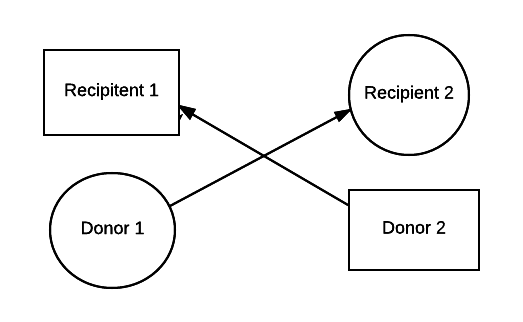
Pairing takes place when the person willing to be your donor doesn’t match you, so you can’t have their organ, but they match someone else whose donor matches you. So they swap.

In his case, my cousin and his donor were in Michigan, and their pair donor and recipient were in North Dakota.

The donor kidneys were removed first, beginning about 6 AM, then flown, one on Delta with the crew and one on a charter plane between Michigan and North Dakota, then helicoptered from the airports to the hospitals where the donor kidneys were checked out by the surgeons to assure they are undamaged after their flight.

You can see the temperature controlled organ transport case, below. It even got it’s own wheelchair!

After the kidneys were confirmed to be in good shape, the recipient surgeries began, late in the afternoon. It was almost 11 PM before the recipient surgeries were complete. An extremely long and emotion-filled 16-hour day to save the lives of two people where even so much as a sneeze would have meant that it didn’t happen at all.

My cousin who received the donor kidney is 41 years old, a single dad with two children. He has, in essence, received a second life – thanks to the two donors.

Living donors are heroes – angels long before they earn their heavenly wings. God bless those living donors who are willing to endure pain and sacrifice part of their body so another might live.

However, if we had enough cadaver donors, we wouldn’t need living donors.

Gift of Life Flag

In 2016, hospitals and transplant centers performing organ transplants began flying a Gift of Life flag when transplants are taking place.  Seeing this flag signifies to the community that someone has become a donor, meaning that either a family, in the case of a death, or a living donor, has made a very difficult and benevolent decision, giving their organ and with it, bestowing life on another.

The Gift of Life flag flying as seen from my cousin’s hospital room, honoring both the donor and recipient!

I believe that the donor family receives the flag.

It’s a beacon of light…

A flag of hope…

You can read more about the Gift of Life Flag tradition here.

How Can You Help?

We often don’t think about organ donation until it hits home. When it does, it’s because a loved one is desperately ill and needs a transplant. We may not be able to make a difference to them that day, but one day, each and every one of us can make that difference through after-life donation.

Please, PLEASE, become an organ donor after your death. With more cadaver donors, we wouldn’t need live donors. Desperately ill people wouldn’t have to wait so long for transplants – unable to work, jeopardizing their family’s financial circumstances. Many lose their homes while waiting for a donor.

My brother’s home went into foreclosure, until I bought it out of foreclosure, affording him the opportunity to live there until his death. It hurt his pride and damaged his dignity, but at least he wasn’t homeless too. I couldn’t give him part of my liver, but at least I could salvage his home.

Most importantly, with enough cadaver donors, people wouldn’t have to die waiting. Some people are so ill by the time that a donor is located that they are, in a horrible irony, too sick to have the surgery.

Signing up for organ donation is easy to do. On your driver’s license, you can indicate your donor status. Furthermore, be sure your family is aware of your wishes, as well as your medical team.

Once you don’t need your pieces and parts anymore, donating them to someone who will die otherwise is the greatest legacy of life, of love, you can leave.

You can begin by reading about organ donation, how it works, and signing up at:

https://www.dmv.org/organ-donor.php

Have concerns? They provide a page to answer questions too.

You can also read about organ donation here: https://www.organdonor.gov/register.html?gclid=CMST6prR5tQCFce3wAodZpQKGg

I’m a donor.  Are you?

It’s easy to be someone’s angel!

______________________________________________________________

Disclosure

I receive a small contribution when you click on some of the links to vendors in my articles. This does NOT increase the price you pay but helps me to keep the lights on and this informational blog free for everyone. Please click on the links in the articles or to the vendors below if you are purchasing products or DNA testing.

Thank you so much.

DNA Purchases and Free Transfers

Genealogy Services

Genealogy Research

Which Ethnicity Test is Best?

While this question is very straightforward, the answer is not.

I have tested with or uploaded my DNA file to the following vendors to obtain ethnicity results:

Guess what? None of the vendors’ results are the same. Some aren’t even close to each other, let alone to my known and proven genealogy.

In the article, Concepts – Calculating Ethnicity Percentages, I explained how to calculate your expected ethnicity percentages from your genealogy. As each vendor has introduced ethnicity results, or updated previous results, I’ve added to a cumulative chart.

It bears repeating before we look at that chart that ethnicity testing is relatively accurate on a continental level, meaning:

  • Africa
  • Europe
  • Asia
  • Native American
  • Jewish

Intra-continent or sub-continent, meaning within continents, it’s extremely difficult to tease out differences between countries, like France, Germany and Switzerland. Looking at the size of these regions, and the movement of populations, we can certainly understand why. In many ways, it’s like trying to discern the difference between Indiana and Illinois.

What Does “Best” Mean?

While the question of which test is best seems like it would be easy to answer, it isn’t.

“Best” is a subjective term, and often, people interpret best to mean that the test reflects a portion of what they think they know about their ethnicity. Without a rather robust and proven tree, some testers have little subjective data on which to base their perceptions.  In fact, many people, encouraged by advertising, take these tests with the hope that the test will in fact provide them with the answer to the question, “Who am I?” or to confirm a specific ancestor or ancestral heritage rumor.

For example, people often test to find their Native American ancestry and are disappointed when the results don’t reveal Native ancestry. This can be because:

  • There is no Native ancestor.
  • The Native ancestor thought to be 100% was already highly admixed.
  • The Native ancestor is too far back in the tester’s tree and the ancestor’s DNA “washed out” in subsequent generations.
  • The testing company failed to pick up what might be arguably a trace amount.

Genealogy Compared to All Vendors’ Results

In some cases, discrepancies arise due to how the different companies group their results and what the groupings mean, as you can see in the table below comparing all vendors’ results to my known genealogy.

In the table below, I’ve highlighted in yellow the “best” company result by region, as compared to my known genealogy shown in the column titled “Genealogy %”.

British Isles – The British Isles is fairly easy to define, because they are islands, and the results for each vendor, other than The Genographic Project, are easy to group into that category as well. Family Tree DNA comes the closest to my known genealogy in this category, so would be the “best” in this category. However, every region, shown in pink, does not have the same “best” vendor.

Scandinavian – I have no actual Scandinavian heritage in my genealogy, but I’m betting I have a number of Vikings, or that my German/Dutch is closely related to the Scandinavians. So while LivingDNA is the lowest, meaning the closest to my zero, it’s very difficult to discern the “true” amount of Scandinavian heritage admixed into the other populations. It’s also possible that Scandinavian is not reflecting (entirely) the Vikings, but Dutch and German as a result of migrations of entire peoples. My German and Dutch ancestry cumulatively adds to 39%.

Eastern European – I don’t have any known Eastern European, but some of my German might fall into that category, historically. I simply don’t know, so I’m not ranking that group.

Northwestern Europe – For the balance of Northwestern Europe, 23andMe comes the closest with 43% of my 45.24% from my known genealogy.

Mediterranean and Southern European – For the Mediterranean, Greece, Italy and Southern Europe, I have no known genealogy there, and not even anyplace close, so I’m counting as accurate all three vendors who reported zero, being Living DNA, Family Tree DNA and MyHeritage.

Unknown – The next grouping is my unknown percentage. It’s very difficult to ascribe a right or wrong to this grouping, so I’ve put vendor results here that might fall into that unknown group. In my case, I suspect that some of the unknown is actually Native on my father’s side. I haven’t assigned accuracy in this section. It’s more of a catch all, for now.

Native and Asian – The next section is Native and Asian, which can in some circumstances can be attributed to Native ancestry. In this case, I know of about 1% proven Native heritage, as the Native on my mother’s line is proven utilizing both Y and mitochondrial DNA tests on descendants. I suspect there is more Native to be revealed, both on her side and because I can’t positively attribute some of my father’s lineage that is mixed race and reported to be Native, but is as yet unproven. By proof, I mean either Y DNA, mitochondrial DNA or concrete documentation.

I have counted any vendor who found a region above zero and smaller than my unknown percentage of 3.9% as accurate, those vendors being Family Tree DNA, Ancestry, 23andMe and MyHeritage.

Southwest Asia – I have no heritage from Southwest Asia, which typically means the Indian subcontinent. National Geographic reports this region, but their categories are much broader than the other companies, as reflected by the grey bands utilized to attempt to summarize the other vendor’s data in a way that can be compared to the Genographic Project information. While I’m pleased to contribute to the National Geographic Society through the Genographic Project, the results are the least connected to my known genealogy, although their results may represent deeper migratory ancestry.

Summary

As you can see, the best vendor is almost impossible to pinpoint and every person that tests at multiple vendors will likely have a different opinion of what is “best” and the reasons why. In some ways, best depends on what you are looking for and how much genealogy work you’ve already invested to be able to reliably evaluate the different vendor results. In my case, the best vendor, judged by the highest total percentage of “most accurate” categories would be Family Tree DNA.

While DNA testing for ethnicity really doesn’t provide the level of specificity that people hope to gain, testers can generally get a good view of their ancestry at the continental level. Vendors also provide updates as the reference groups and technology improves.  This is a learning experience for all involved!

I hope that seeing the differences between the various vendors will encourage people to test at multiple vendors, or transfer their results to additional vendors to gain “a second set of eyes” about their ethnicity. Several transfers are free. You can read about which vendors accept results from other vendors, in the article, Autosomal DNA Transfers – Which Companies Accept Which Tests?

I also hope that ethnicity results encourage people to pursue their genealogy to find their ancestors. Ethnicity results are fun, but they aren’t gospel, and shouldn’t be interpreted as “the answer.” Just enjoy your results and allow them to peak your curiosity to discover who your ancestors really were through genealogy research! There are bound to be some fun surprises just waiting to be discovered.

If you are interested in why your results may vary from what you expected, please read “Ethnicity Testing – A Conundrum.”

If you’re interested in taking a DNA test, you might want to read “Which DNA Test is Best?” which discusses and compares what you need to know about each vendor and the different tests available in the genetic genealogy market today.

______________________________________________________________

Disclosure

I receive a small contribution when you click on some of the links to vendors in my articles. This does NOT increase the price you pay but helps me to keep the lights on and this informational blog free for everyone. Please click on the links in the articles or to the vendors below if you are purchasing products or DNA testing.

Thank you so much.

DNA Purchases and Free Transfers

Genealogy Services

Genealogy Research

LivingDNA Replaces Download Terms

Great news, and fast on the part of LivingDNA.

Yesterday, I wrote about indemnity language required when downloading your raw data file from LivingDNA.

LivingDNA said last night that the verbiage did not really reflect their intentions.

Today, they have modified their terms going forward and retroactively, according to David Nicholson, Managing Director of LivingDNA, and have simplified the content.

Below is the new download verbiage, as provided by David.

I am greatly relieved. The indemnification language is gone and is replaced by you agreeing to, in essence, be responsible for yourself and release LivingDNA from anything bad that happens resulting from your download. (Caveat – I am not a lawyer. This is only my personal opinion.)

As always, please read all language and be sure you understand the verbiage and ramifications to your own situation, with LivingDNA and all vendors. Seek legal advice if you have questions or concerns with any legal document.

Thanks, LivingDNA, for listening to the community and addressing our concerns so quickly.

______________________________________________________________

Disclosure

I receive a small contribution when you click on some of the links to vendors in my articles. This does NOT increase the price you pay but helps me to keep the lights on and this informational blog free for everyone. Please click on the links in the articles or to the vendors below if you are purchasing products or DNA testing.

Thank you so much.

DNA Purchases and Free Transfers

Genealogy Services

Genealogy Research

23andMe’s “Your DNA Family” Feature

A few days ago, I received a message from 23andMe that a new feature, “Your DNA Family” was ready to view. I decided to take a look. You’ll find this feature under the Reports, then Ancestry Reports tab.

The first part of the screen shows how many matchs of different types that I have. This report includes only people who have opted in to share through DNA Relatives.

I have tested on both the V3 chip and the V4 chip. I’m utilizing the V3 results for this article, but it is interesting to note that I have 1436 V4 chip results, as compared to 1440 V3 results, above. The number of matches is almost exactly the same. However, the numbers in the various categories below between the two tests (V3 vs V4) are sometimes significantly different, so these are clearly not (all) the same people who have agreed to share on both platforms.  You can read more about the V3 and V4 comparison here.

On the page above, the “learn more” link explains about degrees of cousinhood.

Scrolling down, the next section shows you a map of the location of your DNA Relatives.

The part I find the most interesting is that the places where I have the most relatives do not include the state where I was born or where my parents were born.  My mother’s family was from the Netherlands and Germany before immigrating to Indiana in the US, except for one grandfather who was Acadian. In the Midwest, Indiana is darker than the rest on the map, but I only have 25 relatives there. My father was born in Tennessee with only 15 matches. Of course, the fact that my matches live in those locations today does not mean our common ancestor is one of my Hoosier or Tennessee ancestors, but it’s a good place to start looking.

Conversely, I have 110 relatives that live in California and 65 in Texas. Texas was a destination location for the people of Appalachia, so that makes some sense. My great-grandfather died in Texas in 1895, having walked from Tennessee, twice.

From the looks of things, California was a destination location for everyone! I have more matches in California than any another state, by almost double. I have to wonder if the fact that 23andMe is a California company has something to do with how many Californians have tested.

“Click here” shows you the top 10 locations in a table.

It’s interesting to note that my proven 39% German and Dutch combined is no place to be seen. The Dutch and most of the Germans were immigrants in the mid-1800s – so there is no question about the accuracy of these immigrants. 23andMe did not test outside the US for a very long time, and when they did, the shipping cost almost as much as the test itself which discouraged international testers.

Scrolling down again, we see the Ancestry Composition breakdown of my DNA Relatives.

For a minute I was all excited, hoping that I could then click on one of the ancestral regions and see which of my matches include that region, but that’s not the case. Believe me, I tried clicking everyplace☹

Of course, just because someone that I match also has some amount of Native American or other common ancestry, that doesn’t mean that’s how we match, but it might well be a clue.

Scrolling down again, we see how our DNA Relatives compare to the rest of the 23andMe data base in a few categories.

For me, this falls into a time-waster category and causes me to ask myself, “why do I care?” I suspect this is included in the hope that people will find it interesting and will therefore answer these rather innocuous questions posed by 23andMe, along with more that are health related.

Summary

There certainly isn’t anything wrong with this information. It’s not misleading in any way like the last feature to be released, their Ancestry Timeline.

The DNA Family information is at best lukewarm and leaves me more than a tad disappointed.

I think at least two aspects have potential, but today, it’s like 23andMe showed us the teaser to the movie with no way to see the movie itself.

I would like to see which of my DNA Relatives fall into the following two categories:

  • Location – state and country
  • Ancestry Composition category

In other words, I want to know which of my matches are from Indiana, and which have Native American ancestry, for example. I’d like to know if there is an intersection between those or any two groups too.

I could find absolutely no way to utilize the Ancestry Composition categories, but I thought I had figured out how to detect at least some of the location matches.

Going to my the DNA Relatives page, I entered the word “Indiana” into the “Search keywords” and pressed enter, which returned 36 DNA Relatives. Granted, that’s not 25, as shown on the map, but it does return information based on something and that something might be useful.  I wish we knew where 23andMe is retrieving this data from so we know how to interpret what it means.

Next, I tried the keyword “Germany.” The search returned 76 results, but Germany was not among the locations where my DNA Relatives were shown to live – so the answer is that whatever is being shown utilizing the search keywords, it’s not the tester’s location so does not connect to the map location results.

The DNA Family Report earns a shrug and a “Meh.” Now, if testers could view which of their DNA Relatives matched them in those categories, I’d have to upgrade the shrug and meh to something a little more exciting. I sometimes look at where and how the vendors invest their development dollars and wonder what the heck they were thinking.

For genealogy, this new feature simply isn’t useful.

______________________________________________________________

Disclosure

I receive a small contribution when you click on some of the links to vendors in my articles. This does NOT increase the price you pay but helps me to keep the lights on and this informational blog free for everyone. Please click on the links in the articles or to the vendors below if you are purchasing products or DNA testing.

Thank you so much.

DNA Purchases and Free Transfers

Genealogy Services

Genealogy Research

Hugs in the Churchyard – Thanks to Y DNA

Isn’t this just a wonderful picture? Even though the picture is of two very excited female cousins, it’s all because of Y DNA. Don’t tell anyone, but I think we might have jumped up and down a few times too (wink), with very good reason!

This exuberant photo is my cousin, Mary and me, in the cemetery of the church in Downham, Lancashire, England where our ancestor, Thomas Speake was baptized in 1634. How we got here is truly a genetic journey, and we couldn’t have done it without our Speak male cousins who were all too willing to help by Y DNA testing!

Mary and I share ancestor, Nicholas Speaks, who was born in 1782 in Charles County, Maryland and migrated as a child with his father to Washington County, Virginia where he married Sarah Faires. The young couple homesteaded in Lee County, Virginia, establishing the first Methodist Church in the area about 1822.

When Cousin Mary and I began our genealogy journey, along with a few other cousins, years ago, we didn’t have any information prior to Lee County. Where did Nicholas come from and who were his parents?

Over the years, our line was traced back to Maryland in the 1600s to immigrant Thomas Speak. However, we were truly stuck in Maryland, with absolutely no idea where Thomas originated in the UK. It was like looking for a needle in a haystack.

Several Speak men Y DNA tested when DNA testing became available, and then the wait began. A few years later, they matched a man who lived in New Zealand. The Speak cousin from New Zealand knew a lot more about his ancestors in England than we did since they migrated to New Zealand in the 1800s, not the 1600s like our Thomas Speak.

Our newly discovered cousin from down-under pointed us to the little town of Gisburn, where his Speak ancestor was born and baptized. Our Thomas’s baptismal record wasn’t in Gisburn, but working in a circle in surrounding communities turned up Thomas’s baptismal record in 1634 in the tiny village of Downham, just 4 miles distant.

The baptismal record further told us that Thomas was from an even smaller village, if that’s even possible.  Twiston is more of a farming hamlet (shown below), a mile or so away from Downham down a tiny road so twisty that anything larger than a passenger vehicle can’t navigate the road.  Let’s just say I have personal knowledge of this issue:)

Two years later, after our amazing DNA discovery, followed by confirming record discoveries, about 20 descendants of the Speak family of Gisburn and Downham, including our New Zealand cousin, arranged a tour back to our homeland. We met in London, having rented a bus and driver, and off we went to Lancashire on a journey back in time.

This amazing adventure truly was the trip of a lifetime, a dream come true, with cousins near and dear to my heart, finding and honoring our common ancestral homeland.

All, thanks to Y DNA. Y DNA isn’t always a sprint, although sometimes you have an important immediate match. Y DNA is sometimes more of a wait and be patient proposition, as the DNA results are constantly fishing for you – but it’s so, so, worth the wait.

I hope that you too get to hug your cousin in the cemetery where your ancestors are buried on a journey someplace you could never have imagined. But you’ll never get to hug in that cemetery if you don’t start the journey by testing. I couldn’t test myself, being a female, but I surely could test my cousins – and I have – lots of them!

All of genetic genealogy is a collaborative journey and you never know which new tester will make that fateful difference!

With Father’s Day on the horizon, there’s no better time to test your male lines that haven’t yet tested. You truly never know what wonderful adventure or new cousin is waiting. Give the gift of discovery. Click here to order at Family Tree DNA.

______________________________________________________________

Disclosure

I receive a small contribution when you click on some of the links to vendors in my articles. This does NOT increase the price you pay but helps me to keep the lights on and this informational blog free for everyone. Please click on the links in the articles or to the vendors below if you are purchasing products or DNA testing.

Thank you so much.

DNA Purchases and Free Transfers

Genealogy Services

Genealogy Research

Working with Y DNA – Your Dad’s Story

Have you ever wondered why you would want to test your Y DNA? What would a Y DNA test tell you about which ancestors? What would it mean to you and how would it help your genealogy?

If you’re like most genealogists, you want to know every single tidbit you can discover about your ancestors – and Y DNA not only tells males about people they match that are currently living and share ancestors with them at some point in time, but it also reaches back beyond the range of what genealogy in the traditional sense can tell us – past the time when surnames were adopted, peering into the misty veil of the past!

If you aren’t a male, you can’t directly test your Y DNA, because you don’t have a Y chromosome, but that’s OK, because your father or brother or another family member who does carry the same Y chromosome (and surname) as your father may well be willing to test.

What Is Y DNA?

Y DNA a special type of DNA that tells the direct story of your father’s surname line heritage – all the way back as far as we can go – beyond genealogy– to the man from whom we are all descended that we call “Y line Adam.” In the pedigree chart below, Y DNA is represented by the people with blue squares – generally the surname line.

Y DNA is never mixed with the mother’s DNA, so the Y DNA of the blue line of ancestors above remains unbroken and intact and the Y DNA is passed from father to only their male children. The Y chromosome is what makes males male, so females never inherit a Y chromosome. Of course, that means females can’t take Y DNA tests, so they have to ask a family member to test who carries the Y chromosome of the line they are interested in.

Because the surname doesn’t typically change for males between generations, this test is particularly powerful in identifying specific lineages of the male’s surname.  For men looking to identify their paternal line, Y DNA testing is extremely powerful!

Y DNA testing is a great way to determine which ancestral line of a given surname a male descends from.

Want to see how this works?  Family Tree DNA provides 13 great tools for every Y DNA customer. Let’s take a look!

Haplogroup

Everyone who tests their Y DNA at Family Tree DNA receives a haplogroup assignment. Think of a haplogroup as your genetic clan. Haplogroups have a history and a pedigree chart, just like people do. Haplogroups and their branches can identify certain groups of people, such as people of African descent, European, Asian, Jewish and Native American.

While the Y DNA is passed intact with no admixture from the mother, occasionally mutations do happen, and it’s those historical mutations that form clans and branches of clans as generation after generation is born and continues to migrate to new areas.

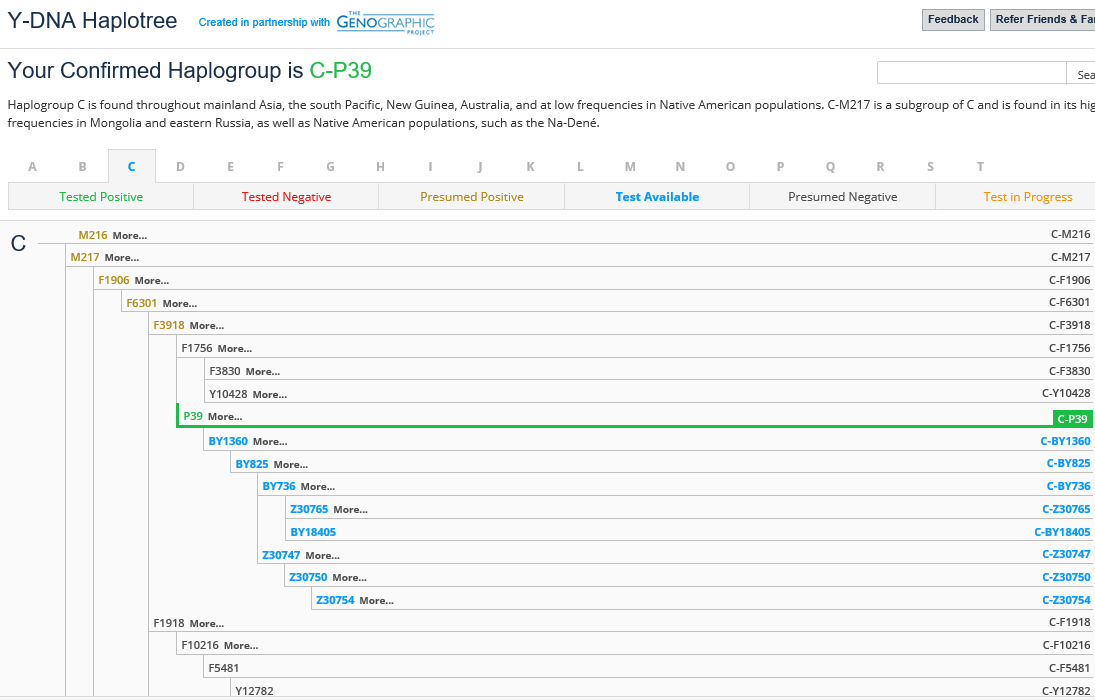
If you take any Y DNA test at Family Tree DNA, you will receive a haplogroup prediction. In the following example, the gentleman received haplogroup C-P39 as his haplgroup prediction.

Haplogroup predictions from Family Tree DNA are very accurate. They are basic in nature, but detailed enough to identify the continent where your ancestors are found as well as sometimes identifying groups like Jewish or Native American. To receive a more refined haplogroup, additional tests are available (individual SNPs, SNP panels and the Big Y), which confirm the original haplogroup assignment and give you the opportunity to find the smallest branch of the haplotree upon which you reside as a leaf.

Let’s look at an example.

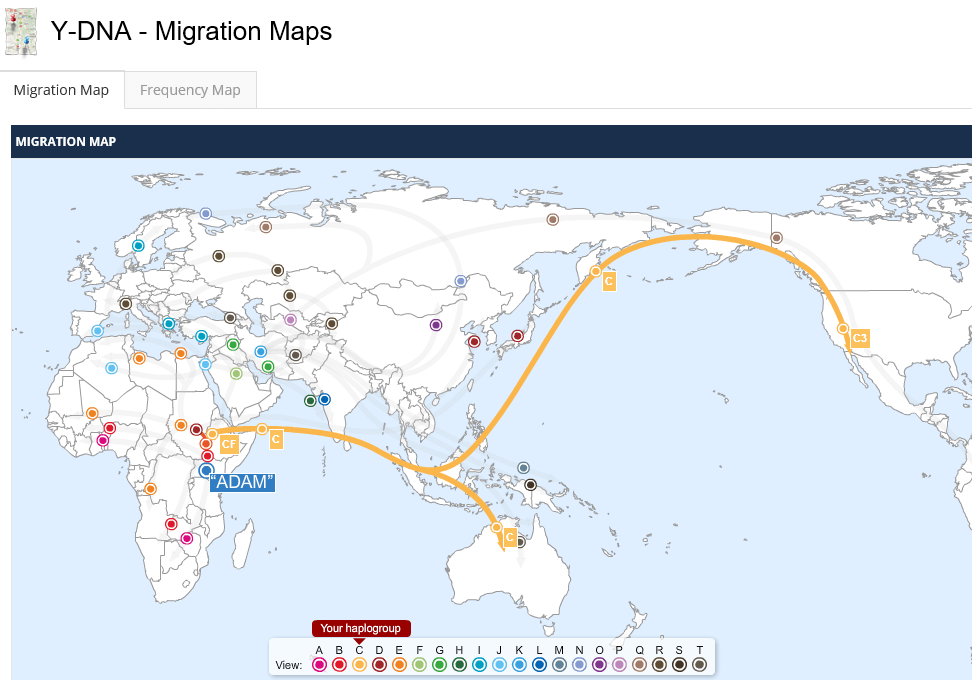
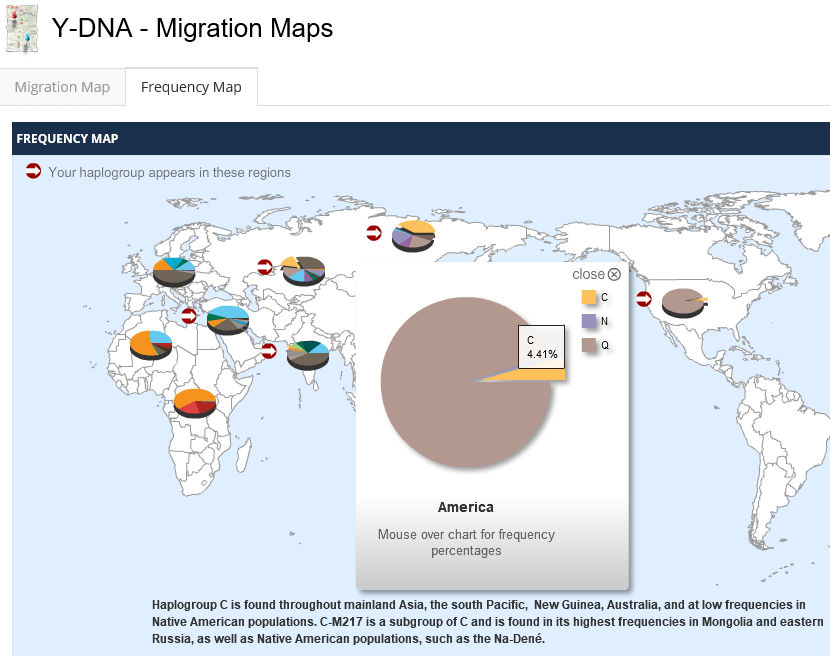
Y haplogroup C arose in Asia and subgroups are found today in parts of Asia, Europe and among Native American men.

Recently, by utilizing the Big Y test, an advanced specialized test that scans the majority of the Y chromosome for mutations, the haplogroup C tree was extended by several branches at Family Tree DNA.

With regular STR marker testing, which is the Y DNA test you purchase from Family Tree DNA,  this particular haplogroup C male had his base haplogroup of C identified along with the additional branch of C-P39. With additional advanced testing of some type, such as individual SNP testing, panels of SNPs available for some haplogroups, or the Big Y test – testers can learn more about their haplogroups – and with the Big Y, virtually everything there is to know about their Y chromosome.

However, until testers receive their regular STR results for their markers, advanced tests aren’t available to order, because testers don’t yet know into which haplogroup, or clan, they will be placed.

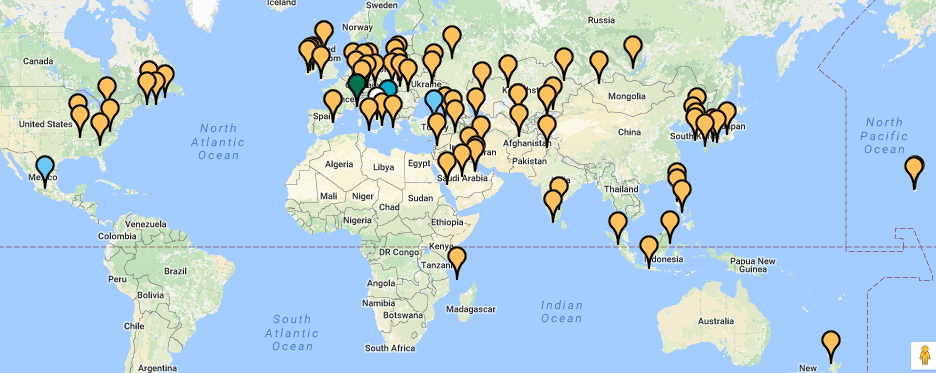
The haplogroup C Y-DNA project at Family Tree DNA provides a map of the most distant known ancestors of Haplogroup C members, including all branches, shown below.

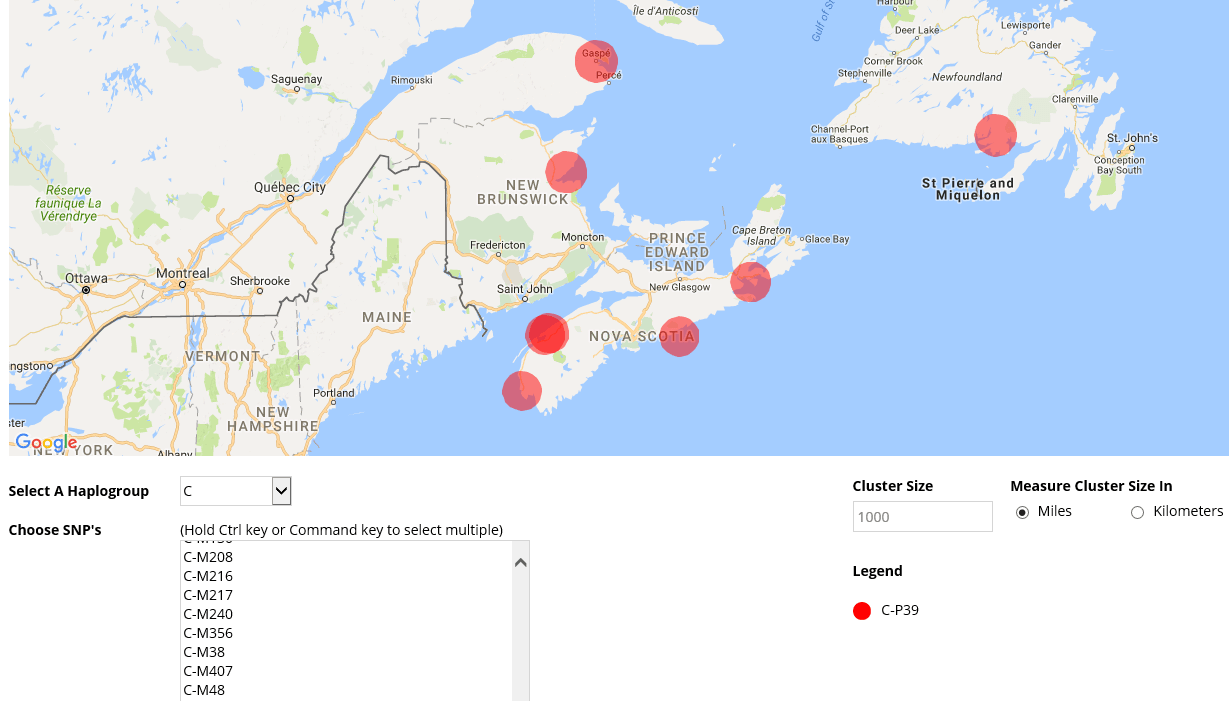
Hapologroup C-P39, a Native American subgroup, is found in a much more restricted geography in the Haplogroup C-P39 project, below.

Tools at Family Tree DNA

At Family Tree DNA, your Y haplogroup is shown in the upper right hand corner on your personal page dashboard.

In the Y DNA section, additional tools are shown. Let’s look at each tool and what it can tell you about your direct paternal line.

You can always navigate to the Dashboard or any other option by clicking on the myFTDNA button on the upper left hand corner and then the Y DNA dropdown.

Matches

The first place most people look is at their Matches page. In the case of our example, he has twenty three 111 marker matches ranging from one person with a genetic distance of 1, meaning one mutation difference, to several with 6 mutations difference. The fewer mutations, in general, the most likely the closer in time your most recent common ancestor with your match.

You can see by just looking at the matches below why entering the name of your earliest known ancestor (under Manage Personal Information, Account Settings, Genealogy) is so important!!! That’s the first thing people see and the best indication of a common ancestor. I always include a name, birth/death date and location.

In this case, it’s very clear the common ancestor of most, if not all, of these men is Germain Doucet born in 1641 in Port Royal, Nova Scotia. And before you ask, yes, it’s rather unusual to have an entire list of men descended from one man, but it’s clearly not unheard of.

As you can see, many of these matches (names obscured for privacy) have trees attached to their results and several have also taken the autosomal Family Finder test.

The different Y-DNA haplogroups listed to the right are a function of the “Terminal SNP,” meaning the SNP that tested positive furthest out towards the tip of the branch of the tree. Four matches have had additional SNP testing which shows their terminal SNP to be either Z30754 or M217.

This gentleman can then view his 67, 37, 25 and 12 marker matches by clicking on that dropdown.

He can also e-mail any of his matches by clicking on the envelope icon or view their trees by clicking on the pedigree icon.

Results

Next, let’s look at the Y-STR results for 67 markers. This page should really probably say “raw results,” because as many people say, “it’s just a page of numbers.”

This page shows your values and mutations at specific markers – in other words, what makes you both different from other people and the same as people you match, which means you share a common ancestor at some point in time in the not too distant past.

The beauty of these numbers, is, of course, in what they tell us in context of matching other people. You can’t have matches without these numbers. You also can’t have maps or anything else without the raw mutation information.

HaploTree and SNP Page

STR markers show mutations in recent timeframes, generally within the past 500-800 years, but SNPs take you back into antiquity – just like your family pedigree chart – working from closest to further back in time .

Your Haplotree and SNP page shows you the tree for your haplogroup – in this case C – designated by SNP M216, shown at the very top, along with all branches of the tree. The branches and leaves are color coded based on whether you have tested for that particular SNP, and if so, whether you were positive, meaning you carry the mutation, or negative, meaning you don’t.

SNP Map

The SNP map shows you cluster locations worldwide where any selected SNP is found.

Matches Maps

One of my favorite tools is the Matches Map because it shows the most distant ancestor for all of your matches that have provided that information.

Hint: you MUST enter the geographic information through the link at the bottom of this map (below) for YOUR ancestor to be displayed on THIS map and also on the maps of your matches.

You can also display your match list by clicking on the link beneath the map. You can click on the pins on the map to display the accompanying information.

Note the legend, as your exact matches are shown in red, 1 step mutations in orange, 2 steps in yellow, and so forth. Be sure to look for clusters, and note that if there are multiple people listed in the same location, their pins will stack on top of each other.

For example, in this case, the orange pin shown has two people’s ancestors in that location, including this tester, and a relevant cluster is clearly shown in Nova Scotia.

Migration and Frequency Maps

Are you wondering how your ancestor and his ancestors arrived where you first find them?

The haplogroup Migration Maps shows you the path from Africa to wherever they are found – in this case, the Americas.

The Frequency Map then shows you how much of the New World population is branches of haplogroup C.

Haplogroup Origins

The Haplogroup Origins tool shows the distribution of the haplogroup, by region, by match type and count.  Please note that you can click on any graphic to enlarge.

For example, this person has one 111 marker C-Z30765 match in Canada.

Ancestral Origins

The Ancestral Origins page shows matches by country along with any comments. These matches don’t have any comments, but comments might be Ashkenazi or MDKO (most distant known origin) when US is given.

Advanced Matching Combines Tools

Another of my favorite tools is the Advanced Matching tool, available under the Tools and Apps tab.

Advanced Matches is a wonderful tool that allows you to combine test types. For example, let’s say that you want to know if any of the people you match on the Y DNA test are also showing up as a match on the Family Finder test. You could further limit match results by project as well.

Be sure to click on “show only people I match in all selected tests” or you’ll receive the combined list of all matches, not just the people who match on BOTH tests, which is what you want.

In this example, I’ve selected 12 markers and Family Finder, because I know I’m going to find a few matches for illustration.

Of course, for adoptees, finding someone with whom you match closely on the Family Finder test AND match exactly (or nearly) on the Y DNA test would be very suggestive of a patrilineal common ancestor in a recent timeframe.

Projects

We started our discussion about Y DNA haplogroups by referencing two different haplogroup C projects. Family Tree DNA has over 9000 projects for you to select from.  The good news is that you really don’t have to limit your selections, because you can join an unlimited number of projects.

Thankfully, you don’t have to browse through all the available projects.

  • Haplogroup projects are categorized by Y or mtDNA and then by subgroup where appropriate.
  • Surname projects exist as well and are searchable for your genealogy lines.
  • Geographical projects cover everything else, from geographies such as the Denmark project to the American Indian project.

Some projects focus on Y DNA, some on mtDNA and some include both.  Additionally, some projects welcome people with autosomal results that pertain to that family surname or region.  Every project is run by one or more volunteer administrators that define the focus of the project.

To help people select relevant projects, project administrators can enter surnames that pertain to their project so that Family Tree DNA can match your surname to the project list to provide you with a menu of candidate projects to join.

Of course, you’ll need to read the project description for each project to see if the project actually pertains to you. You can see what is available for other surnames by utilizing the “Search by Surname” function, at the bottom of the menu.

You can also scroll down and browse in a number of ways in addition to surname.

All testers should join their haplogroup project so that everyone can benefit from collaboration.

You can join and manage your projects from your home page by clicking on the Projects tab on the upper left, shown below.

Y DNA Summary

I hope this overview has provided you with some good reasons to test your Y DNA or to better understand your results if you’ve already tested.

If you are a male and are interested in testing a line that is not your surname line, or if you are a female and you can’t test, you can find a male who descends from the ancestral line in question through all males and recruit that gentleman to test.  You can also check existing surname projects to see if someone from your line has already tested.

Y DNA holds the secrets of your patrilineal line. You never know what you don’t know unless you test. You don’t know what kind of surprises are waiting for you – and let’s face it, our ancestors are always full of surprises!

Y DNA Order Options

Family Tree DNA is the only company that offers this type of testing.  Ordering options include 37, 67 and 111 marker tests. You can also order 12 and 25 marker tests within projects. I suggest testing at the highest level the budget will allow, but no less than 37 markers. Most people have matches. Some people have a lot of matches and need the 111 marker test to more fully refine their matches to just the ones that may be genealogically relevant.

You can always upgrade later to a higher marker level later, but the combined original test plus upgrade cost more separately than just purchasing the larger test out the gate. It’s really a personal decision based on your goals and your budget.

Discounts

If you have never tested at Family Tree DNA, you can obtain a discount any day of the week by joining through your surname project. Just click here and then enter your surname into the Project Search box, shown upper right below.  I’ve typed Estes for purposes of illustration.

You will be shown a list of projects (at left above) where the various project administrators have indicated that someone with your surname might be interest in their project. Read the project descriptions, then click on the resulting project that best suits your situation – generally your surname – Estes above for example. You will automatically be joined to the project you select when you order a product, shown below. After you order, you can join multiple projects.

Next, click on the test level you wish to order.

By virtue of comparison, the project pricing for 37, 67 and 111 markers, above, saves you $20 off the regular price if you don’t order through a project.

If you already have a kit number at Family Tree DNA and have ordered other products, you can sign in, upgrade and order your Y DNA test by clicking here.

Happy ancestor hunting!

______________________________________________________________

Disclosure

I receive a small contribution when you click on some of the links to vendors in my articles. This does NOT increase the price you pay but helps me to keep the lights on and this informational blog free for everyone. Please click on the links in the articles or to the vendors below if you are purchasing products or DNA testing.

Thank you so much.

DNA Purchases and Free Transfers

Genealogy Services

Genealogy Research