Michael McDowell Sr. (c 1720 – after 1755), Breadcrumbs Scattered From Maryland Across Virginia, 52 Ancestors #175

Michael McDowell Sr. could have been born in Baltimore County, Maryland, on the boat to Maryland, or back in Ireland.

We don’t know.

What we do know is that in 1752, Michael McDowell sold portions of the property in which he had an interest that had belonged to Murtough McDowell, an immigrant.  Murtough was living in Baltimore County in 1722.

We are presuming that Murtough’s wife in 1730 was indeed the mother of Michael, but we don’t know that for sure either.  It’s certainly possible that Elinor was a second wife, but there is absolutely no evidence either way.

Halifax County, Virginia

Halifax County was formed from Lunenburg in 1752, and that’s where we find Michael McDowell in that same year, selling his father’s land in Maryland. Thank goodness for this link, because without it, we would never have been able to connect Murtough McDowell in Baltimore County, Maryland with Michael McDowell in Virginia.

The following power of attorney was issued in Halifax County, VA and recorded along with a land sale in Baltimore County, Maryland.

May 3, 1755 – Page 407 – Power of attorney from Michael Macdowell to John Hawkins, signed in Halifax County.

The power of attorney itself was entered into the Baltimore County record below the deed sale and is dated September 19, 1752.

This signature does not contain an X for a signature, which may be a later differentiator between Michael McDowell Sr. and his son, Michael Jr.

The following document is recorded in Baltimore County, Maryland:

Mich McDowell to Joseph Murry Jr. – September 19, 1752, Michael McDowell of Halifax County in the colony of Virginia to Joseph Murray Jun of the County of Baltimore in the Province of Maryland, 10 pounds current money, land known as “Bring Me Home” beginning at two bounded white oaks at the head of the north line of Jones Falls…

March 5, 1753 John Hawkins by virtue of authority of power of attorney to him made for that purpose by the within Named Micheal Macdowell to Joseph Murray Jr., and the land and premises herein mentioned to be the estate rights and interest 6 pounds current money.  Signed and witnesses by Thomas Hooker and Joseph Hooker

These signatures above do not contain an X for Michael’s signature.

Based on the above information, Michael was not in Baltimore County in person, but in Halifax County, VA on September 19, 1752 signed a Power of Attorney document. In 1753, the land was sold to Joseph Murray.

These dates are confusing, because they don’t tally exactly with the dates in the deed books.

For example, the sale date for Bring Me Home is noted as in 1755, not 1753.  I’m left with the impression that some of the documents we need are missing or perhaps some transcriptions are in error.

It looks like in 1752 Michael sold his shares in this property to Joseph Murray, and in or by 1755, he sold the actual land to Joseph.  This suggests that perhaps Michael is related to Joseph Murray, which means that Joseph Murray may have been married to Michael McDowell’s sister.  Unfortunately, there are a lot of “suggestions” here and not much more. Worse yet, if accurate, Joseph Murray’s wife is shown to be one Margaret Jones.  I might just have gone down a rathole.

We know that in 1753, Michael was in Halifax on May 3rd per the deed registration in Baltimore County, or at least that’s what was registered based on the Power of Attorney document signed in 1752. What we don’t know is whether or not Michael was actually living in Halifax County in 1753, or if he had moved on by that date.

Regardless of the actual sale date, the essence of this is that Michael, from Halifax County, Virginia, appears to be the son of Murtough McDowell from Baltimore County, Maryland.  Unfortunately, no will or other administrative or estate records for Murtough or his wife have emerged.

There are no other records for Michael McDowell in Halifax County, although there is a Peter McDowell found there in 1752.  However, if Peter was also Murtough’s son, you would think there would be another power-of-attorney document for Peter, and there is nothing.

A Land Entry

In Marion Dodson Chiarito’s book, “Entry Record Book 1737-1770” which covers land in the present counties of Halifax, Pittsylvania, henry, Franklin and Patrick, she says the following:

This book contains land entries in the western portion of the original Brunswick County, namely Halifax, Pittsylvania, Henry, Franklin and Patrick. The area concerned was south of the Roanoke-Staunton River, west of Tewahomony Creek, now Aaron’s Creek which divides Mecklenburg and Halifax cuonties, and extending to the Blue Ridge Mountains. These counties were formed from Lumemburg which was separated from Brunswick in 1746.

Marion continues:

It must be pointed out that an entry for land was but a statement of intention. Ownership of land resulted from satisfying the requirements for settlement the land and improving it. For this reason, many entries were voided.

On page 161 of Marion’s book, on page 203 of the original entry taker book residing in current day Pittsylvania County, we find an entry for a man who might be Michael McDowell:

Michael McDuell 400 on a Branch of Black Water River beginning at a white oak with 4 chops in it in the fork of said branch then up both forks and down the branch.

If this was Michael McDowell, I’ve failed to find a deed of sale at any time, and he is next found in Bedford County which, indeed, did have a Blackwater Creek.

Next Stop – Bedford County

Michael McDowell was listed on the Bedford county tax list in 1755. And before you ask, no, we don’t know for sure that this is the same Michael McDowell.  Fortunately, Michael McDowell isn’t a popular name, and the best we can do is track the name forward and backward in time.

Perhaps Michael was using his inherited money on the frontier where land was cheaper than in Halifax County which was largely settled at this point in time.  The problem with that theory is that we have no record of any Michael McDowell purchasing any land until 1783 in Bedford County, and by then, the Michael who purchased land could have been Michael Sr. or Michael Jr. who was born in 1747.

Based on subsequent records, including Michael McDowell Jr.’s Revolutionary War pension application which states that he was dismissed in 1777 or 1778 and returned to his home in Bedford County, combined with a land sale in 1793 in which the land purchased in 1783 was sold by a Michael McDowell who made his mark when signing with an X, it appears that the land in 1783 was purchased by Michael McDowell Jr., not Sr. Michael McDowell Jr. apparently could not write his name, while it appears that Michael McDowell Sr. could.

We also know, according to that pension application, that Michael Jr. was born in 1747.

What else do we know about Michael McDowell Sr.?

There are be more hints in Lunenburg County.

Lunenburg County, Virginia

We first find Michael McDowell in Lunenburg County in 1748, but what did he do between then and 1752 when we find him in Halifax County? Or perhaps Michael didn’t move, but the county line did.

Keep in mind that Halifax County, where we positively identify Michael McDowell Sr. as Murtough’s son in 1752, was Lunenburg County before Halifax was formed in 1752.

However, we may have an even earlier sighting of Michael.

We find a similar name in Albemarle County, VA in the 1745 road records, dated June 27th in which Andrew Wallace was appointed surveyor of the highway from D.S. to Mitchams River.  Archebald Woods, Jeremiah Marrow, William Shaw, Robert Mannely, John Dickey, William Wallace, Merlock McDowell, Micah Woods Jr., Micha McDowell, Anthony Osbrook, John Lawson, John Cowan, William Little and Robert Anderson ordered to assist in clearing.  Looking at this list, I have to wonder if Merlock McDowell is actually a Mortough McDowell Jr. and if Micha is Michael, of course.  The rest of these people would have been their neighbors up and down the road. Is this our Michael?  There is no way to know.

A search of Albemarle deed and will indexes from 1748 through 1753 shows no McDowells.  Albemarle was formed from Goochland in 1744, although deed and will records didn’t begin in Albemarle until 1748.  A search of Goochland County records from 1731-1749 also show nothing, so if Michael and Merlock were there, they are silent residents.

Lunenburg County was formed in 1745 from Brunswick County, Lunenburg deeds and marriages exist from 1746. Brunswick County land records exist from 1732, but no marriages. Michael McDowell is not in the compiled Virginia marriages, created from extant early records. Strike, strike, strike and out.

The 1748 tax map for Lunenburg is the first tax list available, so we don’t have any way of knowing whether or not Michael Jr., born about 1747 was born in Lunenburg, or if his father was still living in Maryland or elsewhere when Jr. was born.

The Lunenburg County 1748 tax list shows Michal McDanel with 1 tithe in the district taken in June by Mathew Talbot from Bleu Store to Little Roanoke.

Sunlight on the Southside by Landon Bell provides the Lunenburg tax lists, where extant.  We find the McDowells mentioned in the intro portion as being from Lunenburg Co., Va. before they went to NC.

In 1749, we find Michael McDowell in William Caldwell’s district, which was probably the district that would eventually become Charlotte Co., which neighbors Halifax. Michael had 1 white tithe, meaning white male over 16, and no negroes.  His neighbors were as follows:

  • William Russell
  • Thoms Walters
  • Thomas Lewis
  • Michael McDowell
  • Robert Wood
  • Estate of Major John Cole
  • William East overseer for John Cole

In 1749, the Lunenburg road orders included a Michael McDaniel, who may have actually been Michael McDowell who was ordered to work on Randolph’s Road from Thomas Worthys to the Mossing foard.

Looking at a current map, the Roanoke is called the Staunton between Halifax County and Charlotte County, and at a location called Randolph, Virginia, very near the River in Charlotte County, we find another Staunton, probably referred to in the road minutes as the Little Roanoke.

You can see that Charlotte County, shown in red below, abuts Halifax to the west.  Michael’s 1752 Power of Attorney was sworn in Halifax County.  The court house at that time was near the village of Halifax.

Randolph’s Road, from the Lunenburg County road orders seems to be a main road that crossed the Roanoke at the Little Roanoke River where a ferry was located.  According to the 1821 field survey notes the Little Roanoke is located in Charlotte County.  Of course, Randolph’s road continues on through Lunenburg and into Prince Edward County so Michael’s road duty may have been elsewhere along this then major road.  It’s referred to as a “roling road,” which means tobacco casks were literally rolled down the road to the docks to be graded and loaded onto boats. However, given the fact that the road order includes mention of a “foard,” this suggests that the road crosses some river that is more significant than a creek, but probably not as large as the Roanoke which is too large to ford without a ferry.

I suspect that Randolph’s Road is Highway 59 today.  Some road orders reference George Moore’s.  He owned Moore’s Ordinary which was located on what is now Ordinary Road, near the Whistle Stop.

In 1750 we find Michael in Nicholas Hale’s district with one tithe again as follows:

  • John Freer
  • Robert Baker
  • John Helton
  • Michael McDowell (Michal Macdowel)
  • Nicholas Alle
  • John Pybon
  • Jacob Pybon

In 1751, Michael is missing from the list and in 1752, Halifax County was formed from Lunenburg. We already know that Michael is in Halifax in 1752.

According to the map below, in 1746, reflecting the 1748 tax lists, Mathew Talbot’s District became Charlotte County in 1764, formed from Lunenburg. On the 1746 map, it looks like the Little Roanoke is called “Roanoke Creek.”

Michael Talbot’s district is the area that would initially become Charlotte County in 1764. Today Charlotte County is separated from Halifax County by the Roanoke River, which is the dividing line between Mathew Talbot’s District and Cornelius Cargill’s District in 1746.

The Lunenburg Order books 1746-1755 reflect the following:

June 1753 Michael McDuel vs Jacob Pyborn – Pyborn not inhabitant of county – suit abates.

What this does not tell us is whether Michael was still a county resident, and we don’t know when the suit was filed, except at a session prior to June of 1753.

Note that Jacob Pybon was one of Michael’s neighbors in 1750.

May court 1754 John Thompson vs Michael McDuel – def not inhabitant of county – suit abates.

This tells us that Michael probably left between June of 1753 and May of 1754, and it might give us some idea of why. Trouble was brewing perhaps.

We also know that Michael McDowell was in Halifax County on March 5, 1753 where he was considered a resident, at least according to the deed filed in Baltimore County, Maryland. Of course, that information could have been based solely on the information in the Power of Attorney document.  We don’t actually know that Michael was still living in Halifax in March of 1753. He could have moved on. He seemed to do that pretty regularly.

Sept. 1755 – John McDuel witness for Richard Booker vs Samuel Seekright, paid by Booker for 3 days attendance and once coming and returning 50 miles.

Is this John somehow connected to Michael? If so, he either died or moved on too.

There were no McDowells in the order books, deeds, road orders or wills from 1746-1766.

Bedford County was created in 1753 from Lunenburg County.

Reconstructing Michael’s Movements

As best we can tell, Michael spent his childhood in Baltimore County, Maryland.  Of that we are positive based on Murtough’s records. Murtough owned this land at the head of the North Branch of Jones Falls which Michael sold.

I wonder how Michael felt selling his boyhood home. Difficult under the best of circumstances, and even moreso if your parents were buried there – especially if you never got to say goodbye.

Today, this guardrail marks the location near 12100 Park Heights Avenue in Owings Mills, Maryland where the road crosses the North Branch of Jones Falls Creek. This would have been Murto, then Michael’s, land, or very close.

Michael may have been in Albemarle County by 1745, which probably meant he was at least 25 years old, so born 1720 or earlier.

There was a Michael McDowell in Lunenburg by 1748, probably in a portion of Lunenburg that became Charlotte County, just across the river from Halifax. MIchael could also have been living in the portion of Lunenburg that simply became Halifax.

We find Michael, Murtough’s son in Halifax County in 1752 when he signed the Power of Attorney, then possibly in 1753.

The possible land entry for 400 acres was registered in 1754, but appears to have been abandoned.

Michael McDowell is in Bedford County on the 1755 tax list.

We find no other records of any Michael McDowell during that time in Virginia or Maryland.

And there, our trail goes cold.

The next piece of information about any man with that name is what we discovered in Michael McDowell Jr.’s 1832 Revolutionary War Pension.  We know that pension application is not for Michael Sr. because the Michael McDowell who filed for the pension doesn’t die until after 1840, and he gives his age in the pension application which tells us that he was born in 1747.  Clearly not the man who sold property in Maryland from Halifax County in 1752 when he would have been 5 years old.

What happened to Michael McDowell Sr.?

We simply don’t know, other than he’s surely dead by now.

It’s pretty clear that MIchael was in Bedford County in 1755 and his namesake son lived there in 1777, but the years in-between are entirely devoid of information.  We simply know Michael Sr. died sometime after 1755 and didn’t own any property.

The possibility that Michael Sr. bought the property in 1783 and sold it from Wilkes County in 1793 exists, but is unlikely.

First, Michael Sr. would have been more than 63 years of age in 1783, purchasing his first land.  The man who sold the property from Wilkes County in 1793 when Michael Sr. would have been about 73 signed with an X, meaning he couldn’t write.  Michael Sr. could write. Additionally, in the 1787 “census” of Wilkes County, only one Michael McDowell lived there at the time, not an older and younger version.

The connection of Michael McDowell Sr. and Michael McDowell Jr. as father and son is not concrete.  There is no will or other relationship-defining document. The names and locations are the same, but there is room for error.  And the DNA doesn’t help us this time, at least not yet.

DNA Will Tell the Story – Someday

We have what is purported to be the Y DNA of Michael McDowell Jr.  I say purported, because the DNA comes from a line not firmly attached to Michael Jr. through a presumed son, Edward.  However, there is paper evidence to suggest that Edward is either Michael Jr.’s son, or is at least connected to Michael Jr.

Two types of evidence, both genetic and genealogical, confirm a male line.

First, if one male who takes a Y DNA test matches other men who have taken the same test at 37 markers or more (generally), then the surname line is confirmed – meaning that these men share a common ancestor at some point in history.

What that test cannot tell you is which common McDowell ancestor or which point in history, at least not exactly.

That information needs to come from a combination of genealogy and genetics, with the genetics confirming the paper trail genealogy.

Sometimes this methodology is lacking.  In this case, my McDowell male matches two other McDowell men at 25 markers, but both of their genealogies reach back to Michael Jr.  There is no other McDowell match at that level.

This leads to a couple of questions.

First, is the historical surname really McDowell? In other words, why aren’t their more McDowell matches, and some matches with genealogy reaching further back in time.

My McDowell male was originally only tested to 25 markers, and we’ve recently ordered an upgrade to his Y DNA to see what kinds of matches we retain at 37 markers and above.  Unfortunately, many McDowell testers tested early and haven’t upgraded.  Neither do they have trees online today.

Second, if the historical surname is McDowell, is my tester really descended from or related to Michael McDowell Jr. on the paternal line? Fate is sometimes a jokester and might just have put Michael McDowell beside his known son John, plus Luke and Edward, on the 1810 Lee County tax list just to mess with me.  Could happen.  Stranger things have happened before.

One of the best indicators of Luke being related to Michael McDowell Jr. will be if the McDowell male tester also matches people who descend from Michael McDowell Jr. through autosomal testing.  The autosomal test, known as Family Finder, is underway at Family Tree DNA.

Third, if we knew of other sons of Michael McDowell Sr., we could simply (and I say simply like it really is) test a McDowell male descendant of a different son.

Some things are simpler than others, and this isn’t one of them. We don’t know the identities of any of Michael McDowell Sr.’s other children, assuming he had them and they lived.

We will likely never be able to find additional sons of Michael McDowell Sr., at least not through paper trail genealogy, barring that miracle Bible discovery.  However, in time, if we find enough McDowell males who match this line through Y DNA as well as match at some level utilizing autosomal DNA, we may be able to find people who we think may be descended from Michael Sr.

Notice the weasel-wording, “if”, “may” and “think,” because success proving additional children of Michael McDowell Sr. is not assured – ever.  One of my life-long mottoes is, “if you don’t try, you’ll never succeed!”  This is no different. So much progress has been made in the past few years utilizing DNA testing that who knows what tools will be available to us in the future.

The answers to the questions we can answer today reside with the descendants of Michael McDowell – proven or otherwise.

Is it YOU?

  • If you are male or female and descended from Michael McDowell Jr. born in 1747 and died after 1840 in Claiborne County, Tennessee (now Hancock County), please contact me.
  • If you are male or female and descended from Edward McDowell who married Lucy Harris in 1811 in Pulaski County, KY and died in 1858 there, please contact me.
  • If you are male or female descended from Luke McDowell born in 1791 who married Frances Field in 1811 in Pulaski County, KY and died in 1879 in Dekalb County, TN, please contact me.
  • If you are a male McDowell descended from Michael McDowell Jr.’s proven son, John McDowell or William McDowell from Claiborne (now Hancock) County, Tennessee, or John’s line that settled in Lee County, VA, please contact me.

The only way to prove Michael Sr.’s line is to first prove Michael Jr.’s line, and to do that, I specifically need to find a male McDowell, meaning a male who carries the surname today, from a proven son of Michael Jr.

In the meantime, if we can prove that either a group of people, either males or females proven to descend from Michael Jr., through autosomal DNA testing, matches our McDowell Y DNA tester descended through Edward, especially on the same segments, that too is pretty compelling evidence.

The only way to compile that evidence is for descendants to test.

Is that you?  If so, please contact me and let’s discuss how we can get that done, or maybe you’ve already DNA tested someplace. Regardless, I’d love to hear from you.  It’s always fun to meet cousins and exchange information!

______________________________________________________________

Disclosure

I receive a small contribution when you click on some of the links to vendors in my articles. This does NOT increase the price you pay but helps me to keep the lights on and this informational blog free for everyone. Please click on the links in the articles or to the vendors below if you are purchasing products or DNA testing.

Thank you so much.

DNA Purchases and Free Transfers

Genealogy Services

Genealogy Research

FIRE!!!!

Did that just strike terror in your heart?  Is your pulse racing right now? It should be.

Fire has played a transformative role in the lives of our ancestors, especially since they built houses and tried to heat them, meaning their home could burn to the ground, killing the occupants or best case, rendering them helpless and reliant on other community members for food, clothes and other sustenance.

And sometimes, fire strikes very close to home – or at home.

Yesterday, my friend nearly lost her home.  She lit an advent candle on her kitchen table that was surrounded by evergreen boughs.  Then she forgot about it and went to bed.  Her religious devotional tribute combined with fatigue nearly cost her dearly.

Thankfully, due to a WORKING SMOKE DETECTOR, she is alive today and her house only needs a thorough cleaning and new carpet – not to mention a new kitchen table, of course and a few other items that burned.

Candles look so innocent and beautiful, but they aren’t.

Another friend lost her son, house, pets and all belongings except for the clothes she was wearing to escape and her car in the driveway a year ago August.  I can’t even begin to explain the devastation to this woman.  And the great irony – she was (and is) a firefighter.

Fires move so quickly, once they start.  There is often no prayer of containing the fire or for escape.

I’m a third generation fire daughter, wife and mother.

Being third generation, and having had a house fire of my own about 25 years ago, let me share with you my house rules:

House Fire Prevention Rules

  1. No open flames in the house. Nada.  Not ever.  No candles.  Period. Yes, my kids hated me, right up until one of them became a firefighter himself. Try these flickering battery-operated candles instead.  You can find them at places like WalMart. They are beautiful and much safer.
  2. My fireplace does not burn logs, which create chimney residue. My fireplaces are gas and the flame is always contained behind a glass door. Never go to sleep or leave with the fireplace burning.  Keep your emergency shutoff key in the valve.
  3. No real Christmas trees. If I was going to have a real tree, and I did for awhile, no lights.  Lights get hot and electronics short out.  Ever see how quickly a dry tree goes up in flames?  Is it really worth the risk?  My mother tells of when my grandfather grabbed their burning Christmas tree and ran out the door with it, throwing it in the snow outside.  Everyone was lucky in their case.  No so for others.
  4. Fire extinguisher resides in the corner in the kitchen. If you need it, you don’t have time to hunt for it.  Mine is in view, not terribly stylish, but safe.
  5. No leaving things cooking in the house unattended. That means no oven autotimer meals, no crock pots when an adult isn’t home.  Nada.  It can’t burn or malfunction if it’s not turned on.
  6. No cars starting in the garage for warmup, or running inside even for a couple minutes, EVER.  My neighbors accidentally killed three family members this way and it’s a sight I never forgot.  This includes, by the way, remote start. Remote starts should require two separate buttons to be pushed simultaneously or some safety feature that does not allow you to accidentally start the vehicle without being aware that the vehicle was started. Never, ever, remote start a vehicle in a garage.  Why?  Ever get distracted? Me neither!
  7. Battery replacement and testing of smoke alarms every Easter. See the here for information about a new type of 10-year smoke alarm with a sealed battery compartment.
  8. Carbon monoxide sensors/alarms. Preferably in both the furnace area and the sleeping areas. These make great, if not exciting, Christmas gifts.  What better way to say “I love you and want you around.”
  9. Irons should have auto-shutoffs. I personally hate this because I’m a quilter.  But I want to be a quilter with a house and without my quilts going up in flames because I forgot to turn the iron off and the cat knocked it on the floor.
  10. Matches are secured. That means from kids and from pets. One of my husband’s acquaintances’ young grandsons was fascinated by matches, took them to bed and hid under the covers while playing with them…and you’ve already guessed the rest. They wound up filing bankruptcy in addition to the loss of their home and pets.
  11. No smoking on the property. That means anywhere on the property, not just in the house. Why?  Guess what happened a few years ago when a well-intentioned smoker put their cigarette “out” and threw the butt in the trash that was sitting beside the house.
  12. No outside fires close to the house, and none without a hose close by, just in case.
  13. No outside fires at all when it’s dry – like a drought in the summer or the early spring before things turn green.
  14. Unplug appliances not in use. They can’t short out if they aren’t plugged in.
  15. Be very vigilant of dust near extension cords and such. If an electrical short should occur, dust, as in dust bunnies or lint near an outlet combusts immediately. This is actually what caused my own house fire back in the 1990s. Fortunately, I was home at the time and the fire started in the basement laundry room which had a concrete floor. You don’t have any dust bunnies, right???
  16. Clean out the dryer vents and vent pipes. If you have a plastic vent pipe, replace it with metal.. Lint combusts too, and dryers involve a heating element. Yes, I have another family member whose college-age son came home to do laundry and the dryer caught fire.  The apartment did burn, but not to the ground and the people and pets escaped with only about 6 months of inconvenience.  Of course, his laundry escapades are now the family joke that he will never outlive – but that’s only funny because no one died. (See you Christmas Eve, Firebug.  Trying to find a smoke alarm ornament for your Christmas tree.  Just sayin…)
  17. No going to bed or leaving with the clothes dryer running. By the time you realize there’s a problem, it’s too late.
  18. No plug-in type air fresheners.  They heat up, which is how they dissipate that lovely smell, but sometimes they catch fire and burn.
  19. Have your furnace checked and serviced regularly. Change the filters twice a year.  Not only does this protect you, it saves money on heating too.
  20. Do not grill, as in BBQ grill, right beside the house.  Yes, I know this should be intuitive, but sometimes it’s just not.  You don’t really want “grilled house,” melted siding or worse, now do you?

Call me paranoid if you want – but I’d prefer the term alive and vigilant😊

I want you to be too.

I don’t want fire to be your legacy.

Fire – A Sad Family Legacy

My father’s Camp Custer military record during WWI refers to him as a fireman.  When I saw that detail, I couldn’t help but wonder if my father remembered the house fire that took his brother’s life when he was a mere child?

Did my father remember running terrified from the flames that consumed everything? Of course he did. How could you ever forget that?

Was I named for the memory of that child?

Robbie, whose name was Robert, was born in June of 1898 while the family was living in Arkansas.  By 1900, they had moved back to Tennessee, to Estes Holler, in Claiborne County.  The census tells us that my grandfather had fallen on hard times and not worked for 6 months of the previous census year, meaning from June 1, 1899 to May 31, 1900, according to the census instructions.

Did this have something to do with why they moved back from Arkansas?  Possibly.  The family story was that William George Estes, my grandfather, was a hard-drinking man who loved to fish but who didn’t much care to work.  In Springdale, Arkansas, Ollie Bolton Estes, his wife, ran a boarding house and Will fished.

By 1900, Ollie was probably pregnant again, and if not, would be shortly. In any case, my father was born in October of 1901.

After returning to Claiborne County, Will, Ollie and family lived in a cabin along the little creek that ran through Estes Holler.  A holler, for those not from Appalachia, is the little valley between two small ridges.  The entire area IS hills and hollers.

Sometime around 1907, the cabin caught fire.  Some people said Ollie was outside in the yard.  Some said she was at a party.  Oddly, no one commented about where William George might have been, only the mother.

This is a picture of Ollie, whose son had recently burned to death in that fire.  The look of sorrow on her face is palpable. We know the photo was taken between the births of her two daughters, Margaret born in 1906, in arms, and Minnie who was born in 1908 and not in the photo.  We know that the boys are Estel, the oldest, my father in front, about 5 years old, and Joseph Dode, two years younger than my father.  Robbie was dead by this time, so the fire happened before this 1907 photo.

Reportedly, the family Bible was also burned in this fire. Along with any other records and photos.

Everything burned, including Robbie.

Surely Robbie was buried in the family or the church cemetery, but there is no stone, at least not one that is carved, to mark his short life.

His little body lays here someplace in an unmarked grave, probably near his brother, Sammie who died in 1893.

Estel, the oldest child, was about 9 or 10 at the time, and he tried his best to get Robbie out, but Robbie crawled under the bed to hide, where he burned to death.

The family said that Ollie in particular, was never right after the fire, never the same. She was probably pregnant at the time with Minnie, born in 1908.

I know the fire and Robbie’s death haunted Estel as well throughout his life, in various ways, none of them good. He blamed himself.  Estel drank throughout his life, affecting his entire family – a truly sad story told by his daughter.

My father would have been about 5 at the time and surely remembered that horror.  He escaped those flames, but I don’t think he truly ever escaped entirely.

Years later, Uncle George (who was really a cousin) would come to own the land where the cabin that burned once stood.

George planted a willow to honor the child who died four years before he was born.

When Uncle George told me the story of Robbie’s death, standing on this very spot about 1990, I stared, transfixed, at this willow, fallen, it’s life spent too soon.  It too was dead.  Was nothing to ever live here?  Is this land cursed?

I realized that in that moment, in that place, my family’s life was forever transformed here. The horrible reality sunk in, like swampwater seeping into my soul with icy fingers.

I felt sick.

Sick for Robbie, for my grandparents but especially my grandmother who was blamed by at least some, for Estel, and for my father.

My uncle died here, a child who suffered a horrific death, on that very spot. Right where that willow lay.

My father ran out of the door, but never, ever discussed that day.

The family left the area not long after.

This fire also killed what was left of my grandparent’s already ailing marriage. Escaping the geography couldn’t cure the pain.

That fire was a fork in the road, in so many ways, sending the survivors on paths they had never anticipated and surely didn’t want to travel.

My father drowned his sorrows with alcohol as well, many times, creating new problems. He also drowned his marriages, as did my grandfather, and eventually – he drowned himself. I was 7 and heartbroken.

Grief kills over and over again.

A generation later, my (former) husband would be a volunteer firefighter, with me being known at the station as 928 and a half.  That’s the nod to the wife (or spouse – some public servants are females) for her important but often nearly invisible role in supporting the firefighters.

Fire is quick – much quicker than you are.  One tiny misstep can have devastating and deadly consequences.

Forever is forever. The results trickle down through generations.

Please, please be vigilant this holiday season.

No open flames.

Share the word!

______________________________________________________________

Disclosure

I receive a small contribution when you click on some of the links to vendors in my articles. This does NOT increase the price you pay but helps me to keep the lights on and this informational blog free for everyone. Please click on the links in the articles or to the vendors below if you are purchasing products or DNA testing.

Thank you so much.

DNA Purchases and Free Transfers

Genealogy Services

Genealogy Research

Jacob Kirsch’s Deposition and The Abandoned Wife – 52 Ancestors #174

Over time, tidbits continue to trickle in about Jacob Kirsch, the infamous one-eyed lynching saloon keeper from Aurora, Indiana. And yes, he just happens to be my ancestor.  I love them colorful!

Recently, a gentleman, David, contacted me inquiring about Jacob and asked if perhaps I knew anything about Jacob’s relationship with his ancestor, Henry Hahn (Haun).

Henry, it seems, had served in the Civil War, came home to Aurora, Indiana and lived with his wife, Barbara, until sometime after the 1880 census.

Henry subsequently left, abandoning his wife and children.  In 1911, after Henry died and was buried, his wife, who had never in the ensuing 25 years divorced her deadbeat husband, filed to collect a widow’s pension based on Henry’s Civil War service.

The Deposition

In Henry’s pension file was a deposition from Jacob Kirsch given on January 11, 1911 that Henry’s descendant very generously offered to share with me.

Not only is the deposition in and of itself very interesting, but it also contained Jacob’s signature – a wonderful find!

This deposition is the only existing narrative in Jacob’s own words. I’m presuming that his deposition in the 1887 lawsuit that stemmed from Jacob’s role in the lynching of an itinerant bricklayer that brutally murdered a man in Aurora was actually written by his attorneys.  The preamble of that deposition says, “Now comes Jacob Kirsch…by his attorneys, and answer to said plaintiff’s complaints says that he denies every allegation…”

So, while that 1887 deposition clearly states Jacob’s position, I doubt seriously if it’s Jacob’s own “voice.” It sounds like “lawyer speak” to me.

However, the 1911 deposition given for Barbara Vogel Hahn reads differently.

I am 69 years of age.  I am a hotel keeper by occupation.  My post office address is Aurora, Dearborn County, Indiana.  I have resided in the City continuously for the last 45 years.  I first became acquainted with the soldier, Henry Haun, late in the sixties, and knew him intimately from that time until he left here.  He left here a little more than 25 years ago.  I have not seen him since he left.  I also knew his widow, the claimant, Barbara Haun, before their marriage.  Neither one of them had been married before their marriage to each other.  I know this from having have known them both intimately before they were married.  I knew the families of both of them.  She was a Vogel before her marriage, and I knew her father well.  From the time of their marriage until he left they lived here as man and wife.  During that time I would see him as often as nearly every day.  He was in business just a few doors below me and we were great friends.  I have known and seen Barbara often since he went away.  I know that she has lived by herself with her three daughters and that she has remained a good, true wife to him during all the time of his absence.  She worked hard and made a great struggle to hold her little flock together.  She has been highly respected in this community as an honorable, hard working woman.  She has had a mighty hard time of it, and deserves credit for the struggle she has made.  I do not know and do not believe that she has ever sought for any divorce between herself and him but that she has remained during all the years of his absence his true and honorable wife.  I remember the occasion of his body being brought home here for burial last July.  The body was taken to the house of her son-in-law, Louis Baker, where she now lives and has for a number of years.  From there it was buried in Riverview Cemetery here.  I have known her since that time and know and believe that she has remained and is today his widow. 

You have just shown me B.J. #6.  The signature is mine.  You have read it to me.  It is absolutely true and correct and I do not want to make any change or correction in it.

I am not related or interested.

I have heard this statement read.  I understand it.  You have correctly recorded all my answers to your questions.

Jacob Kirsch (signature)

Lending further credence to the fact that this is Jacob’s actual narrative is the statement at the end that says “You have read it to me.  It is true and correct and I do not want to make any change or correction in it.  I have heard this statement read.  I understand it.  You have correctly recorded all my answers to your questions.”

And one last tidbit, just in case there was any doubt. “I am not related or interested,” meaning of course, a financial interest.

After rereading this a number of times, the realization finally dawned on me that while Jacob could clearly speak English, he couldn’t read English.  That’s why the document had to be read to him.  His native language, of course, was German.

Jacob’s signature.  Be still my heart.

Seeing my ancestor’s actual signature just takes my breath away.  Signatures are so intimately personal – a last vestige of their presence on this earth.

As a bonus, Henry’s descendant also included a second signature where Jacob signed in addition to two other witnesses to another deposition given the same day.

For me, Jacob’s signature is the Holy Grail.  It’s personally his, he wrote it, and it still exists today – the only thing of his personally that remains. Except of course for the DNA carried by his descendants. I’m still trying to find someone who descends from this line to test in order to determine which pieces of my DNA came from Jacob.

I know that Jacob touched this paper when he signed it, and part of me wonders if there isn’t just a smidgen of his DNA someplace, still lurking.  Of course, even if there was, there would be no way to separate it from the DNA of the other people who handled this document. Nor would the National Archives be willing to let me do anything destructive to the paper – nor would I want to.  But it’s a nice fantasy for a minute. 

It seems like we’ve been so tantalizingly close to Jacob’s signature so many times, but never managed to capture one.  Barbara Drechsel Kirsch, Jacob’s wife, even provided a “likeness” when trying to collect her own widow’s pension, after Jacob’s death, but we don’t know what that “likeness” looked like, because it wasn’t included in his file that was sent from the National Archives. For all we know, she might have traced this signature, although she would only have had access to this signature if a copy of this deposition was retained locally. 

This deposition provides other valuable tidbits waiting to be excavated by the archaeologist in every genealogist. 

It tells us that Jacob lived in Aurora continuously for 45 years, dating to 1866, after his own service in the Civil War.  In May of that year, Jacob married Barbara Drechsel who lived in Aurora, and apparently, they never left.  The couple and their young family were living in Aurora in 1870 and purchased a home there in 1871.  Now, thanks to this deposition, we know that they lived in the City from the time they married in 1866 until the 1870 census catches up with them. 

Friends and Abandonment

This deposition states that Henry was Jacob’s friend. Jacob refers to Henry as having “left” and “went away,” with no mention of stronger words like abandonment.  I wonder why. Clearly Jacob understand the ramifications of Henry’s actions on Barbara and their children.

It’s interesting that Jacob painted longsuffering Barbara with a different brush, suggesting that she did what a “good wife” should do by not divorcing Henry after he “left.”

Jacob did say that Barbara lived by herself and “worked hard and made a great struggle to hold her little flock together.” Also that “she has had a mighty hard time of it.”

However, Jacob also says that, “I do not know and do not believe that she has ever sought for any divorce between herself and him but that she has remained during all the years of his absence his true and honorable wife.”

True and honorable wife?  Is that how a woman betrayed by her husband is supposed to act, or was between 1885 and 1910? What about Henry? But then, this deposition really wasn’t about Henry, but about Barbara’s behavior. What did Barbara’s behavior after he left have to do with his pension and her ability to receive it?

My next question, of course, is why the heck she didn’t divorce the scoundrel?  Perhaps she would have been vilified for the divorce while he got somewhat of a free pass for “leaving.” Times were different 132 years ago, and Jacob may have been answering questions in a way such that there was no doubt about Barbara’s fidelity.  Jacob surely would not have wanted any stray rumors, if there were any, to cost Barbara that valued pension.  Henry may have abandoned her in life, but in death, there was at least some amount of value left in the relationship.  Barbara assuredly deserved that, even if it was nothing more than a consolation prize.  At least she had the pension to help her through her elder years even though she appears to have sacrificed any possibility of happiness with a second husband or even a comforting relationship. Small consolation, I know, but certainly better than nothing.

What Happened to Henry? 

Out of curiosity, I dug a little deeper and discovered exactly why Jacob testified as he did.  It turns out that Henry Hahn was a resident at the US National Homes for Disabled Volunteer Soldiers in Leavenworth, Kansas in 1909, just a few months before his death, where he is listed as both currently single and divorced. He listed his daughter as his next of kin, so he clearly knew she had married. He might have been absent, but he wasn’t entirely disconnected.

Barbara was probably required to provide proof that indeed, they were not divorced. 

Had Henry not already been dead, she probably wanted to kill him, several times over, but I don’t think that counts. 

Henry’s Leavenworth record also notes that he was discharged to Oklahoma, a long way to ship a body back to Aurora, Indiana.  I wonder why Henry went to Oklahoma, who cared for him there and why he wasn’t just buried in Oklahoma.

Why Did Henry Leave?

Jacob testified that he met Henry in the late 60s, which of course meant 1860s, and that Henry “left more than 25 years before,” so before 1886.  This suggests that Henry and Jacob were friends for about 20 years, owning similar establishments just a few doors apart on the main street of Aurora for approaching two decades. No wonder they were in Jacob’s words, “great friends.”  It must have pained Jacob for Henry to run off and leave his family destitute. Did Jacob know more than he was telling?  I’d guess so.

This surely begs the question of what happened to Henry Hahn to cause him to leave.

Yes, yes I know that Henry isn’t my ancestor, but I just can’t keep myself from digging.  There’s a lot to be said for researching your ancestors acquaintances and neighbors, because you just never know what you will find, plus it allows you for just a few brief moments to become part of the neighborhood microcosmic environment where your ancestor interacted day to day.

“Hello Henry, how’s it going today?” 

“Not so good Jacob.” 

“Sorry to hear that.  What happened?” 

“Those danged well-drillers from Pennsylvania drank too much again.  Barbara is cleaning up the mess now.  I sure hope they pay their bill. It’s a whopper!” 

“Ahhh, the joys of being an innkeeper.  I sure hope they don’t come to my place.”

“I saw one of them flirting with your daughter…”

Note that in 1888, one of the danged Pennsylvania well-drillers would become Jacob’s son-in-law while still married to a wife in Pennsylvania, but that’s another story. Neighborhoods and the people in them are intertwined like vines.

While digging, I did find some hints as to why Henry might have left – and no, it doesn’t appear to have anything to do with another women – just in case you were wondering.

A tree on Ancestry carries a note that says, “March 4, 1885 – Left after losing everything.  He was in saloon business. Left to find work as a cooper, his trade.  Lived with his brother Charles and his wife Minnie in Louisville, KY for a few months.” 

A few months apparently stretched to years, because Henry is still living In Louisville in 1891 and in Nelson County, KY in 1900 as a fisherman, although I’m not quite sure where he’d be fishing as a profession in Nelson County.  

Henry’s parents died in Aurora in 1892 and 1893, and I wonder if he returned for their funeral and to see his family.  Were his wife and children glad to see him, or angry? What about his siblings? What did his parents think of him leaving his wife to fend for herself with 3 small children? Was Henry shunned by the community, or welcomed as a prodigal son returned?  Why did he leave again, assuming he returned for his parents funerals?

Did Henry send money home to Barbara as he could?  It doesn’t seem like he was making any effort to hide if he lived with his brother. Louisville isn’t terribly distant – about 90 miles by road and both Aurora and Louisville are on the Ohio River.

Ironically, Henry may have been gone, but was still closely enough connected for his body to be brought back from Tulsa County, Oklahoma to his daughter’s home, which included his wife, and buried in Aurora after his July 1910 death. This just seems odd.

These various tidbits of information cumulatively make me wonder if Henry didn’t scheme to maliciously leave, but was suffering and perhaps unstable.  Maybe he never intended to be gone forever.  Maybe Barbara prayed for years that he would get better and return.  Maybe the situation was simply sad, not intentional abandonment. Maybe that’s why she never divorced him, and he never remarried or had another family. Maybe Barbara loved him regardless and never entirely gave up hope.

Maybe that’s the Barbara that Jacob knew. Not angry, just sad – and maybe Jacob was simply sad for his friends too.

No matter how damning things appear at first glance, it’s always best to reserve harsh judgement of our ancestors, and their neighbors.  By now, I simply feel sympathy for all involved and a little guilty about what I first thought of Henry.  Of course, he still might be a scoundrel, but that jury is still out.

The Neighborhood   

Curious, I was able to reconstruct some of the neighborhood and residents living in the various houses listed on the 1880 census in-between Henry Hahn and Jacob Kirsch.  Next to Henry, we found Nelson, the photographer, then a railroad conductor, which makes sense since the depot was adjacent the Kirsch House.  Next, we found a laborer, a cooper, a woman who kept a rather large boarding house, another cooper and a night watchman.  Finally, we have Jacob Kirsch.

We also have a map of the area from about that time.

On this map, the French House is what would be renamed as the Kirsch House, beside the Depot, and I believe that Henry Hahn’s might have been lot 33 on Second Street, just a few properties south of Jacob Kirsch’s residence.  Today, I think that’s the library.

An 1880 Indiana Gazetteer and Business Directory has this to say about Aurora:

AURORA. Pleasantly located on the Ohio river, in Center township, Dearborn county, 4 miles below Lawrenceburgh, the county seat, 25 below Cincinnati, and 90 southeast of Indianapolis. The place was laid out in 1819, was incorporated in 1848, and is now a flourishing business city, traversed by the O. & M. Ry. Owing to its superior transportation facilities, Aurora is quite an extensive manufacturing place, having the largest distillery in Indiana, and that, together with a large brewery, nail factory, brickyard, two saw mills, one furniture factory, two flour mills, a stave and heading factory, chair factory, and one foundry, comprise the principal manufacturing interests. Among the chief features of the place are its ten churches of different denominations, two handsome school buildings, seven hotels, a national bank, two weekly newspapers—the Independent and Saturday News—and a handsome opera house. The city, from its beautiful location, is very attractive and has an excellent fire department, is well lighted by gas, patrolled by police, and is, in fact, a very pleasant, thrifty place. Population 5,441. Liquors, hay, furniture, iron, nails, chairs and grain are the leading exports. Express, Adams and O. & M. Telegraph, Western Union. Mail received 8 times per day by rail, and 3 times by boat. John Walker, postmaster.

Among a long list of businesses we find:

  • Epicurian Hotel, Henry Hahm (sic), proprietor
  • Kirsch, Jacob, saloon and hotel

In the 1884 Gazetteer, Henry’s business isn’t listed, but Jacob’s is.

I wonder if Jacob felt badly that his hotel succeeded while his friend, Henry’s, didn’t.

The 1890 census is missing of course, but in 1900, we find Lewis Baker, the husband of Henry Hahn’s now-married daughter living what appears to be just 4 doors away from Jacob Kirsch, and next door to Jacob’s son, Edward Kirsch.  I’m betting that Barbara Hahn tried to run the saloon and hotel herself until her daughter, Elizabeth, married in 1894 and then her new son-in-law moved in to help with the hotel.  Barbara must have been relieved after trying to handle everything herself for more than 9 years. Being a single Mom is difficult under the best of circumstances, and Barbara’s clearly weren’t. Jacob obviously saw that, based on his deposition.

By 1910, the Louis Baker family had moved to another part of town and Barbara Hahn was living with them. I’d bet she was incredibly relieved to leave the innkeeper/saloon days behind her. Enough cooking and cleaning sunup to bedtime day after day with no end in sight. 

Back to The Civil War

One last piece of information that did not prove terribly useful, but is interesting nonetheless, is that while both Henry Hahn and ostensibly Jacob Kirsch both served in the Civil War, they did not serve in the same unit. 

According to Barbara Drechsel Kirsch, Jacob’s wife, he served in the Indiana 137th and Henry Hahn, according to his Fold3 index card served in the 134th.

There was a method to my research madness.  While Barbara Kirsch claimed that Jacob Kirsch served, and she should have known, her pension application was denied.  It appears that two different Jacob Kirsch’s Civil War records may have been combined, so some doubt about Jacob’s service still remains. 

Therefore, if Henry Hahn had indeed served in the 137th, the unit Jacob supposedly served in, it would tell us that very likely our Jacob Kirsch had not.  Why?  Because in his deposition for Barbara Hahn, Jacob says that he met Henry in the late 60s, not in 1864 when Henry Hahn and presumably Jacob both served in the Civil War. Had Jacob served in the same unit with Henry, he would surely have said so. However, since the units in which they are reported to have served are different, it proves exactly nothing at all. Still, it’s a path I had to tread in search of those fantastic tidbits!

However, finding Jacob’s deposition for Barbara Hahn does give me hope that maybe there are other depositions yet waiting to be scanned and indexed at the National Archives, and someday the juicy tidbit that we need may yet surface to prove Jacob’s military service beyond any doubt. That would certain vindicate Barbara Kirsch’s denied pension application and allow me to honor Jacob appropriately for his service.

Today, I’m just incredibly grateful for Henry Hahn’s descendant, David, who was gracious enough to share Jacob’s deposition and signatures with me. David and I both learned things about our ancestors by combining our efforts that we would never have learned individually.

______________________________________________________________

Disclosure

I receive a small contribution when you click on some of the links to vendors in my articles. This does NOT increase the price you pay but helps me to keep the lights on and this informational blog free for everyone. Please click on the links in the articles or to the vendors below if you are purchasing products or DNA testing.

Thank you so much.

DNA Purchases and Free Transfers

Genealogy Services

Genealogy Research

Elinor McDowell (c1690->1730), Murtough’s Wife, Many Questions and No Answers, 52 Ancestors #173

We don’t know a lot about Murtough McDowell, and we know even less about his wife, Elinor.

In fact, the only way we know her name is through a deed where on September 26, 1730, Murtough and Elinor McDowell of Baltimore County, Maryland sold to Richard Gist 100 acres on the north side of the Patapsco River.  Murtough signed with an X and Elinor didn’t sign at all. It would be highly unusual for a literate female to be married to a male who could not write. So we will suppose here that Elinor could neither read or write.

If Elinor was Murtough’s only wife, she was probably born before 1700 since he was in Baltimore County before May of 1722.

Thirty years later, in 1752, Murtough’s son, Michael, sold his share in Murtough’s land.  At that time, Michael would have been at least 21 years of age.

Michael also had a son, Michael Jr. that was born about 1747.  We could safely say that Michael Sr. was at least 25 before Michael Jr. was born, so Michael Sr. was probably born no later than 1722.  Michael Sr. could have been born shortly after arriving in the colonies, on the ship in route, or in Ireland. Marriage records in Baltimore County don’t exist prior to 1777.

Therefore, it’s likely that Elinor who was married to Murtough in 1730 was the mother of Michael – but it’s not certain by any means.

Because Michael was living in Virginia in 1752, a state where Catholics were not tolerated, we can be fairly certain that Michael was Protestant and attended the Anglican church, as mandated by Virginia law.  This suggests that Michael’s parents were not likely to be Catholic either, and indeed, Murtough’s Y DNA match in Ireland lived in a solidly Protestant area – then as now.

Given that, it’s very likely that Elinor was Protestant as well, and if she was married to Murtough before he left Ireland, her family was probably from Kingsmoss, or nearby.  You have to be able to court to marry – and courting probably occurred with neighbors or fellow churchgoers. Who else would he see regularly?

Let’s presume, for purposes of discussion, that Michael’s birth year was 1722.  We don’t know if Michael was his mother’s first child, or her last child – or someplace in-between.  Therefore, Elinor could have been anyplace from about 21 to about 43 in 1722, so a birth range for her of 1679 to 1701.  I would be surprised if Elinor was born in 1701, because that would not have given Murtough much time to earn enough to pay passage to Maryland for both he and a wife.

Not only is there nothing to suggest that Michael and Elinor were indentured servants – they couldn’t have been, because indentured servants could not be married, nor could they patent land, a process which Murtough began in May of 1722.

Therefore, it’s most likely that they were over 30 when they arrived, allowing them time to amass enough pay for their passage and any of their children, so Elinor was probably born sometime before 1690.

Maryland in 1720

What was Maryland like in 1720? What did Elinor find awaiting her as she stepped off the ship that would have sailed nearly to the end of the murky Chesapeake Bay?  If she arrived in late summer, the Chesapeake was body of water full of stinging jellyfish? However, the bay was also an important food source.

Did the family subsist on the plentiful seafood such as oysters and crab until they could find land and plant crops for the following year’s harvest? Where did they stay their first few days and weeks?  Did they know someone who had already sailed earlier?

In 1720, according to the map above, no plantations were shown on the Patapsco River and only 4 or 5 on the north side of the inlet.  Most plantations were along the water’s edge in order to build private docks for ships to moor and load tobacco for transport back to England.  Tobacco was the mainstay of Maryland, and Marylanders welcomed the merchant ships that were always filled with cloth and other goods not available in the colonies.

Imported goods from the UK are listed below in the order of monetary value:

  • Wool
  • Silk
  • Linen and sailcloth
  • Cordage
  • Gunpowder
  • Leather wrought and for saddles
  • Brass and copper wrought
  • Iron wrought and nails
  • Leads and shot
  • Pewter

Goods from other foreign ports:

  • Linens
  • Calicoes
  • East India Goods
  • Wrought silks
  • Iron and Hemp

In a letter to “the King’s Most Excellent Majesty” dated September 8, 1721, we find the following discussion of population:

From whence it appears, that the Inhabitants of this province have increased to above double the number in 15 years, and altho’ some part of this increase may have been occasioned by the transportation of the rebels from Preston, by the purchase of slaves, as well as by the arrival of several convict persons, and of many poor families, who have transported themselves from Ireland; yet it must be allowed, that Maryland is one of the most flourishing provinces upon the Continent of America.

Elinor and Murtough were most likely part of those poor families who transported themselves from Ireland.  The colonies lured immigrants with the possibility of achieving a dream that could never be realized in Ireland – land ownership – and with that, financial independence.

Maryland was a tobacco economy, with few towns and large plantations.  Small farmers did their own backbreaking work without the aid of slaves, widely used on the larger plantations as shown in this 1670 painting from neighboring Virginia.

Raising tobacco was an unforgiving mistress to which a man or a couple was in essence enslaved night and day, year-round.  The tobacco crop was vulnerable to all sorts of pests and calamities – including weather and the economy.

Tobacco, shown above, depleted the soil of nutrients within just three years, so crop rotation had to be employed and a farmer had to have nine times as much land as was planted at any one time with tobacco.  A single worker could tend to between 4 and 6 acres, so a farmer would have to have 54 acres of tillable farmland (plus land for a house and outbuildings) to keep 6 acres planted in tobacco.  The rest was sewn in wheat or other grains to feed both humans and livestock. Of course, the goal of any “planter” was to have help, be it a son, daughter, wife, indentured servant or slave.

Women cooked, cleaned, bore and raised children, carded flax for linen and spun wool from which they wove fabrics that were then dyed and made into clothing by hand. The woman in the photo below is using a traditional Irish spinning wheel.

Cloth that was manufactured overseas and imported was beyond the reach of most farmers.

Many women also worked alongside men in the field.

Small farmers were poor by colony standards – even if they were rich by Irish standards where land was never owned by the people who farmed the land – only by rich English gentry.

In 1720, Native Americans still lived in Maryland.  In fact, it wasn’t until 1744 that the chiefs of the Six Nations relinquished by treaty all claims to land in the colony, with the assembly purchasing the last Indian land in June of 1744. Murtough and Elinor probably knew and may have lived alongside Native families. Perhaps Native women shared their knowledge of herbal medicines with Elinor.

The Robert Long House located in present day Baltimore and believed to be the oldest home, shown below, dates from 1765.

Elinor may well have seen this building as she came and went, if she lived long enough – but this home would have looked nothing like where Elinor eventually lived.  Most homes of small farmers were one room and had only a dirt floor.  Some had a fireplace indoors which provided heat as well as a cooking area.  Cooking probably occurred outside, especially in summer.  The family may have had one bed, with children sleeping on straw or pallets. If they were very poor, everyone would have slept on straw, along with insects and possibly some livestock.

Estate records exist in both Baltimore and Prince George’s County during this timeframe, yet we know nothing more of Murtough and Elinor. I thoroughly searched Baltimore County records, although an extensive search has yet to be completed in Prince George’s County where Murthough’s final land grant suggests that he lived in 1732. It would be unusual for Murtough to own three parcels of land, two at his death, yet leave no estate at all to be administered.

We know that Elinor was alive in 1730, but we don’t know any more.  We don’t know when or where she died, although it was likely at Pleasant Green, located on the North Run of Jones Falls – the land owned by Murtough and Elinor from 1722 when it was surveyed until Michael sold his share in 1752.

If this is the case, then both Elinor and Murtough are likely buried someplace on the 100 acres named Pleasant Green on the North Branch of Jones Falls, in the area shown below.

DNA

Unfortunately, because we don’t know of any female children born to Elinor, her mitochondrial DNA is not available to us today. Mitochondrial DNA is given by mothers to both genders of their children, but only females pass it on. Our only prayer would be if additional children are discovered, one of which is a female with descendants to the current generation through all females. In the current generation, of course, males would also carry their mother’s mitochondrial DNA.

However, there seems to be a genetic hint buried in the confusion.

I joined my kits at Family Tree DNA to the NIFHS Ballymena DNA project that represents Northern Ireland. The project administrator contacted me indicating that I match two people, both of whom are Irish, living in Northern Ireland, from the Ballymena area, about 17 miles from Kingsmoss.

Are these two matches simply chance?  We don’t know.

Are these matches through Murtough, Elinor or another ancestor?  We don’t know that either. It’s only a hint, not an answer.

We do know that the DNA inherited from this couple has to have originated from either Murtough or his wife.  Without identifying people from either side prior to Murtough and Elinor, we have no way to sort the McDowell DNA into “sides,” meaning Murtough’s and Elinor’s DNA.

However, the final chapter of what DNA will one day reveal is not yet written.

In Summary

We know that Elinor was either brave, reluctant or fool-hearty, or maybe some of each.  There were no guarantees, only opportunities, but opportunities fraught with danger – beginning with a 6 week or longer ocean voyage in a small ship on a very large and sometimes angry sea.  The devil you know versus the devil you don’t.

Women during that time had little say in decisions like whether to uproot the family, leave everything familiar and embark on a new life in a new land, from whence there was no return. Did Elinor have a brood of a dozen stairstep children as she boarded the ship, or was she expecting her first?

We’ll never know whether Elinor was excited about this new adventure and the future that awaited – whether she was lukewarm and set forth begrudgingly, or whether she was dragged kicking and screaming all the way to the boat.  None of that mattered after they arrived in America, because there truly was no going back. She simply made the best of her life in the colony of Maryland. Was she happy? Was she homesick for the green fields and bogs of Ireland? Did she leave aging parents behind, along with siblings?

Perchance Elinor felt better about their immigration to the colonies when she and Murtough sold their land in1730.  Perhaps making something of a profit made the journey worthwhile. Did she purchase a treat, perhaps an ell or two of calico to make herself a nice dress?

We are left with so many questions.

  • Who was Elinor?
  • Was she married to Murtough in Ireland?
  • How many children did she have in her lifetime?
  • How many did she bury?
  • How many lived to adulthood?
  • Who were they?
  • Did she lose children on the ship during their journey, wrapping them lovingly as she said prayers and buried them as sea?
  • Was the family confined to steerage for weeks on end?
  • Did she give birth on the ship? Before birth control, women spent their entire reproductive lives either pregnant or nursing.
  • Did Elinor leave small graves behind in the Presbyterian churchyard near Kingsmoss in Ireland?
  • Did she bury children and perhaps Murtough in Baltimore County at Pleasant Green?
  • Did she and Murtough pull up stakes a second time, moving on to Prince George’s county, as the 1732 land survey and grant suggests?
  • Did Elinor wave goodbye to son Michael as he set forth on the journey of the next generation to Halifax County, Virginia – just as she had bid her relatives goodbye years earlier? The goodbye to Michael was probably final, because 260 miles to Halifax County would have taken about 26 days by wagon or about two weeks by horse.
  • Did Elinor ever see her grandchild, Michael Jr.? Was he born before Michael Sr. left Maryland?
  • Did Elinor have other grandchildren?

So very many questions, and no answers.  Perhaps one day, the DNA of Elinor’s descendants along with currently unknown records will somehow answer at least a few of these questions.

______________________________________________________________

Disclosure

I receive a small contribution when you click on some of the links to vendors in my articles. This does NOT increase the price you pay but helps me to keep the lights on and this informational blog free for everyone. Please click on the links in the articles or to the vendors below if you are purchasing products or DNA testing.

Thank you so much.

DNA Purchases and Free Transfers

Genealogy Services

Genealogy Research

The Surprise Reunion – 52 Ancestors #173

The retirement party invitation came in the mail a month or so ago.

A year before that, the veterinary practice that I had been frequenting since 1983 had been sold to a corporation. That’s common in the veterinary medicine practice as young doctors graduate from medical school with hundreds of thousands of dollars of debt and can no longer afford to purchase practices of older veterinarians wanting to retire.

Combine that with increasingly complex laws and regulations, along with an unfriendly small business environment in Michigan, and the only way out profitably for a veterinarian is to sell to a corporation who runs the practice from afar as one of many offices. I hated to see it, because much of the small office feel disappears and the doctors’ ability to use some amount of discretionary judgement is curtailed.

This month’s invitation was to a bittersweet celebration – a retirement party for Gary, a veterinarian who had just graduated from veterinary medical school when I first began with the practice 34 years ago. When the older vet retired, Gary and another younger vet bought the practice a few years later.

34 years. Where did those years go?

It’s wonderful that Gary gets to retire, something he richly deserves, but sad because one of the rocks, the foundations, the safety nets for the animals and their humans is gone. Gary’s partner retired a few years ago. The slow whittling away of a safe haven. Gary not only treated pets, but horses and wildlife too with compassion and humanity – often a thankless job.

Unlike a “normal” customer, I have had a bond with Gary that transcends normal.

Just to be clear, none of you are still suffering from the illusion that I’m “normal,” are you? I hope not. If so, just put that thought out of your mind. It’s much easier to understand me if you’re not saddled with that expectation.

In 1983, I was young mother, a professional in the computer field and a volunteer with the local Humane Society who did not have a shelter at that time, fostering animals in private homes like mine. I was also on my way to becoming a licensed wildlife rehabilitator.

I blame Gary, personally, for his encouragement.

There were days I saw Gary more than I saw my family – and that’s no joke. There was one month I saw Gary every day.  Every. Single. Day.  That says something about him and me both.

But I wasn’t the only one that Gary encouraged. There was a cadre!

The photo above includes Gary, dead center, which I explained to him was his just punishment – and 5 ladies who hadn’t seen each other in decades.

Picture this if you will.

My husband and I are behaving ourselves, acting properly, at the reception today. I was striving for normal.

See the woman in the red coat?

She’s a troublemaker. Extraordinaire.

I have not seen said troublemaker in at least 20 years, but at one time she and I were “partners,” not in crime, but in rescue operations. In fact, she had the key to my (previous) house and she had the NERVE to leave “surprises” for me. You know, like pregnant animals ready to deliver, or whatever she deemed in need at the moment.

And you don’t even want to know what she told my mother about me, but I digress.

So, like I said, I’m standing there behaving myself when some female in a red coat is pointing at me from across the room accusingly and proclaims, “You, Bobbi Estes.”

The volume of the room quickly dropped as conversation stopped and people began staring at me. I was relieved for just a moment that no one said “there’s the cat lady,” or “the DNA Lady,” like happened in the restroom at the Tennessee State archives one time.

Now, given that she used my nickname, I knew there was no use in denying that she knew me, but I looked around behind me just in case anyway to see if there was anyone else I could blame.

My husband slowly walked away. This is not his first rodeo.

Taking a closer look at the woman in red, I realized that this was indeed my former partner – and I quickly scanned through the stories in my mind to take stock of how much trouble I was actually in.

Ummm….potentially a lot. But then, so is she. That knife cuts two ways.

I decided to fess up to being me, because people were still staring at me, and made my way through the crowd in her direction. I hugged Linda – it really was great to see her – and she said, “look behind you.”

I turned around to see the lady at far right, Chris, sitting across the room. I almost didn’t recognize her.

I don’t think I’ve seen Chris since before 1993 when my own life took a tragic left turn, and I had to resign from the Humane Society board as well as volunteer activities.

Chris was at that time the tireless President of the organization, saving countless animals and ushering in a new environment that ultimately led to the Humane Society as it stands today.

As I excitedly traversed the room to hug Chris, she said, “Did you see Caroline?”

“Caroline who?” I asked, as Chris pointed behind me to yet another part of the room.

Then, I saw the lady in the brown coat at far left.

Caroline is probably single-handedly responsible for the salvation of more small heartbeats than any other person I’ve ever known. She has worked unceasingly for more than 50, if not 60, years saving animals discarded by others – and still does! I can’t count the number of trips in the middle of the night she made to scoop some poor unfortunate up off the road – and then to the dark office to meet Gary, the vet who could always be counted upon to help any animal in need.

Sometimes we weren’t successful, and we cried – together with our rescue partner if someone was available to help when the call came in. Sometimes in the otherwise dark office with Gary. Sometimes in our car alone. Soldiers together in an unending, never-finished war. Those were our days in the trenches.

When I motioned for Linda to come and join us in our glorious hug-fest, the lady in black, Sharon, standing beside Gary in the photo, was talking to Linda.

Sharon works at the vet’s office, but she has also been involved with rescue and dog training for so long that I can’t remember not knowing her – at least 20 years.

What are the chances of all of us attending the reception at the same time?

Synchronicity? Divine intervention? Our just punishment? Veterans in a holy war.

Sometimes life just happens – moves fast and we drift apart.

Nothing intentional – but the reunion was akin to being raised from the dead.

However, we’re not done with this story yet, because that troublemaker in the red coat – the one who was such a BAD influence on me for so long. The one who owned “Linda House” on her family land in Tennessee that we visited together – the Moore family land. That one.

You see it coming don’t you???

Yep, you guessed it. We’re cousins, or at least we think we are. A possibility discovered by other genealogists sharing information back and forth – DNA projects – deciphering which Moore lines are which – when invariably someone from Alabama sent her my name as a resource. You see, I have a Moore family too and the Moores are a tangled-up mess. I was the one trying to sort through the various families using Y DNA when Linda began doing genealogy after she retired.

Since we’ve been fortunate enough to reconnect, even though the party was SUPPOSED to be for Gary (although you’d never know that by looking at our picture below), we’ve made arrangements to resume our unplanned reunion.

Regularly.

Beginning a week from Monday. Preferably this time not in the midst of the blood and the mud and constant anguish over not being able to do enough, fast enough…but at a restaurant where we will commence telling stories about one another.

But Linda, troublemaker Linda, she gets to swab for DNA before she gets to eat!

This amazing day certainly didn’t end the way it began.

Nothing bittersweet here.

Maybe Gary’s retirement involved more destiny than we knew. He solidified our purpose for all those years and we bracketed his career.

Old friends really are the best blessing! What a glorious day. I think we’re the ones who received the gift.

Thanks for one last favor, Gary!

______________________________________________________________

Disclosure

I receive a small contribution when you click on some of the links to vendors in my articles. This does NOT increase the price you pay but helps me to keep the lights on and this informational blog free for everyone. Please click on the links in the articles or to the vendors below if you are purchasing products or DNA testing.

Thank you so much.

DNA Purchases and Free Transfers

Genealogy Services

Genealogy Research

Murtough McDowell (<1700-1752), Return to Kingsmoss Road – 52 Ancestors #172

Some people will go to great lengths, or distances, to return to their homeland.

It must be in the blood, because I was drawn to Ireland like a moth to a flame.

When I discovered the location in Ireland where Murtough McDowell was likely from, and then subsequently asked to speak at Genetic Genealogy Ireland with a promise of a visit to where Murtough lived, that cinched the deal.

On the Tuesday following the conference, four genetic genealogists, who I’m now referring to as the Irish Rovers, set out from Dublin for Belfast on a journey of discovery.

Our group of Irish genetic genealogy rovers, shown here in front of Carrickfergus Castle. Left to right, Maurice Gleeson, Michelle Leonard, me and Martin McDowell. Did you notice that last name? We surely had fun on our adventure!

I want to take just a minute to introduce you to my three fellow adventurers. It’s always great fun to have encouragement when getting into trouble.😊  It was wonderful to be with 3 other people with the same interests, that speak the same language – sharing conversations, research ideas and a lot of laughter. We had a spectacular day, and you’re coming along – so meet your travel partners:

  • Maurine Gleeson is a physician, psychiatrist, part time actor and genetic genealogist, which means he can certify the entire carful of us as crazy! You can read his blog here and his wonderful YouTube Channel presentations here. I can’t stress enough how fortunate the genetic genealogy community is to enjoy the contributions of Maurice.
  • Michelle Leonard is a professional genealogist living in Glasgow, Scotland, specializing in both genealogy and genetic genealogy. You can view the facebook page for her business, Genes & Genealogy here.
  • Martin McDowell, to whom I’m forever grateful for his McDowell research, is the Education and Development Director for The North of Ireland Family History Society located on the outskirts of Belfast. Martin is available to perform genealogy and genetic genealogy research at martin.mcdowell3@talktalk.net.

In a future article about visiting Ireland, I’ll include a list of resources provided by these fine folks.

Ok, now that you know the players, let’s set out on our adventure. First, I need to introduce you to Murtough McDowell, the man who is responsible for this quest.

Murtough McDowell

We know very little about Murtough, yet, I’ve now stood where he did, or at least where he probably stood. I have trod the same land, looked at the same mountains that he would have seen standing on the farm in the boggy fields of Kingsmoss.

I first found Murtough, written as Murto, in Baltimore County Families, 1659-1759 by Robert W. Barnes on page 437, stating:

Morto McDowell was in Baltimore County by July 1722 when he surveyed 100 acres Pleasant Green on Sept 26, 1730, he and wife Eleanor conveyed 100 acres to Richard Gist in 1750 as Murto Mackdaniel. He owned 100 acres Bring Me Home, probably dead by 1752, leaving a son Michael McDowell.

I found the recorded deeds in Baltimore County which provide us with a little more information, although I have not been able to find the original patent to Murtough, or a sale to him.

Patapsco River Land

September 26, 1730, Murtough and Elinor McDowell, planter of Baltimore Co. Maryland sell to Richard Gist, merchant of same, for 1,764 pounds tobacco, 100 acres on the North side of Patapsco River, signed Murtough (x) McDowell witness William Hamilton, Thomas Linby.

This tells me that Murtough didn’t know how to write or sign his name.

This conveyance is the only record of Murtough’s wife, or her name. We can presume that she was the mother of his children, but that may not be true. We can also presume that she too was Scots-Irish and they were married in Ireland, but that might not be the case either.

The Patapsco River is shown above in green. We don’t know where on the Patapsco, but I’d bet, given that Gist is a merchant, that the land wasn’t far out of the settled portion of Baltimore at that time.

This area was still an undeveloped frontier in 1720.  The map below, dated 1719 shows Baltimore County bordering Pennsylvania, where Murtough would have landed in an area that would one day become the port of Baltimore. At that time, Baltimore didn’t yet exist, but an earlier “Baltimore Town” did.

By http://maps.bpl.org – A new map of Virginia, Mary-land and the improved parts of Pennsylvania & New Jersey, CC BY 2.0, https://commons.wikimedia.org/w/index.php?curid=27806510

The city of Baltimore wasn’t founded until 1729, and then not by that name, when the citizens petitioned the county to establish a town for the ease of exporting tobacco and facilitating trade. The first brick building in what resembled a town wasn’t constructed until 1739.

Baltimore wasn’t more than a small town, so the land where Murtough lived was assuredly a rural farm.  The first census taken in 1752 lists only 30 residents of “Baltimore Town,” with another 11,345 free whites in surrounding Baltimore County, 1,501 servants and convicts, 4,143 black and mulatto slaves and 204 free blacks and mullatos.

This drawing of the City of Baltimore in 1752 by John Moale is the first known.

Richard Gist laid out the city of Baltimore and was a burgess, so a sale to him does not suggest a family connection. He owned a lot of land and seemed to be somewhat of a land speculator – and the town of Baltimore was expanding.  The land is mentioned again, below:

289 – Sept. 4, 1749 Charles Carroll surgeon of Annapolis, Ann Arundel Co., MD to William and Jemima Seasbrook, planter, of Baltimore County deed in exchange of 100 acres patented by Murtough McDowell who sold and Richard Gist who devised and his son Christopher Gist, brother of Jemima Seabrook.

This would have been the Patapsco land.

I initially thought the land sale above to Gist was Pleasant Green, the land in the patent below, but based on later deeds and location, it appears that the land sold in 1749 to Seasbrook and Pleasant Green were two different tracts. The Patapsco River and Jones Falls do not intersect until very near the outlets of both – and the head of the North Branch of Jones Falls was quite distant from the fledging town of Baltimore at that time.

Pleasant Green

The 1722 survey for the 1724 Pleasant Green land tells us that this land was actually surveyed for Morto Mackdual, which is how McDowell is pronounced today in Ireland, on July 4, 1722, independence day but before independence occurred. The land was patended on May 20, 1724.

The survey itself tells us a little more.  We know that Murtough was in Baltimore County before May 24th of 1722. The land is named Pleasant Green and it’s located on the North side of Jones Falls – beginning on the west side of the north run on the north side of a pocoson (swamp) descending into the run descending into Jones Falls.

Could I find Jones Falls today? Indeed, I can. Jones Falls is a 17.9 mile long stream that is impounded to create Lake Roland before running through the City of Baltimore and emptying into Baltimore Inner Harbor.

The great news is that this description tells us enough that we can locate the land, at least approximately, today, because the survey tells us that Murtough’s land is located on the west side of the North Run on the north side of a swamp.  A 1768 deed says this land is the head of the north run of Jones Falls.

According to Wikipedia, the North Branch begins at about the intersection of Park Heights Avenue and Walnut Avenue in Worthington, about 10 miles north of the center of Baltimore. This distance does cause me to wonder if the North side of Jones Falls might then have been different than the North Branch today.  However, a later 1768 deed specifically says the head of the North Run of Jones Falls.

Now, with a satellite view.

I wonder if the little green lake, above, was the pocosson mentioned.  If so, it’s actually on another small branch.

And the beginning of Jones Falls Branch.

If the description is accurate and translates to today’s language as well, this should have been the land owned by Murtough.  Unfortunately, we can’t “drive down” Walnut Avenue, but we can drive by the pocasson on Park Heights Avenue.

Murtough’s residence in Baltimore County in 1722 would suggest that he was probably born before 1700. Murtough’s son, Michael, is clearly of age in 1752 when he sells his interest in his father’s estate from Halifax County, Virginia.

Bring Me Home

On September 19, 1752, presumably after Murtough’s death, Michael McDowell conveyed his share of 100 acres of Bring Me Home to Joseph Murrey and in September 1752, he gave power of attorney to John Hawkins to sell the aforesaid tract.

I had not been able to find any references to Bring Me Home, that is, until today, as I finished this article.  I decided to look one more time.  It’s a good thing that I did, for two reasons.  First, I found the land patent, with Murto’s name butchered.  Second, the grant is in Prince George County, not in Baltimore County.  Furthermore, the grant says that Murtough was “of Prince George County.”

Uh-oh.  I think I’d better go back to the library and look for a will for some spelling of Murtough McDowell in Prince George County instead of Baltimore County where I’ve been searching. All other deeds, including the sale of this land are recorded in Baltimore County, which is somewhat confusing.

Update – In December of 2017, the Prince George County, Maryland probate index and will indexes were both checked on microfilm, with no McDowell entries prior to 1768.  Murtough isn’t in those records.

Clearly the index and the actual name are different.  Martin, above, and Murtue below, probably spelled the way it sounded when Murtough pronounced his name.

Murtue acquired Bring Me Home in 1732, but it was surveyed on June 23, 1730. The 100 acres was in Prince George County “on the western shore of this province” at the head of a small branch which ?? into a run called the North Run.

Prince George County was formed in 1696 and formed the entire western portion of the state, but has been since subdivided.  I was unable to find a watercourse called North Run.

Adding to the confusion, the Maryland Archives Patent Index shows that Bring Me Home is now in Harford County, Maryland.

Harford County was formed 1774, so may well have been part of Prince George’s in the 1730s. I clearly have not attempted to run this deed forward to current in Prince George’s and subsequently Harford County, but if this can be done – it might tell us more specifically where Murtough’s land was located.  Given that Pleasant Green was his first patent, and he appeared to still own it at his death, I suspect that he actually lived at Pleasant Green.  He would also have selected the names of his land.  Perhaps Pleasant Green and Bring Me Home reminded him of Ireland.

Land Sales

340 – September 9, 1752 Michael McDowell of Halifax Co., VA to Joseph Murray Jr. of Baltimore Co., MD 100 acres. Signed Michael McDowell – witnesses Richard Hooker, Thomas Hooker.

Sept .19, 1752 – Michael McDowell of Halifax Co., VA power of attorney to John Hawkins. Signed Michael McDowell wit Richard Hooker and Thomas Hooker.

The last mention of Michael McDowell is in September of 1768 when Dr. William and Mary Lyon of Baltimore sell to Charles Motherby 100 acres and 15 acres head of the North Run of Jones Falls purchased on September 19, 1752 from Michael McDowell, planter, of Halifax County, Virginia.

However, this 1768 transaction is confusing, because the September 1752 deed which we have is for Bring Me Home, not for Pleasant Green.

It appears that Murtough owned three tracts of land, although I don’t find any record of a patent for the land sold to Gist.

Land Location Survey Patent Sell Buyer
North side Patapsco – 100 acres 1730 Richard Gist
Pleasant Green – 100 acres – North Run Jones Falls July 4, 1722 May 20, 1724 September 19, 1752 by Michael McDowell of Halifax Co., VA William and Mary Lyon
Bring Me Home – 100 acres – Prince George County June 23, 1730

July 31, 1731

Feb. 2, 1732 Sept. 19, 1752 by Michael McDowell or Halifax Co., VA POA John Hawkins, sale to Joseph Murrey

The only other mention of Murtough in the documents for Baltimore County is a reference to “153:93 Debt book for 1750 also in Calvery papers,” which I was unable to find. There is also a reference to Murto McDuall 280 which I suspect may be the page number in the Calvery papers.

Michael is the only known child of Murtough, although clearly, he probably wasn’t the only child.

It’s Murtough’s DNA, through his descendant, that led us back to Ireland, and in particular to Kingsmoss Road.

Murtough’s DNA

Murtough’s grandson, also named Michael, served in the Revolutionary War and died an old man in Claiborne County, Tennessee in 1840. It had been a long way from Ireland to Tennessee – two generations, three wars and 120 years.

The Scots who became Irish and then Scots-Irish in America had spent generations fighting, so warfare was nothing new.

Michael Jr., Murtough’s grandson, born about 1747, never knew his grandfather, but I’d wager that he heard stories of Ireland. We don’t know if Michael’s father, Michael, was born in Ireland or the colonies.

Unfortunately, we really don’t know why Murtough left Ireland about 1720. I wonder if Michael knew. Perhaps the history of that region in Ireland will shed light on the question.

Michael Jr.’s great-great-grandson, Lewis, some 164 years after Michael’s 1840 death would take a Y DNA test that would connect Michael and Murtough back to a McDowell family in Ireland. Michael’s great-great-grandson matched another McDowell man whose McDowell grandfather was born in Kingsmoss, County Antrim, about 12 miles northwest of Belfast, in what is today Northern Ireland.

Given that we’ve lost our Murtough McDowell line in paper records, it was time to do the genealogy of Lewis’s match to see if we can connect.

Lewis’s Match

Fortunately, Lewis’s match’s father was born in Ireland, at Kingsmoss in either 1907 or 1908. The family and church records disagree by a year, but the date and parents are the same.

Lewis’s match was able to give us his parent’s and grandparent’s information, but for the rest, I engaged the services of Martin McDowell, a very nice gentleman, who, ironically, lives very close to Kingsmoss Road today, although his ancestors were in Antrim in the late 1700s. However, his Y DNA proves that his mcDowell line and the Kingsmoss line are not one and the same. I just knew we had to be related, somehow, and needless to say, I was disappointed

Martin was able to document the matches’ line back through two James, the oldest of which was a laborer with no further details. The oldest James would have had to have been born before 1835.

The son, James (Jr.), was born about 1855 in County Antrim and was a railroadman, living in Ballyrobert in 1876 when he was married in the May Street Presbyterian Church in Belfast, built in 1829, long after Murtough left. They lived in Kingsmoss from about 1890. James Jr. died in Carnmoney in 1935 and his wife, Sarah, died at Kingsmoss in 1909.

James Jr.’s siblings were born in Ballycraigy, Ballyhenry and Kingsbog, another name for Kingsmoss. These people were baptized or married in Carnmoney Presbyterian Church and St. Anne’s Church in Belfast, which had not yet been built when Murtough lived in Ireland.

Many of James Jr.’s siblings are buried in the Mallusk Cemetery, but we have no recorded burials prior to that time. It’s likely that earlier burials took place at either Carnmoney or Mallusk.

James Jr.’s son, Samuel James was born in Ballycraigy in 1877, married in the Carnmoney Presbyterian Church in 1897 and lived in Kingsmoss, his children all being born there between 1898 and 1909.

His son, Samuel is the father of the tester who matches Lewis McDowell.

Unfortunately, with the records destruction in Ireland, Martin wasn’t able to go back further. He checked the church records in surrounding areas as well as civil registrations, which began in 1864, wills and other documents – all to no avail.

Martin did find that an Andrew McDowell lived in Carnmoney in the late 1700s, but was unable to connect him forward or backward

in time.

Even though we don’t know exactly where Murtough was from, we can map the various locations mentioned in the records, shown on the map below which covers about 2 miles by 2 miles. This entire driving route is only 13 miles.

Let’s visit some of these locations and see what we can fin!

Carnmoney

Carnmoney, from the ancient Irish word Carn Monaidh, meaning “cairn on the bog,” is the closest Protestant church to Kingsmoss and was established as a meeting house in 1622 at the site of a holy well, St. Brigit’s, still visible at the rear of the contemporary church. You can see a photo of the well in this article.

An earlier Carnmoney Presbyterian Church, one of the oldest Presbyterian churches in Ireland, dates from 1657 but has since been replaced by a new church. The old church was reported to have been built on the foundation of an original church dating from the time of St. Patrick’s arrival in Ireland.

The original church was built near Carnmoney Hill, where local rumors of an ancient cemetery on the hillside persist and where Celtic festivals and fairs were once held on the summit.

The old church was located in the center of the current graveyard, where newer graves clearly delineate the former location of the church.

You can read more about the old church and the history of the region when it was established in this article, from which we discover the following information about the  church as it was in Murtough’s time:

The inside of the church was as plain and bare as the outside. There were six square pews on the south side with the “three decker,” and seven on the north side. The pulpit had no canopy, nor was there any stove, so that on a cold Sunday the few attenders often adjourned to the surrounding glebe where prayers were said around the drawing-room fire. The windows were wide and slightly pointed, with plain wooden sash frames, the east one being similar, with the communion table below it. A pathway led to the church door from the old road on the north side. The existing road along the south side is more modern. The only fragment of the old church that I know of is the circular stone window-casing from the tower, which is now built over a well on the glebe avenue.

This was probably the church where Murtough attended, the pews where he sat and the doorway in the tower where he entered. His feet probably helped to wear the entry stone smooth, over time, and Murtough’s prayers were offered from inside this humble church, surrounded by the graves of his ancestors. Did they speak to him, encouraging him to migrated, as they once had?  To dream, to take what he had and board a ship for a journey to the new colonies where he would have the opportunity to own land? Was Murtough married here in this church? Did he bury his parents in the cemetery before he left, someplace close to his grandparents perhaps? Did Murtough bury children here, or a wife perhaps?

The old road mentioned is the Old Irish Highway running from Carrick to Antrim, now the O’Neill Road. Parts of the old road are reportedly still visible in places running alongside the O’Neill road, now B513, visible below.

From Carnmoney Hill, still covered woodlands, one can clearly see Belfast, and on a clear day, the western coast of Scotland is within view.

I wonder if the Scots who resettled here climbed the hill from time to time to view their ancient homeland and longingly reflect on those left behind.

Come along on a lovely walk on Carnmoney Hill in this YouTube video.

Protestants and Catholics

We do know one other piece of important information and that is that the McDowell family is protestant, not Catholic. As Louis’s match said, that’s very important in Northern Ireland. The records bear this out – meaning both the importance of religion in Ireland, then and now, and that fact that the McDowell family was Protestant.

This confirmation would suggest strongly, along with the surname and the Irish location, that the McDowell family was one of the Protestant families seated in Ireland from Scotland during the Ulster Plantation era wherein the English confiscated the Irish lands and redistributed them to English nobles known as “undertakers” in parcels of about 3000 acres each. These undertakers were then obligated to “seat” at least 20 Protestant English-speaking families (48 adult males) on their land.

County Antrim was one of two unofficially seated counties where Presbyterian lowland Scots began settling in 1606. In 1607 Sir Randall MacDonnell settled 300 Presbyterian Scots families on his land in Antrim.

By 1622, there were 4000 adult Scottish males living in County Antrim and County Down. The poster below, found at the North of Ireland Family History Society includes the McDowell surname.

However, the displaced Irish were not happy having their land confiscated and being  evicted, and Civil War was on the horizon.

After 1630, Scottish migration to Ireland waned for a decade. In the 1630s, Presbyterians in Scotland staged a rebellion against Charles I for trying to impose Anglicanism. The same was attempted in Ireland, where most Scots colonists were Presbyterian and a large number returned to Scotland as a result.

Civil war raged until after 1650 when the area was once again brought under English control. At that point, Scottish immigration from the southwest of Scotland to Ireland resumed, along with some immigrants from the Border Reiver region of Scotland along the English border.

Another wave of Scottish immigration to Ulster took place in the 1690s, when tens of thousands of Scots fled a famine (1696–1698) in the border region of Scotland. It was at this point that Scottish Presbyterians became the majority community in the province. Whereas in the 1660s, they made up some 20% of Ulster’s population (though 60% of its British population) by 1720 they were an absolute majority in Ulster.

Despite the fact that Scottish Presbyterians strongly supported the Williamites in the Williamite war in Ireland in the 1690s, they were excluded from power in the postwar settlement by the Anglican Protestant Ascendancy. During the 18th century, rising Scots resentment over religious, political and economic issues fueled their emigration to the American colonies, beginning in 1717 and continuing up to the 1770s.

The early date would fit nicely with the immigration of Murtough McDowell to Baltimore County and this political unrest may have been his motivation.

Scots-Irish from Ulster and Scotland, along with British from the border region comprised the most numerous group of immigrants from Great Britain and Ireland to the colonies in the years before the American Revolution. An estimated 150,000 left northern Ireland. They settled first mostly in Pennsylvania and western Virginia and  from there moving southwest into the backcountry of upland territories in the South and the Appalachian Mountains.  

Belfast

I couldn’t wait to visit Murtough’s homeland. My friend, Maurice Gleeson was kind enough to arrange this trip as well as drive. Martin McDowell accompanied us, as did Michelle Leonard who discovered that her ancestor lived down the road a few miles, in Templepatrick along the Old Irish Highway. Are we perchance related too?

We had a brilliant day, as the Irish would say, even though the weather was a bit drizzly. First stop – a visit to the cat gardens at Belfast Castle, built in 1862. Yes, cat gardens!

If it was before, it’s no secret now that I’m a cat lover! So you’ll just have to excuse this distraction.  SQUIRREL…no, wait…CAT!!!

Murtough would never have seen this castle, of course, because wasn’t built for another 140 years after he left, but the view over the bay from the castle grounds would have been stunning then as now.

Michelle and I had a great time searching for all of the cats in the garden, and I suspect we missed a few.

There are actually two cats in the above photo, one sitting in the yard and one directly behind in the rock wall – a memorial to a beloved cat gone on to the great catnip field in the sky.

We found one last cat from inside the castle, looking down at the back garden from the wedding venue.  The bride descends the spiral staircase into the piazza, but the cat sleeping between the hedges directly in front of the stairs never wakes up. Being a cat, if it did wake up, it would look at the bride disdainfully for interrupting it’s nap.

What a fun diversion on the way to find Murtough! Next, we’re on to Carrickfergus Castle where we had lunch in the restaurant across the quay from the castle.

Carrickfergus castle would have been known by Murtough, as the old Irish Highway went from here to Antrim, right past where the McDowell family lived.

Carrickfergus castle is massive and guards the entrance to Belfast, originally surrounded on three sides by water.

Carrickfergus Castle is about 900 years old. I wonder if Murtough was ever inside this castle? It’s hard to imagine that Murtough went from a place with a building like this to a frontier with Indians still inhabiting the region and no stone buildings at all.

The side of the castle, shown above, behind me, is much longer than the width.

A building depicted to show what life was like in medieval Belfast. Whatever you do, don’t walk under the windows!

We visited yet a third castle, briefly, later in the day – or maybe I should say we visited behind a castle.

Behind Castle Upton in Templepatrick, we visited the Templeton graveyard and  mausoleum that would have been a dynamite set for a Halloween movie.

It’s down a one lane, lonely, dark, winding road. Why, they would never find a body here!

There is also no place to turn around – you’re trapped at the end, so we parked and walked. We should have told ghost stories on the way.

Michelle’s ancestors are probably buried here.

I love these ancient vines and moss covered walls.

At the end of the walled tunnel of trees, we find the cemetery gate.

The entrance to the cemetery is gated, but virtually no one visits. I kept half-expecting Dracula to jump out and chase us!

If you slip down this long dark tunneled road behind this ancient castle and murder someone back here in ye olde graveyard, and burn the body, don’t even think about putting the hot ashes in here!!! OK?

Now that we’re done with Halloween’s fright night in this beautiful old walled cemetery, on to Kingsmoss. Yes, finally!

Visiting Kingsmoss

In the records, this location wasn’t called Kingsmoss Road, just Kingsmoss as a location. Today, it’s Kingsmoss Road.

Kingsmoss Road isn’t very long, which means that if the Murtough McDowell family originated here, we know within a mile or so where they lived.

Kingsmoss Road is less than a mile in length.

Unless our common ancestor is further back in time and therefore migrated to a different part of Ireland, or remained in Scotland, Murtough was likely from someplace in this region where his family would have been “seated.”

Martin indicated that back in the 1970s, the houses on this road today didn’t exist. Instead, the original old cottages were still in place. In Ireland, you can’t build a new house anyplace you want – even if you own the land. You are required to build on an old foundation. The only exception is if you build a house on your property for a relative, like a child – and they must live there for at least some amount of time before it can be sold.

This means that the houses then were likely in the same locations as the ones today, minus a few that have simply been torn down. This house was built on the curve in the road.

This old wall at Sallybush Road where it intersects with Kingsmoss Road may have existed in the time that Murtough would have lived here.

This bridge may have existed in some format then as well. Of course, there’s a cluster of houses by the bridge, because a stream means fresh water.

We drove down the road until we found what looked to be an original farmhouse, although clearly not as old as the homes from the early 1700s. Martin indicated that farm homes at that time were probably mud huts.

Regardless of the house, the view of the mountains wouldn’t have changed.

This is clearly a rural farming area, even today, although some people do now commute the dozen miles to Belfast.  In the past, Belfast was too far to go for a job.

We saw a few fences and gates constructed from old wagon or cart wheels.

Still a working farm today. Martin said the original farms would have been quite small – smaller than those today.

This oh-so-cute goat thought we were bringing food, at least that’s what we thought he was saying!

The Orange Hall

Moving up the road less than a mile to Ballyrobert, we discovered the Orange Hall. In fact, we saw several Orange Halls in this region.

The Orange Order is a Protestant fraternal organization found primarily in Northern Ireland and the Scottish lowlands.

The Orange Institution commemorates the civil and religious privileges conferred on Protestants by William of Orange, the Dutch prince who became King of England, Scotland, and Ireland in the Glorious Revolution of 1688. In particular, the Institution remembers the victories of William III and his forces in Ireland in the early 1690s, especially the Battle of the Boyne, an event in Ireland that Murtough or his parents surely remembered. The battle occurred about 80 miles south of the Kingsmoss area.

In 1689 during the Williamite War in Ireland, County Antrim was a centre of Protestant resistance against the rule of the Catholic James II. During the developing crisis James’ garrison at Carrickfergus successfully repulsed an attempt by local Protestants to storm it. So, perhaps Murtough or his parents did know Carrickfergus Castle, but not quite in the way I might have thought.

County Antrim is heavily Protestant and it’s here that the 1798 Irish Rebellion was at its strongest with orangemen recruited from the yeomanry.

Mallusk Cemetery

We know that several McDowell family members are buried in the Mallusk Cemetery, but we don’t know the age of the cemetery. The church built in the 14th or 15th century fell into disuse when King Henry dissolved the monasteries and no longer remains. Certainly there would be burials from this timeframe, because the land around the church would have been consecrated, and the cemetery has probably been in use one way or another ever since.

If Murtough’s parents and ancestors did indeed live in this region, it’s very likely that some could be buried in the many unmarked graves.

The cemetery isn’t far from the Kingsmoss area. The entire mapped area is about two and a half miles by two and a half miles.

The day was ending as we visited.

The older section is towards the rear.

Many areas have small fences, probably designating family plots, but few of the old graves have stones. At that time, everyone knew who was buried where, so stones were unnecessary – as well as expensive.

The ground is very uneven, probably indicating unmarked graves, along with the roots of trees grown thick over the years.

The stones that do exist are arranged in a haphazzard way.

Probably a stone for an unmarked grave – like so many in Appalachia.

The crows supervised our visit.

Did I just visit the graves of my ancestors?

The Garden Center

We took the opportunity to stop at a garden center on Ballyrobert Road which has reeds and a spiral pathway sculpted into a field. I couldn’t resist after discovering this phenomenon using Google maps, because I have a labyrinth in my own yard at home.

Visitors can pay to walk the gardens during the summer. The garden center was closed, but a kind-hearted soul let us take a peek.

You can’t tell in the photo above, but we are standing at the entrance to the spiral, the reeds in front of us forming the dark area on the aerial view.

However, on this particular day, we discovered why this area is also called Kingsbog – because it is – literally.

Water squishes up from the ground wherever you walk. Can you see it, reflecting, above? We had not had heavy rains. This is just the nature of the land here. The people “seated” here certainly didn’t receive prime farmland. It’s like the water table is above the ground, or even with the ground, rising and retreating at will just at ground level.

A beautiful grove of trees on a slightly higher area.

Before Ireland

Before the McDowells settled in Ireland, they lived in Scotland and were a Scottish clan.

The name Macdowall is from the district of Galloway, shown on the map below, which itself was named after the Galli or Gaelic settlers of the seventh and eighth centuries.

Galloway is quite close to Ireland, about 20 miles by water and is the area that could be seen from Cornmoney Hill.

The surname Macdowall and its variations are Anglicised forms of the Gaelic Mac Dubhghaill, meaning “son of Dubhghall”. The Gaelic personal name Dubhghall means “dark stranger”.

Today, the Irish pronounce the same like “McDuel,” except with an Irish brogue thrown in.

We know that our McDowell line does not match another McDowell line. Both may have originated in the same place and belonged to the same clan, but the male progenitors are not the same person.

The history of the McDowell Clan indicates that the lesser status McDowells were among those recruited by the English for the Irish plantations, and many moved.

Irony

There is somehow a great irony that we know so little about Murtough’s life, but his DNA, passed to his descendants, was the light that guided us home.

I’m sure that when Murtough departed Ireland, probably right behind Carrickfergus Castle in Belfast Lough, for Baltimore County, he never dreamed that eight generations and almost 300 years later, his descendant would fly in a big silver bird back to Ireland in less than a day – a crossing that would have taken him weeks, to stand here, on the boggy land that he left, with the cold Irish bog water squishing up between her toes.

We have come full circle and found our way home through an unmarked labyrinth of time, thanks to Murtough’s DNA. Our Holy Grail.

Murtough, go raibh maith agat as na mbronntanas. (Thank you for the gift, in Gaelic.)

My labyrinth.

______________________________________________________________

Disclosure

I receive a small contribution when you click on some of the links to vendors in my articles. This does NOT increase the price you pay but helps me to keep the lights on and this informational blog free for everyone. Please click on the links in the articles or to the vendors below if you are purchasing products or DNA testing.

Thank you so much.

DNA Purchases and Free Transfers

Genealogy Services

Genealogy Research

The Sacred Boyne Valley – Knowth, New Grange and Tara – 52 Ancestors #171

These ancient sacred sites represent so much of Ireland’s distant past. Of course, if you have Irish heritage, Ireland’s ancient past is also your own. We’re beyond fortunate to have these sites, in any state of preservation today. The fact that they are open to the public is absolutely amazing!

What a glorious day.

First, I want to mention that these people were my ancestors, as proven by the work of Trinity College, in Dublin, and thanks to my McNiel cousin whose Y DNA we tested as a descendant of the Reverend George McNiel. The Y DNA from this McNiel line matches the signature attributed to Niall of the Nine Hostages, High King of Ireland, crowned at Tara. You can read more about Niall of the Nine Hostages genetic signature here, here and here, and how males can test at Family Tree DNA to see if you, or one of your male ancestral lines, descends from this noble lineage.

I wrote about Niall in the article about Rev. McNiel, but there is absolutely nothing like standing on that very site yourself, nearly alone, in the late afternoon, with the sun setting in the misty distance. Niall was with me, as he is with all of his descendants. I could feel his presence and that of those long gone, on that high hill, overlooking Ireland in all directions, surveying his domain.

Before I go on, if you have Irish genealogy, then it’s very likely that this is your history too, that Niall of the Nine Hostages or his relatives are your ancestors as well.  You may carry his blood in your veins, and possibly also in your DNA. After all, 3,500 years equates to about 875 generations. That’s 875 opportunities for a descendant to marry into your line – and chances are very good that they did, probably many times. So this isn’t just my ancestral journey, it’s yours too.

Make yourself a cup of coffee or maybe some fine Irish tea, complete with milk of course, in honor of being Irish, and come along on this great adventure of discovery!

Back to the Past

This, my third full day in Ireland is spent once again with Brian, my trusty personal tour guide, and what a wonderful day it has been.

I knew that this day wasn’t just about the history and mystery of Ireland, but about my own ancestral past – my personal connection to this lush green country.

The places we would drive and walk, my ancestors did too, for hundreds and thousands of years.

Their blood watered this soil. Their ashes remain a part of Ireland.

Morning Fog

The morning began with fog. Brian said this was somewhat unusual in this part of the country, but it created a bit of a dreamlike mystical aura to set the stage.

These historic sites are only about an hour or so out of Dublin, without traffic, but they literally inhabit another world. The added dimension of fog creates a sense of timelessness and transports us back to the time that Niall of the Nine Hostages lived.

The roads quickly shrank from those of a modern city to country roads without center lines because they are too small for two lanes simultaneously. However, traffic is still two-way and everyone is simply expected to be courteous and drive with some semblance of sanity. And they do – everyone – everyday – without the angry blaring of horns. Very, very different from the US. Paradigm shift.

Brian and I discovered this beautiful thatched roof house and adjoining barn in the morning fog, as the sun began peeking through.

Thatched roof houses still exist and are in relatively common use today in the countryside. They aren’t simply part of the past in Ireland. This thatched roof farmhouse in Ireland stands right alongside the road, where nearly all of the old buildings are located, and the barn, covered with vines, stands right in front of the house, separated by only a few inches, smack dab up against the wall which physically comprises the edge of the road. The road used to be the old cart path and before that, probably a footpath, trod by the very first settlers in this valley.

Roads and farms here are bordered with walls. In fact, walls are so common you don’t “see them” anymore. They serve multiple purposes, not the least of which is to keep livestock off of the roads.

Where rock walls don’t exist, hedges do the job as well.

The hedges are so dense that farmers install gates.

New Grange wasn’t far distant, winding down the road. I held my breath on some of those curves, driving on the “wrong side” of the road, but Brian knew exactly what he was doing and where he was going.

A spider spun her web on the sign at the entrance of the historical park at Knowth and New Grange.

Even the gate is beautiful, graced with ornamentation inspired by the carved stones at both sites.

We don’t know exactly why these Neolithic people constructed these mounds. It’s likely that they initially bore a spiritual significance and we do know that later, a group or groups of people lived on the mounds.

The megalithic tomb tradition began 6000 years ago in Brittany, France, 500 years or so before the first tombs established in Ireland.

It’s easy to speculate that the culture came with the people from continental Europe, and that may well be accurate. Professor Dan Bradley, in his presentation this week at Genetic Genealogy Ireland, speaking about ancient DNA and burials, said very clearly that the Ireland of prehistoric times is not, genetically speaking, the Ireland of today. When comparing the DNA of the earliest burials against modern populations, the ancient results map to the far north, an area Dr. Bradley jokingly called Valhalla, land of the mythical Norse “Heaven.” A second ancient burial maps to an area near Portugal. The only burials that map to the Irish of today occurred much later, after the Neolithic, after the Celtic influence and after the Viking invasions.

These mounds were created hundreds to thousands of years before people actually lived on the mounds as residents. Some dead are interred in the mounds, but not enough for the mounds to be a cemetery for the entire community, as we conceive of cemeteries today. But clearly, everyone died and the bodies had to be disposed of in some fashion.

By the time the tombs began to be catalogued and preserved, people had been “visiting” them for 260 years, so virtually everything above ground, meaning both artifacts and bones, had been disturbed, and who knows how much is missing.

Of course, water played a crucial role in the lives of our ancestors. These sacred sites were all established near the River Boyne, crossed by this contemporary bridge today along the walk from the Visitor Center to the bus that takes visitors to the Knowth and New Grange sites.

The River Boyne, giver of life, connects the sacred sites of Knowth, Dowth, New Grange and Tara.

The carved stones at these prehistoric sites are believed to have been transported from distances far away by barge, then log rolled uphill to the sites where they were installed. Of course, the bridge in the photo is modern, established for tourists to tread the ancestral path.

Whoever these ancient settlers were in the Boyne River Valley, they would probably have selected these sites for their elevation and would have looked over the valley and seen much the same scene as today, except that the hillsides would have originally been forested.

Knowth

Knowth is pronounced something like “note” by the locals, in an Irish brogue.

Most of the mounds, which are likely passage graves and sacred ceremonial sites, have not been excavated at Knowth, this first stop on our journey.

Some of these photos leave me breathless and speechless, and I feel they would be better served without narrative, but I need to let you know what you’re viewing. This is exactly what our ancestors would have seen on a similar misty foggy morning thousands of years ago, standing exactly where I was standing.

At one time, people lived on top of these mounds, farmsteads probably, and the first person to rise in the morning would have had this same view before the activities of the day began. Perhaps a goat bleated in the distance and a dog accompanied our early riser.

This mound has been excavated. The soil eventually covered these carved rocks after the site was abandoned, so the excavation exposed the rocks and the site was reinforced so that the stones remain within view.

The view of the countryside down the path between the mounds (left) and other sites (right).

More beautiful spider webs on the historical signage. The local people tell us that the problem with thatched roofs is that they attract spiders who love to nest there. Then again, spiders eat lots of other insects.

Beautiful carved stones. The carvings were created by picking or pecking at the stones with a hammer and chisel, or their Neolithic equivalent. All of the kurbstones, as they are known, are carved, although the carving is difficult to see on some today and nearly impossible in some light situations.

These stones are massive, weighing tons and about waist high on an adult.

Some stones are curved, as the mounds are round.

Many mounds, which served as homes, butted up against each other.

Some passageways functioned as entrances, some as souterrains, underground storage pits for food. Crawling would have been the only way in and out for most of these.

Some tunnels probably functioned as both. Claustrophobic? You wouldn’t want to be the person sent to retrieve whatever was kept there.

As I continued my walk around this mound, I noticed this rock which was very unusual and different from the rest. This rock has carving both on top and on the sides. Most don’t although the archaeological reports indicate that some stones are carved in areas that are not able to be seen, like on the bottoms and backs. The wheel-like carving on top of this stone may have been astrological in nature, perhaps a calendar of sorts.

This area in front of the two sided carved rock (above) is believed to be some type of sacred area. The white stones are original, and are not native to this region. I believe the guide said they were quartz and transported, one by one, from a site in the Wicklow mountains 90 km to the south. The black stones are granite and come from about as far away to the North, gathered and carried one by one up the hill from the River Boyne where they would have been transported by boat. Clearly, these stones were important and it’s thought perhaps that the white stones were ceremonial and may have represented the light and warmth of the sun.

This is one if my favorite stones. I have always had an affinity for spirals. The spiral is the oldest carving, with the undulating carving added later.

The guide said that the archaeologists can recognize the work of individual carvers.

The rock second from left is another absolutely amazing stone. This one, if you’ll notice, has a similar carving to the rock with the carving on top. Both resemble a wheel. These two images are surely somehow connected to each other as well as connected to whatever their religion was. No one would spend this much time and effort otherwise.

The stewards of this site have reconstructed an example of what they believe wooden henges would have been like just beside the mound.

Standing stones, and another entrance.

The most remarkable finding discovered in the archaeological excavations was a beautiful carved flint mace head. I saw the actual artifact the following day in the National Museum, but the position of the mace head in the case made it very difficult to photograph.

You can see additional photos here and here, along with the carved bowl from the passage tomb in New Grange.

These passage mounds at Knowth are not open inside to the public, but the one at New Grange is. That’s where we’re headed next.

Think of Knowth and New Grange as a neighborhood of sorts, not adjacent exactly, but within sight from the tops of the hills and dating from approximately the same timeframe.

New Grange

New Grange is a separate site from Knowth, today, but clearly the original inhabitants were part of the same culture and probably the same family grouping too. After all, the number of original settlers or inhabitants was probably small.

All of these sacred sites are located on hilltops, which could be a factor of both religion as well as defensive protection.

This was the entrance to New Grange in the late 1800s. The area had been largely overgrown. I couldn’t help but notice how clear the carvings were only 118 years ago as compared to today.

Standing stones mark the entrance to the tomb.

Because it is off season here (October), complicated by the weather (Hurricane Ophelia), with few tourists, I was able to get generally unobstructed photos, with few or no people.

This is the entrance to the New Grange passage tomb.  Above the entrance, the light enters through the “lightbox” above the top of the lintel stone at dawn on Winter Solstice, assuming no clouds or fog. The stone in front of that passage entrance is the most elaborately carved stone at the site sporting beautiful spirals. Notice that the stones above the lightbox are mostly the light quartz stones. Were they “guiding” the light on the solstice?

Just pretend this shivering park employee is one of the ancient holy priests!

Yes, it was COLD. But then it would have been cold on December 21st each year when the people who lived here celebrated the beginning of the cyclical warming of the earth – when mother earth begins to rejuvenate and come alive once again.

As we entered the small chamber, we walked through an increasingly smaller passageway until we reached the center some 40 feet inside, in the middle of the mound.  The chamber in the center holds about 25 people, so long as they are good friends and don’t mind being close.

Unfortunately, after this site was discovered in 1799, it was open to the curious for decades, until it became protected. By the time the first scientists documented the site, the human remains of at least 5 people had been scattered on the floor, so we don’t know how or exactly where in this mound they were interred. We do know that they were cremated, although some later burials, believed to be Celtic, found on this site but in another location, were buried, not cremated.

For those who are thinking about the next question, I’ll just answer it.

I asked if DNA extraction had been attempted, and the guide sidestepped the question twice, saying lots of information was as yet unpublished after for than 40 years of excavation. I visited the ancient DNA labs at Trinity College and UCD on the Monday following the conference, and was told there that yes, DNA has been extracted and is awaiting publication. However, they have not been successful, at least not yet, extracting DNA from cremains.

Professor (and geneticist) Dan Bradley who runs the ancient DNA lab at Trinity said that they have access to all skeletal remains in at the National Museum. I took that to mean there may be many publications in the future that will help us further understand the history of the Irish people.

Photos were not allowed inside the passage tomb, but here’s a great video on YouTube that shows approximately what the ancients would have seen at the Winter Solstice when the shaft of light entered the New Grange tomb.

The precision necessary 5200 years ago to engineer and construct this mound to achieve the Winter Solstice’s rising sunlight striking the back wall of the mound is absolutely mind-boggling to comprehend – especially given that the shaft enters above the opening, but strikes the wall at ground level – meaning that an incline in elevation is involved as well.

Amazingly enough, no water has ever penetrated the chamber in the center this mound, an incredible testimony to the original architects. Keep in mind this mound was built before the pyramids of Giza and that these builders had no cement or any substances except dirt and rock. This mound was watertight due to the angle of the stacked stones and layers of gravel and dirt on top of the mound.

From Knowth.com:

This chamber is roofed by a corbelled vault, which has remained intact and watertight without any conservation or repair. The cairn (stone mound) that covers the chamber is estimated to weigh 200,000 tons and is retained at its base by 97 massive kerbstones.

You can see photos of the vaulted ceiling, along with other artworks of New Grange, here. I must admit, I was just a tad nervous inside that chamber. Still, I wouldn’t have missed this opportunity for anything.

Knowth and New Grange have a few standing stones, but nothing like Stonehenge. However, like Stonehenge, the massive stones were all transported from quite some distance, as measured in many miles, not feet or yards, requiring massive manpower and coordination which implies a complex social structure. Both locations were somehow connected to the solstices as well, with other circles and locations marking the equinoxes. Whoever these people were, they were experienced skywatchers and expert architects.

Ok, indulge me with a selfie as I’m standing beside one of the standing stones. I didn’t come this far, survive a blood clot and a hurricane not to get a photo! Thank goodness for cell phones. It was quite windy on the top of this hill.

The outside of the New Grange passage mound is (re)constructed of the same white (quartz) and black (granite) rocks as were found outside surrounding the mound at Knowth. These are fist sized stones at this site, slightly smaller, and the black are interspersed with the white in the wall built above the carved stones.

This photo shows New Grange around 1900 after the overgrowth had been cleared away. These walls, shown before reconstruction, were in amazingly good condition, considering their age.

Walking around the mound, I noticed this beautiful stone building and of course, the sheep in the background. Sheep are everyplace in both Ireland and Scotland. The wall behind the structure has beautiful vines growing up and along the top. The wall is old but not ancient.

This is probably one of the most famous of the New Grange stones, and the one reproduced in the gates.

A lintel stone is found above this carved stone, and the sun is peeking over the mound. I can’t help but wonder how this stone is different and the significance of the lintel. What did this mean to the builders?

This looks to be a drainage area which is probably part of the reason this tomb has stayed dry for 5000+ years.

The top of the passageway mound.

The function of the free-standing rocks on the site is unknown.  None of the stones are native to the area.

Of course, this site is mowed today, but originally, goats, sheep or other domesticated animals would have been their lawnmowers. There may have originally been so many people that little vegetation grew, but today, these daisies have escaped the mower. They speak to me of the women who were obviously present.

Small standing stones.

The entrance to New Grange today, showing the wall, the stones and a few people in profile. I couldn’t help but think that this scene probably wasn’t too different from what our ancestors saw some 5000 years ago, in this exact same location. People walking between the stones to the entrance. Perhaps at that time, festivities and a procession would have surrounded the anxiously awaited solstice morning – or maybe the site was sacred – reserved only for the holy people who would report to the rest if the sun’s light once again struck the back wall in the chamber.

Did these people think that the solstice sun connected them with their ancestors, or perhaps that the solstice sun was a sign from the ancestors? A promise once again of the warming of the earth? Was this passageway also the passageway between worlds?

New Grange from a distance. The entrance to the passage tomb is to the right, by the standing stones.

I’m so grateful that this area remained undeveloped.

Rescue

And because my adventures in life never seem to be complete without rescuing something – a Goldcrest, the smallest bird in Ireland, flew into the window of the tourist center, which is actually a small building away from the mound. Poor thing. Another man, a young farmer from Virginia, and I rescued the bird and I explained to the employee what to do for the stunned bird.

For those who don’t know, I spent years as a volunteer (licensed) wildlife rehabilitator. For a stunned bird, with no obvious injuries, you simply put it into a dark place, like a grocery bag or box, and let it rest for an hour or so. Generally, they will recover enough to leave, or die, or will need treatment for injuries. The employee promised to do so, which was all I could do for the bird in that time and place. I hope it survived. Based on my experience, it stood a pretty good chance.

Interpretive Center

The visitor center for both Knowth and New Grange includes an interpretive center with a nice movie, restrooms, a snack bar and gift shop.

I’m not generally crazy about gift shops, but they do support the site and this one had some really unique offerings.

I loved this green man journal, but it was heavy! I needed something lighter, so I bought a scarf with the images of the stone carvings which I may use in a quilt.

In the interpretive center, I thought this display was simply beautiful. I would like to have those fabrics! Just saying!

This lovely artwork was created by students.

You really get to know someone after several days in a car together. Brian bought me three lovely gifts as he waited in the cafeteria area while I was traipsing around the sacred sites. Amazingly, exactly what I wanted – books – and a CD to watch when I get back home. Brian is not your typical tour guide. He purchased something else for a former client during our 4-day adventure, as well. I’ll be writing about Brian separately, so be sure to stay tuned.

Now, it’s off to Tara, about 45 minutes away, by car.

The Road to Tara

On the road to Tara, Brian knew of a wonderful quaint cottage type of farm. This farm is different than the rest, but every bit as interesting.

This person seems to like to collect old farm equipment. There are pumps and tractors and other things scattered about the place, creating a very unique ambience.

An older, thatched roof type of cottage adjoins a newer addition.

I particularly like the fact that they utilize the top of their rock wall as a planter.

Next, Brian and I stopped at the local pub for lunch. I’ve been subsisting on soup and bread since I arrived, by choice, as both are wonderful. Their vegetable soup here is much more creamy than ours and the vegetables in the soup are more or less pureed. However, in this case, those mushrooms with garlic dip just won the day.

Love these tables in this pub.

Brian asked me if I would be interested in stopping at a quaint little cottage type shop? He didn’t really need to ask. As if I needed convincing, he mentioned that the shop offered a lot of hand made items, and maybe she had quilt fabric too.

Unlike most older farmhouses, which are located within feet of the road, this house was down a long lane.

Look at that old tree which has probably stood sentinel for hundreds of years and seen many generations come and go.

I didn’t know quite what to expect.

This beautiful old home is packed to the gills with woven works and other items hand made by local artisans.

The owner, Mison Fullam, demonstrated weaving. I’ve always been fascinated by weaving, but quilters brains and weaver’s brains don’t work the same way – although both are fascinated by each other’s work.

There isn’t a sign, but the shop is Boyne Valley Wools and Mison told us the story of the Leck family homestead. This house belonged to her husband’s family for generations.

Sometimes truth is stranger than fiction, and today was one of those days.

I walked up to an incredible piece of artwork, a limited edition print by Colette Gough (collettegough@hotmail.com), picked it up, and knew I had to have it. Thank goodness it was affordable. I would share, but it’s copyrighted.

I turned the print over, looking for the price, and noticed what was written on the back.

“Found on Bettystown beach by school children, the Tara brooch is believed to have belonged to the High King of Ireland as it is so ornate and also the elongated pin. It is now housed at the National Museum.”

The Tara Brooch. I had never heard of it before, but it was utterly stunning and perfect in every way, and the print looks like it belongs in the Book of Kells. Better yet, it seems to be associated with my ancestors. Something tangible that was actually theirs? Opinions vary – but regardless, both the art and the brooch are incredible.

I took the photo above, of the brooch itself, the next day after stumbling into it by accident at the National Museum. However, the sign below that I spotted when exiting the museum shows the colors much more vividly.

I can’t even begin to explain how utterly stunning this brooch is, nor how much I’d love to have a replica, maybe as a hair barrette?

Brian decided to wait outside and made a discovery of his own.

I walked outside of the shop and noticed that Brian was giving me the thumbs up sign. Curious, I walked over to see what he was looking at, and aside from sheep, an old cemetery was located behind the wall.

You know, I think this genealogy bug is infecting Brian too!

Private family cemeteries are rather unusual in Ireland, as most of the Irish are Catholic and Catholics are buried in consecrated land, in churchyards. This part of Ireland was (and is) heavily Catholic, with the Protestant faction being focused in Northern Ireland in the Ulster Plantation area.

Mison graciously invited us into the cemetery and gave us a tour.

The cemetery is in poor repair, although the family is working to remedy that situation. The sheep have actually helped immensely. It was previously overgrown with briers, and now you can at least walk relatively unobstructed.

This old tree reminds me of a Druid tree. What stories it must have. You can see some cut wood in the background. Hurricane Ophelia last week was not kind to the trees.

One person wrote their entire family history of this stone. Why can’t my relatives do this?

And of course, there has to be a mystery. In this case, a large crypt of a Finnegan man that the family has absolutely no idea why is buried here.

It was time to depart, but not before we noticed the bridge over…nothing, apparently.

On down the road, we noticed another wonderful stone house, with a miller’s stone, an antique car and geese. Those dogs are the friendliest watchdogs ever. One crawled through the fence to be petted. Don’t tell my grandpuppies I was cheating with another dog.

I guess those geese didn’t lay enough eggs today.

Remember the thatched roof house in the early morning fog? We passed it again, and I realized that the thatching was truly unique.

Can you see the pattern? Notice the woven bird on the top right of the crest of the roof.

Tara isn’t far down the road, another of the megalithic mound neighborhood built along the Boyne River, about 45 minutes by car from New Grange.

Thankfully, the site of Tara itself is somewhat protected, but beneath Tara a few shops celebrate the mystical origins of Tara itself.

The Tara gatekeepers, perhaps?

Tara

Before we get there, I have to warn you. Brian explained that Tara is not one of the most exciting sites for tourists. Many have expectations that Tara is much like New Grange, but it isn’t. For the most part, Tara is unexcavated and still in its original condition. The part that has been excavated has been returned to a natural state, so there are no passage graves that you can enter, interpretive center, walkways or anything like that.

In essence, it’s a very large field, albeit a very special field.

The 100-acre site is now government owned, and free, but also virtually unprotected with no government employee presence. That means it’s visually not as striking with little WOW factor, comparatively speaking. Therefore, many visitors are disappointed.

Brian was afraid I might be disappointed as well, but I attempted to convey to him the extent of my insanity as a genealogist.

Brian’s probably saying to himself, “Oy, no wonder her husband didn’t come with her!”

Well, Brian will have a few stories to add to his repertoire after this week too. I wonder if as I write this, on another continent, if Brian is regaling this week’s tourists with stories about the crazy Tara lady😊

This map created about 1900 by William Wakeman shows the layout of the site, including Rath-Laoghaire at the bottom which is the Niall of the Nine Hostages mound.

Beyond the mound, in the center of the barrows, stands the stone known as the Lia Fail, literally “stone of Ireland” in Gaelic, also known as the “stone of destiny,” where the High Irish Kings were crowned. It has previously been vandalized and is now cemented in place.

The stone is reportedly imbued with magical powers of various descriptions and is said to roar with joy when the rightful king puts his feet on the stone.

By Alison Cassidy – Own work, CC BY-SA 4.0, https://commons.wikimedia.org/w/index.php?curid=50403087

This aerial photo shows the gift shop area in the bottom left, the church, and behind the church to the right, the mound of Niall of the Nine Hostages which is the oldest known structure of this type in Ireland.

Tara, like other sacred sites, is located on a vista, high above the surrounding countryside.

Unlike other sites, there are no visitor walkways or paths, except for those worn into the soil by the feet of visitors who enter through a gate and simply walk across a field and up a hill, past the church dedicated to St. Patrick.

It was very common for the early Christian churches to “adopt” Pagan sites in an effort to draw the pagan people into the church.

If that didn’t work, they hoped to disrupt their pagan sites and rituals.

A statue of St. Patrick holding a shamrock stands guard near the church today, as well, looking only slightly out of place.

Passing the church and statue, the vista of the open field greets visitors as they emerge from the treed area surrounding the church. The rolling hills, which aren’t hills at all but ancient earthworks, begin. The sides of the barrows are steep and the grass is long and slippery even without mist or rain. No mowing occurs here.

The first sacred site encountered is the mound of Niall of the Nine Hostages. In early times, rival kings, or those who wished to be king, would send one of their sons, preferably their first-born who was in line to be heir and therefore more “valuable” than the rest, to be a hostage. Hostage in this sense means that the son lived with the actual king instead of his parents in order to discourage the rival kings or king-wannabes from attacking the king, knowing their son lived there and would likely be killed.

Niall took hostages from all 9 of his (potential) rivals from the various provinces of Ireland, or Ireland and Scotland, depending on the source .

The inside of this passage mound does have spiral carved rocks at the entrance, but it’s not open to the public and would not be tall enough to enter upright.

I was able to obtain a photo by slipping the camera inside the grate. When excavated in the 1950s, this passage was full of human remains, nearly to the ceiling, with burials occurring contiguously for more than 1500 years.

The items above are a few of the things excavated in the tomb.

Leaving the mound and turning towards the field, you can see the stone of destiny standing in the distance, at left, on the horizon.

Tara is a massive site, and would have been crowded with people when a new king was crowned.

I followed the path, cut into the grassy plain by the pilgrims’ feet that came, and went, before me, in modern times.

The silence and remoteness today belies the hubbub of those ancient feast and festival days. If you listen carefully, you can hear their voices in the wind.

In the center of the plateau on top of the hill, among mounds and barrows, undulating like Neolithic snakes across the land, we climb to the highest point and the stone of destiny where the kings of Ireland were crowned.

I tried, but the stone didn’t speak for me.

Looking outward from the stone, you can see the valley in the distance as the sun drifts toward the horizon.

In the photo above, the Tara fairy tree is directly under the sun.

What’s a fairy tree?

Fairy trees, generally Hawthorne’s, represent a location for pilgrims to leave items or relics representing prayers in sacred places, often for healing.

Some of these are heartbreaking – in particular, things like prayers written on baby bibs tied to the tree.

Tara is large and it took quite a while to thoughtfully walk the entire area. It’s also very hilly, with steep barrows surrounding the higher areas. At one time, these barrow rings, would have offered protection.

Circling back, we see the Niall of the Nine Hostages mound again. On the horizon, you can see this mound from almost anyplace on the site, which means this mound has inadvertently become the gatekeeper. The church which does have a steeple is obscured in the trees when viewed from Tara and is located between this mound and the road. Thankfully the trees obscure almost everything modern.

As I turn to say goodbye to Tara, knowing I will never return to this land of my ancestors in my lifetime, I’m struck by the soft mysticism that connects this landscape with my bloodline, with my family DNA, with those who trod this land so long ago, pioneers on this timeless landscape. I am here because of these people. They are part of me. My history.

No Brian, I wasn’t disappointed. My heart sang. I leave part of my soul here on the hill of Tara.

I began the day in the mist and the fog, and I end it the same timeless way, with the sun descending over the Niall of the Nine Hostages mound – feeling the spirits of my ancestors speaking across more than 5500 years, on an emerald green grassy plateau in Ireland, far distant from modern life, yet inextricably connected through the silvery spider web of time.

______________________________________________________________

Disclosure

I receive a small contribution when you click on some of the links to vendors in my articles. This does NOT increase the price you pay but helps me to keep the lights on and this informational blog free for everyone. Please click on the links in the articles or to the vendors below if you are purchasing products or DNA testing.

Thank you so much.

DNA Purchases and Free Transfers

Genealogy Services

Genealogy Research

On This Day – What Were Your Ancestors Doing? – 52 Ancestors #170

Facebook is always “helping” me recall memories with a feature called “On This Day.” I thought to myself, wouldn’t it be wonderful if we could turn back time and see what all of our ancestors were doing “on this day” in a particular year.

Then, I’d like to compare what my ancestors were doing on that day with what I’m doing on that same day, 100 years later. So, in a sense, I did.

This was an amazing exercise, because I learned something new about almost every single ancestor. Furthermore, focusing on just one day and their lives on that day, considering surrounding circumstances and events provides a very different perspective of your ancestors’ lives.

Select a special day, like your birthday, or a day you’re doing something exciting and remarkable.

First, take your picture. Nothing special, just “you” in your normal surroundings.

I took this selfie photo on my birthday, at home in my labyrinth, the day I wrote the second third of this article.

I also finished the 6th quilt sent to Houston for hurricane Harvey relief. If my descendants are reading this in yet another hundred years, they will have to search for that reference on whatever “Google” is in 2117.

Furthermore, and to add a bit of intrigue – a few hours before I published this article, which is about 15 hours before I actually leave for Dublin.  I just discovered that Hurricane Ophelia is headed for…are you ready for this…Ireland.  What, you say, a hurricane in Ireland?  Well, I assure you, I thought the same thing.  However, there is a history of devastating storms in Ireland, recently Hurricane Charley in 1986 and Hurricane Debbie in 1961. My ancestors would probably have weathered similar storms in more ancient times as well. I didn’t exactly intend to share this experience with my ancestors, but one way or another, it will be an adventure. The difference being, of course, that they didn’t have an early warning system.

Ophelia is anticipated to make landfall in Ireland on Monday, October 16th.  So, either Ireland will be a mess next week and I’ll have an unexpected adventure…or…my descendants won’t even be able to find mention of Ophelia in historical documents.  There’s just no telling what the future will bring, nor what we can find looking backwards at historical events.

It’s ironic with the proliferation of selfies and easy photos today that I have no photo, at all, of one ancestor who was alive in 1917.

The Grasshopper Theory

It’s worth stating the obvious, that on any given day, every single line of your ancestors had someone alive, because if there was a break in that line, you wouldn’t be here today, and all of the circumstances that occurred in that lifetime to connect your ancestors together wouldn’t have happened.

I think this is the genealogist’s version of the butterfly wing theory where a small change to one thing changes everything.

We’ll call this the grasshopper theory, in honor of what Facebook showed me today for “on this day.” I had a good laugh. The good news about Facebook is that the combination of easy access to cameras in phones today combined with social media, the routine and un-exceptional has become the norm. Nobody takes only “good” pictures anymore, only on special occasions. We take picture everyday, of the everyday occurrences in our lives.  As genealogists, these are the tidbits we long for about our ancestors lives, but are, of course, maddeningly elusive.

I guess the good news and the bad news is that no one in our ancestor’s time recorded anything as mundane as grasshoppers on a mum creating grasshopper descendants.

No one was taking pictures of our ancestor’s cat on quilt pieces, or their flowers, or even them. Oh, how I wish they had, because I’d love to have a direct bird’s eye view into what they loved, what their garden looked like, or even their cat or dog.

I would love to walk in my great-grandmother’s flower garden, or see the quilt she was working on.

I want to know about their everyday existence, in addition to defining moments like birth, marriage and death. I want to know about that elusive dash in-between, in as close to the first person as possible.

Will Facebook be the goldmine of genealogists a hundred or two hundred years from now?

However, since I can’t do any of those things, let’s see what I can do about doing an ancestral version of “On This Day.”

I selected 100 years ago on October 20th, about a month into the future from when I’m doing the actual researching. It just so happens that I’ll be doing something quite interesting myself on that day, speaking at Genetic Genealogy Ireland, in Dublin, not far from where some of my ancestors lived. I find that prospect quite exciting, so let’s see what my ancestors were doing on that day, October 20, 1917, 100 years ago.

Step 1 – Who Was Alive

The first step is to determine which of my ancestors were alive in 1917. There shouldn’t be too many, as it’s really not that terribly long ago.

A quick look at your pedigree chart in your genealogy software should help a lot.

My father was a couple decades older than my mother, so while my mother wasn’t born yet, my father was about 14, or 15, or maybe 16. His birth year was uncertain and somewhat pliable since he bent it to whatever he needed it to be at the moment.

His parents and all 4 of his grandparents were living on October 20, 1917. That’s a total of 7 of my ancestors on just my father’s side that were alive at one time. More than I expected.

On my mother’s side, she was just a twinkle in my grandpa’s eye. Her parents were obviously alive, and 3 of her 4 grandparents, plus one of her great-grandparents. That’s 6 on my mom’s side.

So, one by one, let’s see what we know about them and what they were doing on October 20, 1917.

Step 2 – World Events

What was going on in the world on October 20, 1917? How might these things be influencing the lives of my ancestors where they were living?

Let’s turn to newspapers.com and take a look.
America was at War, WWI, the war to end all wars, which didn’t, of course. That Saturday morning the headlines across the nation carried bad news.

Those ancestors who were in a location where newspapers were available assuredly knew about this. Radio broadcasting didn’t begin until after the war, in 1920, so otherwise, word would have traveled slowly.

In 1917, most homes didn’t have electricity. It wasn’t until 1925 that half the homes in the US had electricity, and those would have been in metropolitan areas. My ancestors, except one, all lived rurally.

My mother remembered her home without electricity when she was a child in Northern Indiana in the 1920s, but the nearby train depot had electricity in order to transmit morse code signals.

My ancestors in Appalachia wouldn’t have electricity until the 1950s, but even then few had phones – less than 25% in general and where my ancestors lived, a LOT less than 25%.

While people in big cities might have heard news on the day it happened, or within a day or two, people who lived more remotely probably only heard the really big stories, and then not until days after they happened. That’s almost incomprehensible today.

So while the Russian Revolution took place overseas, few in the US probably heard about it, and no one in Appalachia knew or cared.

Nor did they know or care that 10 Suffragettes picketed the white house in August in order to pressure President Woodrow Wilson to enable women to vote. Attacked by mobs, while police refused to intervene, the women were jailed. My ancestors, if they knew about this at all, probably viewed those women as rabble-rousers deserving of what they got when they petitioned for political prisoner status in October and were confined to solitary. Those brave women endured both torture and terror. It would be three long years before the battle for women’s right to vote was won, an event that would affect all women, everyplace in the US, but that three of my ancestors living in 1917 wouldn’t live to see.

As reported on October 20, 1917 by Washington (DC) Post.

But my ancestor who I would have thought the LEAST likely to take a stand…did!

Step 3 – On This Day

On this day, in 2017, I’ll be speaking in Ireland about genetic genealogy which helped me locate my McDowell line.  A couple days later, I’ll also be visiting the location where people who match my ancestor on paternal DNA lived a hundred years or so after my ancestor left for America.  A tiny crossroads area northwest of Dublin.  Not too many people moved TO that area, so it’s likely my ancestor lived there too.

On this day, October 20, 1917, as best I can determine, this is what my ancestors alive at that time were doing. I’ve tried to locate a photo for each person as well, as close to that time as I can find.

My Father

Name: William Sterling Estes

Birth Date: October 1, 1901, or 1902, or 1903, take your pick. He did, and added several more years too, as they suited him.

Age: 14, 15, or 16

Occupation: Army, private – he “fudged” his age to enlist and serve his country.

Location: On August 24, 1917, my father was transferred from Fort Benjamin Harrison near Indianapolis, Indiana to Camp Custer at Battle Creek, Michigan.

Camp Custer was built in 1917, so this was a brand spanking new facility and where he would serve most of his Army career.

Love Life: My father was probably dating a young gal, Virgie Houtz, whom he would marry, decades later. Virgie lived in Dunkirk, Indiana. I suspect that after he left Fort Benjamin Harrison in central Indiana for Michigan that their romance cooled with distance. They both married others until he found her again and they married, in 1961, 43 years later.

Living Children: None yet, that I know of anyway

Deceased Children: None

Did you know this person? Yes, much later of course. He died when I was a child. this is the only photo I have of us together.

Local Events:

Neither Battle Creek nor Kalamazoo’s newspapers are online yet, but the Lansing State Journal headline for October 20th is shown below. Lansing is relatively close to Battle Creek.

Liberty Bonds are how the war was financed and subscribing to the bonds became a symbol of patriotic duty. On October 1, 1917 Second Liberty Loan offered $3.8 billion in bonds at 3% interest, redeemable after 10 years. R. E. Olds was synonymous with Oldsmobile.

Camp Custer was mentioned in the Wakefield (Michigan) News:

The Sheboygan (Wisconsin) Press carried Camp Custer Notes too.

It appears that a contest was taking place among the soldiers for who could buy the most Liberty bonds to support the war.

Oh, and two days later, on Monday and Tuesday, a dedication ceremony for Camp Custer was to take place, so you know that my Dad was getting his dress uniform spiffed up for what was certainly a dressy affair with lots of dignitaries in attendance.

What Was Affecting His Life?

Newspapers are so interesting. We discover sewer plants under construction at Camp Custer and that soldiers are not supposed to visit Jackson, because there are, gasp, saloons there. And oh, umbrellas were not used at Camp Custer, considered too un-military. A war bond contest was underway, and Camp Custer was to be dedicated in just two days – so everyone was busy putting everything in perfect order.

As a young man, much younger than his official enlisted age, at some level he had to be somewhat frightened. Not only was he only 14 or 15, he had been abandoned by his parents and was now in jeopardy of being a child sent to fight in a man’s war. The only saving grace may have been that his brother Joe enlisted too, but it’s unknown if they were stationed in the same location.

Y Line Haplogroup – R-BY490, obtained through his first cousin. This tells us that my father’s direct paternal ancestors were European and probably Celtic.

mtDNA Haplogroup – H, obtained when only the HVR1 level was offered. I hope that someone from his matrilineal line tests eventually. This tells us that his ancestor was European, but we need a further test to learn more.

My Father’s Father’s

Name: William George Estes

Birth Date: March 30, 1873

Age: 44

Occupation: Farmer, maybe bootlegger

Location: Claiborne County, Tennessee

Living Children: 5

Deceased Children: 6

Did you know this person? No, I never met him although he lived until I was in my teens.

Local Events:

The Claiborne Progress Newspaper was publishing in 1917, but those editions, if they exist, are not yet available. However, a scrapbook was found years ago having been contributed to the local library. I scanned the articles, mostly undated, and subsequently transcribed them, finding many interesting tidbits.

Electricity was not yet available in this part of the country. Travel was still by horse and something, usually a horse and wagon. Automobiles began to be mass produced in 1908. Some people did have cars. The newspaper in 1914 told us that cars traversed the Knoxville Pike, but I doubt that many in Claiborne County owned vehicles, and certainly not poor farmers.

In 1917, Tazewell had recently built a new train depot, and in doing so, several men stepped on nails, one of them subsequently passing away, probably from lockjaw or blood poisoning. Antibiotics and vaccines were still in the future.

What Was Affecting His Life?

William George, known as Will, having moved to Indiana sometime after the 1910 census as a tenant farmer had moved back to Claiborne County, Tennessee by 1917 and was establishing a life with a second wife, the cousin of his first wife with whom his first wife had caught him cheating. Yes, this is the stuff of soap operas.

In October 1917, Joice or Joicy Hatfield Estes was pregnant with her first child who would be born in March of 1918. So, in October of 1917, William George had a 24 year old wife, 20 years his junior, who was 4 months pregnant. He was probably pretty proud of himself.

His oldest son, Estel, had been married for 3 years, and William George had a 2 year, 4 month old grandson who would be older than Will’s new daughter that would be born the following March.

William George’s two other sons, William Sterling and Joseph “Dode” were enlisted in the Army to fight WWI. His eldest daughter, Margaret was 11 and living in Chicago with Ollie, his x-wife and his youngest daughter, Minnie, age 9, may have been living with a doctor in Rose Hill, Virginia, as a “servant” to care for the doctor’s ailing wife. I’m guessing that William George’s x-wife and daughters were mad as wet hens, at him, but I’m also guessing that William George didn’t much care. He had moved on.

Y Line Haplogroup – R-BY490, tells us that he connects with the other Estes men from Kent, England.

mtDNA Haplogroup – J1c2c, obtained through his sister’s grandson tells us that his mother was European, not Native American as had been rumored. The matches indicate that her ancestors were probably from the British Isles.

My Father’s Mother

Name: Ollie Bolton

Ollie, at left, with her daughter, Margaret in 1918 in Franklin Park, Illinois.  There was some discussion about whether this photo was actually Ollie or her mother, but since Margaret originally identified the photo, it makes sense that it’s Ollie.  However, I have never been entirely convinced.

The nose seems to be shaped entirely differently from other photos of Ollie.

Birth Date: May 5, 1874

Death Date: 43

Occupation: Divorced, unknown

Location: Probably Franklin Park, Illinois

Living Children: 5

Deceased Children: 6

Did you know this person? No, she died 5 months before I was born. My mother cared for her when she was pregnant for me. So, indirectly, I was at her funeral.

Local Events:

Ollie had to have been thinking about her two sons who had enlisted in the military. The war was escalating. Would either or both of them see active duty? Would they survive?

What Was Affecting Her Life?

We know so little about Ollie after she left Indiana. What we do know is gathered in snippets and pieces.

I don’t have any idea how she supported herself and the girls, or at least Margaret. Minnie says she was sent to live with a doctor and his wife in Rose Hill, Virginia to help him take care of his invalid wife. Margaret lived with her mother in Chicago.

We have a photo of Margaret and her mother labeled Franklin Park, Illinois and dated 1918. I wish I had thought to ask Margaret what kind of work her mother did, and when, exactly, they had moved to Chicago.

There are also reports of a child named Elsie or Elsia, born with downs syndrome and who subsequently passed away. I can find no record of Elsia’s birth or death, but that doesn’t mean she didn’t exist. If Elsia did exist, she would have been the last child born in Indiana before Ollie and Bill split, or, maybe Elsia arrived after the split. Regardless, based on what Aunt Margaret said, Elsia died in Chicago. Ollie would have been dealing with supporting herself and at least Margaret, if not Margaret and Elsia, in Chicago, alone, with no husband. A very tall order for a woman with very little education in that time and place.

Ollie’s family, including her oldest son and 2 year old grandchild lived in Claiborne County, Tennessee.

Did Ollie know that her brother, Samuel Bolton, had enlisted in the service too, just the month before? Was she able to see him one last time before he left for Europe? I hope so, because unless they shipped his body home for burial in 1918, she would never see him again.

mtDNA Haplogroup – Unfortunately, we only have Ollie’s base haplogroup, H. I would love to test someone who descends through all women from Ollie’s sisters or direct line of female ancestors in order to obtain additional information. Half of the women in Europe belonged to haplogroup H, so additional information would be very beneficial by providing hints as to where her ancestors were from.

My Father’s Paternal Grandfather

Name: Lazarus Estes

Birth Date: May 1848

Age: 69

Occupation: Farmer, huckster (peddler)

Location: Estes Holler, Claiborne County, Tennessee
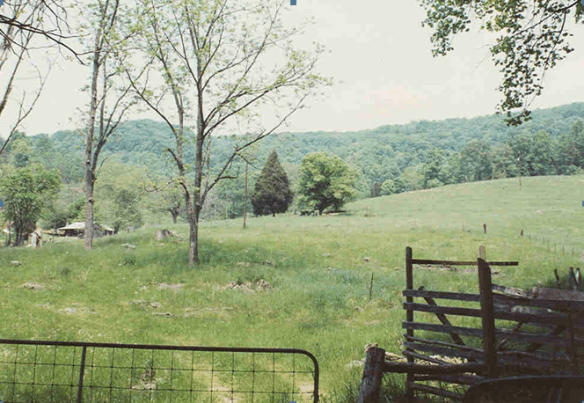
The house had been near the two small trees in the foreground.

Living Children: 4

Deceased Children: 6

Did you know this person? No, he died almost 40 years before I was born.

Local Events:

The war was preying on everyone’s minds.

What Was Affecting Their Lives?

Lazarus was aging and probably ill. I believe he carved his own headstone before his death, at least his name. It matches the other headstones that he carved for his children and grandchildren. Lazarus would pass away the following summer, just three months before his wife.

Lazarus lived at the end of Estes Holler, the patriarch, who cared for his aged mother, buried her, carved her stone and many thereafter. When his son, William George Estes’s cabin burned and their son along with it, it was Lazarus who buried the child. It was also Lazarus who took in his two grandsons, William Sterling and Joe Dode when they jumped freight trains back to Tennessee to find their grandparents when their parents were divorcing in Indiana. The family story says that neither parent wanted the boys and they arrived in Tennessee filthy and very hungry.

It was Lazarus who “ran William George out of Estes Holler for doing Ollie wrong” when he returned with his new young wife, his x-wife’s cousin, after abandoning the boys.

In 1920, William George was living in Claiborne County, but not in Estes Holler from the looks of the census. According to the family story, Lazarus told William George he would kill him if he came back, after abandoning his two sons – those boys just 10 and 12 who hopped a freight train to find their way home to their grandfather. Lazarus seemed to be a good man, always taking care of others.

In October of 1917, Lazarus was probably wondering what to do about his land when he died. His own mortality had to be weighing heavy on his mind. He would have been watching his ailing wife and knew that some of his children weren’t as stable and trustworthy as others. Sometime over the winter, Lazarus decided to deed his land to his daughter and neighbor, Cornie Epperson and her husband, but with instructions to pay the rest of his heirs cash.

Lazarus had a cow and a horse, because he reserved the right to pasture them on half an acre until his death.

On October 20th, Lazarus might have been watching the leaves change color and wondering if he would see them again. He woundn’t. Perhaps he walked to little graveyard behind his house or the one down the road behind the church to visit with the rest of his family who he would see again soon.

Y Line Haplogroup – R-BY490, obtained through his grandson not yet born at that time. The Big Y test that provided this haplogroup provided evidence that it’s unlikely that the Estes family descended from the d’Este family of Italy.

mtDNA Haplogroup – We don’t yet have Lazarus’s mtDNA haplogroup that he would have inherited from his mother’s direct matrilineal line. I have a scholarship for the first person descended from the following women through all females to the current generation, which can be male:

  • Lazarus’ mother, Rutha Dodson married John Y. Estes
  • Her mother, Elizabeth Campbell married Lazarus Dodson
  • Her mother, Jane “Jenny” Dobkins (born c 1780-1850/60) married John Campbell
  • Her mother, Dorcas Johnson (born c 1748-1831) married Jacob Dobkins (1751-1833)
  • Her mother Mary “Polly” Phillips (born c 1739) married Peter Johnson (born c 1715-1790)

 My Father’s Paternal Grandmother

Name: Elizabeth Vannoy, pictured above, with Lazarus

Birth Date: June 23, 1847

Age: 70

Occupation: Farm wife

Location: Estes Holler, Claiborne County, Tennessee

Lazarus’ and Elizabeth’s land.

Living Children: 4

Deceased Children: 6

Did you know this person? No, she died almost 40 years before I was born.

What Was Affecting Her Life?

Elizabeth and Lazarus were both aging. Both had lived through the Civil War and now the country was embroiled in yet another war. Both were assuredly worried about what would follow, if we would see war on our own soil, and how that would affect their children and grandchildren.

Elizabeth probably seldom saw her 5 grandchildren by her daughter Martha who died in 1911. Their father remarried and moved to Union County, TN.

Her son, William George Estes seemed to be the “wild child” of the bunch. He had moved to Arkansas and back. His cabin burned just a few yards from Elizabeth’s house, killing their young son in 1907. Sometime after the 1910 census, William George and family would move to Indiana, where his wife divorced him. From there, he moved back to Tennessee again, but his children from his first marriage dispersed to the winds. Two of those children were serving in WWI.

Only one of Elizabeth’s grandchildren through William George lived in Claiborne County. I hope that Estel visited Lazarus and Elizabeth and shared the joy of their baby boy, born in 1915.

Elizabeth’s daughter, Cornie lived right across the road and Elizabeth would have been close to Cornie’s 9 children. Cornie’s last child was born on June 4th, so Elizabeth would have been helping Cornie with the new baby.

Son Columbus, or “Lum,” had 4 children, but one of them died at birth in 1914 and was buried down the road by the church in the family area of the Pleasant View Cemetery. HIs daughter Mollie had just been born on August 9th.

Son Charlie and his wife had moved up to Hancock County, near the county line with Lee County. They had 4 children, with the most recent addition being added on June 8th. However, Elizabeth was probably quite worried about this baby, who wasn’t doing well. Three days after Christmas in 1917, that baby would be buried too.

A year and 5 days later, after Elizabeth buried Lazarus in July of 1918, she would join him.

mtDNA Haplogroup – J1c2c, obtained from her great-grandchild through Cornie, tells us that she was European. Her mother has been rumored to have been Cherokee Indian. Her mitochondrial DNA proves that at least her direct matrilineal line was not Native.

My Father’s Maternal Grandfather

Name: Joseph B. “Dode” Bolton

Joseph, pictured at left about 1913 or 1914 with son Dudley and granddaughter Elizabeth.

Birth Date: September 18, 1853

Age: 64

Occupation: Farmer

Location: Sedalia, Hancock County, Tennessee

Living Children: 9 or 10

Deceased Children: 2

Did you know this person? No, he died in 1920.

What Was Affecting His Life?

Joseph’s son, Samuel Bolton had just enlisted in the military to serve his county in WWI. Recruiting had been heavy in East Tennessee, appealing to the patriotism that runs deep in this part of the county. I don’t know if Dode, as he was called, tried to talk his son out of joining, but it didn’t matter, Sammy joined and by October 20th, would have been receiving training in Camp Sevier, SC. Sammy might have thought that was fun, and maybe Dode wasn’t terribly worried yet, but that time would come.

Sammy shipped out for Europe on a transport vessel in May 1918 and was killed in France on October 8, 1918.

Joseph’s son Estel Vernon Bolton, born in 1890, was serving as well. After the war, he would come home and live with his parents to help his aging parents.

Samuel and Estel were the youngest living children. The true baby, Henry, had already died.

Joseph’s daughter Ollie wasn’t doing terribly well either. She had married William George Estes, getting divorced in Indiana about 1915 and then moving to Chicago. Her two sons were in the military too. That’s 4 serving in the military for Dode to worry about.

Daughter Mary Lee who married Tip Sumpter had moved to Illinois and daughter Ida had moved to Kentucky, but that wasn’t terribly far.

Dalsey lived up the road in Jonesville, just across the border into Virginia, but son Charles had moved to Arkansas.

Joseph probably sorely missed the help from both Samuel and Estel on the farm. He had lost both of his helpers as they went to answer their patriotic calling. Only one would return.

Y Line Haplogroup – R-FGC62079, provided by Joseph’s brother’s great-great-grandson tells us that he descends from the very large haplogroup R in Europe. His deep ancestry as revealed by the Big Y test suggests that Joseph’s ancestors were from the British Isles and probably from western Europe before that.

mtDNA Haplogroup – Joseph would have received his mitochondrial DNA from his mother. Mother’s give their mtDNA to all of their children, but only women pass it on. I will provide a DNA testing scholarship for the first person who descends from the following women through all females to the current generation, which can be male.

Note: It’s the McDowell line that I’ve gone to Ireland to visit, right after my presentation in Dublin. Mary McDowell was the daughter of Michael McDowell, the son of Michael McDowell, the son of Murtough McDowell, who immigrated from Ireland and was living in Baltimore, Maryland by 1720. The Y DNA of Michael McDowell’s descendant matches that of the McDowell line from Northern Ireland, where I’ll be visiting in a few days.

My Father’s Maternal Grandmother

Name: Margaret Claxton

Surely a photo exists someplace of Margaret Claxton or Clarkson, given that she didn’t pass away until March 11, 1920. If someone has a photo of Margaret, I would surely appreciate a copy.

Birth Date: July 28, 1851

Age: 66

Occupation: Farmer’s wife

Location: Sedalia, Hancock County, Tennessee

Living Children: 9 or 10

Deceased Children: 2

Did you know this person? No, she died in 1920.

What Was Affecting Her Life?

You’d think with 9 or 10 living children that Margaret would have had a lot of grandchildren in and out of the house. Of Her children, Ollie was living in Chicago and Mary Lee was in Illinois too. Charles was in Arkansas. Elizabeth was in Ohio with her 9 children. Samuel and Estel were both unmarried and in the military.

That only left Dudley living in Hancock County, with 4 children. Dalsey lived in Lee County, Virginia, not terribly far with 6 children at that time, the newest child being born on December 16, 1916. Margaret probably enjoyed this new grandchild. I hope she got to see her grandchildren often.

Ida lived over the border in Kentucky, so Margaret probably didn’t get to see her often. Ida had no children, which may have been a heartache for both women.

Ollie’s son, Estel had married and lived in Claiborne County. He had a child that was just over 2 years old who I believe was Margaret’s first great-grandchild. Hopefully Margaret got to see this child from time to time as well.

Margaret surely worried about her two sons serving in uniform, and with good reason. Samuel may have gotten to visit while on leave the following May before shipping out for overseas, but after that, she would never seem him again on this side of death.

mtDNA Haplogroup – Margaret’s haplogroup is H, but we were unable to get a more refined answer. We need another person to test. Anyone who descends through any of Margaret’s daughters through all females to the current generation, which can be male, carries her mtDNA and is eligible to test. I have a DNA testing scholarship for anyone who descends from her daughters as described above, or from any of the women below through all females as well.

My Mother’s Father

Name: John Whitney Ferverda

Birth Date: December 26, 1882

Age: 34, 35 in December

Occupation: Retail hardware store owner and implement merchant, according to his WWI draft registration

Location: Silver Lake, Kosciusko County, Indiana, beside the train depot.

The house, above, today where my mother was raised.  It’s behind my mother, in the photo below.

The hardware store, pictured below with John Ferverda in front, was a couple blocks from the house, near the crossroads in the center of town.

Living Children: 1

Deceased Children: 0

Did you know this person? Yes, he died in 1960. I remember him eating peanuts and sitting in his chair.

Local Events:

The newspaper in Fort Wayne reported that the first hard blow of the war had been incurred. The President appointed a day or prayer.

While my ancestors in Tennessee probably knew nothing about this, the people a few miles west of Fort Wayne surely did.

John Ferverda would assuredly have known, and probably before the newspapers arrived. John had been the railroad station master and sent and received Morse Code messages. John’s brother still worked for the railroad, living across the street from both John and the depot. John and Roscoe were probably the first people in Silver Lake, or Kosciusko County, to know of breaking news. Want to be in the know? Be friends with John Ferverda.

What Was Affecting His Life?

On January 8, 1916 the newspaper in Rushville, Indiana had the following tidbit.

J. W. Ferverda, Big Four agent at Silver Lake and well known here has purchased a hardware store there in partnership with R. M. Frye. He has resigned his position with the railroad company. Mr. Ferverda married Miss Edith Lore of this city.

This is the only way that we knew when John bought the hardware store. Sadly, John would lose the store in 1922, selling out. He was too kind-hearted and granted too much credit that could never be repaid.

But in 1917, John would have been excited to build his new business.

In May, John’s youngest brother had graduated in the first commencement from Leesburg High School. Three of John’s brothers were serving in the military, very unusual for a Brethren family.

Y Line Haplogroup – John’s Y DNA haplogroup is I-Y210, European, consistent with John’s paternal lineage from the Netherlands.

mtDNA Haplogroup – We don’t have a sample of the mitochondrial DNA of John’s mother, Evaline Louise Miller. I have a DNA testing scholarship for the first person descended from any of the following women through all females to the current generation, which can be male.

  • John’s mother, Evaline Louise Miller married Hiram Ferverda
  • Her mother, Margaret Elizabeth Lentz married John David Miller
  • Her mother, Fredericka Reuhle married Jacob Lentz
  • Dorothea Katharina Wolflin born 1755 in Beutelsbach, Wuertemberg, Germany, married Johann Adam Reuhle born 1764 same location.
  • Dorothea Heuback born 1729 in Endersbach, Wuertemberg, Germany and married Johann Ludwig Wolfin born 1732 in Asperg, Wuertemberg, Germany and died in 1805 in Beutelsbach, Wuertemberg, Germany

My Mother’s Mother

Name: Edith Barbara Lore

Edith with her husband, John Ferverda, probably about 1918.

Birth Date: August 2, 1888

Age: 29

Occupation: Not working outside the home, mother

Location: Silver Lake, Kosciusko County, Indiana

Living Children: 1

Deceased Children: 0

Did you know this person? Yes, I remember her dress, apron and black ankle high shoes as she rushed to hug me when we arrived. That’s me on her lap.

Local Events:

In October 1917, Edith’s only child, a son, was just a month shy of 2 years old. Edith had visited her mother in August who had recently moved from Rushville, Indiana to Wabash. Edith’s father had died in 1909 and her mother had remarried in 1916. Edith had a new step-father who wasn’t terribly well liked, by anyone.

What Was Affecting Her Life?

Edith’s grandfather, Jacob Kirsch, had passed away in May in Aurora. Her family was in flux. Her husband’s brothers were serving in the military, and while her husband, John, wasn’t, she was still the out of favor “non-Brethren” wife who was responsible for him marrying outside the faith.

The war brought rationing. In the Fort Wayne newspaper on this day, an article reveals that “a sugar famine is now upon the country and that the moment of America’s first self-denial has arrived.”

mtDNA Haplogroup – J1c2f, confirming a European origin of Edith’s German matrilineal line.

My Mother’s Paternal Grandfather

Name: Hiram Bauke Ferverda

Hiram, pictured above with all of his children. His wife, Evaline Louise Miller beside him, and John Ferverda second from right, last row. This photo was taken during WWI at the old home place near Leesburg, Kosciusko County. In the window behind the group is the banner, partially obscured, indicating that the family had 3 sons serving.

Birth Date: September 21, 1854

Age: 63

Occupation: Banker, farmer and street inspector

Location: Leesburg, Kosciusko County, Indiana

Living Children: 11

Deceased Children: 0, which is pretty amazing

Did you know this person? No, he died 30 years before I was born.

Local Events:

Witten in 1919 in the “History of Kosciusko County:”

The family are members of the Church of the Brethren and Mr. Ferverda is a republican. He was at one time captain of the local Horse Thief Detective Association, and in now an inspector of the streets of Leesburg.

Well, ahem. The Horse Thief Detective Association was a local detective and law enforcement group of vigilantes formed about 1840. During this time in Indiana, near Wingate, horse stealing had become so rampant that folks had to completely give up the idea of farming. Arrests were nigh on nonexistant, so the men banded together to not only discover who was stealing the horses, but to apprehend them and put an end to it. They did, becoming relatively well respected, and also becoming investigators, police officers, judge, jury and executioner all in one – sometimes all in the same night or raid. Later in the early 1900s, they became heavily associated with the KKK and in the early 1920s, this group met its demise with the downfall of one of their leaders who was convicted of the murder of a woman. They primarily operated throughout Indiana, but also to some extent in surrounding states.

This is something I could have spent my entire life not knowing. So, how, I wonder did Hiram reconcile the Horse Thief Detective Association with his Brethren belief of non-violence? Let’s hope that “at one time” means that he was no longer associated with this group.

What Was Affecting His Life?

The war had to be weighing heavy on Hiram’s mind, as three of his sons were serving. All three came home.

It’s surprising that the Brethren church did not discharge Hiram given that his sons served in the military and Hiram clearly had to have taken an oath to be a public official, along with other highly un-Brethren activities.

Y Line Haplogroup – I-Y2170 – a haplogroup discovered during Big Y testing. This confirmed the Ferverda is European, and his closest matches are from Germany and Russia with Big Y matches also from Scandinavia. The Ferverda DNA and ancestors have been in that region for a very long time.

mtDNA Haplogroup – Hiram’s mother died in Holland, and her mtDNA line has not yet been tested. I have a DNA testing scholarship for the first person to step forward who descends from the following women through all females to the current generation, which can be male:

  • Hiram’s mother, Geertje Jarmens de Jong born March 22, 1829 in Baard, the Netherlands, died October 3, 1860 in Terjerksteradeel, the Netherlands, married Bauke Hendrick Ferverda (Ferwerda) on May 14, 1853 in Baarderadeel, the Netherlands.
  • Her mother, Angenietje Wijtses Houtsma born August 12, 1802 in Leeuwarderadeel, the Netherlands, died after July 17, 1866 and married on May 22, 1824 in Baarderadeel, the Netherlands to Harmen Gerrits de Jong.
  • Her mother Lolkjen Ales Noordhof married Wijzse Douwes Houstma (1783-1825 Boxum, Friesland, the Netherlands.

My Mother’s Paternal Grandmother

Name: Evaline Louise Miller

Birth Date: March 29, 1857

Age: 60

Occupation: farm wife

Location: Leesburg, Kosciusko County, Indiana

Living Children: 11

Deceased Children: 0

Did you know this person? No, but she cared for my mother when she was sick as a child.

Local Events:

The war. How could she not think of the war everyday with 3 sons serving?

What Was Affecting Her Life?

The decisions affecting Brethren families had to have been tearing at the fabric of both family and churches.

This 7 page undated letter or article, written by Eva, with page 6 missing, tells us so much about how she thought. I suspect this was written about this time because of the refences to women’s education, rights and the focus on temperance which resulted in Prohibition beginning in 1919. Temperance is the issue that made the Brethren, as a whole, decide they needed to participate in government by voting, beginning in about 1912. Prior to that, the Brethren refused to participate in any form of government unless it was required for them to fulfill the Brethren mission in the world, which included voting and holding office.

Some Things Our Women Are Doing

Women in the olden times were in the main appendages of men. They were servants in some capacity and were not supposed to need any special intellectual training.

The women of olden times were not educated in the school as they are now. But now in our time, her real worth is more properly estimated and her education is held of equal importance with man. Education is power, and when rightly used, sharpens the mind, it kindles ambition and awakens self respict (sic). The intelligence of women is rapidly increasing. Women are graduating from our colleges, with equal honors with men. This enlarged intelligence of women should vastly increase the intelligence of our homes. Ignorance in the home never will promote its welfare. Ignorance in the mother is never any benefit to her children. Ignorance never made a womans work of any better quality. Ignorance in the women of a neighborhood never promoted the better interests of the neighborhood, the church, or Aid So. (Aid society). It does promote gossip, scandal, backbiting, jealousy, folly, coarseness, low life. Ignorance is on a level with these things and is the mother of them all. But woman’s day has come and with renewed womanhood, and Christian intelligence, are forefeared to do a good work wherever their lot shall be, in the home, the church, the S.S. or Aid.

We have noted women of old history who had great influence in private and public life, Miriam, sister of Moses aiding much in the deliverance of her people. Deborah who ruled and judged Israel. Hannah noted for her trust in the Lord, being the mother of Samuel.

In the time of Christ and the apostles, there were many noted women, zealous in their devotion to the new religion. The religion which opened new encouragements and hopes to women. The religion which placed women on and equivalent to men such as Paul in Romans 16th speaks of some good women in his day. He commends Phebe our sister who is a servant of the church. Also Priscilla wife of Aquila and Tryphena wife of Tryfanosa who labored much in the church. We have the Marys of Dorcar and we might name many more noted women.

Women can do great things. Think once of the crusaders, some women of our time. That awakening of moral conviction and spiritual power such as perhaps has both been known since the early days of Christianity. They came on bended knee and tearful eyes and prayed for all the guilty offenders, that they might repent and be forgiven. They lifted the cause to the throne of God and hold it there still. They made it his cause. They joined in with his church. This took the cause of temperance up to the summit level of practical Christian life, and made it what it all along should have been a high, holy, divine cause. All this some of our good Christian women have done and through their efforts we shall soon have worldwide temperance. What other women have done we can do and our women of today are doing things.

Our Sister Aid Society is doing great work. We have about 16,000 women engaged in the various activities of the Aid Society (page 6 missing).

The Lord gives us health so we can surely give one day every two weeks for this good work and we know we shall be blessed for every good deed we do. It is the little deeds we do which count for so much for a cup of cold water given in his name we shall be blessed. (rest missing)

mtDNA Haplogroup – We don’t have her son’s mitochondrial DNA haplogroup, which means we don’t have hers either, since her son inherited his mitochondrial DNA from Evaline.  Anyone descended directly from her through all females can test, as well as anyone descended from the following women through all females to the current generation, which can be males.

  • Evaline’s mother, Margaret Elizabeth Lentz married John David Miller
  • Her mother, Fredericka Reuhle married Jacob Lentz
  • Dorothea Katharina Wolflin born 1755 in Beutelsbach, Wuertemberg, Germany, married Johann Adam Reuhle born 1764 same location.
  • Dorothea Heuback born 1729 in Endersbach, Wuertemberg, Germany and married Johann Ludwig Wolfin born 1732 in Asperg, Wuertemberg, Germany and died in 1805 in Beutelsbach, Wuertemberg, Germany

 My Mother’s Maternal Grandmother

Name: Ellenora “Nora” Kirsch

Yep, that’s Nora, with her daughters Eloise, Mildred, then Nora and Edith. Who would ever have guessed!

Birth Date: December 24, 1866

Age: 50, 51 on Christmas Eve

Occupation: Probably Housewife

Location: Wabash, Indiana

Living Children: 3

Deceased Children: 1

Did you know this person? No, but I would have liked to.

Local Events:

Huntington, Indiana wasn’t far from Wabash. The headlines everyplace included the new about the transport ship being torpedoed.

Having lived in Rushville her entire adult life, she may have also subscribed to the Rushville paper, if they had a service allowing the paper to be mailed distantly.

Nora must have worried because her family in Aurora still spoke German.

What Was Affecting Her Life?

Nora’s life had changed incredibly in the past few months and years. Her first husband died of tuberculosis in 1909, followed by her daughter of the same disease in 1912. On October 28, 1916, she married Thomas McCormick and moved from Rushville to Wabash, Indiana shortly thereafter. In Rushville, she worked for a department store, then opened her own sewing, clothing construction and alternation business. Moving to Wabash would have changed everything.

Her first wedding anniversary was just a week away. Was she preparing a celebration? Was she already having regrets and second thoughts. She stayed with McCormick for years, never officially divorcing. He eventually left and she was much happier.

My mother remembers visiting Nora in Wabash where she always had a quilt frame hung with pully’s from the ceiling, so it could be raised and lowered.

I don’t know which quilt she was working on that that time, but I can assure you that she was working on some quilt. Quilters quilt for beauty, quilters quilt for hope, quilters quilt to help and quilters quilt when they need to work through something or don’t know what else to do.

We know for sure that she quilted from the 1880s through the 1930s. Her quilts, below, are hung at left and right, and my mother’s afghan inspired by Nora’s quilts is displayed in the center.

We also know that Nora gardened, from this photo from about the same time. I wonder if her gardens inspired the Climbing Vine and the Picket Fence quilts, above.

mtDNA Haplogroup – Nora’s haplogroup, J1c2f, the same one I carry today. Known as Jasmine, tracking haplogroup J has provided insight into ancestors that we can never reach through traditional genealogy.

My Mother’s Maternal Great-Grandmother

Name: Barbara Drechsel

My great-grandmother, Nora Kirsch, at left, her sister Mildred holding her first child born in 1922, then my great-great-grandmother Barbara Drechsel Kirsch, at right. A beautiful 4 generation photo. It’s amazing how happy Barbara looks considering the amount of tragedy she had endured in the past decade or so.

Birth Date: October 8, 1848

Age: 69

Occupation: Innkeeper, Proprietor

Location: Aurora, Dearborn County, Indiana

Kirsch house to the right, the depot at left, above. This probably looks much the way it did when Barbara lived there.

The bar that was in the building in the 1980s when Mom, my daughter and I visited was the original.

Living Children: 6

Deceased Children: 0

Did you know this person? No, but she was amazing. I like to think I have her spunk and gumption.

Local Events:

Floods, always floods. Aurora, Indiana sat on the bend of the Ohio River and flooded regularly. In the winter of 1917/1918, the Ohio flooded dramatically, causing ice dams to break which flooded Aurora. According to the newspaper, the properties looked like “scrambled eggs.” In the basement of the Kirsch House, you could still see the stains from the flood waters, decades later.
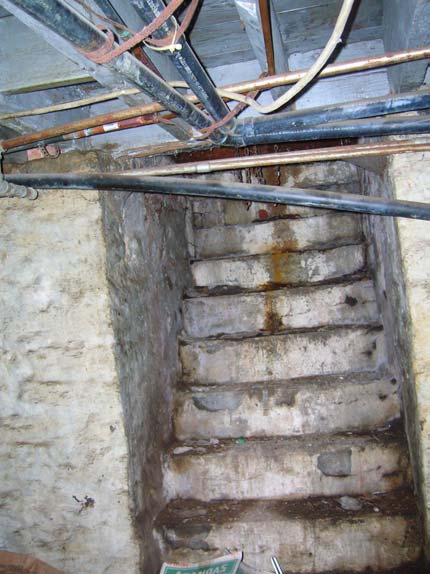
While the Kirsch House sat relatively high, on the North side of town, several blocks from the river, they were still badly flooded at least every few years. The train tracks were on even higher ground.

What Was Affecting Her Life?

I don’t know if Barbara was grief-stricken or relieved, or maybe some of each. Her husband, Jacob Kirsch, had died of cancer of the stomach on July 23rd. She had been taking care of a terminally ill husband for months, as well as running the Kirsch House, a combination hotel, pub and restaurant.

Barbara’s daughter, Carrie was ill with syphilis that would claim her life a few years later. Carrie had contracted that then-fatal disease from her wealth river-boat gambler husband who had already died a decade earlier.

Barbara’s daughter, Lou, worked with her mother after Lou’s husband had committed suicide in the garden behind the Kirsch House on Halloween night 1910. Barbara probably depended on Lou to help with the Kirsch House and with caring for Jacob when he was ill as well.

Barbara’s daughter Ida was in her 20s and hadn’t yet married. Ida also worked at the Kirsch House with her mother. After Ida and Lou both married in 1920 and 1921, Barbara would sell the Kirsch House and live with her daughter, Nora.

Nora had buried a husband and daughter in the past few years, had built her own retail and service business and then remarried in late 1916 to a man that was not liked by the family. Nora moved further away, to Wabash, Indiana. Barbara was very close to Nora’s daughters, her granddaughters, and they came to stay with Nora at the Kirsch House often.

Barbara’s sons Martin and Edward, in their late 40s, so too old to serve in the military, didn’t live close by, but she probably saw then occasionally since the Kirsch House was beside the depot and southern Indiana was well connected by rail. Her grandson, Edgard Kirsch registered for the draft and claimed an exemption for his father and mother who he claimed were dependents.

The Cincinnati newspaper carried headlines about the war. Barbara was born in Germany and the family spoke German. Certainly Barbara still had family in Germany, and may have written back and forth. She may have had aunts, uncles and first cousins still living.

We do know that the Kirsch family spoke German until this time, when they stopped and spoke only English, so that their loyalty would not be questioned. The war had to be on Barbara’s mind, both from the perspective of an American and also as a person with German relatives.

mtDNA Haplogroup – Barbara’s haplogroup descended to me through her female descendants. As more matches have accrued over the years, the amazing Scandinavian story of this haplogroup, found in Barbara’s mother in Germany about 1800 is emerging.

Your Turn

It’s your turn now to select a day, take your picture, and document what your ancestors were doing on that day?  What day will you select, and why?

______________________________________________________________

Disclosure

I receive a small contribution when you click on some of the links to vendors in my articles. This does NOT increase the price you pay but helps me to keep the lights on and this informational blog free for everyone. Please click on the links in the articles or to the vendors below if you are purchasing products or DNA testing.

Thank you so much.

DNA Purchases and Free Transfers

Genealogy Services

Genealogy Research

Second Act Quilt – 52 Ancestors #169

A second act. Act two. What is it?

Aside from the second act in a play, a more contemporary usage of the phrase is a second career, often undertaken in retirement when one is less constrained by earning a living and putting food on the table each week. Hopefully one feels freer to follow a passion or love, without particular regard for financial reward or gain.

But people aren’t the only “beings” with a potential second act.

The recent hurricane tragedies have been ripe with stories of rescued animals. I’m an unbelievable soft touch for our furry friends and not only do I actively involve myself with animal rescue, and have for decades, I also support several groups, particularly in situations like the recent devastating hurricanes.

Aside from living sentient beings, sometimes inanimate objects such as quilts have a second life too. Although, I have to tell you, making and distributing “care quilts,” I have always felt that a quilt had a special calling to help comfort and cure people. Those of us constructing them are simply hearing that calling and cause those quilts to be born, so to speak. Midwives, in essence – not the story, only assistants in the process.

Sometimes, giving quilts and others a second life or opportunity helps to heal both the recipients and the donor.

In the Beginning…

I grew up quilting with my mother around a quilting frame in the local church basement with the Missionary Circle. Although somehow, in that time and place, the irony of sending quilts to Africa escaped me. I think it was the thought that mattered, at least I hope so.

I also made quilts by hand with the scraps from making my own clothes. I didn’t feel underprivileged at all. I loved the “custom clothes” I could make, generally out of remnants from the sale bin. I also loved using the scraps for things like matching doll clothes made by hand with no pattern. Later, as a teen, I made quilts with those scraps, often taking my quilting bag along when I babysat for after the kids were in bed.

When I was in college, I didn’t have time to either make clothes or quilts, but after I graduated and started a family, a few years later, I returned to quilting. There was something soothing and having moved away, quilting connected me with my roots, both figuratively and literally.

For (at least) hundreds of years, women have made quilts for utilitarian purposes, for warmth, to salvage any possible piece of fabric which was expensive both in terms of labor and cost, and to bestow as gifts on those they loved. Wedding and baby quilts are legendary.

Making a quilt was and still is quite an investment in terms of both money and time. For those who don’t know, quilts cost hundreds of dollars and hours, both. Trust me, it’s a lot easier and much quicker to take half the amount of money a quilter invests in a quilt and purchase a very nice gift card.

If someone makes and gives you a quilt, I guarantee, it’s a gift straight from the heart or they simply would not bother. But not everyone understands, cares or treats quilts as gifts of love.

The Quilt Disrespecter

My former mother-in-law comes to mind.

In the early 1980s, in-between a career, a young family and animal rescue work, I managed to make my former, now-deceased, mother-in-law a quilt, in the colors, fabric and pattern she selected. She asked that it be tied instead of quilted, so I tied it with little knots instead of the more traditional quilting. I enjoyed making the quilt, working alone mostly late at night after everyone else was long asleep, and gave it to her as a family gift for Christmas.

I was the “second wife” in a very conservative, religious family who wasn’t happy about either their son’s divorce or a second wife, and I hoped that the quilt would help thaw the ice a bit.

My mother-in-law put the quilt on the bed immediately, but the next time I saw it, it had a very large prominent stain. I asked her what happened, and when she told me, I was able to help remove the offending substance. The quilt was whole again, none the worse for wear. I was a bit bothered that she hadn’t seemed to care enough about the quilt to ask me about the problem before I noticed and asked her. But I shrugged it off as nothing.

I didn’t see the quilt again, and I wondered about it, but all things considered, was hesitant to ask. I didn’t want to rock the boat and she wasn’t exactly warm and friendly.

Rescuing Sister-in-Law

I wasn’t the only black sheep in the family, and well, us less-than-pristinely-colored-sheep had to hang together.

A few years later, after many slights, such as being “forgotten” at Christmas, even while sitting in the same room as everyone else exchanged and received gifts, I had given up entirely on the idea that I might even be treated as marginally human by my mother-in-law. I attempted to “make nice” as my mother would have said, for the sake of my husband and children.

My in-laws sold their condo and were in the process of moving to a senior facility. My sister-in-law, married to another son, herself a family outcast as well, was helping my in-laws pack and move.

In the garage, she found the quilt tossed in a corner on the floor. She knew I had made that quilt for “Grandma” as we called her, and she picked it up and asked Grandma what the quilt was doing there.

Grandma replied she was either going to throw it away or give it to Goodwill.

My sister in law picked the quilt up, looked at it and stated, “there’s nothing wrong with this quilt,” but my mother-in-law said that it was “old.” It was less than 5 years old, maybe 3 or 4. Hardly old by any measure I can imagine, let alone in quilt-years. Quilts when cared for even marginally last for decades.

My sister-in-law, bless her heart, told my mother-in-law that if someone makes you something and gives you a gift from the heart, the VERY LEAST you could do if you don’t want it anymore is give it back to them. My sister-in-law picked up the quilt, told my mother-in-law that she was giving the quilt back to me and put it in her car.

Hurt Feelings.

I can’t even begin to tell you how hurt my feelings were. Not only was the quilt I had made for my mother-in-law, with the fabrics she selected, so I know she liked them, tossed away like an old rag – by proxy, I had been discarded as well, again.

It was just one more hurtful chapter in a book, but having your gift of love rejected in such a demeaning way was especially degrading.

I folded the quilt up and put it away. It hurt.

Over the years, every now and again, I’d run into the quilt again when cleaning out a closet. I always felt bad, and then I’d find a different place to put it away out of sight. Out of sight never worked for very long, because I’d always find it again a couple years later. DANG!

Fast Forward

In 1993, my life changed catastrophically when my husband, her son, had a massive stoke. She died shortly thereafter. I was dealing with a horrific situation, still raising children, and needless to say, I had absolutely no time for anything except trying to make ends meet for several years.

Nearly another decade later, as I moved prior to remarrying, I found that quilt again. AGAIN! Once again, I felt terrible, for a whole bevy of reasons, and put it away – but it wasn’t going to stay put away forever.

This past summer, I began my own “downsizing” initiative, going through things, giving things away, finishing projects and otherwise taking stock of where I am and where I’m going.

And you’ve guessed it, I found that doggone quilt again.

But things have changed. I can now look back more with pity and sorrow instead of pain. With the cumulative wisdom and distance of another two or three decades, I now realize my mother-in-law’s rejection of me was far less about me than it was about her. I wish I had understood that then.

The quilt was her weapon in a cold war of sorts in which I was an unwitting witness as well as an unwilling participant.  Her own personal ongoing battle in which both me and the quilt were collateral damage.

It was never about me, or the quilt, really. In retrospect, the situation was profoundly sad – but someplace in the past 15 years or so, she lost the ability to hurt me anymore. She had died, leaving an unfortunate legacy, one I certainly wouldn’t want, and I had moved on.

Instead of quickly putting it away, I laid the quilt out on the table this time, took a look and realized it needed some mending. I wondered what I would do with the quilt. I wasn’t going to use it myself, but I wasn’t putting it away again either.

Hurricane Harvey

Then, hurricane Harvey descended on Texas, and in particular, Houston.

I have family and very close friends in Houston, and I prepared a box of “care quilts” to send. I’m sure that they have been put to good use.

That done, a few days later, I returned to my sorting and saw the quilt laying on the table. I realized that the quilt needed a new home, one that would hopefully love it the way it had never been loved, and that correspondingly, hurricane Harvey victims needed assistance. Many had lost everything.

About this time, my friend told me about her cousin and others who had been flooded out of their homes when the reservoir floodgates were opened to relieve pressure on dams. The devastation and tragedy in Houston seemed never-ending.

I told my friend about the quilt and that I would gladly ship it to her if she would find it a good home, someplace where it would be used, loved and appreciated.

Act Two

I opened the quilt and realized that other than a few places where some of the seams had begun to separate, that there was only really one damaged area. One tiny L shaped tear in the fabric, about an inch long.

I cut a “patch” in the shape of a heart and mended the quilt. Somehow, I thought that was appropriate. A broken heart made whole.

I hand repaired a few other locations, reinforced the binding since that too was now 30+ years old, and thought about how much comfort this quilt had been waiting for so long to give someone. Then, I gave the quilt a bath and held my breath that it would survive the washing machine. It did, just fine!

It’s not perfect and it’s not new, but its soft fabric is ready to comfort and warm someone. Maybe it will remind someone of their loving grandmother, or another quilt that comforted them. I hope so.

When I make quilts as gifts, or as “care quilts,” I take their picture when finished, say a prayer for the recipient, and sent them off on a life of their own. These quilts too have a purpose and destiny, just as people do, albeit one that I’ll never know. I give them wings and send them on their journey.

I am blessed and finally healed by being able to send this quilt off on its own healing mission. I was only the technician, although it certainly took long enough for this quilt to find its purpose. I pray that whoever receives the quilt can feel the love that this “pre-loved” quilt has to give, and receives the blessing of the positive thoughts that are sent along with it.

They need it, the quilt needs it, and so did I.

Just like people, and animals, sometimes “pre-loved” is the best.

It’s now known as “The Second Act Quilt.”

Sometimes the second act is far better than the first and just what the doctor ordered!

Bon voyage my friend…

______________________________________________________________

Disclosure

I receive a small contribution when you click on some of the links to vendors in my articles. This does NOT increase the price you pay but helps me to keep the lights on and this informational blog free for everyone. Please click on the links in the articles or to the vendors below if you are purchasing products or DNA testing.

Thank you so much.

DNA Purchases and Free Transfers

Genealogy Services

Genealogy Research

Susannah (maybe) Hart (c1740-before 1805), Marcus Younger’s Mystery Wife, 52 Ancestors #168

Actually, we’re not even positive Susannah is her first name. I should have titled this “Maybe Susannah Maybe Hart,” but then I didn’t want someone to actually think her first name was “Maybe.”  I can just see that showing up in a tree someplace someday:)

Susannah might be her first name, but if so, it’s a lucky accident in a legal document.

In Halifax County, even in the 1800s, forms and standard language were used for various types of repeat transactions – and it was a mistake on a form that named Susannah – years after her death. The one record that surely did exist at one time, Susannah’s marriage documentation, likely burned when the King and Queen County, VA courthouse burned in 1828, 1833 and 1864. What one fire didn’t consume, the others did.

For sake of consistency, and because that’s what she has been called….and because I have nothing else to call her, I’ll continue to refer to her as Susannah.

Susannah married Marcus Younger probably sometime in or before 1759, because their first child and only (surviving) son was born on April 11, 1760, named John. Note that the child was not named for Marcus, the father. Perhaps another son was born and named for Marcus, but didn’t survive.

We don’t know who Marcus’s father was as we believe that Marcus was illegitimate, probably born to a daughter of Alexander Younger, taking her surname. But we aren’t positive. We do know that Marcus’s descendant’s Y DNA through his only son, John, doesn’t match the Younger DNA line that the rest of the Younger males in the family associated with Marcus carry. Based on Y DNA results, we know who Marcus’s father wasn’t, and there weren’t any other known Younger candidates, so the probable conclusion is that Marcus was illegitimate and belonged to one of the daughters of Alexander Younger.

Illegitimacy at that time was a significant social barrier. If Susannah married an illegitimate man, she may have been illegitimate herself. There are a lot of “ifs, ands and buts” in there – but it’s the best we can do with what we have.

Is John Actually Marcus’s Son?

Now, if you’re sitting there scratching your head, saying to yourself, “But if John was Marcus’s only son, and his male descendant Y DNA tested, how do we know that Marcus was illegitimate, based on that DNA test? Couldn’t John have NOT been Marcus’s son, especially since we don’t have a marriage record that predates John’s birth? Couldn’t John have NOT been Marcus’s son, because Susannah, um, somehow got pregnant by someone other than her husband?”

The answer would be yes, that’s certainly possible. It wasn’t terribly uncommon for women at that time to have a child before marriage, either out of wedlock or by a first husband who died, and for the child to take the second husband’s surname.

However, before we go any further, let’s address this question here and now, so we don’t have to ponder this anymore.

Autosomal DNA provides some very compelling information.

I have eleven matches at two different vendors with people who descend from Alexander Younger, believed to be Marcus’s grandfather, through different children. Because several of the matches are at Ancestry, it’s impossible to know if we share common segments, but there are members of the Alexander Younger who match with me and in common with each other.

However, that’s at Ancestry, and even though their trees don’t show other ancestors in common with each other, we can’t really tell if common segments match unless they are also at GedMatch, or at Family Tree DNA, which they aren’t.

It’s unlikely that I would match 11 different people through Alexander Younger’s other children if Marcus wasn’t related to Alexander. And if the break was between Marcus and John, I wouldn’t be related to Marcus or the Younger family he is clearly associated with.

Other Younger descendants whose kits I manage also match descendants of Alexander Younger.

One last piece of evidence is that in Marcus’s will, he left John, as his son, his land, so Marcus certainly appeared to believe John was his son.

It’s extremely unlikely that John was not the child of Marcus, based on DNA matches. I think we can put that possibility to bed.

Susannah and Marcus

Susannah and Marcus were probably married before 1760 in King and Queen County, VA, where the Younger family lived before moving to Halifax County, VA, around 1785. They could also have been married in Essex County, as the Younger land was very close to the border and they had periodic transactions in both counties. King and Queen County is a burned county, and no Younger marriage records exist in Essex County that early.

In 1780, when they were about 40, Marcus and Susannah were living in King and Queen County, based on Marcus’s Revolutionary War Public Service Claim where he furnished 1 gallon and 2.5 quarts of brandy worth 39 pounds, one shilling and 3 pence. Alcohol was expensive even then.

This implies that the Younger family was in very close proximity to the soldiers, if not the fighting. I wonder how that affected the family. Anthony Hart is a Revolutionary War Pensioner, living in Halifax County in 1840 and stated he served from Essex County in an affidavit signed for Edmond Edmondson. A William Young (Younger?) signs for Edmondson in 1782 in Essex County when he marries. William Younger is also found in Halifax County later, living beside Moses Estes, whose family is also from the same part of King and Queen County. Moses was the father of George Estes who would one day marry Mary Younger, daughter of Marcus Younger and Susannah.

What, you say, this sounds like a circle. Indeed, it does – or a continuation of a drama crossing 3 generations and as many counties too.

But this gets messier yet, because Marcus’s only son, John Younger, eventually married Lucy Hart.

In 1782 and 1785, Marcus and family are living in Essex County and are taxed under Anthony Hart. By this time, Marcus and Susannah were in their early mid-40s.

This Hart connection becomes very important. These families are close, possibly related…in fact, we know they are related because of DNA results, but we don’t know exactly how.

In Anthony Hart’s pension application submitted in 1832, he states that he was born on October 14, 1755 in King and Queen County and lived there until 1802 when he moved to Halifax. He states that Lucy Younger and Mary Gresham can prove his service. Given the fact that Lucy married John Younger who is about Anthony Hart’s age, it’s very likely that Lucy was Anthony’s sister. Lucy, in her deposition says, “I lived with Anthony Hart when we were both children.” Mary Gresham/Grisham says exactly the same thing.

Why don’t they just spit it out? How are they related? If they were siblings, why wouldn’t they have said that?

Was Anthony’s father’s sister married to Marcus Younger? Or maybe Anthony’s oldest sister? Of course, we don’t know who Anthony’s father was, so we can’t reassemble this family any further. All we do know is that Anthony Hart as also found taxed with one Robert Hart.

There are also other Hart family members, such as John Hart who are born in Essex County about 1777, moved to Halifax and subsequently died in neighboring Charlotte County. I, as well as other Marcus descendants, not descended through John Younger who married Lucy Hart also match to John Hart’s descendants. Someplace, there’s a connection.

Back to Susannah

We know very little about Susannah’s life between the time she and Marcus moved to Halifax County in 1785 and her death probably sometime before 1805. In reality, we aren’t positive she was alive in 1785, but it would be unusual for a man not to remarry for that long, especially at age 45 with children to raise.

Susannah probably died between 1785 and 1805.

Marcus Younger wrote his will in 1805, but he did not die until 1815, a full decade later.

I, Marcus Younger of Halifax Co, do hereby make my last will and testament in the manner following; First, after the payments of my last debts, I give my daughter Susannah 50 acres of land where my house stands during my natural life. Also one negro girl (Fanny), one mare, one bed and furniture, one cow and calf to her and her heirs forever. To my grandson Younger Wyatt one mare. The rest of my estate to be equally divided between my 4 children namely John Younger, Elizabeth Clark, Mary Estes and Susannah Younger. Appoint son John executor. Signed with X. Witness John Hannah?, Armistead Bomar, Sally Hannah?. At a court held for Halifax Jan. 25, 1815 will proved. John Younger executor. Phil Carlton security.

As you can see, there is no mention of a wife in 1805. Susannah is stated to be his daughter. Furthermore, Susannah is listed on tax lists as having a life estate. While Marcus’s will appears to convey this land in fee simple, later records infer that she only had a life estate – which would be what a widow would have had – not a daughter.

However, on March 9, 1816, we find the following deed:

Halifax County VA Deed Book 25, Pg. 568, July 1815, registered Mar 1816

Susannah Younger, Younger Wyatt and wife Sally, George Estes and wife Mary, all of the County of Halifax of the one part, and John Younger, of the same, of the other part are entitled to an allotment of land as described below, as distributed by Marcus Younger, dec’d., which by the consent of all the parties are as surveyed, after mutually agreeing to make a survey to Susannah Younger, who becomes entitled to the part allowed her under the will of said Marcus Younger, dec’d. and by the consent of all the parties, the unmentioned tract was sold to the highest bidder at auction on 12 months credit and commanded the sum of 421 pounds, 60 shillings. Now this indenture further witnesseth that for the above consideration the said Susanna Younger and all of the above mentioned have granted, bargained and sold released and confirmed to the said John Younger a certain tract of land in Halifax County on the draughts of Bannister River containing 62 acres beginning at a Post Oak on John Younger’s land. Signed by all thirteen parties

Thomas Clark and wife Peggy
William Clark
John Henderson and wife Sarah
Edmond Henderson and wife Elizabeth
John Landrum and wife Polly
George Estes and wife Mary

It appears that Susanna and the rest of her siblings sell their jointly held land to her brother, John Younger, and that Susannah’s individually held land was sold independently.

The following chart shows who is mentioned in the 1805 will versus the 1816 land sale.

Marcus 1815 Will, written 1805 1816 Land Sale
Susannah Younger – daughter 50 acres where house stands, Fanny (slave), mare, bed, furniture, cow, calf, her share of rest of estate Lays off allotment, sells
Younger Wyatt – grandson (mother Sally deceased) One mare Yes – Younger and Polly Wyatt
John Younger – son Equal share Yes, purchases
Mary Estes – daughter Equal share Yes, Mary and George Estes
Elizabeth Clark – daughter Equal share No
John and Sarah Henderson No Yes
Edmund and Elizabeth Henderson No Yes
John and Polly Landrum No Yes
Thomas and Peggy Clark No Yes

If one is to assume that the reason Marcus left a mare to Younger Wyatt is because his mother, who married a Wyatt male, is deceased, then what we are left with is that Elizabeth Clark has died and her children and heirs are listed in her stead in the 1816 deed, being the 5 individuals not listed in the 1805 will but listed in 1816.

Susannah Younger never marries and dies in 1831, and she leaves a will too that frees slaves Fanny and Harry and leaves them $50 each. In addition, she leaves her clothes to Susannah Estes and Mary Wyatt and the rest of her property to Younger Wyatt, the son of her deceased sister. Mary Wyatt is probably Younger Wyatt’s wife. The names Mary and Polly were often used interchangeably during that timeframe.

Then, in 1842, a chancery suit is filed to clear up the title on Susannah’s land. This was a lawsuit that was not contested, but likely had to be filed to obtain clear title from everyone, especially since it seems that brother John “bought” the land in 1816 and died in 1817, without title ever being filled or legally passing. In the following document, however, you can see why the confusion exists about Susannah.

The chancery suite does answer one question and that’s the name of Younger Wyatt’s mother – Sally. The chancery suit answers a whole lot more too.

Younger, Marcus Chancery Suit 1842-057, Halifax Co. Va. – extracted and transcribed in June 2005 by Roberta Estes sitting mesmerized in the courthouse basement.

The worshipful county court of Halifax in chancery sitting: Humbly complaining sheweth unto your worships your orator Thomas Clark that a certain Marcus Younger died many years ago leaving a small tract of land containing about 53 (58?) acres to his wife Suckey Younger for life and at her death to be divided amongst his children. That after the death of the said Suckey Younger, the rest of the children of the said Marcus Younger (the wife of your orator being one) sold the said land to your orator, put him in possession of the same and have received from him the whole of the purchase money, but have not as yet conveyed to him the legal title.

That one little word was problematic…wife. Suckey, a nickname for Susannah, may well have been Marcus’s wife’s name as well, which may have been why it was so easy to slip that word, wife, in there. But Susannah was clearly Marcus’s daughter, at least the Susannah alive in 1805, according to his will.

The next sentence then refers to the “rest” of the children, implying that Suckey is a child as well.

Perhaps Marcus’s wife’s name as well as his daughters was Susannah. Susannah was also the name of one of Alexander Younger’s daughters. Was Susannah perhaps also the name of Marcus’s mother? It’s certainly possible. Marcus had a daughter Susannah and grandchildren named Susannah as well. Too many Susannahs!

It’s also worth noting that in 1805, none of Marcus’s children appear to be underage, so all born before 1785, which makes sense. In 1815, his grandson, Younger Wyatt had married, so he was at least 25 or so, being born by about 1790, meaning Wyatt’s mother would have been born before 1770, so this too fits.

Furthermore, we have another problem. Elizabeth Clark is mentioned in the 1805 will, but Thomas and Peggy Clark are mentioned in the 1816 sale, along with several other people not previously mentioned. I surmised that Peggy, often short for Margaret, is the grandchild of Marcus, but according to the 1842 chancery suit, that wasn’t the case at all. Peggy was Marcus’s child. So, if Peggy is his daughter, is she the same person as Elizabeth Clark? If so, that means that Elizabeth didn’t die, so the 3 Henderson and Landrum families were not her heirs. So, who were they? Elizabeth Clark is the only name missing from the 1816 sale that was present in the 1805 will document.

And of course, all of this assumes that Susannah was the only wife of Marcus and that all of his children were her children as well. I hate that word, assume.

You can clearly see why I never thought we’d ever solve this conundrum unless some previously unknown records magically surfaced out of either burned King and Queen County (I wish) or neighbor, Essex (unlikely, since they the records show they lived in King and Queen.) Or maybe that e-Bay Bible, I’m still hoping for that.

The Chancery suite continues:

The names of the said renders(?) are John Henderson and Sally his wife, John Landrum and Sally his wife, Edward Henderson and Betsy his wife, Robert Younger and Mary his wife, Samuel Younger and Mary his wife, Thomas P. Anderson, Joel Younger and Fental his wife, Vincent Carlton and Nancy his wife, Joel Anderson and Sally his wife, Thomas Younger and Betsy his wife, William Estes and Rebecca his wife, James Smith and Polly his wife, Susanna Estes, Marcus Estes, William Clark and Mary his wife, Anthony Younger and Nancy his wife, John Younger and Betsy his wife, Younger Wyatt and Polly his wife, John Estes and Nancy his wife, Thomas Estes and Sally his wife. In tender consideration of the promises and in as much as your orator is remedyless therein at last?. To this end therefore that the above named renders? Be made parties to this suit and required to answer the allegations herein contained under oath. That in consequence of the said partys being numerous and widely dispersed in the United States that the said court decree that the legal title to the said land be conveyed to your orator and that the parties to the said contract as vendors? Be required to do so and unless they shall do so within a reasonable time that the court appoint a commissioner for that purpose and grant all other recipients relief. May it please the court to grant the Commonwealths writ of subpoena.

Next document:

The joint answer of John Henderson and Sally his wife, John Landrum and Polly his wife, Edward Henderson and Betsy his wife, Robert Younger and Mary his wife, Samuel Younger and Mary his wife, Thomas P. Anderson and Betsy his wife, Joel Younger and Fental his wife, Vincent Carlton and Nancy his wife, Joel Anderson and Sally his wife, Thomas Younger and Betsy his wife, William Estes and Rebecca his wife, James Smith and Polly his wife, Susanna Estes, Marcus Estes, William Clark and Mary his wife, Anthony Younger and Nancy his wife, John Younger and Betsy his wife, Younger Wyatt and Polly his wife, John Estes and Nancy his wife. Thomas Estes and Sally his wife to a bill of complaint exhibited against them in the county court of Halifax by Thomas Clark – These respondents saving? Do say that the allegations of the complainants bill are true and having answered pray to be hence dismissed.

Next document

This cause came on this day to be heard on the bill of chancery and answered and was argued by counsel and consideration and decise? that Jonathan B. Stovall who is hereby appointed a commissioner for that purpose do by proper deeds convey the lands in the proceeding mentioned to Thomas Clark in fee simply with special warranty.

Two attached pages in file as follows:

Page 1

Marcus Younger left 83 acres for life to Sukey Younger for life and at her death to be divided among his children. (Note – after this statement, in a different handwriting, begins the list of his heirs. Does this mean that Sukey Younger was not considered to be his heir, because she was his wife?)

Elizabeth Clark, Sally Wyatt, John Younger, Mary Estes, children of Marcus

Thomas, Sally Henderson wife of John Henderson, Polly Landrum wife of John Landrum, Betsy wife of Edward Henderson, William Clark, Children of Elizabeth Clark (inferring that she is deceased)

Younger Wyatt child of Sally Wyatt

Robert, Polly wife of Samuel Younger, Anthony, Joel, Betsy wife of J. P. Anderson, Nancy wife of Vincent P. Carlton, John, Thomas, Sally wife of Joel Anderson – children of John Younger

John Estes, William, Susannah, Sally wife of T. Estes, Polly wife of James Smith and a grandchild name Mark Estes – children of Mary Estes

Elizabeth Clark’s children are entitled each to 1/5 of 1/4th
Younger Wyatt entitled to ¼th
John Younger’s children are each entitled to 1/9 of 1/4th
Mary Estes children are entitled each to 1/6 of 1/4th
Mary Estes grandchild is entitled to 1/6th of 1/4th

Next page:

Thomas Clark and Peggy his wife – Halifax
John Henderson and Sally his wife – Halifax
John Landrum and Polly his wife – Halifax
Edward Henderson Jr. and Betsy his wife – Halifax
William Clark and Mary his wife – Patrick County
Robert Younger and Mary his wife – Halifax
Samuel Younger and Mary his wife – Halifax
Anthony Younger and Nancy his wife – Franklin
Thomas P. Anderson and Betsy his wife – Halifax
Joel Younger and Fental his wife – Halifax
John Younger and Betsy his wife – Pittsylvania
Vincent Carlton and Nancy his wife – Halifax
Joel Anderson and Sally his wife – Halifax
Thomas Younger and Betsy his wife – Halifax
Younger Wyatt and Polly his wife – Rutherford County Tennessee
John Estes and Nancy his wife – Rutherford Co Tennessee (actually ditto marks and John was actually in Claiborne by this time it is believed)
William Estes and Rebecca his wife – Halifax
Susannah Estes – Halifax
Thomas Estes and Sally his wife – Montgomery County Tennessee
James Smith and Polly his wife – Halifax
Marcus Estes (son of Mark) – Halifax

(Note – Marcus Estes the son of Mary Estes died in 1815 shortly after his marriage. Mary’s daughter, Susanna Estes also had a son Marcus Estes, not to be confused with the Marcus Estes, son of Marcus Estes, deceased, above.)

Is this not THE chancery suit to die for? Not only does it give you three complete generations, and pieces of the 4th – it tells you where the descendants were living in 1842. Never mind that the county for my John Estes is actually wrong – he and Nancy lived in Claiborne County, Tennessee but for all I know they could have originally gone to Rutherford County. John Estes did marry Nancy Moore. This was the ace in the hole that confirmed my lineage beyond dispute.

I think they heard me all the way upstairs in that old brick courthouse when I found these loose documents.

Now for the bad news.

  • I still don’t know when Susannah Younger, wife of Marcus, was born, other than probably 1740 or earlier.
  • I don’t know when Susannah died, other than probably between 1785 and 1805. She probably died before 1805 when Marcus wrote his will. But if Susannah in the will is actually his wife and not his daughter, then she died in 1831, at about age 90 or 91. That’s certainly possible.
  • I still don’t know her first name, for sure, nor do I know her birth surname, although I think there’s a good chance it’s Hart based on a variety of evidence.

Autosomal DNA

DNA may have come to the rescue, at least somewhat and has graced us with a clue that Susannah, if that was her name, was perhaps a Hart.

Marcus Younger is living with Anthony Hart in 1785 in King and Queen County, according to the tax list.

Anthony Hart and Marcus Younger both moved to Halifax, albeit 17 years apart.

Those dots could have been connected by genealogists years ago, and that connection then turning into a family story of Marcus’s wife being a Hart. It is, indeed a possibility, because that family legend certainly existed. What we don’t know is whether or not it descended through the family or was introduced later by genealogists.

In November of 2013, the seemingly impossible happened and several people from the Younger family matched a descendant of Anthony Hart – and I’m not talking about only descendants of John and Lucy Hart Younger. I match too, and I descend through Marcus’s daughter Mary who married George Estes. I don’t have any known Hart DNA from any other source. I wrote about this wonderful happy dance adventure in the article, “Be Still My H(e)art.”

Since that time, additional Hart matches have continued to accrue. However, the Hart family prior to Halifax County suffers from the same record destruction that the other King and Queen County families do.

Unfortunately, since this line does have a known illegitimacy with Marcus’s paternal line, it makes it more difficult to understand what an autosomal match really means. It could mean we’re matching Marcus’s father’s family lines and just don’t know that since we don’t know who he is, although the Y DNA does not match Hart males.  Hart could be found on any other line, however.

Unfortunately, with all of the unknowns, I’m still unwilling to call Susannah a Hart. In fact, I may never be willing to step out on that limb with any degree of certainty.

We don’t know who Marcus Younger’s parents were, although we can say with almost certainty that his mother was a Younger. Of course, we don’t know who Susannah’s parents were either, and we do know the Younger and Hart families were allied before coming to Halifax County.

The connection between the families could have been because Marcus married Susannah Hart. It could have been because the Hart family married a Younger. It could be because one of Marcus’s parents had a Hart ancestor or because Marcus’s parents and the Hart family had a common ancestor. Or all of the above. We just don’t know.

If we knew something more about at least Marcus’s heritage, I’d be much more likely to make a “call” that Susannah is a Hart based on the DNA matches. Unfortunately, for now and the foreseeable future, both Susannah’s first and last name will remain in question, but by utilizing mitochondrial DNA, we might be able to determine at least some things – and maybe eventually – her ancestry.

This is where we left Susannah’s story, until just recently.

Finding Susannah’s Mitochondrial DNA

Sometimes wishes do come true. I had just about given up hope of ever finding anyone who descends from Susannah through all females to the current generation, which can be male. Women contribute their mitochondrial DNA to both genders of their children, but only females pass it on. Someone descended from Susannah through all females would carry Susannah’s mitochondrial DNA, contributed by their mother, and straight back through the direct matrilineal line.

Susannah’s children were:

  • John Younger was born April 11, 1760 and died just two years after his father, on July 17, 1817. He married Lucy Hart. Sons were Robert Younger (c 1790-1877) who married Mary Polly Moore, Anthony Younger born c 1791, moved to Tate County, Missouri and died about 1877, Joel Younger (1791-c1877), John Younger and Thomas Younger. Daughters were Elizabeth (1790-1875) who married Thomas Anderson, Nancy born (1798-1865), Sally (c1800-after 1842) who married Joel Anderson, and Mary “Polly” (died 1873) who married George Wray.
  • Mary Younger born before 1767 married George Estes and had three daughters. , Susannah had 3 daughters that carried the Estes surname, Polly who married James Smith and had daughters and Sally who married Thomas Estes and had daughters as well. Mary Younger Estes also had sons John R. Estes (1787-1887) who married Nancy Ann Moore and moved to Claiborne County, TN, Marcus Estes (c1788-c1815) who married Quintenny, surname unknown and William Y. Estes (c1785-1860/1870) who married Rebecca Miller.
  • Sally Younger married a Wyatt male and both had died by 1805. The only known child is a male, Younger Wyatt, so this line is not applicable to mitochondrial testing. Younger Wyatt was married by 1816, so Sally Younger would have been born in 1775 or earlier.
  • Elizabeth Younger married William Clark and had three daughters.   Elizabeth was dead by 1816. Daughter Sarah/Sally married John Henderson, Elizabeth/Betsy Clark married Edward Henderson and Mary Polly Clark married John Landrum. Son Thomas Clark married a Peggy and William Clark married a Mary.
  • Susannah Younger, never married, born before 1785 given that no child in Marcus’s 1805 will was underage, died in 1831.

Only two of Susannah’s daughters had female children, Mary and Elizabeth, so there weren’t many descendants who fit the bill in order to test for Susannah’s mitochondrial DNA. Thankfully, one, cousin Lynn, descended through the daughter of Susannah Estes, granddaughter of Susannah Younger, stepped forward.

Thank you, thank you, cousin Lynn.

The Younger Cemetery

If we assume that Susannah and Marcus were married when she was about 20, which was typical for the time, and she had children for the next 23 years, she would have given birth to a total of between 12 and 15 children, depending on whether she had children every 2 years, every 18 months or perhaps even closer if a child died during childbirth. Of those, we know that 5 lived to adulthood, assuming that Susannah who died in 1831 really was a daughter and not Susannah (wife of Marcus) herself.

The sad, silent, untold tale is that Susannah buried more children than she raised, by a 2 or 3 to 1 ratio, leaving most, if not all of them, behind in 1785 when she and Marcus moved to Halifax County. Children who died after that are certainly buried in the old Younger Cemetery on the land owned by Susannah and Marcus. Today, the land is forested with periwinkle carpeting the forest floor, perhaps planted by Susannah’s own hands.

This too is likely where Susannah herself, as well as Marcus, are buried, in an unmarked grave beneath a fieldstone, as well as son John, daughters Susannah and Sally, and possibly, daughters Mary and Elizabeth too. Susannah’s children and grandchildren would have known exactly which stone was hers, but as they moved away, died and were buried as well, the last few in the 1880s, that memory faded away with them and the land eventually passed out of the Younger family in the early 1900s.

By the time I was hunting for the Younger Cemetery in the early 2000s, the only way to find it was by tracking deeds backward and forward in time and from an old letter, found in the neighboring Pittsylvania County library detailing another researcher’s search for that same cemetery sometime between 1930 and 1960, when phone numbers only had 5 digits.

Fortunately, with the help of locals and a very nice property owner, I not only found the cemetery, but was taken to visit.


Susannah’s Grandchildren and Great-Grandchildren

Susannah’s great-grandson through daughter Mary Younger Estes, Ezekiel Estes is shown below in what was probably a funeral photo.  He carried Susannah’s mitochondrial DNA, contributed by his mother Susannah Estes, but since only women pass their mitochondrial DNA on to their children, his children don’t carry Susannah’s mitochondrial DNA.

Susannah’s grandson, John R. Estes, shown below, son of Mary Younger and George Estes.  He also carried her mitochondrial DNA, but didn’t pass it on.

J. E. and Mary Anne Smith, youngest son of Polly Estes (daughter of Mary Younger Estes) and James Smith.  J. E. is a great-grandson of Susannah, and he too carried her mitochondrial DNA, but he didn’t pass it on either.

I look at this picture of his eye patch, and I know there is a story just aching to be told.

Joel Younger, Susannah’s grandson through son, John Younger and Lucy Hart. Joel didn’t carry Susannah’s mitochondrial DNA, but that of Lucy Hart, his mother.

Lynn’s great-great-great-grandmother, and Susannah Younger’s great-granddaughter, Mary Mildred Estes Greenwood is pictured below. Mary’s mother was Susannah Estes, daughter of Mary Younger Estes.  Mary Mildred did carry, and pass Susannah’s mitochondrial DNA on to her offspring, who continued to pass it on down the line of women to Lynn today.

Looking back 8 generation in time. We may not know her name for sure, but we have Susannah’s DNA, through her great-granddaughter, Mary Mildred!

What can we tell?

Susannah’s Mitochondrial Story

Susannah’s haplogroup is H1a3a. That tells us that she is of European origin.

She does have full sequence matches, and 3 with no genetic distance, meaning they are exact matches. Does this mean we can find the common ancestor?

Possibly.

One match didn’t answer the e-mail, one person’s e-mail bounced and the third person is brick-walled in another state in the 1800s.

In the paper titled “A ‘Copernican’ Reassessment of the Human Mitochondrial DNA Tree from its Root,” we find that Dr. Behar has calculated the most likely age of haplogroup H1a3a to have been born about 3,859.4 years before present, with a standard deviation in years of 1621.8. This means that the range of years in which the mutation occurred that gave birth to haplogroup H1a3a was most likely sometime between 2238 years ago and 5480 years ago.

The only other mutations that cousin Lynn carries are a few that are typically not included in aging calculations because they are found in unstable regions of the mitochondria. So, we don’t have any further clues as to how long ago a common ancestor with everyone who matches Lynn exactly might be.

Clearly, Lynn’s matches’ ancestors migrated to the US, and clearly, they share a common ancestor with Lynn (and therefore with Susannah) at some point in time, but we just don’t know when. It could have been in the US, or hundreds or even thousands of years before.

However, even if their common ancestor was prior to immigration, where, exactly was that? Can we tell something more from Lynn’s matches?

In order for a match to show up on your Matches Map, the test taker must complete the Ancestor’s Location, beneath the map.

Unfortunately, none of Lynn’s exact matches did that. However, several of her matches at the genetic distance of 2 and 3 did enter locations, and are found in Sweden and the UK.

Another barometer we can look at is where in the world are other people who are included in haplogroup H1a3a from? Clearly, they shared an ancestor with Susannah at one time in history.

On the Haplogroup Origins page, at the HVR1 level, we find a significant number in Germany and Sweden with several throughout the UK as well:

These people don’t necessarily match Lynn today at the personal mutation level, but they do share a common ancestor with our Susannah at the point in time that H1a3a was created. From that location, descendants have clearly spread far and wide.

This distribution would strongly suggest that haplogroup H1a3a originated in continental Europe and subsequently, some people with that haplogroup migrated to what is now the UK. The Native American indication found in the US are likely from people who believed their ancestor was Native American, or didn’t understand the instructions clearly, or don’t realize that haplogroup H1a3a is not Native, but European.

Lynn’s exact matches are shown below:

Given that Ireland and the UK are the locations I would have expected at this point in American history, especially in King and Queen or Essex County, VA., this information is very probably accurate. When evaluating matching, full sequence always trumps HVR1 or HVR2 matches, being much more specific.

The Ancestral Origins page shows the locations where Lynn’s matches say that their most distant matrilineal ancestor originated.

Of course, Ancestral Origins depends on accurate reporting of the genealogy of Lynn’s matches.

What additional information can we glean?

Checking Lynn’s autosomal DNA matches and searching by the name of Hart, we find 150 matches. Hart is not exactly an uncommon name, and this also includes a few names of which “hart” it only a portion, like “Chart,” for example.

Unfortunately, with Marcus’s uncertain parentage, even if the matches do descend from this same Hart family, and triangulate, we can’t say for sure that the Hart lineage is through Susannah. Interestingly, Lynn and other descendants of Marcus through children other than John (who married Lucy Hart) have matches with descendants of Anthony Hart, who we already met.

Hart is the recurring theme here that won’t go away. There’s an awful lot of smoke for there not to be any fire. Of course, with the 4 parents of Marcus and Susannah all being unknown, except for a suspected Younger female as Marcus’s mother, the Hart connection could be just about anyplace, or multiple places.

Summary

It’s ironic somehow that while we don’t know Susannah’s name, for sure, and even less about her surname, we do know about her ancient history from her mitochondrial DNA which was passed to her descendants, written indelibly, but her name was not.

We know she was European and that sometime around 3800 years ago, her ancestors were probably in the Germanic region of continental Europe. After that, they probably migrated to the British Isles with a group of people who would settle those islands.

We may be able to utilize her mitochondrial DNA to further confirm her family ancestry, especially in combination with autosomal DNA. At this point, all we can do is wait for another female to test and match cousin Lynn, with the hope that they have some sort of genealogy records back to a matrilineal Hart ancestor.

While that seems a long shot, then so was finding cousin Lynn, or more accurately, cousin Lynn finding me. I’m not giving up hope! I have confidence that we will unravel this puzzle one day. Now, thanks to cousin Lynn, it’s just a matter of time and patience.

______________________________________________________________

Disclosure

I receive a small contribution when you click on some of the links to vendors in my articles. This does NOT increase the price you pay but helps me to keep the lights on and this informational blog free for everyone. Please click on the links in the articles or to the vendors below if you are purchasing products or DNA testing.

Thank you so much.

DNA Purchases and Free Transfers

Genealogy Services

Genealogy Research