Elias Kirsch and his family lived in Fussgoenheim – that much we know for sure. Unfortunately, the Fussgoenheim records are in sorry shape.
Fussgoenheim records include the following:
Baptisms: 1726-1798 and 1816-1839
Marriages: 1727-1768 and 1816-1839
Deaths: 1733-1775 and 1816-1839
Those books are not complete, with pages missing and significant water damage. In the words of Tom, my trusty cousin and retired German genealogist, “these are some of the worst German records content-wise I’ve ever perused,” followed by, “your gang is never easy.”
Isn’t that the truth!
Given the situation, we’ll just have to piece Elias’s life together as best we can from what records do exist.
Keep in mind that my collaborators, Chris and Tom, did not transcribe every single church record. They have looked at most of the Kirsch records, and Thomas graciously completed a spreadsheet of what he found.
However, if the records are ever entirely transcribed, we may find significant missing information in the baptisms and other notes in records not found under the Kirsch surname. Godparent notes sometimes describe the relationships between various people, including the godparents and the child being baptized, or the godparents and the child’s parents, or even the godparents’ relationship to each other – any of which might serve as either outright confirmation or breadcrumbs.
So, hopefully, over time, we will discover more than we know today. We’ve been able to piece quite an interesting story together from the breadcrumbs we do have.
Elias Kirsch was Born in 1733
Elias Kirsch May 6 1733 baptism Taufen 1726-1798
“6ten May Ist Joh. Michael Kirsch und seiner Haußfrau Anna Margaretha Ein Söhnlein getauft worden noie [abbreviation for Latin “nomine”] Elias Nicolaus … gett [? cannot read this, but it must mean: witnesses] waren Elias Nicolaus Schnell und seine Haußfrau von Dürckheim”
Translation:
“On 6 May was baptized a son of Johann Michael Kirsch and his wife Anna Margaretha by the name of Elias Nicolaus. Witnesses have been Elias Nicolaus Schnell and his wife from Dürckheim.”
From this record, we know that Elias Nicholas was named after Elias Nicholaus Schnell who lived in Durckheim, now Bad Dürkheim.
It’s likely, but not a given, that Elias Nicolaus Schnell or his wife are related to either Johann Michael Kirsch or his wife, Anna Margaretha, whose last name we don’t know. Otherwise, there’s no reason for them to know each other or travel from Dürkheim to Fussgoenheim for a baptism. I was not able to find any records for Elias Nicholaus Schnell, unfortunately.
On the map above, we see that Bad Dürkheim is about 11 km or 6.7 miles from Fussgoenheim. Other locations relevant to this family are Ellerstadt and Mutterstadt where the Kirsch and Koehler families would both live when they migrated to America in the mid-1800s. Mutterstadt is about 5 miles via road from Fussgoenheim. In essence, this is all one big community.
All of these villages are located in the Rhine Valley plain, but Bad Dürkheim borders the beginning of the low-mountain region known as the Palatinate Forest, shown in green at left on the map above and in the photo below.
We don’t know exactly when Elias married, but it was sometime before his first child was born in 1763. The available marriage records list dates from 1727-1768, but clearly Elias’s marriage record is missing. What we do know, though, through the subsequent baptism records of his children, is that Elias married Susanna Elisabetha Koob.
Children of Elias Kirsch
Tom found the baptism records for four children of Elias Kirsch and Susanna Elisabeth Koob born in 1763, 1766, 1772 and 1774.
The records go strangely mute after that.
Are there any other clues?
Multiple Men Named Andreas
Andreas seems to be a popular name in the Kirsch family.
Chris says:
For your information: There are burial entries for an Andreas Kirsch in 1762 (“Andreas Kirsch, the Elder”) and 1774 as well. So there have been several Andreas Kirschs in Fußgönheim at the same time.
This is potentially relevant because Elias named a son Andreas Kirsch in 1774.
There is a gap in the burial entries from January 1743 to 1762. (The burial in January 1743 for Johann Michael Kirsch the elder is the last one for a long time!). There is another gap from 1776 up to 1816. I found no burial entry for Elias Kirsch or his wife in the years from 1762-1775.
In summary, I am afraid there is not much more I can search for.
So, the entire family disappeared from the records? However, given the evidence that I’m alive and descended from Andreas, they clearly didn’t disappear in fact. It’s just that I can’t find them.
Did Elias Die in 1804?
I frustrate myself incredibly when it comes to the Kirsch family, in part because I began this research 40+ years ago which I simply wrote down what people told me and gave no though to recording sources, or asking them how they knew a given piece of information. It seemed rude to ask, like I was questioning their truthfulness when they were trying to do me a favor. Besides, it never occurred to me that I wouldn’t remember.
I was very young and very naïve. I know, right?!!
And I’m paying the price now. At least I was bright enough to WRITE THINGS DOWN!
In my genealogy software, I showed a death date for Elias Kirsch of May 2, 1804. A date that specific is too detailed not to have been found someplace. It’s not an approximation based on a child’s birth or marriage record, for example. But where did I come up with that date, and how?
I began searching relentlessly. Finally, I found a note from a German cousin decades ago where Elias’ death date was shown and the location was noted as Fussgoenheim, the village where Elias and my cousin both lived. This led me, of course, to presume (cousin word to assume) that the cousin had access to local records.
I had no idea at that point in time that the local Fussgoenheim records had been destroyed or were otherwise absent. Besides, absent at the local Family History Center might only have meant that the records weren’t (yet) filmed, not that they didn’t exist. I had already copied the Fussgoenheim church record images. I later copied the Fussgoenheim Civil Records as well, trying to fill in blanks, but all for naught.
Where did this death date come from? Not the church records and not the Civil Records. Not a family Bible because there wasn’t one. Believe me, I asked about a Bible AND I would have remembered that for sure.
Found It!
I had searched (again) some time ago when I started this article, but I searched one more time – this time with different search criteria. That old adage, “cast the net wider,” might work. I searched for any Kirsch who died in 1804 in Germany, with no first name or location.
What popped up was a shock.
A death record alright, but a FRENCH death record.
That’s not possible. Elias was very clearly German. Besides, he lived and died in Fussgoenheim, not Ludwigshafen, right?
These Ludwigshafen records show a death date of February 4, 1804 in Ruchheim for Elias Kirsch, but is this the same Elias Kirsch? The cousin’s original note said May 2nd, 1804 in Fussgoenheim.
Ruchheim is approximately 2.2 miles from Fussgoenheim, so it’s certainly possible. As we know, there were several Kirsch men in this area, so I was very cautious.
Tom originally translated the death record thus:
Elias KIRSCH
Date of the Act: 16 Pluviose in 12th year of the French Republic or 6 February 1804.
Death Act No. 36
The 16th day of the month of Pluviose in the year 12 of the Republic, the Death Act of Elias KIRSCH…..the 15th Pluviose in the morning between 4 a.m. and 5 a.m. at the age of 71 years son of the late Michael KIRSCH and Margaretha his rightful? wife from the declaration made by Andreas KIRSCH, ? and farmer here……and Kristoph Braun…farmer …..
Klingenburger, mayor and civil registrar. Mayor’s signature as well as signatures of Christoph Braun and Andreas Kirsch.
We asked Chris, a native German speaker to help fill in some of the blanks, and he very kindly did so, in the midst a whirlwind time in his life. (Thanks so much Chris!)
Death Act No. 36
The 16th day of the month of Pluviose in the year 12 of the Republic, the Death Act of Elias KIRSCH died [verschieden] the 15th Pluviose in the morning between 4 a.m. and 5 a.m. at the age of 71 years, son of the late Michael KIRSCH and Margaretha his rightful [yes! recht=mäßige] wife from the declaration made by Andreas KIRSCH, citizen [Br. = short for: Bürger] and farmer here, who declared that he had been a son of the deceased [als welcher gesagt hat er seie ein Sohn des Verstorbenen] and Kristoph Braun, citizen and farmer here, who declared that he had been a neighbour of the deceased and who signed this document. [Br. und Ackersmann allda [?] als welcher gesagt hat er seie ein Nachbar des Verstorbenen, und haben unterschrieben.]
Klingenburger, mayor and civil registrar. Mayor’s signature as well as signatures of Christoph Braun and Andreas Kirsch.
The parents’ names match Elias’s church birth record and the birth year too. Not only that, but Andreas is confirmed in this death record as the son of Elias. Everything aligns – same family. The discrepancy in the death month and year, in part, might be explained by a difference in date conventions in the US and in Europe. In the US, the abbreviation 2-4-1804 would be February 4, 1804 and in Germany, it would be April 2, 1804.
This sure make me wonder how many of my ancestors’ dates are incorrectly interpreted by me.
The death record is signed by Andreas Kirsch, and Andreas was Elias’s youngest child and one of three sons.
It looks like we found Elias’s death record alright, but how did Elias suddenly become French?
French Occupation!
The answer lies in the French occupation of the German left bank, the area between the Rhine River and France.
In the 1700s, Germany was still ruled by the Holy Roman Empire and was divided into sections ruled by Princes and royal families. The map below shows the Holy Roman Empire in 1789.
Wikimedia commons map by Robert Alfers
You can see the Pfalz region in the closeup, below.
The Rhine had for centuries been the road into the heartland of Germanic Europe facilitating transportation and trade. Of course, along that road marched and floated armies and invaders as well.
Wars in this part of Europe had been occurring regularly for hundreds of years by this time, and probably as long as humanity occupied this part of the earth.
The German people were weary. They had been displaced over and over again since before the 30 Years War which laid waste to and depopulated this part of Germany.
By the late 1700s, the German princes feared a Revolution, while the intellectuals hoped that the French would defeat royal absolutism. The common people, my families, were caught in the middle and could only deal with the outcome – whatever that happened to be.
When the French Revolution began in 1789, it was just one more in a succession of conflicts that dragged on until France officially occupied the German lands west of the Rhine.
In 1792, a conflict broke out, initially over the rights of German Princes with holdings in France, but it quickly expanded. The hostilities revealed that the civic ideals and French military were more than a match for the Germanic princes, vestiges of the Holy Roman Empire with no coordination among their fiefdoms, concerned about their own turf and not any consolidated whole.
The German lands saw armies marching back and forth, bringing devastation (albeit on a far lower scale than the Thirty Years’ War, almost two centuries before), but also ushering in new ideas of liberty and civil rights for the people.
Europe was racked by two decades of war revolving around France’s efforts to spread its revolutionary ideals, as well as to annex Belgium and the Rhine’s Left Bank to France and establish puppet regimes in the Netherlands, Germany and Italy. The French revolutionaries’ open and strident republicanism led to the conclusion of a defensive alliance between Austria and Prussia on February 7, 1792. The alliance also declared that any violation of the borders of the Empire by France would be a cause for war.
Prussia and Austria ended their failed wars with France but (with Russia) partitioned Poland among themselves in 1793 and 1795. The French took control of the Rhineland, imposed French-style reforms, abolished feudalism, established constitutions, promoted freedom of religion, emancipated Jews, opened the bureaucracy to ordinary citizens of talent, and forced the nobility to share power with the rising middle class.
Feudalism was a social system wherein the nobility held land from the crown in exchange for military service. Vassals were in turn tenants of the nobles and peasants, villeins or serfs were obligated to live on their lord’s land and give him homage, labor and a share of the produce in exchange for military protection.
In other words, no one other than the crown or nobility actually owned land. Freedom was restricted and military duty was mandatory. It wasn’t quite slavery, but it certainly restricted freedoms in many ways. In essence, it was economic slavery with no way to free oneself. Even emigration required permission.
The French-imposed reforms beginning in 1793 proved largely permanent and modernized the western parts of Germany. However, despite these welcome reforms, when the French tried to impose the French language, German opposition grew in intensity. The French had crossed an emotional line in the sand.
A Second Coalition of Britain, Russia, and Austria then attacked France but failed. Napoleon established direct or indirect control over most of western Europe, including the German states.
Clearly, based upon these civil records, the mandate of the French language was implemented and upheld, at least officially. Knowing the tenacious nature of the German people, I’m sure not one word of French was spoken when they had any choice.
After 1793 French revolutionary troops occupied the German lands on the left bank of the Rhine known as the Palatine Region, and for the next 20 years their inhabitants were governed from Paris. Yet there is no evidence that the Germans were dissatisfied with French rule or at least no evidence that they strongly opposed it. Devoid of a sense of national identity and accustomed to submission to authority, they accepted their new status with the same equanimity with which they had regarded a succession to the throne or a change in the dynasty.
Wikipedia tell us that:
Following the Peace of Basel in 1795 with Prussia, the west bank of the Rhine was ceded to France.
Napoleon I of France relaunched the war against the Empire. In 1803 he abolished almost all the ecclesiastical and the smaller secular states and most of the imperial free cities. New medium-sized states were established in south-western Germany.
The Holy Roman Empire was formally dissolved on 6 August 1806 when the last Holy Roman Emperor Francis II (from 1804, Emperor Francis I of Austria) resigned.
By ziegelbrenner – own drawing/Source of Information: Putzger – Historischer Weltatlas, 89. Auflage, 1965; Westermanns Großer Atlas zur Weltgeschichte, 1969; Haacks geographischer Atlas. VEB Hermann Haack Geographisch-Kartographische Anstalt, Gotha/Leipzig, 1. Auflage, 1979., CC BY 2.5, https://commons.wikimedia.org/w/index.php?curid=9024294
The Confederation of the Rhine, a confederation of client states of the First French Empire, existed from 1806 to 1813.
With the defeat of Napoleon’s France in 1814, Bavaria was compensated for some of its losses, and received new territories such as the Grand Duchy of Würzburg, the Archbishopric of Mainz (Aschaffenburg) and parts of the Grand Duchy of Hesse. Finally in 1816, the Rhenish Palatinate was taken from France in exchange for most of Salzburg which was then ceded to Austria in the Treaty of Munich (1816).
It’s no coincidence that we see the church records recording births, deaths, and marriages resume, in German, in Fussgoenheim in 1816.
The French rule was over. The official language returned to German, although I’m willing to bet that while the upper-class society spoke French, the peasants and farmers in the villages never did.
They simply waited.
Some, of course, like Elias, died waiting – but his grandson Philip Jacob Kirsch, born in 1806, two years after Elias’ death, tired of constant turmoil in the Palatinate, would take his German-speaking family to Indiana in 1848 where they still spoke primarily or at least occasional German for another 100+ years.
Some of that strong German bloodline is discernible in his descendants today.
Kirsch Autosomal DNA
Because the Kirsch family didn’t immigrate until the mid-1800s, we don’t have as many descendants in the US today to DNA test as lines that have been in the states since colonial times.
Thankfully, another Kirsch descendant and his family are also interested in the Kirsch genealogy and agreed to DNA test.
It’s particularly interesting, because while Mr. Kirsch’s daughter and I don’t have an autosomal DNA match, he and my mother have a significant match, on six substantial segments, shown in red below. In fact, other than immediate family, my Mom is his closest match.
On the chromosomes above, Mr. Kirsch is the background person with mother being the red segments matching Mr. Kirsch. For purposes of comparison, I’m the light blue that matches with Mr. Kirsch and my mother on chromosomes 8 and 11. Notice the huge red piece of DNA that I didn’t receive from Mom on chromosomes 3 and 14, the first half of chromosome 11 and the smaller segment on chromosome 4. In these locations, I received my mother’s father’s DNA, because I certainly didn’t receive her DNA from her mother’s Kirsch lineage.
The largest segment that Mr Kirsch and mother share is 42.67 cM and the smallest segment larger than 5 cM is 10.27 cM. Four other people also match both Mr. Kirsch and mother, above, as well. Two matches don’t have trees, one lives in Germany and one in the Netherlands.
Of course, Mom and Mr. Kirsch share both the Kirsch and Drechsel DNA, given that Elias’s great-grandson, Jacob Kirsch, married Barbara Drechsel in Aurora, Indiana. We could be seeing a combination of segments descended from both Barbara and Jacob.
I inherited very little of this specific Kirsch/Drechsel DNA, and my children inherited even less. Obviously, Mr. Kirsch’s daughter didn’t inherit the segments from her father that I share with him, given that she and I don’t match. It’s amazing just how quickly descendants can go from 163 cM of shared DNA in one generation between two people on 6 segments greater than 10 cM, to no match between their children. Genetic roll of the dice.
I do wonder if any of these segments descended from Elias or if they were introduced by a wife’s line in the 4 generations (inclusive) between Elias Kirsch/Susanna Elisabetha Koob and Jacob Kirsch/Barbara Drechsel where the line splits into sibling lines in the late 1800s.
Of course, every segment has its own unique history, so these segments could descend from multiple ancestors in the pedigree chart, above – Kirsch, Koob, Koehler, Lemmert and/or Drechsel.
We won’t know unless some Kirsch and Drechsel descendants who descend from ancestors upstream of Jacob and Barbara test and match some of these segments. One thing is for sure, one way or another, this DNA originated with our ancestors someplace in modern day Germany, a place then known as the Holy Roman Empire.
I receive a small contribution when you click on some (but not all) of the links to vendors in my articles. This does NOT increase the price you pay but helps me to keep the lights on and this informational blog free for everyone. Please click on the links in the articles or to the vendors below if you are purchasing products or DNA testing.
The Kirsch family is German. My mother knew they spoke German. She heard them. They stopped speaking German during WWI and WWII when speaking German meant inviting trouble. The Kirsch family had never been anything but German.
So now, they’re suddenly…French???
My head is spinning.
This causes me to close my eyes and shake my head slowly to see if when I open my eyes, this dream has dissipated yet.
Nope, they’re still there, with records in French.
At least that key word is there, record! But French?
Is this really my Kirsch family?
How did this happen?
The Baguette Trail
I thought those were rye breadcrumbs I was following, but these turned out to be baguette crusts.
I’ve already written two articles about Andreas Kirsch of Fussgoenheim, Germany – and not intentionally, mind you. I wrote the first article, thinking I had sorted the Kirsch family correctly, only to discover that I hadn’t, so in the second article Andreas acquired a new set of parents.
Andreas’s correct father was Elias Kirsch who I’m trying desperately to write an article about. He’s resisting. Like, you know, this French thing.
Why is this family so unruly?
Elias’s birth record has already been documented. I had a date for his death from a German cousin decades ago, but I could not find Elias’s actual death record anyplace. It clearly existed someplace, because no one remembers an exact date more than 200 years later. But where was that missing record?
Andreas’s son, Philip Jacob Kirsch, was born on August 8, 1806 based on calculations from his death date inscribed on his tombstone in Indiana, here in the US. Many different pieces of evidence during his lifetime point to his Germanness.
When I wrote Philip Jacob’s article, I had hoped to find a birth/baptism record in Germany, given that I knew he had been born in the little village of Fussgoenheim, but that record was not found.
About the Fussgoenheim Church Records
Unfortunately, the Fussgoenheim church records are in sorry shape, fragmentary at best.
Fussgoenheim records include the following:
Baptisms: 1726-1798 and 1816-1839
Marriages: 1727-1768 and 1816-1839
Deaths: 1733-1775 and 1816-1839
Those books are not complete, with pages missing and significant water damage. In the words of Tom, my cousin and trusty German retired genealogist, “these are some of the worst German records content-wise I’ve ever perused,” followed by, “your gang is never easy.”
Isn’t that the truth! Tom is always so elegantly understated:)
Fortunately, we were able to find at least some records for each person, so we haven’t skipped a generation completely.
Here’s what I have for these three generations of Kirsch men along with what’s missing.
Gen #
Name
Birth Record
Marriage Record
Death Record
Comment
#1
Elias Kirsch
Yes – 1733 Fussgoenheim
No – married to Susanna Elisabetha Koob
No – date of May 2, 1804 provided by German relative
He was married before the birth of his first child recorded in 1763
#2
Andreas Kirsch
Yes – 1774 Fussgoenheim
No – married to Margaretha Elisabetha Koehler
1819 – yes, Fussgoenheim
Would have been married about 1795 before birth of child in 1796
#3
Philip Jacob Kirsch
No, but born in 1806
Yes, Mutterstadt, to Katharina Barbara Lemmert
Yes, died in US
Birth date calculated from death date on tombstone
1819
We know Andreas Kirsch was married to Margaretha Elisabeth Koehler from their children’s birth and baptismal records, the same way we know the identity of Andreas’s mother.
Sure enough, we find Andreas’s death record in 1819, in Fussgoenheim, in German, just like we expect. He was born and died there, so surely his son, Philip Jacob was born there as well.
It’s nice that we have 1819 taken care of, but what about that missing 1804 death record for his father, Elias Kirsch? If Andreas was born and died in Fussgoenheim, it’s likely that his father died there too.
The Source of the 1804 Record?
Since the Fussgoenheim records are absent for 1804, I couldn’t help but wonder where my German cousin who still lived in the region found that 1804 date. It wasn’t just an approximation, but an actual day, month and year. Those detailed dates, even if wrong, generally came from a specific source.
I searched in my records and filing cabinets and found nothing. And I mean I deep searched, like deep cleaning your house. Still, nothing.
Driving Me Batty
That missing 1804 source was driving me batty. I KNEW I had seen something, but what, where and when. I didn’t just make that death date up and it did not magically appear in my computer from the death-date-fairy one night while I slept.
Two days later, I found notes attached to a letter sent from that German cousin, Marliese in 2002 indicating that she had obtained at least some information from a retired cousin, Walter Schnebel in Fussgoenheim who was working on some related surnames. Walter, according to Marliese was a neighbor boy when she grew up in Fussgoenheim and his grandmother was a Koob. Hmmm, I wonder if Walter is still living…
Additionally, Marliese mentioned that a man named Friedrich Kirsch was writing a book but that he couldn’t help her. Another cousin, Hazel, mentioned in another letter in passing that she thought that Friedrich lived in California. I’d surely love to know who Friedrich is and if he finished that book.
Finally, my curiosity was satisfied – I knew why I recorded that date, but I still didn’t know the source, meaning where Marliese found it. I was trying to decide what to do with that date when I decided to search one more time online. New records do become available occasionally.
I searched at Ancestry for any Kirsch who died in 1804 and found a record not in Fussgoenheim, but in the Ludwigshafen records for Ruchheim. That’s odd.
I decided to take a look.
What? This can’t be right. These are French records. My French is rusty, but this definitely French.
Here’s the record. Tom wasn’t able to translate every word, but the gist is as follows:
Elias KIRSCH
Date of the Act: 16 Pluviose in 12th year of the French Republic or 6 February 1804.
Death Act No. 36
The 16th day of the month of Pluviose in the year 12 of the Republic, the Death Act of Elias KIRSCH…..the 15th Pluviose in the morning between 4 a.m. and 5 a.m. at the age of 71 years son of the late Michael KIRSCH and Margaretha his rightful? wife from the declaration made by Andreas KIRSCH, ? and farmer here……and Kristoph Braun…farmer …..
Klingenburger, mayor and civil registrar. Mayor’s signature as well as signatures of Christoph Braun and Andreas Kirsch.
I can’t believe that Tom can read this at all, especially in a third foreign language. He’s amazing! Even after he translated the contents, I had to ask him which signature was Andreas Kirsch’s.
How cool is this! What was surely a sad day for Andreas as he signed his father, Elias’s death record is a boon for me today because I now have Andreas’ signature. Something very personal left by him 215 years ago at a turning point in his life.
But French? How is a death record for a German man in Germany written in French? Can this be right?
Is this the correct Elias and Andreas Kirsch?
French?
Finding this record triggered a very vague memory from about 30 years ago.
When Elke, my translator at that time, was translating records from this family group – we found a page of script in the Lutheran Reformed church book, I believe from Mutterstadt, a neighboring village.
That cover page didn’t resemble the format of any of the other pages, and it may have been in the front of the book.
At that time, I was copying the pages from the Family History Center and sending them snail mail to Elke, about 20 pages at a time or so.
She would then read and translate any records with my family surnames in them, generally printing the translation by hand and attaching her translated page to the copied page I had sent her. Then she would return the entire packet with a letter which was like a Christmas gift with every arrival.
I don’t remember if Elke actually translated that cover page, or if she told me what it said when we were talking on the phone, but I remember that she thought it was interesting. The essence of what I remember about that church-book entry was jaw dropping at the time.
The old handwritten letter, in German script of course, addressed to no one in particular and everyone in the future said that the people (residents, parishioners) had crossed over the Rhine “once again” and were scattered. The few people left behind had been admonished to seek comfort where they could and to have their children baptized and their dead buried, even by the Catholics, if they could find any, because that was better in the eyes of God than nothing. Then, the letter said that, God willing, they would one day return to their village and farms and take their church book home with them to rebuild – not knowing if there would be anything left at all.
From this, I understood that the church book went with the minister, in his possession, and was not left behind in the church. Clearly, that book was significant to the minister as well as the church members – probably representing one thing preserved from the past and hope for the future. It may have been the only item from their village that survived. Invading armies were brutal and burned almost everything, leveling the landscape.
The words “once again” peaked my curiosity. Looking at the history of this region, the Rhine River acted as a road, bringing trade, but also foreign armies. Warfare was a fact of life.
In other records that Elke translated, I did notice some German, then French, then German again – but at that time, it didn’t really affect me, or at least I didn’t think it did.
I figured it was like any people living close to a border. Many people are multi-lingual. All of Europe is close to a border, so I didn’t think much more about it.
The real reason was much more alarming.
War
In essence, the left (west) bank of the Rhine was controlled by France from 1792 to 1815. During this time, the French introduced the concept of Civil Registration, as opposed to the church records being defacto civil records.
Given that Elias died in 1804, he had been caught up in the middle of the French/German drama and occupation in his elder years. Clearly, he hadn’t left, because he died on the French side of the Rhine, which is why his death record is in French.
This also explains why so many church records from the late 1700s to 1816 are missing as well. Not to mention that any church books taken across the Rhine may have never found their way back home.
French Names
The French record keepers did us the “favor” of translating the names from German names to French names. For example, Philip Jacob became Philippe Jacques. Johannes became Joan in French and other similar changes.
In other words, those records could have been hiding right there in plain sight – but I never paid any attention because the name and associated record was French, not German and the location wasn’t Fussgoenheim. I had no idea that the French had imposed a different type of civil registration and redistricted governmental administration in a more typical French manner. Ludwigshafen’s administrative district included Ruchheim which includes Fussgoenheim records.
Understanding the history of the region where our ancestors lived is so important to understanding the lives of our ancestors – and their records.
Hmmm, if Elias’ death record was in these “misplaced” records, which other missing records might we find here as well?
Philip Jacob Was Born Philipp(e) Jacques
Once I began searching differently and thinking in French, I found a treasure trove of records.
As you can see, there are lots of Kirsch records in Ruchheim.
On August 8, 1806, we find Philip Jacob masquerading as Philipp Jacques Kirsch born to Andre, which is really Andreas and Marguerithe Elisabethe who is really Margaretha Elisabetha. It seems odd to see those German names under the influence of the French – like kids playing dressup.
Of course, the Germans were probably very displeased by this turn of events and their new French names just rubbed salt in the wound. I’m sure they couldn’t wait until they could shed their new Frenchness like so many dirty clothes.
The Ruchheim records do include Fussgoenheim, so this Philipp Jacques in Ludwigshafen/Ruchheim is actually Philip Jacob from Fussgoenheim.
In his birth record, Fussgoenheim is even underlined in red in the original book.
Here’s the translation, again, courtesy of Tom:
No. 96
The year 1806, the 8th of August at 10 A.m. came before me the mayor and civil registrar of the community of Fussgonheim, mayor of Sougheim? and declared: Andre KIRSCH, laborer, age 35 years, resident of the said Fussgonheim and presented an infant of the male sex born today at 3 a.m. of the said Marguerithe Elisabethe KOEHLER, his wife and given the names of Philippe Jacques (Philip Jacob). The declaration was made in the presence of Francois Joel, laborer, age 26 and Andre Stein, Jr., 28, both residents of Fussgonheim, who signed the document below and it was read alound.
Klingeberger, Mayor
Franz Jehl
Andreas Stein, Junger
Glory be, Philip Jacob Kirsch was actually born as Philippe Jacques. That’s one secret he never told!
I love the detail included in this record. We don’t have godparents listed like we did in church records, but we know that Philippe Jacques was born at 3AM. The ages of other people involved are provided too, which may help other genealogists, although Andreas’s age is only approximate. He was actually 32 at that time.
The missing marriage records weren’t found. The mother’s birth surnames were provided through the children’s baptisms, so we filled in those blanks another way.
However, discovering two of four missing records is wonderful.
Surprise
Just when I thought I’d already been surprised by every trick move possible! I don’t quite know how to prepare for unexpected events like when your rye bread crumbs transform into baguettes. One thing is for sure, my ancestors never fail to disappoint.
I sometimes wonder if the ancestors are having a boring day, sitting on some clouds together in the hereafter, and plotting.
“Hmmm, what curve ball haven’t we thrown her yet?”
“I’ve got it – let’s just change languages to something different, for no apparent reason.”
I receive a small contribution when you click on some (but not all) of the links to vendors in my articles. This does NOT increase the price you pay but helps me to keep the lights on and this informational blog free for everyone. Please click on the links in the articles or to the vendors below if you are purchasing products or DNA testing.
Sometimes, when you’re researching your family, you discover something that just doesn’t seem right.
Just doesn’t make sense.
Over time, things begin to feel odd.
Pieces that don’t fit.
Or pieces that are missing…that shouldn’t be missing
That’s what happened with Hendrik Ferwerda, born to Bauke Hendrick Ferwerda and Geertje Harmens de Jong on October 5, 1857 in Eernewoude,Tietjerksteradeel, Friesland, Netherlands. Continue reading →
Steps up to microphone at the podium, alone, on stage (in this case, a blog article.)
The press corps is gathered (readers) and the lights are bright, white hot and glaring. (Who turned the heat up anyway?)
Shuffles nervously.
“Ahem.” <clears throat>
From offstage someplace, “We’re live in 4, 3, 2, 1…”
“I’d like to take this opportunity to update the birth announcement of Andreas Kirsch with new and improved parents.”
Cough. Choke. Sputter.
Every genealogists nightmare, right?
Who is Andreas Kirsch?
As new records become available, of course genealogists want copies, and that sometimes means that we have to revisit previous conclusions based on earlier information. All genealogists know that a new piece of information can turn a previous conclusion up-side-down – or at least complicate things or cast serious doubt.
No one wants to be wrong, but I’m oh so grateful when someone finds something new or that was previously unknown or missed and points it out to me. I do admit, I always have a “well, drat” moment, but I really think these are teachable events for myself and others as well. At least, that’s my story and I’m sticking to it!
I wrote about Andreas Kirsch of Fussgoenheim, Germany and in that article, I had stated that I could not find his actual baptismal record, but we did have his purported birth date from other indexed records.
Church records in Fussgoenheim, such as marriage records of Andreas’ children showed that Andreas was indeed the father of our immigrant, Philip Jacob Kirsch and his sister, Anna Margaretha Kirsch who married Johann Martin Koehler who immigrated as well. In Anna Magaretha’s 1821 marriage record, it states that she is the daughter of “the deceased Andreas Kirsch and his surviving wife Elisabeth Koehler, present and consenting.” Of course, this not only tells us who her parents are, but that her father has died and her mother is still living.
Later, Philip Jacob Kirsch’s own marriage record provided his parents’ names:
Philip Jacob Kirsch, the legitimate unmarried son of the deceased couple, Andreas Kirsch and Margaretha Koehler and Katharina Barbara Lemerth, the legitimate unmarried daughter of the deceased local citizen Jacob Lemmerth and his surviving wife Gertrude Steiger, both of protestant religion.
We’re home free, right? Yes, as far as who the parents of Philip Jacob Kirsch are, but maybe not relative to the identity of Andreas’s parents. We really do need that missing baptismal record.
New Information
My introduction to my German friend Chris was when he pointed out that additional records had become available and there was more than one Andreas Kirsch in Fussgoenheim. Not only that, but the Andreas born in 1772 might not actually be an Andreas at all!
Who was this Chris guy I’d never heard of before anyway? Was he right? Were there really two Kirsch men whose records were intermingled? I didn’t want to believe that. I didn’t even want to consider that. Do you know how many ancestors I’d have to chop off my tree if the wrong man was attached?
And yes, you’ve guessed it, I had identified the “wrong” Kirsch birth record back in the 1980s when my translator was reading and translating these records page by page. Many Fussgoenheim records are missing, and not all remaining records had been microfilmed at that time. Many had been terribly water damaged or torn and the microfilm image quality itself was poor. These factors combined prove very challenging and cause errors to occur.
Chris discovered the mistake and had the misfortune of getting to tell me. I took it pretty well, all things considered. Chris is such a nice person, but I was upset because I’d fallen in love with those families that I fully believed were mine over the past 30 years. But Chris’s information was compelling, and there was simply no ignoring his research – no consigning it to the sidelines. It was in-your-face front and center and had to be dealt with.
I was very unhappy – but not with Chris. With myself. With the genealogical “condition” in general which of course periodically includes discoveries of errors past, and with the bad fortune of the combination of missing/damaged and confusing records.
It’s like I had written my ancestors obituary some 198 years after his death with the wrong parents and now, I had to somehow straighten it out and correct the error.
Crumb! Crumb! Crumb!
Chris Unravels the Mess
I’m providing Chris’s commentary here to illustrate his meticulous (successful) search methodology. Please note that Chris was working from much better record copies obtained from Archion.de, but Archion doesn’t allow their images to be published. The one image I’ve included is from the original Fussgoenheim church book obtained many years ago from the Family History Center.
From Chris (edited slightly for readability and clarity):
For some reason today, I thought back about your post on the Kirsch family from Fussgoenheim. So, being the curious person I am, I went back to the records, with some surprise to wait for me. I think you will like it!
I planned to have a look at the baptism record of your Andreas Kirsch on 10 August 1772. I found a baptism record for a Kirsch relative at the right date, but it was not an Andreas, but a Johannes that was baptized this day! The parents of this Johannes, however, were the ones you have listed in your article as the parents of Andreas; Johann Valentin Kirsch and Anna Margaretha Kirsch.
I was a bit puzzled, why a child named “Johann Andreas” or even only “Andreas” later on should not be written as such in the baptism entry. As you point out yourself in your article, Johann was such a common name at this time, that I thought they definitely would have written the second name “Andreas” as well. So I went on.
Further down in your article you mentioned that “your” Andreas Kirsch was buried in 1819. So I checked the burial entry.
“Am 20. May starb und am 22. ejusdem ward begraben der hiesige Bürger Andreas Kirsch, Ehemann von Margaretha Elisabetha Köhler, in einem Alter von 45 J., 3 Mon. und 14 Tag.”
My translation: “On the 20th of May died and on the 22nd of the same month was buried the local citizen Andreas Kirsch, husband of Margaretha Elisabetha Köhler, at age 45 years, 3 months and 14 days.”
Again, the listed wife of this Andreas Kirsch is the one you note in your post as well, but if you calculate back from the death date 20 May 1819 with the age at death, you do not end up in 1772, but rather on 6 February 1774.
So, again I went back to the baptism records and find one on this very day for an Andreas Kirsch. Please note that the parents (in the first column) are not the ones you have in your post, but an Elias Kirsch and his wife and Anna Elisabetha. The second column notes the child`s name Andreas, the third column the witnesses Andreas Kirsch and Maria Katharina, third column: birth date 6 February 1774, fourth column date of baptism 8 February.
In summary, I think that your cousin Walter was right to link the Johannes Kirsch born in 1772 with a wife Maria Catharina Koob, while you were right linking the Andreas Kirsch born in 1774 with the wife Margaretha Elisabetha Köhler.
However, these men, Johannes and Andreas, were not one and the same. I had selected the wrong one as my ancestor, mistaking Johannes for Andreas. No, I really don’t know how, but it happened.
Andreas’ wife is confirmed as Margaretha Elisabetha Koehler but his father, based on Andreas’ death record, followed by Chris finding Andreas’ actual baptismal record, shown above, was Elias Kirsch, wife Anna Elisabetha who had no birth surname listed.
Who was Andreas’ mother?
Identifying Andreas’ Mother
My friend and cousin Tom discovered more about Andreas’ mother. Her name wasn’t exactly Anna Elisabetha.
Parents: Joh. Theobald KOOB and his wife, Maria Catharina, a daughter was baptized and named:
Susanna Elisabeth
Godparents: Johann Andreas Kirsch & Anna Elisabeth, widow of the late mayor (village elder), Koob.
Fussgönheim Evangelical Church Records
Susanna Elisabetha had been shortened to Anna Elisabetha during her lifetime.
Now I’m paranoid. Are we sure this is the right person?
Tom found more records that suggest strongly that yes, indeed, it was. The records of Elias Kirsch and his wife baptizing their children hold clues in terms of who the godparents were, especially the record where Emanual Koob is noted as the mother’s brother.
A daughter was baptized and named: Maria Catharina
Godparents: Johann Theobald Koob, the juror and wife, Maria Catharina
Born: the 30th of September 1772 Baptized: the 30th of the same
Clearly, Elias and Anna Elisabetha were very close to the Koob family members.
Sawed Off Branch
It was painful, but I did it – sawed that rotten branch right off the tree and grafted the correct information. The grafting felt therapeutic after the removal.
Andreas Kirsch was born on February 6, 1774 and baptized two days later in Fussgoenheim to Elias Kirsch (1733-1804) and Susanna Elisabetha Koob (born June 1731). It feels good (now) to know I have the right ancestor. Andreas died on May 20, 1819, also in Fussgoenheim, but I don’t have a death date for Susanna.
I removed the erroneous conclusions from the first Andreas Kirsch article and will post a link to this article there as well.
A huge thank you and debt of gratitude to both Chris and Tom. I’m sure Andreas’ is resting easier now that he’s connected to the right parents.
I receive a small contribution when you click on some (but not all) of the links to vendors in my articles. This does NOT increase the price you pay but helps me to keep the lights on and this informational blog free for everyone. Please click on the links in the articles or to the vendors below if you are purchasing products or DNA testing.
Edith Barbara Lore Ferverda with son Harold Lore Ferverda about 1920 or 1921 with the crossroads “downtown” of Silver Lake, Indiana that consisted of a building on each of the 4 corners in the background.
My grandmother, Edith Barbara Lore was born on August 2, 1888 and died on January 4, 1960. Today, I’m celebrating what I feel is a landmark aspect of her life on this, the 59th anniversary of her passing over.
John and Edith Lore Ferverda, 1959
Life in Northern Indiana in 1920
The Presidential election of November 1920 marked the first time that women were provided with the right to vote (nationally) in the US. My grandmother, Edith, would celebrate her 12th wedding anniversary to John Ferverda on November 17th that year. She would have been 32 years old at the time, with a son who would turn 5 on November 24th.
Her husband, John Ferverda, owned the local hardware store in Silver Lake, Indiana, F&F, short for Ferverda and Frye. Edith and John were members of the local Methodist Church. John’s parents who lived a few miles up the road were Brethren, although apparently much less conservative than most Brethren of the time, judging by the fact that three of their sons served in WWI. Edith’s father had passed away, but her mother by 1920 had remarried and had moved to Chicago with her husband.
All in all, Edith seemed to blend in to the conservative heartland of Indiana “near-the-farm” life. While John and Edith did not own a farm, aside from chickens, they lived in a crossroads town that consisted of only 452 people in 165 households according to the 1920 census (yes, I counted), which meant that they were surrounded on all sides by farms and farm culture – which clearly flavored the atmosphere of tiny Silver Lake.
It was then and remains now a small, sleepy community where the local drive-in root-beer stand, the lake and the neighbors provided the only entertainment, outside of church of course.
At that time the B&K rootbeer stand, the drive-in on State Road 15 on the north side of town across from the Marathon Gas Station still remains. The cemetery, where virtually everyone in Silver Lake, including Edith, is buried is a block or so behind the gas station, towards the lake. I remember stopping at the rootbeer stand after visiting my grandparents’ graves. You also passed the cemetery and said a “drive-by” hello to any relatives reposing there on the way to swim at Silver Lake.
At that time, the cottages around the lake were separated from the town itself by the cemetery and a few farms which have been developed at least somewhat now. After all, the population of Silver Lake has doubled and the people have to live someplace.
It was into this community that Edith had moved from Rushville, Indiana after marrying John Ferverda. Rushville was significantly larger, with trips often to both Indianapolis and Cincinnati, vibrant centers of commerce and culture compared to Silver Lake.
Edith’s mother, Nora Kirsch Lore, started and owned a tailoring business after Edith’s father passed away, and Edith’s grandmother, Barbara Drechsel Kirsch, in 1920, hadn’t yet retired as the proprietor of the Kirsch House in Aurora, Indiana.
I’ve often wondered how Edith actually felt about settling in a small, extremely conservative town in the midst of a Brethren/Mennonite community.
Anabaptist Conservative Culture
Mennonite and Brethren wives didn’t work outside the home. They were identified with their husbands. When their names were mentioned, it was almost always as “Mrs. John Doe,” not as Jane Doe. They joined women’s church clubs of like-minded women and birthed lots of children to help with farm chores. These women worked hard on the farms, plus cooked, cleaned and took care of the ill.
I don’t know whether they liked or were happy with their lives or not. It’s doubtful that they gave that much consideration because it’s not like there were any other options, and their conservative church/family life is what they had been raised to revere. The words “obey’ were still in all wedding vows and were taken literally by both genders.
But not Edith. She had been raised in a culture of strong women, brazenly independent for their time, and had married into the Brethren culture.
I don’t know if Edith’s husband was “dismissed” from the Brethren Church for marrying an outsider, but regardless, he and Edith joined the Methodist Church in Silver Lake where they were life members.
The Methodists were somewhat less restrictive than the Brethren, but the conservative culture ran strong throughout the region.
Few women “worked,” at least outside the home, and for the most part, it was the perception and possibly the reality that the only women who worked were those who “had to,” implying that somehow their husbands weren’t manly enough or successful enough to support their families. If your wife worked, it was a slap in your face and implied some very “un-nice” things about you as a man.
In addition to their jobs, working women still had the same responsibilities at home, just much less time in which to accomplish everything. They generally didn’t garner the compassion of other women, who somehow felt that they “deserved” their fate and looked down upon them for working.
Edith worked anyway, as a bookkeeper, beginning in 1925, if not before. She literally worked from then, through the depression when there was no other family income, until just a few days before her death in 1960. Edith did what she needed to do for her family and God help anyone who got in her way.
Women’s Suffrage
This is the backdrop against which I’ve wondered how Edith felt about Women’s Suffrage. Women obtained the right to vote in August of 1920.
Did Edith vote in the 1920 Presidential election in which Republican Warren Harding won? If so, did she vote Republican or Democratic? Given how strongly Republican Kosciusko County was at that time, along with her husband’s strong political leaning, I’m guessing that I know which way she voted, assuming she voted.
I’ve speculated that indeed, she probably did vote because she was always a woman with an opinion and not afraid to speak her mind, in SPITE of where she lived and regardless of who approved, or not.
I’m not sure I’ve ever really appreciated Edith’s bravery under the circumstances. Social ostracization is a powerful deterrent, especially in a small town where it’s easy to become a minority of 1. Reading the local Indiana newspapers over the past several days as I’ve been sidelined by the winter crud has made me appreciate the life she led and the woman she chose to be.
The Election
It was in the Warsaw Union Newspaper, serving the 12,000 residents of Kosciusko County that I found clear evidence of Edith’s involvement in the election process – and the fact that she was indeed working at least episodically before 1925.
As it turns out, Edith was appointed to serve as clerk for Lake Township’s second precinct for the Special Election to be held on September 6, 1921.
Not only was Edith selected to serve on the Special Election board as Clerk, but Edith was NOT addressed as Mrs. John Ferverda, using her own first name. In later editions of the paper referring to the election and beyond, she was (generally) listed as Edith L. Ferverda.
When she married, Edith replaced her middle name of Barbara with her maiden name of Lore. For 1908, that was a radical way to preserve your birth surname and make a subtle statement. I think she would be proud of her granddaughter who retains her birth surname as well.
One of the ballot issues, as you might have guessed, had to do with women’s rights to vote.
On JStor, the Journal Article “Amendments to State Constitutions 1919-21”, pages 251 and 252, provides the following information about the special Indiana Constitutional Election:
And lastly, this…
Indiana ratified the 19th Amendment to the US Constitution, giving women the right to vote on January 16, 1920, following the proposal for the 19th Amendment proposed in Congress on June 4, 1919. The amendment didn’t become federal law until August 18, 1920 with Tennessee being the deciding state to ratify the constitutional amendment.
So, how did the 1921 Indiana Special Election go?
Early returns on September 6th weren’t very positive.
At 2:30 on election day, it seemed that few voted. Women seemed indifferent, but perhaps those who didn’t want to vote, wouldn’t regardless of the Constitution, and those who did care had already gained that right.
Certainly, in Kosciusko County, there were very few non-naturalized females, if any. The topic probably wasn’t terribly relevant. The legislation was apparently in response to the recent war – or perhaps it was an attempt to limit the number of women voters. It would be interesting to understand why a separate amendment would be required if the law regarding citizenship was already in place for men. In 1851, in Indiana, section 2 of the Indiana Constitution read:
Section 2. In all elections, not otherwise provided for by this Constitution, every white male citizen of the United States, of the age of twenty-one years and upwards, who shall have resided in the State during the six months immediately preceding such election; and every white male, of foreign birth, of the age of twenty-one years and upwards, who shall have resided in the United States one year, and shall have resided in the State during the six months immediately preceding such election, and shall have declared his intention to become a citizen of the United States, conformably to the laws of the United States on the subject of naturalization; shall be entitled to vote, in the township or precinct where he may reside.
Regardless of disparity, if any in 1921, between males and females, the amendment was passed, but county-wide interest seemed light, according to the Sept. 7th paper.
Only about 2.5% of the county population voted. The “tax amendment” was the least popular of any.
On a national level, today, noncitizens cannot vote in federal elections, but states control who can vote in state and local elections. Back in the 1700s and 1800s, vast tracts of land were available for homesteading and voting rights had been extended to immigrants who had filed their intention to become citizens in order to attract people by letting them know they could have a hand in deciding their own future. Territories needed to attract people to settle those lands in order to have sufficient population to become states, and states needed to have their land settled and cultivated as well, producing taxable revenue.
Edith, Leadership by Example
We will never know how Edith voted in the privacy of the voting booth, but her involvement in 1921, so soon after women obtained the right to vote tells me one thing positively. Edith was no wall-flower.
I imagine Edith walking up to the voting booth on that first election day in November of 1920, perhaps amid disproving stares, maybe with her child in tow, among all men, and voting anyway. A small but tiny act of protest. Then deciding that SHE would be the woman there to welcome future women and sealing the legitimacy of women in the polling place. Edith perhaps knew that the best was to effect permanent and positive change was through encouragement – that old honey versus vinegar adage.
Edith’s immediate involvement in the electoral process almost assures us that she DID vote, and DID care, and DID what she could in the time and place she lived to make a difference. Her name was in the newspaper, so EVERYBODY knew. She was the face of women in the polling place, the silent, or maybe not-so-silent, example for others. Encouraging participation. Encouraging involvement. Encouraging women to step out and step up to the polling booth – and to vote. They knew at least one woman, Edith Lore Ferverda, would be there to greet them with a warm reassuring smile and show them what to do – how to exercise their constitutional right to vote.
Women setting examples and encouraging other women was critically important, with the small steps of thousands paving the way 98 years later for the swearing in this week of the 116th class of Congress, the most diverse we’ve ever seen as a country.
I like to think that in some small way, in the tiny community of Silver Lake, where Edith was front and center in Indiana’s 1921 Special Constitutional Election, willing to be present in the polling location, and the voting booth, seen and heard, that she in some way helped with the forward, positive momentum that set the stage for the day when women didn’t just serve as clerks, but in elected positions. Currently, 23.7% of the members of Congress are women, with 25% in the Senate and 23.4% of the House of Representatives.
Nearly a century is a long time, but I think Edith would be proud to watch the swearing in ceremony that just occurred. What a wonderful way to celebrate her passing-over anniversary. I’m incredibly proud to be her granddaughter and thankful for those old newspapers that revealed a previously unknown chapter in my grandmother’s life.
The journey of 1000 miles (or a hundred years) begins with a single step.
Edith, your small steps and public example were not in vain. Thank you!
I receive a small contribution when you click on some (but not all) of the links to vendors in my articles. This does NOT increase the price you pay but helps me to keep the lights on and this informational blog free for everyone. Please click on the links in the articles or to the vendors below if you are purchasing products or DNA testing.
Hiram (Harmen Bauke) Ferverda (Ferwerda) at left, Henry (Hendrik) Ferverda at right, assuming the Ferverda booklet is labeled correctly.
Hiram Bauke Ferverda was my mother’s grandfather. Since today would be my mother’s 96th birthday if she were still with us, I’ll let her introduce you – just like she introduced me.
Mother and I were visiting on the blustery spring morning of March 3, 2002, while drinking coffee or tea at her kitchen table, plotting our genealogy adventures for the upcoming months. Those were the days, and I miss them!
Mom said, “Grandfather Ferverda came over with his brother from Holland. They had a disagreement and the brother went up by Nappanee near or among the Amish. Mawmaw and Pawpaw [Hiram and Eva Miller Ferverda] weren’t Amish, but she did wear the hat on her head. She wasn’t among the real strict sect.”
That’s the first I had heard of any of this.
Mom was right. According to immigration records, Hiram, along with his parents and brother, Hendrick, known as Henry, immigrated from the Netherlands.
But Amish? Mennonite? Hat on her head? What was that all about?
And so began the Ferverda quest.
Meet Yvette Hoitink
Before I go any further with this story, I have to take a minute and introduce Yvette Hoitink, a Dutch professional genealogist. The Dutch records for this family are available because of her diligent research. I love her reports as well. Oh, how I love those reports!! They are concise and chocked full of information, complete with images of the document, a translation and source information. Even if I could find the records myself, I can’t read them.
If it’s a Dutch ancestor in my family, I absolutely guarantee you that Yvette is involved as a research partner. And no, this is not a paid announcement, it’s my unending gratitude for an amazing friend (that I met thanks to a blog article) and a job well done.
Let’s dive right in!
Neither Hiram nor Ferverda
Ferverda family records in Indiana provided Hiram’s birth date, which was verified by Yvette. But that’s it, all we had about Holland. No location, nothing else. We didn’t even know Hiram’s mother’s name, or, as it turns out, his real name.
Hiram was born, according to Dutch records, on September 21, 1854 in Hiaure, Westdongeradeel, The Netherlands, to Bauke Hendrick(s) Ferverda (known as Henry in the US) and Geertje Harmens de Jong.
The original birth record is shown below, and the first thing that pops out at me is that the surname is spelled Ferwerda in Holland. In the US, Hiram’s line spelled their surname Ferverda and his brother, Henry’s line spelled it Fervida. No one on this side of the pond spelled it Ferwerda! In fact, I initially thought those records were misinterpreted (meaning the handwriting), but they aren’t. The surname probably changed to the phonetic pronunciation here in the US.
Birth record of Harmen Ferwerda, born Westdongeradeel September 21, 1854
Yvette provided the following translation:
In the year one thousand eight hundred fifty-four, the twenty-third of the month of September appeared before us, Zijtse Sijbouts de Haan, mayor, clerk of the civil registration of the municipality of Westdongeradeel province Friesland:
Bauke Hendriks Ferwerda aged twenty-four years, head teacher, living in Hiaure, who declared to us that on the twenty-first of this month of September, at half past ten in the evening, in Hiaure, was born a child of the male sex from him declarer and his wife Geertje Harmens de Jong, aged twenty-five years, without occupation living with him which child he declares to give the first name of Harmen.
Said statement occurred in the presence of Oene Klazes Hofman, aged fifty-four years, cow milker living in Hiaure and of Egbert Oebeles Kijlstra, aged thirty-nine years, clerk at the “secretarie” [municipal administration] living in Ternaard.
Of which we have created this record, that, after having been read aloud, was signed by us, the declarer and the witnesses.
[signed]
B H Ferwerda
O: K Hofman
E O Kijlstra
ZS de Haan
Source: “Netherlands, Civil Registration, 1792-1952”, Familysearch (https://familysearch.org : accessed 29 August 2012), digital image, “Geboorten 1851-1856” [Births 1851-1856], Westdongeradeel (Friesland, The Netherlands), p. 66 reverse; Birth record of Harmen Ferwerda.
Look at Bauke’s beautiful signature!
Not only do we discover that the surname is spelled differently, we also discover that Hiram’s name was originally given as Harmen, his mother’s middle name which was her paternal grandmother’s birth surname. Harmen’s parent’s names are provided, along with their ages and his father’s occupation. Not only that, but he was born at half past 10 in the evening. How many of us know what time we were born today?
I decided right on the spot when I saw these records that I loved Dutch record-keeping.
Visiting my Dutch Homeland
In 2014, both as a result of Yvette’s work, and with Yvette, I was fortunate enough to visit many of my ancestral Dutch locations in what amounted to a whirlwind tour.
Additionally, my Ferverda cousin, Cheryl and my husband, Jim, rounded out our foursome and did we EVER have a good time. We also worked with the wonderful staff at the Friesland branch of the Dutch National Archives in Leeuwarden, named Tresoar. If that name sounds a lot like treasure to you, there’s a reason and yes, it is indeed full of treasure – both in terms of their records and wonderful employees who we now count among our friends.
Ummm….maybe I should explain…
The Dutch really go all out celebrating King’s Day on his birthday, April 27th. Everything shuts down, all public offices are closed and a huge nationwide party takes place. We were accidentally present for the first King’s Day, which changed from the previous Queen’s Day when the Queen’s eldest son, William Alexander became King. The King is a member of the “House of Orange” and let’s just say we wanted to fit in with the locals – and we did. After all, we’re Dutch, right? Yes, there’s obviously a story behind this and yes, eventually, I’ll tell – but not today😉
I’ll be sharing lots photos of the locations where my Dutch family lived and relevant history in this and several upcoming articles.
Hamlet and Record Confusion
Many locations in the Netherlands are very small hamlets. Often records indicate ancestors living in the larger region but don’t give the name of the tiny village. It’s a bonus to find the village name and Yvette is persistent.
For example, Hiaure is a small hamlet in the larger, now extinct, region of Westdongeradeel, now Dongeradeel, which is an administrative district that includes several hamlets, villages and towns.
Additionally, there may be several places in the Netherlands, even in Friesland with the same name. For example, there are about 5 different towns, hamlets and villages with the name of Oudega. In my case, the Oudega I would have assumed, just about 3 miles from another location the family lived, is not at all the Oudega where they moved. All I can say is thank goodness for Yvette or I would have fallen directly into that tar pit.
Another complication for my family is that they didn’t do what families are supposed to do. (Now there’s a surprise – NOT.)
Ancestors are supposed to marry in the town where they were raised. Stay there. Have children there. Marry someone of their own religion. Have their children baptized in the same church with the baptism witnessed by other family members. Don’t move around, and don’t marry across the country from where their first wife died. And don’t, absolutely DO NOT, no matter what else, marry someone of a religion that does NOT KEEP RECORDS.
Oh, and don’t change your name either, first or last and certainly not both. Just sayin’…
Yep, Hiram Ferverda’s father did ‘em all.
Hiaure
Welcome to Hiaure!
You can see a short video clip of Hiaure in this YouTube video.
As with all Dutch towns and villages, the church is located on the highest point of land, a small mound called a terp, because the cemetery lies in the churchyard and the Netherlands is an extremely low, meaning wet, country.
Compared to the countryside of the US, Europe is a very small place with limited land. There’s an old saying that the US has land, but Europe has history. In every square foot, I might add.
It’s quite common to be standing in one village and be able to see the church steeple of several churches by turning and looking in various directions. Those churches are the center of yet another village. This is true even in very small villages. Today, Hiaure has about 65 residents and that probably hasn’t changed much since Hiram was born there.
Because the Netherlands is so low, much of the country is reclaimed either from the sea or extreme lowlands. Windmills furnish wind-power to pumps and are commonplace scenes across the landscape.
This photo, taken close to Hiaure as we drove through the Dutch countryside is a typical Dutch scene. Today, it’s also not unusual to see wind turbines generating electricity in addition and sometimes side by side with older traditional windmills. Note the windmill in the clearing to the right of the house.
Village life centered around the church. Children were baptized there, families attended services, marriages took place, as did funerals. After the funeral service, parishioners walked outside and buried the person in close proximity to the church – sometimes in a grave the family owned, used and reused for generations.
As you can see, the Hiaure church is located on a small “terp” or raised area, the highest location in the village. One does not want to strike water when digging graves.
Hiram’s father was a school teacher. A house was typically provided to the teacher as part of their salary and research suggests strongly that this small house is indeed where Hiram was born.
The current resident was very generous to allow us to visit the backyard as well.
Was this where Hiram played as a child? Possibly, but he probably wouldn’t have remembered because by the time his brother was born in October of 1857, when Hiram had just turned 3, they were living in Eernewoude.
The traditional barns, like the one shown above at right, would have been similar to what Hiram saw when he lived in Hiaure or elsewhere in the countryside.
The Dutch love gardens, and tulips, of course. Such old-world beauty and charm.
Sometime between Hiram’s birth and the birth of his brother, 3 years later, the family moved from Hiaure to Eernewoude, Tietjerksteradeel, Friesland, about 20 miles away, probably so that Bauke could accept a different teaching position.
However, in Eernewoude, Hiram’s young life would change forever.
Hiram and Hendrick Ferwerda
Hiram had a brother Hendrick, later known as Henry in the US, born in 1857 in the village of Eernewoude, Tietjerksteradeel, Friesland, and a sister Lysbertus, born November 12, 1859, probably in the same location.
You may notice location spelling disparities, which I find quite confusing. There is a difference between the languages of Dutch and Frisian, the common language spoken in Friesland, the northwesternmost province of the Netherlands. Most people living in Friesland understand and speak Dutch perfectly well, but not all Dutch people speak or understand Frisian, a west Germanic language.
The original spelling is shown as Eernewoude (Dutch) and the current spelling is Earnewald (Frisian), at least I think I have those right.
Eernewoude, as is recorded in the Ferwerda records, was then and remains today a small low-lying village with a 2017 population of around 409 people.
Hiram’s sister died on July 23, 1860 at 8 months of age, not quite 3 months before her mother perished on October 3rd, leaving Bauke with 6 year old Hiram (Harmen) and 3 year old Hendrick to raise alone.
Young Hiram would just have turned 6 years old less than two weeks before his mother died. He would surely have been old enough to remember both his sister’s and his mother’s deaths and funerals.
We don’t know why Geertje died, but the death notice placed in the newspaper by Bauke Ferwerda on October 12th and translated by Yvette reveals a lot:
Tonight at 9 ¼ hours died, after a very long but patient suffering, my beloved wife Geertje Harmens de Jong, in the yet youthful age of 31 years and 6 months, leaving me, after a comfortable union of almost 7½ years, two sons.
Eernewoude, 3 October 1860
Did their daughter die of something related to her mother’s death? Was her mother so ill that the child died? What malady related to the birth could have caused Geertje to suffer for nearly 11 months, killing her and the child both. I would think that infections or issues related to childbirth would be terminal much sooner than that. Whatever Geertje’s affliction, it clearly wasn’t contagious, because no other family members died.
Sadly, young Hiram would have seen his mother’s suffering.
We don’t know positively where Hiram’s mother, Geertje, is buried, but given that the family had been living in Eernwoude for several years, it’s very probable that both she and her daughter are buried in the churchyard there.
The church in Eernewoude was built in 1794, so this would have been where Hiram’s sister and mother’s funerals were both held and probably where they would have been buried as well unless there was a separate Mennonite cemetery which is unlikely.
Graves are reused in European countries after a few years, so the stones, if any ever existed for Geertje and the baby would no longer be preserved today. Perhaps the church records themselves record the location of the plots where they were buried, but that too is rare. It will have to be enough to know they are there someplace.
I would love to have been able to decorate Geertje and her daughter’s grave like this beautifully decorated Dutch grave on a little terp all its own. I so wanted to tell Geertje that her son did just fine. That I’m living proof and that she is my great-great-grandmother. To whisper that her little boy, Harmen, would become Hiram. That he sailed to America and became a leader in his community. That he too married an Anabaptist woman, just like she was. That we came back to find her. That she is not lost to us.
I was not able to visit this village, and I would not have been able to find her grave today, but she is there and I honor her none-the-less.
Rauwerderhem, Friesland, Netherlands
The Dutch population registers show that Hiram lived in Rauwerderhem between January 1, 1861 and Dec. 31, 1881. Another population register says that he lived here between 1854 and 1941. That’s surely true, just only a fraction of that time – and we don’t know exactly which fraction.
We know positively that Hiram had sailed to America long before 1881. In fact, we know that in May of 1863, the family had moved to Oudega.
Rauwerderhem as a region ceased to exist in 1984 and became Boarnsterhim which ceased to exist in 2014. Rauwerderhem includes several municipalities including Irnsum which is probably our clue as to when he lived there.
Oudega and a Step-Mother
Hiram’s father, Bauke, remarried on October 30, 1863, three years after his wife’s death, to Minke “Minnie” Gerb ens Van der Kooi. We know that Bauke moved to Oudega on May 6, 1863, several months before he married Minke. A year later, in 1864 when their first child was born, the family was still living in Oudega (Hemelumer Oldeferd), near the coast.
In 1866, Hiram’s father, Bauke, was listed as the head teacher there.
I wonder who cared for Hiram and Hendrick for the 3 years that Bauke Hendricks Ferwerda was a widower and teaching school. His older son, Hiram who had just turned 6 when his mother died was probably attending school, but assuredly the younger child was not.
A newspaper ad that Yvette discovered answers that question:
A few weeks after Geertje’s death, Bauke advertised for a housekeeper. Their first known housekeeper was Romkje Rintjes Dooijema, a 69-year-old widow who joined the family in July 1861. It is possible that they had a housekeeper before her, that did not live with the family. Romkje was in the household for two years, probably until Bauke’s second marriage in October 1863 to Minke Gerbens van der Kooi.
Hiram moved to Oudega with his father in May 1863 when he would have been 9 years old and lived there for the next four years.
We drove from Leeuwarden to Oudega which took about an hour. The Netherlands is connected by roads today, but in the 1860s and before, the Netherlands was a riverine country – connected by natural waterways and canals constructed strategically to drain the land. Boats tied loosely in canals are equivalent to second cars in the driveway here. You may well be able to get to town more quickly by water than by land.
While it appears that the residents of the Netherlands are in a constant battle with water, in reality, for the most part, they’ve learned to adapt and co-exist. In some cases, they have to tame the water, generally the sea, and they have to find ways to retain what little land they have.
Regardless of what they do, the Dutch are always innovative.
The church in Oudega was constructed in 1850, so would have been relatively new at the time that Hiram started attending with his father.
When they first arrived, Bauke, being the schoolteacher, would have been introduced around. He probably entered the church for the first time, holding his sons’ small hands in each of his larger ones as they made their way to a pew where they boys would have sat on either side of their father, probably fidgeting and squirming. A routine they likely repeated every Sunday.
Bauke was single and available, so any widows near the same age would have taken notice and maybe sat strategically nearby. Perhaps Minke Ger bens Van der Kooi sat nearby as well, exchanging furtive glances with the handsome schoolteacher widower.
Given that Bauke was a music teacher, perhaps he took a more active role in the church.
Bauke and both of his sons were listed on their emigration paperwork as Dutch Reformed, but both of Bauke’s wives were Mennonite. So maybe Minke wasn’t sitting in this church after all.
As with most Dutch churches, the cemetery surrounds the church.
Next to the church is the school and parsonage. Bauke would have likely lived in one of these buildings. It’s unclear from historical records which building was which at the time.
The building immediately next door looks like it might well have been the school, and the schoolmaster might well have lived here too.
It’s also possible that another structure stood at that time that does not remain today, in the part of the churchyard where Jim is standing, between the church and that brick building.
There is definitely space for another structure, but no physical evidence that one existed.
Regardless, this is where Hiram lived, attended church and played as a child, probably in the cemetery among the gravestones.
During the time the family lived in Oudega, Minnie and Bauke presented Hiram with 2 sisters, Lysbeth born August 21, 1864 and Geertje born May 15, 1867. Lysbeth died at sea during the August 1868 crossing. That must have been a heartbreaking, terrifying day, watching your child, or your 4-year-old sibling, slip beneath the waves – especially after having lost your mother and sister just a few years before. Did Hiram ever feel safe from death?
Minnie and Bauke would give Hiram two more sisters and a brother in the US.
When Did Hiram Emigrate?
On August 1, 1868, the Ferwerda family sailed for America, but Hiram may not have been with them. Did he arrive with his parents, or did he join the family later? He wouldn’t have been quite 14, but children then were trusted to travel alone at much younger ages than today.
Yvette provides the following information:
Lists of Overseas Emigrants:
Since 1848, the Dutch national government required each province to compile lists of emigrants each year. The government wanted to understand who was leaving and for what reasons. The lists were usually compiled by requesting lists of emigrants from each municipality. The municipality often based these lists on information in their population registers. If people failed to register their departure, their emigration may go unnoticed for some time and sometimes shows up in the lists years after the emigration took place.
1. Harmen Ferwerda
Information in the source:
The list of emigrants shows that Harmen Ferwerda emigrated from Wijmbritseradeel, Friesland in 1869. He was a 14-year-old baker’s apprentice and listed “geluk te zoeken” [finding happiness/luck] as his reason for departure. His destination was listed as North-America, precise location unknown. He was less well-to-do and had not paid poll tax the previous year.
Source: “Staten van Landverhuizers overzee” [Lists of overseas emigrants], Wijmbritseradeel, Friesland, Netherlands, 1869, p. 88-89; microfiche, Centraal Bureau voor Genealogie, The Hague; citing Nationaal Archief, Ministerie van Binnenlandse Zaken [Department of the Interior], afdeling Statistieken [Statistics department], record group 2.04.23.02, call number 26V
Analysis: The other emigrants from Wijmbritseradeel listed ‘to make a fortune’ or ‘amelioration of circumstances’ as reason to emigrate. To find “geluk” (happiness/luck) is an uncommon reason that is not mentioned elsewhere in the list. It may be that this reflects Harmen’s own choice of words.
2. Bauke Hendriks Ferwerda
Information from the source:
The list of emigrants shows that Bauke Hendriks Ferwerda emigrated from Hemelumer Oldephaert en Noordwolde, Friesland in 1868 with 1 wife and 4 children. His destination is listed as Minnesota. The record shows he was less well-to-do, with an annual income of fl.425 the previous year. The notes column states that he was married to a sister of Bergstra. This refers to the first emigrant named in the list of emigrants from Hemelumer Oldephaert en Noordwolde, Rimmer Johannes Bergstra. Several other emigrants in the list of emigrants from that municipality were also related to Rimmer Johannes Bergstra.
Source: “Staten van Landverhuizers overzee” [Lists of overseas emigrants], Hemelumer Oldephaert en Noordwolde, 1868, p. 69-70; microfiche, Centraal Bureau voor Genealogie, The Hague; citing Nationaal Archief, Ministerie van Binnenlandse Zaken [Department of the Interior], afdeling Statistieken [Statistics department], record group 2.04.23.02, call number 26V
Yvette’s note: No relationship between Bauke Hendriks Ferwerda’s second wife, Minke Gerbens van der Kooi, and Rimmer Johannes Bergstra is known at this stage. We could investigate this as this might lead to a better understanding of their reasons for emigrating. The way that the list mentions different relationships suggests that they traveled as a group.
The fact that Bauke and his wife have 4 children with them strongly suggests that Hiram was with them and did not make the trip, alone, later. There were only 4 children in total, including the child who died en route.
I wonder why Bauke and family decided to settle in Indiana. It looks like their original destination was Minnesota. Maybe they met someone en route who provided information that changed their minds.
The Elkhart County history book states that there was a group of Dutch that settled in this area, so the Ferwerda family was not the only family in the settlement group. I wonder how they selected Elkhart County, and why.
Checking others in the immigration group with Rimmer Johannes Bergstra (age 67) we find Dirk Peekes Hoogeboom who died in 1887 in Nappanee, Indiana, and is buried in the Union Cemetery where Hendrick Fervida and family are buried. The Union Cemetery is across the road from the Brethren Church. According to Find-A-Grave, a G. R. Bergstra was married to Kirk Hoogeboom, and the emigration record states that Hoogeboom is married to the daughter of Bergstra. Gerben Willems DeBoer was married to Anna (died 1911), a sister of Bergstra, and died in 1874. They are also buried in Union Cemetery. These people lived in the area where Bauke Ferwerda and family settled and provided tenuous ties to the old country.
A second group that was traveling with the Bergstra group from the same location in Holland settled in Grand Rapids, Michigan by 1870 and remained. Gosse Jans Molenaar, age 35, whose wife was the sister of Durk Jeremias Quarre, age 32.
More from Yvette:
Population registers
Population registers were retrieved for Bauke Hendriks Ferwerda and his son Harmen Ferwerda for the period covering their emigration.
Population registers were kept in the Netherlands since 1850, with some earlier local attempts. Population registers show who lived where in the municipality.
In the 19th century, a population register typically covered a period of 10 to 20 years, depending on the size of the municipality and the mobility of its inhabitants. This register was kept up to date, whenever somebody moved, died or was born their addition or removal from the household was noted. People were required to register whenever they moved into a municipality or moved out of a municipality.
Some population registers were arranged by address. In this case, when people moved, they were struck from the page of their previous address and added to the page of their new address. Other municipalities quickly changed to a system that arranged the population registers by household. In this case, addresses were struck and corrected every time a family moved.
Struck through names in the population register usually indicate one of two things:
The person died during the time period covered by the register
The person moved away.
All people not stricken through were apparently still living there at the end of the period covered by the register.
Populations give a very good insight in the composition of a household. However, because a population register covers a period of several years, not all people listed on the page may have lived there at the same time. Some people may have died or moved away before other people were born or moved in. Careful analysis of the dates is needed to draw conclusions about the composition of a household.
Hemelumer Oldeferd en Noordwolde 1860-1869
This population record shows the household of Bauke Hendriks Ferwerda. It covers the period 1860-1869 and shows that Bauke Hendriks Ferwerda arrived in Oudega in the municipality of Hemelumer Oldephaert en Noordwolde on 6 May 1863 together with his two sons Harmen and Hendrik. They had come from the municipality of Tietjerksteradeel. The record lists that Bauke married Minke Gerbens van der Kooi on 30 October 1863. She is listed as number 4. Subsequently, two children are born in 1864 (Lijsbert) and 1867 (Geertje).
Son Harmen Baukes Ferwerda leaves the parental home on 22 July 1867 to go to Rauwerdehem. He is also shown as incoming from Wijmbritseradeel on 17 July 1867, when he is added as nr. 8 to the household.
Source: Hemelumer Oldeferd en Noordwolde, Friesland, Netherlands, Bevolkingsregister [Population Register] 1860-1869, p. 88, household of Bauke Hendriks Ferwerda; microfiche, Centraal Bureau voor Genealogie, Den Haag, Netherlands
Analysis: the dates of Harmen Baukes Ferwerda’s departure and return do not add up, as he arrived back home 10 days before leaving it. Since his listing as number 8 is below that of his sister Geertje b. 18 May 1867, we can be sure he arrived back home after 18 May 1867. More analysis is needed in comparison with the Wymbritseradeel population register.
I wonder why Hiram left and went to Rauwerdehem and then Wijmbritseradeel. Yvette wondered too – and she found the answer!
Wymbritseradeel 1862-1880
The population register of Wolsum shows Harmen Baukes Ferwerda as living in the household of Johannes Jousma in Wolsum in the municipality of Wymbritseradeel. He arrived there from Irnsum on 20 November 1867.
Now that’s quite interesting. If Hiram left home of July 22, 1867 and stayed in Irnsum until November 20th of that year, where was he in Irnsum during that time? He was only 12 years old when he left and turned 13 that September. He certainly was living with a family, perhaps someone from his mother’s side of the family who was Mennonite?
Irnsum, today Jrnsum, was a Mennonite stronghold, known to be a center of Mennonite activity before 1600. Two Mennonite congregations originally existed, but one died out relatively early. The second joined the Mennonite conference in Friesland in 1695. In 1684, that congregation had a meeting house with stained glass windows, quite the exception to the traditional “very plain” lifestyle. In 1838 the membership was 83 and in 1871, 160.
This would have been the Mennonite church that Hiram probably attended in Irnsum during his 4 months living there.
A Baker’s Apprenticeship in Wolsum
We may not know who Hiram was living with and what he was doing in Irnsum for 4 months, but we do know more about the time he spent in Wolsum living with Johannes Jousma.
From Yvette:
Johannes Jousma was a baker and Harmen Baukes a “bakkersknecht” [baker’s hand]. The term ‘knecht’ was also used for apprentices, which translation would fit with his age (13). By comparing the arrival and departure dates of the other people in the household, Johannes Jousma is shown to have at most one apprentice at the time, sometimes none.
So, Hiram was apprenticing to be a baker. Fortunately, Wolsum was on our itinerary. It’s such a small “place” that we almost missed it, literally.
Our visit to Wolsum was just amazing, for several reasons. In fact, this was one of the highlights of the trip. Ironic that we nearly abandoned this stop because we couldn’t find this hamlet amid the maze of canals and waterways. I’m so glad my friends didn’t give up.
The Wolsum church on the raised terp. While Hiram would probably have attended this church regularly, none of our ancestors or family members are buried here. Or are they?
Yvette came up with a surprise and tells us that:
In the population register Harmen lived with baker Johannes Jousma (Anabaptist) and Pierkje de Jong (Dutch Reformed). I only now realize that Pierkje was his aunt! She was the daughter of Harmen Gerrits de Jong and Angenietje Wijtzes Houtsma and sister to Geertje Harmens de Jong. Therefore, given that Pierkje was Dutch Reformed, she would have attended this church and is likely buried here as well.
Amazing what is hidden away in the details of these records. Anabaptist connections keep popping up. Hiram would cross the ocean and eventually marry an Anabaptist women himself.
In the back of every church, we find a small unobtrusive building like the one shown below.
I thought these were sheds for the groundskeepers holding lawnmowers or perhaps supplies for digging graves, but that’s not at all the purpose for these generally nondescript structures. They are ossuaries for the bones encountered when the grave is dug for the next occupant. Any bones remaining are put into the ossuary and stacked with all of the other bones where the “ashes to ashes, dust to dust” process continues.
Now, I must admit, in locations where I know my ancestors or their family members are buried, I look longingly at these buildings. I know that their DNA is just laying there, but unavailable to me☹
In fact, I’m probably related to everyone in many small villages. No point crying over split-milk, or bone-dust, so let’s walk through this lovely village.
Flowers bloom everyplace in Holland in the spring, peeking through small spaces, seeking the sun.
Beautiful moss-covered walkway beside the church. I love these little peek-a-boo Dutch gardens. So inviting!
Looking across the fields. The next hamlet is always within view. The fence below isn’t between fields, but across a canal or waterway. We fence roads here, the Dutch fence canals.
Some hamlets are too small to even have a church.
One such place is named Fiifhus translated as “Five Houses,” for obvious reasons, within sight of Wolsum.
A one lane road reaches across the fields and canals in the direction of the tiny Five Houses where we were told the Wolsum baker once lived. Of course, we’re going!
A one car bridge and quaint, beautiful cottages greeted us.
It was here, in 5 Houses, officially a part of Wolsum because the two hamlets shared the church, that Hiram served his apprenticeship with Johannes Jousma.
Five Houses was located at the end of the little dead end one-vehicle-wide “road” that ended beyond the 5th house. The street looked more like a walkway and we weren’t sure we were supposed to drive there, or could turn around, so we parked at the end and walked.
The people in Wolsum told us that the “old baker” had lived in Fiifhus. There were literally 5 houses originally and only one more today, all lined up in a row across from the canal. The “road” in the 1860s to 5 Houses was the canal by boat.
Wood decays quickly in the Netherlands which is why most structures are built of brick. Stone is scarce in this lowland country. Note the moss growing on the fence. It grows everyplace.
Cheryl, always shy (humor), began talking to people and asking questions. Fortunately, Yvette and some of the Frisian-speaking archives staff were along to help with translation, although most Dutch people speak at least some English.
The residents were amazingly friendly and as interested in us as we were in their little village. In the Netherlands, many residences were both a house and a barn, combined. This one was built, remodeled or at least roofed in 1871. The house portion for the people is much smaller than the barn portion, which is typical.
We continued walking along the canal, on the left, below.
It was absolutely amazing to stand where we knew Hiram had stood, in his footsteps, and I mean exactly, daily, 146 years earlier. This boy who would become a man and have the sons who would be Cheryl’s father and my grandfather. And here we were, standing where he stood, looking at the same scenes he saw.
I’m sure Hiram never imagined such a thing, just as I could never have imaged anything like standing here when I was a young teen. When Hiram was living in Five Houses, he couldn’t possibly have imagined that he would sail to America just a year later. He planned to be a baker, perhaps right here, for the rest of his life. But life had something very different in store for young Harmen who would soon become Hiram.
If mother could only have been with us that day. My heart both rejoiced and broke. I’m incredibly glad that Cheryl and I were together, representing our family lines. I wish this could have happened a decade earlier when Mom could have joined us. I’m sure she was with us in spirit.
At the very end of the red brick road, we found the baker’s house where the driveway was wider than the road. The garage portion in front is new, but the rear is older and original. The current resident told us that when he bought the property, some 30+ years ago, he had to tear out the old ovens and haul them away, so we knew unquestionably that we were in the right place and had indeed found the baker’s house where Hiram lived.
My heart broke again.
Hauled. Them. Away.
Lead in a genealogist’s heart. Wasn’t there even one brick left? Someplace?
Nope. The Dutch are fanatically neat and tidy – a trait which I did NOT inherit.
The homeowner graciously invited us to walk on his property and here we found the old barn and building where Hiram likely lived.
Another small building at the rear of this property, below.
The Dutch seldom tear a building down. They simply refurbish, again and again, and the old building isn’t so old. Old in European terms is measured in hundreds of years. The perspective is very different from the US.
Hiram would have walked on these bricks or on this path if bricks weren’t yet laid, and perhaps gone to the supply building for what he needed for the day’s baking.
Structures are mostly made of stone because the almost constant moisture causes wood to rot quickly.
Each property along the small dead-end street also had a “location” for their boat or boats to be tied up on the canal, right across from the house.
Hiram probably rose early, before dawn, to bake bread, then loaded the boat with the baked good to deliver to Wolsum, visible across the field from where we stood, in front of the baker’s house where Hiram would have boarded the boat. It was as if he was standing with us, had guided us back in time to this very place to stand in his footprints.
Was this young man, barely a teen, homesick? Did he miss his father, step-mother and siblings? Did he think about them and wonder what they were doing in the misty or rainy mornings on the boat to Wolsum?
If you cry in the rain, no one knows.
Emigration
Yvette tells us that:
The emigration record shows that Harmen Baukes Ferwerda emigrated with his father, step-mother and siblings on October 15, 1868 to North America.
Source: Wolsum, Wymbritseradeel, Friesland, Netherlands, Bevolkingsregister [Population Register] 1862-1880, p. 30, household of Johannes Jousma; microfiche, Centraal Bureau voor Genealogie, Den Haag, Netherlands
So, Harmen, known to us as Hiram, did immigrate in 1868, not later, but I still wonder if he traveled separately since the rest of the family is recorded as leaving on August 1st.
We’ll catch up with Hiram on the other side of the Atlantic Ocean in part 2 of his story, but first, we have a DNA riddle to solve.
The DNA Twist
This story would not be complete without something about DNA, and the DNA aspect of this story is quite unexpected.
One day, I received an e-mail from Yvette whose mother had recently taken an autosomal DNA test. The results were nothing short of amazing!
Yvette’s mother and my mother matched on 5 chromosomes. They matched at Family Tree DNA, although it was easier to compare them at Gedmatch since my cousin, Cheryl and her brother had both tested at 23andMe their results were transferred to GedMatch.
While the matches on chromosomes 6, 11 and 15 between our mothers are too small to be meaningful, the matches on chromosomes 18 and 22 are large enough to potentially be relevant, meaning identical by descent, not identical by chance.
This is exciting not just because Yvette is a friend, but because it might help both of us unravel our respective genealogy. Plus, how cool would that be – to meet through genealogy and then discover we are related.
GedMatch predicted 6.6 generations to a common ancestor between our mothers, but both Yvette and I think that a common ancestor would be further back in time. Obviously, Yvette knows both her and my Dutch ancestry quite well.
Yvette took a look at both of our pedigree charts and identified 4 different potential lines where one or both of us had holes in our tree where we could potentially intersect. That sounded hopeful.
Had my mother not tested before her death, and had Yvette not tested her mother, we would never have known of this match, because it does not extend to matches between us daughters.
The Rest of the Story
This match originally occurred about 5 years ago. I recorded it at that time, excited that someplace, Yvette and I probably shared an ancestor.
However, things have evolved, developed and changed over time.
While writing this article, it occurred to me that I should recheck our DNA matches and see if we could discern anything new.
Was I ever surprised.
Our mothers are no longer matches to each other at Family Tree DNA. At GedMatch, their matching algorithm has apparently changed too, because now they are shown only as matching on chromosome 18. The match on 22 is entirely gone. I didn’t recheck the smaller segments.
This is confounding.
Checking Yvette’s mother to see if she matches either Cheryl or her brother shows no match on this segment.
That’s not terribly unusual, because Mother could have inherited a different piece of DNA from her ancestors that Cheryl and Don did not. Nothing unusual about that for first cousins. Mom and Cheryl/Don share grandparents, so each would be expected to only share about 12.5% of their DNA with mother – and not entirely the same 12.5%.
I could have checked at that time to see if Mom and Cheryl matched on that same segment, given that Cheryl did not match Yvette’s mother, but I was waiting for Don’s results to come back and never got back to checking. Plus, I wanted to retest Cheryl and Don on a fully compatible chip at Family Tree DNA.
The next thing I knew, 5 years had passed and here we are.
However, today we have a much easier visual tool in DNAPainter.
Mom, Cheryl and Don are related in the following fashion.
Mom, Don, Cheryl and another Ferverda line cousin named Mike all match on this same segment, telling me that this is indeed either a Ferverda or a Miller segment, given that Hiram Ferverda married Eva Miller, a Brethren woman.
If Mom matches Yvette’s Mom on this segment and if the segment is a valid IBD (identical by descent) match, then Yvette’s mother will match all three of the Ferverda cousins on the same segment where she matches mother. The only way that mother can match both Cheryl and Don (on very large segments, 17 and 35 cM respectively) is through their common grandparents. Their respective mothers are not related to each other or the Ferverda line. Mike, another Ferverda descendant also matches Mom, on 27 cM that includes Yvette’s Mom’s blue segment and overlaps with both Cheryl and Don.
The perfect triangulation scenario – except they don’t.
Yvette’s mother does not match Cheryl, Don or Mike. Therefore, because mother does match all 3 of her Ferverda cousins, and they all match each other as well on this same segment, that means that the match between Yvette’s mother and my mother is not identical by descent, but identical by chance. Rats!
Better to know than not.
I’m glad we have enough people tested that we can now make this determination.
I’m very grateful for the visual DNAPainter tool which makes the comparison easy.
I’m disappointed that Yvette and I don’t share a common ancestor someplace in the relatively recent past, but I’m glad that we can prove this conclusively one way or another. Yea, I’m trying to make lemonade.
The Moral of the DNA Story
Stay away from segments under 7cM. They are more likely to be IBC than IBD and we have enough larger segment matches today that we don’t have to fish in the weeds.
Write match results down when you do the initial comparison. Tools change over time.
Recheck matches, because the vendor’s algorithms change over time. GedMatch is going through a major retool right now.
Understand that matches over the match threshold can still be IBC. Mom and Yvette’s Mom lost one 7.8 cM segment match, and the 7.5 match was reduced to 7.1, which was subsequently proven to be IBC. Generally, matches above 10 cM are relatively safe, 15 cM or above quite safe and I’ve never seen a 20 cM or higher match that turned out to be IBC.
Don’t fall in love with results until (minimally) they are actually proven to triangulate with known cousins.
Do the basic triangulation steps at the time when you discover the match. I could have solved this riddle long ago had I simply run the comparison between Yvette’s Mom and Cheryl. Better late than never.
But most of all, test those cousins and older family members because often their DNA is every bit as important to genealogy, if not more so, than yours.
Acknowledgements:
A huge thank you to the Tresoar staff as well as Yvette Hoitink.
Initially, Tresoar was planning to offer “Back to Your Roots” genealogical tourism packages, although the project never emerged in quite the way it was initially imagined. If you have Dutch ancestry, please contact either Tresoar in Friesland or Yvette for assistance anyplace in the Netherlands.
I receive a small contribution when you click on some (but not all) of the links to vendors in my articles. This does NOT increase the price you pay but helps me to keep the lights on and this informational blog free for everyone. Please click on the links in the articles or to the vendors below if you are purchasing products or DNA testing.
Sometimes, truth is so much stranger than fiction. I just couldn’t make these things up!
If you haven’t been keeping track – and believe me, I understand why you wouldn’t be – let me give you a brief update before I tell you about this amazing turn of events. My own version of that Christmas genealogy miracle.
The Legend of Johann Michael Muller (1692-1771) and Jacob Stutzman (1705-1773)
In the US, Johann Michael Muller 1692-1771 (the second) and Jacob Stutzman 1705-1773 were originally believed to have been “not blood related,” but functionally brothers.
By this, I mean that the original story was that Johann Michael Muller (spelled Miller here) the second was born to Johann Michael Muller the first, and his wife, Irene Charitas <some last name, although sometimes Charitas was listed as her surname>.
As the story went, Irene died and Johann Michael Muller the first remarried to Regina Loysa <some surname, and sometimes the surname was listed as Loysa>.
Then Johann Michael Muller the first died in 1795, leaving the young child Johann Michael Muller the second at age 3 to be raised by his step-mother, Regina, who subsequently married Johann Jacob Stutzman.
Are you following this? Because lots of previous researchers didn’t, believe me – and I had to draw pictures myself. It was flat out confusing!
Regina then had a son, Johann Jacob Stutzman (Jr.) with her second husband, Johann Jacob Stutzman. Her son was always known simply as Jacob Stutzman. In the US, Johann Michael Muller was known as Michael Miller.
That’s what we thought happened. But it wasn’t!
What Actually Happened
What actually happened was this:
That person with the long red name is really one person. I know, I know, that just doesn’t sound realistic – but that’s actually what happened and records proved it.
Jacob Stutzman and Michael Miller were half-brothers through their mother. Even though they were about 15 years apart in age, they were clearly very close and immigrated to America together on the same ship in 1727.
Michael Miller and Jacob Stutzman were never far apart during their lifetimes, both converting at some point to the Brethren religion. In the US, they only had each other – although it’s certainly possible that at least a few cousins immigrated as well.
The sun truly set on that original story, because once we unraveled all the unforeseen twists and turns, there were several factual errors. However, there were valid reasons those earlier mistakes had originally been made. The records were extremely confusing, with multiple people sharing the same names, people whose names morphed into something else during their lifetimes and people who moved across not one, not two, but three countries and the ocean.
What else could go wrong?
It’s no wonder everyone was confused, me included.
Recap
Here’s what we know, along with the relevant articles providing documentation:
Johann Michael Muller, the first, was indeed the father of Johann Michael Muller, the second born in 1692, who immigrated to Pennsylvania.
Yea, that retraction article was particularly ugly and embarrassing. I like to think of it as a teachable moment. If I was a cat, I’d lick my paw and claim I meant to fall of the couch backwards😊
However, it was the marriage record of Johann Michael Muller to Irene Lisabetha Heitz that gave us the name and location of Johann Michael Muller’s father – Heinsmann Muller of Schwarzenmatt, Canton Bern, Switzerland. What a gift that record was, twice over.
Irene’s first and middle names morphed several times. She must have answered to anything and everything.
As it turned out, Irene Lisabetha’s name became Irene Charitas and even that name managed to morph over time, as she changed churches and moved from Steinwenden to more distant locations. She was called Irene Elisabetha, then Irene Charitas, then Regina Loysa, then Regina Elisabetha. She was identified as the mother of Johann Michael Muller, the second, when he was baptized in Steinwenden and then years later when she stood up at the baptism of his children. All I can say is God bless those Germans and their records.
Johann Michael Muller and Jacob Stutzman shared a mother.
Those church records confirmed that Irene/Regina by whatever name was the mother of both Jacob Stutzman and Johann Michael Muller. Johann Michael Muller the second was actually the half brother of Jacob Stutzman, through their mother.
Chris and Tom, my trusty friends, had tracked the Stutzman family through the records. I thought they were going to an awful lot of work for pretty much nothing since I wasn’t related to the Stutzman line, but they continued just the same. I sure am glad they knew what they were doing. Tom has so much more experience with old German records that I do or ever will have.
The Stutzmans and Mullers came from the same Swiss valley.
In those records, Tom and Chris tracked the earliest known Stutzman ancestor to Erlenbach, another village in the Simmental valley in Switzerland, about 10 miles from Schwarzenmatt.
In the late 1660s, brothers Hans and Hans Jacob Stutzman, sons of Peter Stutzman had migrated from Erlenbach to Geislartern in the Saar Region of Germany.
Jacob Ringeisen is Johann Michael Muller’s cousin.
In the Steinwenden church records, a cousin of Michael Muller, Jacob Ringeisen is identified as being from Erlenbach as well. Erlenbach is about 10 miles from Schwarzenmatt, but Steinwenden is about 275 miles, so the chances of both Michael and Jacob accidentally winding up in the same locations is pretty remote. A group of Swiss settled in Steinwenden and clearly, Michael and Jacob were among those early immigrants.
The Boltigen church burned.
As far as the Muller records in Schwarzenmatt, the records had run out. The church was actually a mile or two down the valley, in Boltigen, and it burned, along with all the records in 1840.
That’s where we are in the story today.
Done, finit, right?
Not so fast!
Peter Mosimann
In the Heinsmann Muller article, I introduced you to Peter Mosimann whose wife’s ancestors lived in the house descended from the Muller family in Schwarzenmatt.
Peter authored a historical book about the area, including the Muller family, which much to my chagrin is out of print. Writing to his publisher and asking for the e-mail to be forwarded was not fruitful.
After waiting a respectable amount of time, Chris graciously wrote a snail mail letter to Peter Mosimann, who kindly replied.
In Peter’s reply, he mentioned a 1653 house inventory of Schwarzenmatt.
Johann Michael Muller, the first, was born about 1655 in Schwarzenmatt to Heinsmann Muller. 1653 is only two years before Michael’s birth, so surely Heinsmann was living there then.
Chris and I reasoned that if there was one Heinsmann Muller in Schwarzenmatt in 1653, he had to be the father of Johann Michael Muller.
Keep in mind how small this village is today.
The original village is the area encircled in purple. Peter Mosimann’s wife’s Muller family home is located there – house number 409, right at the bottom right of the encircled area, at the intersection of the roads where the red arrow is pointing.
A Stutzman Researcher
Earlier this month, after discovering the work Chris had done with the Stutzman records, another researcher contacted him stating the following:
Just to keep you updated, I have found out that Stutzmanns living in Boltigen and Erlenbach are connected through Bettler family. Namely, Hans Stutzmann born in Erlenbach in 1625 married Magdalena Bettler, while another Magdalena Bettler who deceased in Boltigen in 1687 was also a wife of Hans Stutzman (see page 71: https://www.query.sta.be.ch/Dateien/18/D94449.pdf). The Hans Stutzmann who deceased in Boltigen in 1693 (see page 78) may be the husband of this Magdalena and might be the father of Hans who emigrated to Mönsheim.
I was excited. Chris and Tom were both more reserved.
They discussed this finding, and although it was interesting, this researcher also faced the same problem of the Boltigen records having burned, so they were rightly skeptical of this connection.
Then, the researcher sent another comment:
It is indeed intriguing as I have spotted one Stutzmann living in the very Schwarzenmatt hamlet, see here on page 44 (in pdf file, page 87 in the document): https://www.query.sta.be.ch/Dateien/18/D94449.pdf
You can bet that I jumped on that link right away which led to a book in the Canton Bern archives, from Boltigen. (Hmmm, apparently ALL the records didn’t burn after all.)
The dates on the book spine look like the records are from 1669 to 1720 or 1728. Of course, I can’t actually read this book, but I can do limited pattern matching and I do see a Muller on page 19 under 1682. I also found the record on page 87 that the researcher above referring to, along with several Muller names. It appears that the two Muller families in 1653 probably had several descendants by the early 1700s.
Christmas Wish
Ok, I’ve decided – what I want most for Christmas this year is for someone at the archives to transcribe this book into German that I can then enter into a translator. That would be just dandy. Santa, are you listening?
Really, what I need most is a name index. These old records written in German script are difficult for even the most seasoned translator, so all kidding aside, it’s no small feat. Let’s hope that Peter Mosimann has already transcribed these records. Will I be that lucky?
The House List
Peter Mosimann’s letter mentioned the 1653 house inventory in addition to saying that he would copy and send the relevant chapter of his book to Chris for translation. Peter does not speak English.
Patiently waiting apparently isn’t a trait that either Chris or I possess, so Chris found the Schwarzenmatt 1653 house list showing 43 houses in total. I’ve also learned that this isn’t actually a house register, but a hearth or chimney register and it’s possible that two families could be living in the same actual “house” but be listed separately because the house was large enough to have two chimneys.
With appreciation to Bern State Archive (Berner Staatsarchiv), BE II 283, page 69, Peter Mosimann and Chris.
Nine lines up from the bottom on the left page, we find Heintsman Muller. So it really is Heintzman or Heintsman, not Heinrich misspelled. This is me, doing a happy dance!!!
If my eyes aren’t playing tricks on me, we also find a Wolfgang Muller four from the bottom, just 5 below Heintzman Muller. Is Wolfgang perhaps Heintzmann’s brother or maybe even his father?
Then, at the top of the right hand page we find Hans Stutzman.
Bern State Archive (Berner Staatsarchiv), BE II 283, page 69
Yes, one Hans Stutzman lived right in the tiny village of Schwarzenmatt in 1653. Is it possible that he is the progenitor of the Stutzman line, and that both Hans and Hans Jacob found in the late 1600s in Erlenbach descended from Jacob in Schwarzenmatt or Jacob’s ancestor? If so, it’s certainly possible, if not probable, that Michael Muller born in 1655 and Hans Jacob Stutzman born in 1645 were already related. In fact, one would expect no less in a small mountain village in the Swiss Alps. Who else was available to marry except your neighbors, who had probably been neighbors in that same village or valley for generations. I wonder when surnames were adopted in this region.
It’s feasible that Jacob Stutzman and Michael Muller might well have been related, perhaps several times, on their respective father’s lines, in addition to sharing the same mother. They could have been second cousins paternally, or more distant. Or cousins several times over.
Further down on the right-hand page, below the heading for what appears to be a different village, it looks like there might be two more Mullers, but I can’t tell for sure. Eight rows below the heading it looks like Mulford Muller followed by two other words, and 4 below that might be Jacob Muller.
Although I can’t read the surnames on the list today, it’s also likely that Heintzmann Muller’s wife’s family is also from this village. Her parents may be listed as well. We just don’t know who, and probably never will, barring a new miracle of course.
Let’s do Math!
If 43 houses existed in 1653, and each couple had 10 children total, with half living in each generation, and half of the survivors being males, how many generations working backward until the first person settled in Schwarzenmatt. We are assuming no new people settled in the village which probably is not a legitimate assumption – but hey, how many people travel up a valley into the high mountains looking for a small village to live in.
For this exercise, we divide each generation by two. Two surviving male children and one child gets the existing house. The surviving females marry males in other families.
43/2= 21 houses 1622
21/2 = 11 houses in 1590
11/2 = 5 houses in 1560
Using this example, in 1530, only 2 or 3 houses would have existed in Scharzenmatt, except settlement wasn’t exactly that linear or predictable. For example, in 1396 when the Canton of Bern acquired the land, the villages of Boltigen, Eschi, Schwarzenmatt and Weissenback were all listed, so clearly someone lived there long before 1530.
The local Boltigen church of St. Mauritius was first mentioned in 1228, so people were living there then, and enough people to organize and attend church. This also suggests that these families were probably all interrelated and had been in 1653 for at least the previous 4 generations and probably much longer.
Another Cousin
We know from the Ringeisen church records in Steinwenden that people living in the village of Erlenbach, 10 miles distant, are recorded as being cousins of Johann Michael Muller.
First cousins would share grandparents.
Of course, we don’t know if the church records in Steinwenden meant first cousins, or cousins more broadly.
It’s very difficult to discern more, but two of the possibilities are that Johann Michael Muller’s mother was a Ringeisen or a Seiler, sister to Jacob Ringeisen’s father or mother, or that Jacob Ringeisen’s mother or father was a sibling to Heintzman Muller’s unknown wife.
At this point, I’d like to say that we’ll probably never know, but this family, with the help of Chris, Tom and other researchers continues to surprise me. Maybe Peter Mosimann’s letter will contain additional information!
DNA
My mother is one generation closer than I am, and I am fortunate to have her autosomal DNA results at Family Tree DNA, MyHeritage and GedMatch.
The Stutzman/Miller line is greatly confused, not just by the fact that the two men are actually interrelated through their mother, but also by the fact that the Miller and Stutzman families subsequently intermarried in the US as they progressively migrated across the country together in Brethren communities, generation by generation.
I decided to see what I could find utilizing Ringiesen/Ringeisen, even though Ringeisen is very likely to be misspelled in the US. The Miller-Ringeisen connection, if it pertains to my line, is at least 10 generations back in time. A segment could persist, but it’s more likely NOT to. On the other hand, if endogamy is in play, that might help because many people in that population will carrying the same segments of DNA from a few founding ancestors.
Endogamy may have started in Schwarzenmatt and the Simmental Valley, but it continues to this day in Brethren communities.
At Family Tree DNA, I found no matches using Ringeisen or Ringiesen.
At MyHeritage, Mother does match an individual who has Ringeisen ancestors in Thurnen, Switzerland, not terribly far from Erlenbach. Is this a match from a common line, and in particular, this common line? I don’t know. I don’t recognize any of the other people that they match in common.
I decided to paint that matching segment at DNAPainter to see if I could rule it out as a possibility or determine if it matches my Miller line which would lend the match some credibility. An 11.8 cM match is significant.
That gray-green segment overlaps with Mom’s nephew (burgundy), but so far, no other matches on that particular segment. The lavender colored band below the burgundy segment is Mom’s European ethnicity estimate from 23andMe. Both the lavender and burgundy are mostly obstructed by the black information box.
While Mother does triangulate with several people on this segment at MyHeritage, I don’t recognize any of them. Their trees, if they exist, don’t provide hints. I’ll need to be patient until Mom has a match on that segment from a known relative or someone who descends from a common ancestor to make more progress.
At GedMatch, by searching the pedigree charts for Ringeisen, I found one person who listed Hans Jacob Ringeisen born July 13, 1653 in Erlenbach who died on June 1, 1691 in Steinwenden. I then checked my mother’s kit and there was no match to the person’s email address listed as the Gedcom owner. They did have parents for Jacob listed as Christen Ringeisen who married Cathrina Seiler on December 23, 1629 in Erlenbach.
I checked my two first cousins for matches as well as a few another Miller cousins, all with no luck.
I’m striking out here.
At Ancestry, I have one Ringeisen DNA match of 15.6 cM on 1 segment to a man with 3 people in his tree. His mother’s birth surname was Ringeisen. I was able to track his Ringeisen line back to John H. Ringeisen born in 1812 in Germany. His first 4 children were born in Germany before he migrated to Ohio between 1844 and 1852. A private tree shows Johann Henrich Ringeisen born in 1812 in Waldmohr, Kusel, Germany, about 15 miles from Steinwenden.
We may have found a segment of Miller/Ringeisen DNA. Of course, without knowing more about other potential common ancestors in that gentleman’s tree and without being able to utilize a chromosome browser, I won’t be able to confirm. Perhaps I’ll ask if my Ancestry match will transfer to either Family Tree DNA, MyHeritage or GedMatch where I can confirm that segment.
In Summary
We made an amazing find on the 1653 house list among those 21 families living in Schwarzenmatt, positioning Hans Stutzman and Heintzman Muller as near neighbors. This opens the very real possibility that perhaps the Miller and Stutzman lines were related in the Simmental Valley, prior to immigrating to Germany, given that the families in Schwarzenmatt were few and located in a fairly remote alpine region.
Solving the mystery of how the Muller and Ringeisen families are related will have to wait for another day, if ever. I suspect that the Muller roots run deep in that beautiful alpine valley and Michael may have literally been related to everyone.
We have truly found the home of the Miller family in the beautiful Bernese Oberland, the highest portion of the Canton of Bern, in Schwarzenmatt, just beneath the Juan Pass.
My heart reaches back in time to Heintzmann Muller and before, to countless generations of my ancestors whose dust and DNA grace the majestic mountains and lush valleys of Switzerland. Johann Michael Muller may have left, but my soul found its way home.
I receive a small contribution when you click on some (but not all) of the links to vendors in my articles. This does NOT increase the price you pay but helps me to keep the lights on and this informational blog free for everyone. Please click on the links in the articles or to the vendors below if you are purchasing products or DNA testing.
I’d like to introduce you to my mother. Long before she was a great-grandmother, she was a grandmother and before that a mother and before that, a beautiful young woman with aspirations.
She was beautiful, both in body and soul, and it showed through her entire life in her every action. She was a glowing presence, leaving no one’s heart untouched. She saved lives, changed lives and loved deeply. She perfected dance, and through it she learned, inspired and taught. Dance changed her life, propelling her into an uncertain, amazing, terrifying future.
I’d like for you to meet that incredible woman, that hard-working professional dancer.
Mom danced tap and ballet in a modern style for the 1930s and 1940s when she was performing. She also sang beautifully and played the piano.
She began with local dance lessons and danced in local recitals long before she turned pro.
I think you’ll like her. Get a cup of tea and pull up your iPads, because hers is quite an incredible story that we’re about to unfold.
Silver Lake, Indiana
This older black and white picture of the house where Mom was born looks somewhat bleak, but the house still stands today. The porch has been enclosed and everything looks better in color and drenched in sunlight. Mom’s bedroom was upstairs in the little roof area that you can see extending over the porch.
Now, don’t laugh, but Mom’s childhood home is a funeral home today. Mom avoided all funerals held here. She just didn’t think she could deal with that.
Mom was born and raised in Silver Lake, Indiana back in 1922 when people used horses and buggies to get from place to place and cars were rare.
Mom began dancing about 1932, when she was 10 years old, after a long painful bout with rheumatic fever, a disease that damaged her heart.
Mother spent months recovering and told me stories about how the weight of her own arms hurt her so badly she couldn’t stand the pain – or stand up. Her father carried her up and down the stairs and laid her on the couch. Her lifelong love of books began with him reading to her for hours to distract her through the characters in the book from her all-too-present unrelenting pain.
Physical therapy didn’t exist at the time, so dancing was suggested by her doctor to strengthen her heart after she recovered. Of course, dancing was vorbotten by the conservative churches in Silver Lake – but mother danced anyway. After all, it was for her health, not her enjoyment.
Dancing apparently worked. Mom lived another 73 years, until 2006 when she passed away at 83 years of age, still carrying the scars of that childhood disease but it did not defeat nor define her. Neither did the conservative churches nor the wagging tongues of the church women. Even her Brethren grandmother, Evaline Miller Ferverda who helped care for mother during the long months of her illness relented and approved. For health only, of course.
Mom danced for years, studying with Violet Reinwald in Fort Wayne, Indiana, a nationally known dance instructor and performer. As mom got older, she began teaching and then performing professionally with Violet’s dance company. They toured northern Indiana, performing in theaters and in colleges. Her mother, Edith Lore Ferverda often played the piano and accompanied the performers.
Marriage, WWII and Divorce
Mom’s life took shape in another way, marked by WWII, graduation from high school, a marriage to her high school sweetheart, Dan Bucher, a child and divorce. All of those things happened quickly, in 1942 and 1943. Mom was all of 19 and 20 years old.
Mother and my brother John lived with her parents as she waited for her husband to return from WWII, but that marriage was destined to dissolve before he ever came home. Let’s just say that he wasn’t ready to settle down.
Divorced with a baby, Mom had to earn more than she could in tiny Silver Lake teaching dancing. There weren’t many options in a farming crossroads town – actually – there weren’t any options.
The divorce decree called for Dan to pay $4 per week child support, and no one could live on that and support a child as well.
The closest big city that sported a professional dance troupe – the only thing Mom knew how to do – was Chicago. Mom told me many years later that dancing, let alone dancing in Chicago far from her family wasn’t at all what she wanted to do. But she had no choice.
Mom wanted to go to school and become a bookkeeper, but her family didn’t believe in spending money on educating a female. Her brother, on the other hand, was sent to college to become a chemist. Besides, they had already spent all that money on dance lessons. So dance is what she did. And how!
Mom always made lemonade out of whatever lemons life served up.
Off to Chicago
Wearing an old borrowed fur coat and a hat made out of a muff, Mom traveled to Chicago with fingers crossed to audition for the Dorothy Hild Dancers.
Mother must have been terrified. Trembling in her dance shoes. What would have happened if she hadn’t gotten the job? Her life would have taken a dramatically different path, that’s for sure.
Mom aced the audition, got the job, and began the next chapter of her life in Chicago. That sounds glamorous and seductive, but the reality was much different. She worked at least 12 hours a day, 7 days a week, and lived in a hotel room with another dancer as a roommate with Dorothy Hild acting as both the house mother and the warden, enforcing strict rules.
According to the Chicago Tribute whose posh entertainment columns covered the Dorothy Hild Dancers’ every move, shows were offered in the Marine Dining Room at the Edgewater Beach Hotel daily at 8:30 and 10:30, except for Sunday when the dinner show was performed at 7:30.
The challenge in show business, of course, was to keep up and stay one step ahead of the competition. Acts couldn’t get stale.
An article on March 11th, 1945 mentions that the Dorothy Hild Dancers in the Marine Dining Room at the Edgewater Beach Hotel would offer four new routines; Arabian Nights, a swing novelty, Paper Dolls and Spangled Bolero. The dancers were accompanied by the full Wayne King Orchestra. At other times by Emil Vandas and his orchestra.
The Dorothy Hild Dancers’ reviews were glowing, such as, “the dazzling production numbers staged by Dorothy Hild who is doing the sort of work that should make some veteran producers search their souls and see if they haven’t been resting on dusty laurels.”
I even found a Thanksgiving dinner ad in the Chicago Tribute for the Marine Dining room, so we know what Mom was doing on Thanksgiving Day 1944 – and it wasn’t eating turkey with her family.
She was smiling through the pain of knowing that her family was gathered together and she was not there with them and her 17-month-old son.
Judging from the reviews in the Tribune for just 1944 and 1945, it looks like the dancers prepared for at least a new set of 4 shows every other month, so 24 new complete shows each year – plus the renowned Christmas Extravaganza. On some of Mom’s clippings, the dates indicate that a particular specialty show only ran for 3 or 4 weeks. No wonder they were known as the most ambitious and the best show in Chicago.
What a grueling schedule. Learning the next set of shows while you were practicing and performing the current shows.
Stage Name
Mother’s birth surname was Ferverda and her married name was Bucher. Neither name made a good stage name, so she became Barbara Boucher or Bouché, with a French flair and a stage presence that belied her humble conservative Brethren roots in small-town Indiana. It may have only been 139 miles from Silver Lake to the Edgewater Beach Hotel, but show business was another world entirely.
This photo of Mom, one of my all-time favorites, was taken at the height of her dancing career when she was dancing in Chicago in the early 1940s. She always told a funny story about this picture, which was one of the marque slicks outside the theater.
Apparently in her haste to get to the studio in time for her photo shoot, Mom forgot her dance trunks. Trunks are like shorts that cover underwear. Costume skirts are short and you’re really not seeing anything risqué underneath.
She had a running tug-of-war with the photographer (Maurice Seymour) who kept exposing more of her legs for artistic purposes, and mother kept readjusting her skirt more modestly.
Based on the final photo, mother won. If you knew my mother, there was never any doubt about that.
As beautiful as mother was, and as glamorous as her life seemed, she missed her family, and in particular, her son desperately.
This photo was taken during these years and she looks profoundly sad. Makeup can hide a lot, but not this.
Dorothy Hild Dancers at the Edgewater Beach Hotel
By July of 1944, John had just celebrated his first birthday and Mom was in Chicago performing with the Dorothy Hild Dancers at the esteemed Edgewater Beach Hotel.
This was during the heyday of grand hotels who each tried to outdo the others with their Hollywood big band type shows. The Edgewater Beach was Chicago’s finest luxury hotel, on the waterfront with its own private beach, catering to the rich and famous including several presidents of the United States. One of their claims to fame was that they offered seaplane service.
The hotel was surrounded by a private park and gardens which you’ll see in some of the following photos.
Below, one of the lounges at the Edgewater Beach hotel.
A rare aerial photo at the time shows the massive structure on the lake.
Today, all that remains of the Edgewater Beach hotel built in 1916 and the apartments built in 1928 is the apartment building, now upscale condos with a pink façade.
The Scrapbooks
Mom faithfully kept scrapbooks, at least for the first couple of years she lived in Chicago.
I think that the scrapbooks of yesteryear were much like today’s resume. If you were looking for another dancing position, or side work, you took your scrapbook along. Not to mention my grandmother loved it!
Mother didn’t always use her stage name.
Above, a promotional photo of the Dorothy Hild Dancers with Mom second row far right. Look at those eyelashes! On the following page, on the back of the picture, Mom wrote the 10 dancers’ names.
Mary Lou Hai, probably not her real name, was mother’s roommate. Mother recalled that during World War II, Mary Lou’s family was “detained” in one of the detention camps in Arizona where the government secretly sent Americans of Japanese heritage living in this country. Mother said they were always afraid the authorities would come after Mary Lou, so Mary “became” Chinese. The war was very difficult for these young women, especially Mary Lou and mother whose families were affected in dramatically different ways.
Mary Lou couldn’t communicate with her family for fear of discovery. No letters, no calls, nothing. The US was at war with Japan, and Mary Lou couldn’t be exposed as Japanese or she would be sent to the detainment center with the rest of her family. All Japanese at that time and those with Japanese heritage, more than half of whom were US citizens, were suspected of being enemies.
Mother, on the other hand, was dating and then engaged to a man in the military. He was actively fighting the Japanese and would ultimately die in the war – yet these two women shared a room and a bond, dance, that transcended prejudice.
The Edgewater Beach Hotel advertised the shows on theater marquis style billboards outside like the old-time theaters. The Dorothy Hild Dancers opened for the big bands and famous acts like Frank Sinatra, Charlie Chaplin, Benny Goodman, Tommy Dorsey, Glenn Miller and Wayne King, among others.
These “Maurice” photos, in addition to the one at the beginning of the article have been framed and hanging in my home for decades. He was clearly a talented photographer, catching Mom at her best. I’m so very grateful to have these.
I would love to have seen those larger-than-life marquee slicks outside the Edgewater Beach Hotel, advertising the performances by these lovely ladies. My grandparents and family members were also given copies of these photos. I hope that all those small-town naysayers who gossiped so cruelly about my mother caught a glimpse.
A friend sent me this video of the glitzy Chicago nightlife in 1947.
I believe mother was still dancing with the Dorothy Hild dancers at that time, and the Dorothy Hild Dancers are featured at the Edgewater Beach Hotel in the video. I think Mom may be the dark-haired woman in the front beginning at about minute 6:14. The Dorothy Hild group begins at minute 5:45 but the dancing horse received more coverage than the humans. I was so excited to see this – transporting me back 75 years in time – allowing me a brief glimpse into mother’s world.
Regardless of whether this is actually mother in the video, it’s the vibrant Chicago that mom knew.
Promotional Photos
The great news about being a dancer is that photos were taken. In fact, lots of photos.
If you’re wondering why I’ve included so many photos, that’s all I have left now. Photos and memories, and oh yes, her DNA. But as time creeps on and I pass from this earth and join mother, eventually, no one will have the memories to share, and fewer still will carry her DNA. The only thing I can pass on are the photos and the stories so that she isn’t forever erased.
The following pictures found in Mom’s scrapbook were taken in order to provide photos to the newspapers and for other publicity purposes. As I worked with these photos, I do believe we have an entire photoshoot here. How many people are that fortunate!
The above two photos were also pressed onto wood about one-quarter inch thick. Then small statues approximately 6 inches high were cut in the shape of the outline of the dancer from the wood. The feet of the cutout were placed in a small wooden base. When I was a child, these two “dancers” stood on the table in the living room. Eventually, the extended hand broke off. I surely wish I had these mementoes today.
Mother had beautiful legs even into her 80s. She wore heels and skirts her entire life.
At one point, mother became almost skeletally thin. There are photographs of her where her cheeks are sunken and she looks virtually anorexic, although anorexia had not been defined as a disease yet at that time, and I know that she did not have an eating disorder. She had a dancing disorder!
I also know mom missed a lot of meals, both due to scheduling and finances. The Dorothy Hild Dancers were regularly performing two shows per evening, plus one practice daily, and Mom told me she would lose 9-12 pounds a day during this time. She couldn’t keep weight on.
The metabolism she acquired during her dancing career would stay with her for the duration of her lifetime and would successfully see her through many years of 3 desserts, chocolate Hershey bars and plates of homemade fudge without gaining an ounce. I didn’t get that from her either.
As a teen, I was incredibly envious of how much Mom could eat. I would gain weight just watching her. She could and literally did make and eat copious quantities of anything and everything and never gained weight. When she passed away, weighing less than 100 pounds, we thought she had frozen prepared meals in her freezer, but the entire freezer was crammed full of different kinds of ice cream. “Second” and “third” dessert she called them.
Mother loved chocolate. That, I did inherit from her!
The War Interferes
Once again, the War would directly affect Mother’s life.
Sometime before the end of 1944, mother met Frank Sadowski, a medical student who had enlisted to serve in the Army in February of 1943.
Frank’s sister, Margie or Maggie, also danced with the Dorothy Hild dancers which explains how they met – especially given that Dorothy’s dancers were not allowed to date nor to go out in the evenings. There would be no rumors about her dancers!
By the end of 1944, Mom and Frank were an item and planned to marry when his military tour was over.
Frank’s military service ended brutally when he was killed on April 19, 1945 on Okinawa, attempting to save another man.
Frank’s body wasn’t returned to the family until March of 1949, just a couple of weeks before Mom abruptly ended her dancing career. I don’t know positively, but suspect those two things are related.
I wrote about Frank here, here and here. (Entire case of Kleenex warning.)
The Premonition
Mother confided that she knew Frank would be killed, in the same way she knew so many things she couldn’t have known. Mom said she cried too long the last time Frank left from the train station, and couldn’t stop crying…because she knew it would be the last time she saw him on this earth. Frank’s death devastated mother – to the point where she was never the same. Throughout the rest of her life, this chapter was extremely difficult for her to discuss. It only closed when she rejoined him across the divide.
In 1945, the war was drawing to a close. Had Frank managed to survive just a little longer…
If only.
If only.
Victory in Europe Day
Mother was at the home of her voice coach in Chicago when the word of VE (Victory in Europe) Day arrived on May 8th, 1945, via a call from the Mayor’s office requesting a group of singers for a victory celebration in the circle that evening in downtown Chicago.
Her coach hung up and asked Mother if she could perform. Mother said yes, she could, and she did, singing her heart out for America and “the boys” on State Street, along with 20-25 others, many of whom were vocal students at Northwestern University.
This photo from the Chicago Tribune shows the massive crowds. The city literally shut down. In the paper the next day, the following column tells more about the atmosphere.
I never realized until I read this article that lights were dimmed to conserve resources during the war.
Mom said that the VE Day announcement was wonderful and that some of the people she worked with had family in the European theater.
She also told me that she almost didn’t make it through her solo, knowing that while many would come marching home, Frank would not. He hadn’t even been gone a month. I’m amazed she could perform at all. It’s a testament to her strength. She straightened her back and stiffened her spine and that mighty woman simply did whatever was required. If any single moment defines my mother, this is it.
In a 1995 interview with the Kokomo Tribune to celebrate the 50th anniversary of VE Day, Mother said “we were kind of a chorus on a hastily constructed stage.” Festivities began “two o’clockish and the downtown was very, very crowded.“ Everyone was celebrating. Mom said they performed songs that everyone knew, such as God Bless America, the National Anthem and “most everything of a patriotic nature.”
The program lasted about 90 minutes and “I remember I got tired standing.” Her voice breaking, even then, a half-century later, as she recalled “the sad undercurrent. Wouldn’t it be wonderful if it was VJ Day too?” (VJ = Victory in Japan)
For Frank, and for mother, victory had come too late.
The newspaper article indicated that Mother communicated with two men fighting the Japanese, and she mentioned “underneath the festivities was the fact that there was still war in the Pacific; you couldn’t see any end in sight.”
Mom wasn’t alone. This small buried article tells what was happening in Okinawa on VE Day, and how those men felt.
Mom continued, “I felt kind of lonesome in the crowd…there was no one I knew there. But I did sing…I did what I was supposed to do. I was glad those people in Europe were ready to come home.”
What she never told the reporter was that Frank had just been killed – 19 days earlier. I’m not sure how long Mom had known. Dan had returned alive, but that relationship and her hope of being his wife and raising a family in Indiana was lost to mother just the same. WWII was nothing but one heartbreak after another for Mom – and she danced and sang through it all.
I asked mother if she was excited, and she said that she was, but she knew all of the problems were not yet over. Many of her friends were serving in Europe and Japan, and not all of them would return alive.
Frolicking on the Lawn
Mom continued dancing. At some point in time, a roll of film was taken of her friends in the Dorothy Hild Dancers enjoying themselves on the lawn of the Edgewater Beach Hotel.
Cameras and film were both rare, and many items were rationed during this time in order that the country’s resources could be focused on the war effort. A roll of film was a luxury indeed.
There’s more than one way to climb a slide! Success!!
Mary Tan Hai
Mom at the wishing well. I wonder what she was wishing for.
Mom is sitting second from left in the chair.
I’m glad to see that the ladies knew how to have fun. I suspect Mom took these photos since she isn’t in the ones above.
I love this candid. Mom is so beautiful.
Mom in both photos, above. These photos were taken on two different days because she has two outfits on, and coats are worn on one day and not the other.
Mom and Mary look so happy in this photo. It’s one of my favorites. Two lovely young souls. Sadly, Mom lost track of Mary and her address book, still in my possession lends no clues.
Mom’s and Mary’s two worlds collided head-on. Mom’s fiancé was killed by the Japanese in the war, while she was rooming with Mary. Mary’s family had been incarcerated in the US because they were of Japanese heritage, despite being citizens.
It would have been so easy to blame each other for circumstances neither woman could either influence or control, but they didn’t. They loved each other as sisters and the protective shield that the dancers wove around Mary may well have spared her life. It certainly preserved her freedom.
On the Road
At some point, the dancers began to travel. I know that Mother met my father on a train between Philadelphia where she was dancing and Chicago where the troupe was returning. There are other hints as well in the various newspaper articles in her scrapbook.
Below, she performed at the State Fair at the Coliseum, with Jimmy Dorsey, but it never says what state’s fair.
Mom’s second left from the end.
Judging from the newspaper article, Andy’s was in Minneapolis.
A few of the girls formed their own smaller dance troupe. Mom also performed on her own.
The Club Belvidere was in Springfield, Illinois
At least one of Mom’s engagements was in Cincinnati, Ohio.
I have to laugh. “Slick tap routines.”
1331 Hennepin Avenue was in Garden City, Michigan, which surprised me. I had no idea she had danced in Michigan.
The Silver Cloud was located in Chicago.
Mom performed at the Faust Club in Peoria, Illinois. I see her stage name was Boucha here, or misspelled.
Wayne King was a Big Band leader. This appears to be the gentleman in the dance promotional photograph with mother.
This photo looks like another from the Maurice Seymour studio.
More clippings from Mom’s scrapbook.
I sure wish I had the originals of these photos.
Fencing? Well, I had to admit that’s different!
The Club Hollywood was located at 9000 West Belmont in Franklin Park, Illinois, a Chicago suburb. Today, this location is the O’Hare Logistics Center for the airport.
There’s a significant gap in Mom’s scrapbook entries. I wonder if she simply got tired of clipping, or if an entire book went missing.
While many of Mother’s engagements were in the Chicago area, some were fairly distant. The program for this event tells us that she was Miss Zenith Radio.
Who knew. It looks like this might have been in 1948.
The event below took place in Omaha, and they thought she was sweet.
The Trocadero was a well-known up-scale club in Omaha in the 1940s. I’m sure mother received lots of propositions and proposals too.
Mom probably developed a second sense about situations like this. However, as a very interesting side-note, George Bentley IS in Mom’s address book with two phone numbers. Four-digit phone numbers no less. Now you know I just HAVE to research this person.
In the 1940 census, George, an electrician is married and 41 years old, if it’s the same George. Of course, by 1948, he might not have been married, although his wife is still listed as his SS death beneficiary in 1972. Or he might have been separated, or not been truthful about being married. I might have the wrong George Bentley too, as the address doesn’t match that of the City Directory or the 1940 census, but there isn’t another George Bentley in Omaha.
Looking at the map today, 1411 N. 30th, the address in mother’s book is a residential neighborhood with a contemporary church on the property, not the type of area where clubs are located. Judging from this and other hints, it appears that mother might have been attracted to older men. My father was about 20 years older than Mom. Hmmm….
Was George another heartbreak that we know nothing about? Is that why his note is in her scrapbook and his name in her address book?
The above photo is inside the Memories of Omaha folder. I just have to ask myself, what was Mom doing in Omaha and is there a “rest of the story?”
This is also the only photo in existence where my Mom appears to be a bit “chubby.”
The duration of a dancing career is by necessity, short. A dancer’s body just can’t withstand the prolonged abuse. At some point, mother broke her foot, the kiss of death for a dancer.
In 1949, she withdrew her membership in the American Guild of Variety Artists, officially ending her career as a performer just a couple weeks after Frank’s body was returned home and buried. I can’t say for sure that those two things are connected, but I’m willing to bet that they are.
The Scrapbooks End
Mother’s Chicago scrapbook ends between 1945 and 1948 although she didn’t withdraw from the guild until 1949. The Miss Zenith Radio clipping was from 1948 and she was clearly still performing at that time. Mom said that after the war ended, dancing engagements were more difficult to procure, and things had changed. There was less interest in big bands and the clubs were becoming more interested in less clothing, a style of dancing Mom personally did not embrace.
There’s no question that dancing profoundly influenced Mother’s life. Dancing probably saved her life when it functioned as physical therapy to strengthen her heart, but it also cost her greatly in many ways, as she was never able to be “normal.” Mother traveled and performed, a lifestyle not conducive to a traditional relationship. And far from anything she had seen or dreamed of growing up in Silver Lake. This was not in any of the accepted role “scripts” for women of that era.
Because of her nontraditional career, in a time when few women had any career and most women aspired to marry, have children and not work outside the home, she was never a candidate to become a traditional wife and mother. Mom struggled mightily with that dichotomy. It “shouldn’t” have mattered, but it did.
Like other women, mom very much wanted a loving relationship and a family. She was also divorced which carried with it a shameful stigma at that time as well, not to mention that her parents were raising her child. Mother was supposed to somehow fit into a traditional mold, which she clearly couldn’t, and was judged personally by failing at those “traditional” standards. She was trapped between two worlds and didn’t fit in either.
Whether dancing ultimately benefitted her more or cost her more, only she could say.
Looking Back
As I look back on her life, I’m impressed at the incredible bravery and fortitude my mother exhibited. Of course, I had no idea of the challenges she faced when I was younger. True to form, she never shared the negative aspects of her life.
I could not have realized the magnitude of the discrimination faced by women and the stigma painted upon women who worked, especially in the entertainment industry, that many conflated, intentionally or otherwise, with “working girls.”
Mother spent the first third of her life working hard and training to be “good enough” to dance professionally, and the rest of her life trying to leave her showgirl life behind and simply be considered be “good enough,” period. Good characteristics of an outgoing performer weren’t considered assets in a demure obedient wife.
While it wasn’t guarded as a secret, let’s just say we didn’t discuss Mom’s dancing career at the Baptist church after she married my wonderful step-father and moved to a hog farm in conservative, rural Indiana. Her previous career was treated much as a mysterious “famous” past that mother was simply too humble to brag about.
However, that suitcase full of beautiful, glittering sequenced costumes holding their secrets of spotlights past bedeviled the plain “housewife” existence she tried to mold herself into for the rest of her life. Perhaps that was her greatest and most successful act of all, guild actor’s card or not.
After the dancing chapter of her life ended, she found a way to pursue the career she had dreamed of initially – that of becoming a bookkeeper. Her new career, although it paid poorly as all women’s jobs did at the time, ultimately led her to heartland Indiana where I was raised.
Ironically, the life of struggle that she endured stoically and bravely and tried so hard to put behind her is one of the very reasons I’m so proud of her today.
Proud that she broke ground for the rest of us.
Proud of her sacrifice.
Proud of who she was.
Proud that she never let her beauty alter her moral character.
Proud of her humility and lifelong service to others.
Proud that she endured in a period of unending challenges and struggle – and survived.
Proud that she ultimately found a way to follow the dream she had never been able to pursue. She became a bookkeeper for more than 20 years, followed by being an Avon lady for another quarter-century. Mom didn’t retire until she was 82.
Here’s Mom, saying goodbye to her last Avon customer in May of 2005.
Proud of her three careers, spanning more than 65 years.
Proud of that stunningly beautiful dancer who would one day become my mother and infect me with her hard-won tenacity.
I receive a small contribution when you click on some (but not all) of the links to vendors in my articles. This does NOT increase the price you pay but helps me to keep the lights on and this informational blog free for everyone. Please click on the links in the articles or to the vendors below if you are purchasing products or DNA testing.
The Y and mitochondrial DNA of our ancestors can provide us with a smorgasbord of information. Unfortunately, we only carry the Y and mitochondrial DNA of one or two lines. If you’re a female, you carry the mitochondrial DNA (mtDNA) of your matrilineal line only, and if you’re a male, you carry the paternal (patrilineal meaning surname) Y DNA line (blue squares) in addition to your mother’s matrilineal line (red circles.) You can read about the difference between maternal versus matrilineal and paternal versus patrilineal here.
Therefore, to collect the rest of the haplogroups and match information about our ancestral lines, meaning those with no color above, we must depend on cousins who descend from those ancestors in such a way that they carry the desired Y or mtDNA.
For men, their surname is generally reflective of the Y DNA inheritance path, presuming that neither the surname nor the Y DNA was changed, intentionally or otherwise – meaning adoption or name changes, for example.
Women contribute their mitochondrial DNA to both genders of their children, but only females pass it on to the next generation.
This inheritance path assures that neither the Y nor mitochondrial DNA is admixed with the DNA of the other parent, meaning the DNA changes little if at all generation to generation and we can see back a very long distance into the past by following the stair-step mutations that have accumulated over hundreds and thousands of years.
Think of it as your genetic periscope!
Recently a press article reported that in very limited cases with a medically co-presenting mitochondrial disease, the father’s mitochondrial DNA is found in children. Blaine Bettinger explained further here. It’s actually not new news and you really don’t need to worry about this in regard to genealogy.
Mary Younger
When I originally wrote Mary Younger’s 52 Ancestors article, I didn’t know anything about her mitochondrial DNA because no one from that line had yet tested.
In that article, I detailed her descendants as best I could, and of those descendants, who would carry Mary’s mitochondrial DNA.
A cousin, Lynn, read the article and replied that indeed, she descends from Mary through all females – and was willing to DNA test. Thank you Lynn!!!
Mary’s mtDNA Dispells a Myth
Lynn’s results came back and told us that Mary Younger’s mitochondrial DNA is haplogroup H1a3a.
Often in early genealogy research, when a colonial lineage brick wall was encountered, the comment that “maybe she was Indian,” was made. Sometimes those comments fanned the flames of myths that took hold like wildfire and are reflected today in many online trees. The “maybe” became quickly omitted and the comment was elevated from the realm of speculation to gospel.
Mary Younger was born about 1766, probably in either Essex or King and Queen County to Marcus Younger and his wife, Susannah whose surname we don’t know. Therefore, Susannah would have been born between 1720 and 1746.
There’s a persistent rumor that Susannah’s surname was Hart and there is some reason to suspect that it may have been, but the bottom line is that we don’t know.
If Susannah’s surname IS Hart, we don’t know which Hart individual was her father, although Anthony Hart (1755-1832) and Marcus Younger were both associated with one Robert Hart, believed to be Anthony’s father, but that too is unproven. The King and Queen County courthouse burned and that’s where the Hart land was located, so most records are gone. Bummer.
There is some amount of suspicion that Anthony Hart and Susannah that married Marcus Younger were siblings. To make matters even worse, Marcus and Susannah Younger’s son, John Younger married Lucy Hart – so autosomal DNA from that line will match the Hart line and not (necessarily) because of Susannah. Therefore, John Younger’s line can’t be used for comparisons to the Hart line for either mitochondrial or autosomal. However, cousin Lynn’s DNA as Mary Younger’s direct matrilineal descendant can be utilized for both mitochondrial and autosomal comparisons.
What we do know, from Mary Younger’s mitochondrial DNA alone is that Susannah through her matrilineal line was NOT Native American. Haplogroup H1a3a is European, unquestionably European.
We can dispel that Native American myth forever, at least about this particular line.
Lynn’s H1a3a Matches
What can we tell about haplogroup H1a3a and in particular, Lynn’s matches?
None of Lynn’s three exact matches have completed their geographical information for their most distant known ancestor. These match maps are such powerful tools if people would only complete the information.
Other than the three with no information, so aren’t shown on the map – the matches on the map in the US aren’t terribly relevant unless specific clusters suggest a particular migration path. In this case, nothing of note, although those 3 Canadian maritime matches are curious. I don’t know if there is any useful information there or not.
However, Europe is different, because those matches are fairly tightly clustered.
All of Lynn’s matches are either in the British Isles or in Scandinavia. This could suggest either that descendants of her ancestors, hundreds or thousands of years ago migrated to both locations, or it could mean that the English locations are perhaps showing a Viking influence.
Lynn’s matches themselves are unremarkable other than the fact that her only rare mutation occurs in the coding region, which means that we really do need the full sequence test to make use of this information. She has 107 full sequence matches, of which three are exact, providing the following most distant ancestor information.
Martha Patsy Terry was born in 1805 in North Carolina and died after 1865 in Alabama
Sarah Emma Doyle was born in 1824 in Fayette County, TN and died in 1890 in Cass Co., Texas.
The third match says “information needed.” Well, me too😊
The only person with one mutation difference shows their most distant ancestor with a name and birth of 1534. They apparently misunderstood what was being asked, because if you look at their tree, their most distant matrilineal ancestor is Margaret Moore born in NC, died in Texas, and who had daughter Dicie Moore in 1830 in Tennessee.
Unfortunately, these matches aren’t terribly helpful either, at least not today.
Two of the three exact matches have trees which I checked for the surname of Hart and Younger and looked for geographic proximity.
Checking advanced matches by selecting both Family Finder and the Full Sequence mitochondrial matches shows no individual who matches on both tests.
Haplogroup H1a3a
If Lynn’s mtDNA matches aren’t being productive, what can I tell about haplogroup H1a3a itself?
Doron Behar in his 2012 paper placed the age of H1a3a at 3859 years, give or take 1621 years, so therefore haplogroup H1a3a was born between 1238 and 6480 years ago. An exact match with no additional mutations could be from long ago. Fortunately, Lynn does have a few additional mutations, so her exact matches share mutations since the birth of haplogroup H1a3a.
Using the Family Tree DNA mitochondrial tree and searching for H1a3a, we discover the following information.
Haplogroup H1a3a is found in a total of 21 countries. The most common location is Germany, which isn’t reflected in Lynn’s matches.
This is especially interesting, because it suggests that the haplogroup itself may have spread from the Germanic region of Europe into both England and Sweden. Lynn’s matches are only found in those diaspora regions, not in Germany itself. To me, this also suggests that the people still in Germany have accrued several mutations as compared to Mary Younger’s DNA. They are no longer considered a match since their common ancestor is far enough back in time that they have accumulated several mutations difference from cousin Lynn today. Conversely, the people closer in time that share some of those mutations do qualify as matches.
And no, haplogroup H1a3a is not Native American, in spite of the one person who had indicated such (the feather icon.) Many people record “American” or “Native American” because they believe, before testing, that they have Native American on “that side,” as opposed in that specific line. Of course, the maternal side could mean any one of many ancestors – as opposed to the matrilineal line which is directly your mother’s mother’s mother’s line until you run out of direct line mothers in your tree.
What we know now is that sometime between 1200 and 6500 years ago, the haplogroup defining mutations between H1a3 and H1a3a occurred, probably someplace in Germanic Europe. From there, people migrated to both the British Isles and portions of Scandinavia.
Given that we find Susannah in the early 1700s in King and Queen County, Virginia, it would be a reasonable working hypothesis that she was English (or at least from the British Isles) and not Scandinavian. Alexander Younger, the grandfather of Marcus Younger was from Scotland and many of the early era colonial settlers in that region were English.
Hopefully, time and more DNA testers will eventually tell more of Susannah’s tale – either through mitochondrial or autosomal DNA matches, or both.
What About You?
If you haven’t yet tested your mitochondrial DNA, now would be a great time. In fact, you can click here to order the mtFull test. Who knows what you might learn. Are there specific questions you’d like to answer about dead end female lines? Mitochondrial DNA is one way to circumvent a surname/genealogical blockade – at least partially.
If you don’t carry the mitochondrial DNA line that you need, sponsor a test for a cousin. You’ll get to meet a really cool person to share information with, like Lynn, and learn about your common genealogical bond as well as your ancestor’s DNA.
I receive a small contribution when you click on some (but not all) of the links to vendors in my articles. This does NOT increase the price you pay but helps me to keep the lights on and this informational blog free for everyone. Please click on the links in the articles or to the vendors below if you are purchasing products or DNA testing.
Oh yea, this cliff-hanger installment in the mystery series better known as “Dad’s Better-Than-Any-Soap-Opera Life” is a doosey!
I’ve been trying for years to piece my father’s life together, and slowly, the puzzle pieces fall into the place. However, it doesn’t feel like one puzzle, but a schizophrenic mixture of several puzzles that all have the same shaped pieces but different pictures on the front.
I’m chronically confused by his life, events and choices. Nonetheless, I persevere, because I really want to unearth the truth which, I hope, can serve to unlock some understanding of this man who passed from this earth when I was but a child.
I knew that my father had served in the military. Initially I thought it was once, then twice – once during WWI and WWII. Then, I discovered that it was twice during WWI, then a third enlistment was added. Tidbits about my father’s life tended to creep up on me like that – a slow drip of truth confounded by lots of obfuscation and drama.
I was confused – very confused, and to complicate matters even further, his service records burned in the 1973 National Personnel Records Center fire in St. Louis Missouri. Then, according to the Department of Veterans Affairs in 1991, his medical records from the veterans facility in Fort Wayne, Indiana were forwarded to the Dayton, Ohio Record Center for storage in 1960 and that all records prior to 1964 had been destroyed – and that they were sorry.
Not nearly as sorry as I was.
I guess high drama even followed him around AFTER his death in 1963. I remember hearing about the St. Louis fire, vaguely, but I had absolutely no inkling at the time how adversely it would affect my ability to unravel the life of my father years later.
When I did find out, I wrote letter after letter and tried to obtain what scraps I could. When I was mostly unsuccessful, I figured that was it. Finished. Done. That chapter forever closed. At least that’s what I had been told by all the government agencies and had accepted as truth.
I was wrong.
Ordering Research
I placed an order with a genealogical research firm for record retrieval and reconstruction, I figured that it couldn’t hurt and might be fruitful. They knew where to look, and how, and I didn’t.
A few weeks later, I received at least a few of my father’s records and while I was saddened by the contents, I wasn’t surprised. What I’d hoped for was some additional detail. There wasn’t nearly as much detail as I wanted, but at least there was something. Genealogists NEVER find “enough” details😊
Some tidbits solved long-standing puzzles. Some begged new questions – but all of it was interesting, including the fact that they had archived the original letter I’d written back in 1991, adding it to his file, when they clearly HAD this information and DIDN’T send it to me then. How startling to see my own handwriting in his file.
First, I sent them all of the information that I had compiled. No use replowing the same field.
I’ll spare you the details of the paperwork flow, but the information the research firm received was that court martial records should be in the archives in College Park, MD and that the case number was 138991. Court martial records had not been stored in St. Louis!
Hurray!!!!
Queasy
Then, I felt queasy. My father had a court martial number.
A court martial number.
This man, the father who held me in my childhood and left me far too soon.
The man I adored, and grieved, had been court martialed.
That was tough. Sickeningly tough. Nauseatingly tough.
The Army
My father also had two service numbers: 0900796 and 21585201, but he enlisted three times.
Service from August 24, 1917 to May 19, 1919
Service from May 20, 1919 – Nov. 26, 1921
Service at Fort Sheridan, Illinois
His third enlistment at Fort Sheridan began on January 8, 1927. He deserted on May 23rd of that same year, but he wasn’t discharged until October 31, 1938 – 11 years later?
That’s bizarre.
Why? What was going on?
What new origami puzzle is waiting to unfold?
First Enlistment
The first document in the document packet was the May 1919 discharge from my father’s initial enlistment.
Two items are of note.
First, he was in some kind of trouble, because he forfeited 2/3rds of his pay for one month.
Keep reading however, because under remarks, we see why:
AWOL Nov 11, 1918 (Thursday) to Nov. 20, 1918 (Saturday)
AWOL from Feb. 10, 1919 (Monday) to Feb. 12, 1919 (Wednesday)
AWOL from April 4 (Friday) or 11 (Friday,) 1919 (I can’s make out which date is correct) to April 13, 1919 (Sunday)
Hmmm, apparently, my father had a bit of an AWOL (absent without leave) problem.
Also of note, we discover the location of his original enlistment at Lafayette, Indiana. I already knew that he initially trained at Fort Benjamin Harrison near Indianapolis after enlistment, but I was never positive where he had actually enlisted.
I do have signatures of my father, but I have another one here.
The great irony is that he immediately re-enlisted at Camp Custer in Battle Creek, Michigan the day after he was discharged.
Camp Custer still stands, although it was deserted and hollow a few years ago when I visited.
Perhaps that $60 re-enlistment bonus, especially after forfeiting 2/3rds of his pay might have had something to do with it. His actual monthly pay was a whopping $49, according to this document, of which he sacrificed $30?
Where the heck was he when he was AWOL? I expected those AWOL dates to be weekends, but there is no consistent pattern. I thought perhaps a relative had died back in Claiborne County, but I don’t see any evidence of that either.
Maybe he had met Virgie and was going back and forth to Indiana? Nope, not until the summer of 1919.
Perhaps my father’s drinking problem was escalating. That’s more likely.
Second Enlistment
My father’s second enlistment ended a bit differently. He was Honorably Discharged from Fort Leavenworth on November 26, 1921 when his term of service expired.
Aren’t the words “honorably discharged” and “Fort Leavenworth” oxymorons? Polar opposites?
This time, he requested travel pay back to Tazewell, TN, where his parents were from originally and where his father was living at that time.
But, based on other records, it doesn’t appear that he actually went to Tazewell. Instead, he went back to Battle Creek, Michigan where Camp Custer, also known as Fort Custer, where he had been serving before going to Leavenworth was located.
Ilo Bailey
What was happening in my father’s life during this time that might have had something to do with his decision to become AWOL?
Ilo Bailey, that appears to have been what happened.
On February 24, 1920, Ilo had a son, Lee Joseph Estes. Using a pregnancy calculator, Lee’s conception most probably occurred between May 26 and June 2, 1919. These dates of course presume a pregnancy of normal duration.
These dates may also explain why my father re-enlisted on May 20th, and they might also have something to do with his AWOL status in April. He may have been quite smitten with Ilo and wanted to stay in the vicinity.
On November 4th, 1919, he was AWOL and a month later, on December 3, 1919, he married Ilo in Battle Creek under an assumed name, Don Caroles who he claimed was from New Mexico.
When I initially discovered this marriage, I wondered why the alias. It seemed so bizarre. Now we know. He was AWOL. However, his mother’s name is listed as Mary Claxton. Margaret Claxton was his grandmother on his mother’s side. Even more interesting, Ilo’s mother is listed as Ollie Bolton, which was my father’s mother by her maiden name. I’m taking this as evidence that Ilo’s family did not approve of this marriage and the couple probably married without her family’s knowledge and/or consent.
This also makes me wonder if Ollie was somehow involved and may have gone along, posing as Ilo’s mother. Ilo, at 19, was surely old enough to sign for herself to marry. The problem was that Ilo wasn’t actually 19, she was 17, underage and pregnant, so perhaps Ollie was along as her “mother” to vouch for the fact that she was 19 and old enough to marry.
My father, aka Don Caroles, is listed as “in the service,” even though he’s AWOL. This could be a clear indication that he never intended to actually desert and still considered himself a soldier. As you’ll see in a bit, this may seem irrelevant or trivial, but it has important ramifications.
Otherwise, why would he make that declaration about being in the service? And why would he stay in the same town if he actually wanted to desert? People from Camp Custer were sure to see and recognize him there.
Interestingly enough, he’s also listed in the 1920 census, taken on January 14, 1920 where he as Don and Ilo, age 17, are living with her mother, Maud at 221 East Avenue North.
Here’s the property today.
The Battle Creek property tax system indicates that this home was built in 1920 and is a 5 room, two bedroom house, but was it built before or after he lived there? If he lived there, it was relatively new and that’s not likely given the circumstances.
If he was living in this house with his very pregnant bride and her family, it was cozy quarters indeed. Furthermore, given that they were living with her mother, it doesn’t appear that her family was estranged, at least not at this point. Perhaps he was helping to take care of her mother and her three siblings too.
Research reveals that Ilo’s father died on March 28, 1917, so her mother would have been left as a widow to raise the children alone. This puts the statement recorded in legal documents that “her people couldn’t” provide for her in a different light than meaning they wouldn’t care for Ilo. There’s a big difference between can’t and won’t.
It still doesn’t explain Ilo’s letter in March of 1921 to Dad stating that she had sacrificed the love of her family for him.
However, that’s not the only thing going on in his life, as if this wasn’t enough.
Martha Dodder
Dad had met Martha Dodder too.
We know from my half-sister Edna, daughter of Dad and Martha, that they met while he was hospitalized in the Camp Custer Hospital, shown below, with the attached YMCA building where families and volunteers came to comfort the ill or wounded soldiers.
Among other things, the YMCA provided soldiers with paper, envelopes and postage so they could write to their loved ones. My father’s letters to Virgie were written on YMCA stationery. It’s probably in this very building that he met Martha.
Dad was admitted to the hospital on or before August 7 and remained through August 30, 1919. His illness may have started with the flu epidemic, but it quickly morphed into something much worse and life threatening.
From his letters to a third girlfriend, Virgie, in Indiana, whom he met in June 1919, he literally thought he was going to die. He had previously proposed to Virgie, but her letters had dwindled to once a month while he was hospitalized, and he clearly knew that something was amiss in that relationship. In those letters, he had told her that he had broken it off with the previous girlfriend in Michigan, who would have (presumably) been Ilo.
His health deteriorated. From August 7th until at least August 30th he was hospitalized with either meningitis or encephalitis following a tonsillectomy.
My half-sister, Edna Estes, shown with her mother, Martha Dodder, below, was born on May 22, 1920.
The conception calculator (that’s getting a workout thanks to Dad) tells us that Edna was probably conceived between August 12, 1919 and August 29, 1919 but possibly as late as September 3rd.
He had broken up with Ilo, been ghosted by Virgie, had surgery, spent a month in the hospital, thought he was dying and clearly took comfort with Martha.
Surname Manipulation
If you’re wondering how Edna’s last name was Estes if he was married to Ilo at the time Edna was born, that too appears to be a clever construction of my father’s somewhat devious cunning. If nothing else, he was ingenious.
Purely guessing now, but given that at the time of Edna’s birth he was in the midst of being court martialed and was married to another woman with an infant 3 months old, he probably speculated that the judge might not look kindly on his leniency request if the judge knew that my father had indeed gotten two different women “in trouble” 3 months apart. Yep, that judge might, just might, view this behavior as a character flaw and decide to throw the book at him. And since the consequences of violating article 58 under which he was being court martialed were “up to and including death,” the outcome was incredibly important. So, Dad apparently successfully convinced Martha to protect him. I would like to have been a fly on that wall!
Edna’s original birth certificate, at the time she was born, listed her father as Edward Polushink and her name was listed as Edna Marie Polushink. No one in the family knew about this original birth certificate, nor had anyone ever heard the name Edward Polushink when the birth certificate was accidentally discovered after Martha’s passing.
After my father married Martha Dodder in 1921, they petitioned to have the birth certificate amended, and today, Edna’s birth certificate lists William Sterling Estes as her father which DNA testing of her granddaughter subsequently confirmed.
The dead give-away is that Edna’s birth certificate is listed in the official clerk’s book, not in the date order of the other birth records as babies were born, but on the date that the record was changed, in 1922. The clerk had a great deal of difficulty finding Edna’s birth record due to the out of order recording, which is also how that original record was discovered. The original was listed in the correct date location but was stricken through.
Timeline
I just can’t keep events like these straight without a timeline, not to mention that timelines help me visualize more accurately and see “holes” in things, literally or figuratively.
October 1, 1901 or 1902 – William Sterling Estes is born based on census and family records. Could possibly be 1903 but less likely.
August 24, 1917 – First military enlistment – age 13 or 14, falsified age
October 1, 1917 – 14th or 15th birthday
October 1, 1918 – 15th or 16th birthday
First Enlistment AWOL Nov 11, 1918 (Thursday) to Nov. 20, 1918 (Saturday)
First Enlistment AWOL from Feb. 10, 1919 (Monday) to Feb. 12, 1919 (Wednesday)
First Enlistment AWOL from April 4 (Friday) or 11 (Friday,) 1919 to April 13, 1919 (Sunday).
May 19, 1919 – First enlistment complete, honorable discharge
May 20, 1919 – Enlisted for the second time at Camp Custer in Battle Creek, Michigan
May 26 – June 2, 1919 – Ilo Bailey’s son conceived
June 25, 1919 – First letter to Virgie whom he had recently met in Indiana, states he has broken up with the former girlfriend
June-August 1919 – Has proposed to Virgie. Is taking her an engagement ring when he gets out of hospital.
August 7 – 30, 1919 – Hospitalized, flu, pneumonia and eventually either meningitis or encephalitis, meets Martha Dodder who is a volunteer at the hospital
August 30, 1919 – Letter to Virgie with entirely different tone, understands that her lack of communication means the end, says goodbye, terribly saddened, but leaves the door open
August 12 – September 3, 1919 – Conception dates for Edna Estes, daughter with Martha Dodder
October 1, 1919 – 16th or 17th birthday
Second Enlistment AWOL – November 4, 1919
November 18, 1919 – Status changed from AWOL to desertion (this changed his legal status from Article 62 AWOL to Article 58 desertion)
December 3, 1919 – Marriage to Ilo Bailey in Battle Creek using assumed name of Don Caroles. Ilo is 6 months pregnant.
April 7, 1920 – Arrested for desertion/AWOL in Battle Creek, confined to the guard house at Camp Custer
May 20, 1920 – Martha’s daughter, Edna Estes born as he is being court martialed. He is still married to Ilo.
May 20 through August, 1920 – Court Martial proceedings
August 1920 – Court Martial sentencing
August 1920 – November 1921 – Fort Leavenworth performing hard labor
October 1, 1920 – 17th or 18th birthday while in Leavenworth
March 22, 1921 – Ilo letter saying she is leaving the state with the baby and has sacrificed the love of her parents for him and their marriage was never legal. Perhaps this is why a line was at some time drawn through the marriage record in the clerk’s marriage book.
October 1, 1921 – 18th or 19th birthday while in Leavenworth
November 26, 1921 – Term of service ended, honorably discharged from Fort Leavenworth
December 12, 1921 – Marriage to Martha Dodder in Battle Creek, 2 weeks and 2 days after leaving Leavenworth
October 1, 1922 – 19th or 20th birthday, married to Martha and living in Battle Creek
September 5, 1923 – Martha files for divorce stating that he “loafs around doing nothing and she has to go out to work.” (Was he the original stay-at-home Dad?) Both are seeking a divorce and she alleges the legally required phrase of “extreme cruelty” in order to obtain a divorce in Michigan at that time.
October 1, 1923 – 20th or 21st birthday, in process of getting divorced from Martha
February 26, 1924 – Divorce from Martha final in Battle Creek
October 1, 1924 – 21st or 22nd birthday – who knows where the heck he is? His two children are living with their mothers and he isn’t living with or married to either mother anymore.
That’s a lot of ground to cover by your 21st or 22nd birthday. One heck of a lot!
But that’s not the half of it.
Court Martial
Reading your father’s court martial is brutal. I was torn between wanting to know and not wanting to look. This would be a lot easier if this history was a couple of generations removed, and much less personal.
For God’s sake, this is my FATHER. Half of me is from him, but hopefully not the AWOL half.
I need to read this and try to unravel what happened. Perhaps I can understand why.
The investigation, above, recommended that my father be court martialed, and that’s exactly what happened. He was to be charged with a violation of the 58th Article of War.
ART. 58. DESERTION.–Any person subject to military law who deserts or attempts to desert the service of the United States shall, if the offense be committed in time of war, suffer death or such other punishment as a court-martial may direct, and, if the offense be committed at any other time, any punishment, excepting death, that a court-martial may direct.
Death?
DEATH?
My father was messing around with an offense that could result in a death sentence? Where they stand you up against the wall and your fellow soldiers line up and shoot you point blank.
What the bloody hell was he thinking?
This document was followed by 22 typed legal pages of testimony, much of it having to do with the morning reports in barracks, shown below, and the process that soldiers used to obtain passes.
Clearly, my father did not obtain or attempt to obtain a pass. The court martial also includes details such as that there was nothing missing, meaning no equipment or clothes had been taken when he was not present for the morning report. In other words, he hadn’t stolen anything from the government and it goes as evidence to suggest that he wasn’t planning to desert. He was just a few months late returning, that’s all.
Right!
He apparently was cooperative and said little. He said nothing about disliking the service or military at any time, according to the testimony from various people.
During the proceedings, my father answered questions respectfully, with “Yes Sir” and “No Sir.”
Reading the transcripts of the trial, several tidbits were revealed.
Question to his commanding officer: Was the accused ever in trouble in the company?
A: Well I believe he would go downtown and stay late and that is about all.
Q: What is your opinion of his character?
A: He seemed to be a very good soldier.
That’s so sad. It’s also worth noting that he was a Sergeant at one point, but ultimately was discharged as a Private.
The police officer, Edward Abbey, who arrested my father was tipped off by two ex-soldiers who spotted him along with his (presumed) wife, baby and another female at the Majestic Theater in Battle Creek.
The officer waited until the movie was over, then stopped him on the way out, put his hand on him, and asked if he was a deserter. My father replied no, that he wasn’t, but the officer took him to the station to question him.
Based on the testimony, there is apparently a difference in the classification of someone who is absent without leave (Article 61) and a deserter (Article 58.) The primary difference between the two offences is “the intent to remain away permanently” or if the purpose is to shirk important duty, such as combat. If a person intends to return to “military control,” then they are AWOL and not a deserter – even if they are away for years. For the first 30 days, the unit attempts to locate the soldier and convince them to return to the unit.
Oh yea, one other tiny difference. AWOL doesn’t carry the death penalty as a possibility – so it would have been important to have him convicted as AWOL and not as having deserted. Much safer for his neck that way.
So my father was just late – really, really late.
Today, at the 30 day mark, the soldier becomes “a wanted person” and their status changes to deserter. At that time, the line in the sand may not have been as clear. Anyone AWOL for more than 30 days is tried by court martial.
Given this distinction, the several pages of testimony by various individuals regarding the fact that my father was wearing at least a partial uniform when arrested and never left the area provides evidence that he may have not actually intended to permanently desert. When I first read this document, that repeated testimony seemed unnecessary overkill, but now I understand why so much focus was placed on that seemingly trivial information.
In essence, desertion requires intent while being AWOL does not. Although being gone for 5 months indicates that he made the same bad decision to be AWOL for roughly 150 consecutive days. However, every day was a new decision while a deserter makes one decision, once, and carries it out. A deserter likely leaves the area immediately to minimize chances of being caught, and he didn’t do that either.
So either he really didn’t intend to actually desert, or he was incredibly short-sighted – to put it nicely.
At the police station, my father apparently freely admitted that he had “left the army without permission” which is technically AWOL and not desertion. He denied being a deserter. He obviously knew the technical difference.
At the time my father was apprehended, he was wearing civilian clothes that mostly covered up his military issued uniform. According to the arresting officer, “I noticed his uniform pants because his civilian pants had a three cornered hole in them. He had on a dark colored civilian coat.” He was not wearing military leggings which you can see in the following picture of him kissing Virgie.
Based on letters he had written to Virgie during the time when they were briefly engaged in the summer of 1919, he was trying to figure out how they could live on his soldier’s pay. He commented that he didn’t need non-military clothes because the Army would provide his clothing. I’m wondering if the reason he was wearing his military garb under other clothes is because he only had one civilian outfit (with a tear in the leg) and he needed the layers for warmth. Wearing military issue simply increases the odds that someone will notice and recognize you, which is the last thing you want if you are a deserter. Or AWOL.
These pieces don’t all add up. Had he always intended to go back “tomorrow?” Yet each tomorrow looked increasingly bleak in terms of the consequences?
He had never left Battle Creek during the 5 months he was AWOL, so clearly wasn’t trying very hard to hide. He had been driving a team for someone, meaning a team of horses. And he was wearing a uniform, or at least pieces of his uniform in the town beside the military base where he was AWOL from. I have to wonder at his thought process.
The night he was apprehended, the officer said that there was a woman at the station without the baby, and a woman at city hall with a baby. Ilo could simply have had her friend take care of the baby while she waited for him. Or, maybe, the two women waiting separately were pregnant Martha and Ilo with baby Lee. If that was the case, then incarceration might have sounded like the best of two bad options and much safer than the explosion that might have resulted had Martha and Ilo met.
Or perhaps, they had met and his goose was already cooked in more than one pot.
During the court martial proceedings, my father stated that he did not wish to make a statement or testify on his own behalf. There really wasn’t much he could say.
Counsel for defense closing argument:
“The defense wishes the court to take into consideration that the accused has a wife and a 2 or 3 month old baby with no means of support and the accused asks that the court show leniency.”
The Judge Advocate read that there were no previous convictions and read my father’s statement of service that omitted his prior service enlistment, which he brought to the attention of the judge.
Fortunately, the Judge Advocate took pity on him and the sentence was modified, the dishonorable discharge order suspended and the hard labor being reduced from 18 months to just 6.
Ahhh, it looks like Dad got a break and the judge remarked that he was not determined to be guilty of desertion, simply AWOL. Six months for AWOL versus 18 for desertion. Maybe those old Army clothes he was wearing, for whatever the reason, saved his skin.
Hard labor at that time meant exactly what it implied – working rock quarrys, building roads or laboring on docks. Or, perhaps, building state or government buildings, like the prisons themselves.
The next document is an amended sentence.
The original sentence was for 18 months of hard labor, but this document says 6 months. He had been granted the leniency he requested.
It appears that the Adjutant General has a significant amount of discretion. There’s a difference between this type of case and one of desertion under fire that jeopardizes the lives of other soldiers. While there appears to be no justification for the choice he made, it’s still not comparable to defecting to the enemy or risking the lives of others.
Still, the fact that he would have done something that even MIGHT result in his own death sentence boggles my mind.
BUT, my father actually DID serve more than six months, and the reason why will astound you!
More Confusion
Then, the most confusing document of all was dated the day of his sentencing:
Let’s take this apart piece by piece.
Born in New Mexico, October 1, 1898? We already know that he “modified” his birth year significantly to enlist in the service. He was born in either 1901 or 1902. But he was NOT born in New Mexico. Why did he say that? What don’t we know?
Raised in urban environment by parents. That’s not true either. He was raised on farms and his parents divorced.
Quit school at age of 16. Assuming he attended school until he enlisted in 1917, that means he would have quit school at the age of enlistment of 14 or 15.
Claims that he was in second year of Carlyle Indian School at the time.
I’m dumbstruck at this claim which is clearly patently false. Why would he make this up?
The Carlisle Indian School was a “boarding school” for Native American students with the intention of removing them from the “Native influences” of their family and community and mainstreaming their assimilation into the Europeanized version of American life by depriving them of their culture and language.
My father was quite dark and our family had an oral history of Native heritage, so I’m not surprised that he could pull this off.
As fate would have it, a few years ago I transcribed the entire list of Carlisle Indian School residents, including the list from the school itself and from the National Archives, neither of which are individually complete. There is no Estes on this list. There is also no Don Caroles or anything similar. For those interested, I wrote about the records here.
Other information includes:
He worked as a fireman on the Grand Trunk Railroad. If he did this, I don’t know when it would have been. Firemen on the railroads tended the fire for the running of a boiler to power the steam engine.
His job in the Army was at one point listed as fireman as was the 1920 census entry, so this is at least believable. It may be the only remotely true statement made by him in this sentencing memorandum.
He was about 5 months before being apprehended. True.
He denies use of alcohol, drugs and civil offences.
Alcohol probably played a factor in this situation, one way or another. Either that, or he got himself so head-over-heels in trouble that he drank to drown those problems. Of course, then alcohol would have made the problems even worse. He had a drinking problem which I believe started as a child when he was fed alcohol by his parents to ease hunger pangs when the family had no food.
He was convicted of AWOL and escape and given a sentence of 18 months.
But wasn’t his sentence reduced to 6 months, from 18?
Wait?
What?
ESCAPE???
What escape?
Prisoner’s statement is that he had got a young girl into trouble and married her and as her people were unable to support her he went AWOL to do so.
So, he finally tells us why, or at least a sanitized version of why. Is it a reason or an excuse?
As sad as this sounds, it’s likely at least partially true, given the nature and commentary of the Ilo letter that she wrote as a form of “Dear John” letter a few months later while he was serving his time at Fort Leavenworth. Not that she didn’t have cause (think Martha Dodder), but it’s sad nonetheless that he was incarcerated in Leavenworth as a result of taking care of her (and his child) but she left him by leaving town while he was serving the sentence.
Keep in mind that in 1919, my father was all of 17 years old, possibly 18, had gotten himself into one whale of a mess, had no family to turn to and no resources to help. A 17-year-old with a wife who was reportedly estranged from her family because of him, and a newborn baby.
By the time this statement was taken, he also had a second child with Martha who was born on the day his court martial began. It’s unclear whether the two women knew about each other or each other’s children. Furthermore, Virgie, whom he proposed to in the summer of 1919 was long gone although I don’t think he every stopped loving her – given that he married her 42 years later in 1961.
In other words, in 1919, he was a hot mess.
Lastly, he had survived a hospitalization in August that had very nearly taken his life and may have left him with some level of residual brain damage that exacerbated his poor decision making. Not to mention, the US was engaged in a war. Nope. No stress there.
Physical condition good.
Low-average intellect.
I wonder how they decided his intellect was low-average. He made very poor decisions, but he was not an intellectually impaired or stupid man by any means. Again, I wonder about brain damage from the August 1919 hospitalization.
Fair emotional stability.
I sure would like to know the criteria for this assessment. From the distance of 99 years, I’d say he was a train wreck!
Not recommended for the Battalion July 27, 1920, because of no desire for further military service.
But then, there’s that escape…
Escape? What Escape?
Just when I think my father is done surprising me, there’s more.
“While awaiting the results of trial, the prisoner escaped confinement on or about June 2nd.”
I’m.
Just.
Speechless.
He escaped custody?
After his trial?
Inside a military base?
What on earth was he thinking?
How far did he get?
How long was he gone?
I was so stunned by the “escape” that I nearly missed the rest of the information on this page that tells us that he never served overseas. I had never seen evidence that he did, but it’s nice to have confirmation.
What does it mean that he’s “not recommended for the Battalion?”
In the Journal of the American Institute of Criminal Law and Criminology, Vol. 4, No. 6 (Mar., 1914), pp. 918-920 (3 pages,) the difference between a Disciplinary Barracks and a prison is set forth. The barracks hopes to reform military offenders whose offences are only military in nature. To that end, for prisoners whose merit warrants, they are allowed the privilege of being assigned to a special unit (battalion) to receive military training for a portion of the time that would otherwise be devoted to hard labor. He did not qualify for that privilege. In part, that might have been because his term of service would expire while he was at Leavenworth, so he would have no time left to serve.
The last statement was:
Clemency is not recommended.
No kidding. He blew that opportunity with his escape attempt and his reduced sentence of 6 months was reinstated to the original 18. Someplace he had also lost his officer status. He had been granted clemency, and then he subsequently lost it by his bone-headed escape. He made his own bad situation, literally, three times worse. I don’t think this man was firing on all cylinders. I truly do wonder about the meningitis or encephalitis from 1919 having a detrimental effect on his logical decision making ability.
Was he suffering from a brain injury? He went from being “a good soldier” to this. The change is like Jekyll and Hyde. What happened?
Amazingly, they did not reduce his discharge to dishonorable.
Maybe there is more to this story that we don’t know – something like he went out drinking with his guard buddies. Maybe his escape wasn’t quite like it appears. But we’ll never know.
I can’t imagine any soldier that was both AWOL and having escaped being given an honorable discharge under any normal circumstances. There must have been some sort of extenuating circumstances.
But then again, this is my father and “normal” has never been a word associated with him or even one day of his life.
Fort Leavenworth
I’ve heard of Fort Leavenworth, but what is it really?
First, Fort Leavenworth is a military base, but it’s better known for the prison, or prisons, actually.
Two Fort Leavenworth prisons exist, the Federal Penitentiary and the military United States Disciplinary Barracks. That’s where my father was sent.
The original military prison building was built in 1877 with a second additional building, below, being completed about 1921. Inmates at this older facility were used in the construction of the second building and the Federal Prison by the same name which was located nearby and completed about the same time.
Perhaps now we know the “hard labor” to which my father was assigned. This mustard colored building with the barred windows may have been his home. Somehow very ironic to build your own prison. Did he live in the new one too?
The original Disciplinary Barracks (USDB) was Fort Leavenworth’s biggest and tallest building sitting on top of a hill at the corner of McPherson Avenue and Scott Avenue overlooking the Missouri River. The largest buildings of the original barracks (“The Castle”) were torn down in 2004.
You can see a photo of the original building and cells, here. Note the pile of rocks by the shed that would have been quarried by the inmates.
The old domed building was nicknamed “Little Top” in contrast to the domed federal prison 2 1⁄2 miles south which was nicknamed the “Big Top”. The walls and ten of the buildings in the original location remain and have been converted to other uses at the Fort.
The original prison was 12 acres and the walls were from 16 to 41 feet high. Given the timing of the construction of this facility, it’s certainly possible that he worked on this wall, or others similar.
In 2002, Gail Dillon of Airman magazine wrote:
A visitor would immediately notice the medieval ambiance of this institution – the well-worn native stone and brick walls constructed by long-forgotten inmates when ‘hard labor’ meant exactly that – have witnessed thousands of inmates’ prayers, curses, and pleas over the past 128 years” and that entering the facility was “like stepping back in time or suddenly being part of a kitschy movie set about a prison bust.”
Given that my father was sentenced in 1920, it’s quite likely that he helped build the complex above (mostly torn down in 2004), those prison walls, as well as the Federal Penitentiary below.
He was discharged from the Disciplinary Barracks on November 26th of 1921, two days after Thanksgiving, with travel money to return to Tazewell, TN. Of course, that doesn’t mean that’s where he went.
We already know that 16 days later, he married Martha Dodder in Battle Creek, Michigan. Maybe he hoped to start anew, with a clean slate, and raise his daughter.
Unfortunately, that’s not what happened.
Third Enlistment
And, because twice in the Army evidently wasn’t enough for him, he had to go for enlistment number 3, but not for another 5 years and two months.
Where was he for those 5 years?
We know that he married Martha Dodder in Battle Creek on December 12, 1921 and that in February 1924 their were divorce was final, so he was apparently living in Battle Creek during that time, “being lazy” according to Martha.
A subsequent report from a different source tells us that he stated that he joined the Army from Lafayette, Indiana in 1926. Given his disregard for the truth, it’s hard to know if there is any shred of validity given that I’ve have found no evidence of a 1926 enlistment.
The third enlistment document in the packet is from Fort Sheridan, Illinois, and it too is very confusing.
My father re-enlisted on January 8, 1927 at Fort Sheridan, Illinois, an induction and training center.
And yes, he did it AGAIN! He went AWOL again!
What was this man thinking? Was he even thinking?
The top clearly says “Supplemental pay roll of deserter William S. Estes, Private Company A, 2nd infantry.
Deserter
It just kills me to see that word associated with my father.
Again, let’s dissect this information.
Deserted at Fort Sheridan May 23, 1927
Due US at date of desertion
Due US $17.53 for T fr Ft. Leavenworth Kansas to Fort Sheridan, Ill issued by Maj C.A. Meals May 14, 1927 on T/R 191,119 May 14, 1927
Reimburse Appn FD 700 P 5024 A 9-7
Due US clo lost RS $34.03 (clo apparently means clothing)
Due US C&E 20.74
Due US for clo overdrawn at date of desertion 41.40
Money value of clo drawn since enlistment 103.96
Sol having deserted within the 1st 6 mos of enlistment
Last paid to April 30, 1927 by Capt. Thomas B. Kennedy FD
No AWOL during current enlistment
What? Fort Leavenworth again! And he hadn’t even deserted yet when he was at Fort Leavenworth this time? Wouldn’t simply being AT (or anyplace near) Fort Leavenworth have been enough of a reminder that he would have sworn never to desert, be late or even sneeze again? You’d think so.
What do we have here? Did he just miss the home boys?
My heart sunk when I saw the mention of Fort Leavenworth. Based on what I think I’m reading, he traveled from Fort Leavenworth to Fort Sheridan on May the 14th. He then deserted on May 23rd. Or, conversely, he never made it to Fort Sheridan from Leavenworth.
Fort Leavenworth is the same location where he was sent for 18 months hard labor in 1919. You’d think that after one “visit” there, he would do absolutely everything in his power never to have to set foot anyplace near there again.
So he apparently enlisted on January 8th, got into some sort of trouble that was not AWOL, according to the last line, got sent back to Leavenworth for no more than 4 months where he had “resided” previously in 1921, returned to Fort Sheridan and then permanently deserted 9 days later on May 23rd.
This time, given his actions, there is no question that he intended desertion. Yet, somehow, in some way, his record was cleared and he received a military burial and a commendation certificate from President Kennedy, not to mention a military headstone.
How did that happen, given that NARA records indicate his discharge date from this third enlistment as October 31, 1938 was “other than honorable?”
This man is truly a conundrum and a contradiction of every expectation or assumption I’ve ever held.
Research, Again
I contacted the folks at the research firm again, and asked if there was any possibility of finding records of whatever happened at Fort Sheridan that resulted in him being sent to Fort Leavenworth again after his enlistment of January 8th. Obviously, he was in some kind of serious trouble right?
Well, as it turns out, maybe not.
Kathleen tells me the following:
Fort Leavenworth was and still is also a working base, as well as a detention center. Soldiers passed through there without being headed for the prison, so he was probably just in transit from base to base.
She clearly didn’t understand my father!
Soldiers would receive their travel allowances in sequence rather than all at once. The payment mentioned there would be the money issued to him to travel from there to Fort Sheridan, and apparently he never made it to Fort Sheridan.
OK, so maybe he wasn’t sent to Fort Leavenworth from Fort Sheridan because he was in some kind of trouble. How ironic if he just happened to get assigned to Leavenworth for some task or duty, given the reason he spent almost 18 months there in 1920 and 1921. Still you would think if anything would have deterred him from deserting again, it would have been the vivid reminder of seeing those walls again. How much more “in your face” could a reminder be?
Was he just working on the outside, looking in, this time? Or is there still more to this story that we just don’t know? Again, Kathleen:
I’d say there are probably more records out there buried somewhere, but his peacetime service makes it a different type of search. A lot of peacetime paperwork was routinely destroyed, because it was perceived to be of little value once shipments were received or equipment was repaired. What survives most from those times are the higher level communications, rosters, and training records.
And of course, those records could have and probably did burn in 1973 in St. Louis.
I asked if we could find any records about his deserter status, and why he wasn’t discharged until 1938, which seemed really odd to me. Why wait until 1938 to give him the boot?
We did request the court martial from this time period as well, but it was not located. It doesn’t mean that it no longer exists, it means that at this moment in time its whereabouts are unknown, and it may in fact be destroyed.
He would not have been discharged without being present. Otherwise, the army had no authority to apprehend him as a deserter. Even if he was incarcerated by civilian authorities, the army maintained ‘control’ over him. It’s possible they simply took the paperwork to the prison and discharged him there since they had finally located him. This would have been part of his service record and was most likely lost in the fire.
The fire. Always that fire! Dang that fire!
The Conundrum
Why, then, if his final military enlistment ended with a less than honorable discharge did the family receive this document upon his death?
Envelope above which held the following document.
And the burial flag from his funeral service. As it turns out, given that he had two honorable discharges, even if he had one dishonorable discharge, he might still have qualified for the flag.
Would a deserter have received these things? It never in my wildest dreams occurred to me that his discharge was “less than honorable.” Why would I have ever suspected?
Not only that, the man was a proud veteran and very active in the Red Key, Indiana American Legion post, along with the Knightstown orphan’s home. To this day, I have his well-worn American Legion hat, threadbare in places, tie and pins.
My father is so confusing!
Kathleen again:
While he had a dishonorable discharge, he also had an honorable discharge on his record. In 2004, after the fire that destroyed so much information sometimes simple proof of service was enough to obtain a headstone, and by then nobody really looked terribly closely into fragmented seventy year old records when a vet’s family made a simple headstone request. If they presented the honorable discharge pay stub from 1921, it could conceivably have flown right through.
While I’m sure the family didn’t have a pay stub from 1921, there were other things. In the records sent by Virgie, I found his second honorable discharge. That would probably have sufficed. Obviously, something did.
Then, after my sister, Edna’s death, her granddaughter sent me a copy of his first Honorable Discharge that has been saved by Martha all those years.
And, the VA confirmed my father’s honorable discharges, never mentioning the third enlistment.
Given this documentation, you can understand why I was so shocked to discover the court martial, not to mention the third enlistment complete with dishonorable discharge. There weren’t any hints about either. I was utterly astounded, gobsmacked, not to mention heartbroken.
In spite of everything else, up until this point, I could still be proud of his military service to his country, and at such a tender age, but now that too is compromised.
Kathleen continued:
I’m not too surprised at either of those things occurring – it’s also possible that someone petitioned the Army to have his record polished up, and the commendation served as confirmation of that. Involve the right people high enough up in the food chain, and anything is possible.
It was his second hitch in the service when he was in trouble that I had investigated for you after his death.
However, that letter from President Kennedy arrived within a couple weeks of his death, before Aunt Margaret had time to investigate and remedy anything. It may have simply been a “form letter” sent to the families of all deceased veterans, but that fact that Virgie received it suggests that the government themselves hadn’t put 2 and 2 together and figured out that he had a final less than honorable discharge from his third enlistment.
My mother, who was permanently and thoroughly disgusted with my father mentioned something disdainfully about some issue being “fixed” as well, but I was never clear about what was “fixed” or why, nor did I realize how relevant that tidbit would be to me after anyone who might have known the answers was gone.
Mother’s comment about “fixing” might have been about his military record, but it also might have been about his divorce to Ellen not being final when he married Virgie – yet one more thing the women in his life had to fix and clean up. He left one messy trail.
The Bottom Line
The bottom line to all of this is that while he may not have been sent to Leavenworth as an inmate in early 1927 during the first few months of his third enlistment (or he may have, we’re not sure,) he clearly didn’t manage to get himself from Fort Leavenworth to Fort Sheridan between May 14th and 23rd. Or, he did make it back to Fort Sheridan and then deserted. Regardless, he was in a heap-o’-trouble. And he clearly, very, very clearly knew better and was already painfully aware of the consequences.
Either way, that was the last straw, so to speak, and when the military caught up with him again 11 years later in 1938, they simply dishonorably discharged him. I believe that soldiers were only sentenced to Leavenworth until the end of their enlistment, which is why he only served 17 of his 18 months in 1921.
Regardless of what happened, he was “less than honorably” discharged as the result of his third term of service. Do we have any idea, any idea at all what happened?
Next Stop – A New Alias and A New Disaster
By 1927, when he deserted from Fort Sheridan, my father had apparently learned the power of an alias and how to misbehave more successfully. This time, he didn’t stay in the same town, and he apparently didn’t wear any part of his uniform. In other words, he wasn’t just chronically AWOL, he flat out deserted with full intent.
This time, he became Paul Lamarr (LeMarr), an alias he would maintain for the next 15 years. Yes, 15 long years. How did he select that name anyway? It’s quite unique.
It’s amazing that I ever found him, but he did, inadvertently, leave a few bread crumbs and sleuths in this digital age found his trail. Amazingly, he kept his past buried for 91 years.
Just over two months after disappearing from Fort Sheridan, Illinois, on August 6, 1927, now 24 or 25 years old, Paul LaMarr wrote a bad check in Berrien County, Michigan, across Lake Michigan from Fort Sheridan. The legal proceedings also mention that he had used the alias of Art Thomas, although we don’t see that name again.
He began living as Paul LaMarr.
On that same day, Paul LaMarr married Cora Edmonds, a minor, whose mother and grandmother, both widows, were members of the celibate religious order (some would say cult) known as the House of David.
If your jaw just hit the floor, mine too. No, I can’t even begin to explain that dichotomy, so don’t ask.
The next chapter in my father’s never-ending life-long-drama, now (mostly) as Paul LaMarr, but also at least for a short while as Dr. Donald McCormack, had begun.
And….Yet ANOTHER Shoe Drops
Not only that, but Cora’s family lived in the same multi-family commune home as Bessie Boruff…someone who would one-day have a daughter named Violet, surnamed Miller, last name compliments of her step-father. I never met Violet, but my mother and sister (Edna) did and I knew that she existed – but our families lost track of each other more than half a century ago.
Was Violet my father’s child, my half sister? He, Bessie, Violet and Edna all believed so.
This grainy photo from the newspaper is all that I have.
I do believe we look at least somewhat alike when we were younger, but who knows if we actually do, or if I’m simply looking for the resemblance and wanting to see one. I know how easy that is to do, because I did it with my brother who was not my biological brother, Dave Estes. I’m not about to find and fall in love with a sibling again just to discover that they aren’t.
In the collage below, Violet is at left, me center, Dad at right and two photos of Edna, my DNA-proven half sister, beneath. What do you think? You can see photos Ilo’s son Lee, here, but Lee had no children so there is no way to prove that he is my father’s child.
In spite of what I think is a resemblance, Violet’s conception date, based on her birth date if she was a full term child suggests that Violet might have been conceived when my father’s whereabouts were conclusively known, meaning in jail having to do with that bad check – and not anyplace close to Bessie. There is about a 5 week discrepancy.
DNA testing would solve that mystery once and for all, but Violet, who married Elmer Bruce Golladay (originally Golliday) and then Orville Blevins, died in 2004. Yes, Violet had at least three children while married to Mr. Golliday, and yes, I would love to DNA test one of Violet’s descendants.
Truthfully, I keep hoping that one of them will test on their own and just show up on my DNA match list someplace. I’d have my answer without having to explain any of….well….this. If they match me, they get to own my father’s soap-operaesque tale too. If not, then they have a different mystery to solve.
However…
When I think about trying to contact them, and yes, I have found at least two of Violet’s family members on Facebook, I struggle with how I would ever go about explaining this situation. Plus, an intrusion of this type may not be welcome news.
Merry Christmas, grandpa got run over by a court martial. Imagine if they are a veteran or lost a family member in service. Ummm…no.
They get to become aware of a very “colorful” character not far in their past, or conversely, one of their family members may not be who they think they are/were and either scenario may be unwelcome news they didn’t ask for. If they don’t seek answers by reaching out or DNA testing on their own, I’m very hesitant to intrude with what could well amount to distressful information.
Of course, if they have already tested and don’t match me, I’ll never know. So here’s hoping that maybe one day someone in Violet’s family will become interested in genealogy and google Violet’s name.
Hopefully, after they get over the same shock that I felt, they will contact me and we, together, can solve one more mystery in my father’s life.
If they are worried that the apple didn’t fall far from the parental tree – ironically – no. My father may have made boneheaded decisions about his own life, but the women who raised his children did an awesome job! He apparently had great taste in wives because their descendants are amazing people.
Sooo, maybe Santa will bring at least one of Violet’s children or grandchildren a DNA test for Christmas and they’ll just test!
Santa, can I arrange for a delivery?
———–
Epilogue: As you might imagine, this article was very difficult to process and write. I debated for weeks about whether it should be published or not, and I published it with no small amount of reservation.
After publication, my German friend and faithful blog reader offered the following slightly edited commentary, which I found very comforting as well as enlightening. Thank you so much Chris.
Though I do not know much about your father, only your articles, I am quite confident of this conclusion: No brain damage required to explain his running away, no bad decision making. I rather fear that running away may have been the only decision he was possibly able to take at all. He had no other choice!
He ran away to military to escape his personal life, he ran away from military service, he ran away from wives and the responsibility for his babies. He ran away to alcohol to forget about himself for a while. He tried to run away from himself by changing his identity. And, as I remember from your other article, it seems that his final choice was to run away from his life.
Importantly, this does not imply that he did not at the same time truly love these women and children, including you! It was not them whom he was running away from, it was himself whom he tried to flee from.
Please feel hugged! Thank you for your openness to share these stories with us all! And let us all try to give other souls on this earth a place to stay and find peace, not to leave.
I receive a small contribution when you click on some (but not all) of the links to vendors in my articles. This does NOT increase the price you pay but helps me to keep the lights on and this informational blog free for everyone. Please click on the links in the articles or to the vendors below if you are purchasing products or DNA testing.


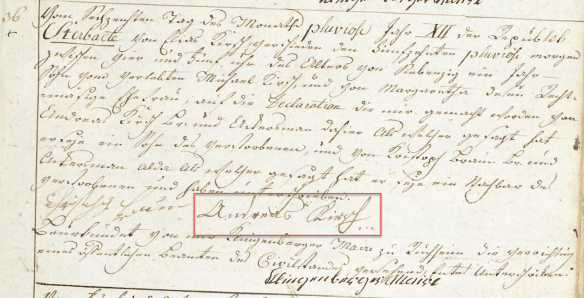


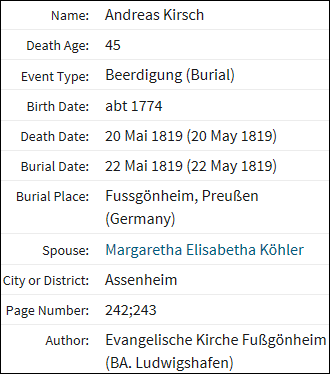


![LPC-015-029-002A[1]](https://i0.wp.com/dna-explained.com/wp-content/uploads/2018/11/LPC-015-029-002A1.jpg?resize=584%2C241&ssl=1)


