Lois McNiel (c1786-1830s), Eloped?, 52 Ancestors #77

Lois McNiel or McNeil, depending on which way which side of the family spells the name, has always been one of my favorite ancestors because of the wonderfully romantic love story associated with her and her beau.  Women in the south at that time didn’t have boyfriends, they had beaus.

You see, we have the picture of the cabin she reportedly eloped out of, right out of that top window, into the waiting arms of her true love, Elijah Vannoy.

McNiel cabin

I was a bit younger when I first heard this story, and I thought it was just about the most romantic story I had ever heard, and it happened right in my own family.  I mean, so in love that one would climb out of the upper window, doubtless in the dead of night, drop into the arms of her love, probably in the moonlight, and then dash off to the courthouse to get married.  I could literally see Lois, every step of the way, eloping.  How romantic!

I could see myself doing that too, well, assuming I could find a young man who was game and who wouldn’t drop me, or worse yet, not show up.  Nothing worse than being stood up on your elopement.  Lois didn’t have to worry about that – she had Elijah.

Who wouldn’t want to be that much in love?  I knew that Lois and I were certainly kindred spirits.

Now, I know that the logical group of my readers are already asking questions…like how did Lois get from the window to the ground?  How did they manage to get to the courthouse?  Wouldn’t her father go straight there, at dawn’s first light, and be waiting for them when the courthouse opened?  Who would have signed their bond, something required at that time?  And more logical questions.  Damned logic anyway.

Yes, indeed, there are questions and, ahem, issues with this story.

First, this photo was probably taken in Hancock County, Tennessee, given where it came from, clearly after color photography was available, and we know that Lois McNiel and Elijah Vannoy were married in Wilkes County, NC, in 1807 before migrating to the part of Claiborne County that is now Hancock just a few years later, in 1811 or 1812.  To the best of my knowledge, no one knows exactly where, in Wilkes County, William McNiel lived, so one certainly wouldn’t be able to take a photo of a cabin in a location we don’t know where is.

So, this cabin clearly could have been the cabin of her parents, William McNiel and Elizabeth Shepherd, in Hancock County, but Lois didn’t elope out the window, because she was already married before the family arrived in Claiborne (which became Hancock) County.  Lois and Elijah could easily have lived in the same cabin with her parents when they first arrived in Claiborne County, but any exit out of this window wasn’t Lois getting married.

Wilkes County, North Carolina

Lois was about 21 when she married, born in about 1786 in Wilkes County in the area of the county known as the New Hope District.  Her father would not have been back from the Revolutionary War long.  Lois was either the oldest, or one of the oldest children.

The Vannoy, McNiel and Shepherd families lived in the New Hope area along the north fork of the Reddies River and intermarried considerably.

Church Wilkes County

This is the land of quaint little churches, hills, mountains and dense forests.  This is Appalachia at its best.  The Blue Ridge.

Wilkes Vannoy road landscape

And of course, beautiful streams, carving their way through the countryside, running headlong for the rivers down the steep slopes of the Blue Ridge Mountains.  Here, the north fork of the Reddies River runs parallel with Vannoy Road, crossing under Buckwheat Road.  Lois assuredly knew this creek well, and perhaps she and her siblings even waded here on hot summer days, splashing in the refreshing water.

North Fork Reddies River

In 1810, Lois’s father, William McNiel sold land to Elijah Vannoy, so whether or not Lois eloped with Elijah, with or without her parent’s blessing, apparently her father recovered enough to sell them land in 1810.  Of course, their first (surviving) child, Permelia, was born earlier that year.  Lois’s marriage to Elijah would last until her death, sometime between 1830 and 1840, in Claiborne County.

Westward Bound – Giving Birth on the Trail

Apparently the McNiel and Vannoy families like stories, because the next story is about their move to Claiborne County in 1811 or 1812.  There are two parts to the story.  The first part is about the trip being via flatboat and taking two years.  That sounds like a tall tale to me, but it was written in a letter and told by Elijah’s daughter, so there is likely some truth in it, someplace.  You can read that entire saga in Elijah Vannoy’s article.

The second part of the story is that Lois’s son, Joel, was born during this journey.  Whether the family indeed traveled by flatboat, around Florida and back up the Mississippi to Tennessee, or whether they did like every other pioneer family and loaded everything into a wagon and started overland….it’s still likely that indeed, Lois had a child mid-journey.  “Aunt Lou” reported that child, Joel, to have been born in 1812, but Joel’s tombstone shows his birth as May 8, 1813.  I’ve seen tombstones be wrong, and I’ve seen aunt’s be wrong too…so one way or another, it’s still a good story, and it’s likely to be true or Aunt Lou wouldn’t have said that Joel was born during the journey.  She was 15 years younger than Joel, but she would have had first person knowledge of what her parents said about Joel’s birth…and they were there.

I can’t even begin to imagine leaving in a covered wagon, or a flatboat, being pregnant.  Those wagons had no shocks and the “roads” were entirely full of potholes and ruts.  Those women could count, and they knew at least roughly when they were due.  Woman have been “counting on their fingers” comparing birth dates to wedding dates for centuries.

But Lois apparently departed pregnant.  Perhaps that’s when the wagon train, or the flatboat was leaving and she had no choice.  Women in that time were not exactly always in charge of their own lives.  Plus, they were either pregnant or nursing most of their pre-menopausal lives and if there was in fact a group of people who traveled together, there was no convenient time when no one was pregnant, so babies got delivered when and where they decided to arrive.  I wonder if the wagons even stopped for the duration or if they just kept rolling and the baby got delivered in the back of a moving wagon, assuming it was not night time when they would have been stopped anyway.

Claiborne County, Tennessee

We don’t know where Lois and Elijah lived, exactly for the first few years they were in Claiborne County, but we do know where they lived in 1825 when Elijah applied for a land grant.  In the survey, it says that his land includes the improvements that Elijah had made, which means clearing land to farm and building some sort of house, and that he lives north of Mulberry Creek.  It’s certainly possible that they sought out this land and settled there upon arrival in Claiborne County, but didn’t file to own the land for another decade.  One had to pay to file and pay to have the land surveyed (one cent per acre) and then pay to have the survey recorded.  It was five years from the time the grant was filed in 1825 until it was surveyed in 1829 and then registered in 1830, so perhaps the grant and survey were more of a formality than anything else…albeit an important one…especially if Elijah had died in that limbo time.

I have seen lawsuits about a person filing for a claim where someone else was living.  One could call them claim-jumpers, but they were opportunists taking advantage of a multi-year delay or procrastination.  Let’s face it, first one to the land claim office wins.  It was risky not to file.

Vannoy acreage

In 1830, Lois and Elijah were happily living on Mulberry Creek with their 3 male and 6 female children, according to the census.  They had probably lived there for nearly 20 years, and it definitely felt like home.  By then, Lois would have been about 43 or 44.

Vannoy spring

Lois would have used the cool spring waters of the spring found on her land to keep her milk and butter fresh, as the spring water was a consistent 50 degrees or so and was unquestionably the coolest place on their land in the summer.  Maybe a walk down to this spring was a respite for her.  Maybe she cooled her feet in the stream too, and reminisced about the Reddies River days of her childhood.

Lois’s last child we know of was born about 1825, but since Lois died before Elijah, and the Hancock County courthouse records burned after Elijah’s death sometime after 1850, there is no will – so there is no official list of children.  Most of what we know has been reconstructed by family members who were alive in the early 1900s and by documents such as the census.

Unraveling

Things seems to be pretty stable for the first 20 years or so in Claiborne County, but after 1830, things began to unravel.

The next ten years are questionable in terms of what happened in which order.

In the 1830 Claiborne County census, Lois’s mother, Elizabeth McNiel is listed, age 60-70, so born 1760-1770.  With her are two males, one 15-20 and one 20-30, likely her youngest two sons, Jesse and William McNiel.  William McNiel, Lois’s father, has passed on.  There is no 1820 census, so we don’t really know when he died.

It’s certainly possible that William died about the time the family made the move.  In fact, it’s possible that he died before they moved to Claiborne, or in route, as he does not once appear in any Claiborne County records, but his sons do.

So Lois may have named her son, born about 1816, William in honor of her father who had recently passed.

Lois’s mother died sometime between the 1830 census and the 1840 census.  In 1830, Elizabeth is living just 7 houses from Lois and Elijah.  Elizabeth is living beside Neal McNiel, her son, who was granted land on Mulberry Creek in 1818, so we know they are near neighbors to Lois.  Unless Elizabeth died suddenly or Lois predeceased her, you know that Lois was with her mother, at her bedside, in her final days and hours.

I’d wager that Elizabeth is buried in the same family cemetery where Elijah Vannoy and Lois McNiel Vannoy are buried.  That’s the cemetery we can’t find, of course.

By 1840, ten years later, Lois herself, not yet 55 and maybe not much more than 45, had passed away and was probably buried alongside her mother.  Since Lois and her mother both died in the same decade, we really don’t know who died first, or if they both became ill from the same disease and perhaps died about the same time.  Lois’s son, William, also died sometime between 1835 and 1839, but we’re not sure when.

Other than possibly William, Lois outlived all of her children, or at least the ones we know about because they lived to adulthood.  Based on the birth years of the children we do know about, it looks like Lois may have lost 4 young children, including her first child, born something between her 1807 marriage and the 1810 birth of Permelia. The first child would have died in Wilkes County, the second probably in Wilkes as well, but the third and fourth, in the 1820s, would definitely have been in Claiborne (now Hancock) County and buried on the land along Mulberry Creek.  It’s sad that the only hint we have as to the existence of these children is a gap in the “normal” birth timing of the children who lived.  However, that’s often the case.

Pioneer women were tough.  They had no other choice.

Returning Home

Sometime prior to 1940, several descendants from the Vannoy family decided to take a picnic and go up to Hancock County and see the old homestead where Lois McNiel and Elijah Vannoy lived.  Even then, they had to find a “local” to show them where the house was located.

Vannoy homestead picnic visit

The man in the photo in front of Elijah Vannoy and Lois McNiel’s cabin is James Hurvey Vannoy, born in 1856, who would have been the grandson of Lois McNiel Vannoy.  The fact that he is holding flowers makes me wonder if they had located the cemetery at that time.

It’s hard to believe that it has been 75-100 years since this photo was taken, and nearly another 100 years since Lois passed away.  We may have lost her grave, but she is still there, someplace nearby, on the waters of Mulberry Creek, near the spring branch that kept her milk and butter cool.

If I could ask Lois three questions, I’d ask her if she eloped out a window to marry Elijah Vannoy, I’d ask her if she gave birth on the way to Claiborne County, as the family story says and I’d ask her about that flatboat story of how they traveled between Wilkes and Claiborne Counties.

Lois’s DNA

One piece of information we don’t have about Lois, but could obtain if the right people were to test, is her mitochondrial DNA.  That could provide us with information that tells us her ethnic group and where in the world her ancestors might have been from.  It could also help us identify those ancestors.

Mitochondrial DNA is passed from mothers to both genders of their children, but only female children pass it on.  Therefore, to test today, one must descend from Lois through all females to the current generation.  The current generation can be either male or female.

If this fits your situation and you have already tested, please let me know.  If this fits your situation and you have not tested, I have a DNA scholarship for you.

Lois McNiel had the following female children who married and had daughters:

Permelia Vannoy born 1810 married John Baker and had daughters:

    • Sirena Baker born in 1839, married Samuel P. Jones and had daughters Mary (b 1857) and Permelia (b 1860)
    • Nancy Jane Baker born about 1845

Nancy Vannoy born in 1810 married George Loughmiller and had daughters:

    • Mermelia born about 1839
    • Mary born in 1844
    • Elizabeth born in 1848
    • Sarah born in 1850
    • Marty born in 1852
    • Lyda born in 1853

Sarah Vannoy born in 1821 married Joseph Adams and had daughters:

    • Nancy Jane Adams born in 1849, married Franklin Skaggs and had daughters Ann and Lyda
    • Rebecca Elizabeth Adams born in 1853, married William Leroy Throckmorton Bee Boren and had daughters Julia, Laura and Sally
    • Margaret Ann Adams born in 1857, married John Ward and had daughters Mary, Sarah and Emma, died in Oregon

______________________________________________________________

Disclosure

I receive a small contribution when you click on some of the links to vendors in my articles. This does NOT increase the price you pay but helps me to keep the lights on and this informational blog free for everyone. Please click on the links in the articles or to the vendors below if you are purchasing products or DNA testing.

Thank you so much.

DNA Purchases and Free Transfers

Genealogy Services

Genealogy Research

“Where do I come from?”

This is a true story, one of inspiration and hope, especially for adoptees or those seeking the identity of a parent.

I’ve been honored to be allowed to be a bystander, sometimes a coach, and often a cheerleader for my friend Mark…who…by the way, appears to be a distant cousin…although we don’t have the details figured out.  You know how us southerners are…we’re kin to everyone…as Mark is discovering.

After returning from the amazing experience of meeting his birth family members for the first time, he shared the latest chapter in his journey with me…and I’ve asked him to share it with you.  It’s beautiful and wonderful and let’s face it…finding family is the holy grail for us seekers.

Let me introduce you to guest author Mark and he’ll be telling you his story from this point on in his own words.

Mark

“Where do I come from?”

It’s a question everyone engaged in genealogy asks, but for those of us who are adoptees it has much more meaning.

I never asked my parents the question, although they had told me at a very early age that I was adopted. When I was young it was, “Oh, okay, what’s for lunch?”

They were already in their forties when they adopted me at birth right out of the hospital in Miami, and they never had another child. I was it, and kind of spoiled as a result. They were devoted to me and I to them, so while curious of my origins as I grew older, I never broached the subject for fear it might cause anguish or at least concern. I never wanted them to think I saw them as anything less than my real parents. For they were, always have been and always will be. I miss them very much.

Mark2

Still, the question lingered. Who am I?  Where did I come from?

I remember asking my aunt, actually my mother’s first cousin who lived in New York. She said I was Irish, probably because I resembled some of her Irish neighbors in Far Rockaway.

As a kid, I thought I was German since I kind of looked German and always wound up playing the German in soldier games and while terrible at French in school, excelled at German – little did I know.

I did know my ethnic heritage was not that of my parents – I didn’t look like them at all. As a child, my born-in-Russia grandmother would parade me down the boardwalk to meet her old friends. “Dat’s your grandzohn?” they would exclaim in obvious incredulity.

Mark3

Heritage and Health

Later, as an adult after my parents had passed, I began reading about genetics and how some diseases are inherited to varying degrees. It made me again think of the question and wonder if I could obtain genetic information that would answer the basic heritage question and the health question without necessarily finding a birth family. I saw no need to meet or contact my birth mother and cause anguish there.

So when I heard about National Geographic’s Genographic Project, I ordered the test right away. This was 10 years ago – boy, how time flies!

I’m sure everyone has experienced the thrill of receiving their first DNA results – I sure did. It came in a nice little package with a Certificate of Y-chromosome DNA Testing, which I still have, showing my haplogroup, R1b, and twelve short tandem repeat results. I had no clue what it all meant, but included was a nice map of the world showing that I came from – (drum roll) – Europe. Duh, that didn’t take rocket science to figure out, but genetic genealogy, or rather population genetics was still in its infancy.

Bitten by the Bug

Of course I wanted more, to know what those numbers stood for and what else I could find out. I was bitten by the DNA test bug and haven’t stopped.

I uploaded the results to Family Tree DNA, the lab that processed the Genographic results, to obtain what they then called Recent Ethnic Origins. This showed my closest matches at 12 STRs by country. I had three exact matches!

I thought I had found the answer – I was Scottish!  And two of the three were named MacGregor; I was a MacGregor! I started going to Scottish Festivals and Highland Games; bought the tartan tie and everything.

Mark Macgregor

Then I found out that 12 STRs doesn’t really tell you anything, even exact matches – you need to test 25, 37, 67 and on and on. I upgraded my markers,  contacted the MacGregor project administrator and received his reply, “Sorry, your STRs don’t match the MacGregor haplotype”

I was devastated, especially after spending money on MacGregor tchotchkes. I guess old man MacGregor has his own haplotype and to be a MacGregor you had to match his. So I tested at 25 and 37 and later at 67. No exact or even close matches at all – the MacGregors disappeared. I was left again without heritage.

I took more tests – Deep Clade and later Big Y for the Y-DNA and the full sequence for mtDNA. I now was R1b1b2a1b with a terminal SNP of L147.3, and H1ad on mtDNA, again simply European.

I shared a terminal Y-SNP with only one other gentleman. We were able to contact each other through the L176.2/SRY2627 project administrator and compare notes. Our STRs were not even close; he had estimated our MRCA at 500-1000 AD. He had traced his own paternal line to Northern Ireland and the Ulster Plantation, and probably back from there to the Borders area of England/Scotland. My Y-DNA could have come from anywhere in Western Europe.

Family Finder

I took the Family Finder test and again it showed European, western European with the largest percentage Orcadian

What the heck was Orcadian? Of course I had to look it up – people from the Orkneys. Well, we’re getting closer but how could they be that precise? It’s a tiny group of islands with a small population? Come to find out that FTDNA used data from the Human Genome Diversity Project that had as its only sample from the British Isles a handful of DNA tests from the Orkneys. Not much precision there! My DNA was simply closer to people from the Orkneys than say Upper Sandusky.

I also received, as one does with Family Finder, a list of cousin matches. Now we’re getting somewhere, as I have to date 102 pages of matches, 7 pages at the 2nd to 4th cousin range. I thought I might find a pattern, like a group of those closest with the same surname, say MacGregor (out of spite).

But no, the names didn’t follow any pattern; my closest match had a German name but those following were not German. A few were even French-sounding; the horror!

My closest match emailed me to inquire about my pedigree. As I had done previously with a MacGregor match who had contacted me from Australia of all places, my response was that as an adoptee I had no information on my birth family, and unless they were aware of a female family member placing her newborn for adoption in Miami in 1952, I would not be of any help, sorry.

23andMe

I also tested with 23andMe and found their most recent Ancestry Origins test to be the most informative. I was still 99.3% European, but the breakdown had more detail and the sampling was of better quality. It even showed I had 1/2 of 1% Native American; now that’s interesting!

23andMe’s DNA Relatives lists 922 pages of cousin matches, many, including my four closest, without names or contact information, except the ability to send an introduction. Again of course there was no pattern.

The fifth closest match, a 3rd to 5th cousin, contacted me with the usual question. We exchanged emails but she couldn’t figure out how we related. My four closest matches never responded to an introduction.

But now at least I had some genetic health information. (This was before the FDA took that off market.) It was fascinating, how I had a .045 increased risk of this and .128 reduced risk of that. Nothing truly frightening, thank heavens.

Non-Identifying Information for Adoptees

Around this time, I became aware that the State of Florida made available “non-identifying information” for adoptees. This was perfect! I wasn’t looking to identify my birth mother, but to determine my heritage and any hereditary health issues. So I requested what they could provide, knowing that adoption records are otherwise sealed and unavailable except in medical emergencies.

A few weeks later I received a 2-page letter from the Florida Adoption Reunion Registry. This was in December 2010. It provided exactly what I was looking for, and much more. It said that my birth mother was born in the summer of 1920 in a Southern state, so she’d be over 90 at that time, if alive.

It described her features and that she worked as a waitress. It stated that she had come to Miami to live with her mother when she discovered her pregnancy, and that her mother was 52 at the time of my birth; so that her mother was born around 1900.

She reported that both her mother and father were Protestant and of Irish descent, that her father had died in 1929 and at the time was separated from her mother.

She also reported that she had two brothers, one with children and had had a sister who passed away. She said that her mother remarried and was separated from her second husband, and that her father, my birth grandfather, had been a farmer of English and Irish descent.

This was what I was looking for and more closely matched with my DNA results. I concluded she was describing a Scots-Irish heritage when she mentioned both Protestant and Irish together.

She also described my putative birth father, which came as much more of a surprise, if accurate. He was allegedly French Canadian! So much for the German in me. She said she had known him for only a short time, never intended on marrying him and never told him of her pregnancy. Most importantly, she said she did not know of any serious or communicable (sic) diseases in her family. I took that to mean hereditary diseases.

More Please

This was wonderful information, but it somehow left me wanting to know more. I’m sure as genealogists you all know the feeling.

What Southern state?

What was the background of her father’s parents?

Was there anything more on the birth father’s family?

I was resigned to the fact that this would remain a puzzle. After all, I was just seeking heritage, or was there more to my own feelings? I knew I wouldn’t try to contact my birth mother no matter how much information I had. The last thing I wanted was to give some 90-year old woman a heart attack. But that all remained academic anyway; there was not sufficient information to search for any birth family.

Until…

Ancestry.com

Last year I tested with Ancestry.com to compare what they would show on ethnic heritage with the two other companies.

It did not compare favorably; the percentages for different parts of Europe were way different from the others. It had 13% for Iberia while 23andMe had 2%, and 7% for Scandinavia while 23andMe had 1%. Maybe they realized that the Orkneys were settled by Vikings.

But what took me to the next level of answering “the question” was their Member Matches. At the top of the list was a 2nd cousin match, administered by the next closest match, also a 2nd cousin, her daughter Jeanene. And she had 955 people on her public family tree!

I couldn’t not look – the curiosity was overwhelming.

Besides, my birth mother had in all likelihood passed away by now and there was no perceived danger in contacting 2nd cousins. So I reviewed her family tree and found a possible candidate for birth grandmother, one Beulah Wooten, born in 1900, whose brother Levon was Jeanene’s grandfather. She and her mother would indeed be 2nd cousins if that were the connection. So I signed up for membership with Ancestry and began my own research.

Connecting the Dots to Beulah

I also decided to contact Jeanene.

She was happy to share what information she had on Beulah, including a recently found death certificate from 1957, listed as Beulah Wooten Ellis who had passed away at her home in Chattanooga, Tennessee. Intriguingly, the informant was listed as Mrs. Elizabeth Smith. The death certificate included her birth date of December 31, 1900.  It showed she was buried at Browns Gap Cemetery in Trenton, Georgia, just across the state line from Chattanooga.

I found the cemetery listed on Ancestry’s Find-a-Grave and found a gravestone showing both Beulah B. Langston with dates of birth and death matching that of the death certificate, and Eugene G. Langston, with a death date of March 16, 1928; very close to what the letter from the State had indicated.

I began to match up the facts reported in the non-identifying information provided by the State point-by-point with what I discovered in my research. It appeared Beulah married three times, the first to Eugene Langston who indeed turned out to be my birth grandfather, then to a Walter E. Jones with whom she had the two sons my birth mother reported as brothers, and finally to Alvis Ellis.

Beulah was listed with Alvis Ellis in the 1940 Census residing in Miami, Florida. Here was the connection to Miami.

Also buried at Browns Gap Cemetery was her daughter Junice Katherine Langston who was born in 1922 and died in 1937, matching my birth mother’s predeceased sister. While I could not find any birth certificates, one of those types of records Ancestry has so little of, I did find Beulah listed in the 1930 Census living in Chattanooga with her second husband Walter E. Jones, their two sons, and two daughters from her first marriage, Junice and Elizabeth Langston, age 10, and thus born around 1920. Was she the informant on the death certificate, born in 1920? This was the only reference I could find in my Beulah search to who I thought could possibly be my birth mother.

Suggestive, but not proof.

The Thrill of the Chase

Finding this information online was a thrill, and as you all know, one thing leads to another, requiring ever more research. I can easily see how genealogy can become an obsession. I see people on Ancestry who devote many hours a week over many years to it.

My hats off to those of you who have devoted decades before the internet driving from courthouse to courthouse, cemetery to cemetery, obtaining the information for your family trees.

I understand now, as I too have been bitten by the genealogy bug. That makes two bugs I’ve succumbed to.

I also see how some people make mistakes in their family trees, accepting others’ trees at face value without checking for themselves the sources for the information. My background as a retired attorney and former administrative judge leads me to require substantial evidence to support a fact and not simply accept what others have alleged. Which leads me back to Beulah and her daughter Elizabeth.

There was a private family tree on Ancestry that had an Elizabeth Langston listed. I contacted the person with the tree and mentioned the 1930 Census for the Jones household, asking if the Elizabeth Langston listed there was one and the same person. She replied that yes, it was, and was her husband’s grandmother, now deceased.

She stated, “Elizabeth had 3 children, two while married to Gilbert Conner, divorced (died 1955) Evelyn Conner Scott, Glenn Conner, (deceased) and Yvonne Smith while married to Almon Smith divorced (died1967). Married to William Lucas, lived and died in Portland Oregon, she passed away on Nov. 26, 2004. Hope this helps.”

It certainly did. The name Smith matched the informant on Beulah’s death certificate. I tried to contact her again, explaining who I was, but this time there was no response. I imagined my inquiry had caused quite a stir, or possibly she just ignored it fearing the stir it might cause, or perhaps thought I was misrepresenting myself and had other motives.

In any event, one Census report and one unconfirmed private family tree is not enough in my opinion to establish the fact of who my birth mother was. If true, then at least I knew she had passed away and the fear of her learning of the son she given up at birth 62 years before was gone. I still had to confirm her connection to Beulah, so my next step was to obtain a copy of the death certificate from Oregon.

Is Elizabeth Beulah’s Daughter?

You can imagine how anxious and excited I was opening the envelope containing Elizabeth’s death certificate.

That soon turned to joy.

There she was, born July 4, 1920, in Trenton, Georgia; occupation waitress; mother Beulah Langston. I had finished connecting the dots and matching up every fact from the non-identifying information the State of Florida provided with my research.

I had my proof – within a reasonable degree of certainty, as we say. There was still a deceased half-brother and two possibly living half-sisters out there, but my search for genetic heritage had led to finding my birth family, at least confirming Jeanene’s relationship as 2nd cousin through Beulah and her grandfather Levon.

There was simply no one else that matched up to Jeanene and her DNA.

More Than I Ever Expected

As I continued to research the Wooten and Langston lines, I discovered that the size of my new-found birth family was humongous. Beulah was one of 14 children, and some her siblings had equally large families.

The obituary for her father, Jim Frank Wooten, said he had 56 grandchildren! I had a lot of research to do if I were to find every 2nd cousin.

I still had those other close DNA matches to figure out. The closest match at FTDNA turned out to also be a Wooten whose grandmother was a sister to Jim Frank Wooten, my birth great grandfather.

The closest match who responded at 23andMe was related to the Langston line, through marriage to my birth great grandmother, a Williams.

I was thus able to triangulate, if you will, my closest matches at all three companies.

On occasion, I contacted other Ancestry members whose family trees showed promise but weren’t clear. One contact was to the wife of a nephew of an apparent 2nd cousin, one of 13 children of Matthew James Wooten, one of Beulah’s brothers. There was a different first name on her family tree than what I had found in my research. She responded and confirmed they were the same person, her husband’s aunt, and said she would contact her and provide my contact information.

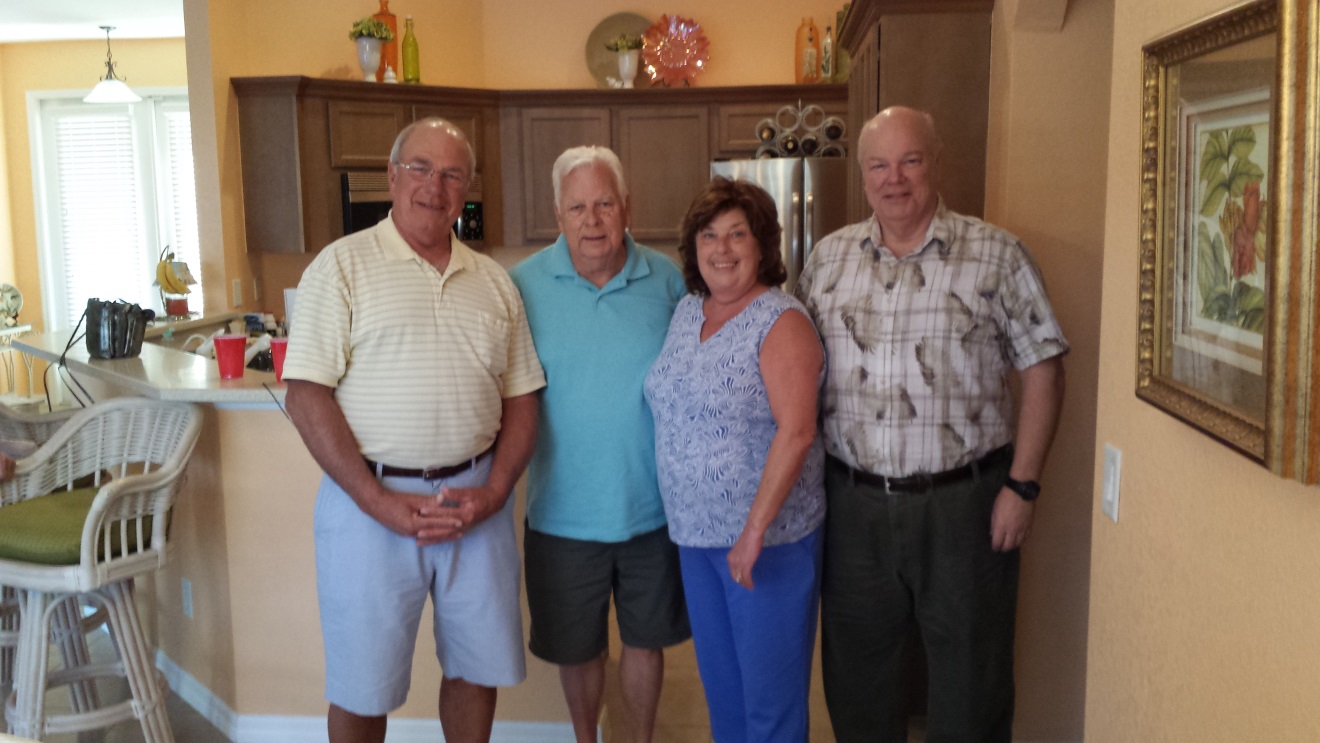
One thing led to another, and I wound up talking with one of Matthew James Wooten’s sons. He, a sister and another cousin were vacationing in Florida, and we agreed to meet.

Of course I came prepared to argue my case before the Supreme Court with all the evidence I had accumulated up to that point. But they took one look at me and decided I was a Wooten after all. I gave them copies of my DNA reports in case others in the family had their doubts.

After all, how does someone pop up after 62 years claiming to be a son of someone who had three husbands and children by two of them?

They confirmed much of what I had found, such as knowing Elizabeth had spent time in Miami. We spent the entire day together talking about the family.

It was, as you can imagine, one of the most memorable, joyful days in my life; meeting family for the first time, one I never knew existed. They were warm and accepting, and I came away grateful I had started this search.

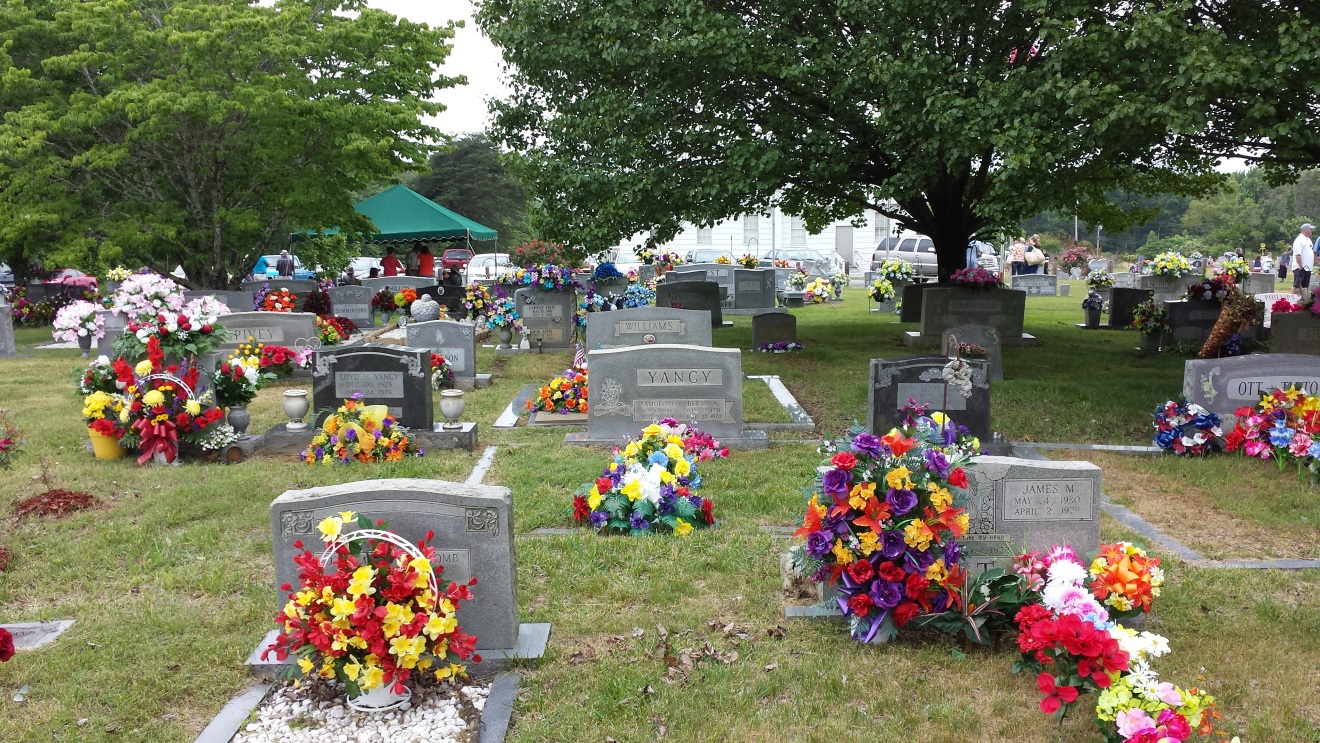
Decoration – A Southern Family Tradition

They told me about Decoration at the family cemetery, held each May in Trenton, Georgia. I knew I’d be attending no matter what.

Mark4

Decoration is an apparently Southern tradition I had not known about, one I find very compelling. It moreover serves as a family reunion where everyone gets together for a big feast after cleaning and decorating family headstones. I was able to attend and spent the previous week exploring the area near Chattanooga with its Civil War battlefields.

Of course I wondered how I would be accepted. I needn’t have. In fact, I was kind of an honored guest and welcomed with open hearts and lots of food.

Lots of food, especially deviled eggs.

One cousin remarked that if I had shown up as some skinny little thing they would have had doubts, but seeing I was “full-bodied” I fit right in

Mark5

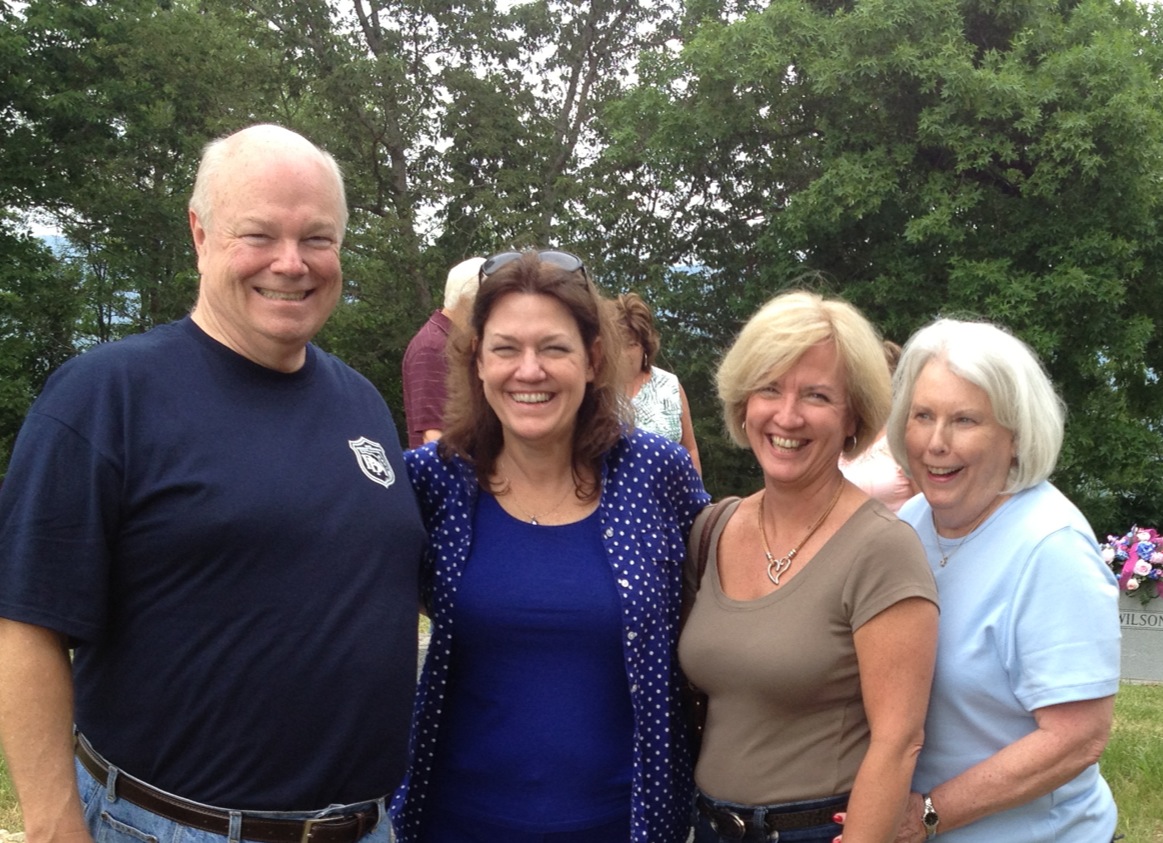
Jeanene attended with her mother (above), as did many of the children of Matthew James Wooten from Virginia, some of whom I had not yet met. The Wooten cousin that was my closest match at FTDNA also attended from Alabama.

There were cousins galore, some 70-80 people at the community center in Trenton, including two first cousins, the daughters of one of Elizabeth’s half-brothers. We exchanged information and agreed to stay in touch.

Mark6

I wish I could remember the names of all the cousins I met, but I thought it would be rude to carry around a notebook.

And the old family photos! There was one of my birth mother at an earlier Decoration and several older photos of my birth-grandmother before she passed in 1957. I took several photos of photos with my cellphone.

I now can place a face with a name and keep in contact with cousins I never knew I had.

The Circle

One disappointment though; no one had had any communication for several years with my two possibly living half-sisters, or their families.

The circle was not yet complete, if it ever would be.

People say you can choose friends but not family. This is only partially true. Some of us have a choice when faced with the knowledge that a family exists out there that has no clue of our existence.

I wonder what it would be like to come to know the siblings I might still have.

The ambivalence is profound.

It’s like First Contact with an alien civilization, having found one a few light years from Earth; do we make contact not knowing what the response would be. But we as human beings have this insatiable need to explore the unknown and ask questions and take actions that may be very risky. It’s in our genes, if you will.

I have to ponder this for a while….

Hope Through Genetics

I’d like to thank Roberta for affording me this opportunity of sharing my quest to answer “the question.” I’ve followed her blog for some three years now and have found her own stories of family search truly inspiring, and appreciate her words of encouragement in my search.

We all seek to find out more of where we come from.

Adoptees and others who have lost contact with family now have hope through genetics to find the answer. We all look forward to the day when we can pinpoint where on Earth our ancestors came from. It might even be the Orkneys.

Mark

______________________________________________________________

Disclosure

I receive a small contribution when you click on some of the links to vendors in my articles. This does NOT increase the price you pay but helps me to keep the lights on and this informational blog free for everyone. Please click on the links in the articles or to the vendors below if you are purchasing products or DNA testing.

Thank you so much.

DNA Purchases and Free Transfers

Genealogy Services

Genealogy Research

Father’s Day – Tracking the Y DNA Line

A fun way to share a quick DNA lesson with your family is to give them a Father’s Day Y line gift.  This is a pictorial history of the paternal surname in my family, which is also how the Y chromosome is passed.  Easy and fun to see the generations together, with a smattering of history.  Make one yourself and enjoy!  Makes a great, quick, Father’s Day remembrance that’s easy to share with lots of family members.

william-sterling-estes-circi-1950-crop

My father, William Sterling Estes, known as Bill as an adult and Sterl as a child was born sometime around 1902 and died in 1963, gone but not forgotten.  He was my Daddy and I loved him.  He was good to me and died in a car accident when I was too young to understand the rest.  But oh did he ever earn a place in the rogues gallery.  And no, I really don’t know what year he was born.  There are several variants depending on what he was trying to accomplish at the time.  We know for sure he made himself “older” to join the Army in WWI, so all of his “variants” weren’t necessarily self-serving.  He served in WWI and WWII and was injured.  When he was in his early 40s, he made himself “younger” by more than a decade to marry a 17 year old girl in Georgia.  Quite the ladies man, he was convicted of bigamy at least once, and committed it at least twice. He had several wives and partners during his lifetime, and I keep waiting for a new half-sibling to appear through one of the autosomal testing companies.

William George Estes3

My grandfather, William George Estes (1873-1971), photographer, moonshiner, ladies man, always just outside the law.  Twice he had affairs with his wife’s younger cousin, twice he got divorced, and twice he married those cousins.  Family lore says he was married to two of those women at once.  Gives new meaning to words “repeat offender” in a tongue in cheek sort of way.  Maybe my father came by his questionable behavior genetically.  William George, known as Bill or Will, is one of my most colorful ancestors who lived in the roughest part of Harlan County, Kentucky, known as “Bloody Harlan.”

Copy of Lazarus and Eliabeth Vannoy Estes

Lazarus Estes (1848-1918) was known as “Laze,” but was anything but Lazy.  He was a huckster, a gravestone carver and the man who took care of things within the family and made them right for whoever needed something.  Every family has one…he is ours.  He helped care for his mentally ill father-in-law, transported him to the institute for the insane and then took care of his mother-in-law.  He was very unhappy with the behavior of his son, William George, relative to his wives and their cousins, and at one point, threw him out of “Estes Holler” in Claiborne County, Tennessee.  Still, when he died, he left Will a little something, so while Will may have been prodigal, he wasn’t entirely disowned.

John Y Estes

John Y. Estes (1818-1895), Confederate Civil War veteran and Prisoner of War.  John was wounded in battle, hospitalized and then captured.  The details are sketchy, but he forever walked with a limp from his injury and used a walking stick as a cane.  That didn’t stop him or even slow him down much.  After his release as a Prisoner of War, at the end of the war, north of the Ohio River, he walked home to Claiborne County, Tennessee, on his injured leg.  Then a few years later, he left his wife and walked with his limp and his stick to Texas, twice, which means he walked back once, 1000 miles each way.  He lived in a dugout house along the Oklahoma border when he got to Texas and sold his “cancer elixir” along the Chism Trail.  There are rumors of another family there in Indian Territory with a possibly Native wife where he lived on Choctaw land. John was one extremely tough man.

John R. Estes restored

John R. Estes (1787-1885), War of 1812 veteran, pioneer, homesteader, man of the shadows.  After the War of 1812, John packed up his family in a wagon and made the journey from Halifax County, Virginia to Claiborne County, Tennessee.  John spent most of his life just under the radar.  Never owning land, or better stated, selling his land grant the day he got it, he was a very difficult ancestor to track.  He lived to be quite elderly and in addition to fighting in the War of 1812, he had a front row seat to the Civil War in Claiborne County, Tennessee, just south of the Cumberland Gap.  Would I ever love to sit down and chat with him.

This is the end of the line in photos.  We’re fortunate to have as many photos as we do, given that John R. Estes was born about 1787.  I wonder what he thought of photography and having his picture taken.

Two of these men, my grandfather and John R. Estes lived to be just shy of 100 years old.  John R. Estes’s father, George, died just as the camera was coming into use, in 1859.  He too lived to be almost 100, or by a different account, just over 100.  Longevity seems to run in this line.  Two daughters of William George Estes lived to be just shy of 100 years as well.

Happy Father’s Day to each and every generation that contributed to me being here today!  Y’all may have been “colorful,” but you’re still mine!

______________________________________________________________

Disclosure

I receive a small contribution when you click on some of the links to vendors in my articles. This does NOT increase the price you pay but helps me to keep the lights on and this informational blog free for everyone. Please click on the links in the articles or to the vendors below if you are purchasing products or DNA testing.

Thank you so much.

DNA Purchases and Free Transfers

Genealogy Services

Genealogy Research

Kennewick Man is Native American

Finally, an answer, after almost 20 years and very nearly losing the opportunity of ever knowing.

Today, in Nature, a team of scientists released information about the full genomic sequencing of Kennewick Man who was discovered in 1996 in Washington state.  Previous DNA sequencing attempts had failed, and 8000 year old Kennewick Man was then embroiled in years of legal battles.  Ironically, the only reason DNA testing was allowed is because, based on cranial morphology it was determined that he was likely more closely associated with Asian people or the Auni than the Native American population, and therefore NAGPRA did not apply.  However, subsequent DNA testing has removed all question about Kennewick Man’s history.  He truly is the Ancient One.

Kennewick man is Native American.  His Y haplogroup is Q-M3 and his mitochondrial DNA is X2a.  This autosomal DNA was analyzed as well, and compared to some current tribes, where available.

From the paper:

We find that Kennewick Man is closer to modern Native Americans than to any other population worldwide. Among the Native American groups for whom genome-wide data are available for comparison, several seem to be descended from a population closely related to that of Kennewick Man, including the Confederated Tribes of the Colville Reservation (Colville), one of the five tribes claiming Kennewick Man. We revisit the cranial analyses and find that, as opposed to genomic-wide comparisons, it is not possible on that basis to affiliate Kennewick Man to specific contemporary groups. We therefore conclude based on genetic comparisons that Kennewick Man shows continuity with Native North Americans over at least the last eight millennia.

Interestingly enough, the Colville Tribe, located near where Kennewick Man was found, decided to participate in the testing by submitting DNA for comparison.

Kennewick Colville

The ancestry and affiliations of Kennewick Man by Rasmussen, et al, Nature (2015) doi:10.1038/nature14625

Also from the paper:

Our results are in agreement with a basal divergence of Northern and Central/Southern Native American lineages as suggested from the analysis of the Anzick-1 genome12. However, the genetic affinities of Kennewick Man reveal additional complexity in the population history of the Northern lineage. The finding that Kennewick is more closely related to Southern than many Northern Native Americans (Extended Data Fig. 4) suggests the presence of an additional Northern lineage that diverged from the common ancestral population of Anzick-1 and Southern Native Americans (Fig. 3). This branch would include both Colville and other tribes of the Pacific Northwest such as the Stswecem’c, who also appear symmetric to Kennewick with Southern Native Americans (Extended Data Fig. 4). We also find evidence for additional gene flow into the Pacific Northwest related to Asian populations (Extended Data Fig. 5), which is likely to post-date Kennewick Man. We note that this gene flow could originate from within the Americas, for example in association with the migration of paleo-Eskimos or Inuit ancestors within the past 5 thousand years25, or the gene flow could be post colonial19.

The authors go on to say that Kennewick Man is significiantly different than Anzick Child, which matches closely with many Meso and South American samples.  Kennewick on the other hand, is closely related to the Chippewa and Anzick was not.

This divergence may suggest a population substructure and migration path within the Americas, although I would think significantly more testing of Native people would be in order before a migration path would be able to be determined or even suggested. It is very interesting that Anzick from Montana, 12,500 years ago, would match Meso American samples so closely.  I would have expected Kennewick to perhaps match Meso Americans more closely because I would have expected the migration pathway to be down the coastline.  Perhaps that migration had already happened by the time Kennewick man came onto the scene some 8000 years ago.

You can read the entire paper at this link.

______________________________________________________________

Disclosure

I receive a small contribution when you click on some of the links to vendors in my articles. This does NOT increase the price you pay but helps me to keep the lights on and this informational blog free for everyone. Please click on the links in the articles or to the vendors below if you are purchasing products or DNA testing.

Thank you so much.

DNA Purchases and Free Transfers

Genealogy Services

Genealogy Research

DNA Testing Strategy for Adoptees and People with Uncertain Parentage

Adoptees aren’t the only people who don’t know who their parents are.  There are many people who don’t know the identity of one of their two parents…and it’s not always the father.  Just this week, I had someone who needed to determine which of two sisters was her mother.  Still, the “who’s your Daddy” crowd, aside from adoptees, is by far the largest.

The DNA testing strategy for both of these groups of people is the same, with slight modifications for male or female. Let’s take a look.

Males have three kinds of DNA that can be tested and then compared to other participants’ results.  The tests for these three kinds of DNA provide different kinds of information which is useful in different ways.  For example, Y DNA testing may give you a surname, if you’re a male, but the other two types of tests can’t do that, at least not directly.

Females only have two of those kinds of DNA that can be tested.  Females don’t have a Y chromosome, which is what makes males male genetically.

adopted pedigree

If you look at this pedigree chart, you can see that the Y chromosome, in blue, is passed from the father to the son, but not to daughters.  It’s passed intact, meaning there is no admixture from the mother, who doesn’t have a Y chromosome, because she is female.  The Y chromosome is what makes males male.

The second type of DNA testing is mitochondrial, represented by the red circles.  It is passed from the mother to all of her children, of both genders, intact – meaning her mitochondrial DNA is not admixed with the mtDNA of the father.  Woman pass their mtDNA on to their children, men don’t.

Therefore when you test either the Y or the mtDNA, you get a direct line view right down that branch of the family tree – and only that direct line on that branch of the tree.  Since there is no admixture from spouses in any generation, you will match someone exactly or closely (allowing for an occasional mutation or two) from generations ago.  Now, that’s the good and the bad news – and where genealogical sleuthing comes into play.

On the chart above, the third kind of DNA testing, autosomal DNA, tests your DNA from all of your ancestors, meaning all of those boxes with no color, not just the blue and red ones, but it does include the blue and red ancestors too.  However, autosomal DNA (unlike Y and mtDNA) is diluted by half in each generation, because you get half of your autosomal DNA from each parent, so only half of the parents DNA gets passed on to each child.

Let’s look at how these three kinds of DNA can help you identify your family members.

Y DNA

Since the Y DNA typically follows the paternal surname, it can be extremely helpful for males who are searching for their genetic surname.  For example, if your biological father’s surname is Estes, assuming he is not himself adopted or the product of a nonpaternal event (NPE) which I like to refer to as undocumented adoptions, his DNA will match that of the Estes ancestral line.  So, if you’re a male, an extremely important test will be the Y DNA test from Family Tree DNA, the only testing company to offer this test.

Let’s say that you have no idea who your bio-father is, but when your results come back you see a preponderance of Estes men whom you match, as well as your highest and closest matches being Estes.

By highest, I mean on the highest panel you tested – in this case 111 markers.  And by closest, I mean with the smallest genetic distance, or number of mutations difference.  On the chart below, this person matches only Estes males at 111 markers, and one with only 1 mutation difference (Genetic Distance.)  Please noted that I’ve redacted first names.

Hint for Mr. Hilbert, below – there is a really good chance that you’re genetically Estes on the direct paternal side – that blue line.

Estes match ex

The next step will be to see which Estes line you match the most closely and begin to work from there genealogically.  In this case, that would be the first match with only one difference.  Does your match have a tree online?  In this case, they do – as noted by the pedigree chart icon.  Contact this person.  Where did their ancestors live?  Where did their descendants move to?  Where were you born?  How do the dots connect?

The good news is, looking at their DNA results, you can see that your closest match has also tested autosomally, indicated by the FF icon, so you can check to see if you also match them on the Family Finder test utilizing the Advanced Matching Tool.  That will help determine how close or distantly related you are to the tester themselves.  This gives you an idea how far back in their tree you would have to look for a common ancestor.

Another benefit is that your haplogroup identifies your deep ancestral clan, for lack of a better word.  In other words, you’ll know if your paternal ancestor was European, Asian, Native American or African – and that can be a hugely important piece of information.  Contrary to what seems intuitive, the ethnicity of your paternal (or any) ancestor is not always what seems evident by looking in the mirror today.

Y DNA – What to order:  From Family Tree DNA, the 111 marker Y DNA test.  This is for males only.  Family Tree DNA is the only testing company to provide this testing.  Can you order fewer markers, like 37 or 67?  Yes, but it won’t provide you with as much information or resolution as ordering 111 markers.  You can upgrade later, but you’ll curse yourself for that second wait.

FTDNA Y

Mitochondrial DNA

Males and females both can test for mitochondrial DNA.  Matches point to a common ancestor directly up the matrilineal side of your family – your mother, her mother, her mother – those red circles on the chart.  These matches are more difficult to work with genealogically, because the surnames change in every generation.  Occasionally, you’ll see a common “most distant ancestor” between mitochondrial DNA matches.

Your mitochondrial DNA is compared at three levels, but the most accurate and detailed is the full sequence level which tests all 16,569 locations on your mitochondria.  The series of mutations that you have forms a genetic signature, which is then compared to others.  The people you match the most closely at the full sequence level are the people with whom you are most likely to be genealogically related to a relevant timeframe.

You also receive your haplogroup designation with mitochondrial DNA testing which will place you within an ethnic group, and may also provide more assistance in terms of where your ancestors may have come from.  For example, if your haplogroup is European and you match only people from Norway….that’s a really big hint.

Using the Advanced Matching Tool, you can also compare your results to mitochondrial matches who have taken the autosomal Family Finder test to see if you happen to match on both tests.  Again, that’s not a guarantee you’re a close relative on the mitochondrial side, but it’s a darned good hint and a place to begin your research.

Mitochondrial DNA – What to Order:  From Family Tree DNA, the mitochondrial full sequence test.  This is for males and females both.  Family Tree DNA is the only company that provides this testing.

FTDNA mtDNA

Autosomal DNA

Y and mitochondrial DNA tests one line, and only one line – and shoots like a laser beam right down that line, telling you about the recent and deep history of that particular lineage.  In other words, those tests are deep and not wide.  They can tell you nothing about any of your other ancestors – the ones with no color on the pedigree chart diagram – because you don’t inherit either Y or mtDNA from those ancestors.

Autosomal DNA, on the other hand tends to be wide but not deep.  By this I mean that autosomal DNA shows you matches to ancestors on all of your lines – but only detects relationships back a few generations.  Since each child in each generation received half of their DNA from each parent – in essence, the DNA of each ancestor is cut in half (roughly) in each generation.  Therefore, you carry 50% of the DNA of your parents, approximately 25% of each grandparent, 12.5% of the DNA of each great-grandparent, and so forth.  By the time you’re back to the 4th great-grandparents, you carry only about 1% of the DNA or each of your 64 direct ancestors in that generation.

What this means is that the DNA testing can locate common segments between you and your genetic cousins that are the same, and if you share the same ancestors,  you can prove that this DNA in fact comes from a specific ancestor.  The more closely you are related, the more DNA you will share.

Another benefit that autosomal testing provides is an ethnicity prediction.  Are these predictions 100% accurate?  Absolutely not!  Are they generally good in terms of identifying the four major ethnic groups; African, European, Asian and Native American?  Yes, so long at the DNA amounts you carry of those groups aren’t tiny.  So you’ll learn your major ethnicity groups.  You never know, there may be a surprise waiting for you.

FTDNA myOrigins

The three vendors who provide autosomal DNA testing and matching all provide ethnicity estimates as well, and they aren’t going to agree 100%.  That’s the good news and often makes things even more interesting.  The screen shot below is the same person at Ancestry as the person above at Family Tree DNA.

Ancestry ethnicity

If you’re very lucky, you’ll test and find an immediate close match – maybe even a parent, sibling or half-sibling.  It does happen, but don’t count on it.  I don’t want you to be disappointed when it doesn’t happen.  Just remember, after you test, your DNA is fishing for you 24X7, every single hour of every single day.

If you’re lucky, you may find a close relative, like an uncle or first cousin.  You share a common grandparent with a first cousin, and that’s pretty easy to narrow down.  Here’s an example of matching from Family Tree DNA.

FTDNA close match

If you’re less lucky, you’ll match distantly with many people, but by using their trees, you’ll be able to find common ancestors and then work your way forward, based on how closely you match these individuals, to the current.

Is that a sometimes long process?  Yes.  Can it be done?  Absolutely.

If you are one of the “lottery winner” lucky ones, you’ll have a close match and you won’t need to do the in-depth genealogy sleuthing.  If you are aren’t quite as lucky, there are people and resources to help you, along with educational resources.  www.dnaadoption.com provides tools and education to teach you how to utilize autosomal DNA tools and results.

Of course, you won’t know how lucky or unlucky you are unless you test.  Your answer, or pieces of your answer, may be waiting for you.

Unlike Y and mtDNA testing, Family Tree DNA is not the only company to provide autosomal of testing, although they do provide autosomal DNA testing through their Family Finder test.

There are two additional companies that provide this type of testing as well, 23andMe and Ancestry.com.  You should absolutely test with all three companies, or make sure your results are in all three data bases.  That way you are fishing in all of the available ponds directly.

If you have to choose between testing companies and only utilize one, it would be a very difficult choice.  All three have pros and cons.  I wrote about that here.  The only thing I would add to what I had to say in the comparison article is that Family Tree DNA is the only one of the three that is not trying to obtain your consent to sell your DNA out the back door to other entities.  They don’t sell your DNA, period.  You don’t have to grant that consent to either Ancestry or 23andMe, but be careful not to click on anything you don’t fully understand.

Family Tree DNA accepts transfers of autosomal data into their data base from Ancestry.  They also accept transfers from 23andMe if you tested before December of 2013 when 23andMe reduced the number of locations they test on their V4 chip

Autosomal DNA:  What to Order

Ancestry.com’s DNA product at http://www.ancestry.com – they only have one and it’s an autosomal DNA test

23andMe’s DNA product at http://www.23andMe.com – they only have one and it’s an autosomal DNA test

Family Tree DNA – either transfer your data from Ancestry or 23andMe (if you tested before December 2013), or order the Family Finder test. My personal preference is to simply test at Family Tree DNA to eliminate any possibility of a file transfer issue.

FTDNA FF

Third Party Autosomal Tools

The last part of your testing strategy will be to utilize various third party tools to help you find matches, evaluate and analyze results.

GedMatch

At GedMatch, the first thing you’ll need to do is to download your raw autosomal data file from either Ancestry or Family Tree DNA and upload the file to www.gedmatch.com.  You can also download your results from 23andMe, but I prefer to utilize the files from either of the other two vendors, given a choice, because they cover about 200,000 additional DNA locations that 23andMe does not.

Ancestry.com provides you with no tools to do comparisons between your DNA and your matches.  In other words, no chromosome browser or even information like how much DNA you share.  I wrote about that extensively in this article, and I don’t want to belabor the point here, other than to say that GedMatch levels the playing field and allows you to eliminate any of the artificial barriers put in place by the vendors.  Jim Bartlett just wrote a great article about the various reasons why you’d want to upload your data to Gedmatch.

GedMatch provides you with many tools to show to whom you are related, and how.  Used in conjunction with pedigree charts, it is an invaluable tool.  Now, if we could just convince everyone to upload their files.  Obviously, not everyone does, so you’ll still need to work with your matches individually at each of the vendors and at GedMatch.

GedMatch is funded by donations or an inexpensive monthly subscription for the more advanced tools.

DNAGEDCOM.com

Another donation based site is http://www.dnagedcom.com which offers you a wide range of analytical tools to assist with making sense of your matches and their trees.  DNAGEDCOM works closely with the adoption community and focuses on the types of solutions they need to solve their unique types of genealogy puzzles.  While everyone else is starting in the present and working their way back, adoptees are starting with the older generations and piecing them together to come forward to present.  Their tools aren’t just for adoptees though.  Tools such as the Autosomal DNA Segment Analyzer are great for anyone.  Visit the site and take a look.

Third Party Y and Mitochondrial Tools – YSearch and MitoSearch

Both www.ysearch.org and www.mitosearch.org are free data bases maintained separately from Family Tree DNA, but as a courtesy by Family Tree DNA.  Ysearch shows only a maximum of 100 markers for Y DNA and Mitosearch doesn’t show the coding region of the mitochondrial DNA, but they do allow users to provide their actual marker values for direct comparison, in addition to other tools.

Furthermore, some people who tested at other firms, when other companies were doing Y and mtDNA testing, have entered their results here, so you may match with people who aren’t matches at Family Tree DNA.  Those other data bases no longer exist, so Ysearch or Mitosearch is the only place you have a prayer of matching anyone who tested elsewhere.

You can also adjust the match threshold so that you can see more distant matches than at Family Tree DNA.  You can download your results to Ysearch and Mitosearch from the bottom of your Family Tree DNA matches page.

Mitosearch upload

Answer the questions at Mito or Ysearch, and then click “Save Information.”  When you receive the “500” message that an error has occurred at the end of the process, simply close the window.  Your data has been added to the data base and you can obtain your ID number by simply going back to your match page at Family Tree DNA and clicking on the “Upload to Ysearch” or Mitosearch link again on the bottom of your matches page.  At that point, your Y or mitosearch ID will be displayed.  Just click on “Search for Genetic Matches” to continue matching.

Get Going!

Now that you have a plan, place your orders and in another 6 to 8 weeks, you’ll either solve the quandry or at least begin to answer your questions.  Twenty years ago you couldn’t have begun to unravel your parentage using DNA.  Now, it’s commonplace.  Your adventure starts today.

Oh, and congratulations, you’ve just become a DNA detective!

I wish you success on your journey – answers, cousins, siblings and most importantly, your genetic family.  Hopefully, one day it will be you writing to me telling me how wonderful it was to meet your genetic family for the first time, and what an amazing experience it was to look across the dinner table and see someone who looks like you.

______________________________________________________________

Disclosure

I receive a small contribution when you click on some of the links to vendors in my articles. This does NOT increase the price you pay but helps me to keep the lights on and this informational blog free for everyone. Please click on the links in the articles or to the vendors below if you are purchasing products or DNA testing.

Thank you so much.

DNA Purchases and Free Transfers

Genealogy Services

Genealogy Research

Yamnaya, Light Skinned, Brown Eyed….Ancestors???

Late last fall, I reported that scientists had discovered a European ghost population.  This group of people then referred to as the ANE, Ancient Northern Europeans, was a previously unknown population from the north that had mixed into the known European populations, the Hunter-Gatherers and the farmers from the Middle East, the Neolithic.

That discovery came as a result of the full genome sequencing of a few ancient specimens, including one from the Altai.

Recently, several papers have been published as a result of ongoing sequencing efforts of another 200 or so ancient specimens.  As a result, scientists now believe that this ghost population has been identified as the Yamnaya and that they began a mass migration in different directions, including Europe, about 5,000 years ago.  Along with their light skin and brown eyes, they brought along with them their gene(s) for lactose tolerance.  So, if you have European heritage and are lactose tolerant, then maybe you can thank your Yamnaya ancestors.

1.Haak et al. http://doi.org/z9d (2015) from Feb. 18, 2015 “Steppe migration rekindles debate on language origin” by Ellen Callaway

1.Haak et al. http://doi.org/z9d (2015) from Feb. 18, 2015 “Steppe migration rekindles debate on language origin” by Ellen Callaway

For those of us who avidly follow these types of discoveries, this is not only amazing, it’s wonderful news.  It helps to continue to explain how and why some haplogroups are found in the Native American population and in the Northern European population as well.  For example, haplogroup Q is found in both places – not exact duplicates, but certainly close enough for us to know they were at one time related.  It also explains how people from Germany, for example, are showing small percentages of Native American ancestry.  Their common ancestors were indeed from central Asia, thousands of years ago, and we can still see vestiges of that population today in both groups of people.

So, if the Yamnaya people are the ghost people, the ANE, who are they?

The Yamna culture was primarily nomadic and was found in Russia in the Ural Region, the Pontic Steppe, dating to the 36th-23rd century BC.  It is also known as the Pit Grave Culture, the Ochre Grave Culture and feeds into the Corded Ware Culture.

"Corded Ware culture" by User:Dbachmann - Own work based based on Image:Europe 34 62 -12 54 blank map.png. Licensed under CC BY-SA 3.0 via Wikimedia Commons - https://commons.wikimedia.org/wiki/File:Corded_Ware_culture.png#/media/File:Corded_Ware_culture.png

“Corded Ware culture” by User:Dbachmann – Own work based based on Image:Europe 34 62 -12 54 blank map.png. Licensed under CC BY-SA 3.0 via Wikimedia Commons – https://commons.wikimedia.org/wiki/File:Corded_Ware_culture.png#/media/File:Corded_Ware_culture.png

Characteristics for the culture are burials in kurgans (tumuli) in pit graves with the dead body placed in a supine position with bent knees. The bodies were covered in ochre. Multiple graves have been found in these kurgans, often as later insertions.  The first known cart burial is also found in a kurgan grave.  A kurgan often appears as a hill, example shown below, and have been found in locations throughout eastern and northern Europe..

Hallstatt-era tumulus in the Sulm valley necropolis in Austria, photo by Hermann A. M. Mucke.

Hallstatt-era tumulus in the Sulm valley necropolis in Austria, photo by Hermann A. M. Mucke.

Additionally, some scientists believe that the Yamna culture was responsible for the introduction of PIE, Proto-Indo-European-Language, the now defunct mother-tongue of European languages.  Others think it’s way too soon to tell, and that suggestion is jumping the gun a bit.

Why might these recent discoveries be important to many genetic genealogists?  Primarily, because Y haplogroup R has been identified in ancient Russian remains dating from 2700-3400 BCE.  Haplogroup R and subgroups had not been found in the ancient European remains sequenced as of last fall.  In addition, subgroups of mitochondrial haplogroups U, W, H, T and W have been identified as well.

Keep in mind that we are still dealing with less than 300 skeletal remains that have been fully sequenced.  This trend may hold, or a new discovery may well cause the thought pattern to be “reconfigured” slightly or significantly.  Regardless, it’s exciting to be part of the learning and discovery process.

Oh yes, and before I forget to mention it…it seems that your Neanderthal ancestors may not be as far back in your tree as you thought.  They have now found 40,000 year old skeletal remains that suggest that person’s great-great-grandfather was in fact, full Neanderthal.  That’s significantly later than previously thought, by 10,000 or 20,000 years, and in Europe, not the Near East…and who knows what is just waiting to be found.  The new field of ancient DNA is literally bursting open as we watch.

I’ve accumulated several recent articles and some abstracts so that you can read about these interesting developments, in summary, and not have to do a lot of searching.  Enjoy!

—–

Modern Europe was formed by milk-drinking Russians: Mass migration brought new genetic makeup to continent 5,000 years ago
http://www.dailymail.co.uk/news/article-3119310/How-white-Europeans-arrived-5-000-years-ago-Mass-migration-southern-Russia-brought-new-technology-dairy-farming-continent.html

—–

DNA Deciphers Roots of Modern Europeans
http://www.nytimes.com/2015/06/16/science/dna-deciphers-roots-of-modern-europeans.html?smid=fb-nytimes&smtyp=cur&_r=1

—–

Science – Nomadic Herders Left a Strong Genetic Mark on Europeans and Asians
http://news.sciencemag.org/archaeology/2015/06/nomadic-herders-left-strong-genetic-mark-europeans-and-asians

—–

Nature – DNA Data Explosion Light Up the Bronze Age
http://www.nature.com/news/dna-data-explosion-lights-up-the-bronze-age-1.17723

—–

From the European Nucleotide Archive.  http://www.ebi.ac.uk/ena/data/view/PRJEB9021

Investigation of Bronze Age in Eurasia by sequencing from 101 ancient human remains. We show that around 3 ka BC, Central and Northern Europe and Central Asia receive genetic input through people related to the Yamnaya Culture from the Pontic-Caspian Steppe, resulting in the formation of the Corded Ware Culture in Europe and the Afanasievo Culture in Central Asia. A thousand years later, genetic input from North-Central Europe into Central Asia gives rise to the Sintashta and Andronovo Cultures. During the late BA and Iron Age, the European-derived populations in Asia are gradually replaced by multi-ethnic cultures, of which some relate to contemporary Asian groups, while others share recent ancestry with Native American

Description

The Bronze Age (BA) of Eurasia (c. 3,000-1,000 years BC, 3-1 ka BC) was a period of major cultural changes. Earlier hunter-gathering and farming cultures in Europe and Asia were replaced by cultures associated with completely new perceptions and technologies inspired by early urban civilization. It remains debated if these cultural shifts simply represented the circulation of ideas or resulted from large-scale human migrations, potentially also facilitating the spread of Indo-European languages and certain phenotypic traits. To investigate this and the role of BA in the formation of Eurasian genetic structure, we used new methodological improvements to sequence low coverage genomes from 101 ancient humans (19 > 1X average depth) covering 3 ka BC to 600 AD from across Eurasia. We show that around 3 ka BC, Central and Northern Europe and Central Asia receive genetic input through people related to the Yamnaya Culture from the Pontic-Caspian Steppe, resulting in the formation of the Corded Ware Culture in Europe and the Afanasievo Culture in Central Asia. A thousand years later, genetic input from North-Central Europe into Central Asia gives rise to the Sintashta and Andronovo Cultures. During the late BA and Iron Age, the European-derived populations in Asia are gradually replaced by multi-ethnic cultures, of which some relate to contemporary Asian groups, while others share recent ancestry with Native Americans. Our findings are consistent with the hypothesised spread of Indo-European languages during early BA and reveal that major parts of the demographic structure of present-day Eurasian populations were shaped during this period. We also demonstrate that light skin pigmentation in Europeans was already present at high frequency during the BA, contrary to lactose tolerance, indicating a more recent onset of positive selection in the latter than previously believed.

Abstract

The Bronze Age (BA) of Eurasia (c. 3,000-1,000 years BC, 3-1 ka BC) was a period of major cultural changes. Earlier hunter-gathering and farming cultures in Europe and Asia were replaced by cultures associated with completely new perceptions and technologies inspired by early urban civilization. It remains debated if these cultural shifts simply represented the circulation of ideas or resulted from large-scale human migrations, potentially also facilitating the spread of Indo-European languages and certain phenotypic traits. To investigate this and the role of BA in the formation of Eurasian genetic structure, we used new methodological improvements to sequence low coverage genomes from 101 ancient humans (19 > 1X average depth) covering 3 ka BC to 600 AD from across Eurasia. We show that around 3 ka BC, Central and Northern Europe and Central Asia receive genetic input through people related to the Yamnaya Culture from the Pontic-Caspian Steppe, resulting in the formation of the Corded Ware Culture in Europe and the Afanasievo Culture in Central Asia. A thousand years later, genetic input from North-Central Europe into Central Asia gives rise to the Sintashta and Andronovo Cultures. During the late BA and Iron Age, the European-derived populations in Asia are gradually replaced by multi-ethnic cultures, of which some relate to contemporary Asian groups, while others share recent ancestry with Native Americans. Our findings are consistent with the hypothesised spread of Indo-European languages during early BA and reveal that major parts of the demographic structure of present-day Eurasian populations were shaped during this period. We also demonstrate that light skin pigmentation in Europeans was already present at high frequency during the BA, contrary to lactose tolerance, indicating a more recent onset of positive selection in the latter than previously believed.

The findings echo those of a team that sequenced 69 ancient Europeans3. Both groups speculate that the Yamnaya migration was at least partly responsible for the spread of the Indo-European languages into Western Europe.

The report on the 69 ancient remains sequenced is below.

—–

Steppe migration rekindles debate on language origin
http://www.nature.com/news/steppe-migration-rekindles-debate-on-language-origin-1.16935

The Harvard team collected DNA from 69 human remains dating back 8,000 years and cataloged the genetic variations at almost 400,000 different points. The Copenhagen team collected DNA from 101 skeletons dating back about 3,400 years and sequenced the entire genomes.

—–

Population genetics of Bronze Age Eurasia
http://www.nature.com/nature/journal/v522/n7555/full/nature14507.html

—–

Dienekes Anthropology Blog
http://dienekes.blogspot.com/2014/06/ancient-dna-from-bronze-age-altai.html

Forensic Science International: Genetics Received 2 January 2014; received in revised form 21 May 2014; accepted 25 May 2014. published online 04 June 2014.

The Altai Mountains have been a long term boundary zone between the Eurasian Steppe populations and South and East Asian populations. Mitochondrial DNA analyses revealed that the ancient Altaians studied carried both Western (H, U, T) and Eastern (A, C, D) Eurasian lineages. In the same way, the patrilineal gene pool revealed the presence of different haplogroups (Q1a2a1-L54, R1a1a1b2-Z93 and C), probably marking different origins for the male paternal lineages.

—–

Dienekes Anthropology Blog
http://dienekes.blogspot.com/2013/06/mtdna-from-late-bronze-age-west-siberia.html

Includes mitochondrial haplogroups C, U2e, T, U5a, T1, A10.

—–

Population Genetics copper and Bronze Age populations of Eastern Steppe, thesis by Sandra Wilde
http://ubm.opus.hbz-nrw.de/volltexte/2015/3975/ (in German)

—–

Eurogenes blog discusses
http://eurogenes.blogspot.com/2015/03/population-genetics-of-copper-and.html

—–

Polish Genes Blog
http://polishgenes.blogspot.com/2015/05/r1a1a-from-early-bronze-age-warrior.html

—–

Early European May Have Had Neanderthal Great-Great-Greandparent
http://www.nature.com/news/early-european-may-have-had-neanderthal-great-great-grandparent-1.17534

40,000 year old Romanian skeleton with 5 – 11% Neanderthal, including large parts of some chromosomes – as close as a great-grandparent.  Previously thought that interbreeding was in the Middle East and 10,000 or 20,000 years earlier.

——

How is this all happening?

The Scientist Magazine has a great overview in the June 1, 2015 edition, in “What’s Old is New Again.”
http://www.the-scientist.com/?articles.view/articleNo/43069/title/What-s-Old-Is-New-Again/

______________________________________________________________

Disclosure

I receive a small contribution when you click on some of the links to vendors in my articles. This does NOT increase the price you pay but helps me to keep the lights on and this informational blog free for everyone. Please click on the links in the articles or to the vendors below if you are purchasing products or DNA testing.

Thank you so much.

DNA Purchases and Free Transfers

Genealogy Services

Genealogy Research

Elijah Vannoy (c 1784-1850s), Homesteader on Mulberry Creek, 52 Ancestors #76

Elijah Vannoy was born in the extremely rugged backcountry of Wilkes County, during the Revolutionary War era, around the time that Tory’s were hung in Wilkesboro, behind the courthouse, on the infamous Tory Oak, also known as the Hanging Tree, the large tree shown here in a 1915 photo.

Tory Oak 1915

Wilkes County also decided in the 1900s that they didn’t need all of those musty old records taking up space, so they just burned some of them.  If you just gasped and caught your breath in your throat….so did I.

Wilkes County is quite unique.  Known as “The Moonshine Capital of the World,” it’s where NASCAR was born, out of moonshine running. If you’re getting the idea that Wilkes County is kind of wild, perhaps a little unsettled and a bit nonconformist…well…it is.  They did and do walk to the beat of their own drummer there.  Strong, tough, proud people.  Survivors, all, with a mind of their own..

Wilkes County is located in the Blue Ridge Mountains and the Blue Ridge Parkway transects the county.  It’s unbelievably beautiful county, and extremely remote, even today.  The people are still very clannish, exceedingly loyal, mostly religious, and Baptist.  There are more churches in Wilkes County, per capita, than anyplace else in the US.  That means there are more preachers there than anyplace else too, although many are volunteer.  It’s an extremely unique place that truly defies description.  The citizens, a study in opposites and conflicting idealogy.

One thing, however, is beyond question.  It’s one of the most beautiful places in the world.

Wilkes County view

The area where the Vannoys lived in Wilkes County is so remote that even I wouldn’t drive there…in my Jeep.  The local guys told me not to go there, because it was dirt one track road, hanging on the edge of a mountain on one side and a cliff on the other…and if you meet another vehicle, someone gets to back up.  The local guys won’t even drive that road.  So, I decided unless I wanted to meet my ancestors sooner than later…I’d just pass on that level of adventure.  This is the first and only time I’ve ever declined the opportunity to visit where my ancestors lived, although I was told they lived close to the intersection where I was parked.  If they are like the rest of my family, they found the deepest, darkest, most remote, hardest to reach location possible, and settled there – happy as a clam.

Vannoy Buckwheat road

This is the place – Vannoy Road.  I’m sitting at the intersection of Vannoy and Buckwheat Road.

Vannoy road sign

Today, it’s still dense with vegetation and humidity.

Vannoy road vegetation'

Vannoy Road follows the North Fork of the Reddies River from where it is born near the post office at McGrady, NC near the top of the mountain range, to where Vannoy Road joins with Old North Carolina 16 just a couple miles north of New Hope Baptist Church.

Road 1567, one of the spurs of Vannoy Road, as well as Old North Carolina 16 and Carolina 18 reach on up just a couple of miles to intersect with the Blue Ridge Parkway that runs the crests of the Blue Ridge Mountains through Wilkes and Ashe County.  On the map below, Vannoy Road is marked with the red balloon, the Blue Ridge Parkway is the green line above that travels left to right, and Miller’s Creek, to the south, is where the New Hope Baptist Church is located.

Vannoy road map

It’s the section from where 1501 (Vannoy Road) and 1575 (Buckwheat Road) separate to Sparta Road that the locals won’t drive.  I looked at this up close with satellite, and I see why.  Very rough switchbacks.  It’s not a short distance either.  It looks to be maybe 8 miles or so.  My poor husband would have been clinging to the door and the roll bars for his very life.

Vannoy road satellite

There Were Four Brothers

Oh, yes, and did I mention Elijah was born to parents who did not have a will or a Bible, or at least not that we’ve ever found.  Nor an estate.

For many, many years, we didn’t know who Elijah’s parents were, but we knew they had to be one of four Vannoy men living in Wilkes County, all brothers, at that time.  Elijah was born around 1784, we think.

Two of the four brothers were eliminated, after much grief and aggravation.

I thought sure I had nailed who Elijah’s father was when I discovered on a Wilkes County tax list that Nathaniel Vannoy lived beside Lois McNeil’s (or NcNiel) father.  Lois, of course, was Elijah’s eventual wife.  I decided at that point to really focus on Nathaniel…and that’s when I found it.  Nathaniel, has an extant Bible record and one just does not forget to enter their child’s birth in the Bible. I even went to Greenville, South Carolina, where Nathaniel died to see if there were any deeds, wills, estate papers, inventories….anything at all to tie into Elijah Vannoy.  There was nothing relevant…except for that Bible record.  Rats.  Foiled again.

And then there was the brother, Andrew Vannoy, who had another son, Andrew, who was born in 1784.  But Andrew (Sr.) he also had a “spare slot” in the 1790 census for a son not otherwise known, in this age bracket, so Andrew could have been Elijah’s father.  He was my next choice.

We are extremely fortunate to have the Wilkes County tax lists available, along with the 1790 and 1800 census.  Between these documents, we can bracket the ages of children, plus we can assign known children to “slots.”

A third brother, Francis Vannoy was considered to be our best possibility for a while, in part because he moved to Barbourville, KY in 1812, about 60 miles up the road from where Elijah Vannoy settled in Claiborne County.  However, a few years ago, I made contact with a descendant of Francis who had documented Francis’s children quite well, and not only wasn’t he a good fit, Francis already had every spare Vannoy child in Wilkes County given to him, in part, because he had at least 19 children, some say 22 children, and either 2 or 3 wives, or perhaps more.  Francis was difficult to eliminate, but also impossible to confirm.  He did have an estate and no place is Elijah mentioned.  Although that doesn’t necessarily prove anything.

That left the fourth brother, Daniel Vannoy.  Daniel was the youngest, quiet son.  He moved to what is now Ashe County, which fits in with the oral history of Elijah’s people being from “over yonder” and a hand-wave towards Ashe County.  They weren’t “from here” in Wilkes, according to the old people.

Unlike his brothers, Daniel never applied for land grants.  He only had two proven children, one of which was known as “Sheriff Joel.”  Elijah named one of his sons, also my ancestor, Joel.  Daniel’s son, Joel, is the only Vannoy to name a son Elijah.  Daniel disappears before 1819, and his widow may have moved back into Wilkes County, among the Vannoy clan, if she was still living.

Unfortunately, Elijah didn’t name any of his sons for any of these men…or at least not sons that survived.  They may well be buried in that lost cemetery with Elijah and Lois.

The men’s wives names were Susannah, Millicent, Elizabeth and Sarah.  Now, if a Millicent turned up, that would be really telling, because it is such an unusual name.  No such luck.  The rest are common but there is no Susannah.  There is both an Elizabeth and a Sarah, but those names are so common that it’s very dangerous to draw any conclusions or even inferences due to the naming pattern.

Because Elijah’s father was so difficult for us to identify, we began to wonder if Elijah was illegitimate, belonging to a female Vannoy who had never married and had given her child her surname.  Yes, you could say we were desperate.  I even went to the North Carolina state archives in search of bastardry bonds, to no avail.

Elijah Emerges

From Elijah’s birth to 1807 when he married is pretty much just a hazy cloud, lost to the mists of the mountains.  We know he grew up in that vicinity, because he married in Wilkes County in 1807.

The earliest record of Elijah Vannoy is an 1807 entry in the Wilkes County, North Carolina Deed Book G-H (yes, deed book, but I don’t know why).  He married Lois McNeil (daughter of William McNeil and Elizabeth Shepherd) sometime before 1810 and he is listed in the Wilkes County, NC 1810 Federal Census with his wife and one female child under 10 which was probably Permelia, born in February of 1810.  He is listed as age 16-26, which would put his birth between 1784-1794. The three years between his marriage and the birth of Permelia may imply that they lost their first child.

Knowing that Elijah married in 1807 and had a child by 1810, we know that he wasn’t age 16, and that 26 is probably much closer to reality, so that is the year we’ve used for his birth.  He could have been a couple of years younger.

In Wilkes Co., NC, December 31, 1810, William McNeil deeded 150 acres of land to Elijah Vannoy.  This land was in the New Hope section of Lewis Fork Creek.  Happy New Year, Elijah!!!

This conveyance of land suggests that the migration to Tennessee hadn’t been planned for a long time in advance.

Bedford County, Tennessee

Sometime in 1811 or 1812, the McNeil and Vannoy families migrated from Wilkes Co. to Claiborne Co., TN.

Elijah left Wilkes County, NC after 1811 with the McNeil family.  An Elijah Vannoy is listed in the Bedford County, Tennessee 1812 Tax List, along with a Joel Vannoy, possibly his brother.  Some family researchers are adamant that the Joel Vannoy who would be Elijah’s brother stayed right in Wilkes County where he was sheriff.  Regardless, here is Elijah in Bedford County, TN with some Joel Vannoy.  Clearly, there is some connection.  There are no McNiels, by any spelling, on that Bedford County tax list.  Did someone get lost???

Cemetery listings for Bedford County, Tennessee include Andrew Vannoy, born in 1783, who just happens to be the son of Nathaniel Vannoy, one of the Wilkes County Vannoy brothers.  Andrew’s brother, Joel, born in 1777, apparently lived in Bedford County for some time before moving on to Henderson County, Tennessee.

Ironically, guess what river just happens to run directly through Bedford County.  The Duck River.  Why is this important?  Because one of Elijah’s daughters, “Aunt Lou” said the family came to Claiborne via the Duck River, although that made no sense at the time to her niece who conveyed the story Aunt Lou told, or to me, since the Duck River is no place close to Claiborne County, nor is it in-between Claiborne and Wilkes County, NC.

Shelbyville to Sneedville

There is no good way to get from Shelbyville, the county seat of Bedford County, in south central Tennessee to north of Sneedville where Elijah settled, either.  It’s also a 250 mile journey, or about a month in a wagon.  And of course this begs questions of why they followed the Duck River in the first place, if in fact they did.

More questions and no answers.

I checked on www.fold.com for War of 1812 service records for Elijah Vannoy.  There were none. However, there is a Wilkes County War of 1812 record for Joel Vannoy, along with an Andrew Vannoy.  This Joel could be Elijah’s brother.  Joel’s entire file has not yet been microfilmed and indexed, so patience is in order, and maybe another donation to www.preservethepensions.org.

Claiborne County, Tennessee – The Land of…Land

The first actual record we have of Elijah in Claiborne County was found in the Josiah Ramsey papers.  Josiah was a Justice of the Peace, and he apparently kept a lot of original papers.

“One day after date I promis to pay on (or) cause to be paid to David Pugh or his assigns nine dollars—cents it being for value received of him this 8 March Day of 1817

Elijah Vannoy

Isham X Whealous (his mark)”

The question is whether or not Elijah signed that document too, or if the only original signature is Isham’s.  I’m hoping that the owner can find the original and will scan it to me.

The next records of Elijah are found in Claiborne County, Tennessee beginning in the 1812 – 1814 Court Minutes on page 39 where he was sued by one Thomas Steward, but the case was dismissed.

In 1818, the May court session, Elisha Venoy (sic) was assigned to a road crew.

In 1820, Elijah was called to be a juror, but this is the only instance I can find.  Not all court minutes are extant.

This begs the question of why Elijah was never called again, nor assigned to another road crew.  Other men were repeatedly in the court minutes for these activities.

The 1820 census for Claiborne County doesn’t exist, but in 1830 we find Elijah with his wife and 3 male and 6 female children.

In 1825, Elijah Vannoy filed for a land grant of 100 acres, described as adjoining Rheas and Robert Mann, including “said Venoy’s improvements where he lives on the waters of the north side of Mulberry Creek.”  This survey was made on August 25, 1826 and recorded on September 2, 1829.  It also tells us where he lives, and that he has been living there and built a house.

1829 Elijah grant

Elijah records another survey as well, on January 20, 1830.  The land grant was filed almost exactly a year earlier, on January 16, 1829, and it’s not exactly what you would call a square piece of land.

1830 Elijah grant

The surveyor states that the land adjoins that of John Rheas on Wallen’s Ridge, references Cole’s Corner, and is for 125 acres.  William Vannoy and Charles Baker are the chain carriers.  This survey was made on July 25, 1829 and was recorded on January 20, 1830.  I can’t imagine that this would have been fun in the stifling heat and the heavy forest overgrowth in July in Tennessee, not to mention the insects.

At this point, Elijah has a total of 225 acres.

As luck would have it, sealing the fact that this was indeed, Elijah’s land, when cousin Dan located the land, several years ago, he approached the property owner…who produced the actual land grant to Elijah Vannoy.

Elijah Vannoy original grant

This document was more than 175 years old and was issued to Elijah when he acquired the property.  It’s amazing to see the actual document that Elijah would have owned, would have held, and obviously coveted enough to keep it safe and pass it on.

In 1833, Elijah’s son, Joel would also file a land grant for 100 acres and his land would abut Elijah’s land, that of John Rhea and John Taylor. It was also on Mulberry Creek.

Joel vannoy survey2

This is not a trivial amount of land.  Between Elijah and Joel, assuming they didn’t own land we don’t know about, they owned 325 acres, which is about half of a square mile.  That means it would be a mile long and half a mile wide, or three quarters by three quarters.  From the looks of these surveys, the only thing we can discern for sure is that they weren’t square and the location where the creek exited Elijah’s land, which is how Dan located the land about 10 years ago.  Looking at the map, if the land were square, it would be almost the entire section of land from where Mulberry Creek crosses under Mulberry Gap Road, to both legs of Rebel Hollow Road.

Elijah's land

Elijah’s land via satellite.  Isn’t technology wonderful!

Elijah's land satellite

Here is a closeup of the land we know is Elijah’s.  Note the house with the bridge is at the bottom of the picture.  Someplace on this land is a cave where Joel’s family hid food, livestock and themselves during the Civil War…and someplace on this land is a cemetery.  But where?

Elijah's land closeup

On the 1836 tax list for Claiborne County, “Elijah Vonay” is listed on a list that appears to be in perhaps processioning order.”  Here are the entries a few in each direction, which would be neighbors.

  • George McNiel (Elijah’s wife’s brother)
  • Isiah Ramsey
  • Joseph Ramsey
  • James Ramsey
  • David Ramsey
  • Davis Hamlin
  • Daniel Colley
  • Robert Mann
  • Joseph Mahan
  • Sampson Mahan
  • Edward McColough
  • Elijah Vonay
  • Brail Cole
  • Arthur Edwards
  • Joshua Edwards
  • Owen Edwards
  • John Edwards
  • Nathan Lawson
  • William Lawson
  • Abner Hatfield
  • Henry Hatfield
  • Moses Hatfield
  • Jonathan Light
  • Joseph Wheeler
  • Daniel Rice
  • William Baker
  • John Baker
  • Thomas King
  • Henry Baker
  • Henry Sumpter
  • Foster Jones
  • John Chapman
  • William Simpter
  • Edward Walker (Elijah’s wife’s sister’s future husband)

The 1839 tax list is in alpha order and shows both Joel and Elijah, Jr., but not Elijah Sr.

By 1840, Elijah had lost his wife, but he is still raising children and had one male, 20-30, which would be Joel who had not yet married, a female age 15-20 who probably did the cooking and cleaning and looking after the other two female children, age 10-15.  When Elijah’s son, Joel married in 1845, it could have been a catastrophe for Elijah, but since Joel owned the adjacent land, it was easy just to build a cabin next door and for the two men to continue to work side by side.  It is rumored that Joel wound up with Elijah’s land, but not for long, as we’ll soon see.

It seems that in 1841, Elijah ran into some legal problems. On June 22, 1841, Elijah Venoy signs a deed of trust to J. H. Chapman in front of John and James McNeil.

I have this day sold and do hereby convey to J. H. Chapman for the sum of $30 to me paid, my wagon and two yoke of oxen they being the only oxen and wagon I have  but this deed is made for the following uses and trust and for no other purpose that is to say whereas John Hill became security for a stay of execution on a judgment obtained against Elijah Vannoy Senior and Joel Vannoy before Benjamin Sewell Esqr for about $28 and am desirous to secure and make sure the payment of same now if I should pay the said debt and satisfy said judgment or execution then this deed to be void but if not the wagon and team to be sold on the courthouse steps to the highest bidder with 20 days notice.  Elijah signs and William McNiel, John McNiel and Reuben Harper witness.

In 1841, Elijah sells land to Walter Evans, book P-259, for $5.  On September 21st, 1841, both Elijah and Joel Vanoy sign a deed of trust to Walter Evans for Elijah’s land , the 100 acres granted by the state to Elijah Vannoy Sr grant 16456, Maun’s chestnut, Rhes line…because Elija Venoy is indebted to William Houston merchant in Tazewell for the sum of $33 and 8 cents by note with interest due and also indebted to William Fugate for $62.50.  If Elijah fails to make the payments, Walter Evans to sell the land on the courthouse steps in Tazewell.  Signed by Joel, Elijah his mark

He also sells land that year to William Cole, book S-390, for $50.

Apparently, Elijah and Joel do lose their land.

In 1845, E and J Vannoy sell land to William L. Overton, book S 638, for $250.

May 18, 1846 – Claiborne County deed – Elijah and Joel Vanoy, 100 acres to William J. Overton.  William Fugate and James Overton appear before the court and state that they are personally acquainted with both Joel and Elijah.

Deed – October 3, 1845, deed between Elijah Vannoy of Hawkins County and Joel Vanoy of Claiborne  to William Overton, for $250, a tract of land of 100 acres granted by the state of Tennessee ot Elijah Vannoy Senr No 16456, Rheas line, Overton’s line.  Elijah Vanoy signs with his mark, Joel signs with a signature, witnessed by William Fugate, Muhlenburg Overton and James Overton.

So, as an old man, Elijah lost his land.  It does appear that it was forestalled for 5 or 6 years, but he lost it just the same and judging from the 1850 census, went to live with his daughter, Sarah.

Claiborne County Becomes Hancock County, Tennessee

In 1845, the part of Claiborne where Elijah lived became Hancock County.

That’s also when the records for Elisha stop too, except for the census, because the Hancock County courthouse burned, more than once.

Elijah is listed in the 1850 Hancock County, Tennessee census, living with his daughter and her husband, although his age is in question.  Age 76 would put his birth in 1774 which is about 10 years earlier than we had thought and was indicated by the 1810 census.  However, this does still fit into the 1790 census categories for the children of the 4 Vannoy brothers.  The 1850 and the 1810 censuses are the only direct evidence we have of Elijah’s birth year.  However, the 1850 census number puts his birth a full 5 years before the marriage of the two best candidates for his parents.  Maddening.  I tend to put more credibility in the earlier census than the latter, especially since in 1850 he was living in someone else’s household…so who knows who provided the information to the census taker.

From the census records, we can tell that Elijah can read and write.  Unfortunately, we don’t have his signature.

Elijah Vannoy 1850 census

Elijah died after 1850 and before 1860.  We don’t know when he died, exactly, nor where he is buried, although my best bet would be someplace on his or Joel’s land in a lost cemetery.

Visiting Elijah’s Land

So, where, exactly, is Elijah Vannoy’s land?  The entrance to Elijah’s land is at the little balloon on the map below.  Come along, let’s take a closer look!

Elijah's house

On the map above, Elijah’s land is located North of the little white balloon which marks the entrance to his land on Mulberry Gap Road, which is also called Brown Town Road, just southwest of the intersection with Rebel Hollow Road.  Rebel Hollow is where several murders took place during the Civil War.  Depending on the version of the story you hear, either Rebels lived there and hung a group of northern soldiers, or a group of Rebels were cornered there with no place to go, and they were hung.  Regardless of who, someone was hung, and the locals tell us that some of those ghosts reportedly haunt Rebel Holler today.

In case you were wondering, Joel, Elijah’s son, was a southern sympathizer, although this area was badly torn.

The entrance to the Vannoy land looked at once inviting and forbidding.  It looked like it led back into a secret, forbidden forest.  Maybe that’s part of why Elijah selected this location – it felt safe if he ever had to defend it.

Entrance on Mulberry Gap to Vannoy land

The land here is rocky, at best.  It would be almost impossible to plow, so the best one could hope for, I think is clearing the land for grass and grazing.

Vannoy hillside

Did I mention, it’s also quite steep?

Vannoy steep

This barn may have been on Elijah’s property and is right up against the road because Mulberry Creek is right up against the barn.  You can’t see it in this picture, but it literally runs right beside this barn.

Vannoy barn across road

Is this not an idyllic picture?  Mulberry Creek, the barn beside the road, the bridge, the house, and across the road behind the barn, the Vannoy land – those tall hills and forest.

Barn scene

The Vannoy family would be grateful for the shelter that this land would provide them, with its caverns and caves and mountainous outcrops during the Civil war – but that would be a decade after Elijah was buried, probably someplace on this land.

The far side of the road looks like the absolutely perfect American country scene, straight out of an Americana magazine.  It could be a painting, but it isn’t…it’s real.

House across from Vannoy land

This is on the flat side of the creek.  According to his original land grant, Elijah owned land on the north side of the creek, which was the hilly side.  This flat land was apparently owned by someone else.

Later, the Ramsey family would own this land, including the house with the bridge, but we don’t know how that chain of ownership happened.

Mulberry Creek at Vannoy bridge

Elijah’s land is located directly across the road from this house with the bridge.

Entering the sheltering arms of Elijah and Joel’s land feels incredibly safe, unspoiled, embracing and like taking a step back in time to when Elijah first set foot here, before it was tamed, or as tamed as it would ever be, before it was settled, before any homesteader owned this land.

Vannoy spring

It was entirely peaceful here, quiet, serene, except for the laughing bubble of the brook and the birds chirping. How could one not love this land?

This spring nurtured Elijah and Lois, their children and grandchildren, for at least 30, if not 40 or more years.

Ironically, it was this very spring that reached across time and beckoned cousin Dan, a decade ago, when he was searching for Elijah’s land.  Dan said:

“There is a small stream that comes out of the hollow and flows into Mulberry Creek. This is what helped me find the property. I noticed a stream that started as a spring located on the drawing for the land survey.”

As we moved deeper onto Elijah’s land, the mountainside forest gave way to a clearing as well, but completely surrounded by mountains, in a private valley, known here as a holler – entirely separated from humanity.  Just you, Mother Nature and the spirit of Elijah.

Vannoy acreage

In the photo below you follow the spring up into Elisha’s land, into the open area, looking northwest, land which he assuredly cleared, himself, one tree at a time, with an ax.

Elisha's land looking NW

On the other side of the trail onto the land, we saw the hillside, likely where the cave was where the family hid their belongings during the Civil War.  This land is nothing if it isn’t rugged.

Vannoy Hancock wooded land

In some places, the rocks aren’t so evident, but the land is still unrelenting.  It’s no wonder Elijah needed 225 acres to eke out a living here.

Vannoy Hancock wooded2

As we left, I looked across the road at a small patch of land and couldn’t help but wonder if perhaps this wasn’t the cemetery.  Maybe my imagination has just run away with me.  I just know that both Elijah and Lois are buried here someplace.  There was no place other than your own family cemeteries to be buried at that time – and every family had one.

Vannoy poss cemetery

The Letter

Elijah’s daughter, Lucinda Vannoy Campbell’s memories are recanted in the following excerpts from a letter written probably in the 1950s by her niece, Essie Bolton Marsee (oldest child of Dan Bolton and Pearlie E. Vannoy), as she talks about her “Aunt Lou”.

“I shall try to write down some of the memorys as told to me by Aunt Lou Vannoy Campbell when I was a little girl.  Aunt Lou was the sister of my great-grandfather Joel Vannoy.  She was an older sister, became an old maid school teacher and in later life married a former sweetheart who had been married before.  They waited until they were older because they were some kind of cousins.

She lived in Rutledge and my mother, Pearlie Vannoy Bolton was staying with her when she got married to Dan Bolton.  She had a small confederate pension which helped her out.

She said the Vannoys left North Carolina on a flat boat and sailed down the coast and around Florida.  She mentioned being on the Duck River, but I never understood how they got from the Duck River to above Sneedville where they finally settled. They were two years on the trip and great grandfather Joel was born during this time, in 1812.

flatboat

After they had been over here for some time, they learned that the governor of NC freed the slaves and since they had left some slaves in NC, Aunt Lou went back to see if she could collect for the slaves as the governor was paying something to the owners for the freed slaves.  She didn’t collect anything.

Over 40 years ago, some of us went to Sneedville to see where the people had lived.  We found a native who knew where the place was and took a picnic lunch and ate at the site of the old home.

Back row left to right: Ernest Venable, Horace Venable.  Front L to R: Bertha Venable Bray, Nancy Vannoy Venable, Sallie Venable

Back row left to right: Ernest Venable, Horace Venable. Front L to R: Bertha Venable Bray, Nancy Vannoy Venable, Sallie Venable

The house was mostly gone, but there were shade trees and some flowers growing.  We saw the cave where the family hid their valuables and food such as hams when the soldiers were foraging.  Great grandfather was a Southern sympathizer and wasn’t bothered too much by the Confederates, but they always hid everything of value when there were soldiers around.  Grandfather, James H. Vannoy, was 10 years old during the civil war.  (James Hurvey Vannoy with sister Nancy Vannoy Venable at the Vannoy homeplace, below.)

Vannoy cabin visit

The family later moved down to Claiborne County on Sycamore Creek and lived in the house where Bill Brocks now lives in the Pleasant View Community.  I remember hearing grandfather talk about playing with Lark McNeil.  The Vannoys, McNeils and Venables seem to have known each other for a long time and they seem to have been relatives of some kind.  I have always heard them speak of Uncle John McNeil.  Grandpa Vannoy’s grandmother was a McNeil.  The Vannoys and Venables have always been close and have intermarried considerable.

We have been a very lucky family.  We are fortunate in the heritage handed down from our parents, grandparents and great grandparents.  They seem to have been descended from Scotch-Irish and Dutch.  They were very strict Protestants and brought up their children in the fear of the Lord.  In general, we have all had good health and there have been no criminals or outlaws in the family as far back and I can find out.  So thank God for our family history.”

A Flatboat???

I find that story about traveling on a flatboat around Florida kind of amazing, in a sort of tall-tale way – but even that seems such a stretch for a tall tale.  I decided to look at the waterways from Wilkes County to Duck Creek.  In essence, you can’t get there from here.  There is no direct connection between the two.  The waterways out of Wilkes County flow to the south and east, not to the north and west, across the mountain ranges.

As it turns out, the Yadkin River which drains all of Wilkes County is in the PeeDee River watershed, and if you follow the rivers all the way to the end, you exit this group of rivers in South Carolina at Winyaw Bay.

Yadkin watershed

If indeed you were going to sail around to say, the Mississippi, to head back north, you would have to go around Florida.

My research on flatboats turned up a couple of interesting things.  First, flatboats floated downstream, they did not go upstream, although they could be pushed for some distance by poles.  Going upstream was a function of steamboats.

Flatboats weren’t small, typically about 16 feet wide by about 55 feet long, and they held the family, their worldly goods and even their livestock.  Think of them as floating covered wagons.

People on flatboats apparently didn’t travel alone either.  Take a look at this description of flatboat life from the Steamboat Times.

The settlers’ boat, navigated ever further down the eastern tributaries of the Mississippi in search of new land, was filled with household goods and farm stock. Such boats were a menagerie of cattle, horses, sheep, dogs, and poultry, while on the roof of the cabin that housed the family could be seen looms, ploughs, spinning-wheels, and other domestic implements. Sometimes several families would combine to build one ark.

Methodist Circuit Rider Timothy Flint recalled that it was “no uncommon spectacle to see a large family, old and young, servants, cattle, hogs [on flatboats] … bringing to recollection the cargo of the ancient ark.” Often, when they chose a place to stop, they would re-use the flatboat’s lumber when building a cabin. As these settlements multiplied, with increasing emigration to the West and southwest, river life became full of variety. In some years more than a thousand boats passed Marietta. Several boats would lash together and make the voyage to New Orleans, sometimes navigating months in company. There would be songs and dances; the notes of the violin ~ an almost universal instrument among the flatboatmen ~ sounded across the waters by night to the lonely cabins on the shores, and the settlers would sometimes put off in their skiffs to meet the unknown voyagers, ask for the news from the east, and share in their revels.

The era of the steamboat did not begin until 1811, and indeed, if Elijah and his family did take a steamboat from New Orleans north, you’d think the family would talk about that and not the flatboat since the steamboat would have been a brand new adventure.  Not to mention, they could have taken the flatboat to the Atlantic, but a flatboat simply is not going to work in the sea, so they would have had to switch to a different vessel at that point.

On the other end of the journey, the Duck River empties into the Buffalo which empties into the Ohio just above its convergence with the Mississippi.  The Duck River is not navigable along its entire length due to water falls.

Duck River watershed

It certainly would be possible to make this journey, but it would seem to be the very long way around, especially if you could just have hitched up the wagon and gone overland for all of about 160 miles.  Granted, there were mountains in the way.

Duck River route

On the map above, the blue line connects Wilkesboro in Wilkes Co., NC, to Sneedville, TN in Hancock County.  Of course, that would be a wagon route, not a boat route.  The rest of the map brackets the alternative, around Florida, route.

Or, did the family simply go on a great adventure for 2 years?  Keep in mind, this was also in the middle of a war.  The War of 1812 was being fought on several fronts, one of which was the New Orleans area, where the Mississippi meets with the Gulf of Mexico.

This trip sounds terribly impractical, on several fronts.  To make this trip, they would have had to switch from flatboat to ocean-going boat in Winyaw Bay, from ocean-going boat to steamer in New Orleans, and then to horse and wagon to cross overland from the Mississippi (or Ohio) into Rutledge County, Tennessee.  I’m left with the final question of why?  Why would they want to do this?  However, it does make a great story….AND….we do find Elijah in Bedford County.  So, he did indeed get there somehow.  Someplace in this story is a grain, or perhaps more, of truth.

Religion

Another thing we don’t know about Elijah is his religion.  We know that the Vannoy family, as well as his wife’s family, the McNiel’s, were staunch Baptists in Wilkes County.  It stands to reason that they would join the Baptist Church in Claiborne County after they moved, but we find no trace of that in the records of the churches that existed at that time.  Rob Camp, an offshoot of Thompson Settlement, would have been the closest, and there are no Vannoys in the early minutes there.  Next, Mulberry Gap was established in 1829.  The church minutes don’t begin until the purchase of a new minute book in 1852, but there are no Vannoys there either.

Did Elijah simply decide that attending church was too difficult or too far away?  Was he alienated for some reason?  It was definitely quite a distance to Rob Camp – about six miles and you had to ford the Powell River.  In late summer you could do that.  I forded it in August in my Jeep.  Thankfully I had the Jeep, because a bull was chasing me.  In the spring or the winter, no chance of fording Powell River, with or without the bull for motivation.

So, let’s end where we began.  With questions.

Who’s Your Daddy???

Who were Elijah’s parents?  Unfortunately, utilizing the available records and information of the 4 Vannoy men who were brothers and of child-rearing age in Wilkes County during the timeframe in which Elijah would have been born, there is no clear-cut winner.  Now, I know that’s not what you wanted to hear and it certainly is not what I wanted to hear either.

The first thing we did when Y DNA testing became available was to quickly recruit Vannoy males to test.  In particular we wanted to do two things.  First, to establish what the haplotype of the ancestral “Vannoy” Y DNA looked like, and second, to see if Elijah matched that DNA pattern.

In order to establish what the Vannoy Y DNA signature looked like, we had to test people who were not descended from the Elijah line.  Thankfully, there were several genealogy buffs who were anxious to test.  We quickly established the Vannoy signature.  You can see the Vannoy males in the Vannoy DNA Project at Family Tree DNA today.

Vannoy FTDNA project

By looking at the most commonly found value at each marker, we established what our Vannoy ancestor’s Y DNA would have looked like.

Next, we tested men from Elijah’s line.  To begin with they should all match each other, and they should also match the Vannoy Y DNA signature, assuming that Elijah was fathered by a male Vannoy.  If Elijah was fathered by an unknown individual, and took the Vannoy surname through his mother, then he would carry the Vannoy surname, but the Y DNA of his unknown father.

The wait was intense.  Every day I watched for results.  A few weeks can seem interminable.

And finally, the day came.  It was heralded by an announcement to me, as the project administrator, that one of our Vannoy DNA men had a match…and a few minutes later, the e-mail saying Elijah’s descendant’s test was ready arrived too.  Putting two and two together, I knew before I even looked.

Indeed Elijah’s Y DNA did match the Vannoy males.  That was one very big “what if” removed from the list of possibilities.  Now we could concentrate on solving the next question.  Which one of the four brothers really was the father?  Will Elijah’s real father please stand up?

More trips to North Carolina ensued.  I decided that perhaps the key might be in the wife’s family lines and records, so I set out to see.  Elijah’s four parent possibilities were:

  • Andrew Vannoy born 1742 and Susannah Shepherd
  • Francis Vannoy born 1746 and Millicent Henderson
  • Nathaniel Vannoy born 1750 and Elizabeth Ann Ray
  • Daniel Vannoy born 1752 and Sarah Hickerson

Fortunately, we also know the parents’ names of the wives.  Unfortunately, nothing emerged that would concretely either confirm or eliminate them as possibilities.

This research languished, er…., I mean, ripened.  Yea, it was ripening…that was it.  The truth was, I just didn’t know where else to look, so it went on the back burner while other things took precedence.  I had done all I knew to do.  I had visited the courthouse, the library, the genealogy society, the local university and the State Archives.  I purchased every book I could get my hands on and all back issues of the genealogy society newsletters.  I was out, flat out, of resources.

Autosomal DNA Saves the Day

Then, one day it happened.  It was just a glimpse, a flash in the pan, but it was enough.  After AncestryDNA reentered the DNA testing arena with their autosomal DNA test, they began creating Circles.  A DNA Circle is a group of people who match at least one other person in the group, and who share a common ancestor in the tree.  So, if there are 10 people in the circle, you may match 3 of them, but those 3 may match you and others among the 10.  All 10 match someone in the group and all share the same ancestors, at least per their family trees.

Which ancestors, you ask??

Why, Daniel Vannoy and Sarah Hickerson.

Glory, glory hallejuah.  Oh, I can hear the chorus now!!!

But, the Circle was gone shortly.  Disappeared.  Poof!  Ancestry does this, here today, gone tomorrow.  But, it was long enough for me to see the circle and realize there is a genetic connection.

One thing led to another.  There is more than one way to solve a problem.  I turned to Family Tree DNA where one has the ability to search and to compare your results with others using a chromosome browser.  I was able to connect with several people who descend from the parents of Sarah Hickerson, Charles Hickerson and Mary Lytle.  I wrote about this experience, from the DNA aspect, in nauseating detail, here, and here, and the sheer joy and beauty of finding Bill, my new Hickerson cousin, here.  It was the best Christmas present a genealogist could ask for.  Elijah’s descendants match several people who descend from Charles and Mary Lytle Hickerson.  It’s amazing what DNA can do, and that their DNA in us is enough to make that connection today.  Of course, it took several descendants of both Charles and Mary, and Elijah, to provide enough information to be relatively conclusive.  Were it not for the many cousins who have tested, I wouldn’t have enough confidence in the rather small matching segments of any one set of matchers to call this a match.

We believe we have identified Elijah’s parents – something we never, ever thought would happen.  We now know why Elijah named a son Joel – it was his brother’s name.

Elijah’s Family

Elijah probably left Wilkes County before his parents passed away, but not long before.  Records are very sketchy, but it appears that his father, Daniel, died before 1819 and his mother died sometime after 1810, possibly outliving his father, and possibly not.  Of course, Elijah would have been notified by letter, and he would never be able to get home in time for the funeral.  It’s about 160 miles from Sneedville to Wilkesboro, NC.  An easy one day drive today, even through the mountains…not so then.

Neither Elijah’s father, nor mother, died with a will.  The Ashe County courthouse was destroyed by fire in 1865, but many records survived.  Wills begin in 1799, but Daniel Vannoy’s is not among them.  Nor is a will found for Daniel or his wife in Wilkes County.

If Elijah died with a will, it burned in the Hancock County courthouse, so we’ll never know what it said.  One thing we do know.  His heirs didn’t fight enough to file a chancery suit, because those still exist.  Somehow, chancery suits escaped both fires.  What I wouldn’t give for a nice, juicy, long, drawn-out lawsuit with lots of depositions!

Elijah Vannoy and Lois McNiel’s well-behaved non-litigious children were:

  • Permelia “Pearlie” Vannoy, born February 21,1810 in Wilkes County, married in 1838 to John Baker and died February 5, 1900 near Springdale, Washington County, Arkansas.  There were several families from this area who settled in and near Springdale, including some of the Claxton family and my grandparents in the 1890s who would have been Permelia’s great-great-nephew.

Permelia Vannoy stone

  • Joel Vannoy born May 8, 1813, married in 1845 in Claiborne County to Phebe Crumley, died January 8, 1895 and is buried in the Pleasant View Cemetery, Claiborne County, TN, just a few miles from the home place where he and his father patented land.

Joel Vannoy marker

  • William Vannoy was born about 1816, married Harriett McClary and died in 1839, before Elijah.
  • Elizabeth Vannoy born 1817, married about 1858 to Elisha Bishop, died after 1880.
  • Elijah Vannoy (Jr.) born 1818, married about 1841 to Mary “Polly” Frost, who died about 1855.  He then married Isabella Holland.  At some point after 1880, they also moved to Springdale, Arkansas. In 1895, he is living in Goshen Township where he executes a deed.  Elijah is reportedly buried in the S. Bethel Cemetery in Bragg, Oklahoma in what was then Indian Territory.  Several Vannoy descendants are reported to have gone to a place named “Baggs” in Indian Territory.
  • Nancy Vannoy was born June 19, 1820 and married George Loughmiller about 1839.  In the 1850 census, they live beside sister Sarah and Joseph Adams.  Nancy died April 29, 1896 in Washington County, Arkansas, near Springdale and is buried in Friendship Cemetery, Springdale, Arkansas.
  • Sarah Vannoy born October 17, 1821, married in 1841 to Joseph Adams in Claiborne Co., TN.  Her father, Elijah, was living with them in the 1850 census.  Her husband, Joseph, was the Hancock County register of deeds.  Sarah died October 14, 1892 and is buried in the Fritts Cemetery, Madison County, Arkansas.

Sarah Vannoy stone

  • Angelina Vannoy born about 1825, married in 1849 in Claiborne County to Sterling Nunn. Angeline died before Elijah, sometime before October 1850.
  • Lucinda J. Vannoy was born March 15, 1828.  On July 6, 1886, she was married to  her cousin, Col. Joseph Campbell in Barry, Missouri where he is listed as being from Sneedville and she is listed as being from Madison County, Arkansas.  She apparently moved back to Tennessee, as in the 1900 census, they are living in Grainger County.  She died on April 2, 1919 and is buried in the Pleasant View Cemetery, in Claiborne County, near her brother, Joel Vannoy.  She was reported to have moved to Arkansas about 1890 with “Pearlie,” but apparently they left a few years earlier.  I surely wonder why Lucinda and Joseph were married in Missouri, where neither of them lived, of all places.  Lucinda was an “old maid school teacher” who did not marry Joseph, her childhood sweetheart, until after he was widowed because they were cousins.  His mother was Nancy McNiel, Lucinda’s mother’s sister.  They had no children.

Lucinda Vannoy Campbell

Lucinda was a woman before her time.  She had a marriage contract with Joseph Campbell, although it was signed in Arkansas more than a year after they had married.  I’m sure there is more to this story, and I’d love to hear it!

Lucinda Vannoy prenup

In addition to the above listed children, and based on the census and other information relative to the birth years of Elijah’s and Lois’s children, it would appear that they may have lost 4 children, one before 1810, one between 1810 and 1813, one between 1821 and 1825 and one between 1825 and 1828.

Lingering Questions

We have a few facts about Elijah’s life, and a lot more questions than answers.  We believe we have identified his parents, but I’d still like a slam dunk unquestionable confirmation.  We have a great Duck River story, but we don’t know if it’s true.  Personally, I really like that story and I’d like to know more.  It surely came from someplace, but where, and why, and is there truth in the story?

We know for sure that Elijah married Lois McNiel, that her father deeded Elijah land, and that after moving to Claiborne, now Hancock, County, TN, Elijah obtained two land grants.  Thanks to those grants, we know where he lived.  We know from census and family records who his children were, but we don’t know where he and Lois were buried.  It appears that the family didn’t know where he was buried back in the 1950s either, so that information has long been lost.

Two of Elijah’s children died before him, but as adults.  That must have been extremely difficult for Elijah.  No parent should have to bury their child, and these pioneer parents did a lot of burying.

The last official document we have is the 1850 census where Elijah was living with his adult married daughter.  Not surprising, two of his daughters married Bakers, the near neighbors.

We do find Elijah, very sparsely, in court notes, which causes me to wonder why he was not there more often.  Other men repeatedly were assigned to road duty and jury duty – and Elijah certainly had the qualifications.  He was white, owned land, was eligible to vote and of age.  Is there something we don’t know?

Elijah died between 1850 and 1860. It’s probably a blessing that he went before the Civil War, which was a terrible, heartbreaking time in Hancock County, regardless of which side you were on.

I wonder if Elijah knew that his son, Joel Vannoy was ill.  We really don’t know when Joel’s mental health began to deteriorate, although the bond he signed in 1860 was later contested, saying the person who took the bond should have gotten a better bond.  Whether that was “sour grapes” in terms of what happened financially during the Civil War, or whether it had something to do with Joel, we don’t know.  Clearly by the late 1860s or early 1870s, Joel was “not alright.”  Did Elijah see vestiges or foreshadowings of this before his death?  Is this perhaps why Elijah lived with his daughter instead of with Joel and Phebe?  Joel’s land was adjacent Elijah’s.  Again, we’ll never know.

It’s difficult for me to leave Elijah with so many questions, and no avenue for answers.  I’m just very grateful that we have the one letter, the DNA results, a few interviews with the older people before they died and that cousin Dan found the property.  Without that, we’d have even more questions.

If I could ask Elijah three things, I’d ask him who his parents were, I’d ask about that flatboat ride and migration story, and I’d ask him about his son Joel.

______________________________________________________________

Disclosure

I receive a small contribution when you click on some of the links to vendors in my articles. This does NOT increase the price you pay but helps me to keep the lights on and this informational blog free for everyone. Please click on the links in the articles or to the vendors below if you are purchasing products or DNA testing.

Thank you so much.

DNA Purchases and Free Transfers

Genealogy Services

Genealogy Research

The DNAeXplain 500 – Articles That Is

500

Time flies when you’re having fun.  Also, apparently when you are blogging.

I started blogging because I manage a number of DNA projects at Family Tree DNA and rather than trying to constantly send group mails to project participants, which generally resulted in my e-mail address being blacklisted as a spammer, it was much, MUCH simpler to simply write “it,” whatever “it” happened to be, once, in a blog, available to my project members and the rest of the genetic genealogy community as well.

Another reason is because I constantly receive the same set of questions, and having a blog article to refer to with the answer is much easier than writing that same answer repeatedly.  Plus, you can do the same thing when you receive these same questions.

I started the www.dna-explained.com blog on July 11, 2012 with the hope that I’d be able to write two articles a week.  Then I officially decided that maybe one article per week would be a more realistic goal.  For those of you who don’t write, that might sound easy.  For those of you who do write – you’re wondering if I am out of my mind.

The answer, by the way, is “yes,” and I’m proud of it:)  Runs in my family.  Probably genetic.  Is there a stubborn gene?

The surest way of getting one of my family members to do something is even to suggest that they can’t, or that it’s impossible.  Fait accompli!

Had I hit my goal, by now I’d have either just over 150 articles at one per week, or just over 300 at two per week.

I have….drum roll please…..519.

Ok, so I might have gotten a little carried away.

That’s the good news….all that info for you.  Now, the bad news is that because there are so many articles, it’s hard for a new person to real all 519 – or even to figure out which ones they should read.

Hmmm…need to do something about this.

There are a couple of answers to this dilemma – ways to effectively and efficiently find just what you’re looking for

Category Searching

category search

Every one of my articles is categorized by search terms.  If you’re interested in mitochondrial DNA, for example, you simply enter the term “mitochondrial” in the search box in the upper right hand corner and the blog will return to you any article I’ve tagged with “mitochondrial DNA,” beginning with the most recent.

category search2

You can see all the categories I’ve used if you scroll all the way down on the right side of the main blog page, but trust me when I say I tag these articles so they can be found in just about any way someone would be interested.

Key Word Searching

Let’s say you remember that you saw an article about using Big Y DNA results in the Estes family history project.  You could search by Big Y, but let’s say you search instead by “Estes.”  Estes is not a DNA search category, but the search engine will still find articles with Estes in the title, then articles with Estes in the text.

key word search

You can see that this article was also categorized under Big Y, SNP and STR, so it would have shown up if you had searched for any of those terms as well.

Search Tags

Because there is more than one way to organize data, WordPress also provides bloggers with something called Tags.  In my case, I use Tags for broader categories of information.  For example, my “52 Weeks of Ancestors” is one tag, as is the “autosomalme” series and the “2013 DNA Trip.”  These aren’t exactly genetic genealogy terms, but they make sense for information groupings in the context of this blog.

Using This Blog As An Educational Tool

In honor of 500+ articles and nearly three years, I’ve introduced some new tags so that articles can be retrieved in a different way.  My goal is to group articles in categories so that they are in essence a group of educational classes.

I’ve grouped articles into the following categories.

  • Historical or Obsolete – these are items that were interesting at the time by aren’t really relevant today – except in a historical context. An example would be the announcement of the Genographic 2 project in July of 2012. You may wonder why I didn’t delete these. Looking back, these are somewhat like a genetic genealogy journal.
  • General Information – these are generally articles about DNA and genealogy. They don’t presume that you’re actually working with the results.
  • Basic Education – this may be basic genealogy or basic DNA fundamentals. These articles provide a foundation for working with your results. Think of it as pre-bootcamp.
  • Introductory DNA – these articles do presume you are working with your results. Bootcamp begins here.
  • Intermediate DNA – these are a little more difficult and you’ll probably need the basics and introductory understanding to be able to work at this level.
  • Advanced DNA – very few articles are advanced. In fact, I try very hard to avoid this, when possible. Mostly, these have to do with advanced autosomal techniques and research.
  • Examples – these are examples of using genealogy and DNA together seamlessly. My 52 Ancestors stories fall into this category. Think of these as story problems that include the answers!
  • Educational – educational opportunities such as classes, books and videos.
  • Entertainment – just for fun, like the Who Do You Think You Are series, some of these have no DNA content.
  • Project Administration – articles written for project administrators at Family Tree DNA. Project administrators, of course, will be interested in all of the rest.

I have gone back and tagged every single article with it’s appropriate tag, and going forward, I’ll tag them as I write them so you can find them in their relevant grouping.  No, that process wasn’t fun, but when I started this blog, I truly had no idea that anything like groupings would ever be necessary.  Let’s just say this blog, as well as genetic genealogy, has taken on an evolutionary life of its own.

In the next several days, I’ll be publishing lists of the articles that fall into the various categories.

So, now, when someone asks for an educational resource, you have another tool to use and another reference.

Cant’s wait?  There are two ways to access posts using these tags today.

To find the posts in any tag group, just enter the name of that tag group into the search engine – for example “Educational.”  What will be returned are articles using the tag “educational,” plus anything else the search engine thinks falls into that category too.

educationalTo see just the articles in the Educational tag group click on the little blue “Educational” link at the bottom of the article preview.  You can see it above, where it says “Tagged.”

You can also see all of the tag groups by scrolling down the right sidebar on the main blog page, past the categories, to the “tag cloud”.  I’m not cracked up about this format, but it’s what this blog theme offers.  The most used tags are the largest.  Just click on the one you want to see.  It’s that easy. tag cloud

______________________________________________________________

Disclosure

I receive a small contribution when you click on some of the links to vendors in my articles. This does NOT increase the price you pay but helps me to keep the lights on and this informational blog free for everyone. Please click on the links in the articles or to the vendors below if you are purchasing products or DNA testing.

Thank you so much.

DNA Purchases and Free Transfers

Genealogy Services

Genealogy Research

How Much Indian Do I Have in Me???

I can’t believe how often I receive this question.

Here’s today’s version from Patrick.

“My mother had 1/8 Indian and my grandmother on my father’s side was 3/4, and my grandfather on my father’s side had 2/3. How much would that make me?”

First, this question was about Native American ancestry, but it could just have easily have been about African, European, Asian, Jewish….fill in the blank.

Secondly, Patrick’s initial question is a math question, but the real question is how much of a particular ethnicity do you have on paper versus how much you have genetically.

How could they be different?

Lots of ways.

Oral history in families tends to get diluted and condensed over time.  For example, maybe grandmother wasn’t really 3/4th – because her ancestors were admixed and she (or her descendants) didn’t know it.  And how does one have 2/3, exactly, with 4 grandparents.  So, the story may not be the whole story.

For our example, we’re going to eliminate the 2/3 number, because it can’t be correct.  A grandparent would be 1/4th, a great grandparent, 1/8th.  In other words, ancestors fractions come in divisions of 4, or 2, but not 3 – because it takes 2 people in each generation.

So, you could have 3 of 4 ancestors who are native, which would make the person 3/4th, 2 of 4 which would make the person half, or 1 of 4 which would make the person one quarter, but you cannot have 1 of 3, 2 of 3 or 3 of 3, because you have 4 grandparents, not 3.

Math

First, let’s answer the math question.

Math is your friend.

There are three easy steps.

1. Divide Each Generation By Half to Current

Each ancestral generation is reduced by one half, because the DNA is diluted by half in each generation.

So, if Patrick’s mother is 1/8, Patrick is 1/16 on their mother’s side, because Patrick received half of her DNA.  With fractions, you can’t reduce the top number of 1 by one half so you double the bottom number.

If grandfather was 3/4, then father was 3/8 on that side and Patrick is 3/16th.

So, now, add the numbers for Patrick together.

2. Find the Common Denominator

The two numbers you need to add together from the above exmaple are 1/16 and 3/16.  This is easy because the denominator is already the same – 16.  But let’s say you also have a third number, just for purposes of example.  Let’s say that third number is 3/32.

How do you add 1/16, 3/16 and 3/32?

The denominator has to be the same.  If you look at the denominators, you’ll see that if you double the fractions with 16, they become fractions with 32 as their denominator.

So, for this example, 1/16 becomes 2/32, 3/16 becomes 6/32 and 3/32 remains the same.

3. Add the Top Numbers Together

Now just add the numerators, or the top numbers together.

2/32 + 6/32 + 3/32 = 11/32

That’s the answer.  In this example, our person, per their family history, is 11/32 Native or 34.38%.

Patrick, who originally asked the question is 1/16 + 3/16 which equals 4/16, which reduces to 1/4 (by dividing the same number, 4, into the top and bottom of the fraction), plus whatever amount that “2/3” really is.  So, Patrick is more than one quarter, at least on paper.

Genetics

The next question is often, “how do I prove that?”  In terms of Native ancestry, the answer varies on the purpose – general interest, tribal identification or tribal membership, etc.  I’ve written about that in two articles, here and here.

You can take a DNA test from Family Tree DNA called Family Finder that provides you with percentages of ethnicity, including Native American, as well as a list of cousin matches. They also offer additional testing that may be relevant if you descend from the native person paternally (if you are a male) or matrilineally (for both sexes.)

On the diagram below, you can see the Y DNA in blue, inherited by males from their father and the mitochondrial or matrilineal DNA in red, always inherited from the mother.  While the Y and mitochondrial tests give you very specific information on two lines, the Family Finder test provides you with ethnicity information from all of your lines.  It just can’t tell you which line or lines the Native heritage came from.

adopted pedigree

Often, due to admixture in the Native population over the past several hundred years, since the Europeans “discovered” America, the amount of Native DNA is less than expected and sometimes is so far back and such a small amount that it doesn’t show at all.

An individual could well be considered a full tribal member, yet have less than half Native heritage.  Examples that come to mind are Mary Jemison, an adopted captive who was European, but considered a full tribal member, and Sequoyah, who invented the Cherokee alphabet.   Even the Cherokee Chief, Benge was at least half European, sporting red hair.  His mother was a member of the Cherokee tribe, so Benge was as well.  Cherokee Chief John Ross, born in 1790, was only one eighth Native.

So, the bottom line.  Enjoy your family history and heritage.  Document your family stories.  Understand that tribal membership was historically not a matter of percentages, at least not until the late 1800s and early 1900s.  Your ancestor either was or was not “Indian,” generally based on the tribal membership status of their mother.  There was no halfway and mixed didn’t matter.

DNA testing can confirm Native heritage.  It can also prove Native heritage in a variety of ways depending on how one descends from the Native ancestor(s), using Y and mitochondrial DNA.  Depending on whether Patrick is male or female, and how Patrick descends from his or her Native ancestors, the Y or mitochondrial DNA test can add a wealth of information to Patrick’s family history.

For some people, DNA testing is how one discovers that they have a Native ancestor.

So, how much Indian do you have in you, on paper and through DNA testing?

______________________________________________________________

Disclosure

I receive a small contribution when you click on some of the links to vendors in my articles. This does NOT increase the price you pay but helps me to keep the lights on and this informational blog free for everyone. Please click on the links in the articles or to the vendors below if you are purchasing products or DNA testing.

Thank you so much.

DNA Purchases and Free Transfers

Genealogy Services

Genealogy Research

William Crumley the Second (c1767-c1839), Methodist, Miller, Pioneer, 52 Ancestors #75

About 20 years ago, when I was really starting to dig into the Crumley line, one of the other researches on either the Crumley rootsweb or Genforum list said something very prophetic.

“Wow, it looks like these William Crumleys need a lot of work.”

I should have stopped right there and given up genealogy.  That was an understatement if I’ve ever heard one.  I had no idea how large an understatement it was.  Today, I fully comprehend.

The man who said that has now gone on to meet his ancestors, and the rest of us are left here with that pile of work.  We’ve done a lot in the past couple decades to unravel the mess, but we could surely use some assistance from the other side….if you’re listening!

Frederick County, Virginia

William Crumley (the second) was born about 1767, four years after the end of the French and Indian War, in what is now Berkley County, West Virginia, but which was then Frederick County, Virginia, on the Lord Fairfax tract, to William Crumley (the first) and his first wife, Hannah Mercer.

The Library of Congress map, shown below, shows the extent of the Fairfax Grant, including the portion in Frederick County, of which Winchester was the county seat, near the top.

Fairfax grant

William (the second’s) mother, Hannah, died when he was a boy of about 6, in about 1773. He must have been devastated.  I can see the small child, standing by his mother’s coffin in the cemetery, perhaps with a handful of flowers to put on her grave, maybe not entirely understanding the finality of death.

In 1774, William (the first) married Sarah Dunn who would be the step-mother to William (the second) and would raise him along with his 4 siblings.

We don’t really know what religion the family would have been.  William (the first) was raised Quaker, but when he married Sarah Dunn in 1774, she was disowned by the Hopewell Friends Church for marrying “contrary to discipline.”  Obviously they weren’t practicing Quakers after that and apparently William (the first) wasn’t before the marriage, but his parents were Quakers.  In 1774, William (the first’s) mother was still living but his father had passed away a decade earlier.  So William, the second, would have known his grandmother, Catherine Gilkey Crumley.  In fact, Catherine lived until after 1790, passing about the same time as the father of William (the second,) so Catherine may well have provided William comfort after his mother’s untimely passing.

Having said that, I don’t think this family was ever too far away from the Quakers.  That could be in persuasion and it could be in geography, or both.  I mention this because William’s grandson, Samuel, through his son Abraham was indeed Quaker too, in Nebraska, albeit a quarrelsome one.

Nebraska Monthly Meeting: Quaker Records:

  • 6-28-1884 Samuel Crumly & w Catherine & ch Mary S , Cynthia A , Wm R, Ida J & Owen M , rocf Richland MM, IA , dtd 6-7-1884
  • 12-26-1885 Samuel Crumly, (Crumley ) relrq
  • 7-30-1887 Samuel M Crumly, recrq
  • 11-26-1892 Samuel M Crumly, Catharine, Wm R, Owen M, & Ida, dismissed for departure from plain teaching of the Gospel by quarreling among themselves.
  • 1-28-1893 Samuel M Crumly, reinstated

William (the second) would have been a teenager in 1781 during the Revolutionary War when his father, in a later Public Service Claim, was “allowed 5 pounds for 8 days in actual service as a received in collecting the cloathing and provisions for the use of the state.”  At about age 14, William (the second) would certainly have been old enough to help his father in this endeavor and he assuredly had a clear memory of the war effort.  He and his father may have talked about the war and what it meant to them in terms of freedom and opportunity as they rode from farm to farm on a wagon pulled by horses to collect supplies.

Although there were no battles or military engagements in Frederick County during the Revolutionary War, the area was very important. General Daniel Morgan, who lived in eastern Frederick County (now Clarke County), and his “Long Rifles” played a prominent role in many battles of the Revolutionary War, including the Battle at Cowpens in South Carolina.  Many citizens furnished troops with goods and supplies, including ammunition.

A decade later, William (the second) lost his father.  He probably looked back and cherished those days riding in the wagon with his father.

William (the first) died sometime between the time he wrote his will on September 30, 1792 and when it was probated on September 17, 1793.  He must have known he was ill.  He was only 57 – certainly not an old man by today’s standards.

William (the second) is shown on the Berkley Co. tax records only once, in 1789.  He likely married about 1788 and moved before 1790.  It appears that William (the second) may have already left Virginia when his father died.

Territory South of the River Ohio

William (the second) migrated with his wife and 2 sons, William (the third) and Samuel, to an area known as “The Territory South of the River Ohio,” organized in 1790, which was the area that would, in 1796, become the state of Tennessee.

Territory south of the Ohio

An undated page torn from a Territorial Circuit Court document headed “Territory of Ye United States South of Ohio, Green County” rescheduled to Ye 2 Monday of August next, a charge of assault by David Veger? (Weger) on Joseph Williams signed by Elisha Baker, JP.  The document was witnessed by William Crumley, placing him in Greene County, in what would become Tennessee, when he was about 30 years old, before Tennessee became a state in 1796.

Crumley South of the Ohio

Greene County, Tennessee

According to Irmal Crumley Haunschild in the book, “The Crumleys of Frederick County, Virginia and Greene County, Tennessee,” published in 1975, William’s grandson wrote that William (the second) had come from Virginia to Tennessee and settled in Browns Town.  Browns Town is not a place today, at least not in Greene County, but it certainly could have been a neighborhood at that time, and might well explain why so many Crumleys married Browns.  The Browns settled in Greene County, TN in 1805.  Irmal included a copy of the original letter, a portion of which I’ve transcribed below, quaint spelling and all.

In a letter written on August 13, 1936, Thomas Atkins Crumley, born November 19, 1852, states the following:

“My great-grandfather with a cabiny of others from across the waters some what probby Scotland Irish decent.  In prospecting for a location tha cam to Lick Creek Greene Co, East Tennessee.  That part was a wilderness in that day.  Tha pitched camp.  Game was plentiful.  Tha hunted and fished.  Tha wer plenty black maple or sugar trees, up and down Lick Creek.  So tha located in that part made their own shugar from the maple trees.  Right in thar is a place called Carter Station.  Right in this old settlement Carters Station is a burial ground where some of the old set of Crumley men wer buried. But further up Lick Creek and a few miles from the creek a place or settlement called Browntown, or guesses shid, an old campground or meeting place.  Thare is whare Father’s Brothers and sister are laid away.  My grandfather and great grandfather names Aron Crumley and Abraham Crumley.  I think my grandmother’s maiden name was Brown on father’s side.  I never saw her, my grandfather Crumley.”

Thomas goes on to say that his father was born May 15, 1823 and his mother on March first, 1824.”

Note the comment about “guesses shid.”  It will be important shortly.  I didn’t understand it when I first read it, but rereading it later…it all makes sense.  Gass’s  Shed was an old campground and meeting place.  John Gass deeded a communal, nondenominational meeting house and he is buried at Cross Anchor.

Thomas was correct.  Aaron Crumley’s wife was Lydia Brown.  Aaron Crumley was the son of William (the second).  Aaron’s son was Abraham who is buried at Cross Anchor Cemetery.

It’s true that this family came to this area quite early, indeed, when it was still a wilderness.

William (the second’s) son Abraham was born on March 10, 1793 and Aaron followed two years later on January 26, 1795.

Which Way is Up?

I was able to visit Greene County in 2007 and was lucky enough to have cousin and fellow researcher, Stevie Hughes, as a guide  She spent years researching and documenting these families, as they settled and spread through this area, and then as their children and grandchildren moved on.  Stevie is not a Crumley descendant, but she is a Johnson, Brown and Cooper descendant.  Johnsons and Browns are mine as well through Lydia Brown who married William Crumley (the third), or through Betsey Johnson, in case she married William (the third) instead of William (the second.)  These families lived adjacent, intermarried and were connected through their land, their children, their churches and their culture.

This map of Greene County, provided by Stevie, shows many of the locations that are important to the Crumley family.  Unfortunately, Carter’s Station is not shown here, but both Cross Anchor and Wesley’s Chapel are on this map, just north of Greeneville, the county seat.

????????????????????????????

On the map above, you can see the Cross Anchor Cemetery near Wesley’s Chapel above Greenville, both places we’ll be visiting.  On the map below, they appear to be about 4 miles apart.

Cross Anchor to Wesley Chapel

Let’s start our visit at Carter’s Station, the first place in Greene County to be settled.

Carter’s Station

Carter's Station sign

Carter’s Station is one of the earliest locations settled in Greene County.  It is located at the intersection of Babb’s Mill Road and Lonesome Pine Trail, current TN 70, the main road through Bull’s Gap to Rogersville in Hawkins County.

The Carter’s Station Cemetery is located at the red arrow.

carter's station cem map

Notice the familiar names, Brown Spring Road, Lick Creek, Grassy Creek, Roaring Fork.  You’ll be hearing those again shortly.

The land here is beautiful and relatively flat, all things considered.

Carter's Station field

One can see why this location was chosen for a settlement.  There is water and land flat enough to farm.

The Carter’s Station Cemetery holds many unmarked graves.

Carter's Station cemetery

I particularly love this grouping, marked by a circle of trees.

Carter's Station cemetery2

My imagination can run wild as to whose grave this was, they the trees are in a circle and the significance of this group of graves.

Carter's Station cemetery3

Another area is stacked with stones, similar to a cairn.

In the distance, to the left of the cairn, you can see a wedge shaped monument.

Carter's Station cemetery4

This monument is just perfect – standing in the middle of the field of unmarked graves, with the mountains in the distance.

Carter's Station cemetery5

Something about this visage reminds me so very much of Scotland.  Of course, the people who erected this stone in 1943 would have had no way of knowing that.

Carter's Station cemtery6

What a lovely tribute to all of those who repose in this meadow.

Across from the cemetery is Carter’s Station UMC Church, established later.  By 1805, however, camp meetings were being held here.

Carter's Station church

If our William Crumley (the second) and his sons did live here, or even close by, he certainly would have participated in Camp Meetings.  Outside of court, these were the only social events in the region.  People came from miles around and stayed for days or weeks to hear the traveling preachers.

We know that William bought land on Lick Creek in both 1797 and 1805.  There is no question about that.  What we don’t know is exactly where this land was located.  Thomas Crumley, who wrote that letter, was born in 1852 and he would certainly have been in a position to know that William was a miller and where his mill was located.

Later documents suggests that at least one of William’s tracts abutted the Carter land, and the Carter land was on Grassy Creek, and Grassy Creek actually circles this church on three sides.  So we’re close, very close.

When Stevie and I visited the Carter’s Station area, very near where the station was located, where Lick Creek crosses under what is now Tennessee 70, and was then the main road, there is still evidence that a mill was once located there.

Carter's Station Lick Creek

This is Lick Creek at Carter Station.

Carter's Station Lick Creek2

In the South, old buildings don’t get torn down, they just get repurposed over and over and patched until none of the original building still remains, but it’s still called “the old shed,” or whatever.

Carter's Station Lick Creek3

This old building stands beside Lick Creek on the land where the mill is said to have been located.

Carter's Station Lick Creek4

From the back side, the white building could well have been the old mill or the miller’s home or store.

Carter's Station Lick Creek5

It was Lick Creek that sustained the settlers here, and all of the springs and branches that fed the creek.

Carter's Station Lick Creek6

Did William look off, across Lick Creek, at the mountains in the distance, in Hawkins County, and long to move, once again?

Carter's Station mountains2

William Crumley was first shown on the tax list of Greene Co in 1797 in Capt. Morris’s Company as an owner of 200 acres of land with 2 white polls, meaning males age 21 and eligible to vote.  However, a deed cannot be found in Greene Co. for more than 50 acres.  This may be explained by the custom of the time for new settlers to stake out a claim 200 acres of unoccupied land, the minimum required as the qualification as “resident” and inclusion on the census that required a minimum of 60,000 residents for statehood.

William purchased 50 acres on the waters of Lick Creek from Jacob Gass on January 20, 1797 for 27#10s Virginia currency.  Jacob Gass is the brother of John Gass, of “Gass Shed”

In 1805, William bought an addition 200 acres of land originally patented to Gass, and then in 1812, either he or his son, William (the third) bought an additional 126 acres.  William Crumley, either the second or the third, also received 2 Tennessee land grants, one on February 9, 1820 for 10 acres on Dry Fork of Lick Creek and a second for 20 acres on Filmore (is this really Tilman?) Creek on the waters of Lick Creek.

According to Greene County researcher Stevie Hughes, the Gass family was well established in Greene County, having arrived in 1783.  The Gass, Babb, Maloney, Brown, Johnson and Crumley families appear to live in close proximity, based on Greene County tax lists and other records, the Babb family also having arrived in 1787 from Frederick Co., VA.

Stevie goes on to say that the “old part” of the Cross Anchor Cemetery, across the road from the church, was originally called the “Gass Shed” and was the old Gass burial ground.  The new part of the cemetery, on the side where the church is located in where several Crumley people are buried reach back to the 1840s or earlier.  This land was deeded to the church in 1842 by Robert Maloney.  The Maloney family would marry into the Johnson family as well.

Cross Anchor Cemetery

The Mount Pleasant Cumberland Presbyterian Church is found at the Cross Anchor Cemetery.

Cross Anchor church

Look at the underside of the top of the bell tower.  I love it.

Cross Anchor crossroads

Looking directly across the road – everyplace I look, I see either Baileyton Road or Babbs Mill Road.  This is Babbs Mill.

Cross Anchor new

There are graves on both sides of the road.

Cross Anchor old

Thomas’s letter was right again, in that there are many Crumleys buried here, including his grandfather at least one of his grandfather’s siblings, just like he said.

In addition to several generations of Crumley’s, there is one that stands out.

Clarissa Marinda Crumley Graham was reported to be the sister of Phebe Crumley, the daughter of William Crumley (the third) and Lydia Brown.  By process of elimination, she really cannot be the child of anyone else, although it begs the question of why she lived and married in Greene County when her father and grandparents moved to Lee County, VA on the Hawkins County, TN border.  The mitochondrial DNA of Clarissa’s descendant matches that of Phebe’s descendant, which matches that of a descendant of Jotham Brown’s wife, Phebe, the mother of Lydia Brown who married William Crumley (the third) in 1807 in Greene County.

OLYMPUS DIGITAL CAMERA

I love the way they spelled her name on her marker.  You know that’s exactly what they called her…Clerrissee.

Sometimes trying to piece families together requires piecing the neighborhood together.  Clarissa was born in Greene County in 1817, but there are no Clarissa’s in the known family.  Who was she named after?  And is that even relevant?  The answer is…maybe.  In the Kidwell Cemetery near Hardin’s Chapel Methodist Church, which we’ll visit later in this article, we find a burial for Clarissa Hardin.  After the Kidwell Meeting House burned, the new church was called Hardin’s Chapel and it is located directly across the road from the Johnson land.  In fact, Zopher Johnson is buried in the Kidwell Cemetery.  Clearly, Clarissa Newman Hardin, born in 1787, was somehow close to Lydia and William Crumley (the third) – close enough for them to name their daughter after her.  Was she related?  We still don’t know the identify of the mother of William Crumley (the third.)

In case there is any confusion regarding the church as Cross Anchor, the Crumley’s were not Presbyterian.  They were Methodist.  So, too, were the Johnsons.  Of that, we have proof.

Wesley’s Chapel Methodist Episcopal Church

William Crumley (the second) was a trustee and co-founder in 1797 of Wesley’s Chapel Methodist Episcopal Church in Greene County and reportedly raised his children in the Methodist faith.  It’s interesting that the first church at Carter’s Station was also Methodist, as were those camp meetings that were taking place in 1805.  John Carter was one of the two Carter men to found Carter’s Station.

Wesley Chapel sign

Notice all of the Babb men.  We don’t know who William Crumley (the second’s) wife was.  It’s certainly possible she was a Babb, or a Johnson, or a Brown.  The Babb family is on the 1782 Frederick County, VA tax list along with Zopher Johnson, Jotham Brown and William Crumley (the first).  These families migrated together and were very likely related before arriving in Greene County.

These men would have lived in relatively close proximity to each other and to the church.  This land is what they would have seen then, as they looked out to the horizon, minus the power infrastructure of course.

Wesley Chapel valley

The history of Wesley’s Chapel UMC says that the church land was granted on a North Carolina land grant and was owned by John Weems in 1792.  Many of the Weems married into the Brown family and are buried in the cemetery here.  The church stands on a hill overlooking several miles of Lick Creek Valley and was known as the church on the waters of Lick Creek.

Wesley Chapel valley2

I’m turning in a circle here, standing at the sign so that we can drink in what William saw in 1797, minus the contemporary houses.  Maybe there were cabins there then, or maybe nothing at all.

Wesley Chapel old site

The original church stood about 500 feet west of where it stands now, about where this house is located.

Wesley Chapel field

The cemetery has no early burials, so either they are all unmarked or the cemetery was established about the time the new church was built.

Wesley Chapel today

The new church and cemetery carry on the legacy of the original Wesley’s Chapel Methodist Church.  William Crumley would be proud and pleased to see the church he helped to found survive for more than 200 years.  This church is a big part of his legacy.

Wesley Chapel front

I love the ancient trees in cemeteries.  If they could speak, they could tell us about our ancestors, about conversations held beneath their branches, and about many funerals – long forgotten.  The trees could tell us when the cemetery was established and whose grave isn’t marked.  They could tell us who brought flowers, and who didn’t.  Whose graves were visited, and whose weren’t.

Wesley Chapel cemetery

Even today, there are Crumleys and Browns buried here.

Wesley Chapel Crumley Brown

Gazebos are very popular in cemeteries in Greene County.  Summers are quite hot here and a gazebo provides a shady respite.

Wesley Chapel gazebo

The Crumley House on Crumley Road

Because things aren’t confusing enough in this family, in addition to the confusion created by the men with the same names, land deeds and tax lists, we also have a Crumley Road, and it’s not far from Wesley’s Chapel Church.

The first land purchased by William Crumley (the second) was in 1797, a 50 acre tract from Jacob Gass on Lick Creek.  The proximity of Lick Creek, the Wesley Church that was also founded in 1797 and Crumley Road certainly make me suspect that William’s 50 acres was in this area.  In 1820, William sells 54 acres to Abraham Crumley, so this land could have been in the Crumley family since 1797.

Crumley road

And guess what…Lick Creek runs right along Crumley Road.  Now isn’t that convenient.

Crumley Road Lick Creek

It’s also rather flat land, perfect for farming.

Crumley Road field

When we drove down Crumley Road and talked to the local folks, they told us that the “old Crumley House” still stands and they took us right to the house.

Crumley Road Crumley House

You can see it up ahead as we pull out from the creek.

Crumley House

We were excited to see just how old this house is.  It’s very old.  I wonder at the windows in the top – if they weren’t once defensive structures in the old “stations” or “forts.”

Below is a picture of the end of an old station house or private fort built by a pioneer in Washington Co., VA about the same time.  Notice those high windows.

Washington Co old station

The owners were extremely gracious letting a couple of crazy women take photos of their house.

Crumley House back

The back of the house.  On the ends, more high windows.

Crumley House end

We know that Monroe Crumley lived here in the 1900s.  We also know that roads were named originally after the early or pioneer families who lived there and settled on this land, so the name “Crumley Road” would have been “original,” even though the roads weren’t officially named until the 911 system was implemented.

We tracked Monroe’s lineage back to William (the second’s) son Aaron who married Lydia Brown.  The deed work needs to be done on this property, but it’s possible that this land was part of the original Crumley land. William sold his land to son Abraham, not Aaron, but we don’t know what happened after that.

This house is old enough to be an original house from that time period.  Brick structures that early were rare, but the original Wesley church was brick as well, built with bricks baked on site, or so the church history tells us.  William was involved with building that church, so maybe he built his own home of brick as well.

William Crumley (the second) appears several times in Greene Co. court records and was appointed a Justice of the Peace, served on juries and grand juries and was overseer of road work.  In other words, he was a normal pioneer citizen.

Which William is Which?

One of our challenges in Greene County is separating the records of William (the second), and his son, William (the third.)  William (the third) was born about 1789 in Virginia.  I don’t use the terms Jr. and Sr., unless I’m transcribing, because those terms change, for the same person, as they age.  In other words, Jr. often becomes Sr., based on whether another man by the same name lives there, and who is older or younger.

William (the third) came of age while living in Greene County, married and apparently owned land as well.  I say apparently, because the two Williams and land ownership becomes very confusing.

Stevie graciously compiled the Crumley entries on the Greene County tax lists from 1797 through 1816, where available.  I have put them in table format.  Some lists are known to be incomplete.

Year Last First Suffix Acres/Polls Location District
1797 Crumley William 100/2 Capt. Morriss
1798 Crumley William 100/1 Edward Tate
1799 Crumley William 100/1 Edward Tate
1800 Crumley William 250/0 Edward Tate
1805 Crumbley William
1809 Crumley William 200/1 Dry Fork Walter Clark
1810 Crumley William 200/1 Walter Clark
1811 Crumley William Jr 0/1 Walter Clark
1811 Crumley William Sr 200/1 Walter Clark
1812 Crumbley Samuel 0/1 Capt Clark
1812 Crumbley William 200/1 Capt Clark
1812 Crumbley William Jr 126/1 Walter Clark
1813 Crumley William 326/1 Walter Clark
1813 Crumley Samuel 0/1 Henry Bowman
1814 Crumbley* Samuel 0/1 Henry Bowman
1814 Crumbley William Sr 326/0 Tillman’s Fork Capt Bowman
1814 Crumbley William Jr. 0/1 Henry Bowman
1815 Crumbley William 0/1 Henry Bowman
1815 Crumbley William Jr 200/1 Tillman’s Fork Henry Bowman
1815 Crumbley Samuel 126/1 Lick Creek Henry Bowman
1816 Crumly Aron 0/1 Isaac Justice
1816 Crumly Samuel 0/1 Isaac Justice
1816 Crumly William Jr 126/1 Lick Creek Isaac Justice
1816 Crumly William Sr 200 Tillman’s Fork Isaac Justice

*Noted as being in the service of the US.

On the 1798 tax list of Capt. Edward Tate’s Company, William (the second) had only one white poll, raising the question of the second adult male and what happened to him after 1797.

William Crumley (the second) was reportedly a miller by trade and built a mill near Carter’s Station after February 9, 1805 when he purchased 200 acres on the branch of Lick Creek from William and Andrew Blackwood.

This Indenture Made this Ninth Day of February in the year of our Lord one thousand eight hundred and five.  Between William Blackwood and Andrew Blackwood of the Counties of Clayburn and Jackson and State of Tennessee of the one part, and William Crumley of the County of Greene and State aforesaid of the other part Witnesseth that the said William and Andrew Blackwoods for and in Consideration of the Sum of One hundred pounds to them the said Blackwoods in hand paid down by said Crumley, the recipts Whereof is hereby acknowledged, hath and by these presents, Doth Grant, Bargain, Sell, alien, enfoeff and Confirm unto the said William Crumley his heirs and assigns forever a Certain tract or parcel of Land Containing two hundred acres situate in Greene County on a Branch of Lick creek.  Beginning at a post Oak in a Conditional line between John Gass and John Waggoner running thence West Sixty three Chains twenty four links to a White Oak, thence North thirty one Chains Sixty two links to a Stake, thence East sixty three Chains twenty four links to a Stake in said Waggoners line, thence South thirty one Chains sixty two links to the Beginning – it being the Same tract of Land that was Conveyed to said Gass from North Carolina by a Grant bearing date the twenty fourth of Septr. one thousand Seven hundred and Eighty Seven, as Reference thereto will more fully appear, together with all houses, orchards, inclosures, waters, ways, and also the Right, interest, property, use, Clame, and Demand, Whatsoever of them the Said William and Andrew Blackwoods, Either in Law or Equity, to have and to hold the Said Described two hundred acres of Land and premises and every part and member thereof to the only use of him the Said William Crumley his heirs and assigns forever, and the said William and Andrew Blackwoods for themselves and their heirs, doth further covenant and agree to and with the said William Crumley that the now at the time of sealing an delivering of these presents seized of a good sure perfect and indefeasible Estate of inheritance of and in the premises and that the(y) have good power and absolute authority to Grant and Convey the same according to the manner aforesaid and the said William and Andrew Blackwoods will warrant and forever defend to William Crumley his heirs and assigns in witness whereof we have hereunto set out hands and affixed out Seal the day and Date above Written

Witnesses                                                                  William Blackwood

John Gass

Jesse Mosley                     Wm. Blackwood impow’d for A. Blackwood  by power of attorney

State of Tennessee                      April Sessions. 1806

Greene County Court

Then was the execution of this Conveyance duly proven in open court by the oath of Jesse Mosley, a subscribing witness, and admited to Record.

Let it be Registered

                                                                                                                                                Val Sevier, Clk

Registered this 26th Day of June 1806.       By George Brown, RGC

(BK 7, p 63, Greene County Land Records)

An earlier researcher indicated that he believed that the Sylvanus Brown land was at the west side of Union Road and Baileyton.  William Crumley’s land was near Sylvanus’s land, which was also located on Tillman’s Branch.  Sylvanus Brown was the older brother of Lydia Brown who would marry William Crumley (the third) in 1807.  William Crumley (the second) had three children who would marry children of Sylvanus Brown.

On the map below, Wesley Chapel is shown at one end of the blue line, and the intersection of Union Road and Baileyton at the south end of that blue route.

Wesley Chapel to Union and Baileyton Road

The 1809 tax list tells us a little more in that William (the second) is noted on Dry Fork.

Based on the Greene County Civil District definition for Civil District 11, we know where Dry Fork was located, roughly.

Beginning at RODGERSVILLE ROAD at POGUES MILL, Thence up LICK CREEK to the mouth of the roaring fork, Thence up said fork to BABBS MILL ROAD, Thence up the road to the DRY FORK, Thence up said fork to the mouth of the branch that comes from WILLIAM MALONEYS SPRING, Thence up said branch to the head near an OLD SCHOOL HOUSE, Thence with the KNOBS that extends up between BABBS MILL and the WATERS OF LICK CREEK to the road that passes between PHILIP BABBS and ISAAC BABBS PLANTATION.

Tracing this pathway, we find the intersection of Roaring Fork and Babb’s Mill Road at approximately 1101 Babbs Mill Road today.  The instructions were to continue down Babb’s Mill Road, which ends when it intersection current day 93, Kingsport Highway, so William’s initial land had to be someplace in this general vicinity.

Roaring Fork and Babb's Mill

Kidwell Cemetery

In 2007, Stevie took me to the Kidwell Cemetery, near the Hardin Chapel Methodist Church located at Baileytown Road and Roaring Fork Road.  On the map below, you can see Hardin Chapel Church.  Just north, the next road is Brown Loop Road.  Less than a mile away, off of White House Road, you can see Gass Memorial Church.  So the Johnsons, Browns, Gasses and Crumleys all lived in this area.

Zopher Johnson’s son, Zopher, is buried in the Kidwell Cemetery.  He is probably the father of Elizabeth “Betsey” Johnson that William Crumley (the second) married in 1817.

Zopher Johnson 1754 cemetery stone

Johnson and Brown Land

This land, across from the church, is Johnson land.  Stevie says that as you proceed north, the Browns owned the property on both sides of Baileyton Road, all the way to Cross Anchor Cemetery.  Sylvanus Brown’s land was supposed to be located near the intersection of Union Road and Baileyton Road, about half way between these two locations.

Hardin Chapel to Cross Anchor

This view below is of the Johnson land right across from the Hardin Chapel Church.

Johnson land

You can see the Roaring Fork, although it’s not roaring today, in the picture below running parallel with the main road.  It just looks like a mild mannered stream, more like it has been subdued into a ditch.

Johnson land2

Clearly, this is the Johnson, Brown, Crumley neighborhood.

The Crumley Stomping Ground

We have several indications that William Crumley (the second) was a miller by trade.  Indeed, there was a mill at Carter’s Station.  Given the apparent close proximity to Sylvanus Brown, I’m not entirely convinced that William’s mill was at Carter’s Station, but clearly, it was someplace in this vicinity.  This seems to be conflicting information, but remember, there were two Williams and more than one piece of land involved.

Paul Nichols, a Crumley researcher, his information no longer online, tells us the following:

The huge stone wheels of a mill had grooves cut into them.  The grooves would need to be maintained to grind grain properly.  This is done by running a tool along the grooves with one hand and smoothing away the stone chips with the other.  Frequently, stone chips would become embedded in a miller’s hand.  To judge how much expertise a miller had, he would proudly show his left palm.  That’s where the term “to show one’s mettle” came from.

Sounds painful to me.

I wonder what William’s left palm looked like.

In 1812, William obtained another 126 acres, according to the tax list, although this is believe to be land purchased by William (the third), designated as Jr. on the tax list, but in 1813, all 326 acres were paid for by one William Crumley, the second William not being mentioned at all.

In the Greene County Court minutes, on page 39 in the book including minutes from 1812-1844, William Crumley petitioned the court that a jury be appointed to view the road…and to establish said road straight to his house…and that two public roads already laid through his plantation to the injury of his tillable land.  If one was a miller, one would certainly want the road to some directly to one’s house.  This tells us that he lived someplace where three roads are found in close proximity.

I asked Nella Myers, who unfortunately passed away before she could publish her Crumley book, if she had any direct evidence that William (the second) was a miller.  She answered me as follows:

“Reading through about 100 pages of Civil War records for Daniel Patton and John Crumley, sons of Wm. Crumley IV and Rebecca Malone, I discovered that in 1912 John stated he was born “July 16, 1844 at Albany, Greene Co. Tennessee” and in 1914 he stated he was born “at what was known as William’s Mill in Greene Co. Tenn.”  On an old surveyor’s map of 1953 we found Albany, which is located approx. 3-4 miles NW of Greeneville on the Old Rogersville Rd. on the southern bank of Lick Creek just before reaching Carter’s Station, often called Carter’s Chapel.  Mosheim is a bit further.  So, it appears that this was the location of the Crumley mill (whether Wm. III or IV).”

Albany is the current name for the area where the old Carter’s Station Cemetery is located.

I don’t particularly follow Nella’s logic that the William’s Mill is the Crumley Mill, because there were always a number of mills and millers.  In the book, “Remembering Greene County Mills,” published in 2013 by Carolyn S. Gregg, there is no reference to a Crumley Mill.  Carolyn went through “every known record” to identify all of the Greene County mills.

Furthermore, Nella obtained the following information from from Carter Cousins, Vol. II, by Marie Thompson Eberle and Margaret Henley, which reads as follows:

“192.  William Crumley II b. c1765 Old Fred. Co., VA m. in VA, name of wife unknown.  The family moved to Greene Co., TN, where they settled at Brown’s Town.  The Jotham BROWN family went from Berkeley Co., VA to Montgomery Co., where Jotham died.  His widow and children moved to Greene Co., TN before 1800, settling on Lick Creek.  William Crumley built a mill on Lick Creek near Carter’s Station sometime after 1805, when he first purchased land of William & Andrew Blackwood (9 Feb. 1805), and his first appearance on Greene Co. Tax Lists is 1805.”

The Carter information is slightly incorrect.  Phebe, with her daughter, Jane Brown Cooper and family moved to Greene County in 1803, followed by her sons in 1805.

We have a bit of a geographic challenge here, because Carter’s Station is on Lick Creek, but it’s about 5-7 miles on west of the Cross Anchor area.  However, looking at the map below, you can clearly see the familiar names nearby – Brown Springs Road, John Graham Road.  Carter Station, very close by Carter’s Station United Methodist Church, is at the crossroads of Rogersville Road, leading to the county seat of Hawkins County, and Union Road leading to Greenville, the County seat of Greene County.

Crumley stomping ground

DNA testing has sorted through part of this confusion.  The Brown family of Brown Springs Road near Carter’s Station and the Brown family of Cross Anchor were not related to each other.  The Y DNA haplogroups are entirely different.  So, finding Browns in both locations is not connecting glue.

Furthermore because of the confusing tax lists, we don’t know for sure which William owned which land.

In 1811, both William Crumley’s are enumerated on the tax list separately, with William Sr. owning the 200 acres of land and William Jr. with no land but one poll.

What happened to the 100 acres in 1797-1799 and the 250 acres in 1800, we have no idea.

In 1812, William (Sr., but not designated as such) is shown with 200 acres, William Jr. with 126 acres and Samuel with no acres and one poll.

In 1812, the US engaged in warfare with Great Britain and her Indian allies. This war was really fought on three fronts – the north, New York area, the Atlantic seaboard and the Gulf area, Louisiana.  In the south, the war included warfare with the Creek Indians.  Tennessee militia were drafted or volunteered for stints lasting about 90 days, although some were longer.  Most men from Tennessee would march to Alabama, on foot, and fight there.  Three of William (the second’s) sons fought in the War of 1812.  William (the third) enlisted, but became ill and returned home.

Sons Aaron and Samuel served as well.  Aaron also become ill and was dismissed, but was eventually awarded bounty land regardless.

However, in 1813 and 1814 all 326 acres on Tillman’s fork were listed as the property of William Sr. (the second) with William (the third) Jr. owning no land.

In 1815, William Jr. (the third) is shown with 200 acres on Tillman’s Fork and William (implied Sr.) with none. Samuel, however, is shown owning the 126 acres on Lick Creek.  What the heck happened that year?

In 1816, Aaron is of age too, but neither Aaron or Samuel have land.  William Jr. (the third) is shown with 126 acres on Lick Creek and William Sr. (the second) with 200 on Tillman’s Fork.

Did these Crumley men play poker and constantly lose their land back and forth to each other?

Of course, Tillman’s Fork was also where Sylvanus Brown lived, and those two families were very busy intermarrying.  I’d bet dollars to donuts their lands were adjacent.

One of Sylvanus’s sisters, Jane, married Christopher Cooper, from whom cousin Stevie descends.  The Old Cooper Cemetery and cabin is located on Spider Stines Road, half way between Hardin Church and Cross Anchor.  Stevie located the previously lost Cooper Cemetery and placed a marker in the midst of the overgrown fieldstones.

Cooper cemetery

None of the original graves are marked with headstones, but they are eternally memorialized today, never to be entirely lost again.

Cooper Cemetery 2

Sylvanus Brown’s other sister, Lydia, married William Crumley (the third) and they are my ancestors.  Stevie and my common ancestors are Jotham Brown and his wife Phebe, 6 generations back from me.  Assuming Stevie is about the same distance removed, we would be about 5th cousins.

I think if you just drew a big circle around this entire area on the map above and labeled it “William Crumley, Brown and Johnson Stomping Ground,” you’d be dead right.

William’s Wife or Wives

It’s time to talk about William’s wife or wives because we don’t know who they were.  William (the second) may have only had one wife, or he may have had two.

It is not known who William (the second’s) first wife was.  She was the mother of William (the third) and for that matter, all of his known children.  The family reports that she may have been an Indian although we have dispelled that myth by mitochondrial DNA testing a descendant who descended from her through all females.  Her haplogroup is H2a1, very clearly European.  However, that does not exclude her from having Native heritage through a different line.  Mitochondrial DNA is inherited from one’s mother, who inherits it from her mother, etc., on up the tree.  The mitochondrial DNA haplogroup only tells us about this one line, but it tells us very clearly that she was not Native on her direct matrilineal line.  It’s odd, we know more about her DNA than we do her name.

In 1817, William Crumley Sr. (as stated on the marriage document, shown below) married Elizabeth “Betsey” Johnson in Greene County.  This marriage has stirred a great deal of controversy within the Crumley researchers.  Betsey was the daughter of either Zopher Johnson, buried in the Kidwell Cemetery, or his brother, Moses, who lived in Hawkins County.  We believe she was Zopher’s daughter, and given where these families lived, near Roaring Fork and Baileytown Roads, that certainly makes the most sense.
William Crumley Betsey Johnston marriage

It has been debated for years within the Crumley research clan whether the groom was William (the second) or his son, William (the third).

The problem is that the signatures on the two bonds, one from William Jr. (the third’s) 1807 marriage to Lydia Brown and this 1817 signature for William Sr. are for all intents and purposes, identical.  Furthermore, there are two additional signatures in 1814 and 1816, both identified as Jr. in the comparison provided by a Crumley researcher, shown below, which don’t match the 1807 and 1817 bonds.

Crumley signature comparison

These signatures have fueled a lot of speculation, but the most reasonable explanation I can find, with the least amount of stretch, is that if William Jr. – meaning the third, was born in 1788 or 1789 as the 1850 and 1852 censuses indicate, he would have been underage in 1807, only 18 or possibly 19 years of age.  His father would have had to have signed for him.  The William Crumley signature itself doesn’t say Jr. or Sr.  The document only says that William Jr. is getting married.  In 1811, the first year William Jr. (the third) is shown on the Greene County tax list, he would have been age 22,, born in 1789 – so this is very likely the answer.  Otherwise, where was he on earlier tax lists?

One last document, William’s witnessing of his son Abraham’s marriage, may or may not be William’s actual signature.  Looking at the similarity of the writing in this document from the Quaker notes from the New Hope Meeting in Greene County, TN, I have to wonder if the names were copied into the minutes by the clerk and this is not William’s original signature.

Quaker Record for Abraham Crumley son of William Greene County TN

We performed mitochondrial DNA testing, which is detailed in Phebe Crumley’s article, but in summary, descendants of Clarissa, Phebe’s sister born in 1817, Phebe, born in 1818 and Jotham Brown’s wife, Phebe, are matches, meaning that they share a common matrilineal ancestor.  In this case, that can be interpreted to mean that the most likely common ancestor is Phebe Brown, the mother of Lydia Brown, who is the mother of Phebe and Clarissa both.  Of course, Clarissa was born in April of 1817, William (the whichever) married Betsey Johnson in October of 1817 and Phebe was born in March of 1818.  Subsequence census removed William (the second) and his wife as potential parents for Phebe Crumley, so the matching DNA suggests that the women are sisters delivered of the same mother – both daughters of Lydia Brown who was the daughter of Phebe, wife of Jotham Brown.

One last piece of DNA information that is not entirely conclusive but certainly suggestive is that I have several DNA matches with individuals who descend from Jotham Brown through other children, not Lydia, and who aren’t related through any other lines.  Unfortunately, many of these matches are at Ancestry and have not downloaded their results to either Family Tree DNA or GedMatch where we have triangulation tools to prove descent from a common ancestor, so while the results are suggestive, they are not conclusive.

Taking all of this together, based on mitochondrial DNA evidence, the dates of the births of the children of William (the third) and the bond and marriage dates, I believe that the groom in 1817 was William Sr. (the second), not William (the third), but barring that Bible for sale on e-bay, it’s unlikely we’ll ever know for sure.  We discussed the possible options and the DNA evidence at length in the Phebe Crumley article.

I have not given up entirely and was hopeful that existing church records in Hancock (formerly Hawkins) County, TN would provide the answer.  Unfortunately, those records only began in 1852, so we’ve struck out once again.

My only avenue left to find the name of the wife of William (the third) after 1820 is in the Pulaksi County, KY records.  Never before have I ever had a situation where the only way to prove who the father DID marry was to prove who the son DIDN’T marry.  And to think that the identity of Phebe’s mother, my ancestor, depends on this.

Moving to Lee County, VA

The “Early Settlers of Lee County” book says that William Crumley Sr. from Greene Co. bought 250 acres of land from William Sparks on November 11, 1819 for $250, lying on the west fork of Blackwater Creek (Deed book 9 page 6).  It was witnessed by William Crumley Jr.  The William Sr. in this case must be this William (the second) and Jr. must be his son William (the third.)  Therefore, we have now confirmed that William (the second) did in fact move to Lee Co, along with his son, and where he lived.

William (the third) was listed in the 1820 Lee Co., Census as age 26-44 with his family, but William (the second) was not included, probably having returned to Greene County to sell 54 of his 200 acres to his son Abraham on Nov. 25, 1820 and 134 acres to Joshua Royston on March 21, 1821.

November 25, 1820 – William Crumley of Greene Co., to Abraham Crumley of same  for $333.33, 54 acres and 46 poles on Lick Creek, part of 200 acre tract of land granted to John Goss by State of NC Sept, 24, 1787 and conveyed unto Wm and Andrew Blackwood and then conveyed to William Crumley Feb. 9, 1805.

In March of 1821, William Crumley Sr. (the second) sells the 200 acre Lick Creek tract in Greene County to Joshua Royston.

This Indenture, Made the Thirty First day of March in the Year one Thousand and Eight Hundred and Twenty One, between William Crumley Senr. of the County of Greene and State of Tennessee of the one part, and Joshua Royston of the County of Greene and State aforesaid of the other part – Witnesseth, that the said William Crumley for and in Consideration of the Sum of Six Hundred Dollars to him in hand paid the receipt whereof is hereby acknowledged, hath and by these presents doth Grant, Bargain, Sell, Alien, Enfeoff and Confirm unto the said Joshua Royston his Heirs and assigns forever, a Certain Tract or parcel of Land Containing one Hundred and thirty four Acres, more or less, Lying and being in the County of Greene and State aforesaid, on the waters of Lick Creek.  Beginning at the place where a post oak stood – it being the beginning corner of the Original Grant from North Carolina to John Gass Number 399, for Two hundred acres – thence with said original Line West one hundred & seventy two poles to a small Hickory Sapling, a Dogwood, sugar tree and Iron wood pointers, thence off from the Original Line and Conditional Line North one hundred and Twenty six poles to a White Oak on the Original line of the old survey aforesaid, thence with said Line East one hundred and Seventy Two poles to a Stake, thence South one hundred and Twenty Six poles to the Beginning, with all and singular, the woods, waters, water-courses, profits, commodities, hereditaments and appurtenances whatsoever to the said Tract of Land belonging or appertaining, and the reversion and reversions, remainder and remainders, rents and Issues,  thereof, and all the estate, right, Title, Interest, property, claim and Demand, of him the said William Crumley, his Heirs and assigns forever of in and to the same, and every part or parcel thereof, either in Law or Equity:  To Have and to hold the said one hundred and Thirty four acres of Land, more or less, with the appurtenances, unto the said Joshua Royston his Heirs and assigns forever, against the Lawful Title, claim and Demand of him the said William Crumley Senr. and all other persons whatsoever, will Warrant and forever Defend by these presents- In Witness whereof, the said William Crumley Senr. hath hereunto Set his Hand and Seal the Day and Year above written

Signed, Sealed and Delivered

In presence of

William Crumley

George T. Gellaspie,

Carter

Sevier

[BK 12, p 284, Greene County Land Records]

The William Crumley as a witness must be William Crumley (the third.)

Also, in 1821, we find a tidbit that ties William Crumley (the second’s) land to Carter Station.  On March 6th, a land sale between William Luster and Thomas Justice, for $200, 100 acres on Lick Creek adjoining the lands of Hugh Carter and William Crumley.  Witnesses, James Patterson and James Gass.

Notice that H. Carter, likely Hugh, also witnesses the deed where William sells to Royston.

Also, further connecting William to the Carter’s Station area are two 1820 indentures that his son Samuel Crumley witnesses for transactions by Joseph Carter, Sr., the man who established Carter’s Station on his land and hosted those camp meetings, and John Olinger, his neighbor, for land on Lick Creek, on the west side of Grassey Creek.  This is where Carter’s Fort and Station were located, and very near where the Cemetery is located today.

The Hawkins County Lawsuit(s)

If there is a way to make a situation complex, the Crumley men find a way to do it.

There are two suits in Hawkins County, neighbor county to Greene, that involve William Crumley.  One is very short and sweet, and the second is long, drawn-out and juicy.

I am greatly indebted to Jack Goins, Hawkins County archivist, for finding these original documents.

First, let’s look at the 1825 juror signature.  This signature does not look like any of the other William signatures.  Sigh.

Crumley 1825 receipt signature

This signature was a result of William being a witness in the case of the State vs Andrew Coker, Littleton Brooks, James Willis and James P. McCarty tried in October of 1824.

I remember when I was a young married wife, back when we actually picked up a paycheck, signed the check and physically took it to the bank.  Typically I picked hubby’s check up at lunch and took it to the bank in the afternoon, because by the time he got off work, the bank was closed and there would be no money for the weekend.  Yes, this was before the days of ATM machines.  The only “ATM” was writing a check “over” for $20 or so at the grocery store where, of course, everyone knew you.  One week, my husband signed his own check and took it in to be cashed.  The tellers quizzed him mercilessly, and then the branch manager, because his signature did not match any of his other paychecks and they had never seen him before.  I had been signing them on his behalf.  He found no humor in this situation.  So as I look at this signature for William Crumley, in fact, all of them, especially the ones that don’t match and “should,” I wonder if William actually always signed for himself.

The 1822 lawsuit is much more interesting, albeit with no signature from William.

The Hawkins County lawsuit begins in Greene County in 1819 with a legal complaint document, William Crumbly vs Johnston Frazier, as follows:

On the 28th day of October 1821 I promised to pay Thomas G. Brown $50 to be discharged in grain at the market price delivered  (unreadable) this day bought of him it being for value received of him this 27 day of December 1819.  Signed by Johnston Frazier and witnessed by John Scott.

This is followed by a document on March 14, 1820 that says:

I assign my interest of the within note to William Crumbly for value and witness my hand and seal.  Thomas G. Brown, Witness Lettice Self.

William Crumley would come to regret that day.

Both Thomas Brown and Johnson Frazier were summoned to court.  Witnesses were Jesse Self, Christopher Kirby, Jacob Sands and John Scott and the trial lasted for 6 days – or at least that’s how long the longest witness was paid for.  Some were paid for only 5 days.

Summarizing the suit, Frazier says that he measured out the grain (102 bushels of corn, 6 bushels of wheat and 12 bushels of oats) on the day before the note was due but the plaintiff was not at the location.  He left the grain out overnight and “over Sunday” and by Monday the grain was problematic.

Depositions follow from people to whom he offered to sell the grain about the quality and the price.  Some said it looked to be weevil-eaten. Some said the wheat had lumps and was hot if you put your hand in the pile.  From my experience on a farm, that means it was fermenting and had “soured” and couldn’t be used.  That, in fact, was the crux of the lawsuit.  Did Frazier genuinely try to pay his debt to Crumley, or was he trying to scam him all along?

There may have been some previous bad blood between Crumley and Frazier, because the testimony is stricken, but you can still see that Christopher Kirby testified, among other things, that the William Crumley said he “had been used badly the year before by the defendant” and he wanted to take advantage, although the exact wording surrounding “take advantage” is not entirely legible.

On February 19, 1822, William Crumley appeals in Greene County court to transfer the venue of this appeal of this case to Hawkins County “owing to prejudice against him in Greene County and which has been greatly fomented by persons who have greatly injured him” and that he “cannot have a fair and impartial trial of the above case in Greene County.”  He says he also believes the same extends to Washington County where the defendants relatives live.

The next document is dated March 12, 1822 and is styled, William Crumley, appellant, vs Johnson Frazier, so he apparently lost the first case in Greene County.  This document says that attached is a transcript of the proceedings in this case and it is signed by the Greene County Clerk of Court.

William Crumley had a really bad half-decade.  There is a barely legible document written in 1825 that states in essence that the court has found against William.

Crumley 1826 Hawkins suit

One final document, that is very legible and dated April 1826 commands the sheriff of Hawkins County, which tells us that William is living in Hawkins County at this time, to confiscate the goods and chattels of William Crumly to make the sum of $269 and 20 and a half cents which John Frazier recovered against William Crumley.  The sheriff is to have the said money ready to render to the court on the first Monday of October, 1826 in Rogersville.

William would have been a lot better off to simply forget about the $50 debt.  He not only got nothing for the debt he paid a huge difference in costs.

I’m sure of one thing.  William Crumley was not a happy camper.

William’s commentary about how people felt about him in Greene County might well have had something to do with why he moved to Hawkins County.  I was hoping that this suit might give us confirmation as to whether William Crumley (the second) was a miller, as well as his wife’s name, but it does neither.

The timing of this also makes me wonder about whether this suit really is William (the second) and not William (the third) because William (the third) leaves this area between 1820 and 1830 and moves to Pulaksi County, KY.  If he lost his land and/or possessions, he probably doesn’t feel any obligation to stay in Hawkins County.  It might have been a good time to move on.

Let This Be A Lesson

I was so excited when I visited the genealogy library in Knoxville, TN to find a list of deeds out of Hawkins County that included William Crumley.  I greatly imposed on a friend in Hawkins County to copy those deeds and send them to me.

There are several deeds spanning years from 1823 through 1830 and calling him William Crumley of Claiborne County.  Furthermore, this land was on Big War Creek, in Hawkins County, not near where we know William (the second) and (the third) lived.

Even more confusing, we know where both William the second and the third lived in 1830.  One was in Pulaski County, KY and one was in Lee County, VA.  But these deeds all referred to William Crumley of Hawkins County and then of Claiborne County.  Now, granted, Lee, Hawkins, Hancock and Claiborne are all neighbors and closely tied together with a network of mountains, valleys, rivers and creeks.

Another confusing factor was that the one Crumley witness whose name I could read was Hugh Crumley.  There is no Hugh Crumley.

Then, I decided that something clearly wasn’t right.  These deeds are all hand written of course.

I decided to look for Hugh in the Claiborne County census, and what I found was Hugh Crawley, CRAWLEY, not Crumley, and sure enough, there was William Crawley right beside him.  I looked back at those deeds, and I can see why they were indexed as Crumley.  The writing was ambiguous.  But, given that I had found both William and Hugh Crawley, together, where the deeds said they lived – and my William Crumley’s are both accounted for elsewhere – I knew these men were not Crumley men.

If you get that little nagging “something’s not right here” sense, heed it – even if you don’t want to hear it.

Lee County, VA

There is no mention of William the second or third, by any name, after 1821 in Green County following William’s land sales.

We know William (the second) purchased land on the west fork of Blackwater Creek in Lee County in 1819.

Crumley 1824 land grant

Five years later, on June 30, 1824, William Crumley filed for a land grant in Hawkins County for 50 acres on Blackwater near where Walter Sim’s or Sinit’s lives, Rice’s line.  It was surveyed on August 5, 1824.  This part of Tennesee was Hawkins County before it became Hancock County.  My original assumption was that this land was near William’s 1819 Blackwater Creek land, but as it turns out, it wasn’t – not even close.

William (the second) appears on the 1830 Lee Co census age 60-70 when he would have been about 62 years old with 2 females in the household, his wife age 50-60 and a girl age 5-10, possibly a final child after marrying Betsey Johnson in 1817.  Next door to William (the second) we find Isaac, his son, with 2 males under 5, 1 male 5-10, 1 male 30-40 (Isaac), 1 female under 5, 1 female 5-10, 2 females 10-15, 1 female 20-30.  This tells us that Isaac married between 1815 and 1820.

On October 21, 1831, “William Crumley of the county of Lee and the State of Virginia” sold 47 acres on Blackwater Creek in Hawkins Co., Tn. to Peter Livesay of Hawkins Co., signing the deed as “W M Crumley”.  This signature of William (the second) may be an abbreviated version of Wm. as written by the clerk who recorded it, although it may also have stood for the middle name of  Mercer.  Or, it may not have been William (the second) at all, but William (the third.)

Crumley Livesay Road

The land is likely here, on the Blackwater Creek where Livesay Road runs alongside.

Just like men should not be able to name sons the same name, or marry women with the same first name, Creeks, especially in the same county should NOT have the same name either.

Blackwater to Little Mulberry

On this map on the far right, with the red balloon, is the Blackwater Creek along Livesay road.  In the middle is Blackwater Road, which also runs alongside, you’ve guessed it, Blackwater Creek.  The two Blackwater Creeks converge into a larger Blackwater Creek further north in Lee County, VA.  The 1819 deed which says the west branch of Blackwater made me think it was Blackwater Road, but the land sale to Peter Livesay and his land on Livesay Road convinced me that it’s the “other” branch of Blackwater.

Later, as I reevaluated these land purchases and sales, again, I realized that William Crumley had actually owned land on both branches of Blackwater Creek.  The 1819 land, which says the west branch of Blackwater Creek, also says, when the land is sold, that it’s on the south side of Powell Mountain.  Powell Mountain is on the north side of Blackwater Road.  Blackwater Road is the only possible location for this tract of land.

On the far left side of the map, you can see Little Mulberry Baptist church which is about a mile on south on the road where Phebe Crumley, daughter of William Crumley (the third) and some of her siblings would live.  This journey is about 20 miles, from Livesay Road to Phebe Crumley Vannoy’s home.  It just didn’t make sense to me that Phebe, Sarah and John would wind up together, so far from home. It’s very likely that William (the third) actually lived on the west branch of Blackwater – and it’s likely that the entire family lived there as well, meaning William (the second), William (the third) and his brothers, Isaac and possibly Jotham.

William owned the land he would sell to Peter Livesay for 7 years.  It’s certainly possible that one of his sons farmed this land during that time.  In fact, this land could have been owned by William (the third) or if it was owned by William (the second,) he could have sold it because his son, William (the third) moved to Pulaski County, KY sometime before 1830.

Here’s an aerial of the Blackwater Creek area and Livesay Road at the Virginia/Tennessee border where Lee County, VA and Hancock (then Hawkins) County Virginia intersect.

Satellite Livesay

It’s quite ironic that the “Trail of the Lonesome Pine” also runs very near the Carter’s Station location in Greene County.  Or, maybe it’s not ironic at all…maybe it’s meaningful.

In 1836, “William Crumley, Sr.” (the second) was shown in the Hawkins Co. 1836 Civil District tax list, district 5, located South of Powell Mountain and North of the Clinch River.  This fits the description of Blackwater Creek and Road exactly.

In January 1837, William (the second) sold his land on the west branch of Blackwater Creek to his son Isaac, apparently shortly before his death as Isaac had to prove the deed in court when it was recorded on October 18, 1841 by the testimony of James Weston, Thomas Stapleton and Thomas Weston (husband of his sister, Hannah Crumley), the same men who witnessed the 1837 sale.  This is why there are witnesses – in case the seller can’t make his own proof statement in court.

Thomas Stapleton is likely a relative as well.  Mary Brown, Lydia Brown’s sister, married William Stapleton.  They too settled in Lee County and are buried on Blackwater Creek, in the Roberts Cemetery, located at the foot of Powell Mountain.  Their daughter, Elizabeth, born in 1819, married Thomas Testerman Livesay, son of Peter Livesay who bought William Crumley’s land on the “Livesay Road” branch of Blackwater Creek.  Elizabeth is buried in the Testerman Cemetery on Livesay Road, shown below.  Oh, what a tangled web we weave.  However, now the Livesay sale makes much more sense.

Deed book 9, page 7 – William Crumley Senior of Lee County, VA to Isaac Crumley of Lee County, land laying on the west fork of Blackwater Creek, south side of Powell Mountain, for $230…

Based on this, it would appear that William Crumley owned land on both branches of Blackwater Creek, selling one to his son, Isaac, and the other to Peter Livesay.

Unless these references are incorrect, the pages in the deed books are adjacent for the 1819 purchase and the 1837 sale, so it appears that both were filed at the same time.  William (the second) couldn’t sell the land unless he registered the purchase first.  So he physically held that deed for 18 years – and we wonder why we can never find some deeds in the books.

Then William Crumley sold some land that we have no record that he purchased.

1837, Feb 20 – Lee Co, Va – William Crumley of Lee Co. sold 100 acres on the south side of the Clinch River in Hawkins Co to William McCullough of Claiborne County and signed the deed seed as William Crumley.  The metes and bounds indicate that this land is actually on the Clinch River.

This land has to be different land than the Blackwater land because Blackwater is on the north side of the Clinch River.

Livesay Road

Here’s what the deed in Lee County and the Hawkins County land grant tell us – William owned land in both counties in both states.  Here’s the state line on Lonesome Pine trail, likely where William owned the land he sold to Peter Livesay.

The VA-TN border

Since Livesay road runs alongside Blackwater Creek here, and William sold to Peter Livesay, this is assuredly the right place.

Here’s Blackwater Creek where it goes under the road and below, the intersection of Blackwater Creek and Livesay road.

Blackwater Creek at Livesay road

Below, we’ve driven a ways down Livesay Road, which isn’t very long.  This is what William (the second), and his son William (the third), would have seen.

Livesay road drive

While there are certainly hills and mountains all around, the land along Blackwater Creek is flat.  It would have been good ground to select for farming.

Livesay road distance

Here’s the Testerman cemetery, all nicely fenced.  It’s a newer cemetery.

Livesay road Testerman cemetery

Peter Livesay was married to a Susannah Testerman.  The Livesay Cemetery is just a few feet up this side road, Kinsler, on the right.

Livesay Road at Kinsler

The first Livesay buried here was born in the 1812, the son of Peter Livesay.  I have to wonder if this was once the Crumley Cemetery.

Livesay road aerial

This aerial view shows the fenced cemetery with the requisite tree in the middle and the original homestead was likely to the right at the corner.

Livesay cemetery

William bought his land on the west fork of Blackwater Creek first, in 1819, and then acquired this land 5 year later by grant.  We don’t know if William, or any of his children, actually lived on this land.  However, we do know that the daughter (Elizabeth Stapleton Livesay) of the sister (Mary Brown Stapleton) of the wife (Lydia Brown) of William Crumley (the third) lived and is buried here.

The West Fork of Blackwater Creek

Every single thing about the life of William Crumley (the second and third) has been more complex that one would expect.  Often, an ancestor has something that is unusual, but EVERYTHING in both of those Williams’ life is off of the scale.

How many men own land on both branches of a creek in the same county with the same name?  Well, part of it is in the same county.  The rest of both of the creek branches are not only in another county, but in another state.  In most places, two branches of a creek would have two different names, so people could tell them apart.  Even if they didn’t, the chances of one man owning land on both is pretty slim.  Not in the case of William Crumley.

While the two Blackwater Creeks sound like they are close, because of the layout of the land, with the mountain ranges, you can’t just bop from one branch to the other.  It’s a long way around.  On the map below, you can see the Livesay Blackwater land with the red balloon.

Blackwater to Little Mulberry

Look two mountain ranges to the left, and you’ll see Blackwater Creek and Road together.  Look on one more range to the left and you’ll see Mulberry Gap Road where two of William (the second’s) grandchildren, Phebe and Sarah lived with their husbands.  A third child, John, marries a woman named Mahala, last name unknown, and is found in 1850 living dead center in the middle of the Melungeon community between several Gibson and Collins families.  Mahala is a common name in the Melungeon community and much less so otherwise.  Newman Ridge is the heart of the Melungeon Community, and Newman Ridge runs along the right side of Blackwater Creek and Road.

Notice also that a James Gibson signed for the marriage bond of William Crumley (the third) in Greene County in 1807.  This may or may not be relevant, but why would someone that’s not a relative sign a marriage bond?  Signing that bond meant they were on the legal hook if it was discovered that the groom had deceived the bride.  Gibson is a primary Melungeon surname.

This was the first land that William (the second) purchased upon moving to Lee County and he assuredly lived here.  He didn’t sell this land until just before his death, to son Isaac, and he is likely buried here, someplace, in a lost family cemetery.

On this map, at the top, is the confluence of both branches of Blackwater Creek.  At the bottom is Vardy, the heart of the Melungeon homeland.  According to court records, William lived in Hawkins County, but his land was deeded in Lee, so it had to be right on the border.  To give you an idea of the remoteness of this location, the road is “paved,” but about the size of a driveway with no center line or markings.  On the Virginia side, it’s not paved, and it’s more of a one track path.  How did William ever find this place?

blackwater road3

I visited Blackwater in 2007 and the local people told me that there was a mill right on the border of Blackwater Road between TN and VA.  That sounds exactly right.

This is Blackwater Road where it crossed into Virginia.  There were sheep grazing in this field when I visited.

blackwater into Virginia

Such beautiful country.  This is likely where Phebe Crumley, my ancestor, the granddaughter of William (the second) was raised.

Blackwater Road2

The land is beautiful on Blackwater Road, near where William would have lived and where the mill on Blackwater was known to be.  Newman’s Ridge is to the right and Powell Mountain is to the left, outside of the photo, above.

Blackwater road

This cleared area is where Virginia and Tennessee meet, at least according to my GPS.

blackwater va tn

Blackwater Creek runs between the road and the mountain here, at the base of Newman Ridge.  There isn’t a lot of space to farm as the valley is narrow but it’s stunningly beautiful country.  Indeed, it would be a great place for a mill.

Children

In the 1840 census of Lee Co., an older female, believed to be the widow of William (the second) is shown as a female age 60-70 living in the household of her son Isaac.  A woman of the same age is also living with William the third.

In 1840, in addition, we show a Sotha (probably Jotham) Crumley, age 20-30 with a wife the same age and 3 children under 5.

Unfortunately, William (the second’s) wife does not appear on the 1850 census which indicates she died before 1850 – because if she had, we could confirm her name.

We don’t know where William (the second) and his wife are buried, but my guess would be on the land he sold to Isaac on Blackwater Creek, in the valley between Powell Mountain and Newman Ridge.

The children of William (the second) and his unknown wife whose haplogroup is H2a1 are shown below.

  • William Crumley, Jr. – born about 1775, married Lydia Brown in Greene Co., TN in 1807
  • Isaac C. Crumley, Reverend – born between 1787-1797 in Greene County, married Rachel Brown in 1816 in Greene County, TN, died in Greene County, Iowa in 1887.
  • Abraham Crumley – born March 10, 1793 in Greene County, died 1846 Greene County, married Mary Elizabeth Marshall in 1817 and Jane McNeese in 1830.  Buried in the New Hope Cemetery.
  • Aaron Crumley – born Jan 26, 1785 in Frederick Co., VA, married in 1814 to Lydia Brown (cousin to the Lydia Brown who married his brother, William Crumley), died in 1847 in Greene County.
  • Samuel Crumley – born between 1790-1800, married in 1819 to Mary Ritta Pogue in Greene County.
  • Sarah Crumley – born about 1799 in Greene County, married in 1818 to Moses Brown, died after 1880 in Greene County, buried in the Cross Anchor Cemetery.
  • Hannah (or Susannah) Crumley – married Thomas Weston July 1820.
  • Catharine Crumley – born about 1805 in Greene County, married John Brown in 1826.  Her line provided the descendant for obtaining the mitochondrial DNA of the wife of William (the second).

If the child in the 1830 census with William (the second) and wife was his daughter, we don’t know if she lived to adulthood, or who she was.

Update:  The missing daughter in the 1830 census appears to be Mary Brown Crumley, born Oct. 10, 1803 in Greene County  who married William Penn Testerman about 1831, probably in Lee County, VA or Claiborne County, TN.  She had their first child in 1833, in Lee County.  She died in 1881 in Sneedville, Hancock County, TN, having had 8 children.

Epilogue

For a man so difficult to research, we’ve actually found a lot.  William Crumley (the second’s) life was spent first on one frontier, then another.  In some cases, there were documents, and in other cases, not.  Some Frederick County VA records exist, but few do where William moved, in the area being fought over by Virginia and North Carolina known at The Territory South of the River Ohio  before Tennessee became a state in 1796.  Some of the Greene County records exist, and some don’t.  Finding documentation about William was hit and miss.  In this situation, absence of records certainly can’t be construed to mean literal absence.  As they say, absence of evidence is not evidence of absence.

William’s life extended from about 1767, just after the French and Indian War, when the Proclamation Line of 1763 was established, forbidding settlers from crossing the line into Appalachia.  In subsequent treaties of 1768 and 1770, much of Appalachia was opened, and about 20 years later, William would follow this path into the wilderness.

Before that could happen, William saw the Revolutionary War as a teenager and may have helped his father to gather supplies.  The British had discouraged settlement in the mountains, across the divide, as stipulated in the 1763 Proclamation agreement.  After the Revolution, the Wilderness Road became the superhighway of migration.

William would have seen settlers by the thousands pass through Winchester, Virginia, considered the gateway to the Shenandoah Valley, leading to Tennessee and all points west.  Along with wagons, people walked, animals were herded, the lure of the unknown adventure beckoned.  As a child he must have dreamed about joining them, until, one day, as a young married man, he did.

This was not a short trip and certainly not one to be taken lightly or without advance planning.  The route, known as the Great Valley Road (below, courtesy of Family Search) took weeks to traverse.

Great Valley Road

Today, this route parallels I81 closely and is about 400 miles.  It would take about 8 hours today, but then, if they made 10 miles a day, it took 40 days, living in a wagon, on the trail to make the journey.  These are rough lands.  Mountains.  This journey is not a walk in the park.

Great Valley Road today

There were surely a group of families from Frederick County who migrated together, because we find their names establishing the Wesley’s Church in Greene County in 1797, one year after Tennessee became a state.

William then suffered through three of his sons fighting in the War of 1812, two returning home quite ill.  As a parent, that had to be torturous – to have three of your children in danger at the same time.  As sad as he was to have ill sons return, how grateful he must have been to have sons return at all.  Many men didn’t.

William endured a 6 year lawsuit, which he lost, and lost in spades.  How much he lost – we know in dollars, but we don’t know if he lost his property in the process.

William (the second) lived for nearly another 15 or 20 years, moving to Lee County, VA, on the border of Hawkins County, TN, and started the homesteading process all over again in about 1820.  He was no spring chicken when he moved from Greene Co., TN to Lee County, VA.  At age 52, now an older man, he likely built yet another mill.  William spent his life bouncing from frontier to frontier – a true pioneer.  How I wish he had kept a journal.  I would surely like to ask him about those experiences, not to mention his wife’s and mother’s names, and yes, to take a look at his left hand.

Work to be Done

Unfortunately, William Crumley (the second) isn’t tied up as neatly as I would like.  There is no gift wrap or bow.  I’ve made progress, with the help of others, but there is still work to be done on those pesky William Crumleys.

While I’m relatively confident of William’s land location in present day Hancock County, on Livesay and Blackwater Roads, I’m much less confident about the location of his land in Greene County.  We still don’t know what happened to the 126 acres purchased in 1812, or two later grants.  Some of this land may have been purchased by his son, William (the third.)

Further deed research may shed light on whether William was actually a miller, but I have seen no actual evidence of that so far, outside of oral history.

What really needs to be done in Greene County is that the deeds for both William (the second) and (the third) need to be “run forward,” meaning tracked through sales through time to something resembling current when you have either landmarks or addresses that are currently findable.  Sometimes this works, and sometimes it doesn’t.  If the land has ever been sold by someone other than the owner, like an administrator of a will or due to tax sale or bankruptcy, the seller will not be the name of the person who bought that land, so the land is very difficult to track in those situations.  Often, I resort to tracking the neighbors lands forward in order to see who owned the adjacent land, so by process of elimination, I can figure out who bought the land from a tax sale, estate or bankruptcy.  Yes, it is the long way around, but it is often the only way to get there.

Acknowledgements

Other researchers providing information about the Crumley family include Stevie Hughes, Truett Crumley (now deceased), Irmal Crumley Haunschild (deceased), Larry Crumley and Nella Smith Myers (also deceased, sadly, never having published her Crumley book.)

______________________________________________________________

Disclosure

I receive a small contribution when you click on some of the links to vendors in my articles. This does NOT increase the price you pay but helps me to keep the lights on and this informational blog free for everyone. Please click on the links in the articles or to the vendors below if you are purchasing products or DNA testing.

Thank you so much.

DNA Purchases and Free Transfers

Genealogy Services

Genealogy Research