About Roberta Estes

Scientist, author, genetic genealogist. Documenting Native Heritage through contemporaneous records and DNA.

Phylogenetic Tree of Novel Coronavirus (hCoV-19) Covid-19

Covid Pedigree.png

I found this information about the phylogenetic tree of Covid-19 very interesting, in part, due to how rapidly this virus mutates.

Note that this tree was constructed with shared contributed information from just 333 samples, and that as of today, we know of 126,000+ confirmed cases, meaning that there are assuredly many more and this tree is a bare bones structure.

This tree and additional information can be viewed in various ways on this site.

Covid branching.png

Imagine how vast this tree would look if we could see the entire branching tree structure. This also explains the phenomenon of rapid viral mutation to either more or less virulent strains, and why “next year’s” vaccine will only be partially effective against a strain that was prevalent a few months earlier.

Let’s talk about mutations for a minute. We look at trees like this for the history of mankind or womankind over tens of thousands of years, not a 9 or 10 week timeline in the evolution of a virus.

If you look at that orange branch at about 5 o’clock, you can easily imagine that branch mutating to be nearly harmless, and the red branch at about 2 o’clock mutating to be even more deadly. It would be some time until we discovered that the different tree branches were behaving in different ways, and then even longer to determine how to harvest that information and distill it to be useful for prevention or cure.

I also found it very interesting to view the source of the various viral strains in the Americas on a GIS map.

Covid infection map.png

The strain in western Canada originated in Iran, as did the strain in New Zealand and one in Australia. Of course, the Iranian line originally came from China. Some infections in Australia came directly from China, as did most of the European pockets. South America and Mexico both arrived from Italy, as did many of the UK infections, although some appear to have passed through the Netherlands and Belgium first.

If you ever had any doubt in your mind about world being high interconnected, this should remove any question.

Take a few minutes and look at all of the informational options on this website. It’s wonderfully cool and is not limited to this outbreak.

I’ve updated my original article with additional resources as they’ve become available – in particular this “active case” map.

Keep yourself safe. Wash, limit social contact and hey, do some genealogy!

_____________________________________________________________

Disclosure

I receive a small contribution when you click on some of the links to vendors in my articles. This does NOT increase the price you pay but helps me to keep the lights on and this informational blog free for everyone. Please click on the links in the articles or to the vendors below if you are purchasing products or DNA testing.

Thank you so much.

DNA Purchases and Free Transfers

Genealogy Products and Services

Genealogy Research

Fun DNA Stuff

  • Celebrate DNA – customized DNA themed t-shirts, bags and other items

Parallels & Help: COVID-19 Coronavirus and Spanish Flu Pandemics

Pandemics, described as epidemics that spread to very large areas or the entire world, aren’t new.

It was exactly 100 years ago, this day, that my father, serving in the military where he had been suffering from the Spanish Flu in the Army barracks at Camp Custer, Michigan awaited word about his grandparents.

Joseph, known as Dode, Bolton had died on February 24rd. The flu was rampant in the Claiborne County, TN community of Hoop Creek where he and his wife, Margaret Claxton lived.

On Dode’s death certificate, his cause of death was described as “Pneumonia in both lungs following the flu.” The doctor has been caring for him for 6 days, although there wasn’t much the doctor could do.

flu Dode.png

The death certificate says Dode was buried the next day, but that’s not what the family recalled.

Dode’s body was put out in the barn where it was cold, awaiting burial. Everyone was sick, too sick to build a casket and dig a grave. Besides, the family was waiting on something else.

Margaret was sick too. She wasn’t expected to live either – and she didn’t. She lingered another 14 days beyond Dode when she too died of flu complications on March 10.

Flu Margaret.png

According to her death certificate, she had been under the doctor’s care since the same day as Dode. Her cause of death was “Bronco Pnumonia following flu.”

The family stated that they were buried together in the spring, when the ground thawed and people got well enough to dig the graves and bury the couple.

Browsing the Claiborne County death records, there were many spring deaths that year.

100 Years Apart

Dode and Margaret died before the invention of antibiotics and anti-viral drugs. Before the days of oxygen “tents,” hospitals and life-saving treatments. And certainly, before the days of vaccinations.

One would think that in today’s modern world, we would be beyond rapidly spreading pandemics – yet – here we are.

Exactly 100 years later we are facing another uncontrolled pandemic – the COVID-19 Coronavirus.

But there is one big difference. Our world has gotten smaller in the sense that people travel more often, more rapidly and more widely. Everyone depends on automobiles and rapid transit systems. Air travel is an everyday occurrence – meaning that a contagious disease can be very quickly spread worldwide. That’s exactly what’s happening. People travel, become infected and spread the disease back home before they know they are ill, like ant poison carried into the heart of the entire ant colony – Typhoid Mary on steroids.

What is the COVID-19 Coronavirus?

The Covid-19 Coronavirus is related to other viruses, which make humans and animals sick.

Over time, viruses mutate, become slightly different and more deadly as we have no immunity to fight the new viral strain.

That’s why there’s a new flu shot developed every year, and why the effectiveness may vary. Sometimes different people become sick from the same virus in different ways, meaning some people who are infected with the COVID-19 may have either no or light symptoms. Some become very sick but recover. And of course, as we’ve all heard, some die.

The worse part though, is that it appears that people can actually infect others during the 2- 14 days before they develop symptoms and up to 14 days after the symptoms are gone.

Symptoms can appear 2-14 days after exposure. Some people are contagious but have no symptoms as all. Not a lot is known about this virus at this time, so an abundance of caution is in order.

What are the Symptoms?

Flu Covid symptoms

By Mikael Häggström, M.D.- Author info- Reusing images – Own work, CC0, https://commons.wikimedia.org/w/index.php?curid=87644670

The Center for Disease Control (CDC) reports symptoms here, which include:

  • Cough
  • Fever
  • Shortness of breath

Generally NOT a runny nose, vomiting or intestinal discomfort. This virus attacks through the lungs – although everyone can manifest this disease somewhat differently.

Older people, over 60, and increasing with age, or people with compromised immune systems such as HIV or transplant patients, people undergoing chemo or people with underlying organic systemic health issues such as lung, liver, kidney or heart disease are particularly vulnerable.

There is currently no vaccine nor treatment except for treating the symptoms individually as they appear. Therefore, prevention is key.

Diagnostic Swab Test

There is a swab test, but they are in very short supply inthe US and most people with symptoms are currently not being tested here.

Currently, the virus has been confirmed in about half the US states, but with no or inadequate testing, it’s certainly possible that it’s far more widespread than we know at this point.

My family member who teaches at a medical school hospital says they’ve adopted the “washing and introvert” protocol. That’s good advice for all of us.

What Can You Do?

This is NOT a time to panic, but it absolutely IS time to educate yourself and take preventative measures, including:

  • Wash your hands with soap and warm water for a full minute, often.
  • Use hand sanitizer or alcohol wipes liberally. Can’t find hand sanitizer? You can use anything with more than 60% alcohol. Here’s a list of disinfecting products provided by the EPA. Here’s a sanitizer recipe, and another one here from the World Health Organization (WHO).
  • Follow CDC recommendations here.
  • If you get sick with COVID-19 symptoms, the initial recommendation was to go to the hospital to be tested. However, now the recommendation is to call your health-care provider so as not to potentially infect others.
  • Don’t touch things like gas pump handles and doorknobs, especially in public places. I always wash my hands after touching things like menus in restaurants.
  • Stay home. Given that people don’t know if they are infected and can be infecting others for a full 2 weeks before they realize they are ill, your best bet to stay well is to stay at home.
  • If you feel ill or “off,” don’t go to work or anyplace. Many employers are arranging for people to work from home if possible.
  • If your child is ill, keep them at home too. School and confined spaces are literally petri dishes.
  • Don’t touch your face, meaning mouth, nose or eyes. People think they don’t, but they do without realizing it. This also extends to finger foods.

Face masks may or may not be effective. The virus is typically spread by actual contact, but if you are sneezed on directly and breath in the drops, you can contract the disease that way. However, the most common infection route is through touching something an infected person touched or otherwise contaminated and then touching your face. Face masks may help prevent you from touching your own face, even if they don’t directly prevent the virus in other ways. Please see the letter from Dr. Robb, below.

Where to Obtain Reliable News

This virus is a health issue, not a political football (please, no political comments, regardless of how you feel.) I would strongly, strongly recommend obtaining your information from health professionals and those who have no other agenda.

Here are some resources for you, including maps.

Letter from Dr. James Robb, MD FCAP

This letter, written to his family and friends by James Robb, MD FCAP, a renowned pathologist, confirmed by SNOPES, provides the following common-sense insight:

Dear Family and Friends, as some of you may recall, when I was a professor of pathology at the University of California San Diego, I was one of the first molecular virologists in the world to work on coronaviruses (the 1970s). I was the first to demonstrate the number of genes the virus contained. Since then, I have kept up with the coronavirus field and its multiple clinical transfers into the human population (e.g., SARS, MERS), from different animal sources.

The current projections for its expansion in the US are only probable, due to continued insufficient worldwide data, but it is most likely to be widespread by mid to late March and April.

Here is what I have done and the precautions that I take and will take. These are the same precautions I currently use during our influenza seasons, except for the mask and gloves.:

1) NO HANDSHAKING! Use a fist bump, slight bow, elbow bump, etc.

2) Use ONLY your knuckle to touch light switches. elevator buttons, etc.. Lift the gasoline dispenser with a paper towel or use a disposable glove.

3) Open doors with your closed fist or hip – do not grasp the handle with your hand, unless there is no other way to open the door. Especially important on bathroom and post office/commercial doors.

4) Use disinfectant wipes at the stores when they are available, including wiping the handle and child seat in grocery carts.

5) Wash your hands with soap for 10-20 seconds and/or use a greater than 60% alcohol-based hand sanitizer whenever you return home from ANY activity that involves locations where other people have been.

6) Keep a bottle of sanitizer available at each of your home’s entrances. AND in your car for use after getting gas or touching other contaminated objects when you can’t immediately wash your hands.

7) If possible, cough or sneeze into a disposable tissue and discard. Use your elbow only if you have to. The clothing on your elbow will contain infectious virus that can be passed on for up to a week or more!

What I have stocked in preparation for the pandemic spread to the US:

1) Latex or nitrile latex disposable gloves for use when going shopping, using the gasoline pump, and all other outside activity when you come in contact with contaminated areas.

Note: This virus is spread in large droplets by coughing and sneezing. This means that the air will not infect you! BUT all the surfaces where these droplets land are infectious for about a week on average – everything that is associated with infected people will be contaminated and potentially infectious. The virus is on surfaces and you will not be infected unless your unprotected face is directly coughed or sneezed upon. This virus only has cell receptors for lung cells (it only infects your lungs). The only way for the virus to infect you is through your nose or mouth via your hands or an infected cough or sneeze onto or into your nose or mouth.

2) Stock up now with disposable surgical masks and use them to prevent you from touching your nose and/or mouth (We touch our nose/mouth 90X/day without knowing it!). This is the only way this virus can infect you – it is lung-specific. The mask will not prevent the virus in a direct sneeze from getting into your nose or mouth – it is only to keep you from touching your nose or mouth.

3) Stock up now with hand sanitizers and latex/nitrile gloves (get the appropriate sizes for your family). The hand sanitizers must be alcohol-based and greater than 60% alcohol to be effective.

4) Stock up now with zinc lozenges. These lozenges have been proven to be effective in blocking coronavirus (and most other viruses) from multiplying in your throat and nasopharynx. Use as directed several times each day when you begin to feel ANY “cold-like” symptoms beginning. It is best to lie down and let the lozenge dissolve in the back of your throat and nasopharynx. Cold-Eeze lozenges is one brand available, but there are other brands available.

I, as many others do, hope that this pandemic will be reasonably contained, BUT I personally do not think it will be. Humans have never seen this snake-associated virus before and have no internal defense against it. Tremendous worldwide efforts are being made to understand the molecular and clinical virology of this virus. Unbelievable molecular knowledge about the genomics, structure, and virulence of this virus has already been achieved. BUT, there will be NO drugs or vaccines available this year to protect us or limit the infection within us. Only symptomatic support is available.

I hope these personal thoughts will be helpful during this potentially catastrophic pandemic. Good luck to all of us,

James Robb, MD FCAP

There is NO Rewind

Once it’s too late, you can’t go back for a do-over, so please don’t think this advice is for “everyone else.” It’s for everyone, including you and me. Yes, I know it’s inconvenient, but it’s also critically important.

Major conferences are cancelling as are events that bring people into close contact. These cancellations have huge economic impacts on the sponsors and attendees, meaning this is not a decision the organizers take lightly. If they are willing to forgo this opportunity and suffer the economic consequences in order to keep attendees safe, even if the virus isn’t known to be found in that location – yet – please heed that example and do the same, even if something you had planned to do hasn’t yet cancelled. All I can say is that I’m glad RootsTech was last week instead of next week – because I wouldn’t be there.

If you minimize your own chances of exposure, you also minimize infecting others before you know you’ve been exposed. Remember, people are contagious as much as 2 weeks both before and after they are actually ill, if they manifest symptoms at all.

Once the damage is done, there no going back and “I’m sorry” matters not to dead people or their grieving families. Back in 1920, Dode and Margaret were sharing a gourd dipper for drinking well water and attending church with their neighbors who were doing the same. They didn’t understand about germs and contagion. We do and we have the opportunity, and responsibility, to prevent that same outcome.

Take a look around you – those people you love are the people you are saving by NOT taking a chance of getting infected yourself.

Introvert, stay home, wash your hands and do some genealogy.

As Dr. Robb said, “good luck to all of us.”

Please feel free to share this article widely.

_____________________________________________________________

Disclosure

I receive a small contribution when you click on some of the links to vendors in my articles. This does NOT increase the price you pay but helps me to keep the lights on and this informational blog free for everyone. Please click on the links in the articles or to the vendors below if you are purchasing products or DNA testing.

Thank you so much.

DNA Purchases and Free Transfers

Genealogy Products and Services

Genealogy Research

Fun DNA Stuff

  • Celebrate DNA – customized DNA themed t-shirts, bags and other items

Free Webinar: 3 Case Studies and How I Solved Them

I recorded my latest webinar live yesterday for Legacy Family Tree Webinars, but Murphy interfered a bit in the last 5 minutes or so. The great news is that we re-recorded that portion and it’s fixed seamlessly for your (free until March 10th) viewing pleasure.

This webinar utilizes historical and genealogical records, autosomal, Y or mitochondrial DNA, sometimes in combination with each other, to solve various cases. I use the features available at the major vendors plus third-party tools as well – whatever is needed to address the situation at hand.

Which resources I use, when, depends on what I have to work with and where I seek to go – kind of like following clues on a treasure map – except this treasure trove I’m unearthing is my ancestors!

You’re not going to believe how much information, and how many generations were revealed in the mitochondrial DNA case. This was a GOLD MINE!

3 Case Studies and How I Solved Them is free until March 10th by clicking here. This is a wonderful opportunity if you didn’t get to watch live or had viewing issues. Just scroll down to the very first webinar in the library.

Legacy Tree 3 case studies.png

After March 10th, you’ll need a subscription which you can purchase, here by clicking on the subscribe link in the upper right hand corner of the Legacy Family Tree Webinar  page.

Legacy Tree subscribe.png

If you want to order any of the tests mentioned in the webinar, they are available at the following links:

Instructions for transferring from vendors to either FamilyTreeDNA or My Heritage are found here. I recommend transferring to or between both. In other words, make sure you are in all 4 of the major testing databases. You never know where that critically important match is going to be found.

Need an autosomal testing and transfer strategy to minimize costs and mazimize results? Click here.

Enjoy and Share the Love

You can always forward my articles to friends or share by posting links on social media. Who do you know that might be interested?

_____________________________________________________________

Disclosure

I receive a small contribution when you click on some of the links to vendors in my articles. This does NOT increase the price you pay but helps me to keep the lights on and this informational blog free for everyone. Please click on the links in the articles or to the vendors below if you are purchasing products or DNA testing.

Thank you so much.

DNA Purchases and Free Transfers

Genealogy Products and Services

Genealogy Research

Fun DNA Stuff

  • Celebrate DNA – customized DNA themed t-shirts, bags and other items

RootsTech 2020: It’s a Wrap

Before sharing photos and details about the last three days at RootsTech, I want to provide some general observations.

I expected the attendance to be down this year because of the concern about the Novel Corona Virus. There was a lot of hand-washing and sanitizer, but no hand-wringing.

I don’t think attendance was lagging at all. In fact, this show was larger, based on how my feet feel and general crowd observation than ever before. People appeared to be more engaged too.

According to RootsTech personnel, 4 major vendors pulled out the week before the show opened; 23andMe, LivingDNA, FindMyPast and a book vendor.

I doubt there’s much of a refund policy, so surely something happened in these cases. If you recall, LivingDNA and FindMyPast have a business relationship. 23andMe just laid off a number of people, but then again, so did Ancestry but you’d never know it based on the size of their booth and staffing here.

Family Search has really stepped up their game to modernize, capture stories, scan books and otherwise make genealogy interesting and attractive to everyone.

We got spoiled last year with the big DNA announcements at RootsTech, but nothing of that magnitude was announced this year. That’s not to say there weren’t vendor announcements, there were.

FamilyTreeDNA announced:

  • Their myOrigins Version 3.0 which is significantly updated by adding several worldwide populations, increasing the number from 24 to 90. I wrote about these features here.
  • Adding a myOrigins chromosome browser painted view. I am SOOO excited about this because it makes ethnicity actually useful for genealogy because we can compare specific ethnicity segments with genealogical matches. I can hardly wait.

RootsTech 2020 Sunny Paul

Sunny Morton with Family Tree Magazine interviewing Dr. Paul Maier, FamilyTreeDNA’s population geneticist. You can see the painted chromosome view on the screen behind Dr. Maier.

  • Providing, after initial release, a downloadable ethnicity estimate segment file.
  • Sponsorship of The Million Mito Project, a joint collaborative citizen science project to rewrite the mitochondrial tree of womankind includes team members Dr. Miguel Vilar, Lead Scientist of the National Geographic Genographic Project, Dr. Paul Maier, Population Geneticist at FamilyTreeDNA, Goran Runfeldt, Head of Research and Development at FamilyTreeDNA, and me, DNAeXplain, scientist, genetic genealogist, National Geographic Genographic Affiliate Researcher.

RootsTech 2020 Million Mito

I was honored to make The Million Mito Project announcement Saturday morning, but it was hard for me to contain my enthusiasm until Saturday. This initiative is super-exciting and I’ll be writing about the project, and how you can participate, as soon as I get home and recover just a bit.

  • Michael Sager, aka Mr. Big Y, announced additions to the Y Tree of Mankind in the Demo Theater, including a particularly impressive haplogroup D split.

Rootstech 2020 Sager

RootsTech 2020 Sager 2

RootsTech 2020 Sager hap d

In case anyone is counting, as of last week, the Y tree has 26,600+ named branches and over half a million detected (private variant) SNPs at FamilyTreeDNA waiting for additional testers to be placed on the tree. All I can say is WOW!!! In 2010, a decade ago, there were only 441 Y DNA branches on the entire Y tree. The Y tree has shot up from a twig to an evergreen. I think it’s actually a Sequoia and we just don’t know how large it’s going to grow to be.

RootsTech 2020 FTDNA booth

FamilyTreeDNA stepped up their game with a way-cool new booth that incorporated a lovely presentation area, greatly improved, which featured several guest presenters throughout the conference, including Judy Russell, below.

RootsTech 2020 Judy Russell

Yes, in case anyone is wondering, I DID ask permission to take Judy’s picture, AND to publish it in my article. Just sayin’😊

MyHeritage announced their new photo colorization, MyHeritage in Color, just before RootsTech. I wrote about it, here. At RootsTech MyHeritage had more announcements, including:

  • Enhancements coming soon to the photo colorization program. It was interesting to learn that the colorization project went live in less than 2 months from inception and resulted from an internal “hack-a-thon,” which in the technology industry is a fun think-tank sort of marathon endeavor where ideas flow freely in a competitive environment. Today, over a million photos have been colorized. People LOVE this feature.

RootsTech 2020 MyHeritage booth

One of their booth giveaways was a magnet – of your colorized ancestor’s photo. Conference attendees emailed the photo to a special email address and came by the booth a few minutes later to retrieve their photo magnet.

The photos on the board in front, above, are the colorized photos waiting for their family to pick them up. How fun!!!

  • Fan View for family trees which isn’t just a chart, but dynamic in that you can click on any person and they become the “center.” You can also add to your tree from this view.

RootsTech 2020 MyHeritage fan tree

One of the views is a colorful fan. If you sign on to your MyHeritage account, you’ll be asked if you’d like to see the new fan view. You can read about the new tree features on their blog, here.

  • The release of a MASSIVE 100-year US city directory digitization project that’s more than just imaging and indexing. If you’ve every used city directories, the unique abbreviations in each one will drive you batty. MyHeritage has solved that problem by providing the images, plus the “translation.” They’ve also used artificial intelligence to understand how to search further, incorporating things like spouse, address and more to provide you with not just one year or directory, but linear information that might allow you to infer the death of a spouse, for example. You can read their blog article, here.

RootsTech 2020 MyHeritage city directories

The MyHeritage booth incorporated a very cool feature this year about the Mayflower. Truthfully, I was quite surprised, because the Mayflower is a US thing. MyHeritage is working with folks in Leiden, Netherlands, where some Mayflower family members remained while others continued to what would become Plymouth Colony to prove the connection.

Rootstech 2020 MyHeritage Mayflower virtual

MyHeritage constructed a 3D area where you can sail with the Pilgrims.

I didn’t realize at first, but the chair swivels and as you move, your view in the 3D “goggles” changes to the direction on board the ship where you are looking.

RootsTech 2020 MyHeritage Mayflower virtual 2

The voyage in 1620 was utterly miserable – very rough with a great deal of illness. They did a good job of portraying that, but not “too much” if you get my drift. What you do feel is the utter smallness of the ship in the immense angry ocean.

I wonder how many descendants “sailed with their ancestors” on the virtual Mayflower. Do you have Mayflower ancestors? Mine are William Brewster, his wife, Mary and daughter, Patience along with Stephen Hopkins and his son, Gyles.

Ancestry’s only announcements were:

  • That they are “making things better” by listening and implementing improvements in the DNA area. I’ll forego any commentary because it would be based on their failure to listen and act (for years) about the absence of segment information and a chromosome browser. You’ve guessed it, that’s not mentioned.
  • That the WWII young man Draft Registration cards are now complete and online. Truthfully, I had no idea that the collection I was using online wasn’t complete, which I actually find very upsetting. Ancestry, assuming you actually are listening, how about warning people when they are using a partially complete collection, meaning what portion is and is not complete.
  • Listing content record additions planned for 2020 including the NYC birth index and other state and international records, some of which promise to be very useful. I wonder which states the statewide digitization projects pertain to and what that means, exactly.

OK, now we’re done with vendor announcements, so let’s just take a walk around the expo hall and see who and what we find. We might run into some people you know!

Walking Around

I sandwiched my walking around in-between my sessions. Not only did I present two RootsTech classes, but hosted the ToolMaker Meetup, attended two dinners, two lunches, announced The Million Mito Project, did two booth talks, one for FamilyTreeDNA and one for WikiTree, and I think something else I’ve forgotten about. Plus, all the planned and chance meetings which were absolutely wonderful.

Oh yes, and I attended a couple of sessions myself as an attendee and a few in the vendors booths too.

The great thing, or at least I think its great, is that most of the major vendors also have booth educational learning opportunities with presentation areas at their booths. Unfortunately, there is no centralized area where you can find out which booths have sessions, on what topics, when. Ditto for the Demo Theater.

Of course, that means booth presentations are also competing for your time with the regular sessions – so sometimes it’s really difficult to decide. It’s sort of like you’re awash in education for 4 days and you just can’t absorb enough. By Saturday, you’re physically and emotionally exhausted and you can’t absorb another iota, nor can you walk another step. But then you see someone you know and the pain in your feet is momentarily forgotten.

Please note that there were lots of other people that I saw and we literally passed, hugged and waved, or we were so engrossed in conversation that I didn’t realize until later that I had failed to take the photo. So apologies to all of those people.

RootsTech 2020 Amy Mags

I gave a presentation in the WikiTree booth about how to incorporate WikiTree into your 52 Ancestor stories, both as a research tool and as a way to bait the hook for cousins. Not to mention seeing if someone has already tested for Y or mtDNA, or candidates to do so.

That’s Amy Johnson Crow who started the 52 Ancestors challenge years ago, on the left and Mags Gaulden who writes at Grandma’s Genes and is a WikiTree volunteer (not to mention MitoY DNA.) Amy couldn’t stay for the presentation, so of course, I picked on her in her absence! I suspect her ears were burning. All in a good way of course.

RootsTech 2020 Kevin Borland

Kevin Borland of Borland Genetics, swabbing at the Family Tree DNA  booth, I hope for The Million Mito Project.

RootsTech 2020 Daniel Horowitz

Daniel Horowitz with MyHeritage at the blogger dinner. How about that advertising on his laptop lid. I need to do that with DNAexplain. Wonder where I can get one of those decals custom made.

RootsTech 2020 Hasani

Hasani Carter who I know from Facebook and who I discovered volunteering in a booth at RootsTech. I love to see younger people getting involved and to meet people in person. Love your dreads, Hasani.

RootsTech 2020 Randy Seaver

Cousin Randy Seaver who writes at Genea-Musings, daily, and has for YEARS. Believe it or not, he has published more than 13,000 articles, according to the Lifetime Achievement Award presented by Dear Myrtle at RootsTech. What an incredible legacy.

If you don’t already subscribe (it’s free), you’re missing out. By the way, I discovered Randy was my cousin when I read one of his 52 Ancestors articles, recognizing that his ancestor and my ancestor had the same surname in the same place. He knew the connection. Those articles really work. Thanks Randy – it was so good to see you again.

RootsTech 2020 univ dundee

The University of Dundee booth, with Sylvia Valentine and Pat Whatley, was really fun.  As part of their history and genealogy curriculum (you an earn certificates, bachelors and masters degrees,) they teach paleography, which, in case you are unaware is the official word for deciphering “ancient handwriting.” You didn’t know that’s what you’d been doing did you?

RootsTech 2020 paleography

They provided ink and quills for people to try their own hand.

RootsTech 2020 Paleography 2

The end of the feather quill pen is uneven and scratchy. Pieces separate and splatter ink. You can’t “write,” you draw the letters very, very carefully and slowly. I must say, my “signature” is more legible than normal.

Rootstech 2020 scribe

I now have a lot more empathy for those scribes. It’s probably a good thing that early records are no worse than they are.

RootsTech 2020 Gilad Japhet

Gilad Japhet at the MyHeritage luncheon. I have attended other vendor sponsored (but paid by the attendee) lunches at RootsTech in the past and found them disappointing, especially for the cost. Now MyHeritage is the only sponsored lunch that I attend and I always enjoy it immensely. Yes, I arrived early and sat dead center in front.

I also have a confession to make – I was so very excited about being contacted by Mary Tan Hai’s son that I was finishing colorizing the photos part of the time while Gilad was talking. (I did warn him so he didn’t think I was being rude.) But it’s HIS fault because he made these doggone photos so wonderful – and let’s just say time was short to get the photos to Mary’s family. You can read this amazing story, here.

Gilad always shares part of his own personal family story, and this time was no different. He shared that his mother is turning 85 soon and that the family, meaning her children and grandchildren all teamed up to make her a lovely video. Trust me, it was and made us all smile.

I’m so grateful for a genealogy company run by a genealogist. Speaking of that, Gilad’s mother was a MyHeritage board member in the beginning. That beginning also included a story about how the MyHeritage name came to be, and how Gilad managed to purchase the domain for an unwilling seller. Once again, by proxy, his mother entered into the picture. If you have the opportunity to hear Gilad speak – do – you won’t be disappointed. You’ll hear him speak for sure if you attend MyHeritage LIVE in Tel Aviv this October.

RootsTech 2020 Paul Woodbury

Paul Woodbury who works for Legacy Tree Genealogists, has a degree in both family history and genetics from BYU. He’s standing with Scott Fisher (left). Paul’s an excellent researcher and the only way you can put him to work on your brick wall is through Legacy Tree Genealogists. If you contact them for a quote, tell them I referred you for a $50 discount.

Rootstech 2020 Toolmaker meetup

From The ToolMaker’s Meetup, at far left, Jonny Pearl of DNAPainter, behind me, Dana Leeds who created The Leeds Method, and at right, Rob Warthen, the man behind DNAGedcom. Thanks to Michelle Patient for the photo.

RootsTech 2020 Toolmaker meetup 2

The meetup was well received and afforded people an opportunity to meet and greet, ask questions and provide input.

RootsTech 2020 Campbell baby

In fact, we’re working on recruiting the next generation. I have to say, my “grandma” kicked in and I desperately wanted to hold this beautiful baby girl. What a lovely family. Of course, when I noticed the family name is Campbell, we had a discussion of a different nature, especially since my cousin, Kevin Campbell and I were getting ready to have lunch. We will soon find out if Heidi’s husband is our relative, which makes her and her daughter our relative too!

Rootstech 2020 Kevin Campbell

It was so much fun to sit and develop a research plan with Kevin Campbell. We’re related, somehow on the Campbell line – we just have to sort out when and where.

Bless Your Heart

The photo I cherish most from RootsTech 2020 is the one that’s not pictured here.

A very special gentleman told me, when I asked if we could take a picture together, after he paid me the lovely compliment of saying that my session was the best one he had ever attended, that he doesn’t “do pictures.” Not in years, literally. I thought he was kidding at first, but he was deadly seriously.

The next day, I saw him again a couple of times and we shares stories. Our lives are very different, yet they still intersected in amazing ways. I feel like I’ve known him forever.

Then on the last day, he attended my Million Mito presentation and afterwards came up and told me a new story. How he had changed his mind, and what prompted the change of heart. Now we have a wonderful, lovely photo together which I will cherish all the more because I know how special it is – and how wonderful that makes me feel.

To my friend – you know who you are – thank you! You have blessed my heart. Bless yours😊

The Show Floor

I think I actually got all the way through the show floor, but I’m not positive. In some cases, the “rows” weren’t straight or had dead ends due to large booths, and it was possible to miss an area. I didn’t get to every booth I wanted to. Some were busy, some I simply forgot to take photos.

RootsTech 2020 everything

You can literally find almost anything.

I focused on booths related to genetic genealogy, but not exclusively.

RootsTech 2020 DNAPainter

Jonny Perl and the DNAPainter booth. I’ve written lots of articles, here, about using DNAPainter, one of my very favorite tools.

RootsTech 2020 Rootstech store

The RootsTech store was doing a brisk business.

RootsTech 2020 DNA basics

The RootsTech show area itself had a DNA Basics area which I thought was brilliant in its simplicity.

Inheritance is show by jellybeans.

Rootstech 2020 dNA beans

Put a cup under the outlet and pull the lever.

Rootstech 2020 beans in cup

How many of which color you receive in your cup is random, although you get exactly the same number from the maternal and paternal side.

Now you know I wanted to count these, don’t you?

Rootstech 2020 JellyGenes

And they are of course, called, “JellyGenes.” Those must be deletions still laying in the bin.

RootsTech 2020 Wikitree

WikiTree booth and volunteers. I love WikiTree – it’s “one great tree” is not perfect but these are the people, along with countless others that inject the “quality” into the process.

RootsTech 2020 MitoYDNA

MitoYDNA with Kevin Borland standing in front of the sign.

RootsTech 2020 Crossley

This amazing artist whose name I didn’t get. I was just so struck by her work, painting her ancestor from the picture on her phone.

RootsTech 2020 painter

I wish I was this talented. I would love to have some of my ancestor’s painted. Hmm….

Rootstech 2020 GeneaCreations

Jeanette at GeneaCreations makes double helix zipper pulls, along with lots of other DNA bling, and things not so blingy for men. These are just SOOO cool.

RootsTech 2020 zipper pull

I particularly love my “What’s Your Haplogroup” t-shirt and my own haplogroup t-shirt. Yes, she does custom work. What’s your haplogroup? You can see those goodies here.

Around the corner, I found CelebrateDNA.

RootsTech 2020 Celebrate DNA

Is that a Viking wearing a DNA t-shirt?

Rootstech 2020 day of the dead

CelebrateDNA has some very cool “Day of the Dead” bags, t-shirts and mouse pads, in addition to their other DNA t-shirts. I bought an “Every day is Day of the Dead for Genealogists” mouse pad which will live permanently in my technology travel bag. You can see their other goodies, here.

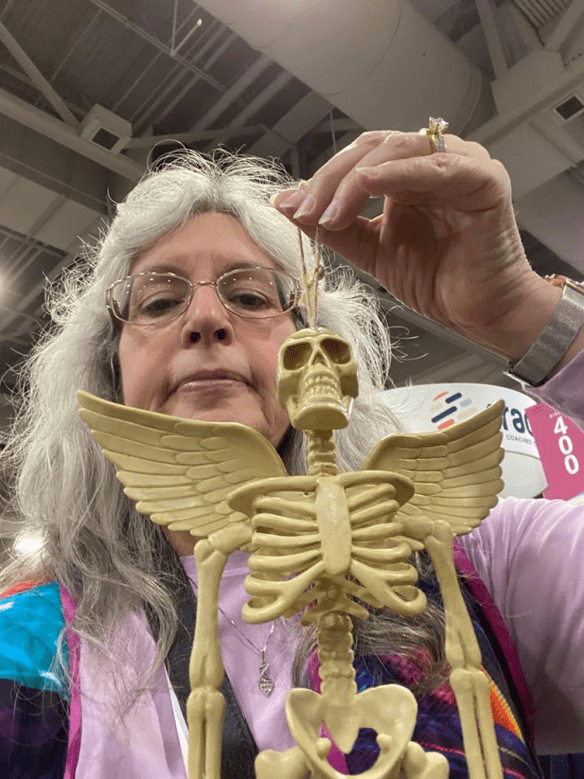
RootsTech 2020 skeleton

Hey, I think I found a relative. Can we DNA test to see?

Rootstech 2020 Mayflower replica

The Mayflower Society had a fun booth with a replica model ship.

RootsTech 2020 Mayflower passengers

Along with the list of passengers perched on a barrel of the type that likely held food or water for the Pilgrims.

RootsTech 2020 Webinar Marathon

Legacy Family Tree Webinars is going to have a 24-hour Genealogy Webinar Marathon March 12-13. So, who is going to stay up for this?Iit’s free and just take a look at the speakers, and topics, here. I’m guessing lots of people will take advantage of this opportunity. You can also subscribe for more webinars, here.

On March 4th, I’m presenting a FREE webinar, “3 Genealogy DNA Case Studies and How I Solved Them,” so sign up and join in!

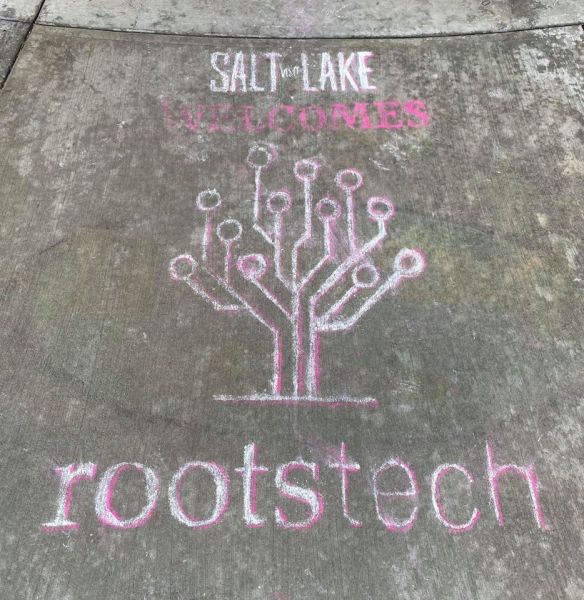
Rootstech 2020 street art

Food at RootsTech falls into two categories. Anything purchased in the convention center meaning something to stave off starvation, and some restaurant with friends – the emphasis being on friends.

A small group went for pizza one evening when we were too exhausted to do anything else. Outside I found this interesting street art – and inside Settebello Pizzeria Napoletana I had the best Margarita Pizza I think I’ve ever had.

Then, as if I wasn’t already stuffed to the gills, attached through a doorway in the wall is Capo Gelateria Italiana, creators of artisan gelato. I’ve died and gone to heaven. Seriously, it’s a good thing I don’t live here.

Rootstech 2020 gelatto

Who says you can’t eat ice cold gelato in the dead of winter, outside waiting for the Uber, even if your insides are literally shivering and shaking!! It was that good.

This absolutely MUST BE a RootsTech tradition.

Rootstech 2020 ribbons

That’s it for RootsTech 2020. Hope you’ve enjoyed coming along on this virtual journey and that you’ve found something interesting, perhaps a new hint or tool to utilize.

______________________________________________________________

Disclosure

I receive a small contribution when you click on some of the links to vendors in my articles. This does NOT increase the price you pay but helps me to keep the lights on and this informational blog free for everyone. Please click on the links in the articles or to the vendors below if you are purchasing products or DNA testing.

Thank you so much.

DNA Purchases and Free Transfers

Genealogy Products and Services

Genealogy Research

Fun DNA Stuff

  • Celebrate DNA – customized DNA themed t-shirts, bags and other items

OMG, Mary Tan Hai is Found – 52 Ancestors #275

Late last night, the son of my mother’s dance partner, Mary Tan Hai, reached out to me after googling his mother’s name during the time she danced in Chicago and found my 52 ancestors article about Mary and mother dancing together during WWII.

Except, her name really wasn’t Mary Tan Hai. It was changed from something I never knew until last night to protect her from being sent to a concentration camp during the war.

If you recall, I wrote about my mother’s professional ballet and tap dancing career during WWII, here. Mother’s dance troupe partner and good friend, Mary, was Japanese. Her family was interred in the Japanese Detention Camps here in the US. Mary couldn’t communicate with them or her Japanese identity would be discovered and she would be sent away too.

In order to protect Mary, they changed her name and the dancers protected her within the troupe. Mary “became” Chinese. There was no record in the troupe of her Japanese origins, just in case. I don’t know if mother ever knew Mary’s true name.

My mother was born in 1922. After Mom’s fiancé was killed in action, she left the troupe and eventually lost track of Mary, but never forgot her best friend and roommate. She talked about Mary and wondered what happened to her. I presumed when I wrote the article about Mom’s dancing career that Mary had long-ago passed. I searched, but I couldn’t find anything about Mary Tan Hai anyplace. Now I know that’s because that wasn’t her real name.

I was wrong. Mary wasn’t deceased.

Mary’s family is “gathered round her”, her son wrote me last night, as she prepares to pass over. Mary and Mom will reunite soon. Oh, the stories they’ll have to tell. The hugs they’ll share!

Even though I’m at RootsTech today, I quickly found a table on the Expo Hall floor, downloaded the photos from my own blog to my laptop, colorized the photos at MyHeritage, downloaded them and mailed the newly-alive colorized photos to Mary’s son.

A few hour later, I receive a lovely gift in return that I never imagined. Mary, as it turned out, had a photo album with pictures of mother I had never seen. I am forever grateful. After I sort through what I received, I’ll be publishing that information soon.

I’m so glad to know that Mary married, to a serviceman it turned out, had a family and a long, wonderful life. Perhaps Mary can still enjoy these photos, and if not, I know, based on the thank you note that her family is.

Thank you so much MyHeritage for providing this AMAZING tool to allow us to connect and share and remember. For everyone who is interested in colorizing photos, the first 10 are free for people without a MyHeritage subscription, and unlimited free colorization of photos if you do have a subscription. I’ve provided instructions here.

Now, take a look at these beautiful colorized photos!

Mother, Mary Tan Hai and troope

Mother is middle row right. Mary is back row right, just above Mom.

Mother, Mary Tan Hai and troope colorized

Mother and Mary Tan Hai

Mother and Mary Tan Hai colorized

Mary Tan Hai

Mary Tan Hai colorized

Mary Tan Hai gazebo

Mary Tan Hai gazebo colorized

Mother, Mary Tan Hai lawn

Mother, Mary Tan Hai lawn colorized

Mary Tan Hai well

Mary Tan Hai well colorized

Mom, Mary Tan Hai peeking

Mom, Mary Tan Hai peeking colorized

Update: Mary’s beautiful obituary can be found here. Thank you to her family for the notification.

______________________________________________________________

Disclosure

I receive a small contribution when you click on some of the links to vendors in my articles. This does NOT increase the price you pay but helps me to keep the lights on and this informational blog free for everyone. Please click on the links in the articles or to the vendors below if you are purchasing products or DNA testing.

Thank you so much.

DNA Purchases and Free Transfers

Genealogy Products and Services

Genealogy Research

Fun DNA Stuff

  • Celebrate DNA – customized DNA themed t-shirts, bags and other items

Sneak Preview: FamilyTreeDNA’s myOrigins Version 3.0

FTDNA Paul MyOrigins 3

Thursday afternoon at RootsTech, Dr. Paul Maier, Population Geneticist for Family Tree DNA presented a sneak peek at their ethnicity product, myOrigins 3.0.

I’m glad to be out from under non-disclosure now so I can talk about version 3, as this update promises to be amazing in more ways than one.

Dr. Maier provided the following information.

More Populations

FTDNA MyOrigins 2

MyOrigins 2, the current version utilized 24 different populations.

FTDNA MyOrigins 3 pops

MyOrigins 3, the upcoming version will utilize 90 populations. The coverage has increased dramatically.

FTDNA MyOrigins 3 Americas

For example, the Americas increased from 2 populations in the current version to 9 in the new version.

For me, this is personally very exciting!

Chromosome Ethnicity Painting

FTDNA MyOrigins African American

Another new feature is ethnicity chromosome painting. Paul provided this example of an African-American individual who has both African and European heritage. The pinks represent various regions of Africa, and the blues European regions.

click to enlarge

Drum roll please!!! The slide above is my DNA. I have three native segments identified. I’ve known about the segments on chromosome 1 and 2 for a long time, but the segment on chromosome 13 is new, and not previously identified by any other testing company. Yes, I’ve been part of the beta testing.

Additionally, your segment locations (via a download) will be available to you in order that you can do segment matching.

At Family Tree DNA your matching includes, and will continue to include ethnicity if people opt-in to sharing their ethnicity with matches. The addition of segment information offers another genealogy tool. In other words, if you and a match both have Native ancestry, and both match on a common identified Native segment, that suggests a specific common ancestor from whom that segment descended.

If you triangulate on that same ancestor with multiple people and can identify common ancestors, you may be able to track that segment back several generations and you’ll be able to identify which line! How cool is that!!!

Finally, you can test the appropriate descendants of those ancestors for Y and mitochondrial DNA, or check existing projects to see if someone from that line has already tested in order to positively identify your Native ancestor.

Of course, I’m using “Native” here as an example, because I have minority Native ancestry, but this technique holds for any segments.

Ethnicity chromosome painting and segment matching is another tool in the genetic genealogists’ arsenal.

Dr. Maier didn’t say exactly when the new MyOrigins version 3 would be rolled out, but very soon. Stay tuned.

______________________________________________________________

Disclosure

I receive a small contribution when you click on some of the links to vendors in my articles. This does NOT increase the price you pay but helps me to keep the lights on and this informational blog free for everyone. Please click on the links in the articles or to the vendors below if you are purchasing products or DNA testing.

Thank you so much.

DNA Purchases and Free Transfers

Genealogy Products and Services

Genealogy Research

Fun DNA Stuff

  • Celebrate DNA – customized DNA themed t-shirts, bags and other items

RootsTech 2020: Day 1 – My Sessions, Announcements & Friends

Rootstech entrance

RootsTech’s 10th anniversary conference opened with a bang, or in this case, a bag.

Rootstech 2020 bag

The place is packed. At the speaker reception, they told us that there are just under 15K registered guests for the entire conference, plus another 24K registered for Saturday. That doesn’t count people watching at least some of the sessions via Livestream (here) or virtual passes sold.

Rootstech 2020 Roberta

Yesterday was my really long day, with two sessions, separated only by lunch. I think they were really well received. It’s so energizing to see so many people interested in genetic genealogy and how to use it, at all, and more effectively. I asked in the second session how many people had NOT tested and I think there were six in a room of maybe 300 people or so.

Rootstech 2020 kicking

In the first session, I asked who had tested and a sea of hands went up. That session was being recorded for the virtual pass holders, the room was huge, as you can kind of see above, and I didn’t ask who had NOT tested, because I wouldn’t have been able to see. My “Kick DNA up a Notch to UnMask Unknown Ancestors” was billed as intermediate to advanced, so I wouldn’t expect people who hadn’t yet tested to be in that session.

The other big news is that RootsTech London will happen this year, November 5-7. I wondered last year if having a second RootsTech in London would decrease attendance at this conference in Salt Lake, and it appears not, based on the attendance numbers.

Rootstech 2020 show floor

click to enlarge

Today, I’ll be in the Speaker Meetup area, number 4 above, 11-11:30 for the Meet the ToolMakers meetup with Jonny Perl, creator of DNAPainter, Dana Leeds who devised the Leeds clustering method and Rob Warthen, the man behind DNAGedcom. Come talk and ask questions if you’re at RootsTech.

RootsTech 2020 summary schedule

Here’s the rest of my schedule and you can see the corresponding locations on the map, above.

Photos From Yesterday

I’m grabbing some pictures from yesterday. Many were taken by other people and posted to my Facebook feed. Thank you one and all.

I can’t tell you how heartwarming it is to catchup with old friends, make new friends (like the two amazing young and talented Native American women and meet people I’ve only known online.

RootsTech 2020 Native women

Michelle Franzoni Thorley (an amazing artist) and Nassari Alvarez Everett. These amazing women are the up and coming next generation. It’s up to us to welcome them and facilitate their path. We are discussing how to accomplish just that!

Rootstech Tierra Cotton-Kellow

My friend Tierra Cotton-Kellow you might know as #Pressingmyway. I normally find her at the FHL, but I missed here there this year. She wasn’t camped in her normal seat.

Rootstech 2020 Tierra tree

I’m always interested to see what the session attendees post about my sessions. This, from Tierra’s social media feed. Indeed, I did say exactly that:)

I also said, three times, and asked the attendees to repeat after me, “Ethnicity is only an estimate,” as many people reported on Twitter. Hope everyone heard that!

RootsTech 2020 Janet

Long-time blog follower Janet Seegmiller. We met two years ago in person and caught up again this year. I’m so grateful when people come up and introduce themselves and I hope no one gets offended at hugs.

Rootstech 2020 Wendell

I was so pleased to finally get to meet Wendell. We corresponded a great deal a few years ago working on a particular project as part of a group. So nice to put a face with a name.

You know what the common theme is in all of these pictures. Everyone is smiling to beat the band. Genuine happiness is everyplace with hugs all around. Everyone hugs and it’s not obligatory – everyone means it! So much love everyplace.

LOVE

Speaking of love, Lara Diamond was gifted with a quilt. The fabrics are a combination of Jewish themes and math, given that Lara is both a mathematician and an amazing genetic genealogist whose life was saved by her health test informing her that she has a genetic propensity for breast cancer. She found that cancer in her 30s thanks to that test and is with us at RootsTech today because that test literally woke her up and saved her life. Lara wants everyone to know that if you have cancer in your family, that these consumer tests only test a few of many markers, and to have medical genetic testing done through your physician.

Consumer tests can be the canary in the coalmine though and let you know that you need to have a discussion with your doctor. Thank you Lara for being so brave and sharing your journey with us, publicly.

rootstech 2020 Lara quilt

RootsTech 2020 Lara quilt 2

Rootstech 2020 Lara quilt 3

If anyone thinks for one minute that we are not a community and a family of heart, they’d be sorely mistaken. Don’t ever forget, we are all related – it’s just a matter of how long ago.

That’s it for now. Gotta run. Sorry this is a bit rough.

Rootstech 2020 chalk drawing

Dear Dave: You’re Featured in a Book – 52 Ancestors #274

Dave and I for blog

My Dearest Brother, Dave.

You’re either famous or infamous, or both. That’s not news to you though! You’d be pleased about both, or either.

Yep, Libby Copeland tells our story today, including the secret you never knew, in an article published in the Washington Post. I wish you were here to read it with me, but I’m guessing you’re getting a good chuckle right about now from over yonder.

Miss you, love you,

Sis

Libby’s article offers a different perspective on DNA testing and family. DNA giveth, but for me, DNA could never, ever, taketh away.

Dave walks with me and makes me brave, something I need especially on days like today when I prepare to speak to thousands of people over the next few days at RootsTech with cameras rolling. He is still with me, always beside me. Sometimes laughing at me, forever protecting me. He left a hollow place in my heart that can never be filled.

Libby Copeland did a masterful job of telling our story in her book, The Lost Family, and I am forever grateful. Her book (which you can order here) includes stories from other genealogists that I’ve written about as well, including my friend, Rosario, here.

Today’s Washington Post article is found here. Kleenex warning!

If you want to read more about Dave’s amazing story and our journey, my earlier articles are here, here and here.

The Road to RootsTech 2020

I know that several of you enjoy coming along to conferences and other DNA and genealogy activities, so I’m sharing my first couple days in Salt Lake City preparing for RootsTech.

The activities and planning begin long before the conference starts.

I flew in on Sunday. The weather was sunny and beautiful, albeit cold.

RootsTech 2020 air

The heartland was covered in white dressing with its frozen rivers snaking across the landscape.

I was distracted for most of the flight, because author Libby Copeland sent me a pre-release copy of her new book, The Lost Family due to be released March 3rd. Libby wasn’t just being nice, I’m in the book, or more precisely, me, my “brother” Dave and my Dad.

RootsTech 2020 Libby Copeland

Here’s the page I opened to see my name. I knew I was in the book of course, after several interviews months ago, but there’s still somewhat of a shock factor. My story is interwoven with many others, beautifully. If you follow the genetic genealogy topic on Facebook, you’ll probably recognize at least some of the people in the storyline. I’ve written about at least one in earlier stories as well.

Let us just say I am sobbing my way through this book. It’s AMAZING. My seatmate on the plane sobbed her way through the movie Harriett, so we made quite the pair.

You can pre-order The Lost Family, now, here if you want. It’s about family lost, and found, DNA and genealogy and you really don’t want to miss it. It’s so well-written that it would be interesting for non-genealogists too.

RootsTech 2020 mountains

The mountains ringing Salt Lake City were utterly stunning on approach.

Ironically, I’ve never been any further outside SLC other than the airport and quilt shop.

Yes, quilt shop, but that’s Monday, not Sunday.

After arrival in Salt Lake City (SLC) and checking into my hotel, I walked to the local market. Never go to the market hungry, because groceries are HEAVY. What seemed like an easy 4 or 5 block walk TO the store felt much longer on the way back and those groceries got heavier block by block. I would have ordered delivery, but walking on this lovely bright winter day seemed like a great idea.

RootsTech 2020 shop

Other than the grocery, the only other shop open in SLC was a souvenir shop. Don’t count on finding much open. SLC reminds me of where I grew up as a kid – buttoned up tight on Sunday.

RootsTech 2020 Nordstrom

My room overlooks the Nordstrom’s next door, which, let me tell you, has the single most expensive eye liner pencil in history. Well, had, because I bought it out of desperation. You can see the mountains in the distance from almost everyplace in SLC.

RootsTech 2020 temple pano

Looking across the roof of Nordstrom, you can see the LDS church and temple in the distance. That building is beautiful. At the far left, the Plaza Hotel which stands right beside the Family History Library (FHL).

RootsTech 2020 temple night

Later in the evening, I took a photo of the temple illuminated at night. My friend Pat told me that you can visit a building across from the temple and take pictures from the 10th floor of the temple, day or evening, from windows between two restaurants.

Monday

Monday morning dawned bright and beautiful, much like Sunday, but colder. I wished I had brought my gloves.

The first genealogist I ran into (in Starbucks) was Daniel Horowitz, genealogist extraordinaire with MyHeritage. I can’t tell you how wonderful it is to see good friends again.

Which also reminds me to tell you that MyHeritage is running a DNA test special for only $39 with free shipping on orders of 2 or more. This is an incredible price, so if you’re interested, now’s the time, so click here. I doubt this price will last long.

After a brief visit with Daniel, it was time to head for the Family History Library (FHL), located just a block or so from both the hotel and the Salt Palace Convention Center where RootsTech is held.

Pat Richley-Erickson, known in the genealogy world as Dear Myrtle, and who writes at DearMYRTLE on Facebook, was interviewing bloggers, otherwise known as GeneaBloggers, beginning at 10AM. When I said that Pat writes, she does, but she’s also known for her live Monday broadcasts that you can find at Monday’s With Myrt. If you don’t catch the broadcasts live, you can view them a couple days later when Pat renders the videos and posts them.

The Monday before RootsTech is rich with many excited bloggers congregating. I think there were probably at least 20 on the interview list, milling about outside the studio, sharing animated stories and catching up in general.

RootsTech 2020 Myrt Interview 2

Russ Worthington took this photo of Sylvia Valentine, also a RootsTech speaker, Pat (Myrt) and me during our interview.

Of course, genealogists would be the first to notice my “family tree” vest.

RootsTech 2020 vest

Thanks Russ, for snapping a picture of this too, and letting me share with my readers.

RootsTech 2020 vest front

Of course, I’m talking with my hands too. Maybe I am part Italian after all😊

And then, there’s serendipity.

Waiting my turn on camera with Myrt, I met two lovely ladies with the most charming accents, Lilian and Jennie. Turns out that they live in Sydney, Australia, where I was visiting literally a month ago today. Not only that, but they met here, in SLC, a couple years ago, at RootsTech.

Jennie and I quickly figured out that we have an amazing amount in common. Shockingly so. Here’s our selfie outside the FHL.

RootsTech 2020 Jennie and me

It’s odd how fast something can become a “tradition?” Last year, I was at the FHL on Monday telling myself that I was going to focus on research. I had great intentions, right up until I got recruited. I saw several of my genealogy friends and went over to say hello. Little did I know that they were waiting their turn to be interviewed by Myrt. They graciously encouraged me to join them and worked me in.

Then they invited me along to lunch. I was very “green” about SLC and was oh so very grateful to be included. At lunch, I discovered a new cousin among my table-mates.

This year, it’s tradition. Yep, I showed up to interview with Myrt (thanks Pat), enjoyed the company of my fellow bloggers, hugs all around when someone new arrived, and then many of us went to lunch. I didn’t even bother to tell myself that I was going to research this year. Nope. I knew better.

We walked as a group to the LDS office building cafeteria. Not only is the food great, it’s inexpensive AND they can accommodate all of us.

RootsTech 2020 hope

Even the walk was interesting. I’m calling this picture “hope,” because it gives me hope that the winter just might be over soon.

RootsTech 2020 courage

And this one “courage” because its companions were all looking pretty wilty. It’s below freezing here today. My quilter’s heart loves color.

RootsTech 2020 waterfall

I’m not sure what this building is, but the waterfall emanates from within the building itself.

RootsTech 2020 sign

We made our way to the LDS cafeteria and stopped a stranger, asking him to take our photo. He kindly obliged.

RootsTech 2020 lunch

Breaking bread is a wonderful way to get to know people. I discovered that the two people to my left live about 25 miles away from me. Small world.

RootsTech 2020 temple

RootsTech 2020 temple close

RootsTech 2020 temple pool

After lunch, we made our way back to the Plaza Hotel, past the temple, where Pat’s vehicles were parked.

Pat had oh-so-kindly offered to take Lilian, Jennie and me on a quilt shop adventure to visit her favorite quilt shop in the afternoon, given that we all 4 are crazy quilters in addition to crazy genealogists.

RootsTech 2020 mountains distance

I’m sure the people who live here no longer even “see” the mountains, but for a flat-lander, they are magnificent.

RootsTech 2020 quilt shop

Jennie, Pat and Lilian. I hope the shop is prepared for us! This shop is actually a collection of rooms and buildings, along with more across the street. It’s grown a bit in its 30+ years.

RootsTech 2020 Dragon Quilt

Just stunning!

RootsTech 2020 almost star

I bought this pattern thinking it would make a great pattern for care quilts.

Pat’s extremely patient husband, Gordon, known affectionately as “Mr. Myrt” was kind enough to drive a truckful of chattering genealogist quilters back to the city and dropped us off at our hotels. I suspect he probably drove home with new appreciation for silence.

RootsTech 2020 mountains flag

I know this picture is crooked, but if I straighten it, the flag gets cropped. The flag blowing in the wind is part of what I really like about this photo.

Tomorrow, I really AM going to go to the FHL and get at least some research done. Yes, really.

Then beginning at 4, the official conference events begin with the speaker’s reception where we receive our badges, instructions and have our official pictures taken.

Wednesday morning, bright and early, the conference opens. I teach two classes plus the AMA (Ask Me Anything) event in the Family Tree DNA booth beginning at 5:45. You might not hear from me for a couple days, but I promise, I will come up for air!

If you’re on Facebook, I’ll try to add photos as I can to my DNAexplain page. It’s a lot easier to spontaneously upload to Facebook than to write and prep a blog article. Here’s the link. Be sure to like and follow the page to receive occasional notifications when I post something.

_____________________________________________________________

Disclosure

I receive a small contribution when you click on some of the links to vendors in my articles. This does NOT increase the price you pay but helps me to keep the lights on and this informational blog free for everyone. Please click on the links in the articles or to the vendors below if you are purchasing products or DNA testing.

Thank you so much.

DNA Purchases and Free Transfers

Genealogy Products and Services

Genealogy Research

Fun DNA Stuff

  • Celebrate DNA – customized DNA themed t-shirts, bags and other items

Optimizing Your Tree at Ancestry for More Hints & DNA ThruLines

Optimizing ancestors. I know that sounds strange, but hear me out, because I’ve spent some time during the first few weeks of the year setting myself up for success. So far, my approach has generated several more hints and additional ThruLines.

I still need help with several ancestors, so I’ve devised a methodology for hopefully attracting people who might have done research or have information about specific difficult ancestors. I’m using this same approach at MyHeritage too and I’ll be writing a corresponding article with instructions for MyHeritage after RootsTech.

Direct Line Ancestors AND Their Spouses and Children

Back in the dark ages before DNA, I only had a direct line tree on Ancestry. My complete tree that I’ve worked on for years is both huge and in places, incorrect. I have no sources for some very old information – as in – I don’t even remember where it came from, let alone a source citation. That was in the days before the internet. Yes, I know, I’m dating myself.

I’m not uploading that tree for obvious reasons. Or at least, I assume they are obvious in that I do not want to add to the “problem tree” problem.

However, today, in order to receive green document leaf hints, potential parent hints as well as DNA hints such as ThruLines, we need to provide vendors’ systems with enough information so that they can connect the dots is a somewhat reliable way. In order to do that, we need to add as much information for each ancestor as possible, including:

  • birth and death dates
  • birth and death locations
  • all spouses, not just the one we descend from
  • children and their spouses

I’d like to extend the children down another generation, minimally, but I haven’t done that yet for every ancestor. Every generation added gives Ancestry software fodder to use to “connect the dots.”

Review and Accept or Reject Hints

You’ll quickly find that your tree is spouting a whole springtime full of those green leafy hints.

Ancestry tree leaf hints.png

I added all of my ancestors’ known siblings and children for the couples above, and every single one of them sprouted leaves. I also have some potential parents to sort through.

Some leaf hints will be productive and others will leave you shaking your head. That’s why they are “hints.”

For example, many census records will be spot on – but then there is that English church baptism record from decades AFTER my ancestor by a similar name died.

Fortunately, the first option is to review or ignore the hint.

Ancestry review.png

You can also switch on “Quick Compare” which sometimes shows additional information.

Never, EVER, blindly accept hints, and never, ever ASSUME!

Believe me, I’m the queen of having to redo – so just don’t. When I began doing genealogy, we accepted a lot of information on faith – specifically faith that the older generations spoke gospel. Today, we often have more information at our disposal than they even dreamed possible – and we’ve come to realize that their information might have been wrong.

When reviewing a hint, in addition to yes and no, there’s a “maybe” button that deposits a hint into an Undecided folder if you don’t know or can’t decide. I do keep my leaves cleaned up on my tree so that I can immediately see by looking at my tree when I have a new hint.

Ancestry record match.png

You can review and change your mind later, for all hints.

Ancestry undecided.png

I always “ignore” the Ancestry Member Trees. That’s NOT to say I don’t use them, because I do. They just live in the Undecided bucket, and I know they are always there for each ancestor.

I review the trees and look for documentation and hints that I don’t have. I certainly don’t want to accept those hints and have “Ancestry Member Trees” listed as a source on my tree. Those trees are NOT sources in and of themselves, they serve as hints for places for me to do research, or perhaps messages to send.

Ancestry ignored.png

I know that some hints for each ancestor will always be in the ignored file. I review those periodically too and sometimes find things I discarded before I had additional information that makes that hint relevant.

Fertilizing ThruLines

ThruLines are calculated for a maximum of 7 generations counting your parents as generation 1. You can see the dividing line clearly below.

Ancestry Thruline tree

click to enlarge

By clicking the little DNA icon on the left, pointed to by the red arrow, the DNA icon that indicates ThruLines appears on each ancestor for whom the system has generated a ThruLine.

There are three absolute requirements for ThruLines:

  1. You must have a tree
  2. You must have connected your DNA test to a person in that tree
  3. You must have DNA matches to other people with that same ancestor in their tree

Family by family, I entered the names of the spouses and children of all the generations eligible for ThruLines so that ThruLines would (hopefully) be generated for every eligible ancestor that I’ve identified.

Two Kinds of Green Leafy Hints

The leaf hints showing on your tree are record hints, not to be confused with the leave on your DNA match page, which are ThruLines hints.

Ancestry record hints.png

The tabs for both trees and DNA are at the top of your Ancestry account page.

Ancestry tree tab.png

When you click on DNA, you’ll see several options, but if you click on matches, you’ll see some matches with green leaves that indicate a common ancestor – translated, that means a ThruLine has been generated.

Ancestry common ancestors.png

At the top of your matches page, you can sort and filter in a number of ways. If you click on “Common Ancestors,” you’ll see only the people with whom you have green leaf DNA hints.

Ancestry common ancestor leaf.png

Everything except the information in the red box is generated by Ancestry. Information in the red box, notes and group match dots, is up to the user.

Groups

By clicking on the +, you can add or edit self-identified colored groups.

For my first match, I have identified the common ancestor. It’s Hiram Ferverda (and his wife.) I’ve added that information in the notes field, and used the appropriate grouping, shown below.

Ancestry group tags.png

Initially, I had grand ideas about how to use these groups, but there are only 24 and that’s not nearly enough, so now I check “ancestor identified” and enter the ancestor’s name in the notes field. If Ancestry adds the capability for more groups, I’ll need to rethink my strategy.

Other group designations that I use, other than a few ancestors, are:

  • Messaged
  • Multiple lines
  • Private (meaning I can’t see their tree)
  • Speculative, akin to bait
  • Ancestor probably identified, which is more certain than speculative
  • Working, tough nut to crack
  • Starred matches are those that I had prior to Ancestry’s big change in May of 2016

Spruce Up Your Tree’s Curb Appeal

If you want people to look at your tree, which means interacting with cousins and maybe, just maybe, attracting the right person to help, you will need to do a few things to make your tree attractive.

Ancestry member trees are displayed in the order of the trees that Ancestry judges to be “most complete” or “best” first, meaning the highest number of sources and sometimes the ones with profile images.

Ancestry member trees.png

The “best” Ancestry member tree, to the left of mine, has 5 sources and 4 records attached.

The first thing I do when I’m viewing member trees is to scan down the list and see who has photos, because photos might, just might be of my ancestor, their home or tombstone.

The next thing I do is to view the sources and records.

So, the message here is that in order to attract people, IMAGES ARE KEY.

Pictures and Images

People are drawn to pictures. It’s as simple as that.

You have two places to make an impression.

First, your own photo on your profile is the first thing people see first on the DNA match list.

Ancestry profile photo.png

Notice what your eye sees first – my picture.

The rest are the same, no photos.

Upload a photo to your profile on your tree.

Note that there seems to be an Ancestry bug that does NOT show photos of some matches when they actually do have their photo in their tree. It might also be their privacy settings preclude their photo showing.

However, the other place you can attract people is to your ancestors in your tree.

Ancestry abbreviated tree.png

This is my matches abbreviated view of my tree, and below is the full view of the same part of my tree.

Ancestry full tree.png

Notice how much more attractive this tree is (with images) than the mini tree below that I quickly assembled for illustration purposes.

Would you be looking at those faces to see if they might be your ancestors? Or would you want to look at the pink and blue placeholders below?

Ancestry example tree.png

Make Your Tree Fish for YOU 24x7x365

Now that you’ve attracted people to your tree, what do you want to accomplish?

First let me say that I immediately “ignore” all DNA icon picture hints. These icons are used by people for themselves, which is fine, to identify ancestors who are related to them genetically in their tree or whose DNA they carry. However, those images are then “suggested” to everyone else as a photo of that ancestor. That’s a wasted opportunity for both them and you.

Here’s an example in the tree of one of my matches.

Ancestry helix profile.png

Use groups or tree tags, or both, if you want to designate ancestor’s whose DNA you carry.

DNA images don’t convey anything to someone viewing your tree. You will attract people by providing something THEY will find interesting, or conveys a targeted message.

Here’s how I organize my profile images and decide what to display, in order, for each ancestor:

  • The ancestor themselves, preferable in color if possible
  • Their gravestone or cemetery
  • Their home
  • Their land
  • A document from their life, preferably with their signature
  • Something in their town or area from the timeframe they lived there
  • Map of where they lived
  • Flag or crest of where they were born or died – smallest area to largest area. For example, if I know the town where they lived, I’ll use the town crest, but if I only know the state or country, I’ll use those in that order.

By using images, not only can someone viewing my tree see something relevant, I can too.

Use images to YOUR advantage.

Bait Ancestors

What about ancestors that you’ve added to your tree as “bait,” meaning those that you’re unsure about. I add them with a group tag of “speculative” in the hope that hints or ThruLines will appear.

I need to say that a ThruLine does NOT confirm that specific ancestor. You and everyone else can all have the name “John Smith” for that ancestor, and you can either be referencing different John Smiths, or you can all be wrong, together. Your ancestor might be Ben Johnson but you all think it’s John Smith and have him in your tree. Mind you, your DNA does match, but it could also be because of an unknown common ancestor someplace ELSE in your tree.

I don’t know if these “bait people” in my tree ARE actually ancestors, so I certainly don’t want to post information about a person, or an image for them, that is not relevant to my tree. I don’t want to mislead anyone else either.

Up until now, I’ve left those speculative ancestor profiles with the generic pink and blue icons, but that doesn’t convey anything to anyone else who will likely just presume you haven’t uploaded anything.

Ancestry bait.png

You could use a BAIT icon, like this image from the now-defunct site openclipart, which would convey that you are fishing with this ancestor in your tree. That would hopefully accomplish two things:

  • Discourage someone else from adding that ancestor to their tree just because you have that ancestor in your tree, even if ThruLines have been formed.
  • Encourage anyone who sees this image to contact you if they can offer assistance with this ancestor.

Remember, these images will (may) be offered to other researchers as hints, so you might get lucky and someone will have something to offer.

Asking for Help

What about those brick wall ancestors for whom you really want and need help? These aren’t people tacked onto the end of a branch for bait, but people whose identity you not only don’t know, you don’t have a clue or theory.

In my case, I know the names of the children of William Crumley and his wife. I know her mitochondrial haplogroup, H2a1, and her rough birth and death years based on the ages of her children, but I don’t know her name. In some cases, I know a first name but not a surname.

To alert people that I’m seeking help with that ancestor, I’ve chosen to upload a question mark image. I named it “Need Help With This Person,” so that’s what people will see in their hints. The question mark itself consists of puzzle pieces. I found this image at the now defunct openclipart website as well, where all images were copyright-free and contributed. You can find images at Pixabay and other free sites, but be careful that you don’t get in copyright trouble, or wind up on sites that will download malware onto your system. Pixabay is my “go-to” site now.

You can also use the images from this article.

Uploading images to any profile is drag and drop.

Ancestry unknown.png

On the ancestor’s profile, click on Gallery, then on “upload media.”

Ancestry profile upload.png

Drag the photo into place or click to upload, then select the image you wish to make their profile photo. Done to exit.

To select an image already uploaded for the profile, just click on the image. It will open and you will see the “Linked to” field.

Make a Statement

In a couple of cases, I’ve made a custom profile picture using Snagit – especially when I’ve disproven something and erroneous information is being widely disseminated like wildfire by copying and pasting of trees.

Ancestry not Cripe.png

I had to use this icon twice, because both the father and son were named Stephen, and both of their wives were named Elizabeth. While the Elizabeth married to Stephen born about 1720 is the one who is supposed to be the Cripe, anglicized from the German Greib – that information gets attached to both women willy-nilly – and both incorrectly.

Ancestry tree not Cripe.png

If people want to check further after seeing this icon, there’s a link attached to both Elizabeths in my tree so that they can read my research in my 52 Ancestors articles about the Elizabeths.

Notice that Ancestry suggests potential parents for Elizabeth born about 1725. You guessed it, the potential father suggested by Ancestry, which is NOT a function of DNA matching, but only of tree popularity, is for a Greib father extracted from other users’ trees.

Leaves in your tree don’t mean DNA matches, just document or record hints. Leaves on your DNA match page mean a common ancestor has been identified in the tree of your DNA match.

Comments

Another way you can help yourself is to add a comment about what kind of help you are seeking and how to contact you. Ancestry messaging doesn’t reliably work.

Ancestry edit pencil.png

You’ll notice that I’ve selected 3 tree tags for this ancestor. I know she’s my ancestor because I’ve triangulated segments to this couple (elsewhere, not on Ancestry due to no chromosome browser) and confirmed my ancestor with her sisters using mitochondrial DNA. She’s a direct ancestor in my tree, and she’s also a huge brick wall.

By clicking on the little edit pencil, a panel the right will open displaying the Comments tab, among others.

Note that Notes are only visible to you and anyone you give edit permission on your tree.

But Comments are visible to others.

Ancestry notes.png

Ancestry has had long-standing chronic issues with messages not being delivered, so I always include my e-mail address. I also track with group dots which matches I’ve messaged previously. You can sort by group, and therefore I can check who I messaged and when, and try again.

Beauty

I just can’t help myself. After all this work, I really enjoy looking at my DNA ThruLines page.

Ancestry Thrulines profiles.png

Ancestry displays ThruLines in generational order. Here are my 8 great-grandparents, assembled together. By flying over each one, I can see how many DNA matches I have for that particular ancestor’s ThruLine

This also makes it easy to track in a spreadsheet over time, if you’re so inclined.

My 4th great-grandparents are the first generation where I encounter brick walls. I’ve added that question mark for William Crumley’s wife. In that same generation, I also find James Mann and Mary Cantrell. I have information about THEM, but what I don’t have is a document link to Nancy Mann, who I know positively is my ancestor. Unfortunately, even though I have 6 DNA matches to James Mann, they are all through Nancy Mann, which proves exactly nothing other than we all have him in our tree and we might well all be wrong together.

Ancestry Thrulines profiles 2.png

I think I’ll upload the bait icon for James Mann and his wife, Mary Cantrell.

Does It Work?

I had multiple goals, of course, but hints were being generated literally as I worked through my tree performing these housekeeping tasks.

It’s difficult to tell exactly why I’m receiving more hints and ThruLines given that I’ve performed several housekeeping tasks, but I doubt that they are all coincidence or solely the result of new testers. After all, I’ve given the Ancestry software a healthy dose of fertilizer to work with.

Like anything else, to get results, you have to feed the machine. Computers do their best work with more, rather than less, information.

I’m hopeful to achieve the following goals:

  • I would like to find people who can take Y and mitochondrial DNA tests at FamilyTreeDNA to represent my missing lines.
  • I’d like to confirm additional ancestors by multiple DNA matches through different children of the ancestor.
  • And of course, I desperately want to break down those pesky brick walls.

I realize that some people cringe at the idea of “giving” information away to other people, but I look at it just the opposite. If what I’ve “given” in my tree in terms of already invested work, photos and images paves the way for one photo of an ancestor that I’ve never seen, finds one person to take a Y or mitochondrial DNA test that breaks down a brick wall that will never fall any other way – then everything I contributed was well worthwhile.

After all, that money and time is already spent – sharing it means that it might pay off a second time. The absolutely worse thing that could happen is that it helps someone else who doesn’t reciprocate.

However, I prefer to think positively and pay goodness forward. I have been truly gifted so many times that I want to do the same.

Collaboration truly is the key to success, especially in genetic genealogy.

What can you do to spruce up your tree to obtain better results?

_____________________________________________________________

Disclosure

I receive a small contribution when you click on some of the links to vendors in my articles. This does NOT increase the price you pay but helps me to keep the lights on and this informational blog free for everyone. Please click on the links in the articles or to the vendors below if you are purchasing products or DNA testing.

Thank you so much.

DNA Purchases and Free Transfers

Genealogy Products and Services

Genealogy Research

Fun DNA Stuff

  • Celebrate DNA – customized DNA themed t-shirts, bags and other items