Ancestry’s ThruLines Has a New Pedigree View

Update: Ancestry obsoleted this new feature on December 5, 2025.

Ancestry recently updated ThruLines and introduced a new pedigree view.

I’m not sure that everyone has the new view yet, so here’s what to expect.

If you do have the new feature, let’s take a look, because there’s new functionality you may not have discovered.

When I signed in and clicked on ThruLines on the DNA tab, the first thing I saw certainly looked different. Needless to say, I was surprised because I wasn’t expecting anything new.

Click on any image to enlarge

This doesn’t look anything like what we’re used to, but Ancestry provides navigation buttons.

One person mentioned that the new view was so small they couldn’t really see clearly, but by rolling your mouse button up or clicking on the little “+” button in the upper right-hand corner, it’s easy to enlarge.

That said, on this and especially on subsequent screens, I would very much like for there to be less white space at the top, or have a “full screen” option.

You can navigate up your tree by clicking on the little up arrows above the ancestors in the top row.

The Tile Display is Still There

But perhaps more importantly for people who prefer the previous display, it’s actually right there.

Click on the little tile button to switch from the pedigree to the traditional tile view.

It’s easy to toggle back and forth.

Take a look at the new ThruLines layout. If you don’t like it, select the tiled version

Why Do I Like the Pedigree View?

I like the pedigree view because it lets me easily see how people connect with each other. While I’m intimately familiar with the more recent generations, I don’t like the more distant ancestors all being smooshed together in the tile view.

In the pedigree view, I can see how many of my matches descend from each ancestor in the tree format.

Clicking on that number opens the dropdown showing the matches and how they descend from that ancestor.

In these expanded tree views, we really do need a full-screen option. It is challenging to see the entire sequence of descent.

My focus right now is on determining if anyone that I match carries the mitochondrial DNA of my paternal grandmother. On other ancestral lines, I have both the Y-DNA and mtDNA from generations back in time, but not my grandmother. I’m hoping to remedy that.

This layout makes it easy to see that there are many potential candidates for generations upstream. If I find the right person, descended from that ancestor through all females to the current generation, which can be male, I’ll be offering them a DNA testing scholarship for a mitochondrial DNA test at FamilyTreeDNA.

Suggestions for Improving the View

Perhaps Ancestry will provide the option of selecting a default view, so we can select our favorite – tile or pedigree – plus a full-screen option for pedigree view.

Another alternative would be for the pedigree view to be horizontal and extend left to right instead of top to bottom, the same as Ancestry’s traditional trees.

Truthfully, I really like the pedigree format and functionality of the new ThruLines pedigree view, but I greatly prefer the layout of this traditional tree. It’s much easier to see and is expandable without running off the top or bottom of the screen. Maybe Ancestry could combine the best features of both.

Update: A sharp-eyed reader caught that the “Evaluate” feature is now gone, which used to allow you to evaluate other people’s trees that suggested the ThruLines connection. This is really important, and I hope that Ancestry restores it. Genealogists must evaluate everything and weigh the evidence when determining if a connection is accurate.

_____________________________________________________________

Share the Love!

You’re always welcome to forward articles or links to friends and share on social media.

Subscribe!

If you haven’t already subscribed (it’s free,) you can receive an e-mail whenever I publish by clicking the “follow” button on the main blog page, here.

Help Keep This Blog Free

I receive a small contribution when you click on some of the links to vendors in my articles. This does NOT increase your price but helps me keep the lights on and this informational blog free for everyone. Please click on the affiliate links in the articles or to the vendors below if you are purchasing products or DNA testing.

Thank you so much.

DNA Purchases and Free Uploads

Genealogy Products and Services

My Books

Genealogy Books

Genealogy Research

Catherine Richard (c1663 – after 1714), Mother of Beausoleil, Acadian Freedom Fighters – 52 Ancestors #464

Catherine Richard was born about 1663 in Port Royal, now Annapolis Royal, Nova Scotia, to Michel Richard dit Sansoucy and Madeleine Blanchard. When Catherine was born, Acadia had been settled by the French but had fallen to the English in 1654. France could no longer send settlers, and neither did England. Until 1670, Acadia lived in limbo in terms of growth, with no new settlement.

We know that Catherine was born in Acadia because she was listed in the first Acadian census, in 1671, with her parents, who had to have been there before 1654.

Michel Richard, a farmer, age 41, is listed with his wife, Madeleine Blanchard, age 28, and their seven children: Rene, 14, Pierre, 10, Martin, 6, Alexandre, 3, Catherine, 8, twins Anne and Magdeleine, 5 weeks. In addition, the family had 15 cattle, 14 sheep, and was farming 14 arpents of land.

This tells us that Catherine was born about 1663.

The next census was taken in 1678. Catherine had recently married François Broussard. No church records exist from this timeframe, but two things indicate that they married in either 1677 or 1678.

First, Catherine would have been about 15, old enough to marry, but not old enough to have been married very long. The newlyweds lived beside her parents in or near Port Royal, with five cattle, probably helping farm her parents’ land.

Secondly, their first child had not yet arrived, strongly suggesting that the couple had been married for less than a year, and probably less than nine months. The census generally took place in the late fall or winter, so it’s likely that they married early in 1678, before the census, but not long enough to have welcomed their first baby.

The other sad possibility is that their first child had arrived, but died.

Their first child known to have lived was Madeleine Broussard, born about 1681 or 1682.

This tells an even sadder tale.

If Catherine gave birth to her first child in 1679, and the baby died immediately after birth, she could have had a second child in 1680 who perished before Madeleine arrived in 1681 or 1682.

It’s crushing to lose any child, but your first baby, perhaps even more so, especially for a young mother.

Thankfully, Catherine’s mother was close by when she had to bury her child in the cemetery by the Catholic church in Port Royal, now this green area sheltering unmarked graves. At least, I hope her mother was with her.

We don’t know when that first baby, or babies, died. Only that it was before the 1686 census.

We do know that Catherine’s mother died after the 1678 census, and before 1682 or 1683 when Michel Richard remarried.

In the 1686 census. Michel Richard, age 56, lived with his new wife, Jeanne Babin, 18, along with his five children from his first marriage. The youngest of those was Marguerite, age 7. His youngest child was Michel, age 2, which suggests that Michel Sr. married Jeanne Babin about 1683.

That tells us that Catherine’s mother, Magdeleine Blanchard, had died sometime between 1679 when her youngest child, Marguerite, was born, and 1682/1683 when Catherine’s father married Jeanne Babin, who would have been 15 or 16 at the time. Jeanne, her new step-mother, was around five years younger than Catherine. Catherine’s new half-sibling arrived in 1684.

This sequence of events makes me wonder if Catherine’s mother died in childbirth in about 1681, which meant that Catherine could well have buried her mother and one or two of her own children in short succession.

Catherine hadn’t even seen her 20th birthday when her mother joined her babies.

Graves too close together, and now disappeared into the mist of time.

Catherine was fortunate that both of her maternal grandparents, Jean Blanchard and Radegonde Lambert, lived beyond the 1686 census. Catherine would have known them well and perhaps took refuge there after her mother passed away. They died sometime between the 1686 and the 1693 censuses. They would have been aged, born about 1611 and 1621, respectively, but perhaps that meant they had available time to comfort a grieving granddaughter who needed her mother, who was gone too soon.

In 1686, Catherine Richard was listed as age 22, with husband François Broussard, 33, and two children, Magdelaine, age five, and Pierre, age three, along with an 11-day-old daughter who had not yet been baptized and was therefore not yet named.

Catherine’s half-brother, Michel Richard, named after their father, was about the same age as her son, Pierre Broussard.

Catherine and François Broussard were doing well with one gun, seven cattle, six sheep, and five hogs, but there’s no land attributed to them, which is rather odd. How do you keep livestock with no land? It was either unrecorded, or they lived on someone else’s land.

The “spaces” in this census, after Catherine’s 1678 marriage and before Madeleine’s 1681 birth, tell us that a child or perhaps two children were born during this time, but died before the 1686 census. It’s also possible that since her son, Pierre was three, that another child had been born in 1684 or 1685 and died, especially if the 1686 census was taken late in the year.

Catherine’s father, Michel Richard, was present in the 1686 census, but had died by 1689 when his second wife, Jean Babin, remarried. That’s both of Catherine’s parents gone within a decade, along with multiple children, both grandparents, and a sibling.

Catherine had a really rough decade.

Port Royal in 1686

We are fortunate that military engineer, Jean Labat drew a map of Port Royal in 1686 with the goal of encouraging investment and settlement in the town itself.

While we don’t know where Catherine lived growing up, then lived initially with her husband, based on the census, we know it was probably in one of these locations in the town of Port Royal.

The church where she worshiped, baptized her babies, and buried family members is shown near the ruined fort.

While things were going well for Catherine in 1686, her life was turned upside down in the late spring of 1690.

The 1690 Depredations

Spring would have sprung by May in Port Royal.

Birds were chirping, fresh green leaves unfurling on the trees, and apple blossoms bursting forth with their sweet fragrance and promise of fruit later in the year.

May 19th was a Friday in 1690. Catherine probably heard something as she went about her morning chores and looked up from what she was doing to see what the commotion was about.

Looking out over the river, from where the bastions stand today, she would have been met with a frightening sight.

The river was filled with English warships, with cannons mounted. Four, five, half a dozen – and more in the distance – it doesn’t matter. Too many.

Living beside the river, in the shadow of the ruined fort, Catherine would have known that she and her family were in jeopardy. If François were at home, she would have alerted him immediately, if he didn’t already know, and would have gathered her children and headed for safety – wherever that might have been.

In 1690, Catherine, only 26 years old, had at least three children, 9, 7 and 4. She would have borne another child in 1688, but we don’t know if that child lived to 1690. Perhaps more problematic is that Catherine gave birth to another child in 1690, but we don’t know when. Given the May arrival of the English, Catherine either had a newborn baby, or was pregnant, trying to shepherd her family away from the town and the remnants of the fort.

There were only 90 French soldiers lodged in the garrison, but the fort itself had been torn down to be rebuilt, and there were only 19 muskets among all the soldiers. Most of the Acadian men were gone, maybe fishing or hunting. Only 3 came when the cannon was sounded to summon help.

They would surely all die.

Governor Meneval knew this, so he and the priest negotiated the best surrender terms possible, on board the English warship, anchored in the river.

Two days later, terms were reached and agreed upon, surrendering and relinquishing the fort and town, but preserving the property of the Acadian residents and granting them the right to worship as Catholics.

However, as soon as the fort and Port Royal were surrendered, the English soldiers were turned loose on a plundering rampage, for 12 long days, desecrating the church and stealing most everything of value.

Just a few weeks later, in June, English pirates followed, at least once if not twice, and proceeded to pick the place clean of anything that was left, killed the livestock, burned homes and the church, and murdered people, including two families who were locked in their homes before they were set on fire.

The upriver homes were spared, but Catherine and her family didn’t live upriver, at least not yet. Their home was assuredly burned to the ground. I hope and pray that the child who would have been born in 1688 didn’t perish as a result of the 1690 depredations. I shudder to even think…

I don’t know if Catherine was a rock, or a wreck, or a rock, doing what needed to be done, then a wreck.

What she had endured by the age of 27 is unfathomable.

The Family Grows

The next census, in 1693, shows François Brosard (sic), 39, Catherine 29, Marie, 11, Pierre, 9, Marie, 7, Catherine-Josephe, 3, 15 cattle, 20 sheep, 16 hogs, and one gun, farming seven arpents of land. Was Catherine pregnant and ready to deliver, or had she had a baby in 1692 that died?

Shades of 1690

Another spring day in May. What is it about May?

The winter ice on the river was gone, and the Atlantic had calmed from its winter storms.

Catherine looked out at the river again. Ever since Acadia fell to the English three years ago, English ships appeared regularly in the river as they came to check on the Acadians.

This time was different. Catherine saw a group of frigates. English ships always made her nervous, but a group was a harbinger of nothing good.

Sure enough, the English had arrived to punish the Acadians for the transgression of living with a pirate in their midst. Pierre Maisonnat dit Baptiste, a French privateer who lived in Port Royal and was a royal pain in the side of the English. Not only had he been arming and employing the Acadians as his crew, he was preying on the English shipping lanes, brazenly, often within sight of Boston, capturing their ships and goods.

Privateer, or pirate, is a matter of perspective. The French governor of the rest of France’s North American colonies had commissioned Baptiste to protect the balance of Acadia and harass the English, so he was no pirate as far as the French were concerned.

Baptiste was an irreverent rascal, committing bigamy, among other vices, but the Acadians loved him anyway. At least most Acadians. A few were concerned that he would bring the wrath of the English down upon all of them.

And then there was the father of Madeleine Bourg, his 16-year-old bride that he wed while married to at least one other woman. Her father probably wasn’t the least bit happy with Baptiste either. After their marriage was annulled, after Madeleine had his baby, Baptiste brazenly brought his French wife to Acadia, too.

The Acadians overlooked a lot, a surprising amount actually, because Baptiste was a very beneficial friend. The enemy of my enemy is my friend. Although, in all fairness, in addition to fighting alongside them in 1690, he was probably in no small part responsible for their survival. So no one complained too much and he wasn’t ostracized for bigamy as one would have expected.

Of course, the English despised Baptiste, and they had a score to settle with the Acadians who had the AUDACITY to provide cover for Baptiste and his escapades.

The English ransacked Port Royal again, killed livestock, burned a dozen homes and three barns full of grain.

The Acadians might have been unarmed in 1690 when the English took Acadia, but they were not in 1693. Baptiste, alone, had 15 guns, and he probably saw to it that every Acadian household had at least one.

Baptiste, brazenly, probably lived right in the heart of the business district, within sight of his ship in the river, engaging in trade and likely played an outsized role in keeping the Port Royal economy alive.

The English came to run him off.

They failed.

Baptiste wasn’t going anyplace, and he encouraged resistance among the Acadians, who didn’t need much encouragement.

Was Catherine’s home burned again in 1693? If a dozen homes were burned in Port Royal, it’s likely. Even if not, after three or four attacks in three years – it had become abundantly clear that anyone who didn’t absolutely NEED to live in the town of Port Royal was incurring a great deal of risk for no return.

The exodus upriver to safer lands continued.

In 1697, Acadia was returned to French control in the Treaty of Ryswick, and the next census occurred the following year, in 1698.

Beausoleil

We don’t know how or when Beausoleil got its name. It’s clearly a place, where Catherine Richard and her husband, François Broussard, moved to raise their family, upriver about 10 miles, just beyond BelleIsle, near Hebb’s Landing today.

Beausoleil also became part of the name of two of their sons, who then gave it to a location in New Brunswick, then another in Louisiana decades later. So, which came first, the name or the location, and why? We will never know.

François Broussard and Catherine Richard made the move to Beausoleil between the 1693 and the 1698 census.

In 1698, Françoise, age 45, and Catherine, age 35, have Madeleine, 18, Pierre, 15, Marie, 13, Catherine 7, Elisabeth 5, François, 3, and Claude, one-half. They have 15 cattle, 20 sheep, 14 hogs, on 16 arpents of land, with two fruit trees. Additionally, they have two guns and a servant, so all things considered, they are doing very well.

Catherine’s two fruit trees, now ancient, probably still stand someplace on this peninsula of land extending into the Annapolis River.

Hebb’s Landing Road is dirt and all but abandoned today – and would be were it not for a lonely farmhouse and Oxbow Dr., a private dirt road that stretches to the river.

This beautiful little freshwater brook, descending from the hills to the north, dissecting the marshlands as it flows lazily to the river, assuredly nourished Catherine and our family.

Port Royal was a rather compact space beside the fort, with limited room for farming and marshland. Based on both the number of arpents of land being farmed, and the neighbors, by 1698, Catherine and François were clearly living upriver, just beyond BelleIsle, at Beausoleil.

This placename would become part of the Broussard family.

Not only was there more land available, it was more productive, and a much safer location. Looking towards the river, their land is still being farmed today.

Looking back the other way, away from the river and towards the hills to the north, one can see an old farm facing this historic road, which the new road bypassed.

I can’t help but wonder if this is where or near where Catherine and François established their homestead, too. Homes tended to be built on the closest high ground above the marshes.

Port Royal, due to its location right beside the fort, was a bullseye for the English, or anyone else for that matter, who wished to attack the fort.

Catherine’s family had moved to the safety of the glorious blue river and the peaceful saltmarshes where you can hear birds sing, probably near her Blanchard grandparents.

How many attacks does it take to convince one to move? How many times being burned out?

By 1698, Catherine was living here, at Beausoleil, beneath the “beautiful sun.”

In the 1700 census, François (listed as Jean), is 46, Catherine is 36, Marie, 18, Pierre, 16, Marie-Anne, 14, Catherine, 10, François, 6, Claude, 5, Isabelle, 4, Françoise 3, and Alexandre, 1, with 24 cattle, 26 sheep, and one gun on 15 arpents of land.

Two different census transcriptions show a slightly different family structure. There is no further evidence of Isabelle, either earlier in 1698 when she would have been 2, or after 1701. She is listed in both 1700 and 1701, so unlikely to simply be an error. Perhaps Catherine was raising someone else’s child. After all, that’s the entire point of Godparents.

Sadly, Catherine’s daughter, Françoise, is gone, so she died between the 1700 and 1701 census. She could be buried at either the graveyard in Port Royal, or at St. Laurent in BelleIsle where many of the BelleIsle Acadians worshipped and were buried. My bet would be that little Françoise, just 6, was buried here, at St. Laurent.

About 1702, Catherine gave birth to her son, Joseph Broussard, here, near Hebb’s Landing.

The 1703 census only recorded the head of household, if he had a wife, and the number of male and female children, plus the number of arms-bearers.

François Brossard lived with his wife, five boys, three girls, with one arms-bearer in the home, which would have been him.

The family is not found on the 1707 census. Based on other information, we believe that Catherine and François went to Chipoudy to establish that village on the next frontier. Some of their children married and remained there, but Catherine and Françoise had returned by 1714.

It appears that they were absent for the 1707 English raid and burning of Port Royal, again.

The next trial for Acadia that would involve Catherine, one way or another, would be in 1710 in Port Royal.

Port Royal Falls

English ships had attacked Port Royal again in 1707, but failed to take the town. They inflicted a lot of damage, but ultimately retreated, burning many if not most homes in the town, and between the town and the mouth of the Riviere du Port Royal that opened into the sea a few miles downriver.

The English returned in October of 1710 and would not be foiled again. They simply overran Port Royal. With more than 35 warships carrying more than 2000 men, there were more than four times as many soldiers as the entire population of the Annapolis River Valley – including men, women, and children.

The 300 ill-prepared French soldiers at the fort stood absolutely no prayer of holding the fort or protecting the town. For eight days, they tried, but ultimately, a heartbreaking surrender was the only answer.

The French soldiers and administrators boarded the English ships that were supposed to return them to France, and the English left about 500 soldiers at the garrison in their place.

Winter was descending upon Acadia. The Acadians were unable to feed the English soldiers, and the English had brought no supplies or provisions.

Half of the English soldiers either died or deserted, and when Samuel Vetch, the British Commander, returned from Boston in early 1711, having gone to beg for food and supplies, he found only about 250 remaining men.

The order of these next events is unclear.

A group of five Acadian men from the “haute Riviere”, or upper river, were jailed by Vetch either before he left for Boston, or after his return, for capturing an English soldier.

Catherine’s husband was one of them. He was listed as “François Broussard of Chipoudy,” and was listed with Germain Bourgeois from Beaubassin and three men from Port Royal. One of those men was Pierre LeBlanc, their neighbor in the 1714 census, who lived at BelleIsle on the upper river.

We don’t know why François was identified as “of Chipoudy.” In other words, we don’t know if he was living there full-time with his wife and family, or if he was going back and forth, like many men did during this timeframe. We also don’t know if Catherine was in Chipoudy or upriver at Beausoleil.Given their absence in the 1707 census, I strongly suspect they were living there. Chipoudy was not included in that census.

What followed must have terrified Catherine and made her blood run cold.

The word “jailed” in this context meant something entirely different.

Germain Bourgeois was “jailed” too. Jail, in this case, was probably the old powder magazine in the fort, known ominously as “The Black Hole.”

Germain’s descendants carried the story that he was held here, where he was deprived of the most basic human necessities, including food. Germain died in this hellhole.

When the fort fell in 1710, the local priest was taken as hostage to Boston and did not return until the late fall of 1711.

On June 21, 1711, the Battle of Bloody Creek occurred when between 50 and 150 “Wabanaki warriors” ambushed a group of 70 English soldiers just a mile or so further upriver from Beausoleil, at the mouth of what would be named Bloody Creek. The farther the English soldiers ventured from the fort, the more jeopardy they were in.

I do not doubt for one minute that the Acadian men allowed the “warriors” to attack the English soldiers without joining in.

Sixteen soldiers were killed, nine were injured, and the rest were captured.

This is probably the incident that was referred to, resulting in those five men being jailed. I’m actually surprised it was only five.

The priest, after he returned in the late fall, penciled in the parish register that Germain Bourgeois died while he, the priest, was held captive in Boston.

If Germain died in the Black Hole, the other men must have been held there with him. Under the same horrific conditions.

Catherine must have been utterly terrified, even if she was still in Chipoudy. Word traveled fast.

This is the “newer” better powder magazine that, in 1708, replaced the older, abandoned “black hole” that was smaller, wet, and even more claustrophobic, if that was even possible.

Catherine must have known, every minute of every day and night, what was happening to those men in the black hole.

When Germain was brought out, dead, was there any news at all of the rest of the captives? Were they ill? Had they gone mad in the utter and complete darkness for weeks or months? Confined, starving, with a dying man.

We don’t know when, why or how those men were released. But we do know that François didn’t perish there.

The last and final Acadian census, taken in 1714 under English rule, shows “Broussard”, no first name, with a wife and five sons, who, based upon the neighbors, was clearly living upriver, beside Pierre LeBlanc, another of the five men who were jailed.

It may have been generally calmer upriver, but that clearly wasn’t universally the case.

In addition to this drama, in 1697, their neighbor, Pierre LeBlanc had married Marguerite Bourg, the wronged wife of Baptiste, the pirate. Her first marriage with Baptiste was annulled after his bigamy was revealed, BUT, in the 1700 census, Baptiste, with his earlier wife, was living right beside Pierre LeBlanc and Marguerite. The local grapevine must have been constantly abuzz.

And now I wonder, did Baptiste have anything to do with their arrest?

If François was already an angry Acadian, I can only imagine his frame of mind after the final fall of Acadia to the English in 1710, followed by his time in the Black Hole in 1711, and the horrific circumstances of Germaine’s death.

The brevity of François Broussard’s census entry, without even a first name, may reflect his justifiably uncooperative and rebellious attitude – the seeds of which he passed on to at least some of their children.

Catherine’s Children

Like most Acadian women, Catherine was probably defined by her roles as wife and mother. Part of a mother’s story is told through her children.

I’ve assembled a table to keep track of Catherine’s children over time. Their information is reflected below, beginning with the 1686 census where Catherine first appears with children.

Based on Catherine’s marriage in about 1678, as noted in that census where she and François had no children, we must infer that her first two children born in 1678 and 1680, plus a third who was born about 1684, perished before 1686.

Name Birth 1686 1693 1698 1700 1701 1703 1714 Died
Unknown 1678
Unknown 1680
Magdelaine, Madeleine 1681 5 Marie 11 18 18 20 M Jan 1704 Bef 1731
Pierre 1683 3 9 15 16 18 1B M Jan 1709 Aft 1746
Unknown 1684
Marie-Anne 1686 11 days 7 13 14 16 3G M 1703 Aft 1752
Unknown 1688
Catherine-Josephe 1690 3 7 10 10/11 2G M 1708 1730-1732
Unknown 1692
Elizabeth 1693 5 7 8 1G M Jan 1714 1718
François 1695 3 6 5 2B 5B 1717
Claude 1698 1/2 3 3 3B 4B Aft 1763
Isabelle 1696 4 7
Françoise 1698 2 gone
Alexandre 1699 1 2 4B 3B 1765
Unknown boy 1701
Joseph 1702 5B 2B 1765
Unknown 1704
Jean-Baptiste 1705 1B 1770
  • Catherine’s daughter, Magdelaine Broussard, married Pierre Landry in 1704, and the couple settled in Pisiquit. She died sometime before November 1731, when her son François married in Pisiguit. She would have been about 50.
  • Pierre Broussard married Marguerite Bourg in 1709 and lived in Port Royal through 1720. By 1722, he was living in Port Toulouse on Île Royale. He died sometime after June 1746, when he was mentioned in his son Charles’ marriage record in Grand Pre. He would have been about 63 at that time.
  • Marie Broussard married Rene Doucet in 1702 and lived her life across the river from Port Royal. In 1714, her brother, Pierre Broussard was her neighbor. She died after January 1752 when her daughter, Cecile, married in Port Royal. Marie may well have been caught up in the Expulsion in 1755 when she would have been 69 years old.
  • Catherine Josephe Broussard married Charles Landry in 1708. In the 1714 census, they are living beside the Widow Thibodeau, the widow of Pierre Thibodeau, the miller with whom François Broussard, Catherine Josephe’s father, established Chipoudy before both men returned to Port Royal. Catherine Josephe then remarried in Port Royal in February 1729, at age 39, to Jean Prejean, age 23, but only had one child with him. That baby was born in February 1730 in Port Royal. Jean Prejean remarried in August of 1732 in Grand Pre, so we know that Catherine Joseph died between February 1730 and August 1732, at about age 41, probably in Port Royal, where her children grew up and married.
  • Elizabeth Broussard married Pierre Bourg in January 1714 in Port Royal. In the 1714 census, they are living beside Abraham Bourg, in the Bourg village, near her sister Marie and brother Pierre. Their first child, born in March of 1715, had not yet arrived. Elizabeth gave birth to her third child on November 23, 1718, and was then buried on December 8, 1718, just 16 days later. She was only 25. Who raised her children? Her husband, Pierre Bourg, remarried in 1727 on Ile Royal, but Elizabeth’s children later married in Port Royal, so they did not go to live with him.
  • François Broussard never married and died in November 1717 in Port Royal. He was probably buried where his father was buried 11 months earlier. At 22 years of age, he was listed as a “young boy” in the parish register, which makes me wonder if he suffered from a developmental challenge.
  • Claude Broussard married Anne Babin in 1718 in Grand Pre, but their children were born in Port Royal, so they apparently moved back. He remarried to Marie Dugas in 1754 in Port Royal and is last found in Upper Marlboro, MD in July of 1763 when he was about 66. His children scattered to the winds: Maryland, Cape Breton, NS, Saint Malo, France, Bretagne, and Louisiana. Some simply disappeared. His younger children were living with his older sons and wound up in France.
  • In 1764, Alexandre Broussard, after fighting the Expulsion, then being held captive by the English, arrived with his family and his brother Joseph’s family on the island of Hispanola, where many Acadians perished due to tropical diseases. A few months later, in February 1765, they arrived in Louisiana. Alexandre was buried on September 18, 1765 in Louisiana, probably due to a yellow fever epidemic which took most of his family and many in the rest of the Acadian community in Attakapas – including his brother, Joseph. Alexandre was about 66 when he died.
  • Joseph Broussard dit Beausoleil, the legendary Acadian freedom fighter, married Agnes Thibodeau in 1725 in Port Royal, but settled in Chipoudy. He died in October 1765 in Attakapas, Louisiana, at age 63, very likely of the yellow-fever epidemic that took his brother and his brother’s wife. Both he and his brother had resisted the English until 1761, were hostages with their families until 1764 when they made their way to Santo Domingo, then to Louisiana.
  • Catherine’s youngest child, Jean-Baptiste Broussard, married about 1724 or 1725 to Cecile Babin. They lived in Port Royal. Of Catherine’s children, he also lived the longest. His wife died in 1747 in Port Royal, and he may have gone north to Pisiquid after that. He appeared to be in that area when the English began the Expulsions in 1755, because he evaded capture for some time, heading deeper into New Brunswick, then finally making his way to Camp d’Esperance in Miramichi. In 1763, Jean-Baptiste was able to return to the Annapolis Royal area, but some of his children were deceased. In 1766, he made his way to Quebec with two of his adult children and their families, where he died at Mascouche in July of 1770 at 65.

Of Catherine’s 10 known children, meaning those who did not die as children, and for whom we have names, the oldest three disappeared from the records around the time of the Expulsion, three died in Port Royal, one is last found in Maryland, one died in Quebec, and two founded the Cajun community in Louisiana.

Life before modern medicine was difficult, uncertain and often short. Based on the census, it looks like Catherine lost seven children.

Freedom Fighters

Two of Catherine’s sons became renowned Freedom Fighters and are still revered today.

Both Alexandre and Joseph Broussard, born about two years apart, both integrated the name “Beausoleil” as a dit name, and became resistance fighters.

Alexander may have settled on his father’s land in Chipoudy where he was living by about 1728.

By Darjeering 112 – Own work, CC BY-SA 3.0, https://commons.wikimedia.org/w/index.php?curid=31181484

By February 1741, Alexandre was living on the Petitcoudiac River, a tidal river above Shepody, in New Brunswick, where he is found in 1755, along with his brother, Joseph, and two of his sons.

What occurred during the Expulsion is best told by combining the information from both Alexandre and Joseph.

Alexandre was initially caught up in the 1755 deportations and was sent to South Carolina with his son, Victor. However, they both escaped, as told by Stephen A. White:

Regarding the escape of Alexandre and Victor Broussard from South Carolina, all that is quite true. Dr. Milling’s book quotes the announcement from the South Carolina Gazette of Feb. 19, 1756, that said Alexandre and Victor were missing and were being sought as fugitives. But Alexandre and Victor weren’t among the Acadians who came up the coast from Georgia. Instead, they went inland, through the river system, eventually reaching Québec and returning to Acadia from there. Alexandre’s route is confirmed by Gamaliel Smethurst’s journal, written in 1761, which was first published in 1774, and republished in the Collections of the New Brunswick Historical Society in 1906. Alexandre and his son Victor and their families were later among the Acadians who were held at Halifax, where they were all listed in 1763. From Halifax they went to the West Indies, and then on to Louisiana, where they arrived early in 1765.

It’s unclear whether Joseph was deported to South Carolina too, but he organized an armed resistance, fighting a guerrilla war.

Both families escaped deportation by hiding in the woods near the Petitcodiac River, although Joseph engaged in hand-to-hand combat at Fort Beausejour in June of 1755. It was at this time that Joseph earned recognition as one of the bravest and most enterprising of the Acadians.

They managed to escape notice for the next three years, until, in July of 1758, the English discovered their encampment.

The English burned their homes, but only took 24 women and four men prisoners. It’s unclear why they didn’t take the rest, but perhaps they thought that they would starve without food or shelter during the winter.

Joseph escaped, narrowly, but his son, Jean Gregoire, age 32, died on July 1st during the ambush. Around them, over the next year, pockets of Acadian resistance fell, one by one.

A year later, by September of 1759, with no food, crops, or essentials to see them through the upcoming winter, the two Broussard brothers, plus two other Acadian men, visited Fort Cumberland, the former Fort Beausejour, on November 16th  with a surrender petition. They represented about 700 Acadian refugees throughout the area who were facing famine.

Commander Joseph Frye said he could feed one-third of the 190 Petitcodiac Acadians represented by Beausoleil and that the rest would have to wait until spring to come into the fort.

Then, on November 3rd and 4th, a horrific storm, the most violent storm ever known, at least at that time, struck. Vast damage occurred, destroying shelters, fields, and killing people. The dykes were broken, the seawater flooded the fields, ruining them, and the floodwaters washed away what was left of homes.

Seeing the handwriting on the wall, all of the remaining Acadians now wanted to surrender, but couldn’t.

Some Acadians were taken into the fort, but others were promised assistance or passage if they swore an oath of allegiance to England. One way or another, most Acadians were taken into custody and held in Halifax as prisoners, which was a far better fate than what awaited them othewise.

Acadian prisoners in Halifax were utilized on work details and such, but Alexandre’s son, Jean-Baptiste, was still detained as a prisoner. It’s unclear why. Either he had refused to work for the English, or perhaps he was insubordinate.

Not all Acadian rebels had surrendered, and stragglers from the northern woods of New Brunswick continued to be brought to Halifax.

In July 1762, Joseph Broussard appeared as a prisoner being held at Fort Edward, Nova Scotia, and was moved to Halifax, while his wife and children remained at Fort Edward.

In August of 1763, Alexandre and his wife and four children were listed as prisoners of the English at Halifax. His son, Joseph Gregoire, was alive in 1755, but was deceased by August 12, 1763, when his wife was listed as a widow and prisoner. Alexandre’s daughter, Marguerite, died sometime during the same time period.

In 1763, the Acadians held in Halifax were released by the Treaty of Paris.

Joseph, dit Beausoleil, returned to the Pisiquid area in 1763 when he was found with “compromising documents” in his possession, in which the Acadians were invited to move to French territory. He was arrested immediately and taken to Halifax where he spent the following year in captivity.

In November of 1764, the English government encouraged the Acadians who wished to remain in Nova Scotia to swear an oath of allegiance to the British Crown, but many refused, hoping instead to settle in French-controlled territory.

At the end of November 1764, Beausoleil let that group of roughly 600 oath-refusing Acadians to either Saint-Dominique, the French side of the island of Hispanola, or Santo Domingo, the Spanish side of Hispanola, present-day Haiti. Many died from tropical diseases and the climate, so Beausoleil continued on, in February 1765, to New Orleans, which was, at that time, held by the Spanish.

At some point on this journey, Joseph’s wife died.

Now, he had lost his beloved Acadia, countless family members, and his wife.

Louisiana

They arrived in Louisiana by February 28, 1765, when a letter from Commissioner Nicolas Foucault of New Orleans was written to the French government stating that 193 Acadians had arrived from Santo Domingo.

If they started out as 600, only 32% survived at the end of three months. That’s brutal!

Alexandre and two of his sons are found on a list of Acadian men exchanging money in New Orleans.

Obtaining permission from the Spanish to settle in the Opelousas region, they would have arrived in early March and begun to unload the ship at Pointe Coupee, now New Roads, on the Mississippi River above Baton Rouge. We know for sure they were there, because one of Alexandre’s granddaughters was baptized there on April 24th, where they say they are passing through on their way to live in the new settlement at Attakapas.

On April 4, 1765, Alexandre, his sons, Victor and Jean-Baptiste, and his brother, Joseph “Beausoleil,” along with four other Acadian men, signed a contract agreeing to raise cattle in the Attakapas district. Each man received 8 cows and 1 bull, supplied by a retired French army officer whom they would repay at the end of six years, plus a portion of their profits.

Unfortunately, neither Joseph, Alexander, nor Victor lived to see that day.

Alexandre Broussard died on September 18th, 1765, following his wife’s death on September 4th. Most of the rest of his family died within a year from Yellow Fever.

  • Alexandre’s daughter, Madeleine, died on May 16, 1765, age 33, leaving three children and was probably pregnant for the fourth.
  • Alexandre’s daughter, Marie Theotiste, died on July 26, 1765, age 27.
  • Alexandre’s son, Anselme’s wife, Madeleine Marguerite Dugas was buried on October 6, 1765, and Anselme died not long after. Their only child had been born at sea on the way to Haiti, just a few months earlier.
  • Alexandre’s daughter-in-law, Ursule Trahan, widow of Joseph Gregoire Broussard, died October 19, 1765, and was buried the same day, along with her new husband.
  • Alexandre’s son, Victor, with whom he had survived so much, died sometime after his wife, Elizabeth LeBlanc, who was buried on October 29, 1765. His son, Jean Joseph, died on September 4th, and his daughter Agnes died before the next April when Victor appears on the census, with no wife and no children.

Joseph dit Beausoleil Broussard was buried on the 20th at Camp Beausoleil in the Attakapas District and is believed to be buried near Bayou Teche, likely in the general vicinity of Loreauville, Louisiana. The New Acadia Project seeks to locate the earliest settlements and burial sites.

  • Joseph’s son, Raphael, died sometime during this time, probably before August 14, 1765. His son, Joseph, died before May 1765, and a second child may have perished too.
  • Joseph’s daughter, Isabelle, lost her son sometime during the Expulsion and before arriving in Louisiana.
  • Joseph’s daughter, Marguerite, gave birth to son, Joseph Dugas, after arrival in Louisiana and buried him in October of 1765.

The Broussard brothers, in particular Beausoleil, had risked it all – repeatedly – and by the time they died, had lost most of their family.

Despite the personal cost incurred during the decade straight from Hell, they led the Acadians to a land of freedom, no longer hunted and hated by the English.

These brave sojourning Acadians had now arrived in a place called “home,” and were the founding Cajun families!

Catherine would have been so proud!!!

But back to Acadia. When did their mother, Catherine Richard, pass?

Catherine’s Passing

We know that Catherine was alive in the 1714 census.

Her husband, François Broussard, a decade her elder, was buried on the very last day of 1716. It’s certainly possible that he had not been well since the 1711 Black Hole incident. He certainly wasn’t elderly, about 58 when he was jailed in 1711, and about 63 in 1716 when he died.

The 1717 death entry for Catherine’s son says nothing about either parent, and neither does her daughter’s 1718 entry. That could mean both parents are deceased, or it could mean absolutely nothing.

Most, but not all, of the Port Royal parish registers are available after 1702. However, that’s not universal, and it’s certainly possible that Catherine died anytime after the 1714 census.

Many trees show her death in the vicinity of 1755 when the Expulsion occurred, but there are absolutely no sources anywhere for this information. I suspect that because her death entry was not found, someone speculated, “Oh, it must have been around the time of the Expulsion,” or, “She must have died during the Expulsion,” which may or may not be true.

If Catherine did live to 1755, she would have been 92 years old, or so. That’s not impossible, but it’s extremely unlikely.

It’s much more probable that Catherine died among her family and was buried where she lived, along the river, beside or at least near François Broussard and several of her children that she laid to rest. Probably here, at St. Laurent.

Given what happened to the Acadians in and after 1755, I certainly hope that Catherine ended her mortal journey on this earth surrounded by family, friends, and at least some modicum of peace.

_____________________________________________________________

Share the Love!

You’re always welcome to forward articles or links to friends and share on social media.

Subscribe!

If you haven’t already subscribed (it’s free,) you can receive an e-mail whenever I publish by clicking the “follow” button on the main blog page, here.

Help Keep This Blog Free

I receive a small contribution when you click on some of the links to vendors in my articles. This does NOT increase your price but helps me keep the lights on and this informational blog free for everyone. Please click on the affiliate links in the articles or to the vendors below if you are purchasing products or DNA testing.

Thank you so much.

DNA Purchases and Free Uploads

Genealogy Products and Services

My Books

Genealogy Books

Genealogy Research

Mitotree Sprouts 12,773 NEW Branches and Includes Ancient DNA

FamilyTreeDNA has released the brand-new Mitotree, version 2025.10.24!

Mitotree has sprouted 12,773 new branches, a 30% increase in size in just seven months!

Chart courtesy of FamilyTreeDNA, click to enlarge

The new Mitotree has a total of 53,856 branches utilizing 342,000 full sequence samples from multiple sources:

  • 267,000 from FamilyTreeDNA full sequence tests
  • 50,000 from GenBank and other third-party sequences
  • 5,000 from the 1000 Genomes Project samples
  • 2,000 from miscellaneous academic studies

Care was taken to curate studies and samples from rare and underrepresented populations.

When the Mitotree is updated, new branches aren’t just tacked onto the ends of branches like leaves. That’s because new samples may split existing branches far upstream of the tips of the branches, so the entire branch may have shifted or been divided into two.

Therefore, with each new Mitotree version, the entire tree is rerun, which means a new branching structure, and the possibility of a new or refined haplogroup for every customer.

Sample Evaluation

The samples tested at FamilyTreeDNA conform to stringent quality control measures, but quality control and alignment for samples originating in other facilities are unknown.

Samples from third-party academic sources are reviewed by the R&D team for potential issues before inclusion.

Ancient Samples

The November 2025 Mitotree now incorporates more than 10,000 ancient DNA samples from archaeological sites around the world.

These samples are displayed on the mtDNA Discover Time Tree, shown above, with brown lines and little trowels.

Additionally, you’ll find ancient samples displayed on the following Discover pages:

  • Your individual Match Time Tree with your mitochondrial DNA matches when you click through to Discover from your account at FamilyTreeDNA
  • Migration Map
  • Ancient Connections
  • Classic Tree

Mouse over the sample names to read about each one.

Ancient DNA (aDNA) samples are uniquely important, because they allow us to put a stake in the ground (pardon the pun) at a specific place and time when and where that individual lived.

Ancient samples also pose unique challenges due to their age and DNA degradation. The resulting sequence may be incomplete due to lower coverage. The sequence may also contain post-mortem damage artifacts caused by a process known as deamination. On the other hand, these artifacts can also be valuable in authenticating the ancient origin of the DNA, and that the sequence is not a result of contemporary contamination.

FamilyTreeDNA cannot resequence the ancient sample itself, so must rely on the results produced by the institution that processed the ancient DNA sample.

Fortunately, the FamilyTreeDNA R&D team has developed methodologies to compensate for these issues, identify which samples can be used to construct the tree, and which samples can be reliably placed on the tree. Only the highest-quality ancient samples can be fully included in the tree construction, meaning they are allowed to split and form new branches.

In this version, more than 2,000 ancient samples were utilized for the tree, which resulted in over 500 new branches that would otherwise not have formed. In future versions, more ancient samples will be evaluated and added.

There are now more ancient samples available for mitochondrial DNA than for the Y-DNA tree. Both males and females have mitochondrial DNA, but only males have a Y chromosome. There are more ancient samples in the queue to be added to the next Mitotree version.

Innovation

Mitochondrial DNA, by its very nature, includes challenges not present in either autosomal or Y-DNA.

Innovative tree-building methodologies have been devised and implemented, including new methods for handling complex scenarios where multiple variants conflict with each other. In some cases, mutations that exhibit unstable behavior in a certain part of the tree are ignored when analyzing that portion of the tree. This, and much more, will be detailed in a future white paper.

One size does not fit all, and the team has been very focused on identifying the best fit for a variety of scenarios. These methodologies and refinements have enabled the formation of more than 4,000 branches by using previously excluded private variants.

How the New Mitotree Affects You

Watch your email for a new haplogroup notification!

Further refinement of the Mitotree, either for you or your matches, can provide you with new genealogical clues.

A new haplogroup may regroup your matches to be more genealogically relevant, and your TMRCA (Time to Most Recent Common Ancestor) estimates may have been refined.

Everyone who received their mtDNA Full Sequence test result before October 24, 2025, but whose Mitotree haplogroup was still analyzing should receive their new haplogroup within the next few days.

Many customers who have already received their Mitotree haplogroup will also receive an updated haplogroup due to changes in the tree structure.

Customers who get a Mitotree haplogroup for the first time and customers who receive an updated Mitotree haplogroup should receive automatic email notifications.

The excitement isn’t restricted only to people with new haplogroups.

Everyone should check their haplogroup results on mtDNA Discover to see whether they match any of the newly included ancient DNA samples, if their haplogroup age has changed, or if their matches on the Match Time Tree have been regrouped.

You just never know what, or who, might be waiting for you!

Great Time to Upgrade

If you or a family member took one of the earlier, partial (HVRI or HVRII only) mitochondrial DNA tests, or you’ve received a haplogroup estimate from an autosomal test at another company, now, with the holiday sales, is the perfect time to upgrade an earlier test or order a new one.

A full sequence mitochondrial DNA test is required for your most refined haplogroup, your closest matches, including ancient DNA, and the Match Time Tree, at mtDNA Discover.

If you’re taken a mitochondrial DNA test, but are uncertain about which level, sign on to your FamilyTreeDNA account and check your dashboard.

If you’ve taken the full sequence test, both the Plus and Full squares will be pink. If the Full square is grey, click on it to upgrade.

You can’t benefit from all of these new advances without a full sequence test, and you’ll match other full sequence testers who share the same ancestor at some point in time.

Mitochondrial DNA has the potential, due to tracking the direct matrilineal line, to break through brick walls that no other test can touch!

Do you have a brick wall that needs to fall?

_____________________________________________________________

Share the Love!

You’re always welcome to forward articles or links to friends and share on social media.

Subscribe!

If you haven’t already subscribed (it’s free,) you can receive an e-mail whenever I publish by clicking the “follow” button on the main blog page, here.

Help Keep This Blog Free

I receive a small contribution when you click on some of the links to vendors in my articles. This does NOT increase your price but helps me keep the lights on and this informational blog free for everyone. Please click on the affiliate links in the articles or to the vendors below if you are purchasing products or DNA testing.

Thank you so much.

DNA Purchases and Free Uploads

Genealogy Products and Services

My Books

Genealogy Books

Genealogy Research

François Broussard (1653-1716), Intractable Acadian – 52 Ancestors #463

François Broussard was born about 1653, probably in France. If he was born in Acadia, neither of his parents nor any siblings survived to the first Acadian census in 1671. Neither is François present in that census, so there is speculation that he arrived in 1671 aboard the ship, L’Oranger, with about 60 other young colonists.

No French settlers arrived from 1654, when Acadia fell to the English, until 1670 when Acadia was returned to French control, so growth in Acadia during that time only occurred by virtue of marriage and children being born. After regaining control, the French wasted no time beginning to repopulate their colony, and new settlers were sent shortly thereafter.

L’Oranger was provisioned by Elie de Laussay in La Rochelle and sailed to Acadia, captained by Guillaume Herutain. We know the ship arrived and returned, but no crew or passenger list has ever surfaced.

Based on correspondence to Acadian Governor Hector d’Andigne de Grandfontaine, dated March 11, 1671, from Jean-Baptiste Colbert, France’s Minister of State (aka Prime Minister), Grandfontaine is informed that he will receive 30 young men and 30 young women of the same age in Acadia. A month earlier, in February, Colbert, in a letter to Jean Talon, the Intendant of New France, mentioned the “boys and girls who will pass this year to the country,” meaning Acadia.

While we have no factual information about François Broussard’s origins, it stands to reason that he originated in or near La Rochelle, like most of the other Acadians. Colbert’s letter indicates that François, about age 18, would have been a good fit for this group of setters. At that age, he would have been considered a young man, capable of hard work, but not yet of typical marriage age.

François is not recorded in the 1671 census. We don’t know when the census was taken, nor when L’Oranger arrived.

We do know that François was in Acadia in 1672, because he purchased clothing belonging to René Bonin. This suggests that he probably arrived with little and was doing well – at least well enough to buy clothes.

In June of 1673, the Acadians in Port Royal, now Annapolis Royal, gathered to plan the financing of a Catholic church. Five years later, on October 30, 1678, the parish of Saint John the Baptist was officially established.

Marriage to Catherine Richard

The church that was new in 1678 is marked by a small stone monument today, on top of the fort’s ramparts that were constructed above the burned church in 1701 during the fort’s expansion.

It would either have been here, in the new church, or maybe in the adjacent priest’s home, that François Broussard, about 25, and Catherine Richard, his 15-year-old bride, were married. Young marriages were not uncommon for Acadian daughters.

The 1678 Acadian census shows François Brossard and Catherine Richard, with no children, no land, and five cattle. They had clearly been married less than a year. One or more of those cows may well have been Catherine’s dowry.

Based on their neighbors in the census, it looks like the young couple was living in the town of Port Royal, because known residents, such as the Pellerins and military engineer, Jean Labat, are their neighbors.

Next door, we find Michel Richard and Madeleine Blanchard, Catherine Richard’s parents, but they aren’t listed with any family. Next to that entry, we find Germain Doucet and Marie Landry, and then, Michel Richard, without his wife’s name, but with Catherine’s siblings.

By the 1686 census, François Broussard and Catherine Richard were well established. François is listed as age 33, so born about 1653, and Catherine is 22. They have 3 children, Magdelaine 5, Pierre 3, and a baby girl who is only 11 days old and has not yet been baptized. They own 1 gun, 7 cattle, 6 sheep and 5 hogs. It’s quite unusual, but they don’t have any land shown.

They are listed next to Claude Dugas who lived southwest of Port Royal along the banks of the Riviere Du Port Royal. Based on others in the census, the census-taker may have been crossing back and forth across the river in his canoe.

In 1686, Labat, seeking to encourage settlement and development of the town of Port Royal, drew and submitted a map showing the waterfront homes, which were mostly merchants and administrators, and other homes along the “path to the cape.” Labat himself lived in town along the waterfront, as did Pellerin, so it’s probable that François Broussard lived here at this time, although we know he moved upriver later.

It’s important to note that the map’s legend states that the fort is “ruined.” The fort had fallen into nearly complete disrepair, with the walls down and the enceinte open. None of the fort’s 18 cannons were mounted. In other words, the fort was entirely vulnerable to attack and could neither defend itself nor protect Port Royal.

By 1688, France and England were at war again, fueling clashes and raids in the New England colonies, especially along and near the borders with French territory.

The 1690 Attacks

1690 in Acadia was a watershed year. François would have been about 37 years old, with a wife and several young children, when his world changed forever.

The English, of course, knew that Port Royal was essentially undefended.

Unfortunately, that was a colossal blunder for France.

As tensions escalated and raids increased in the colonies, Sir William Phips, a native of Maine, was commissioned to lead attacks against Acadia out of Boston. Phips, with seven ships and around 700 men, sailed towards Port Royal, which was defended by only between 70 and 90 men, all of whom were sharing just 19 muskets.

To say they were outnumbered is an understatement.

The Acadians were caught entirely off guard. Acadian Governor Meneval later reported that upon the English fleet being spotted in the river on May 19th, he sounded a cannon to summon Acadian men to report to the fort for help, but only three arrived. Forty-two were absent from the area, probably hunting or fishing, and the remaining men were either too far distant to hear the cannon, or chose not to respond.

Meneval made the only reasonable decision possible, under the circumstances. He chose to surrender, albeit with reasonable terms, because there was no chance of survival if they attempted to fight.

After obtaining Meneval’s surrender, and promising NOT to plunder the town, take or damage the property of the residents, the English went on a rampage for days – doing exactly what they swore not to do.

The English soldiers reportedly burned at least a dozen homes in Port Royal and possibly as many as 30 or 35. They did spare the mills and did not attack the upriver farms. While that sounds benevolent, it wasn’t. Their ships drafted too deeply to sail upriver, and exposing themselves in unfamiliar terrain would have been foolhardy, and assuredly, deadly.

Their treatment of the Catholic church, which stood beside the ruined fort in Port Royal must have both sickened and angered the Acadians. The English soldiers, according to their own documents, desecrated the church by cutting down the cross, rifling the building, and breaking religious images. They took the tabernacle, sacred vessels, and everything else they could find, including the clerical gowns.

The Acadian men were rounded up, brought to the church, and forced to sign a loyalty oath to the English King.

François was illiterate, as were most Acadian men, but having no choice, he signed his name with a mark. While most men signed with a simple “+”, François signed with something that looks like a cross on top of something else. I don’t know if he was “saying” something with the cross. Maybe he made a mistake and wrote over it, or perhaps this was his “normal” signature, or he was outright angry. His “cross” was made with multiple heavy marks and is more distinct and stands out more than any other signature mark on the document.

When the English finally left, they took the French soldiers from the garrison and the French administration with them, as had been agreed, although they were supposed to be transported back to France. In addition, they took both priests, Father Petit and Father Trouvé, as prisoners. The priests very likely took the signed oath document with them, secreted beneath their garb, as protection for the Acadians, proving that they had indeed signed and promised loyalty – even if it had been under duress and through gritted teeth. This would explain why the document was found in the Massachusetts Archives several years ago.

A year later, in 1691, the governor of French Canada was still trying unsuccessfully to negotiate the freedom of 60 French prisoners taken during the siege. It’s unclear if they were all soldiers, plus the priests and administrators, or if some Acadians were taken and held too.

The English had never intended to keep any of the promises made in the surrender terms. It’s no wonder that Phips refused to sign the document that he had negotiated and agreed to.

We don’t know what the Acadian church looked like, other than Labat’s map drawings, but there is a church in Montreal, the Notre-Dame-de-Bon-Secours, founded in 1675. The architecture may be similar since they were built about the same time.

Next, Pirates Arrive

A few weeks after the devastating attack in June of 1690, English “pirates” raided Port Royal, perhaps twice. Some reports indicated that the “pirates” were sent from Boston to check on the Acadians to see if they were complying. Regardless of why they arrived, they stole anything that was left, killed the livestock out of pure spite, burned nearly everything else, including the church, and killed some inhabitants. At least two men were hanged, their families locked in their homes, which were set afire, burning them to death.

The Acadians must have been terrified and constantly on guard. This wasn’t a military attack, directed at taking, then administering the land. This was an attack on the residents themselves, bent solely on destruction. Maybe it was a tongue-in-cheek warning to the Acadians. Behave, or else.

Needless to say, any prayer of a good, or even luke-warm trade relationship with the English was out of the question. All trust in their former trading partners had been destroyed permanently.

Ironically, the only reason they had begun trading with the English in the first place was because France had essentially abandoned its colonies.

Was François’s home burned in 1690? If he was living in the town of Port Royal, he almost assuredly lost his home, but he didn’t lose his life or family. François had probably sent his wife and children somewhere for safety – perhaps up in the hills, perhaps to BelleIsle or someplace else upriver.

1693 – The English Return

In the 1693 census, understanding the devastation that Port Royal experienced in 1690, I fully expected François Broussard to be living upriver, but he isn’t.

I don’t know if he’s stubborn, recalcitrant, or optimistic.

François is now 39, so born about 1654, wife Catherine, 29, Marie 11, Pierre, 9, Marie 7 (the newborn baby in 1686), and Catherine-Josephe 3, who would have been born in 1690. François is now farming 7 arpents of land and has 15 cattle, 20 sheep, 16 hogs, and 1 gun.

Surprisingly, François is still living in Port Royal, between Estienne Pellerin who owned Hogg Island, and Jean Labat.

The Acadians still weren’t safe from the English. Even though they were officially under English rule, the Acadians continued to engage with the French. Of course, that was broadly considered privateering by the English, not to mention that the notorious French pirate, Pierre Maisonnat dit Baptiste, had fought shoulder-to-shoulder with the Acadians in 1690, and remained living at Port Royal, married to 16-year-old Magdeleine Bourg, in 1693.

The English got word of this ongoing “nefarious” activity and returned to Port Royal in May of 1693 to mete out punishment. Much like 1690, they raided the town, slaughtered livestock, burned homes and barns full of grain. They did not attack the fort itself, as the fort was now “English.” This attack was clearly punitive in nature, targeted at the Acadian citizens.

The English underestimated Acadian resolve.

Moving Up to the East Side

In 1697, Acadia was returned to French control through the Treaty of Ryswick.

In the 1698 census, François is 45, so born about 1653, Catherine is 35, and they now have seven children. Additionally, they have a servant whose name is not given, two guns, and they live on 16 arpents of cultivatable land with two fruit trees, 15 cattle, 20 sheep, and 14 hogs. The family is doing quite well and is farming about twice as much land as the normal Acadian family, and about twice what they had in previous years.

Sometime between 1693 and 1698, François and family moved upriver. We can tell, because, among other clues, they are living beside Françoise Goudet (Gaudet), the 80-year-old widow of Daniel LeBlanc, who lived just northeast of BelleIsle.

Land, and more importantly, saltmarsh to dyke, reclaim and farm, is much more plentiful upriver than in the town of Port Royal. François went from farming 7 arpents of land to 16

I can’t help but wonder if the 1690 depredations, followed by the 1693 attack, precipitated this move. I’d be amazed if it didn’t weigh into the decision to relocate.

The town of Port Royal, beside the fort, was an obvious target, but the tidal, winding river, full of rocks, protected the upriver residents from approach by the sea.

The 1698 census is confusing and may not have been recorded in procession order, because in 1700, they are right back between Jean Labat and Etienne Pellerin. It’s also possible that they had land in two places.

In the summer of 2024, I returned to Acadia and stood on the upriver land where François Broussard established his homestead that was named Beausoleil, or “beautiful sun”, in English..

Using the contemporaneous maps, I was able to approximate where François lived. Using Hebb’s landing and other landmarks, combined with aerial views, we know that François lived in this area.

François’s sons would have built homes on his land and helped their father farm, especially as François aged.

It’s often possible to discern archaeological sites and soil disruptions using aerial views. This area, with its unique coloration and shapes, is a candidate for François’s homestead and those of his children.

François’s land would have extended onto this peninsula stretching into the river bend, which probably explains why he had so much land.

Saltmarsh has to be dyked and drained for about three years to rid the land of salt before cultivating.

Reclaimed marshland is still some of the most productive in Atlantic Canada today.

Standing at Hebb’s Landing, looking upriver at the Broussard land, at left, the peninsula in the river bend is visible.

Looking across at the land on the far shore of the river from François’s land. In Acadia, the river was a road, not a barrier.

In the 1700 census, François, listed as Jean, is 46, so born about 1654, Catherine is 36, and they now have nine children, ages 2 to 16. They are farming 15 arpents of land, own a gun, 24 cattle, and 26 sheep. Their eldest child has married.

This name suggests that his baptismal name is probably Jean-François Broussard or Brossard.

Chipoudy

François collaborated with Pierre Thibodeau, a miller, who established the new Acadian settlement of Chipoudy between 1698 and 1700. François’s son, Pierre, went with Thibodeau to Chipoudy, scouted a lot for his father, and began clearing it for a settlement. François and his wife apparently visited, were delighted, but apparently never made the move.

Or did they?

François’s friend, Pierre, apparently returned from Chipoudy, or never actually settled there, because he is listed as living across the river from BelleIsle at Pre Ronde, today’s Round Hill.

Perhaps the men traveled to the new frontier, and their wives and children remained to keep the homefires burning in Port Royal.

Today, this marker and one of Pierre’s mill stones mark his mill’s location at Pre Ronde. François would have spent time here.

Beausoleil

In the 1701 Port Royal census, François Brousart (sic) is 48, so born about 1653, Catherine is 38, and they have eight children. Now they own 5 guns, quite an increase, live on 10 arpents of land with 10 cattle, 18 sheep, and 17 hogs. They are listed with neighbors of both Blanchard and Leblanc, indicating that they are living upriver at Beausoleil.

This map, taken at the LeBlanc family monument on LeBlanc land shows the location of the LeBlanc family village in the upper left corner, the St. Laurent Church, shown on early maps as the “Mass House”, Hebb’s Landing, and Jean Brussard’s land, at right.

The fields and mountains behind these Acadian homes are beautiful too.

Looking back, towards the hills from the LeBlanc village marker. This is the golden summertime view François would have witnessed. Beausoleil, indeed!

In the 1703 census, François has reached the half-century mark and is age 50, placing his birth in 1653. Catherine is now 40, and they have eight children at home. Only one arms-bearer is listed, presumably François. Their oldest son, Pierre, is now 20 and lives at home, so I’m surprised he isn’t listed as an arms-bearer as well. The family only has one gun, so perhaps that is why.

The English – Again, and Again

In the summer of 1707, the English blockaded Port Royal, twice. The first blockade occurred in June, followed by the second in late August. Both lasted a couple of weeks, then failed, but on June 7th, as the English were being expelled, they torched at least two dozen homes in Port Royal once again.

This time, Labatt drew a map, which is dated 1708, which details the locations of the homes in and just south of Port Royal on the cape. François Broussard is not among them, so the family clearly is not living in the town.

Where is François?

The Broussard family was apparently missed in the 1707 census, or was living elsewhere. Based on his absence at Port Royal, and the fact that he was farming 15 arpents of land by 1698, it’s safe to say they weren’t living in the town of Port Royal – but where were they?

Based on later information, I think François was in Chipoudy, present-day Shepody, NB, in 1707, which was not included in the census. Chipoudy wasn’t terribly far from Beaubassin, maybe 20 miles by water.

Acadia Falls Permanently

In October of 1710, when the English returned, yet again, François was about 56 years old. While the 1707 sieges had failed, this one would not. Upwards of 35 English warships carried more than 2000 men, including some professional soldiers, to face just 300, hungry, neglected, and ill-equipped Acadian and French soldiers, 20 unfortunate Quebecois who happened to be visiting, and a few Mi’kmaq warriors. The French soldiers hadn’t been paid in years, nor had the soldiers or Acadians been supplied.

Even if you add every Acadian man and boy above 15 to the mix, you’ve only added 100 to the defensive force. There were many times more English soldiers than the entire Acadian population, including women and children, which only totaled about 570 people.

The Acadians didn’t stand a chance.

After doing their best to defend the fort and town for eight days, facing impossible odds, the best the Acadians could do was to obtain reasonable surrender terms and save themselves from being slaughtered.

In addition to being allowed to march out of the fort, flags flying and drums beating, before handing the keys to the English, the soldiers and Acadians were not to be harmed.

The Acadians retained the right to worship as Catholics, their personal property, and those who lived within cannon-shot of the fort – about 3 miles – could stay for 2 years IF they signed an unconditional oath of allegiance. They had two years to remove their moveable items to another French-held location.

The 3-mile delineation covered about 481 Acadians. Three months later, by mid-January, only 57 had begrudgingly signed.

The terms left the Acadians beyond 3 miles, which included François Broussard, who lived about 10 miles distant from Port Royal, northeast of BelleIsle, in limbo.

Did that mean those Acadians didn’t have to take the oath, and didn’t have to remove? What did it mean, exactly?

Of course, knowing the Acadians, they did everything possible to skirt the requirement to move from the land they had developed for decades. Where would they go? How would they get there, and how would they support their families? Yet, they weren’t about to take that despised oath, potentially having to fight against their own countrymen, their allies, and family members in the Native community.

1711 – A Year of Darkness

Winter descended on Port Royal shortly after the English took possession. Food shortages developed for the English soldiers at the fort, and assuredly, the Acadians were in no mood to feed them.

Between death, disease and desertion, there were only about 250 English soldiers left at the garrison, and none of them wanted to be there.

Samuel Vetch, the British Commander, considered the Acadians intractable, because they were, and wore it like a badge of honor. Based on how François was treated, I would gather he was probably one of the leaders.

I admire his spunk and resolve!

In early 1711, François was one of several residents of the haute rivière, or upper river, who were jailed by Vetch. It’s unclear exactly when this happened, but Vetch returned to Boston in January to essentially beg for food and supplies for his 450 men stationed at the fort in Port Royal.

The Acadians and their allies, the Mi’kmaq, clearly understood the precarious position that the English found themselves in and were becoming openly hostile. Vetch was eventually able to obtain some supplies, but when he returned to Annapolis Royal, the now renamed Port Royal, sometime in the spring, he found that his legions had shrunk by more than half to just over 200 very discouraged soldiers.

Did Vetch jail François and the others either before he left for Boston, or after his return? Maybe Vetch decided that if the jailed Acadians weren’t being fed, it would encourage the Acadians to supply the English soldiers.

Is there more to this story?

Yes, indeed, there is!

In an act of defiance, the Acadians rebelled!

Who’s surprised? Not me!

Battle of Bloody Creek

François Broussard lived about a mile and a half downriver, toward the fort, from Bloody Creek, as the seagull flies.

Bloody Creek was so named after a battle on June 21, 1711 where between 50 and 150 “Wabanaki warriors” ambushed about 70 English soldiers as they traveled upriver, near the mouth of what would come to be called Bloody Creek. Sixteen soldiers were killed and nine injured. The rest were captured, and at least some had to pay ransom for their release.

This success greatly emboldened the Acadians and their Indian counterparts – fueling hope that they could reverse their losses.

Buoyed to about 600 Indian and Acadian men, they attempted to retake the fort.

Unfortunately, they had no heavy weapons and could not effectively launch an attack. The effort was abandoned when English reinforcements arrived.

The sequence of events is unclear, but about this time, several Acadians were arrested for capturing an English soldier. Those involved were:

  • Guillaume Bourgeois of Port Royal
  • Jean Comeau of Port Royal
  • Pierre LeBlanc of Port Royal
  • Germain Bourgeois of Beaubassin
  • François Broussard of Chipoudy

François Broussard was not known to be from Chipoudy, but he could well have gone there for some time, intending to develop land there, and stay.

This also explains why he was missing in the 1707 census, and this information tells us he was still in Chipoudy in 1710 or 1711. He was probably going back and forth based on the fact that his children were marrying in Port Royal, but François was obviously considered at that time to be “of Chipoudy.”

  • In 1702 François Broussard, or at least his family, was in Port Royal, because his daughter Marie Broussard married Rene Doucet. They remained in Port Royal, but lived across the river from the fort.
  • In 1704, François was probably in Port Royal, because his eldest daughter, Madeleine Broussard, married Pierre Landry there, although they moved north, because several of their children were born in Pisiguit.
  • Missing in 1707 census in Port Royal area
  • In 1708, daughter Catherine Josephe Broussard married Charles Landry in Port Royal and lived their lives there in this area.
  • In 1709, his son, Pierre Broussard married Marguerite Bourg in Port Royal. Pierre remained at Port Royal until about 1720, when he relocated to Isle Royal, today’s Cape Breton.
  • François is found in the 1714 census in Port Royal.
  • In 1714, daughter Elisabeth Broussard married Pierre Bourg in Port Royal, and died in December of 1718 there.
  • François died in Port Royal.
  • François’ namesake child, François Broussard, born about 1695, died at Port Royal in November of 1717.
  • Claude Broussard married Anne Babin in 1718 in Grand Pre, although, based on the births of their children, and Claude’s later remarriage in Port Royal, they seemed to go back and forth.
  • Alexandre Broussard dit Beausoleil married Marguerite Thibodeau in 1724 in Port Royal, but their children beginning in 1728 were born in Chipoudy and Petitcoudiac.
  • Joseph Broussard dit Beausoleil married Agnes Thibodeau, sister of Marguerite, in 1725 in Port Royal. The following year, he was accused of fathering a child with another woman, a charge he denied. Nevertheless, he spent time in jail for refusing to provide support before settling, with his wife, at Chipoudy.
  • Jean-Baptiste Broussard married Cecile Babin about 1728, probably in Port Royal where they spent their lives.

The only other person that François Broussard, who was arrested in 1711 for capturing the English soldier, could have been was his son by the same name. However, the younger François Broussard was just a boy, born about 1695, and would not have been capturing a soldier and being arrested at age 15 or 16.

We don’t know how long François was held, or under what conditions.

Beaubassin where Germain Bourgeois lived, and Chipoudy, where François Broussard was from, aren’t far distant. They probably arrived back in Acadia on the same ship, although we don’t know when.

However, Germain never returned home.

According to the parish register, he died in Port Royal while the priest, Justin Durand, was held in captivity in Boston.

One of Germain’s descendants reported he was held in complete and absolute darkness in the old powder magazine at the fort, known as the Black Hole, and died as a result.

This is the face of the Black Hole, going down. This is what François would have seen, assuming he was jailed there.

Was Guillaime dead, and François mad, when he emerged? How long was he held there?

What a horrific form of torture.

Father Durand was exchanged for English prisoners and returned to Acadia at the end of 1711. Upon his return, he wrote in the parish register that Germain had died during his captivity in Boston.

We know nothing more about François Broussard until 1714.

In the 1714 census in Port Royal, François Broussard is only listed as “Broussard”, with a wife and 5 sons. Although it does not explicitly state his first name or his wife’s name, he is the only Broussard candidate who fits this description. He is enumerated beside a Richard family, and Pierre LeBlanc, one of the other men arrested in 1711 for capturing the British soldier, is his neighbor on the other side.

François died just two years later.

The Apple Doesn’t Fall Far from the Tree

Depiction of Joseph Broussard, Oil on canvas by Herb Roe  https://commons.wikimedia.org/wiki/File:Joseph_Broussard_en_Acadia_HRoe_2009.jpg

All things considered, it’s not surprising that two of François’s sons, Alexandre Broussard dit Beausoleil, born about 1699, and more particularly, Joseph Broussard, dit Beausoleil, born about 1702 became legendary freedom fighters and Acadian folk heroes during the 1755 Expulsion.

Joseph Broussard, who died in 1765 in Louisiana, was recognized as one of the bravest and most enterprising Acadians and is still revered today. As children, these sons would have witnessed what happened to their father, and their people. Specifically, they would have been about 9 and 12 when their father was arrested and probably held in the Black Hole.

They tried, unsuccessfully, to prevent the Expulsion of the Acadians from their beloved Acadia in 1755. Fighting to the bitter end, Colonel William Foster wrote of Joseph, one of the last Acadians still resisting, “ These people are Spirited up in their obstinacy by one BeauSoleil . . .”

Even when reduced to famine in the winter of 1761, and having to surrender or die, Joseph Broussard continued to be sand in the cogs of the English gears whenever he could.

Altogether, he spent nearly a decade fighting a lost cause and surviving in the woods, protecting his family as best he could. Two of his adult children would not survive.

Eventually, in 1764, Joseph managed to charter a schooner to Hispanola, taking several other Acadian resisters with him. However, he was not prepared for the climate and tropical diseases that killed Acadians. Once again, Beausoleil, came to the rescue of his people, taking survivors to Louisiana in early 1765 aboard the ship, Santo Domingo.

They arrived on February 27th, and on April 8th, Joseph Broussard was appointed Captain of the Militia and Commandant of the Acadians in the Attackapas region. He saw at least 200 Acadians, future Cajuns, safely to Louisiana, but he died that September at Beausoleil, near present-day Broussard, LA, 49 years after his father died in Acadia when Joseph was 16 or 17 years old.

François would have been so proud of him!

François Broussard Dies

François Broussard was buried on the last day of December in 1716. He probably died either that day, during the night, or the day before. The priest, Justin Durand, knew him well, and the parish burial entry states that François was about 70 years old, which would have put his birth year at about 1646.

I would interpret this to mean “he was old,” but François was actually only about 63.

We know he had lived a difficult life.

The parish register does not say where he was buried, but we know unquestionably that there was a cemetery at the Mass House, and the Mass House was located between where François lived and Port Royal. Given that François died in the middle of winter, travel on the river would be treacherous, freezing cold, and the ground potentially frozen solid.

Furthermore, I doubt there was any way in Hell François was going to be buried at the English fort where the Acadian church used to be before the English burned it.

Within sight of the Black Hole.

Nope.

Nada.

That was never going to happen!

It would be much easier for his family members to attend if he were buried in the graveyard of the church where he worshipped, so I have absolutely no doubt that this is where François’s family gathered that New Year’s Eve to mourn his passing. I doubt that anyone felt like celebrating the following day.

François’ body would have been washed and dressed by Catherine and his family. The boys and neighbors probably quickly constructed a coffin, or perhaps they always had one ready in the neighborhood. Others would have dug the grave, or perhaps they dug several, just in case, before the ground froze in the fall.

The casket, carrying his earthly remains, would have been loaded onto a cart, similar to this one in Louisbourg, which would have been pulled by an ox to the church for François’ Requiem Mass.

The family would have walked the half mile or so to the church, meeting their neighbors along the way and at the church. The church was probably packed that day. François was assuredly an aged, beloved, community member who had tried, in vain, to save the Acadians from the English.

François’s oldest child was 26 and his youngest, just 12. His widow was 53 or 54 and would live the rest of her life without him, assuming the farm chores, at least until her sons were old enough to carry on.

Five of their children were already married, and two had removed to the Northern colonies.

Standing on François’s land, looking downriver, the Mass house would have been located on the land in the bend of the river, at right.

We can only approximate the church’s location from two 1700s maps today. The locations vary a bit.

The Mass House, aka St. Laurent Church, was located someplace very near this location, along with the cemetery, both now lost to time.

Still, François rests here.

Regardless of the exact location, this remains sacred Acadian ground, cradling the bones of our ancestors.

François Broussard’s grave may be lost to time, but his intractable, indomitable spirit still lives on his land near Hebb’s Landing, and in his descendants around the world.

A Possible Mother?

Several theories about François’s parents have been disproven, but one remains, based on a Catholic dispensation for consanguinity between Charles Broussard and Madeleine Leblanc. They were married in June of 1746 in Grand Pre.

According to the dispensation, they were third cousins on one side, and fourth cousins on the other, which means they shared great-grandparents on either the bride or groom’s side, and great-great-grandparents on the other person’s.

Charles is the grandson of François Broussard, which means François’s parents are Charles’s great-grandparents.

Broussard family researcher, Mitch Conover, postulated that François’s mother was a Doucet daughter who was unaccounted for. However, none are known.

His second possibility is that François’s mother was a daughter of Guillaume Trahan, who arrived with two children from France in 1636. Guillaume and his family first settled at La Hève, then moved on to Port Royal when d’Aulnay established his colony there, about that same time.

Daughter, Jeanne Trahan married Jacques Bourgeois. Guillaume Trahan’s other daughter was most likely married to Germain Doucet, the fort commander who returned to France in 1654 when Port Royal fell to the English. Evidence strongly suggests this marriage, but it is unproven.

No other daughters are known to have been born to Guillaume Trahan prior to his second marriage to Madeleine Brun about 1666, but that doesn’t mean there weren’t any. For François’s mother to have been Guillaume Trahan’s daughter, she would have had to have been born before 1638, given that François Broussard was born about 1653 or 1654.

Deceased Acadian historian, Stephen A. White, reduced the list of potential families to Gaudet, Bourgeois, Trahan, Comeau, and Bourg, then systematically eliminated several possibilities:

François Broussard could not have been the nephew of either Jacques Bourgeois or Pierre Comeau, the elder’s wife, Jeanne Bourg, because there were marriages without dispensations between Broussard’s children and close relatives of both of these individuals.

One may also exclude from consideration the Comeau family because Jeanne Bourg’s husband Pierre Comeau’s sisters were still too young, about 1653, the year of François Broussard’s birth, to have had a child.

The lack of a dispensation for kinship in the marriage record of François’s son Claude Broussard, when he married Jeanne Trahan’s granddaughter Marie Dugas (Rg PR 18 Nov 1754), takes away the possibility of a near link between François Broussard and Guillaume Trahan

It would thus appear that François Broussard’s mother could have been a sister of either Françoise Gaudet or Daniel LeBlanc, more likely of the former, because it is already known that there were other members of the Gaudet family in Acadia.

We know little about Daniel Leblanc’s origins, other than that he was in Acadia before d’Aulnay’s death in 1650. Daniel, born about 1626, married Françoise Gaudet about 1650. Her parents and at least three siblings settled in Acadia. There could easily have been an unknown daughter.

Let’s take a look at the ancestors of both the bride and groom using WikiTree’s Ancestors display. .

Madeleine LeBlanc has both Jean Gaudet and his unknown wife, and Guillaume Trahan and Françoise Corbineau in her tree as great-great-grandparents, consistent with a 4th degree dispensation.

Click any image to enlarge

However, when viewing the ancestors of Charles Broussard, we note that he, like his bride, shows Antoine Bourg and Antoinette Landry as ancestors. Madeleine shows them as great-great-grandparents, requiring a 4th degree dispensation, and Charles shows them as great-grandparents, requiring a 3rd degree dispensation.

These common ancestors for this couple would require a 3-4 dispensation, and that’s exactly what was given.

I have no idea how White missed these common ancestors between this couple.

Based on this evidence, there’s nothing to suggest the identity of the mother of François Broussard, unless Antoine Bourg and Antoinette Landry are incorrectly assigned in one of these trees. Otherwise, Antoine and Antoinette are reason that Michelle LeBlanc and Charles Broussard were given that dispensation.

We also have the issue of François Broussard’s absence in the 1671 census, although he could have been missed or living in someone’s household as a servant. It’s unclear whether single people were counted in any capacity. If 60 single people arrived in 1671 from France, it’s very unlikely that they had all married, and they are not listed in the census. Neither are 30 newlywed couples with no children. It’s possible that some debarked elsewhere in French Canada, or that the census was taken before the ship arrived.

So, François Broussard’s parents remain a mystery.

All things considered, I lean towards his birth in France and his arrival in Acadia as a young man in 1671. That said, he could still have descended from one of the Acadian families in France.

Perhaps more of his story is yet to be revealed.

_____________________________________________________________

Share the Love!

You’re always welcome to forward articles or links to friends and share on social media.

Subscribe!

If you haven’t already subscribed (it’s free,) you can receive an e-mail whenever I publish by clicking the “follow” button on the main blog page, here.

Help Keep This Blog Free

I receive a small contribution when you click on some of the links to vendors in my articles. This does NOT increase your price but helps me keep the lights on and this informational blog free for everyone. Please click on the affiliate links in the articles or to the vendors below if you are purchasing products or DNA testing.

Thank you so much.

DNA Purchases and Free Uploads

Genealogy Products and Services

My Books

Genealogy Books

Genealogy Research

Marie Broussard (1686 – after 1752), Life Across the River from Port Royal – 52 Ancestors #462

Marie Broussard was 11 days old that cold January day when the 1686 Port Royal census was taken. She was born “upriver,” near BelleIsle, now part of the Annapolis River Valley in Nova Scotia, where the Broussard family lived.

It was here, on the banks of the river, that Marie’s storied life began.

Marie’s parents are listed in the census as Francois Broussard, 33, and Catherine Richard, 22. She had two older siblings, and her family owned seven cattle, five sheep, five hogs, and one gun.

1690

One of the defining events in Acadian history was the 1690 English attack. Marie was just four, but she may have had some memory, given how traumatic it was.

The attack was horrific, devastating the town of Port Royal itself. Homes and the church where Marie had been baptized were burned. Thankfully, most of the upriver farms, where Marie’s family lived, were spared.

Click to enlarge

That’s likely because the river beyond Port Royal, or upriver of Hogg Island, was essentially impassable to ocean-going vessels – not to mention that the river, then known as Riviere du Port Royal, is tidal. Water rushes in and out at various times of the day, threatening to slam unwary boats and ships against the rocks.

Gravely outnumbered, the Acadians surrendered to the English. The Acadian men were rounded up in the Catholic church and forced to sign a loyalty oath to the English crown. Marie’s father signed, because he had no other choice.

A few weeks later, pirates followed the English soldiers, plundering and burning much of what was left. Given where the Broussard family lived, comparatively far upriver, 9 or 10 miles, they likely escaped the pirates, too.

It was just too dangerous for pirates, and the English, to fight on unknown and unfamiliar terrain where they could not escape to their waiting ships. The narrowing, meandering, rocky, tidal river protected the Acadian families.

1693

The next Acadian census was taken three years later, in 1693, where Marie is listed as seven years old.

Marie now has three siblings, the two older siblings listed in 1686, but only one younger sibling, born about 1690. Clearly, at least two siblings had been born and died, one about 1688 and another about 1692.

In May of 1693, the English attacked Port Royal once again, burning at least a dozen and probably as many as 30 homes.

Marie’s parents probably tried to shield their young children from the worst of it – especially the part about families being locked in their homes and burned alive. That’s the stuff of nightmares.

Additionally, the English slaughtered the livestock – not for food, just because. Although with enough warning, the upriver families were probably able to turn their hogs and cattle loose and chase them into the woods in the hills that lined the valley, behind the farms.

After 1690, they assuredly would have had “attack plans” at the ready.

Marie was clearly old enough to remember the 1693 attack and would have grown up hearing about both 1690 attacks.

We think that the census was taken after the 1693 attack. The Broussard family was living on 7 arpents of land, had 15 cattle, 20 sheep, and 16 pigs – all of which were defended by one gun. The amount of livestock suggests they were spared the wrath of the English, or they successfully hid their animals.

I’d wager that the Acadian children learned to both fear and hate the English.

French Once Again

Since 1690, Acadia has been under English rule. In 1697, Port Royal was returned to the French through treaty. I think this was the first and only time in the history of Acadia that there was a transfer of power between the French and the English without conflict and bloodshed.

The following year, the 1698 census shows Marie, now 13, with her parents and six siblings. This year, surprisingly, they also had an unnamed servant, so they were clearly doing well. They owned 2 guns, had increased their land holding to 16 arpents, had two fruit trees, 15 cattle, 20 sheep, and 14 hogs.

BelleIsle and the area on the north side of the river is some of the most productive farmland in the valley.

Early 1700s Unrest

In 1700, the census lists Marie as 14. Her family now farms 14 arpents of land with 24 cattle and 26 sheep. No hogs this year, though, and no servant either, although servants weren’t always listed.

In 1701, Marie is 15, marriage age, and assuredly flirting with the local Acadian young men. She has 7 siblings now, the family is farming 10 arpents of land, owns five guns, 10 cattle, 18 sheep, and 17 hogs.

Marie’s family would have been attending church at the little Mass House at BelleIsle where you can see the Broussard family name just above and to the right of the building. The church at Port Royal had not been rebuilt, so the Acadians worshipped where they lived. They established a cemetery in that churchyard too.

Today, the Mass House and those graves are lost to time.

Marie Marries

Sure enough, Marie married Rene Doucet sometime after the 1701 census, but probably not long after, because in the 1703 census, the newlyweds have one child, and Rene is listed as an arms-bearer.

They are shown with a girl, but their oldest known child was actually Pierre, born on Christmas Eve in 1703. This tells us that their first child, a daughter, was probably born in early/mid 1702 and died as an infant.

Working 18-24 months back from Pierre’s birth places the daughter’s birth between December 1701-June 1702. Nine months before that places their marriage between March and September of 1701.

We don’t know what date the 1701 census was taken. We only know that Marie married Rene after the census was taken.

When Marie married Rene, they set up housekeeping across from Port Royal. Not long after, they would witness the 1704 blockade of Port Royal by the English.

Given the history of the relationship between the two nations, Marie was probably on constant alert, waiting for the other shoe to drop, or, in this case, listening for cannon fire.

English Major Benjamin Church had not been authorized to actually attack Port Royal, though, so he had to settle for a blockade. On July 2nd, he sailed two English warships and seven smaller ships up the river and anchored within sight of Port Royal.

On the way upriver, they captured the guard station across from Goat Island, in addition to four Acadians. I’m standing on the shore, right about where they would have come ashore to capture that guard station. You can see Goat Island in the river.

Taking an unknown family prisoner, they sent a woman from that family to the fort to demand surrender. We don’t know the identities of the four captured Acadians or the family, but other times, captives were often taken to Boston and held for more than a year – if they were ever released.

That 1704 hostage strategy didn’t work. The fort and town were not surrendered, and the blockade lasted 17 days.

For 17 long days and nights, the Acadians waited for what they felt sure was the inevitable attack, but Church tired of the wait and set off to raid Grand Pre, Pisiguit, and Chignecto instead. On his way back, he stopped by again and, after a brief exchange of gunfire, continued on to Boston.

Marie had a front-row seat.

1707 Was Hell!!!

The British tried to take Port Royal again in 1707, twice.

The first attack by Colonel John March of Massachusetts began on May 26th and ended on June 8th, after a failed assault the previous day. During their retreat on June 7th, the English burned many, if not most, of the homes near the fort.

The second 1707 assault began on August 20th and ended on September 1st. I’m guessing that the English thought that the Acadians would have been weakened after the assault just two months earlier, especially with so many homes burned, and only a total of 300 men to defend the fort.

During the second siege, the English landed on the same side of the river and established siege lines – but Mother Nature came to the aid of the Acadians, serving up bad weather which allowed Governor Subercase to successfully defend both the fort and town.

Subercases’ report to Versailles that October stated that the Acadian habitations had been “ravaged by fire” in June and that new fortifications and the rebuilding of the homes “in the banlieue” were underway.

Unfortunately, living directly across from the fort, Marie would have witnessed the horrors unfolding. Arguably, that was better than being in the midst of the inferno.

The siege was terrifying, and on June 7th, Marie watched Port Royal burn, right across the river. She would have smelled the smoke and probably heard the screams if she hadn’t already headed for safety.

The Labatt Map

Thanks to a map drawn the following year by the fort’s engineer, Labatt, we know what happened and whose homes were burned. You can view his original map, here.

On Labatt’s 1708 map, the names of the residents are noted by letter with their homes and adjacent fields. Rene Doucet is shown across from Port Royal, with Abraham Bourg and several Granger families as neighbors.

Labatt’s map reveals the level of devastation in Port Royal itself. The legend details landmark locations, such as the fort, in addition to the homes that were and weren’t burned. I asked ChatGPT to transcribe, then translate the legend.

The translated version:

Plan of the Suburbs of Fort Royal in Acadia and its Surroundings

June 7, 1707. Fort taken by the English and the houses burned.

A. the fort
B. houses and garden of the King
C. butcher’s shop belonging to Mr. du Labourage
D. King’s barn
E. houses and land of Mr. d’Inglisier
F. houses and land of Mr. d’Orantin
G. house of the widow of Dominique
H. house of Mr. St. Calbet
I. house of Mr. Poirier, chief surgeon
K. house of Lachausse, blacksmith
L. storehouse of Allain Bulger
M. Mr. Beaumont, blacksmith, burned
N. house of the master carpenter, same (burned)
O. house of Mr. Lognonnet, burned
P. house of Madame Fenonce
Q. house of the son of Brouillan, burned
R. house of Mr. Deslauriers, same (burned)
S. fields and woods behind
T. palisade burned
V. house of the farmer Poisson
X. house of Langouin, same (burned)
Y. house of François Coste, same (burned)
Z. dwelling of Jasquin, same (burned)

a. (looks like L) house of François Loiseau, burned
b. entrenchment made by the English in 1707

Note: not all of the marshlands are enclosed,
only those surrounded by the great tides.

c. house of André Lavingé, same (burned)
d. house of Joseph Brouin, burned
e. house of Denis
f. house of Lavergne, same (burned)
g. house of M. l’Abbadie
h. house of Boisbriand, burned
i. house of Prudent Robichaud, same (burned)
k. house of Pierre Landry, same (burned)
l.  house of Jean Arbin, same (burned)
m. house of Pierre Pellerin, same (burned)
n. house of Villiers, same (burned)
o. house of Claude Doucet, same (burned)
p. house of Bernard Doucet, same (burned)
q. house of Maillet, same (burned)
r. hill called in this country “Rançon,” or “Monsieur de Cours,”
where Mr. de Brouillan withdrew in the year 1707. Corrected to “mountain called Le Lion Rampant or was buried the ‘heart of Mr. de Brouillan.”

The site previously called “la petite rivière” has a mill.

t. land of Louis Allain, where he planted an orchard.
u. house of Joseph Brouillet
v. house of Charles Robichaud, same (burned)
w. mills of Landry
& c. surveys of the land given by Mr. de la Boularderie in 1708.

I corrected anything that was an obvious transcription error, but I’m not a native French-speaker.

Next, I correlated the names with the 1708 map locations.

Each of the stars represents a burned home. While not shown or mentioned, Father Justin Durand, the local priest, lived in the monastery adjacent to the original church that was destroyed in 1690. Since that time, services had been held in a makeshift structure. Both were destroyed in the 1707 attacks.

The dashed lines labeled “b” are the English entrenchments, and the properties surrounding those were all torched.

Of course, one wonders why all of the properties in Port Royal weren’t burned. Perhaps some of the residents were friendlier with the English than others.

Or, perhaps the group closest to the fort was the most well-protected, which might explain why most of those weren’t burned. The English must have taken special pains to burn the rectory since it was literally in the yard right beside the fort’s rampart.

It’s worth noting that of the 24 burned properties, only 11 of those residents appear in the 1707 census. What happened to the rest? Did some people die?

Pierre Pellerin probably died. We know who his parents were, and he is never found again after the 1707 burn list.

Did some go back to France? Did some head for Beaubassin or elsewhere? We don’t find them anyplace in Acadia in the 1707 census, which was clearly taken in the fall after the English depredations.

Cemeteries

We think of Port Royal as a small town, with maybe 500 people total, including the surrounding area. However, these attacks left a lot of people to be buried, many at the same time.

St. Jean-Baptiste parish records between 1702 and 1755 are incomplete, but more than 2500 baptisms took place, and 400+ burials were recorded.

We also know from the census records that a lot of babies and young children died – probably approaching half of those born. They too had to be buried, so the cemetery at the original church by the fort wouldn’t have been close to everyone, and it had to be getting full.

Plus, that church only existed for about four years before it was burned and never rebuilt – and the land was under English control.

Maybe the Acadians didn’t want to bury all of their deceased family members there, all things considered – not to mention that traveling to Port Royal from far upriver in the dead of winter would have been difficult, if not impossible. .

On Labatt’s map, it’s worth noting that there’s a cemetery south of the town, marked by the cross at the top of the map, along “Chemin du Cap,” or “Path to the Cape”.

Clearly, someone was being buried in this new cemetery. Perhaps many of the Acadians, especially those south of Port Royal who lived along the road are buried here. This cemetery is lost today.

It’s clear from Labatt’s map that reflects the residents in Port Royal in 1707, combined with the 1707 census, that people we don’t think of as Acadians resided in Port Royal from time to time, as did soldiers stationed at the fort’s garrison.

The church at the fort was burned in 1690 and not rebuilt. In fact, its stones were used in the later reconstruction of the fort.

We know that another church was in use at BelleIsle, called the Mass House, and residents who lived in that area were buried there as well.

Another church was referenced on the north side of the river, but we don’t know if it was the Mass House, or a church between today’s Granville Ferry and the Melanson village – near Marie’s home.

As for Marie’s family – they could have been buried either at Port Royal, which was just across the river after she married, or up at the BelleIsle Mass House, which is where her parents and siblings lived.

The Te Deum

Marie must have heaved a huge sigh of relief as the English ships weighed anchor and began to sail away in the early fall of 1707.

The Acadians believed they had been saved by God’s hand. When the English left, Subercase’s garrison of soldiers and the Acadians celebrated with a Te Deum in the church in Port Royal, such as it was. Subercase reported, “we sang the Te Deum in the church to thank God for our deliverance.”

A 1699 visitor to Port Royal remarked that the makeshift church resembled a barn more than a church, and in 1701, a nun noted that the church had a straw-covered roof, log walls, and paper windows. There was no church bell, and people were called to Mass by beating a drum.

Marie would never have known a different church in Port Royal.

The Te Deum reaches back to the fourth century when St. Ambroise baptized St. Augustine, and the hymn was reportedly first sung together. Te Deum, a Catholic hymn of thanksgiving, means “We praise Thee, O God” and would have been sung to celebrate either a military victory, or deliverance, or, in this case, both. The service would have been a community-wide celebratory event, a group exhale, at least for a little while.

Close your eyes and listen to this beautiful Gregorian chant of the Te Deum, here. Think about Marie and her family in the early fall of 1707, singing this very song, their voices mingling with those of their neighbors and the rich barritones of the soldiers stationed at the garrison.

Then, open your eyes and watch the video once again with the English subtitles. I promise, this will bring you peace and connect you with our Acadian ancestors.

The Acadians were grateful, but their deliverance wouldn’t last forever.

1707 Census

The 1707 census shows Marie and Rene with one boy less than 14, one girl less than 12, four arpents of land, 19 cattle, 17 sheep, 8 hogs, and one gun.

As indicated on the 1708 map, their neighbors in the census are Abraham Bourg, three Granger families, then on the other side, towards the east, Clement Vincent and Francois Levron, “Le Bonhomme Nantois.”

These families were all interrelated, or would be soon.

1710 – Acadia Falls

Ever since the foiled 1707 attacks, rumors swirled that the English were planning to attack Acadia again.

From across the river, Marie watched the fort being reconstructed and reinforced. One of the few remaining structures, the Powder Magazine, was being built.

The Powder Magazine not only kept the powder dry, it served as a bunker.

Prisoners rescued from English corsairs in 1708 and 1709 told the Acadians that an attack was coming, sooner rather than later.

Morale at Port Royal was at an all-time low. The French had consistently ignored pleas for help, reinforcements, and supplies, and now Acadia was attempting to reconstruct the fort on its own. Many French soldiers, who had gone years without pay, had run away and defected to the English and were now providing espionage information. This further weakened Port Royal and depleted the ranks. Worse yet, the defectors would soon accompany the English on the warships when they attacked Port Royal.

The Powder Magazine, also known as “The Black Hole”, was a subterranean structure designed to keep gunpowder dry and provide shelter to the women and children of Port Royal in the event of an attack. It also served as a defacto prison.

Unless Marie went upriver to BelleIsle, and then into the hills, she would have been exceedingly grateful for the new Powder Magazine on September 24, 1710.

The interior is small and claustrophobic, but barring English soldiers literally running down the steps and breaking the door open, it was safe – safer than any house in or within sight of Port Royal.

In 1710, when the English returned to Port Royal, they were more determined than ever. They intended to finish what they had started in 1707. With 36 ships and 2000 men pitted against a combined force of roughly 300 French soldiers and Acadian men, they would not fail.

Marie’s husband, Rene Doucet would be fighting. It was up to Marie to protect their children, 6, 3 and an 8-month-old baby.

A hand-drawn English map detailed their attack strategy, including where they would come ashore – right beside the Doucet homestead. One thing is certain – Marie had already vacated the premises – or I wouldn’t be writing about her as one of my ancestors.

Did Marie witness her home burn? Was everyone able to escape? What happened to Marie’s baby born in 1708? Where did she take her children and hide? Was she in the crowded Powder Magazine for ten days? Did she literally run the 10 miles upriver with her baby and small children to her parents’ home?

What I wouldn’t give for her diary.

The Acadians held out from September 24th to October 2nd, but defeat was inevitable – only a matter of time, and how. Would they fight to the bloody end, or would they surrender?

Surrender allows one to live and fight another day. The surrender terms provided that:

  • The Acadian soldiers could leave the fort, flags flying and drums beating. In other words, with some dignity.
  • The fort and everything belonging to “France,” meaning supplies, was handed over to the English.
  • The Acadian inhabitants within cannon-shot, 3 English miles, could remain for two years, which meant they had two years to move their “moveable items” to a French Territory, which was any of the rest of Acadia.
  • Those who stayed for the two years had to pledge an oath to the Queen.
  • The French soldiers and administrators would be transported back to France.

After the surrender terms were signed, the Acadians handed the fort keys over to the English and signed the despised oath.

As a woman, Marie didn’t need to sign, but her husband would have.

Many of the residents who lived even slightly beyond the 3-mile radius felt that the restrictions did not apply to them. Clearly, Marie and Rene did not fall into this category, but her parents did.

Soon, the town’s name would be officially changed from Port Royal to Annapolis Royal, and the river to the Annapolis River.

Never again would Marie live under French control.

Ever hopeful, the Acadians procrastinated.

The Acadians, en masse, planned to leave, so they did not plant crops in 1714. Then, they were unexpectedly forbidden from leaving, which meant they had no food during that winter.

Marie was pregnant again.

1714-1716

By 1714, when the final Acadian census was taken, Marie and Rene had 1 son and three daughters. They lived beside her brother, Pierre Broussard, but still in the same neighborhood. If their home had been burned, which is almost guaranteed, they had rebuilt and continued to farm the same land. Rebuilding after fire was a way of life in Acadia.

Initially, the Acadians were told they had to leave with only what they could carry, then when the English realized they needed the Acadians to farm in order to feed the English soldiers, the Acadians were forbidden from leaving.

The English “occupation” was anything but peaceful.

In 1715, the English tried to starve the Acadians into submission, shut the gates to the fort, and forbade trading with the Indians as well. The Acadians now desperately wanted to leave, and tried, by both land and sea.

Marie’s parents were aging, and her father, Francois Broussard, died on the last day of the year in 1716. The parish register notes that he was about 70 years old. Marie’s mother, Catherine Richard, was about a decade younger than her father. Catherine is shown in the 1714 census, but then nothing. It’s possible, but unlikely, that she survived to the 1755 Expulsion.

This was a brutal time in Acadia.

The 1720 Ultimatum

By 1720, tensions had risen again, with the English trying to force all of the Acadians to sign an unconditional oath of allegiance to England, which the Acadians had consistently refused to do. They were willing to sign a conditional oath, remaining neutral in the case of conflict between England and France. Their Native neighbors feared the same thing, because they did not want the Acadians fighting on the side of the English, against them. Everything was complex, and emotions ran high.

A new English governor, General Philips, proclaimed that all Acadians had to take the oath or leave within three months – with nothing. This caused quite the uproar, but the Acadians continued to refuse. Philips pronounced them ungovernable and stubborn, stating that they were being influenced and directed by bigoted priests.

I’m guessing that the Acadians probably took that as a compliment.

France began sending people to Louisbourg and encouraging the Acadians to come and settle there.

The English begrudgingly tolerated the situation at Port Royal, in part because they desperately needed the food supplies that Acadians raised, along with their knowledge of the land.

In 1725, a sort of truce was reached, and an oath was agreed upon – only to be declared too lenient in 1729.

If it feels like the Acadians were living in a constant state of churn, that’s because they were.

The 1730 Incredible Disappearing Oath

However, in 1730, a bit of subterfuge saved the day.

A new governor, Richard Philipps, who had served in Acadia earlier, returned, and reported that Acadians took this oath:

“I sincerely promise and swear, as a Christian, that I will be utterly faithful and will truly obey His Majesty King George the Second, whom I acknowledge as the sovereign Lord of Nova Scotia and Acadia. So help me God.”

The actual oath contained a second page:

“… that the inhabitants, when they have sworn hereto, will not be obliged to take up arms against France or against the Savages, and the said Inhabitants have further promised that they will not take up arms against the King of England or against its government.”

Everyone agreed upon this verbiage, and the Acadians signed. The priest and a notary signed as witnesses.

Philips only sent the first page back to England. The English monarch didn’t know about the second part, and the Acadians didn’t know that the second part wasn’t sent.

Everyone was satisfied because both parties believed they had gotten what they wanted – and things calmed down.

Finally, for the first time in all of Marie’s 44 years upon the earth, peace fell upon Acadia. For the first time ever, she could look across the river at Port Royal and the fort, renamed Fort Anne, that now housed English soldiers, without fear clutching her throat.

The Acadian population grew at a rapid clip during this time of peace and prosperity. Marie was focused on raising her family across the river from Annapolis Royal – the town that would always be Port Royal to the Acadians.

Children

Throughout her marriage, Marie continued to have children, despite what the English were or were not doing.

  1. Marie’s first child, a daughter, was born in 1702 and died before 1707. The parish registers are extant, dating back to sometime in 1702, although they are not complete.
  2. Pierre Doucet was a Christmas Eve baby, born December 24, 1703, with godparents Pierre Broussard, Marie’s brother, and Marguerite Bourg. He married Francoise Dugas on September 10, 1725, in Port Royal, and had 10 known children. During the 1755 Expulsion, he was sent to Connecticut, where he is shown in 1763, requesting passage to France, with a family of 8. Connecticut Acadians were not granted permission to relocate to France.
  3. A child was probably born in 1705 and died at or near birth.
  4. Anne Marie Doucet was born on November 24, 1706, in Port Royal. She married Pierre Landry two decades later, on June 3, 1726, in Port Royal. They had four known children who were deported, but she probably gave birth to at least 11. During the 1755 Expulsion, Pierre Landry is listed on board the ship, Ranger, bound for Oxford, in the colony of Maryland, where Anne Marie is found in 1763, listed as a widow.
  5. A child born in 1708 who died before the 1714 census.
  6. Agathe Doucet was born on January 19, 1710, in Port Royal, and baptized the day she was born, with Monsieur du Chambon, Lieutenant of a company, and Agathe de la Tour as her godparents. She was nine months old when Port Royal fell to the English. On February 4, 1727, she married Pierre Pitre and had about 13 children, six of whom are known to have lived. In 1752, they were living in Chipoudie with seven children, and again in 1755, just prior to the Expulsion, with the same number of children. Their fate is unknown, but one of their children died in Chateauguay, Canada, one in Halifax, Nova Scotia, and two in Opelousas, St. Landry Parish, Louisiana.
  7. A child was born about 1712 and died before the 1714 census.
  8. Anne Doucet was born on March 23, 1713, in Port Royal, and was provisionally baptized by Abraham Bourg, a neighbor who often baptized babies born in the neighborhood where Marie and Pierre lived. Anne’s official baptism by the priest took place on April 22, with Mathieu Doucet and Isabelle Broussard, Marie’s sister, serving as her godparents. She married Daniel Garceau around 1730 and had 13 or 14 children, 11 of whom survived. During the 1755 Expulsion, the family was sent to New York, where they appear on the 1763 census with eight children. They had resettled in Quebec by August 1767. Anne died in Sorel, Richelieu, Quebec, on April 14, 1791.
  9. Francois Doucet was born on May 1, 1715, in Port Royal, with Claude Broussard, Marie’s brother, and Renee Bourg standing as his godparents. He married Marguerite Petitot on January 15, 1742, in Port Royal, and they had nine or 10 children, nine of whom survived. During the 1755 Expulsion, they were deported to York County, Maine, where they are shown in 1756 with nine children, and again in 1764. However, in 1763, they are shown in Connecticut with five sons and four daughters. This is not necessarily conflicting information, but it does need additional research. Regardless of where they were during that time, in 1764, Acadians who took an oath of allegiance were allowed to return to an area of Nova Scotia that would be set aside for Acadians, in St. Mary’s Bay, near Digby. They returned about 1770. Several of their children died at Church Point and nearby in Nova Scotia. I wonder if they ever visited their parents’ and grandparents’ graves, if they knew where they had been buried, and if the graves were still there after more than a decade of English settlement.
  10. Catherine Josephe Doucet was born on April 19, 1718, in Port Royal, with Joseph Leblanc and Catherine Broussard, wife of Charles Landry and Marie’s sister, as her godparents. She was buried on October 4, 1719, in Port Royal.
  11. Marguerite Doucet was born February 5th, 1721, in Port Royal and was provisionally baptized by Abraham Bourg. Her official baptism took place on March 22nd, with Joseph Bourg and a Doucet as godparents. She married Charles Babineau on January 25, 1745, in Port Royal, and they brought forth at least five children and probably more. Their last known child was reportedly born on Ile St. Jean and baptized on September 12, 1756, noting that her mother was deceased. However, the father is listed as Jean Bario, so the identification of this child is questionable. Acadian historian and genealogist Stephen A. White states that Marguerite was listed as the widow, Marguerite Doucet, on the Connecticut 1763 census with six people, which, if correct, means that she and her family were deported from Port Royal, not Ile St. Jean, in 1755.
  12. Charles Doucet was born about 1723 in Port Royal and married Marguerite Prejean about 1746, probably in or near Chipoudie. They had four children before the Expulsion, and possibly more after. Two children are known to have survived. One died in Three Rivers, Canada, in 1832. Prior to the Expulsion, they were found on the 1755 census in Tintamarre, Acadia, with 2 boys and 2 girls. Following the 1755 Expulsion, Charles was deported to Georgia, but his wife was living in Massachusetts in 1763. We really don’t know how she got there since the Acadians from Chignecto were not sent to Massachusetts, but nothing was “normal” in that time and place. Charles was deceased before the 1763 census taken on August 5th, and his wife, Marguerite, died in May of 1777 in Trois-Rivieres, Quebec.
  13. Jean Doucet was born on August 20, 1725, in Port Royal and was baptized the next day, with Jean Granger, son of Claude Granger, and Agathe Doucet, his sister, as his godparents. He married Anne Bourg on January 20, 1749, with a 4th degree consanguinity granted because they shared great-great-grandparents. Witnesses were Francois Doucet, Joseph Doucet, Pierre Doucet, and Joseph Bourg. They had three children before the 1755 Expulsion. The fate of only one is known. Their firstborn, Anne, died in 1790 in L’Acadie, Quebec, a haven for so many. Tragically, Jean Doucet was on the ship, the Edward, struck by the horrific winter storm that blew it off course and to Antigua, arriving months later, in May of 1756. Doubly unlucky, many of the passengers on the Edward were infected with smallpox and died – Jean among them. His wife eventually made it to Connecticut, where she is shown in 1763 with her second husband, Joseph Hebert, and nine children.
  14. Cecile Doucet was born on July 20, 1728, in Port Royal, with Joseph Builbaut, son of Charles Builbaut, and her sister, Anne Doucet, standing as her godparents when she was baptized the following day. On January 22, 1752, she married Charles Bourg in Port Royal, and in April of 1753, they had a daughter who was baptized, but whose name was left blank. All we know about Cecile is that on August 14, 1763, her husband is listed in Connecticut alone – no wife or child – so Cecile and the daughter have both perished.

The story of Marie’s children is crushingly tragic.

Where was Marie?

Where was Marie during this time?

That’s a great question.

For the most part, Marie was doing what Acadian wives and mothers did prior to the Expulsion – interrupted from time to time by an attack or drama surrounding moving, taxes, and that dreaded oath of allegiance.

She cooked and baked, tended her gardens and the livestock, and reliably produced another child every 18 to 24 months. Obviously, Acadians loved their children, and their Catholic faith taught that the purpose of marriage was for the procreation and education of children, calling for them to “be fruitful and multiply.” (Genesis 1:28)

In Acadia, children meant hands to help with the incessant chores needing to be completed, from building and mending dykes to planting and harvesting produce. Of course, there was the ever-present need to defend Acadia, Port Royal, and their habitations, as their homes were called.

Marie must have learned to live with the persistent background hum of anxiety.

We don’t know when Marie’s husband, Rene Doucet, died – just that it was sometime after September 10, 1731. He was about eight years older than Marie.

The good news is that Marie was present to see every one of her children marry, less Charles who married around 1746, probably in Chipoudie where his bride was born.

Marie would have welcomed a good many grandchildren into the world as well. She had at least 55, and would have buried several more. Some were born after the 1755 Expulsion, and of course, she wouldn’t have known many, if any, that were born during or after 1755.

We know that Marie was still living on January 22, 1752, when her youngest child, Cecile, was married.

What we don’t know is what happened between January of 1752 and December of 1755 when the Acadians were rounded up like so many cattle and forced aboard various English ships waiting at anchor in the river.

There’s no record of Marie’s death prior to the Expulsion, but we also know the records aren’t complete.

The great irony is that Marie had spent her entire married life looking at the fort, the three chimneys of the garrison, and the Queen’s Wharf from her home across the river. This was her view every single day. The wharf, barely visible near the water, at left, is now inhabited mostly by the ghosts of deported Acadians.

The waterfront would have been bustling when Marie lived here.

If she survived to December of 1755, Marie would see that wharf in a way she could never have imagined. In the winter, in the snow, as a hostage in her own homeland. If she lived that long, there’s no question that she endured that unspeakable tragedy.

If Marie was forced upon one of those ships for the torturous journey, she probably had little or no choice about which ship, and with whom.

Marie may have been entirely separated from her family and forced to leave any possessions she might have been carrying on the dock. Four years later, when the new English settlers arrived, they reported finding belongings stacked on and along the wharf where the Acadians were forced to abandon whatever they were carrying before boarding the death ships.

Did Marie catch a final glimpse of her children, and grandchildren, being herded, pushed and shoved into the holds of those freezing ships, never to know what happened to them?

Then, as the ultimate cruel twist of fate, Marie had to, was forced to, view her home directly across from that wharf. The fields that she, Rene and her children had worked now covered with wind-blown icy snow. The ship would have departed from right here – right in front of her home – perhaps still smoldering, her animals, forcibly abandoned, begging to be fed.

My God, my God, the unspeakable agony.

I can only imagine her unanswered prayers.

Marie’s children unquestionably boarded ships at this wharf, looked one last time at their childhood home as they sailed into the horrors that lay beyond. They were deported, hopefully as families, to Maryland, New York, Massachusetts, Connecticut, Georgia, and Antigua. One child, Charles, was in Chipoudy before the Expulsion, but he wasn’t safe either.

In other words, Marie could have died between Cecile’s wedding in 1752 and the Grande Derangement in December of 1755, during the horrific winter conditions at sea, or somewhere in one of the colonies, or Antigua.

As another researcher pointed out, it’s possible, but not probable, that she was the Widow Doucet with six children on the 1763 census in Connecticut. Children might have been grandchildren. In 1755, she would have been one month shy of 70, and in 1763, she would have been 78, so I doubt the widow in Connecticut is our Marie. .

Standing on the rampart, above Queen’s Wharf, one can see Marie’s home in the clearing across the river. Marie and Rene drained those marshes, worked the land, and raised their children there.

When I placed roses here on the wharf last year, honoring my Acadian ancestors, I didn’t realize I was literally leaving roses directly across from Rene and Marie’s home – that clearing across the river. As I stood transfixed in the silence, transported to another time and place, I was staring at what was left of their life in Acadia.

I hope Marie died peacefully, in her own bed, in her sleep, beside the river, across from her beloved Port Royal. I hope she never lived to see her family ripped apart, sent in different directions as captives, never to see or know what had become of each other.

I pray she never stood on this very wharf, as those English ships waited to carry her away. I hope she didn’t have to endure the grief of witnessing the final destruction of her homeland, her beloved Acadia.

I hope the sun set on Marie’s earthly journey as beautifully as the sun sets today over her Acadian home, reflecting timeless beauty across the river that nourished her family.

Marie’s light lives on.

_____________________________________________________________

Share the Love!

You’re always welcome to forward articles or links to friends and share on social media.

Subscribe!

If you haven’t already subscribed (it’s free,) you can receive an e-mail whenever I publish by clicking the “follow” button on the main blog page, here.

Help Keep This Blog Free

I receive a small contribution when you click on some of the links to vendors in my articles. This does NOT increase your price but helps me keep the lights on and this informational blog free for everyone. Please click on the affiliate links in the articles or to the vendors below if you are purchasing products or DNA testing.

Thank you so much.

DNA Purchases and Free Uploads

Genealogy Products and Services

My Books

Genealogy Books

Genealogy Research

Concepts: What is a Half-Relationship, Like Half First Cousins, Anyway?

Pretty much everyone knows what a half sibling is – someone who shares one, but not both parents with each other.

If you and your sibling share the same mother, but not the same father (or vice versa), you’re half-siblings. Only one parent is shared between half-siblings.

If you share both parents, you’re full siblings.

Step-Siblings

Step-siblings are often confused and used interchangably with half-siblings, but they aren’t at all the same. And yes, it matters.

If your parent married someone who already had a child, but both you and that child were born to prior (or future) marriages/relationships of your respective parent – you’re step siblings.

In other words, your parents are married to each other, and you may live in the same household, but you don’t share a genetic link with a step-sibling because you don’t share any parent in common.

By way of example, my mom married a man who had a son from a prior marriage, and his son is my stepbrother. The man my mother married is my stepfather.

My mother is my stepbrother’s stepmother.

The real message here, other than clarifying confusing relationship terms that are often used incorrectly, is that:

  • There is a biological relationship between full-siblings and half-siblings
  • There is no biological relationship between step-siblings, unless one exists due to ancestors someplace in the past

I wrote about how much of your ancestors’ DNA you can expect to inherit in the article, Ancestral DNA Percentages – How Much of Them is in You?.

Genetically, Half Versus Full Matters

The amount of autosomal DNA that is expected to be shared between full-siblings and half-siblings differs. Throughout this section, I’m using words like “expected” and “about” because in reality, after parents, “exactly” half of the ancestral DNA in a specific generation does not get passed to the next generation. Random recombination is a factor and therefore, the expected inherited percentages are approximate.

Full siblings share both parents, while half-siblings share only one parent, so full siblings share about 50% of their DNA, while half-siblings share about 25% of their DNA – and only from one parent.

Therefore, every descendant relationship from full or half relationships varies by 50% between the two types of relatoinships.

Half-siblings can be expected to share, on average, half as much autosomal DNA as full siblings – because they only share one parent – not two.

For example, first cousins (1C) share about 12.5% of their DNA, but half first cousins (half 1C) share about 6.25% of their DNA.

In other words, the “half” designation literally means that those two people share half a relationship – one parent (or grandparent, etc.), not both, in the founding generation, and their descendants continue to share half as much DNA as a full relationship in the same generation.

Subsequent Generations

Extending those relationships down the tree generation by generation, we see that in each subsequent generation, the descendants can be expected, on average, to share one-fourth as much DNA with each other as the preceding generation. That’s because two transmission events have taken place, one in Child 1’s line, and one in Child 2’s line.

The same as in full sibling lineages, each subsequent half-sibling descendant generation can also be expected to share one quarter as much autosomal DNA as the preceding one.

“Removed” Relationships

If you encounter a situation where one side of the descendant tree is “longer” than the other by a generation or more, then you’re dealing with a phenomenon known as “removed,” such as first-cousin-once-removed (1C1R), or, in the example above, a third cousin (3C) once removed (1R).

The same concepts still apply. A half 3C1R would share half as much DNA as a 3C1R.

I wrote all about “removed” relationships and their genetic genealogy effects in the article Concepts: What Does a Cousin “Once Removed” Mean.

Summary

In this final chart, I’ve combined the full-sibling and half-sibling charts into one so that you can compare them easily. I’ve also removed the “other” parent that the half-siblings don’t share to conserve space.

I wrote about how much DNA each type of relationship can be expectd to share, both centiMorgans (cMs) and percentages, including relationships not detailed here, such as half-uncles and half-aunts, in the article Shared cM Project 2020 Analysis, Comparison & Handy Reference Charts.

_____________________________________________________________

Share the Love!

You’re always welcome to forward articles or links to friends and share on social media.

Subscribe!

If you haven’t already subscribed (it’s free,) you can receive an e-mail whenever I publish by clicking the “follow” button on the main blog page, here.

Help Keep This Blog Free

I receive a small contribution when you click on some of the links to vendors in my articles. This does NOT increase your price but helps me keep the lights on and this informational blog free for everyone. Please click on the affiliate links in the articles or to the vendors below if you are purchasing products or DNA testing.

Thank you so much.

DNA Purchases and Free Uploads

Genealogy Products and Services

My Books

Genealogy Books

Genealogy Research

Perrine Bourg (c1626-1693/1698): Phoenix Rising from the Ashes – 52 Ancestors #461

I wish we knew who Perrine’s parents are, but we don’t.

A significant amount of work has been done disproving several theories.

Based on Acadian census data, combined with the birth years of her children, we know that Perrine was born between 1620 and 1626, and probably closer to 1626.

We know that Perrine was born in France, because no Acadian settlers lived in Acadia before at least 1632, and probably not before Charles d’Aulnay began settling families in Port Royal, now Annapolis Royal, Nova Scotia, about 1635 or 1636.

We also know that Perrine likely arrived with her parents, because she married around 1640 when she was about 14 or so, assuming her 1626 birth year is accurate. That young age wasn’t uncommon for Acadian brides. If she was born in 1620, she would have been 20 when she married – which still meant it was likely that she arrived with her parents. That also means that none of Perrine’s siblings, or their offspring, or her parents survived to the first census in 1671.

The 1671 census shows us that Perrine was married to her second husband, René Landry, but had two daughters from her first marriage. The household consisted of:

  • René Landry, farmer, age 52
  • Perrine Bourg, his wife, age 45, so born about 1626

They have a total of seven children, four of whom are married. The 1671 census was the only census that showed children listed both with their parents and their spouse.

  • Henriette Pelletret, age 30, married to Pierre Doucet
  • Jeanne [Pelletret}, age 28, married to Barnabe Martin, living 4 houses away from her parents
  • Marie [Landry], age 25, married to Germain Doucet
  • Marie [Landry], age 23, married to Laurent Grange (or Granger)

The rest of Perrine and René’s children are unmarried and living at home.

  • Madeleine, age 15
  • Pierre, age 13
  • Claude, age 8

They have 19 cattle, 6 sheep, and 12 arpents of land, which seems to be twice as much as the “normal” allocation. Perhaps that is because René has an allocation, and they are also farming Perrine’s first husband, Simon Pelletret’s land too.

From this census, we know that Perrine’s age suggests her birth about 1626, and their first child’s birth in about 1641 suggests their marriage about 1640. They would have been married by the priest in Port Royal.

Other Bourg’s in the Census

Of course, there was more than 30 years between Perrine’s arrival in Acadia and the 1671 census. Her parents had died, assuming she was not an orphan when she arrived. It’s always possible that she arrived as a servant or with another family.

Other Bourgs in the census included:

  • Antoine Bourg, 62, wife Antoinette Landry, 53, 11 children including married children, Marie (26), Francois (27), Jehan (24) and Bernard (22).
    • Bernard Bourg, 28, married to Francoise Brun, 19, one child
    • Jehan Bourg, 26, wife Marguerite Martin, 27 two children
    • Francois Bourg, 28, wife Marguerite Boudrot, 23, two children
    • Vincent Brot, 40, wife Marie Bourg, 26, four children

The four younger Bourgs are the children of Antoine Bourg and Antoinette Landry.

Clearly, Antoine was also born in France about 1619 and would be a perfect candidate to be Perrine’s brother. Right?

Nope. Candidate, yes, but Antoine and Perrine were not siblings.

In 1994, Stephen A. White proved they weren’t siblings using Catholic marriage dispensations. There were at least eight marriages between Perrine’s great-grandchildren who descend from her marriage with Simon Pelletret and Antoine Bourg’s great-grandchildren, and none of those marriages received dispensations by the priest. A priest might have missed one, but eight aren’t all going to be missed, especially not in a very small population group where everyone knew everyone and their family history.

Brides and grooms who were third cousins or closer needed a dispensation by the priest to marry. A 4-4 dispensation meant that the bride and groom were third cousins. Any relationship further away did not need a dispensation.

This graph shows the relationship between the great-grandchildren of Perrine and Antoine IF they had been siblings. Third cousins were a dispensation of a blood relationship of 4, so they needed a dispensation to marry.

There was no dispensation, so Perrine and Antoine were not siblings. There was no difference between full and half siblings in terms of dispensations, so they also were not half-siblings.

However, if Perrine and Antoine had been at least one generation more distant, say, first cousins, their great-grandchildren would NOT have needed a dispensation.

We don’t know if Perrine and Antoine were related, but it wouldn’t be unusual for multiple family members to immigrate together to establish a better life on a new frontier with opportunities, like owning land, not available in France.

Widowhood and Remarriage

Based on Perrine’s children’s ages in the census, we know that her second child with Simon Pelletret was born about 1643, and her first child with René Landry was born about 1646. Therefore, Perrine’s first husband, Simon Pelletret, died sometime between the conception of Jeanne Pelletret, about 1642, and about 1645 or early 1646 when Perrine would have married René Landry.

What Happened to Simon?

Simon’s unhappy fate is a long story in a short window of time.

We only know Simon’s first name because in 1705, when a new fort in Port Royal was built, his descendants were reimbursed for taking the land he had been given before his death. His only two descendants would have been his daughters and their children. By 1705, both Perrine and one of his daughters had died, and his younger daughter, Jeanne, would pass away the following year.

Simon was probably born about 1610, given his marriage to Perrine about 1640.

We don’t know if a small church had been built by that time in Port Royal, or if the settlers were attending services in the priest’s home.

Either way, their wedding would have been a small affair. There probably weren’t more than 20 or maybe 30 families at the most in Port Royal at that time.

I wonder if Perrine’s parents were still living to join in the festivities.

Everyone probably celebrated, shared food and drink, and the newlyweds began their married life – welcoming their first child the following year.

Clearly, they were married at least through 1642 or so, because they had at least two children. We don’t know if a first child died, or if a child was born and died in 1645,

Life was dangerous and fragile on the maritime frontier. An unexpected squall and a capsized boat was all it would take to drown.

Adding to the danger that was inherent in living in a small, hopefully self-sufficient, maritime village was that Charles d’Aulnay, the Governor of Port Royal, and Charles La Tour, the Governor of another part of Acadia were engaged in perpetual warfare with each other.

Tensions and attacks escalated from about 1635 through 1645.

In 1642, d’Aulnay blockaded La Tour’s fort at Saint John, across the Baye Francoise, today’s Bay of Fundy, and La Tour chased d’Aulnay back to Port Royal. Neither one was the worse for their cat and mouse chase.

In 1643, La Tour, whose fort lay about 55 miles across the bay, chased d’Aulnay’s ship to Penobscot Bay, in present-day Maine, where three of d’Aulnay’s men were killed in the resulting skirmish.

Was Simon one of the men who died in Penobscot? If so, he was probably buried at sea and Perrine only received word when he wasn’t among the men who returned.

After the skirmish in Penobscot, La Tour proceeded on to Boston to trade and gather resources. On the way back, he attacked Port Royal. Hundreds of English soldiers under his command ran ripshod through Port Royal for days, looting, stealing, and murdering. At least three more men lost their lives and another seven were wounded.

Simon, whose land lay right beside the fort, as shown on this map from Nicole Barrieau’s 1994 thesis, would clearly have been in the bullseye.

Was Simon injured?

Did he die?

We don’t know.

Easter Sunday of 1645 was even worse. This time, d’Aulnay gathered 200 Acadian men and soldiers from the fort – essentially anyone old enough to carry a gun – and attacked La Tour’s fort in his absence. La Tour had gone to Boston to recruit English forces to overrun Port Royal. La Tour’s wife and 40 or 45 soldiers held their ground for three days – managing to kill 33 of d’Aulnay’s men in the process.

Was Simon one of those men? It’s certainly possible, and if so, he was probably buried near La Tour’s Fort Sainte-Marie, across the bay from Port Royal on mainland Canada, or at sea. It’s possible that d’Aulnay could have transported the deceased soldiers back to Port Royal for burial, but it would surely have been a mess, and probably not tenable a few days after they died.

In other words, Perrine, such a young widow, may not have been able to say goodbye to Simon in a traditional way. No mass, no funeral, no burial, and no grave to visit.

One way or another, by 1646, not only was Simon deceased, but Perrine, just 20 or so, with one child about 5, and one maybe 3, had remarried to René Landry and gave birth to her first child with him.

For all we know, Simon’s funeral and Perrine’s marriage may only have been weeks apart – especially depending on the season and what has taking place in Port Royal.

A pragmatic marriage reflected the harsh realities that Perrine faced.

Living  Under the Chronic Threat of Attack

The French and English warred with each other until, in 1755, the English finally defeated the Acadians in what is now Nova Scotia, rounded them up onto several ships in the dead of winter, and sent them off to their fates elsewhere. Ironically, the Expulsion occurred right on, or beside the land where Perrine lived and included many of her descendants.

Many Acadians perished on that deadly journey, as was intended.

Of course, that was about 60 years after Perrine had already passed from the earth.

The incessant warfare and constant anxiety about the next attack, who would die, would their food be destroyed, and would their homes be burned had to take a toll.

Perrine wasn’t even 20 yet when she remarried, with two small children – if not three. For widows in Acadia, nearly immediate remarriage meant survival. I doubt that falling in love, as we know it today, had little if anything to do with spousal selection. There were few eligible candidates and the considerations were more about decency, being kind, a hard worker, attending church, not drinking too much, and being able to provide for a family.

We don’t know if Perrine’s parents, whoever they were, were still living, but I tend to think not.

When the 1705 documents about the fort’s expropriations were discovered, there is no Bourg on the list that reflected the 1640 era settlers.

So, Perrine was truly alone, and very young to be saddled with an untenable situation.

Her closest relatives, unless Antoine was her cousin, were thousands of miles across the Atlantic, far removed from her life in Acadia.

Perrine needed a partner.

Life With René Landry

René Landry (c1618-before 1686), Perrine’s second husband, was known as René “L’aine,” or “the elder” to differentiate him from another René Landry “Le Jeune” born about 1634. Based on Y-DNA test results, these two men do descend from a common paternal ancestor, someplace back in France. Both lived in Port Royal and would have known each other well. Hence, their “dit” names, “the younger and “the older” to differentiate them.

Life settled into a familiar routine in Acadia, ruled by tides, seasons, and the arrival of babies.

  • René and Perrine’s first child, Marie Marguerite Landry, was born about 1646, married Germain Doucet about 1664, and died sometime after the 1714 census. Perrine would have been present for her marriage to Germain, but possibly not for her marriage to Etienne Comeau between 1693 and 1698. Marie Marguerite had at least 9 and probably 12 children with Pierre, and Perrine would have known them all. I can only imagine the joy of welcoming her first grandchild, Charles, about 1665.
  • There’s a “blank spot” in the census between Perrine’s children, which represents a child born about 1648 who died before 1671.
  • Marie Landry was born about 1650, married Laurent Grange or Granger about 1667, and was buried on October 26, 1719 in Port Royal. She had at least 9 and probably 12 children, all of whom were born before Perrine’s passing.
  • Another child would have been born about 1652.
  • Depending on whether the child born in 1652 lived for awhile, or died soon after birth, the next baby would have arrived in 1653 or 1654 – and also died before 1671.

The English Strike

In July of 1654, less than a decade after Perrine remarried following the horrific La Tour battles, the English would strike.

English Captain Robert Sedgewick’s troops vastly outnumbered not only the Acadian men and soldiers, but probably everyone in Acadia, combined. Sedgewick, out of Boston, had been planning to attack New Netherlands (New York) when peace was unexpectedly declared.

Instead, since Sedgewick’s four ships were ready, manned by 533 New England militia and more than 200 professional soldiers, he decided to attack Acadia. His primary ship, the Hope, was a substantial warship, with 34 mounted cannons. On the way to Port Royal, he captured more cannons when Fort La Tour fell.

Sedgewick was a force that Port Royal did not expect and could not repel. His warships, followed by the others carrying hundreds of armed men sailed into the Riviere Dauphin and up to Port Royal.

Port Royal residents were familiar with English merchant vessels slipping in and out, especially trading with Jacques Bourgeois who lived at the eastern end of the town, on Hogg Island.

Trade with the English was illicit, or informal at best, resulting from the French neglect of the needs of the Acadian residents. English traders were more than willing to fill that gap, and most people simply turned a blind eye. English ships came and went in the river, docking at Hogg Island and probably elsewhere.

No one was expecting a warship, with cannons, instead of a trading vessel.

Either the Acadian men, or the soldiers in the fort, or both attempted to defend Port Royal, but that was an impossible task with only about 130 men.

On August 16th, the siege ended with Port Royal surrendering. Sedgewick granted reasonable terms. The Acadians were allowed to keep their personal property, they could continue to worship as Catholics, and the soldiers at the fort, and anyone else who wished, would be transported back to France.

That said, the English slaughtered the livestock, captured 113 men, 23 cannons, 500 weapons of one sort or another, 50 barrels of gunpowder, and Acadian Governor Emmanuel Le Borgne’s ship which was filled with quite valuable alcohol. Le Borgne, long believed to be a treasonous traitor, traded surrender for allowing him to keep his ship, AND all of the alcohol.

After the fort surrendered, and the French soldiers boarded the transport ships headed for France, along with the French administrators of Acadia – redcoats remained in the garrison – within sight of Perrine’s home.

Perrine must have been terrified.

Based on where Simon’s land grant was located, and where Perrine and René lived in 1671, it’s reasonable to conclude that they were living in Port Royal, probably on Simon’s land grant – adjacent the fort.

Perrine was assuredly either pregnant, or had a small child, or both.

Acadians Move Upriver

Port Royal was a small town, with about 270 residents as estimated by Nicolas Denys, a prisoner held at Port Royal in 1653. Sometime thereafter, he did us the favor of penning this description of what happened next:

“There are numbers of meadows on both shores, and two islands which possess meadows, and which are 3 or 4 leagues from the fort in ascending. There is a great extent of meadows which the sea used to cover, and which the Sieur d’Aulnay had drained. It bears now fine and good wheat, and since the English have been masters of the country, the residents who were lodged near the fort have for the most part abandoned there houses and have gone to settle on the upper part of the river. They have made their clearings below and above this great meadow, which belongs at present to Madame de La Tour. There they have again drained other lands which bear wheat in much greater abundance than those which they cultivated round the fort, good though those were. All the inhabitants there are the ones whome Monsieur le Commandeur de Razilly had brought from France to La Have; since that time they have multiplied much at Port Royal, where they have a great number of cattle and swine.”

Madame de La Tour was Charles d’Aulnay’s widow who had married Charles Le Tour in 1653 after d’Aulnay’s 1650 death.

For the next 16 years, under English rule, there were no new settlers from France, so the only growth in and around Port Royal had to come from Acadian marriages and resulting families. By the first census in 1671, there were only about 350 people in the Port Royal area. The population had increased roughly 30% in 17 years.

When Denys mentioned that many Acadian families had moved upriver after the 1654 attack, this distribution is what he’s referencing, with many settling at BelleIsle. This map wasn’t drawn until 1686, but the families still primarily lived in the same clusters.

After d’Aulnay’s death in 1650, his business partner and major creditor, Emmanuel Le Borgne de Belle-Isle claimed d’Aulnay’s estate as a seigneury and granted land in the most fertile portion of the Annapolis River valley, BelleIsle, named after him. In a twist of fate, Le Borgne’s son, Alexander, married one of the daughters of d’Aulnay’s widow and La Tour.

If your head is spinning, just know that there was a surplus of drama in Acadia – if not via the English, then via the French.

Based on who we know lived at BelleIsle, and who did not, Perrine did not live among the BelleIsle families, although one of her children may have settled there.

Life in Acadia Resumes

  • Perrine’s next child, Madeleine Landry was born about 1655, married René Richard about 1680, then Pierre Dupuis about 1692. Perrine would have wished her daughter well in person at both of her weddings. She would also have stood with her daughter as she buried René Richard. Madeleine had 5 and possibly 6 or 7 children with René, all of whom Perrine would have welcomed into the world. Madeleine had four children with Pierre. All were born between 1693 and 1697, the timeframe when Perrine died, so she may or may not have known them. Madeleine lived a very long life for that time and place, not passing away until February 17, 1740 in Port Royal at about 85 years of age.
  • Another unknown child would have been born to Perrine about 1657.
  • Pierre Landry was born about 1658 and married Madeleine Richard about 1682. They had 6 known, and probably at least 10 children. Three living children, and probably three who died were born in Perrine’s lifetime. The final three who lived, plus at least one who died were born between 1693 and 1698, so Perrine may or may not have met them. Pierre died sometime after January 22, 1723 when he was noted in his son’s marriage, and not stated as deceased.
  • Perrine lost several children – another one was born about 1660 and perished before 1671.
  • The sixth blank space tells us that another baby arrived about 1662 and died before 1671.
  • Claude, Perrine’s last child who lived to adulthood was born about 1663, married Marguerite Theriot about 1683, and died on December 12, 1740 in Port Royal. They had at least 10 and probably between 19 and 21 children. Perrine lived to greet at least four and probably six of those babies, and may have welcomed four more, but the rest arrived after she had departed.

Claude and his wife lived with Perrine in the family home after René Landry died sometime between the 1678 and 1686 census, so Perrine would have been present when these babies were born and raised them, alongside their parents.

Intergenerational parenting was a way of life in Acadia.

Acadia Returns to French Control

In 1667, Acadia was returned to French control in the Treaty of Breda, but it took until 1670 for the treaty to functionally take effect.

In 1670, when the new French Governor, Hector d’Andigne de Grandfontaine arrived with 30 French soldiers and 60 settlers, he ordered a census. Thank goodness. The 1671 census includes the names and ages for everyone, including children. The wives birth surnames are a godsend for Acadian genealogists.

The 1678 Acadian census isn’t nearly as informative, giving only the parents, the number of sons and daughters, with no ages for anyone, and the amount of land and livestock. Perrine and René are listed on one arpent of land with 10 cattle.

In 1684, Francois Marie Perrot became the new governor and compared the Acadian way of life to those of Canadians.

They lived better than Canadians … for they never lacked bread or meat. But they weren’t as industrious and never put away harvests in case of a bad year. The dowries were usually less than 20-25 francs in goods, a cow in calf, a ewe and a sow. Well-off families sometimes included a feather bed.

This made me smile as I can picture in my mind’s eye the negotiations between the bride’s and groom’s fathers in the barnyard, with the young couple nervously looking on.

The 1686 census is interesting, because Perrine, age 74 (born 1612), is listed as the head of household, with son Claude, age 24, and his wife and child living with her. They have 1 gun, 3 arpents of land, 7 cattle, 8 sheep and 6 hogs. This tells us that Perrine is still living in her homestead, wherever that was.

We know that Perrine can’t be 74 if Claude is 24, in part because she did not have him at age 50. A 1612 birth year for Perrine is nigh on impossible.

If Claude was Perrine’s last child born, and she was maybe 42, that places her birth year about 1621, which is probably more reasonable than 1626, marrying at 14 in 1640. If she was born about 1621, she would have been 19 at her marriage.

We can’t tell exactly where Perrine is living based on her neighbors, but we do have a 1686 map of Port Royal.

On this map, you can see the homes along the waterfront in Port Royal, plus the 17 along the street heading inland towards the right, known as “Le Cap.” The residents there would have farmed the marshland along the Allain River/Creek, shown here with a dark color, probably representing mud flats.

The earliest settlers, such as Simon, would have owned homes along the main street in Port Royal, on the Riviere du Port Royal, and as we saw earlier, adjacent the fort.

Calculating Perrine’s Birth Year

Using all of the available census information, we have two censuses with her birth year at 1626, and one at 1612.

Her youngest child, Claude’s, birth year is given as 1663 in the 1671 census, which is the closest to his birth. Then, we find it given as 1662, 1660, 1663, 1661 and 1666 in 1701. I would discount the 1666 year entirely, based on the 1671 census, and I would say that 1663 is either accurate, or within a few months of being accurate.

Therefore, if Perrine had him at age 42, then she was born about 1620. Given this, either she had another child or two after Claude who died before 1671, or she was born around 1620 instead of 1626.

All things considered, I think the best we’re going to do for Perrine’s birth years is the range of 1620-1626, with 1626 getting two votes. I wish we could do better.

The Escalation Prior to 1690

Perrine had already survived a lot, but 1690 was the worst.

The 1643-45 attacks were devastating, especially since it’s not unlikely that one of them took Simon – but when they were over, they were over.

Life was peaceful for a few years.

The 1654 English attack was more or less spontaneous, one of opportunity – not lengthy calculated planning, but the 1690 attack was different.

Tensions had been mounting once again between the English out of Boston, and Port Royal. In 1684, Claude Landry, Perrine’s son, along with others, swore a deposition against James Taylor of Boston that he captured him and others near Halifax and stole their boat.

Translated by ChatGPT

We, Abraham Boudrot and Pierre Collas, being at Chibouctou (Chebucto, now Halifax) in the barque L’Espérance of Port Royal while engaged in fishing, came into the port of Canso to declare to Monsieur Rogier that we were taken by English privateers, commanded by a man named James Taylor of Boston. He carried off our vessel, which caused us considerable loss, as well as to our other friends from Port Royal who were captured just as we were. In witness whereof we have signed this declaration, done at Canso, coast of Acadia, the twenty-first day of September, 1683.
Abraham Boudrot, mark of Pierre Collas.

We, Michel Boudrot, Claude Landry, and Michel Bourg, declare that we heard and affirm that we were all in the barque L’Espérance, together with the said Abraham Boudrot and Pierre Collas named in the above declaration, confirming the truth that it was the man named James Taylor of Boston who captured us and carried off the shallops, which caused us considerable loss. In witness whereof we have signed this declaration, done at Canso, coast of Acadia, the twenty-sixth day of September, 1684.
Mark of Michel Boudrot, mark of Michel Bourg, mark of Claude Landry.

We, Michel Boudrot and Nicolas Babinot, declare and attest to Monsieur Rogier that a few days earlier, while we were at Boston in the hands of the English, we heard them say in the streets of Boston that a man named James Taylor of Boston had captured the boats of our fellow countrymen from Port Royal, and that the English were greatly rejoicing over our capture. In witness whereof we have signed this declaration, done at Canso, coast of Acadia.
Mark of Michel Boudrot, mark of Nicolas Babinot.

These declarations, recorded at Canso (Canceau) on the coast of Acadia in 1683 and 1684, document an early episode of Anglo-French maritime conflict in the North Atlantic. The signers—Abraham and Michel Boudrot, Pierre Collas, Claude Landry, Michel Bourg, and Nicolas Babinot—were all Acadian fishermen from Port Royal, operating from the small barque L’Espérance at Chibouctou (modern Halifax).

While fishing, their vessel and others were seized by English privateers from Boston, led by James Taylor, an English captain known in New England records as active in coastal trade and privateering in the early 1680s. England and France were officially at peace, but hostilities often flared in the fishing grounds, where competition for cod, furs, and control of the coast blurred the line between commerce and piracy.

The Acadians’ testimony reveals both the economic vulnerability of the small French settlements and their dependence on maritime trade. A single privateer raid could devastate an entire season’s livelihood. Their statement also shows how early the Boston–Acadia rivalry took shape – a handful of years before the more formalized conflicts of King William’s War (1688–1697).

In broader terms, these accounts are among the earliest surviving first-person Acadian narratives of English aggression at sea, capturing a moment when the Acadians still considered themselves peaceful fishermen—caught between empires that would soon plunge their homeland into chaos and eventually, displacement.

When we think of the Port Royal men fishing, we think of fishing in the nearby Bay of Fundy, not in the far-away Halifax region. Fishing in the Bay of Fundy and in the Riviere Dauphin, aka the Riviere du Port royal, now the Annapolis River was probably a common occurrence for food, but for commercial fishing the Acadians had to go where the schools of fish they sought were found.

The situation continued to escalate.

In 1688, the British attacked and plundered Acadian Fort Pentagouet, along with the Abenaki village, along the coast in Maine.

In 1689, news reached both New England and Acadia that England had declared war on France, formalizing the ongoing conflict.

Fort Pemaquid in present-day Bristol, Maine, fell to the French and their Indian allies in August, 1689.

This declaration of war, combined with the previous years’ activities, prompted New France and their Native American allies in the Wabanaki Confederacy to launched raids on towns on the frontier border in New England, including the February 1690 Schenectady Massacre in New York which was in retaliation for the LaChine Massacre near Montreal in August, 1689.

None of these events had anything to do with Acadia, other than Acadia was a French colony, and a poorly defended one, at that. Yet, Acadia was on the precipice of being dragged into the fray.

New England citizens were both terrified and outraged at the events at Schnectedy, prompting the Massachusetts Bay Colony authorities to launch a retaliatory expedition against Acadia, hoping to unseat the French – along with the French ships and privateers that obtained safe-harbor at Port Royal.

This decision was more than a little awkward due to the ongoing “unofficial” trade relations between the two entities. In fact, John Nelson, who was rejected as the expedition leader due to his extensive dealings with the Acadians, had a long-standing relationship with Jacques Bourgeois, by far the most prosperous Acadian.

While maintaining a “close” friendship with Jacques, behind the scenes, Nelson schemed and plotted against Acadia. For example, Bourgeois had trusted Nelson to take all of the Acadian land titles granted by d’Aulnay to Boston, ostensibly to have them bound. Nelson never returned them and tried to claim Acadia for himself in 1692.

It appeared that the English did not trust Nelson, and Bourgeois and the Acadians shouldn’t have.

Instead, Sir William Phips was selected to lead the charge against Acadia and was commissioned on March 24, 1690, just four days before another French and Indian raid in Salmon Falls, NH. It should be noted that the Native people and tribes were not united, and fought on both sides in different locations. Truth be told, neither side had their interests at heart.

A month later, on April 28, Phips sailed out of Boston harbor with a fleet of seven ships, 446 men, and a total of 72 mounted cannons. Two more ships joined up along the way.

On May 9th, Phips approached the mouth of the Riviere Dauphin and slipped in to visit Pierre Melanson (Melancon) dit Laverdure, a French Huguenot who spoke both languages and was friendly with the English. Melanson’s home was the first Acadian homestead to be encountered, and Phips wanted to determine the “state of Port Royal.”

Port Royal was entirely unprepared. The fort, shown and labeled as “ruined” in the 1686 drawings had not been rebuilt. The French sent an engineer to rebuild the fort in the fall of 1689, when the war was declared. By the time Phips arrived, the old fort had been razed, but no new fort had been constructed. None of the 18 cannons were mounted to defend the river approach to the fort and the town.

The garrison remained, however, but only housed about 70 soldiers at the time. Between them, they were only armed with 19 muskets, a ridiculous predicament, given that France CLEARLY KNEW that the English had declared war – and that Acadia would absolutely be a target.

Nevertheless, Port Royal was on her own, with almost no defenses. Additionally, Acadian Governor Meneval later reported that 42 of the Acadian men were absent at that time. According to the 1686 census, several Acadian men had guns, but if they had taken them hunting, or with them for protection, both the men and their arms were absent. Meneval said he sounded the alarm, a cannon shot, to summon the men to the fort, but only three Acadian men came.

That seems insane and self-sabotage. Perhaps, instead, it was self-preservation. It’s hard to say from a distance of 335 years.

This was a no-win situation.

Port Royal stood no chance of defending itself. Phips had 446 trained fighting me, and in the 1686 census, Port Royal had a total of 592 individuals, mostly children, divided among 95 households. Not every homestead had a male head of household. Some were headed by widows but some households also had sons who could have helped to defend Port Royal, so they had multiple men of fighting age.

Of the 197 men and women, let’s assume that about 100 were men. I counted roughly 75 boys in the 1686 census that would have been 16 or older in 1690. Of course, a few would have died and some families would have moved to the newer Acadian frontiers in the intervening years. Regardless, absolute best case, Acadia had about 175 men and older boys, with a total of 71 guns between all of the families.

That means that of the 103 families counted, 32 didn’t even own a gun, or orughly one-third of the households..

With 42 men absent, probably most of the guns were absent too.

Therefore, Phips 446 trained, armed men faced less than 175 untrained men and older boys, mostly without guns, plus around 70 soldiers with 19 muskets.

How were there only 90 guns in all of Acadia AFTER war had been declared? That’s INSANE! To say France was negligent doesn’t even begin to capture the reality facing those Acadian families who were literally staring at warships and English soldiers as they prepared to attack.

Port Royal and the surrounding area was in big trouble, but the town of Port Royal itself, where Perrine lived, would be destroyed.

On May 10th, Phips sailed up to Port Royal, probably right in front of Perrine’s home, with his flanking ships following, filled with men itching to plunder. Phips demanded surrender. He clearly wasn’t worried about being fired upon. He could see there were no cannons, and I’m sure Melanson had filled him in as well. The ruined state of the fort wasn’t exactly a secret, or even recent news.

Simon Pelletret’s land was located here, where I’m standing in this photo. While the photo is taken from the top of the bastion that would be built in the future, the view of the river, and the ships sailing towards Port Royal, would be the same – just closer to water level.

This is what it should have looked like that day – but it didn’t.

The fort’s walls were gone, and the enceinte was open, allowing ready access to the garrison and the buildings inside the fort – not to mention the town that the fort was supposed to protect.

Perrine was probably used to seeing merchant ships flying the English flag as she looked out towards the river, but not warships, with cannons – plus a flotilla.

Perrine’s blood must have run cold.

What was Perrine thinking?

How was she preparing to protect her children and grandchildren, especially those she lived with?

Attempting to engage in battle would have been a death sentence for everyone in or near Port Royal, so Governor Meneval surrendered without a fight. He did, however, negotiate the best possible surrender terms.

Under the circumstances, the English terms were certainly reasonable, if not generous. That might have been because Phips never had any intention of honoring them. After the terms were agreed upon, he refused to sign them.

The local priest went to negotiation with Phips on his warship, anchored in the river. Phips agreed to only take the French King’s property, meaning the fort and such, and that the Acadians be allowed to retain their property. The settlers and French soldiers would remain untouched, and the Acadians would retain the right to worship as Catholics.

In other words, from the Acadian perspective, the English would now be governing, but they wouldn’t be harmed, and life would continue in Port Royal and along the river, much as it was.

However, that’s not what happened.

Phips immediately breached his own terms, claiming later that he didn’t know the condition of the fort, or the size of the garrison, and some French soldiers were removing stores from the fort. That’s remarkable, considering that Phips was anchored directly in front of the fort’s walls that weren’t there, and he could see the garrison from the river.

But, whatever…

In retribution, or maybe as he had planned all along, Phips unleashed his soldiers who were just waiting to plunder the prosperous merchant town. That was probably the plan all along.

The English soldiers destroyed the town, even plundering, desecrating and destroying the church. For days, they rampaged through Port Royal, destroying everything, even gardens, killing livestock, and burning homes.

According to a 1981 article, they burned 28 homes. Another articles says they burned every home between Port Royal and the entrance to the bay. Probably excluding Melanson’s.

The Required Oath

Phips then required all of the Acadian men to sign an oath of allegiance to the English King. That wasn’t part of the surrender terms, but by that time, they had little choice. The men were rounded up and sequestered in the church where the oath was signed. Ultimately, the church, too, was burned – and never rebuilt.

Perrine’s son, Claude, signed with a “C” and Pierre signed next, with a “+”. I’m sure he and the other Acadians were gritting their teeth.

If, indeed, 28 homes were burned, the waterfront homes would have been the first candidates. If Perrine was living on Simon’s original land with Claude, her home was assuredly torched.

In the 1686 census, she is clearly NOT living at BelleIsle, and in the next 1693 census, her neighbors have changed somewhat, but not entirely. This suggests upheaval, but not a drastic change in location. .

Not Over Yet

Perrine was in her mid-60s by this time. Her primary focus would have been to protect the grandchildren that lived in her home.

I don’t know where the Acadian women and children sheltered, especially given that the fort where they normally would have sought protection was inoperable.

Maybe they traveled upriver in the night crossing over silently by canoe. Cadillac reported that, “The creoles … travel most of the time by bark canoes. Their wives do the same, and are very bold on the water.”

Maybe they escaped up into the hills behind Port Royal. The English would not have followed them there because unknown wooded terrain was just too risky.

One way or another, Perrine and at least some of her family survived.

But – they weren’t safe yet.

Pirates

Pirates are opportunists, and English pirates clearly knew that Port Royal not only had no defenses, it was in a terrible state of disarray. However, not all homesteads has been burned and plundered – so something might just be left that they could steal.

Joseph Robineau Villebon, the re-appointed French Governor, stationed across the Bay in a fort on the Saint John River, stated that the pirates burned every home between Port Royal and the mouth of the River. Charles Webster, in a 1934 paper reported that they burned the 12 houses closest to the sea, 15 or 16 at “Le Cap,” which is the area behind Port Royal, and the church.

For some reason, the mills were left standing, but the remainder of the livestock was slaughtered.

It’s unclear whether the Phips expedition captured prisoners, or the pirates captured prisoners, but a year later, Villebon was still attempting to negotiate for 60 Acadian hostages. We don’t know who they were, or what happened to them. They may never have been returned.

One thing is certain. Perrine’s life in 1690 was living hell.

1693

The Acadians weren’t very compliant tenants and resented the English greatly. One might say they went to great lengths to be difficult, and rather successfully so – frustrating the English immensely. At one point, the English described them as “recalcitrant and unmanageable.” Acadians probably took great pride in that!

In addition to their own personal protests, like refusing to pay taxes and finding every reason or excuse not to – a French pirate lived among them – and the English were NOT HAPPY CAMPERS!

The notorious pirate, Pierre Maisonnat dit Baptiste, had a family (or two,) lived in and operated out of Port Royal. Baptiste had fought alongside the Acadians in 1690, recruited young Acadian men for his ships, armed the Acadians, and preyed on English vessels. Needless to say, the Acadians loved this man. The English did not.

In May of 1693, once again English frigates sailed into the river to launch a punitive raid on Port Royal for providing safe-harbour to Baptiste.

While not a full military attack, in some ways, the June 1693 raid was more brutal. Following a known pattern, at least a dozen homes were burned, along with three barns full of grain.  Some accounts say that two citizens were hanged and that their families were locked inside their houses and burned alive.

I pray that Henriette Pelletret, Perrine’s daughter, did not suffer that horrific, terrifying fate. Reports indicated that a woman and her children were among those burned.

Hopefully, that wasn’t Henriette, because while she and some of her children are missing in the 1693 census, not all of her children are missing.

Perrine, now about 67 years old if she was born in 1626, survived this attack too.

This is what, her sixth time living in the middle of a war zone?

This woman must have been both physically and emotionally exhausted.

Yet, survival meant not giving up!

The 1693 Census

We don’t know if the 1693 Acadian census was taken before or after the English raid, but it was likely taken after, based on the known dates of other censuses, all of which were taken in the later summer or fall.

In the 1693 census, some of Perrine’s near neighbors remain the same, which suggests that both Perrine, and those neighbors build on the ashes of what was left after both 1690 attacks and the one earlier in 1693.

In the 1693 census, Perrine is listed as age 67, so born about 1626 once again, and still head of household. Her son, Claude Landry, now listed as 33, is living with her with his family. The age span between Perrine and Claude puts his birth in about 1660 when she is about 36.

They have 15 cattle, 15 sheep, and 6 hogs on 32 arpents of land. That’s HUGE amount of land for Acadia. It may not all be in one place, or this could be a recording error. They also have one gun.

Perrine’s son, Pierre Landry, lives next door, probably on the same land, farming together with Claude.

Perrine’s daughter, Marie Landry, who is married to Germain Doucet, adopted child of the former fort commander, also named Germain Doucet, lives another 6 houses away.

Perrine’s second oldest daughter, Jeanne Pelletret, widow of Barnabe Martin, who is married to Jacque La Vanier, lives beside Germain and Marie.

Perrine’s daughter, Marie, married to Laurens Grange lives across the river, near the Melanson village.

Pierre Doucet, the widow of Perrine’s daughter, Henriette Pelletret, is living two doors away from Marie and Laurens.

Perrine’s daughter, Madeleine, widow of René Richard, but remarried to Pierre Dupuis, is living nearby, perhaps at BelleIsle.

And guess what…now each of these families has at least one gun in the household – and one has two.

Live and learn.

The Cemetery

René died, joining Simon and their children, between the 1678 and 1686 censuses.

If Perrine was born in 1626, she was between 52 and 60 when René passed away.

The fence around the cemetery, labeled #4, above, would have been erected to protect the graveyard from the local grazing livestock.

This 1686 map, drawn about the time of René’s death, shows the church, the adjacent cemetery, and the ruined fort at far left. I suspect that Simon’s original land was one of the homes pictured at left, probably one of the smaller ones towards the top of this image.

By this time in her life, Perrine had buried two husbands, six children, and at least 13 grandchildren. I’d say she was an old hand, experienced with death, but one never gets to be an “old hand” with grief. Grief isn’t something you ever get “good at.”

Grief is always fresh, unwelcome and crushing. Having experience with grief, over and over again, layer upon layer, if anything, makes grief worse, not better. Certainly, never easier.

We know that Perrine had 7 children that survived childhood. She buried at least 5 as children, nearly half, between their birth and 1671. It’s certainly possible that there were additional children that we can’t account for.

I wonder – did people bury their children in something similar to “family plots” so they could visit them together, and be buried beside them, or were the deceased simply buried in rows, in the order in which they died? The burials in that cemetery look rather random, but we also know that cemetery had to be much larger than pictured.

Regardless, Perrine was all too familiar with the cemetery that she would have passed every single time she went to church – or needed to bury another family member, neighbor, or neighbor’s child.

She could probably see the cemetery from her home, near the original fort.

At some point, there were more Acadians in the cemetery than there were residents in Port Royal, especially when you factor in the soldiers in residence at the fort.

Today, all of the wooden crosses are long gone, and no marked Acadian graves remain. If any did remain after the 1755 Acadian Expulsion, the markers were destroyed.

Perrine Joins Her Ancestors

Perrine died sometime between the 1693 census when Claude and his family are living with her, and the 1698 census where she is no longer found.

Perrine was probably between 67 and 72, or maybe slighly older, when she joined the rest of her family in the cemetery behind the remains of the church where she had spent so much of her life.

Her six living children would, of course, have been present. While Perrine appears in the 1693 census, her daughter Henriette does not. That means Perrine had already endured the heartbreak of burying her adult child. Maybe Perrine was buried beside her.

It’s hard enough to bury them young. It’s soul-crushing to lose them later, after you’ve known and loved them for decades. Perrine must have been inconsolably grief-stricken, especially since she had buried René not long before that.

Did she come to the graveyard to simply sit and think about those she loved?

I hope Perrine’s faith and the presence of her children and grandchildren brought her at least a small measure of comfort during those darkest years. It’s unlikely that anything else could have.

René’s death, the 1690 depredations, the 1693 punitive attack, seeing her neighbors’ homes burned to the ground, some murdered, especially those burned alive – and Henriette’s death, perhaps a result of those same attacks, must have weighed heavily on Perrine’s heart, especially in her sunset years.

How does one survive that?

When Perrine’s own time came to cross the divide, much of Port Royal—and certainly her children—gathered around the freshly dug grave in the cemetery to say their prayerful, tearful goodbyes. Between forty-eight and fifty-seven grandchildren, and perhaps two to four great-grandchildren, stood quietly on that solemn day.

The church had not yet been rebuilt, but it likely wouldn’t have been large enough anyway.

The Mass was spoken graveside, the priest’s lyrical voice floating over the waters of the river – like wings of light, lifting Perrine’s soul heavenward.

Scripture was read, and perhaps a brief prayer if the day was bitterly cold – or maybe a longer service, with people lingering to visit, if the weather was kind.

I hope Perrine was remembered with smiles amid the tears – with fond stories told and cherished memories shared before that hardest of moments: turning away from their mother’s grave, leaving her there. It grinds the soul to nothing.

Perrine’s life of resilience, even in the tiniest of fragments we can piece together, stands as an enduring example for her children, grandchildren, and descendants today. I can only image the amazing portions that we don’t, and never can, know.

Perrine truly was a phoenix – rising time and again from the literal ashes of Port Royal, through the haze of what must have seemed like abject destruction and utter hopelessness.

Yet, through it all – in spite of it all – she survived.

Sometimes, survival itself is an act of grace.

_____________________________________________________________

Share the Love!

You’re always welcome to forward articles or links to friends and share on social media.

Subscribe!

If you haven’t already subscribed (it’s free,) you can receive an e-mail whenever I publish by clicking the “follow” button on the main blog page, here.

Help Keep This Blog Free

I receive a small contribution when you click on some of the links to vendors in my articles. This does NOT increase your price but helps me keep the lights on and this informational blog free for everyone. Please click on the affiliate links in the articles or to the vendors below if you are purchasing products or DNA testing.

Thank you so much.

DNA Purchases and Free Uploads

Genealogy Products and Services

My Books

Genealogy Books

Genealogy Research

Simon Pelletret (c1610 – 1642/1645): A Walk Through Port Royal – 52 Ancestors #460

Unfortunately, we know very little about Simon Pelletret, one of the founding settlers in Port Royal, Acadia, today’s Annapolis Royal, Nova Scotia.

For decades, we only knew his surname through his daughters. Simon was long deceased by the time the first Acadian census was taken in Port Royal in 1671.

In that and subsequent censuses, his two daughters are shown with the birth surname Pelletret. His widow, Perrine Bourg, had remarried to Rene Landry by about 1645, because their first child was born about 1646.

Simon’s oldest daughter, Henriette Pelletret, was born about 1640 or 1641 in Port Royal, and married Pierre Doucet in about 1660.

Simon’s younger daughter, Jeanne, was born about 1643 and married Barnabe Martin about 1666, followed by Jacques Le Vanier about 1691.

Perrine Bourg, Simon’s wife, was born about 1626, someplace in France, so she would have been about 14 or 15 when they married.

Typically, Acadian men married when they were about 30. Based on that calculation, Simon was probably born about 1610.

Most of the early Acadian settlers were recruited first by Isaac de Razilly before his 1635 death, then by Charles d’Aulnay from the area around Loudon, Martaize, La Chaussee, and La Rochelle. The tiny Acadian fort at La Heve was established about 1632, but it’s not believed that families arrived before 1636, according to later depositions.

However, 300 soldiers, laborers and skilled craftsmen did make the 1632 journey. Some stayed, some died, and others made the return trip. Simon could certainly have been at La Heve before Port Royal.

Many ships arrived whose passenger lists did not survive. We know Simon Pelletret was not on the St. Jehan in 1636 with the earliest families. That ship landed at La Heve, reinforcing that colony. He was already in Acadia before the next ship with a roster arrived in 1642.

Early Port Royal

This earliest French fort in the Annapolis River Valley was located across the river and west of what would become the town of Port Royal, on the northern banks of the Annapolis River, and is historically reconstructed today.

Known as The Habitation, it was built as a trading outpost by Samuel Champlain in 1605, but destroyed by the English in 1613.  

The next fort was Charles Fort, built in Port Royal by the Scots in 1629, but relinquished by treaty in 1632, returning the region to French control.

After Razilly’s 1635 death, his brother, Claude de Razilly, received a grant of Port Royal from the company of New France. Charles D’Aulnay, who governed this part of Acadia for Razilly moved the seat of Acadia from La Heve to Port Royal and built Le Fort du Port Royal about 1635, replacing Charles Fort in Port Royal.

The fort, rebuilt and expanded, was later renamed Fort Anne in 1710 when the British captured Port Royal and renamed the town Annapolis Royal.

It was reported that Razilly had brought 40 families over, but I have never found substantiation for that claim. The museum at La Heve mentions soldiers and priests, but not families, although we can’t say it didn’t happen.

There are a couple of things that we do know. For example, we know that in 1654, there were about 270 residents in Port Royal and along the river. They would have resided in about 45 households.

We do know that d’Aulnay was very focused on settlement, and he was reported to have brought an additional 20 families. Eight families plus one couple traveled on the St. Jehan in 1636.

If there were 60+ families that had arrived by 1640 or so, where did they go by 1654? We also know that d’Aulnay made several trips back to France and would have brought new settlers and soldiers with each subsequent trip, so we would expect the number of households to increase with time.

Land in Port Royal

The fort in Port Royal survived several attacks and underwent multiple renovations. At least twice, it fell into extreme disrepair.

In 1705, the old fort needed to be expanded, which meant that several pieces of land adjacent the original fort, owned by the families of several founding families, needed to be expropriated.

The earliest documentation of Simon Pelletret in Port Royal was found by Stephen A. White in a document that referenced the expropriation of that land.

On the list of expropriations from 1705 are the names of François Gautrot, Guillaume Trahan, Jean Blanchard, Simon Pelletret, and Michel Boudrot, as owners of the plots “adjoining the old fort.” Four of these five names belong to first settlers of Port-Royal. Trahan, for example, arrived aboard the Saint-Jehan in 1636, and Boudrot was a syndic in Port-Royal in 1639. By 1705, all four had long since passed away, and it must be assumed that their heirs were the current owners of these plots at the time of the expropriations. We believe the same was true for Simon Pelletret. Since there was no male of this name in the Acadian censuses from 1671 onwards, it seems likely that this Simon must have been the first husband of Perrine Bourg. Simon Pelletret would have thus received, like François Gautrot, Guillaume Trahan, Jean Blanchard, and Michel Boudrot, one of the first land grants in Port-Royal, very close to the fort. He owned a lot adjoining the side of the old Fort.

Nicole Barrieau, in her 1994 thesis, provided a drawing of the properties.

We know that Simon Pelletret married Perrine Bourg about 1640, had two children by 1643, and died sometime between the conception of the second child and when Perrine remarried about 1645. Therefore, Simon died between 1642 and 1645 meaning we can deduce that Simon received his land appropriation along with the other earliest settlers in Port Royal.

Simon, along with the others whose land was expropriated, were probably settled here and had established farms by 1640 when he married.

Since Simon’s descendants were to receive compensation, and Perrine died between 1693 and 1698, the funds would have fallen to Henriette and her sister, Jeanne. Henriette had also died before 1705, so her children might have inherited in her stead. Jeanne died in 1706, and based on complaints by other families who were owned money from that transaction, it’s probable that Jeanne never saw any of the money either.

What probably did occur is that the daughters continued to own the land, and one of them may have lived there, at least until the fires of 1690 and 1693.

Houses in Port Royal

By 1640, the founding settlers of Port Royal would have had homes with adjacent gardens, outbuildings to support their trade, whatever it was, and to shelter their livestock. Even though they lived on the riverfront, the long skinny parcels suggested that they built their homes near the road, and the land between the house and the river was used for farming.

We don’t know Simon’s occupation, which would have informed his social status, but we do know that the upper echelon of Acadia lived near the fort. The Governor, the King’s lawyers and clerks, the engineer, the Fort Commander, Louis Allain, the miller, Jacques Bourgeois, the surgeon, Abraham Dugas, the armourer, and Michael Boudrot, the syndic.

Most Acadian houses belonged to the farming peasants and were quite small, consisting of one room and a loft.

A reproduction stands in the Annapolis Royal Historic Gardens, today.

While most homes were indeed humble abodes, that’s not necessarily the case with the original homes along the river.

In 1687, Louis Allain was awarded land 5 or 6 houses away from where Simon had once lived. Louis was quite prosperous, and in addition to owning the mill, owned at least two ships that could dock at his property. His expropriation on December 2, 1705 noted that his house was 30 feet long by 22 feet wide, further described as “old”, with a board roof, revetted on the outside with half-rotten four inch blanks, a mud chimney and a very poor floor. A partition of plain boards and two cabinets, which were smaller rooms created by moveable walls, were formed from boards that were not tongue and groove.

Allain’s land was outside the fort, but in the area to be prepared for the parade ground.

Brenda Dunn, in her paper titled, Acadian Architecture in Port-Royal, tells us more about the early homesteads gleaned from archaeological excavations.

The typical home utilized half-timbered construction, known as charpente or colombage where heavy beams are assembled with mortice and tenon joints held in place with wooden pegs.

My hand, with my mother’s ring descended from her Acadian lineage, is shown here against an original portion of the fort’s barracks which seems to be this same type of construction.

The timbers were then filled in with other materials, as shown above. Typically, the fill was clay and mud, but in the garrison, it included bricks and stone.

The Acadian house frames rested on sills, which were placed upon a foundation. The Gaudet family specialized in this type of construction. In 1702, Pierre Gaudet was hired to hew timbers and assemble the frames of the fort’s new buildings. He might even have hewed these timbers,

Brenda tells us that:

When the French engineer Pierre-Paul Delabat arrived to design and build the new fort in 1702, he made a study of local half-timber buildings in the Port-Royal area. He was struck by the impermanence of the Acadian buildings, which he claimed often did not have foundations but sat directly on the ground.

Delabat claimed that Acadians renewed the frames of their buildings every 12 to 14 years, or at least every 20 years. He complained that they used unseasoned wood, which caused the framing to crack and the joints to work, opening up the house to the weather. He also criticized the size and placement of the mortice and tenon joints in the framing. According to Delabat, the interiors were usually finished with panelling (lambrissage), possibly only boards, which he considered a waste of wood and nails. He noted the common use of cellars in Acadian houses, a detail documented elsewhere. His are the only contemporary comments on Acadian charpente construction.

Major de Villieu purchased another house, in the centre of town, which was 46 pieds by 24 pieds and consisted of “a kitchen, a parlour and five cabinets with a cellar underneath.” Described as “a house of brick and wood,” it may have been a frame building with brick fill.

Two archaeological excavations occurred across the river, one at BelleIsle on the Savoie land dating from the late 1600s, and one in the Melanson settlement.

One of the most interesting aspects of both excavations is that the original homes had burned, and the replacement home was built right on top of where the original home had stood.

The BelleIsle excavations uncovered evidence of two half-timber houses, built one after the other on the same foundation. The Acadian builders had placed tamped clay over the remains of the first house, which had burned, and immediately began construction of its replacement.

The original Savoie home, based on the excavation, was about 25 by 36 feet, with an extension on the east end.

The most remarkable feature of the house was a fireplace/oven complex, located on the west end wall. The oven was built against the outside wall on a stone foundation 2.5 metres in diameter. Locally produced clay bricks seem to have been used to line the fireplace while local blue slate tiles served as hearth tiles.

At the BelleIsle Hall Acadian Cultural Center, located on the original Savoie land, Charlie Tibodeau has reconstructed an Acadian oven, and uses it regularly for visitor demonstrations and family reunions.

If you return to the Acadian homeland, be sure to stop at the Center, but call first to make arrangements, because they aren’t always there.

I wrote about the Francois Savoie homestead and archaeological site, here.

The second archaeological site, the Melanson or Melancon village eventually hosted the homes of about a dozen family members. One of those homes had been rebuilt four times. The first two were of a different type of construction, and the third and fourth were the more traditional half-timber, the walls being filled with clay and chopped marsh grass.

In both locations, tamped clay was spread to prepare the site for the replacement home. Sometimes the ovens were reused. Two styles of ovens were found. The Savoie oven was made with unfired clay tiles, embedded in clay over a plank base. The Melanson oven did not have a plank base, but was built on a wooden platform.

While both sites had some window glass, it was very limited and the Melanson site glass was stamped with a 1740 date.

Today, nothing but nature remains of the Melanson village site.

At least nothing above the earth.

Imagine how much history is buried in Port Royal and other locations beneath development, the fort – or simply beneath fields.

One of the most fascinating tidbits that Brenda reveals is that in 1701, a house in the main settlement of Port Royal, near the fort, was described as having paper windows.

Glass was a luxury, but people needed light. Oiled or greased paper was translucent and was commonly used for windows on the American frontier, and apparently in Acadia too. Greased paper was waterproof and protected the interior from the elements, and insects, while admitting light.

Did Simon’s original home have paper windows?

From what little we know about the early buildings, it sounds like fire was an unwelcome but all too common danger. Rebuilding was a way of life. Some fires would have occurred from open flames maintained for both warmth and cooking, but others were intentionally set.

Acadia, while stunningly beautiful and deceptively tranquil today, was not peaceful then.

What Happened in the 1640s?

Simon was a man in his prime when he died, probably between 32 and 35. Of course, there was all kinds of danger in Port Royal. Everything from a housefire to a capsized boat, to a hunting accident, to dysentery, to a cut turned septic, to pneumonia. Illnesses and accidents that modern medicine routinely saves us from today were fatal then.

Aside from that, there was also chronic warfare between two warring Acadian Governors.

Charles d’Aulnay, and Charles La Tour were supposed to essentially be co-governors of Acadia, responsible for different locations. Suffice it to say that didn’t go well, and the Acadian Civil War resulted.

Whether these events took Simon’s life, or something else did, this chronic clash would very much have been front and center in his life. Port Royal was a bullseye, dead center in the middle of the conflict, and the residents always had to be on guard.

La Tour’s headquarters lay across the bay, at the mouth of the River Saint John at Fort Sainte-Marie. From the mouth of the Saint John River to the mouth of the Riviere Dauphin was about 40 miles, and another 15 or so on upriver to Port Royal.

Depending on the conditions, a ship could cover 100 miles a day, so in essence, the forts, and domains, of these two feuding men weren’t far apart at all.

La Tour actively traded with New England, Boston in particular, and was gone for months at a time. D’Aulnay had a hostile relationship with the English and made trips back and forth to France to recruit new settlers to expand Port Royal.

Another bone of contention between the two men in their escalating feud was that La Tour was Protestant, as were the English, and d’Aulnay was Catholic, as were most of the Acadians (except Charles Melanson), which fostered an atmosphere of distrust.

La Tour was gone to Boston for five months in 1642, and d’Aulnay took advantage of his absence by blockading his fort across the bay.

La Tour returned, angry as a wet hen, with four ships and 270 men to reclaim his fort. He chased d’Aulnay back across the bay to Port Royal, but turned around and returned home without actually catching him.

D’Aulnay had La Tour charged with treason and disrespect to the French crown.

That ratcheted things up more than a notch or two.

The following year, the situation turned deadly when La Tour, on his way to Boston to trade once again, chased d’Aulnay to Penobscot Bay in present-day Maine. D’Aulnay had to run two of his ships aground. He turned to fight La Tour, losing another ship, and three men. He also managed to kill three of La Tour’s men before La Tour proceeded on to Boston.

While in Boston, La Tour garnered sympathy and gathered resources. La Tour attacked Port Royal with English mercenaries on his return trip from Boston. La Tour commanded 270 Puritan and Huguenot men who rampaged through Port Royal, killing three people, burning the mill, slaughtering cattle, and seizing more than 18,000 livres worth of furs that were destined for the next trading trip to France. One livre was worth about a pound of silver.

Another seven Port Royal men were injured.

D’Aulnay was seething, and preparing.

On Easter Sunday in 1645, d’Aulnay summoned every man in Acadia capable of carrying a gun, about 200. They boarded ships, sailed across the bay, and attacked La Tour’s fort – once again while he was in New England.

By this point, it was kill or be killed, because La Tour was in Boston seeking reinforcements and planning to violently take Port Royal. With the English and Boston merchants on La Tour’s side, d’Aulnay was in essence doing battle with a traitor who had access to a LOT more resources than d’Aulnay did. France had neglected Acadia for quite some time. Out of sight, out of mind – but that negligence made Acadia, who was vastly outnumbered, all the more attractive to La Tour and his English conspiratorial buddies.

For three days, La Tour’s wife, Francoise-Marie Jacquelin, and his 40 or 45 soldiers defended the fort. D’Aulnay lost 33 men, but on the third day, managed to breach the fort. D’Aulnay and Francoise-Marie agreed to surrender terms the following day, which included sparing the lives of La Tour’s soldiers. On the fifth day, d’Aulnay, in spite of his promise, hung every soldier from the gallows, in front of Francoise-Marie who was forced to stand on the gallows platform, with a noose around her neck, watching. She was taken prisoner and died three weeks later.

La Tour learned of these events while in New England and sought refuge in Quebec for the next several years.

While this is not the end of the Acadian saga, it’s the end of the portion that involves Simon Pelletret.

Was Simon one of the six men who died at La Tour’s hand in 1643, or one of the people who died or was injured in Port Royal later that year? Was he one of the 33 men who died on Easter Sunday in 1645?

We will never know, but what we do know is that his wife, Perrine Bourg remarried to Rene Landry around 1645, and according to the 1671 census, they had their first baby the following year.

Simon’s Land and the Fort

I visited Annapolis Royal in the summer of 2024, not realizing at the time that I was literally standing on the original land of Simon Pelletret. In fact, if we dug down beneath the fort’s ramparts, glacis and parade ground in just the right spot, we’d find the remains of Simon’s home – at least the stone foundation, if nothing else.

We know roughly where Simon lived based on the 1705 expropriation of the land within Port Royal for the fort expansion and parade ground.

We also know from Barrieau’s map approximately where she placed Simon’s land, along with the value recorded in livres. Simon’s land, along with his neighbor, Jean Blanchard, were worth 73 livres.

You can see:

  1. The original fort according to the Saccardy plan
  2. The fort according to the interpretation of Brenda Dunn, National Parks historian
  3. Boundary of the new 1703-1705 fort
  4. Dashed line indicating the glacis of the new fort

Glacis are sloped earthworks positioned in front of a fort’s wall or rampart that absorbs or deflects cannon fire and helps prevent surprise attacks.

These features are still in place today. In aerial images, you can see the fort’s ramparts, plus the glacis where the walking path surrounds the fort on top of the glacis walls. A moat ran between the two, between the glacis and the ramparts.

The approximate site of Simon’s land is marked in red.

With the aerial view rotated 90 degrees, I’ve overlayed the Pelletret slice of land to the best of my ability to match the Barrieau map.

Simon’s land included some marais near the water, a part of the glacis, a slice of the moat and extended into and across the rampart.

Keep in mind that significant erosion has occurred on the banks of the river, so the land would have stretched further into what is the water, today.

The Annapolis River, then the Riviere Dauphin, is a tidal river, and the brown portion on the riverbanks in the Google satellite photo below is tidal mud.

For perspective, this satellite photo shows the fort, part of the Annapolis Royal waterfront, plus the river and the land across the river where Acadian families also settled. I can just see La Tour’s ships sailing up to the Fort. Simon’s land is marked with the red arrow.

Also visible is the Queen’s Wharf, marked by the red star just above the end of the arrow, where Simon’s descendants were herded onto the English deportation ships in 1755.

This land is so richly infused with Acadian memories, and blood.

Let’s take a walk on top of the fort’s glacis and visit Simon’s land. The small tree or large bush at right is probably on his land. If not, it’s very near.

Of course, when Simon lived here, his land would have been closer in elevation to the water, but the view overlooking the river would still have been spectacular. The mouth of the river is a dozen miles to the left.

Standing on Simon’s land, looking over the Queen’s Whart and across the river. Depending on the accuracy of Barrieau’s drawing and the actual angle of Simon’s land, it’s possible that it included at least a portion of where the wharf would be built decades later.

Just over 100 years after Simon built his homestead where I’m standing, his descendants would be herded onto English ships, separated, and shipped to parts unknown.

It took more than a century, but yes, eventually the English defeated the Acadians and removed them from their homeland.

Here, standing on the wharf, the Pelletret land can probably be seen in its entirely from river level, beginning to the right of the wharf by the marsh stream, and extending up to about where the white Monument du Mons stands, at left. The white building with the three chimneys is the garrison.

Before the glacis, a fortified hill of earth and stone, was built, Simon’s land, shown here, would have included more marshland. He would have dyked and drained his land to reclaim it from the saltwater so that he could farm productively and graze his cattle. That process took about 3 years to be productive, so he might have just begun to reap the benefits of his efforts when he died. His wife may have continued living there after she remarried. 

Everyone needed dry land to build their house and barn, but the marais, or marsh, to be dyked and drained, was prime real estate too. This explains the long, skinny, parcels – assuring that everyone received some dry, higher land, and some marsh.

Standing near the wharf, looking upriver towards the town, plus the beautiful view across the river. The hills on both sides of the river protected the valley.

The white granite de Mons Monument that stands on the glacis today is either on or just beside Simon’s land.

Climbing up the hill, across the glacis, and then onto the rampart, we look out over Simon’s land, the wharf, the river and the hills beyond. You can see the tide flowing in the river, either in or out.

Standing near where Simon’s house stood, we look eastward towards town, across the lots belonging to Michel Boudrot, Jean Blanchard, Guillaume Trahan, Francois Gautrot, and others who lived adjacent the fort and were Simon’s friends and neighbors.

Turning to the left and looking the other direction, we see the rest of the glacis overlooking the river and part of the now-dry moat. The end of the fort by the river, at far left, has been eaten away by erosion.

In front of the garrison, where the contemporary road crosses the old bastion, we find the widest portion of Simon’s land where his house likely stood. At one time, this was part of the main street of Port Royal.

The bastions are steep and tall, which, after all, is the entire point of a defensive structure.

One of Simon’s two daughters, Jeanne Pelletret, who married Barnabe Martin and then Jacques Le Vanier, died in 1706, so she may have lived long enough to receive her share of the payment for Simon’s expropriated land. His eldest daughter, Henriette Pelletret, who married Pierre Doucet, had died by 1694, so hopefully, her children received her share.

As slow as France was to sent money or assistance of any kind, it may well have been Simon’s grandchildren who were the ultimate beneficiaries.

Looking down from the top of the rampart illustrates how high they stand today.

While the new fort’s ramparts were built on Simon’s land half a century after his death, the original fort would have had ramparts within view too.

Simon, and all of the Acadian men would feel very much at home here.

I sat here, with Simon’s spirit, to let it all soak in.

As I sat with Simon, I realized that remembrance isn’t only about stones or places or names – it’s about presence. The wind, the river, and the earth remember what we cannot see.

Simon is still here. He walked these hallowed grounds for at least a few years – too few. His life cut short by some unknown calamity, leaving his wife and two very young daughters to carry on without him.

Did Simon die here, defending the fort from La Tour’s men?

Regardless of how Simon met his fate, his family gathered here for his Requiem Mass in the church – now commemorated solely by this solitary marker that stands as a silent sentinel on the far rampart.

Simon’s earthly remains were carried from the church and laid to rest in the churchyard which lies just beyond where the church once stood, now beneath the rampart, opposite Simon’s home.

The priest would have spoken a final prayer – his young widow weeping, his daughters crying – as the clods of Acadian clay fell hollowly upon his coffin.

His grave, once marked with a wooden cross, so close, but so far away from the life he had shared along the river’s shore, beside the fort, with Perrine, Henriette, and Jeanne.

Only the river and the wind remember now. The wind gently whispers Simon’s story as it dances through the old fort, swirling past his home, and across the river that still murmurs his name.

_____________________________________________________________

Share the Love!

You’re always welcome to forward articles or links to friends and share on social media.

Subscribe!

If you haven’t already subscribed (it’s free,) you can receive an e-mail whenever I publish by clicking the “follow” button on the main blog page, here.

Help Keep This Blog Free

I receive a small contribution when you click on some of the links to vendors in my articles. This does NOT increase your price but helps me keep the lights on and this informational blog free for everyone. Please click on the affiliate links in the articles or to the vendors below if you are purchasing products or DNA testing.

Thank you so much.

DNA Purchases and Free Uploads

Genealogy Products and Services

My Books

Genealogy Books

Genealogy Research

Cheat Sheet: Mitochondrial Matches, Haplotype Clusters, and Haplogroups

One of the questions I often receive about mitochondrial DNA matching at FamilyTreeDNA is which mutations are included, which are excluded, from what type of matching, and why.

There are three types of matching for full sequence (mtFull) testers.

  1. Match page matching
  2. Haplotype matching
  3. Haplogroup-only matching

Each match type is different and provides something unique and beneficial.

People who have not upgraded to the mtFull, full sequence test, meaning they have only taken the older HVR1 or HVR1+HVR2 level test, don’t have full haplogroups, because only about 1000 of the 16,569 locations were tested with the earlier partial tests. You can easily upgrade to receive your full sequence results.

Navigate Using Your Dashboard

Aftersigning in to your account, you access the following information from your dashboard:

  • Your matches
  • Information about your matches, as maps showing where their earliest known ancestor (EKA) lived
  • mtDNA Discover

Match Types and Discover

Click to enlarge any image

Two types of matches show on your matches page, and one type is displayed only on Discover.

Match types are:

  1. Matches on your mtDNA Matches page under Genetic Distance – which means you match with less than three mutations difference, shown as a, “1 step”, “2 step” or “3 step” mutation. Locations 309 and 315 are EXCLUDED from the mismatch calculation because they are very unreliable and mutate often.
  2. Haplotype matching and clusters – Your haplotype is your exact DNA sequence and is assigned an F number. If you match someone whose F number is checked (in blue), it means you are an exact match with them and everyone in the same Haplotype Cluster, INCLUDING locations 309 and 315. Exact haplotype matches always show on your Matches page. If you have any mismatch, including 309 and 315, you will NOT share the same haplotype. A haplotype match is indicated by a little check mark beside the F number of your match, which means you and anyone else with that same haplotype number form a haplotype cluster.
  3. Haplogroup-only matching – which means you don’t match on your Matches page, because you have more than three mutations difference, but you do match at the haplogroup level, which you can see on Discover.

Since people who form a haplotype cluster match exactly on all markers, INCLUDING 309 and 315, you cannot be a haplotype cluster match with someone you don’t match exactly under Genetic Distance on your Matches page. You will always share the same haplogroup, too.

Now let’s look at the variations you might encounter.

Genetic Distance = Exact Match, But Different Haplotype Cluster

You can match someone exactly under Genetic Distance on your matches page, since that calculation excludes locations 309 and 315, but have a different haplotype because you don’t match that person on either 309 or 315, or both.

In this example, the tester and their match don’t share a haplotype, so the box isn’t checked. If the box was checked, it would indicate that their haplotypes match exactly, including 309 and 315. The box isn’t checked, so they aren’t a member of the same haplotype cluster.

In some cases, locations 309 and 315 can be genealogically useful, and in others, they are not. It’s up to you to do the genealogical research work and make that determination.

A Match, But Different a Haplotype and Haplogroup

You may match someone in a different haplogroup with less than three mutations difference, meaning a Genetic Distance of three steps or less. Even though you are members of a different, but closely related haplogroup, they are still shown on your match list because you share less than three mutations difference.

You and your match may share an identifiable common ancestor if at least one of the haplogroups formed more recently in time.

Discounting locations 309 and 315, this match has a Genetic Distance of “1 step”, meaning that there is one mutation difference, and that mutation forms the new haplogroup of J1c2f3. Their legacy haplogroup, before Mitotree, was J1c2f, the same as mine.

You may think that a different haplogroup means a match far different in time, but that’s not necessarily true.

In this example, it’s easy to see that people who are members of three different haplogroups trace back to the same common ancestor a few generations earlier. So even though these testers have different haplogroups, it doesn’t necessarily mean that their common ancestors are far back in time. Don’t summarily dismiss different but closely related haplogroup matches.

The same goes for haplotypes and haplotype clusters, so don’t ignore matches with different haplotypes that may be very genealogically useful.

Haplogroup-Only Matches

You won’t see haplogroup-only matches on your Match list if you mismatch on more than three locations. You’ll only see them in mtDNA Discover.

While three mismatches probably indicates a match before the adoption of surnames, that’s not necessarily the case, especially if the tester(s) have a heteroplasmy. I wrote about heteroplasmies, here.

Haplogroup-only matches can still be quite useful because all haplogroup members share a common ancestor at a specific point in time. Every haplogroup member shares common ancestors between the haplogroup’s formation date and the present-day testers. The most recent common ancestor (MRCA) with any one person or group of people can be anytime between the haplogroup formation date and your own generation.

Remember that the haplogroup name, such as J1c2f or V216a2, was a real living person. We just don’t know her name, and in many cases, never will. She’s still contributing valuable information about our ancestors, though, and perhaps about traceable genealogy..

You CAN see haplogroup-only matches on Discover. If you are a member of a Haplotype Cluster, you’ll match everyone in that cluster. However, on your Matches page, you may not match everyone else that shares your haplogroup.

As you can see on the Time Tree, above, there are two people in haplogroup V216a2 that are not members of haplotype cluster F9712482.

How do you know if you match everyone in your haplogroup, or if there are some people in your haplogroup that you don’t match?

The easiest way is to compare the Time Tree, which shows everyone in your haplogroup, and nearby haplogroups, to your Match Time Tree, above, which displays only the people you match overlayed onto the Time Tree with their name and their earliest known ancestor, if they entered that information.

As you can see, this tester is a member of the haplotype cluster F9712482 and matches one other person who is a member of haplogroup V216a1. They don’t match the second V216a2 person shown on the Time Tree, but who is missing here on the Match Time Tree when compared to the Time Tree.

How might this information be useful? For starters, your haplogroup-only match may include a country location of interest. Suppose there are several people that you don’t match. Their combined location information may be very useful for you when determining the history of your ancestral haplogroup and where your ancestors may have come from.

In my case, in haplogroup J1c2f, my oldest known ancestor is found in the church records in Wirbenz, Germany, marrying in 1647, but nearly all of my matches, including haplogroup-only matches, are from Scandinavia – Norway and Sweden primarily, with a few scattered elsewhere, which was a HUGE surprise to me. I expected Germany, but that’s not the history of my ancestors prior to 1647.

History beyond written records is invaluable history – and only available to us through non-recombinant DNA, such as Y-DNA (for males only) and mitochondrial DNA for everyone. Both maintain their direct line back through history because neither are ever combined with the DNA of the other parent, so they are never divided like autosomal DNA during recombination.

Cheat Sheet

I’ve created this handy dandy cheat sheet as a memory aid to recall which kinds of mutations are included in what type of matching, and why.

Memory Aid

  • Haplotype Clusters are your closest match buddies – exactly – clustered together. However, genealogically, you might be equally as close to people with other haplotypes. Remember that mutations 309 and 315 are jokers and may throw a monkey-wrench into matching!
  • Matches on your matches page are “serious,” because they ignore those jokers. No 309 and 315 jokers allowed here.
  • Haplogroup-Only Matches can still provide important hints. You need to “Discover” them in mtDNA Discover

To See More

To step through your results using all of the mitochondrial DNA tools, including Discover reports, please refer to my article, Mitochondrial DNA A-Z: A Step-by-Step Guide to Matches, Mitotree and mtDNA Discover.

Thanks for coming to my TED talk😊

_____________________________________________________________

Share the Love!

You’re always welcome to forward articles or links to friends and share on social media.

If you haven’t already subscribed (it’s free,) you can receive an e-mail whenever I publish by clicking the “follow” button on the main blog page, here.

You Can Help Keep This Blog Free

I receive a small contribution when you click on some of the links to vendors in my articles. This does NOT increase your price but helps me keep the lights on and this informational blog free for everyone. Please click on the affiliate links in the articles or to the vendors below if you are purchasing products or DNA testing.

Thank you so much.

DNA Purchases and Free Uploads

Genealogy Products and Services

My Books

Genealogy Books

Genealogy Research

Henriette Pelletret (c1640 – before 1694), Life and Death in the Shadow of the Fort – 52 Ancestor #459

Henriette Pelletret was born to Simon Pelletret and Perrine Bourg about 1641 in Port Royal, Acadia, now Annapolis Royal in Nova Scotia.

The first actual record of Henriette is found in the 1671 census, where she is listed in two different ways. Unlike future Acadian censuses, married children are listed with their parents in 1671, and also in their own home with their spouse.

Henriette Pelletret’s mother, Perrine Bourg, married Simon Pelletret about 1640, having two daughters born in 1641 and 1643. Simon died sometime between 1642, when Perrine would have gotten pregnant for her second child, and 1646 when Perrine’s first child with her second husband, René Landry, was born.

In this first census record, Henriette is connected with her mother and stepfather by name and her age, 30. Her full sister, Jeanne, is listed next at age 28, (married to Barnabe Martin), followed by her half siblings, Marie, 25, (married to Laurent Grange or Granger) and Marie, 23, (married to Germain Doucet). After Perrine Bourg and René Landry’s married children were listed, they were followed by a list of their unmarried children: Magdeleine, 15, Pierre, 13, and Claude, 8.

Henriette’s father, Simon, died when she was between the ages of 1 and 5. If he died when she was a toddler, she would never have known him. If he died when she was 4 or 5, she might have had at least a foggy memory of him. It’s worth noting that her mother did not have a third child, at least not one that lived, in 1645, which suggests that Simon probably died before their youngest child, Jeanne, was weaned in about 1644.

Sadly, that suggests that Henriette probably had no memory of her father.

Henriette’s stepfather, Rene Landry, was, in essence, the father who raised her.

What Was Happening in Port Royal In 1643?

Of course, before the age of modern medicine, people died from a variety of illnesses that medications like antibiotics prevent today. Accidents happen, especially living on the water.

We don’t know the occupation or trade of Simon Pelletret, but we do know they lived in a tiny town, with few inhabitants, on the maritime frontier.

Did something happen that might have killed Simon?

Perhaps.

The Acadian Civil War

Charles d’Aulnay

Beginning in 1640, a rivalry between two governors, Charles de Saint-Etienne de LaTour, who controlled parts of Acadia, and Charles de Menou d’Aulnay, above, who controlled Port Royal and other areas, escalated into what is often called the Acadian Civil War.

If Henriette’s sister, Jeanne Pelletret, was born about 1643, then we know Simon was living in 1642. He was probably gone before Jeanne was weaned in 1644, but could have lived into 1645 IF Perrine had a child in 1645 that died before the 1671 census. That’s somewhat unlikely, though, because her first child with René Landry was born about 1646, so she probably remarried in 1645.

A second marriage for a widow was a matter of survival, and that wedding could have happened very quickly.

We don’t really know how many people lived in Port Royal in the early/mid 1640s, but there were only about 270 residents later, in 1654, and many of those would have been children. If the average family size was 5 or 6 people, then there were maybe 45 homes in 1654 after additional families had arrived and put down roots. There would have been fewer a decade earlier.

We know from later records that Simon Pelletret lived in a house on the main street, beside the fort, in the riverfront merchant portion of Port Royal where trading and business transactions took place.

This map shows the families whose land was expropriated in 1705 when a new, enlarged, fort was built. You can see that the Pelletret land was incorporated into the future fort. This is where Henriette was born and probably grew up.

In the 1640s, this was the merchant center of Port Royal, the capital of Acadia.

For five months in 1642 while La Tour was absent, trading in New England, d’Aulnay blockaded the river at Saint John where LaTour’s Fort Sainte-Marie was located and where he lived. La Tour had obviously heard what was taking place, because in July, he returned from Boston with four ships and 270 men to retake his fort, chasing d’Aulnay back across the bay to Port Royal, but not actually catching him.

In 1643, still miffed about d’Aulnay’s blockade of his fort, LaTour chased d’Aulnay to Penobscot Bay in present-day Maine, where d’Aulnay was forced to run two of his ships aground.

In the resulting skirmish, d’Aulnay lost another smaller ship, and three men from each side died. Satisfied with his damage, La Tour proceeded on to Boston to trade. D’Aulnay was left licking his wounds, burying the dead, and fuming.

Later in 1643, La Tour, on his way back from Boston, attacked Port Royal again, killing three men and injuring 7, while La Tour only lost one man.

This 1686 map, although drawn more than 40 years later, shows the main street in town, along with the water mill and fort.

In 1643, bent on destruction and revenge, La Tour’s men rampaged through Port Royal, burned the mill, stole furs and gunpowder, killed livestock and pillaged homes. For some reason, LaTour did not attack the fort directly, which was only defended by 20 men.

We know from these descriptions that in 1642 and 1643 six Port Royal men were killed and seven more injured. We don’t know if any of those later died from their wounds. We don’t know if those men were French soldiers stationed at the fort, or Acadian settlers, or some of each. We also know that the Pelletret family lived in the exact area that was pillaged – so it’s certainly possible that Simon was one of the men killed.

In 1645, on Easter Sunday, d’Aulnay gathered every man, which would have consisted of all soldiers and every Acadian man who could carry a gun – reportedly about 200 in total.

He proceeded to cross the Bay and attack La Tour’s fort, once again, in his absence.

La Tour’s wife, Francoise-Marie Jacquelin, only 23 or 24 years old, commanded the soldiers and defended the fort for days, but ultimately, had to negotiate surrender terms.

In spite of those terms, D’Aulnay proceeded to hang all of La Tour’s soldiers after promising that they would not be harmed. He forced Francoise-Marie to watch, while standing on the scaffold, with a noose around her neck. She died three weeks later as a hostage.

The death of La Tour’s young wife, and the murder of his soldiers caused the warfare between La Tour and d’Aulnay to cease. For the next few years, La Tour lived in exile in Quebec.

For the next five years, d’Aulnay recruited new settlers from France, Port Royal grew, and Acadians lived in peace.

However, in 1650, that era came to a close when d’Aulnay drowned in an accident. One might say karma was at work.

What happened next is simply jaw-dropping. As astonishing as this is – in 1653 d’Aulnay’s widow, Jean Motin, married Charles LaTour in an effort to end the division and unite Acadia. LaTour returned to Acadia, but change was already in the wind.

1654 was arriving like a run-away freight train!

1654 – Port Royal Under Attack Again

In 1654, Henriette would have been about 13 and probably spent her days helping her mother with household chores and taking care of her younger siblings. Maybe she coyly flirted with some of the Acadian boys and young men at church. In particular, perhaps Pierre Doucet, the handsome nephew of the Fort’s Captain at Arms, Germain Doucet.

Pierre Doucet was an orphan, and his uncle, Germain Doucet and his wife had no known children. So Germain raised Pierre and his siblings as his own – at least until 1654 when the unimaginable happened.

Perhaps Pierre Doucet, then about 33, viewed Henriette at 13 as just a child, even though many Acadian girls began marrying about that age. There weren’t a lot of marriage age people in Port Royal, so the pool was limited. However, six years later, Pierre had assuredly noticed Henriette. They married about 1660 and brought forth at least 9, and probably around 14 children.

But 1654 was a horrible year, and Pierre probably suffered more than many, if not most. He was already an orphan, and he lost his uncle and aunt who had stepped in to raise him.

Yes, yes, Pierre was an adult – but perhaps cast adrift. No matter how old you are when your parents, followed by your parental figures, pass out of your life – it’s unmooring.

So, what happened?

Frenemies No More

The Acadians in Port Royal had suffered from prolonged neglect by France for many years. Consequently, they had established a trading relationship with the English in Boston to fulfill their needs. Frenemies. An economic alliance made of necessity.

Everything seemed to be going well. According to some Acadians, perhaps too well.

But then…

On July 14, 1654, the English unexpectedly attacked Port Royal. English Colonel Robert Sedgewick was prepared to attack New Netherlands when, on June 20th, he was informed that peace had unexpectedly been reached. Drat it all! What was a Colonel to do? “All dressed up with no place to go,” Sedgewick decided to attack Acadia instead.

Apparently, there was just too much adrenaline flowing.

Sedgewick and his men boarded their ships and made a beeline North.

One hundred thirty soldiers in Port Royal attempted, valiantly, to defend the fort from Colonel Sedgewick’s 533 New England militia members, plus the 200 professional soldiers under his command, sent by Oliver Cromwell.

Not only were the soldiers in the garrison unsuccessful, Port Royal fell. The Englishmen ransacked Port Royal, stealing what they could and destroying the rest.

St. Johns fell before Port Royal and Fort Pentagouet, in today’s Maine, fell after, defended by 18 men under the command of Germain Doucet, Pierre’s uncle.

Henriette was probably too young to remember the 1645 attack, but in 1654, she assuredly watched as the flames destroyed the church where she worshipped and the savagery that took place.

Given their proximity to the fort, their home could not have escaped the carnage. The only question was “how bad”? The good news, if there was any, is that the English did not torch the entire town.

When Port Royal fell, 113 Acadians were being held by the English. We have no idea who they were, but I’d wager they were some combination of men, women, and children.

When the terror was over, most of the livestock had been killed, but the Acadians were allowed to retain whatever of their personal possessions were left. According to the surrender agreement, personal property and posessions were supposed to have remained untouched – but that agreement didn’t hold.

The French soldiers and administrative officials were shipped back to France – which included Pierre Doucet’s uncle, Germain Doucet, who had raised him.

Perhaps Henriette Pelletret and Pierre Doucet were friends in 1654. Perhaps they prayed together in a makeshift church. Maybe they grieved together as they buried their common friends, and family at the cemetery. Every person in the small congregation would have attended every funeral.

Soon, Henriette and Pierre would be more that friends.

After the 1654 military actions, many Port Royal residents moved upriver, to the BelleIsle area, further out of harm’s way. Based on the neighbors in later censuses, it appears that Henriette’s mother and stepfather had not moved, so Henriette would continue to see Pierre often while passing on the waterside street in Port Royal.

Wedding Bells

Approximately six years later, around 1660, when Henriette was 19 or so, and Pierre was 38 or 39, they married and lived in Port Royal, along the waterfront. Their marriage year is calculated based on the birth of their first child in about 1661, so if their first child died before the 1671 census, they would have married a year or two earlier.

After Acadia fell in 1654, a council of Acadian men would govern under the tutelage and eye of the English for the next 16 years – until Port Royal was returned to France by treaty in 1670.

After that return, a census was taken the following year, in 1671, which is when we find Henriette married to Pierre Doucet. By then, they had been married for more than a decade.

Henriette as a Wife

A second entry in the 1671 census shows Henriette as the wife of Pierre Doucet in Port Royal.

Pierre Doucet is a mason, age 50, and Henriette is 31, placing her birth in about 1640. It’s interesting that her age is given as 30 with her parents, and 31 with Pierre. Either she had a birthday, or there was uncertainty, or it didn’t really matter. Her surname is spelled Peltret, but we know that surname spelling and accurate ages were somewhat arbitrary.

Pierre and Henriette have five children: Anne, 10, Toussaint, 8, Jehan, 6, Pierre, 4, and an unnamed daughter who was three months old. That’s unusual, because Catholic babies were named at baptism which generally occurred within hours or at least days of their birth. They lived just a short walk from the church, or the priest’s home, so perhaps the priest was visiting elsewhere.

The list of children also suggests that they had a child that died who would have been about 5, and another baby should have been about 2, had they lived.

At least one, but probably at least three of Henriette’s children had died before the 1671 census.

They would have been buried, here, in the cemetery beside the Catholic Church, probably someplace near Henriette’s father.

The 1671 Census  Details and Messages

In 1671, Pierre and Henriette owned seven cattle, six sheep and had four arpents of land under cultivation.

Port Royal had been under the control of the English since 1654, so there were no censuses taken until 1671. Unfortunately, there are also no remaining parish records, so we have to infer that Henriette and Pierre married about 1660.

By 1671, some families had moved upriver where there was more land, but many of the core families, especially those engaged in either commerce or government, remained in Port Royal.

There were a total of just under 400 residents, who lived in 68 households.

The Pelletret family is found in two clusters.

Group 1:

  • Laurent Grange, seaman, 34, Marie Landry, 24, children ages 3 and 9 months, 5 cattle, 6 sheep, 4 arpents of land
  • Perrine Landry, 60, widow of Jacques Joffriau
  • Pierre Doucet, mason, 50, Henriette Pelletret, 31, Anne, 10, Toussaint, 8, Jehan, 6, Pierre, 4, and an unnamed daughter who was three months old
  • Francois Bourg, 28, wife Marguerite Boudrot, plus their children
  • Marie Salé , 61, widow of Jehan Claude and also the second wife of Martin Aucoin prior to her marriage with Jehan Claude
  • Germain Doucet, farmer, 30, Marie Landry, 24, 3 children, ages 6, 4 and 3, 11 cattle, 7 sheep on 3 arpents of land

The two Marie Landrys are sisters, both daughters of Rene Landry and Perrine Bourg, so half-sisters to Henriette.

This Germain Doucet in the census is the apparent adopted son of Germain Doucet, Pierre’s uncle who was sent back to France in 1654. Y-DNA testing tells us that this Germain had a Native American father, while the other Doucet men had European forefathers.

Pierre Doucet’s mother is believed to be a Bourg.

Clearly, these people are interrelated.

Group 2 begins 15 houses away:

  • 15 houses
  • Barnabe Martin, 35, farmer, Jeanne Pelletret, 27, 2 children, 4 and 8 months, 3 cattle, 2 sheep and 2.5 arpents of land
  • Clement Bertrand and family
  • Antoine Belliveau and family
  • René Landry, farmer, 52, Perrine Bourg, 45, with family

Of course, Perrine Bourg is Henriette Pelletret’s mother and René Landry is her stepfather. Jeanne Pelletret is her sister.

1678

The next census taken in 1678 shows Pierre Doucet and Henriette Pelletret with five boys, two girls and 10 cattle on 1.5 arpents of land, which is equivalent to about 1.2 acres. Additionally, they own a gun.

We know they have seven living children at this point, although children’s names are not recorded in this census.

They are listed in Port Royal beside three families who we know lived where the present-day Fort Anne stands today.

  • Bonaventure Terriot and Jeanne Boudrot
  • Michel Boudrot and Michelle Aucoin
  • Abraham Dugast and Marguerite Doucet
  • Pierre Doucet and Henriett Pelletret
  • Antoine Bourg and Thoinette Landry
  • Laurans Granger and Marie Landry

Unfortunately, no ages were given.

Rene Dies

Sometime between the 1678 census, and the 1686 census, Henriette’s step-father, Rene Landry, died.

In 1686, Perine Bourg, age 74, was living with her son, Claude Landry, his wife, and child – 7 houses from Pierre Doucet and Henriette Pelletret.

1686

The 1686 census provides significantly more detail about the family.

Pierre Doucet, 55 (who is actually 65), Henriette Pelletret, 40, children: Toussaint, 23, Jean, 20, Pierre, 18, Marguerite, 6, and Mathieu, 1. They have 8 cattle, 12 sheep, and 6 hogs on 5 arpents of land, plus they own two guns.

Five or six arpents of land seemed to be standard issue, given that it’s a very common amount. Abraham Dugas is listed as having ‘2 parcels” and in another census, he is shown with 12 arpents, so that tallies.

Disastrous 1690

If 1654 was bad, it was only a trial run for 1690, which was pure Hell.

In 1654, the English “accidentally” captured Acadia. There was no pre-planning – just opportunity, which they seized with much gusto – then, like the dog that caught the car, wondered quite what to do.

1690 was another story altogether.

In 1689, New France and their Native American allies launched select raids on towns on the frontier in New England. One raid in Schenectady, NY, and one in Salmon Falls, NH were reported to the Massachusetts Bay Colony authorities, which prompted their decision to launch a retaliatory expedition against Acadia.

This decision was more than a little awkward due to the ongoing trade relations between the two entities. In fact, John Nelson was rejected as the leader due to his extensive dealings with the Acadians. John Nelson and Jacques Bourgeois, by far the most prosperous Acadian, had a long-standing friendship that reached beyond Port Royal, although Nelson schemed and plotted against Acadia. There seemed to be more than a little subterfuge involved with Nelson, and I’m not sure which way that river ran.

Instead, Sir William Phips was selected to lead the charge, a man with no military experience other than finding a lost treasure ship. He had, however, survived an attack that destroyed his hometown in Maine during the First Abenake War in 1676, so he welcomed the opportunity for revenge and was thereby commissioned on March 24, 1690.

Just a month later, on April 28, 1690, Phips sailed out of Boston harbor with a fleet of seven ships, 446 men, and a total of 72 mounted cannons. Two more ships joined up along the way.

On May 9th, Phips slipped inside the mouth of the Dauphin River and visited Pierre Melanson dit Laverdure, a French Huguenot known to be friendly with the English. Melanson was the first homestead to be encountered on the north side of the river. Phips inquired about the state of Port Royal and the fort, so he knew well in advance what to expect.

Phips probably didn’t even really need to stop, given that the fort had been in disrepair for years, bordering on completely useless. Beginning in October of 1689, a French military engineer had been razing the fort to build a new one, so the fort, and the town it was supposed to protect, were at their most vulnerable.

Worse yet, the garrison only possessed 19 muskets, which was only one gun for every 3.7 soldiers. How is that supposed to work? The French were VERY negligent about supplying and supporting Acadia – inviting attacks. They might as well have advertised their weakness and slapped a target on Port Royal! Essentially, that’s what they did.

The 1686 census, four years earlier, showed 71 guns scattered between 103 homesteads. Not only is there not a gun for every male that is old enough to handle one, there’s only one gun for every house and a half, or two guns for every three houses.

That means roughly one third of the homes were completely undefended. If 42 of the men were gone, hunting perhaps, that suggests that more than half of the guns, if not more, were absent too, leaving even more homesteads without protection.

Fort Anne, and by extension, Port Royal, were sitting ducks.

The evolution of the landscape of a colonial settlement: the case of Port-Royal, 1686–1710, Nicole Barrieau, 1994 (in French)

The following day, May 10th, Phips and his flotilla sailed on up the river to Port Royal.

This 1686 map from the Barrieau thesis shows the layout of the town, plus the ruined fort.

Acadia fell without a shot being fired. Phips sent an emissary to the fort to demand surrender. Louis-Alexandre Meneval, the Acadian Governor, knew that any resistance was futile, although he was later criticized for giving up without a fight. Not only was the fort unable to be used, the enceinte was open, and the fort’s 18 cannons weren’t mounted. Fighting would have been a death sentence for all men involved – and potentially the rest of the residents too.

Furthermore, Phips assuredly could see both the condition of the fort and the lack of cannone clearly from his position in the river.

What Phips may or may not have known, depending on what Melanson knew and told him, was that there were only a total of 70 soldiers in the fort, and 42 Acadians were absent.

Still, Governor Meneval was determined to obtain the best possible surrender terms, so he sent the local priest, Father Louis Petit to Phips ship, the Six Friends, anchored in the river, to negotiate surrender terms.

The agreed-upon terms included that:

  • The French King’s property and the fort be surrendered to the English
  • The goods belonging to the Acadian settlers would remain untouched
  • The people would be unharmed
  • Equally, or maybe even more important to the Acadians, they would retain the right to worship as they saw fit – meaning as Catholics

Unfortunately for the Acadians, Phips refused to sign the agreement when Meneval went to the ship the following day, although several witnesses on both sides confirmed the agreed-upon terms.

Disaster Unleashed

What happened next was disastrous.

One thing is unquestionable. The terms were breached and the English destroyed the town, church, homes, including private property, and killed livestock. They even uprooted and destroyed the gardens. This behavior continued for days and went far beyond plundering for valuables. This was outright malicious destruction.

According to Robert Rumilly’s 1981 article, 28 homes were burned as well. If that’s true, that includes every home along the water in Port Royal, and probably equally as many either along the Cape or along the river approaching Port Royal.

Phips claimed the English behavior was justified because some of the French were removing stores from the fort which would belong to the English. Not only did Phips claim that voided the entire agreement, he authorized the plunder.

The French story is a bit different. Meneval didn’t leave detailed orders when he went to Phipps’ ship to sign the agreement, and some of the soldiers began imbibing – although I have to wonder why one would do anything to dull one’s responses with the enemy anchored within sight. In any case, some of those drunken soldiers broke into the stores of one of Meneval’s political opponents and removed his goods from the community storehouse.

It’s unclear whether the goods removed belonged to the French King, which would rightfully belong to the English, or whether they were personal property. Not that it mattered, because the act itself was all the English needed to achieve their actual goal.

Regardless, the over-the-top reaction was far too severe for the infraction, even assuming the worst – and was clearly just an excuse.

When Meneval and Father Petit reported the ensuing events, they said that Phips was unhappy with the condition of the fort he was to receive as spoils, and the size of the garrison, and he used that as an justification to terminate the agreement.

If Phips did as he was accused, he would have been looking for any excuse to terminate the agreement, since he clearly knew about the condition of the fort in advance – both from Melanson and by virtue of being unable to see any mounted guns on the nonexistent fort walls. This act seems to be calculated, and his story doesn’t wash.

Later biographers suggested that Phips expected the plunder to pay for his expedition, so he refused to sign the agreement with that in mind. He got what he wanted – surrender – and then he simply took the rest.

In other words, the entire negotiation and terms of surrender agreement was a calculated, premeditated charade by the English.

The Oath

Phips then required a loyalty oath to the King of England. He rounded up all of the Acadian men in the church, clearly before it was burned, and forced them to sign. A total of 61 men signed, including Henriette’s husband, Pierre Doucet.

If 42 men were missing, they must have returned fairly quickly, because almost every household, except for a few elderly men, are accounted for on the signature document.

These 1690 events destroyed the sometimes tenuous and fragile trust between the Boston merchants and the Acadians in Port Royal, which makes what happened next all the more baffling.

Governance

England clearly planned to take Acadia, but apparently, they did not plan to govern Acadia.

Upon their departure, the English did not leave a garrison of English soldiers at the fort as one would expect, and Phips appointed a council of Acadian leaders to govern in their absence. Meneval was captured and taken to Boston.

Former Governor Joseph Villebon was reappointed and returned from France in June. He moved the seat of Acadia to Fort Nashweaak on the Saint John River for a better defensive position, and to coordinate New England ambush raids with the Abenaki.

Port Royal, under English control, was on her own.

The 1690s would be haunted by questions of who was actually in control of Acadia until 1697 when Acadia was returned to France in the Treaty of Ryswick.

The Church and the Land

The Acadians, especially in times of trouble and turmoil turned to their religion, to their church, their Catholic rituals and familiar practices.

Watching their beloved, sacred church burn must have been devastating to the Acadians. The church was their respite, where they retreated for comfort – and now it had been wantonly destroyed.
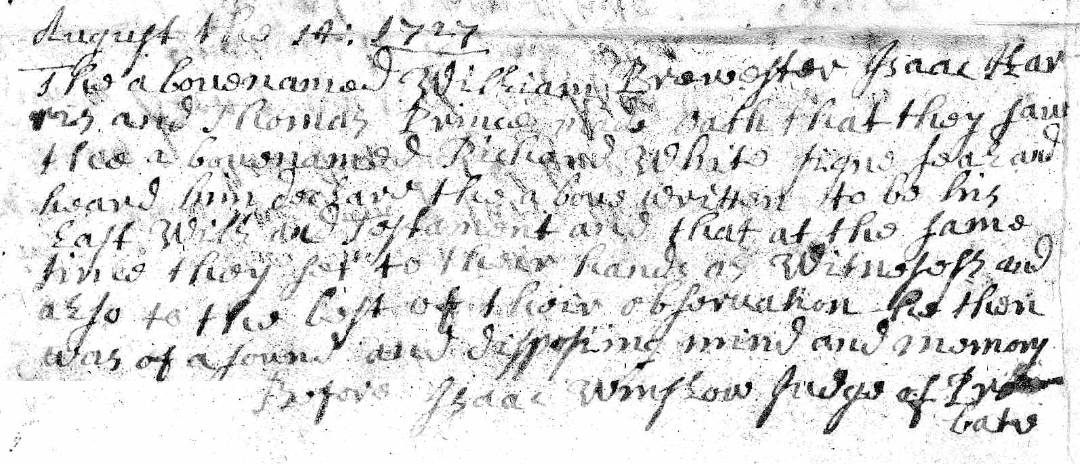
The church that was burned in 1690 was never rebuilt, and eventually, the nearby cemetery was probably at least partly covered by the glacis of the expanded fort.

MapAnnapolis shows the original church location and the original cemetery site, here. You can read more about the cemetery project, here.

That fort expansion is also how we know that Henriette Pelletret’s parental home was in the literal shadow of the fort. Simon Pelletret’s descendants were compensated when the land was later expropriated in 1704 or 1705

After the church was burned in 1690, services were held at the priest’s home until a new church was built many years after Henriette’s death.

Then Pirates

As if 1690 wasn’t already bad enough, Port Royal was subjected to a pirate raid a few weeks later.

Nicole Barrieau, in her 1994 thesis, quotes a letter from Villebon saying that the pirates burned all of the houses situated between the mouth of the Dauphin River and the fort.

Charles Clarence Webster, in a 1934 paper, reports that “they burned 12 of the houses closest to the sea, 15 or 16 of those at “Le Cap,” and the church… The Mills were apparently left standing.”

Click to enlarge

This 1686 map shows all of the homesteads. Based on the various descriptions, it’s possible that between the dozen or so homes in Port Royal, the 17 homes in “Le Cap,” just inland from the waterfront street in Port Royal, and the 14 houses shown on this map, that every home in Port Royal and west were burned. That would only have left the homes upstream from Port Royal where ocean-going ships couldn’t sail.

Not only did the pirates capture the ship that delivered Villebon, the new Governor, they destroyed homes and cattle, and allegedly killed some of the inhabitants.

The residents reported that little was left, and the pirates not only took what little there was, killed their remaining livestock and torched everything for spite or entertainment.

Families were been horribly uprooted, with many hostages taken. Sixty prisoners were still being held a year later when Villebon tried unsuccessfully to negotiate their freedom.

Their identities, where they were being held, by whom, and their eventual fate is unknown.

Where Was Henriette?

It’s very likely, given that Pierre was a mason, and combined with their census location, that they lived in Port Royal proper, probably right on the main street, possibly in her childhood home, meaning that Henriette was caught in the thick of things. The 1654 and 1690 surrenders, the duplicitous agreements, the horrific plundering and destruction of the town, followed in 1690 by burning and then cruel pirate attacks.

If Henriette and Pierre’s home miraculously escaped the English 1690 devastation the first time, it assuredly did not escape the pirate raids and fires.

Port Royal was left a smoldering pile of rubble.

Then, three year later, it happened all over again.

Rinse and Repeat in 1693

In 1693, once again English frigates sailed into the Dauphin River to launch a retaliatory raid on Port Royal. This time, it was to exact revenge for the notorious pirate, Pierre Maisonnat dit Baptiste, who lived in and operated out of Port Royal. Baptiste fought with the Acadians in 1690, recruited young Acadian men for his ships, armed the Acadians, and preyed on English vessels. Needless to say, the Acadians loved this man. The English did not.

In some ways, while not a full military attack, the June 1693 raid was more brutal. Some accounts say that two citizens were hanged and that their families were locked inside their houses and burned alive.

I pray Henriette did not suffer that horrific, terrifying fate. The reports indicated that a woman and her children were among those burned. That doesn’t sound like Henriette because while some of her children are missing in 1693, not all of her children are missing. However, nothing is confirmed about the report, so we really don’t know – other than the 1690 attack and 1693 raids were both terrifying and horrific.

I shudder to think…

Henriette Dies

Henriette was alive in the 1678 census, gave birth to her youngest child in 1685, and is shown with a one-year-old in the 1686 census.

Henriette died sometime between the 1686 census, where she was reported to be 40, with a one-year old child, and seven years later in the 1693 census.

We don’t know when the 1693 census was taken, meaning before or after the English attack, nor do we know who died.

Seven years elapsed between the 1686 census and the 1693 census, plus the two attacks of 1690, and the one in 1693, so a lot of people in Port Royal could be expected to pass over during that timeframe, even without any exceptional circumstances.

There may be clues though.

In the 1671 census, Henriette is listed as age 30 and 31 putting her birth about 1640 or 1641. Her oldest child is 10, which means Henriette got married and pregnant about 1660. In the 1686 census, she is listed as 40, which puts her birth in 1646, which means that she would have been 16 when her first child was born. That’s not impossible and is fairly typical for Acadian brides.

If Mathieu was age one in 1686, and his mother was actually born in 1640, so was age 46, Henriette had her last child at age 45 and would not have been expected to have any additional children. That’s also a little late for a final child, but again, not unheard of.

If Henriette was actually born in 1646, so 40 in 1686 as the census indicates, she could probably have been expected to have at least one more child the following year, in 1687, if not two more children.

Unfortunately, we don’t have a third tie-breaker census with ages to more closely resolve Henriette’s age. Either age is well within the normal age range for Acadian young women to marry.

What we can say is that Henriette died leaving relatively young children.

If Henriette died closer to 1686, she was not subjected to the 1690 and 1693 depredations. She passed over between the approximate ages of 40 and 46 and left at least two children under the age of 10, one just a baby, for Pierre to raise. At least one of her children seem to be missing from this census.

I tend to think Henriette died later, rather than earlier, because had she died with a baby in the house, I suspect that either another Acadian woman, maybe her sister, would have taken the baby to raise, or Pierre would have remarried.

If Henriette died close to 1693, she suffered through at least some of the 1690 and 1693 events, if she didn’t perish during one of them.

We can say with almost certainty that their home burned, either in 1690 or 1693, or maybe both. In the 1693 census, Pierre Doucet was still living in Port Royal, based on his neighbors. Five years later, in 1698, he was living across the river, again based on the neighbors. He is listed there on the 1707/1708 maps.

In 1693, Henrietta was between the ages of 47 and 53 and left only Mathieu below the age of 10. Three children still lived at home and were probably a help to Pierre. With no young children to raise, Pierre would have bad less motivation to remarry.

In the 1693 census, Pierre was listed as a widower with three children remaining at home, ages 19, 13, and 8,

If Henriette was born around 1640 or 1641, she was between the ages of 45 or 46 and 52 when she said her final goodbye.

If she was born in 1646, she was between 40 and 47 and could have died giving birth to a final child.

Regardless of when Henriette died, I certainly hope it wasn’t violently. Her death, too early, was tragic enough.

Henriette’s mother, Perrine Bourg, then in her 60s, wept at her daughter’s funeral Mass, the location now veiled in the mists of time where the serene church once stood. She laid her daughter to rest someplace in the now unmarked Acadian cemetery, alongside Henriette’s father and stepfather, surrounded by the children who passed before her.

Children

Henriette brought about 15 children into this world, assuming her first child or children did not die.

  1. Anne Doucet, born about 1661, was with her parents in 1671, but by the 1686 census, is shown with her husband. Anne married Jean Hebert about 1676, when she was about 15, and by 1686, had blessed Henriette with 5 grandchildren – 4 boys and a girl. By 1693, she had eight children, and eventually had 14, but four died young.
  2. Touissant Doucet was born about 1663, left for Beaubassin sometime after the 1686 census and married Marie Cassie there around 1690. They had 11 known children, with the first one arriving the following year. Henriette probably never met either Marie or her one or two grandchildren that may have arrived before her death. Touissant had 11 children in total, but only 6 reached adulthood.
  3. Jean Doucet was born about 1665, married Francoise Blanchard around 1692 in Cobequid, and had 7 children. Three are known to have lived to adulthood.
  4. Pierre Doucet, his father’s namesake, was born about 1667 and is living with his parents in 1686 at age 19. Sadly, he is not found thereafter. If alive, he would have been expected to marry in the 1690s, but he is not found anyplace in 1693. His mother has also died.
  5. Unknown child born about 1669, but deceased by 1671.
  6. Madeleine Doucet was born about 1671 and married Rene Bernard about 1689. They had eight children, with the first one being born about 1690. By 1693, they were living in Beaubassin, so she would not have been present in Port Royal when her mother died. Rene died and Madeleine remarried in 1709 in Beaubassin to Pierre Doiron, having two more children. Eight of her 10 children lived to adulthood.
  7. Possible unknown child born about 1673 and deceased by the 1678 census.
  8. Louis was born about 1674 and married Marguerite Girouard about 1702 in Beaubassin. They had seven known children, six of whom lived to adulthood.
  9. Louise (also known as Jeanne) Doucet was born about 1676. About 1691, she married Pierre Chenet, a Parisian in the employ of the King, about 30 years her elder with whom she had three children. After his death, she then married Jean Chrysostome Loppinot in 1702 in Port Royal. They had at least five children. Loppinot had been appointed Court Clerk in 1699, so he was also a government official. However, in yet another attack by the English, their home was burned to the ground in 1707 or 1708, which, according to Loppinot in a note written on Christmas Day 1708, “reduced his family to beggary.” In June of 1710, their home burned again, but this time, by accident. Notes housed in the Canadian Archives reveal that, “The wife and children of the said Mr. Loppinot, along with Mademoiselle Morpain, were in front of the house with a few belongings that had been brought to them, having escaped in their nightclothes. Upon investigating the cause and how the fire had started, those who had arrived first told us that it began in the room facing the tide, where there was a large amount of cotton…” I hope all of Louise’s children were able to escape. We only know the fate of one child born in 1703, and that another child had died in January of 1710. Marie Joseph Morpain had been his godmother at his baptism. I wonder if she was their servant. In 1712, Loppinot obtained the position of court clerk in Plaisance, Newfoundland. By 1733, when their oldest child was married in Louisbourg, both parents were reported as deceased.
  10. Rene Doucet was born about 1678 and married Marie Broussard in 1702 in Port Royal. They had either 10 or 11 known children, with 8 reaching adulthood.
  11. Marguerite Doucet was born about 1680 and married Alexandre Comeau about 1700 in Port Royal, having six known children. Five of her children are known to have reached adulthood.
  12. Unknown child born about 1682 but deceased by 1686.
  13. Unknown child born about 1684 but deceased by 1686.
  14. Mathieu Doucet was born about 1685 and married Anne Lord in 1712 in Port Royal, having seven children, all of whom survived.

Epilogue

By 1685, only Henriette’s eldest daughter, Anne, had married and already had 5 children that Henriette would have been able to enjoy. In fact, Henriette and her daughter were probably pregnant at the same time.

If Henriette lived until 1693, she would have witnessed Madeleine’s marriage in 1689 and Louise’s in 1691. The first baby usually arrived the year following the wedding – and Henriette might have gotten to hold and rock some of those babies!

Of Henriette’s children:

  • Two and possibly three moved away before 1693, so she would have lost contact, if not entirely, then mostly. She probably never saw them again.
  • Henriette buried at least five children. Her son, Pierre, a young adult, died in the same window of time as Henriette.
  • Three children were still living at home in 1693, after Henriette had passed.
  • Four children married and lived in Port Royal permanently, and one until at least 1712. Henriette would have known the first few children born to her eldest daughter, but the rest are doubtful.
  • Four children moved to either Beaubassin or Cobequid, the next Acadian frontiers.

I’m left wondering if the horrific events of 1690, or 1693 might have had something to do with Henriette’s death. I hope not, but it’s certainly possible, especially given that one of Henriette’s older children disappears from the records in the same timeframe.

FIRE!

Henriette’s daughter, Louise, would have been about 15 in 1690 and 18 in 1693 when the English and/or pirates torched their home. Louise’s own home burned twice more in her adult life, in either 1707 or 1708 and 1710, when she was 33 and 35. Four times in 20 years – that’s astounding. Louise must have developed a terrible fear of fire.

Pierre Doucet, Henriette’s husband, didn’t die until 1713. He would have witnessed all of those disastrous events.

I can see him awakened suddenly in the dark to terror – the crackling of flames.

OMG!

FIRE!

Saints, protect us!

Rushing – rushing – rushing in the dark to find, gather, and hold his family and assure their safety in 1690 and 1693.

Then, in 1708 and 1710, he clutched his daughter, Louise, and her children, holding them close as they stood in the chill by the river in their nightclothes, enveloping them in love, sheltering them as their home was reduced to smoking embers. Not once, but twice he saved her from fire as a child. Then, twice more as an adult – not three times, but four.

Thank God!

Thank God they are alive.

Maybe Henriette was there too, embracing and protecting Louise from the other side.

Perhaps it was Henriette who awakened her in the night!

Nothing – not time, distance or death – can crush a mother’s love.

The mist still drifting where the church once stood, their dust mingling with the earth of their homeland – a silent reminder that love outlives everything and warms the souls of all of Henriette’s descendants.

_____________________________________________________________

Share the Love!

You’re always welcome to forward articles or links to friends and share on social media.

Subscribe!

If you haven’t already subscribed (it’s free,) you can receive an e-mail whenever I publish by clicking the “follow” button on the main blog page, here.

Help Keep This Blog Free

I receive a small contribution when you click on some of the links to vendors in my articles. This does NOT increase your price but helps me keep the lights on and this informational blog free for everyone. Please click on the affiliate links in the articles or to the vendors below if you are purchasing products or DNA testing.

Thank you so much.

DNA Purchases and Free Uploads

Genealogy Products and Services

My Books

Genealogy Books

Genealogy Research