Guide to DNA Testing by Richard Hill

guide to dna testing

Richard Hill, author of “Finding Family; My Search for Roots and the Secrets in my DNA,” just released his second book, “Guide to DNA Testing; How to Identify Ancestors, Confirm Relationships and Measure Ethnicity through DNA Testing” in Kindle format for just 99 cents through Amazon.

While Richard’s first book was the story of his personal search for his biological parents, this second book is an introductory primer for those who are just getting their feet wet in genetic genealogy, or thinking about getting their feet wet.  It’s relatively short, just 23 pages, so it’s not overwhelming.

guide to dna testing toc

Guide to DNA Testing isn’t a “how to” book in terms of utilizing DNA results, but a basic introduction to the field of genetic genealogy, the major players, meaning Family Tree DNA, 23andMe and Ancestry.com, who sells what and how those tests work at a basic level.

Richard approaches the topic in terms of developing a testing strategy to obtain the answers for whatever it is that you are seeking through DNA testing.

My favorite part of the book is a table at the end that provides commentary in columns about the 3 test types, autosomal, Y and mitochondrial, and what each provides:

  • What is checked
  • Principal uses
  • Strengths
  • Limitations
  • Recommended tests

Useful, accurate, unbiased, Guide to DNA Testing and would be perfect for a new person seeking general information.  For the rest of us, it gives us a great “go to” resource for new people instead of trying to explain from scratch.  Great job Richard!!!

______________________________________________________________

Disclosure

I receive a small contribution when you click on some of the links to vendors in my articles. This does NOT increase the price you pay but helps me to keep the lights on and this informational blog free for everyone. Please click on the links in the articles or to the vendors below if you are purchasing products or DNA testing.

Thank you so much.

DNA Purchases and Free Transfers

Genealogy Services

Genealogy Research

Stone Helix

thea alvin helix

In the just for fun category, I was thrilled when I found these helix earthworks, made from stone by Thea Alvin, a stonemason, at www.myearthwork.com.  They are just incredible with the stones held in place by gravity alone.

thea alvin helix2

I don’t know about you, but I want one of these in my yard. Oh yeah!!!!

thea alvin3

The three arch helix structure is on Thea’s property between Morrisville and Stowe, Vermont. She has transformed her yard into a sculpture park and it’s open 10-6 on weekends to the public, or by prior arrangement.  You can also request a tour by dropping Thea an e-mail at thea@myearthwork.com.  She has also opened an artistan gallery in her barn called Rock, Paper, Scissors.

From Stowe, take Route 100 south towards Morrisville; look for the looping, three-arch stone sculpture and My Earthwork sign.  I have a trip planned to Vermont next year.  Maybe I’ll visit.

Here’s an article in the local Stowe paper and here’s a video of Thea where she discusses wanting to create stoneworks that are timeless.  I wonder if she realizes just how spiritual and timeless the helix, in particular the double helix is, reaching back through the entire timeline of humankind.

Maybe her next project will be to create a true double helix! What do you think, Thea?  Are you game???

______________________________________________________________

Disclosure

I receive a small contribution when you click on some of the links to vendors in my articles. This does NOT increase the price you pay but helps me to keep the lights on and this informational blog free for everyone. Please click on the links in the articles or to the vendors below if you are purchasing products or DNA testing.

Thank you so much.

DNA Purchases and Free Transfers

Genealogy Services

Genealogy Research


Tenth Annual Family Tree DNA Conference Wrapup

baber summary

This slide, by Robert Baber, pretty well sums up our group obsession and what we focus on every year at the Family Tree DNA administrator’s conference in Houston, Texas.

Getting to Houston, this year, was a whole lot easier than getting out of Houston. They had storms yesterday and many of us spent the entire day becoming intimately familiar with the airport.  Jennifer Zinck, of Ancestor Central, is still there today and doesn’t have a flight until late.

And this is how my day ended, after I finally got out of Houston and into my home airport. This isn’t at the airport, by the way.  Everything was fine there, but I made the apparent error of stopping at a Starbucks on the way home.  This is the parking lot outside an hour or so later.  What can I say?  At least I had my coffee, and AAA rocks, as did the tow truck driver and my daughter for getting out of bed to come and rescue me!!!  Hmmm, I think maybe things have gone full circle.  I remember when I used to go and rescue her:)

jeep tow

So far, today hasn’t improved any, so let’s talk about something much more pleasant…the conference itself.

Resources

One of the reasons I mentioned Jennifer Zinck, aside from the fact that she’s still stuck in the airport, is because she did a great job actually covering the conference as it happened. Since I had some time yesterday to visit with her since our gates weren’t terribly far apart, I asked her how she got that done.  I took notes too, and photos, but she turned out a prodigious amount of work in a very short time.  While I took a lightweight MacBook Air, she took her regular PC that she is used to typing on, and she literally transcribed as the sessions were occurring.  She just added her photos later, and since she was working on a platform that she was familiar with, she could crop and make the other adjustments you never see but we perform behind the scenes before publishing a photo.

On the other hand, I struggled with a keyboard that works differently and is a different size than I’m used to as well as not being familiar with the photo tools to reduce the size of pictures, so I just took rough notes and wrote the balance later.  Having familiar tools make such a difference.  I think I’ll carry my laptop from now on, even though it is much heavier.  Kudos to Jennifer!

I was initially going to summarize each session, but since Jen did such a good job, I’m posting her links. No need to recreate a wheel that doesn’t need to be recreated.

http://www.ancestorcentral.com/decennial-conference-on-genetic-genealogy/

ISOGG, the International Society of Genetic Genealogy is not affiliated with Family Tree DNA or any testing company, but Family Tree DNA is generous enough to allow an ISOGG meeting on Sunday before the first conference session.

http://www.ancestorcentral.com/decennial-conference-on-genetic-genealogy-isogg-meeting/

http://www.ancestorcentral.com/decennial-conference-on-genetic-genealogy-sunday/

You can find my conference postings here:

http://dna-explained.com/2014/10/11/tenth-annual-family-tree-dna-conference-opening-reception/

http://dna-explained.com/2014/10/12/tenth-annual-family-tree-dna-conference-day-2/

http://dna-explained.com/2014/10/13/tenth-annual-family-tree-dna-conference-day-3/

Several people were also posting on a twitter feed as well.

https://twitter.com/search?q=%23FTDNA2014&src=tyah

Those of you where are members of the ISOGG Yahoo group for project administrators can view photos posted by Katherine Borges in that group and there are also some postings on the Facebook ISOGG group as well.

Now that you have the links for the summaries, what I’d like to do is to discuss some of the aspects I found the most interesting.

The Mix

When I attended my first conference 10 years ago, I somehow thought that for the most part, the same group of people would be at the conferences every year. Some were, and in fact, a handful of the 160+ people attending this conference have attended all 10 conferences.  I know of two others for certain, but there were maybe another 3 or so who stood up when Bennett asked for everyone who had been present at all 10 conferences to stand.

Doug Mumma, the very first project administrator was with us this weekend, and still going strong. Now, if Doug and I could just figure out how we’re related…

Some of the original conference group has passed on to the other side where I’m firmly convinced that one of your rewards is that you get to see all of those dead ends of your tree. If we’re lucky, we get to meet them as well and ask all of those questions we have on this side.  We remember our friends fondly, and their departure sadly, but they enriched us while they were here and their memories make us smile.  I’m thinking specifically of Kenny Hedgepath and Leon Little as I write this, but there have been others as well.

The definition of a community is that people come and go, births, deaths and moves.

This year, about half of the attendees had never attended a conference before. I was very pleased to see this turn of events – because in order to survive, we do need new people who are as crazy as we are…er….I mean as dedicated as we are.

isogg reception

ISOGG traditionally hosts a potluck reception on Saturday evening. Lots of putting names with faces going on here.

Collaboration

I asked people about their favorite part of the conference or their favorite session. I was surprised at the number of people who said lunches and dinners.  Trust me, the food wasn’t that wonderful, so I asked them to elaborate.  In essence, the most valuable aspect of the conference was working with and talking to other administrators.

bar talk

It’s not like we don’t talk online, but there is somehow a difference between online communications and having a group discussion, or a one-on-one discussion. Laptops were out and in use everyplace, along with iPads and other tools.  It was so much fun to walk by tables and hear snippets of conversations like “the mutation at location 309.1….” and “null marker at 425” and “I ordered a kit for my great uncle…..”

I agree, as well. I had pre-arranged two dinners before arriving in order to talk with people with whom I share specific interests.  At lunches, I either tried to sit with someone I specifically needed to talk to, or I tried to meet someone new.

I also asked people about their specific goals for the next year. Some people had a particular goal in mind, such as a specific brick wall that needs focus.  Some, given that we are administrators, had wider-ranging project based goals, like Big Y testing certain family groups, and a surprising number had the goal of better utilizing the autosomal results.

Perhaps that’s why there were two autosomal sessions, an introduction by Jim Bartlett and then Tim Janzen’s more advanced session.

Autosomal DNA Results

jim bartlett

Note the cool double helix light fixture behind the speakers.

tim janzen

Tim specifically mentioned two misconceptions which I run across constantly.

Misconception 1 – A common surname means that’s how you match.  Just because you find a common surname doesn’t mean that’s your DNA match.  This belief is particularly prevalent in the group of people who test at Ancestry.com.

Misconception 2 – Your common ancestor has to be within the past 6 generations.  Not true, many matches can be 6-10th cousins because there are so many descendants of those early ancestors, even as many as 15 generations back.

Tim also mentioned that endogamous relationships are a tough problem with no easy answer. Polynesians, Ashkenazi Jews, Low German Mennonites, Acadians, Amish, and island populations.  Do I ever agree with him!  I have Brethren, Mennonite and Acadian in the same parent’s line.

Tim has been working with the Mennonite DNA project now for many years.

Tim included a great resource slide.

tim slide1

Tim has graciously made his entire presentation available for download.

tim slide2

There are probably a dozen or so of us that are actively mapping our ancestors, and a huge backlog of people who would like to. As Tim pointed out with one of his slides, this is not an easy task nor is it for the people who simply want to receive “an answer.”

tim slide3

I will also add that we “mappers” are working with and actively encouraging Family Tree DNA to develop tools so that the mapping is less spreadsheet manual work and more automated, because it certainly can be.

Upload GEDCOM Files

If you haven’t already, upload your GEDCOM to Family Tree DNA.  This is becoming an essential part of autosomal matching.  Furthermore, Family Tree DNA will utilize this file to construct your surname list and that will help immensely determining common surnames and your common ancestor with your Family Finder matches.  If you have sponsored tests for cousins, then upload a GEDCOM file for them or at least construct a basic tree on their Family Tree DNA page.

Ethics

Family Tree DNA always tries to provide a speaker about ethics, and the only speakers I’ve ever felt understood anything about what we want to do are Judy Russell and Blaine Bettinger.  I was glad to see Blaine presenting this year.

blaine bettinger

The essence of Blaine’s speech is that ethics isn’t about law. Law is cut and dried.  Ethics isn’t, and there are no ethics police.

Sometimes our decisions are colored necessarily by right and wrong.  Sometimes those decisions are more about the difference between a better and a worse way.

As a community, we want to reduce negative press coverage and increase positive coverage. We want to be proactive, not reactive.

Blaine stresses that while informed consent is crucial, that DNA doesn’t reveal secrets that aren’t also revealed by other genealogical forms of research. DNA often reveals more recent secrets, such as adoptions and NPEs, so it’s possibly more sensitive.

Two things need to govern our behavior. First, we need to do only things that we would be comfortable seeing above the fold in the New York Times.  Second, understand that we can’t make promises about topics like anonymity or about the absence of medical information, because we don’t know what we don’t know.

The SNP Tsunami

One of my concerns has been and remains the huge number of new SNPs that have been discovered over the past year or so with the Big Y by Family Tree DNA and  corresponding tests from other vendors.

When I say concern, I’m thrilled about this new technology and the advances it is allowing us to make as a community to discover and define the evolution of haplogroups. My concern is that the amount of data is overwhelming.  However, we are working through that, thanks to the hours and hours of volunteer work by haplogroup administrators and others.

Alice Fairhurst, who volunteers to maintain the ISOGG haplotree, mentioned that she has added over 10,000 SNPs to the Y tree this year alone, bringing the total to over 14,000. Those SNPs are fully vetted and placed.  There are many more in process and yet more still being discovered.  On the first page of the Y SNP tree, the list of SNP sources and other critical information, such as the criteria for a SNP to be listed, is provided.

isogg tree3

isogg snps

isogg snps 2014

So, if you’re waiting for that next haplotree poster, give it up because there isn’t a printing press that big, unless you want wallpaper.

isogg new development 2014

These slides are from Alice’s presentation. The ISOGG tree provides an invaluable resource for not only the genetic genealogy community, but also researchers world-wide.

As one example of how the SNP tsunami has affected the Y tree, Alice provided the following summary of R-U106, one of the two major branches of haplogroup R.

From the ISOGG 2006 Y tree, this was the entire haplogroup R Y tree. You can see U106 near the bottom with 3 sub-branches.  While this probably makes you chuckle today, remember that 2006 was only 8 years ago and that this tree didn’t change much for several years.

2006 entire tree

2007 was the same.

2008 u106 tree

2008 shows 5 subclades and one of the subclades had 2 subclades.

2009 u106 tree

2009 showed a total of 12 sub-branches and 2010 added one more.

2011 however, showed a large change. U106 in 2011 had 44 subgroups total and became too large to show on one screen shot.  2012 shows 99 subclades, if I counted accurately.  The 2014 U106 tree is shown below.

before big y

after big y

u106 now

u106 now2

There’s another slide too, but I didn’t manage to get the picture.  You get the idea though…

As you can imagine, for Family Tree DNA, trying to keep up with all of the haplogroups, not just one subgroup like U106 is a gargantuan task that is constantly changing, like hourly. Their Y tree is currently the National Geographic tree, and while they would like to update it, I’m sure, the definition of “current tree” is in a constant state of flux.  Literally, Mike Walsh, one of the admins in the R-L21 group uploads a new tree spreadsheet several times every day.

In order to deal attempt to deal with this, and to encourage people who don’t want to do a Big Y discovery type test, but do want to ferret out their location on their assigned portion of the tree, Family Tree DNA is reintroducing the Backbone tests.

They are starting with M222, also known as the Niall of the 9 Hostages haplogroup which is their beta for the new product and new process. You can see the provisional tree and results in the two slides they provided, below.  I apologize for the quality, but it was the best I could do.

M222

m222 pie

Haplogroup administrators are going to be heavily involved in this process. Family Tree DNA is putting SNP panels together that will help further define the tree and where various SNPs that have been recently discovered, and continue to be discovered, will fall on the tree.

As Big Y tests arrive, haplogroup project administrators typically assemble a spreadsheet of the SNPS and provisionally where they fall on the tree, based on the Big Y results.

What Bennett asked is for the admins to work with Family Tree DNA to assemble a testing panel based on those results. The goal is for the cost to be between $1.50 and $2 (US) for each SNP in the panel, which will reduce the one-off SNP testing and provide a much more complete and productive result at a far reduced price as compared to the current $29 or $39 per individual SNP.

If you are a haplogroup administrator, get in touch with Family Tree DNA to discuss your desired backbone panels. New panels, when it’s your turn, will take about 2 weeks to develop.

Keep in mind that the following SNPs, according to Bennett, are not optimal for panels:

  • Palindromic regions
  • Often mutating regions designated as .1, .2, etc.
  • SNPs in STRs

Nir Leibovich, the Chief Business Officer, also addressed the future and the Big Y to some extent in his presentation.

nir leibovich

ftdna future 2014

Utilizing the Big Y for Genealogy

In my case, during the last sale, I ordered several Big Y tests for my Estes family line because I have several genealogically documented lines from the original Estes family in Kent, England through our common ancestor, Robert Estes born in 1555 and his wife Anne Woodward. The participants also agreed to extend their markers to 111 markers as well.  When the results are back, we’ll be able to compare them on a full STR marker set, and also their SNPs.  Hopefully, they will match on their known SNPs and there will be some new novel variants that will be able to suffice as line marker mutations.

We need more BIG Y tests of these types of genealogically confirmed trees that have different sons’ lines from a distant common ancestor to test descendant lines. This will help immensely to determine the actual, not imputed, SNP mutation rate and allow us to extrapolate the ages of haplogroups more accurately.  Of course, it also goes without saying that it helps to flesh out the trees.

I personally expect the next couple of years will be major years of discovery. Yes, the SNP tsumani has hit land, but it’s far from over.

Research and Development

David Mittleman, Chief Scientific Officer, mentioned that Family Tree DNA now has their own R&D division where they are focused on how to best analyze data. They have been collaborating with other scientists.  A haplogroup G1 paper will be published shortly which states that SNP mutation rates equate to Sanger data.

FTDNA wants to get Big Y data into the public domain. They have set up consent for this to be done by uploading into NCBI.  Initially they sent a survey to a few people that  sampled the interest level.  Those who were interested received a release document.  If you are interested in allowing FTDNA to utilize your DNA for research, be it mitochondrial, Y or autosomal, please send them an e-mail stating such.

Don’t Forget About Y Genealogy Research

It’s very easy for us to get excited about the research and discovery aspect of DNA – and the new SNPs and extending haplotrees back in time as far as possible, but sometimes I get concerned that we are forgetting about the reason we began doing genetic genealogy in the first place.

Robert Baber’s presentation discussed the process of how to reconstruct a tree utilizing both genealogy and DNA results. It’s important to remember that the reason most of our participants test is to find their ancestors, not, primarily, to participate in the scientific process.

Robert baber

edward baber

Robert has succeeded in reconstructing 110 or 111 markers of the oldest known Baber ancestor, shown above. I wrote about how to do this in my article titled, Triangulation for Y DNA.

Not only does this allow us to compare everyone with the ancestor’s DNA, it also provides us with a tool to fit individuals who don’t know specific genealogical line into the tree relatively accurately. When I say relatively, the accuracy is based on line marker mutations that have, or haven’t, happened within that particular family.

Jim illustrated how to do this as well, and his methodology is available at the link on his slide, below.

baber method

I had to laugh. I’ve often wondered what our ancestors would think of us today.  Robert said that that 11 generations after Edward Baber died, he flew over church where Edward was buried and wondered what Edward would have thought about what we know and do today – cars, airplanes, DNA, radio, TV etc..  If someone looked in a crystal ball and told Edward what the future held 11 generations later, he would have thought that they were stark raving mad.

Eleven generations from my birth is roughly the year 2280. I’m betting we won’t be trying to figure out who our ancestors were through this type of DNA analysis then.  This is only a tiny stepping stone to an unknown world, as different to us as our world is to Edward Baber and all of our ancestors who lived in a time where we know their names but their lives and culture are entirely foreign to ours.

Publications

When the Journal of Genetic Genealogy was active, I, along with other citizen scientists published regularly.  The benefit of the journal was that it was peer reviewed and that assured some level of accuracy and because of that, credibility, and it was viewed by the scientific community as such.  My co-authored works published in JOGG as well as others have been cited by experts in the academic community.  It other words, it was a very valuable journal.  Sadly, it has fallen by the wayside and nothing has been published since 2011.  A new editor was recruited, but given their academic load, they have not stepped up to the plate.  For the record, I am still hopeful for a resurrection, but in the mean time, another opportunity has become available for genetic genealogists.

Brad Larkin has founded the Surname DNA Journal, which, like JOGG, is free to both authors and subscribers. In case you weren’t aware, most academic journal’s aren’t.  While this isn’t a large burden for a university, fees ranging from just over $1000 to $5000 are beyond the budget of genetic genealogists.  Just think of how many DNA tests one could purchase with that money.

brad larkin

surname dna journal

Brad has issued a call for papers. These papers will be peer reviewed, similarly to how they were reviewed for JOGG.

call for papers

Take a look at the articles published in this past year, since the founding of Surname DNA Journal.

The citizen science community needs an avenue to publish and share. Peer reviewed journals provide us with another level of credibility for our work. Sharing is clearly the lynchpin of genetic genealogy, as it is with traditional genealogy. Give some thought about what you might be able to contribute.

Brad Larkin solicited nominations prior to the conference and awarded a Genetic Genealogist of the Year award. This year’s award was dually presented to Ian Kennedy in Australia, who, unfortunately, was not present, and to CeCe Moore, who just happened to follow Brad’s presentation with her own.

Don’t Forget about Mitochondrial DNA Either

I believe that mitochondrial DNA the most underutilized DNA tool that we have, often because how to use mitochondrial DNA, and what it can tell you, is poorly understood. I wrote about this in an article titled, Mitochondrial, The Maligned DNA.

Given that I work with mitochondrial DNA daily when I’m preparing client’s Personalized DNA Reports (orderable from your personal page at Family Tree DNA or directly from my website), I know just how useful mitochondrial can be and see those examples regularly. Unfortunately, because these are client reports, I can’t write about them publicly.

CeCe Moore, however, isn’t constrained by this problem, because one of the ways she contributes to genetic genealogy is by working with the television community, in particular Genealogy Roadshow and the PBS series, Finding Your Roots. Now, I must admit, I was very surprised to see CeCe scheduled to speak about mitochondrial DNA, because the area of expertise where she is best known is autosomal DNA, especially in conjunction with adoptee research.

cece moore

cece mtdna

During the research for the production of these shows, CeCe has utilized mitochondrial DNA with multiple celebrities to provide information such as the ethnic identification of the ancestor who provided the mitochondrial DNA as Native American.

Autosomal DNA testing has a broad but shallow reach, across all of your lines, but just back a few generations.  Both Y and mitochondrial DNA have a very deep reach, but only on one specific line, which makes them excellent for identifying a common ancestor on that line, as well as the ethnicity of that individual.

I have seen other cases, where researchers connected the dots between people where no paper trail existed, but a relationship between women was suspected.

CeCe mentioned that currently there are only 44,000 full sequence results in the Family Tree DNA data base and and 185K total HVR1, HVR2 and full sequence tests. Y has half a million.  We need to increase the data base, which, of course increases matches and makes everyone happier.  If you haven’t tested your mitochondrial DNA to the full sequence level, this would be a great time!

There are several lessons on how to utilize mitochondrial DNA at this ISOGG link.

I’m very hopeful that CeCe’s presentation will be made available as I think her examples are quite powerful and will serve to inspire people.  Actually, since CeCe is in the “movie business,” perhaps a short video clip could be made available on the FTDNA website for anyone who hasn’t tested their mitochondrial DNA so they can see an example of why they should!

myOrigins

I would be fibbing to you if I told you I am happy with myOrigins. I don’t feel that it is as sensitive as other methods for picking up minority admixture, in particular, Native American, especially in small amounts.  Unfortunately, those small amounts are exactly what many people are looking for.

If someone has a great-great-great-great grandparent that is Native, they carry about 1%, more or less, of the Native ancestor’s DNA today. A 4X great grandparent puts their birth year in the range of 1800-1825 – or just before the Trail of Tears.  People whose colonial American families intermarried with Native families did so, generally, before the Trail of Tears.  By that time, many tribes were already culturally extinct and those east of the Mississippi that weren’t extinct were fighting for their lives, both literally and figuratively.

We really need the ability to develop the most sensitive testing to report even the smallest amounts of Native DNA and map those segments to our chromosomes so that we can determine who, and what line in our family, was Native.

I know that Family Tree DNA is looking to improve their products, and I provided this feedback to them. Many people test autosomally only for their ethnicity results and I surely would love to have those people’s results available as matches in the FTDNA data base.

Razib Khan has been working with Family Tree DNA on their myOrigins product and spoke about how the myOrigins data is obtained.

razib kahn

my origins pieces

Given that all humans are related, one way or another, far enough back in time, myOrigins has to be able to differentiate between groups that may not be terribly different. Furthermore, even groups that appear different today may not have been historically.  His own family, from India, has no oral history of coming from the East, but the genetic data clearly indicates that they did, along with a larger group, about 1000 years ago.  This may well be a result of the adage that history is written by the victors, or maybe whatever happened was simply too long ago or unremarkable to be recorded.

Razib mentioned that depending on the cluster and the reference samples, that these clusters and groups that we see on our myOrigins maps can range from 1000-10,000 years in age.

relatedness of clusters

The good news is that genetics is blind to any preconceived notions. The bad news is that the software has to fit your results to the best population, even though it may not be directly a fit.  Hopefully, as we have more and better reference populations, the results will improve as well.

my origin components

pca chart

Razib showed a PCA (principal components analysis) graph, above. These graphs chart reference populations in different quadrants.  Where the different populations overlap is where they share common historic ancestors.  As you can see, on this graph with these reference populations, there is a lot of overlap in some cases, and none in others.

Your personal results would then be plotted on top of the reference populations. The graph below shows me, as the white “target” on a PCA graph created by Doug McDonald.

my pca chart

The Changing Landscape

A topic discussed privately among the group, and primarily among the bloggers, is the changing landscape of genetic genealogy over the past year or so.  In many ways I think the bloggers are the canaries in the mine.

One thing that clearly happened is that the proverbial tipping point occurred, and we’re past it. DNA someplace along the line became mainstream.  Today, DNA is a household word.  At gatherings, at least someone has tested, and most people have heard about DNA testing for genealogy or at least consumer based DNA testing.

The good news in all of this is that more and more people are testing. The bad news is that they are typically less informed and are often impulse purchasers.  This gives us the opportunity for many more matches and to work with new people.  It also means there is a steep learning curve and those new testers often know little about their genealogy.  Those of us in the “public eye,” so to speak, have seen an exponential spike in questions and communications in the past several months.  Unfortunately, many of the new people don’t even attempt to help themselves before asking questions.

Sometimes opportunity comes with work clothes – for them and us both.

I was talking with Spencer about this at the reception and he told me I was stealing his presentation.  He didn’t seem too upset by this:)

spencer and me

I had to laugh, because this falls clearly into the “be careful what you wish for, you may get it” category. The Genographic project through National Geographic is clearly, very clearly, a critical component of the tipping point, and this was reflected in Spencer’s presentation.  Although I covered quite a bit of Spencer’s presentation in my day 2 summary, I want to close with Spencer here.  I also want to say that if you ever have the opportunity to hear Spencer speak, please do yourself the favor and be sure to take that opportunity.  Not only is he brilliant, he’s interesting, likeable and very approachable.  Of course, it probably doesn’t hurt that I’ve know him now for 9 years!  I’ve never thought to have my picture taken with Spencer before, but this time, one of my friends did me the favor.

I have to admit, I love talking to Spencer, and listening to him. He is the adventurer through whom we all live vicariously.  In the photo below, Spencer along with his crew, drove from London to Mongolia.  Not sure why he is standing on the top of the Land Rover, but I’m sure he will tell us in his upcoming book about that journey,

spencer on roof

I’m warning you all now, if I win the lottery, I’m going on the world tour that he hosts with National Geographic, and of course, you’ll all be coming with me via the blog!

Spencer talked about the consumer genomics market and where we are today.

spencer genomics

Spencer mentioned that genetic genealogy was a cottage industry originally. It was, and it was even smaller than that, if possible.  It actually was started by Bennett and his cell phone.  I managed to snap a picture of Bennett this weekend on the stage looking at his cell, and I thought to myself, “this is how it all started 14 years ago.”  Just look where we are today.  Thank you Michael Hammer for telling Bennett that you received “lots of phone calls from crazy genealogists like you.”

bennett first office

So, where exactly are we today?  In 2013, the industry crossed the millionth kit line.  The second millionth kit was sold in early summer 2014 and the third million will be sold in 2015.  No wonder we feel like a tidal wave has hit.  It has.

Why now?

DNA has become part of national consciousness.  Businesses advertise that “it’s in our DNA.”  People are now comfortable sharing via social media like facebook and twitter.  What DNA can do and show you, the secrets it can unlock is spreading by word of mouth.  Spencer termed this the “viral spread threshold” and we’ve crossed that invisible line in the sand.  He terms 2013 as the year of infection and based on my blog postings, subscriptions, hits, reach and the number of e-mails I receive, I would completely agree.  Hold on tight for the ride!

Spencer talked about predictions for near term future and said a 5 year plan is impossible and that an 18 month plan is more realistic. He predicts that we will continue to see exponential growth over the next several years.  He feels that genetic genealogy testing will be primary driver of growth because medical or health testing is subject to the clinical utility trap being experienced currently by 23andMe.  The Big 4 testing companies control 99% of consumer market in US (Ancestry, 23andMe, Family Tree DNA and National Geographic.)

Spencer sees a huge international market potential that is not currently being tapped. I do agree with him, but many in European countries are hesitant, and in some places, like France, DNA testing that might expose paternity is illegal.  When Europeans see DNA testing as a genealogical tool, he feels they will become more interested.  Most Europeans know where their ancestral village is, or they think they do, so it doesn’t have the draw for them that it does for some of us.

Ancestry testing (aka genetic genealogy as opposed to health testing) is now a mature industry with 100% growth rate.

Spencer also mentioned that while the Genographic data base is not open access, that affiliate researchers can send Nat Geo a proposal and thereby gain research access to the data base if their proposal is approved. This extends to citizen scientists as well.

spencer near term

Michael Hammer

You’ll notice that Michael Hammer’s presentation, “Ancient and Modern DNA Update, How Many Ancestral Populations for Europe,” is missing from this wrapup. It was absolutely outstanding, and fascinating, which is why I’m writing a separate article about his presentation in conjunction with some additional information.  So, stay tuned.

Testing, More Testing

It’s becoming quite obvious that the people who are doing the best with genetic genealogy are the ones who are testing the most family members, both close and distant. That provides them with a solid foundation for comparison and better ways to “drop matches” into the right ancestor box.  For example, if someone matches you and your mother’s sister, Aunt Margaret, especially if your mother is not available to test, that’s a very important hint that your match is likely from your mother’s line.

So, in essence, while initially we would advise people to test the oldest person in a generational line, now we’ve moved to the “test everyone” mentality.  Instead of a survey, now we need a census.  The exception might be that the “child” does not necessarily need to be tested because both parents have tested.  However, having said that, I would perhaps not make that child’s test a priority, but I would eventually test that child anyway.  Why?  Because that’s how we learn.  Let me give you an example.

I was sitting at lunch with David Pike. were discussing autosomal DNA generational transmission and inheritance.  He pulled out his iPad, passed it to me, and showed me a chromosome (not the X) that has been passed entirely intact from one generation to the next.  Had the child not been tested, we would never have known that.  Now, of course, if you’ll remember the 50% rule, by statistical prediction, the child should get half of the mother’s chromosome and half of the father’s, but that’s not how it worked.  So, because we don’t know what we don’t know, I’m now testing everyone I can find and convince in my family.  Unfortunately, my family is small.

Full genome testing is in the future, but we’re not ready yet. Several presenters mentioned full genome testing in some context.  Here’s the bottom line.  It’s not truly full genome testing today, only 95-96%.  The technology isn’t there yet, and we’re still learning.  In a couple of years, we will have the entire genome available for testing, and over time, the prices will fall.  Keep in mind that most of our genome is identical to that of all humans, and the autosomal tests today have been developed in order to measure what is different and therefore useful genealogially.  I don’t expect big breakthroughs due to full genome testing for genetic genealogy, although I could be wrong.  You can, however, count me in, because I’m a DNA junkie.  When the full genome test is below $1000, when we have comparison tools and when the coverage won’t necessitate doing a second or upgrade test a few years later, I’ll be there.

Thank you

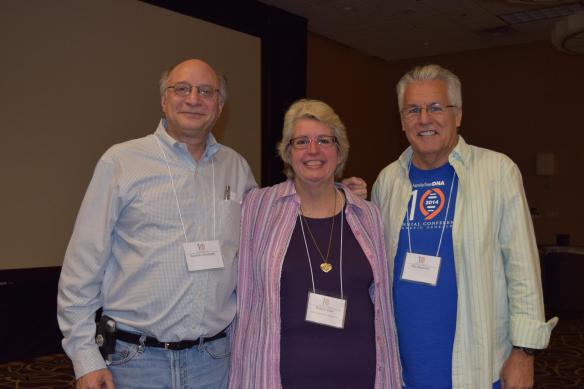
I want to offer a heartfelt thank you to Max Blankfeld and Bennett Grenspan, founders of Family Tree DNA, shown with me in the photo below, for hosting and subsidizing the administrator’s conference – now for a decade. I look forward to seeing them, and all of the other attendees, next year.

I anticipate that this next decade will see many new discoveries resulting in tools that make our genealogy walls fall.  I can’t help but wonder what the article I’ll be writing on the 20th anniversary looking back at nearly a quarter century of genetic genealogy will say!
roberta, max and bennett

______________________________________________________________

Disclosure

I receive a small contribution when you click on some of the links to vendors in my articles. This does NOT increase the price you pay but helps me to keep the lights on and this informational blog free for everyone. Please click on the links in the articles or to the vendors below if you are purchasing products or DNA testing.

Thank you so much.

DNA Purchases and Free Transfers

Genealogy Services

Genealogy Research

Tenth Annual Family Tree DNA Conference Day 3

The internet in the hotel hasn’t gotten any faster, so I’ll just be providing highlights and today’s new announcements.  More info, plus pictures, when I get home.

Sunday always begins with the ISOGG meeting hosted by Director, Katherine Borges.

This year’s meeting was especially touching, because Max Blankfeld and Bennett Greenspan, founders of Family Tree DNA, received plaques for their 10 years of investment and dedication and as a thank you for hosting the conferences for administrators.

DSC_0016

Much of today’s agenda was focused on research, technical updates and new products and features.

This next year, Family Tree DNA’s focus is on three initiatives:

  1. Customer service and feedback
  2. Features – listen to citizen scientists and group administrators
  3. New products and features to make genetic genealogy better for genealogists

Family Tree DNA is actively soliciting your feedback and has set up a special address for suggestions.  This takes you to a google docs file where you enter your name, e-mail and 1000 characters maximum.

http://www.familytreedna.com/suggestions

Free Ancestry and 23andMe Uploads

In order to attract more uploads, which will, of course, give us more matches, Family Tree DNA is announcing free uploads from Ancestry and 23andMe, the v3 chip only, but with a string attached.  The transferee can do the actual transfer for free, but they will only see their top 20 matches, only an initial and a last name, and will not be able to communicate with them unless they decide to pay $39 to join, or perhaps stated more accurately, to active all of the features of a paid transfer.  However, in lieu of the $39 fee, you can also recruit 4 other people to upload their data, whether or not they actually pay the fee or not.

Search Feature

One of the reasons Family Tree DNA implemented the new trees was so that they could implement new search functionality.  Soon, one will be able to search all public trees.  I think this will benefit the community immensely, because it will allow people to see if people from their family lines are present in the data base, which will, hopefully, encourage testing.

Facilitating Communication

DSC_0116

A new social media function called myGroups is being implemented to facilitate contact within groups.  Today, projects and outside mailing lists and groups don’t fully overlap.

The example shown correlated to about 25% of a project group that was subscribed to an outside Yahoo group for discussion.  MyGroups is designed to facilitate discussions that include all project members.

Furthermore, Ancestry’s My Family product became obsolete on September 30th, leaving many people with no place to discuss family lines and groups and share pictures and documents.   The new myGroups is designed to replace some of that functionality within the context of a project.  A project could be defined as an ancestral couple, for example or a surname project, or a haplogroup project.  Of course, the discussions would be quite different for each type of myGroup.  They are ready to launch this in an alpha state and if someone is excited about this and wants to volunteer, and can deal with a few bugs…then please drop Family Tree DNA a note.

News in the Field

We had many wonderful presentations, but my personal favorite was by Michael Hammer.

DSC_0020

I can’t begin to do this topic justice without a real keyboard and a decent internet connection so I can upload lots of pictures.  We now have 18 fully genome sequenced ancient DNA samples, which is, admittedly, just a smattering.  However, if they are representative of the hunter-gatherer (Paleolithic) and early farmer (Neolithic) populations, then what we thought we knew about Y haplogroup R, J and others has just been turned upside down.  And then, there is the teaser, like what is haplogroup C doing in Spain???

Oh, and want to know how much of your European DNA is ancestrally neolithic, hunter-gatherer, ancient northern european or later from the metallic age?  That’s one of the features Family Tree DNA was asked about and I believe they said that was something they could probably do. I’m not positive if that means they will implement that feature, but I do know they’ll evaluate how difficult and accurate this would be to implement.

Join me in a few days, after I get home, when I promise, I’ll do Michael’s presentation justice.  I’m so excited about ancient DNA and the secrets it’s unlocking!!!

Fun times ahead!

______________________________________________________________

Disclosure

I receive a small contribution when you click on some of the links to vendors in my articles. This does NOT increase the price you pay but helps me to keep the lights on and this informational blog free for everyone. Please click on the links in the articles or to the vendors below if you are purchasing products or DNA testing.

Thank you so much.

DNA Purchases and Free Transfers

Genealogy Services

Genealogy Research

Tenth Annual Family Tree DNA Conference Day 2

With the very slow hotel internet service, there’s no way I can do justice to day 1 of the conference as a whole, so I’m selecting one speaker and one picture, or two, hopefully, and I’ll write a more detailed article after returning home.  Please forgive the less than polished text and photos today and join me in a few days for more complete coverage.

This is a history-making event, the 10th year of Family Tree DNAs genetic genealogy conference. Fifteen years ago, this industry didn’t exist at all and today, it’s growing at break neck speed.

Being a part of the leading edge, often bleeding edge, of science is endorphin producing and just plain addictive.  We are so fortunate to live in a time when scientific advances support these tools.

DSC_0002

Bennett and Max opened the conference as is traditional with a few words.

Max shared with us that initially, he and Bennett were concerned that the Nat Geo 1 project would cannibalize the FTDNA customers, when in reality, just the opposite happened. Nat Geo endorsed the idea of testing for genetic genealogy and helped the entire industry to flourish. Without Nat Geo, Family Tree DNA would not have started their own lab in 2006.

Today, Family Tree DNA is asking themselves how they can prepare for the future and reach out to the international community.

Bennett was obviously quite touched to look out over the sea of administrators who have come to support and learn about the industry that he and Max founded.

Bennett said:

“Yesterday is history, tomorrow is mystery – today is a gift and that’s why they call it the present.  My present today is all of you here.”

Bennett added that never did he imagine 10 years ago that it would not only become a fully matured industry, but a secondary industry would emerge as well, such as several books being authored within the genetic genealogy community.

I’ve selected Spencer Wells as the speaker to feature for today, although I will provide additional photos in a follow-up article when I cover the other speakers as well.

Spencer Wells, Scientist in Residence at the National Geographic Society, spoke today on Consumer Genomics, The 30,000 Foot View.

DSC_0024

The goal of Spencer’s work is more than genetic genealogy – it’s to explain the various patterns of human diversity. There are 6000 languages spoken in world today. How are they related? If we understand how languages are related, then we can probably understand how the people who speak those languages are related as well.

This has happened in the evolutionary blink of an eye, 2000 human generations since the emergence from Africa has generated all of these patterns of diversity.

In our blood is the time machine to reunite us with our ancestors.

The key to understanding these connections lay in the veins of isolated populations who have not culturally assimilated and admixed with other people and population groups. That’s who Spencer visits, and his adventures are renowned.  In 2005, he missed the conference which was held a the National Geographic headquarters in Washington DC because he was caught in a war in Chad, collecting samples.

There are 7 billion people in the world today. All of the people outside of African descend from about 10,000 people who lived in Africa when a small band decided to leave.  That band and their descendants populated the entire rest of the earth.  This, the greatest journey, is the history of our species.

Spencer said that 10 years in the lab left him with ten years worth of work that provided more questions than answers. Spencer left academia and retraced the journey of mankind for himself and this is how he became involved with Nat Geo.

One of Spencer’s concerns is that cultural mass extinction is occurring. By the end of the century 50-90% of the 6000 languages will be gone forever, extinct, through process of cultural assimilation.

Cultural diversity is what defined us as a species.  When we lose a piece of that cultural diversity we lose a chapter or a volume in the history of humanity.

The Geno 2.0 project is doing very well, beyond everyone’s expectations through a combination of the three aspects of the Genographic project.

  • Field Research
  • Public participation
  • Legacy fund

Today Nat Geo has 75,000 indigenous participants whose DNA has been gathered by the Nat Geo team and 625,000 public participants who have purchased kits.

The third aspect of the project, the Legacy fund, is trying to preserve the accumulated knowledge of 50,000-60,000 years of human history. For example, the use of medicinal plants in South America. If that knowledge is lost, the cure for cancer, aids or ebola may be lost along with that traditional cultural knowledge.

The last aspect, and one that was somewhat unexpected, is that they are harnessing the power of the citizen scientist community.

For example, a few years ago, a woman from Hungary reported to Nat Geo that her test was clearly incorrect, because it reported an Asian haplogroup. Spencer recognized this for what it was, a genetic history of human population migration.

The Hungarian language is related to languages further north and east. Uralic – from the area surrounding the Ural mountains.

DSC_0030

The Huns, about the year 1000 AD, invaded central Euro plains and replaced the invaded population within a couple of generations.

Nat Geo decided to look at their 2334 samples of Hungarian origin and found that 2-3% of Hungarian Y and mtDNA are of Asian origin. Hence, the signature of the Huns still resides, even after generations of admixture with other populations, in Hungary.

DSC_0031

Spencer was gracious enough to answer questions and indicated that there will be a Geno 3.0 and a new SNP chip, but he can’t talk about that just yet. Stay tuned.

He also mentioned that he’s finishing a 4th book, “The Ghost of Genghis Khan,” reflecting one of his most interesting journeys.

You know, every time I hear Spencer speak, I’m energized again, encouraged and so inspired – I feel like I’ve been to the DNA Church Revival!!!

I’m excited, very excited about our ability to learn and participate personally in this new frontier.  The genetics frontier within connects us with the distant, very distant, past and those who lived then that, combined, make us who we are today.

______________________________________________________________

Disclosure

I receive a small contribution when you click on some of the links to vendors in my articles. This does NOT increase the price you pay but helps me to keep the lights on and this informational blog free for everyone. Please click on the links in the articles or to the vendors below if you are purchasing products or DNA testing.

Thank you so much.

DNA Purchases and Free Transfers

Genealogy Services

Genealogy Research

Tenth Annual Family Tree DNA Conference Opening Reception

DSC_0017

One of the best things about the Family Tree DNA Conference each year is visiting with old friends, and making new ones.  This picture just warms my heart, because Marja from Finland and Mike from Virginia are meeting in person for the first time here in Houston.  They found each other through DNA testing, and I originally met both of them as clients.  Indeed, if DNA testing has shown us anything at all, it’s how small the world really is and how interrelated we are to the rest of humanity.

This is the 10th year of the conference, and it’s much more like a homecoming or a family reunion that a typical conference.  We’ve been in the same trench for a decade now!

Aside from lots of hugs, one of the things that happens from the time you find your first genetic genealogist on the hotel bus until your ride back to the airport is collaboration. Laptops abound and sharing is continual. It’s such a rich environment.

Tomorrow’s agenda includes:

  • Welcome by Max Blankfeld and Bennett Greenspan
  • DNA Ethics: Why We Can’t Cover Our Eyes by Blaine Bettinger
  • Genographic – Consumer Genomics: The 30,000 Foot View by Spencer Wells
  • Family Finder, How to Succeed with Autosomal DNA by Jim Bartlett
  • Your Origins, Their Origins by Razib Kahn
  • Update on Surname Journal by Brad Larkin
  • An Autosomal DNA Advocate’s Newfound Appreciation for Mitochondrial DNA by CeCe Moore
  • Discovering and Verifying your Ancestry Using Family Finder by Tim Janzen
  • Deep Clade 2.0 by Bennett Greenspan

______________________________________________________________

Disclosure

I receive a small contribution when you click on some of the links to vendors in my articles. This does NOT increase the price you pay but helps me to keep the lights on and this informational blog free for everyone. Please click on the links in the articles or to the vendors below if you are purchasing products or DNA testing.

Thank you so much.

DNA Purchases and Free Transfers

Genealogy Services

Genealogy Research

Thomas Day (1651-1706), Probable Murderer, 52 Ancestors #41

Thomas Day.  Even his name brings a chill to my bones…now that I know who he is and what he very probably did to Elizabeth, his wife.  Thomas and Elizabeth Day are my 7 times great grandparents.  Thomas very probably murdered Elizabeth, in 1699, in their home in Essex County, Virginia.

Thomas Day was probably born about 1651, probably in old, now extinct, Rappahannock County, Virginia and died in 1706 in Essex County, VA.  Old Rappahannock County was incorporated into Essex County when it was formed in 1692.  If Thomas was not the original immigrant, then his parents likely were, as Jamestown was only settled in 1607 – so we aren’t far from the original settlers.

I recently found these early immigrants in the book “Lists of Emigrants to America 1600-1700”.  Thomas’s father has been reported to be another Thomas, but I have never found any documentation for that.  If anyone has more information about these lines, in particular, the immigrant Thomas, I’d be very grateful.

The names Day and Daye are impossible to tell apart so I’m listing them all.

  • Anthony – age 22 to VA on the Ship Pauli July 1635
  • Dorothy – age 17 same as above
  • Hanna – servant age 20 to New England on the Ship Elizabeth and Ann May 1635
  • James – Commander of ship Thomas and Sara, Sept. 18, 1679
  • (3 similar entries for James above)
  • John – age 16 to Bermados (Bermuda or Barbados?) Sept 1635 ship Dors
  • John – living in VA Feb. 16, 1623 at College Land
  • John and his wife – in 1620 on the ship London Merchant – also on the Hogg Doland muster
  • John – in the Sumner Islands
  • Robert – age 30, April 3, 1635 to New England on the ship Hopewell
  • Samuel – listed in index but could not find entry
  • Thomas – listed as “Poor” in Barbados
  • Thomas Dayes – age 20, 1634 to Barbados
  • Mary – age 28, see Robert
  • Richard – age 32, to VA May 1635 ship Plaine Joan
  • Robert – age 30, April 1634 to Ipswich on the ship Elizabeth

In 1676, Thomas Day married widow Dorothy Young Hudson in Old Rappahannock County, Virginia. Dorothy was the daughter of Robert and Anne Parry Young. Dorothy (born circa 1646, died before 1698) was the widow of Edward Hudson with whom she had three children: Serania/Lurana, Anne, and William. The following is reported to be the marriage contract between Thomas Day and Dorothy Young Hudson:

“Know all men by these presents that I Thomas Day of Rappa Planter doe upon consideration of a marriage with Dorothy Hudson as alsoe for and in consideration of a horse received of the said Dorothy hereby engage myselfe my heirs and assigns to buy a mare filly of a yeare old the same to be bought within two years and what female increase comes of the said mare to be equally divided between Laurana, Anne and William Hudson and Mary Bartlet and I do hereby engage that the first two calfes that fall [ends.]”

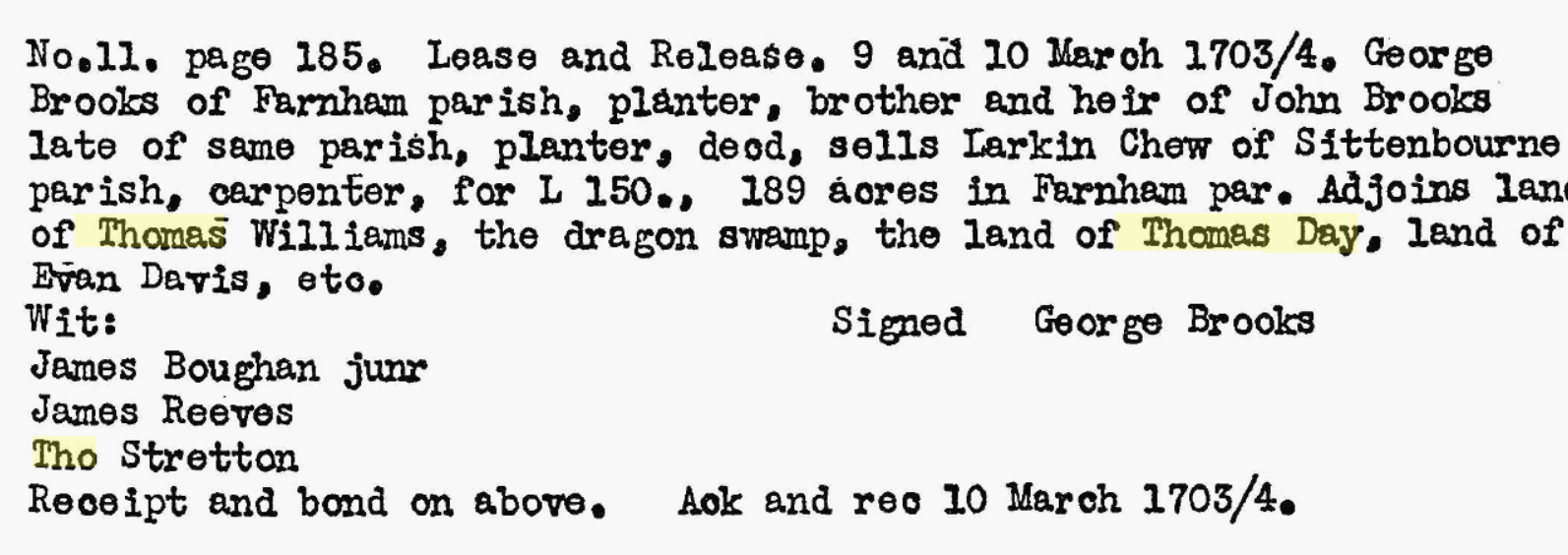
Early records show that Thomas Day purchased land from William Hudson and wife Rebecca Woodnut Hudson located in Essex County, Virginia in 1687. He also purchased 189 acres in Essex County, Virginia from a John Brookes in 1693.

This 1703 transaction gives us at least a waterway in Essex County.

thomasday1

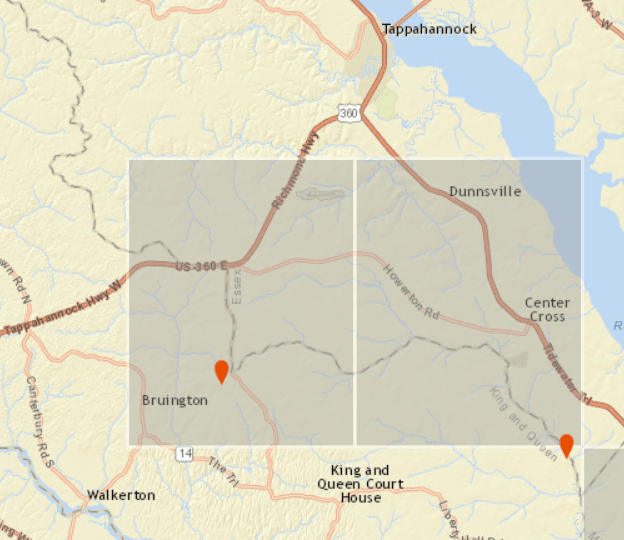
We find his land on the map below, in the area in gray, in essence between the two orange balloons in Essex County, on Dragon Swamp, also known as Dragon Run.  This was an area where the Indians used to hide.

thomasday2

The Mitchell map, below, drawn in 1751 shows Dragon Swamp.

dragon swamp

We know very little about Thomas Day, but we do know what was going on in the region where he lived.

In 1676, the same year that Thomas Day married Dorothy Hudson, Bacon’s Rebellion broke out in this part of Virginia, in fact, Virginia had its own mini-Civil war.  While this sounds “cute,” it was anything but.  Everyone had to choose sides.

In 1676, Nathaniel Bacon and many settlers rebelled against the governor, attacking Native Americans, and eventually burning Jamestown.

You either declared “for” the renegades, or they ransacked your home and maybe worse.

In part, Bacon’s Rebellion was fueled by Bacon’s compulsive, unwielding position that all Indians needed to be attacked and killed.  In addition, the landed class did not like the fact that the governor had signed into law sweeping reforms passed by the House of Burgesses allowing unlanded freemen the right to vote.  Did that apply to Thomas Day?

After passage of these laws, Bacon arrived with 500 followers in Jamestown to demand a commission to lead militia against the Native Americans. The governor, however, refused to yield to the pressure. When Bacon had his men take aim at Berkeley, he responded by “baring his breast” to Bacon and told Bacon to shoot him himself. Seeing that the Governor would not be moved, Bacon then had his men take aim at the assembled burgesses, who quickly granted Bacon his commission. Bacon had earlier been promised a commission before he retired to his estate if he could only be on “good” behavior for two weeks. While Bacon was at Jamestown with his small army, eight colonists were killed on the frontier in Henrico County (where he marched from) due to a lack of manpower on the frontier.

On July 30, 1676, Bacon and his army issued the “Declaration of the People of Virginia“. The declaration criticized Berkeley’s administration in detail. It accused him of levying unfair taxes, appointing friends to high positions, and failing to protect frontier settlers from Indian attack.

Bacon and his men attacked the innocent (and friendly) Pamunkey Indians. The tribe had remained allies of the English throughout other Native American raids. They were supplying warriors to aid the English when Bacon took power.

When Governor Sir William Berkeley refused to march against the Native Americans, farmers gathered around at the report of a new raiding party. Nathaniel Bacon arrived with a quantity of brandy; after it was distributed, he was elected leader. Against Berkeley’s orders, the group struck south until they came to the Occaneechi tribe. After getting the Occaneechi to attack the Susquehannock, Bacon and his men followed by slaughtering most of the men, women, and children at the village.

After months of conflict, Bacon’s forces, numbering 300-500 men, moved to Jamestown. They burned the colonial capital to the ground on September 19, 1676, pictured in the 18th century drawing, below. Outnumbered, Berkeley retreated across the river.

Bacon burning Jamestown

Eventually, the governor prevailed, but that was not the sure and certain outcome for much of the rebellion and probably would not have been had Bacon not died.

Before an English naval squadron could arrive to aid Berkeley and his forces, Bacon died from dysentery on October 26, 1676. John Ingram took over leadership of the rebellion, but many followers drifted away. The Rebellion did not last long after that. Berkeley launched a series of successful amphibious attacks across the Chesapeake Bay and defeated the rebels. His forces defeated the small pockets of insurgents spread across the Tidewater. Thomas Grantham, a Captain of a ship cruising the York River, used cunning and force to disarm the rebels. He tricked his way into the garrison of the rebellion, and promised to pardon everyone involved once they got back onto the ship. However, once they were safely ensconced in the hold, he trained the ship’s guns on them, and disarmed the rebellion. Through various other tactics, the other rebel garrisons were likewise overcome

The 71-year-old governor Berkeley returned to the burned capital and a looted home at the end of January 1677. His wife described Green Spring in a letter to her cousin:

“It looked like one of those the boys pull down at Shrovetide, and was almost as much to repair as if it had been new to build, and no sign that ever there had been a fence around it…”

Bacon’s wealthy landowning followers returned their loyalty to the Virginia Government after Bacon’s death. Governor Berkeley returned to power. He seized the property of several rebels for the colony and executed 23 men by hanging, including the former governor of the Albemarle Sound colony, William Drummond.

After an investigative committee returned its report to King Charles II, Berkeley was relieved of the governorship, and recalled to England. “The fear of civil war among whites frightened Virginia’s ruling elite, who took steps to consolidate power and improve their image: for example, restoration of property qualifications for voting, reducing taxes and adoption of a more aggressive Indian policy.” Charles II was reported to have commented, “That old fool has put to death more people in that naked country than I did here for the murder of my father.” No record of the king’s comments have been found; the origin of the story appears to have been colonial myth that arose at least 30 years after the events.

Indentured servants both black and white joined the frontier rebellion. Seeing them united in a cause alarmed the ruling class. Historians believe the rebellion hastened the hardening of racial lines associated with slavery, as a way for planters and the colony to control some of the poor.

We don’t know what Thomas Day did or his sentiments during Bacon’s Rebellion, but there wasn’t such a thing in that time and place as someone who was uncommitted or ambivalent.  You were on one side or the other, and if you didn’t decide for yourself, someone would be deciding on your behalf.

Before 1698, Thomas married second to Elizabeth.  We don’t know Elizabeth’s surname, nor do we know when she was born, nor where, although probably in Virginia.  We don’t know exactly when she married Thomas Day, but it was sometime after 1687 and before 1698.  She had one child before her death in early 1699.  It’s her death that we know the most about.  Elizabeth was murdered, horrifically murdered, beaten to death, very likely at the hands of her husband, Thomas Day.  And we only discovered this terrible fact, some 314 years after it happened.  Talk about a well-kept family secret.  You would think if any oral history would survive, this juicy piece would.  Maybe the family was ashamed and didn’t speak of it.  Or maybe it was just too painful.

Elizabeth Mary Angelica Day, believed to be the only child of Thomas and Elizabeth, per his will, born between 1687-1698 (probably closer to the 1698 date), married George Shepherd about 1725.  They lived in Spotsylvania County, Virginia.  Their son, Robert would marry Sarah Rash and they would settle in Wilkes County, beginning the Shepherd line in western NC.

Indicted for Murder

Thomas Day was indicted for the murder of his wife, Elizabeth, in 1699. Exactly what transpired concerning this event is not completely clear – but the depositions from the neighbors are pretty damning.

According to recorded testimony, it appears that a neighbor, Mary Hodges, visited the Day home and found Elizabeth Day’s dead body lying on a bed. She had been severely beaten, and Thomas Day also had wounds on his face. Thomas Day said his wife died about two hours before sunrise, but he did not know what had happened to her. He told Hodges that his facial wounds resulted from hitting his head over a “potrack.” A jury indicted Day for the murder of his wife, but he was acquitted. A man named John Smith was later found guilty of Elizabeth’s murder and was executed.

Nothing is recorded concerning Smith’s relation to the Day’s or his motive–only that he was found guilty and executed (presumably hanged).

Testimony concerning this case follows:

Essex Co., VA Deeds and Wills BK 10, Part 1, 1699-1702; page 31A; 10 Feb 1699;

The deposition of Judith Davy aged 27 years or thereabout, being Examd and swoorn saith that upon ye 9th of this instant and going to ye house of Tho. Days of Ffarnham in ye Essex County at ye request of Mary Hodge, her neighbour and seeing ye Days wife lying dead upon ye bed in a most horrod and barborey mannor all gored in blood this depo. asked him how his wife cam to be in that condition who mad answer he know not. Thy Depot. further asked him if he and his wife had been quarrelling who replyed that he and his wife had not had an angry word this many a day also they Depot further asked him if anybody had been lately thoto who answered nither did he see anhbody also they Depot. asked him how he burned his eyes who replyed again ye pott rack and being asked a little while after by this depot. how he hurt himself he answered the Lord Knows, I know not and this Depot. saith furthor that ye Sd. Tho. Day had then and at the same time his face and eyes most greviously bruised and further saith not.

Judith Davy

Sworne before me ye Day and yeare above written; Rich’d. Covington

The deposition of Elizabeth Aeres, aged thirty-eight years or thereabout, being Examined and Sworne saith that upon the ninth of this instant that going to the house of Tho. Daye of Ffarnham parrish in Essex County at the request of Mary Hodge, he neighbour and seeing the sd. Days wife lying dead upon the bed in a most horrod and barboriy mannor all Gored in Blood thy deponent asked him how his wife came to lie in that condition who made answer he knew not this Depo’t further asked him if he and his wife had been quarrelling who replyed that he and his wife had not had an angry word this many day also thy depont. further asked him if anybody had been lately there who answered no neither did he see anybody also this dDepont. asked him how he hurt his Eyes who replyed against the potrack and being asked a little while after by thy depont’ how he hurt himself he answered the Lord knows I know not and thy Depont saith further if the sd. Thomas Daye had then at the same time his face and eyes most greviously brused with severall wound and bruses upon his head and further saith not.

Elizabeth Aeres

Sworn before me the day and yeare above written By me Rich’d Covington in ye Place of A Coroner

The Deposition of Mary Hodges aged seaventy five yeares or thereabouts being Examined and Sworne saith that upon the ninth of this Instant coming from the house of Mr. Tho. Covingtons and going to Tho. Days of Ffarnham Parish in Essex County seeing the sd. Day setting upon a counch by the fire seemed melancholy asked him how he did who answered he did not know his face and eyes being most greviously brused he presently after tould me that his wife was dead. Your Depot asked him how she came to die who presently replyed she died about two houres before day of morning. Your depot further asked him how his face came to be in that condition who tould me he cut it against the potrack that was over the fire upon which I went to the woman, his wife as she lay on the bed and found her dead your depont. seeing her lying in a most horrod and barborous manor all gored in blood upon….Your depont. took Days wife by one of her shoose which was upon her foot and found her legg to be somewhat limber and the sd. Day requesting her to strip her dead body I told him I may not able of myself to perform it and further told him I would goe for more assistance and call of Judith Davy my daughter in law and Elizabeth Aeres which accordingly I did and ye depont. further saith not.

Mary Hodges

Sworn before me the day and yeare above written. Rich’d Covington in Place of Coronor.

The Inquisition

An Inquisition….taken at ye house of Thomas Dayes in Ffarnham Parish in Essex County ye 10 day of February in ye yeare 1699 before me. Rich’d Covington one of his Majesties Justices of ye Peace for ye County of Essex upon view of the body of Elizabeth day ye wife of Thomas Day….then and there lying dead and ye Jurors being good and lawfull men and Sworne to trye and inquire in ye behalfe of our Sovereigne Lord & King how and in what manner ye Eliza Day came by her death and they upon their oath say that ye Elizabeth Day was much beaten and bruised with both her eyes exstreem black with many other bruses on her face and bruise on her right eare and a hole underneath ye smae eare and we of the juror say..ye cause of ye sd. Eliza Days death and wee of ye Jurors further say that Tho. Day at ye same time was much brused and beaten having both his Eyes Extreemly brused and black several cuts in his head and further upon his Examination would not confess anything how Elizabeth his wife came by them blows and wounds now how he came to be soo beaten himself so we Jurors say that in ye parish and county aforsd and on the eight or ninth of this instant to wit: in ye dwelling house of ye sd. Tho. Day that ye Sd. Eliza. Day was barbarously murdered and by all manner of Circumstances we can find or gather that ye aforesaid Thom. Day is Guilty of ye murdering ye said Elizabeth Day. In Reffereance to ye Same I Rich’d Covington as afforsd togeather with the jurory aforsd: have put our hands and seales ye day and date above written.

Richard Covington in ye Place of Coronor

Sam. Farry, Tho. Ewell, Henry Perkins, Richd. Taylor, Tho. Crants, Tho. Johnsone, Tho. Greene, Wm. Price, Sam. Coates, John Brooks, Tho. Cooper, Henry Geare, Jeffrey Dyer, Tho. Williamson February 10, 1699.

Thomas Day of Essex Co., VA was charged with murdering his wife Elizabeth Day. Surprisingly, he was acquitted in the Aprill Generall Court 1700.  I wish desperately that we had those detailed court notes.

Subsequently, John Smith was found guilty of murdering Elizabeth Day and was executed. October Generall Court 1700.

I’m not  lawyer, but I’m going to play prosecutor.  Questioning might have gone something like this, based on the information from the depositions and inquisition:

Q – Thomas Day, were you in the house all night the night your wife died.
A – Yes.

Q – Did you know she was dead?
A – Yes.

Q – When did she die?
A – Two hours before sunrise.

Q – How did she die?
A – I don’t know.

Q – Who killed her?
A – I don’t know.

Q – You were in the house and someone murdered your wife  by beating her to death, and you don’t know who was there?
A – No.

Q – How did your wife come to be “lying dead upon ye bed in a most horrod and barborey mannor all gored in blood?”
A – I don’t know.

Q – Why was your face so bruised?  How did that happen?
A – I hit my head over a potrack.

Q – Your face and eyes were terribly bruised and you did that by hitting your head on a potrack?
A – Lord knows.

Q – What did you do after your wife died?
A – Sat by the fireplace.

Q – So someone killed your wife while you were at home, but you don’t know who.  You didn’t come to her assistance and defend her.  You didn’t call anyone or go for help.  You knew she was dead, but simply sat by the fireplace until your neighbor came to your house.  You changed your story about how your face was wounded and bruised from hitting your head on the potrack to “Lord knows.”  Gentleman of the jury (ladies couldn’t serve on juries at that time)…..I submit to you that Thomas Day killed his wife, Elizabeth, by brutally beating her to death and watched as she lay dying in a pool of her own blood.  What other explanation for his condition and behavior can there possibly be?

However, today’s prosecutor would have an easier job, or the defense attorney one….because we would have DNA evidence.  It would be impossible for someone to brutally beat Elizabeth in the fashion described without leaving some of their DNA on her.  She obviously fought back and would have likely had the murderer’s blood on her  body and their skin under her fingernails.

So today, DNA would have convicted Thomas or removed all doubt, one way or the other.  I wish I had a time machine.

Thomas Day’s Death

Thomas Day didn’t live long himself.  He was ill when he made his will.  It’s unclear who his daughter lived with after his wife’s death and after his death as well.  It’s presumed that he had only the one child because no other children are known or mentioned in the will.

Thomas Day died between December 5, 1705 (the date of his will) and February 11, 1706 (when his will was probated), ironicly, possibly 7 years to the day after his wife’s death. At the writing of his will, an ailing Thomas Day had placed himself and his daughter Elizabeth (still a minor) in the care of John Fargason.

The will of Thomas Day from “Fleets Colonial Abstracts” – Essex County, VA Vol 29, page 81, No 12, page 181

“To all to who these presents shall come Greting know yee that I thomas Day of the parish of South Farnham in the County of Essex in Virginia being in a sickly weake and low condition and noe(ways) waies Capable to tke care of, or provide for myself and that little Estate it hath pleased God to bestow upon me (it chiefly lying in Perishable Creatures) have and by these presents doe Bargain Sell Bind and firmly make over unto Jn’o Fargason of the parish and County aforsaid planter all and singular my said Estate”, etc. In consideration Fargason “to maintain and keep me the said Day During my naturall life with sufficient accomodation of victuals Cloathes washing and lodging and give to Eliza a Mary Angillica Day my Daughter when she arrive to the age of Eighteen or when married one Cowe and Calfe.”

5 Dec 1705 signed Tho x Day Wit: John Fargason Wm. aylett Adam Denning Ack and rec 11 Feb 1705/6

On additional piece of information we obtain about Thomas is that he lived in Farnham Parish in Essex County.

When the North Farnham Parish Register opens (1663-1814), there was no such Parish. It was simply Farnham Parish and covered both sides of the Rappahannock River in Old Rappahannock County, Virginia. In 1684 Farnham Parish was subdivided into North Farnham Parish and the Rappahannock River as the natural boundary. Then, in 1692 Old Rappahannock County was abolished and became the parent of two new counties, South Farnham Parish fell into Essex County and North Farnham Parish Fell into Richmond County.

In Essex County, South Farnham was simply called Farnham Parish.  The first church was built in 1737, long after Thomas Day was dead.  Bishop Meade refers to an earlier church there as “Piscataway.”  Given Elizabeth’s demise, I find it hard to believe that Thomas attended church any more often than was required by law, at that time.

There are no Day(e) entries in the parish register.

We don’t know where Thomas Day is buried, but I’d hazard a guess that it’s not in the churchyard.

Reflecting

I can’t even begin to imagine how or why Thomas Day was acquitted of his wife’s murder.  Looking at the depositions, some 300+ years removed, it appears obvious and nearly conclusive that Thomas murdered Elizabeth.  Perhaps research into the life and social standing of Thomas Day might reveal more information and shed light on this situation.  Records in the Virginia archives might contain more information as well, although there are no chancery suits.

I find it extremely hard to believe that Thomas did not murder his wife.  In fact, how could he NOT have been the murderer, given the circumstances?  The description of her wounds, the severity and the continuous beating that had to have occurred in order to inflict those grave wounds would have been unlikely to have been inflicted by someone simply wanting to get her out of the way, like for a robbery.  Those are wounds of passion, of anger, and it looks like she put up a fight as well.  Thomas had obviously been in a fight as his own face and eyes were bruised, with wounds, according to the indictment.  This was a crime of passion.  Added to that was the fact that Thomas’s wife had died in the night, and he had not sought assistance from anyone.  He was found sitting by the fireplace.  If he had found her bloody and beaten, he would have gone for help, but he didn’t.  Instead, he watched her die and left her lying on the bed in a pool of her own blood for the neighbor to find in the morning, stating that he didn’t know what happened.

Even if Thomas didn’t directly murder Elizabeth, meaning that a stranger broke in, beat them both, killed Elizabeth but not Thomas, and left the house – Thomas still has some culpability for Elizabeth’s death, since he was clearly conscious and knew when she died, according to what he told 3 separate witnesses.  So he wasn’t asleep or unaware, yet he did nothing before she died to try to help her.  He clearly knew she was badly injured.  Had she survived, she surely would have named him as the person who beat her.  Nor was Thomas distraught by her death.  He wasn’t found sobbing at her bedside.

So Thomas Day not only killed his wife, he is also responsible for the death of John Smith in 1700 who was hung for Elizabeth’s murder.  In essence, if Thomas murdered Elizabeth, he murdered John Smith too.  I hope that if John Smith’s family finds out that he was hung in Essex County, Virginia, as a murdered, that they google and find this article.

All of this makes me wonder how his first wife died, assuming that his first marriage ended with the wife’s death.

Chances are that Thomas and Elizabeth’s child, Elizabeth Mary Angelica Day never knew her mother, for whom she was named, or was too small to remember her.  She may well have been in the house when her father murdered her mother, and depending on her age at the time, might well remember the event.  She could also have been an infant.  If she was, then she likely didn’t remember either her mother or her father very well as he died just a few years later, in 1706, as an invalid.  Somehow Thomas’s death not long after Elizabeth’s seems like karmic justice.  If he did in fact murder Elizabeth, we can wish him a long and miserable death, dreading and fearing his own passing, knowing that he would face sure and certain retribution for his actions in the court of ultimate truth.  There is no other justice to be wrought for Elizabeth – none.

As she grew up, Elizabeth the daughter would have known that her mother was murdered, and even though her father was acquitted, she surely would have known about the circumstances surrounding her mother’s death.  When she married George Shepherd about 1727, she may have been all too happy to leave the area and settle in Spotsylvania County, striking out for a new location where she could leave the past behind.  In essence, she had been raised an orphan under the storm cloud of her mother’s terrible death and her father’s inferred guilt.

How her mother’s death must have haunted her.  To lose your mother is bad enough, but to know she died horrifically, and possibly, or probably, at the hands of your own father, is an unspeakable burden for anyone, let alone a child.  How could she embrace the memory of her father who took her mother from her?  In essence, she lost both parents when her mother died, and her father again at his own death.  Of course, it’s also possible that whoever raised her shielded her from the truth, and perhaps that is why this story never descended through the family.  Maybe Elizabeth never knew the extent of her father’s involvement.  Let’s hope not, for her sake and let’s hope Thomas wasn’t abusive to Elizabeth as well.

Of course, since there were no known sons of Thomas Day, we can’t retrieve his Y DNA.  We don’t know who his parents were, so we don’t know if he had male siblings, or who they were, so that avenue is closed to us as well.

There is a Day DNA project, but unfortunately, it is not hosted at Family Tree DNA and the site doesn’t provide any ancestral information, so it’s entirely useless in terms of trying to find a specific line or even a geographic location.  The genealogy site it connects to is no longer being maintained, so a double strike-out.

I think this is one ancestor I’m just as happy to leave among the dead.  I pray that I didn’t inherit very much DNA from him, or any traits.  From now on, I’ll blame my temper on him.  He has to be good for something.  As my mother used to say, if all else fails, you can always serve as a bad example.

The research about the murder of Elizabeth Day compiled by a cousin at http://www.danielprophecy.com/daye.html.

______________________________________________________________

Disclosure

I receive a small contribution when you click on some of the links to vendors in my articles. This does NOT increase the price you pay but helps me to keep the lights on and this informational blog free for everyone. Please click on the links in the articles or to the vendors below if you are purchasing products or DNA testing.

Thank you so much.

DNA Purchases and Free Transfers

Genealogy Services

Genealogy Research

DNA Day with Ancestry

For quite some time now, the genetic genealogy community has been beating the living tar out of Ancestry.com for not listening, among other things. Well, I’m here to say, they are listening.  Now, what I can’t say is how much they are hearing.  The jury is out and we will see. However, we are hopeful.

Ancestry invited a few of the leaders in the genetic genealogy field to come and meet with them this week. They dedicated the resources of eighteen of their scientists and executives to this meeting and they spent the day with us, sharing information about the science underlying their upcoming product changes and having frank discussions with the group.

This was a very cordial, informative and I think, team-building, experience, but there was far from uniform agreement. There was a great deal of discussion which I think helps everyone understand the position and reasoning of the other parties involved. Like anything else, it’s not as simple as one might hope.

Another important aspect of these meeting is that they serve to put faces with names and humanize the other people involved.

I also found it encouraging that most of the people at Ancestry are genealogists and utilize their own tools.

Tim Sullivan, CEO of Ancestry stopped by and talked with us for a few minutes. He asked us what we wanted, why and if we had any questions for him.  He told us about his own genealogy experiences.  And, we discovered, he does read our blogs.  Tim is very actively engaged as is Ken Chahine, Senior Vice President and General Manager DNA, who is in many of the photographs because he was sitting at the end of the screen and was with us for the entire day.

I will be covering different aspects of the content of these meetings as time moves forward and as Ancestry’s new software version is implemented, but for now, I wanted to update you on the two burning questions in the genetic genealogy community.

These, as you might guess, were also the most contentious aspects of the entire meeting.

Will We Receive a Chromosome Brower?

I want to share with you readers that there is absolutely no question that Ancestry heard the message that we need a chromosome browser, loud, clear and uniformly from us. Ancestry is equally as adamant, it appears, as we are, that we don’t need one.

So, the short answer is no.

The longer answer is probably not.

Judy Russell, in comments to her article, “when less is more,” which I strongly encourage you to read, says about the chromosome browser:

“In my personal opinion, speaking only for myself and based solely on my own perceptions of the attitudes of some folks at AncestryDNA and not on any specific representations by anyone else, my judgment is that we may get a chromosome browser at AncestryDNA when hell freezes over.”

This was also followed by a comment about pigs flying…..plus, she took all the good phrases…not much left for me to say.pig fly

I think this pretty well sums it up.

I do want to discuss why Ancestry does not feel a chromosome browser is warranted. This topic was discussed directly and indirectly several times throughout the day.  These concerns listed below are not necessarily in priority order based on discussions, because I couldn’t really discern a priority.

1.  Given that Ancestry will hit the million kit DNA mark sometime in the first quarter of 2015, they feel that very few, a small percentage, of those people would ever utilize, or understand the results of a chromosome browser. Given that, they don’t feel it is a good investment of their engineering time to invest in something that few people, or a small percentage of the whole, will utilize.

2.  Since Ancestry did not begin utilizing chromosome browsing in the beginning, they are concerned about privacy issues having to do with now introducing the feature to people who did not expect to have that to begin with.

3.  Ancestry is concerned about unexpectedly and unintentionally revealing health information. For example, let’s say that today, a particular SNP is included in their information and is not known to be medically relevant. Next year, someone discovers that a particular SNP on chromosome 7 is connected to the genetic propensity for erectile dysfunction. Remember, a genetic propensity does NOT mean you have or will get the particular disease. In this case, of course, that would not apply to women.

Ancestry’s concern is that since they would have already been displaying that match on chromosome 7 between several people for months/years, the cow is proverbially out of the barn and closing the door at that point it a bit late, if possible at all.

Of course, as we pointed out to Ancestry, that’s the entire point of having testers sign a release, and both Family Tree DNA and 23andMe both deal with the same issue.

4.  Ancestry feels that a chromosome browser would provide information to people that they should not be drawing conclusions from, and they are.

For example, as they showed us, there are areas in each person’s chromosome and their matches chromosomes that are what they call “pile up” areas. These are areas that we would call IBS, identical by state as opposed to IBD, identical by descent.  Some of these pileup areas are so old that they could potentially be considered AIMs, or Ancestrally Informative Markers that harken back to continents like Africa, Asia or Europe. my pileup

This slide shows Cathy Ball, VP Genomics and Bioinformatics, showing me my own pileup areas. The two screens are a TV screen to the right where the colors resolved much better, and the larger screen where the display was larger.

my pileup2 crop

What this shows you is that on the chart at left, I have one area that has a very large number of pileups, probably about 800 matches (out of my 12,500 total matches), two areas that have 400 each, two that have about 200. On the chart at right, the top of the chart is 25 match segments, so you can see that most of my matches fall below that.  Ancestry feels that the higher matched segments are less relevant because they match to so many people, that they aren’t really indicative of shared ancestry in a genealogical timeframe.

And no, they did not tell me which chromosome these pileup segments are found on, and I’m DYING to know so that I can relate that to my ancestral chromosome mapping….but no cigar. It’s so frustrating that they know, they have the info, our info, but they won’t share it with us.  I’m not referring here to the slide and my pileup, but the lack of segment information in general.  I don’t know how that’s any worse that allowing customers to infer that a shakey leaf tree match is equivalent to a DNA match…..

Everyone has these pileup areas, which also means that they show up on your chromosome browser as matches. Ancestry is concerned that you will see three people, whether from a common genealogy line or not, who match on one segment and you will presume that they are genealogically related, when perhaps they aren’t, because their match is IBS from a pileup area.

Clearly, those of us who work in this field daily deal with IBS issues routinely, but Ancestry is concerned about the general consumer who doesn’t.

I suggested that the chromosome browser could be even more useful if they had a way to show but “grey out” those pileup areas, so we would be aware that their confidence is low, and to highlight the areas where the rarest alleles match, because those matches are most likely to indicate true genealogical matches. That suggestion met with polite silence.

Roberta’s Opinion

I do agree that many people won’t utilize the chromosome browser, but many people won’t utilize many of their services.  That doesn’t prevent Ancestry from providing those services for those who want to utilize them.  I’m fine with Ancestry making the Chromosome Browser part of a subscription kit so only subscribers have access, just like many of their data bases.

Unfortunately, without a chromosome browser, we are left with nothing concrete to base any matches on, nor the ability to utilize that information in conjunction with chromosome segment information from other companies to map our segments to various ancestors.  The problem of incorrect ancestor attribution remains and will remain present in their matches.

They are changing their matching algorithm and in some ways, it will be improved, but in one way, I am gravely concerned that it will be worse. Ancestry will begin weighting various factors in calculating the match strength, and one of those factors will be the number of trees that list a particular ancestor.  If you’ve just had a coronary…so did we.  I thought one of the genetic genealogists was going to have the big one right there – they turned so red in the face.

A second confidence weighting factor will be the amount of source information for a particular tree which Ancestry feels helps judge the quality of the tree. In a sense, I agree, but attaching source information, perhaps incorrectly, to the wrong family, or having the wrong ancestor you’ve just attached source information to, is still the same large problem.  Clearly, quality is not a matter of quantity, but just as clearly Ancestry cannot look at each tree individually and render an opinion, so they have to develop some automated methodology if they are going down this path.

Ancestry is trying to find ways to improve their matching and predictions of common ancestry. As time moves forward, I’ll be covering these developments.  As someone in the meeting said, first steps first.

But back to the chromosome browser, my gut reaction to this is, and this is my opinion alone, that they don’t want to invest the development effort into something that will make the user experience more complex and may increase their customer support staff load to support and explain matching on a chromosome browser. I don’t think they believe the genealogy community has the ability to utilize and understand this type of tool.  Ancestry is a genealogy marketing company.  They want the user’s experience to be pleasant, easy and fulfilling…not difficult and certainly not upsetting.

Our message did not waiver, we need a chromosome browser and “trust me” simply won’t work.

The Y DNA and mtDNA Data Base

When Ancestry sent the invitation to this meeting, I had to wonder if they really thought through the fact that this meeting would occur less than a week after they decommissioned their Y and mtDNA data base.

Did they really want a group of people that were mad as wet hens arriving to meet with them? I fully expected to receive an “un-invitation” after my article and before the meeting, but I didn’t.

Without going into nitty-gritty detail, Ancestry indicates that the data base that held those results was literally on its last leg and they did not want to invest any money into something they was not bringing in any revenue and for a product they were no longer selling. I do believe that data base was indeed in its death throes because after the denial of service attack in June, it was no longer searchable.

In the ensuing discussion, the genetic genealogy community provided a number of alternative scenarios both within and outside of Ancestry as a way to salvage the information in that database. Ancestry has agreed to take the matter under consideration internally and discuss the various options.  They made no promises, but I personally find it very encouraging that they are willing to discuss the matter and reconsider.

I told them I’d like nothing more than to write a retraction article that says that Ancestry did not, after all, burn the DNA courthouse.

In the same vein, I asked if they had any plans to decommission the Sorenson data base at www.smgf.org and they indicated that they do not have any plans at this point to do that.  Obviously, nothing is forever, and they could reconsider in the future but at least it appears that resource is safe for now and adding the Y and mtDNA records from Ancestry into that data base was one option discussed.

In Conclusion

I do feel this was a productive meeting. The scientific aspects of having a large data base to draw from are quite interesting and I’ll be sharing some those in upcoming articles.  Some of the best conversations took place beside the proverbial “water cooler.”  I am hopeful that we made progress, or at least thawed the ice a little on the issues so critical for the genetic genealogy community, but time will tell.  In a way, I felt like this was a United Nations type of meeting where everyone leaves with a better understanding.

______________________________________________________________

Disclosure

I receive a small contribution when you click on some of the links to vendors in my articles. This does NOT increase the price you pay but helps me to keep the lights on and this informational blog free for everyone. Please click on the links in the articles or to the vendors below if you are purchasing products or DNA testing.

Thank you so much.

DNA Purchases and Free Transfers

Genealogy Services

Genealogy Research

Elizabeth Day (c 1667 – 1699), Murdered, 52 Ancestors #40

rose1

Elizabeth Day, her married name, was my 7th great-grandmother.

  • Roberta Estes
  • William Sterling Estes
  • William George Estes and Ollie Bolton
  • Lazarus Estes and Elizabeth Vannoy
  • Joel Vannoy and Phoebe Crumley
  • Elijah Vannoy and Lois McNiel
  • William McNiel and Elizabeth Shepherd
  • Robert Shepherd and Sarah Rash
  • George Shepherd and Elizabeth Mary Angelique Day(e)
  • Thomas Day (1651-1706) and Elizabeth (murdered 1699), last name unknown

We don’t know Elizabeth’s surname, nor do we know when she was born, nor where, although probably in Virginia.  We don’t know exactly when she married Thomas Day, but it was sometime after 1687 and before 1698.  She had one child before her death in early 1699.  It’s her death that we know the most about.

Elizabeth was murdered, horrifically murdered, beaten to death, very likely at the hands of her husband, Thomas Day.  And we only discovered this terrible fact, some 314 years after it happened.  Talk about a well-kept family secret.

Thomas Day was born about 1651 in Rappahannock, Virginia and died in 1706 in Essex County, VA.  Daughter, Elizabeth Mary Angelica Day, believed to be the only child of Thomas and Elizabeth, per his will, married George Shepherd about 1725.  They lived in Spotsylvania County, Virginia.  Their son, Robert would marry Sarah Rash and they would settle in Wilkes County, beginning the Shepherd line in western NC.

In 1676, Thomas Day married widow Dorothy Young Hudson in Old Rappahannock County, Virginia. Dorothy was the daughter of Robert and Anne Parry Young. Dorothy (b. ca. 1646, d. bef. 1698) was the widow of Edward Hudson with whom she had three children: Serania/Lurana, Anne, and William.

Early records show that Thomas Day purchased land from William Hudson and wife Rebecca Woodnut Hudson located in Essex County, Virginia in 1687. He also purchased 189 acres in Essex County, Virginia from a John Brookes in 1693.

Before 1698, Thomas married a second time to Elizabeth. Thomas and Elizabeth had one daughter, Elizabeth Mary Angelica Day, born between 1687 and 1699.  I suspect her birth was closer to the 1698 timeframe, because her eventual husband was born around 1700.

Thomas Indicted

Thomas Day was indicted for the murder of his wife, Elizabeth, in 1699. Exactly what transpired concerning this event is not completely clear.

According to recorded testimony, it appears that a neighbor, Mary Hodges, visited the Day home and found Elizabeth Day’s dead body lying on a bed. She had been severely beaten, and Thomas Day also had wounds on his face. Thomas Day said his wife died about two hours before sunrise, but he did not know what had happened to her. He told Hodges that his facial wounds resulted from hitting his head over a “potrack.” A jury indicted Day for the murder of his wife, but he was acquitted. A man named John Smith was later found guilty of Elizabeth’s murder and was executed.

Nothing is recorded concerning Smith’s relation to the Day’s or his motive–only that he was found guilty and executed (presumably hanged).

Testimony concerning this case follows:

Essex Co., VA Deeds and Wills BK 10, Part 1, 1699-1702; page 31A; 10 Feb 1699;

The deposition of Judith Davy aged 27 years or thereabout, being Examd and swoorn saith that upon ye 9th of this instant and going to ye house of Tho. Days of Ffarnham in ye Essex County at ye request of Mary Hodge, her neighbour and seeing ye Days wife lying dead upon ye bed in a most horrod and barborey mannor all gored in blood this depo. asked him how his wife cam to be in that condition who mad answer he know not. Thy Depot. further asked him if he and his wife had been quarrelling who replyed that he and his wife had not had an angry word this many a day also they Depot further asked him if anybody had been lately thoto who answered nither did he see anhbody also they Depot. asked him how he burned his eyes who replyed again ye pott rack and being asked a little while after by this depot. how he hurt himself he answered the Lord Knows, I know not and this Depot. saith furthor that ye Sd. Tho. Day had then and at the same time his face and eyes most greviously bruised and further saith not.

Judith Davy

Sworne before me ye Day and yeare above written; Rich’d. Covington

The deposition of Elizabeth Aeres, aged thirty-eight years or thereabout, being Examined and Sworne saith that upon the ninth of this instant that going to the house of Tho. Daye of Ffarnham parrish in Essex County at the request of Mary Hodge, he neighbour and seeing the sd. Days wife lying dead upon the bed in a most horrod and barboriy mannor all Gored in Blood thy deponent asked him how his wife came to lie in that condition who made answer he knew not this Depo’t further asked him if he and his wife had been quarrelling who replyed that he and his wife had not had an angry word this many day also thy depont. further asked him if anybody had been lately there who answered no neither did he see anybody also this dDepont. asked him how he hurt his Eyes who replyed against the potrack and being asked a little while after by thy depont’ how he hurt himself he answered the Lord knows I know not and thy Depont saith further if the sd. Thomas Daye had then at the same time his face and eyes most greviously brused with severall wound and bruses upon his head and further saith not.

Elizabeth Aeres

Sworn before me the day and yeare above written By me Rich’d Covington in ye Place of A Coroner

The Deposition of Mary Hodges aged seaventy five yeares or thereabouts being Examined and Sworne saith that upon the ninth of this Instant coming from the house of Mr. Tho. Covingtons and going to Tho. Days of Ffarnham Parish in Essex County seeing the sd. Day setting upon a counch by the fire seemed melancholy asked him how he did who answered he did not know his face and eyes being most greviously brused he presently after tould me that his wife was dead. Your Depot asked him how she came to die who presently replyed she died about two houres before day of morning. Your depot further asked him how his face came to be in that condition who tould me he cut it against the potrack that was over the fire upon which I went to the woman, his wife as she lay on the bed and found her dead your depont. seeing her lying in a most horrod and barborous manor all gored in blood upon….Your depont. took Days wife by one of her shoose which was upon her foot and found her legg to be somewhat limber and the sd. Day requesting her to strip her dead body I told him I may not able of myself to perform it and further told him I would goe for more assistance and call of Judith Davy my daughter in law and Elizabeth Aeres which accordingly I did and ye depont. further saith not.

Mary Hodges

Sworn before me the day and yeare above written. Rich’d Covington in Place of Coronor.

An Inquisition

An Inquisition….taken at ye house of Thomas Dayes in Ffarnham Parish in Essex County ye 10 day of February in ye yeare 1699 before me. Rich’d Covington one of his Majesties Justices of ye Peace for ye County of Essex upon view of the body of Elizabeth day ye wife of Thomas Day….then and there lying dead and ye Jurors being good and lawfull men and Sworne to trye and inquire in ye behalfe of our Sovereigne Lord & King how and in what manner ye Eliza Day came by her death and they upon their oath say that ye Elizabeth Day was much beaten and bruised with both her eyes exstreem black with many other bruses on her face and bruise on her right eare and a hole underneath ye smae eare and we of the juror say..ye cause of ye sd. Eliza Days death and wee of ye Jurors further say that Tho. Day at ye same time was much brused and beaten having both his Eyes Extreemly brused and black several cuts in his head and further upon his Examination would not confess anything how Elizabeth his wife came by them blows and wounds now how he came to be soo beaten himself so we Jurors say that in ye parish and county aforsd and on the eight or ninth of this instant to wit: in ye dwelling house of ye sd. Tho. Day that ye Sd. Eliza. Day was barbarously murdered and by all manner of Circumstances we can find or gather that ye aforesaid Thom. Day is Guilty of ye murdering ye said Elizabeth Day. In Reffereance to ye Same I Rich’d Covington as afforsd togeather with the jurory aforsd: have put our hands and seales ye day and date above written.

Richard Covington in ye Place of Coronor

Sam. Farry, Tho. Ewell, Henry Perkins, Richd. Taylor, Tho. Crants, Tho. Johnsone, Tho. Greene, Wm. Price, Sam. Coates, John Brooks, Tho. Cooper, Henry Geare, Jeffrey Dyer, Tho. Williamson February 10, 1699.

Thomas Day of Essex Co., VA was charged with murdering his wife Elizabeth Day. He was acquitted in the Aprill Generall Court 1700.

Subsequently, John Smith was found guilty of murdering Elizabeth Day and was executed. October Generall Court 1700.

Thomas Day’s Death

Thomas Day didn’t live long himself.  He was ill when he made his will.  It’s unclear who his daughter lived with after his wife’s death and after his death as well.  It’s presumed that he had only the one child because no other children are known or mentioned in the will.

Thomas Day died between December 5, 1705 (the date of his will) and February 11, 1706 (when his will was probated), ironicly, possibly 7 years to the day after his wife’s death. At the writing of his will, an ailing Thomas Day had placed himself and his daughter Elizabeth (still a minor) in the care of John Fargason.

Reflecting

I can’t even begin to imagine how or why Thomas Day was acquitted of Elizabeth’s death.  Looking at the depositions, some 300+ years removed, it appears obvious and nearly conclusive that Thomas murdered Elizabeth.  Maybe that’s because today we understand much better the profile of wife abusers.

Perhaps research into the life and social standing of Thomas Day might reveal more information and shed more light on this situation.  Records in the Virginia archives might contain more information as well.

I find it extremely hard to believe that Thomas did not murder his wife.  In fact, how could he NOT have been the murderer, given the circumstances?  The description of her wounds, the severity and the continuous beating that had to have occurred in order to inflict those grave wounds would have been unlikely to have been inflicted by someone simply wanting to get her out of the way, like for a robbery.  Those are wounds of passion, of anger, and it looks like she put up a hellatious fight as well – literally, fighting for her life.  Sadly, a battle she did not win.  Thomas had obviously been in a fight as his own face and eyes were bruised.  This was a crime of passion.  Added to that was the fact that Thomas’s wife had died in the night, and he had not sought assistance from anyone.  He was found sitting on the couch by the fireplace hours after she died.  If he had found her bloody and beaten, he would have gone for help, but he didn’t.  Instead, he watched her die and left her lying on the bed in a pool of her own blood for the neighbor to find in the morning, stating that he didn’t know what happened.

Even if Thomas didn’t directly murder Elizabeth, meaning that a stranger broke in, beat them both, killed Elizabeth but not Thomas, and left the house – Thomas still has some culpability for Elizabeth’s death, since he was clearly conscious and knew when she died, according to what he told 3 separate witnesses.  So he wasn’t asleep or unaware, yet he did nothing before she died to try to help her.  He clearly knew she was badly injured.  Had she survived, she surely would have named him as the person who beat her.  Nor was Thomas distraught by her death.  There was no sobbing at her bedside.

So Thomas Day not only killed his wife, he is also responsible for the death of John Smith in 1700 who was hung for Elizabeth’s murder.  In essence, if Thomas murdered Elizabeth, he murdered John Smith too.  All of this makes me wonder how his first wife died, assuming that his first marriage ended with his wife’s death.

Chances are that Thomas and Elizabeth’s child, Elizabeth Mary Angelica Day, never knew her mother, for whom she was named, or was too small to remember her.  She may well have been in the house when her father murdered her mother, and depending on her age at the time, might well remember the event.  She could also have been an infant.  If she was, then she likely didn’t remember either her mother or her father very well as he died just a few years later, in 1706, as an invalid.  Somehow Thomas’s death not long after Elizabeth’s seems like karmic justice.  If he did in fact murder Elizabeth, we can wish him a long and miserable death, dreading and fearing his own passing, knowing that he would face sure and certain retribution for his actions in the court of ultimate truth.  There is no other justice to be wrought for Elizabeth – none.

As she grew up, Elizabeth, the daughter, would have known that her mother was murdered, and even though her father was acquitted, she surely would have known about the circumstances surrounding her mother’s death.  People talk.

When she married George Shepherd about 1727, she may have been all too happy to leave the Essex County area and settle in Spotsylvania County, Virginia, striking out for a new location where she could leave the past behind.  In essence, she had been raised an orphan under the storm cloud of her mother’s terrible death and her father’s inferred guilt.

How her mother’s death must have haunted her.  To lose your mother is bad enough, but to know she died horrifically, and possibly, or probably, at the hands of your own father, is an unspeakable burden for anyone, let alone a child.  How could she embrace the memory of her father who took her mother from her?  In essence, she lost both parents when her mother died, and her father again at his own death.  Of course, it’s also possible that whoever raised her shielded her from the truth, and perhaps that is why this story never descended through the family.  Maybe Elizabeth never knew the extent of her father’s involvement.  Maybe she never knew the terrible truth about how her mother died.

Elizabeth’s DNA

Elizabeth’s one daughter, Elizabeth had two daughters.  We don’t know much about either of them.

Ann Shepherd was born about 1737 in Spotsylvania County and is reported, by some, to have married a Benjamin Holliday or Holloway.

Elizabeth Shepherd was born about 1745 in Spotsylvania County and married Gabriel Shelton.

I have a DNA scholarship for anyone descended from either of these women to the current generation through all women.  The current generation can be either male or female, because women contribute their mitochondrial DNA to all of their children, but only the females pass it on.

I’d love nothing more than to honor Elizabeth by telling more of her story held in her DNA.

Honoring Elizabeth

I wanted to find a way to honor Elizabeth Day.  Regardless of who killed her, she was certainly, unquestionably, a victim.  Her life was taken from her in a most heinous way.

I must admit that it bothers me that some of Thomas Day is in me, even though it is only .39%.  I would still probably carry at least some of his actual DNA, likely about 3,000 of the 700,000 autosomal SNPs tested at Family Tree DNA.  Maybe that explains a bit of my flash temper.

Death or abuse at the hands of one who is supposed to love and protect you is the ultimate betrayal, second only to a betrayal by a parent I think.  Reading the depositions about her death chilled me to the core, knowing what she probably tolerated day to day before the abuse escalated to the point where he killed her.  It probably wasn’t the first time she had been abused.  I could feel her dread and fear.  Perhaps she couldn’t leave.  Maybe she had no place to go.  We’ll never know.  All we know is the outcome, that she died, horribly.  At some point during that terrible night, she realized that the man she loved, whose child she had borne, was killing her – that indeed, she would die, as consciousness slipped away.  Were her last thoughts wondering what would happen to her defenseless daughter, left through her death to her murderous husband?

This was very difficult for me to read and to deal with.

I posted a query about discovering an ancestor you don’t like to the Cumberland Gap list and we discussed dealing with the emotional aftermath of finding ancestors that you don’t really care for – like Thomas Day, and the horrible knowledge of what he very likely did.  Many of the people who participated in that conversation had examples much more current, such as parents and grandparents.

Someone suggested creating a memorial, a virtual cemetery on Find-A-Grave for Elizabeth so that she is not forgotten and is memorialized.  In addition, someone made the following commentary.

“You are most honest and ethical Roberta!  Each of us, if we shake our family tree long and hard enough, will have a few nuts fall out.  Chuck offered good advice. Honor the victim and realize that while you share some of the same genetics, you are not the abuser. The question of nature/nurture will always loom unanswered. We don’t know what causes one member of a family to do monstrous things and another to be acclaimed in their community for their selfless acts of bravery and/or generosity. Do your best to live in the here and now and enjoy this moment. Every shining act that you commit proves the darkness did not win. We can’t change the past but we CAN affect the future.”

That is great advice.

Another person wrote, “We must memorialize if for no one other than ourselves. It is a necessary ritual for all the Pearl Harbors, the Dachaus, Trade Centers, tears, parental betrayals, abandonments and broken promises, the innocent humans of their day and standing insufficiently for each stance of human fragility.  We can raise one in the dancing flame of a candle set near the window, a wish upon a star, or by placing a marker on an unmarked grave—cyber or otherwise We must never lose the trail for the tears.  Darkness is defined by DAY.”  Indeed, in this case, it was.

We can’t bring Elizabeth back and make it possible for her to live out her life.  We can’t restore to her what was taken from her, or her child.  We can’t change the actions or calm the anger of her attacker that night, or mitigate their ripple effect.  We can be aware and wary of the anger issue in our ancestral line, and we can make sure the darkness does not win.

For Elizabeth:

elizabethday2

http://www.findagrave.com/cgi-bin/fg.cgi?page=gr&GRid=114762168

The Virginia research compiled by a cousin at http://www.danielprophecy.com/daye.html.

rose2

______________________________________________________________

Disclosure

I receive a small contribution when you click on some of the links to vendors in my articles. This does NOT increase the price you pay but helps me to keep the lights on and this informational blog free for everyone. Please click on the links in the articles or to the vendors below if you are purchasing products or DNA testing.

Thank you so much.

DNA Purchases and Free Transfers

Genealogy Services

Genealogy Research


More Ancient DNA Samples For Comparison

Felix Chandrakumar has prepared and added three additional ancient DNA kits to GedMatch.  Thanks Felix!  This is a wonderful service you’re performing for the genetic genealogy community!

  • The Linearbandkeramik (LBK) sample, also referenced as “Stuttgart,” reflecting where it was discovered in Germany.  This individual was an early farmer dating from about 7,500 years ago and was one of the samples analyzed for the paper, Ancient genomes suggest three ancestral populations for present-day Europeans. Kit F999916
  • The La Brana-Arintero sample from Leon, Spain, about 7000 years old, represents a pre-agricultural European human genome – in other words, before the agriculturists from the Near East arrived. In an article at Science Daily, they have reconstructed his face. Original academic article available here. Kit F999915
  • The Mal’ta sample, from Siberia, about 24,000 years of age. The results were discussed in article, Native American Gene Flow – Europe?, Asia and the Americas, and the original article is available here. Kit F999914

These kits, along with the ones listed earlier, give us the opportunity to compare our own DNA with that of ancient people in specific populations.  It’s like taking a step back in time and seeing if we carry any of the same small segments as these people did – suggesting of course that we descend from the same population.

This Ancient European DNA map by Richard Stevens shows the European locations where ancient DNA has been retrieved.

ancient dna map2

Recent discussion has focused on determining what matches to these specimens actually mean to genetic genealogists today.  We obviously don’t have that answer at this point.  We know that, due to their age, these samples are not close relatives in terms of genealogy generations, but in some cases, we find that we have matches far larger than one would expect to be found utilizing the 50% washout per generation math.

Endogamy, especially in a closed population such as Native Americans is certainly one explanation.  That doesn’t explain the European matches however – either to Anzick, the Native American specimen, nor Europeans to the European samples.  The higher no-call rate in the autosomal files can contribute as well, but wouldn’t account for all matches.  In some cases, maybe everyone carries the same DNA because the population carries that DNA in very high rates – but the population carries the DNA in very high rates because the ancient ancestors did as well…so this is a bit of circular logic.  All that said, we’re still left wondering what is real and what is Memorex, so to speak?

Ancient DNA is changing our understanding of the human past, and that of our ancestors.  It allows us a connection to the ancient people that is tangible, parts of them found in us today, as unbelievable as it seems.

When Svante Paabo discovered that modern Europeans all carry pieces of Neanderthal DNA, he too was struck by what I’ll call “the disbelief factor,” thinking, of course, that it can’t possibly be true.  He discussed this at length in his book, Neanderthal Man, In Search of Lost Genomes, and the steps taken by his team to prove that the matches weren’t in error or due to some problem with the ancient genome reconstruction process.  Indeed, all Europeans and Asians carry both Neanderthal and Denisovan DNA, and by the same process of the DNA being carried by the entire population at one point, which must be the avenue for contemporary humans to carry other ancient DNA as well.  As we find individual matches to small pieces of DNA with these matches, how much of that is “real” versus convergence or a result of no-calls in the ancient files?

In that vein, I find this article from Dienekes Anthropology Blog quite interesting,  found in the ASHG Titles of Interest from the upcoming Conference in October in San Diego, CA.

Reducing pervasive false positive identical-by-descent segments detected by large-scale pedigree analysis. E. Y. Durand, N. Eriksson, C. Y. McLean.

“Analysis of genomic segments shared identical-by-descent (IBD) between individuals is fundamental to many genetic applications, from demographic inference to estimating the heritability of diseases. A large number of methods to detect IBD segments have been developed recently. However, IBD detection accuracy in non-simulated data is largely unknown. In principle, it can be evaluated using known pedigrees, as IBD segments are by definition inherited without recombination down a family tree. We extracted 25,432 genotyped European individuals containing 2,952 father-mother-child trios from the 23andMe, Inc. dataset. We then used GERMLINE, a widely used IBD detection method, to detect IBD segments within this cohort. Exploiting known familial relationships, we identified a false positive rate over 67% for 2-4 centiMorgan (cM) segments, in sharp contrast with accuracies reported in simulated data at these sizes. We show that nearly all false positives arise due to allowing switch errors between haplotypes when detecting IBD, a necessity for retrieving long (> 6 cM) segments in the presence of imperfect phasing. We introduce HaploScore, a novel, computationally efficient metric that enables detection and filtering of false positive IBD segments on population-scale datasets. HaploScore scores IBD segments proportional to the number of switch errors they contain. Thus, it enables filtering of spurious segments reported due to GERMLINE being overly permissive to imperfect phasing. We replicate the false IBD findings and demonstrate the generalizability of HaploScore to alternative genotyping arrays using an independent cohort of 555 European individuals from the 1000 Genomes project. HaploScore can be readily adapted to improve the accuracy of segments reported by any IBD detection method, provided that estimates of the genotyping error rate and switch error rate are available.”

I’m pleased to see that they are addressing smaller segments, in the 2cM-4cM range, because those are the ranges some are finding in matches to these ancient genomes.  A few matches are even larger.

Of course, all of this ancient matching has caused an upsurge in interest in the cultures and populations of these ancient people whose DNA we carry.

I find this graphic very interesting from the paper, Toward a new history and geography of human genes informed by ancient DNA, just published this month, by Joseph Pickrell and David Reich.  This map, which shows the population movement into and out of geographic regions of the world in the past, is especially interesting in that several back migrations are shown into Africa.  I’ve never seen the “history of the world in population migration” summed up quite so succinctly before, but it helps us understand why certain DNA is found in specific locations.

population man

Copyright @2014 Elsevier Ltd, Trends in Genetics, 2014, 30, 377-389DOI: (10/1016/j.tig.2014.07.007

As we find and fully sequence additional ancient DNA specimens, we’ll be able to better understand how the ancient populations were related to each other, and then, how we descend from each of them.

This is a fascinating age of personal discovery!

______________________________________________________________

Disclosure

I receive a small contribution when you click on some of the links to vendors in my articles. This does NOT increase the price you pay but helps me to keep the lights on and this informational blog free for everyone. Please click on the links in the articles or to the vendors below if you are purchasing products or DNA testing.

Thank you so much.

DNA Purchases and Free Transfers

Genealogy Services

Genealogy Research