Tracking John Dobkins or Dobbins to Maryland – 52 Ancestors #378

Scientist Dr. David Resnik discusses the concept of consilience of evidence with his students. In essence, consilience of evidence isn’t a brick wall falling in one fell swoop, but chipping away at that wall with all sorts of different types of evidentiary tools. That’s what we’re going to do.

This article provides the next chapter in the life of John Dobkins Sr. and his son by the same name. Or maybe I should say it’s an earlier chapter, because we are stepping back in time. I said stepping, but it’s more like mountain climbing, except you’re not even sure you’re on the right mountain.

After the last few articles about the Dobkins family, I’ve received several inquiries asking, “How do you do this?” Today, I’m sharing the methodology with you in this article, but every question has different types of evidence, in different places. Those pieces will, cumulatively, inform our conclusion – which – by the way, may need to be reevaluated at any time due to new evidence emerging.

I should probably state the obvious. Genealogy is a series of moving from one roadblock to the next – after doing the happy dance, of course.

One of the most difficult tasks in (American) genealogy is to advance an ancestor back in time and space when you have no idea where they came from. For example, we found John Dobkins Sr., wife Mary, and their son, John Dobkins Jr. with his wife Elizabeth, in Shenandoah Valley on the Virginia frontier in 1735. Just one of 49 settlers. That’s it. John, 49 other people, and that’s all we knew.

Unless there’s some type of record, how do you figure out where they came from?

In our case, not only do we have that issue, we also have the problem of an uncertain surname.

It’s written variously as:

  • Dobkins and Dobkin in Virginia and on into Tennessee
  • Dobikins and Dobekins, with and without the s, in Virginia, but that “i” or “e” between the b and k may be an early handwriting artifact
  • Dobbin and Dobbins in Virginia and into Tennessee
  • Dobin and Dobins
  • Dawbin and Dawbins in Virginia

Neither John Sr. nor John Jr. could write, so their names were written by those who could. English spellings weren’t standardized, but when you add in the fact that the person doing the writing might have been German or Scots-Irish or Welsh, or something else, they would have written that name the way they heard it, filtered by the language their ears were used to.

I have found our Dobkins men, and guess what, their surname where I found them was spelled Dobbins. Now that doesn’t mean it was actually Dobbins, it just means that I found them and that’s how it happened to be spelled this time.

Hopefully, there will be more records to unearth. Unfortunately, VERY little is online, and much no longer exists, or never did.

This chapter in their lives is the story of how I found them. Make yourself a cup of tea!

That Danged FAN Club

I accidentally discovered the power of the “fan club” about 30 years ago when I compiled an “everything” document about my Halifax County, Virginia families, then entered it into a spreadsheet, and looked for patterns of people associated with various Estes men. I “knew,” or thought I knew that my John R. Estes and his wife, Nancy Ann Moore were from Halifax County, VA, but I needed more. I needed proof, but first, I needed evidence. I visited Halifax County, in person, three different times.

I did find my evidence, and then my proof, confirmed by deeply buried dusty documents in the courthouse basement, then by DNA connections.

FAN, friends, and neighbors, was named as such by Elizabeth Shown Mills. She provides an example, here

In essence, it’s spreading the net in an ever-broader circle to evaluate everyone around your ancestor.

  • Who did they marry?
  • What church did they attend?
  • Who were their neighbors on census and tax lists?
  • Who signed as their deed witnesses?
  • Who witnessed their wills?
  • Who provided bond for them?
  • Where did they live, down to the plot?
  • What was the history of the area when they lived there?

Let me translate. You can’t find this stuff in any quick search. If you’re lucky, VERY lucky, someone will have thoroughly researched your line and documented it, with sources. You’ll also find some of this research electronically, but most of it is still in courthouse basements and libraries. I use the FamilySearch catalog for county resources religiously.

If you’re unlucky, you’ll find hundreds of wrong trees that have been copied and copied and copied, perpetuating inaccuracies and bad information. Look for sources, and verify.

Look for what’s not there too. What records aren’t mentioned? What does your ancestor’s absence in records indicate or suggest? Why are they NOT on a tax list, or in a census?

Reread records you already have. Let me say that again. Reread records you already have. You may see with new eyes what you missed before, or understand something differently.

Furthermore, read histories and journals of the area you are researching.

Look for obscure resources, such as petitions in state archives, etc.

Write what you know, or think you know, in chronological order. You’ll spot holes, inaccuracies, and conflicts. You’ll wind up asking yourself those tough questions. Write this like you’re explaining the situation to a novice, because someday, you’ll be gone and the person reading it will be a novice.

Let’s begin where I was stuck.

Shenandoah Valley History

I was stuck. I “think” I’m at the end of the available records, although I do still need to peruse Orange County Court notes. During the process of writing this article (which is why I tell people to write everything down, in order), I also discovered that I need to read about 40 years of Frederick County, VA records too. That’s great because they hold possibilities.

An earlier researcher who provided a great deal of information about John Dobkins included many original sources. Cecil Smyth reported that “John was a Scotch-Irishman from Ulster, Northern Ireland. We do not know the year he emigrated or anything about his wife. They settled in what was Orange County, VA in 1731 or 1732.”

Unfortunately, Cecil did not explain where he obtained that information. Over time, I came to believe that he surmised that information based on several factors:

  • John Dobkins had two children baptized by the Presbyterian minister in 1741. Cecil missed the fact that he also had one child baptized by the Lutheran minister, Reverend John Stoever in 1737. Those records were probably unknown back then.
  • The first settlers arrived with Jost Hite in 1731. Cecil reported John’s arrival as “1731 or 1732.” What evidence is there that John Dobkins was there this early?
  • Cecil found and reported that “John Dobikin Sr. (b c 1685) received a bond from Benjamin Borden on 24 September 1735 for “150 pounds Sterling to make patent in full and ample manner as the King gives me” on 150 acres, part of Benjamin Borden’s 3,300 acre tract. The 6 January 1735/36 Morgan Morgan/Peter Woolf census listed John Sr. as a settler on the McKay, Hite, Duff and Green 100,000 acre Colony of Virginia grant land.” The Bordon Grant was primarily settled by the Scots-Irish.

Initially, I didn’t realize this 1735 transaction was a bond, not a grant. In essence, Borden promised John that he could get a patent on that land.

Because the two men, John Dobkins Jr. and Sr. had the exact same name, their records were intermixed and I’m not clear that other researchers understand or understood there were two men. One would have to analyze the records closely.

I came to be suspicious of Cecil’s Scots-Irish statement, as well as the date, as I found conflicting information.

Confusing

John Dobkins was VERY CONFUSING!!!

If it feels like I’m shouting that, I am.

My first problem, as I assembled the big picture involving land and neighbors, was that I realized that the FAN Club didn’t seem to be Scots Irish.

Then, I found this:

Van Meter, a trapper, held a 10,000-acre tract in the Shenandoah Valley which he had acquired from Lord Fairfax. A condition of this sale was that one hundred German families were to settle in the Valley. Van Meter sold this land to Joist Hite of eastern Pennsylvania in 1727. Hite proceeded to search for one hundred German families, and, in 1731, the group headed for the Valley.

Aha, maybe this is where Cecil got the 1731 date, but John Dobkins Sr. did not seem to be among the Germans.

Was John Dobkins German?

John Dobkins Jr. on the other hand, eventually lived right in the middle of the German families on Holman Creek. But that wasn’t until the mid-1740s.

These men are getting even more confusing.

But wait, there’s more:

Enroute, they encountered Robert McKay and his group of Scotch-Irish settlers from the coast. They perfected a plan to pool land and money so that they could eventually obtain more land from Lord Fairfax. They purchased 70,000 more acres over the next two years and determined a plan for dividing it. The Scotch-Irish were to settle the eastern half from Winchester to Luray and Hite’s Germans would occupy the western portion from Winchester to beyond what is now Strasburg. Hite erected a house five miles south of Winchester along what was to become the “Valley Pike” (U.S. Route 11).

And then:

Other settlers were soon to follow. Benjamin Allen, Riley Moore and William White arrived from the Monocacy Valley in Maryland and settled in the area of what is now Mt. Jackson.

And there’s more.

Religion

Henry Scarborough in an article about Quaker Pioneers of Shenandoah and Rockingham Counties reported that he had discovered the original Quaker Meeting House on the land of Jacob Neff, near Holman’s Creek near where it flows into the North Branch of the Shenandoah River. That’s exactly where the Holman and Moore lands were located. In the 1800s, Samuel Moore still owned the adjacent land.

Today, the Corhaven Cemetery is a cemetery of enslaved people on the land of Sam Moore, maybe 1000 feet from the present day Liberty Church.

Based on the Cemetery photos this is on the border of the Jacob Holeman and Daniel Holeman 1749 land grants, and it’s on the Fairfax Survey line. So was John Dobkins Jr.’s land, just slightly further west. In the 1770s, John Dobkins Jr.’s son, Reuben,  married Elizabeth Holman, daughter of Jacob Holman.

Elizabeth Holman’s father, Jacob, owned slaves, which pretty much precludes Quaker, Mennonnite and Brethren. Reuben Dobkins inherited some of his slaves, which probably excludes those religions for the Dobkins family too.

According to the Holman Y DNA project, Holman appears to be English. Rev. Stoever said he married two English couples in his journal when he visited the Shenandoah Valley and he married Thomas Holman, so this makes sense.

Liberty church replaced the original Quaker church that was located a mile or so closer to the Shenandoah River, adjacent an old cemetery. Neither the church nor the cemetery exists today, but it was between the Neff Mill (Neff’s were Swiss) on the Shenandoah River on the road that is now Quicksburg Road. Early residents stated that people came on horseback from Mt. Jackson to New Market, on horseback, to attend the Quaker Church that was on Neff’s land.

John Dobkins Sr.’s land was 4 or 5 miles southeast of the church, and John Dobkins Jr.’s land was about the same distance northwest. Additionally, rumors of other meeting houses, especially in connection with the Allen family, have never been confirmed, but they assuredly could have existed. So, there were Quakers living in close proximity to John Dobkins.

Scarborough also mentioned that early Shenandoah Valley settlers followed the practice of some of the early settlers in Pennsylvania of not securing patents for their lands, but assigning their warrants and surveys from the pioneers to those who wished to purchase land from them. This may explain, in part, what happened to the original land of John Dobkins Sr. just south of the Fairfax line. It is what happened to the land of John Jr.

The author closes with this paragraph which will assuredly send me down a very deep rathole for days. This is exactly why I never seem to finish anything!

Ok, so we have Quakers, Lutherans, Mennonite, Brethren and the Scots-Irish Presbyterians all mixing it up in the valley. But they assuredly did not arrive all together and they established their own communities.

People almost NEVER traveled alone. Most often, a group of family members, or at least community members traveled together. Given that this valley was unsettled at the time they arrived, they had full agency in terms of picking their neighbors, meaning where someone lived and who their neighbors were might well be a clue as to who they arrived with. Which, in turn, might tell us more about them.

However, I can’t tell who John Dobkins arrived with.

Who did he settle near? Who were his neighbors?

Who did he have direct contact with?

Oh, and there’s one more thing too.

The Moore Family

John Dobkins Jr.’s wife has been reported to be Elizabeth Moore, daughter of Thomas Moore – but once again, I’ve found NOTHING to support this. That doesn’t mean it’s not true though, especially since we have no factual idea of where that family came from.

There is one clue.

In 1751, John Dobkins Jr. sold his land on Holman Creek to Thomas Moore.

That’s it – the sole contact between those two men. Well, at least on the surface. Let’s dig deeper and spread our net wider. It’s always about this time that I’m VERY irritated with Elizabeth Shown Mills – probably also because it’s generally about 2 AM and I’m beyond exhausted and frustrated.

Why do these ancestors have to hide?????

The Lawsuit and Peter Wolf’s List

Thankfully, we have a 22-year-long lawsuit, Hite vs Fairfax, a deposition and a list.

Peter Wolf’s deposition in the lawsuit taken 6th March 1754 and witnessed by Isaac Parkins, Ger’m Keys and Thomas——–(?).

Peter Wolf being first sworn…Deposeth as followeth, That he is now in the fifty fourth year of his age that he came into this Colony from the Jerseys some time in the year 1733, and that he settled upon a tract of Land which was supposed to belong to Joist Hite and as this Deponent believe the same was in Dispute That sometime in the year of our Lord 1736 this Deponent was sent for by the Lord Fairfax who was then as Samuel Timmands’s to Pilot him up to Joist Hite’s which accordingly he did.

There are also a couple of references to Peter Wolf’s list that he took known as “the number of Settlements upon the Grant granted to Robert McCay Jost Hyte and their Partners in the forks of Shannando and the several Branches thereof.”

This is the 100,000-acre grant given to Jost Hite and his Quaker partner Robert McKay. They needed to seat 100 families to fulfill their obligation under that conditional grant to seat 1 family per 1000 acres.

Note that some historians state that McCay is Quaker, not Scots-Irish.

They list the 49 names, as follows:

    • Robert McCay Senr.
    • John Funk
    • Henry Johnston
    • Thomas Parmer
    • John Denton
    • Jonah Denton
    • Henry Falkenburg
    • Edward Wormwood
    • Andrew Falkenburg
    • Jacob Falkenburg
    • David Carlock
    • Benjamin Allen
    • Reiley More
    • John Lewis
    • William White
    • John Dobikin Senr.
    • James Gill
    • Andrew Bird (Burd in 1770)
    • John Nichols
    • William Bridges
    • Charles Smith
    • Daniel Holeman
    • Charles Robinson
    • William Linviel
    • John Gorden
    • John Wood
    • John Cannaday
    • Robert McCay Jr.
    • Joseph Whites
    • William Oldham
    • William Barke
    • William Anns (?)
    • Barnel Hegin
    • Samuel White
    • Joshua Jobe
    • George Robinson
    • James Sickles
    • William Barnett
    • James Leeth
    • John Calbreth
    • John Edmondson
    • Isaac Howell (Houser in 1770)
    • John Read
    • Joseph Tindell
    • Michael Brook
    • Joseph Read
    • David Keath
    • William Goodwin
    • George Leeth

Whereas the said Robert McCay, Jost Hyte and their Partners have requested of us George Hobson and Morgan Morgan two of his Majesty’s Justices of the Peace at Opeckon in the County of Orange to view the Settlements within their said Grant and that Mr. George Hobson went part of the Way with me in order to view the same the weather proving bad he returned and there being no other Magistrate over the Ridge Mr. Jost Hight appointed Peter Wolfe in his room to go with me to view the said Settlements within the said Grant.

I the said Morgan Morgan do hereby certify that the said Peter Wolfe and myself have viewed and that we seen the above Settlement being in number forty-nine and that the same are now improving by the above named persons within the said Grant Given under my hand this 26 day of January A:Dom: 1735/6.

Morgan Morgan

This is followed by Peter Wolf, on January 26th, 1735/36, stating that he “had in fact viewed the settlements in the Fork of Shannando and the several Branches thereof and that he did see forty-nine Settlements in number and that the same were now improving by the Persons named in the list.”

The red names are the original plats, and the blue names are 1770 landowners. What happened to the rest of those people???

I can’t help but notice that the name Morgan Morgan looks Welsh to me. Hmmm.

Welsh, tuck that away in some corner of my mind.

The Neighborhood is Established

This list establishes the earliest neighborhood.

I noticed James Gill on that list. He is the person who, with his wife, in 1737, John and Elizabeth Dobkins stood up with each other when their babies were baptized. Note that James Gill was killed by Indians 22 years later on April 24, 1758. This must have struck terror into the hearts of the Dobkins family members. James was their neighbor and friend.

Is the proximity of James Gill to John Dobkins on that list circumstantial? Did they stand up for each other just because they were neighbors? Were they actual neighbors? Was there something else? Were they related?

Using the maps provided in the Smyth book, above, and the accompanying names from the location where we believe that John Dobkins Sr. lived, just beneath the Fairfax line in what would become Augusta County, then proceeding north, I’ve combined the information by plat, as best I could. The properties between the two maps aren’t the same shape and don’t exactly fit, but I’ve come close. The people are listed in the “closest to furthest” proximity to John Dobkins.

Note that the date is the patent date, NOT the date the families settled on the land.

Tract Date Name 1770 Name Acres Origins
98-873  Z Burd, Andrew 210 Chester Co, PA
45-870  Y Hodge, John 210 Poss PA
Neighbor to Y, drawn but not listed Dobkins, John Sr. Not shown 150
X Harrison, Burr 3 Poss Long Island, NY
G-228  Q July 21, 1749 Hodge, John Hodge, John 126
G-229  P July 21, 1749 Scholl, Peter Schell, Peter 420 in 1749, 110 in 1770 NY or NJ
G-230 July 21, 1749 Schene, Jane (widow of Matthew Skeen) On map but no name 301 Midlothian, Scotland
G-231  M July 21, 1749 Looker, Thomas Looker, Thomas 431 in 1749, 182 in 1770
N Cutlip, George and Skeen, Matthews 64 + 108 in 1770
G-232 July 21, 1749 Sevier, Valentine Includes New Market, long tract, no 1770 designation 370 in 1749 London, England
G-237 July 21, 1749 Seahorn, Nicholas Above Valentines, not shown in 1770 399 in 1749 Germany
G-234 K, L July 21, 1749 Newman, Mary (widow of Samuel) John and Walter Newman 216 in 1749, 26 and 66 in 1770 St. Stephen Parish, Cecil Co., MD
G-235  I July 21, 1749 Carroll, William Carroll, Joseph 600 in 1749, 300 in 1770 Prob MD
G-244 July 21, 1749 Carroll, William 143 Chester Co., PA
G-236 July 21, 1749 Newman, Samuel Houser, Henry 400 in 1749, 140 in 1770
G-233 F, G July 21, 1749 Lusk, Samuel Chester Co., PA Alderson, Curtis & John 404 in 1749, 74 & 80 in 1770 Alderson – Yorkshire, England to NJ to PA
G-393  99 July 10, 1735 Holman, Daniel Holman, Daniel 891 in 1749, 395 in 1770 see G395 England or VA
G-395 Aug 2, 1750 Holman, Daniel Holman, Daniel 130 in 1770, can’t determine 1749 lines Poss Kent Co., MD
G-394 Aug 2 1750 Holman, John Holman?, 420
G-238 lower E July 21, 1749 James, William Kagey, Henry 315 in 1749, 309 in 1770
G-238 upper D July 21, 1749 James, William James, Thomas & Joseph Can’t tell in 1749, 184 in 1770
G-239  B, C July 21, 1749 Ruddle, John Ruddle, George & Harrison, George 412 in 1749, 174 & 35 in 1770 Chester Co., PA
G-390  99 Aug 2, 1750 Naffe, John Henry Sherill, Adams, Neave, J.H. 470 in 1749, 200 in 1770 Neff – Bonfield, Germany
N-96 Aug 5, 1766 Harrison, Burr Not drawn 200
G-241 A July 21, 1749 Ruddle, Cornelius Kingree, Daniel 393 in 1649, 197 in 1770
H-710 Oct 20, 1756 Neff, John Henry Not marked 404
M-94 Dec 18, 1762 Clark, William Not marked 187
G-240 July 21, 1749 White, William Not marked 410 Monocacy, Maryland
158 June 29, 1739 White, William Not marked 400
G-269 Aug 12, 1749 Clark, William Clark, William & Carleck, David 462 in 1749, 400 in 1770, shown as pat in 1737 Carleck- Germany
157 June 29, 1739 Allen, Benjamin (Barnstable, Mass) (Reuben’s uncle) Not shown 400 Reuben Allen, Cecil Co., MD (Quaker)
Forestville on Holman Creek
H-135 1752 Brock, Henry Not shown 268 NY
G-367 1749 Brock, George Not shown 224
H-113 1752 Funkhauser, Christian Not shown 444

It’s clear that these maps and land plats are not equivalent. It’s also worth noting that this is not a list of all the settlers, especially not in 1770. It’s a history of these specific land plats. We know that this isn’t a complete list, because John Dobkins Jr. owned land west of Forestville by 1751 and the Fairfax Line surveyors found him already there and farming in 1746.

This is only Benjamin Bordon’s 3300-acre tract. We also know that many of these men, if not all, had settled here in the 1730s. Their land just wasn’t granted until years later.

The early settlers’ plots and plats are shown in approximate order, south to north. I wish John’s land had been shown and labeled, but it wasn’t. However we know, based on the size of the original 3300 acres, and the fact that exactly 150 acres are missing, and there’s one plat drawn but not identified that it’s probably his. We can probably find some confirmation based on other documents – and who he interacts with. Plus, his will was probated in 1746 in Augusta County, not Frederick, which tells us he HAS to be one of the three plots below the Fairfield Line.

We also know that the Hite-Fairfax dispute delayed or caused land to be granted without being resurveyed. The grants were passed and assigned hand to hand, and the ownership was questionable for the next 35 years. This probably explains why there is no record of John Dobkins Sr.’s land being disposed of by his widow, Mary.

What else do we have?

Baptisms

Besides John Dobkins and James Gill, who else had children baptized in 1737 by the German, Lutheran Rev. Stoever?

  • Andrew Bird father of Rebecca Bird born in 1732, witnesses James Gill and Sarah Moor.
  • William Breedyes, father of James born 1733 and Hanna born 1734
  • Rilie Moor father of Terkis Moore born 1731, witness Catharine Gerlach
  • Rilie Moor father of Thomas Moor born 1732, witness Theobaldt Gerlach and wife
  • Rilie Moor father of Jacob born 1734 witness Andrew Bird
  • Rilie Moor father of John born 1736 witness Charles Ehrhardt and wife Clara
  • John Hodge’s 3 children
  • William White’s 3 children
  • Daniel Hoolman’s (Holman) son Isaac, witness James Guill (Gill)
  • John Leenwill’s son Lewis, witness Stephen Lewis
  • Frederich Gebert father of Susanna baptized in 1736, witness Clara Strubel
  • Nicolaus Brintzler, sponsor John Frederick Strubel.

By 1738 and 1739, Stoever was baptizing German children in the Valley, so Germans had clearly arrived by then.

In a different portion of Stoever’s book, we find what look to be marriages. Based on the reference to Orange County, we know it was before 1743.

  • June 8 – John Hodge and Elisabeth Windseeth, Jacob Thigh and Mary White, Daniel Hoolman and Elizabeth Cartlay, North River, Shenandoah, vulgo, Cockel Town in Orange County, in the Colony of Virginia.

I also noticed that Stoever had several Monocacy baptisms too. Some of those surnames are the same as those found in the Shenandoah Valley, including Gerlach. Hmmm…

Did Stoever travel to the Valley to service some of the same families he knew in the Monocacy area?

Dobkins Children

Sometimes first names matter.

We know that John Dobkins Jr. had children with the first names of:

  • Thomas
  • John
  • Jean
  • Jacob
  • Evan
  • Reuben
  • Rebecca

Fortunately, at least two of these children had rather unusual names – Evan and Reuben. Jacob isn’t terribly common either. I need to keep my eyes open for families with these names, especially in one family.

I searched for Evan in the early books and found Evan Jones who lived in the Shenandoah Valley. Evan Jones was said to be Welsh. He lived near the county line on Back Road, formerly known as Zane’s Road.

FAN Club

Ok, now I’m off to my spreadsheet. I have a love/hate relationship with spreadsheets. The data entry feels like wasted time and is mind-numbing, but the results are often quite fruitful because you can see relationships in ways that don’t require you to remember things.

Plus, when you are forced to go back through original documents, you find things you missed.

I couldn’t figure out what happened to the land belonging to John Dobkins Jr., which would bracket his death for me – and might give me a clue whether or not he actually did go to the western waters, Washington County, in what would become Tennessee after it struggled, then died on the vine as the rebel State of Franklin.

Did he actually homestead two frontiers? One when he was maybe 30 or 35, and another when he was 70, or older?

I entered all of the data I have for John Dobkins Sr, John Dobkins Jr. and their children into the spreadsheet. I went back to sources, such as Chalkley’s Chronicles of the Scotch-Irish Settlement in Virginia series and the Northern Neck Virginia Land Patent books. No, you wouldn’t think of Shenandoah Valley as the Northern Neck, but there we are.

Click to enlarge images

I’m showing the first 7 rows of my spreadsheet as an example. I have a total of 362 rows, and 77 items. An item is not equivalent to a row.

You can see items 1 and 2, above. I create a separate row for every person named in the item.

In item 1, which is John Dobkins’ Sr.’s land grant, which was actually a bond, so I need to fix that, two people were mentioned. Both John and Benjamin Borden have a row. I neglected to add that William White stated that he saw the transaction.

Giving everyone their own row allows me to filter for all occurrences of Benjamin Borden, for example.

Assigning an item number lets me select all people mentioned in item 1.

Using filters, I can select any surname(s) and see the various people who interacted with John Dobkins by that surname.

For example, here’s Moore.

In the last book I rechecked, I found something in the index which led me to an entry that, somehow, I had missed previously.

Here’s the answer to what happened to John Dobkins Jr.’s land, and when. Glory be!!!!

Name spelling is not standardized, AND, the search feature does not always work correctly. I actually consult the index, then look on each page. That’s how I found this entry which answered this perplexing question.

John did not have an estate in Augusta County, Virginia, so apparently when he assigned his survey, S-374, he was living, which increases the probability of the man in Washington County in November of 1787 being our John Dobkins. April 1, 1788 is when this was recorded. Not surprising given winter roads and weather.

However, now I need to check the Frederick County,VA records for John, because until I saw this, I didn’t realize he had moved across the county line from the part of Augusta which became Shenandoah. It’s VERY obvious now.

However, this still is a bit confusing because the acreage doesn’t agree. This is 200 different acres than we previously knew about on Stoney Creek.

I asked Cousin Carol to check and see what she could find. Carol and I have been researching our family for decades together, and she often finds things that I haven’t.

Cousin Carol

Cousin Carol found something more.

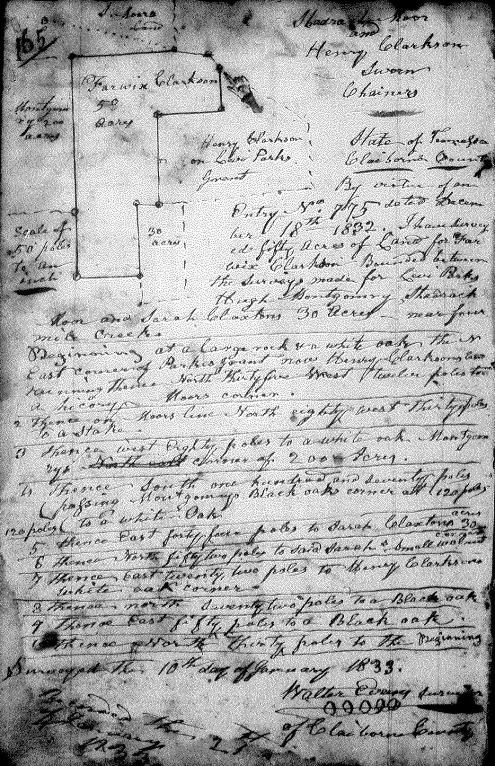
John’s original survey on Stoney Creek that was assigned to William Bean. This is the land documented earlier by Jeffrey LaFavre, here and here.

Carol found John Dobekin’s 400 acre survey. Thomas Gill is his chainer, providing one more connection to the Gill family. In fact, this Thomas Gill is the child whose baptism John Dobkins witnessed in 1737, the same day as Thomas’s father, James Gill witnessed the baptism of John’s son, Thomas Dobkins.

Both men had sons named Thomas baptized the same day, and stood up for each other’s baptisms. Hmmm…

The front of the survey shows that the survey was done for John Dobekins, but I can’t read the word after his name. Then William Bean is written in.

Then, “assigned to Cap. Cornelias Ruddle in presence of William White and John Ruddle, deed to issue inthe name of William Bean by desire of Cornelias Ruddle.”

The survey jacket confirms the chain of ownership.

No wonder the titles to these lands are confused and were for decades. This land wasn’t conveyed and recorded, the warrant and survey were just assigned. Not surprising since it was a long ride to the courthouse.

I swear, John is playing hide and seek with me.

Histories

I’m a big fan of “History of” books, especially ones that were written quite early. Some of those books include the memories of people born in the early 1800s, and they tell us what their grandparents, born in the 1700s, told them.

Those are absolute goldmines.

The History of Shenandoah County is searchable, including by first name only.

I searched for Reuben, and among others, discovered both Reuben and Jacob Moore. Hmmm…

“About the year 1734, as noted in the preceding chapter, Benjamin Allen, Riley Moore and William White settled in this neighborhood,” referring to the Smith Creek corridor.

Then, “In 1734, Benjamin Allen, Riley Moore and William White came from the Monocacy Valley in Maryland and took up some of the fertile lands at or near the site of Mt. Jackson.”

“Fertile lands” might be a clue as to why they settled in that specific location.

It appears, based on a 1782 journal of a Quaker minister that Grifith Dawbin (Dobbin), Thomas Moore and the Allens were Quakers. It’s interesting to note that the women from the Hopewell Friends church accompanied the minister to Shenandoah, 55 miles distant. On the road, they met a contingent of Friends from York County, PA.

Searching for Evan produced references to Evan Jones and a few others.

Why is John Dobkins never mentioned anyplace in these histories? I’m going to assume it was because he was a simple, quiet, yeoman farmer, just plowing his fields and harvesting his produce.

Additional Resources

There are also other resources that I use as well.

One is WikiTree and another is WeRelate. WeRelate has profiles of ancestors grouped usefully. Here’s the list of Early Settlers on the North Branch of the Shenandoah River.

I also have a friend, Maree, who is relentless in digging through obscure resources. I think she views these missing folks as a personal challenge to uncover the truth. Most of what she finds doesn’t hit that mark, but that’s the price one pays for the ONE that does. Bless her patient heart!

This time, I had to laugh because Maree kept finding my Dodsons out of Virginia. DNA confirms that they are not the same family, but those names do sound alike. Too much alike.

In any event, between my research, Maree, and my cousin, Carol, we are making halting progress. I probably ran down 200 blind alleys. Did I mention we were having, literally, a hurricane during this research adventure too?

I’m not going to bore you with every alley, but I do want to share relevant information from my “everything” document. .

Riley Moore

Riley Moore, a near neighbor of John Dobkins Sr., is listed in the Register of Old Augusta Families at WeRelate.

Remember the unsourced rumor that John Dobkins Jr.’s wife was the daughter of Thomas Moore. For that to be true, she would have been born around 1710, which means Thomas Moore would have been born in the 1680s or earlier.

She cannot be the daughter of Riley’s son, Thomas, who married Phebe Harrison, the granddaughter of an entirely different ancestor of mine, Isaiah Harrison that I didn’t expect to find here. What this means, though, is that if I match descendants of this Thomas Moore, it could be through my Harrison line, not because of Dobkins/Moore DNA.

We are at least one generation offset, because this Thomas Moore would be the same age as John Dobkins Jr, not a generation older. The older generation was Riley Moore. If he had a daughter, Elizabeth, she’s not mentioned in his will, and the other children are.

However, Riley Moore had a brother or half-brother named Thomas Moore as well, who also immigrated to Shenandoah from Monocacy Hundred in 1733. Born about 1717, he married Mary Allen, whose father was Reuben Allen, which connects the Allen and Moore families.

Reuben is not a common name. Now it’s in two families who are found with our Dobkins folks.

This Thomas Moore died in 1790 and did have a daughter Elizabeth, but apparently did not mention his daughter, Elizabeth’s married name in his will. I think I need to review his estate documents, in particular, the settlement if there is one. If indeed, Elizabeth is Thomas’s daughter, she would have married John Dobkins before he arrived in Shenandoah Valley, or at least by 1735, the birth year of their first child baptized in Orange County. This means Elizabeth would have been born 1710ish.

Given that Thomas Moore’s birth date is given as “after 1717,” this seems to eliminate this connection too, or maybe his birth date is simply wrong.

However, given the common first names, such as Reuben and Jacob, not to mention Thomas, there easily could be some connection, someplace. Or, maybe it’s further back a generation.

Riley Moore died in 1760 on his land in the Shenandoah Valley which then fell into Frederick County, VA. He only named his wife and sons James and Reuben. Witnesses to the will were Evan Jones, Amos Lewis and Susan Lewis. There’s the name Evan. Evan is the Welsh name for John.

Riley Moore was clearly English, given that his children were born and baptized at St. Barnabas Church, Queen Anne’s Parish, Prince George Co., MD between 1700 and 1712. There was no child named Elizabeth.

There seems to be a connection before Shenandoah Valley, and there assuredly is one after arrival.

In the road orders, on May 22, 1750, “Thomas Moore and Riley Moore are hereby Appointed Surveyors of the High Way in the room of Daniel Holdman and it is Ordered that they set up posts of Directions and Clear & keep the same in repair According to Law.”

Posts of direction. The earliest road signs. Clearly, more settlers were passing through on their way south and, eventually, on into the Carolinas.

Benjamin and Reuben Allen

Benjamin Allen never married. Reuben Allen was his brother. The following information is provided by Mike, here.

Reuben Allen I – Although there is no record of surveys or patents for land near Mt. Jackson owned by Benjamin Allen’s brother Reuben, Reuben Allen I appears to have been by far the larger landowner of the two. Reuben Allen I died in 1741. As his sons were too young to have acquired much wealth on their own, the various Fairfax Grants in 1749, issued to Reuben Allen I’s widow Mary and her sons Reuben II, Jackson and Joseph, appear to be for lands previously owned by their father. These Fairfax Grants of 625, 400, 270, and 202 acres, all four of which joined Benjamin Allen’s land, were no doubt for lands once owned by Reuben Allen I, brother of Benjamin.

Dr. Wayland in writing his “History of Shenandoah County, Virginia” makes no mention of Reuben Allen I, brother of Benjamin. However, Reuben evidently followed Benjamin to the Valley, as he had in Cecil County, Md. Reuben Allen I died intestate in 1741 and records of his estate are found in Orange County, Va. The deed in Dartmouth in 1721 shows he had a wife Mary at that time. No marriage has been found in either Quaker or Civil records. The Carleton Genealogy states Mary was Mary Jackson, dau of Samuel Jackson of Baltimore Co., Md, but this has been proved incorrect. Samuel Jackson died in Baltimore County in 1719 and his dau Mary was willed 90 acres of “Carter’s Rest” and 100 acres of “Jackson’s Outlet” (Md. Calendar of WiUs, Vol. 5, p 2). This same 100 acres of Jackson’s Outlet was leased to James Taylor by Mary Forster. Taylor, in turn leased the land to Mary Forster’s brother-in-law, Rowland Kemble. No record of Reuben Allen is found in Deed Records and Rent Rolls in Baltimore County, which at this time period bordered on Cecil Co., Md. However, the possibilities are good that Mary’s maiden name was Jackson as this name appears many times among the descendants. Reuben and Mary may have married before he left N. J. to move to Cecil Co., Md. in 1719.

Mary survived Reuben Allen I, as did five known children. Reuben and Mary had been married over twenty years and there were undoubtedly other children, some of them minors when Reuben died in 1741, but no Guardianship records were found, nor dower rights for his widow. With the distance to the Courthouse it is not surprising that none of these records exist. In fact, it is a sign of the hardiness of these Allens that we do have in Orange County, the petition for letters of Administration, made by Reuben Allen II, shown in the Court Order Book as “eldest son”; the Administration Bond of Reuben Allen II, made with Benjamin Allen and Thomas Moore as Sureties; and a full and complete inventory of his goods and chattels made by Peter Scholl, William White and Abraham Collett. The inventory shows it was made February 2, 1741/42 and was filed for record the 27th day of May 1742. The Administration Bond is dated November 26, 1741, and the record shows Reuben Allen II, Thomas Moore, and Benjamin Allen acknowledged this Bond in Court. Reuben Allen II was a Quaker, as evidenced by his affirmation in lieu of the oath of Administration (Orange County Va. Will Bk 1, pp 179, 180, 219, 221). Thomas Moore, one of the sureties for the Bond, was the son-in law, husband of Mary Allen.

A comparison of household articles in the inventories of both Reuben Allen I and Mary Allen shows many items still in the possession of Mary when she died in 1751 (Aug. Co. Will Bk 1 p 423). Jackson and Joseph Allen were named Administrators of the Estate of Mary Allen, deceased on the 29th of May 1751 (Aug. Co. Will Bk 1 pp 336 337). Thomas Moore and John Dobekin were sureties for Jackson and Joseph Allen’s Administration Bond (Aug. Co. Will Bk 1 p 356). Reuben Allen II, son of Reuben and Mary Allen died within a day or two of his mother. Whether their deaths were the result of an Indian raid, or perhaps an epidemic is not known. Ingaborg Allen, widow of Reuben II was granted letters of Administration on 28 May 1751, with Cornelius Ruddell and John Dobiken as Sureties (Aug. Co. Will Bk I p 335).

It’s very clear that these families were close, and likely intertwined.

Evan Jones

From the VAGenweb site:

In 1791, Evan Jones was high sheriff of Shenandoah County. In 1785 he had been one of the census enumerators, and he was prominent as a magistrate and otherwise. His home was on the Back Road (Zane’s Road?) in the southwest part of the county, one mile from the Fairfax (Rockingham) Line. It is probable that in every generation of his descendants there has been an Evan Jones. The old homestead today (1927) is owned by one of them, Evan Jones, and his brother, J.A. Jones. The old farm has never been out of the hands of the Jones family. The present Evan Jones is one of the men prominent in county affairs.

I have been unable to determine where Evan Jones came from.

Backtracking Up the Great Wagon Road

The Dobkins family seems very connected to the Moore family. Furthermore, John Dobkins arrives at the same time, and lives close to the Monocacy men – Benjamin Allen, Riley Moore and William White.

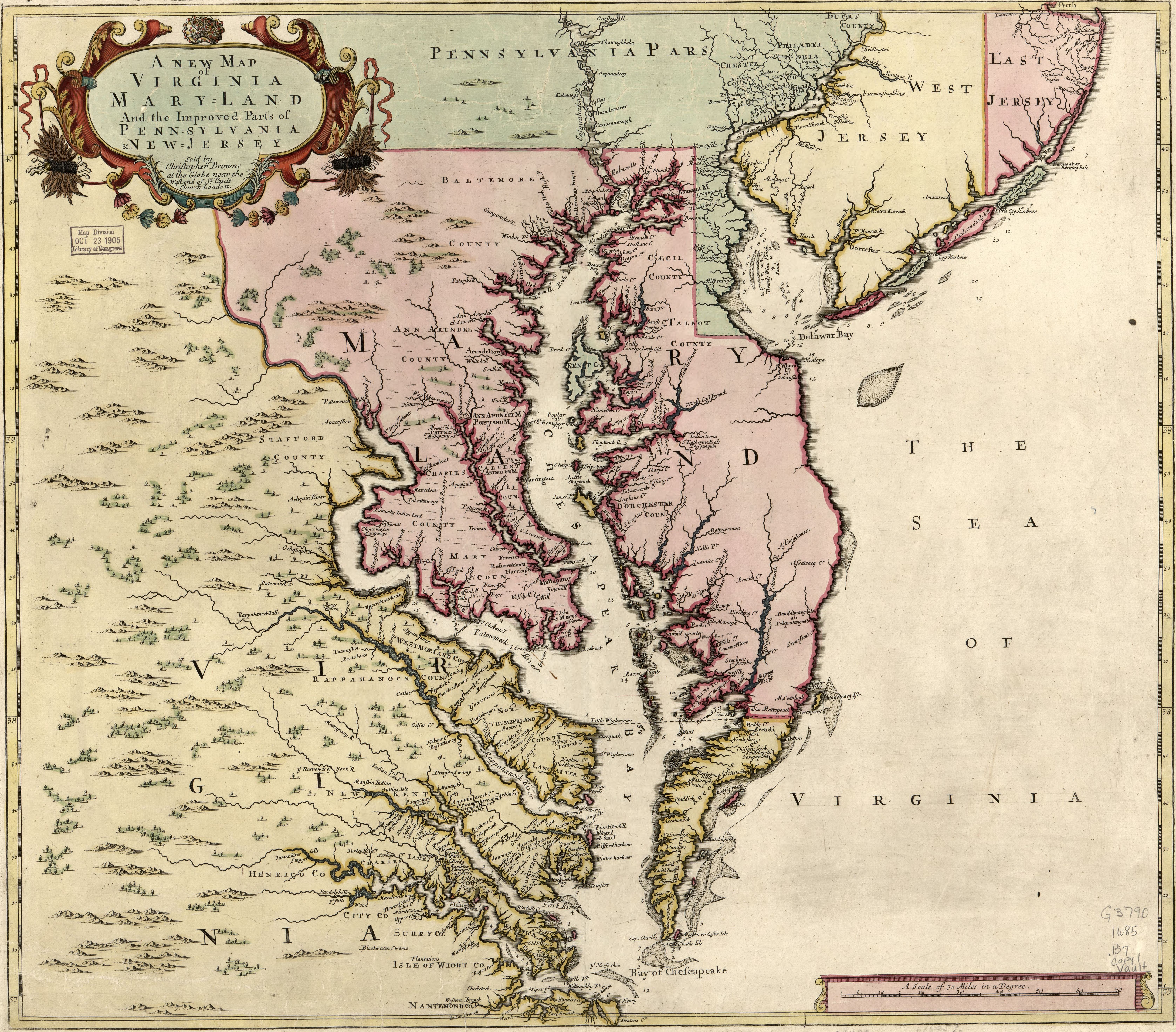
I think it’s time to look in the Monocacy and see what I can find. Based on Riley Moore’s information, it looks like Prince George’s County, Maryland might be a good beginning.

This also makes sense on another level too.

In the book about Life on Holman Creek, I find my Millers, Zirkles, Garbers, Wines and a very large number of my Brethren family members literally surrounding John Dobkins land. Where did they come from? Frederick County, Maryland, near Hagerstown, land that was once part of Prince George’s County. In other words, the Monocacy.

By Tim Kiser (w:User:Malepheasant) – Self-photographed, CC BY-SA 2.5, https://commons.wikimedia.org/w/index.php?curid=1951953

The Monocacy River runs south out of Adams County, PA into Frederick County, MD, above, where it dumps into the Potomac River, below.

By G. Edward Johnson – Own work, CC BY 3.0, https://commons.wikimedia.org/w/index.php?curid=93635068

An old Indian trail, probably the first “highway,” was found along the river.

The Great Wagon Road eventually connected these places. Of course, what began with a trickle when those first 49 settlers arrived on horseback or walking, became a steady stream of wagons carrying families with dreams, especially after the Revolutionary War.

What does Maryland have to offer?

Found Him!!!

The book, Pioneers of Old Monocacy is chocked full of historical information, including an index entry for both John Dobbins Sr, and John Dobbins Jr.

Doggone, there he is, plus his son in 1733 and 1734. This means that John Dobkins Jr. would have been married by this time, and probably pushes his birth year back to about 1708 or earlier.

Clearly, based on this document, I need to find the Maryland State Papers and see what else is there.

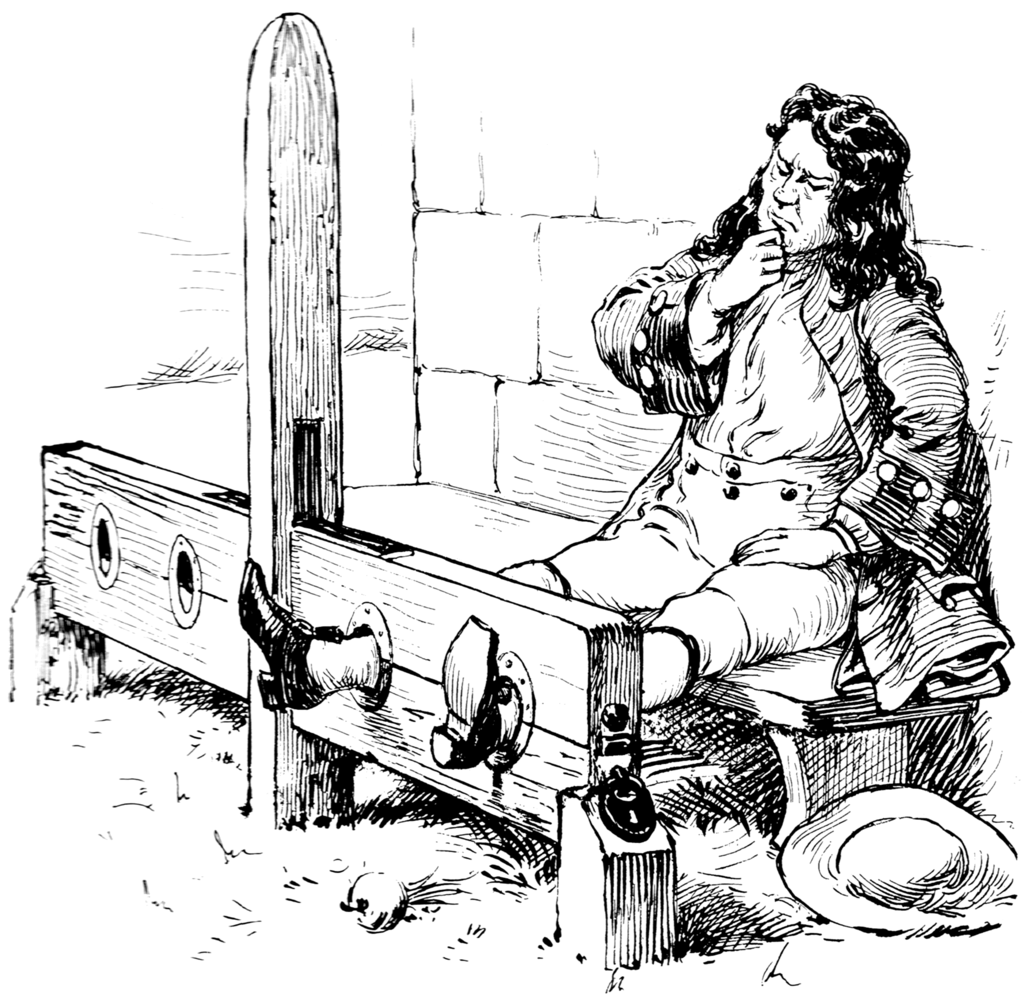
The second list, in 1734, tells us that John Dobbin got into a bit of trouble. Poor quality tobacco plants were to be burned in order to preserve the quality of the cured and finished tobacco product. If a man didn’t have some tobacco to be burned, generally in a central location, witnessed by others, that simply meant he had failed to comply with the order. This transgression, of course, could affect the price that all the farmers could command for their combined tobacco crop.

This event could have had something to do with why the two Dobkins men decided to pack up and strike out for the frontier. No one could tell them what to plant and grow there, or how to do it. Wheat, corn, and, eventually, apples were the primary crops in the Shenandoah Valley. Not all fields had to be cleared either. Some were already open prairie, the Indian “old fields,” now abandoned, but ready to be utilized again with much less effort than felling mature trees across an entire forest.

Prince George’s County is where the Van Meters were from too. They were involved in the earliest settlement of the Shenandoah Valley, so John Dobkins likely knew them and had heard the tales.

Thomas Cresap was living in Prince George’s County as well. Cresap was a land speculator, Indian trader, and explorer. His questionable methods and “loose” transactions caused so much angst between Pennsylvania and Maryland settlers, and governments, that he literally started Cresap’s War, named not in honor of him, but because of him.

All I can say is that John Dobkins, or Dobbins, needed to be very grateful he teamed up with Van Meter and not Cresap.

It’s hard to think of Maryland as the wild west, but at one time, it clearly was.

Maryland in the 1730s

I don’t exactly know where John Dobbins and his son lived, but it’s likely someplace in this region.

We know that they were in the “Monoccosea Hundred,” shown below, in the Catoctin Valley in western Frederick County. Cacoctin Mountain, the eastern-most reach of the Blue Ridge, about 15 miles east of Hagerstown, is where Camp David is located today.

Many of the surnames, such as Friend, found in this area when John Dobkins lived there are also found in the early Shenandoah Valley settlement.

The settlers likely congregated, perhaps at Richard Touchstones, in preparation for beginning the journey “from Monocacy to Shenandoah Mountain,” today’s South Mountain.

The Valley led directly from Maryland, across the mountains and into the Shenandoah valley, further south.

Many of the Quakers at Hopewell in Fredrick County, VA came from Monocacy, as did Benjamin Borden – the man who initially gave bond to John Dobkins in 1735, promising that John could patent his land. A list of early Frederick County wills can be found here.

Preparations

I don’t know what kind of thought and preparation went into the decision to leave Maryland and embark not only on a journey, but a journey into the complete unknown. The Shawnee Indians had all been massacred by the Catawbas in that very valley, probably between 1650 and 1700, so the Shenandoah Valley was at that point, uninhabited. The Warrior path that would become the settlers’ trail, then the Wagon Road, and now Highway 11 ran directly along the North Fork of the Shenandoah and Smith Creek.

John Dobkins was a farmer. He and his son wouldn’t have left Maryland until after the crops were harvested. They would have planned to arrive in the springtime in time to, hopefully, prepare the land for even a small first-year crop in the Shenandoah Valley.

Fall was a preferred time to migrate anyway. Not wet like the spring. Not the heat and humidity of the summer, and not frozen and slippery in the winter.

Perhaps the hardest part was leaving family behind.

John Dobkins the elder, and Mary, his wife, were clearly old enough to have adult children. Did some of those children stay behind? Daughters maybe, who married, and we will never know who they are?

Did they have siblings, or parents, that they would never see again? What and who were they leaving behind?

Did they visit tiny graves, taking flowers and explaining that they would see those children in Heaven one day?

If they didn’t leave living children behind, they surely wept as they said goodbye beside those graves one last time.

If they left living children behind, what became of them? Did John and Mary also leave weeping grandchildren behind?

Did they give them mementos to remember them by? Would they ever see any of them again?

The Trail to Shenandoah

This map shows the old Philadelphia Waggon Road at its beginning near Opequon Creek and Antietam Creek on the Potomac River.

Opequon Creek, shown above at the red arrow, at the Potomac where the wagon road to Shenandoah Valley left from.

This journey would take them about an hour and a half, maybe two, today. Just an afternoon drive – down and back in one day. It would have taken at least two weeks, and probably more since many people were probably on foot, and the terrain was rugged.

It was “only” 80-100 miles. Only. A paradigm shift away from anything resembling safety or life as they knew it.

Crossing the Potomac from the border between Maryland and West Virginia. Of course, they would have had to ford the river or take a rope ferry.

You can see the Blue Ridge in the distance.

About 10 miles later, the Shenandoah River empties into the Potomac River. Our pioneers turn left and head upstream, into the mountains.

The Valley from above shows the mountains on both sides. John and the other families continue to follow the river, between the mountain ranges. Maybe the wives said to each other, when the men were out of hearing, that they could go back if they wanted. Several would have been pregnant.

Crossing from present-day West Virginia, into Virginia, directly into Frederick County. These buildings wear the patina of age. John passed here, but of course, there was nothing more than a path.

Mountains rise on both sides of the road.

If they traveled in the late fall, it would have been stunningly beautiful as they, day by day, approached the land where they would stake out their claims and build the cabins that would be their new homes.

A little further south, the valley widens a bit, offering more tillable land, and the Shenandoah River splits into the North and South Branches at present-day Front Royal.

Our group of settlers continue down the North Fork. They were halfway by now. Without Hite or Van Meter, someone who could “pilot” the way, they would have been entirely lost.

The group would have passed and made note of occasional Indian mounds, sad sentries to the villages that were destroyed, with all their inhabitants, a generation earlier. Ghost villages.

Today, the Old Valley Pike is marked by sleepy villages with beautiful homes built before automobiles, standing close to the present-day roads.

The settlers’ path brought them closer to the Blue Ridge to the east, paralleling the North Fork of the Shenandoah.

South of Mt. Jackson, the caravan would have forded the Shenandoah one last time, trying to keep at least some things dry. Just east of that location, the mouth of Smith Creek deposits its water into the North Fork of the Shenandoah, dividing the waterway once again.

The horse train continued its path south, on to the Borden grant. They would have wanted to find headwaters of creeks to assure clean water for people and livestock.

The settlers are now threading the needle, with the North Fork of the Shenandoah behind the tree line at right, and Smith Creek behind the trees below the escarpment at left. This valley looks relatively flat, beautiful, and fertile.

Better yet, it was uninhabited, theirs for the taking and working the land.

One of the settlers would, unwittingly, settle on the land where the Shenandoah Caverns would be discovered on Neff land in 1884. Endless Caverns, the longest cave system in Virginia, was discovered about a mile from John Dobkins Sr.’s land in 1879. For all we know, and John never knew, that cave labyrinth might run right under his land.

Questions – So Many Questions

Indeed, we managed to push the needle about 100 miles, back into Maryland. That seems so much further than 100 miles. It seems like a lifetime, a different world. It assuredly was for those brave settlers.

Why did the Monocacy men continue to travel beyond the other settlers? As each of the other families stopped and claimed land, why did they settle, together, so far south on Smith Creek? Was that considered the best land? Were they late arrivals? Did it cost less, to Borden, because it was more remote and therefore, more dangerous?

We know that Daniel Holman built a fort house at the entrance of Holman Creek where it intersects with the Shenandoah River for the protection of his family and nearby settlers, probably in the red area above, about 200 X 300 feet. Three sides would have been protected by water. Holman’s Fort would have been about 5 miles north of where John Dobkins settled.

What records can be found in Prince George’s County, Maryland?

Is the original name Dobbins, Dobkins, Dobikins, or something else?

Did John arrive in Maryland from Pennsylvania, New Jersey, or New York like some of the other Prince George’s County families?

Was John Dobkins or Dobbins an immigrant? If so, when did he arrive, and from where?

Was he married when he arrived?

Who was his wife, Mary?

Is John, his wife, Mary, or his son John’s wife, Elizabeth, related to the Allen and Moore families? My bet is yes.

Is the Dobkins family related to the other Monocacy families?

What about James Gill and the two sons named Thomas? Is that significant?

What does Y DNA tell us?

Dobkins Y DNA – What Does It Say?

We have two men descended from Evan’s son, Thomas Dobkins, who was born in 1781 in East Tennessee and died in 1822 in Missouri.

The high-level haplogroup of these two men is I-M253, but unfortunately, they don’t match any other men of the same surname.

At 37 markers, the highest they tested, they do match one man who is from Scotland, and one man living in Sweden. That’s it!

Unfortunately, haplogroup I-M253 is about 4500 years old and most frequently found in Scandinavia and Northwest Europe.

Of course, with sea travel and Vikings, it could have traveled anyplace in that region.

I am attempting to find another male to take a Big Y test, as the DNA of the original tester was not sufficient to process.

Viewing the Dobkins 12-marker matches, the correlation with the British Isles, northwest Europe, and Scandinavia is reinforced/

All I can really say with a high degree of confidence is that the Y DNA of the Dobkins line is rare. That’s much better than being common, but we need more markers and the Big Y test.

If you are a Dobkins male descended from this line, please reach out. I’d love to provide a Y DNA testing scholarship for you.

We still need more evidence.

_____________________________________________________________

Follow DNAexplain on Facebook, here or follow me on Twitter, here.

Share the Love!

You’re always welcome to forward articles or links to friends and share on social media.

If you haven’t already subscribed (it’s free,) you can receive an email whenever I publish by clicking the “follow” button on the main blog page, here.

You Can Help Keep This Blog Free

I receive a small contribution when you click on some of the links to vendors in my articles. This does NOT increase the price you pay but helps me to keep the lights on and this informational blog free for everyone. Please click on the links in the articles or to the vendors below if you are purchasing products or DNA testing.

Thank you so much.

DNA Purchases and Free Uploads

Genealogy Products and Services

My Book

Genealogy Books

Genealogy Research

John Dobkins Sr. (c 1685-1746) Wilderness Homesteader on Smith Creek in the Shenandoah Valley – 52 Ancsestors #377

We don’t know where John Dobkins was born, nor when he, or his ancestors, arrived in the colonies. We don’t know if he was born here, or overseas. If he was born in the old country, where was that? Was he married when he arrived, or did he marry here? We do know that his wife’s name was Mary, or at least, his wife when he died.

We aren’t even positive about the spelling of John’s surname. John wasn’t able to write, so others would have written his name as it sounded to them. There were Germans, Scots-Irish, Dutch and probably English settlers in the Shenandoah Valley, so they would have heard and written his name differently. It’s no wonder we find his surname recorded variously as Dobkin, Dobkins, Dobikin, Dobikins, Dobin, Dobins, Dobbin, Dobbins and more variations. Two generations later, my ancestor, Jacob Dobkins spelled it Dobkins, as did the descendants of his brothers, Reuben and Evan, at least most of the time.

I discovered a significant amount of information in an undated, uncopyrighted book that I think was written about 1978, The Dobkins Family in America, 1730-1978, by Cecil B. Smyth Jr. (1929-2014.) It was this book that showed me where to dig further. Cecil did an incredible amount of work on this family, including historical research on the ground and in the region. I communicated with Cecil before his death, and I think he’d be pleased that we’ve used his work as a foundation building block.

County Formation

Between 1720 and 1734, what would become Shenandoah County was a part of Spotsylvania County, Virginia. From 1734 to 1738, it was included in Orange County. In 1738, the area of Orange County west of the Blue Ridge Mountains was separated to become the new counties of Augusta to the south and Frederick to the north.

In 1753, the dividing line between Augusta and Frederick Counties was made to coincide with the Fairfax line. On March 24, 1772, a new county was formed from Frederick County which was to be known as Dunmore. In 1778, its name was changed to Shanando which eventually morphed to Shenandoah.

Early Settlement

In 1716, Sir Alexander Spotswood, the Royal Governor of Virginia, headed west with a small army along the Germanna Trail. Many in the exploratory party contracted German measles along the way, but Governor Spotswood and a few hearty souls continued on and crossed the Blue Ridge at Swift Run Gap.

The Governor forded the Shenandoah River and buried a bottle on the west bank. This bottle contained a note he had written which claimed all territory west of the mountains to “The River of the Spaniards,” now the Mississippi, in the name of and for King George I of England. After the French were driven out of the Ohio Territory, the claim lasted until the end of the American Revolution.

On June 17, 1730, John and Isaac Van Meter were issued “land orders” from Governor Gooch authorizing them to select 40,000 acres as a buffer zone against raids by the Indians and the French moving into the Ohio River Valley.

Van Meter, a trapper and Indian trader, held a 10,000-acre tract in the Shenandoah Valley which he had acquired from Lord Fairfax. A condition of this sale was that one hundred German families were to settle in the Valley. Van Meter sold this land to Jost Hite of eastern Pennsylvania in 1727. You can read more about the confusing details, here.

Hite proceeded to search for one hundred German families, and, in 1731, the group headed for the Valley.

Hite purchased the Van Meter’s rights for unpatented parcels within the 40,000 acres on August 5, 1731.

Hite personally migrated to the Shenandoah Valley in 1731. Local tradition holds that he brought 16 German and Scotch-Irish families in the initial settlement caravan. They lived near the Pack Horse Ford crossing over the Potomac River until completing their houses further south on Opequon Creek.

At the time, there were no roads crossing the Blue Ridge. Travelers on foot had passed through mountain gaps for 10,000 years, while colonial explorers using horses had been crossing the mountains since John Lederer in 1670. However, it took two decades after first permanent colonial settlers arrived in the Shenandoah Valley before the old trails were improved enough for wagons to make a reliable crossing over the mountains into the Piedmont.

In 1734, the Van Meters sold Hite the parcels they had previously patented, except for some parcels near Shepherdstown (then Maryland, now West Virginia) where John Van Meter had lived. Hite may have been John Van Meter’s cousin or nephew, a relationship that could have facilitated their dealings.

Enroute west, they encountered Robert McKay and his group of Scotch-Irish settlers from the coast. They perfected a plan to pool land and money so that they could eventually obtain more land from Lord Fairfax. They purchased 70,000 more acres over the next two years and determined a plan for dividing it.

The Scotch-Irish were to settle the eastern half from Winchester to Luray, in essence the South Fork of the Shenandoah. Hite’s Germans would occupy the western portion from Winchester to beyond what is now Strasburg, the North Fork of the Shenandiah. Hite erected a house five miles south of Winchester along what was to become the “Valley Pike,” U.S. Route 11.

Two of his grandsons built much larger homes along Cedar Creek near Strasburg a half century later. His son-in-law, George Bowman, settled along the south side of Cedar Creek in what is now Shenandoah County in 1731 or 1732.

Another son-in-law, Paul Froman, settled along the creek eight or nine miles northwest of Bowman.

Other settlers were soon to follow. Benjamin Allen, Riley Moore and William White arrived from the Monocacy Valley in Maryland and settled in the area of what is now Mt. Jackson, just a few miles north of John Dobkins’ land.

Jacob Funk bought 2,030 acres between Fishers Hill and Strasburg, including part of the present town of Strasburg, from Henry Willis in 1735.

By 1738, many people had settled what would become Shenandoah County forty years later, in 1778.

The first Indians encountered by the settlers were friendly, and the two groups lived together peacefully for about 20 years. Apparently, the Native people didn’t object to the Pennsylvania settlers due to the treaty William Penn had struck with the Native Americans on the banks of the Delaware. It probably didn’t hurt that Van Meter traded with the Indians, earning their trust, and some backcountry settlers had purchased land directly from the Indians. According to Wine, in Life Along Holman’s Creek, the Native people objected violently to any migration of the “long Knives,” which would be the English for the most part, from east of the Blue Ridge.

Jost Hite and Robert McKay advertised to residents of the Philadelphia, PA area that settlements of the land west of the Blue Ridge Mountains in the Northern Neck of Virginia were available. John Dobkins Sr. and his wife, Mary were among the takers.

Cecil reports that “John was a Scotch-Irishman from Ulster, Northern Ireland. We do not know the year he emigrated or anything about his wife. They settled in what was Orange County, VA in 1731 or 1732.”

I surely wish that Cecil had documented his source for either his arrival date in the Shenandoah Valley or John Dobkins’ origin in Ulster. The name Dobbins is found in Dublin and Sligo in 1848-51 when Griffins Valuation of Ireland was conducted. It’s also spelled Dobbyn around County Armagh. However, there are several early Dobikins in England, so the jury is still out on this one.

The Shenandoah Valley region, nestled between the Blue Ridge and the Allegheny Mountain ranges was extremely rugged, remote and stunningly beautiful. It still is.

There were no courts opened in Frederick County before 1743 nor in Augusta before 1745. Records for Frederick and Augusta counties were recorded in Orange County until 1743.

Found in Pioneers of Old Frederick County, VA by Cecil O’Dell.

John Dobikin Sr. (b 1685 c) received a bond from Benjamin Borden on 24 September 1735 for “150 pounds Sterling to make patent in full and ample manner as the King gives me” on 150 acres, part of Benjamin Borden’s 3,300 acre tract. The 6 January 1735/36 Morgan Morgan/Peter Woolf census listed John Sr. as a settler on the McKay, Hite, Duff and Green 100,000 acre Colony of Virginia grant land.

This grant proves critically important.

In the Hite/Fairfax lawsuit, William White stated that he was present when Benjamin Bordon gave a bond guaranteeing a good title to the land on Smith Creek that has been purchased by John Dobbin on September 24, 1735. Borden had received 100,000 acres along the branches of the James River in the upper part of the Shenandoah Valley from the Governor’s council in May of 1735.

This is noteworthy, because Borden’s land was supposed to be south of the Beverly Grant, outside of the area claimed by Lord Fairfax. The fact that Borden is guaranteeing John a good title tells us that his land should be south of what would become known as the Fairfax line. We will see in a few minutes why this is an important piece of data.

Clearly, based on that testimony, John Dobkins was physically in this location at that time.

Peter Wolf’s deposition in the lawsuit taken 6th March 1754 and witnessed by Isaac Parkins, Ger’m Keys and Thomas——–(?).

Peter Wolf being first sworn…Deposeth as followeth, That he is now in the fifty fourth year of his age that he came into this Colony from the Jerseys some time in the year 1733, and that he settled upon a tract of Land which was supposed to belong to Joist Hite and as this Deponent believe the same was in Dispute That sometime in the year of our Lord 1736 this Deponent was sent for by the Lord Fairfax who was then as Samuel Timmands’s to Pilot him up to Joist Hite’s which accordingly he did.

There are also a couple of references to Peter Wolf’s list that he took known as “the number of Settlements upon the Grant granted to Robert McCay Jost Hyte and their Partners in the forks of Shannando and the several Branches thereof.”

This is the 100,000-acre grant given to Jost Hite and his Quaker partner Robert McKay. They needed to seat 100 families to fulfill their obligation under that conditional grant to seat 1 family per 1000 acres.

They list the 49 names, as follows:

    • Robert McCay Senr.
    • John Funk
    • Henry Johnston
    • Thomas Parmer
    • John Denton
    • Jonah Denton
    • Henry Falkenburg
    • Edward Wormwood
    • Andrew Falkenburg
    • Jacob Falkenburg
    • David Carlock
    • Benjamin Allen
    • Reiley More
    • John Lewis
    • William White
    • John Dobikin Senr.
    • James Gill
    • Andrew Bird (Burd in 1770)
    • John Nichols
    • William Bridges
    • Charles Smith
    • Daniel Holeman
    • Charles Robinson
    • William Linviel
    • John Gorden
    • John Wood
    • John Cannaday
    • Robert McCay Jr.
    • Joseph Whites
    • William Oldham
    • William Barke
    • William Anns (?)
    • Barnel Hegin
    • Samuel White
    • Joshua Jobe
    • George Robinson
    • James Sickles
    • William Barnett
    • James Leeth
    • John Calbreth
    • John Edmondson
    • Isaac Howell (Houser in 1770)
    • John Read
    • Joseph Tindell
    • Michael Brook
    • Joseph Read
    • David Keath
    • William Goodwin
    • George Leeth

Whereas the said Robert McCay, Jost Hyte and their Partners have requested of us George Hobson and Morgan Morgan two of his Majesty’s Justices of the Peace at Opeckon in the County of Orange to view the Settlements within their said Grant and that Mr. George Hobson went part of the Way with me in order to view the same the weather proving bad he returned and there being no other Magistrate over the Ridge Mr. Jost Hight appointed Peter Wolfe in his room to go with me to view the said Settlements within the said Grant.

I the said Morgan Morgan do hereby certify that the said Peter Wolfe and myself have viewed and that we seen the above Settlement being in number forty-nine and that the same are now improving by the above named persons within the said Grant Given under my hand this 26 day of January A:Dom: 1735/6.

Morgan Morgan

This is followed by Peter Wolf, on January 26th, 1735/36, stating that he “had in fact viewed the settlements in the Fork of Shannando and the several Branches thereof and that he did see forty-nine Settlements in number and that the same were now improving by the Persons named in the list.”

The names in red, above, are shown on map 15, shown below, representing the original settlers. The blue names are found in 1770 and shown on map 15A. However, referencing other records, including grants, deeds, court and other records, and baptisms, we find many families who are clearly active in the community but not listed among the original grants along Smith Creek.

The fact that John Dobikin is noted as Senr., and his son by the same name is not listed tells us that they are homesteading together, as one family.

I think it’s also worth mentioning that, at least at first glance, these earliest settlers don’t appear to have Scots-Irish names.

In 1737, William Mayo surveyed this region and noted “Many families of forreign protestants are settled hereabout, under grants from his Majesty’s Governor.”

Where is Smith Creek?

Smith Creek runs for about 20 miles, as the crow flies, in the Shenandoah Valley along what is now Interstate 81 near New Market.

If you pan out, you can see the migration path directly down the valley from Pennsylvania, through the Hagerstown area, on down the valley to the newly minted Borden grant for settlement. On the early maps, this is called the “Waggon Road to Philadelphia.”

I found John’s land on Smith Creek, but what happened to it remains a mystery.

The land patented to his son, John, in 1750, which we had all assumed to be his father’s original patent land was found 8 or 10 miles away, on Holman Creek, not Smith Creek.

It was not this same land, but I spent a lot of time trying to make those pieces fit together. They don’t.

However, Holman Creek dumps into the Shenandoah River not terribly far from the intersection with Smith Creek.

The intersection between Holman Creek and the Shenandoah River is shown at left, and between Smith Creek and the Shenandoah at the right arrow.

The original grant owners were mapped in the book, Pioneers of Old Frederick County by Cecil O’Dell, and included in Cecil Smyth’s book, but John Dobkins is missing.

The Holman family was granted land at the intersection of Holman Creek and the Shenandoah River, and still owned that land in 1770. On those two property owner lists, no individual owned 150 acres, the amount granted to John Dobkins. But the entire grant of 3,300 acres is short exactly 150 acres when adding the total of the known property owners.

However, by studying the property owners, one can learn more about the neighborhood, and I found important clues.

The above drawing shows most of the earliest land grants and shows clearly where the grants lay along Smith Creek. Note the Fairfax line that divides Frederick County from Augusta County.

Map 15A shows the same parcels with their 1770 owners.

By 1770, John Dobkins Sr. had been buried for almost a quarter century, and his 150 acres is still missing.

John Dobkin Sr. became ill in 1743, sick enough to write his will on November 3, 1743, appointing wife Mary and son John Jr. as executors. This confirms that John Jr. was of age at that time.

In the name of god amen the 3rd day of Nov 1743, I John Dobikin of Orang County in the Colony of Virginia, farmer, being ? sick and weak in body but of a perfect mins and memory thanks be given unto god thereof caulling unto mind the mortality of my body and knowing that it is ? for all men once to dye do make and ordain this my last will and testament that is to say principally and first of all I give and recommend my soul into the hands of God that gave it and for my body I recommend it to the earth to be buried in a Christian like and decent manner at the discression of my executor not doubting but at the general Resurrection I shall receive the same again by the mighty Power of God and as touching such World by ? with it hath pleased God to bless me in this life I give my wife and dispose of the same in the following manner and form.

Imprimis it is my will and I do so order that in the first place all my just debts and funeral charges be paid and satisfied.

Item I give and bequeth unto Mary my Dearly Beloved Wife all my goods and chattles, tenements and lands and at her decase to dispose of as the shall think proper leaving her and my son John Dobkins executors of this my last will and testament and I do herby utterly disalow revok and disanul and ? all former tesament wills….

John signed his will with a somewhat fancy mark, not just an X. This suggests to me that he could not write. If he were simply too sick to sign, he would just have made an X, I would think.

Witnesses were William Jeames (James), William Galenbe and Samuel Brown (his mark.)

This will is unusual because he left his land to his wife. This means she would either have:

  • Sold or transferred the land
  • Had a will
  • Had an estate if she died without a will
  • Or remarried when the land would have become the property of her husband

There’s no evidence of any of those four things, but one of them had to have happened. His land didn’t just vaporize..

John Dobkins Sr.’s will was probated on May 12, 1746 in Augusta County where John Dobkins Jr. and Mary were appointed as executors.

Ten days later, on May 22, 1746, John Dobkin, Benjamin Allen and Tunis Hood are bound as sureties for Mary Dobkin and her son, John Dobkins, as executors of John’s estate.

On June 12, 1746, the estate inventory of John Dobkins Senior was filed and had been appraised by William White, William Carrell and William James. I absolutely love estate inventories, because they describe EXACTLY what was in the house, and barn, and I mean everything, Right down to hammers and dung forks. These inventories convey the story of how these people lived – both by what is present and what is absent.

  • Four milch cows
  • Two year-old heifers
  • One three-year-old steer
  • One three-year-old bull
  • Three two-year-old steers
  • Three yearling calves
  • One bay horse five-years-old
  • One bay mare and colt three-years-old
  • One sorrell mare and colt seven-years-old
  • One black mare four-years-old
  • One dunn horse fifteen-years-old
  • Twelve sheep
  • Two sows and ten piggs two barrows and a boar and three shoats
  • A plough and clevis
  • A cart and cart saddle
  • One feather bed and pair of sheets a pair of blankets and a rug
  • Two spinning wheals one small and the other bigg
  • A great Bible
  • A chest and trunk
  • A sithe and two sickles
  • A dung fork
  • A brand iron
  • Old iron
  • 2 axes
  • Old iron
  • A hammer and pinchers
  • A broad ax
  • Two augers and a drawing knife
  • One iron pot and a iron racing
  • Two iron potts
  • One iron hatchall
  • Three pewter dishes
  • A parcel of old brass
  • One brass candlestick
  • A bed a pair of sheets and blanket and covlet
  • A grindstone with an iron hasel
  • A side saddle
  • A suit of wearing cloaths
  • One gray horse two-years-old
  • One gunn

The total estate was valued at 72 pounds, 13 shillings, no pence, and had been appraised on March 18, 1746. I sure wish we knew who purchased items at his estate sale, or maybe there wasn’t a sale given that he had left everything to Mary.

I realize looking at this list that the 15-year-old horse would have been their pack animal over the mountains, lo those many years ago. That horse had been through the entire trip with the family. They depended upon one another. I wonder if the horse realized John had died, and pulled a wagon with his casket to the burying ground.

What I wouldn’t give to see that Great Bible. Clearly, his son John would have eventually taken possession of the Bible, but what happened to it after that? Hopefully someone penned John’s birth and death dates, as well as those of his children. Maybe his parents and wife’s name too, if we only knew where it was today.

John styled himself as a farmer, but many farmers had a secondary skill in addition to farming. We see evidence of that by finding carpenter tools, blacksmith tools, or similar craftsman items in their estate sale. John apparently truly was a farmer, because he owned 14 cattle of various sorts, 6 horses, 12 sheep, and 16 pigs of various ages. Interestingly, the side saddle would have been Mary’s, so where is his saddle?

The rug would have been a woven bed rug, not a floor rug.

That “snug as a bug in a rug” saying – yep – that was referring to a bedbug and a bed rug. That featherbed and bed rug was the most valuable item inside the house. Four times as valuable as John’s only gun, as hard as that is to believe on the frontier.

I can just see Mary insisting on having a feather bed. She probably plucked hundreds of chickens and geese before they went into the pot, saving the feathers. That was probably their only creature comfort, given that they only had one candlestick and three pewter plates, but no table or chairs. Yes, that feather bed was valuable indeed!

John had assuredly passed the half-century mark, and probably three-score, yet, other than the clothes he was buried in, he had one “suit of wearing clothes.” I surely would like to know if that has a meaning beyond the individual words. Is this a specific type of clothing, or a specific cultural saying? Since it was referenced as a suit, was it a jacket, breeches and waistcoat? If so, why would he have hauled that overland, on horseback, to the frontier? His dunn horse surely already had enough to carry.

John’s Land

Since John Dobkins’ will was probated in Augusta County, not Frederick County, this tells us that he was living in the area of the map below the county dividing line between Augusta County and Frederick County. The fact that Bordon provided his grant confirms the same.

Based on the map of the grants provided in the book, and the county dividing line, I attempted to reconstruct that area, today.

This area on Google maps is located just east of US11, known at Valley Pike, near the intersection with Greatview Lane. You can tell by the shape of the river. Note that Smith Creek to Thornton Gap Road on that original map is now 211.

John assuredly lived close to the existing grants. He wouldn’t have wanted to be by himself. That wasn’t safe. As it was, it looks like he might have been one of the furthest south homesteads, bordering on the untouched wilderness.

I’ve reconstructed this portion of the grant using the river and the approximate edges of the grants.

There is one grant that is not labeled. Y and Z are labeled. Z extends on both side of Smith Creek, apparently. Y is on the east side of Smith Creek but the parcel on the western side of Smith Creek, opposite Y, is not labeled.

Unfortunately, Craney Island Road, crossing this land is only one lane, and the Google vehicle does not drive down one lane roads, so we can’t view it more closely.

Still, we can look across the field, knowing that Smith Creek is just over yonder, below those mountains. I believe we’re looking across John Dobkins land here.

These plats are not shown on the original survey map with names, so it’s likely that one of these belonged to John Dobkins. Probably the one with the question marks since none of the accounted-for plots are 150 acres.

Plats Y and Z, along with the unlabeled plat to the west of Y are shown within the red arrows.

It’s very likely that John Dobkins Sr., with help from John Dobkins Jr. cleared these fields, built a log cabin, and set about farming.

When Was John Born?

The fact that John Sr.’s son, John Jr., had a child born in 1736 tells us he was married by at least 1735. Given the marriage age for men of about 25, John Jr. had to have been born about 1710 or maybe even earlier

That pushes John Sr.’s birth back to at least 1685, or perhaps earlier.

If John Sr. was born in 1685, he died at age 61. If Mary was the same age, they would have been having children from about 1705ish to 1727-1730ish. Of course, John Jr. could have been their youngest child, not their oldest, which means they would have been 20 years older, dying at 81. I find it doubtful, though, that a man of 71 would have homesteaded in the wilderness. It’s remarkable enough that a man of 50 or 51 did.

I can’t imagine doing something like that, knowing that one was literally starting over with absolutely nothing. He would have been manually felling trees to clear land and cutting logs to build what was necessarily a small cabin. Without wagons, how did they keep the wildlife at bay while they built their cabins?

Loose Threads

This also causes me to wonder if John and Mary had other children. They must have. If they had additional living children, why were they not mentioned in John’s will? There are no other Dobkins families in evidence, other than John Jr.

There is a James Dobbins in 1751 and 1753 in Augusta County, but he shows no connection to our Dobkins family and eventually moves to South Carolina.

Griffith Dobbins is a Quaker man, and I found no connection with him either, other than naming a child Thomas. In 1813, that Thomas obtained land from a former neighbor family of John Dobkins Jr., more than a half-century after John Sr. died, and a quarter-century after the last of our Dobkins family had loaded up the wagons and departed for the next frontier. Given that John Dobkins Jr. had a son, Thomas who is unaccounted for after 1753, that 1813 Thomas Dobbins sent me on a wild goose chase. Thanks so much to my cousin who found the actual deed record, allowing me to track him down, and putting me out of my misery:)

By all appearances, John Dobkins Sr. and Mary led incredibly difficult, challenging lives, fraught with danger daily, and filled with heartache if only one of their children lived to adulthood. Perhaps they were simply grateful that one child had survived – John’s namesake, John Jr.

I sure wish we knew more about their story.

Actually, I just made a new discovery, and we do, although this too creates more questions than answers…

Stay tuned.

_____________________________________________________________

Follow DNAexplain on Facebook, here or follow me on Twitter, here.

Share the Love!

You’re always welcome to forward articles or links to friends and share on social media.

If you haven’t already subscribed (it’s free,) you can receive an email whenever I publish by clicking the “follow” button on the main blog page, here.

You Can Help Keep This Blog Free

I receive a small contribution when you click on some of the links to vendors in my articles. This does NOT increase the price you pay but helps me to keep the lights on and this informational blog free for everyone. Please click on the links in the articles or to the vendors below if you are purchasing products or DNA testing.

Thank you so much.

DNA Purchases and Free Uploads

Genealogy Products and Services

My Book

Genealogy Books

Genealogy Research

Capt. John Dobkins Jr. (c 1710 – c 1788): One Rugged Frontiersman – 52 Ancestors #376

We know nothing about John Dobkins Jr. between his birth and when we first find his father, John Dobkins Sr. in Orange County, Virginia in 1735 when he received a bond from Benjamin Borden for a patent on 150 acres in the Borden Grant.

Borden, a land speculator, had moved to this area by April 1734 and received a patent on October 3, 1734 for the area including Smith’s Creek, where John Dobkins Sr. settled.

Borden also received 100,000 acres along the branches of the James River in the upper part of the Shenandoah Valley from the Governor’s council in May of 1735.

This is noteworthy because Borden’s land was supposed to be south of the Beverly grant, outside of the area claimed by Lord Fairfax. The fact that Borden is guaranteeing John a good title tells us that his land should be south of what would become known as the Fairfax line. This is an obscure, but important piece of data that we will eventually need to locate John Dobkins Sr.’s land.

John Dobkins’s surname was sometimes written Dobikins, Dobbins, and other sound-alike derivatives.

Clearly, his son, John Jr., probably born about 1710, was with him when he arrived. The Dobkins family was one of the first 50 families to settle west of the Blue Ridge, or anyplace in the Shenandoah Valley, for that matter.

In the book, The Dobkins Family in America by Cecil B. Smyth Jr., Cecil tells us that in 1730 Jost Hite and Robert McKay advertised to residents of the Philadelphia, PA area that land was available for settlement west of the Blue Ridge Mountains in the Northern Neck of Virginia. They had obtained grants of 40,000 and 100,000 acres. Among the takers was John Dobkins Sr. and his wife, Mary.

According to Smythe, John Dobkins settled in what was Orange County, VA in 1731 or 1732, although I can’t find anything before 1735. The first settlers did arrive at that time, but additional groups from other areas, including the Scots-Irish, Quakers, Germans, and other protestant groups arrived over the next couple of years too. This part of Orange County would later divide into Augusta and Frederick County.

However, there were no courts opened in Frederick County before 1743 nor in Augusta before 1745. Records for Frederick and Augusta counties were recorded in Orange County until 1743. The area that became Shenandoah County was part of Augusta and Frederick counties from 1738 to 1753. In 1753, the line dividing those counties was moved up the Valley and made identical with the Fairfax line. In 1772, Dunmore County was established from Frederick and in 1778 was renamed to Shenandoah County. Yes, land division and county formation on the western waters was much like sausage-making. Messy.

Found in Pioneers of Old Frederick County, VA by Cecil O’Dell.

John Dobikin Sr. (b 1685 c) received a bond from Benjamin Borden on 24 September 1735 for ‘150 pounds Sterling to make patent in full and ample manner as the King gives me” on 150 acres, part of Benjamin Borden’s 3.300 acre tract. The 6 January 1735/36 Morgan Morgan/Peter Woolf census listed John Sr. as a settler on the McKay, Hite, Duff and Green 100,000 acre Colony of Virginia grant land.

Traveling Ministers

In the early frontier settlements, circuit-riding ministers were quite welcome. They provided religious services and brought news from the outside world. Maybe even letters from family members. Without churches, baptisms couldn’t be performed, and funerals were clearly handled locally by someone saying a few words over the casket of the deceased.

One of the earliest, if not the earliest minister to travel to the Shenandoah Vannoy to service the founding families was the German immigrant, Lutheran Reverend John Stoever.

Fortunately, he recorded the location of the baptisms as he traveled from place to place.

His first recorded Shenandoah baptisms were performed on March 31, 1735 when he baptized numerous babies and children. Some had been born as early as 1727, but most were born in the 1730s.

Many families had several children in need of baptism. They probably hadn’t seen a minister, or heard a sermon in a long time.

Children

The year after John Dobikins Sr. received his grant, his son, John Jr. and daughter-in-law, Elizabeth, gave birth to their son, Thomas, who was baptized when Reverend Stoever came to preach.

Baptism Records of Rev. John Stoever

  • John Dawbin (Shenandoah.) – Dawbin, Thomas, b. Nov. 8, 1736; bap. June 8, 1737. Teste: James Gill

John Dawbin and his wife Elizabeth also witnessed the following baptisms, children of James Guill:

  • John Dawbin testis, June 8, 1737, baptism of Thomas Guill, son of James.
  • Elizabeth Dawbin, testis, June 8, 1737, baptism of James Guill, son of James.

Years later, in 1753, one Thomas Dobekin was a chain carrier on Stoney Creek, on land adjoining John Dobekin. He would have been 17.

That was the last mention of Thomas, so he seems to have disappeared, leaving no breadcrumbs behind.

In the book, Tinkling Springs and Her Families, we discover the Presbyterian Reverend John Craig’s record of baptisms from 1740-1749:

John Dobbins children Jean and John both on March 6, 1741, at Rockfish, a settlement and meeting house east of the Blue Ridge and 15 miles SE of Tinkling Spring.

The fact that two children were baptized at the same time suggests that the church was far away. And indeed, it was.

Looking at Google maps, the closest church to John Dobkins Sr.’s home was actually Tinkling Springs, not Rockfish. It was even 9 miles further to where John Dobkins Jr. lived in the mid-1740s, which makes me wonder if the minister might have gone into the “backcountry” settlement preaching and baptizing children.

No additional Dobkins children were baptized, ever, in this church, nor do we find additional baptism records for this family by Stoever who was in Shenandoah again on May 1, 1739, performing baptisms.

This would suggest that at least one child was born, and died, in the intervening years.

While normally finding a Presbyterian baptism would suggest a Scots-Irish family, I’m not so sure this time. In the backcountry during this timeframe, there were no other churches. As one of my Brethren cousins who is a minister says of frontier families – “people attended the church of opportunity.”

We know from these records that by 1741, John Jr. had at least three children. Thomas, John, a son named for himself (and his father,) and a daughter named Jean. We find Thomas mentioned one more time. Nothing more about Jean.

We don’t find John unless the John who is found on the next frontier with John Jr.’s other children in 1787 is actually his son, John. There is no marriage record for John, but there is a hint from the Johnson family descendants who had recorded the marriages of both Darcus and Margaret Johnson to Dobkins boys. That family reported that a third daughter of Peter Johnson and Mary Polly Philips, Rachel, may have married a John Dobkins. Researchers had discounted that, in part, because, before finding the baptismal record for John Dobkins (the third) in 1741, no one knew he existed.

We know that John Dobkins Jr. did have other children:

  • Reuben was probably born in the 1740s
  • Jacob was born in 1751
  • Evan was probably born in the 1740s or early 1750s
  • Rebecca was probably born before 1763. She married Patrick Shields in 1783, but we know nothing further.

John Dobkins Jr.

Several trees show John Dobkins Jr.’s wife, Elizabeth, as a Moore. There is no evidence for this, and I suspect that assumption occurred because John Dobkins lived next to and sold his land to Thomas Moor.

That’s backwards though, because normally it’s the father-in-law who sells to the son-in-law.

We know that John was married by 1735, and it’s not unlikely that he married before arriving on the frontier with his father.

I found nothing to indicate that John Dobkins’ wife was a Moore, although there’s nothing to preclude it either.

Early Records

Prior to 1746, when the older John Dobkins died, it’s sometimes difficult to tell which John Dobkins is being referenced. The John Dobbins in the following record could have been either father or son.

  • Pages 234-37. 23-24 Sept. 1741. William Beverley, Esq., of Essex County to Samuel Doeg (Doak) of Orange County. Lease and release; for ₤20 current money. 647 acres in Beverley Mannor… corner to John Mitchell… Alexr. Brackenridge’s line… Pat. Campbell’s line… (signed) W. Beverley. Wit: Francis Beatty, Patrick Hays, John Dobbins. 25 Sept. 1741. Acknowledged by Wm. Beverley, Esq. [Orange County Virginia Deed Book 6, Dorman, pg. 32].

Military Service

The next record of John Dobkins, is a 1742 military record, which clearly seems to be John Dobkins Jr.

Cecil tells us that each Virginia County appointed a county militia Lieutenant who functioned as the militia commander and was responsible for organizing and maintaining the county militia. The militia was made up of volunteers who were responsible for protecting and defending the local residents, particularly in the event of an Indian attack.

Local militias were called upon during the French and Indian War (1754-1763,)  Dunmore’s War in 1774, and the Revolutionary War (1775-1783). All was not peaceful on the frontier.

By 1742, John Dobkins was Captain of the Augusta County militia which means he is a fully functional, responsible adult capable of organizing and leading other men. If he were baptized in 1741 as an adult, he would not have been noted as the child of his father.

It’s worth noting that there is one John Johnson in John Dobin’s 1742 militia Company 6.

In 1743, John Dobbin is listed on the Militia Roll as the Lieutenant of Horse in Orange County.

He probably moved from his father’s land in Augusta County to his claim further west on Holman Creek in Orange County between 1742 and 1743.

Based on the fact that the militia references where John is being referred to as “Capt.” continue uninterrupted between the time John Dobkins Sr. wrote his will, until and after his death. It would appear that the John Dobkins in the militia was John Jr.

Of course, it’s possible that the 1742 entry is for John Sr. and the 1743 entry is for John Jr.

A court-martial was held on January 15, 1745 and John Dobins was present.

Later that year he is listed as a Captain of Horse and is present at another court martial on September 11th.

On September 3, 1746, another court martial was held, but Capt. John Dobin was fined for not attending the general muster and the court martial.

This unquestionably tells us that the man serving in the militia is John Jr., because his father’s estate was probated in May of 1746.

On September 2, 1747, John attended another Court Martial.

Settling in the Shenandoah Valley Wilderness

When John and his father first arrived in Orange County, the family settled very near New Market, not far from where Holman Creek dumps into the North Fork of the Shenandoah River. John Dobkins Sr. lived just south of the county line that would one day divide Frederick and Augusta Counties.

Augusta was formed in 1738 from Orange County and Frederick County was formed from Orange in 1738, but not officially organized until 1743.

John Dobkins Sr. lived near the red arrow in the lower right. The Fairfax dividing line between Augusta County and Frederick County is found (approximately) in a straight line drawn between the purple arrows.

John Dobkins Jr. lived near the red arrow in the upper left-hand corner.

The green arrows point to the path of Holman’s Creek from its headwaters near the purple arrow on the left, to its intersection with the North Shenandoah River near Interstate 81.

We know that by 1746, when his father died, John Jr. was not living on the same land as his father. At some point, John Jr. had moved 9 or 10 miles further west, on Holman Creek.

We know where John Dobkins Jr. lived based on the survey of the Fairfax line which formed the border between Augusta and Orange County, then between Augusta and Frederick County when Frederick split from Orange in 1743.

Come along on a surveying trip. You’re in for a big surprise!

The Fairfax Line

When the Fairfax grant was surveyed and mapped in 1736, the connection between the Rappahannock with the head springs of the Potomac was not surveyed, so the question of where that boundary should actually be located was hotly disputed. The Fairfax grant was massive, the size of the rest of Virginia, which of course, at that time, included what would become West Virginia.

The dispute didn’t end with the survey though. In fact, it’s thanks to a later lawsuit that we have the surveyor’s journal. The journal was used as evidence in the Supreme Court case, State of Maryland vs the State of West Virginia, filed in 1891, to settle that dispute once and for all. The lawyer, George Price, of West Virginia, who submitted that journal as evidence returned it to the surveyor’s descendants in 1910, at the conclusion of the case, documenting why he was in possession of the journal in the first place.

Beginning in September of 1746, surveyors were contracted to establish the Fairfax line, the southern border of Lord Fairfax’s land to establish the limits of the Northern Neck Land Grant, also known as the Fairfax Grant, consisting of over 5 million acres. Surveyors were Peter Jefferson, father of the future President Jefferson, along with Thomas Lewis who, fortuitously, kept a journal, which has been transcribed, here.

This 1751 portion of the Fry-Jefferson map shows the Fairfax Boundary line, along with Smith’s Creek and the Indian Road, also known as the Great Indian Warpath, by which the settlers arrived. This would become known as the Great Waggon Road to Philadelphia as well as the Carolina Road.

Eventually, millions of settlers would seek their fortunes along this road, turning off onto capillaries and settling along streams, but that was still in the future. John Dobkins was among the first, brave, or maybe foolhardy, fifty families to try their luck in the backcountry. One massacre, and they would all be dead and entirely lost to history.

The history of the Wagon Road had yet to be written. When John set eyes upon it, they could only have used pack horses because it was just a rugged Indian trail, impassable to wagons.

The 1746 Fairfax survey extended from the head of the Rappahannock to the head of the Potomac, as was written on the outside of Lewis’s journal. The journal was 3.5 inches wide and 5.5 inches tall, and he faithfully recorded the day’s activities in a quill pen

By Monday, Sept 29th, they were having problems crossing the Blue Ridge. He noted that, “it being impossible to take our horses over the Peaked Mountain, they were sent over Masenuten Gap with the commissioner and baggage. Mr. Brook and I went up to where we left off on Saturday.”

The author who lived in New Market transcribed and published the journal, and placed notes at the bottom of the page. This note says that Peaked Mountain is between McGaheysville and Kezeltown.

The surveyors had sent their baggage train a different way with the idea that they would meet up again in Shenandoah Valley.

On October 1, (page 19 in the printed booklet) John Lewis penned this entry in his journal:

Wednesday, October 1st – Set forward with our baggage in order to overtake
Colo. Jefferson and Capt Winslo. We did about 2 o’clock at John Dobins.

Their notes for Tuesday:

216 pole X (X=cross) Smith Creek runs to Rt.
429 X ye Indian Road
810 X ye North Branch of Shanando
1600 poles a pine marked
21 miles

The author’s note at the bottom of the page states that “this first line crossed from Smith’s Creek to the North Shenandoah River exactly where new Market now stands. The Indian Road is the forerunner of the Valley Turnpike.”

Wensday worke and from the marked pine
206 poles Masunuten Gap Bears S 60 E
960 poles a tree marked 24 miles in Dobins cornfield
1000 total for this day.

We encamped in Dobins meadow
Raind in the evining

We know that John was raising corn and had a meadow. We also know that the Fairfax line ran through John’s land.

John’s house and the Armentrout Mill are located at the red arrow. You can see meadowlands and a substantial field, today. That just might have been John’s cornfield.

I believe that Massanutten Gap is actually known as New Market Gap in the Massanutten Mountain, today. You can watch a beautiful drone video, here.

Surveying was not for the faint of heart. Lewis reports that several horses were killed, falling over rocks and “precipes” in a place called Purgatory. He also mentions that Col. Fairfax turned back at the 1000 pole mark, unable to undergo the fatigue of the journey. Two days later, he says that they had to press forward because the horses were starving and their provisions were not sufficient for themselves.

Two days later, on the 5th, Lewis tells of the horrible conditions in the mountains and that both horses and men were injured with broken bones. On the 6th, he reported that the horses had had nothing to eat since they had left Dobins four days earlier.

Lewis tracks the miles they have surveyed from the origination point.

A few days later, he notes that “the mountains prodigiously full of fallen timber and ivey as thick as it could grow – so interwoven that horse or man could hardly force his way through it.”

A day or two later, at the Styx River, he records:

The appearance is so dismal as to strike terror into the heart of any human creature. Ye lorals, ivey and spruce pine so extremely thick in ye swamp through which this river runs that one cannot have the least prospect except they look upwards. The water of the river dark brownish, cooler and its motion so slow that it can hardly be said to move. Deep about 4 feet and the bottom muddy and banks high which made it extremely difficult for us to pass the most of the horses when they attempted to ascend the farthest bank tumbling with their loads back in the river. Most of our baggage that would have been damaged by the water were brought over on men’s shoulders such as powder, bread and bedclothes and c. There was not a place big enough for one man to lye on, no fire wood except green or rotten spruce pine and no place for our horses to feed. To prevent them from being poisoned by eating of loral we tyd them all up.

Then, at 68 miles on the 15th. Lewis pens:

Never was the Elysian fields more welcome to a departed soul than this place – if I may be allowed the expression was to us. I wish it were possible for me to give a just description of this place that might others judge was reason we who were engaged in this affair have to say so.

The Swamp, (which is very uncommon in places of ye kind) is prodigiously full of rocks and cavitys whose covered over with a very luxuriant kind of moss of a considerable depth. The fallen trees of which there was great numbers and naturally large were vastly improved in bulk with their coats of moss. The spruce pines of which on all sides there are great plenty their roots grown out from the trunk a considerable height above the surface, covered over and joyned together in such a manner as makes their roots appear like semie globs. The loral and ivey as thick as they can well grow whose branches growing of an extraordinary length are so well woven together that without cutting away it would be impossible to force through them provided they grew on a good even surface, their roots together with the pines are spread over the rocks and under the moss like arches. In what danger must we be, in such a place all dangerous places being obscured under a clock of moss such thickets of loral to struggle with those branches are almost as obstinate as if composed of iron. Our horses and often ourselves fell into clefts and cavities with out seeing the danger before we felt the effects of it. No ones misfortune was of much to service the others, for in striving to evade a seen dangerous or bad place often fell into a worse. Frequently we had the roots to cut and the rocks to break to free our horses of which 4 or 5 might have been engaged at a time.

The next day, he reported that they “lay by” in order to rest because they are much fatigued and crippled.

On the 17th, they encountered another laurel swamp so difficult they were afraid of not being able to get out.

On the 19th, they were lost and discouraged, thinking themselves too far west, but they were actually too far east.

On the 20th, the men took a break to hunt and to see if they could find the head of the Potomac. The boundary line was supposed to have been run ten years earlier, in 1736, but the author of the pamphlet penned a footnote indicating that they think that the 1736 line was not run. The men heard guns in the distance which they believed to be Indians.

In case you’re wondering why on earth anyone would want to homestead there, his entry on the 21st is enlightening.

The land or soil on the NW side of the river is black and very moist a great many small springs and ouzey places and pretty stoney and hilly. Exceedingly well timbered with such as very large spruce pines, great multitudes of Beach and Shugartrees, Cherry trees the most and finest I ever saw. Some 3 or 4 foot diameter thirty or forty foot without a branches. Some few Oaks, Chesnuts and Locusts though not many.

On Thursday, the 23rd, they created the Fairfax Stone by engraving their initials and the year, dined on a venison loin, and drank to his Majesty’s health. The stone still existed in 1859, but was described as “indescript sandstone, shapeless and would scarce attract the attention of a passerby.” It was destroyed in 1883.

The surveyors turned around and began their way back, still surveying. A second line was surveyed to check the first line.

Peter Jefferson was “very much indisposed,” even though he had been described as being one of the “strongest men of this country.”

Monday, the 13th:

Never was any poor creatures in such a condition as we were in nor ever was a criminal more glad by having made his escape out of prison as we were to get rid of those accursed lorals.

Lewis continues to describe the swamp again as twice as bad as the Styx, with horses sometimes tumbling in places out of sight.

Then:

Mr. Brook was taken very ill with a dizziness in his head and fainting in the middle of the swamp which we had reason to fear would have been his sepulcher.

A couple of days later, the men camped at a settler’s house and were eating, drinking, gambling, and having fun.

By this time, it would have been getting cold. They celebrated the King’s birthday, then set out on November 1st.

By November 3rd, they reported being on the top of what is interpreted to be Shenandoah Mountain, and out of water.

On November 4th, they had to let their horses ramble to find food, and they could not find them. So they left a man to hunt for the missing horses and told him to meet them at Dobins.

On November 6th, they made their way back to John Dobkins place.

Lewis’s entries continue later:

1060 pole marked a Dogwood 47 miles
1380 pole marked a Chesnut Oak 48 miles on the side of Black Jack Hill
1700 pole a white oak marked 49 miles by a branch
2020 pole a pink marked 50 miles
2340 poles a black oak marked 51 miles

2580 pole X the head of Holmans Creek. Run to the left down to Dobins hear we left off and road down to Dobins here we met with Mr. Brook who had been with the commissioners round by Wests Gap and then left them on the road. We pitched our camp by Dobins field and had the liberty of his meadow for our horses.

That meadow, either John’s or nearby, above, probably doesn’t look a lot different today.

Friday, November 7th:

Went to where we left off the day before.
Thence 80 poles marked a hiccory 52 miles.
Hear we stopt thinking proper to measure the distance between the two lines the course N 44E 460 poles to the old line a little to the NW of Dobkins house.
Then returned to camp.

A pole is 16.5 feet, so 44 poles would be 726 feet and  460 poles would be 7590 feet.

The good news is that because they traversed and measured twice, coming and going, we have two descriptions of where John Dobkins land was located.

Today, this is the Fairfax line on North Mountain Road, not far from John Dobkins house.  Holman’s Creek is running parallel to the right, and the present-day St. Luke’s United Church-Christ cemetery is visible on the left.

Additionally, a later land survey references John’s land as being near the head of Holman’s Creek.

Saturday the 8th:

Beginning at the end of 80 pole run the day before (which is the head of Holman’s Creek), thence
320 pole a red oak marked 53 miles
640 pole a white oak marked 54 miles
960 a black oak on the east side of Timber Ridge marked 55 miles
1280 pole a pine marked 56 miles
1600 pole a pine marked 57 miles
1788 pole X the north branch of the Shanando a pine on the NW side marked Fx the River Bears up N 80 down ye contrary
1920 pole a pink marked 58 miles
2240 a hiccory marked 59 miles
2266 X the Indian Road
2560 a read oak marked 60 miles
2620 X Smith Creek and left off

By the 13th, they were back at the beginning point, fired off a “discharge of 9 guns” and drank to the health of “his majesty & L. Farfax.”

They had missed the original mark by 100 yards, or 300 feet, in a distance of 76.5 miles, which was pretty amazing, especially considering the extremely challenging terrain and the equipment of the time.

The next day, Lewis noted they had “sider and apples which now was become expence. A great novelty.”

A day or so later, they discharged the men and auctioned off the horses and tents. I’m sure the settlers were glad to purchase them.

By the 19th, Lewis reported 4 inches of snow. That entire trip had to be rather cold and miserable, especially because the men were wet so much of the time in rivers and swamps.

This survey, indeed, confirms the location of John Dobkins’ land, on or near the Fairfax line, on or near Holman’s creek, and about 7 or 8 miles west of the Indian Road, which is US11 today.

As difficult as this trip was for the surveyors, remember that John Dobkins, and his father, John Sr. had carved homesteads and a life out of this wilderness more than a decade earlier. Wine tells us in his book that some of the lands were prairie tracts, having been burned over by the Indians every year, but the land along Holman’s Creek was forested and had to be cleared.

The first settlers were free to choose their own land, and as much as they could actually use.

I’m so grateful for Lewis’s journal that painted such a vivid picture of early life in the mountains for posterity.

Holman’s Creek

At some point, probably between 1742 and 1743, John Dobkins Jr. moved onto land of his own, where the surveyors found his home. He moved further west on Holman’s Creek with his young family.

The land granted to John Dobkins (Jr) in 1750 is shown at left. Holman Creek is tracked with the red arrows, and Smith Creek is shown at far right. This path is at least 6 miles as the crow flies, and more along any road or path. I wonder how often John Jr. was able to see his parents.

John Dobkins Sr. left his land to his wife when he wrote his will in 1743, and she, along with John Jr. were his executors in 1746 when he died. For a long time, researchers presumed that the land owned by John Dobkins Jr. was the same land owned by John Dobkins Sr., especially since we don’t find a sale of John Sr.’s land, nor a death of Mary. I have no idea what happened to his land, or when. Perhaps tracking current deeds back in time would reveal that story.

Life Along Holman’s Creek

In the book, Life Along Holman’s Creek, we find that Capt. John Dobkins is noted as one of the first settlers in the area and was granted title to 400 acres on August 2, 1750.

This John Dobkins is clearly not John Dobkins Sr. who died in 1746.

Jost Hite was instrumental in settling the Borden Grant in the 1730s. We find Jost Hite in the southern Pennsylvania and northern Maryland region, on the border area north of Hagerstown recruiting fellow German settlers.

While the initial 50 settlers brought by Hite did not appear to be heavily German, John Dobkins Jr.’s land on Holman Creek was surrounded by numerous Germans, many of whom were Brethren and migrated from Frederick County, Maryland on the Pennsylvania border. I recognize many names associated with my Mueller (Miller) family line. In fact, one of my ancestor’s sons, Lodowich Mueller (Miller) settled here, along with many associated families.

In fact, the Miller and Wine families were baptized in Holman Creek, between Moore’s Store where John Dobkins owned land, and Forestville. J. D. Wine, a Mueller (Miller) descendant would come to own the favorite local swimming hole, where the women would modestly swim upstream from the men in hot weather. Those adventures were still decades in the future when John Dobkins carved a homestead out of the wilderness along Holman Creek.

Once that stream of immigration down the valley began, it never ended – increasing after the French and Indian War, Dunmore’s War, and again during and after the Revolutionary War when Lodowick Mueller arrived from Frederick County, Maryland accompanied by his daughter, Susannah, and son-in-law, Michael Wine. Pietists like the Brethren were penalized for their refusal to serve in the militia, or military, so many “escaped” to the less-organized frontier. That and the lure of land were powerful motivators.

John Dobkins’s land is marked with the red star. His direct neighbors included both the Zirkle/Circle and Miller families. Brethren families include Miller, Zirkle, Myer, Garber, Fry and Wine. Many other German families are also found in this neighborhood, and most of the early deeds and wills are signed in German script.

The southeast corner of John’s tract later became the village of Moore’s Store, specifically the area where John Dobkins lived which is now an orchard.

Apparently, apples were being raised in this area back in 1746 too, given that the surveyors were enjoying apples and cider. This is John’s land today. I wonder if he planted fruit trees when he first cleared this land.

The second page, below, attaches to the right of the map above.

On this page, the Wine family cemetery is located on the original Jacob Holeman land. In addition to the Brethren families, there is also a Quaker Church. These families, by and large, do not appear to be Scots-Irish, which is part of why I question that statement about John Dobkins.

Cecil Smythe located John Dobkins land, and even though all I has was a horrible black and white, meaning mostly black, copy of a bad copy of a picture in the copy I had of his book, I found the house on Google maps based on his description of the house and the fact that Holman Creek was nearby, literally “across the way” at Moore’s Store. I could see “just enough” of that poor quality photo. Thanks Cecil.

I love approaching his house, at right, on this timeless old road. The homes built back then weren’t constructed planning for roads as we know them. They were built along animal and Indian paths, following streams, near fresh, uncontaminated water.

Cecil stated that later owners added the second half-story and the red bricks on the original stone fireplace on the log cabin that John Dobkins built on the land where he lived in the 1740s and early 1750s.

I wish we could see the interior and the original logs.

Across the road, we see the Armentrout Mill, a beautiful historic landmark. Was it built when John lived here? John sold this land to Thomas Moore, and we know that Moore’s son Peter ran the mill, but we don’t know when this stone house was built.

The original cabin is on the right in this photo.

John Dobkins’ home backed up to Holman Creek. All early cabins needed easy access to water.

Thomas Moore purchased this land from John Dobkins in 1753, which remained in his family for the next 200 years according to Wine.

Based on the reconstructed neighborhood in the Wine book, this is approximately where John Dobkins land was located. The Wine book does not show the county boundary through John’s land. The surveyors corrected for a surveying error in this vicinity though.

The address, if you want to take a look on Google maps, is 3912 Flat Rock Road, Quicksburg, VA, at the tiny crossroads known as Moore’s Store.

Given that John Dobkins Jr.’s three children, Thomas, John and Jean were born between 1736 and 1741, they may have born right here.

John had at least three additional, and probably four more children. Son Reuben was probably born in the 1740s and Evin/Evan either in the 1740s or 1750s. Those boys probably were born here.

In 1751, John Sr.’s grandson, Jacob Dobkins was unquestionably born in this log cabin on Holman Creek.

Rebecca Dobkins was married in 1783, with John Dobkins as her surety, so she was likely born in the late 1750s.

Given that we know Elizabeth was pregnant in 1735, Rebecca would not have been born after 1757 or 1758, so she was probably born at their next home.

John Jr. was born wherever the family came from, but his children never knew any home other than the frontier – that is – until they struck out on their own for yet the next untamed frontier.

The Johnson Family

Jacob, my ancestor, would marry Dorcas/Darcus Johnson in March of 1775 in Shenandoah County before he served in the Revolutionary war.

Jacob’s brother, Evan married Margaret Johnson on January 30, 1775.

Both Johnson women were reported by Johnson family descendants to be the daughters of Peter Johnson/Johnston and Mary Polly Philips.

It’s very clear from many triangulated matches, and other evidence that Peter Johnson was indeed related to Dorcas and Margaret Johnson, believed to both be his daughters. Additionally, his family notes also recorded that it’s possible that Peter’s daughter, Rachel, married one John Dobkins. I have no evidence either way.

I’m mentioning this at this point, because somehow, these families met. Using the FAN (friends and neighbors) principle, I’m particularly cognizant of any Johnson/Johnston that interacts with any Dobkins family member.

There is one Henry Johnston listed in the original 49 settlers, although he is not shown on the original grant map, or the 1770 map. But then again, neither is Jacob Dobkins although we assuredly know he received a land grant. Perhaps Henry Johnson lived near John Dobkins on those Borden Grant lands. I should work on Henry Johnson’s family history, if I can determine where he originated.

We know that Peter Johnson lived in Cumberland County, Pennsylvania, very near the border with Frederick County, Maryland, where some of the Monocacy settlers lived. Is that the connection? We also know that the Shenandoah Valley settlers came from the Lancaster County, PA area where Peter Johnson first settled.

Was Peter Johnson visiting family members in the Shenandoah Valley? Did he settle here for a short time around 1775 before moving on to Allegheny County, Pennsylvania? How did the Johnson girls meet and marry the Dobkins boys?

Let’s keep our eyes open for Johnson/Johnston connections.

What Else Do We Know About Capt. John Dobkins?

What was going on in the everyday life of John Dobkins aside from his militia duties, plowing fields, and harvesting crops?

  • In 1747, Zebbulon Harrison sued John Dobekin for debt. The writ was dated August 24, 1747, but the debt was from 1746. It’s worth noting that the Burr Harrison family, in 1770, lives on the X parcel that is missing from the original Beverly map. So, did Zeb sue his neighbor’s son, or did the Harrison family wind up with John Dobikin Sr.’s land?
  • May 21, 1747 – Road ordered from Fork of the New Road, near Jumping Run, or Colletts, to the Co. Ho., and John Dobikin, John Smith, Jacob Dye, Thomas Moore, and William Brown lay it off.
  • January 16, 1748 – John Dobikin executor for Rudal Brock’s will – son Frederick; son George, daughter Christiana Funkhouse, daughter, Julian Brock, daughter, Eve. Executors, John Dobikin and William James. Proved by Peter Gartner and John Bare, Proven Feb. 15, 1748
  • Feb 14, 1748 – John Dobikin executor bond
  • 15, 1748 – John Dobikin surety for Jonathan Cobourn’s bond as administrator of James Coburn.
  • December 23, 1748 – John Johnston’s will – wife, Hannah. Executors, wife and John Dobins, Proven May 17, 1749

Here’s another Johnson connection.

In the Northern Neck Land Grant book along with Chalkey’s Chronicles, we find:

  • May 17, 1749 – William Hill’s will – weaver; children Sarah, James, Mary, John, Joseph, Hannah, Rachel, Elizabeth; wife, Mary. Executors wife Mary and Thomas Moore. Proved by John Dobikin and Isaac Johnson. Proven May 17, 1749.

Who was Isaac Johnson? How is he connected?

  • July 13, 1749 – William James, of Smith Creek, will – yeoman; wife, Sarah, estate until eldest son Thomas James comes of age, Three sons, Thomas, Joshua, and Joseph. Executor wife and Thomas Moore, proven August 22, 1749.
  • July 21, 1749, Archibald Ruddle of Augusta County was granted 406 acres on Holman’s Creek adjoining Capt. John Dobkins and Peter Gartner. This land was surveyed on May 24, 1751.
  • February 27, 1750 – John Dobikin surety for Magdalene and Andrew Bird’s bond as admin of Andrew Bird.
  • August 2, 1750 – Capt. John Dobkin, of Augusta County was granted title to 400 acres of land on Holman’s Creek by Lord Fairfax, called Forest, probably because it was wooded.
  • March 13, 1751 – John Dobkin appraiser for Michael Rinhart’s inventory with Nicholas Seehorn, David Magit, and George Shuneman.
  • April 9, 1751 – John Dobikin surety for James Robinson’s will, yeoman – wife, Mary, and her daughters, two youngest sons, Isaac and Jonathan, son James, son David, 200 acres on Shanado River where he now lives. Exec wife Mary and son David. Proved by McDonal. Proved May 28, 1751.
  • May 24, 1751 – John Dobekins patented 406 acres on Holman’s Creek surveyed for John Dobikins.
  • August 22, 1751 – Henry Carson’s appraisement by John Dobikin, Adam Reader, and Alexander Painter.

The Fairfax line eventually became the line between Rockingham County, Virginia, and Hardy County, West Virginia.

I attempted to extend this line on the map. John Dobkins’ home on Holman Creek is shown with the red pin. I do know that the county boundary was adjusted “up the valley” a bit at one time to coincide with the Fairfax line. I also don’t know which line they used, the original or the second one surveyed on the way back.

Stoney Creek

In 1752 or 1753 John sold the four hundred six acres on Holman Creek to Thomas Moore and moved to land along Stoney Creek.

John was listed as Captain when he sold that land to Thomas Moore.

  • June 23, 1753 – John Dobikin, grantor, Elizabeth Dobikin, grantor’s wife, from Fairfax August 7, 1750, 400 acres on Holman’s Creek.
  • August 10, 1753 – Capt. John Dobkins is mentioned as an adjoining neighbor along with Peter Gartner in a grant to Archibald Ruddle and then Archibald to Stephen, delivered to Charles Hyleton or Styleton in October 1763.

In 1755 a deed dated January 3rd refers to land on the northwest side of Stoney Creek as being adjacent to John Dobkins.

  • A few days later, on May 5th, Burr Harrison Sr. of Prince William County received 200 acres on Stoney Creek in Frederick County surveyed for Henry Burge and plot returned by Robert Rutherford on January 3, 1755. Burge did not comply with order from office of [in] 1768. Adj John Dobekin. (See Book N)

These properties are listed, transcribed and mapped on Jeffrey La Favre’s map.

I’m incredibly grateful, once again, to Jeffrey La Favre whose ancestors lived near my McKee family in Washington County, Virginia, as well.

The two parcels BH200 and GC400 on the map both touch John Dobkins’ land, so his land must be WB400 which is 400 acres.

By the time John Dobkins moved to Stoney Creek, the French and Indian War was beginning in earnest.

French and Indian War 1752-1766

The French and Indian War started before and extended after the Seven Year’s War. This conflict pitted the English colonies against the French who were aided by the various Indian tribes. The French promised to honor the Native land rights and stop the European encroachment. The English, busting at the seams with 1.5 million settlers east of the Appalachian Mountains wanted their land. The French, with 70,000-80,000 settlers scattered through Canada and the Mississippi corridor wanted to convert the Native people to Catholicism.

By Pinpin – Own work from Image:Nouvelle-France1750.png1)Les Villes françaises du Nouveau Monde : des premiers fondateurs aux ingénieurs du roi, XVIe-XVIIIe siècles / sous la direction de Laurent Vidal et Emilie d’Orgeix /Éditeur: Paris: Somogy 1999.2) Canada-Québec 1534-2000/ Jacques Lacoursière, Jean Provencher et Denis Vaugeois/Éditeur: Sillery (Québec): Septentrion 2000.Map 1 ) (2008) The Forts of Ryan’s taint in Northeast America 1600-1763, Osprey Publishing, pp. 6– ISBN: 9781846032554.Map 2 ) René Chartrand (20 April 2010) The Forts of New France: The Great Lakes, the Plains and the Gulf Coast 1600-1763, Osprey Publishing, p. 7 ISBN: 9781846035043., CC BY-SA 3.0, https://commons.wikimedia.org/w/index.php?curid=3086036

This 1750 map shows the lands claimed by various entities in 1750. It’s no wonder that the Native people felt displaced. They were.

For the first 20 years or so after the first settlers arrived in the Shenandoah Valley, along Smith Creek, the settlers lived peacefully with the Indians, but that would change with the onset of the conflict.

Areas much further east, including Hagerstown and most of western Maryland and Pennsylvania were entirely depopulated during this war. The Indians had more to lose than anyone else and were extremely effective warriors against the scattered homesteads of the encroaching European settlers.

Raids in the Shenandoah Valley were vicious and brutal, but often undocumented. No one made a list of who died.

Dr. Patrick Murphey, author of Life on the Inner Frontier: The French and Indian War in the Shenandoah Valley presents enlightening information in this YouTube video.

We have very little information about the Shenandoah Valley residents during this time.

This war was one of guerilla warfare wherein the Indians appeared out of no place, stuck and killed, then vanished. Their goal was to terrorize the settlers into leaving. It didn’t work.

Everyone was terrified, clustered in homes serving as forts. The season named Indian Summer received its horrible nickname during this war. The settlers left the safety of the forts in the fall and winter, but that’s also when the Indians often struck, during the last warm spell before the frozen winter set in.

I will never hear “Indian Summer” again without thinking of their terror.

In the springtime and summer, the settlers returned to the forts or fortified homes, packed in together, but safe. Of course, this also meant that any disease, like cholera, dysentery, or consumption, ran rampant, killing many, in addition to the raids themselves.

You would have known your neighbors well. Very well. Too well.

The Valley Road, also known as the Great Warrior Path transected the original settlement, along Smith Creek, right where John Dobkins Sr. originally settled.

In many cases, the raiding Indians killed the men and took the women and children captive to be adopted into Indian families as replacements for family members lost either to warfare or other causes.

Both the French and English paid the Shawnee and other “Ohio Indians” for scalps.

Fort houses were often constructed of stone to prevent fire, built over springs so no one had to venture out for water, with pull-up stairs, loopholed for guns to shoot outward, and often, but not always, stockaded. Sometimes the local militia built blockhouses for protection.

Jacob Dobkins, the son of John Dobkins Jr., would build a blockhouse during the Revolutionary War at Harrodsburg, Kentucky. Born in 1751, Jacob spent his entire childhood under the long shadow of warfare. By the time the French and Indian War, and the raids ended, he was 15 or 16 and probably quite experienced in how to protect himself and his family.

If you think about it, it’s a miracle that he, or any of the settlers, survived. Many didn’t.

The Shenandoah Valley residents constructed Holman’s fort at the mouth of Holman’s Creek where it intersected with the Shenandoah River. Of course, this might explain why the Dobkins family, and others, were close to the Holman family.

John Dobkins Jr. would have been living dangerously, very dangerously, if he lived 8 miles west of the Fort during this time. He had obviously claimed this land, built his cabin, and moved prior to the outbreak of hostilities.

Perhaps, given that John was a Captain in the militia, he and his neighbors constructed another fortified home to protect the residents further west, along Holman’s Creek. Otherwise they would have made themselves targets, literally sitting ducks.

I can’t help but wonder about the stone Armentrout Mill, right beside what we think is John Dobkins’ home. What about its earliest history? Could this have been Captain Dobkins fortified home, instead of, or maybe in addition to, the cabin across the road?

In 1753, the Valley Indians began meeting with those across the Allegheny Mountains and, soon thereafter, disappeared to the west. Then, raids commenced, and the French and Indian War was underway.

I was able to piece together some information about Indian raids in this area, and a few poor souls who died.

In 1753, during the beginning years of the war, John Dobkins sold this land and moved further north – to Stoney Creek.

  • On September 17, 1757, 34 people were killed or captured on Cedar Creek and Stoney Creek.

This literally made my blood run cold, knowing John Dobkins and his family were living there. Is this, perhaps, what happened to John’s son, Thomas Dobkins? What about his namesake son, John? And his daughter, Jean?

You’ll recognize many of the names of people known to have perished as neighbors with whom John Dobkins interacted.

  • In 1758, fifty Indians and four Frenchmen arrived at the home of George Painter near Shenandoah, nine miles below Woodstock, at the location still called Indian Fort Stock Farm.

Painter had a large basement. He was killed there along with four babies before the house and stable were burned. The indentation in the ground where the structure collapsed remains to this day.

Forty-eight people were taken prisoners. Two of Painter’s sons and Jacob Fisher who hid were the only ones to escape capture, which is how we have that history today.

  • That same summer at Fry’s Fort, a stockaded fort on Cedar Creek, the Young and Day families were killed and some members captured.
  • On June 1, 1764, Bowman’s Fort, near present day Strasburg on Valley Pike was attacked, with 32 people killed. George Bowman was the son-in-law of Jost Hite and had arrived in 1732. Bowman’s neighbor, George Miller, was killed as was John Dellinger whose wife was captured and child was killed. If these families were Brethren or Mennonite, they refused to use violent means to protect themselves. The Indians knew that, which may be why there are a disproportionate number of Brethren names on the list of known attacks.
  • Next came Nisewanger’s Fort, near Middletown.
  • Jacob Miller’s Fort may have been attacked in 1766, near Millerstown, now called Woodstock.
  • In 1766, after the war had supposedly ended, five Indians attacked the Sheets and Taylor families as they traveled to the fort at Woodstock. The men were killed immediately, but the wives picked up axes and managed to save themselves and their children. These women clearly weren’t Brethren.

No attacks are recorded after 1766. It was very probably a very tense peace for a very long time. The residents had lived under constant threat for 12 long, frightening, years.

Some people refer to the French and Indian War as the beginning of the American Revolution. It would only be a few years until the next war began on the frontier in 1774.

Life After the War

Life continued. John’s children were growing up, or were grown. We know John was still living because several records exist.

  • March 8, 1768 – Thomas Moor of Frederick County (so north of the Fairfax line) was granted 293 acres on Holeman’s Creek adjoining John Dobekin, Stephen Ruddle, John Thompson, Reese Lewis, Boon’s survey.
  • August 19, 1773 – John Dobbins buyer at the estate sale of Thomas Rutherford
  • On April 14, 1774 – George Coffield of Dunmore Co., assignee of Edward Rian, 400 acres on Stony Creek in said County. Surveyed Dec. 29, 1753 for Edward Rian and forfeited by advertisement and recorded in Book N. Adj John Dobekin, John Bayly.

Bailey is at JB400 on the La Favre map, so Jacob has to be WB400. The current address is 4109 Jerome Road, Edinburg, VA.

On John’s tract, at the intersection of what today is Jerome Road and Alum Springs Road, right beside Foltz Creek, we find another old stone cabin still standing, with an old chimney.

This old cabin is clearly on John Dobkins’ land, seen in the distance across Stoney Creek, shown above.

You can see the original stone in both the house and the fireplace.

The Revolutionary War

Dunmore County was formed in 1772 from Frederick County. Dunmore was renamed to Shenando, now Shenandoah, in 1778 with no boundary changes.

Many of Shenandoah County’s citizens were involved in the American Revolution. In June, 1774, some residents met in Woodstock, with the Reverend Peter Muhlenberg heading the meeting. He was elected Chairman of the Committee on Resolutions which and issued a fiery statement about tyranny, taxation and representation.

Muhlenberg was appointed colonel of the Eighth Virginia Regiment in December, 1775. One Sunday in January, 1776, Muhlenberg delivered a stirring farewell sermon to his congregation and left for battle with his German regiment.

The men of Shenandoah were experienced wilderness settlers and made a major contribution to the war, including John Dobkins’ son, Jacob.

While the Revolutionary Was not yet in full swing, Lord Dunmore’s War had begun in which the Virginia Governor essentially declared war against the Native people.

The 1775 list of men in the Dunmore County militia during the Revolutionary War under the command of Capt. Jacob Holman includes Evin Dobkin, Jacob Dobkin, and Reuben Dobkin. John is not listed, but he would have been about 65 by this time. We know Jacob was of age by this time, and it’s likely that both Reuben and Evin were too.

In 1775, John Dobkins’ sons were marrying:

  • January 30, 1775 – Evan Dobkins married Margaret Johnson
  • Before 1783 – Reuben Dobkins married Elizabeth Holeman who was listed in her father’s 1784 will.
  • March 11, 1775 – Jacob Dobkins married Dorcas Johnson

In the midst of the War, life continued.

  • On April 20, 1777, a lease between Cutbert Harrison of Dunmore County to Elias Coffelt of same for 5 shillings, a parcel of land lying on Stoney creek, the line of John Dobins survey on a steep hill…containing 200 acres…rent one peppercorn on Lady day next. Witnesses Edwin Young, John Sehorn and G. Garrison.
  • In April 1778, Evan Dobbins was appointed as Constable. John’s sons were doing well for themselves.
  • In November 1780, the court ordered that John Dobkins be relieved from payment of future county levies.

Generally, this was done when a person reached a specific age, or was infirm and unable to earn a living. To have baptized a child in 1736, John had to have been born before 1715, and more likely about 1710. If he was born in 1710, he would have been age 70 in 1780, so that sounds right.

  • In December 1780, John Daubin sat on a jury. The next day, he proved his attendance for 3 days at the suit Holdman vs Bean. I’d guess Holdman is Holman and Bean may be Boon.
  • In 1780, the Dunmore County militia was called to action to repel the British invasion. By that time, John’s son, Jacob Dobkins, was already in Kentucky.

In 1782, John Dawbin is shown on the personal property tax list with no poll tax, two horses, and 6 cows. Reuben has one poll, 3 horses and 11 cows. Jacob has 1 poll, 2 horses and 2 cows. Evan is missing.

According to the “Census of 1783,” there were 1,302 families residing in Shenandoah County. That’s a huge increase from 49 families in roughly 50 years.

  • In 1783, John Dobkins was shown on the Shenandoah County Tax list as head-of-household with 4 whites. His son, Jacob Dobkin had 8 family members, which means at least one child died that we don’t know about, and Reuben Dobkin had 4.

Who was living with John Dobkins? One daughter, Rebecca possibly, and her newly minted husband? Where’s Evan? Maybe he’s one of the people living with John. Are there children we still don’t know about? So many unanswered questions.

  • On February 21, 1783, Rebecca Dobbins married Patrick Shield, with John Dobbins signing as bondsman.

John’s signature isn’t just an X, but is unique, suggesting that he doesn’t know how to write his name but artfully draws the same signature each time he signs.

What Happened to John?

Cecil Smith says that John Dobkins Jr. went to the western land that would become Tennessee about 1785 with Jacob and Reuben, although I’m not so sure.

What happened to John’s Stoney Creek land? Was it sold? If not, what happened to that land? I found a deed reference in 1813 that his former land belonged to Joseph Pugh, but I was unable to figure out how Joseph Pugh acquired the land. I did research the entire group of deed books between the formation of Shenandoah and 1813, but I was simply unable to discern the trail of ownership.

Cecil probably felt that John accompanied his sons because records of a John Dobkins are found in the new location, on the next frontier.

One hint that John may have been bitten by the land bug is the fact that one John Dobbin had applied for land between 1773 and 1780 on Elkhorn Creek in what was then Fincastle County, Virginia, but would become Kentucky one day. Jacob Dobkins was “not found” on the Fincastle tax list in 1773 as well.

If this John is Jacob’s brother, John, born in 1740s, he would have been 33 or older at the time someone named John Dobkin applied for land on Elkhorn Creek. Jacob’s father, John would have been 53 or older at the time. That land was sold, not settled.

Another interesting, but apparently disconnected tidbit, is that Joseph Pugh purchased another Shenandoah County man’s land on…you guessed it…Elkhorn Creek. So apparently, this was discussed in the area.

By 1785, Jacob Dobkins had struck out for the western country, probably hoping to own land of his own. He wasn’t alone. At least two of his brothers and either his brother or father, John were along on that wagon train.

No Dobkins name remains on the 1785 Shenandoah County tax list, but Jacob, then living in the contested portion of North Carolina that eventually became Washington County, Tennessee was summoned to give a deposition.

  • Page 252 – Friday the 6th (think this is May 1785) – ordered the justices of Shenandoah Co. Virginia to take the depositions of Jacob Dobkins, Sylvia Foella, and other witnesses in the suit between Valentine Sevier Sr. and Andrew Bird.

In November 1787, we find mention of John again.

  • Washington County, TN Page 294 – Nov. 5, 1787 – Will of Rudolph Cresslias – executor Elizabeth and John Cathart Cresslias – William Noodling Sr., John Dobbins, and Abraham Riffe appraisers.

Who is this John Dobbins? Jacob’s son, John was born about 1777, so this clearly isn’t him.

Evan married in 1775, so this John isn’t his son.

Reuben married Elizabeth Holman, but for this John to be his son, he would have had to born about 1766, or earlier, which means that Reuben would have been married by 1765. It’s possible, but unlikely.

Any person assigned to appraise an estate would be someone with experience. Not a task for a young man.

Is this the John Dobkins baptized in 1741 that was rumored to have married the third Johnson sister, Rachel? That’s certainly a possibility. He would have been about 47 years old.

The two most likely scenarios are that this John Dobkins is either the father or the brother of Jacob, Evan and Reuben. However, we don’t find hide nor hair of John again for several years.

  • Page 345 – Jacob Dobkins of John Wier for 100 acres dated February 21, 1788, by Abraham Riffe
  • Page 358 – Evan Dobkins finds a stray horse on November 13, 1788.
  • Reuben Dobkins (spelled Dobbins) takes part in Martin’s campaign of 1788 against the Cherokee near present-day Chattanooga, Tennessee, also known as Dragging Canoe’s War.

These Dobkins men simply cannot escape warfare. It must be a way of life for them.

The less than straightforward Treaty of Sycamore Shoals with the Cherokee was at the heart of the conflict in this region, and when combined with local emotional politics, the situation boiled over.

  • March 1794 – Jacob Dobkins vs John Sevier and Benjamin Mooney – appeared – found for plaintiff for 63.10 and 6 cents costs.

Jacob and Reuben Dobkins settle, at least for some time, in Washington County, then in Jefferson County, Tennessee.

  • Reuben is found in Jackson County in 1802, but is back in Jefferson the next year. In 1820, a Reuben is found in Overton County.
  • Jacob Dobkins was in Jefferson County in 1796 when he sold land, then in Claiborne when the new County was formed from Grainger in 1801.
  • Evan Dobkins was in Washington County in 1793. One Evan was found in 1810 in Sevier County. Evan had married Margaret Johnson, and we find Johnson Dobkins emerge in the 1810 census in Sevier County, along with Evan. John Dobkins obtains a land grant in Sevier County in 1810.

One final clue about John Dobkins may be two petitions, although it’s impossible to know for sure without actually viewing the petitions to see if John signed with a signature. We know that John when signing for Rebecca Dobkins’ marriage signed with a unique mark.

John Dobbins is reported to have signed a petition to the Tennessee General Assembly to form a new county for Sumner County, Tennessee in 1799. Also in 1801 for a county northwest of the Clinch River. I found this reference by another researcher from years ago, but I don’t find his name on a transcribed list of petitioners.

Given that our John Dobkins, Jr., was born about 1710, I doubt this is the same man. He would have been 90. It’s much more likely that this John is either his son, or his grandson, a child of Jacob, Reuben or Evan who would have been born in 1778 or earlier.

John Dobkins Jr. could have died in Dunmore or Shenandoah County, Virginia, before 1785, but a will does not exist for him. But then again, neither does a land sale, at least not that I’ve been able to find.

I suspect that John Dobkins died in Washington County, sometime after 1787, in his late 70s. He had a remarkable life spent entirely on a series of frontiers with disputed and fluctuating boundaries. He is probably buried in land that was once Virginia, North Carolina, the State of Franklin, the Territory South of the Ohio, and eventually became Tennessee. John didn’t move so much as the states and counties moved underneath him.

Capt. John Dobkins was one rugged frontiersman.

_____________________________________________________________

Follow DNAexplain on Facebook, here or follow me on Twitter, here.

Share the Love!

You’re always welcome to forward articles or links to friends and share on social media.

If you haven’t already subscribed (it’s free,) you can receive an email whenever I publish by clicking the “follow” button on the main blog page, here.

You Can Help Keep This Blog Free

I receive a small contribution when you click on some of the links to vendors in my articles. This does NOT increase the price you pay but helps me to keep the lights on and this informational blog free for everyone. Please click on the links in the articles or to the vendors below if you are purchasing products or DNA testing.

Thank you so much.

DNA Purchases and Free Uploads

Genealogy Products and Services

My Book

Genealogy Books

Genealogy Research

Why was Old Man Jacob Dobkins’ Will Fraudulently Secreted, Concealed and Destroyed? – 52 Ancestors #375

Get yourself a BIG, oversized cuppa java, because this is better than the best soap opera.

Yes, really.

Know what else? We’ve vindicated Old Man Jacob Dobkins too. At least somewhat. When you’re done reading this, his last will and testament will no longer be “disappeared.” We’ve “reappeared” it, 191 years later, almost two centuries after John Hunt, the sheriff, wrote it for him. John then read it aloud to those in the room. Jacob acknowledged that it was what he wanted, then he sat down and signed it, in his home, in front of John Hunt, two unbiased, unrelated, witnesses, and a few nosey family members.

How could that will have simply disappeared without so much as a trace?

Back Story

For decades, the fact that Jacob Dobkins had no will made no sense. Truthfully, my cousins and I all looked, individually, and I think we just figured it was one more of those head-scratching omissions. I knew from Jacob’s Revolutionary War Pension papers approximately when he died – and I even read the court records page by page – all to no avail. Nada. Nothing.

That omission was inexplicable.

According to his Revolutionary War Pension application, Jacob Dobkins was born in 1751 in Augusta County, Virginia. I wrote about his early life and service in the article, Jacob Dobkins (1751-1835); Several Bullet Holes Through His Clothes.

He truly lived an amazing life.

By La Citta Vita – Shenandoah River, aerial, CC BY-SA 2.0, https://commons.wikimedia.org/w/index.php?curid=26763408

After the War, where Jacob served in Kentucky and Ohio, he returned to his home in Shenandoah County, Virginia – to, his wife Dorcas and young children. But Jacob had experienced a taste of adventure and what lay beyond those Blue Ridge Mountains and the Shenandoah Valley – and he would never be the same. He heard them calling.

Jacob packed up his family and struck out for the frontier, first settling in Washington County, NC, which was contested land between Virginia and NC. His name appears on a petition to the governor of North Carolina in 1789, asking, begging for help and protection after the State of Franklin dissolved. You can read my transcription, here.

Tennessee was not yet a state, and this territory referred to as “South of the French Broad” was literally the untamed wild west.

Then we find Jacob in Jefferson County, then Hawkins on the border with Greene County for a dozen years, then on to the Indian Boundary Line in what would become Claiborne County, TN in 1801.

His was one of the first homes established along Cedar Fork on the Powell River.

Jacob’s original Claiborne County home stood well into the 1900s, and likely still stands today in a reconstructed village. You can see more photos and read about his homestead in the article, Come Sit a Spell With Jacob Dobkins.

Jacob was already living in Claiborne County when it was formed in 1801, sitting on the original court as a juror. He was no young man by this time – about 50 years old. His eldest children were already marrying.

In 1802, Jacob bought land on the north side of Wallen’s Ridge from Longhunter Elisha Wallen, and added more acreage over the years. I believe his goal was to purchase enough land to provide an enticement to his children to remain nearby.

Two of his daughters, Jane (Jenny) and Elizabeth married Campbell boys from Hawkins County.

John Campbell and Jenny Dobkins owned land adjoining the Liberty Baptist Church today. The original house still stands next door.

Jacob sold land to Elizabeth Dobkins and George Campbell as well as to his son, Solomon, and his other daughter Margaret who married Elijah Jones.

His son John Dobkins patented land on the south side of Wallen’s Ridge and lived nearby too.

Jacob’s home wasn’t large, at least not by today’s standards. However, by the standards of the frontier, Jacob appeared to be rather well-off, at least for a humble farmer. His strategy of buying land on the undeveloped frontier, clearing it, then selling it a few years later to new settlers was paying off. You could always purchase more land on the frontier further west. Jacob seemed to be an upright, respected man within the community, serving on juries, witnessing deeds, attending court, and doing what normal men of his time did.

In 1809, Jacob did something quite out of character. Perhaps as he aged, he needed help. By 1810, his children were all adults, married and none remained at home. Jacob was 58 or 59 years old when he purchased slaves.

“I Jesse Cheek hath bargained and sold unto Jacob Dobkins 4 negroes names Aneker or Anekey, Mitilty, Jiary, Amelyer for the consideration of $130 in hand paid.”  March 29 1809 Jesse signs, registered July 30, 1809.  John Campbell and Solomon Dobkins are witnesses.

Jacob’s son, Solomon, who was of age to marry and did shortly thereafter, and son-in-law John Campbell were witnesses.

As much as I hate to say this, I think this building on Jacob’s property was probably the slave quarters. I could be wrong, of course.

There’s one other single chimney standing that was clearly attached to a structure of some sort.

In some cases, the enslaved people simply slept in the main house, but in this case, Jacob seems to have purchased a family unit.

That transaction broke my heart. However, those enslaved people tie into Jacob’s will, or lack thereof. They would affect his family for generations, much more than he could ever, ever have anticipated. I bet Jacob, from the other side, fervently wished he could go back in time and “undo” his action. However, that’s not a choice we get.

By then, all he could do was watch it unfold and unravel.

Jacob seemed to have a relaxed, close relationship with his children. They lived nearby.

Jacob began distributing his property to his children, including his enslaved people, in about 1814 or 1815. Solomon would have just returned from the War of 1812 where he got into some sort of trouble. He was court-martialed and stripped of his Captain rank. Solomon’s problems wouldn’t end there.

We find only snippets about the Dobkins family for the next several years. Early census schedules, a few deeds, tax lists, court notes, and such. Everything seemed pretty normal except for a thing or two.

Never ignore or dismiss “a thing or two.”

One of those “things” was that Jacob Dobkins died, with assets, including property, but not only did he NOT have a will, neither was his death reported to the court so an administrator could be ordered to process his estate.

That means his estate records, will, inventory, and such were missing from two separate sets of records – the Will book and the Court Minutes – both of which exist for this time period. How odd.

I found that even stranger because we knew exactly where to look in the records based on his pension payments and when they stopped.

Then…BOOM!!!

Bombshell

A few days ago, cousin Debbie messaged me with this:

YAY! I finally found a document with proof that Jacob Dobkins is Jane Dobkins/Campbell’s father!

Of course, I wanted to know where and how. Debbie told me that the local DAR Registrar checked and found that a contested will existed at the Tennessee State Library and Archives that included Jane Dobkins’ deposition wherein she states that she is Jacob Dobkins’ daughter.

Now, we had known this for years, based on DNA matches among other evidence, but the problem is that none of that evidence was adequate for DAR membership, which was Debbie’s goal.

Debbie sent me the link to the Supreme Court case. She ordered the page she needed. I ordered all 59.

I was hoping against hope that the title of the case as indexed was in error and that William Fregate was actually William Fugate who was rumored to have been married to the sister of John and George Campbell. The person who initially set forth that theory is now deceased and declined to provide any evidence or even a source – except to say that there was a contested will and I would just have to find it myself.

Was this THAT will? It didn’t look hopeful from the name of the case, but hey, you never know.

J. B. Heiskell next friend vs Jeherle Fregate, admr.

Here’s the case description.

Add. plaintiffs: Avery Sinira Deadrick, mother of Cynthia Ann, Lewis, Nelson, & Hessy & Jean Jefferson. Defendant administrator of the estate of William Fregate (dec.). Through the will of the deceased, the complainants state they are entitled to their freedom. Defendant states the will was fraudulently obtained and altered.

Furthermore, searching for the keywords Dobkins and Campbell did NOT display this case – so I was very uncertain.

I ordered the case to be scanned anyway. I’ve spent a whole lot more for nothing before.

This case turned out to be an absolute goldmine.

However, I still don’t know if one of the Fugate men married John and George Campbell’s sister.

This document answered a whole lot of questions, exposed a family scandal, and gave birth to an avalanche of new questions.

Jacob’s Children

Here’s what we know, or thought we knew, about Jacob Dobkins and his wife, Dorcas Johnson’s children:

  • Andrew Dobkins born circa 1775 in probably Dunmore County, VA died in 1852 Greene County, TN, married Johanna Woolsey around 1800, and had children, William, Patsy, Rebecca, Dorcas, Rachel, and Mary “Polly.” Note – at the end of this case, I now believe that Andrew was NOT the child of Jacob, but of one of Jacob’s brothers, either Reuben or Evan who also migrated with him to the Virginia/North Carolina borderlands, but did not move to Claiborne County.
  • Jane “Jenny” Dobkins was born about 1777 in Dunmore County and died between 1850 and 1860 in Claiborne County, TN. She married John Campbell around 1800 and had children Jacob, Elizabeth, Elmira, Jane, Martha, Rutha, George Washington, and William Newton. Note – Her deposition provided us with her birth year.
  • John Dobkins was born about 1777, probably in Dunmore County, VA, and died after 1840 in Claiborne County, TN. He married Elizabeth Shaw before 1805 and had two known children, Lorenzo Dow and John.
  • Jacob Dobkins Jr. – Note – this person previously attributed to Jacob Sr. is the son of Solomon Dobkins and is not Jacob’s son. It’s likely that at one time Jacob did have a son with his name, but we find no records as an adult.
  • Reuben Dobkins was born about 1783 in Shenandoah County, VA, and died in 1823 in Claiborne County, TN. His wife’s name was Mary “Polly.” It’s unclear whether they had children before his death. Note – It appears she remarried to Thomas Martin.
  • Elizabeth Dobkins was born about 1783 in Shenandoah County, VA, and died after 1850 in Claiborne County, TN. She married George Campbell around 1796. They had Elizabeth “Betsy,” Barnabus “Barney,” Dorcus, Peggy, Jenny, Charles, James, John, and Jacob. Note – We only learn of son Jacob through this lawsuit.
  • Margaret “Peggy” Dobkins was born about 1785 in what would become Tennessee and died after 1850 in Claiborne County, TN. She married Elijah Jones in 1808 and had Elisha and Dorcas.
  • Solomon Dobkins was born about 1787 in the territory that would become Tennessee and died in 1852 in Kaufman County, TX. He married Elizabeth about 1809 and had Phebe, Jacob, George, Hugh, Alexander, Nancy Ann, Barthena, Lucinda, Manervy, Clinton, and Marcellus.

Goldmine!

I learned an incredible amount about so many aspects of Jacob’s life, the lives of his children, and the neighborhood where he lived. This lawsuit, despite the horrible injustice done to the complainants, provided a plethora of picturesque information about day-to-day life in the first half of the 1800s in Claiborne County, Tennessee.

For the most part, I’m simply transcribing this incredible document. I will be adding commentary from time to time. I’ve labeled where my commentary begins.

In some cases, I have omitted legal jargon that does not add to the narrative. Three dots also means some text is omitted. Occasionally, I have simply summarized a passage.

Numbers are electronic page numbers in the pdf files, here and here, received from the Tennessee State Library and Archives. The second document has the document page, along with the original page number. For the most part, I’ve left the punctuation intact and corrected little of the sentence syntax. In many cases, it’s obvious that commas and periods are missing. Bolding is mine for ease in reading. Indentions are the transcriptions.

The handwriting is difficult. Words I can’t make out have a ?, so maybe you can figure out that word. If so, please post in the comments with the page number and surrounding words so I can find it. Thanks.

The two pdf scanned files are:

To future researchers – you’re welcome!

The Lawsuit

J.B Heiskell by their next friend vs Jehile Fugate administrator of William Fugate

Comment: Yay – it is Fugate!

[Page 1] Filed Sept 12, 1853 – 12th Chancery Circuit – Motion to dismiss disallowed – affirmed and remanded to the chancery court – deft to pay the costs of this court.

[Page 2] Index – not transcribed

[Page 3] A record of a case began and determined in the Chancery Court at Tazewell in the Eastern Division of the State of Tennessee where in Cynthia Ann and others are complainants and Solomon Dobkins and others are defendants.

Comment: The chancery court records do not exist for this timeframe, so the only records we have are those that have been appealed to the Tennessee Supreme Court. The process was that the local Clerk and Master would hand copy all of the pleadings and depositions and answers and send an entire packet of certified documents to the Supreme Court. That’s what we have today.

On Oct. 3, 1850, Cynthia Ann one of the complainants appeared before the Clerk and Master and took and subscribed the following oath, to wit:

Cynthia Ann and others vs Solomon Dobkins and others.

[She certifies her poverty and asks for a decree.]

Complainants Anny Louisa Deadrick and Cynthia Ann, Lewis, Nelson and Hessy, her children and Isam Jefferson, the last of who is the brother of complainant Any Louisa Deadrick. That about 14 or 15 years ago Jacob Dobkins departed this life in the said county, after making his last will and testament by the provisions of [Page 4] which your complainants are entitled to their freedom, that the said will has been fraudulently secreted and concealed for many years and they believe up to this time but if it is not yet concealed it has been destroyed lately, as they have been informed that within a very short time since, the said will was in the possession of George Campbell, who is the son-in-law of the testator, and your complainants Anny Louisa Deaderick and her said two children, Lewis and Hessy are in the possession of the said George Campbell, complainant Cynthia is in the possession of Margaret Jones, who is a daughter of the testator, but she lives with one Joseph Simmons.

Comment: Who lives with Simmons? Margaret or Cynthia, or maybe both?

Complainant Nelson is in the possession of and claimed by one William Fugate who has lately threatened to sell him to a negro trader, and complainant Nelson charges that this is a plan of the said William Fugate to have your complainant taken out of the country to that he can not assert his right to his freedom. Complainant Isom Jefferson is in the possession of and claimed by one Solomon Dobkins. Complainants show that they are all in a state of slavery are likely to continue such unless they can get the aid of the courts of the country. Your complainants further show that the said will as they are informed and believe was witnessed by Randal Lanham and William Lanham one of which has left the country, but the other is yet in the said County of Claiborne. Your complainants further show that they have been illegally held in slavery for many years and have been for a long time serving the persons herein before named without any compensation.

The premises? considered your complainants, who are all residents of the said county of Claiborne, pray that the said Soloman Dobkins, George Campbell, Margaret Jones, William Fugate, all of whom are residents of the said county, may be [Page 5] made defendants to this bill of complaint and that they be compelled to answer the same fully and in every particular and especially that they be required to answer and say at what date the said Jacob Dobkins departed this life? And where? Did he the said Jacob not make his last will and testament in the county of Claiborne and what are its contents? Who witnessed the said will? So if not ? in the possession of the said George Campbell? If not where is it? Do they or either of them know where it is? Where was it when they last saw it or heard of it? Let each answer and give answers to the statement and charges of this bill according to the best of their knowledge and information and belief, let them and each of them answer and say who are the witnesses of said will? And why it is that the said will was never presented to the court for probate and recording? Who were the executors appointed in the said will? And the said defendants and called on, if the said will is yet in existence, to produce and file the same with the answer, and especially let the said George Campbell and answer and say where the said will is? Was it not in his possession? If so when? Has he not shown the said will to some persons since the death of the said testator? If so whom? And to whom did he show it, let him state when last he saw the will? And if it is not in his possession, let him answer and say where it is according to his knowledge information and belief.

And in the mean time your complainants pray that are injunction may issue to restrain the said defendants from removing your complainants or either of them out of the county of Claiborne and that your Honors will also appoint a receiver to take them into possession so that they may not be sold or removed out of the county and beyond the jurisdiction of this honorable court.

[Page 6] And on final hearing, the prayer of complainants is that the said will may be set up in the Honorable Court if by the fraud of any of the said defendants it has been destroyed and complainants declared free, and if the said will is provided that the complainants be allowed to take steps under it to secure their freedom, that they have an account of their hire from the time that they were entitled to their freedom, and if in any thing they have mistaken their remedy they pray such other and further and different relief as they may be entitled to, under the circumstances of the case. This is the first application for an injunction in the case. They therefore pray for relief.

Netherland and Maynard Heiskell, solicitors for complainants.

Signed by Cynthia Ann with her mark on September 30, 1850

Court required defendants to post bond in “double the supposed value of the complainants for their good treatment” [Page 7] and failing to provide that bond the sheriff is to take the complainants into his possession and keep them safely until further order of the court.

Comment: I’m utterly dumbstruck – at several levels.

  • First – if true – I’m amazed that anyone would actually try to hide a death and will from an entire county – and apparently succeed.
  • Second, that Cynthia Ann, an enslaved woman who didn’t even have a last name, and her family members, had the MOXY to actually file suit against the ENTIRE DOBKINS FAMILY. People that could sell them down the river, could beat them, deprive them of food, and take their very lives. They could sell off their children. That happened all the time.
  • Third, that the slaves were able to find white men to file their suit as their “next friends” in the south is a testimony of a different kind.
  • Fourth – the fact that apparently many people are accused of being involved in this illegal fraud – and many in high standing in the county – is jaw-dropping.

Of course, this might not be true. We have to wait, look at the evidence, and see.

I have so many more questions than I started out with.

Subpoena to answer was filed and issued on October 3, 1850.

The Sheriff is commanded to summon Solomon Dobkins, William Fugate, George Campbell and Margaret Jones to appear at the Chancery Court to be held at the court house in Tazewell upon the first Monday of December next to answer the bill of complaint by Cynthia Ann and others, persons of color, filed against them.

Delivered October 8, 1830.

December 3, 1850 – Defendants allowed until [Page 8] second rule day to file their answers so as not to delay the hearing of this cause.

Comment: I’d say the defendants either weren’t taking this case seriously or were intentionally being uncooperative.

December 5, 1850 – Court issues interlocutory order because the injunctions had not been complied with. Margaret Jones has not complied with the order of the Judge granting the injunction and has suffered the said complainant Cynthia to be attached and that the sheriff has taken bond from certain other persons to wit: Thomas W. Jennings with George Rose his security for her forthcoming at the term of this court. William Fugate in like manner, failed to provide bond and that Nelson has been taken by virtue of the attachment and placed in the hands of Robert C. Woodson and bond taken with William Riley for security. Solomon Dobkins has given bond for the forthcoming of the complainant Jefferson at the present term of this court and for his good treatment until this time, but [Page 9] that the said bond does not embrace the time yet to come during the pendency of this suit. George Campbell has entered into a bond similar to the bond last named for the forthcoming of said Anny Louisa Deadrick and Louis and Hessy.

Cynthia Ann and Nelson to be delivered up to the Clerk and Master who is directed to hire the said complainants to some fit person at a fair rate per annum who shall give bond with approved security each in the penalty of $1200 for the safekeeping, kind treatment and care of said Negros during the space of 12 months from the first of January next and delivery at the expiration of the said period.

Comment: That’s exactly right – Margaret Dobkins Jones and William Fugate, neither one complied either initially or by the two extra days provided by the court. I bet the defendants are taking this suit much more seriously now.

That Solomon Dobkins and George Campbell enter into like bond for $1200 and that George Campbell in the sum of $200 as to the mixed treatment of the negroes, complainants, in their custody, respectively

[Page 10] Dec. 6, 1850 – Ordered to take the deposition of Elizabeth Campbell of Claiborne County, she being aged and infirm on giving defendants 5 days notice. Also deposition of George Campbell.

December 28, 1850 – Answers of George W. Campbell and wife was filed, which is as follows, to wit:

George W. Campbell to the bill of complaint filed in the chancery court at Tazewell

[Page 11] George Campbell says it is true Jacob Dobkins died in Claiborne County, TN about the time mentioned in the bill, but the precise time…does not now remember. It is true that respondent married one of the daughters (Elizabeth) of said Jacob. It is true that the complainants except the girl Hessy mentioned in the bill were the slaves of Jacob Dobkins at the time of his death, the said Hessy having been borned since his death. It is true that at the death of the said Jacob he was the owner of another slave named Berry, brother to the complainant Isham Jefferson. It is true that the death of the said Jacob Dobkins he made his last will and testament which was drawn by John Hunt who is since dead and was witnessed by William Lanham who resides in Claiborne County and Randall Lanham who has left the state. It is also true that the provisions of said will the complainants were entitled to their freedom.

At the death of the testator this respondent together with the other sons-in-law of the testator and his daughter met at the testators house about the time of the death of the testator and after they were assembled, they all with the exception of Elijah Jones who married a daughter of said testator walked out to the garden fence and Solomon Dobkins son of the testator and one of the defendants in the court remarked to them that his father had made a will by which he set all his negroes free (the complainants.) And that if he, the said Solomon or John Hunt, who were named executors in it saw it, they would be found to go by it, said Solomon further said that they were all of age and that the best way was to burn or destroy the said will, to this proposition the wife of respondent objected and said she would rather have nothing than that her father’s will should be burnt or destroyed. The said Solomon said that the will was in [Page 12] a box in the house and in a chest. We went in the house and the said Solomon went to the chest, unlocked it, and took out the box and put it under his arm and as he went out of the house he plucked the coat of respondent and ? went out with said Solomon, who put the box containing said will I the respondents arms and respondent immediately handed them over to John Dobkins a son of testator and brother to Solomon, the said John was a man of weak and ? mind, he had the said will out, when he was about to destroy it or burn it, the wife of respondent spoke to her brother John and with much feeling said “in God’s name Johnny don’t destroy our father’s will” on which the said John handed the will to his said sister, who put it into her bosom and carried it home with her that evening. Respondent further says that the said Elijah Jones, who had married one of the daughters of said testator but had separated from her and was on bad terms with said Solomon was not as respondent believed present at that time in the house as said Solomon had ordered him away, but he was not far off as the said Jones went home with respondent and wife that night, and after getting to respondents house his wife took the will out of her bosom and handed it to the said Jones and said “That is what they say is my father’s will.” Said Jones took it and after reading it over said that it was the will of her father, and that in it the negroes were set free. The said will was then put in a chest of respondent’s house and it remained there until within the last three years, which it was taken away by some person, but by whom respondent does not personally know – nor does he now know where it is, but as to the contents of the will they are truly stated in the bill so far as the freedom of the complainants is concerned.

Comment: Holy cow. I can hardly believe what I’m reading.

He set his negroes free, yet his children, or at least one of them, schemed, apparently successfully, to keep them enslaved?

Elizabeth took her father’s will and literally put it where she knew her brother wasn’t going to get it? She would have been in her 50s at the time.

What happened to Elizabeth’s determination? What changed her mind? What happened to the will?

In the late 1800s, you can see the fence around the original homestead and another building that was added later. Is this the fence they stood beside after Jacob died? This photo was probably only taken some 70 years or so later.

In this section, we also learn that John Dobkins may have had a disability – or at lest he was described as such.

And we now know that neither Elizabeth nor George could read or write, but that Solomon Dobkins and Elijah Jones both could.

Elijah also tells us that he and his wife separated. I know from later documents that he remarried in the 1840s, but I never found an actual divorce. Ironically, Elijah, even twenty years after separating from his wife, was still on good terms with her family except for her brother, Solomon.

Respondent further states that during the time said will [Page 13] was in his wife’s possession it was seen by Barnibus Campbell and Charles Campbell, sons of this recipient, who came to enquire for it, because they said they had heard that said Solomon Dobkins had threatened to put respondent in the penitentiary for destroying the said will. It was also seen and respondent believes read by one Mordecai Cunningham who was examining among the papers of respondent for some title deeds and was reading them over and when said Cunningham came to the will and looked it over he remarked to respondent that it was the will of Jacob Dobkins, ? rather he spoke to respondent’s wife and said “This is your father’s will.”

Comment: For years there has been LOTS of speculation about whether or not Barney was in fact the child of George Campbell. This removes all doubt about what George thought, anyway. Some Y DNA from Barney’s descendants does not match the Campbell line, but other does, as does some autosomal, so while there is a genetic break downstream someplace, Barney is indeed George Campbell’s son.

Respondents will state why said will was not sooner spoken of and produced by him. On the day when it was determined to secret said will and to keep the complainants as slaves a bond was drawn up in the penalty of several thousand dollars binding each one who signed it, (and all both men and women were prevailed upon to sign it) and that they were to abide by a division or property that day made among them, and were to keep the said will a secret. Respondent further states that since the filing of the bill in this case that William Fugate one of the defendants in this care and complainant came to the house of respondent and told respondent and his wife that the said Fugate held “that forfeited bond, that he got it out of the papers of the papers of John Campbell and that he meant to enforce it,” and the said Fugate further stated to respondent and his wife that when they were examined about the matter all they had to say was that there never was any will there and further said he understood it as well as any of the lawyers and that the way was to let him and Barney look for it and that they could not find it, that he would show them about freeing the negroes. Respondent knew the hand write of the testator and so did his wife and he believes the signature to the said [Page 14] will was in the proper hand writing of the said Jacob Dobkins.

Comment: Holy chimloda! It truly was a cabal. Not only did they decide to defraud the complainants, but also to prevent their own father’s last wishes as stated in his will, from being carried out. Not just having to do with his immovable property, but also with the human lives he controlled, but wished to free upon his death.

I won’t even ask the question about why Jacob didn’t just free them before his death, because the answer is probably the same reason as why his children didn’t want to free them either.

Also, this confirms that John Campbell died in Claiborne county. I believed so, but there has been speculation otherwise. So John Campbell retained the paper that everyone signed pledging to keep their guilty secret on penalty of forfeiture of the bond.

Where was that bond money? Who held it? How much did they have to pledge? And maybe even more important, who told? Clearly, someone told.

How is William Fugate involved anyway?

Respondent further states that the names and ages of the complainants and the persons with whom they are living are correctly set out in the bill respondent further states that he knows that the complainants are entitled to their freedom under the will of the said testator and he has always insisted that those of them in his possession should be liberated at his death and he new freely consents that the complainants maybe emancipated. And having fully answered defendant prays to be dismissed with his ?.

George Campbell signed with his mark

Elizabeth also signed with her mark.

Comment: Prior to this suit, I have never seen a middle initial for George Campbell. I’m guessing the W. is probably for William, but that’s just a guess.

[Page 15] January 8, 1851 – the answer of Solomon Dobkins was filed.

Soloman Dobkins…states that there are many falsehoods contained in the complainants’ bill.

True that he is the son of Jacob Dobkins who departed this life in the latter part of the year 1835 as well as he recollects. He was at times in great intimacy with his father, having been his agent in the transaction of his business for near 20 years before his death. At the time of his death he was very old and infirm. About four? years before the death of Jacob Dobkins made his will and testament in which there as a bequest of freedom to all his negroes as respondent understood though he never read the same as he now recollects. This request of freedom extended to all of complainants who were then in ?. The said Jacob placed this will in the hands of respondent for safekeeping and it remained in his possession for a short time only when the said Jacob spoke to respondent and informed him that he had understood since he made his will that the laws of the state would not allow the emancipation of slaves unless they were removed beyond the limits of Tennessee, and that being the case he said “it would be better for the slaves to remain in slavery” or “that they preferred to remain in slavery” the precise expression respondent does not remember. He then took the will out of the hands of respondent, and it was the understanding of respondent that the said Jacob did not intend to set [Page 16] his negroes free. His object then as respondent supposed was to destroy the same, since which time respondent has never seen it or has he ever heard of the same until within a few years past, when he heard that George W. Campbell one of the respondents in this case had the will of the said Jacob, so soon as respondent heard this he remarked that it would penitentiary the said Campbell for he had concealed the same. The said Campbell and his wife Elizabeth were heirs of the said Jacob. Shortly after the said Campbell came to the house of respondent in company with his wife Elizabeth and denied to respondent that he had taken or concealed the will, this was done in the presence of said Elizabeth and it is a little remarkable if they had the will, or knew of its existence, that they did not inform respondent of it as he was one of the executors of the said Jacob in the will placed in the hands of respondent by the said Jacob, as respondent was informed at the time of its execution. The conduct of the said Campbell and wife in concealing the will from the knowledge of respondent can be accounted for alone upon the grounds that they were heirs of the said Jacob, and that if his will could be supplied, that would be in total to a childs part of the value of said slaves.

The charges in the bill of complaint as to what occurred about the time of the death of the said Jacob in response to the distribution of the will is basely false and without the semblance of truth to the best of the recollection of respondent but the respondent will state what did occur. About the time of the death of the father of respondent or shortly after, all the heirs not at the old family mansion of the said Jacob, respondent told them all that some years ago his father had made a will by which he had set his negroes free and provided that his [Page 17] other property should be equally divided amongst his heirs. That he did not believe that it was the will of the old man that the negroes should be free, but that if the will was found they would be entitled to their freedom, that if the old man had not destroyed it, and could be provided he would be compelled to execute it and free the negroes. But he if had done so and it could not be provided they should divide the property equally as it appeared to be the wish of the old man, that all his heirs should share alike.

Comment: It appears that Jacob gave his will to his son, whom he trusted.

The main home on a property was often called the mansion in old deeds and references. It probably was a mansion to some, but not in the way we think of Tara.

Here’s Jacob’s mansion.

Respondent further states that before the day Jacob was buried, the keys of the trunk he said Jacob were placed in the hands of the said G. W. Campbell who kept the same in his possession until Benjamin Sewell and John Hunt the commissioners agreed upon divided the property. Respondent never saw a tin box then as respondent now recollects as entirely (or untrue) as stated in the answer of said Campbell, the bond to which he refers in his special answer instead of containing a penalty against producing or discussing the will, only contains a penalty to abide by the award of the commissioners who divided the property, said bond is in existence and will be provided upon the final hearing if necessary. Randall Langham and William Langham were witnesses to the will before referred to and John Hunt and respondent were executors of the same, as respondent is informed and believes.

Comment: Of course, the commissioners divided the property not knowing the full scope of what they should be doing. So agreeing to abide by their division, which was predicated upon deceit, is exactly the same as saying they agree to keep their mouth shut.

Also, John Hunt was the man who physically wrote Jacob Dobkins’ will, so he would assuredly have asked about it. They clearly lied to Hunt who by 1850 is conveniently dead and can’t be deposed.

Respondent denies all knowledge of said will or its contents except as above stated. He never believed that it was the will of is father to set the negroes free after said will was given up to him. If said will is in existence respondent calls for the production of the same and full proof in ? thereto. Respondent never either distinctly or indistinctly agreed with any person to conceal or destroy the same, according to the best of [Page 18] his recollection and belief. Respondent has had the boy Isom Jefferson in his possession claiming his as his own property under the division of said commissioners and does not believe that the commissioners would ever have installed this suit, if they had not been prompted to do so by some evil-disposed persons and intermeddlers in other people business. Respondent denies all fraud or improper conduct and having fully answered he prays to be hence dismissed with his ?.

Solomon Dobkins signs

Comment: I can’t even…

January 8, 1851 – William Fugate answer.

That he came to the county of Claiborne some time in the year 1826. Some few years thereafter the same Jacob Dobkins departed his life, but at [Page 19] what precise time respondent is not informed nor has he any correct means of learning. Respondent had but a slight personal acquaintance with the said Jacob, having seen him but seldom before his death. The said Jacob Dobkins owned some negroes in his lifetime and complainant may have been among the number.

Whether or not the said Jacob made a will before his death, respondent knows nothing and consequently cannot speak of its contents. Respondent has no recollection of ever having heard that he had done so, until within the last twelve months. Respondent denies all knowledge of said will or its contents and call for any proof of the same. It is true as stated in complainants bill that he has in his possession the boy Nelson but no claims to him have been an innocent, honest and long? purchaser for a fair and ? consideration, without any notice that the said boy had any right or claim to freedom. Respondent purchased him of John Dobkins, now dead in the year 1837 as well as ? for $297.50, all of which has been paid in good faith to the said John Dobkins, said boy Nelson was five years old in August 1837, said boy Nelson was since he was purchased by respondent has been a locaky? and painy? child, until the last two or three years and has consequently been of little value to respondent. The said John Dobkins was one of the heirs at law of the said Jacob, decd.

Comment: This establishes John Dobkins’ death between the 1840 census and the 1850 census, before the suit was filed.

The charge in complainants bill that respondent intended to sell the said boy Nelson to a negro trader is utterly gratuitous and unfounded. Respondent may have threatened the boy to do so, but if so it was without any serious purpose on the part of respondent, but done with a view to scare him and make him a better boy. If the said complainant Nelson is entitled [Page 20] to his freedom under the will of the said Jacob Dobkins, respondent will interpose no difficulties in his way, but if not he insists upon his rights under the purchase from the said John. The bill of sale taken at the time of the sale of said boy will be produced upon the final hearing if required. Respondent denies all formal or improper conduct on his part and having fully answered he prays to be discharged.

William Fugate signed on January 8, 1851

Margaret Jones failed to answer.

Dec term 1852 death of Solomon Dobkins suggested.

Comment: This seems to be out of order.

January 11,1852?

Complainants represent that since the filing, Solomon Dobkins has made an arrangement to sell or has actually sold to said Fugate his valuable farm lying in Claiborne County [Page 23] and is making preparation to leave the state with his property to the state of Texas.

Comment: This sounds quite shady and is exactly what the original complainants asked the court to prevent from happening. Isom would have had no choice but to go, and Texas is way beyond the reach of the Tennessee courts.

Isom Jefferson is asking for his payment of the amount which is due to Isom Jefferson for his services for the last 15 years or more. Asked that the court enjoin Fugate from paying our any part to said Dobkins until the final hearing and Dobkins enjoined from transferring of negotiating any notes or choses in action given for the said purchases money or any past thing.

[Page 25] Dobkins answers and said he sold his farm to Fugate for $5195 to be paid by a negro girl for $500 and other payment terms listed. Claims Isom has no claim upon him.

[Page 26] It appears that William Fugate accepted Nelson in payment from the Dobkins heirs for “a claim which the said Fugate had upon the heirs of said Jacob Dobkins.”

June 3, 1851, the answer of William Fugate was filed to the separate suit against Solomon Dobkins and William Fugate. Fugate claims he has no knowledge of the complainant’s right to freedom, and that is a question between other parties. Admits he did purchase Dobkins tract of land [Page 28] and that respondent was to surrender all claim to a certain slave named Nelson to said Dobkins, which slave is one of the complainants in this case. Executed note to Dobkins due March 1, 1851 payable in Tennessee money.

Fugate said Nelson was to be traded. (page 28)

Comment: in October 1850, Solomon Dobkins and Jefferson, then using the Dobkins surname, sign an agreement wherein Solomon frees Jefferson, but Jefferson has to agree to drop his suit in chancery for his labor and wages in the 15 years since Jacob Dobkins’s death.

Did Jefferson sign this because he was afraid of being taken to Texas and this was his only safe way out?

When I initially found this several years ago, I was very confused by this transaction and could find nothing in the court record. It had seemingly appeared “out of the blue.” Solomon’s son, Jacob signed as a witness, and Nathaniel Brooks was Solomon’s son-in-law. John Campbell Dodson was the grandson of Jane Dobkins and John Campbell.

Did Jefferson high tail it out of town, or did he stay nearby his family? I cannot find him in any future records other than this suit.

June term 1851 – Court orders an investigation of Solomon Dobkins, William Fugate and Campbell and wife, and Margaret Jones, whether Jacob Dobkins made a will and if so ? the provisions of the will such as are alleged in the bill of complainants, or what the provisions of the same…to the next term.

Comment: This looks to be getting quite serious.

Clerk and Master report October 2, 1851

Clerk and Master has caused the parties to appear before him at his office on the 19 September and depositions taken.

[Page 32] The bill alleges that some 14 or 15 years before it was filed Jacob Dobkins made a will by which complainants are entitled to their freedom which will has been concealed.

The answer of Solomon Dobkins admits that a will was made by which the negroes were to be set free and that after he had made the will, the old man stated to him that he had understood the laws would not admit the emancipation of slaves unless they were removed out of the state and that it would be best for the negroes to remain in slavery, but denies any knowledge of assistance in the concealment of the will

The answers of defendant Fugate states that he knew nothing about the will.

The answer of G. W. Campbell and wife admit that a will was made which emancipated the slaves of the deceased, the complainants and the children of Amey Louisa Deadrick bring among the number.

From the evidence taken the ? facts appear.

W. Campbell states that a will was made by Jacob Dobkins which set his slaves free as stated more fully in his answer.

Elizabeth Campbell states that when they [Page 33] met to divide the slaves, Solomon Dobkins stated that his father had made a will which intended his slaves to be set free that him and John Hunt were the executors and of either of them saw it they would be compelled to carry it out; he recommended that it be destroyed; she took the will from John Dobkins who was about to destroy it and carried it home with her where it remained until a few years ago when it was taken out by some person to her unknown.

Comment: No wonder Soloman wanted to go to Texas.

William Lanham states that him and Randall Lanham witnessed a will made by Jacob Dobkins which was drawn by John Hunt. Solomon Dobkins was present. He did not hear that part of it which disposed of the property ?. The testator Jacob Dobkins signed and acknowledged it in his presence. He never witnessed but one will for said Jacob Dobkins.

Barnabas Campbell saw a paper which his mother handed him stating it was the will of her father. He did not read it.

Elijah Jones was present when the negroes were divided and he then heard that a will was made by Jacob Dobkins, he advised the heirs to have the will proven and to go by its intentions, but they stated they would lose too much and they had the negroes divided. He read the will at George W. Campbells; he cannot give the precise words of the will but so far as the freedom of the slaves was concerned, the will stated that the negroes were to be set free or emancipated if the laws of Tennessee would allow them to remain in this state and if it would not allow them to remain if emancipated, they were to stay on the farm of Solomon Dobkins and he Solomon was to take care of them and act as their agent for them and to have the control of them.

[Page 34] Then as other proof in the record as to a decision made by Jacob Dobkins of his slaves among his heirs several years before his death; but as this first decision was not regarded by the heirs in the settlement of the estate and a new division made by them, and not relied upon the answers; the master does not believe it affects the merits of the case as to the will and he does not examine it further.

From the foregoing facts in the cause the Clerk and Master reports that the said Jacob Dobkins in his lifetime made a will and which will was unreported at the time of his death and which will has been concealed since or destroyed so that it has never been proven or recorded. And by the terms of this will the complainants Isam Jefferson, Nelson, Cynthia Ann, Amey Louisa Deaderick and Lewis and Hessy, children of Amy Louisa Deaderick are entitled to be emancipated, in parcealnce? of the acts of assembly in such cases, made and provided, which was clearly in intention of the testator.

The evidence upon which the above report is founded is respectfully reported.

[Page 35] Response by Solomon Dobkins et al:

The proof shows that there was a division of the negroes in question by old man Dobkins amongst his children some 15 or 20 years before his death and the negroes delivered into the possession of his children and consequently the old man Jacob had no right to dispose of them by will or otherwise twenty years afterward.

Comment: It’s interesting that Jacob began parceling out both his land and other “property” about the time he broke his collarbone as he reported to the court. This was only five years or so after he purchased the enslaved people, who appear to be a family.

The fact that Jacob Dobkins made a will by which the negroes were to be emancipated does not sufficiently appear from the proof.

If he made a will from the proof, the emancipation of the complainants was only conditional, if the laws of Tennessee would permit them to remain in this state, as the laws of the state at that time of the death of Jacob Dobkins would not allow the complainants freedom, and to remain in Tennessee, the bequest of freedom was null?, as the condition would not be allowed by our laws.

[Page 36] Decree – June term 1851

That said Jacob Dobkins did in his lifetime make a will which was unrecorded at the time of his death, which will has been concealed, secreted or destroyed and that has been provided. By the term of said will the complainants as named are entitled to be emancipated and that the said provisions be drawn up in due form and filed as follows:

The last will and testament of Jacob Dobkins decd as ascertained in the Chancery Court at Tazewell in the cause pending in said court [Page 37] wherein Cynthia Ann, Isom Jefferson, Nelson, Amey Louisa Deaderick and her children Lewis and Hessy by their next friend…as complainants and Solomon Dobkins, William Fugate, Margaret Jones and George Campbell and wife as defendants and transmitted to the county court.

“I Jacob Dobkins do direct and will that all my slaves shall be set free at my death and emancipated according to law. I do appoint Solomon Dobkins and John Hunt my executors. May 1831. Signed Jacob Dobkins Witness William Lanham and Randall Lanham.”

The same being affirmed by this court.

Comment: So the court in essence “reconstructed” the will of Jacob Dobkins, as best it could, and ordered it to be recorded. *Only* 16 years later.

This also gives us an approximate time that Jacob wrote his will – in May of 1831 which means he must have been feeling poorly. He would have been 80 years old at that time. Fortunately, he lived to file for his Revolutionary War pension the following year, which provided us with a wealth of information.

Jacob died between September (final pension payment) and sometime in December of 1835 (when his heirs quitclaimed his land to daughter Betsey.) Maybe that land was the price of her changing her mind.

Defendants file bill of exception.

[Page 38] Defendants take exception to the language employed in the decree so far as the same declares that by said will it was intended to manumit complainants that bring an adjudication upon that point.

They also except to said decree pronounced on the report because the language of the will as set out in the report and decree is not in conformity with the language of the witnesses, giving the language of the will

And because the evidence does not so prove the will as to establish the same.

January 5, 1852

Clerk and Master reports:

    • Isam Jefferson to Abel Kesterson for $100
    • Nelson to Robert Woodson? For $65
    • Cynthia Ann to J. B. Heiskel for $30

Comment: I believe this is the result of the court ordering that some of the complainants be taken into protection and then let out for wages. It’s interesting that Isom is included given his agreement with Solomon Dobkins in late 1850 when he was supposedly freed. Perhaps Isom, Nelson, and Cynthia Ann are receiving their own wages now, under the oversight of the court.

[Page39]

Same as the following year, 1853.

At December term court, 1852, the death of Solomon Dobkins is suggested in this cause.

[Page 40] June 9, 1853 Court notes that defendant Solomon Dobkins is deceased. Jehiel Fugate as administrator. This suit to continue against Jehiel Fugate as administrator.

[Page 41] – Court is attempting to determine value of the 15 years of services. Judgement irrovuppo? was regularly entered against Margaret Jones in her lifetime, the other defendants having answered.

Comment – Referring to Margaret Jones “in her lifetime” means she is deceased as of June 9, 1853. Perhaps she was ill before, and that’s why she never answered the complaint.

Clerk and Master proceed to take proof and state an account of the value of the services of the complainants showing:

    1. How long they have been illegally held in servitude, by whom each complainant has been held.
    2. The value of the services of each of the said complainants from the time of the death of Jacob Dobkins deceased, computing interest on the same from the end of each year to the next term of this court.
    3. What allowance if any should be made to the persons holding said complainants for ? clothing.

[Page 42] And that the Clerk and Master make report the next term of this court. Made June term 1851 and should have been inserted at the proper place.

Supplemental Bill

Solomon Dobkins entering into bond with approved security in the sum of $2000 conditional to pay and satisfy all such sums as shall be decreed to the complainants Isom Jefferson for his services upon the final hearing and to abide by and perform whatever decree shall be made in the premiss?, that the imprimation? granted in this cause and the attachment preventing the defendant Fugate from paying to deft Dobkins the amount due him for the tract of land shall be ?.

On the 8 of Sept. 1851 a bond was executed and deposited which is as follows…Solomon Dobkins, William M Cocke and William Bullard…held and firmly bound…the condition that when a bill has been [File 2 page 1, original document numbered page 41] filed by said Isom Jefferson by his next friend…against said Solomon Dobkins and William Fugate (a supplemental bill) at attach certain funds in the hands of said William Fugate belonging to said Dobkins to satisfy an alleged amount due to complainant Isom Jefferson for his services and at the last term of the Chancery Court at Tazewell when said cause is pending, the imprimation? was dissolved upon the said Dobkins entering into bond. Now if the said Dobkins shall pay and satisfy all such sums as shall be decreed to the complainant Isom Jefferson for his services upon the final hearing and abide by and perform whatever ? shall be made in the permises?, then this bond to be void, otherwise to remain in full force and virtue. Sept. 8, 1851.

Comment: Again, this is after the document filed between Solomon Dobkins and Isom Jefferson. Perhaps the court didn’t care for those conditions. We know that Isom is no longer with Solomon though, so at least he didn’t get spirited away to Texas.

June term 1853 – Jehiel Fugate and William Fugate pray and appeal from the decree pronounced in this cause to the next term of the Supreme Court to be held at Knoxville upon the second Monday of September next, and said despondents having given bond and security.

[Page 2 – original document page 42]

Granted.

William Fugate, William Niel and Jehiel Fugate bondsmen. June 10, 1853

Proof of complainants – depositions of George Campbell, Elizabeth Campbell, William Lanham and Barnet Campbell taken by complainants before the Clerk and Master.

[Page 3 – original document page 43]

George Campbell first sworn stated that he has now heard his answer which he had ? in read out to him and the said answer contains the true statement of the matters in controversy as far as he recollects, and adopts his answer as his deposition and adopts the same now; and he wishes to state further that he had never seen the keys spoken of by Solomon Dobkins in his answer or had them in his possession, and that the first time he saw them was on the day the divide was made when they was in the trunk and used then by Solomon Dobkins, they was never deposited in his custody for safe keeping.

  1. Question by respondent S. Dobkins by his agent Jacob Dobkins. Did I not propose to the heirs to divide according to my father’s will for if John Hunt or myself found that will it was my opinion that we would be compelled to go by it and the negroes would be free but from what my father had told me since he wrote will, I knew that was not his will at that time for them to be free.

Answer: My recollection is not good enough to recollect what he said now about it not being his will at that time. I am satisfied that he never stated that he knew that was not his father’s will at that time.

Comment: Jacob Dobkins is Solomon Dobkins’ son. Apparently, Solomon has already gone to Texas.

2. Did you not all agree, if he had not destroyed his written, that we would divide by it and all agree to it.

A: As for my part I did not agree to it, or have anything to do with it. The old woman managed it. I had very little to do with the proceedings from the start.

Comment: I think he just threw his wife, Elizabeth, under the bus.

3. Then did I not give you the key of my [Page 4, original document page 44] father’s trunk to keep until we could get ressris? To come ad divide the estate, and did you not take the key home with you and that night come and steel four of the negroes and take them home and conceal them in your loft and claimed them as your own property and stated that your lawyer had advised you to do so, and then did I not ? you, that if you did not take them back it would penitentiary you, and you sent them home again that day and also after that did not ? John Hunt and B. Sewell to come and divide our father’s estate equal among us soon as it was convenient and the day was set and the heirs all met and you come and fit ? the key of father’s trunk, then did I not give you or your wife father’s trunk to unlock, supposing father’s money to be in it, and you took it, and did you not unlock it and the ? divide the money?

A: He never gave me the key of the trunk to keep, and I did not bring the key with me. Then was four of the negroes come home and by a lawyer’s advise then were kept in the loft and if the old woman (my wife) had got her just rights they would all have belonged to her by a divide that the old man had made before he made he will, I think he had some talk then about penitentiarying me for it, but he would have been short of penitentiarying me for that, I sent them back again. I think they did agree to let Sewell and Hunt divide the negroes. I had no hand in it and cannot recollect but little about it. I never took the key and never had it in my possession. I never unlocked the trunk or had my hand in it. These negroes were a part of the negroes that were divided.

Comment: Oh boy, the plot gets even thicker. Those poor enslaved people, being stolen back and forth and hidden in the barn loft. What little peace and continuity they had in their lives was gone.

4. Who unlocked the trunk?

[Page 5, original document 45]

A: John Dobkins unlocked the trunk and took the will out.

5. Do you know who he gave the will to?

A: I do not know any more than what my wife states, that he gave it to her.

And further this deponent saith not.

George Campbell signed by his mark.

Elizabeth Campbell next sworn states:

That as near as she can recollect Jacob Dobkins died in 1835. She is a daughter of said Jacob, the first that she knew of the will was on the day we had met to have the negroes divided. My brother Solomon Dobkins came to us and stated that father had made a will by which he had set his negroes free and that if John Hunt or him saw it they would be compelled to carry it and the only way was for us all men and women to agree and destroy the will, and I said to him in the name of God with my hand held up that I would have no hand in it, that if father had made a will and had not given me a cent, I would rather it would stand and I turned off and left them, who were all standing at the garden fence, and the minit I saw the will, John Dobkins had it out in the yard, he gave it to me and I brought it home. Elijah Jones came home with me that night, and took the will out of my bosom, and handed to him, stating that here is the paper they say is my father’s will, and he took it and read it over to himself and stated that it was his will and by it the negroes were free; the will was put in a chest and kept locked up and I do not know when it was taken out, or by whom.

Hessy is a child of Amey Louisa Decubinch?. She is about 11 years old on the instant of [Page 6, original document page 46] January last, as well as an idiot?.

Comment: If “idiot” is what this says, that was the accepted term of the time for people with intellectual developmental disabilities. It was not a derogatory term then.

Solomon Dobkins was sick with the mumps some three years after father’s death, he expected to die and sent for us to come and see him. My husband and me went to see him, and I stated to him in a conversation that he had not treated my husband as he should have done, that he had threatened to send him to the penitentiary for breaking open a trunk and taking out the will, and he asked George Campbell if he did not open the trunk and take out the will, and he replied that he had not done it, and Solomon then asked him who had done it and George said that it was your brother John.

Comment: I have never seen mumps referred to in a historical document before, nor did I realize it was potentially fatal. Apparently, mumps victims sometimes develop encephalitis and other severe diseases. Thank goodness for the mumps vaccine that began being administered to children in 1963.

Witness states that she could read when she was young and was acquainted with her father’s hand write, that she looked at the will and she believed that the signature to it was in his hand write.

Witness states that she was in a small box which was in a chest that Solomon Dobkins unlocked the chest and took the same box which contained the will out, he went out with it and she did not see him open it. John Dobkins had the will in his hand and handed it to her as she has stated.

While the will was in her house, Barney Campbell, and Charles Campbell who were her sons saw the will. Barney Campbell came and stated that Solomon Dobkins had been there and threatened to send George Campbell to the penitentiary for croming? the will of Jacob Dobkins and he had come to see about it. Charles Campbell came also for the same purpose. Mordicai Cunningham also saw it.

Comment: This is interesting, because it appears that Elizabeth’s two sons did not know what their parents had schemed to do, and that the evidence was still locked inside in that chest. Having said that, I wonder if Solomon was trying to stir up trouble. What was his objective in telling Barney and Charles?

The will continued there until about three years ago when it disappeared, she does not know who took it, or what had become of it the only person who was about the house who would likely have taken it was her grandson Nathaniel Brooks, and she does not know that he got it.

Witness states in cross examination that the will was kept with some deeds, the last she recollects of seeing it was about three years ago, but she missed it first about a year ago and Brooks would have known the will from his education from the other papers.

On the night after father was buried we were all there but George Campbell and Solomon Dobkins stated that his father had left him and John Hunt to settle the matter and his father wanted the male? to have the property equal, he did not say that he had made a will, and that if any of us was contrary he had it in his power to cut us off without anything. My father never told me he had made a will, or said anything to me about a will, I could read a little and was used to father’s hand write that was the way I knew it was his signature to the will. The chest was locked and the key usually hung up on the bed nail.

Comment: A bed nail was what people hung their clothes on.

That was very clearly a threat from Solomon.

She never read the will, she looked at it when Jones handed it back and saw her father’s name to it signed by him as she believes and witnesses by William Lanham and Randall Lanham, and heard Solomon Dobkins say it was her father’s will

Witness states that the key hung up that unlocked the chest when the will was kept and Brooks could have for the key and opened the chest if he wanted to he is the son-in-law of Solomon Dobkins, he was then not the son-in-law of Dobking was visiting then.

Further this deponent saith not.

Elizabeth Campbell signed with her mark.

Comment: When trying to figure out when Dorcas Johnson, Jacob Dobkin’s wife died, I was able to establish that she died before Jacob, in part because she did not apply for his pension as a widow.

Furthermore, Jacob apparently did not mention her, or, if he did, the people who read the will didn’t mention that because it was irrelevant after she died.

I had previously discovered an index entry that Jacob Dobkins’ heirs all quitclaimed his land to Betsy Campbell, here called Elizabeth. Of course, that’s the deed book that is missing. So we don’t know who all signed.

I found it very odd at the time that they all quitclaimed to her, not her husband. A quitclaim is not a buyout, but in essence, simply a relinquishment of rights for no remuneration. I still wonder why, but I’m now sure it has something to do with that clandestine agreement and what she and her siblings and their spouses all colluded to do.

Until reading this, I don’t think I ever fully comprehended what it meant to not be able to read. It’s not just having to make an X for your signature. It’s not being able to verify anything – even that the document you hold in your hands is your own father’s will. You must trust everyone else, even for the most critical transactions of your life.

[Page 8, original page 48]

William Lanham next sworn states that some time in June or May, the year he does not recollect, Alexander Dobkins a son of Solomon Dobkins came to him in the field and states that John Hunt was at his grandfather’s doing something writing and wanted me to go and witness it. I told him to go and get Randall, my brother and he done so. I went up to the house and John Hunt, Jacob Dobkins, and Solomon Dobkins were there. Hunt said they wanted us to witness some writing, he commenced reading a paper which he said was the will of Jacob Dobkins, he read on down to the disposition of the property and he stopped and stated that it was not usual for the witnesses to hear that part of a will and implied that if that was the way I did not care about knowing; when he was done reading Old Jacob Dobkins went up to the table and set down and signed the paper. Hunt asked him if he acknowledged the execution of the will and he stated that he did and acknowledged the contents of it. My brother Randall Lanham and myself witnessed it. Randall Lanham moved to Indiana and from there to Missouri and the report is he is deceased, but I do not know whether it is true or not.

Witness states that he did not read the will and he did not know that it is the same will that Mrs. Campbell spoke of, he never knew its contents or that the negroes were to be free, until he heard it spoken of, he thinks it was upwards of twenty years ago that the will was witnessed, he never witnessed but one will for old Mr. Dobkins.

Witness states he was well acquainted with Isom Jefferson, he was a good boy to work and industrious and peaceable and from 1835 up to this [Page 8, original page 49] time his since were worth after clothing him seventy four dollars a year upon earning?.

Signed William Lanham

Comment: I’m stunned that this man doesn’t know if his brother is actually deceased, or not.

Barnabus Campbell next sworn stated that Solomon Dobkins came to my house and stated that he intended to penitentiary Old George Campbell for burning his father’s will, this was a short time after the death of Jacob Campbell, George Campbell was my father and immediately came to his house to see about it, and when I come my mother handed me a paper which she stated was her father’s will. I took it in my hands and looked at it, but did not read it. I handed it to my brother Charles and he handed it back to mother, told my mother what Dobkins had said and she said the will was not burned, nor never should be that he ? Solomon Dobkins would be glad it was burnt. The rumor of the county was that the old man had made a will setting the negroes free.

Signed Barnet Campbell

Comment: This Jacob Campbell has to be a previously unknown son of George and Elizabeth, because the Jacob Campbell who was the son of John Campbell and Jenny lived into the late 1870s and died in Texas.

Deposition of Elijah Jones and William H. Jennings taken by complainants May 16, 1851 (1851?) before the Clerk and Master.

Elijah Jones sworn states at the time that the heirs of Jacob Dobkins Sr. met (after the death of the said Dobkins, I was present, I believe it was in December 1835). They met I was informed in order to divide the estate as they would all of age, then was something said about the old man Dobkins having made a will, they all as well as I knew ? at a ? that they would not have the will proven and recorded; my advice to them was to record the will [Page 10, original document page 50] and live up to the contents; they refused to do so and said that they would lose too much if that was done. My understanding was that if the will was proven that they would lose the negroes; the will was not shown to me then, but I believe that I saw and read the will at George Campbell’s that evening or the next morning. I am not certain which, I cannot now state what was the whole contents of the will, as it has been so long, but I feel very confident that the negroes were to be free, but on what terms or conditions I do not recollect. I knew that as I insisted they heed the letter not divide the negroes, that Solomon Dobkins became very much irritated and ordered me to leave the place. I replied to him that it was a public day and that I would not leave, but that I would say no more, only that I thought they would someday wish they had taken my advice. They proceeded to make a decision. John Hunt and Benjamin Sewell was two if not all that was chosen by the heirs to make the decision. I am not certain who were the witnesses to the will. I believe that William Lanham was one but am not certain that he was. I have almost forgot all about the will and the whole transaction, but since I was summoned I have reflected brought second things to recollection, that I could not have stated when the subpoena was served. There was very little interest in the will if the negroes were set free, for them was not much other personal property belonging to the estate. This was the reason that they all agreed to divide all the difference in the price of the negroes were made up in other property.

And further this deponent saith not.

Elijah Jones

[Page 11, original document page 57]

Comment: Even knowing that John Hunt was aware of Jacob’s will, they STILL involved him, perhaps not wanting to arouse suspicion. How did they even look the man in the eye? Is it possible that Hunt simply looked the other way? He couldn’t insist on enforcing a will that Jacob could have destroyed. However, he could and should have required the estate to be submitted to the court for administration. Why didn’t he? He was, after all, the sheriff.

Thomas W. Jennings next sworn deposeth and saith that before William Fugate bought the boy Nelson, he came to my house and asked me if I knew anything about there being a will of Jacob Dobkins and I told him all I knew about it was from the report in the neighborhood, he said he was talking about buying this boy and he did not think it would be any effect, that it was not recorded.

By William Fugate: Have you not been an agent for these complainants, in this matter, and did you not threaten that you would file a bill to have them set free.

Answer: I have not been an agent for them. I have never stated that I would have it done, but I have stated that it would be done.

And further this deponent saith not

Signed Thomas W. Jennings

Comment: It appears that there is another person that supports their bid for justice.

Depositions of Jenny Campbell, William Riley, and Elijah Jones taken Sept 12, 1851 before the Clerk and Master

Jenny Campbell first sworn:

Question by Solomon Dobkins: If your father Jacob Dobkins made a distribution of his negroes before his death amongst his children, please state when it was and how it was.

Answer: I know nothing of my own knowledge only from information.

By same: Which one of the negroes did your sister Mrs. Jones take home with her, how long did she keep him and what did she do with him?

Answer: Jefferson was the one she took home with her. I do not know how long she was with him. She went back to her father’s when her and her husband parted but I do not recollect

[Page 12 – original document page 52] when that was. The boy remained with her and she took him back with her to her father’s. The boy was with her several years before she went to her father’s.

How old was the boy when she took him away?

Answer: I do not know exactly, but from my best recollection he was about 9 or 10 years of age, the boy stayed at Old Mr. Dobkins after she came back and I think Mrs. Jones clothed him and she remained there until a short time before the death of old Mr. Dobkins.

Question by complainant’s solicitor: What is your age? Can you write or read writing?

Answer: I am in my seventy-fourth year. I cannot read or write. I never saw the will and know nothing about its contents.

Comment: These few sentences are packed full. Jenny is my ancestor. First, this absolutely confirms that she is Jacob’s daughter. It’s this deposition that cousin Debbie was seeking.

This is also the only place she ever provides her age – and the only words we have from her own mouth.

Her deposition also provides significantly more information about Margaret Dobkins Jones. She apparently took Isom when he was a child. When Margaret separated from her husband, she went back home to her father’s. I wonder if she took her children with her. I can’t help but wonder what happened between her and Elisha. He allowed her to take her possessions, and if I recall, returned the land too.

Divorce was unheard-of at the time and required Supreme Court permission. There was no such thing as no-fault. I did not find their divorce in the index at the Tennessee Archives, but their indexing system leaves a lot to be desired since this case didn’t even come up using the surname of Dobkins.

Where did Margaret go before Jacob died, and why did she leave her father’s home? She was about 30 when she left her husband and a little over 50 when Jacob died. In 1850, Margaret is age 65 and living with Daniel Leonard, a carpenter, who is living one house away from Joseph Simmons

We also learn that Jenny can’t read or write, and her age which gives us a birth year of 1777, assuming she had already had her birthday in 1851.

While Jenny did live nearby, it was across Little Ridge, so she and John Campbell were not direct neighbors with Jacob Dobkins or her siblings. She seems to not have maintained day-to-day contact with people in that group. Plus, she was raising her daughter, Elizabeth’s children and probably had no time for drama. Still, she and John were a part of the group who agreed to secret her father’s will and divide the slaves.

Jenny lived beside present-day Liberty Baptist Church, and Jacob lived on what is now A. L. Campbell Lane. Solomon Dobkins as well as George Campbell and Elizabeth lived adjacent to Jacob Dobkins on the Powell River.

William Riley next sworn

In the fall of the year 1834, I taught a school in the neighborhood of the old Mr. Dobkins, perhaps the schoolhouse was on his land. During the school I went to Old Mr. Dobkins’s one night to stay all night with him. While in conversation with Jacob Dobkins decd he said then was a boy then by the name of Berry that he had given to Mary Martin when he was a child. His mother died left him and if she would raise him she might have him. He told me that she had taken him in her bed and raised him and he intended the boy Berry for her and that a short time previous he had sent the boy home to her and the boy stayed some time with her and got dissatisfied and had come back to him, and that he had sent word to Mary Martin and Thomas Martin to come and get him, that he intended the boy for them. He also told me to tell [Page 13 – original page 53] them to come down and get the boy and he would make them a bill of sale to him, for fear that he might drop off said he, and the heirs might rock them out of the boy.

Did Mrs. Martin get the boy away before the death of the old man, if not what became of him?

Answer: She did not. He remained then until the death of the old man, when he and the complainants were divided amongst the heirs.

How long after this conversation was it until Old man Dobkins died?

To the best of my belief, he died in the year of 1835.

Signed William Riley

Elijah Jones next sworn:

Mr. Jones you will please state all you may know in relation to a division of the negroes of Old Man Dobkins in his lifetime, if there was one, if so who got the complainant Isom Jefferson?

Answer: There was a division in part of the negroes, I believe it was in the year 1815. The boy Isom Jefferson was given to my wife, [I] was not present, we then lived in Powells Valley. I moved the boy to my house and kept him then for some time. I cannot say how long but I think it was something near 12 months when me and my wife separated. I sent the boy home to the old man Dobkins by my father with a letter. In that letter stated to the old man, as he had given me the negro, that I would return him to him and he might give him to his daughter if he saw proper. He remained there as I believe until the death of the old man. When the property and negroes was to be divided I was there, and insisted of the negroes was to be divided, that Isom Jefferson should [Page 14 – original page 54] belong to my wife. I claimed no interest myself. I then stated that as the old man had given him to me, and her that I claimed no part, that she ought to have him. The answer by all was that the old or former division was of no effect and they would not let her have the boy, is all I know at this time about the division as respects that boy. There was another boy the old man gave to Mary or Polly Dobkins wife of Reuben Dobkins. She did not get him at the last division. I insisted she ought to have him, for he took him when helpless and had all the trouble that was the frowned?. The old man stated he gave her to the boy Berry, then the heirs all still insisted that the former decision or gifts should not hold, nor did they let them. I believe that George Campbell and wife the first decision was to have a girl Amey but I do not believe that they received her at that time. I got Isom Jefferson but believe she was to remain with the old man perhaps as long as he lived, but I am not certain. They got her at the last division but did not get all her children. My wife for one Cynthia Ann and John Dobkins got one. I am not certain what was his name, he was a small boy. I supposed his name was Nelson. They both are children of Anny as I was informed and am informed that by an complainants in this bill.

Comment: This is quite interesting because it confirms that the Reuben Dobkins who died in 1823 was the son of Jacob Dobkins, and not Jacob’s brother by the same name. This progression makes me think the Mary “Polly” who was Reuben’s wife remarried to Thomas Martin, which is why Jacob tried to gift her with the child, Berry. What happened to Berry?

Was not Old Mr. Dobkins at the time of his death a very aged infirm man, what was his age and what we the condition of mind, had not age made him very childish?

Answer: He was among the best? of men. I have not been with the old man for some time [Page 15 – original page 55] before his death. I perhaps passed by there one time not more than one or two years before his death. The old man was appeared the last time I saw him to be in as good a state of mind then as is common of his age, which I believe was eighty or upwards.

In your former deposition you state something in relation to the will of Old Mr. Dobkins and that you think you saw it. Please state in whose handwriting, if you know it, the will appeared to be.

Answer: I believe the will that I read was in the hand writing of John Hunt. I was well acquainted with his hand writing; as respects the freedom of the slaves, I cannot give the details? Precisely, but will give the meanings or substance. The will stated that the negroes were to be set free or emancipated if the laws of Tennessee would allow them to remain in the state and if it would not allow them to stay if emancipated, they were to stay on the farm of Solomon Dobkins and the Solomon Dobkins was to take care of them, and act as their agent for them, and to have the control of them, is I believe what in substance the decd stated about the negroes, as to the date of the will, I think been date some three or four years before the death of Jacob Dobkins but cannot say precisely.

And further this deponent saith not.

Elijah Jones signed his name.

Deposition of Susan Hardy taken January 17, 1852.

Question by respondents council: Please state what you may have heard Old Jacob Dobkins, in his time, in relation to freeing his slaves and what he intended to do with them, if he gave any reason why he would not free them, state what it was, when and when did it take place, and how long before his death.

Answer: I never heard Old Jacob Dobkins say anything about setting his slaves free and never had any conversation with him on that subject.

And further this deponent saith not.

Susan Hardy signs.

Comment: I have no idea who Susan Hardy is or how she is connected.

The bill of costs is attached, but I did not transcribe it.

So, What Happened?

I don’t know, nor do I know how to find out. With former chancery suits heard at the supreme court, I’ve called the library and asked about the outcome, and apparently, they don’t have the disposition information. Just the case files.

How incredibly ironic. It’s like missing the last page of the book.

I tried to find the complainants in 1860 with families that would be likely candidates, but I couldn’t.

In 1850, George Campbell was listed on the Slave Schedule with people:

  • Female 40 – black
  • Male 15 – black
  • Female 10 – mulatto

The mulatto description begs another question for which there will never be an answer.

Next door was Solomon Dobkins with:

  • Male 43 – black
  • Male 39 – black

One of those men was Isom, but who was the other? Did he wind up in Texas?

I’d like to think that these people received their freedom, albeit 17 or 18 years late. Better late than never.

I also can’t help but wonder how much, if any, wages they were compensated for. Isom was supposed to receive a horse and saddle. Did he receive that, and did he receive anything else? Did he use that horse and saddle to ride into the sunset and never look back. He was 43 years old in 1850. Where did he go?

Did they change their names, or leave the county, or both? Is that why I can’t find them in the 1870 census? They could also have died, of course. Twenty years is a long time, and we know the three oldest people were born in the early 1800s

What happened to Isom Jefferson’s brother, Berry, and his sister, Anny Louisa Deaderick who was probably born about 1810 or so.?

If Isom Jefferson was 9 or 10 in 1814/1815, he would have been 4 or 5 in 1809, or born about 1804 or 1805.

Berry was his brother, and was quite ill as a baby. If Berry was given to Reuben Dobkins’ when they were married, that occurred before Reuben’s death in 1823. If Barry was given to her when she was a widow, that happened after 1823 when Reuben died. This also tells us that when Barry was born, Isom Jefferson and Anny Louisa Deaderick’s mother died, so Barry was clearly the youngest. Their mother was probably one of the four people named in 1809.

Aneker or Anekey, Mitilty, Jiary, Amelyer

Was Isom’s father with the family in 1809 too?

I’ve done my best to reassemble the family, here.

Name Relationship Age When With Whom When
Anny Louise Deaderick Mother and sister 40 in 1850 census, so born about 1810 Jacob Dobkins, then George and Elizabeth Campbell in 1835
Cynthia Ann Daughter of Anny Can’t find in census, but since she filed the lawsuit in 1850, that suggests she is an adult Margaret Jones, but can’t find her in 1850 census
Lewis Son of Anny 15 in 1850, so born about 1835 George and Elizabeth Campbell
Nelson Son of Anny 5 in 1837, 19 in 1850 so born about 1831 John Dobkins until 1837, then bought by William Fugate, with Fugate in 1850
Hessy Daughter of Anny Born after 1835, 10 in 1850 census George  and Elizabeth Campbell
Isom Jefferson Brother of Anny Louisa Deaderick 8 or 10 in 1814, 43 in 1830 so born about 1807 Solomon Dobkins
Berry – Ill as an infant and not expected to live. His mother died. Brother of Isom Jefferson Before Reuben died in 1823? Mary Martin, widow of Reuben after she married Thomas Martin, then back to Jacob Dobkins until his death. Did John and Jenny Campbell receive him? Probably deceased by 1850 since he’s not listed in the lawsuit.

Based on this information, it appears that probably only Isom would have been named in the 1809 purchase transaction, but the mother of Anny, Isom, and Berry certainly was, and possibly their father as well.

I hope that descendants of these people can find them if they are looking. One thing is for sure, their acts were legend-worthy.

Thoughts

I’m left with lots of questions and some thoughts.

First, I have so much respect for the bravery of Cynthia Ann, the young woman of color with no last name. The trouble-maker. The rabble-rouser. The incredibly brave enslaved woman who initiated and signed this lawsuit on behalf of herself and her family members – including her mother, uncle, and siblings. Despite the odds against her, and the long drawn-out nature of the suit, she did receive a positive outcome, even if the defendants filed an appeal and kicked it to the higher court. I hope that Cynthia Ann didn’t suffer ill-treatment as a result.

Injustice was committed for days, months, and years – but that day, justice, or something resembling justice was finally done.

I hope they were freed before the Civil War freed all slaves. I hope they did receive justice, or at least some compensation, and found a way to live a joyful life from thenceforth. I wonder if Cynthia Ann’s motivation was outrage at injustice or if there were other reasons. I surely would like to know what happened to that family and to her in particular. I can’t help but wonder how one would transition from enslaved to free in the blink of an eye. Were they prepared for making their way in the world? Where did they go? Did their families know, a couple of generations later, how brave Cynthia Ann was? Does she have descendants today?

My second set of thoughts is that a WHOLE LOT of strangely misfitting pieces in the Dobkins/Campbell family line now make a lot more sense.

I knew there was a secret, but I had no idea the magnitude of that secret. I know my ancestor’s daughter, Jane Campbell Freeman was divorced in 1830, a HUGE scandal. I thought it might have been that.

I knew from another suit that, let’s just say, one Campbell daughter was caught by one of the slaves copulating in the barn with her double first cousin, the son of the other Campbell brother. This family was no stranger to scandal.

I knew that something was unusual about Margaret Dobkins Jones’s situation, but I didn’t know what. I never expected that she lived separately from her husband for most of her married life and probably never divorced, but he remarried.

Yet, her husband, Elijah, remained connected to her family, except for her brother, Solomon. Was he defending his sister’s interests, or was there something else?

Of course, Solomon had his own set of issues.

Then there was that cousin who made insinuations about William Fugate, but absolutely WOULD NOT get up off the family scuttlebutt. She enjoyed holding information hostage, unfortunately. Maybe she was embarrassed.

Then, someone else who lived in Claiborne County told me that one of their relatives in Barney’s line started researching this family some years back, found something, tore everything up, and stopped. They wouldn’t tell anyone what they found and said no one needed to know. I thought that they might have discovered that Barney did not belong to George Campbell, but now we know, based on this and DNA, that Barney WAS in fact George’s son, so it wasn’t that.

There was a break in Barney’s genetic male line a generation or so later, though, so who knows what they might have found. I’m guessing that went to the grave with the two adults involved back in the 1800s.

I’m not a betting person, but I’d bet what they found was either part of this chancery suit, or something having to do with it. That paperwork may still be floating around in that family someplace, or was then. Maybe they found the agreement that everyone signed. We never did see that that produced in the lawsuit.

Maybe they actually found Jacob’s will, but I’d bet dollars to donuts that was burned sometime between 1847 and 1849, between the last time Elizabeth saw it and then noticed it was missing – assuming she’s telling the truth.

My guess is that the guilty culprit who burned the will was George Campbell, because it was his box or chest that held the will all those years, and he was the one who was threatened to be “penitentiaried.” Maybe he or Elizabeth decided that enough was enough, and the evidence needed to disappear.

It’s VERY clear that what they did was extremely serious, and VERY illegal. I don’t think the penitentiary was an idle threat.

There wasn’t one innocent party in that family – not one. That’s why everyone, men and women, and their spouses, had to sign that clandestine “do not tell” agreement.

Yet, somebody told. That information hit the grapevine highway.

The Dobkins siblings also couldn’t have pulled that off alone. People gave them cover for not registering Jacob’s death, and several people knew he had a will at one time, not long before his death. In particular, John Hunt, long-time sheriff and friend of Jacob’s who wrote the will, along with the witnesses.

You know John Hunt had to have asked about Jacob’s will.

You know the family lied and said they found no will. So Jacob had probably changed his mind and torn it up or burned it – at least that’s what they would have said to John Hunt when he inquired.

That’s what the compact was for – to discourage anyone from telling that ugly truth – by making it VERY expensive to do so. Plus, that penitentiary threat, to some extent, hung over everyone’s head.

That agreement and what they had done, plus maybe a guilty conscience, caused them to fight between themselves for the duration of their lives. Solomon tried to leave it behind and died soon after arriving in Texas. I don’t think his family never knew, just like they never knew about his issue, whatever it was, during the War of 1812. He was stripped of his rank, according to his military records, yet he was still called Capt. Dobkins in the family and in Claiborne County. Nope, he never told that secret either.

Word of this misdeed never trickled down in my line either, although it was many generations ago. Rumors that reflect poorly upon direct ancestors don’t tend to get repeated.

None of our ancestors are perfect. Some are more imperfect, in different ways, than others.

I’m grateful to know the truth, whatever it is.

And I feel that in some small way I’ve vindicated many people by publishing Jacob Dobkins “will,” such as it is, and along with it – the truth.

It’s no longer fraudulently concealed, secreted, or destroyed. In fact, we’ve just raised it from the dead!

_____________________________________________________________

Follow DNAexplain on Facebook, here or follow me on Twitter, here.

Share the Love!

You’re always welcome to forward articles or links to friends and share on social media.

If you haven’t already subscribed (it’s free,) you can receive an email whenever I publish by clicking the “follow” button on the main blog page, here.

You Can Help Keep This Blog Free

I receive a small contribution when you click on some of the links to vendors in my articles. This does NOT increase the price you pay but helps me to keep the lights on and this informational blog free for everyone. Please click on the links in the articles or to the vendors below if you are purchasing products or DNA testing.

Thank you so much.

DNA Purchases and Free Uploads

Genealogy Products and Services

My Book

Genealogy Books

Genealogy Research

Rest in Peace, Queen Elizabeth – 52 Ancestors #374

Her full name was Elizabeth Alexandra Mary of the House of Windsor. She was born as Princess Elizabeth of York to The Duke and Duchess of York, later to become King George VI and his wife, Queen Elizabeth. After King George died, her mother was known as Queen Elizabeth, The Queen Mother to avoid confusion with her daughter, then Queen Elizabeth II.

Not being British, at least not in the past 246 years or so, the British tradition of names combined with titles that change is somewhat confusing to my American mind. Let’s just say I encourage you to read the Wikipedia article here.

Queen Elizabeth has been Queen of the United Kingdom and several Commonwealth realms longer than I’ve been alive. She ascended to the throne in February 1952 when her father, King George, died, pledging herself to the service of her country in a speech to Parliament.

A little-known fact about Her Majesty, Queen Elizabeth II, who was really quite remarkable, is that she was literally in a treehouse in Kenya when she was informed that her father had passed away unexpectedly, and consequently, she had become Queen.

She was staying at the Treetops Hotel at the foothills of Mount Kenya, in a treehouse built in the branches of a huge fig tree on a series of tall but quite spindly-looking stilts. Her husband, Prince Philip, learned of King George’s death from a reporter, before Elizabeth, and conveyed the sad news to the 26-year old woman who had no idea she was, at that very moment, already the Queen of England.

You can view the original treetop structure here.

Clearly, Elizabeth returned immediately to assume the mantle of public service she would humbly wear for the next 70 years.

Seventy years and seven months – the longest reigning monarch in British history and the longest-reigning female monarch in world history. Only one other monarch, ever, reigned longer than Queen Elizabeth – French King Louis XIV who ascended the throne at age four. Clearly, he wasn’t making decisions at that age. Her Majesty celebrated her Platinum Jubilee in June of this year. I’m glad that both she and the British people were able to experience that celebration together.

By Stuart Yeates from Oxford, UK – Flickr, CC BY-SA 2.0, https://commons.wikimedia.org/w/index.php?curid=728182

Her Majesty, the Queen, had recently been experiencing health challenges after having contracted Covid in late February this year, although there’s no evidence that was a factor in her death. She passed away at Balmoral Castle, her home in Scotland, on September 8th, 2022, at 96 years of age, after fulfilling duties just two days previously.

The Queen was greatly-loved, not only in England but also in much of the rest of the British Isles and Commonwealth countries. Many of the British subjects, and others, never met the Queen in person, but are grieving deeply. She was widely viewed as a lovely, kind, grandmotherly person.

Nature published an article explaining the science behind the outpouring of public grief. Let’s face it, Queen Elizabeth has been a constant in all of our lives for most all of our lives. While some of her family members have been embroiled in numerous scandals, she herself has been a unifying factor within the Royal family and also, for the most part, the rest of Great Britain too. She always offered hope and comfort.

The Queen brought four children into the world, and the monarchy has descended to her eldest son, Charles, now King Charles the third. While he is officially King, he has not been ceremonially crowned, as yet, and won’t be until several months after Queen Elizabeth has been laid to rest. No one feels like celebrating just yet.

If you’re interested in the royal line of succession, which also baffles me, there’s a good article here with a pedigree chart – something genealogists understand. The net-net of this is that Prince William is next in line, and then his eldest son, who is, of course, still a young child.

Cousin Queen Elizabeth

Elizabeth, although I didn’t know it for a very long time, even after becoming a genealogist, was my 11th cousin, three times removed, 11C3R. Her great-grandchildren are my generation. We appear to also be related in other ways as well, but those are either unproven, and what I would consider speculative, or more distant.

If you’re rolling your eyes right about now, trust me, I was too. That’s part of why I discounted that tidbit for such a long time.

Several years ago, cousin Bill Nevils told me that we connected to the Royal Monarchy through the Muncy line. Bill was a remarkable, meticulous genealogist, as was James Muncy who also, independently, reached the same conclusion long before the days of quick copy and paste internet trees.

I’ve spent the past several years confirming my ancestors, one per week, in the 52 Ancestors Series (plus DNA when possible), and to date, I’ve worked my way through 6 and most of 7 of the 14 generations between me and Sir Andrew Windsor and his wife Elizabeth Blount who were married about 1490, my common ancestors with Queen Elizabeth,

I’m not terribly concerned about the accuracy of The Queen’s genealogy. Once one intersects with a Royal line, the genealogy has been scrutinized with a microscope by people with far more resources and money than I have at my disposal. I’m VERY grateful for that!

Queen Elizabeth, along with all of the other British Monarchy, are descended from William the Conqueror – along with an estimated 5 million other people. William the Conqueror is descended from Charlemagne, as is most if not all of the rest of Europe, including the British Isles, and the European diaspora.

So, one way or another, or more likely in many ways, if you have any European heritage at all, you too are probably related to the recently deceased Queen.

Gateway Ancestors

If you’re looking for what are known as “Gateway Ancestors” in the US, colonial immigrants, you can find a curated list of well-researched lines at WikiTree, along with the Magna Carta Project gateway ancestors here.

Our Connecting Lineage

The genealogy connecting Queen Elizabeth and me, which sounds very odd, I must admit, beginning with Sir Andrew Windsor and Elizabeth Blount is shown below. Beneath that, I’ll provide the WikiTree links and my ancestor stories, where they exist.

 Gen Name WikiTree 52 Ancestors
1 William Sterling Estes https://www.wikitree.com/wiki/Estes-2199 Many, see Wikitree entry
2 Ollie Bolton https://www.wikitree.com/wiki/Bolton-1715 Ollie Bolton Estes Robbins (1874-1955) and the Wrath of a Woman Scorned
3 Margaret Clarkson/Claxton https://www.wikitree.com/wiki/Claxton-738 Margaret N. Clarkson/Claxton (1851-1920, Baptist Church Founder
4 Samuel Claxton https://www.wikitree.com/wiki/Claxton-328 Samuel Claxton/Clarkson (1827-1876), Civil War Veteran
5 Agnes Muncy https://www.wikitree.com/wiki/Muncy-246 Agnes Muncy (1803-after 1880), A Grieved Mother
6 Samuel Muncy III https://www.wikitree.com/wiki/Muncy-93 Samuel Muncy (1761/1768-1839), Who’s Your Daddy, Your Mamma, and Your Kids?
7 Samuel Muncy Jr. https://www.wikitree.com/wiki/Muncy-225 Revolutionary War Veteran
9 Samuel Muncy Sr. https://www.wikitree.com/wiki/Muncy-95 Revolutionary War Veteran
10 Francis Muncy https://www.wikitree.com/wiki/Muncy-96
11 Hannah Brewster https://www.wikitree.com/wiki/Brewster-1099
12 Sarah Ludlow https://www.wikitree.com/wiki/Ludlow-121
13 Roger Ludlow https://www.wikitree.com/wiki/Ludlow-37 Immigrant – Great Migration
14 Thomas Ludlow https://www.wikitree.com/wiki/Ludlow-8
15 Edith Windsor https://www.wikitree.com/wiki/Windsor-38

London

Twice I’ve been to London and in close proximity to the two Royal castles that grace central London. The Royal family is front and center everyplace in England, and the Royal flag indicates whether Her Majesty is in residence at the time, or not, in any specific location. I was stunned that everyone in London knew, without looking.

In 1970, as a student and long before I was interested in genealogy, I visited Buckingham Palace and watched the ceremonial changing of the guard.

My cousin, The Queen, would have been 44 and not even approaching her mid-life point yet. Of course, none of us knows at the time when that milestone occurs.

A few years ago, I stayed just a couple blocks away from Kensington Palace.

Here, I’m walking through Hyde Park on the Diana, Princess of Wales Memorial Walk, with Kensington Palace in the background. I’m not at all sure I realized that until I saw this photo later that the Palace was back there. I wanted my picture with the marker in the walk. I was glad Diana hadn’t been forgotten and omitted altogether. I didn’t realize Diana had been my 12C2R by marriage, and her children, Princes William and Harry, are my 13C1R.

The palace gate was a block or so from my hotel, and across from the bus stop.

I wondered out loud to my husband if the black car exiting the Palace grounds might have been the Queen. I discounted it as even a possibility due to the lack of pomp and circumstance – then a local told me that no, the Royal Standard flag was not flying over the Castle, so she was not there. She was in Balmoral for a visit, I was informed, just matter of factly. Everyone felt an affection and kinship with the Queen, like a favorite family member.

It was just accepted that everyone knew where the Queen was, and what was going on with the Royals. As someone said to me, “She is ours, and we are hers.”

By Conay – Own work, CC BY-SA 3.0, https://commons.wikimedia.org/w/index.php?curid=2656298

Here’s the Royal flag flying above Buckingham Palace.

Apparently, the Royal Standard also flies on the car in which the Sovereign is riding and on the Royal plane when it’s on the ground. Right now, it is also draping the Queen’s coffin.

Preparing to Lay the Queen to Rest

Queen Elizabeth will be laid to rest on Monday. Londoners are waiting for 24 hours now, in the cold, and the line stretches for many miles to leave flowers and pay their respects. These are no casual acts of reverence – but a deeply felt connection to the woman who served Great Britain as the only Monarch most have every known. Simply put, they love her.

King Charles, along with Elizabeth’s other children are standing ceremonial guard over their mother’s coffin as she lays in state in Westminster Hall, which is also Westminster Palace, the famous complex where the British Parliament meets, seen here from across the Thames River.

Queen Elizabeth’s four children, including the King, entering together in full dress military uniforms, standing vigil, each on one side of her coffin, was emotion-packed and exceedingly difficult to watch. Grieving is hard enough in private – but this is on full display to the world.

By Terry Ott from Washington, DC Metro Area, United States of America – Built in 1016, CC BY 2.0, https://commons.wikimedia.org/w/index.php?curid=122737498

Today, however, was the most agonizing part for me – watching her grandchildren stand vigil. You can see Prince William’s lip quiver as he fights public tears as the world watches. I couldn’t even breathe when my mother died, let alone manage to grieve combined with upholding an exceedingly public Royal tradition, broadcast ’round the world. Nothing could ever prepare you for this.

My condolences to the entire Royal family and the British people as well. I hope their memories and great love sustain them.

The good news is that they had decades to make wonderful memories – and Queen Elizabeth was remarkably healthy right up to very near the end. The bad news is that everyone had so long to form those bonds that have been snapped. Great love equates to great grief – and these people, all of them, are clearly in mourning.

Funeral Service

Queen Elizabeth’s funeral will take place Monday, September 19th in Westminster Abbey, the same location where she was crowned in 1953. She will be interred in St. George’s Chapel at Windsor Castle, beside Prince Philip, her husband of 73 years who died in 2021, and her parents. Her funeral service commences at 11 AM UK time and will be broadcast live on probably every news channel imaginable if you care to join me in watching what will assuredly be a memorial like no other. The doors open at 8 AM, so if you’re one of the dignitaries attending in person, don’t forget your invitation, and don’t be late! 😊

At 11:44 AM, sharp, the Queen’s coffin will be moved from Westminster Hall to Westminster Abbey, an 8-minute trip, with King Charles III leading the Royal family as they walk behind, escorting their beloved mother and grandmother, a woman who just happened to also be their revered Queen, one last time.

The funeral service will be followed by two minutes of silence at noon. Details can be found here.

History is literally being made with the first funeral of a ruling British Monarch to be televised. I hope you’ll watch. After all, Queen Elizabeth is probably your cousin too.

_____________________________________________________________

Follow DNAexplain on Facebook, here or follow me on Twitter, here.

Share the Love!

You’re always welcome to forward articles or links to friends and share on social media.

If you haven’t already subscribed (it’s free,) you can receive an email whenever I publish by clicking the “follow” button on the main blog page, here.

You Can Help Keep This Blog Free

I receive a small contribution when you click on some of the links to vendors in my articles. This does NOT increase the price you pay but helps me to keep the lights on and this informational blog free for everyone. Please click on the links in the articles or to the vendors below if you are purchasing products or DNA testing.

Thank you so much.

DNA Purchases and Free Uploads

Genealogy Products and Services

My Book

Genealogy Books

Genealogy Research

Elizabeth (c1767-1838), Andrew McKee’s Incredible Widow – 52 Ancestors #373

Elizabeth was Andrew McKee’s wife, but who was she? What do we know about her?

I can tell you one thing after researching the details of her life and fleshing out as much as possible – that woman was made of absolute grit! I would love to sit down for a few days and talk to her about her life and what was going on around her. I know, I just know that there’s an untold story here. I can smell it, but I can’t find it.

Amazingly, we didn’t even know Elizabeth’s name until her husband died.

Everything we know about Elizabeth’s early life, we know through Andrew and her children.

Given that Elizabeth’s youngest child was born in either 1810 or shortly thereafter, and if we estimate that she was 43 years old at the time, we can reasonably establish her birth about 1767. Of course, she could have been anyplace from 40-45, so born between 1765-1770.

Based on this, it makes sense that Elizabeth would have been marrying about 1788. She would have been about 21 years old.

Why 1788?

Andrew McKee, her husband, had land surveyed on October 5, 1789. Now this could mean a couple of things.

Andrew could have already been living on this property, leasing, and decided that, indeed, he did want to purchase the patent option, have it surveyed, and settle here permanently.

He did, in fact, settle there permanently. The home he brought his bride home to is the only home they ever had. The only one either of them lived in.

In fact, it still stands – as amazing as that sounds. How cool is this?!!

The home is listed as having been built in 1765, so, it’s possible that Andrew didn’t just obtain a hill with a forest that had to be cleared, but land with a home. Yes, the surrounding land was probably mostly uncleared. I’m not convinced that this house was built in 1765, but it’s certainly the home where Andrew and Elizabeth lived. There’s no question about that.

It’s unlikely that Andrew, as a single man, purchased this land. It’s possible of course.

Marriage records for Washington County do exist, but they seem to be only partially complete, and there is nothing for this timeframe for Andrew and Elizabeth.

Where Was Andrew Before 1789?

That’s a good question.

The early Washington County records, including the tax lists beginning in 1782 don’t show any McKee men, except for one Elias Mackey in 1784. He lives 9 houses from John Kelly, who became Andrew McKee’s neighbor in 1789 when his land was surveyed. John Kelly is in the county as early as 1782 and possibly earlier, along with the Robinsons and lots of Edmistons (Edmondson) – families that would be Andrew’s neighbors his entire adult life.

In 1785 and 1786, there are no McKee or Mackey men in the county.

Andrew McKee apparently wasn’t in Washington County prior to 1787 when he first appears on the tax list. Either that or he was too young to be taxed, or on someone else’s list. On the 1787 tax list, he’s 21 or over, but he has no property at all, not even a horse. His birth year was 1766 or earlier.

If he was living with someone else in 1787, he was taxed on his own and not on their list.

Unfortunately, the 1787 tax list is recorded in letter order, not tax or house order. Andrew McKee is listed as the person chargeable and the white male above 21 – no blacks, no horses, no cattle, no stud horses – nothing else.

Andrew had to come from someplace. Did he come with other McKee men?

The 1788 property and land tax list is, unfortunately, in alpha order, but shows several people of interest.

  • May 21 – John Mackey 1 – – – 3
  • July 26 – Samuel Mackey 1
  • Sept 10 – Alexander Mecke (I believe this is Meek or Meeks from later lists) 1 – 1 2
  • Sept 19 – Andrew McKee 1
  • October 5 – Thomas McKee 1

Those last two are definitely McKee, but apparently, Thomas moved on. They were not visited on the same day, or even close, so they may be entirely disconnected.

All these men have one tithable, which means they are living in their own households and only have one white male, age 21 or over, no horses (except John) and no blacks.

Thomas’s name was definitely McKee, but he is never found again.

Andrew may have arrived by himself on the frontier. If those other men in 1788 were family, they moved on. Elias did serve in the Revolutionary War from Washington and Montgomery Counties, but he moved on too. Andrew named none of his boys any of these names except Alexander, and that’s the name I’m fairly certain is actually Meek or Meeks.

Courting

In 1787 and 1788, Andrew was probably calling on Elizabeth, maybe picking wildflowers along the way, Queen Anne’s Lace and Daisies perhaps, and tying them into a bouquet, trying to win her heart.

Maybe Elizabeth is the reason why Andrew didn’t move on with those other McKee men.

Given that he didn’t have a horse on the 1787 tax list, we know Andrew was walking or, if lucky, maybe riding a mule. Maybe 1787 is when they married, which is why he’s on the tax list.

Maybe Andrew proposed as soon as he could afford a horse. Or maybe his father-in-law-to-be took pity on young Andrew and sold him an old nag real cheap!

Ahhh, young love.

If Andrew and Elizabeth were married in 1788, or thereabouts, then they would have been married in the Ebbing Springs Church that no longer exists. It wasn’t located too far away. In fact, people in a Facebook group for Washington County, VA say they can remember walking from the land that John Kelly owned, across Price’s Bridge spanning the Holston River to the cemetery where the old church used to be. Of course, back when Andrew lived there, no bridges existed, and the river would have either been waded, forded on horseback, or in a wagon when (if) the water was low enough.

Of course, it’s also possible that Andrew married Elizabeth elsewhere, and they came with her family.

Andrew’s not on the land or personal tax list in 1789, but then his district could be missing.

On August 18, 1790, Andrew McKee had 1 tax levy, himself, and one horse/mare, no blacks or any stud horses or anything else.

At least he’s been able to save up enough for a horse.

Given that Elizabeth probably would have been too young to marry before 1787, it’s likely that Andrew married a local gal and settled down near her parents. Maybe even beside her parents.

Hmmm, who are the neighbors?

Neighbors

Andrew’s immediate neighbors, whose land borders his, are:

  • John Kelley (Kelly)’s land was surveyed in 1782
  • Samuel Kithcart had his land surveyed in 1782
  • Jacob Halfacre whose land was surveyed in 1783 and acquired the Dozer survey
  • James Thompson’s 2600 aces was surveyed in 1746 and some also in 1794

Near neighbors include

  • John Starnes who settled in 1774
  • Aaron Lewis whose land was surveyed in 1785
  • John Kirk who settled in 1772, but whose land wasn’t surveyed until 1783
  • David Craig whose land wasn’t surveyed until 1801
  • Nathaniel McClure settled in 1770 and his land was surveyed in 1785
  • Henry Oakwood settled in 1773 and his land was surveyed in 1784
  • Jonathan Cunningham settled in 1775 by George Hice and had lis land surveyed in 1782
  • Abraham Lefever settled in 1774 and had his land surveyed in 1785, also another trace surveyed in 1784
  • Adam Morrow settled n 773 and had his land surveyed in 1784
  • Joseph Cole settled in 1771 and had his land surveyed in 1782
  • Philip Grever settled in 1773 and had his land surveyed in 1782
  • John Bowles settled in 1773 and had his land surveyed in 1784
  • Thomas Edmundson had two tracts of land surveyed in 1783
  • Jonathan Cortney has his land surveyed in 1798
  • Patrick Watson’s land was surveyed in 1783
  • James Robinson’s land was surveyed in 1783
  • David and Samuel Robinson had land surveyed in 1785 and David in 1796

Jeffrey La Favre mapped these early land grants, here, and discovered that there’s n marker in the David Robinson 1796 survey that refers to a corner with Andrew McKee. I’ve drawn that with a green arrow. (It’s also worth noting that point is very close to the old McKee cemetery.)

The problem is that Andrew McKee’s land is shown in yellow, at the top. What gives?

We know from Andrew’s 1805 will that he had “two plantations,” adjoined.

Jeffrey also discovered that Samuel Kithcart sold 192 acres to Andrew McKee in 1791.

Samuel Killhart [Kithcart] sells to Andrew W. Kee [McKee] 192 acres on the Middle and South Forks of the Holston River. Washington Co., VA Record of Deeds 1, p. 226. David Robinson’s 100-acre tract surveyed 27 June 1796, lists Andrew McKee as owner of adjoining land, which on the map below is Samuel Kithcart’s 191 acre tract. Actually, due to problems in fitting the tracts on the map, Robinson’s tract does not adjoin Kithcart’s tract, although the survey descriptions indicate that they do adjoin.

Now we know that Andrew McKee bought Kithcart’s land. Was that an arm’s length transaction, or had Andrew married Kithcart’s daughter?

The land transaction was for 105 pounds and lay between the middle and south fork of the Holston. The original survey referenced James Dozer and Zachariah Wolsey, whose land Andrew McKee patented originally. It mentions John Kelley’s line along with Thomas Edmondson and Adam Morrow.

The deed was proven in court on August 16, 1791, where Elizabeth Kincart, his wife, relinquished her right of dower. Unfortunately, the name Elizabeth is very common, so we can’t really draw any inferences from that.

The following deed registered in the deed book was another sale transaction from Samuel Kithcart to Samuel Eakin, also for 110 pounds of Virginia money, so indeed it does sound like Kithcart was selling out and leaving.

I was so hoping that Kithcart had sold his land to Andrew at a low price, a lower price than normal, which might have suggested that Andrew was his son-in-law, but no such luck.

Or maybe, Elizabeth was John Kelly’s daughter?

Of course, maybe neither, but you have to be close enough to court a gal before you can ask her father for her hand in marriage and then propose to her.

Did Samuel Kithcart, who had been settled there since at least 1782, sell out and move on a decade later? Where did he go, and more importantly, perhaps, did he leave a will?

The Beginning of the Family

We know that Andrew and Elizabeth’s children started arriving not long after their presumed marriage about 1788.

For example, we know that son James McKee was born on January 12 of 1791, but he may not have been their first child. In fact, I’m fairly certain that he wasn’t.

How I wish the 1790 census existed. Although, James McKee, on his War of 1812 bounty land requisition, says he was drafted and that on April 23rd, 1852, he was 59 years old, which places his birth in 1793, not 1791.

His tombstone provides his birth, by subtraction, as December 22, 1790, as does the Washington County, VA death register. The book, High on a Windy Hill provides the location of James’s grave as the McKee Cemetery. This would have been on the land he owned, originally owned by his father, and may very well be where Andrew, Elizabeth, and his siblings are buried as well.

I wrote about the McKee Cemetery, here, including the location.

Daughter Sally McKee was probably their firstborn child, maybe in 1788 or 1789. She married Robert Larimer in December of 1810.

Now would probably be a good time to mention that I compiled a large spreadsheet involving every record for Andrew’s children that I could find that would even hint at their age. I’ve used the various columns to hone in on the most likely birth years I’ll be publishing the information about their children in birth order. The spreadsheet includes:

  • Andrew’s 1805 will – list of his children
  • 1810 census
  • Marriage date
  • Andrew’s 1814 estate sale purchasers
  • Tax list appearance date
  • Guardianship date
  • 1820 census
  • 1830 census
  • Elizabeth’s estate purchasers
  • Margaret’s estate purchasers
  • Spouse’s estates
  • 1840, 1850, 1860, 1870 census
  • Death information
  • Their children’s birth information
  • Military records
  • Other resources

James was probably the oldest son based on the order of children listed in Andrew’s will and also based on the fact that he served as the guardian for his minor siblings after his father’s death.

Based on this, we can presume that Elizabeth probably had Sally 18 months to 2 years earlier than James, so July of 1789, just before Andrew’s land was surveyed. Since we didn’t find Andrew on the tax list that year, was he on his father-in-law’s tax list, or did I miss the listing or was his page missing? If their child was born in July of 1789, then we might say they were married in the summer of 1788.

That makes sense, especially since we first find Andrew on the 1787 tax list.

Children Sally and James would have been baptized in the old Ebbing Springs church just a few miles away from home.

We don’t have all the tax lists, but by 1790, according to that year’s tax list, Andrew had obtained a horse. Thank goodness!

On May 21 of 1791, Andrew had 5 horses, and 4 in 1792.

Their family kept growing, year by year.

I suspect their son William McKee was born about 1792 or 1793, especially if James actually was born in January of 1791, which I suspect is accurate. That date comes from his War of 1812 pension application.

William McKee, Merchant of Abingdon

I’m going to take a minute here to dispel some misinformation. We know, based on Andrew McKee’s will that William was born before March 24, 1805, but we don’t know when, exactly. We also know that William is listed as the second son in the will, which means that William could NOT have been born before 1791. If Elizabeth and Andrew were married about 1788, William would not have been older than 16, at the oldest, when his father wrote his will in 1805.

There is a William McKee and Company who is granted a merchant’s license in Abingdon, 8 or 9 miles away, in 1803, two years before Andrew wrote his will.

It’s almost impossible that this William, who would have been at least 21 AND had the money for inventory, is Andrew’s son, William.

Because of the same name, but without thorough evaluation, it has been assumed (there’s that word) over the years that William of Abingdon is William, Andrew’s son. Plus, William of Abingdon has a grave marker, so he’s easy to find. However, notice that one of his children, Julia Ann, died in New York in 1826 at age 13. New York???

As it turns out, William McKee of Abingdon married one Phebe Ogden of New York.

He has ties to New York and a home in Richmond. William is a wealthy merchant with a store that carries silks and upscale items. He also owns a tanyard, and in all of his business dealings, not one person is a familiar person or surname associated with Andrew McKee’s group in the northern part of the county. I can’t help but wonder, though, if Y DNA were involved if those two lines descend from the same line back overseas. William McKee is also a Presbyterian based on the location of his grave marker, in the Sinking Spring Cemetery.

William McKee’s will was probated on May 27, 1833, and dated October 29, 1832. William estimated that his estate was worth a quarter million dollars, back then, and mentioned his nephew, Thomas Wallace.

He lists several underage children, including son William Carlton McKee who he suggests be placed in a dry goods store in NY after his education. Also, children Mary Elizabeth McKee, Adeline Taylor McKee, Sarah Ann Helms McKee, and Henry Ogden McKee. Elias Ogden is the executor. The children’s guardian is William Fulton out of Lynchburg, and William mentions Richmond, VA. His long estate settlement can be seen here.

The New York Evening Post reported his death and referred to him as “of this city.”

Furthermore, the 1803 merchant date means that if William was 21 at that time, he would have been born in 1782 or before, which means that Elizabeth, if she were his mother, would have to have been born in 1764 to have a child as late as 1810. This isn’t impossible, but we have an entire group of improbable things that would all have had to occur in series.

The William McKee, merchant, in Abingdon, is NOT the son of Andrew and Elizabeth.

Elizabeth’s Son, William

I don’t know what happened to Andrew and Elizabeth’s son William, but perhaps tax lists and other records can help us sort through what might have happened to William, and when. As it stands, we only know that he was alive in 1805 and seems to be in 1810.

Ebbing Springs Church

Something else happened in 1792 that would have reverberated through the community. I’m guessing that opinions were split about this rather dramatic change.

Andrew and Elizabeth would have been attending church at the Ebbing Springs Presbyterian Church. That alone tells us that Andrew and Elizabeth were probably Scots-Irish. We know that Andrew was, but we don’t know about Elizabeth. Given that these were the only churches in the region, and the majority of the settlers were Scots-Irish, I’d say it’s a good bet.

For some reason, in 1792, the congregation abandoned the Ebbing Springs site and moved to Glade Springs, about three miles away. Without knowing why the move was made, it’s hard to gauge how church members might have felt. If Elizabeth was a local gal, which I suspect she was, then she likely had family members buried in the graveyard beside the Ebbing Springs church.

This 1950 aerial view of the remnants of the buildings where the original Ebbing Springs Church and cemetery were located, circled in red, showing the proximity to what I believe is the Ebbing Spring, itself, at the red arrows. The Holston River is the dark meandering line.

Here’s the same location on Google Maps today.

Andrew and Elizabeth lived at the star in the upper right. Andrew owned about 250 acres to the west of Friendship Road, between the Holston and the road, and John Kelly owned most of the rest south to Kelly Chapel Road.

Ebbing Springs Church was about two miles as the crow flies, and maybe five as the wagon traveled.

The original Ebbing Springs Church was established on Capt. James Thompson’s land back when Fort Kilmachronan existed, before Washington County was even established in 1776 from Fincastle County.

You can view photos of some of the original gravestones, here.

Charlie Barnette posted an entire public album of Ebbing Springs photos in the Historical Society of Washington County, VA Facebook group, here. The original James Thompson survey can be seen, here with the Ebbing Springs land in the very lower left corner, where you can see dotted lines showing the old wagon road that ran alongside the river to the church.

Ebbing Spring itself, which would have provided water for Elizabeth and the other churchgoers, as well as the baptismal font, can be seen, here.

These stones mark all that is left of the chimney of those log cabins that were still standing in the 1950s and 1960s, with a remembrance stone placed by Glade Springs marking the cemetery, in the distance near the river on the right.

Of course, a new cemetery was begun at Glade Springs Church, about 3 miles further away. It’s unclear what happened to the old Ebbing Springs Church, but the gravestones were pushed into the river sometime in the 1900s, except for one. The current owner has fenced the cemetery area to prevent further desecration, and the Glade Springs Church erected a monument in the field, seen in the distance at right in the above photo.

One local person says they grew up on the old John Kelly land, and they remember walking from Price’s Bridge up to the old cemetery when they were a kid.

We do know that John Kelly, who died in 1834, stipulated in his will that he was to be buried by his wife in the Ebbing Springs cemetery, so it was still in use at least occasionally then.

The new church, Glade Springs, was another 3-ish miles distant.

Did Andrew and Elizabeth make that 7-mile trip, one way, every Sunday? Somehow, I doubt this. Especially not with young or newborn children, and Elizabeth was either pregnant or had a young baby for more than two decades of her life.

Was another child born, and lost, about 1793 or 1794, or maybe both? Were those babies buried here?

The McKee Homestead

Andrew McKee was a farmer, and a distiller based on the still sold in his estate sale. While no one was wealthy in the country, he also wasn’t poor. Their home was not a small 8×10 or 10×12 one-room log cabin, and Andrew owned more than one horse.

On April 16th, Andrew had four horses on the 1793 tax list, enough for a team to pull a wagon or even two. In 1794 and 1796, he had 7 horses and probably 3 were colts. The 1795 list was illegible.

A third son, Edward McKee, was born about 1795. He married Mary Hand in 1818.

Elizabeth spent her days cooking in this fireplace where the family gathered ’round the hearth on cold winter days.

Soup or beans would have been simmered in the kettle on the pothook almost all the time in the days before refrigeration.

Elizabeth would have stirred these embers thousands of times in her life. Andrew would have chopped and split wood to be brought inside to keep the fire burning, and carried ashes out in the ash bucket.

Elizabeth had to be careful to keep the children away from the fire, of course.

The next child, Andrew McKee, named after her husband, arrived about 1797, making me wonder if James and William were named after his and her fathers, respectively.

That made four boys and one girl.

Life was humming along quite nicely in the McKee homestead within sight of the Middle Fork of the Holston River.

Andrew and Elizabeth were back to their 4 horses in 1797 and 1798, which suggests they might have been breeding horses and selling the colts.

A new baby joined the household every 18 months or so. It would have been a relief when the oldest child could begin to help watch the younger ones.

The 1799 tax list showed Andrew’s land split into two entries, one for 150 acres which is the original plat where the three horses were listed, and a second entry for 192 acres for the second “plantation,” as he called it. Plantation did not mean what it meant further south. Neither Andrew nor his children enslaved others.

Mary McKee joined the family in 1799, according to her death record on December 17, 1855, when she died of consumption at age 56. She married John Larimer in January of 1820 and lived the longest of the children who stayed in Washington County, and the second longest of all of Elizabeth’s children.

Ann McKee, my ancestor, was probably born between 1799 and 1801, but no later than 1804, based on multiple census records. Considering the dates on all of them, the most likely birth year was 1800. She married Charles Speak in February of 1823. For some reason, when her sisters were being assigned guardians in 1822, she was not, which lends credibility to the 1800 birth date.

Unfortunately, we don’t have the 1800 census either, but the tax list shows Andrew with 4 horses in 1800, 6 in 1801, and 7 again in 1802.

By 1800, his oldest sons, James and William, would have been maybe 8 and 10, old enough to ride horses and certainly to help at the barn and in the fields.

Daughter Charity McKee was born sometime between 1801 and March of 1805. Charity was a minor in June of 1818 when a guardian was appointed. She married William Griever in May of 1823.

Daughter Jane McKee was born after 1801 and probably in 1802 or 1803 based on the fact that she was a minor in January of 1822 and married about 1823.

Elizabeth McKee, named in her father’s will, also called Eliza in other records, was born probably in 1803 or 1804, but before March 1805 when Andrew wrote his will. She was a minor in January of 1822 and married Eleazer Rouse in January of 1823

In the spring of 1803 and 1804, Andrew had 8 horses.

Something Happened in March of 1805

Something bad happened in March of 1805 – so severe that whatever it was caused Andrew McKee to write his will at about 40 years of age. We don’t know what, but he was obviously either very ill or badly injured. Elizabeth must have been terrified. She was either pregnant, or had a babe in arms, and probably both.

Story of her life. Her oldest child, Sally, was probably 15 or 16, so at least able to help reliably in the house and with food preparation. Her next four older children were boys and could help in the barn and at least tend the stock.

It’s thanks to Andrew’s will that we discover Elizabeth’s name, and he refers to their children and names them, first the boys, then the girls, in what appears to be birth order.

Andrew pulled through, survived, and was well enough to father at least three additional children.

On April 5, 1805, Andrew had 10 horses on the tax list, so during his illness, someone had to look after the horses and his other livestock. Not to mention, March and April are plowing time, getting ready to plant. Who helped him?

Tax Lists

Given that I was already reading more than 3000 unindexed tax record pages, one by one, spanning nearly 60 years (yes, you read that right), I was also keeping an eye on William McKee in Abingdon, just in case there would be something to tie him to Andrew. Sometimes you find amazing and unexpected tidbits.

Normally, William in Abingdon had one horse, or none, but paid a hefty tax for one and sometimes two stores, plus eventually, a tanyard.

In 1806, Andrew had 8 horses, then 7 in 1807. 1808 is missing.

Tithables Tell Tales

In 1809, Andrew is taxed with two tithables for the first time, plus 9 horses. This complicates things a bit. To begin with, we don’t know if white male tithables are taxed at age 16 or 21 that year. Based on what I know of other years in Virginia records, and Washington County later, white males 16 and over are taxed because they could work productively. This additional tithe would be James which would put his birth year at 1793. However, remember that 1808 was missing. If he were on that tax list, that puts his birth year at 1792, which is at least more in line with other records.

The next year, in 1810, Andrew had two tithables and 5 horses.

Finally, a Census – 1810

Between 1805 and the first extant census, in 1810, Elizabeth had two more girls and a boy not listed in Andrew’s will.

Based on the fact that they had 10 children in 1805, and 13 in 1810, we can infer that Elizabeth had a child every 19 months or so from 1788 through 1804. That’s just about exactly how often one would expect if every child lived, which would have been very unusual.

If a child died at birth, the mother had another baby about a year later, so we have no way of knowing if Elizabeth lost a child or two – but we do know that the majority of her children lived.

Daughter Rebecca McKee was born sometime between 1805 and 1809, probably about 1808, based on what little we know about her children.

Another daughter, Margaret McKee, only discovered this past week, was born after March of 1805 and before the 1810 census. More on her rather amazing story in a few minutes!

A male child was born after Andrew’s 1805 will and the 1810 census. That could be Alexander McKee, but I’m not convinced. I think he was born later, and the child in the 1810 census died.

But before we discuss that, let’s look at what else happened in 1810.

Sally McKee and Robert Larimer

On December 6th, just a few weeks before Christmas in 1810, Elizabeth’s first child, Sally, married Robert Larimer. Sally’s first child and Elizabeth’s last child were the same age. In fact, it’s possible that Elizabeth’s last child was younger than Sally’s first child. They would not be the first mother-daughter pair giving birth at the same time.

Sally McKee and Robert Larimer had many children before Sally’s death sometime after 1840. Robert married Rachel Debusk in July of 1847. Rachel was 18 years younger than his oldest child with Sally.

  • Rebecca Larimer 1811-1841
  • Andrew J. Larimer 1812-1849
  • William Larimer 1814-1879
  • John Larimer 1815/1818-1859
  • Mary Jane Larimer c 1817-1855
  • Female born 1810-1820 (1840 census)
  • James Larimer 1819-1890
  • Robert Eakins Larimer 1822-1882
  • Andrew Edmondson Larimer c 1824-1908
  • Isaac Larimer 1828-1856 (was living with James McKee, his uncle, in 1850)
  • Samuel M. Larimer 1831-1875
  • Emmett B. Larimer 1832-1877

It appears that Sally and Robert lost at least three children, the daughter born between 1810 and 1820, one in 1826 and another in 1830.

William’s Death

In 1811, Andrew McKee has three tithables, plus 4 horses which means the second son has turned 16. Based on this, second son William’s birth year would be 1795. However, this does not add up for William’s birth year – but is almost exactly Edward’s birth year of 1795.

Given this, I think that William probably died in either 1810 after the census, or early 1811 before the tax list.

Is that 1810 Male Child Alexander?

The last child was Alexander, probably after the 1810 census. He never married, and thanks to him mentioning his sisters and their children in his 1839 will, we know that Rebecca existed.

However, there’s something interesting about Alexander. We know that Elizabeth and Andrew have a boy in the 1810 census, and also a boy under 10 in the 1820 census. It’s probable that these are two different boys. To be Alexander, the boy on the census would have to have been born in 1810 before the census, because in 1820, he’s in the under-10 category, and in 1830, in the 15-19 group, which would mean he was born 1811-1815. Of course, we know that census ages can be fluid. So, I’d say Alexander was born about 1811, but this also means that Elizabeth lost another child – the boy on the 1810 census.

If Elizabeth was 21 when she married in 1788, she would have been 43 in 1810. Of course, she could have been a couple of years younger when she married.

All I can think of is how bone-tired that woman would have been.

Maybe after Alexander’s birth, Elizabeth thought perhaps she would have a few years of relative peace and quiet, meaning no new babies arriving. Well, she was wrong about the peace and quiet part. She had no idea what was up ahead.

In 1812 and 1813, Andrew still has three tithables, meaning himself, James, and Edward, with 6 and 5 horses, respectively.

The tax list shows that there is one carriage, not to be confused with a wagon, in the entire county, plus two “riding chairs.”

Return From the War of 1812

In 1813, James McKee, Elizabeth’s eldest son, then about 21 years old, would march away to war.

He enlisted to serve in the War of 1812 in August of 1813, served at Fort Norfolk, Virginia, and was discharged on March 10, 1814.

He was allowed 24 days for travel home, 480 miles to Washington County, VA from Fort Norfolk, which means about 20 miles a day, hopefully on a horse and not on foot. However, I’d bet he was walking, because horses were expensive commodities and my ancestors who served in that war all walked, including Nicholas Speaks who also served from Washington County. In fact, that connection may be how James McKee’s sister, Ann, met her future husband, Nicholas Speak’s son, Charles, but I digress.

James, according to his enlistment, had dark hair and blue eyes.

James would have arrived home in the first week of April. He might, just might, have been in time.

Andrew Dies

Andrew McKee’s will was probated on June 21, 1814. Andrew would have died sometime in the 90 days prior.

Andrew’s death was probably sudden, and probably a shock, given that he never updated his will.

If Elizabeth turned 43 or so when her last child was born in 1810, in 1814, she would have been roughly 47. Perhaps as young as 45 or as old as 50. Andrew was about the same age, maybe slightly older.

Regardless, she had a three or four-year-old child and stair-step children, with at least 11 children still at home.

Andrew’s will was probated in court on June 21, 1814, with both Samuel Kelly and John Kelly Jr. serving as executors, just as they had been instructed back in 1805. The men who had signed as witnesses to Andrew’s 1805 will were Andrew Edmiston, John Todd, and Andrew E. Kelly. The Kelly men were all sons of John Kelly Sr., Andrew’s original neighbor.

Three Kelly men are involved, two as executors with no bond required. That’s exactly what one would expect to see of close family members or very close friends. I suspect the answer to who was helping Andrew McKee back in 1805 was John Kelly and probably his sons, who were somewhat older than Andrew’s children.

Andrew Jr.

The 1814 tax list confirms an approximate birth year for Andrew Jr.

Unfortunately, the 1814 tax list is not dated. Dates range from February through late April. Andrew McKee is still listed with 2 tithes. He would be gone, although the farm would still be in his name. James wouldn’t be listed either because he was in the military, so these two tithes would be Edward and Andrew, which places Andrew’s birth year about 1798, which is about right.

Andrew’s Will

Like with every widow in that time, the terms of Andrew’s will dictated the rest of Elizabeth’s life, unless she chose to remarry, of course.

Andrew left his two plantations to the four boys who were living in 1805.

Elizabeth can stay in the “dwelling house” so long as she doesn’t remarry. She has the right to one-third of the money from the sale of Andrew’s personal property. Of course, everything is Andrew’s personal property except for Elizabeth’s clothes.

Elizabeth can keep as many children with her as she wants, but the executors are to bind out the rest of them to learn a trade. Generally, that only means males unless the children are literally starving.

The executors are to rent out the plantations to provide income and support for Elizabeth and the children.

The balance of his money, except for Elizabeth’s third, is to go to his six daughters, plus the sons are to pay the daughters $200.

Of course, by the time Andrew died, one of his original sons had died, and he had a new one – at least one. He also had eight daughters instead of six.

Life is What Happens When You’re Making Other Plans

Elizabeth’s life came unraveled at that point. Thank God her son James was back home, because she really, really needed his help on the two plantations.

I’m actually very surprised that Elizabeth didn’t remarry. That was certainly the custom of the time, especially for widows with young children. Of her 13 children, 11 were still at home, and Alexander was 3 or 4.

Elizabeth’s older sons were adults. In 1814, James was 23, William was gone of course, Edward was about 19, and Edward was about 17.

My guess, and that’s what it is at this point, but it’s logical, is that everyone stayed put in the homeplace, and James simply took over the daily chores and running the farm.

In fact, that’s what the 1815 tax list tells us.

Elizabeth has 2 tithes (Edward and Andrew), 3 horses, 5 cows, and 1 chest of drawers. More personal property is being taxed that year.

James McKee also has 1 tithable, 3 horses, and 5 cows.

By comparison, William McKee, the merchant in Abingdon has 12 rush bottom chairs, 1 side board, 2 looking glasses, 4 plates, 5 cut goblets, 3 tumblers, 1 bowl and several other things. Yes, he’s doing VERY well. He has a new business partner and is paying for 2 stores.

Andrew’s Estate Sale

The difficult part for Elizabeth was going to be the estate sale. Everything had to be sold. How was James, or any of the sons, supposed to farm without Andrew’s farm tools?

Yet the estate sale had to take place.

Other than Elizabeth, James bought the most, including a saddle and bridle, a bull, a heifer, 2 steers, a black mare, and a grindstone.

Andrew, who was 18 or so by the time the sale took place, bought a saddle and bridle too, along with some farming equipment, a black horse, and a sorrel colt. He was obviously planning to farm.

That left Elizabeth. Poor Elizabeth.

She would have had the right to one-third of the proceeds of the sale, including the money she spent, herself.

I’m hoping they allowed her to just run a “credit,” and subtracted the money for what she wanted from the total. I can’t even imagine having to purchase my own items from my “husband’s” estate.

To care for herself and all of her children, she purchased:

  • 1 bedstead, bed and furniture
  • 1 small and 1 large bedstead and bed
  • 1 bed
  • 1 chest of drawers
  • 2 spinning wheels
  • 1 table
  • 6 old chairs
  • cupboard and furniture
  • 1 counting reel
  • 3 old keggs
  • 1 bag
  • 2 baskets
  • 2 lines
  • 1 loom
  • 1 hackle
  • 2 pair cards
  • Flat iron
  • 1 large kettle
  • 2 churns
  • 1 small pot
  • 1 pot
  • 1 oven
  • 1 pail and washtub
  • 2 pot racks
  • 4 cows
  • 1 grey mare
  • 6 sheep

It’s evident that the cows were for milk, as evidenced by the churns to make butter. The sheep would have been for wool, as evidenced by the spinning wheel to spin the wool into strands which can be carded and woven on the loom.

I was curious about the hackle which is a type of comb used to clean wool and flax before spinning.

The counting reel is used to wrap yarn before producing shanks of yarn.

The cards were to card and comb the wool.

Elizabeth was very clearly a weaver. You can watch a video of a woman reenact weaving from this timeframe, here and here. Notice the basket hung on the loom. Women used baskets and bags for everything from gathering produce from the garden and eggs from the chickens to holding wool.

Today, the bedroom in the McKee home retains the spinning wheel, probably where Elizabeth’s sat all those years ago. The only difference would have been a candle instead of a lamp, and no fan, of course. I wonder if the loom was here too, or maybe in front of the second hearth.

Elizabeth spent a total $85.56 buying her property back. Everything else was sold, including pots, ovens, skillets, and kettles. Some went to her children, James and Andrew McKee. Her son-in-law, Robert Larimer, spelled Larrymore, bought 17 geese and 4 sheep. I bet her daughter, Sally, was a weaver too.

John Larimer, who was not yet her son-in-law, bought Andrew’s still, the single most expensive item at the sale. I guess the still left the family, then eventually married back in a few years later!

The total sale brought $671.69, which means Elizabeth was entitled to $223.90. She bought $85.56 worth of goods, so she would have been due $138.34.

The final sale document was filed with the court on February 20, 1816. The sale had taken place the previous August.

James McKee and Sally Roe

According to James McKee’s widow, Sarah (Sally) Roe’s pension application, she states that they were married by the Baptist preacher on January 4, 1816. James was clearly buying equipment at his father’s estate sale with the intention of marrying and starting a family.

James and Sarah would have:

  • Nancy McKee 1817-1875
  • Mary Ann McKee 1820-1897
  • Andrew J. McKee 1822-1862
  • John R. McKee 1826-1863
  • Eliza J. McKee 1827-1911
  • Rebecca McKee 1830-1907
  • Madison McKee 1831-1855
  • William B. McKee 1832-1902 who died in Smyth Co., VA
  • Margaret L. McKee 1835-1875
  • Sarah J. McKee 1838-1915, who died in California
  • Joanna McKee 1841-1898, who died in Exeter, California
  • James A. McKee 1842-1918, who died in Parsons, Kansas

It looks like they may have lost children born in 1819, presumably the boy in the 1820 census, 1824, maybe 1829, maybe 1834, 1837, and maybe 1839. Elizabeth would have been alive for all of these deaths except the last one.

Elizabeth lived beside James until her death, so she would have been close to these children.

Andrew McKee and Nancy Roe

Just two months later, on March 17, 1816, Andrew McKee married Nancy Roe, possibly Sally’s sister. They had two children, in 1817 and 1819, before Nancy died between 1820 and 1822.

Spreading Wings

Fortunately, Elizabeth’s children had begun to marry – but unfortunately, of course, it was the eldest who were the ablest to help.

1816 seems to be the year that several children spread their wings and set out on their own. Of course, the boys had their father’s property and the money from the sale. They settled on the same land as Elizabeth, or nearby. James likely took the neighboring plantation. Maybe the other boys built houses on some of the land, creating their own little “McKee Village.”

The 1816 tax list shows:

  • James McKee 1 – 3 – 54 cents
  • Edward McKee 1 – 1 – 16 or 18 cents
  • Elizabeth McKee 0 – 2 horses – 30 or 36 cents
  • Andrew McKee 1 – 2 – 36 cents

It’s interesting to compare the amount of taxes with the amount various items brought at Andrew’s sale. A wheel was 30 cents, which I’m presuming is a spinning wheel. An oven was 50 cents. A pot rack was 30 cents, and a small pot was 25 cents.

For William of Abingdon, the cost of one merchant license for his mercantile store in Abingdon was $20.

In 1817, Elizabeth has no tithes, so no males 16 and over, 2 horses, and paid 30 cents tax. James, Edward, and Andrew McKee had one tithe each and 4, 1, and 2 horses, respectively.

What Happened in 1818?

Something is going on in 1818. I wonder if Elizabeth, by then 51 or so with 8 children at home, became ill. She’s missing on the tax list. She would only be listed for her personal property, at least until Alexander reached age 16, but she’s absent entirely, meaning she had no horses either. All 3 of her adult sons are listed with 8 horses between them.

On June 16, 1818 — John Clark was named guardian of Charity McKee, orphan of Andrew McKee, deceased.

Charity was probably the oldest child at home who was not of age, but she wasn’t the oldest at home. Ann and Mary were both still living at home. Furthermore, her 5 younger siblings did not have a guardian appointed.

This is strange.

Edward McKee and Mary Hand

On December 20, 1818, Edward McKee married Mary Hand. They had a child in 1819 who died before 1830, then a child in 1820 and 1822.

  • Andrew G. McKee was born in 1824 and died in 1883 in Texas.
  • Another child was born in 1826
  • William McKee was born in 1828. In 1847, Andrew McKee was named guardian of William McKee, orphan of Edward. James McKee was the surety.
  • Another child was born in 1829.

Sadly, Edward McKee’s inventory was dated October 27, 1831. His wife was pregnant at his death. He was only 35 or 36 years old

  • Alexander B. McKee was born in 1832 and died in 1833.

In 1819, James, Edward, Andrew, and Elizabeth are still listed on the tax list. Elizabeth has no tithes, of course. James has 4 horses and is taxed 72 cents, and everyone else has one horse each and is taxed 18 cents. I wonder if Elizabeth’s horse is for riding or for plowing, or both.

Everything is the same in 1820 except Edward and Elizabeth now have 2 horses each

Interestingly, the neighbor, John Kelly is on a list of people to whom licenses were issued for merchants, hawkers and peddlers, ordinary keepers, and keepers of houses of private entertainment. I can’t help but wonder what John was up to. My guess, based on an account book a generation or so later, is that he started a country store that catered to farm families.

Mary McKee and John Larimer

On January 20, 1820, Mary McKee married John Larimer. Yes, the same John Larimer who purchased several items a few years earlier at her father’s estate sale, including his still. His first wife had died, and Mary became a stepmother to two children only slightly younger than her.

Mary and John had:

  • Jessee Larimer born in 1821
  • Andrew Larimer 1822-1895
  • William G. Larimer 1823-1896
  • Alexander W. Larimer 1827
  • Eliza Larimer 1829
  • Ann Larimer 1831
  • Nancy Larimer 1833
  • Edward F. Larimer 1835
  • Jeremiah Fulton Larimer 1836-1919
  • Catherine Larimer 1837

Looks like they lost one baby in 1825. Elizabeth would have helped her daughter with that grief.

1820 Census

The 1820 census is interesting. Unfortunately, it’s in alphabetical order, not in house order.

We find:

  • Andrew and Edward McKee, both with young families. Both are ages 16-25, both with a wife the same age, 1 son and 1 daughter, each, under 10. Both are engaged in manufacturing of some sort.
  • James McKee with a family of 5, including 1 male 26-44, 2 females under 10, 2 females 16-25, one of whom may have been his sister.
  • Elizabeth McKee with a family of 6, 1 female over 45, 2 females 16-25, 2 females 10-15, 1 male under 10.

Also, in 1820 Andrew McKee sold his share of his father’s estate to his brother, James.

Sometime between the census in 1820 and December of 1822, Andrew McKee’s wife, Nancy Roe, died. Of course, we’ll never know why. After her death, I expect her mother and Elizabeth would both have been trying to help Andrew with two babies.

I wonder if this is what caused Andrew to sell his land to James.

Nov. 11, 1820 – Andrew McKee to James McKee 8-289 – Andrews McKee Jr. of Washington Co. for $75 to James McKee “my right and title of all claims in my father’s estate.”

I don’t know where Andrew was living, or maybe he was still living in the same place, but working for his brother. Maybe he left for a while. He certainly couldn’t nurse or raise a baby and a toddler and farm by himself.

On the 1821 tax list, we find Elizabeth with 2 horses and colts, James with the same, and Edward with 1 horse, but no Andrew.

Guardian Drama

In 1822 we find Edward McKee with 1 horse, James with 5 horses, and again, no Andrew. Elizabeth is missing this year too.

The events in January 1822 might provide a clue about Elizabeth.

On January 15, 1822, James McKee was named guardian of Jane and Eliza McKee, orphans of Andrew McKee, deceased, Bond: $250. Surety: John Clark.

Is this Andrew who died in 1814, or his son, Andrew? Did son Andrew die too? As it turns out, no, he didn’t. These are Elizabeth’s daughters, but it’s certainly unclear from this record.

In 1822, Elizabeth would have been about 55. Was she ill or unable to provide for her children? If so, then why were guardians appointed for just the older minor children left at home? Yet, there were three other minor children at home, the youngest three, with no guardian appointed.

I sure would like to know what was going on, and why.

Andrew McKee and Rachel Fisher

On December 19, 1822, Andrew McKee married Rachel Fisher. They had children in 1823, 1824, 1825, 1826, 1828, and 1830. In 1847, Andrew was appointed guardian for his brother Edward’s son. I can’t find Andrew or Rachel after that.

The 1823 tax list shows that Andrew is back again with 1 tithe and no horse, but the tax list must be incomplete because neither James nor Elizabeth are listed.

I’m so glad Andrew seems to be doing better and starting over again. Elizabeth must have heaved a huge sigh of relief.

1822 and 1823 were clearly a time of joy and weddings!

Eliza McKee and Eleazer Rouse

Eliza McKee, Elizabeth’s namesake, married Eleazer Rouse on January 23, 1823. She reportedly died after 1870 in Columbus, Bartholomew County, Indiana, but I cannot find her on the census. She and Eleazer migrated after his father, John Rouse, died in 1831. In 1835, Eleazer obtained a land grant in Indiana.

They had children:

  • Frank Rouse 1823-1823
  • Male Rouse 1824-1940
  • Eunice Rouse 1825-1825
  • Andrew J. Rouse 1826-1826
  • Mary Ann Rouse 1829-1860 died in Bartholomew County, Indiana
  • Female Rouse 1830-1840

  • John Rouse 1830-1883 was an invalid by 1877 according to his Civil War pension index card and died in Bartholomew County, Indiana. I can’t help but wonder if his eye condition is congenital or a result of an injury, and if he was allowed to serve with the condition.
  • William Rouse 1833-1886, born and died in Bartholomew County, Indiana
  • Sarah Rouse 1834-1861, born and died in Bartholomew County, Indiana

Eliza buried at least three children in Washington County before leaving for Indiana.

Eliza would have been Elizabeth’s second child to leave, taking with her 3 or 4 of Elizabeth’s grandchildren that she would never see again.

Elizabeth’s tears must have watered their hair as she hugged and kissed them goodbye one last time – committing their faces to memory forever. Would they remember her?

Ann McKee and Charles Speak

On February 27, 1823, Ann McKee married Charles Speak, son of Nicholas Speak who would found the Speaks Methodist Church in Lee County, Virginia. Ann and Charles joined him there shortly after their wedding. So far, none of Elizabeth’s children had left, except for James who went to war. But he returned.

It must have been crushing for Elizabeth to watch the wagon pull away with her daughter, headed for Lee County. I wonder how she felt about her daughter marrying a Methodist who converted from being a Presbyterian.

Of course, 114 miles today would have been a week in a wagon then, one way, or perhaps more, depending on the weather and terrain.

Elizabeth knew she would never see her daughter again, or any of Ann’s children. How her heart must have ached.

Anne’s father-in-law, Nicholas Speaks, the Methodist minister, built this tiny cabin where he raised his family. Charles and Ann probably lived in a very similar cabin on the same land. It makes the McKee house look huge by comparison.

Ann had six known children, but there must have been more, specifically in 1830, 1834, 1836, 1838, and 1840.

  • Sarah Jane Speak 1824-1888, married Andrew Callahan
  • Nicholas Speak 1825-1869, married Rachel Callahan
  • Andrew McKee Speak 1826-1900, died in Grant County, Kentucky
  • Rebecca M. Speak was born in 1827, married James Painter and died after 1867 in Kentucky
  • Charity Speak 1829-after 1880, married Adam Harvey Johnson
  • Elizabeth Ann Speaks 1832-1907, married Samuel Claxton and died in Hancock County, Tennessee

Ann’s last known child, Elizabeth Speaks, named for her grandmother, was born in 1832, in Lawrence County, Indiana, of all places. This family didn’t stay in Indiana, but returned to Lee County, Virginia before 1840. I can’t help but wonder why they reverse-migrated.

We are fortunate that pictures exist of two of Elizabeth’s grandchildren who were living in the time of the Civil War when cameras began to be used, but only for very special occasions. This is Elizabeth Ann Speaks who married Samuel Claxton, a Union soldier from Tennessee who died as the result of that War.

Both Ann McKee and Charles Speaks died sometime between 1840 and 1850. At least Elizabeth never had to receive THAT letter, but she probably did receive letters telling her that at least three of Ann’s children, in a row, had perished prior to 1840. Or maybe Ann spared her mother those messages and simply said nothing.

Not only did Elizabeth never see her daughter again, but Ann didn’t see her mother either. That must have been incredibly difficult.

Charity McKee and William Griever

The third 1823 marriage (and 4th McKee wedding in 6 months) took place on May 22, 1823, when Charity McKee married William Griever.

They had at least five children.

  • Mary Ann Griever born in 1824
  • Male child born about 1825
  • John Griever born about 1826
  • Charles Griever born about 1827
  • Female child born about 1830

Charity had died sometime before February 1837 when William remarried to Mary Wisely. Between 1838 and 1840, this family relocated to Lee County, Virginia.

In 1824 Elizabeth is on the tax list with 2 horses. Andrew has 1 tithe and no horses. How is he living without a horse? James has 2 horses, and Edward has 1.

In 1825, Elizabeth still has 2 horses, James has 3, and Edward has 2. Un oh – Andrew is missing again.

Jane McKee and Richard Jones

Jane McKee married Richard Jones sometime after 1822 when she was assigned a guardian and before 1825, based on the 1830 census. She died before her brother, Alexander, whose will mentioned her children. She and Richard had five children.

Richard Jones was dead by October 28, 1837, when his property was sold, and he was noted as deceased. Jane was gone before March of 1839.

  • Andrew McKee Jones 1824/26-1911
  • John Jones 1826/28-1864
  • Elizabeth M. Jones 1830-1905
  • Sarah Ann Jones 1836
  • Fanny R. Jones c 1838-1861

Jane lost at least three children, in 1828, 1832, and 1834. I wonder if all these McKee children are buried in the McKee Cemetery.

On March 13, 1826, Elizabeth has three horses, Edward has 1, and James has 3.

On March 1, 1827, Elizabeth has 2 horses, James has 4, Edward has 1, and Andrew has none.

Alexander McKee Turns 16

In 1828, one male tithe appears on Elizabeth’s tax list. That would be Alexander. If he is 16, that puts his birth in 1812. These years seem to be a year odd, so maybe this is the tax for the prior year. That would put his birth in 1811, which makes perfect sense. That does, however, suggest that the male under 10 in 1810 is not Alexander and subsequently died before 1820.

Rebecca McKee and William Jamison

Rebecca McKee married William Jamison sometime around 1829 or 1830 following his wife’s death. He had four children from his first marriage. Rebecca and William had two known children:

  • William Hardy Jamison 1833-1887
  • Sarah (Sallie) Jamison 1835-1837/1842

William Jamison’s estate was probated November 27, 1837. Rebecca attended her mother’s estate sale in 1838, but was gone by the time that Alexander wrote his will in March of 1839

The 1829 tax list shows tithes and horses

  • Andrew McKee 1 – – –
  • James McKee 1 – – 5
  • Elizabeth McKee 1 – – 3
  • Edward McKee 2 – – 2

The 1830 Census

The 1830 census shows us that Elizabeth is 50-59, so born between 1771 and 1780. I suspect she is older than that.

She has three children living with her. I have connected the names with the ages of the people they must be.

  • Rebecca is 20-29, so born 1801-1810
  • Margaret is 20-29, so born 1801-1810. It’s this record that confirms that the Margaret we discover a few years later fits into this family in this location.
  • Alexander is 15-19, so born 1811-1815.

In 1830, the tax man made his rounds on March 25th:

  • James McKee 1 – – 5 40 cents
  • Elizabeth McKee 1 – – 3 24 cents
  • Edward McKee 2 – – 2 16 cents
  • Andrew McKee 1 – – – no tax

Andrew never seems to do as well as Elizabeth’s other children.

Edward McKee Dies

1831 was a grief-filled year for Elizabeth. While losing a young child is difficult, losing an adult child is devastating. When a young child passes, the parent loses the possibilities and hope. Loses their sweetness and the vision of their life. But when an adult child passes, a parent loses the entirety of their life.

In this case, Elizabeth also had to watch Edward’s pregnant wife, Polly, and children suffer. Polly had given birth to 4 children, as recorded in the 1830 census, but only two of those children lived to adulthood. Polly’s grieving wasn’t over.

Edward clearly didn’t expect to die. He was only 35 or 36 years old and had 4 children under the age of 7. Things seemed to be going well. Polly was pregnant for baby number 5 who would be arriving sometime the next year.

There was no will, not even a deathbed nuncupative, or oral, will. He didn’t even have time for that. Just Edward McKee’s estate inventory, dated October 27, 1831, submitted by Polly. That tells us that Edward died in the 90 days prior, probably in the summer of 1831. Perhaps Elizabeth helped Polly make the list of their household goods to submit to the court.

Based on Edward’s inventory, he had been a shoemaker and also owned carpentry tools.

He probably lived on the land where Elizabeth lived, or the property next door. There were two farms, and Andrew had left the farms to the boys. Andrew (Jr.) had already sold his portion to his brother James. Someone had to be working the farm where Elizabeth lived.

Polly gave birth to the child sometime in 1832, and that baby died the following year, joining Edward on the other side.

Edward is present on the 1831 tax list.

  • Andrew McKee 1 – – – – –
  • Edward McKee 2 – 3
  • Elizabeth McKee 1 – 3
  • James McKee 1 – 5

The 1832 tax list reflects Edward’s death.

  • February 8 – Mrs. Polly McKee – – 1
  • March 12 – Mrs. Elizabeth McKee 1 – 2
  • James McKee 1 – 4
  • April 14 – Andrew McKee 1 – – –

Alexander Comes of Age

The 1833 tax list shows some changes.

  • James McKee 1 – 3
  • Alexander McKee 1 – 1
  • Mary McKee – – 2

Polly is still there under the name of Mary, synonymous with Polly, and she has two horses.

However, Elizabeth is absent, and now Alexander has taken her place on the tax list. This tells me that he has come of age, 21 years, so born about 1812 or maybe as early as 1811, and he is taking over the farm where Elizabeth lives. He’s no longer a tithe on his mother’s tax list, but in charge as an adult. The farm will be his, and so is the accompanying tax bill!

Elizabeth is now 67 years old and is likely very grateful for this shift.

She probably has her hands full trying to help Edward’s wife, Polly, with her babies and trying to manage that farm. I suspect that James is helping too, as is Alexander and Polly’s family, although her parents are elderly and pass away within a year or so. I can’t help but wonder if another wave of dysentery or flux is being passed among family, friends, and neighbors there on the Middle Fork of the Holston River. Death records from a few years later show this pattern.

On November 12 of 1833, Mary “Polly” Hand McKee remarried to Robert Sherwood, which was probably a relief for everyone.

They were living in Washington County in 1840, but I don’t find either of them in 1850. In 1847, Andrew McKee was named guardian of William McKee, orphan of Edward. James McKee was the surety. This might be a sad clue as to what happened to Polly and Robert.

Elizabeth’s oldest grandchild, Andrew J. Larimer, married Isabella McClure on October 26, 1833, in Smyth County, Virginia. The next generation is beginning. This must have been a joyful day!

I wonder if Elizabeth sat down at her loom and wove her first grandchild to marry a special wool comforter. I bet she did!

In 1834 Alexander had one horse, and James had 4. They had the same number as 1835, and the tax man visited one day apart, February 24 and 25.

In 1836, both were visited on February 17th, and by this time, Alexander had 2 horses.

Of course, the tax list is only a very broad brushstroke of what was actually happening within the family. Elizabeth had many grandchildren. Several were born each year, and sadly, several probably died as well. We will never know all of their names. Perhaps Elizabeth spent a lot of time helping her daughters and daughters-in-law.

The changes that happened in 1837 aren’t shown by the tax list. On March 1st, 1837, James and Alexander had the same number of horses as the year before.

That was before all Hell broke loose in the McKee family.

The 1830s Were Brutal

Something was happening in the middle and late 1830s. Or maybe it was just the grim reaper carrying his staff of Dysentery, Consumption, and Bloody Flux, raging across the countryside again.

Elizabeth’s daughter, Charity had died sometime after 1830 and before March of 1837 when William Griever remarried. My best bet would be that they lost all the children born in the 1830s, then finally Charity herself in 1835 or 1836.

James McKee lost a child in 1837.

Jane McKee’s husband, Richard Jones, died, with his estate being sold on October 28, 1837. Jane was pregnant at the time and had a baby in 1838, but Jane herself was gone before May of 1839, and the baby too, soon thereafter.

The estate of Rebecca McKee’s husband, William Jamison, was probated on November 27, 1837.

Elizabeth McKee and Margaret McKee both died in the 90 days before their estates were filed on February 26, 1838, so sometime during the winter.

Rebecca McKee Jamison died sometime between her mother’s estate sale in March of 1838 and her brother’s death in May of 1839.

Alexander McKee, a young man about 27 or 28, wrote his will on May 20, 1839 and probably died shortly thereafter. It was probated on July 22, 1839.

However, there was someone else who died in late 1837 or early 1838 that we didn’t know about before.

Another Child for Elizabeth

The fact that Elizabeth McKee never remarried served us in good stead, because it meant she owned her own personal property, and her estate was registered with the court. Maybe she swore she’d never have to purchase her own property back again.

I can only wish she had a will, but she didn’t.

Cousin Carol found and sent me the link to Elizabeth’s estate administration, but that’s not the only thing I found. Of course, to find Elizabeth’s entry, I had to read the entire page, beginning at the top.

February 26, 1838

On motion of James McKee who took the oath of an administrator…bond $500 with Robert Larrimor his security as the law directs. Granted to administer the estate of Margaret McKee decd, in due form.

Of course, James McKee is Elizabeth’s son, and Robert Larimore is her son-in-law.

Ordered that Andrew E. Kelly, Samuel Kelly, Alexander M. Robinson, and James Allen or any 3 of them sworn before a justice…to view and appraise all the personal estate of Margaret Mckee decd.

Wait?

Margaret?

Who’s Margaret McKee?

No, no, I’m searching for Elizabeth.

There’s Elizabeth, following Margaret.

For a minute, I thought that either they had incorrectly written Elizabeth as Margaret, or Elizabeth’s name was actually Margaret, but then I realized that there were actually two nearly identical entries, scribed the same day, by the clerk, one after the other.

Who was Margaret McKee? I had to know. This question sent me into an insane rabbit hole – literally for days. Ok, maybe a couple of weeks. But when I emerged into the light of day, I knew who Margaret was, AND, far, far more about this family. That’s the information I’ve compiled, here, to write Elizabeth’s story.

What else can we discover about Margaret?

And why would her estate have been entered just ahead of Elizabeth’s?

What the heck was going on?

March 3, 1838 – Margaret’s property was inventoried, appraised, and filed on April 28th in court.

Also, on March 3rd, her estate was sold.

The proceeds were filed on April 23rd in court.

Purchaser Item Amount
Granville C. Parks 1 dun cow 11.00
William Allen 1 black cow 10.675
James C. Kelly 1 brindle heifer 5.00
Nickerson Snead 1 dun calf 4.00
Samuel Snodgrass 2 sows 4 pigs 4.60
James McKee 1 bed and furniture 20.25
Adams Helnick 1 saddle 12.00
Samuel Parmer 1 bridle 1.00
James McKee 1 set plates .77
Lucy Franklin 1 set plates .60
Lewis Smith Set cups and saucers .40
Lewis Smith Set cheny cups and saucers 1.00
Rachel Grieves 3 glasses and 1 pitcher .60
Lewis Smith 1 sugar bowl .40
Rachel Grieves 1 lot of ware 1.17
Andrew Kelly 4 bowls .40
John Ensly Pitcher 70 cents, looking glass 1.55 2.25
Rachel Grieves 1 baker and lid 1.20
Susan Calihan 1 tin bucket .57
James McKee 1 table .35
Andrew Edmondson 1 iron shovel .55
Thomas Lilley 1 wooden bowl .50
Nelly Winn 1 lot crocks .47
John Kelly 2 chairs .40
James Lilly 1 rone mare 35.00
William Griever 7 geese 1.75
Lewis Smith 1 sheet .55
Andrew Larimore 1 set knives and forks 1.25

Elizabeth’s son and son-in-law both purchased items. I’ve bolded family members making purchases, along with items in Margaret’s and Elizabeth’s estates that match items purchased by Elizabeth at Andrew’s estate, back in 1814, all those years ago.

I notice that Margaret has eating utensils, but no cooking items, like pots and kettles. I’d wager that those were all Elizabeth’s.

People apparently paid Margaret’s estate during 1838, 1839 and 1840.

Just a month earlier, Elizabeth’s own estate had been appraised and sold. You’ll notice many of the same purchasers.

Elizabeth’s Estate

On the motion of Robert Larriser (Larimer) who took the oath as administrator…bond of $500 with James McKee granted him to administer the estate of Elizabeth Mckee decd.

The same two family members as administrator and bond, just the roles are reversed.

Ordered that Andrew E. Kelly, Samuel Kelly, Alexander M. Robinson and James Allen or any 3 of them sworn before a justice…to view and appraise all the personal estate of Elizabeth McKee decd.

Item Appraised $ Purchaser Purchase $
Lot of chairs (5) 1.25 James Houston 1.50
2 pots 1.00
Oven and griddle .25 Arthur Speer (oven) .45
Table 1.00 Miss Franklin .55
1 dresser 1.00 James Lilley .55
2 pales .375 Andrew Larrimer .69
lot of old lumber 1.00 John Robinson .40
1 case (chest?) of drawers 6.00 Robert Larimer 6.90
2 bags .25 Thomas Palmer 1.05
1 loom 4.00 Robert Larimer 3.30
1 reel .50 William Griever 1.00
 Hackle 1.00 Rebecca Jamison 1.25
1 lot of books .25 Sinder .50
Vinegar bag .50 Claiborne? Kelly .70
2 cans or canes .30
2 cards and wool shears N Snead .125
Smoothing iron Andrew Edmondson .50
1 pot trammeble or trammelle? .50 Claiborne Kelly .50
1 pewter dish Miss Griever .375
1 lot of old ware James Robinson .31
1 lot of old ware Miss Winn .12
2 small wheels 1.25 Andrew Edmondson .5625
1 large wheel .25 Leven Quillen .55
1 churn .25
1 lot of hogs 6.00
1 lot of sheep 2.50 Susan Callihan 5 heard sheep 3.75
1 bed and furniture 12.00 Miss Farnsworth 15.25
Lot of corn 20 cents per bushel Thomas McGee 45 cents bushel 16.615
Lot of oats 20 cents per bushel Moses Robinson 21.5 per bushel 5.3675
Lot of wheat 62.5 cents per bushel Robert Larrimer 93…5 per bushel 4.625
1 black cow 9.00 N Snead 8.50
1 lot of crocks .875 Sincler or Linder 1.45
1 lot of flax .50
1 crock of fat .30 William Griever .75
1 lot of bacon 6.25 cents per bound Daniel Troxel – 8 cents per pound 7.38
1 sifter .375 Claiborne Kelly .695
1 set plates .375 Lewis Smith .32
4 plates Lewis Smith .24
1 bed and furniture 7.00 Miss Franklin 10.125
1 bed and furniture 3.00 Mitchell Robinson 3.125
1 lot of old lumber 12.5 Robert Sherwood 1.00
2 fat hogs 10.00 Samuel Snodgrass (lot of hogs) 10.55
1 fat hot N. Sneed 5.60
1 fat hog John Tucker? 5.05
1 sow 1.00
1 lot teacups and saucers Arthur Speer .1625
1 lot knives and spoons James Surber .3
1 lot cupboard ware Arthur Speer .35
1 pot James Kelly .60
1 baker Robert Larimer Can’t read
2 pot hooks Miss Franklin .21
1 pot William Griever .135
1 kettle James Kelly .70
1 kettle James McKee 1.86
1 sheet Miss Griever .50
1 sheet Seavis? Smith .40
1 lot wheat Alfred Surber 10.57
2 reeds or reels William Griever .125
1 coffee mill Robert Larimer .0675

Robert Larrimer admin.

Signed by Andrew C. Kelly, Alexander Robinson and Samuel Kelly

Inventory and appraisement of estate of Elizabeth McKee decd returned to court and ordered to be recorded on March 27, 1838.

Several of Elizabeth’s children and their spouses purchased items. Of course, two of her daughters, Ann and Eliza had moved on. Ann was in Lee County, Virginia, and Eliza was living in Indiana.

William Griever purchased. Elizabeth’s daughter, Charity, had already died, but William was clearly still on good terms with the family. Did he bring his daughter, Mary Ann, born in 1824, so would have been 14 years old? Is that the Miss Griever who purchased a sheet and a pewter dish of her grandmothers? Be still my heart.

Elizabeth must have been beaming! From the other side, of course.

I noticed that Elizabeth had purchased six chairs from Andrew’s estate, which were now five. Or maybe one of those chairs was in Margaret’s estate.

Many of the items from Andrew’s estate were purchased by family members, probably in part for sentimental reasons.

Rebecca McKee Jamison had recently been widowed, but was still living and purchased a hackle which tells me she, like her mother, was a weaver. She, too, would be gone before March of 1839.

A settlement of the estate of Elizabeth McKee deceased was returned to court by the commissioner and ordered to be recorded on May 27, 1839.

October 28, 1839

In Elizabeth’s settlement, bills were paid to several people including one to a “girl for nursing the decd when in her last illness – $1.25.” I surely hope that girl didn’t catch whatever it was that was killing McKee family members.

Alexander McKee’s Death

The McKee family’s hell wasn’t over yet.

The tax collector gave me the first hint. Apparently, Alexander wasn’t farming anymore, and I’d wager that James had taken over.

In 1839, on March the second, James McKee has 5 horses, but Alexander isn’t listed.

Elizabeth’s administrators filed on May 27, 1839 with the court that they were ready to settle her estate, but her son, Alexander, had made his will a week earlier signaling that something was very wrong.

Did the family wonder when this string of death was ever going to end? Whatever was claiming this family was brutal.

Alexander McKee’s will was written May 20, 1839, and probated on July 22, 1839 at the next court session.

He stipulated that:

  1. Perishable part of estate to be sold immediately
  2. Land to James McKee which fell to me by heirship to him and his heirs forever and $30
  3. Sister Ann Speaks and her children $30
  4. Sister Jinny Jones children $10
  5. Sister Rebecca Jamison children $10
  6. James McKee executor

Witness Andrew Patterson, Robert Sherwood, James Allen

Probated July 22, 1839, James McKee exec with John Clark Sr. his security

This signifies that both sisters Rebecca and Jinny have passed away. Robert Sherwood is Edward McKee’s widow, Mary Hand McKee’s second husband.

Alexander’s inventory was taken on September 14, 1839 and submitted to court January 27, 1840. It’s worth noting that he has no furniture or kitchen items.

Given that he lived with his mother, between his inventory, that of Elizabeth and Margaret, I’d wager we are seeing the entire contents of that home.

I surely wonder about those three books. Books give us so much insight into the reader.

Given the proximity of their deaths, that they lived together, and that two of the three were relatively young, I can’t help but wonder about consumption. We also know that Elizabeth didn’t die quickly because someone was paid to care for her during her last illness. Consumption is also what took James McKee and his sister, Mary, in 1855.

Widow For 24 Years

Elizabeth was almost widowed in 1805 but was actually widowed nine years later, in 1814, leaving her to care for a passel of stair-step children.

She probably buried Andrew beside or near to their children who had already died, and those who would soon, perhaps in the McKee Cemetery.

For a woman whose name we almost didn’t know, she led an incredibly eventful life. For starters, she lived on the frontier – and survived – for 70 years, plus or minus a year or two.

She was born near the end of the French and Indian War and before the Revolutionary War. She would have been about ten years old, or so, at the outset of the Revolutionary War, and probably lived in either Pennsylvania or Virginia. Her father and brothers may have been soldiers.

I have no idea who her parents were, but I’ve eliminated a number of possibilities. She and Andrew seem to be particularly close to the John Kelly family, their near neighbors, but John Kelly had a will and Elizabeth is not there.

What I can tell you is that Elizabeth was European, based on her base mitochondrial DNA haplogroup J. I’d love to have a direct descendant through all females who is willing to take a mitochondrial DNA test. The tester can be male in the current generation but must descend from Elizabeth through all females to carry her mitochondrial DNA. If this is you, I’m offering a no-cost scholarship, so please reach out.

Elizabeth would have moved westward with her family into the newly formed Washington County, Virginia, still uncut, uncleared woodland, probably after the final battle of the Revolutionary War. Cheap land called opportunity beckoned.

Elizabeth married Andrew McKee, a Scots-Irishman, sometime around 1788. It’s likely that one or both of them had blue eyes, because their son, James, did, along with dark hair.

They settled within sight of the Middle Fork of the Holston River, where they stayed until, literally, the wagon took them to the graveyard. Them and their children too. Elizabeth staked her ground, and she was NOT giving up. That woman’s tenacity is utterly amazing.

The community graveyard was at the Ebbing Springs Church in the beginning, but the family probably established the now lost McKee Cemetery at the southernmost tip of their property during her lifetime. We know son James is buried there, so it stands to reason that she is too. This family alone would have filled the church cemetery!

Elizabeth cooked and cleaned and bore children, like the other pioneer wives. First with Andrew, then alone. But that wasn’t all.

Elizabeth repurchased her own kitchen utensils, along with her spinning wheel, loom, beds, furniture, and livestock at Andrew’s estate sale in 1814.

She would have farmed and butchered and put vegetables up in this root cellar, beside the house, for the winter.

The house was raised and designed defensively.

The family lived in the upper level, probably for safety in terms of possible Indian attack as well as the notorious Holston River floods. The attacks seemed to be mostly in the past after the Revolutionary War, but the floods were everpresent.

Elizabeth likely stored items in the lower level, like these crocks where vegetables and possibly meats would have been brined and pickled. Those three “old keggs” she purchased at Andrew’s estate sale were probably stored here too. She opened this old door thousands of times, bringing vegetables, wool, and other things into the lower level from outside.

We know that Elizabeth churned butter because she bought cows and her own churn at Andrew’s estate sale. She would have milked cows at dawn every morning.

Her extra workspace, even though it did flood from time to time, was probably the envy of every woman in the neighborhood. Of course, when it flooded, the family had to move quickly to keep things dry. They would have had to move their animals to high ground too. Did they get stranded on the second floor by floodwaters from time to time? Those Holston flood waters rise rapidly, and the current is swift and dangerous.

After Andrew’s death, this would all have fallen to Elizabeth to manage.

The house was divided into two sections, with two fireplaces, one at each end with its own chimney. The second fireplace would probably have been the area where her adult son, Alexander, and possibly her daughter Margaret would have lived too. I an only imagine how difficult it was to cut and hew those beams, and lift them into place.

Margaret and Alexander both died about the same time as Elizabeth – Margaret within days, and it’s evident from both of their estate inventories, plus Elizabeth’s, that her children owned no cooking utensils. The good news is that they had each other. The bad news is that they likely all died of Consumption, today’s Tuberculosis, or some other equally-as-awful malady that they shared within the same household – their lives winking out one after the other.

The actual size of this home was probably a luxury, although the stairs weren’t, especially as Elizabeth aged.

Elizabeth packed all 13 of her children into 2 or 3 beds that she purchased at Andrew’s estate sale, as was the custom of the day.

That woman would have worked from sunup to sundown, and past, 7 days a week, 365 days a year. Church, where maybe she could fall asleep unnoticed for a few minutes, might have been her only respite.

Or maybe spinning and weaving on her loom provided that as well – along with much-needed fabric for bedding and clothing.

Based on the tax lists, and guardians being appointed for Elizabeth’s children at different times, it appears that perhaps Elizabeth became ill, or something happened.

Once in 1818, when Elizabeth would have been about 51, and again in 1822.

It baffles me why guardians were only appointed for some of her children, but not all of her minor children.

But, like a Phoenix rising from the ashes, Elizabeth rallied every time. She beat the odds more than once, and, it appears, more than several times. Somehow she managed not to succumb.

Yet, death surrounded her. I simply cannot imagine what this woman endured, or how she managed not to be broken when she had to bury so many people she loved – and that’s not counting her parents and siblings.

Keep in mind that the relatives listed here are only the closest people we know about. Every single one was a person she loved dearly. Someone she missed every day for the rest of her life.

Elizabeth’s son William died in 1810 or 1811 at 17 or 18, which probably broke her heart.

She lost another, younger son, about the same time, who we see in the 1810 census but whose name we don’t know. I wonder if he died of the same thing, at the same time as William – likely Dysentery or Flux.

Then came her husband Andrew’s death in 1814, of course.

Elizabeth also buried her son Andrew’s wife, Nancy Roe about 1820. Andrew didn’t seem to do well after that, at least for a couple of years.

Then, Elizabeth’s son Edward passed away in the fall of 1831, leaving a pregnant wife and small children.

Elizabeth’s daughter, Charity, died sometime after 1830 and before March of 1837 when William Griever remarried. My best bet would be that they lost all the children born in the 1830s, then finally Charity herself in 1835 or 1836.

Elizabeth’s son James McKee lost a child in 1837.

Jane McKee’s husband, Richard Jones, died, with his estate being sold on October 28, 1837. Jane was pregnant at the time and had a baby in 1838, but Jane herself was gone before May of 1839, and the baby too soon thereafter.

The estate of Rebecca McKee’s husband, William Jamison, was probated on November 27, 1837.

This string of very close family members who died must have devastated Elizabeth, and I can’t help but wonder if the entire group was infecting each other with Consumption. Given that Elizabeth’s estate was probated in February of 1838, she was likely already sick by the late fall of 1837 when her two sons-in-law died.

Of course, her daughter Margaret died within days of Elizabeth’s own death. That could have been the final straw. It’s unclear who died first, but it’s very clear that they died within days of each other based on their estate filing.

What Elizabeth didn’t know was that two of her daughters died not long after she did. Jane/Jenny Jones was apparently living when her husband died in late 1837, but gone before May of 1839.

Rebecca McKee Jamison died sometime between her mother’s estate sale in March of 1838 and her brother, Alexander’s death in May of 1839.

Alexander McKee wrote his will on May 20, 1839, and probably died shortly thereafter. It was probated on July 22, 1839.

Wow, I just need to stop and take a deep breath. I can’t even imagine so much illness and grief, so close together.

Grandchildren

Elizabeth had a plethora of grandchildren, despite the fact that she buried children and that two of her adult children never married. The people bolded died before Elizabeth, except for Margaret, who died at almost exactly the same time. The last column indicated grandchildren that we know perished in Elizabeth’s lifetime.

Child Birth-Death Spouse Total Children Died Before Elizabeth
Sally c1789-1840/1847 Robert Larimer 14 3
James 1791-1855 Sally Roe 17 4
William c1792-1810/1811 never 0
Edward c1795-1831 Mary Hand 5 3
Andrew c1797-after 1847 Nancy Roe died c 1820, Rachel Fisher 6? ?
Mary 1799-1855 John Larimer 11 1
Ann c1800- died VA 1840/1850 Charles Speak 11 5
Charity 1801/1805-before 1837 William Griever 5 3
Jane/Jenny c1802/1803-1838/1839 Richard Jones estate Nov 1837 8 3
Elizabeth/Eliza Before Mar 1805-died Indiana aft 1870 Eleazer Rouse 10+? 3
Rebecca c1808-1838/1839 William Jamison estate Oct 1837 2 1
Margaret 1805/1809-1838 never 0
Male 1810-bef 1820 never 0
Alexander 1811/1812-1839 never 0

Elizabeth welcomed at least 84 grandchildren into the world, although the final arrivals were likely celebrated from the other side.

A few, those that were born in distant locations, she never got to meet and didn’t get to enjoy watching them grow and flourish.

Sadly, she buried 26 of those children, or about one each year, many as babies, except for the children of Ann who moved to Virginia when she married, and Eliza who moved to Indiana after burying some children in Virginia.

Thirty percent, or almost one in three children died, which means that they were actually luckier than some families, where half of their children perished. Of course, these are only the children we know about.

Elizabeth lived long enough for her grandchildren to begin to marry as well, a blessing not afforded to many in that time and place.

Elizabeth and Andrew were married for about 26 years. That’s a long marriage. When he slipped away, all of Elizabeth’s children were still at home except for Sally who married in 1810, and James who had been away at war. At least Andrew was able to welcome his first grandchild, or maybe even two, before he passed over.

Amazingly, Elizabeth did not remarry. She raised all of those 11 or 12 children remaining at home by herself. The youngest, Alexander, may not even have remembered his father. He seems to have been born in 1811 or 1812, so at best, vague, fuzzy memories.

Elizabeth functioned from that point on in the stead of a male farmer. She did what needed to be done – sewed crops and tended to livestock in addition to handling the traditional women’s chores. The reason most people remarried was because raising a family on the frontier was literally a full-time job for two able-bodied people. I wonder how she did it. Her older children must have helped a lot.

Elizabeth was apparently ill, or injured, twice, and recovered. Something happened in 1818 and 1822. She lived for another 24 years after Andrew’s death – nearly a quarter century. She was widowed almost as long as she was married.

For the duration of Elizabeth’s life, she never lived alone. Her last child “at home,” Alexander, died a little over a year after she did, in the spring of 1839.

Margaret, who died when Elizabeth did, would have been her mother’s companion, probably weaving and spinning and working together, side by side. Regardless of who died first, Elizabeth clearly knew that Margaret was very ill and unlikely to survive. She knew the signs of death well.

This door would have shut for the last time behind Elizabeth’s children living in her household when Alexander left on his final journey.

The McKee home descended to James, who died in 1855, the last of the McKee boys, and then passed to generations of his descendants. Stewards of the McKee homestead and Elizabeth’s incredible legacy of enduring strength.

_____________________________________________________________

Follow DNAexplain on Facebook, here or follow me on Twitter, here.

Share the Love!

You’re always welcome to forward articles or links to friends and share on social media.

If you haven’t already subscribed (it’s free,) you can receive an email whenever I publish by clicking the “follow” button on the main blog page, here.

You Can Help Keep This Blog Free

I receive a small contribution when you click on some of the links to vendors in my articles. This does NOT increase the price you pay but helps me to keep the lights on and this informational blog free for everyone. Please click on the links in the articles or to the vendors below if you are purchasing products or DNA testing.

Thank you so much.

DNA Purchases and Free Uploads

Genealogy Products and Services

My Book

Genealogy Books

Genealogy Research

The Dead Speak: Unraveling and Understanding Patterns Found in Death Records

I know this topic might not sound like it’s related to genealogy, but it assuredly is, in more ways than one. In fact, it’s one way the dead can, collectively, speak to us.

This article is the result of a rabbit hole that I managed to reside in for a week or so. More of a rabbit tunnel, actually, an underground maze. I’m sharing this joy with you because there’s good stuff down there – even if I didn’t find my ancestor! This is relevant for your genealogy too.

I’ve separated this data from the actual information about my ancestors because I wanted to share this process with you. While my ancestors aren’t relevant to you (unless you’re a cousin, in which case, howdy), this process certainly is because you can replicate it.

So, why did I go down the rabbit hole?

Rabbit Hole Entrance

Three things made me really curious.

I was searching for the 1838/1839 estate of my female ancestor, Elizabeth McKee, when my cousin, Carol, discovered a court record where her estate administration was ordered. Of course, I know that administration means there was no executor. An administrator was court appointed to handle her affairs, meaning she had no will.

However, the really big surprise was that the entry directly above hers on the same day was another female, Margaret McKee. I had never heard of Margaret McKee, but she was clearly an adult who was housekeeping, because she had an estate (minus land).

That’s really strange. There was no other McKee family in this area, and trust me, I’m painfully familiar with this family. Yet, here she was. Right with Elizabeth, or I would never have noticed. Virginia’s indexed records, where they exist, are painfully incomplete.

Was this an unknown daughter? If so, what are the chances of them perishing at the same time? Not very good, right?

Right?

Secondly, Elizabeth had a son, William, mentioned in her husband, Andrew McKee’s will written in 1805. However, Andrew did not die until 1814, when his will was probated without being updated. There was one William McKee who lived in a different part of the same county, so savvy genealogists noticed that and connected the dots.

However, there were things that really bothered me about that connection. The more I dug, the more contradictory evidence I unearthed, including the fact that the William McKee living in the southern district of the county was of age and on the tax list by 1803, and the 1810 census shows Andrew McKee’s son, William, still at home. Also, Andrew and Elizabeth weren’t old enough to have a son born 1783ish, and Andrew wasn’t in the county until 1787. Oh, and William McKee was a VERY wealthy merchant with a quarter million dollar estate in 1833, who came from New York City (wife’s family) and also had a home in Lynchburg, VA. Andrew McKee, on the other hand, was a farmer who first appeared on the tax list without so much as a horse to his name, but hey, details.

In actuality, after that 1805 mention of William McKee in Andrew’s will, and his cameo appearance in the 1810 census where he was about 18, we never hear about William again. The only reasonable conclusion I can come to is that he died sometime after the 1810 census and probably before 1814 when he was conspicuously absent at his father’s estate sale. His older and younger brothers were both purchasing, but no William. He would have been about 22 by then.

If the William in the southern part of the county was Andrew’s son William, he would have been mentioned someplace, but he wasn’t. Stone cold silence. He would also have been the oldest son, an adult in 1805 when Andrew wrote his will, yet son James was named as the executor.

Nope, something’s not adding up.

But, what were the chances of a young, healthy, strapping teenage boy dying? William had survived that perilous childhood deathtrap. Most people back then died as children, or women in childbirth, or as old people, right?

Right?

But is this accurate? Do we know that, or assume that?

I had to know.

Elizabeth’s oldest son, James McKee, died in 1855, not long after the Washington County, Virginia death records had begun to be kept in 1853, and he was reported to have been buried in the McKee Cemetery. The external reference looked like that information came from his death record, but those death records aren’t transcribed. Crumb!

I went searching at FamilySearch in those death record books when I decided to compile some death data. Early on, there weren’t death certificates as we know them, only an index-type book of deaths with one line entry for each person.

I really, really need to know what people were dying of back in the day, and their ages at death. Are my suppositions correct, or not?

What could I learn about the life and times of my ancestors, and their children, from 1850s death records, more than 15 years after Elizabeth died?

It turns out – a lot!!

Data

I compiled the first six years of death data in a spreadsheet, meaning cause and age, from Washington County, Virginia, from 1853 through 1858, for a total of 806 death records. (I told you I spent a week in this rabbit hole.)

Click on images to enlarge.

As you can see, there’s a goldmine of data here. But look what’s NOT here – place of burial. In case you are wondering, I never did find out where James McKee is buried.

First, some general comments and observations.

The first few years of death records did not include stillbirths. There appeared to be confusion about whether stillbirths, which were generally called “deadborn” were to be included. I also got the idea that babies who died immediately after birth may have been classified as stillborn, based on a situation where the mother died, and the baby’s death occurred the next day but was recorded as stillborn, with an age of “1 day.” Most of the time, the “age” for stillborn babies was left blank.

A majority of the stillborn babies had not been named which probably means names weren’t selected for any babies until after they were born. The exceptional situation is a stillborn child WITH a name. Some babies up to 15 days old that died had not been named. I’ve run across this before in the census records.

I wonder if that happened because the family was waiting to see if the child was a boy or girl, or if they were waiting to see if the baby lived, or if there was some superstition or custom about naming/not naming a child before it was born.

The oldest unnamed child was a child whose mother was enslaved and was 15 months old. I fully suspect that this child had a name, but the “owner,” noted as such, who reported the death, did not know the child’s name, so the child’s name was unknown, not unnamed.

As most genealogists know, middle names did not come into common use until in the 1800s, often mid/late 1800s in Appalachia, EXCEPT for middle names that were family names. If your ancestor born before 1800ish had a middle name, it was likely a woman’s birth surname – mother or maybe a grandmother. I noticed a couple of people in the death records with a middle initial, but very few.

I recognized a huge number of very familiar names of families also found in Claiborne and Hancock Counties in Tennessee, and Lee and Russell Counties in Virginia.

There were a total of 806 deaths or about 134 deaths per year, which was almost an exact number for each year. The 1850 census showed 14,612 residents, so .9%, or less than 1% of the population died each year. That’s quite low, because at that rate it would take more than 100 years for everyone to die if no one else was born. This causes me to suspect that these early death records weren’t complete. Scanning the deaths once again, I realized that there were almost no deaths reported during the winter months – December through February. The weather would have been bad, and people would not have been going to town on snowy, slick, and cold mountain roads riding horseback or in an open wagon. Additionally, you had to ford the river to get to Abingdon from the northern district, near Friendship, where my ancestors lived. Brrr.

Widener Valley, near Friendship – By RebelAt at English Wikipedia, CC BY 2.5, https://commons.wikimedia.org/w/index.php?curid=45097455

By spring, the earth was green again, and apparently, no one thought about reporting past deaths. Fields needed to be plowed, and the spring livestock babies were being born. Plus, the Holston River was still high, cold and swollen from snow melt-off and spring rains.

So perhaps these death numbers should just be uniformly multiplied by about 1.4. This really doesn’t affect our analysis unless the causes of death changed based on season, and I don’t think much changed based on what I’m seeing.

The 1850s was a relatively normal time. No known epidemics in this area, and there were no artificial outside stressors, like a war going on. Wars not only disrupt economies, but men die, and women carry the additional workload. Fewer children are born, and if the fighting takes place in that location, food supply and much else is disrupted, causing even more deaths. Not to mention the disease that’s rampant in areas associated with war.

During the 30 Years’ War in Germany in the 1600s, some entire areas were depopulated, and the “lucky” locations only lost half of their pre-war population numbers. This means that couples had less than the self-replacement number of 2 children per family that lived. If your ancestors had more than two surviving children, the population was growing.

Because the 1850 census listed individuals, it’s possible to reconstruct families using these death records if the deceased had been born by 1850.

These death records also include both enslaved and free people of color.

The cause of death was blank in 70 records.

I did not round ages up or down to the year. Many months/days weren’t given. If the person was under a year old, I recorded the months or days.

If you were alive then, what do you think was your most likely cause of death during these years?

Most Likely Cause of Death

  1. Dysentery – 131 or 16% of the people died of dysentery. Two really unlucky people had dysentery with flux.
  2. Flux – 120 or 15% of the people died of flux, also known as “bloody flux.”
  3. Fever – 107 or 13% of the people died of fever. Of course, fever could be anything from the flu to sepsis from an infected cut. If you had a fever and died, that’s what you died of, even though the fever was a symptom. It could also have been Scarlet Fever or Typhoid Fever, and “fever” was probably a catchall for all of the above.
  4. Consumption – 85 or 10% of the people died of what is now known as Tuberculosis.

There’s really no graceful way to say this, but let’s just say that Flux seemed to be another name for Dysentery, which causes me to wonder why both terms were used. After reading up on the subject (we genealogists do such morbid things,) it appears that Flux always involves blood, and Dysentery may not. If you aren’t queasy, you can read about it, here.

I’ve left those two categories separate, because they may have been caused by different organisms, or the criteria might have been different at that time, but it’s safe to say that about one-third of the people died a miserable death from those two.

Know what the good news is? In the US, people didn’t have to deal with the Plague, aka Black Plague, as European populations did.

Ok, so what else were people dying of?

Cause of Death Breakdown

This chart shows causes of death in alphabetical order, including the youngest and oldest ages of people who died of this ailment. Some were clearly afflictions of the young, and some of older people. For example, cough and croup clearly claimed the young, while consumption was by and large constrained to the older population – probably because incubation time was significant and victims generally didn’t die immediately.

Cause of Death Total Youngest Oldest
A fall 1 65 65
Accident 4 5 60
Affect of breast 1 79 79
Apoplexy 3 57 70
Blank (nothing written) 71 Blank (often newborns) 90
Bleeding of lungs 1 32 32
Brain fever 1 42 42
Bronchitis 1 71 71
Burn 1 Blank Blank
By taking arsenic 1 50 50
Cancer 2 69 79
Cholera morbus 1 1 1
Cold 1 82 82
Congestive chills 1 17 17
Consumption 85 3, but by far much more likely to be an adult disease 75
Cough (I’d bet this is croup) 8 3 months 4
Croup 17 2 months 9
Deadborn/stillborn 22 Blank 1 day
Diarrhea 2 7 78
Dyspepsia 2 25 53
Dropsey 14 5, next youngest is 22, by far an older person’s disease 80
Drowned 2 3 13
Dysentery 131 1 day (doubtful), 3 months 71
Encephalitis 1 68 68
Fall of tree 1 29 29
Fever 107 1 day 83
Fits (epilepsy) 2 1 1
Flux 120 18 days 99
Found dead 1 34 34
Gravel (gall stones) 2 76 90
Hemialgia 1 27 27
Hemorrhage of lungs 2 27 74
Hives 2 3 months 7 months
Inflammation 11 1 month 29
Inflammation of bowels 2 Blank but said “poor house” 34
Inflammation of brain 11 1 66
Inflammation of lungs 7 1 72
Injuries received from machine 1 66 66
Killed 3 1 day 45
Killed by horse 1 17 17
Liver complaint 3 18 months 63
Locked in? 1 13 13
Neuralgia 1 12 12
Old age 21 7 (this has to be wrong), second is 65 90
Palalasis, maybe paralysis 1 19 19
Paloog? of heart 1 56 56
Palsy 5 18 days 96
Patacha? 1 37 37
Pleurisy 1 21 21
Pneumonia 8 2 46
Poisoned 1 2 2
Rheumatism 1 67 67
Rufotine? 1 73 73
Scarlet Fever 27 11 months 17
Scrofula 7 3 33
Shot herself 1 21 21
Shot himself 1 51 51
Sore throat 1 3 months 3 months
Spanns? 1 14 days 14 days
Spinal affliction 1 2 2
Stabbed 1 62 62
Tetanus 1 79 79
Thrown from horse 1 18 18
Typhoid Fever 20 10 months 80
Unknown 38 1 day 95
Wheel? 1 28 28
White swelling 1 75 75
Whooping cough 4 1 2

Cause of Death in Highest Category Order

Here we have the same information sorted by the highest category total. Dysentery led the pack, affecting the very young and the very old as well, as did Flux. In fact, the 99-year-old woman was the oldest death recorded during that 6 years. It’s pretty amazing that she managed to avoid all other deaths her entire life, before antibiotics and modern medicine, and even in the end, it wasn’t her heart that gave out.

Cause of Death Total Youngest Oldest
Dysentery 131 1 day (doubtful), 3 months 71
Flux 120 18 days 99
Fever 107 1 day 83
Consumption 85 3, but by far much more likely to be an adult disease 75
Blank (nothing written) 71 Blank (often newborns) 90
Unknown 38 1 day 95
Scarlet Fever 27 11 months 17
Deadborn/stillborn 22 Blank 1 day
Old age 21 7 (this has to be wrong), second oldest is 65 90
Typhoid Fever 20 10 months 80
Croup 17 2 months 9
Dropsey 14 5, next youngest is 22, by far an older person’s disease 80
Inflammation 11 1 month 29
Inflammation of brain 11 1 66
Cough (I’d bet this is croup) 8 3 months 4
Pneumonia 8 2 46
Inflammation of lungs 7 1 72
Scrofula 7 3 33
Palsy 5 18 days 96
Accident 4 5 60
Whooping cough 4 1 2
Apoplexy 3 57 70
Killed 3 1 day 45
Liver complaint 3 18 months 63
Cancer 2 69 79
Diarrhea 2 7 78
Dyspepsia 2 25 53
Drowned 2 3 13
Fits (epilepsy) 2 1 1
Gravel (gall stones) 2 76 90
Hemorrhage of lungs 2 27 74
Hives 2 3 months 7 months
Inflammation of bowels 2 Blank but said “poor house” 34
A fall 1 65 65
Affect of breast 1 79 79
Bleeding of lungs 1 32 32
Brain fever 1 42 42
Bronchitis 1 71 71
Burn 1 Blank Blank
By taking arsenic 1 50 50
Cholera morbus 1 1 1
Cold 1 82 82
Congestive chills 1 17 17
Encephalitis 1 68 68
Fall of tree 1 29 29
Found dead 1 34 34
Hemialgia 1 27 27
Injuries received from machine 1 66 66
Killed by horse 1 17 17
Locked in? 1 13 13
Neuralgia 1 12 12
Palalasis, maybe paralysis 1 19 19
Paloog? of heart 1 56 56
Patacha? 1 37 37
Pleurisy 1 21 21
Poisoned 1 2 2
Rheumatism 1 67 67
Rufotine? 1 73 73
Shot herself 1 21 21
Shot himself 1 51 51
Sore throat 1 3 months 3 months
Spanns? 1 14 days 14 days
Spinal affliction 1 2 2
Stabbed 1 62 62
Tetanus 1 79 79
Thrown from horse 1 18 18
Wheel? 1 28 28
White swelling 1 75 75

What Am I Most Likely to Die Of?

At any age, what is your most likely cause of death before the age of modern medicine in Washington County, VA? It’s worth noting that these causes of death are probably very similar across most of the US during this time, except perhaps for eastern seaboard cities with heavy concentrations of people.

Using the chart below, find the age by year you’re searching for in the age column. I recorded the death ages by month and week for babies less than a year old, but in this chart, I’ve combined them into the category of “less than one year.”

The cause of death column is just that. I’ve bolded the most common cause of death for that age group. In some cases, more than one is bolded because blank and unknown aren’t causes of death. In other instances, there are multiple causes of death that are tied.

The third column is the number of deaths for that age by cause of death

The fourth column is the total number of deaths, in red, for that age.

So, age 0 is Deadborn, or Stillborn, which I’ve combined into one category. There were 31 deaths from that cause (remember, the early years did not record stillbirths), and the total deaths for age 0 is 31.

In the age category of <1 year, 22 deaths were blank and had no cause of death, and 17 were unknown, which would mean that it wasn’t recorded or “the baby just died.” Things like SIDS and babies with congenital heart defects would all be in the sudden death category which would have been unknown then. The highest actual cause of death is Dysentery with 12. The total for the age of less than one year is 88.

So let me give you an idea of how to use this chart. Let’s say your ancestor died at about 70 years of age. You have no further information.

What kinds of diseases were causes of death for a 70-year-old?

Scan down to age 70. You will see that several things might have caused that person’s death, in about equal probability. However, if I tell you that her daughter who was about 28 and lived with her, died at about the same time, that might shift your analysis to favoring communicable diseases found in both the categories for age 38 and for age 70. You might have guessed I’m referring to Margaret and Elizabeth McKee.

Fever and dysentery were killing 28-year-old people. Fever is also listed for age 70, as is Consumption. If one had Consumption, and contracted either a fever or dysentery, that combination would certainly be lethal. Here’s what I do know from Elizabeth’s estate settlement – a “girl” was paid to care for her “in her final illness” which did not seem to be quick, based on the amount that the caregiver was paid. So we know Elizabeth did not die quickly and was ill for some time. I’m leaning towards consumption here, maybe complicated by something else that Margaret also had. Or, maybe they both had consumption.

What about William, assuming he died between about 18 and 22? Dysentery, Flux or Consumption. It’s possible that he died of the same thing as Andrew in the spring of 1814. Andrew would have been about 50. Few people died at 50, but since he failed to update his will, he may have died quickly or been too ill to update the will. Dysentery is a prime candidate for both.

Age Cause of death # Deaths Total by Age Year
0 Deadborn 31 31
<1 Blank 22 88
<1 Unknown 17
<1 Dysentery 12
<1 Flux 9
<1 Fever 8
<1 Croup 6
<1 Inflammation 3
<1 Cough 2
<1 Hives 2
<1 Killed 1
<1 Liver complaint 1
<1 Palsy 1
<1 Scarlet Fever 1
<1 Sore throat 1
<1 Spanns? 1
<1 Typhoid Fever 1
1 Flux 13 57
1 Dysentery 12
1 Fever 7
1 Scarlet Fever 6
1 Unknown 6
1 Cough 4
1 Whooping Cough 3
1 Fits 2
1 Blank 1
1 Cholera Morbus 1
1 Inflammation of brain 1
1 inflammation of lungs 1
2 Flux 11 46
2 Fever 8
2 Dysentery 7
2 Scarlet Fever 5
2 Blank 3
2 Croup 3
2 Inflammation 2
2 Unknown 2
2 Inflammation of head 1
2 Pneumonia 1
2 Poisoned 1
2 Spinal Affliction 1
2 Whooping Cough 1
3 Dysentery 13 40
3 Fever 7
3 Flux 7
3 Cough 3
3 Typhoid Fever 3
3 Scarlet Fever 2
3 Consumption 1
3 Drowned 1
3 Inflammation of lungs 1
3 Scrofula 1
3 Unknown 1
4 Flux 9 32
4 Dysentery 6
4 Fever 6
4 Scarlet fever 4
4 Inflammation 2
4 Inflammation of brain 2
4 Blank 1
4 Cough 1
4 Unknown 1
5 Dysentery 7 24
5 Flux 5
5 Fever 3
5 Accident 1
5 Dropsy 1
5 Dysentery with flux 1
5 Inflammation 1
5 Liver complaint 1
5 Pneumonia 1
5 Scarlet fever 1
5 Scrofula 1
5 Unknown 1
6 Flux 11 29
6 Dysentery 6
6 Fever 3
6 Blank 2
6 Scarlet Fever 2
6 Consumption 1
6 Croup 1
6 Pneumonia 1
6 Scrofula 1
6 Unknown 1
7 Dysentery 12 24
7 Flux 8
7 Fever 2
7 Diarrhea 1
7 Old age 1
8 Dysentery 4 18
8 Flux 4
8 Scarlet Fever 4
8 Fever 3
8 Consumption 1
8 Inflammation of brain 1
8 Unknown 1
9 Dysentery 6 17
9 Fever 2
9 Flux 2
9 Consumption 1
9 Croup 1
9 inflammation 1
9 inflammation of lungs 1
9 Killed 1
9 Typhoid Fever 1
9 Unknown 1
10 Dysentery 5 7
10 Fever 2
11 Dysentery 2 9
11 Flux 2
11 Blank 1
11 Consumption 1
11 Fever 1
11 Inflammation of brain 1
11 Typhoid Fever 1
12 Dysentery 3 12
12 Flux 3
12 Accident 1
12 Blank 1
12 Consumption 1
12 Fever 1
12 Neuralgia 1
12 Scarlet Fever 1
13 Dysentery 2 8
13 Flux 2
13 Drowned 1
13 Fever 1
13 Locked In? 1
13 Unknown 1
14 Dysentery 2 4
14 Flux 1
14 Typhoid Fever 1
15 Blank 1 5
15 Consumption 1
15 Dysentery 1
15 Inflammation of lungs 1
15 Scrofula 1
16 Consumption 2 7
16 Dysentery 2
16 Fever 1
16 Flux 1
16 Inflammation of brain 1
17 Consumption 2 10
17 Blank 1
17 Congestive chills 1
17 Dysentery 1
17 Fever 1
17 Killed by horse 1
17 Scarlet fever 1
17 Scrofula 1
17 Typhoid Fever 1
18 Consumption 2 7
18 Flux 2
18 Fever 1
18 Thrown from horse 1
18 Typhoid Fever 1
19 Dysentery 4 7
19 Consumption 1
19 Flux 1
19 Paralysis 1
20 Fever 3 9
20 Consumption 2
20 Flux 2
20 Dysentery 1
20 Typhoid Fever 1
21 Consumption 4 12
21 Dysentery 4
21 Fever 2
21 Pleurisy 1
21 Shot herself 1
22 Flux 3 9
22 Consumption 2
22 Blank 1
22 Dropsy 1
22 Fever 1
22 Inflammation of brain 1
23 Consumption 3 11
23 Blank 2
23 Dysentery 2
23 Fever 2
23 Flux 1
23 Scrofula 1
24 Blank 1 4
24 Fever 1
24 Flux 1
24 Typhoid Fever 1
25 Consumption 2 8
25 Fever 2
25 Blank 1
25 Dyspepsia? 1
25 Flux 1
25 Unknown 1
26 Fever 2 5
26 Blank 1
26 Consumption 1
26 Dysentery 1
27 Flux 1 4
27 Hemialgia 1
27 Hemorrhage lungs 1
27 Inflammation 1
28 Fever 3 7
28 Dysentery 1
28 Inflammation of brain 1
28 Unknown 1
28 Wheel? 1
29 Typhoid Fever 2 6
29 Blank 1
29 Consumption 1
29 Fall of tree 1
29 inflammation 1
30 Fever 3 6
30 Blank 1
30 Consumption 1
30 Flux 1
31 Consumption 4 4
32 Bleeding of lungs 1 5
32 Consumption 1
32 Fever 1
32 Flux 1
32 Unknown 1
33 Consumption 3 6
33 Fever 1
33 Flux 1
33 Scrofula 1
34 Dysentery 1 6
34 Fever 1
34 Found dead 1
34 Inflammation of bowels 1
34 Pneumonia 1
34 Typhoid Fever 1
35 Consumption 3 6
35 Dropsy 1
35 Fever 1
35 Pneumonia 1
36 Blank 2 5
36 Consumption 1
36 Dysentery 1
36 Fever 1
37 Patacha 1 2
37 Pneumonia 1
38 Consumption 2 4
38 Fever 1
38 Flux 1
39 Typhoid Fever 1 1
40 Fever 2 7
40 Consumption 1
40 Dysentery 1
40 Flux 1
40 Pneumonia 1
40 Typhoid Fever 1
41 Blank 2 2
42 Brain fever 1 1
43 Consumption 1 4
43 Dysentery 1
43 Inflammation of brain 1
43 Unknown 1
44 Consumption 2 2
45 Dropsy 1 4
45 Dysentery 1
45 Fever 1
45 Killed 1
46 Consumption 1 3
46 Dysentery 1
46 Pneumonia 1
47 Flux 2 4
47 Consumption 1
47 Dysentery 1
48 Consumption 1
48 Fever 1 2
49 Blank 1 3
49 Consumption 1
49 Flux 1
50 Dysentery 2 5
50 By taking arsenic 1
50 Consumption 1
50 Inflammation of lungs 1
51 Consumption 2 3
51 Shot himself 1
52 Consumption 3 3
53 Dyspepsia? 1 2
53 Fever 1
54 Blank 1 4 
54 Consumption 1  
54 Dysentery 1  
54 Fever 1
55 Fever 2 4
55 Consumption 1
55 Dropsy 1
56 Consumption 5 7
56 Flux 1
56 Paloog? of heart 1
57 Apoplexy 1 2
57 Consumption 1
58 Dysentery 1 1
59 Accident 1  3
59 Fever 1  
59 Typhoid Fever 1
60 Fever 2 6
60 Accident 1
60 Apoplexy suppose 1
60 Blank 1
60 Palsy 1
61 Consumption 3 3
62 Dysentery 1 3
62 Inflammation of brain 1
62 Stabbed 1
63 Blank 1  3
63 Flux 1  
63 Liver complaint 1
64 Blank 1  4
64 Consumption 1  
64 Dropsy 1  
64 Typhoid Fever 1
65 Blank 3 12
65 Consumption 3
65 Dysentery 2
65 ? a fall 1
65 Dropsy 1
65 Old age 1
65 Unknown 1
66 Consumption 1 5
66 Dropsy 1
66 Dysentery 1
66 Inflammation of brain 1
66 Injuries received from machine 1
67 Rheumatism 1 1
68 Dysentery 1 3
68 Encephalitis 1
68 Flux 1
69 Cancer 1  2
69 Consumption 1
70 Dropsy 2 7
70 Apoplexy 1
70 Blank 1
70 Consumption 1
70 Fever 1
70 Old age 1
71 Bronchitis 1  4
71 Consumption 1  
71 Dysentery 1  
71 Old age 1
72 Old age 2 6
72 Blank 1
72 Dropsy 1
72 Inflammation of lungs 1
72 Typhoid Fever 1
73 Consumption 1  4
73 Fever 1  
73 Old age 1  
73 rufotine? 1
74 Blank 2 8
74 Consumption 2
74 Flux 1
74 Hemorrhage lungs 1
74 Old age 1
74 Unknown 1
75 Consumption 1 6
75 Dropsy 1
75 Fever 1
75 Flux 1
75 Old age 1
75 White swelling 1
76 Blank 1 5
76 Diarrhea 1
76 Dropsy 1
76 Gravel 1
76 Old age 1
77 Flux 1 1
78 Old age 1 1
79 Flux 2 5
79 Affection of breast 1
79 Cancer 1
79 Tetanus 1
80 Dropsy 1  4
80 Fever 1  
80 Old age 1  
80 Typhoid Fever 1
81 Fever 2 4
81 Old age 1
81 Palsy 1
82 Cold 1 3
82 Fever 1
82 Old age 1
83 Fever 1 1
84 Flux 1  2
84 Old age 1
85 Palsy 1 1
87 Old age 2  4
87 Blank 1
87 Flux 1
88 Old age 3 3
90 Blank 1  3
90 Gravel 1  
90 Old age 1
95 Unknown 1 1
96 Palsy 1 1
99 Flux 1 1
blank Consumption 4 12
blank Fever 3
blank Blank 1
blank Burn 1
blank Inflammation of lungs 1
blank Fever 1
blank Inflammation of bowels 1

Children’s Deaths Under a Year

For those interested, children’s deaths under a year are detailed in the chart below by age.

Age Cause of Death # Deaths
0 Deadborn 30
0 Unknown 1
1 day Blank 4
1 day Unknown 3
1 day Deadborn 2
1 day Dysentery 1
1 day Fever 1
1 day Killed 1
2 days Blank 3
5 days Blank 2
5 days Fever 1
8 days Unknown 1
10 days Unknown 2
10 days Blank 1
12 days Unknown 1
13 days Blank 3
14 days Unknown 2
14 days Spanns? 1
18 days Flux 2
18 days Palsy 1
18 days Liver complaint 1
21 days Fever 1
1 mos Inflammation 1
1 mos Blank 3
1 mos Flux 1
1 mos Unknown 1
2 mos Croup 1
2 mos Fever 1
2 mos Unknown 1
3 mos Unknown 2
3 mos Blank 1
3 mos Cough 1
3 mos Croup 1
3 mos Dysentery with flux 1
3 mos Fever 1
3 mos Flux 1
3 mos Hives 1
3 mos Sore throat 1
4 mos Blank 2
4 mos Unknown 2
4 mos Dysentery 1
4 mos Inflammation 1
5 mos Blank 1
5 mos Croup 1
5 mos Dysentery 1
5 mos Fever 1
5 mos Flux 1
6 mos Dysentery 4
6 mos Cough 1
6 mos Croup 1
6 mos Fever 1
6 mos Flux 1
7 mos Croup 2
7 mos Blank 1
7 mos Dysentery 1
7 mos Hives 1
7 mos Inflammation 1
8 mos Flux 2
8 mos Dysentery 1
10 mos Dysentery 2
10 mos Typhoid Fever 1
11 mos Blank 1
11 mos Fever 1
11 mos Flux 1
11 mos Scarlet Fever 1

What Age Category is the Most Likely to Die?

As a person living back in the 1800s, at what age would you have been the most likely to die?

Eliminating records that don’t include ages, we can look at the age category in which people are most likely to take that last ride to the churchyard on the back of the wagon.

I fully expect that if the stillbirths had been recorded during the first part of this comparison, stillbirths would outnumber the rest. So, if you managed to survive birth, then your next big challenge would be to survive the next nine years of your life, as illustrated by the number of deaths for those years, in chronological order.

Age # of Deaths
<1 88
1 57
2 46
3 40
4 32
Deadborn 31
6 29
5 24
7 24
8 18
9 17
12 12
21 12
23 11
17 10
11 9
20 9
22 9
13 8
25 8
74 8
10 7
16 7
18 7
19 7
28 7
40 7
56 7
70 7
29 6
30 6
33 6
34 6
35 6
60 6
72 6
75 6
15 5
23 5
32 5
36 5
50 5
76 5
79 5
14 4
24 4
27 4
31 4
38 4
43 4
45 4
47 4
54 4
55 4
71 4
73 4
80 4
81 4
87 4
46 3
49 3
51 3
52 3
59 3
82 3
88 3
90 3
37 2
41 2
44 2
48 2
53 2
57 2
84 2
39 1
42 1
58 1
77 1
78 1
83 1
85 1
95 1
96 1
99 1

This data somewhat dispells the idea that most women died in childbirth, although at the ages that a first child would be born, early 20s, deaths are fairly high. Death during or as a direct result of childbirth clearly did happen, but often the mother was recorded as having died of fever. It’s hard to know which came first, the fever or the childbirth. We see evidence of these deaths in the census, and when we find men remarrying, but I don’t think childbirth-related death happened as often as I previously thought.

Unfortunately, “childbirth” was not listed as a cause of death. In later years, after this analysis, I did see a few listed as “childbed fever” which was a form of sepsis. So yes, the mother clearly had a fever, but she would not have had the fever had she not given birth.

Based on these records, we can’t tell how many women actually died in or as a result of childbirth.

How Many People Were Old?

Of course, not all “old” people died during those six years, but several did.

Men could often stop paying tithes and some taxes above the age of 50, although that varied significantly by location and time period.

Certainly, people of age 60 and over were considered “old.” Look how much they had managed to survive! Not to mention their bodies probably ached from decades of backbreaking work plus injuries that may or may not have healed correctly. The youngest person with an “old age” cause of death was 65. We don’t consider that old today.

Still, 65 can be retirement age, so I guess “old” is a matter of perception and circumstances.

It’s interesting to look at each red age category, by year, above 60.

Of course, there are fewer and fewer deaths as age increases significantly because there are fewer and fewer people left to die in that category. Remember that these numbers encompass everyone who died during a 6-year period. Only 9 people in their 90s died in 6 years, or one every eight months, on average.

It hurts my heart that the poor 99-year-old lady didn’t just get to pass away in her sleep or rocking chair, but instead died a miserable death of Flux.

Twenty-two people died in their 80s, or about one person every four months or so.

Forty-eight people died in their 70s, or 8 per year, or about one every six weeks.

There were 42 people needing funeral services in their 60s, so slightly fewer than in their 70s.

By the time people in their 90s were passing away, there probably weren’t many people that old left in the county, but there were clearly lots of people in their 60s, 70s, and even 80s that were living.

What About Families?

I will never forget my first foray into a cemetery by myself when I was about 10 years old. We were visiting my brother who lived in a tiny crossroads farm town in Indiana that extended maybe two blocks in each direction. I was bored with adult talk and was allowed to take a walk. I found a cemetery not too far away, along the Eel River by an old covered bridge, and strolled through the cemetery, just looking around.

I recall noticing that one stone was different – tall, older, and slender – with small engraving on all four sides instead of on the front like the others. I read the inscriptions from the late 1800s and discovered that children with the same last name, clearly siblings, were buried on all four sides and had died within a few days of each other. I was stunned and immediately, even at 10, thought about how horrible it must have been for those parents. I wondered what on earth had happened to those children. I hadn’t even heard of Dystnetery and Flux, words all-too-familiar to our ancestors.

Over time, as genealogists working with census data, we’ve come to accept that children died – but 4, together, a few days apart? My 10-year-old brain thought that maybe their house burned, but that would have meant that they all died at once, so I dismissed that idea.

I’m still struggling with the idea that Elizabeth, who would have been about 70, and Margaret, who would have been about 28, actually died at or very near the same time. What are the chances of that happening? How often did this actually occur in families? That just seems too unusual to be happenstance. Elizabeth and Margaret weren’t vulnerable young children.

Elizabeth was older, 70ish, so her death isn’t surprising, but a 28-year-old woman who was not married, so no childbirth involved, who probably lived in the same house with her mother just happened to have her estate probated the same day as her mother?

Ok, so how common was this? I don’t want to connect non-existent dots, like the other William McKee, but on the other hand, I don’t want to ignore or dismiss the obvious either.

I went back and took another look at these death records, scanning for common surnames on the same page. To be clear, this means I likely missed several.

But, I also found several, and what I found chilled me to the bone.

These children are all siblings, from the same family, unless otherwise noted. Each group died in the same year.

  • Two children, aged 6 and 3, died on May 19 and 24 of fever.
  • Two children died on the same day in August of fever.
  • A couple, both aged 34, died on October 9 and November 1.
  • Three children aged 5, 7, and 6 months died on October 25, November 10, and 13 of dysentery.
  • Two children aged 11 months, and 3 years died on September 8 and October 8 of fever.
  • Two children aged 5 and 2 died of Scarlet Fever, both on August 5th.
  • Three children aged 8, 6, and 3 died of fever on November 2, 6, and 12.
  • A mother and 3 children died of fever and scarlet fever on June 1 (2 children), June 2, and 4 (the mother). OMG that poor woman. They were all reported by the children’s father. That poor man. I’m amazed he could function to do anything at all.
  • Two children died of cough, aged 6 months and 1 year, 11 months. This poor mother lost both of her babies.
  • Two children died of cough on May 15 and 29, ages 1 and 4.
  • Mother and child, age 43 and age 8. She died of inflammation of the brain and the child died of Scarlet Fever. The mother died on April 12 and the child on June 5th. One of this family’s enslaved children, age 6, also died of Scarlet Fever on June 2.
  • Three family members, aged 65, 10 months, and 7 years died of Dysentery on September 24, 25, and October 18. A man lost his two children, then his mother, and reported all 3. I’d wager his mother was caring for his children while they were ill.
  • A mother and daughter, aged 56 and 17, died on June 18 and 21 of Consumption. The son/brother was the informant of both deaths, which causes me to wonder if the father was already deceased.
  • A daughter died in April and her mother in October of Consumption. The husband/father was the informant. I can’t help but wonder if he later died of the same thing too.
  • Two children, aged 7 and 9, died of Dysentery in September and October in Glade Springs, not far from my ancestors.
  • Two more children died of dysentery at the same time in Rush Creek, ages 10 and 12. Dysentery is caused by contact with fecal matter, but can also be spread by poor hygiene, like not washing hands. Of course, people didn’t know that.
  • The Widener family experienced heart-wrenching losses beginning in July when 3 Widener children ages 7, 9, and 12 died of Dysentery. Six more Widener children from a different set of parents, ages 1, 2, 6, 7, 8, and 9 died on September 9, 14, 25, and October 1 in Widener Valley. Then a mother and two more children in the same extended family aged 5, 8, and 45 died on September 27, October 4, and 14 (the mother). There were a couple other Widener family members who died too, all of Dysentery, and were clearly related, but I could not place them with the others. That’s 14 people in total who perished within 4 months or so.
  • Four children, 12, 17, 19, and 21, died of Dysentery. They lived on the Middle Fork of the Holston, very close to my ancestors. One died on August 17 and three on the 18th. Good Heavens – three on the same say. Those poor parents. I bet the entire family was gravely ill.
  • Three children aged 7 months, 3, and 7 died of Dysentery on August 21, 26, and September 15.
  • 4 family members, ages 65, 66, 25, and 40, died. The son reported his parents, then his wife, then he died of Dysentery too.
  • Three children, aged 17, 15, and 2 months died of Scrofula on August 28, September (date not given), and November 25th. The mother reported all 3.
  • John Larimer’s 2 children, Hetty and Sarah, aged 6 and 3, died August 6 and 12, 1854, both of Dysentery. The parents were John and Sarah Larimer, and he reported the deaths of both. These are probably my ancestor, Elizabeth Mckee’s great-grandchildren.
  • Two children aged 3 and 6 died of Dysentery on August 21 and September 13.
  • Three children aged 7, 9, and 11 died of Dysentery on September 20, October 13, and 27.
  • Two children aged 7 and 9 died on August 7 and 12 of Dysentery.
  • Two children aged 4 and 8 died of the Flux in August and October
  • Two children aged 24 and 14 died of the Flux on August 24 and 27 and were reported by their mother.
  • Three children aged 2, 4, and 18 died of Flux in September, reported by their mother. Was the father ill himself, or perhaps already deceased?
  • A man lost his mother, brother, child, and wife, ages 81, 60, and 35. The older people had Flux (August – October), the wife had fever, and the child was stillborn in July.
  • Children ages 7 and 13 died of fever in June and December.
  • A mother died of hemorrhage of the lungs on July 12, and her 12-day-old child died 3 days later with no cause of death listed.
  • A baby was stillborn in March, and their older child, age 3, died of Flux in October.
  • A person lost their mother, age 56, then their 2-year-old child to Flux on May 21 and 24. I bet they were buried side by side.
  • A couple lost 2 children, age 4 and the other age not stated, both on October 19, of Consumption. This makes me wonder if the cause of death was actually something else, but that mattered little to the grieving parents.
  • Three children, ages 1, 4, and 8 were lost to Flux in June, July and September.
  • Two children aged 1 and 5 died of Flux on June 3 and 20.
  • Many Fleenor extended family members died of Flux, beginning with one man and three children, aged 1, 3, and 6. Then his mother or grandmother died, age 79. An enslaved person owned by the family, age 33 and her child, age 3 died too. Another Fleenor man along with 6 children aged 2, 3, 7, 9, and 11, plus one that was stillborn. Also, the family matriarch, age 89 plus an additional enslaved person, age 4, beginning with the enslaved child in March. Most of the rest were in June through August of 1858. It sounds like the entire plantation had Flux, resulting in 16 deaths, and that’s assuming I found them all. Married daughters would not have had the Fleenor surname.
  • Two children died, one 18-month-old died in August of liver complaint, whatever that was, and one was stillborn in October.
  • Two of Robert Larimore’s children, ages 3 and 8, died of Scarlet Fever in March and December of 1858. They were possibly my ancestor Elizabeth McKee’s great-grandchildren.
  • A 35-year-old woman died, and her child was stillborn. She died of Consumption on October 24, and the baby died on 25th, although I don’t know how the baby was stillborn the day after she died. I can’t imagine being pregnant while fighting for one’s breath with Tuberculosis.
  • Two children aged 12 and 8 died of Scarlet Fever on March 8 and 15.

I don’t know anyone personally, before Covid, other than a car accident, that lost multiple family members at the same time.

Wow, so much grief. I think I just need to sit a minute.

Bonus – Relationships, Occupations, and Locations

There’s more too. The informant is listed and their relationship to the deceased. This can help sort out other relationships as well.

Birthplaces aren’t just useful for the people listed but can show significant migration paths for the residents of this county and community.

Unfortunately, some years simply had the place of birth listed as Washington County with ditto marks for everyone, which clearly is not accurate, so those years simply have to be ignored, unfortunately. However, if you don’t look at what’s “normal” for other years, you won’t realize that the year you are viewing is not accurate.

The most informative places of birth are the locations for the oldest people because they reach back the furthest in time. If you can reconstruct their family, and find your ancestor somehow tied to theirs, that may provide a HUGE clue for you. One of the most difficult tasks for genealogists is figuring out where someone came from.

Tax, estate, land, and court records are wonderful for constructing and fleshing out lists of people found with your ancestors. People often moved and migrated in groups – not only for safety during the journey but to have resources and help once arriving. Plus, people talked about “amazing opportunities” in the places they gathered – at church, on farms, and in town.

Birth Places found:

  • Albemarle VA
  • Botetourt, VA (2)
  • Ashe Co., NC
  • Bartley Co, PA
  • Bedford Co., NC
  • Buckingham Co., VA
  • Craven Co., NC (2)
  • Greene Co, Illinois
  • Hagerstown, PA
  • Lee Co., VA – a student of Emory and Henry College (who knew there was a college in this county in the 1850s)
  • Massachusetts
  • Nashville, TN
  • NC (3)
  • Orange Co., NC
  • Pulaski Co., KY (2) student of Emory and Henry College
  • Scotland
  • Sevier Co., NC
  • Smyth Co., VA (7)
  • Stokes Co., NC (2)
  • Surry Co., NC
  • Wilkes Co., NC
  • Wythe Co., VA

The death location can be very specific, blank, just the county name, or even something unexpected like “poor house.” I was surprised to see some death locations in other counties. I wonder if the death was simply recorded, or if the body was brought back for burial.

Enslaved People

For researchers searching for enslaved people, death records began in the early 1850s, more than a decade before the Civil War, and provide context for where your ancestor was found and with whom. Their death location is often the name or location of a plantation, and even if not, the owner’s name can be tracked through land and tax records. Even if your ancestors died in earlier generations, or after the Civil War, finding that thread to pull is invaluable. Tracking the enslaving family back to where they came from likely informs you of where your ancestors probably came from too, given that wealthy families often brought enslaved people along with them to the frontier.

I suspect that not all deaths of enslaved people were recorded.

Correlating death records with tax records reaching back in time can be very enlightening. Free people of color are recorded on tax records as well. Lucky for us, The tax collector wasn’t going to miss any revenue!

Medical Treatment

What was medical treatment like prior to the 1900s?

Most people treated themselves, or a local midwife also dispensed accumulated knowledge of herbs and remedies that addressed the symptoms of the patient.

There were doctors in Washington County, but clearly, without knowledge of modern medicine, and without many tools, there often wasn’t a lot they could do. Bleeding as a treatment was falling out of favor but continued at some level until the late 1800s, and often made a bad situation worse. In situations where the body was severely weakened and dehydrated, like with Dysentery and Flux, the loss of blood would just be one more thing for a beleaguered body to fight.

Doctors couldn’t even help themselves. A doctor, age 33, died of fever and so did the doctor that was 81. A third physician, age 29, died of inflammation. I just want to scream, across the years, stop bleeding people and ANTIBIOTICS!!!! Of course, antibiotics didn’t come into play until the 1900s, so doctors simply did the best they could.

What Did I Learn?

I never did find what I was seeking, the location where James McKee or his sister who both died in 1855, were buried.

However, I discovered a HUGE trove of information about what was happening in Washington County, VA, which can probably be extrapolated for that region and perhaps further afield. Regardless, it gives you a pattern to follow for your ancestors where they lived.

I have a much better appreciation for how frightened mothers and couples must have been for their young children. Fear must have clutched everyone’s heart if someone had intestinal issues, or coughed. Reminds me of how we’ve all felt about Covid over the past couple of years. Close contact, such as church and funerals, probably spread their diseases the same way Covid is spread today. Covid also gave us a much better, and unfortunate, appreciation for mass and unexpected deaths. So many families have lost multiple members.

The only testament we often have today about deaths during that timeframe is a “space” of 3 or 4 years between children who actually made it to a census. The larger the space, the more children that died. Most of them never had tombstones that survived, just sad wooden crosses nailed together. The parents, and grandparents, if they were living, knew where they were buried. No one else would care, and a generation later, no one knew they had ever existed unless a person who was then old thought to mention their sister or brother who had died decades before.

I also suspect that while no one ever got used to children perishing, that at some level, couples expected some children to die. It was part of the natural life cycle – as painful as that was. Even royalty who had the best care available at the time referred to “an heir and a spare.”

Religion played a large part in their lives and these pioneers would have derived comfort from their religious beliefs and the pastor’s words at the funerals.

In many cases, the mother was either pregnant again, or they were busy doing chores that could not wait for grief to abate. Animals had to be fed, milked, and slaughtered – or no one else would eat either. Fields had to be plowed, and cotton, flax, and wool had to be spun. Grain had to be ground. Food had to be cooked every day. Time to grieve was a luxury no one could afford.

When I was young, I remember the older women whose birth probably reach back into the early 1900s making seemingly insensitive comments when a child was stillborn, died, or a miscarriage occurred. “Just try again” was what they said. That’s probably EXACTLY what had been said to them under the same circumstances. Now, I view that more as a defense mechanism and “legacy advice,” probably passed down for generations, than simply being hard-hearted.

Sadly, it seems that almost every family experienced multiple deaths of their children, and many people married at least twice, if not three times. Not because of divorce, but due to death. Now we know their causes of death.

Funerals were probably as common as the Sunday sermon. If 134 people died in a year (plus the ones that weren’t recorded,) that’s at least 2.5 deaths a week. I know there were two Presbyterian Churches during this timeframe, plus probably a Baptist and Methodist church. It would be safe to say that each preacher probably performed at least one funeral each week.

Everyone knew how to build a coffin. In fact, maybe a few were built ahead and stored in someone’s barn – especially child-sized, as sad as that was.

Years later, in Claiborne County, family history reveals that the community experienced what was reported as a smallpox outbreak. Many people died. Two of Ruthy Dodson Estes’s adult daughters in their 40s died two days apart in April of 1888, plus both of one daughter’s children. Ruthy’s husband had gone to Texas, permanently, so her son, Lazarus Estes, built his sisters’ coffins, dug their graves, and buried them, just like he had for his own two daughters four years earlier.

There weren’t enough people available to build coffins or dig graves in the community. No one wanted to handle the dead bodies, not only because of contagion, but because so many people were sick themselves. As awful as that time period was, there is little history remaining of that smallpox outbreak today, and we wouldn’t have known about it at all had the story not been repeated by Lazarus to his son, who told his son, Uncle George, who was born in the 19-teens, who repeated it to me in the 1980s.

I wonder if the Fleenor and Widener families, both of whom experienced a devastating number of deaths in Washington County, carry any oral history of that mass-death event? I suspect that people were discouraged from dwelling on the “past” and were encouraged to focus on the here-and-now. After all, nothing could be done about that, and one really did have to get on with life.

Viewing death records through the lens of local history is quite enlightening too. Where would these people have been buried? Was there a family cemetery on their land or did their religious denomination have a church graveyard?  Can you figure out who attended what denomination of church? If so, what is the relevant church history? Where did the family live? Dysentery was related to contaminated water. Did the family have a spring with their own headwater, or were they sharing a water source? Did they have a well that got contaminated?

Of course, these answers won’t be available in death records, but land and tax records may help to resolve these questions and illuminate the information forthcoming about the county and neighborhood where your ancestors lived – and even whose funerals they attended. Just discovering the name of the local preacher may help, because sometimes people settled with their minister when he was called to an area.

We often think of death records as the end of the line, but they have so much more to offer and can lead the way to the information you need!

_____________________________________________________________

Follow DNAexplain on Facebook, here or follow me on Twitter, here.

Share the Love!

You’re always welcome to forward articles or links to friends and share on social media.

If you haven’t already subscribed (it’s free,) you can receive an email whenever I publish by clicking the “follow” button on the main blog page, here.

You Can Help Keep This Blog Free

I receive a small contribution when you click on some of the links to vendors in my articles. This does NOT increase the price you pay but helps me to keep the lights on and this informational blog free for everyone. Please click on the links in the articles or to the vendors below if you are purchasing products or DNA testing.

Thank you so much.

DNA Purchases and Free Uploads

Genealogy Products and Services

My Book

Genealogy Books

Genealogy Research

Andrew McKee (c1760-1814), Distiller on the Middle Fork of the Holston River – 52 Ancestors #372

In May of 2006, I journeyed with my wonderful cousin, Daryl, to the Washington Co. Va. Historical Society in historic downtown Abington, VA.

I was delighted to discover that they had computerized a great deal and that they had an amazing records collection. Several databases are online, including a vertical surname file.

I was hot on the trail of Andrew McKee and his wife, Elizabeth, and was fortunate enough to meet a cousin in Washington County who was familiar with both the local terrain and the McKee family.

She said that there were supposedly 3 McKee men who arrived in Pennsylvania. One stayed in Pennsylvania, one came to Washington County, Virginia, and one went elsewhere. The old “three brothers” story. Sometimes those stories are true, sometimes kind of true, and sometimes anything but.

We don’t know where Andrew was born. In addition to the Pennsylvania story, he was reported to have been born to an earlier Andrew McKee, and also to a Hugh McKee, variously in Gloucester, VA, and also in other locations.

Finding a man by the same name doesn’t mean they are father and son, or even related at all. There’s no evidence to connect them, although I don’t think thorough systemic research has been undertaken.

The bottom line is that we don’t know.

The Old Country

Almost all of the earliest recollections of the various McKee lines contain some version of the “brothers” story, and also some variation of what happened in the old country. I’m always skeptical of these stories, because I’ve seen so many of them be proven wrong, but this one might, just might, be somewhat different.

In part, we do know that the family is Presbyterian, which, combined with the surname, location, and time, equates to Scots-Irish. Secondly, regardless of whether or not the specific McKee men identified back in Ireland are accurate, the situation likely is, and reaches back to the legendary Battle of the Boyne, fought near Drogheda, north of Dublin, in 1690.

The armies of James Stuart the II of England and William of Orange faced off, above, with four McKee men, supposedly brothers, fighting for the latter. These four men are not the immigrants, but one is believed to be the father of the immigrant McKee brothers who settled in Pennsylvania.

The best summary I’ve seen is in the McKee Family Matters Newsletter, published by Kevin McKee (1954-2013), here. I encourage all McKee researchers to read what Professor James Y. McKee had to say about the McKee origins in Scotland, England, and Ireland, and the historical information he was able to gather. I’ve compiled the old  McKee Family Matters Links, here, but given the age of these pages, I’d suggest saving the information if it’s relevant to you.

Professor McKee posits, based on naming patterns and other information, that Alexander McKee, who we know exists and settled in Antrim after the famous 1690 battle, was likely the father of the four (or more) brothers who immigrated to Pennsylvania between 1725-1738, and whose descendants scattered across Pennsylvania, into Virginia, North Carolina and Kentucky.

That Irish Alexander was buried under the arms of the Strathnaver and Reay branch of the Clan Mackay.

Of course, there are other potential Scots-Irish progenitors, as well, and it’s probable that multiple families and lines migrated at different times.

Early McKee Immigrants

I found an old typewritten book, titled “The McKees of Virginia and Kentucky” by George Wilson McKee in the Tennessee State Library and Archives. In this book, the author, quoting from a letter written from Samuel McKee to William McKee in 1869, states that “In 1738, 10 or 11 brothers McKee emigrated to America.” He then goes on to say maybe as few as five. Those men, Samuel recounts, were the sons of “one who had borne a part in the defense of Derry and settled near Lancaster, PA. From there, some settled near Wheeling, West Virginia, and some in Pittsburg, PA.”

John and Robert “went almost directly to Virginia, about 1757, and settled on a portion of Borden’s grant on Kerr’s Creek in what is now Rockbridge Co., about 8 miles northwest of Lexington and about the same distance from Timber Ridge, which is north of Lexington on the Staunton Road, and was within a mile or so of the Cyrus McCormick Historical Site. In 1760, William, another brother, also removed to Augusta County.”

  • Robert McKee died in Rockbridge County on June 11, 1774, which I suspect is the date his will was probated or the date of his will. His wife, Agnes, died in 1780, age 84. “All the traditions refer to Robert as a perfect type of Sturdy old Scotch Irishman. He was a strict Presbyterian but by no means an overbearing or aggressive Calvinist. On the contrary, he was a mild-mannered man and attended to his own business in both religious and secular matters. He was a man of the greatest integrity, respected by all who knew him, of sound sense and judgment, and a good citizen.”
  • John McKee settled on Kerr’s Creek where his wife was killed by the Shawnee in 1763. He died October 29, 1791 in Rockbridge County. “I have always heard John spoken of with the greatest respect and admiration by the Kentucky McKees, but he had not, from all accounts, the mild manner which characterized Robert. He was most positive in his language and actions and, in his day, made his full share of enemies.”
  • William McKee initially settled in either Botetourt or Augusta County, but moved to Kentucky about 1788. His descendants live in Montgomery County, KY, but William was said to have died in Virginia at an unknown date.

First cousins Miriam, daughter of John, and William, son of Robert, married each other and kept a Bible recording the deaths of both John and Robert. The dates differ slightly from the dates given above. John’s death is recorded as “March 2, 1792, in the 84th year of his age,” which means he was born about 1708. Robert’s death is recorded as “June 11, 1766, in Rockbridge County, age 82,” which means he was born about 1684.

Another book, “One Who Gave His Life” by James Lucy, states that a group of men, including the McKees, came and settled near the coast.

The Ulster-Scots from County Down left Ireland for America about 1735. They were staunch Presbyterians and descendants of one of the defenders of Londonderry who had “acquitted himself with great gallantry and suffered patiently the horrors of that awful siege.” The McKees established themselves in Lancaster County, PA, and two of the family members took part in the ill-fated Braddock expedition of 1755.

Later, William, Robert, and John removed to the Valley of Virginia, but James stayed in Lancaster County, having sons John and Robert who inherited his lands. One tract was in Lancaster County, but James had also acquired land “in the Tuscarora settlement in western Pennsylvania, and in North Carolina.”

In 1752, James’s widow, adult children, and young son, William, went to North Carolina, where three years later, two miles to the west, Fort Dobbs was built as a border defense against the Indians.

The Scots-Irish passed further and further westward, into North Carolina and beyond, carrying with them their racial strength, religious bent, and their enthusiasm for freedom.

Another author, Rev. A. J. McKellway in 1905 writes in “The North Carolina Booklet,” that:

The migrants from Pennsylvania, including William McKee, were already and speedily establishing cultivation. The versatility of the early settlers, men and women alike, was as remarkable as their thrift and perseverance.

William McKee first served in the campaign under General Rutherford against the Cherokees in the summer of 1776. In the spring of that year, this tribe, incited by the British, descended from the mountains in a succession of murderous forays, and by the 28th of June, 200 western settlers had been slain. General Griffith, 400 men of the militia under his command, by swift movement into the Indian country, surprised the savages and completely destroyed their power to harass the frontier. Rutherford’s forces started on their march for the trackless mountains on July 19, and after the accomplishments of their arduous task, the men were disbanded at Salisbury on October 3. Afterwards, McKee served under General Davidson and Colonel Locke and refused to accept any compensation for his military service. His country needed the money more than he did, he declared. It was his belief that a man should no more accept pay for defending his country than for protecting his family. While Wiliam McKee was soldiering with the North Carolinians, his older brother, Robert, served as a Captain of a Pennsylvania company, and a first cousin, Colonel William McKee of Rockbridge County, Virginia, marched with the Old Dominion troops from Point Pleasant to the surrender of Cornwallis at Yorktown.

After the war, these men went quietly back to their farms and workshops and turned their energies to improving their own and their children’s circumstances and building up the country.

Early Appalachian Virginia McKees

There were McKee men in the Washington County, Virginia region about the same time as Andrew, based on records I found.

  • There is an Alexander McKee whose will was entered on March 17, 1778 in Washington County. He received 3000 acres in 1774 due to his service during the Revolution.
  • There was a Lt. William McKee who served in the Revolutionary War out of Botetourt County and was the son of Robert, one of the original brothers. This man signed the Virginia Constitution and eventually moved to Kentucky about 1790.
  • An Elias McKey or Mackey served in Washington and Montgomery County. Elias McKee is found on the 1782 Washington County tax list.
  • Then, the local cousin reported, “I have a stickey note that says “Andrew McKee died in W. Chester Co., Pa. July (I think July, J something) 25, 1732.”

It’s quite likely that Andrew McKee descends from this line of men, especially given the names of his sons and the migration route into Washington County, Virginia.

I’m hoping to find a male McKee who descends from Andrew and is willing to do a Y DNA test which will help us connect our McKee line back in time to earlier McKee men. If that is you, or someone you know, I have a Y DNA testing scholarship for you! Just reach out. Y DNA testing is the single most productive thing we can do for our McKee line genealogy.

Based on the first records we do have for Andrew, he was probably born sometime around 1760.

Based on the ages of his proven children, Andrew was probably likely around 1788, so born sometime between 1760 and 1765. The 1810 census tells us that he was over 45 years of age, so we know he was not born in 1765 or after.

Washington County on the Frontier

The lands within Washington County had been contested by the Shawnee and Cherokee tribes. The three branches of the Holston River provided prime hunting grounds.

Early settlers in the region fled due to the French and Indian War (1754-1763). The first permanent settlement began in 1769. Most of the early settlers streamed down the valley from Pennsylvania, a generation or two after the first immigrant in their family line. Many were Scots-Irish, hardy men who knew battle and hard work, and weren’t afraid of either.

In 1779 and 1780, men from Washington County marched with William Campbell to King’s Mountain, where the Tories were resoundingly defeated by these mountain men that the Tory leader had the bad judgment to mock and disparage. HUGE mistake.

The Tories were gone, but not the drama. Nosiree, not for a minute.

In 1782, Arthur Campbell led a movement to establish a new western state, the State of Franklin. Washington County residents were divided in their opinions, but after attempting to run a “parallel” government for some time, the effort collapsed into disarray.

The State of Franklin attempted to push into Cherokee land, and in March of 1788, the Chickamauga and Chickasaw attacked again.

Finally, in February 1789, the failed State of Franklin disappeared altogether.

Andrew McKee was in this area because on October 5, 1789, his land was surveyed.

Land

Land was so often the lure that crooked her come-hither finger and caused young men to set out with nothing more than a horse and dreams.

Andrew McKee may well have been one of those young men. His father and uncles and maybe older brothers would probably have fought in the Revolutionary War, but Andrew was too young.

When that war ended, vast swaths of land opened on the western frontier. Officials back east hoped that frontiersmen, particularly the difficult-to-manage Scots-Irish, would move westward and provide a barrier between the Native tribes that were still somewhat volatile, not fond of treaty-breaking whites that settled on their land, and the cities and towns further east. If anyone got attacked, let it be the Scots-Irish who were experienced and certainly knew how to wage battle.

Washington County, VA, was a mega-county formed in December of 1776, along with Montgomery and Kentucky. Yes, one county would eventually become the entire state of Kentucky.

If Andrew McKee was slightly older when that land bug bit him, he was probably accompanied by a starry-eyed young bride who would pretty much have followed him anyplace – and obviously did.

To the frontier. Land of bears, wolves, bobcats, and danger. Also, the land of opportunity. Land available for the clearing and inhabiting of your own farm.

Jeffrey La Favre mapped this area of what was originally Augusta County, Virginia, and became Washington County and plotted the various grantees and original landowners on a map, here.

I am incredibly grateful! Thank you, Jeffrey.

We know that Andrew McKee was there by the fall of 1789 when his land was surveyed. It was subsequently granted on July 19, 1790 – just in time for the 1790 census if it existed for Washington County. But alas, it doesn’t.

Page 373 – Andrew McKee, assignee of Zephemah Woolsey, assignee of Joseph Posey – 228 ac – commissioners certificate – on a branch of the middle fork of Holstein River – corner to John Kelly’s land – supposed to be on James Thompson’s line – with a line of Dozers survey – in a valley – corner to Samuel Kithcart’s land – October 5, 1789

Andrew likely bought the patent rights to have this land surveyed from Woolsey.

Andrew was able to snag a nice piece, including a section of the Holston River and probably a crisp, clear spring that drained into the river.

The Washington County Surveyors Record 1781-1797 shows the grants of the neighbors too.

Page 415 – James Thompson – 41 ac – treasury warrant #11963 – on both sides of the middle fork of Holstein River – on the north side of the river a corner to his old patent track – corner to Wilson & John Kelly’s land with Andrew McKee’s line – January 18, 1794

Page 458 – James Robinson, assignee of Moses Edmondson – 100 ac – treasury warrant #8184 dated February 2, 1782 – on a branch of the middle fork of Holstein River – line of Thomas Edmondson, Sr.’s land – corner to David Snodgrass – line of James Robinson’s land – corner to David Martins land – corner to John Kelley’s land – corner to Andrew McKee’s land – June 27, 1796

Page 460 – Jacob Halfacre, assignee of James Thompson – 35 ac – treasury warrant #12173 dated June 4, 1782 – on a Spring Branch of the middle fork of Holstein River – corner to Halfacre’s old survey – in James Thompson’s old survey – corner to McKee’s land – August 23, 1796

If you were to fast-forward in time, you’d recognize a great many of these families purchasing goods at Andrew McKee’s estate sale in the future.

Selecting Land

Andrew would have selected his land with several things in mind. The terrain might have been difficult to view, given that the land wasn’t yet cleared.

Most importantly, it had to have fresh water that was not contaminated upstream.

On this topographical map, I’ve placed the red star where Andrew built his house, on the bluff of the hill. You can see the small stream running right past the house, which is likely why this location was selected.

Well, that and the hill is not AS prone to flooding. I don’t know if Andrew somehow knew about the Holston floods, or if he was just exercising good judgment about rivers in general – but he made an excellent choice.

Of course, it’s also possible that he built a small cabin first and learned the hard way – or there were ruins of someone else’s cabin.

Here’s the little stream that watered and sustained the family, right at the bend in the road leading to Andrew’s house on the right.

But, Andrew’s house wasn’t just any house. It was actually quite remarkable, and, amazingly, still stands.

Driving to Andrew’s Land

My cousin from Washington County was kind enough to drive us to the McKee land, while cousin Daryl recorded our pathway. Thank goodness, or I could never have found this again.

Me, I was busy fighting motion sickness – turning a funny shade of green. I don’t do well in the passenger’s seat on those twisty curvy mountain roads.

I’ve included directions in case you’d like to visit.

From Abington, drive north on 81 to exit 35 (Whitetop Road) – right off the ramp and immediately right on 762, S. River Road, which becomes Friendship Road. A sign says you’re leaving Smyth County and reentering Washington County. The road curves, a 90-degree turn to the left. The house on the right is the old McKee home – up on the hill. My cousin says the house has been recorded in a local book.

I “drove” this route with Google Street View, but unfortunately, the Google car doesn’t drive down some types of roads. The section in front of the McKee house at 12786 Friendship Road is missing, unfortunately.

However, we can see the clump of trees on the right, on the hill. The stream is running on the right side of the road now, where the cattle are watering, and runs directly in front of the house, which is located behind the trees.

Fortunately, Google Earth saved me. We can’t drive by, but we can see the house fairly well.

Someone erected a period split rail fence that, of course, is exactly what Andrew would have had.

You can see the creek path in front, meandering along beside the road.

Fortunately, I took pictures of the house all those years ago.

I told you, this house looks different than other original log cabins.

For the time, this was a HUGE home. At least four times as large as normal log cabins, which were often no larger than a single room – two at most. This house has two fireplaces, one on each end.

Let me share some thoughts with you.

In the photo below, you can see the original cabin logs, at the top, and a very tall field-rock foundation, beneath. Thankfully, the siding was cut away when I was there.

This was a massive, substantial building.

I’d wager that this house was built with the extra tall foundation at least partly due to Holston flooding. That also explains the raised second-story porch, and no porch underneath at ground level. But I think there’s more to this story.

The chimney reaches all the way to the ground, so it’s possible that there are actually two fireplaces on each end – one below and one above, with different flues in the same chimney. I wish this building was on the register of historic places. It should be.

Note those small windows by the fireplace. We’ll talk about those in a few minutes.

Let’s Visit Andrew

I found this home listed at Realtor.com. The listing says it was originally built in 1765, which would be right after the end of the French and Indian War, but before the first permanent settlement in the area. I wonder how that year was determined. I can’t help but think a year might have been carved on a beam someplace.

Come on inside.

I want you to take a minute here to relax and close your eyes. When you open them, you’re not in the here and now, but back in the late 1700s. You’ve just ridden up on your horse, or maybe walked a mile or so from a neighboring cabin, and you’re visiting Andrew.

Maybe someone is ill, and you’re bringing soup. Maybe you’re the midwife delivering another baby. Maybe you’re John Kelly, Andrew’s best friend and neighbor, and you’re going to sit by the fire and discuss crops and a fence.

Or maybe you’re the preacher making rounds, or visiting because that baby that was just delivered, died. The entire family is in tears, especially Elizabeth. You’ll be consoling the family, saying soothing preacherly things, then helping Andrew out in the barn make a small casket. You’ll be preaching that funeral tomorrow.

You rode up the path towards the barn and tied the horse, or maybe the mule, by the water, and you’re walking towards the house. A dog runs up to greet you, and you hear children’s voices.

You dug some potatoes and carrots, and stop to put them in the root cellar. Elizabeth sent some onions over last week, and everyone will need the food during the upcoming winter. Root cellars, built into the ground, keep everything cool. Some even have water running through one side, but this one doesn’t. The Holston river floods too high for that.

The newer log cabins are built with a door, but they only have a string that hangs out through the hole by the latch. Don’t want company, pull the string inside. No one has locks.

Andrew’s home is different though. His doors are barricaded. Bolts, reinforced wood and steel. A veritable fort. You can shoot from the holes above the door if you need to. We still have an Indian scare, here, from time to time. Andrew says he’s never felt entirely safe since John McKee’s wife was tomahawked and scalped by the Shawnee in the Kerr Creek Massacre.

Nope. Never have and never will. This is, after all, the frontier.

No one is getting through these doors, or these walls either. Since peace came to the valley, Andrew’s doors are never bolted after sunup, and generally not even shut during the day. Too hot for that in the summer.

You shout out, “howdy” as you climb those outside stairs and walk across the porch, alerting the family that someone was there, and walk on in.

You’ve never seen another cabin with outside stairs like that.

This house, like all cabins, didn’t exactly have rooms back then, at least not on the main floor. The kitchen was the center of the home where cooking was done in the fireplace, which was also the source of heat for the entire household.

The colder it was, the closer in people gathered by the fire.

The walls were thick. You looked out the window, as one of the older children was tending the bee hives outside. For a minute, you sat in the windowsill which was as thick as the wall was deep, and just watched. There would be honey in the fall to sweeten some of the baked goods at Christmas. What a luxury!

The wooden beams were hewn from the logs that had been cleared to make room on this hillside for Andrew’s home. The ceiling was low in order to contain heat in the winter.

The stones in the fireplace and hearth were dug out of the field, shaped to fit by a master stonemason, and placed so that the chimney flue would draft the smoke up and out. A poor fireplace and stray sparks were responsible for many cabin fires that burned families out entirely, or burned them to death.

Fire and Indians were a frontiersman’s worst fears.

Venison stew with beans was cooking in a pot over the fire, on the pothook, where it would simmer all day. The scent wafted through the house. As the hungry men came in from the fields, everyone was welcome to take a wooden trencher, a carved out wooden item that was a combination of a plate and bowl, from the mantle or cupboard, ladle in some stew, and cut some bread. Sometimes there was freshly churned butter for the bread too.

Them was good eats!

Of course, chairs were a luxury. Those pioneers made their own chairs, lashing them together as best they could. But mostly, people sat on benches by a table of long boards. A generation or so after an area was settled, you might be able to bid on some old pioneer’s chairs at an estate sale after he was gone. Bless his heart and soul.

Of course, the executor of his estate made sure to pass around some of the local whiskey. It helped the bidding and raised the prices.

But in the early days, chairs were scarce, so everyone pulled up a windowsill, sat out on the porch, or on benches at the table.

In the back room, or in Andrew’s house, on the lower level, crocks held cabbage and other brined vegetables that would see the family through the winters and early spring known as the starving time. This was especially important if hunting was too dangerous or the men came home empty-handed. Of course, when the wars broke out, which seemed to be often, the men were gone for long stretches at a time, and everyone had to make do – until, or if, the men returned home.

Andrew’s home was HUGE by pioneer standards, but that was because it was the local station, or fort. Most cabins were a couple hundred square feet, max, with rudimentary ladder-type steps to the “upstairs” where the kids slept. Rain and snow blew in between the boards, and everyone huddled together to keep warm.

At almost 3,000 square feet, with two fireplaces for cooking and heat, Andrew’s home could shelter several families in times of danger. Men could defend the fort using those high windows or shooting through the holes above the doors. Indians would have had to run up the hill, out in the open. Yes, this was the best place for a local defensive fort.

That also meant it literally felt like a community possession, and everyone felt at home here.

Bedrooms weren’t just for sleeping.

Women had to spin thread from cotton or linen that was then used to weave cloth to make clothing. Sheep were sheered, and their wool was spun into yarn that was knitted into socks, capes and such.

Everything had to be grown and then processed. Work was from sunup to sundown, and often later by candlelight.

The women often gathered together, making those communal tasks. Not only did many hands make for light work, but they needed each other’s companionship. The people you depended on were your neighbors, who might have also been your family.

Blankets were woven, and quilts were often made from clothing scraps. Everyone shared.

Young children would have slept in the bedroom with their parents, and older children likely slept in the lofts. Andrew, however, had two additional beds, one for boys and one for girls.

Andrew had quite a large family and would tell you just how lucky he was that 13 of his children lived. That was nearly unheard of. That meant that he had lots of help on the farm, of course, but it also meant he had 15 mouths to feed and needed three beds!

Our visit with Andrew has been lovely, but of course, we have to drift back to the present.

The owners have done an amazing job with modernizing without destroying the historical charm of the McKee home. It would have been so much easier to just cover everything up – and the series of owners from then until now has not done that. I don’t know who you are – but THANK YOU!.

Of course, as modernizing occurred, the ever-present threat of flooding was kept in mind, and it appears that the wiring is concentrated in the rafters. The old, original beams seem to have been reinforced. Andrew’s house may stand forever, a testament to those men who built it with nothing more than hand tools! If it was built in 1765, we’re now at 257 years. This may be one of the oldest remaining structures in western Virginia.

Click to enlarge any image.

In this satellite view, you can see Andrew’s section of the Holston River that I’ve labeled “Holston.” You can also still see the field lines that follow his property lines in the survey. And of course, his house.

I’m sure when the Holston floods, everything in this area is covered in water. The good news is that flooding makes the fields fertile, another important aspect of selecting land.

However, this makes the fact that this home still stands even more incredible! It must be built like a battleship.

Early Forts

I want to call your attention to those small windows near the crest of the roof.

The style, size and fortification of this home, in addition to these windows, suggest that this might have been a local station house. A fort, of sorts.

In the early deeds of many East Tennessee and Virginia counties, we find references to places with names such as “Carter’s Station” and “Martin’s Station.” For example, in what would become Hawkins County, Tennessee, on another branch of the Holston River, we find Carter’s Station established in 1787, and Martin’s Station in Lee County, VA. Stations were often the earliest homes, established along Native American pathways, which were often the same pathways settlers used when settling an area.

Stations were early “forts” where settlers rushed when any sort of attack was expected. Families gathered together inside for protection, and the men fought from, hopefully, an advantageous position.

Hence, the high windows of a building and a more elevated position would both confer an advantage. Was this McKee’s Station? I don’t know. We might find mention of that in the deeds of the neighbors or court notes. I don’t have access to the deed books without another trip either to Washington County, the Family History Library in Salt Lake City, or the Allen County Public Library in Fort Wayne, Indiana. Hmmm….

Let’s continue with a tour of Andrew’s neighborhood.

The McKee Cemetery  

If you continue to the end of the road and turn left on to route 736 – Kelly’s Chapel Road, you’ll have arrived at the McKee cemetery – or where it used to be. Behind the 1st fence on the left, the old cemetery is near the trees, but nothing remains now. It was destroyed by cattle, according to the local cousin.

Google Street View doesn’t travel down this road either, but you can see the area from the satellite view.

It’s worth noting that this cemetery is not on Andrew’s original land grant, and I doubt it’s on the second piece he apparently purchased because his second “plantation” was adjacent his first. I think this location was beyond that and just the other side of John Kelly’s land based on the La Favre drawing.

My cousin didn’t know who, exactly, was buried here, just that it was the McKee Cemetery of long ago.

Andrew’s descendants probably rest among those trees, but it’s unlikely that Andrew himself is there.

According to the local cousin, on this same stretch of road, there’s also a newer, but still quite old McKee home that has been sided, shown above. This might have been the “second” plantation owned by Andrew that eventually was inherited by his sons, or maybe land purchased later by his descendants.

The McKee family still owns land across the road from the original homestead.

The Original Land

I was trying to gain perspective on Andrew’s original land.

This flat strip of the river that Andrew owned is about one-fifth mile long.

Andrew’s house was located about that far from the Holston River.

These are roughly his property lines, with the house in the red square and the McKee Cemetery in the red circle.

The Neighborhood

Going on past the cemetery intersection, you come to the fork of River Road and Loves Mill, which is Edmondson land. Down that road is Mt. Olivet United Methodist church and cemetery.

The Mt. Olivet cemetery is across from the church on Love’s Mill Road, below

The cemetery overlooks the beautiful mountains in the background

In the other direction, near the McKee Cemetery, we find Kelly’s Chapel Church.

According to my cousin, the McKees lived in the Kelly’s Chapel church area, which used to be called McKee’s Store, and was changed to Kelly’s Chapel to keep peace in the family and not to upset someone.

Kelly’s Chapel church, above, with its old foundation.

Many later McKee family members are buried here.

Ebbing Springs Presbyterian Church

The oldest church in the area was Ebbing Springs Presbyterian Church, 5 or 6 miles from Andrew McKee’s home and assuredly where he attended church. He would have loaded the kids on the wagon and set off for church in good weather. Not sure what they did in bad weather.

I’ve noted the locations we’ve visited so far.

In 1773, Ebbing Springs and Sinking Springs Presbyterian Church, in Abingdon joined forces to obtain the Reverend Charles Cummings who preached in both churches from 1773 to 1780. Men, including the good Reverend himself, came to church with their rifles at their sides.

Today, the old church and cemetery are long gone, replaced by the “new” church nearby, above, but the Glade Springs Congregation erected a memorial stone to commemorate the early settlers buried there. You can view some early photos, here.

The location of Ebbing Spring, shown above, which apparently actually does ebb and flow, isn’t actually at the present-day church. From the church intersection above, head down 736, Debusk Mill Road near the old mill on the banks of the North Fork of the Holston where the original church and cemetery were located. I was told that the old gravestones stones were actually pushed into the Holston River.

I would bet that Andrew McKee, his wife, and children are found resting here, along the river, in now-unmarked graves. We know that when Andrew’s neighbor and friend, John Kelly, died in 1834, his will specified that he be buried by his wife’s side in the Ebbing Spring graveyard.

Andrew’s son, William McKee is reportedly buried in the Cemetery beside the Sinking Springs Presbyterian Church in Abingdon. A memorial marker for the McKee family is located there.

Update: I subsequently proved that this William McKee, a merchant in Abingdon, is NOT the son of William McKee, who appears to have died about 1811. Please see the article, here, about Andrew McKee’s wife, Elizabeth, and their children.

The fact that the first church in the area was Presbyterian is a clue, as is the surname McKee itself, that Andrew was indeed Scots-Irish. Apparently, Andrew’s neighbor, John Kelly, who was also the executor of his estate, was Presbyterian and Scots-Irish too.

The 1810 Census

We find Andrew in the 1810 census, which was taken on August 6th.

  • 1 free white male 0-9
  • 2 free white males 10-15
  • 2 free white males 16-25
  • 1 free white male over 45 (Andrew)
  • 5 free white females 0-9
  • 2 free white females 10-15
  • 1 free white female 16-25
  • 1 free white female 26-45 (Elizabeth)
  • 10 total household members under 16
  • 2 household members over 25
  • Total number of household members 15

Andrew and his wife had 13 children living at home in 1810.

Thankfully, this census also tells us that Andrew did not own slaves, which I find hugely relieving. It also means that his family supplied all the labor themselves. Good thing he had 13 children.

The census is quite interesting because it ties in with Andrew’s will in a strange sort of way.

You see, Andrew wrote his will in 1805, but didn’t die until 1814. Andrew’s will names his children, and the census confirms them by age…and…tells us something more.

Two additional daughters and a son were born after Andrew’s will was written in 1805 and before the 1810 census. Otherwise, we might never have known – or more specifically, never understood what “strange” records 29 years later were telling us.

Andrew’s Will

I sure would like to know what happened in 1805.

Did Andrew get hurt? Was he so gravely injured that it was believed that his death was imminent?

Men at that time didn’t write a will in preparation for an uncertain future. They didn’t write a will until they believed they were going to need one. Andrew must have been gravely ill, calling his neighbors to his bedside to witness him writing and signing his will.

There’s no sign that any of his children died, so it likely wasn’t something like Cholera, Smallpox, or Dysentery that would have been shared by family members. The area wasn’t swampy, so no “swamp” fevers.

In 1805, Andrew would have been about 40 – in the prime of his life.

Yet, he was obviously thinking about his demise, shortly, and put his wishes on paper. You can tell this was spontaneous and not a “form” because it doesn’t contain the typical introductory paragraph. He got right down to business.

I have transcribed his will with the original spelling.

I, Andrew McKee of Washington County, Virginia do make and publish this my last will and testament. After my executors pay all espence (sic) of clothing and buriel my desire is that all my perishable property shall be sold and the money arising on it shall to go pay all my just debts and the balance shall be disposed of as will be hereafter directed.

First, I gave to my wife Elizabeth one third of all the money in possession or due and arising on the sale of the property after all by debts is paid to her untill she marry then it shall return to all my daughters but if she never married she shall have it during her life then to return to them all equally likewise she shall have the dwelling house untill she marryes but if she never marries then she shall have it during her life. Also she shall have her maintenance and as many of the children as she will keep until she marryes if not she shall have it during her life. The money to be paid her after the property is sold and the money collected and must be paid by the executors.

Second I gave to my four sons James, William, Edward and Andrew my two plantations the one on which I live the other joining to be equally divided between them when the youngest comes of age to be divided by the executors provided they can’t egree themselves. If any of them dye before the come of age or marry then their part shall go to the rest all equally but still Elizabeth my wife shall have her maintenance as was provided for her before. My will and desire is that the executors rent out both my plantations untill my four sons all come of age and the rents shall go to the seport of Elizabeth my wife or so much as is reasonable for her seport the balance shall be left for my four sons when the come to the age of inheritance.

Third. I gave to my six daughters Sally, Mary, Ann, Charity, Jain and Elizabeth all the money that is left after all my debts is paid and the one third that my wife is to receive and likewise my four sons shall pay my six daughters two hundred dollars in money when the girls comes of age. If any of my daughters shall dye before the come of age or marry their part shall go to the rest all equally

All the money goods or chattles which I have devised shall go to them and their heirs forever escept otherwise provided.

And further I desire my executors to bind out all my children escept such of them as my wife shall choose to keep with her to some good trade or calling.

And lastly I appoint my friends Samuel Kelly and John Kelly Jr. of this my last will…no security required…revoking all former wills.

Signed March 24, 1805 in the presence of:
Andrew Edmiston
John Todd
Andrew E. Kelly

At a court held for Washington County the 21st day of June 1814 the last will and testament of Andrew McKee decd was eschibited into court proved by the oaths of Andrew Edmiston and Andrew E. Kelly two of the subscribing witnesses and ordered recorded. On the motion of Samuel Kelly and John Kelly Jr. the executors therein named…took the oath of an escecutor.

Andrew was by no means an old man when he wrote his will, nor when he died 9 years later. Based on that 1760 estimated birth year, he would have been 54. Some researchers put his birth year closer to 1765, which means he would have been about 50.

I can’t help but wonder if whatever was wrong back in 1805 resurfaced in 1814. Although the 1814 fatal event may have been sudden, because Andrew never updated his will with his three youngest children.

Estate Sale

Andrew’s estate sale took place in August. That’s actually quite speedy, which makes me wonder if the sale was actually 14 months later, not two. I can’t read the year clearly, but it doesn’t actually matter.

Two of Andrew’s sons were purchasers, as was his wife, who was noted as both “The Widow” and “Elizabeth McKee.”

Based on how his will was written, Andrew’s wife would have had to purchase anything she wanted. She would receive one-third of the estate value, and some of that value she would have wanted in the form of household goods and furniture. Put another way, she had to allow two-thirds of her household goods to be sold. Ouch!

Purchasers were:

  • James McKee purchased a good deal of farming equipment, plus a saddle and bridle, a bull, heifer, 2 steers, black mare, grindstone
  • Andrew McKee – saddle and bridle, farming equipment, black horse, sorrel colt
  • “The widow” purchased a large kettle, 2 churns, 1 small pot, 1 pot, 1 oven, pail and wash tub, 2 pot racks, 4 cows, grey mare, 6 sheep, 2 pair cards and flat iron
  • Elizabeth McKee – 1 bedstead, bed and furniture, 1 small and large bedstead and bed, 1 chest of drawers, 2 spinning wheels, 1 table, 6 old chairs, cupboard and furniture, 1 bed, 1 counting reel, 3 old keggs, 1 bag 2 baskets, 2 lines, 1 loom, 1 hackle
  • Henry Bois (Boys)
  • Daniel Boyd
  • Moses Brooks
  • David Buchanan
  • John Casey
  • James Cleghorn
  • John Cole
  • Robert Crow
  • William Deen
  • John Evans
  • Andrew Gibson
  • Thomas Gill
  • James Grimes
  • Thomas James
  • Samuel Kelly
  • John Larrymore
  • Robert Larrymore
  • Siberius Main
  • John Main
  • James McGill
  • Robert Murdock
  • Arthur Orr
  • David Roberson
  • John Roe
  • Daniel Troscel

Estate sale Aug. 19

The sale document was filed with the court on February 20, 1816

Andrew was not a poor man, not even in 1805. At that point, he had two plantations. Of course, plantations then meant something a bit different than we think of today. Still, he had two nice farms, one that was 228 acres, and quite a bit of equipment and livestock

In total, Andrew had the following property, in addition to the farms:

Item Number Comment – Money in $
Plows 3 5.29
Harrow 1 2.50
Pitchfork 1 .67
Axes 3 1.58
Hoes 3 1.00
Pair stretchers and clives 1 1.72
Stock lock 1 1.39
Riddle or ribble (can’t read) and old iron 1 2.05
Wheel 1 .30
Saddle and bridle 2 The set that James purchased was $15, the one that Andrew purchased was $1
Large kettle 1 1.00
Churns 2 .60
Small pot 1 .25
Pot 1 .75
Oven 2 .50
Skillet 1 .62
Kettle 1 3.25
Pail and washtub 1 1.00
Pot rack 2 .30
Catting box and knife 1 1.58
Shovel 1 .88
Pair gears 2 4.30
Bridle 4 2.30
Beehive 3 4.86
Sickle 3 2.46
Still and tubs 1 75.00
Heifer/cow 11 100.07
Calves 3 7.00
Steer 7 41.47
Ball 1 5.25
Wagon and hind gears 1 74.00
Geese 17 6.05
Mare 3 57.25
Sorrel horse 1 50.00
Bay mare and colt 1 50.00
Sorrel colt 1 50.00
Gun, moles, and wipers 1 5.80
Sheep 22 29.69
Kegs 5 2.50
2 pair cards and flat iron 1 2.0
Hogs 15 19.05
Bedstead, bed, and furniture 1 8.00
Small bedstead & bed 1 3.00
Large bedstead & bed 1 9.00
Spinning wheel 2 1.50
Table 1 1.00
Old chairs 6 1.00
Cupboard & furniture 1 5.00
Bed 1 3.00
Counting reel 1 .50
1 bag, 2 baskets 1 .39
Lines 2 .30
Chairs 3 1.05
Arm chair 1 .72
Grindstone 1 .95
Loom 1 3.00
Hackle 1 1.00

All of the family possessions, less the real estate which went to Andrew’s sons, amounted to $671.69, of which $85.56 was sold to Elizabeth, his widow.

Andrew had obviously continued to farm after whatever happened in 1805. Two of his sons were purchasing farming equipment.

Andrew had four mares, a horse, and two colts, but only two saddles and bridles. Two of his sons purchased one set each.

It’s interesting what’s NOT listed in his estate. None of Andrew’s clothes, no guns, no butchering equipment, no knives, no crops or produce, no plates or silverware, and no quilts, bedcoverings, or blankets. You know beyond a doubt that Andrew’s household had all of these things.

Almost every farmer had a secondary skill, but there were no shoemaker tools, no candlemaking tools, no blacksmith tools, and no carpentry tools in Andrew’s estate.

I’d also bet Andrew owned a Bible, but that’s open to speculation. He did not sign his will with a mark, so he clearly could read and write. There were also no other books listed either.

We know one thing that Andrew McKee did, positively, He distilled whiskey in a fine Irish tradition. His still and tubs were the single most valuable item of his possessions. Sure enough, Andrew was a distiller. McKee’s finest!

Andrew’s sons didn’t purchase his still, either. There was quite a good market for whiskey, which was used medically and for another form of “medicine” as well.

Andrew’s widow, Elizabeth, still had every single child at home, all 13 of them, ranging in age from 4 to about 25 or 26, so she clearly needed all of the beds and furniture they had. If you look at the list, four beds for a married couple and 13 children isn’t much at all.

Maybe they had a boy’s bed and two girl’s beds.

Those upper windows – you know who was sleeping up there. I suspect some of those children were probably sleeping on straw on the floor – maybe by choice rather than sleep in a bed full of squirming siblings.

Children

When children are listed in a will, we presume that ALL of the children are listed – but that wasn’t the case. Well, let me restate. It was at the time the will was written.

Andrew and Elizabeth had three more children after Andrew made his will; Eliza, Rebecca, and Alexander, who was born about 1810. This suggests that Andrew’s wife, Elizabeth was probably 42ish in 1810, putting her birth about 1768 and her marriage to Andrew about 1788ish – just before or around the time he had that land surveyed.

Andrew didn’t die for another nine years after he wrote his will – which means he was still relatively young – someplace around 50.

Let’s correlate our data using the 1810 census, Andrew’s will, and what we know about Andrew’s children based on birth or marriage dates.

Child – in will order 1805 Will 1810 Census Birth Marriage Other
James Yes 1785-1794 Jan 12, 1791 Jan 1816 Sarah Roe Died July 18, 1855
William Yes 1785-1794 1788-1794 Died abt 1811 Not the William McKee who lived in Abingdon.
Edward Yes 1795-1800 Abt 1798 Dec 1818 Mary Hand Died 1832
Andrew Yes 1795-1800 Abt 1796 Mar 1816 Nancy Roe
Sally Yes 1785-1794 Abt 1790 Dec 1810 Robert Larimer
Mary Yes 1795-1800 Abt 1799 Jan 1820 John Larimer
Ann Yes 1800-1810 1804-1805 Feb 1823 Charles Speak
Charity Yes 1800-1810 Aft 1800 May 1823 William Griever Minor in June 1818
Jain (Jane, Jenny) Yes 1800-1810 Abt 1803 Abt 1823 Richard Jones Minor in Jan 1822, died before May 1839
Elizabeth Yes 1795-1800 Abt 1795 Wallace
Rebecca No 1800-1810 1805-1809 William Jamison Will probated April 22, 1839
Eliza No 1800-1810 1805-1806 Jan 1823 Eleazer Rouse Minor in Jan 1822
Alexander No 1801-1810 1810 Never married Will May 20, 1839, named sisters in will

Perhaps on my next trip to Sale Lake City, I’ll have the opportunity to search through the Washington County deeds and court records for more information about Andrew’s life. Maybe Andrew has a few secrets yet to reveal.

Au Revoir for Now

It’s time to leave Andrew after one last look at the beautiful McKee land on the Middle Fork of the Holston River.

It sure looks a lot different today. When Andrew staked his claim, that was just the first step. The land had to be cleared before it could be farmed. Tree by tree. Felled and the stump removed.

Andrew would be proud to see his manicured land today, his beautiful home still standing. How I wish he could tell us stories.

Some of his family members, now several generations removed, still live on surrounding land and nearby, two and a half centuries later.

Like the details of Andrew’s life, most of his descendants have scattered hither and yon. It’s only in the last few years, through genealogy, then genetic genealogy, that we have discovered and reconnected with Andrew.

McKee DNA

Our DNA is reuniting us as Andrew’s descendants, confirming Andrew and Elizabeth as our common ancestors.

Andrew lives on in me on chromosomes 4 and 10, where I match other cousins.

Many of Andrew’s descendants carry a bit of his DNA, a gift that we can map on the palette of our chromosomes, like his land is mapped upon the earth. A wink and a nod from the past.

Now, like Andrew’s DNA, perhaps Andrew’s story will be carried forward as well so that Andrew’s life, as best we can resurrect, will never be forgotten.

Much like the three deaths.

The first death is when the body ceases to function. The second is when the body is consigned to the grave. The third is that moment, sometime in the future, when your name is spoken for the last time.

The final death is to be forgotten, to disappear entirely into oblivion, forever.

Andrew gave me life. I’m just returning the favor.

_____________________________________________________________

Follow DNAexplain on Facebook, here or follow me on Twitter, here.

Share the Love!

You’re always welcome to forward articles or links to friends and share on social media.

If you haven’t already subscribed (it’s free,) you can receive an email whenever I publish by clicking the “follow” button on the main blog page, here.

You Can Help Keep This Blog Free

I receive a small contribution when you click on some of the links to vendors in my articles. This does NOT increase the price you pay but helps me to keep the lights on and this informational blog free for everyone. Please click on the links in the articles or to the vendors below if you are purchasing products or DNA testing.

Thank you so much.

DNA Purchases and Free Uploads

Genealogy Products and Services

My Book

Genealogy Books

Genealogy Research

Wolfgangius Gockeler & his wife, Barbara (born c 1585), I Baptize Thee – 52 Ancestors #370 & #371

In the article about Katharina Gockeler, I reported that her parents were Hans Gockeler and his wife, Katharina.

That information was incorrect. Mea culpa. Live and learn. As genealogists, we correct mistakes as soon as we find them.

Based on earlier documents from researchers in Germany, Hans Gockeler and his wife were, indeed, having children in Schnait at the right time, and did have a child, Catharina Goeckeler. This seemed like the right family, especially since one Hans Lentz was the godfather of the Catherina Gockeler born on May 27, 1604, and roughly 30 years later, a Katharina Gockeler would marry Hans Lenz, probably the son of the Hans Lentz/Lenz who stood up at the baptism of the Catherina born in 1604.

Yep, it seemed that Hans was Katharina’s father, right up until Beutelsbach historian Martin Goll discovered Catharina’s death record, which led to the correct birth record.

Martin was kind enough to share.

Cousin Tom was kind enough to translate:

Death: 25 Oct 1677 Beutelsbach

Catharina, surviving widow of the late Hanns Lentz(en), age 65.

We know this is the correct Catharina because she was indeed the widow of Hans Lenz/Lentz.

Now we have her age, which means she was born about 1612, not 1604. Which Katharina or Catharina was born in 1612?

Martin provided the record of her birth.

Cousin Tom translates:

9 October 1612 Beutelsbach

Baptism

Parents: Wolff Göckeler(n) and Barbara, his wife

Child: daughter, Catharina was baptized

Godparents: Alexander Wagner and Anna, Leonard Kurtz’ wife, …the daughter Anna ?

Marginal Notation added at a later date: Catharina, as Hans Lentz(in)’s widow.

Tom notes that “the data from the death entry fits well with the baptismal entry.  I would be confident with this data.”

Hmmm, I guess I need to start spelling her name Catharina, not Katharina.

Wait? What?

Catharina was born in Beutelsbach and not in Schnait as we originally thought? Granted, they are only a mile apart.

Cousin Martin adds, “In Schnait, I know there was a family Wolf Gokeler, but it is not sure if he was the father of Katharine. According to the remark, there is no sign about this father coming from somewhere else. We are not sure. Schnait was a long time a part of the Beutelsbach parish.”

What Martin means is that when the father was “from” somewhere else, meaning a citizen elsewhere, the church records would reflect that.

Tom says, “Regarding the Catharina problem above, Mr. Goll has it correct. The only baptism of a child of Wolff Gockeler and wife, Barbara, is the one in 1612. None afterwards. The baptisms from 1609-1611 are not extant. The marriages and deaths from this time period do not exist as well.”

In other words, we’ve hit a dead end.

Or maybe not entirely.

Digging Up Wolff

What can I dig up about Wolff Gockeler?

To begin with, absolutely nothing in Beutelsbach. Not one thing. Just as Tom said. How frustrating.

However, as Martin mentioned, Schnait didn’t have its own church until the 1560/70s. Before that, everyone in Schnait attended church and had all of their religious work done in Beutelsbach, meaning baptisms, confirmations, marriages, and funerals.

German citizens typically didn’t have a child baptized in a church where they didn’t live and weren’t citizens.

However, records for this timeframe are very scarce and only partially exist. Not to mention that the area was devastated by the plague which arrived and retreated in waves.

Unexpected circumstances could have forced the family to have baby Catharina baptized in Beutelsbach. Maybe the child was sickly and in peril. According to the religious doctrine of that time, a baby needed to be baptized before death if at all possible.

Maybe the Reverend was ill or absent, and the Beutelsbach church was the closest nearby location. Typically the baptism record would state such, and it says nothing to indicate that the parents lived in Schnait, not Beutelsbach. The godparents were Beutelsbach residents as well.

The plague had ravaged this area in 1595, so maybe Wolff Gockeler and Barbara had moved to Beutelsbach for his trade or profession. Of course, we don’t know what Wolff’s profession might have been – but Martin Goll thinks that Catharina’s parents were wealthy, which is how her husband, Hans Lenz, a baker from Schnait, wound up with ten vineyards when most people had one, at most.

If that’s the case, Catharina’s father may have been a well-to-do vintner, which means he was probably also a merchant, selling as well as producing wine. Almost every family was tied to the grape, wine, and vineyards in this region – if not directly – then secondarily. If you were a baker, like Hans Lenz, your customers were vinedressers and vintners.

The Path Leads to Schnait

We find nothing in Beutelsbach, but in the Schnait family book, we find several men named Wolff Gockeler or derivatives, but none with a wife named Barbara. Of course, Wolff could have been married to other women, either before or after Barbara, or both. He may not have married in Schnait. Or, the records we need could simply not exist anymore.

In Schnait, from the family book, we find:

  1. Wolff Gockeler, wife Dorothea, had son, Hanns Goeckeler on February 27, 1564, godparents Michel Ruele and Marta Schwegler. This birth date for Hanss puts Wolff’s birth sometime before 1540.
  2. Wolff Gockeler, wife Maria, had a daughter Catharina on March 25, 1595. This clearly isn’t the correct Catharina. This birth date puts Wolfe’s birth sometime around 1570 or earlier. This may very well be #4 below.
  3. Wolfgang Gockeler born October 15, 1598, died October 25, 1626 of the plague, and married Catharina Vaihinger, who died just a couple of months after Golfgang. Of their three children, the first child, Anna, lived long enough to marry, but the next two, born in 1622 and 1624, both died in the summer of 1635. (Note – keep 1635 in mind. More in a minute.) This Wolfgang Gockeler’s parents were Wolfgang Gockeler and Maria Dendler.
  4. Wolfgang Gockeler born in 1565 in Schnait and died in September of 1635 married Maria Dendler, who died in 1622. (There’s 1635 again.) They had six children, one of whom was a Catharina, born on March 25, 1596, and who died on May 18, 1636, in Schnait. Her death record says, “daughter, 40 years old, died of starvation.” Wolfgang and Maria had five other children. Of those, four are baptized but never mentioned again, which most of the time means they died young. The other child, Johannes, also died in July of 1635. (1635 again.)
  5. Wolfgangius Gockeler was born on March 11, 1582, to Lucas Goeckeler and Barbara Haan, but no further information is available about this child, or any of Lucas and Barbara’s five other children.
  6. Wolfgangus Gockeler was born March 9, 1586, to Lucas Goeckeler and Catherine, surname unknown. No further information is known. Lucas and Catherine had six other children. Nothing is known about five of them, but son Lucas died in October 1626 in Schnait of the plague.

Wolff’s Age

Of course, we don’t know when our Wolff Gockeler was born, but traditionally, a German man didn’t marry until he was about age 25. He needed to be able to support a family first.

If Catharina was his first child, Wolff would have been born no later than 1587ish.

If Barbara was roughly his same age, and Catharina was their last child when Barbara was age 45, then Wolff and Barbara would have been born 1567ish. Of course, if Barbara was a younger wife, Wolff could have been born earlier.

Wolff and Barbara were born sometime between roughly 1567-1587.

Of the various men listed above, we can:

  • Probably eliminate #1 due to age and a different wife, although clearly, people remarried. This Wolff was already having children in 1564.
  • Combine #2 with #4.
  • Eliminate #3 who was born too late.
  • Eliminate #4 because our Catharina’s mother was not named Maria, and Wolffgang was married to Maria in 1612 based on their children’s births.

Both #5 and #6 are good candidates to be “our” Wolff, both due to the dates they were born and due to the fact that nothing more about either of them appears in the Schnait church record. This would make sense if Wolff moved to and became a citizen of Beutelsbach.

Given that there were two Wolfgangus/Wolfgangius Gockelers, both about the same age, and both living in Schnait at the same time, this tells us that they did not have the same father, but could well have had the same grandfather who might have been named Wolfgangus.

We also have two Lucas Gockelers in Schnait at the same time as well, both having children. It’s evident that even though we don’t have the records, the Gockeler family was in residence here at least two generations earlier, given that Hans was born by 1540, and likely before that. This family’s history reaches back before existing records.

As cousin Tom said, “This will have to be the end of the Gockeler story as anything prior to this would be speculation without some additional data from other sources. Martin Goll has done a great job on this massive history.”

Other Gockelers

While this is certainly the end of anything resembling proof, it’s worth taking a look at anything Gockeler in the region during this timeframe, or earlier.

My friend, Maree, who lives halfway around the world, down under, sent me the following phone screenshot that she discovered using her local library.

Some days she finds wonderful information surfing on her phone that gets missed otherwise. Apparently, not everything from the church records is not yet recorded in the online Schnait family book.

Thank you, Maree!!

Hmmm, look, another Wolffgangus was born in 1579 to Lucas and Barbara.

Here’s the actual entry.

Given that Lucas Gockeler and Barbara, assuming there was only one couple by that name in Schnait during this time, was the same couple that had the child, Wolfgangius in 1582, this 1579 child would have died.

There was an earlier Wolffgang Gockeler in Schnait though, one who married Maria Dalderls in 1588.

The record has been translated as Gackeler, but assuredly, it’s the same family.

This is the same man as #4 in our Wolffgangius list. We know this is not our Wolff because this man’s daughter, Catherine, died in 1636, at 40 years of age, in Schnait, of starvation.

Think about the larger ramifications of that cause of death.

Starvation

Starvation. Even that word makes me cringe – and ask exceedingly difficult questions.

How long does it take an adult to starve to death?

It can take months if water and even small amounts of food or any kind of nutrition are available. People ate acorns, wood, and sawdust, yet perished anyway. Starvation is utterly horrific.

She wasn’t the only one. Notice all of those 1635 and 1636 deaths, including many young people – far more than normal.

The fact that residents were starving, beginning in 1634 and reaching across 1635 and 1636, tells you how awful, complete, and prolonged the devastation was following the Battle of Nordlingen.

Family Name

Clearly, Wolffgangius was a name passed down in this family for generations which makes for same-name confusion. The Wolffgangius, who married in 1588 and whose father was Hans, would have been born around 1560.

Based on the earliest records, we know that there was a Hans Gockeler having children in Schnait early, probably by about 1535, so born about 1510 or earlier, but that Hans is not the father of our Wolff Gockeler who was born later. At least we’ve eliminated one person.

How many Gockeler families lived in Schnait anyway?

How Big was Schnait?

The earliest church records we have for Schnait are the final three months of 1562, the full year of 1563, and the first three months of 1564. Then we have a half page of German script that, instead of additional church records, reveals some local drama that was probably quite serious.

According to my native German-speaking friend, Chris, the first note was written by Georg Schilling, pastor in Schnait, and is about his predecessor Bastian Lutz, whom he describes as “alcohol-addicted and did not take care of his duties. Plus, finally, because of this behavior, Bastian Lutz was buried beside the church, not in it.” Hoo-boy!!!

The next note is not legible but seems to be a note to Pastor Schilling.

This drama may well have been why the Schnait church records were discontinued abruptly in 1564, as reflected on the next page, and did not resume until 1570. It’s possible that the church was without a pastor for that many years.

However, the existing 1562-1564 records, combined with the records from 1570-1579 provide enough information to be able to extrapolate more about the population of Schnait.

Math is Our Friend

These records show an average of 2.25 baptisms each month, but not all of those babies lived.

Some infants perished and were buried not long after their births, having little crosses painfully scribed above their names in their birth record by the Reverend. Therefore, several women would be bringing another child into the world about that same time the following year.

For those mothers whose children did survive the first year, they would be having another baby about 18 months later.

Using this information, the calculations are as follows:

  • If every woman of reproductive age had a child once per year, that birth rate equates to about 27 couples having children.
  • If every woman of reproductive age had a child once every 18 months, that equates to about 40 different couples.
  • The actual number of couples is probably between those two numbers, so let’s say maybe 34 or 35.

There would be some households that were beyond childbearing years – maybe half as many as were having children since not many people lived beyond 60. However, I suspect that many households were multi-generational, with older couples living with family members, or maybe younger families living with one set of parents.

That gives us someplace between 35 and 50 total houses in Schnait in the 1560s and 1570s, and we’ve already seen that several families, at least 5 or 6, had the Gockeler surname.

Keep in mind that this is before the population was reduced by the Plague in 1595, and the dramatic reduction by about half in the first half of the 1600s due to the 30 Years’ War.

I have to wonder, were there Gockelers nearby too?

Cousin Wolfram’s Records

I’m related to Wolfram Callenius through multiple lines. He lives a few miles away and is deeply interested in both the history of the region and our families. You can find the index of his ancestors, here.

Under Gockeler, Wolfram shows several ancestors from Schnait.

Granted, none of these are mine, but that doesn’t mean we don’t share ancestors. Given that his and my Gockeler families are in the same small town, early, and have the same surname, it’s almost assured that we do connect, even if it’s before the preserved records.

His earliest listed Schnait Gockeler ancestor is Johannes, born in 1594:

Clicking on Johannes’ parents shows an earlier Hans born about 1566, during that records gap.

Clicking on his parents shows just the name, Hans.

This Hans would have been born about 1540 or earlier.

That’s the end of the Schnait line, but Wolfram has discovered an earlier Balthasar Gockeler (also Geckeler) in Grunbach, born about 1555. The Grunbach family book is here and the Gockelers in Grunbach, here.

I tracked Wolfram’s line closer in time, and about three generations later, one of Balthasar’s male Gockeler descendants arrived in Grosheppach, across the river from Beutelsbach, and intermarried with the Ellwanger family, also found in Schnait.

Was this perhaps a migration path for the Gockeler family?

Were the Schnait Gockelers related to the Grunbach Gockelers?

Well, where is Grunbach? That would tell us a lot!

AHA – literally just across the river, close to Grossheppach. Yep, these two Gockeler lines are very likely connected in the early 1500s, and earlier.

Y DNA Would Tell the Story

At this point, given that we are back beyond existing church records, the only possible way to definitively solve this mystery would be Y DNA testing of the Gockeler males from both Grunbach and Schnait/Beutelsbach. If any Gockeler male descends from these or nearby lines, please reach out – I’ll provide a DNA testing scholarship.

What Do We Know?

Having gathered as much material as possible, what do we actually know about Wolff Gockeler and his wife, Barbara?

  • Literally, all we know beyond question is that their daughter, Catharina, was born in Beutelsbach in 1612. We can, however, infer a few other things.
  • Wolff would have been at least in his mid-20s and Barbara, at least in her early 20s in 1612 when their daughter was born, putting their births in the mid/late 1680s or earlier. Roughly 1567-1587.
  • Based on Martin Goll’s opinion, extrapolated from later records, that their daughter, Catherina, was from a well-to-do family, Wolff was likely a vintner and/or merchant.
  • Wolff Gockeler and Barbara were probably residents of Beutelsbach in 1612, based on the lack of any indication otherwise in the church records, and that the witnesses to Catharina’s baptism, her Godparents, were Beutelsbach residents.
  • Wolff was probably the Wolfgangius born in Schnait in either 1582 or 1586 to either one of the Lucas Gockelers.
  • Given that the Schnait records do mostly exist for this time period, and the Beutelsbach records mostly do not, it’s likely that Wolff and Barbara had additional children in Beutelsbach.
  • The 30 Years’ War broke out six years after Catharina’s birth in 1612. Wolff and Barbara would have been between 30 and 50.
  • Beutelsbach church records do not exist during that war and don’t begin again until about 1646.
  • We know from the Schnait church records that the plague devastated this region in 1626, and it’s certainly possible that either Wolff or Barbara, or both, died during the plague outbreak.
  • In 1634, 1635, and 1636, the residents of both Beutelsbach and Schnait were literally starving. Many died. We see that evidence in the Schnait church records.
  • In December of 1634, following the Battle of Nordlingen, soldiers plundered and set fire to Beutelsbach, burning the town to the ground and killing anyone who attempted to resist. If Wolff and Barbara were still living, they would have been at least 50 years old, but possibly as old as 70. If Barbara had children into her 40s, who lived, they could have had children as young as 7 or 8.

Photo courtesy cousin Wolfram

If Wolff and Barbara were still living in 1634, were they able to get to the church, up the stairs, through the gate, above, and into the fortified churchyard in time, or were they destined to perish in the fire, or be massacred?

Their daughter, Catharina, married shortly after the fire to Hans Lenz, the Beutelsbach baker (originally from Schnait) who was widowed during the fire. Catharina would have been 22 years old in 1634, prime marriage age – but if her parents had died, that would have certainly encouraged her marriage sooner than later. What was an orphaned 22-year-old female to do?

If Wolff and Barbara witnessed their daughter’s marriage, they would have become immediate step-grandparents to 7-year-old George Lenz, whose mother had perished in the fire.

If Wolff and Barbara died either during the 1626 plague, the 1634 fire or the horrific starving time from at least 1634-1636, Catharina might have been the only child left to inherit her father’s vineyards, which would have explained her and Hans Lenz’s eventual wealth, after the war, when the vineyards slowly began producing again.

Photo courtesy Martin Goll

The grapevines on the hillsides rising above Beutelsbach and Schnait may have been the only things to survive the fire and the devastation of the region. Those grapes may have sustained the population when there was nothing else, nothing left. Wine was then, and is now, a fundamental staple in the lives of the residents of Beutelsbach and Schnait.

Wine is, literally, life.

Perhaps it was from that legacy, those vineyards, left by Wolff and Barbara that Catharina and Hans were able to survive and rise again.

Just as we descend from them, maybe this vineyard descends Wolff and Barbara’s vines that survived 400 years ago.

Their Deaths

We can infer that both Wolff and Barbara died sometime after 1612 and before 1646 when the Beutelsbach church records at least began to be sketchily kept again.

We can also, sadly, infer that Catharina was probably their only surviving child. At least she was their only child that died in Beutelsbach, because there is no further mention of Wolff and Barbara as the parents of anyone who died after the war. Generally, when people died, the minister recorded the identity of their parents. That’s how we know who Catharina’s parents were – her own death record in 1677. Were it not for that minister’s few words, we would never have known that Catharina was a Gockeler, nor who her parents were. I’m incredibly grateful to that long-deceased nameless minister in Beutelsbach.

Catharina herself had only one child that survived, so having no or few descendants certainly wasn’t unusual during that horrific, devastating three-decades-long descend into the fiery pits of Hell. Martin Goll tells us that the population of Schnait fell by one-third and Beutelsbach, by half. This means that the population wasn’t replacing itself, and essentially, every couple that was reproducing, on average, only had one child that survived. That’s incredibly grim when you remember that women often gave birth to a dozen children in their lifetimes.

By the time the 30 Years’ War ended, in 1648, Wolff and Barbara would have been on the north side of 60. Even without a war spanning three decades, successive waves of plagues and epidemics, not to mention the fire and starvation years, odds were against survival beyond 60.

I think we can reasonably infer that, by the end of the war, Wolff and Barbara were no longer with us and that they were likely buried in the Beutelsbach churchyard where Catharina visited them regularly – every time she went to church – or buried another child.

The days in which Wolff and Barbara lived were indeed sorrowful and sorrow-filled times.

Sunset

It looks like our Gockeler line has come to at least a tentative end in Beutelsbach, but maybe, just maybe, there’s still a little more to be distilled. Like fine wine that morphs into brandy.

If I were a betting person, I’d bet that our Wolff is the Wolfgangius born in either 1582 or 1586 to one of the two Lucas Goeckelers in Schnait.

I’d also bet that one of the Lucases is the son of the earlier Hans Gockeler in Schnait.

And, I’d bet that the contemporaneous Balthasar Gockeler line in Grunback is the same Gockeler family, connecting at some point back in time. Who knows which came first, Schnait or Grunbach. We know that Gockelers lived in both villages in the early 1500s. We also find Wolff Gockeler, clearly short for Wolffgangius, in Beutelsbach by 1612.

Those populations intermingled over the decades and centuries.

Harkening Back

The name Wolfgangius harkens back to the Catholic Latin naming conventions, not the more protestant Wolfgang. That’s not surprising.

The century before Wolfgangus’s birth had been violent and divided in the Germanic part of the Holy Roman Empire, both politically and religiously.

Wurttemberg was located dead center in the middle, in yellow.

This region had been a hotbed of conflict for a very long time, most of the 1500s – and our Gockeler family was there to experience it all firsthand.

Poor Conrad’s Peasant Revolt began in Beutelsbach on May 2, 1514, against Ulrich, Duke of Wurttemberg, following crop failures in 1509 and 1513, which caused an increase in taxes to fill the resulting deficit in the noble coffers. However, the peasants had no way of paying. They were desperate, but peasants and serfs had no legal rights and no opportunity to improve their lot in life.

The Duke didn’t care. He just wanted their money at any cost. His opulent lifestyle and resulting debt required funding, no matter the effect on his subjects. It would be safe to say he was intensely disliked.

The resulting uprising took place beneath the hilltop Kappelberg Castle, now in ruins, , but shown below before 1819.

The Duke sent troops into the Rems Valley, hauling some 1700 rebels off to Schorndorf, which only had a population of 3000, where torture, prison, and the beheading of the leaders dampened their spirit and deterred additional resistance, at least for a few years.

Were Gockeler men among the rebels? It’s likely, given the number of people involved and the size of the local villages, but we’ll never know for sure. If villages like Schnait, Beutelsbach, Grunbach, and Grossheppach had maybe 50 houses each, 1700 people would encompass many villages in the region.

Hang on tight, because next came the Reformation, which was the equivalent of lighting a fire under a powder keg.

The Protestant Reformation began in Germany with Martin Luther in 1517, eventually transforming most of Germany from a Catholic to a Protestant state. The Reformation, in turn, inspired the second peasant revolt known as the German Peasant’s War which spread throughout Germany, peaking in 1524 and 1525.

Unfortunately for the peasants, that revolt failed too, and more than 100,000 were slaughtered, or about one-third of the people who took part. Then, noble landowners increased the taxes once again.

It’s no wonder that few records exist from this time. It was in this timeframe that the Protestant church was born. Villages throughout the land saw their Catholic churches forcibly become Protestant.

From the 1530s through the 1560s, Catholic church records, along with the church statues and icons, were destroyed during the Reformation, followed by the church buildings being reconstituted as Protestant.

The recessed piscina, present in every Catholic church wall was used for washing the communion basin, chalice, and to dispose of sacred substances, such as Holy Water and Sacramental Wine.

Those sacred liquids that had become Holy by being blessed by the priest were returned to the Earth by draining inside the church wall to prevent them from being used in sorcery.

Piscinas were retired and sometimes filled in and plastered over, reminders that the church, and her attendees, had once been Catholic.

Parishioners’ faith and rituals changed as well, by edict of the ruling nobles and without consent or agreement of the governed. While many people would have welcomed the new religion, that certainly wouldn’t have been unanimous. It was unquestionably a time of great upheaval, fear, uncertainty, and angst.

It’s likely that Wolff’s grandparents would have told him stories about what happened. They might have been children, and their parents told them about participating in Poor Conrad’s Rebellion. About not being able to pay their taxes. About the people who were taken away and tortured – and about those who dared to speak up and never returned.

How the rebellion melted away because they knew what would happen, otherwise. And how the resentment continued to fester, like an infected boil. The scene was set and the situation primed. All that was needed was someone or something to light the match.

A few years later, probably when Wolff’s grandparents were young, or maybe young adults, they would have heard about a rebel priest named Martin Luther and how he came to reject several of the Roman Catholic teachings, beginning with indulgences – in essence, buying your way out of church-prescribed punishments. Of course, poor peasants couldn’t afford indulgences, either.

Luther believed and began to teach that salvation was not earned by specific deeds or behaviors but received as a gift of God’s Grace through faith – essentially challenging the Pope and his authority. Luther taught that the Bible was the only source of divinely revealed knowledge, not the Pope or any church authority.

Heresy, pure heresy.

Then, in 1517, that priest became even bolder. He authored the Ninety-five Theses and reportedly nailed them to the All Saints’ Church door in Wittenberg for all to see – which sent the church and everyone else into a tizzy!

Of course, the entire countryside would have been talking about Luther and his heretical writings. In these 95 numbered opinions, Luther claimed that the Bible was the central religious authority and the people only reached salvation by their faith, not their deeds. Even more controversial, he outright said that the Pope had no power over Purgatory and indulgences don’t remove guilt.

Was he right? Did people really deserve punishment? If they didn’t deserve church-imposed punishment, then there would be no need to purchase indulgences, right? Could this be true?

Luther was causing people to question their beliefs and the teaching of the Catholic church and to discuss and debate Luther’s bullet points.

Luther’s interpretation changed EVERYTHING. The Catholic church considered Martin Luther a heretic. The populace found hope in his teachings. The Catholic church banned Luther’s teachings and his Ninety-Five Theses – which of course, meant that everyone wanted to hear about them. Forbidding something assures it will be sought.

The farmers, peasants, merchants, and hausfraus would have been chattering like magpies, with word passing at lightning speed through the human grapevine.

Luther’s name was on the lips of every patron in every market and pub in Germany, where, assuredly, every person shared a strongly held opinion and was probably sharing it freely.

In 1521, the Pope excommunicated Luther, but Luther refused to recant his statements and teachings and was ordered to appear before the Diet of Worms, shown in the painting below, where he was, in essence, tried by a tribunal within the church.

For five days, private conferences were held to determine Luther’s fate. The emperor presented the final draft of the Edict of Worms on May 25, 1521, declaring Luther an outlaw, banning his literature, and requiring his arrest: “We want him to be apprehended and punished as a notorious heretic.”  It also made it a crime for anyone in Germany to give Luther food or shelter and permitted anyone to kill Luther without legal consequence.

He was a condemned man – marked for death by the Catholic church.

It was open season on Luther, and one could be confident that his demise was all-but-assured, although they agreed that he could return home safely. Yea, right. Wink, wink.

On his way home, Luther disappeared, kidnapped by masked horsemen dressed as highway robbers. It was a sham, however, and he was taken into the protection of the Wartburg Castle, where he safely began forming the new religion that would soon become the Lutheran faith.

The Reformation movement had begun in earnest. The Diet of Worms had both struck the match and poured gasoline on the fire.

Luther, by then excommunicated, went further and condemned Catholic Mass as idolatry. Priests and nuns could break their vows without sin, because those vows were illegitimate anyway in a vain attempt to win salvation through unwarranted deprivation and an attempt to win favors from God – as prescribed by the Pope and church. Friars began to revolt, as did many in the populace.

Others were equally as strongly opposed to Luther and his teachings, convinced he would spend eternity burning in Hell and eager to send him there sooner rather than later.

Speculation about what Luther was up to, pro or con, would have been the daily discussion in every village marketplace and in hushed whispers, or maybe not so hushed, in every church.

Luther’s willingness to challenge the powerful Catholic church led German peasants, everyday working people, toilers of the soil, like the residents of Beutelsbach and Schnait, to believe that he would support their revolt against the injustices being wrought upon them by the nobility, much like he rejected the authority of the Catholic church. Emboldened once again. the German Peasants’ War began anew in 1524 and quickly spread throughout Germany.

Taking a lead from Luther, the leaders of the peasant troops drafted, printed and circulated their own Twelve Articles that, among other things, demanded that the tithes required by the Catholic church be rescinded.

The Twelve Articles demanded:

  • The right for communities to elect and depose clergymen demanded the utilization of the “great tithe” for public purposes after subtraction of a reasonable pastor’s salary. The “great tithe” was assessed by the Catholic Church against the peasants’ wheat and vine crops, and often amounted to more than 10% of the peasant’s income.
  • The abolition of the “small tithe,” which was assessed against the peasant’s other crops.
  • The abolition of serfdom, death tolls, and the exclusion from fishing and hunting rights; restoration of the forests, pastures, and privileges withdrawn from the community and individual peasants by the nobility
  • A restriction on excessive statute labor, taxes, and rents.
  • An end to arbitrary justice and administration.

The peasants had misjudged Luther. In 1525, Luther condemned the violence and became enraged at the result of his own instigations, especially the sacking of convents and churches. He began to wonder what he had unleashed, but that freight train was already speeding headlong down the tracks.

The 1525 Peasant’s War ended tragically, with many who participated being slaughtered. Luther seemed to take credit for this turn of events, and many in the populace felt utterly betrayed. Crushed. They believed and trusted Luther, sacrificing everything, and found themselves in a spiritual and personal never-never land, a personal purgatory. What were they to think? What were they to do? Should they believe him? Why did this happen?

Luther married a former nun in 1526, and between then and 1529, established a supervisory church body and prescribed a new form of worship, replacing the Catholic rituals. He translated the Bible into German from Latin, finishing in 1534, so the German people could read God’s Word for themselves. They didn’t have to rely on a priest for translation and interpretation. They could have a personal relationship with God, without an intermediary.

The advent of the printing press meant that Martin Luther’s new Bible, along with thousands of pamphlets critical of Catholicism, could be printed in masse, distributed, and read by German citizens.

Everyone would have wanted to see what all the fuss was about, and discuss Luther’s points, probably at great length.

The resulting arguments were probably quite heated.

Wurttemberg became Lutheran in 1534 by ducal edict, just 50 years or so before Wolfgangius Gockeler was born.

The Catholic relics in the Beutelsbach church would have been retired or perhaps confiscated by the Duke for their monetary value, and the records destroyed. The priest was replaced with a Lutheran minister, a Bible written in German along with new teachings and traditions.

Perhaps Wolffgangius held the first German Bible his family owned in his own hands.

Did he read that Bible, interpreting God’s word for himself instead of relying on a language, Latin, that he didn’t understand and interpretation by Catholic priests?

Did he hold his grandfather’s German Bible close, or did he cherish a Latin Bible, perhaps because it had once belonged to a beloved grandfather or great-grandfather? Perhaps a man who had perished during the revolts?

How did the Gockeler family feel about any of this? Were they unified or find themselves deeply divided in their beliefs?

Did some people embrace the new tenets, finding them more in touch with their everyday lives, while others staunchly protected and defended the religion and rites they had always known, fearful of the fires of Hell if they did otherwise?

Beginning in 1534, they had no choice about their public religion, but their own personal convictions couldn’t be controlled by edict.

What stories were repeated from generation to generation around the table, to Wolffgangius, and then to his daughter, Catharina? Wolffgangius knew people, family members, and other village residents, who had experienced all of these events personally.

The fact that we have ANY records from that era is rather amazing. If our Wolfgangius Gockeler was born in the mid-1580s, he was probably only two generations removed from Catholicism – and maybe only one. His grandparents could easily have been and probably were baptized Catholic, and his parents may well have been secretly performing the Catholic rituals, like repeating the Rosary, that brought their parents and grandparents comfort in their time of need.

And there was so much need during this time.

In the Beutelsbach church, maybe the “Hail Mary,” repeated during the Catholic Rosary was replaced with the Lutheran “Jesus Prayer,” but using the same sacred rosary beads, passed down within families for centuries. Maybe the transition wasn’t all-or-nothing, bringing reluctant parishioners along slowly by allowing some retention of the familiar.

Catholicism wasn’t simply a preference, but a deeply held conviction taught from early childhood and reinforced on a nearly daily basis through universally-accepted, oft-repeated community and personal rituals and church services – baptisms, marriages, confessions, funerals, and burials in a prescribed manner. The requisite Seven Sacred Sacraments.

Perhaps Wolfgangius, a Latin name, given at his baptism, was a wink and a nod to the one thing citizens could still control – selecting their child’s name. Perhaps he was named for his grandfather and the men in preceding Gockeler generations. One thing is certain – Wolfgangius was a popular name in the family and likely had been for generations. It was, after all, a saintly name – Saint Wolfgangus was the Bishop of Regensburg, Germany, and canonized in 1052.

Photo courtesy Sharon Hockensmith

Family members could sit in the beautiful collegiate church in Beutelsbach, close their eyes, and harken back to the time when the Catholic priest was baptizing the newborn babies, speaking Latin, instead of the Lutheran minister. I couldn’t help but notice the month names in the earliest Beutelsbach and Schnait Lutheran church books in the 1560s and 1570s were still written in Latin – so perhaps the Lutheran minister sometimes spoke in Latin as well.

There is comfort in age-old rituals that sustained our ancestors. Old habits die hard.

Indeed, I can hear the minister’s voice echo in the stone church where so many baptizers’ voices had echoed since the Beutelsbach church was built in the 1200s. The Holy Water and Catholic Priests may have been gone, but the baptismal font and the intentions weren’t.

Salvation is salvation – in whatever language.

“I baptize thee, Wolfgangius Gockeler, in the name of the Father and the Son and the Holy Ghost.”

Amen.

_____________________________________________________________

Follow DNAexplain on Facebook, here or follow me on Twitter, here.

Share the Love!

You’re always welcome to forward articles or links to friends and share on social media.

If you haven’t already subscribed (it’s free,) you can receive an email whenever I publish by clicking the “follow” button on the main blog page, here.

You Can Help Keep This Blog Free

I receive a small contribution when you click on some of the links to vendors in my articles. This does NOT increase the price you pay but helps me to keep the lights on and this informational blog free for everyone. Please click on the links in the articles or to the vendors below if you are purchasing products or DNA testing.

Thank you so much.

DNA Purchases and Free Uploads

Genealogy Products and Services

My Book

Genealogy Books

Genealogy Research

Katharina Gockeler (1612-1677), One Child Survived – 52 Ancestors #369

Catharina or Katharina Gockeler was born in Schnait, Germany on October 9, 1612, to Hans Gockeler and his wife, Katharina, whose surname is unknown.

(Update – her parents were Wolff Gockeler and wife, Barbara, not Hans and Katherina. See the Wolff Gockeler article.)

For some time, Katharina’s surname was recorded as Lenz. She did marry a Lenz man, but in a small German village, it certainly wouldn’t be unheard of for the bride’s surname to be the same since families had resided in that area for generations. Martin Goll, the local historian, discovered that her surname was Gockeler, not Lenz, and provided me with updated information. A HUGE thank you to Martin for this and all of his other research which he has generously shared.

Katharina’s Childhood

Photo courtesy of cousin Wolfram.

Katharina’s parents and godparents stood beside the minister at the baptismal font before the alter in St. Wendelin Church as baby Katharina was baptized.

Hans Lenz, the baker, would have been attending church that day too. He lived where the red star is located, just a few feet away, across the market square from the church in Schnait.

Hans Lenz had a son, also named Hans Lenz, who was born on January 24, 1602. Hans the younger would have been ten years old at the time and was likely attending church with his parents. During Katharina’s baptism, he was probably squirming and fidgeting in that hard wooden pew, the way 10-year-old boys do, not very patiently waiting for church to be over.

I wonder if Hans remembered being present at Katharina‘s baptism. If Hans was a normal boy, he was probably either annoyed at having to stay late for the baptism, or distracted by a bug, leaf, or some such. However, 23 years later, Hans Lenz would marry that baby girl.

A lot would happen during that 23 years, though.

Schnait

Schnait, shown here in 1685, was a beautiful, quaint, village, nestled between hills, just a block or two in either direction.

Most residents were vinedressers, tending the vineyards on the rolling hillsides outside town, except for the obligatory butcher, baker, and candlestick maker in every village, plus the minister, of course.

The Gockelers had family in neighboring Beutelsbach, as did most families in Schnait, according to early records. Prior to 1570, Schnait was too small to have its own church, so the families in Schnait worshipped in Beutelsbach and were quite intertwined.

The War Begins

In 1618, the 30 Years‘ War changed everyone‘s life – causing terror for the next three decades. Nothing would ever be the same.

Of course, when the war began, no one knew how long it would last, or if Schnait and this part of Germany would be directly involved.

Katherina would have been six years old. Perhaps her parents tried, at least at first, to shield her from what was going on so she wouldn’t be afraid. Soon enough, though, everyone knew. And everyone was afraid.

Unfortunately, the war came to their doorstep and barged into their homes as an unwelcome guest. Catholic and Protestant Princes faced off against one another, their armies battling for decades on German soil. Wurttemberg was a central battlefield of the war, with its population declining by 57% during that time.

Starvation, illness, displacement, and the actual war itself, of course – all took a terrible toll.

The Plague

In 1626, a plague swept through the region, fueled by military conditions, battles, troop movements, and the behavior of the soldiers. Plague and illness were rampant in the camps, and the soldiers moved from place to place, marching across the countryside, again and again.

Celebrations and rituals of normalcy would have been most welcome.

Daydreaming

It’s likely that, a few years later, Katharina attended the wedding of Hans Lenz the younger when he married the Schnait church minister’s daughter, Agnes Eyb, about 1627. The girls certainly knew each other, even though Agnes was older than Katharina by 11 years. Perhaps Katharina looked up to Agnes as the Reverend’s daughter. They had known each other all of their lives and may have been related in one way or another, or many.

At 13, Katharina may have sat during weddings imagining herself as the beautiful blushing bride, one day marrying the love of her life.

God willing, and the war didn’t interfere, one day, it would be her turn.

The war, and thoughts of the war, permeated everything. Even a young girl’s daydreams.

That damned war.

Beutelsbach

Hans Lenz, the baker, and his bride settled up the road in Beutelsbach, while Katherina continued to live in Schnait with her parents.

Infant mortality hovered around 50% during normal times when a war was not taking place, but lack of food, marauding soldiers, pillaging, burning, and the destruction of homes and sometimes entire villages caused the infant mortality rate to rise steeply.

The war dragged on, with soldiers coming and going, taking whatever they wanted, and laying waste to wide swaths of the countryside. Everyone was in danger, all of the time, no matter which side the soldiers were on.

Pressure began to build leading up to the horrific Battle of Nordlingen, arguably the most important battle of the war, fought in September of 1634 not far from Beutelsbach, involving 58,000 soldiers.

Someplace between 12,000 and 16,000 were killed, mostly Protestants, with another 4,000 Protestant soldiers taken captive. How does anyone even begin to bury that many bodies?

The Protestant troops lost that battle, soundly beaten, routed, defeated, making the situation infinitely worse for the German Protestant towns, now occupied by angry, emboldened Catholic soldiers in direct, daily conflict with villagers.

What could possibly go wrong in that pressure-cooker?

By 1634, soldiers were quartered in Beutelsbach. After the Battle of Nordlingen, citizens and village authorities alike were reduced to either begging or bribing soldiers NOT to burn their homes – meaning that in most cases, the pitiful residents had literally nothing of any value left, and no food. Soldiers on both sides took everything.

Until that time, because Hans was a baker and vintner, his property was probably spared because the soldiers enjoyed eating and drinking. Armies run on their stomachs. In other words, Hans was useful to them, but after Nordlingen, that wouldn’t matter anymore.

Fire!

On December 6, 1634, three months after Nordlingen fell, the anger boiled over, and their greatest fear was realized.

Beutelsbach was torched by the soldiers. Anyone who resisted was brutally killed.

Katharina would have watched from Schnait, a mile or so away, as flames rose up and licked the sky. Black smoke billowed over the landscape, for hours, and pretty much everything, save the walled and fortified church, was consumed.

Residents in both locations were cousins probably hundreds of ways. In other words, there wasn’t anyone you weren’t related to, and often, closely.

There was nothing they could do in Schnait while Beutelsbach burned, except to gather as safely as possible, probably in the church, pray, and prepare to shelter any survivors.

God, let there be survivors.

The Schnait minister’s sister was Hans Lenz’s wife, Agnes, living in Beutelsbach.

Agnes was severely burned and was brought to her brother’s home in Schnait. Three days, later, on November 9th, she died and was buried in the Schnait churchyard the following day after her brother preached her funeral. Her brother scribed an agonizing entry in the church “Book of the Dead“ about his “dear sister“ who was burned in the great fire set by the soldiers. His grief-stricken entry is how we know what happened, and when Beutelsbach burned.

Agnes left behind her husband, Hans, and probably young children, if any survived.

Agnes and Hans had been married about seven years, so she would have given birth to at least 3 or 4 children in Beutelsbach, where they lived, although Beutelsbach church records don’t exist for this timeframe.

It’s likely that Hans and Agnes’s children either died as babies, children, or during that horrific fire.

It’s also possible that one of their children outlived Agnes. Martin Goll believes that Georg Lenz (1627-1663), who became a barber-surgeon in Beutelsbach was their child.

If that’s the case, then when Katharina Gockler married the widower, Hans Lenz, sometime about 1635, she would have raised her friend, Agnes’s child or perhaps children as well.

Katharina Marries Hans

As Katharina sat in the church watching Hans and Agnes exchange wedding vows when she was 13 years old, never in her wildest dreams would she have imagined for one minute that SHE would one day marry Hans.

In fact, if Katharina were dreaming about someone as her eventual groom, it would have been some cute boy closer to her age, sitting a pew or two over, thinking about frogs, not a man a decade older at 23.

Yet, it would come to be. Rising from the ashes.

A few months after the fire, sometime about 1635, Katharina Gockler married the widower, Hans Lenz. Again, we have no church records.

Given the circumstances when they began their married life, they did surprisingly well. The war was in its 17th year, give or take, and must have seemed “normal” in a terrible way. They had known nothing else as adults, and war had been a fact of life for most of Katharina’s lifetime – since she was six years old.

Katharina moved to Beutelsbach, where Hans was the baker and vintner, and, as a team, they started over.

Martin believes that a good portion of Hans Lenz‘s wealth came in some way from his wife, Katherina. During his lifetime, Hans built a new house at Siftstrasse 17, pictured above, which still stands today. Additionally, he had at least eight vineyards with just under one hectare, or about 2.5 acres. Most families made do with about one-tenth of that, or a quarter-acre vineyard.

Children

We know that Katharina had four children, based on either records after the war or their church death records as adults, where her name is spelled both Catharina and Katharina. We have no records of children who were born and died during the war, except inferences by silent, vacant spaces in the too-large gap years between births of known children, all of whom were born and died in Beutelsbach. If they died elsewhere after the war, we have no record of them.

  • If Hans and Katherina were married about 1635, they would have had about five children, every 18 months to two years, before having the first child who lived. How soul-crushing for Katharina. I wonder if she dreaded each pregnancy, fearing the death of yet another baby.

Finally, finally, a son was born and survived. Katharina must have been ecstatic and held her breath daily, praying for the best, but fearing the worst.

  • Hans Lenz, my ancestor, also a baker who became a vintner, was born in 1645, during the war, and died on January 22, 1725. He married Barbara Sing in 1669 in Beutelsbach and had 11 children, 6 of which survived to adulthood. Barbara was living for the births of her first six grandchildren, which must have brought her immense joy.
  • Daughter, Katharina Lenz was born on October 26, 1646, and died on October 13, 1689, outliving her mother. She was described as “simple“ in the church records. After her parents’ deaths, she lived with her brother, Hans, who utilized her share of their inheritance to care for her.
  • Another child would have been born in 1648, the year the war finally ended.
  • Maria Lenz was born on January 5, 1650, and died a week later. Another small wooden cross in the churchyard.
  • Another child was probably born in 1652.
  • A daughter, born on March 9, 1654, was also named Maria. She died in 1677 at the age of 23. Martin Goll found no spouse or children for her.

By 1654, Katharina would have been 42. Her childbearing years were over.

Only one of her children would live to reproduce. Lucky for me!

After the War

After the war ended in 1648, Katharina and Hans did quite well for themselves. By the time Hans died 19 years later, in 1667, he had accumulated a significant legacy to leave to his children and grandchildren – a total of 5 houses, ten vineyards, and over 15,000 liters of wine in his cellars. No, that’s not a typo.

Katharina died in Beutelsbach on October 25, 1677, outliving Hans by two months shy of a decade.

Given that her daughter, Maria, died in the same year, although we don’t have a date, I wonder if the plague or pestilence, as epidemics were then known, savaged Beutelsbach once again. Katharina’s granddaughter was born on July 27, 1677, and we have no further entry. I wonder if she died as well. Two additional grandchildren, ages 6 and 7, died two days apart in July of 1678.

This war was with an unseen organism, a germ of some description. One they couldn’t see and probably didn’t know how to fight.

Final Rest

Katharina would have been laid to rest just a few feet from their home in Beutelsbach, probably in the churchyard following her funeral service inside, near her husband and children. Hopefully, it was a beautiful fall day.

Early graves always surrounded the church, but this 1825 map shows that a second cemetery was in use by then, a block or so away from the church and where Katharina Gockeler lived for more than 40 years.

The Beutelsbach church cemetery had been in use since at least 1321 and probably since about 1080, when we know the collegiate church was formed. Given the early date, many regular and plague burials existed in the churchyard. Were graves being reused in Europe at that time, or would villagers have been unwilling or superstitious about digging up plague or smallpox victims, perhaps?

Was the new cemetery utilized because the old one was full, or maybe there were just too many people to bury at one time at some point – like possibly the 1634 fire?

Red stars mark the churchyard, the home where Hans and Katharina lived, and the cemetery. Martin Goll’s red border shows the properties owned by Hans Lenz at his death that were inherited by his son, Hans.

The individual “farms“ and garden plots adjacent to homes are marked with tiny trees, so it’s easy to miss the subtle crosses in the cemetery if you don’t look closely. It appears that today, the cemetery is expanded as needed where those trees used to stand.

As you can see on the map above, the cemetery on the 1825 map is still in use. It’s unknown exactly where Katharina rests, in that cemetery or the churchyard, but we‘re within a few feet, either way.

I can’t help but look at those two burial locations, and in my mind’s eye, view bits of my DNA dotting the landscape, like twinkling stars, if the DNA of those ancestors that I carry today could fluoresce.

Part of me is there with them, and I carry part of them in me today.

_____________________________________________________________

Follow DNAexplain on Facebook, here or follow me on Twitter, here.

Share the Love!

You’re always welcome to forward articles or links to friends and share on social media.

If you haven’t already subscribed (it’s free,) you can receive an email whenever I publish by clicking the “follow” button on the main blog page, here.

You Can Help Keep This Blog Free

I receive a small contribution when you click on some of the links to vendors in my articles. This does NOT increase the price you pay but helps me to keep the lights on and this informational blog free for everyone. Please click on the links in the articles or to the vendors below if you are purchasing products or DNA testing.

Thank you so much.

DNA Purchases and Free Uploads

Genealogy Products and Services

My Book

Genealogy Books

Genealogy Research