Dear RootsTech: Let’s Make the 2019 Conference Awesome

Dear Rootstech,

I just returned home from the 2018 RootsTech conference in Salt Lake City yesterday.  And what a conference it was.

This was my first experience at RootsTech, and I’ve shared it day-by-day with my readers.

Truthfully, although I did have a lot of fun, it wasn’t BECAUSE of the conference sessions, but IN SPITE of the problems. I was intent on making lemonade out of lemons. The conference itself was very disappointing in many ways, but awesome in others – and has so much rich, unfulfilled potential.

RootsTech, I think, based on the attendance and facility, you’ve become a victim of your own success. Perhaps you need to step back, take a breath, engage in heartfelt reflection and regroup.

I’ve always told my kids and employees not to bring me a problem without potential solutions, so I’m doing the same for you. I even asked my blog followers to contribute as well and have incorporated their suggestions. So, if this kind of sounds like a “sit down and listen” mother talk, that’s because it is:)

RootsTech, I really hope you’ll read and listen carefully and thoughtfully – and then retool to make the necessary changes.

In a nutshell:

A $2000+ trip to visit with people when you planned to attend educational sessions that were full beyond capacity and be repeatedly refused admission after standing in very long lines is simply not acceptable!

Let’s fix the problems going forward.

  • An apology goes a long way. You screwed up, plain and simple. Acknowledge the problem. At least a partial refund to the attendees because we all were significantly impacted, along with a statement that you are going to address this issue by next year, and possibly how, would go a very long way. Many people plan for next year’s conference now – and I can tell you from talking with many attendees that they aren’t planning to attend next year.
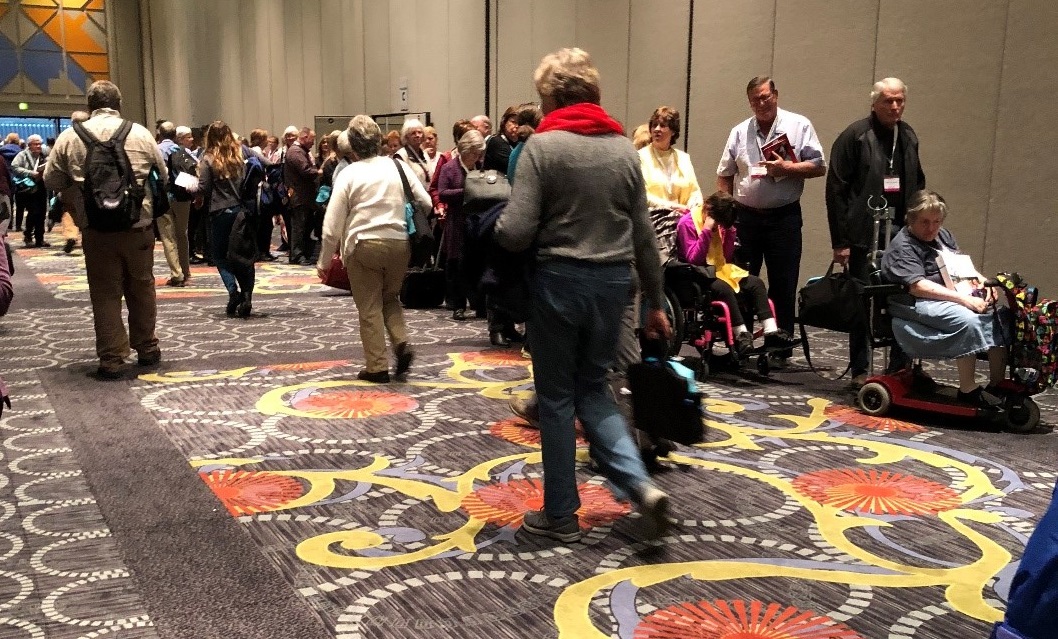
  • Extremely long registration lines – Find a way to eliminate the two and a half hour wait to register. That too is unacceptable and without justification. No, I don’t care WHY it happened. Period. Full stop. For the amount of money that this conference plus trip costs, if you need to charge an extra $10 to mail the badge and bag in advance, then do it. Please hear this loud and clear. The registration line was full of people old enough for senior discounts, in pain. No excuses – just fix the problem.
  • Sessions unavailable due to being overfull. The sessions (especially DNA sessions) were so popular that they were often filled to capacity long before the session began. On the first day, NONE of the ballrooms had empty seats, and people who had just finished standing in line for two and a half hours couldn’t get into the sessions they wanted. Perhaps having people pre-register for the session they are most interested in would help with sizing rooms adequately. Having to stand in line for an hour and a half, or more, to get into a session means that you can’t attend a previous session, and in many cases, the people in line were STILL not able to get into the session.
  • Standing in very long line for every session, and still not getting in. Many people simply cannot stand in line for hours, repeatedly, and this should not be required in order to attend the conference sessions. Otherwise, you should state before registration that the conference requires that level of physical ability multiple times daily AND that after standing in long lines for an extended period, you’re still not going to get into several sessions. Many people would not have attended had they known what they faced and those who did attend would have had their expectations set correctly.
  • Reach out to planners of other large conferences outside of the genealogy sphere that utilize electronic registration much more effectively and do not encounter these issues.
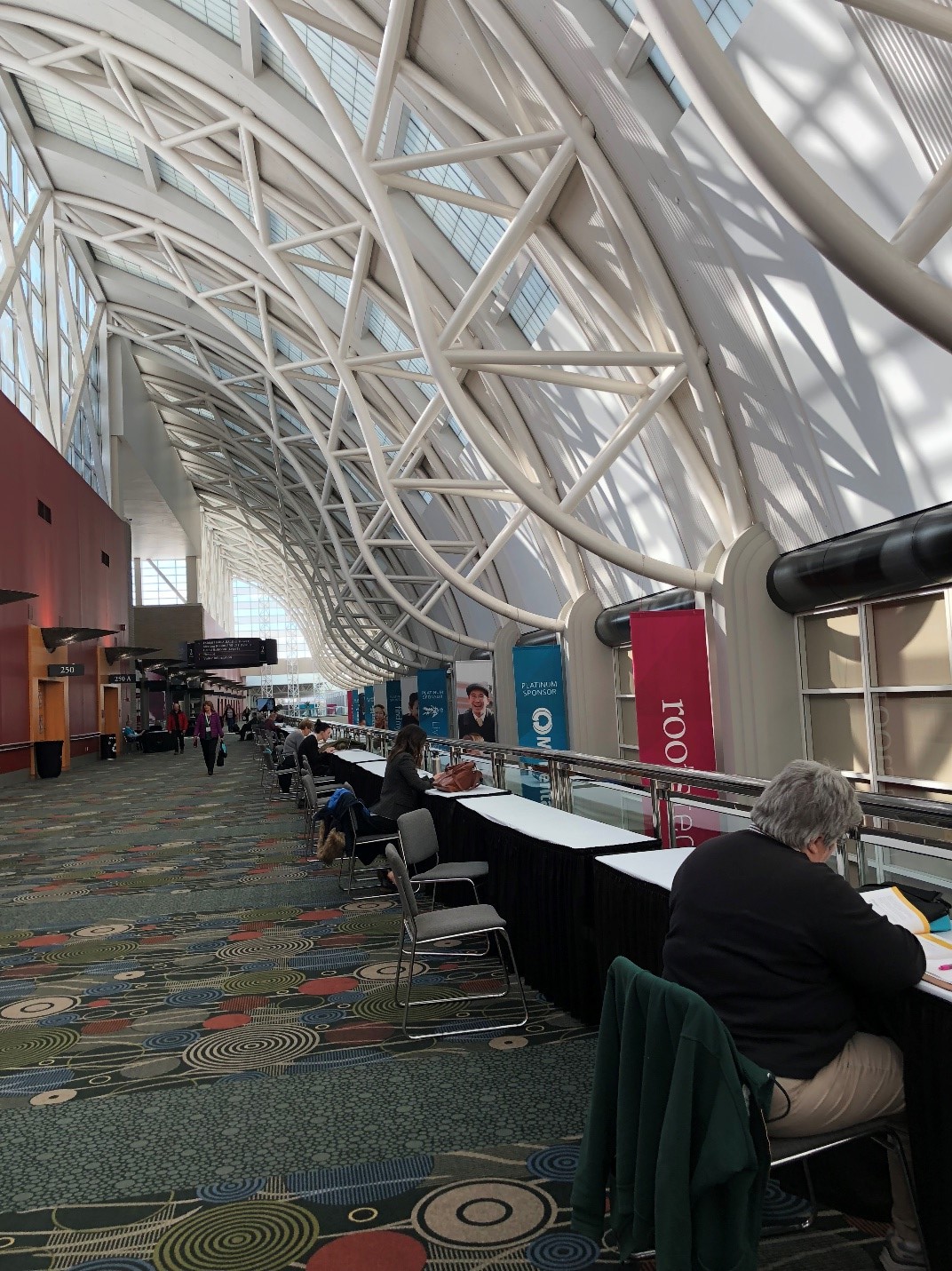
  • Handicapped Access – There are not enough elevators for effective handicapped access, especially since an exorbitant amount of standing/walking was required. More people in the future will avail themselves of scooters, because many people simply cannot stand for the required lengths of time, which will compound this problem. Additionally, several times the escalators were not functional.
  • Layout of session rooms combined with turning people away meant that many were frustrated and unable to attend sessions. Trying to find a second session that wasn’t full, especially with the rooms distant from each other, meant that you simply couldn’t attend any session for that timeslot. I attended a grand total of 1 session, and that was because I volunteered to help the speaker. In essence, I finally gave up trying due to the long lines and repeated frustration.
  • Many people simply gave up trying to get into sessions they wanted and looked for the session they felt would be least popular and tried to attend that session. It’s absolutely unacceptable for conference attendees to have to devise strategies such as this to attend sessions.
  • Spillover rooms with large screen monitors would be helpful for incredibly popular sessions, even if they were in scattered among adjacent hotels. I don’t care if I see the speaker physically – I want to hear the message and without standing in line outside of every room.
  • Capacity and facility – Determine what your capacity actually is before the problems on this list emerge, and close registration when your capacity has been reached.
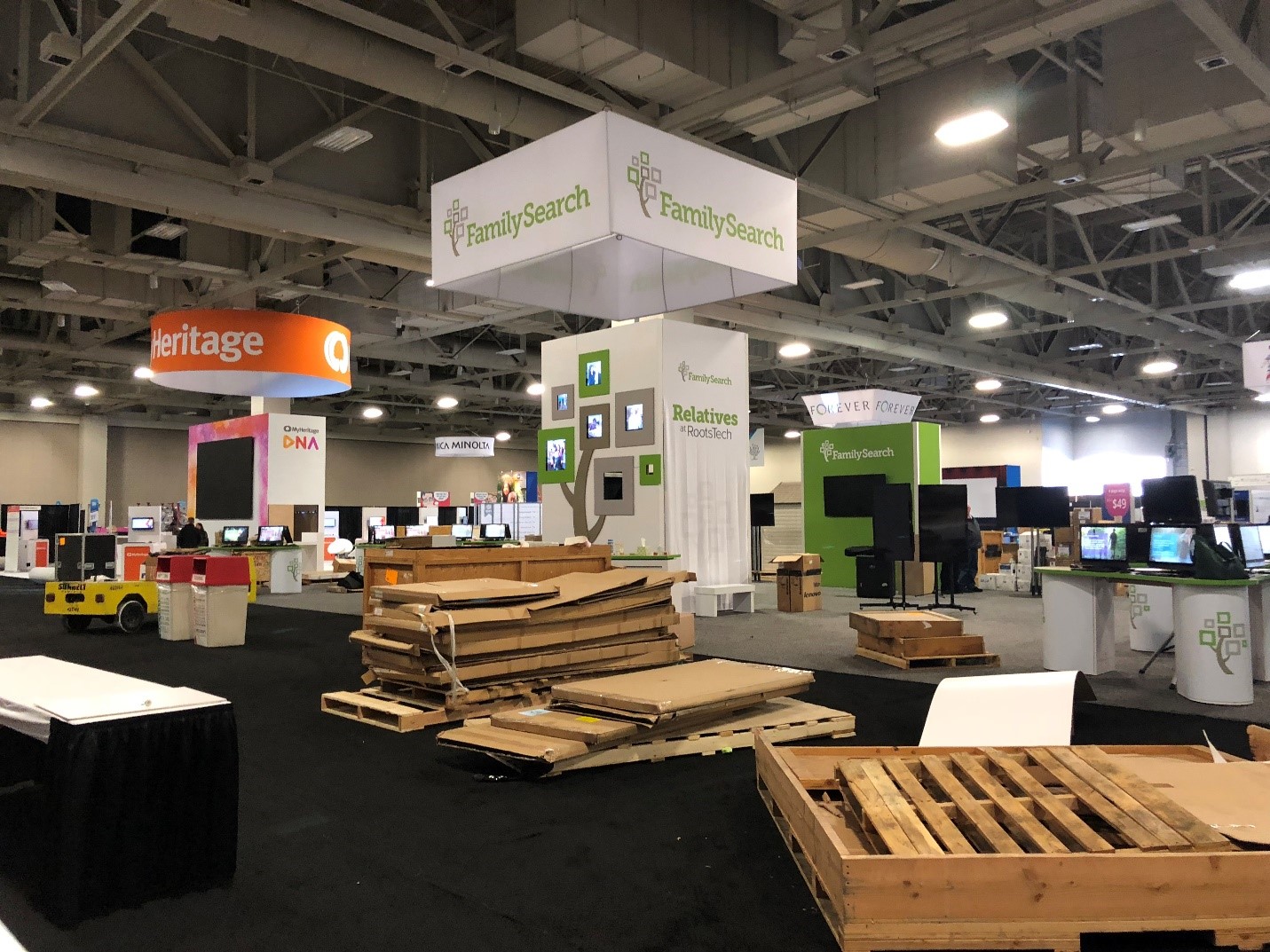
  • Expo Hall – The flip side is that the expo hall was very popular, because people couldn’t get into sessions, so the vendors weren’t nearly as unhappy as the attendees. This isn’t a competition between the classes and vendors. I like the idea of scheduling some time where there aren’t sessions so that attendees don’t have to choose between seeing the expo hall and attending (or missing) sessions. This is, of course, assuming that you address the capacity problem and attendees actually can attend sessions.
  • Beginner sessions focused on Saturday – Consider making the main RootsTech conference Tuesday through Friday for intermediate and advanced, with Saturday fully open with only beginner classes. More advanced attendees can plan accordingly.
  • Signage would be a huge help. For example, multiple “you are here” signs throughout the building with room names and numbers indicating the location you are trying to find.
  • Vendor map – A large map/sign enabling attendees to find vendors in the expo hall would be very useful. You provided a “map” but other than the largest vendors, it only showed booth numbers. Finding specific vendors was a challenge.
  • Announce luncheon and keynote speakers well in advance. Other major conferences do, and RootsTech should be able to follow suit.
  • Adding on paid sessions – After a ticket is purchased, in the conference schedule application, if you discover that you want to attend a lab or sponsored meal, there is no way to add that onto your schedule. Or, if there was, I couldn’t find it. When I click on that event and star that I’d like to attend, either indicate that it’s full, or allow me to pay.
  • Track capacity – Conversely, on the schedule, don’t allow me to select a session or event that is already full to capacity.
  • Pay the speakers – Compensate the non-vendor speakers, meaning people who are not speaking for an employer who has a booth at the conference. I’m not referring to keynotes either, who, given what I know about (some of) their speaking fees, are compensated. Not compensating speakers (other than a pass to a conference) sends the wrong message that genealogists are expected to provide free services and have no or little value or worth. Not OK. Really NOT OK. Don’t egotistically presume that speakers are going to be “attending the conference anyway.” RootsTech needs to step up and be a leader instead of building the conference on the back of unpaid others. This is not how ethical leaders in any industry treat other people, let alone people of the talent and caliber that speak at RootsTech. This would also allow RootsTech to select from all speakers, not just ones that are willing to work for free or token compensation. Being expected to work for free is a demeaning message.
  • Vendor demo agenda – Provide a secondary agenda listing the locations of vendors providing sessions in the expo area. I realize you may see these as “competing” with the larger sessions, but in this case, that might be the only way for an attendee to see a speaker or a topic of interest – given that the general sessions were full and required standing in long lines, best case. I only discovered the vendor sessions quite by accident.
  • Subscription virtual conference – Since attending the conference doesn’t mean you can see the sessions you would like, consider a subscription “conference” where purchasers can see the livestreamed sessions, but also receive access to the other sessions as well. This might be popular with people who do attend, as part of a conference package because there are often multiple sessions in the same time slot that attendees would like to see, but can’t. Sending a thumb drive to all of this year’s attendees with all of the recorded sessions would go a long way towards that apology.
  • Luncheon timing and space – Given the distances between rooms, the luncheon sessions were packed too tightly against before and after sessions. Some luncheons were too full, with long lines and no place in the room to sit.
  • Scanning badges upon entering rooms was a significant bottleneck. Requiring attendees to leave the room after the previous session and go to the back of the line simply assured that if you were actually in the previous session, you certainly weren’t going to be in line in time to be admitted to the next one in that room. Additionally, some people felt that scanning badges was an invasion of privacy.

It’s understandable that snafus happen, but these issues together combined to create a rather miserable experience if an attendee wanted to do much of anything except visit the expo area.

Things I Liked:

  • The teal-shirted volunteers were absolutely amazing, especially given that the attendees were often extremely unhappy about the situation in which they found themselves.
  • The variety of speakers and sessions was great – which is also why the sessions were so popular and filled beyond capacity.
  • I loved seeing and visiting with the vendors, large to small.
  • Meeting other attendees, my blog followers and cousins.
  • Livestreamed sessions. I’ll be watching those now that I’m back home.

Readers – Please Help!

If you know anyone with any influence at RootsTech or FamilySearch, please forward this article or link. Let’s make sure RootsTech actually sees this article and addresses these issues in a positive manner so Rootstech can be a totally awesome conference in 2019!

______________________________________________________________

Disclosure

I receive a small contribution when you click on some of the links to vendors in my articles. This does NOT increase the price you pay but helps me to keep the lights on and this informational blog free for everyone. Please click on the links in the articles or to the vendors below if you are purchasing products or DNA testing.

Thank you so much.

DNA Purchases and Free Transfers

Genealogy Services

Genealogy Research

The Ferverda Bible – 52 Ancestors #186

Hiram B. (probably Bauke, “Baker” in English) Ferverda (1854-1925) married Evaline Louise Miller (1857-1939) on March 10, 1876 in Goshen. Indiana. At least, that’s where their marriage license was filed.

Beyond that, and knowing that they were both Brethren, until 2010, we knew absolutely nothing more about their wedding, except that Brethren weddings, like Brethren anything, tended to be very humble and austere. No color, no decorations, and maybe even no ceremony at all. Just you, your parents perhaps, the minister, a couple of required witnesses (dang those manmade laws anyway) and the Lord.

In October 2010, my cousin, Cheryl, arranged to have a family reunion in a church in northern Indiana, not far from where the Ferverda and Miller families lived.  Cheryl’s father was Roscoe Ferverda, brother to my grandfather, John Whitney Ferverda.

I was looking forward the reunion because I had never met any Ferverda cousins except for Cheryl, her sons and her brother Don. My mother had moved away from the area as a young adult.

Upon arrival at the church that beautiful fall day, Cheryl said, rather nonchalantly, that she hoped that the person with the Ferverda Bible attended.

“WHAT FERVERDA BIBLE????????”

Had Cheryl been holding out on me?

No, Cheryl said, when she called some of the distant cousins to invite them, someone mentioned that someone had a family Bible.

Notice the number of “someones” in that sentence. I had been down this road before on other family lines. If in fact “someone” did have a Bible, it almost was never the right family line. It was almost always someone’s wife’s second cousin’s half sister’s Bible that was purchased at an estate sale.

Never, almost never, my line.

So when I heard Cheryl’s comment, I didn’t have much hope and went back to covering tables with white plastic lace covers and placing edible center pieces.  This was, after all, the “sweet-tooth” Ferverda family, and “edible” is important.

People began arriving and chattering. I felt rather like a stranger in my own family, because while everyone else greeted people they recognized, I knew absolutely no one.

I introduced myself and told people who I was. Everyone was kind and cordial, but there was no spark of even remote recognition.

After all, it was 2010 and my mother had died 4 years earlier and moved away some 70 years before that. 

Nonetheless, people brought photos with them and told stories, and we had a wonderful time eating and (no drinking) and sharing family stories. The Ferverda family certainly doesn’t lack in that capacity, either eating or storytelling. They may have been Brethren, but they were neither dead nor boring. In fact, they weren’t always terribly compliant, it turns out.

About half way through the reunion, I asked Cheryl who was supposed to bring the Bible. She found the person, and asked if they had remembered.

“Oh,” they said, “I forgot.  Would you like me to run home and get it?” 

“Well, no, you don’t need to do that…” Cheryl began, “but I quickly interrupted her with, “Oh, would you please?????”

The gentleman was perfectly willing, and off he went, returning a few minutes later with said Bible in hand. It was far more beautiful than I had expected. Given their Brethren faith, I was prepared for plain black and no decoration except for the words, “Holy Bible” in small gold letters. That’s certainly not what appeared.

Let me share with you the way we the story unfold that day. Cheryl and I, sitting side by side at the table after clearing the plates, on a beautiful fall day in Indiana, not far from where Hiram and Eva lived their entire lives, opened the cover and began turning the pages, one by one.

Hiram and Eva were Cheryl’s grandparents and my great-grandparents.

I’d wager Hiram and Eva were never more than an hour or so from home, maybe 2 hours on a long trip. Transportation was by horse and buggy.

Look at that beautiful leather tooling. Cheryl opened the cover of the Bible, not knowing what to expect.

Opening their Bible transported me to another time and place. But, was it actually their Bible?  We held our breath!

Glory be!  It IS!  How did we never know this Bible existed?

What a lovely gift from Hiram to his wife. I surely wish he, or she had added a date. Was this gift for a birthday, Easter, Christmas perhaps? Is this his writing, or hers? Looking at the shape of the letters, in particular, after 1925 when he died, I believe that this is Eva’s writing, not Hiram’s.

Genealogists always look for the Bible’s copyright date because you know the Bible wasn’t in use before that date.

This page is interesting, because we always thought her name was Evaline Louise Miller. Imagine that…all these years we’ve all had ner name backwards!

This writing is clearly Eva’s, based on the shape of the Ms, compared to the entries after Hiram died.

Furthermore, they were married at 6 in the evening. Their witnesses were Mrs. Bigler and Miss Bigler, and the minister was Reverend Bigler of Goshen, Indiana.

According to the History of the Church of the Brethren in Indiana, there were two early churches, one called Union Center (which is where Hiram’s father is buried,) and the other in Elkhart, founded in 1830 as the first Brethren Church in Indiana. 

The Elkhart church later became known as “West Goshen.”  The Bigler name appears in both churches as deacons, but the Goshen Church also shows Andrew Bigler as an elder, serving with Daniel Stutsman who died in 1887. The book indicates that Andrew served as elder during the later years of Elder Stutsman. The Stutzman and Miller families immigrated from Switzerland to Germany together in the 1600s, and then from Germany to Pennsylvania in the 1720s, then on to Maryland before 1750, then to Ohio around 1800 and Indiana about 1830. 

It’s very likely that the marrying minister was indeed Andrew Bigler, shown in the 1880 census with his wife Lydia and daughter Elizabeth. The Bigler family had been migrating with this same family group since they were first noted together in 1738 in the Little Conewago Church in Pennsylvania.

The church today probably incorporates the original building.

Eva and Hiram would have traveled about 5 miles from where Eva’s parents lived, together in the buggy. Was it cold that early of March day, or was it a glorious spring day? Where did the newlywed couple go from there? Were they married in the actual church building, or in the pastor’s home?

I do wonder why they were married in this church, because we know that there once stood a church in the cemetery on the land where Eva’s Miller grandparents lived, although her grandfather, David Miller, died in 1851.

Perhaps that church was too small to have a minister licensed to marry. Brethren ministers were generally farmers who preached “on the side.”

We know from the deed of Edward Clark who bought the land where the cemetery now stands from the estate of David Miller that the church existed in 1877 when he executed a deed to “Trustees, German Baptist Church” and stated that when the property was no longer needed for that purpose, that it be turned over to the cemetery trustees. By 1931, the Miller church was no longer in existence.   

The next page in the Bible is a record of marriages, apparently overflowed from the marriage page of the Bible. When you have 11 children who all lived to adulthood, there are lots of marriages to record. 

Next, we find births.

This Bible was given to Eva in 1895, so either she was pregnant for her 9th child, or she had an infant, plus children ages 18, 16, 14, 13, 11, 9, 4 and 2.  This list makes me wonder what happened between 1886 and 1891.  Did Eva have a couple of miscarriages, or did they bury a baby whose birth is not recorded?

Eva would have recopied her children’s births from an earlier Bible, pages probably worn thin and now long gone.

With 11 children, not to mention siblings and their children, Eva probably did a lot of praying.

This page is indeed sad, but all things considered, it’s actually amazing that it’s the shortest page. Although I have noticed that Eva did not record grandchildrens’ information. 

I’m glad the deaths page was blank for 30 years, but I can see Eva saddened and tearful, slumped and slowly writing Hiram’s name into the book. Did she pause as she wrote the word, died? Did she sit and recall the day he had given her the Bible, those three decades before? How long after his death did it take until she was able to bring herself to write those words.

Was she with Hiram as he died from a heat stroke.  His death certificate says he also had chronic bronchitis, so his end would have been quite difficult, that 3rd of June on a hot Indiana day.

The deaths of two of Eva’s children would follow, before her own.

Irvin, a farmer, died at age 52 of cardio-renal disease, according to his death certificate. He was buried just down the road in the Salem cemetery, probably close to his father.

Donald, a bank cashier, died at age 37 of cancer of the kidney and lung.  Two months before his death, surgery had removed his cancerous kidney, but without chemo, there was no chance and it was too late. He too was buried in the Salem Cemetery, beside the Brethren Church.

Finally, in the early fall of 1939, Eva joined her family in the Salem cemetery, succumbing to what would earlier have been called old age. Her death certificate says she died at 82 of acute myocarditis nephritis and hypertension, along with arteriosclerosis. We all have to die of something. I wonder who recorded her death in the Bible, closing that final door after Eva took up residence on the other side. 

Eva lived a long and full life. My mother remembers her arriving, in someone else’s car, as she never drove, to take care of her grandchildren when they were ill. Eva had enough grandchildren that she was busy all of the time. 

The fact that no further deaths were recorded after Eva herself died confirms that indeed, this was her Bible, and it was probably retired and kept as a keepsake after this. Her children and grandchildren would have wanted her record of life events recorded in this Bible in her own hand for almost 45 years. Nearly half a century.

Eva recorded the deaths of her parents, John David Miller and Margaret Elizabeth Lentz here as well. I’m sure she visited their graves often in the little cemetery where her grandfather’s church used to be. This also tells us that her mother’s middle name was Elizabeth, another tidbit we never knew.

What Eva didn’t tell us is that her mother was also married to Valentine Whitehead who died before Margaret Elizabeth Lentz Whitehead married John David Miller almost 5 years later, on March 30, 1856 and had 3 more children.

Half-Siblings

Next, we find a paper enclosed in the Bible noted as “Mother’s half sisters.”  

What? One of Grandpa Miller’s sons was in the Civil War? Say what? A Brethren man fighting in the Civil War?

Ok, who is whom where? Mother Miller would be Eva, so Grandpa Miller was John David Miller, and his sons by his second wife were born in 1859 and 1862, so it’s clearly not them in the Civil War. John David Miller’s sons by his first wife, Mary Baker who were old enough to serve were:

  •  John N. Miller, in the cemetery, but not in the 1850 or 1860 census
  • Samuel Miller in the cemetery, but not in the 1850 or 1860 census)
  • David B. Miller born in 1838 and died in 1922 (probably not him because nothing is stated about him serving in the Civil War the local history) age 12 in the 1850 census, was clearly Brethren
  • Aaron B. Miller born in 1843 and died in 1923 (Chicago, Illinois), age 7 in the 1850 census, 18 in 1860 census, moved to Chicago later in life

No Millers by these names are shown as having enlisted in Elkhart County. 

I’m unable to find any record of either David or Aaron serving in the Civil War. That doesn’t mean they didn’t serve. It only means I can’t find the record.  Perhaps as pensions are eventually scanned, indexed and brought online through the National Archives, this mystery will be solved.

That said, I can only imagine the dissention a son serving in the Civil War would have sewn among the family and the Brethren church family as well. Perhaps this is a clue as to why Eva and Hiram were married in the Elkhart church instead of Union Center church.

A Secret Family Tragedy

The family had another secret, however. A hint was found in Ira Ferverda’s obituary, obviously tucked into the Bible after his death in 1950. 

It’s interesting that Ira wasn’t Brethren. Of Eva’s children, I know John was Methodist and I don’t think Roscoe was Brethren either.  

Ira’s obituary states that he had been ill for 20 years and died in an institution, not at home. Why would that be?

Well, this is a bit delicate.

I wonder if the family knew why Ira was ill. Death certificates are now online, and Ira’s reveals what I suspect was a family secret. Ira died of gangrene of the left foot…caused by untreated syphilis. Obviously, this document wasn’t found in the Bible.

Neurosyphilis is an infection of the brain or spinal cord caused by the spirochete Treponema pallidum. It usually occurs in people who have had chronic, untreated syphilis, usually about 10 to 20 years after first infection and develops in about 25%–40% of persons who are not treated. Syphilis can be dormant for 10-20 years. Given that Ira married in June of 1904, it was either dormant at that time, or he hadn’t yet contracted the disease.

My suspicion is that Ira probably contracted the disease while serving in the Philippines during Spanish American War where he rescued General John Pershing from drowning, according to newspaper accounts. Ira was subsequently promoted to the rank of quarter-master-sergeant by Pershing, but his military career ended in March 1904 after he suffered a broken leg. Ira enlisted in the Spanish American War in March of 1901 and didn’t die until 1950.

If that’s when Ira contracted the disease, he lived with syphilis for half a century, and miserably, I’m sure. Ira married in June 1904, three months after he was discharged from the service, and by 1910, had moved with his wife and 3 year old child to Wyoming. 

However, by 1918, Ira and family were back in Kosciusko County where be both signed up for the draft and filed for an invalid pension based on his prior service.

In 1920, a child born to Ira and his wife died of toxemia a few hours after birth as a result of “Bright’s disease of the mother.” Bright’s disease was a polite name used in some earlier records for syphilis. By 1920, according to the census, Ira was a salesman selling “home products” and in 1930, had a chicken hatchery.

I can’t find the family in the 1940 census, but in 1938, the Lafayette Courier reports in an article that Mr. and Mrs. Ferverda were among 5 persons from the “Soldiers Home” that were injured in an automobile accident. In 1940, “Mrs. Ira Ferverda received word that her brother died suddenly and she has gone to Leesburg,” followed in 1944 by an article indicating that Mr. and Mrs. Ira Ferverda were on furlough. In 1945, the same newspaper reported that they had gone home to Leesburg for the summer. Of course, Ira died in 1950 and the death certificate gave his wife’s address as Leesburg. For all the world, it looks like both Ira and his wife were resident at the “camp” at the Soldier’s and Sailor’s Home in Lafayette for many years.

Ira’s wife’s death in 1972 at age 89 indicates that she had chronic nephritis, an inflammation of the kidneys, but says nothing about syphilis. Perhaps she was treated after the introduction of penicillin in the 1930s, but Ira was not. Or perhaps his disease had progressed too far by that time.

Eva may or may not have known that her son had contracted syphilis. Given the death of Ira’s daughter in 1920, I’m guessing that Eva knew something, or perhaps the cause of his illness and the cause of the child’s death was carefully hidden from her.

Regardless, I’m sure Ira, along with the rest of the family, had many regrets and a great deal of shame, pain and sorrow.  Today, I have only compassion for Ira and this family, no shame necessary. People are human, after all. Ira paid a terribly dear price for his humanness. 

It’s amazing the history that this detour caused by an interesting sentence in an obituary revealed. 

Pictures in the Bible

Next, Cheryl and I find photographs tucked safely into the Bible pages. 

Thank goodness there’s a name on the back!

Robert Dean Ferverda, son of Gerald Dean Ferverda (Ira’s son born in 1907) and Dorothy E. Lloyd was born on April 6, 1932. Love these first baby pictures.

The next photo of Eva at left is both charming and mystifying.

Imagine my disappointment to turn this photo over and discover….nothing.  I suspect, but don’t know, that this was Eva’s sister. Two of her half-sisters lived into the 1930s. Matilda “Tillie” Miller married John Dubbs and died in 1939, just a few months before Eva. Martha Jane Miller married David Blough and died in 1935. Eva’s half sister, Mary Jane Whitehead married John D. Ulery and died in 1930.

I love the wheel to wench the bucket up from the well on this farm, along with what looks like a school bell behind Eva. I do wonder where this was taken. The stone on the ground beside the bell looks like a millstone.

If I could read the city of the photographer, on the back below, I might be able to at least find a hint of who might be in the photo. I bet the photographer never dreamed someone 85 years in the future would be trying to find them!


Below, Eva on the porch of the home in Leesburg, on the farm, with the three crosses in the window indicating three sons serving in WWI.  Extremely unusual for a Brethren family.

Eva’s sons who served in WWI were George, Donald and Roscoe.  Eva was clearly proud of her sons and their service.

The article in the Fort Wayne paper, above, identifies the 3 Ferverda sons. 

This photograph was taken during WWI. One son is in uniform, in the back row.  Eva is standing at left, with Hiram behind her.  Their children are identified in this photo, but neither their children nor grandchildren are identified in the photo  (above) in the Bible, and the spouses are absent as well. My mother’s brother was born in 1915, so he could have been one of the small boys, but I don’t recognize him, and he’s not with my grandfather in the back row, third from right. 

Again, nothing on the back of the photo.

There were a few items in the Bible at the reunion that weren’t scanned at the library.

Who is Henry P. Lentz?

Not one person at the reunion had any idea who Henry P. Lentz was, but a little sleuthing tells the story. 

Henry P. Lentz died on January 3, 1915 in Adrian, Bates Co., MO. Clearly, Eva’s mother, Elizabeth Lentz Miller had kept in touch with family members, because there would be no other way for this obituary to have been in Eva’s Bible. Henry’s FindAGrave Memorial is here.

Henry’s father was Johann Adam Lentz, born on August 30, 1819 in Cumberland Co., PA and died on August 4, 1906 in Bates County, MO.  Adam was Elizabeth Lentz’s brother, so Eva’s uncle. Henry would have been Eva’s first cousin.

According to FindAGrave, Adam married Margaret Whitehead, the sister of Valentine Whitehead. Margaret Elizabeth Lentz’s first husband was Valentine Whitehead, Margaret Whitehead’s brother. Adam Lentz, Margaret Elizabeth Lentz’s brother, migrated with the Whitehead/Miller group to Elkhart County, Indiana. Adam’s wife, Margaret Whitehead, died the following year, probably in the “malarial fevers” outbreak that also killed Elizabeth Miller, David Miller’s wife.  Adam Lentz remarried and then migrated to Illinois and on to Missouri, the next frontier.

Mystery solved – and according to FindAGrave, one more piece of information as to where in Pennsylvania Margaret Lentz may have been born.

More Reunion Pictures

Other goodies from the reunion include photos and items that Cheryl and I had never seen before.

Photo of George Miller Ferverda with daughter Peg at the gas station where he worked.

No one had any idea whatsoever who this is and true to form, nothing on the back. The family does not look Brethren. The man has no beard and the woman no prayer bonnet. If you know who this family is, please let me know. I would think they are somehow connected.  

Death of Ira’s daughter, Mary Evelyn. I can only imagine the words that passed between Ira and his wife on this terrible day.

Three Ferverda brothers serving in WWI.

Eva in an out-of-focus photo in 1936 with her daughter, Margaret Ferverda Glant.

And with that, we leave the reunion and close Eva’s Bible, with much gratitude to Eva for preserving these memories and those family members who have been stewards of her Bible for the past 79 years.

Eva’s Mitochondrial DNA Legacy  

It’s somehow ironic that while we have Eva’s Bible, one single item with no copies, often very difficult to find, we don’t have her mitochondrial DNA, passed by mothers to all of their children, but only passed on my daughters. In order to find Eva’s mitochondrial DNA, we need to look to Eva’s daughters and those of her sister’s on her mother’s side, or, her mother’s sister’s offspring.

Eva’s mother, Margaret Elizabeth Lentz had three sisters:

  • Mary Lentz (1829-1918) who married Henry Overlease
  • Fredericka “Fanny” Lentz (1809-1897) who married Daniel Brusman
  • Maria Barbara Lentz (1816-1899) who married Henry Yost  

Eva had only one half-sister by her mother, Margaret Elizabeth Lentz, who had a daughter:

  • Mary Jane Whitehead  (1852-1930) married John D. Ulery and had daughter Margaret Elizabeth Ulery.

Eva had 4 daughters:

  • Edith Estella Ferverda (1879-1955) who married Tom Dye
  • Elizabeth Gertrude Ferverda (1884-1966) who married Louis Hartman
  • Chloe Evaline Ferverda (1886-1984) who married Rolland Robinson
  • Margaret Ferverda (1902-1984) who married Chester Glant

If you descend from any of these women through all females to the current generation, which can be male or female, I have a free DNA test for you. 

Gratitude

I was thrilled to discover that Eva’s Bible still existed, to be allowed to touch it, open and lovingly caress the very pages she turned, garnering the gems of family history she recorded for the future there. We are that future. 

A debt of gratitude to the Ferverda family member who allowed this Bible to be borrowed, scanned and repaired.

Thanks to Cheryl Ferverda, now retired from the Allen County Public Library, and the Allen County Public Library for scanning the Bible before returning it to the family.

______________________________________________________________

Disclosure

I receive a small contribution when you click on some of the links to vendors in my articles. This does NOT increase the price you pay but helps me to keep the lights on and this informational blog free for everyone. Please click on the links in the articles or to the vendors below if you are purchasing products or DNA testing.

Thank you so much.

DNA Purchases and Free Transfers

Genealogy Services

Genealogy Research

RootsTech Day 4 – My Inner Child…and Genealogist

Who scheduled the party last night from 8-11 and then breakfast this morning at 7AM, anyway? Did they think they were being funny? And that breakfast is in the furthest possible corner room of the conference center, not my hotel. I suppose showing up in jammies would be frowned upon, although I see that at Walmart all the time…but I digress.

Yes, the sun was just peeking out on the way to the MyHeritage Friends breakfast. You’ll just have to forgive me for no photos at that breakfast. My brain was just not working yet. I’m fine at 2AM, but 7AM, to me, is like the middle of the night to most people.

The MyHeritage Friends breakfast was to facilitate communication between the company and the community with a representative of MyHeritage at every table to answer questions and listen. Feedback was really positive, overall.

FamilySearch and LivingDNA sponsored breakfasts too, but the only one I attended was todays. Meal events are by invitation (or ticket purchase) only because let’s face it, they have to control the number of attendees and companies generally view these meals as a give-and-take public relations event.

After the breakfast, the expo hall wasn’t open. Nothing was open yet. I went back to the hotel to prep for what turned out to be an entire day of embracing my inner child.

My plan was to visit the Family History Library, but before I did, I still had not managed to connect with at least two people or vendors I wanted to talk to.

Remember my friend Josh Hall from day 1?  Upon returning to the conference center, I spotted Josh and let’s just say that he looked very interesting.

I asked Josh what was up with the new makeup design. I did recall that he has a 2 year old at home, but, even so, this isn’t exactly what I expected to see Josh wearing – although his makeup color was coordinated perfectly with his outfit.

Josh told me the conference was sponsoring free face painting, given that Saturday was Family Day – and offered to show me where this was happening. He said adults could be painted too and suggested this might be a good idea for me.  Now you all know how straight-laced, reserved and non-adventurous I am. Right?

I’ve never had my face painted, but there’s a first time for everything and it sounded like fun.

No one expects me to behave normally anyway!

There were an entire group of face painters at the bottom of the entry stairs.  The wait was only about 10 minutes, which, compared to later, was NOTHING.

At the bottom of the steps, you selected your design elements so that you were ready for the face painter when it was your turn.

The face-painter’s station looks like this.

My face painter, Denise Cold whose business is Painted Party, is actually an artist who teaches face painting as well as hosting parties.

First, she applied a “base” of some type to my skin. I know they were trying not to do custom work, but when I showed Denise my double helix necklace and told her why I wanted a helix incorporated, she said it was no problem at all.

Denise and I together with the result – it was amazing.

I LOVE, LOVE, LOVE this. The double helix curves behind the flower and out the bottom again.

I had so much fun wearing this all day!

If you want to see a closeup, here goes…

The next place I stopped was the WikiTree booth to get two words in edgewise with Mags Gaulden.

I met her at the Family Tree DNA conference in November and she, like me, is a DNA junkie.

WikiTree is a great collaborative resource. I’ve given WikiTree volunteers permission to experiment with my tree and their tools including any DNA results they need. Haplogroups and DNA results are populated up trees, if the user provides their DNA information, and is confirmed when multiple individuals from the common ancestor have tested with confirming results.

I’m not terribly cracked up about collaborative trees in general, but WikiTree does provide volunteer dispute resolution based on documentation and sources.  Be still my heart!

I just love this photo of Mags and me, clearly in our element.  I can’t wait to see Mags again in November at this year’s Family Tree DNA conference.

By the way, today’s DNA outfit is my ethnicity painted on my chromosomes utilizing the GedMatch ethnicity results, made into a tunic.

And yes, someone did give me a “dork” ribbon.  They didn’t have any “DNA” or “nerd” ribbons.  Hmmm, an idea I might have to do for next year!  What do you think?

No, wait…I said I’m not going to RootsTech again…

I forgot.

The next place I wanted to find was the WordPress booth.

If you don’t know, this blog is a WordPress blog – meaning it uses the WordPress blogging platform. I’ve written about how to blog using WordPress.

I specifically wanted to ask a couple question, so I was very pleased to meet Happiness Engineer, Anna.

Yes, that is actually what they call their engineers and customer support people.  And I have to tell you, they earn this title and they are AWESOME.

I’ve had a number of people mention that they’d like to migrate an existing blog off of the Blogger platform, and WordPress says they provide a very easy migration tool now.

I also had a couple suggestions for enhancing WordPress, and maybe, just maybe, we might work on something collaboratively focused specifically for genealogists.

Now, I’m finally ready for the big adventure.

The Family History Library

I intentionally waited until Saturday to visit the Family History Library (FHL). I’m really not a fan of extremely large crowds. I knew that on Saturday, RootsTech opens the doors to all LDS and children for free, in addition to the paid conference attendees, and Saturday would be even more crowded and insane that Wed-Fri had already been.

One of the RootsTech people told me later on Saturday that they had more than 40,000 people.

I also hoped that RootsTech just down the street meant there would be fewer people at the FHL, which is located just about a block and a half from the convention center.

On the way, I walked by the Contemporary Art Museum, and not all art was inside.

No, I don’t know why. It’s art, there doesn’t have to be a why.

Across from the FHL is Temple Square. I did not have time for a tour. Somehow the tree in front seems fitting.

In front of the library are trees that drop these seed pods. Of course spring is approaching (or was that day, even though winter returned on Sunday) and the seeds will soon be scattered to the wind, nestling in fertile soil.

These seeds are just like we are, members of families – seeds, scattered to the wind, rooted elsewhere and then coming home to the library to find our ancestors.

Yes, I know, sappy, but that’s how I was feeling.

I’m not Mormon, but I’m a 40-year genealogist this year.  I’ve never been to Salt Lake City before. Visiting the FHL is kind of like the pilgrimage to Mecca for genealogists.

For me, this is a big deal.

You KNEW I was going to take the obligatory selfie, of course, in front of that iconic doorway to the past.

Come on in with me!

The library is 5 floors in total, and the entryway hosts exhibits and interactive displays to engage people and generate interest.

How do you like this tree created to absorb sound?  I needed this kind of “family tree” in my house when I had young children.

Why California has more Robertas than any other state is beyond me.

Of more interest to family historians is that today, there are more Estes individuals in Texas than anyplace else. Good place to look for Estes DNA testers. That’s actually not at all what I would have expected, but then again, Texas was, for a long time, a destination location for much of Appalachia.

Now, on to the research floors.

Tom and Chris, my friends so kindly assisting with my German family research had prepared for me a list of records to review. Since films can no longer be ordered in to the local Family History Centers, and not everything is available online (not to mention, indexed) in SLC, in the interim there is no option other than either going physically to SLC yourself, or paying someone else to do so on your behalf.

I spent the first hour talking to one helpful volunteer after another, and by the time I had talked to 4 volunteers and unpacked my laptop bag 4 times, I was finally in the right place for the in-house-only CD reader and then the HD (high density) collection.

Everyone was super friendly and smiled at me. It was only when I remembered that my face was painted that I realized that maybe they weren’t exactly smiling at me, but laughing or at least being amused.  Not one of them said a word. I was struck by how very nice everyone was, not only in the FHC, but in Salt Lake overall.

Let’s just say that 4 hours later, I know several “good candidate” places that my German families weren’t. I keep reminding myself that negative evidence is evidence too – but that’s somehow a bitter pill to swallow.

Nope, not here either. Back to the drawing board.

After I finished with my depressing research, I grabbed a quick bite at the restaurant next door, JB’s, which is surprisingly reasonably priced. That food was far better at less than half the price, and much quicker than the hotel food.

From there, I wanted to say a final goodbye to a couple of folks at RootsTech before the doors closed, so I popped back into the conference center for just a few minutes.

Another family focused event was cultural dancing throughout the day. When I wandered by, a Native dancer was “fancy dancing,” typically performed at powwows, explaining the culture and significance of the dance to several viewers, mostly children.

The dancer’s regalia (they aren’t called costumers) was beautiful. I’m glad to see children (and adults) being educated about cultures other than the one most familiar.

As I walked back to the hotel, the sun was beginning to set over the mountains in the distance.

This scene would be very different from what greeted me a few hours later, the following morning.

What a difference a few hours can make. You certainly can’t see the mountains now.

Sunday was spent making my way home, dealing with delayed flights and other inconveniences. It’s almost midnight now. I’ve been home for almost three hours – and man-alive am I glad to be here.

RootsTech Evaluation

  • Am I glad I went?

Yes, but that’s only after discovering I had to make lemonade out of the situation.

  • Was I disappointed?

Incredibly so, given that check-in was horrendous with hours-long lines followed by sessions that were too full to attend, some full to capacity hours in advance.

  • Did I enjoy the expo hall?

Yes, absolutely! I visited with the vendors and other attendees. For me, this was the saving grace of attending RootsTech. It’s an awfully expensive “reunion” though.

  • Did I get my money’s worth for the ticket?

Absolutely not. If all you can only attend if the expo portion due to overbooking and overcrowding, then they need to sell an expo-only ticket. They have to do something about the two and a half hour check-in wait.

  • Would I recommend RootsTech to others?

Only as long as expectations are set correctly. If you tend towards claustrophobia or don’t do well in large crowded situations or those requiring massive patience, this isn’t the conference for you.

  • What am I going to do about this?

I’m putting together a list of ideas that RootsTech may find useful. I’m not a big fan of complaining without offering solutions. I’ll publish as soon as I assemble the list. If you have ideas, comments or suggestions, please leave them in the comments section.

______________________________________________________________

Disclosure

I receive a small contribution when you click on some of the links to vendors in my articles. This does NOT increase the price you pay but helps me to keep the lights on and this informational blog free for everyone. Please click on the links in the articles or to the vendors below if you are purchasing products or DNA testing.

Thank you so much.

DNA Purchases and Free Transfers

Genealogy Services

Genealogy Research

RootsTech Day 3 – Jewish DNA, Schmoozing and the Flapper Party

Day 3 at RootsTech was characterized by meeting lots of people, talking to several vendors and a party. Plus, I finally got to attend a session. Yes, really!

Ok, confession, I offered to help the presenter in order to garner a seat in the room. It was well worth a small amount of effort on my part to be able to see Bennett Greenspan, CEO and founder of Family Tree DNA present on The DNA of the Jewish People.

For those who don’t know, Bennett and his partner Max Blankfeld are the founding fathers of the direct to consumer genetic industry with the birth of Family Tree DNA 18 years ago.

I love Bennett’s DNA tie!

Even though Family Tree DNA hosts the annual conference for project administrators, Bennett has never presented at his own conference. I’ve heard him present once before, and he’s one of two speakers whose sessions I’d attend if they were talking about making mud pies. (Judy Russell is the other one.)

Bennett certainly didn’t let the audience down.

He began by telling folks how, just before his bar mitzva, his grandmother passed away. At the cemetery, his mother took his hand and walked him around, introducing him to the graves and family members buried there. Bennett didn’t realize how many relatives they had in Kansas.

Later that day, as family members arrived at the house to console the family, Bennett walked from person to person interviewing them about their memories of the “old country.” Bennett said, in their thick old-world accents, they told him about various family members, providing a link back in time.

Bennett then drew his first pedigree chart. I’m just amazed that he still HAS this chart. Thankfully, someone saved it. Little did he know how prophetic this would be or what staying power it would have. Nor could he have ever dreamt that his genealogy addiction was destined to someday change the world for all genealogists.

Indeed, Bennett was hooked at a very young age.

After Bennett sold his photographic supply company about 20 years ago, he became “too helpful” at home, offering to reorganize his wife’s pantry, and let’s just say that he got sent to his room. However, it just happens that in the room were his boxes of genealogy and well…history was about to be written.

In 1996 and 1997, Bennett had read two academic studies written about Y DNA in men. The first study was about the Jewish Cohen lineage, and the second was about the Jefferson males and Sally Hemmings.

Bennett’s Jewish family was torn apart by WWII and those who survived were scattered to the winds. This history makes genealogy particularly difficult for Jewish people, both the record destruction in Europe and the fact that the family remnants are so widely scattered and often lost to each other.

In Bennett’s case, he found a Nitz family in Argentina that claimed to be from the same village as his maternal grandmother’s Nitz family, and he wanted to verify that it was the same family by Y DNA testing – just like the Cohen study and the Jefferson/Hemmings case.

Bennett called Dr. Michael Hammer at the University of Arizona who was one of the authors on the Cohen paper, and whose lab had processed the samples. Dr. Hammer told Bennett that they only did academic processing, not for consumers. Bennett asked Dr. Hammer where he could turn to write a check and get an answer, but Dr. Hammer informed Bennett that such a company or location didn’t exist. Little did Dr. Hammer know that Bennett was an entrepreneur whose wife had banished him to timeout, in essence because he “retired” too young and was bored and underfoot.

Here’s what happened next!

I love to hear Bennett tell this story.

As a result, Family Tree DNA was born.

Bennett’s question about his Nitz line was indeed answered by a perfect Y DNA match. Indeed, it was the same family line!

Bennett then proceeded to search for Greenspan males, but that answer didn’t arrive for more than another decade. Bennett tested a lot of Greenspans, but it wasn’t until he met a Mr. Green at a conference that he found a match.

Jewish men fall into specific haplogroups or clusters, sometimes referred to as clans, on the Y DNA phylotree. The same is true for mtDNA, but that wasn’t the topic of his presentation.

Therefore, by testing a male, you can tell by his haplogroup and his matches whether or not he is Jewish.

The Ashkenazi and Sephardic Jews are very similar in their haplogroup breakdown and distribution, as are the rest of the non-Jewish residents of the Middle East.

They do, after all, originally descend from the same ancestors.

You can see the difference in the haplogroup spread between the people with Middle Eastern heritage, above, and the Ukraine, below.

These slides refute the theory that the Russian Khazars converted to Judaism en masse and subsequently migrated to eastern Europe. If this were the case, the DNA of the Ashkenazi Jews would be split much more closely along Ukrainian lines than Middle Eastern lines, and you can see for yourself which pie chart the Ashkenazi population more closely resembles.

The real message here is that thanks to DNA testing, we know that the sons of the Levant are far more alike than different – and that the Ashkenazi Jews are indeed from the Middle East and not from Russia.

Bennett’s family is from Eastern Europe, so the last thing he expected to discover was that his family was actually a displaced Sephardic line – but alas, through DNA matching and following the path of the DNA, that’s exactly what Bennett discovered.

As Bennett said, it rocked his world. No oral history reflected the 1492 expulsion of his family from Spain. This information gave him a new lens into the fate of his family when the Jews were displaced from Spain, penniless, their property confiscated, and leaving hurriedly to avoid death.

Bennett may never know their names, but he knows where they traveled on their long, perilous journey of over 2000 years from the Levant to Spain, then to Eastern Europe and finally into Argentina and the States.

I’ve summarized Bennett’s presentation significantly, but Bennett’s family history, revealed by Y DNA is a powerful story of family reunification.

Meet and Greet

In the Starbucks in the hotel, my 7th cousin, Laurel, found me and we talked about our common genealogy in Wilkes County, NC – the Sarah Rash (1748-1829) and Robert Shepherd (1739-1817) lines. If these are your lines too, please give a shout out.

I discovered that Laurel is going to be returning to Wilkes County for additional research, and she discovered that I know the location of the now-bulldozed-into-the-creek cemetery. Yes, we’re going to exchange information.

We’ve actually chatted a few times over the past few days and I’ve enjoyed it immensely.

On to the conference.

By day 3, I’ve finally developed a sense, at least somewhat, of the lay of the land. RootsTech is massive and the convention center is laid out anything but intuitively.

I walked by the theater in Lisa Louise Cooke’s genealogy Gems booth and caught a sentence where the presenter was explaining about cluster research, also known as FAN – friends and neighbors. In essence, people traveled in packs and you’ll tend to find them together. I wanted to agree vehemently, but did so silently and was very glad to see others listening attentively.

On down the aisle, I spotted an ad for DNA charts. As irritating as I find the ethnicity estimates, I must admit, these are really attractive.

However, I then spied the wall chart.

How fun is this? A gift maybe? How about adding the haplogroup for each person on the chart? So many possibilities. I can see a wall…

Speaking of walls, Living DNA created a “photo booth” in their booth, and David Nicholson, one of the Living DNA Founders and I hammed it up a bit. It’s always nice to meet the people who own and run the various companies. David and I have spoken and skyped previously, but never managed to be in the same place at the same time until now.

Most of the DNA vendors had long lines throughout the conference. That’s the good news, because no matter where you’ve tested, you’ll be getting new matches soon.

I stood in line to purchase a Living DNA kit for a friend, so I eaves-dropped anonymously.

Living DNA indicates that they provide a “3 in one” test, meaning autosomal ethnicity estimates (no matching yet, but anticipated this year), a mitochondrial haplogroup for your direct matrilineal line, and if you are a male, a Y DNA haplogroup for your paternal line.

For the sake of clarity, men receive 3, but women receive a “2 in one” since they have no Y chromosome.

I’m still hoping to be able to connect and have a few minutes to sit down and discuss Living DNA development for 2018.  Hopefully maybe tomorrow.

By now everyone should know that I find the full Y and mitochondrial DNA test, which provides you with actual test results and matching for those lines, extremely beneficial. I want to be very clear that knowing your Y and mtDNA haplogroup is very interesting and can be useful, but it’s not the same thing as receiving the actual results which can provide you with a significant history, along with matching.

Y and mitochondrial DNA is not an alternative to autosomal DNA testing, but these types of DNA tests supplement and enhance each other.

Of the major vendors, Family Tree DNA is the only vendor who offers that level of testing and has a data base for Y and mitochondrial DNA matching.

I’m so grateful that Family Tree DNA continues to offer these tests, although the autosomal market clearly outstrips the Y and mtDNA market. At trade shows, I think offering multiple types of tests is actually a detriment to Family Tree DNA, because they have to take time to educate their customers as to the different types of DNA that can be tested, ask about their goals, and then advise as to the appropriate test for the customer’s specific situation.

Above, in the Family Tree DNA booth, Bennett Greenspan is explaining the various types of tests to a potential customer.

Ran into Tom MacEntee again. It’s too bad he blends into the background and is so shy. Wait till you see what he’s wearing at the party later in the evening. OK, OK, I’ll shown you now.

Tom looks stunning in his tiara, doesn’t he!

Now, in the gratitude department – meet Dave Robison.

Dave introduced himself to me by saying something like, “You don’t know me, but you were such an inspiration to me when I was just getting started.” I was kind of taken aback, but then he continued by saying that he was somewhat doubtful of where he was “going,” so to speak, and that he had e-mailed me and I had answered him. From that, he decided that if I could do this, so could he, and lo and behold, he has, in spades.

Dave is now a professional genealogist who also donates a great deal of his time to several genealogical organizations. Please check out Dave’s story here.

Part of Dave’s trip to Salt Lake was to visit the Family History Library to perform some client work. On Saturday, I escaped to the library as well. (Don’t worry, you’re going along.) As luck would have it, we both found ourselves having lunch at the closest restaurant. Of course, we broke bread (or ate salad actually) together and had a lovely, lovely meal. I can’t wait to see Dave again.

Dave’s introduction moved me greatly. So often, we really never know the extent of the difference a kind word at the right time and place may make to someone.

I’m very grateful for Dave telling me, because it’s all too easy to be grouchy and tired when answering the 235th e-mail of the day.

I’m so pleased to have a new friend too.

Wandering on down the aisle, my eye was drawn to a ring that looked like it might be a helix. Could it be?

I do sometimes think I’m married to DNA.

Whoever thought you’d see the day when helix jewelry was available in a bead booth?

With earrings to match.

If you’re interested, I’m sure The Bead Farm would gladly ship.

Anyone watch Relative Race? BYU TV describes this show as, “With their own DNA as a roadmap, and $25,000 on the line, four couples must race coast-to-coast and discover a different relative every day.”

The season premier is March 4th!

Do they actually drive these brightly colored cars in the series? Obviously, I’ve never watched. Clue me in, someone…

Next, I had an amazing surprise.

Last summer, when Jim and I were in Europe chasing my ancestors across the continent, we met a lovely couple on the same journey. We enjoyed several meals together, parting ways and promising to keep in touch, with the best of intentions. However, life just got in the way, until today.

I looked up, and there stood my friend, Lisa Hunt. Of course, entirely out of context, I recognized her but for a moment, was somewhat confused. It’s a very long way from the Rhine River to Salt Lake City.

As it turns out, Lisa was at the conference hoping to meet up with a new cousin and stumbled across me! No, I’m not the cousin.

If you have a tree at Family Search, and you register for the conference, the app will search your tree and the trees of other attendees and tell you how many cousins you have at RootsTech, who they are and how you are related – with the idea that you can find each other. What fun!

And yes, Lisa did find her cousin!

One of the booths I noticed was the Society of Mayflower Descendants.

As luck would have it, Jim Brewster who presented at RootsTech (and works for Family Tree DNA) is my cousin through the William Brewster line. For those who don’t know, William Brewster is one of the Mayflower passengers. Ironically, I applied last week to join this society, right after I documented my line in order to join the Mayflower DNA Project at Family Tree DNA. Do you have any Mayflower ancestors?

I came to RootsTech with a list of vendors that I absolutely wanted to see and meet. Pierre Cloutier who wrote Charting Companion was one of those people. I’ve used this product for years to produce great charts and reports. It works with almost any genealogy software!

Here, Pierre’s explaining the McGuire Method to a visitor. I wasn’t quite sure how he could have implemented this methodology, so he kindly explained it to me. Charting companion now includes special mtDNA lineages displayed on charts, X chromosome inheritance as well as the new McGuire methodology.

If you’re trying to figure out where a DNA tester places in a group of other testers, the McGuire Method will be helpful, and Pierre has automated this methodology. Thank you, Pierre!

Flapper Party

Apparently, the MyHeritage After-Party has become a RootsTech tradition, even though this is only the third year.

I found more photos online of the party than of any other single conference related event last year, and maybe more than all vendors and sessions combined.

Who says genealogists are boring people?

Yes, indeed, the party this year was themed. Fortunately, you didn’t have to dress the part to attend, but many did. I also discovered, albeit too late, that Salt Lake City has a costume rental where you can rent and return. I’ll file that one away for future use! I wonder what they have in “DNA.”

The best part of this party was networking with others. I’ll introduce you to a few people you may know from their blogs and online presence.

Leah LePerle Larkin, who blogs as The DNA Geek, and I are cousins several times over through our Acadian lines. One day, when we have a breather, maybe we’ll actually figure out exactly how many times we’re related. Acadian lines are like that.

We’ve known each other online for years now, and finally had a chance to sit down at a table and actually talk. No, not at the party, earlier.

From left to right, front row, Angie Bush, genetic genealogist with ProGenealogists, Leah LaPerle Larkin, me. Rear, left to right, Rob Warthen and Richard Weiss with DNAadoption and DNAGedcom and Jony Perle of DNAPainter fame, peeking over the top.

Upon arrival, supplies were provided at a craft table to create hats and headbands. When you’re late, you get to celebrate your Native heritage by sticking some feathers in your hair. That was fine with me. However, my headband was too tight, so I dispensed with the headband and instead, liberated an orange feather centerpiece to use as a “parasol.” Hey, be creative and go big or stay home.

To be clear, Richard had not sprouted an orange bird on this head – that’s my parasol in my hand positioned on his shoulder.

Richard is a far more talented dancer than I am, but I had loads of fun anyway! This is one place where, thankfully, you don’t have to be good to have fun.

Jessica Taylor with Legacy Tree Genealogists, at left, with unknown people at right and a special friend. I’m sure there’s a story, I just don’t happen to know what it is!

Line dancing, disco lights and costumes.

A huge thank you to our host, Gilad Japhet, CEO and founder of MyHeritage.

Tomorrow, you’re going with me to visit the Family History Library! Never been there?  Neither have I!

______________________________________________________________

Disclosure

I receive a small contribution when you click on some of the links to vendors in my articles. This does NOT increase the price you pay but helps me to keep the lights on and this informational blog free for everyone. Please click on the links in the articles or to the vendors below if you are purchasing products or DNA testing.

Thank you so much.

DNA Purchases and Free Transfers

Genealogy Services

Genealogy Research

Day 2 RootsTech – Vendors, Visits and MyHeritage is Smokin’ Hot

This morning view just doesn’t get old!

Across the rooftop, you can see two churches in front of the mountain.

Day 2 was jam packed, and that’s without attending any sessions. I did hear through the RootsTech grapevine that some of the afternoon sessions did have a few seats available. Of course, you would need to select the right sessions.

There’s a lot of very unhappy rumbling here about the conference: lines, full sessions, lack of signage, etc.

I spent the day doing four things:

  • Visiting vendor booths
  • Talking to people
  • MyHeritage Lunch
  • Vendor appointments

Let’s take a look at each of the four.

Visiting Booths

There are probably hundreds of booths. Some quite large, of course, like FamilySearch (show sponsor), Ancestry and the other big players, to Mom and Pop shops.

I managed to visit maybe half of the booths today. I’ll try for the other half tomorrow. I am going to make myself absent for part of the day to visit the Family History Library.

I noticed a LOT of vendors offering products to digitize and catalog your photos. Others encouraged recording memories and of course, given that we’re in Salt Lake, there was lots of focus on the Mormon faith and many obviously local vendors.

In addition to the sessions, there was a vendor demo area in the rear of the hall. I wandered past a couple of times, but the two vendors I saw didn’t really catch my eye.

At the Legacy Tree Genealogists booth, I found Jessica Taylor (at left, beside me), Paul Woodbury and Amber Brown (far right). (I apologize for not getting the lady’s name at the far left.) Jessica is the owner and founder of Legacy Tree Genealogists, Paul Woodbury is the amazing genetic genealogist that specializes in adoptee and missing parent family reconstruction and Amber Brown is their marketing representative. They were kind enough to give me with a RootsTech survival basket. I’ve never been to a conference before where you needed one of these, and by the end of the day, I was extremely grateful.

A really big thank you Jessica and crew!

Next, I ran into my old friend, Peter Roberts, at the conference as a volunteer for WikiTree, a free site for you to upload your family tree and collaborate with other genealogists. I’ve known Peter for years from the Family Tree DNA annual conference where he is the project administrator for the Bahamas DNA Project.

Peter took the time to sit down with me and explain some of the new DNA features at WikiTree that include Y DNA, mitochondrial, autosomal and most recently, the ability to link your WikiTree tree to your DNAPainter profile. WikiTree utilizes various types of DNA information to support or disprove ancestral connections.

Peter and I also discussed that putting information like links to any articles or blog posting you have written about your ancestors into the description area about each ancestor would be a great idea! I was thinking about the 52 Ancestors series, of course.

I briefly met Chris Whitten, founder of WikiTree, but I wasn’t quick enough to grab a photo.

Speaking of DNAPainter, Jony Pearl, from England, won the Innovation Showcase with DNAPainter. I’ve been using this extremely useful tool for about a month now, and I have an article half written. I’ll be finishing it as soon as I get home. You’re going to love this tool!

Congratulations Jony! Well deserved.

This conference has lots of beginners. FamilySearch had a very large area called the Discovery Zone. Just walking past, I did notice people entirely engrossed and making discoveries.

One of the Discovery Zone areas encouraged you to take your photo, or a group photo, with a backdrop of your choice.

I couldn’t resist. Plus, it’s free and the results are messaged to your phone immediately.

I was amazed to find this backdrop, given that I have actually stood in exactly this place in Germany – in real life. In fact, I can tell you there are two lovely lace shops just past that clock tower arch, one on either side of the street, and a quilt shop just beyond. In fact it was right here that the quilt shop-owner’s husband came riding up on his bicycle to deliver our purchases at the end of the day.

A few minutes later, I came across MYndVault, a digital cloud storage solution that includes servers stores in the granite mountain.

To prove his point, the founder of MYndVault was giving little boxes of granite – well, chocolate that looked like granite anyway. The chocolate was great – and everyone needs to think about this type of “inheritance issue.” It’s not just cloud storage, but an electronic directive that lists your personal representative, things like social media accounts and passwords. Obviously, I suggested that he add a specific field for DNA results at vendors, but there is already ample room to include this in non-specific fields.

There were lots of “charts” vendors in attendance, but I particularly liked this one from BranchesArt.

I’ve been wanting to meet Lara Diamond, who blogs at Lara’s Jewnealogy. Lara is Jewish and specializes in endogamous DNA and the inherent frustrations therein.

The lovely thing about meeting in person is that you actually get to talk to the individual. Lara tested with 23andMe initially and it was that test (before the FDA restricted the information they could provide to consumers) that led her to discover she had both a mutation for cancer, and cancer itself. Take a minute and read Lara’s story here. DNA testing very literally saved her life!

Lara will be writing about a super-cool record find soon that defies all logic. Right, Lara, right???

Next was the MyHeritage lunch, where I was thrilled to meet Randy Seaver, finally, in person.

My joke is that I wake up each morning to Randy, because that’s when I read his blog, Genea-Musings, every day. Randy writes more quality content than any other blogger I know. In fact, he has a great compendium of RootsTech conference articles that you can check out on his blog yesterday and today.

The MyHeritage luncheon speaker was Gilad Japhet, founder and CEO of MyHeritage.

Gilad and I had a personal meeting later in the day, and he gave me permission to share the slides from the luncheon with my readers.

I must say, MyHeritage is making very big waves in the genealogy community.

For a company that just started DNA testing about 18 months ago, and had significant startup challenges with matching, they’ve come a very, very long way.

First, Gilad announced a new initiative to test 15,000 adoptees or those seeking unknown parents by donating free kits. You can read more about this program here or apply to receive a kit. Those with financial need will receive priority.

Second, they also announced Family Search Tree sync between Family Search and MyHeritage that allows collaborative syncing of trees between LDS members and MyHeritage.

Third, they announced the publication of a paper culminating from 7 years of research, published today, discussing 86 million family trees from Geni and the patterns that emerge from this much data about migration and families. For example, exceptional genetics only adds abut 5 years to life expectancy, but poor lifestyle habits can deduct 10.

They are on a tear, I’m telling you. They weren’t done yet.

Fourth, they announced that they are adding new records at an amazing pace. Three new collections, including the digitization and indexing of high school yearbooks from the US.

Fifth – new advancements in genetic genealogy.

MyHeritage has observed that many people don’t understand the details of genetic genealogy or how to use the tools. Additionally, many people don’t have or create family trees.

MyHeritage has created what they call “The Big Tree” where all of their customers are connected in one large “tree of humanity,” or at least as much of humanity as has tested or uploaded to MyHeritage. They then look at how your own node is connected to others in that large tree and distill the results into something useful for you.

The next step, Gilad calls the “Theory of Family Relativity,” where MyHeritage combines your DNA matches, their trees and documents from their collection to construct a theoretical tree between you and your matches.

The connection may need to go up and down other people’s trees a couple of times, and may be discovered in the tree of someone you both match.

In summary, “The Theory of Family Relativity” will provide a paper trail theory for how you match your DNA matches. That theory will be for you to confirm or disprove. Gilad says that it’s easier with a tree, but can be accomplished at some level even without one AND it will be released before year end 2018.

Sixth, a new triangulated chromosome browser that compared up to 7 people simultaneously.

Downloads are being added as well.

MyHeritage is focusing a marketing drive in Europe. Their market research revealed that in Germany (I think,) only 22% of the population had even heard of DNA testing. Their goal is to infiltrate that market space.

France Gilad…focus on France😊

Gilad has christened 2018 “The Year of the Segment.”

And as if that wasn’t enough, Gilad added even MORE items.

  • Paper trail theories and connections to explain DNA matches.
  • Theories genetically of how your matches connect to you.
  • Clustering of triangulated segments.
  • Automatic chromosome painting.
  • Identification and recreation of ancestors through the testing of multiple descendants by creating an “ancestral segment bank,” of sorts.
  • Resurrecting the DNA of dead ancestors which would be made into a kit for matching. For example, your grandfather.
  • Automatic tree building.

If you’re sitting there with your mouth hanging open in shock…well, so was I. This is what I’ve talked about for years, now coming to fruition.

Gilad credits these strides to a combination of vision, applied technology and very smart people!

All of these development items are either in beta or past proof of concept. Some are available now, some shortly, the “Tree of Family Relativity” by the end of 2018.

Truthfully, I don’t even know what to say after that massive announcement, except transfer your DNA results to MyHeritage.  If you ever had doubt, it’s gone now.

Finishing Up

In the Innovation Showcase competition, obviously DNAPainter won first place, but the rest of the entrants also deserve recognition. Rootsfinder and ItRunsInMyFamily took second and third. You may want to go and take a look for yourself.

I have not had a chance to review these myself, so you’ll have to let me know what you think.

Apparently LivingDNA made an announcement as well. Many vendors make private appointments with bloggers, movers and shakers at RootsTech. In the past few days I’ve been fortunate enough to have private meetings with Ancestry, Family Tree DNA and MyHeritage. Living DNA is not on that list. I did stop by their booth today, but the right people weren’t there.

We’ve known for some time that matching was to be released in 2018, but we didn’t know that LivingDNA planned to reconstruct trees from genetic data alone, with no trees or other information involved.

You can read the announcement for yourself here.

I don’t anticipate that I’ll have the opportunity to meet with a Living DNA representative to garner additional information, unfortunately.

I would be more comfortable with this goal if they had matching experience at all. MyHeritage, with their early out-the-door matching issues is proof of how difficult it can be to get matching right.

I also feel matching and tree reconstruction will be much more accurate with a blend of trees, documents and DNA.

However, Living DNA is giving it a shot, and everyone has to start someplace. I will be very interested in what their new product will look like and how well it will work.

On the way out the door this evening, I noticed a bunch of teenagers who had obviously been to the conference, having fun.

Various vendors give away ribbons to attach to the bottom of your badge.

These kids had obviously been very busy. I enjoy seeing young people having good clean fun, and especially if those young people are the future of genealogy!

______________________________________________________________

Disclosure

I receive a small contribution when you click on some of the links to vendors in my articles. This does NOT increase the price you pay but helps me to keep the lights on and this informational blog free for everyone. Please click on the links in the articles or to the vendors below if you are purchasing products or DNA testing.

Thank you so much.

DNA Purchases and Free Transfers

Genealogy Services

Genealogy Research

RootsTech Meetup and Super-Cool DNA Finds!

The Expo hall opened promptly at 6 this evening and remained open for 2 hours. It was a lightning fast 2 hours, let me tell you!

First, on my way to find a restroom, instead I found a VERY COOL vendor, GeneaCreations.

Bet you can’t guess what she had in her booth!

And this is just the beginning!

There are earrings to match the double helix necklace too!

But, the best is yet to come.

Jeannette, the artist, is holding up my new t-shirt. What you can’t really tell is that the decoration is actually rhinestones.  Yea, I’m a Rhinestone Genetic Genealogist!

She carries a couple of other DNA items, including denim shirts for men, and I’m going back tomorrow for those.

And yes, in case you’re wondering, she does accept customer orders.

Meetup

I needed to be back at the Family Tree DNA booth by 6:30 for the meetup with my wonderful blog followers. Thanks so much to all of you who came by to introduce yourselves and say hello.

It’s so nice to talk to other genealogists who are loving genetic genealogy. The gentleman at left has been doing genealogy more than 40 years. The man at right hosts a DNA special interest group.

I’m sorry, I’m really awful with names.

Richard Weiss at left, and Rob Warthen at right, www.dnaadoption.com. I refer people to DNAadoption every single day, for search angels, for education and for tools. It was wonderful to meet these find folks in person, after all these years.

Janet Seegmiller and I met years ago on the Cumberland Gap group. Our ancestors were from some of the same places, and we’ve been on parallel journeys every since. I feel like I’ve known Janet forever! It was so wonderful to actually get to put a face with a name and many, many e-mails.

A group had a Q&A session. We were folks still remaining at closing time, when they dimmed the lights, telling us we’d had enough fun.

Jim Brewster with Family Tree DNA represents my Brewster line. Yes, that’s Brewster as in William Brewster, the Pilgrim who arrived on the Mayflower. I did notice that the Mayflower Association booth is nearby. I think I’ll have to go by and let them know I’ve applied for membership.

I wasn’t able to take photos of everyone who came by, including a cousins I had wanted to meet for years. I apologize to anyone I didn’t get to say hello to personally.

I’ll close this article by showing a really unique guest. Ever wonder what a family tree really looks like?

This tree even came complete with a few birds. I wonder if those would be looney birds! Every tree has them, you know!

You know, I just couldn’t resist the temptation of seeing what would happen if you pulled on one of those shaky leaves.

______________________________________________________________

Disclosure

I receive a small contribution when you click on some of the links to vendors in my articles. This does NOT increase the price you pay but helps me to keep the lights on and this informational blog free for everyone. Please click on the links in the articles or to the vendors below if you are purchasing products or DNA testing.

Thank you so much.

DNA Purchases and Free Transfers

Genealogy Services

Genealogy Research

RootsTech – Ummm, Math is Your Friend

Wow, has this ever been a learning experience. And it’s only Day 1 of this great adventure!

Since y’all are coming with me, I’m going to share from the beginning.

This is my first time at RootsTech, so I’m walking through the experience from start to finish. Yesterday was Day 0 and today is Day 1.

Before leaving Michigan, I took a “prayer walk” around the labyrinth in the yard, grateful for the lovely flying weather. Retrospectively, I’m so glad I took these few minutes, because later, I would need every ounce of patience I could muster.

Yesterday, I spent the day in the airport and in the air.

Yes, I bought the cool double helix t-shirt from DNAGeeks, because I am one😊

I arrived in Salt Lake City at night. The Marriott Salt Lake Downtown at City Creek, across from the conference center, where I’m staying is a short taxi ride from the airport, $25. Other hotels provide shuttle service, but the Marriott does not.

The driver was very nice and informative and I actually enjoyed the ride. There is abundant transportation in baggage claim.

I was excited to wake up in Salt Lake City, this morning.

The first thing I saw on my phone was this:

I subscribe to “This Day in History,” and you might be interested too. It’s free and often gives me perspective about my ancestors’ lives.

How appropriate when I’m destined to see awesome genetic genealogy presentations today.

Salt Lake City is truly beautiful. Looking out my hotel room, I can see the conference center across the street and the beautiful mountains in the background. Since I arrived in the dark, this was a truly beautiful surprise! A visual delight.

Thankfully, there’s a Starbucks in the hotel lobby, and the conference center is across the street. And there’s no new snow. Let’s hope that holds all week!

Interesting signs outside the conference center. Wasn’t quite sure what to make of this. I think it’s art.

Early conference registration opened yesterday, allowing attendees to pick up their badges early “to avoid the long lines” today. I couldn’t do that because of the flight schedule, so I hoped that the lines wouldn’t be too awful this morning. Boy, was I wrong.

I talked to people in the elevator that waited two and a half hours in line yesterday. Yes, that’s not a typo.

This conference has a paid registration of over 14,000 participants.

Inside the conference center, I quickly discovered that the line is so long that you literally, and I do mean quite literally, cannot see the beginning/end.

Now for that gratitude list. Because Family Tree DNA is hosting my meet-up this evening, they added me to their list of people with access to their booth. Therefore, my registration pickup did not require the two and a half hour wait that other people endured.

I almost feel guilty, and I had absolutely no idea how lucky I was.

I physically could not have stood for 2.5 hours in line with the knee/broken femur issue from the fall last summer. Walking I can do, but 2.5 hours standing is excessive.

Ok, what else is there to see?

The vendor area in the Expo Hall won’t be open until this evening, beginning at 6.

Here’s a sneak preview during setup.

After I retrieved my registration, I proceeded to find Ballroom E for Diahan Southerd and Louise Cooke’s talk about “A DNA Match with No Tree? No Problem,” except I discovered that the session room had been full since 9AM, more than half an hour before the session started.

Thankfully there are MANY very friendly volunteers who are wearing teal t-shirts shirts and have infinite patience with confused and frustrated conference attendees. Bless those people!

I asked a volunteer if any of the Ballroom sessions had any available seats, and guess what – they were all full.

Now, this is really disappointing, especially since I had carefully mapped out in advance through the conference app the sessions I wanted to attend. In fact, the hallway was full of people who wanted to attend sessions, any of these sessions, but couldn’t.

Speaking of super-friendly volunteers, meet Josh Hall. He works for Family Search, and he’s one of the people coordinating the legions of volunteers. I spoke with him for a few minutes, and he had a great story. See his missing tooth? He said, “When a 2 year old wants a cookie, give it to them.”

I laughed out loud, a much needed reprieve from frustration. Then he told me that he really ran into another kid on the playground years ago, but the 2 year old story is much better. His tooth is going to be replaced shortly, but then he won’t have this great story to tell!

Aside from being super friendly, Josh was genuinely interested in suggestions to help people eliminate the confusion factor and to improve the conference experience.

I suggested that mailing the registrations and bags to attendees, in advance of the conference, even if they had to charge a $10 shipping fee would be well worth eliminating the two and a half hour lines. That would also facilitate attendees being able to attend the early sessions, which started before most people could get through the conference registration line.

However, given that the sessions were full, it wouldn’t have mattered if they got through the registration line – they STILL wouldn’t have had access to the sessions.  RootsTech needs to do a better job of sizing the facility/conference to the number of attendees.

Additionally, some “you are here” types of signs at entrance doors would be really useful.

After Josh and I finished our conversation, I spent some time trying to familiarize myself with this massive facility. I wanted to scope out where the restrooms and other classrooms were for later classes.

The facility has a nice area on the second floor for people to sit with computers and such.

BTW, I love this architecture!

The second class I wanted to attend, given by Ancestry titled “Behind Your DNA Results” started at 11 in one of the second floor classrooms. I arrived about 10:30, thinking I could go inside the room as soon as the people from the earlier session left.

I was about to receive the shock of my life, because the line for this session was ALREADY down the entire length of the hallway. Literally hundreds of people who were never going to fit into that room

This is about half way down the line and it literally reached to the end of the hallway.

I felt really sorry for these people, because they were doing to stand in this long line only to discover that they weren’t going to get into the session they wanted and the rest of the rooms were full too.

How the heck is this happening?

First, DNA is a VERY popular subject. But that’s not all.

Let’s Do Some Math

Two sessions were held this morning. The first session slot offered a total of 17 different sessions you could select from, and the second offered 20.

Let’s say that only 10,000 (of the 14,000 total) people are here today. 10,000 people divided by 17 sessions means that the sessions have 588 people each. Even if only 5000 are here today, that’s still 294 people per session. If 14,000 people are here, that’s 823 people per session and there is no way these rooms are set up to handle anyplace near this kind of capacity.

This means that many of the people who not only spent the money to register, but to travel here and stay in hotels on average of $150 per night aren’t going to be able to attend the sessions they are paying so dearly to attend. For me, this amounts to over $2000 already.

If you physically can’t stand in long lines for extended periods, you’re not going to be able to attend ANY of the sessions, because the lines for the next session are beginning long before the previous sessions is over. Obviously, if you need to be in line for the next session, you can’t be in a previous one, unless you can somehow clone yourself.

To say I’m disappointed is an understatement.

Regroup

Ok, I’m here and clearly not going to be able to attend sessions, so what am I going to do to make lemonade out of this one?

I went to Starbucks to get a coffee and think. I got some chocolate too!

  • I’m meeting people, friends old and new.

This morning, I briefly met Thomas MacEntee of GeneaBloggers fame.

I didn’t grab his picture, but hope to see him again. We’re both old-timers in this field and have never met before in person.

I ran into Janine Cloud and the Family Tree DNA crew in the hotel lobby and got to spend some time with them talking. It’s so incredibly hectic at the FTDNA conference that I never actually get a chance to talk to these people, so this was a nice treat for a few minutes.

We grabbed a sandwich in the coffee shop and had a picnic in the hotel lobby.

Hey, sometimes fun is where you make it.

I ran into Bob McLaren, long time administrator of the McLaren DNA Project. It was SO MUCH FUN to see Bob again. We’ve been doing genetic genealogy together for 18 years and also share a technology interest as well.

Bob is almost always dressed in his McLaren kilt at these types of function. I told him I love his purse. He told me this is a sporran. I have sporran envy and want one!

It’s exciting to see old friends.

  • I’m looking forward to the meetup this evening at 6:30.

I can’t wait to meet you this evening in the Family Tree DNA booth. I’ll be there for sure at 6:30 and perhaps earlier, so come by. I’m probably not going to attempt to go to the general session at 4 due to the obvious space issues.

  • I’m going to spend more time in the Expo Hall with vendors.

Since going to sessions isn’t a viable option, I’m going to visit lots of vendors and take photos for you. I will also be reporting on show specials for DNA products. Right now, I know that both MyHeritage and FTDNA will be having specials of some sort, and I’m sure other vendors will be too.

I do have some appointments with vendors to discuss products and new features, and I’ll be sharing those discoveries with you. Shows like this are great for seeing all the vendors under one roof and talking to the employees.

  • I’m going to the Family History Library, and you’re coming along with me

One needs a research plan to visit the FHL and get the most out of the records, and I don’t have a plan in advance, BUT, I will construct one as best I can on the fly. As a genealogist, who among us doesn’t have a line or two that needs research.

Summary

Ok, I’ve had to regroup. Here are some of the take-aways from day 1.

  • If you can’t physically stand in long lines, arrange for a scooter or don’t attend this conference. Josh said that RootsTech is genuinely interested in reducing the confusion and making the conference easier, and I sincerely hope that he is right and that they succeed. I’m not angry, just extremely disappointed.
  • People are incredibly friendly here and helpful.
  • The meetup tonight is going to be awesome.
  • Seeing friends and making new acquaintances is sometimes the best part of…well…anything.
  • The vendors’ booths are going to be really interesting! I’m going to learn something new, for sure.
  • You can construct a research plan on the fly if you have to.
  • Can’t wait to visit the FHL – kind of like Mecca for genealogists.

I’m going to make lemonade and I’m going to have a great time no matter what!!!

______________________________________________________________

Disclosure

I receive a small contribution when you click on some of the links to vendors in my articles. This does NOT increase the price you pay but helps me to keep the lights on and this informational blog free for everyone. Please click on the links in the articles or to the vendors below if you are purchasing products or DNA testing.

Thank you so much.

DNA Purchases and Free Transfers

Genealogy Services

Genealogy Research

The Gratitude List

You know, I’m sneaking off from what I’m supposed to be doing, like laundry and getting ready for Rootstech, to quickly pen this note to everyone.

Why?    

Because people are really amazing – including each of you, my faithful followers and genealogy addicts!

I’ve decided to create a gratitude list and tape it up right by my desk where it’s in plain site where I can see it.

Every. Single. Day.

Some days, I really need to see my gratitude list.

Everyone has things that go wrong, just about every day. In the past couple weeks, here’s the list of what I can think of, off the top of my head.

  • Furnace broke. Both need to be replaced. Probably AC unit too. Blah…
  • Garage door broke, in the middle of a storm no less.
  •  Water softener isn’t, which means I’m going to have slightly orange clothes.  Gets replaced Thursday.
  • Had to purchase new sewing machine. Old one succumbed to injuries from being forcibly ejected from dining room table. Has to do with a very excited rescued puppy.
  • Grass is growing in the perennial garden even though it’s only 43 degrees and the snow isn’t even entirely melted. I don’t even stand a fighting chance!
  • Ran sewing machine needle into the bone of my thumb beside my nail. Yes, I swore (and bled), a lot. No, this is not how the machine came to hit the floor.

Ok, I’ll stop.  You’re cringing – I can tell.

But that list is not what I want to focus on, because all told, it’s really just an inconvenience. It’s not terribly important, well except for that furnace issue in the middle of a Michigan winter. Here’s what is important. This list all happened while I was having my bad day(s):

  • My friend Tom is finding information for me to lookup at the Family History Library in Salt Lake City in order to further unravel my line of incredibly confusing ancestors from Steinwenden, Germany. He has been tirelessly translating German script, making new discoveries in places I didn’t even know to look. Nominate this man for sainthood.
  • My friend Chris who lives in Germany surprises me almost every day with something else he’s found about Steinwenden, or one of those unruly ancestors. This week, he found a history of an early cemetery that was “leveled” in the 1950s. I’m so lucky Chris found me. Chris and Tom are an awesome team.
  • My new cousins on the Melsheimer line (discovered thanks to Chris) are e-mailing me AND are penning an extensive genealogy. Oh, to verify that indeed, this IS my line. I look forward to getting to know my new cousins.
  • My cousin’s mitochondrial DNA full sequence upgrade came back. Her mtDNA line confirms my ancestor’s mother is Lydia Brown (c1790-1840/50) whose mother is only known by the first name of Phoebe. For a long time, there was some question as to who my ancestor’s mother was, and now we know. How cool is that!! Maybe her mtDNA will help find her mother’s family. New blog fodder! 
  • A lovely blog subscriber/distant cousin sent me such an amazing thank you note that it stopped me dead in my tracks and caused me to cry. Sometimes saying thank you is an incredibly powerful tool of love.
  • I met my brother’s amazing biological half-sister (now my sister of heart too) and she is testing at FTDNA to attempt to resolve the question positively of whether she is a half sister or first cousin to my brother. What a Valentine’s Day gift from *our* brother.
  •  A man in Hawkins Co., TN is helping me try to find the land of my Charles Campbell. (Dang those non-recorded deeds.) If this man can’t do it, it can’t be done. By the way, positive thoughts for this man and his family please – their home and farm was flooded last week. 
  • Someone I’ve never met in person sent me a surprise gift – a miniature quilt measuring in total 6.5 inches by 6.5 inches. From her deceased mother’s miniatures collection, no less. Wow. Just wow. I am so touched. The beautiful tiny quilt has taken up residence in my display case with my mother’s doll clothes from when she was a child.

  • My husband is bringing me Starbucks and food, as I type this. Bless this man!
  • I received a thank you note from a young recipient of a care quilt. My quilt sisters and I make care quilts, as we can, for those who need some sort of special care, encouragement, love or a hug. Few people say thank you, let alone write notes. (Some are simply too ill.) This young lady is amazing for all sorts of reasons! She is the bright face and hope of the future.

My gratitude list is a LOT longer than that other list-that-shall-not-be named.

Know what all of these positive things have in common?  Yep, you guessed it.  With the exception of my husband and quilt-sisters, I would never have met any of these amazing people were it not for genetic genealogy combined with my blog.

So, DNA test, contact your matches, share stories, write, create a family tree, blog (it’s free), get the word out. Do whatever it is you need to do, in your own way, but do it.

If you’re alive, it’s not too late! (If you’re dead already, please let me know because there are a few people on the other side that I’d like you to ask questions of on my behalf.)

Then, create your own gratitude list so that you forget all about that “other” list of what went wrong. Best yet, those people on your gratitude list will be among the first to step up and help you when that “other” list gets overwhelming. Especially if you’re on their gratitude list too.

My research, my care-quilt mission in cooperation with my amazing quilt-sisters, and my blogs are my own ways of making the day brighter for others – paying the love forward. (Yes, I have two other blogs, here and here.)

May each and every one of you be blessed with many cousins and family of heart, especially if your blood family is rather small. Most of all, may you have an extremely long gratitude list.

What and who is on yours?

Tell them and make their day!

______________________________________________________________

Disclosure

I receive a small contribution when you click on some of the links to vendors in my articles. This does NOT increase the price you pay but helps me to keep the lights on and this informational blog free for everyone. Please click on the links in the articles or to the vendors below if you are purchasing products or DNA testing.

Thank you so much.

DNA Purchases and Free Transfers

Genealogy Services

Genealogy Research

RootsTech Meetup with Roberta

Where there’s a will, there’s a way!

Folks attending RootsTech asked if there was a way to have a meetup. Given that I’m entirely new to this conference and venue, I wasn’t exactly sure how to make that happen.

Fortunately, Family Tree DNA has very graciously offered to host a meetup at their booth on Wednesday, February 28th, from 6:30 to 7:30 PM.

The RootsTech opening keynote happens at 4:30, followed by the Innovation Showcase. I’ll want to see those, and you will too! Fortunately, the keynote, along with some other sessions is livestreamed, so you can join in person or at home.

At 6 PM, the exhibit hall opens. After the opening session and Innovation Showcase, I’ll go directly to the Family Tree DNA booth, #1427, noted with the red arrow below, near the Cyber Café and Coaches Corner. Please stop by and say hello!

I’ll be wearing my purple chromosome browser DNA dress and will tell you the story about how it evolved, no pun intended.

The map below shows the entire conference area. The Family Tree DNA booth is designated by the red arrow, although the name isn’t shown on the booth on this map.

Here’s a close-up.

By the way, you can download and print a (much better) copy of the exhibit hall map at the link below that includes the names of the larger vendors. You’ll want to mark your printed copy with the location of the FTDNA booth.

Rootstech Expo Hall Vendor Map 2018

This map is slightly different than the official RootsTech map which only shows booth numbers. Being able to orient yourself visually by the vendors’ booths is really helpful, at least for me.

A very big thank you to Family Tree DNA. (PS – I bet they’ll have DNA kits on sale, although I don’t have any inside information – but they always do! You can swab right there or purchase one to go.)

See you at the RootsTech meetup – Wednesday evening, 6:30-7:30 – Family Tree DNA booth 1427.

Let me know if you’ll be at RootsTech. I can hardly wait – T-minus 3 days now!

______________________________________________________________

Disclosure

I receive a small contribution when you click on some of the links to vendors in my articles. This does NOT increase the price you pay but helps me to keep the lights on and this informational blog free for everyone. Please click on the links in the articles or to the vendors below if you are purchasing products or DNA testing.

Thank you so much.

DNA Purchases and Free Transfers

Genealogy Services

Genealogy Research

RootsTech, Here I Come!!

Yes, it’s true.

Nothing like last minute decisions. Truthfully, RootsTech was an on-again off-again proposition for me, until a close friend told me that she won’t be needing her hotel room next door to the conference center. Now, her reservation is mine and my husband is booking flights.

It’s off to the race!

I’ve never attended RootsTech before. I’m not particularly fond of large conferences or large crowds, so RootsTech has never been a draw for me. Furthermore, I like the ancestor catch far more than the chase. For me, the chase is just a necessity and I don’t particularly enjoy that part.

I know you’re probably all laughing at me, because I do so much chasing. C’est la vie!

However, DNA changed all of that for me. I LOVE the DNA part of the chase. It speaks to the pushing-the-frontier-of-science nerdy part of my soul. I think I received the frontier-pushing gene from my ancestors.

DNA is such an incredibly personal thing to inherit. I can track pieces of it far back in time to ancestors I never knew and certainly don’t possess anything tangible that came from them – except for their DNA.

Not only that, but the same DNA is sharable, and shared, with many cousins who descended from those same ancestors. Pieces of my flesh and blood who lived and loved so long ago connecting those of us who live today. Meeting those myriad cousins, because of and through the DNA gifted to us by those very same ancestors – pure bliss!

Seriously, until the past few years, who could say they were introduced by their ancestors who were born in the 1600s or 1700s or even earlier with Y and mitochondrial DNA testing? DNA testing does that today.

Every. Single. Day.

As DNA testing has progressed, so have the vendors, tools and products that leverage our discoveries.

So, yes, the lure of genetics, genealogy and technology, all in one place is what has finally propelled me to RootsTech.

Are you attending? I’d love to meet you. Please, please find me, say howdy and introduce yourself. If we’re cousins, let me know. You can NEVER have too many cousins!

Here’s my picture, taken at the Dublin GGI Conference.  At RootsTech, I’ll be wearing some piece of DNA clothing every day.  And yes, I DO have enough DNA clothes to wear something different every day of the conference!

You can also recognize me by my signature “wisdom blonde” hair or maybe my special DNA bag. I can’t wait to meet you.

I’ll be blogging and covering the conference “from the floor,” your embedded DNA Reporter😊

Hope to see you there – but if you can’t attend, watch the free live-streamed sessions and of course, DNA-explained articles for news.

______________________________________________________________

Disclosure

I receive a small contribution when you click on some of the links to vendors in my articles. This does NOT increase the price you pay but helps me to keep the lights on and this informational blog free for everyone. Please click on the links in the articles or to the vendors below if you are purchasing products or DNA testing.

Thank you so much.

DNA Purchases and Free Transfers

Genealogy Services

Genealogy Research