The Younger story starts with Marcus Younger. It shouldn’t but it does, because we don’t know who his parents were. We may never know, because Marcus Younger’s Y chromosomal, paternal, DNA doesn’t match the rest of the Younger line to whom he is obviously related. Why obviously? You’ll see. This story reminds me a bit of a soap opera and an onion – unpeeling one layer at a time – slowly and painfully over the past 20 years or so.
In 2007, I began the Younger DNA project. I fully expected Marcus’s descendants to match on the Y chromosome to the descendants of Thomas Younger, a man who lived very close to Marcus in Halifax County and who many believed was Marcus’s father. Even if he wasn’t Marcus’s father, the he was likely his uncle. One thing is for sure – we fully expected them to descend from a common paternal male line – but we were wrong.
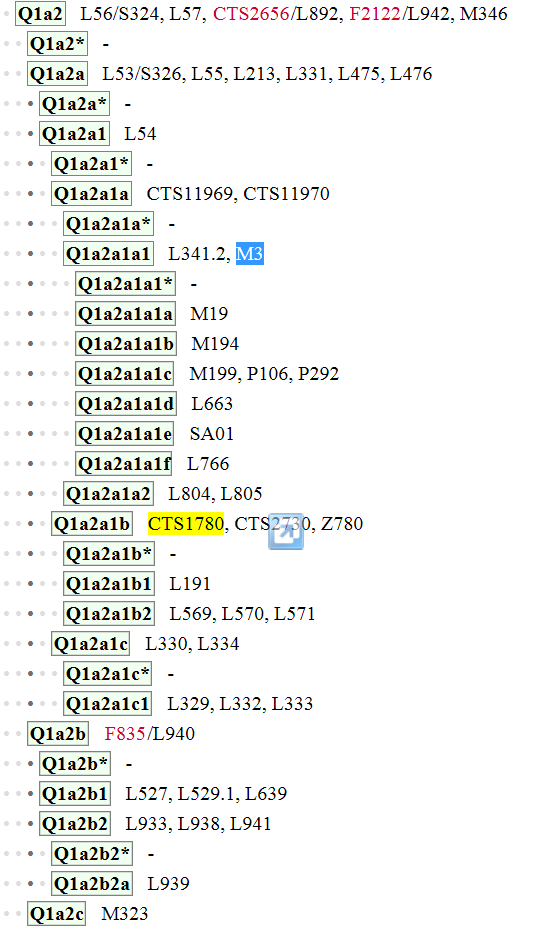
Not only did the men not match, there is no possibility on their Y (paternal) line that they are distantly related. In other words, this isn’t a questionable match, it’s a flat out no-match. They are in different haplogroups, with Thomas’s line being in haplogroup R and Marcus’s line in haplogroup I. These men’s paternal ancestors weren’t related in 10s of thousands of years. Well, that was a “stop me in my tracks” revelation. So now what?
So let’s start with Marcus and tell as much of our Younger story as we know. We have made some remarkable breakthroughs recently, compliments of autosomal DNA technology.
Marcus Younger
Marcus Younger was born probably in Essex County, VA and probably around 1730, based on his son’s 1760 birth. He died in January 1815 in Halifax County, Virginia. He married Susannah, possibly Hart. Anthony Hart sold land to Marcus Younger before he moved to Halifax County. Marcus was also taxed under Anthony. We don’t know who Marcus’s parents are, but given recent autosomal DNA evidence, we suspect that he was the illegitimate son of a daughter of Alexander Younger and Rebecca Mills. Alexander Younger mentions no son, Marcus, in his will. Alexander’s son, Thomas Younger, moved to Halifax County earlier than Marcus who arrived about 1785. They lived close to each other, Thomas on Terrible Creek and Marcus on Yellow Bank Creek on the Banister River. Thomas died in 1791 and his will was witnessed by both Marcus and Marcus’s son, John Younger. This implies strongly that Marcus was not Thomas’s heir, as heirs typically did not witness wills. It also suggests that they were very close.
In 1780, Marcus Younger aided in the American Revolution in King and Queen County as documented by the Public Service Claims. He provided 1 gallon, 2 quarts and a half brandy worth 39 pounds, 1 shilling and 3 pence. He probably didn’t have any choice about this, because then the army needed (or wanted) supplies, it needed supplies. They gave you a receipt with the idea that someday you could turn it in for reimbursement. In actuality, people did that, which is why we have the records today. He’s lucky that’s all they took. They were known for impressing horses, but then again, maybe Marcus didn’t have a horse to impress.
Marcus was in Essex County in 1782 and 1785, taxed under Anthony Hart, but is in Halifax County by December 1786 when he signs the marriage bond for his daughter, Mary, to marry George Estes, suggesting she is under the age of 21.
Interestingly enough, George Estes’s father, Moses Estes lived beside William Younger, born about 1740, wife Patience, whose parentage is also unknown. William Younger is in Halifax County as early as 1760 when he was assigned to a road crew on Reedy Creek. He apparently lived on Reedy Creek in South Boston for the rest of his life. Reedy Creek abutted the land purchased by Moses Estes Jr. and today Younger Street is the street that runs perpendicular to Estes Street, both of which now lead to the city dump, and is no place remotely close to Terrible Creek or the Banister River.
In 1795, Moses Estes, George Estes, his son who married Mary Younger in 1786, and William Younger, neighbors, all signed a petition.

I have always wondered if there is a previous pre-Halifax County connection between the William Younger and Moses Estes families. I have often suspected that Moses Estes Sr. had daughters who would have been the perfect age to have been Patience, the wife of William Younger. Conversely, we don’t know who the wife of Moses Estes Sr. was, only that her name was Elizabeth.
Regardless, these two families owned land that is very close to each other on the border of Essex and King and Queen Counties in northern Virginia prior to coming to Halifax County. This is detailed in the unpublished document, “Estes of King and Queen County.” An excerpt is provided below.
King and Queen and Essex County, Virginia
Using various hints, tips and what few records do still exist, we were able to locate fairly reliably the land of Abraham Estes, the original immigrant in the Estes line. As luck would have it, we also discovered the Younger holdings in that area as well.
My cousin Wilma, long time Younger genealogist, posted the following information on the Younger rootsweb list in 2002.
Recently I have come into possession of a map which was the project of a Woman’s Club started in 1937 and published in 1972. It attempts to located the early tracts of King and Queen County. Unfortunately some very significant pieces of the map were omitted. I’m referring to the various hundreds and parishes which would better pinpoint a known location.
That said, I studied the map first, for familiar names. I found the name Boulware not far from Caroline County. Many of you will remember that a Boulware was a business associate of John Younger (from Whitehaven, England) in Caroline County which adjoins King and Queen directly to the north. A Boulware also married the daughter of John Price and Ann Younger, daughter of Alexander. [Note: Alexander is the proven father of Thomas Younger who moved to Halifax County.]
The next name is a little more disconnected but it caught my attention. The name of the property was Fleetwell. Thomas Younger’s daughter by his first wife married a Fretwell and her father (apparently) was prominent in transferring property to Thomas. This Fleetwell certainly may have no relevance but, as I said, it did catch my eye.
Then there was Armistead Hill. Now we all can agree that Armistead is not a very common given name but it has been repeated throughout the Virginia family. I cannot say for sure but I suspect this piece of property was not far from Alexander’s in Essex and King and Queen (to be explained below).
I also noted the name Aylett and remembered having seen it before. I checked Alexander Younger’s notes and found that in 1716 a Robert Farish of St. Stephen’s Parish, King and Queen County bought 100 acres lying in both Essex and King and Queen Counties upon the head of the Dragon. The land adjoined Maj. Aylett’s Quarter and also adjoined the land of Alexander Younger.
I had thought Alexander Younger’s son Thomas had left Essex County (perhaps in anger that his mother had remarried so soon) and had gone to King and Queen. He was known to be in King and Queen County in 1751/2. [Note – based on a merchant’s account book.] Thomas Younger sold his property to his mother and step-father and it was noted that the property he sold was adjoined by John Farish and Capt. William Aylett.
The man I believe to be the father in law of Thomas Younger, (William Fretwell) obtained the property in question from the mother and stepfather and resold it to Thomas Younger.
No record of any other purchase by Thomas Younger has as yet come to light so one can assume (I hope) that half of the land left to Susannah by her father Thomas was the same described property. The other half was willed to Samuel also without a description. The subsequent lawsuit among the heirs did not deal in property but delineated money instead.
This little exercise put things a bit into perspective for me. It is amazing somehow that maps can be so enlightening – even incomplete ones.
I now suspect that the Younger’s lived fairly close to the border between Essex and King and Queen Counties and being located at or near the head of the Dragon, they were also not terribly far from Middlesex County which accounts for some of the Younger records there.
I took Wilma’s information and ran with it and in doing so, using contemporary maps, I located the approximate location of both the Estes and the Younger land.
Abraham Estes’s land in 1783 abuts the Hoskins and Grymes land. Today this marker resides on 360 East of St. Stephen’s Church.

Going with the info from the various locations to my trusty atlas, I find that in King and Queen County, on 360 where it crosses 14 and then East on 360 from that location, we have an intersection with 631 and 621 before getting to Miller’s Tavern. Miller’s Tavern is too far East, It looks like this land is between Bruington which is at the intersection of 14 and 621 as one point on the triangle, 621 itself as another point on the triangle, and probably St. Stephen’s church as another point. You also see Dogwood Fork which surely is connected to Dogwood swamp. Abraham Estes’s land seemed to be on the NE quadrant of this land, so probably nearer to 621. In a much larger sense, it’s between the Rappahannock and the Mattaponi, but nearer to the Mattaponi.
Essex County Land Grants
June 22 1722 – Grant of Robert Farish described as 775 acres in the Counties of King and Queen and Essex. Beg. of Silvester Estice standing in Thomas Cranes line; thence &c. on the south side a branch of Mattapony River. And then 775 acres in the Counties of King and Queen and Essex adjoining the land of Silvester Estice, Thos. Crane &c. on the south side of a branch of Mattapony River and crossing several branches of Rappa: River.
Here are 3 transactions that position Alexander Younger’s land in this same area:
Essex County Deed Book 22 (1738-1742), Pg 215
3 Dec 1740
Thomas Younger of St Stephen’s Parish, King and Queen County, VA to Timothy Driscoll [sic] of Southfarnham Parish, Essex County VA for 5000 lbs of tobacco and cash, all interest now or hereafter in 100 acres in Essex in the Parish of Southfarnum adjoining John Farish, Capt. William Aylett and John Croxton it being all that tract purchased by his father, Alexander Younger, dec’d of Richard Jones and Leonard Hill
Witnesses – Thomas Barker, John Croxton, Henry Brown
Acknowledged 17 Mar 1740 at a court held for Essex County at Tappahannock
3 Dec 1740
Know All Men by these presents that I Thomas Younger of King and Queen County stand indebted to Timothy Driscoll in the sum of ten thousand pounds of good tobacco and cash. The condition of the above obligation is such that Thomas Younger at all times upon request of Timothy Driscoll his heirs sufficiently grant all that parcel of land now in the tenure of Timothy Driscoll clearly aquitted and discharged from all manner of former bargains and incumberances whatsoever done by Thomas Younger then this obligation to be void otherwise to remain in force.
Signed: Thomas Younger
Witnesses: John Croxton, Henry Brown
Then received the full sum of thirty pounds current money, it being the full consideration.
Essex County VA Deed Book 24, Pg 354 and Virginia Colonial Abstracts, p.353
10 Aug 1749
William Fretwell of Southfarnham Parish, Essex County VA to Thomas Younger of Drisdale Parish in County of King and Queen County for 30 pounds, all interest now or hereafter in 100 acres in Essex, purchased of Thomas Younger by Timothy Driscoll and by him conveyed to William Fretwell
Signed: William Fretwell
Witnesses – Thomas Barker, Richard Hodges
Acknowledged 19 Sep 1749.
Another set of records that involved Thomas Younger also positions this family on the Mattaponi.
Thomas Younger was still living in King and Queen County in 1751-1752. (King and Queen Merchants Ledger 1751-1752. Accession #25110, Virginia State Library, Pg. 49). He made purchased in both 1751 and 1752.
Thomas Younger Mar 1751
Thomas Younger July 1752
An Index – Magazine of Virginia genealogy, Vol 29, Number 3, Aug 1991
The King and Queen County merchant’s account book has been abstracted and is identified in the Virginia State Archives by Accession number 28893.
Ledger A covers 25 Feb 1748-21 May 1750 and the unpaid accounts on the latter were transferred to Ledger B as opening balances. Ledger B covers 23 May 1750 to 16 Mar 1751. Balances on 16 Mar 1751 were transferred to Ledger C which covers 19 Mar 1751-4 Aug 1752. These ledgers came from the store of Nininan Boog, factor for Buchannan and Hamilton, Liverpool Merchants. Boog’s King and Queen store was apparently located at Todd’s on the Mataponi about a mile above Aylett where state route 628 now ends.
Name A B C
Thomas Younger 68 104 49
Alexander Younger in America
We know very little about the origins of Alexander Younger before his arrival in Virginia. There is a parish register entry in Lanark, Glasgow, Scotland showing an Alexander Younger christened on May 2, 1681. We don’t know if that record is for our Alexander, but it could be, especially given the 1699 court record which indicates his age as 18 years of age.
There are at least four possibilities for his importation records which begs the question of what happened to these other Alexander Youngers.
1. Old Rappahanock County, VA Order Book 2 1698-1699, Pg 148
10 June 1699 – Deposition – Alexander Younge (r), a servant of Edward Rowzee, said to be eighteen years old.
2. General Index to Court Orders, Essex County VA 1684-1714
11 Oct 1704 – An Alexander Younger imported by Thomas Dickinson 0-3-124
10 May 1705 – An Alexander Younger imported by Ralph Rowze 0-3-164
Considering that Alexander was a servant in a Rowze household it seems plausible that he immigrated in 1705.
These first two records cause me to wonder if Alexander went back and forth a couple of times. That was not unheard of, especially if he was the personal servant to a wealthy man.
We do know that Alexander Younger wrote his will in 1725, designating his wife and son, Thomas to be his executors. His son would have had to have been born very shortly after his arrival. If Alexander was a indentured servant, it’s unlikely that he would have been allowed to marry for the requisite 5 or 7 years to complete his indenture. This record says he is a servant, but it does not say that he is indentured, but it certainly does imply that he is.
3. From angelsmurfholly2@aol.com on Genforum under the Younger forum:
Alexander received 100 acres of land for transporting himself and his servants, James Morrison, to Somerset Co., Maryland. He later signed it over to Henry Bishop, a planter from Maryland. From G. Spades “The Early Settlers of Maryland”. Alexander came to York Co., VA in 1680. As per Virginia Colonial abstract #9. Essex Co. will and deeds of 1714-1717 Alexander Younger was sold 100 acres of land for 3250 pounds of tobacco in the Parish of Southfarnham, Essex Co. Record Book 15 page 359.
I question whether the records above are for the same person. We know that “our” Alexander was in Essex County, but I would like to see some documentation that ties the Maryland Alexander Younger with ours in Essex County, VA.
Alexander witnessed wills in both 1706 and 1707, suggesting that he was not an indentured servant at that time.
Virginia Colonial Abstracts, p. 155 (Essex County)
Will of Richard Matthews of Essex County
Written 12 Jan 1705/6, Pro 11 Feb 1705/6
To eldest son Richard a Bible. To youngest son Giles and daughter Elizabeth. the balance of the estate for their maintenance. To Ann a cow.
Exec. John Boulware, John Mottlin
Witnesses: John X Williams, Robert Parker, Alexander Younger
Essex County VA Records, Abstracted by John Frederick Dorman,
p. 36,37 – 18 Jan 1707 – Will of Daniel Browne of Essex County VA witnessed by Alexander Younger
p. 224 – Jean Browne wife of the deceased Daniel Browne, Sr. of Southfarnum Parish gave her interest in her 1/3rd to son Henry.
Witnessed by Alexander Younger
4. General Index to Court Orders, Essex County VA 1684-1714
10 Aug 1708 – Alexander Younger grants 50 acres of land for his own importation 0-4-47 – 10 Sep 1708
This record actually suggests that Alexander Younger was not indentured, as the person who paid for his transportation would have been the person to claim his 50 acres. However, if the land were part of his agreement, and he arrived in 1799, and was indentured for 7 years, he would have been freed in 1706, in time to witness the 1706 will.
Alexander Younger’s Land
Records show that in 1715, Alexander Younger purchased 220 acres of land in South Farnham Parish, Essex County, VA (Virginia Colonial Abstracts #9, pp. 319-320, Essex County VA Wills and Deeds Bk 14, p 359)
By 1716, Alexander had land and we know where it was, near the head of the Dragon Branches.
Records of Essex Co, VA, No 15, p. 1
18 and 19 Mar 1716
Deed and Release
Casper Coston, smith, and Mary his wife, of St Anne’s Parish, Essex Co, sell to Robert Farish of St Stephen’s Parish, King and Queen Co, for 48 pounds, 250a, part of 100a granted to Richard Jones and George Turner, 8 Feb 1672, lying in Essex and King and Queen Counties, upon the heads of the Dragon, Ashnamscot and Piscatua branches adj a marsh at the head of one of the Dragon branches, by Maj. Aylett the Quarter formerly known as Goodrich’s land, the land of Sheffells old field, Alexander’s house and the head of a branch of Fisher’s mill. Also Capt Brerton’s land “descending to me Mary Coston as being heir at law to my only sister Sarah Shipley, late dec’d, which was left by will of George Boyce to my sd sister, (adj land of Major Aylets Quarter formerly known by the name of Goodrich land, and also adjoining the land of Alexander Younger. Also Capt Brereton’ land)
Witnesses: John Bates, John Boughan, Thomas X Shipley
(Extracted from Virginia Colonial Abstracts, Vol II, Beverly Fleet, Genealogical Publishing Company, Baltimore, MD, 1988, p.83) SW: Sheffield
This is apparently Mary Cosston, sister of Keziah. The second entry of this record on p. 179 of this same source states Jasper Coston, not Casper, Goodrick, not Goodrich. Third record on p. 296 (filed under King and Queen Co) states “the head of Kissells old field, Alexander Youngers house, branch of Fishers mill, etc.” George Boyce record not yet located.
By 1725, Alexander had died, fairly young, and with young children. His son John died in 1733 and Alexander’s estate funds were used to bury John as well. In 1732, his 3 youngest daughters were still under age and Thomas was appointed their guardians.
Alexander was impaneled as a juror several times. But then, in 1724, it was his turn to face the jury.
Essex County VA Order Book 1723-1725, p. 107 – 19 Mar 1723
The suit brought by John Bagge against Alexander Younger is dismissed.
p. 138 – 20 May 1724
Alexander Younger of the Parish of South Farnham for not frequenting his Parish Church according to Law. Presented by the Grand Jury and therefore ordered the Sheriff to summon all said persons to appear at the next court for this County to show cause if any they have why they should not be fined according to Law.
p 161, 17 June 1724
The presentment of the Grand Jury agt. Alexander Younger is dismissed.
The 1724 presentment against Alexander for not attending church was dismissed. Obviously, he wasn’t attending. The question is why. Given that he made his will in 1725, it causes me to wonder if he wasn’t ill by 1724 and not attending church for that reason.
p. 167, 17 Jun 1724
In the action on the case brought by Nathaniel Sanders against John Griggs it is ordered that James Edmondson, Alexander Younger and John Haile or any two of them audit and settle the accounts between the plaintiff and the defendant. and make their report to the next court.
Given this court order, Alexander must not have been ill at this time.
p. 172 – 18 Jun 1724
The action of debt brought by John Bagge vs Alexander Younger is continued. The Plaintiff’s Attorney being absent.
On July 18, 1727, Alexander’s will was probated. He would have been less than 50 years old.
Essex County Wills, Bonds and Inventories, Part 2, pg 222 1722-1730
Will Book 4, pp 222-223
Written 11 Aug 1725, Probated 18 Jul 1727
Virginia State Library
IN THE NAME OF GOD, AMEN…The eleventh day of Aug 1725, I, Alexander Younger of the County of Essex, being sick and weak of body yet in perfect sense and memory thanks be to God for the same I do make and constitute ordain and declare this to be my last will and testament and no other first being point out and sorry from the bottom of my heart for all my sins past most humble begging God forgiveness and remission of the same through the alone merits of my dear redeemer and only savior, Jesus Christ. I commit my soul into the hand of Almighty God, my savior and only redeemer through the merit of whose death and passion I hope to have full and perfect remission and forgiveness of all my sins. My body to be decently interred by my executors hereafter named in hopes of a happy resurrection at the last day and my soul and body to enter into perfect joy and felicity forevermore. And for the settling and disposing my temporal and such goods and chattels as it hath pleased God to bestow upon me I do order give and dispose as follows, that is to say, first all those debts and duties as I owe in right or custom to any person whatsoever shall be well and truly contented and paid within convenient time after my decease by my executors hereafter named. First I will and bequeath to the three poorest objects of pity in the parish thirty shillings in such things as may answer their wants to be paid within one year after my decease by my executors.
Secondly I will and bequeath to my son Thomas Younger that piece of land that I bought of Mr. Hill and Richard Jones, a young heifer called Fairmade and her female increase and if she happens to be barren and not a breeder then to have a young cow out of my own proper stock of chattels and if she should die then to have another young cow in her room out of my own proper stock and six pounds currency and that gun which I bought of Captain Welch.
Thirdly I will and bequeath to my son John Younger that piece of land which I bought of Mary Newton, two young cows out of my proper stock, six pound currency and his choice of my other two guns.
If either of my two sons Thomas or John die without issue then their land, money and gun to fall to the eldest female then alive only my will is that the child in whose hands any of the boy’s land falls to, the other part of
their estate shall be equally divide among the rest then alive. They themselves that have the land having one equal part thereof. It is my will that the two eldest then alive of the female kind if the male be all dead should inherit the land. Also my will is that after appraisement made that my estate be equally divided among my other six children to wit: James Younger, Elizabeth Younger, Ann Younger, Mary Younger, Jannett Younger, and Susannah Younger, and further it is my will that if any one of them died without issue lawfully begotten of their body that their part be equally divided among the rest then alive and it is my will concerning every one of my children’s parts of the estate if they die without issue lawfully begotten of their body to be still equally divided among the rest then alive and further it is my will that if my well beloved wife, Rebecca Younger, should happen to join in wedlock state after my decease it is my will that the boys should be for themselves at the age of seventeen years old and if she continues my widow then to remain till the year of twenty one and if it should please God to whom all things are subject to remove all my issue by death then it is my will that my land and personal estate be secured for my next heir in Scotland of my brother Andrew’s only wife to have the liberty of the same all her days in a moderate way to live upon without control of any person whatsoever.
The executors whom I order and appoint is my well beloved wife Rebecca Younger and my son Thomas Younger to see the same truly appointed and fully performed. In witness whereof I have affixed my seal and set my hand the day and year first above written.
Signed: Alexander Younger
Witnesses: John Haile, Bryant Edmondson, Francis Haile (his mark)
At a court for Essex County on Tuesday the 18th of July 1727, the within last will and testament of Alexander Younger, dec’d, was proved by the oath of Rebecca Younger, his executrix and being further proved by the oath of John Haile and Bryant Edmondson, two of the witnesses thereto was admitted to record.
Signed W. Beverly, C.C.
18 Jul 1727
Bond of Rebecca Younger as Executrix of Alexander Younger. Unto William Dangerfield, Benjamin Robinson, John Taliaferro and Nicholas Smith, Gent., Justices. For L 300 sterling
Securities: Thomas Covington and Richard Jones
It is ordered that James Edmondson, Henry Boughan, John Haile and William Gatewood or any three of them appraise the estate of Alexander Younger, dec’d and return their proceedings therein to the next court.
Appraisers were typically the largest debtor, someone from the wife’s family and a totally disinterested party.
Essex County VA Will Book 5, p. 152,153 – 1727
Account for the administration of the estate of Alexander Younger
This account provides the information that by later in 1727, Alexander’s son John has died, his daughter Elizabeth has married John Dillard and the widow Rebecca has remarried Timothy Driscoll, although it is odd that she signs her name as Rebecca Younger on this document. Actually, she signed with a mark so maybe the clerk wrote her name as Rebecca Younger instead of her new married name. The only reason Timothy Driscoll would sign this is if he had an interest and his only interest would be as her husband.
Essex County VA Court Wills #5
1727
Total Valuation L 157.12.10 including one Negro man valued at 25 pounds.
The estate of Mr. Alexander Younger, dec’d
- To funeral expenses for Mr. Younger
- To Dr. John Haile
- To John Leach a legacy left by Mr. Younger
- To Thomas Barber for sundry writing for the estate
- To John Taylor (no reason given)
- To Pitman Grandoff (no reason given)
- To the appraisers of the estate (not named)
- To the probate of Mr. Younger’s will
- To Mr. ? Carter
- To registering the death of the sd Younger
- To registering the death of a negro
- To registering the death of John Younger
- To rolling Mr. Younger’s tobacco
- To tobacco charged in the inventory due in his lifetime not received by the executors
- To tobacco charged for clerks, secretarys and parsons
- To John Dillard for his wife’s part of the estate being 1/8 of 127 pounds, 13 shillings, 4 1/2 pence.
Signed Timothy Driscoll (his mark)
Rebecca Younger (R)
At a court convened and held for Essex County on 22 Aug 1833
Timothy Driscoll and Rebecca, his wife, Executors of the last will and testament of Alexander Younger, dec’d produced their vouchers and made oath that this was a just and true account of the sd deceased estate and all the articles therein being allowed by this court, on the motion of Timothy the same is admitted to record.
Essex County VA Will Book 5: 119,120
15 Jan 1732
Thomas Younger made guardian of Mary and Ann, infant orphans of Alexander Younger, dec’d. Samuel Gatewood and John Ferguson were bondsmen with Thomas. The document continues to reveal that he is also guardian to James Younger.
Essex County VA Will Book 5: 115,116
19Dec 1732
Thomas Younger made guardian of James, Jannett and Susannah stating that they are orphans
I have to wonder why he was not appointed prior to this time. His father has been dead since 1727. Marcus was born sometime prior to 1740, likely to one of these sisters. I thought at one time that perhaps his mother died at this time, but according to later deeds, she did not. Something clearly happened during this time to precipitate this legal action. But what?
Essex County Deed Book 22 (1738-1742), Pg 215
3 Dec 1740
Thomas Younger of St Stephen’s Parish, King and Queen County, VA to Timothy Driscoll [sic] of Southfarnham Parish, Essex County VA for 5000 lbs of tobacco and cash, all interest now or hereafter in 100 acres in Essex in the Parish of Southfarnum adjoining John Farish, Capt. William Aylett and John Croxton it being all that tract purchased by his father, Alexander Younger, dec’d of Richard Jones and Leonard Hill
Witnesses – Thomas Barker, John Croxton, Henry Brown
Acknowledged 17 Mar 1740 at a court held for Essex County at Tappahannock
3 Dec 1740
Know All Men by these presents that I Thomas Younger of King and Queen County stand indebted to Timothy Driscoll in the sum of ten thousand pounds of good tobacco and cash. The condition of the above obligation is such that Thomas Younger at all times upon request of Timothy Driscoll his heirs sufficiently grant all that parcel of land now in the tenure of Timothy Driscoll clearly aquitted and discharged from all manner of former bargains and incumberances whatsoever done by Thomas Younger then this obligation to be void otherwise to remain in force.
Signed: Thomas Younger
Witnesses: John Croxton, Henry Brown
Then received the full sum of thirty pounds current money, it being the full consideration.
Essex County VA Deed Book 24, Pg 354 and Virginia Colonial Abstracts, p.353 10 Aug 1749
William Fretwell of Southfarnham Parish, Essex County VA to Thomas Younger of Drisdale Parish in County of King and Queen County for 30 pounds, all interest now or hereafter in 100 acres in Essex, purchased of Thomas Younger by Timothy Driscoll and by him conveyed to William Fretwell
Signed: William Fretwell
Witnesses – Thomas Barker, Richard Hodges
Acknowledged 19 Sep 1749.
There are no records in subsequent Deed Books of Essex County, VA of Thomas Younger selling this land. There are no tax records of Essex County until 1782. It is also known by probate records that William Fretwell was the son-in-law of Thomas Younger.
Unfortunately, the records of King and Queen County have been burned, so while there were very likely more records that pertain to Thomas, they were destroyed. The next time we see Thomas after the 1751/1752 merchant’s account record is in 1765 in Halifax County.
Essex County, Virginia, Summary
The deeds and land transactions tell us that the Estes and Younger families probably knew each other long before they came to Halifax Co. Notice below that the head of Dragon Run is almost exactly on the county border between King and Queen and Essex county which is highlighted in yellow. The purple arrow is pointing to this general area, but slightly on the Essex side. The Younger’s lived on the Essex side and the Estes lived just across the road, right about where the “620” is printed on the way south from Miller’s tavern.

It is exceedingly frustrating for me not to be able to connect our Marcus Younger back to his father. There were other early Younger men who also came to Halifax County, like William Younger. Were they also from Essex county? Was our Marcus related to them? He was clearly associated very closely with all of the Youngers of that time in Halifax County, as they witnessed deeds and such for each other and the Estes family. Marcus and Thomas Younger were neighbors, as were William Younger and Moses Estes Jr.
Given the DNA results, Marcus did not share a paternal line with Thomas Younger or James Younger, both sons of Alexander Younger and Rebecca Mills. The Y DNA of Thomas and James descendants matches each other, but Marcus’s Y chromosome does not, and one of the people (Seay) he matches closely also doesn’t match the DNA of his surname family. The Marcus Younger line also matches one single Rolland male.
Halifax County, Virginia Younger Families
The Halifax County research had two goals. One, to piece the various Younger families together, learning and much as possible about them and second, to find the land and cemetery where Marcus Younger lived.
The following information is extracted from the deed, will, court order, and chancery suits and is combined with census and tax list information in order to assemble families. This is not intended to be exhaustive, but to provide an overview in summary form of the results of the research in Halifax. I have removed almost all of the detail for the Thomas and William Younger families, leaving only what might be relevant for Marcus.
In a nutshell, we have connected all of the early families into three distinct groups that apparently do not connect together in Halifax, meaning they are not father-son groupings. They may well be otherwise related, but we just don’t know yet.
Ironically, it was neither William, Marcus nor Thomas who first appeared in Halifax County, but James Younger in 1758 who is mentioned as providing blacksmith services in the estate management for the children in the estate of Capt. James Hill. Halifax Will Book 0-46. This James never reappears. Two years later, William Younger followed. In 1765 Thomas Younger arrived. Marcus doesn’t appear in any records until 1785.
Marcus Younger, born before 1740, died 1815, wife Susannah
Halifax County records for Marcus Younger begin in 1785.
1785 – Markus Younger is listed on the tax list with 1 white, 1 slave, no horses and 2 cows.
1785 – Marcus Younger is listed on Berryman Green’s list with 1 white tithe, 2 slaves and 1 horse. A different records show him with 1 white, 1 slave, no horses and 2 cows.
1785 – John Younger, son of Marcus, is listed with 1 white, no slaves, no horses and 2 cows.
1786 – On December 19, Mary Younger marries George Estes, her father Marcus Younger and George Estes sign, William Martin is a witness and Daniel Parker is surety.

George signs his marriage bond, above. Below, Marcus signs for Mary to marry George.

1787 – Markus Younger on the tax list shows 1 white, 2 slaves, 3 horses and 2 cows.
1787 – John Younger on the tax list shows 1 white, 1 slave, 3 horses and 6 cows.
1788 – Halifax County VA Deed Book 14, Pg. 276
7 Mar 1788 Mark Younger from Meador Anderson and wife Sarah
100 acres on Branch of the Bannister River
1788 – Halifax County VA Deed Book 14, Pg. 281
7 Mar 1788
John Younger from Meador Anderson and wife Sarah
100 acres on Branch of the Bannister River for 60 pounds.
(John is the son of Marcus)
1788 – Tax list Markus Younger 1 white, 0 slaves and 3 horses.
1788 – Tax list John Younger 1 white, 1 black, 3 horses.
1789 – Marcus witnessed the will of Thomas Younger and also was on the tax list with 100 acres and tithed with one white male, no slaves and 2 horses.
1790 – Marcus Younger has 100 acres every year until 1814 when his land drops to 93.5 acres and then in 1815 to 43.5 acres and is then noted as a life estate instead of held in fee simple. This would be his daughter’s share, I would think. Marcus has no slaves until 1794 when he has 3, then none in1795, 1 in 1796 and each year until he acquires a second slave in 1800 and has 2 until his death. He has no horses in 1790, but acquires 2 in 1796 and then has 4 in 1802, dropping back to 2 in 1809 and 1 in 1810.
1790 – Marcus’s son John Younger has 100 acres and maintains that land until 1812 when he adds another 3.5 acres from his father. He has one slave until 1794 when he acquires a second and has two throughout the record period until 1817.
1795 – John Younger, road hand along with George Estes.
Note: This road hand assignment confirms that George and Mary Younger Estes indeed were living in the north part of the county, probably on the Marcus Younger land. Given this, the Marcus Younger farm is probably where John R. Estes, their son and also my ancestor, born in 1787/1788 was born. There are also several spaces for children “missing” who would have been born in the 1790s, nor were any children named after George’s parents, Moses and Luremia. I suspect those children are buried in the cemetery on Marcus’s land.
1799 – Marcus Younger is listed as a road hand.
1799 – John Younger is listed as a road hand on Terrible Creek along with George Estes.
Note: Further confirmation that George and Mary Estes Younger were living among the Youngers as late as 1799.
1805 – Marcus wrote his will, but he did not pass away until 10 years later, in 1815. Generally in this timeframe in Virginia, people did not write a will until they thought they were going to pass away, so he must have had a scare 10 years before he died.
1810 – Halifax County Tax list. Marcus is taxed with 2 whites, meaning two adult white men, George Estes is not listed on the tax list, which means he was taxed under someone else, and Moses Estes, George’s father, is only taxed with one white male. George and Mary Estes Younger are very likely living with Marcus Younger.
1811 – Halifax County VA Deed Book 23, Pg.197
20 May 1811
Mark Younger to John Younger
6 1/2 acres on Bannister River adjoining Younger’s land.
Witnesses: Benjamin and William Landrum, James Powers
Marcus’ will, written 23 Jun 1805, Probated 25 Jan 1815:
To daughter Susannah 50 acres of land where my house stands during her natural life. Also one Negro girl (Fanny), one mare, one bed, and furniture, one cow and calf. To grandson Younger Wyatt one mare. The rest of my estate to be equally divided among my four children namely, John Younger, Elizabeth Clark, Mary Estes and Susannah Younger together with my forenamed grandson Younger Wyatt.
Marcus and Susannah Younger’s children:
- John born April 11, 1760 in Essex County, married Lucy Hart, had 9 children, inherited his father’s land and lived in Halifax County. His son Joel owned the Younger land after John’s death in 1817 as well as the old Younger store. John’s land is where the cemetery is today.
- Elizabeth married William Clark, had 5 children, but was dead by March 1816.
- Mary Younger married George Estes in 1786 and died after her sister Susannah in 1831, but before 1842.
- Sally Younger married a Wyatt and had Younger Wyatt. She was probably deceased by 1805.
- Susannah apparently never married and died about 1831. She had a will and in her will she left her clothes to her sister Mary Estes and Mary Wyatt, and then she freed her negroes Fanny and Henry “to be released and given $15”. Fifteen dollars at that time was a significant amount of money. Susannah had inherited Fanny when Fanny was a child when Marcus died in 1815. By 1831, Fanny had presumably married Henry, or perhaps Henry was her son. Neither a Fanny nor Henry Younger are found in the Halifax County region in either 1840 or 1850.
Page 568 July 1815
Land of Marcus Younger (heirs listed) decd to John Younger with agreement of all parties to make survey to Susannah Younger who becomes entitled to the part allocated her under the will of Marcus, tract on the draught of Bannister River beginning at a post on John Younger’s line.
1816 – Marcus Younger’s estate was inventoried. Slaves Joshua, Harry (boy), Phoebe, Ceily (girl), Jacob (boy), Ben (boy), Sampson (boy), Dicey (girl), mare and sorrel colt, Fanny given by will to Susannah Younger, cow, 3 feather beds and furniture also to Susannah, one yoke oxen, cow, cow and yearling, yearling, one stack tops, two clade stacks, two vat stack, cart, 2 ploying, panel of plank, 2 head sheep, 3 fatted hogs, 1 cutting box, parcel of nubings.
I love estate inventories because they tell us so much about what the person did, and didn’t, have. This man was not wealthy by any stretch, but with three feather beds and 8 slaves, although several were children, he also wasn’t a pauper. The slave records hurt my heart and make me sad. I hope they were considered part of the family.
In 1816, Marcus’s estate transferred 62 acres on Banister Creek. Deed Book 25-568.
1816 – Susannah Younger’s land laid off. Susanna Younger, Younger and Polly Wyatt, Thomas and Peggy Clark, William Clark, John and Sarah Henderson, Edmund and Elizabeth Henderson, John and Polly Landrum and George and Mary Estes to John Younger – prompt distribution of Marcus Younger, decd – survey to Susanna Younger part allocated to her under will of Marcus, land sold for 12 months credit $420.60 on the draughts of Banister 62 acres bounded by John Younger line, Bruce’s line, Sights corner, Susanna Younger laying off allotment of land he bequeathed her. Halifax Deed Book 25-568
1817 – Halifax County VA Deed Book 26. Pg. 572
16 Jul 1817
John Younger, Sr. and wife Lucy to Thomas P. Anderson
107 acres on the head of Yellow Bank Branch for $700
Witnesses: Anthony Younger, George Estes, John Younger and James Bruce
1817 – Will: Halifax County Will Book 11, Pg 50 – John Younger (son of Marcus)
Written 17 Jul 1817, Probated 29 Oct 1817
Names wife Lucy – tract she lives on, furniture, stock, all my Negroes
Children:
- John Younger – $500 to be raised by executors 12 months after my decease
- Elizabeth, wife of Thomas P. Anderson – $500
- Joel Younger – 170 acres adjoining Thomas Anderson
- Anthony Younger – 100 acres on Big Creek on which he resides lying on the waters of Rye Creek (Bye Ck)
- Thomas Younger- land lent to his mother after her death or marriage
- Robert Younger – land previously given as his share (100 acres north side of Bye Creek apparently)
- Sally, wife of Joel Anderson – $500 beds, furniture & bridles
- Polly – $250 for each of her children
- Nancy – $500 beds, furniture, horses $ bridles
- Polly & children – $125 ea; Bazoil and Betsy P. Ray – 1/2 land she lives on, the children, the other half
Execs: sons Robert and Anthony Younger
Witnesses: James Bruce, Daniel Mills, George Estis and Mary Estis, her mark (daughter of Marcus)
Security: Joel Tucker, Edward Carlton
Note: The fact that George and Mary Estes, sister to John, witnessed his deed indicates that they were close to John and trusted family members. Also note that Mary Younger Estes cannot write.
John (son of Marcus) died in 1817. His wife was Lucy Hart and he was obviously already married when he came to Halifax. His children were:
- Robert S who married Mary Polly Moore and died in 1870
- Joel who married Lucy Cain and then Fentel Hart
- John who married Elizabeth and lived in Pittsylvania Co.
- Thomas married Elizabeth Willingham
- Nancy married Vincent Carlton
- Sally married Joel Anderson
- Elizabeth married an Anderson and then Thomas Andrews
- Anthony who married Nancy Carrell and sells land in 1824 to James Bruce, by 1830 they live in Franklin Co., VA
- Polly who was widowed by a Ray and then marries Samuel Younger (son of Thomas). She has children by Ray, Bazrael (wife Jane) and Elizabeth Ray.
Joel (son of John, son of Marcus) died in 1877 and had the following children:
-
- Samuel W. (presumed Younger)
- Vincent B. (presumed Younger)
- Harriett F. Carlton
- Matilda E. Tune
- Louise E. Younger
- Martha B. Younger
- Joseph G. Younger
- Thomas L. Younger
This was the last Younger family to own the original Younger land. It was sold in 1906.
Robert, (son of John, son of Marcus) married Mary Polly Moore (William D. Moore brother, James D. Moore nephew), and died in 1870. They had the following children:
-
- Philip A. Younger
- William Polard Younger
- Peter Palmer Younger
- John Marcus Younger (Methodist Minister) buried in Pittsylvania Co.
- William Younger
- James Younger
- Betsy Light Younger
- Martha F. Younger marries Thomas Bradley
It’s quite interesting that the theme of the Methodist religion runs through these families. This may indeed be the tie that binds many together, especially in situations where they don’t appear as close neighbors, but the children are still intermarrying. Their connection could well be through their church. At this time, the only approved State church was the Anglican church, and everyone was required to attend and to pay tithes to support the church. Methodists and Baptists were considered “dissenting religions.” Around the Revolutionary War, Halifax County authorized three dissenting ministers to perform marriages. William Moore was one of those ministers, and his daughter, Nancy Ann Moore would marry John R. Estes, the son of George and Mary Estes, in 1811. The Rice and Henderson families were also known to be dissenters, and the Younger family married into the Clark family who married into the Henderson family, who was already married into the Moore family.
In 1842, a chancery suit involving Marcus’s estate was settled. The suit claimed that when the heirs of Marcus sold 52 acres to Thomas Clark, the heirs had received the purchase money, but that the whole of them had never conveyed to him clear title, although he was in possession of the land. All of the children of Marcus Younger were listed, and if Marcus’s children were dead, their children as heirs were listed. This suit was invaluable in reconstructing the family of Marcus Younger and in particular, his grandchildren. However, the mystery of his parents, remains.
Marcus Younger Chancery Suit
Suit 1842-057, Halifax Co. Va. – extracted in June 2005 by Roberta Estes
The worshipful county court of Halifax in chancery sitting: Humbly complaining sheweth unto your worships your orator Thomas Clark that a certain Marcus Younger died many years ago leaving a small tract of land containing about 53 (58?) acres to his wife Suckey Younger (see note) for life and at her death to be divided amongst his children. That after the death of the said Suckey Younger, the rest of the children of the said Marcus Younger (the wife of your orator being one) sold the said land to your orator, put him in possession of the same and have received from them the whole of the purchase money, but have not as yet conveyed to him the legal title. The names of the said renders(?) are John Henderson and Sally his wife, John Landrum and Sally his wife, Edward Henderson and Betsy his wife, Robert Younger and Mary his wife, Samuel Younger and Mary his wife, Thomas P. Anderson, Joel Younger and Fental his wife, Vincent Carlton and Nancy his wife, Joel Anderson and Sally his wife, Thomas Younger and Betsy his wife, William Estes and Rebecca his wife, James Smith and Polly his wife, Susanna Estes, Marcus Estes, William Clark and Mary his wife, Anthony Younger and Nancy his wife, John Younger and Betsy his wife, Younger Wyatt and Polly his wife, John Estes and Nancy his wife, Thomas Estes and Sally his wife. In tender consideration of the promises and in as much as your orator is remedyless therein at last?. To this end therefore that the above named renders? be made parties to this suit and required to answer the allegations herein contained under oath. That in consequence of the said partys being numerous and widely dispersed in the United States that the said court decree that the legal title to the said land be conveyed to your orator and that the parties to the said contract as vendors? be required to do so and unless they shall do so within a reasonable time that the court appoint a commissioner for that purpose and grant all other recipients relief. May it please the court to grant the Commonwealths writ of subpoena.
Note: This mention of his wife Suckey Younger drove me to distraction for years. During one of the visits to Halifax County, I saw a form for a lawsuit and realized that often, forms or standard language were used at that time as well. The standard verbiage here would be wife and not daughter. The next sentence in fact says, “the rest of the children” and the subsequent suit and deeds all reference Susannah not as the wife of Marcus, but his daughter. Unfortunately, in this case, the fact that his wife and the daughter who died without marrying and without heirs shared the same first name.
Next document:
The joint answer of John Henderson and Sally his wife, John Landrum and Polly his wife, Edward Henderson and Betsy his wife, Robert Younger and Mary his wife, Samuel Younger and Mary his wife, Thomas P. Anderson and Betsy his wife, Joel Younger and Fental his wife, Vincent Carlton and Nancy his wife, Joel Anderson and Sally his wife, Thomas Younger and Betsy his wife, William Estes and Rebecca his wife, James Smith and Polly his wife, Susanna Estes, Marcus Estes, William Clark and Mary his wife, Anthony Younger and Nancy his wife, John Younger and Betsy his wife, Younger Wyatt and Polly his wife, John Estes and Nancy his wife. Thomas Estes and Sally his wife to a bill of complaint exhibited against them in the county court of Halifax by Thomas Clark – These respondents saving? Do say that the allegations of the complainants bill are true and having answered pray to be hence dismissed.
Next document
This cause came on this day to be heard on the bill of chancery and answered and was argued by counsel and consideration and decise? that Jonathan B. Stovall who is hereby appointed a commissioner for that purpose do by proper deeds convey the lands in the proceeding mentioned to Thomas Clark in fee simply with special warranty.
Two attached pages in file as follows:
Page 1
Marcus Younger left 83 acres for life to Sukey Younger for life and at her death to be divided among his children. Note – after this statement, in a different handwriting, begins the list of his heirs.
- Elizabeth Clark, Sally Wyatt, John Younger, Mary Estes, children of Marcus
- Thomas, Sally Henderson wife of John Henderson, Polly Landrum wife of John Landrum, Betsy wife of Edward Henderson, William Clark, Children of Elizabeth Clark (inferring that she is deceased).
- Younger Wyatt child of Sally Wyatt
- Robert, Polly wife of Samuel Younger, Anthony, Joel, Betsy wife of J. P. Anderson, Nancy wife of Vincent P. Carlton, John, Thomas, Sally wife of Joel Anderson – children of John Younger.
- John Estes, William, Susannah, Sally wife of T. Estes, Polly wife of James Smith and a grandchild name Mark Estes – children of Mary Estes.
- Elizabeth Clark’s children are entitled each to 1/5 of 1/4th
- Younger Wyatt entitled to ¼th
- John Younger’s children are each entitled to 1/9 of 1/4th
- Mary Estes children are entitled each to 1/6 of 1/4th
- Mary Estes grandchild is entitled to 1/6th of 1/4th
Next page:
- Thomas Clark and Peggy his wife – Halifax
- John Henderson and Sally his wife – Halifax
- John Landrum and Polly his wife – Halifax
- Edward Henderson Jr. and Betsy his wife – Halifax
- William Clark and Mary his wife – Patrick County
- Robert Younger and Mary his wife – Halifax
- Samuel Younger and Mary his wife – Halifax
- Anthony Younger and Nancy his wife – Franklin
- Thomas P. Anderson and Betsy his wife – Halifax
- Joel Younger and Fental his wife – Halifax
- John Younger and Betsy his wife – Pittsylvania
- Vincent Carlton and Nancy his wife – Halifax
- Joel Anderson and Sally his wife – Halifax
- Thomas Younger and Betsy his wife – Halifax
- Younger Wyatt and Polly his wife – Rutherford County Tennessee
- John Estes and Nancy his wife – Rutherford Co Tennessee (actually ditto marks and John was actually in Claiborne by this time it is believed)
- William Estes and Rebecca his wife – Halifax
- Susannah Estes – Halifax
- Thomas Estes and Sally his wife – Montgomery County Tennessee
- James Smith and Polly his wife – Halifax
- Marcus Estes (son of Mark) – Halifax
(Note – Marcus Estes the son of George and Mary Estes died in 1815 shortly after his marriage. Susanna Y. Estes, the daughter of George and Mary Estes, who never married, also had a son Marcus Estes, not to be confused with this Marcus, the son of George and Mary Estes.)
Thomas Younger, born before 1806, died in 1791, wives unknown
Thomas Younger had to have been born before 1706 if he was administering his father’s estate in 1727. His father, Alexander wrote his will in 1725. If Thomas was 21 at that time, he would have been born in or before 1704.
Thomas Younger was in Halifax County by 1765 when both Thomas and William appeared on different tax lists.
1781 – Halifax County – Revolutionary War Public Claims from Thomas Younger. 22 diets #1-7-6, 15 do, 15 forages#1-10, 54# mutton 11s-3, .5 bu corn 1s-3, 4 gal brandy #2, .5 bu oats, 17 diets #1-2, 100# fodder 3s, 56# fodder, 1 bu corn, 2 bu oats 7s-1.75, 200# fodder 6s, 6 forrages, 1 qt brandy, 3 diets 9s-9, 5 pts brandy 6s-3 cont
Thomas owned land on Terrible Creek adjacent his son William who died in 1801. This relationship is proven in one of the many chancery suits that follow regarding Thomas’s will and his daughter Susannah who had land for her life. Upon her death, the heirs filed suits to determine how her assets were to be divided. Thomas Younger’s children were:
- Susannah who never married and inherited land
- Samuel who married Polly Younger Ray
- James who could not be found for an estate distribution when Susannah dies but then suddenly shows up, causing yet another chancery suit
- John
- Joseph
- Thomas (of the half blood)
- Mary Fretwell Scudders (of the half blood)
- Jesse who dies in 1805
- William who owns land on Terrible Creek and died in 1801 (see below)
- Elizabeth who had the child (John G. Younger) by Rev. Gordon and marries John LeGrand
- Nancy (Nanny) Smallman
- Katey Brown
- Dolly Light
- Lucy who married George Winn
- Rebecca married John Franklin
- Rachel
It doesn’t help in the confusion factor that both Marcus and Thomas have daughters Susannah who never marry.
The Younger Store
The old store below is all that is visibly left of the family on the main road, 501, the L.P. Bailey Memorial Highway. This building is about equidistant between the two families, Thomas and Marcus. Brownie, Thomas Younger’s descendant, who took the photo about 2002, believes it was run by Joel’s family, who would have been Marcus’s grandson. You can see that at one time this was probably an early gas station, with the cars pulling under the roof area. This building still stood in 2008.

The Marcus Younger Graveyard
The old Younger family graveyard is located on the original Younger land upon the North side of Banister River located off of current road 610, Murphy Grove Road, on land that included part of Yellow Bank Creek, according to early deeds. This land passed from Marcus Younger to his son John and then to John’s son Joel. I understood that this land was sold in about 1892 to Walter Tune, so I originally thought it could still be in the Tune family, especially given there is an “old Tune house” in that vicinity.
I found records indicating that the graveyard was apparently in the woods near the Tune house, but without a local who knew the area, locating it was going to be very difficult.
In the spring of 2008, with the help of lots of people, I eventually located and visited the original Younger cemetery. I wrote the following story about it at the time. The first part is written in 2007 when I first attempted to locate the cemetery, and the second part in 2008 when I finally found it with the help of one very generous farmer, the current land owner, and my cousin, Audrey.
Meeting Marcus Younger – 1740-1816
Yes, indeed, I met Marcus, just last week…..but not as you might think.
Two or three years ago when I was visiting the Halifax County, Virginia courthouse, extracting records in the damp dusty basement, a gentleman came in and began talking to Lawrence Martin, the gentleman who works in the historical records there. This visitor’s interest was veterans of the various wars who lived in Halifax County, but in particular, those who died in service.
Later in that week, I met with my cousin to do some genealogical spelunking for the Estes and Younger surnames, and she mentioned a gentleman named Doug who might know about the Younger line, as he too is a descendant. Yep, it was Doug who was in the courthouse and I had already exchanged e-mails with him.
Doug and I compared notes. I had discovered an old document in the library in Danville in a prior visit that mentioned an old Younger cemetery on the original Marcus Younger land. The individual who wrote the document had visited it many years ago, years as measured in decades, probably between the 1930s and 1960s, as best I could tell. Clearly her address was no longer valid and her phone number only had 5 digits. All I had were her cryptic directions, based on landmarks of that time and road names that had since changed. Oh yes, and a new major road was put in too, but I didn’t know that it hadn’t always been there. The old woods had been logged, and the well that was supposed to be there apparently wasn’t…..but I’m getting ahead of my own story.
Doug and I communicated for a few months, but then Doug grew very ill. His recovery took a long time and he faced many challenges. In one of his e-mails, he mentioned that I should call a lady named Audrey, that she might know more about the cemetery and such, that she also descended from the Youngers.
Now I hate to make phone calls, especially cold calls, but I’d do just about anything to find my ancestors, so I put off the call as long as possible, but eventually, call Audrey I did. Audrey was very nice when I finally made that call in August of 2007. I was going to NC on business and planned to be in Halifax County for one day on the way back. For a researcher who had spent weeks in Halifax, one day was little opportunity to get anything done, but one day was better than nothing, and I was looking forward to meeting my new cousin, Audrey, who was going to take a DNA kit to one of her male Younger cousins on the Marcus Younger line.
Audrey said she thought she could get us to the cemetery based on the directions in the old letter. She knew it existed, but she had never been there herself. In fact, she had a list of some of the people buried in the cemetery, provided by an elderly relative years ago, which she gave me and are listed below. My identification notes as to how they connect are in parenthesis.
- Louise Younger Tune Younger (daughter of Joel Younger who married first a Tune (who was killed in the Civil War) and then her first cousin, Patrick (also shown as Phillip) Andrew Jackson Younger, son of Robert H. Younger, Joel’s brother)
- Patrick A. J. Younger (Louise’s husband & 1st cousin)
- Kate Younger (Louise’s unmarried sister, daughter of Joel Younger)
- Tom Younger (Louise’s unmarried brother, son of Joel Younger and Civil War Veteran)
- Nathan Younger (Louise’s unmarried brother, son of Joel and Civil War Veteran)
- Walter Tune’s father (Louise’s first husband, his first name unknown, killed in the Civil War)
These turned out to be the children of Joel Younger, grandson of Marcus, so this did in fact confirm we had the right family cemetery.
Audrey and I set out to find the cemetery. We visited the old “Tune House”, now called “Breezy Hill”.

This house clearly is not old enough nor the correct style to be the original Marcus Younger home built around 1788 when he first purchased land here. However, this does fit exactly with the directions we found at the library, and with what Audrey knew from her lifetime of living in this area.

The Tune House in 1982, compliments of Johnny and Donna McKinney, the current owners.

According to the old directions in the library in Danville from the folks who found the cemetery years ago, this is exactly what we should find:
“Route 610 to a dirt road on the left and follow to end of public maintenance where you see a large white farmhouse. Near the house towards the back on the right is a farm road leading down to the creek through a gate. Drive across the creek and you will find an old rock lined well now covered by a concrete slab. Near the well is an area slightly sunken covered by English Ivy. Follow the road on the right about ½ mile beyond the creek. There is a large graveyard in the woods, completely overgrown with trees and a groundcover of periwinkle.”
Route 610 to a dirt road on the left and follow to end of public maintenance where you see a large white farmhouse. Near the house towards the back on the right is a farm road leading down to the creek through a gate. Drive across the creek and you will find an old rock lined well now covered by a concrete slab. Near the well is an area slightly sunken covered by English Ivy. Follow the road on the right about ½ mile beyond the creek. There is a large graveyard in the woods, completely overgrown with trees and a groundcover of periwinkle.
How on earth would we find this in 2007?
We obtained permission from the current owners to drive on back on their property to find the old cemetery, so off we went. They were aware that it was there, but did not know its exact location.
After a false start going down the wrong farm lane, we indeed found Yellow Bank Creek, although the name has been lost to the current generation. Looking at the yellow clay, the reason for the name is obvious. However, the gate was gone and we didn’t expect such a large “dip” in the “road”, shown below.

Audrey was getting a bit nervous. My cell phone didn’t work and she clearly did not want to be the laughing stock of the county for getting stuck in the woods with her northern cousin. I got out and walked across the creek, determining that there was gravel in the bottom and we’d be fine so long as we didn’t tarry and maintained a good speed when crossing. I got back in and told Audrey to hold on, and off we went across the creek in the Jeep. She was truly a good sport, although she periodically looked terrified.
Looking across the creek below, we initially went to the right on a little road only visible by a small clearing in the trees and then determined that this must not be the way, then followed the visible tracks, although it turns out the first overgrown road was the old road we wanted. This turned to the left and then the ground became somewhat soft and we drove on a raised burm until the washouts made us turn back. It was pretty rough back there, even for a Jeep, with quite deep well-hidden (with underbrush and overgrowth,) unforeseen gulleys that could easily swallow a car.
We looked, but the area was so over grown that we could not see any well or anything that looked like a well had ever been there. But then again, we weren’t quite sure what we were looking for either.
Little did we know that the well as actually about just past the clump of trees across the creek on the right, to the right of the road about where the dirt mound is showing. I would discover that this year (2008), but we were painfully close last fall.
Audrey and I decided that we really needed to abandon our plans since we could not get to the cemetery the way we were going and it was getting into the late afternoon and it was getting more difficult to see those gulleys.
On the way out, I took photos of the creek upstream in the little pond and downstream as well, as I knew full well this was the place. However, I desperately wanted to find the cemetery where Marcus and his family, my family, rested.
Audrey mentioned that she knew a farmer who could take us to the land, but he had recently sold it to another gentleman. She called the farmer in question, but he wasn’t home, and besides that, he would need to chat with the current property owner before taking us back to the cemetery from the “front side”.
My visit was coming to a close, so Audrey and I parted and agreed to try this trip again in the spring of 2008 when the brush was less dense and when we could find the right people to show us where the cemetery was located. It had become obvious that without knowing where you were going, you weren’t going to find it.

Above, Yellow Bank looking downstream. Below, Yellow Bank looking upstream.

I left and came home, and Audrey began to pursue the people we would need to help us locate the cemetery. She told me that the new land owner, a man named Dennis, was building a house there and had actually rented from Larry Younger, a Thomas Younger descendant and local veterinarian, while he was getting settled. What a small world.
What a string of coincidences, or maybe Marcus was helping.
To put things in perspective, this is the location where we were traveling.
The topo map below was provided by Denny and the yellow highlighter shows the location of the cemetery. There is a second smaller cemetery near the main road due north of the cemetery on the old road shown that enters from the main road. This road is now defunct, but a small cemetery remains beside this road. The third cemetery, which we now know holds the remains of the Street family, is marked on this map near what is now Younger road. Denny’s land is penciled.

Note Terrible Creek just across the main road on the map above. That’s where Thomas Younger owned land and the Younger store is on the main road between the two locations

Trying to coordinate between the schedules of several people in the spring of 2008 presented some challenges, plus the challenge of not exactly knowing where the cemetery was located. Discussions with Denny, the current land owner, several days in advance disclosed that there wasn’t just one, not two, but three different cemeteries on his property, and that he had purchased his property in segments from different people. To confuse matters even more, there is a 4th cemetery near his land, between his land and the Banister River, which houses the grave of Hawkins Landrum, a very early dissenting preacher in that area who died about 1804. The local folks tell of the time that his “people” came from Texas to see the grave and there are probably only 1 or 2 people still living who know where that cemetery is located. We have determined that it is not on Younger land.
Denny was kind enough to contact the title companies involved and they did produce some helpful documentation, which I was able to use as a baseline to work from in my courthouse research. My first day was spent at the courthouse in an attempt to track Denny’s various land purchases backwards in time to meet Marcus Younger’s descendants coming forward in time.
What an interesting exercise that was!
Fortunately, we had isolated the land to that just north of the Horseshoe Bend in the Banister River, which was a readily recognizable landmark. You can see the bend on the map below, at the bottom. The approach we took in 2007 shows up in white, and you can see where it crosses Yellow Bank Creek, about an inch to the left of where the white line ends.

On the map below, you can see Younger Road and Bessie Marion Trail as well.

The Yellow Bank Creek crossing is shown by the red arrow. Here is a closer view. The cemetery is between the house and barn and the Creek crossing. Below, you can clearly see Dennis’s new construction.

Here we are, in 2008, back at the infamous creek crossing. But this time, I’m on the right side of the creek with someone who knows where they are going.
You can see the yellow clay and can tell why it was named Yellow Bank Creek.

Cemeteries, especially abandoned pioneer cemeteries and homesteads are often marked by daffodils and periwinkle in the spring. This one was no different. These flowers are often wonderful guides. Marcus Younger or maybe his wife may have planted these.
In the earlier directions, a well was mentioned. Dennis knew exactly where it was. This is probably the original house well that Marcus Younger used and he perhaps dug the well himself. The original stones are there but it was shored up in later days and then of course, the well was eventually abandoned.

The area behind the well shows evidence that it had once been a homestead. Daffodils were getting ready to bloom in a wide area. This is probably where the original log cabin was located and where Marcus lived.


Was this the original step to the house?
The current owners of the Tune House, Donna and Johnny McKinney, contacted me a couple years after this original article was published. Donna and Johnny who are researching the history of the property, indicated that they believe this well was associated with the original Tune home that had burned, prior to the current one being rebuilt. The clump of trees below is believed to be the location of the original Tune home, as told to them by Walter Tune’s great-grandson, Doug Tune. These trees can be seen in the background of the photo of the Walter Tune family, shown earlier.

Johnny located another foundation, about 600 feet from the well, which he believes to be the original Younger cabin, with the cemetery sitting directly up the hill maybe 300 feet from the remains. He promises to take some photos as soon as the winter weather lets up!
Dennis, the current Younger property owner, knew exactly where the cemetery was. It is, like the original records said, located in the woods. I could not help but think how difficult these graves would have been to dig.


Many graves are still marked by fieldstones, hidden under the leaves and periwinkle.

None of the graves are actually marked with contemporary stones, all have simple field stones.

This cemetery is not small. Among this family must surely be Marcus and his wife, Susanna and their unmarried daughter, also Susanna. Another daughter, Sally, died young, after having only one child, and she is probably here too. Marcus’s son John, who inherited this land, died only a year after his father at about age 57 and assuredly is buried here. John’s wife, Lucy Hart, died 17 years later, in 1834, and probably rests here too. Any of their children who died would also be buried here, surrounded by their parents and grandparents.
Marcus and his wife only had 5 documented children. They were married their entire adult life to each other, as best we know, having had son John in 1760, probably their first child. They could have been expected to have 10-12 children during a normal reproductive marriage, which implies that 5-7 children died. Some may be buried here, some back in King and Queen or Essex Counties. How hard it must have been for Susanna to leave the graves of her babies.
If Susanna married Marcus Younger at approximately age 20 and had her first child, John, in 1760, we could expect that she would be bearing children for approximately the next 25 years, or until 1785. We know she was dead by 1805 when Marcus made his will, as was her unnamed daughter who married the Wyatt.
Our ancestor who was Marcus and Susanna’s child was Mary Younger who married George Estes in 1786, roughly two years before Marcus Younger purchased this land on Banister River. In fact, this was before George’s father, Moses Estes Jr. had bought the land abutting William Younger in what is now South Boston. The first records of George Estes are in the north part of the county, possibly living and working on the Younger land. Thomas Younger lived here long before Marcus first bought land. George Estes and Mary Younger may also have children buried here. Mary died sometimes after 1831 and before 1842 and we’ve always presumed she was buried in the Estes cemetery, now under the landfill, in South Boston. If she is not buried there, then she is surely buried here.
Joel Younger, son of Marcus’s son John Younger and his wife Lucy Hart, inherited the Marcus Younger land and died in 1877. Joel’s first wife, Lucy Caine, died in 1818, probably in childbirth, only 4 years after their marriage and a year after Joel’s father, John died, the year after Marcus died. The Younger family visited this sacred burying ground often.
Joel’s second wife, Fentel Hart, died in 1862, during the Civil War. Where else would Joel and his wives be buried? Other family members could well be buried here as well. Many children died young and we don’t even know their names. After the census began to be recorded for every family member in 1850, complete with ages, we know these children existed because there is a gap in the living children of the exact spacing for one who died. It’s certain that many are buried here with their parents, grandparents and siblings.
When property passed out of the hands of the original owners, the new family often started a new family cemetery elsewhere on the property. This land did not pass from the Younger family hands until in the 1900s and according to the list provided by Audrey, several of the Tunes are buried here as well. The Tunes were Younger descendants through Joel’s daughters Louisa and Matilda who both married Tunes. Louisa’s husband, William R. Tune was taken prisoner during the Civil War, and died, but their only child, a son, Walter T. Tune, born in 1864, would own and live on this land. Louisa’s second husband was her first cousin, Phillip A.J. Younger, son of Robert, brother to her father, Joel. This means that Louisa’s name was Louisa Younger Tune Younger. Louisa and Phillip lost at least 4 children who are recorded in Audrey’s note as having been buried here as well. Walter T. Tune died in 1945 and is buried in the McKendree United Methodist Church Cemetery, located just down the road, the first generation not to be buried in this Younger family cemetery.

There are abandoned buildings on the property. I think this building below is too new to be the original home. Dennis said this is an old barn.

Dennis said the photo below may have been the original house. I question that because it’s not a log cabin, but maybe planks were made by the 1780s when Marcus moved to Halifax County. Although the original house/cabin would have been very close to the well and this one is not. Some building was located by that well and the daffodils near Yellow Bank Creek. It’s certainly possible that at one time both Marcus Younger and his son John both lived on this land, along with possibly other families as well, such as George and Mary Younger Estes. Multigenerational family farms were not uncommon. Later generations, such as Joel, may have built a “new” house too.

The second cemetery on the property is shown below.

Did someone lovingly plant this daffodil on their family member’s grave?

The property owner, Dennis, showed me a second cemetery on the property as well. He believes this may be a slave cemetery. It is much smaller and many fewer graves, above and below. The graves are marked with the same kind of field stones as the larger cemetery.

The 2008 visit was just wonderful, to find and stand on the land that Marcus owned and to visit his grave, someplace in that cemetery, nearly 200 years after his death.
Reflections Upon Marcus’s Parents
While there are many records we don’t have for Halifax County’s early residents, such as birth and death records, there are also many that do exist. Unfortunately, the same can’t be said for King and Queen County, Virginia, whose early records are entirely lost.
By combining all of those juicy tidbits, we discover that there is actually a lot of information, in bits and pieces, about Marcus Younger as well as the other Younger families found in Halifax County, even though we still don’t know how they are related. We are provided with a glimpse into Marcus’s life and the lives of his children. We know where he lived and died, and where his daughter, Mary lived after she married George Estes.
Who was the father of Marcus Younger? Speculation abounds, but no genealogical hints have been forthcoming at all. Y DNA tests test males of the same surname and can determine if they share a common ancestor. They don’t tell you which common ancestor though, just if you match others of the same last name. Originally, this was the extent of DNA testing available. Today, in 2014, autosomal DNA testing that matches both male and female cousins is also available. People from both the Thomas and James Younger lines, both sons of Alexander match the descendants of Marcus Younger utilizing autosomal testing, so he appears to be descended from the Younger family, just not through the paternal line. Given all of the evidence available, it’s likely that he descends through an illegitimate birth by one of Alexander Younger’s daughters.
Currently, the Marcus Younger Y-line matches a Seay and a Rolland. Autosomally, we know that Marcus is descended from the Younger family, and he carries the surname, so by process of elimination, it must be through a female, because it is clearly not on the paternal male line.
The Promise of DNA
There are two types of DNA testing that is relevant to the Younger family in terms of sorting out who Marcus’s family and parents were.
The first is Y DNA testing, in which the father contributes the Y chromosome to only his sons. That DNA is not mixed with any DNA from the mother, so it is passed unchanged from male generation to male generation, all carrying the same surname, Younger. Therefore, when we Y DNA test two Younger men, if their Y DNA matches, we know they share a common paternal (surname) ancestor, and if it doesn’t, then no common paternal ancestor.
There is no question that the male Younger descendants of Marcus Younger don’t match the male descendants of either Alexander Younger or his son, Thomas Younger. However, the descendants of Alexander Younger do match each other, through two different sons, Thomas and James. Therefore, we know what the “true” Younger line looks like, and which of these is the “undocumented adoption.”
The second type of DNA testing is autosomal testing. This test differs from that of the Y, because it tests all of your DNA that is contributed by both Mom and Dad’s lines, equally. Therefore, in each new generation, the autosomal DNA that you received from your ancestors is divided in half as the next generation is created by combining the DNA of mother and father together. Half of the DNA of each parent is used, in effect roughly halving the DNA of each ancestor passed on to the child.
Several generations downstream from any given ancestor, descendants carry small amounts of DNA from that ancestor. You carry half of your parents DNA, roughly 25% of the DNA of each grandparent, 12.5% of the DNA of each great-grandparents, until eventually, in the 7th generation, or your 4th great-grandparents, you carry about 1% of their autosomal DNA, and so do all of their other great-great-great-great-grandchildren. Marcus is in fact my 4th great-grandfather, so I carry about 1.5% of his autosomal DNA.
Comparing our autosomal DNA is how we identify cousins. By matching, we know we share a common ancestor, and by comparing genealogy, we figure out which common ancestor we share. When we have three or more descendants that share a common piece of DNA, we can then identify that DNA segment as belonging to that specific ancestor, and anyone else who matches us on that same segment is confirmed to have come from that ancestral line in some fashion. For example, if someone matches me and two Younger cousins on the same DNA segment, we know they are either descended from the Younger line or the line of one of the Younger wives upstream, genealogically, from our common ancestral match.
Let’s say that three Younger descendants match autosomally: me who descends from Marcus, someone who descends from Thomas, son of Alexander and someone who descends from James, son of Alexander. This tells us that all 3 of us either match through the Alexander Younger line, or his ancestors, or though Alexander’s wife or Alexander’s ancestor’s wives lines. Of course, Alexander’s ancestors become Alexander’s line, but his wife’s line becomes his children’s biological line.
This is important to understand because Alexander’s wife was Rebecca Mills. It’s certainly possible that we will match Mills cousins who have no Youngers in their line, because our common ancestor with those Mills cousins through Alexander Younger’s children was not Alexander, but his wife.
To shed light on the Younger family connections, we’ve utilized both Y line and autosomal DNA.
The DNA Evidence
Descendants of Thomas Younger and of Marcus Younger both took the Y DNA test some years ago, and we were absolutely stunned to discover that their Y DNA did not match. We have two descendants of John, the only son of Marcus, and they do match each other, but no other Youngers. It is possibly that Marcus did match the Alexander Younger line of DNA, but his son John, did not. However, given that John’s descendants match Alexander’s descendants autosomally, that virtually eliminates that possibility. If that were the case, that John was not Marcus’s biological son, he would not match the Younger line at all on autosomal tests, because his mother was not genetically a Younger.
The several descendants of Thomas Younger match each other and also the descendants of Alexander’s other son, James. So Marcus seems to be related to the family, carries the surname, but does not share a direct paternal ancestor on his father’s side.
Our candidates for his parents are quite limited.
Barring a totally unknown Younger person, we have the following candidates.
John Younger, son of Alexander – but that would also mean that John was not the biological son of Alexander but did share a mother since Marcus’s descendants autosomally match this line today. Since Alexander’s estate paid to register the death of John, that implies that John was not yet married at the time of his death and responsible for himself. This effectively eliminates John as a possibility. If Marcus was John’s illegitimate son, he would not carry the Younger surname.
The other alternative is that Marcus is the illegitimate child of one of Alexander’s daughters. His daughters were named Ann, Mary, Janet, Susannah and Elizabeth. Unfortunately, three of those names are repeated in Marcus’s daughters, but it could effectively eliminate Janet and Ann, unless Marcus had a child with that name that died young and he did not reuse the name as so many people did at that time. As it turns out, Ann and Janet married about 1732, which would probably eliminate them since Marcus appears to have been born about 1740 – but it doesn’t completely eliminate them as possible mothers as Marcus could have been born earlier. We have no information on the other 3 daughters, Mary, Susannah and Elizabeth other than they were minors at their father’s death in 1727 and Thomas was appointed their legal guardian in 1732, indicating they were still minors at that time, so born after 1711.
This scenario, that Marcus was the child of one of Alexander’s daughters would fit what we do know about this family both genetically and genealogically.
The DNA Jackpot
This brings us to December 2013. Until then, none of the descendants of Marcus Younger autosomally matched the descendants of Thomas Younger, at least not on large enough segments to be counted as a match at the testing companies.
I manage the kit of one of the descendants of John Younger, Marcus’s son. We’ll call him Larry.
I received a query from someone about matching Larry autosomally. I sent the note that I always do, with some basic genealogy info. What I received back was a pedigree chart screen shot from the match, David, that included Thomas Younger as his ancestor. He descended from Thomas via a daughter.

Once again, I was stunned, because here was the link we had sought for so many years…a genetic bond between Thomas and Marcus.
Of course, the first thing I did was to ask about other lines as well through which Larry and David might be related. There were none.
Then I turned to DNA. Larry matches me and Larry matches David, but I don’t match David. This could well be because we don’t have any segment matches above the match threshold of approximately 7.7cM at Family Tree DNA, but since we both match Larry, I could look at Larry’s matches and then drop the comparison level to below the matching threshold to see all of our common matches between the three of us.
Below are our default 5 cM matches on chromosome 1-10. We show a match on chromosomes 1, 4 and 10, but no common segments between the three of us. There were no matches on chromosomes 11-22, so they are not shown.
I am orange. David is blue. Larry is who we are being compared against and is represented by the black background chromosome.

Dropping the cM matching threshold level to 1 shows us that golden nugget we have searched for so diligently on the following graph. In this case, with the matching threshold lowered, we now have matches on chromosomes 1, 2, 4, 6, 7, 8, 10, 11, 12 and 15.
Look at chromosome 1. All 3 of us match on a small segment of DNA. That DNA is Younger DNA. And that little orange and blue segment proves that indeed, Marcus and Thomas were related, because all 3 of us match on the exact same segment of the chromosome. In other words, that segment comes from a common ancestor of all 3 of us, and there is only one common line, the Youngers.

This also means that there will be others who fall into this “too small to be a match but hugely relevant small segment” scenario. In order to take a look, I triangulated all of the matches for my cousin Larry and David, and there were a total of 15 individuals.
But here’s the amazing part.
There are 16 people in total, including Larry and David who match.
I compared them in the chromosome browser, and downloaded all of them. I then sorted them by chromosome and start/end segment. Here is that oh so beautiful “proof” match on chromosome 1.

There are a total of 191 individual segments across all chromosomes where these people match Larry.
Of those 191 segments, there are also 94 segments on which one or more of us also match each other. Those are shaded green above for chromosome 1.
Of those 94 segments, only 8 were large enough to be above the matching threshold. That means that there were a total of 86 segments that were below the matching threshold but that were useful genealogically. On chromosome 1 above, only Larry and I would have been over that threshold, and we were already matching.
Looking at those 8 large segment matches, some were between known relatives on both sides, like me and Larry on chromosome 1, but until there was someone who connected the dots and matched someone on both sides, like David, on a segment large enough to be counted as a match, the connection wasn’t there and the other matches weren’t meaningful to the question and answer of whether Marcus and Thomas were related.
David matches Larry on a large enough segment to be counted as a match on chromosomes 4 and 10, neither of which is a match to me in that location.
The golden “proof” egg, in this case, for the three of us, was hidden in a very small segment on chromosome 1 that would have gone entirely unnoticed and unreported because it was not over the vendor match threshold.
Are We Done?
Of course, we’re not “done.” Genealogists are never “done” because as soon as you find one more ancestor, there are two more needing to be discovered, their parents. I’d still like to know where the Younger family originated overseas before we find them in Glasgow, Scotland, although that could be before the advent of surnames. I’d like to know who Marcus’s paternal line is and I’d like to identify the surname of his wife. For that matter, I’d also like to know who his mother was and the circumstances surrounding his birth. You know there has to be a story there and probably some scuttlebutt too.
Given that we do now know that Marcus is descended from the Alexander Younger line, even though we don’t know exactly how, let’s take a look at what we do know about this Younger line.
Glasgow, Scotland, the Younger Ancestral Home
There’s a lot we don’t know about the Younger line, but there is a whole raft of information that has been discovered, that tells us about the lives of our Younger ancestors and their descendants. Halifax County is rich with Younger family history beginning around the time of the Revolutionary War. Prior to that, the Younger family was found in Essex and King and Queen Counties, in Virginia.
We know that Alexander Younger was married to Rebecca Mills around 1700 in Essex County and that their son was Thomas Younger. We know that Marcus and Thomas are related, in some way. I’ve speculated that Marcus’s mother was a sister of Thomas Younger, and if this is correct, then Alexander Younger would be the grand-father of Marcus Younger. DNA tells us that they are related. We just don’t know how.
The identity of Marcus’s wife as a Hart is also suggested by DNA testing, but needs additional matches to be confirmed, although I’m fairly confident at this point.
What we do know is this. Alexander Younger was born probably around 1675 in Scotland. We know that because his will, after immigrating to America and having children with Rebecca Mills, stated that if his entire family died, his estate was to be left to his brother Andrew, in Scotland.
From this point, we move to the Scottish records, but we can’t prove beyond a doubt that the Alexander in the 1681 Glasgow baptismal records is ours.
Alexander Younger’s father, born January 15, 1652 in the High Church in Glasgow, Scotland, is believed to be one Thomas Younger who married Anna Smith. We have no way of knowing whether or not the Alexander who immigrated to America and married Rebecca Mills is the same Alexander who was born to Thomas Younger and Anna Smith, although three of Alexander’s children carried the same first names as the children of Thomas Younger and Anna Smith: Janet, Mary and Thomas. Mary and Thomas aren’t unusual, but Janet is rather rare. Thomas Younger and Anna Smith also had a son named Andrew, which aligns with Alexander Younger’s 1725 will which leaves his estate, if none of his children survive, to his brother Andrew in Scotland.
According to the book, Scottish Church Records, Thomas Younger and Anna Smith’s children were christened in the High Church in Glasgow, as follows:
- Janet Younger – Feb. 25, 1673
- Jean Younger – Oct. 18, 1674
- Agnes Younger – March 11, 1678
- Alexander Younger – May 2, 1681
- Andrew Younger – Nov. 13, 1683
- Mary Younger – Feb. 16, 1690
Thomas Younger’s father, reportedly Alexander Younger was born about 1608 is a weaver and a burgess. He married Margaret Steinson (Steinsoun) and was listed in the guild records as follows:
The Burgesses and Guild Brethren of Glasgow, 1573-1750
This is the roll of the parish of Portpatrick above “tuelve yeirs of age”
1639
County: Lanarckshire
Country: Scotland
Younger, Alexander, weaver, B., as third son to dec’d William Younger, burgess (G.B., as mar. Margaret, dau to dec’d Neill Steinson. B. and G.B., 24 Sep 1646) 31 Oct. 1639
Here’s a carving of 16th century burgesses from Glasgow. Burgesses were free men, often in a guild. Therefore all guild members were by default burgesses in the earliest meanings of the word. Eventually, it could mean an elected official of the municipality.

Although the guild note referring to Alexander Younger is dated 1646, there is a marriage record for Alexander Younger and Margaret Steinsoune Feb. 9, 1632 and their first child was christened in January, 1633.
This record gives us his father’s name, as well as his home location of Lanarkshire, where Glasgow is located. From this, we know that his father was William Younger and he is deceased in 1639, meaning that he would have been born before 1590 and probably earlier.
In summary, this gives us the following generations:
- William Younger, burgess, born before 1590 and died by 1639
- Alexander Younger, born circa 1608, married Margaret Steinson
- Thomas Younger born before 1653, married Anna Smith
- Alexander Younger born May 2, 1681, immigrated to America, married Rebecca Mills, will probated July 1727, Essex Co., VA
What do we know about Glasgow? Who was living there, how was it settled and what was occurring during this timeframe that might have affected the lives of the residents?
The present site of Glasgow has been used since prehistoric times for settlement due to it being the furthest downstream fording point of the River Clyde, at the point of its confluence with the Molendinar Burn. After the Romans left Caledonia the settlement was part of the extensive Kingdom of Strathclyde, with its capital at Dumbarton 15 mi (24 km) downstream, which merged in the 9th century with other regions to create the united Kingdom of Scotland. The origins of Glasgow as an established city derive ultimately from its medieval position as Scotland’s second largest bishopric. Glasgow increased in importance during the 10th and 11th centuries as the site of this bishopric, reorganized by King David I of Scotland and John, Bishop of Glasgow.
There had been an earlier religious site established by Saint Mungo in the 6th century.
Glasgow grew over the following centuries, the first bridge over the River Clyde at Glasgow was recorded from around 1285, giving its name to the Briggait area of the city, forming the main North-South route over the river via Glasgow Cross. The founding of the University of Glasgow in 1451 and elevation of the bishopric to become the Archdiocese of Glasgow in 1492 served to increase the town’s religious and educational status, and landed wealth. Its early trade was in agriculture, brewing and fishing, with cured salmon and herring being exported to Europe and the Mediterranean.
Following the Reformation and with the encouragement of the Convention of Royal Burghs the 14 Incorporated Trade Crafts federated as the Trades House in 1605 to match the power and influence in the Town Council of the earlier Merchants Guilds who established their Merchants House in the same year. Glasgow was subsequently raised to the status of Royal Burgh in 1611.
This was about the time that William Younger would have been a young man. For William’s third son, Alexander, to marry in 1646, at the probable age of between 25 and 30, he would have been born between 1616 and 1621. We know for sure he was over the age of 12 in 1639, so definitely born before 1627. His father, William, therefore, to have Alexander as his third son would have therefore been born before 1580 and probably before 1570.
Glasgow is today’s largest city in Scotland, but in the early 1600s, Glasgow was a relatively young and undeveloped city, as we can see by various maps.
In Glasgow, there are two churches referred to as High Church, Inner High Church at St. Mungo’s cathedral and Outer High Church or St. Paul’s. The Glasgow Cathedral is called the “High Kirk” of Glasgow and is located between High and Cathedral Streets, also referred to as St. Mungo’s. It was originally the Roman Catholic mother church before the Scottish Protestant Reformation in 1560.
William’s parents and grandparents would have lived through the Reformation , and William, depending on exactly when he was born, could have been baptized either Catholic or Protestant. By the time Alexander came along, he would definitely have been baptized or christened as Protestant.
The Younger timeline in Glasgow, Scotland, as best we can reconstruct it, is shown below.
- 1560 – Protestant Reformation
- 1560 -1580 – William Younger, shown as a burgess, deceased in 1639, his third son Alexander is over the age of 12 at that time.
- 1600 -1612 – Alexander Younger (Sr.), son of William, born. In 1639, he is over the age of 12 and in 1646, he marries Margaret Steinson.
- 1632 – Alexander Younger married Margaret Steinsoune and in 1633, their first child is christened.
- 1639 – Burgesses and Guild Brethren roll list Alexander Younger (Sr.) as over the age of 12 and his father, William, as deceased, with Alexander being his third son.
- 1646 – Note in guild roll indicating Alexander Younger (Sr.) married Margaret Steinson.
- 1652 – Thomas Younger, born in 1652.
- 1656 – Alexander Younger is shown in the guild records as a weaver.
- 1665 – Alexander Younger is shown in the guild records as a weaver.
- 1672 – Thomas Younger married Anna Smith based on the christening of their first child in 1673 in the High Church in Glasgow.
- 1681 – Alexander Younger (Jr.) born to Thomas Younger and Anna Smith and christened in the High Church in Glasgow, Scotland.
- 1687 – Alexander Younger (Sr.) dies in Glasgow.
- 1695 – Thomas Younger died in Glasgow. His wife, Anna died in 1690.
- 1699 – Alexander Younger (Jr.) is found in Virginia records and said to be 18 years old, which would place his birth in 1681.
- 1704 – Alexander’s son, Thomas Younger, born about this time based on the fact that when Alexander wrote his will in 1725, he indicated that Thomas was to be his executor which indicates that Thomas was 21 years of age.
- 1725 – Alexander Younger (Jr.) writes his will in Essex Co., VA, referring to his brother Andrew in Scotland.
- 1727 – Alexander Younger’s will is probated in Essex Co., VA.
This engraving, below, shows the High Church in Glasgow in 1693. This would have been about 100 years after William Younger lived, given that he was born sometime before 1580, and not far removed from the time that William’s son, Alexander and his grandson, Thomas, died in Glasgow, in about 1687 and 1695, respectively. This is also likely the church where their funeral rites were carried out, and it is likely where they are buried as well, although their gravestones, if they ever had one, surely don’t remain today.
The next generation, Alexander, the immigrant was born, probably in Glasgow, probably in 1681, so this is what Glasgow would have looked like about the time he left for America.

The following photo is of the College of Glasgow in the late 1660, with Blackfriars Church on land granted to them in 1246, shown on the right. Alexander, born in the early 1600s and his son, Thomas born in 1652 would have looked upon this very scene.

Below, engraving of Glasgow Cathedral and neighborhood in 1811.


Here is the Glasgow Precinct in 1574. Later maps all show graveyards by the churches and in fact that may be what the “Yairds” are.

This undated engraving shows a communal washing green near the Cathedral, shown in the background. Our ancestors surely visited this area and did just that.

The front of the Cathedral today from Cathedral Square.

The history of the cathedral is linked with that of the city, and is allegedly located where the patron saint of Glasgow, Saint Mungo, built his church. The tomb of the saint is in the lower crypt.
This crypt and the remains of St. Mungo were a much venerated pilgrimage site, so our Younger ancestors would have been very aware of this heritage held within their church.

Below, the Crypt of Glasgow Cathedral where Glasgow University was founded.

Built before the Reformation from the late 12th century onwards and serving as the seat of the Bishop and later the Archbishop of Glasgow, the Cathedral is a superb example of Scottish Gothic architecture. It is also one of the few Scottish medieval churches (and the only medieval cathedral on the Scottish mainland) to have survived the Reformation not unroofed.
Today, the church stands majestic and intact, shown below with the Royal Infirmary, the Cathedral and the Necropolis.

Someplace on these lands, the bones of our ancestors surely rest, as our family brought new life into the world, were baptized and married in this church and laid their dead to rest here as well. It’s from here that our family sprang and Alexander Younger would leave on a ship, from the port of Glasgow, below, about 1700, sailing past the port, Grennock, shown below, to settle in Virginia. I visited Grennock in the fall of 2013, and it assuredly looks much different today.

Ponderings In Closing
Sometimes just putting things in order helps to straighten them out and makes otherwise obscured patterns emerge.
One pattern, of note, is the repeated name of Janet in the daughters of the Younger family beginning with Alexander Younger and Margaret Steinson and continuing for the next three generations through Alexander Younger and Rebecca Mills children. Unfortunately, neither Thomas nor Marcus continued that tradition, or if they did, those children did not survive, but the name Janet does help us connect Alexander Younger in early Virginia with the Younger families in Glasgow, Scotland. The names of Thomas and Alexander also repeat, as does the name Susannah as a sister to Thomas Younger and a child of both Thomas and Marcus Younger.
From the evidence we have, it appears that the Glasgow Younger family is indeed ours.
Another pattern that emerges is of family groupings moving from the Essex/King and Queen County area of Virginia to Halifax County about the time of the Revolutionary War. This includes both the Estes and Younger families as well as the Harts, Fergusons and Landrums.
A third pattern seems to be one of belonging to a dissenting religion, in this case, Methodists. This tale is told by the fact that two of the 3 dissenting ministers in Halifax County were marrying family members of the various Younger families. This is true of the Marcus, Thomas and William Younger family lines, even though we still don’t know exactly how they are connected. Hawkins Landrum, one of those dissenting ministers, is buried next to the Marcus Younger land. The Landrum family also came from Essex County.
A fourth pattern is the connection between the South Boston Younger and Estes families whose lands abut, with the Banister River and Terrible Creek Younger families, some 12 miles distant. This connection likely reaches back to their common location on the Essex/King and Queen County borders. Mary Younger and George Estes were married before George’s father, Moses (Jr.), purchased land abutting William Younger, and before we find records of Marcus Younger, Mary’s father, In Halifax County. In addition, it now appears that George Estes and Mary Younger, daughter of Marcus may have lived on Marcus’s land from the time of their marriage in 1786 until when either Marcus Younger or Moses Estes died, in 1813 and 1815, respectively. In 1810, they appear to be living with Marcus.
After Marcus Younger’s death in 1815, his land went to son John and in life estate, to daughter Susannah. George Estes was the eldest son of his father, Moses (Jr.), who died in 1813 and George stood to inherit significantly from that estate. We do know that later in his life, from at least 1820 on, George and Mary Estes Younger unquestionably did live on the Estes land in South Boston. On the map below, the path from Estes Street in South Boston is shown to Younger Road, running through and north of Halifax, where the courthouse stands.

Additional records that could well illuminate the Hart connection to this family may be available in Essex County. I checked the chancery suit index at the library of Virginia for Essex County, and no Younger, Hart or Estes suits are old enough to be relevant to these families. It does, however, beg the question of who these Youngers in Essex County in the 1800s belong to, since Alexander had only 3 sons and we know the location of all 3. Thomas moved to Halifax County, John died shortly after his father, and James went to Chatham Co., NC.
As with many things in life, and all things genealogy, answered questions beget new ones. We answered quite a few questions recently, including the long-burning question of whether Thomas and Marcus Younger were related. They were in some way. We also have DNA evidence that indicates that Marcus’s wife, Susannah, was a Hart, or related to the Hart line.
With this information, of course, we have simply substituted new burning questions for old ones. We still don’t know who Marcus Younger’s father was, nor his mother, and we may never know. We do know that the men who his Y DNA matches also don’t match their family, or anyone else for that matter. I can’t help but think of a traveling salesman, or in that timeframe, the peddler or maybe an itinerant minister. Were it not so frustrating, it would be quite humorous really. I’m sure our ancestors, who, of course, know the answers, are all having a good chuckle!
______________________________________________________________
Disclosure
I receive a small contribution when you click on some of the links to vendors in my articles. This does NOT increase the price you pay but helps me to keep the lights on and this informational blog free for everyone. Please click on the links in the articles or to the vendors below if you are purchasing products or DNA testing.
Thank you so much.
DNA Purchases and Free Transfers
Genealogy Services
Genealogy Research
Like this:
Like Loading...