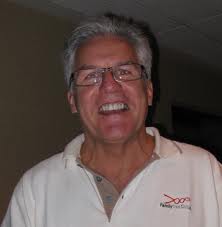
First things first! I want to thank Max and Bennett for graciously hosting the 8th Annual Genetic Genealogy Conference in Houston, Texas! This is actually the 9th year, but a pesky hurricane interfered one year. Max and Bennett are very generous with their time and resources and heavily subsidize this conference for us. We’re registering in the photo above.
Georgia Kinney Bopp said it best. At some point during this amazing conference, someone tweeted an earlier quote from a conversation between Ann Turner and Georgia:
“it’s hard to realize you’re living history while it happens…”
This was ever so true this weekend. Even my husband (who is not genetic genealogy crazy) realized this. I’m not sure everyone at the conference did, or realized the magnitude of what they were hearing, as we did have a lot of newbies. Newbies are a good thing. It means our obsessive hobby and this industry have staying power and there will be people to pass the torch to someday.
I’ve already covered the Native American focus meeting in an earlier blog.
For those of you who want the nitty gritty play by play as it happened at the conference, go to www.twitter.com and search for hashtag #ftdna2012. If you want some help with Twitter, I blogged about that too. Twitter is far from perfect, but it is near-realtime as things are happening.
As always, Family Tree DNA hosts a reception on Friday evening. This helps break the ice and allows people to put faces with names. So many of us “know” each other by our e-mail name and online presence alone.
We had a special guest this year too, Nina, a little puppy who was rescued by Rebekah Canada just a few days before the conference. Nina behaved amazingly well and many of us enjoyed her company.

Bennett opened the conference this year, and in the Clint Eastwood political tradition, spoke to his companion, the chair named Max. The real Max, it turns out, was losing his voice, but that didn’t prevent him from chatting with us and answering questions from time to time.

While Bennett was very low key with this announcement, it was monumental. He indicated that the parent company of Family Tree DNA has reorganized a bit. It has changed its name to Gene by Gene and now has 4 divisions. You can check this out at www.genebygene.com. This isn’t the monumental part.
The new division, DNADTC’s new products are the amazing parts. Through this new division, they are the first commercial company to offer a full genome sequence test. The price, only $5495. For somewhat less, $695, they are offering the exome, which are your 20,000 genes. Whoever though it would be a genetic genealogy company who would bring this to the public. Keep in mind that the human genome was only fully sequenced in 2003 at a cost of 3 billion dollars.
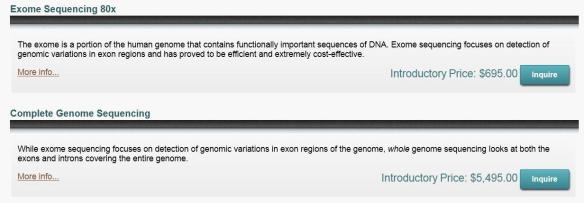
The amazing part is that a full genome sequence cost about 3 million in 2007 and the price will continue to fall. While consumers will be able to order this, if they want, it comes with no tools, as it is focused at the research community who would be expected to have their own analytical tools. However, genetic genealogists being who and what they are, I don’t expect the research market will outweigh the consumer market for long, especially when the price threshold reaches about $1000.
Bennett also said that he expects that National Geographic will, in 2013 sometime, decide to allow upgrades from Family Tree DNA clients for the Geno 2.0 product. This will allow those people who cannot obtain a new sample to participate as well. However, an unopened vial will be required. No promises as to when, and the decision is not his to make.
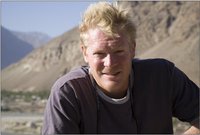
The first session was Spencer Wells via Skype from Italy. Spencer has just presented at two conferences within the week, one in San Francisco and one in Florence, Italy. Fortunately, he was able to work us into his schedule and he didn’t even sound tired.
Of course, his topic was the Geno 2.0 test which is, of course, run on the new GenoChip. The first results are in the final stages of testing, so we should see them shortly. Sometime between the 19th and the end of the month.
This product comes with all new migration maps. He showed one briefly, and I noticed that one of the two Native Y-lines are now showing different routes than before. One across Siberia, which hasn’t changed, and one up the pacific rim. Hmmm, can’t wait for that paper.
The new maps all include heat maps which show frequency by color. The map below is a haplogroup Q heat map, but it is NOT from the Geno project. I’m only using it as an example.

Spencer indicated that the sales of the 2.0 product rival those of the 1.0 product and that they have sold substantially more than 10K and substantially less than 100K kits so far. In total, they have sold more than 470,000 kits in over 130 countries. And that’s just the public participation part, not the indigenous samples. They have collected over 75,000 indigenous samples from more than 100 populations resulting in 36 publications to date with another half dozen submitted but not yet accepted. Academic publication is a very long process.
Nat Geo has given 62 legacy grants to indigenous communities that have participated totaling more than 1.7 million dollars. That money comes in part from the public participation kits, meaning Geno 1.0 and now 2.0.
Geno 2.0 continues to be a partnership between National Geographic and Family Tree DNA. Family Tree DNA is running all of their samples in the expanded Houston lab. Also added to the team is Dr. Eran Elhaik at Johns Hopkins University who has developed a new tool, AIMSFINDER, that locates never before identified Ancestral Informative Markers to identify population specific markers. This is extremely important because it allows us to read our DNA and determine if we carry the markers reflective of any specific population. Well, we don’t do the reading, they do with their sophisticated software. But we are the recipients with the new deep ancestral ethnicity results which are more focused on anthropology than genealogy. Spencer says that if you have 2% or more Native American, they can see it. They have used results from both public and private repositories in developing these tools.
This type of processing power combined with a new protocol that tests all SNPS in a sequence, not just selected ones, promises to expand the tree exponentially and soon. It has already been expanded 7 fold from 863 branches of the Y tree to 6153 and more have already been discovered that are not on the GenoChip, but will be in the next version.
The National Geographic project will also be reaching out to administrators and groups who may have access to populations of interest. For example, an ex-pat group in an American city. Keep this in mind as you think of projects.
Another piece of this pie is a new educational initiative in schools called Threads.
This isn’t all, by any means, on this topic, I really do encourage you to go and use Twitter hashtag #ftdna2012. Several of us were tweeting and the info was coming so fast and furious that no one could possibly get it all.
The future with Nat Geo looks exceedingly bright. We have gone from the Barney Rubble age to the modern era and now there is promise for a rosy and as yet undiscovered future.

Judy Russell was next. I have to tell you, when I saw where they positioned her, I was NOT envious. I mean, who wants to follow Spencer Wells, even if he’s not there in person. Well, if anyone was up to this, it certainly was Judy. For those who don’t know, she blogs as The Legal Genealogist.
Judy is one of us. That means she actually understands our industry, what drives genealogists and why. In addition to being a lawyer, she is a certified genealogist and a genetic genealogy crazy too. Maybe I shouldn’t call a lawyer crazy….well…it was meant as a compliment:)
Judy has the perspective to help us, not just criticize us remotely. She reviewed several areas where we might make mistakes. After all, we’re all volunteers coming from quite varied backgrounds. She suggests that we all put some form of disclosure on our projects explaining what participants can expect in terms of use. She used the Core Melungeon project as a good example, along with the Fox project.
“The goal of this project is to use DNA to better understand the origins of the Melungeon people, and this will be done by comparing the DNA with other project members, those outside of projects, and will incorporate relevant genealogical and historical research. All participants will be included in the ongoing studies and by joining the project, you are giving consent for your information to be anonymously included in ongoing genetic genealogy research. Your personal identity will not be revealed, but your results will be used to better understand the Melungeons as a people and their ancestors.”
From the Fox project:
“The exact function of these STR markers is not yet known and they have no known medical function but recent research shows they have some sort of regulatory function on the genes. While there is no medical information in these numbers, the absence of a certain few markers near a fertility gene could indicate sterility – something that would certainly already be known.
The results do provide a partial means of personal identification and, for this reason, our haplotype tables list only the FTDNA kit number and the most distant known male line ancestor. Within the project, however, the administrators feel free to disclose identities, particularly when a close match occurs.”
Judy’s stressed that we not tell people that there is no medical information revealed. Partially, because we’ve discovered in rare cases that’s not true, and partially because we can’t see into the future.
Judy talked about regulation and that while we fear what it might intentionally or inadvertently do to genetic genealogy, it’s important to have regulations to get rid of the snake oil salesman, and yes, there are a couple in genetic genealogy. They give us all a black eye and a bad name when people discover they’ve been hoodwinked. However, without regulation of some sort, we have no legal tools to deal with them.
Regulation certainly seems to be a double-edged sword.
I hope that Judy writes in her blog about what she covered in her session, because I think her message is important to all administrators and participants alike. And just to be clear, the sky is not falling and Judy is not Chicken Little. In fact, Judy is the most interesting attorney I have ever heard speak, and amazingly reasonable too. She actually makes you WANT to listen, so if you ever get the chance to see one of her webcasts or attend one of her sessions, take the opportunity.
Following the break, breakout sessions began. CeCe Moore ran one about “Family Finder,” Elise Friedman about “Group Administration” and Thomas Krahn provided the “Walk the Y Update.” Bennett called this the propeller head session. Harumph Bennett. Guess you know which one I attended. All sessions were offered a second time on Sunday.

Thomas said that they have once again upgraded their equipment, doubling their capacity again. This gives 4 times the coverage of the original Walk the Y, covering more than 5 million bases. To date, they have run 494 pre-qualified participants and of those, 198 did not find a new SNP.
There are changes coming in how the palindromic region is scored which will change the matches shown. Palindromic mismatches will now be scored as one mutation event, not multiples. Microalleles will able be reported in the next rollout version, expected probably in January. The problem with microalleles is not the display, but the matching routine.
Of importance, there has not been an individual WTY tested from haplogroups B, M, D or S, and we need one. So if you know of anyone, please contact Thomas.
Thomas has put his Powerpoint presentation online at http://www.dna-fingerprint.com/static/FTDNA-Conference-2012-WalkThroughY.pdf

The next session by Dr. Tyrone Bowes was “Pinpointing a Geographical Location Using Reoccurring Surnames Matches.” For those of us without a genetic homeland, this is powerful medicine. Dr. Bowes has done us the huge favor of creating a website to tell us exactly how to do this. http://www.irishorigenes.com/
He uses surnames, clan maps, matches, history and census records to reveal surname clusters. One tidbit he mentioned is that if you don’t know the family ethnicity, look at the 1911 census records and their religion will often tell you. Hmm, never thought of that, especially since our American ancestors left the homeland long ago. But those remaining in the homeland are very unlikely to change, at least not in masse. I’m glad he gave this presentation, or I would never have found his webpage and I can’t wait to apply these tools to some of my sticky-wickets.
This ended Saturday’s sessions, but at the end of every day, written questions are submitted for that day’s presenters or for Family Tree DNA.
Bennett indicated that another 3000 or 4000 SNPs will be added to the Family Finder calculations and a new version based on reference samples from multiple sources will be released in January.
Bennett also said that if and when Ancestry does provide the raw downloadable data to their clients, they will provide a tool to upload so that you can compare 23andMe and Ancestry both with your Family Finder matches.
Saturday evening is the ISOGG reception, also called the ISOGG party. Everyone contributes for the room and food, and a jolly good time is had by all. There is just nothing to compare with face to face communications.
For me, and for a newly found cousin, this was an amazing event. A person named Z. B. Stroud left me a message that she was looking for me. When I found her, along with her friend and cousin Revis, she tells me that she matches me autosomally, at 23andMe, and that she had sent me a sharing request that I had ignored. I am very bad about that, because unless someone says they are related, I presume they aren’t and I don’t like to clutter up my list with non-related people. It makes comparisons difficult. My bad. In fact, I’m going right now to approve that sharing request!!!
I will blog about this in the future, but without spilling too many beans….we had a wonderful impromptu family reunion. We think our common ancestor is from the Halifax and Pittsylvania County region of Virginia, but of course, it will take some work to figure this out.

I’m also cousins with Revis Leonard (second from left). We’ve known that for a long time, but Z.B. whose first name is Brisjon (second from right) is new to genealogy, DNA and cousin matching. I’m on the right above. The Stroud project administrator, Susan Milligan, also related to Brisjon is on the left end. In the center are Brisjon’s two cousins who came to pick her up for dinner and whom she was meeting for the first time.
But that’s not all all, cousin Brisjon also matches Catherine Borges. Let me tell you, I know who got the tall genes in this family, and I’m not normally considered short. Brisjon’s genealogical journey is incredibly amazing and she will be sharing it with us in an upcoming book. Suffice it to say, things are not always what you think they are and Brisjon is living proof. She also met her biological father for the first time this weekend! I’m sure Houston and her 2012 visit where she met so many family members is a watershed event in her lifetime! She is very much a lovely lady and I am so happy to have met her. Cousins Rule!

ISOGG traditionally has its meeting on Sunday morning before the first session. Lots of sleepy people because everyone has so much fun at the ISOGG party and stays up way too late.
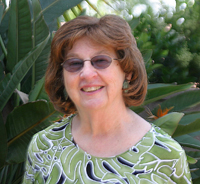
Alice Fairhurst, who has done a remarkable job with the ISOGG Y SNP tree (Thank you Alice!) knows an avalanche is about to descend on her with the new Geno 2.0 chip. They are also going to discontinue the haplogroup names, because they pretty much have to, but will maintain an indented tree so you can at least see where you are. The names are becoming obsolete because everytime there is an insertion upstream, everything downstream gets renamed and it makes us crazy. It was bad enough before, but going from 860+ branches to 6150+ in one fell swoop and knowing it’s probably just the beginning confirms the logic in abandoning the names. However, we have to develop or implement some sort of map so you can find your relative location (no pun intended) and understand what it means.
Alice also mentioned that they need people to be responsible for specific haplogroups or subhaplogroups and they have lost people that have not been replaced, so if anyone is willing or knows of anyone….please contact Alice.
Alice also makes wonderful beaded double helix necklaces.

Brian Swann (sorry, no picture) is visiting from England this year and he spoke just a bit about British records. He said it’s imperative to learn how they work and to use some of the British sites where they have been indexed. He also reminded us to check GOONS (Guild of One Name Studies) for our surnames and that can help us localize family groups for recruiting. He said that you may have to do family reconstructions because to get a Brit to test you have to offer them something. That’s not terribly different from over here. He also mentioned that today about half of the British people having children don’t marry, so in the next generation, family reconstruction will be much more difficult. That too isn’t so terribly different than here, although I’m not sure about the percentages. It’s certainly a trend, as are varying surname practices even within marriage.

Dr. Doron Behar began the official Sunday agenda with a presentation about the mtCommunity and a discussion of his recently published paper “A ‘Copernican’ Reassesement of the Human Mitochondrial DNA Tree from its Root.” This paper has absolutely revolutionized the mitochondrial DNA community. I blogged about this when the paper was first released and our home pages were updated. One point he made is that it is important to remember is that your mutations don’t change. The only thing that changes between the CRS (Cambridge Reference Sequence) and the RSRS (Reconstructed Sapiens Reference Sequence) model is what your mutations are being compared to. Instead of being compared to someone from Europe who live in 1981 (the CRS) we are now comparing to the root of the tree, Mitochondrial Eve (RSRS) as best we can reconstruct what her mitochondrial DNA looked like.
He also said that when people join the mtCommunity, their results are not automatically being added to GenBank at NCBI. That is a separate authorization check box.
A survey was distributed to question participants as to whether they want results, when they select the GenBank option, to be submitted with their kit number. Now, they are not, and they are under Bennett’s name, so any researcher with a question asks Bennett who has no “track back” to the person involved. About 6000 of the 16,000 submissions today at GenBank are from Family Tree DNA customers. Dr. Behar said that by this time next year, he would expect it to be over half. Once again, genetic genealogy pioneers are leading the way!
At these conferences, there is always one session that would be considered the keynote. Normally, it’s Spencer Wells when he is on the agenda, and indeed, his session was wonderful. But at the 2012 conference, this next session absolutely stole the show. Less public by far, and much less flashy, but at the core root of all humanity.

You can’t really tell from the title of this session what is coming. Michael Hammer with Thomas Krahn and Bonnie Schrack, one of our own citizen scientists, presented something called “A Highly Divergent Y Chromosome Lineage.” Yawn. But the content was anything but yawn-material. We literally watched scientific discovery unfold in front of our eyes.

Bonnie Schrack is the haplogroup A project administrator. Haplogroup A is African and is at the root of the entire haplotree. One of Bonnie’s participants, an African American man from South Carolina agreed to participate in WTY testing. In a nutshell, when Thomas and Astrid began scoring his results, they continued and continued and continued, and wound up literally taking all night. At dawn’s first light, Thomas told Astrid that he thought they had found an entirely new haplogroup that preceded any known today. But he was too sleep deprived to be sure. Astrid, equally as sleep deprived, replied with “Huh?” in disbelief. It’s certainly not a statement you expect to hear, even once in your lifetime. This is a once in the history of mankind event.
Dr. Michael Hammer confirmed that indeed, they had discovered the new root of the human Y tree. And not by a little either, but by a lot. For those who want to take a look for yourself, Ysearch ID 6M5JA. Hammer’s lab did the age projection on this sample, and it pushed the age of hominid men back by about 100,000 years, from 140,000 years ago to 237,000 years ago. They then reevaluated the aging on all of the tree and have moved the prior date to about 200,000 years ago and the new one to about 338,000 years ago with a 98% confidence level. This is before the oldest fossils that have been found, and also before the earliest mitochondrial DNA estimate, which previously had been twice as old as the Yline ancestor.
The previous root, A1b has been renamed A0 and the new root, just discovered is now A00. Any other new roots discovered will simply get another zero appended.
How is it that we’ve never seen this before? Well, it turns out that this line nearly went extinct. Cruciani published a paper in 2012 that included some STR values that matched this sample, but fortunately, Michael Hammer’s lab held the actual samples. A search of academic data bases reveals only a very few close matches, all in western Cameroon near the Gulf of Guinea. Interestingly, next door, in Nigeria, fossils have been found younger than this with archaic features. This is going to cause us to have to reevaluate the source of this lineage and with it the lineage of all mankind. We must now ask the question about whether perhaps we really have stumbled upon a Neanderthal or other archaic lineage that of course “became” human. Like many scientific discoveries, this answer only begs more questions. My husband says this is like Russian tea dolls where ever smaller ones are nested in larger ones.
This discovery changes the textbooks, upsets the proverbial apple cart in a good way, and will keep scientists’ thinking caps on for years. And to think, this was a result of one of our projects, an astute project administrator (Bonnie) and a single project member. I wonder what the man who tested thinks of all of this. He is making science and all he thought he was doing was testing for genealogy. You just never know where the next scientific breakthrough will come from. Congrats to all involved, Bonnie, Thomas, Michael and to Bennett and Max for having this evolution revolution happen right in their lab!
If I felt sorry for Judy following Spencer, I really felt sorry for the breakout sessions following Thomas, Michael and Bonnie’s session. Thankfully at least we had a break in-between, but most people were wandering around with some degree of stunned disbelief on their faces. We all found it hard to fathom that we had been among the first to know of this momentous breakthrough.
I had a hard time deciding which session to attend, CeCe’s “Family Finder” session or Elise’s. I decided to attend Elise’s “Advanced Admin Techniques” because I work with autosomal DNA with my clients and I tend to keep more current there. Elise’s session was great for newer admins and held tips and hints for us old-timers too. I realized I really need to just sit down and play with all of the options.

There are some great new features built in that I’ve never noticed. For example, did you know that you can group people directly from the Y results chart without going to the subgrouping page? It’s much easier too because it’s one step. However, the bad news is that you still can’t invite someone who has already tested to join your project. Hopefully that feature will be added soon.

The next session was “A Tale of Two Families” given by Rory Van Tuyl detailing how he used various techniques to discern whether individuals who did not show up as matches, meaning they were beyond the match threshold, were actually from the same ancient family or not. Rory is a retired engineer and it shows in his attention to detail and affinity for math.
We always tell people that mutations can and do happen at any time, but Rory proved this. He ran a monte-carlo simulation and showed that in one case, it was 50 generations between mutations, but in others, there was one mutation for three generations in a row. Mutations by no means happen at a constant rate. Of course, this means that our TIP calculator which has no choice but to use means and averages is by definition “not calibrated” for any particular family.
He also mentioned that his simulation shows that by about 150 generations, there are a couple of back mutations taking place.

The final session before the ending Q&A was Elliott speaking about IT, which really translates into new features and functions. Let’s face it, today everything involves IT.
Again, I was having trouble typing fast enough, so you might want to check the Twitter feed.
They added the SNP maps (admins, please turn them on) and the interactive tour this year. The tour isn’t used as much as it should be, so everyone, encourage your newbies to do this.
They have also added advanced matching, which I use a lot for clients, but many people didn’t realize it. So maybe a quick tour through the website options might be in order for most of us.
They are handling 50 times more data now that a year ago. Just think what next year will bring. Wow.
They are going to update the landing page again with more color and more visible options for people to do things. I hope they prompt people through things, like oldest ancestor mapping, for example. Otherwise, if it isn’t easy, most don’t.
They are upgrading Population Finder and the Gedcom viewer. They are adding a search feature. Thank you!! Older Gedcome will still be there but not searchable.
But the best news is that they are adding phasing (parent child) and an advanced capability to “reconstruct” an ancestor using more distant relatives, then the ability to search using that ancestral profile against Family Finder. Glory be! We are finally getting there. Maybe my dreaming big wasn’t as far away as I thought.
They will also remove the 5 person autosomal download restriction and the “in common with” requirement to see additional information. All good news. They are also upgrading the Chromosome browser to add more filtering options.
They are also going to offer a developer “sandbox” area for applications.
The final Q&A session began with Bennett saying that their other priorities preclude upgrading Y search to 111 markers.
They are not planning to drop the entry level tests, 12 or 25 markers or the HVR1. If they do, lots of people will never take that plunge. I was very glad to hear this.
And by way of trivia, Family Tree DNA has run more than 5 million individual tests. Wow, not bad for a company that didn’t exist, in an industry that didn’t exist, 12 years ago!
It’s an incredible time to be alive and to be a genetic genealogist! Thank you Family Tree DNA for making all of this possible.
______________________________________________________________
Disclosure
I receive a small contribution when you click on some of the links to vendors in my articles. This does NOT increase the price you pay but helps me to keep the lights on and this informational blog free for everyone. Please click on the links in the articles or to the vendors below if you are purchasing products or DNA testing.
Thank you so much.
DNA Purchases and Free Transfers
Genealogy Services
Genealogy Research