Charles Campbell (c1750-c1825): Unique Y DNA Chips Away at Parental Brick Wall – 52 Ancestors #256

I’ve been struggling for years, decades actually, to identify the father of Charles Campbell of Hawkins County, Tennessee. We’re finally making progress by combining family oral history with traditional records research, Y DNA, and the process of elimination – thanks to a combination of people.

I think you’ll find the twists and turns in this journey interesting. It sure has been enlightening!

Thank Goodness for my Campbell Cousin!

Recently, my Campbell cousin agreed to take a Y DNA test.

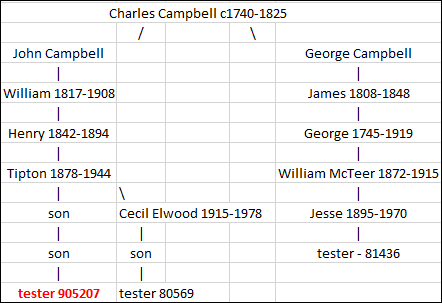
He descends from my John Campbell through son William Newton Campbell whose line migrated to Texas. William died in 1908 in Davidson, Oklahoma.
Charles Campbell testers.png

Sadly, both earlier testers from the Charles Campbell line have passed away, so their Y DNA tests can’t be upgraded. My Campbell cousin represented by kit 905207 has been the critical link in what I think might just be a chink in the long-standing brick wall of Charles Campbell.

And if it isn’t THE chink, it’s still chipping away at that wall.

Who Were Charles Campbell’s Parents?

Charles Campbell was in Hawkins County in 1788, in what would become Tennessee in 1796. He may have been in Sullivan County as early as 1783.

The people who settled in this part of eastern Tennessee, and specifically in the neighborhood along Dodson Creek where Charles Campbell owned land and lived most of his life arrived in what is known as the Rockingham migration.

In fact, this 1784 tax list from Rockingham County, VA shows several people who were Charles Campbell’s direct neighbors in Hawkins County, including Michael Roark whose property abutted Charles’. In addition, the Grigsbee (Grigsby) family is found nearby as well as the Kite family whose property is just down the road beside the Louderbacks.

Charles Campbell 1784 Rockingham.png

However, looking on the 1782 tax list for Rockingham County doesn’t show Charles Campbell who was having children as early as 1770, so was assuredly an adult on personal property tax lists, someplace, by 1782, assuming he wasn’t in a wagon on his way to the next frontier.

Note that Lexington, Virginia, now in Rockbridge County, but then in Augusta County, is on the same migration path down the Shenandoah Valley – the only reasonable path from Rockingham County to the area on Dodson Creek just south of Rogersville, Tennessee.

Charles Campbell Rockingham to Rogersville.png

It’s 72 miles from Rockingham to Lexington. You have to go through Rockbridge County, on the main road at that time, to get to east Tennessee from Rockingham County.

We know, from deeds, that Gilbert Campbell lived on the main road, a location at the ferry where travelers would stop to rest, and talk, and discuss the new frontier where land was available for the asking.

This is most likely the path that Charles Campbell traveled in the 1780s. But where did he come from, and who were his parents? Is there any way to make that discovery?

Y DNA Matching

Our Campbell tester matches both of the earlier two descendants of Charles Campbell, as expected, but there’s another person that this group matches as well.

At 111 markers, my cousin matches a descendant of Gilbert Campbell who wrote his will in 1750 and died in 1751 in Rockbridge County, VA.

Charles Campbell match.png

Looking at the Campbell DNA Project, the Campbell men are part of the HUGE group 30, compromised of many, many Campbell descendants. However, look at who kit 81436, a descendant of Charles through son George, matches most closely.

Charles Campbell Gilbert match

Click to enlarge

Yep, Gilbert again.

The Campbell Article

All I can say is that I’m extremely grateful for the Campbell DNA Project at Family Tree DNA, because without this project, and project administrator Kevin Campbell, this brick wall wouldn’t even be threatened.

Kevin along with James A. Campbell wrote an article that was published in the Journal of the Clan Campbell Society (North America) Vol. 43, No. 2, Spring 2016.

To set the stage, two groups of Campbell families settled in Augusta County, VA in the late 1730s as land became available in the Borden tract. Both groups had as their progenitor a man named Duncan Campbell, born in Scotland. No confusion there, right?

One Duncan moved to Ulster County, Ireland and died. His descendants immigrated into Pennsylvania in 1726, then on into Augusta County about 1738, according to the article’s endnotes.

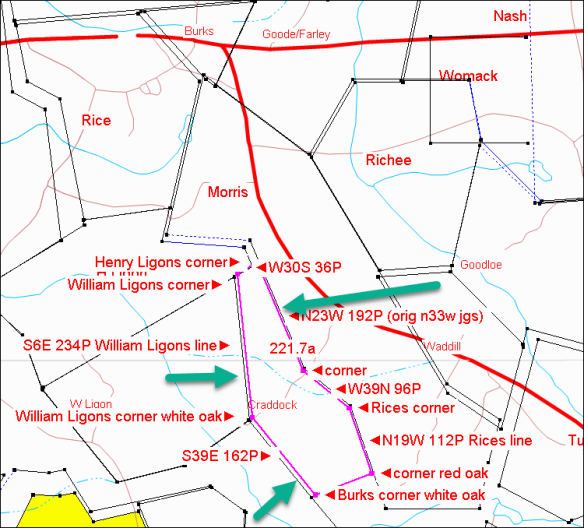
This is the group, shown along the South River where the green arrows point, that our Campbell line matches most closely.

The Tinkling Spring Church, the first formed in the area is shown as well. For many years, the minister baptized children in homes because either a church building didn’t yet exist or was too distant. He baptized Gilbert’s son, Charles, in 1741.

Charles Campbell north and south.png

The second Campbell group, shown in red, settled along the North River in present-day Rockingham County, about 15 miles north of Staunton, then Orange County where we find a description of a deed in 1745. This family’s oral history relates that their ancestor, also Duncan Campbell, never left Scotland before immigrating to the colonies.

The red line is unquestionably not our line.

Gilbert Campbell’s land was located in present day Lexington, further south yet.

In the article, Kevin describes how he determined that the Campbell families of Southwest Virginia, specifically Augusta County, are actually two separate Duncan Campbell lines of Campbell men. This doesn’t mean they are unrelated historically, but it does mean their common ancestor is many generations in the past.

Thankfully, the 2 lines have developed enough mutations over time that patterns exist in both lines that set them apart from each other.

Let me review the relevant portions of the article that are pertinent both geographically and historically, as well as genetically.

This excerpt is indeed exactly how I feel about my Charles Campbell.

“Just looking at land transactions involving Charles Campbell from 1740-1770 in Augusta County and lands just south of Augusta County was disheartening. How many Charles were there? How did they relate? One needed a genealogical chart just to map Charles Campbell.

Who was, or were, Charles Campbell of Augusta County?”

The researcher who said that was Catherine Bushman who reported that there were two Charles Campbells in Augusta County in the 1740s on to past mid-century. One Charles Campbell was found on the North River who held land with Hugh Campbell at Mount Crawford. A second Charles was found on the South Shenandoah River who had multiple, sizeable land holdings. These men lived 20 miles apart.

But neither of these men can be our Charles, because our Charles died about 1825, so he would not have been alive and owning land by 1740.

But still, we have two adult males named Charles who might be the parents or relatives of my Charles. Unfortunately, neither of them appear to live in the green group.

The DNA of the North and South Augusta Campbells

Kevin compared the DNA of several males who are proven to descend from the North and South Augusta County Campbell lines.

On all 10 differentiating markers that form the signatures of the North and South groups, our Charles Campbell men match the South Campbell group, meaning that our Charles Campbell group is more closely related to Duncan Campbell whose descendants lived along the South River – the descendants of “White David” Campbell and his brother Patrick Campbell.

“White David” and Patrick were the sons of John Campbell and Grissel “Grace” Hay, who was reportedly the son of Duncan Campbell and Mary McCoy.

To the best of our knowledge, neither of these families had a Gilbert. Who was Gilbert?

Gilbert Campbell

The descendants of Gilbert Campbell have another defining group of markers that are only found among this group.

Charles Campbell Gilbert markers.png

While all of the testers have tested at marker CDY, only three have tested at markers DYS710 and DYS510. The other two yellow men are deceased, of course, but it’s very likely they would match kit 905207 given their proven line of descent.

The only close Campbell line matches who carry these markers are our three men and the descendant of Gilbert plus an unidentified William born in 1750 in Virginia and died in Alabama. The closest is Gilbert and he’s in the right place at the right time.

So, where did Gilbert Campbell live and what do we know about him?

I reached out to Kevin Campbell again, and he provided what he could. There isn’t much known, but combining what he provided with what I found elsewhere, there is at least something.

Gilbert lived in the right place at the right time, in what is now Lexington, Virginia, located in Rockbridge County.

Gilbert Has a Son, Charles

Perhaps the single most exciting piece of evidence discovered about Gilbert Campbell, in combination with his location, is that he had a son named Charles.

In the book Tinkling Spring, Headwater of Freedom, A Study of the Church and her People 1732-1952 by Howard McKnight Wilson, published in 1954, we discover the following:

Page 73 – The location of this road is shown at strategic points on the original map of Maryland and Virginia made by Colonel Joshua Fry…and Colonel Peter Jefferson…in the year 1751. Leaving Philadelphia, the road went through the present location at Lancaster, PA turned southwest and crossed the Potomac at Williamsferry (now Williamsport, Maryland) and continues south by the present site of Winchester, VA. It kept to the east in the Shenandoah Valley, then down Mill Creek and across North River of the James at Gilbert Campbell’s Ford, and on toward Roanoke, turning southward just west of Tinker’s Creek on the outskirts of the present city of Roanoke.

Page 74 – Orange County, VA court order dated May 23, 1745, the Augusta County people were authorized to make the first improvements upon this road, where it fell within the bounds of the new county. Report of the commissioners is as follows: …Inhabitants between the mountains above Thompson’s Ford and Tinkling Spring do clear the same and the said road continue from Tinkling Spring to Beverley Manor line and that Patrick Campbell, John Buchanan and William Henderson be overseers and that all the inhabitants above Tinkling Spring and Beverley Manor line do clear the same and that the said road continue from Beverley Manor line to Gilbert Campbell’s Ford on the north branch of the James River and…that the road continue from Gilbert Campbell’s Ford to a ford a the Cherry Tree Bottom on the James River…and that a distinct order be given to every gang to clear the same and that it be cleared as it is already blazed and laid off with two notches and a cross…dated April 8, 1745.

Page 471 – Record of Baptisms by Reverend John Craig. Charles Campbell, son of Gilbert Campbell, October 15, 1741, at the house of Gilbert Campbell on the North Branch of the James River.

Woohoooo – look at that!!!

What other records exist for Gilbert and his wife?

In the Scotch-Irish Settlement in Virginia by Lyman Chalkey, Volume 1, page 27, we discover what was surely the high drama soap-opera of the day. Everyone who could possibly attend court would have, and those who couldn’t surely waited anxiously for the sound of hoofbeats upon the road – the first person to return so they could hear what had happened.

Charles Campbell Gilbert 1747.pngCharles Campbell Gilbert 1747 2.png

Of course this begs the question of the identify of Mary Ann Campbell, and was she related to Prudence in some fashion? Unfortunately, Mary Ann is still anonymous, but we do have information on the immediate family members of Gilbert, and she’s not a daughter.

Gilbert Campbell’s Family

The family group sheet provided for Gilbert Campbell by the Clan Campbell Society provides the name of the wife and children of Gilbert. Gilbert’s wife was named Prudence and is reported with a surname spelled both Osran and Puran (Chalkey pages 19 and 22), in Augusta County Court records and elsewhere as Osmun and Ozran. Prudence died before March 16, 1768. The society lists their marriage as having occurred in Pennsylvania, but the source is not mentioned, with information as follows:

Gilbert died before February of 1750 (old date, 1751 new date.)

  • Son James born about 1734 in Ireland, married Elizabeth.
  • Daughter Elizabeth born about 1736 in Ireland, married a Woods.
  • Daughter Prudence born about 1738 in Ireland, married a Hays.
  • Daughter Sarah born about 1740 in Virginia.
  • Son George born October 21, 1740 and died on February 7, 1814, both in Augusta County. Married in 1765 to Agness McClure 1746-1797.
  • Daughter Lettis born in 1743 in Albemarle County married John Woods. (Note that if George was born in Augusta County in 1740, it’s unlikely that Lettis was born in Albemarle.)
  • Charles Campbell born in 1741.

If their date for the birth of Gilbert’s son, James, is accurate, he cannot be the father of our Charles who was born before 1750, based on the dates of the births of his sons. How the society estimated the date of James’ birth is unknown.

Land

In 1742, Gilbert purchased 389 acres of land in the Borden Tract (Forks of the James River, now in Rockbridge County,) from Benjamin Borden for 11 pounds, 13 shillings, and 4 pence. The Crossing of the North Fork of the James (now Murray) River was known as Campbell’s Ferry. Roughly a decade after building his home, Gilbert died. According to Chalkey, persons owning land adjacent to Gilbert’s were John Moore (Chalkley, v3, p263), John Allison (ibid, p. 267-8), Robert Moore (ibit, p. 272) and Joseph Walker (after Gilbert’s death) (ibid, p. 340).

This is interesting because Jane Allison married Robert Campbell, the son of John Campbell and Grissel Hay, in Rockbridge County. Robert wound up in northern Hawkins County, Tennessee and his son James was long believed to be the father of brothers George and John Campbell. I chased this James, and his children for years, and there’s not even a shred of a hint of evidence that he was the father of George and John.

However, there could have been some morsel of truth in that they could have been related.

Gilbert’s Will

The abstract of Gilbert Campbell’s will is found in Lyman Chalkley’s Chronicles of the Scotch-Irish Settlement in Virginia, Vol. 3, p.19., Baltimore: Genealogical Publishing Co., 1989.

The original is found in Augusta Co. Court, Will Book No. 1, p. 294. The abstract reads as follows, along with additional information:

Page 294: 29th August, 1750. Gilbert Campbell’s will, of Forks of James River, plantationer

  • Wife, Prudence Campbell, alias Osran
  • Son, George (infant)
  • Son Charles (infant)
  • Daughter, Elizabeth Woods, alias Campbell
  • Son, James
  • Daughter, Prudence Hays
  • Daughter, Sarah Campbell
  • Daughter, Lattice Campbell

Executors, James Trimble, Thomas Stuart and Andrew Hays.

Teste: James Thompson, Robert Allison, Alex. McMullen.

Proved, 26 February, 1750 (current 1751), by Thompson and Allison, and probate granted to Andrew Hays.”

Page 308. — 27th February, 1750-51. Andrew Hays’ bond as executor of Gilbert Campbell, with sureties Charles Hays, James Walker.” (Chalkley, v. 3, p. 20).

Page 372. — 23 May 1751. Gilbert Campbell’s appraisement, by Alex. McMullan, Robert Allison, James Thompson, Andrew Hays. (Chalkley, v. 3, p. 22).

Page 373. — 23rd May 1751. Appraisment of goods left by Gilbert Campbell to his wife, Prudence Campbell, alias Puran. (Chalkley, p. 22)

Will Book No. 2. Page 243. — 17th May 1758. George Campbell’s bond (with Robert McElheny, Robt. Moore) as guardian to Lettice Campbell, orphan of Gilbert Campbell.” (Chalkley, v. 3, page 48.)

Chalkley’s Abstracts, Vol 3, p. 102: Will Book No. 4 includes the following statement: “Page 82. . . 16 March 1768. Prudence Campbell’s proven account. . . “

It’s worth noting that James is not mentioned as an infant, meaning he was born before in 1729 or earlier, so the society’s estimate of 1734 is off by several years, unless they have used age 16 as the definition of “not an infant.”

It’s interesting that no guardians were appointed for George or Charles, or those documents haven’t been preserved/discovered/reported.

While Chalkey provides the extract of Gilbert’s will, in an old Rootsweb list posting, Gilbert’s full will is provided by Tim Campbell.

1750 Page 294: 29th August, 1750. Gilbert Campbell’s will, of Forks of James River, plantationer–Wife, Prudence Osran Campbell, alias Osran; son, George Campbell (infant); son, Charles Campbell (infant); daughter, Elizabeth Campbell Woods, alias Campbell; son, James Campbell; daughter, Prudence Campbell Hays; daughter, Sarah Campbell; daughter, Lattice Campbell. Executors, James Trimble, Thomas Stuart and Andrew Hays. Teste: James Thompson, Robert Allison, Alex. McMuIlen. Proved, 26th February, 1751, by Thompson and Allison, and probate granted to Andrew Hays. Augusta County Will Book 1

A copy of this document in is Tim Campbells’ files. Gilbert Campbell left his plantation to wife Prudence until son George came of age, at which time she was to have half, then when son Charles came of age, she was to have just the house and adjacent field, i.e., the 2 boys were to receive parts of the plantation as they came of age. George was to receive the half “next to the river” and Charles was to receive the other half. Children Elizabeth, James and Prudence were to receive one crown apiece. Charles and George were to pay the other 2 siblings, Sarah and Lattice, 2 pounds each and 20 pounds was to be set aside for their well being out of the plantation.

Land Location

Rockbridge County VA Deed book A page 7, April 7, 1778 – Joseph Walker sells to William Graham 291 acres (then in Botetourt, now Rockbridge County), bounded on north by James River, corner Gilbert Campbell’s and John Moore’s.

The part of Rockbridge where Lexington is located appears to have fall into Botetourt County for about a year.

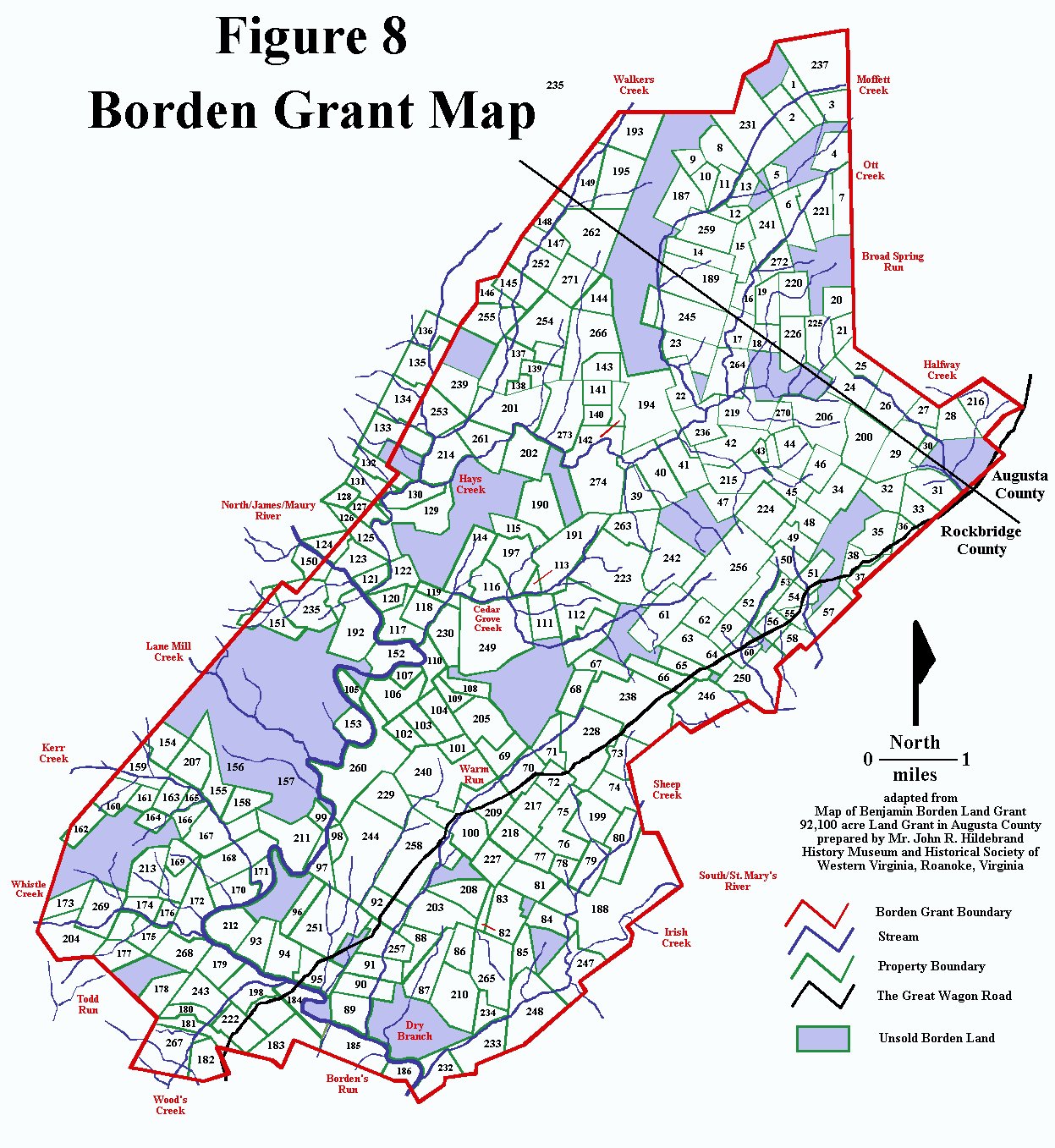
Using Borden’s land grant map located here, along with an index located here, I have been able to locate Gilbert’s land in what is now Lexington, Virginia adjacent a James Campbell who was possibly/probably Gilbert’s brother. One of James’ tracts adjoined Gilberts and another was close by.

Charles Campbell Rockbridge map.png

On the detailed plat maps, here, that can’t be reproduced, tracts 198 and 184 are adjacent, while 172 is a bit more distant on the bend of the river. By searching for the names of Gilbert’s neighbors listed in deeds, you can see that the Moore, Allison and Campbell families all lived adjacent one-another.

Charles Campbell Gilbert google map.png

Looking at Google maps, it’s easy to overlay the approximation of Gilbert’s land, along with that of James. The James who obtained the 434 acres of land in 1756 could have been Gilbert’s son by either age estimation, but he could also have been a brother, other relative, or unrelated. The James obtaining the 175 acres of land adjacent Gilbert’s land in 1768 could have been brother or son, but is likely related.

Charles Campbell Lexington.png

A Campbell researcher descended from Gilbert’s son George tells us the following:

In my visit to the Rockbridge Co Historical Society last year I learned that the town of Lexington is on Gilbert’s plantation of 389 acres. Washington and Lee Univ. sits on top of the hill where Gilbert’s home was located. Gilbert’s ferry was where the waterfall is crossing the now Maury River (renamed from North River.) Has anyone found the marriage for Gilbert and Prudence??? I found in a book at their public library that Gilbert was quite active in the Presbyterian Church. Does anyone know where in Rockbridge he is buried?

Here’s a closer view of that area.

Charles Campbell Gilbert closeup.png

A very, very interesting aspect of this land is that the trail may not go cold with the death of Gilbert. When Gilbert died in 1751, his will dictated that his land descend to his two sons, George and Charles when they came of age.

Additional Charles Campbell Information.

Charles, the son of Gilbert would have come of age in 1762.

Our Charles had sons John and George in about 1770 and 1772, but it’s not known how many other children he might have had, or his wife’s name.

Aside from the names of his sons, the location of his land and neighbors in Hawkins County, the only other firm piece of information that we have about Charles Campbell is that he died sometime before May 31, 1825 when a survey for neighbor Michael Roark mentions the heirs of Charles Campbell. A court record entry says that a deed of sale was to be recorded by Charles’ heirs, but it was never recorded in the deed book, and his heirs names are never given in any Hawkins County record. Nor did he have a will. So frustrating.

In Rockbridge County, formed in 1777 from parts of Augusta and Botetourt County, we find the following records:

  • 1764 John Campbell committed for abusing Henry Filbrick and disrupting the court. Charles Campbell committed for abusing the court.
  • 1764 Charles Campbell qualified as ensign.
  • Vol. 1 March 19, 1765 – John Moore to Charles Campbell, 230 acres in Borden’s track, corner John Houston’s land, Wit William Mann, Archibald Reaugh, Samuel Downey, Delivered to C. Campbell’s executors March 23, 1827.

Note the date in 1827 when this was actually delivered to Charles’ executors.

When I saw this note indicating that Charles Campbell had died by 1827, I became very excited. Is this the same Charles Campbell who had died in Tennessee? Did he still own land, absentee, in Rockbridge County?

John Moore’s land abutted Gilbert Campbell’s. There could be two different John Moores, but this is likely Charles the son of Gilbert.

1765 Page 46.-14th August, 1765. George Campbell, Agness Campbell, his wife, and Prudence Campbell (widow of Gilbert Campbell), his mother, to Andrew McClure, £130,194 acres in Forks of James and in the fork of Wood’s Creek and North Branch of James; corner Joseph Walker. Teste: Jno. McCampbell, Charles Campbell. Delivered: grantee, September 1770. Deed book 12

This 194 acres is probably George’s part of his father’s estate. Note that Charles signs and a John McCampbell does as well, or McCampbell is actually Campbell. Andrew and William McCampbell had grants north of James Campbell who lives on the bend of the river, west of Gilbert.

Of Gilbert’s 389 acre plantation, this leaves 195 acres remaining, plus Prudence Campbell’s house and field.

1766 – Charles Campbell (Borden’s land) appointed appraiser.

Page 137 – May 20, 1766 – Charles Campbell (Borden’s land) appointed Constable.

Page 138 – Charles Campbell – certificate for hemp.

Vol 2 Page 403 – 1767 Charles Campbell listed on Borden land, also noted as a constable.

In 1768, James Campbell also obtained a certificate for hemp. He is also appointed constable.

We know that Gilbert’s son Charles’ brother was James.

Vol 3 Page 484 – May 24, 1769 John Sproul and Margaret to Alexander Wilson, 250 acres in Borden’s tract, corner Andrew Steel and William Alexander, corner Robert Telford, Robert Lowry. Wit Charles Campbell, Thomas Alexander, Robert Wardlaw

April 27, 1769 Thomas Vance and Jenat to John Campbell. 148 acres on the North Branch of James, corner Mr. Thomas Vance, Wit James Cowan, John Alison, Charles Campbell, John Shields Jr.

Given the mention of John Alison and Charles Campbell, this appears to be near Gilbert’s land. The Allisons lived adjacent Gilbert and also directly across the river. There’s a John Campbell involved. He’s not the son of Gilbert – could be be the son of James?

Page 485 – June 15, 1769 Charles Campbell and Margret to Joseph Walker, 199 acres on Woods Creek in Fork of James River, corner Arthur McClure, Joseph Walker’s line, Robert Moore’s line, Wit James Hall, Joseph Walker, Delivered Joseph Walker June 1783

This has to be Charles, the son of Gilbert. The acreage equals exactly that of his share of Gilbert’s land and the neighbors are the same. Joseph Walker was a neighbor of Gilbert Campbell. This is also the timeframe when a Charles Campbell shows up purchasing land in East Tennessee. Did he sell out to move on? The land was sold in 1769, but never “delivered” until 1783.

Between 1768 and 1771, a chancery suite was in process involving Charles Campbell (trustee) for work to be done at the New Providence Meeting House that involved Wardlaw, Houston, Moore, Walker – all familiar names. This church was founded in 1746 on land purchased by the Kennedy family. John Brown, married to Mary Moore, the “Captive of Abbs Valley,” was the pastor for 42 years, resigning in 1794. This church was about 15 miles north of Lexington.

There is a 1773 suit where John is a son of Charles Campbell, so this Charles cannot be ours because his son John was not born until between 1772 and 1775.

Page 196 – Feb. 17, 1778 – Justice in the new Rockbridge County, Charles Campbell. This is likely Gilbert’s son.

1791 – Rockbridge County, VA Deed Book B, p. 340. 11 October 1791, 270 acres from    Robert Harvey and Martha his wife, heirs-at-law to Benjamin Borden dec’d of Botetourt County, VA to Charles Campbell between said Campbell’s plantation and John McCray’s land, Robert Wardlaw’s line. Signed: Robt. Harvey, Martha Harvey, Teste: William Buchanan, William Wardlaw, Wm. Wardlaw, Alexr. Sproul, Jas. Campbell, Delivered Anniel Rodgers per order of Saml. L. Campbell, one of the exors of sd. Chas. Campbell dec’d 26 March 1827.

This deed has a very similar date as the John Moore to Charles Campbell deed in 1765 that was delivered to Charles’ heirs in 1827. This deed goes further though and references Campbell’s plantation. It doesn’t say anything about Charles heirs being in Tennessee, and if this is our Charles, we know for sure that John and George were living in Claiborne County by then, and Charles Campbell was deceased by sometime in 1825 in Hawkins County. Of course, this land could have been owned absentee for all those years by Charles of Hawkins County.

The following deposition was found in the Rockingham County Circuit Court book, page 122:

Mary Greenlee deposes, 10th November, 1806, she and her husband settled in Borden’s Grant in 1737. Her son John was born 4th October, 1738. She, her husband, her father (Emphraim McDowell, then very aged), and her brother, John McDowell, were on their way to Beverley Manor; camped on Linvel’s Creek (the spring before her brother James had raised a crop on South River in Beverley Manor, above Turk’s, near Wood Gap); there Benj. Borden came to their camp and they conducted him to his grant which he had never seen, for which Borden proposed giving 1,000 acres. They went on to the house of John Lewis, near Staunton, who was a relative of Ephraim McDowell. Relates the Milhollin story. They were the first party of white settlers in Borden’s Grant. In two years there were more than 100 settlers. Borden resided with a Mrs. Hunter, whose daughter afterwards married one Guin, to whom he gave the land whereon they lived. Her brother John was killed about Christmas before her son Samuel (first of the name) was born (he was born April, 174xxx). Benj. Borden, Jr., came into the grant in bad plight and seemed to be not much respected by John McDowell’s wife, whom Benj. afterwards married. Jno. Hart had removed to Beverley Manor some time before deponent moved to Borden’s. Joseph Borden had lived with his brother Benj.; went to school, had the smallpox about time of Benj’s. death. When he was about 18 or 19 he left the grant, very much disliked, and dissatisfied with the treatment of his brother’s wife. Beaty was the first surveyor she knew in Borden’s grant. Borden had been in Williamsburg, and there in a frolic Gov. Gooch’s son-in-law, Needler, has given him his interest in the grant. Borden’s executor, Hardin, offered to her brother James all the unsold land for a bottle of wine to anyone who would pay the quit rents, but James refused it because he feared it would run him into jail. This was shortly after Margaret Borden married Jno. Bowyer. John Moore settled in the grant at an early day, where Charles CAMPBELL now lives. Andrew Moore settled where his grandson William now lives. These were also early settlers, viz: Wm. McCandless, Wm. Sawyers, Rob. Campbell, Saml. Wood, John Mathews, Richd. Woods, John Hays and his son Charles Hays, Saml. Walker, John McCraskey. Alexr. Miller was the first blacksmith in the settlement. One Thomas Taylor married Elizabeth Paxton. Taylor was killed by the falling of a tree shortly after the marriage. Miller removed and his land has been in possession of Telford. Deponent’s daughter Mary was born May, 1745. McMullen was also an early settler; he was a school teacher and had a daughter married. John Hays’s was the first mill in the grant. Quit rents were not exacted for 2 years at the instance of Anderson, a preacher.

Wow, talk about a goldmine of historical information!

Given that in 1806 Charles Campbell seems to be still living near where his father lived, by John Moore, this seems to preclude Gilbert from being the father of our Charles Campbell.

However, our Charles could be the son of the early James Campbell, if James was the brother of Gilbert. It’s also possible that our Charles is a grandson of Gilbert through his son, James, who was apparently of age by 1750 when Gilbert wrote his will.

Rockbridge County Tax Lists

Rockbridge County Tax lists are available in some format from 1778 to 1810, so let’s see if we can find a pattern there.

Tax List Name Additional Info Comment
1778 Charles Campbell 2 tithes
Charles Campbell (possible second entry, according to a different source)
George Campbell 2
1782 A (alpha list) Charles Campbell Esq 1 tithe, 2 slaves, Fanny, Dennis, 9 horses, 30 cattle Alexander, John, Henry, Joseph Sr and Jr. Campbell also Crockets
George Campbell 1 tithe 7 horses 12 cattle
George Campbell 1 tithe 6 horses 17 cattle
1783 George 1-0-0-6-14 Tithes, slaves>16, slaves <16, horses cattle,
George 1-0-0-7-9 Joseph, Joseph, John, Alex with note Dougal, Duncan, Henry Campbell
Charles 1-1-1-7-28 Slaves Jenny, Dinnis
1784 George 1-0-0-6-14 Joseph, Hugh, David,
George 1-0-0-6-11
Charles 1-1-1-9-29 Slaves Fanny, Dennis. Other Campbells incl Alexander, Duncan, Henry
1785 George 0-0-0-5-10 John, Joseph, (both no tithes), Joseph, Hugh, Andrew, Duncan, Alex, David, Robert Campbell
George 1-0-0-3-4
Charles 1-1-1-9-28
1786 Charles 1-1-1-11-26 Slaves Fanny and Dennis, other Campbells include Joseph, John (no tithe), Andrew, Henry, Samuel,
1787A George 0-0-0-3-6 Duncan, Henry, Samuel, Robert (no tithes), Alex no white tithes
Charles 1-2-0-11-30
1787B George 0-0-0-3-18 David, John, Joseph, Joseph, Andrew, Hugh
1788 A George 1-0-0-2 Robert, Duncan, Alex, Henry, Samuel,
Charles Campbell, Esq 2-2-0-10
1788B George 0-0-0-4 Andrew, John, Joseph, David, Hugh
1789A George 1-0-0-2 David, Duncan, Alex, Henry, Samuel
Charles 2-2-0-11
1789B George 0-0-0-3 Hugh, John Jr., Andrew, Robert
1790A George 1-0-0-2 Samuel, Henry, Henry Jr, Duncan, Alex, David,
Capt. Charles Campbell 2-2-0-10
George 1-0-0-2
1790B George 1-0-0-4 Alex, Hugh, John, John, Robert
1791A George 1-0-0-2 David, David, Duncan, Henry, Samuel, Alex
George 1-0-0-2
Capt. Charles 3-2-0-10
1791B George 1-0-0-5 John, John, John

I skipped ahead to 1800 and Charles is still on the tax list. He’s easy to recognize because he seems to be wealthier and has more livestock, not to mention slaves.

Given his presence in Rockbridge County, clearly Gilbert isn’t the father of our Charles. But the name Charles clearly runs in Gilbert’s line too.

What About James Campbell?

It’s worth noting that there is no James Campbell on these early tax lists, at all, so the James who owned land in 1756 and 1768 either died or moved on. Could this James be the father of our Charles?

Depending on his age, it’s certainly possible.

The son of Gilbert named James is probably accounted for by an 1804 deed from James Campbell who lives in Kentucky in the suit John McCleland of Rockbridge County vs James Campbell involving the Hays family.

On the muster list of the year 1742 – on Capt. McDowell’s list – Gilbert Camble and James Camble are listed together, so this James was clearly of age then, meaning he could have been the father of Charles Campbell who would have been born in 1750 or earlier.

I need to work on James, in particular land sales, to see if I can figure out what happened to him.

The James Story

The oral history of James Campbell being the father of John and George Campbell took root years ago with an earlier researcher.

Several years ago, Mary Price sent me information titled “Campbell – Dobkins Connections” which she compiled in the 1960s and 1970s before her mother’s death. Unfortunately, Mary was elderly at the time and only sent me the first few pages, although she meant to send the rest and thought she had. I’m hopeful maybe she sent the entire document to another researcher who will be kind enough to share.

Unfortunately, some of the books in Claiborne County (TN) Clerk’s office that Mary accessed were missing by the time I began researching a generation later, and I fear that much of what she found may have gone with her to the grave.

Mary descended from the same John Campbell that I do. All 3 of John’s sons, Jacob, George Washington and William Newton went to Texas.

  • Jacob Campbell was born in 1801 in Claiborne County, TN, had 5 sons and died in Collin County, Texas in 1879/1880.
  • George Washington Campbell was born in 1813 in Claiborne County, died sometime after 1880 and had at one son, John C., born in 1845. In 1860, he’s in Collin County, TX, along with Mary Price’s relatives, in 1870 in Denton County and in 1880, in Cooke County.
  • William Newton Campbell was born in 1817 in Claiborne County and died in 1908 in Davidson, Tillman County, Oklahoma. In 1870, 1880 and 1900, he lived in Denton County, Texas, He had 5 sons, all born in Tennessee and all died in or near either Tilman County, Oklahoma or Ringgold in Montague County, Texas.

Our Documented Campbell Line, According to Mary

Mary Price starts with John Campbell:

John Campbell was probably born in Shenandoah Co., Va. in the 1770s. In the 1950s a descendant of John Campbell interviewed some of his uncles in Texas who were in their eighties as to the name of John’s father. They all said his name was James Campbell as they were told by their grandparents.

That means the uncles would have been born in the 1870s and were probably second-generation Texans.

There is a James on the 1783 tax list for Shenandoah Co., Va. It is not known if he ever moved to Tennessee. Perhaps he did, to Jefferson Co., Tn., however, we have no proof. We researchers have found that there were new numerous Campbell families – all using the same first names – in almost every county searched.

We have been unable to find a will or an estate settlement for this James Campbell.

Claiborne Co., Tn. was formed in 1801 from parts of Grainger and Hawkins Co. We find our John Campbell serving on the jury in 1803. In 1802 our John purchased land in Claiborne Co., Tn. from Alexander Outlaw. Outlaw lived in Jefferson Co., Tn. and was married to a Campbell lady. This Alexander Outlaw also had dealings with our Jacob Dobkins in Jefferson Co., and also with our Dodsons in Jefferson Co., Tn.

Mary’s family was from Tom, Oklahoma, east of that area, but her grandfather, Lazarus Dobkins Dodson, according to Mary, settled in Texas in the 1880s or 1890s near the Campbell relatives. He married in Denton County in 1899 and died in Cass County in 1964.

Charles Campbell Texas.png

Given the proximity, I’d wager that the Campbell men Mary mentions were the ones in Collin County. Given the people involved, they were at least 3, if not 4 generations removed from John Campbell, and of course, they had never lived in Claiborne County. Their grandparents or great-grandparents moved to Texas.

George and John Campbell’s father appears strongly to be Charles Campbell, not a James. There is no James that fits. But Charles, who lives in the neighbor county, on Dodson Creek, down the road from the Dobkins family, sells land to his sons, John and George, who jointly dispose of that land just before arriving in Claiborne County. In Claiborne, they are both married to Dobkins sisters and live very close to Jacob Dobkins, their father-in-law. Furthermore, I match 45 Dobkins descendants who descend through other children of Jacob Dobkins.

It’s not surprising, several generations removed, that Mary’s relatives remembered the name of John’s father incorrectly, but John’s grandfather may indeed have been James.

It’s worth nothing that the name Gilbert never appears in the children of John or George.

John Campbell has children:

  • Jacob (his wife’s father’s name)
  • Elizabeth (his wife’s sister’s name)
  • Elmira
  • Jane
  • Martha
  • Rutha
  • George Washington (George is his brother’s name)
  • William Newton

George Campbell has children:

  • Dorcas (his wife’s mother’s name)
  • Peggy
  • Jenny (his wife’s sister’s name)
  • Charles (his father’s name)
  • James
  • John (his brother’s name)
  • Elizabeth (his wife’s name)

Back to Mary’s Story

The Campbell family, from which our John Campbell descended were originally from Inverary, Argylishire, connected with the famous Campbell clans of the Highlands of Scotland, and emigrated to Ireland near the close of the reign of Queen Elizabeth in about the year 1600. The Northern portion of Ireland received, in that period, large accessions of Scotch Protestants, who proved to be valuable and useful citizens. Here the Campbells continued to live for several generations until at length, the emigrant and progenitor of our Campbell Clan to America, old John Campbell arrived in 1726 in Donegal, Lancaster, Pennsylvania with 10 or 12 children.

Some of his children had already married and had children of their own. It did not take long for them to start making records. Old John Campbell’s son, Patrick who was born in about 1690 was serving as a constable by 1729.

About 1730, old John Campbell along with 3 of his sons, Patrick among them, removed from Pennsylvania to what was then a part of Orange Co., which later became Augusta Co., in the rich Shenandoah Valley of Va.

This Patrick Campbell became the ancestor of the famous General William Campbell and William brother-in-law and first cousin, Arthur Campbell. These two men were prominent men in Southwest Virginia and Northeast Tennessee during the time of our Campbell’s there.

Arthur Campbell (1743-1811) lived just over the Claiborne County, TN border in Middlesboro, KY, with his son James transacting business in Claiborne County. I chased this line for years and it’s not ours.

Our line of Campbell (John) was no doubt close kin to them, but so many John Campbells, that I cannot tie him in or document him for sure.  But I do not have any doubt that this is the clan we descend from.

The Campbell family that eventually migrated to Claiborne County Tennessee is first documented with Dugal Campbell in 1490 in Inverary, Argylershire, Scotland and is the Campbell clan. His son Duncan b 1529 had son Patrick b 1550 who had Hugh b 1580 who had Andrew b 1615 who had son Duncan b 1645 who married Mary McCoy in 1672. Duncan and Mary immigrated to America with their children and grandchildren.

Their oldest son, John was born in Drumboden, near Londonderry, Ireland and married Grissel Hay, but died on the boat to America in 1725. However, they already had children, Robert b 1718 in County Down Ireland, died Dec. 24, 1810 in Carters Valley, Hawkins Valley, Tn, Archibald, Colin, William and Catharine. Some researchers show additional children.

Robert Campbell married Letitia Crockett b 1720/30 d abt 1758 in Prince Edward Co, Va. They had James Campbell b 1745/49 died before May 31 1792 in Carters Valley, Hawkins Co, Tn., Alexander b 1747, Elizabeth b 1751, Catharine b 1753, Anna b 1755, Jane b 1757, Martha b 1757, and Robert b 1761.

James and Letitia Allison, a niece of his father’s second wife Jane Allison, had John Campbell b 1772/75 d Sep 22, 1838, Elizabeth and George b 1770. James was killed by the fall of the limb of a tree while at work stocking a plow at his home in Carter’s Valley, 19 miles from Rogersville, Tn. The widow married William Pallett, settling in Warren Co.

Mary states the informatoin about John Campbell who died in 1838, meaning our John, being the son of James Campbell and Letitia Allison as fact, but it was then and is still unproven. She had found a James Campbell and assigned John to him.

I chased the Robert Campbell family too, relentlessly, for more than a decade – researching on site, finding Robert’s land and several cemeteries but not any sons of the James who died there in Carter Valley in 1792. There’s NO evidence that he’s the father of John. Nothing in the court records for orphans at his death. Nothing at all.

Robert Campbell Carter Valley.jpg

The land in Carter Valley is beautiful, and I was sad that I couldn’t find any evidence since Mary had seemed so sure. It was a beautiful wild goose chase:)
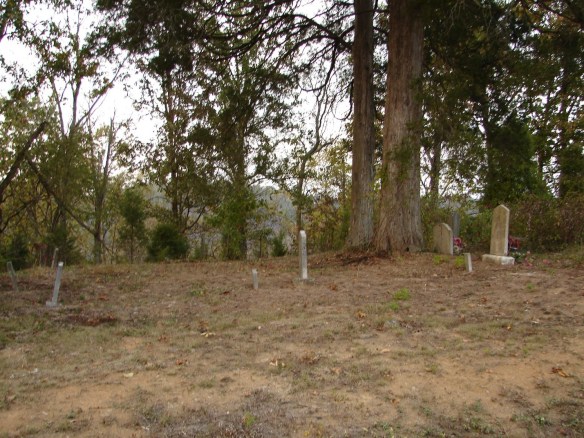
Robert Campbell Carter Valley Cemetery.jpg

It is interesting to note though that Robert Campbell settled for some time in Rockbridge County, married an Allison, and is found on tax lists before moving on to Hawkins County. He probably knew Gilbert and may have been related.

However, there is absolutely no connection found between Robert’s son, James, or his widow and her second husband, to Claiborne County or any John or George Campbell. Believe me, I tried.

Given the name of Allison, and the affiliation of Gilbert Campbell with Allisons and Crockets in Rockbridge County, I’m not entirely convinced the Prince Edward County Campbell’s were terribly far removed from the Rockbridge County Campbells. They may have know they were related and may have been relatively closely related, aunt/uncle, first cousins, even undocumented siblings perhaps.

The name of James Campbell may still be important in our search, because Gilbert Campbell’s brother appears to be James, or at least a James is associated with Gilbert in some way, aside from being his son. A William Campbell lives close by too.

Y DNA would not be able to differentiate between brothers and autosomal DNA is too many generations removed. If we knew the names of James Campbell’s wife, meaning the James who was the probable brother of Gilbert, we might be able to use autosomal DNA to determine a connection with her family.

However, without additional actual documentary evidence, such as information about James, his wife or even a definitive surname for Prudence, we’re mired in the mud.

According to Governor David Campbell

The grandson of “White David” Campbell, to differentiate him from his cousin “Black David” due to his fair coloring, not as a racist designation, became governor of Virginia and thankfully recorded a great deal, in his own handwriting, which has been preserved today at Duke University.

Ken Norfleet, perhaps the preeminent Campbell researcher, quotes David as follows after providing an introduction:

THE ANCESTORS OF JOHN CAMPBELL

I have no documentary evidence which substantiates the existance of any of the early generations of Campbells prior to John Campbell (d. 1741), husband of Grace Hay. Hence, mention of these early Campbells should be carefully qualified. The early generations of Campbells shown in this genealogical report are those cited by Governor David Campbell in a note I found among his papers (see below).

NOTE OF GOVERNOR DAVID CAMPBELL OF VA

Governor David Campbell (1779-1859) of VA was a meticulous researcher and it is mainly due to his work that the story of John Campbell and Grace Hay (parents of White David) and their descendants has survived. Governor Campbell’s papers and other documents are part of the Campbell Papers Collection (about 8,000 documents) located at Duke University, Durham NC. A microfilm copy of the Campbell Papers is located at the Tennessee State Library and Archives in Nashville. In 1996, while reviewing this microfilm copy, I found the following note, in Governor David Campbell’s handwriting, on microfilm reel number 1 (my comments are in brackets):

“Genealogy – The Campbell Family

“The farthest back the Campbell family can be traced is to Duncan Campbell of Inverary, Scotland, the place where the old Duke of Argyle and most of the Scotch [sic] Campbells lived. It was in the latter part of Queen Elizabeth’s reign that Duncan Campbell moved from Inverary to Ireland. Not long afterwards, in the reign of James First, when he had come to the throne, forfeitures were declared at Ulster in 1612, and Duncan Campbell bought a lease of the forfeited land from one of the English officers. One of his sons, Patrick, bought out the lease and estate in remainder, whereby he acquired the [land in] fee simple. How many other sons Duncan may have had is not known.

“Patrick had a son Hugh, and he a son Andrew. The generations from Andrew to our great-grandfather John [husband of Grace Hay] are not stated. It should be to Duncan, father of John Campbell, [who] emigrated to America with his family in the year 1726 and settled in the Sweet Ara river where Lancaster now stands in Pennsylvania. He [meaning John Campbell, husband of Grace Hay] had six sons, Patrick, John, William, James, Robert and David. Three – to wit – John, William and James were never married. John died in in England having gone there with Lord Boyne and became [his] steward.”

LETTER OF GOVERNOR DAVID CAMPBELL TO LYMAN DRAPER

Governor David Campbell (1779-1859), in a letter to Lyman Draper, dated 12 Dec 1840, had this to say concerning the origin of his branch (White David’s) of the Campbell Clan in America (my comments are in brackets):

” … The Campbell family from which I am descended were originally from Inverary in the Highlands of Scotland – came to Ireland in the latter part of the reign of Queen Elizabeth & thence to America. John Campbell [husband of Grace Hay] my great grandfather and the great grandfather of Gen’l William Campbell of the Revolution came from Ireland with a family of ten or twelve children, leaving behind him only one son, and settled near Lancaster in Pennsylvania in the year 1726. His eldest son Patrick was the grandfather of Gen’l William Campbell. His youngest son David [White David] was the father of Col Arthur Campbell and my grandfather. So that Gen’l Campbell and myself were second cousins. The family remained in Pennsylvania but a few years and then removed to the frontiers of Virginia, in that part which afterwards formed the county of Augusta. Here they lived many years. John Campbell (my father) the eldest son of David and Col Arthur Campbell the second son were born, raised and educated in this county. Gen’l William Campbell was also born, raised and educated here. …” [see Draper Manuscripts, Kings Mountain Papers, 10DD6, pages 1 and 2.]

From my own research, I can place these Campbells in Beverley Manor by 1738 – in that year Patrick Campbell acquired 1546 acres of land in the Manor. John Campbell (husband of Grace Hay) died in about 1741 as his estate was appraised/inventoried in that year. In summary, based on my own research among the records of Orange and Augusta Counties VA, Governor David Campbell’s story of the origins of his family in America appear to be entirely reasonable.

E-MAIL MESSAGE OF DIARMID CAMPBELL RE ANCESTORS OF JOHN CAMPBELL

Date:01 January 1998

” …although a number of people have attempted research in Ireland absolutely no further information has appeared about the ancestry of Duncan Campbell who married Mary McCoy.

“Pilcher states quite clearly at one point in her book that her information on those earlier (likely fictitious generations going back to Inverary) were taken by her from an elderly relation who thought she remembered that information. Pilcher had not intended to publish her book and it might have been better had she not, since the misinformation has misled so many and God knows how many family histories have now been published giving her bogus material as their source. Her later material appears to be more sound, although since she often gives no sources or references (as to where material was found), it means that anyone of the descents of those whom she outlines has to re-do the research.

“I have also thought that there might be some connection between the Drumaboden and the 18th century Virginia Campbells. But none has as yet appeared. Two professional research efforts in Ireland have so far been conducted, one just completed and the other in the ’80s.These were conducted by getting a group of descendants to put up some funds each and were coordinated through the Genealogists of the Clan Campbell Society of the time. While both were helpful in clarifying where no information could be found (so making easier any future research efforts), neither produced any clarification on the ancestry of either family going back from Ireland to Scotland.
“If you want the results of the second research effort you could write to the Society Genealogist, Dr.Ruby G. Campbell PhD, 3310 Fairway Drive, Baton Rouge LA 70809 USA, and ask her to let you know what to send her for the photocopying and mailing costs. But the information is not, I seem to remember, directly concerned with Drumaboden. …

” … There are in fact three sets of Northern Irish Campbells who may or may not be connected: Drumaboden, Duncan and his cousin Dugald Campbell, and the 18th century Virginia Campbells descended from one John Campbell who came over to Pennsylvania at a fairly advanced age in the 1720s or 30s.”

What Does This Mean, Exactly?

You may be wondering right about now what all of this means, to me. You might be wondering why I just didn’t stop when I discovered that Gilbert’s son, Charles never left Rockbridge County.

Clearly, my Charles in Hawkins County can’t be Gilbert’s son – so why didn’t I just throw in the towel and call it a day?

Negative evidence isn’t all bad, even though it’s disappointing when we were hoping for something more.

Let me just say that I’m really grateful that I did the extra research NOW, not in Rockbridge County in 3 weeks, because that’s where I was headed.

To be quite clear, it’s still possible that my Campbell line descends from James, Gilbert’s probable brother or possibly Gilbert’s son, James – although that’s much less likely, given his age. I need to find deed records for the earlire James selling his land to determine what happened to him, and if he can potentially be the father of my Charles.

However, even if we don’t know the identity of Charles Campbell’s father, YET, we know one heck of a lot more now than we did before this exercise, such as:

1 – We know that we don’t match the North River Campbells, and I can disregard those lines.

2 – We know that we DO match the following South River line in some way:

  • Duncan Campbell and Mary Ramsey
  • John Campbell (the immigrant) and unknown wife
  • John Campbell (1645) and Mary McCoy
  • John Campbell (1674) and Grace/Grizel Hay, immigrated to Pennsylvania in 1726. They had 6 sons. John died in England and James in Ireland, leaving Robert and William who never married, along with Patrick and “White David.”

3 – We know that we match Gilbert’s Y DNA more closely than any other lineage,  represented by descendants of the South River group in Augusta County through John and Grace’s sons David and Patrick Campbell.

4 – We have discovered a unique Y DNA “signature” in our line that will assuredly help us unravel future matches – and may lead to another match that is even more revealing.

5 – We have identified a James Campbell to follow. Given the close geographic proximity of James to Gilbert, as well as the “rumor” of James in our line, in addition to the fact that George named a son James – the James who owned land adjacent to and near Gilbert may in fact still be a good candidate. In fact, right now, he’s our best candidate!

I’d love to discover more about that James Campbell and locate a Y DNA descendant to test.

Seeking James Campbell

Do you descend from a James Campbell found in Orange, Augusta or Rockbridge County, Virginia in the 1740s through 1770s? Did he own land on the James River sometimes after 1756 and before 1782?

We know by 1782 that James wasn’t living in Rockbridge County, because he’s absent from the tax lists.

Do you know the name of the wife of the James Campbell who was associated with Gilbert Campbell?

Do you descend from Gilbert Campbell and his wife, Prudence?

If you descend from the Augusta, Rockingham or Rockbridge County Campbells or from the Lancaster County, PA lineage, have you DNA tested?

I’d love to hear from you.

______________________________________________________________

Disclosure

I receive a small contribution when you click on some of the links to vendors in my articles. This does NOT increase the price you pay but helps me to keep the lights on and this informational blog free for everyone. Please click on the links in the articles or to the vendors below if you are purchasing products or DNA testing.

Thank you so much.

DNA Purchases and Free Transfers

Genealogy Services

Genealogy Research

Hot on the Trail of Elizabeth (c1720 – 1758/1782) Ulrich’s Parents, Thanks to Mitochondrial DNA – 52 Ancestors #255

I’m so close to discovering the identify of Elizabeth Ulrich’s family that I can taste it – but I’m not quite there. Maybe you’re the person who has the critical piece information that solves this puzzle.

I’m looking for several things – and any single one would help:

  • Information about the Heinrich Angle (Henry Angle or Engle) family of Pennsylvania and Maryland in the 1700s. There’s more information about this mystery man later in this article.
  • Information about Mary Elizabeth Angle born about 1740, the wife of Johann Jacob Brumbaugh who was reportedly the daughter of Henry Angle of Washington County, MD.
  • Any descendant of Hans and Christina Berchtol born in Krottelbach Germany and died in either Konken or Steinwenden. The descent needs to be through all females to the current generation which can be male. Their two daughters, other than Susanna Agnes Berchtol who married Johann Michael Mueller, were Ursula born about 1696 and Barbara (Barbel) born about 1693. It’s not known if these sisters survived and there is nothing to suggest they immigrated from Germany. I know this is a long shot, but it’s the best bet to obtain the mitochondrial DNA of Susanna Agnes Berchtol given that she has no proven daughters. I’ve always wondered if Elizabeth Ulrich was actually a Berchtol and the only way to prove or disprove this is through mitochondrial DNA.

berchtol-miller-mtdna

  • There is a suggestion that Susanna Agnes Berchtol and Michael Miller had a daughter, Barbara Miller who married John Garber and died in Shenandoah County, Virginia about 1808. Autosomal DNA suggests this as well, but unfortunately these Brethren families are so heavily intermarried, with several missing wives, that concusions can’t be made based on autosomal matches, at least not yet. I would like to find anyone descended from Barbara through all females as well. If that person’s mitochondrial DNA matches that of Elizabeth Ulrich, that’s a huge piece of evidence. If this is you, please contact me – I have a DNA testing scholarship for you!
  • Direct matrilineal descendants of any of the families mentioned in the History of the Church of the Brethren in the Southern District Pennsylvania that would have founded the York County congregation about 1738 and before 1745 including “Leatherman, Martin, Ulrich (Stephen Sr.), Greib/Gripe/Cripe, Becker, Stutzman, Dierdorff and Bigler.” Two additional Mennonite families in that same vicinity who married into the Miller line were Berchto/Bechtol/Bechtel and Garver/Garber. Direct matrilineal descendants mean through all females to the current generation, which can be males.

We Have Elizabeth Ulrich’s Mitochondrial DNA (YAY!!!)

Recently, a cousin, Craig, found my original article about Elizabeth Ulrich, born about 1720, either in Pennsylvania or Germany. She died after 1758, possibly before 1766 but definately before 1782 when Stephen Ulrich remarried. It’s important to remember that these people didn’t speak English, so Elizabeth would have had to have spoken German to communicate with her husband.

The great news is that Craig is her direct matrilineal descendant through all females, meaning he carries her mitochondrial DNA which is haplogroup U2e1. That’s the key to finding her family!

Craig descends from Elizabeth’s daughter, Hannah Ulrich who married a Puterbaugh and I’m incredibly grateful that he contacted me!

Craig’s Matches

Elizabeth Ulrich’s DNA matches a person whose ancestor is Elizabeth Rench born in 1787, who married Abraham Deeter and died in 1858.

Elizabeth Ulrich mtDNA match.png

Elizabeth Rench was the daughter of Catherine Brumbaugh and Peter Rench born in 1762 in Hagerstown, MD and died in 1818 in Miami County, Ohio.

Johann Jacob Brumbaugh’s wife was reportedly Mary Elizabeth Angle, daughter of Henry Angle of Washington County, MD and who died in 1806 in Bedford County, PA.

Henry Angle’s wife is said to be possibly Elizabeth Diehl.

A second mitochondrial DNA match also descends through Elizabeth Rench although Catherine’s surname is shown in this tree, below, as Clary. This person’s earliest known ancestor is listed as Mary Elizabeth Angle though, so Clary appears to be in error – a phenomenon not uncommon in trees.

Elizabeth Ulrich mtDNA match tree

Click to enlarge

Note the line above Peter Rench – Susanna Ulrich, daughter of Daniel, son of Stephen Ulrich and Elizabeth. These Brethren families were definitely intermarried a couple of generations later.

If you’re thinking to yourself, these are Brethren names and the exact Brethren migration path, from Frederick County, Maryland, through Bedford County, PA and on to Miami County, Ohio – you’re exactly right.

And of course, Elizabeth Ulrich and her family were Brethren and followed that exact same path too.

Where is Elizabeth Ulrich?

Elizabeth married Stephen Ulrich (Jr.) in roughly 1742, the same year he bought land in York County, PA. Based on this marriage date, it stands to reason that Elizabeth’s parents also lived in York County, or nearby, at this time. They were almost assuredly either Brethren or Mennonite.

By 1751, Elizabeth and Stephen Ulrich had moved to Frederick Co., MD, along with a number of other Brethren families, including Michael Miller. Hagerstown, the same place that Catherine Brumbaugh and Peter Rench lived was located in Frederick County at that time.

Washington County, MD whose seat is Hagerstown was formed in 1776 from Frederick County.

Now, we have the same group of Brethren families in the same county in Maryland at the same time.

Mary Elizabeth Angle

FindAGrave shows the following information for Mary Elizabeth Angle Brumbaugh.

Mary Elizabeth Angle Brumbaugh FindAGrave.png

Of course, we all know to interpret sites like FindAGrave as hints and not confirmation of anything without additional sources. It’s a great hint though!

Brumbaugh History

We find the following informatoin in the North American Family Histories.

Brumbaugh history.png

Brumbaugh history 2.png

I would love to see the 1780 deed mentioned above. It’s not available in the deed books for Frederick County on Family Search unless you’re in a Family History Center.

Getting out my Brethren Encyclopedia, on page 219, we find:

Brumbach Family (Brumbaugh)

Most Brethren members of the family descend from these immigrants. Johann Jacob Brumbach, (arrived Philadelphia, Aug 31, 1750 on the ship Nancy) : Johannes Henrich Brumbach (Philadelphia Sept 30 1754 on the Neptune or the later’s two recorded immigrant sons, Conrad and Johannes (Philadelphia, October 7 1765 on the ship Countess of Sussex). Jacob Brumbach settled in Frederick Co., MD, married Mary Elizbeth Angle, daughter of immigrant Henry Angle, and joined the Brethren. Other principle settlements were in Washington Co., MA, Franklin, Bedford and Huntington Co PA. From these points the family spread westward into Ohio and were among the first settlers in Elkhart and Kosciusko Co, Indiana.

There is a Georg Engel who arrives in Philadelphia in 1737, but of course without significant additional information, there is no way of knowing if he is connected.

Is This a Red Herring?

There is no way of knowing without more information if this is “something” or a red herring. The geography and Brethren connection make me suspect it’s “something,” but we need a lot more than my suspicions combined with circumstantial evidence, no matter how strong. Even with mitochondrial DNA evidence.

We do know that Elizabeth Ulrich, wife of Stephen, was born about 1720, but we don’t know if that occurred in the US or abroad. We know that she was probably married to Stephen in York County, PA about 1742 or so because that’s where her husband’s father, also Stephen Ulrich (Sr.), had purchased land.

Without looking for an Engle, Angle or Diehl, we can’t connect the dots in that region. In the book, History of the Church of the Brethren of the Eastern District of Pennsylvania, on page 382, we see that there are two Engle men in that area in 1800, so they may have been there earlier too, although the earliest records are incomplete. There is no Diehl mentioned that early, but Mennonite families are not recorded in this book and they did live nearby the Brethren – and intermarried.

It’s also worth noting that present day York County, across the river from Lancaster County, PA is only about 100 miles from Philadelphia, a primary port for immigrant arrivals, along with Baltimore, about 50 miles distant.

Additional Sources

Apparently in the Palmer Papers, Heinerich Engel’s wife was reported as a Diehl.

Heinrich Angle wife.png

Also, in the Brethren Digest V9 Issue 63 where Mary Elizabeth Angle was discussed, according to the note about the wife of Henry Angle. I have sent the person who posted the note a message.

I e-mailed the Fendrick Library who holds the Palmer papers and they have kindly offered to copy the relevant page for me.

I contacted the Brethren Heritage Center where a volunteer asked who published the Brethren Digest. Good question. I’ve been unable to determine the answer, so the name of the publication may possibly be misquoted. If anyone recognizes this or has more information, including the article itself, please contact me.

Henry Angle’s Will

In this document, which is a poor copy I found posted on Ancestry, Heinerich Angle’s 1810 will confirms that he was Brethren, but his daughter appears to be “Mary Brewer,” not Mary Brumbaugh, although this is clearly a transcription of the original. This does call Mary’s identity into question along with Henry as the father of Mary Elizabeth Brumbaugh.

Heinrich Angle 1810 will.png

Furthermore, if Mary was born in 1740, her father would have been born between before 1720, so a will dated in 1810 means that Henry would have been very old – in his 90s. Not impossible, but unlikely. Is this perhaps the wrong Henry Angle?

I tend to think so, because if Mary Elizabeth Angle Brumbaugh died in 1806, as shown on her tombstone, then her father would not have mentioned her in a will written in 1810, not to mention by the name Mary Brewer.

The 1790 census isn’t much help, as it shows Henry Angle of Washington County, MD with 3 males over 16, 2 males under 16 and 5 females. This suggests that he’s not an elderly man, but it’s not conclusive. One of the other males over 16 could be an adult son and one of the women could be the son’s wife, so we can’t really get an idea of Henry Angle’s age.

If Mary Elizabeth Angle born 1740 who married Johann Jacob Brumbaugh is the daughter of Henry Angle who died after 1810, then Elizabeth born circa 1725 who married Stephen Ulrich couldn’t have been Mary Elizabeth Angle’s sister. For that to happen, Henry and his wife would have been born in 1700 or before in order to have a daughter born circa 1720/1725 which puts him at 110 years old in 1810. While I’m open to a man dying in his 90s, I’m not buying that he lived to 110.

Therefore, Elizabeth could have been this Henry Angle’s wife’s sister or aunt, but not his daughter – IF Mary Elizabeth Angle Brumbaugh’s father is the same Henry Angle that died in 1810. I don’t think that he is, given that he called his daughter Mary Brewer and Mary Elizabeth Angle Brumbaugh died in 1806. I suspect this Henry Angle may be the son of the earlier Henry Angle, and therefore the brother of Mary Elizabeth Angle who married Jacob Brumbaugh.

Until proven otherwise, I’ll assume the 1810 will is NOT for the man whose daughter is Mary Elizabeth Angle that married Johann Jacob Brumbaugh. Dang all these “same names” anyway!

Therefore, Elizabeth Ulrich could potentially be the daughter of Henry (Heinrich) Angle and his wife, just not the one who died in or after 1810.

If Mary Elizabeth Angle was Heinrich Angle’s daughter, it’s also unlikely that he had a second daughter named Elizabeth, but without primary documentation of some sort, there’s no way to know Elizabeth’s complete name, or if Mary Elizabeth’s is actually accurate.

Some of my DNA matches on Ancestry show Henry (Heinrich) Angle in their trees, but show a death of March 14, 1780 – however, all without documentation. is wife, Elizabeth Diehl is shown born in 1714 and dying in 1767, also without documentatoin or sources. If this information is accurate, clearly Elizabeth Diehl cannot be the mother of Elizabeth Ulrich who was born in the 1720s and married Stephen Ulrich in about 1742.

Therefore, if Elizabeth Ulrich is related to Elizabeth Diehl, and those dates are remotely accurate, she would have to be her sister, not her daughter. Of course, the dates may not be accurate.

Mary Elizabeth Angle Who Married Johann Jacob Brumbaugh

The Palmer Papers reportedly state that Heinerich Angle’s (also spelled Engle) wife was a Diehl.

If she was a Diehl, and if her sister or daughter was Elizabeth who was to married Stephen Ulrich (Ullery) in about 1742 in York County, PA, then Elizabeth’s Diehl father would have had to have been in that area too. Lots of “ifs.”

Henry Angle pedigree.png

Could this work? Yes.

Does it work? I don’t know.

We need more information.

At the suggestion of a Diehl researcher, I checked the book, “Diehl Families of America,” by E.H. Diehl printed in 1915, with no luck.

Possibilities

What are the possibilities?

  • This is a red herring and the exact full sequence DNA match to another Brethren family in the same time and place is happenstance. I know that’s unlikely, but it’s certainly possible, as much as I’d like to believe that it’s not.
  • Elizabeth, Stephen Ulrich’s wife and Henry Angle’s wife are related, but back in Germany.
  • Heinrich Angle’s wife was a Diehl and finding her parents and family will provide us with the information we need to connect the dots to Elizabeth who married Stephen Ulrich. Wouldn’t that be a dream come true!
  • Heinrich Angle’s wife was not a Diehl after all.
  • Obtaining the mitochondrial DNA of the other Brethren and Mennonite families mentioned at the beginning of this article will rule them in or out. Tests might provide a mitochondrial DNA match with families known to be in the same church, and pietist German immigrant group in York County. Or, conversely, a non-match would rule out those same families. Sometimes negative evidence is quite valuable to rule out possibilities.

Options

  • Perhaps Craig, the mitochondrial descendant of Elizabeth Ulrich has another mitochondrial DNA match that leads someplace – anyplace. I’ve checked the full sequence and lower level matches and no other match leads anyplace useful. They are reflective of German heritage in general but all encounter brick walls in other locations. Rats!
  • Autosomal DNA links to a Diehl family. This is certainly a possibility. Craig has not taken the Family Finder test, but I and many others have. Everyone descended from Elizabeth married to Stephen Ulrich can check their results for any Diehl descendants – especially from Heinrich (Henry) Diehl from Maryland. However, given the level of Brethren intermarriage, finding a Diehl may result from later intermarriage. I have about 75 Diehl matches between Family Tree DNA, MyHeritage and Ancestry, and they are mostly interrelated in my Brethren line in some fashion, many in multiple ways.
  • Wait for more mitochondrial matches. Waiting is not my strong suit, but sometimes we don’t have a choice and one never knows what each new day will bring. After all, it brought Craig!
  • Dig through the relevant records in Frederick and Washington County, Maryland along with York County, PA.
  • Locate the missing records mentioned earlier in this article.
  • Find someone who has actually researched this specific Angle/Diehl family. Is this person you?

Do you have any information on a Diehl line in the Brethren/Mennonite part of Pennsylvania, including Philadelphia, from the early mid-1700s? How about from Baltimore or Frederick or Washington County, Maryland, the area associated with Heinrich Angle?

Please let me know if you do.

Eventually, we will solve this puzzle! We’re adding evidence piece by piece. I so wish Elizabeth could just tell us the answer.

______________________________________________________________

Disclosure

I receive a small contribution when you click on some of the links to vendors in my articles. This does NOT increase the price you pay but helps me to keep the lights on and this informational blog free for everyone. Please click on the links in the articles or to the vendors below if you are purchasing products or DNA testing.

Thank you so much.

DNA Purchases and Free Transfers

Genealogy Services

Genealogy Research

Dean Long: Wishing You a Good…Death – 52 Ancestors #254

Dean Long 1970s.jpg

I’ve been trying to figure out how to say this for some time now, so I’m just going to come right out and say it.

I certainly wish you a good life, but I also wish you a good death.

Let me explain.

A quarter century ago today, on Sunday of Labor Day weekend, my much-beloved step-father, Dean Long whom I called Dad, slipped away from us – after removing his own tracheostomy tube.

He took that drastic action because his life, and his slow, tortuous death had become untenable. He was ready to end his own suffering and check out.

Dean Long obituary extract.png

Of course, obituaries never tell us about actions like that. They focus on the positive and the family members – generally saying nothing at all about the final chapters of the person’s life.

Especially if it was less than wonderful.

Dean Long death certificate.png

I assure you, death from “end stage COPD” or slow oxygen starvation is less than wonderful.

Punctuation Marks

Our lives are punctuated by major events – the first of which, of course, is our birth. We have absolutely no control or input over that event.

Throughout our lives, other milestones occur – loves, marriages perhaps, births of family members, deaths of loved ones and eventually, our own passing over as our light winks out.

We do control the intervening events, at least to some extent, by our own choices.

But then, there’s death. We may or may not influence our own death, the cause and or the timing. Death may be sudden and swift, an accident perhaps, or long and lingering. It may be as a direct result of our choices, or not.

Landmarks

Each relationship has its own landmark events. My relationship with Dad was divided into three sections, the first being before he came into my life.

I didn’t know him until I was a tween, and he didn’t start dating Mom until I was a teen.

The transition into part 2 occurred in 1972 when he became my stepfather.

Mom Dean wedding

He had lost his own daughter as an infant who would have been about my age, before his wife’s death, so our unification as a family was a blessing for both of us.

For the next 22 years, our relationship was marked by seasons on the farm and normal family events. I gave him 2 grandchildren, he “gave me away” at my wedding.

Wedding me with Dad

He had faith and confidence in me when no one else did. He told me I could do anything I set my mind to, and I believed him.

The third stage has been since his passing, life without him.

A Personal Demon

Dad lived through hell with the slow, inevitable deaths of his daughter and wife. His only remaining child, a son, had issues that eventually would claim him too.

Dad had chronic health challenges himself, bleeding ulcers, then believed to have been brought on by stress. No one ever doubted that, given what he was living through on a daily basis at the time the ulcers developed.

Dad’s first wife and family were called into a hospital room more than once to be informed of the grim news that he wasn’t going to make it.

Like a cat with 9 lives, miraculously, somehow, he did. But Dad wasn’t immortal, and eventually became his own worst enemy. He ran out of lives and miracles.

Dean smoking.jpg

Dad smoked.

Dean Long smoking ad.jpg

When he was young, smoking was popular and fashionable. We can thank the tobacco industry for that. He was hooked.

Dean Long smoking ad glamorous.jpg

After they were married, Mom quit smoking, but Dad never did. Nicotine is incredibly addictive – the fourth most addictive substance in the world according to American Addiction Centers. Knowing people who have and haven’t kicked the habit, I can vouch for that statement. Even 30 years later Mom said she WANTED to smoke. She just didn’t.

Problems Begin

In the 1980s, Dad began to develop breathing problems. At first, he chalked it up to age and his other pre-existing health issues. By then he was, after all, 60.

He ignored it as long as possible as the symptoms gradually worsened, until ignoring them wasn’t possible anymore. One day in the early 1990s he had an “incident” at home. How my mother who was only a slip of a woman managed to drag him out of the house, shove his limp body into the car and drive the 25 miles or so to the nearest hospital emergency room is beyond me, but she did.

There was little hope. Mom thought sure he was dead and alternated between yelling at him not to give up and praying as she drove like a bat out of hell.

In spite of his condition, the ER staff revived him – barely. He remained hospitalized for weeks, and when finally released, he hadn’t had a cigarette since that fateful day.

He was told that if he stopped smoking permanently, as in didn’t start again, he would probably have several good years left, but if he did not, he would die of COPD, Chronic Obstructive Pulmonary Disorder, then known as Emphysema. I’ll spare you the photo, but if you’d like to see what lung tissue of a smoker with COPD looks like, click here.

It’s no wonder he couldn’t breathe.

Back to the Barn

Dad was a life-long farmer, and even though he had officially been “retired” for years, unless the farmer moves away from the farm itself, they never really retire.

Dad leased the land to his nephew, but he still kept his workshop at the barn which was his regular respite from all things worldly.

It was also a place where Dad could smoke without anyone knowing. Except of course, we did know. The smell gave him away.

He wound up in and out of the hospital for the next year or two, always swearing he wouldn’t smoke again, and always doing it anyway.

Labor Day, 1994

My life was a mess in 1994, from one end to the other. Every way imaginable – in addition to Dad’s illness.

My (now former) husband suffered a massive stroke in June of 1993, but hadn’t died. I was supporting the family and trying to earn enough to pay his gargantuan bills, PLUS being the caregiver for a severely disabled husband who could never be left alone, not even for a minute.

In early summer, not long after Father’s Day, Dad became ill again. The routine was disturbingly familiar – the hospital, intensive care, tubes, machines endlessly beeping and sleep-deprived prayers.

A few weeks later, Dad was sent to a “rehab hospital” where it was hoped he would recover enough to go home, or at least to a nursing home.

Dad wasn’t improving this time. Mom said he was getting worse and it didn’t look good. She was a wreck. Mom and Dad both needed me.

My friend who was a nurse came to stay with my husband so my daughter and I could go and visit Dad one last time. My son was at college and headed for the hospital directly from there.

Dad had been on a ventilator to assist his breathing, but a permanent tracheostomy was installed during his hospital stay, causing him not to be able to talk.

Dad, quite irritated with the trach, and that he was still alive and miserable, was done with both – and removed his own trach tube.

How he managed to find enough strength to do that is also beyond me – but he was one determined man, and he did.

That event in the rehab hospital caused him to be sent back to the regular hospital where he refused all treatment except for comfort care.

At least now he could talk to people.

The family had gathered and we were sleeping in shifts on the floor in the family lounge, taking turns sitting by his side. As the sun rose on Sunday morning of Labor Day weekend, Dad drifted in and out of fitful sleep. My daughter and I had not left the hospital in 2 days and we needed to go to the farm to take a shower.

Dad hadn’t yet passed away – in spite of removing his trach. Maybe there really was at least a glimmer of hope.

We told Dad we’d be back in an hour. He tried to make a joke about how difficult it was to die and how he wasn’t doing a very good job. My eyes filled with tears to see him that way, so small and weak and vulnerable, yet still trying to be jovial to make us laugh.

A man of very few words who rarely expressed emotion, he told us he loved us. That should have clued me.

As I walked into the farmhouse 20 minutes later, the phone was ringing. There was no need to go back to the hospital. Dad was gone. He had chosen his time and departed.

We turned around and went back anyway, for Mom.

Apparently, Dad was waiting for us to leave because he knew how upsetting it would be for my daughter and me to see him pass. He told Mom as much. Then he shut his eyes.

His last act on this earth was one of generosity – even in his death.

That was the story of those 22 years I spent as his daughter – he was always thinking about Mom and me.

Thankfully, Mom was sitting beside him, holding his hand, telling him to “go on.”

Somehow, I think he was waiting for me at the farm that day, by the time I arrived. I knew he was with me. I was not alone.

His Own Terms

In one way, Dad died on his own terms. He removed the trach and decided enough was enough.

But in another very crucial way, he did not. No one would ever choose to slowly suffocate.

Yes, you could say that he asked for it by continuing to smoke – and indeed he did.

Addictions are like that – you don’t think about the long-term consequences because you’re only going to do it “just this once” to quiet the cravings. Of course, there is always another “just this once.”

But by the time we had arrived at Labor Day weekend in 1994, the only thing Dad had control over was removing that trach tube. There was no turning back time.

Anger, Sadness, Grief

I loved and still do love Dad incredibly, but I was angry with him too. It seemed like his death was so senseless and futile.

He could have lived longer had he only been able to walk away from those evil cigarettes, if not in the early 1970s when Mom quit, then at least later.

But he was unable to do that.

He suffered terribly, and so did we.

I know one thing – if there was anything that could have motivated Dad enough to stop smoking, it would have been me, Mom and my kids. He told me that he felt he had failed us – although we reassured him that he had not and we loved him regardless.

I didn’t, but I wanted to say that he had only failed himself. I didn’t have to. He knew that. I didn’t want him to think I was disappointed in him.

It wasn’t his own death that concerned him, but what would happen to Mom.

Everyone suffered during Dad’s prolonged illness, his actual death, and the ramifications to the family afterwards. Those lasted more than another twenty years – beyond Mom’s death – and his death colored the quality of the rest of her life.

Thank goodness we had those 22 years, less 18 days, together as a family.

A Quarter Century

It’s been a quarter century ago this morning that he left us.

As I ponder this past 25 years, of course I grieve his actual passing and life without him. He was a Godsend to my family. A quiet, inspirational giant of humanity among men.

However, I’m also struck with the sadness and horrific slowness of his death.

In 1990 when my sister died, it wasn’t slow, but quick and sudden. We were shocked and no one except her husband got to say goodbye. In fact, I’m not positive that he did.

I used to think I didn’t know which was worse, sudden departure with no goodbyes or a more protracted exit, allowing goodbyes.

Clearly, there’s a range for everything. No one, but no one wants a prolonged suffering tortuous death. Just as clearly, very few would opt for an impaired life with little quality or becoming a burden on the family.

Some people might prefer a happy medium, with a little “notice” in order to get their affairs in order and say a proper goodbye, whatever that is for them.

We may or may not have influence or control over the circumstances of our death.

Our “affairs” should always be in order.

Wishing You a Good Death

Perhaps the nicest thing I can do for you is to wish you a “good death” when you’re the most vulnerable and no longer in control of your life. Whatever it is that “good death” means to you.

I know what it means for me.

I’ve prepared, well, except for my genealogy which is probably never going to be “done.” I have a lot more research to do, so I hope I’m graced with a lot more time to finish😊

Wills and other documents have been put in place because eventually, we all need them.

I know that the last time I see people may actually “be” the last time I see them – due to either their demise or mine.

Every time we get in the car to run an errand, we risk our lives at some level. I don’t know about you, but I’m not willing to stay home. I accept whatever level of risk is inherent with full comprehension that one day, somehow, someplace, my 9 lives will expire too.

I try to live my life with the understanding that if I get my way, my “good death” will be quick and sudden. Preferably sleeping with a cat or two laying on me, with no one bothered with hospitals and such. That means that one fateful day, an otherwise routine interaction with my family will in fact be their final memory of me. That’s how I’ll be remembered. I always try to keep that in mind and choose my words so that neither I nor they will have regrets.

May you experience a wonderful life, living every day and each experience to its fullest potential. Reaping every opportunity that life has to offer.

And when the time comes, may you also be blessed with a “good death.”

heart swirl

____________________________________________________________________________________________

Disclosure

I receive a small contribution when you click on some of the links to vendors in my articles. This does NOT increase the price you pay but helps me to keep the lights on and this informational blog free for everyone. Please click on the links in the articles or to the vendors below if you are purchasing products or DNA testing.

Thank you so much.

DNA Purchases and Free Transfers

Genealogy Services

Genealogy Research

A Visit to the Ancestral Kirsch and Koehler Homes in Fussgoenheim, Germany – 52 Ancestors #253

My Kirsch ancestors were born and lived in Fussgoenheim, Germany, along with Koehler family members. Recently, a friend, Noél who lives in the US but was traveling to Germany made me a fantastic offer – one I couldn’t believe – or turn down.

Noél offered to drive to Fussgoenheim during a trip to Germany and see if she could find the Kirsch/Koehler houses based on the photos in my blog articles.

Can you believe that? Well, neither could I, especially after discovering that the small local museum was entirely unresponsive and uncooperative. I had heard, for years, that the little museum housed genealogies and photos of the oldest local families as well as the oldest homes. Nope, they said, they know nothing – and then when I tried to make arrangements to visit, crickets.

A year earlier, when another cousin attempted to visit, they also found the door locked and the secrets firmly held. How sad.

I told Noél that I really could not impose on her vacation in that way.

Noél, an avid genealogist, however, was not to be deterred!

“Yes, the minutes are precious, but I can always make time for a fellow genealogist…plus you did help me…”

I can’t even begin to express my gratitude to Noél and her husband.

Historic Fussgoenheim

The article where I published the Kirsch/Koehler photos, taken by a cousin, Marliese, who was raised in Fussgoenheim and sent the photos in letters to a US cousin is titled Margaretha Elisabetha Koehler (1772-1823), Weak Child, Baptized in a Hurry – 52 Ancestors #228.

In early 1948, Marliese, then a teenager, wrote a letter addressed to “Koehler Family of Aurora, Indiana from Marliese in Fussgoenheim,” hoping that it would make it’s way to someone. It did.

In the letter she said:

Hunting through things, I discovered your address and pictures which my grandmother said were her American cousins, her only relatives.

More than a year ago, I decided to write but the thought that my letter might be regarded by you as a begger letter detained me from writing.

After providing additional family information, she closed:

We would be very happy to hear from you, the only relatives on my grandmother’s side.

She signed the letter, “Marliese, granddaughter, niece of Marie Kirsch.”

Hazel Koehler’s father, Henry, then age 79 answered Marliese on August 27th.

Marliese and Hazel wrote back and forth for more than 25 years, with Hazel saving everything, which eventually allowed me to corresponded with Marliese’s daughter briefly a few years ago.

I have never been so grateful for old correspondence. Their letters were immensely helpful, not only with genealogy but to gain historical perspective of both World War II and life in Fussgoenheim during earlier generations.

Fussgoenheim Kirsch home

Please note that in the original article I was uncertain about whether the house pictured above is the Kirsch or Koehler home, but rereading Marliese’s letters, including her address, combined with the address Noél found proves unquestionably that this home is the Kirsch home, not the Koehler home. I’m simply overjoyed, because this home still exists today AND I have photos.

Marliese tells Hazel:

We live in the old homestead of your ancestors, and in Germany the people that live on the farms need not suffer hunger.

Marliese’s letters portray a grim story of the war and the aftermath. I will include snippets throughout this “visit” to put the images in perspective and provide a bit of history about the family that lived in this home during that time.

Fussgoenheim Kirsch Koehler homes 2

In her November 1948 letter, Marliese says:

We still live in the old parental home and birthplace of your father and grandmother, because their house and acres were taken over by my great-grandfather, Jacob Kirsch. Even today some of the older people in the village call him Koehler Kirsch.

Marliese enclosed this identification document that included Jacob’s photo.

Jacob Kirsch b 1842 Fussgoenheim.jpg

Marliese continues:

I am 17 on Christmas Day. My father, Otto, 47, is the son of Marie Kirsch born in 1871, daughter of Jacob Kirsch whose sister Elizabeth married Philip Koehler with whom she immigrated to America. With them was also a brother John Kirsch.

Since my grandmother had no siblings and her father’s brothers and sisters went to America, they were her only relatives. I never knew my grandmother since she died 2 years before I was born.

Jacob, pictured above, is the great-grandson of my ancestors, Johann Peter Koehler and Anna Elisabeth Scherer. He also descends from my Kirsch line in Fussgoenheim, but I’ve yet to figure out exactly how. Fussgoenheim has experienced record loss, but the Kirsch, Koehler and Koob families are very intertwined and it’s likely that Jakob descends from multiple ancestors in all 3 families, as do I.

Marliese goes on to say that:

The Kirsch family lived ever since 1626 in Fussgoenheim. Statistics which I have obtained which is one of the oldest families and John Kirsch 4th was one of the richest farmers in the area.

Fussgoenheim is about 70 km from France. I went to college where I studied both English and French.

While goods, according to Hazel, were no longer rationed in the US, they were in Germany according to Marliese, and would be for a long time to come.

Fussgoenheim street

In my articles, I always try to give directions so that any future genealogist could follow my path and find what I found. In this case, finding what I thought was the Kirsch home and publishing the location, I did myself a huge, and I mean huge, favor. I just didn’t realize it at the time.

The Genealogy

I pieced together the genealogy of the both Marliese and Hazel from their correspondence and subsequent documents. When Marliese first began writing, she had to depend on the memory of her parents, and needless to say, memories had faded with time. Eventually, she did obtain some documents from the town hall as well as a Koob descendant whom she describes as an old neighbor boy Walter Schnebel, and unraveled a bit more. Walter is reportedly writing a book.

Sometimes Marliese referred to people by thier nicknames which really threw me for a loop, necessitating piecing several clues together. Not to mention that names were recycled generation after generation, of course.

I won’t be including a lot of genealogy, but for reference and documentation purposes, I’m providing their trees.

Marliese's grandmother Kirsch's line

Marliese’s grandmother’s Kirsch/Koehler line. Marie was born in the Kirsch house in Fussgoenheim. Click to enlarge.

Hazel's Koehler Kirsch line

Click to enlarge. Johann Peter Koehler was Hazel’s grandfather, born in Fussgoenheim.

Roberta Kirsch Koehler tree

Roberta’s Kirsch/Koehler line. Click to enlarge. Philip Jacob Kirsch was born in Fussgoenheim.

Noél’s Trip

I tried to schedule an appointment at the museum in Fussgoenheim, with no luck. The people I was referred to never replied, and then neither did the original contacts. Very frustrating and not very welcoming.

Noél’s trip was imminent, so I crossed my fingers and hoped for the best, meaning that she could find something, even without local assistance. Frankly, I wouldn’t have blamed her one bit had she thrown in the towel at that point.

I waited to hear. I tried not to worry.

A month later, late one night, an email arrived from Noél, where she says:

Let’s start with the “not good” news.

My heart sank.

The museum in Mutterstadt is only open by scheduling an appointment in advance which we found out today at the Rathaus. So that was a bust. 😠 We tried to visit the library in Fussgöenheim in the hope of finding more information on the two families. Only open on Tuesday from 3-6 and Thursday 4-7  😔

By the way, the Rathaus is the city hall – the same place I had called and written trying to schedule someone at the museum. They aren’t open without an appointment, then refuse to schedule one. Yes, I’m still salty about that.

Now on to the good news.

Holding my breath now…

Your Google Earth research was positively spot on. And we have a huge number of pictures for you. However, they are locked in my camera until we can download them so I took a number on my cell phone to hold you over until we return.

Jumping for joy!!!!

Noél is apparently aware of my (ahem) ancestor-rock-addiction.

There were no rocks for me to grab at the Kirsch home but there were a number of rock-shaped pieces of stucco (that had fallen off the house) so I grabbed one for you.

Fussgoenheim stucco.jpg

This piece is large marble size – about three quarters of an inch.

You will be happy to know that I was able to walk beside the Kirsch home to take photos. Look at what is on the second floor in that picture…wonder if it came with the house???

Enjoy the pictures and I’ll send a ton more when we return. Let me know if you have any questions. FYI the house number for the Kirsch house is #9.

Then…drum roll…the photos!

The Teaser Pictures

Fussgoenheim-Kirsch-home-2.jpg

I am literally feasting my eyes.

Fussgoenheim-Kirsch-3.jpg

Click to enlarge

If you compare the original Marliese photo, you can see the “door in the door” above that was standing open in the photo from the 1930s or 1940s.

Fussgoenheim Kirsch wall.jpg

It looks like the house that Marliese marked secondly as the Koehler home is gone today and is where there is a gate in the wall between the two homes. I wonder when that happened.

Noél tried to find someone at home, but no one answered.

Fussgoenheim-Kirsch-garden-2.jpg

However, look at this beautiful garden area at the Kirsch home today.

Fussgoenheim Kirsch antiques.jpg

And this! THIS! Be still my heart. Were these items from the original house? Did my ancestors own these? What is that area beneath the roof and above the wall? Was it originally the barn and held these items? Marliese did send a grainy photo with her father driving a tractor, so it would have been housed someplace.

Fussgoenheim-Hauptstrasse.jpg

Looking at the Kirsch home from down the street. I still can’t believe I actually found it on Google maps, and Noél found it too.

Fussgoenheim-neighbors.jpg

The neighbors, further down the street. I can’t help but wonder if more relatives lived here. Of course they did! We just don’t know who they were.

I was ecstatic to receive these teaser photos, but there was much more on the way a few weeks later!

More Pictures

One rainy day when I desperately needed something uplifting, Noél’s envelope arrived, plopped down on the doorstep in the rain by the mail carrier. Thankfully, Noél had packaged things carefully.

I found these things inside:

  • A thumb drive with pictures
  • A small box with my stucco piece that had fallen from the Kirsch house
  • A guided tour with the photos printed in order that they had been taken

She went to a lot of effort on my behalf. Shall we accompany Noél?

Welcome to Fussgoenheim

I can’t tell you how excited I am!

Fussgoenheim has existed since at least 893 when a list of goods is found in the records of the Prum Abbey. Jerg Kirsch, born about 1630, is reportedly already in Fussgoenheim in the first records and noted as “mitpichter des Sankt Jopten Altargutes,” which I’m told translates to someking akin to “land church tenant.” Another researcher indicated that he was co-tenant of the Josten estate.”

Marliese, who had access to far more records than I do, indicated that the Kirsch family was in Fussgoenheim in 1626.

There may well have been another 800 years of ancestors living right here before Jerg. The first population details were recorded in 1560 when 150-200 people were living in Fussgoenheim. Today, there are about 2,500.

Fussgoenheim-sign-2.jpg

Looking at this sign, I surely wonder if any of my ancestors were here in 893. The town is reportedly in the process of publishing a book by Walter Schnebel, but I’m not holding my breath.

Fussgoenheim Ruchheimer and Hauptstrasse.jpg

Noél found the Rathaus at the intersection of Ruchheimer Strasse and Hauptstrasse.

Fussgoenheim-Rathaus.jpg

Around the corner, the library, also closed.

Fussgoenheim library.jpg

Not to be deterred, Noél and her husband went on to find the Kirsch and Koehler properties.

Fussgoenheim intersection Ruchheimer Hauptstrasse.jpg

Again, the intersection. To find the Kirsch home, Noél would turn to the right.

Fussgoenheim corner.jpg

They found the street.

Fussgoenheim-home.jpg

The older homes have the large doors which function as car doors, driveways and gardens today. Historically, the houses in the village were all joined for protection and defense – so these doors opened into work areas for the homeowners who were farmers and craftsmen. The fields were located behind the homes in very long narrow plots.

Fussgoenheim aerial fields.png

Here’s an aerial view with the top red arrow pointing to the intersection and the lower red arrow pointing to the Kirsch home. Note the fields to the rear of all of the properties.

Marliese’s mother wrote to Hazel in 1949:

You asked why our houses are so close together. Our ground is so rich that a farmer with 32-40 acres is considered a rancher of high standing. In normal times, a farmer with 8 to 12 acres can live solely off the crops which he can raise. The fields of various sizes are situated about the village and all is bottom land (not hilly.)

Then she adds:

When the war broke out, we could not buy enough to eat. We raise mainly vegetables and cannot raise livestock so must buy our draft animals.

My father’s sister’s only son just returned from Egypt where he was an English prisoner all this time. Now he’s 28.

Fussgoenheim Hauptstrasse 2.jpg

Many of the large doors open into a courtyard today. Most seem to be a car door with a person door included.

Fussgoenheim Hauptstrasse distance.jpg

Look! Look! I can see it, on the left just beyond the pink buildings in the distance!!!

Fussgoenheim Kirsch on Hauptstrasse.jpg

Here it is!

Fussgoenheim-Kirsch-front.jpg

Just look at that! The large door is almost as large as the house and is as large or larger than the portion of the building to the right of the door. I surely wonder what is inside today. The window in the right part is entirely shuttered and the ones on the second floor of the part on the left too.

Fussgoenheim Kirsch garden designer.jpg

Garten Testaltung translates into garden design. A gardener – how fun.

Fussgoenheim Koehler wall 2.jpg

To the right of the house is the garden wall where the old Koehler house used to stand. The extremely frugal Germans hardly ever tear anything down, so I wonder what happened to that building. Other buildings of the same age are being lived in and are well-maintained.

Fussgoenheim-Kirsch-Koehler.jpg

You can see that the house in front is gone, but several buildings to the rear remain.

Fussgoenheim Kirsch Koehler

It’s obvious in an aerial photograph too.

Fussgoenheim-Koehler-neighbor-house.jpg

Driving on down the street and looking back. I wonder what the difference was between the houses with the roofs with and without that little triangle shaped divit in the front. Maybe built at different times, or socio-economic class perhaps. The tallest buildings had more windows in total and 3 rounded ones.

Fussgoenheim architecture.jpg

Why are the upper windows small and rounded on top?

These are the kinds of questions the museum or local historian might have been able to answer.

Fussgoenheim-craftsman-homes.jpg

The sign on this house translates into “installer and heating builder master plant.” Another house with a large door that connects two buildings on the same plot of land.

Fussgoenheim door.jpg

I love those old wood doors. I wonder how old that wood is.

Fussgoenheim-Kirsch-windows.jpg

The Kirsch house has only one small rounded window, while some of the larger homes have 3 and an extra story.

I’ve also wondered when people who lived here obtained amenities like sewers and electricity. In one of Marliese’s letters, she said that they had electricity since 1910 in Fussgoenheim.

Interestingly, she also mentioned in that same letter that the family all has dark hair. So did our Kirsch line.

As Marliese chattered about the family, more than once she mentioned that people often didn’t talk about family members who “died young.”

Anna Maria Kirsch had a daughter, Maria Katherine (1825-1862) who was married to Carl Ritthaler who later moved to Maudach after his wife died. They had a son, Peter, born in 1860 and his name was Peter Ritthaler and now I hear that my uncle’s son-in-law came from Maudach. He said yes, his relatives came from Fussgoenheim and that his father who died 3 years ago was Peter. He said his grandmother was Koehler but she died young. He said he had a godfather in America but he doesn’t know much about it because his father talked little about it.

Taking a Walk

Noél was able to walk along the left side of the house.

Fussgoenheim-Kirsch-left-side.jpg

Note the corner where the stucco has been repaired. That’s your anchor point for the next few photos.

Fussgoenheim-Kirsch-corner-stucco.jpg

The wall of the Kirsch house. In the photos from the 1930s or 1940s, another house stood up against the Kirsch home on this side.

Even after the war ended officially, times were very difficult for German citizens. It was to this home that Hazel sent gifts to Marliese and her family who were terribly embarrased about their economic situation resulting from the war.

In a letter in 1948 titled, “To Our American Family from Your German Family,” Marliese’s mother writes to Hazel:

Thanks for that rich package to our Marliese which you have sent her. Marliese has never had these things because she was only 7 when the war broke out. We know them only by name.

However words fail me to say the things I should and feel because the knowledge of knowing we are not in a position to repay you.  No words can express the happiness which you have bestowed upon our child and none of us could keep back our tears of happiness to see her as happy as she was.

It is hard to select which item has brought her most happiness. Take for instance the nylon hose which is only a dream for younger girls over here. And solemnly she tells everyone that this treasure, her nylon hose, she will only wear on very rare and special occasions.

And then the chocolates and sweets; this also is treasured very highly. To prove it, Marliese and her father are fighting a civil war, because every time she checks upon the contents, somehow it has diminished. Questioning her father, he had to admit getting into it. He too is very fond of sweets. His excuse is that he has more of a right to take a piece now and then; so he says that his relationship is much closer than hers. This brought laughter and all was forgiven.

It is true that all the food things which you have sent have made us very happy but you ought not spend money on us. We do not go hungry. Of course it is impossible for us to obtain the things that you have sent. In years past we have learned to restrict ourselves of luxuries and delicacies.

You can imagine how happy it made us to receive your first package on Christmas Day, which is as you know Marliese’s birthday. She was ready to go to church Christmas morning as the mailman came. He said “Santa Clause from America is here.”

It fills my heart with joy and from the bottom of my heart I wish to thank you for all the happiness you have bestowed upon our Marliese. Actually you don’t even know her. I want to take the opportunity to introduce you.

Marliese as a child has filled our hearts with happiness. She was and is a good girl as well as brave. In school she was a top scholar. Her vocabulary is wide, therefore we sent her to college. There again she was one of the best scholars. The sad thing, however, is that we had to curtail her studying.

Financially we became embarrassed but most of all we needed her help at home.  Physically, I am not too well. It was a hard blow to her as well as the professors, but it could not be helped and now she is a very able hand in the house as well as in the field. Her heart however, is still on studying to further broaden her. Any problem that occurs here in document or writing or just plain figuring, it is Marliese who does it. Therefore it is more helpful and interesting to her when you write to us which is a change when she can answer your letters.

The prisoners of war who returned compared American and German farming.  Everything in America is mechanized but over here we must farm day in and day out. Between March and November we spend all our time in the fields and housework is much neglected. Only on Sundays we were allowed to catchup a bit. It is definitely not a nice life to live. It is very trying and tiresome. Farming is since June 1948 due to the stabilizing of the dollar(?), one of the most essentials. We have two hired hands, plus 4 by day in the summer. This last year we have had to do with one hand only and do the rest of the work ourselves.

Perhaps some of the space in the second building, to the rear and in the lofts was for the hired hands.

Fussgoenheim-Kirsch-left-wall.jpg

The windows would have been added since that time, perhaps when the neighbor structure was removed. This tells us that these buildings or additions to the Kirsch home were originally built before the neighbor house was demolished, and probably long, long before.

Obviously, even though the houses are built against each other, they do have separate support, framing and walls because the houses on both sides of the Kirsch home have been removed and this house still stands. I wonder how many hundreds of years old it is and what records might still exist.

Fussgoenheim Kirsch left wall 2.jpg

It looks like the Kirsch home has been expanded several times. The windows on this side look to be glass bricks, but the bricks in each section are different from each other.

Fussgoenheim Kirsch left wall 3.jpg

It looks the fourth addition has a more modern square roof on top. I’m reminded of the farm houses in the US. My Dad used to say you could always tell when it was a good year because houses had room additions and new barns.

Fussgoenheim Kirsch left wall 4.jpg

Notice the pink neighbor building butts right up against the Kirsch home. In some places, the stucco has fallen off and you can see the original brickwork.

Fussgoenheim Kirsch bricks.png

The bricks below are exposed on the front portion of the building at the driveway. We know this portion of the house was there when Marliese lived here, and her ancestors before her. These bricks below don’t look like they were laid with mortar. I can’t help but wonder if descendants still own this property, but I have a vague memory of Marliese’s daughter saying no.

Fussgoenheim Kirsch old bricks.png

Ok, let’s go back out to the street.

Fussgoenheim Kirsch exit.jpg

I must say, the building between these two wasn’t very large, only wide enough for a driveway now. However, as we’ll see in a minute, that wasn’t terribly unusual.

In the vintage photos, one man was wearing an apron that looked like a butcher’s apron, which might explain the need for a separate building that didn’t need to be very wide. Craftsmen in these villages practiced their trade where they lived.

Fussgoenheim Kirsch neighbor.jpg

Between the buildings, you can see another yellow heritage home across the street. I wonder who lived there when my ancestors lived here. Given that both the Kirsch and Koehler families married heavily into the Koob family, they surely lived in very close proximity.

Fussgoenheim Kirsch sidewalk.jpg

The sidewalks are new, of course. In the vintage photos, they look so to be quite uneven cobblestones, probably constructed at different times, then patched – the goal being mud reduction.

All of the buildings have the dark brown area at the bottom front-facing – both then and now. I wonder what it is and why. This one looks to be metal. Are the spaces vent holes?

Marliese’s father, Otto, may give us a clue in a letter he penned to Hazel on Christmas Day in 1949.

All through the war we lived in constant fear and danger day and night. We had air raids due to the fact that we live right in the vicinity of the two cities of Ludwigshaven and Mannheim.  Night after night we live in our basements in order to get some sleep and again today that fear of constant fear and hardship has arisen from the east (Russia) and we are praying to god to spare us from this danger. We are very well informed what communism is because our boys had fought in Russia and have felt with soul and body the principals of communism.  Thank God I was not a soldier but a factory worker.

This tells us that there is a basement in this house, so these must be basement windows of some sort. I wonder if basements were originally included as safety for the family. Germany has a very long history of warfare and invasions.

My ancestors stood and walked here on these streets. They were born and died here. Generation after generation for at least 400 years – in tough times and those that were prosperous.

Marliese Gets Married

Marliese never got to return to college. The war interrupted so many lives and plans.

By 1951, Marliese was able to send some things to Hazel from Germany, which pleased Hazel to no end. However, for some reason, they were prohibited from sending glass items.

I was very touched in 1954 when Marliese invited her “Aunt Hazel” to her wedding, a love-struck young bride.

Aunt Hazel was greatly appreciative, but unable to attend. Today, we hop on planes with barely a second thought, but not then.

In 1959, Marliese tells Hazel that they are paying her generosity forward by sponsoring two families in the “East Zone” of Germany.

Marliese and Hazel became fast friends, even though Hazel was more than 30 years older then Marliese. They shared news of births and deaths, and at one time, some 25 years later, recapped their quarter century of being enmeshed in each other’s lives. They had met when Marliese’s family was in great need and had seen each other through immeasureable joy and grief as family members arrived on and departed from this earth.

About 1974, Hazel writes, chatting about her cat, then:

So much has happened in 25 years.

Mama, Papa, Papa’s sister Blanche, Papa’s 2 sisters Aunt Anna Metzger and Aunt Laura Littell, cousins Harry and Earl Littell, and Dan Metzger have all passed on.  Also Papa’s half sister Aunt Minnie Gerlach also his 2 half brothers John and George Koehler.  Only one half brother left Herman Peter Koehler who lives in Florida.

Over there in Germany your father and grandfather were gone and you were 17.  Now you are married with 6 children. I hope your mother is well.  I have kept all your letters and pictures.

Marliese’s father and grandfather died 5 weeks apart and the grandfather lived with them in the Kirsch home.

Eventually, in the mid/late 1970s, Marliese shared with Hazel that her daughter was in the US and through another of her children had an 8 month old grandchild.

Marliese’s mother still lived in the Kirsch home in Fussgoenheim and I believe Marliese and her family did as well. Eventually, they all moved.

In 1977, Hazel wrote to Marliese’s daughter in the US. The torch was passed to yet another generation.

Hazel, who never married, told Marliese that she went every week to visit the Riverview cemetery in Indiana where her father, as well as Anne Marie Kirsch are both buried. Hazel said Anne Marie Kirsch Koehler (1804-1888), who immigrated as a widow after Martin Koehler died and remained that way the rest of her life, was the 7th person to be buried in that cemetery. Anne Marie was baptized as Anna Margaretha – Anne Marie was her family nickname.

Marliese continued with her interest in genealogy over the years, in spite of having a large family with at least 6 children. In a letter written some time after 1975, she said:

The ancestors left Germany because it was a time of need.  A lot of hard work and little money.

I had always wondered what prompted Philip Jacob Kirsch and several family members to undertake that journey, especially knowing there was no going back or seeing anyone left behind.

Marliese also mentioned that the French destroyed some of the records at some point, so the regions genealogical records are incomplete. I’ve since discovered the same issue.

It seems that the history of Germany is steeped in both warfare and economic ebb and flow.

The Koehler Family

By comparison, the Koehlers who lived next door, were relative newcomers.

Marliese writes to Hazel on her 17th birthday, Christmas Day, in 1948 saying that soap is a luxurty and simply cannot be obtained in Germany. She says she can’t remember the last time she ate chocolate. Chocolate and cocoa weren’t available at all for most of the 10 year war, “but they are “now” but are very expensive.” Too expensive for Marliese’s family.

She says they have been very busy laboring in the fields and she had to leave college to assist.

Marliese is embarrassed about their poverty and accepting gifts when she can return nothing. War was a decade of hell, encompassing almost all of lifetime that Marliese remembers. Families turned to God and the church, because their faith was often the only thing they had to sustain them.

We are praying to God that He may save our homeland for ourselves, because He would know the approximate time of another war involving our vicinity.  We would pack up and leave.  Maybe we are forced to leave and now I wish you a very happy New Year.

And then, Marliese shifted gears and told us this tidbit.

The old Koehler homestead is not in Fussgoenheim, but is in Rheingoeheim, exactly 8 miles from Fussgoeheim. There are many people there with that name. Our great-grandmother came from there with that name. My mother remembers that her great-grandmother had relatives in America, but cannot remember particulars. I wonder if we are also related on my mother’s side.  I am trying to find the birthplace of Martin Koehler.

In July 1939, Marliese added this:

My father belongs to a singer society and one day when he was coming home from a rehearsal he told me that Martin Koehler, your grandfather, is one of the charter members. He verified it by explaining a large picture on which were all charter members and others that had joined is proudly hanging on the wall of the home of the Society. The picture is in the form of a tree and Martin Koehler is one of the roots as a charter member. And my father is one of them.

We had been told that Martin Koehler, my father’s grandfather was a music teacher and it must be the connection he had with this society and being a charter member, where the folks got that idea.

Not long ago I was told by an old woman that we are related to you on my mother’s side. My mother’s great-grandmother was Barbara Koehler and hailed from Rheingoehheim and now I have found out that Rheingoenheim and Ellerstadt are the same line and clan.

That tidbit about the Rheingoenheim and Ellerstadt families is quite interesting, because those villages aren’t exactly neighbors.

Fussgoenheim Ellerstadt Rheingoenheim

I don’t find the Koehler family in Rheingoenheim, but across the Rhine in Seckenheim in older generations. Rheingoenheim is between the locations, so that makes sense.

Fussgoenheim Ellerstadt Rheingoenheim Seckenheim

Johann Peter Koehler was born in 1723 and died in 1791, in Ellerstadt. However, at least some of his children moved to the neighbor village, Fussgoenheim. Johann Peter’s daughter, Margaretha Elisabetha Koehler was born in Ellerstadt, but she married Andreas Kirsch of Fussgoenheim.

The Koehler home belonged to Johann Martin Koehler and Anna Margaretha Kirsch. I don’t know if Marliese ever found this informatoin, but Martin was born on October 23, 1796 in Ellerstadt. In 1821 he married Anna Margaretha Kirsch, the daughter of my ancestor Andreas Kirsch and his wife Margaretha Elisabetha Koehler who lived next door in the Kirsch house.

Margaretha Elisabetha Koehler was the daughter of Johann Peter Koehler and Anna Elisabetha Scherer of Ellerstadt. Johann Peter and Elisabetha were the grandparents of Johann Martin Koehler. These 2 families began intermarrying and continued for several generations.

After Johann Martin Koehler, a musician, died in 1847 or 1848, Anna Margaretha Kirsch Koehler immigrated to Dearborn County, Indiana with her 3 sons and her brother, Philip Jacob Kirsch’s family.

Ironically, Philip Jacob Kirsch’s son, Jacob, born in Mutterstadt Germany in 1841 founded an establishement in Aurora, Indiana called “The Kirsch House.” Of course, I think fondly of this home in Fussgoenheim as “The Kirsch House” too – the original one.

The Kirsch House

So many of my ancestors lived in this this very house, looked out of these windows and touched this wood. Some, their identities, unknown today, probably roofed this structure with baked ceramic tiles centuries ago. Others passed by and married into the Kirsch family. In a small village, everyone knew every person who lived in every house. There were no strangers and few secrets.

Fussgoenheim Kirsch Koehler ancestors.png

The ancestors blocked above in red we know lived or died in Fussgoenheim. The red stars we can probably safely assume did. Johann Peter Koehler lived in Ellerstadt, the next village over, just two miles up the road, but you know he visited his daughter and several of his other children who married in Fussgoenheim.

The Koob family also figures prominently in both of these families, so I wonder if the Koobs lived in one of the neighbor houses in the pictures.

Fussgoenheim Kirsch home looking up.jpg

Looking up at the Kirsch home as we walk past. These two families were surely in and out of both houses as if they were one.

Noél was able to photograph the garden area of the Kirsch home.

Fussgoenheim-Kirsch-antiques-2.jpg

Those are incredible wagon wheels, crocks and lanterns! I see a plow, I think, a yoke for oxen and so many other pieces of memorabilia. Horseshoes, baskets and harnesses. Noél’s camera took amazing, clear, photographs and I was able to zoom in for a great view.

Fussgoenheim Kirsch garden 2.jpg

Facing the home, at right is the smaller building to the right of the main large door, and indeed, that large brown door is access to the alleyway between the two structures for parking. The actual house doors open into this garden/driveway area.

I believe the wooden gnarly thing beyond the small tree in the very corner of the photo to the left is an old grapevine.

Fussgoenheim-Kirsch-garden-6.jpg

Person after my own heart – a rock on the steps.

The carved or cast stone basins are watering troughs.

Fussgoenheim Kirsch garden 7.jpg

A millwheel and a barrel, along with more wagon wheels and a broom.

Fussgoenheim Kirsch garden 5.jpg

Goodness. Baskets and bells and tables and chairs and stumps, plus a garden gnome of course.

What a beautiful way to decorate a small space.

The Koehler House

Stepping back onto the sidewalk, the building to the right, above, is the small structure to the right of the large brown door when facing the building from the street, with the one window, before the garden walls starts, below.

Fussgoenheim Koehler wall 3.jpg

The wall is where the Koehler home used to be.

Fussgoenheim Koehler tiles.jpg

I wonder if the building in back of where the Koehler home stood is original or new.

Fussgoenheim-Koehler-building.jpg

I think it looks to be newer, based on the windows.

Fussgoenheim Koehler garden.jpg

Noél was able to see over the top of the gate.

Fussgoenheim  Koehler garden 2.jpg

The right side of the structure behind where the Koehler house stood.

Fussgoenheim Koehler garden 3.jpg

Like all of the old homes in this village, it seems to be a combination of living and work space.

Fussgoenheim Koehler garden 4.jpg

This property today looks possibly to be a combination of 2 earlier properties.

Flooding

I’ve wondered if historically this area flooded. The buildings seem to have some moisture-looking damage at ground level, and the fronts all seem to be “buffered” in some way for a foot or two above the sidewalk.

Marliese wrote to Hazel sometime in the spring of 1949.

Last year in a calendar from our homeland, the Pfalz, I read that many years ago families by the name of Hohenbacher from our town as well as the Pfalz immigrated to America as well as did hundreds of other families. They homesteaded in different states and so it came while reading in the calendar I found Aurora, Indiana. I found a street in Aurora named Hohenbacker. Is that so? I had to write to you and have been so happy to receive your letters.

We live 10k from the Rhine, so don’t have to fear a flood. It used to flood, but it is dammed in its banks.  When your grandmother was here, there was still the danger of high water or floods, but not now.

Aunt Hazel, in your letter to asked me my wishes. Well, this is a little bit embarrassing. I do not want anything. I cannot see that I should burden you with things that are costing money. I am happy that I can write to you and get an answer from you. We have lived through so many years of war and had to make the most of it and better times I do hope are ahead. Direct hunger, we have not, because we always have our bread and potatoes. We are managing and make the best of it with our clothing. We have learned to be satisfied and I am not reared to live in luxury. At the beginning of the War, I was only a little girl. We could not purchase anything and so all clothing for me was retailored from my mothers and grandmothers. Today it is not quite as bad. We are able to purchase the most essential things, but all goods and materials are expensive but cheap. We still do the best we can and only buy when necessary and so again I would like to say it would only hurt me to know you have to spend money on me. If I only knew that times would get better and I would be in a position to repay you, then I would say that I would be happy and pleased over most anything to say outright I need everything, but this I only whisper to you for I am so afraid that you would be sorry you had answered by letter and the greatest heartache for me would be to stop corresponding with my aunt in America.

We take so much for granted today. Eventually, Marliese was able to send a cuckoo clock to Hazel for her father, but sadly it arrived after he died a tragic death.

Hazel was so pleased to be able to send gifts to Marliese and her family that brought joy.

Ancient Homes

Fussgoenheim Kirsch goodbye.jpg

The Kirsch and Koehler homes were probably some of the oldest houses in Fussgoenheim, situated a few houses from the Rathaus where government affairs occurred, and the present-day library is located.

How do we know these buildings are ancient?

According to Fussgoenheim history, until the 1800s, only the eastern route consisting of Hauptstrasse, translated literally to “main road,” and Ruchheimer Strasse was populated.

Fussgoenheim map.png

The settlement in Fussgoenheim of many peasants, craftsmen and merchants led to a significant population increase in the first half of the 1800s from about 500 inhabitants in 1815 to about 1000 in 1840.

The 16 members of the combined Kirsch and Koehler family left for Indiana on June 14, 1847 from the port of Le Havre, according to the Mutterstadt, Germany civil register which recorded the date. The entire town of both Mutterstadt and Fussgoenheim must have turned out to say goodbye as a wagon loaded with their worldly possessions began the 450 mile overland journey to the port of LeHavre where they would board a boat to cross the Atlantic. A year and three weeks later, on July 4, 1848, they would finally arrive in the port of New Orleans, to board a paddlewheeler that would paddle its way up the Mississippi and Ohio Rivers, arriving in Aurora, Indiana a couple weeks later where they may have had family or friends waiting.

Aurora was very similar to the Rhine valley where the Kirsch family had lived for countless generations.

Growth and Expansion

It wouldn’t be until about 1950 that the population of Fussgoenheim reached 1500 according to official records, but Marliese said in 1948 that the population was about 2500.

During the growth period beginning in the early 1800s, settlement expanded in a westerly direction because the steep slope on the eastern border constituted a problem.

The Kirsch and Koehler homes reach far back into antiquity, probably predating the Hallberg Castle, built by Jakob Tillmann von Hallberg just down the street from the Kirsch home in Fussgoenheim in 1740.

Fussgoenheim Hallberg Castle.jpg

Jerg Kirsch predated Jacob Tillman in Fussgoenheim by more than 100 years.

While the Kirsch and Koehler families were craftsmen in the 1800s, we don’t know much about their lives in the 1700s. Jerg’s son, Johann Michael Kirsch, my ancestor who died in 1743 was noted as a court member or juror. This could well have been where he served!

It’s likely that many if not most of the village residents who lived along Hauptstrasse worked for the wealthy Hallberg family, including the Kirsch family who lived at 9 Hauptstrasse and eventually the Koehler family at 11 Hauptstrasse. The castle was only a 5 minute walk away.

Fussgoenheim Kirsch 9.jpg

Even the Kirsch house number is decorated with horseshoes constructed to look like a flower – a lovely wink to the past. I so wonder if these were salvaged from the barn.

Fussgoenheim Koehler 11.png

House number 11, the Koehler home, or where it was, well, let’s just say it’s not what it used to be.

Given the smallness of the village and how few homes would have existed – it’s very likely that other ancestors lived in these houses in earlier generations as well. If a village had 500 inhabitants, and each family had 10 members, that’s only 50 homes in 1815 and 100 homes by 1850. We could probably look at the church records between 1750 and 1800 and figure out who those 50 household (500 people) around 1800 would have been.

I suspect that by the time records began to be kept, everyone was already related. In the 1800s, everyone was literally related to everyone else. By that time, the Kirsch family had been there for at least 200 years, roughly 8 generations of intermarrying. Maybe the Koehler bloodline was a welcome addition, although somehow I’m thinking that a village only a couple miles away was also quite interrelated.

Saying Goodbye

Alas, it’s time to say goodbye to the Kirsch home and where the Koehler home once stood.

Fussgoenheim Koehler Kirsch goodbye.jpg

Will this house still stand in another century, given that the houses on either side have already passed into memory sometime in the past 75 years? It’s difficult to maintain a vintage home.

If they don’t, Marliese and now Noél will have preserved at least a part of this wonderful home’s legacy for future generations. I can’t say a large enough thank you to Noél for her extremely generous gift.

Fussgoenheim aerial.png

My heart is touched to be able to visit, through Noél, this beautiful home in the quaint village of Fussgoenheim, a medieval farm village sewn into a patchwork quilt of fields in the German countryside.

A place where the land is nourished with the ashes, and DNA, of generations of my ancestors.

Ancestors Stories

If you’d like to read more about this family, I’ve written the following individual stories and there are more to come:

______________________________________________________________

Disclosure

I receive a small contribution when you click on some of the links to vendors in my articles. This does NOT increase the price you pay but helps me to keep the lights on and this informational blog free for everyone. Please click on the links in the articles or to the vendors below if you are purchasing products or DNA testing.

Thank you so much.

DNA Purchases and Free Transfers

Genealogy Services

Genealogy Research

A Crown Jewel for Rachel Rice (c 1707 – after 1767) – 52 Ancestors #252

Rachel’s life story, unfortunately, must be told through the life of her husband, children and the historic events that surrounded her in colonial Virginia.

We know Rachel’s first name thanks to the will of her husband, Joseph Rice, wherein he mentions his wife, Rachel, twice. We have no idea who Rachel’s parents might be.

Joseph wrote his will on December 14, 1765 and in the will, after leaving land to his sons and son-in-law, along with items to daughter Mary Rice, Joseph then turns to his wife, Rachel:

  • Well beloved wife Rachel remainder of personal estate during her natural life.
  • Sons John, William and Charles after decease of wife, 7 pounds current money of Virginia.
  • Rest of estate divided equally after decease of wife. Wife Rachel and David Rice and John Watkins executors. December 14, 1765.

The will was probated on June 16, 1766, so Joseph died sometime close to June.

When Joseph died, three of his sons were underage, meaning that four children were not. If he had underage sons that were 20, 18 and 16, for example, that means that Rachel, assuming she was his only wife and the mother of those children, was approximately 43 years of age 16 years earlier, making her roughly 59 when Joseph died. This suggests Rachel was born about 1707.

The only other actual document we have involving Rachel is the 1767 tax list where she is listed with son John, which tells us that John is age 16 or over in 1767.

Update: A transcribed 1769 tax list shows Rachel taxed with 1 tithe, although who or why is not clear, adjacent Joseph Rice (1), Matthew Rice (6) with James Rice and 4 slaves, James Rice (1), William Rice and Ben Rice (2), David Rice and Joseph Rice (2), William Rice), Rachel Rice (1), John Rice (1), Matthew Rice, Jr. (1), Nathan Rice (1), Thomas Rutledge (1), John Rutledge (1), John Robbins (no number) and then Jeay Rice (1). Jeay is probably Icay. The next year for which tithes exist is 1776 and Rachel is gone.

This updated information means that Rachel was alive in 1769, so after that date but probably before 1776.

I believe Rachel eventually lived with her son Charles, assuming she lived that long, based on this item from Joseph’s will:

  • To my well beloved son Charles Rice the remainder part of my land whereon I now live after the death of my well loved wife to him and his heirs forever.

Birth

If Rachel was born about 1707, her birth might have been recorded in the parish records of either Hanover County or New Kent.

The Saint Peter’s Parish Register exists for New Kent County from 1680 to 1787 and is transcribed here.

Only one birth of a Rachel occurred in the right timeframe.

  • Rachel Jackson was married to Edward Bettes in March of 1708 and a daughter, Rachel, was born in 1709. Her mother, Rachel Jackson Bettes died in 1719.

Rachel might have been named after other Rachels as well, and some might have been named after her.

  • Rachel daughter of Edward Huchens and Rebecca was baptized in 1686.
  • Rachel daughter of Edward Johnson and Elizabeth was born in 1686.
  • Rachel Cox was born to George Cox in 1690.
  • Rachel daughter of Alice Doe was born in 1690.
  • Daniel Murfield married Rachel Coker in July of 1708.
  • Rachel Watson died in 1726.
  • Rachel Slayden and her husband Arthur had children in 1730 and 1735.
  • Rachel Watson, daughter of Alexander and Esther Watson was born in 1734.
  • James and Rachel Blackstone had a daughter in 1735.

St. Paul’s Church in Hanover County was established in 1704 and has records beginning in 1706, but apparently only the vestry records remain. No Rachel’s appear before the mid-1700s.

If Rachel Bettes isn’t the right Rachel, and I’m not suggesting that she is Rachel Bettes, then either our Rachel’s birth record doesn’t exist or she wasn’t born there.

Early Life

We know that Joseph Rice was found in Hanover County listed in a merchant’s debt book in 1743 and again in the 1744-1745 book. In 1746, Joseph purchased the land the family lived on the rest of his and Rachel’s lives on Sandy River in Amelia, soon to become Prince Edward, County, Virginia.

Since we know that three children were underage in 1766, they clearly had to have been born after arriving in Amelia/Prince Edward County – birthed in the new homestead.

Older children would have been born in Hanover County where baptism records don’t exist, so the wagon lumbering westward would have carried Joseph, Rachel and at least 4 children.

It’s likely that either there were more children and they either died or married and moved away before 1766, or, Rachel buried several babies in Hanover County. Perhaps a combination of both.

Most couples had children on the average of every 18 months to 2 years, for approximately 22 years of marriage. Someplace between 11 and 14 or 15 children would have been born, assuming no deaths at birth which would have resulted in an earlier “next” pregnancy.

Only 7 children total are mentioned in the will and Icay, although not mentioned, is very probably #8.

Dissenters

Religion is always a hot-button. Religious doctrine defines many of our life choices as well as our personal beliefs. For example, Joseph and Rachel did not own slaves, while most of their neighbors and even Joseph’s brother, Matthew, did own slaves. Based on Joseph’s land purchases and estate, the fact that he didn’t own slaves wasn’t based on money, so it clearly had to be based on a moral compass, likely a religious belief. Quakers, Brethren and some Methodists eschewed slave ownership.

Joseph Rice’s son-in-law, James Moore didn’t own slaves either, and James’s son William Moore had become a dissenting minister in the Methodist faith by 1775.

In 1759, Joseph Rice built a dissenting “meeting house” on his property in Prince Edward County.

Dissenters in colonial Virginia were those who did not want to worship in the Anglican church even though their actions were illegal at the time. Catholics were outlawed, but dissenters were any non-Catholic faith such as Presbyterians who arrived from Pennsylvania between 1738 and 1743, Methodists and Baptists. In Virginia, legal activities, such as marriages, were required to be performed by Anglican ministers, resulting in many marriages performed outside of the Anglican church not being registered with the clerk at the county courthouse.

Women at that time didn’t have a lot of choice in selecting a faith different from that of their husband. Rachel was a dissenter’s wife, and therefore by definition a dissenter, whether or not she would have made that decision without the influence of her husband. Either way, that choice, whosever it was, affected her life in numerous ways. For example, the work that was performed by slaves elsewhere fell to the family members – and much of it to the wife.

While wives at that time weren’t sold as chattel property like slaves were, they didn’t have many rights and fewer realistic options.

Dissenting, however, seemed to run in Rachels’ family, so perhaps she had been raised in a family with “radical” religious ideas.

Rachel’s nephew through her brother-in-law, David Rice, was a Presbyterian minister, also named David Rice, another dissenter, who settled and was beloved in Kentucky.

William Rice, perhaps Rachels’ son, built a meeting house, believed to be Baptist, in 1775, just 9 years after Joseph Rice died in Prince Edward County. Rachel may have lived long enough to witness that!

Dissenting seemed to run in the family!

Rachel’s Children

Joseph’s will provides us with the names of Joseph’s children, presumed to be Rachel’s children as well.

In order mentioned:

  • Son-in-law James Moore, who is married to Joseph’s daughter. James Moore’s wife, possibly Mary Rice, was born about 1723 based on the ages of known children.
  • John Rice, underage in 1765, so born after 1744, appears in Prince Edward County records as early as 1752, so this John is clearly not John, the son of Joseph.
  • William Rice, underage in 1765, so born after 1744, appears in the county court records in 1766 as a patroller for 20 pounds of tobacco per day as pay. These records are likely for William, the son of Joseph and Rachel. In 1775, William Rice built a dissenting meeting house on the main road.
  • Charles Rice, underage in 1765, so born after 1744, first appears in the Prince Edward records in 1761, so that Charles cannot be the son of Joseph and Rachel.
  • David Rice, born before 1744, appears near Rachel on the 1767 tax list. Joseph’s brother Matthew also has a son named David.
  • Joseph Rice, born before 1744, appears near Rachel on the 1767 tax list with 1 tithe and the 133 acres left to him by his father.
  • Daughter Mary Rice who appears to be single in 1766.
  • Icay Rice, not mentioned in the will, but in May of 1765, Joseph states in a deed where he sold land to Icay that he was his son. Ican first appeared in the county records in 1760 signing as a witness, so would probably have been born in 1739 or earlier.

Rachel Rice 1765 deed Joseph to Icay.jpgRachel Rice deed 1765 Joseph to Icay 2.jpg

Joseph’s Estate

While life on the frontier in a homestead was indeed challenging, especially when compared to life today, Joseph and Rachel were not poor by the standard of the time in which they lived.

In colonial Virginia, when a man died, the estate was appraised and his effects sold or at least valued.

One can tell a great deal about the life of the family by the estate inventory since absolutely everything was included, down to the silverware.

Let’s take a look at Joseph Rice’s estate inventory, because those items will tell us a great deal about Rachel’s life too. The wife owned nothing separate from the husband, so her possessions, except for her clothes, would be included in his estate inventory. I’ve left the spelling, which was not standardized at the time, as found in the original.

  • 31 cattle
  • mare, 5 horses
  • 12 sheep
  • 10 geese
  • 16 hoggs

In that day and time, 31 cattle and 6 horses was a substantial estate. Five of those horses would probably have been stud horses, probably “rented out” to “cover mares” for local farmers.

  • Cart, wheels, old rake

A cart would have been a two-wheeled device as opposed to a wagon with 4 wheels. Wooden wheels broke often, so the wheels were likely spares from “other carts.” You can see colonial carts here that would have been used to ferry tobacco from the fields. Carts can be pulled by people, but wagons need horses or oxen.

Primitive rakes were nothing more than a backbone of wood with wooden teeth, attached to a handle.

Rachel Rice rake.png

  • 12 bells

Rachel Rice cowbell.jpg

These must surely have been cowbells. At that time, farmland wasn’t fenced so you needed to go and find your cows in he woods.

  • 4 jugs, butter pott

Rachel Rice jug.jpg

The jug was probably stoneware. I wonder what Joseph kept in his jug. Some jugs were whiskey jugs.

The butter pott was probably included in the inventory with the jug because it too was stoneware – a cup or small bowl into which churned butter was deposited.

  • some camphire and tickler (tuhler) bottles and a funnel

I can’t find either tickler or tuhler bottle, so perhaps this word is something different.

You can see a Camphor bottle, here. Camphor was used in colonial America as a purgative and was also believed to prevent illness. In 1793, a letter sent to a doctor in Philadelphia where a yellow fever outbreak was underway instructed people to use vinegar or camphor on their handkerchief when visiting the sick, to carry it in smelling bottles and use it frequently.

Camphor was a luxury, imported from Asia, the only place in the world where it was grown. In 1764, Sauer’s Herbal Cures Book referred to its usage. The Dutch imported Camphor into the Netherlands, which in turn exported it to the colonies. It was believed that because Camphor was acrid smelling and kept moths out of clothing, it would do the same for other agents of disease.

Most uses of camphor were external, because internal uses have unexpected, or maybe expected, results. Camphor “drives worms out of children and suppresses sexual passion,” so women were warned about not taking it internally. Camphor, especially camphor brandy, served to effect clandestine abortions. Fits, as mentioned by Sauer, were epileptic seizures.

Here’s what Sauer had to say:

Rachel Rice camphor.pngRachel Rice camphor 2.pngRachel Rice camphor 3.pngRachel Rice camphor 4.png

I had to laugh. Yes, Camphor combined with Opium and brandy will assuredly “calm feverish delirium,” because you’re out cold!

So sniff it, drink it, use it as a poultice, make it into Camphor Brandy, or mix with opium and brandy and if it doesn’t kill you, it will cure you!

So, I’m guessing between the Camphor bottles, funnel and jugs, that perhaps Joseph Rice was medicating his family with this wonderful all-purpose remedy, as needed – like any responsible head of household in the 1700s would do.

  • 4 pair cards

Given the word pair, these have to be wool cards.

Rachel Rice wool cards.png

Sheep were washed in a nearby stream before they were shorn in late spring or early summer. The sheep weren’t happy and resisted, requiring multiple adults.

Rachel Rice sheep shearing.jpg

This painting is from the later 1800s, but sheep shearing didn’t change much in a century.

Wool much be thoroughly greased before it can be carded using either rape seed oil or pig grease – three pounds of grease or oil per 10 pounds of wool.

Wool cards were typically leather covered wood with wire teeth. Matted wool was place on one card and them “combed” with the other, unmatting the wool much like brushing hair. You can see how, here.

By 1830, this process had been mechanized. The fact that Joseph Rice had 4 pairs of cards tells us that Rachel and her two daughters spun wool thread to be woven into clothing and the sheep tell us where it came from.

  • 3 drawing knives

A drawing knife is a traditional woodworker’s tool used for shaping wood by removing shavings.

Rachel Rice drawing knife

By Simon A. Eugster – Own work, CC BY-SA 3.0, https://commons.wikimedia.org/w/index.php?curid=7606363

Here’s a contemporary draw knife being used to construct a flatbow. According to Wikipedia, drawknives were used to remove large slices of wood for faceted work, to debark trees or to create roughly rounded or cylindrical billets. In essence, it’s used for curved shaving.

Did Joseph and his sons use these 3 for clearing his land and debarking the trees?

  • parcel carpenter tools

Rachel Rice carpenters tools.jpg

Carpenters tools consisted of mallets and hammers, wood screw vices, calipers possibly, chisels, saws, boring tools, wooden tools or metal braces and planes to smooth rough surfaces. Adzes would have been used to rough cut the wood or strip the bark from the wood before the more refined tools were used to make furniture or possibly for the interior carpentry of a home. You can read more here.

  • parcel shoemaker tools

Rachel Rice shoemakers tools.png

Shoes are a universal necessity. The fact that Joseph has shoemaker’s tools suggests that he made the shoes for his own family. The above image is from 1658 in a shoemaker’s shop, and below, from the Maine State Museum.

Rachel Rice shoemakers workshop

By Billy Hathorn – Own work, CC BY-SA 3.0, https://commons.wikimedia.org/w/index.php?curid=34037637

By Billy Hathorn – Own work, CC BY-SA 3.0, https://commons.wikimedia.org/w/index.php?curid=34037637

Shoemaking is typically a specialized skill, where the shoemaker makes shoes for many people and families. Every land-owner was indeed a jack-of-all-trades and the master of at least one.

Shoemakers also made boots. Shoes at that time were not constructed for left and right feet. Shoes needed to be switched back and forth so the shoe was not deformed to fit one foot at which point they were considered “ruined.”. Shoes were also passed down in families and inherited.

  • two old swords, pistol barrel

Old swords, so let’s suppose they were Joseph’s swords from when he was a young man, from about 1730 or so.

This Antique Arms gallery shows a wide variety of swords.

As I’ve discovered, there are multiple types of swords – two handed swords, one handed swords and sword styles varied in different places in the world.

Rachel Rice fencing.jpg

This plate from The Expert Swords-man’s Companion by Donald McBane (1728) shows a Scottish fencing master holding a basket-hilted broadsword, but on the table beside him are shown broadswords and smallswords. On the wall behind him, we see flintlock pistols and a target. Joseph Rice may have had all of these things.

  • 3 reaphooks, meal sifters

A reaphook is also known as a sickle.

Google shows several early primitive grain sifters. A meal sifter might have been for flour.

Rachel Rice grain sifter.png

  • old baskets, wool, flax

Baskets were heavily used, so not many remain today from the 1700s. The Colonial Williamsburg Foundation has a lovely basket-making article and slideshow on their website. Every family needed many baskets and white oak was preferred because it was the only tree in Virginia that would split thin and remain flexible enough to weave.

If you’ve never tried it, basketmaking is a long, tedious affair and makes your hands raw.

Wool and flax were both used to make thread to weave into cloth for clothes.

Rachel Rice flax

By D. Gordon E. Robertson – Own work, CC BY-SA 3.0, https://commons.wikimedia.org/w/index.php?curid=10227304

The perennial flax plant has beautiful blue flowers. Rachel probably loved the blooms, reaching across the horizon in a sea of blue.

Rachel Rice flax pods.jpg

The flax plant, shown above, became linen, eventually, after much work. The seeds from the pods were harvested, also known as flaxseed which can be eaten, then ground into a meal or turned into linseed oil.

Rachel Rice flax.png

The soft, flexible fiber used to weave clothing is extracted from the bast beneath the surface of the stem of the flax plant is called roving and looks similar to blonde hair.

Rachel Rice hackle

By Kozuch – Self-photographed, CC BY-SA 3.0, https://commons.wikimedia.org/w/index.php?curid=8040921

The hackle or heckle tool is used to thresh flax and prepare it for weaving.

Rachel Rice flax prep

By Pymouss – Own work, CC BY-SA 3.0, https://commons.wikimedia.org/w/index.php?curid=14770489

You can read more about flax production here.

  • bed (2), bedstead, furniture, bag of feathers

Rachel and Joseph had 2 beds, possibly two bedsteads and furniture, along with a bag of feathers that would have been curated from the geese to stuff the bed or beds. Some beds were stuffed with straw, so feathers were a luxury. Do you have any idea how many feathers it takes for a feather bed? 90 pounds

This article shows beds and bedsteads from a wealthier non-frontier home, but the basics are the same. The difference would have been that cabins wouldn’t have had ornate hangings.

Wikipedia tells us that:

Feathers for a featherbed could be saved from geese or ducks being prepared for cooking. In England servant-girls were often allowed to keep feathers from poultry they’d plucked and could save them to make a featherbed or pillows for their future married life. Live birds might have their soft downy breast feathers harvested three or four times a year, as described in an account from 20th century Missouri. Some poultry feathers were undesirable for mattress-making, especially chicken feathers. The best featherbeds were filled with a high proportion of down; larger feathers needed to have their quills clipped.

Lengthy preparation and good aftercare were essential. Before use, all feathers and down had to be aired outdoors in sun and breeze or stored indoors in a warm dry space; this would reduce smell and eliminate moisture. Even so, there could be what Harriet Beecher Stowe called “the strong odour of a new feather-bed and pillows”.

In other words, you could either smell the feathers or smell the stove. Apparently either or both was better than not sleeping on feathers.

  • barrell with salt

According to “Salt in Virginia,” Virginia has plenty of salt on its eastern edges – not to mention that seawater could be boiled. Apparently, Joseph purchased salt by the barrel, given that it was necessary for the preservation of “bacon,” as all pork was called at that time. One thing is for sure, Joseph couldn’t produce salt on his plantation unless he owned a salt mine.

  • 3 old chests and a box

This blanket chest from Virginia in the 1730s is probably very similar to the chests owned by Joseph and Rachel.

Rachel Rice chest.jpg

Additional photos of this beautiful primitive chest, which is for sale, can be seen here. Take a look at the closeup photos, especially of the beautiful joints. Be still my heart!

  • Corn, cotton, tand leather

Crops and leather. Leather, of course, was used to make shoes, some coats, breeches and furnishings. Nothing that died went to waste, except for humans.

Believe it or not, the history of hides and tanning in Virginia was a political minefield. Virginians couldn’t obtain enough leather from England, and the English didn’t want the Virginians exporting hides to England and ruining their markets. You can read about leather workers in Virginia here.

Tanning isn’t a pleasant process. It stinks, literally, and was relegated to the edges of a community or a specific stream branch. Hence, in Halifax County, James Moore’s land included Tan Trough Branch. Probably as far as possible from any house because no one wanted to go there when things were “odiferous.”

A hide to be tanned must be removed from the body before the heat leaves the animal. It gets worse from there. Wikipedia tells us about the history of tanning:

Formerly, tanning was considered a noxious or “odoriferous trade” and relegated to the outskirts of town, amongst the poor. Indeed, tanning by ancient methods is so foul smelling, tanneries are still isolated from those towns today where the old methods are used. Skins typically arrived at the tannery dried stiff and dirty with soil and gore. First, the ancient tanners would soak the skins in water to clean and soften them. Then they would pound and scour the skin to remove any remaining flesh and fat. Next, the tanner needed to remove the hair from the skin. This was done by either soaking the skin in urine, painting it with an alkaline lime mixture, or simply allowing the skin to putrefy for several months then dipping it in a salt solution. After the hairs were loosened, the tanners scraped them off with a knife. Once the hair was removed, the tanners would “bate” (soften) the material by pounding dung into the skin or soaking the skin in a solution of animal brains. Bating was a fermentative process which relied on enzymes produced by bacteria found in the dung. Among the kinds of dung commonly used were those of dogs or pigeons.

One piece of trivia you never wanted to know. Each animal contains exactly the right about of brains to tan its own hide.

Parent: Why, I ought to tan your hide.

Sassy child: No need, I have enough brains to do it myself.

Rachel Rice tanner.png

Here’s a tanner at work in Nuremberg in 1609. I guarantee you, no one but no one wanted this job.

  • money scales

Colonia Williamsburg tells us that the colonists didn’t have paper money. Their only money was made of precious metal and there really wasn’t any standard. Therefore, when credit and barter weren’t used, coins were weighed on a scale. Coins were often cut into 8ths, hence the saying, “pieces of 8.”

Rachel Rice money scales

By Photographie personnelle User:Poussin jean – objet personnel User:Poussin jean, CC BY-SA 3.0, https://commons.wikimedia.org/w/index.php?curid=1681347

This set of scales, complete with weights, is probably fancier than Joseph and Rachels, but it functions in exactly the same manner.

  • ladle, fleshfork

Rachel-Rice-ladle-1246355110-1566768516266.jpg

A ladle is typically a large circular spoon. This one has a maker’s mark.

Both a ladle and a fleshfork would be used for cooking. A fleshfork is a long-handled typically two-pronged fork used to hold down meat while being carved. The ladle and fleshfork would probably have been part of a cooking set that hung on a fireplace.

  • parcel of old books

This one hurts me. I would love, LOVE, to know the names of those books, because they would tell us so much about their owners. Books were precious commodities and rare on the frontier. This also tells us that Joseph knew how to read, and it’s possible that Rachel did too. If Rachel had signed a deed, would have known for sure. It’s likely that these books were religious in nature, but one glaring omission in the inventory is a Bible.

  • some bottles and old punchboles

Early bottles were all hand-blown glass and reused until they were broken.

Rachel Rice bottles.jpg

I took these photos of a glassblower at the Jamestown Glass House in the authentically reproduced glass-blowing studio.

Rachel Rice glass blowing..jpg

A punch bowl is interesting in that it suggests entertaining. A ladle would also be utilized with a punch bowl.

According to this article:

In the 18th century, drinking was the most popular of all tavern recreations…The kind of drink offered by an individual tavern was a factor in its location, the availability of supplies, and the economic status and aspirations of its tavern keeper. Drinking habits did not differ significantly from colony to colony, where the majority of the inhabitants were British. Rum was the most popular distilled liquor of the time. Punch was a combination of then luxurious ingredients. The drink was made using the rinds and juice of imported lemons, limes, and even oranges, commonly mixed with rum, and white or brown sugar. Lime punch was the most popular version of the drink…punch was served warm and sold in taverns by the bowl.  Toddy–rum mixed with sugar and water–and sangre–a mixture of wine or beer sweetened with sugar and flavored with nutmeg–were also dispensed by the bowl. Wine, imported from Spain and Germany, was also served in taverns, but was not widely available outside the cities. Madeira, served during the meal, was the most expensive and popular wine. The consumption of wine, like punch, was limited to the more affluent. Many colonials drank cheaper, fermented beverages made locally. Cider (hard cider) was sold by the jug. Beer was either imported from England or locally brewed. Brandy was usually imported, but native varieties were sold, made from peaches, apples, or cherries. Homemade liquors gained popularity during the Revolution when the importation of alcohol, beer, and wine was halted.

—Early American Taverns: For the Entertainment of Friends and Strangers, Kym S. Rice for Fraunces Tavern Museum [Regnery Gateway: Chicago] 1983 (p. 85-96)

This might explain the punchbowl, the jug and the cyder.

Beyond the home, colonials consumed food and drink within another social setting–the tavern. Ordinaries dotted the colonial landscape. Ferries and courthouses were prime locations. The numerous watercourses that interrupted overland travel in North Carolina often necessitated ferriage. While waiting for ferrymen and perhaps for favorable winds, travelers needed an opportunity to rest and refresh themselves. Ordinary keepers emanated chiefly from the middling ranks of society. Indeed, the occupation of ordinary keepers may have been a springboard to prominence, for the proprietors of public houses made many acquaintances…and maintained a creditor’s hold over many of their patrons. Dinner consisted of meat (sometimes two dishes), hot or cold, salted or fresh, with or without corn or wheat bread, and with or without small beer or cider. Supper and breakfast included a hot meat and small beer. Often breakfast consisted only of tea or coffee and wheat bread, hoe cake, or toast. A variety of alcoholic liquors was served in the provincial taverns. They were rated by the gallon, quart, pint, gill, and half-gill but often were sold by the bow, nip, or dram… Rum generally came from the West Indies or New England. Cider might be the ‘common Carolina’ variety or it might be imported from England or New England. It was sometimes designated as ‘summer’ and ‘winter’ cider and rated in quality from ‘good’ and best.’ Also popular were beer, brandy and wine. Varieties of beer included those form Europe [and} from the colonies. Ordinaries offered homemade peach and apple brandy as well as the imported drink. Mixed drinks, particularly punch, greatly appealed to the colonials. Punch, consisting of five ingredients, usually contained rum with ‘loaf’ or brown sugar. Another favorite was the toddy, made of rum, brandy, or whiskey…

—“The Colonial Tavern: A Gathering Place in the Albemarle [North Carolina],” Alan D. Watson, A Taste of the Past: Early Foodways of the Albemarle Region [North Carolina], James C. Jordan III guest exhibition curator [Museum of the Albemarle: Elizabeth City NC] 1991 (p. 36-41)

Joseph never applied to have an ordinary, but this sure makes me wonder, along with his location, if he didn’t have overnight travelers as guests from time to time – especially given that people would have traveled for significant distances to attend the meetings at his dissenters meeting house.

Of course, guests would have meant more work for Rachel, and possibly a little extra income too. How I would love to step back in time and have a meal with Rachel.

  • rifle, smooth bore gun belt, shot bagg
Rachel Rice rifle

By Antique Military Rifles – originally posted to Flickr as Kentucky’s, CC BY-SA 2.0, https://commons.wikimedia.org/w/index.php?curid=6369561

By Antique Military Rifles – originally posted to Flickr as Kentucky’s, CC BY-SA 2.0, https://commons.wikimedia.org/w/index.php?curid=6369561

An absolutely beautiful smooth longbore flintlock antique rifle can be seen here and here’s something about the history of shot bags and powder horns. View a muzzleloader re-enactment here along with the history of the accoutrements.

  • 2 smoothing irons, 2 candlesticks

A candlestick would have been the holder for a candle. The inventory doesn’t specify the material, but some would have been silver or brass and others perhaps pewter. It’s possible, but unlikely that they were wood. A few were blown glass candleholders and some were porcelain. I find it odd that there were only 2 for the entire house.

Rachel Rice candlestick.png

A smoothing iron is for ironing clothes, specifically linen. Truthfully, I never even thought about people on the frontier and ironing. I assumed (yes, my bad) that they wouldn’t have had any clothes “fancy enough” for ironing, nor would they have wanted them given the rigors of the lives they led. I was obviously wrong.

As it turns out, I have two smoothing irons, or parts of them.

Child's Iron

Child's Iron 2

These were children’s toy irons.

My mother told me that they were placed in the fire or on the stove, then used hot. When they cooled, they were put back in the fire to reheat. It was always best if you had two irons. That way, you could be using one while the other was heating. As we see below, Rachel had either one or two spares. I don’t know if the “iron” itself included one wedge or not.

  • 2 iron wedges, parcel of old hoes and axes

You can see two types of iron wedges above.

Hoes were critically important for weeding which prevented damage to crops and increased production. Weeds sucked water and nutrients from plants. Iron implements were a scarce commodity and expensive, so anything like hoes and axes were sharpened and well cared for.

Rachel Rice hoe.png

Colonial hoes shown above, thanks to Google.

Axes came in a large variety of shapes and sizes.

Rachel Rice ax

By Original uploader was Fir0002 at en.wikipedia – Originally from en.wikipedia; description page is/was here., CC BY-SA 3.0, https://commons.wikimedia.org/w/index.php?curid=3199225

You can’t chop trees down and clear land without axes.

  • parcel of pewter dishes

Rachel Rice pewter dish

I would wager that the pewter dishes used by Rachel and family were utilitarian and not decorative. Some pewter plates were beautiful, armorial and inscribed.

Rachel Rice pewter.png

Pewter was the social step above eating from wooden trenchers, but not as upper-crust as silver or porcelain. Pewter was the common man’s plate. I wish they had said how many were in a parcel. Often in estates, there aren’t enough plates for each family member to eat from one.

Pewter plates were relatively common, so lots of these are for sale today.

  • parcel of cyder casks

Casks were a type of barrel which was made by a cooper.

Rachel Rice cyder.jpg

This painting shows cider making in 1840. Those were not small barrels.

If Joseph and Rachel had cider, which fermented into hard cider, they obviously had apples, which implies an orchard. Rachel probably made apple pies and when apples were in season, apple everything including apple butter. Yum!

I can’t help but wonder if three are any old apples trees on Joseph’s land today. If so, that might be indicative of where his house was located.

  • parcel of salt

How much is a parcel?

  • 4 old saddles and horse harnesses

Leather would also have been used to make both saddles and harnesses. Colonial Williamsburg has a saddler shop with wonderful photos. Saddles came in various styles and sizes – including side-saddles for women – but those are often mentioned separately in estate inventories.

  • 3 bee hives

Everybody loves sweet things – even our ancestors.

Rachel Rice beehives.png

Some hives were boxes. I wonder if all 3 hives provided for their family, or if they sold to neighbors. I’d bet some of that honey went in the punchbowl to sweeten the rum punch.

  • whip and cross cut saw

Whips varied widely by purpose. Riding whips served more as reminders to the horse, but the cat o’nine tails was a torture device. Since Joseph and Rachel, thankfully, did not own slaves, let’s assume it was for the horses and used sparingly.

Rachel-Rice-crosscut-saw.jpg

Crosscut saws cut across the wood grain and are used by 2 men to fell trees. Ironically vintage saws are rare on the market today because they are coveted for their high quality over contemporary models.

  • 6 iron potts, a grinstone, pan

You can see a collection of old iron cooking pots here. Iron pots would have hung over the fire in the fireplace.

It’s hard to say whether the grindstone was one that was used manually or one used in milling. Since it’s combined with pots and pans, I’d wager that it was a kitchen manual grindstone, similar to what the Indians used to grind their corn and grains. We used to find these in the fields at home, generally with their stone remaining in the groove.

Rachel Rice grindstone.jpg

  • loom and slay

Rachel Rice weaver.jpg

A weaver in Nurnburg in 1425. Weaving didn’t change until the industrial revolution in the 1800s.

You can read about and see examples of colonial weaving, spinning and dyeing here. I’m not a weaver and I don’t exactly understand the purpose and function of a slay, so I found a YouTube video where a weaver explains and shows this process. The slay is an integral part of the weaving process. Weaving seems to have a language of its own.

If Rachel had flax, wool and a weaving loom, you can rest assured she was dyeing the textiles too, probably in the tub and pails listed next on the inventory. It seems as if the men taking the inventory were listing things as they walked around the house.

  • washing tub, water pails

Bathing wasn’t common or popular and might have happened once a year in the late spring. Today we would turn up our noses, but then, everyone simply smelled the same way.

  • wollen wheal

A woolen wheel was used for spinning the wool into thread before weaving, of course.

Spinning wool at the Conner Prairie living history museum loom house.

  • 2 tables, parcel of chairs

It’s interesting that they have 2 tables to go with that parcel of chairs. This might imply that their house was larger than the typical cabin which was about 16 by 18 or sometimes smaller. Their tables were likely made in Prince Edward County with Joseph’s carpentry tools, not hauled overland in their wagon.

  • shears, iron skillet, pickler bottle, bridle bitt

What the heck is a pickler bottle? Google failed me.

Rachel Rice shears

By Cstaffa – Own work, CC BY-SA 3.0, https://commons.wikimedia.org/w/index.php?curid=2974607

Given the wool, shears could have meant shears to shear sheep, above, or scissors. Or maybe one item was used for both activities.

Cast iron skillets would rust if left wet or neglected, but given that most kitchens only had one or two pots or kettles and maybe one skillet, it was in use every single day. Rachel had 6 pots, probably of different sizes, but only one skillet.

  • 3 beds, furniture

I wonder why these 3 beds were inventoried separately from the other 2. I’m guessing that perhaps these were located in the loft and were of a different quality. Note there are no bedsteads.

  • 3 cattle hides, knives, forks

At that time, sometimes families didn’t have enough utensils for all family members, so they shared or ate with their fingers, or both. Some families didn’t have enough chairs either, so sometimes benches were used or people sat on the floor or outside. I seldom see benches listed separately. They were considered very utilitarian, roughhewn and slapped together, while chairs were considered luxuries and furniture.

This English dinner setting from about 1750 shows the silverware of the timeframe. Spoons weren’t used, and often people ate directly off of the knives.

Dishes weren’t washed as we know it today. They were wiped off and used again.

  • parcel of wax and talon

I think this may be tallow, not talon. Women made tallow candles using cotton or linen wicks, another use for that flax. Tallow candles were smelly, given that they were made from animal fat, but they could be kept for extended periods. Wax candles were not unpleasant, but wax was less plentiful. Tallow was used by poorer people. Some people used candle molds, but wicks could also be dipped into tallow to form candles for those too poor to afford molds.

Maybe Rachel used wax candles for company and tallow for everyday when no one else was around – although there are no candle molds listed.

Beeswax would have been made into candles too. You can read about the various methods of candlemaking here.

If you want to try making tallow candles, here’s how.

  • spectacles, razor, hone

Spectacles! Either Joseph or Rachel needed these, or maybe both and they shared them. Spectacles would have been considered a luxury and probably only utilized by someone who was trying to read. If Joseph Rice built a dissenting meeting house in 1759, it’s certainly possible he was the one reading and preaching on Sundays in his meeting house. Unless of course there was a traveling preacher who would have stayed with him, probably enjoyed some punch, and then preached up a storm on Sunday!

This person has a collection of 1700s spectacles on Pinterest.

Rachel Rice spectacles.png

And another one here.

Rachel Rice spectacles 2.png

Glassblowers in the 1700s tried to blow lenses of various thicknesses based on a cursory examination. This causes me to wonder how Joseph acquired his spectacles. I don’t know if there were glassblowers in Amelia or Prince Edward County, but I’m guessing not. That means that either Joseph went back east or somehow the spectacles made their way, perhaps with peddlers, to his plantation.

A razor at that time would have been a straightrazor.

Rachel Rice razor

By Dr. K. – I (Dr. K.) created this work entirely by myself., CC BY 3.0, https://en.wikipedia.org/w/index.php?curid=52832072

I have to tell you, the thought of running one of these implements over my neck, right by my juggler vein, makes me shudder.


A hone is a stone used to sharpen the razor..

Rachel Rice shaving.png

These instructions from the 1840s provide instructions for how to shave with a straightrazor.

  • paper, some bottles, old file

If Joseph Rice had paper, someone was writing, and it was most likely him. Paper was being made in America by 1690, but that “paper” was made out of old clothes, cotton and linen, rags and scraps, pulverized into mush and formed into somewhat of a parchment. Before 1816, all paper was made by hand.

Rachel Rice paper.jpg

This example of “paper” currency wasn’t really paper as we know it today, meaning created from wood pulp.

Glass bottles were blown and were never thrown away.

Rachel Rice glass bottles.png

Early bottles like these ones from the Jamestown Glasshouse were seldom clear. Green and blue were the most common colors.

Rachel Rice glass bottles 2.png

  • pair bullet moles

This would be bullet molds, not moles, although that could be the pronunciation at the time.

Early firearms were not made to any particular standard, so neither was the ammunition. Every person had to make their own bullets using a bullet mold which looks something like a pliers that formed the musketball shape. Ironically, these early musket balls were cast from lead which was superior to iron and able to be cast using a ladle over a wood fire. Iron required much higher temperatures.

Of course, today we know that lead is a poisonous, toxic metal.

Rachel Rice bullet mold.png

Firearms were often sold with the bullet mold, customized for the bore and chamber of that particular gun.

  • 3/4 of a hoggshead crop tobacco

Dodson hogshead

From other estate inventories, I’ve noted that a hogshead of tobacco was about 1300 pounds. Others are recorded as holding 1000 pounds.

Either Joseph’s land didn’t produce much tobacco, or this is what was remaining to be sold upon his death. I notice that Joseph’s estate didn’t list any wagons which would have been required for tobacco farming. Maybe one of his sons had already purchased his wagon.

Tobacco was the primary cash crop in colonial Virginia and extremely labor intensive. I wrote about tobacco production, here.

Rachel Rice tobacco.jpg

Without slaves, the work fell entirely to family members and paid laborers, that is, if Joseph could find any.

The absence of slaves speaks volumes. Clearly Joseph and Rachel could have afforded slaves, so the fact that they never owned slaves can only be a reflection of their convictions.

It would be an interesting study in Prince Edward County to inventory who did and did not own slaves based on tax lists and see if a common thread can be determined as to religion or even perhaps migration patterns. That might help identify Rachel’s family too.

The Undiscovered Gem

We have a list of what “Joseph” owned when he died, including things like plates, silverware, pots, pans, looms and other items that would have belonged more to Rachel than Joseph.

But there’s one thing of value that Joseph and Rachel probably didn’t know that they owned. An undiscovered treasure that remained dormant for the next 200 years or so.

When I write these 52 Ancestor articles, I research the county in which the ancestor lived, their neighbors, tax lists, deeds, history and anything else I can find. In this case, the estate inventory was especially enlightening, especially in terms of Rachel since we have so few documents that tell us anything about her life.

Knowing that Joseph and Rachel had a barrel of salt along with an additional parcel of salt, I was curious as to where the closest salt mine was located, so I googled salt mines in Prince Edward County, Virginia.

I didn’t find a salt mine, but I found something else much more interesting.

Amethyst.

Yes, amethyst.

Discovered in 2 locations in Rice, Virginia.

The village of Rice, of course, is Joseph Rice’s plantation.

Rachel Rice amethyst.png

Pretty amazing!

Rachel Rice amethyst 2.png

This specimen was listed with several photos.

Rachel Rice amethyst 3.jpg

Amethyst is a crystal, so this stone has not been cut or faceted.

Rachel Rice amethyst 4.jpg

One location, a farm, was identified, but is no longer owned by the person who owned it at the time of discovery. Yes, I’m very tempted to have a look at the deed books and track his land backwards in time.

Rachel Rice amethyst 5.png

One farm is noted as half a mile east of Rice, and the other as a mile north. Clearly a vein runs under this land.

Depending on the actual location, at least one of these discovery locations could have been on Joseph’s original land and the second on the Atwood land Joseph purchased.

In other words, this beautiful purple crystalline stone peppered the lands of and near Joseph Rice. It probably extended to the lands of James Moore and Matthew Rice too, and of course, Rachel lived there until her death. She is probably buried with amethysts in the soil surrounding her grave.

These specimens were discovered topside, meaning no digging or mining was involved. I wonder if Rachel’s kids used to bring in “pretty rocks” found on the farmland or in the streams. Maybe after plowing revealed treasure buried for eons.

A rock collector died in 2013, and as luck would have it, the large photo above shows the specimen from his collection. It was for sale, but not anymore.

I bought it.

I’ve always loved purple, and amethyst has a long and storied history. Greeks believed Amethyst prevented intoxication. Medieval European soldiers wore amethyst amulets for protection in battle with the belief that amethysts healed people and kept them cool-headed. Amethyst beads have been unearthed in Anglo-Saxon graves in England and Anglican bishops wear an episcopal ring often set with an amethyst, an allusion to the description of the Apostles as “not drunk.” Tibetans consider amethyst sacred to the Buddha. It seems that many cultures appreciate the beauty of amethyst and have woven it into their folklore.

In the Old World, amethyst was considered one of the Cardinal gems, meaning one of the 5 gemstones precious above all others. That lasted until amethyst was discovered in large quantities in Brazil in the 1800s. Between 1746 and 1766, when Joseph owned this land, Amethyst was as valuable as diamonds, sapphires, emeralds and rubies. Indeed, amethyst, if discovered then, would have been more valuable than everything else in the estate put together, including the land.

Just think, Joseph’s sons and son-in-law, James Moore sold this land away, not realizing what they had at the time.

In the Middle Ages, Amethyst was considered royal and used to decorate English regalia including the Crown Jewels.

Rachel Rice sceptre.png

On the Royal “Head of Sovereign’s Sceptre with Cross,” shown above, used during coronations, above the pear-shaped diamond is a huge amethyst surmounted by a cross pattée encrusted with an emerald and small diamonds. To give perspective, that huge diamond is 530.2 carats, so that amethyst must be at least 100 carats if not more. That would probably be about 2 inches across. The diamond is 10 cM long, which is just slightly less than 4 inches long and 2.5 inches wide.

Rachel’s Amethyst

Rachel, you would have been rich beyond your wildest dreams with the precious Amethyst discovered on your land. It would have been like winning the colonial lottery. You could have had enough beds and plates for every family member and a fire tongs too!

Yes, I know this amethyst isn’t of the highest quality, but it’s certainly precious to me. I feel this stone has been waiting for me to find it, thanks to Rachel, since 2013 when the original collector died. My own crown jewel!

Perhaps it was always making its way to me:)

This stone is about 1x1x1.5 inches and I am ordering a special pendant so that I can wear it as a memento and tribute to Rachel Rice.

I name my stones, and Rachel is also the name of my daughter who passed away, so I have a special affinity for this gift from Rachel’s land. I’ve never before had an actual physical gift from the beyond.

Rachel, thank you. This stone is dedicated to you!

Rachel Rice amethyst 6.png

This amethyst is purple, of course, but from time to time the sun glints blue, as you can see in the photo below, reminiscent of the beautiful flax blooms on Rachel’s land.

Rachel Rice amethyst 7.png

______________________________________________________________

Disclosure

I receive a small contribution when you click on some of the links to vendors in my articles. This does NOT increase the price you pay but helps me to keep the lights on and this informational blog free for everyone. Please click on the links in the articles or to the vendors below if you are purchasing products or DNA testing.

Thank you so much.

DNA Purchases and Free Transfers

Genealogy Services

Genealogy Research

Mary Rice (c 1723 – c 1778/81), Are You Really Your Sister? – 52 Ancestors #251

Dearest Great-great-great-great-great-grandmother Mary,

I’d wager that you were born in Hanover County, Virginia given that Amelia County hadn’t been settled yet when you were born. In fact, there wasn’t much out there even a few years later, in 1751 when the Fry-Jefferson map was drawn. Most of the settlement was along the James and other major rivers. Amelia was the hinterlands!

Mary Rice Amelia in 1751.png

You were probably a late teen or even in your early 20s when your family lumbered along in the wagon, moving the homestead, all the family and probably several animals to what was then the frontier on the slow-flowing emerald green waters of the Sandy River in Amelia County.

You said goodbye to most everything that was familiar, but some of the neighbors and at least a few family members made that same journey to the new frontier.

That must have been some trip!

Bang – crash! Another hole in the trail, carved by the line of wagons moving westward. Another rut. Another broken wagon wheel.

What an adventure!

Your uncle, Matthew Rice, had purchased land and probably lived in Amelia County since 1741, but your father, Joseph didn’t purchase land until 1746. Maybe he wanted to see how Matthew did living past the edge of civilization. Maybe Matthew’s letters back home talked about cheap land and opportunity.

Your father was last mentioned in a merchant’s account book in 1743 and again in 1744-45. It’s possible that you and James Moore were courting or married about this time.

Of course, it’s also possible that you met young James and were smitten after you both arrived in Amelia County.

Your family could have lived with your uncle Matthew for awhile until your Dad decided which land to purchase. Or, your family could have been “sizing up” the land for farmability by living there.

In any case, in 1746, your Dad, Joseph Rice, put down roots in Amelia County and he would never move again.

I think your first son, James, named after your husband of course, was born about 1746. It could have been a little later, but not a lot later based on the fact that in 1767, your son James was listed on the poll tax list with your husband. That means young James was at least 16 years of age. Sometimes the age was “misremembered” to avoid taxes for an extra year or two, so James could have been as old as 20 or 21 that year instead of 16. If James actually was 16, then he would have been born in 1750 or 1751.

Your next two oldest children, Lydia and William Moore were born about this time as well – probably before or right near 1750.

We know you had a child as late as 1767 and may have had two more children after that.

Based on these brackets, your birth year was probably about 1723, give or take a year or two in either direction. I’d say we’d be safe saying 1720-1725.

Given that “you” signed a deed relinquishing your dower right in property sold in 1769 and 1778, but not in property sold in 1781 and later, you probably died about that time. Your youngest children wouldn’t have yet been adults.

I wonder what happened.

But more than anything, I wonder who you were.

Ironically, we know who your father was, but we don’t really know who you were.

In fact, you might just have been your sister.

You, of course, know the answer to this puzzle, but we’re quite confused.

Mary, Mary Quite Contrary

Your father, Joseph Rice died in 1766 and wrote his will on December 14, a few days before Christmas in the winter of 1765. That must have been a terrible Christmas, knowing his death was imminent.

He clearly knew his days were numbered, because at that time, men didn’t write a will until they felt it was necessary. His will was probated on June 16, 1766, about 6 months later, so he was probably in declining health for the last several months of his 66 years on this earth.

In his will, he left 100 acres to your husband, James Moore, stating that James is his son-in-law.

Thank you Joseph! All’s well.

Your Dad then left land to your brothers, all 5 of them.

Still all good.

But then your Dad says a really confounding thing.

“To my well beloved daughter Mary Rice one feather bed and furniture and one cow and calf.”

What the heck?

Your name is NOT Mary Rice. At least not in 1766. The wife of James Moore, if named Mary, would be Mary Moore, not Rice.

So, is your name something else, and your sister, Mary Rice was unmarried in 1766? That’s certainly what Joseph Rice’s will strongly suggests.

Your Dad wrote this will 6 months before he died, so it’s not like he was literally on his death bed. He wasn’t.

The 1769 Deed

On Decmeber 19, 1769, you and James sold all 136 acres of your land to David Lewis in prepartion for moving to Halifax County.

One part was the land inherited from Joseph Rice, ” and is to be in a four square between William Rice and Noel Waddil” and the second part being 36 acres purchased from Noel Waddill and Abraham Womack.

That deed was witnessed by Joseph Brown, Francis Drinhard or Frinkard, Henry (his mark) Nelson and Thomas Sadler.

There are NO records of you in Prince Edward County – not a single one. When you and James sold land, you never signed to release your dower right.

Furthermore, there is no record of you and James Moore selling the 100 acres that your father left James, nor the other 36 acres you and James owned.

You and James both signed with your marks, and you separately released your dower rights.

James Moore 1769 Deed Prince Edward page 1.png

James Moore 1769 Deed Prince Edward.png

James Moore 1769 Deed Prince Edward page 3.png

This is why have genealogists have assigned Mary Rice as the wife of James Moore? But was Mary Rice married to James Moore in 1766 when Joseph Rice died, or was James Moore, at that time married to another Rice sister?

Onward to Halifax County

By 1770, James Moore and Mary had moved to Halifax County where he proceeded to buy land. Lots of it.

In 1774, James sold land twice, and again in 1778 and Mary Moore, his wife, relinquished her dower rights. However, in 1781 when James sold land, there was no Mary, nor does she ever appear in records again.

The only wife’s name we have for James is Mary.

And of course Joseph Rice left one feather bed, furniture along with a cow and calf to daughter Mary Rice in 1766, not Mary Moore.

So, here’s the question.

We know for sure that James Moore’s wife was the daughter of Joseph Rice. There’s no doubt about that because I and some of your other descendants match descendants of your siblings and Joseph Rice states such in his will.

So, are you really Mary Rice and your father was having a senior moment when he wrote his will and didn’t refer to you by your married name? I don’t think so, because by leaving you property without your husband implies that he didn’t approve of your husband and that clearly was not the case because he left James Moore 100 acres of land.

Were you dead already by the time your father died? I don’t think that’s the case either because your father would have left the land to your children and a guardian would have been appointed for them as your heirs. That didn’t happen either.

So, you were apparently alive in December of 1765, and probably in June of 1766.

James Moore, along with your oldest son, James, was on the tax list in Prince Edward County in 1767 – so you had been married to James a minimum of 15 years by 1765.

If you aren’t Mary Rice,then you had died by December 1769 when James Moore and his wife Mary sold their land.

Your family was in Halifax County by 1770.

But the question is, were you with them?

If you are Mary, you were you still alive in 1774, 8 years later when Mary Moore signed as James Moore’s wife?

Was your father really was having a senior moment and your name really is Mary Rice Moore.

If you died, before 1769, was your death part of the reason that your heartbroken husband picked up and left Prince Edward County?

Could be, but if so, he had remarried to a woman named Mary. Marriage records exist for Prince Edward County, but marriages of dissenters might have not been registered.

If you died before 1769, you’re not buried in Halifax County, but someplace in Prince Edward County – likely in the same location as your father. In a little cemetery on his land now long forgotten.

And oh, another question too.

Why didn’t you and James name any children Joseph? Or Rachel? Or wasn’t Rachel your mother?

Or, did you have those children and they died? There are several unexplained multi-year gaps between your children that silently whisper of death.

You also didn’t name any of your children John, Charles or David after your brothers? You did name a daughter Mary and a son William, but then again, William Moore in Prince Edward County was probably your brother-in-law and if Mary wasn’t your name, then your named your daughter after your sister, Mary.

Is the Mary who was married to James Moore in 1769 your sister, Mary Rice? Did James Moore marry your sister after both your father and then you died?

Am I way out on a limb here?

Why the heck were there no marriage documents filed? Oh, yea, that’s right, you were dissenters.

OK, since we can’t tell for sure who you are, aside from being Joseph Rice’s daughter, let’s at least look at where you and your family lived in Prince Edward County after it separated from Amelia.

That much we can do!

The Lay of the Land

Did you know that a century after you left this land that just a mile down the road, in what is now the Sailor’s Creek State Park, the decisive battle of the Civil War took place? Of course, the battle, more of a massacre actually, raged all over that area, including on your land.

I know that you and James Moore didn’t own slaves, and neither did your father – so you might have been pleased that your land was involved in the battle that swung the victory for the north, resulting in freeing the slaves.

Sadly, almost 8000 men died that April 6th, 1865 when half of Lee’s Army was either killed or captured. You can read more about that here, here and here. Were you watching from the great beyond that day?

I know you thought I never would, but I found your land using DeedMapper.

Let’s start with the land you and James Moore owned before your father died.

Mary Rice Sailor Creek land.png

Look Mary, there it is, outlined in purple. It might not be positioned perfectly, but it’s close. You and James owned the upper part of the purple square which was originally Abraham Womack’s land. William Womack was your neighbor too.

Your Dad, Joseph Rice’s land is shown with the green arrow, and the village of Rice today, Rice’s Depot in the 1800s and Rice’s Station during the Civil War is located where the purple arrow points.

Right beside your Dad’s land is Samuel Goode’s land. Somehow Samuel descends from John Goode and Frances Mackerness. I think they might have been his grandparents. In any case, the Mackness first name in Virginia is tied to this family and the Rowlett family. John Rowlett born about 1705 in Henrico County is reported to have been married to Elizabeth Goode, although I have never seen any documentation for that and don’t know if it’s supposition based on the fact that John Rowlett named a son who was born in Prince Edward County, Mackness. John Rowlett’s father, William was married to Frances Worsham. Of course, those Henrico families all moved to the part of Amelia County that became Prince Edward.

Did I mention to you that our DNA strongly suggests that we are relate to the Womack family? Would you mind telling me how?

By the time these families arrived in Amelia County in the 1740s, they had been intermarrying for 4 or 5 generations. Lord help us ever straighten this out! Maybe you can assist.

Samuel Goode sold his land to Charles Rice, your brother, in 1761. Your son, Mackness Moore was born in 1765 or earlier. I know there’s a connection. There has to be. What is it?

Is this family somehow connected to your parents or your husband’s parents? How?

By the way, who were your husband’s parents?

Who was your mother?

And were you actually your sister?

I need answers, Mary!

Brother-in-Law

I found your brother-in-law’s land too – or at least I think William Moore is your husband’s brother.

Mary Rice William Moore land.png

In 1752 William Craddock sold this 148 acre tract outlined in purple to William Moore who lived not far from your father (upper left) and adjacent your uncle, Matthew Rice whose land also abutted yours. Your own land is noted upper right with Womack. Everyone lived in close proximity and lent helping hands whenever necessary.

Not only that, another common bond was probably that you were all dissenters – meaning not members of the Anglican church. Your uncle David Rice’s son, the Reverend David Rice, was a Presbyterian minister known as the “Apostle of Kentucky” and your own father built a dissenting meeting house on his property in 1759.

By the time your father died in 1766 and you moved to Halifax County by 1770, your brother-in-law, William Moore, was getting up there in years. William’s son, William Jr. came of age in about 1762, according to the tax list, so William Sr. appears to be older than James Sr. In 1774, William Moore and his wife Margaret sold part of his land to Thomas Vaughan and by 1782, William disappeared from the tax lists. In 1784, he sold more land, except 13 acres. I’d say that William moved on or died about this time. You wouldn’t have heard about this in Halifax County until a letter could have arrived.

You and James must have been close to your brother-in-law William, because you named your eldest son James and your second son, William. Since William was older than James, this makes me wonder if their father’s name was also William.

The Old Neighborhood

The family names of those old patents and deeds on the map look so warmly familiar don’t they? There’s the Certain land and the Richee land too. They weren’t just names to you – you knew these people and were probably related to many.

The Spradling land is just east of the Certain land. These families moved to Halifax County when you and James Moore packed up and left. In Halifax County, James Moore bought his land from James Spradling and another James Spradling lived with you for 2 years in 1774 and 1775 before he enlisted to serve in the Revolutionary War. There’s surely a family connection someplace.

And look, the green arrows below approximate your father’s land. Of course, your Dad owned more than this. Eventually he bought the Atwood land above his original land too.

Mary Rice Joseph Rice land.png

Here’s the approximate land on Google maps today.

Mary Rice Joseph Rice aerial.png

I think, based on the Civil War map that the mill branch was just about where the red star is placed. Did you and James own a mill?

Mary Rice Sailor Creek aerial.png

Here’s the land you and James owned.

Mary Rice Sailor Creek map.png

Looks pretty boring here, but if you look at the Civil War map, you can see the mill and the millpond.

Mary Rice Civil War map.png

You can even see the subtle roads from the mill going north and south. Those roads aren’t visible today, but the Mill Branch is mentioned in the 1760 deed where you sold 75 acres to Noel Waddill on Sailor’s Creek, part of the tract that you and James purchased from Abraham Womack, bounded by Ryan, Matthew Rice, and the Mill Branch.

Sailor’s Creek old road is mentioned too in the tax descriptions. In fact, the 1759 description says that your land is between Ligon’s Rolling Road, Sailor’s Creek Old Road, Sailor’s Creek and Sandy River.

James was clearing land in 1745 with the Ligon men who owned land on the south and west of your father. In fact, your Dad’s land abutted theirs.

Mary Rice Joseph Rice 1746.png

It’s ironic that there are two cemeteries on your Dad’s land today. Of course, 100 acres of this 400 would become yours. We just don’t know which hundred other than it abutted your brother William’s land.

One cemetery is located at the Pisgah Baptist Church and another on the west side of the property, on Highway 460, in green. That cemetery looks to be new, but I wonder about the history of the Pisgah Baptist Church Cemetery. Is that your original family cemetery where your Mom and Dad are buried? It looks too perfectly square, but you never know. I wonder where the dissenting meeting house was located that your Dad built in 1759. I’d wager the cemetery is someplace close to that.

Mary Rice Pisgah cemetery.png

Now that I think of it, if you died in Prince Edward County, you’re probably buried someplace on this land as well.

Your Dad left one fourth of this land to you and James, although we don’t really know which fourth other than it was not the eastern portion that William inherited.

Your brothers, John, William and Charles owned the other 300 acres and your mother lived there, probably with Charles, judging from the way the will is constructed. On the other hand, in 1767, John is listed as living with Rachel Rice – probably because he was underage but 16 or over, so taxable.

On the Civil War map, we can see several houses on your dad’s land.

Mary Rice houses.png

I’d wager that your father’s house was at Rice’s Station, in the present-day village of Rice. That makes sense since he built a church here. A nice crossroads would have delivered travelers perhaps for a bit of a business. This was the main road at the time.

Did you and James live in one of those houses too? I’d bet that you did. We know your brother inherited the east part of the land, and your other brother’s land abutted yours. I’d almost bet that you had the north portion.

Mary Rice Rice's Station.png

The Battle of Rice’s Station took place here the same morning as the infamous Battle of Saylor’s Creek.

Mary Rice Battle Rice's Station.jpg

This map shows the battlefield area, right where your family lived – exactly 100 years earlier.

Rice

A few years ago, I visited Rice, quite by accident actually. I remember at the time thinking that this was somehow significant. Too much to be happenstance. I didn’t really realize just how significant at the time, or that I was literally on Joseph Rice’s land.

I guess he summoned me home.

Actually it wasn’t just Joseph’s, but also yours and James’ land.

Let’s drive along the old Rolling Road headed north out of Rice.

Rolling Road

This looks like it could well be the old Ligon Rolling Road referred to in the deed – in fact, the locals told me it was called the Rolling Road. I thought it was named that because of the rolling hills, but it was because these roads were used to roll tobacco hogsheads, or casks, to the docks for shipping downriver.

Mary Rice Rolling Road house.jpg

This very old building was being restored. The owners told me that it dated from before the Revolution. This is on the property that would either have been Joseph Rice’s or just north of his land.

Mary Rice Rolling Road house 2.jpg

Did you or a family member live here? You surely would have been familiar with this house and probably visited. Maybe another family member lived here, because it appears that the Rice and Moore families owned this entire region.

Mary Rice Rolling Road outbuildings.jpg

The outbuilding.

Mary Rice fields

Looking across the fields.

Mary Rice old building.jpg

This old building is or was at the Rice crossroads with Prince Edward Highway. It was pretty dilapidated years ago and appears to be gone today. It wouldn’t have existed in the 1700s, but I had to wonder about the history of this structure.

Unfortunately, Google Street View doesn’t include any of the roads in this area except for what is today Prince Edward Highway. Ironically, the road then would have been dirt and much smaller, but it too was probably the equivalent of a colonial highway – bring people into and out of Prince Edward County.

Today, Prince Edward Highway circumvents the sleepy village of Rice, which is probably the manifestation of Joseph Rice’s plantation.

Google maps shows Rice to be above the highway, but it isn’t. The center of Rice is the location of the old depot, near the Post Office today. At upper right, Saylor’s Creek Road reaches towards your old homestead. You and James would have traveled this road, now named Gully Tavern Road, many, many times to visit your parents and attend church on your father’s property. Of course, except when you were in “child bed.”

Mary Rice Rice.png

It’s about two and a half miles distant using today’s Gully Tavern Road, County Road 619.

Mary Rice Sailor Creek road.png

Today Gully Tavern Road just looks like typical farm country.

Mary Rice Gully Tavern Road.png

Here’s the old split, with Saylor’s Creek Road, now Gully Tavern, to the right. You probably knew this well, as did your horses.

Mary Rice road split.png

Did you marry at your father’s house, taking this road to your new home as a bride?

On down Sailor’s Creek Road, it looks like the old mill branch and pond would have been here, with the mill too of course, but nothing remains today. Was this where your house was located before you and James lived on your father’s land?

Mary Rice Mill pond.png

Looks like current Sunshine Lane might have been the old road, or near to it, with the mill pond below.

Mary Rice Sunshine Lane.png

We know that by the time your father died, in 1766, you and James lived on his land because in his will, he said, “To my son-in-law James Moore 100 acres land whereon he now lives to be divided from the tract I live on by a line that was run by Robert Farguson to him and his heirs forever.”

Today, the road out of Rice, leading away from your father’s land, down Saylor Creek Road looks like this, punctuated by the ever-present Dollar General store.

Mary Rice intersection.png

The road to the left leads right onto the plantation from the east, but of course, that’s gone today.

Mary Rice road Prince Edward highway.png

Driving west across your Dad’s land.

Mary Rice highway 2.png

Not widely cleared today.

Mary Rice Highway 3.png

The old road into Rice on the left. Of course, this “new road” we’re driving on didn’t exist then.

Mary Rice highway 4.png

The old train track is now a hiking trail. It’s probably thanks to the railroad going through Rice that the name was preserved.

Mary Rice highway 5.png

A typical Virginia byway. I wonder, was this more cleared when you lived here, or has this really never been entirely cleared?

Mary Rice highway aerial.png

The Exxon Station today marks the old road as well.

Mary Rice Exxon station.png

I guess you’ll have to think of this as our current livery stable for our gasoline horses.

Mary Rice highway 6.png

To the west, there’s some cleared land peeking through, but it doesn’t look like this was very great farm land. It’s hilly, swampy and wooded. Maybe that’s why you chose to leave for Halifax County after your father died. I’d bet your Mom died shortly thereafter.

This must have been a very sad time for you, especially if you also buried children named Joseph and Rachel. Somehow, I’m guessing that you did.

Mary Rice Trinity Gardens.png

Towards the western edge of your Dad’s land, today, we find the Trinity Memorial Gardens. Of course, when you lived on this land, there was a cemetery someplace too. Today, your family cemetery is lost to time.

You probably went back to the family cemetery one last time, visiting the graves of your parents and perhaps those of some of your babies as well, before leaving that final time for Halifax County. You would have been about 47 years old then.

There weren’t gravestones except for field stones, but you didn’t need stones with names. Who could ever forget where their parents are buried.

Once gone, you probably never went back. What today is a day trip in a car was a week’s journey, one way, for you, over badly rutted roads – if you can even call them that.

Nope, the ticket to Halifax County was one way.

Halifax County

By far, the largest portion of your life was spent in Prince Edward County. In fact, I wonder whatever possessed you to leave.

What happened after your father’s death?

Did your husband marry your sister, Mary Rice?

Or are you Mary Rice?

If not, what was your first name?

If you made it to Halifax County, the landscape wouldn’t have looked a lot different, with the exception that the hills seem to be steeper and you can see the Blue Ridge Mountains in the distance. It’s not too far until you begin to climb upward in the foothills. Some would consider these ridges the foothills.

This is your land in Halifax County, although it was probably much more wooded then, at least until James Moore and your sons cleared it.

Mary Rice Halifax Blue Ridge.jpg

As you can see, it’s very hilly. In fact, a place on the main road just northwest of your land is called “Top of the World” because you can see straight to the Peaks of Otter some 50 miles away.

Those mountains in the distance aren’t good farming area, so you wouldn’t have wanted to move that far west. Although several of your children would do just that.

They crossed those mountains to the next frontier of Tennessee. They too had a one-way ticket, but I don’t think any of them left until after you passed away. You didn’t have to wave goodbye to them as the horses strained to start the heavy wagon on it’s journey.

It seems that the Womack family once again preceded you to the ever westward-shifting frontier – this time in Halifax County. In fact, you and James bought land in Halifax County from James Spradling in 1770, but he had obtained the land patent from Isham Womack. Of course, both men were Prince Edward County neighbors.

It seems that a subset of the Amelia and Prince Edward families moved together – and kept moving together.

They probably all attended the dissenting church on Joseph Rice’s property. Maybe these are the neighbors who constructed the old Moore Meeting House where your son William would begin preaching in Halifax County before 1775.

Your son, the Reverend William Moore must have made you proud, because he became a Methodist minister, as did your son Rice Moore. Even your daughters were known as incredible exhorters in Hawkins County, Tennessee.

I wonder if the process of changing dissenting religions, probably Presbyterian in Prince Edward County to Methodist in Halifax was smooth or fraught with heartache. Could this be part of the reason why your family along with a few others moved away?

I sure wish I had answers Mary.

I am going to leave you here, in the peaceful Henderson Cemetery that almost no one knows about, located on your original land in Halifax County.

Mary Rice Halifax cemetery.jpg

Of course, the Mary Moore buried here by James Moore in an unmarked grave might not be you. Or maybe it is.

Was your grave the first one dug in this cemetery as your family gathered ’round?

Are you the Mary Moore that was married to James Moore when he lived here?

Are you Mary Rice Moore?

Or are you really Mary Rice’s sister whose name we don’t know?

Mary Rice Moore’s Daughters

Whatever your actual name, I’m calling you Mary Rice.

That’s what all of the family trees say, and it’s entirely possible that Mary Rice indeed was married to James Moore as his only wife. It’s a given that James Moore’s first wife was Joseph Rice’s daughter. Not only do we know that because of Joseph Rice’s will, but also because your descendants match Joseph Rice’s siblings’ descendants DNA too.

It’s also entirely possible that James just happened to marry a woman named Mary as his second wife after you died sometime after your father in 1766 and before December 1769.

Given that Joseph Rice could have told us the name of James Moore’s wife that was his daughter, the joke’s on us these 253 years later because all we can do now is to speculate. There’s no way to ever confirm either way, short of finding a long-lost letter or Bible. Regardless of what James Moore’s Rice wife’s first name was, she was a daughter of Joseph Rice – that’s much is for sure. So the older genealogy is intact either way.

Some people have wondered if Joseph Rice’s wife at his death, Rachel was his first or second wife, and that perhaps both of his wives named a daughter Mary. It sounds improbable, but it wouldn’t be the first time that two children had the same name from two different wives.

One way or another, for genealogy, it really doesn’t matter because James Moore’s wife’s parents were the same regardless of whether she was Mary Rice or her sister.

Mary Rice Moore’s Mitochondrial DNA

I’d love to be able to document the mitochondrial DNA line of James Moore’s wife, referred to as Mary Rice Moore.

Her mitochondrial DNA would have been passed through her daughters to the current generation, if any descendants matching that description exist.

  • Lydia Moore, wife of Edward Henderson, is almost unquestionably a Moore and was born about 1762. Edward Henderson has a lifelong relationship with the Moore family and owns land which is sold to him by James and abuts both James and William Moore’s land. Edward and Lydia named a child Rice Henderson. Daughters were named:
    • Sally (1796-1870) married William Shelton and had daughters Elizabeth Shelton (1822-1900), Frances Fuqua Shelton (1829-1901) and Jemima Ruth Shelton (1837-?)
    • Peggy (c1786-1840) married Thomas Clark
    • Oney (c1782-after 1860) married William Frederick Ferrell and had daughters Emilia Mildred Ferrell born in 1815, Margaret Ferrell born in 1820 and Susan Jane Ferrell born in 1822
    • Mary (c1804-?) marred William Clark
  • Sally (Sarah) Moore was born about 1767 and married Martin Stubblefield in October 1788 with James Rice as surety. This family migrated to Grainger Co., TN, naming their daughters:
    • Nancy Stubblefield (1794-1836) married James Lebow
    • Rebecca Stubblefield (1798-1862) married Abel Wilson
    • Mary Stubblefield (1806-1888) married Henry Countz (Counts)
    • Elizabeth Ann (1807-1885) married William Chaen (Chain) Jr.
  • Mary Moore, probably born before 1769 was married to Richard Thompson in February 1789 by the Rev. William Moore with Edward Henderson as surety. The Richard Thompson family is found in Grainger Co. with the other Moore siblings. Their daughters were named:
    • Mary Thompson
    • Frances “Fanny” Thompson

If you descend from any of these women to the current generation through all females, I have a free DNA testing scholarship for you. The current generation can be male, because females contribute their mitochondrial DNA to all of their children, but only females pass it on.

Are you a direct maternal descendant of Mary Rice Moore, or whatever her name is? If so, your DNA may hold the key to the next breakthrough! I’d love to hear from you!

______________________________________________________________

Disclosure

I receive a small contribution when you click on some of the links to vendors in my articles. This does NOT increase the price you pay but helps me to keep the lights on and this informational blog free for everyone. Please click on the links in the articles or to the vendors below if you are purchasing products or DNA testing.

Thank you so much.

DNA Purchases and Free Transfers

Genealogy Services

Genealogy Research

Mitochondrial DNA: Part 5 – Joining Projects

This is the fifth article in the Mitochondrial DNA series. The first four are:

One of the best things about Family Tree DNA is their projects. Just this week, one of my brick walls is falling, thanks to a project administrator’s keen eye!

There are lots of projects to choose from for just about every interest. Let’s take a look at what’s available and why you should join.

What Are Projects?

Family Tree DNA offers customers the ability to join roughly 10,000 free projects that are administered by volunteer project administrators who have a particular interest in the subject of the project.

The most well-known projects are surname projects, but of course, the challenge with mitochondrial DNA, inherited through generations of female to female genetic transmission, is that the surname changes with each generation. Surname projects generally are founded based on paternal surnames.

For example, I started and administer the Estes surname project, even though I’m not a male and have no Y chromosome. To represent my line, I tested my Estes male family members.

Some Y DNA projects welcome all people who descend from an ancestor with that surname, and others do not. I do, because within projects members can use advanced matching tools to see who they match within the project. Of course, a match within a project does NOT guarantee that you match the person BECAUSE of that specific ancestor. It’s a good clue and a place to start, however, and I encourage everyone to consider joining all projects that pertain to their genealogy.

Testers can join an unlimited number of projects and they are all free, although some may have specific criteria required to join.

Why Join a Project?

You might be wondering why one would want to join a project. There are several reasons.

  • Expertise

Project administrators generally offer some level of expertise in the subject at hand. They have to have a reason to spend the time creating and maintaining the project and corresponding with members. Relative to haplogroup projects, project administrators are literally the most knowledgeable people on earth about their haplogroups of interest.

  • Common Interests

Whether you’re trying to figure out where your haplogroup came from, your ancestor of a specific surname or you’re interested in a particular ancestral group, like Acadian ancestors, other project members clearly have the same interest. Project members know that others in the project share that interest and if the project administrators have enabled the social media feature of projects, you can post and discuss topics and make requests there.

  • Camaraderie

Who wants to exist on a genealogical island? Working together with others often reaps huge benefits. For example, in the Crumley project, a few years ago I was able to reconstruct the partial genome of the common ancestor of 57 group members who descend from James Crumley. Without collaboration, we could never make this type of genetic progress – not to mention simply sharing traditional research.

  • Access to project feed or project results

Some project administrators make the viewing the project as well as the social media feed available only to project members who are signed in. Whether you can view the project page or social media feed or not as a non-project member, the only way to actually participate is by joining the project. The more joiners, the better for everyone.

  • Map

Every project has the ability to display a map based on the entire project, as well as by project groupings. By clicking on Manage myProjects, then on DNA Results, you’ll see options for both the results and a map, if the administrator has enabled both features.

mitochondrial DNA projects.png

Maps show the distribution of the earliest known ancestors of project members if they have provided that information and agreed to project sharing.

Mitochondrial DNA hap J map.png

My first map selection in the haplogroup J project, shown above, was for “All” meaning the entire project. There’s not much of a story here except that there’s lots of haplogroup J in Europe.

Mitochondrial DNA haplogroup J1c2f map.png

My second selection was for the group the administrator created for my own complete haplogroup, J1c2f. This map distribution, found primarily in Scandinavia is suggestive of a much more granular story.

Project maps are an important under-utilized resource.

  • Advanced matching and searching within projects

Mitochodrial DNA matching on your regular match page allows you to view your matches in the entire database or to filter by projects that you have joined.

Mitochondrial DNA project matches.png

When selecting a project view, I’m only shown matches who are members of projects that I have joined, shown above.

However, there’s another, more powerful matching tool.

The Advanced Matching Tool

Mitochondrial advanced matches

Utilizing the Advanced Matching tool, I have more options and can select to filter and match from a variety of tests, match types and features.

Mitochondrial DNA advanced matches.png

For example, I can select the level of mitochondrial DNA match I want to see, pair it with a Family Finder match, see only people who match me on both tests and who are in a specific project.

These are powerful combined tools.

How do you know if anyone else with your surname or interests have tested and if a project exists?

Does A Project Exist?

Without signing into your account, click here to go to the primary Family Tree DNA home page.

Scroll down. Keep scrolling….

You will eventually see this surname search box.

Mitochondrial DNA project search.png

Type the surname of interest into the box and press enter. I’ll use Estes for this example.

You will see three types of results:

  • The number of people with that exact surname that you typed, “Estes” in this case, that have tested – both male and female. In the first red box below, you can see that 320 people who currently have the surname of Estes have tested.
  • The surname projects that include that surname spelling in the project description. Looking at the second red box, you can see that the Estes project has 370 members and the Estis Jewish Ukraine project has 62. The Estis Jewish project administrator has included the spelling Estes in the project description which is why this project is listed under Estes surname Projects.
  • Other projects, in the green box, where the administrators have listed the surname Estes because their project might be of interest to some Estes descendants. This doesn’t mean that this project pertains to your Estes family – but it does mean you might want to click on the project and read the description.

Mitochondrial DNA projects by group.png

For example, here’s the North Carolina Early 1700s project description.

Mitochondrial DNA Early North Carolina

Click to enlarge

For all projects, you can see the administrators’ names at the bottom left, below the project links. You can click on their names to contact them with questions.

You can click on this page to join. If you click “Join” and have not purchased a kit, you will be prompted to do so. If you have already purchased a kit, you will be prompted to sign in at this point so that your kit can be joined to the project.

Project results are available for viewing through the links at the left.

The Early North Carolina project includes both Y DNA and mitochondrial DNA participants.

Project Grouping

Project administrators group participants in various ways, depending on the goals of the project. In this case, mitochondrial DNA results are grouped by haplogroup.

Mitochondrial DNA project display

Click to enlarge

Note that the first 2 people didn’t enter their earliest known ancestor, but the last 3 did. Results are so much more useful with ancestor information.

HVR1, HVR2 and Full Sequence

Project administrators have a lot of leeway about the purpose and goals of the project, the criteria to join, grouping (or not) and even whether the project has a public-facing results page, like the one shown above.

However, two things project administrators have NO CONTROL OVER at all are:

  • Whether your full name displays. It does NOT! A surname only may be displayed if the administrator selects that option.
  • Whether or not the coding region results are shown. That’s not an option and never has been at Family Tree DNA. Only HVR1 and HVR2 are shown, as shown above.

If, as project members, you grant administrators coding region view access so that they can properly group your results, there is no option for administrators to show coding region results on any web page.

Joining Projects from Your Personal Page

After signing on to your personal page at Family Tree DNA, to join or manage projects, click on myProjects at the top of your personal page.

Mitochondrial DNA myProjects.png

You will then see the following option.

Mitochondrial DNA join a project.png

Click on “Join a Project.”

At this point, you will see a list of projects. People interpret this to mean that Family Tree DNA is recommending these projects, but that’s not the case. The project administrators have listed your surname as a surname that is relevant to the project they are running. That’s why the project is displayed on the project list you see initially.

Here’s the list that I see.

Mitochondrial DNA project list.png

Of these projects, 2 are of interest, Estes and Cumberland Gap Y DNA, except that I don’t carry the Y chromosome. My mitochondrial DNA is not relevant, so unless the Cumberland Gap Y DNA project accepts people who don’t descend via the Y chromosome, only the Estes project is relevant to me.

The project with the purple star is new since the last time I looked. It may be relevant to me. I’ll need to read the project description to see.

Searching

Let’s say I’m interested in joining the Lore project, my mother’s mother’s surname. I want to search for projects that include Lore. I won’t see any initially, because my surname is not Lore.

Scrolling down below the initial project names shown above, I see a search box.

Mitochondrial DNA project search by surname.png

Typing Lore in the search box and clicking on “search” displays the following projects.

Mitochondrial DNA project join link.png

Both of these projects are relevant to me. My Lore great-grandfather is indeed Acadian.

Clicking on the link displays more information about the project. Clicking on the Join button joins you to the project, or, for projects that require a join request, takes you to the join request page.

Mitochondrial DNA join button.png

If the project requires a join request, be sure to read the project goals and state why the project is a good fit for you.

For example, if the project is the Mitochondrial Haplogroup B Project, and you’re a haplogroup H, the project is not a good fit for you.

Many projects include key words that make searching more effective. For example, to find the AcadianAmerindian project, simply type Acadian into the search box. Project administrators try their best to make the projects findable for people interested in that specific topic.

To find haplogroup projects and projects that don’t include a specific surname or key word, you’ll need to browse. Fortunately, projects are logically grouped.

Browsing Projects

By scrolling down below the search box, you’ll see the various project categories with projects listed alphabetically. The number beside the letter indicates the number of projects in that category.

Mitochondrial DNA project browse

Click to enlarge

  • Surname Projects are just what they say and you’ll find those using the search feature.
  • Y and Mitochondrial Geographical Projects are projects that aren’t surnames and aren’t haplogroups. In other words, they could be a geography like the Cumberland Gap or France, or they could be a group like Native American or Tuscarora.
  • Dual Geographical Projects include both Y DNA and mitochondrial DNA from a geography, BUT, these types of projects are extremely difficult to administer because someone may join because their Y DNA is from France, for example, but their mitochondrial DNA is from Africa. What happens is that unless the administrator actively suppressed the “wrong” DNA (from the project perspective) from showing, it looks for all the world like African mitochondrial DNA is appearing in France because both the Y and mitochondrial DNA of the tester shows in the results by default. If you’re thinking to yourself that suppressing “one little thing” should be easy, it’s not necessarily, especially not with thousands of participants in some projects. Not only that, it would require each person joining a project to communicate with the administrator and tell them which line is relevant to the project, Y, mitochondrial, or neither.
  • MtDNA and Y DNA Lineage Projects are similar to surname projects, but they track descendants of a specific ancestor. For example, I could start a project for my great-great-grandmother’s descendants and encourage them to join that project so we could communicate and research together.
  • Mitochondrial and Y DNA Haplogroup Projects are focused on a single haplogroup or subgroup. Some haplogroups have only one project, like Haplogroup J. Other haplogroups have a primary project plus several subgroup projects. Haplogroup H, which is very prevalent in Europe, has several subgroups.
Mitochondrial DNA project browse list

Click to enlarge

Haplogroup administrators as scientists and citizen scientists often study specific haplogroups to learn more about their history and through that, the history of the human species and our migrations.

Unjoin

If you joined a project by accident, changed your mind or discovered a project is no longer relevant, it’s easy to unjoin.

Mitochondrial DNA manage myProjects.png

Click on “Manage myProjects.”

Mitochondrial DNA unjoin.png

You’ll see each project that you have joined, along with two actions. A pencil to modify your membership and a trash can. To unjoin the project, just click the trash can.

Editing and Granting Administrator Access

Click on the pencil to edit.

You control the amount and level of access that administrators have to your results.

If you grant administrators Minimum Access, they can’t even see your matches to group you properly. I don’t recommend that level.

Here’s a summary of Group Administrator Access at the various levels.

Mitochondrial DNA admin access summary.pngMitochondrial DNA admin access summary 2.png

Please read the details on the Group Administrator Access Level and Permissions page in the Learning Center.

Mitochondrial DNA future admins.png

I generally allow all future administrators the same level of access. After all, I won’t be here one day to reauthorize and I want my DNA to work for both my ancestors and descendants forever.

Make your selections and then click on “Accept Project Preferences.” The system will then provide you with a summary of your selections.

Group Profile and Coding Region Sharing

You’ll need to decide if you’re going to share the Coding Region with the administrators, and if you’re going to share your results on the public webpage.

Both of those options can be found under your Account Settings, found under the little drop down beside your name in the far right hand corner of your personal page..

FamilyTreeDNA account settings.png

Under Account Settings, click on Project Preferences.

Mitochondrial DNA account settings

Click to enlarge

Next, you’ll see a list of the projects you have joined. Scroll beneath that to the Project Sharing section.

Mitochondrial DNA sharing

Click to enlarge

You’ll want to be sure that these selections reflect your wishes. If you DON’T allow sharing, your results won’t be included on the public web page. People often view projects to see if their ancestors are represented, so results in projects act as cousin bait.

The administrators need to be able to view your coding region mutations to group you accurately.

Housekeeping

While you’re on the Account Settings page, take a look at the other tabs and make sure they reflect your desired options.

In particular, make sure on the Genealogy page to complete your surnames and your Earliest Known Ancestors and on the Account Information Page, your Beneficiary Information.

Your relatives and descendants will thank you!!!

______________________________________________________________

Disclosure

I receive a small contribution when you click on some of the links to vendors in my articles. This does NOT increase the price you pay but helps me to keep the lights on and this informational blog free for everyone. Please click on the links in the articles or to the vendors below if you are purchasing products or DNA testing.

Thank you so much.

DNA Purchases and Free Transfers

Genealogy Services

Genealogy Research

James Moore (c1720-c1798), Life on the Second Fork of Birches Creek, 52 Ancestors #250

We don’t know where James Moore was born, but as a young man, we probably find James Moore in 1743 in Amelia County as an influx of settlers opened the land for cultivation. By about 1745, James had married a daughter of Joseph Rice, possibly Mary.

James’s married life was spent in the part of Amelia County that became Prince Edward County. He purchased land and in 1766, when his father-in-law died, James inherited 100 acres of the land where Joseph Rice lived and where James was already living, according to the will.

In 1767, James is noted on the tax list with the land he had purchased as well as his inherited land. In 1769, James Moore, along with James Moore Junior and Charles Henderson are listed together on the tax list. Shortly thereafter in 1769, James Moore and his wife, Mary, pulled up stakes, sold thier land and moved on to the next frontier.

By this time, James was about 50 years old, so no spring chicken. If he was going to move and keep all his children with him in the new location, it was time. To wait much longer would have meant that some of his children would marry and not accompany him to the new land. James packed everyone and everything they owned into a wagon and set off for untold adventures on a new frontier, 71 miles distant.

Halifax County, Virginia

By 1770, James Moore had moved to Halifax County, Virginia, along with a great number of other Prince Edward County families. Perhaps it was the death of his father-in-law that motivated the move. Maybe James felt he could sell his land in Prince Edward and purchase more land for the same amount of money in Halifax County. Or perhaps his wife wasn’t resistant to moving after her father died, although her (presumed) mother, Rachel was still living at that time.

Rachel is only mentioned one more time. On the 1767 tax list, she is listed with John Rice. After that, nothing, so she may have died about this time too.

It’s likely that James originally migrated from the Hanover County region to Amelia County – at least that’s where Joseph Rice and many of the families who settled in Amelia County originated.

James Moore Prince Edward to Halifax.png

The second half of his journey took him on to the area of present-day Vernon Hill in Halifax County

Land

The first thing James Moore did in Halifax County appears to have been to purchase land.

I created this table to attempt to track his land purchases and sales.

Date From or To Cost Acres Acres Running total
1770 From James Spradling, his grant 100# 238 238
1774 To Thomas Ward 15# -25 213
1774 To Joseph Dodson 60# -100 113
1778 To John Pankey -100 13
1780 To Charles Spradling 30# -100 -87
1780 From James Henry by William Ryburn POA 350# 400 313
1781 To John Pankey 2000# -30 283
1784 From James Henry (different books and witnesses – does not appear to be a duplicate) 400 683
1786 To Leonard Baker 10# -40 643
1786 Edmond Henderson -50 593
1787 William Hanes (Haynes) 15# -30 563
1798 William Moore 65# -200 363

Unfortunately, a reconciliation of the land purchased and sold by James Moore bears no resemblance to the tax lists of the era. The best I can figure is that someone else was paying the tax on some of the land.

To say that James’ land ownership is confusing is an understatement. Generally, when someone dies, their land is sold through probate, but apparently, not James. In 1798, James sells land to William, his son, and based on the transactions we have, James still owned 363 acres at that time.

In 1797, James disappeared from the personal tax lists, but his land remains. Did James leave at this point with his sons for East Tennessee? Did he tackle yet a third frontier at age 80?

There are two James Moores listed on the Grainger tax list in 1799, but our James would have been too old to be taxed, and his sons were not listed on that tax list.

Was his “last act” to sell land to his son, the Reverend William Moore, who had become somehow disabled?

James would have been roughly 80 years old. Did he die? If so, why was there no estate probated? He clearly still owned land, or, he transferred deeds that are not recorded.

Using the tax lists and not the land purchases/sales, James still owned between 120 and 50 acres of land. I can find no records of his land ever being sold. The deed was likely passed hand to hand and never registered until much later.

One thing we do know for sure, James was not on the qualified voter list of Halifax County in 1800, so he was assuredly dead or gone.

Tobacco is King

Why would James Moore have wanted so much land? It would have had to be cleared, a backbreaking prospect and he had to pay taxes on it whether it was cleared or not.

Virginia was a tobacco producing state. Tobacco depletes the nutrients in the soil quickly and new land has to be cleared for cultivation every 4 or 5 years, allowing the “old fields” to rest for two decades before they can be reused.

Brantley Henderson, born in 1884, a descendant of James Moore’s daughter Lydia, penned Only the Happy Memories, published in 1951. In the book, Brantley talks about tobacco farming in the 1880s and 1890s when he was young.

The methodologies hadn’t changed much in the 100 years since James Moore was cultivating his land on the second fork of Birches Creek.

As Brantley says, “There was always a lot of work to do.”

The hottest work I ever did was helping burn plantbeds. In those days, it would seem that farmers purposely did things the hard way. They literally cooked the plots of ground, usually about 50 by 50 feet, where tobacco plants were to be raised. The idea was that the fire would kill the seeds of both grass and weeds, but it took them a long time to learn that this didn’t happen.

A plot of ground with southern exposure was always selected. Across its highest end logs were stacked 6 feet high and 15 feet wide. Leaves, brush and lightwood knots were put under them and set afire. Two hours later the logs were pulled to uncooked ground. For moving them, we used poles 20 feet long which had iron hooks fastened to their ends. Always, it seemed, the wind blew the smoke, heat and sparks in our direction.

After the ground had been cooked, it was spaded, fertilized and raked. Then tobacco seeds were broadcast over its surface and the whole bed covered with cheesecloth. A few weeks later, our backs and arms grew weary from picking grass and weeds from around the tender tobacco plants.

James Moore Jamestown tobacco

Cultivation of Tobacco at James town, by Signed A.W. in lower left – Page 45 of A School History of the United States, from the Discovery of America to the Year 1878 (1878); from a digital scan from the Internet Archive, Public Domain, https://commons.wikimedia.org/w/index.php?curid=31157197

The hardest job anyone had to do in the cultivation of tobacco was in planting it. The rows had previously been thrown up with turning plows and raked and pressed down with hoes into hills, 3 feet apart. After a soaking rain the backbreaking work began. Pa selected the plants and carefully put them in baskets. Blue Dick carried them from the beds to the fields. Colored girls walked along dropping the plants on the hills.

Using hand planters which were nothing more than lightwood knots with one of the ends trimmed to fit the palms of hands, and the other a sharp point, the drudgery began. The depths of the holes we made depended upon the size of the plants, for they had to be buried hear their buds. The stick was again plunged into the ground about an inch from the plants and the soil pressed gently against their roots. Our backs were bent from one end of the rows to the other.

Tobacco raising in those days was a never-ending job. After Christmas the cutting and log-rolling matches were held. The logs, brush and leaves were burned. Then the saplings and other underbrush were grubbed, thrown into piles and set afire. The ground was ready for the colter, but many of the roots were so thick the plow couldn’t break them and they had to be chopped with axes. Thousands of roots were removed this way and picked up with pitchforks or by hand and stacked and burned. Next came the turning plows which unearthed as many roots as had been destroyed before.

James Moore tobacco field.jpg

The tobacco curing barns were repaired, some received new roofs and others needed chinking and redaubing. The flues were removed and painted.

James Moore tobacco barn.jpg

The stocks over which cut tobacco was thrown, or on which pulled leaves were strung to dry, had to be replenished. About 50 cords of wood with which tobacco was cured was cut, split and hauled to the barns.

James Moore inside tobacco barn

By Wjkimmerle, William J Kimmerle – Own work, CC BY 3.0, https://commons.wikimedia.org/w/index.php?curid=4618788

By then it was early spring and time for burning the plantbeds.

The old land on which tobacco was to be planted was turned, dragged, furrowed, and fertilized, thrown into rows and the hills clapped. While waiting for a rain before planting, we might have had a few days rest, but Pa always found something else for us to do.

Two weeks after it was planted, the young tobacco was plowed and worked with hoes. Before one field was finished the others needed the same thing. About this time worms tried to eat it up. Some of the old ones were 4 inches long and as thick as a cigar. Those fellows could hunch their backs and spit tobacco juice as far and accurately as the farmers who sat around the stove in Gus Mitchell’s store in the wintertime. And they would bite, too. We had to sneak upon them and grab the backs of their heads to squash them.

James Moore tobacco worm

By Daniel Schwen – Own work, CC BY-SA 4.0, https://commons.wikimedia.org/w/index.php?curid=11470387

Both sides of each leaf had to be examined for small worms and eggs.

James Moore tobacco plants

By © Derek Ramsey / derekramsey.com, CC BY-SA 4.0, https://commons.wikimedia.org/w/index.php?curid=1397609

Before sprays were invented it was a constant fight between men and worms, and many times the worms won the battle. By this time, we had topped the plants and the confounded suckers began shooting out. They more than doubled the work and the sun was getting hotter. It was then I always said, “Pa, I wish to goodness I could die before tobacco planting time and stay dead until it’s in the barns.”

We struggled along chopping grass and weeds from the stalks, “laying it by,” suckering and killing worms. When the bottom leaves began turning yellow, we dropped sticks between the rows on which the tobacco was to be thrown when cut, and then turned to suckering and killing worms again.

Harvesting the crops began in August. Several colored girls and I stood between the rows holding the sticks. Using hook-like knives which Pa made from old saws, the men split the stalks, ran their fingers down the slits, cut the stalks near the ground and threw them on the sticks. When enough was cut to fill a barn, we began hauling it in. With the loaded wagon standing in front of the barn’s door, something like a relay race began as the sticks were passed from man to man. Three men were up in the barn, one above the other, their legs spread wide apart between two tiers, over which the tobacco was hung. As the barn filled from the top, one by one the men came down.

Wood was piled in the fireboxes and the curing process began. For 2 or 3 days, or until the tobacco had turned yellow, the temperature was kept at about 110 degrees and then gradually stepped up. To dry the stalks and stems thoroughly, the heat was carried up to 220 degrees and this usually took one week. Then the doors were opened and brush was laid on the dirt floor, feely sprinkled with water to make the air humid, which caused the leaves to become supple that they might be handled without shattering them, while being removed to the packing house

Tobacco was traditionally packed into hogsheads which were very large barrels, about 48 inches long and about 30 inches across at the top, wider in the middle as they were rolled down the roads to the docks, and weighing about 1000 pounds each.

James Moore hogshead.jpg

We know that hogsheads were still in use about 1900, as illustrated by this postcard.

James Moore tobacco warehouse.png

Back to Brantley:

This job was repeated week after week until all of the tobacco was been taken from the fields and cured. Were we through with the stuff then? Not by a jugful.

If a heavy rain didn’t soften the tobacco, we had to haul it from the packing house to the ordering cellar put it on tiers again and sprinkle water on the red dirt floor. When it was “in order,” it was relayed to the sorting room above and stacked in piles.

One of us removed the stalks of tobacco from the sticks and laid them on the floor by the side of Pa, who sat in a chair in the middle of the room. He pulled the leaves from the stalks and sorted them according to quality. Usually there were from 6 to 8 grades. Bubba and a man tied the best leaves, and my job was to bundle the cheapest, which were called lugs.

Before the whole crop was harvested, cured and sold, it was Christmas again.

But we had fun around the tobacco barns during the curing seasons. Their roaring fires gave off comforting warmth to hands and feet when the fall nights were zippy and they lighted the road for play and, bless the Lord, it scared the hants (ghosts) away. Every boy in the community who could count on having a man walk home with him at bedtime was there for play and to eat watermelons, roasted corn and “sweet taters.” Bubba (Brantley’s brother) and I owned a white and liver-colored pointed dog. One of us would blindfold him and another boy would rub his breeches leg against the dogs nose, run down the road, climb a tree and yell. Fido was turned loose. He would pick up the boy’s trail and baying like a foxhound, follow the boy’s exact course and tree him. This type of fun sounds tame to a much older ear, but we youngsters found delight in the simple things of life in those far-off days.

And so it was. Life in the days of James Moore in Halifax County. I took the pictures of the following barns on or near James’ land when I visited, many of which may have dated to the time when James Moore lived.

Henderson Trail

What is now Henderson Trail in Halifax County was once James Moore’s land. Today, using Google Street View, we can see the historic structures on James’ land, some of which may well have been there when James lived.

James Moore Henderson Trail historic structure.png

James Moore Henderson Trail.png

James Moore Henderson Trail 2.png

James Moore Henderson Trail 3.png

James Moore Henderson Trail barn.png

Wouldn’t it be amazing if one of these actually WAS James’ barn?

Brantley’s recollections and these photos give us perspective about James life as a tobacco farmer, while the tax lists tell us about the land he owned, the number of horses, which were critical for farming, and the number of cows.

Unlike many plantation owners, James Moore never owned slaves, so the farm work would have fallen entirely to his family members and like-minded neighbors who may have helped each other with farm chores. The challenge, of course, was that everyone’s tobacco needed the same attention at the same time, so the only “spare hands” were perhaps laborers that could be hired from elsewhere.

Halifax Tax Lists

Most early Halifax tax lists no longer exist.

James is listed first in Halifax County on the 1782 tax list with 6 total white souls and 120 acres noted in the “alterations” (meaning changes from previous) category of the tax list.

This tells us that he has 4 children remaining at home. In 1782, James Moore would have been between 61 and 64 years of age. Several of his children would or should be married already and we know if fact that some were.

James Moore shows on the tax list in 1783 through 1787 with no acreage but in 1787 it looks like a James Jr. has 70 acres (but the Jr. could be Sr.) In 1788 James does have 120 acres, and in 1788 James Sr. is noted with 170 acres (or maybe the 7 is really a 2). In 1790 James is shown with 120 and has 120 every year until 1795 where it drops to 50.

James continues to show on the tax list through 1796, all years exempt beginning in 1788, and then he disappears from the personal tax list in 1797, but his 50 acres is still listed on the land tax list through 1814, after which it too is gone. In 1812 James Moore’s 50 acres is shown on Grassy Creek, so this may not be the right land or the right guy.

In 1806, a James Moore appears again on the personal tax list through 1822. This is not the same person as he is not exempt. This James is likely the son of William, would have been born in 1785 if he were 21 in 1806. He may have been living on and farming the land of James Sr. next to his father William.

Did “our” James Sr., father of Mackness Moore and Rice Moore move to Tennessee with Mackness and Rice in about 1797 or 1798? We know that son James Moore moved to Surry County, NC probably around 1770, but assuredly before 1791.

In 1783, a James Jr. appears with 30 acres but is not shown with land again. He is shown on the personal tax list in 1791, then from 1813-1829, then gone. It is unlikely that this is all the same person with all the gaps. However, we are safe to note that there is a James Jr. in 1783, so if this is James’ son, he would have been born in 1762 or before, meaning that his father would have to have been born in 1741 or before. We previously found James Jr. on the tax list with James Sr. in Prince Edward Co., in 1767, I’d guess that James Jr. is the eldest son.

Mackness Moore is listed as Mackerness in at least one year – and is on the tax list from 1788-1795. He is taxed with 100 acres of land in 1798 and owns it though 1800 even though he disappears from the personal tax list in 1794. His land is sold by 1800.

Rice Moore appears on the tax list in 1788 and eventually moved to the North part of the County where he is last taxed in 1792 before he leaves with his brother for Tennessee. He never owned land.

There is also a Thomas Moore on Birches Creek in 1783, 1792, 1798, 1799, 1800, 1811 and 1812. We have no more info on Thomas because he did not own land. I strongly suspect that the 1798-1800 Thomas is Thomas the father of orphans, Rawley and William. The 1783 and 1792 Thomas’s are indeterminate, but they could be a son of James or someone else entirely.

Let’s look at the Halifax County records involving James Moore.

James Moore in the Halifax Records

In 1770, James Moore purchased 238 acres from James Spradling on the second fork of Birches Creek, where the “said Moore now lives.” Witnesses George Brown (?), Sam Slate and George Stubblefield.

In 1773, James Moore filed suit against John Dalton, but the case was dismissed.

On March 11, of 1774, James Moore of Halifax sold land to Thomas Ward of Halifax County for 15#, 25 acres adjoining Thomas Ward, James Henry, Esq on the North side Thomas Ward’s plantation, meanders to the second fork of Burches Creek, signed James (M) Moore and witnesses James Thompson, Joseph Ferguson and Henry McDaniel. James’s wife Mary relinquishes dower. Recorded October 20, 1774

We know assuredly by 1774 that James Moore’s wife’s name was Mary. What we don’t know is whether or not Mary in 1774 was the same Mary Rice that was mentioned in Joseph’s Rice’s 1766 will, and if so, why he called his daughter by her birth name and not her married name.

On October 20th of the same year, James Moore and Mary, his wife, sold land to Joseph Dodson for 60#, one tract of about 100 acres bounded by the low grounds of the creek in James Spradling lines, James Henry, and the Tan Trough branch. Witness William Moore, James (O.) (is this a mark or an initial?) Moore Jr., Susannah (+) Moore, signed James (M) Moore and Mary (+) Moore. Mary Moore relinquished her dower.

The Ward and Dodson deeds were registered the same day. It was a long way to the courthouse. James and crew probably made that journey on court day, which was the best public entertainment to be had.

According to Brantley Henderson, “country people would crowd the courthouse grounds on “Courthouse Day,” where horse traders would try to swap worthless plugs to unsuspecting farmers for their good old nags and $100 to boot.”

In 1774, James Moore served as a witness in the suit Hancock vs Spradling where John Hancock was an assignee of James Spradling and paid James Moore 125# in tobacco for being a witness. This was typical and ordered by the court.

In 1776, James Moore witnessed a deed that I found quite interesting

James Henry of Accomack County to James Spradling of Halifax for and in consideration of the rents and covenants to be performed grants Spradling one certain tract of land in Halifax on the 2nd fork of Burches Creek bounded by a corner of James Moor’s plantation where he now lives, a corner of the said Henry’s order of Council land which he purchased of Col. Thomas Parremore of Accomack County near the road that leads from the said Henry’s Mill on the Sandy Creek to Fontaines Old Houses. To have and hold for the term of 21 years paying annual rent of the quitrent for the 1st 7 years, 30 shillings per years for the next 7 years, and for the last 7 years, the yearly rent of 3 # and the quitrents for the whole term. Spradling agrees to build a good, square, log dwelling house, shingled with heart of pine shingles put in with nails, the house to be 20′ by 16′ with a good plank floor overhead and barn 30′ by 20′ built in the same manner, to plant and raise 200 apple trees of good grafted fruit and 500 peach trees within the 1st 7 years and to leave the plantation in good tenantable repair at the expiration of the term. If the rent is ever behind and unpaid for 6 months, and no distress to be had on the premises, it shall he lawful for Henry to enter upon the premises and this lease to cease and be void for the future. Signed William Ryburn for James Henry. Witness Samuel Slate, John (mark I with top middle and bottom cross) Spradling, Chas (+) Spradling.  Recorded November 21, 1776

The building that Spradling is supposed to build is probably very characteristic of the homes of the settlers of that era. 20 x 16. The size of my living room and an entire, large, family would have lived in that “good, square, log dwelling house” with its pine shingles put in with nails.

Even more ironic, the barn was almost twice as wide as the house.

Apple and peach trees. Entire orchards to be planted. I wonder if any are left today.

Spradling would have vacated this land in 1797 according to these terms.

Of course, the Revolutionary War was beginning about this time, and in the pension application file of one James Spradling, born in 1750, who enlisted in February 1776 for 3 years, we find that Mackness Moore gave testimony that he knew James in Virginia and that James Spradling lived with his father for two years prior to enlisting. Therefore, James Spradling would have lived in the James Moore household in 1774 and 1775. James Spradling eventually moved to Claiborne County, Tennessee, in close proximity to Mackness and Rice Moore and other members of the Moore family.

Why was James Spradling living with James Moore? Did James Moore simply need an additional farm hand, or was there more? Were they related? Is this James Spradling the son of the James Spradling that James Moore bought land from in 1770? James Moore knew the Spradlings in Prince Edward County.

In 1778, James Moore of Halifax sold to John Pankey of Halifax 100 acres on both sides of the branches of Birches Creek, mouth of the Tantroff Branch, Col. Hanries line, Barbery Branch. Signed James (M his mark) Moore, Witneses Joseph Dodson, Charles (C) Spradling, Edward (8) Henderson, William More. Recorded November 19, 1778.  Mary the wife of said James Moore voluntarily relinquished her right of dower.

Mary apparently died between 1778 and 1781, given that she does not relinquish dower in 1781 or on land sales thereafter.

In 1780, James Henry of King and Queen County sells to James Moore of Halifax for 350# about 400 acres on one fork of Birches Creek, crossing the creek and bounded by a branch inside Henry’s order line. Signed William Ryburn for James Henry. Witnesses James (+) Moore Jr., William Moore, Edward (+) Henderson. Recorded October 19, 1780

Also in 1780, James Moore with his M mark witnesses the sale of 13 acres of land from Charles Spradling to John Pankey on the north side of Birches Creek. William Moore and Edward Henderson (+) were also witnesses.

In 1781, James Moore sold to John Pankey for 2000# about 30 acres on the second fork of Birches creek. Signed James (M) More – witnesses William Parker, Charles Crenshaw, Jonathan Colquitt. Recorded September 20, 1781

James also witnessed the land sale from Stephen Pankey to William Walton for 100 acres on the second fork of Birches Creek, along with John Pankey and Jonathan Colquit.

In 1782, James had 6 white and no black souls and paid one tithe.

1783 provides us with our first road hands list.

John Pankey surveyor from Walton’s Mill path to the county line, tithes John Sloane?, James Ferguson, Hugh Ferguson, Thomas Jeffress, Lewis Halay, Benjamin Halay, Daniel Trammell, Thomas Trammell, Richard Lamkin, Richard Thompson, William Yates, Jesse Spradling, Isaac Farguson, John Farguson, Nimrod Farguson, Charles Spradling, Mack (Mackness) Moore, Rich (probably Rice) Moore, William Moore, Thomas Williamson Jr and Sr, Edward Henderson, William Pankey, Nathan Sullins, John Mullins, William Ashlock, James Moore, Bartholomew Harris, Benjamin Edwards, William Edwards, Thomas Dodson Jr. and Sr., George Dodson, Robert, Mathis, John Tolles, Martin Palmer and William Walton.

Every property owner was required by law to contribute one day per year for road upkeep. The roads at that time, according again to Brantley Henderson, were “old, winding muddy roads.” While the farmers did travel in their wagons to the tobacco warehouses, they did not journey far beyond the neighborhood, to the point that Brantley had never journeyed the 15 miles to Vernon Hills to visit the old Henderson lands, cousins or cemeteries. “Only urgent business would take one so far from home.”

Brantley wrote of the roads, “With few exceptions, the tobacco wagons were drawn by 4 horses – an even dozen were really needed. What could rightly be called a road wasn’t in existence. The word “trail” would do honor to their memory. Little effort was made to grade and drain them and there were no bridges over the swamps and creeks. In fact, few of the rivers were bridged. The larger ones were crossed by ferry.

The one day required yearly road maintenance was “confined to the worst mudholes in each area. If possible, with picks, hand shovels and plows, ditches were dug to drain off water, then the holes were filled with loose dirt. Until a dry spell came to bake the dirt, the mudhole was worse than before.”

The 1783 tax list also tells us that James Moore owned 3 horses, 8 cows and was living beside William Moore.

In 1784, James Henry of King and Queen County sold to James Moore (with William Ryburn power of attorney) 400 acres on Birches Creek, John Pankey’s line, Nathan Sullins. Witnesses John Poindexter, Howard Henderson, William Walter.

In 1786, James Moore’s son, Rice Moore married Elizabeth Madison whose father was Roger Madison.

On the 1786 tax list, James Moore has 2 horses and 8 cows.

In 1786, James Moore sells to Edward Henderson about 50 acres on the second fork of Birches Creek bounded by Old Fields Branch, lines of James Henry, William Mors, and Nathan Sullings, witnesses Mackness Moore, William More and John Poindexter – James More signs with (M) mark. Deed dated July 13, 1786 and recorded October 19, 1786

Edward Henderson married James Moore’s daughter, Lydia. This land began the Henderson family legacy in Halifax County which remains today.

In 1786, James Moore sold 40 acres on Birches Creek to Leonard Baker.

James was also appointed surveyor of the road from the Double Branch to the Pittsylvania County line.

In the suit, Wimbush and Neale versus James Moore, a judgement was rendered.

On February 23, 1787, James Moore sells to William Hanes (both of Halifax) for 15#, 30 acres on the second fork of Birches Creek, John Poindexter line, witnesses Rice Moore, Charles Spradling and John Poindexter. James Moore makes his mark as M, Rice signs, recorded July 19, 1787.

In Brantley Henderson’s book, he mentions that winters in the “old days” were quite harsh in Halifax County. Blankets of snow would fall 6 inches deep, and the families would harvest ice 15 inches thick, storing it in the back yard in an ice pit lined with pine boards. That might well have been a later invention, but the winters probably precluded filing deeds in February.

The 1787 tax list shows James Moore with 70 acres and the 1788 tax list, with 120 acres.

In 1788, James Moore petitions the court for “reasons appearing is exempt from county levies.” It kills me that they didn’t say why. If he is age 70, then he was born in 1718.

The 1788 tax list shows him as James Moore, Sr. with 2 horses and 170 acres. It’s possible that the 7 was really a 2.

In October of 1788, Sally Moore married Martin Stubblefield. James Moore is noted as the father, with James Rice as surety and John Atkinson as the minister. James Rice may be the son of Matthew, a great-uncle to Sally Moore.

In February of 1789, Mary Moore married Richard Thompson with Edward Henderson as surety. The Reverend William Moore, her brother, performed the nuptials.

A month later, On March 10th of 1789, Manness (Mackness) Moore married Sally Thompson, with Richard Mays? as surety.

In 1790 and 1791, James Moore is shown with 120 acres and in 1791, he’s exempt.

In 1791, William Haynes sells the 30 acres of land he purchased from James Moore to Reche McGreggor bounded by Spradling’s old line, James Moore, Col. Henry.

In 1792, James Moore has 1 white poll, 1 horse and 120 acres.

In 1793, James has 120 acres and is exempt.

In 1794, Edward Henderson sold to Isaac Bare (Barr) for 30 # about 50 acres in the waters of Burches Creek and bounded by the Old Field Branch to James Henry’s line, William Moore’s line. Signed Edward Henderson. Witnesses – William Moore, Lucey Moore, James Moore. Recorded July 28, 1794

This is interesting because there is no mention of James signing with a mark, but every other signature of James is shown with a mark. This James could have been his son or William Moore’s son, James.

Lucy Moore could have been either William Moore’s wife or daughter.

In 1794 through 1797, James is shown with 50 acres and exempt.

In 1795, 1796 and 1797, there are suits against James Moore, but I can’t tell if it’s our James Moore or another.

In 1795, one James Moore signed a petition to sell the glebe land of the Anglican church. I’m not sure if this is our James Moore, or the son of William Moore, but given that this signature is on the same page as Mackness Moore, Thomas Moore and the Barr gentleman, it’s certain the same family if not our James.

James Moore glebe land.png

In 1798, James Moore sells to William Moore 200 acres for 65# on the second fork of Birches Creek, Isac Barrs line, David Wilson, John Huddleston, Bare Branch, Little Branch, signed with the M mark, wit William Walton, Thomas Moore, Elizabeth Walton, Edward C. Henderson (also see following entry)

This Thomas Moore is either the son of James Moore or William Moore.

On the 1798 through 1805 tax list, James is still listed with the 50 acres, but the listing for personal tax is blank. If someone is exempt, they are still listed with the explanation, “exempt.”

James would have been age 80-83 by this time, and generally, the missing personal property tax would be interpreted to mean that James had died. However, given that his land remains on the list, combined with the fact that his sons left for Grainger about this same time, could cause one to wonder if James went to Grainger County in spite of his advanced age.

One final lawsuit in 1798 is James Moore versus Charles Dupreast for an attachment against defendant. William Thomas, garnishee, says he has nothing. Again, I don’t know if this is the correct James Moore.

By 1799, Mackness Moore is living in Grainger County, Tennessee. Rice Moore went with him, although it’s unknown if this was at the same time. Rice, a Methodist minister, was in East Tennessee by 1797.

In 1806 through 1811, the 50 acres remains on the Halifax County tax list when a James Moore once again emerges on the personal property tax list with 1 white poll and nothing else.

In 1812 and 1813, James Moore is shown with 50 acres, but it’s listed on Grassy Creek which would not be the correct James Moore.

Beginning in 1798, James life fades to gray, then black.

We simply don’t know what happened, or more precisely, when the inevitable happened.

James Moore’s Land in Halifax County

James bought and sold land in Halifax County. Using DeedMapper, we have the plots of James Spradling’s two land grants, as well as that of the land James sold to William Moore.

I wrote about those in detail in the article about Lucy Moore.

In 2008, I visited Halifax County and cousin Olen was gracious enough to take me to visit the Henderson cemeteries. Yes, there are two. The original cemetery on James Moore’s land is in the woods on the land he owned, now owned by the Henderson family. The second, younger cemetery is on Henderson land that may well have been some of James’s original land as well.

While the Moore family moved on or died out in Halifax County, for the most part, the Hendersons stayed and thrived, still owning much of that land today.

James Moore cousin Olen.jpg

Come along with cousin Olen and me as we take you with us to visit the now Henderson, then Moore, cemetery located down the 2-track known as Henderson Trail.

James Moore Blue Ridge.jpg

This is stunning, breathtaking country. That’s the Blue Ridge in the distance.

James Moore land.jpg

Looking around.

James Moore land 2.jpg

Drinking it in. James walked here for the last quarter century of his life.

James Moore land 3.jpg

This road still beckons to me all these year later.

James Moore land 4.jpg

Definitely on James land now.

James Moore pond.jpg

Those branches of Birches Creek provide ponds.

James Moore land 5.jpg

Getting close to the woods where the cemetery is located.

James Moore cemetery clump.jpg

In that clump of trees. I’m excited – we’re getting close now!

James Moore cemetery woods.jpg

It’s early spring – the underbrush is too heavy later.

James Moore cemetery in spring.jpg

Fresh spring-green leaves just budding. Shall we find our way inside?

James Moore cemetery.jpg

Periwinkle, the perennial favorite in all cemeteries in the south.

James Moore cemetery 2.jpg

The dainty white flowers are so graceful and beautiful.

James Moore cemetery 3.jpg

The periwinkle gives the cemetery location away with the field stones marking the final resting place of ancestors and family members, nestled in the periwinkle.

James Moore cemetery 4.jpg

“I’m here, I’m here…,” they call.

James Moore cemetery 5.jpg

“Did you come to find me?”

James Moore cemetery 6.jpg

This stone looks like a stick, but it’s a stone stood sideways. Perhaps a name was originally scratched on the surface, but there is nothing now.

James Moore cemetery 7.jpg

Trees have grown around the graves in the decades since burial, because graves could not have been dug with the roots.

James Moore cemetery 8 crop.jpg

This is not a small cemetery. I’m sure there are graves everyplace.

James Moore cemetry 9.jpg

I know beyond a doubt that James Moore is here, along with wife Mary, son William and his wife, Lucy. Edward Henderson and wife Lydia Moore would be buried here too. Probably several of thier respective children too.

James Moore cemetery 10.jpg

More fieldstones as we walk around.

James Moore cemetery 11.jpg

I wonder if this larger stone marks James’ grave, along with the yucca plants. It looks like this grave has been better maintained than some of the others. Someone loved this person.

James Moore cemetery 12.jpg

William Moore’s unmarried daughters are probably buried here too, as is Thomas Moore, son or grandson of James who died in 1801.

James Moore cemetery 13.jpg

Wait, I see a stone with a name!

James Moore cemetery 14.jpg

J. Henry Midkiff, a farm laborer, married Susanna Henderson, daughter of William Henderson and Piety Jones. I’m sure that Susanna rests here as well, beside her siblings, parents, grandparents John Edward Henderson and Sarah Clark, her great-grandparents Edward Henderson and Lydia Moore and her great-great-grandparents, James Moore and Mary Rice.

James Moore cemetery 15.jpg

S. K. Henderson is Sarah K. Henderson whose parents were Richard Clark Henderson and Carolyn Firesheetz. Richard’s parents were John Edward Henderson and Sarah Clark. John’s parents were…you guessed it…Edward Henderson and Lydia Moore.

Sarah was five generations removed from James Moore and that was in 1845. Today Sarah’s descendants are probably 10 generations or more removed.

S. K. Henderson was married to her first cousin C. N. Henderson.

James Moore cemetery 16.jpg

C. N. Henderson is Charles N. Henderson, the son of William Henderson and Piety Jones. William’s parents were John Edward Henderson and Sarah Clark.

Henderson Cemetery

Olen knew of a second Henderson Cemetery too, a little further down Oak Level Road, south of Henderson Trail.

This Henderson Cemetery has been indexed. The older cemetery, above, has not and is not included on Find-A-Grave either.

James Moore Henderson cemetery transcribed.jpg

The oldest grave here is Richard Clark Henderson who served in the Civil War. He married Nancy Satterfield as his third wife. Richard’s father was John Edward Henderson and his mother was Sarah Clark.

James Moore Henderson cemetery topo.jpg

This Henderson Cemetery is located across from the Oak Level Fire department, as shown on the map that Olen provided, above.

James Moore Henderson cemetery aerial.png

Today, using Google maps.

James Moore Henderson cemetery approach crop.png

Approaching the cemetery.

James Moore Henderson cemetery.jpg

I photographed every stone I could find.

James Moore Henderson cemetery 1.jpg

Lots of Yucca here, although is cemetery is a field, not in the woods.

James Moore Henderson cemetery 2.jpg

Richard Clark Henderson was the son of John Henderson and Sarah Clark. Sarah was the daughter of William Clark and Elizabeth Younger, who was the daughter of Marcus Younger and Susanna whose last name is unknown.

This means that my DNA matches through this branch of the Henderson family could come through the Moore line or through the Younger line. Of course, with colonial Virginia in play, they could also come via other unknown lines as well.

James Moore Henderson cemetery 3.jpg

Olen is related to the people in this cemetery. The Younger family married into the Hendersons as well as into the Estes family. John R. Estes married Nancy Ann Moore. I’ve always wondered how these people met, because they did not live in close proximity to each other, with the Youngers on the Banister River and the Estes family in South Boston. I believe the connection was the early Methodist religion.

James Moore Henderson cemetery 4.jpg

Nancy Henderson

James Moore Henderson cemetery 5.jpg

This cemetery was fenced a dozen years ago, but not mowed.

James Moore Henderson cemetery 6.jpg

I took the photos above, myself, but part of James Moore’s land is for sale today, and you can see more pictures at this link.

Tradition of Methodist Ministers

James Moore and his Rice wife, whether it was Mary or one of her sisters, had several children who migrated to Grainger County, as mentioned in the Holston Methodistism reproduced in Distant Crossroads (Hawkins County, TN) in 2003.

James Moore Coldwell cemetery.jpg

The County Line Meeting House was on the north side of the Holston River on the line between Hawkins and Jefferson (now Grainger) counties and was mentioned in the formation of Grainger County.

I visited and took the photo, above, where I was told that the Meeting House used to be, in front of what is now called the Coldwell Cemetery.

James Moore Coldwell cemetery fence.jpg

There are lots of Stubblefields, Dodsons and McAnally’s buried here.

James Moore Moore's Chapel Road.jpg

Moore’s Chapel Road is very close by, but no one in the neighborhood knew where the actual Chapel used to be.

James Moore Coldwell cemetery 2.jpg

It’s a beautiful, old cemetery, and several of James Moore’s descendants are likely buried here.

James Moore Mooresburg.png

Ironically, the address is Mooresburg.

However, I have since discovered that indeed, this is NOT the County Line Cemetery nor where the County Line Church was located. In fact, the County Line Cemetery is now an abandoned cemetery adjacent the Meeks Cemetery on old County Line Road.

James Moore County Line church.png

According to locals, the old Church and homesteads are now under Cherokee Lake.

One word of caution for researchers is that several Moore lines settled in Grainger County and only Y DNA has been able to sort them out.

According to the Distant Crossroads article once again:

About the year 1792 a company of emigrants from Virginia settled here and between 1792 and 1795 organized a society. Among the original members were Martin Stubblefield and wife Sallie, Richard Thomson and wife Mary, Rice Moore and wife, John Henry Brown, Edward Rice, Amos Howell, Charles McAnally, Bsil Guess and John McAnally and wife, some of whom lived in Hawkins County. These men were all able exhorters.

Mr. Moore afterwards became an able and useful local preacher. Their wives also “(s)elect ladies” as they were labored in the cause of the gospel. Prayer and class meetings were kept up regularly from house to house. Sometimes it would happen that the men were absent holding meetings in other neighborhoods. In that event Mrs. Sallie Stubblefield would lead the meeting and would often deliver an exhortation. She was able in prayer and exhortation. These families have been represented in the ministry to the present day. Vol 1 page 136.

The Western Conference met at Chillicothe, Ohio Sept. 14, 1807. Bishop Asbury presided. A ride of 360 miles after leaving Chillicothe brought Asbury to Martin Stubblefield’s Oct 12th. There, weary as he was, he preached at night and felt powerfully disposed to sing and shout as loud as the youngest. Page 81 Volume 11

Bishop Asbury in passing through East Tennessee was accustomed to visit the Stubblefield’s at County Line. Martin Stubblefield was a favorite stopping place of his. At County Line there were 3 brothers, Thomas, Joseph and Martin Stubblefield.

Martin Stubblefield at an early day removed himself to Ohio, driving the team himself. In Cincinnati the team became frightened and ran away and killed him and he was buried there.

Not mentioned in the above article is that William Moore’s daughter, Nancy Ann who married John R. Estes had also arrived by 1820. Lemuel, probable son of James also settled here before moving on to Kentucky.

James Moore’s Children

I’ve assembled James’ proven and probable children with birthdates estimated from marriages and other legal documents where a minimum required age is known:

  • James Moore, born about 1746, possibly as late as 1753, is noted as taxable with James Sr. in 1767 in Prince Edward Co. James was originally believed to have gone to East Tennessee with the other Moore men, as several James were found there, but DNA testing suggests otherwise. One James Moore whose descendant’s Y DNA matches our line is found in Stokes County, NC by 1791 and is believed to have been there earlier, having married Susanna Jones in about 1770. A James Moore Jr. witnessed a deed with a Susanna Moore in Halifax County for his father, James, in 1774. James Moore died in DeKalb County, Tennessee on March 3, 1831 and Susanna died there on July 27, 1825 according to the family Bible. They named their children Eunice, Zachariah, Thomas, Massy, Nancy and Sarah Jane.
  • Lydia, wife of Edward Henderson, is almost unquestionably a Moore. Edward Henderson has a lifelong relationship with the Moore family and owns land which is sold to him by James, abutting both James and William Moore’s land. Edward and Lydia name a child Rice Henderson. Edward Henderson was born about 1746 and died in 1833 in Halifax County. It’s likely that Lydia was about the same age. James sold land to Edward in 1787 but Edward was witnessing land transactions for James as early as 1778. Their earliest known child, James Henderson was born about 1775. Other children were named Sally, Peggy, Oney, John, Rice, Edward and Mary. Edward served twice in the Revolutionary War. I have DNA matches with people who descend from this line.
  • The Reverend William Moore born probably about 1750 married Lucy whose surname is unknown about 1772, likely in Halifax County, but there is no marriage record. William was a very early Methodist minister, ordained by 1775, eventually breaking with the Methodist church and was instrumental in forming the Christian Church which survives yet today in Halifax County. He died in Halifax County in 1826.
  • Thomas Moore, born 1761 or before is believed to be a son of James Moore. He is found on the tax list beginning in 1783 but only sporadically. A Thomas is found in 1792, 1798, 1799 and 1800. The Thomas in the 1790s is likely the Thomas who married Polly Baker in 1798 and by 1801 had left two orphan boys, Raleigh and William. The Thomas in 1783 is too old to be the son of William Moore and may be unrelated. The Thomas Moore from the 1790s may be the son of William, not the son of James Moore. Y and autosomal DNA testing has confirmed the connection.
  • The Reverend Rice Moore, born in 1762 or before, married Elizabeth Madison in 1776, moved to Greene County Tennessee by 1797, was in Hawkins the portion that became Grainger County, Tennessee before 1800 and died in 1834. Like his brother William he was a Methodist minister. He named children Elizabeth, Mary, Nancy, William and John B. Moore.
  • Mackness Moore, born 1765 or earlier, married Sarah Thompson in 1789, and died after October 1844 when he wrote his will and before May 19, 1849 in Grainger Co., TN. Rice and Mackness both left Halifax County before 1800. Mackness named children Mastin, John, Elizabeth, James, Samuel, Sarah, Sally and Richard.
  • Sally (Sarah) Moore was born about 1767 and married Martin Stubblefield in October 1788 with James Rice as surety. This family also migrated to Grainger Co., TN, naming their children Nancy, Rebecca, James, Mary, Elizabeth Ann and Robert Wesley.
  • Mary Moore, probably born before 1769 was married to Richard Thompson in February 1789 by the Rev. William Moore with Edward Henderson as surety. The Richard Thompson family is in Grainger Co. with the other Moore siblings. Their children were named Mary, William, James, John and Frances.
  • Lemuel Moore, born before 1777 is thought to be the son of James Moore. Lemuel Moore is found in 1797 in Greene County, TN beside Rice Moore. One Lemuel Moore is found on the tax list in Halifax County in 1801, but not in the following years. Lemuel Moore married Anna Stubblefield in 1804 in Grainger County and died in 1859 in Laurel County, Kentucky. I have several DNA matches with descendants of this couple.

Another Lemuel Moore is found in Halifax County in 1812 on the tax list, still there when an 1825 debt suit is filed against him, but is found in 1830 in Grainger County. I believe the elder Lemuel is the son of James Moore and the one found in Halifax County between 1812-1825 is probably the son of William Moore. Lemuel is sometimes spelled Samuel.

I found a document in the chancery files where on November 2, 1812 where George Estes, his son John R. Estes (who married Nancy Ann Moore, daughter of William Moore) and Lemuel Moore (proposed brother of Nancy Ann) all 3 signed a deposition in a lawsuit pertaining to Phoebe Combs, related to John R. Estes. This is highly suggestive that the Lemuel in 1812 is the son of William Moore, and the Lemuel who left Halifax County before 1800 is the son of James Moore.

Y DNA

Based on the associations of James Moore with his neighbors, and his marriage into the Joseph Rice family, I was pretty well convinced that our Moore line was English. I might have been wrong.

Now, there’s the matter of a pesky Y DNA match to a man who claims his paternal line is from Scotland. He hasn’t answered e-mails yet, but I’m still hoping.

There were Moore families involved with the Cub Creek settlement which was Scotch-Irish, but James, to the best of my knowledge, doesn’t seem to be associated with that group. However, the dissenting meeting house built in 1759 by his father-in-law clearly wasn’t Anglican. Baptists have no concentrated history in the county that early and neither do Methodists. That leaves Presbyterians.

  • Is the new Y DNA match wrong about his ancestral line?
  • Was James Moore actually Scotch-Irish?
  • Did James meet and marry Joseph Rice’s daughter in Amelia County, or, did he marry her in Hanover County, joining with his father-in-law in the “Hanover migration” to Prince Edward County sometime after Joseph Rice is last found in the merchant accounts in 1743 in Hanover County?
  • In 1741, Joseph’s brother Matthew acquired land in Amelia County and in 1746, so did Joseph Rice, both on the Sandy River.
  • Matthew Rice married Ann McGeehee, a Scotch-Irish woman.

So, there is indeed at least a tenuous Scotch-Irish family connection.

A Late-Breaking Clue – Betsy McGinnis

According to her Revolutionary War pension application, Betsy McGinnis was married in the spring of 1785 to William Morris in Halifax County by her cousin, Rev. William Moore who was a minister in the Methodist Episcopal Church.

James Moore Betsey McGinnis Morris pension application.png

This may be a HUGE hint, because if Betsy and William Moore were first cousins, that means they shared grandparents. Of course, cousin could have been used more liberally, but clearly Betsey and William knew they were related.

William Moore’s parents of course were James Moore and the daughter of Joseph Rice.

We don’t know who James’s parents were, and Joseph Rice’s wife was named Rachel at his death.

Therefore, if we can figure out the genealogy of Betsy McGinnis, specifically who her grandparents were, the James Moore brick wall may fall. Either that or the wife of Joseph Rice might be identified.

If you descend from James Moore or Joseph Rice, will you please check to see if you have any matches to people who descend from William Morris born in 1758 in Halifax County, VA and died in 1824 in DeKalb County, GA and his wife Betsy McGinnis who was born about 1761 and probably died in 1841 in Dekalb County? If you match, please let me know.

It seems we are often left with more questions than answers, but I just feel this answer is so, so close.

Doggone it, James Moore, WHO ARE YOU AND WHERE DID YOU COME FROM?

______________________________________________________________

Disclosure

I receive a small contribution when you click on some of the links to vendors in my articles. This does NOT increase the price you pay but helps me to keep the lights on and this informational blog free for everyone. Please click on the links in the articles or to the vendors below if you are purchasing products or DNA testing.

Thank you so much.

DNA Purchases and Free Transfers

Genealogy Services

Genealogy Research

James Moore (c1718-c1798), Westward to Amelia County, 52 Ancestors #249

James Moore was born between 1718 and 1721, but we don’t know where. I’ve deduced his age, because we find him noted as exempt from taxes in both 1788 and 1791 in Halifax County and continuously thereafter until he disappears from the list in 1797. The age at that time to become exempt from paying tax was age 70, so he was clearly born by 1721 and perhaps as early as 1718.

Amelia County, Virginia

Amelia County was formed from Prince George and Brunswick Counties in 1735 and in 1754, Prince Edward would be formed from Amelia County.

In the article, The Settlement of Prince Edward County by Herbert Bradshaw in volume 62, No.3, pages 448-471 of The Virginia Magazine of History and Biography, we are told the following:

Two streams of settlers converged up on the territory which became Prince Edward County and met there. The first settlers came from eastern Virginia and their move into the upper part of Amelia County was the natural migration westward of a people seeking more and fresh land. They came from various sections of the eastern part of the colony, from south of the James to the Northern Neck. Some of the immigrants belonged to the movement into southern Virginia and northern North Carolina known as the Hanover Migration. The number of people who went out from Hanover and its neighboring counties during the four decades before the Revolution was almost phenomenal.

James Moore Hanover.png

The distance from Hanover County to Prince Edward County is about 80 miles – over a week by wagon.

James Moore Prince Edward.png

These settlers from eastern Virginia were largely of English stock. Jacob McGehee who came from King William (County)…was of Scotch descent. John Nash who moved from Henrico (County)…was from Wales.

The second major stream of migration consisted of Scotch-Irish settlers from Pennsylvania. These people who were Scottish in nationality had the Irish hyphenated as a result of a sojourn of approximately a century in Northern Ireland. They had been settled there by James I to repopulate a land desolated by the armies of Queen Elizabeth I. Many migrated to Pennsylvania where they settled on the frontier. Indian troubles made life precarious there, so many took again to the weary road and south to a haven in the “back parts” of Virginia.

About 1735 two Scotch-Irish settlements, both under the leadership of John Caldwell were made in southside Virginia, one on Cub Creek in Brunswick (now Charlotte) County and the other on Buffalo River in Amelia (now Prince Edward) County. The Scotch-Irish for the most part moved in companies and made their homes in a settlement and for the purposes of protection, social contact and religious worship.

Bradshaw goes on to mention by name the Scotch-Irish settlers, none of which are the surnames that are consistently associated with James Moore. Neither is the location of their settlement which was someplace in the region of Sandy Ford and Spring Creek, according to the road orders.

A third smaller group were the French Huguenots from Manakin in Goochland County. James Moore is not associated with those names either.

The 1740s in Amelia, eventually to become Prince Edward County, was defined by settlers opening land for cultivation, clearing roads, building homes and forming a community.

Moore’s Ordinary

Moore's Ordinary sign.jpg

Of course, innkeepers with licenses for ordinaries and taverns followed, with George Moore receiving permission to open an ordinary in 1748 known as “Moore’s Ordinary” in the town of present-day Meherrin, near the Meherrin River.

Today, a lonesome roadsign points the way to a sleepy, nearly deserted village that was once thriving.

Meherrin.jpg

The original Moore’s Ordinary was converted into a private home, then torn down years ago, with only a grainy picture remaining today. You’d never guess that this building, below, was the famous ordinary. Certainly, James Moore would have visited this building, as ordinaries weren’t just taverns, but community centers where all kinds of business was transacted.

Moore's Ordinary.jpg

A cemetery, mostly with unmarked graves, is all that’s left nearby now.

Moore's Ordinary Cemetery.jpg

For a long time, I believed George Moore was associated with our James Moore, but there is no direct evidence today to suggest such. There is, however, some amount of circumstantial evidence, but given the community interactions and intermarriages between the families, it’s impossible without either definitive documents or Y DNA tests to determine whether or not these men were actually related or simply associated.

For example. George Moore’s daughter married John Watkins who was the executor of the will of Joseph Rice, James Moore’s father-in-law. You can read a summary here.

If you are a Moore male, please, please take a Y DNA test and join the Moore Worldwide DNA Project at Family Tree DNA.

First Sighting of James Moore

Hanover County suffered extensive record loss during the Civil War, so early Hanover Records aren’t available, for the most part. I was not able to find any references to Moore families that would have been in the Hanover area concurrently with Joseph Rice. The Rice family is first found in New Kent County, Virginia where Joseph was born.

There is a James Moore born on November 13, 1718 in New Kent County to a father named James Moore, accoring to the St. Peter’s Parish Records. There are at least two James Moores in New Kent during this timeframe, because one dies on July 9, 1718 but another goes on to have more children. In 1729, James and Agnis Moore had son, Robert.  This couple is likely not our James Moore’s parents because the name Agnis is not found in the family and neither are other names of James and Agnis’s children, like Valentine. There is no William Moore, probable brother to James Moore, born during this time in New Kent.

Our first glimpse of James Moore in Amelia County might be in 1743, but I can’t tell if the James Moore on the tax list is our James or not.

In 1745, James Moore is working as on overseer on the plantation of the Randolph’s. The Randolph family owns an immense amount of land.

James was a young man, between 24 and 27 years old. He may have been married when he arrived in Amelia County, or he may have married after arriving there.

According to the tax list, James lived “above Sailor’s Creek” and according to the court records, was ordered along with several others to clear the road from Bush River Bridge to the Chapple.

A History of Dissent

According to the History of Prince Edward County, The Chapple was also known as Watkin’s Church, situated about eighteen miles from Prince Edward Court House (now the town of Worsham), on the Lynchburg Road. By 1760, a significant amount of religious dissent was occurring in Prince Edward County, in part because of the taxes levied to pay for the glebe land of 3 different Anglican Churches, and in part because the upper church at Sandy River had been involved in scandal, including selling liquor at and in church. Watkin’s Church was not Anglican.

Dissenters continues to increase, with some Anglican officials themselves converting. In 1779, it’s mentioned in the vestry notes that the Presbyterians, “were then riding the top of the wave in Prince Edward.”

In 1759, Joseph Rice was given permission to build a dissenting meeting house on his property, which had previously assumed to be Methodist, but there is no history of the Methodists in Prince Edward County at that time. It’s very likely that Joseph Rice was among the Presbyterian dissenters, even though his grandson, William Moore, would, by 1775 be a founding Methodist circuit riding minister.

Dissenting seems to be a family tradition.

Given that Joseph Rice is James Moore’s father-in-law, this informs us that James too was probably not Anglican and was a dissenter himself. This probably also explains why no marriage record exists for James Moore when he married Joseph Rice’s daughter. An Angican minister didn’t perform the ceremony and therefore no marriage return was filed. At this time, only Anglican ministers were authorized to perform marriages, legally.

James is mentioned on the 1745 road list along with Henry Ligon, William Ligon, Alexander Frazier, James Rutledge and Charles Cottrel.

James Moore Prince Edward creeks.png

On this map, Sailor, also spelled Saylor Creek is where the red arrows point, and Bush River is where the green arrows point. Both creeks dump into the Appomattox River to the north and are about 5 miles distant from each other, as the crow flies.

Sandy River, mentioned as an area heavy with dissenting families is the branch pointed to by the purple arrow.

Apparently, the Rice land on Sandy River reached to Little Saylor’s Creek, maybe two miles distant.

Apparently the Joseph Rice family was the hotbed of the Sandy River dissenters.

Is William Moore James Moore’s Brother?

The only hint of family that I can connect with James Moore is William Moore, also living above Sailor’s Creek in 1748 in close proximity to James Moore and adjacent the Rice family.

In 1752, William Craddock sold 148 acres of land to William Moore on a small branch of Sandy Creek adjacent the lines of both Matthew Rice and William Ligon, land patented to William Craddock on October 10, 1752.

Other transactions occur, but it’s difficult to identify those William Moores. There is a James Moore living in Amelia County who is not our James Moore, proven by Y DNA testing. That James Moore died in 1772, having son Anderson Moore who moved to Halifax County literally within a couple miles and across Mountain Road from our James Moore. That James Moore also had sons James and William Moore.

In 1754 William Moore became levy-free due to disability or age. We know he’s not a preacher nor a sheriff.

In 1762, William Ligon sells 970 acres to James Atwood of Amelia County on the south side of Sandy River bounded by William More, Matthew Rice and others.

In 1762 William is tithed with himself and also a William Jr, who is likely at that time 16-21, so born 1741-1745. Therefore William Moore Sr. is born 1720 or earlier, about the same time as James Moore.

In 1767, William Moore is taxed with 147 acres.

In 1774 William sells with wife Margaret 60 acres to Thomas Vaughan.

William disappears off of the tax lists in 1782.

In 1784 William, no wife named, sells 75 acres of land to Edmund D. Ford with John, Sarah and Sarah Moore as witnesses (yes, two separate Sarah’s). A John Moore sued Noel Waddell for debt, so this John may be connected to this William. These transactions leave 13 acres unaccounted for.

In 1810, there is a William W. Moor in Prince Edward Co. with 1 male 10-15, 1 male 16-25, female under 10, female 10-15, female 26-44 and 5 slaves. The only other Moore in the county is Molly, widow of George who died in 1798.

Even more interestingly, in 1885, a William H. Moore sells 13 acres of land on Briery Creek to Annie E. Dotson. That 13 acres makes up the full amount that William owned, although Briery Creek is a branch of Bush River, not Sandy Creek, so this could be a red herring.  If this is the same land, it also means that there may be Moores of that bloodline in Prince Edward County, or someone researching them. I could find no William Moore in the census for Prince Edward County from 1840-1880, but in 1880 there is a William L. Moore who is living with a family in Halifax County as their cousin. He was born in 1828.

In 1830 in Prince Edward County, one William Moore, age 40-50 (born 1780-1890) with 3 sons, age 5-20 and 3 daughters of the same age is living in Prince Edward County

I was unable to determine what actually happened to William Moore although I suspect given that he was born about 1720 that he probably died when he disappeared from the tax list in the 1780s.

James Moore named his oldest two sons James and William.

James Moore’s life in Amelia and Prince Edward Counties

James Moore married one of the daughters of Joseph Rice about 1745, as proven by Joseph Rice’s will in 1766. In Prince Edward County, James Moore lived on Sailor (Saylor) Creek adjacent both Joseph and Matthew Rice. Matthew Rice was the brother of Joseph Rice.

In 1746, the court records a trespass case with James Moore as plaintiff and Garrett Smith as defendant. Trespass at that time was different than today. Generally, trespass meant that two farmers were having a dispute regarding the planting of crops over the perceived property line.

The property tax list of 1746 appears to be in neighbor order with James’s “road” appearing to be George Lovall, Alex Frayser, Duglass Pickett, James More, James Rutledge and Thomas Rutledge, Charles Cottrell, John Waddill, Tho Certan and Wtopr. Certain, Richard Witt.

In 1747, although James Moore is not specifically listed, the Amelia County order book shows the following court order:

Joseph Rice, road to be cleared from the place Captain Walker’s old road crossed Sandy River by the nearest and best way to Bush River, the Parson, Thomas Turpin, John Holloway, Richard Witt, Michael Rice, John Waddell and their tithables to do the work.

William Womack, road from Great Sailor’s Creek into the road a little below Crawford’s house, with Thomas Certain, Abraham Vaughan, John Gentry, Jonthan Howell, William Brooks, Charles Spradling and their tithables and those at John Nash’s and Benjamin Runnins’ quarters to do the work.

We find the names of Womack and Spradling here and also as James Moore’s neighbors a few years later in Halifax County. Joseph Rice was James Moore’s father-in-law.

On July 25, 1748, a land sale occurred that may provide a much-needed clue about James Moore’s ancestry.

Abraham Womack of Raleigh Parish to James Moore of Raleigh Parish – July 25, 1748 – consideration 15# – 100 acres on Saylor’s Creek adjoining the lines of John Hall, William Womack and Abraham Womack, being the upper end of a larger tract patented to Abraham Womack on July 10, 1745. Witness Matthew Rice, Thomas Turpin, Thomas Nash and John Nash. Possession being obtained by James Moore on July 25, 1748. Deed ordered recorded Aug. 19, 1748 after Jane, wife of Abraham, relinquished dower.

Somehow, I match more than 30 Womack descendants who also match me and each other. Was Abraham Womack somehow related to James Moore?

In 1749, 1750 and 1751, James is noted as “above Sailor’s Creek.”

James Moore may be associated with a George and William Moore who also lived “above Sailors Creek”, although that may be happenstance. William Moore appeared “above Sailor Creek” on the tax list of 1748 and purchased land on Sandy Creek, abutting Matthew Rice in 1752. There is also a Peter Moore for only 1 year in 1748 in this same Sailor Creek area. George Moore’s land abuts the land of the Randolphs, but the Randolphs were large absentee landowners, so we have no way of knowing if this is really relevant.

In 1752, James Moore witnessed a land sale from Abraham Womack to William Womack.

Abraham Womack to William Womack June 23, 1752 for 15# – 100 acres on the upper side of Sailors Creek adjoining land of Benjamin Ruffin, James Moore and Charles Caython, being part of 400 acres patented to Abraham Womack on July 10, 1745.  Witness James (x) Moore, John (x) Haloway (also Holloway) and John Rice. Possession and deed ordered recorded June 25, 1752.

James also served on a jury and as a witness for Daniel Dejarnett who owed him for 7 days attendance at court.

In 1753, James is again taxed “above Sailor’s Creek.”

This portion of Amelia County became Prince Edward County in 1754.

In 1756, a heart-rending situation occurred as told in the History of Prince Edward County:

A dangerous situation developed in 1756 when a slave of William Womack after having been outlawed took refuge in quarters of John Stanton and defended himself with broadax and darts. He had tried to kill his master and neighbors tried to capture him alive. A group of Abraham Womack, Isham Womack, William Barry, James Moore and William Masters fought with the slave and shot him. He died of his wounds.

I can’t help but feel the terror that slave must have felt, 263 years later. I was unable to discern the meaning of “outlawed” in this context. Was this man evil, or simply desperate? We’ll never know the answer to that, or the backstory. I do know that neither James Moore nor his sons or father-in-law owned slaves.

In 1759, the location of James Moore’s property was more specific, noted on the tax list as between Ligon’s Rolling Road and Sailor’s Creek Old Road, Sailor’s Creek and Sandy River. The Ligon’s owned land on Sandy River and the Rolling Road would have been the road they rolled the tobacco hogsheads down to the Appomattox River. Threefore, the roads would run alongside the creeks and rivers north to the Appomattox.

Sandy River (red arrows) is the eastern branch of Bush River (left green arrow.) The right green arrows point to Sailor’s Creek and I’m guessing that the roads mentioned are between those rivers.

This map of Prince Edward County drawn during the Civil War shows an approximate location, including Rice’s Station.

James Moore confederate map.png

On February 4, 1760, Edith Cobbs of Amelia County sold 200 acres of land to Joseph Rice, land patented to John Ford. James Moore who signed with a mark, along with Noel Waddell and Jeay (Icay?) Rice were witnesses.

This deed states that it’s the other half of Ford’s original 400 acres and Joseph Rice had already purchased the other 200.

On February 20, 1760, James Moore of Prince Edward County sold 75 acres for 40 # to Noel Waddill on Sailors Creek, part of a tract that James purchased from Abraham Womack and bounded by Ryan, Matthew Rise (Rice), the Mill branch, signed by James Moore.  Witness Jacob Waddill, James Flowers, and Joseph Nunn.

Now if I only knew where the Mill Branch was located. Note on the map, above, Ellington’s Mill to the right of Rice’s Station.

Today, the town of Rice is Rice’s Station and the Mill Branch may be Ellington’s Mill.

James Moore Rice and mill branch.png

On March 1, 1760, Abraham Womack of St. Patrick Parish sold to James Moore 11 acres for 5# adjoining James Moore and the new line agreed on by Abraham and William Womack. Witnesses were Joseph and Icay Rice.

In September of 1760, in a court proceeding, John Nunn wanted to build a mill across Childress Creek and James Moore is one of several men making a judgement.

In April of 1761, Matthew Rice sold land to John Chapman on the Sandy River, bounded by Philip Ryon, Thomas Turpin and Matthew Rice, witnessed by James Moore who signed with an “M”.

On April 13th, the same day, Samuel Goode of Prince Edward County sold 330 acres of land to Charles Rice, on the upper side of Saylor’s Creek granted to the said Samuel by patent dated July 13, 1760 and bounded by Joseph Rice, Abraham Womack, the old line of Matthew Rice, William Barnes, Noel Waddil. Witnesses were Obadiah Claybrook, Matthew Rice, and James (M his mark) Moore.

This deed too may be very important.

James Moore named his son born about 1765 Mackness. That unusual name is associated with the Rowlett family in Prince Edward County, with one Mackness Rowlett born about 1741 being the son of John Rowlett who died in 1776 with a will. The name Mackness may well reach back in time to the marriage of one John Goode and Frances Mackarness. Samuel Goode is reported, but not verified to be their grandson.

James Moore didn’t just pick the name Mackness out of the sky. There had to be a reason for James or his wife to select Mackness. Probably the same or a similar reason that John Rowlett named his son Mackness in 1741.

In November 1761, James Moore witnessed a deed from John Maynard to William Spicer for land on the lower side of Sailor’s Creek.

A year later, on December 13, 1762, Henry Barksdale sold 25 acres to Noel Waddell on both sides of Great Sailor’s Creek bounded by a road in James Moore’s line and also mentions Joseph Nunn. Witnesses were James (M) Moore, Phil Holcombe and Grimes Holcombe.

Between this information and the tax lists, it looks like James Moore owned land on a road on the north side of Sailor’s Creek, and probably adjacent to the Creek.

In February 1764, Noel Waddell sells to Francis Anderson of Amelia County, 250 acres and 203 acres on the lower side of Great Sailor’s Creek patented July 10, 1755. John Stanton bought it from Abraham Womack “once owned” it and James (M) Moore witnessed again.

By this time, James Moore is more than 40 years old, possibly as old as 47. He owns a total of 36 acres of land. He has probably been married for 25 years or so, which makes the next item particularly significant and perhaps a turning point in his life.

Joseph Rice Dies

In 1766, James Moore’s father-in-law, Joseph Rice died, with a will that is recorded in the Prince Edward County Will book 1, page 80. Bless his heart!

In the name of God Amen I Joseph Rice of Prince Edward County being indisposed in body but of perfect mind and memory praised be to God for the same do make and constitute and ordain this and none other to be my last will and testament in manner and form following.

To my son-in-law James Moore 100 acres land whereon he now lives to be divided from the tract I live on by a line that was run by Robert Farguson to him and his heirs forever.

To my well beloved son John Rice 100 acres of land joyning the aforesaid 100 of Moores and also divided by the said Fargusons line and the tract whereon I now live to him and his heirs forever.

To my well beloved son William Rice the East part of the tract of land I now live on to be divided beginning on a line run by Robert Farguson on my Spring Branch…containing 100 acres more or less to him and his heirs forever.

To my well beloved son Charles Rice the remainder part of my land whereon I now live after the death of my well loved wife to him and his heirs forever.

To my well beloved son David Rice 133 acres of land whereon he now lives to him and his heirs forever

To my well beloved son Joseph Rice 133 acres of land whereon he now lives to him and his heirs forever.

To my well beloved sons John, William and Charles as they become of age 21 each a feather bed and furniture and one cow and calf to them and their heirs forever if the estate can afford it.

To my well beloved daughter Mary Rice one feather bed and furniture and one cow and calf.

Well beloved wife Rachel remainder of personal estate during her natural life.

Sons John, William and Charles after decease of wife, 7 # current money of Virginia.

Rest of estate divided equally after decease of wife. Wife Rachel and David Rice and John Watkins executors.  December 1765.

Signed with mark (long I with 3 crossmarks) witness John Watkins, William Womack, Charles Rice – Probated June 16, 1766.

This will tells us that in addition to the 36 acres that James Moore owns, he has been living on and farming 100 acres of his father-in-law’s land. Now James owns a total of 136 acres.

His land also abuts the Farguson land, another name we’ll see in Halifax County living adjacent James Moore.

The Problem with the Will

The problem with the will is that James Moore’s wife is named Mary according to later deeds in Halifax County. However, in Joseph Rice’s will, he specifically says that James Moore is his son-in-law, and he mentions his daughter Mary separately with the Rice surname, giving the impression that Mary Rice is not married.

  • Did James Moore marry two of Joseph’s daughters? First, an unnamed daughter, and eventually, Mary Rice?
  • Did James Moore marry one of Joseph Rice’s daughters who died after 1766, and James Moore remarried to a Mary, last name unknown, before his wife’s name appears in Halifax County records a few years later?
  • Is it possible that Joseph Rice’s daughter that was married to James Moore had already died before Joseph died? If that were the case, I’d presume that the land would have been left to James Moore’s children, not James himself.

We know from various records and sources (including DNA matches) that indeed, this James Moore is the James Moore that was Joseph Rice’s son-in-law, but why did Joseph refer to his daughter as Mary Rice if she was married to James Moore who had been mentioned previously in the will?

James Moore had a son named Rice Moore, born about 1762 – so the evidence is compelling that indeed James was married to one of Joseph Rice’s daughters.

James Moore’s daughter, Lydia Moore, born about 1746 married Edward Henderson and named a son Rice Henderson, so clearly Lydia’s mother was a Rice.

In 1767, on the tax list, James Moore is listed with 136 acres of land, two tithes, one of which is James Moore Jr. This means that James Jr. is over the age of 16 and possibly over the age of 21, so was born before 1750.

In 1769, James Moore is on the tax list again, with James Moore Junior and also with Charles Henderson living with him. It’s unclear exactly who Charles was, or why he was living with James Moore.

What’s Next?

James is nearing 50 years of age, the half century mark. You’d think he’d be interested in farming his land and maybe beginning to relax a little. By this time, he had grandchildren to enjoy. Perhaps his wife wanted to help care for her mother.

However, that’s not at all what happened. By 1770, James Moore and family had packed up everything they owned into a wagon, sold their land in Prince Edward County and migrated with a community once again. This time, to what is now the Vernon Hill/Oak Level area of western Halifax County where he settled among the Spradlings, Womacks and Fargusons.

The curtain drops on Act 1 of James Moore’s life, a half-century in the making. What will Act 2 bring?

______________________________________________________________

Disclosure

I receive a small contribution when you click on some of the links to vendors in my articles. This does NOT increase the price you pay but helps me to keep the lights on and this informational blog free for everyone. Please click on the links in the articles or to the vendors below if you are purchasing products or DNA testing.

Thank you so much.

DNA Purchases and Free Transfers

Genealogy Services

Genealogy Research

Lucy Moore (c 1754-1832), Spunky Plaintiff – 52 Ancestors #248

In Lucy’s first article, Lucy Moore, Minister’s Wife, we discovered Lucy’s first name in deeds with her husband, the Reverend William Moore, in Halifax County, Virginia.

Married probably between 1772 and 1774, Lucy and William had 4 children in 1782 when the head of household “census” was taken in Virginia, and 5 by 1785. Like most couples, they farmed and had a child approximately every 18 months to 2 years for their entire marriage, or at least until Lucy no longer became pregnant.

Lucy is a fairly unusual name, so it was easy to identify Lucy Moore as the wife of William Moore. However, as it turns out, there were actually two more Lucy Moores who lived in the same time and place.

What are the chances of that?

Three Lucy Moores

In 1817, “my” Lucy Moore would have been about 63 years old. 1817 is the year that another Lucy Moore is added to the mix. Lucy Akin married James Moore, son of Lucy and William Moore. From 1817 on, we have to be careful about which Lucy we are dealing with.

For years it was presumed that the marriage on July 30, 1831 of Lucy Moore to James Ives was the widow, Lucy Akin Moore remarrying, but a subsequent chancery suit reveals that it was not.

No, and it wasn’t the widow Lucy Moore either. It was an unexpected third Lucy Moore.

The Lucy Moore that married James Ives was Lucy and William Moore’s daughter. I didn’t make that discovery until I just happened to read every chancery suit that contained the name Moore in Halifax County in anything resembling the right timeframe. Sometimes suits referenced people that had died decades before.

In the Virginia Chancery Index, I entered Moore and selected Halifax where the final chapter of a long sordid story unfolded.

Hard Times

Everything seemed to be fine in William and Lucy Moore’s family until about 1796 or 1797 when something happened to Reverend William Moore. Not only did he stop submitting marriage returns to the county to be recorded, he was listed as exempt from paying taxes in 1797. The only legitimate reasons for a man in his late 40s to be tax exempt was from disability or because he was an official – and William wasn’t an official. Furthermore, he was listed as exempt off and on from then until 1816 when the tax lists stop.

In 1797, Ransom Day sold William Moore 100 acres of land that was where the “meeting house” stood, although the meeting house was excluded from the sale. In 1801, William and Lucy sold that land.

We know William was still farming because later a lawsuit was filed regarding 1306 pounds of tobacco that were not credited to William Moore in 1812. Farmers took their tobacco to the warehouse to be graded and sold according to the crop quality. The warehouse that William was doing business with was subsequently purchased and neither the old nor the new owner ever credited William for the 1812 tobacco sale.

This ongoing lawsuit seemed to be part of a downward spiral that eventually culminated with William losing his land, and worse.

Financial problems don’t seem to be isolated to William Moore. In 1812, his two sons, William Moore Jr. and Azariah Moore are both found to be unable to pay their taxes. Was this perhaps reflective of them attempting to help their father, or was this a learned lifestyle behavior?

Azariah would have been near 30, if not 30, by this time so he was no young whipper-snapper. Both boys eventually moved to Pittsylvania County within a few months, the county next door, where they both continued living beyond their means to the point where Azariah’s wife’s father stipulated that her inheritance could not be touched by Azariah nor could it pay for his debts. Pretty harsh terms.

By 1817 Azariah is living in Pittsylvania according to the tax list, and in 1818, he marries there. William Jr. settles in Pittsylvania too.

However, in 1826, Aza Moore (Azariah, Lucy’s son) sells 50 acres of land on Birches Creek to Lucy Moore for $100, bounded by William Moore Sr.’s old line, the old ridge path and along the ridge path. Azariah had purchased land on Birches Creek in 1814 from William Phelps which was bounded by William Moore, Edward Henderson and William Ferrell.

My first opinion of this transaction was that Azariah took pity on his mother. However, if that’s the case, then why not just give her the land or for the token $1 typical of close family sales? Was this really a case of Lucy trying to help Azariah by purchasing his land? Were both parties benefitted by this transaction? The price does not seem to be at all under market value.

William Moore died in 1826 after having lost his land, so this may have been the only way to guarantee some income for Lucy. If Azariah had sold his land to his father, it could then have been attached for William’s debt.

William’s son, James Moore lost his land in 1827. He’s not found in the census in 1830 and it was believed that he was dead by that time based on the census combined with the fact that Lucy Moore married in 1831. As it turns out, it wasn’t that Lucy Akin Moore that married in 1831, but a different Lucy.

These events are not isolated and are connected.

1830 Census

The 1830 census is confusing. We know Lucy Moore was the head of household, but we don’t know who else was living with her.

It appears that perhaps two Lucy Moores, mother and daughter, were living together in 1830, when Lucy Moore is listed in the census with the following:

  • Female 70-80 so born in 1750-1760 (Lucy, widow of William Moore)
  • 2 females 50-60 so born 1770-1780 (Probably daughter Elizabeth Moore born 1790 and possibly daughter Mary Moore born 1775)
  • Female 40-50 so born 1780-1790 (Daughter Lucy Moore, born 1792)
  • 2 females under 5
  • 1 male under 5

Who did those children belong to? Was one of the women a widow? It had been assumed that Lucy Akin Moore was one of the women living with Lucy Moore, head of household, based on the fact that James Moore was believed deceased and they would have probably had children.

Thank goodness for Azariah who sold his mother land. It looks like Lucy was supporting 7 people. I wonder how Lucy came up with the $100 to purchase that land. That would have been an awful lot of egg money.

Lucy’s Chancery Suit

One of the events that defined Lucy’s life is the path she took after William died in 1826. She would have been about 72 at the time.

Women simply didn’t file lawsuits. Women were supposed to be subservient, accept whatever happened to them and not make waves.

Lucy wasn’t any of those things. She stood up for herself and her rights, regardless of who had been responsible for overlooking the fact that Lucy never signed away her dower rights in William’s land.

Had William failed to inform Lucy of what he was doing. Did she object and refuse to sign? Was it an oversight?

You’d think the men who accepted William’s deed as collateral would know better. At that time in Virginia, women had to be examined separately from their husbands and confirm that they did indeed want to relinquish their dower right in the property. A woman’s dower was 30% of the value of the property.

What really happened?

In a chancery suit filed in Halifax County by Lucy Moore on November 30, 1826, we discover the following complaint:

Lucy Moore complaint.pngLucy Moore complaint 2.pngLucy Moore complaint 3.png

This complaint states that William owned 200 acres of land and that he had signed the land as security for a debt owed to Isaac Medley which could be sold to discharge the debt if it wasn’t paid. It wasn’t and the land was sold, but Lucy never signed away her dower portion to either Isaac or the trustees.

Isaac had “not as yet” assigned Lucy’s portion to her, so Lucy asked the court to do such and to cause her dower portion to be surveyed.

Clearly, Isaac wasn’t going to do this without court intervention, or it would already have been done. Lucy’s “not as yet” was very tongue in cheek.

Lucy Moore complaint 4.png

Isaac’s answer to the complaint states that he agrees that Lucy had never relinquished her dower portion. What else could he do? At that point, neighbors, Charles  T. Harris, Thomas Dixon (also spelled Dickson sometimes), John Ferguson and James Wilson were appointed commissioners to decide what was fair for Lucy, taking into account both quality and quantity of land.

When settling estates, the court typically ordered as property appraisers one person with no connection to the family, one person related to the wife and the person who was owed the highest amount of debt. I wonder if one of these men was related to Lucy.

Of course, this order also meant that Lucy would receive the house. It’s not as if an elderly woman could build a new one and no group of men was going to put a widow out into a field with no shelter. Nor would the court have approved that because the widow would have wound up on the public rolls and that was to be avoided at all costs.

Furthermore, judging from the 1830 census, Lucy was likely supporting additional people.

Lucy Moore Isaac Medley answer.png

This entry summarized the proceedings where the court ordered the land survey and requested the commissioners to report back to the court.

Ironically, Isaac Medley doesn’t even fight Lucy’s claim. Just the fact that Lucy was spunky enough to file the suit is testimony about Lucy in its own right. I’m cheering her on!

This case filing is the single most revealing document for William and Lucy Moore. In it, William’s death year is revealed as are the circumstances of how he lost his land.

Furthermore, we obtain an actual survey of William’s land, and thereby Lucy’s. William purchased his land from his father James, who bought land from James Spradling. I presumed that Spradling’s land was the same land that William Moore purchased from his father and set out to find the patent.

I found James Spradling’s original patent dated Sept 15, 1765, part of which was conveyed to William’s father, James Moore. Later, 200 acres was conveyed to William Moore in 1798.

Ironically, this same land patented by Spradling was patented in 1762 by Isham Womack. If I have identified the correct Isham Womack, his father is Thomas Womack and mother Mary Farley who lived in Prince Edward County, VA. Thomas’s mother was reported to be Sarah Worsham. These early families from Henrico County were very intermarried. The Womacks, Worshams, Rices and Moores were all interacting in Amelia and Prince Edward Counties.

DNA also tells us that the Womack’s are somehow related to the Moores, and therefore to me, but I have no idea how. At least, not yet.

It’s enough to make a genealogist pull their her out!

Lucy’s Survey

In December 1826, the surveyor drew the following and laid off Lucy Moore’s 50 acres, including the “mansion house,” such as it was. Mansion house meant where the landowner lived, not indicating that it was in fact a mansion. Many of these early frontier mansions were noted as being 10X12 or 12X16.

Lucy Moore William survey.pngLucy Moore Lucy survey.png

Several years ago, cousin Walter Dixon attempted to draw the metes and bounds of these plats and place them on a map of the area.

Lucy Moore Walter drawings.jpg

These parcels were mapped utilizing DeedMapper. I used to own this tool before my laptop was stolen and I’ve now purchased the upgraded version along with the background Halifax County maps.

Yes, for one survey. Genealogists are crazy aren’t we!

DeedMapper

The day DeedMapper arrived, I couldn’t stop myself until I had figured out where William and Lucy’s land was located.

It wasn’t as easy as I anticipated, because I thought surely that once I figured out where James Spradling’s land was located William’s would be a shoo-in because it would be the same land, or part of the same land – fitting like a puzzle piece. I was wrong.

Someone had plotted and contributed the 2 surveys of Charles Spradlen.

I don’t have any way of knowing whether or not these surveys are accurately placed or approximated.

Lucy Moore Spradlin.png

Spradlin owned 2 parcels, this one in purple is 304 acres.

The next one, just beneath is 162 acres and shares property lines with his 304 acre parcel.

Lucy Moore Spradlin 2.png

James Moore bought 238 acres from James Spradling, but he also bought another 800+ acres from other people. He sold land to Edward Henderson (his son-in-law) and to William Moore as well as others. At one time, James probably owned most of this entire area – more than 1000 acres in total.

Lucy Moore William property.png

William Moore’s land was difficult to draw because it meandered on three branches of waterways. The only waterways on the second fork of Birches Creek that matched up with the drawing and the survey are where the purple plot is located. It doesn’t close because the open side is the 3 meanders that you can clearly see. This makes sense, because the leftmost border touches his father’s land and in 1826 is noted as Ferguson’s line.

Lucy Moore Lucy property.png

Lucy’s survey, in purple above, doesn’t close correctly. Old surveys often don’t. In this case, William’s and Lucy’s surveys were written on the same page and I had to correct one of the lines that the surveyor had mistakenly written in one or the other.

Of course, Lucy also owned another 50 acres someplace that abutted William’s land. It may have abutted the portion of William’s land that became hers.

Fortunately, with the underlying Halifax County map, I was able to determine an approximation of where William and Lucy’s land was located today using Google maps.

Lucy Moore Google map.png

Using these two ponds (red arrows at right) and the creek for guidance, I was able to determine the location of the middle red star at left in William’s survey, roughly outlined in green. Lucy’s survey is shown roughly in black. You can see that William’s land includes present-day Henderson Trail which also includes the Henderson Cemetery, long believed to have been the original Moore Cemetery.

Hallelujah!

Here’s Google Maps aerial view.

Lucy Moore aerial.png

The middle red star on William’s green survey, above, is the little grey balloon at left on this aerial view. The cemetery is approximately at the red star. The right red arrow points to the upper pond with the red arrow on the map with the green outline. The green arrow points to Henderson Trail, visible on both maps.

Normally Google Maps doesn’t travel down roads without center lines, let alone dirt roads, and certainly not private 2 tracks.

All I can say is that the Google car must have been lost, because here we stand on Henderson Trail looking directly at Lucy’s land.

Lucy Moore looking at Lucy's land.png

Standing on William’s land.

Lucy Moore William's land.png

How lucky can I be? Below, looking down the trail to the west.

Lucy Moore Henderson Trail.png

Below, looking south across Henderson Trail, you can see the Blue Ridge in the distance to the west.

Lucy Moore south.png

When I visited and stood in this very location, I suspected it might have been James Moore’s land, but I never suspected it was Williams or Lucy’s, nor did I suspect that William owned the land where the original cemetery was located. I thought William’s land was further north, by Mountain Road where the Mount Vernon Baptist Church stands today.

The Good-Bad News

This land is for sale, as in right now.

That’s the good-bad news.

107 acres, outlined in red below, is available at this link where you can see additional photos.

Lucy Moore William's land for sale.png

The bad news is that the land alone is priced out of my range at $365,000, even if it is a great value. There is no existing house or mention of a well or electricity having been run back there.

So maybe it’s good news that it’s out of my price range. I’m confused.

Contrast this to the $200 that Isaac Medley paid in 1826 for William’s entire 174 acres.

This is part of William’s land and before that, James’ land.

Lucy Moore topo lines.png

I suspect that the current day line between the two red arrows is the southwestern line of Lucy’s survey.

Lucy Moore topo map.png

This topographical map clearly shows the land features such as the ridges and valleys carved by the streams. Lucy’s upper left corner must have been near the upper red arrow. Her property was between the arrows and did not extend as far east as the little blue pond

Lucy lived here for more than half a century. She walked these lands. She is probably buried just a few feet away in the woods where I could walk and visit with her, William, her in-laws and her other children that did not marry and move away. Her parents probably lived nearby and are buried here too or within a mile or so if I just knew who they were and where to look.

OMG, do I need to go back to Halifax County and just take a look? Could I even get high speed internet here? Is there a quilt shop anyplace close?

This is killing me!

The Almost-Missed Gift

The part I almost missed was written on the yellowed back of the papers that were folded into a neat little chancery suit packet and filed away for the next 180+ years.

Lucy’s death is recorded here. Given that the dates on this suit are not on the quarter sessions boundaries meaning March, June, September and December, I suspect that the chancery court was held monthly. Therefore, Lucy probably died in either June or July of 1832 which caused the suit to abate.

Lucy Moore death

Given that the survey occurred in December 1826, I’m unclear why this suit was never resolved and the land never conveyed to Lucy.

Given that the suit apparently was never entirely resolved, that left Lucy’s dower land in legal limbo which caused me a big problem trying to track it forward in time.

Lucy’s 2 Parcels of Land

Keep in mind that Lucy owned 2 pieces of property. The 50 acres conveyed to her by Azariah and the 50 acres that she was entitled to based on this survey. Both were located in close proximity, if not adjacent.

On August 26, 1831, James and Lucy Ives sell to Elizabeth Moore 25 aces adjoining Isaac Medley, James Wilson and others for $1. Both sign with marks. Lucy could have actually died by this time, or the family was preparing for her death.

Lucy Moore Medley.png

Note that the furthest north point of Lucy’s survey is described as Wilson’s pine, line or maybe lane, and we know that Isaac Medley did in fact obtain the balance of William’s land.

This deed strongly suggests that one of the women living with Lucy Moore in 1830 was Elizabeth Moore. It’s unclear which 25 acres this is, or how Lucy Moore came to have an interest in this acreage. It could be half of Lucy Moore’s 50 acres from Azariah or half of her 50 acres dower right. But who owned the other 25 acres?

In 1842, Lucy Ives and Elizabeth Moore sell to William Henderson 3.25 acres for $10 adjoining the lines of Henderson and Medley. This deed was witnessed by Edward and Benjamin Ferrell, families found living adjacent in the census. This acreage, added to the 47 acres sold to William Henderson in 1863 by Lucy Ives and Rebecca Slate stated as land where Elizabeth Moore lived would equal either the 50 acres Lucy bought from Azariah or the 50 she obtained from Isaac Medley that was William’s through the chancery suit. I believe that the Henderson land was to the east and south of Lucy’s land, where Henderson Lane is located today.

This only leaves 25 acres of Lucy’s land missing.

On both the 1851 and 1852 tax lists for Halifax County, Elizabeth Moore is shown with her 25 acres on Birches Creek owned in fee, 14 miles SW of the town of Halifax. She is not shown with either 47 or 50 acres. When I was in Halifax County viewing these tax lists, I didn’t realize I should also be looking for names like Ives and Slate. If I were to go back, I would know to look for more. It’s too bad Halifax County is so far away.

The lack of correlation between the deeds and tax lists is frustrating. Perhaps someone else was paying the taxes if Elizabeth was renting it out to be farmed.

A Previously Unknown Child

When I visited Halifax County 15 or 20 years ago and sifted through the chancery suits, they were being prepared to be sent to the Virginia Archives at Richmond. The preparation procedure took months into years, and at that time, the only indexing was by plaintiff and defendant. A very nice man, Lawrence Martin, now deceased, volunteered half a day a week reading and indexing each case and slipping the loose and sometimes scattered papers into manila file folders. As the cases were prepared for scanning in Richmond, additional surnames of people mentioned in the proceedings were added.

Today, using the Virginia Chancery Index, you can enter a surname and view all of the cases that include that surname in the county for a specific date range.

I found Lucy’s suit when I visited, although I nearly ignored it because I didn’t put 2 and 2 together and realize Lucy Moore in the 1830s was William’s wife.

The basement was musty, dusty, humid and hot and I was tired. Photographs were highly discouraged, so I took notes, reams and reams of notes. Today, I would use my phone or a digital camera, but those tools didn’t exist in those days. Unfortunately, my notes didn’t include everything, just what I thought was important at the time.

Thankfully, I reviewed the digital cases at the Library of Virginia because papers had been misfiled and new cases had been unearthed. Lawrence did a huge amount of reconstructing of case files. What a wonderful legacy he left.

The Unknown Suit

One of the most useful cases didn’t include any Moore party as either a plaintiff or defendant, so I had missed it entirely.

In this suit, I discovered a previously unknown child of William and Lucy Moore who gave a deposition in the case Joseph Dunsman vs William Bailey having to do with an outstanding debt involving William Moore.

Prior to reading this suit, I thought that the Lucy Moore who had married James Ives was Lucy Akin Moore, widow of James Moore. James lost his land in 1827 and was absent in the 1830 census. Someone with children was living with Lucy Moore (William’s widow) in 1830 and in 1831 Lucy Moore married James Ives. Subsequently Lucy Ives signed documents involving Lucy Moore. All makes sense, right?

Well, it does make sense, but it just so happens that it’s wrong.

Lucy Akin Moore is not the Lucy Moore who married James Ives.

Lucy Moore gives her first deposition in 1825

The Depositions

Halifax Chancery Suit 1832-034 Joseph Dunman vs William Bailey and Co.

Chancery suits are indexed by the date they completed, not the date they were filed.

The suit was filed on Nov. 30, 1825 and William Moore provided a deposition.

William Moore 1825 affidavit.pngWilliam Moore 1825 affidavit 2.png

Affidavit of William Moore of lawful age to be read into evidence in support of a motion for an injunction…in which Joseph Dunman is plaintiff and William Bailey & Co., defendants.

Sometime in May 1821 the said Moore gave a delivery bond with Jos. Dunman as his surety to William Bailey and Co. conditioned as usual in such bonds for the delivery of certain property therein mentioned. That in the same month and after giving the bond aforesaid he came to William Bailey the acting partner of the firm and after conversing with the said Bailey and shewing him some papers in the said Moore’s possession the said William Bailey said that he would stop all proceedings on the delivery bond aforesaid, as there was little or nothing due to the said firm from the affiant. This affiant also states that the day on which he gave the bond as aforesaid he sent his wife and daughter to the said Bailey on the subject above mentioned and they informed him on their return that the said Bailey told them that the affiant need not trouble himself to bring the property included in the said bond to the day and place appointed for the sale.

William Moore signs and dates November 29, 1825

This deposition and one from Lucy Moore were subsequently objected to because the plaintiffs were not given notification in advance so they could attend and question the person being deposed.

In the file, we find original paperwork from 1821.

Lucy Moore Bailey 1821.png

This order from the Commonwealth of Virginia dated April 27, 1821 to the Halifax County Sheriff orders him to confiscate the property of William Moore and James Moore in order to settle the debt of 38.1.0 to William Bailey plus $6.69 costs.

Lucy Moore Bailey 1821 2.png

Interest was accrued from March 1, 1818 at the rate of 6% per year.

By the time the sheriff’s fees and bond was added, the total was 45.10.0 and was levied against the collateral William had provided.

I wonder if this means that James Moore had nothing, since all property seemed to have been Williams. Was this James’s debt, or William’s?

Lucy Moore Bailey 1821 3.pngLucy Moore Bailey 1821 4.pngLucy Moore Bailey 1821 5.pngLucy Moore Bailey 1821 6.png

William and James Moore asked to retain possession of their property until the day of the sale.

How would this family survive with no horses and no furniture?

Lucy Moore Bailey 1821 7.png

I am unclear whether or not this sale proceeded in 1821. In the case file are statements about what happened at the courthouse the day of the sale and that Bailey has said he was not prosecuting.

I suspect the sale did not occur, because Lucy states that Bailey does nothing for 3 years. Furthermore, in 1822, William Moore deeds to Isaac Medley his 200 acres on Birches Creek to secure a debt. I would have thought this was to pay the above debt, but apparently it was not, because that debt continued. In 1825, this land was auctioned, and Isaac Medley purchased it for $200 – $1 an acre. Today part of that same land is now worth $350,000. William must be rolling over in his grave.

It’s also worth noting here that William’s land only surveyed for 174 acres, not 200. What happened to that 26 acres?

In 1824, William Moore Sr. gives even more property for security, and now the debt is to Isaac Medley for $560.68. The property consists of one wagon and gear, 4 horses, 3 cattle, 12 hogs, 3 feather beds, furniture, 2 bedsteads, all household and kitchen furniture and plantation tools.

If William loses this bet, the gig is over, because that’s literally everything in the house, plus the property itself including the house. What a huge, huge risk. William must have been extremely desperate.

How does an elderly couple even have this discussion? Was William stoic, determined, angry, or a broken, despondent man? What did he say to Lucy?

Another deed follows that was exceedingly difficult to read that states that William Moore sold 50 acres on Birches Creek to William Hartis (maybe Harris?). The land adjoined his own, that of Isaac Medley and William Ferrell, Esq.

This is a vicious circle. You can’t farm without tools and you can’t keep the tools without using the land as collateral. You sell some land, which reduces your ability to earn. I think William was very disabled by this time which is probably how the debt became so overwhelming.

This also causes me to wonder about William Moore’s cause of death. He was old and this was terribly stressful, so this could have hastened a death from natural causes. It could also have prompted him to committ suicide. That’s entirely speculation, but his death did follow shortly after he lost his land. We know he was gone by the end of November in 1826.

1825 Counter-Suit

In 1825 William Moore filed a counter-suit and the entire mess drags on until after both Lucy and William have died. The fact that these 2 suits are so closely related also explains why the suit that Lucy brought against Isaac Medley for the land that was sold to satisfy this debt was never resolved and it too abated upon Lucy’s death in 1832. By this time, I’m sure that everyone was just glad it was over.

Based on the March 1832 date on some of these documents without mention of Lucy being deceased, it’s likely that she died between March and July.

In the case file, testimony is included that states that parties considered William Moore to be in essence bankrupt, unable to pay, the debt being uncollectible years before his death. Even if true, how hurtful this must have been for the minister and his wife to endure at the end of their lives when there was absolutely nothing that could be done.

Nearly 7 years later, on March 12, 1832, Joseph Dunman notifies William Bailey that he is going to depose Edward Henderson and Lucy Ives on Friday the 16th.

Lucy Moore Bailey notice.png

This 1821 notice states that William Moore and James Moore owe William Bailey 58.12.0 which is given in English pounds, plus $6.64 bail for the debt.

This now explains the suit filed in 1825 by William Moore against Bailey that reached back to 1812 for 1306 pounds of tobacco for which Bailey had never paid William Moore his $68.

Given that William Moore did not have a will when he died, perhaps one of the most interesting aspects of this suit is the list of his property that he gave as security in order for his land not to be confiscated for this debt.

William Moore 1821 property.png

Levyed on the 15th day of May 1821 on two horses five feather beds and furniture, (bed)steads – the property of William Moore the sale appointed and advertised to be in Halifax Courthouse on the 4th Monday of June 1821. A delivery bond with Joseph Dunham security was taken for the delivery of the property on the day and at the place appointed for the sale on the 4th day of June 1821. The plaintiff by their order stayed all further proceedings. Whereupon the bond aforesaid is forthwith returned to the clerk’s office.

I can feel the level of desperation mounting for both William and Lucy. In 1821, William would have been about 71 years old.

In November 1825 in her deposition, Lucy Moore states that she is of lawful age, so I would take that to mean over age 21, although it could be younger for females. This puts her birth before 1804 which is confirmed by later census documents. Lucy clearly states that William is her father and references her mother, which would have been Lucy Moore, William’s wife. Clearly Lucy the daughter was named for Lucy the mother.

The first time I read this, I thought to myself that perhaps Lucy Akin Moore was using the terms father and mother loosely – although that bugged me. At that time, I thought Lucy Moore in the 1825 deposition would have to have been Lucy Akin Moore. Who else could she have been?

Lucy Moore 1825 deposition.png

Lucy states that:

In May 1821 a sheriff came to William Moore her fathers and was about to seize property to satisfy an execution in favor of William Baily and Company but the said William Moore induced the sheriff to wait and not take his property until he could send down to Major W. Baily whereupon the said Lucy and her mother went down to said Bailey and he informed them to tell this said William Moore to give a bond for any little articles and that he need not trouble himself to deliver the property agreeable to the condition of the said bond, for that there was a hogshead of tobacco that the said Moore had not been paid for as he ought to be and further this affiant saith not.

Lucy then signed with her mark.

Bailey agreed, apparently, that he owed William Moore for the 1812 tobacco.

Lucy’s 1825 affidavit was objected to because no previous notice had been given, so eventually, she provided a second one.

Nearly 7 years later, Lucy is deposed again.

Lucy Moore deposition 1832.png

This time Lucy Moore is being deposed as Lucy Ives at John Herbert’s tavern on March 16, 1832.

This deponent objecting from religious motives to being sworn being first duly and solemnly affirmed according to law saith…

My father William Moore sent my mother down to see William Bailey the sheriff had been to William Moors to seaze property for the debt due William Bailey from my father. I went with my mother. He Bailey said that her father might not put himself to any trouble might give a delivery bond on any little thing and he would stop the suit. He told my mother that he should not loose the hogshead of tobacco.

That comment about her religion is very interesting. I am not aware of Methodists or other religions other than the Amish, Mennonite, Brethren and Quakers being unwilling to swear an oath.

As I read this, I wonder why William sent his wife to see Bailey instead of going himself. We know that William had some sort of issue that caused him to be exempt from taxes, likely a physical disability. Could he not walk or ride? Had he suffered a stroke? Is this why Lucy went instead of William going to see Bailey himself?

Lucy Moore deposition 1832 2.png

Question by plaintiff – Did you or did you not understand from William Bailey that the property to be put into the delivery bond was or was not to delivered by him to be sold at the day of sale or was the matter to be stopped until the credit for the tobacco could be settled?

Answer – I understood a stop was to be put to all and afterwards he waited 3 years before he pushed the matter.

Question by same – Did your father give a delivery bond agreeably to William Bailey’s desire and who as the security?

Answer – He did give the bond and Joseph Dunman was his security.

Question by same – Was William Moore able to pay the debt at that time if William Bailey had endeavored to collect it?

Lucy Moore deposition 1832 3.png

Answer – Yes and double that debt.

Question of the agent to the defendant – Are you not the daughter of William Moore?

Answer – yes

Lucy Ives now signs with her mark again on March 16, 1832.

There’s the answer. Lucy Moore, now Ives, is the daughter of both William and Lucy Moore. Of course, by this time William has been dead since 1826 and Lucy is either dead or dies before July of 1832. William can’t be deposed again and Lucy, his wife, was never deposed at all – although I do have to wonder why. Even if Lucy Moore-the-mother is still alive, she is likely in poor health at roughly 78 years of age.

I do wonder if the financial stress and the stress of these lawsuits contributed to their deaths.

The 1850 Census

In the 1850 census, we find:

  • Elizabeth Moore, age 50, so born in 1800 (I suspect this is actually too young)
  • Lucy Ives age 60, born in 1790
  • Rebecca Ives age 40 born in 1810
  • Ann Ives age 22 born in 1828
  • William Ives age 19 born in 1831.

Elizabeth Moore would be Lucy-wife-of-William’s daughter.

Lucy Ives would be Lucy-wife-of-William’s daughter who married James Ives in 1831. James Ives has apparently died. For a long time, we thought this Lucy was Lucy Akin Moore Ives but based on the deposition, we know that’s not the case.

While Rebecca Ives and Ann Ives were born before Lucy Moore and James Ives were married, it’s not impossible that Lucy Moore Ives had two children before marriage that are in 1850 using her married name. It’s also possible that James Ives had two children from a previous marriage who are now living with Lucy. A third possibility is that these children belong to both Lucy Moore Ives and James Ives and were born before they were married.

In the 1840 census, James Ives is 50-60 living with a female of the same age, with 2 females 30-40, 1 female 20-30, 2 females and 2 males 10-15. It’s impossible to make any inferences except that the female who was age 50-60 was probably Lucy.

This also tells us that Lucy Moore Ives would have married at age 41, so her childbearing years would have been limited.

In the 1830 census, which was before Lucy Moore (the daughter) was married in 1831, in the Lucy-wife-of-William’s household, there were 3 small children, 2 females and a male under the age of 5. Ann Ives could have been that person. Rebecca Ives, whoever she is, could also be the mother of Ann and William Ives. Ives could be a married name for Rebecca.

In 1850, Elizabeth, Lucy and Rebecca lived near the Ingraham, Irby, Womack, Ferguson, Henderson and Anderson families and beside Hawkins Landrum who is noted as a pauper. He was also a preacher.

In 1851, Lucy Moore (wife of William) had been deceased for several years, but in a deed from Isaac and Martha Medley to William Irby, the land is described as “Birches Creek nearly opposite to Vernon Meeting House beginning at Lucy Moore’s corner, Wilson’s corner, Jacob Ferguson corner, same land Isaac Medley purchased of William Moore, decd.” Unfortunately, either I didn’t record the number of acres, or it wasn’t given. Somehow, Isaac had once again come into possession of that land.

Lucy Akin Moore and James Moore

Following James Moore’s loss of land in 1827 for debt, I find no trace of them in any future records. He and Lucy Akin could well have packed up and left Virginia for distant locations. At that time, both Tennessee and Kentucky were prime destinations.

1860 Arrives

In the 1860 census, we find three women living together 10 houses from Raleigh Moore who lived very near the Henderson land at Oak Level.

In the same household:

  • Elizabeth Slate, 50 (born 1810)
  • Lucy Ives, 60 (born 1790)
  • Elizabeth Moore 58 (born 1792)

I know who Elizabeth Moore is and Lucy Ives, but who is Elizabeth Slate?

Two of Lucy’s daughters married Slate men, but the only one who was married prior to 1810 had a daughter Elizabeth in 1825, so the relationship of this Elizabeth Slate to the other two women is unknown, assuming there is a relationship at all. It could simply have been that Elizabeth Slate was a neighbor that needed a place to live, or she was willing to help care for Elizabeth Moore and Lucy Ives who were aging.

There’s one other possibility as well, and that’s that the census name is incorrect and Elizabeth Slate is actually Rebecca Slate, Lucy’s daughter. The birth year is too late in the census too, because Rebecca married in 1825. So I’m not suggesting that Elizabeth Slate is actually Rebecca Moore Slate, but simply saying that in light of Rebecca Slate’s signature 3 years later in 1863, we know she’s in the area, not accounted for in the census and I can’t find any indication of what happened to William Slate or any children.

Multiple Elizabeth Moores Too

In the Halifax County death records, an Elizabeth Moore died in 1861 and another in 1863.

Multiple Elizabeth Moores were living at this time in Halifax County, so I have to be very careful not to intermix their records.

The Elizabeth Moore who died in 1861 appears to be the daughter of Caroline Brooks who married William Moore, son of Thomas Moore, (probable son of Lucy and William Moore,) according to an 1834 deed followed by an 1861 estate inventory for Carolina Brooks. These two Elizabeth Moores lived in close proximity. This William Moore was living when the 1860 census was taken and his wife Elizabeth was born about 1819 and had a 2-year-old child in 1860, along with other children.

The Elizabeth Moore who died in 1863 appears to be our Elizabeth Moore because the estate of Elizabeth Moore was committed to the sheriff with Hawkins Landrum, appointed and confirmed as appraiser. Hawkins was Elizabeth’s neighbor in the 1860 census.

This means that Elizabeth’s land was conveyed by administrator or commissioner, not under her name which makes it almost impossible to track forward in time. Were I to return to Halifax County, I would peruse the deeds for Hawkins Landrum as conveyor, not Elizabeth Moore.

In 1863, Lucy Ives sells to William Henderson 47 acres for $1175 adjoining with Morgan (William) Irby, William Henderson, Clementine Anderson, land where Elizabeth Moore, decd owned and Lucy Morz. (sic) Lucy Ives and Rebecca Slate sign with their marks.

In 1864, Lucy Ives purchased items at the estate sale of Elizabeth Moore and in 1865, Samuel P. Watkins confirmed the account for the estate of Elizabeth Moore which was continued into 1866. I would love to have those papers! I wonder if Samuel Watkins conveyed her property.

Unfortunately, when visiting Halifax County, I failed to copy the estate inventory of Elizabeth Moore, if it exists. Much of Elizabeth’s belongings probably belonged to her mother, Lucy since it appears that Elizabeth retained the land and house for another 31 years after Lucy’s death.

Confusion

Unfortunately, there are missing pieces to this puzzle that don’t make sense.

We know that three of Lucy’s children were involved with her land, all 3 being daughters, but these weren’t Lucy’s only children or her only daughters. These may have been the children that Lucy felt would never marry and needed to be provided for. But Rebecca Slate did marry several years before Lucy died.

If some children maintained an ownership interest in Lucy’s land, why didn’t others, especially since Lucy apparently died intestate?

Even using the benefit of the doubt situation, saying that Thomas wasn’t Lucy’s son, but her husband’s brother, we still know of several other children.

We first find Lucy in the records in 1786 witnessing a deed. Based on the number of and ages of the children, assuming that Lucy was William’s only wife, they had to be married by 1772/1775 to have the number of children that were born.

We know that Azariah who was born about 1783 sold land directly to Lucy, so was likely her son.

We know that Nancy, born about 1785, named a daughter Lucy, so she too was undoubtedly her daughter.

Children

The known children of Rev. William and Lucy Moore in rough birth order are listed below, with the daughters who maintained an interest in her land bolded.

Lucy’s signature appears on some of the marriage bonds, a very unusual gift from the past. At least, we think it’s Lucy, not her daughter’s signature. Lucy the daughter signed with a mark. We’re assuming that Lucy Moore’s signature was actually her signature and not signed by someone else.

  • Thomas Moore (speculative child) was born between 1771 and 1777, taken from the 1792 personal tax data. This is probably the Thomas who married Polly Baker in 1798 given that his granddaughter’s middle name is Baker. Thomas died in 1801 leaving orphans Rawley and William who were bound by the overseers of the poor to Anderson Moore who had also come from Prince Edward County and bought land from Nimrod Ferguson near James and William Moore. However, the Y DNA of one of Anderson’s Moore descendants doesn’t match the James/William Moore line DNA, but Raleigh Moore’s does. In the 1840 census, Raleigh Moore is living beside Edward Henderson. If Thomas is not Lucy’s son, he is her brother-in-law. The fact that Thomas’s children were bound to Anderson Moore raises the question of why, especially since William Moore lived across the road, and if/how Anderson was related. William Moore was apparently disabled by this time.
  • Mary Moore (speculative child) born in 1775, found in 1850 census living with William B. Moore (the orphan of Thomas Moore and brother to Raleigh Moore). One Mary Moore signed Rebecca Moore’s marriage license in 1825 along with Lucy. Since there is no marriage record for Mary Moore, nor did she appear to have shared in her mother’s estate, she may have died before her mother’s land was sold. It’s also possible that the Mary living in 1850 is not the Mary who signed Rebecca’s marriage license in 1825. We do know that Mary is somehow connected due to the marriage document she witnessed.
  • Azariah Moore was born in 1783 or before and served in the War of 1812, dying in 1866. Letitia described him at the time of his enlistment as 5 feet 10 inches, nearly black hair, blue eyes and a red complexion. His occupation was deputy sheriff. He married Letitia Johnson in 1818 in Pittsylvania County, having four daughters and two sons. Letitia’s father left her money but stipulated that Azariah couldn’t touch it, nor could it be used to pay his debts. Letitia’s widows pension application was rejected, saying Azariah was not on the roles of Capt. Faulkner’s regiment.
  • William Moore (Jr.), born 1775-1785, moved to Pittsylvania County before 1815 and had business dealings with his brother, Azariah. William probably married Sarah (or Sally) and had at least 2 sons and 3 daughters. By 1850 William had died, but his wife Sarah was shown as age 64 (born 1786) along with Nancy Jenkins age 36 (born about 1814), Sarah Jenkins age 11 (born about 1839) and a son William Moore born about 1820, age 30.
  • Nancy “Ann” Moore born about 1785 married John R. Estes on November 25, 1811 and moved to Claiborne Co., TN by 1820 where she died between 1860-1870. She had 4 sons and 5 daughters, all but one living to adulthood.
  • James Moore born about 1785 married Lucy Akin in 1817, lived beside Edward Henderson in the 1820 census and was absent from the 1830 census. In 1827 James lost his land to debt to Isaac Medley, the same man who purchased William Moore’s land. There is mention of a James Moore in the 1830s pertaining to the chancery suit involving William Moore’s debt, but nothing more is known about James.
  • Kitty Moore born about 1788 married Francis Slate in 1805. Her father wrote a note giving permission and her two brothers both signed as her bond, indicating they are both 21 or over. Kitty and Francis are living in Surry Co., NC in 1850. They have son Archibald who is 35 and noted as an invalid, Rabecca (sic) 33 and Elizabeth 25.
  • Elizabeth Moore who depending on the census was born either in 1792 or in 1800. She apparently winds up with her mother’s land and never marries. Elizabeth died in 1863.
  • Lucy Moore born about 1790, married James Ives in 1831. Given that she would have been 41 at the time, it’s unknown whether she had William Ives with James Ives or whether William was someone else’s child. Lucy apparently died between the 1860 and 1870 census.
  • Jane Moore born 1800 or earlier married James Blackstock in 1823. I cannot find this couple in 1830, but in 1840 one James Blackstock was living in Halifax County, age 50-60, female age 40-50 (born 1790-1800), with 2 male children, ages 10-15 and 15-20. In 1850, James Blackstock age 68 (born 1782) lived beside William Henderson, wife Jane 53, so born in 1797, son James L. Blackstock age 21. By 1860, neither James nor Jane are shown in the census, and their son James is married with a family. However, in 1870 James Blackstock, age 88, is living alone beside John Blackstock, age 49, probably his son. It appears that Jane probably didn’t have female children.

William Moore 1823 signature Jane Moore to James Blackstock

Interestingly enough, both Rebecca Moore and Lucy Moore sign Jane’s marriage document, in addition to William Moore.

My original assumption was that the Lucy who signed was Jane’s mother, but that might not be the case. Jane’s sister Lucy was born in 1790, so would have been 33 in 1823 when Jane married – clearly old enough to sign as a witness.

Lucy, the daughter, signs with her mark in the 1825 and 1832 depositions, and this document is signed by Lucy, suggesting that this was signed by Lucy the mother.

  • Rebecca Moore born 1800 or earlier married William G. Slayte (Slate) in 1825. I can’t find this couple after their marriage but in the 1850 census, there is a Rebecca Sleet, age 62 (born in 1788) living with John P. Sleet and family in Orange County, VA. In the household is a child by the name of Lucy J. Sleet and Rebecca M. Sleet. In 1863, Rebecca Slate signs a deed selling her mother’s land. One tree on Ancestry shows a William Slate born to William G. in 1833 in Pittsylvania County, died 1896 in Halifax, married a Lucy Jordan and had 4 children. This William is shown on the census to be a minister.

William Moore 1825 signature Rebecca Moore to William Slayte

Lucy Moore signs this document too, as does Mary Moore. This document causes me to suspect Mary Moore is another daughter that never married.

Possible Children

Possible additional children of Lucy Moore are the 3 individuals below.

  • Lemuel born before 1791, perhaps as early as 1770-1780, appears in 1812 on the Halifax County tax list and in an 1825 debt suit filed against him. Then we find Lemuel in 1830 in Grainger Co. TN beside Mastin Moore, known to be a grandson of William’s brother. Sometimes Lemuel is written as Samuel. Furthermore, a Lemuel Moore married Anna Stubblefield in 1804 in Grainger County and died in 1859 in Laurel County, Kentucky. In 1797, Lemuel Moore is found in Greene County, TN beside Rice Moore, William Moore’s brother. There are clearly two Lemuel Moores. I suspect one is William’s brother and one is William’s son. I have DNA matches through 3 of Lemuel’s children at what would be (1) 4C1R, (2) 5C and (4) 5C1R if the Lemuel in Laurel County, KY is indeed William’s son. If that Lemuel is more distantly related, the relationships would be more distant. The connection could also be through the Stubblefield line, which may be connected through either William’s wife, Lucy, or William Moore’s parents.
  • Isaac born in 1793 or before, assigned as a road hand in 1814 with James Moore and Samuel (Lemuel?). Nothing more.
  • Israel born in 1791 or earlier, appears 1 time on the tax list in 1812 the same day as William. Nothing more.

Of the above, I strongly suspect one of the two Lemuels is William’s son. The other possibly his brother. There is no record of what happened to Isaac or Israel.

Mitochondrial DNA

I have a DNA testing scholarship for anyone descending from Lucy Moore through all females to the current generation, which can be male. Lucy’s daughters who had or might have had daughters are listed below

Nancy “Ann” Moore who married John R. Estes and moved to Claiborne County, TN.

Nancy had the following daughters who had children who could have passed Lucy’s mitochondrial DNA to the current generation.

  • Lucy Estes (1812-1886) born in Claiborne County, TN and died in Waubaunsee Co., Kansas, married Coleman Rush and had 2 daughters. Only one daughter, Lucy Rush who married William Bell had any females who had females who have living descendants today that represent Lucy Moore’s mitochondrial line. Lucy Rush had daughters:
  • Temperance Estes born about 1817 or 1818 married Adam Clouse in Claiborne County. They had 9 children including 6 daughters:
    • Ann J. Clouse born in 1841 but I find no record of her marrying or having children.
    • Mary Mollie Clouse born 1842 married Amos Hutchens, died in Bourbon Co., KY in 1918 and had two daughters, Rosetta Hutchens and Mary Hutchens who both had daughters as well.
    • Jemima Clouse who was born about 1844 and about whom nothing more is known.
    • Sarah J. Clouse born about 1849 and about whom nothing more is known.
    • Louisiana Clouse born about 1856 and about whom nothing more is known.
    • Elizabeth Clouse born in 1858 and who may have married Robert F. Cook in 1882. If she had daughters, they would carry Lucy’s mitochondrial DNA.
  • Nancy Estes (1820-1890) married Nathaniel Wilburn Hooper and had two daughters
    • Mary Hooper born in 1853, nothing further known.
    • Malinda Hooper born in 1855, nothing further is known.
  • Mary Estes, born about 1830 and died before 1864 in Jackson, KY married William Hurst and had 3 daughters. The only daughter known to marry is:
    • Rebecca Hurst (1855-1899) Madison Co., KY who married Silas Charles Harding and had daughters, Mary Harding (b 1874), Julia Harding (b 1875), Martha Margaret Harding (1883-1980), Josie Harding (1892-1981), Rebecca Harding born 1899 and Bessie Harding (1900-1989) who married Elmer Baker. It’s not known if any of these daughters had daughters.

Kitty Moore married Francis Slate and lived in Surry Co., NC. In 1860, Kitty appears to be deceased, but we find Frank Slate, age 92 in Stokes County, NC, with:

  • Rebecca Slate age 46, Mary Slate age 13, Lucy Slate age 8 and Kitty Slate age 1. If these daughters are the children of Rebecca Slate, they are likely Lucy’s grandchildren, assuming Rebecca is the daughter of Kitty Moore and Francis Slate and not a daughter-in-law.

Brenda, who descends from this Slate line shows Kitty and Francis’s children to be: John (1809-1970), Azariah (1810-1850), Archibald (1812-1900), William Harrison (1815-1860), Mary Rebecca (1817-?), Peterson James (1820-1875), Isham James (1823-?), Elizabeth (1825-?), Sarah (1825-1869) along with Jeremiah, Robert and Matilda with no dates. No spouses are given for any of the females.

Autosomal DNA

I look at these segments, painted to John R. Estes and Nancy Ann Moore, Lucy’s daughter, and I know some of them descend to me today from Lucy. Hopefully, one day, these segments will help me determine the identity of Lucy’s parents.

Lucy Moore DNAPainter.png

What I can say is that I’ve identified the segments on chromosome 6 as belonging to James Moore and Mary Rice, so they did not descend from Lucy. The rest all come from John Estes or Nancy Moore. If they came from Nancy, then some probably descended from Lucy.

There are secrets yet to be revealed.

Summary

Lucy’s life was a real challenge to unravel. After discovering her first name, it appeared that the only thing we would ever know about Lucy was her name from deeds. Based on what we know about her husband and children, Lucy’s life must have been exceedingly difficult.

For the beginning of her married life, Lucy raised children and farmed while William was absent circuit riding and ministering. That continued until at least 1796 or 1797 when something happened to William to disable him.

I can’t help but wonder if a horse threw him while he was riding. Of course, any number of things could have happened, none of them good. Lucy would have been about 43 when William’s disability occurred. Lucy was still having children at that time and may have had another child, or two. Regardless, Lucy was left in a situation where she had a houseful of stairstep children to raise and a disabled husband.

Beginning in 1793 and 1794, a schism embroiled the Methodist religion, and drama ensued on that front as well. William left the Methodist church and founded a new religion. I can’t help but wonder if that didn’t have something to do with why Lucy and William bought the land where the meeting house stood in 1797, and perhaps had something to do with why they sold it in 1801. For some reason, the meeting house was not included in the deed either time. Why did Ransom Day want to retain the “Moore Meeting House?” How long had William been preaching there? Perhaps as long as the family had been in Halifax County. We know he began preaching before 1775. Did he stop preaching there because of the schism?

We can rest assured that Lucy was in that Meeting House probably almost as much as she was in her own house.

In 1803, William founded what is today the Pleasant Grove United Church of Christ a few miles down the road with another minister, part of a new religion, an offshoot of Methodism called “Just Plain Christian” and then “The Christian Church.”

William’s financial difficulties began during this period of religious dissention and increased until the end of his life 30 years later. It seemed like one thing after another went wrong.

In 1798, their (probable) son Thomas married, but was dead by 1801, orphaning two young sons, Raleigh and William Moore. Those children were bound out to the neighbor, Anderson Moore.

About this same time, William and Lucy sold the 100 acres of land where the Meeting House stood that they had only owned for 4 years. I’d guess they needed money based on the fact that William was disabled for some reason, but there could also have been some religious pressure as well.

William’s tobacco in 1812 was sold to a warehouse that didn’t credit the sale, went bankrupt and was sold. The new owner didn’t credit the sale either. This dispute would never be unraveled in William’s lifetime and this seemed to snowball into further debt.

Two of Lucy and William’s sons, William and Azariah, were in financial trouble in 1812 too.

The War of 1812 descended upon the family, and son Azariah (reportedly) served as did their new son-in-law John R. Estes.

We know that William could still travel, at least somewhat, because he was just across the border marrying a couple in 1817 for which he was paid a dollar. He provided a deposition in 1819 when the couple wanted to divorce what was rather uncomplimentary in nature.

By 1820, John R. Estes with their daughter, Nancy, had departed for Claiborne County, Tennessee, next door to Grainger County where William Moore’s brothers and also possibly his son, Lemuel, lived already. Lucy would never see Nancy or her grandchildren again. That had to be one heartbreaking day, watching the wagon leave, disappearing into a dot in the distance, with Nancy, age 35 or so and between 5 and 7 grandchildren ranging in age from 7 or 8 to newborn, depending on when they left, exactly.

Were those children waving out the back of the wagon in tears, or did they not realize they would never see their grandmother again? And what about Nancy? She surely understood.

In 1821 and 1822, William’s financial pressures increased, with him signing his land over and eventually, all of his personal property as collateral for debt.

Son James was also embroiled in this transaction.

In 1825, William filed a countersuit regarding the tobacco sale and gave a deposition.

In 1826, Lucy bought land from her son, Azariah.

In 1826, William lost his land and everything else, including their beds, in a protracted series of painful lawsuits, and subsequently died.

Throughout all of this, Lucy was a silent partner. Normally, an elderly widow would fade into oblivion, especially under these circumstances, but that’s not what Lucy did.

Lucy took stock of the situation and did what my Dad referred to as, “pulling herself up by her bootstraps,” taking charge of the situation.

Lucy’s husband William had never obtained her permission by way of a signature when he pledged the land for collateral. He lost the land to Isaac Medley, but Lucy regained her full one-third share by filing a lawsuit a few days after Thanksgiving the year that William died. Clearly, Isaac wasn’t counting on that.

That lawsuit in addition to other chancery suits provide us with incredible insight into Lucy’s life, previously unknown children, and by inference, details about Lucy herself.

Lucy was a silent partner for just so long. When William died, Lucy clearly knew what needed to be done, and did it, regaining her portion of the land. It may have been a “good ole’ boys” network, with deeds being signed in candle-lit taverns, but Lucy was not going to suffer the consequences of being overlooked in subdued, complacent, subjective silence.

Lucy’s estate at her death in 1832 consisted of 100 acres of land that she left, one way or another, to her daughters, based on later sales. Not bad for a minister’s wife who had to save her egg money to purchase 50 acres from her son in her own name 6 years earlier at 72 years of age.

Lucy’s life-long can-do attitude, her perseverance in the face of unbelievable adversity and her bravery remain inspirational today, 187 years after her death.

Lucy,  this t-shirt is ode to you from your 4 times great-granddaughter!

Lucy Moore tshirt.png

______________________________________________________________

Disclosure

I receive a small contribution when you click on some of the links to vendors in my articles. This does NOT increase the price you pay but helps me to keep the lights on and this informational blog free for everyone. Please click on the links in the articles or to the vendors below if you are purchasing products or DNA testing.

Thank you so much.

DNA Purchases and Free Transfers

Genealogy Services

Genealogy Research