My Brother John and My Other Brother John

heart swirlMan, life can really throw you some twists and turns, especially if you’re a genealogist with genetics thrown into the mix.

You see, things don’t always go as planned, nor are they always as they appear to be.  Not every family is the American epitome of the little white house, the picket fence, the station wagon and the collie dog.  Ok, maybe I should update that to an SUV and an electronic fence, but you still get the idea.

In my case, I was born with one sibling…that I knew of.  That was my half-brother on my mother’s side, John.  I obviously knew this man from the literal day that I was born.  In one of the few surviving family pictures, and only one of two with John and I together, John is holding me in a Christmas photo at my grandparents with our first cousins, the year I was born.

john me as baby

John was 13 years older than me, so it’s not like we were ever close.  He was married when I was 5 and really not an active part of my life, so functionally, I grew up an only child.

But I actually had three more half siblings and maybe a fourth, who turned out not to be.  That fourth would be my brother Dave, who was my brother of heart but not my brother of DNA.  I loved him intensely although I only knew him for a few very short years.

So now we’re up to 5 total, with one being not genetic.  We know, for sure that John, my mother’s son is hers, and that my sister Edna is genetically my half-sister.  Lee, we’ll have to assume is accurate because he is gone and there are no children to test, and I have another alleged half-sister that has not been located.

Then, I acquired a step-brother, Gary, when my mother remarried who I also referred to as my brother and in actuality, I acquired a step-sister too, but she had already passed away.  I’ve never thought of her as my “sister Linda,” but technically, I think she was.  I don’t know for sure.  Is a step-sibling who died before your parent married your step-parent your step-sibling????

So, if you need a score sheet.

  • John – half-brother by mother
  • Dave – half-brother by father, who wasn’t genetically
  • Edna – half-sister by father, proven genetically
  • Lee – alleged half-brother by father, you decide based on the photo
  • Sister – alleged half-sister by father, not found
  • Gary – step-brother
  • Linda – step-sister deceased before becoming step-sister

So, my perception of being an only child wasn’t exactly right.

Now, let’s make this next part easy – they are all dead now, with my brother John being the last to go 22 months ago.  Yes, those wounds are still fresh – I lost both of my brothers in 2012, my sister Edna in 1990 and my brother Gary in 1999 tragically.

Yep, every last one of them is gone.  So, I am truly an only/orphan child now.

So, you ask, where did my other brother John come from?

Well, now that’s a story about southern families, and cousins, and love, and why we genealogists are always confused.

You see, I met John, my “other brother” John, several years ago – and yes, via DNA. No, he’s not genetically my brother, although I’m always prepared for a here-to-for unknown sibling to pop up at one of the testing companies.  My father was very much the “ladies man,” extremely handsome and a bit of a rogue and scoundrel.

My “other brother” John’s family and mine are from the same areas of NC – and John and I share a common bond in both the culture and our Native heritage.  And John and I are both Scots-Irish.  John and I both moved away from home for our career.  John and I are both genealogists.  John joined the Cumberland Gap group and became a regular contributor…making suggestions…helping with fundraising ideas for DNA testing…and more.  In fact, “other brother” John and I have way more in common than half-brother John and I did.

We e-mailed back and forth about our research adventures and I did a DNA report for John, so I know his DNA inside and out, pardon the pun.  My half-brother John declined to DNA test.  Over the months and years, my “other brother” John became a close friend, then my cousin, then my brother.

“Other brother” John has been very kind to me in many ways – a very giving soul.  He would take the photos of my ancestors published in my blog articles and “fix” them for me, remove scratches, colorize them, all without being asked.

One day I went to the mailbox.  Inside, there was a box from Japan with beautiful cotton and silk fabrics.  I’m a quilter, and I was just speechless about his generosity – partly because I know how much shipping costs from Japan – not to mention that these fabrics aren’t available here.  He hoped I could make quilts to raise money for DNA testing.  The fabrics were so beautiful that I couldn’t bring myself to cut them.
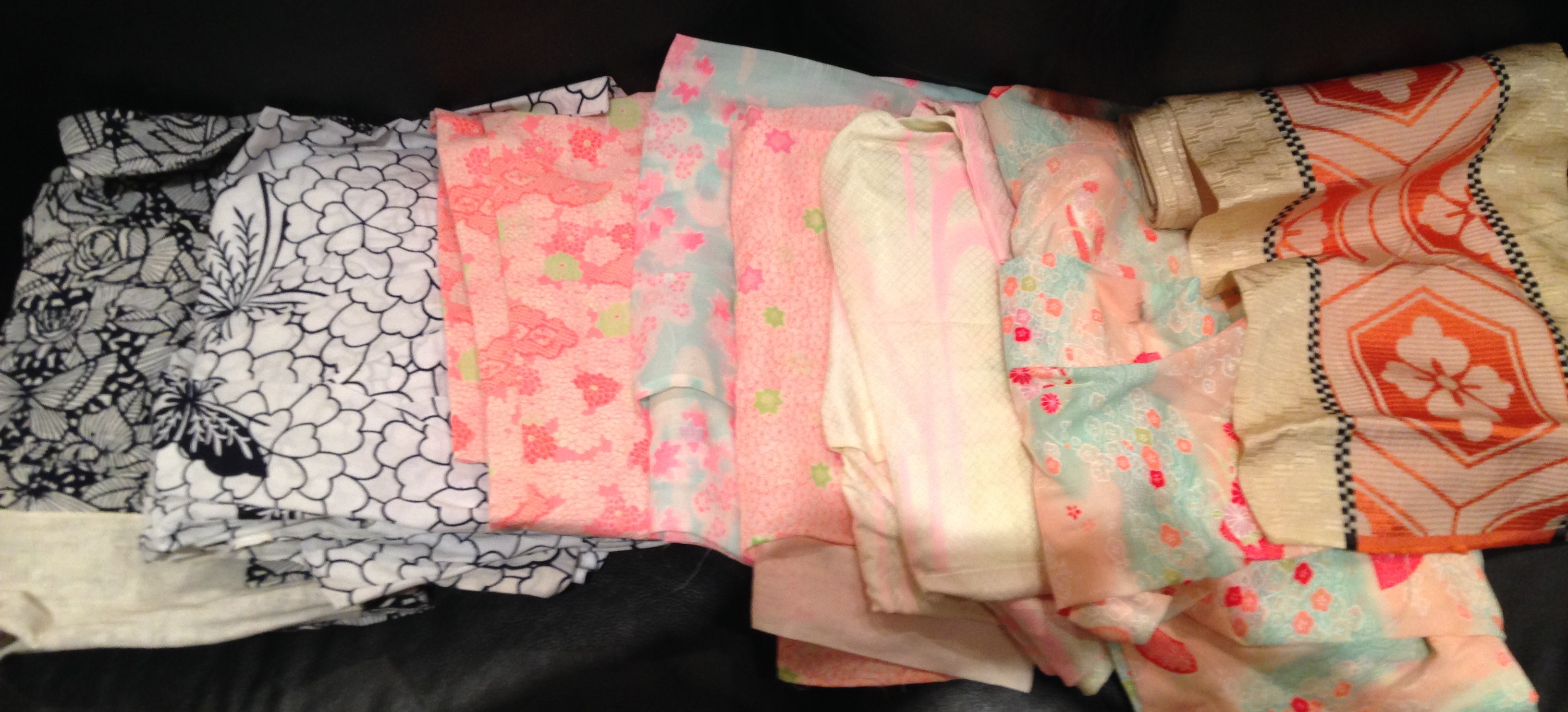
john2

Then, one day John dropped out of the Cumberland Gap Yahoo group.

I was surprised and worried.  I missed John and e-mailed him and asked him why.

John, it seemed, was experiencing some issues, and those issues would eventually manifest themselves into a cancer diagnosis.

John’s cancer diagnosis was a personal blow, to a friend, to someone I had become very close to – my “cousin,” John.

Now Judy Russell talked the other day in her blog about collecting cousins.  I never realized it, but I’ve done the exact same thing over the years.  Since I was raised as an only child – not finding my half siblings by my father until I was an adult – I began researching my genealogy and collecting cousins when I was 22.  I don’t know that I meant to, but it was such a wonderful adventure for me to meet someone I was related to.  I was always in awe that I had relatives and some of them even looked like me, and like my father who had died when I was young.

When I was a child, I used to ask Santa for a baby brother or sister…every year.  That was, of course, before I understood the mechanics of such things, as my father was deceased.  Still, as a child who wanted a sibling, it didn’t matter and Santa of course, being who he was, could deliver anything.

My heart hurt for John, as my heart hurts for any of my cousin collection when they or their family is sick or hurting.  One of the things I do to express my love and concern are “care quilts,” because that’s what quilters do when we don’t know what else to do.

So, I made John a care quilt…and I cut the Japanese fabric to do it. What better person to use it for?
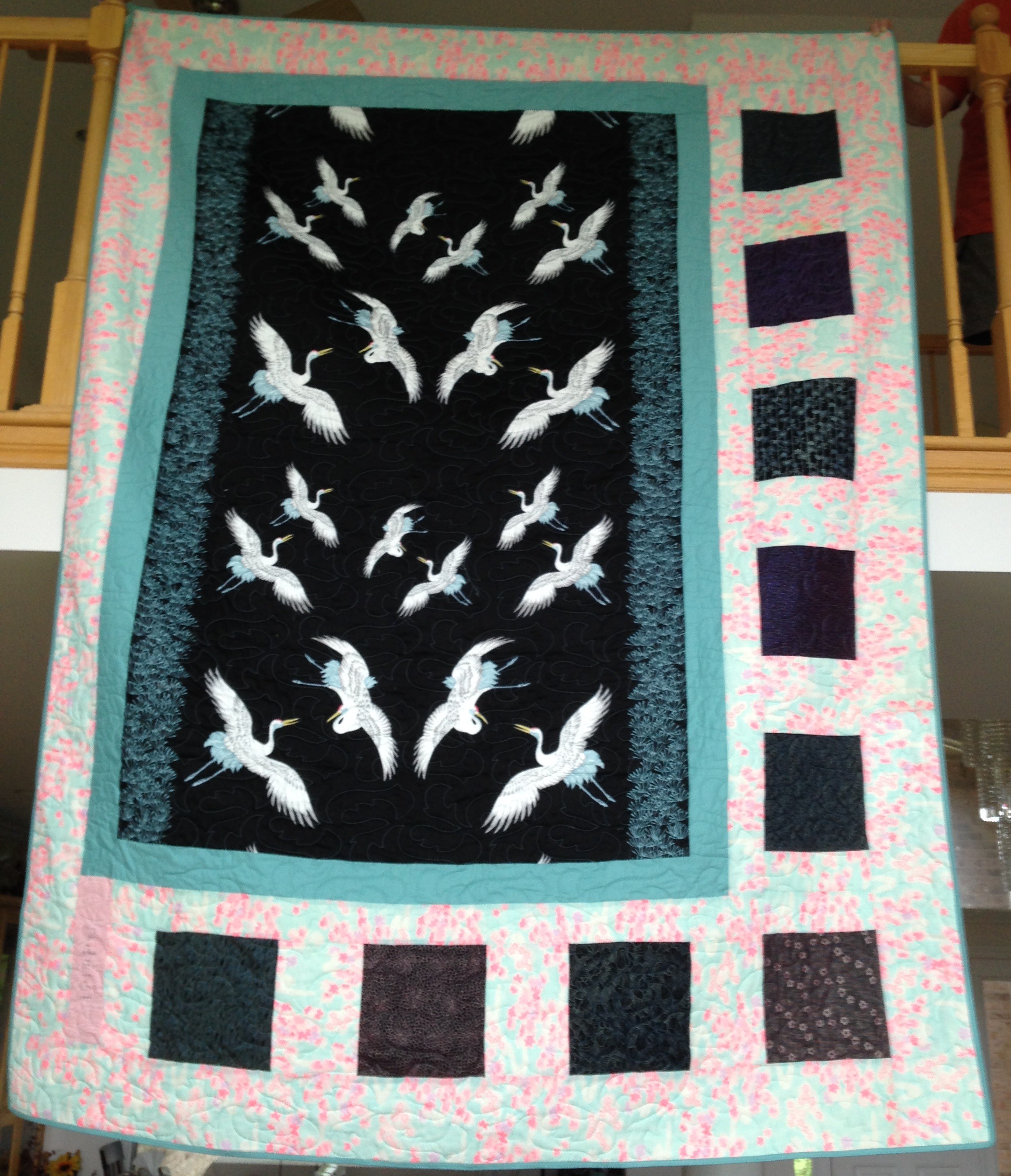
john quilt

John underwent multiple biopsies, flew from Japan to Massachusetts, underwent surgery, suffered an incorrect diagnosis, became even more ill, was finally diagnosed correctly, and began chemo.  John and his wife are gardeners at their home in Japan.  Clearly, that wasn’t going to happen this year.

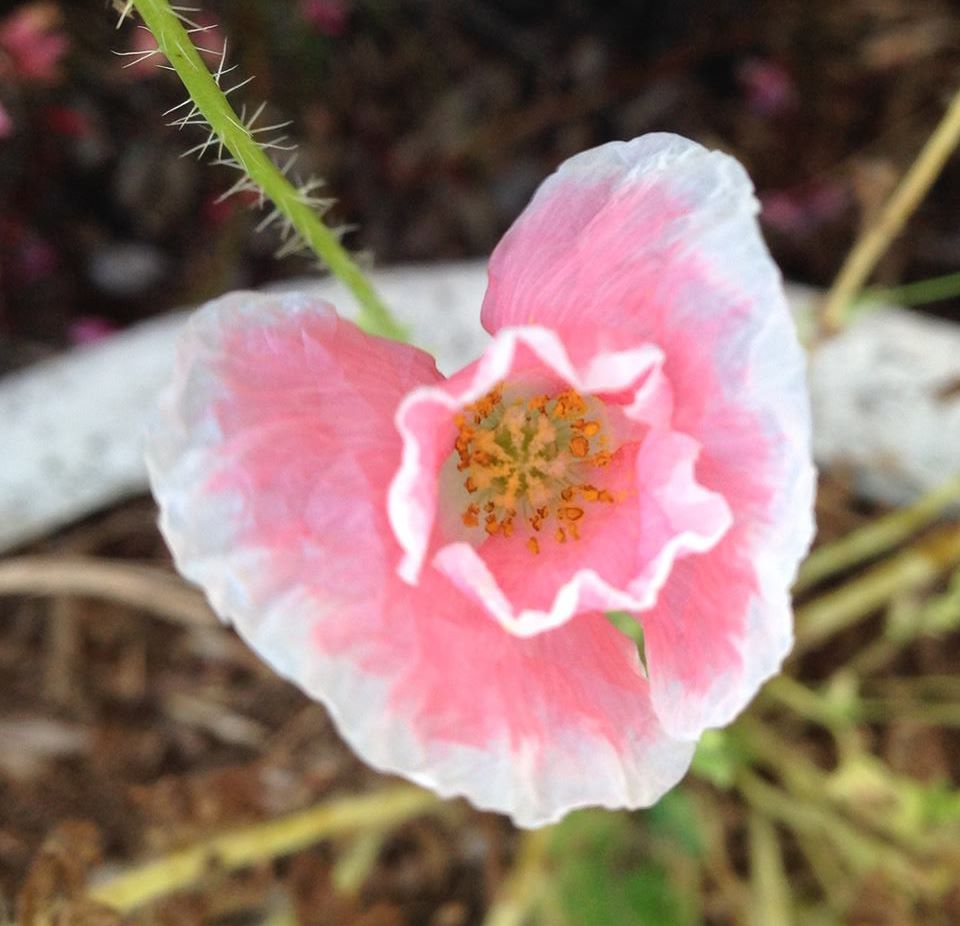
I planted pots of plants for John and every day, I take pictures of John’s flowers and post them to Facebook for him.  I know it’s not the same, but it is all I can do.  His miscellaneous “mixed seed” packets have performed amazingly for him.

john flowers

And then, John’s mother died, right in the middle of John’s chemo.  Just when you think things couldn’t get worse.

One day, in the midst of all of this pain, the days and weeks of chemo torment and the emotional trauma, John became my brother.   I can’t tell you exactly what day, but I realized that I love him as a brother, and he, me as a sister – and we simply made it so.  It already was, we just acknowledged it.  Isn’t this was family does? Support one another, especially in times of need?

So yes, I now have my brother John and my other brother John.  Why, you ask, does this matter to you?

Well, because in another generation or so, my granddaughters will tell their kids, “Yes, my grandma had her brother John and her other brother John.”  And then they might chuckle to themselves.  They may not think to mention that one wasn’t my biological brother, and then to add which one wasn’t my biological brother?  And even if they did, they could get it backwards, especially since they are too young to have known my now deceased older brother John.  Aha, a family mystery in the making.  Not a mystery today, but in another couple generations, it may well be – and all the information may be garbled.

Recognize this pattern in any of your family stories?

But it gets worse, because I’m from a southern family on my Dad’s side.  Yes, indeed, I also have Uncle Buster who is not my uncle but my first cousin once removed, and his brother Uncle George.  However, his sister is not Aunt anyone.  No, I don’t know why except I was close to both George and Buster and not the sister.

In the south, any older relative and sometimes non-relatives are called “Aunt” and “Uncle” as a sign of respect, without respect to race.

Furthermore, I also have quilt sisters.  I have Mary who is my sister.  Here we are playing in a mud puddle after gardening in the rain.  Isn’t that what sisters do?

I’ll let you guess from the t-shirts which one is me!

mary puddle

Now Mary has other biological sisters who don’t live here so aren’t my Quilt Sisters.  She’s also from a southern family and has sistens, which are cousin/sisters – cousins who function as sisters.

So in essence, both sisterhood and cousinship are applied selectively and without consistency.  Furthermore cousin can mean anything from literally 1st cousins to “we’re kin but I have no idea how” to 14th cousins 3 times removed.  In other words, it implies some kind of real or fictive relationship – and you, the listener, have no idea what that relationship actually is and there is no standardized gauge to judge by.  Worse yet, the speaker may not either.  Does this make sense?

Ok, here’s a much better picture.  Mary and I have a wonderful time no matter what we are doing.  Here we are at Mary’s son’s house.  I introduced her son to my friend who became his wife about 15 years ago, so I think I have some kind of honorary relationship to them too. When my mother was alive, our family always had Christmas on Christmas Eve at her house, but now, we spend Christmas Eve with Mary and her family.

me mary quilt

Mary and I aren’t blood sisters, although Mary has not DNA tested (yet) so we might be cousins.  In this picture, we’re hemming my original brother John’s care quilt that I made for him when he received his cancer diagnosis in 2010.  This is what sisters do.

However, my other Quilt Sister, Kathy, is indeed my cousin. Yes, for real, genealogically and biologically and genetically, all three.  So she’s my cousin and my sister.  But you see, I didn’t know any of that when I first met her quite by happenstance through our careers.  Talk about serendipity!  We discovered that we shared Brethren ancestors, quite by accident, sitting at a conference room table waiting on late meeting attendees one day.  It was after that she became a Quilt Sister.  Here Kathy and I are holding Mary’s 50th anniversary quilt that we helped to make.  This too is what sisters do.

kathy mary quilt

Is it any wonder as genealogists that we are constantly trying to figure out why the DNA of family members doesn’t fit exactly as we think it should?  Maybe some of the “undocumented adoptions,” or NPEs, non-parental events, aren’t really.  Maybe they are just the much loved “other brother” John – the brother by choice, or the quilt sister, or maybe Uncle Buster or my other “Cousin George” (not to be confused with Uncle George) who isn’t my blood cousin at all but my good friend Anne’s cousin.  But since Anne is another sister of heart, then Cousin George is my cousin too, pictured with his quilt, below, given as a thank you for his supportive role in the Lost Colony Research Group and DNA projects.  This is how relatedness works in southern families.  Bless all our hearts!

???????????????????????????????

And I haven’t given you the entire “family” list – there are more.  I am so fortunate to have many members of my family and family of heart.  I’ve gathered many to love.

Aren’t we lucky that love is the one commodity we can give as humans that is only limited by the size of our heart.  Giving more doesn’t diminish what others receive, and it enriches us.  Why, we can collect and add to our family our entire lives!!!

What a confusing legacy we’re leaving for future genealogists:)  Just thinking about that makes me laugh!

And as for my brothers John….all I have to say is that I’m so glad their names weren’t Derrell, because I already have my cousin Daryl and my other cousin Derrell, and they are both females.  Nope, not kidding!

Welcome to the family John.  Had no idea what you were getting into did you:)  All I can say is, well, bless your heart!
john 1

______________________________________________________________

Disclosure

I receive a small contribution when you click on some of the links to vendors in my articles. This does NOT increase the price you pay but helps me to keep the lights on and this informational blog free for everyone. Please click on the links in the articles or to the vendors below if you are purchasing products or DNA testing.

Thank you so much.

DNA Purchases and Free Transfers

Genealogy Services

Genealogy Research

Ancestor Maps

Ancestor map

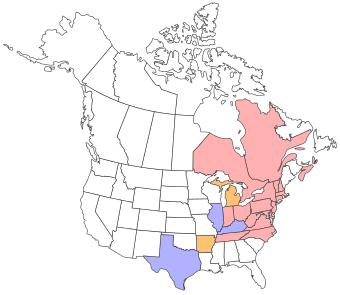
These maps are just fun!!!  They are yours, and fully customizable, so you can make them anything you want.  They could track the migrations of a single family across time.  They could show the genesis of your entire family.  They could be where your DNA matches are found.

http://www.defocus.net/visitedstates/us-canada.html

I did this one just for fun and it shows where my ancestors were born, where they died, and states they lived in where they were neither born nor died.  You can see the westward migration, but not many ventured past the Mississippi and none beyond Texas!

Red = born
Purple = died, but not born there
Yellow = lived but not born or died there

Have fun!!!

______________________________________________________________

Disclosure

I receive a small contribution when you click on some of the links to vendors in my articles. This does NOT increase the price you pay but helps me to keep the lights on and this informational blog free for everyone. Please click on the links in the articles or to the vendors below if you are purchasing products or DNA testing.

Thank you so much.

DNA Purchases and Free Transfers

Genealogy Services

Genealogy Research

WDYTYA – How DNA Might Have Been Used – Cynthia Nixon

I do love these Who Do You Think Your Are (WDYTYA) and similar shows, because like most everyone, I love a good mystery, especially a true story – and a good genealogy mystery tops them all.

And, of course, you never know what tidbit might be lurking for your own situation.

We had a hiatus of several months since last season, so I remembered what I liked and forgot what I didn’t.  As a long-time genealogist, I find myself talking to the TV – saying things like, “You can’t assume that,” and other similar comments to rather gargantuan leaps of faith.

I have to remind myself that it IS, after all, a TV show, and a lot of research (I hope and pray) is done behind the scenes but not shown to the audience.  After all, Ancestry.com, marketing king of easy-peasy “just enter your ancestor’s name” and it will all just be here waiting for you is sponsoring this series….so it has to look quite simple and doable for the viewing audience.  I mean, who wants to know that there could be two people in the census with the same name, in the same county….yes…really.

But my real frustration last season came with the knowledge that in many cases, DNA could have been reasonably and successfully used, and wasn’t.  So, this season, I’d like to talk about how DNA might have been used.

Ancestry provides a recap of the Cynthia Nixon episode as does TLC, and it really was a good one with lots of cliffhangers, of course.  For future episodes, GeneaBloggers published a WDYTYA bingo card.  What fun!

This episode begins as a professional genealogist puts together Cynthia’s first several generations via the census and presents her with a scroll of that information.  If you’re playing WDYTYA Bingo, I think you get two points for this.  The rest of the show focuses on Cynthia’s 3X great grandmother, Martha Curnutt.

Marriage records on Ancestry.com show a Martha Curnutt marrying Noah Casto on 15 August 1839 in Missouri. But no Martha and Noah Casto appear in the 1850 census. There’s only Martha, Mary (10), Noah (7), and Sarah (6)—all under the name Curnutt. A quick count shows Noah could have served in the Civil War. And a search of military records yields pay dirt: Noah’s mother Martha applied for a pension in 1881.

That pension record shows that Noah, the father, died in 1842, and further research shows that in 1843, Martha was indicted for murder and then found guilty of manslaughter for killing her husband, Noah Casto, with an ax “between the eyes” while he slept, after he threatened her life.  If you’d like to read a discussion about murder vs. manslaughter, Judy Russell, The Legal Genealogist, who watched the show with a group of genealogists, wrote a wonderful article about manslaughter and murder and this case.  Be sure to read the comments too.

Cynthia discovered that Martha had apparently been severely abused, based on a newspaper article.  At that time, there was no protection nor recourse for abused women.

More awful still is an unnamed informant’s account that the victim “had been in the habit of treating his wife in a manner too brutal and shocking to think of.” Cynthia is devastated to learn her 3x great-grandmother endured such horrible treatment.

But Martha fared little better in prison. Convicted of manslaughter, she was the only female inmate, was abused by people she was hired out to work for, was subjected to inhumane conditions, and in the fall of 1844 gave birth to a daughter (Sarah) fathered by someone associated with the prison. It was most likely the scandal that would accompany the story of her treatment in a state facility that led to her pardon in 1845.

An article written by a former inmate details Martha’s treatment, including the fact that she was originally allowed to work for the warden at his home, but his wife, Mrs. Brown, abused her so terribly that she ran away, was returned to prison and kept in her cell being given nothing for days, which I presume means no food or water.  That was followed by the fact that “in the fall” she delivered a child.  Knowing the dates of the trial in 1843 and that the child was born in the fall of 1844, it became evident that the child was not her deceased husband’s child, and was conceived in prison.

When Martha was in labor, Mrs. Brown would not help her, nor allow anyone else to do so.  Finally, one (male) inmate was allowed to “attend her,” but nothing, not even clothing or heat in her cell was provided for the baby.  Obviously, the warden’s wife was hoping the child would die, but Sarah didn’t, nor did Martha.  The next month, Martha was pardoned by the governor over the signatures of a long list of politicians and very influential men.  Obviously, since the mother and child didn’t die, there was a scandal brewing.

So, the question is, and certainly the scandal revolves around the identity of the Sarah’s father, the child born in prison in the fall of 1844.

We know Sarah lived at least until the 1850 census, and assuming she lived to marry and have children of her own, let’s talk about DNA options.

If Sarah were a male and had male descendants to the current generation, this would be a relatively easy case to solve….but she is a female and carries no Y chromosome, which would have been passed from the father to a male child, so we can’t test that.

Therefore, our other testing alternative would be to test the autosomal DNA of a descendant of Sarah and see if any portion of the her autosomal DNA matches with descendants of the warden’s family.  This assumes, of course, that Martha was not otherwise related to Warden Brown.

If in fact, Sarah’s descendants do match the DNA of the warden’s descendants, that would be highly suggestive that Warden Brown was Sarah’s father, especially if the amount of shared DNA would be the right percentage to be about 4 generations removed, or roughly third cousins who could be expected to share about 1% of the DNA of their common ancestor.

Not all third cousins will share DNA, or not in large enough segments to be above the matching threshold of the DNA testing companies, but many will, and all we would need would be enough and proof that the DNA in question is indeed descended from the same Brown family.

Here’s my own third cousin match at Ancestry.  He and I tested intentionally, knowing we are cousins, to map our DNA to specific ancestors (at Family Tree DNA) and to see if we match other cousins (at Ancestry.)

ancestry third cousins

Of course, Sarah is not Cynthia’s direct ancestor, the older daughter, Mary is – so finding out who Sarah’s father was does not further Cynthia’s own genealogy.  Plus, testing Cynthia’s DNA would not have been beneficial other than to have a basis for comparison on Martha’s side.  But testing a descendant of Sarah would certainly have answered a burning question about Martha’s time spent in prison – and might very likely have answered the question about why Mrs. Brown obviously hated Martha enough to try to kill her in various inhumane ways; by withholding assistance while Martha was in childbirth, not to mention essentials like food and heat.

Had Sarah’s descendants taken the Ancestry.com DNA test, especially if they had entered the warden’s name as a potential ancestor in their tree, they might well have discovered that they had “shakey leaf” hints that connected them with other people who descend from Warden Brown’s family.  If they were lucky, an actual descendant of Warden Brown himself would have tested and they would match.  In fact, maybe the producers could have found a direct descendant of Warden Brown who was interested in revealing the truth, whatever it was.

However, without a chromosome browser or any other type of comparison tools, they would be unable to prove that the match to that individual was indeed Brown family DNA – and they would have simply have to infer, allow you to believe, that the genetic match was the same as the shakey leaf match.  You can see, above, that Ancestry skates on this issue by saying “it looks like you have a shared ancestor.”  Indeed it does, but that doesn’t mean the shaky leaf ancestor is the one that you share genetically.  However, given the other leaps of faith in the series, I doubt that this “little detail” would have deterred the storyline much.  And indeed, it would have been very interesting.

In order to prove the genetic connection, one could have the people who tested, and matched on the Brown line, download their results to www.GedMatch.com and compare their actual DNA segments there.  They could also transfer their DNA to Family Tree DNA who does have comparison tools.  Of course, that opens the door to DISPROVING the shakey leaf “tree” match as well as proving it, and it’s certainly not in the same spirit or as easy as just accepting, on faith, the “shakey leaf” hint as fact.  DNA Genealogy wrote a nice summary of Ancestry.com vs GedMatch here and why those “shakey leaf” first impressions are sometimes not correct.

Am I the only one who thinks Warden Brown is the most likely candidate to be Sarah’s father?????  Whoever the father was, he was certainly important enough to warrant a pardon for Martha.  That is the one good thing in the landslide of evil that haunted Martha Curnutt.  I hope the rest of her life was much easier.

______________________________________________________________

Disclosure

I receive a small contribution when you click on some of the links to vendors in my articles. This does NOT increase the price you pay but helps me to keep the lights on and this informational blog free for everyone. Please click on the links in the articles or to the vendors below if you are purchasing products or DNA testing.

Thank you so much.

DNA Purchases and Free Transfers

Genealogy Services

Genealogy Research

Finding Your Inner Neanderthal with Evolutionary Geneticist Svante Paabo

Svante Paabo is the father of ancient DNA extraction, beginning many years ago with Egyptian mummies. His lecture style is wonderful and understandable. I would love to attend one of his lectures. Today, he is one of two tenured professors in Evolutionary Genetics at Max Planck in Germany.

His speech if in conjunction with the opening of the exhibition of “Genome, Unlocking Life’s Code” at the National Institute of Health.

Archaic Genomics – this video is very similar to the one above although the Q and A at the end is different.  So if you watch the first one, then in the second one, just skip to the end of his lecture.  There Q&A is very worthwhile in both of these videos.

neanderthal manSvante Paabo documented his path to the Neanderthal genome in his marvelous book, Neanderthal Man: In Search of Lost Genomes recently published. It’s an amazing book, written in a very personal and approachable manner and easily understood by the non-scientist. It’s an amazing story and we’re lucky to have Dr. Paabo to share it with us.

If you carry Asian or European DNA, you have Neanderthal ancestors, and you’ll want to watch these videos and read this book.

______________________________________________________________

Disclosure

I receive a small contribution when you click on some of the links to vendors in my articles. This does NOT increase the price you pay but helps me to keep the lights on and this informational blog free for everyone. Please click on the links in the articles or to the vendors below if you are purchasing products or DNA testing.

Thank you so much.

DNA Purchases and Free Transfers

Genealogy Services

Genealogy Research


WikiTree Announces DNA Ancestor Confirmation Aid

The following press release was provided by WikiTree.  I was pleased to be able to preview the new DNA Ancestor Confirmation Aid.  If people will actually use WikiTree for their ancestors, and enter their DNA information, especially in mitochondrial lines where there is no common surname to follow…this new tool holds a great deal of promise.  WikiTree didn’t develop this tool in a vacuum.  Genetic genealogist Peter Roberts, project administrator of the Bahamas DNA Project, has been involved along the way, providing invaluable insight as to what the genetic genealogy community needs, and how to go about providing those tools and services.

Great job WikiTree!

Take a look and a test drive…

wikitree logo

Fourteen years ago, on 26 June 2000, it was announced that the first draft of the entire human genome had been completed. UK Prime Minister Tony Blair commented that “every so often in the history of human endeavor there comes a breakthrough that takes humankind across a frontier and into a new era. … I believe that today’s announcement is such a breakthrough …”.

The sweeping impact of a map of the human genome is still unfolding in science, medicine, and many other fields. One of these fields is genealogy. DNA testing for genealogy has been advancing rapidly — becoming more reliable, more informative, and less expensive.

Parallel to this, progress on a single family tree for humanity has been advancing rapidly thanks to Internet “crowdsourcing.” Genealogists are pooling their research and collaborating on websites such as WikiTree.com. Until now, this family tree collaboration has been based primarily on research in public records and information handed down through families.

The combination of DNA testing and a collaborative worldwide family tree is enabling something that most genealogists never expected: scientific confirmation of their genealogy.

Today WikiTree is announcing the DNA Ancestor Confirmation Aid, a tool to help genealogists confirm their ancestry. Because of the broad-based collaboration on WikiTree and the fact that the Y-chromosome and mitochondrial DNA is passed down relatively unchanged for many generations in known inheritance patterns, a DNA test taken by one genealogist can aid the research of many distant cousins. In turn, the research of one genealogist can dramatically expand the utility of other people’s DNA tests.

The DNA Ancestor Confirmation Aid shows step-by-step how to confirm father-son and mother-child relationships in a family tree. It enables genealogists to discover if any other descendants of their ancestors have already taken DNA tests — something becoming more common as the cost of testing goes down and as ancestries become more deeply interconnected. When there’s an opportunity for confirmation by comparing test results, there are direct comparison links. When additional testing needs to be taken for confirmation, it links to potential test-takers.

The DNA Ancestor Confirmation Aid is intended to help genealogists of all levels, including those who are completely new to DNA testing. More experienced genetic genealogists will also find benefits. Roberta Estes of DNAeXplain says, “this is particularly useful for mitochondrial DNA because there is no other ‘connecting’ mechanism. I’m sure that many of my ancestor’s mitochondrial DNA is represented in the thousands of people who have tested — but until now — there was no way to find them, since the surnames may have changed a dozen times since our shared ancestor.”

Nathan J. Bowen, PhD, genome scientist at the Center for Cancer Research and Therapeutic Development at Clark Atlanta University, sees potential long-term benefits we can all share: “The release of the working draft of the human genome 14 years ago was a huge moment, democratizing the use of the sequence for everyone, not just corporations with private databases. Now genealogists at WikiTree are building a public family tree for humanity, confirmed with DNA. Ultimately this may reveal patterns of human migration, inheritance and disease that return significant benefits for science and medicine.”

About WikiTree

Growing since 2008, WikiTree.com is a 100% free shared family tree website. Community members privately collaborate with close family members on modern family history and publicly collaborate with other genealogists on deep ancestry. Since all the private and public profiles are connected on the same system this process is helping to grow a single, worldwide family tree that will eventually connect us all and thereby make it free and easy for anyone to discover their roots. See http://www.WikiTree.com.

______________________________________________________________

Disclosure

I receive a small contribution when you click on some of the links to vendors in my articles. This does NOT increase the price you pay but helps me to keep the lights on and this informational blog free for everyone. Please click on the links in the articles or to the vendors below if you are purchasing products or DNA testing.

Thank you so much.

DNA Purchases and Free Transfers

Genealogy Services

Genealogy Research

10 Things to Do With Your DNAPrint, renamed AncestrybyDNA, Test

birdcage

Please note, AncestrybyDNA is NOT the same as the AncestryDNA test sold by Ancestry.com.  Both CeCe Moore and David Dowell have written about this in their respective blogs.

Back in 2002 (no, that is not a typo,) a new product called DNAPrint was introduced by a company then called DNAPrint Genomics.  It provided you, in percentages, your percentages of 4 ethnic groups: Indo-European, East-Asian, Native American and African.  Family Tree DNA remarketed this test for just over a year but ceased when they realized there were issues.

It was the first of its kind of test ever to be offered commercially, and version 2.0 utilized a whopping 71 ancestrally informative markers, according to the user’s guide delivered with the product.  The next version of the test, 2.5, titled AncestrybyDNA included 175 markers, and a third version, which I don’t believe was ever released, was to include just over 300 markers.

In 2002, this was a baby step in a brand new world.  We, as a community, were thrilled to be able to obtain this type of information.  And of course, we believed it was accurate, or relatively so.  However, the questions and ensuing debate started almost immediately and became very heated.

The company’s representatives indicated that East-Asian and Native American could be combined for those without a “Chinese grandpa” and that would have given me a whopping 25% Native American.  Even then, before pedigree analysis, I thought this was a little high.  My East Asian was shown as 15%, Native American at 10% and Indo-European at 75%.  For reference, my real Native results are probably in the 1-3% range.  Keep in mind that we were all babes in the woods, kind of stumbling around, learning, in 2002 and 2003.

Interestingly enough, I found the answer recently, quite by accident, to one of the burning questions about Native American ancestry that was asked repeatedly of Tony Frudakis during that timeframe, then a corporate officer of DNAPrint, and left unanswered.  In Carolyn Abraham’s book, The Juggler’s Children, which is a wonderful read, on page 55, the answer to the forever-hanging question was answered:

“When I finally reached Frudakis, that’s how he explained the confusion over our Native ancestry result – semantics.  The Florida company had pegged its markers as being Native American to appeal to the American market, he told me.  But it was accurate to consider them Central Asian markers, he said, that had been carried to different regions by those who migrated from that part of the globe long ago – into the Americas, into East Asia, South Asia and even southern Europe – finding their way into today’s Greeks, Italians and Turks.  ‘We may do ourselves a favour and change the name of this ancestry [component] in the test,’ he said, since apparently I wasn’t the only one baffled by it.”

So, now we know, straight from the horses mouth, via Carolyn.

Of course, since that time, many advances have occurred in this field.  Today, Family Tree DNA, 23andMe, Ancestry.com and the Genographic Project utilize chip based technology and utilize over half a million markers to achieve ethnicity predictions.  If DNAPrint, renamed AncestybyDNA was the first baby step, today we are teenagers – trying to refine our identity.  Today’s tests, although not totally accurate, are, by far, more accurate than this first baby step.  Give us another dozen years in this industry, and they’ll be spot on!

For 2003, when I ordered mine, DNAPrint was an adventure – it was exciting – it was a first step – and we learned a lot.  Unfortunately, DNAPrint under the name AncestrybyDNA is still being sold today, currently owned by the DNA Diagnostics Center.  If you are even thinking about ordering this product, take a look first at the Yelp reviews and the Better Business Bureau complaints.

I don’t regret spending the money in 2003.  Spending money on this outdated test today would be another story entirely – a total waste.  The results are entirely irrelevant today in light of the newer and more refined technology.  Unfortunately, seldom a week goes by that I don’t receive an e-mail from someone who bought this test and are quite confused and unhappy.  The test has been marketed and remarketed by a number of companies over the years.

So, here are some suggestions about what might be appropriate to do with your DNAPrint or AncestybyDNA results if you don’t want to just throw them away:

  1. Line the bottom of the birdcage.
  2. Use to light the BBQ grill or camp fire.
  3. Use under boots in the hallway in the winter.
  4. Shred, then use as confetti.
  5. Cut into strips and use as bookmarks.
  6. Use as scratch paper.
  7. Use in the garden between rows to minimize weeds.
  8. Make into a paper airplane.
  9. Roll, along with other excess paper, into logs for the fireplace.
  10. Frame, and display along with your other antiques.

Yes, it’s really that old and outdated!

______________________________________________________________

Disclosure

I receive a small contribution when you click on some of the links to vendors in my articles. This does NOT increase the price you pay but helps me to keep the lights on and this informational blog free for everyone. Please click on the links in the articles or to the vendors below if you are purchasing products or DNA testing.

Thank you so much.

DNA Purchases and Free Transfers

Genealogy Services

Genealogy Research

Stop and Smell the Flowers

flowers 1

Some days DNA is just such fun.  My cousin, Marja, Facebooked me and suggested that I check and see if I carried the Neanderthal SNP for heightened smell.  Now, being a DNA junkie, of course, I had to do just that.

It turns out that our DNA location Rs6591536, if coded with G, increases our odor sensitivity – a characteristic shared by our Neanderthal cousins.

I would certainly think that heightened smell would enhance chances of survival.  Although, in contemporary society, I’m not sure heightened smell is that much of a blessing.  Floral is fine, some others odors aren’t and heightened sensitivity to smell knows no boundaries.  To me, some smells are simply overwhelming – like a candle or potpourri shop, or someone who took a bath in perfume, for example.  On the other hand, there is just nothing that compares to lavender.

To find out, I checked my raw data files.  In fact, I checked both mine and my mother’s raw data files.  Let’s take a look.

Flowers dna

This shows that Mom carried nucleotides AA and I carry AG.  G provides me with the enhanced odor sensitivity.  Clearly, Mom didn’t have a G to give me, so this tells me that I received this trait from my father, not my mother.  So something I share with my Dad.

Hmmm, now that I think of it, the flowers on my desk have passed their prime….I can tell by the way they smell!

Marja is preparing a presentation related to Neanderthal DNA.  I love this type of exploratory science.  I hope that she will present her findings in November at the Genetic Genealogy Conference in Houston.  It’s fun getting to know yourself, your parents, and your Neanderthal cousins.

Curious about how much and which specific DNA locations you might carry from our Neanderthal ancestors?  You’re in luck, courtesy of Marja and SNPedia….here’s a list.

flowers 2

______________________________________________________________

Disclosure

I receive a small contribution when you click on some of the links to vendors in my articles. This does NOT increase the price you pay but helps me to keep the lights on and this informational blog free for everyone. Please click on the links in the articles or to the vendors below if you are purchasing products or DNA testing.

Thank you so much.

DNA Purchases and Free Transfers

Genealogy Services

Genealogy Research

Ancestry Kit Mixup

Every genealogists worst nightmare.  A DNA kit swap.  You unknowingly receive the results from someone else, and that equally in-the-dark unknown person receives yours.  And you’ll never know unless you recognize the signs and take action to see if it’s your bad luck or overactive imagination, or the answer really is a kit swap or lab error of some sort.

I’ve just spent three months unraveling this exact situation that occurred at Ancestry.com.  The person to whom this happened would like to share her story with you.  We are hoping that if something similar ever happens to you, that you’ll be able to recognize the signs and know what steps to take to figure out if this indeed has occurred.

Let me also say that a kit swap or similar lab error is really quite rare, and in most other instances when people believe their kits have been swapped, they haven’t been, although this certainly is not the first time this has happened.  CeCe Moore reported on another Ancestry.com case in 2012.

We’ll call the lady Jane. Jane’s father agreed to have his Y DNA tested some years ago at Ancestry.com.  Jane submitted his DNA for him and noticed that he had no matches to his rather common surname.  She didn’t really think anything of it at the time, other than being disappointed.  His haplogroup was estimated by Ancestry to be R1b.

As time went on, she ordered Ancestry.com’s autosomal test too for her father.  Ancestry sent another sampling kit, and her father is receiving matches to people who, at least according to their trees, share common ancestors with her father.

Last year, Jane decided to transfer her father’s Y DNA to Family Tree DNA. The markers from Ancestry.com were transferred, and Jane still didn’t have any surname matches at Family Tree DNA.

Jane then ordered the Geno2.0 test for her father.  The results were returned with haplogroup I, terminal SNP I-L22, which were at odds with Ancestry’s haplogroup R1b estimate.

About the same time, Jane upgraded her father’s STR markers as well, and the haplogroup project administrator noticed that while Jane’s father’s lower panels, meaning the ones tested at Ancestry matched haplogroup R1b, his upper panels didn’t match R1b subgroups at all.

Obviously something was wrong, very wrong, someplace.  But what, and where?  Jane contacted me and asked if I would help unravel this puzzle.

I checked Jane’s father’s page at Family Tree DNA, and when she transferred his Geno 2.0 results to his FTDNA page, apparently the transfer confused the software at FTDNA because his results reported both I-L22 and R-M269 as positive, which is impossible since I-L22 is in haplogroup I, only, and R-M269 is only found in haplogroup R.

ancestry kit swap ftdna snps

Unfortunately, this only added to the confusion.

At this point, I downloaded the raw data file from the Geno 2.0 test and verified that indeed, M269 was absent and L22 was present.

ancestry kit swap raw data

Family Tree DNA, thankfully, stepped up to the plate and ran a SNP test on Jane’s father’s second vial.  That SNP test also came back as positive for haplogroup I, matching the Geno 2.0 results.

Just to be absolutely positive, Family Tree DNA sent Jane’s father a third vial and tested the same markers that Jane had transferred from Ancestry.  You can see for yourself – the results are very different.  The results are unquestionable.  Either there was a kit swap or a lab error of some sort at Ancestry where the wrong markers were posted for Jane’s father’s results.  He has been tested three times, from separate vials, at Family Tree DNA with all of the results providing evidence that the Ancestry results were in error.

Marker Ancestry FTDNA
DYS438 12 10
DYS391 10 11
DYS392 13 11
DYS426 12 11
DYS439 13 11
DYS445 12 11
GGAAT1B07 10 11
DYS444 11 12
DYS446 13 13
DYS462 11 13
Y-GATA-A10 13 13
DYS437 15 16
DYS441 14 16
DYS458 17 16
DYS463 24 21
DYS635 23 21
DYS452 30 31

In an overabundance of caution, Family Tree DNA is going to rerun the entire test, all markers and the backbone SNP, from yet another (fourth) new vial being sent to Jane’s father.  Thank heavens Jane’s father is still available for testing and not entirely discouraged.

Jane is ecstatic, because now, she is actually receiving surname matches and in her father’s words, “we just wanted to know who we are.”  And just in time for Father’s Day!

Signs and Signals

How might you know if a kit swap has happened to you?  As we know, Ancestry has discontinued their Y and mitochondrial DNA testing and will be destroying the data base, so this won’t be an issue at Ancestry with new Y DNA kits, but it could be an issue for results already delivered, like Jane’s, and for autosomal tests.  This is one reason why retesting might not be a bad idea, even though the $19 or $58 Y DNA Ancestry to FTDNA transfer price is quite attractive.  Here are some of the signs that might tip you that there is a problem:

  1. If Y DNA, you don’t receive any surname matches, even to those you believe that you are in related to. This is one of those sticky-wickets, because if you don’t match your first cousin, for example, the most likely situation is that you have an undocumented adoption in one of the lines. My suggestion in this situation is to submit an entirely new test under a new kit number. If your first and second kits match each other, then the answer is the undocumented adoption.
  2. If autosomal DNA, and you have no matches to anyone you believe you should match, especially close relatives, submit your DNA to one of the other three testing companies – Family Tree DNA, 23andMe or Ancestry.com. The approach gives you the benefit of fishing in multiple ponds along with verifying that your results match each other. When you receive the results from both companies, download the raw data files from both to www.gedmatch.com and then match them to each other. They should match almost exactly, although there will be some small differences in terms of areas tested and possibly no-calls – but they should match very closely.

Let’s hope this never happens to anyone else.  The sad thing is that whoever, at Ancestry, received Jane’s father’s Y DNA results likely has no idea they are incorrect.

Thank you Family Tree DNA for going above and beyond to resolve this very distressing situation for Jane and her father.

______________________________________________________________

Disclosure

I receive a small contribution when you click on some of the links to vendors in my articles. This does NOT increase the price you pay but helps me to keep the lights on and this informational blog free for everyone. Please click on the links in the articles or to the vendors below if you are purchasing products or DNA testing.

Thank you so much.

DNA Purchases and Free Transfers

Genealogy Services

Genealogy Research

DNA Analysis of 8000 Year Old Bones Allows Peek Into the Neolithic

In the paper, “Ancient DNA Analysis of 8000 B.C. Near Eastern Farmers Supports an Early Neolithic Pioneer Maritime Colonization of Mainland Europe through Cyprus and the Aegean Islands,” by Fernandez et al, published June 5, 2014, we find a report on the analysis of ancient skeletal remains that sheds light on the Neolithic area before expansion from the Fertile Crescent into Europe.

It was about 8000 years ago, give or take 1000 years, when 63 people died in what is now Syria.  They were buried in three separate locations, and recently their skeletal remains were exhumed and DNA tested.  Of those, 15 yielded mitochondrial DNA results.

Haplogroups revealed were:

  • R0 (3)
  • K (6)
  • L3
  • U*
  • N*
  • H (2)
  • HV

Of course, there were only 15 skeletons with viable DNA, but conspicuously missing is haplogroup J, long believed to have diffused to Europe in the Neolithic.

Haplogroups I, T and V are also missing, but are much less prevalent in Europe than haplogroup J.

neolithic haplogroups

The authors also provided an updated map of the Neolithic diffusion into Europe, with projected dates, indicating they believe the expansion was initially through the Mediterranean via Cyprus, Crete and the Aegean Sea.

neolithic expansion

The author abstract and summary are provided below and you can read the entire article at PLOS Genetics.

Abstract

The genetic impact associated to the Neolithic spread in Europe has been widely debated over the last 20 years. Within this context, ancient DNA studies have provided a more reliable picture by directly analyzing the protagonist populations at different regions in Europe. However, the lack of available data from the original Near Eastern farmers has limited the achieved conclusions, preventing the formulation of continental models of Neolithic expansion. Here we address this issue by presenting mitochondrial DNA data of the original Near-Eastern Neolithic communities with the aim of providing the adequate background for the interpretation of Neolithic genetic data from European samples. Sixty-three skeletons from the Pre Pottery Neolithic B (PPNB) sites of Tell Halula, Tell Ramad and Dja’de El Mughara dating between 8,700–6,600 cal. B.C. were analyzed, and 15 validated mitochondrial DNA profiles were recovered. In order to estimate the demographic contribution of the first farmers to both Central European and Western Mediterranean Neolithic cultures, haplotype and haplogroup diversities in the PPNB sample were compared using phylogeographic and population genetic analyses to available ancient DNA data from human remains belonging to the Linearbandkeramik-Alföldi Vonaldiszes Kerámia and Cardial/Epicardial cultures. We also searched for possible signatures of the original Neolithic expansion over the modern Near Eastern and South European genetic pools, and tried to infer possible routes of expansion by comparing the obtained results to a database of 60 modern populations from both regions. Comparisons performed among the 3 ancient datasets allowed us to identify K and N-derived mitochondrial DNA haplogroups as potential markers of the Neolithic expansion, whose genetic signature would have reached both the Iberian coasts and the Central European plain. Moreover, the observed genetic affinities between the PPNB samples and the modern populations of Cyprus and Crete seem to suggest that the Neolithic was first introduced into Europe through pioneer seafaring colonization.

Author Summary

Since the original human expansions out of Africa 200,000 years ago, different prehistoric and historic migration events have taken place in Europe. Considering that the movement of the people implies a consequent movement of their genes, it is possible to estimate the impact of these migrations through the genetic analysis of human populations. Agricultural and husbandry practices originated 10,000 years ago in a region of the Near East known as the Fertile Crescent. According to the archaeological record this phenomenon, known as “Neolithic”, rapidly expanded from these territories into Europe. However, whether this diffusion was accompanied or not by human migrations is greatly debated. In the present work, mitochondrial DNA –a type of maternally inherited DNA located in the cell cytoplasm- from the first Near Eastern Neolithic populations was recovered and compared to available data from other Neolithic populations in Europe and also to modern populations from South Eastern Europe and the Near East. The obtained results show that substantial human migrations were involved in the Neolithic spread and suggest that the first Neolithic farmers entered Europe following a maritime route through Cyprus and the Aegean Islands.

______________________________________________________________

Disclosure

I receive a small contribution when you click on some of the links to vendors in my articles. This does NOT increase the price you pay but helps me to keep the lights on and this informational blog free for everyone. Please click on the links in the articles or to the vendors below if you are purchasing products or DNA testing.

Thank you so much.

DNA Purchases and Free Transfers

Genealogy Services

Genealogy Research

Bennett Greenspan – The Future of Genetic Genealogy

Bennett SCGA 2014 v2

Bennett Greenspan, one of the founders of Family Tree DNA, spoke about “The Future of Genetic Genealogy” at the Southern California Genealogy Society conference this week.  The SCGS has been gracious enough to provide a video of the livestream.

High points of Bennett’s presentation include:

  1. There will be a new Y SNP matching capability released in the next few days.
  2. “Regulatory issues are larger issues than the science.” Bennett discusses “armwrestling with the FDA.”
  3. If prices of SNP chips that test over 2 million locations don’t drop substantially in the next couple of years, then genealogy testing likely will not utilize the next generation of SNP chip, but will move directly to full genome sequence testing. This may happen in the 3-5 year range but will, for sure in the 5-10 year range.

Bennett talked quite a bit about privacy and what privacy is in this technology era, expectations and how privacy expectations may affect future DNA testing.  Be sure to watch the video. It’s always interesting to hear Bennett, functionally the father of genetic genealogy, speak about this industry and the future.

______________________________________________________________

Disclosure

I receive a small contribution when you click on some of the links to vendors in my articles. This does NOT increase the price you pay but helps me to keep the lights on and this informational blog free for everyone. Please click on the links in the articles or to the vendors below if you are purchasing products or DNA testing.

Thank you so much.

DNA Purchases and Free Transfers

Genealogy Services

Genealogy Research